Arts
An archive of figures whose contributions in the field of artshave significantly impacted Caribbean history and development.
Documented Figures
Classified under Arts.

Alicia Alonso
### The Ballerina Who Danced in Darkness In the long and storied history of classical ballet, few careers have combined technical mastery, extraordinary physical courage, and lasting institutional legacy as completely as that of **Alicia Alonso**. Born in Havana, Cuba, on December 21, 1920, she died ninety-eight years later in the same city — having transformed not only Cuban culture but the very landscape of global ballet. She was a *prima ballerina assoluta*, a title awarded to fewer than a dozen dancers in the history of the art form; she was a pioneering arts administrator who built one of the world's great ballet companies from nothing; and she was a woman who danced most of her career in a state of near-total blindness, guided by little more than stage lighting, the memorized geometry of theater spaces, and an indomitable will that those who knew her described as superhuman.  > *"A dancer should learn from all the arts. Go to museums and look at the paintings. See how they balance things. Everything you do in the arts enriches you."* > — Alicia Alonso ### Cuba at the Dawn of the Twentieth Century To understand Alicia Alonso, it is necessary to understand the Cuba of her childhood and youth — a country in the midst of forging an identity after centuries of Spanish colonialism, a brief American occupation, and a nominal independence that masked continuing economic dependence on the United States. Cuba in the 1920s and 1930s was a society of extraordinary contrasts: the cosmopolitan energy of Havana, with its theaters, cabarets, and elite cultural institutions, existed alongside profound rural poverty and racial inequality. The cultural life of the Cuban capital was vibrant but largely stratified by class and race, with institutions like the **Sociedad Pro-Arte Musical** — the society that would introduce young Alicia to ballet — serving primarily the white Cuban upper middle class. Alicia Ernestina de la Caridad del Cobre Martínez del Hoyo was born into precisely this world. Her father was a military veterinarian, and the family enjoyed a comfortable, cultured life in Havana that afforded Alicia access to the arts from a young age. She began her formal ballet training at the age of ten at the Sociedad Pro-Arte Musical in 1931, studying under the Russian-trained teacher Nikolai Yavorsky. But the conservative Cuban cultural milieu could only carry a dancer of Alicia's ambition so far — and from early in her training, it was clear that her gifts demanded a larger stage. ### New York and the Formation of a Dancer In 1937, at the age of seventeen, Alicia married her fellow dancer **Fernando Alonso** and relocated with him to New York City, the center of ballet's evolution in the Western Hemisphere. She enrolled at the **School of American Ballet**, founded by the legendary choreographer George Balanchine, and quickly distinguished herself as a dancer of exceptional technical precision and dramatic depth. She also studied with the influential pedagogue Enrico Zanfretta, absorbing the classical Italian technique that would anchor her style throughout her career. Her New York years were a period of rapid artistic formation. She danced with the **Ballet Caravan** — one of Balanchine's early companies — as a soloist in 1939, absorbing the choreographer's distinctive neoclassical aesthetic. She also made her Broadway debut, performing in the musical *Great Lady* in 1938, demonstrating the versatility and theatrical instinct that would later make her *Carmen* and her *Giselle* legendary. In 1940, she and Fernando joined the newly formed **Ballet Theatre** — later to become the American Ballet Theatre — where she would rise to international prominence over the following decade. ### The Night of the Detached Retina It was in this period of ascent that fate intervened with cruel and seemingly terminal force. Beginning in 1941, Alicia began to suffer from a series of detached retinas — a condition that, in the era before modern ophthalmic surgery, was frequently career-ending, even life-altering. She underwent multiple surgeries, each one demanding absolute physical immobility during recovery periods that stretched across months. After one surgery, she was required to lie in a darkened room, her head perfectly still, for weeks at a time — unable to move, unable to read, unable even to look about her. For a dancer, this was a form of sensory deprivation that might have broken the spirit entirely. Instead, Alicia Alonso turned the ordeal into an act of pure artistic concentration. Unable to move her body, she rehearsed mentally. She moved her fingers against the bedsheets, tracing out the intricate movements of her roles. She ran through entire performances in her mind, note by note, step by step, refining her understanding of the music and the choreography at a level of detail that physical rehearsal rarely permits. By the time she was allowed to return to the stage, she had, in a certain sense, become a more complete artist than she had been before her illness. But the physical damage was irreversible. Over the years, Alicia's vision deteriorated progressively until she could perceive little more than light and shadow. Rather than withdraw from the stage, she adapted — developing a set of techniques for performing in near-total blindness that became legendary among dancers and choreographers. She memorized every theater she performed in, counting the number of steps from the wings to center stage. She required that powerful lights be placed at precise points in the wings to serve as navigational guides. Her partners were trained to be in exact positions at exact moments — and she could find them by memory and instinct, extending her arm with perfect confidence into the space where she knew a hand would be. ### The Triumph of Giselle The role with which Alicia Alonso became most completely identified — and through which she achieved her first great international triumph — was the title character in *Giselle*, the Romantic-era masterwork of Adolphe Adam, Jean Coralli, and Jules Perrot. On October 2, 1943, Alicia was called at the last moment to replace an injured Alicia Markova in the title role at a Ballet Theatre performance in New York. She had rehearsed the role in theory but had not been scheduled to perform it that season. She went on stage and gave a performance that critics described as one of the most memorable interpretations of the role in living memory. *Giselle* tells the story of a peasant girl who dies of a broken heart when she discovers her lover's betrayal, and who then rises as a spirit — a *Wili* — to dance among the dead before ultimately forgiving her betrayer and protecting him from destruction. The role demands not only technical virtuosity but the ability to inhabit two entirely different states of being: the vivid, vulnerable humanity of Act One and the ethereal, otherworldly grace of Act Two. For Alicia Alonso, who had by then lived through illness, isolation, and the possibility of permanent blindness, the emotional landscape of *Giselle* was not merely a dramatic challenge but an almost autobiographical one. Critics remarked that there was something in her *Giselle* — particularly the mad scene at the end of Act One — that seemed to come from a place of genuine interior experience. She would go on to perform the role hundreds of times over the following decades, and it remained her signature until late in her career. She also created her own production of the ballet, which became the standard version performed by the Ballet Nacional de Cuba and remains the company's most celebrated offering.  ### Building Ballet Nacional de Cuba In 1948, Alicia Alonso returned to Cuba with a vision: to build a world-class ballet company in her homeland, bringing classical ballet not as a privilege of the elite but as a living cultural institution available to all Cubans. Together with her husband Fernando Alonso and his brother Alberto, she founded the **Alicia Alonso Ballet Company** in Havana — a private enterprise that struggled from the outset with chronic underfunding, indifferent government support under the Batista regime, and the physical difficulty of sustaining a professional company in a small island nation. Despite these obstacles, the company performed regularly, built an audience, and — crucially — developed the pedagogical framework that would eventually coalesce into the **Cuban School of Ballet**. This school synthesized the classical European technique absorbed from the Russian and American traditions with the rhythmic sensibility, physical expressiveness, and particular bodily aesthetics of the Caribbean. It was a genuinely new contribution to the art form: a training system that produced dancers recognizable for their warmth, musicality, and the distinctive way they inhabited the stage. The Cuban Revolution of 1959 transformed the company's fortunes entirely. The new government of Fidel Castro, which placed enormous symbolic importance on cultural prestige, provided state funding and official recognition, renaming the company the **Ballet Nacional de Cuba** and making it a national institution. For Alicia Alonso, the Revolution was the enabling event that allowed her artistic vision to be fully realized — though her relationship with the political context of that vision has always been subject to debate, particularly among Cuban exiles who view the Castro government with hostility. Under Alicia's leadership, the Ballet Nacional de Cuba grew into one of the premier companies in the world. Its dancers competed at and won international competitions in Varna and Moscow. Its productions toured Europe, the Americas, and Asia. The annual **Festival Internacional de Ballet de La Habana**, which Alicia founded in 1960, became one of the most prestigious ballet festivals in the world — and remains so today. ### The Collaborator and the Choreographer Alicia Alonso was not merely an interpreter of others' visions. She was herself a choreographer of distinction, staging her own versions of the classical repertoire — *Giselle*, *Swan Lake*, *Sleeping Beauty* — and creating original works that synthesized classical vocabulary with Cuban and Latin American musical and cultural sensibilities. Her collaboration with [George Balanchine](/profiles/george-balanchine) was one of the defining relationships of her early career: in 1947, Balanchine created *Theme and Variations* for Alicia and her partner Igor Youskevitch, a work widely regarded as one of his greatest neoclassical masterpieces. That he chose Alicia for such a landmark creation speaks to the esteem in which she was held by the greatest choreographic mind of the twentieth century. She also worked closely with the Cuban composer and conductor **Leo Brouwer** and collaborated with choreographers across the political spectrum, demonstrating a commitment to art that transcended political division — a quality that allowed her to maintain artistic relationships in both the United States and Cuba even during the most fraught periods of the Cold War. ### Final Years and Death Alicia Alonso danced professionally into her mid-seventies — a feat without precedent in the history of ballet — and continued to direct the Ballet Nacional de Cuba until her death. In her final decades, she received an extraordinary array of honors: she was named a **UNESCO Goodwill Ambassador**, a **UNESCO World Dance Ambassador** in 2017, and in 2018, UNESCO established the **Alicia Alonso Ibero-American Dance Chair** in her honor. In 2016, the Cuban government renamed the historic **Gran Teatro de La Habana** as the **Gran Teatro de La Habana 'Alicia Alonso'** — a recognition without parallel in the history of Cuban culture. She died in Havana on October 17, 2019, at the age of ninety-eight. Tens of thousands of Cubans filed past her coffin at the Gran Teatro, and tributes poured in from every corner of the dance world. She was mourned not only as a great artist but as a great institution — one of those rare individuals whose life's work has permanently altered the landscape of human culture.
View Profile →Canute Caliste
Canute Caliste (April 16, 1914 – November 20, 2005), affectionately known throughout the Grenadines as "Mr. Caliste," "Mr. Canute," or simply "Papa C.C.," was a towering figure in the cultural landscape of the Caribbean. A master of naive or "primitive" art, a virtuosic Quadrille violinist, a seasoned boat builder, and a keeper of ancestral lore, Caliste embodied the rich, syncretic heritage of his native Carriacou. This small, 13-square-mile island, nestled in the tri-island state of Grenada, Carriacou, and Petite Martinique, served not only as Caliste’s home but as the boundless wellspring of his artistic and spiritual inspiration. His vibrant, idiosyncratic paintings—often executed on scrap boards with vivid marine paints—captured the pulsating rhythms of island life, from the solemnity of the Big Drum dance to the mythological allure of mermaids. By the time of his passing at age 91, Caliste had transcended his humble beginnings to become an internationally celebrated outsider artist whose work is held in prestigious collections, including the American Folk Art Museum. ### Historical and Cultural Context of Carriacou To understand the art and life of Canute Caliste is to understand the profound historical and cultural currents of Carriacou in the early to mid-20th century. Unlike the larger mainland of Grenada, which experienced dramatic political upheavals—such as the rise of [Eric Gairy](/profiles/eric-gairy) and the later socialist revolution led by [Maurice Bishop](/profiles/maurice-bishop)—Carriacou remained somewhat insulated, a tight-knit community bound by the sea and ancestral memory. The island’s history was forged in the crucible of the transatlantic slave trade, but due to its isolation, the descendants of enslaved Africans were able to preserve a remarkable degree of their ancestral traditions. The most prominent of these traditions is the Big Drum dance (Nation Dance), a ritualistic expression of identity, spirituality, and resistance that honors specific African ethnic groups (such as the Kromanti, Igbo, and Mandinka). This deep-seated connection to the past permeated every aspect of Carriacouan life, creating a society where the spiritual and the mundane coexisted seamlessly. The sea was another defining force. With limited agricultural prospects, the men of Carriacou turned to boat building, inter-island trading, and fishing. The crafting of wooden sloops and schooners was not merely an economic necessity but an art form, accompanied by elaborate launching ceremonies involving blood sacrifices and libations. It was within this rich tapestry of oceanic reliance and profound spiritual retention that Canute Caliste was born, raised, and ultimately shaped into the quintessential chronicler of his island’s soul. ### Early Life and Spiritual Awakening Born as Emmanuel Caliste on April 16, 1914, in the village of L'Esterre, he was immersed from infancy in the vibrant folkways of Carriacou. Formal education was a luxury scarce in the rural Caribbean of the 1920s, and Caliste’s schooling was brief. However, his education in the ways of the sea, the land, and the spirit was comprehensive. The defining moment of his young life, and the catalyst for his entire artistic journey, occurred when he was just nine years old. According to Caliste’s own frequent recounting, he experienced a profound, mystical vision while near the ocean. A mermaid emerged from the water and spoke to him. She presented him with a book and delivered a prophetic message: if he remained faithful to the teachings of the Bible, he would be imbued with the power to achieve anything his heart desired, including the ability to paint and play music. > "She showed me a book and told me that if I read the Bible and followed its words, I could do whatever I wanted—play the violin, build boats, and paint the world as I saw it." This supernatural encounter became the cornerstone of Caliste’s worldview. The mermaid was not merely a folk tale to him; she was a divine emissary, a muse that recurred endlessly in his later paintings, often depicted with whimsical features, comb in hand, bridging the gap between the mortal realm of the islanders and the unfathomable depths of the Caribbean Sea. This spiritual awakening liberated the young Caliste, granting him a self-taught confidence that propelled him into a lifetime of restless creative output. ### The Multifaceted Man: Sea, Music, and Labor Long before he was recognized as an artist by the outside world, Caliste was a man of the sea and a pillar of his community. True to the traditions of Carriacou, he learned the exacting trade of boat building, shaping the ribs and hulls of the wooden sailing vessels that navigated the hazardous currents of the Grenadines. He worked as a fisherman, casting nets and hauling in the daily catch, and served as a sea cook, feeding the crews that sailed between the islands. These experiences provided him with an intimate, tactile understanding of the maritime subjects that would later dominate his canvases—the anatomy of a sloop, the drama of a whale hunt, the camaraderie of fishermen. Simultaneously, Caliste developed into a formidable musician. Fulfilling the mermaid's prophecy, he mastered the Quadrille violin. The Quadrille, a dance of European origin, had been appropriated and localized by Caribbean populations, resulting in a unique, syncopated musical style. Caliste’s playing was energetic, rhythmic, and indispensable to local festivities. His musical reputation was such that in 1962, the legendary American ethnomusicologist Alan Lomax, during his expedition to the Caribbean, recorded Caliste playing his violin [1]. This intersection of music and visual art is crucial; Caliste’s paintings often possess a rhythmic, musical quality, with figures arranged in dynamic, dance-like compositions. ### Artistic Style, Technique, and Recognition As a visual artist, Canute Caliste was entirely self-taught, embodying the essence of the "naive" or "outsider" art movement. He began painting as a child, using whatever materials he could scavenge—scraps of plywood, hardboard, cardboard, and sometimes even the walls of buildings. His palette was dictated by what was available, often relying on leftover marine paints used for boats, which gave his works a bright, durable, and glossy finish.  His technique defied the conventions of Western academic art. Caliste ignored traditional perspective, proportion, and shading. Instead, he favored a flat, two-dimensional approach, where the importance of a subject dictated its size on the board, and bold, unblended colors were used to demarcate space and form. He often included handwritten text directly on his paintings—quirky, phonetic captions that explained the scene, identified characters, or offered moral commentary, complete with eccentric spelling and grammar. The subject matter of his art was an exhaustive encyclopedia of Carriacouan life. He painted bustling scenes of Hillsborough, the island's capital; lively cricket matches where the players seemed to float above the pitch; solemn funerary processions; raucous Carnival celebrations; and the sacred rites of the Big Drum dance. His mythological paintings, particularly those featuring his muse, the mermaid, were among his most sought-after. For decades, Caliste painted primarily for his own enjoyment and for the local community, occasionally trading his works for goods. However, in the 1960s, his unique vision caught the eye of visiting missionaries and expatriates. As the global art market's appetite for authentic, "primitive" art grew, Caliste’s work began to find its way into international galleries. Collectors from Europe and the United States traveled to Carriacou specifically to seek him out. He welcomed this attention with a characteristic blend of humility and eccentricity, famously erecting a sign on his property that boldly proclaimed: > "This way to the great artist." Despite his growing international fame, Caliste’s process remained unchanged. He continued to paint in his small wooden house, surrounded by his sprawling family—he fathered over twenty children—and the daily rhythms of the village he never sought to leave. ### Late Life and Lasting Legacy In his twilight years, "Papa C.C." became an institution unto himself, a living monument to a bygone era of the Caribbean. Even as his eyesight failed and his hands grew unsteady, he continued to paint, his later works taking on an increasingly abstract, dreamlike quality. He remained a fierce defender of Carriacou's traditional ways, lamenting the encroachment of modernity while simultaneously documenting the changing landscape in his art. Canute Caliste passed away on November 20, 2005, at the age of 91. He was laid to rest in the Joseph Cemetery in his home village of L'Esterre, mourned by the entire island and by art lovers around the world. Today, his legacy is secure. His paintings are not merely quaint depictions of island life; they are vital historical documents that capture the spirit, the struggles, and the triumphs of a marginalized community. Through his relentless creativity, Canute Caliste transformed the everyday reality of Carriacou into a vibrant, mythological tapestry, ensuring that the stories of the fishermen, the drum beaters, and the mermaids will endure for generations to come. He stands alongside other great Caribbean autodidacts as a testament to the indestructible nature of the human creative spirit.
View Profile →
Earl Cameron
### Early Life in Bermuda Earlston Jewett Cameron, known to the world as Earl Cameron, was a trailblazing actor whose career shattered racial barriers in British cinema and television. Born on August 8, 1917, in Pembroke, Bermuda, his early life was defined by the working-class struggles and strict racial segregation of the colonial era. Growing up in a large family, Cameron faced significant hardships from a young age. His father, a stonemason, passed away tragically in 1922 when Earl was just five years old, leaving his mother to raise the family through immense financial difficulty. Forced by economic necessity to leave school at the tender age of 14, Cameron found employment as a welder, working on the local docks and contributing to the family income. However, the restrictive environment of Bermuda in the 1930s offered little in the way of upward mobility or artistic expression for a young Black man. Seeking adventure, broader horizons, and an escape from the systemic limitations of his island home, he joined the British Merchant Navy as a young adult. ### The Merchant Navy and Wartime London Cameron’s time in the Merchant Navy allowed him to travel the globe, exposing him to diverse cultures and experiences that would later inform his acting. However, his life took a dramatic and permanent turn in 1939. At the outbreak of the Second World War, Cameron found himself stranded in London. Discharged from his ship and unable to safely return to Bermuda due to the perilous conditions of the Atlantic, he was thrust into the chaotic and often hostile environment of wartime Britain. Life in London during the Blitz was exceedingly difficult. As a Black immigrant, Cameron faced overt racism, discrimination in housing, and severe limitations in employment. He took on a variety of menial jobs—working as a dishwasher, an ice cream seller, and a hospital ward orderly—just to survive the harsh winters and the constant threat of German bombing raids. ### An Accidental Entry into Acting Cameron’s entry into the world of acting was entirely serendipitous. In 1942, while working in a kitchen in London's West End, he learned that a production of the popular musical *Chu Chin Chow* at the Palace Theatre was in desperate need of actors for minor walk-on roles, specifically requiring men of color. Despite having absolutely no formal training or prior acting experience, Cameron boldly presented himself to the director. He was hired on the spot. This initial taste of the stage proved to be a revelation. Cameron discovered a profound passion and natural aptitude for performance. Determined to hone his craft, he immersed himself in the theater world. He took voice lessons, studied under respected acting coaches, and spent the next several years touring the United Kingdom in various repertory theatre productions. During this period, he developed the commanding stage presence, the impeccable diction, and the deep emotional resonance that would become the hallmarks of his legendary career. > "I never saw myself as a pioneer. I simply wanted to be an actor, to tell the truth of a character, and to maintain my dignity while doing it. The doors that opened were a result of refusing to step through the ones that required me to kneel." ### Breakthrough in Cinema: Pool of London Cameron’s monumental breakthrough came in 1951 when he was cast in the Ealing Studios crime thriller, *Pool of London*. Directed by Basil Dearden, the film was groundbreaking on multiple fronts. Cameron played the role of "Johnny," a Jamaican merchant seaman who becomes inadvertently entangled in a diamond heist while his ship is docked in London. What made the performance historic was not just Cameron's leading-man status—a rarity for a Black actor in British cinema at the time—but the film's sensitive and unprecedented portrayal of an interracial romance between Johnny and a white ticket clerk, played by Susan Shaw. Cameron infused the character with a quiet dignity, moral authority, and vulnerability that fundamentally challenged the derogatory stereotypes typically reserved for Black characters. His performance was met with critical acclaim, instantly establishing him as a significant new talent in the British film industry.  ### Principle Over Profit Despite the success of *Pool of London*, the British entertainment industry in the 1950s remained deeply prejudiced. Roles for Black actors were scarce and frequently limited to offensive caricatures, subservient figures, or violent criminals. Early in his career, Cameron made a courageous and highly principled decision: he absolutely refused to accept any role that demeaned people of color or perpetuated harmful stereotypes. This ethical stance came at a significant personal cost. He faced periods of unemployment and the very real threat of being blacklisted by studio executives who were unaccustomed to such defiance from a Black performer. Yet, Cameron maintained his integrity. His refusal to compromise forced writers and directors to create more nuanced, dignified, and complex roles if they wished to secure his formidable talents. ### A Prolific and Groundbreaking Career Cameron’s steadfastness eventually paid off, leading to a prolific career that spanned over six decades. In cinema, he delivered memorable performances in socially conscious films like *Sapphire* (1959), which tackled racism in London, and *Flame in the Streets* (1961). He gained international recognition as the Bahamian ally Pinder in the James Bond blockbuster *Thunderball* (1965), acting alongside Sean Connery. He was equally influential on television. In the 1960s, he broke barriers by appearing in hit cult series. He guest-starred in *The Prisoner*, *Danger Man*, and notably in *Doctor Who* (in the 1966 serial "The Tenth Planet"), where he became one of the first Black actors to portray an astronaut on screen, a powerful statement of Afro-futurism for the era. ### Spiritual Journey and Later Years In the early 1960s, Cameron and his first wife, Audrey, underwent a profound spiritual transformation and embraced the Bahá'í Faith. The religion’s core teachings of the oneness of humanity and the eradication of prejudice resonated deeply with his own life experiences. His commitment to his faith was so strong that in the 1970s, he put his acting career on hiatus and relocated his family to the Solomon Islands to help develop the local Bahá'í community, living there for over a decade. Cameron eventually returned to the UK and to acting, experiencing a late-career renaissance. He appeared in major Hollywood productions, including Sydney Pollack's *The Interpreter* (2005) alongside Nicole Kidman, Stephen Frears’ *The Queen* (2006), and Christopher Nolan’s *Inception* (2010). In 2009, his immense contributions to British culture were officially recognized when he was appointed a Commander of the Order of the British Empire (CBE). Earl Cameron passed away peacefully at his home in Warwickshire, England, on July 3, 2020, just weeks shy of his 103rd birthday. He left behind a legacy as a trailblazer who, through sheer talent, grace, and unwavering moral conviction, forever changed the landscape of British cinema and opened doors for generations of Black actors who followed.
View Profile →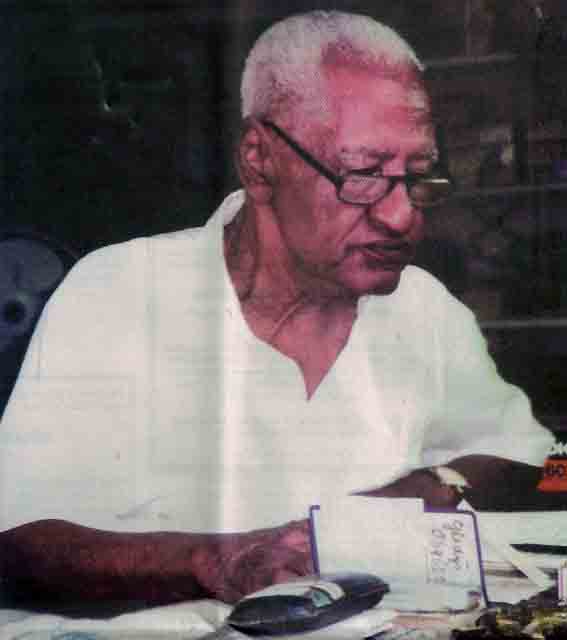
Elis Juliana
Elis Juliana stands as one of the most towering cultural titan and visionary polymaths in the history of the Dutch Caribbean [1]. Revering him as the undisputed "cultural conscience" and "griot" of Curaçao, historians, artists, and linguists celebrate his monumental life's work as a poet, visual artist, sculptor, folklorist, self-taught archaeologist, and ethnologist [2]. Born into deep economic deprivation during an era when foreign industrialization threatened to obliterate the ancestral memory of Afro-Curaçaoan society, Juliana dedicated his life to rescuing, cataloging, and elevating the tangible and intangible heritage of his people [3]. Alongside fellow literary icons such as [Pierre Lauffer](/profiles/pierre-lauffer) and Luis Daal, Juliana formed the revered *Grote Drie* ("The Big Three") of 20th-century Papiamentu literature, proving that the creole mother tongue possessed the aesthetic range, emotional subtlety, and intellectual power to produce masterworks of modern poetry [4]. Yet Juliana was far more than an elite literary practitioner; he was a decolonial memory-keeper who traversed the scrublands and rural *kunuku* estates of the ABC islands (Aruba, Bonaire, and Curaçao) with a tape recorder and pickaxe, listening to the elderly generation whose parents had endured chattel slavery [2][5]. His pioneering collaboration with Father Paul Brenneker culminated in the world-famous **Zikinzá collection**—a vast archive of over 1,400 field recordings documenting ancient songs, herbal medicine, ancestral folklore, and work rhythms [1][3]. Through his unique philosophical and ethnographical methodology, later coined by scholars as *Julianismo*, he insisted that Afro-Caribbean communities should not merely be examined from above by colonial researchers, but understood from within through their own nuanced "ways of speaking" (*forma di papia*) [2]. From delicate coral stone sculptures to crystalline haikus, Elis Juliana breathed eternal dignity into the soul of Curaçao [6]. ### Early Life and Humble Beginnings in Nieuw Nederland Elis Juliana was born on August 8, 1927, in the working-class neighborhood of Nieuw Nederland, situated just outside the historic urban core of Willemstad, Curaçao [1][7]. He was born a twin alongside his sister to Maria Antonia "Mayo" Juliana, an impoverished Afro-Curaçaoan washerwoman, and Hosé "Hosé'i Ñaña" Alvares, a skilled tailor and itinerant folk musician [7]. In an autobiographical anecdote that poignantly encapsulated the destitute conditions of his childhood, Juliana frequently recounted that his mother had intended to name him "Ellis" with two 'l's; however, the colonial civil registration office demanded an extra administrative fee for the additional letter, which his mother could not afford, leaving his legal name permanently recorded as "Elis" [1][8]. Growing up in the tight-knit but economically strained alleyways of Nieuw Nederland, young Elis was endowed with voracious curiosity and an acute visual imagination [1]. In an environment where expensive toys and lavish excursions were non-existent, Juliana famously described the modest earthen yard behind his home as his "Disney World" [7]. Armed with a discarded magnifying glass, the young boy spent endless hours crouched in the dirt, observing the complex architecture of ant colonies, the movement of beetles, and the textures of native cacti and coral stone formations [7][8]. This innate habit of close, reverent observation of microscopic detail laid the empirical foundation for his future dual vocations as a naturalist-folklorist and a visual artist [2].  Juliana received his basic primary schooling at the St. Jozef elementary school, after which he enrolled in the local Catholic craft school (*ambachtsschool*) to study technical mechanics and ironworking [1][7]. However, his family's severe financial hardship forced him to terminate his formal schooling at the age of fifteen so that he could enter the workforce full-time to support his mother and siblings [7][8]. Juliana subsequently held a diverse array of working-class occupations: he was employed as a mechanical apprentice at the Royal Netherlands Marine barracks, laboured at the burgeoning Shell oil refinery, served as a correctional prison guard, and later wore the uniform of a colonial police officer [1][7]. These varied manual jobs immersed Juliana directly within the daily struggles, slang, and humor of ordinary working-class Antilleans, giving him an intimate, unmediated understanding of the very community whose cultural survival he would soon champion [2]. ### The Crucible of Industrial Modernization and Cultural Erasure To understand the urgency that animated Elis Juliana's life work, one must recognize the seismic economic and social transformation that swept Curaçao during the first half of the twentieth century [3]. Following the establishment of the Royal Dutch Shell oil refinery (Isla) in 1915 and 1918, Curaçao transformed virtually overnight from an impoverished, agrarian-maritime colony into one of the largest oil-refining centers in the world [1][3]. The rapid influx of capital, modern wage labor, and foreign workers brought immense material development, but it also triggered a catastrophic rupture with traditional rural folklife [2][3]. As rural families abandoned the agricultural *mondi* (scrubland wilderness) to settle in dense urban enclaves around Willemstad, ancestral practices—such as the communal *seú* harvest rituals, rhythmic agricultural work songs (*kantika di trabou*), and the clandestine drumming ceremonies of the *tambú*—were rapidly stigmatized as backward or superstitious relics of the past [1][5]. Furthermore, the Dutch colonial educational curriculum and the Roman Catholic Church systematically suppressed the native Papiamentu language in classrooms, enforcing Dutch as the sole legitimate vehicle for intellectual and civic life [4][9]. Juliana realized with terrifying clarity that the elderly generation—the *grandinan* who held the centuries-old oral libraries of Afro-Curaçaoan music, herbal medicine, and philosophy dating back to the era of the 1795 slave rebellion led by [Tula](/profiles/tula)—were dying off, taking an entire civilization's memory with them to the grave [2][5]. > "A people without memory is like a tree without roots; when the wind of modernity blows, it falls without knowing why it stood. We must listen to the elders, for in their whispered words lies the blueprint of our survival." [2] ### The Zikinzá Odyssey: Fieldwork with Father Paul Brenneker In 1958, a serendipitous encounter fundamentally altered the course of Caribbean cultural preservation [1][5]. Juliana crossed paths with Father Paul Brenneker (1912–1996), a Dutch Roman Catholic Dominican friar, missionary, and passionate ethnographer who shared Juliana's deep alarm over the erosion of indigenous Antillean culture [3][5]. Recognizing each other as kindred spirits, the Afro-Curaçaoan mechanic-artist and the Dutch priest forged an unprecedented, lifelong research partnership that defied the colonial racial divides of the 1950s [1][5].  Equipped with a portable reel-to-reel tape recorder, photographic cameras, notebooks, and archaeological trowels, Juliana and Brenneker spent decades traversing the unpaved roads and remote *kunukus* of Curaçao, Bonaire, and Aruba [3][5]. They sought out the *grandinan* (community elders), interviewing 267 key tradition-bearers, some of whom had been born as early as 1853 under the brutal yoke of Dutch plantation slavery [1][5]. Juliana's innate warmth, mastery of dialectal Papiamentu, and shared cultural heritage were crucial; where colonial government officials or European academics were met with guarded silence, Juliana was welcomed onto verandas with open arms [2][5]. Between 1958 and the late 1960s, the duo amassed approximately 1,400 audio recordings comprising folk songs, spiritual incantations, personal memoirs, funeral laments, children's rhymes, riddles (*konta kuenta*), and intricate *Nanzi* spider-tales rooted in West African Ashanti mythology [1][3][5]. This monumental body of work became known as the **Zikinzá collection**, named after an archaic Afro-Antillean rhythm and song form [1][5]. In addition to sound recordings, Brenneker and Juliana published the encyclopedic ten-volume series *Sambumbu* (1969–1975), which documented traditional architecture, medicinal plants, religious syncretism, and social customs across the ABC islands [5][10]. Today preserved and digitized by NAAM (National Archaeological Anthropological Memory Management), the Zikinzá archive remains the single most important ethnographic repository of 20th-century Dutch Caribbean cultural history [3][5]. ### Julianismo: Decolonizing the Archive from Within Elis Juliana's contribution to anthropology and archaeology was fundamentally revolutionary because it broke decisively with Western ethnographic paradigms [2]. Caribbean scholars today analyze his distinct theoretical framework under the concept of **Julianismo** [2]. Where imperial anthropologists treated colonial subjects as passive informants to be categorized and analyzed from afar, Juliana approached the *grandinan* as equal intellectual partners, philosophers, and co-curators of their own history [2]. Central to *Julianismo* was Juliana's exploration of what he designated as *forma di papia* ("ways of speaking") [2]. Juliana recognized that for centuries, enslaved and disenfranchised Afro-Curaçaoans had developed sophisticated linguistic strategies—employing double entendre, irony, coded proverbs, and deliberate ambiguity—to critique oppressive masters without suffering violent retribution [2]. Juliana termed this the "poetics of concealment" [2]. He demonstrated that these oral expressions were not primitive folklore, but rigorous intellectual survival mechanisms that required deep cultural literacy to decode [2]. Furthermore, Juliana practiced what modern scholars call multimodal material archaeology [2][3]. Long before formal archaeological legislation existed in the Netherlands Antilles, Juliana served as a field researcher and investigator for the Archaeological-Anthropological Institute of the Netherlands Antilles (AAINA) [2][3]. With his hands, he unearthed pre-Columbian Amerindian artifacts of the Caiquetio and Arawak peoples, while simultaneously rescuing post-emancipation everyday material culture—such as discarded iron *chapis* (agricultural hoes), wooden pounding mortars, clay cooking vessels, and traditional *tambú* barrel drums [1][3]. For Juliana, the soil and the oral voice were two halves of the same sacred book [2]. ### The "Big Three" and Poetic Mastery in Papiamentu Alongside his ethnographical fieldwork, Elis Juliana emerged as a literary luminary who helped catalyze a renaissance in Papiamentu poetry [4][9]. In the mid-20th century, alongside his close contemporaries [Pierre Lauffer](/profiles/pierre-lauffer) and Luis Daal, Juliana formed the triumvirate celebrated as the *Grote Drie* ("The Big Three") of Curaçaoan literature [4][9]. While intellectuals like [Cola Debrot](/profiles/cola-debrot) and [Boeli van Leeuwen](/profiles/boeli-van-leeuwen) often explored Antillean existential identity through Dutch-language prose, and children's authors like [Nilda Pinto](/profiles/nilda-pinto) adapted folklore for schools, Juliana and Lauffer elevated native Papiamentu into a rigorous poetic language of the highest order [4][9]. Juliana burst onto the literary scene in 1956 with the publication of his iconic poetry collection **Flor di Datu** (*Cactus Flower*), followed in 1961 by **Flor di Anglo** [1][4]. In these volumes, Juliana discarded conventional, rigid European rhyming meters in favor of free verse informed by the natural cadence of Antillean speech and the intoxicating syncopations of the *tumba* and *tambú* [4][9]. His poems celebrated the dignity of washerwomen, street vendors, sugarcane cutters, and fishermen, transforming ordinary working-class experiences into epic lyrical portraits [1][4]. His acclaimed poem *"E Nigrita Catan"* captured the bittersweet complexities of Afro-Caribbean female identity under colonial hierarchies with breathtaking lyricism [4]. Juliana was also a daring literary innovator who introduced the Japanese **haiku** to the Papiamentu language [6][7]. In masterly collections such as *Un mushi di haiku* (1993) and *Haiku den lus di animal* (2007), he utilized the strict seventeen-syllable form to distill Caribbean nature, human foolishness, and ecological wisdom into sharp, crystalline epigrams [6][7]. > *Bichi ta siegu / ma e sa unda koba / saka probecho.* > > "The worm is blind, / yet it knows where to dig / to reap its reward." [6][7] Beyond poetry, Juliana authored sociopolitical treatises, most notably **OPI** (*Organisashon Planifikashon Independensia*), a multi-volume philosophical exploration examining the psychological, cultural, and economic prerequisites for authentic Antillean independence and self-reliance [10]. ### Visual Arts and Coral Sculptures: Giving Form to Ancestral Spirits Elis Juliana's creative genius was inherently multidisciplinary; what he could not capture in verses or audio reels, he carved into physical form [1][11]. As a self-taught visual artist, Juliana began exhibiting his drawings, paintings, and sculptures in the 1960s, quickly establishing himself as one of the premier visual artists in the Dutch Caribbean [1][11]. His most celebrated artistic achievements were his **coral stone sculptures** [1][11]. Working with porous, weathered coral limestone gathered along the rugged north coast of Curaçao, Juliana allowed the natural crevices, fossils, and indentations of the marine stone to dictate the contours of his work [1][11]. His sculptures frequently depicted maternal archetypes—reverent mother-and-child compositions symbolizing the resilience of the Caribbean matriarchy—as well as solemn ancestral figures emerging from the bedrock [1][11]. He also sculpted extensively in local hardwood (*guayacán*), mahogany, and recycled metal [1]. In recognition of his mastery, Elis Juliana was awarded the prestigious **Cola Debrot Prize** for the visual arts in 1973, Curaçao's highest civilian cultural distinction [1][11]. ### Final Honors, Death, and Enduring Legacy Throughout his twilight years, Elis Juliana was universally revered as the living embodiment of Curaçao's cultural soul [1][7]. In 1986, the Pierre Lauffer Foundation honored his literary lifetime achievements with the **Chapi di Plata** (Silver Rake Prize), an award symbolizing deep love and cultivation of the native language [4][9]. He was made an Officer in the Order of Orange-Nassau and became a beloved national mentor to younger generations of writers, musicians, and visual artists across the ABC islands, including folklorist [Frans Booi](/profiles/frans-booi) in Bonaire [5]. The crowning institutional recognition of his life arrived on June 18, 2013, when the University of Curaçao (UoC) conferred upon Elis Juliana the degree of **Doctor Honoris Causa** (Honorary Doctorate) in recognition of his peerless, lifelong contributions to literature, linguistics, archaeology, and anthropology [1][7]. The ceremony was an intensely emotional moment of national celebration, acknowledging that a man who had been forced to leave craft school at fifteen had achieved what no university seminar could: the rescue of an entire nation's collective consciousness [7][8]. Just five days after receiving his honorary doctorate, on **June 23, 2013**, Elis Juliana passed away peacefully in Willemstad at the age of 85 [1][7]. His passing plunged Curaçao into profound national mourning, with government flags flown at half-mast and cultural tributes resounding across the Caribbean [7]. Today, his legacy lives vibrantly on the walls of Willemstad—immortalized in massive street murals in Punda and Otrabanda—in school textbooks, and within the halls of NAAM [1][5]. Elis Juliana proved to the world that within the humble, whispered songs of the Caribbean *kunuku* lies a treasury of human wisdom as vast and enduring as the ocean itself [2].
View Profile →Ellsworth "Shake" Keane
### Introduction Ellsworth McGranahan "Shake" Keane was a rare and brilliant polymath of the twentieth-century Caribbean diaspora, achieving international renown both as a pioneering jazz trumpeter and flugelhornist and as an award-winning poet. Born in St. Vincent and the Grenadines, Keane’s creative journey was characterized by migration and a relentless crossing of boundaries. He moved from the colonial Caribbean to postwar London, toured the concert halls of West Germany, returned home to help shape his newly independent nation, and spent his final years in the quiet landscapes of Norway. In the musical realm, Keane was a key architect of the Joe Harriott Quintet, the group that introduced European free-form jazz in the early 1960s. In literature, his poetry merged the vernacular rhythms of the West Indies with the improvisational freedom of jazz, culminating in his 1979 Casa de las Américas Prize-winning collection, *One a Week with Water*. Throughout his life, Keane struggled with the displacement of the migrant, the indifference of political regimes, and the difficult task of balancing two demanding creative callings.  ### Early Life and Nickname in Kingstown Ellsworth Keane was born in Kingstown, the capital of St. Vincent, on May 30, 1927. He grew up in an environment where music and language were deeply valued. His father, Charles Keane, was a prominent local musician who taught Ellsworth and his brothers to play brass instruments. The young Ellsworth showed an immediate aptitude for the trumpet, performing publicly by the age of six and leading a family band with his brothers by fourteen. St. Vincent in the 1930s and 1940s was a British crown colony, heavily reliant on sugar and arrowroot production, and deeply marked by colonial stratification. In this environment, Keane found an escape in literature, particularly the works of William Shakespeare. He read the plays voraciously and would frequently recite passages to his classmates, a habit that earned him the nickname "Shake." While some childhood friends claimed the moniker also referred to his love of chocolate milkshakes, it was his theatrical command of language that defined his early years [1]. Before he left the island, Keane had already begun publishing poetry, releasing two pamphlets, *L'Oubli* (1950) and *Ixion* (1952), which showed a sophisticated command of classical forms and modernist themes. ### The London Years: Literature, BBC, and Jazz In 1952, Keane joined the historic migration of West Indian intellectuals to the United Kingdom, arriving in London with plans to study English literature at the University of London. He quickly became a vital presence in the Caribbean expatriate literary circle. He worked closely with producer [Henry Swanzy](/profiles/henry-swanzy) on the BBC’s ground-breaking radio program *Caribbean Voices*, which served as a crucial launchpad for writers like [George Lamming](/profiles/george-lamming), [Kamau Brathwaite](/profiles/kamau-brathwaite), and [Derek Walcott](/profiles/derek-walcott). Keane read his own poetry, reviewed the work of others, and conducted interviews, helping to foster a distinct West Indian literary identity in exile. To support himself, Keane played trumpet in London’s jazz clubs, moving from traditional swing to the complex rhythms of bebop. In 1959, he joined the quintet led by the Jamaican alto saxophonist [Joe Harriott](/profiles/joe-harriott). Between 1960 and 1965, this group recorded a series of albums—*Free Form* (1960), *Abstract* (1962), and *Movement* (1963)—that pioneered European free jazz. Working alongside Harriott and bassist [Coleridge Goode](/profiles/coleridge-goode), Keane developed a highly personal voice on the trumpet and flugelhorn. Rather than relying on standard chord progressions, the quintet focused on collective improvisation, texture, and emotional expression. > "Shake Keane was a musician of rare lyricism. His flugelhorn had a warm, vocal quality that brought a poetic depth to Joe Harriott's abstract compositions." [2] Keane’s choice of the flugelhorn was significant; its wider bore produced a darker, rounder, and more burnished tone than the trumpet, which suited his lyrical, narrative approach to improvisation. His playing was a musical extension of his poetry, marked by sudden shifts in mood, humor, and a deep, blues-inflected Caribbean sensibility. ### The European Continental Phase: Germany In 1965, as the London jazz scene shifted under the influence of rock and roll, the Joe Harriott Quintet disbanded. Keane relocated to Cologne, Germany, accepting a position as a featured soloist with the Kurt Edelhagen Radio Orchestra. Edelhagen’s big band was one of the most prestigious jazz orchestras in Europe, and Keane spent seven years there, enjoying financial stability and professional respect that had been hard to come by in London. Despite the comfortable life in Germany, Keane felt increasingly isolated from his literary roots. He continued to write poetry, but the lack of an English-speaking literary community left him feeling detached. He began to yearn for a return to the Caribbean, hoping to contribute to the cultural development of his homeland, which was moving toward independence from Britain. ### Return to St. Vincent and the Crisis of Culture In 1972, the Premier of St. Vincent, [James Mitchell](/profiles/james-mitchell) (later Sir James Mitchell), invited Keane to return to the island to serve as its first Director of Culture. Keane accepted the post with enthusiasm, envisioning a comprehensive cultural program that would document Vincentian folklore, establish community libraries, and integrate the arts into the national school curriculum.  However, Keane's return was marred by political division. In 1974, a political shift brought [Milton Cato](/profiles/milton-cato) to power as Premier. The Cato administration had little interest in Keane's progressive cultural policies, viewing them with suspicion. Keane found himself caught in bureaucratic battles, his funding slashed, and his initiatives blocked. The situation reached a crisis during the teacher strikes and civil unrest of the late 1970s. Keane, who sympathized with the strikers, became a target of government disapproval. In 1975, he resigned from his post, disillusioned by the political hostility. > "A poet in a political office is like a trumpet player in a library—eventually, someone is going to tell you to make less noise." [3] Despite this heartbreak, the late 1970s was a period of intense artistic output for Keane. Following the catastrophic eruption of the La Soufrière volcano in April 1979, he wrote *The Volcano Suite*, a cycle of five poems that captured the raw power of the eruption and the resilience of the Vincentian people. That same year, his poetry collection *One a Week with Water* won the prestigious Casa de las Américas Prize in Havana, Cuba, a major triumph that recognized his unique blending of standard English, West Indian nation language, and jazz rhythms. ### Final Years: New York, Norway, and Legacy Unable to sustain himself financially or creatively in St. Vincent, Keane left the island in 1981, moving first to New York. In the late 1980s, seeking a quieter environment, he relocated to Norway, settling in Bergen and later Oslo. In Norway, Keane was embraced by the local jazz community, performing frequently and teaching young musicians. He continued to write, though his work remained largely unpublished during this period. In 1997, Keane was diagnosed with stomach cancer. He died in a hospital in Oslo on November 10, 1997, at the age of seventy. In accordance with his wishes, his remains were returned to St. Vincent and buried in the churchyard of St. George's Cathedral in Kingstown, returning him to the landscape that had shaped his earliest songs. Today, Shake Keane is recognized as a vital figure in Caribbean modernist poetry and a pioneer of global jazz. His biographer, Philip Nanton, has helped restore his literary reputation through the biography *Riff: The Shake Keane Story* (2021), illustrating how Keane's life reflected the challenges and the creative triumphs of the Windrush generation.
View Profile →Esther Beneby
### Introduction Esther Beneby (1932–2014) stands as a towering figure in the cultural and economic history of the Inagua Islands in the southern Bahamas. While Great Inagua has long been internationally recognized for its vast solar salt production and its majestic colonies of West Indian flamingos, it was Beneby who championed the island’s potential for a thriving, sustainable local craft industry. In an era when economic opportunities for women in the rural Family Islands of the Bahamas were severely limited, Beneby leveraged the natural resources of her environment to create a unique artisanal movement. Her pioneering efforts not only provided a vital secondary source of income for local families but also helped to forge a distinct Inaguan cultural identity that resonated throughout the Bahamian archipelago. ### Early Life in Matthew Town Born on April 12, 1932, in Matthew Town—the only settlement on Great Inagua—Esther Beneby was raised in a community intimately tied to the harsh yet beautiful natural environment. Matthew Town in the 1930s and 1940s was a remote outpost. The island, located just 55 miles off the eastern tip of Cuba, felt worlds away from the political bustling of the capital, Nassau. Beneby's father worked as a laborer in the salt pans, a grueling occupation that defined the lives of most men on the island. Her mother was a traditional homemaker who, like many women of her generation, supplemented the family’s meager income through subsistence farming and basic sewing. From a young age, Beneby demonstrated a profound appreciation for the raw beauty of her surroundings. While other children played near the settlement, she would often wander the coastline, collecting sea glass, intricate conch shells, and molted feathers from the flamingos that flocked to the island's interior lakes. She was fascinated by the texture of the dried sisal plants and the shimmering, geometric perfection of unrefined salt crystals that formed naturally along the shorelines. These early explorations would lay the foundation for her future life's work.  ### The Shadow of the Salt Industry To understand Beneby's impact, one must understand the economic monolith that was the salt industry in Inagua. By the mid-20th century, the Erickson family from the United States had mechanized the local salt operations, which eventually became Morton Salt, one of the largest solar saline operations in North America. The salt industry brought modernization, electricity, and steady wages to Matthew Town, but it also created an economic monoculture. The island's fortunes rose and fell with the price of salt and the frequency of hurricanes that could wipe out a year's harvest in a single day. Beneby recognized the vulnerability of this single-industry reliance. Moreover, she saw that the salt company provided few avenues for female employment. Women in Matthew Town were largely excluded from the formal economy. After completing her rudimentary primary education, Beneby began experimenting with local materials to create household items and decorative pieces. She wove baskets from dried silver top palm and sisal, integrating the naturally molted pink feathers of the flamingos to create striking, colorful designs that were entirely unique to Inagua. > "We were surrounded by a wealth that the salt bosses couldn't see. Our gold was in the palm leaves, the discarded shells, and the pink feathers that the wind blew across the salinas. We just had to learn how to weave it together." > — *Esther Beneby, 1984 interview with the Bahamian Historical Society* [1] ### The Genesis of the Craft Movement In 1962, as the Bahamas began moving toward majority rule and eventual independence under leaders like [Lynden Pindling](/profiles/lynden-pindling), a sense of national pride and self-determination swept through the islands. Inspired by this awakening, Beneby formally organized the Inagua Women's Artisanal Cooperative. Starting with just five women gathered on the porch of her modest wooden home, the cooperative began systematically producing crafts for sale. Beneby’s genius lay in her product diversification and quality control. She developed a technique for carving and polishing the dense, sun-baked salt blocks into translucent sculptures, capturing the essence of the island's main export in a refined, artistic form. Additionally, she elevated the traditional Bahamian straw work by introducing intricate, tightly woven geometric patterns inspired by the salt flats themselves. She also utilized discarded conch shells, polishing them to a high sheen to create jewelry and decorative inlays. Word of the exceptional crafts coming out of Inagua slowly reached Nassau. By the late 1960s, tourists visiting the capital began requesting 'Inagua pink' baskets and salt sculptures. Beneby established a supply line, sending crates of her cooperative's goods on the weekly mailboats that connected Inagua to New Providence. ### Expanding the Cooperative and Empowering Women The 1970s and 1980s marked the golden era of Beneby's craft movement. The cooperative grew to include over fifty women, representing a significant portion of Matthew Town's female population. The income generated from the sale of these artisanal goods had a transformative effect on the local community. Women were able to send their children to high school in Nassau, improve their homes, and achieve a degree of financial independence previously unknown on the island. Beneby was a stern but nurturing leader. She insisted that every piece sold under the cooperative's name met exacting standards of craftsmanship. She also recognized the importance of ecological sustainability long before it became a global buzzword. She instituted strict rules for the cooperative members: flamingo feathers could only be collected from the ground (never plucked), and the harvesting of palm fronds was carefully rotated to ensure the health of the local flora. During this time, her work attracted the attention of regional cultural advocates, including [Arthur Foulkes](/profiles/arthur-foulkes), who championed the promotion of authentic Bahamian culture. Beneby's pieces were featured in national exhibitions, and she was frequently invited to Nassau to conduct workshops on traditional weaving and resource utilization.  ### Later Years and Lasting Legacy In her twilight years, Esther Beneby remained a dedicated advocate for Inagua's cultural heritage. She lobbied the local government to establish a dedicated space for the artisans, resulting in the opening of the Inagua Craft Centre in 1998. This facility served as both a workshop and a museum, showcasing the evolution of Inaguan crafts and providing a central hub for visitors to purchase authentic goods. Beneby passed away peacefully in her sleep on November 15, 2014, at the age of 82. Her funeral in Matthew Town was attended by hundreds, including dignitaries from Nassau who recognized her immense contribution to the Bahamian cultural tapestry. > "Esther Beneby did not just weave straw and polish shells; she wove the very fabric of the modern Inaguan community. She proved that the Family Islands possess an innate creative wealth that can sustain and uplift its people." > — *Dr. Gail Saunders, Bahamian Historian* [2] Today, the techniques pioneered by Esther Beneby are still taught at the Inagua Craft Centre. Her legacy endures not only in the beautiful objects created by the artisans who followed in her footsteps but also in the enduring spirit of self-reliance and environmental stewardship she instilled in her community. She transformed the raw, sun-drenched resources of her island home into a beacon of Bahamian artistry, proving that true wealth lies in the creative spirit of the people.
View Profile →
Francisco Oller
### Francisco Oller: The Impressionist Light of the Caribbean #### Introduction Francisco Oller y Cestero is widely regarded as the founding father of modern Puerto Rican painting [1]. As the only Latin American artist to participate directly in the development of French Impressionism, Oller occupied a unique position in nineteenth-century art history [2]. He bridged the gap between the prestigious academic salons of Europe and the vibrant, untamed reality of the Caribbean [3]. Over his long career, Oller moved fluidly between Realism, Naturalism, and Impressionism, adapting these European avant-garde styles to capture the unique light, landscape, and social struggles of his homeland [4]. A dedicated teacher, abolitionist, and patriot, his art was never detached from the political and social realities of Puerto Rico [1]. Through his masterpieces, Oller gave visual form to an emerging Puerto Rican national identity, challenging colonial narratives and elevating the lives of the island's working-class and rural citizens [3]. #### Early Life and Artistic Awakening in San Juan (1833–1851) Born in Bayamón, Puerto Rico, on June 17, 1833, Francisco Oller grew up in an island colony defined by the harsh realities of Spanish colonial rule and the plantation economy [1]. His father, Cayetano Juan Oller y Fromesta, was a respected government official, and his mother, María del Carmen Cestero Dávila, belonged to a well-connected local family [5]. From an early age, Oller displayed an extraordinary talent for drawing. At the age of eleven, he began formal art training in San Juan under Juan Cleto Noa, a painter who ran a small academy [5]. Under Noa's guidance, the young Oller copied European prints and developed a solid grounding in academic drawing techniques. Mid-nineteenth-century Puerto Rico offered very few opportunities for aspiring artists. The Spanish colonial administration did not support local art institutions, and the island's elite preferred to import religious art and portraits from Europe rather than sponsor local talent. The social landscape was also deeply divided; the sugar boom had expanded African slavery, while a rigid racial and class hierarchy separated the colonial administration, the wealthy landowners, and the impoverished rural peasants (*jíbaros*) and enslaved laborers [4]. Observing these stark inequalities in his youth would profoundly shape Oller's artistic and political sensibilities, predisposing him toward social realism and reform. #### Studies in Europe: Madrid and Paris (1851–1868) Recognizing his exceptional talent, Oller's family and local sponsors enabled him to travel to Spain in 1851 to pursue higher artistic education [5]. He enrolled in the prestigious Real Academia de Bellas Artes de San Fernando in Madrid, where he studied under Federico de Madrazo y Kuntz, the leading Spanish portraitist and director of the Prado Museum [5]. Madrazo trained Oller in the strict neoclassical and romantic traditions of the Spanish court. While in Madrid, Oller spent hours copying the works of Spanish masters like Diego Velázquez and Francisco Goya at the Prado, absorbing their mastery of light, color, and psychological depth. However, the center of the artistic world was Paris, and in 1858, Oller moved to the French capital to immerse himself in the avant-garde [3]. He entered the atelier of the academic painter Thomas Couture and later studied under Charles Gleyre [5]. More importantly, Oller began attending the Académie Suisse, a free-form art school where artists could paint from live models without strict academic supervision [1]. It was here that Oller entered the social and artistic circles of the painters who would soon revolutionize Western art. In Paris, Oller formed close friendships with Camille Pissarro, Paul Cézanne, Claude Monet, Auguste Renoir, and Frédéric Bazille [3]. Pissarro, who was born on the neighboring Caribbean island of Saint Thomas, shared a unique cultural bond with Oller as a fellow Caribbean expatriate, and the two remained close friends and correspondents for decades [6]. Oller also worked closely with Paul Cézanne; the two painters frequently shared studios, traveled to the French countryside to paint *en plein air* (outdoors), and influenced each other's early explorations of form and light [1]. Oller was also deeply influenced by Gustave Courbet, the leader of the Realist movement [3]. Courbet’s rejection of historical and mythological subjects in favor of representing the everyday lives of ordinary people resonated with Oller’s social conscience. Oller adopted Courbet's belief that art should have a moral and social purpose, a philosophy that would guide his later work in Puerto Rico [4]. #### Artistic Philosophy and the Duty of the Artist Oller rejected the idea of "art for art's sake." He believed that the artist had a social responsibility to be useful to their society, using their talent to expose injustice, educate the public, and promote moral improvement [4]. This belief was the cornerstone of his artistic philosophy. > El artista y el escritor tienen la obligación de ser útiles. Las pinturas del artista deben ser como libros que enseñen, que ayuden a mejorar la condición humana, que ataquen el mal, que exalten el bien; por eso defino el arte como la representación de la naturaleza para el fin de mejorar la condición humana. > > — Francisco Oller This dedication to social utility set Oller apart from many of his French Impressionist contemporaries, who were primarily interested in the formal experimentation of light and color. While Oller enthusiastically adopted the Impressionist technique of painting outdoors and capturing fleeting atmospheric effects, he always anchored his work in a concrete social and human context [3]. #### Return to Puerto Rico and the Educational Crusade (1868–1884) In 1868, motivated by a patriotic desire to elevate the cultural life of his homeland, Oller returned to Puerto Rico [1]. He was dismayed by the lack of art education on the island and immediately set out to change it. He founded the *Academia de Dibujo y Pintura* (Free Academy of Art of Puerto Rico) in San Juan, offering free classes to students from all social backgrounds, including women, poor students, and people of color [5]. Oller believed that art education should not be a luxury for the wealthy but a tool for personal and national development. To support his students, he wrote an instructional manual, *A Treatise on Drawing and Painting*, which emphasized observation of nature over the mechanical copying of prints. Despite facing constant financial difficulties and a lack of support from the colonial government, Oller ran several schools throughout his life, training a new generation of Puerto Rican artists and introducing the island to modern European artistic techniques [5]. #### Radical Politics, Abolitionism, and Friendships During his time in Puerto Rico and his subsequent visits to Europe, Oller became active in liberal and reformist political circles. He was a passionate abolitionist, joining the struggle against African slavery on the island, which was finally abolished in 1873. He aligned himself with Puerto Rican intellectuals who sought greater autonomy or independence from Spain. Among his closest friends was [Ramón Emeterio Betances](/profiles/ramon-betances), the medical doctor, writer, and revolutionary leader of the Grito de Lares uprising of 1868 [6]. Oller shared Betances's democratic ideals and anti-colonial stance. He painted a celebrated portrait of Betances and stayed in touch with him during Betances's exile in Paris [6]. Oller also painted a portrait of [Eugenio María de Hostos](/profiles/eugenio-hostos), which is one of the most famous representations of the educator [1]. Oller's art became a vehicle for these radical political beliefs, criticizing the colonial plantation system and celebrating the dignity of the island's marginalized populations. #### Masterpieces: Social Realism and Caribbean Light (1890s) Oller's mature style culminated in the 1890s with a series of monumental works that combined the social realism of Courbet with the vibrant light and color of French Impressionism.  His ultimate masterpiece, *El Velorio* (The Wake), painted circa 1893, is a monumental canvas that depicts a *baquiné*—a traditional rural Puerto Rican wake for a deceased infant [2]. In Puerto Rican peasant culture, the death of a young child was celebrated with music, drinking, and games, as it was believed the child's soul went directly to heaven as a "little angel" (*angelito*) [2]. Oller uses this scene to launch a devastating social critique. The painting depicts the interior of a peasant hut crowded with characters: drunken guests, a priest looking indifferently at the scene, peasants flirting, and a wild dog stealing food. In the center, the deceased child lies on a table covered in flowers, while the grieving mother stands apart, her face a portrait of silent sorrow. Through *El Velorio*, Oller criticized the ignorance, superstition, and moral decay that he believed were fostered by colonial neglect and religious hypocrisy, while simultaneously capturing the vibrant, chaotic reality of Puerto Rican rural life [3]. Another major work of this period is *La Escuela del Maestro Rafael Cordero* (1890–1892). This painting is a posthumous tribute to Rafael Cordero Molina, a free Black tobacco worker who had dedicated his life to providing free education to children of all races and social classes in San Juan [7].  Oller’s painting depicts the humble interior of Cordero’s home and workshop [7]. Cordero is shown surrounded by eager young students of diverse racial backgrounds, reading and writing under his gentle guidance [7]. In the corner, the tobacco-spinning table represents the manual labor that supported the school. The painting is a powerful celebration of racial integration, charity, and the transformative power of education, reflecting both Cordero's historical legacy and Oller's own pedagogical ideals. #### Still Lifes and the Landscape of the Antilles In addition to his large-scale narrative paintings, Oller was a pioneer of Caribbean still-life painting. In works like *Bodegón con plátanos y bananas* (Still Life with Plantains and Bananas), he rejected the traditional European subjects of game and northern fruits in favor of local tropical products: plantains, coconuts, yams, and avocados. He painted these fruits with a rich, tactile realism that celebrated their textures and shapes, creating a distinct Caribbean visual vocabulary. Oller was also a master landscape painter, capturing the brilliant tropical light of Puerto Rico. In paintings like *Hacienda Plazuela* and *Hacienda Aurora*, he depicted the sprawling sugar cane plantations of the coastal plains. While these landscapes are beautiful representations of Caribbean nature, they also carry a quiet political weight, depicting the centers of colonial economic power and the labor of the sugar workers who drove the island's economy. #### Final Years, Death, and Legacy Oller lived his final years in San Juan, continuing to paint and teach despite his advancing age and worsening financial situation [5]. He was recognized as a major cultural figure, serving as the Painter of the Royal Chamber under the brief reign of Amadeo I of Spain (1872) and receiving honors from the Spanish crown, yet he died in near-poverty on May 17, 1917, at the municipal hospital in San Juan [1]. Today, Francisco Oller is celebrated as the national painter of Puerto Rico and a pioneer of Latin American art [3]. By integrating the revolutionary techniques of European Impressionism and Realism with a deeply felt commitment to his homeland, he freed Puerto Rican art from its colonial shackles. His works are housed in major international museums, including the Musée d'Orsay in Paris and the Brooklyn Museum in New York, serving as a testament to a unique artist who captured the light and soul of the Caribbean [3].
View Profile →Françoise Gréaux
# Françoise Gréaux: Matriarch of Saint Barthélemy Heritage and Pioneer of Palmetto Craft ### Introduction and Historical Context of Saint Barthélemy The history of Saint Barthélemy—a rugged, arid limestone island of eight square miles nestled in the northern Lesser Antilles—is a tale of extraordinary human resilience [1]. Unlike its lush volcanic neighbors whose economies were driven by plantation agriculture, Saint Barthélemy offered meager soil and scarce freshwater. Settled in 1648 by French pioneers predominantly hailing from Normandy and Brittany, the island's inhabitants were forced to adapt to a harsh environment through subsistence farming, maritime trade, and artisanal ingenuity [4]. Throughout centuries of geopolitical shifts, including nearly a century of Swedish colonial rule between 1784 and 1878 before its return to France, historic lineages such as the Gréaux, Lédée, and Magras families anchored the island's unique cultural identity. Among these revered lineages stands Françoise Gréaux, a beloved traditionalist, cultural heritage preserver, artisanal weaving pioneer, and community matriarch whose life's work has safeguarded the authentic soul of Saint Barthélemy amidst rapid modern transformation [1]. As contemporary Caribbean historiography increasingly emphasizes the preservation of intangible cultural heritage alongside political milestones achieved by figures like [Victor Schoelcher](/profiles/victor-schoelcher) and [Aimé Césaire](/profiles/aime-cesaire), Gréaux emerges as a monumental guardian of folk memory. Her tireless advocacy has ensured that the ancestral customs, oral traditions, and intricate manual crafts forged by centuries of island survival remain vibrant living practices rather than static relics of a forgotten past. ### Early Life and Heritage within the Gréaux Lineage Born into the historic Gréaux lineage—one of the foundational families recorded in the earliest seventeenth-century censuses of Saint Barthélemy—Françoise grew up immersed in the distinctive rhythms of island life [4]. The Gréaux family maintained deep historical roots across several traditional districts, most notably in the coastal village of Corossol, renowned as the cradle of the island's indigenous artisanal heritage, as well as in Colombier, Lorient, and Gustavia. In the mid-twentieth century, before the advent of commercial aviation and luxury tourism transformed Saint Barthélemy into an international playground, daily existence required self-reliance, communal solidarity, and a profound respect for natural resources [1]. Young Françoise was educated in the values of her Antillean-Norman ancestors, where oral storytelling served as the primary vehicle for moral instruction and historical transmission. Within the matriarchal social fabric of Corossol, while men frequently embarked on long maritime voyages or engaged in grueling traditional fishing, women formed the economic and cultural backbone of the community. From her mothers, aunts, and grandmothers, Françoise absorbed the rich Creole folk wisdom, ancestral culinary arts, and the rigorous discipline required to turn local flora into utilitarian masterpieces [3]. This foundational environment instilled in her an abiding reverence for her forebears and ignited a lifelong vocation to protect the fragile threads of Saint Barthélemy's cultural heritage against the encroaching pressures of modernization and globalization. > "To weave the latanier leaf is to weave the very thread of our collective memory; if our hands forget the meticulous movements of our mothers, our island loses its irreplaceable soul." ### Pioneer of Artisanal Palmetto Weaving (*Latanier*) Françoise Gréaux's most celebrated artisanal contribution lies in her pioneering leadership in revitalizing and institutionalizing traditional palmetto weaving, known locally as the craft of the *latanier* [1][3]. For generations, the women of Corossol had harvested the fan-shaped fronds of the local latanier palm (*Coccothrinax barbadensis*), transforming them into exquisite, durable handicrafts. This intricate process demanded immense skill and patience: young palm leaves were carefully harvested at specific lunar phases, sun-dried to achieve a warm golden hue or bleached for pristine whiteness, and subsequently stripped—a delicate technique known as *tillage*—into ultra-fine, uniform strips [3]. These strips were then masterfully braided and sewn into functional items such as the iconic *capeline* (the traditional wide-brimmed sun hat worn by local women), market baskets, bread bins, and intricate table mats. Historically a crucial source of supplemental household income, the art of latanier weaving faced severe decline in the latter half of the twentieth century as imported manufactured goods flooded the Caribbean market and younger generations pivoted toward lucrative careers in the blossoming hospitality industry [3]. Recognizing that the extinction of this craft would represent an irreversible cultural loss, Françoise Gréaux spearheaded a comprehensive movement to elevate straw weaving from a fading domestic chore to a celebrated art form of historical significance. Working alongside fellow traditionalists and cultural organizations, she organized immersive community workshops and masterclasses designed to transmit these complex manual techniques to youth and residents alike [1]. By creating formal educational platforms and publicly showcasing artisanal straw work at cultural festivals across the region, Gréaux successfully re-established the dignity and economic viability of palmetto craft. Her pioneering efforts not only preserved a foundational technique of Caribbean craftsmanship but also inspired a broader regional renaissance in sustainable, plant-based artisanal practices championed by cultural leaders like [Eugénie Magras](/profiles/eugenie-magras).  ### Institutional Leadership at the Bibliothèque Territoriale Beyond her manual craftsmanship, Françoise Gréaux exerted a profound institutional impact through her distinguished tenure as the manager and guiding spirit of the Bibliothèque Territoriale de Saint-Barthélemy in Gustavia for over twenty-two years [2]. Assuming leadership of the territorial library, Gréaux transformed the institution from a conventional repository of printed books into a dynamic, inclusive cultural epicenter dedicated to popular education and heritage conservation. Under her visionary stewardship, the library became the primary sanctuary for the island's historical archives, oral histories, and genealogical records, serving as an invaluable bridge between academic researchers and local families seeking to explore their ancestral lineages [2][4]. Gréaux regularly conceived and curated groundbreaking educational exhibitions and intergenerational workshops that breathed life into local history. Notable among these initiatives were interactive seminars such as "Life in School in the Past" (*La vie à l'école autrefois*), which utilized historical artifacts, old photographs, and personal testimonies to educate contemporary children on the austerities and triumphs of historical island education [2]. She also organized festive cultural assemblies focusing on authentic Antillean Christmas traditions, Creole linguistic heritage, and folklore storytelling sessions. Recognizing the scarcity of children's literature reflecting the specific cultural landscape of Saint Barthélemy, Gréaux authored a series of beloved cultural books and stories, including *La Belle Histoire de Dorsie*, *Alléluia sous les tropiques*, and *La Petite Sardine et le Vieux Pélican* [2]. Through these enchanting literary works, she immortalized local fauna, geographical landmarks, and traditional moral lessons, ensuring that island youth could see their own heritage reflected in literature alongside canonical regional authors such as [Maryse Condé](/profiles/maryse-conde) and [Édouard Glissant](/profiles/edouard-glissant). > "A library must never be a silent vault for dead ideas; it must be a vibrant hearth where the voices of our ancestors speak directly to the curiosity of our children." ### Lasting Legacy as a Community Matriarch Today, Françoise Gréaux occupies a revered status as a community matriarch and an indispensable pillar of Saint Barthélemy's cultural conscience [1]. Her life embodies the seamless integration of artistic craftsmanship, intellectual preservation, and civic generosity. In an era where Saint Barthélemy is globally celebrated as a premier destination for luxury tourism, Gréaux's enduring legacy stands as a powerful testament to the island's authentic, unvarnished historical roots. She has consistently reminded policymakers, residents, and visitors alike that the true allure of Saint Barthélemy resides not merely in its pristine beaches or high-end amenities, but in the enduring spirit of its historic families and the richness of its cultural traditions [1][3]. Her tireless dedication has laid a robust foundation for future generations of cultural preservationists, historians, and artisans. Through her books, her revived palmetto workshops, and her decades of leadership at the Bibliothèque Territoriale, Françoise Gréaux has successfully insulated island heritage from the erosive forces of time [2]. She remains a shining beacon of Antillean-Norman pride, whose monumental contributions ensure that the name Gréaux will forever be synonymous with the preservation, celebration, and living vitality of Saint Barthélemy's cultural patrimony. Her work continues to inspire peer traditionalists across the Caribbean, reinforcing the vital message that grassroots cultural stewardship is the ultimate safeguard of a people's historical identity.
View Profile →Gladwyn "Lassie" Bush
Gladwyn Klosking Bush (born March 14, 1914 – died November 24, 2003), affectionately and universally known throughout the Caribbean as **"Miss Lassie,"** stands as one of the most remarkable visionary intuitive artists in modern art history [1][2]. A Caymanian cultural icon, Miss Lassie did not begin her formal artistic journey until the age of 62, following a profound spiritual awakening marked by vivid divine visions [1][3]. Lacking formal art training or conventional artist supplies, she transformed her historic 19th-century wattle-and-daub family cottage in George Town, Grand Cayman—now celebrated as **"Mind's Eye"**—into an extraordinary living canvas, covering every wall, window shutter, door, and piece of furniture with sacred imagery and maritime memory [2][4]. Her work bridges vibrant Christian prophecy with the rich seafaring heritage of the Cayman Islands, earning her immense national reverence and international acclaim, including appointment as a **Member of the Order of the British Empire (MBE)** [1][5]. Today, her preserved home and intuitive masterpieces remain celebrated cultural treasures of the Caribbean.  ### Early Life in Traditional Cayman Gladwyn Klosking Bush was born on March 14, 1914, in South Sound, a traditional coastal settlement within George Town, Grand Cayman [1][2]. She came of age during an era when the Cayman Islands existed as an isolated, tight-knit maritime society, long before the advent of modern aviation, luxury tourism, and international offshore banking transformed the territory into a global financial center. In the early decades of the 20th century, Caymanian life revolved intimately around the rhythms of the sea, subsistence agriculture, and devout Christian faith. The men of the islands were legendary seafarers, shipbuilding masters, and turtle fishermen who spent grueling months navigating the treacherous waters of the Caribbean basin and Central America, while women anchored the domestic economy, preserved community traditions, and sustained local churches. Growing up within this deeply spiritual and communal environment, Gladwyn absorbed the rich oral traditions, biblical narratives, and folklore of her people. Her family resided in a modest, beautifully constructed wattle-and-daub cottage built between 1878 and 1881 by her grandfather and father utilizing ironwood, local timber, and lime plaster derived from burned coral rocks [4][6]. For over six decades, Miss Lassie lived a quiet, hardworking life dedicated to community service. She worked as a practical nurse and midwife's assistant, tending to the sick and assisting in the birth of generations of Caymanians across George Town and South Sound [1][3]. She also operated a small general store from her property, becoming a trusted pillar of warmth, wisdom, and moral stability in her neighborhood. While contemporaries across the wider Caribbean, such as Jamaican cultural luminary [Edna Manley](/profiles/edna-manley), were actively forging formal Caribbean artistic movements, Miss Lassie's creative spirit nurtured quietly within the sanctuary of her daily devotions and community interactions. ### The Visionary Awakening at Age 62 The trajectory of Gladwyn Bush's life shifted dramatically in 1976 when she was 62 years old [1][3]. Following a period of severe physical illness and intense emotional contemplation, she experienced an overwhelming spiritual epiphany. During her recovery, Miss Lassie began receiving what she described as vivid, recurring visions and prophetic dreams. In these radiant visitations, Jesus Christ, biblical prophets, and heavenly hosts descended upon the Cayman Islands, walking among local palm trees, hovering over coastal waters, and filling the sky with divine light [2][3]. She felt a powerful, undeniable spiritual instruction commanding her to externalize these celestial visions as a visual testimony of faith and thanksgiving. > "I didn't paint because I wanted to be an artist; I painted because the Lord put the visions in my mind and instructed my hands to make marks of praise. When I looked at the bare walls of my home, I saw the angels and the miracles waiting to be released." Lacking any formal artistic training, knowledge of academic color theory, or access to traditional artists' canvases and fine oil paints, Miss Lassie improvised with breathtaking ingenuity. She gathered ordinary commercial house paints, enamel sprays, and basic brushes purchased from local hardware stores [3][4]. Driven by an urgent creative fervor, she began painting directly onto the interior and exterior surfaces of her wattle-and-daub home. When she ran out of wall space, she painted her wooden window shutters, interior doors, ceilings, glass panes, kitchen cabinets, and even her household furnishings, including bedframes, tables, and chairs [2][4]. She referred to her creations not as paintings, but as **"markings"**—sacred inscriptions intended to sanctify her domestic space and communicate divine truth to all who crossed her threshold [3]. ### Masterpieces of "Mind's Eye" and Intuitive Style The body of work produced by Miss Lassie within her home—which came to be known affectionately as **"Mind's Eye"**—represents a masterwork of Caribbean intuitive and outsider art [2][4]. Her aesthetic style is characterized by bold, unblended primary colors, dynamic sweeping lines, fluid spatial arrangements, and an uninhibited emotional directness that bypasses academic convention. Art historians and critics align her work with the great global intuitive masters, such as Haiti's legendary [Hector Hyppolite](/profiles/hector-hyppolite), whose creations were similarly fueled by profound spiritual devotion and cultural memory. Miss Lassie's iconography seamlessly weaves biblical allegory with vernacular Caymanian life. Key thematic motifs within her frescoes include: * **Celestial & Biblical Prophecy:** Scenes of the Crucifixion, the Ascension, and apocalyptic visions rendered with striking Caribbean originality, featuring multi-colored angels hovering over coastal waters. * **Maritime Heritage:** Meticulous documentation of Caymanian catboats, traditional turtle nets, sailing geometry, and the seafaring lifestyle of early 20th-century islanders. * **Local Flora and Fauna:** Vibrant depictions of ironwood trees, tropical birds, marine life, and coastal landmarks intertwined with divine figures. Every room in Mind's Eye vibrated with color and spiritual intensity, transforming a humble 19th-century cottage into a multidimensional immersive art installation where the secular and the sacred became inextricably fused. ### National Recognition and International Acclaim For many years, Miss Lassie's vibrant creations remained a local secret, admired primarily by neighbors, visiting church members, and curious schoolchildren who peeked through her painted shutters. However, by the late 1980s and early 1990s, as cultural preservation movements gained momentum across the region under the leadership of cultural pioneers and statesmen like [William Warren Connolly](/profiles/william-warren-connolly), art curators and historians discovered the astonishing treasure hidden inside the South Sound cottage [2][5]. The **Cayman National Cultural Foundation (CNCF)**, recognizing her immense cultural value, stepped forward to document, protect, and promote her artwork on both regional and global stages [5]. Miss Lassie quickly transitioned from a localized folk figure into a celebrated national icon. Her canvas paintings—created later in her life when conservationists provided her with traditional portable media—were exhibited in prestigious galleries and cultural institutions across the Caribbean, North America, and Europe [2]. Her work received widespread critical acclaim at major international exhibitions, earning a permanent place in esteemed institutions such as the **American Visionary Art Museum** in Baltimore, Maryland, which celebrated her as one of the world's premier self-taught visionary masters [2]. In acknowledgment of her monumental contributions to art and cultural heritage, Queen Elizabeth II appointed Gladwyn Bush a **Member of the Order of the British Empire (MBE)** in 1997 [1][2]. The Cayman National Cultural Foundation bestowed upon her its highest honors, awarding her the prestigious **Heritage Award** in 1993 and the **Excellence Award** in 1999 [1][2]. Despite the international accolades and adoration, Miss Lassie remained deeply humble, continuing to reside in her painted cottage, greeting visitors with warmth, and insisting until her death that she was merely a humble vessel for divine inspiration. ### Conservation and Enduring Legacy Gladwyn "Miss Lassie" Bush passed away on November 24, 2003, at the age of 89, leaving behind an irrepressible artistic and spiritual legacy [1][2]. Following her passing, the preservation of her historic home became a paramount national priority. Because wattle-and-daub architecture painted with commercial house paints is highly vulnerable to tropical humidity, salt air, and hurricanes, monumental conservation efforts were mobilized. The **World Monuments Fund** placed Mind's Eye on its international watch list of endangered cultural heritage sites, partnering with the Cayman National Cultural Foundation to execute state-of-the-art structural restoration and paint stabilization [4][6]. Today, Mind's Eye is officially designated as a **Site of National Historic Interest** in the Cayman Islands [2][6]. The property functions as a dynamic cultural museum, educational center, and sanctuary of inspiration for artists, students, and visitors from around the globe. Miss Lassie's life and work stand as an enduring testament to the belief that artistic genius is not confined by formal schooling, age, or socioeconomic privilege. She immortalized the soul of traditional Caymanian heritage, elevating the island's maritime history and spiritual devotion into a universal visual language that continues to captivate and inspire generations across the Caribbean and the world.
View Profile →
Hector Hyppolite
# Hector Hyppolite: The Visionary Master of Haitian Naïve Art ### The Spiritual and Cultural Landscape of Early 20th Century Haiti To comprehend the vibrant, haunting, and transcendent art of Hector Hyppolite, one must delve into the deep spiritual currents of Haiti. Following its independence in 1804, Haiti found itself isolated from the Western world. In this isolation, a profound syncretic religion solidified among the peasantry: Vodou. Forged in the crucible of slavery, Vodou combined West African religious practices with elements of Roman Catholicism. It was not merely a religion, but a complete worldview, a system of healing, and a source of profound aesthetic inspiration. For decades, the Haitian elite, heavily influenced by European culture and the Catholic Church, marginalized and suppressed Vodou. The peasantry, however, kept the traditions alive. Visual art in Haiti prior to the 1940s was largely formal, academic, and deeply influenced by French traditions, leaving the vast, pulsating spiritual life of the Haitian majority entirely unrepresented on canvas. This was the cultural dichotomy into which Hector Hyppolite was born, and which his brief but explosive artistic career would irrevocably shatter. ### A Life Steeped in Mystery and Spirit Hector Hyppolite was born on September 16, 1894, in the coastal city of Saint-Marc, in the Artibonite department of Haiti. His lineage was deeply entrenched in the spiritual traditions of the island; he was the son and grandson of *houngans* (Vodou priests). From an early age, Hyppolite was immersed in the complex cosmology of the *lwa* (spirits), the intricate rhythms of ceremonial drums, and the creation of *vèvè* (intricate symbolic drawings made on the earth during rituals). Much of Hyppolite’s early life is shrouded in a blend of fact and self-mythologizing. He worked as a shoemaker, a house painter, and a decorator. He claimed to have spent five years traveling abroad between 1915 and 1920, venturing to Cuba and even across the Atlantic to Dahomey (modern-day Benin) and other parts of Africa, tracing his ancestral and spiritual roots [1]. While art historians continue to debate the veracity of these transatlantic journeys, there is no doubt that Hyppolite viewed himself as a cosmopolitan spiritual seeker. Eventually, Hyppolite embraced his familial destiny and became a practicing *houngan*. His artistic impulses were initially channeled entirely into his religious practice. He painted murals in his *ounfò* (temple), decorated altars, and painted the doors of local establishments with vibrant floral and bird motifs in exchange for daily necessities. He worked with whatever materials he could find—often cheap house paint, furniture enamel, and pieces of cardboard or scavenged wood, applying the pigment with cheap brushes, chicken feathers, or his own fingers. ### The Encounter that Changed Haitian Art The trajectory of Hyppolite's life, and the history of Caribbean art, changed dramatically in 1943. DeWitt Peters, an American conscientious objector and watercolorist, had arrived in Haiti to teach English. Recognizing the complete lack of institutional support for local artists, Peters, alongside Haitian intellectuals like [Philippe Thoby-Marcelin](/profiles/philippe-thoby-marcelin), founded the *Centre d'Art* in Port-au-Prince in 1944. The Centre was initially intended for formally trained artists, but it quickly became the epicenter of a massive "naïve" or intuitive art movement. The legend of Hyppolite's discovery is one of the most famous in Caribbean art history. DeWitt Peters was driving through the coastal town of Montrouis (near Saint-Marc) when he noticed the extraordinarily painted doors of a local bar named "Ici la Renaissance." The doors, adorned with brilliant, stylized birds and flowers, captivated him. Peters dispatched Thoby-Marcelin to find the artist. They found Hector Hyppolite living in immense poverty, yet fiercely dedicated to his spiritual duties. Persuaded to move to Port-au-Prince and join the Centre d'Art, Hyppolite was provided with professional materials—canvas, high-quality oils, and proper brushes. For the first time in his life, at the age of 51, he could devote himself entirely to painting.  ### A Frenzy of Creation What followed was one of the most astonishingly productive periods in modern art. Over the course of just three years, from 1945 until his death in 1948, Hyppolite produced an estimated 250 to 600 paintings [2]. His output was frenetic, driven by a profound sense of spiritual urgency. > "I don’t paint what I see, I paint what I dream and what my spirits tell me to paint." — *Hector Hyppolite* Hyppolite's canvases were explosive, surreal, and deeply intimate. He did not paint the external reality of Haitian poverty; he painted the invisible world. His primary subjects were the *lwa* of the Vodou pantheon. He painted *Maitresse Erzulie*, the spirit of love and beauty, often depicting her as a lush, powerful figure intertwined with Christian Marian iconography. He painted *Damballah*, the serpent spirit of creation, and *Bawon Samdi*, the guardian of the cemetery. His style was entirely his own. Unbound by academic rules of perspective or proportion, his compositions were flat but incredibly dynamic, vibrating with intense, unmixed colors—deep blues, fiery reds, and emerald greens. His figures often float in a dreamlike space, surrounded by lush, overgrown tropical flora, esoteric symbols, and mystical beasts. To look at a Hyppolite painting is to look directly into the psychological and spiritual landscape of the artist. ### André Breton and Global Recognition The raw, unfiltered power of Hyppolite's work soon caught the attention of the international avant-garde. In 1945, André Breton, the founder and chief theorist of the Surrealist movement, visited Haiti accompanied by the Cuban artist [Wifredo Lam](/profiles/wifredo-lam). Breton was actively seeking art that bypassed the rational mind and tapped directly into the subconscious. When Breton walked into the Centre d'Art and saw Hyppolite's paintings, he was mesmerized. He famously purchased five of Hyppolite's works on the spot. Breton declared that Hyppolite's art was the pure, unadulterated manifestation of the marvelous, proclaiming that "Hyppolite possesses a secret." Breton wrote extensively about Hyppolite, integrating him into the global Surrealist discourse and championing his work in Europe. Thanks to Breton's enthusiastic endorsement, Hyppolite's paintings were soon exhibited in Paris, New York, and elsewhere. In 1947, his work was featured prominently in a major UNESCO exhibition in Paris, stunning European critics and officially establishing Haitian intuitive art on the world stage. Hyppolite became an international sensation, an icon of the "primitive" genius that mid-century modernists so heavily idealized. ### Legacy of a Visionary Despite his sudden international fame, Hyppolite's life remained relatively modest, and his focus remained heavily on his spiritual obligations in Port-au-Prince. Tragically, his artistic career was cut terribly short. In June 1948, at the height of his creative powers, Hector Hyppolite suffered a fatal heart attack. He was only 54 years old. The impact of Hector Hyppolite on Caribbean art cannot be overstated. Before Hyppolite, the visual expression of the Haitian peasantry was largely confined to ephemeral ritual objects. After Hyppolite, a massive, internationally recognized artistic movement was born. He paved the way for generations of brilliant Haitian artists, such as [Philomé Obin](/profiles/philome-obin), [Rigaud Benoît](/profiles/rigaud-benoit), and [Castera Bazile](/profiles/castera-bazile). Today, Hector Hyppolite's masterpieces hang in the most prestigious museums in the world, including the Museum of Modern Art (MoMA) in New York and the Musée d'Art Moderne de Paris. He is remembered not merely as a "naïve" painter, but as a master visual theologian—a man who used the canvas to bridge the visible world and the divine, proving that true artistic genius requires neither formal training nor the approval of academies, but only the courage to paint what the spirit dictates.
View Profile →Hunter J. Francois
### Hunter J. Francois: The Classical Visionary of Saint Lucian Education and Public Life Hunter J. François (1924–2014) stands as one of the most intellectually formidable and politically independent figures in the modern history of Saint Lucia. As a lawyer, educator, musician, and statesman, François played a foundational role in shaping the island’s transition from a British crown colony to an independent state. Serving as the Minister of Education, Health, and Social Services from 1964 to 1974, and later as Deputy Premier during the period of Associated Statehood, he pioneered the democratization of tertiary education in Saint Lucia through the conceptualization and construction of the Morne Fortune Educational Complex. After leaving active politics, he continued to serve his country as Saint Lucia’s first Parliamentary Commissioner (Ombudsman) and as the co-founder and first President of the Saint Lucia School of Music. Throughout his life, François was known for his uncompromising integrity, classical learning, and refusal to conform to partisan orthodoxy, making him a unique and enduring voice in Saint Lucian history. ### Early Life, Education, and Classical Foundations Born on February 19, 1924, in the southern district of Choiseul, Saint Lucia, François grew up in an era when the island was a colonial outpost in the British West Indies. Choiseul was a community deeply rooted in traditional arts and crafts, pottery, and farming, set against the dramatic backdrop of the Pitons. François’s early life was marked by the typical hardships of the pre-war Caribbean, but his family recognized his exceptional intellectual promise. His formal education began at the Anglican Infant and Primary schools in the capital, Castries. He subsequently secured a place at St. Mary’s College, the island's premier secondary school for boys. St. Mary’s College was an institution of legendary academic rigor, serving as the training ground for Saint Lucia’s intellectual elite. François’s classmates and contemporaries included other notable figures who would shape the intellectual landscape of the region, such as [Sir Arthur Lewis](/profiles/sir-arthur-lewis), the future Nobel Laureate in Economics, and [Derek Walcott](/profiles/derek-walcott), the future Nobel Laureate in Literature. At St. Mary’s, François developed a profound appreciation for the humanities, particularly classical languages and literature. He was a brilliant orator with an extraordinary memory, capable of reciting long passages of English prose and poetry, such as Macaulay’s writings, by heart. His mastery of language and debate naturally led him toward a career in law. He pursued private legal studies and was called to the Bar in 1949. Over the next decade, he established a successful legal practice in Castries, gaining a reputation for his sharp intellect, eloquence, and dedication to the rule of law. Beyond his professional duties, François was an accomplished pianist. He studied under Chester Catlow, an American concert pianist who had retired to Saint Lucia. For François, music was not merely a hobby but a vital form of intellectual and spiritual expression. His home became a salon for classical music, literature, and political debate. He married Olive François, and together they fostered a deeply artistic household, passing their musical talents to their children. His son, Luther François, would later become one of the Caribbean’s most celebrated jazz saxophonists, composers, and bandleaders, while his daughter, Deanna Clarke, would continue to champion his intellectual legacy.  ### Political Awakening and the Formation of the UWP In the 1950s, Saint Lucia was caught in the winds of political change. The introduction of universal adult suffrage in 1951 shifted the balance of power, allowing the working-class majority to challenge the political hegemony of the traditional planter-merchant oligarchy. François entered the political arena in 1954, contesting the Choiseul seat as an independent candidate. Although he was unsuccessful in this initial bid, the experience deepened his commitment to public service and political organizing. François eventually joined the People’s Progressive Party (PPP), led by [George Charles](/profiles/george-charles). The PPP was the primary political vehicle representing the emerging middle class and professional interests, often competing against the Saint Lucia Labour Party (SLP), which had deep ties to the trade union movement. By the early 1960s, Saint Lucian politics had become highly fractured, and many leaders realized that a unified coalition was necessary to lead the island toward self-government. In 1964, a historic political realignment occurred. The PPP merged with the National Labour Movement (NLM), led by a charismatic young politician named [Sir John Compton](/profiles/sir-john-compton). This merger resulted in the creation of the United Workers Party (UWP). François was a founding member of the UWP, representing the intellectual wing of the new party. In the general election of 1964, François contested the Castries East constituency and won his seat. The UWP secured a majority in the legislature, and John Compton became Chief Minister. François was appointed to the cabinet as the Minister of Education, Health, and Social Services, a sprawling portfolio that would allow him to implement his visionary ideas for Saint Lucian development. ### Transforming Saint Lucian Education: The Morne Fortune Complex When François took office as Minister of Education in 1964, the island's educational infrastructure was severely deficient. Secondary education was still a luxury reserved for the wealthy or a few scholarship winners, and tertiary education was non-existent. Students wishing to pursue higher education had to go abroad, creating a significant brain drain and limiting opportunities for social mobility. François believed that Saint Lucia's greatest resource was its human capital. He argued that a small island nation with limited land and no natural resources could only succeed by cultivating the minds of its citizens. He envisioned an education system that was democratic, comprehensive, and accessible to all. > 'A small island nation cannot afford the luxury of ignorance. We have no vast gold mines or oil fields; our only resource is the raw intelligence of our people, and it is the duty of the state to refine that resource through education.' — Hunter J. François [1] His signature achievement was the transformation of Morne Fortune. Located on a steep hill overlooking Castries, Morne Fortune had been a strategic military fortress during the 18th and 19th centuries, changing hands between the British and French fourteen times. The abandoned military barracks and brick structures stood as grim reminders of colonial warfare and occupation. François proposed a radical plan: to reclaim this site of colonial conflict and convert it into a tertiary education complex. Despite skepticism from critics who doubted the feasibility of the project and the suitability of the historic buildings, François persisted. He successfully oversaw the renovation of the military barracks and established the Morne Fortune Educational Complex. This complex housed several key institutions, including the Teachers' Training College, the Technical College, and the Morne Secondary School. For the first time, Saint Lucian students had access to local tertiary, vocational, and teacher training programs, laying the groundwork for the modern tertiary education system of the country. In 1985, these institutions were formally merged to create the Sir Arthur Lewis Community College (SALCC). The library at SALCC was named the Hunter J. François Library in his honor, reflecting his role as the architect of the college. Throughout his tenure, François also advocated for a balanced curriculum. In a famous 1978 article, he defended the teaching of Latin in Saint Lucian schools. While critics dismissed Latin as an outdated colonial subject, François argued that it provided West Indian students with a strong foundation in grammar, vocabulary, and analytical thinking, enabling them to compete globally. Scholars have noted that his defense of the classics was a sophisticated form of 'triangulation,' reclaiming European classical heritage as a tool of intellectual liberation for the post-colonial Caribbean.  ### Associated Statehood, Cabinet Conflict, and Resignation In 1967, Saint Lucia achieved Associated Statehood, which granted the island full control over its internal affairs while the United Kingdom retained responsibility for defense and foreign relations. John Compton became the first Premier, and François was appointed Deputy Premier, solidifying his position as the second most powerful leader in the government. However, the partnership between Compton and François was increasingly strained by ideological and personal differences. Compton was a highly pragmatic, action-oriented leader who built a centralized administration and demanded strict discipline from his cabinet. François, by contrast, was an independent-minded intellectual who valued debate and refused to act as a rubber stamp for executive decisions. He was one of the few ministers who consistently challenged Compton on policy matters and governance styles. The tension peaked over Compton's leadership style, which François viewed as increasingly autocratic. François did not hesitate to criticize the Premier publicly and privately, leading to heated clashes. In late 1972, refusing to compromise his principles, François resigned from the cabinet, relinquishing his ministerial portfolio. His departure was a significant blow to the UWP administration, as he was widely respected for his intellect and integrity. In 1974, François formally left the UWP and joined the opposition Saint Lucia Labour Party (SLP). He contested the Central Castries seat as an SLP candidate in the 1974 general elections, but the UWP’s political machine was too strong, and he was unsuccessful. François subsequently retired from active electoral politics, returning to his legal practice. ### The First Ombudsman: Protecting Citizens' Rights Although he had left electoral politics, François’s commitment to public service and good governance remained undiminished. When Saint Lucia attained full independence in 1979 under John Compton’s UWP government, the new constitution established the office of the Parliamentary Commissioner (Ombudsman) to investigate complaints of administrative injustice and abuse of power by public authorities. In 1982, Hunter François was appointed as Saint Lucia’s first Parliamentary Commissioner. He held this position until 1991, establishing the office as a critical pillar of democratic accountability. The task was challenging; the office was severely underfunded, and many public officials were resistant to scrutiny. During his tenure, François was a vocal advocate for the independence and authority of the Ombudsman. In his annual reports to Parliament, he expressed deep frustration that his recommendations were frequently ignored by successive administrations. He argued that the Ombudsman’s office could not function effectively without a permanent parliamentary committee dedicated to reviewing and enforcing its findings and holding public officials accountable. His work in defining the role of the Ombudsman laid the foundation for administrative justice in Saint Lucia. ### Founding the School of Music and Late Life Alongside his legal and public career, François remained a passionate patron of the arts. He believed that cultural education, particularly music, was essential for the spiritual and intellectual development of a nation. In 1987, he was a key figure in the establishment of the Saint Lucia School of Music, serving as its first President. Under his leadership, the school developed a structured curriculum in classical and Caribbean music, training generations of Saint Lucian musicians and music educators. He also served as Chairman of the Board of Radio St. Lucia and was selected to participate in a special international commission that examined the Haitian government during the political crises of the late 1980s. In his later years, François retired from public life, spending his time playing the piano, reading, and offering counsel to young lawyers and political figures. He passed away on November 15, 2014, at the age of 90. His death marked the end of an era of Saint Lucian politics characterized by classical education, intellectual debate, and independent leadership. ### Tributes and Legacy Hunter J. François’s passing was mourned across the political spectrum. Former Prime Minister [Dr. Kenny Anthony](/profiles/kenny-anthony) paid tribute to his independent mind and refusal to yield to partisan tribe: > 'Hunter François was a man of independent mind, a radical political thinker, and one of the finest orators this country has ever produced. He was, in many ways, the last of the great politicians of his era.' — Dr. Kenny Anthony [6] The Saint Lucian government honored his memory by naming a major road in Monchy, Gros Islet, the 'Hunter J. François Drive.' Today, François is remembered as the architect of Saint Lucia's tertiary education system and a champion of artistic and administrative excellence. His life serves as a powerful reminder that Caribbean national development must be rooted in intellectual rigor, cultural expression, and the defense of democratic institutions.
View Profile →
Léona Gabriel
### Introduction and Overview Léona Gabriel (June 8, 1891 – August 11, 1971), born Léona Gabriel-Soïme and affectionately revered by contemporaries across the French Antilles as "la Chabine dorée" (the Golden Chabine) and "Madame Tradition," stands among the most consequential cultural figures, vocalists, and musical preservationists in modern Caribbean history. A brilliant singer, lyricist, guitarist, folklorist, and radio presenter, Gabriel served as the indispensable living bridge connecting the lost nineteenth-century musical culture of [Saint Pierre](/islands/saint-pierre) to the global explosion of French Antillean biguine in Paris during the interwar years. Long before the theoretical framework of Antillean cultural pride was codified in Parisian intellectual circles by figures such as [Aimé Césaire](/profiles/aime-cesaire), [Suzanne Césaire](/profiles/suzanne-cesaire), and [Paulette Nardal](/profiles/paulette-nardal), Léona Gabriel was already projecting Caribbean cultural dignity upon European stages, singing unapologetically in Antillean Creole and celebrating the folklore of her homeland. Her artistic trajectory was forged in the crucible of disaster and migration. Surviving as an eleven-year-old girl the apocalyptic 1902 eruption of Mount Pelée—which incinerated Saint-Pierre, the historic "Paris of the Caribbean," in mere minutes—Gabriel absorbed the songs, salon mazurkas, and proto-biguines of a devastated society, carrying them into the global diaspora. From French Guiana and the frantic construction sites of the Panama Canal to the iconic cabarets of Montparnasse during the *Années Folles* (Roaring Twenties), Gabriel captivated European audiences. Performing as "Mademoiselle Estrella" alongside clarinetist Alexandre Stellio at the legendary Bal Blomet and the 1931 International Colonial Exhibition, she made the biguine an international dance phenomenon. Later returning to Martinique, her tireless archival work, popular weekly radio broadcasts, and monumental 1966 songbook *Ça ! c'est la Martinique* safeguarded generations of oral heritage, ensuring that the musical soul of Saint-Pierre survived long after its stones had turned to dust.  ### Early Life in Saint-Pierre and the Pelée Cataclysm (1891–1902) Léona Gabriel was born on June 8, 1891, on the island of [Martinique](/islands/martinique). Born into a world shaped by the lingering hierarchies and social renegotiations of the post-emancipation French West Indies, her heritage embodied the island's complex social landscape: her father was a white Creole estate manager, while her mother was of proud Afro-Caribbean descent [1]. Gabriel spent her early childhood immersed in the unique sights, sounds, and vibrant rhythms of northern Martinique, where daily life gravitated toward the grand port and cultural capital of [Saint Pierre](/islands/saint-pierre). At the close of the nineteenth century, Saint-Pierre was celebrated across the Americas and Europe as the "Paris of the Antilles." Sheltered beneath the emerald slopes of Mount Pelée along a picturesque crescent bay, the city boasted paved boulevards, gas lighting, a world-class 800-seat classical theatre modeled after the Grand Théâtre of Bordeaux, sophisticated botanical gardens, and an irrepressible musical culture. Here, European classical traditions, ballroom quadrilles, and French mazurkas mingled dynamically with the polyrhythmic drumming, call-and-response chants, and syncopated cadence of African-descended working communities. In this vibrant sonic melting pot, early forms of the *biguine*—a fast-paced, syncopated dance in 2/4 time—flourished alongside street serenades and topical carnival songs. As a young girl gifted with an exceptional ear and a crystalline vocal range, Léona absorbed these melodies, memorizing the witty, satirical verses sung by local washerwomen, dockers, and street troubadours. This vibrant urban universe was abruptly destroyed on the morning of May 8, 1902. Following weeks of rumbling tremors and ash falls that local colonial authorities tragically minimized, Mount Pelée erupted with incomprehensible fury. A devastating pyroclastic surge—a boiling cloud of incandescent volcanic gases, ash, and pulverized rock exceeding 1,000 degrees Celsius—swept down the mountain at hundreds of miles per hour, completely incinerating Saint-Pierre in under three minutes. Nearly 30,000 people were killed almost instantaneously, leaving only a handful of miracle survivors such as [Louis-Auguste Cyparis](/profiles/cyparis) [2]. While Léona and her immediate family escaped the direct fatal blast, the catastrophic upheaval shattered their lives. In the chaotic, disease-ridden months that followed the catastrophe, both of Gabriel's parents perished, leaving the eleven-year-old girl an orphan among thousands of displaced refugees who fled southward toward Fort-de-France [3]. The total obliteration of Saint-Pierre’s artists, ballrooms, and musical archives left a deep psychic impression on young Léona, instilling in her a fierce, lifelong determination to preserve the cultural memory of the ruined city. > "The volcano wiped away the stone houses and silenced our great theatres, but it could never kill the rhythm. We carried the songs of Saint-Pierre in our throats, keeping the ashes from ever claiming our souls." ### Diasporic Odyssey: French Guiana and the Panama Canal (1905–1919) Following the death of her parents and the disruption of Martinique's colonial economy, young Léona was placed at the age of fourteen under the guardianship of an aunt, who relocated her to Cayenne, French Guiana, on the northeastern shoulder of South America [4]. The move began Gabriel's expansive diasporic education. In Cayenne, she was enrolled in a rigorous secretarial and commercial academy from 1908 to 1912, mastering French stenography, typing, and business correspondence—attaining a level of professional training rare for a young Caribbean woman of color during that era. Yet her musical passion burned undiminished. Cayenne hosted a substantial, energetic community of Martinican emigrants, laborers, and exiled artisans who had fled the economic aftermath of the 1902 eruption. In this vibrant expatriate enclave, Gabriel met a gifted young clarinetist from Martinique named Alexandre Stellio, who was similarly honing his musical craft away from home. Gabriel began accompanying herself on the guitar, singing traditional Creole melodies and pre-eruption Martinican biguines at community gatherings, family serenades, and cultural clubs. Her agile vocal phrasing, rich timbre, and encyclopedic memory of Antillean songbooks quickly made her a beloved performer across Cayenne's West Indian community. Upon completing her secretarial training, Gabriel ventured farther into the Caribbean diaspora, moving to the Isthmus of Panama. During the early 1910s, Panama was the epicenter of a historic global engineering project: the construction of the Panama Canal. Tens of thousands of Afro-Caribbean workers—principally from Jamaica, Barbados, Martinique, and Guadeloupe—labored under hazardous conditions to excavate the continental divide [5]. Leveraging her elite clerical qualifications, Gabriel secured a position as an executive secretary and typist for the French canal administrative company founded by Ferdinand de Lesseps and its affiliated contractors. Her years in Panama provided a profound pan-Caribbean political and cultural awakening. Working and living alongside West Indian laborers, she experienced firsthand the shared struggles and musical affinities of the African diaspora, listening to early Jamaican mento, Trinidadian calypso, and Colombian cumbia. These experiences cemented her conviction that Caribbean popular music was a potent instrument of community identity, working-class resilience, and anti-colonial dignity. ### The Parisian Triumph: Biguine and the *Années Folles* (1920–1939) Following the conclusion of World War I, Paris emerged as the cosmopolitan nexus of the global avant-garde. In 1920, equipped with poise, professional experience, and an extraordinary vocal talent, Léona Gabriel relocated to the French capital. She arrived just as Paris was entering the *Années Folles* (the Roaring Twenties), an era defined by a fervent cultural appetite for Black diasporic art, American jazz, and African rhythms, popularized by icons like Josephine Baker. In Paris, Gabriel immediately became an essential pillar of the expatriate Antillean cultural circle. In 1924, West Indian political activist Jean Houël opened the *Bal Colonial* at 33 Rue Blomet in the 15th arrondissement—a dance hall that rapidly achieved legendary status as the "Bal Blomet" or "Bal Nègre" [6]. The venue became the vibrant epicenter of Antillean social life in Paris, attracting a diverse audience of Caribbean students, dockers, and intellectuals alongside European bohemian icons such as Robert Desnos, André Breton, Ernest Hemingway, and Joan Miró, who flocked to the venue to experience authentic Afro-Caribbean dance music.  When Alexandre Stellio arrived in Paris in 1929 to assume musical directorship of the Bal Blomet and the prestigious cabaret *La Boule Blanche* in Montparnasse, he immediately chose Léona Gabriel as his premier female vocalist [7]. Taking the evocative stage name "Mademoiselle Estrella" (and celebrated as "la Chabine dorée"), Gabriel conquered the Parisian nightlife. Her vocal delivery was marked by crystalline pitch, playful irony, and an impeccable command of the Creole language's subtle vocal nuances. Working in concert with the emerging Antillean intellectual movements spearheaded by [Paulette Nardal](/profiles/paulette-nardal) at the Clamart Salon, Gabriel provided the sonic reality to the burgeoning philosophy of Caribbean cultural pride. The apex of Gabriel’s Parisian career arrived during the 1931 Paris International Colonial Exhibition (*Exposition Coloniale Internationale*) in the Bois de Vincennes [8]. While the imperial exposition was designed to celebrate French colonial dominion, the performances by Alexandre Stellio’s orchestra and Léona Gabriel in the Martinican pavilion transformed the event into an artistic triumph of Antillean identity. Millions of international visitors were swept away by the syncopated exuberance of the biguine, the elegant sway of the Creole mazurka, and Gabriel’s charismatic stage presence. Almost overnight, the biguine became the musical obsession of Paris, rivaling American jazz in dance halls and private salons across the European continent. ### Landmark Recordings and the Genesis of Antillean Classics Recognizing her commanding popularity, premier European gramophone record labels moved swiftly to sign Gabriel to exclusive recording contracts. Throughout the late 1920s and 1930s, she recorded dozens of seminal shellac 78-RPM discs for prestigious labels including Odéon, Polydor, and Salabert [9]. Billed variously under her pseudonym Mademoiselle Estrella and as Léona Gabriel, she recorded with the finest Caribbean and European jazz instrumentalists in Paris, including clarinetists Alexandre Stellio and Alexandre Kindou, and celebrated banjoists such as Henri Boye. Her recorded catalog was a masterclass in Creole storytelling, combining romantic sentimentality with biting social commentary, topical satire, and carnival exuberance. Unlike commercial artists who translated their songs into conventional French for mass consumption, Gabriel insisted on singing predominantly in Martinican Creole, utilizing double entendres and metaphorical humor to critique colonial arrogance, gossip, social pretensions, and gender dynamics. Among her landmark recordings were: - **"A si Paré"** (1930): An electrifying, uptempo carnival biguine celebrating community resilience and joy, which remains one of the foundational anthems of Martinican music. - **"Régina Coco"**: A razor-sharp lyrical satire lampooning the affected manners and bourgeois pretensions of the colonial elite. - **"Pacotille"**: A picturesque character sketch immortalizing the hardships and sharp wit of itinerant Caribbean street merchants. - **"La grev baré mwen"** (The Strike Has Blocked Me): A brilliant, politically conscious chronicle of the daily disruptions caused by working-class harbor and transit strikes, reflecting her acute social awareness. - **"Liva"** and **"Gadez ! Madame là !"**: Dynamic biguines recorded for Odéon that demonstrated her impeccable comic timing and virtuosic syncopated phrasing. ### The Controversy and Triumph of "Maladie d'amour" No song in Léona Gabriel's extensive repertoire carries greater historical intrigue and global renown than the immortal classic **"Maladie d'amour"** [10]. Gabriel originally composed and recorded the song in Paris in 1931 with the *Orchestre de la Boule Blanche*. Drawing inspiration from a nineteenth-century Martinican folk melody rooted in the oral traditions of Saint-Pierre, Gabriel crafted original Creole lyrics that gently satirized an eccentric, aging Caribbean woman known locally as "Chacha," who was notorious for pursuing much younger romantic partners ("Chacha, ou trop aimen ti-moun..."). > "Our biguine is not merely dance music to sip rum by in Parisian salons; it is our history, our satire, and our shield. When we sing in Creole, we speak the truth of our suffering and the triumph of our joy." In 1948, Gabriel's nephew, the celebrated French Guyanese-Martinican entertainer Henri Salvador, recorded a French-language pop adaptation of "Maladie d'amour" arranged with lyricist Maurice Vandair [11]. Salvador's recording became an unprecedented international hit, selling hundreds of thousands of copies and dominating European airwaves. However, the initial commercial release failed to properly acknowledge Gabriel’s foundational authorship and previous 1931 recordings. Refusing to allow her creative intellectual property to be erased, Gabriel mounted a courageous and determined legal contest before the Society of Authors, Composers and Publishers of Music (SACEM) in Paris. Presenting her vintage Odéon vinyl pressings, original lyric sheets, and historical documentation from the 1930s, Gabriel defended her artistic legacy. While SACEM ultimately classified the underlying melodic motif as part of the public domain of Antillean folklore, the regulatory body formally acknowledged Gabriel's indispensable authorial contribution and lyric composition, guaranteeing her rightful royalties and cementing her historical credit as the originator of one of the most famous melodies in twentieth-century world music. ### Return to Martinique: Radio Pioneer and *Ça ! c'est la Martinique* (1948–1971) In 1948, following the hardships of World War II and the historic 1946 legislative transformation that turned Martinique from a colonial possession into an official overseas department of France under Mayor and Deputy [Aimé Césaire](/profiles/aime-cesaire), Léona Gabriel returned permanently to Martinique alongside her husband, the respected military physician Dr. Norbert Soïme [12]. Returning to an island pulsing with political awakening and anti-colonial debate—fostered by intellectuals such as [Frantz Fanon](/profiles/frantz-fanon) and later [Édouard Glissant](/profiles/edouard-glissant)—Gabriel recognized a different, equally urgent cultural challenge. She observed with dismay that the younger generation of Martinicans, seduced by American swing and European pop music, was rapidly losing touch with the rich Creole songs, proverbs, and acoustic biguines of pre-1902 Saint-Pierre. She resolved to devote the remainder of her life to the cultural and ethnomusicological preservation of Martinican oral memory. Joining the territorial broadcasting network, Radio Martinique (ORTF), Gabriel conceived and hosted a weekly cultural radio program titled ***Ça c'est la Martinique*** [13]. For nearly two decades, her warm, commanding voice became an indispensable feature of Sunday afternoons across the island. Accompanied in the studio by master instrumentalists such as clarinetists Hurard Coppet and Archange Saint-Hilaire, Gabriel performed live, shared historical anecdotes from the golden era of Saint-Pierre, recited folk poetry, and interviewed elderly tradition bearers. Her broadcasts functioned as a weekly university of Antillean folklore, earning her the revered national nickname of "Madame Tradition." The ultimate culmination of Gabriel’s life’s work arrived in 1966 with the publication of her seminal book, ***Ça ! c'est la Martinique*** [14]. Far more than a songbook, this volume was a monumental ethnomusicological achievement. It collected, transcribed, and analyzed dozens of traditional Creole biguines, mazurkas, quadrilles, lullabies, and funeral laments, complete with musical notation, original Creole lyrics, French translations, and rich historical commentaries. Gabriel painstakingly documented repertoires that had previously survived only in oral memory or on decaying shellac discs. By committing these songs to print, she rescued the musical legacy of pre-eruption [Saint Pierre](/islands/saint-pierre) from permanent oblivion, creating an enduring archival resource that stands alongside the foundational historical treatises of [Auguste Joyau](/profiles/auguste-joyau) and the scientific accounts of volcanologist [Franck Perret](/profiles/franck-perret). ### Enduring Legacy and Cultural Immortality Léona Gabriel passed away peacefully in Fort-de-France on August 11, 1971, at the age of eighty [15]. Her funeral was attended by thousands of admirers, musicians, and civic leaders who gathered to pay homage to a cultural matriarch who had carried the heartbeat of Martinique across oceans and through profound historical trauma. Today, Léona Gabriel is recognized as a titan of Caribbean heritage. She broke through the racial and gender barriers of her era, demonstrating that Antillean Creole was a vehicle for extraordinary lyrical wit, poetic sophistication, and universal artistic value. By rescuing the musical spirit of Saint-Pierre from the ash of Mount Pelée and planting it firmly in the international consciousness, she ensured that the cultural heritage of Martinique would never be silenced. Her compositions continue to be performed by contemporary Caribbean ensembles, her book remains a sacred text of Antillean musicology, and her legacy endures as a shining testament to the resilience, creativity, and indomitable spirit of the Caribbean people. ### References - [Outre-Mer Memory - Léona Gabriel, la voix d'or de la biguine](https://outremermemory.com/leona-gabriel) - [Médiathèque Caraïbe (LAMECA) - Léona Gabriel (1891-1971)](https://www.lameca.org/dossiers/biguine/leona-gabriel) - [Bibliothèque Nationale de France (BnF) - Archives Sonores: Léona Gabriel (Mademoiselle Estrella)](https://data.bnf.fr/fr/13996847/leona_gabriel/) - [Ville de Paris - Histoire du Bal Blomet et de la Biguine Antillaise](https://www.paris.fr/pages/le-bal-blomet-temple-de-la-biguine-a-paris) - [Frémeaux & Associés - Anthologie de la Musique Créole des Antilles Françaises (1929-1940)](https://www.fremeaux.com/index.php?option=com_virtuemart&page=shop.product_details&product_id=74)
View Profile →
Maria Montez
### Introduction to the Queen of Technicolor Maria Montez (June 6, 1912 – September 7, 1951) was a trailblazing Dominican actress who shattered the conventional boundaries of Hollywood in the 1940s to become an international cinematic icon. Famously crowned "The Queen of Technicolor," Montez rose from a quiet coastal town in the Dominican Republic to become one of the highest-paid and most recognizable stars at Universal Pictures. In an era dominated by the grim realities of World War II, Montez provided millions with glamorous, escapist fantasy. Her legacy extends far beyond her filmography; she was a master of self-invention, a symbol of Latin American pride on the global stage, and a fierce advocate for women's self-empowerment in an industry notorious for exploiting its female talent.  *Maria Montez, whose striking beauty and charisma defined the Technicolor escapist films of the 1940s.* ### Early Life in Barahona and Dreams of Stardom She was born María África Antonia Gracia Vidal in the southwestern city of Barahona, Dominican Republic. She was the second of ten children born to Isidoro Gracia y García, a Spanish diplomat, merchant, and exporter from the Canary Islands, and Regla María Teresa Vidal y Recio, a Dominican woman of prominent local lineage. The household was culturally rich, blending Spanish heritage with the vibrant Caribbean environment of the Dominican Republic. From a remarkably young age, María harbored an intense ambition that extended far beyond the shores of Barahona. She was captivated by the magic of the silver screen and possessed an unshakable conviction that she was destined for greatness. Recognizing that international stardom required fluency in English, the fiercely determined teenager took her education into her own hands. She taught herself English by obsessively reading imported American magazines, watching Hollywood films, and listening to international radio broadcasts. This early display of self-reliance and strategic planning would become the hallmark of her entire career. ### Emigration to New York and the Art of Self-Invention In her early twenties, after a brief first marriage in the Dominican Republic to William McFeeters, María made the bold decision to relocate to New York City. The transition was challenging, but she was armed with her striking, exotic beauty, a magnetic personality, and an indomitable will. She began working as a model, quickly catching the eye of prominent photographers and theatrical agents. It was during this period that she adopted the stage name "Maria Montez," reportedly in honor of the dancer Lola Montez, signaling her intention to cultivate a persona of fiery, European-inflected glamour. Montez was a brilliant self-publicist. She understood that in the highly competitive world of entertainment, talent was often secondary to presence. She frequented the most exclusive nightclubs and restaurants in Manhattan, always dressed impeccably, ensuring she was seen and photographed by the right people. Her strategy paid off when she was offered a screen test, which eventually led her to the gates of Hollywood. ### Hollywood Breakthrough and The Universal Contract In 1940, Montez arrived in Hollywood and signed a contract with Universal Pictures. Initially cast in minor roles in "B" movies, she refused to blend into the background. She demanded attention both on and off the set, famously clashing with directors and studio executives to secure better lighting, superior costumes, and prominent billing. Universal, recognizing her unique appeal, saw an opportunity to mold her into a star who could compete with the leading ladies of rival studios. Her spectacular breakthrough came with the 1942 film *Arabian Nights*. Shot in the newly perfected, hyper-vibrant three-strip Technicolor process, the film was a massive box-office success. Montez’s luminous skin, dark hair, and vibrant costumes looked breathtaking in color. The film's success solidified her status, and she was officially crowned "The Queen of Technicolor." ### The Era of Escapist Fantasy Throughout the mid-1940s, Montez starred in a string of highly profitable, escapist adventure films, including *White Savage* (1943), *Ali Baba and the Forty Thieves* (1944), *Cobra Woman* (1944), and *Sudan* (1945). These films, often pairing her with co-stars Jon Hall and Sabu, were critical to Universal's financial survival during the war years. While the plots were often formulaic and culturally inaccurate—relying heavily on Orientalist tropes and fantastical settings—they provided essential psychological relief for an American public weary of the relentless news of World War II. In *Cobra Woman*, arguably her most famous and campy film, Montez played dual roles as twin sisters—one good, one evil. The film achieved massive cult status and cemented her image as a fierce, commanding screen presence. She rarely played the passive damsel in distress; instead, she portrayed queens, priestesses, and powerful seductresses who dictated the terms of their own lives. > "When I look at myself I am so beautiful I scream with joy! You must behave as if you were a queen, and the world will treat you like one." > *— Maria Montez, encapsulating her philosophy of supreme self-confidence and empowerment.* ### Image, Persona, and Representation Montez's impact extended to the realm of cultural representation. In an era when Hollywood frequently relegated Latina actresses to stereotypical roles as fiery peasants or tragic outcasts, Montez carved out a space as an aristocratic, glamorous leading lady. Though the studio system often masked her specific Dominican heritage by casting her generically as "exotic" (playing everything from Egyptian queens to South Sea islanders), her massive success broke barriers for Hispanic actors. She was deeply aware of the power of her image and was unashamedly confident in her own worth. Her famous quote—encouraging women to "behave as if you were a queen"—was not merely a display of ego, but a radical assertion of self-worth in a patriarchal industry that frequently sought to diminish female agency. ### European Cinema, Later Life, and Tragic Death Following World War II, audience tastes shifted toward grittier, more realistic films, and the demand for Technicolor fantasies waned. In 1947, Montez left Universal Pictures. Seeking new artistic challenges, she moved to Europe with her second husband, the prominent French actor Jean-Pierre Aumont. Together, they had a daughter, Tina Aumont, who would later become a celebrated actress in European cinema. In Europe, Montez continued to work prolifically, starring in Italian and French productions that allowed her to explore dramatic roles outside the restrictive typecasting of Hollywood. She also pursued work in the theater, continuing to command the spotlight with her undeniable charisma. Tragically, her life was cut short just as she was establishing this new chapter of her career. On September 7, 1951, Maria Montez suffered a sudden heart attack and drowned in the bathtub of her home in Suresnes, France. She was only 39 years old. Her sudden death shocked the international film community and left millions of fans in mourning. ### Lasting Cultural Impact Today, Maria Montez remains a towering national icon in the Dominican Republic. She is celebrated as the first Dominican to achieve global superstardom, a source of profound national pride. Her legacy is physically enshrined in her homeland; the international airport in her native Barahona is named the María Montez International Airport, and a major station on the Santo Domingo Metro bears her name. In the broader context of film history, Montez has been re-evaluated not just as a studio commodity, but as a pioneering Latina artist and an early feminist icon who brilliantly navigated and manipulated the studio system. Her films remain beloved classics of the Technicolor era, and her life story—a testament to the power of ambition, self-belief, and unapologetic glamour—continues to inspire new generations of artists and dreamers across the Caribbean and the world.
View Profile →Mary Gertrude Hassell
### Mary Gertrude Hassell: The Pioneer of Saba Lace and Female Economic Empowerment Mary Gertrude Hassell (1854–1939), famously celebrated in Caribbean cultural history as Mary Gertrude Hassell Johnson, stands as the revered matriarch and pioneer of Saba's most iconic artistic and economic tradition: drawn thread work, universally known today as "Saba Lace" or "Spanish Work" [1]. Born into the remote, sea-swept volcanic island of Saba during the mid-19th century, Hassell transformed a delicate monastic needlecraft learned during her adolescence in Venezuela into a thriving, internationally recognized cottage industry. At a time when Saba's economy was precarious and entirely dependent on the maritime trade of its menfolk—who spent months or years away navigating global merchant shipping routes—Hassell introduced a transformative artisan skill that granted Saban women unprecedented financial independence [2]. By establishing a sophisticated mail-order network connecting isolated island needleworkers to affluent fashion markets in the United States and Europe, she laid the economic foundation for generations of Saban families. Her legacy represents a masterful synthesis of artistic excellence, intercultural exchange, and grassroots female entrepreneurship in the colonial Caribbean. ### Saban Society in the 19th Century: Seafaring Men and Island Women During the 1850s and 1860s, the island of Saba existed in a state of profound geographical and economic isolation. Rising steeply from the Caribbean Sea without deep-water ports, the island offered limited arable land for large-scale plantation agriculture. Consequently, Saba developed a distinctive maritime culture. The majority of able-bodied Saban men earned their livelihoods as master mariners, navigators, shipbuilders, and sailors aboard merchant vessels plying the Caribbean, North American, and European trade routes [3]. This maritime exodus meant that for extended periods—often spanning entire years—Saba was effectively an island run by women. While the men braved the perils of the ocean, Saban women managed households, cultivated subsistence gardens on terraced hillsides, raised children, and maintained the social fabric of island settlements like Windwardside, Hell's Gate, and The Bottom. However, cash currency was chronically scarce, and women had virtually no avenues for independent economic generation within the island's closed agrarian economy. When maritime tragedies struck or shipping trade faced cyclical downturns, families plunged into severe financial distress. There was an urgent, unspoken need for a viable home-based enterprise that could integrate Saban women into the broader global economy without disrupting their vital domestic responsibilities [4]. ### Voyage to Caracas: Convent Education and the Discovery of Drawn Thread Work In the early 1870s, recognizing the limited educational opportunities available on Saba, Mary Gertrude Hassell's parents made the momentous decision to send their teenage daughter abroad to pursue her formal education [5]. She sailed south across the Caribbean Sea to Caracas, Venezuela, enrolling as a boarding student in a prestigious Roman Catholic convent school. During the late 19th century, Venezuela maintained close commercial and cultural ties with the Dutch Caribbean islands of Curacao, Aruba, and Saba, fostering a rich cross-pollination of customs and traditions across the region. Inside the tranquil cloisters of the Caracas convent, Mary Gertrude was introduced to the refined European and Latin American textile art of drawn thread work (*punto tirato* or *deshilado*). Taught with exacting precision by Venezuelan and Spanish nuns, this ancient textile craftsmanship involved taking high-quality woven linen or cotton fabric and meticulously cutting and pulling out parallel warp and weft threads to open up structured, lattice-like spaces within the cloth [6]. The remaining threads were then bundled, twisted, knotted, and intricately embroidered using fine needle and thread to create stunning, gossamer-like geometric patterns, rosettes, wheels, and floral reliefs. Exhibiting immense patience, steady hands, and an exceptional eye for design, the young Saban girl quickly mastered the complex technique, absorbing both traditional Spanish motifs and the innovative aesthetic flourishes developed by South American artisans. > "She left our rocky shores as a young girl seeking lessons in reading and grammar, but she returned from the Venezuelan convent carrying a priceless treasure in her hands—the secret of weaving light and thread into artistic gold for the women of Saba." — Traditional Saban historical chronicle [7] ### The Mastery of "Spanish Work": Technique and Aesthetic When Mary Gertrude returned home to Saba in the late 1870s following the completion of her convent studies, she brought with her sample pieces, needles, fine threads, and a profound enthusiasm for the craft. Settling in the picturesque village of Windwardside, she began demonstrating the intricate drawn thread techniques to her sisters, female relatives, and neighbors [8]. The Saban women immediately recognized the transcendent beauty and practical potential of the craft. To honor the Hispanic and Venezuelan convent origins of the needlework, local artisans christened the technique "Spanish Work"—a nomenclature that remained dominant on the island for decades before the global moniker "Saba Lace" took hold. Under Mary Gertrude's patient tutelage, Saban artisans developed a highly distinct local aesthetic. While rooted in classic European cut-work and reticella lace traditions, Saba Lace evolved its own unique repertoire of patterns inspired by island life. Artisans created signature motifs known locally by poetic names such as "The Wheel," "The Princess," "The Cacao Blossom," and "The Palm Leaf." * **Precision Thread Withdrawal:** Artisans counted and removed exact threads from imported fine linen squares to create flawless grids. * **Intricate Darning and Knotting:** Using specialized needles, women reinforced the grid borders and wove complex webbed designs inside the open windows. * **Functional Elegance:** The craft was applied to high-end functional items, including luncheon tablecloths, afternoon tea napkins, handkerchiefs, bridal veils, ornamental collars, and pillow shams.  ### The 1884 Postal Connection: Birth of a Global Mail-Order Cottage Industry For several years, Spanish Work remained a localized, decorative pursuit shared among island households. However, a historic infrastructural development in 1884 catalyzed its transformation into a commercial powerhouse: the establishment of a regular, subsidized postal packet service connecting Saba to international mail routes via St. Kitts and Curacao [9]. Mary Gertrude Hassell and her fellow artisans immediately grasped the transformative commercial power of the postal system. Because fine needlework was lightweight, compact, and non-perishable, it could be easily sealed inside envelopes and parcels and shipped across the globe at minimal cost. Saban women began sending sample pieces of their Spanish Work to relatives living in the United States, maritime trading partners, and foreign visitors. The response was overwhelming. Affluent Victorian and Edwardian women in New York, Boston, Philadelphia, and London were captivated by the exquisite craftsmanship, durability, and exotic Caribbean origin of the lace. Demand skyrocketed. Almost overnight, Saba became the hub of an international mail-order cottage industry [10]. Saban women organized themselves into collaborative production networks. While younger girls prepared the raw fabric and withdrew the threads, master artisans like Mary Gertrude executed the intricate centerpieces and managed the international correspondence. By the early 1900s, mail-order catalogs and department stores in major American cities were actively soliciting shipments of Saba Lace. > "Every incoming mail steamer brought stacks of international orders and green American dollar bills; every outgoing packet carried the fine, tireless handiwork of Saba's women to the fashion capitals of the world. Lace became our currency and our strength." — Historical report on early 20th-century Saban commerce [11] ### Socio-Economic Empowerment of Saban Women The commercial explosion of Saba Lace generated profound socio-economic shifts across the island. By the 1910s and 1920s, official colonial export records indicated that Saba was exporting approximately $15,000 worth of drawn thread needlework annually to the United States alone—an astonishing sum at the time for a small population of less than two thousand residents [12]. This steady influx of foreign capital fundamentally altered the gender dynamics of island economics. For the first time in Saba's history, women became primary breadwinners and independent financial actors. The revenue generated by Spanish Work allowed women to purchase imported foodstuffs during droughts, invest in property, fund advanced education for their children, and support families during tragic maritime disasters when sea captains were lost to ocean storms. This financial autonomy paralleled broader Caribbean efforts toward self-determination and grassroots economic modernization championed by regional leaders like [Arthur Lewis](/profiles/arthur-lewis) and political pioneers such as [Dame Doris Johnson](/profiles/dame-doris-johnson) and [Sanité Bélair](/profiles/sanite-belair). Furthermore, the lace industry fostered a vibrant community solidarity. Women gathered daily on shaded verandas and in communal courtyards, sharing news, singing traditional ballads, and passing down needlework techniques to younger generations while their needles moved with blinding speed.  ### Cultural Preservation and Enduring Legacy Mary Gertrude Hassell Johnson remained an active cultural leader and revered teacher throughout her long life, passing away in 1939 leaving behind an island transformed by her vision. Her pioneering work ensured that drawn thread craftsmanship became inseparable from Saban national identity. Although mass-produced machine lace and changing global fashion trends diminished the international export volume of Saba Lace in the mid-to-late 20th century, the art form never died [13]. Today, the Government of Saba and local cultural foundations actively preserve and promote her extraordinary legacy. The famous "Saba Lace Room" located in the Harry L. Johnson Museum in Windwardside showcases historical specimens of Mary Gertrude's early work alongside contemporary pieces produced by modern island artisans [14]. Weekly workshops and school curricula continue to teach young Sabans the meticulous art of thread withdrawal and knotting, ensuring that the legacy of "Spanish Work" endures into the 21st century. Mary Gertrude Hassell's life stands as an inspiring monument to how a single individual, armed with an artistic skill learned across the sea, can ignite an economic and cultural revolution that sustains an island community for over a century [15].
View Profile →Nydia Ecury
### Introduction: The Voice of the Dutch Caribbean Nydia Maria Enrica Ecury (February 2, 1926 – March 2, 2012) stands as one of the most formidable literary and cultural figures in the history of the Dutch Caribbean [1]. A celebrated poet, pioneering dramatist, masterful actress, and tireless cultural translator, Ecury dedicated her life to championing the artistic dignity of the ABC islands (Aruba, Bonaire, and Curaçao). Operating in a complex colonial sociolinguistic landscape where European norms often sought to marginalize indigenous cultural expression, Ecury became a fiercely eloquent advocate for **Papiamentu**—the native creole language of the islands [2]. Through her groundbreaking theatrical productions, multilingual poetry collections, and profound literary translations, she bridged linguistic divides and granted immortal literary voice to the Antillean experience.  ### Early Life and Heritage in Rancho, Oranjestad Born on February 2, 1926, in the vibrant neighborhood of Rancho in Oranjestad, Aruba, Nydia Ecury was the tenth of thirteen children born to Nundis "Dudu" Ecury and his wife [1]. The Ecury family was prominent, industrious, and deeply respected within Aruban society. Their family residence—a magnificent architectural blend of traditional Dutch colonial structure and Caribbean verandas—was a bustling center of intellectual discourse, familial warmth, and communal gathering. Today, this historic estate has been preserved as the **National Archaeological Museum Aruba**, standing as a permanent monument to the family's enduring legacy on the island [1]. Unlike many of her siblings who were sent across the Atlantic to pursue formal secondary and university education in the Netherlands, Nydia's educational trajectory took a distinct path that exposed her to the broader Anglophone world. She traveled to Canada to attend Havergal College in Toronto, where she immersed herself in English literature, journalism, and the performing arts [1]. This intensive exposure to world literature outside the strict confines of the Dutch colonial curriculum broadened her worldviews and honed her sensibilities as a communicator. It cultivated in her an acute appreciation for linguistic nuance—a skill that would later define her career as the region's foremost cultural translator. ### The Shadow of War and the Legacy of Boy Ecury The formative years of Ecury's young adulthood were profoundly shaped by the global tragedy of World War II and a devastating personal loss that would forever mark her family's consciousness. While Nydia studied in North America, her elder brother, [Boy Ecury](/profiles/boy-ecury) (Segundo Jorge Adelberto Ecury), was attending university in the Netherlands when the Nazi occupation began [3]. Driven by an unshakeable moral compass and fierce fierce defiance against tyranny, Boy joined the Dutch resistance movement. He carried out sabotage missions, sheltered persecuted Jews and Allied pilots, and became a celebrated resistance leader [3]. Tragically, in November 1944, [Boy Ecury](/profiles/boy-ecury) was betrayed, captured by the Gestapo, subjected to brutal interrogation without breaking, and executed by firing squad on the Waalsdorpervlakte [3]. The heroic martyrdom of her brother instilled in Nydia a profound sense of existential purpose and moral duty. It taught her that cultural identity, freedom of expression, and human dignity were precious values worth fighting for against any oppressive system. This unwavering resistance to cultural subjugation became the philosophical bedrock of her subsequent literary crusade on behalf of Caribbean identity. > "To speak and write in Papiamentu is not merely a communicative act; it is a declaration of spiritual liberation, giving voice to the very soul of our mother earth and honoring the bloodline that binds our scattered Antillean history." [2] ### Relocation to Curaçao and the Sociolinguistic Awakening In 1957, following her education and early career experiences, Ecury relocated from Aruba to Willemstad, Curaçao, which would become her permanent home and the primary stage for her cultural activism for the next five decades [1]. At the time of her arrival, Curaçao was undergoing a profound sociopolitical transition. While the oil refineries had brought rapid modernization and economic influx, colonial hierarchies still dominated cultural institutions. Dutch remained the exclusive language of government, formal administration, and elite schooling, while **Papiamentu**—the vibrant tongue spoken by the vast majority of the population—was routinely dismissed by colonial authorities as an unrefined "dialect" unfit for high literature or serious dramatic art [2]. Ecury rejected this linguistic apartheid with intellectual ferocity. Alongside visionary peer luminaries such as [Cola Debrot](/profiles/cola-debrot) and [Frank Martinus Arion](/profiles/frank-martinus-arion), she recognized that true self-determination required linguistic emancipation [2]. She set out to prove that Papiamentu possessed the lyrical elegance, emotional depth, and dramatic flexibility required to stand alongside the classical languages of Europe. ### Revolutionizing Caribbean Theater: The Co-Founding of Thalia In 1967, Ecury took a monumental step in redefining Caribbean performing arts by co-founding **Thalia**, a groundbreaking theater group in Curaçao [4]. Established alongside peers such as [Pacheco Domacassé](/profiles/pacheco-domacasse), Thalia was conceived as a revolutionary platform for indigenous dramatic expression. Prior to Thalia, theater in Willemstad largely consisted of visiting Dutch troupes performing European plays for expatriate audiences. Ecury and her collaborators shattered this mold by creating high-caliber theatrical productions performed entirely in Papiamentu, featuring local actors and addressing themes directly relevant to Antillean society [4]. Within Thalia, Ecury wore every conceivable hat: she was a lead actress, director, scriptwriter, and translator. Utilizing her mastery of English, Dutch, Spanish, and Papiamentu, she embarked on an ambitious project of translating world dramatic masterpieces into the local language [4]. She translated complex works by William Shakespeare, Federico García Lorca, Tennessee Williams, Edward Albee, and Arthur Miller into Papiamentu [1]. Her translation of Molière's classical comedies and George Bernard Shaw's dramas did not merely convert words literally; she transposed cultural idioms, ensuring that the biting social satire and emotional resonance of the originals struck deep chords within Antillean audiences. > "Through translation and masterful stagecraft, Nydia Ecury did not merely adapt European dramas for Caribbean audiences; she transformed world literature into the authentic, rhythmic heartbeat of the Antillean people." [4] Her commanding stage presence was legendary. In 1980, she mesmerized audiences with her celebrated one-woman theatrical performance *Luna di Papel* (Paper Moon), a tour de force of storytelling, poetry recitation, and dramatic monologue accompanied by live musical improvisations [1]. She also expanded her dramatic repertoire to cinema, delivering a haunting and memorable performance in the acclaimed 1986 Antillean film *Almacita di Desolato*, directed by Felix de Rooy [1]. ### Literary Contributions and Poetic Masterpieces While theater was her public pulpit, poetry was Ecury’s intimate sanctuary. Over her prolific career, she published six major collections of poetry that cemented her status as one of the premier literary voices of the Caribbean [1]. Her debut collection, *Tres rosea* (Three Breaths, 1972), co-authored with Mila Palm and Guillermo Rosario, signaled the arrival of a bold new poetic consciousness. This was followed by her celebrated solo collections, including *Bos di Sanger* (Voice of Blood, 1976), *Na mi kurason mará* (Tied to My Heart, 1995), and the seminal bilingual collection *Kantika pa Mama Tera* (Song for Mother Earth, 1984) [2]. Ecury’s poetry is characterized by its remarkable thematic breadth and linguistic dexterity. She wrote fluidly across three languages—Papiamentu, Dutch, and English—often choosing the language that best matched the emotional texture of the poem [2]. Her verse explored the complexities of modern womanhood, the sacred tenderness of maternal bonds, the pain of historical displacement, and the joyous celebration of Caribbean resilience. She wrote with unflinching honesty about love, grief, aging, and social injustice, utilizing sensory imagery drawn directly from the Aruban desert flora and the rhythmic cadence of Curaçaoan waves. ### International Ambassador and Enduring Legacy Beyond her domestic achievements, Ecury served as an eloquent cultural ambassador for the Netherlands Antilles on the global stage. She represented the islands at more than twenty prestigious international literary festivals across Europe, the Americas, and the Caribbean, mesmerizing international audiences with her bilingual readings and impassioned lectures on creole linguistics [1]. Her immense contributions to literature and society were recognized with numerous prestigious honors. She was knighted by the Dutch Crown as a Knight in the **Order of Orange-Nassau**, received the prestigious **Chapi di Plata** cultural award, and was honored three times with Netherlands Royal Decorations [1]. In a touching tribute to her artistic inspiration, the renowned Curaçaoan classical composer Wim Statius Muller composed a graceful waltz dedicated entirely to her, simply titled *Nydia* [1]. Nydia Ecury passed away peacefully in Willemstad on March 2, 2012, having just celebrated her 86th birthday [1]. Her passing provoked widespread mourning across the Dutch Caribbean and the Kingdom of the Netherlands. Today, her legacy endures not only in the standardized textbooks of Papiamentu literature but in the vibrant cultural pride of a people whose voices she elevated to eternal artistic beauty. ### References [1] Wikipedia Contributors, "Nydia Ecury," Wikipedia, The Free Encyclopedia. [2] Rutgers, Wim, "De Caribische jeugdliteratuur van Nydia Ecury," Werkgroep Caraïbische Letteren. [3] Lago Colony Historical Archives, "The Life and Sacrifice of Boy Ecury." [4] Theater Encyclopedie, "Thalia Toneelgroep Curaçao and Nydia Ecury."
View Profile →
Paul Meeres
Preston Paul Meeres, widely known by his stage name "The Sepia Valentino" or "The Brown Valentino," was a pioneering Bahamian dancer, musician, nightclub owner, and cultural ambassador. During the heights of the Harlem Renaissance and the golden age of European cabaret, Meeres brought Caribbean-infused rhythms, jazz-era tap, and theatrical dance to international audiences, performing alongside legends like Josephine Baker and Cab Calloway. Upon his return to the Bahamas, he established "Chez Paul Meeres," a legendary entertainment complex that served as Nassau's premier cultural hotspot and a launching pad for future generations of Bahamian artists. ### Early Life in Green Turtle Cay and Grant's Town Preston Paul Meeres was born on August 13, 1902, in the picturesque settlement of New Plymouth on Green Turtle Cay, Abaco, Bahamas [1]. His parents, Paul Aitken Meeres and Victoria Russell-Gilbert, were of modest means, and his early childhood was spent amidst the marine-centered life of the Abaco Cays [2]. When he was still a young boy, the family relocated to Nassau, settling in the historic "Over-the-Hill" community of Grant’s Town. Grant’s Town was the cultural heartbeat of Black Nassau. It was a place where West African traditions, Junkanoo rhythms, and local folklore merged to form a rich cultural tapestry. Growing up in this environment, young Paul was exposed to the vibrant sounds of the Goombay drum, the whistle, and the concertina. Although he had no formal training in dance or music, he possessed an innate sense of rhythm and a magnetic stage presence that drew the attention of neighbors and peers. ### Emigration and the Great Migration: The Contract In 1920, at the age of eighteen, Meeres joined the thousands of Bahamians participating in "The Contract" (commonly referred to by Bahamians as "The Project" or "The Recruitment") [1]. This was an agreement between the colonial government of the Bahamas and agricultural employers in the United States to recruit seasonal farm laborers. Meeres traveled to the United States to work in the agricultural fields of the American South. However, the grueling labor of the farms could not contain his artistic ambitions. The early 1920s coincided with the Great Migration of African Americans from the South to northern cities, and Meeres soon made his way to New York City. Settling in Harlem, he entered a community that was undergoing a historic cultural explosion known as the Harlem Renaissance. ### Stardom in the Harlem Renaissance: "Meeres & Meeres" In Harlem, Meeres pivoted entirely to the entertainment industry, teaching himself to sing, play instruments, and master the intricate steps of tap and ballroom dance. In 1925, he married Thelma Dorsette, a Brooklyn-born performer of Bahamian and Jamaican heritage [2]. Recognizing their shared talent, they formed a professional dance partnership called "Meeres & Meeres" [2]. > "They were the Negro Astaires. Their feet moved with the speed of lightning and the grace of swans, bringing a distinct Caribbean warmth to the stages of Harlem." Billed as "the Negro Astaires" or "the Sepia Astaires," Meeres & Meeres became one of the most celebrated dance acts of the Harlem Renaissance [2]. They performed at the iconic Cotton Club and Connie’s Inn, sharing the stage with jazz greats like Duke Ellington and Louis Armstrong. In 1929, the duo reached the pinnacle of Broadway success, appearing in the musical revue *Hot Chocolates*, which featured music by Fats Waller and launched the international career of Cab Calloway [2]. Their style was a unique fusion of elegant ballroom dancing, high-energy tap, and syncopated rhythms that reflected their Caribbean heritage.  ### Solo Stardom in Europe and "The Sepia Valentino" Following a divorce from Thelma in 1930, Paul Meeres embarked on a solo career, touring internationally [2]. He traveled to Europe, where he found an artistic climate that was highly receptive to Black entertainers. In Paris, Meeres became a sensation, performing at the world-famous Folies Bergère [2]. He worked closely with Josephine Baker, the undisputed queen of Parisian cabaret, and toured Spain, Italy, and Germany [2]. It was during his European tours that Meeres earned the moniker "The Sepia Valentino" or "The Brown Valentino" [1]. Audiences and critics compared his suave, romantic stage presence and striking good looks to the silent film icon Rudolph Valentino. Meeres was known for his impeccable style, often performing in tailored tuxedos or elaborate silk costumes, and his dances became celebrated for their blend of sensuality, precision, and theatricality. ### Return to Nassau and the Vision of "Chez Paul Meeres" By 1939, with the outbreak of World War II threatening Europe, Meeres decided to return to his homeland [2]. He arrived in Nassau with a wealth of international experience, a substantial sum of money, and a vision to transform the Bahamian entertainment landscape. At the time, Nassau was a segregated city where Black Bahamians were barred from major hotels and clubs. Meeres purchased property in his childhood neighborhood, at the corner of Fleming Street (which would later be colloquially known as "Paul Meeres Corner") and Market Street in the "Over-the-Hill" area of Grant's Town [3]. There, he established **Chez Paul Meeres**, a multifaceted entertainment complex that included a nightclub, a hotel, and the Paul Meeres Movie Theatre [3]. ### The Chez Paul Meeres Phenomenon Chez Paul Meeres quickly became Nassau's premier night spot and a symbol of Black economic and cultural success. The club’s interior was designed to match the glamour of the Parisian and Harlem cabarets Meeres had performed in, featuring a polished wooden dance floor, tropical decor, and a state-of-the-art sound system. Despite the racial segregation of Nassau's main tourist areas, Chez Paul Meeres became a crossover success. It attracted wealthy international tourists, British colonial officials, and Hollywood celebrities who traveled "Over-the-Hill" to experience authentic Bahamian music, dance, and hospitality. Stars such as Elizabeth Taylor and Ava Gardner were known to have frequented the club during their visits to the Bahamas [1]. The entertainment at the club was legendary. Meeres hosted elaborate floor shows that featured fire dancers, steel pan bands, calypso singers, and goombay musicians. He also performed himself, delighting patrons with his signature dances and bringing a touch of European sophistication to the Nassau stage. ### Mentorship and the Discovery of "Peanuts" Taylor Beyond its commercial success, Chez Paul Meeres served as an important training ground and launchpad for local Bahamian talent. Meeres was a generous mentor who recognized the potential of young Bahamians who had talent but lacked opportunities. The most famous example of Meeres' mentorship was his discovery of John Berkley "Peanuts" Taylor [4]. As a young boy, Taylor would sing and dance on the streets of Nassau to earn money. One evening, Meeres spotted the young boy performing outside his club. Impressed by his raw talent and rhythm, Meeres brought Taylor inside, gave him a job, and personally trained him in the arts of showmanship, drumming, and dance. Taylor would go on to become "Peanuts" Taylor, one of the Bahamas' most legendary goombay drummers, entertainers, and cultural icons, carrying the torch of Bahamian cabaret around the world. ### Twilight Years, the Burning of the Tropicana, and Death By the late 1950s, the political and social landscape of the Bahamas was shifting. The rise of the Progressive Liberal Party (PLP) under leaders like [Lynden Pindling](/profiles/lynden-pindling) was challenging the dominance of the white merchant oligarchy, and labor unions led by [Randol Fawkes](/profiles/randol-fawkes) were mobilizing the working class. In 1957, after nearly two decades of running Chez Paul Meeres, Paul Meeres Sr. leased the club to a Swedish couple, who renamed the venue "The Tropicana" [3]. However, the new chapter was short-lived. In 1958, during a period of intense labor strikes and political tension in Nassau, the club burned to the ground under suspicious circumstances [3]. The loss of the physical structure marked the end of an era for Nassau's nightlife. Paul Meeres Sr. passed away on September 13, 1962, in Nassau at the age of sixty [1]. His legacy, however, was carried on by his son, Paul Keith Meeres Jr. (1925–1986), who became a celebrated professional dancer in his own right, performing in the United States and internationally [2].  ### Legacy and Cultural Impact Preston Paul Meeres was a pioneer who helped shape modern Bahamian show business. By bridging the worlds of the Harlem Renaissance, European cabaret, and Bahamian folk traditions, he proved that Caribbean culture had a place on the world's most prestigious stages. Through Chez Paul Meeres, he created a space where Black artists could perform with dignity, and where Bahamian music and dance were celebrated as world-class art forms. He remains a national cultural icon, remembered for his elegance, his artistry, and his unwavering belief in the power of Bahamian talent.
View Profile →Ruby Bute
### Historical Context and Migrant Heritage The mid-twentieth century across the Caribbean basin was defined by profound currents of labor migration, economic transformation, and cultural cross-pollination [1]. Among the most significant migratory hubs was the Dutch island of Aruba, where the Lago Oil & Transport Company refinery in San Nicolas acted as a powerful magnet for workers from across the British, French, and Dutch West Indies [2]. It was within this bustling, multicultural enclave—specifically in an expatriate neighborhood known affectionately as "The Village"—that Ruby Bute was born on January 13, 1943 [3]. Her parents were natives of Saint Martin, an island uniquely divided between French and Dutch sovereignty, who had ventured south to Aruba in search of economic opportunity during the wartime refinery boom [2]. Growing up in The Village exposed the young Ruby to a rich tapestry of Caribbean languages, folk tales, culinary traditions, and music [3]. From the tender age of six, she displayed an innate, consuming passion for visual expression, sketching daily life and vibrant neighborhood gatherings using whatever modest materials she could acquire [4]. Entirely self-taught during these formative years, Bute viewed art not merely as a pastime, but as a vital instrument for preserving memory and communicating the emotional resonance of community life [4]. Her childhood in Aruba instilled in her a deep pan-Caribbean consciousness, yet her imagination was constantly nourished by her parents' evocative stories of their ancestral homeland—the gentle hills, salt ponds, and close-knit villages of Saint Martin [5]. ### Return to Saint Martin and Cultural Awakening In 1976, felt called by an irresistible draw to her familial roots, Ruby Bute made the monumental decision to relocate permanently to Saint Martin [2]. She arrived during a period of rapid socio-economic transition for the island [5]. The traditional agrarian economy, sustained for generations by salt cultivation, fishing, and small-scale livestock farming, was swiftly giving way to a modern tourism and duty-free commercial industry [6]. While this economic shift brought material prosperity, Bute recognized with acute sensitivity that rapid modernization threatened to erode the authentic cultural heritage, oral traditions, and communal rituals of the Saint-Martinois people [2]. Dedicated to safeguarding this threatened identity, she immersed herself in the daily rhythms of the island [4]. Bute established her home in Friar's Bay (Anse des Pères), a picturesque valley on the French side of the island surrounded by lush flora and historic landmarks [7]. Here, she began to translate the vivid sights and sounds of Saint Martin onto canvas with unabashed warmth and chromatic vibrancy [4]. Her paintings captured matriarchal market women bearing colorful produce, the spiritual fervor of local church gatherings, the exuberant energy of traditional Carnival parades, and the solemn celebrations of Emancipation Day [6]. Through her empathetic brushwork, Bute elevated the everyday working people of Saint Martin into monumental symbols of resilience, dignity, and grace [4]. ### Rise to Prominence: Artistry and Literary Pioneers By the early 1980s, Ruby Bute had emerged as a formidable cultural force, challenging the prevailing artistic boundaries of the Eastern Caribbean [3]. In 1983, she achieved a historic breakthrough by hosting the very first one-woman solo art exhibition ever held on the island of Saint Martin [4]. The exhibition was a resounding triumph, drawing universal acclaim from locals and international art collectors alike, and firmly establishing her as a master painter of naive and figurative Caribbean art [2]. However, Bute’s creative genius could not be confined solely to visual media [5]. Possessing a profound reverence for the spoken and written word, she began composing poetry that mirrored the folkloric depth of her canvases [6]. In 1989, she shattered another societal barrier by publishing *Golden Voices of S'Maatin*, becoming the first woman in the history of Saint Martin to publish a volume of poetry [2]. Written in authentic island vernacular and lyrical English, the book served as a poignant ode to ancestral wisdom, island folklore, and maternal strength [6]. She subsequently authored further celebrated collections, including *Floral Gift* and *The Music of My Soul*, cementing her dual stature as a literary pioneer and master visual storyteller [5]. > "Art is the pulse of our people; it is the mirror in which our children see their heritage reflected with pride and dignity. To paint our stories is to ensure our ancestors never die." [4] Recognizing that cultural preservation required nurturing future generations, Bute dedicated herself passionately to arts education [5]. She served for years as a respected art instructor at the John Larmonie Center in Philipsburg and pioneered extensive after-school arts programs for elementary school children across both the French and Dutch sectors of the island [2]. Through mentorship, she instilled in thousands of young Saint-Martinois a profound pride in their heritage, encouraging them to view their local culture as a subject worthy of monumental artistic representation [6].  ### The Silk Cotton Grove Art Gallery and Community Sanctuary In 2009, realizing a lifelong dream of creating an accessible sanctuary for Caribbean creativity, Ruby Bute opened the Silk Cotton Grove Art Gallery at her private estate in Friar's Bay [7]. The gallery was named in honor of a majestic, two-hundred-year-old silk cotton tree standing sentry on the property—a botanical giant that holds sacred significance in Afro-Caribbean folklore as a spiritual dwelling place of ancestral spirits [7]. Under the sprawling canopy of this ancient guardian, Bute transformed her home into a vibrant cultural hub [2]. The Silk Cotton Grove Art Gallery housed her extensive permanent collection while actively providing exhibition space and patronage for emerging local sculptors, painters, and artisans [7]. Visitors from around the globe congregated at the estate not only to acquire fine art, but to sit with the "Grand Dame" herself beneath the silk cotton tree, listening mesmerized as she recited poetry, recounted historical anecdotes, and dispensed profound life wisdom [6]. The gallery functioned as a living museum of Saint Martin's soul, embodying Bute's philosophy that art should be intimately interwoven with community, hospitality, and nature [7]. ### Lasting Legacy and National Honors Over the course of a career spanning more than five decades, Ruby Bute earned universal veneration as the revered "First Lady of Saint Martin Arts" and a national treasure of the Caribbean [2]. Her tireless advocacy and artistic brilliance received prestigious formal recognition from European and Caribbean governments alike [4]. In 2004, the Municipality of French Saint-Martin awarded her a formal Lifetime Achievement Award for her invaluable contributions to cultural preservation [5]. The following year, in 2005, she was bestowed with one of the Kingdom of the Netherlands' highest civilian honors when [Queen Beatrix](/profiles/queen-beatrix) decorated her as a Knight of the Order of Orange-Nassau [4]. Despite these lofty accolades, Bute remained remarkably humble, continuing to paint and write daily at her Friar's Bay sanctuary [3]. When she passed away on November 5, 2024, at the age of 81, her death was mourned across the entire Caribbean basin [8]. Joint tributes poured in from government officials across both the French and Dutch sides of the island, uniting the divided territory in shared grief and gratitude [8]. > "She captured the very essence of our island's soul—the sunlight on our salt ponds, the laughter of our market women, and the unbreakable spirit of our ancestors." [8] Ruby Bute’s enduring legacy lies in her monumental democratization of Saint Martin's art [2]. Before her pioneering endeavors, visual representations of the island were frequently dominated by romanticized, external tourist gazes [6]. Bute reclaimed the narrative, proving with uncompromising beauty that the authentic, unvarnished experiences of Caribbean working people constitute the highest form of classical art [4]. Her paintings and poems remain immortal testaments to island pride, ensuring that the golden voices of Saint Martin will continue to resonate for centuries to come [6].
View Profile →
Samuel "Preach" Kemp
Samuel "Preach" Kemp (c. 1884 – 1971) was an undisputed titan of Bahamian oral tradition, a master storyteller, and an enduring cultural icon of Eleuthera. Born in the vibrant, close-knit settlement of Tarpum Bay on the island of Eleuthera, Kemp dedicated his life to the preservation of Bahamian folktales, maritime lore, and the intricate histories of the archipelago’s working-class people. During an era when the written history of The Bahamas was largely dictated by British colonial administrators and the white mercantile elite, Kemp served as a living archive for the Afro-Bahamian experience. Through his unparalleled command of the "old story" tradition, he safeguarded the ancestral memories, moral philosophies, and communal triumphs of his people. ### Early Life in Tarpum Bay Samuel Kemp was born into a family of seafarers and subsistence farmers in Tarpum Bay, Eleuthera, in the late 19th century. The exact date of his birth remains unrecorded in official colonial registries, but oral accounts place it around 1884, shortly after the devastating hurricanes of the 1880s. Growing up in Eleuthera—an island deeply rooted in the history of the Eleutheran Adventurers and early loyalist settlements—Kemp was surrounded by a rich tapestry of dialects, folklore, and maritime survivalism. The settlement of Tarpum Bay, originally known as Glenelg, was a unique socio-cultural crucible. During the late 18th century, American Loyalists had fled to the Bahamas following the American Revolutionary War, bringing with them enslaved Africans. The interactions between the descendants of the Eleutheran Adventurers (the first English settlers), the Loyalists, and the enslaved populations created a complex linguistic and cultural environment. Kemp was born into this rich amalgamation. His dialect was a profound mixture of British nautical terminology, African syntax, and indigenous Caribbean rhythms. This linguistic heritage was the bedrock of his storytelling prowess. As a child, he would sit for hours at the feet of the village elders, absorbing not just the plots of the stories, but the intonations, the dramatic pauses, and the subtle gestures that brought them to life. The elders recognized a rare gift in the boy; he had a prodigious memory and an innate understanding of human psychology, allowing him to tailor his tales to whatever audience sat before him, whether they were rambunctious children or weary farmers. His father, a master boatbuilder and sponger, instilled in him a deep respect for the ocean. His mother, known locally as a "bush medicine" healer and midwife, was his first introduction to the power of the spoken word. It was on the porches of Tarpum Bay, under the glow of kerosene lamps and the vast Bahamian night sky, that a young Samuel first heard the legendary tales of B'Rabby, B'Booky, and the mystical creatures that populated Bahamian folklore. > "The story ain't just in the words, it’s in the breath between them. A man who forgets his stories is a man who has lost his map in the middle of the deep blue sea." – Samuel "Preach" Kemp Kemp earned the nickname "Preach" not because he was an ordained minister, but because of the mesmerizing, oratorical cadence with which he spoke. Even as a young man, he possessed a booming baritone voice and a theatrical physicality that could hold an entire village in rapt attention. When he spoke, it was said that his words carried the rhythm of the waves crashing against the Glass Window Bridge. ### The Sponging Era and Maritime Lore In the early 20th century, the Bahamian economy was heavily reliant on the sponging industry. Like many young men from the Family Islands, Kemp left Eleuthera to work on the sponging vessels that sailed out of Nassau and navigated the treacherous shallows of the Great Bahama Bank. Life on a sponging schooner was grueling, dangerous, and isolating. Men spent weeks at a time away from their families, facing violent squalls, blistering heat, and the constant threat of shipwreck. It was aboard these vessels that Kemp truly honed his craft as a master storyteller. At night, after the day's harvest of sponges was laid out to dry, the crew would gather on the deck. Here, Kemp would weave elaborate narratives to entertain, educate, and comfort his fellow sailors.  His maritime lore was a blend of practical navigation, historical memory, and supernatural myth. He told stories of phantom ships that sailed through the Exuma Cays, of the legendary Lusca—a giant octopus said to pull unwary sailors into the blue holes of Andros—and of the heroic exploits of enslaved Africans who had navigated the treacherous Bahamian waters to find freedom. Through these tales, Kemp preserved the collective trauma and resilience of the Bahamian seafaring community. He provided a spiritual anchor for men who lived their lives at the mercy of the ocean. ### The Art of "Talkin' Old Story" In Bahamian culture, the act of storytelling is often referred to as "talkin' old story." It is a highly interactive, communal practice where the audience is just as important as the storyteller. A traditional session begins with the storyteller calling out, "Bunday!" to which the audience responds, "Ehhh!" This call-and-response establishes a shared space of imagination and cultural solidarity. Kemp was a master of the "Bunday" tradition. His repertoire was vast, encompassing hundreds of folktales, proverbs, and riddles. He was particularly famous for his renditions of the B'Rabby (Brer Rabbit) and B'Booky stories. In Kemp's hands, B'Rabby was not merely a trickster figure; he was a symbol of Afro-Bahamian resistance, a small but cunning protagonist who constantly outwitted larger, more powerful adversaries—a clear allegory for the struggles of the Black working class against the colonial establishment. The thematic depth of Kemp's stories cannot be overstated. Beyond B'Rabby and B'Booky, he also recounted the terrifying legends of the Chickcharney—owl-like cryptids of Andros that could twist a man’s neck completely around if shown disrespect. While many dismissed these stories as mere superstitions designed to frighten children, Kemp utilized them as sophisticated ecological parables. The Chickcharney stories were warnings against the wanton destruction of the Bahamian pine forests. Similarly, his tales of the Lusca served as cautionary guides for navigating the treacherous blue holes and underwater cave systems. Kemp was an educator in the truest sense, using the oral tradition to pass down critical survival knowledge and environmental stewardship to a population that was largely denied formal education by the colonial authorities. In this way, storytelling was not just art; it was a pedagogical tool essential for the continuation of Bahamian life. Furthermore, Kemp was a prominent social commentator. He used his stories to critique the inequalities of his time, often weaving contemporary political figures and local gossip into his ancient folktales. During the labor strikes of the 1930s and 1942, Kemp's stories subtly encouraged solidarity and resilience among the working-class people of Eleuthera and New Providence. His influence extended far beyond mere entertainment; he was a vital conduit for grassroots political consciousness, laying the cultural groundwork for the eventual rise of leaders like [Sir Lynden Pindling](/profiles/sir-lynden-pindling) and [Sir Milo Butler](/profiles/sir-milo-butler). ### Cultural Preservation and Later Life By the time the sponging industry collapsed in the late 1930s due to a devastating fungal blight, Kemp had returned to Eleuthera full-time. As the island transitioned towards agriculture and, later, tourism, Kemp became fiercely dedicated to preserving the "old ways." He recognized that modern technology, radio, and changing economic structures were beginning to erode the oral traditions of the Family Islands. He spent his later decades traveling between the settlements of Eleuthera—from Bannerman Town in the south to Harbour Island in the north—officiating at weddings, funerals, and community festivals. He became an indispensable cultural ambassador. When foreign anthropologists and folklorists, following in the footsteps of early researchers like Elsie Clews Parsons, visited The Bahamas in the 1950s and 1960s to document Caribbean oral traditions, they were invariably directed to "Preach" Kemp. Following the devastating Labor Riots of 1942 (often called the Burma Road Riots), the political landscape of the Bahamas began to shift dramatically. The struggle for majority rule was gaining momentum. While Kemp was never a politician in the formal sense, his porch in Tarpum Bay became a gathering place for young intellectuals and activists who were seeking to understand the soul of the nation they were trying to build. Figures who would later form the Progressive Liberal Party, including early supporters of [Sir Lynden Pindling](/profiles/sir-lynden-pindling) and [Clement T. Maynard](/profiles/clement-t-maynard), would occasionally travel to Eleuthera to listen to Kemp. He reminded them that political independence would mean nothing without cultural independence. He argued fiercely that the Bahamian identity was distinct and worthy of preservation, a radical notion in a society that had long been taught to revere British culture above its own. > "We ain't write our history in books. We write it in the minds of our children. If they stop listening, we stop existing." – Samuel "Preach" Kemp Despite his encounters with foreign academics, Kemp remained deeply skeptical of extracting Bahamian culture for external consumption. He insisted that the true power of the "old story" could only be experienced in the physical presence of the community, feeling the sea breeze and hearing the crackle of a fire. He adamantly refused to be recorded on commercial audio equipment, believing that the mechanical reproduction of his voice would strip the soul from his stories. Consequently, his legacy relies entirely on the memories of those he taught and the subsequent generations of Bahamian storytellers who have kept his spirit alive.  ### Legacy as a Bahamian Cultural Icon Samuel "Preach" Kemp passed away peacefully in his sleep in 1971, at his home in Tarpum Bay, surrounded by his extensive family and generations of disciples. His funeral was one of the largest in Eleuthera's history, characterized not by somber mourning, but by a continuous, multi-day celebration of storytelling, rake-and-scrape music, and community feasting. Today, Kemp is remembered as a foundational pillar of Bahamian cultural identity. The revival of oral storytelling in modern Bahamian schools and national festivals owes a massive debt to his lifelong dedication. In an era where the Caribbean was rapidly modernizing and grappling with its post-colonial identity, Kemp provided a stabilizing connection to the past. He ensured that the voices of enslaved ancestors, resilient spongers, and cunning tricksters were not drowned out by the march of time. He remains a testament to the power of the oral tradition—a man who, armed with nothing but his voice and his memory, built an indestructible monument to the Bahamian spirit. Through the continued practice of "talkin' old story," the voice of Samuel "Preach" Kemp still echoes across the limestone shores of Eleuthera.
View Profile →
Sir Derek Walcott
# Biography of Sir Derek Alton Walcott ### Introduction Sir Derek Alton Walcott was a monumental figure in world literature, celebrated as one of the greatest poets and playwrights of the twentieth century. Awarded the Nobel Prize in Literature in 1992, Walcott's rich, luminous, and deeply historical body of work captured the complex identity of the postcolonial Caribbean [1]. Born on the small island of Saint Lucia, Walcott dedicated his life to giving voice to the region’s hybrid heritage, weaving together the classical traditions of Europe with the vibrant folklore, languages, and struggles of the West Indies. He was a poet of exile, memory, and landscape, whose verses resonated with the rhythms of the sea and the voices of the fishermen of his homeland [2]. Through his founding of the Trinidad Theatre Workshop and his masterly epic poem *Omeros*, Walcott established a distinct Caribbean aesthetic on the global stage, earning his place as a Knight Commander of the Order of Saint Lucia and a global literary icon. ### Early Life and Hybrid Heritage Derek Walcott was born on January 23, 1930, in Castries, Saint Lucia, along with his twin brother Roderick. The brothers grew up in a household steeped in artistic appreciation, managed by their mother, Alix Maarlin Walcott, a schoolteacher who loved music and literature [2][3]. Their father, Warwick Walcott, was a civil servant, amateur painter, and poet who died of mastoiditis when the twins were only one year old [3][4]. Despite his early death, Warwick’s presence lingered in the home through his paintings, books, and water-colors, which served as a silent invitation for the young twins to pursue the arts [4][5]. Roderick Walcott would go on to become a celebrated playwright and theater director in his own right, while Derek would scale the heights of both poetry and drama. Growing up in Saint Lucia during the 1930s and 1940s meant navigating a complex web of cultural and linguistic identities [5]. The island had been contested for centuries, changing hands between the British and the French fourteen times before finally becoming a British colony. As a result, the population spoke a French-based Creole (patois) in their daily lives, while the formal education system was strictly British. Furthermore, the Walcott family belonged to the Methodist minority in an island that was overwhelmingly Roman Catholic [5]. Derek's own ancestry was mixed, combining African, English, and Dutch roots [6]. This heritage of division and hybridity would become the cornerstone of Walcott's artistic inquiry. He famously articulated this search for identity in his poem "The Schooner Flight": > "I have Dutch, nigger, and English in me, / and either I'm nobody, or I'm a nation." > — Sir Derek Walcott [5] Rather than seeing this mixed heritage as a source of fragmentation, Walcott came to view it as a unique creative opportunity—a blank canvas upon which a new, distinctively Caribbean culture could be constructed. ### The Crucible of Mentorship: Harry Simmons and Dunstan St. Omer Walcott’s early artistic development was shaped by a close-knit group of young creatives and mentors in Castries. Foremost among them was [Harold Simmons](/profiles/harold-simmons), a local painter, ethnographer, and intellectual who became a father figure to the young Walcott and his close friend, the painter [Dunstan St. Omer](/profiles/dunstan-st-omer) [5][7]. Simmons's studio was a sanctuary where the young men studied painting, listened to classical music, and discussed literature and West Indian folklore. Simmons taught them to look at the Saint Lucian landscape not as a colonial outpost, but as a sacred and beautiful space worthy of the highest artistic representation [5]. Under Simmons’s guidance, Walcott and St. Omer spent their weekends painting the landscapes and people of Saint Lucia. This training as a visual artist deeply influenced Walcott's poetry, which is noted for its intense visual imagery, its attention to light and color, and its painterly descriptions of the sea and sky. At the age of fourteen, Walcott published his first poem in the local newspaper, *The Voice of Saint Lucia*. The poem, which expressed a youthful search for spiritual and artistic meaning, was heavily criticized by a local priest for its unconventional views, but this did not deter the young writer [3][5]. At nineteen, with the financial assistance of his mother—who gave him the significant sum of two hundred dollars from her modest teacher's salary—Walcott self-published his first collection, *25 Poems* (1948) [3][5]. He distributed the booklets by hand on the streets of Castries, determined to prove that a West Indian could write poetry equal in craft and depth to the great English masters [5]. ### Higher Education and Trinidad Theatre Workshop After completing his secondary education at St. Mary's College, where he was a contemporary of future political leader [Sir John Compton](/profiles/sir-john-compton) and economic reformer [Sir George Charles](/profiles/sir-george-charles), Walcott received a colonial scholarship to attend the newly established University College of the West Indies in Mona, Jamaica [7]. He graduated in 1953 with a Bachelor of Arts, having studied French, Spanish, and Latin [3][7]. During his time in Jamaica, Walcott continued to write, publish, and stage his first plays, solidifying his reputation as a rising star of the West Indian literary renaissance. In 1959, Walcott moved to Trinidad, where he worked as a journalist and art critic for the *Trinidad Guardian* [2]. It was in Port of Spain that Walcott co-founded the Trinidad Theatre Workshop (originally the Little Carib Theatre Workshop) alongside his twin brother [Roderick Walcott](/profiles/roderick-walcott) and a dedicated group of actors and dancers. Walcott served as the workshop's artistic director for seventeen years, transforming it into a legendary institution that laid the groundwork for a genuine Caribbean theatrical tradition [2]. In Trinidad and the wider region, Walcott's theatrical and literary work was part of a larger mid-century Caribbean intellectual movement, which included figures like the Trinidadian novelist [V.S. Naipaul](/profiles/v-s-naipaul), the Barbadian poet [Kamau Brathwaite](/profiles/kamau-brathwaite), and the Martinican writers [Aimé Césaire](/profiles/aime-cesaire) and [Frantz Fanon](/profiles/frantz-fanon). Together, they wrestled with the challenge of defining a postcolonial Caribbean consciousness. The mission of the Trinidad Theatre Workshop was to create a style of theater that reflected the reality of West Indian life [2]. Walcott rejected both the imitation of European drawing-room plays and the simple replication of local folklore. Instead, he sought to fuse the two. He trained his actors to use classical physical techniques while performing in the local English vernacular, incorporating Creole music, drumming, and dance [2]. The workshop produced many of Walcott's early plays, establishing a creative laboratory that influenced dramatists across the region [2]. ### The Masterpieces: *Dream on Monkey Mountain* and *Omeros* Throughout the 1960s and 1970s, Walcott produced a steady stream of poetry and drama. His play *Dream on Monkey Mountain* (1967) is widely regarded as his theatrical masterpiece. The play tells the story of Makak, an impoverished charcoal burner who lives in the mountains of Saint Lucia. In a series of hallucinatory dreams, Makak is visited by a white goddess who commands him to reclaim his royal African heritage. The play is a profound exploration of the psychological wounds of colonization, the search for identity, and the danger of replacing one colonial delusion with another. When the play was staged off-Broadway in 1971 by the Negro Ensemble Company, it won an Obie Award for Best Foreign Play, bringing Walcott international acclaim [2]. In his poetry, Walcott reached the peak of his career with the publication of *Omeros* in 1990 [1]. An epic poem of over eight thousand lines, *Omeros* is a modern-day reimagining of Homer’s *Iliad* and *Odyssey* set in the Caribbean [7]. The characters are simple Saint Lucian fishermen, taxi drivers, and housemaids: Achille, Hector, Helen, Philoctete, and Major Plunkett. Through their stories, Walcott explores the themes of historical displacement, the legacy of slavery and empire, and the healing power of the natural world. The character of Philoctete, a fisherman with a festering, smelly wound on his shin caused by a rusty anchor, serves as a metaphor for the historical trauma of the Middle Passage and colonization [5]. The wound is healed not by Western medicine, but by the traditional knowledge of Ma Kilman, who finds an African root in the forest [5]. *Omeros* was hailed as a literary triumph, with critics praising Walcott's ability to elevate the lives of ordinary West Indians to the level of classical myth. ### The Nobel Prize and "Fragments of Epic Memory" In October 1992, the Swedish Academy awarded Derek Walcott the Nobel Prize in Literature [1]. He was the second Saint Lucian to receive a Nobel Prize, following his schoolmate [Sir Arthur Lewis](/profiles/sir-arthur-lewis), who had won the prize in Economics in 1979 [7]. The Nobel Committee recognized Walcott for "a poetic oeuvre of great luminosity, sustained by a historical vision, the outcome of a multicultural commitment" [1]. In his acceptance speech, titled "The Antilles: Fragments of Epic Memory," Walcott delivered a powerful defense of Caribbean culture. He used the metaphor of a broken vase to describe the Caribbean identity: > "Break a vase, and the love that reassembles the fragments is stronger than that love which took its symmetry for granted when it was whole. The glue that fits the pieces is the sealing of its original shape. It is such a love that reassembles our African and Asiatic fragments, the cracked heirlooms whose restoration shows its white scars. This gathering of broken pieces is the care and pain of the Antilles." > — Sir Derek Walcott [1] For Walcott, the Caribbean was not a cultural void or a land of ruins, but a place of assembly and renewal, where the fragments of different cultures—African, European, Asian—were being put back together to create something new and beautiful [1]. His address was widely praised as one of the most eloquent Nobel lectures in history, cementing his status as the voice of the Caribbean. ### Later Life, Academic Career, and Death Following his Nobel victory, Walcott continued to write and teach. He spent more than two decades as a Professor of Poetry and Playwriting at Boston University, mentoring generations of young writers [2]. He also held academic posts at the University of Alberta and the University of Essex. He published several more collections of poetry, including *The Bounty* (1997), a tribute to his mother and his early mentor Harry Simmons, and *White Egrets* (2010), which won the prestigious T. S. Eliot Prize [2]. In 2016, Walcott was appointed a Knight Commander of the Order of Saint Lucia (KCNG) for his lifelong contribution to the arts. He returned to Saint Lucia in his final years, living at his home in Cap Estate, overlooking the sea. Sir Derek Walcott passed away on March 17, 2017, at the age of 87. He was given a state funeral and buried at Morne Fortune, near the graves of his childhood mentor [Harold Simmons](/profiles/harold-simmons) and Saint Lucia's other Nobel laureate, [Sir Arthur Lewis](/profiles/sir-arthur-lewis) [2]. His legacy survives in the Trinidad Theatre Workshop, the annual Derek Walcott Square in Castries, and, above all, in the timeless music of his verse, which gave the Caribbean its own epic voice.  
View Profile →
Sir Dunstan St. Omer
Sir Dunstan St. Omer (1927–2015) stands as a colossal figure in the cultural and artistic landscape of the Caribbean. Widely revered as the "father of modern Saint Lucian art," St. Omer was a visionary painter, a pioneering muralist, and the creator of the Saint Lucian national flag. Throughout a career that spanned more than six decades, he dedicated his life to capturing the essence of the Caribbean experience, challenging colonial artistic norms, and elevating the Black Saint Lucian identity to a place of divine and national reverence. His work, characterized by its vibrant colors, profound spiritual depth, and unapologetic celebration of Afro-Caribbean heritage, fundamentally transformed how Saint Lucians saw themselves and their island. ### Early Life and Artistic Awakening Born on October 24, 1927, in Castries, Saint Lucia, Dunstan St. Omer grew up in an era when the island was still a British colony. The educational system and cultural institutions of the time were heavily steeped in European traditions, often marginalizing the local Creole culture and the lived experiences of the Black majority. He attended the St. Aloysius R.C. Boys School and later St. Mary’s College, institutions that offered a classical education but provided little in the way of reflecting indigenous realities. It was during his formative years that St. Omer crossed paths with [Harold Simmons](/profiles/harold-simmons), a polymath and pioneering folklorist who is widely considered the father of modern arts and culture in Saint Lucia. Simmons, affectionately known as "Harry," became a critical mentor to St. Omer. Simmons fiercely advocated for a shift away from Eurocentric artistic models, urging his protégés to look at the Saint Lucian landscape, its working-class people, and its rich folklore as worthy subjects for high art. Under Simmons' tutelage, the young St. Omer experienced a profound artistic and cultural awakening, realizing that true artistic expression must be rooted in one's own environment and truth. ### The Bond with Derek Walcott St. Omer's artistic journey was deeply intertwined with that of another of Simmons' students, the future Nobel Laureate [Derek Walcott](/profiles/derek-walcott). The two young men became inseparable friends and "painting partners," sharing a fervent ambition to immortalize their island through their respective crafts—St. Omer through his paintbrush and Walcott through his poetry. > "We were young, we were poor, but we had the landscape, and we had the people. We decided that we were going to paint and write the island into existence." In Walcott's monumental 1973 autobiographical epic poem, *Another Life*, St. Omer is immortalized under the name "Gregorias." The poem chronicles their shared youth, their revolutionary zeal to give a voice to the Caribbean aesthetic, and their collective vow to capture the heraldic beauty of their homeland. Walcott's verses celebrate St. Omer's relentless drive and his fiery, almost messianic belief in the sacredness of the Caribbean physical and human landscape. Together, they forged an intellectual and artistic movement that would lay the groundwork for the Saint Lucian cultural renaissance. ### Time Abroad and Return to the Roots Seeking broader horizons and economic opportunities, St. Omer spent time in Curaçao in the late 1940s. There, he worked in the oil refineries but also had the fortuitous opportunity to collaborate with the Greek artist Pandelis, who exposed him to new techniques and classical principles. However, the pull of his homeland was too strong. By 1949, St. Omer returned to Saint Lucia, determined to apply his refined skills to the subjects he loved most. Upon his return, he took on various roles to support his family, including a stint as the editor of *The Voice* newspaper. Yet, his primary devotion remained his art. He began developing a signature style that blended classical religious composition with vibrant, post-impressionistic Caribbean colors and forms. ### The Black Christ and the Indigenization of Faith Perhaps Sir Dunstan St. Omer's most enduring and controversial legacy is his extensive work as a church muralist. A devout Catholic, St. Omer struggled with the glaring disconnect between his faith and the visual representation of that faith. For centuries, the religious iconography in Caribbean churches was exclusively European—white Jesus, white Virgin Mary, and white saints. St. Omer recognized that this visual conditioning implicitly reinforced racial hierarchies and colonial subjugation. He embarked on a radical mission to "Saint Lucianize" the church. In a bold and unprecedented move, St. Omer began painting breathtaking murals in Catholic churches across the island, depicting biblical figures with distinctively Black and Afro-Caribbean features. His most famous work, the "Black Jesus" at the Church of Sts. Philip and James in Fond St. Jacques, depicts Christ not as a distant European deity, but as a local man, grounded in the agrarian reality of the island. > "I could not pray to a God who did not look like me. If God created man in his own image, then as a Black man, my God must be Black."  This departure from orthodox imagery sparked intense controversy. Traditionalists and conservative clergy members pushed back against what they viewed as a radical subversion of sacred art. However, St. Omer stood firm, supported by progressive elements within the church and the burgeoning Black consciousness movement of the 1960s and 70s. Over time, his murals—which adorn the Cathedral Basilica of the Immaculate Conception in Castries, the Church of the Holy Family in Jacmel, and several others—became celebrated national treasures. They stand as powerful theological and political statements, affirming the dignity and divinity of the Black Caribbean experience. ### Designing the Symbol of a Nation In 1967, as Saint Lucia prepared to attain Associated Statehood with Great Britain—a crucial stepping stone toward full independence—a national competition was held to design the new country's flag. Sir Dunstan St. Omer's design was selected, cementing his place in the literal fabric of the nation's history. St. Omer's flag is a masterclass in symbolic design. The cerulean blue field represents the Caribbean Sea and the sky that envelop the island. At the center is a striking emblem of overlapping triangles: a tall golden isosceles triangle pointing upward, superimposed by a black arrowhead with white borders. The triangles famously evoke the Pitons, Saint Lucia's iconic twin volcanic peaks. Beyond geography, St. Omer embedded a profound cultural narrative into the design: the gold represents the sunshine and prosperity of the Caribbean; the black and white symbolize the African and European cultural influences that shaped the island. Crucially, the black triangle is larger and placed centrally, dominating the design—a deliberate choice by St. Omer to symbolize the dominance and resilience of the African heritage rising against the backdrop of the sea and sunshine. ### A Lifelong Educator and Cultural Hero Beyond his monumental artistic achievements, St. Omer was a dedicated public servant and educator. From 1971 to 2002, he served as an art specialist with the Ministry of Education. In this role, he was instrumental in formally integrating art into the national school curriculum, ensuring that future generations of Saint Lucians would not be deprived of the creative outlets he had to fight so hard to secure. He mentored countless young artists, passing on the philosophies he and Harold Simmons had championed decades earlier. St. Omer married his lifelong muse, Cynthia, and together they raised nine children, several of whom have carried on his artistic legacy. Despite facing periods of poverty and personal struggle, his commitment to his craft and his country never wavered. ### Honors and Legacy In his later years, the establishment that had once viewed him as a radical finally bestowed upon him the highest honors. In 2004, he received the Saint Lucia Cross. In 2007, the Folk Research Centre declared him a National Cultural Hero. The University of the West Indies awarded him an honorary Doctor of Letters in 2009. The pinnacle of his formal recognition came in 2010 when he was knighted by Queen Elizabeth II, officially becoming Sir Dunstan St. Omer. Sir Dunstan passed away on May 5, 2015, at the age of 87. He left behind a transformed visual landscape. Before St. Omer, Saint Lucian art was an imitation of the metropole; after St. Omer, it was a vibrant, self-assured reflection of the island's soul. As the "father of modern Saint Lucian art," his legacy endures in the soaring blue and gold of the national flag, the serene Black faces looking down from the walls of the island's churches, and the unshakeable cultural pride he instilled in his people.
View Profile →
Sir Sidney Poitier
### Introduction Sir Sidney Poitier (1927–2022) was a legendary actor, director, civil rights activist, and diplomat whose life and career shattered racial barriers, transformed American cinema, and left an indelible mark on global culture. While celebrated worldwide as the first Black actor to win the Academy Award for Best Actor, Poitier’s identity was fundamentally rooted in the soil and waters of The Bahamas. Born unexpectedly in the United States to Bahamian parents, Poitier grew up in the rural simplicity of Cat Island and later the capital city of Nassau, maintaining his Bahamian citizenship and a lifelong connection to the archipelago. Following his historic Hollywood career, Poitier served the Commonwealth of The Bahamas with distinction on the international stage, serving as the nation’s Ambassador to Japan and to the United Nations Educational, Scientific and Cultural Organization (UNESCO). His journey from a remote Caribbean farm to the apex of international prominence is a testament to his profound dignity, resilience, and commitment to human equality.  > "As I entered this world, I would leave behind the nurturing of my family and my home, but in another sense I would take their protection with me. The lessons I had learned, the feelings of groundedness and belonging that have been woven into my character there, would be my companions on the journey." > — Sir Sidney Poitier [1] ### Bahamian Roots and Rural Childhood on Cat Island Sidney Poitier’s entry into the world was as dramatic as any of his film roles. He was born prematurely on February 20, 1927, in Miami, Florida, weighing just three pounds. His parents, Reginald and Evelyn Poitier, were tomato farmers from Cat Island, a rural and undeveloped island in the Bahamian archipelago. They had traveled to Miami by boat to sell their tomato crop, and his sudden, early birth forced them to remain in Florida for several months, nursing the fragile infant until he was strong enough to travel. Because of his birth in Florida, Poitier automatically acquired United States citizenship, a legal detail that would later change the course of his life [2]. However, Poitier’s formative years were spent entirely on Cat Island. In the 1920s and 1930s, Cat Island had no electricity, running water, paved roads, or automobiles. The population lived an agrarian lifestyle, farming small plots of land and fishing in the surrounding turquoise waters. Growing up in this environment, Poitier lived a life of subsistence, helping his parents tend crops and harvest tomatoes. Crucially, because the population of Cat Island was almost entirely of African descent, the young Poitier grew up without the psychological burden of racial prejudice. He did not witness the institutionalized racism that characterized the United States or the colonial hierarchies of Nassau’s white minority. In his autobiographies, Poitier credit this childhood with instilling in him a deep, unshakeable sense of self-worth and equality. He saw his father as a man of quiet dignity and his mother as a source of strength, learning from them that a person's value is determined by their character, not their race or social status. > "What I'm saying is that by having very little, I had it good. Children need a sense of pulling their own weight, of contributing to the family in some way, and some sense of the family's interdependence... They learn responsibility and discipline through meaningful work." > — Sir Sidney Poitier [3] ### Move to Nassau and the Shock of Modernity When Poitier was ten years old, the tomato trade between Cat Island and Florida collapsed due to US agricultural tariffs. Facing financial ruin, the Poitier family abandoned their farm and moved to Nassau, the capital of The Bahamas. For the young Poitier, Nassau was a shocking introduction to modernity and colonial hierarchy. He saw his first automobile, experienced electricity, and encountered motion pictures for the first time. However, Nassau also introduced him to class and racial divisions. Under the British colonial administration, Nassau was dominated by a small, wealthy white elite known as the "Bay Street Boys," who controlled the economy and political system, while the Black majority was disenfranchised and marginalized. In Nassau, Poitier grew up in a colony where racial segregation was actively practiced, a system that would later be challenged by Bahamian journalists like [Etienne Dupuch](/profiles/etienne-dupuch) and political organizers like [Randol Fawkes](/profiles/randol-fawkes). Poitier began to run into trouble, skipping school and finding himself exposed to the street life of the city. Concerned for his future and hoping to protect him from the colonial police, his father decided that the teenage Sidney should use his US citizenship to seek a better life in the United States. At age fifteen, with only three dollars in his pocket, Poitier was sent to live with an older brother in Miami. ### Transition to America and Early Struggles Arriving in Miami in 1942, Poitier was immediately confronted by the harsh realities of Jim Crow segregation. For a young man raised in the Bahamas, where he had never been told he was inferior because of his skin color, the racial rules of the American South were bewildering and offensive. He was threatened by white citizens, harassed by police, and quickly realized that he could not survive in Miami’s hostile racial climate. Poitier fled north to New York City, arriving in Harlem during the height of World War II. He worked as a dishwasher, slept in bus stations and rooftop shelters, and struggled to adjust to the freezing winters. In a desperate bid for shelter and stability, he lied about his age and enlisted in the United States Army in 1943, serving as a medical attendant in a veterans' psychiatric hospital. After obtaining an honorable discharge, he returned to New York, determined to find a path out of poverty. ### The Rise of a Cinematic Pioneer In 1945, Poitier spotted an advertisement in a newspaper looking for actors for the American Negro Theater (ANT) in Harlem. His first audition was a disaster; he had a thick Bahamian accent, read poorly, and was rejected by the director. Stung by the rejection, Poitier bought a radio and spent months practicing his English pronunciation, mimicking the voices of radio announcers to erase his accent. He returned to the ANT, offered to work as the theatre’s janitor in exchange for acting lessons, and eventually earned a place on the stage. Poitier’s breakthrough into Hollywood came in 1950 when director Joseph L. Mankiewicz cast him in *No Way Out*, playing a Black doctor who treats a racist white criminal. The film established the template for Poitier’s cinematic legacy: he refused to take roles that demeaned Black people or played into the prevailing Hollywood stereotypes of servants, clowns, or criminals. Over the next decade, Poitier became Hollywood's leading Black star, appearing in classics such as *Blackboard Jungle* (1955) and *The Defiant Ones* (1958), for which he received his first Academy Award nomination. In 1963, he starred in *Lilies of the Field*, playing Homer Smith, an itinerant handyman who helps a group of German nuns build a chapel in the Arizona desert. His performance was widely acclaimed, and on April 13, 1964, Poitier made history by winning the Academy Award for Best Actor, becoming the first Black man to receive the honor. ### The Landmark Year of 1967 and Civil Rights Activism The peak of Poitier’s acting career came in 1967, a year in which he was the top box-office draw in the United States. He starred in three monumental films that addressed racial tensions directly: *In the Heat of the Night*, where he played the iconic detective Virgil Tibbs; *Guess Who's Coming to Dinner*, a comedy-drama about interracial marriage; and *To Sir, with Love*, in which he played a teacher in London's East End.  *To Sir, with Love* was based on the autobiographical novel by Guyanese educator and diplomat [E.R. Braithwaite](/profiles/er-braithwaite) [4]. In portraying Braithwaite's life, Poitier brought a deep West Indian sensibility to the screen, showing the dignity of an educated Black immigrant navigating the racial prejudices of post-war Britain. Beyond the screen, Poitier was a dedicated supporter of the Civil Rights Movement. He was a close friend of Harry Belafonte and actively participated in major civil rights events, including the historic 1963 March on Washington for Jobs and Freedom. He used his fame and personal wealth to fund civil rights organizations, including the Southern Christian Leadership Conference (SCLC) and the Student Nonviolent Coordinating Committee (SNCC), often traveling south at great personal risk to support voting rights campaigns. ### Diplomatic Service for The Bahamas As The Bahamas moved toward independence in the late 1960s and early 1970s, Poitier lent his voice and prestige to the national liberation movement led by [Lynden Pindling](/profiles/lynden-pindling). Alongside political giants like Pindling and the first Bahamian Governor-General [Milo Butler](/profiles/milo-butler), Poitier championed the newly independent nation (independent in 1973) on the global stage. Following independence, Poitier was knighted by Queen Elizabeth II in 1974, becoming Sir Sidney Poitier. While he continued to direct and act in the United States, he maintained his residence in Nassau and remained a trusted advisor to the Bahamian government. In 1997, the Bahamian government under Prime Minister Hubert Ingraham appointed Sir Sidney Poitier as the Ambassador Extraordinary and Plenipotentiary of The Bahamas to Japan [5]. This appointment was a significant diplomatic step for the young Caribbean nation, which sought to expand its diplomatic footprint in East Asia. Poitier served in this role for ten years, from 1997 to 2007. Because The Bahamas did not maintain a physical embassy building in Tokyo, Poitier carried out his diplomatic duties from Nassau, traveling to Japan for high-level state functions, bilateral negotiations, and imperial ceremonies. In 2002, Poitier was concurrently appointed as the Bahamian Ambassador to UNESCO, based in Paris, serving in this role until 2007. In this capacity, he advocated for educational initiatives, cultural preservation, and environmental protections for small island developing states (SIDS) in the Caribbean. Through his diplomatic service, Poitier demonstrated that his commitment to public service extended far beyond his Hollywood celebrity, utilizing his international prestige to represent his Caribbean homeland. ### Death, Legacy, and Honors Sir Sidney Poitier passed away on January 6, 2022, at his home in Beverly Hills, California, at the age of 94. His death was met with global mourning, with tributes pouring in from heads of state, film legends, and civil rights leaders. In The Bahamas, Prime Minister Philip Davis declared a national period of mourning, celebrating Poitier as a national hero. Poitier’s legacy in The Bahamas is commemorated in many ways. In 2012, as part of the country’s 40th Independence Anniversary celebrations, the bridge connecting Nassau to Paradise Island was renamed the Sidney Poitier Bridge. His life is remembered as a bridge between the Caribbean and the world, showing how a young man from the remote shores of Cat Island could change the cultural landscape of the globe.
View Profile →
Sophie Redmond
### Early Life and the Colonial Context Jeane Sophie Everdine Redmond, born on January 14, 1907, in Paramaribo, Suriname, emerged into a world heavily stratified by race, class, and colonial power. At the dawn of the 20th century, Suriname was deeply entrenched in its status as a Dutch colony. The social hierarchy was rigidly defined, with white European administrators at the top, and the Afro-Surinamese population, along with indentured laborers from India and Java, positioned at the bottom. Opportunities for social and economic advancement were severely limited for the Afro-Surinamese community, and for black women, the barriers were almost insurmountable. Sophie was born to a father who served as a teacher in the Moravian Church. Education was highly valued in her household, but it was bounded by the expectations of the era. For a bright, young Black woman in colonial Suriname, the highest conceivable professional ambition was to become a schoolteacher. Her father encouraged her to follow in his footsteps, believing that teaching offered the most respectable and secure path available to her. However, from a young age, Sophie demonstrated a formidable will and a visionary understanding of her own potential. She harbored a profound ambition that defied the restrictive norms of her society: she wanted to become a physician. ### Defying the Odds: The Battle for Education The path to becoming a doctor was fraught with institutional resistance. The *Geneeskundige School* (Medical School) in Paramaribo was an elite institution, predominantly serving white or light-skinned men. When Sophie expressed her intention to enroll, she faced intense opposition, not just from the society at large, but from her own family. Her father, concerned about the inevitable heartbreak and discrimination she would face, urged her to reconsider. > "I will either study to become a doctor, or I will work as a domestic servant scrubbing floors. There is no middle ground for my ambition." Faced with her ultimatum, her father relented and supported her endeavor. But the hurdles had only just begun. The principal of the medical school initially refused her enrollment, citing her race and gender as prohibitive factors. Sophie's sheer persistence, coupled with an unassailable academic record, eventually forced the administration's hand. In 1925, she was admitted to the *Geneeskundige School*. Over the next decade, she navigated an environment that was often hostile, excelling in her studies while confronting the prejudices of her peers and professors. In 1935, Sophie Redmond made history. She graduated as the school’s fifth female graduate and, most significantly, the very first Black woman to earn a medical degree in Suriname. Her graduation was not merely a personal triumph; it was a watershed moment for the Afro-Surinamese community, shattering the myth of intellectual inferiority that underpinned the colonial system. ### The Doctor of the Poor Upon graduating, Dr. Redmond opened a medical practice in Paramaribo. While she was now a qualified physician, her approach to medicine transcended the traditional boundaries of clinical practice. She quickly became affectionately known as *"datra fu pôtisma"*—the "doctor of the poor." Dr. Redmond was acutely aware of the systemic poverty and marginalization that plagued the Afro-Surinamese working class. She frequently treated needy patients free of charge, ensuring that healthcare was a right rather than a privilege reserved for the wealthy. But her practice was more than a clinic; it evolved into a vital community center. Patients came to her not only for physical ailments but for counsel on marital disputes, financial crises, and familial challenges. She recognized that the physical health of her patients was inextricably linked to their socio-economic well-being, and she positioned herself as a holistic healer and community leader.  ### Cultural Champion: Embracing Sranantongo and the Koto Dr. Redmond's activism extended deep into the cultural sphere. In a society where Dutch culture was exalted and local traditions were marginalized, she became a fierce advocate for Surinamese identity, particularly Afro-Surinamese heritage. The colonial elite often viewed Sranantongo, the local creole language, with disdain, dismissing it as a language of the uneducated. Dr. Redmond, however, embraced it. She recognized Sranantongo as the authentic voice of the people and used it deliberately in her practice and public addresses to foster a sense of pride and unity. Similarly, she challenged Eurocentric beauty standards and dress codes. Dr. Redmond proudly wore the *koto*, the traditional Afro-Surinamese dress, both in her daily life and on public occasions. By wearing the *koto*, she elevated a symbol of working-class Afro-Surinamese culture to a position of professional respectability. She campaigned tirelessly for her people to appreciate local products, local culture, and their own inherent dignity, fighting the internalized racism that centuries of colonialism had instilled. ### Media and Theatrical Activism Dr. Redmond was a pioneer in utilizing mass media and the arts for public education and social change. In the late 1940s, she recognized the burgeoning power of radio and launched a weekly program on the AVROS station titled *"Datra, mi wan aksi wan sani"* ("Doctor, I have a question to ask"). Broadcast in Sranantongo, the show was a revolutionary step in public health communication. She addressed a wide array of topics, from basic hygiene and nutrition to child-rearing and disease prevention. By communicating in the vernacular, she democratized medical knowledge, making it accessible to the masses who were often excluded from formal education. > "To heal the body, one must first educate the mind. Our culture is not our burden; it is our foundation for a healthier society." Beyond radio, Dr. Redmond turned to the stage. She was a talented playwright and actress, writing plays that served as powerful vehicles for social commentary and education. Her theatrical works, often performed in Sranantongo, tackled pressing issues of the day. She wrote plays to educate the public about the importance of voting and democratic participation, anticipating the eventual achievement of universal suffrage. She also wrote plays demystifying medical procedures, such as blood transfusions, which were often met with suspicion and fear by the local populace. Through humor, drama, and relatable characters, she broke down complex socio-medical concepts, proving that art could be a potent tool for public health and political mobilization. ### Political Ambitions and Lasting Legacy As Suriname moved towards greater self-governance in the mid-20th century, Dr. Redmond's activism naturally gravitated toward politics. She was a staunch advocate for women's suffrage and equal opportunities. In 1950, demonstrating her commitment to active political engagement, she stood for election as an independent candidate in the parliamentary elections for Paramaribo. Although she did not win a seat, her candidacy was a powerful statement against the patriarchal political establishment and paved the way for future generations of women in Surinamese politics. In her personal life, Dr. Redmond married Louis Emile Monkau, a distiller, in 1941. The couple remained childless, but Dr. Redmond's maternal care was essentially extended to the entire community she served. Tragically, her life was cut short when she passed away in Paramaribo on September 18, 1955, at the age of 48. Her sudden death was mourned across the nation, leaving a void in the medical and activist communities. Today, Sophie Redmond is celebrated as a monumental figure in Surinamese history. Her legacy is etched into the landscape of Paramaribo, where the prominent Dr. Sophie Redmondstraat bears her name. She is remembered not just as a medical pioneer who broke through the formidable barriers of race and gender, but as a fearless advocate for the poor, a champion of cultural pride, and a visionary who understood that true healing requires both medical intervention and social justice. Her life remains a powerful testament to the impact one dedicated individual can have on the cultural and political awakening of a nation.
View Profile →