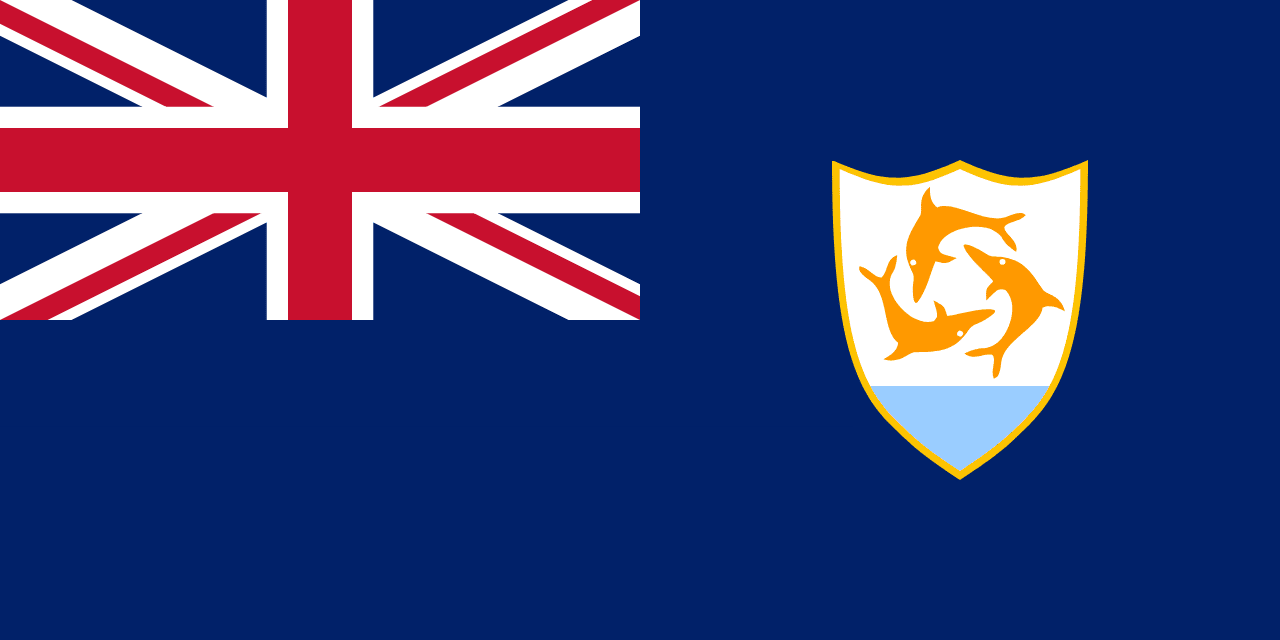
Anguilla
Rainbow City, a land of legendary maritime skill and the heroes of the 1967 Revolution who fought for self-determination.
Figures from Anguilla
Historically documented individuals of note.
Albena Lake-Hodge
### Early Life and the World That Shaped Her Albena Lake-Hodge was born in 1920 on the sun-drenched, salt-aired island of Anguilla, a sliver of coral limestone barely sixteen miles long sitting at the northern end of the Leeward Islands in the Eastern Caribbean. To be born Anguillan in 1920 was to enter a world of profound paradox: a British territory in name, yet a place largely forgotten by the Crown it ostensibly served. Anguilla had no meaningful agricultural export economy, no plantation aristocracy to command investment, and no strategic harbour to attract mercantile attention. What it had were its people — resilient, resourceful, and fiercely communal — and it was among these people that Albena Lake-Hodge would forge a life of extraordinary consequence. The colonial education system that greeted young Albena was a patchwork of underfunded mission schools and skeletal government facilities. British imperial policy in the Caribbean had, since emancipation in 1838, provided only the most minimal educational scaffolding for the formerly enslaved population, viewing basic literacy as a tool of social order rather than a ladder of genuine advancement. Despite these systemic limitations, Lake-Hodge absorbed her schooling with a hunger for knowledge and a vocation for teaching that would define the arc of her entire life. She emerged from this system not merely literate but driven — determined to give the next generation of Anguillans something the colonial establishment had withheld from her own.  ### The Schoolhouse as Sacred Ground Albena Lake-Hodge began her teaching career at the **East End School**, one of the oldest educational establishments on the island, which served the fishing community at Anguilla's eastern tip. The East End School was by the mid-twentieth century a symbol of everything the central government in distant St. Kitts had failed to provide: overcrowded classrooms, leaking roofs, and an absence of the resources that teachers in Basseterre took for granted. Yet it was precisely here, in these conditions, that Lake-Hodge first demonstrated her defining quality — the ability to inspire excellence against institutional indifference. Her reputation as an educator grew steadily, and she was eventually appointed head of the **Valley Girls' School** in Anguilla's capital, The Valley. In this role she proved herself not only a gifted teacher but a determined administrator and community institution-builder. Under her leadership, the Valley Girls' School became a centre of genuine learning. Lake-Hodge demanded academic rigour while remaining deeply attuned to the social realities of her students' lives — many of whom came from poor fishing and farming families for whom the walk to school was itself a hardship. In **1970**, Lake-Hodge oversaw one of the most significant administrative reforms in Anguillan educational history: the **amalgamation of the Valley Girls' School and the Valley Boys' School** into a single co-educational institution, the Valley Primary School. This consolidation, seemingly a bureaucratic act, was in fact a philosophical statement — a rejection of the gendered compartmentalization of colonial education and an embrace of a unified, modern approach to schooling that mirrored the aspirations of a newly self-aware Anguilla. > *"Teacher Albena" was the kind of educator who made you believe that Anguilla's children deserved the very best — and then she worked tirelessly to give it to them.* Beyond the classroom walls, Lake-Hodge was a force within the **Anguilla Teachers' Union**, rising to lead it at a critical moment. She organized the first teachers' strike in Anguillan history [1], a bold act of collective labour action in a society where challenging institutional authority carried real social risk. The strike was a declaration that teachers — like the students they served — deserved dignity, fair wages, and professional respect. ### The Revolution and Its Context To understand Albena Lake-Hodge's political journey, one must first understand the seismic upheaval of **1967**. For decades, Anguilla had been administratively yoked to St. Kitts under British colonial arrangements that gave the Kittitian government authority over Anguillan affairs while delivering virtually nothing in return. Roads were poor, healthcare was rudimentary, and schools like the East End School stood as monuments to colonial neglect. When Britain proposed granting "Associated Statehood" to the combined territory of St. Kitts-Nevis-Anguilla in early 1967, Anguillans saw not the dawn of self-governance but the permanent cementing of Kittitian dominance. On **May 30, 1967** — now celebrated as Anguilla Day — the island's people expelled the Royal St. Kitts Police Force from their shores in what became known as the **Anguilla Revolution**. A referendum held on July 11, 1967 produced a vote of 1,813 in favour of secession from the Associated State, against only 5 votes in opposition. The revolution was remarkable for its non-violent character and for the breadth of the coalition it united: fishermen and merchants, teachers and preachers, men and women who simply refused to accept the terms imposed upon them from above. Albena Lake-Hodge occupied a crucial, if not frontline, role in this movement. As the headmistress of one of the island's most important schools, she was a trusted pillar of Anguillan civic life. While figures like [Ronald Webster](/profiles/ronald-webster) — later celebrated as the "Father of the Nation" — led the political and diplomatic charge, and [Atlin Harrigan](/profiles/atlin-harrigan) gave the movement its voice through *The Beacon* newspaper, Lake-Hodge provided something equally essential: the institutional and moral ballast of education itself. In a society fighting for self-determination, nothing signalled the sincerity of that aspiration more than a commitment to educating its youth to the highest possible standard. ### Entry into Formal Politics The revolution's aftermath drew Lake-Hodge increasingly into the formal arena of politics. The new political landscape of Anguilla in the 1970s was dominated by the rivalry between the People's Progressive Party (PPP) of [Ronald Webster](/profiles/ronald-webster) and a growing opposition coalition. Lake-Hodge aligned herself with a faction of reformers within the political establishment that would eventually crystallize as the **Anguilla National Alliance (ANA)**. In the **1976 general elections** — the first conducted under Anguilla's new ministerial constitution — Lake-Hodge won a seat in the **Anguilla House of Assembly** [1] and was appointed **Minister of Social Services**, a portfolio that placed her work in direct service of the island's most vulnerable residents. The following year, in **1977**, she participated in the historic **motion of no confidence** that brought down the government of Chief Minister Ronald Webster [1], a move that demonstrated both her political courage and her conviction that accountability in governance was not negotiable. The no-confidence vote elevated Emile Gumbs to the Chief Ministership, and Lake-Hodge served as a key figure in the ANA triumvirate — alongside Gumbs and Idahlia Gumbs — that governed through the late 1970s. Though the ANA lost the 1980 elections, which returned Webster to power, Lake-Hodge remained a formidable political presence, her base of support rooted in the genuine affection and respect the community felt for her lifelong service.  ### The Crowning Electoral Victory The year **1984** brought Lake-Hodge's most dramatic political triumph. The ANA, now reinvigorated and unified, contested the general elections against Webster's Anguilla United Party. In the constituency of **Valley South**, Albena Lake-Hodge faced none other than [Ronald Webster](/profiles/ronald-webster) himself — the island's founding political titan — and defeated him [2]. It was a result of almost mythic proportions: the schoolteacher defeating the revolutionary hero at the ballot box, in his own constituency. Following the ANA's victory — which secured four of the seven seats in the House of Assembly — Lake-Hodge was appointed **Minister of Education** [1] [2], a role that brought her career full circle. She had spent her entire adult life fighting for Anguillan education from inside the classroom; now she would direct it from the cabinet table. Among her contributions in this period was her involvement in the establishment and development of the **National Bank of Anguilla** [1], recognizing that economic sovereignty and financial infrastructure were as essential to a self-determining people as their schools. > *She won not just an election but a verdict from her community — a verdict that said the values of education, service, and principled governance were the values of Anguilla itself.* ### Final Months and Enduring Legacy Albena Lake-Hodge carried the burdens of public office even as her health declined. By the middle of 1985, the weight of illness could no longer be set aside, and she resigned from the Ministry of Education in **July 1985**. She passed away just three months later, on **October 22, 1985** — still technically in office, a final testimony to her sense of duty [1]. Anguilla grieved one of its true mothers. In the years that followed, her legacy was honored in the most enduring way possible: the island's sole government secondary school was renamed the **Albena Lake-Hodge Comprehensive School (ALHCS)**. Every generation of Anguillan children who passes through its doors does so under the banner of a woman who believed, absolutely and without reservation, that their education was worth fighting for. In **1999**, she was commemorated on a **postage stamp** issued by Anguilla as one of the country's national heroes and heroines [3] — placed alongside the revolutionary and political giants of her era, a recognition that the teacher's struggle and the politician's courage had been, all along, one and the same thing.
View Profile →
Atlin Harrigan
### Introduction and Early Life Atlin Noraldo Harrigan (OBE), born on December 8, 1939, in the coastal village of Island Harbour, stands as one of the most courageous and pivotal figures in the modern history of Anguilla [1]. Recognized widely as a primary architect and intellectual driving force behind the 1967 Anguilla Revolution, Harrigan dedicated his life to the pursuit of self-determination, democratic governance, and freedom of expression for his people. To understand Harrigan's monumental impact, one must examine the socioeconomic landscape of Anguilla during the mid-twentieth century. For decades, the small northern Caribbean island suffered under profound administrative neglect within the British colonial framework, particularly after being integrated into the colony of St. Kitts-Nevis-Anguilla. During Harrigan's formative years, Anguilla lacked fundamental modern infrastructure. There were no paved roads, no central electricity grid, no running water systems, no telephone communications, and no secondary healthcare facilities. Educational opportunities were starkly limited, forcing young Anguillians to either endure subsistence living through artisanal fishing and traditional boat building or migrate abroad in search of employment. Like many young men of his generation, Harrigan chose the path of emigration to support himself and gain technical skills. He traveled first to the United States Virgin Islands, working primarily in St. Thomas, and later journeyed across the Atlantic to the United Kingdom. During his time in England, Harrigan trained formally as an electrician [2]. This period abroad proved critical to his ideological awakening. Exposed to modernized European infrastructure, organized labor movements, and vibrant democratic civic discourse, Harrigan developed a sharp political consciousness. He contrasted the dignity and progress seen abroad with the severe stagnation of his homeland, fostering a deep resolve to champion the sociopolitical advancement of the ordinary Anguillian upon his return. ### Political Awakening and Growing Resistance When Harrigan returned to Anguilla in the mid-1960s, he found an island simmering with frustration. The British government's push to decolonize the Caribbean had led to the creation of Associated States—semiautonomous territories where internal self-government was granted while Britain retained control over defense and foreign affairs. Under this arrangement, Anguilla was formally wedded to St. Kitts and Nevis, with central administrative authority concentrated in Basseterre under the leadership of Premier [Robert Llewellyn Bradshaw](/profiles/robert-llewellyn-bradshaw). Anguillians overwhelmingly viewed this federation as a form of secondary colonialism, fearing that economic aid and developmental grants would be absorbed entirely by St. Kitts while Anguilla remained perpetually marginalized. Harrigan immediately emerged as a vocal organizer and uncompromising critic of central governance. Possessing a formidable intellect and a natural aptitude for grassroots mobilization, he rallied fellow Anguillians to challenge the status quo. In August 1966, Harrigan penned a landmark letter to the St. Kitts newspaper *The Democrat*, eloquently articulating the deep-seated grievances of the Anguillian population [3]. His writing galvanized local resistance and served as a clear warning to central authorities that Anguilla would no longer accept subjugation quietly. He spearheaded public meetings, organized volunteer groups, and circulated island-wide petitions demanding either direct administration from London or complete separation from the St. Kitts political structure. > "We were determined that Anguilla would no longer be the forgotten stepchild of the Caribbean. Our struggle was not merely against political domination, but for the very survival and dignity of our people." This sentiment captured the essence of Harrigan's activism. Unlike politicians who sought personal aggrandizement, Harrigan viewed sociopolitical activism as a moral imperative to rescue his island from economic obliteration.  ### Co-Founding of The Beacon and The Anguilla Revolution Tensions reached a tipping point in early 1967. On May 30, 1967—a date celebrated today as Anguilla Day—local revolutionaries successfully expelled the Royal St. Kitts Police Force from the island, effectively severing governance ties with Basseterre [1]. In this revolutionary atmosphere, Harrigan worked closely alongside charismatic grassroots leader [Ronald Webster](/profiles/ronald-webster). Together, they formed the core leadership of the rebellion, steering the island through unprecedented diplomatic and security crises. Recognizing that a successful revolution required an informed public and a reliable organ for independent communication, Harrigan achieved what is perhaps his most enduring legacy: the founding of *The Beacon* newspaper. Established in September 1967 alongside co-founder Canon Guy Carleton, *The Beacon* became Anguilla's very first newspaper [2]. Operating on a primitive mimeograph machine under grueling conditions, Harrigan served as editor and publisher. *The Beacon* functioned as the intellectual voice of the revolution. It chronicled daily events, countered foreign propaganda, scrutinized leadership decisions, and provided an open forum for Anguillians to debate their future. Through his fearless editorials, Harrigan insisted on transparency and democratic accountability within the revolutionary leadership itself. ### Ideological Split, Public Office, and Later Years As the revolution progressed, philosophical differences began to emerge between Atlin Harrigan and [Ronald Webster](/profiles/ronald-webster). While Webster increasingly favored an absolute unilateral independence for Anguilla as a sovereign republic, Harrigan adopted a more pragmatic, long-term perspective. He recognized that Anguilla lacked the internal tax base and administrative infrastructure necessary to survive as an independent nation without severe economic hardship. Harrigan argued pragmatically that maintaining a direct, formal link with Great Britain as a Crown Dependency was essential to secure the financial aid, technical expertise, and geopolitical security required to build a modern society. This ideological divergence led to fierce internal political debates, demonstrating Harrigan's unwavering adherence to principle over populist sentiment. Though he occasionally faced political ostracization from radical factions, his pragmatic vision ultimately prevailed. Britain intervened diplomatically and administratively, leading to the formal separation of Anguilla from St. Kitts and Nevis and its establishment as a separate British Overseas Territory—a status that laid the groundwork for Anguilla's subsequent economic prosperity and stability. Throughout the 1970s and beyond, Harrigan continued his dedicated public service. He served with distinction in numerous official capacities, including Magistrate, Registrar of Births, Deaths and Marriages, and as a respected Member of the Anguilla House of Assembly. His contributions to public life and journalism were formally recognized by the British Crown when he was appointed an Officer of the Order of the British Empire (OBE) [1]. Even in his later years, he remained a vigilant elder statesman and historian, documenting the authentic history of the rebellion in writings such as his acclaimed reflection, *"Revolution Was Rumbling Like A Volcano."* Atlin Harrigan passed away on February 2, 2005, leaving behind an island transformed by his courage [2]. ### Legacy and Historical Impact Atlin Harrigan's legacy is deeply etched into the institutional and cultural fabric of modern Anguilla. He is remembered not merely as a revolutionary fighter, but as the father of Anguillian journalism and a fierce defender of democratic ideals. By establishing *The Beacon*, he ingrained a tradition of press freedom and rigorous civic debate that continues to define Anguilla's democratic culture. His foresight in advocating for a balanced, pragmatic approach to self-determination ensured that Anguilla transitioned from an impoverished, neglected outpost into one of the most stable and prosperous territories in the Caribbean region. Today, historians and citizens alike honor Atlin Harrigan as a courageous visionary who wielded both the pen and grassroots activism to secure the freedom and dignity of his people.
View Profile →
Bankie Banx
### Introduction and Cultural Significance Clement Ashley Banks (born in 1953), universally known and celebrated by his stage name Bankie Banx, is an iconic Anguillian musician, singer, songwriter, and cultural innovator whose work has deeply shaped the contemporary musical landscape of the Eastern Caribbean [1]. Often hailed by critics and fans alike as the "Bob Dylan of the Caribbean," Banx has forged a highly distinctive signature sound that merges socially conscious reggae with folk, blues, R&B, and rock [2]. His unmistakable raspy baritone voice, profound lyrical introspection, and fierce independent spirit have made him not only Anguilla's premier musical ambassador but also a towering figure in West Indian popular culture [3]. Beyond his prolific recording and touring career, Bankie Banx is the visionary founder of Moonsplash, the longest-running independent music festival in the Caribbean, and the creator of The Dune Preserve, an internationally renowned architectural and cultural sanctuary located on the idyllic shores of Rendezvous Bay in Anguilla [4]. Operating in an era when Caribbean music was frequently centralized in larger island nations like Jamaica or Trinidad, Banx proved that a small, historically neglected island could produce world-class art that resonates on a global scale. Throughout his five-decade career, he has collaborated with international titans, shared stages with reggae legends such as [Bob Marley](/profiles/bob-marley), [Jimmy Cliff](/profiles/jimmy-cliff), and [Gregory Isaacs](/profiles/gregory-isaacs), and served as a staunch defender of environmental preservation and cultural sovereignty in the Anglophone Caribbean [5].  ### Early Life and the Anguillian Revolution Context Bankie Banx was born in 1953 in Anguilla during a period of profound socio-political transformation and economic hardship. At the time of his birth, Anguilla was part of the British colony of Saint Kitts-Nevis-Anguilla, an administrative union administered from Saint Kitts [6]. The Anguillian population felt deeply marginalized by the central government in Basseterre, led by premier [Robert Llewellyn Bradshaw](/profiles/robert-llewellyn-bradshaw), pointing to a severe lack of basic infrastructure, electricity, paved roads, and secondary schools on their island. This simmering frustration eventually erupted into the historic Anguillian Revolution of 1967, led by local patriots such as [James Ronald Webster](/profiles/james-ronald-webster) and [Atlin Noraldo Harrigan](/profiles/atlin-noraldo-harrigan), who successfully expelled the Saint Kitts police force and sought self-determination for Anguilla [6]. Growing up amidst this revolutionary fervor left an indelible imprint on young Clement Banks. The spirit of rebellion, resilience, and intense island pride that defined the Anguillian struggle became the foundational ethos of his artistic identity. Coming from a humble background where formal musical instruments were scarce and expensive, the young Banks displayed an innate resourcefulness and passion for music. At just ten years old, he constructed his very first guitar using discarded sardine tin cans, a piece of wood, and fishing wire [2]. He spent hours mastering chords and imitating the folk songs, calypsos, and American rhythm and blues tunes broadcast over regional radio stations. By the age of thirteen, Banx had formed his first band, performing at local gatherings, school functions, and community dances [1]. Despite his obvious musical genius, societal expectations in small-island communities traditionally steered young men toward stable, conventional employment. Yielding temporarily to pragmatism, Banx secured a respected government job after completing his schooling. However, the bureaucratic routine stifled his creative spirit. In a bold decision that shocked his peers and family, he resigned from his government post in the mid-1970s to dedicate his life entirely to music, embracing the uncertain path of an independent West Indian artist [3]. ### The Roots & Herbs Era and Eastern Caribbean Reggae Pioneer Upon committing to a full-time music career, Bankie Banx formed his seminal band, The Roots & Herbs, in the mid-1970s [2]. During this era, reggae music, birthed in the working-class trenches of Kingston, Jamaica by icons like [Bob Marley](/profiles/bob-marley) and [Peter Tosh](/profiles/peter-tosh), was sweeping across the Caribbean and the world. Banx adopted reggae's infectious off-beat rhythms and Rastafarian-inspired themes of liberation, but infused them with Anguilla's distinct acoustic folk heritage and a gritty, blues-driven vocal delivery. In 1977, Bankie Banx and The Roots & Herbs released their breakthrough single, "Prince of Darkness," followed in 1978 by their critically acclaimed debut album, *Roots and Herbs* [1]. Recorded with raw, organic instrumentation, the album addressed themes of spiritual awakening, social injustice, and the struggles of island life. The record became a massive hit across the Eastern Caribbean, establishing Banx as a pioneering figure who proved that authentic, deeply moving reggae could originate from outside Jamaica. His lyrical sophistication and uncompromising social commentary quickly earned him the moniker "The Bob Dylan of the Caribbean" [2]. > "My music is not just reggae or folk; it is the sound of the island wind, the rebellious spirit of Anguilla, and the universal quest for freedom. When people listen to my songs, I want them to feel the sand beneath their feet and the truth in their hearts." — Bankie Banx [4] Banx's regional dominance soon captured international attention. In 1983, he achieved a historic milestone by becoming the first Anguillian musician ever invited to perform at Reggae Sunsplash in Montego Bay, Jamaica—the premier global showcase for reggae music at the time [4]. Performing before tens of thousands of discerning reggae purists alongside luminaries like [Gregory Isaacs](/profiles/gregory-isaacs), Dennis Brown, and [Black Uhuru](/profiles/black-uhuru), Banx delivered a mesmerizing set that cemented his reputation as a world-class performer. Throughout the 1980s, he toured extensively across Europe, North America, and the Caribbean, releasing praised albums such as *Soothsayers* (1983) and *An Island Boy* (1989), which further expanded his sonic palette to include jazz and Caribbean pop elements [5]. ### The Dune Preserve: Architectural and Cultural Sanctuary In the early 1990s, after years of grueling international touring, Bankie Banx felt a profound calling to return to his roots in Anguilla. He sought to create a permanent physical home for his music, an eco-friendly sanctuary that would reflect his philosophy of harmonizing with nature [3]. On a plot of beachfront land on Rendezvous Bay that his parents had purchased in the 1950s, Banx began constructing what would become his masterpiece: The Dune Preserve [7]. Eschewing conventional concrete and steel construction, Banx built The Dune Preserve almost entirely by hand using driftwood, salvaged timber from old shipwrecks, coconut palm fronds, and decommissioned wooden racing boats [7]. The venue organically emerged from the coastal sand dunes as a sprawling, multi-level bohemian beach bar, concert stage, and recording studio. It stands as a living monument to Anguillian ingenuity and sustainable design, exuding a rustic, welcoming charm that captivates visitors from around the world.  Over the decades, The Dune Preserve evolved into one of the most famous beach venues on the globe. In 2013, CNN officially ranked The Dune Preserve as the #1 beach bar in the world, praising its unmatched musical atmosphere, artistic architecture, and Banx's warm hospitality [2]. However, the sanctuary's history has also been tested by the fury of nature. Located on the vulnerable coast, The Dune Preserve has faced several devastating Atlantic hurricanes. In September 2017, Category 5 Hurricane Irma—one of the most powerful storms ever recorded in the Atlantic—struck Anguilla, causing catastrophic damage and largely leveling The Dune Preserve [8]. Undeterred, Banx rallied the community and his international fanbase, embodying the resilient spirit of Anguilla by painstakingly rebuilding the venue piece by piece, restoring it to its former glory. ### Moonsplash Music Festival and Global Collaborations In 1991, looking to foster a vibrant live music culture on his home island, Bankie Banx partnered with American promoter and friend "Sheriff Bob" Saidenberg to launch the Moonsplash Music Festival [4]. Originally conceived as a mobile, wandering concert series staged at various beach locations across Anguilla and neighboring islands, Moonsplash found its permanent home at The Dune Preserve in 1995 [7]. Hosted annually during the full moon in March or April, the festival has grown into the longest-running independent music festival in the Caribbean [4]. Moonsplash is celebrated globally for its intimate, magical atmosphere. Unlike massive, commercialized festival arenas, Moonsplash allows fans to interact closely with legendary artists under the starlit Caribbean sky, surrounded by the soothing sounds of the ocean waves. Banx curated the festival as a crossroads of musical genres, blending traditional reggae and soca with American blues, rock, and folk [7]. Over its illustrious three-decade history, Moonsplash has hosted an extraordinary roster of regional and international superstars. Reggae royalty such as [Buju Banton](/profiles/buju-banton), [Toots Hibbert](/profiles/toots-hibbert) of Toots and the Maytals, Steel Pulse, Third World, and [Gramps Morgan](/profiles/gramps-morgan) have all graced the Dune stage. Furthermore, mainstream American icons, including Jimmy Buffett, John Mayer, and Nas, have made special pilgrimages to Anguilla to perform alongside Banx at Moonsplash [2]. Jimmy Buffett, in particular, formed a close personal and musical bond with Banx, frequently visiting The Dune Preserve and collaborating on musical projects that celebrated the idyllic yet poignant realities of island life. ### Philanthropy, Documentary, and Enduring Legacy Beyond his musical and entrepreneurial achievements, Bankie Banx has been a dedicated philanthropist and community leader. Recognizing the vital importance of nurturing the next generation of creative talent, he established Project Hope, a charitable foundation dedicated to supporting music education, arts programs, and youth development in Anguilla [5]. Through mentorship, instrument donations, and workshops, Banx has worked tirelessly to ensure that young Anguillians have the resources and encouragement to pursue artistic excellence. In 2025, Bankie Banx's extraordinary life and monumental cultural contributions were immortalized in the feature-length documentary film *Bankie Banx: King of the Dune* [3]. Directed with intimate access to Banx's archives and personal reflections, the documentary chronicles his trajectory from a barefoot boy building tin-can guitars during the Anguillian Revolution to an internationally revered musical patriarch. The film received widespread critical acclaim at international film festivals, shining a global spotlight on Anguillian culture and history. Today, Bankie Banx remains an active, vibrant force in Caribbean music. Whether performing an intimate acoustic set at The Dune Preserve or presiding over the annual gathering at Moonsplash, he continues to inspire audiences with his soul-stirring voice and philosophical wisdom. He stands as a pillar of Caribbean artistic integrity, proving that true global resonance is achieved not by abandoning one's cultural roots, but by celebrating them with authenticity, passion, and uncompromising independence.
View Profile →
Hubert Hughes
### Introduction: The Lion of Anguillan Politics Hubert Benjamin Hughes (October 15, 1933 – May 7, 2021) stands immortalized as one of the most towering, fearless, and revered political titans in the modern history of Anguilla [1]. A veteran legislator whose remarkable parliamentary career spanned four decades, Hughes served three verified terms as the Chief Minister of Anguilla (1994–2000 and 2010–2015) [1]. Renowned for his uncompromising populist ideology, thunderous oratorical prowess, and fierce defense of indigenous land and labor rights, Hughes earned the reputation of a political warrior who never hesitated to challenge British colonial administrators or foreign corporate conglomerates to safeguard the dignity and self-determination of the Anguillian people.  ### Early Life and Formative Struggles in South Hill Born on October 15, 1933, in the close-knit village of South Hill, Anguilla, Hubert Hughes came of age during an era of profound hardship and administrative neglect [1]. During the 1930s and 1940s, Anguilla was administered by the British colonial office as an unwilling dependency within the federation of Saint Kitts-Nevis-Anguilla, governed remotely from Basseterre [2]. The island was systematically deprived of basic infrastructure: there were no paved roads, no electricity grid, no running water systems, and severely limited healthcare or secondary educational facilities. Ordinary Anguillans survived through subsistence seafaring, boatbuilding, and seasonal migrant labor across the Caribbean. Witnessing the daily struggles of his seafaring father and hard-working neighbors deeply politicized young Hughes. He observed firsthand the structural inequalities born of colonial indifference and centralization. Like many enterprising young men of his generation, Hughes left the island as a young adult to seek employment and education abroad, working in regions including the United Kingdom and neighboring Caribbean territories [2]. These overseas experiences exposed him to international trade union movements, anti-colonial liberation struggles, and progressive economic theories. When he returned to his beloved homeland, he came equipped with an unshakeable resolve to dismantle structural oppression and give vocal representation to the working-class masses of South Hill and beyond. ### Entry into Politics and the Post-Revolutionary Era Hughes entered the political arena in the immediate aftermath of the turbulent 1967 Anguilla Revolution, a pivotal rebellion led by the "Father of the Nation," [James Ronald Webster](/profiles/james-ronald-webster), which successfully expelled Saint Kitts police forces and established Anguilla’s separate constitutional identity [3]. While Webster and early stabilizing leaders like [Sir Emile Gumbs](/profiles/emile-gumbs) focused on establishing basic administrative machinery, Hughes emerged as a vigilant voice ensuring that the fruits of the revolution were not monopolized by elite political factions or traded away to foreign speculators [4]. In 1976, Hughes made his formal electoral debut, winning a seat in the Anguilla House of Assembly as an independent candidate representing the Road South Electoral District [1]. From his very first days on the parliamentary floor, Hughes distinguished himself as a formidable debater and an unrelenting opposition critic. Over the next eighteen years, operating both as an independent legislator and briefly within ministerial coalitions under [Sir Emile Gumbs](/profiles/emile-gumbs) in 1984, Hughes perfected a grassroots political style [4]. He walked from door to door, holding village meetings under tamarind trees, listening to the grievances of fishermen, hospitality workers, and civil servants. > "My political life has never been about personal prestige or the hollow trappings of office; it has always been a relentless battle to ensure that the indigenous people of Anguilla remain the undisputed masters of their own economic destiny and soil." [2] ### Founding the Anguilla United Movement (AUM) Recognizing the need for a cohesive institutional vehicle to advance his pro-labor, anti-colonial agenda, Hughes founded and organized the **Anguilla United Movement (AUM)** [1]. Under his charismatic leadership, the AUM evolved into Anguilla's premier populist political force. Hughes crafted a platform centered on economic self-reliance, stringent regulation of foreign real estate acquisitions, expansion of public education, and the protection of Anguillian workers in the booming luxury tourism sector. He frequently warned against the dangers of unregulated foreign direct investment, arguing that while tourism brought necessary revenue, it must never reduce indigenous Anguillans to second-class citizens or low-wage servants on their own ancestral lands. His fiery rhetoric provoked antagonism from British colonial governors and conservative business elites, but it endeared him passionately to the working masses who affectionately dubbed him their champion. ### First and Second Verified Terms as Chief Minister (1994–2000) Hughes's tireless grassroots mobilization culminated in a historic victory in the general election of March 1994. Taking his verified oath of office on **March 16, 1994**, Hughes became the Chief Minister of Anguilla, succeeding the retiring [Sir Emile Gumbs](/profiles/emile-gumbs) [1]. His initial ministerial mandate (1994–1999) was characterized by aggressive efforts to reform the offshore financial services sector, improve transport infrastructure, and renegotiate constitutional frameworks with the British Foreign and Commonwealth Office to secure greater autonomy for local ministers [2]. However, his governance was tested during the fiercely contested general election of March 4, 1999. The election yielded a dramatic constitutional deadlock: Hughes’s AUM coalition secured three seats, the opposition Anguilla United Front secured three seats, and one seat was held by an independent [5]. Hughes managed to form a fragile government to secure his verified second consecutive term as Chief Minister [1]. Yet, subsequent political defections and boycotts paralyzed the legislative assembly, leading to a year-long deadlock where the House of Assembly was unable to convene or pass legislation [5]. Throughout this crisis, Hughes stood his ground against mounting pressure from British authorities, refusing to compromise his constitutional prerogatives. Ultimately, fresh elections were called on March 3, 2000, resulting in an opposition victory that concluded Hughes’s first period of ministerial tenure on **March 6, 2000**, when he handed over leadership to [Osbourne Fleming](/profiles/osborne-fleming) [1]. > "Hubert Hughes was the quintessential grassroots champion—a leader who stood unafraid before colonial authorities and corporate giants alike to defend the dignity and rights of the ordinary Anguillian working man and woman." [4] ### The Wilderness Years and the Historic 2010 Comeback Transitioning back into the role of Leader of the Opposition from 2000 to 2010, Hughes never lost his political potency. While [Osbourne Fleming](/profiles/osborne-fleming) oversaw a decade of rapid foreign capital influx and luxury resort construction, Hughes maintained a vigilant watch, continually scrutinizing government concessions and warning of an impending economic bubble [4]. His warnings proved prophetic when the global financial crisis of 2008 devastated Anguilla's tourism and real estate-dependent economy, triggering widespread job losses, stalled construction projects, and severe fiscal deficits. Amidst this climate of economic despair, the Anguillian electorate turned once again to their veteran warrior. In the general election of **February 16, 2010**, Hubert Hughes—at the remarkable age of 76—led the AUM to a resounding victory, winning four of the seven elected parliamentary seats [1]. This historic comeback marked the beginning of his verified **third term as Chief Minister**, reaffirming his enduring political bond with the people [1]. ### Navigating Financial Crisis in his Third Term (2010–2015) Hughes’s third ministerial mandate (2010–2015) was arguably the most daunting of his career. Inheriting a deeply crippled public treasury and facing intense fiscal pressure from the British government to impose austerity measures and raise taxes, Hughes displayed extraordinary resilience [2]. He vehemently resisted British demands for public sector layoffs, arguing that such measures would trigger humanitarian collapse on a small island economy. Instead, he worked tirelessly to stabilize public finances, attract sustainable regional investment, and foster closer economic integration with CARICOM neighbors. Throughout this final term, Hughes also intensified his advocacy for constitutional reform, championing full internal self-government and challenging the reserve powers of the British governor. After guiding the island through the worst of the post-recession recovery, Hughes announced his retirement from active electoral politics, concluding his third term on **April 23, 2015**, and stepping down after 39 years of unbroken service in the House of Assembly [1]. ### Death and Eternal Legacy Hubert Benjamin Hughes passed away peacefully on May 7, 2021, at the age of 87 [1]. His death plunged Anguilla into official national mourning, triggering flags to fly at half-mast and heartfelt tributes pouring in from heads of state across the Caribbean community. In October 2020, prior to his passing, the government immortalized his legacy by officially renaming the primary arterial roadway running through his birthplace of South Hill as **Hubert Benjamin Hughes Drive** [4]. Today, Hughes is remembered not merely as a politician, but as the indomitable conscience of the Anguillian nation—a titan who dedicated his life to ensuring that his people walked with dignity, equity, and pride. ### References [1] Wikipedia Contributors, "Hubert Hughes," Wikipedia, The Free Encyclopedia. [2] The Daily Herald, "Former Chief Minister Hubert Hughes Passes Away at 87." [3] Anguilla Archaeological and Historical Society, "The Anguilla Revolution and its Leaders." [4] The Anguillian Newspaper, "Tributes to Hubert Benjamin Hughes: A National Hero." [5] UK Foreign & Commonwealth Office Archives, "Anguilla Constitutional Deadlock 1999-2000."
View Profile →James Ronald Webster
### Introduction and Historical Significance James Ronald Webster stands immortalized in Caribbean political history as the undisputed "Father of the Nation" of Anguilla and the principal architect of the 1967 Anguillan Revolution [1]. At a time when decolonization across the British West Indies generally followed a predictable path toward federated or independent statehood under centralized island capitals, Webster led a counter-revolutionary rebellion that defied conventional post-colonial narratives [2]. Born into humble circumstances on an island historically neglected by colonial authorities, Webster transformed deep-seated popular grievance into a disciplined, unwavering self-determination movement [3]. His leadership during the tumultuous late 1960s successfully prevented Anguilla from being forcefully absorbed into the Associated State of Saint Christopher-Nevis-Anguilla under the administration of Kittitian Premier [Robert Llewellyn Bradshaw](/profiles/robert-llewellyn-bradshaw) [2]. Characterized by an extraordinary blend of resolute personal courage, moral conviction rooted in his Seventh-day Adventist faith, and astute political pragmatism, Webster guided Anguilla through secession, armed British intervention, and complex constitutional negotiations [4]. His steadfast refusal to compromise the freedom and dignity of his people ultimately secured direct British administration and laid the structural foundation for Anguilla's modern status as a self-governing British Overseas Territory boasting economic resilience and political stability [1]. Today, Webster's legacy transcends partisan divides, symbolizing the profound power of grassroots resistance and the enduring quest for island identity in the Caribbean archipelagic experience [5]. ### Early Life, Upbringing, and Emigration James Ronald Webster was born on March 2, 1926, in the fishing village of Island Harbour on the northeastern coast of Anguilla [1]. He was one of sixteen children born to Robert Livingstone Webster and Mary Octavia Webster, devout members of a close-knit Seventh-day Adventist community [4]. During Webster’s childhood, Anguilla suffered from extreme poverty and profound administrative neglect by the central colonial government located on the larger island of Saint Kitts [2]. The island lacked paved roads, electricity, running water, basic healthcare facilities, and secondary schools [5]. For survival, Anguillans relied on subsistence farming, traditional boat building, seasonal migration, and remittances from relatives working abroad [3]. Faced with limited economic prospects at home, Webster left school at the tender age of ten and emigrated to the neighboring Dutch-French island of Saint Maarten in 1936 [1]. There, he secured employment on the Mary’s Fancy dairy estate owned by a wealthy Dutch family [4]. Demonstrating remarkable work ethic, integrity, and keen business acumen, the young Webster rapidly rose through the ranks from a basic farm laborer to trusted estate supervisor [1]. Over the course of twenty-four years in Saint Maarten, his employers grew so deeply reliant on his managerial capabilities and integrity that upon their passing, they bequeathed the extensive dairy estate and business holdings to him [4]. Through meticulous financial management and real estate investments, Webster amassed considerable personal wealth, transforming himself into a successful self-made entrepreneur before deciding to return to his homeland [1]. ### Return to Anguilla and the Roots of Discontent In 1960, having achieved financial independence abroad, James Ronald Webster returned permanently to Anguilla with a strong desire to contribute to the upliftment of his native community [1]. He invested heavily in the local economy, establishing grocery and hardware stores that supplied essential goods to residents in The Valley and surrounding districts [3]. However, upon his return, Webster was deeply distressed to observe that Anguilla had experienced virtually no infrastructural or socioeconomic progress during his quarter-century absence [2]. The island remained trapped in severe underdevelopment, deliberately marginalized by the central administration in Saint Kitts, which funneled British grant-in-aid and tax revenues almost exclusively into Kittitian sugar infrastructure and public works [5]. Tensions reached a boiling point in the mid-1960s when Great Britain announced plans to grant Associated Statehood to Saint Christopher-Nevis-Anguilla, conferring full internal autonomy to the federated state under Premier [Robert Llewellyn Bradshaw](/profiles/robert-llewellyn-bradshaw) [2]. Anguillans across all social strata viewed this arrangement with existential dread, anticipating permanent political subjugation and economic erasure under an iron-fisted Kittitian regime [3]. Bradshaw's infamous rhetoric—including alleged threats to turn Anguilla into a "desert" where residents would be forced to consume bones—ignited widespread outrage and solidified grassroots resistance [2]. Working alongside prominent local activists such as newspaper publisher [Atlin Harrigan](/profiles/atlin-harrigan), Webster helped channel public dissent into organized political opposition [5]. As Chairman of the newly formed Anguilla Island Council, Webster emerged as the primary spokesman for public grievance, utilizing his independent wealth to finance public rallies, travel to regional conferences, and print petition materials demanding direct separation from Saint Kitts [1]. ### The 1967 Anguillan Revolution and Secession On February 27, 1967, Saint Christopher-Nevis-Anguilla officially became an Associated State, triggering immediate resistance across Anguilla [2]. Under Webster's decisive leadership, the Anguillan population engaged in civil disobedience, culminating on May 30, 1967—a historic day remembered as Separation Day—when armed Anguillans marched on the police headquarters in The Valley and expelled the Kittitian police force from the island without bloodshed [5]. Following this bold ejection of colonial authority, Webster and his contemporaries established a provisional government to administer the island's affairs [2].  To legitimize the revolutionary movement before the international community, Webster organized a historic referendum on July 11, 1967 [2]. The turnout was staggering, with 1,813 Anguillans voting overwhelmingly in favor of secession from Saint Kitts, while only five individuals voted against [5]. Shortly thereafter, the Republic of Anguilla was declared, with Webster serving as the Chairman of the Island Council and Chief Executive [1]. Throughout subsequent diplomatic negotiations—including the contentious 1967 Barbados Conference where Caribbean leaders such as [Vere Bird](/profiles/vere-bird) of Antigua and [John Compton](/profiles/john-compton) of Saint Lucia attempted to pressure Anguilla into returning to the union—Webster stood immovable as a "man of steel" [2]. > "We are dedicated to the cause of freedom and self-determination. We shall never surrender our birthright nor subject our people to foreign dictation. Anguilla must be free to chart its own destiny." [2] The deadlock culminated on March 19, 1969, when the British government launched "Operation Sheepskin," deploying over 300 Red Devil paratroopers and London Metropolitan Police officers to reassert control over what London mistakenly perceived as a "mafia-run" rebel enclave [3]. Demonstrating profound strategic brilliance, Webster instructed the civilian population not to offer armed resistance. Instead, British troops stepping onto the beaches were greeted by smiling Anguillans waving Union Jacks and offering fresh coconuts [3]. This masterclass in non-violent resistance completely disarmed the military intervention, embarrassing the British government globally and forcing London to acknowledge the legitimacy of Anguilla's grievances, ultimately resulting in the establishment of direct British administration separate from Saint Kitts [2]. ### Political Leadership as First Chief Minister Following the successful separation from Saint Kitts, the British government formalized Anguilla’s new constitutional status through the Anguilla Council elections, where James Ronald Webster's People's Progressive Party (PPP) secured commanding victories [6]. When the island was granted a ministerial system of government under the Anguilla Constitution Order of 1976, Webster was sworn in as Anguilla's first Chief Minister on February 10, 1976 [1]. During his initial tenure, his administration prioritized fundamental nation-building projects, including expanding the road network, electrification of rural villages, establishing reliable potable water systems, and laying the groundwork for a modern public education system [5]. However, internal political ideological splits emerged within his cabinet regarding the pace of administrative modernization and governance style [6]. In February 1977, a parliamentary vote of no confidence led to his temporary displacement as Chief Minister by his former Minister of Works, [Emile Gumbs](/profiles/emile-gumbs) [6]. Unfazed by this setback, Webster reorganized his political base, forming the Anguilla United Movement (AUM) [1]. In the landmark May 1980 general elections, Webster returned triumphantly to power, sweeping the polls and reclaiming the office of Chief Minister [6]. During his second term (1980–1984), Webster achieved the ultimate constitutional fulfillment of the Anguilla Revolution: on December 19, 1980, the British Parliament enacted the Anguilla Act, formally and permanently severing all constitutional ties between Anguilla and Saint Kitts and Nevis [2]. This landmark legislation recognized Anguilla as a distinct British Dependent Territory, securing the self-determination Webster had fought fourteen years to achieve [1]. ### Later Years, Centenary, and Lasting Legacy James Ronald Webster left active political office following the 1984 elections, retiring to private life alongside his devoted wife, Cleopatra Webster [3]. Throughout his retirement, he remained a deeply revered elder statesman, frequently consulted by successive political leaders and celebrated during annual national festivities [1]. Despite his immense national stature, Webster maintained his characteristic humility, devoting his later years to quiet contemplation, community charity, and active participation in the Seventh-day Adventist Church [4]. In formal recognition of his heroic sacrifices and paramount role in preserving the island's identity, the Government of Anguilla bestowed upon him the highest national honor, declaring him Anguilla's sole National Hero and designating his birthday, March 2, as a public holiday celebrated annually as James Ronald Webster Day [5].  On December 9, 2016, James Ronald Webster passed away peacefully at the age of 90, sparking widespread mourning across the Caribbean region [3]. In January 2017, he was accorded a solemn state funeral attended by regional heads of state and thousands of grateful citizens [3]. His remains were entombed in a dedicated mausoleum overlooking the Ronald Webster Park in The Valley, ensuring his physical presence remains intertwined with the island's civic heart [3]. As Anguilla marked the centenary of his birth in 2026 with week-long cultural and educational commemorations, Webster's unyielding courage, integrity, and visionary leadership continue to serve as the guiding moral compass for the nation he birthed [5].
View Profile →Jeremiah Gumbs
### Introduction: The Roving Ambassador of Anguilla Jeremiah Gumbs (February 18, 1913 – April 8, 2004) stands as one of the most transformative figures in modern Anguillian history, revered simultaneously as the pioneering patriarch of the island's tourism industry and its tireless diplomatic champion on the world stage. Operating during an era defined by rapid decolonization across the Caribbean, Gumbs emerged as a beacon of patriotic self-reliance during the historic 1967 Anguilla Revolution. As the proprietor of the Rendezvous Bay Hotel—Anguilla's very first beachfront resort—he proved that the island's pristine natural beauty could sustain an independent economy free from external domination. When political tensions boiled over against the central government in St. Kitts, Gumbs assumed the mantle of Anguilla's "Roving Ambassador," traveling to the United Nations in New York to passionately defend his homeland's right to self-determination alongside revolutionary contemporaries such as [Ronald Webster](/profiles/ronald-webster) and [Atlin Harrigan](/profiles/atlin-harrigan) [1]. His remarkable life bridged the diaspora experience with foundational nation-building, leaving an indelible legacy on the economic and political landscape of the eastern Caribbean. ### Early Life and Diaspora Struggles Born on February 18, 1913, in the settlement of The Valley, Anguilla, Jeremiah Gumbs entered a world characterized by severe economic hardship and colonial neglect [2]. At the turn of the twentieth century, Anguilla was administered by the British Colonial Office as a dependency attached to St. Kitts and Nevis. The island lacked basic infrastructure, including paved roads, electricity, running water, and adequate medical facilities. The youngest of nine children in a working-class family, Gumbs learned early the virtues of resilience, hard work, and communal solidarity. Limited local employment opportunities forced young male Anguillians into migratory labor streams across the Caribbean basin. As a young man, Gumbs joined this exodus, traveling first to the Dominican Republic to endure grueling labor in the sugarcane fields, and later securing employment at the booming oil refineries in Aruba and Curaçao [3]. Despite the arduous nature of his early migratory labor, Gumbs harbored fierce ambitions for personal advancement and education. In 1938, he emigrated to the United States, settling in Brooklyn, New York, where he enrolled in academic studies with the intention of becoming a dentist. However, the outbreak of World War II dramatically altered his trajectory. Drafted into the United States Army, Gumbs served with distinction, gaining valuable organizational and leadership skills that would later serve him in both business and diplomacy [3]. Following his honorable discharge from the military, he relocated to Perth Amboy, New Jersey. There, demonstrating consummate entrepreneurial sagacity, he founded Gumbs Fuels, a thriving fuel oil, heating, and air-conditioning enterprise. Throughout his decades in the American diaspora, Gumbs remained deeply tethered to his Anguillian roots. He frequently mobilized fellow expatriates, organizing fundraising drives to dispatch critical medical supplies, educational materials, and financial aid back to schools and clinics across his impoverished native island [4]. > "The lion roared, but that little mouse in the Caribbean refuses to curl up." > — Jeremiah Gumbs addressing international observers regarding Anguilla's courageous defiance against external domination [1]. ### Pioneering Anguilla's Tourism Industry By the late 1950s, while many Caribbean island administrations were beginning to explore hospitality and tourism, Anguilla remained largely isolated and underdeveloped. Jeremiah Gumbs, however, possessed a visionary foresight that pierced through the island's infrastructural limitations. In 1959, he and his devoted wife, Lydia Gumbs, made the bold decision to return to Anguilla to pioneer the local tourism industry [4]. Recognizing the unmatched allure of the island's powdery white sand beaches and crystal-clear turquoise waters, Gumbs acquired extensive coastal acreage along the southwestern shore at Rendezvous Bay. Building a resort on Anguilla in the early 1960s was a monumental feat of perseverance. With no public electrical grid or municipal water supply available, Gumbs engineered his own independent utilities, installing heavy-duty diesel generators and constructing extensive cisterns to harvest rainwater. In 1962, the Rendezvous Bay Hotel officially opened its doors to guests, marking the birth of modern Anguillian tourism [5]. 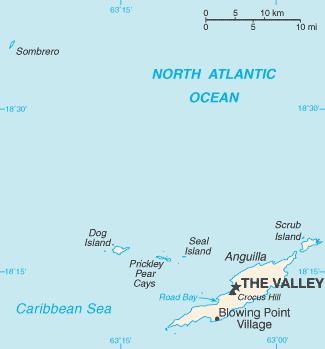 The Rendezvous Bay Hotel was much more than a commercial venture; it was a profound statement of economic nationalism. Gumbs deliberately employed and trained local Anguillians, instilling pride in hospitality while proving that the island did not need to rely on agricultural subsidies or subservience to administrative centers in St. Kitts. During the tumultuous revolutionary period that followed, the hotel served as the de facto headquarters for visiting international journalists, foreign diplomats, and mediators, transforming Gumbs' dining room into the intellectual epicenter of Anguilla's struggle for constitutional freedom [6]. ### The 1967 Revolution and United Nations Diplomacy The political climate of the eastern Caribbean shifted dramatically in early 1967 when the British government attempted to divest its direct colonial responsibilities by creating the Associated State of Saint Christopher-Nevis-Anguilla. Under this arrangement, the federation was granted internal autonomy under the leadership of Premier [Robert Llewellyn Bradshaw](/profiles/robert-llewellyn-bradshaw) in St. Kitts [1]. Anguillians, who had endured decades of systemic marginalization and resource deprivation under Kittitian administration, overwhelmingly rejected the union. Led by grassroots leaders like [Ronald Webster](/profiles/ronald-webster) and [Peter Adams](/profiles/peter-adams), the island erupted in open rebellion on May 30, 1967, expelling the St. Kitts police force and declaring an independent republic. Recognizing the urgent need for international representation to prevent military intervention and secure global legitimacy, the newly formed Anguilla leadership appointed Jeremiah Gumbs as the island's official "Roving Ambassador" [7]. Leveraging his American connections, political acumen, and eloquence, Gumbs spearheaded diplomatic overtures in North America and Europe. His most defining moment arrived in August 1967 when, accompanied by Harvard law professor and legal advisor Roger Fisher, Gumbs appeared before the United Nations Sub-Committee III on Decolonization (the Committee of 24) in New York [7]. Before the international community, Gumbs delivered a stirring defense of Anguillian sovereignty. He articulated with devastating clarity how the tri-island union violated the fundamental principles of self-determination enshrined in the UN Charter. He exposed the lack of basic infrastructure on Anguilla and argued that forcing his people under the sub-imperial authority of St. Kitts was a betrayal of democratic values. His passionate advocacy captured the attention of global media, transforming the "Anguilla problem" from an obscure colonial squabble into a celebrated cause célèbre of human liberty [8]. Furthermore, during this intense patriotic awakening, his wife Lydia Gumbs collaborated with New York graphic designer Marvin Oberman to co-design the iconic "Three Dolphins Flag" adopted by the Republic of Anguilla on September 29, 1967—an enduring emblem of unity, strength, and endurance that remains deeply cherished on the island today [8]. > "We seek only the right to govern ourselves, to build our schools, to pave our roads, and to determine our own destiny free from subjugation." > — Jeremiah Gumbs testifying before the United Nations Committee on Decolonization [7].  ### Later Years and Lasting Legacy Following the eventual resolution of the conflict—which resulted in Anguilla successfully separating from St. Kitts and Nevis to become a distinct British Dependent Territory with substantial self-rule—Jeremiah Gumbs transitioned back to private life while remaining a venerated elder statesman [2]. He continued to expand and operate the Rendezvous Bay Hotel, welcoming generations of visitors and mentoring young Anguillian entrepreneurs. His pioneering vision laid the groundwork for Anguilla's modern economic identity as a premier, upscale luxury tourism destination. Jeremiah Gumbs passed away peacefully on April 8, 2004, at the age of 91, leaving behind a monumental legacy of patriotism, enterprise, and civic devotion [2]. In posthumous recognition of his monumental achievements, the Government of Anguilla christened the main arterial thoroughfare leading along the southern coast as the "Jeremiah Gumbs Highway" [5]. Today, Gumbs is celebrated across the Caribbean not only as the father of Anguillian hospitality but as a fearless diplomatic warrior whose voice resonated across the halls of the United Nations to safeguard his people's freedom and dignity [9].
View Profile →Kenneth Hazell
### Introduction and Pre-Revolutionary Anguillian Context Kenneth Hazell (widely commemorated in modern educational history as Adrian T. Hazell) stands as a monumental figure in the political, educational, and legislative history of Anguilla and the wider Leeward Islands. Serving as a pioneer legislator during the tumultuous mid-twentieth century, Hazell’s career unfolded against the complex backdrop of British colonial rule and the fraught administrative union of Saint Christopher-Nevis-Anguilla. For decades, the small, arid island of Anguilla existed in a state of severe geographic and administrative isolation, located roughly seventy miles north of the central seat of government in Basseterre, St. Kitts. Under this colonial arrangement, Anguillians suffered from systemic neglect; the island lacked basic infrastructure, paved roads, electricity, running water, adequate medical care, and secondary educational facilities. While ambitious labor leaders in St. Kitts consolidated power through plantation sugar unionism, Anguilla’s seafaring and subsistence-farming population found themselves increasingly marginalized. It was within this cauldron of socio-economic frustration and budding political awakening that Kenneth Hazell emerged as a fearless champion for Anguillian dignity, self-representation, and constitutional justice, laying the foundational groundwork for what would eventually erupt as the Anguilla Revolution.  ### Early Life, Teaching Career, and Awakening in Aruba Born and raised in Anguilla during the early decades of the twentieth century, Kenneth Hazell experienced firsthand the severe economic hardships that characterized daily life on the island. Possessing a sharp intellect and a deep commitment to public service, he began his professional career as a dedicated primary school teacher and local tax collector. In an era when educational resources were drastically limited, Hazell viewed teaching not merely as a profession, but as a moral vocation to uplift the island's youth and foster self-reliance. His strict discipline, compassionate mentorship, and insistence on academic excellence earned him widespread respect across Anguillian villages, establishing his reputation as a trusted community leader [1]. However, the stagnant economic conditions of the Leeward Islands during the 1940s and 1950s forced thousands of men to seek employment abroad. Like many of his compatriots, Hazell migrated to the Dutch Caribbean island of Aruba, where the booming Lago oil refineries offered lucrative wages and steady employment. Working as a dock clerk at the industrial refineries in Aruba proved to be a transformative intellectual experience for Hazell. Surrounded by migrant workers from across the Caribbean basin, he observed dynamic labor movements and trade union activism firsthand. He was deeply influenced by the militant political agitation of regional figures such as Grenada's [Eric Gairy](/profiles/eric-gairy), who successfully organized industrial workers to challenge entrenched colonial hierarchies. In Aruba, Hazell studied the principles of political representation, civil rights, and organized resistance. When he eventually returned to Anguilla, he brought back not only savings, but a revolutionary political consciousness and an unshakeable determination to challenge the central government in Basseterre on behalf of his neglected homeland [2]. > "We cannot remain the forgotten stepchildren of a distant administration; Anguilla must speak with its own voice, decide its own affairs, and build a future where our children are no longer second-class citizens in their own land." — Kenneth Hazell (paraphrased from early legislative addresses) [3] ### Historic 1957 Election and Legislative Council Tenure By the late 1950s, political dissatisfaction in Anguilla had reached a critical threshold. The central government in St. Kitts was dominated by the St. Kitts Workers' League (later renamed the St. Kitts-Nevis-Anguilla Labour Party), led by the formidable trade unionist and political titan [Robert Llewellyn Bradshaw](/profiles/robert-llewellyn-bradshaw) alongside his chief deputy [Caleb Azariah Paul Southwell](/profiles/caleb-azariah-paul-southwell). For years, the official candidate nominated or endorsed by the League held Anguilla's single representative seat on the Legislative Council in Basseterre, often prioritizing party unity over the specific grievances of the Anguillian people. In November 1957, Kenneth Hazell took the bold step of contesting the general elections as an independent candidate, running directly against the incumbent establishment figure David Lloyd. Running a grass-roots campaign fueled by local grievances and a demand for direct accountability, Hazell achieved a historic, landslide victory. His triumph shattered the political hegemony of the St. Kitts political machine and sent shockwaves across the Leeward Islands [4]. As the sole elected member representing Anguilla on the Legislative Council in Basseterre, Kenneth Hazell faced an overwhelming, often hostile legislative environment. Outnumbered by St. Kitts delegates, he waged lonely, courageous battles on the legislative floor. He relentlessly exposed the glaring disparities in public spending, demanding that tax revenues collected from Anguillians be reinvested into local schools, piers, medical clinics, and water catchments. Hazell argued passionately against the centralizing policies of [Robert Llewellyn Bradshaw](/profiles/robert-llewellyn-bradshaw), warning that forced political unification without equal representation and economic development would lead to inevitable rupture. In 1958, Hazell played a leading role in drafting and supporting formal petitions forwarded to the British Colonial Office in London, explicitly requesting that Anguilla be separated from St. Kitts and placed under direct British administration. These pioneering legislative maneuvers marked the first formal constitutional attempts by Anguillians to achieve self-determination, establishing Hazell as the intellectual forefather of Anguillian autonomy [5]. > "Kenneth Hazell’s historic 1957 election victory shattered the political status quo of the Leeward Islands, firing the opening salvo of what would eventually blossom into the Anguilla Revolution." — Anguillian Historical Review [6] ### Transition to the Anguilla Revolution and Later Leadership In the general elections of 1961, Kenneth Hazell fiercely defended his legislative record but was narrowly defeated by fellow Anguillian patriot [Peter Adams](/profiles/peter-adams). Although he stepped down from his formal seat on the Legislative Council in Basseterre, Hazell’s influence within Anguilla remained immense. He transitioned into the role of an elder statesman, advisor, and strategist as the island's political crisis accelerated toward outright rebellion. When the British government imposed Associated Statehood upon St. Kitts-Nevis-Anguilla on February 27, 1967—granting full internal autonomy to the Bradshaw administration without safeguards for Anguilla—popular outrage boiled over. On May 30, 1967, Anguillian militants led by [Ronald Webster](/profiles/ronald-webster) and [Atlee Rodney](/profiles/atlee-rodney) expelled the St. Kitts police force in what became world-famous as the Anguilla Revolution. Throughout the revolutionary period (1967–1969), Kenneth Hazell provided indispensable elder counsel and democratic grounding to the movement. In July 1968, he returned to active public office when he was elected as a member of the newly formed Anguilla Council, the provisional governing body established to manage the island's affairs during its defacto separation from St. Kitts. While Hazell was an uncompromising advocate for separation from the Bradshaw regime, his extensive political experience made him a voice of pragmatic moderation. He cautioned against radical proposals to declare Anguilla an independent republic, recognizing that the island lacked the economic base and international diplomatic recognition to survive completely alone. Instead, he consistently advocated for constitutional separation under the stability of the British Crown. In April 1969, demonstrating his commitment to structured democratic governance amidst political turmoil, Hazell was appointed Vice President of the Anguilla Constructive Democratic Movement (ACDM), collaborating closely with future leaders such as [Emile Gumbs](/profiles/emile-gumbs) to guide Anguilla toward peaceful, legally recognized status [7]. ### Lasting Legacy and Educational Commemoration Following the eventual British intervention and the gradual constitutional separation of Anguilla from St. Kitts and Nevis (which culminated in Anguilla formally becoming a separate British Dependent Territory in 1980), Kenneth Hazell retired from frontline politics. He spent his final years enjoying the respect and gratitude of a liberated island, witnessing the early stages of Anguilla's modern economic transformation into a peaceful, prosperous Caribbean territory. Upon his passing, the island mourned the loss of a pioneer who had dared to stand up against overwhelming political odds when Anguilla’s voice was ignored. Today, Kenneth Hazell’s enduring dual legacy as a pioneering legislator and a transformative educator is enshrined in the very fabric of Anguillian society. In solemn recognition of his lifetime of dedication to the intellectual and moral advancement of his people, the primary school in South Hill, Anguilla, was named the Adrian T. Hazell Primary School in his honor [8]. The school stands as a living monument to his belief that education is the ultimate cornerstone of political freedom and self-reliance. Furthermore, his passion for education and public service flowed through his family lineage, profoundly influencing his niece, the late Verna Fahie, who became one of Anguilla's most celebrated modern educators. Kenneth Hazell remains an immortal figure in Caribbean history—a courageous legislator whose early defiance in Basseterre lit the torch of Anguillian self-determination and ensured that his island home would forever govern its own destiny.
View Profile →
Robert Rogers
### Introduction Robert Athlyi Rogers (May 6, 1891 – August 24, 1931), spiritually known as Athlyi, Shepherd of the Athlicans, was an Anguillian-born author, preacher, and religious innovator whose theological writings laid the foundation for modern Black liberation theology. In an era dominated by colonial oppression and racial segregation, Rogers articulated a revolutionary Afrocentric cosmology that challenged the white monopoly on Christian divinity. His landmark text, *The Holy Piby* (1924)—frequently referred to as the "Black Man's Bible"—posited that people of African descent were the chosen people of God and prophesied the rise of a Black king in Africa who would lead the global diaspora back to redemption. As the founder of the Afro-Athlican Constructive Church (AACC), Rogers established a religious movement that spread from the industrial cities of New Jersey to the diamond fields of South Africa. Banned by colonial authorities across the Caribbean for its anti-colonial teachings, *The Holy Piby* directly influenced the founders of the Rastafari movement in Jamaica, making Rogers a critical, though often unsung, intellectual father of modern Pan-African spirituality. ### Early Life in Colonial Anguilla Robert Athlyi Rogers was born on May 6, 1891, in the British colony of Anguilla, a small, flat coral island in the northern Caribbean [1]. He was the son of Julia Hodge Rogers and Moses Rogers [2]. During the late nineteenth century, Anguilla was a place of extreme isolation and economic hardship. Administratively joined with St. Kitts and Nevis under a repressive British presidency, Anguilla was largely neglected by the colonial administration. The island’s economy was fragile, relying on subsistence farming, fishing, and salt harvesting from the local salt ponds. The territory was frequently struck by severe droughts and hurricanes, which led to widespread famine and poverty. To survive, many Anguillian men were forced to migrate, traveling throughout the Caribbean and the Americas to find employment. Growing up in this environment of neglect and resilience, the young Robert developed a deep sense of independence. The spiritual landscape of Anguilla was dominated by the Anglican and Methodist churches, which taught a colonial theology that often reinforced white supremacy and submission to the Crown. Rogers’ early exposure to these structures, combined with the physical and social struggles of his homeland, planted the seeds of a lifelong quest for a theology that validated the humanity and spiritual dignity of Black people. ### The Wandering Years: Panama and the Pan-African Awakening Like many of his contemporaries, Rogers left Anguilla in his youth to seek opportunities abroad [3]. His travels took him through South and Central America, the Caribbean, and eventually to the United States [4]. A significant portion of his early adulthood was spent in Panama, which was then a hub for West Indian labor during and after the construction of the Panama Canal. In Panama, Rogers was exposed to the brutal labor exploitation and racial segregation imposed by the United States canal administration, where Black workers were paid in the "silver roll" system, receiving fractionally lower wages and inferior housing compared to white workers on the "gold roll." This environment of international Black labor migration was also the breeding ground for early Pan-Africanism. It was in these migration hubs that Rogers encountered the teachings of Marcus Garvey, whose Universal Negro Improvement Association (UNIA) was mobilizing millions of Black people worldwide. Garvey’s message of racial pride, economic self-reliance, and the redemption of Africa profoundly influenced Rogers. He realized that the political and economic liberation of Black people required a corresponding spiritual liberation—a dismantling of the white colonial image of God. ### The Composition of "The Holy Piby" Rogers eventually migrated to the United States, settling in the industrial city of Perth Amboy, New Jersey, where a growing community of Afro-Caribbean immigrants resided [3]. It was here that he wrote and published his magnum opus, *The Holy Piby*, in 1924 [1]. *The Holy Piby* was presented not merely as a political tract, but as a sacred scripture revealed to Rogers, who took the title of "Athlyi, Shepherd of the Athlicans." The text was a radical reinterpretation of Christian theology, blending biblical stories with Ethiopianism—the belief, rooted in Psalm 68:31 ("Princes shall come out of Egypt; Ethiopia shall soon stretch out her hands unto God"), that Africa was the true spiritual homeland of the Black race.  The book is structured into four distinct sections: 1. *The First Book of Athlyi Called Athlyi*: Outlines the calling of Rogers and the spiritual covenant between God and the "Ethiopians" (a term Rogers used to refer to all people of African descent) [5]. 2. *The Second Book of Athlyi Called Aggregation*: Details the theological principles of the movement, proclaiming God as the "God of the Ethiopians" and presenting a message of racial unity [5]. 3. *The Third Book of Athlyi Named The Facts of the Apostles*: Elevates political leaders of the Pan-African struggle to the status of divine apostles. Specifically, Rogers identified Marcus Garvey, Robert Lincoln Poston, and Henrietta Vinton Davis (key leaders of the UNIA) as the three apostles of God sent to prepare the way for African redemption [5]. 4. *The Fourth Book of Athlyi Called Precaution*: Offers practical guidance, laws, and prayers for the daily life and governance of the Athlican community [5]. A core prophecy of *The Holy Piby* was the imminent rise of a Black king in Africa who would serve as the redeemer of the race, a prophecy that would play a critical role in the emergence of the Rastafari movement. > "We, the Ethiopian people, do hereby covenant to stand together in one body for the protection of our race, and to build a nation of our own, that our children may be free from the yoke of the oppressor." — *The Holy Piby* [6] ### The Afro-Athlican Constructive Church and Global Expansion To institutionalize the theology of *The Holy Piby*, Rogers founded the Afro-Athlican Constructive Church (AACC) in 1925, establishing its headquarters in Perth Amboy, New Jersey [1]. The church was designed to be a self-governing Black institution that promoted spiritual development, cooperative economics, and social welfare. Under Rogers' leadership, the AACC established branches in several cities in the United States and the Caribbean. However, the most extraordinary expansion of the church occurred in South Africa. In the mid-1920s, copies of *The Holy Piby* were sent to South Africa, where they found a receptive audience among Black workers in the diamond mining center of Kimberley [7]. A local branch of the AACC was established in Kimberley, known as "The House of Athlyi," located at 253 Nyembane Street [8]. The church's message of a Black God and the spiritual chosenness of Africans resonated deeply with workers facing the oppressive migrant labor system and early segregationist policies of the South African state. The movement grew rapidly, prompting concern from the white South African government, which viewed the Athlican doctrine as a highly dangerous form of anti-colonial subversion and actively worked to suppress the church's activities [9]. ### Banning and the Jamaican Connection As the AACC expanded, Rogers’ writings caught the attention of colonial authorities in the West Indies. In Jamaica, the text of *The Holy Piby* was imported by sea captain Charles Goodridge and Grace Jenkins Garrison, who began distributing the book and preaching its doctrines in the late 1920s [7]. The British colonial government in Jamaica, terrified of the potential for labor unrest and anti-colonial rebellion inspired by Garveyism, declared *The Holy Piby* a seditious publication and banned it in 1927. Similar bans were implemented in other British Caribbean colonies. Possessing a copy of the "Black Man's Bible" was made a criminal offense, and colonial police actively confiscated and destroyed the books, making original 1924 printings extremely rare. Despite the prohibition, the ideas within *The Holy Piby* spread through underground channels in Jamaica. The book's teachings directly influenced the early pioneers of the Rastafari movement, including Leonard P. Howell, Archibald Dunkley, and Joseph Hibbert. When Ras Tafari Makonnen was crowned as Emperor Haile Selassie I of Ethiopia in 1930, these preachers saw it as the direct fulfillment of Rogers’ prophecy of the rising Black king. Howell’s foundational Rastafarian text, *The Promise Key*, drew heavily on the structure, theology, and language of *The Holy Piby*, securing Rogers’ place as an architect of Rastafari theology. ### Tragic Demise and Legacy The intense pressure of leading a controversial, globally scattered, and politically targeted religious movement took a severe toll on Rogers' mental and physical health. On August 24, 1931, in Perth Amboy, New Jersey, Robert Athlyi Rogers died by suicide at the age of forty [1]. Within the Athlican and Rastafarian traditions, his passing is often spoken of in terms of spiritual transition, describing him as having "took himself away" from the trials of the material world. Following his death, the Afro-Athlican Constructive Church continued to operate, though its influence in the United States waned. However, the theological seeds Rogers planted in the Caribbean and South Africa grew into massive spiritual movements. Today, Robert Athlyi Rogers is recognized by scholars of religion and African diaspora history as a pioneering theologian who anticipated the Black Theology and Liberation Theology movements of the late twentieth century. His home island of Anguilla, which subsequently fought its own historic revolution in 1967 under leaders like [James Ronald Webster](/profiles/james-ronald-webster) and [Atlin Harrigan](/profiles/atlin-harrigan) to secure its self-determination, remembers Rogers as one of its earliest and most radical global voices. *The Holy Piby* remains a sacred text for millions of Rastafarians worldwide, cementing Rogers' legacy as a shepherd of African spiritual liberation.
View Profile →Sir Emile Gumbs
### Introduction: The Seafaring Statesman Sir Emile Rudolph Gumbs stands as one of the most transformative and towering political figures in the modern history of the Caribbean, revered as Anguilla's second and longest-serving Chief Minister [1]. Guiding the territory through two pivotal governance eras—first from 1977 to 1980, and subsequently during an unbroken ten-year span from 1984 to 1994—Gumbs provided steady, pragmatic statesmanship that transitioned Anguilla from post-revolutionary uncertainty to an era of unprecedented economic prosperity [2]. Affectionately known throughout the archipelagic region as "Captain Dickie," Gumbs uniquely bridged Anguilla's storied maritime seafaring traditions with modern constitutional diplomacy [3]. While revolutionary leader [James Ronald Webster](/profiles/james-ronald-webster) is rightfully canonized as the "Father of the Nation" for securing political self-determination, Sir Emile Gumbs is universally acclaimed as the visionary "Father of Tourism" in Anguilla [4]. Rejecting the high-density, mass-market tourism models that dominated neighboring West Indian islands, Gumbs pioneered a strategic policy of "low-volume, high-value" luxury hospitality [5]. This sustainable economic framework preserved the island's delicate ecological balance, protected local land ownership, and elevated the standard of living for all Anguillans without sacrificing their cultural dignity [6]. Knighted by Queen Elizabeth II in 1994 as the sole Anguillan to receive such an honor, Sir Emile's calm temperament, unwavering civility, and profound devotion to public service solidified his enduring legacy as a master builder of modern Anguilla [1]. ### Early Life, Maritime Roots, and the Schooner Warspite Emile Rudolph Gumbs was born on March 18, 1928, in Basseterre, Saint Kitts, to Anguillian parents Emile Johnson Gumbs and Inez Beatrice Carty [1]. At the time of his birth, maritime travel between the islands of the British Leeward Islands was essential, and his family returned to Anguilla while he was still a toddler [3]. Gumbs was raised in the historic coastal settlements of North Hill and Sandy Ground, where the rhythms of the sea intimately shaped his character and ambitions [4]. Growing up in an environment where formal economic opportunities were scarce due to colonial neglect from central authorities, young Gumbs developed an industrious self-reliance [2]. Seeking technical skills and employment, he migrated briefly to Aruba during his youth to work at the bustling oil refineries, an experience that honed his mechanical expertise and organizational leadership [3]. However, Gumbs’s true calling lay upon the ocean waves. Returning to Anguilla, he immersed himself in the island's proud ship-building and trading traditions [4]. He earned his master's license and became a legendary sea captain, successfully commanding family-owned trading sloops, including the *Venus* and the celebrated three-masted wooden schooner *Warspite* [3]. The *Warspite* was more than a commercial vessel; it served as Anguilla's vital lifeline to the outside world, transporting bulk salt harvested from the Sandy Ground salt ponds, building materials, agricultural produce, and passengers across the Caribbean Sea [5].  Navigating treacherous Caribbean waters required keen judgment, deep discipline, and the ability to command the absolute trust of his crew—qualities that Gumbs naturally carried from the ship's helm into the halls of government [3]. Beyond commercial trading, Captain Dickie was a fervent enthusiast of traditional Anguillian boat racing, building and racing his beloved racing boat *Saga Boy*, which endeared him deeply to the working-class fishing and sailing communities across the island [4]. ### Role in the Revolution and Entry into Politics When the Anguilla Revolution erupted in 1967 in fierce opposition to the island's forced incorporation into the Associated State of Saint Christopher-Nevis-Anguilla under Premier [Robert Llewellyn Bradshaw](/profiles/robert-llewellyn-bradshaw), Emile Gumbs stepped forward as a trusted community leader [2]. Alongside grassroots mobilizers like [James Ronald Webster](/profiles/james-ronald-webster) and newspaper editor [Atlin Harrigan](/profiles/atlin-harrigan), Gumbs recognized that Anguilla's survival depended on achieving liberation from centralized Kittitian dominance [6]. Widely respected for his level-headed temperament and maritime stature, Gumbs was appointed to the revolutionary Peace-Keeping Committee, helping maintain civil order and critical supplies during the tense months of administrative standoff and economic blockade [3]. As Anguilla transitioned from a breakaway republic to a recognized self-governing territory under direct British administration, Gumbs was persuaded by community elders to seek formal political office [4]. In the milestone general elections of 1976, running as a candidate under Ronald Webster’s People's Progressive Party (PPP), Gumbs won the Road North constituency landslide [6]. Upon taking office, Chief Minister Webster appointed Gumbs as the Minister of Works, Communications, and Tourism [1]. In this vital executive role, Gumbs tackled the island's glaring infrastructural deficits, initiating basic port improvements at Road Bay, expanding telecommunications connectivity, and overseeing preliminary upgrades to the island's unpaved road networks [4]. His hands-on managerial style and open-door policy quickly established him as a highly competent and empathetic public servant [3]. ### Chief Minister: First Term and the Anguilla National Alliance By early 1977, severe ideological and procedural disagreements had surfaced within the ruling PPP administration [6]. A parliamentary majority of cabinet ministers grew increasingly concerned with what they perceived as Webster's centralized and uncompromising decision-making style [2]. On February 1, 1977, the Legislative Assembly passed a historic vote of no confidence against Webster's government [1]. Seeking stability and constitutional continuity, the Assembly elected Emile Gumbs to assume the mantle of leadership, swearing him in as Anguilla's second Chief Minister [6]. During his first term (1977–1980), Chief Minister Gumbs faced the monumental task of stabilizing an economically fragile island reeling from internal political division [2]. Characterized by his calm, conciliatory demeanor, Gumbs restored parliamentary decorum, fostered transparent administrative practices, and repaired strained diplomatic channels with the British Foreign and Commonwealth Office [3]. Recognizing the need for an organized, institutionally grounded political organization, Gumbs joined forces with progressive legislators to establish the Anguilla National Alliance (ANA) [6]. The ANA championed democratic pluralism, economic modernization through private sector partnerships, and an unwavering commitment to civil discourse [4]. Although the ANA narrowly lost the contested 1980 general elections to Webster's newly mobilized political vehicle, Gumbs graciously accepted the outcome, serving effectively as Leader of the Opposition and consolidating the ANA's grassroots framework for future governance [6]. ### Longest-Serving Chief Minister: The "Father of Tourism" In the landmark general elections of March 1984, the Anguillian electorate returned Emile Gumbs and the Anguilla National Alliance to executive power with a decisive mandate [1]. This victory marked the beginning of an unbroken, ten-year golden era of leadership, during which Gumbs won three consecutive general elections (1984, 1988, and 1992), earning the distinction of being Anguilla's longest-serving Chief Minister [2]. It was during this decade that Sir Emile masterminded the strategic economic transformation that defines modern Anguilla [5]. Confronted with an urgent need to generate employment and public revenue, Gumbs resisted intense regional pressures to embrace mass-market tourism featuring sprawling all-inclusive resorts, high-rise concrete hotels, and casino gambling [4]. Instead, crafting a deliberate and visionary economic development plan, Gumbs positioned Anguilla as an exclusive, eco-conscious, "low-volume, high-value" luxury destination [5]. > "We must never sell our birthright for short-term gain. Our tourism development must remain low-density and harmonious with our natural environment, ensuring that Anguillans remain the true owners and primary beneficiaries of their homeland." [4] Under his direct guidance, world-renowned five-star boutique resorts—such as Cap Juluca, Malliouhana, and Covecastles—were established, attracting discerning global travelers and celebrities while preserving the island's pristine beaches and quiet charm [5]. This upmarket model generated substantial tax revenues that Gumbs systematically reinvested into transformative public infrastructure [4]. His administration oversaw the comprehensive expansion and modernization of Wallblake Airport, constructed modern desalination plants to solve the island's chronic water scarcity, paved island-wide highways, built modern educational and healthcare facilities, and expanded deep-water harbor capabilities at Sandy Ground [3].  Furthermore, Gumbs pioneered robust financial services legislation, establishing Anguilla as a reputable, well-regulated offshore financial center that further diversified the economic base [6]. Throughout this period of explosive economic growth, Chief Minister Gumbs ensured strict adherence to environmental conservation and labor policies that prioritized Anguillian entrepreneurship and upward social mobility [4]. ### Knighthood, Retirement, and Lasting Legacy In formal recognition of his exceptional lifetime of statesmanship and his pivotal role in guiding Anguilla from poverty to prosperity, Queen Elizabeth II bestowed upon Emile Gumbs the accolade of Knight Bachelor during her royal visit to Anguilla in March 1994 [1]. He became Sir Emile Rudolph Gumbs, the only Anguillan in history to receive a knighthood from the British monarch [2]. Demonstrating his unwavering belief in democratic renewal and good governance, Sir Emile voluntarily retired from active politics at the pinnacle of his popularity in March 1994, handing over leadership of the ANA and stepping down as Chief Minister [6]. In retirement, Sir Emile returned to his beloved home overlooking Sandy Ground, remaining a revered national elder, avid sailor, and counselor to aspiring leaders across the political spectrum [3]. In tribute to his monumental infrastructural contributions, the Government of Anguilla officially named the island's primary arterial roadway the Sir Emile Gumbs Highway [4]. On May 10, 2018, Sir Emile passed away peacefully at the age of 90 [1]. The territory observed an extended period of national mourning, culminating in a magnificent state funeral attended by Caribbean prime ministers, foreign diplomats, and thousands of citizens paying homage to Captain Dickie [4]. Today, Sir Emile Gumbs is celebrated universally as the gentle titan of Anguillian politics whose visionary economic policies, maritime dignity, and steadfast civility built the prosperous, modern jewel of the Caribbean [2].
View Profile →Wallace Rey
### Introduction: The Unyielding Pillar of the Anguilla Revolution Edwin Wallace Rey (1906–1980), universally revered across the Caribbean as Wallace Rey, stands as an immortal stalwart of the 1967 Anguilla Revolution and a foundational architect of modern Anguillian political identity. Operating during a critical juncture in post-colonial Caribbean history, Rey distinguished himself as a radical, uncompromising patriot who fiercely rejected political subjugation under the Associated State of Saint Christopher-Nevis-Anguilla. A master builder, carpenter, and longtime foreman for the Anguilla Department of Public Works, Rey combined technical expertise with deep grassroots mobilization. When the island rose in rebellion against the central administration of Premier [Robert Llewellyn Bradshaw](/profiles/robert-llewellyn-bradshaw), Rey emerged as a frontline militant leader alongside prominent figures such as [Ronald Webster](/profiles/ronald-webster) and [Atlin Harrigan](/profiles/atlin-harrigan) [1]. Serving with distinction on the revolutionary Peacekeeping Committee and subsequently as an influential member of the elected Anguilla Council, where he chaired the Public Works Committee, Rey safeguarded the island's physical and political autonomy during years of intense geopolitical uncertainty. ### Early Life and Infrastructure Mastery Born in 1906 in Anguilla during an era of profound colonial apathy, Edwin Wallace Rey came of age in an environment plagued by systemic economic neglect [2]. Administered from St. Kitts as part of the British Leeward Islands colony, Anguilla received virtually no capital investment for public works, education, or healthcare. Growing up amidst these stark hardships, Rey developed an exceptional work ethic and an innate technical ingenuity. He trained extensively as a master carpenter, structural builder, and self-taught radio technician, skills that established him as one of the most respected craftsmen on the island. For decades leading up to the political eruption of the 1967 Revolution, Rey served as the leading foreman for the Anguilla Department of Public Works until his retirement from the post in 1961 [2]. In this capacity, he acquired an intimate, unparalleled knowledge of every road, public building, well, and coastal facility on the island. His work brought him into daily contact with working-class Anguillians across every village and settlement. Through firsthand observation, Rey witnessed how tax revenues collected from Anguillians were routinely absorbed by the central administration in St. Kitts, while local requests for basic infrastructural improvements were met with indifference or broken pledges. This prolonged professional experience deeply radicalized Rey, forging a steadfast conviction that Anguilla could only prosper through total administrative separation and self-government [3]. > "Britain had bribed Anguillians in the past... but Anguillians would no longer bite at everything and would no longer live on Pie Crust Promises." > — Wallace Rey addressing public assemblies regarding British diplomatic maneuvers [3]. ### The Catalyst of Revolution: Defending the Soil The simmering resentment among Anguillians reached a boiling point in early 1967 when Great Britain established the Associated State of Saint Christopher-Nevis-Anguilla, granting internal statehood under Premier [Robert Llewellyn Bradshaw](/profiles/robert-llewellyn-bradshaw) without adequate constitutional safeguards for Anguilla [1]. Fearing complete political obliteration and economic servitude, the people of Anguilla organized mass resistance. Wallace Rey immediately stepped to the forefront as one of the most militant and articulate leaders of the uprising. At a historic public meeting held on May 29, 1967, Rey delivered a galvanizing speech demanding the immediate, unconditional expulsion of the armed St. Kitts police force stationed on the island [4]. The following day, May 30, 1967—a date celebrated forever as Anguilla Day—the revolutionary expulsion was executed. Understanding that the central government in Basseterre might launch a swift military or police reprisal by air, Rey took direct tactical action. Mobilizing his own heavy construction truck and utilizing his engineering knowledge, he led teams of volunteers to barricade the runway at Wallblake Airport, driving steel drums, heavy equipment, and boulders across the airstrip to prevent reinforcement airplanes from landing [4].  Beyond securing the airport, Rey personally organized and participated in arduous nighttime armed patrols along Anguilla's expansive beaches. Working hand-in-hand with fellow revolutionaries like [Peter Adams](/profiles/peter-adams), Rey ensured that the island's coastline remained fortified against clandestine amphibious landings. His fearless physical presence and willingness to risk his life and property inspired immense confidence among the civilian population during the tense early weeks of the rebellion [5]. ### Governance in the Anguilla Council and Ministerial Leadership Following the successful expulsion of state authorities, Anguilla faced the monumental challenge of establishing civil governance amidst an economic blockade and intense international scrutiny. In May 1967, Wallace Rey was appointed to the foundational 15-member Peacekeeping Committee, charged with maintaining law, order, and essential public services [5]. His steady leadership during this vacuum proved invaluable in preventing civil unrest. When formal democratic elections were organized to establish the provisional Anguilla Island Council on October 17, 1967, Rey won a resounding mandate from the electorate, a feat he repeated in the subsequent 1968 elections [3]. Within the Island Council—which functioned as the revolutionary government and de facto cabinet—Rey was appointed Chairman of the Public Works Committee [6]. Assuming ministerial-level responsibility for infrastructure, development, and economics, he spearheaded the maintenance and expansion of vital roadways, water distribution networks, and public buildings despite severe financial constraints. Throughout his tenure on the Council, Rey earned a reputation as the conscience of the revolution. He was an independent, radical thinker who fiercely opposed compromising Anguilla's core demand for complete separation from St. Kitts [3]. During numerous rounds of negotiations with British diplomats and Caribbean mediators, Rey famously warned his colleagues against accepting diluted proposals or interim arrangements, coining his celebrated phrase rejecting British "Pie Crust Promises"—promises made easily only to be broken [3]. His unyielding stance served as a critical anchor, preventing the revolutionary leadership from making concessions that might have jeopardized the island's ultimate quest for self-determination. > "We stand on our own soil, built by our own hands. We shall defend our shores with everything we possess rather than surrender our freedom." > — Wallace Rey inspiring revolutionary defenders during coastal blockades [4].  ### Later Years and Lasting Commemoration As the revolutionary struggle eventually bore fruit, culminating in Great Britain formally separating Anguilla from St. Kitts and Nevis and establishing it as a distinct British Dependent Territory with constitutional self-rule, Wallace Rey remained a guardian of the island's democratic integrity [1]. Even as his physical health declined in his later years, he continued to offer wise counsel to younger generations of political leaders, instilling in them the sacred duty to protect the island's hard-won autonomy. Edwin Wallace Rey passed away in 1980, universally mourned as a founding father of modern Anguilla [2]. His extraordinary lifetime of selfless service and revolutionary bravery has been honored through prestigious national tributes. The Anguilla Philatelic Bureau commemorated his immortal contributions by featuring his portrait on official postage stamps celebrating revolutionary heroes [1]. Furthermore, the Government of Anguilla permanently etched his name into the island's geography by naming a major road artery in George Hill as "Edwin Wallace Rey Drive" [6]. Today, Wallace Rey is remembered across the Caribbean as a paragon of civic courage—a practical builder who not only constructed Anguilla's physical infrastructure but helped lay the indomitable political foundation of a free and self-governing people [7].
View Profile →