Exuma
The Land of Freedom Fighters, defined by the legacy of Pompey, the Lord John Rolle land system, and the masters of the Cays.
Figures from Exuma
Historically documented individuals of note.
Captain Rolly Gray
### Introduction Captain Bertram Roland "Rolly" Gray (August 2, 1922 – February 22, 2008), widely revered across the archipelago as the "Grand Master" of Bahamian sloop sailing, stands as an enduring colossus in Caribbean maritime history [1]. Hailing from the tranquil settlement of Staniel Cay in the Exuma Cays, Gray transformed traditional Bahamian workboat sailing from a humble subsistence trade into the pinnacle of national sporting prestige [2]. In a seafaring career spanning more than six decades, he achieved legendary status as the most dominant skipper in the history of the National Family Island Regatta, sailing the famed Class A sloop *Tida Wave* to an unprecedented series of national championships in the crystalline waters of Elizabeth Harbour off George Town, Exuma [3]. Renowned for his supernatural ability to read unseen wind shifts, his surgical precision on the wooden tiller, and his peerless mastery of dynamic sail trim and human ballast, Gray came to embody the resilience, ingenuity, and seafaring brilliance of the Bahamian Family Islands [4]. Beyond the racecourse, he was a trusted mailboat captain, an intuitive shipwright, a community patriarch, and a mentor whose indomitable spirit earned him appointment as a Member of the Most Excellent Order of the British Empire (MBE), induction into the National Sports Hall of Fame, and the rare honor of having a Royal Bahamas Defence Force patrol vessel, the *HMBS Rolly Gray*, commissioned in his memory [5].  ### Early Life and Seafaring Roots in the Exuma Cays Roland "Rolly" Gray was born on August 2, 1922, on Staniel Cay, a secluded sliver of limestone and coral situated in the northern half of the 365-island Exuma archipelago [1]. He was the son of Richard and Blanche Gray, members of a proud, tight-knit maritime lineage that had wrested a living from the ocean for generations [3]. In the early twentieth century, the Out Islands (now known as the Family Islands) existed in near-total isolation from the colonial capital of Nassau. There were no paved airstrips, telegraph networks, or motorized container vessels servicing the small cays; community survival was governed entirely by the tides, the seasonal trade winds, and the sturdy wooden boats crafted by local hands from native timber [6]. Young Rolly displayed an instinctive connection to the sea almost as soon as he could walk. As a boy, he and his childhood companions roamed the scrubland of Staniel Cay searching for *camalami* wood, an indigenous hardwood whose naturally curved branches were uniquely suited for carving miniature hulls [1]. Using discarded cotton thread and salvaged flour sacks to fashion crude sails, Gray staged miniature races along the shallow sand flats, intuitively experimenting with keel weight, sail angles, and windward stability long before he ever received formal maritime instruction [4]. As he entered adolescence, his ties to the neighbouring Exuma community of Black Point deepened; it was there that he met and eventually married his lifelong companion, Maggie Bodie [1]. At the age of fifteen, Gray formally entered the commercial maritime workforce as a deckhand on inter-island trading schooners and fishing smacks [3]. The seafaring life was grueling: harvesting conch, sponge, and crawfish, hauling agricultural cargo, and navigating treacherous coral heads without charts, buoys, or modern navigation aids. By the remarkably young age of eighteen, his extraordinary navigational instincts, steady nerve, and natural leadership earned him command of his own commercial vessel, inaugurating a career as one of the youngest and most trusted workboat captains in the archipelago [4].  ### The Craft and Physics of the Bahamian Working Sloop To comprehend Rolly Gray's genius, one must understand the unique mechanical and architectural character of the traditional Bahamian working sloop [2]. Across an archipelago dominated by shallow sandbanks, coral reefs, and sudden ocean drops, Bahamian shipwrights developed an indigenous craft optimized for cargo capacity, shallow draft, and blistering speed under canvas [6]. These vessels were built entirely "by eye" without formal blueprints, using naturally curved ribs of tough native hardwoods—such as madeira, dogwood, horseflesh, and wild tamarind—sheathed in thick pine planking and caulked with pitch and oakum [7]. Unlike modern racing yachts fitted with heavy lead bulb keels that prevent capsize, traditional Bahamian sloops relied on a long, shallow wooden keel and an exceptionally wide beam to navigate shallow bonefish flats and reef channels [6]. To propel these heavy displacement hulls through the water, builders equipped them with an outrageously overpowered sail plan: a colossal wooden mast stepped far forward, carrying an enormous triangular mainsail whose boom stretched ten to fifteen feet past the transom [2]. To sail such a drastically overpowered vessel without capsizing required dynamic, active human ballast, achieved through the ingenious system of "pry boards" (locally termed *prys*) [8]. > "To sail a Bahamian sloop on the wind is to dance on a knife's edge. You must feel the pull through the wooden tiller, read the color of the water beneath the hull, and trust the crew out on the pry boards with your very life." > — Captain Rolly Gray Pry boards were long, heavy planks of timber that slid laterally across the deck beneath iron straps or wooden cleats [8]. When the sloop tacked and heeled over in heavy gusts, a daredevil crew of ten to fifteen men—the "pry crew"—scrambled out onto the wooden planks suspended high above the roaring water on the windward side [6]. Every tack demanded split-second choreography: the crew had to haul in the prys, slide them across the rushing deck as the massive boom swept overhead, and sprint out onto the opposite side in fractions of a second [8]. The slightest hesitation resulted in a catastrophic capsize; too much ballast on the rail meant sacrificing crucial boatspeed. Gray mastered this delicate equilibrium better than any skipper alive. He possessed an uncanny ability to "feel" the hull through the tiller, directing his pry crew with crisp, calm commands that pushed his sloops to the absolute limit of hydrodynamic stability [4]. ### The 1954 Out Island Regatta and the Dawn of a Legend By the early 1950s, the glorious age of Bahamian working sail was facing an existential crisis. The rapid advent of cheap marine diesel engines and motorized freighters began replacing the traditional wooden working sloops that had sustained the Bahamian islands for over two centuries [6]. Recognizing that an invaluable cultural art form was rapidly facing extinction, American yachtsman and Exuma resident `[Linton Rigg](/profiles/linton-rigg)`, together with prominent Bahamian yachtsmen including Bobby Symonette (son of Premier `[Sir Roland Symonette](/profiles/roland-symonette)`), conceived the idea of an annual competition to celebrate and preserve the working craft [9]. In April 1954, the inaugural Out Island Regatta was staged in the natural amphitheater of Elizabeth Harbour in George Town, Exuma [9]. Working sloops from every corner of the colony—from Andros, Long Island, Abaco, Cat Island, and the Exuma Cays—converged on George Town, their decks loaded with conch, fish, and boisterous crews eager to test their speed [6]. Among the competitors was thirty-one-year-old Rolly Gray, at the helm of the sloop *The Marie* [1]. The seasoned older skippers, veterans of decades of inter-island trading, initially viewed the youthful captain from Staniel Cay with skepticism. However, when the starting gun fired, Gray executed a masterclass in tactical sailing. Reading the local wind shears bouncing off Stocking Island and navigating the tricky tidal currents of the harbour with flawless instinct, Gray sailed *The Marie* to an astonishing victory, capturing the inaugural Class A championship [1]. He was the youngest skipper to lift the championship trophy, instantly becoming a national sporting hero and establishing a legendary dynasty that would define Bahamian regatta culture for generations [4]. ### The Golden Era of Tida Wave and Unrivaled Dominance Following his breakthrough 1954 triumph, Rolly Gray entered a period of sporting dominance unmatched in Bahamian history [2]. Over the next two decades, Gray proved that his inaugural victory was no accident, winning titles across Class A, B, and C divisions on a variety of celebrated sloops, including *Lady Muriel* and *Sea Hound* [1]. However, his name became immortalized through his legendary partnership with the most decorated racing vessel in Caribbean history: the fabled Class A sloop *Tida Wave* (#16) [3]. Built in 1965 by the revered master shipwright Rupert Knowles of Mangrove Bush, Long Island, *Tida Wave* was a twenty-eight-foot masterpiece of wooden marine architecture [3]. Yet it was Captain Rolly Gray who unlocked the boat’s full potential. Gray possessed an unparalleled gift for sail tuning, hull balance, and spar adjustment. He would spend days tuning the internal lead ingots in the bilge, adjusting the rake of the mast, and recutting canvas to ensure optimal aerodynamics in varying sea states [4]. Aboard *Tida Wave*, Gray embarked on an awe-inspiring reign that came to be known as the boat's "Golden Era" [3]. During the 1960s and 1970s, Gray steered *Tida Wave* through an astonishing eleven-year championship winning streak, turning the National Family Island Regatta into a personal showcase of maritime supremacy [1]. When rival sloops such as *Thunderbird*, *Red Stripe*, and *Courageous* challenged him, Gray consistently outmaneuvered them at the windward mark, daringly riding the edge of Elizabeth Harbour’s shallow shoals where less experienced captains feared to sail [7]. His international renown grew so great that when Prince Philip, Duke of Edinburgh, visited the Bahamas, the royal consort requested to sail alongside the Exuma master mariner [10]. Gray took Prince Philip aboard his vessel, guiding the British royal through the subtleties of Bahamian sloop handling. For decades afterward, Gray proudly displayed the wooden tiller handled by the Duke inside his celebrated community establishment, "The Royal Entertainer’s Lounge," on Staniel Cay [10]. > "In the turquoise waters of Elizabeth Harbour, Captain Rolly Gray was not merely a competitors' skipper; he was a master conductor of the sea. When Rolly laid his hand upon the helm of Tida Wave, the wind itself seemed to answer his call." > — Bahamian Regatta Lore & Oral History ### Lifeline of the Archipelago: Mailboat Service and Island Leadership While regatta glory brought Rolly Gray national fame, his daily life was grounded in humble, indispensable service to his fellow islanders [4]. In an era before regular commercial flights and automated container shipping, the Family Islands depended entirely on government mailboats for their economic survival. Captain Gray served for many years as a commercial mailboat captain, commanding vessels such as the *MV Grand Master* [11]. Commanding a mailboat through the shallow, treacherous waters of the Exuma Sound and the Great Bahama Bank required an extraordinary degree of seamanship [6]. With little to no electronic radar or GPS navigation, Gray relied on "piloting by the eye"—reading the subtle color gradations of the turquoise water to determine depth, gauging the speed of tidal currents through narrow cuts between cays, and navigating by the stars during pitch-black nights [4]. He transported mail, groceries, medical supplies, fuel, livestock, and passengers, braving sudden tropical squalls and gale-force winter cold fronts to ensure that isolated settlements received their lifelines [11]. On Staniel Cay, Gray was universally regarded as a pillar of the community [4]. His establishment, The Royal Entertainer’s Lounge, served not only as a lively social hub where sailors, tourists, and locals gathered to swap sea stories, but also as an informal town hall where disputes were resolved and community welfare initiatives were organized [10]. He mentored countless young Bahamians in the maritime trades, teaching them the ancient disciplines of boatbuilding, sailmaking, and navigation, ensuring that the legacy of wooden boat culture would outlive him [12]. ### Honors, Commemoration, and Lasting Legacy Captain Rolly Gray’s lifetime of achievements was recognized at the highest levels of Bahamian society and the Commonwealth [4]. In 1977, he was awarded the Queen's Certificate of Honour, and in the 1983 New Year's Honours, Queen Elizabeth II appointed him a Member of the Most Excellent Order of the British Empire (MBE) in recognition of his outstanding contributions to Bahamian sports, culture, and maritime development [1]. He was subsequently inducted into the Bahamas National Sports Hall of Fame and the National Regatta Hall of Fame, taking his rightful place alongside other Bahamian sporting giants such as Olympic sailing pioneer `[Sir Durward Knowles](/profiles/durward-knowles)` [5]. Furthermore, his portrait and legacy were enshrined on the prestigious "Walk of Fame" at Lynden Pindling International Airport in Nassau, named for Father of the Nation `[Sir Lynden Pindling](/profiles/lynden-pindling)` [1]. On February 22, 2008, Captain Rolly Gray passed away at the age of eighty-five, precipitating an outpouring of grief and tribute across the Bahamian nation [1]. Government leaders, regatta skippers, and ordinary Family Islanders hailed him as an irreplaceable national treasure whose life had defined an epoch of Bahamian history [4]. To ensure that his name would remain forever intertwined with Bahamian maritime heritage, the Royal Bahamas Defence Force commissioned a 30-meter Legend-class patrol vessel, the *HMBS Rolly Gray* (P-62), in 2015 [5]. On his home island of Staniel Cay, the central regatta gathering grounds and waterfront park were named and celebrated in his honor, serving as the permanent venue for local regattas and cultural festivals [12]. Across Exuma, civic organizations continue to advocate for the official renaming of Elizabeth Harbour in George Town to "Rolly Gray Harbour," commemorating the waters where he achieved his greatest triumphs [4]. Today, the sloop *Tida Wave* continues to race in regattas across the Bahamas, carrying the spirit, tactical wisdom, and indomitable legacy of the Grand Master wherever the wind fills her sails [3].
View Profile →
Dame Marguerite Pindling
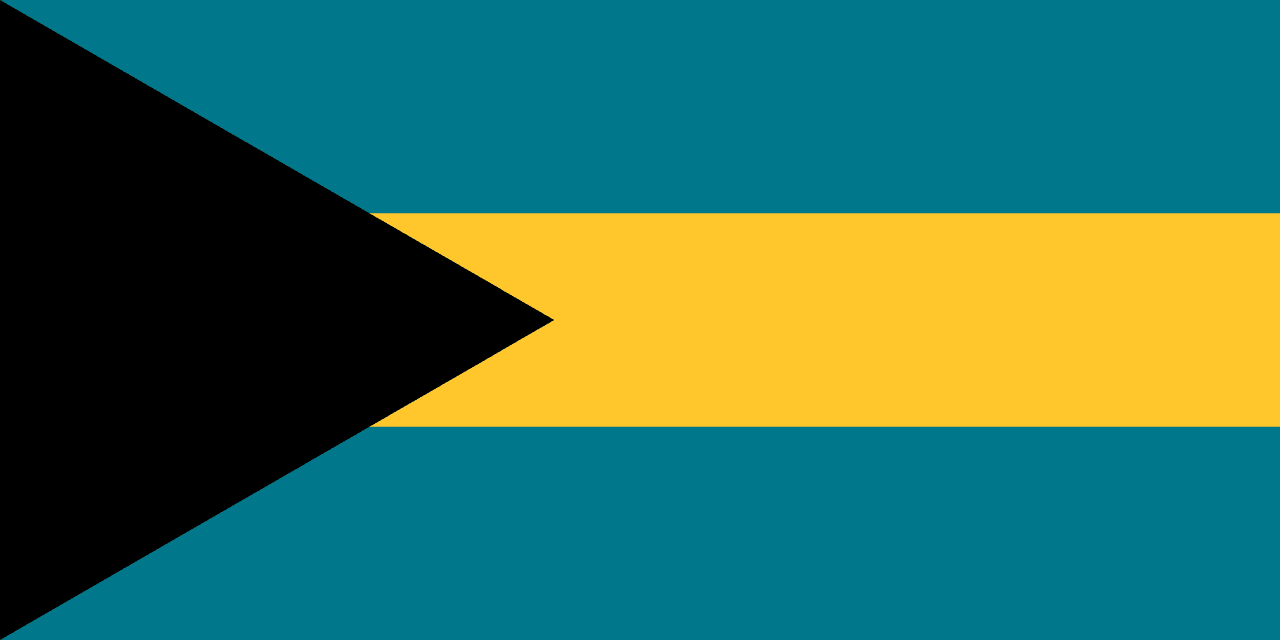
### Introduction Dame Marguerite Pindling (née McKenzie; born June 26, 1932) stands as one of the most beloved, formidable, and enduring figures in the modern political and social history of The Bahamas [1]. Universally revered as the "Mother of the Nation," she spent more than six decades at the epicentre of Bahamian public life. Her extraordinary life arc—from a humble childhood walking barefoot along the shores of South Andros and ancestral ties anchored in Great Exuma, to the frontlines of the democratic revolution that achieved Majority Rule and Independence, to the apex of constitutional statehood as the tenth Governor-General of the Commonwealth of The Bahamas—embodies the transformative journey of the Bahamian people themselves [1][2]. As the steadfast political partner and wife of the nation's founding father, [Sir Lynden Pindling](/profiles/lynden-pindling), she provided the grassroots organizing genius, emotional resilience, and mass charismatic appeal that sustained the Progressive Liberal Party (PLP) through decades of historic struggle [3]. Beyond politics, her visionary leadership of the Bahamas Red Cross Society and countless charitable foundations cemented her reputation as a compassionate champion of the vulnerable, while her tenure at Government House solidified her legacy as an impartial, unifying matriarch of a sovereign Caribbean nation [2][4].  *The national flag of The Bahamas, representing the sovereign nation whose democracy, independence, and civic institutions Dame Marguerite Pindling championed across six decades.* ### Ancestral Roots, Exuma Heritage, and Early Life in South Andros Marguerite Matilda McKenzie was born on June 26, 1932, in the rural, seaside settlement of Long Bay Cays on South Andros [1][2]. She was one of eighteen children born to Reuben McKenzie and Viola (née Bain) McKenzie, growing up in a household where discipline, faith, and mutual support were indispensable daily virtues [2][3]. Her ancestral heritage, however, was anchored deeply in the island of Great Exuma. Her father Reuben was born and reared in the historic settlement of Jolly Hall, Exuma, a lineage connecting her to the proud seafaring, boatbuilding, and farming traditions of the Exuma cays [5]. Throughout her public life, Dame Marguerite spoke warmly of her Exuma roots, acknowledging how the resilience and independent spirit of Exumians flowed through her veins alongside her South Andros upbringing [5]. Growing up in South Andros during the Great Depression and the Second World War meant living in an isolated Out Island environment largely untouched by modern infrastructure. There were no paved roads, municipal electricity, or indoor plumbing in Long Bay Cays. Daily life was governed by subsistence farming, sponge fishing, and community gathering around the local church. Marguerite attended the local public primary all-age school, where she excelled in reading and recitation, absorbing the oral traditions and deep community bonds characteristic of Bahamian family island life [2]. She embraced her modest upbringing with unshakeable pride, famously describing her beginnings throughout her later career: > "I was just a barefoot girl from Andros. We walked barefoot to school, we played along the shore, and we learned early that dignity does not come from wealth, high social standing, or shoes, but from character, faith, and honest toil." [3] In 1946, at the age of fourteen, Marguerite left South Andros to seek broader educational and economic horizons in Nassau, the colonial capital on New Providence [1][2]. Moving in with her older sister in the historic African Bahamian community of the Over-the-Hill district, she enrolled at the Western Senior School [1]. Nassau in the post-war era was a bustling port city defined by rigid racial segregation and social hierarchy. Completing her schooling with high marks, she entered the workforce, securing employment as an assistant and receptionist in the photographic studios of prominent colonial photographers Stanley Toogood and subsequently Colyn Rees [1][3]. In the photography studio, Marguerite developed a meticulous eye for poise, presentation, and public engagement—skills that would later make her one of the most charismatic, camera-ready public figures in West Indian political history [3]. ### Marriage to Lynden Pindling and the Dawn of a Movement (1956) In the mid-1950s, Marguerite's life took a historic turn when she met Lynden Oscar Pindling, a brilliant and ambitious young Black Bahamian barrister who had recently returned from London after earning his law degree at King's College and being called to the bar at the Middle Temple [1][2]. Pindling was captivated by Marguerite’s beauty, sharp wit, and down-to-earth warmth. On May 5, 1956, the couple was united in holy matrimony at St. Anne's Anglican Church in Fox Hill, Nassau [1][4]. Their wedding occurred on the precipice of a political earthquake. Just weeks after their marriage, in June 1956, [Sir Lynden Pindling](/profiles/lynden-pindling) contested and won a seat in the House of Assembly representing the Southern District of New Providence as a candidate for the fledgling Progressive Liberal Party (PLP) [2]. The young couple was immediately thrust into frontline colonial politics. Over the next four decades, their home became an operational nerve center for the party, a welcoming sanctuary for working-class citizens seeking advice, and a salon where the future of Bahamian independence was vigorously debated. Together they raised four children: Obafemi, Leslie, Michelle, and Monique, balancing the intense demands of domestic life with the unrelenting pressures of political leadership [1]. ### Grassroots Campaigning, Women's Suffrage, and the Battle for Majority Rule (1956–1967) From the moment she became Mrs. Pindling, Marguerite refused to be a passive political spectator. The Bahamas of the late 1950s was governed by an entrenched, white mercantile oligarchy known as the "Bay Street Boys," organized politically under the United Bahamian Party (UBP) and led by figures such as [Sir Roland Symonette](/profiles/roland-symonette) and [Sir Stafford Sands](/profiles/stafford-sands) [6]. The UBP maintained its grip on power through undemocratic mechanisms, including property requirements for voting, plural voting (which allowed wealthy landowners to cast votes in multiple districts), and pervasive racial segregation across hotels, restaurants, and public facilities [6]. Marguerite recognized that political liberation required organizing ordinary people at the grassroots level. She became an indispensable force within the Women's Branch of the PLP. Working in tandem with pioneering suffragettes such as [Dame Doris Johnson](/profiles/doris-johnson), Marguerite took to the frontlines of the Women's Suffrage Movement, which successfully won the right to vote for Bahamian women in 1961 [1][3]. In the general election of November 1962—the first time women exercised their franchise in Bahamian history—Marguerite spearheaded door-to-door voter registration drives, organizing logistics, transporting elderly women to polling stations, and explaining ballot procedures to first-time voters [3]. Her political style was defined by genuine empathy and an innate ability to connect with working people. While her husband mounted legal and parliamentary challenges—such as the historic "Black Tuesday" protest of April 27, 1965, when he threw the Speaker's mace out of the House of Assembly window—Marguerite traveled tirelessly across the archipelago [2]. She traversed the Family Islands by mailboat and small skiff, visiting Andros, Exuma, Cat Island, and Eleuthera to mobilize islanders who had long felt neglected by the Nassau-centric elite. She held rallies in church halls, organized fundraising cookouts, and established community networks that formed the backbone of the PLP’s electoral machine [3]. The climax of this struggle arrived on January 10, 1967, an election day that altered Bahamian destiny forever. The vote resulted in an 18–18 deadlock between the UBP and the PLP [6]. With the crucial support of Labour leader [Randol Fawkes](/profiles/randol-fawkes) and independent member Sir Alvin Braynen, [Sir Lynden Pindling](/profiles/lynden-pindling) formed the first government representing the majority Black population, an epochal achievement known as **Majority Rule** [6]. As thousands danced in the streets of Nassau on that historic night, Marguerite stood shoulder-to-shoulder with her husband, having earned her place as the "First Lady of Majority Rule" [3]. ### First Lady of Independence and Nation-Building (1967–1992) Following Majority Rule, Sir Lynden became Premier and subsequently Prime Minister, leading the nation to full sovereign Independence from Great Britain on July 10, 1973 [1][2]. As the wife of the Prime Minister, Dame Marguerite served as the diplomatic and social face of the new Commonwealth. She accompanied her husband to the historic constitutional conferences at Marlborough House in London, represented The Bahamas at Commonwealth Heads of Government Meetings, and hosted world leaders and royalty, including Queen Elizabeth II and Prince Philip [1][2]. On July 10, 1973, at Clifford Park in Nassau, she witnessed the lowering of the British Union Jack and the raising of the black, aquamarine, and gold flag of The Bahamas. Throughout the 1970s and 1980s, as the Pindling administration expanded public education, created the National Insurance Board, and established national institutions, Marguerite remained her husband's most trusted confidante and sharpest political sounding board. On the campaign trail, her presence was electric. Clad in vibrant party colors, with an unmatched sense of style and elegance, "Lady P" would warm up crowds of tens of thousands, delivering passionate, extemporaneous speeches that bridged political policy with grassroots reality. She helped guide the PLP through six consecutive general election victories (1967, 1968, 1972, 1977, 1982, and 1987), an unprecedented era of political dominance in the Anglophone Caribbean [1][3]. ### Philanthropy and Lifelong Humanitarian Service While frontline politics consumed much of her energy, Dame Marguerite made an equally profound mark through non-partisan charitable work and community development [1][4]. She believed fervently that national development was meaningless if vulnerable citizens were left behind in illness, poverty, or neglect. Her most enduring philanthropic legacy was her leadership of the **Bahamas Red Cross Society**. In 1976, she was appointed Chairperson of the Red Cross Fundraising Committee, a voluntary post she held with tireless passion for fifteen consecutive years until 1991 [1][4]. Under her stewardship, the annual Red Cross Ball was transformed from a modest social gathering into the preeminent philanthropic gala on the Bahamian calendar, attracting international patrons, corporate sponsors, and civic leaders [4]. Through her innovative fundraising drives and fairs across New Providence and the Family Islands—including special campaigns in Exuma and Andros—she raised millions of dollars to support disaster relief, emergency ambulances, elderly meal delivery services, and community first-aid training across the country [4][5]. In addition to the Red Cross, Dame Marguerite served as a devoted patron and advocate for the **Children’s Emergency Hostel**, an institution offering shelter, medical care, and protection to abandoned, abused, and neglected children [1][3]. She made regular, unpublicized visits to the hostel, organizing donations of food, clothing, and educational supplies. She was also a dedicated supporter of the **Hope Dale School** for children with special physical and intellectual needs, fighting to integrate children with disabilities into mainstream national care [1]. Her philanthropy was never detached or ceremonial; she was known to personally visit the sick in Princess Margaret Hospital and quiet communities Over-the-Hill, cementing her popular title as "Mother of the Nation" [3].  *Government House on Mount Fitzwilliam in Nassau, where Dame Marguerite Pindling resided and presided as the tenth Governor-General of The Bahamas from 2014 to 2019.* ### The Governor-Generalship: Ascending Mount Fitzwilliam (2014–2019) On August 26, 2000, [Sir Lynden Pindling](/profiles/lynden-pindling) passed away after a valiant battle with prostate cancer [1]. Dame Marguerite bore her grief with immense public grace, continuing to participate in civic events and serving as the guardian of his national legacy. Over the ensuing decade, she emerged as an elder stateswoman respected across political divides. In 2012, she was appointed by Queen Elizabeth II as Deputy to the Governor-General, periodically executing the constitutional duties of head of state when [Sir Arthur Foulkes](/profiles/sir-arthur-foulkes) was abroad [1][2]. Following Sir Arthur's retirement, Queen Elizabeth II officially appointed Dame Marguerite Pindling as the tenth Governor-General of the Commonwealth of The Bahamas on July 8, 2014 [1][2]. She became only the second woman in Bahamian history to occupy the nation’s highest constitutional office, following [Dame Ivy Dumont](/profiles/ivy-dumont) [1]. Her swearing-in ceremony at Government House on Mount Fitzwilliam was a moment of profound symbolic resonance for the Bahamian people. Here was a woman who had begun life in the remote pine yards of South Andros, whose paternal roots were in the soil of Exuma, taking the constitutional oath to represent the Crown at the summit of the Bahamian state [2][5]. In her inaugural address, she pledged to use her high office to unite a divided nation: > "I come to this high office as a servant of the Bahamian people. Everything I have ever achieved in this life, I owe to God and to the people of this Commonwealth, who opened their hearts to me as a young girl from the Family Islands. Let us put aside division and bitterness. The Bahamas is our common heritage, and its greatness lies in the unity of its people, the strength of its families, and our unwavering faith in Almighty God." [2][7] During her five-year tenure as Governor-General (2014–2019), Dame Marguerite brought warmth, regal poise, and absolute accessibility to Government House. Succeeded in the tradition of early Governors-General such as [Milo Butler](/profiles/milo-butler) and [Sir Gerald Cash](/profiles/gerald-cash), she threw open the gates of Mount Fitzwilliam to thousands of primary school students, community organizers, youth groups, and senior citizens [2][7]. She was a passionate champion of youth empowerment, urging young Bahamians to shun gang violence and crime in favor of educational excellence, civic pride, and entrepreneurial ambition. She discharged her constitutional duties—presiding over parliamentary openings, administering oaths of office to Prime Ministers, Cabinet ministers, and judges, and hosting foreign ambassadors—with flawless impartiality and stately dignity [1][2]. Dame Marguerite officially retired from the governor-generalship on June 28, 2019, at the age of eighty-seven, handing over the reins of office to the Honorable Cornelius A. Smith [1][7]. At her state farewell ceremony, leaders from all political parties gathered to praise her lifetime of devotion, her unshakeable integrity, and her profound impact on Bahamian democracy [7]. ### Honours, Distinctions, and Enduring Legacy Dame Marguerite’s monumental contributions to national life have been recognized through the highest civilian honors of both the Commonwealth and the British realm [1][2]. In 2007, Queen Elizabeth II named her a Dame Commander of the Most Distinguished Order of Saint Michael and Saint George (DCMG) in recognition of her decades of community service, charitable work, and political leadership [1][4]. Upon her appointment as Governor-General in 2014, she was elevated to **Dame Grand Cross of the Most Distinguished Order of Saint Michael and Saint George (GCMG)** [1][2]. In 2018, with the establishment of the independent Bahamian national honors system under the National Honours Act, Dame Marguerite was invested as a Member of the prestigious **Order of the Nation (ON)**, conferring upon her the highest domestic civil honour of The Bahamas [1][7]. Today, Dame Marguerite Pindling remains an iconic living legend of Caribbean statehood and women's empowerment. Her journey exemplifies how courage, grassroots tenacity, and moral purpose can overcome colonial disadvantage and humble beginnings to shape the destiny of a nation. Whether walking the rural footpaths of South Andros, celebrating her heritage in Exuma, rallying the masses on the campaign trail for Majority Rule, or inspecting the Royal Bahamas Defence Force guard of honour at Government House, Dame Marguerite has indelibly inscribed her name into the history of The Bahamas as the quintessential "Mother of the Nation." ### References - [Dame Marguerite Pindling - Wikipedia](https://en.wikipedia.org/wiki/Marguerite_Pindling) - [Her Excellency Dame Marguerite Pindling, GCMG, ON - Government of The Bahamas](https://www.bahamas.gov.bs/wps/portal/public/gov/government/contacts/governorgenerals/damemargueritepindling) - [Dame Marguerite Pindling: The Bahamian Project](https://www.bahamianproject.com/dame-marguerite-pindling/) - [Farewell Ceremony for Her Excellency Dame Marguerite Pindling, GCMG, ON - Bahamas High Commission London](https://bahamashclondon.net/2019/07/04/farewell-ceremony-for-her-excellency-dame-marguerite-pindling-gcmg-on/) - [Exuma Women's Summit Hears From Dame Marguerite Pindling - The Tribune](http://www.tribune242.com/news/2022/oct/20/exuma-womens-summit-hears-dame-marguerite-pindling/)
View Profile →Dr. Myles Munroe
### Introduction and Global Stature Dr. Myles Egbert Munroe, OBE (April 20, 1954 – November 9, 2014), was a world-renowned Bahamian evangelist, bestselling author, lecturer, governmental advisor, and leadership consultant whose revolutionary teachings transformed modern theological discourse and global leadership development. As the founding president and senior pastor of Bahamas Faith Ministries International (BFMI) and the chief executive of Myles Munroe International (MMI), Munroe emerged from the impoverished streets of Nassau to become one of the most prolific and influential thinkers ever produced by the Caribbean basin [1]. Over a public career spanning more than three decades, he penned more than one hundred books, study guides, and leadership curricula, establishing himself as a fixture on international bestseller lists and a sought-after keynote speaker in over one hundred nations across six continents.  Unlike conventional televangelists or denominational clergy who focused primarily on sectarian dogma, Munroe developed a transformative intellectual paradigm centered on "Kingdom Theology," personal purpose, and institutional empowerment. He believed fervently that every human being possesses an innate capacity for leadership, and that true spirituality must express itself in tangible social, civic, and economic advancement. His counsel was sought by monarchs, prime ministers, presidents, and corporate executives across the globe, particularly in the developing world where his message of sovereign dignity and post-colonial self-determination struck a powerful chord. > "The greatest tragedy in life is not death, but a life without a purpose. When purpose is not known, abuse is inevitable." > — Dr. Myles Munroe [1] ### Early Life and Destitution in Bain Town, Nassau Myles Egbert Munroe was born on April 20, 1954, in the historic Over-the-Hill community of Bain Town in Nassau, the capital of New Providence in the Bahamian archipelago [2]. Bain Town was a vibrant yet deeply impoverished neighborhood originally settled by liberated Africans in the early nineteenth century following the abolition of the British transatlantic slave trade—a cultural cradle renowned for its resilient Yoruba ancestry, communal solidarity, and self-governing lodges, as chronicled by fellow Bahamian cultural historian [Dr. Cleveland Eneas](/profiles/cleveland-eneas) in his landmark historical memoirs. Growing up in the 1950s and 1960s, Munroe was raised in a Bahamian society characterized by rigid racial stratification, economic disenfranchisement, and colonial hegemony. The archipelago was governed under British imperial administration, while domestic commerce and legislative affairs were tightly controlled by a small, white mercantile elite known pejoratively as the "Bay Street Boys." The Black majority, relegated largely to substandard housing and underfunded educational institutions, possessed minimal economic mobility. During this formative era, the seeds of Bahamian emancipation were being sown through the labor movement, the suffragette agitation spearheaded by leaders such as [Dame Doris Johnson](/profiles/doris-johnson), and the parliamentary rise of the Progressive Liberal Party under [Sir Lynden Pindling](/profiles/lynden-pindling). Within this austere socioeconomic landscape, the Munroe household faced acute material deprivation. Myles was one of eleven children born to Robert and Mattie Munroe [3]. The family lived in a modest wooden clapboard dwelling where resources were perpetually scarce. Space was so restricted that young Myles and his siblings slept crowded together on a mattress placed directly upon the bare wooden floor, regularly contending with bedbugs, roaches, and rats. Meat and milk were luxuries rarely seen on the family table; meals frequently consisted of simple flour-based pap, grits, or discarded vegetables. In his later reflections, Munroe vividly recounted how elementary school teachers dismissed him as an intellectual invalid, labeling him "half-witted" and predicting that he would never escape a lifetime of menial servitude [2]. ### Spiritual Epiphany, Purpose, and Intellectual Awakening The defining turning point of Munroe’s life arrived at the age of thirteen, around 1967—the historic year when The Bahamas achieved Majority Rule under [Sir Lynden Pindling](/profiles/lynden-pindling) [2]. Tormented by feelings of inferiority, racial inadequacy, and systemic hopelessness, Munroe experienced a profound spiritual conversion that radically altered his self-perception. Searching for answers, he picked up a red-letter King James Bible that belonged to his mother and began reading it obsessively from cover to cover. As he immersed himself in the biblical scriptures, Munroe encountered passages in the Pauline epistles and the Book of Proverbs that shattered his low self-esteem. He was captivated by the proposition in Ephesians that every human being was chosen before the foundation of the world with a divine blueprint and specific assignment [3]. This realization sparked the foundational tenet of his life's philosophy: that God does not create junk, and that a person's present environment does not dictate their ultimate potential. Driven by this new revelation of divine purpose, Munroe underwent an intellectual renaissance. He transformed his academic performance at the Government High School in Nassau, reading voraciously in philosophy, history, sociology, and theology. He also discovered an innate artistic talent, excelling in painting, graphic design, and music. In his late teens, he founded a pioneering gospel music group known as "The Vision," which blended contemporary Caribbean rhythms with spiritual themes, performing across New Providence and introducing young Bahamians to an energetic, culturally authentic expression of Christian worship. ### Academic Journeys: Oral Roberts University and the University of Tulsa Recognizing that international exposure and formal academic training were vital for his burgeoning mission, Munroe traveled to the United States in the mid-1970s to pursue undergraduate studies at Oral Roberts University (ORU) in Tulsa, Oklahoma [4]. Founded by charismatic evangelist Oral Roberts, the university emphasized whole-person education—cultivating spirit, mind, and body. At ORU, Munroe proved to be an exceptional scholar and campus leader. He excelled across multiple disciplines, graduating in 1978 with a Bachelor of Fine Arts degree, alongside specialized concentrations in Education and Biblical Theology [1]. During his university years, he was deeply influenced by the international student community in Tulsa, engaging with peers from Africa, Asia, and Latin America who were wrestling with issues of national sovereignty, economic development, and cultural decolonization. It was also during this period, in 1978, that he married his lifelong companion and intellectual partner, Ruth Ann Munroe (née Robinson), with whom he would raise two children, Charisa and Chairo (Myles Jr.), and build a worldwide ministry [3]. Eager to complement his theological insight with practical governance skills, Munroe subsequently enrolled at the University of Tulsa, where he earned a Master of Arts degree in Administration in 1980 [4]. His administrative studies provided him with rigorous grounding in organizational behavior, leadership theory, public policy, and institutional management. This dual mastery of biblical theology and administrative science gave Munroe a distinct competitive advantage: unlike many religious ministers who spoke solely in spiritual platitudes, Munroe could articulate faith-based principles in the vocabulary of corporate boardrooms and legislative chambers. ### The Founding and Rise of Bahamas Faith Ministries International (BFMI) Upon returning to Nassau in 1980, Munroe observed that while The Bahamas had achieved political independence from Great Britain in 1973 under Prime Minister [Sir Lynden Pindling](/profiles/lynden-pindling), many Bahamians remained psychologically and culturally bound by a colonial mindset of dependency and inferiority. Determined to foster spiritual liberation, national empowerment, and leadership excellence, Munroe, together with his close friend and ministry partner Dr. Richard Pinder, established Bahamas Faith Ministries International (BFMI) [5].  BFMI began modestly as a small prayer gathering in a residential living room and a rented school auditorium in Nassau. However, Munroe's electrifying oratory, charismatic presence, and practical, life-affirming teachings fueled rapid, unprecedented growth. Within a few short years, the congregation swelled into thousands of members, attracting professionals, civil servants, youth, and educators. Under Munroe's direction, BFMI departed radically from traditional colonial church architecture and denomination-centered liturgy. Rather than constructing a gothic cathedral or traditional church house, Munroe spearheaded the design and construction of the **Diplomat Center** on Carmichael Road in Nassau—a multimillion-dollar complex engineered with modern conference halls, television production studios, educational facilities, and state-of-the-art multimedia infrastructure. Munroe intentionally named the facility the "Diplomat Center" to reinforce his foundational theological conviction: that Christians were not mere religious adherents seeking an escape to heaven, but official ambassadors (*diplomats*) sent by the Kingdom of God to establish the culture, values, and standards of the Creator upon the earth [5]. BFMI became an engine of social transformation across the Bahamian Commonwealth. It established comprehensive community outreach initiatives, literacy programs, marriage enrichment seminars, and youth development institutes. Through its international outreach arm, Bahamas Faith Ministries was broadcast via global satellite networks, bringing the sights and sounds of Bahamian worship into homes across North America, Europe, Africa, and the Caribbean. ### Kingdom Theology and the Philosophy of Potential At the heart of Dr. Myles Munroe’s international acclaim was his articulation of "Kingdom Theology"—a theological paradigm that distinguished itself sharply from western ecclesiastical dogma [1]. Munroe contended that traditional religion was one of the most destructive forces in human history, having produced sectarian division, institutional corruption, and intellectual paralysis. He argued that Jesus of Nazareth did not come to earth to found a religion called Christianity, but rather to reintroduce an ancient governing system: the Kingdom of God. In Munroe’s framework, the Kingdom of God is not a cloud-bound, mystical afterlife, but a practical governmental reality operating under constitutional laws, civic protocols, and sovereign citizenship. He reframed biblical concepts using civic and political terminology: righteousness was defined as "legal right-standing" with the divine government; prayer was interpreted as "diplomatic communication" or the legal petition of a citizen to the sovereign; and the Holy Spirit was conceptualized as the royal Governor sent to colonize earth with heaven’s atmosphere, ethics, and culture. > "The richest place on earth is not the gold mines of South Africa, the oil fields of the Middle East, or the diamond mines of Congo. The richest place on earth is the cemetery. There lie buried seeds of untapped potential, unwritten books, uncomposed songs, and unmanifested greatness. Die empty." > — Dr. Myles Munroe [1] Parallel to his Kingdom teaching was his revolutionary philosophy of **Potential and Purpose**. Munroe famously defined potential as "dormant ability, reserved power, untapped strength, and unexposed capability." In classic texts such as *Understanding the Purpose and Power of Men*, *Understanding the Purpose and Power of Woman*, and *The Principles and Power of Vision*, he asserted that true fulfillment is impossible without understanding the original intent of the Creator [1]. His message was intensely emancipatory: he taught that every person is born an original and that it is a tragedy to die a copy. This perspective resonated with extraordinary power across the Global South, where generations of formerly colonized peoples had been systematically conditioned to believe that their skin color, geographical origin, or socioeconomic station disqualified them from global leadership. ### Prolific Author, Statesman, and Mentor to World Leaders Munroe’s global footprint expanded rapidly throughout the 1990s and 2000s through his prolific literary output. Over his lifetime, he authored more than one hundred books, study guides, and audio-visual curricula. His bestsellers—including *In Pursuit of Purpose*, *Rediscovering the Kingdom*, *Becoming a Leader*, *The Spirit of Leadership*, *The Most Important Person on Earth*, and *Overcoming Crisis*—were translated into dozens of languages, including Spanish, French, Portuguese, Russian, and Mandarin [1]. His writings bridged the sacred and the secular, providing practical blueprints for corporate management, public administration, personal relationships, and spiritual maturity. Beyond the literary arena, Munroe emerged as a premier statesman and diplomatic advisor. He established **Myles Munroe International (MMI)**, a global corporate consulting and executive coaching firm, as well as the **International Third World Leaders Association (ITWLA)** and the International Leadership Training Institute (ILTI) [4]. Through ITWLA, Munroe created a peer network connecting heads of state, cabinet ministers, parliamentarians, military generals, and corporate executives across the Caribbean, Africa, Latin America, and the Pacific. He was regularly invited to address sovereign parliaments, cabinet retreats, and diplomatic gatherings. He delivered keynote addresses before the United Nations, the Commonwealth of Nations, and national assemblies in nations such as Nigeria, Kenya, South Africa, Ghana, Brazil, and Trinidad and Tobago. When African nations transitioned from authoritarian rule or navigated civil conflict, Munroe was frequently invited behind closed doors to mentor incoming presidents and prime ministers on the principles of servant leadership, constitutional integrity, and the danger of power consolidation. He consistently urged political leaders to view governance not as a platform for self-enrichment, but as a sacred stewardship designed to empower citizens and cultivate successors. In 1998, Queen Elizabeth II appointed Munroe as an Officer of the Most Excellent Order of the British Empire (OBE) in the Queen’s Birthday Honours, recognizing his exemplary service to national development, international religion, and civic advancement [1]. That same year, the Commonwealth of The Bahamas awarded him the Silver Jubilee Award in recognition of his monumental contributions to the nation’s post-independence emergence. ### Tragic Passing in Freeport and Global Grief In November 2014, Dr. Myles Munroe was preparing to host the annual Global Leadership Forum in Freeport, Grand Bahama—an international summit designed to bring together political, business, and civic leaders from around the world to discuss ethical governance and generational succession. On the afternoon of Sunday, November 9, 2014, Dr. Munroe, his wife Pastor Ruth Munroe, and a delegation of BFMI leadership boarded a private Learjet 35 (registration C6-CAV) at the Lynden Pindling International Airport in Nassau, bound for Grand Bahama International Airport [6]. As the aircraft approached Freeport, the island was engulfed in a severe weather system characterized by torrential rain, high winds, and dense cloud cover. While attempting to execute an instrument approach to Runway 06, the aircraft flew low and struck a massive construction crane located within the Grand Bahama Shipyard [6]. The collision caused the Learjet to crash into a nearby junkyard and wetlands, erupting into flames. All nine souls on board perished instantly. Among the victims were Dr. Myles Munroe (aged 60), his wife Pastor Ruth Ann Munroe, BFMI senior vice president Dr. Richard Pinder, youth pastors Lavard and Radel Parks and their five-year-old son Johanan, ministry colleague Diego Santiago, pilot Captain Stanley Thurston, and co-pilot Frahkan Cooper [6]. The sudden, catastrophic loss sent shockwaves across The Bahamas and the international community. Prime Minister Perry Christie declared a period of national mourning, describing Munroe as "one of the most globally recognizable Bahamians in modern history" and an intellectual titan whose wisdom illuminated the world [7]. Tributes poured in from world capitals, including messages of condolences from African presidents, Caribbean heads of state, American civil rights figures, and international Christian leaders. On December 3, 2014, the Bahamian government honored Dr. Munroe and his wife with a full state-recognized national memorial service at the Thomas A. Robinson National Stadium in Nassau, attended by thousands of mourners from across the globe, followed by a state funeral at BFMI's Diplomat Center. ### Enduring Legacy and Impact Dr. Myles Munroe’s untimely death did not extinguish the global movement he ignited. In accordance with his own foundational philosophy—that true leadership is measured not by how many followers one maintains, but by how many leaders one produces, and that success without a successor is ultimate failure—BFMI and Myles Munroe International continued their mission without interruption [1]. His children, Myles Munroe Jr. (Chairo) and Charisa Munroe, stepped forward to steward the Munroe Global Foundation and preserve their father’s extensive intellectual archives, ensuring that his teachings on purpose, vision, and leadership remain accessible to future generations. Within the context of Caribbean intellectual history, Dr. Myles Munroe stands alongside national architects like [Sir Lynden Pindling](/profiles/lynden-pindling), [Milo Butler](/profiles/milo-butler), and composer [Timothy Gibson](/profiles/timothy-gibson) as a monumental builder of modern Bahamian identity. Yet Munroe achieved something uniquely transcendent: he took the hard-won lessons of Caribbean liberation, faith, and resilience and exported them to the capitals of the world. From the impoverished alleys of Bain Town to the halls of sovereign parliaments and global assemblies, Dr. Myles Munroe demonstrated that geographic size does not limit the reach of human greatness. His life remains an enduring testament to his greatest maxim: that every individual possesses a divine purpose waiting to transform the world. ### References [1] Munroe Global. "About Dr. Myles Munroe: Global Leader, Teacher, and Statesman." Official biographical retrospective and archival foundation. [2] Munroe, Myles. *In Pursuit of Purpose: The Key to Personal Fulfillment*. Destiny Image Publishers, 1992. [3] The Nassau Guardian. "Special Memorial Retrospective: The Life and Legacy of Dr. Myles Munroe (1954–2014)." Nassau, Bahamas, November 2014. [4] Oral Roberts University Archives. "Alumni Spotlight: Dr. Myles Munroe and the Whole Person Educational Ideal." Tulsa, Oklahoma. [5] Bahamas Faith Ministries International (BFMI). "Our History: From Living Room Fellowship to the Diplomat Center." Nassau, Bahamas. [6] Bahamas Department of Civil Aviation. "Official Aircraft Accident Investigation Summary: Learjet 35A C6-CAV Accident Report at Freeport, Grand Bahama." Ministry of Transport and Aviation, 2014. [7] Government of the Commonwealth of The Bahamas. "National Address by Prime Minister Rt. Hon. Perry G. Christie on the Passing of Dr. Myles Munroe." Official Press Release, Nassau, November 10, 2014.
View Profile →George Smith
### Early Life and The Seeds of Activism James Alexander George Smith McCartney, affectionately known throughout the Caribbean as "J.A.G.S." McCartney, was born on June 30, 1945, on the island of Grand Turk in the Turks and Caicos Islands. He was born into a period of relative obscurity for the small archipelago, which was then a dependency of Jamaica and largely neglected by the British colonial administration. The islands' economy was historically tied to the salt industry, a grueling and physically demanding trade that offered little in the way of prosperity for the local population. It was in this environment of economic stagnation and political marginalization that the future leader's consciousness was formed. J.A.G.S. McCartney was the son of Harvey O. B. Fernandez McCartney, a prominent Jamaican barrister, and Sally McCartney (née Taylor), a respected Sunday school pianist from the Turks and Caicos. His father's legal background and connection to Jamaica deeply influenced the young McCartney. He was named after James Alexander George Smith, a revered Jamaican legislator known for his staunch defense of civil liberties and his eloquent advocacy for the rights of the colonized. This namesake was perhaps prophetic, foreshadowing the path McCartney would eventually take. From a young age, McCartney faced significant personal challenges. He was born with a congenital heart condition, a diagnosis that led doctors to predict a severely limited physical life. However, McCartney defied these medical expectations with a characteristic stubbornness and vitality. He remained highly active, refusing to let his condition define his capabilities. This early display of resilience would become a hallmark of his political career. Due to the limited medical and educational facilities in the Turks and Caicos at the time, his heart condition necessitated frequent travel to Jamaica. It was there that he completed his secondary education at the Happy Grove High School. His time in Jamaica during the 1950s and 60s was profoundly transformative. He was immersed in an intellectual and political ferment, heavily influenced by the anti-colonial and civil rights movements sweeping the globe. The philosophies of Jamaican national heroes like Norman Manley and Sir Alexander Bustamante, the Pan-African vision of [Marcus Garvey](/profiles/marcus-garvey), and the eloquent demand for justice by Dr. Martin Luther King Jr. all left an indelible mark on his developing worldview.  ### The Bahamian Crucible and Labor Activism Before launching his political career in his homeland, McCartney sought opportunities abroad, eventually settling in the neighboring Bahamas. The Bahamas during the late 1960s was undergoing its own profound political transformation, culminating in the rise of the Progressive Liberal Party (PLP) and the push for majority rule. McCartney eagerly threw himself into this dynamic environment. In the Bahamas, he transitioned from a student of political philosophy to an active participant in the struggle for social justice. He became deeply involved in labor activism, recognizing that economic empowerment was a prerequisite for true political freedom. He was instrumental in organizing labor strikes, challenging the entrenched economic interests that exploited workers, and demanding better wages and working conditions. His experiences in the Bahamas honed his organizational skills and his ability to mobilize the masses. He also authored a book during this period, *A Black Boy in the Bahamas*, which chronicled his experiences and articulated his vision for a more equitable society. ### Return to Turks and Caicos and The PDM In 1971, McCartney returned to the Turks and Caicos Islands, bringing with him the wealth of experience and political acumen he had acquired in Jamaica and the Bahamas. He found his homeland largely unchanged—still struggling with economic underdevelopment, high unemployment, and a colonial administration that seemed indifferent to the needs of the local population, affectionately known as "Belongers." Recognizing the urgent need for systemic change, McCartney founded the People's Democratic Movement (PDM). The PDM was not merely a political party; it was a grassroots movement aimed at awakening the political consciousness of the Turks and Caicos Islanders. McCartney's platform was radical for its time and place: he demanded greater self-determination, an end to systemic inequality, and a focused effort to elevate the socioeconomic status of the local population. > "We cannot wait for others to define our destiny; we must seize the reins of our own future and build a nation that reflects the dignity and aspirations of our people." McCartney was a charismatic and electrifying orator. He traveled across the islands, engaging directly with the people, listening to their grievances, and articulating a vision of a more prosperous and independent Turks and Caicos. He was particularly focused on mobilizing the youth, recognizing them as the engine of future progress. ### The First Chief Minister McCartney's tireless campaigning and his compelling vision resonated deeply with the electorate. In 1976, following the introduction of a new constitution that granted greater internal self-government to the islands, the PDM swept to victory in the general elections. At the remarkably young age of 31, J.A.G.S. McCartney was sworn in as the first Chief Minister of the Turks and Caicos Islands, becoming one of the youngest democratically elected leaders in the world at that time. His tenure as Chief Minister was marked by a flurry of activity and a bold reform agenda. His administration prioritized the "Turkification" of the civil service. For decades, senior government positions had been overwhelmingly held by British expatriates. McCartney recognized that true self-governance required local expertise and leadership. He initiated sweeping educational reforms and aggressively promoted the appointment of qualified Belongers to key administrative roles, ensuring that the government truly reflected the people it served. Furthermore, McCartney was a staunch advocate for economic diversification, seeking to move the islands away from reliance on foreign aid and towards sustainable local industries, including tourism and offshore finance, while ensuring that the benefits of development flowed to the local population. He also began the delicate and complex process of negotiating with the United Kingdom regarding the ultimate political status of the islands, laying the groundwork for potential future independence.  ### A Tragic End and an Enduring Legacy Tragically, J.A.G.S. McCartney's life and his visionary leadership were cut short abruptly. On May 9, 1980, he was killed in a private plane crash while flying over New Jersey in the United States. He was just 34 years old. His sudden death sent shockwaves through the Turks and Caicos Islands and the wider Caribbean region. At the time of his death, he was actively engaged in discussions with the British government concerning the future trajectory of the territory. The loss of such a dynamic and promising leader was a profound blow to the nascent nation. However, McCartney's legacy proved to be as enduring as his spirit. He had fundamentally altered the political landscape of the Turks and Caicos Islands, instilling a sense of national pride and a belief in the capacity of the Belongers to govern themselves. In recognition of his foundational role in the nation's history, J.A.G.S. McCartney was posthumously declared the first National Hero of the Turks and Caicos Islands. The country observes National Heroes Day on the last Monday of May, a day intimately tied to the commemoration of his life and his monumental contributions. He remains an iconic figure, a symbol of youthful dynamism, unyielding courage, and the unwavering pursuit of self-determination. His brief but luminous career continues to inspire generations of Turks and Caicos Islanders to strive for a better, more equitable future.
View Profile →Milo Butler
Sir Milo Boughton Butler stands as a colossus in the modern history of the Commonwealth of The Bahamas. As a fiery political reformer, a self-made entrepreneur, and a passionate champion for the disenfranchised Black majority, Butler’s life was a testament to the struggle for racial, social, and economic equality in the Caribbean. His political journey culminated in him becoming the first Bahamian-born Governor-General following the nation's independence in 1973, a symbolic victory that marked the end of centuries of British colonial administration and minority rule. ### The Colonial Context and the Segregated Bahamas To understand the rise and impact of Sir Milo Butler, one must examine the socio-political landscape of the Bahamas during the early and mid-20th century. Under British colonial rule, the archipelago was characterized by a rigid racial hierarchy and a massive economic divide. Although the vast majority of the population was Black, political power and economic resources were concentrated in the hands of a small, white merchant elite. This powerful group, which controlled the commerce of Bay Street in Nassau, was known collectively as the "Bay Street Boys." Through their political vehicle, the United Bahamian Party (UBP), the Bay Street Boys maintained their dominance using systemic tools of disenfranchisement. The electoral system favored them heavily through property qualifications, which restricted the vote to landowners; plural voting, which allowed wealthy men to cast ballots in every electoral district where they owned property; and the open ballot system, which forced voters to declare their choice aloud in front of employers, often leading to voter intimidation. It was within this oppressive structure that Milo Butler lived and worked, resolving to dismantle it from the inside out. ### Early Life, Florida, and Education Milo Boughton Butler was born in Nassau, New Providence, on August 11, 1906, to George Raleigh Butler and Frances Manesta Butler (née Thompson) [1]. His parents were hard-working Bahamians of modest means, and he grew up in the historic "Over-the-Hill" district of Nassau. His childhood was shaped by the communal values of the local neighborhood, but his horizon expanded significantly when he traveled to Florida as a youth. While in the United States, Butler attended the George Washington School [1]. This period was pivotal in his personal development, as it exposed him directly to the harsh realities of the Jim Crow South. The legal segregation, racial violence, and blatant inequality he witnessed in Florida left an indelible mark on his consciousness. It became clear to him that the struggle for civil rights and human dignity was a global endeavor, and he returned to the Bahamas determined to fight the more subtle but equally damaging forms of institutional racism present in his homeland. Upon his return, Butler continued his education at the public school on the Out Island of Rum Cay, which connected him to the rural, agricultural way of life of the Bahamian "Family Islands" [1]. He later completed his formal education at the Boys' Central School in Nassau, armed with a sharp mind and a growing desire for social reform. In 1928, he married Caroline Loretta Watson, a union that would bless them with ten children [2]. His family would become his bedrock, supporting him through decades of political turmoil. ### Commercial Roots: The Grocery Store as a Community Hub At the tender age of 17, Butler embarked on a career in business [1]. Facing the systemic barriers that prevented Black Bahamians from accessing credit from white-owned banks, he relied on his own ingenuity to open a small grocery shop in "The Pond" area of Nassau. Through sheer determination and hard work, this venture grew into a substantial family-owned enterprise known as "Milo B. Butler & Sons" (today the Milo Butler Group) [2]. Butler's grocery store was far more than a commercial shop; it served as a vital community hub and a lifeline for working-class families. In an era when the white merchant oligarchy controlled the prices of goods and credit, Butler operated his business with a social conscience. He frequently extended credit to cash-strapped families, provided free food to those in dire need, and used his store as a forum for political discussions. His success as a Black businessman in direct competition with the "Bay Street Boys" proved that Black Bahamians could achieve economic independence. The daily struggles he faced in securing import licenses and competing against the entrenched cartels of Bay Street sharpened his political analysis, convincing him that economic power could not be divorced from political power. ### Entry into Politics: Challenging Sir Harry Oakes In 1936, Milo Butler made his first foray into formal politics by contesting the Western District seat in the House of Assembly [1]. His opponent was Sir Harry Oakes, a fabulous wealth-holder, gold mining magnate, and close associate of the colonial establishment. Oakes possessed immense financial resources, and in an era of open voting and property qualifications, Butler's bid was viewed by many as a foolhardy crusade. Though he was unsuccessful in this initial attempt, Butler's campaign galvanized the working-class voters of the Western District. The opportunity for redemption came quickly. In 1937, a by-election was called, and Butler ran again [1]. This time, his grassroots organization and message of reform triumphed. He captured the seat, representing the Western District until 1947 [2]. During this decade in the House of Assembly, Butler established himself as a fierce, uncompromising advocate for the poor. He was a lone voice against the colonial government, repeatedly demanding better working conditions, higher wages, and the introduction of a secret ballot. ### The Speaker's Hourglass: The 1956 Defiance Although Butler lost his seat in 1947 due to the systemic manipulation of the electoral boundaries by the ruling oligarchy, his political exile was temporary. He returned to represent the Western District in 1956, a year that would define his legacy as a legislative rebel [1]. By this time, the Progressive Liberal Party (PLP) had been formed as the first national political party representing the Black majority, and Butler became one of its most prominent and fiery leaders. In 1956, in an effort to stifle the lengthy speeches of the PLP opposition members who were exposing the injustices of the colonial administration, the UBP government introduced a new rule. The rule limited the length of parliamentary speeches to twelve minutes, with the time tracked by the Speaker’s official hourglass. > "He was a lion in the House of Assembly who was not afraid to roar. Sir Milo Butler stood as a giant who fought for the ordinary man when others stayed silent." During a heated debate on the rule, Butler grew incensed at this blatant attempt to silence the voice of the people. In a dramatic act of defiance that shocked Nassau’s establishment, he marched up to the Speaker's dais, grabbed the hourglass, and threw it out of the window of the House of Assembly to the street below [1]. When questioned about his actions, Butler reportedly compared the act to Moses casting down the tablets of the Ten Commandments in anger at the Israelites' disobedience. The gesture became an instant symbol of the rejection of colonial authority and the rules designed to maintain white minority rule.  ### Black Tuesday and the Battle for Equal Representation The battle for equal rights reached a fever pitch in the mid-1960s. The PLP, led by the charismatic lawyer [Lynden Pindling](/profiles/lynden-pindling) and supported by labor leaders like [Randol Fawkes](/profiles/randol-fawkes), was pushing for a fair distribution of legislative seats. The UBP government had gerrymandered the boundaries so that the sparsely populated Out Islands, which they controlled, had far more seats than the heavily populated, Black-majority districts of New Providence. This confrontation culminated on April 27, 1965, a day known in Bahamian history as "Black Tuesday." During a session of the House of Assembly, Pindling delivered a speech denouncing the gerrymandered boundaries. He then walked to the Speaker's table, picked up the ceremonial mace—the symbol of the House's authority—and threw it out of the window to the thousands of protesters gathered in the square below, declaring that authority belonged to the people. Following Pindling's lead, Milo Butler picked up the Speaker's hourglass and hurled it out of the same window [1]. These dual acts of symbolic defiance sent a message to the UBP: the era of minority rule was drawing to a close, and the Bahamian people would no longer accept the legitimacy of an undemocratic parliament. ### The Dawn of Majority Rule and Cabinet Appointments The historic turning point occurred on January 10, 1967, when the Bahamas held a general election that resulted in a tie between the PLP and the UBP. With the support of independent representative [Randol Fawkes](/profiles/randol-fawkes) and the representative for the Out Islands, the PLP was able to form the government, ushering in "Majority Rule" [2]. This was a watershed moment in Bahamian history, ending over two centuries of white minority control and placing the government in the hands of the Black majority. Milo Butler, who had switched constituencies to represent Bain Town, was a key architect of this victory. In the newly formed government led by Prime Minister [Lynden Pindling](/profiles/lynden-pindling), Butler was appointed to several cabinet positions where he could implement practical reforms: * **Minister of Health and Welfare (1967):** He modernized public health services and expanded medical care to the Family Islands [2]. * **Minister of Labour, Agriculture, and Fisheries (1968–1970):** He championed labor rights, raising the minimum wage, and promoting local food production to reduce dependency on imports [2]. * **Minister of Agriculture and Fisheries (1970–1972):** He continued his work in empowering local farmers and fishermen, establishing cooperative marketing programs [2]. * **Minister without Portfolio (1972):** He served as a senior advisor to the Prime Minister during the critical negotiations for independence [2]. ### The First Bahamian-Born Governor-General On July 10, 1973, The Bahamas officially became an independent nation, ending its status as a British colony. To mark this new era, the government sought to replace the traditional British colonial governors with a Bahamian who represented the struggles and achievements of the people. There was no candidate more fitting than Milo Butler. On August 1, 1973, Sir Milo Boughton Butler was sworn in as the first Bahamian-born Governor-General of the Commonwealth of The Bahamas [2]. His appointment was met with widespread celebration across the nation. The boy from "The Pond" who had fought the colonial system for decades was now the Queen's official representative, residing in Government House on Mount Fitzwilliam. During his tenure, he was honored by Queen Elizabeth II with the titles of Knight Grand Cross of the Most Excellent Order of St. St. Michael and St. George (GCMG) and Knight Grand Cross of the Royal Victorian Order (GCVO) [2]. Despite these elite titles, Sir Milo remained a man of the people, keeping the gates of Government House open and continuing to walk among the citizens of Nassau.  ### Death and Enduring Legacy Sir Milo Butler served as Governor-General until his death on January 22, 1979, following a period of illness [1]. His passing was marked by national mourning and a state funeral attended by leaders from across the Caribbean and the world. Today, Sir Milo Butler is revered as a national hero of the modern Bahamas. His legacy is woven into the daily life of the nation: * **Rawson Square Statue:** A bronze statue of Sir Milo stands in Rawson Square, Nassau, looking toward the parliament buildings where he fought his greatest battles. * **Currency:** His portrait graces the Bahamian twenty-dollar banknote ($20), a daily reminder of his contribution to national sovereignty. * **Folk Song:** His remarkable journey is immortalized in the popular Bahamian folk song, *"From the Pond to Government Hill."* * **Milo Butler Highway:** A major four-lane highway in New Providence is named in his honor. Sir Milo Butler's life stands as a beacon of courage, demonstrating that systemic oppression can be overcome through steadfast determination, grassroots mobilization, and an unyielding commitment to the welfare of the ordinary citizen.
View Profile →Pompey
## Pompey **Enslaved Freedom Fighter of [Exuma](/islands/exuma) · Bahamian National Hero · Leader of the 1830 Revolt**  ### The World That Made a Hero To understand Pompey — the man, the rebel, the legend — one must first understand the world that forged him: the sun-scorched cotton estates of [Exuma](/islands/exuma), [The Bahamas](/islands/the-bahamas), a world constructed entirely upon the exploitation of enslaved African men and women, and the audacious, violent machinery of empire that sustained it. The Bahamas had not always been an agricultural colony. The island chain's poor, thin soils and fickle rains made large-scale plantation farming a marginal enterprise. But history changed course dramatically after the American Revolutionary War (1775–1783), when thousands of Loyalist settlers — planters and merchants who had remained loyal to the British Crown — fled the newly independent United States and sought refuge in the British Caribbean. The British government offered generous land grants across the Bahamian islands to compensate these displaced settlers, and with the Loyalists came their most valuable and most brutalized asset: enslaved African people.[1] Among the most prominent of these Loyalist landowners was **Denys Rolle** (1725–1797), a wealthy British landowner who had earlier attempted to establish a utopian agricultural settlement called Rollestown in East Florida. When Britain ceded Florida to Spain following the Revolutionary War, Denys Rolle relocated his entire enslaved workforce — men, women, and children — to approximately 7,000 acres of land he was granted on **Great Exuma** in the Bahamas. On this land, the enslaved workers cleared bush, built homes, cultivated provision grounds, and established the plantation settlements that would become known as Steventon, Rolleville, and Rolle Town.[2] When Denys Rolle died in 1797, his son, **Lord John Rolle** (1750–1842), inherited the Exuma estates. Unlike his father, Lord John Rolle resided primarily in England as an **absentee landlord**, managing his Bahamian holdings through an overseer. The distance between owner and plantation deepened the cruelties of the system — overseers had enormous power over the lives of the enslaved, and conditions on the Rolle estates became notoriously brutal. By the eve of emancipation, Lord Rolle held somewhere between 350 and 400 enslaved people, making him one of the single largest slaveholders in the entire Bahamas.[2][3] It was into this world — a world of forced labor, broken families, and systematic dehumanization — that Pompey was born, likely around 1798, on the Rolle plantation in **Steventon, Great Exuma**.[3] --- ### Who Was Pompey? Almost nothing of Pompey's personal history was recorded by those who held power over him. Enslaved people in the British Caribbean were catalogued in plantation ledgers not as individuals with histories, hopes, and families, but as units of labor and property — counted alongside livestock and tools. What we know of Pompey comes primarily from colonial administrative records surrounding the 1830 rebellion he led, and from the oral traditions preserved by the Exumian community across generations. What the historical record does tell us is this: by 1830, Pompey was approximately **32 years old**, a **blacksmith** by trade, and a recognized leader within the enslaved community of the Rolle Plantation.[3][4] A blacksmith in the plantation hierarchy occupied a position of relative skill and visibility — forging and repairing the iron tools that made agricultural work possible, Pompey would have moved between the fields, the forge, and the plantation quarters. He would have known nearly everyone on the estate. He would have understood, with particular clarity, how the machinery of slavery worked — and perhaps, how it might be broken. There is no evidence that Pompey ever personally met Lord Rolle, who remained comfortably in England while the suffering on his estates deepened. But the actions Pompey took in 1830 would reverberate all the way to the colonial government in Nassau, and far beyond. --- ### The Crisis of 1830: Relocation and Resistance By the late 1820s, the soil of the Rolle estates in Exuma had been largely exhausted by decades of intensive cotton cultivation. The agricultural model that the Loyalists had imported from the American South was failing across the Bahamas — the thin limestone soils of the out-islands simply could not sustain the punishing demands of cash-crop agriculture indefinitely. To maximize profit on his remaining fertile holdings, Lord Rolle's overseer announced in 1829–1830 a sweeping plan: **77 enslaved men, women, and children from the Steventon plantation were to be forcibly relocated to Cat Island**, where the land remained more productive.[4][5] For the enslaved community of Steventon, this decree was nothing short of catastrophic. They had spent decades — indeed, generations — building lives on this land. They had cultivated provision grounds where they grew their own food. They had established kinship networks, friendships, family structures, and community ties that gave meaning and dignity to lives otherwise defined by bondage. To be moved like livestock to another island, to have everything familiar ripped away with no recourse, no appeal, no voice — this was an act of profound violence, even within the brutal logic of the slave system itself.[5] Pompey refused to accept it. > *"He accepted thirty-nine lashes of the whip rather than see his people moved against their will — and in doing so, he told the world that these people were not property. They were human beings with the right to remain where they had built their homes."* In an act of organized, strategic defiance, Pompey led a group of **approximately 44 to 80 enslaved people** into the bush of Great Exuma, evading their overseers and refusing to board the transport vessel that would carry them to Cat Island.[3][4] For several weeks, they hid among the scrub forests and cays of the island, beyond the reach of plantation authority. But Pompey's ambitions went far beyond simple flight. --- ### The Voyage to Nassau: A 130-Mile Act of Courage Rather than merely escaping into the bush, Pompey organized something far bolder. The group **seized one of Lord Rolle's own boats** and set sail for Nassau — the capital of the Bahamas, some **130 miles away** — with the explicit intention of **petitioning the British Governor directly** to halt their forced relocation.[4][6] This was an extraordinary act, remarkable for both its audacity and its strategic sophistication. Pompey and his companions were not simply running away from slavery. They were attempting to use the legal and political structures of the colonial system against the plantation class — appealing to British imperial authority, which, by 1830, was increasingly sympathetic to abolitionist sentiment, to protect their rights as human beings. The group was **intercepted before reaching Nassau** and returned to Exuma under armed escort. But the damage to planter authority had already been done. The news of their bold voyage spread across the colony, electrifying the enslaved population and alarming the white planter class in equal measure. Governor **Sir James Carmichael Smyth**, who served as Governor of the Bahamas from 1829 to 1833 and was himself a known abolitionist, became aware of the case. He was broadly sympathetic to the plight of the enslaved and intervened decisively: **the order to relocate the enslaved people to Cat Island was cancelled.**[6][7] The rebellion had achieved its central goal. --- ### Punishment and Dignity Victory, however, came at a personal cost for Pompey. As the acknowledged leader of the rebellion, he was singled out for punishment by the plantation authorities. He was sentenced to receive **39 lashes** — the maximum legally permitted flogging under colonial law.[4] By all historical accounts, Pompey accepted this punishment **without breaking**, reportedly submitting to the flogging in order to spare his fellow rebels from further retribution. His stoic endurance of this brutal public punishment only deepened his legend among the Exumian community. He had sailed across open water to challenge the most powerful institution in the colonial Caribbean, had forced a reversal of a planter's order, and had stood tall under the lash — all without surrender. In the aftermath of the whipping, the enslaved workers on the Rolle plantation staged further unrest. They **refused to work** — a powerful economic weapon in a system entirely dependent on their labor — and the colonial authorities were forced to deploy **military troops** to restore order on the estate.[6] The rebellion's reverberations continued long after Pompey's punishment, making clear to the colonial government that the enslaved population of the Bahamas was not passive, not compliant, and not prepared to be treated as mere property. Governor Carmichael Smyth went further: he suspended the local colonial officials — including magistrates — who had overseen the flogging of the returning rebels, citing their excessive cruelty. This intervention caused a furious political backlash from the pro-slavery establishment in Nassau, but it also demonstrated that the moral tide was turning.[7] --- ### The Legacy of the Rolle Name One of the most enduring and remarkable legacies of the Rolle plantation in Exuma is the prevalence of the surname **Rolle** throughout the Bahamian islands today. When slavery was formally abolished across the British Empire — first by the Slavery Abolition Act of 1833 (which took effect in 1834), and then fully upon the conclusion of the Apprenticeship period in **1838** — the formerly enslaved people of Exuma faced the question of identity: who were they, now that the shackles of the law had been lifted? Many chose, or were compelled by social convention, to adopt the surname of their former enslaver, as was common across the Caribbean. But in Exuma, this practice took on a particular power and twist. Lord John Rolle, who died in 1842 leaving **no direct heirs**, reportedly bequeathed his Exuma landholdings to the formerly enslaved people who had worked his estates — a remarkable act, whether motivated by guilt, pragmatism, or genuine benevolence.[2] As a result, the people of Exuma became landowners, community builders, and shapers of their own future. They established thriving settlements throughout Great Exuma. And they carried the surname **Rolle** — not as a badge of servitude, but as a marker of belonging, of community, of the land they had labored to build and had finally been allowed to own. Today, Rolle is among the **most common surnames in the Bahamas**, especially in Exuma, where communities like Rolleville and Rolle Town stand as testaments to the people who transformed a name of bondage into a name of pride. Pompey, the blacksmith from Steventon, is the most celebrated of those who bore — or resisted the bearing of — that name. --- ### Emancipation and Its Aftermath Pompey did not live to see full emancipation come to the Bahamas. The exact date of his death is unrecorded — another casualty of a system that refused to count the humanity of enslaved people. What is certain is that his rebellion in 1830 is widely considered **the pivotal act of resistance** that accelerated abolitionist sentiment within the colonial administration and demonstrated to the British imperial government that the system of slavery in the Bahamas was reaching a point of unsustainability. Four years after Pompey's rebellion, the Slavery Abolition Act brought formal emancipation to the British Empire. In the Bahamas, as elsewhere, enslaved people entered a period of **Apprenticeship** — a cruelly misnamed transitional arrangement that kept them bound to plantation labor for a further four years. Full, unconditional freedom came to the Bahamas in **1838**. The Bahamas that emerged from emancipation was one fundamentally shaped by the acts of resistance — large and small, dramatic and quiet — that Pompey and countless unnamed others had performed across the decades of bondage. Their insistence on being treated as human beings, their strategic use of legal channels, their willingness to absorb punishment rather than capitulate — all of this created the moral and social conditions in which emancipation became not just politically necessary, but morally inevitable. --- ### A Hero Remembered: Monuments, Museums, and Marathons For generations after his death, Pompey's story was preserved primarily through oral tradition — passed from grandmother to grandchild, from elder to youth, in the communities of Great Exuma. His name carried weight even when it was not written in books. In time, formal recognition followed. **The Pompey Museum of Slavery and Emancipation**, located in downtown Nassau on Bay Street and housed in the historic **Vendue House** — itself a former slave market where human beings were bought and sold — was dedicated in **1992** as a permanent institution preserving the history of slavery and freedom in [The Bahamas](/islands/the-bahamas).[8] The irony and power of situating a museum honoring an enslaved freedom fighter inside a building that once auctioned enslaved people is deliberate and profound. The museum houses shackles, chains, historical documents, artifacts, and exhibits tracing the arc from the transatlantic slave trade to emancipation, with Pompey's story at its moral center. In Steventon, Great Exuma, a **memorial statue** honoring Pompey stands on a seaside cliff overlooking the waters from which he launched his audacious voyage. Nearby are the ruins of the old Steventon jail, where he was held following his capture — a haunting, tangible remnant of the colonial machinery he dared to challenge.[9] The **Run for Pompey** — an annual charitable race held in Great Exuma — draws participants from across the Bahamas and beyond to run in his honor. Now in its eleventh year as of 2025, the event raises funds for the **Pompey Scholarship**, which provides financial support for a deserving student from Exuma to attend college or university, transforming the memory of a man denied his own freedom into opportunity for the next generation.[10] Most significantly, in October 2025, on National Heroes Day, Pompey was **formally designated a National Hero of the Commonwealth of the Bahamas** — the highest honor the nation can bestow.[11] He joined a select pantheon of figures who shaped Bahamian identity, including [Hubert Ingraham](/profiles/hubert-ingraham) and other foundational leaders of the modern Bahamian state. For the people of Exuma — many of them descendants of the very community Pompey fought to protect — this recognition was long overdue and deeply personal. > *"Pompey's rebellion was not merely a moment of individual courage. It was a collective declaration by an entire community that they were human beings who could not be moved, displaced, or destroyed without a fight."* --- ### The Enduring Meaning of Pompey What makes Pompey's story so extraordinary — and so relevant — is not just the dramatic events of 1830, but the strategic intelligence and moral clarity he brought to an impossible situation. He did not simply flee. He did not simply endure. He organized, he planned, he sailed across open water, and he petitioned the highest authority available to him. He used the systems of empire against the slaveholders of empire, and he won — at the cost of 39 lashes across his back. His rebellion reminds us that resistance to injustice does not always look like violence. Sometimes it looks like 44 people slipping into the bush at night, seizing a boat at dawn, and sailing toward justice across 130 miles of open Caribbean sea. For generations of Bahamians — and particularly for the people of [Exuma](/islands/exuma), who carry in their very surnames the complex, painful, and resilient history of the Rolle plantations — Pompey is not merely a historical figure. He is an ancestor, a protector, a proof that dignity and courage could survive even the most brutal conditions human beings have ever inflicted upon one another. The communities that grew from the ashes of the Rolle plantation — Steventon, Rolleville, Rolle Town, and beyond — and the children of Exuma who today receive scholarships in his name, are the living legacy of a 32-year-old blacksmith who, one day in 1830, decided that enough was enough. [L.W. Young](/profiles/lw-young), among other Bahamian educators and historians, has worked to ensure that stories like Pompey's are passed on to future generations — recognizing that national identity, for the Bahamas, is inseparable from the memory of those who fought for freedom in the darkest hours of the colonial era. Pompey of Exuma belongs not only to the history of [The Bahamas](/islands/the-bahamas), but to the universal history of human dignity and resistance. ### References 1. [Run for Pompey — Pompey's Story](https://www.runforpompey.com) 2. [Bahamasairtours — Denys Rolle and Lord John Rolle History in Exuma](https://www.bahamasairtours.com) 3. [NativeStew — Pompey Rolle and the 1830 Rebellion](https://www.nativestew.com) 4. [DiscoverExuma — Pompey Memorial Steventon](https://www.discoverexuma.com) 5. [Uncommon Caribbean — Pompey of Exuma](https://www.uncommoncaribbean.com) 6. [Bahamas Government — Pompey Designated National Hero (2025)](https://www.bahamas.gov.bs) 7. [Wikipedia — Pompey (Bahamas)](https://en.wikipedia.org/wiki/Pompey_(Bahamas)) 8. [Bahamas.com — Pompey Museum of Slavery and Emancipation](https://www.bahamas.com) 9. [Exuma Guide — Pompey and the Rolle Plantation](https://www.exumaguide.com) 10. [Tribune242 — Pompey and Bahamian National History](https://www.tribune242.com)
View Profile →Ruby Ann Darling
### Introduction Ruby Ann Darling (née Cooper), born on June 28, 1941, in Nassau, stands as a monumental figure in the history of [The Bahamas](/islands/the-bahamas). Widely celebrated as a trailblazer for gender equality, democratic participation, and political representation, she forever etched her name into Bahamian history as the very first woman to register to vote, and subsequently the first to cast a ballot in a Bahamian general election. Beyond this historic milestone, Darling’s life encompasses decades of distinguished public service, extending from the Bahamian Senate and the House of Assembly to her enduring work as an ordained minister, community counselor, and ultimately, as Deputy to the Governor-General. Her profound connection to [Exuma](/islands/exuma), coupled with her unwavering commitment to the enfranchisement and empowerment of Bahamian women, cements her legacy as a foundational pillar of modern Bahamian democracy. ### Early Life and the Socio-Political Context of The Bahamas Born in the capital city of Nassau but boasting deep familial and cultural roots in the island of [Exuma](/islands/exuma), Ruby Ann Cooper came of age during an era of profound social, economic, and political inequality in [The Bahamas](/islands/the-bahamas). In the 1940s and 1950s, the archipelago was still firmly under British colonial rule and dominated by an elite group of white merchants and politicians colloquially known as the "Bay Street Boys." This oligarchy maintained its grip on power through a deeply inequitable electoral system that heavily favored property owners and effectively disenfranchised the vast majority of the Black Bahamian population. Moreover, the political landscape was exclusively male. Women in The Bahamas, regardless of their race or social standing, were completely barred from participating in the democratic process. They could not vote in elections, nor could they stand for public office. As Darling grew up, the murmurs of dissatisfaction were transforming into a cohesive, organized push for majority rule and universal adult suffrage. The formation of the Progressive Liberal Party (PLP) in 1953 signaled the dawn of a new political consciousness among the Bahamian masses, setting the stage for the dramatic civil rights battles that would define Darling’s youth. ### The Bahamian Women’s Suffrage Movement To understand the magnitude of Ruby Ann Darling’s historic act, one must first recognize the Herculean efforts of the Bahamian Women's Suffrage Movement. Initiated by fierce advocates like Mary Ingraham, Eugenia Lockhart, Mabel Walker, and the indomitable [Dame Doris Johnson](/profiles/doris-johnson), the movement relentlessly challenged the patriarchal status quo. In 1959, the suffragettes presented a historic petition to the Bahamian parliament, demanding the right to vote. When the local all-male assembly balked, the women bypassed them, raising funds to send a delegation, led by [Dame Doris Johnson](/profiles/doris-johnson), directly to the Colonial Office in London in 1960.  The pressure mounted both locally and internationally until the Bahamian legislature finally capitulated, passing the General Assembly Elections Act in 1961, which granted women the right to vote, effective in 1962. It was a staggering victory for civil rights, but the law's passage was only the first step. The true realization of this hard-fought right required Bahamian women to step forward, register their names on the electoral rolls, and walk into the polling booths. ### Seizing the Prize: The First Woman to Register and Vote As the date for voter registration approached in the summer of 1962, a young Ruby Ann Cooper found herself perfectly positioned by fate and timing. She had turned twenty-one—the legal voting age—on Friday, June 29, 1962. When the voter registration offices opened their doors on the following Monday, July 2, 1962, she made a deliberate and conscious decision to be the first in line. Reflecting on that momentous morning in later interviews, Darling described feeling a profound, almost divine mandate to honor the sacrifices of the suffragettes who had paved the way for her generation: > "The Lord said Ruby they fought for it and you're the one to get the prize [the opportunity to register to vote]. You better be there because I made you 21-years-old on Friday. When Monday comes you better be the person to put your name there so that you can capture the prize for those who fought so valiantly for it." True to her word, Ruby Ann Cooper became the very first woman in the history of [The Bahamas](/islands/the-bahamas) to register to vote. Months later, during the general election held on November 26, 1962, she followed through on this promise by becoming the first woman to cast a ballot. Her bold participation sent shockwaves through the political establishment. In a highly symbolic demonstration of the changing times, the enfranchisement of women and the anticipation of their eventual election to parliament forced the all-male House of Assembly to literally change its physical infrastructure, resulting in the installation of the very first female toilet facilities in the parliamentary building that same year. ### Ascension to Parliament and Legislative Service Darling’s historic firsts were merely the prologue to a long and distinguished career in frontline politics. A steadfast supporter of the Progressive Liberal Party (PLP) and the ongoing movement for social justice, she translated her early political consciousness into active public service. In 1982, recognizing her leadership qualities and her symbolic resonance with the Bahamian electorate, she was appointed to the Senate, serving in the upper chamber of the Bahamian Parliament for five years. However, it was the 1987 Bahamian general election that truly solidified her political legacy. Running on the PLP ticket, Darling was elected as the Member of Parliament for the George Town/Ragged Island constituency, drawing upon her deep family ties to [Exuma](/islands/exuma). Her victory was historic in its own right, making her only the second woman ever elected to the Bahamian House of Assembly. As a legislator, Darling brought a unique perspective to the floor, advocating passionately for family island development, the expansion of social services, and the continuing empowerment of Bahamian women. She proved that she was not just a symbol of the electorate, but a highly capable architect of legislative change. ### Ministry, Mentorship, and Continued Public Service Beyond the halls of parliament, Ruby Ann Darling’s life has been deeply rooted in spiritual leadership and community care. She is widely known throughout the archipelago as Reverend Ruby Ann Darling, an ordained minister and a dedicated professional counselor. Her ministry has allowed her to touch the lives of countless Bahamians on a personal level, providing spiritual guidance, conflict resolution, and emotional support to families in crisis. Her work as a counselor seamlessly complemented her political advocacy, giving her a profound understanding of the grassroots issues affecting everyday citizens. Her reputation as a woman of unparalleled integrity and her lifelong dedication to the nation have led to numerous high-level appointments in her later years. In 2022, she was appointed as an Ambassador for Women Affairs in the Commonwealth of The Bahamas, a role perfectly suited to the woman who first broke the electoral gender barrier. In this capacity, she continued to champion gender equity, acting as a mentor to a new generation of female political leaders and activists. Furthermore, recognizing her status as a revered elder stateswoman, the government has repeatedly called upon her to serve in the highest echelons of state. In 2023 and again in 2024, she was sworn in as the Deputy to the Governor-General of [The Bahamas](/islands/the-bahamas), assuming the duties of the head of state and representing the Crown in official capacities. ### A Lasting Legacy Rev. Ruby Ann Darling’s life story is a testament to the power of being present when history calls. By stepping forward on July 2, 1962, she shattered a centuries-old barrier and opened the floodgates for female political participation in the country. She did not rest on the laurels of that single act, but instead dedicated the next six decades of her life to public service, community healing, and national development. Today, she is celebrated not merely as a pioneer of women's suffrage, but as a matriarch of Bahamian democracy, whose courage and faith continue to illuminate the path for future generations in [The Bahamas](/islands/the-bahamas) and the wider Caribbean. ### References 1. [Wikipedia: Ruby Ann Darling](https://en.wikipedia.org/wiki/Ruby_Ann_Darling) 2. [Bahamas Government: Deputy to the Governor-General](https://www.bahamas.gov.bs)
View Profile →