
Grenada
The "Spice Isle," known for its lush landscapes and its pivotal role in the struggle for Caribbean unity and self-determination.
Figures from Grenada
Historically documented individuals of note.
Alister Hughes
### Introduction to a Grenadian Icon Alister Earl Hewitson Hughes (January 21, 1919 – February 28, 2005) stands as one of the most consequential figures in the modern history of Grenada and the broader Caribbean. Born in the picturesque capital of St. George’s, Grenada, Hughes evolved from a dedicated family businessman into the nation's most formidable, courageous, and internationally respected journalist. At a time when the Caribbean was undergoing profound and often violent political transformations—from colonial rule to independence, through dictatorial regimes, socialist revolutions, and foreign interventions—Hughes was the indispensable chronicler of his island's turbulent journey. His life and career are a testament to the power of a free press and the unyielding pursuit of truth in the face of authoritarian intimidation.  *St. George's, Grenada, the birthplace and lifelong home of Alister Hughes.* ### Early Life and The Retail Years Hughes was born into a respected local family. For the first 36 years of his professional life, his path seemed firmly rooted in commerce rather than the public sphere. He worked diligently in the retail trade, managing and operating his family’s business enterprise, A. Norris Hughes and Sons. This extended period in the commercial sector provided him with a profound understanding of Grenada’s socioeconomic dynamics. He interacted daily with citizens from all walks of life—from the wealthy merchant class to the struggling agricultural workers. This deep immersion in the everyday realities of Grenadian life forged his acute sense of social justice and his profound empathy for his fellow citizens. However, the quiet life of a merchant could not contain his growing concern for the political trajectory of his homeland. As the Caribbean moved toward independence in the mid-20th century, Hughes witnessed the rise of populist leaders and the increasing polarization of Grenadian society. Recognizing the desperate need for an independent and objective voice to document these profound shifts, he made the courageous decision to pivot his career entirely in his late 50s. He transitioned from commerce to journalism, a decision that would not only change his life but would also indelibly alter the historical record of the Caribbean. ### The Turn to Journalism and "The Grenada Newsletter" In 1972, Hughes launched *The Grenada Newsletter*, a publication that would become his defining life's work. Operating initially with modest resources, Hughes served as the founder, editor, publisher, and primary reporter. *The Grenada Newsletter* quickly earned a reputation for its unflinching accuracy, its rigorous political analysis, and its absolute refusal to bow to partisan pressure. It became essential reading not just within Grenada, but for diplomats, international journalists, and expatriates seeking reliable information about the island. His exceptional reporting skills soon caught the attention of the international media. Hughes became a correspondent for major global news organizations, including the BBC, Reuters, and the Associated Press (AP). Through these platforms, he amplified the voices of Grenadians and ensured that the island's political struggles were broadcast to the world. He was meticulous in his note-taking and uncompromising in his editorial independence. ### The Era of Eric Gairy and The Mongoose Gang The 1970s in Grenada were defined by the increasingly authoritarian rule of Sir [Eric Gairy](/profiles/eric-gairy), the country's first Prime Minister following independence in 1974. Gairy's government was marked by corruption, political patronage, and the brutal suppression of dissent. To maintain his grip on power, Gairy employed a notorious private militia known as the "Mongoose Gang," which systematically terrorized political opponents, trade unionists, and journalists. Hughes emerged as one of Gairy's most prominent and fearless critics. He used *The Grenada Newsletter* and his international dispatches to expose the human rights abuses and electoral fraud perpetrated by the regime. This courageous stance came at a significant personal cost. In 1973, while covering pre-independence protests orchestrated by the New Jewel Movement, Hughes was physically attacked and severely beaten by members of the Mongoose Gang. Despite the violence and the constant threats to his life and his family, Hughes refused to be silenced. He continued to report on the worsening crisis, cementing his reputation as a defender of democratic principles. > "To accept honors from the very institutions that historically sought to subjugate us is to scramble our brains. Our recognition must come from our own people, based on the truth of our own actions." > *— Alister Hughes, reflecting on his refusal of a British knighthood.* ### The People's Revolutionary Government and Maurice Bishop The political pressure cooker of Grenada exploded in March 1979 when the New Jewel Movement, led by the charismatic [Maurice Bishop](/profiles/maurice-bishop), overthrow Gairy in a nearly bloodless coup. The establishment of the People's Revolutionary Government (PRG) initially brought immense hope and sweeping social reforms to the island. However, the PRG suspended the constitution, delayed elections, and began to crack down on independent media. Hughes, who had staunchly opposed Gairy's tyranny, found himself equally critical of the PRG's authoritarian tendencies. He argued forcefully that true liberation could not be achieved without a free press and democratic accountability. As a result, his relationship with Bishop's government became deeply strained. The PRG subjected Hughes to constant harassment, surveillance, and intimidation. They viewed his independent reporting as a threat to the revolution's narrative. Yet, Hughes maintained his journalistic integrity, carefully documenting both the achievements of the PRG—such as advancements in education and healthcare—and its alarming political repressions. ### The 1983 Crisis, Intervention, and Imprisonment The most dramatic chapter of Hughes's life unfolded in October 1983. The PRG imploded due to a vicious internal power struggle between Maurice Bishop and a hardline Marxist-Leninist faction led by Bernard Coard. Bishop was placed under house arrest. In a testament to his unparalleled access and journalistic tenacity, Hughes was the last journalist to interview Prime Minister Maurice Bishop before the tragic events that followed. On October 19, 1983, Bishop and several of his cabinet ministers were executed by the military at Fort Rupert. In the chaotic aftermath, the hardline military council seized control and immediately recognized Hughes as a primary threat due to his ability to broadcast the truth to the outside world. Hughes was arrested and thrown into Richmond Hill Prison. He languished there in perilous conditions, uncertain of his fate as the island descended into turmoil. His imprisonment sparked international outrage among press freedom organizations. Hughes was only released days later when a United States-led military coalition intervened in Grenada, overthrowing the military council and restoring a fragile order to the island. ### Later Years, Philosophy, and Legacy Following the 1983 intervention, Hughes resumed his critical role in rebuilding Grenada's democratic institutions. He continued to publish *The Grenada Newsletter* until 1994, documenting the island's transition back to parliamentary democracy and the trials of those responsible for Bishop's murder. Hughes was a man of profound principles. He was a staunch advocate for Caribbean identity and self-determination, deeply skeptical of lingering colonial influences. This philosophy was most famously demonstrated when he publicly declined a British knighthood. He argued that such colonial honors "scramble our brains" and insisted that he preferred recognition from his own Caribbean people. In 1990, his lifelong commitment to truth was formally recognized when he was awarded an honorary Doctor of Laws (LLD) by the University of the West Indies. Beyond journalism, Hughes was a passionate conservationist and an accomplished poet, dedicating his later years to preserving the natural beauty and historical archives of Grenada. He passed away on February 28, 2005, at the age of 86. Today, Alister Hughes is remembered not just as a reporter, but as the conscience of a nation—a man whose pen was indeed mightier than the swords of the dictators and military councils he outlasted.
View Profile →Dame Hilda Bynoe
### Introduction Dame Hilda Louisa Bynoe, DBE (née Gibbs; November 18, 1921 – April 6, 2013), stands as a monumental figure in the annals of Caribbean governance and medicine [1]. Ascending to the highest executive office in her island homeland during a period of profound political transformation, she etched her name into global history in June 1968 by becoming the first woman to be appointed Governor of any member state within the British Commonwealth of Nations [2]. Simultaneously, she broke barriers as the first native-born Grenadian to hold the governorship of the Associated States of Grenada, Carriacou, and Petite Martinique [3]. Long before donning the gubernatorial plumes, however, Dr. Bynoe was already a pioneering medical professional whose selflessness carried primary healthcare into the remote interior jungles of British Guiana and rural communities across Trinidad and Tobago [4]. Her remarkable life represents an extraordinary synthesis of intellectual rigor, pioneering feminist leadership, and unwavering public service during the twilight of British colonialism in the West Indies [5]. ### Early Life and Island Roots in Crochu Hilda Louisa Gibbs was born on November 18, 1921, in the picturesque rural village of Crochu, situated in the parish of St. Andrew on the eastern coast of Grenada [1]. Raised in a close-knit agrarian community where traditional values met colonial educational structures, Hilda was profoundly shaped by her family’s deep dedication to intellectual advancement and communal upliftment [4]. Her father, Thomas Joseph Gibbs, was a respected village headmaster whose disciplined approach to pedagogy set impeccably high standards for his children [2]. Her mother, alongside several aunts and female relatives, also served as devoted educators in the local schooling system [3]. In an era when Caribbean women were largely confined to domestic spheres or lower-tier administrative roles, the Gibbs household operated as an empowering intellectual enclave where academic excellence, moral integrity, and civic responsibility were held as paramount virtues [4]. Recognizing her scholastic promise early on, her family ensured she received the finest formal education available on the island. Hilda was sent to the capital city of St. George’s to attend St. Joseph’s Convent, a prestigious Roman Catholic secondary school run by the Sisters of St. Joseph of Cluny [1]. At St. Joseph’s Convent, she distinguished herself in classical studies, natural sciences, and literature, displaying a fierce determination to transcend the structural limitations imposed by colonial society [6]. Following her graduation with top honors, she followed family tradition by stepping directly into the classroom, spending several formative years working as a devoted primary school teacher in neighboring Trinidad and Tobago during the turbulent early years of World War II [4]. ### Medical Training in London and Pioneering Practice Despite her success as an educator, Hilda harbored a profound inner calling toward medicine—a vocation driven by her firsthand witness to the acute healthcare disparities and high maternal mortality rates plaguing rural Caribbean communities [5]. In 1944, braving the wartime hazards of transatlantic maritime travel, the twenty-two-year-old journeyed to the United Kingdom to enroll at the Royal Free Hospital School of Medicine, which originated as the famed London School of Medicine for Women and was affiliated with the University of London [1][6]. Studying in a war-torn London recovering from the devastating Blitz, she navigated rigorous clinical training with exceptional clinical poise, graduating with her medical degree (MBBS) in 1951 [2][3]. While pursuing her medical studies in London, Hilda met and married Peter Bynoe, a dynamic Trinidadian officer serving in the Royal Air Force who was simultaneously training as an architect [3]. Their union was one of mutual intellectual support and shared Caribbean patriotism. Together they balanced the intense demands of professional specialization with raising two sons, Roland and Michael [3]. In 1953, fully qualified and driven by an uncompromising desire to contribute to West Indian post-war development, Dr. Bynoe returned to the Caribbean basin [3]. She initially accepted a challenging government medical post in British Guiana (modern-day Guyana), where she achieved another historic milestone by becoming the first female physician to practice medicine in the vast, rugged interior of the South American territory [1][4]. Operating under the official title of "Lady Health Officer," Dr. Bynoe traveled extensively by motorized riverboat and light aircraft to deliver maternal, child, and preventative healthcare to isolated indigenous Amerindian settlements and rural mining camps across the Essequibo and Demerara regions [4]. Her empathetic bedside manner and clinical acumen earned her immense respect across the territory. She later relocated with her family to Trinidad and Tobago, establishing a flourishing general medical practice and becoming a beloved community doctor known for her tireless advocacy for family planning, nutrition, and preventive medicine [3][5]. ### Historic Appointment as Governor of Grenada By the late 1960s, the winds of decolonization were sweeping irresistibly across the British West Indies. Under the West Indies Act of 1967, Grenada transitioned from a traditional Crown Colony to an Associated State, gaining full internal self-government while Great Britain retained responsibility for defense and external affairs [7]. This new constitutional arrangement necessitated the appointment of a Governor who could serve as the constitutional representative of the Crown while deeply resonating with the national aspirations of a self-governing Caribbean populace [6]. In June 1968, upon the formal recommendation of Grenada's charismatic and increasingly dominant Premier, [Eric Gairy](/profiles/eric-gairy), Dr. Hilda Bynoe was appointed by [Queen Elizabeth II](/profiles/queen-elizabeth-ii) to succeed Sir Richard Charles Geoffrey Allen as Governor of the Associated States of Grenada, Carriacou, and Petite Martinique [1][3][7]. The announcement sent shockwaves of immense pride throughout the region and the wider Commonwealth. At age forty-six, Dr. Bynoe shattered twin glass ceilings: she became the first woman in history to hold a governorship within the entire British Commonwealth, and the first native-born Grenadian to ascend to the post [2][6]. 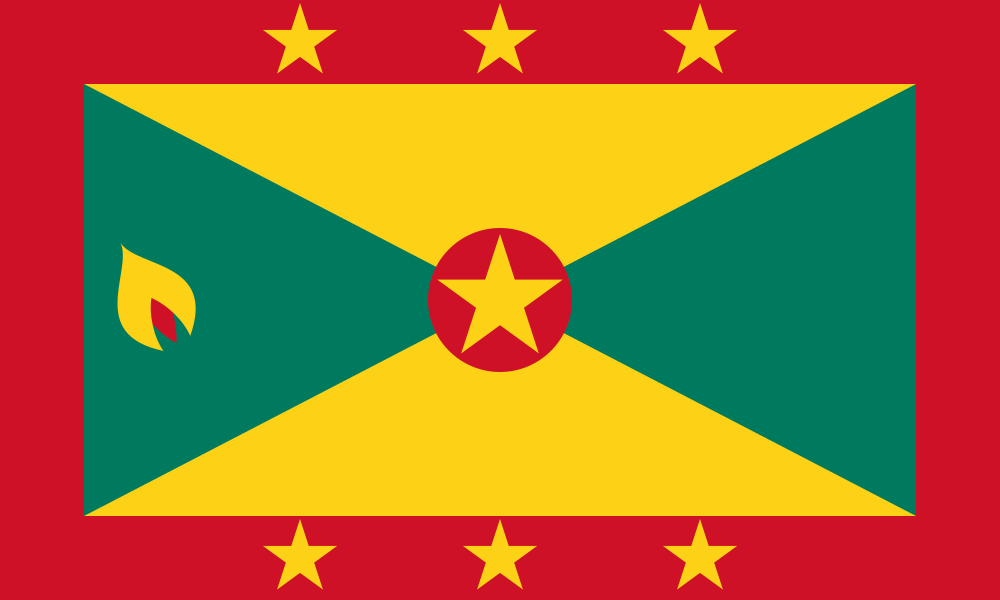 On New Year's Day in 1969, [Queen Elizabeth II](/profiles/queen-elizabeth-ii) bestowed upon her the high imperial honor of Dame Commander of the Order of the British Empire (DBE), formally styling her as Dame Hilda Bynoe [1][2]. Moving into Government House overlooking the picturesque harbor of St. George's, Dame Hilda approached her gubernatorial duties not as detached ceremonialism, but as an extension of her healing vocation. She championed national cultural initiatives, educational reform, and healthcare expansion across the tri-island state [4]. > "To serve one's people is not merely a duty of constitutional office; it is an act of profound love, requiring the patience of a healer and the steadfast courage to stand for the dignity of every citizen." [3][5] Her presence brought a dignified, unifying grace to the highest level of state, serving as an extraordinary symbol of executive empowerment for women and girls across the Caribbean archipelago [5]. ### Political Turmoil, Civil Unrest, and Resignation Dame Hilda’s tenure as Governor, however, coincided with one of the most volatile and contentious chapters in modern Grenadian history [5][7]. As the early 1970s progressed, Premier [Eric Gairy](/profiles/eric-gairy) began aggressively steering the nation toward full sovereign independence from Great Britain [7]. However, Gairy's administration grew increasingly authoritarian, marked by severe economic stagnation, allegations of electoral fraud, and the deployment of a brutal state-sponsored parapolice force known as the "Mongoose Gang" to violently intimidate political opponents [7]. In direct resistance to Gairy's rule, a radical left-wing opposition coalition known as the New Jewel Movement (NJM) emerged, led by brilliant young lawyers and intellectuals including [Maurice Bishop](/profiles/maurice-bishop) and [Unison Whiteman](/profiles/unison-whiteman) [7]. The nation descended into acute civil unrest, characterized by crippling nationwide labor strikes, mass street demonstrations, and violent confrontations between state enforcers and citizens [5][7]. As the constitutional representative of the Crown, Dame Hilda occupied a highly delicate and constitutionally constricting position [2]. Under the strict conventions of Westminster constitutional monarchy, the Governor was legally bound to act upon the advice of the elected Premier [6]. Yet, to the desperate opposition forces and striking citizens subjected to police brutality, Government House appeared inextricably linked to the oppressive regime of [Eric Gairy](/profiles/eric-gairy) [5][7]. The crisis reached a tragic and bloody crescendo during the events of "Bloody Sunday" in November 1973, when [Maurice Bishop](/profiles/maurice-bishop) and other NJM leaders were savagely beaten by police, followed by the fatal shooting of Bishop's father, Rupert Bishop, during a mass protest in January 1974 [7]. Faced with an paralyzed economy, a nationwide general strike led by the Committee of 22 (a broad coalition of civic, labor, and religious organizations), and explicit public demands for an overhaul of the state apparatus, Dame Hilda made the agonizing decision to step down [2][7]. Prioritizing the peace, unity, and stability of her beloved homeland over personal prestige, she submitted her formal resignation to [Queen Elizabeth II](/profiles/queen-elizabeth-ii) and vacated office in January 1974, just weeks before Grenada officially achieved full independence on February 7, 1974 [1][3][7]. ### Later Years, Literary Contributions, and Lasting Legacy Following her dignified exit from Government House, Dame Hilda Bynoe returned to Trinidad and Tobago, where she quietly and graciously resumed her career as a general medical practitioner [1][3]. Reconnecting with her working-class patients and community medical clinics, she served with immense clinical distinction until her official retirement from medicine in 1990 at the age of sixty-nine [1][8]. Beyond her clinical practice, she maintained an active public life as a dedicated patron of numerous regional educational and scientific organizations. Notably, she served as a foundational patron of the Caribbean College of Family Physicians, advocating for continuous medical education across the West Indies [5]. She also lent her prestige and academic expertise to support the development of St. George's University, the premier international medical school established in her native Grenada [4]. In her later years, Dame Hilda channeled her rich, multi-dimensional life experiences into literature [4]. In 1996, she published a captivating anthology of poems, essays, short stories, and vignettes titled *I Woke at Dawn* [1][4]. The work provided intimate philosophical insights into her reflections as a curious child in rural Crochu, a West Indian medical student in wartime London, a pioneering female doctor in the Guianese rainforest, and a head of state navigating the tempest of political transition [4][5]. Her historical contributions were further documented in the authoritative biography *The Governor's Story* (2013), authored by acclaimed Grenadian scholar and novelist Merle Collins [5]. Dame Hilda Bynoe passed away peacefully in Trinidad on April 6, 2013, at the age of ninety-one [1][8]. Today, her monumental legacy endures not only as a political trailblazer who shattered Commonwealth records, but as a compassionate healer and statesman whose life embodied the absolute highest ideals of Caribbean resilience, intellectual excellence, and public service [1][2][3].
View Profile →
George Brizan
# George Ignatius Brizan: The Scholar-Statesman, Historian, and Architect of Modern Grenada ## Introduction: The Conscience and Intellect of the Spice Isle George Ignatius Brizan (31 October 1942 – 18 February 2012) was one of the most distinguished scholar-statesmen, economic architects, and public servants in the modern history of Grenada and the wider Anglophone Caribbean. Revered equally as a brilliant historian, transformative educator, compassionate political leader, and fiscal innovator, Brizan embodied a rare synthesis of academic rigor and principled statecraft. Over a career spanning more than four decades, he helped steer Grenada through some of its most volatile political, social, and economic transitions. As the sixth Prime Minister of Grenada in 1995, co-founder and inaugural leader of the National Democratic Congress (NDC), and the mastermind behind Grenada’s celebrated "home-grown" structural adjustment program in the early 1990s, Brizan restored national solvency and democratic confidence after decades of dictatorial trauma, socialist revolution, and geopolitical conflict. Yet, long before he held the highest executive offices in the land, Brizan had already established an enduring intellectual legacy. As an educator at the Grenada Boys' Secondary School (GBSS) and the Institute for Further Education (IFE), his pedagogical devotion inspired generations of young Grenadians to embrace civic consciousness and intellectual inquiry—so much so that students of his era coined the popular phrase "to be a Brizan" as the gold standard of disciplined scholarship and moral integrity. His magnum opus, *Grenada: Island of Conflict: From Amerindians to People's Revolution, 1498–1979* (published in 1984), remains the definitive, foundational work of Grenadian historiography, praised across the Caribbean academy for its exhaustive archival research and sympathetic documentation of the Grenadian working class. Throughout his lifetime of selfless service, Brizan proved that true patriotism is rooted in a deep understanding of history, moral probity, and an unwavering commitment to the common good [1]. --- ## Early Life, Parish Roots, and the Educational Crucible of Windsor Forest George Ignatius Brizan was born on October 31, 1942, in the rural, lush village of Windsor Forest, located in the parish of St. David, Grenada. Known historically as "the Virgin Parish" because it was the only parish on the mainland without a primary town or deep-water port, St. David was deeply rooted in peasant agriculture, communal self-reliance, and family farming. Growing up amid the verdant hills of cocoa, nutmeg, and banana groves, young George was immersed from infancy in the rhythms of agrarian life. His rural upbringing instilled in him a profound, lifelong empathy for the agricultural laborers and smallholders whose toil formed the backbone of Grenada’s economy, yet who were frequently marginalized by the political and commercial elites of the capital, St. George's. Brizan commenced his primary schooling at St. Dominic’s Roman Catholic Primary School in St. David. From his earliest years, his intellectual curiosity, exceptional memory, and love for books set him apart. His academic promise earned him admission to the prestigious Presentation Brothers' College (PBC) in St. George's, a premier Roman Catholic secondary institution for boys. At PBC, Brizan excelled in the humanities, social sciences, and athletics, displaying the disciplined work ethic and quiet modesty that would characterize his entire adult life. It was during his secondary school years that he began to scrutinize the deep historical disparities of the colonial West Indies, recognizing that education was the most powerful engine for individual and collective emancipation. Upon graduating from Presentation Brothers' College, Brizan chose not to seek immediate personal advancement abroad, but rather returned to his home parish to begin teaching at St. Dominic’s Primary School. This formative experience in the classroom cemented his lifelong identity as an educator. Determined to deepen his academic mastery, he went on to pursue higher education at the University of the West Indies (UWI), where he earned a Bachelor of Arts degree in History and a Certificate in Education. Seeking to expand his understanding of economic development and macroeconomic policy, Brizan subsequently traveled to Canada for graduate studies. He enrolled at the University of Calgary, where he successfully completed a Master of Arts degree in History and Economics, followed by further advanced postgraduate studies at Carleton University in Ottawa, where he attained a Master of Arts in International Economic Relations. This rigorous dual mastery of Caribbean history and international economics provided Brizan with an analytical toolkit that was virtually unmatched among his contemporary political peers. He possessed both the historical depth to understand the roots of Caribbean underdevelopment and the technical economic competence to design practical, sovereign solutions [2]. --- ## Educator, Mentor, and the Golden Era at GBSS and IFE Upon completing his advanced graduate studies in Canada, Brizan eschewed lucrative international career opportunities in North America or multinational financial institutions, choosing instead to return to his beloved homeland. In the mid-1970s, he joined the faculty of the prestigious Grenada Boys' Secondary School (GBSS), where he taught Caribbean History, World History, and Economics. Brizan’s arrival at GBSS marked the beginning of what many consider a golden age of intellectual awakening at the institution. Rather than treating history as a dry recitation of British colonial governors, treaties, and imperial sugar statistics, Brizan brought the past to life. He placed the enslaved African ancestors, the indigenous Caribs and Arawaks, the maroons, and the peasant cultivators at the center of the historical narrative. He challenged his students to think critically about power structures, economic dependency, and social justice. His pedagogical brilliance, coupled with his genuine personal warmth, approachable demeanor, and unassailable integrity, made him a revered figure among his students. The phrase "to be a Brizan" emerged as a badge of honor among the boys, signifying someone who was exceptionally well-read, scrupulously honest, and fiercely committed to national development [3]. > "To be a Brizan was not merely about getting the highest marks on an examination. It meant adopting a way of life—a commitment to rigorous reading, ethical clarity, humility, and an unshakeable love for the Caribbean people and their struggle for dignity." > — Former student tribute to George Brizan at the Grenada Boys' Secondary School Beyond GBSS, Brizan’s expertise was called upon to help build Grenada’s post-secondary educational infrastructure. He served as a senior lecturer, Vice-Principal, and Acting Principal at the Institute for Further Education (IFE), which later evolved into the foundational core of the T.A. Marryshow Community College (TAMCC). At the IFE, Brizan pioneered advanced-level curricula in economics, political science, and history, preparing hundreds of young men and women for university study across the region and worldwide. Recognizing his administrative brilliance, the government appointed him Chief Education Officer within the Ministry of Education, where he oversaw national curriculum development, teacher training programs, and the expansion of educational access for working-class rural families. During this period, he was also an active trade unionist within the Grenada Union of Teachers (GUT), fighting tirelessly for fair compensation, professional standards, and job security for educators across the tri-island state.  --- ## *Grenada: Island of Conflict* and Scholarly Magnum Opus Throughout the tumultuous 1970s and early 1980s, as Grenada underwent radical political shifts—from the increasingly eccentric and repressive regime of Sir [Eric Gairy](/profiles/eric-gairy) to the March 1979 revolution led by [Maurice Bishop](/profiles/maurice-bishop) and the New Jewel Movement (NJM)—Brizan dedicated his nights and weekends to exhaustive archival research. He traveled to archives across Grenada, Trinidad, Barbados, Jamaica, and the United Kingdom, combing through colonial dispatches, plantation registers, court records, parliamentary debates, and oral testimonies. The culmination of this monumental labor of love was the publication in 1984 of his seminal masterpiece: *Grenada: Island of Conflict: From Amerindians to People's Revolution, 1498–1979* (first published by Zed Books in London, and later expanded in a 1998 second edition by Macmillan Caribbean). Spanning nearly five hundred years of history, the book was hailed by international scholars and Caribbean historians as a groundbreaking tour de force. Brizan framed Grenada’s national history not through a succession of benevolent colonial masters, but through an unbroken lineage of popular struggle, conflict, and resistance [1]. In *Grenada: Island of Conflict*, Brizan systematically explored: 1. The fierce resistance of the indigenous Kalinago (Caribs) against French colonizers, culminating in the tragic leap at Sauteurs in 1651. 2. The brutal mechanics of the transatlantic slave trade and the plantation economy, highlighting how enslaved Africans preserved cultural identity and engaged in day-to-day sabotage. 3. The epic uprising of Fédon's Rebellion (1795–1796), analyzing Julien Fédon’s insurrection through a rigorous socio-economic lens that documented the participation of free coloreds and enslaved fighters inspired by the French Revolution. 4. The post-emancipation struggle of the Grenadian peasantry to acquire freehold land, establish autonomous village communities, and develop independent agricultural production outside the estate system. 5. The 1951 social revolution and labor uprising led by [Eric Gairy](/profiles/eric-gairy), tracing how working-class mobilization dismantled the old plantocracy, only for Gairy's subsequent rule to degenerate into authoritarian patronage and repression. 6. The rise of the New Jewel Movement, the overthrow of Gairy in 1979, and the radical social transformations undertaken by the People's Revolutionary Government (PRG) under [Maurice Bishop](/profiles/maurice-bishop). Brizan provided an even-handed, courageous critique of the PRG era. While he praised the revolution’s achievements in adult literacy, healthcare, and national pride, he acutely documented how internal factionalism, ideological dogmatism, and the suppression of democratic rights led inexorably to its catastrophic implosion in October 1983. Writing with extraordinary prophetic clarity, Brizan noted: > "The revolution did not fall primarily from external subversion; it self-destructed from within. When a movement cuts itself off from the democratic pulse of the people and replaces collective dialogue with dogmatic militarism, tragedy is the inevitable outcome. History teaches us that the only durable foundation for human liberation is the consent and empowerment of the governed." Brizan’s scholarly output was not confined to political history. Recognizing that agriculture was the lifeblood of the nation, he authored *The Nutmeg Industry: Grenada's Black Gold*, an indispensable economic analysis of the spice industry that earned Grenada its global moniker as the "Isle of Spice." Later, in collaboration with his educator wife Jean Brizan, he published *Education & Productive Work during the regime of the People's Revolutionary Government, Grenada, 1979–1983* (2003), providing future scholars with meticulous documentation of revolutionary pedagogical experiments. --- ## The Post-Revolutionary Vacuum and Political Awakening (1984–1987) The tragic events of October 19, 1983—when Prime Minister [Maurice Bishop](/profiles/maurice-bishop), several cabinet ministers, and dozens of civilians were massacred at Fort Rupert, followed swiftly by the military intervention of the United States and Caribbean forces—left Grenada traumatized, institutionally shattered, and deeply polarized. In the wake of the intervention, an Interim Advisory Council led by [Nicholas Brathwaite](/profiles/nicholas-brathwaite) was installed to administer the territory and restore constitutional normalcy. Recognizing that his country stood at an existential crossroads, Brizan made the momentous decision to enter active electoral politics. He firmly believed that if responsible, honest, and intellectually capable citizens refused to run for public office, the political void would be filled once again by authoritarian opportunists or corrupt oligarchs. In early 1984, Brizan founded the National Democratic Party (NDP), attracting a wide cohort of teachers, civil servants, young professionals, and progressive farmers who sought a clean break from both Gairyite populism and revolutionary extremism. However, the moderate democratic forces in Grenada were fractured across several competing parties, raising legitimate fears that Sir [Eric Gairy](/profiles/eric-gairy)’s Grenada United Labour Party (GULP) might regain power in the forthcoming general elections. Under heavy encouragement from regional leaders such as Prime Minister Eugenia Charles of Dominica and Prime Minister Tom Adams of Barbados, the moderate leaders convened on Union Island in the Grenadines in August 1984. At this historic summit, Brizan demonstrated extraordinary political maturity and patriotism. He agreed to submerge his newly founded NDP into a broad, moderate democratic coalition known as the New National Party (NNP). The coalition united the Grenada National Party (GNP) led by veteran statesman [Herbert Blaize](/profiles/herbert-blaize), the Grenada Democratic Movement (GDM) led by Dr. Francis Alexis, and Brizan’s NDP. Although Brizan had built a massive grassroots following among youth and the working class, he gracefully conceded the overall coalition leadership to the elder [Herbert Blaize](/profiles/herbert-blaize) in the interest of national unity. In the December 3, 1984 general elections—Grenada’s first democratic vote in eight years—the NNP achieved an overwhelming landslide victory, capturing 14 of the 15 parliamentary seats. Brizan won the St. George North East constituency by an emphatic margin, beginning a distinguished parliamentary career representing the constituency that would span fifteen unbroken years. Prime Minister Blaize appointed Brizan as Minister of Agriculture, Tourism, Forestry, and Lands. In this ministerial role, Brizan threw himself into revitalizing Grenada’s battered agricultural sector. He launched farmer-training initiatives, established propagation stations, supported smallholders in the nutmeg, cocoa, and banana subsectors, and implemented sustainable agro-forestry policies. Yet, within the cabinet, ideological and governance rifts soon began to tear the NNP apart. Prime Minister Blaize operated with an increasingly centralized, authoritarian governing style, refusing to consult his younger ministers and pursuing economic policies—including sweeping civil service retrenchment—that Brizan viewed as deeply callous and detrimental to ordinary workers. --- ## Founding the National Democratic Congress (1987) By early 1987, the friction between Prime Minister Blaize’s conservative faction and the progressive wing led by Brizan and Alexis reached an irreconcilable breaking point. When Blaize announced plans to dismiss nearly 1,800 civil servants and public sector workers without adequate severance packages or retraining programs, Brizan took a principled stand of conscience. In April 1987, Brizan, along with Dr. Francis Alexis and Tillman Thomas, resigned from the Blaize administration, relinquishing their ministerial salaries, prestige, and security rather than complicity in policies that harmed the working class. Stepping into the parliamentary opposition, Brizan and his colleagues immediately set about constructing a new political home for democratic Grenadians. In late 1987, they founded the **National Democratic Congress (NDC)**, adopting the heart as their party symbol and yellow as their party color. Brizan was unanimously elected as the inaugural Political Leader of the NDC. Under Brizan’s leadership, the NDC was forged into a disciplined, center-left, social-democratic political organization committed to transparency, fiscal prudence, social justice, and constitutional integrity. Brizan traveled to every corner of Grenada, Carriacou, and Petite Martinique, holding open-air town halls, listening to citizens’ grievances, and articulating an inspiring vision of sustainable economic development. Yet, Brizan was entirely devoid of personal vanity or petty political ambition. In late 1989, as general elections approached following the death in office of Prime Minister [Herbert Blaize](/profiles/herbert-blaize), Brizan realized that the country remained scarred by past political strife and craved a unifying elder figure who had proven administrative neutrality. In an act of self-effacing statesmanship that remains legendary in Caribbean political history, Brizan voluntarily stepped aside from the political leadership of the NDC in favor of [Nicholas Brathwaite](/profiles/nicholas-brathwaite), who had earned immense national goodwill as head of the 1983–1984 Interim Advisory Council. Brizan accepted the position of Deputy Political Leader, campaigning tirelessly across the island to ensure an NDC victory. --- ## The "Home-Grown" Economic Miracle: Minister of Finance (1990–1995) In the March 1990 general elections, the National Democratic Congress secured victory, winning seven seats and subsequently forming a stable majority government under Prime Minister [Nicholas Brathwaite](/profiles/nicholas-brathwaite). Brizan was comfortably re-elected in St. George North East and was entrusted with the most critical and challenging portfolio in government: Minister of Finance, Trade, Industry, Production, and Energy. The economic inheritance awaiting Brizan in 1990 was nothing short of catastrophic. The country was drowning in crushing external and domestic debt accumulated during the late 1980s. Grenada had defaulted on payments to international creditors, its credit rating was ruined, treasury reserves were virtually depleted, and the public sector was hemorrhaging cash. To compound the disaster, the global nutmeg market—the bedrock of Grenada’s rural economy—collapsed following the breakdown of the international price-fixing agreement with Indonesia, devastating the incomes of thousands of rural families. The International Monetary Fund (IMF) and the World Bank approached the Grenadian government with their standard prescription: a draconian, externally imposed Structural Adjustment Program (SAP). Standard IMF packages across Latin America and the Caribbean at the time mandated massive layoffs of public servants, catastrophic budget cuts to healthcare and primary education, sweeping privatization of state assets, and sharp currency devaluation. Drawing upon his profound expertise as an economist and his acute historical understanding of social conflict, George Brizan made a monumental, courageous decision: **he refused the standard IMF structural adjustment.** Instead, Brizan proposed an unprecedented alternative: Grenada would design, execute, and monitor its own **"Home-Grown" Structural Adjustment Program (1991–1994)**. Brizan assembled a brilliant technical team of Caribbean minds, drawing upon expertise from the Eastern Caribbean Central Bank (ECCB), the Caribbean Development Bank (CDB), the Organisation of Eastern Caribbean States (OECS), and the University of the West Indies (UWI). Under Brizan's direct leadership, the Home-Grown SAP achieved what many international technocrats thought impossible: - It enacted strict fiscal discipline and plugged tax leakages without gutting essential social safety nets. - It modernized revenue collection and introduced equitable tax reforms, replacing erratic levies with a predictable fiscal structure. - It restructured bilateral and multilateral debt through intense, respectful negotiations, convincing international lenders that Grenada was serious and competent. - It protected public sector employment through negotiated compromises with trade unions, avoiding the mass retrenchment that would have devastated Grenadian families. - It redirected capital expenditure toward agricultural diversification, agro-processing, road rehabilitation, and tourism infrastructure. By 1994, the results of Brizan’s "Home-Grown" program were hailed across the hemisphere as a masterclass in economic statecraft. Grenada achieved fiscal surpluses on its current account, restored its international creditworthiness, reopened lines of concessional development financing from the European Union and multilateral banks, and stabilized the domestic economy—all without the social rioting, labor strikes, and human degradation that accompanied orthodox IMF programs across the developing world [3]. Economists throughout the Caribbean continue to cite George Brizan's homegrown structural adjustment as a landmark demonstration of Caribbean intellectual sovereignty.  --- ## Prime Minister of Grenada and Democratic Stewardship (1995) On February 1, 1995, Prime Minister [Nicholas Brathwaite](/profiles/nicholas-brathwaite) announced his retirement from active politics and formally stepped down. As the undisputed intellectual leader, economic savior, and Deputy Prime Minister of the NDC administration, George Ignatius Brizan was duly sworn in as the sixth Prime Minister of Grenada, Carriacou, and Petite Martinique. He also assumed the critical portfolios of Minister of Finance, External Affairs, and National Security [2]. Though his tenure as Prime Minister was brief—spanning roughly four months from February 1, 1995, to June 22, 1995—Brizan governed with characteristic dignity, humility, and meticulous attention to democratic procedures. He did not seek to cling to power through political maneuvers or constitutional delays. Instead, having completed the fiscal stabilization of the country, he promptly dissolved Parliament and called a general election for June 20, 1995, ensuring that the Grenadian electorate had the sovereign right to choose their governance path. In the vigorously contested June 1995 general election, Dr. [Keith Mitchell](/profiles/keith-mitchell) and the New National Party ran an aggressive, high-energy campaign promising immediate tax repeals and economic expansion. The NNP narrowly won the election, capturing 8 seats to the NDC’s 5 seats, with the remaining 2 seats going to the GULP. Brizan once again comfortably retained his St. George North East constituency. Demonstrating the grace and constitutional maturity that always distinguished his career, Brizan conceded defeat immediately, ensured a seamless and peaceful transfer of executive power to Prime Minister Mitchell, and assumed the constitutional role of Leader of the Opposition. --- ## Leader of the Opposition, Illness, and Final Years (1995–2012) From 1995 to 1999, Brizan served as Leader of the Opposition in the House of Representatives. In this role, he was a model of constructive, principled parliamentary opposition. He never engaged in obstructionism for obstruction’s sake. When government measures advanced the national interest, he supported them; when legislation threatened fiscal sustainability, transparency, or environmental integrity, his sharp intellect and command of economic statistics made him a formidable critic on the parliamentary floor. Throughout the late 1990s, however, Brizan faced an escalating personal battle with severe diabetes and related medical complications. Despite his physical suffering and diminishing mobility, he continued to serve his constituents and party faithfully. In 1999, recognizing that his health would no longer allow him to sustain the punishing physical demands of party leadership, Brizan gracefully resigned as Political Leader of the NDC. He passed the party leadership to his close comrade and fellow founding member, Tillman Thomas, who would later lead the NDC back to governmental power as Prime Minister in 2008. In retirement from electoral politics, Brizan remained an active scholar, author, and senior elder statesman. He continued to write, consult, and mentor young scholars and public administrators. Her Majesty [Queen Elizabeth II](/profiles/queen-elizabeth-ii) conferred upon him high imperial honors in recognition of his lifetime of public service: he was appointed a Companion of the Order of St Michael and St George (CMG) and later a Commander of the Order of the British Empire (CBE) in 2009. On February 18, 2012, George Ignatius Brizan passed away peacefully at the General Hospital in St. George's at the age of 69, surrounded by his loving wife Jean and his family [1][2]. His passing was greeted with profound grief and reverent tributes across Grenada and the Caribbean Community (CARICOM). Flags flew at half-mast, and he was accorded a full, solemn State Funeral attended by political leaders across all partisan divides, Caribbean dignitaries, former students, farmers, and thousands of ordinary citizens who had been touched by his humility, scholarship, and service [3][4]. --- ## Enduring Legacy: The Intellectual Conscience of Grenada George Ignatius Brizan’s legacy in Grenada and the Caribbean is multidimensional, indelible, and enduring. He belonged to a distinguished tradition of Caribbean scholar-statesmen—figures like Eric Williams of Trinidad and Tobago and Walter Rodney of Guyana—who combined rigorous intellectual scholarship with direct political engagement in the service of their people. As a historian, his book *Grenada: Island of Conflict* remains the foundational cornerstone for anyone seeking to understand the historical soul of the Spice Isle. His meticulous economic studies of the nutmeg and agricultural sectors continue to inform regional agricultural policy. In higher education, his contributions to the Institute for Further Education and T.A. Marryshow Community College (TAMCC) paved the way for modern tertiary education in Grenada, immortalized by the IFE/TAMCC George I. Brizan Memorial Scholarship Award [5]. In the political arena, Brizan demonstrated that politics could be practiced with honesty, personal humility, and moral elevation. He co-founded the National Democratic Congress, establishing a viable two-party democratic system that preserved Grenada’s post-1983 democratic stability. Most profoundly, his successful design and execution of the "Home-Grown" Structural Adjustment Program proved that small island developing states possess the intellectual capacity to master their economic destiny without surrendering sovereignty to international financial hegemony. Today, Grenadians remember George Brizan not merely as a former Prime Minister, but as an incorruptible son of the soil, a peerless educator, and the true intellectual conscience of his nation. ### References - [George Brizan - Wikipedia](https://en.wikipedia.org/wiki/George_Brizan) - [Grenada: Island of Conflict (1498–1979) - Zed Books / Macmillan Caribbean](https://en.wikipedia.org/wiki/George_Brizan#Works) - [CARICOM Mourns Passing of Former Grenada Prime Minister George Brizan - CARICOM Today](https://caricom.org/caricom-mourns-passing-of-former-grenada-prime-minister-george-brizan/) - [George Brizan, former Grenadian prime minister, dies at 69 - The Washington Post](https://www.washingtonpost.com/world/americas/george-brizan-former-grenadian-prime-minister-dies-at-69/2012/02/20/gIQA16yHPR_story.html) - [Tribute to George Ignatius Brizan - Spiceislander / NOW Grenada](https://nowgrenada.com/)
View Profile →
Julien Fédon
### Introduction Julien Fédon (c. 1750s – c. 1796) stands as one of the most formidable and legendary anti-colonial revolutionary figures in Caribbean history [1]. As a free man of mixed French and African heritage, Fédon defied the rigid racial hierarchies of late eighteenth-century slave society to lead a sweeping, fifteen-month insurrection against British colonial rule in Grenada [2]. Known to history as Fédon's Rebellion (1795–1796), this fierce uprising united free people of color, French republican sympathizers, and thousands of enslaved Africans in a radical quest to abolish slavery and establish a revolutionary republic inspired by the French and Haitian Revolutions [3]. Though ultimately suppressed by massive British military reinforcements, Fédon's rebellion shook the foundations of the British Empire in the West Indies, transforming him into an enduring folk hero and a potent symbol of Black liberation and Grenadian sovereignty [4]. ### Eighteenth-Century Grenada: Colonial Rivalries and Socio-Political Dynamics To understand the explosive nature of Fédon's uprising, one must examine the complex socio-political landscape of eighteenth-century Grenada [1]. For over a century, Grenada had been a French colony, during which time a distinct French-Creole culture took root. Enslaved Africans were baptized in the Roman Catholic faith, and a substantial class of free people of color (*gens de couleur libres*) emerged, many of whom became prosperous plantation owners and merchants [2]. However, the geopolitical destiny of Grenada shifted dramatically with the Treaty of Paris in 1763, which ceded the island to Great Britain [3]. Although France briefly recaptured Grenada during the American Revolutionary War between 1779 and 1783, the Treaty of Versailles restored British supremacy [1]. Under British rule, colonial authorities systematically sought to dismantle French socio-religious institutions and entrench British Protestant hegemony. British laws stripped French-speaking Roman Catholics—particularly free people of color—of their civil and political rights. They were barred from voting, denied the right to stand for elections to the colonial assembly, and subjected to discriminatory land policies and social humiliation [4]. This systematic disenfranchisement created deep-seated resentment among the French-Creole population. While white British planters consolidated their control over the island's lucrative sugar estates, the *gens de couleur* found themselves marginalized in a land they had helped cultivate. Simultaneously, the vast majority of the island's population consisted of enslaved Africans subjected to brutal plantation labor under the British slave codes [2]. This volatile combination of an aggrieved free mixed-race elite and an oppressed enslaved population created fertile ground for revolution. 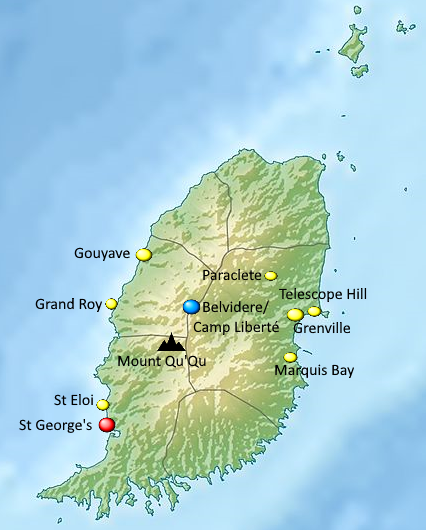 ### Early Life, Lineage, and the Belvidere Estate Julien Fédon was born in the island of Martinique during the 1750s to Pierre Fédon, a French jeweler from Bordeaux, and a freed Black woman [1]. The family migrated to Grenada in the 1770s, where Pierre Fédon acquired land and established his family among the island's growing class of free people of color [3]. By the early 1790s, Julien Fédon had inherited and expanded his family's holdings, becoming the owner of the expansive Belvidere Estate, a coffee and cocoa plantation nestled in the rugged, mountainous interior of Saint John Parish near Gouyave [2]. Fédon married Marie Rose Cavelan, a mixed-race woman from a prominent local family, cementing his status within the upper echelons of Grenada's French-Creole society [1]. Despite his wealth, property, and ownership of enslaved laborers, Fédon was acutely aware of the precarious nature of his freedom under British rule [3]. As a Catholic and a man of African descent, he suffered the same civil indignities and legal disabilities that plagued his peers. Proud, charismatic, and fiercely intelligent, Fédon refused to accept second-class citizenship [4]. His Belvidere Estate, surrounded by dense rainforests and steep ridges, gradually became a sanctuary for dissident free people of color who gathered to discuss politics, philosophy, and the mounting injustices perpetrated by the British administration led by Lieutenant Governor [Ninian Home](/profiles/ninian-home) [2]. ### Revolutionary Spark: Influence of the French and Haitian Revolutions The explosion of the French Revolution in 1789 sent shockwaves across the Atlantic world, carrying radical ideals of *Liberté, égalité, fraternité* into the slave societies of the Caribbean [1]. For Grenada's oppressed French-Creole population, the revolutionary decree of the National Convention in Paris abolishing slavery in all French colonies resonated with electrifying force [3]. More profoundly, the momentous outbreak of the Haitian Revolution in 1791—led initially by figures like [Toussaint Louverture](/profiles/toussaint-louverture)—demonstrated that Black and mixed-race people could organize, wage armed struggle, and defeat European imperial powers [4]. Fédon established clandestine communications with French revolutionary authorities in the neighboring island of Guadeloupe, where the dynamic republican commissioner [Victor Hugues](/profiles/victor-hugues) had successfully ousted British forces and proclaimed the abolition of slavery [2]. Hugues recognized the strategic value of sparking a revolutionary uprising in British Grenada. He supplied Fédon with arms, ammunition, revolutionary cockades, and official commissions appointing Fédon as General of the French Republican Army in Grenada [3]. Bolstered by republican ideology and promise of military support, Fédon began forging an unprecedented multi-racial coalition, uniting property-owning free people of color, radical French white settlers, and thousands of enslaved Africans eager to break their chains [1]. > 'Live free or die! We demand the immediate overthrow of British tyranny and the total abolition of slavery across this island. Let those who oppose the rights of man tremble before the justice of the people!' > — Attributed to Julien Fédon's Revolutionary Proclamation, March 1795 ### Outbreak and Trajectory of Fédon’s Rebellion (1795–1796) On the night of March 2–3, 1795, Fédon launched his historic insurrection with highly coordinated, simultaneous assaults on the coastal towns of Grenville (La Baye) on the east coast and Gouyave (Charlotte Town) on the west coast [1]. The rebel forces overwhelmed the British garrisons, looted armories, and captured dozens of wealthy British planters and officials [2]. Among the most prominent hostages captured during the sweeping initial offensive was Lieutenant Governor [Ninian Home](/profiles/ninian-home), who was taken prisoner while attempting to return to the capital by sea [3]. Following their swift initial victories, Fédon withdrew his consolidated forces to his mountain fortress at the Belvidere Estate, which he fortified heavily and renamed *Camp de la Liberté* (Camp Liberty) [4]. From this impregnable highland stronghold, Fédon issued a declaration demanding unconditional British surrender and proclaiming Grenada a free republic under French revolutionary protection [1]. Enslaved workers across the island abandoned their plantations en masse to join Fédon's ranks, swelling his revolutionary army to over 7,000 fighters [2]. Within weeks, the rebels controlled the vast majority of Grenada's countryside, isolating the British colonial administration and its remaining garrison inside the capital city of St. George's [3].  The conflict quickly escalated into a brutal, total war. British forces launched repeated, desperate attempts to storm Camp de la Liberté, but Fédon's skilled use of guerrilla tactics, intimate knowledge of the mountainous terrain, and the fierce determination of his fighters repulsed the assault columns with heavy casualties [4]. When British naval and land forces initiated a massive artillery bombardment against the rebel camp in April 1795, Fédon carried out his warning to execute hostages if attacked, ordering the execution of Lieutenant Governor [Ninian Home](/profiles/ninian-home) and forty-seven other British prisoners [2]. This uncompromising act underscored the existential nature of the rebellion and struck terror into the British Caribbean establishment [1]. ### British Suppression, Mysterious Disappearance, and Aftermath By late 1795, the British Empire recognized that losing Grenada could trigger a domino effect of anti-slavery revolutions across the British West Indies, threatening their entire colonial economy [3]. Desperate to reassert supremacy, the British government dispatched massive military reinforcements to the Caribbean under the command of General [Ralph Abercromby](/profiles/ralph-abercromby) [4]. By spring 1796, thousands of battle-hardened British regulars, accompanied by German mercenaries and naval squadrons, encircled Grenada [1]. Abercromby initiated a methodical, overwhelming campaign to cut off Fédon's supply lines from Guadeloupe and isolate the highland fortresses [2]. Despite enduring months of starvation, disease, and relentless cannon fire, the revolutionary army defended every ridge and valley with extraordinary bravery [3]. Finally, on June 19, 1796, British storming parties breached the defenses of Fédon's ultimate mountain stronghold at Mount Qua Qua [4]. In the ferocious hand-to-hand combat that ensued, hundreds of rebel defenders were killed or captured [1]. Remarkably, amidst the chaos of the final British breakthrough, Julien Fédon vanished into the dense rainforest [2]. Despite massive British manhunts, generous financial bounties, and widespread interrogations, Fédon was never captured [3]. Historical theories regarding his ultimate fate vary: some accounts suggest he drowned in a small canoe attempting to sail across the rough channel to Trinidad or South America, while local oral traditions maintain that he lived out his remaining years in clandestine freedom among the remote maroon communities in Grenada's interior mountains [4]. The rebellion's aftermath was catastrophic for the insurgents: British authorities executed hundreds of captured rebels, exiled prominent French-Creole families, and sold thousands of participating enslaved people to brutal plantations in Spanish Honduras [1]. ### Historical Legacy and Modern Remembrance For more than a century following the uprising, British colonial historiography depicted Julien Fédon as a ruthless traitor and violent fanatic, attempting to erase the anti-slavery and republican dimensions of his movement [2]. However, with the rise of anti-colonial consciousness and Caribbean nationalism in the twentieth century, Fédon underwent a profound historical reassessment [3]. Today, he is celebrated as Grenada's first national hero and a visionary pioneer of Caribbean liberation [4]. Fédon's struggle deeply inspired modern Grenadian political leaders. During the Grenada Revolution of 1979–1983, Prime Minister [Maurice Bishop](/profiles/maurice-bishop) and the People's Revolutionary Government frequently invoked Fédon's name and legacy as the spiritual foundation of their struggle for self-determination and social justice [1]. Even prior leaders such as [Eric Gairy](/profiles/eric-gairy) acknowledged the symbolic power of Camp Belvidere in Grenadian folklore [2]. Fédon's Rebellion is now widely recognized by historians as an integral chapter of the wider Atlantic Revolutions, standing alongside the exploits of Haitian revolutionaries like [Jean-Jacques Dessalines](/profiles/jean-jacques-dessalines) and [Henri Christophe](/profiles/henri-christophe) [3]. Through his uncompromising defiance of empire and slavery, Julien Fédon immortalized himself in the pantheon of Caribbean freedom fighters [4].
View Profile →Leslie Pierre
# Leslie Pierre: A Pillar of Grenadian Journalism and Freedom ### Introduction Leslie Pierre (November 19, 1928 – December 21, 2014) remains an indelible and monumental figure in the history of Caribbean media, civil rights, and social justice. Affectionately and proudly referring to himself as a "Wharf Boy," Pierre’s life was deeply intertwined with the socio-political evolution of Grenada. From the colonial era through the turbulent years of the revolution and into the modern democratic age, Pierre stood as a relentless guardian of free speech and press independence. Over an expansive career spanning more than half a century, he distinguished himself not merely as the esteemed editor and publisher of *The Grenadian Voice*, but as a moral compass for a nation navigating profound historical transformations. His unwavering commitment to democratic principles, even at the cost of his own freedom, cements his legacy as one of Grenada’s foremost patriots.  ### Early Life and the "Wharf Boy" Roots Born on November 19, 1928, Leslie Pierre was raised in the vibrant Green Street area of the Wharf/Carenage community in St. George's, Grenada. In the 1930s and 1940s, the Carenage was the beating economic and social heart of the island—a bustling waterfront where sailors, merchants, and working-class citizens intermingled. This dynamic environment exposed the young Pierre to a multitude of perspectives and instilled in him a profound respect for the everyday struggles of the Grenadian people. Education in colonial Grenada was a privilege that Pierre utilized to the fullest, developing a sharp intellect and a masterful command of the English language. Beyond his academic pursuits, Pierre found a sense of purpose and discipline in the local scouting movement. His dedication to the principles of scouting—duty, honor, and community service—propelled him through the ranks. He would eventually succeed Wilfred Redhead to become Grenada's Commissioner of Scouts. This early leadership experience was foundational, teaching him how to organize, inspire, and lead by example, traits that would later define his journalistic and political defiance. ### Grenada Before the Revolution To understand the magnitude of Leslie Pierre's contributions, one must appreciate the complex political landscape of Grenada during the mid-20th century. The island was transitioning from British colonial rule toward independence, a period dominated by the populist but increasingly authoritarian leadership of Eric Gairy. During these years, Pierre established himself as a prominent voice in the community. He was a man of diverse interests—engaged in commerce, civic organizations, and public discourse. Pierre firmly believed that a robust, independent press was the absolute prerequisite for a functioning democracy. Long before the crisis of the 1980s, he advocated for transparency and accountability. His widely read column, "Personally Speaking," became a touchstone for critical thought. In an era where political patronage often dictated public narratives, Pierre’s writings were an oasis of balanced, fearless commentary. He did not shy away from criticizing the excesses of the Gairy regime, establishing a reputation for uncompromising integrity that transcended partisan politics. ### The Rise of the PRG and The Birth of The Grenadian Voice The political climax of Grenada's 20th century arrived in March 1979, when the New Jewel Movement (NJM), led by [Maurice Bishop](/profiles/maurice-bishop), overthrew the Gairy government in a bloodless coup. The establishment of the People's Revolutionary Government (PRG) was initially met with widespread enthusiasm, as many Grenadians hoped for an end to corruption and the dawn of progressive social reforms. However, the PRG quickly suspended the constitution, banned opposition parties, and established a monopoly over the media. For a staunch democrat like Leslie Pierre, the suspension of civil liberties was an intolerable betrayal of the revolution's promises. The silencing of independent newspapers created a dangerous vacuum. In response, Pierre, alongside a courageous cadre of colleagues including Lloyd Noel and future Prime Minister [Tillman Thomas](/profiles/tillman-thomas), decided to take a stand. In 1981, they pooled their resources and launched *The Grenadian Voice*. > "A free press is not a luxury granted by the state; it is the fundamental lifeblood of a free people. When the voices of dissent are silenced, the soul of the nation is imperiled." *The Grenadian Voice* was conceived as a beacon of independent thought. Its inaugural issues carefully but firmly challenged the PRG's narrative, advocating for a return to constitutional rule and the holding of free and fair elections. ### Imprisonment Without Trial The PRG, deeply paranoid and increasingly authoritarian, viewed the publication of *The Grenadian Voice* not as an exercise in civic journalism, but as an act of blatant counter-revolution. The government moved swiftly and ruthlessly. After only a few issues, the newspaper was forcibly shuttered, its equipment confiscated, and its founders branded as enemies of the state. On July 11, 1981, Leslie Pierre was arrested by state security forces. He was transported to the notorious Richmond Hill Prison, where he was stripped of his name and assigned the identity of prisoner No. 119. The charges against him were vague and legally baseless, revolving around "subversive activities" and posing a "threat to national security." For over two years, Pierre languished in Richmond Hill without being formally charged or brought before a judge. The conditions of his detention were designed to break his spirit. He was subjected to psychological pressure, isolation from his family, and the constant threat of violence. Yet, Pierre's resolve only hardened. He became a symbol of stoic resistance inside the prison walls. His refusal to sign false confessions or beg for clemency inspired his fellow political prisoners. Outside, human rights organizations and the international community pointed to his imprisonment as undeniable proof of the PRG's dictatorial slide. ### Release and the Rebirth of The Grenadian Voice The tragedy of the Grenadian Revolution culminated in October 1983, when internal factionalism led to the assassination of Maurice Bishop and the subsequent intervention by United States and Caribbean allied forces. On October 27, 1983, as the military operation unfolded, the gates of Richmond Hill Prison were opened. Leslie Pierre walked out into a shattered, traumatized nation. Remarkably, despite the agonizing injustice of his two-year incarceration, Pierre emerged entirely devoid of vindictiveness or bitterness. He understood that Grenada needed healing, not retribution. Almost immediately, he set about the monumental task of resurrecting *The Grenadian Voice*. Under his renewed leadership, the paper became the vital organ for national reconciliation. It provided a forum for the complex, often painful debates required to rebuild democratic institutions. Pierre resumed his "Personally Speaking" column, using his immense moral authority to caution against repeating the mistakes of the past and urging his fellow citizens to fiercely guard their newly restored freedoms. ### Legacy, Community Leadership, and Passing In his later years, Leslie Pierre's influence expanded beyond the newsroom. He recognized that preserving Grenada's physical and cultural heritage was just as critical as protecting its political institutions. He became a founding member and director of the Willie Redhead Foundation, an organization passionately dedicated to the preservation of Grenada's historic architecture and national traditions. Furthermore, Pierre extended his advocacy to the natural environment. He co-founded the East Caribbean Coalition for Environmental Awareness (ECCEA), campaigning vigorously for the protection of marine life, particularly cetaceans, in Caribbean waters. Leslie Pierre passed away on December 21, 2014, at the age of 86. His passing was mourned as the loss of a national treasure. He is remembered not merely as a victim of political oppression, but as an indomitable champion of the human spirit. His life's work stands as a permanent reminder to the Caribbean and the world that the price of liberty is eternal vigilance, and that true patriotism requires the courage to speak truth to power.
View Profile →
Maurice Bishop
### Early Life and Family Background Maurice Rupert Bishop was born on May 29, 1944, on the island of Aruba, then part of the Netherlands Antilles. His parents, Rupert and Alimenta Bishop, were Grenadians who, like thousands of other West Indians during the mid-20th century, had migrated to Aruba to find employment in the island's booming oil refining industry [1]. Rupert Bishop worked as a retail merchant, and the family enjoyed a relatively comfortable middle-class existence. In 1950, when Maurice was six years old, his parents decided to return to their homeland of Grenada, bringing their children with them. Upon returning to Grenada, Bishop was enrolled in Wesley Hall Primary School in St. George's. He later attended Presentation Roman Catholic College, one of the island's most prestigious secondary schools for boys. During his high school years, Bishop proved to be an outstanding student, excelling in both academics and extracurricular activities. He was a keen debater, an avid athlete, and demonstrated early leadership potential. Shortly after graduating from Presentation College in 1962, he co-founded the Grenada Assembly of Youth, an organization dedicated to providing a forum for young Grenadians to discuss social and political issues affecting their island [2].  *The flag of Grenada, adopted in 1974, represents the sovereignty and national identity that Bishop dedicated his life to defending.* ### Legal Education and Radicalization in London In 1963, Bishop traveled to London to pursue higher education, a common path for ambitious young West Indians of his generation. He enrolled at the University of London, studying law at King's College London and later at Gray's Inn [3]. His years in London, which lasted until 1970, coincided with a period of intense global political upheaval and intellectual radicalization. London in the 1960s was a vibrant hub of anti-colonial activism, civil rights demonstrations, and intellectual ferment. Bishop was exposed to Marxist-Leninist theory, socialist philosophy, and the ideas of the Black Power movement. He read extensively, drawing inspiration from the works of revolutionary thinkers and leaders such as Julius Nyerere of Tanzania, Frantz Fanon, Malcolm X, and Che Guevara [2]. Bishop did not merely study these theories; he actively participated in the political struggles of the era. He co-founded the Legal Aid Clinic for West Indian immigrants in London, volunteering his time to defend members of the Caribbean diaspora who faced systemic racial discrimination and police harassment. He also participated in campaigns against the apartheid regime in South Africa and organized discussions on the legacy of colonialism in the Caribbean. ### Return to Grenada and the Rise of Authoritarianism When Bishop returned to Grenada in 1970, he set up a private legal practice in St. George's. However, his primary passion lay in political transformation. At the time, Grenada was under the control of [Eric Gairy](/profiles/eric-gairy), a charismatic labor leader who had dominated Grenadian politics since the 1950s [1]. Gairy, who led the Grenada United Labour Party (GULP), had transitioned from a champion of the working class into an increasingly authoritarian and eccentric dictator. Gairy's regime was characterized by widespread corruption, electoral manipulation, and the suppression of dissent. To maintain his grip on power, Gairy established a notorious paramilitary group known as the Mongoose Gang. This private militia, composed of criminals and loyal thugs, terrorized political opponents, disrupted strikes, and assaulted journalists. The social and political climate of the island was tense, and the youth, in particular, grew disillusioned with Gairy's rule. Bishop immediately aligned himself with the emerging progressive opposition. In 1972, he co-founded the Movement for Assemblies of the People (MAP), which advocated for grassroots democracy and community-based assemblies. In March 1973, MAP merged with another progressive organization, the Joint Endeavour for Welfare, Education, and Liberation (JEWEL), led by Unison Whiteman. The resulting coalition was the New Jewel Movement (NJM), with Bishop and Whiteman serving as joint coordinating secretaries. The NJM's manifesto called for national sovereignty, economic independence, the eradication of poverty, and the establishment of cooperative institutions [3]. ### The Path of Conflict: Bloody Sunday and Bloody Monday The NJM quickly mobilized public discontent, organizing mass rallies and strikes that directly challenged Gairy's authority. The regime responded with brutal repression. On November 18, 1973, a day that became known in Grenadian history as "Bloody Sunday," Bishop and five other NJM leaders were intercepted by Gairy's police and Mongoose Gang in the town of Grenville [1]. They were arrested, severely beaten, and denied medical attention. The images of Bishop's swollen, bloodied face circulated widely, turning him into a national symbol of resistance. The confrontation reached a climax in early 1974, as Grenada prepared for formal independence from Great Britain. The NJM and other civic groups organized a general strike, arguing that independence under Gairy's dictatorial rule would be a sham. On January 21, 1974, during a massive anti-government demonstration in St. George's, Gairy's forces opened fire on the protesters. In the chaos, Bishop's father, Rupert Bishop, was shot and killed while shielding women and children from the gunfire. This day became known as "Bloody Monday" [2]. The death of his father was a profound personal tragedy for Bishop, but it only strengthened his resolve. Grenada gained independence on February 7, 1974, with Gairy as Prime Minister. The NJM shifted its strategy to participate in the electoral system, forming an alliance with other opposition parties. In the 1976 general election, despite widespread voter intimidation and rigging by the GULP, Bishop was elected to the House of Representatives [3]. He assumed the role of Leader of the Opposition, using the parliament as a platform to expose Gairy's corruption and human rights abuses. ### The Revolution of March 13, 1979 By early 1979, Gairy's behavior had become increasingly erratic, and rumors circulated that he intended to completely eliminate the NJM leadership. In March 1979, Gairy left Grenada for a diplomatic trip to the United States. Armed with intelligence that Gairy had left orders for their execution, the NJM decided to act. In the early morning hours of March 13, 1979, a small band of NJM militants launched a pre-emptive military operation. They successfully seized the military barracks at True Blue and took control of the island's sole radio station. The coup was virtually bloodless, meeting almost no resistance from the demoralized police force [1]. As news of the action spread, thousands of Grenadians poured into the streets to celebrate. From the captured radio station, renamed Radio Free Grenada, Bishop delivered his historic address: > "This revolution is for work, for food, for decent housing and health services, and for a bright future for our children... We are not in anybody's backyard, and we are definitely not for sale." [4] Bishop announced the establishment of the People's Revolutionary Government (PRG) with himself as Prime Minister. The constitution was suspended, and the PRG assumed legislative and executive authority, promising to draft a new constitution that reflected the popular will.  *A locator map of Grenada showing the tri-island state's position in the southeastern Caribbean, a nation that sought independent development under Bishop's leadership.* ### The People's Revolutionary Government: Socio-Economic Transformations Under Bishop's leadership, the PRG embarked on an ambitious program of socialist reform, aiming to transform Grenada into a self-reliant, egalitarian society [3]. The government prioritized social services, education, and healthcare: * **Education and Literacy:** The PRG launched the Centre for Popular Education (CPE), which organized a massive national literacy campaign. Secondary school education was made free for all students, and the government secured hundreds of scholarships for Grenadian youth to study abroad in Cuba, the Soviet Union, and Eastern Europe [2]. * **Healthcare:** Healthcare was declared a basic right. With substantial assistance from Cuba, which sent doctors, dentists, and medical equipment, the PRG established a network of free community health clinics across the island, dramatically improving infant mortality rates and life expectancy [3]. * **Gender Equality:** The PRG enacted progressive laws outlawing discrimination against women, guaranteeing equal pay for equal work, and establishing paid maternity leave. The government also created the Ministry of Women's Affairs to promote female empowerment. * **Economic Reforms:** To combat unemployment and reduce dependence on foreign food imports, the PRG promoted cooperative agriculture, established state-owned agro-industries, and supported local fishing cooperatives. The government also introduced price controls on basic food items. The crown jewel of the PRG's development strategy was the construction of a new international airport at Point Salines. The existing airport at Pearls was small, remote, and incapable of handling large commercial jets, limiting Grenada's tourism potential. With the assistance of Cuban workers, engineers, and heavy machinery, construction of the Point Salines airport began [4]. ### Geopolitical Tensions and the Cold War Bishop's progressive domestic policies and his decision to align Grenada closely with socialist nations—particularly Cuba under [Fidel Castro](/profiles/fidel-castro) and the Soviet Union—alarmed the United States [5]. The rise of a revolutionary, English-speaking Black republic in the Caribbean was seen by Washington as a threat to its hegemony in the Western Hemisphere. The Carter administration initially attempted to pressure Bishop's government to distance itself from Cuba, to which Bishop famously responded that Grenada would not take orders from foreign powers. Under the Reagan administration, U.S. hostility intensified. President Ronald Reagan launched an aggressive diplomatic and economic blockade of the island. The U.S. government pressured international financial institutions to deny loans to Grenada and actively discouraged American tourists from visiting. Reagan focused much of his rhetoric on the Point Salines airport, claiming that its 9,000-foot runway was designed not for tourism, but to serve as a military base for Soviet and Cuban aircraft [5]. Bishop repeatedly denied these allegations, noting that the airport project was designed by a British firm and was essential for the island's economic survival. ### The Internal Rift and the Fall of the PRG Despite its popular social programs, the PRG suffered from internal structural weaknesses. It was a one-party state that had not held elections, and political decisions were concentrated within the NJM's Central Committee. By 1983, deep ideological and personal divisions emerged within the party. A faction within the NJM, led by Deputy Prime Minister [Bernard Coard](/profiles/bernard-coard), grew critical of Bishop's leadership style. Coard, a dogmatic Marxist-Leninist theoretician, argued that Bishop was a populist who lacked the administrative discipline and ideological rigor required to lead a socialist vanguard party [6]. Coard's faction, which controlled a majority of the Central Committee and had the support of the military led by General [Hudson Austin](/profiles/hudson-austin), demanded that the party adopt a system of joint leadership, with Coard managing internal party affairs and Bishop serving as the public face of the revolution. Bishop initially agreed but later reneged, fearing that joint leadership would marginalize him and lead to a dogmatic dictatorship. The dispute reached a deadlock, and on October 12, 1983, the Central Committee placed Bishop under house arrest [6]. ### The Tragedy of October 19, 1983 The news of Bishop's arrest shocked the Grenadian populace, who revered the Prime Minister. Protests erupted across the island, demanding his release. On the morning of October 19, 1983, a massive crowd of tens of thousands of citizens gathered in the streets of St. George's. Led by prominent figures like Foreign Minister Unison Whiteman, the crowd marched to Bishop's official residence, overpowered the guards, and freed him. Bishop, weak and dehydrated, was carried in triumph by the crowd. Instead of marching to the radio station, Bishop decided to lead the demonstration to Fort Rupert (the military headquarters, now Fort George), intending to establish a command post and negotiate with the military. The situation turned tragic when military vehicles loyal to Coard and Austin arrived at the fort. Soldiers opened fire on the dense, unarmed crowd, causing panic and numerous casualties. To stop the slaughter, Bishop and his close associates surrendered. They were led into a courtyard inside the fort. There, Maurice Bishop, along with Unison Whiteman, Jacqueline Creft (Minister of Education and Bishop's partner), Fitzroy Bain, Norris Bain, and Vincent Noel, were lined up against a wall and executed by a firing squad [6]. ### Aftermath and Historical Legacy The execution of Maurice Bishop and his cabinet members destroyed the legitimacy of the Grenada Revolution and left the population traumatized. General [Hudson Austin](/profiles/hudson-austin) announced the formation of a Revolutionary Military Council (RMC) and imposed a 24-hour curfew, warning that anyone violating it would be shot on sight [6]. Six days later, on October 25, 1983, the United States launched Operation Urgent Fury, a military invasion of Grenada. The U.S. government justified the intervention by citing the need to protect American medical students on the island and to restore order. The RMC was overthrown, and Coard, Austin, and others were captured, tried, and sentenced to death (later commuted to life imprisonment). Although Maurice Bishop's revolutionary government lasted only four years, his impact on Grenada and the wider Caribbean remains significant. He is remembered as a charismatic and vision-driven leader who sought to restore dignity and self-determination to his people. His execution is viewed as one of the darkest tragedies in modern Caribbean history [1]. In 2009, the Grenadian government officially renamed the Point Salines airport the Maurice Bishop International Airport, cementing his place in the national consciousness.
View Profile →Merle Collins
### Early Life and Caribbean Roots Born on September 29, 1950, in Aruba, Merle Collins was the child of Grenadian parents who had temporarily migrated in search of work, a common reality for many Caribbean families in the mid-20th century. Shortly after her birth, the family returned to Grenada, and it was on this lush, mountainous island, often referred to as the "Isle of Spice," that Collins spent her formative years. Growing up in Grenada during the twilight of British colonial rule, Collins was immersed in a vibrant culture deeply enriched by oral storytelling, folk traditions, and the rhythmic cadences of Grenadian Creole. Her childhood was profoundly shaped by the political and social awakenings sweeping through the Caribbean. The 1950s and 1960s were characterized by fierce anti-colonial struggles and the burgeoning quest for independence. It was in this dynamic environment that Collins began to appreciate the immense power of language and history. She attended primary and secondary schools in Grenada, where her intellectual curiosity and love for literature were nurtured, even as she grappled with an educational curriculum that often prioritized European history over the Caribbean lived experience. ### Academic Pursuits and Political Awakening Seeking higher education, Collins left Grenada to attend the University of the West Indies (UWI) at the Mona campus in Jamaica. UWI in the early 1970s was a crucible of radical Caribbean thought, teeming with debates about post-colonial identity, Black Power, and regional integration. In 1972, she graduated with a dual degree in English and Spanish, fully equipped with a deep linguistic appreciation that would later define her literary voice. Her academic journey continued abroad. She earned a master’s degree in Latin American Studies from Georgetown University in Washington, D.C., in 1981, and later achieved a Ph.D. in Government from the prestigious London School of Economics. This rigorous academic background in political science and regional studies provided her with the analytical tools to dissect the socio-political realities of the Caribbean, seamlessly blending her scholarly acumen with her artistic sensibilities. ### The Grenada Revolution: A Crucible of Hope and Tragedy The trajectory of Collins's life and work was irreversibly altered by the Grenada Revolution (1979–1983). Led by [Maurice Bishop](/profiles/maurice-bishop) and the New Jewel Movement, the revolution was a watershed moment in Caribbean history, representing a bold, grassroots attempt to forge a socialist, anti-imperialist path independent of traditional Western hegemony. Collins returned to Grenada during this period of immense optimism and sweeping social reform. She actively served the revolutionary government as a coordinator for research on Latin America and the Caribbean. During these heady years, Collins was not merely an observer but an active participant in a movement that sought to empower the Grenadian working class, expand education, and reclaim national dignity. However, the dream was violently shattered in 1983. Internal political fracturing led to the tragic assassination of [Maurice Bishop](/profiles/maurice-bishop) and several of his cabinet members, followed swiftly by the military invasion of Grenada by the United States. The abrupt and bloody collapse of the revolution left a profound, lingering trauma on the Grenadian psyche. > "The revolution was a time when the impossible seemed within reach, a brief, shining moment when we dared to author our own destiny. Its collapse broke our hearts, but it also compelled us to pick up the pen and ensure our history was not erased." In the painful aftermath of 1983, Collins, like many of her compatriots, chose exile. She moved to England, a decision that marked the beginning of her long and distinguished career as a writer and an educator in the global diaspora. ### Literary Ascendance: Giving Voice to the Voiceless It was in the crucible of exile that Merle Collins's literary voice truly blossomed. Her writing is characterized by an unwavering commitment to authentic Caribbean expression. Rejecting the rigid constraints of standard English, Collins heavily incorporates Grenadian Creole and oral storytelling structures—such as call-and-response and proverbial wisdom—into her prose and poetry. She champions the vernacular as a legitimate, powerful vehicle for complex narrative.  Her debut poetry collection, *Because the Dawn Breaks* (1985), captured the raw emotions of the Grenadian political struggle, articulating both the fervent hopes of the revolution and the devastating grief of its destruction. This was followed by her critically acclaimed first novel, *Angel* (1987). A sweeping, multi-generational saga, *Angel* chronicles the lives of Grenadian women from the labor riots of 1951 through the traumatic events of 1983. The novel was celebrated for its nuanced portrayal of the island's political evolution viewed intimately through the domestic and communal lives of its female protagonists. Collins continued to explore the intricacies of memory, history, and identity in her subsequent works. Her 1995 novel, *The Colour of Forgetting*, delved into the mythical and historical past of a fictionalized Grenada, emphasizing how unhealed generational wounds continue to shape the present. Her poetry collections, including *Rotten Pomerack* (1992) and *Lady in a Boat* (2003), further solidified her reputation as a lyrical historian of the Caribbean soul. ### The Educator and Diaspora Intellectual Parallel to her literary achievements, Collins forged an illustrious career as an educator. Her teaching career in the United Kingdom eventually led her to the United States, where she joined the faculty at the University of Maryland. For many years, she served as a Professor of English and Comparative Literature, profoundly impacting countless students. She also held the pivotal role of Director of the Latin American and Caribbean Studies Center. As an academic, Collins was instrumental in bringing Caribbean literature from the margins to the center of global academic discourse. She insisted that the Caribbean must be understood not as a peripheral, passive region, but as a central, dynamic space where the modern world—forged through colonization, enslavement, and resistance—was violently birthed and fiercely contested. > "To write in the language of our mothers and grandmothers is an act of profound political defiance. It is how we rescue our humanity from the archives of colonialism." ### Recent Triumphs and Lasting Legacy Even in her later years, Collins's creative output remains formidable. In 2023, she published *Ocean Stirrings: A Work of Fiction in Tribute to Louise Langdon Norton Little, Mother of Malcolm X and Seven Siblings*. This monumental work of biographical fiction resurrected the life of another Grenadian daughter—the mother of Malcolm X—weaving a masterful narrative of Pan-Africanism, Garveyism, and the enduring strength of Caribbean immigrant women. The novel garnered widespread critical acclaim, earning a shortlist nomination for the prestigious Orwell Prize for Political Fiction and winning the Caribbean Studies Association's Barbara Christian Award. Merle Collins’s legacy is multifaceted. She is a guardian of Grenadian memory, ensuring that the stories of its people, its triumphs, and its tragedies are preserved with dignity and nuance. Through her novels, poetry, and academic stewardship, she has provided the Caribbean diaspora with a profound sense of home, proving that even when islands are left behind geographically, their rhythms, languages, and histories can be carried, fiercely guarded, and brilliantly illuminated through the power of the written word.
View Profile →
Sir Eric Gairy
### Introduction Sir Eric Matthew Gairy (February 18, 1922 – August 23, 1997) was a towering, polarizing, and defining figure in the modern history of Grenada. Serving as the nation's first Prime Minister, Gairy's career was a complex tapestry of triumphant labor activism, charismatic political leadership, and deeply controversial authoritarianism. He rose from humble beginnings to become the preeminent champion of the Grenadian working class, successfully challenging the entrenched plantocracy and leading his nation to independence. Yet, his later years in power were marred by allegations of corruption, political intimidation, and a growing eccentricity that ultimately alienated him from the very people he once championed, leading to his overthrow in a bloodless coup. To study Gairy is to study the contradictions of post-colonial Caribbean leadership. ### Early Life and the Crucible of Labor Born on February 18, 1922, in the rural parish of St. Andrew, Grenada, Eric Gairy was the son of an estate worker. In the 1920s and 1930s, Grenada was a deeply stratified society, dominated by a small, white elite who controlled the island's lucrative agricultural estates—primarily producing nutmeg, cocoa, and mace. The majority of the population, including Gairy's family, lived in poverty, enduring grueling labor conditions and meager wages. Despite these hardships, Gairy received a primary education and briefly worked as a schoolteacher, a position of considerable respect in rural Grenadian communities. However, driven by ambition and a desire for greater opportunities, he joined the wave of Caribbean migrants seeking work abroad. He traveled first to Trinidad and later to the Dutch island of Aruba, where he found employment at a massive ESSO oil refinery. It was in the heavily unionized, politically charged environment of the Aruban oil refineries that Gairy received his true political education. He became deeply involved in trade union activism, learning the tactics of collective bargaining, strikes, and mass mobilization. When he returned to Grenada in 1949, he brought with him not only a worldly perspective but a militant commitment to dismantling the oppressive structures of the Grenadian plantocracy. > "He returned not just as a native son, but as a firebrand forged in the crucible of industrial labor, ready to ignite a revolution in the nutmeg groves." ### The 1951 Strike and the Rise to Power Upon his return, Gairy found a Grenadian working class that was restless, impoverished, and desperate for leadership. In 1950, he founded the Grenada United Labour Party (GULP) and, shortly thereafter, the Grenada Manual and Mental Workers' Union (GMMWU). Gairy possessed an extraordinary charisma and an oratorical style that resonated deeply with the rural poor. He spoke their language, understood their struggles, and promised them a dignity they had long been denied. The turning point came in 1951. Gairy led a massive, island-wide strike that brought the Grenadian economy to a standstill. The strike, which became known as "Sky Red" due to the burning of plantation buildings, was a direct challenge to the power of the estate owners. It was a period of intense conflict, but Gairy emerged victorious. The British colonial authorities, recognizing his immense popularity and the shifting political tides, were forced to negotiate. This victory catapulted Gairy to political dominance. In 1951, Grenada held its first elections under universal adult suffrage, and Gairy's GULP won a sweeping victory. Over the next two decades, Gairy would dominate Grenadian politics, serving as Chief Minister from 1954 to 1962, and later as Premier from 1967 to 1974. He championed policies that improved wages, expanded access to education, and provided housing for the poor. For many Grenadians, "Uncle Gairy" was a messianic figure, a savior who had delivered them from economic bondage. ### Independence and the Knighthood By the early 1970s, the global movement for decolonization was sweeping through the Caribbean. Gairy, ever the astute politician, recognized that the time had come for Grenada to sever its colonial ties. He became the primary architect of Grenada's push for independence from Great Britain. The path to independence was fiercely contested. Many Grenadians, particularly the urban middle class and a new generation of radical intellectuals, feared that independence under Gairy would simply entrench his increasingly autocratic rule. Despite widespread strikes and protests, Gairy pressed forward. On February 7, 1974, Grenada became an independent nation, and Eric Gairy was sworn in as its first Prime Minister. In recognition of his leadership, he was knighted by Queen Elizabeth II, becoming Sir Eric Gairy.  ### Authoritarianism and the Mongoose Gang While Gairy's early career was defined by his defense of the working class, his tenure as Prime Minister was increasingly characterized by paranoia, corruption, and political repression. As opposition to his rule grew, particularly from the Marxist-Leninist New Jewel Movement (NJM) led by the charismatic [Maurice Bishop](/profiles/maurice-bishop), Gairy resorted to authoritarian tactics to maintain his grip on power. The most notorious instrument of his repression was the "Mongoose Gang," a private paramilitary force loyal only to Gairy. Composed largely of loyalists and petty criminals, the Mongoose Gang was used to intimidate, beat, and silence political opponents. The violence reached a tragic crescendo in 1974 when Rupert Bishop, the father of [Maurice Bishop](/profiles/maurice-bishop), was shot and killed by police while defending schoolchildren during an anti-government protest. Gairy's administration was also marked by a profound eccentricity that drew international ridicule. He developed a deep obsession with Unidentified Flying Objects (UFOs) and extraterrestrial life. He famously utilized his platform at the United Nations to formally request the establishment of a UN agency to investigate UFO sightings, arguing that extraterrestrials were visiting Earth and that humanity must prepare for contact. While this obsession made him a figure of curiosity abroad, at home, it was viewed as evidence of a leader who had lost touch with reality and the pressing needs of his people. ### The 1979 Coup and the End of an Era By 1979, Grenada was a nation on edge. The economy was stagnating, political violence was endemic, and Gairy's eccentricities had eroded his legitimacy. On March 13, 1979, while Gairy was in New York attending a UN session (reportedly to discuss UFOs), the New Jewel Movement launched a bloodless coup. [Maurice Bishop](/profiles/maurice-bishop) declared the suspension of the constitution and the establishment of the People's Revolutionary Government. The news of the coup was met with widespread jubilation in Grenada. Gairy's long reign had come to an end. He was forced into exile, settling in the United States, where he watched from afar as the Grenadian Revolution unfolded, ultimately ending in tragedy with the assassination of Bishop and the 1983 US invasion of the island. ### Return from Exile and Final Years Following the collapse of the revolutionary government and the restoration of a parliamentary system, Gairy returned to Grenada in 1984. He attempted to revive the GULP and return to the political fray, but his moment had passed. The political landscape had fundamentally changed, and his health was failing. He suffered a severe stroke in 1996 and passed away on August 23, 1997. ### Assessing the Legacy The legacy of Sir Eric Gairy remains one of the most hotly debated subjects in Caribbean history. To his detractors, he was a corrupt autocrat who betrayed the ideals of the labor movement, institutionalized political violence, and subjected his country to international embarrassment. They point to the Mongoose Gang and the stifling of political dissent as the defining characteristics of his rule. To his supporters, however, Gairy remains the undisputed hero of the Grenadian masses. They remember the man who challenged the racist plantocracy, who gave a voice to the voiceless, and who forced the colonial establishment to recognize the humanity of the black working class. He is credited with breaking the back of the estate system and laying the foundation for a modern, independent Grenada. In truth, Gairy was both. His life embodied the profound challenges of post-colonial leadership, where the liberator can all too easily become the oppressor. Like his contemporary [Robert Llewellyn Bradshaw](/profiles/robert-llewellyn-bradshaw) in St. Kitts, Gairy was a product of a specific historical moment—a moment that required fierce, uncompromising leadership to dismantle an unjust system. However, his failure to transition from a revolutionary labor leader to a democratic statesman ultimately doomed his legacy. Sir Eric Gairy's life serves as a powerful cautionary tale about the corrupting nature of absolute power, even as it stands as a testament to the transformative power of the Caribbean working class.
View Profile →
T.A. Marryshow
### Introduction: The Father of the West Indies Federation Theophilus Albert Marryshow is widely, and rightfully, revered as the 'Father of the West Indies Federation.' A visionary statesman, a fiery journalist, and an untiring advocate for regional unity and democratic self-governance, his life's work laid the foundational political architecture for the modern Anglophone Caribbean. Born on November 7, 1887, in the parish of St. George’s, Grenada, Marryshow emerged during a period when the British West Indies were deeply entrenched in the oppressive and undemocratic Crown Colony system of government. Throughout his multi-decade career, Marryshow utilized the power of the press and the political pulpit to champion the rights of the Caribbean working class, demand representative government, and relentlessly pursue his ultimate dream: a united, federated, and self-governing Caribbean nation. His legacy is not merely one of political maneuvering, but of fostering a shared West Indian identity. At a time when insularity was the norm and island nations were divided by colonial administration and geographic distance, Marryshow saw a common destiny. His famous rallying cry, 'Must the West Indian Wait?', became the defining question of a generation seeking to throw off the yoke of imperial paternalism and claim their rightful place on the world stage. ### Early Life and the Crucible of Colonial Grenada Marryshow’s beginnings were humble, rooted in the socio-economic realities of late 19th-century Grenada. The island, like much of the Caribbean, was characterized by an entrenched class and color hierarchy, where political power and economic wealth were concentrated in the hands of a small, white, land-owning elite and British expatriate administrators. The vast majority of the Afro-Grenadian population, despite being technically free since emancipation, was politically disenfranchised and economically marginalized. Tragically losing his mother at a young age, Marryshow was raised by his godmother. His formal education was limited, ending at the primary school level. However, what he lacked in formal schooling, he made up for with an insatiable appetite for reading and self-education. As a young man, he was apprenticed to a carpenter, but his intellectual curiosity and eloquence soon led him down a different path. In 1903, he secured a position in the printing department of the *The Federalist* newspaper, owned and edited by William Galwey Donovan. Donovan, a fiery radical of Irish and African descent, was a fierce critic of Crown Colony rule and a proponent of representative government and regional federation. Donovan became Marryshow's mentor, shaping the young man's political consciousness. Under Donovan's tutelage, Marryshow learned the printing trade, honed his skills as a journalist, and absorbed the political philosophies that would guide his entire career. ### Journalism as a Weapon for Change In 1915, driven by a desire to provide a more robust voice for the disenfranchised, Marryshow co-founded *The West Indian* newspaper with C.F.P. Renwick. The newspaper's masthead famously carried the motto: "A West Indian Paper for West Indian People." *The West Indian* quickly became a critical organ for political agitation, not just in Grenada, but across the Eastern Caribbean. Through his scathing editorials and passionate essays, Marryshow relentlessly attacked the Crown Colony system. He argued that the system, which denied local populations any meaningful role in their own governance, was archaic, unjust, and structurally designed to maintain economic exploitation. He championed the cause of the working class, highlighting their poverty and demanding social reforms. More broadly, he used the newspaper to cultivate a sense of regional solidarity, arguing that the individual islands were too small to stand alone and that their true strength lay in political and economic integration. > "We want a West Indian Federation, not because it is an end in itself, but because it is the most effective means to the end of our political and economic salvation." — *T.A. Marryshow* ### The Battle Against Crown Colony Rule Marryshow's activism extended beyond the printing press. In 1917, he was instrumental in founding the Grenada Representative Government Association. This organization became the primary vehicle for political mobilization against the colonial administration. He led petitions, organized rallies, and engaged in direct political lobbying both locally and in London. His efforts, combined with similar movements across the region led by figures like [Arthur Cipriani](/profiles/arthur-cipriani) in Trinidad, forced the British Colonial Office to take notice. In 1921, the British government dispatched the Wood Commission to investigate the political climate in the West Indies. Marryshow's eloquent testimony and the undeniable mass support he mobilized played a decisive role in convincing the Commission that reforms were necessary. The resulting reforms, implemented in 1925, introduced a measure of elected representation into the Legislative Councils of several islands, including Grenada. ### The Rise of a Statesman and the Dream of Federation Marryshow's political career truly flourished in the wake of these reforms. In 1925, he was elected to the Grenada Legislative Council as the representative for the parish of St. George, a seat he held continuously for 33 years. In the legislature, he was a tireless advocate for education, health care, and workers' rights, consistently challenging the conservative colonial establishment. However, his vision always extended beyond the shores of Grenada. He became a central figure in the broader Caribbean labor and political movements. In 1945, he was a key participant in the Caribbean Labour Congress in Barbados, working alongside emerging leaders like [Grantley Adams](/profiles/grantley-adams) and [Norman Manley](/profiles/norman-manley). He traveled extensively across the region and to London, lobbying relentlessly for a federal structure that would unite the British West Indies into a single, independent dominion. ### The Realization of a Dream and Final Years Marryshow's lifelong dream was finally realized, albeit briefly, with the inauguration of the West Indies Federation in 1958. He was appointed as a Senator in the first Federal Parliament. For Marryshow, this was the culmination of decades of struggle, the physical manifestation of the united West Indian identity he had spent his life championing. Tragically, Marryshow did not live to see the eventual collapse of the Federation in 1962. He passed away on October 19, 1958, just months after the Federal Parliament first convened. His death was mourned across the Caribbean, recognized as the passing of a generational titan. Today, his legacy is deeply woven into the fabric of Caribbean political history. The T.A. Marryshow Community College in Grenada bears his name, and his former residence, Marryshow House in St. George's, now serves as a center for the University of the West Indies Open Campus. He remains the ultimate symbol of Caribbean integration, a man who believed unconditionally that the shared history and culture of the West Indian people destined them for a united and sovereign future.
View Profile →