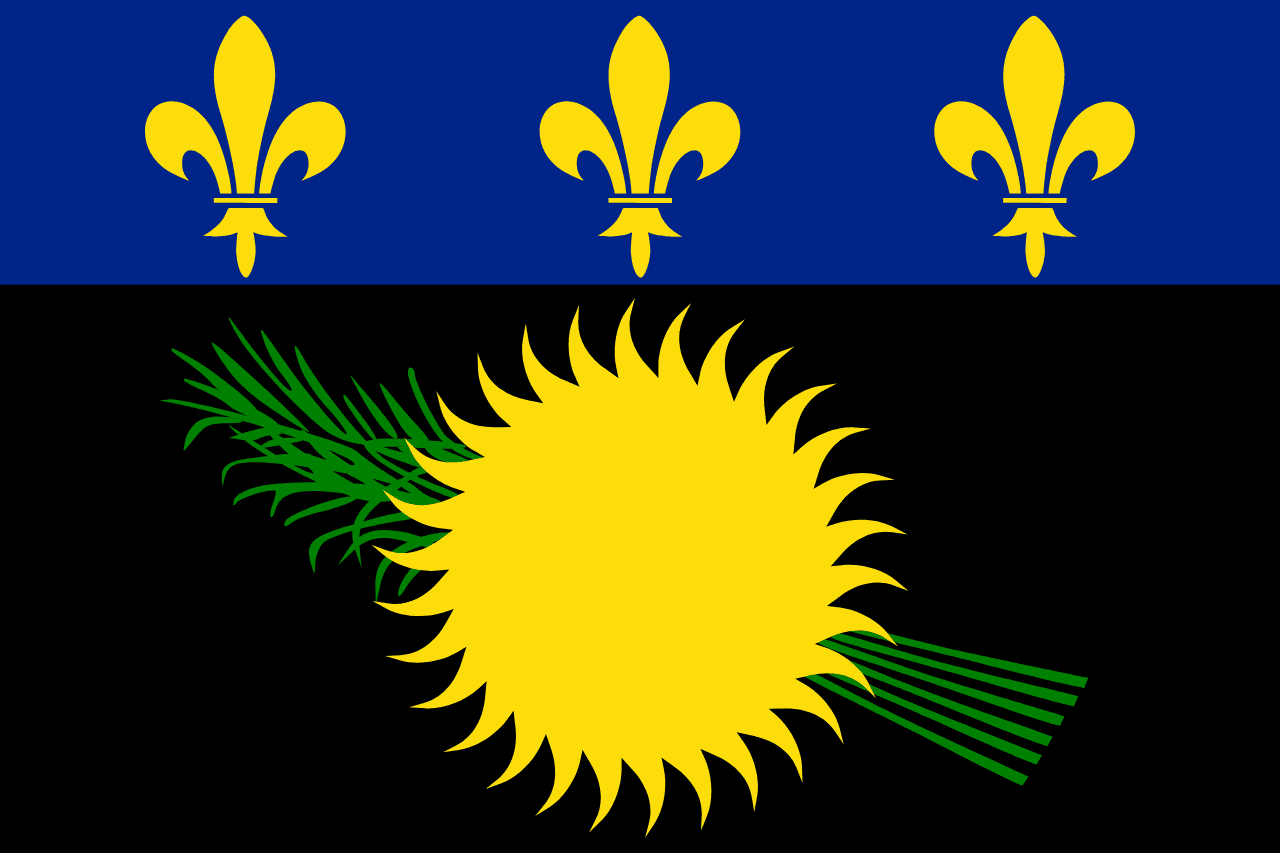
Marie-Galante
The Island of a Hundred Mills, a place of rich agricultural heritage, poetic giants, and legendary resistance.
Figures from Marie-Galante
Historically documented individuals of note.

Auguste Lacour
### Auguste Lacour: Definitive Chronicler of Guadeloupean Revolution and Creole Historiography ### Introduction and Overview Auguste Lacour (1805–1869) stands as one of the most authoritative and monumental historical chroniclers of the 19th-century French Caribbean. Born into the colonial society of Guadeloupe during the tumultuous aftermath of the Napoleonic re-establishment of slavery, Lacour dedicated his life to documenting the intricate, often violent political and social evolution of his native archipelago [1]. Serving as a colonial magistrate and royal judge on the island of Marie-Galante, he possessed intimate access to administrative archives, judicial registries, and the living oral testimonies of those who had witnessed the fiery revolutionary transformations of the turn of the century [2]. His magnum opus, the four-volume *Histoire de la Guadeloupe* (*History of Guadeloupe*), published between 1855 and 1860, remains an indispensable foundation for Caribbean historiography [3]. Providing an exhaustive, day-by-day record of colonial governance, slave uprisings, British occupations, and emancipation struggles, Lacour’s writings preserved crucial accounts of heroic freedom fighters such as [Louis Delgrès](/profiles/louis-delgres), [Joseph Ignace](/profiles/joseph-ignace), and the legendary Mulâtresse Solitude [4]. As a Creole historian operating within the complex hierarchy of a plantation society, Lacour navigated the tensions of his era to produce a historiographical record of enduring intellectual and documentary value. ### Colonial Heritage, Early Life, and Judicial Magistracy in Marie-Galante Auguste Lacour was born in 1805 in Guadeloupe into a prominent local Creole family. His childhood unfolded against a backdrop of deep societal trauma and political volatility. Just three years prior to his birth, in May 1802, General Magloire Pelage and the expeditionary forces sent by Napoleon Bonaparte had crushed the uprising of armed Black and mixed-race soldiers led by [Louis Delgrès](/profiles/louis-delgres), brutally re-establishing chattel slavery across the colony [5]. This violent counter-revolution, coupled with subsequent British military blockades and occupations during the Napoleonic Wars, left Guadeloupe deeply scarred and economically divided. Educated in law and letters, young Lacour entered the colonial judicial administration during the Bourbon Restoration. By the 1830s, he was appointed to the position of royal judge (*juge royal*) on the neighboring island of Marie-Galante—a dependency of Guadeloupe known for its expansive sugarcane plantations and windmills [6]. As a magistrate in Marie-Galante, Lacour oversaw civil and criminal dockets, navigating the contentious disputes between plantation proprietors, free people of color (*gens de couleur libres*), and the enslaved population during the tense decades preceding the final abolition of slavery in 1848. His judicial career required him to meticulously evaluate evidence, examine property titles, and interrogate witnesses—analytical habits that would deeply inform his methodology as a historian. Severe bouts of tropical dysentery and failing health frequently disrupted his administrative service, eventually compelling his medical return to France in 1841 before he resumed his research and writing endeavors [7].  ### The Revolutionary Crucible: Guadeloupe between Abolition and Empire To fully appreciate Lacour's contribution to Caribbean history, one must examine the extraordinary complexity of the period he undertook to document. Unlike many other Caribbean colonies where colonial rule remained relatively static, Guadeloupe experienced radical, pendulum-like political shifts between 1789 and 1815. Following the French Revolution, the National Convention abolished slavery in 1794. Victor Hugues arrived in Guadeloupe as commissioner, liberating the enslaved population, enlisting thousands of Black soldiers into the Republican army, and using the island as a fortified base to launch privateering raids against British shipping and neighboring royalist islands [8]. However, this period of revolutionary emancipation was tragically short-lived. In 1802, Napoleon Bonaparte dispatched General Richepanse to strip people of color of their military rank and re-impose slavery. This provoked a fierce, desperate armed resistance led by Colonel [Louis Delgrès](/profiles/louis-delgres) and Captain [Joseph Ignace](/profiles/joseph-ignace). When surrounded at Matouba on May 28, 1802, Delgrès and 400 of his followers ignited their gunpowder stores, blowing themselves up rather than surrender to chains [9]. Lacour grew up amidst the surviving eyewitnesses, aging soldiers, and traumatized families of this revolutionary crucible. Recognizing that official colonial dispatches from Paris presented a highly biased, distorted version of these events, Lacour resolved to construct an exhaustive historical narrative from the ground up. > 'The history of our archipelago is written in fire and blood. If we rely solely on the cold reports of metropolitan governors, the true agony and heroism of our soil will be buried beneath the dust of archives. We must listen to the voices of those who bled on these hillsides.' — Auguste Lacour, reflections on historical methodology in *Histoire de la Guadeloupe* [10] ### Writing the Monumental Histoire de la Guadeloupe In the 1840s and 1850s, devoting immense energy to historical scholarship following his retirement from the active bench, Lacour began compiling his monumental *Histoire de la Guadeloupe* (*History of Guadeloupe*). Published in Basse-Terre in four substantial volumes between 1855 and 1860, the work covered the history of the island from its initial European colonization in 1635 through the Restoration period of the early 19th century [11]. Lacour’s methodology was groundbreaking for its time. Rather than relying exclusively on published treatises or metropolitan chronicles, he conducted exhaustive empirical research across local municipal archives, judicial records, and notarial acts. More importantly, Lacour pioneered the systematic use of oral history in Caribbean historiography. He interviewed elderly plantation owners, former revolutionary soldiers, aging freedmen, and local matriarchs who had personally witnessed the events of 1794 and 1802. By cross-referencing formal government edicts with family memoirs and oral testimonies, Lacour constructed a multi-layered, highly detailed chronicle that captured the daily realities of colonial administration, economic struggles, maritime trade, and social stratification. ### Immortalizing Resistance: Louis Delgrès and the Mulâtresse Solitude Perhaps the most enduring cultural and historiographical legacy of Lacour’s *Histoire de la Guadeloupe* lies in his detailed preservation of the events of the 1802 rebellion. At a time when colonial authorities actively sought to erase the memory of Black resistance and suppress mentions of anti-slavery uprisings, Lacour devoted extensive chapters to documenting the military campaigns of [Louis Delgrès](/profiles/louis-delgres) and [Joseph Ignace](/profiles/joseph-ignace) [12]. Most famously, Lacour’s work provided the primary historical record of the Mulâtresse Solitude, a pregnant woman of color who fought valiantly alongside Delgrès and the rebels against the Napoleonic troops. Lacour recorded how Solitude, embodying fierce courage and defiance, fought in the front lines during the defense of the redoubts before being captured, imprisoned until the birth of her child, and subsequently executed by colonial authorities on November 29, 1802 [13]. Over a century later, Lacour’s invaluable documentary account served as the direct historical inspiration for celebrated French-Caribbean literature, including André and Simone Schwarz-Bart’s landmark 1972 novel *La Mulâtresse Solitude*, transforming Solitude into an international symbol of feminist and anti-colonial resistance.  ### Methodology, Oral Tradition, and Archival Preservation As a 19th-century Creole magistrate, Lacour occupied a complex, sometimes contradictory ideological position. While his writings reflected certain conservative assumptions typical of the educated colonial landowning class of his era, his commitment to historical truth and documentary accuracy frequently transcended class prejudices. He did not hesitate to criticize the extreme brutality, administrative corruption, and arbitrary tyranny of colonial governors and royalist officials. Scholars today recognize Lacour as a foundational figure in the preservation of West Indian memory. Prior to the establishment of modern climate-controlled repositories, hurricanes, fires, tropical humidity, and insects routinely destroyed Caribbean historical documents. By transcribing thousands of pages of fragile royal decrees, court proceedings, parish registers, and military correspondence into his published volumes, Lacour effectively rescued a vast corpus of Guadeloupean documentary heritage from physical obliteration. A fifth supplementary volume, compiled from Lacour's extensive unpublished manuscript notes and genealogical papers by his descendant Pierre Lacour, was published in 1979 by the *Société d'histoire de la Guadeloupe*, further enriching the island's historical record [14]. > 'To judge an epoch, one must gather every fragment of its wreckage. The duty of the magistrate-historian is not to flatter the powerful or conceal the crimes of the state, but to weigh the documents upon the impartial scales of truth for the judgment of posterity.' — Auguste Lacour, preface to Volume III of *Histoire de la Guadeloupe* [15] ### Final Years, Posthumous Recognition, and Enduring Legacy Auguste Lacour spent his final years surrounded by his books and historical manuscripts, passing away in 1869 at the age of sixty-four [16]. His death closed a formative chapter in Antillean intellectual life, but his monumental writings immediately assumed canonical status. For generations of Caribbean historians, writers, and political leaders—from [Victor Schœlcher](/profiles/victor-schoelcher) to modern scholars—Lacour's four volumes have served as an essential reference point. In recent decades, Guadeloupean cultural institutions have formally honored his immense contributions to collective memory. In 2008, historical researchers and heritage advocates in Guadeloupe founded the *Cercle Auguste Lacour* (Auguste Lacour Circle), an organization dedicated to promoting local historical research, genealogical inquiry, and cultural preservation across the archipelago [17]. Today, Auguste Lacour is universally celebrated not merely as a colonial judge, but as the premier foundational historian of Guadeloupe. Through his rigorous archival preservation, his pioneering integration of oral history, and his detailed recording of pivotal acts of resistance, Lacour ensured that the complex, triumphant, and tragic history of the French Caribbean would remain forever accessible to the world.
View Profile →Constant d'Abbeville
### Introduction and Historical Overview Père Constant d'Abbeville stands as an intriguing and pivotal figure in the early colonial and ecclesiastical history of the Lesser Antilles, embodying the austere missionary fervor and ethnographic curiosity of the seventeenth-century French Capuchin order. Arriving in the Caribbean during the formative decades of French imperial expansion under the auspices of the Compagnie des îles de l'Amérique, Father Constant was dispatched to the rugged frontier of Marie-Galante—an island known natively to the indigenous Kalinago as *Aïchi* [1]. Operating in an era before institutional ecclesiastical stability had been established across the archipelago, Capuchin friars were called upon not only to serve as chaplains to nascent, disease-ridden European settlements but also to venture into uncharted tropical environments as explorers, diplomats, and chroniclers [2]. Father Constant's detailed manuscript observations and pastoral accounts recorded the precarious establishment of the first French colonies on Marie-Galante following the 1648 expedition, documenting the island's unique limestone ecology, early agricultural experiments, and fraught, often violent interactions with the Kalinago [3]. His written testimony, echoing the rich descriptive traditions initiated by his Capuchin predecessor Claude d'Abbeville in South America, provided future colonial chroniclers and historians—including Dominican missionary Jean-Baptiste Du Tertre and nineteenth-century Guadeloupean historian [Auguste Lacour](/profiles/auguste-lacour)—with irreplaceable primary documentation regarding the dawn of European settlement on what would later become known across the Atlantic world as "the Island of a Hundred Mills" (*L'île aux cent moulins*) [4]. ### The Capuchin Vocation and Franciscan Missionary Zeal Born in northern France during the early decades of the seventeenth century, Constant took the habit of the Order of Friars Minor Capuchin (Capuchins), a reformed branch of the Franciscan order celebrated for its uncompromising devotion to absolute poverty, contemplative prayer, and active apostolate among the poor and marginalized [5]. Originating from the Picard city of Abbeville—a vibrant commercial and ecclesiastical center that also produced the renowned Capuchin explorer and writer Claude d'Abbeville—young Constant was immersed in the fervent missionary ethos of the French Catholic Counter-Reformation [6]. During this era, French religious orders experienced an unprecedented surge in overseas zeal, spurred on by royal patronages from Cardinal Richelieu and the burgeoning transatlantic interests of the French crown. Unlike the wealthier and politically entrenched Dominican or Jesuit establishments, the Capuchins were celebrated for their austere lifestyle, traveling barefoot, wearing coarse brown homespun habits with pointed hoods (*capuches*), and subsisting largely on alms [5]. When the call went out for friars to staff the distant, perilous missions of the "Terres Françoises d'Amérique" under the authority of Father Pacifique de Provins—who was appointed Prefect Apostolic of the Capuchin missions in the West Indies in 1642—Father Constant volunteered for the overseas apostolate [6]. His preparation encompassed not only rigorous scholastic theology and moral philosophy but also practical training in herbal medicine, basic navigation, and linguistic study, equipping him for the immense physical privations and cultural complexities awaiting him across the Atlantic Ocean. ### Voyage to the Antilles: The Guadeloupe Crucible Father Constant departed the port of Dieppe or Le Havre in the 1640s aboard an armed merchantman chartered by the Compagnie des îles de l'Amérique. Transatlantic crossings during the seventeenth century were harrowing ordeals lasting between six and eight weeks, characterized by scurvy, foul drinking water, vermin infestations, and constant threats from Spanish privateers or devastating tropical storms [7]. Upon reaching the Lesser Antilles, Father Constant first disembarked on the volcanic, mountainous island of Guadeloupe, which had been colonized by French settlers led by Charles Liénard de L'Olive and Jean du Plessis d'Ossonville in 1635 [8]. In Guadeloupe, the Capuchin friars found themselves operating within a socially turbulent and morally fractured society. French indentured servants (*engagés*), soldiers, and adventurous noblemen struggled against tropical epidemics, famine, and harsh labor regimes. Furthermore, ecclesiastical rivalries simmered between the Capuchins and the powerful Dominican order, both of whom vied for pastoral jurisdiction, seigneurial land grants, and imperial favor [4]. While the Dominicans established large plantations and invested in commercial enterprises, the Capuchins under Prefect Pacifique de Provins sought to maintain their mendicant simplicity, preaching repentance, administering sacraments to neglected laborers, and seeking peaceful conversion among the neighboring indigenous populations of Dominica and Guadeloupe [6]. This challenging crucible solidified Father Constant’s reputation as a resilient, devoted pastoral shepherd capable of enduring extreme isolation.  ### The Founding of Marie-Galante (1648) and the Mission at Grand-Bourg Sighted and christened by Christopher Columbus on November 3, 1493, during his second voyage after his flagship *Santa María la Galante*, Marie-Galante had remained uncolonized by Europeans for more than a century and a half [1]. The island remained a sanctuary for the indigenous Kalinago (Island Caribs), who utilized its low limestone terraces and abundant coastal fishing grounds. However, in 1648, French colonial ambitions expanded rapidly. Charles Houël du Petit Pré, the ambitious governor of Guadeloupe, joined forces with his brother-in-law, Jean de Boisseret, to purchase Guadeloupe, Marie-Galante, Désirade, and the Saintes from the bankrupt Compagnie des îles de l'Amérique for the sum of 60,000 livres [8]. Determined to assert effective French sovereignty before rival British or Dutch forces could occupy the territory, Governor Houël dispatched an expedition of approximately fifty armed French settlers under the command of Sieur de la Fayolle on November 8, 1648 [8]. Father Constant d'Abbeville was selected to accompany the landing party as their spiritual director and chaplain, charged with sanctifying the enterprise and establishing the presence of the Catholic Church. Landing on the southwestern coast at the site of present-day Grand-Bourg, the settlers immediately faced immense hardship. Surrounded by dense thorny thickets and thick maritime forest, the colonists constructed a crude palisade fort and cleared a perimeter for basic wooden cabins. Amidst this precarious encampment, Father Constant erected a modest, open-air chapel built of hand-hewn logs and thatched with palmetto leaves, dedicating the altar to the Blessed Virgin Mary [3]. There, barefoot upon the sand and coral limestone, he celebrated the inaugural Holy Mass on Marie-Galante, intoning the *Te Deum* to the roar of the Atlantic surf. > "We stepped ashore upon this verdant, windswept rock of Marie-Galante with neither sword nor cannon, bearing only the crucifix and the humble habit of Saint Francis. Here, where the fierce ocean winds bend the mapou trees and the wild Karibs watch from the forested cliffs, our holy purpose was to sow the seeds of faith amid a wilderness yet untamed by European hands." — Père Constant d'Abbeville, missionary relation on the founding of the Marie-Galante mission [3] ### Encounters with the Kalinago: Ethnography, Diplomacy, and Conflict As one of the few educated men in the fledgling outpost, Father Constant assumed the dual role of diplomat and ethnographic chronicler. Modeled after the comprehensive methodologies of Claude d'Abbeville, who had compiled extensive vocabularies and cultural accounts of the Tupinambá in Brazil four decades earlier, Constant recorded the habits, language, and material culture of the Island Caribs who visited or contested the settlement [2]. He noted that the Kalinago possessed intimate maritime knowledge, navigating open oceanic channels in massive dugout canoes known as *kanawa* or smaller fishing craft called *pirogues*, propelled by expert paddlers who could traverse the rough seas between Marie-Galante, Dominica, and Guadeloupe in a matter of hours [1]. He documented their communal foodways—centered upon bitter manioc (*cassava*), sweet potatoes, sea turtles, and flying fish—as well as their bodily ornamentation utilizing bright vermilion *roucou* paste and genipa juice [4]. He observed their reverence for ancestral spirits and their deep dread of the malevolent forest entities known as *maboya*, noting the difficulty European missionaries faced in communicating abstract theological doctrines to a people whose cosmology was entirely grounded in the physical and spiritual energies of the natural world [7]. Initially, relations between the French settlers and local Kalinago chiefs were marked by cautious barter; the French traded iron fishhooks, glass beads, and steel knives in exchange for fresh game, fruits, and woven cotton hammocks [8]. However, as French settlers aggressively cleared land for private tobacco plantations and violated sacred indigenous hunting territories, tensions boiled over into open war. In 1653, following colonial atrocities perpetrated against indigenous communities in nearby Dominica, Kalinago war parties mobilized a massive naval counter-offensive across the Leeward Islands [8]. Dozens of war canoes landed on the beaches of Marie-Galante under the cover of dawn. The settlement at Grand-Bourg was besieged, several outposts were put to the torch, and numerous French settlers were killed or forced to take refuge behind the palisades. Father Constant remained inside the beleaguered compound, tending to the wounded, administering extreme unction to dying colonists, and praying incessantly for deliverance [3]. The siege was eventually lifted when armed reinforcements under Houël arrived from Guadeloupe, but the conflict permanently shattered hopes of peaceful co-existence, initiating decades of brutal colonial reprisal and the eventual forced displacement of the indigenous population from Marie-Galante [8]. > "The Island Caribs navigate these tumultuous channels in their slender pirogues with an astonishing mastery that defies the tempest. They live in close harmony with the sea and forest, yet the sudden clash of European greed and native independence has turned this tranquil garden into an arena of sorrow and fire." — Attributed to 17th-century Capuchin chronicles of the Lesser Antilles [7] ### Ecological Chronicle: Natural Landscape and the Dawn of the Sugar Revolution Beyond his pastoral and diplomatic functions, Father Constant d'Abbeville was a dedicated natural observer whose manuscripts provided one of the earliest ecological descriptions of Marie-Galante. Unlike the dramatic volcanic peaks, soaring rainforests, and rushing rivers of neighboring Guadeloupe, Marie-Galante presented a markedly distinct physical geography. Constant described the island as a vast, uplifted circular limestone plateau, characterized by rolling hills, sea-carved limestone cliffs, and dry, scrubby coastal woodlands [1]. Crucially, he noted the severe hydrological challenge of the island: Marie-Galante possessed almost no permanent freshwater rivers or streams. The porous limestone bedrock swallowed rainwater almost immediately. Settlers and indigenous peoples alike relied on natural subterranean sinkholes, seasonal ravines, and muddy communal watering holes known as *mares* [3]. Father Constant described the laborious efforts required to dig rainwater cisterns and preserve drinkable water during the prolonged dry seasons (*carême*), documenting the severe droughts that frequently brought the colony to the brink of collapse. He also recorded the rapid transformation of the landscape under French economic exploitation. Initially, the settlers cultivated subsistence food plots alongside small cash crops of tobacco (*pétun*) and indigo [8]. However, by the mid-1650s, encouraged by Dutch merchants fleeing Portuguese Brazil who brought sophisticated milling technology and capital to the French islands, sugarcane cultivation swept through the colony [9]. Father Constant's writings captured the tragic human and ecological implications of this transition. Vast tracts of ancient mahogany, guaiacum (*gaiac*), and acomat forests were felled to feed the insatiable furnaces of the boiling houses. Furthermore, the burgeoning sugar industry precipitated the arrival of enslaved African men and women, subjected to backbreaking chattel labor to clear fields and cut cane [4]. This marked the grim beginning of the plantation complex that would shape the history and demographics of Marie-Galante for the next two centuries, ultimately giving rise to the legendary freedom struggles of [Louis Delgrès](/profiles/louis-delgres), [Joseph Ignace](/profiles/joseph-ignace), and the Mulâtresse Solitude [4].  ### Archival Legacy, Carmelite Succession, and Final Years The ecclesiastical landscape of Marie-Galante shifted significantly in the early 1660s. Following the death of Jean de Boisseret, his widow and surviving heirs took direct control of the island's proprietary governance [8]. Seeking to reorganize the island’s religious life and establish permanent, well-funded parish infrastructure, the Boisseret family formally invited the Carmelite order to take over spiritual administration of Marie-Galante in 1660 [10]. Conforming to the orders of their superiors and the agreements brokered by the colonial proprietors, the Capuchin friars peacefully ceded their mission at Grand-Bourg to the Carmelites, who would go on to build the island's enduring seventeenth- and eighteenth-century parish churches [10]. Father Constant d'Abbeville concluded his active service on Marie-Galante, transferring back to the Capuchin hospice in Basse-Terre, Guadeloupe, before eventually returning to the Capuchin province of Paris in metropolitan France [6]. In his later years in France, Father Constant compiled his field journals, missionary diaries, and correspondence into comprehensive manuscript relations intended for the archives of the Sacred Congregation for the Propagation of the Faith (*Sacra Congregatio de Propaganda Fide*) in Rome and the provincial archives of the order [5]. These manuscripts contained invaluable geographical sketches, meteorological observations, botanical catalogues, and linguistic notes on the Kalinago tongue. While many original seventeenth-century Capuchin documents were dispersed or lost during the anti-clerical upheavals of the French Revolution, their contents were widely cited and preserved in the published works of contemporary historians, most notably Father Jean-Baptiste Du Tertre in his foundational *Histoire générale des Antilles* (1667) and later by nineteenth-century magistrate-historian [Auguste Lacour](/profiles/auguste-lacour) [4][8]. ### Historiographical Significance and Enduring Impact Père Constant d'Abbeville’s life and writings occupy a vital niche in Caribbean historiography. At a time when European colonial narratives were largely restricted to military dispatches, royal patents, and mercantilist ledgers, Father Constant offered a nuanced, immediate, and culturally attuned portrait of an island on the knife-edge of colonization [2]. His accounts chronicled the birth of European society on Marie-Galante from the very first tree felled at Grand-Bourg, capturing the fragile coexistence and inevitable collision between European settlers and the indigenous Kalinago [1]. Furthermore, his early scientific documentation of the island’s water scarcity, limestone ecology, and agricultural potential laid the intellectual foundation for understanding Marie-Galante’s evolution into an agricultural powerhouse fueled by hundreds of wind-powered sugar mills. Through his steadfast religious devotion, his humanitarian concern for the suffering, and his keen eye as an observer of the early Americas, Père Constant d'Abbeville ensured that the foundational chapter of Marie-Galante's history would be preserved for posterity. Today, as scholars and cultural icons like Marie-Galante native [Guy Tirolien](/profiles/guy-tirolien) explore the complex layers of Antillean identity, the legacy of early chroniclers like Father Constant serves as an essential window into the island’s foundational heritage.
View Profile →Guy Tirolien
### Historical Context and Introduction The early twentieth century in the francophone Caribbean was defined by a profound socio-cultural tension between colonial assimilation and the yearning for authentic self-expression. In Guadeloupe, a post-emancipation French colony, the educational and administrative apparatuses were rigorously structured to inculcate metropolitan French values while systematically erasing African heritage, Creole linguistic traditions, and local historical memory. Within this stifling climate of cultural alienation emerged Guy Tirolien, a towering literary and intellectual figure whose life and work became an enduring bridge between Antillean consciousness and continental African solidarity [1]. Born on February 13, 1917, in the bustling port city of Pointe-à-Pitre, Tirolien developed into a celebrated poet, a dedicated civil administrator, and a co-founder of the revolutionary Négritude movement alongside Léopold Sédar Senghor, [Aimé Césaire](/profiles/aime-cesaire), and [Léon-Gontran Damas](/profiles/leon-gontran-damas). His distinctive voice rejected the sterile imitative conventions of colonial literature, offering instead a vibrant, unapologetic celebration of Black identity and Panafrican brotherhood [2]. ### Early Life and Spiritual Roots in Marie-Galante Although born in Pointe-à-Pitre, Guy Tirolien’s identity and spiritual sensibility were indelibly shaped by his family's deep ancestral roots in Marie-Galante, an island dependency of Guadeloupe known as the "island of a hundred windmills." Marie-Galante remained predominantly agrarian, anchored in the rhythms of sugarcane cultivation and populated by rural communities that preserved rich African cultural traditions, folklore, and Creole expressions [2]. Spending considerable time there during his formative years, Tirolien absorbed the tactile realities of Antillean peasant life—the intense sun, the toil of the cane cutters, and the vibrant oral histories passed down through generations. This rural grounding provided a stark contrast to the bourgeois, assimilationist atmosphere of colonial Pointe-à-Pitre. In the colonial primary schools of Guadeloupe, children were strictly forbidden from speaking Creole and were taught from metropolitan textbooks that glorified French ancestry while ignoring the Caribbean's history of enslavement and resistance. Tirolien’s acute awareness of this cultural dissonance planted the early seeds of his anti-colonial rebellion [3].  ### Parisian Awakening: Lycée Louis-le-Grand and the Genesis of Négritude In the mid-1930s, seeking higher education as was customary for the intellectual elite of the French Antilles, Tirolien sailed to Paris to enroll at the prestigious Lycée Louis-le-Grand. This transition from the Caribbean periphery to the imperial metropole proved transformative. In the corridors of Louis-le-Grand and later within the vibrant student networks of Paris, Tirolien encountered a remarkable cohort of Black intellectuals from across the French colonial empire. He forged enduring, lifelong friendships with Martinican scholar [Aimé Césaire](/profiles/aime-cesaire), Senegalese poet Léopold Sédar Senghor, and French Guianese writer [Léon-Gontran Damas](/profiles/leon-gontran-damas) [3]. Together, immersed in the intellectual ferment of interwar Paris, they engaged with the anti-colonial essays of [Paulette Nardal](/profiles/paulette-nardal), studied anthropological works that re-evaluated African civilizations, and absorbed the revolutionary energies of the Harlem Renaissance. Out of these intense philosophical debates emerged the Négritude movement—a radical ideological framework that sought to dismantle the psychological shackles of French assimilationism, affirm global Black cultural pride, and reclaim a shared African heritage [4]. > "We rejected the assimilationist illusion that required us to shed our Black skin to don the white mask of French civilization. Our assertion was simple yet deeply revolutionary: our heritage is not a burden to be erased, but a beacon of universal humanism." ### World War II Captivity and Colonial Administration The outbreak of World War II dramatically interrupted Tirolien's literary pursuits. Mobilized into the French military to defend the metropole, he fought during the German invasion of France in 1940. He was captured by enemy forces and interned for two grueling years as a prisoner of war in a Frontstalag camp alongside his close friend Léopold Sédar Senghor [3]. In the shared hardship and barbed-wire confinement of the prison camp, the bonds of Panafrican solidarity forged in Parisian salons solidified into an unbreakable existential brotherhood. Following his release and the conclusion of the war, Tirolien enrolled in the École nationale de la France d'outre-mer (National School of Overseas France). While many anti-colonial intellectuals categorically refused participation in state apparatuses, Tirolien chose a nuanced and pragmatic path. He graduated as a civil administrator and subsequently deployed to colonial sub-Saharan Africa, serving in extensive administrative roles in French Cameroon and French Sudan (now Mali) [4]. Rather than acting as an instrument of colonial subjugation, Tirolien utilized his administrative authority to protect local populations, foster governance capacity, and assist African nations in their inevitable transition toward sovereign independence [5]. ### Literary Masterpieces: Prière d'un petit enfant nègre and Balles d'or Throughout his decades of administrative service, poetry remained Tirolien's primary vehicle for philosophical and emotional expression. His literary reputation was forever cemented by his iconic poem, Prière d'un petit enfant nègre (Prayer of a Little Black Child), originally written in 1943 during his wartime captivity and later widely published across the francophone world [5]. The poem gives voice to a young Black child addressing God, expressing intense fatigue and a poignant refusal to attend the white colonial school where his humanity and culture are systematically erased. The piece became an instant anthem of cultural resistance, memorized and recited by generations of schoolchildren throughout the Caribbean and Africa as a powerful critique of educational assimilation [6]. In 1961, Tirolien published his seminal poetry collection, Balles d'or (Golden Balls), which gathered his most profound compositions. The volume explored themes of racial alienation, nostalgia for the Caribbean landscape, the dignity of African labor, and the necessity of revolutionary revolt. Sixteen years later, in 1977, he released his second major collection, Feuilles vivantes au matin (Living Leaves in the Morning), further cementing his status as a master craftsman of Antillean verse whose rhythmic structures echoed both French lyricism and Afro-Creole cadence [6].  > "Lord, I am so tired. / I was born tired. / And I walked a great deal today... / Lord, I do not want to go to their school anymore, / Make it so I do not have to go there anymore." ### Co-Founding Présence Africaine and International Diplomacy In 1947, recognizing the urgent necessity for an independent institutional apparatus to amplify Black voices globally, Guy Tirolien joined forces with Senegalese intellectual Alioune Diop, [Aimé Césaire](/profiles/aime-cesaire), and Richard Wright to co-found the legendary journal and publishing house Présence Africaine in Paris [6]. The journal served as the intellectual epicenter of post-war Black consciousness, publishing groundbreaking literary and political critiques. Tirolien contributed essays and poetry that consistently emphasized the inseparable destiny of the Caribbean and continental Africa. Following the wave of African decolonization in the early 1960s, his career transitioned from colonial administration to international diplomacy. He was appointed as a high-ranking international civil servant and representative for the United Nations, serving as a cultural and diplomatic emissary in newly independent African nations, including Mali and Gabon [7]. In these prestigious international roles, he worked tirelessly to construct educational infrastructure, foster inter-African cultural cooperation, and bridge diplomatic relations between the Caribbean diaspora and sovereign African states [7]. ### Later Years and Lasting Caribbean Legacy Following retirement from his international diplomatic career, Guy Tirolien returned to his beloved Guadeloupe, settling back into the Antillean landscape that had forever inspired his poetic imagination. During his final years, he became a revered elder statesman of Caribbean letters, actively mentoring emerging writers and intellectuals, including Guadeloupean novelist [Maryse Condé](/profiles/maryse-conde) and Martinican philosopher [Édouard Glissant](/profiles/edouard-glissant). He participated in regional literary symposia, championing the evolution of Négritude into broader concepts of Antillanité and Caribbean autonomy [8]. Tirolien passed away on August 3, 1988, in Pointe-à-Pitre, leaving behind a monumental legacy that transcended geographic boundaries. He is celebrated today not only as the grandfather of contemporary Grammy-nominated singer-songwriter Malika Tirolien, but as a foundational pillar of Caribbean literary history whose courageous verse restored pride, historical memory, and universal dignity to the Black colonial subject [8].
View Profile →
Ignace
### Introduction: The Vanguard of Antillean Emancipation At the close of the eighteenth century, the Caribbean was engulfed in a tumultuous wave of revolutionary upheavals that irrevocably shook the foundations of European imperial hegemony [1]. While the French Revolution proclaimed universal human liberty, brotherhood, and equality across the Atlantic, the Caribbean colonies became the brutal testing ground where those ideals collided with the entrenched economic interests of the plantation elite. In this fiery crucible arose Joseph Ignace (c. 1769/1772 – May 25, 1802), an Afro-Guadeloupean military officer and freedom fighter whose uncompromising dedication to emancipation made him one of the most heroic figures in Antillean history [2]. Alongside legendary compatriots such as Colonel [Louis Delgrès](/profiles/louis-delgres) and the fierce revolutionary heroine [Solitude](/profiles/la-mulatresse-solitude), Ignace stood as an unyielding bulwark against the counter-revolutionary designs of Napoleon Bonaparte [3]. Serving as commander of Fort de la Victoire in Pointe-à-Pitre and leading the desperate, heroic defense at the Redoute de Baimbridge, Ignace embodied the revolutionary covenant of *"Vivre libre ou mourir"* ("Live free or die"), sacrificing his life to ensure that the sacred freedom of his people would never be willingly surrendered to the re-imposition of chattel slavery [4]. ### Early Life, Craftsmanship, and Revolutionary Awakening in Pointe-à-Pitre Joseph Ignace was born in Guadeloupe around 1769 or 1772, into the bustling port city of Pointe-à-Pitre [1]. Born into the intermediate social stratum of free people of color (*gens de couleur libres*), he grew up intimately aware of the stark racial inequalities, legal disenfranchisement, and visceral cruelties that underpinned the French colonial plantation economy [5]. The social fabric of Guadeloupe and its dependencies, including Marie-Galante, was deeply structured by a rigid racial hierarchy where even free persons of African descent faced humiliating social barriers, exclusion from civil offices, and constant vulnerability to re-enslavement [6]. Before taking up arms in defense of human dignity, Ignace trained and worked as a master carpenter in Pointe-à-Pitre [2]. His craft provided him with a high degree of technical skill, autonomy, and organizational acumen, establishing his standing as a respected artisan within the urban working-class networks of Grande-Terre. His carpentry work required precise calculation, logistical planning, and the command of apprentices—skills that would later translate directly into exceptional military engineering and battlefield coordination [5]. When the revolutionary winds of 1789 reached the shores of the Lesser Antilles, the archipelago fractured along deep political, racial, and class fault lines. Royalist white planters clung desperately to their racial prerogatives and property in human flesh, while enslaved laborers and free persons of color mobilized to demand the full application of the Declaration of the Rights of Man and of the Citizen. In 1792, young Ignace took his first decisive steps into political militancy by participating actively in the revolutionary uprisings in Pointe-à-Pitre [1]. This early insurrection marked his baptism of fire, demonstrating his natural tactical leadership, his charisma among urban workers and dockers, and his steadfast commitment to the burgeoning cause of republican emancipation [6].  ### Military Service under Victor Hugues and the Republican Defense of Guadeloupe (1794–1801) The trajectory of Ignace’s life was fundamentally transformed in the spring of 1794. In February of that year (16 Pluviôse An II), the French National Convention issued its historic decree formally abolishing chattel slavery across all territories of the French Republic [2]. However, by the time news reached the Caribbean, traitorous royalist plantation owners in Guadeloupe had conspired with Great Britain, surrendering the colony to British expeditionary forces to preserve the institution of human bondage [7]. In June 1794, French republican commissioner [Victor Hugues](/profiles/victor-hugues) arrived off the coast of Grande-Terre with a modest fleet and a small contingent of regular troops, carrying the decree of abolition [7]. Hugues immediately proclaimed the liberation of all enslaved people and called upon them to defend the Republic. Joseph Ignace was among the first to enlist in the newly formed republican army. Thousands of former enslaved laborers joined the ranks, transforming the French republican military in the Caribbean into an authentic army of liberation. Throughout the ferocious campaigns that followed, Ignace distinguished himself through remarkable courage, discipline, and strategic clarity [1]. The Black and mixed-race soldiers of Guadeloupe waged an unrelenting, multi-year guerrilla and conventional war that systematically drove the British invasion forces from every garrison on the island. While contemporary liberator [Toussaint Louverture](/profiles/toussaint-louverture) was forging an autonomous Black army in Saint-Domingue, Ignace and his comrades proved on the battlefields of Guadeloupe that soldiers of African descent were fully capable of outmaneuvering and crushing the finest professional regiments of the European empires [5]. Recognizing his sharp tactical mind and unwavering authority over his men, the republican administration promoted Ignace sequentially through the officer ranks. He advanced to lieutenant, attained the rank of captain in early 1801, and was subsequently elevated to *chef de bataillon* (battalion commander) [1]. He was entrusted with the command of Fort de la Victoire (historically also called Fort Union), the formidable coastal fortress safeguarding the port, commercial harbor, and bay of Pointe-à-Pitre [8]. Under Ignace's command, the fort became not merely a military stronghold, but a proud bastion of Black citizenship and republican dignity. > "Live free or die! We have taken up arms not to revolt against legitimate authority, but to preserve the sacred liberty that France herself bestowed upon us. Better an honorable grave than the renewed ignominy of the master's whip." — Attributed to Commander Joseph Ignace, rallying his troops at Pointe-à-Pitre, May 1802 [4] ### The Lacrosse Crisis and the Precursor Insurrection of October 1801 By the turn of the nineteenth century, the political landscape in metropolitan France had taken a sharp, reactionary turn. Following the Coup of 18 Brumaire in November 1799, Napoleon Bonaparte seized absolute control as First Consul. Bonaparte viewed the emancipated Caribbean colonies through a cold, mercantilist lens, resolving to resurrect France’s lucrative overseas plantation empire fueled by the forced labor of enslaved Africans [3]. In May 1801, Bonaparte dispatched Rear-Admiral Jean-Baptiste Raymond de Lacrosse to Guadeloupe as Captain-General [9]. Lacrosse was an autocratic, openly racist administrator who regarded the high military ranks held by Black and colored officers as an intolerable insult to colonial hierarchy. Upon arriving, Lacrosse initiated a systematic policy of political purge and racial revanchism. He harassed non-white officers, rescinded military appointments, ordered the arbitrary arrests of prominent Black citizens, and attempted to disarm the colonial battalions while exiling resistance sympathizers to outlying posts, including Marie-Galante [5, 9]. Joseph Ignace was not a man to tolerate the dismantling of hard-won republican liberties. In October 1801, when Lacrosse attempted to arrest prominent officer Magloire Pélage in Pointe-à-Pitre, the local garrison exploded in armed rebellion [1]. Ignace played a decisive and fearless role in this insurrection between October 21 and October 24, 1801 [9]. Marshaling the loyal soldiers of Fort de la Victoire, Ignace coordinated with other colonial units to surround Lacrosse's headquarters, neutralize the governor’s loyalist guard, and place Lacrosse under arrest [2]. Demonstrating extraordinary political maturity, the insurgent officers refrained from executing the despotic administrator. Instead, they placed Lacrosse aboard a neutral Danish vessel and expelled him from the colony to the neighboring British island of Dominica [2]. A provisional governing council was established under the leadership of Magloire Pélage, with officers including [Louis Delgrès](/profiles/louis-delgres) and Joseph Ignace ensuring order, maintaining agricultural production, and repeatedly declaring their unswerving fidelity to the French Republic—provided that the Republic respected universal freedom and the equal rights of all citizens [6].  ### General Richepanse’s Expedition and Metropolitan Betrayal (May 1802) The fragile tranquility maintained by the provisional council was abruptly shattered in the spring of 1802. With the signing of the Treaty of Amiens in March 1802, France secured a temporary peace with Great Britain, freeing Bonaparte to deploy the full military might of the French state toward crushing colonial autonomy. Bonaparte officially prepared the Law of 20 May 1802, which legalized the restoration of slavery and the transatlantic slave trade across French overseas territories [3]. To execute this counter-revolutionary mandate in Guadeloupe, Bonaparte dispatched an armada carrying an elite expeditionary corps of more than 3,500 veteran troops commanded by General Antoine Richepanse (often spelled Richepance) [1]. Arriving in the harbor of Pointe-à-Pitre on May 6, 1802, Richepanse concealed his ultimate objective of re-enslavement behind duplicitous diplomatic assurances of republican brotherhood. He demanded that colonial garrisons assemble without weapons to pay formal homage to the metropolitan forces [5]. While senior officer Magloire Pélage and several others naively chose obedience and capitulation, Joseph Ignace immediately penetrated the metropolitan deception [2]. As French troops began disarming colonial soldiers, loading them into the suffocating holds of transport vessels, and executing dissenters without trial, Ignace recognized that surrender meant chains, the whip, and total destruction [8]. Ensconced within Fort de la Victoire with his loyal battalion, Ignace categorically refused Richepanse’s repeated ultimatums to capitulate [1]. On the night of May 9–10, 1802, Ignace executed a masterstroke of military audacity. Under cover of torrential Caribbean rain and impenetrable darkness, he led approximately 600 to 700 fully armed combatants out of Fort de la Victoire, successfully slipped past French naval blockades, crossed the Rivière Salée that divides Grande-Terre from Basse-Terre, and marched swiftly southward to join forces with Colonel [Louis Delgrès](/profiles/louis-delgres) [1, 4]. ### The Alliance with Delgrès and the Defense of Fort Saint-Charles The arrival of Joseph Ignace in Basse-Terre electrified the resistance. Colonel [Louis Delgrès](/profiles/louis-delgres), commanding the district of Basse-Terre, recognized Ignace’s indomitable tactical spirit and appointed him as one of his primary field generals [3]. On May 10, 1802, Delgrès issued his immortal manifesto, *« À l'univers tout entier, le dernier cri de l'innocence et du désespoir »* ("To the entire universe, the last cry of innocence and despair"), an extraordinary philosophical document that denounced Napoleonic tyranny and called upon world history to witness their righteous fight for liberty [3]. Together, Delgrès and Ignace organized the defense of Basse-Terre, transforming the formidable ramparts of Fort Saint-Charles (later rechristened Fort Delgrès) into the headquarters of Antillean freedom [7]. Joining their ranks were regular republican soldiers, armed plantation workers, and legendary women combatants, most notably the fierce and heavily pregnant revolutionary [Solitude](/profiles/la-mulatresse-solitude) [3]. For nearly two weeks, French expeditionary columns commanded by Richepanse launched relentless assaults against the insurgent lines across the Galion River and the surrounding hills. Black soldiers, driven by the profound knowledge of what defeat would mean for their children and families, fought with astonishing heroism, inflicting severe casualties upon Napoleon’s elite European regiments [2]. However, Richepanse possessed overwhelming artillery superiority and complete command of the sea, subjecting Fort Saint-Charles to a devastating round-the-clock bombardment [5]. By May 20, the insurgent high command realized that remaining enclosed within the fortress would inevitably result in starvation, munitions exhaustion, and encirclement. Delgrès and Ignace devised a bold, two-pronged strategic counter-offensive: Delgrès would evacuate the fort to wage an active guerrilla campaign on the heights of the Soufrière volcano at Matouba, while Ignace would execute a daring breakthrough across enemy lines back into Grande-Terre, assault the French rear at Pointe-à-Pitre, seize their supply depots, and ignite a general rebellion among the tens of thousands of agricultural laborers on the sugar plantations [1, 2]. ### The Heroic Breakout and the Stand at the Redoute de Baimbridge (May 25, 1802) On the night of May 22–23, 1802, Ignace executed this perilous operational plan. Leading a vanguard of approximately 600 devoted soldiers, he broke out through the rear postern of Fort Saint-Charles (*la poterne du Galion*), skillfully bypassed the French encirclement lines in Basse-Terre, and undertook a grueling forced march across the rugged volcanic interior [4]. Recrossing the Rivière Salée, Ignace burst into Grande-Terre, completely blindsiding the French garrison. Rather than remaining on the defensive, Ignace seized the fortified redoubt at Baimbridge (Redoute de Baimbridge), situated atop the strategic heights of Les Abymes, less than two kilometers from the city gates of Pointe-à-Pitre [8]. The sudden appearance of Ignace on the heights of Baimbridge threw the French colonial administration into absolute panic. French communication lines were severed, supply convoys were frozen, and the specter of a general slave uprising loomed over Pointe-à-Pitre [5]. General Gobert, commanding the French forces in Pointe-à-Pitre, scrambled every available metropolitan battalion, augmented by colonial collaborator regiments commanded by Magloire Pélage, to crush the redoubt before the rebellion could spread [1]. On the dawn of May 25, 1802, French forces launched an all-out assault against the earthen ramparts of Baimbridge [2]. What followed was one of the bloodiest and most savage battles in the history of the Lesser Antilles. Outnumbered by more than three to one and possessing only limited artillery and cartridges, Ignace and his fighters repulsed wave after wave of French bayonet charges across hours of merciless combat [4]. The defenders fought with the superhuman tenacity of people fighting for their absolute right to exist as free human beings. By the late afternoon of May 25, the redoubt’s ammunition was completely exhausted. French infantry breached the palisades, and the battle deteriorated into brutal, hand-to-hand combat with bayonets, cutlasses, and clubbed muskets [1]. Realizing that the position was doomed and determined never to be captured alive, tortured by colonial judges, or dragged back into chattel slavery, Joseph Ignace fulfilled the sacred oath of the revolution [6]. Raising his own service pistol to his head, Commander Ignace pulled the trigger, choosing death in freedom over life in chains [1, 2]. Enraged by the heavy casualties they had suffered, the French forces carried out a merciless massacre within the redoubt. Nearly all of Ignace’s 600 comrades were slaughtered on the ramparts or executed on the field [4]. Three days later, on May 28, 1802, on the mountainsides of Matouba, Colonel [Louis Delgrès](/profiles/louis-delgres) and 400 surviving comrades followed Ignace’s sublime example, detonating their gunpowder magazines rather than surrender to Napoleonic tyranny [3]. > "To fall with arms in hand, defending the rights of human nature, is the highest duty of the soldier citizen. Ignace did not yield; he sealed his devotion to freedom with his own life upon the ramparts of Baimbridge." — Auguste Lacour, *Histoire de la Guadeloupe* (1855) [10] ### Memory, Erasure, and Enduring Legacy in Caribbean Historiography In the immediate aftermath of the battle, French colonial authorities subjected Joseph Ignace’s corpse to horrific desecration. His body was transported to Pointe-à-Pitre, decapitated, and his severed head was placed upon an iron pike at the Place de la Victoire—the very square where the abolition of slavery had been proclaimed eight years earlier—serving as a grotesque warning to any who dared to challenge white supremacy [7]. General Richepanse subsequently reinstated chattel slavery with draconian brutality, executing thousands of Black citizens, revoking civil rights, and reinstating the whip until the second and permanent abolition of slavery in 1848 [5]. For more than a half-century, official French colonial historiography attempted to obliterate the memory of Joseph Ignace, dismissing him in colonial reports as a violent mutineer or a bloodthirsty bandit. However, his heroism lived on in the collective memory of the Guadeloupean people, whispered in Creole songs, oral folk traditions, and plantation wakes (*veillées*) across Grande-Terre, Basse-Terre, and Marie-Galante [6]. In the 1850s, colonial magistrate and historian [Auguste Lacour](/profiles/auguste-lacour) meticulously examined judicial archives and interviewed aging eyewitnesses to write his monumental four-volume *Histoire de la Guadeloupe*, rescuing Ignace's military genius and uncompromising sacrifice from historical oblivion [10]. In the twentieth century, the rise of the Négritude movement championed by visionary Martinican intellectual [Aimé Césaire](/profiles/aime-cesaire) and subsequent generations of Antillean writers restored Joseph Ignace to his rightful pedestal as a titan of global liberation [3]. Alongside [Louis Delgrès](/profiles/louis-delgres) and [Solitude](/profiles/la-mulatresse-solitude), Ignace is venerated throughout the French Antilles as a foundational father of liberty. On May 22, 1998, commemorating the sesquicentennial (150th anniversary) of the 1848 abolition of slavery, the municipality of Les Abymes unveiled a monumental bronze statue of Joseph Ignace created by celebrated Guadeloupean sculptor Jacky Poulier on the Boulevard des Héros [1, 11]. Furthermore, the Lycée Polyvalent de Baimbridge and major thoroughfares across Guadeloupe bear his name today. Commander Ignace's life and death remain an immortal testament to the principle that human liberty is absolute, inviolable, and worthy of the ultimate sacrifice. ### References - [Histoire de la Guadeloupe (1855–1860) by Auguste Lacour](https://gallica.bnf.fr/ark:/12148/bpt6k5446059q) - [Joseph Ignace, figure héroïque de la résistance guadeloupéenne de 1802 - Fondation pour la mémoire de l'esclavage](https://memoire-esclavage.org) - [The 1802 Resistance in Guadeloupe: Louis Delgrès, Joseph Ignace, and the Struggle Against Slavery - Slavery and Remembrance](https://slaveryandremembrance.org) - [Joseph Ignace: Biographie d'un héros de la liberté - Une Autre Histoire](https://une-autre-histoire.org) - [Joseph Ignace - Enslaved: Peoples of the Historical Slave Trade](https://enslaved.org)
View Profile →
Jean-Luc Raharimanana
### Introduction: Archipelagic Voices and the Cartography of Memory Jean-Luc Raharimanana (born June 26, 1967) stands among the most formidable, lyrical, and uncompromising literary voices in contemporary Francophone letters [1]. A novelist, essayist, playwright, poet, and cultural organizer hailing from Madagascar, Raharimanana has dedicated his creative existence to dismantling the sanitized mythologies of French colonialism, exhuming submerged historical atrocities, and interrogating the visceral psychological lacerations of post-colonial existence [2]. While his creative roots remain anchored in the red soil and ancestral cosmologies of the Indian Ocean, his intellectual and artistic trajectory is profoundly intertwined with the Caribbean archipelago—and in particular with the island of Marie-Galante in Guadeloupe [3]. Through repeated literary residencies, public colloquia, artistic collaborations, and headline appearances at Marie-Galante's renowned *Festival Terre de Blues* at Habitation Murat, Raharimanana has forged an enduring transatlantic bridge linking the Indian Ocean, the African continent, and the French West Indies [4]. In doing so, he has translated the theoretical insights of Martinican philosopher [Édouard Glissant](/profiles/edouard-glissant) into living, performative practice, establishing that the islands of the world share not merely a legacy of colonial wound, but a common destiny of collective creative renewal [1]. ### Formative Years in Antananarivo and the Crucible of Repression Jean-Luc Raharimanana was born in Antananarivo, the highland capital of Madagascar, on June 26, 1967—just seven years after the island nominally regained independence from French colonial rule [1]. His coming of age unfolded against the turbulent backdrop of Admiral Didier Ratsiraka's Second Republic, a military-socialist regime characterized by ideological dogmatism, pervasive state surveillance, severe economic impoverishment, and the systematic suppression of civil liberties [5]. Within this suffocating atmosphere, young Raharimanana witnessed firsthand how post-colonial authoritarianism mirrored and extended the violent structures inherited from the French imperial state [2]. Equally formative was the conspiratorial silence surrounding the defining trauma of modern Malagasy history: the French suppression of the 1947 nationalist uprising (*l'insurrection malgache de 1947*) [6]. During this brutal counter-insurgency campaign, French colonial troops—bolstered by foreign legionnaires and Senegalese riflemen—massacred an estimated 80,000 to 100,000 Malagasy citizens, incinerated hundreds of villages, executed suspected rebel leaders without trial, and cast living bodies from military airplanes into the forest canopies [6]. In public schools, however, colonial history was either omitted entirely or reduced to an imperial civilizing mission, while the post-independence state treated the memory of the dead with political ambivalence. Seeking refuge from this institutional amnesia, Raharimanana immersed himself in the rich vernacular traditions of Malagasy oral literature, particularly the *hainteny*—complex, metaphorical poetic riddles structured around debate and wordplay—and the *kabary*, the formal oratorical art delivered during communal ceremonies and ancestor rites [2]. Raharimanana pursued studies in literature and linguistics at the University of Madagascar in Antananarivo, earning his *Diplôme d'Études Approfondies* (DEA) with a thesis exploring Malagasy oral folklore and contemporary theatrical adaptations [5]. In 1987, at barely twenty years of age, he completed his harrowing short story *Le Lépreux* ("The Leper"), which won the national Prix Jean-Joseph Rabearivelo [1]. In 1989, *Le Lépreux* received global recognition when it was awarded the prestigious Prix Tardivat International for best Francophone short story, jointly sponsored by Radio France Internationale (RFI), the Agence de Coopération Culturelle et Technique (ACCT), and *Le Monde* [1]. This international triumph granted Raharimanana a travel and study scholarship to France, opening the doorway to exile.  ### Exile in Paris and Early Breakthroughs: *Lucarne* and *Rêves sous le linceul* Arriving in Paris in the autumn of 1989, Raharimanana enrolled in advanced graduate coursework in ethnolinguistics and comparative literature at Paris IV-Sorbonne and the *Institut National des Langues et Civilisations Orientales* (INALCO) [1]. Like earlier generations of Caribbean and African intellectuals—including [Aimé Césaire](/profiles/aime-cesaire), [Frantz Fanon](/profiles/frantz-fanon), and [Maryse Condé](/profiles/maryse-conde)—Raharimanana experienced the acute existential alienation of the colonized subject navigating the metropolitan center [7]. Rather than assimilating into the polished, classical prose championed by the French literary establishment, he resolved to turn the French language against its own imperial pretenses, fashioning an aggressive, highly physical prose style that mirrored the fractures and traumas of his homeland [8]. To support himself during his student years, Raharimanana worked as a freelance cultural journalist for Radio France Internationale and print publications, while also teaching French literature in secondary schools throughout the Paris suburbs [1]. In 1996, the avant-garde publisher Le Serpent à Plumes released his debut short-story collection, *Lucarne* (*Skylight*) [9]. The book sent shockwaves through Francophone critical circles. Eschewing the picturesque, exotic tropes often expected of tropical literature, *Lucarne* depicted the visceral misery, hunger, police terror, and sexual violence endured by marginalized youth in the squalid shantytowns of Antananarivo [9]. Critics marveled at his raw, muscular prose, which balanced anatomical brutality with breathtaking lyricism. Two years later, Raharimanana published his second major collection, *Rêves sous le linceul* (*Dreams Under the Shroud*, 1998) [1]. Here, the author expanded his thematic scope from urban destitution to ancestral cosmologies and state-sanctioned murder, interrogating the ancestral taboos (*fady*) that govern Malagasy spiritual life and depicting how political despots manipulate traditional beliefs to maintain control [8]. By exhuming the corpses of those murdered in political purges and giving voice to the restless dead, Raharimanana established himself as the premier chronicler of his island's repressed collective subconscious [2]. ### Masterworks of Historical Reckoning: *Nour, 1947* and *Za* In 2001, Raharimanana released his magnum opus, the monumental novel *Nour, 1947* [1]. A work of astonishing historical courage and aesthetic complexity, the novel confronted the suppressed trauma of the 1947 Malagasy insurrection [6]. Centered on Nour—a young woman whose name signifies 'light' in Arabic—and a polyphonic chorus of freedom fighters, collaborators, ancestors, and colonial executioners, the narrative weaves seamlessly between the living and the spirit realms [8]. Rather than composing a linear historical chronicle, Raharimanana deployed a fractured, incantatory prose style reminiscent of ancestral funerary lamentations, forcing readers to experience the disorienting physical and psychological horror of colonial slaughter [6]. The novel broke fifty years of institutional silence in both France and Madagascar, cementing Raharimanana's international reputation as a fearless literary iconoclast. > "Memory is not a museum of grievances; it is an open wound through which the living and the dead must learn to speak. Between the shores of the Indian Ocean and the islands of the Caribbean, the sea does not separate us—it bears the weight of our shared cries and the seeds of our mutual rebirth." — Jean-Luc Raharimanana [8] In 2002, Raharimanana's literary commitments collided violently with political reality. During the protracted post-electoral crisis in Madagascar between Didier Ratsiraka and rival candidate Marc Ravalomanana, Raharimanana's father—a respected university history professor—was abducted and brutally tortured by state security police in Antananarivo [10]. Raharimanana immediately launched an aggressive international campaign, enlisting the support of PEN International, Amnesty International, and the global literary community to secure his father's release [10]. The harrowing ordeal demonstrated that colonial methods of torture and terror had survived intact into the post-colonial present. Disillusioned by formal academia and secondary teaching, Raharimanana resigned from his teaching post in 2002 to dedicate his life entirely to creative writing, theater, and political activism [1]. In 2008, Raharimanana published *Za*, a radical literary tour-de-force that further pushed the boundaries of French syntax [11]. Narrated by an erratic, delirious madman named Za ('I' or 'Me' in Malagasy) who wanders among the toxic rubbish heaps and ruined cemeteries of a dying capital, the novel offers an unflinching autopsy of contemporary political decay [11]. In *Za*, the French language is thoroughly subverted, contaminated, and enriched by Malagasy grammatical structures, street slang, and rhythmic syncopations, creating a revolutionary idiom that refused metropolitan co-optation [8].  ### The Marie-Galante Sanctuary: Transatlantic Dialogues and Terre de Blues While Raharimanana's literary geography began in Madagascar, his intellectual orbit expanded decisively toward the Caribbean archipelago, where he discovered profound historical and artistic mirrors of his own island's journey [3]. Chief among his Caribbean anchor points was the island of Marie-Galante—the rural dependency of Guadeloupe celebrated as the historic heart of Antillean agricultural tradition and rural resilience [4]. Known colloquially as 'the island of a hundred windmills' (*l'île aux cent moulins*), Marie-Galante retained a raw, unhurried connection to the earth, sugarcane cultivation, and ancestral memories of the plantation system that deeply resonated with Raharimanana's Malagasy upbringing [3]. Raharimanana's engagement with Marie-Galante was anchored through prominent residencies, literary masterclasses, and featured participation in the island's renowned cultural gatherings, most notably the *Festival Terre de Blues* held at Habitation Murat in Grand-Bourg [4]. Habitation Murat—once the largest sugar plantation in Guadeloupe, where hundreds of enslaved Africans labored under the whip, and now home to an eco-museum and open-air amphitheater—provided an intensely symbolic stage for Raharimanana's interventions [12]. Beneath the towering ruin of the plantation's historic stone windmill, Raharimanana engaged audiences in public dialogues, poetry recitals, and roundtables examining the deep, subterranean ties connecting the Indian Ocean (*l'Indianocéanie*) to the Caribbean (*l'espace caribéen*) [3]. Historical research has revealed that thousands of enslaved Malagasy captives were transported into chattel bondage in Guadeloupe, Marie-Galante, and Martinique during the seventeenth and eighteenth centuries, leaving subtle linguistic and cultural traces across the Lesser Antilles [13]. In the rustling cane fields and limestone bluffs of Marie-Galante, Raharimanana recognized the ancestral echo of Madagascar's own dispossessed laborers. His residencies on the island allowed him to enter into deep intellectual communion with the legacy of Marie-Galante's pioneering sociolinguist, activist, and author [Danyel Bébel-Gisler](/profiles/danyel-bebel-gisler) [14]. Like Bébel-Gisler, who founded the *Centre d'Éducation Populaire Békét* on Marie-Galante to cultivate peasant literacy in Antillean Creole and decolonize rural education, Raharimanana championed the dignity of maternal languages and oral wisdom against metropolitan cultural domination [14]. > "To write in the language of the colonizer is to inhabit a house built from the timbers of our own dispossession. My task is not to polish its floorboards, but to let the ancestral wind rattle its windows until the truth breaks free." — Jean-Luc Raharimanana [8] ### Glissantian Resonances: Poetics of Relation and the Archipelagic Axis Raharimanana's Caribbean engagements brought him into intimate philosophical dialogue with the conceptual frameworks developed by Martinique's towering intellectual [Édouard Glissant](/profiles/edouard-glissant) [15]. Glissant's concepts of the *Tout-Monde* ('All-World'), the *Poétique de la Relation* ('Poetics of Relation'), and the 'right to opacity' (*le droit à l'opacité*) resonated profoundly with Raharimanana's creative ethos [15]. Raharimanana became an active collaborator with the *Institut du Tout-Monde* founded by Glissant, participating in major initiatives including the *ChaosOpéra* tributes and transatlantic symposia [16]. Yet Raharimanana approached Glissantian thought not as a passive disciple, but as a critical interlocutor from the Global South [15]. While Glissant's philosophy of *créolisation* arose from the unique crucible of the Middle Passage and the forced meeting of cultures in the Antillean plantation, Madagascar possessed an ancient, unbroken indigenous culture and linguistic heritage that had resisted complete colonial assimilation [8]. In his essays and festival addresses across Guadeloupe and Martinique, Raharimanana argued that islands must not be romanticized as isolated paradises or mere tourist commodities; rather, they represent fragile, highly resilient epicenters of planetary resistance [3]. This cross-oceanic dialogue positioned Raharimanana in creative conversation with the wider pantheon of Caribbean radical thought. His uncompromising examinations of colonial violence reflected the anti-colonial fury of [Aimé Césaire](/profiles/aime-cesaire)'s *Discourse on Colonialism* and the psychoanalytic urgency of [Frantz Fanon](/profiles/frantz-fanon)'s *Black Skin, White Masks* [7]. In his literary realism and dedication to oral storytelling, he mirrored the work of Martinican novelist [Patrick Chamoiseau](/profiles/patrick-chamoiseau) and Guadeloupe's [Simone Schwarz-Bart](/profiles/simone-schwarz-bart), while his refusal to romanticize African history echoed the fearless historical excavations of [Maryse Condé](/profiles/maryse-conde) [7]. Furthermore, Raharimanana's evocations of revolutionary sacrifice drew direct parallels to Guadeloupe's foundational heroes of liberty, such as [Louis Delgrès](/profiles/louis-delgres), demonstrating how the 1802 uprising against Napoleonic slavery in the Antilles shared an identical moral core with Madagascar's 1947 struggle against French dominion [17]. ### Theatrical Creation, Performance, and the Orality of Resistance Beyond the printed page, Raharimanana realized that confronting historical trauma required physical, communal embodiment [18]. To this end, he established his own performing arts ensemble, *Compagnie Soatava*, creating a genre-defying hybrid of spoken-word poetry, contemporary movement, digital video projection, and live musical improvisation [18]. In productions such as *47*, *Rano, rano*, *Des ruines...*, and *Par la nuit*, Raharimanana took to the stage himself, reciting his poetic texts with an intense, rhythmic delivery that drew equally from Malagasy *kabary* and the polyrhythmic traditions of Caribbean spoken word [18]. His musical collaborations have been particularly groundbreaking. Working alongside virtuoso Malagasy instrumentalists such as Tao Ravao (master of the *kabosy* and *valiha*) and Jean-Christophe Feldweser, as well as European jazz and blues artists including Fred Soul, Raharimanana fused traditional Indian Ocean instruments with the deep, melancholy cadences of the blues and Antillean *gwo ka* percussion [19]. This sonic synthesis demonstrated that the blues was not merely an African-American idiom, but a planetary lament born of plantation slavery, maritime exile, and colonial dispossession—a realization that made his performances at Marie-Galante's *Terre de Blues* especially potent and historically resonant [4]. Raharimanana also expanded his cultural impact through independent publishing and editorial leadership. Serving as an editor and series director for *Éditions Vents d'ailleurs* and contributing to the archipelagic literary journal *Project'îles*, he actively cultivated South-South publishing channels [20]. By pairing new writing from the Indian Ocean (Madagascar, Réunion, Mauritius, the Comoros) with cutting-edge voices from the Caribbean (Guadeloupe, Martinique, Haiti) and West Africa, Raharimanana dismantled the colonial paradigm that required all post-colonial authors to seek editorial validation exclusively through Parisian publishing conglomerates [20]. ### Enduring Legacy: Archipelagic Ethics and the Reclamation of Memory In his mature career, Raharimanana has continued to produce major literary works that deepen his philosophical exploration of displacement, return, and ecological communion. His sweeping novels *Revenir* (*To Return*, 2018) and *Tisser* (*To Weave*, 2021), both published by Éditions Rivages, explore the intricate textures of family memory, the healing of ancestral trauma, and the urgent necessity of planetary reconciliation in an age of climate catastrophe [21]. In *Tisser*, he meditates on how human histories are woven into the living ecosystems of islands, where forests, reefs, and soil carry the imprint of human suffering and ecological resilience [21]. Beyond literature, Raharimanana remains an outspoken public intellectual on matters of international justice, championing the unconditional restitution of African and Malagasy cultural treasures held in European museums, and demanding the formal repatriation of ancestral human remains—such as the severed heads of Malagasy anti-colonial leaders stolen during the 1897 French conquest [22]. His intellectual presence in Marie-Galante and across the wider Caribbean stands as a testament to the transformative power of archipelagic solidarity [3]. By weaving the traumatic memories of Madagascar with the plantation histories and Creole resistance of the Antilles, Jean-Luc Raharimanana has constructed an indelible monument to human dignity, proving that when marginalized islands unite their voices, they illuminate the moral conscience of the world [1]. ### References - [Jean-Luc Raharimanana - Biobibliographie et Œuvre](https://ile-en-ile.org/raharimanana/) - [Jean-Luc Raharimanana aux Éditions Vents d'ailleurs](https://www.ventsdailleurs.com/auteurs/jean-luc-raharimanana/) - [Jean-Luc Raharimanana - Étonnants Voyageurs](https://www.etonnants-voyageurs.com/RAHARIMANANA-Jean-Luc.html) - [Festival de Marie-Galante Terre de Blues - Patrimoine et Musiques](https://terredeblues.com/) - [Institut du Tout-Monde - Rencontres et Mémoires Partagées](http://www.tout-monde.com/) - [Notice biographique de Jean-Luc Raharimanana - Bibliothèque nationale de France](https://data.bnf.fr/fr/12554747/jean-luc_raharimanana/)
View Profile →John "Babb" Adams
### Introduction John "Babb" Adams stands as a monolithic figure in the maritime history of the Windward Islands, a man whose life and legacy are inextricably bound to the very wood and salt of his native Petite Martinique. Born in an era when the smaller islands of the Caribbean were largely neglected by colonial administrations, Adams rose to become the undisputed patriarch of the inter-island shipping trade. His pioneering efforts in establishing reliable, wide-reaching maritime routes transformed Petite Martinique from an isolated, economically stagnant outpost into a bustling, dynamic hub of Caribbean commerce. Today, when historians and locals speak of the "golden age" of Grenadine seafaring, they are speaking of the era defined, shaped, and dominated by John "Babb" Adams. In the early twentieth century, the islands of Carriacou and Petite Martinique were undergoing a profound transition. The old plantation economies, reliant on sugarcane and cotton, had collapsed, leaving the local populations with few avenues for survival. The land, though historically cultivated, was too small and increasingly too arid to support a growing population. It was the sea that offered salvation, and it was visionaries like Adams who recognized that the future of his people lay not in the soil, but on the waves. ### Early Life and Maritime Roots Born in the tight-knit community of Petite Martinique, John "Babb" Adams was surrounded by the sights, sounds, and scents of traditional boatbuilding from the moment he could walk. The island’s culture was fiercely independent, a necessity born of its geographical isolation. From a young age, Adams apprenticed under the older master shipwrights, learning the centuries-old craft of selecting timber—often foraging in the hills for trees with natural curves perfect for ship ribs—and mastering the intricate geometry of sloop and schooner construction. > "The sea took what the land could not give, but it was Babb who taught us how to harvest the waves. He didn't just build boats; he built our way out of poverty." — *Local oral history from Petite Martinique* Adams was not merely a builder; he was a preternaturally gifted sailor. By his late teens, he had already gained a reputation for his uncanny ability to read the treacherous currents, unpredictable squalls, and complex reef systems of the Grenadines. This dual mastery—understanding how a vessel was born from the forest and how it lived on the water—gave him a profound advantage. While other young men looked for work on foreign ships, Adams was quietly saving, observing, and plotting a more ambitious course. He recognized that while catching fish could feed a family, moving cargo could feed an entire island. ### The Decline of the Plantations and the Rise of the Sea The socio-political climate of Grenada and its dependencies during Adams's formative years was one of intense colonial neglect. The British administration in St. George's paid little mind to the Grenadines, treating them as administrative afterthoughts. Prominent political figures like [T.A. Marryshow](/profiles/t-a-marryshow) were beginning to agitate for West Indian federation and greater self-governance, but for the people of Petite Martinique, survival required immediate, practical solutions rather than distant political promises.  Adams saw an opportunity in this neglect. The larger islands—Trinidad to the south, St. Vincent to the north, and Barbados to the east—needed agricultural produce, livestock, and cheap manufactured goods. The smaller islands produced unique local commodities but lacked the means to export them efficiently. Securing his first major vessel—a sturdy, fast-sailing wooden schooner built entirely by local hands—Adams inaugurated a regular, reliable freight and passenger service that connected these disparate dots on the map. ### Establishing the Trade Routes The trade routes established by John "Babb" Adams were nothing short of an economic lifeline. Before his systematic approach, inter-island trade was haphazard, reliant on the whims of weather and the occasional passing ship. Adams instituted a rigorous schedule, creating the first reliable maritime transit system for the Grenadines. His schooners carried sheep, goats, and ground provisions from Carriacou and Petite Martinique down to the bustling markets of Port of Spain, Trinidad. On the return journeys, they brought back essential goods: flour, sugar, rum, building materials, and textiles. However, it was not just legal commerce that fueled the island's economic boom. Adams, like many of his contemporaries, operated in the grey area of "free trade"—what the colonial authorities strictly termed smuggling. In the eyes of the islanders, circumventing heavy British customs duties was not a crime, but a moral imperative for survival. Adams became a legendary figure for his ability to outmaneuver colonial revenue cutters. His deep knowledge of the hidden coves and shallow channels of the Grenadines allowed his vessels to slip away into the night, bringing highly sought-after, tax-free goods into Petite Martinique. This illicit trade generated immense wealth for the community, financing the construction of better homes, schools, and more advanced ships. ### The Social Impact and the Captain's Hierarchy As his shipping enterprise grew, John "Babb" Adams became a pillar of the community, an informal leader whose influence rivaled that of later political heavyweights like [Eric Gairy](/profiles/eric-gairy). The economic ecosystem he fostered provided employment for nearly every family on the island. Young boys aspired not to be farmers or teachers, but to be sailors on one of Babb's ships. He established a strict but deeply respected social hierarchy aboard his vessels, training a generation of men who would eventually become sought-after captains and officers for global shipping lines. The discipline, navigational skills, and sheer grit required to work under Adams became a badge of honor. He mentored figures who would go on to keep the boatbuilding tradition alive, laying the groundwork for modern master builders like [Alwyn Enoe](/profiles/alwyn-enoe). > "A ship built in the Grenadines is not just wood and iron; it is the blood of the island, shaped by men who knew that their only road to freedom was paved with water." — *Excerpt from Caribbean Maritime Histories* Furthermore, Adams was known for his immense generosity. In an era before social safety nets, he functioned as a one-man welfare state for Petite Martinique. If a family could not afford passage for medical treatment in Grenada, Adams provided it for free. If a storm wiped out a season's crops, his ships brought emergency supplies. His vessels were the arteries of the island, pumping life-saving resources into the community whenever they were needed most. ### Legacy and Modern Resonance The legacy of John "Babb" Adams is visibly woven into the modern fabric of Petite Martinique. While the era of the great wooden trading schooners has largely passed—replaced by steel-hulled ferries like the Osprey and modern cargo vessels—the maritime culture he solidified remains the defining characteristic of the island. Today, Petite Martinique boasts a disproportionately high number of master mariners and ship captains working internationally, a direct genealogical and cultural descent from the men Adams trained. In 2023, when the traditional wooden boatbuilding of Carriacou and Petite Martinique was inscribed on the UNESCO Representative List of the Intangible Cultural Heritage of Humanity, it was, in many ways, a posthumous validation of Adams's life's work. He took a localized craft and weaponized it against poverty, proving that an isolated island with few natural resources could thrive through ingenuity, courage, and a mastery of the sea. John "Babb" Adams passed away having seen his beloved island transformed from a forgotten colonial outpost into a proud, economically resilient community. He is remembered not merely as a businessman or a sailor, but as the founding father of Petite Martinique's modern identity—a man who looked at the vast, intimidating expanse of the Caribbean Sea and saw a highway to prosperity.
View Profile →
Sir Lynden Pindling
### Introduction Sir Lynden Oscar Pindling, KCMG, PC, widely revered as the "Father of the Nation," was the central political figure in the modern history of the Bahamas [1]. Over a career that spanned more than four decades, Pindling transformed the Bahamas from a racially segregated, oligarchic British colony into a prosperous, sovereign, and self-confident democratic state [2]. As the leader of the Progressive Liberal Party (PLP) from 1956 to 1997, he led the historic movement that dismantled the rule of the white mercantile elite, achieving "Majority Rule" in 1967 and steering the nation to full independence from Great Britain on July 10, 1973 [3]. Pindling served as Premier and then Prime Minister of the Bahamas for twenty-five consecutive years (1967–1992), making him one of the longest-serving democratic leaders in the Western Hemisphere [2]. Affectionately called "Black Moses" by his supporters, he used his political dominance to implement social security, expand public education, establish the Royal Bahamas Defence Force, and promote Bahamianization of the economy [4]. Though his later years in office were shadowed by economic challenges and unproven allegations of systemic government corruption during the drug-trafficking era of the 1980s, Pindling’s legacy as the architect of the modern Bahamian state remains unchallenged [2].  ### Early Life and the Segregated Bahamas Lynden Oscar Pindling was born on March 22, 1930, in Nassau, New Providence [2]. His father, Arnold Pindling, was a native of Jamaica who had immigrated to the Bahamas to serve as a police officer in the colonial force, and his mother was Viola Pindling [4]. Growing up in the historic over-the-hill community of Nassau, Pindling experienced firsthand a society defined by rigid racial and economic stratification. Although Black people made up the vast majority of the Bahamian population, political and economic power was concentrated in the hands of a small group of white merchants and lawyers, collectively known as the "Bay Street Boys." The Bay Street Boys controlled the colonial legislature, the House of Assembly, through a combination of gerrymandered electoral boundaries, property qualifications for voting, and the practice of plural voting (which allowed wealthy landowners to vote in multiple districts). Black Bahamians were excluded from major commercial sectors, segregated in hotels, theatres, and restaurants, and denied access to quality secondary education and high-level jobs in the civil service. Pindling was a brilliant student who attended the Government High School in Nassau from 1943 to 1948 [4]. His academic achievements and his father's savings enabled him to pursue higher education abroad, a rare opportunity for a young Black Bahamian at the time. In 1948, at the age of eighteen, Pindling traveled to London to study law [2]. ### Educational Foundations in London Pindling enrolled at King’s College, University of London, where he immersed himself in the study of English common law [4]. London in the late 1940s and early 1950s was a hotbed of anti-colonial activity. Students and intellectuals from Africa, the Caribbean, and Asia gathered in the imperial capital, debating decolonization, pan-Africanism, and socialism. While Pindling was not a radical ideologue, his time in London exposed him to these global movements and sharpened his awareness of the injustices of the colonial system in the Bahamas. In 1952, Pindling graduated with an LL.B. degree [4]. He was called to the English Bar at the Middle Temple in 1953, qualifying as a barrister [4]. Equipped with his legal training and a desire to challenge the colonial oligarchy, Pindling boarded a ship back to Nassau. He returned as one of a small, elite group of university-educated Black Bahamians, ready to enter the public arena. ### Return to Nassau and the Rise of the PLP Upon returning to the Bahamas in late 1953, Pindling opened a private law practice, representing working-class Black Bahamians who had previously lacked competent legal representation. Shortly after his return, he joined the newly formed Progressive Liberal Party (PLP), which had been founded in 1953 by William Cartwright, Cyril Stevenson, and Henry Milton Taylor [2]. The PLP was the first national political party in the Bahamas, established to challenge the Bay Street Boys, advocate for the rights of the Black majority, and push for electoral reform. Pindling’s intelligence, legal expertise, and natural oratorical skills quickly made him a central figure in the party. In 1956, he was elected to the House of Assembly representing the Southern District of New Providence [4]. That same year, the PLP parliamentary caucus chose Pindling as their leader. He was only twenty-six years old. As the leader of the opposition in the House of Assembly, Pindling faced the formidable task of taking on the United Bahamian Party (UBP), the political vehicle of the Bay Street Boys led by `[Stafford Sands](/profiles/stafford-sands)`. The UBP used its wealth, control of the press, and the electoral system to maintain its grip on power. Pindling realized that the fight for racial equality and majority rule could not be won within the confines of the legislature alone; it required mobilizing the masses and staging public demonstrations.  ### Black Tuesday and the Mace Incident (1965) The struggle between the PLP and the UBP reached a boiling point in the mid-1960s over the issue of electoral redistricting. The UBP government introduced a boundary plan that continued to gerrymander the electoral districts, giving disproportionate weight to white-dominated areas and sparsely populated outer islands while reducing the representation of densely populated Black urban areas in Nassau. On Tuesday, April 27, 1965—a day that would enter Bahamian folklore as "Black Tuesday"—Pindling led a historic protest in the House of Assembly. During a heated debate on the redistricting bill, Pindling stood up and walked to the Speaker's table. He picked up the Speaker’s Mace, the heavy gilded staff that symbolized the authority of the legislature, and walked to an open window. Addressing the massive crowd of thousands of Black Bahamians gathered on Bay Street below, Pindling held the mace aloft and declared: > "This is the symbol of authority, and the authority of the government belongs to the people, and the people are outside!" > — Lynden Pindling on Black Tuesday, April 27, 1965 Pindling then threw the mace out the window, where it shattered on the street below. Moments later, fellow PLP leader `[Milo Butler](/profiles/milo-butler)` threw the Speaker’s hourglass out the window as well, symbolizing that the government's time was up. The PLP members then walked out of the chamber, joining the cheering crowds on the street. The "Black Tuesday" protest was a defining moment. It demonstrated Pindling's willingness to use dramatic, symbolic acts of civil disobedience to challenge the establishment, and it galvanized the Black population, cementing Pindling’s status as their undisputed leader—their "Black Moses." ### The 1967 Election and Majority Rule The defining test of Pindling's leadership came in the general election of January 10, 1967. The PLP campaigned on a platform of social justice, electoral equality, and majority rule, while the UBP spent heavily to defend its position. When the ballots were counted, the result was a historic tie: the PLP and the UBP had each won 18 seats in the 38-seat House of Assembly. The remaining two seats were held by `[Randol Fawkes](/profiles/randol-fawkes)`, the sole representative of the Bahamas Labour Party, and Alvin Braynen, an Independent member. For several tense days, the political future of the Bahamas hung in the balance. Pindling worked behind the scenes to secure the support of the two independent members. Braynen agreed to accept the position of Speaker of the House, which did not vote except to break ties. Fawkes, a passionate champion of the working class, agreed to support the PLP, throwing the balance of power to Pindling. On January 16, 1967, Lynden Pindling was sworn in as the first Black Premier of the Bahamas. The achievement of "Majority Rule" was celebrated as a peaceful revolution, a historic Emancipation that ended centuries of white minority rule and restored dignity to the Black majority. ### The Road to Independence (1973) Having achieved majority rule, Pindling immediately began preparing the Bahamas for full independence. Under his leadership, the Bahamas underwent major constitutional revisions in 1969, which granted the territory greater internal self-government and changed Pindling’s title from Premier to Prime Minister. The push for independence was not without opposition. Many in the business community and the white minority feared that independence would lead to economic instability and the flight of foreign capital. A faction within the PLP, concerned about Pindling's growing power, broke away to form the Free National Movement (FNM). Pindling, however, was resolute. He campaigned on a clear platform of immediate independence in the general election of 1972. The PLP won a decisive landslide, winning 29 of the 38 seats in the House of Assembly. With this mandate, Pindling traveled to London to negotiate the final independence constitution. On July 10, 1973, the Bahamas became an independent, sovereign nation [2]. At a midnight ceremony attended by Prince Charles, the British Union Jack was lowered, and the new aquamarine, gold, and black Bahamian flag was raised. Pindling stood before his people as the Prime Minister of a free nation. ### State-Building and Economic Reforms As Prime Minister of an independent Bahamas, Pindling embarked on an ambitious program of state-building and economic transformation. He introduced the policy of "Bahamianization," which required foreign-owned businesses in tourism, banking, and commerce to hire and promote Bahamian citizens [2]. The policy succeeded in creating a large, stable Black middle class and opening up professional opportunities that had previously been closed to them. Pindling's government invested heavily in public infrastructure. He built schools, clinics, and roads throughout the "Family Islands" (the outer islands), bringing electricity and clean water to communities that had been neglected for centuries. In 1974, he established the National Insurance Board, providing the country with its first comprehensive social security system. In 1980, he founded the Royal Bahamas Defence Force (RBDF) to patrol the country's vast maritime borders and combat illegal immigration and poaching. Under Pindling's leadership, Nassau solidified its reputation as one of the world's premier offshore financial centers and a leading destination for international tourism. Pindling maintained a close, pragmatic relationship with foreign investors, ensuring that the Bahamas remained a tax haven while using state resources to develop public tourism infrastructure. ### The Drug Era and the Commission of Inquiry (1984) By the late 1970s and early 1980s, the Bahamas’ geographic location—an archipelago of hundreds of isolated cays situated between Colombia and the United States—made it an ideal transit point for the international drug trade. Smugglers, including the notorious Medellín Cartel, bribed local officials, police, and politicians to use Bahamian islands (such as Norman's Cay) as refueling bases for planes carrying cocaine to Florida. The drug trade brought an influx of dirty money, rising crime rates, and international embarrassment. U.S. law enforcement officials and media outlets began accusing Pindling’s government of complicity in the trade, alleging that senior ministers and Pindling himself had accepted bribes to look the other way. Under intense domestic pressure and facing a growing political crisis, Pindling appointed a Royal Commission of Inquiry in 1984 to investigate drug trafficking and corruption [2]. The Commission's report, released in late 1984, found widespread corruption within the Bahamian police force and the cabinet. Several of Pindling's close political allies and cabinet ministers were forced to resign. The Commission investigated Pindling's personal bank accounts, noting that he had received millions of dollars in unidentified cash deposits and loans that exceeded his official salary. However, the Commission stopped short of finding any direct evidence that Pindling had personally accepted drug bribes, concluding that while his personal finances were highly irregular, there was no proof of criminal complicity. Pindling vigorously denied all allegations of corruption, asserting that the funds were personal gifts and loans from friends. Despite the scandal, Pindling’s political base remained loyal. He framed the allegations as an imperialist attack by the United States on Bahamian sovereignty. In the general election of 1987, Pindling led the PLP to another victory, demonstrating his enduring appeal to the Bahamian electorate. ### Defeat, Retirement, and Legacy Pindling’s long tenure finally came to an end in the general election of August 19, 1992. The Bahamian economy was suffering from a global recession, and the public had grown weary of the PLP’s twenty-five years in power. The Free National Movement (FNM), led by Hubert Ingraham—a former PLP cabinet minister who had been expelled from the party during the corruption scandals—won a landslide victory. Pindling accepted the defeat with dignity, stepping down as Prime Minister and serving as the Leader of the Opposition in the House of Assembly [2]. He remained the leader of the PLP until 1997, when he retired from active politics after forty-one years of continuous parliamentary service. In 1983, Pindling had been knighted by Queen Elizabeth II, becoming a Knight Commander of the Order of St Michael and St George (KCMG) [4]. On August 26, 2000, Sir Lynden Pindling passed away in Nassau after a long battle with prostate cancer [2]. His death was met with national mourning. Tens of thousands of Bahamians lined the streets of Nassau to watch his state funeral procession. Today, Sir Lynden Pindling is remembered as the primary architect of the modern Bahamas. His portrait appears on the Bahamian one-dollar bill, and Nassau’s international airport was renamed the Lynden Pindling International Airport in his honor. While his career was not without controversy, his contribution to the liberation, development, and national identity of the Bahamas remains the defining chapter of the country's modern history.
View Profile →