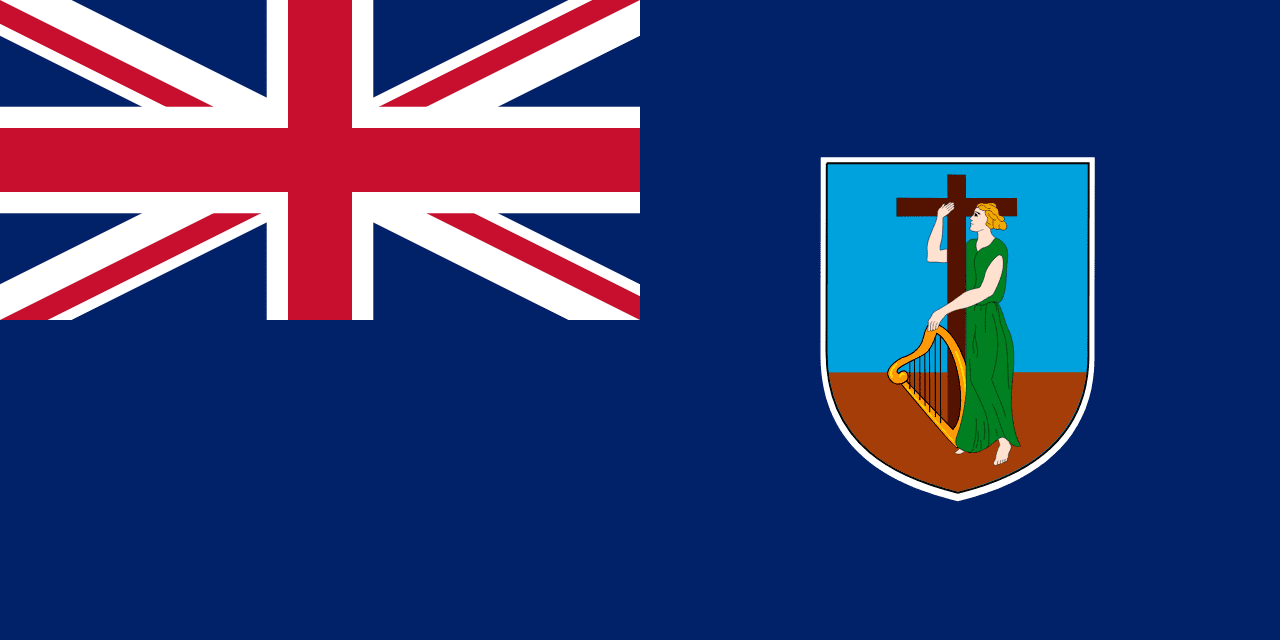
Montserrat
The Emerald Isle of the Caribbean, known for its Irish heritage and its incredible resilience in the face of nature power.
Figures from Montserrat
Historically documented individuals of note.
Alphonsus "Arrow" Cassell
### A Child of Plymouth: Music in the Blood Alphonsus Celestine Edmund Cassell was born on **November 16, 1949**, in Plymouth, the capital of Montserrat — a small, emerald-green British Overseas Territory nestled in the northern arc of the Lesser Antilles. Plymouth was a modest colonial port town of whitewashed buildings and iron-roofed houses, its rhythms dictated by the sea, the land, and an unbroken oral tradition of music that coursed through every household, every rum shop, and every festival. Into this world, a child arrived who would eventually carry the sound of Montserrat across six continents. The Cassell family was musical to its marrow. Alphonsus's brothers Justin Cassell, who performed as **"Hero,"** and Lorenzo Cassell, who went by **"Young Challenger,"** were already making names for themselves in the calypso tradition that was the lifeblood of Caribbean carnival culture. Calypso — the great art form of the English-speaking Caribbean — was by the 1950s both a popular entertainment and a sophisticated vehicle for social commentary, political critique, and communal storytelling, pioneered by legendary figures like the [Mighty Sparrow](/profiles/mighty-sparrow) and [Lord Kitchener](/profiles/lord-kitchener) in Trinidad. Young Alphonsus absorbed this world with a child's uncanny receptivity. He began performing at the age of **ten**, entering the informal circuits of junior calypso competitions that served as the nursery of Caribbean musical talent. He was drawn immediately not just to the music itself but to the *craft* of it — the architecture of a great hook, the emotional chemistry of a dance floor, the way a song could transform a room full of strangers into a single jubilant body [1][3]. ### The Making of Arrow: Identity, Craft, and the Calypso Throne When he adopted his stage name, Alphonsus Cassell chose to call himself **Arrow** — a direct tribute to the legendary Trinidadian calypsonian, the Mighty Sparrow, whose real surname was Francisco but whose legacy Arrow wished to honor through an iconographic parallel. Like the Sparrow, Arrow aimed to shoot his music across the widest possible target. It was a statement of ambition made early, and it would prove prophetic. In **1967**, Arrow won the **Montserrat Junior Monarch** calypso title, the first of many competitive victories on his home island. He went on to claim the **Montserrat Calypso King** title four times, cementing his status as the dominant musical figure on an island that, though small in geography, was enormous in its cultural vitality. Montserrat's carnival season was the arena in which Arrow honed his skills, year after year developing the rhythmic precision, melodic instinct, and crowd intelligence that would eventually make him a global figure [4][5]. Throughout the 1970s, Arrow released music steadily, building a loyal regional following. He was among the vanguard of Caribbean artists exploring the sonic possibilities of **soca** — a genre that had emerged from Trinidad in the early 1970s as a fusion of calypso's lyrical tradition with the rhythmic energy of soul and funk. Where calypso was often cerebral, discursive, and politically engaged, soca was visceral, celebratory, and designed for the body. Arrow saw in it not a lesser form but a *larger* canvas — one that could carry the joy and identity of the Caribbean to audiences who might never have encountered calypso before [1][3].  *Map of Montserrat, the small Leeward Island that gave birth to Arrow — and to one of the most enduring party anthems in recorded history.* ### New Year's Eve, 1982: The Night That Changed Everything The story of **"Hot Hot Hot"** is, in its own way, as improbable as any in popular music history. On **New Year's Eve, 1982**, Arrow went into the studio and recorded a track built on a driving soca rhythm, a memorably simple melodic phrase, and a lyric whose genius lay in its absolute simplicity: *Feeling hot hot hot.* The song captured something universal — the sensation of communal joy, of bodies moving together, of the particular electricity of a Caribbean carnival or street party — and encoded it in a three-minute vessel of irresistible rhythmic energy. "Hot Hot Hot" was released as a single in **1983** and spread with a velocity that no one, not even Arrow himself, had anticipated. It became the **biggest-selling soca single of all time**, with estimated worldwide sales exceeding **12 million copies** — an extraordinary commercial achievement for any Caribbean artist, let alone a musician from an island of fewer than 15,000 people. The song crossed every conceivable boundary of language, genre, and geography. It was recorded in **at least twelve languages**. It became the de facto soundtrack of parties, sporting events, and carnival celebrations from London to Lagos, from New York to Tokyo [2][6][7]. > *"Feeling Hot Hot Hot makes you forget that there's a volcano and remember there's fun to be had."* > — Arrow In **1986**, the song was selected as the official theme for the **FIFA World Cup in Mexico** — a planetary platform that introduced Arrow's music to hundreds of millions of new ears. A year later, in **1987**, American rock musician David Johansen covered the song under his alter-ego persona **"Buster Poindexter,"** taking it to the top of the charts in the United States and United Kingdom. The cover brought Arrow enormous songwriting royalties and, more importantly, an entirely new generation of listeners who went looking for the original and found the soca tradition waiting for them. ### The Pioneer: Innovation and Expansion Arrow's career was defined not just by one song but by a relentless spirit of innovation. Over a career spanning more than four decades, he released **34 albums** (from 1971 through 2002), each one an experiment in pushing the boundaries of Caribbean sound. He was among the first Caribbean musicians to fuse soca with **zouk** (the French Caribbean genre pioneered by [Kassav'](/profiles/kassav)), **salsa**, **R&B**, **rock**, **hip-hop**, and **dancehall**, creating a body of work of remarkable stylistic breadth. Beyond his musicianship, Arrow was a technological pioneer. He was reputedly the **first Caribbean artist to release a music video** and among the first to release his music on **compact disc** — innovations that reflected his understanding that Caribbean music needed to compete on international technological terrain if it was to find the global audience it deserved. Other notable songs from his catalogue include **"Long Time,"** **"Soca Rhumba,"** and **"Groove Master"** — tracks that became staples of Caribbean carnival circuits and demonstrated that his range extended far beyond the anthem that made him famous [4][6]. > *"Arrow showed you didn't have to be from a big island or a big country to change the world. He was from Montserrat — he was proud of that — and he took Montserrat to the world."* ### Montserrat's Volcano and an Icon's Resilience In **1995**, the Soufrière Hills volcano, dormant for centuries beneath the southern end of Montserrat, erupted catastrophically, burying Plymouth — Arrow's hometown — under feet of volcanic ash and pyroclastic debris. The capital was abandoned and sealed off; approximately two-thirds of the island's population was evacuated. The disaster was among the worst natural catastrophes in modern Caribbean history, devastating an already fragile small-island economy and scattering communities across the diaspora. Arrow had by this time long since established himself internationally, but Montserrat remained his home and his identity. He stayed connected to the island's rebuilding efforts, using his platform to draw attention to the plight of its displaced residents and to maintain a cultural thread of Montserratian identity for a community suddenly scattered across the world. His business enterprise, **"Arrow's Man Shop"** in Davy Hill, became a landmark in the resettled northern part of the island — a physical anchor of community life that also served as an informal cultural embassy for the spirit of Montserratian music [3]. ### Awards, Recognition, and the End of a Life In **2000**, Queen Elizabeth II appointed Arrow a **Member of the Order of the British Empire (MBE)** for his services to Caribbean music — a recognition from the very imperial institution whose cultural legacy his art had both navigated and transcended. He also received a **Living Legends Award** in 1988, among numerous other accolades. Arrow died on **September 15, 2010**, at the age of sixty, from complications arising from **brain cancer**. His death was mourned across the Caribbean and far beyond it. In **2016**, the Government of Montserrat posthumously conferred upon him the title of **National Hero** — one of the highest honors the island can bestow — in recognition of the incalculable role he played in placing Montserrat on the world's cultural map. The **Alphonsus Cassell Foundation** continues his legacy, working to establish a museum at his former Man Shop and to support music education initiatives on the island. Wherever carnival music is played — in Trinidad, in London's Notting Hill, in Brooklyn's Eastern Parkway, in the streets of São Paulo — the opening bars of "Hot Hot Hot" still ignite a response that transcends language, culture, and generation. That is Arrow's truest monument: a song that taught the world to feel what Montserrat felt [1][3][5].  *The Leeward Islands of the Eastern Caribbean, the musical cradle that shaped Arrow's artistry and the wider soca tradition.*
View Profile →Dr. George Irish
### Origins and the Making of a Renaissance Man James Alfred George Patrick Irish was born in **Montserrat** around **1942**, into a society still firmly bound by the structures of British colonial rule. The Montserrat of his childhood was a deeply hierarchical world — an island whose economic and social life had been shaped for centuries by the plantation system, and whose intellectual and cultural possibilities were tightly circumscribed by limited educational infrastructure and the persistent assumption that the colonies existed to serve the metropole rather than to generate their own thinkers, artists, and leaders. That a boy from this world would go on to become a pioneering scholar, a published author of more than thirty books, a composer of his island's national song, a trade union organiser, a journal founder, and a beloved professor in New York City is a story that speaks to extraordinary personal drive — and to the transformative possibilities of Caribbean intellectual life when given room to breathe. Dr. Irish's early formation took place within the educational and cultural landscape of the post-war Anglophone Caribbean, a world being reshaped by the growth of the **University of the West Indies (UWI)** and by the energetic political movements demanding self-determination. He pursued advanced academic study with exceptional distinction, ultimately earning a **doctorate in Spanish** from UWI — becoming, in the process, the **first person ever awarded a Ph.D. in Spanish by that institution**.[1] This was not merely a personal milestone but a symbolic act: it declared that Caribbean scholars could achieve the highest levels of expertise in fields that the colonial imagination had reserved for Europeans, and that the Spanish-speaking world — so often treated as a separate sphere from the Anglophone Caribbean — was part of a shared regional intellectual inheritance.  --- ### Academic Career: Building Caribbean Studies From the Ground Up Dr. Irish's academic career unfolded across several institutions and countries, each chapter adding new dimensions to his intellectual project. At UWI, he served as **Head of the Department of Spanish**, where he worked to embed Caribbean and Latin American perspectives into the university's curriculum at a time when such perspectives were still marginal even within the region's own academic institutions.[2] He also taught at the **Universidad Autónoma de Santo Domingo** in the Dominican Republic — a posting that deepened his engagement with the Spanish-speaking Caribbean and reinforced his conviction that the region's Anglophone and Hispanophone traditions needed to be understood together, not in isolation. This cross-linguistic, cross-cultural sensibility would become one of the defining hallmarks of his scholarly work. Perhaps most significantly for his home island, Dr. Irish became the **first local Resident Tutor at the UWI Extra-Mural Centre in Montserrat** — a role that brought university-level education directly to the people of the island rather than requiring them to journey abroad.[1] In a small territory with limited infrastructure, this was a transformative act of educational democratisation, ensuring that Montserratians who could not afford or manage to study overseas could nonetheless access rigorous higher learning. --- ### New York Chapter: Medgar Evers College and the Caribbean Diaspora In **1989**, Dr. Irish joined **Medgar Evers College** at the **City University of New York (CUNY)** in Brooklyn — an institution that had been founded in 1969 to serve the educational needs of central Brooklyn's predominantly Black and Caribbean-American communities.[4] At Medgar Evers, he rose to positions of significant institutional leadership, serving as: - **Executive Director of the Caribbean Research Center (CRC)** - **Dean of the School of Liberal Arts and Education** - **Director of Caribbean and Latin American Studies** - **Tenured Professor in the Department of Interdisciplinary Studies**[1][5] Through the Caribbean Research Center, Dr. Irish transformed Medgar Evers into a hub for serious scholarly inquiry into the Caribbean diaspora's experience in North America — documenting the social adjustment challenges faced by immigrant families, the policy environments that shaped their lives, and the cultural practices that sustained their communities across the Atlantic. His research in this arena earned him wide recognition as an expert on diaspora policy and Caribbean immigrant community development.[7] > *"Dr. Irish was a man of letters, a man of the people, and a man of his island. He carried Montserrat wherever he went, and wherever he went, he made Montserrat proud."* > — *Caribbean Life tribute, 2019* --- ### Scholar and Publisher: Thirty Books and a Journal Dr. Irish's bibliography is astonishing in its breadth and volume. Over his career he authored or edited **more than thirty books**, spanning Caribbean history, labour studies, diasporic culture, education policy, and literary criticism.[3] Some of his most significant works include: - ***Life in a Colonial Crucible: Labor and Social Change in Montserrat, 1946–Present*** (1991) — a landmark study of how labour reform and social struggle reshaped Montserrat in the mid-twentieth century - ***Visions of Liberation in the Caribbean*** (1992) — an examination of emancipatory political thought across the region - ***Growth of a Revolutionary Consciousness*** (1990) - ***Discourses from Alliouagana and the Diaspora*** — a meditation on Montserratian identity at home and abroad Beyond his books, Dr. Irish founded and served as **Editor-in-Chief of *WADABAGEI: A Journal of the Caribbean and its Diaspora*** — a peer-reviewed scholarly publication that provided an authoritative platform for research on Caribbean communities in North America and beyond.[9] He also served as **President of the Caribbean Diaspora Press Inc.**, a publishing enterprise dedicated to ensuring that Caribbean intellectual production reached Caribbean readers wherever they lived. In a further act of institution-building, he co-founded and served as **Chancellor of the Universidad Popular de Desarrollo Sostenible de Las Americas (UNIPOP)** in Panama — an initiative that sought to extend higher educational access to underserved communities across Latin America and the Caribbean.[2]  --- ### Musician, Cultural Activist, and Voice of Montserrat For all his academic accomplishments, Dr. George Irish was equally celebrated in Montserrat as a **musician, cultural preservationist, and community organiser**. In **1971**, he founded the **Emerald Community Singers** — a choral group devoted to researching, documenting, and performing the folk songs and traditional music of Montserrat and the wider Caribbean.[3] At a time when globalisation and mass media were eroding local musical traditions across the Caribbean, the Emerald Community Singers served as a vital living archive, keeping the island's sonic heritage alive and transmitting it to younger generations. His most enduring cultural contribution, however, came when he **composed the music for "Motherland"** — the song officially adopted as the **Territorial Song of Montserrat in 2013**.[5] With lyrics written by the celebrated Montserratian historian and poet **Sir Howard A. Fergus**, "Motherland" became the island's definitive anthem of belonging, its melody a gift from Irish's pen to every Montserratian, whether on the island or scattered across the globe by the twin forces of economic migration and volcanic displacement. That a single man could compose both a nation's song and a substantial body of scholarly literature is itself a testament to the depth of his creative life. --- ### Labour Organiser and Civic Leader Dr. Irish's commitments were never purely intellectual. He was a **dedicated trade unionist and social activist** who founded the **Montserrat Allied Workers' Union (MAWU)** — an organisation that championed the rights of working people on the island at a time when the labour movement was central to the struggle for social equality.[2] He also established the **Montserrat Cooperative Credit Union**, a financial institution that democratised access to credit for ordinary Montserratians who were excluded from the formal banking sector.[10] In **1983**, driven by his belief in political engagement as an extension of community service, he stood for election to the Montserrat Legislative Council. Though he was unsuccessful in that contest, his candidacy underscored his view that the responsibilities of a public intellectual extended beyond the academy into the arena of democratic politics.[2] --- ### Honours, Final Years, and Legacy For his lifetime of contributions to education, culture, labour advocacy, and Caribbean scholarship, Dr. George Irish was awarded the **Order of Excellence (OE)** — Montserrat's highest national honour — a recognition that affirmed his status as one of the island's most distinguished sons.[1] He passed away on **February 12, 2019**, at the age of **76**, after a period of illness. His death prompted an outpouring of tributes from across Montserrat, the Caribbean diaspora, and the international academic community. Government officials, fellow scholars, former students, and cultural leaders united in mourning a man who had been, simultaneously, a world-class academic and an intensely grounded son of his island. Dr. George Irish's life offers a profound model of what Caribbean intellectual life at its best can achieve: rigorous in scholarship, generous in community service, creative in cultural expression, and always rooted in a deep love for the people and places that shaped him. From the villages of colonial Montserrat to the classrooms of Brooklyn, from the stacks of scholarly journals to the rehearsal halls of the Emerald Community Singers, he carried the same animating conviction — that to know one's history, to sing one's songs, and to organise one's community were not separate acts but facets of a single, indivisible commitment to human dignity.
View Profile →Ellen Peters
### Early Life and Formation Ellen Dolly Peters, BEM (18 November 1894 – 1995) was one of the most consequential figures in twentieth-century Montserratian history — a teacher, trade unionist, activist, and political architect whose influence shaped the very foundations of representative government on the island, even as the discriminatory conventions of her era barred her from holding office herself. Born in the village of **St. Patrick's**, in the southern reaches of Montserrat, to Rosanna (née O'Garro) and Levons Elias Dolly, Ellen entered the world at the dawn of a century that would be defined by seismic transformations in colonial society across the Caribbean. Montserrat at the time of her birth was a British Crown Colony locked in the slow, grinding aftermath of emancipation. The plantation economy had long since ceased to be dominant — the island was too rugged and small to compete with larger sugar producers — but the social hierarchies forged by slavery persisted with stubborn force. Land was concentrated in the hands of a small white and light-skinned merchant class. The majority of Montserratians, of African descent, scratched out livelihoods as sharecroppers on lime and sea island cotton estates, often toiling under conditions that bore a grim resemblance to the forced labour that had been, in theory, abolished. Child labour was rampant. Wages were exploitatively low. The colonial administration offered little recourse. Into this world, Ellen Dolly arrived with uncommon aptitude and drive. By the age of thirteen — a remarkable fact that speaks both to her precocity and to the desperate need for teachers in rural Montserrat — she had already begun teaching at **St. Augustine School** [1]. Education was her first calling and her most enduring vocation. After marrying Abraham Peters in 1912 and settling in the village of **Kinsale**, she continued teaching while immersing herself in the intellectual life of the community through local debating societies. These forums were more than social clubs — they were incubators of political consciousness in a society that had no formal avenues for ordinary people, especially women, to participate in governance.  ### The Crucible of the 1940s: Rising Consciousness The 1940s were transformative years for the entire British Caribbean. The devastating labour rebellions of the 1930s — from Trinidad to Barbados to Jamaica — had shaken the foundations of the colonial system and prompted the British government to commission the **Moyne Report** (published 1945), which acknowledged the systemic poverty and inequality afflicting Caribbean workers and recommended sweeping social and political reforms. Across the region, ordinary men and women were awakening to the possibility of demanding change. Ellen Peters was among the most vocal voices on Montserrat. By the 1940s, she had grown into a formidable public speaker, honing her skills through years of debate and classroom instruction. She became a fierce and very public critic of the injustices she witnessed daily: **child labour** in the fields, the crushing poverty of sharecroppers, institutionalized racism that determined a person's economic ceiling by the shade of their skin, and the near-total absence of worker protections under colonial law [2]. Her criticism was not abstract political theory — it was rooted in lived experience and the suffering of her neighbours. > *"She was a woman who could move a crowd. She understood that the workers had rights, and she was not afraid to say so, loudly and clearly, at a time when few dared."* > — Historical accounts from Montserratian community memory When the **Montserrat Trades and Labour Union (MTLU)** was formally established in **1946**, Ellen Peters joined immediately and became one of its most vital members [1]. The MTLU was not merely a collective bargaining organization — it was a political force, the institutional expression of a people demanding to be treated with dignity. Peters used her exceptional skills as a debater and orator to amplify the union's message, speaking at meetings, organizing workers, and articulating the moral case for fair wages and humane conditions in language that was accessible, passionate, and impossible to ignore. ### The Kingmaker: Forging Montserrat's First Chief Minister Perhaps the most historically significant dimension of Ellen Peters' career was her role as the architect behind **[William Henry Bramble](/profiles/william-henry-bramble)**'s political ascendancy. Bramble, who would go on to become Montserrat's first Chief Minister when the ministerial system was introduced in 1960, was not an inevitable political giant. His rise was shaped in no small measure by the strategic intelligence and tireless advocacy of Ellen Peters. When Bramble challenged **Robert Griffith** for the leadership of the MTLU in **1951**, Peters threw her considerable influence behind him [3]. She did not merely endorse him from a distance — she was instrumental in crafting his political narrative, reportedly writing many of his most significant and stirring speeches, and campaigning energetically for his election across the island's communities. In the debates and rallies of that pivotal period, her voice was indispensable. **Why did she not seek office herself?** The answer is a pointed commentary on the gender politics of mid-century Montserrat. Peters was, by all contemporary accounts, aware that her outspoken nature and her gender made her candidacy politically untenable in a society that, while beginning to democratize, still clung to patriarchal assumptions about women's roles [2]. She made a calculated choice: to exercise her power through a proxy, to be the mind and the voice behind the throne rather than to court the near-certain rejection of seeking it herself. This was not resignation — it was strategic brilliance born of necessity. > *"She wrote those speeches. She was the intelligence behind the movement."* > — Accounts preserved in Montserratian oral and written historical tradition When universal adult suffrage was introduced and Montserrat held its first democratic elections in **1952**, Bramble's Montserrat Labour Party swept to victory. The five elected legislators — Bramble, Robert W. Griffith, Theodore Edgecombe, Michael Walkinshaw, and Brunel W. Edwards — represented the triumph of the labour movement that Peters had helped to build. In 1960, when Bramble became the island's first Chief Minister, a position whose very existence was a milestone in Montserratian self-determination, Ellen Peters' hand was embedded in that history [4]. ### General Secretary of the MTLU and Later Life Ellen Peters did not retire from public life after the 1952 elections. She continued her labor activism with the same intensity, serving as the **General Secretary of the MTLU from 1954 until her retirement in 1968** — fourteen years at the administrative and strategic heart of the island's most important workers' organization [1]. During this period, she helped navigate the union through the turbulent transitions of decolonization and the collapse of the West Indies Federation (1962), as Montserrat chose to remain a British Dependent Territory rather than pursue full independence or associated statehood. In parallel with her union work, Peters never abandoned education. She continued teaching until her retirement from the classroom in 1968, a career spanning more than five decades [4]. After retiring, rather than withdrawing into private life, she became a **youth counsellor for the Social League of Catholic Women**, channelling her lifelong commitment to community service into mentoring the next generation [5]. Her contributions were recognized with three significant honours: - **Order of Merit**, awarded by the Montserrat Allied Workers' Union in **1980** [5] - **British Empire Medal (BEM)**, awarded in **1983** for her contributions to the labour movement [5] - ***Pro Ecclesia et Pontifice***, awarded in **1984** for her service to the Catholic Church and her decades of teaching [5] ### Legacy Ellen Dolly Peters died in **1995**, at the extraordinary age of **100**, having lived through slavery's aftermath, two World Wars, the rise of Caribbean democracy, and the birth of a new constitutional order on her island home. She did not hold elected office — but she built the political infrastructure that made elected office meaningful for generations of Montserratians. Her story is a vital corrective to any narrow understanding of political power. Leadership is not only exercised in Parliament or at a Chief Minister's desk. It is exercised in the fields, in union halls, in community debating societies, in the careful drafting of speeches that move people to claim their dignity. Ellen Peters understood this profoundly and lived it completely. She remains one of the most consequential — and most underrecognized — figures in Caribbean political history.
View Profile →John Osborne
### Origins in St. Peter's: The Making of a Leader **Dr. John Alfred Osborne** was born on **27 May 1935** in the village of **St. Peter's**, in the northern reaches of Montserrat — the tiny, verdant British Overseas Territory known as the Emerald Isle of the Caribbean. He came of age in an island still firmly embedded in the British colonial system, where political power rested with appointed officials in London and local governance was constrained by the narrow parameters of colonial administration. Yet the world was shifting. The post-war decades would bring the dismantling of empire, the rise of Caribbean nationalism, and the slow but gathering demand for self-determination across the region. John Osborne would grow to become one of the central architects of Montserrat's transition from colonial dependency toward meaningful self-governance. As a young man, Osborne demonstrated a practical intelligence and an entrepreneurial drive that would distinguish him throughout his life. He travelled to **England** to train as an **engineer and shipwright**, acquiring technical skills that were rare on a small island whose economy remained largely agrarian. On returning to Montserrat, he channelled these skills into business, eventually establishing a **regional shipping and construction enterprise** that gave him both financial independence and a deep, hands-on understanding of the logistical and economic challenges facing small island states. [1] This background as a builder and businessman — a man who worked with his hands and understood infrastructure — shaped his distinctly pragmatic approach to governance. He was not a theoretician; he was a problem-solver.  ### The Road to Political Power: 1978 and the PLM Revolution Osborne entered formal politics through the **People's Liberation Movement (PLM)**, a party that reflected the growing aspirations of ordinary Montserratians for a government that spoke their language and served their interests. In **November 1978**, he led the PLM to a decisive, full-slate electoral victory — winning every seat in the Legislative Council — and was sworn in as **Chief Minister of Montserrat**. [2] This was a watershed moment. For the first time, the island had a leader who had grown up in St. Peter's, who had worked with his hands, who spoke with an authenticity his constituents recognised as their own. His first term in office, which would last until **1991**, is remembered as a period of ambitious social and economic development. Among the most significant achievements of his administration was the introduction of **free secondary education** for all Montserratians — a policy that dismantled one of the most persistent barriers to social mobility on the island and opened the doors of secondary schooling to every child, regardless of family income. [3] This single reform rippled across generations, raising the educational attainment of the population and equipping future Montserratians with the skills needed to compete in an increasingly globalised world. Osborne also pushed forward significant advances in **housing, road infrastructure, and healthcare**, taking seriously the material conditions in which ordinary Montserratians lived. He was keenly aware that political independence, however symbolic, meant little without tangible improvements in people's daily lives. His sharp, often humorous communication style made him enormously popular. He was known for speaking frankly and without pretension — most famously encapsulating his philosophy of governance in the phrase: **"Montserrat people no stupid."** [4] It was a declaration of faith in his constituents, an assertion of their dignity and their capacity to determine their own future. > *"Montserrat people no stupid."* > — Dr. John Alfred Osborne, a phrase that became a defining statement of his political philosophy and his belief in the intelligence and dignity of the Montserratian people. ### The Constitutional Milestone of 1989 A landmark moment of Dr. Osborne's first tenure came with the passage of the **Montserrat Constitution Order of 1989**, which established the island's first formal written constitution. This document — negotiated between the Government of Montserrat and the British Crown — codified the rights of Montserratians and set out the framework for representative government on the island. [5] Dr. Osborne, as Chief Minister, was the first leader to operate fully within this constitutional framework, and he championed it as an expression of Montserrat's political maturity and its movement toward greater autonomy. It was not full independence — Montserrat remained a British territory — but it was a significant step toward self-determination. Also in 1989, Montserrat was struck by **Hurricane Hugo** — one of the most powerful Atlantic hurricanes of the twentieth century — which caused catastrophic damage to the island's housing stock, infrastructure, and economy. Osborne led the recovery effort with characteristic resilience, advocating for international assistance while directing the reconstruction of homes and public buildings. The experience of Hugo revealed both the vulnerability of small island states to external shocks and the importance of decisive political leadership in their aftermath. ### Electoral Record and Return to Power By the time his first tenure ended in **1991**, Dr. Osborne had won **three consecutive general elections** — a record of electoral success unmatched in Montserrat's history. [6] His opponent in 1991, Reuben Meade of the National Progressive Party, ended his run, but Osborne was not finished. After a decade away from the Chief Minister's chair, he returned to contest the **2001 general election** at the head of the **New People's Liberation Movement (NPLM)** — a reconstituted vehicle for his political vision — and won. [7] His **second tenure (2001–2006)** unfolded against the most dramatic backdrop in Montserrat's history: the ongoing volcanic crisis triggered by the eruption of the **Soufrière Hills volcano**, which had begun in **July 1995** — towards the end of his predecessor's administration — and continued for years, burying the southern half of the island, including the historic capital of **Plymouth**, under ash, lava, and pyroclastic material. The volcanic exclusion zone swallowed up homes, hospitals, the port, and the old W. H. Bramble Airport. More than half the island's population — some 8,000 people — had fled, many to the United Kingdom, leaving a community struggling to reconstitute itself in the narrow northern "safe zone" around the village of **Brades** and the future capital of **Little Bay**. ### Leading Through the Volcanic Crisis It was into this landscape of displacement and uncertainty that Dr. Osborne stepped on his return to office. The reconstruction of Montserrat after the volcanic crisis was one of the most complex developmental challenges ever faced by any small island government in the Caribbean. Osborne approached it with his characteristic combination of pragmatism and tenacity. He oversaw the **relocation of government functions** to the north, the planning of a new permanent capital at Little Bay, and the development of the infrastructure needed to make the island's northern zone viable for a permanent population. [8] Among his most significant achievements during this second term was his role in the development of **Gerald's Airport** — a new facility in the north of the island designed to replace the buried Bramble Airport. The airport opened in **2005**, reconnecting Montserrat to the rest of the world and providing a critical lifeline for the island's recovery and its tourism-dependent economy. [9] In recognition of this and his many other contributions, the facility was renamed the **John A. Osborne Airport** in **2008** — a tribute that ensures his name will greet every visitor who arrives on Montserratian soil. > *"He provided steady, purposeful leadership during the darkest hours that Montserrat has ever faced, and his name is literally written into the landscape of the island's rebirth."* > — Times Caribbean Online, tribute to Dr. John A. Osborne ### Legacy and Posthumous Recognition Dr. John Alfred Osborne passed away on **2 January 2011**, at the age of 75, mourned by a nation that understood, even if it did not always say so plainly, that he had been one of the defining political figures of its modern history. His legacy encompassed free secondary education, constitutional advancement, hurricane recovery, volcanic crisis leadership, and the construction of an airport that gave the island back its connection to the world. In **March 2026**, the Government of Montserrat made official what many had long believed to be true: at the island's **9th National Honours and Awards Ceremony** on March 18, 2026, Dr. John Alfred Osborne was posthumously bestowed with the **Order of National Hero** — Montserrat's highest honour — becoming only the fourth person ever to receive the distinction. [10] The citation recognised his transformational leadership across multiple terms of office, his resilience in the face of two catastrophic natural disasters, and his unwavering belief in the capacity of the Montserratian people to determine their own destiny. His son, **John Osborne Jr.**, has continued the family's tradition of public service, serving as a government minister in his own right. But the elder Osborne's legacy transcends dynasty. He is now, officially and permanently, a **National Hero of Montserrat** — a man who helped build a nation, refused to let a volcano bury its spirit, and spoke for his people with a directness and dignity that they never forgot.
View Profile →Justin "Hero" Cassell
### The Emerald Isle's First King: Justin "Hero" Cassell  In the story of Montserrat's cultural soul, few names resonate with the permanence and profundity of **Justin "Hero" Cassell** (1943–2024). He was not merely a singer or a songwriter — he was an institution, a living archive, a moral compass for an island that used the art of calypso to navigate colonial realities, natural catastrophes, political transformation, and the aching complexities of diaspora identity. Over a career stretching more than six decades, he wore many hats — agriculturalist, educator, politician, mentor, and above all, calypsonian — each role deepening the other, each informing the lyrics that poured forth from a mind of rare acuity and a heart of genuine civic devotion. ### The World He Was Born Into Justin Cassell was born in **1943** in Plymouth, Montserrat, a small volcanic island of barely forty square miles in the northeastern Caribbean, then still a British Crown Colony. Montserrat's peculiar character — a fusion of West African heritage, Irish colonial legacy, and lush tropical geography — created a cultural crucible unlike anywhere else in the region. The island's Irish connection, dating to the seventeenth century when Irish indentured servants and African enslaved people were brought together under British colonial administration, produced a creolized identity that prized music, storytelling, and communal expression above almost all else [1]. The Cassell family of Plymouth was the beating heart of that tradition. Justin was one of nine children, growing up in a household where music was not merely leisure but a form of spiritual and social sustenance. His elder brother **Lorenzo "Challenger" Cassell** was already performing calypso in the community tents when Justin first began to find his voice. And his younger brother, **[Alphonsus "Arrow" Cassell](/profiles/alphonsus-arrow-cassell)** — born in 1949 — would go on to achieve global fame as the "Soca King of the World." In the Cassell household, melody and meter were the common tongue [2][3]. ### Coming of Age in Calypso's Golden Era Justin began performing publicly in the **1950s**, as Montserrat's annual Christmas Festival was cementing itself as the premier vehicle for cultural expression on the island. Unlike Trinidad's Carnival, which preceded Lent, Montserrat's Festival was rooted in the yuletide season, drawing communities together in a pageant of masquerade, music, and calypso competition that spoke directly to the rhythms of island life. The calypso tent — a space where performers honed their wit, their wordplay, and their social commentary in the presence of enthusiastically critical audiences — was Justin's true classroom [4]. He absorbed everything: the political sharpness of the Trinidadian masters, the ribald storytelling of local tradition, the call-and-response dynamism that bound performer and community in a shared act of meaning-making. He developed a stage persona that was simultaneously authoritative and accessible — the "Hero," a name that suggested both moral stature and performative triumph. By the late 1950s, he was already recognized as one of the island's most gifted calypso voices [1][2]. ### Making History: The First Calypso Monarch, 1962 In **1962**, Montserrat inaugurated its formal Calypso Monarch competition as part of the Festival's evolving structure. It was a watershed moment — a recognition that calypso was not merely folk entertainment but the definitive art form of Montserratian civic life. Justin "Hero" Cassell won that inaugural competition with the songs **"Lizzie"** and **"Joe,"** claiming a crown that no one before him had ever held [8]. The symbolism was fitting: a man of the people, a storyteller of the community, crowned as the island's first cultural monarch in the year the modern Festival was born. > *"Hero was not just the first Calypso Monarch — he was the standard against which all who followed would be measured."* > — Described by commentators on the Montserrat arts scene That 1962 victory was only the beginning. Cassell would go on to win the national title **ten times** in total — a record that has never been surpassed — including victories in 1963, 1965, 1972, 1973, and across multiple subsequent decades [2][5]. Each championship represented not just vocal and lyrical excellence, but the ability to read the island's social and political mood and translate it into music that lodged itself in the community's collective memory. ### The Oral Historian: Songs as Social Record What distinguished Hero Cassell from his contemporaries was his unflinching commitment to calypso as a form of **oral journalism and social documentation**. At a time when Montserrat had limited access to mass media, calypso functioned — in the words often attributed to Caribbean scholars — as the "poor man's newspaper." Cassell's compositions were that newspaper's finest editorials. His song **"Cost of Living"** (1972) addressed the economic pressures bearing down on ordinary Montserratians in the post-colonial era. **"Back to the Land"** (1973) championed agricultural self-sufficiency at a time when the island's farming economy was under strain from emigration and changing trade patterns. When devastating floods swept Montserrat in **1981**, he composed **"The Flood"** — a song that functioned simultaneously as memorial, social commentary, and communal comfort. And when Hurricane Hugo devastated the island in **1989** and the distribution of relief materials became politicized, his sardonic masterwork **"Where Di Galvanize"** called power to account with the cutting precision that was his trademark [2][5]. He also wrote songs that celebrated the joyful textures of Montserratian life. **"Tiny Winey"** — a celebration of a beloved local dance style — became one of the island's most-loved cultural anthems, later popularized internationally by Byron Lee and the Dragonaires. It was a reminder that Hero's genius was not only political but also joyful, capable of capturing the exuberance of Caribbean festivity with the same authenticity he brought to social critique [7]. ### Brotherhood, Collaboration, and the Birth of a Global Hit No account of Justin "Hero" Cassell can omit the profound creative partnership he shared with his younger brother, [Alphonsus "Arrow" Cassell](/profiles/alphonsus-arrow-cassell). Arrow's international breakthrough came in **1982** with **"Hot, Hot, Hot"** — a song that would become the biggest-selling soca single in history, adopted as the anthem of the 1986 FIFA World Cup in Mexico and covered in dozens of languages around the world. Justin was a co-writer of that landmark song, his lyrical sensibility woven into the composition that would lift Montserrat's music onto the global stage [2][4][5]. The collaboration between the brothers was not a one-off event but a consistent creative dialogue across decades. Justin frequently performed as a vocalist in Arrow's band, contributed to the songwriting of multiple international releases, and served as an artistic advisor as Arrow navigated the tensions between commercial soca and the deeper traditions of Caribbean calypso. Their relationship embodied the best of what music can be: a fraternal bond translated into a shared artistic mission that served both community and the wider world [3][6]. ### Beyond Music: The Educator and Agriculturalist What made Justin Cassell genuinely extraordinary was that his cultural career was never his only career. He pursued formal education in **agricultural sciences at the University of the West Indies**, graduating with qualifications that he put directly to work in service of his island. He served as an **agricultural extension officer**, helping Montserrat's farmers adopt sustainable techniques and maintain the land productivity that the island's small economy depended upon [2][3]. He was also a **teacher at the Montserrat Secondary School**, shaping the minds of a generation of young Montserratians. The combination of agricultural science, education, and calypso was not contradictory in Cassell's worldview — it was entirely coherent. The land, the classroom, and the calypso tent were all spaces where knowledge was cultivated, where community was built, and where the future of Montserrat was being written [1][2]. ### Regional Recognition and Political Engagement Cassell's excellence was recognized beyond Montserrat's shores. In **1986**, he won the **OECS (Organisation of Eastern Caribbean States) Calypso King** title in Dominica — a regional honour that confirmed his standing not just as a Montserratian icon but as a Caribbean-wide artistic force [2][5]. In later life, he entered formal politics, running as a candidate for the **Movement for Change and Prosperity (MCAP)** in 2009 and serving as the party's public relations officer. He was also a passionate advocate for the establishment of a **National Honours and Awards system** for Montserrat, believing that the island's cultural and public servants deserved formal recognition from the state they had given so much to [1][3]. ### The Legacy Builder: Festival Revivalist and Mentor In his final decades, Cassell devoted extraordinary energy to the cultural infrastructure of Montserrat. He was instrumental in **coordinating the revival of the St. Patrick's Festival** in the 2010s — a celebration with deep historical resonance connecting to the island's Irish heritage and a legacy of enslaved African resistance. He also initiated a **Christmas Lighting Programme** that helped restore festive communal life in the aftermath of the volcanic devastation of the 1990s [2][3]. As a mentor, his legacy may ultimately prove most enduring. Across the OECS region, young calypsonians sought his counsel, his workshop guidance, and his endorsement. He understood that calypso's survival depended not just on great individual performers but on the transmission of the craft — its compositional architecture, its performance ethics, its relationship to truth and community — to the generations who would carry it forward. ### Honours and Final Years  In **2022**, the Government of Montserrat awarded Cassell the **Order of Excellence (O.E.)** — the island's highest civilian honour — in recognition of his extraordinary and distinguished service to music, culture, and national development [4][5][6]. That same year, a further tribute was paid when the **annual Calypso Monarch Finals were officially renamed in his honor**, a living monument to a career defined by excellence, integrity, and love of country [2][5]. Justin "Hero" Cassell passed away in **London on February 5, 2024**, at the age of **80**, following a long illness. A home-going service was held at the Montserrat Cultural Centre on March 23, 2024, attended by artists, officials, and community members from across the Caribbean and its diaspora [1][3]. He was mourned as not merely a cultural icon but as a father figure to Montserratian culture itself — the man who had crowned an entire generation's understanding of what it meant to be Montserratian. In a small island with a large soul, Justin "Hero" Cassell proved that art, service, and land are not separate vocations but expressions of a single, undivided devotion to one's people.
View Profile →P. Austin Bramble
### Early Life and Family Legacy Percival Austin Bramble was born on **January 24, 1931**, in Montserrat, a small emerald-green island in the Leeward Islands chain of the British Caribbean. He came of age at the very moment when a new social and political order was being forged across the West Indies — a period defined by the dismantling of plantation-era hierarchies, the rise of labour unions, and the first stirrings of mass democratic participation. To understand P. Austin Bramble is to understand the extraordinary dynasty that shaped Montserrat's modern political history. His father, [William Henry Bramble](/profiles/william-henry-bramble), known affectionately as "Willy B," was the dominant figure of mid-twentieth-century Montserratian politics. As founder of the **Montserrat Labour Party (MLP)** in 1951 — built on the foundations of the Montserrat Trades and Labour Union — the elder Bramble championed universal adult suffrage and shepherded the island into the age of representative government. When a new constitution in 1960 introduced the ministerial system, William Henry Bramble became Montserrat's **first Chief Minister**, a position he would hold for a decade. Growing up in the shadow of such a towering figure, P. Austin Bramble absorbed the rhythms of public life from boyhood.  P. Austin Bramble pursued education and several vocational paths before entering politics. He worked as a **teacher** early in his career, instilling in him a lifelong appreciation for education as a tool of social upliftment. He later spent nearly a decade — from **1952 to 1961** — working as a **laboratory technician in Curaçao**, gaining exposure to the wider Caribbean world and the experiences of working-class people far from home. On his return to Montserrat, he built a career as a **hardware dealer and building contractor** from 1961 to 1965, establishing himself as a credible figure in the island's small but growing private sector.[1] --- ### Entry into Politics and Break with the MLP In **1966**, P. Austin Bramble entered the Legislative Council as a member of his father's Montserrat Labour Party, winning the Plymouth seat. His early ministerial career saw him serve as **Minister of Communications and Works (1966–1969)** and subsequently as **Minister of Education, Health and Welfare**, roles that gave him deep insight into the developmental needs of ordinary Montserratians.[1] But the relationship between father and son was not without tension. The late 1960s brought a growing controversy around land policy on the island — specifically, the increasing number of **holiday and retirement homes** being acquired by foreign nationals, particularly from the United Kingdom and North America. Critics of the MLP government argued that the land allocation process favoured foreign developers at the expense of local Montserratians. P. Austin Bramble, who held a different vision for how the island's resources should be managed, found himself at odds with his father's approach. The resulting disagreement led to his **expulsion from the MLP** shortly before the 1970 general election — a dramatic rupture that set the stage for one of the most remarkable electoral moments in Montserratian history.[1][4] --- ### The Rise to Chief Minister Undeterred, Percival Austin Bramble co-founded the **Progressive Democratic Party (PDP)**, a new political movement that channelled widespread public frustration with the MLP's long dominance. The **1970 general election** delivered a stunning verdict: the PDP won **all seven seats** in the Legislative Council in a landslide that swept away the party his father had built. It was both a political revolution and a deeply personal moment — a son succeeding his father in the island's highest office, each representing a distinct vision for Montserrat's future. P. Austin Bramble was sworn in as **Chief Minister of Montserrat in December 1970**, a position he would hold through two terms until November 1978. His eight-year tenure coincided with a period of enormous change both for Montserrat and the wider Caribbean region — an era marked by decolonization debates, regional integration movements, and the challenge of building modern welfare states on small-island economies. > *"The signing of the Treaty of Chaguaramas was an act of faith — faith that small nations, united, could chart a course for their own prosperity."* --- ### Regional Statesman: The CARICOM Treaty Perhaps the single most historically significant act of P. Austin Bramble's political career came on **April 17, 1974**, when he affixed his signature to the **Treaty of Chaguaramas** on behalf of Montserrat at a Special Conference of Heads of Government of the Commonwealth Caribbean Countries held in **Castries, Saint Lucia**. The treaty had originally been signed on July 4, 1973, by the leaders of Barbados ([Errol Barrow](/profiles/errol-barrow)), Guyana ([Forbes Burnham](/profiles/forbes-burnham)), Jamaica ([Michael Manley](/profiles/michael-manley)), and Trinidad and Tobago ([Eric Williams](/profiles/eric-williams)) — the four giants of post-war Caribbean nationalism. By adding Montserrat's signature in 1974, Bramble made his tiny island — with a population of barely ten thousand — a founding member of the **Caribbean Community (CARICOM)**, the most ambitious experiment in regional integration the Caribbean had ever attempted.[1][4] The significance of this act cannot be overstated. CARICOM was designed not merely as a trade body, but as a framework for **foreign policy coordination, functional cooperation** in labour relations, social security, health, and education — the very building blocks of statehood for small, resource-limited nations. By committing Montserrat to this project, Bramble signalled his belief that the island's future lay in collective Caribbean solidarity rather than isolated dependence on Britain. Decades later, as fellow signatories passed from the scene, P. Austin Bramble came to be recognized as the **last surviving signatory** of the original Treaty of Chaguaramas — a distinction that underscored his singular place in Caribbean history and brought renewed attention to his legacy long after his years in office.[5]  --- ### Social Reforms and Domestic Governance While his regional legacy was anchored by the CARICOM signing, Bramble's domestic record during his two terms as Chief Minister was equally substantive. He presided over the introduction of **free medical care for the elderly**, a landmark social welfare measure that relieved some of Montserrat's most vulnerable citizens from the burden of healthcare costs.[2] He also laid the **foundations for the island's modern social security system**, creating institutional frameworks that would endure far beyond his time in office. In **1975**, Bramble achieved a notable constitutional milestone when he successfully negotiated with the British government to allow a **local Speaker to preside over the Legislative Council** — a small but symbolically powerful step toward greater self-governance that reduced the visible hand of colonial oversight in the island's parliamentary life.[1] On the economic front, his administration promoted the establishment of **factory units** to diversify employment options beyond agriculture and construction, and he championed the introduction of a **medical school** on the island — an initiative that would, in later decades, become an important source of economic activity for Montserrat.[2] --- ### Defeat, Legacy, and Honours The **November 1978 general election** brought Bramble's tenure to a close. His Progressive Democratic Party was defeated, and he was succeeded as Chief Minister by **John Alfred Osborne**. Rather than a repudiation of his governance, the result reflected the normal democratic rhythms of a maturing electorate, as well as the economic anxieties that accompanied Montserrat's transition away from traditional livelihoods. In the years following his departure from frontline politics, the stature of P. Austin Bramble's contributions was increasingly recognized by his island and by the wider Caribbean community. He was awarded the **Order of Excellence (OE)** — one of Montserrat's highest honours — in recognition of his political leadership, his dedication to education, and his economic stewardship of the island.[6] As the decades passed and his fellow CARICOM founding signatories died one by one, Bramble's historical significance only grew. He became a living symbol of Caribbean integration — a reminder that Montserrat, for all its smallness, had stood at the table when the architecture of a new regional order was being constructed. Photographs of him speaking at CARICOM commemorative events, well into his eighties, captured a man who carried history in his very presence. Percival Austin Bramble's life spans nearly a century of Montserratian and Caribbean history — from the last decades of colonial plantation society, through the turbulent birth of independence movements, to the era of regional community-building. In him, the story of a small island's ambition for dignity, self-determination, and belonging on the world stage finds one of its most eloquent embodiments.
View Profile →
Reuben T. Meade
### Early Life and Education Reuben Theodore Meade was born on **7 March 1954** in the village of **Salem**, on the western coast of Montserrat — a small, mountainous island of approximately 40 square miles nestled in the northern arc of the Lesser Antilles. Salem, nestled beneath the shadow of the Centre Hills, was a quiet community far removed from the corridors of regional power, yet it would produce one of the Caribbean's most durable and consequential political figures of the late twentieth and early twenty-first centuries. Montserrat in the 1950s was a British Crown Colony in transition. The labour movement led by figures like **[Ellen Dolly Peters](/profiles/ellen-dolly-peters)** and the newly elected **[William Henry Bramble](/profiles/william-henry-bramble)** had recently won universal adult suffrage and ushered in Montserrat's first democratic elections in 1952. The island was moving, haltingly but unmistakably, toward self-governance. It was in this atmosphere of political awakening and institutional change that young Reuben Meade came of age. Meade's intellectual gifts were evident early, and he pursued his education with ambition and international scope. After completing his primary and secondary schooling on the island, he sought advanced degrees abroad — a path that was both necessary and aspirational for any Montserratian seeking professional excellence, given the limited post-secondary infrastructure on a territory of roughly ten thousand people. His academic record is formidable: - **Bachelor of General Studies** — University of the West Indies (UWI) - **Degree in Banking and Finance** — University of Bradford, United Kingdom - **Agricultural Economics** — McGill University, Canada - **Agricultural Credit Management** — Mananga University, Switzerland This breadth of academic training was not accidental — it reflected Meade's understanding that governing a small, economically fragile island territory required command of development economics, finance, and agricultural policy in equal measure. Before entering politics, he built a serious professional résumé: he worked as a **teacher in both Montserrat and Jamaica**, served as a **Project Analyst with the Caribbean Development Bank (CDB)**, operated as **Financial Controller of the Sea Island Cotton Company**, and held the position of **Director of Development for the Government of Montserrat**. These roles gave him an unusually comprehensive view of the island's economy and its relationship to regional financial institutions — knowledge that would prove indispensable in the crises ahead. ### First Term as Chief Minister: 1991–1996 In **1991**, Reuben Meade founded the **National Progressive Party (NPP)** and led it to victory in the general election, unseating the government of **[John Osborne](/profiles/john-osborne)**. At the age of **37**, he became Chief Minister of Montserrat — and was recognized at the time as the **youngest head of government in the Caribbean Community (CARICOM)**. It was a remarkable achievement: a young economist from a village in the island's west, educated on three continents, now at the helm of one of Britain's smallest and most strategically overlooked dependencies. His first term was immediately defined by crisis. Montserrat had barely begun recovering from the catastrophic devastation of **Hurricane Hugo** in September **1989**, which had destroyed an estimated 90% of the island's structures and left virtually the entire population homeless or displaced. Infrastructure had to be rebuilt nearly from scratch. The economy was shattered. International aid and British budgetary support were critical lifelines, and Meade had to navigate the delicate politics of dependency and reconstruction simultaneously. Then, in **July 1995**, nature struck again — this time in a form even more terrifying and geologically unprecedented in modern Caribbean history. The **Soufrière Hills volcano**, which had been dormant for centuries, began a new eruptive phase with phreatic (steam) explosions that quickly escalated into something far more dangerous. By December 1995, Plymouth — Montserrat's capital city, home to the island's government, its port, its markets, and the center of its civic life — was evacuated for the first time.  Meade's leadership during the early volcanic crisis was pivotal. Alongside then-Governor **Frank Savage**, he served as one of the primary political anchors for a population living under the shadow of scientific uncertainty and existential displacement. The challenge was not merely logistical — it was psychological and constitutional. How do you govern an island when you cannot tell your citizens whether it is safe to remain? How do you maintain institutional authority when the seat of that authority is buried in ash? Meade and Savage conducted **regular radio broadcasts** to keep the public informed and calm, modelling a kind of transparent crisis communication that was, for the era, unusual and vital. > *"We had to keep the people informed. Uncertainty was the enemy, and the best weapon against it was truth."* > — Attributed to Reuben Meade during the volcanic crisis, 1995–1996 The NPP lost the **1996 general election** to David Brandt's People's Democratic Movement, and Meade entered opposition — but the volcanic crisis, which intensified dramatically in 1997 with pyroclastic flows that killed 19 people in June of that year and buried Plymouth beneath metres of volcanic debris by August, meant that the emergency he had helped manage continued to define Montserratian politics for a decade. Approximately **two-thirds of the island's population** — around 12,000 people — fled abroad during this period, creating a Montserratian diaspora that would complicate every subsequent political and economic calculation. ### Return to Power: Chief Minister and First Premier, 2009–2014 After the NPP's defeat, Meade spent years in opposition, watching as successive governments each struggled with the same overwhelming challenge: how to rebuild and repopulate an island that had lost its capital, its airport, much of its arable land, and the majority of its working-age population to the diaspora. By **2009**, Meade was leading a new political vehicle: the **Movement for Change and Prosperity (MCAP)**. He led MCAP to victory in the 2009 general election and returned to office as Chief Minister, marking his second tenure in the island's highest political post. His return was a validation of his long political experience and his reputation as an economist capable of managing the island's chronic development challenges. In **2011**, Montserrat adopted a **new constitution** that modernized its governance framework and, among other changes, replaced the title of "Chief Minister" with "**Premier**" — a title more reflective of the enhanced self-governance provisions of the new constitutional order. Reuben Meade thus became **Montserrat's first-ever Premier**, a constitutional milestone that added another historical distinction to his already remarkable career.  Meade's tenure as Premier saw continued efforts to rebuild the island's economy and institutions in the post-volcanic era, drawing on his deep knowledge of development finance and his relationships with regional bodies including the Caribbean Development Bank. In the **2014 general election**, the MCAP was defeated by the **People's Democratic Movement (PDM)** under Donaldson Romeo. Meade stepped down as party leader and announced his retirement from active politics in **2016**, leaving behind a legacy that spanned two major constitutional eras of Montserratian governance. ### The Remarkable Third Act: Premier Again, 2024 In a political career already distinguished by longevity and resilience, Reuben Meade added one more improbable chapter. Following an acrimonious falling-out with his former MCAP colleagues, he emerged from retirement in **2024** to form a completely new political party: the **United Alliance (UA)**. Skeptics questioned whether a 70-year-old politician who had been retired for nearly a decade could mount a credible electoral challenge. The October **2024 general election** answered that question definitively: the United Alliance secured **five of the nine seats** in the Legislative Assembly, winning a majority and returning Meade to the premiership for the third time. He was sworn in as **Premier on 25 October 2024**, making him one of the few Caribbean leaders in history to have led three separate governments spanning more than three decades of national life. His 2026/27 budget, themed *"Economic Restoration and Transformation with Social Empowerment,"* focused on reducing dependence on British budgetary aid through public sector investment, infrastructure development (including the Little Bay Port), private sector growth, and the innovative exploration of **geothermal energy** and the extraction of critical minerals from volcanic geofluids — transforming the island's most destructive geological feature into a potential economic asset. ### Legacy Reuben Theodore Meade's place in Montserratian history is secured by sheer longevity, constitutional significance, and the scale of the crises through which he led his island. He governed through Hurricane Hugo's aftermath, the Soufrière Hills volcanic disaster, the near-depopulation of his nation, two separate constitutional orders, and a 2024 political reinvention that would have seemed improbable to any rational observer. His career is not merely a chronicle of elections won and lost — it is the story of a small island's attempt to survive, rebuild, and reimagine itself in the face of catastrophes that would have broken a less resilient people.
View Profile →Sir Howard Fergus
### Early Life and Humble Beginnings Sir Howard Archibald Fergus was born on **July 22, 1937**, in the village of **Long Ground**, on the eastern coast of Montserrat — a small British Overseas Territory nestled in the northern arc of the Lesser Antilles. He arrived into a world shaped by colonial rule, an agrarian economy built on the legacy of slavery, and a society where formal education was a precious and hard-won commodity. His parents, by his own account, possessed little wealth or formal schooling, yet they imbued in him a reverence for learning that would define the entire arc of his extraordinary life. From the red volcanic soil of Long Ground, a future knight, professor, poet, and national icon would emerge. Young Howard attended **Bethel Primary School** before progressing to the **Montserrat Secondary School** (also referred to as the Montserrat Grammar School), where he demonstrated an exceptional aptitude for language, literature, and history. At a time when secondary education for a working-class Montserratian boy was itself an achievement, Fergus pressed further still, earning a place at **Erdiston Teachers College** in Barbados, where he trained between 1955 and 1959. This was an era of mounting Caribbean nationalism — the West Indies Federation was forming, labour movements were reshaping political consciousness from Trinidad to Jamaica, and a new generation of educated Caribbean men and women was beginning to challenge the calcified structures of empire. Fergus absorbed these currents deeply, and they would feed his creative and intellectual work for decades to come.  ### The Making of a Scholar After completing teacher training in Barbados, Fergus returned to Montserrat to serve as an educator, but his intellectual hunger was far from satisfied. He enrolled at the **University College of the West Indies** between 1961 and 1964, deepening his engagement with Caribbean literature and history. He subsequently earned a **Certificate in Education from the University of Bristol** (1968) and a **Master of Education from the University of Manchester** (1974). These years abroad — spent in England's post-war, post-imperial academic environment — sharpened Fergus's critical eye and reinforced his commitment to telling the Caribbean story from within, on Caribbean terms. The pinnacle of his academic formation came in **1978**, when he was awarded a **PhD from the University of the West Indies** — a remarkable achievement for a man who had begun his formal journey at a primary school on a tiny volcanic island. His doctoral work was emblematic of a broader project: to recover, validate, and celebrate the history of a people long rendered invisible by the colonial archive. He would eventually serve the University of the West Indies as its **Professor of Eastern Caribbean Studies**, a position from which he retired in **2004** — but not before leaving an indelible mark on the region's intellectual landscape. ### The Historian Who Claimed Montserrat's Story Sir Howard Fergus is perhaps best known as the preeminent chronicler of Montserratian history. Over the course of his career, he wrote and edited **more than 40 books and monographs**, an astonishing output for a scholar who also served simultaneously in multiple public roles. His most celebrated work, ***Montserrat: History of a Caribbean Colony*** (first published in **1994**, with a revised edition in **2004**), remains the definitive historical account of the island. [1] It traces Montserrat's story from its Amerindian inhabitants — the Arawaks and the Kalinago — through the brutal era of European settlement and sugar plantation slavery, the upheaval of emancipation, the colonial twilight of the nineteenth and early twentieth centuries, and into the modern era of representative government. In this and many other historical works — including his *History of Education in the British Leeward Islands* — Fergus approached the past not as a detached academic exercise but as an act of cultural restitution. He believed that a people who did not know their own history were vulnerable to having it defined for them by others. His scholarship gave generations of Montserratians, and scholars across the region, a mirror in which to see themselves fully and with dignity. > *"He was a pillar of our community, a repository of our history, a voice for our culture, and a guardian of our heritage."* > — Government of Montserrat tribute, 2023 ### Poet of the Emerald Isle Alongside his historical scholarship, Fergus maintained a prolific and deeply personal literary life as a poet. His earliest collections — ***Cotton Rhymes; Green Innocence*** (1978) and ***Stop the Carnival*** (1980) — reflected an intimate engagement with the rhythms, landscapes, and social textures of Caribbean life. His poetry was grounded in the everyday: the smell of volcanic earth, the memories of plantation labour, the quiet dignities of village existence. [2] But it was the catastrophic eruption of the **Soufrière Hills volcano**, which began in **July 1995** and ultimately buried the capital city of Plymouth under metres of ash and pyroclastic debris, that drew forth some of his most powerful and affecting verse. The volcanic crisis — which displaced half the island's population and transformed Montserrat's landscape permanently — became, in Fergus's poetry, an occasion for grief, resilience, and reflection. His collections ***Lara Rains & Colonial Rights*** (1998), ***Volcano Song: Poems of an Island in Agony*** (2000), and ***Volcano Verses*** (2003) stand as searing literary testaments to the human dimension of a geological disaster.  His literary achievements were recognised with the **Caribbean Writer Poetry Prize** (1992) and the **David Hough Literary Prize** (2002). [3] Perhaps most enduringly, it was Fergus who wrote the lyrics to **"Motherland"** — a song originally composed in the 1970s as a patriotic anthem titled "O Emerald Isle" — which was officially adopted as the **Territorial Song of Montserrat** in 2013/2014, set to music by Dr. J. A. George Irish. That the words sung at official ceremonies across the island were penned by the boy from Long Ground speaks volumes about the depth and breadth of his cultural authority. ### Statesman and Public Servant Sir Howard Fergus's contributions were not confined to the library or the lecture hall. He served Montserrat's government and public institutions with extraordinary diligence across several decades. He held the position of **Chief Education Officer** from 1970 to 1974, overseeing the island's school system during a critical period of post-colonial reform. He also served as **Resident Tutor** at the UWI Extra-Mural Centre in Montserrat, bringing university-level education directly to the island's community. His most constitutionally significant role, however, was as **Speaker of the Legislative Council of Montserrat** — a position he held from **1975 to 2001**, a span of **26 years** that made him one of the longest-serving presiding officers in the Commonwealth. [4] In this capacity, he presided over some of the most consequential debates in Montserrat's political history, including the passage of the island's first written **Constitution Order in 1989** and the turbulent legislative sessions that followed Hurricane Hugo and the volcanic eruptions of the 1990s. As Speaker, he was the guardian of parliamentary order and procedure, a role that demanded not only legal knowledge but a commanding personal authority — qualities that Fergus possessed in abundance. He also served as the *de facto* **Deputy Governor of Montserrat** from **1976 to 2010**, frequently acting as Governor during periods when the position was vacant or the incumbent was absent. This role placed him at the apex of the island's constitutional hierarchy on multiple occasions, and he discharged its duties with the same quiet authority that characterised all his work. [5] ### Honours, Recognition, and Final Years The honours bestowed upon Sir Howard Fergus reflected the scale of his contributions to Montserrat and the wider region. He was appointed an **Officer of the Order of the British Empire (OBE)** in 1979, upgraded to a **Commander (CBE)** in 1995, and ultimately **knighted as a Knight Commander of the Order of the British Empire (KBE)** in **2001** — invested by His Royal Highness Prince Charles. In 2014, Montserrat awarded him its own highest civil decoration, the **Order of Excellence**. [6] In his final years, Sir Howard remained intellectually active, championing the **Alliouagana Festival of the Word**, an annual literary festival launched in 2009 that brought writers, poets, and readers together on the island he had served so faithfully. He continued to be a moral compass and beloved elder statesman of Montserratian civic life. Sir Howard Archibald Fergus passed away on **March 23, 2023**, at the age of **85**. The Government of Montserrat accorded him a **military funeral with full honours**, and the day of his interment was declared a **public holiday** — rare tributes for a man whose life had been one of rare distinction. From the volcanic earth of Long Ground to the hallowed halls of the University of the West Indies, from the Speaker's chair to the poet's desk, he had given his island everything he had. Montserrat — the Emerald Isle of the Caribbean — was immeasurably richer for it. > *"A great man of the soil who rose to become the conscience of his nation."* > — Tribute from the Montserrat Litfest, 2023
View Profile →
William Henry Bramble
### The Island That Shaped Him Montserrat — the so-called "Emerald Isle of the Caribbean" — is a tiny British Overseas Territory of some 40 square miles, lying in the Leeward Islands of the Lesser Antilles. Its volcanic peaks, lush green hills, and Irish-tinged cultural heritage have long made it distinctive among its Caribbean neighbours. But in the early twentieth century, Montserrat was also a place of stark inequality: a colony where the legacy of slavery and the plantation system still cast long shadows, where a small white planter oligarchy controlled land and wealth, and where the vast majority of the Black working population existed in conditions of grinding poverty and political voicelessness. It was into this world that **William Henry Bramble** was born on **October 8, 1901** [1]. Bramble's origins were deeply humble. His mother was Mary Ryan, and his father was J.T. Allen, himself a social activist — a fact that perhaps planted early seeds of civic consciousness in the young William. Economic hardship meant that Bramble could not complete even a full primary education. He laboured on the family farm, learned various trades through practical experience, and spent time as a member of the Seventh-day Adventist Church. In his youth he worked as a travelling book peddler, moving between Montserrat and the neighbouring island of Dominica — an experience that gave him both an intimate knowledge of ordinary Caribbean life and an instinct for reaching people on their own terms [1][2]. He subsequently found work at Montserrat Co. Ltd. and on local plantations, and later established himself as a trader and undertaker. These occupations kept him in constant contact with the island's poor and working class — a constituency he would spend his entire political career fighting for. What Bramble lacked in formal education he more than compensated for in moral authority, practical intelligence, and an unshakeable conviction that the people of Montserrat deserved better [4].  ### The Labour Movement: Forging a Political Identity The arc of William Bramble's rise from plantation worker to political leader tracks closely with the broader transformation of Caribbean society in the mid-twentieth century. Across the British West Indies, the post-World War II era was a period of ferment: returning soldiers who had served in British forces brought back heightened expectations of dignity and rights; international decolonisation movements were gaining momentum; and British colonial administrators, under pressure from London as well as from local populations, were beginning — tentatively — to extend democratic rights to their Caribbean subjects. In Montserrat, the pivotal moment came in **1951** with the introduction of **universal adult suffrage** — the right of every adult, regardless of gender, property ownership, or literacy, to vote. This single reform shattered the old order of property-weighted politics, in which the planter elite had used economic qualifications to exclude the Black majority from electoral participation. Suddenly, the numbers mattered: and the numbers favoured leaders who could speak to the poor [7]. Bramble had already been building the organisational infrastructure for this moment. He had succeeded **Robert Griffith** as the leader of the local **Labour Union**, forging it into an effective advocacy organisation for Montserrat's workers. In **1952**, capitalising on the newly extended franchise, he led the **Montserrat Labour Party (MLP)** to victory in the island's first genuinely democratic general elections, winning a seat in the Legislative Council that would be the springboard for everything that followed [6][7]. > *"Bramble's genius was in understanding that political power and labour power were not separate things — they were the same fight, carried on by different means."* Throughout the 1950s, Bramble consolidated his position as the dominant figure in Montserratian politics. He was a commanding presence: plain-spoken, principled, and deeply attuned to the grievances of the people who sent him to the legislature. Where the old colonial establishment had governed through deference to tradition and the authority of the Crown, Bramble governed through an accountability forged in village meetings, in trade union halls, and in the fields where his constituents laboured. ### The West Indies Federation and the Question of Regionalism The late 1950s brought a new and complex challenge: the question of regional federation. The British government, partly motivated by a desire to divest itself of its Caribbean colonial responsibilities in an orderly fashion, sponsored the creation of the **West Indies Federation** in **1958** — a political union of ten British Caribbean territories stretching from Jamaica in the north to Trinidad in the south. Montserrat, as a small island of some 12,000 people, was one of the smaller members. Bramble participated actively in federation politics, including as a **signatory to the 1956 preparatory agreements** that paved the way for the Federation's establishment, and later as a representative in the short-lived **Federal Parliament**. He engaged pragmatically with the federation project while remaining characteristically focused on what it meant for ordinary Montserratians. His doubts about whether a small island like Montserrat could sustain full independence within or without a federation were grounded not in timidity but in a clear-eyed assessment of economic realities [4]. When the West Indies Federation collapsed in **1962** — following Jamaica's withdrawal after a referendum, and then Trinidad's — Bramble faced a fundamental question about Montserrat's future. He chose, along with the island's population, to remain a **British Crown Colony** rather than pursue independence. This decision, sometimes controversial in retrospect, reflected his priority: the welfare and security of the Montserratian people. In the absence of the economic resources and institutional capacity for viable independent statehood, association with Britain offered stability. It was the pragmatism of a man who always put people before ideology [8]. ### First Chief Minister: Building a Nation With the introduction of the ministerial system of government, **William Henry Bramble became Montserrat's first Chief Minister in January 1960** — a position he would hold until December 1970, a full decade of transformative leadership. His tenure represented the most significant shift in Montserrat's governance since the abolition of slavery: for the first time, a Black man from an impoverished background held the highest executive office in the island, accountable to a democratically elected legislature [1][5]. As Chief Minister, Bramble pursued an agenda rooted in social justice and practical development. He worked to improve **housing conditions** for the island's poorest residents, many of whom were landless and lived in inadequate dwellings. He promoted **labour rights**, drawing on his years as a union leader to craft policies that protected workers from exploitation. He laid legislative foundations that would shape Montserratian governance for generations, and he pursued economic development initiatives including the early promotion of **tourism** as a means of diversifying the island's economy beyond its traditional agricultural base [1][7]. His relationship with the British Governor — who retained significant reserve powers under the colonial constitutional framework — was one of constant negotiation. Bramble understood how to push within the limits of what the system allowed, winning concessions through persistence, moral suasion, and democratic legitimacy rather than confrontation. It was a governing style shaped by decades of labour organising: knowing when to apply pressure and when to build coalitions.  ### Family, Succession, and a Complex Legacy Bramble was married to **Ann Daly** and had **five children**. Among them was **Percival Austin Bramble**, who would follow his father into politics, eventually serving as Montserrat's **second Chief Minister** from 1970 to 1978. The relationship between father and son in political life was not always smooth — Percival was expelled from the MLP shortly before the 1970 election over a disagreement with his father regarding land allocation, and went on to found his own party — but the Bramble family's combined contribution to Montserratian governance across two generations is without parallel in the island's political history [8]. William Henry Bramble lived to the remarkable age of **eighty-seven**, dying on **October 17, 1988**. He had survived to see Montserrat transform from a plantation colony to a self-governing territory, to witness the rise and fall of the West Indies Federation, and to observe his own son lead the island he had helped to build. He died seventeen years before the Soufrière Hills volcano would begin the slow destruction of much of what his generation had built — including the airport that bore his name. ### A Name Preserved in Stone and in History In **1995**, Montserrat's main airport — originally known as **Blackburne Airport** — was renamed the **W.H. Bramble Airport** in his honour. The airport had been the island's gateway to the world, the point of arrival and departure for thousands of Montserratians and visitors alike. In a cruel irony of history, the same year that saw the airport renamed also saw the awakening of the **Soufrière Hills volcano**, whose escalating eruptions over the following two years buried much of southern Montserrat — including the airport — under ash and pyroclastic debris. By **1997**, the W.H. Bramble Airport was destroyed. The loss was a physical metaphor for the catastrophic displacement of two-thirds of Montserrat's population during the volcanic crisis — but the name, and the man behind it, endured [9]. In **2014**, the Government of Montserrat bestowed upon William Henry Bramble the highest honour it could confer: the title of **National Hero**. The posthumous designation recognised not merely his political achievements but the totality of his life's work — the decades of labour organising, the hard-won democratic victories, the tireless advocacy for the island's poorest citizens, and the moral example he set for all who followed him into public life [3]. His portrait is permanently displayed at Montserrat's ports of entry, ensuring that every visitor and returning resident encounters the face of the man who, more than any other, brought democratic self-governance to the Emerald Isle of the Caribbean [10]. > *"William Bramble proved that leadership is not about where you start, but about who you carry with you as you go."* The legacy of "Willy B" is not reducible to any single act or office. It is the sum of a life lived in service: to his union brothers and sisters in the fields, to his constituents in the legislative council, to his island on the world stage, and to the simple, radical idea that the poorest person on the smallest island deserves a government that hears their voice.
View Profile →