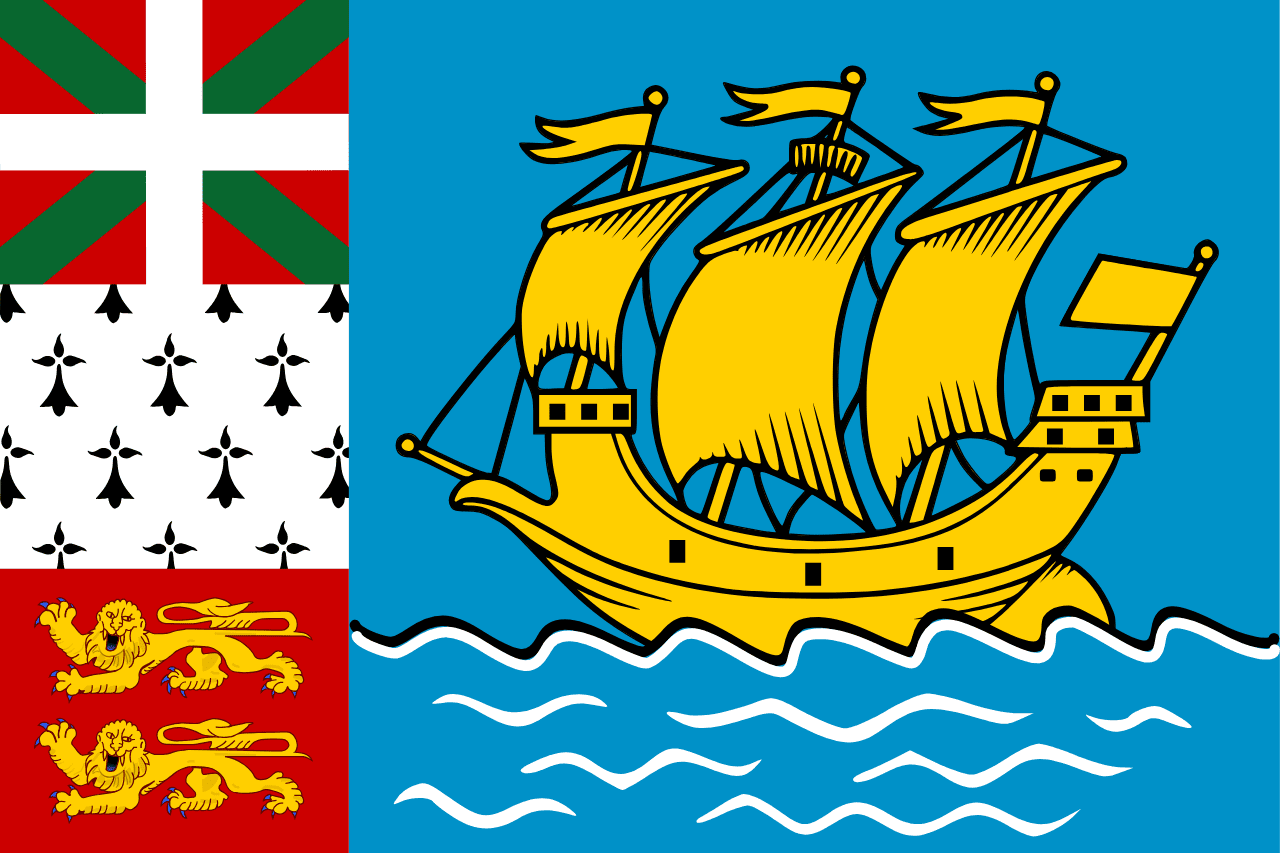
Saint Pierre and Miquelon
The North Atlantic Outpost, a French territory with a storied history of rum-running, maritime mastery, and WWII heroism.
Figures from Saint Pierre and Miquelon
Historically documented individuals of note.
Albert Briand
### A Territory at the Edge of Two Worlds To understand **Albert Joseph Briand** is first to understand the singular world in which he was born and lived: **Saint-Pierre and Miquelon**, a tiny French archipelago clinging to the southwestern coast of Newfoundland, Canada, some twenty-five kilometres off the Grand Banks. Comprising the larger island of Miquelon-Langlade and the smaller but more densely inhabited Saint-Pierre, the territory is a geographical anomaly — a fragment of France planted in the North Atlantic, separated from metropolitan Paris by more than five thousand kilometres of ocean, yet retaining the language, law, currency, and cultural identity of the French republic with fierce tenacity. The islands' history stretches back to the great age of Basque and Breton fishing fleets in the sixteenth century, when European mariners first discovered the extraordinary abundance of Atlantic cod on the Grand Banks. The Briand family itself embodied this deep rootedness: their earliest documented ancestors in Saint-Pierre dated to **1765** [1], placing them among the archipelago's oldest settler families — men who had crossed the Atlantic in wooden vessels to pull cod from icy waters and build a French civilization at the very edge of the New World.  ### Early Life: Born Into Commerce and Cod Albert Joseph Briand was born on **August 5, 1909**, in the town of Saint-Pierre — the territorial capital, a compact settlement of colourful wooden houses clustered around a natural harbour that had served French fishermen for centuries. His birth year placed him at a moment when the cod economy that had sustained the islands for three centuries was beginning to show the first signs of the long, slow decline that would eventually reshape the archipelago entirely. The Saint-Pierre into which he was born was a merchant town first and foremost. The islands had virtually no agricultural land — Miquelon's marshy interior could sustain some sheep, but Saint-Pierre itself was essentially bare rock — and so the entire social and economic order revolved around the sea: catching cod, salting it, drying it, and shipping it to Catholic markets in southern Europe and the Caribbean. The merchant class, of which the Briand family was a part, occupied the commanding heights of this economy. They were the intermediaries between the fishermen who hauled the catch and the international markets that consumed it — factors of production who also served as bankers, employers, and landlords in the tight-knit island community. Albert Briand grew up within this world, absorbing its rhythms, its hierarchies, and its assumptions. He was educated in the local French system — the islands maintained French curricula and sent their most promising students to mainland France for higher education — and emerged as a young man of commercial acumen and civic ambition. By early adulthood he had established himself as a **merchant and businessman**, carrying forward the family's trading traditions while also developing a broader interest in public affairs. ### The Pen and the Public Square: L'Écho des Îles Beyond commerce, Briand possessed an intellectual dimension that found its outlet in journalism. He became the **editor of *L'Écho des Îles Saint-Pierre-et-Miquelon*** [1] [3], the territory's weekly publication and one of its primary organs of public discourse. In a community of only a few thousand souls, the newspaper editor was far more than a journalist — he was a shaper of opinion, a community archivist, and a political actor whose choices of coverage and commentary could tilt local debates. Through the pages of *L'Écho des Îles*, Briand engaged with the full range of island concerns: the state of the fishing industry, relations with the metropolitan French government, the social welfare of workers and their families, and the complex political currents that periodically swept through the tiny territory. This role as public intellectual positioned Briand squarely in the arena of local governance, and he would transition naturally from the press to formal political service. ### War, Occupation, and Political Peril The defining crisis of Albert Briand's middle years arrived with the catastrophe of the **Second World War**. When France fell to Nazi Germany in June 1940, its overseas territories were placed in an agonizing position: to whom did they owe their allegiance — the Vichy regime that had assumed nominal governance of unoccupied France, or the Free French movement of General [Charles de Gaulle](/profiles/charles-de-gaulle) operating from London? Saint-Pierre and Miquelon initially remained under the administrative authority associated with Vichy, a source of considerable anxiety to both Canada and the United States, who feared the islands' radio transmitters might be used to broadcast weather and convoy information to German submarines operating in the North Atlantic. The situation was resolved dramatically on **December 24, 1941**, when Free French naval forces under Admiral Émile Muselier seized the islands in a swift operation — an event that became known as the **"St. Pierre Affair"** and generated a brief but sharp diplomatic storm between de Gaulle, President Roosevelt, and Prime Minister Churchill over the propriety of acting without Allied consent. The islands' population overwhelmingly welcomed liberation by the Free French. But for members of Saint-Pierre's established merchant and administrative elite who had been associated with the previous order, the transition brought personal danger. Albert Briand and his brother-in-law, the prominent figure **Henri Claireaux**, were among those whose political positioning during the Vichy period drew scrutiny from the new Free French authorities. In **January 1944**, both men were **arrested** on charges related to their perceived **anti-Gaullist** stance [1] — a designation that in the febrile political climate of wartime France and its territories could carry severe consequences. The precise details of their detention and its resolution remain partially obscured in the historical record, though both men survived the war and re-emerged into public life. The experience, however, left an indelible mark on Briand's understanding of political power and its fragility — and likely contributed to the complexity of his subsequent relationship with his former brother-in-law Claireaux, with whom he would eventually become a **political adversary** [1] despite their familial connection. > *In the small world of Saint-Pierre, political divisions cut across the deepest personal bonds — family connections offered no immunity from the ideological fractures of a world at war.* ### Post-War Reconstruction and the Conseil Général The post-war settlement transformed the legal and political status of Saint-Pierre and Miquelon. Under the **Constitution of the Fourth Republic** in **1946**, the islands were elevated from the status of colony to that of an **overseas territory** (*territoire d'outre-mer*), a change that granted the archipelago representation in the French National Assembly for the first time. This constitutional evolution opened new possibilities for political participation, and Albert Briand was well-positioned to exploit them. He rose to become a central figure in the territory's local governance, serving as **President of the Conseil Général** (General Council) — the islands' primary legislative and administrative body — for two separate periods: from **February 1952 to November 1956**, and again from **November 1964 to October 1966** [3] [4]. These were years of significant transition for Saint-Pierre and Miquelon. The traditional cod fishery, which had sustained the islands for centuries, was undergoing industrialization — the first trawlers arrived in 1952, the same year Briand assumed his first presidency of the Conseil Général — and the French government was channelling increasing subsidies into the territory to prop up an economy that could no longer sustain itself through fishing alone. As president of the Conseil Général, Briand navigated these economic pressures while also overseeing the social infrastructure of the territory — its schools, its public services, its infrastructure — in a period when French metropolitan investment was transforming the physical landscape of Saint-Pierre. His role required not only administrative competence but skill as a broker between the territorial government and Paris, a task that demanded both a deep understanding of local needs and a sophisticated appreciation of metropolitan French political culture.  ### Deputy to the National Assembly: Saint-Pierre's Voice in Paris The pinnacle of Albert Briand's public career came in **1962**, when he was elected as a **deputy to the French National Assembly**, representing Saint-Pierre and Miquelon [2]. He served in this capacity from 1962 until his death in 1966, becoming one of the overseas territory's most prominent voices in the corridors of Parisian power during the early years of the **Fifth Republic** — de Gaulle's new constitutional order, which had replaced the Fourth Republic in 1958. The timing is notable for its historical irony. Briand, who had once been arrested for anti-Gaullist sympathies, now served as a deputy during the very presidency of de Gaulle himself. France's Fifth Republic was a dramatically centralized executive system that considerably reduced the role of the legislature compared to its predecessor, but the office of deputy remained symbolically vital for overseas territories like Saint-Pierre and Miquelon, whose interests could easily be ignored in the calculations of a metropolitan government focused on continental European affairs. As deputy, Briand used his parliamentary platform to advocate for the fishing industry, for continued metropolitan investment in territorial infrastructure, and for the specific social and economic needs of one of France's most remote and smallest overseas constituencies. He served this role until his sudden death from a **heart attack on May 29, 1966**, in Saint-Pierre [2] — dying, as he had been born, in the town that had framed his entire existence. > *"Rue Albert Briand" — a central street in Saint-Pierre — stands today as a quiet but permanent testimony to a man whose life was intertwined with the fate of that small archipelago.* ### Legacy and Historical Assessment Albert Briand's life resists easy heroic narrative. He was a product of his class and his era — a merchant-politician whose public career unfolded against the backdrop of catastrophic world war, colonial transformation, and the slow structural decline of the industry that had given his islands their reason for being. His wartime arrest as an anti-Gaullist complicates any simple reading of his story, as does his later service during the Gaullist Fifth Republic. He was a man who contained contradictions, as most historically complex figures do. What is beyond dispute is his sustained commitment to the governance and welfare of Saint-Pierre and Miquelon across more than two decades of public service. As editor of *L'Écho des Îles*, as President of the Conseil Général (twice), and as deputy to the National Assembly, he gave voice to a tiny, remote community that might otherwise have remained invisible to the metropole. His family name — rooted in the archipelago since 1765 — remains part of the living geography of Saint-Pierre to this day, inscribed in the street that bears his memory in the heart of the town he served.
View Profile →
Annick Girardin
### Early Life and Roots in France's Forgotten Atlantic Islands Annick Girardin was born on **August 3, 1964**, in Saint-Malo, the historic Breton port city whose own identity has always been shaped by the sea and by France's imperial reach across oceans. Though not born in the Caribbean, Girardin's political life would become irreversibly entangled with France's overseas world — that vast, scattered archipelago of departments, collectivities, and territories that stretch from the glacial waters of the North Atlantic to the tropical shores of the Lesser Antilles. Her story is, in many respects, the story of how France governs the remnants of its colonial geography, and how one woman from the mainland came to be the most powerful voice for communities that often feel forgotten by Paris. She studied and built her early career anchored to Saint-Pierre-et-Miquelon, the small but historically rich French collectivity perched off the southern coast of Newfoundland, Canada. This archipelago — barely 242 square kilometres in total — is the last surviving vestige of France's once-vast empire in North America, a place where cod fishing defined entire generations and where the relationship with the French state has always been negotiated from a position of geographic isolation and political vulnerability. It was here that Girardin first entered public life, joining the Territorial Council of Saint-Pierre-et-Miquelon in **2000** and founding the local political movement *Cap sur l'avenir* (CSA — "Heading Toward the Future"), a name that captured both the forward-looking ambitions of the territory's younger generation and Girardin's own reformist impulses [1].  *Saint-Pierre-et-Miquelon — the remote Atlantic collectivity that launched Girardin's political career.* ### Rise in the National Assembly Girardin's breakthrough onto the national stage came in **2007**, when she was elected as the Deputy for Saint-Pierre-et-Miquelon's sole constituency in the French National Assembly [2]. Representing a territory of barely 6,000 people in the Palais-Bourbon required a particular kind of political tenacity: the ability to make a small, distant place feel relevant to a parliament overwhelmingly focused on continental affairs. She excelled at this. Affiliated with the Parti Radical de Gauche (PRG) and later the Radical Party, she positioned herself as a pragmatic centrist-left politician whose primary loyalty was not to ideological dogma but to the material needs of communities living at the edges of the Republic. She served in the National Assembly from 2007 to 2014, developing expertise in fisheries policy, maritime law, and the administrative frameworks governing France's overseas collectivities [2]. These were not glamorous policy areas, but they were the lifeblood of places like Saint-Pierre-et-Miquelon, where a dispute over cod quotas or a change in customs regulations could upend the economy of an entire community overnight. ### Ascending the Ministerial Ladder Girardin's abilities did not go unnoticed. In **2014**, Prime Minister Manuel Valls appointed her **Secretary of State for Development and Francophonie**, a role that placed her at the intersection of France's global development ambitions and its cultural diplomacy [3]. She served in this capacity until 2016, gaining experience in international development policy and building relationships across the French-speaking world — from West Africa to the Pacific to the Caribbean. In **2016**, Prime Minister Bernard Cazeneuve elevated her to the full ministerial rank of **Minister of the Public Service** [3], a brief but significant posting that gave her experience managing the vast machinery of the French state itself. These consecutive ministerial appointments transformed Girardin from a regional representative into a genuine figure of national governance. ### Minister of Overseas France and the Caribbean Crisis The appointment that would define Girardin's legacy in the Caribbean came in **May 2017**, when incoming Prime Minister Édouard Philippe named her **Minister of Overseas France** in the government of President Emmanuel Macron [3]. This portfolio gave her direct responsibility for the five French overseas departments — Guadeloupe, Martinique, French Guiana, Réunion, and Mayotte — as well as the various collectivities including Saint-Martin, Saint-Barthélemy, Saint-Pierre-et-Miquelon, Wallis-and-Futuna, and French Polynesia. She had barely settled into her ministerial chair when catastrophe struck. In **September 2017**, Hurricane Irma — a catastrophic Category 5 storm, one of the most powerful Atlantic hurricanes ever recorded — made a direct hit on Saint-Martin and Saint-Barthélemy, two of France's Caribbean collectivities. The storm's winds exceeded 300 km/h. It devastated infrastructure, killed residents, and left tens of thousands without shelter, clean water, or communication [4]. > *"The situation is serious. The damage is major. We are mobilizing every available resource to help the people of Saint-Martin and Saint-Barthélemy."* — Annick Girardin, speaking to French media immediately following Hurricane Irma, September 2017 [4] Girardin flew immediately to the region, establishing her command from Guadeloupe and coordinating the deployment of hundreds of gendarmes, firefighters, and military personnel to the affected islands [4]. Her handling of the crisis was not without controversy — she publicly criticized residents who had ignored evacuation warnings, a statement that drew accusations of victim-blaming from some quarters — but her overall management of the emergency response was broadly recognized as decisive and energetic. The episode thrust her into the global media spotlight and cemented her reputation as the face of France's relationship with its Caribbean territories. Beyond the emergency response, Girardin used her tenure as Minister of Overseas France to push for structural reforms in how Paris manages its distant territories. She was a consistent advocate for greater fiscal autonomy, improved infrastructure investment, and recognition of the unique social and economic challenges facing places like Guadeloupe and Martinique — territories that, despite being legally integrated into the French Republic, experience chronic unemployment, inequality, and a sense of cultural distance from the metropole. She conducted numerous official visits to the Caribbean, engaging with local elected officials and civil society leaders in ways that her predecessors had not always prioritized [1]. ### Minister of the Sea: France's Maritime Century In **July 2020**, Prime Minister Jean Castex appointed Girardin as **Minister of the Sea** [3] — a portfolio that, while geographically distinct from the Caribbean, drew deeply on the knowledge and relationships she had built during her years representing overseas territories. France possesses the second-largest Exclusive Economic Zone (EEZ) in the world, and much of that maritime territory lies in the Caribbean and other overseas regions. As Minister of the Sea, Girardin confronted a defining challenge almost immediately: the post-Brexit fishing crisis. When the United Kingdom left the European Union's single market, the question of fishing licenses for French vessels in British and Channel Island waters became a flashpoint of extraordinary diplomatic intensity. Girardin took a notably assertive stance, threatening to restrict British vessels from landing catches in French ports and hinting at cutting electricity supplies to the island of Jersey if French fishermen were denied their rightful access to those waters [5]. Her aggressive posture earned admiration from the fishing communities of Normandy and Brittany — constituencies far from the Caribbean, but connected to Saint-Pierre-et-Miquelon's fishing heritage — and demonstrated that she had transformed from a specialist in overseas affairs into a statesperson capable of navigating complex international negotiations. She also oversaw substantial investment in France's fishing industry through the *France Relance* recovery plan and the *Plan Résilience*, channeling hundreds of millions of euros into modernization, port infrastructure, and fuel subsidies during a period of compounded economic pressure from COVID-19, Brexit, and rising energy costs [5]. ### Navigating Controversy and Political Resilience Girardin's political career has not been without setbacks. Following her time as Minister of the Sea, her campaign finance accounts were rejected by electoral authorities, resulting in a period of formal ineligibility that temporarily removed her from the Senate. However, demonstrating the political resilience that has characterized her career, she was re-elected as **Senator for Saint-Pierre-et-Miquelon** on **September 14, 2025**, returning to the upper chamber of the French Parliament [1]. Her political affiliations have also evolved with France's shifting partisan landscape. Beginning her career in the orbit of the left-leaning Parti Radical de Gauche, she has navigated through various centrist alignments, maintaining her independence and her focus on the specific interests of overseas France over ideological consistency. ### Legacy: The Voice of the Periphery Annick Girardin's political career represents something remarkable in the history of French Caribbean governance: a politician who rose from one of France's most remote territories to become, for a time, the individual most responsible for shaping the Republic's relationship with all its overseas communities. Her three years as Minister of Overseas France (2017–2020) were arguably the most consequential for the French Caribbean in a generation, encompassing the hurricane crisis of 2017, sustained advocacy for structural reform, and an effort to reframe the conversation about what it means to be a French citizen living in Guadeloupe, Martinique, or Saint-Martin.  *France's overseas territories — the full geographic scope of Girardin's ministerial responsibility.* She is neither from the Caribbean nor a Caribbean person in the cultural sense. But her career illustrates the profound interdependence between metropolitan France and its distant peripheries — and the degree to which the fate of Caribbean communities has depended, and continues to depend, on the quality, commitment, and courage of those who hold power in Paris.
View Profile →Gérard Grignon
## Introduction Gérard Grignon (born April 16, 1943, in Saint-Pierre) stands as one of the most defining political figures in the modern history of Saint Pierre and Miquelon. For over two decades, he served as the archipelago’s Deputy in the French National Assembly, vigorously defending the interests of the tiny French overseas collectivity. Situated just off the coast of Newfoundland, Canada, Saint Pierre and Miquelon is a unique remnant of the once-vast French colonial empire in North America. Grignon’s political career was forged in the crucible of geographical isolation, economic transition, and intense international diplomacy. He emerged as a fierce advocate for his homeland during a period when its primary economic lifeline—the cod fishing industry—faced total collapse due to shifting international maritime borders and environmental exhaustion. Grignon’s relentless pursuit of economic diversification, his dramatic protests against Canadian maritime policies, and his foundational role in local politics have permanently etched his name into the annals of Caribbean and transatlantic French history.  ### Early Life and the Archipelago's Identity Born in the spring of 1943 during the turbulent years of World War II, Gérard Grignon grew up in a profoundly maritime culture. Saint Pierre and Miquelon, a rugged archipelago buffeted by the icy winds of the North Atlantic, was entirely reliant on the bountiful fishing grounds of the Grand Banks. The local identity was inexorably tied to the sea, built by generations of Basque, Breton, and Norman fishermen who had braved the harsh waters for centuries. Grignon was raised in this tight-knit community, where the rhythms of life were dictated by the departure and return of the fishing fleets. Understanding the fragility of an economy based on a single resource, Grignon developed an acute awareness of the archipelago's vulnerabilities. The physical isolation from metropolitan France meant that local leaders needed to possess not only a deep understanding of local needs but also the political acumen to navigate the corridors of power in Paris. Grignon, with his passionate rhetoric and profound connection to his roots, was well-positioned to become the voice of his people on the national stage. ### Rise to Political Prominence Grignon entered the political arena during a period of shifting dynamics in the French overseas territories. Recognizing the need for a cohesive political force that prioritized the specific interests of Saint Pierre and Miquelon over the ideological battles of metropolitan France, he founded *Archipel Demain* (Archipelago Tomorrow) in 1985. This center-right political movement was designed to serve as a robust local platform, advocating for economic development, social progress, and greater autonomy within the framework of the French Republic. The turning point in Grignon’s career came in 1986. Following a by-election to replace the incumbent [Albert Pen](/profiles/albert-pen), Grignon was elected as the Deputy for Saint Pierre and Miquelon in the French National Assembly. Entering the Palais Bourbon in Paris, Grignon affiliated himself with center-right parliamentary groups, including the Union for French Democracy (UDF) and later the Union for a Popular Movement (UMP). Over the next two decades, he would be re-elected in 1988, 1993, 1997, and 2002, demonstrating the enduring trust the local population placed in his leadership. > "To represent an archipelago of just over 6,000 souls in an assembly of hundreds is not merely a matter of legislative duty; it is a relentless fight for visibility, a constant reminder to the Republic that its borders extend far beyond the continent." ### The Cod Wars and the 1993 Arrest Grignon’s tenure in the National Assembly was defined by the existential crisis that struck Saint Pierre and Miquelon in the late 1980s and early 1990s. The 1982 United Nations Convention on the Law of the Sea (UNCLOS) allowed nations to claim a 200-nautical-mile Exclusive Economic Zone (EEZ). Given the archipelago’s proximity to Canada, the overlapping claims resulted in a fierce diplomatic and legal dispute between Paris and Ottawa over the rich fishing grounds of the Grand Banks. In 1992, an international arbitration tribunal in New York issued a ruling that shocked the local population. The tribunal awarded Saint Pierre and Miquelon an EEZ that was drastically smaller than France had claimed, effectively confining the archipelago's fishing fleet to a narrow corridor and cutting them off from the most lucrative cod fishing areas. Compounding this disaster, the Canadian government, reacting to the severe depletion of cod stocks, imposed a sweeping moratorium on cod fishing in the region. The industrial fishing and processing sector, which constituted the backbone of the archipelago's economy, collapsed almost overnight. Unemployment soared, and the future of the community looked bleak.  It was during this crisis that Grignon demonstrated his uncompromising commitment to his constituents. In January 1993, tension reached a boiling point. In a highly publicized act of civil disobedience aimed at forcing the French and Canadian governments to address the crisis, Grignon, alongside Senator [Albert Pen](/profiles/albert-pen) and other local officials, boarded a local trawler. Defying the Canadian restrictions, the vessel deliberately crossed into the disputed maritime boundary. The Canadian Coast Guard intercepted the trawler, and the crew, including the two French parliamentarians, were arrested and taken to St. John’s, Newfoundland. > "The 1993 protest was a desperate cry from an isolated people. By sacrificing their own freedom, Grignon and his colleagues forced the eyes of two nations upon a crisis that threatened to erase a centuries-old way of life." Though their detention was brief, the diplomatic fallout was immense. The incident forced Paris to recognize the severity of the crisis and ultimately paved the way for a 1994 bilateral agreement between France and Canada regarding regional fisheries management. More importantly, it solidified Grignon’s reputation as a leader willing to put his own liberty on the line to defend the livelihoods of his people. ### Economic Restructuring and the Territorial Council The aftermath of the fishery collapse required a massive and painful economic transition. Grignon knew that Saint Pierre and Miquelon could no longer rely solely on the sea. As a Deputy, he tirelessly lobbied the national government for structural adjustment funds, emergency subsidies, and investment in new economic sectors. He championed initiatives to develop local tourism, modernize infrastructure, and promote the archipelago as a strategic European outpost in North America. Beyond his role in the National Assembly, Grignon also served deeply in local governance. From April 1, 1994, to July 6, 1996, he served as the President of the General Council (later known as the Territorial Council) of Saint Pierre and Miquelon. In this executive role, he was instrumental in deploying the financial aid secured from Paris to support displaced fisheries workers and fund retraining programs. Navigating the resentment and despair of a community that had lost its primary industry required a delicate balance of empathy and pragmatism. Grignon worked to diversify the economy by exploring opportunities in aquaculture, port services, and cultural tourism, emphasizing the region's unique French heritage in North America. ### Later Career and Enduring Legacy Grignon remained a steadfast presence in the National Assembly through the early 2000s. He continued to advocate for the modernization of the territory's health and education systems and pushed for improved transportation links to both mainland Canada and Europe. His deep institutional knowledge and long-standing relationships in Paris ensured that Saint Pierre and Miquelon, despite its small size, consistently punched above its weight in budget negotiations and policy discussions. In the 2007 legislative elections, shifting political winds and a desire for new leadership in the archipelago led to Grignon's defeat by [Annick Girardin](/profiles/annick-girardin), a rising star from the left-wing Radical Party of the Left (PRG). Although his tenure in the National Assembly had come to an end, his commitment to public service did not wane. Recognizing his vast experience and expertise in matters concerning overseas territories, Grignon was appointed to the French Economic, Social and Environmental Council (CESE), where he served from 2010 to 2015. Today, Gérard Grignon is remembered as the architect of modern Saint Pierre and Miquelon. He steered the archipelago through its most profound existential crisis, transitioning a society mourning the loss of its historical maritime economy toward a more diversified and resilient future. His foundation of *Archipel Demain* permanently reshaped the local political landscape, ensuring that the unique voice of the archipelago continues to be heard. Through his two decades of national legislative service and his dramatic defense of his constituents' rights on the high seas, Grignon remains a towering figure of resilience, leadership, and unwavering devotion to his island home.
View Profile →
Henri Claireaux
## Introduction **Henri Claireaux** (1911–2001) stands as a monumental figure in the political and social history of Saint-Pierre and Miquelon, the small, windswept French archipelago situated off the coast of Newfoundland, Canada [1]. Serving as a Senator in the French Parliament for nearly 22 years and leading the local General Council, Claireaux devoted his life to modernizing his homeland, defending the rights of its maritime workers, and cementing its status within the broader French Republic [2]. His tireless advocacy ensured that the unique challenges of this overseas territory—the last vestige of New France—were heard loudly and clearly in the halls of power in Paris. A teacher, a union organizer, and a pragmatic statesman, Claireaux successfully navigated the complex transition of Saint-Pierre and Miquelon from a struggling post-Prohibition fishing community into a modern overseas territory with robust social infrastructure.  ### The Rugged Roots of an Island Leader: Early Life and Education Born on February 3, 1911, in the town of Saint-Pierre, Henri Claireaux grew up in a community shaped by the harsh, unyielding realities of the North Atlantic [1]. At the time of his birth, the islands relied almost entirely on the cod fishing industry, and the local economy was subject to the boom-and-bust cycles of maritime commerce. Coming of age during the 1920s—a period when the islands experienced a brief but lucrative economic surge due to the smuggling of alcohol into the United States during Prohibition—Claireaux witnessed firsthand the fleeting nature of prosperity and the deep vulnerabilities of the archipelago’s working class. Determined to pursue a comprehensive education, Claireaux began his professional life working as a clerk at the local town hall (mairie) and in the commercial sector, learning the administrative mechanics of his small community. Seeking broader horizons, he soon traveled across the Atlantic to metropolitan France to fulfill his mandatory military service. While in France, he continued his academic pursuits at the prestigious Institut Pierre de Luxembourg, where he successfully obtained his *brevet supérieur* (higher certificate). This educational foundation in France not only broadened his worldview but also instilled in him a deep understanding of French administrative and legal systems, knowledge that would later prove indispensable in his political career [3]. ### Returning Home: Educator and Labor Advocate Upon returning to Saint-Pierre and Miquelon, Claireaux chose a path of public service through education. He accepted a position as a teacher at a private Catholic college in Saint-Pierre. In this role, he was much more than an instructor; he became a mentor to a generation of islanders. The economic climate of the 1930s was exceedingly difficult. The end of Prohibition in the United States had devastated the local economy, and the global Great Depression exacerbated the hardships faced by the islands' fishermen, dockworkers, and laborers. > "The true measure of an island's resilience lies not in the bounty of its seas, but in the dignity and unity of the men who brave them." Moved by the struggles of his fellow citizens, Claireaux became actively involved in the local syndicalist (trade union) movement. He worked closely with the dockworkers and manual laborers, advocating for better wages, safer working conditions, and basic social protections. His reputation as a staunch defender of the working class earned him widespread respect across the archipelago. This grassroots activism naturally propelled him into local politics, culminating in his election to the territory’s administrative council in 1939 [3]. This marked the beginning of a remarkable political journey that would span three decades. ### War, Upheaval, and Political Awakening at Laval The outbreak of World War II plunged Saint-Pierre and Miquelon into unprecedented geopolitical turmoil. Following the fall of France in 1940, the local administration initially remained loyal to the collaborationist Vichy regime. However, in December 1941, Free French forces under the command of [Admiral Émile Muselier](/profiles/emile-muselier) arrived on Christmas Eve and liberated the islands, establishing them as one of the first French territories to join General [Charles de Gaulle](/profiles/charles-de-gaulle)'s resistance. During this period of intense political transformation, Claireaux sought to refine his understanding of governance and statecraft. Between 1941 and 1942, he crossed into Canada to attend Laval University in Quebec, where he enrolled in political science courses [2]. This experience was transformative. Studying at a major francophone university in North America allowed him to analyze the constitutional structures of both Canada and France, equipping him with the intellectual tools necessary to navigate the complex post-war restructuring of the French Republic. His time at Laval solidified his political philosophy, blending North American pragmatism with French republican ideals, a combination that would define his future legislative approach. ### The Fourth Republic and the Leap to the French Senate The conclusion of the Second World War brought about the creation of the French Fourth Republic in 1946, which fundamentally restructured the relationship between metropolitan France and its overseas possessions. Under the new constitution, overseas territories were granted direct representation in the national parliament. Recognizing his leadership and intellect, the people of Saint-Pierre and Miquelon elected Henri Claireaux as their first representative to the Council of the Republic (which would later revert to the name "Senate" under the Fifth Republic) on January 12, 1947 [1][2]. In Paris, Claireaux aligned himself with the Popular Republican Movement (Mouvement Républicain Populaire, or MRP), a prominent Christian democratic party that played a central role in post-war French politics. The MRP’s platform of social justice, family values, and progressive labor policies resonated deeply with Claireaux's own background as a union advocate and Catholic educator [2]. Despite representing the smallest overseas territory in the French Republic, Claireaux quickly distinguished himself as an articulate, persistent, and highly effective legislator. He understood that to secure resources for his isolated constituents, he had to build alliances across the political spectrum. ### Legislative Legacy: Champion of the Maritime Economy For over two decades, Claireaux served as the unwavering voice of Saint-Pierre and Miquelon in the French Senate, winning re-election multiple times and maintaining his seat until October 1, 1968 [2]. His legislative portfolio was vast, but his primary focus remained fiercely anchored to the sea. He served extensively on the Committee for Marine and Fisheries, where he authored and influenced numerous bills designed to protect and modernize the French fishing fleet, with a specific focus on the Grand Banks fisheries that sustained his homeland [2]. Claireaux fought relentlessly for infrastructural investments in the archipelago. He successfully lobbied for funds to expand the port of Saint-Pierre, upgrade maritime safety equipment, and modernize the local fishing processing facilities. Furthermore, he was instrumental in extending metropolitan French social security benefits, family allowances, and healthcare systems to the residents of Saint-Pierre and Miquelon. This alignment of social policies ensured that the islanders were not treated as second-class citizens, but enjoyed the same social safety net as the residents of Paris or Marseille. > "For too long, the distance across the Atlantic has been used as an excuse for neglect. Saint-Pierre and Miquelon is not merely a distant outpost; it is the beating heart of France in the Americas." He also played a crucial role in drafting the broader frameworks for French overseas territories (les territoires d'outre-mer), championing statutes that granted local councils greater autonomy in managing their internal affairs [3]. ### Guiding the Archipelago: President of the General Council Claireaux’s influence was not limited to the grand halls of the Palais du Luxembourg in Paris; he remained deeply rooted in local administration. In 1956, he was elected President of the General Council (Conseil Général) of Saint-Pierre and Miquelon, the highest local executive body, a position he held concurrently with his Senate seat until 1964 [1][3]. Under his presidency, the General Council embarked on an ambitious program of modernization. Claireaux prioritized education, leveraging his background as a teacher to secure funding for new schools and vocational training centers, ensuring that the youth of the islands were prepared for a rapidly changing world. He also oversaw the improvement of public utilities, roads, and housing, dramatically raising the standard of living across the islands. His dual role as Senator and President of the General Council allowed for an unprecedented level of coordination between local needs and national resources, ushering in an era of stability and progress for the archipelago. ### Final Years and Lasting Legacy The political tides shifted in the late 1960s, and in the senatorial elections of 1968, Claireaux was narrowly defeated, bringing his remarkable 21-year tenure in the national legislature to a close [2]. Stepping away from the demanding pace of public life, he eventually retired to mainland France, settling in Soustons in the Landes department, though he retained a deep emotional connection to the islands of his birth. He also spent time living in Laval, France, for many years, before eventually relocating to Montreal, Canada, closer to his North American roots [3]. Henri Claireaux passed away on July 31, 2001, at the age of 90, in Soustons [1]. His death was mourned both in metropolitan France and across the Atlantic in Saint-Pierre and Miquelon. In recognition of his monumental contributions to the archipelago, the local postal service issued a commemorative stamp bearing his likeness in January 2005. Today, Henri Claireaux is remembered not merely as a politician, but as a foundational architect of modern Saint-Pierre and Miquelon. His legacy lives on in the port facilities that shelter the fishing fleet, the schools that educate the youth, and the robust social systems that protect the vulnerable. By bridging the vast geographic divide between a small North American archipelago and the heart of the French Republic, Claireaux ensured that the proud, resilient spirit of Saint-Pierre and Miquelon would never be forgotten.
View Profile →Joseph Paturel
### Introduction In the rugged, fog-swept archipelago of Saint Pierre and Miquelon, few names carry as much historical weight and commercial significance as that of Joseph Paturel. A prominent shipowner, industrial visionary, and commercial pioneer, Paturel is credited with transforming the last remaining vestige of New France in North America from a seasonal, artisanal fishing outpost into a modernized, industrially robust maritime hub. Operating during a period of immense global upheaval and economic uncertainty throughout the 20th century, Paturel recognized early on that the survival of his isolated island community depended fundamentally on modernization, technological adaptation, and the establishment of unbreakable commercial ties with both neighboring North American markets and mainland France. His life and career serve as a microcosm of the archipelago's broader historical trajectory—navigating through the decline of the traditional Grand Banks cod fishery, the brief and tumultuous economic boom of the Prohibition era, the hardships of the Second World War, and the subsequent push toward industrial-scale fishing and modern logistics. Today, Joseph Paturel is remembered not merely as a successful businessman, but as a crucial architect of Saint Pierre and Miquelon’s 20th-century economic survival. ### The Archipelago's Maritime Heritage To understand the magnitude of Joseph Paturel's contributions, one must first understand the unique socio-economic landscape of Saint Pierre and Miquelon at the turn of the 20th century. Situated just 25 kilometers off the coast of Newfoundland, Canada, the archipelago was the epicenter of the French transatlantic fishing industry, known as *la grande pêche*. For centuries, fleets of schooners from Brittany, Normandy, and the Basque Country would descend upon the Grand Banks, using Saint-Pierre as their operational base.  However, this industry was notoriously precarious. It relied on manual labor, dory fishing, and natural salt-curing processes that were highly vulnerable to weather, shifting fish populations, and volatile market prices. The local economy was almost entirely un-diversified, meaning that a poor fishing season could plunge the entire colonial population into deep poverty. It was within this context of precarious reliance on traditional methods that the Paturel family established its roots. The Paturels were intimately tied to the sea, functioning as business agents, merchants, and navigators. Joseph grew up steeped in the culture of the wharves, absorbing the complexities of international trade, maritime law, and the relentless demands of the North Atlantic Ocean. ### Early Life and Commercial Education Born in Saint-Pierre during a period when the harbor was a forest of wooden masts, Joseph Paturel exhibited a keen intellect and an entrepreneurial spirit from a young age. While many of his peers were destined for the physically grueling life of a fisherman aboard the banking schooners, Paturel’s family positioned him to understand the *business* of the sea. He received an education that emphasized accounting, logistics, and navigation, eventually gaining firsthand experience in managing cargo manifests, outfitting vessels, and negotiating with fish merchants from Boston to Bordeaux. > "The ocean owes us nothing, but it offers everything to those willing to build the vessels to harness it. We cannot remain tied to the wooden dorys of our grandfathers if we are to survive the century." This early exposure to the macroeconomic realities of the fishing trade made Paturel acutely aware of the inefficiencies in the local system. He noted that while French fishermen were hauling immense catches, the lack of modern processing facilities on the island meant that the raw product was often shipped out at a fraction of its potential value. Paturel envisioned a Saint-Pierre that did not merely service the metropolitan fleet, but actively processed, packaged, and exported its own high-value marine products. ### Navigating the Interwar Period and Prohibition Before Paturel could fully realize his industrial ambitions, the archipelago underwent a dramatic economic paradigm shift. With the passage of the Volstead Act in 1920, the United States entered the Prohibition era. Almost overnight, Saint Pierre and Miquelon—a French territory not bound by American or Canadian temperance laws—transformed into a massive hub for the legal importation and subsequent smuggling of alcohol into North America. The harbor was suddenly flooded with Canadian whiskies, French wines, and Caribbean rums. While many locals engaged directly in the lucrative but illicit bootlegging trade, Paturel took a more strategic, long-term approach. He focused on the expansion of legitimate shipping infrastructure, establishing logistics networks that could handle the sudden influx of heavy cargo. As a shipowner, he acquired larger, more reliable steam-powered vessels that could operate year-round, bypassing the seasonal limitations of the old sail-driven fleet. While the Prohibition boom brought immense wealth to the island, Paturel was among the few who recognized that it was a temporary bubble. He astutely reinvested his profits from the shipping boom into local real estate, warehousing, and most importantly, the modernization of the island's commercial fishing infrastructure. When Prohibition was repealed in 1933, the local economy collapsed back into depression, just as the Great Depression was ravaging global markets. Yet, because of Paturel's foresight and diversified investments, his enterprises remained solvent, positioning him as a central figure in the island’s subsequent recovery. ### Rebuilding and The Industrial Revolution of SP&M The onset of the Second World War brought further isolation and hardship to the islands, notably climaxing when Free French forces led by Admiral Émile Muselier, under the distant authority of [Charles de Gaulle](/profiles/charles-de-gaulle), liberated the islands from Vichy control in 1941. Throughout the conflict, commercial shipping was heavily restricted, and the local population faced severe shortages. In the post-war era, Joseph Paturel emerged as the driving force behind the industrialization of Saint Pierre and Miquelon's primary sector. The traditional salt-cod industry was dying, rapidly being replaced by global demand for frozen and processed fish. Paturel aggressively campaigned for, and personally invested in, the construction of modern processing plants. He was instrumental in establishing the infrastructure that would eventually evolve into leading local enterprises like Pêcheries Paturel. Under his guidance, the island saw the introduction of its first industrial trawlers—massive steel-hulled ships capable of dragging large nets and processing catches directly on board or delivering them fresh to local state-of-the-art freezing facilities. This transition was revolutionary. It decoupled the fishing industry from the unpredictable summer weather and provided year-round, stable employment for hundreds of factory workers, technicians, and mariners on the island. Furthermore, Paturel diversified the marine products being exported. Rather than relying solely on cod, his facilities began processing salmon, scallops, crab, and lumpfish roe, catering directly to the high-end European and North American markets. He introduced advanced smoking and curing techniques that elevated the island's seafood from a basic staple to a premium export commodity. ### Championing Commercial Connectivity Beyond his direct involvement in the fishing sector, Joseph Paturel’s legacy as a shipowner fundamentally altered the territory’s relationship with the outside world. He understood that industrial production was meaningless without reliable logistics. Paturel established vital, regular shipping routes connecting Saint-Pierre to Halifax, Nova Scotia, and St. John's, Newfoundland, as well as maintaining crucial lifelines to mainland France. > "To be an island is not an excuse for isolation. Our ships are the bridges that bind us to the continent, and our commerce is the blood that keeps this colony alive." He pushed for the modernization of the port of Saint-Pierre, advocating for deeper dredging, concrete wharves, and mechanized cargo handling equipment. His shipping company operated cargo and container ships that brought in essential consumer goods, fuel, and construction materials, while carrying away the processed bounty of the North Atlantic. In many ways, Paturel was the architect of the territory's modern supply chain. ### Legacy and Lasting Impact Joseph Paturel’s later years were marked by a transition into the role of an elder statesman of commerce. He served on various colonial and regional boards, advising the French government on maritime policy and economic development in the overseas territories. He was a staunch advocate for local autonomy in economic matters, often clashing with Parisian bureaucrats who failed to grasp the unique realities of North Atlantic commerce.  Today, the legacy of Joseph Paturel is deeply woven into the fabric of Saint Pierre and Miquelon. The transition from a vulnerable, single-commodity fishing outpost to a resilient, modern commercial port was largely driven by his vision, capital, and relentless determination. The industrial processing facilities that continue to operate on the island, and the shipping lines that deliver its daily necessities, all bear the genetic imprint of his early 20th-century innovations. By dragging the local economy into the modern era, Paturel ensured that the French flag would continue to fly over a prosperous, self-sustaining community in North America, making him undeniably one of the most consequential figures in the history of the archipelago.
View Profile →Marc Plantegenest
# Marc Plantegenest: A Pillar of Saint-Pierre and Miquelon Marc Plantegenest (1943–2026) was a towering figure in the political landscape of Saint-Pierre and Miquelon, France’s last remaining foothold in North America. Over a career spanning more than four decades, he served in nearly every major elected office available to a resident of the archipelago, including Deputy, Senator, Mayor of Saint-Pierre, and President of the General Council. His tenure was defined by a fierce commitment to the economic and political autonomy of the islands, particularly during periods of intense crisis such as the collapse of the cod fishery and the prolonged maritime border disputes with Canada. Through his pragmatic leadership and steadfast dedication, Plantegenest shaped the modern institutional framework of Saint-Pierre and Miquelon, ensuring its survival and cultural continuity in the face of profound geopolitical challenges. His advocacy for overseas autonomy often drew parallels with other prominent leaders in the French Overseas departments, such as Martinique's [Aimé Césaire](/profiles/aime-cesaire), who similarly fought for a distinct identity within the French Republic. ### Early Life, Education, and the Maritime Tradition Born on June 11, 1943, in Saint-Pierre, the bustling capital of the archipelago, Marc Plantegenest grew up steeped in the rich maritime heritage of the islands. Saint-Pierre and Miquelon, located just off the coast of Newfoundland, has always been inextricably linked to the sea. The archipelago was settled by French, Basque, Norman, and Breton fishermen, whose lives were dictated by the rhythms of the North Atlantic and the seasonal migrations of cod. Plantegenest’s early years were shaped by this environment, where the ocean was both the primary source of livelihood and a constant reminder of the islands' isolation from metropolitan France. Growing up in the post-war era, Plantegenest witnessed the slow modernization of the islands. The local economy was almost entirely monochromatic, driven by the industrial fishing fleets that departed the harbor for the Grand Banks. Before dedicating his life to public service, Plantegenest worked as a civil servant in the local administration and also spent time working on cargo ships. This maritime experience provided him with a profound understanding of the everyday struggles faced by the local population. He witnessed firsthand the harsh conditions of the fishing industry, the dangers faced by the sailors, and the precarious nature of an economy completely dependent on a single marine resource. > "The sea is not merely our boundary; it is our history, our sustenance, and our destiny. To understand Saint-Pierre and Miquelon, one must first look to the ocean, for it is the ocean that has shaped our character." These early experiences forged his political consciousness. He developed a deep-seated determination to diversify and protect the local economy, recognizing that reliance on cod was an economic vulnerability. Furthermore, his background as a civil servant equipped him with an intricate knowledge of the administrative complexities governing the relationship between the distant archipelago and the highly centralized French state in Paris.  *The port of Saint-Pierre, the political and economic heart of the archipelago, whose future Plantegenest sought to secure.* ### Historical Context: Saint-Pierre and Miquelon in Transition To fully appreciate Plantegenest’s political contributions, one must understand the unique and often turbulent history of Saint-Pierre and Miquelon in the late 20th century. Following World War II, the islands transitioned from a colony to an Overseas Territory (Territoire d'outre-mer or TOM) in 1946. This status provided a degree of autonomy but also left the archipelago vulnerable to the shifting political priorities of Paris. In 1976, the islands were reclassified as an Overseas Department (Département d'outre-mer or DOM), a move intended to integrate them more closely with France and provide access to European economic funds. However, this status proved ill-suited to the islands' unique economic and geographic realities. The strict application of metropolitan French laws to a tiny archipelago located in North America created widespread dissatisfaction, administrative friction, and a sense of alienation among the local population. It was akin to forcing a square peg into a round hole, ignoring the proximity to Canada and the specific needs of a small island community. It was during this period of administrative flux that Plantegenest emerged as a prominent political voice. He recognized that the standard departmental model, designed for much larger and more populous overseas territories, stifled local initiative. His early political philosophy centered on finding a bespoke institutional framework that would grant the islands greater self-governance while maintaining their vital connection and financial support from the French Republic. ### Rise to Political Prominence on the National Stage Marc Plantegenest’s formal entry into national politics occurred in 1978 when he was elected as the Deputy representing Saint-Pierre and Miquelon in the French National Assembly. Serving a critical term until 1981, he used this high-profile platform to advocate fiercely for the islands' interests in the corridors of power in Paris. He was known for his articulate and impassioned speeches, in which he repeatedly emphasized the strategic importance of the archipelago as France's only North American presence and the urgent need for targeted economic development. In 1981, as the political winds in France shifted with the election of President François Mitterrand, Plantegenest transitioned to the upper house of the French Parliament, winning a hard-fought election as a Senator. His tenure in the Senate, which lasted from 1981 to 1986, coincided with a critical period of decentralization in French politics. The socialist government was open to restructuring regional powers, and Plantegenest seized this historic opportunity. He worked tirelessly to push for legislative changes that would address the failures of the DOM status. His efforts, alongside other local leaders, culminated in the islands being reclassified as a Territorial Collectivity (Collectivité territoriale) in 1985. This new status struck a vital balance, providing the local government with enhanced powers over taxation, customs, urban planning, and economic development—precisely the kind of tailored autonomy Plantegenest had championed for years. ### The Cod Crisis and the Fight for Economic Survival Perhaps the most defining and arduous chapter of Plantegenest’s career was his leadership during the devastating cod crisis of the late 1980s and early 1990s. Assuming the role of President of the General Council in 1984 (a position he held until 1994), he found himself at the epicenter of a bitter and protracted maritime border dispute between France and Canada, widely referred to as the "Cod War." The dispute centered on the delineation of the Exclusive Economic Zone (EEZ) surrounding Saint-Pierre and Miquelon. As both nations sought to assert control over the incredibly rich, though depleting, fishing grounds of the Grand Banks, tensions escalated dramatically. Canadian authorities began arresting French trawlers, and diplomatic relations frayed. The local fishing industry, the lifeblood of Saint-Pierre and Miquelon, was severely impacted by quotas and uncertainty. > "We are a small community, but our rights and our dignity cannot be traded away on the altar of international diplomacy. We must fight for every nautical mile, for it represents the very survival of our people and the legacy of our ancestors." The situation reached a devastating climax in 1992 when an international arbitration tribunal based in New York drastically reduced the French EEZ around the islands. The ruling granted Saint-Pierre and Miquelon a narrow 200-nautical-mile corridor to international waters but severely curtailed their historical fishing rights in the broader, most productive areas of the Gulf of St. Lawrence and the Grand Banks. The decision was a catastrophic blow to the local economy, which had already been reeling from decades of overfishing and the impending Canadian moratorium on northern cod. In the wake of this economic catastrophe, Plantegenest demonstrated remarkable resilience and strategic vision. He recognized that the archipelago could no longer rely solely on the traditional, industrial cod fishery. The era of the Grand Banks schooners and massive trawlers was over. Under his leadership, the General Council initiated a painful but absolutely necessary process of economic restructuring and diversification. He spearheaded efforts to develop alternative industries, focusing heavily on niche tourism, highlighting the islands' unique French culture in North America. He championed aquaculture, the development of the local service sector, and sought to modernize the port infrastructure to attract new maritime business. Crucially, he aggressively negotiated extensive financial compensation and structural adjustment packages with the French state. These funds were vital to support displaced fishermen, fund early retirement, and create retraining programs for the youth. Although the transition was fraught with anxiety and political challenges, Plantegenest’s steadfast leadership prevented a total economic collapse and laid the groundwork for a more sustainable, diversified future. ### Tenure as Mayor and Continued Institutional Reform After a decade of grueling leadership, Plantegenest stepped down as President of the General Council in 1994, but he remained deeply committed to public service. In December 1998, he shifted his focus to municipal governance and was elected Mayor of Saint-Pierre, serving until March 2001. As mayor, he brought his vast administrative experience to bear on local issues, focusing on urban renewal, infrastructure development, and improving the daily quality of life for the residents of the capital. He modernized municipal services, invested in public spaces, and initiated cultural programs that celebrated the islands' unique heritage. However, the call of broader territorial leadership proved too strong. In 2000, Plantegenest returned to the helm of the local government, once again serving as President of the General Council (which would later evolve into the Territorial Council) until 2005. During this second term, he continued his long-term project of economic diversification. More importantly, he focused heavily on regional integration. He recognized that while Saint-Pierre and Miquelon was undeniably French in culture and administration, its geographic reality demanded closer economic, logistical, and cultural ties with the neighboring Canadian provinces—specifically Newfoundland and Labrador, Nova Scotia, and Quebec. He actively promoted cross-border cooperation in areas such as transportation, education exchange programs, and healthcare access, arguing that isolationism was the enemy of progress. His expertise, deep institutional memory, and statesmanship were recognized once again in 2016, long after his formal retirement from elected office. Recognizing his unparalleled understanding of the territory's needs, the French Minister of Overseas Territories appointed him, along with a select group of experts, to coordinate proposals for the potential statutory evolution of Saint-Pierre and Miquelon's institutions. His final official contributions were instrumental in shaping the ongoing dialogue about the archipelago's constitutional relationship with the French Republic, ensuring that any future changes would respect the unique identity of the islands. ### Legacy and Passing Marc Plantegenest passed away on May 6, 2026, at the age of 82, in the town of his birth, Saint-Pierre. His death marked the end of an era for the archipelago. Tributes poured in from across the political spectrum, both locally and in metropolitan France, reflecting the widespread respect he commanded. The French Senate formally acknowledged his passing, observing a moment of solemn tribute in honor of his decades of service to the Republic and to his island home. His legacy is indelibly etched into the modern fabric of Saint-Pierre and Miquelon. He is remembered not merely as a prolific politician, but as a visionary statesman who navigated his homeland through its most perilous economic and existential crises of the 20th century. By championing a unique institutional status, driving painful but necessary economic diversification, and advocating for regional integration, he ensured that this small, isolated outpost of French culture could not only survive the collapse of its traditional economy but find a new, resilient path forward in the 21st century. His life and career stand as an enduring testament to the power of dedicated, pragmatic local leadership in the face of overwhelming global and environmental forces.
View Profile →Paul Lebailly
Paul Lebailly (1911–1968) stands as a monumental figure in the 20th-century political and civic history of [Saint Pierre and Miquelon](/islands/saint-pierre-miquelon). Born into an era of immense global upheaval and local transformation, Lebailly's life mirrored the complex trajectory of this small but fiercely proud French archipelago off the coast of Newfoundland. As a local administrator, a staunch advocate for economic resilience, and ultimately the President of the General Council (Conseil Général), Lebailly dedicated his life to ensuring that the voices of the islanders were heard not just locally, but across the Atlantic in Paris. ### Early Life and the Shadow of the Great War Paul Lebailly was born in 1911 in Saint-Pierre, the administrative and commercial capital of the territory. At the time of his birth, the archipelago was heavily reliant on the traditional Atlantic cod fishery. For centuries, the Grand Banks had provided a bountiful harvest, and the lives of the islanders were dictated by the rhythm of the fishing seasons, which involved harsh conditions and long months at sea. However, Lebailly’s childhood was quickly overshadowed by the outbreak of the First World War in 1914. Although geographically distant from the trenches of the Western Front in Europe, Saint Pierre and Miquelon paid a heavy toll; a significant portion of its young male population was conscripted to fight for France, and many never returned. Growing up in the aftermath of the Great War, Lebailly witnessed firsthand the resilience of his community. The loss of so many working-age men placed an enormous strain on the local economy, yet it also fostered a profound sense of solidarity among the survivors. This environment of mutual support and collective endurance profoundly shaped young Lebailly’s worldview. He recognized early on that the survival of Saint Pierre and Miquelon depended on strong local leadership and the ability to adapt to external economic and political forces. ### The Roaring Twenties and the Prohibition Boom As Lebailly came of age in the 1920s, the archipelago underwent an unprecedented and wildly lucrative economic transformation. The passage of the Volstead Act in the United States ushered in the era of Prohibition, and Saint-Pierre suddenly found itself at the epicenter of the transatlantic illicit alcohol trade. Due to its status as a French territory, the islands were exempt from American and Canadian temperance laws. Almost overnight, Saint-Pierre transformed into a bustling hub for bootleggers. Massive concrete warehouses were hastily constructed along the waterfront to store enormous quantities of imported French wine, champagne, and spirits, which were then smuggled down the eastern seaboard of the United States. For a young man like Lebailly, this era—often referred to locally as the *Temps de la Fraude* (Time of the Fraud)—was an eye-opening experience. The influx of wealth brought modern amenities, electricity, and a cosmopolitan flair to the isolated islands. However, it also created a dangerous economic dependency. When Prohibition was repealed in 1933, the artificial boom collapsed just as abruptly as it had begun. The warehouses emptied, the bootleggers departed, and Saint Pierre and Miquelon was plunged into a severe economic depression, exacerbated by the global Great Depression. > "The true measure of our islands is not found in the fleeting wealth of the rum-runners, but in the enduring calluses of our fishermen and the unbreakable spirit of our people." This period instilled in Lebailly a deep-seated belief in the necessity of economic diversification. He realized that relying on a single, volatile industry—whether it be cod or contraband—left the territory vulnerable to the whims of the outside world. This conviction would become a cornerstone of his later political career. ### The Second World War and the Free French Ralliement The outbreak of the Second World War in 1939 plunged Saint Pierre and Miquelon into a new crisis. Following the fall of France in 1940, the archipelago's colonial administrator, Gilbert de Bournat, declared loyalty to the collaborationist Vichy regime. This decision deeply divided the local population, the majority of whom harbored strong sympathies for General Charles de Gaulle's Free French forces (France Libre). Lebailly, then in his late twenties and deeply engaged in local civic matters, was among the vocal local faction that strongly opposed the Vichy administration. The tension on the islands reached a boiling point in late 1941. On Christmas Eve, acting on orders from de Gaulle and in defiance of both the Vichy government and American diplomatic preferences, Free French naval forces led by Admiral Émile Muselier unexpectedly arrived in the harbor of Saint-Pierre.  The liberation of the islands was swift and bloodless. A plebiscite was hastily organized, and the male population of Saint Pierre and Miquelon voted overwhelmingly—by a margin of over 98%—to join the Free French cause. Lebailly actively participated in this democratic exercise, which cemented his commitment to Gaullism and democratic governance. The *Ralliement* of Saint Pierre and Miquelon was a major symbolic victory for de Gaulle and marked the beginning of Lebailly’s formal involvement in civic leadership, preparing him for the political roles he would take on after the war's conclusion. ### Post-War Reconstruction and the General Council Following the conclusion of World War II, the French colonial empire underwent significant constitutional restructuring under the Fourth Republic. In 1946, Saint Pierre and Miquelon transitioned from a traditional colony to a French Overseas Territory (Territoire d'outre-mer, or TOM). This shift was not merely semantic; it granted the local population full French citizenship and greater political representation. The establishment of the General Council (Conseil Général) was a watershed moment, creating a local assembly with the power to manage territorial affairs, deliberate on local legislation, and oversee budget allocations. Lebailly, leveraging his reputation as a steadfast patriot and a pragmatic civic leader, officially entered local politics. He was elected to the General Council, where he championed initiatives aimed at modernizing the archipelago's aging infrastructure. During the 1950s and early 1960s, he worked tirelessly to improve healthcare facilities, expand public education, and upgrade the vital port infrastructure that supported the resurgent fishing industry. His leadership style was characterized by a pragmatic, consensus-building approach, earning him the respect of both his colleagues and the metropolitan administrators sent from Paris. He understood that Saint Pierre required a delicate balance: retaining its unique North American character while securing the vital financial subsidies provided by the French state. ### Presidency and the Historic Visit of Charles de Gaulle Lebailly's years of dedicated public service culminated in October 1966, when he was elected President of the General Council. As the highest-ranking locally elected official, he assumed responsibility for the territory during a period of significant economic transition. The traditional cod fishery was once again facing existential threats, this time from the modernization of massive factory freezer trawlers deployed by foreign nations, which were rapidly depleting the fish stocks on the Grand Banks. Lebailly pushed for local modernization, advocating for the expansion of freezing plants and the diversification of the local maritime fleet. The defining moment of Lebailly’s presidency—and perhaps of his entire political life—occurred in July 1967. Over a quarter-century after the islands had rallied to his cause during the dark days of the war, President Charles de Gaulle made a historic, triumphant visit to Saint Pierre and Miquelon. The visit was a profoundly emotional milestone for the territory. As President of the General Council, Paul Lebailly had the distinct honor of formally receiving the French President and representing the islanders on the global stage. Standing alongside de Gaulle, Lebailly delivered remarks that highlighted the unwavering loyalty of Saint Pierre and Miquelon to the Republic while simultaneously advocating for continued, robust metropolitan investment in the territory's economic future. The visit solidified the bond between the islands and mainland France and stood as a profound personal vindication for Lebailly’s lifelong Gaullist political ethos. ### Final Years, Senatorial Run, and Legacy Riding the momentum of de Gaulle's visit and driven by a desire to secure stronger representation for his homeland in Paris, Lebailly announced his candidacy for the French Senate in the 1968 elections. The Senatorial election in Saint Pierre and Miquelon was decided by an electoral college of local representatives and municipal councilors. In a closely contested race reflecting the nuanced political divides of the island's factions, Lebailly secured seven votes, ultimately placing second behind his political rival, [Albert Pen](/profiles/albert-pen), who would go on to have a long career in the Senate. Tragically, Paul Lebailly’s life and career were cut short shortly after this political campaign. He passed away in June 1968, while still holding the office of President of the General Council. His sudden death at the age of 57 sent shockwaves through the tight-knit community, which mourned the loss of one of its most dedicated public servants. Today, Paul Lebailly is remembered as a foundational architect of modern Saint Pierre and Miquelon. His tenure bridged the gap between the tumultuous era of the World Wars and the modern political framework of the French overseas territories. In recognition of his immense contributions to the civic life and modernization of the islands, the local government named one of the primary thoroughfares in the capital city *Rue Paul Lebailly*. This bustling street, home to numerous local businesses and civic offices, stands as a daily reminder of a leader who dedicated his life to the prosperity, dignity, and enduring French identity of Saint Pierre and Miquelon. ### References 1. [Saint Pierre and Miquelon - World Statesmen](https://www.worldstatesmen.org/Saint_Pierre_and_Miquelon.html) 2. [Saint Pierre and Miquelon - Wikipedia](https://en.wikipedia.org/wiki/Saint_Pierre_and_Miquelon) 3. [1968 French Senate Elections - Wikipedia](https://fr.wikipedia.org/wiki/%C3%89lections_s%C3%A9natoriales_de_1968_%C3%A0_Saint-Pierre-et-Miquelon)
View Profile →Yvon Detcheverry
## Introduction Nestled in the cold, fog-shrouded waters of the North Atlantic, the French archipelago of Saint Pierre and Miquelon has long been defined by its relationship with the sea. For centuries, the islands were the epicenter of the *grande pêche* (the Great Fishery), drawing fleets of brave sailors to harvest the abundant cod stocks of the Grand Banks. As the 20th century drew to a close, this centuries-old way of life faced an existential crisis due to the collapse of cod populations. Amidst this period of profound economic and cultural transition, Yvon Detcheverry emerged not only as a crucial civic leader but as an essential cultural guardian and de facto maritime historian for the community of Miquelon-Langlade. Through his roles as a dedicated educator, college director, and two-time mayor, Detcheverry championed the preservation of the islands' seafaring traditions, ensuring that the legacy of the Great Fishery would not be lost to the tides of modernization.  ## The Archipelago's Seafaring Roots To understand the impact of Yvon Detcheverry, one must first understand the historical weight of the *grande pêche*. For generations, Saint Pierre and Miquelon served as the vital forward operating base for French fishing fleets in North America. The industry involved thousands of sailors, known affectionately and respectfully as *terre-neuvas* or *terre-neuviers*, who traveled from continental France and the archipelago itself to work in some of the most dangerous and turbulent waters on Earth. The Great Fishery was an industrial marvel of its time, but it exacted a heavy toll in human lives. The men faced freezing temperatures, blinding fog, and ferocious Atlantic storms. The islands provided a strategic location for drying, processing, and trading the massive cod catch before it was shipped back to Europe. The entire culture of Saint Pierre and Miquelon—its songs, its vocabulary, its architecture, and its calendar—was dictated by the rhythms of the fishing seasons. When the cod stocks plummeted in the late 20th century, culminating in the devastating 1992 cod moratorium, the islands lost not just their primary economic engine, but the very core of their identity. It was in this fragile cultural landscape that Detcheverry's life work gained its most profound significance. ## Early Life and Educational Career Born into a community deeply intertwined with the sea, Yvon Detcheverry grew up listening to the tales of the *dory* men and the majestic schooners that once filled the harbors of Miquelon. The Detcheverry name is a cornerstone of Miquelon's civic history; the family has produced several prominent local leaders, including [Denis Detcheverry](/profiles/denis-detcheverry) and [Franck Detcheverry](/profiles/franck-detcheverry), both of whom also served as mayors of the commune. Yvon, however, distinguished himself early on through his deep commitment to education and local history. Before his prominent political career, he served as a college director (principal) in Miquelon [1]. In this capacity, he was responsible for shaping the minds of the island's youth during a period when the traditional paths of entering the fishery were rapidly closing. Detcheverry recognized that if the younger generation could no longer participate in the *grande pêche*, they at least needed to understand the sacrifices and triumphs of their ancestors. > "To forget the sea is to forget who we are. Our ancestors built this community on the shifting waves, and it is our duty to anchor their memories in the minds of our children." As an educator, Detcheverry functioned as a maritime historian in the most practical sense. He integrated local history into the communal consciousness, supporting genealogical research, local archives, and historical preservation projects. He ensured that the stories of the *Société des Œuvres de Mer*—which operated hospital ships like the *Saint-Yves* to provide medical and moral support to the fishermen—and the vital radio services like "Radio Morue," were passed down [2]. ## Political Leadership: Mayor of Miquelon-Langlade Yvon Detcheverry’s passion for his community naturally led him into the realm of local politics. He served two distinct and critical terms as the mayor of Miquelon-Langlade: first from 1977 to 1983, and later from 1996 to 2001 [3]. His first term in the late 1970s and early 1980s was marked by efforts to modernize Miquelon's infrastructure while maintaining its unique, rustic charm. However, it was his second term (1996–2001) that truly defined his legacy as a guardian of the island's heritage. Detcheverry took office shortly after the cod moratorium had entirely decimated the local economy. The commune of Miquelon-Langlade, which includes the village of Miquelon and the connected, largely seasonal island of Langlade, was struggling to redefine itself. During this tumultuous period, Mayor Detcheverry faced the monumental task of guiding his constituents through an agonizing economic transition. He understood that economic diversification—whether through tourism, agriculture, or alternative fisheries—could only succeed if the community's pride and historical identity remained intact. Detcheverry actively supported municipal initiatives to preserve maritime artifacts, document oral histories, and maintain the historical sites of Miquelon village. He worked tirelessly to ensure that the transition away from the Great Fishery did not result in the erasure of the *terre-neuviers* from the public sphere.  ## Preserving the Legacy of the Great Fishery While academic historians may publish volumes in university presses, Yvon Detcheverry’s brand of maritime history was lived, breathed, and actively preserved on the ground. He recognized that the history of the Great Fishery was not merely a series of dates and tonnage statistics, but a deeply human narrative of survival, camaraderie, and tragedy. > "The true history of the *grande pêche* is written in the saltwater that runs in the veins of the people of Miquelon." Under his leadership and influence, community archives and local heritage groups found a steadfast ally. Detcheverry encouraged the collection of old photographs, ship logs, and personal correspondence from the fishing era. He was known for his active participation in local social and historical circles, frequently contributing his own memories and familial knowledge to genealogical and historical discussions. His support for the natural history and environmental conservation of the islands also reflected his holistic view of Miquelon's heritage—understanding that the land, the sea, and the people were inextricably linked. Furthermore, Detcheverry's tenure emphasized the importance of Miquelon-Langlade's unique geographical features, such as the *Isthme de Langlade* (the sand dunes connecting the two islands), which holds the wrecks of numerous ships that fell victim to the treacherous waters. By promoting the historical significance of these sites, he helped lay the groundwork for eco-tourism and heritage tourism, providing a new economic lifeline for the island while honoring its maritime past. ## Legacy as a Cultural Guardian Today, Yvon Detcheverry is remembered not just as an administrator or an educator, but as a stabilizing force during one of the most volatile periods in Saint Pierre and Miquelon's history. When the cod disappeared and the schooners rotted at their moorings, it was leaders like Detcheverry who ensured that the spirit of the *terre-neuvas* endured. His dual legacy—as a shaper of young minds in the classroom and a steady hand at the municipal helm—cemented his status as a cultural guardian. By integrating the harsh, beautiful truths of the Great Fishery into the educational and civic fabric of Miquelon, Yvon Detcheverry ensured that future generations of the archipelago will always know the price their ancestors paid to build a life on the edge of the Atlantic. His life is a testament to the fact that history is not only preserved in museums, but in the enduring pride and collective memory of a community.
View Profile →