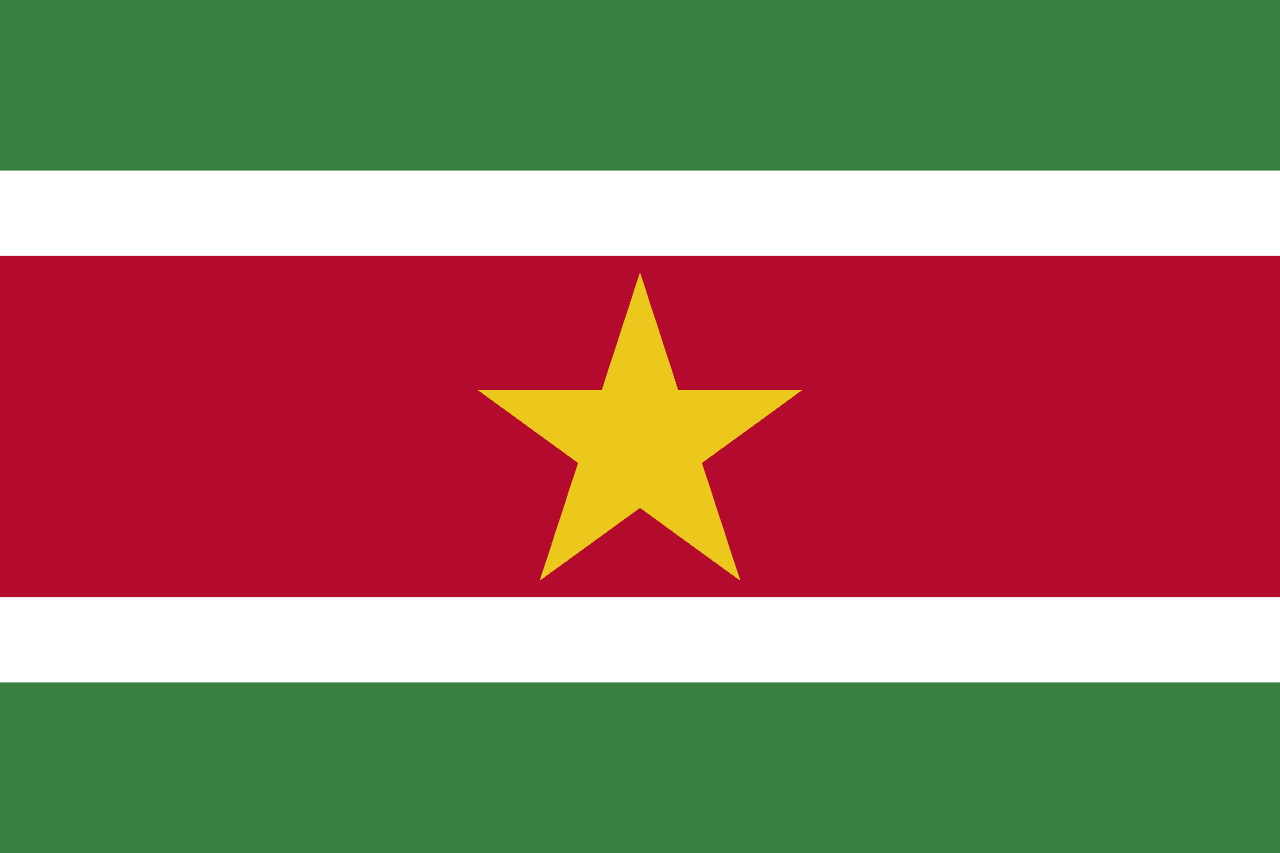
Suriname
The Heart of the Guianas, a land of powerful maroon resistance and a rich tapestry of multi-ethnic culture and statesmanship.
Figures from Suriname
Historically documented individuals of note.

Anton de Kom
### The Weight of Inherited Chains: Suriname at the Turn of the Twentieth Century To understand Anton de Kom, one must first understand the world into which he was born — a world shaped by centuries of slavery, plantation capitalism, and the elaborate fictions that colonial powers construct to justify the subjugation of entire peoples. **Suriname** — known then as Dutch Guiana — was one of the most brutal plantation colonies in the history of the Atlantic world. From the seventeenth century onward, the Dutch West India Company had transported hundreds of thousands of enslaved Africans to its South American colony to labor under conditions of extraordinary violence, cultivating sugar, coffee, cocoa, and cotton that enriched the Dutch merchant class and fueled the prosperity of cities like Amsterdam and Rotterdam [1]. The formal abolition of slavery came to Suriname in **1863** — nearly three decades after Britain abolished it in its own colonies, and almost a decade after Brazil's resistance to abolition had ended. But abolition in Suriname came with a perverse addendum: the formerly enslaved were compelled to endure a ten-year period of "state supervision" (*staatstoezicht*), during which they were legally required to continue working on plantations under coerced conditions, receiving only minimal compensation [1]. The chains had changed shape, but they had not been broken. It was into this post-abolition Suriname — a society still organized around racial hierarchy, economic exploitation, and the systematic denial of dignity to non-white people — that **Cornelis Gerhard Anton de Kom** was born on **February 22, 1898**, in Paramaribo, the colonial capital [2]. His father was a man who had himself been born into slavery and had survived emancipation; his mother was a free woman. This family background — the son of a formerly enslaved man, growing up in a colony that continued to treat Black and brown people as instruments of extraction rather than as full human beings — would become the furnace in which De Kom's political consciousness was forged.  *Suriname (Dutch Guiana) — the colony whose history of slavery and exploitation Anton de Kom would document and condemn.* ### Education, Migration, and the Making of a Radical De Kom received a solid education for a young man of his background, completing training in bookkeeping and showing exceptional intellectual promise. Yet however capable he was, Suriname's colonial society offered limited horizons for a young Black man from a modest family. Systemic racism pervaded every institution, blocking professional advancement and signaling with relentless clarity that darker-skinned Surinamers existed in a lower tier of the colonial order [2]. In **1920**, de Kom made the decision that would transform his life: he emigrated to the **Netherlands** [2]. He was twenty-two years old. The metropole was, in theory, the seat of the civilization that had colonized Suriname — the place from which laws were written, governors appointed, and the machinery of exploitation managed at a comfortable remove. In practice, the Netherlands of the 1920s was a country beginning to grapple, however haltingly, with socialist and labor movements, international anti-imperialism, and the stirrings of a broader global critique of European colonialism. In the Netherlands, De Kom married **Petronella Borsboom**, a Dutch woman, and together they would have four children [3]. He found work in various commercial capacities, but his energies were increasingly devoted to activism. He moved in radical left-wing circles, joining anti-colonial organizations, attending lectures and political meetings, and reading voraciously in the literature of resistance — from Marxist theory to the writings of the early African independence movement [2]. He was troubled by a fundamental injustice he perceived wherever he looked: the history of Suriname, of the Caribbean, of the colonized world, was being told entirely by the colonizers. The voices of those who had suffered — the enslaved, the indentured, the dispossessed — were absent from the historical record. This absence became his obsession and his mission. ### Return to Suriname: "Papa De Kom" On **January 4, 1933**, Anton de Kom returned to Paramaribo with his wife and children. He had been away for thirteen years. Suriname had changed — and had not changed. The Great Depression had devastated the colony's export economy, throwing thousands of workers into destitution. The colonial administration, headed by Dutch-appointed governors, responded to the economic crisis with austerity and repression rather than relief. Workers in the plantations and in the city's docks and markets were hungry, underpaid, and without recourse [3]. De Kom established an informal **"advice bureau"** at his parents' home in Paramaribo [3]. He invited workers, the unemployed, descendants of enslaved Africans, and indentured laborers brought from Asia to come and speak with him about their grievances — about exploitation, about poverty, about the daily indignities of colonial life. Thousands came. Word spread across the colony that a man had returned from the Netherlands who would listen, who would advise, who understood both the colonial system and the language of rights. The people called him **"Papa De Kom"** — Father De Kom — a title that captured both the reverence they felt for him and the paternal protectiveness he showed toward the most vulnerable [3]. The colonial authorities watched De Kom's rising influence with mounting alarm. He was placed under surveillance. His meetings were monitored. Colonial officials correctly understood that what De Kom was doing — organizing workers, educating them about their rights, connecting their personal suffering to the structural logic of colonialism — was precisely the kind of consciousness-raising that threatened the entire edifice of Dutch rule in Suriname [4]. In early **1933**, De Kom was arrested [3]. The colonial government offered no specific charge that could survive public scrutiny; his crime, in essence, was the crime of telling the truth in a way that the oppressed could hear. His arrest triggered an immediate and dramatic response. On **February 7, 1933** — a day that would enter the historical memory of Suriname as **"Black Tuesday"** — a large crowd of De Kom's supporters gathered in Paramaribo to demand his release [3]. The colonial police, acting on orders from the administration, opened fire on the demonstrators. **Two people were killed and approximately thirty were wounded** [3]. It was an act of colonial violence that shocked even some members of the Dutch political establishment. De Kom was held in jail without charge for three months. The colonial government's ultimate solution was deportation: he and his entire family were banished from Suriname and sent back to the Netherlands [3]. He would never return to the land of his birth. > *"The history of Suriname is a history of violence and exploitation. But it is also the history of resistance — of people who refused, generation after generation, to accept the chains that were placed upon them."* — Anton de Kom, *Wij slaven van Suriname* (1934) [1] ### *Wij Slaven van Suriname*: Writing History from Below In exile in the Netherlands, stripped of his homeland and under the shadow of state surveillance, Anton de Kom wrote the book that would make him immortal. ***Wij slaven van Suriname*** — ***We Slaves of Suriname*** — was published in **1934** [1]. It was, at its core, the first comprehensive historical account of Suriname written from the perspective of the colonized rather than the colonizer. The book is a remarkable work of what we would now call **hybrid writing**: part history, part autobiography, part political manifesto, and part poetry of grief [5]. De Kom traced the entire arc of Dutch colonialism in Suriname, from the earliest European settlements through the transatlantic slave trade to the plantation era and into the twentieth-century continuation of exploitation that he had witnessed with his own eyes. He named names. He cited figures. He described the specific mechanisms of how slavery functioned — not as an abstraction, but as a lived system of violence, humiliation, and psychological destruction [5]. Most powerfully, De Kom argued that the formal abolition of slavery in 1863 had not ended colonialism's essential project. Physical chains had been replaced by economic dependency, poverty, and the internalized sense of inferiority that the colonial system worked systematically to instill in its subjects. "Mental anguish, poverty, and hardship" had succeeded the whip as tools of control [1]. This analysis — decades ahead of its time — anticipates the insights of later post-colonial theorists like Frantz Fanon, Aimé Césaire, and C.L.R. James. The Dutch colonial authorities predictably attempted to suppress the book's circulation in Suriname, recognizing its capacity to inspire the very resistance they had imprisoned De Kom to prevent [4]. But the book survived. It endured. And in the decades that followed, it would become one of the foundational texts of Caribbean and anti-colonial literature. ### World War II: The Final Resistance The cruel irony of Anton de Kom's life is that the Dutch state which had persecuted him as a colonial subject would eventually come to rely on the kind of resistance he embodied when a more immediate threat arrived at its own door. When Nazi Germany occupied the Netherlands in **May 1940**, De Kom — despite everything the Dutch government had done to him — joined the **Dutch Resistance** [4]. His decision to resist fascism was entirely consistent with his lifelong principles. The enemy had changed — from Dutch colonial administrators to German Nazi occupiers — but the logic was the same: oppression must be fought, injustice must be refused, and the dignity of human beings must be defended against those who deny it. He worked with underground networks, distributing resistance literature and organizing against the occupation. In **1944**, De Kom was captured by the German secret police (Gestapo) and arrested [4]. As a political prisoner, he was transported to the **Neuengamme concentration camp** near Hamburg, one of the major Nazi concentration camp systems in which thousands of political prisoners, resistance fighters, and others were worked and starved to death [4]. Anton de Kom died on **April 24, 1945** — less than two weeks before Germany's unconditional surrender — in the Sandbostel camp, a satellite of the Neuengamme system [4]. He had survived Dutch colonial persecution, political exile, and years of surveillance. He died of tuberculosis, his body broken by the conditions of the Nazi camp system. He was forty-seven years old.  *Anton de Kom, circa 1930. A man who fought colonialism with words and fascism with action.* ### Legacy: From Exile to National Hero For decades after his death, Anton de Kom remained a figure known primarily within left-wing and anti-colonial circles in the Netherlands and Suriname. The Dutch state — whose colonial administration had imprisoned, surveilled, and deported him — was in no hurry to celebrate his memory. But history has a way of correcting these silences. As Suriname moved toward independence (achieved in **1975**), De Kom's legacy was reclaimed by the Surinamese people as a founding document of national self-consciousness. The **University of Suriname** was renamed the **Anton de Kom University of Suriname** in his honor — a gesture of remarkable symbolic power, placing his name over the institution through which the nation would educate its future generations [2]. In **2020**, the Dutch government included *Wij slaven van Suriname* in the **Canon of the Netherlands** — an official list of fifty windows into Dutch history considered essential for understanding the nation's past [4]. The inclusion of a book written by a Black Surinamese man who had been deported by the Dutch colonial government represented a profound, belated acknowledgment of a history long suppressed. In **2023**, the Dutch government issued an **official apology** to the descendants of Anton de Kom [4] — part of a broader reckoning with the Netherlands' history of slavery and colonialism, an apology long sought by Surinamese and Caribbean communities. Today, Anton de Kom is recognized as one of the most important figures in the history of anti-colonial resistance — not only in Suriname, but in the broader Atlantic world. His life's trajectory — from the son of a formerly enslaved man in Paramaribo, to political exile in Amsterdam, to resistance fighter in Nazi-occupied Europe, to his death in a concentration camp — is a story of extraordinary moral consistency: a man who, in every chapter of his life, chose to fight the powerful on behalf of the powerless.
View Profile →Baron
### Introduction: The Sweet Voice of Calypso and Soca Timothy Watkins (born March 14, 1947), affectionately and universally known throughout the global Caribbean diaspora by his aristocratic stage name "Baron" or "The Calypso Baron," is a legendary Trinidadian vocalist, songwriter, and cultural icon [1]. For over five decades, Baron has stood as one of the most influential and beloved figures in the history of calypso, soca, and parang music [2]. Possessing an instantly recognizable, silky-smooth tenor voice characterized by effortless melodic phrasing and warm vibrato, he fundamentally revolutionized the vocal delivery of calypso, bridging the transition from traditional, speech-inflected kaiso to modern, high-energy soca [3]. In an arena historically dominated by fierce verbal sparring, biting political satire, and aggressive lyrical declamation by giants such as [Mighty Sparrow](/profiles/mighty-sparrow) and [Lord Kitchener](/profiles/lord-kitchener), Baron carved out an immortal legacy as the ultimate purveyor of melodic sweetness, romantic warmth, and joyous celebration [2]. His timeless discography includes some of the most enduring anthems in Caribbean music history, including "Sweet Soca Man," "Melosian Rhapsody," "Doh Rock It So," and "Spanish Woman" [4]. Furthermore, Baron is undisputed as the reigning "King of Parang-Soca," having pioneered a festive subgenre that fuses traditional Venezuelan-Trinidadian Christmas folk rhythms with vibrant soca instrumentation, creating songs that remain essential, inescapable staples of the Caribbean holiday season [3].  ### Early Life, Spiritual Baptist Roots, and Musical Awakening Timothy Watkins was born on March 14, 1947, in the working-class community of Bamboo Village in La Romaine, located in southern Trinidad near the industrial hub of San Fernando [2]. Growing up in post-World War II Trinidad and Tobago, Watkins was immersed in a rich tapestry of African, Indian, and European cultural influences. His formative musical education did not occur in secular music schools, but within the deeply spiritual walls of the Mt. Zion Spiritual Baptist Church in La Romaine, a congregation led by his devout parents [4]. The Spiritual Baptist tradition, an indigenous Afro-Caribbean syncretic religion, places a central emphasis on vocal expression, polyrhythmic clapping, bell-ringing, and soul-stirring hymns known as "trumpeting" and "dudus" [1]. From a very young age, Watkins sang in the church choir and participated in marathon spiritual services. It was during these intense hours of worship that he mastered his exceptional breath control, resonant vocal projection, and distinct emotional delivery. The mournful yet celebratory cadences of Baptist spirituals became permanently etched into his vocal DNA, later imparting a unique, soulful depth to his secular calypso recordings. During his teenage years, Watkins became increasingly captivated by the flourishing calypso scene of Trinidad, listening avidly to radio broadcasts of tent performers and imported American soul and R&B records. Encouraged by friends who recognized his extraordinary vocal talent, he entered the prestigious national television talent competition, *Scouting for Talent*, hosted by the legendary broadcaster Holly Betaudier in the early 1970s [4]. Watkins's electrifying performances won over the judges and television audiences nationwide, earning him top honors and launching his entry into professional entertainment. ### Calypso Debut and the Mentorship of Lord Shorty Following his success on *Scouting for Talent*, Timothy Watkins made his formal professional calypso debut in 1971 at the Original Young Brigade Calypso Tent in Port of Spain [2]. Entering the calypso tent circuit during the early 1970s meant competing alongside legendary veterans. However, young Watkins possessed a secret weapon: a vocal tone so smooth and refined that it immediately set him apart from the gritty, conversational delivery typical of traditional calypsonians. It was during this critical debut season that Watkins forged a life-changing friendship and creative partnership with Garfield Blackman, a visionary musician better known to the world as [Lord Shorty](/profiles/lord-shorty) (and later as [Ras Shorty I](/profiles/ras-shorty-i)) [2]. Shorty was at that exact moment experimenting with complex rhythmic fusions, blending East Indian dholak and dhantal percussion with African calypso rhythms—an innovation that would officially give birth to soca (the "Soul of Calypso") music. Recognizing Watkins's immense vocal potential and regal stage presence, Shorty bestowed upon him the stage name "Baron," declaring that a voice so aristocratic deserved a title of nobility [4]. > "Calypso and soca are the heartbeat of our people, but melody is the soul. I always wanted my music to make people dance, but also make them feel the sweetness of life and the joy of togetherness." — Timothy 'Baron' Watkins [3] Lord Shorty took the young Baron under his creative wing, writing and producing Baron's very first hit single, "Severe Licking," in 1971 [2]. The song became a runaway success in the calypso tents and on national radio. Shorty's sophisticated musical arrangements provided the perfect canvas for Baron's soaring tenor. This mentorship not only launched Baron's career but placed him at the ground floor of the soca revolution, positioning him to become one of the premier vocal interpreters of the new genre. ### The Golden Era of Soca: Timeless Hits and Cross-Generational Appeal Throughout the 1980s and 1990s, Baron entered a golden era of creative productivity and commercial dominance, establishing himself as one of soca music's most prolific and globally celebrated superstars [4]. Teaming up with master arranger Leston Paul and top Caribbean songwriters such as [Merchant](/profiles/merchant) (Mark Hernandez) and [GB](/profiles/gb) (Gregory Ballantyne), Baron released an astonishing string of hit albums that redefined the sonic parameters of soca. In 1984, Baron released "Sweet Soca Man," a track that encapsulated his artistic persona and became an instant regional anthem [1]. Driven by bubbling basslines, crisp brass arrangements, and Baron's seductive vocal delivery, the song became a massive hit at the Trinidad Carnival and across the West Indian diaspora in New York, London, and Toronto. He followed this success with a succession of monumental classics, including the infectious "Doh Rock It So" (1988), "The Jammer," "Feeling It," and "Say Say" [4]. Perhaps his most critically acclaimed artistic triumph occurred in 1988 with the release of "Melosian Rhapsody" [2]. Written by Gregory "GB" Ballantyne and arranged by Leston Paul, "Melosian Rhapsody" was a sophisticated, sweeping composition that celebrated the unifying power of music across cultural boundaries. Baron's vocal performance on the track was masterclass, demonstrating an unprecedented emotional range and harmonic complexity. The song remains widely regarded by musicologists and critics as one of the finest soca compositions ever recorded, earning Baron permanent placement alongside titans like [Black Stalin](/profiles/black-stalin), [David Rudder](/profiles/david-rudder), [Superblue](/profiles/superblue), and [Calypso Rose](/profiles/calypso-rose) [3]. Unlike many carnival hits that fade after the season ends, Baron's recordings possessed an evergreen quality. His music bridged generational divides, appealing equally to mature calypso purists who appreciated his lyrical clarity and younger partygoers captivated by his irresistible dance grooves. Throughout his career, he toured relentlessly across North America, Europe, and the Caribbean, headlining major festivals and serving as a consummate cultural ambassador for Trinidad and Tobago. ### The King of Parang-Soca and Christmas Traditions While Baron's contributions to standard carnival soca are legendary, his impact on the music of the Caribbean Christmas season is arguably even more monumental. In Trinidad and Tobago, the Christmas season is traditionally accompanied by parang—a folk music style of Venezuelan origin featuring acoustic guitars, cuatro, maracas (chac-chacs), and box bass, sung primarily in Spanish by traditional groups led by icons like [Daisy Voisin](/profiles/daisy-voisin) [3]. In the late 1970s and 1980s, pioneering artists began fusing parang rhythms with upbeat soca instrumentation and English lyrics, creating the hybrid genre known as parang-soca. Baron embraced this budding genre with unmatched passion and mastery, quickly becoming its undisputed monarch [1]. His 1980 release "Spanish Woman" became an instant phenomenon, weaving a humorous, romantic narrative over a driving parang-soca beat that forced listeners onto the dance floor. Baron proceeded to record a treasury of Christmas hits that permanently transformed the holiday soundscape of the Caribbean. Tracks such as "It's Christmas," "Come Go," "Rave," "Merry Christmas," and "Christmas do the Boss" became mandatory listening in households, radio stations, and parang fetes throughout the region [4]. His parang-soca catalog achieved a remarkable cultural feat: it established Baron as one of the rare Caribbean artists who dominated national radio airwaves and concert stages year-round, reigning during both the pre-Lenten Carnival euphoria and the festive December holidays alongside chutney pioneers like [Sundar Popo](/profiles/sundar-popo) and parang contemporaries like [Scrunter](/profiles/scrunter) [3]. ### National Honors, Challenges, and Lasting Legacy In recognition of his extraordinary lifetime contributions to the cultural landscape of Trinidad and Tobago, the national government has bestowed numerous prestigious honors upon Timothy Watkins. In 2016, Baron was formally awarded the Humming Bird Medal (Gold), one of the nation's highest National Awards, for his loyal and dedicated service to calypso and soca music [2]. The award ceremony celebrated not only his extensive discography but his role in uplifting the nation's international cultural profile. Further cementing his permanent presence in his home community, the San Fernando City Corporation and the Ministry of Tourism, Culture and the Arts officially honored Baron in February 2022 by renaming Bay Road in La Romaine—the street where he spent much of his life—to "Timothy Watkins 'The Baron' Street" [2]. At the unveiling ceremony, local dignitaries and fellow artists gathered to celebrate the living legend, praising his humility, mentorship of younger artists, and unwavering dedication to South Trinidad. In the mid-2020s, reports emerged regarding health challenges faced by the aging elder statesman. Demonstrating the profound respect and affection the nation holds for its cultural icons, the Trinbago Unified Calypsonians' Organisation (TUCO) and the Ministry of Culture and Community Development rallied to provide comprehensive medical care and financial assistance to ensure his well-being and comfort [5]. This public mobilization underscored Baron's status as a cherished national treasure whose well-being is of paramount importance to the citizens of Trinidad and Tobago. Today, Timothy "Baron" Watkins occupies a sacred place in the pantheon of West Indian music. He proved that calypso and soca could be delivered with supreme vocal sophistication, melodic grace, and romantic warmth without losing their rhythmic potency or authentic cultural roots. His songs remain the eternal soundtrack of Caribbean celebration, ensuring that the legacy of "The Calypso Baron" will continue to inspire and enchant generations of music lovers for decades to come.
View Profile →
Boni
### Historical Context: The Crucible of Dutch Suriname During the seventeenth and eighteenth centuries, the Dutch colony of Suriname emerged as one of the most brutal and lucrative plantation economies in the Americas. Driven by European demand for sugar, coffee, cocoa, and cotton, Dutch colonial masters subjected hundreds of thousands of enslaved Africans to relentless chattel labor under draconian laws. The dense, inhospitable rainforests and treacherous swamplands surrounding the coastal plantations, however, offered a perilous yet viable sanctuary for those daring enough to escape. These fugitive slaves, known as Maroons, forged independent, militarized communities deep within the Guianese interior. By the mid-eighteenth century, two major Maroon groups—the Ndyuka (Aukan) and the Saramaka—had waged such fiercely effective guerrilla campaigns that the Dutch colonial administration was forced to sign formal peace treaties with them in 1760 and 1762, respectively [1]. While these treaties granted regional autonomy and freedom to the existing Maroon nations, they came at a heavy moral price: the Ndyuka and Saramaka agreed to cease aiding new runaways and to capture and return future escaped slaves to colonial authorities. In this volatile climate of plantation tyranny and shifting alliances, a new generation of freedom fighters arose along the Cottica River, embodying an uncompromising resistance that refused any accommodation with the slaveholding regime. This fierce resistance found its ultimate expression and military genius in a leader named Bokilifu Boni [2]. ### Early Life and Origins in the Cottica Forests Bokilifu Boni was born around 1730 in the dense interior rainforests along the Cottica River in eastern Suriname [3]. According to oral traditions preserved by the Aluku people and corroborated by eighteenth-century colonial records, Boni’s mother was an enslaved African woman who courageously escaped from a Dutch plantation shortly before his birth [3]. Historical accounts suggest that his father was a Dutch plantation owner or overseer, making Boni of mixed heritage, yet his identity and allegiance were entirely forged within the crucible of Maroon resistance and African retention [4]. Raised under the tutelage of Asikan Sylvester, the aging leader of the Cottica Maroons, young Boni was immersed in the rigorous survival arts of the Amazonian rainforest. He mastered traditional African warfare, spiritual traditions, and the intricate navigation of wetland creeks and jungle trails. Unlike plantation slaves who experienced daily subjugation, Boni grew up as a free man in the wilderness, developing an unshakeable belief in the inherent dignity and liberty of Black people. His formative years coincided with news of slave uprisings across the Caribbean basin, echoing the revolutionary spirit of contemporaries like [Cuffy](/profiles/cuffy), who led the massive Berbice Slave Uprising of 1763 in neighboring Guyana, and foreshadowing the later exploits of [Toussaint Louverture](/profiles/toussaint-louverture) and [Jean-Jacques Dessalines](/profiles/jean-jacques-dessalines) during the Haitian Revolution [5]. ### Rise to Power and the Formation of the Boni Maroons Upon the death of Asikan Sylvester around 1765, Boni was chosen by acclamation to lead the Cottica Maroon community [3]. Recognizing that the Dutch colonial authorities were determined to eliminate any Maroon settlements not covered by the 1760 and 1762 treaties, Boni immediately began transforming his loosely connected forest encampments into a highly disciplined, centralized military confederation. This emerging nation became known to colonial authorities as the Boni Maroons, and to themselves as the Aluku [6]. To strengthen his forces, Boni forged strategic alliances with other legendary Maroon commanders, most notably Baron, a former enslaved soldier who had learned European military engineering before escaping, and Joli-coeur, a fierce warrior driven by a desire to avenge the atrocities committed against his family [7]. Together, this triumvirate launched bold, well-coordinated raids against Dutch plantations along the Cottica and Commewijne rivers. Unlike mere foraging raids, Boni’s military campaigns were designed to systematically dismantle the plantation infrastructure: liberating enslaved Africans, seizing firearms, ammunition, and vital metal tools, and burning sugar refineries to the ground [4]. Boni’s charisma, tactical brilliance, and egalitarian leadership attracted hundreds of newly escaped slaves, rapidly expanding the Aluku ranks into a formidable guerrilla army that struck terror into the hearts of Dutch planters [6]. ### Guerrilla Mastery and the Boni Wars The prolonged conflict that ensued, lasting from 1765 until 1793, became famously immortalized as the Boni Wars [8]. Facing a vastly superior colonial military apparatus equipped with heavy artillery and naval support, Boni pioneered sophisticated guerrilla warfare tactics tailored uniquely to the Guianese topography [4]. He avoided open-field engagements, relying instead on lightning-fast ambushes, false retreat feints, and elaborate networks of hidden pit traps laced with poisoned bamboo spikes [9]. Boni established an extensive intelligence network among enslaved people still working on the plantations, ensuring adequate warning of colonial troop movements. When Dutch forces ventured into the suffocating humidity and malarial swamps of the interior, they found themselves fighting an invisible enemy that struck silently from the jungle canopy before vanishing into thin air [8]. > "We fight not for treaties that bind our brothers in chains, but for absolute liberty. Let the white masters know that so long as one tree stands in these swamps, the Maroons will never bow their necks to the yoke." [7] To counter Boni’s devastating successes, the Dutch West India Company and the Society of Suriname deployed thousands of European mercenaries and regular troops. Most famously, they commissioned Colonel Louis-Henri Fourgeoud and a young Scottish-Dutch officer named John Gabriel Stedman, whose vivid illustrated memoirs later chronicled the immense difficulty and brutality of fighting Boni’s warriors [10]. ### The Construction and Defense of Fort Boekoe The centerpiece of Boni’s defensive strategy was the construction of Fort Boekoe (also spelled Buku), a masterpiece of indigenous military engineering erected around 1771 in the marshy coastal plains near the Commewijne River [11]. Surrounded on all sides by treacherous, deep swamplands and quagmires, Fort Boekoe was virtually inaccessible to standard infantry artillery. Boni and Baron constructed submerged wooden walkways beneath the murky swamp waters, allowing Maroon warriors to enter and exit the fortress rapidly while attacking colonial troops floundering in the chest-deep mud [12]. The fort itself was fortified with tall earthworks, stout wooden palisades, swivel guns captured from plantations, and watchtowers giving commanding views of the surrounding landscape. The name "Boekoe" carried a profound symbolic meaning: it translated to "molder" or "decay," signifying the defenders' solemn oath that they would rather turn to dust and rot in the swamps than surrender their freedom to European slavery [11]. For nearly two years, Fort Boekoe served as the impregnable capital of Maroon resistance, repelling repeated colonial sieges and inflicting humiliating defeats on Dutch detachments [13].  The psychological impact of Fort Boekoe was immense, inspiring enslaved populations across Suriname and proving that European military supremacy was a myth. Desperate to crush the rebellion, Governor Jean-Nepomucène van Espinosa and colonial magistrates took the controversial step of forming the Redi Musu (Red Caps), a specialized corps of enslaved Black men who were promised immediate emancipation and land in exchange for serving as shock troops against the Maroons [14]. In late 1772, after months of grueling siege and guided by a traitor who revealed the secret underwater path, a combined force of European mercenaries and Redi Musu finally breached Fort Boekoe [13]. Despite the loss of their fortress, Boni conducted a brilliant tactical retreat, evacuating the majority of his people, women, and children into the deeper interior without surrendering [12]. ### Exodus Across the Maroni and Enduring Resistance Following the fall of Fort Boekoe, Boni led his people on an epic exodus eastward across the Maroni River into neighboring French Guiana [15]. Establishing new settlements along the Lawa River, Boni reorganized his shattered forces and continued to wage relentless cross-border guerrilla campaigns against Dutch plantations throughout the 1770s and 1780s [6]. Demonstrating remarkable diplomatic skill, Boni navigated complex relationships with indigenous Amerindian nations and attempted to forge alliances with the Ndyuka Maroons who controlled the adjacent territories [16]. However, colonial authorities relentlessly manipulated old rivalries, bribing Ndyuka leaders with firearms and trade goods to prevent a united Maroon front against the Dutch state [1]. Despite facing starvation, tropical epidemics, and constant harassment by colonial patrols, Boni’s people maintained their cohesion, developing a distinct Aluku cultural and linguistic identity that blended African traditions with indigenous Guianese adaptations [15].  ### Betrayal, Assassination, and Immortal Legacy By the early 1790s, the ongoing conflict had placed severe strain on regional stability. Dutch colonial officials intensified their diplomatic pressure on the Ndyuka Maroons, demanding that they honor their 1760 treaty obligations by eliminating Boni, whom the Dutch viewed as an existential threat to the colony's survival [1]. Tragically, on February 19, 1793, during a period of tense negotiations near the Maroni River, Boni was betrayed and assassinated by a Ndyuka commander named Bambi [3]. His death marked the formal end of the Boni Wars, leading the remaining Aluku people to seek permanent asylum under French colonial authority in French Guiana, where their descendants still thrive today along the Lawa and Maroni rivers [15]. Bokilifu Boni stands alongside the greatest icons of Black liberation in Caribbean and South American history. His extraordinary military resilience parallels the exploits of [Nanny of the Maroons](/profiles/nanny-of-the-maroons) in Jamaica and [Joseph Chatoyer](/profiles/joseph-chatoyer) in Saint Vincent [17]. By defending Maroon sovereignty against overwhelming odds for nearly three decades, Boni demonstrated that Black freedom was not a privilege granted by colonial treaties, but an inalienable right secured through courage and unity. Today, Boni is revered as a national hero in both Suriname and French Guiana, symbolizing the eternal struggle against racial oppression and imperialism [16].
View Profile →
Eddy Bruma
The path to sovereign statehood in the Caribbean was paved not only by political agitation and constitutional negotiations, but by profound cultural revolutions that awakened national consciousness and dismantled the psychological chains of colonialism [1]. In the Republic of Suriname, no figure embodies this synthesis of cultural awakening and political liberation more completely than Eduard Johan "Eddy" Bruma [2]. A towering visionary, brilliant lawyer, celebrated author, and nationalist politician, Bruma served as the intellectual architect of Surinamese independence. Through his pioneering leadership of the cultural movement *Wie Eegie Sanie* and his founding of the Nationalist Republic Party (PNR), Bruma successfully transformed a fragmented colonial territory into a proud, sovereign nation confident in its Afro-Surinamese heritage and linguistic identity [3]. ### Early Life and Colonial Awakening in Paramaribo Eduard Johan Bruma was born on May 30, 1925, in Paramaribo, the capital of what was then the Dutch colony of Surinam [1]. Growing up in the early 20th century, young Eddy navigated a highly stratified colonial society where social mobility was strictly contingent upon cultural assimilation into Dutch norms. The colonial educational system systematically suppressed indigenous languages and local cultural practices, stigmatizing Sranan Tongo—the creole lingua franca created by enslaved Africans—as an inferior "street language" unworthy of polite society or academic discourse [2]. Despite these oppressive cultural impositions, Bruma developed an early and fierce pride in his heritage. His political consciousness was deeply catalyzed during World War II. While the Netherlands was under German occupation, colonial authorities in Suriname maintained strict control. Bruma's outspoken nationalist sentiments and anti-colonial activities drew the ire of the Dutch administration, resulting in his arrest and imprisonment in 1943 [3]. Rather than breaking his spirit, his internment solidified his revolutionary resolve. He recognized that true political freedom could never be achieved so long as the Surinamese people remained mentally subjugated by colonial cultural supremacy. Drawing inspiration from early labor leaders and anti-colonial writers such as [Anton de Kom](/profiles/anton-de-kom), Bruma committed his life to the total emancipation of his homeland. ### Academic Years in Amsterdam and the Birth of Wie Eegie Sanie Following the conclusion of World War II, Bruma traveled to the Netherlands to pursue higher education, enrolling at the Free University (Vrije Universiteit) in Amsterdam to study law [1]. Surrounded by a burgeoning diaspora of Surinamese students and Caribbean intellectuals, Bruma quickly emerged as a charismatic leader and philosophical thinker. In 1951, alongside visionaries such as [Coenraad van Lier](/profiles/coenraad-van-lier), [Jules Sedney](/profiles/jules-sedney), and Hein Eersel, Bruma founded the historic cultural organization *Wie Eegie Sanie*—a phrase in Sranan Tongo translating powerfully to "Our Own Things" [2]. *Wie Eegie Sanie* was nothing short of a cultural revolution. The movement's manifesto argued that political autonomy was meaningless without cultural pride and historical self-knowledge [3]. Bruma and his peers launched a concerted crusade to elevate Sranan Tongo to a respected literary language, organizing poetry readings, theatrical performances, and academic debates entirely in the vernacular. They actively researched and rehabilitated Afro-Surinamese history, celebrating the heroic struggles of Maroon resistance fighters who had waged centuries of guerrilla warfare against Dutch plantation masters. By urging Surinamese people to embrace their ancestral roots, language, and spiritual traditions, Bruma laid the psychological foundations for decolonization.  > "Wie Eegie Sanie — our own things. Until we honor our native mother tongue, embrace our ancestors, and love our own reflections, political freedom will remain an empty shell. True sovereignty begins in the mind." ### Literary Crusade: Rehabilitating History Through Drama Bruma understood that art and literature were potent weapons in the anti-colonial arsenal. As a playwright and author, he produced landmark works that reshaped Surinamese literary history. In 1952, he published and staged his masterpiece, *De geboorte van Boni* (The Birth of [Boni](/profiles/boni)), a dramatic retelling of the life of the 18th-century freedom fighter who led the Cottica Maroons against Dutch colonial forces [1]. Through *De geboorte van Boni*, Bruma challenged official colonial historiography, which had long depicted Maroon fighters as lawless bandits. Instead, Bruma presented [Boni](/profiles/boni) as a noble revolutionary strategist and a founding father of Surinamese freedom [2]. The play resonated electrified audiences both in the Netherlands and back in Paramaribo, instilling a profound sense of historical pride. Bruma's essays and poetry consistently emphasized cultural unity across Suriname's diverse ethnic groups—including Afro-Surinamese, Indo-Surinamese, and Javanese communities—arguing that a shared love for the Surinamese soil must transcend colonial divide-and-rule strategies. ### Return to Suriname: Labor Champion and Legal Crusader In 1954, having earned his law degree, Bruma returned to Suriname and established his legal practice in Paramaribo [1]. Armed with formidable jurisprudence and exceptional oratorical skills, he quickly became the most prominent defender of the working class. Bruma served as legal counsel for numerous trade unions, defending agricultural laborers, bauxite miners, and dockworkers against exploitation by foreign multinational corporations and local elites [3]. His law office transformed into a bustling hub of nationalist activism. Bruma used the courtroom not merely as a venue for legal disputes, but as a public platform to expose the systemic inequities of the colonial administration [2]. His relentless defense of civil liberties and workers' rights earned him immense popularity among urban youth and laborers, providing the grassroots infrastructure necessary to transition his cultural movement into a formal political apparatus.  ### Founding the Nationalist Republic Party (PNR) Recognizing that cultural consciousness needed institutional political power to achieve decolonization, Bruma founded the Nationalist Movement Suriname in 1959, which formally reorganized into the Partij Nationalistische Republiek (PNR - Nationalist Republic Party) in 1961 [1]. Joined by fierce nationalist allies and progressive intellectuals such as poet [Robin Raveles](/profiles/robin-raveles) (affectionately known as Dobru), Bruma established the PNR as the vanguard of Surinamese independence. At a time when traditional political parties advocated for cautious, incremental reform or permanent association within the Kingdom of the Netherlands, the PNR adopted an uncompromising stance [3]. Bruma demanded immediate, full, and unconditional sovereignty. Entering the Parliament (Staten van Suriname), Bruma utilized his legislative seat to challenge colonial legislation, push for economic self-reliance, and internationalize the Surinamese struggle by building solidarity with anti-colonial movements across Africa and the Caribbean. > "Independence is not merely a legal transfer of sovereignty negotiated across a table; it is the spiritual rebirth of a nation standing erect on its own soil, commanding its own destiny." ### Minister of Economic Affairs and the Triumph of Independence The turning point in Suriname's modern history arrived with the 1973 general elections. The PNR joined forces with the Nationale Partij Kombinatie (NPK), a progressive coalition led by [Henck Arron](/profiles/henck-arron) [2]. Bruma conditioned the PNR's entry into the coalition upon a binding commitment to achieve independence during the government's mandate. Following the coalition's victory, [Henck Arron](/profiles/henck-arron) became Prime Minister, [Johan Ferrier](/profiles/johan-ferrier) prepared to transition as President, and Eddy Bruma was appointed Minister of Economic Affairs [1]. In his ministerial role, Bruma played a monumental part in negotiating the terms of independence with the Dutch government in The Hague. He worked tirelessly to dismantle colonial economic structures, promoting local industry, protecting national resources, and establishing equitable trade agreements [3]. His steadfast diplomacy and refusal to compromise on sovereignty culminated on November 25, 1975, when the Republic of Suriname lowered the Dutch tricolor and raised its independent national flag. On that historic night, Bruma's lifelong dream of *Wie Eegie Sanie* became a living political reality. ### Later Years, Constitutional Elder, and Enduring Legacy Following the achievement of independence, Bruma stepped down from his ministerial post in 1977 to focus on his law practice and mentor the next generation of legal and political leaders [1]. However, his service to the nation was called upon once more during the turbulent aftermath of the February 1980 Sergeants' Coup led by Dési Bouterse. Seeking stability and constitutional governance amidst political chaos, Bruma was tasked to act as *formateur*, successfully putting together the civilian emergency cabinet headed by Prime Minister [Henk Chin A Sen](/profiles/henk-chin-a-sen) [2]. Eddy Bruma continued to practice law and remain a respected elder statesman until his passing in Paramaribo on November 6, 2000, at the age of 75 [1]. His legacy is deeply etched into the very fabric of modern Suriname. As the ideological father of Surinamese nationalism, Bruma proved that cultural pride and linguistic dignity are essential prerequisites for political liberation. Today, schools, streets, and cultural institutions bear his name, and his vision inspires scholars and statesmen across the Caribbean to honor their indigenous heritage while jealously guarding their national sovereignty.
View Profile →
Henck Arron
### Introduction and Historical Significance Henck Alphonsus Eugène Arron (April 25, 1936 – December 4, 2000) stands immortalized in Caribbean history as the monumental first Prime Minister of independent Suriname [1]. Guiding the nation through its most defining and turbulent political crossroads, Arron successfully steered Suriname out of nearly three centuries of Dutch colonial supremacy to achieve full, sovereign independence on November 25, 1975 [2]. Serving as the political leader of the National Party of Suriname (NPS) for 23 years, Arron combined sharp analytical rigor acquired in the international banking sector with profound nationalist vision [3]. Operating during an era of profound Caribbean decolonization alongside regional titans such as [Michael Manley](/profiles/michael-manley) in Jamaica, [Forbes Burnham](/profiles/forbes-burnham) in Guyana, and [Eric Williams](/profiles/eric-williams) in Trinidad, Arron asserted the inherent right of the Surinamese people to self-determination. His political career spanned the absolute spectrum of national leadership: from the euphoric triumphs of founding a sovereign republic alongside Governor [Johan Ferrier](/profiles/johan-ferrier), to enduring political overthrow and imprisonment during the 1980 Sergeants' Coup led by [Dési Bouterse](/profiles/desi-bouterse), and ultimately rising again as Vice President to restore constitutional democracy in the late 1980s alongside future leaders like [Ronald Venetiaan](/profiles/ronald-venetiaan) [4]. ### Early Life, Banking Career, and Pragmatic Formation Born on April 25, 1936, in the colonial capital of Paramaribo, Henck Arron came of age during a period of rising national consciousness in Suriname [1]. Raised in a respectable Creole family valuing education and civic responsibility, Arron completed his primary and secondary schooling in Paramaribo before traveling to the Netherlands in 1956 to pursue advanced studies in banking, finance, and economics [2]. During his years in Europe, Arron gained sophisticated insights into international monetary systems, corporate governance, and institutional diplomacy while working at the prestigious Amsterdamsche Bank [3]. In 1963, armed with extensive European financial expertise, Arron returned to his homeland and joined De Surinaamsche Bank (DSB), quickly rising to executive leadership positions [1]. His background in high-level banking endowed him with a meticulous, pragmatic approach to problem-solving that distinguished him from traditional populist politicians. Arron understood that true national decolonization required not only political passion but also robust fiscal architecture, currency stability, and economic self-sufficiency [3]. Witnesses during his early career noted his calm demeanor, impeccable sartorial elegance, and incisive capacity to decipher complex financial documents—qualities that soon caught the attention of senior leadership within the National Party of Suriname (NPS), including the revered Prime Minister [Johan Adolf Pengel](/profiles/johan-adolf-pengel) [2]. ### Ascent to NPS Leadership and the 1973 Election Victory The untimely death of [Johan Adolf Pengel](/profiles/johan-adolf-pengel) in June 1970 created an immense political vacuum within the Creole labor movement and the NPS [1]. Recognising the urgent need for youthful rejuvenation and administrative competence, the party delegates elected the 34-year-old Henck Arron as Chairman of the NPS in late 1970 [3]. Facing a fractured political landscape, Arron displayed remarkable organizational genius. He modernized the party infrastructure, expanded its outreach beyond urban workers to include intellectuals and rural Creoles, and built bridges with progressive factions across the political spectrum. Ahead of the pivotal November 1973 general elections, Arron engineered a formidable multi-ethnic coalition known as the National Combined Forces (*Nationale Kombinatie*, NPK) [2]. Bringing together the Creole NPS, the progressive Nationalist Republic Party (PNR) led by advocate Eddy Bruma, the Javanese KTPI party, and Catholic labor factions, Arron presented voters with a unified, visionary platform. The centerpiece of the NPK campaign was an uncompromising commitment: if elected, Suriname would achieve complete sovereignty and independence from the Kingdom of the Netherlands before the end of 1975 [2]. On November 19, 1973, Arron's coalition secured a resounding victory, capturing 22 of the 39 seats in the Estates of Suriname. On December 24, 1973, Henck Arron took the oath of office as Prime Minister of Suriname, immediately setting the decolonization clock into high gear [1].  ### The Crusade for Sovereignty and Dutch Negotiations Upon assuming office, Arron initiated intensive, high-stakes diplomatic negotiations with progressive Dutch Prime Minister Joop den Uyl in The Hague [2]. The Dutch government, anxious to divest itself of colonial responsibilities in the Americas, found a determined partner in Arron. However, the path to independence was fraught with domestic peril. Opposition leader [Jagernath Lachmon](/profiles/jagernath-lachmon) of the VHP expressed deep reservations, arguing that the country was unprepared for sovereignty and warning that an immediate withdrawal of Dutch constitutional protections could lead to ethnic dominance by the Creole majority and economic collapse [3]. The political deadlock triggered widespread anxiety, prompting nearly a third of the Surinamese population—primarily Hindustanis and middle-class professionals—to emigrate to the Netherlands prior to the deadline [2]. Arron remained undaunted, demonstrating masterly statesmanship. He successfully leveraged the decolonization deadline to extract a monumental financial settlement from the Netherlands: a staggering 3.5 billion Dutch guilder (approximately $1.5 billion USD at the time) golden handshake in development aid designed to guarantee Suriname's economic self-reliance for its first decade of sovereignty [3]. > "Liberty is not a gift handed down from a colonial master; it is an inherent right and a solemn duty. From this day forward, our destiny rests entirely in our own Surinamese hands." — *Henck Arron addressing parliament on the eve of independence, November 1975* In the final weeks of 1975, facing dramatic parliamentary defections that left his government hanging by a single thread, Arron engaged in marathon reconciliation talks with [Jagernath Lachmon](/profiles/jagernath-lachmon) [3]. Facilitated by the respected Governor [Johan Ferrier](/profiles/johan-ferrier), the two leaders reached a historic embrace of national unity. Lachmon agreed to endorse independence in exchange for constitutional safeguards regarding democratic governance and ethnic equality. With consensus secured, parliament unanimously approved the new Surinamese constitution [2]. ### The Birth of the Republic and Prime Ministerial Challenges (1975–1980) At midnight on November 25, 1975, before a jubilant crowd of tens of thousands at the national stadium in Paramaribo, the Dutch tricolor was lowered for the final time, and the vibrant red, green, white, and yellow star flag of the Republic of Suriname was raised into the Caribbean night sky [2]. Prime Minister Henck Arron embraced the newly sworn-in President [Johan Ferrier](/profiles/johan-ferrier) and opposition leader [Jagernath Lachmon](/profiles/jagernath-lachmon), shedding tears of joy as he proclaimed the eternal sovereignty of the Surinamese people. Governing the nascent republic, however, proved exceptionally challenging. Arron's administration faced immediate global headwinds, including the 1970s global oil shocks and stagflation, which severely eroded the real purchasing power of the Dutch development funds [3]. Furthermore, absorbing billions of guilders into a small developing economy caused administrative bottlenecks, inflation, and public accusations of patronage distribution. By the late 1970s, labor strikes re-emerged, and political defections in parliament left Arron governing with a razor-thin one-seat majority following the 1977 general elections, paralyzing legislative progress and fueling socio-political frustration across urban centers [2]. ### The 1980 Sergeants' Coup and Democratic Resistance The defining crisis of Arron's life erupted from an unexpected quarter: the newly established Surinamese Armed Forces (*SKM*). In early 1980, non-commissioned officers voiced mounting grievances regarding inadequate pay, outdated equipment, and the refusal of Arron's administration to recognize a military trade union [4]. When government negotiators took a hardline legalistic stance and arrested strike leaders, tensions exploded. In the early morning hours of February 25, 1980, sixteen non-commissioned officers led by Sergeant [Dési Bouterse](/profiles/desi-bouterse) executed a violent coup d'état—popularly known as the Sergeants' Coup (*De Sergeantencoup*)—bombarding police headquarters and overthrowing Arron's democratically elected government [4]. Arron was immediately arrested, deposed, and held in political confinement at the Memre Boekoe barracks and later incarcerated under harsh conditions [1]. The military junta suspended the constitution, dissolved parliament, and ushered in a dark decade of authoritarian military rule. Despite facing interrogation and political persecution, Arron maintained his characteristic dignity and refused to flee into exile upon his eventual release under general amnesty [3]. He remained quietly in Paramaribo, serving as a symbol of constitutional legitimacy and offering counsel to underground democratic resistance movements working alongside [Jagernath Lachmon](/profiles/jagernath-lachmon) and trade union leaders to demand the restoration of civilian governance [4]. ### Return to Executive Leadership and Final Years By the mid-1980s, international economic sanctions, internal domestic resistance, and the devastating Maroon civil war led by Ronnie Brunswijk forced [Dési Bouterse](/profiles/desi-bouterse)'s military regime to negotiate a return to democratic rule [4]. Arron re-emerged from political shadows to lead the NPS into the newly formed Front for Democracy and Development (*Front voor Democratie en Ontwikkeling*), a formidable anti-military coalition joining the NPS, VHP, and KTPI [2]. In the landmark general elections of November 1987, the Front captured a landslide victory, winning 40 of the 51 parliamentary seats [4]. On January 25, 1988, triumphant democratic governance was officially restored when Ramsewak Shankar was inaugurated as President, with Henck Arron sworn in as Vice President and Chairman of the Council of Ministers [1]. In this executive capacity, Arron worked tirelessly to rebuild international relations, restore Dutch financial aid, and stabilize the national currency [3]. However, the civilian government operated under constant shadow and intimidation from the military apparatus. On December 4, 1990—exactly seventeen years after Arron first became Prime Minister—Bouterse orchestrated a bloodless second military overthrow known as the "Telephone Coup," forcing Shankar and Arron to resign via telephone command [4]. Following democratic re-elections in 1991 that brought his close NPS associate [Ronald Venetiaan](/profiles/ronald-venetiaan) to the presidency, Arron officially stepped down as Chairman of the National Party of Suriname in 1993, concluding 23 consecutive years of monumental party leadership [3]. He spent his final years universally revered as a respected elder statesman, advising presidents and representing Suriname on international diplomatic missions. On December 4, 2000, while visiting family in Alphen aan den Rijn in the Netherlands, Henck Arron suffered a fatal cardiac arrest and passed away at the age of 64 [1]. Following a grand state funeral in Paramaribo attended by dignitaries from across the globe, he was laid to rest in the soil of the independent republic he had dedicated his life to creating. Today, his statue in Paramaribo's Palmentuin and the major thoroughfare *Henck Arronstraat* stand as enduring monuments to the father of Surinamese decolonization.
View Profile →
Jagernath Lachmon
### Introduction Jagernath Lachmon (September 21, 1916 – October 19, 2001) stands universally revered as one of the founding fathers of modern Suriname and the towering architect of its post-colonial political stability [1]. For over half a century, Lachmon served as the undisputed leader of the Progressive Reform Party (*Vooruitstrevende Hervormings Partij* or VHP), championing political emancipation, universal suffrage, and democratic governance [2]. His most enduring contribution to Caribbean and South American statesmanship was his pioneering philosophy of *verbroederingspolitiek*—a visionary policy of ethnic fraternization and political bridge-building designed to unite Suriname's diverse racial communities [3]. Holding the world record as the longest-serving parliamentarian in history, Lachmon steered his nation through peaceful decolonization, civil unrest, and military dictatorship, earning the affectionate title *Vader des Vaderlands* (Father of the Nation) [4]. ### Colonial Suriname: Contract Labor and Multi-Ethnic Fabric To appreciate the genius of Lachmon's leadership, one must examine the unique and intricate demographic tapestry of twentieth-century Suriname [1]. Following the abolition of slavery in the Dutch colony in 1863, the plantation economy faced a severe labor shortage. To replace enslaved African labor, the Dutch colonial administration orchestrated the mass importation of indentured contract laborers from British India and the Dutch East Indies (modern-day Indonesia) [2]. Between 1873 and 1916, more than 34,000 Indian indentured laborers—known locally as Hindustanis—arrived in Suriname to work under grueling conditions on sugar, rice, and coffee estates [3]. By the early twentieth century, these contract laborers and their descendants chose to remain in Suriname, establishing vibrant agricultural communities primarily in peripheral rural districts such as Nickerie and Saramacca [4]. However, colonial society remained deeply segmented along ethnic, geographical, and cultural lines. The urban center of Paramaribo was dominated by Afro-Surinamese Creoles and a Dutch-speaking colonial elite, while Hindustani and Javanese populations remained rural, politically disenfranchised, and culturally isolated [1]. As national consciousness began to stir in the 1930s and 1940s, the impending transition toward self-rule posed a profound existential question: could such a deeply divided multi-ethnic society forge a unified democratic nation without collapsing into racial conflict? [2]  ### Early Life, Legal Education under De Miranda, and Political Awakening Jagernath Lachmon was born on September 21, 1916, in the rural Corantijnpolder of Nickerie District, the youngest of six children born to indentured laborers who had emigrated from Uttar Pradesh, India [1]. Growing up amidst the hardscrabble reality of rural agricultural life, young Jagernath displayed exceptional intellectual aptitude and a relentless drive for education [3]. In 1929, at just thirteen years of age, he made the daunting journey to the capital city of Paramaribo to attend higher elementary school (*Meer Uitgebreid Lager Onderwijs* or MULO), lodging with acquaintances and working odd jobs to support his studies [4]. After completing his secondary education, Lachmon embarked on a legal career. In colonial Suriname, aspiring attorneys could qualify through rigorous apprenticeships under established legal practitioners [2]. Lachmon secured a prestigious clerkship under [Julius Caesar de Miranda](/profiles/julius-caesar-de-miranda), a brilliant Creole jurist who would later become Suriname's first Prime Minister [1]. The mentorship between De Miranda—a sophisticated urban Creole—and Lachmon—a rural Hindustani youth—was deeply transformative [3]. De Miranda not only trained Lachmon in strict constitutional law and jurisprudence but also treated him with profound equality and respect. This formative inter-ethnic bond convinced Lachmon early on that cross-cultural cooperation was both possible and essential for Suriname's advancement [4]. In 1943, Lachmon successfully passed his law examinations, becoming one of the very first Hindustani attorneys in Suriname [2]. ### Founding of the VHP and the Doctrine of Verbroederingspolitiek As a practicing lawyer, Lachmon quickly became a trusted advocate and counselor for the marginalized Hindustani community, defending their legal rights and articulating their grievances [1]. Recognizing that true socio-economic progress required political power, Lachmon entered the political arena. In 1947, he co-founded the *Vatan Hitkari* party, which merged with other political groups in January 1949 to form the United Hindustani Party (*United Hindustaanse Partij*), later famously rebranded as the Progressive Reform Party (*Vooruitstrevende Hervormings Partij* or VHP) [3]. Lachmon was elected chairman of the VHP, a position he would hold with unchallenged authority for an astonishing fifty-two years until his death [4]. Under Lachmon's guidance, the VHP secured substantial representation in the general elections of 1949—the first held under universal suffrage [2]. It was during this pivotal post-war era that Lachmon formulated his signature political doctrine: *verbroederingspolitiek* (fraternization policy) [1]. Lachmon posited that in a multi-racial society lacking an absolute majority ethnic group, democracy could not function as a winner-take-all contest. Instead, political stability required explicit power-sharing, mutual compromise, and ongoing dialogue between ethnic leaders [3]. Rather than seeking ethnic dominance, Lachmon insisted on forging parliamentary alliances that gave all major ethnic communities a direct stake in national governance [4]. > 'In our rich and diverse multi-ethnic Surinamese family, no single group must ever seek to dominate another. True national harmony is achieved not through confrontation, but through the patient embrace of brotherhood and mutual respect.' > — Jagernath Lachmon addressing the National Assembly of Suriname ### The Road to Independence and Partnership with Johan Pengel The practical manifestation of *verbroederingspolitiek* was the historic, enduring political alliance between Jagernath Lachmon and [Johan Adolf Pengel](/profiles/johan-adolf-pengel), the charismatic Creole leader of the National Party of Suriname (NPS) [1]. Throughout the 1950s and 1960s, Lachmon and Pengel formed a powerful political tandem that effectively governed Suriname as an autonomous country within the Kingdom of the Netherlands [2]. While Pengel served as Prime Minister representing the Creole urban working class, Lachmon served as Chairman of the Estates of Suriname (Parliament), representing the rural agricultural communities [3]. Together, they maintained social peace, expanded infrastructure, and navigated complex constitutional negotiations with the Dutch Crown [4]. When the question of complete national independence surged to the forefront in the early 1970s under Creole Prime Minister [Henck Arron](/profiles/henck-arron), Lachmon initially urged caution [1]. Feared by many Hindustanis who worried that rapid independence without racial safeguards might lead to Creole hegemony or civil conflict—as had occurred in neighboring Guyana—Lachmon opposed premature separation [2]. Tensions escalated dramatically in 1974 and 1975, prompting massive emigration of Surinamese citizens to the Netherlands [3]. However, demonstrating supreme statesmanship and preventing a potentially violent national schism, Lachmon ultimately reached a historic compromise with Arron in late 1975 [4]. Lachmon agreed to support independence in exchange for constitutional guarantees protecting minority rights and parliamentary democracy [1]. On November 25, 1975, Lachmon proudly embraced Arron as the flag of independent Suriname was hoisted, exemplifying national unity above partisan division [2].  ### The Military Coup, 'The Bending Reed' Philosophy, and Restoration of Democracy Suriname's fragile democracy suffered a devastating blow on February 25, 1980, when a group of non-commissioned military officers led by Sergeant [Desi Bouterse](/profiles/desi-bouterse) staged a violent coup d'état, overthrowing the Arron government and suspending the constitution [1]. The military regime dissolved parliament, banned political parties, and instituted a brutal dictatorship that culminated in the December Murders of 1982, wherein fifteen prominent democracy advocates were executed [3]. During this dark and perilous decade, Lachmon exhibited remarkable resilience and strategic wisdom, guiding democratic resistance through his famous philosophy of 'the bending reed' (*het buigende riet*) [4]. Drawing inspiration from Mahatma Gandhi's principles of non-violent resistance, Lachmon explained that a rigid, stubborn tree breaks violently before the fierce winds of a hurricane, whereas a slender reed bends low to the ground during the storm, only to stand tall and straight once the gale has passed [1]. Avoiding direct armed confrontation that would have provoked massive civilian bloodshed, Lachmon maintained patient, persistent pressure on the military junta through quiet diplomacy, legal maneuvering, and civil mobilization [2]. When economic collapse and international isolation forced Bouterse to permit a transition toward civilian rule, Lachmon played a pivotal role in organizing the opposition [3]. He united traditional political rivals—including Creole leader [Ronald Venetiaan](/profiles/ronald-venetiaan)—into the Front for Democracy and Development (*Front voor Democratie en Ontwikkeling*) [4]. In the triumphant landmark elections of November 1987, the multi-ethnic opposition alliance won an overwhelming landslide victory, capturing 40 of the 51 parliamentary seats and successfully restoring civilian democratic constitutional governance to Suriname [1]. Lachmon was rightfully re-elected as Chairman of the National Assembly, guiding presidential transitions for leaders such as [Ramsewak Shankar](/profiles/ramsewak-shankar) and [Fred Ramdat Misier](/profiles/fred-ramdat-misier) [2]. ### Final Years, Statesmanship, and Lasting Legacy Throughout the 1990s, Lachmon remained the elder statesman and moral compass of Surinamese politics [1]. Even as younger political figures emerged, including future president [Chan Santokhi](/profiles/chan-santokhi), Lachmon's authority within the VHP and national parliament remained unassailable [3]. In 1999, his extraordinary longevity and dedication to public service were officially recognized by the *Guinness Book of World Records*, which certified him as the world's longest-serving parliamentarian, having completed more than fifty years of elective office [4]. On October 19, 2001, while on an official parliamentary delegation visit to The Hague in the Netherlands, Jagernath Lachmon passed away peacefully in his hotel room at the age of 85 [2]. His death prompted profound nationwide mourning across all ethnic and social strata in Suriname. He was accorded a state funeral of unprecedented scale in Paramaribo, where tens of thousands of citizens gathered to pay their final respects [1]. Today, his majestic bronze statue stands proudly on the *Onafhankelijkheidsplein* (Independence Plaza) opposite the Presidential Palace, a perpetual testament to his life's work [3]. Jagernath Lachmon bequeathed to Suriname and the Caribbean a timeless legacy: the enduring demonstration that dialogue, ethnic fraternization, and peaceful compromise are the ultimate bulwarks of democratic nationhood [4].
View Profile →
Johan Adolf Pengel
### Introduction and Historical Stature Johan Adolf "Jopie" Pengel (January 20, 1916 – June 5, 1970) remains one of the most towering and transformative political figures in 20th-century Surinamese history [1]. A man of immense physical presence, booming oratorical eloquence, and sharp strategic intellect, Pengel dominated the political landscape of post-World War II Suriname during its critical transition from a direct Dutch colony to an autonomous constituent country within the Kingdom of the Netherlands. As the long-serving leader of the National Party of Suriname (NPS) and Prime Minister from 1963 to 1969, he revolutionized Caribbean working-class mobilization, transforming grassroots labor movements into an unstoppable vehicle for political governance [2]. Working alongside regional anti-colonial contemporaries across the Caribbean and the Guianas, such as [Eric Williams](/profiles/eric-williams) in Trinidad and Tobago, [Forbes Burnham](/profiles/forbes-burnham) and [Cheddi Jagan](/profiles/cheddi-jagan) in neighboring Guyana, and his eventual Surinamese successor [Henck Arron](/profiles/henck-arron), Pengel championed the dignity of the common worker. Most significantly, his pioneering policy of inter-ethnic fraternization alongside Hindustani leader [Jagernath Lachmon](/profiles/jagernath-lachmon) saved emerging Suriname from racial fragmentation, creating a collaborative framework of governance that shaped modern Surinamese civil society [3]. ### Early Life, Socio-Economic Stratification, and Legal Aspirations Born on January 20, 1916, in the capital city of Paramaribo, Johan Adolf Pengel emerged from the humble surroundings of the Creole working class [1]. Early 20th-century Suriname was a society characterized by rigid socio-economic stratification and ethnic divisions forged by centuries of plantation slavery and subsequent indentured servitude. Paramaribo was divided between a wealthy Dutch colonial elite, an educated light-skinned Creole middle class, and a vast, underprivileged urban Creole working class alongside rural Hindustani and Javanese agricultural laborers. Growing up in this challenging environment, Pengel experienced firsthand the systemic inequities that limited opportunities for the impoverished masses. Despite financial hardships, Pengel displayed exceptional academic promise. He attended local elementary and secondary schools before pursuing studies in law [1]. Although he did not formally graduate with a full university law degree due to economic pressures that forced him to enter the workforce early, his rigorous legal training sharpened his analytical capabilities and gave him an encyclopedic understanding of administrative law and civil rights [2]. Entering the municipal workforce, Pengel quickly became attuned to the daily struggles of Paramaribo's laborers. His earliest public activism ignited in the 1940s when he spearheaded a fierce, grassroots protest movement against exploitative urban landlords who were levying exorbitant rent increases on impoverished Creole tenants [1]. Organizing boycotts and vocal demonstrations, Pengel forced property owners to back down, instantly cementing his reputation across working-class neighborhoods as a fearless, unyielding champion of the common people [3]. ### Rise of Trade Unionism and Ascent in the NPS The conclusion of World War II unleashed a powerful wave of political awakening across the Caribbean. In Suriname, the promise of self-determination led to the establishment of the country's first modern political parties. In 1946, the National Party of Suriname (Nationale Partij Suriname, NPS) was founded to represent the aspirations of the Creole population [1]. Recognizing that true political power required mass mobilization, Pengel joined the NPS and dedicated himself to organizing the burgeoning industrial and municipal labor force. In 1952, Pengel achieved a monumental milestone when he was elected Chairman of the General Alliance of Labour Unions in Suriname (Algemeen Verbond van Vakverenigingen in Suriname), popularly known as *De Moederbond* (The Mother Union) [1]. Under his charismatic leadership, *De Moederbond* transformed from a loose network of disparate worker guilds into a highly disciplined, formidable socio-political engine. Pengel understood that trade unionism and political democracy were inextricably linked; he utilized union rallies to educate laborers on their civic rights, collective bargaining, and national autonomy. His electrifying speeches—delivered in rich, accessible Sranan Tongo alongside formal Dutch—captivated tens of thousands of workers, catapulting him to the pinnacle of the NPS leadership [2]. By the mid-1950s, Pengel was not merely a union boss or a parliamentarian in the Estates of Suriname (*Staten van Suriname*); he was the undisputed voice of the Creole working class.  ### The Visionary Policy of Fraternization (*Verbroederingspolitiek*) Perhaps Pengel's most enduring statesmanlike achievement was his pragmatic realization that Suriname's multi-ethnic demographic reality could easily descend into communal violence if political parties ruled solely exclusively along racial lines. By the late 1950s, the Creole-dominated NPS and the United Hindustani Party (Vooruitstrevende Hervormingspartij, VHP)—led by the shrewd and pragmatic lawyer [Jagernath Lachmon](/profiles/jagernath-lachmon)—represented the two largest ethnic blocs in the nation [3]. Rather than engaging in destructive polarization, Pengel and Lachmon forged an unprecedented political alliance known as the policy of fraternization (*verbroederingspolitiek*) [4]. > "We must join hands across the ethnic boundaries of our nation; neither Creole nor Hindustani can build a prosperous Suriname alone. Our unity is our sole protection against division and stagnation." — *Attributed to Johan Adolf Pengel during the formation of the NPS-VHP coalition* Operating between 1958 and 1967, the fraternization coalition functioned as a sophisticated power-sharing mechanism [4]. Pengel and Lachmon established a working relationship predicated on mutual respect, compromise, and proportional distribution of government resources, civil service appointments, and development projects between urban Creoles and rural Hindustanis [3]. This partnership provided Suriname with a remarkable decade of political stability during which the country successfully navigated the implementation of the 1954 Charter for the Kingdom of the Netherlands (*Statuut*), gaining full internal self-governance while retaining constitutional ties to the Netherlands [2]. This era of harmony laid the crucial institutional groundwork for future leaders like [Johan Ferrier](/profiles/johan-ferrier) and [Henck Arron](/profiles/henck-arron) to eventually pursue complete sovereign independence. ### Prime Ministership and Infrastructure Modernization (1963–1969) On June 30, 1963, Johan Adolf Pengel reached the summit of executive leadership when he was sworn in as Prime Minister of Suriname, concurrently holding the portfolios of General Affairs and Finance [1]. As head of government, Pengel embarked on an ambitious, state-directed modernization campaign designed to transform Suriname from an agrarian plantation economy into an industrial powerhouse anchored by the lucrative bauxite and aluminum industries [5]. Under his administration, the government spearheaded monumental infrastructure achievements. Pengel championed the completion of the colossal Brokopondo Reservoir complex and the Afobaka Hydroelectric Dam—a transformative engineering marvel executed in partnership with the SURALCO bauxite company that provided reliable industrial electricity and accelerated regional modernization [5]. Furthermore, recognizing that public healthcare and transportation were foundational to working-class prosperity, Pengel oversaw the construction of modern medical facilities, most notably the state-of-the-art Academic Hospital Paramaribo (*Academisch Ziekenhuis Paramaribo*) [2]. He also heavily expanded the road network connecting remote inland districts to the coastal capital and directed massive financial investments into upgrading the primary international airport at Zanderij to accommodate modern jet airliners [5]. Through these monumental projects, Pengel visibly modernized the nation's landscape, generating thousands of jobs for his union supporters and expanding the urban middle class. ### Economic Strain, Labor Strife, and Resignation Despite his monumental successes, Pengel's final years in office were marred by mounting economic headwinds and internal political fracturing. By the late 1960s, government overspending on massive public works projects, combined with swelling civil service payrolls and inflationary pressures, placed severe strain on the national treasury [5]. Furthermore, ideological divergence and competition over patronage began to erode the foundational stability of the *verbroederingspolitiek* coalition with [Jagernath Lachmon](/profiles/jagernath-lachmon)'s VHP [4]. As economic conditions tightened, working-class dissatisfaction paradoxically turned against the very trade union leader who had risen to power as their champion. In early 1969, teachers erupted into nationwide labor strikes protesting stagnant wages and eroding purchasing power [2]. The industrial action rapidly metastasized into a general strike as civil servants, dock workers, and municipal laborers across Paramaribo walked off their jobs, paralyzing the country. Demonstrations in the capital grew increasingly confrontational. Recognizing that he had lost the mandate of the labor masses and refusing to authorize violent suppression against the workers who formed his lifeblood, Pengel chose the path of constitutional dignity. On March 5, 1969, he formally submitted his resignation as Prime Minister, paving the way for interim governance and fresh general elections [1]. ### Sudden Passing and Enduring National Legacy Following his resignation, Pengel remained the revered chairman of the NPS and a towering elder statesman in Parliament, tirelessly reorganizing his political base and mentoring a younger generation of Creole leaders, most notably a dynamic banking executive named [Henck Arron](/profiles/henck-arron) [1]. However, his physical health had deteriorated under the relentless stress of decades of political battle. On June 5, 1970, Johan Adolf Pengel died suddenly of blood poisoning (sepsis) in Paramaribo at the age of 54 [1]. His death sent shockwaves through the Caribbean, triggering an outpouring of collective grief across all ethnic lines in Suriname. Today, Johan Adolf Pengel is celebrated as a founding father of modern democratic Suriname. In tribute to his monumental contributions to aviation and national infrastructure, the nation's primary international gateway was officially renamed the Johan Adolf Pengel International Airport [5]. In the heart of Paramaribo on the historic *Onafhankelijkheidsplein* (Independence Square), a magnificent bronze statue of Pengel stands tall, gazing proudly across the capital he helped build [3]. His legacy endures as an eternal symbol of working-class empowerment, trade union dignity, and the enduring necessity of ethnic cooperation in the Caribbean.
View Profile →
Sophie Redmond
### Early Life and the Colonial Context Jeane Sophie Everdine Redmond, born on January 14, 1907, in Paramaribo, Suriname, emerged into a world heavily stratified by race, class, and colonial power. At the dawn of the 20th century, Suriname was deeply entrenched in its status as a Dutch colony. The social hierarchy was rigidly defined, with white European administrators at the top, and the Afro-Surinamese population, along with indentured laborers from India and Java, positioned at the bottom. Opportunities for social and economic advancement were severely limited for the Afro-Surinamese community, and for black women, the barriers were almost insurmountable. Sophie was born to a father who served as a teacher in the Moravian Church. Education was highly valued in her household, but it was bounded by the expectations of the era. For a bright, young Black woman in colonial Suriname, the highest conceivable professional ambition was to become a schoolteacher. Her father encouraged her to follow in his footsteps, believing that teaching offered the most respectable and secure path available to her. However, from a young age, Sophie demonstrated a formidable will and a visionary understanding of her own potential. She harbored a profound ambition that defied the restrictive norms of her society: she wanted to become a physician. ### Defying the Odds: The Battle for Education The path to becoming a doctor was fraught with institutional resistance. The *Geneeskundige School* (Medical School) in Paramaribo was an elite institution, predominantly serving white or light-skinned men. When Sophie expressed her intention to enroll, she faced intense opposition, not just from the society at large, but from her own family. Her father, concerned about the inevitable heartbreak and discrimination she would face, urged her to reconsider. > "I will either study to become a doctor, or I will work as a domestic servant scrubbing floors. There is no middle ground for my ambition." Faced with her ultimatum, her father relented and supported her endeavor. But the hurdles had only just begun. The principal of the medical school initially refused her enrollment, citing her race and gender as prohibitive factors. Sophie's sheer persistence, coupled with an unassailable academic record, eventually forced the administration's hand. In 1925, she was admitted to the *Geneeskundige School*. Over the next decade, she navigated an environment that was often hostile, excelling in her studies while confronting the prejudices of her peers and professors. In 1935, Sophie Redmond made history. She graduated as the school’s fifth female graduate and, most significantly, the very first Black woman to earn a medical degree in Suriname. Her graduation was not merely a personal triumph; it was a watershed moment for the Afro-Surinamese community, shattering the myth of intellectual inferiority that underpinned the colonial system. ### The Doctor of the Poor Upon graduating, Dr. Redmond opened a medical practice in Paramaribo. While she was now a qualified physician, her approach to medicine transcended the traditional boundaries of clinical practice. She quickly became affectionately known as *"datra fu pôtisma"*—the "doctor of the poor." Dr. Redmond was acutely aware of the systemic poverty and marginalization that plagued the Afro-Surinamese working class. She frequently treated needy patients free of charge, ensuring that healthcare was a right rather than a privilege reserved for the wealthy. But her practice was more than a clinic; it evolved into a vital community center. Patients came to her not only for physical ailments but for counsel on marital disputes, financial crises, and familial challenges. She recognized that the physical health of her patients was inextricably linked to their socio-economic well-being, and she positioned herself as a holistic healer and community leader.  ### Cultural Champion: Embracing Sranantongo and the Koto Dr. Redmond's activism extended deep into the cultural sphere. In a society where Dutch culture was exalted and local traditions were marginalized, she became a fierce advocate for Surinamese identity, particularly Afro-Surinamese heritage. The colonial elite often viewed Sranantongo, the local creole language, with disdain, dismissing it as a language of the uneducated. Dr. Redmond, however, embraced it. She recognized Sranantongo as the authentic voice of the people and used it deliberately in her practice and public addresses to foster a sense of pride and unity. Similarly, she challenged Eurocentric beauty standards and dress codes. Dr. Redmond proudly wore the *koto*, the traditional Afro-Surinamese dress, both in her daily life and on public occasions. By wearing the *koto*, she elevated a symbol of working-class Afro-Surinamese culture to a position of professional respectability. She campaigned tirelessly for her people to appreciate local products, local culture, and their own inherent dignity, fighting the internalized racism that centuries of colonialism had instilled. ### Media and Theatrical Activism Dr. Redmond was a pioneer in utilizing mass media and the arts for public education and social change. In the late 1940s, she recognized the burgeoning power of radio and launched a weekly program on the AVROS station titled *"Datra, mi wan aksi wan sani"* ("Doctor, I have a question to ask"). Broadcast in Sranantongo, the show was a revolutionary step in public health communication. She addressed a wide array of topics, from basic hygiene and nutrition to child-rearing and disease prevention. By communicating in the vernacular, she democratized medical knowledge, making it accessible to the masses who were often excluded from formal education. > "To heal the body, one must first educate the mind. Our culture is not our burden; it is our foundation for a healthier society." Beyond radio, Dr. Redmond turned to the stage. She was a talented playwright and actress, writing plays that served as powerful vehicles for social commentary and education. Her theatrical works, often performed in Sranantongo, tackled pressing issues of the day. She wrote plays to educate the public about the importance of voting and democratic participation, anticipating the eventual achievement of universal suffrage. She also wrote plays demystifying medical procedures, such as blood transfusions, which were often met with suspicion and fear by the local populace. Through humor, drama, and relatable characters, she broke down complex socio-medical concepts, proving that art could be a potent tool for public health and political mobilization. ### Political Ambitions and Lasting Legacy As Suriname moved towards greater self-governance in the mid-20th century, Dr. Redmond's activism naturally gravitated toward politics. She was a staunch advocate for women's suffrage and equal opportunities. In 1950, demonstrating her commitment to active political engagement, she stood for election as an independent candidate in the parliamentary elections for Paramaribo. Although she did not win a seat, her candidacy was a powerful statement against the patriarchal political establishment and paved the way for future generations of women in Surinamese politics. In her personal life, Dr. Redmond married Louis Emile Monkau, a distiller, in 1941. The couple remained childless, but Dr. Redmond's maternal care was essentially extended to the entire community she served. Tragically, her life was cut short when she passed away in Paramaribo on September 18, 1955, at the age of 48. Her sudden death was mourned across the nation, leaving a void in the medical and activist communities. Today, Sophie Redmond is celebrated as a monumental figure in Surinamese history. Her legacy is etched into the landscape of Paramaribo, where the prominent Dr. Sophie Redmondstraat bears her name. She is remembered not just as a medical pioneer who broke through the formidable barriers of race and gender, but as a fearless advocate for the poor, a champion of cultural pride, and a visionary who understood that true healing requires both medical intervention and social justice. Her life remains a powerful testament to the impact one dedicated individual can have on the cultural and political awakening of a nation.
View Profile →
Trefossa (Henri Frans de Ziel)
### Introduction and the Colonial Backdrop of Suriname In the early twentieth century, the colony of Dutch Guiana (Suriname) was deeply embedded within the rigid hierarchical structures of European colonial governance. Under Dutch administrative rule, the linguistic and cultural landscape of Paramaribo and the surrounding plantation districts was characterized by profound social stratification. Dutch was rigorously enforced by authorities as the exclusive language of social mobility, governance, jurisprudence, and formal instruction. Conversely, Sranan Tongo—the vibrant Creole language forged over centuries by enslaved Africans and later embraced across Suriname's diverse ethnic tapestry—was systematically marginalized. Colonial officials and European-oriented elites stigmatized Sranan Tongo as a "servant language" or *Takki-Takki*, strictly banning its use in classrooms and discouraging its vocalization in polite society. This linguistic hegemony engendered a deep psychological alienation among Surinamese youth, who were taught to associate their mother tongue with backwardness and a lack of sophistication. It was against this stifling cultural backdrop that nationalist figures began to assert their indigenous identity. While visionary political and social agitators such as [Anton de Kom](/profiles/anton-de-kom) fought valiantly against socio-economic exploitation and colonial repression, the realm of cultural and linguistic emancipation awaited a pioneering champion. That champion emerged in the person of Henri Frans de Ziel, known immortally to history by his poetic pseudonym, Trefossa. Through his pedagogical dedication and literary genius, Trefossa would revolutionize Surinamese self-perception, elevating Sranan Tongo from a despised vernacular into a respected medium of profound philosophical and artistic expression. [1] ### Early Life, Pedagogy, and Spiritual Foundations Henri Frans de Ziel was born on January 15, 1916, in Paramaribo, the bustling capital city of Suriname. Born into a society undergoing slow demographic and social transformations following the abolition of slavery in 1863 and the end of indentured labor systems, young Henri demonstrated an early and acute intellectual curiosity. Educated within the colonial school system, he excelled academically and pursued formal training as an educator (*onderwijzer*). Working as a teacher in Surinamese elementary schools during the 1930s and 1940s, De Ziel observed firsthand the detrimental impact of cultural assimilation on his students. He noted with deep sadness how children were disciplined for speaking the language of their homes and neighborhoods, fostering an internalized inferiority complex that stifled natural self-expression. De Ziel was also deeply rooted in the Protestant Moravian Church (*Evangelische Broedergemeente*), an institution that played a contradictory yet foundational role in Surinamese society; while preaching Christian orthodoxy, European Moravian missionaries had historically translated liturgical texts into Sranan Tongo to evangelize the enslaved and freed populations. This early exposure to biblical narrative and hymnody in Sranan Tongo ignited De Ziel's fascination with the lyrical cadence and expressive possibilities of his native tongue. Driven by an insatiable thirst for knowledge, he read voraciously across European philosophy, romantic poetry, and theological literature, constantly seeking ways to bridge universal themes of human existence with the specific Caribbean reality of his homeland. During these formative professional years, he began composing private verses, testing the flexibility of Sranan Tongo against complex emotional and philosophical concepts. [2]  ### The Birth of Trefossa and the Literary Revolution of *Trotji* In the mid-1950s, De Ziel spent extended periods in the Netherlands for advanced intellectual pursuit, professional work, and cultural exchange. It was during this creative exile that he officially adopted the pen name **Trefossa**. While the exact etymology of the pseudonym has been debated by literary scholars, it is widely interpreted through spiritual and philosophical lenses, representing a transformative force or a deeply rooted cultural grounding. In 1957, working in close collaboration with Surinamese intellectual circles in Amsterdam, Trefossa published his masterpiece: ***Trotji*** (meaning "Prelude" or "Introduction"). Published by the Bureau voor Land- en Volkenkunde, *Trotji* was an unprecedented cultural milestone—the first single-author poetry collection written entirely in Sranan Tongo. Prior to *Trotji*, texts in Sranan Tongo were primarily utilitarian, folkloric, or comedic. Trefossa shattered colonial prejudices by proving that the language possessed lyrical grandeur, nuanced metaphor, and intellectual sophistication capable of articulating the highest ideals of neoromantic poetry. His verses explored existential introspection, the transcendent beauty of Surinamese landscapes, and the quiet dignity of the human soul. Among the collection's most celebrated pieces is the poem *"Bro"* (Rest or Breath), which eloquently captures a profound yearning for inner peace and spiritual harmony amidst cultural turbulence. [3] > "Trefossa did not merely write poetry in Sranan Tongo; he rescued the soul of a nation from linguistic servitude, proving that our mother tongue could touch the divine." — Literary Critic upon the publication of *Trotji* [4] The publication of *Trotji* sent shockwaves through both Surinamese and Dutch literary communities. It galvanized a nascent generation of Surinamese writers and intellectuals, inspiring them to abandon colonial mimicry and embrace their authentic cultural heritage. Trefossa proved conclusively that true Surinamese literature did not need to rely on imported European idioms, establishing a vibrant literary foundation that mentored future luminaries. ### Composing the National Anthem: *God zij met ons Suriname* As Suriname navigated the complexities of self-government under the *Statuut voor het Koninkrijk der Nederlanden* (Charter for the Kingdom of the Netherlands) enacted in 1954, progressive leaders under Premier [Severinus Desiré Emanuels](/profiles/severinus-desire-emanuels) recognized the urgent need for national symbols that reflected the multi-ethnic reality of the country. The existing national hymn, written in 1893 by the Dutch pastor Cornelis Atses Hoekstra, was widely criticized for its patronizing colonial tone and negative nuances regarding the indigenous soil. In 1959, the Surinamese government commissioned Trefossa to revise the anthem and craft a new composition that would unite the nation's diverse ethnic populations—including Afro-Surinamese Creoles, Hindustanis, Javanese, Maroons, and Indigenous peoples. Approaching this sacred task with characteristic humility and poetic vision, Trefossa restructured the Dutch opening verse to emphasize positive national dedication and composed a completely new second stanza in Sranan Tongo. His immortal Sranan Tongo verse begins with a clarion call to collective civic duty: *Opo kondreman un' opo!* *Sranangron e kari un.* *Wans' ope tata komopo,* *wi mu' seti kondre bun.* Translated as: *"Rise, countrymen, rise! / Suriname's soil is calling you. / Wherever our ancestors came from, / we must take care of our country."* This brilliant bilingual structure—pairing the official Dutch language with the unifying Creole lingua franca—was unanimously approved by the Surinamese parliament on December 7, 1959. By embedding Sranan Tongo into the supreme musical symbol of the state, Trefossa achieved a monumental victory for cultural equality, ensuring that every Surinamese citizen could sing their patriotism in the language of their hearts. [5] ### Coining *Srefidensi* and Architectural Mentorship Beyond his lyrical contributions, Trefossa possessed an extraordinary gift for neologism, coining words that filled critical conceptual gaps in Sranan Tongo. As the political momentum toward full national sovereignty accelerated in the late 1960s and early 1970s under political figures like [Henck Arron](/profiles/henck-arron) and [Johan Ferrier](/profiles/johan-ferrier), Trefossa recognized that Sranan Tongo lacked an indigenous word for "independence." Refusing to borrow the Dutch term *onafhankelijkheid*, he constructed a profound new term: ***Srefidensi***. Formed by synthesizing *srefi* (self), *den* (them/plural), and *si* (to see or show), the word translates conceptually to "seeing oneself" or "demonstrating self-reliance." When Suriname officially achieved sovereign independence on November 25, 1975, *Srefidensi* became the rallying cry and official designation of national liberation. Throughout his later career, De Ziel served tirelessly as a cultural architect. He returned to Paramaribo to head the library of the Cultural Centre Suriname (CCS), transforming it into a vital intellectual hub. He served as an editor and driving force behind influential literary journals such as *Tongoni* and *Soela*, providing platforms for emerging nationalist poets like [R. Dobru](/profiles/r-dobru), [Corly Verlooghen](/profiles/corly-verlooghen), and [Shauné L. P. Robinson](/profiles/shaune-l-p-robinson). His mentorship instilled a fierce commitment to artistic integrity and cultural pride across the Caribbean region. [6] > "Language is the ultimate vessel of sovereignty. By giving us the word *Srefidensi*, Trefossa gave the Surinamese people the psychological vocabulary required to stand tall among the nations of the world." — Surinamese Cultural Historian [7] ### Final Years, Posthumous Honors, and Enduring Legacy In his final years, struggling with declining health, De Ziel resided in the Netherlands while maintaining his research work with the Royal Tropical Institute (*Koninklijk Instituut voor de Tropen*) in Amsterdam. Despite his physical separation from his beloved Paramaribo, his mind remained entirely devoted to Surinamese cultural studies and linguistic preservation. Henri Frans de Ziel passed away in Haarlem on February 3, 1975, at the age of 59, tragically just nine months before Suriname officially realized the *Srefidensi* he had so eloquently named. His posthumous honors reflect the immense debt owed to him by the Surinamese nation. His collected works were published posthumously in 1977 under the title *Ala poewema foe Trefossa* (All Poems of Trefossa). In 2012, a magnificent bronze bust sculpted by renowned artist Erwin de Vries was erected in his honor on the Kleine Combeweg near the entrance of the Palmentuin in Paramaribo, serving as a site of national pilgrimage. Furthermore, the Henri Frans de Ziel Foundation established the prestigious Trefossa Cultural Prize (*Henri Frans de Ziel Cultuurprijs*) and hosts an annual memorial lecture on his birthday, January 15. Today, Trefossa is celebrated globally as the spiritual father of Surinamese literature—a modest schoolteacher whose poetic genius shattered colonial chains and bestowed upon his people their anthem, their literary language, and their very name for freedom. [8]
View Profile →