Labor Reform
An archive of figures whose contributions in the field of labor reformhave significantly impacted Caribbean history and development.
Documented Figures
Classified under Labor Reform.

Alexander Bustamante
### Early Life: The Making of a Revolutionary Sir William Alexander Clarke — the man the world would come to know as **Alexander Bustamante** — was born on **February 24, 1884**, in the rural parish of Blenheim, Hanover, Jamaica [1]. He was the son of Robert Constantine Clarke, a planter of Irish descent, and Mary Clarke (née Wilson), a Jamaican woman of mixed African and European heritage. The family's modest means meant that formal schooling was limited, but young William's intellectual curiosity and natural charisma more than compensated for any gaps in his education. Jamaica in the 1880s was a colony firmly under the yoke of the British Crown — a plantation society still bearing the deep psychological and economic scars of emancipation, which had come only fifty years prior. The sugar industry, long the economic engine of the Caribbean, was in terminal decline, and the black working class — freed from the chains of slavery but not from the chains of poverty — labored under conditions that remained exploitative and dehumanizing. This was the world into which Bustamante was born, and it would ultimately be the world he would dedicate his life to transforming. In 1905, at just 21 years of age, Bustamante left Jamaica and embarked on a remarkable thirty-year odyssey across the Americas and beyond. He lived and worked in **Cuba, Panama, and the United States**, taking on an eclectic array of roles: store clerk, dairy farmer, transportation worker, beekeeper, hospital administrator, and, ultimately, a reportedly successful Wall Street speculator [2]. It was during these years of wandering that he shed his birth surname and adopted the name **Bustamante** — which he claimed was in honor of a Spanish sea captain who had befriended and mentored him. He formalized the name change by deed poll in 1944, long after the name had become a legend in its own right. These decades abroad were not merely years of personal adventure — they were an education in the nature of capital, class struggle, and racial inequality on an international scale. By the time he returned to Jamaica permanently in the early 1930s, Bustamante had developed a sophisticated, street-level understanding of economic injustice. He settled in Kingston and initially worked as a **moneylender**, a role that brought him into daily, visceral contact with the poverty and systemic exploitation that the Jamaican poor endured. He was moved to action. ### Rise to Power: Voice of the Dispossessed Bustamante began his public life not with a political campaign, but with a pen. He wrote frequent, pointed, and often fiery letters to the *Daily Gleaner* and to newspapers in Britain, denouncing the colonial system and its devastating human cost [2]. His tone was uncompromising, his language accessible to the common man, and his arguments morally compelling. The people read him, recognized themselves in his words, and elevated him into a folk hero before he had ever stood on a public platform. > *"I am the masses of Jamaica."* > — Sir Alexander Bustamante That self-identification was not mere rhetoric — it was a political philosophy. Bustamante's genius lay in his ability to collapse the distance between himself and those he represented. Standing at a commanding **6 feet 5 inches tall**, with a shock of white hair, piercing eyes, and a theatrical charisma, he was an unforgettable physical presence. He spoke in the language of the people, used humor and drama to hold crowds, and never allowed colonial formality to diminish the urgency of his message. By the late 1930s, the conditions for revolution were ripe. The global Great Depression had devastated Caribbean economies, wages had been slashed, unemployment was rampant, and the British colonial administration offered little relief. The working class of Jamaica — dockworkers, sugar cane cutters, domestic servants — were on the precipice of open revolt. ### The Watershed of 1938 The year **1938** is the defining axis of Bustamante's political life. In May of that year, a violent clash erupted at the **Frome sugar estate** in Westmoreland, where workers demanding higher wages were met with police gunfire. The **Frome riots**, as they became known, sent shockwaves through the island and ignited a broader, island-wide labor uprising. Bustamante rushed to Frome to stand with the workers. He became their voice before the authorities, their negotiator, their protector. As strikes spread to dockworkers, transport workers, and beyond, Bustamante emerged as the **preeminent spokesman of the Jamaican working class** [3]. His exhortations to crowds — urging them to "stand firm" in their rightful demand for justice — cemented his status not just as a labor leader, but as the charismatic embodiment of a people's movement.  In 1937, he had already joined the Jamaica Workers and Tradesmen Union as treasurer, and out of the crucible of the 1938 uprisings, this organization evolved into the **Bustamante Industrial Trade Union (BITU)**, formally established in 1939. The BITU would become one of the most powerful and enduring labor organizations in the entire Caribbean — a vehicle not merely for workers' rights, but for mass political mobilization. The British colonial authorities took notice. Bustamante's assertive leadership and his growing influence among the masses made him a direct threat to the colonial order. He was arrested in 1938 and, in a move that only amplified his martyrdom and popular appeal, was **detained at Up Park Camp from 1940 to 1942** under the Defence of the Realm Act for alleged subversion and sedition [4]. His imprisonment transformed him from a labor leader into a national symbol. Crowds gathered outside the camp. His name was spoken with reverence. [Norman Washington Manley](/profiles/norman-washington-manley), his cousin and eventual political rival, played a pivotal role in securing his release and had been, alongside Bustamante, at the center of the 1938 upheaval, founding the **People's National Party (PNP)** that same year. ### From Labor Hall to Parliament: Building the JLP Upon his release in 1942, Bustamante made the pivotal transition from labor agitator to formal politician. In **1943**, he founded the **Jamaica Labour Party (JLP)**, giving the mass movement organized behind the BITU a direct vehicle for electoral politics [3]. The timing was fortuitous: the British government, under pressure from the 1938 uprisings across the Caribbean, had begun implementing constitutional reforms, most critically the granting of **Universal Adult Suffrage** in 1944 — giving every Jamaican adult the right to vote for the first time in the island's history. The JLP, riding on the groundswell of BITU membership and Bustamante's towering popularity, swept the 1944 general elections decisively. Bustamante now governed as the effective head of the Jamaican government, and he would serve in various capacities through the colonial twilight years. He served as the **first Chief Minister of Jamaica** from 1953 to 1955, navigating the complex negotiations between colonial structures and the growing demand for self-governance [1]. His relationship with Norman Manley — founder of the rival PNP — was one of the most fascinating and paradoxical in Caribbean political history: they were cousins who loved each other, founding fathers who competed bitterly, and ultimately joint architects of a new nation. While Manley championed the ideal of **Caribbean Federation** as a pathway to regional independence and strength, Bustamante grew increasingly skeptical of the **West Indies Federation** (established in 1958). He feared that a federal union would dilute Jamaican sovereignty and economically disadvantage the island [5]. ### The Independence Struggle and Jamaica's Birth as a Nation In a defining act of democratic courage, Manley called a **referendum in 1961** to let Jamaicans decide the question of federation. The electorate voted to withdraw. This result was an unambiguous validation of Bustamante's position, and it cleared the path for Jamaica to pursue its own independent statehood. In the general elections of April 1962, the JLP won a decisive victory, and on **August 6, 1962**, Jamaica became an independent nation — ending over 300 years of British colonial rule. At the stroke of midnight on Independence Day, the Union Jack was lowered and the black, gold, and green of the Jamaican flag rose in its place. **Sir Alexander Bustamante** stood before his people as the **first Prime Minister of independent Jamaica**, a title he would hold until 1967 [1]. The man born without privilege or position in a colonial backwater had, through sheer force of will, moral clarity, and political genius, midwifed an entire nation into existence. > *"The most important thing in this country is the dignity of the people."* > — Sir Alexander Bustamante His personal life, too, found its most enduring chapter at this time. In **1962**, he married **Gladys Longbridge**, who had served as his devoted private secretary for decades. She was his closest confidante and, many argued, the quiet power behind much of his public life [4]. Bustamante served as Prime Minister until 1967, shepherding Jamaica through the difficult early years of nationhood — establishing diplomatic relations, navigating Cold War geopolitics, and building the institutions of a young democracy. He retired from active politics that year and was **conferred the Order of National Hero in 1969**, the highest honor Jamaica bestows upon its citizens [2]. He lived out his final years in quiet dignity, passing away on **August 6, 1977** — precisely fifteen years to the day from Jamaican independence — at the remarkable age of 93. ### Legacy: The Father of the Nation Alexander Bustamante remains one of the most singular figures in Caribbean history. He was a man who arose not from the elite, but from the itinerant working class; not from a university, but from the school of life; not from privilege, but from deprivation transformed into empathy. His legacy encompasses the founding of the BITU, which gave generations of Jamaican workers a collective voice; the founding of the JLP, which anchored Jamaica's two-party democratic system; and the achievement of national independence, which remains the defining moment of Jamaican political history. He is remembered with statues, public holidays, and the perennial pride of a people who know that one of their own — born in a small parish in rural Hanover, with little schooling and no inherited advantages — grew to stand before kings and presidents as the father of a nation.
View Profile →Arthur Cipriani
# Arthur Cipriani Arthur Andrew Cipriani (January 31, 1875 – April 18, 1945), widely known as "The Captain" or affectionately referred to by his local nickname "Tattoo," stands as a monumental figure in the history of Trinidad and Tobago. He was an indomitable pioneer of the West Indian labor movement, a tireless champion for the "barefooted man," and an early, vocal advocate for the region's self-government. In an era strictly defined by British colonial rule, rigid racial stratifications, and vast economic inequalities, Cipriani emerged as a unifying leader who bridged the gap between the impoverished working class and the ruling elite. His life and career charted a path from the colonial military structure to the radical vanguard of the early 20th-century Caribbean labor movement, setting the stage for future leaders such as [Tubal Uriah Butler](/profiles/tubal-uriah-butler). ### Early Life and Corsican Heritage Born in Port of Spain on January 31, 1875, Arthur Cipriani was of French-Corsican descent, belonging to a prominent and relatively privileged stratum of Trinidadian society. His early life, however, was marked by profound tragedy. By the time he was six years old, both of his parents had succumbed to a devastating typhoid epidemic that swept through the island. Following this immense personal loss, he was taken in and raised by his paternal aunt, who ensured he received a high-quality education. Cipriani attended St. Mary’s College, one of the premier educational institutions in Trinidad. During his youth, he spent considerable time on his family’s extensive cocoa estates, where he developed a deep, lifelong passion for horses. This passion would lead him to become a highly successful and respected horse trainer and rider. It was in the world of horse racing—a sport that uniquely brought together the colonial elite and the ordinary working-class groomers and stable hands—that Cipriani first began to build a strong rapport with the island's working people. This early interaction with individuals outside of his own social class profoundly shaped his understanding of the socio-economic disparities in colonial Trinidad. ### World War I and the British West Indies Regiment When the First World War broke out in 1914, Cipriani’s trajectory shifted significantly. Driven by a sense of duty, he became instrumental in recruiting local volunteers to serve in the British military. His efforts culminated in the formation of the British West Indies Regiment (BWIR), an effort that saw thousands of Caribbean men enlist to fight for the British Empire. Cipriani himself served as a Captain, traveling to the European front in 1917. However, the war experience proved to be a harsh awakening for both Cipriani and the men he commanded. The West Indian soldiers faced severe racial discrimination, unequal pay, and were often relegated to grueling manual labor rather than combat roles. > "We were asked to fight for an empire that refused to treat us as equal citizens, yet the courage of the West Indian soldier shone through the darkness of prejudice." Witnessing the bravery of the West Indian soldiers juxtaposed against the institutional racism of the British military deeply radicalized Cipriani. When the war ended, he returned to Trinidad in 1919 not merely as a military leader, but as a devoted advocate for the neglected ex-soldiers who had sacrificed so much only to return to a colonial society that offered them little in the way of employment or dignity. ### The Birth of the Trinidad Workingmen's Association (TWA) The post-war period in Trinidad was a cauldron of social unrest, fueled by high inflation, stagnant wages, and widespread unemployment. In 1919, Cipriani threw his support behind striking dock workers in Port of Spain. This pivotal moment marked one of the country's first significant industrial strikes and formally launched his career as a labor leader. In 1923, Cipriani's rising influence culminated in his election as the president of the Trinidad Workingmen’s Association (TWA). Under his dynamic leadership, the TWA was transformed from a struggling organization into a formidable political and industrial force. He mobilized thousands of workers across various sectors—from agriculture to the urban waterfront—and fought relentlessly for an eight-hour workday, minimum wage legislation, and workers' compensation laws. ### Champion of the "Barefooted Man" Cipriani’s political philosophy was centered on uplifting what he famously termed the "barefooted man." Despite his white, middle-class background, he achieved unprecedented popularity among the predominantly Afro-Trinidadian and Indo-Trinidadian working classes. He used his platform to vehemently oppose the Crown Colony system of government, arguing that it was fundamentally undemocratic and inherently exploitative.  In 1925, Trinidad held its first limited elections for the Legislative Council. Cipriani won a seat representing Port of Spain by a landslide, a position he would hold for decades. He also served multiple terms as the Mayor of Port of Spain. Within the Legislative Council, he was a persistent thorn in the side of the colonial administration, introducing motions to establish an Agricultural Bank for poor farmers, demanding better housing for the urban poor, and pushing for universal adult suffrage. ### The Trinidad Labour Party and Later Years Recognizing the need for a formal political apparatus to push for self-government, Cipriani restructured the TWA in 1934, renaming it the Trinidad Labour Party (TLP). This was a landmark event, creating the first modern political party in the territory's history. The TLP aggressively promoted anti-colonialism and laid the ideological groundwork for future independence movements. However, by the late 1930s, the labor movement began to shift. The global Great Depression severely worsened conditions in Trinidad, particularly in the oilfields. A new, more radical generation of labor leaders, most notably [Tubal Uriah Butler](/profiles/tubal-uriah-butler), emerged. Butler and his followers felt that Cipriani’s constitutional, reformist approach was too slow to address the immediate, dire needs of the working class. This ideological split culminated in the violent labor riots of 1937, during which Cipriani's moderate stance caused him to lose support among the more militant workers. Despite this wane in absolute influence, Cipriani remained a highly respected elder statesman of the political left until his death on April 18, 1945. ### Legacy Arthur Cipriani's legacy in the Caribbean is unparalleled. He was the vital transitional figure who moved Trinidadian society from unquestioning colonial subjugation to organized, political self-assertion. His relentless advocacy resulted in tangible social reforms: the introduction of workers' compensation, the end of child labor in certain industries, and the early framework for modern trade unionism. Today, his contributions are immortalized by a prominent statue at the intersection of Independence Square and Frederick Street in Port of Spain, ensuring that "The Captain" continues to watch over the city he loved and the people he fought to liberate.
View Profile →
Cheddi Jagan
### Introduction Cheddi Berret Jagan (March 22, 1918 – March 6, 1997) is universally recognized as the "Father of the Nation" of Guyana. A prominent anti-colonial leader, dedicated Marxist, and lifelong advocate for the working class, Jagan’s political journey reflects the turbulent mid-20th-century struggles of the Caribbean and Latin America against the backdrop of the Cold War. As the co-founder of the People’s Progressive Party (PPP), he became the first Chief Minister of British Guiana, and eventually, after decades of foreign-backed marginalization, the President of an independent Guyana. ### The Sugar Plantations: Early Life and Hardships Cheddi Jagan was born in the rural village of Port Mourant in Berbice, British Guiana. He was the eldest of 11 children born to Indian indentured laborers who had been brought to the Caribbean to work on the sprawling sugar plantations [1]. Growing up in abject poverty, Jagan was profoundly shaped by the harsh realities of plantation life. He witnessed firsthand the exploitation of agricultural workers by the "plantocracy"—the British colonial elite who controlled the colony's economy and social hierarchy. Despite having limited formal education themselves, Jagan’s parents recognized the power of schooling as a means of escaping poverty. They made significant sacrifices to send him to the local primary school. Recognizing his intellectual potential, his father subsequently sent the 15-year-old Jagan to Georgetown, the colonial capital, to attend Queen's College, the most prestigious secondary school in British Guiana [2]. This move from the rural countryside to the urban center exposed him to the broader inequalities woven into the fabric of colonial society. However, job opportunities for young men of his background remained scarce, prompting a decision that would alter the course of his life and his country's history. ### American Education and Political Awakening In 1936, with the financial backing of his family, Jagan immigrated to the United States to pursue higher education. He initially enrolled at Howard University in Washington, D.C., for a pre-dental course. During his time in the U.S. capital, Jagan encountered the stark realities of racial segregation in the American South, a profound experience that deepened his understanding of systemic oppression and racial injustice [3]. To finance his studies, he worked odd jobs, including as a tailor and an elevator operator, immersing himself in the struggles of the American working class. He later transferred to Northwestern University and the YMCA College in Chicago. There, he earned a Bachelor of Science degree in 1942, followed by a Doctor of Dental Surgery (DDS) degree. Chicago provided the fertile intellectual ground for Jagan’s political awakening. He was introduced to socialist and Marxist literature and closely followed the Indian independence movement led by Mahatma Gandhi and Jawaharlal Nehru. It was also in Chicago that he met [Janet Rosenberg](/profiles/janet-jagan), a young nursing student with strong left-wing convictions. The two quickly bonded over their shared political ideologies and were married in 1943. Janet Jagan would not only become his lifelong partner but also a formidable political force in her own right, serving as a co-founder of the Guyanese independence movement. ### The Birth of the PPP and the Anti-Colonial Struggle Dr. Cheddi Jagan and Janet Jagan returned to British Guiana in 1943. Jagan established a successful dental practice in Georgetown, but his true passion lay in dismantling the colonial apparatus. He immediately became involved in trade unionism, representing the interests of the very sugar workers among whom he had grown up. In 1946, the Jagans, along with trade unionists Ashton Chase and Jocelyn Hubbard, formed the Political Affairs Committee (PAC). The PAC was a Marxist study group and political organization that laid the groundwork for a broader anti-colonial movement. Through their publication, the *PAC Bulletin*, they began educating the masses on political economy, labor rights, and the necessity of self-determination. > "We, the People, have won!" — Cheddi Jagan's rallying cry, reflecting his unwavering belief in the power of the working masses. Recognizing the need for a unified, mass-based political movement, Jagan and his allies launched the People’s Progressive Party (PPP) on January 1, 1950. The PPP was a revolutionary development in Guyanese politics: it was the country's first modern political party and, crucially, a multi-ethnic coalition. Jagan served as the party leader, while [Forbes Burnham](/profiles/forbes-burnham), a charismatic Afro-Guyanese lawyer, became its Chairman, and Janet Jagan acted as Secretary. The PPP successfully united the two major ethnic groups of British Guiana—the Indo-Guyanese agricultural workers and the Afro-Guyanese urban working class—under the banner of independence and democratic socialism. ### The 1953 Election and British Intervention The culmination of the PPP's organizing efforts came in April 1953, during British Guiana’s first elections under universal adult suffrage. The PPP secured a landslide victory, winning 18 out of 24 seats in the legislature. Cheddi Jagan became the Chief Minister, embarking on a bold legislative agenda aimed at labor reform, improving education, and challenging the dominance of the multinational sugar companies. However, Jagan's Marxist rhetoric and rapid pace of reform alarmed the British colonial authorities and the plantocracy. In the paranoid atmosphere of the early Cold War, Winston Churchill's government in London viewed the PPP administration as a potential beachhead for Soviet influence in South America [4]. Just 133 days after the PPP took office, the British government drastically intervened. They suspended British Guiana’s constitution, dispatched warships and troops to Georgetown, and ousted Jagan’s democratically elected government. Jagan was subsequently imprisoned for six months for defying movement restrictions.  ### The Split, the CIA, and the Cold War Crucible The suspension of the constitution and the ensuing repression caused a severe rupture within the anti-colonial movement. In 1955, the PPP split along ideological and ethnic lines. [Forbes Burnham](/profiles/forbes-burnham), sensing that Jagan's overt Marxism would forever alienate the Western powers, broke away to form the People’s National Congress (PNC). This schism tragically institutionalized racial voting patterns in Guyana that persist to this day. Despite the split and the gerrymandering of electoral boundaries by the British, Jagan’s popularity among the rural Indo-Guyanese base ensured his return to power. He won the elections in 1957 and 1961, serving as Premier. However, his second stint in power coincided with the height of the Cold War and the aftermath of the Cuban Revolution. The United States, under the Kennedy administration, became obsessed with preventing a "second Cuba" in the Western Hemisphere. > "We were in office, but not in power." — Cheddi Jagan, reflecting on the intense foreign sabotage of his premiership. Declassified documents later revealed that the CIA, in cooperation with British intelligence (MI5), orchestrated a massive covert operation to destabilize Jagan's government [5]. They funded strikes, fomented labor unrest, and backed Burnham's PNC. The campaign culminated in severe racial violence between 1962 and 1964. To finally remove Jagan, the British imposed a system of proportional representation for the 1964 elections, which allowed a coalition of the PNC and a conservative party to oust the PPP, even though Jagan's party won a plurality of the vote.  ### The Long Wilderness and the Return to Democracy For the next 28 years, Cheddi Jagan remained in opposition as [Forbes Burnham](/profiles/forbes-burnham) led Guyana down a path of authoritarianism and economic ruin. The PNC maintained power through decades of heavily rigged elections, a fact widely recognized by international observers. Throughout this "long wilderness," Jagan remained a tireless advocate for democracy, human rights, and the working class, functioning as the moral conscience of the nation. The end of the Cold War finally shifted the geopolitical landscape. Under immense international pressure, including from former U.S. President Jimmy Carter, the Guyanese government agreed to electoral reforms. In October 1992, Guyana held its first free and fair elections since 1964. Cheddi Jagan, at the age of 74, emerged victorious and was sworn in as the President of the Cooperative Republic of Guyana [6]. Upon taking office, Jagan declared a policy of "no retribution, no witch-hunting," aiming to heal the deep racial and political divides that had scarred the nation. His presidency focused on rebuilding the country's devastated infrastructure, restoring democratic institutions, and advocating for a "New Global Human Order"—a framework for international relations prioritizing poverty alleviation and equitable development between the Global North and South. ### Final Years and Legacy Cheddi Jagan served as President until he suffered a heart attack in February 1997. He passed away on March 6, 1997, at the Walter Reed Army Medical Center in Washington, D.C. His death was mourned across the nation and the Caribbean region. Dr. Jagan's legacy is complex and monumental. While his ideological rigidity sometimes isolated him in a polarized world, his integrity, incorruptibility, and lifelong dedication to the marginalized are unquestioned. He is remembered not just as a politician, but as a visionary who sacrificed his personal liberty and decades of political power for the principle that the working people of Guyana deserved to control their own destiny.
View Profile →Clement Payne
### Introduction Clement Osbourne Payne (1904–1941) was a transformative pioneer of the Caribbean labor movement and is immortalized as one of the National Heroes of Barbados. A man of formidable intellect, electrifying oratorical skill, and unyielding courage, Payne was the critical spark that ignited the 1937 labor rebellions in Barbados. In an era dominated by a deeply entrenched white planter oligarchy, where the black working class was systematically disenfranchised and subjected to crushing poverty, Payne dared to demand basic human dignity, fair wages, and the legal right to unionize. Though his physical time organizing in Barbados was intensely brief—spanning only a few months—his impact permanently shattered the colonial status quo, laying the indispensable groundwork for modern Barbadian democracy and the broader West Indian social revolution. ### Early Life: Roots in Two Islands Clement Payne was born in 1904 in Trinidad, but his roots were profoundly Barbadian. His parents had emigrated from Barbados to Trinidad, a common trajectory for working-class West Indians seeking employment in Trinidad's booming oil and asphalt industries. However, when Payne was just four years old, the family returned to Barbados. He spent his formative years in Bridgetown, attending the Bay Street Boys' School, an institution that produced several notable Barbadian figures. Raised in the heart of the Barbadian working class, Payne experienced firsthand the stifling social and economic conditions that characterized the island in the early 20th century. After completing his schooling, he secured work as a junior clerk. Yet, the limitations imposed by the rigid class and color hierarchies of Barbados offered little prospect for advancement. In 1927, seeking greater opportunities and a more dynamic environment, Payne moved back to the land of his birth, Trinidad. ### The Crucible of Trinidadian Radicalism Payne's return to Trinidad coincided with a period of intense ideological ferment and labor unrest. Unlike Barbados, which was almost entirely reliant on a stagnant sugar economy, Trinidad was industrializing. The oilfields and urban centers were hotbeds of radical political thought, anti-colonial sentiment, and militant trade unionism. Immersed in this volatile environment, Payne was deeply influenced by pioneering Caribbean labor leaders such as [Arthur Cipriani](/profiles/arthur-cipriani) and, most crucially, the fiery Grenadian-born radical [Uriah Butler](/profiles/uriah-butler). Under their indirect and direct influence, Payne evolved from a clerk into a committed, articulate socialist and Pan-Africanist. He developed a sophisticated understanding of class struggle, the mechanics of colonial exploitation, and the absolute necessity of mass organization. When he decided to return to Barbados in March 1937, he was no longer just returning home; he was arriving as a trained, ideologically hardened missionary for the working class. ### Return to Barbados: The Powder Keg The Barbados that Payne returned to in 1937 was effectively a powder keg waiting for a spark. The island was described by historians as the most rigidly conservative of all the British West Indian colonies. A tiny elite of white plantation owners and merchants controlled almost all the arable land, the economy, and the legislature. The vast majority of the black population lived in desperate squalor, suffering from malnutrition, abysmal wages, and zero political representation—the franchise was restricted by a severe property qualification that excluded nearly 95% of the population. > "Educate, agitate, but do not violate!" Recognizing the desperate need for organization, Payne immediately began holding public meetings across Bridgetown. He possessed a magnetic charisma and a booming voice that could command crowds of hundreds, and soon thousands. He urged the working masses to form trade unions, to recognize their collective power, and to demand a living wage. His central message was one of disciplined, educated resistance, famously captured in his rallying cry: *"Educate, agitate, but do not violate!"*  *(Bridgetown, where Payne held his mass rallies)* ### Arrest, Trial, and Deportation Payne's massive popularity and his effectiveness in awakening the political consciousness of the black underclass terrified the Barbadian authorities. The planter elite viewed him not just as a nuisance, but as an existential threat to the colonial order. Unable to charge him directly for his political speech—which he carefully kept within the bounds of the law—the state sought a technicality to neutralize him. When Payne entered Barbados, he had stated his birthplace as Barbados, reflecting his lifelong identity and his parents' heritage, despite technically being born in Trinidad. The authorities seized upon this, charging him with making a false statement to immigration officials. He was brought to trial and convicted. However, Payne was defended by [Grantley Adams](/profiles/grantley-adams), a brilliant young lawyer who would later become the first Premier of Barbados. Adams successfully appealed the conviction, arguing brilliantly that Payne genuinely believed he was Barbadian. Despite the victory in the appellate court, the colonial governor, determined to rid the island of the agitator, bypassed the judicial system entirely and issued an executive order for Payne's immediate deportation on July 26, 1937. ### The 1937 Riots and the Moyne Commission The news that Payne was being secretly deported under the cover of darkness sparked absolute fury among his supporters. On July 26, 1937, the working class of Bridgetown erupted in mass rebellion. For four days, the island was engulfed in riots. Crowds smashed shop windows, overturned cars, and clashed violently with the armed colonial police force. By the time the British authorities brutally suppressed the uprising, 14 civilians were dead, 47 were wounded, and over 400 were arrested. While Payne was physically removed from the island, the 1937 Barbados riots he inadvertently triggered had monumental consequences. Similar labor rebellions were sweeping across the Caribbean—from Trinidad to Jamaica. Forced to address the systemic crisis, the British government appointed the West India Royal Commission, commonly known as the Moyne Commission. The Moyne Commission's subsequent report exposed the horrifying living conditions of the West Indian masses and validated every grievance Payne had articulated. The resulting reforms led to the legalization of trade unions, the introduction of universal adult suffrage, and the beginning of the end of the colonial era in the Caribbean. ### Legacy as a National Hero Clement Payne returned to Trinidad, but the intense struggle and the heartbreak of his deportation had taken a severe toll on his health. He collapsed during a political meeting in Trinidad and passed away in 1941 at the tragically young age of 37. Though he died young, Payne’s legacy in Barbados is unparalleled. He is universally recognized as the father of the Barbadian trade union movement. The political awakening he engineered directly paved the way for the formation of the Barbados Workers' Union and the Barbados Labour Party by figures like Grantley Adams. In 1998, the Parliament of Barbados officially enshrined his legacy by declaring him one of the ten National Heroes of Barbados. Today, the Clement Payne Movement continues to advocate for social justice in his name, ensuring that the man who taught Barbadians to "educate and agitate" will never be forgotten.
View Profile →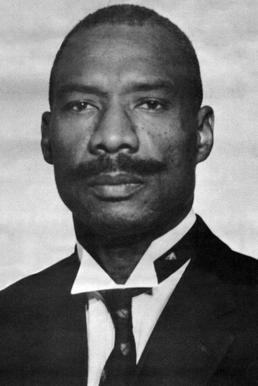
Robert Llewellyn Bradshaw
### Introduction & The Father of the Nation Sir Robert Llewellyn Bradshaw (1916–1978) stands as the towering colossus of modern Kittitian and Nevisian history, universally revered across the West Indies as the undisputed "Father of the Nation" and the first officially proclaimed National Hero of Saint Kitts and Nevis [8]. Rising from profound childhood poverty in a rural village, Bradshaw's extraordinary life trajectory propelled him from an impoverished mechanical apprentice at the Basseterre Sugar Factory into a ferocious trade union titan and the first Premier of Saint Kitts-Nevis-Anguilla [9]. Operating during a century dominated by exploitative colonial plantocracies, Bradshaw mobilized working-class rage into an institutionalized labor movement through the St. Kitts-Nevis Trades and Labour Union and the political machinery of the Labour Party [10]. His monumental leadership shattered centuries of white sugar plantation hegemony, laid the infrastructural foundations of modern social welfare, steered the islands through the turbulent West Indies Federation era alongside peers like [Grantley Adams](/profiles/grantley-adams), and culminated in the historic nationalization of the sugar lands, forever reclaiming the island's soil for its native people [8]. ### Early Life, Impoverishment, and the Sugar Factory Awakening Born on September 16, 1916, in the rural working-class enclave of St. Paul's Village, Saint Kitts, Robert Llewellyn Bradshaw entered a society deeply stratified by racial and economic apartheid [8]. The island's economy was entirely monopolized by a white British British planter syndicate that owned virtually all fertile agrarian land and operated the industrial sugar processing facilities [9]. Bradshaw's father, William Bradshaw, a skilled blacksmith, was forced to migrate to the United States in search of economic survival when Robert was merely an infant [8]. Left behind in St. Kitts, the young boy was raised under the strict, loving guardianship of his maternal grandmother, Jane Francis, whose instillation of fierce personal dignity and moral resilience profoundly shaped his character [8]. Despite exhibiting exceptional intellectual brilliance at St. Paul's Primary School, educational advancement for black working-class youths under British colonial rule strictly terminated at the seventh grade [8]. At sixteen years of age, in 1932, young Bradshaw entered the harsh industrial ecosystem of the Basseterre Sugar Factory—commonly known as the St. Kitts Sugar Factory—as a mechanical machine-room apprentice [9]. The factory operated as the economic citadel and oppressive engine of colonial Saint Kitts. Working amidst deafening industrial machinery, suffocating heat, and hazardous chemical fumes, Bradshaw witnessed firsthand the brutal exploitation of the working class [9]. While British managers and absentee shareholders accrued astronomical profits, thousands of field cane cutters and factory laborers endured starvation wages, hazardous working conditions, seasonal unemployment, and squalid plantation housing [9]. Determined to challenge this systemic injustice, Bradshaw engaged in rigorous self-education during his evening hours. He read voraciously in economics, political philosophy, Caribbean history, and labor jurisprudence. His political awakening crystallized when he uncovered internal factory financial records exposing the staggering disparities between corporate profits and worker compensation, inspiring a lifelong mission to liberate his people from plantocracy domination [9].  ### The 1940 Strike and Ascension to Union Titan In 1940, simmering working-class discontent erupted into open rebellion as sugar factory laborers launched a massive strike demanding wage adjustments to combat severe wartime economic inflation [9]. Emerging as a courageous and highly articulate organizer, the twenty-four-year-old Bradshaw stepped forward to represent his fellow workers, refusing to be intimidated by aristocratic factory executives [9]. Retaliating swiftly, factory owners summarily dismissed Bradshaw from his apprenticeship, intending to blacklist him into permanent economic destitution. Contrary to their intentions, this termination catalyzed the modern Kittitian labor revolution [8]. Unbowed, Bradshaw immediately joined the executive staff of the newly formed St. Kitts-Nevis Trades and Labour Union as a junior clerk [8]. Under the mentorship of pioneering labor leader [Joseph Matthew Sebastian](/profiles/joseph-matthew-sebastian), Bradshaw’s formidable administrative talents, intellectual tenacity, and electrifying oratorical prowess propelled him rapidly through the organizational ranks [8]. He was appointed the first secretary of the Union's crucial Sugar Factory Section and elected to the General Executive Council. When Joseph Matthew Sebastian passed away unexpectedly in 1944, the working class overwhelmingly turned to Bradshaw, electing him President of the St. Kitts-Nevis Trades and Labour Union [10]. Simultaneously, he assumed presidency of the union's political organization, the Workers' League, which he transformed into the mighty St. Kitts-Nevis Labour Party [10]. In these dual leadership roles, Bradshaw forged an unbreakable bond between trade union activism and legislative political mobilization. > "Sugar is our lifeblood, but the land must belong to the people who sweat and bleed upon it. We will no longer be hewers of wood and drawers of water for absentee masters in London." > — Robert Llewellyn Bradshaw, addressing thousands of striking agricultural laborers during the height of the sugar factory struggles [9]. ### The Watershed Thirteen-Week Strike of 1948 and the Soulbury Commission Under Bradshaw’s iron-willed leadership, the trade union evolved into an invincible fortress of working-class solidarity. The definitive showdown between labor and colonial plantocracy occurred in 1948 with the historic Thirteen-Week Strike [10]. For over three agonizing months, thousands of agricultural cane cutters and factory workers brought the entire sugar harvest to a complete standstill [10]. The union demanded comprehensive formal recognition, significant wage increments, standardized working hours, and humane workplace safety regulations. Despite facing immense economic hardship, brutal police harassment, and starvation tactics orchestrated by plantation syndicates, Bradshaw maintained impeccable discipline and unity across the working class, organizing community soup kitchens and mutual aid networks [10]. The crippling economic paralysis forced the British Colonial Office to intervene, appointing the Soulbury Commission of Inquiry to investigate the causes of the industrial unrest. Appointed as a representative member of the commission, Bradshaw fiercely debated British colonial administrators over their conservative assessments [10]. Demonstrating profound economic mastery, Bradshaw authored a brilliant, uncompromising minority report dissenting from the official findings. His scathing manifesto exposed centuries of systemic plantation exploitation and demanded radical land reform, improved housing, and comprehensive social security [10]. The Soulbury minority report established Bradshaw as a premier Caribbean statesman and laid the ideological groundwork for future legislative reforms. ### Legislative Conquests and Federal Leadership Leveraging mass union membership into overwhelming electoral dominance, Bradshaw led the Labour Party to a sweeping landslide victory in the 1946 Legislative Council elections, entering formal internal government [8]. Serving successively as Member for Trade and Production and later Minister of Trade and Production, he initiated progressive policies that channeled sugar export revenues into public infrastructure, sanitation, and public housing [8]. When the British West Indies Federation was established in 1958 to unite ten English-speaking Caribbean territories into a sovereign democratic nation, Bradshaw was elected to the Federal House of Representatives [8]. His stellar administrative reputation earned him the prestigious appointment as Federal Minister of Finance under Prime Minister [Grantley Adams](/profiles/grantley-adams) [8]. Operating from the federal headquarters in Trinidad, Bradshaw championed fiscal self-reliance, regional customs unionization, and economic integration. When irreconcilable insular rivalries led to the collapse of the Federation in 1962, Bradshaw returned to Saint Kitts more determined than ever to secure total political independence for his people [8]. ### Premier of Saint Kitts-Nevis-Anguilla and the Anguilla Crisis In 1966, following another resounding general election victory, Bradshaw became Chief Minister [10]. On February 27, 1967, his administration achieved a major constitutional milestone when the colony assumed Associated Statehood status with Great Britain, granting complete internal autonomy and elevating Bradshaw to the title of first Premier of Saint Kitts-Nevis-Anguilla [10]. As Premier, Bradshaw embarked on an ambitious modernization campaign: opening secondary education to all working-class children regardless of social background, constructing the modern infrastructure of Basseterre, expanding electrical grids to rural villages, establishing universal public healthcare, and pioneering economic diversification into tourism and manufacturing [10]. However, his premiership faced an immediate and agonizing geopolitical ordeal with the Anguilla secession crisis of 1967. Harboring deep-seated grievances stemming from decades of administrative neglect by colonial authorities in Basseterre, and led by charismatic separatist figures such as [Ronald Webster](/profiles/ronald-webster), Anguillans rejected political union with Saint Kitts [10]. Armed uprisings expelled Kittitian police forces, leading to Anguilla's unilateral declaration of independence and eventual British re-intervention. Bradshaw navigated this heartbreaking constitutional crisis with resolute composure, prioritizing national stability and economic advancement in Saint Kitts and Nevis while maintaining principled opposition to colonial fragmentation [10]. ### The 1975 Nationalization of Sugar Lands and Eternal Legacy Bradshaw’s crowning political achievement—the ultimate fulfillment of his sacred pledge to the working class—occurred in 1975 with the passage of the landmark Sugar Lands Acquisition Act [9]. Through this bold legislative masterstroke, Bradshaw’s government nationalized all arable sugar plantation lands and factory facilities across Saint Kitts, wresting control of the island's economy from foreign syndicates and returning ownership of the soil directly to the Kittitian people [9]. This historic act permanently broke the spine of colonial economic hegemony, transforming former plantation subjects into empowered stakeholders of their own nation. Wearing his trademark aristocratic tailcoat and Victorian homburg hat—a deliberate, symbolic appropriation of planter-class attire to assert working-class dignity—Bradshaw spent his final years tirelessly drafting the constitution for full sovereign independence [8]. Although diagnosed with terminal spinal cancer, he refused to abandon his governmental duties until his final breath. Sir Robert Llewellyn Bradshaw passed away on May 23, 1978, at the age of sixty-one, mourned deeply across the global Caribbean community [8]. In 1996, the National Assembly unanimously enacted legislation establishing him as the nation's first National Hero [8]. Today, his monumental legacy is commemorated through the Robert L. Bradshaw International Airport, memorial parks in St. Paul's, and annual National Heroes Day celebrations every September 16, ensuring that the immortal spirit of the Father of the Nation continues to inspire future generations.
View Profile →
Sir Eric Gairy
### Introduction Sir Eric Matthew Gairy (February 18, 1922 – August 23, 1997) was a towering, polarizing, and defining figure in the modern history of Grenada. Serving as the nation's first Prime Minister, Gairy's career was a complex tapestry of triumphant labor activism, charismatic political leadership, and deeply controversial authoritarianism. He rose from humble beginnings to become the preeminent champion of the Grenadian working class, successfully challenging the entrenched plantocracy and leading his nation to independence. Yet, his later years in power were marred by allegations of corruption, political intimidation, and a growing eccentricity that ultimately alienated him from the very people he once championed, leading to his overthrow in a bloodless coup. To study Gairy is to study the contradictions of post-colonial Caribbean leadership. ### Early Life and the Crucible of Labor Born on February 18, 1922, in the rural parish of St. Andrew, Grenada, Eric Gairy was the son of an estate worker. In the 1920s and 1930s, Grenada was a deeply stratified society, dominated by a small, white elite who controlled the island's lucrative agricultural estates—primarily producing nutmeg, cocoa, and mace. The majority of the population, including Gairy's family, lived in poverty, enduring grueling labor conditions and meager wages. Despite these hardships, Gairy received a primary education and briefly worked as a schoolteacher, a position of considerable respect in rural Grenadian communities. However, driven by ambition and a desire for greater opportunities, he joined the wave of Caribbean migrants seeking work abroad. He traveled first to Trinidad and later to the Dutch island of Aruba, where he found employment at a massive ESSO oil refinery. It was in the heavily unionized, politically charged environment of the Aruban oil refineries that Gairy received his true political education. He became deeply involved in trade union activism, learning the tactics of collective bargaining, strikes, and mass mobilization. When he returned to Grenada in 1949, he brought with him not only a worldly perspective but a militant commitment to dismantling the oppressive structures of the Grenadian plantocracy. > "He returned not just as a native son, but as a firebrand forged in the crucible of industrial labor, ready to ignite a revolution in the nutmeg groves." ### The 1951 Strike and the Rise to Power Upon his return, Gairy found a Grenadian working class that was restless, impoverished, and desperate for leadership. In 1950, he founded the Grenada United Labour Party (GULP) and, shortly thereafter, the Grenada Manual and Mental Workers' Union (GMMWU). Gairy possessed an extraordinary charisma and an oratorical style that resonated deeply with the rural poor. He spoke their language, understood their struggles, and promised them a dignity they had long been denied. The turning point came in 1951. Gairy led a massive, island-wide strike that brought the Grenadian economy to a standstill. The strike, which became known as "Sky Red" due to the burning of plantation buildings, was a direct challenge to the power of the estate owners. It was a period of intense conflict, but Gairy emerged victorious. The British colonial authorities, recognizing his immense popularity and the shifting political tides, were forced to negotiate. This victory catapulted Gairy to political dominance. In 1951, Grenada held its first elections under universal adult suffrage, and Gairy's GULP won a sweeping victory. Over the next two decades, Gairy would dominate Grenadian politics, serving as Chief Minister from 1954 to 1962, and later as Premier from 1967 to 1974. He championed policies that improved wages, expanded access to education, and provided housing for the poor. For many Grenadians, "Uncle Gairy" was a messianic figure, a savior who had delivered them from economic bondage. ### Independence and the Knighthood By the early 1970s, the global movement for decolonization was sweeping through the Caribbean. Gairy, ever the astute politician, recognized that the time had come for Grenada to sever its colonial ties. He became the primary architect of Grenada's push for independence from Great Britain. The path to independence was fiercely contested. Many Grenadians, particularly the urban middle class and a new generation of radical intellectuals, feared that independence under Gairy would simply entrench his increasingly autocratic rule. Despite widespread strikes and protests, Gairy pressed forward. On February 7, 1974, Grenada became an independent nation, and Eric Gairy was sworn in as its first Prime Minister. In recognition of his leadership, he was knighted by Queen Elizabeth II, becoming Sir Eric Gairy.  ### Authoritarianism and the Mongoose Gang While Gairy's early career was defined by his defense of the working class, his tenure as Prime Minister was increasingly characterized by paranoia, corruption, and political repression. As opposition to his rule grew, particularly from the Marxist-Leninist New Jewel Movement (NJM) led by the charismatic [Maurice Bishop](/profiles/maurice-bishop), Gairy resorted to authoritarian tactics to maintain his grip on power. The most notorious instrument of his repression was the "Mongoose Gang," a private paramilitary force loyal only to Gairy. Composed largely of loyalists and petty criminals, the Mongoose Gang was used to intimidate, beat, and silence political opponents. The violence reached a tragic crescendo in 1974 when Rupert Bishop, the father of [Maurice Bishop](/profiles/maurice-bishop), was shot and killed by police while defending schoolchildren during an anti-government protest. Gairy's administration was also marked by a profound eccentricity that drew international ridicule. He developed a deep obsession with Unidentified Flying Objects (UFOs) and extraterrestrial life. He famously utilized his platform at the United Nations to formally request the establishment of a UN agency to investigate UFO sightings, arguing that extraterrestrials were visiting Earth and that humanity must prepare for contact. While this obsession made him a figure of curiosity abroad, at home, it was viewed as evidence of a leader who had lost touch with reality and the pressing needs of his people. ### The 1979 Coup and the End of an Era By 1979, Grenada was a nation on edge. The economy was stagnating, political violence was endemic, and Gairy's eccentricities had eroded his legitimacy. On March 13, 1979, while Gairy was in New York attending a UN session (reportedly to discuss UFOs), the New Jewel Movement launched a bloodless coup. [Maurice Bishop](/profiles/maurice-bishop) declared the suspension of the constitution and the establishment of the People's Revolutionary Government. The news of the coup was met with widespread jubilation in Grenada. Gairy's long reign had come to an end. He was forced into exile, settling in the United States, where he watched from afar as the Grenadian Revolution unfolded, ultimately ending in tragedy with the assassination of Bishop and the 1983 US invasion of the island. ### Return from Exile and Final Years Following the collapse of the revolutionary government and the restoration of a parliamentary system, Gairy returned to Grenada in 1984. He attempted to revive the GULP and return to the political fray, but his moment had passed. The political landscape had fundamentally changed, and his health was failing. He suffered a severe stroke in 1996 and passed away on August 23, 1997. ### Assessing the Legacy The legacy of Sir Eric Gairy remains one of the most hotly debated subjects in Caribbean history. To his detractors, he was a corrupt autocrat who betrayed the ideals of the labor movement, institutionalized political violence, and subjected his country to international embarrassment. They point to the Mongoose Gang and the stifling of political dissent as the defining characteristics of his rule. To his supporters, however, Gairy remains the undisputed hero of the Grenadian masses. They remember the man who challenged the racist plantocracy, who gave a voice to the voiceless, and who forced the colonial establishment to recognize the humanity of the black working class. He is credited with breaking the back of the estate system and laying the foundation for a modern, independent Grenada. In truth, Gairy was both. His life embodied the profound challenges of post-colonial leadership, where the liberator can all too easily become the oppressor. Like his contemporary [Robert Llewellyn Bradshaw](/profiles/robert-llewellyn-bradshaw) in St. Kitts, Gairy was a product of a specific historical moment—a moment that required fierce, uncompromising leadership to dismantle an unjust system. However, his failure to transition from a revolutionary labor leader to a democratic statesman ultimately doomed his legacy. Sir Eric Gairy's life serves as a powerful cautionary tale about the corrupting nature of absolute power, even as it stands as a testament to the transformative power of the Caribbean working class.
View Profile →
Sir Ernest Williams
### Introduction and Early Life Sir Ernest Emmanuel Williams stands as one of the most towering figures in the history of Antigua and Barbuda’s labor and political landscape. Often referred to simply as Ernest Williams, he was a linchpin of the early Antiguan labor movement, a founding father of the Antigua Trades and Labour Union (AT&LU), and a dedicated public servant whose career in the legislature spanned several critical decades. His life's work was deeply intertwined with the socio-economic emancipation of the Afro-Antiguan working class, who had long suffered under the exploitative conditions of the colonial sugar plantation economy. Born in the early 20th century in the village of Swetes, Williams grew up in an era where the descendants of enslaved Africans were systemically marginalized, politically disenfranchised, and economically impoverished. The society into which Williams was born was heavily stratified, with a small group of white plantocrats and colonial administrators holding absolute sway over the island’s resources and political institutions. It was against this backdrop of inequality and hardship that Williams forged his profound commitment to social justice and the upliftment of his people. ### The Socio-Economic Landscape of Early 20th Century Antigua To understand the magnitude of Sir Ernest Williams' contributions, one must first comprehend the harsh realities of colonial Antigua. The island's economy was almost entirely dependent on sugar cultivation, a notoriously labor-intensive enterprise that relied on the cheap and easily exploitable labor of the black majority. Following the abolition of slavery in 1834, the plantocracy instituted mechanisms to retain control over the labor force, including the oppressive Masters and Servants Act, which criminalized breach of contract by workers and kept wages at starvation levels. The working conditions on the sugar estates were grueling; laborers worked long hours in the sweltering heat for mere pennies, living in substandard housing with little to no access to healthcare or education. The colonial government, dominated by the planter class, showed little interest in ameliorating these conditions. The global economic depression of the 1930s exacerbated the suffering of the Antiguan working class, leading to widespread unrest and labor riots across the British West Indies. In response, the British government dispatched the Moyne Commission to investigate the causes of the disturbances. The commission's findings painted a grim picture of poverty, disease, and exploitation, ultimately recommending the legalization and encouragement of trade unions to provide workers with a voice. This pivotal moment set the stage for the emergence of the organized labor movement in Antigua, and Ernest Williams was ready to answer the call. ### The Birth of the Antigua Trades and Labour Union In 1939, a group of forward-thinking Antiguans, spurred by the need for collective action against the oppressive plantation system, founded the Antigua Trades and Labour Union (AT&LU). Sir Ernest Williams was at the forefront of this monumental initiative. Recognized as one of the founding members, Williams recognized that true political and economic liberation could only be achieved through the organized solidarity of the working class. He threw himself into the arduous task of organizing workers across the island, traveling from village to village and estate to estate, convincing fearful laborers of the power of unionization.  Within the AT&LU, Williams quickly distinguished himself as a capable and impassioned leader. He served as the union's first vice-president, working closely alongside [Sir Vere Cornwall Bird](/profiles/vere-cornwall-bird), who would become the union's president and, eventually, the nation's first Prime Minister. Together, Williams and Bird formed a formidable partnership, steering the AT&LU through its turbulent early years. They faced staunch opposition from the powerful sugar barons, who employed a variety of tactics—including lockouts, victimization, and intimidation—to crush the nascent union. However, Williams remained resolute, drawing strength from his unwavering belief in the righteousness of their cause. > "The emancipation of the Antiguan worker was not a gift from the colonial masters, but a hard-fought victory won through the sweat, blood, and unyielding solidarity of the labor movement." ### The Watershed Election of 1951 The turning point in Antigua's political history came in 1951. Following years of relentless agitation by the AT&LU, the British colonial government finally granted universal adult suffrage, allowing all adult citizens the right to vote, regardless of property ownership or income. This was a monumental victory for the labor movement, effectively breaking the political monopoly of the planter class. The AT&LU, acting as the political vanguard of the working class, fielded candidates for every seat in the newly expanded Legislative Council. Sir Ernest Williams was selected to contest the constituency of St. Paul, an area encompassing his home village of Swetes. The election was a resounding triumph for the union, which swept all the elected seats. Williams was elected as the parliamentary representative for St. Paul, a position he would hold with distinction for the next three decades, becoming one of the longest-serving parliamentarians in the history of Antigua and Barbuda. ### Tenure in the Legislative Council and Ministerial Portfolios As a member of the Legislative Council, Sir Ernest Williams transitioned from a firebrand union organizer to a statesman and legislator. He understood that the power of the government had to be harnessed to dismantle the structural inequalities that plagued Antiguan society. The political wing of the AT&LU eventually formalized into the Antigua Labour Party (ALP), with Williams serving as a senior and deeply respected member of its inner circle. Throughout his long political career, Williams held several key ministerial portfolios, most notably serving as the Minister for Public Works and Communications. In this role, he oversaw the modernization of Antigua's infrastructure, which was desperately needed to facilitate economic diversification and improve the quality of life for ordinary citizens. He spearheaded initiatives to expand the road network, improve access to clean water, and develop the island's port facilities. These infrastructure projects not only provided immediate employment for thousands of Antiguans but also laid the foundation for the island's burgeoning tourism industry, which would eventually replace sugar as the main engine of economic growth. Beyond infrastructure, Williams played a vital role in drafting and passing essential labor laws that protected the rights of the working class. He drew upon his years of experience on the frontlines of the labor struggle to help craft legislation that guaranteed fair wages, safe working conditions, and the right to collective bargaining. The legislative framework established during this era effectively dismantled the remnants of the plantation economy and ushered in a new era of dignity and empowerment for the Antiguan worker. ### A Legacy of Service and Empowerment Sir Ernest Williams was not merely a politician; he was a community leader in the truest sense of the word. He maintained deep ties to the village of Swetes and the broader St. Paul constituency, always remaining accessible to the people he represented. He and his wife, Irene B. Williams, an esteemed educator, were pillars of their community, dedicating their lives to public service, education, and social upliftment. His passing in 1984 marked the end of an era, but his legacy continued to resonate. He was succeeded as the parliamentary representative for St. Paul by his son, [Sir Rodney Williams](/profiles/rodney-williams), who would go on to serve as a cabinet minister and later as the Governor-General of Antigua and Barbuda. The fact that the constituency remained fiercely loyal to the Williams family is a testament to the profound impact that Sir Ernest had on the lives of his constituents. Today, Sir Ernest Williams is remembered as a stalwart of the Antiguan labor movement and a key architect of the modern nation state. He dedicated his life to the struggle against colonial oppression and economic exploitation, fighting tirelessly to ensure that the wealth and resources of Antigua and Barbuda would be shared equitably among all its people. His journey from the sugar estates of Swetes to the halls of the Legislative Council is a powerful narrative of resilience, determination, and the enduring power of the human spirit. The labor laws he helped to draft, the infrastructure he helped to build, and the union he helped to found continue to serve as the bedrock of Antiguan society, ensuring that the sacrifices made by his generation will never be forgotten.
View Profile →Sir Frank Walcott
### Early Life and The Crucible of Barbadian Society Sir Frank Leslie Walcott was born on September 16, 1916, in the rural parish of St. Peter, Barbados. His birth occurred during a period of profound social and economic inequality in the Caribbean. At the time, Barbados was a British colony deeply entrenched in the plantocracy system, where a small, white elite controlled the vast majority of the land, wealth, and political power. The island's economy was almost entirely dependent on sugar cane cultivation, a labor-intensive industry that relied heavily on the subjugated black working class. Workers faced grueling conditions, abysmal wages, and virtually no legal protections or avenues for collective bargaining. It was within this crucible of systemic oppression and widespread poverty that Walcott's worldview began to take shape. Tragedy struck early in Walcott's life. He was the son of a policeman who died when Frank was still an infant, leaving his mother, Marian Walcott, to raise him alone. Marian, a plantation worker, faced the harsh realities of providing for a child in an unforgiving economic landscape. Seeking better opportunities, she relocated the family to the capital city of Bridgetown, where she found work as a domestic helper. This move from the rural countryside to the urban center exposed the young Frank to a broader cross-section of Barbadian society, from the bustling port where dockworkers toiled to the commercial streets dominated by the merchant elite. Despite the formidable socio-economic barriers, Walcott was a bright and determined student. He attended the Wesley Hall Boys' School, an institution that, while lacking in resources compared to the elite schools of the island, provided a solid foundational education. At Wesley Hall, Walcott distinguished himself in mathematics and debate. His natural aptitude for argumentation and his keen analytical mind were early indicators of the formidable negotiator he would later become. The school also fostered a sense of discipline and purpose, instilling in him a deep-seated belief in the power of education as a tool for social mobility and empowerment.  ### The Labor Movement and The Barbados Workers' Union The 1930s were a turbulent decade in the Caribbean, marked by widespread labor unrest and social upheaval. The culmination of decades of economic exploitation and political disenfranchisement exploded in the 1937 labor riots in Barbados, a watershed moment that forever altered the island's trajectory. Out of the ashes of the riots emerged a newfound determination among the working class to organize and demand their rights. This led to the formation of the Barbados Workers' Union (BWU) in 1941, a pivotal institution in the island's history. Frank Walcott's entry into the labor movement was a natural progression of his lived experiences and his growing political consciousness. He joined the BWU shortly after its inception, quickly rising through the ranks due to his exceptional organizational skills, his fiery yet disciplined rhetoric, and his unwavering commitment to the workers' cause. In 1945, at the relatively young age of 29, Walcott was appointed General Secretary of the BWU, a position he would hold for an astonishing fifty years, interrupted only briefly. As General Secretary, Walcott transformed the BWU into a formidable force for social and economic change. He understood that true empowerment required more than just negotiating better wages; it demanded a fundamental restructuring of the power dynamics in Barbadian society. He was a master negotiator, described by contemporaries as a "forceful but reasonable" advocate who could go toe-to-toe with the most entrenched business interests. > "The worker is not a mere cog in the machinery of production; he is the very soul of the enterprise, and his dignity must be the cornerstone of any progressive society." Under his leadership, the BWU expanded its membership base, organizing workers across various sectors, from the sugar fields to the docks, from the civil service to the emerging tourism industry. Walcott recognized the importance of solidarity and collective action, forging alliances with other regional and international labor organizations. He served three terms as president of the Caribbean Congress of Labour and held prominent leadership roles within the International Confederation of Free Trade Unions and the International Labour Organization (ILO), amplifying the voices of Caribbean workers on the global stage. ### Political Ascendancy and Ideological Shifts Walcott's influence was not confined to the labor movement; he recognized early on that economic rights were inextricably linked to political representation. In 1945, the same year he became General Secretary of the BWU, he was elected to the Barbados House of Assembly. He was initially associated with the Barbados Labour Party (BLP), led by [Grantley Adams](/profiles/grantley-adams), another towering figure in Barbadian history. However, the alliance between Walcott and Adams eventually fractured. Walcott, representing the more radical and uncompromising wing of the labor movement, increasingly found himself at odds with what he perceived as the BLP's moderate and sometimes overly cautious approach to social reform. This ideological divergence culminated in a historic split in the mid-1950s. Walcott, alongside [Errol Barrow](/profiles/errol-barrow), played a pivotal role in the formation of the Democratic Labour Party (DLP) in 1955. The creation of the DLP marked a profound shift in Barbadian politics. The party, heavily backed by the BWU and Walcott's formidable organizing apparatus, championed a more aggressive agenda of social democratic reform, advocating for free education, improved healthcare, and greater economic nationalization. Walcott's political career spanned several decades, serving in the House of Assembly from 1945 to 1966 and again from 1971 to 1976. He was instrumental in shaping the legislative framework that dismantled the remnants of the plantocracy and laid the foundations for a modern, independent Barbados.  ### The Road to Independence and Beyond As Barbados marched toward independence in the 1960s, Walcott's role as a statesman and national leader became even more pronounced. He was a key figure in the constitutional negotiations with the British government, ensuring that the rights of the working class were enshrined in the new nation's legal framework. Following Barbados' independence in 1966, he continued to be a central figure in the country's development. His diplomatic skills were recognized when he was appointed as Barbados' first Ambassador to the United Nations, a role in which he eloquently defended the interests of developing nations and advocated for a more equitable global economic order. Despite his international engagements, he never lost touch with his roots in the labor movement, continuing to guide the BWU through the challenges of a rapidly changing global economy. ### A Lasting Legacy of Empowerment Sir Frank Walcott's legacy is woven into the very fabric of modern Barbados. He passed away on February 24, 1999, leaving behind a nation fundamentally transformed by his tireless advocacy. He was a man of profound intellect, unyielding courage, and deep compassion for the marginalized. In recognition of his monumental contributions, he was officially named one of the eleven National Heroes of Barbados in 1998, a testament to his status as a founding father of the modern nation. The Frank Walcott Labour College, established in 1977, stands as a living memorial to his belief in the power of education to emancipate the working class. His life's work ensured that the descendants of enslaved Africans and indentured laborers in Barbados could live with dignity, security, and a voice in their own destiny. He navigated the complex intersection of labor and politics with a strategic brilliance that few have matched. His story is not just a biography of a trade unionist; it is the story of the Barbadian people's struggle for justice, equality, and self-determination. Sir Frank Walcott remains an enduring symbol of resilience and the transformative power of collective action, a towering figure whose impact will be felt for generations to come.
View Profile →Sir George Charles
# Biography of Sir George Frederick Lawrence Charles ### Introduction Sir George Frederick Lawrence Charles stands as one of the towering pillars of twentieth-century Caribbean history, widely revered as the founding father of the modern Saint Lucian nation. As the island's first Chief Minister and a primary architect of its transition from a crown colony to an independent state, Charles's life was inextricably bound to the struggles and triumphs of the Saint Lucian working class. At a time when the political and economic landscape of the Caribbean was dominated by colonial administrators and a wealthy plantocracy, Charles championed the cause of the disenfranchised, bringing about universal adult suffrage and the birth of labor-backed political representation. His legacy as the co-founder of the [Saint Lucia Labour Party](/profiles/saint-lucia-labour-party) (SLP) and his decades-long dedication to trade unionism earned him the distinction of being declared one of Saint Lucia's first National Heroes. His life remains a testament to the power of grassroots mobilization and the enduring quest for social justice in the postcolonial West Indies [1]. ### Early Life and Colonial Context George Frederick Lawrence Charles was born on June 7, 1916, in the capital city of Castries, Saint Lucia. He grew up in an era when the island was a British Crown Colony, marked by stark class and racial divisions. The local economy was heavily dependent on agriculture, particularly sugarcane, which was cultivated on large estates owned by a small, predominantly white and light-skinned elite. The vast majority of the population, of African descent, lived in deep poverty, working as agricultural laborers or dockworkers with little to no access to social mobility, quality education, or political power [2]. Charles's father, James Charles, was a respected community figure and an early advocate for working-class solidarity. His father's activism left a deep impression on the young George, instilling in him a sense of civic duty and a concern for the plight of the poor. Charles received his formal education at St. Mary's College, the island's premier secondary school for boys. While St. Mary's offered a curriculum rooted in the British colonial tradition, it also served as a crucible for many of the island's future leaders, including the poet [Derek Walcott](/profiles/derek-walcott) and the economist [Sir Arthur Lewis](/profiles/sir-arthur-lewis). Here, Charles excelled academically, but he was also acutely aware of the limitations placed on young black men in a colonial society where key administrative and commercial positions were closed to them [1][3]. ### The Aruba Experience and Political Awakening Like many ambitious young men from the Windward and Leeward Islands during the 1930s and 1940s, Charles looked beyond Saint Lucia's shores for employment opportunities. The discovery of oil in Venezuela and the establishment of massive refineries in the Dutch Caribbean islands of Aruba and Curaçao created a demand for English-speaking West Indian labor. Charles migrated to Aruba, where he found employment with the Lago Oil and Transport Company, an affiliate of Standard Oil of New Jersey (Exxon) [1]. The year Charles spent in Aruba was a formative period that shaped his entire political philosophy. The Lago refinery was a massive industrial complex, employing thousands of workers from across the Caribbean and the Americas. In this high-pressured industrial environment, Charles witnessed firsthand the power of collective bargaining and the organization of labor. He observed how workers from different islands and backgrounds could unite to demand better wages, housing, and working conditions. The racial segregation and unequal pay scales between expatriate American managers and West Indian laborers further fueled his critique of colonial capitalism. Charles became active in trade union discussions, absorbing the principles of labor solidarity and organization that he would later transplant to his homeland [3]. ### Return to Saint Lucia and the Vigie Airport Strike In 1945, as World War II drew to a close, Charles returned to Saint Lucia. The island was undergoing a period of economic hardship, exacerbated by the decline of the sugar industry and the demobilization of West Indian soldiers. Charles took a job as a timekeeper on the reconstruction and expansion project of the Vigie Airport (now named the George F. L. Charles Airport in his honor) near Castries [1]. His position as a timekeeper gave him a unique vantage point. He saw the grueling labor performed by the workers, who cleared land, mixed concrete, and laid the runway under the hot sun, all for a mere pittance—often less than a shilling a day. The workers had no representation, no job security, and were subject to the whims of colonial overseers. Charles could not remain a silent observer. He began organizing the airport laborers, urging them to demand fair wages and decent working hours [3]. His efforts culminated in a major strike that brought the airport construction to a standstill. The colonial authorities and contractors were forced to negotiate, resulting in an unprecedented wage increase and improved working conditions for the laborers. This victory established Charles as a champion of the working man. The Saint Lucia Workers Cooperative Union (SLWCU), which had been registered in 1939 but had struggled to gain traction, saw in Charles the energetic leader they needed. In late 1945, Charles was elected General Secretary of the union. Under his leadership, the SLWCU expanded its reach from Castries into the rural sugar valleys of Roseau, Dennery, and Cul-de-Sac, organizing agricultural workers who had long been exploited by the plantocracy [1][3]. ### The Rise of Labor Politics and Universal Suffrage By the late 1940s, Charles recognized that industrial action alone was insufficient to dismantle the structures of colonial oppression. True liberation required political power, which was impossible under the existing constitutional arrangements. At the time, Saint Lucia's Legislative Council was dominated by colonial officials and nominated members representing the planting and merchant classes. Voting was restricted to a tiny fraction of the population who met strict property, income, and literacy requirements [3]. To challenge this oligarchy, Charles and his father James, along with other labor leaders such as Carl La Corbiniere and Herman B. Collymore, co-founded the Saint Lucia Labour Party (SLP) in 1950. The party was established as the political wing of the SLWCU, mirroring the regional trend of trade-union-backed parties, such as those led by [Grantley Adams](/profiles/grantley-adams) in Barbados and [Robert Llewellyn Bradshaw](/profiles/robert-llewellyn-bradshaw) in Saint Kitts [1]. The SLP's platform was radical for its time, calling for universal adult suffrage, the expansion of primary and secondary education, land reform to benefit small peasants, and eventual self-government. The SLP's demands for constitutional reform bore fruit in 1951 when the British government granted a new constitution for Saint Lucia. The most revolutionary change was the introduction of universal adult suffrage, which enfranchised the vast majority of the Saint Lucian population for the first time [3]. The general election of October 1951 was a watershed moment in the island's history. > "I have dedicated my life to the service of the working class. It was not a path of ease, but it was the only path to the liberation of our people." > — Sir George Charles [3] The SLP campaigned vigorously across the island, mobilizing the newly enfranchised rural and urban workers. The election results were a landslide victory for labor: the SLP won five of the eight elected seats in the Legislative Council [3]. George Charles won the South Castries seat with an overwhelming majority, while his colleagues secured victories in other key constituencies. The old plantocracy was swept aside, and for the first time, representatives of the working class sat in the halls of power [3]. ### Ministerial Leadership and Chief Minister The 1951 election marked the beginning of a decade of SLP dominance. Charles emerged as the de facto leader of the elected members in the legislature, working to translate the party's socialist platform into concrete policies. In 1956, another constitutional change introduced the ministerial system, giving elected members executive responsibility for government departments. Charles was appointed Minister of Education and Social Affairs [3]. In this role, Charles prioritized human resource development. He launched an aggressive program to build primary schools in rural villages, ensuring that the children of agricultural laborers did not have to walk miles to Castries to receive an education. He also expanded adult literacy classes, recognizing that literacy was essential for political empowerment. In the arena of social affairs, Charles oversaw the introduction of basic labor laws, including workmen's compensation, minimum wage legislation, and regulations governing safety in the workplace [3]. In 1960, a new constitution further advanced Saint Lucia towards self-government by establishing the office of Chief Minister. On January 1, 1960, George Charles was sworn in as the first Chief Minister of Saint Lucia [1]. He also held the portfolio of Minister of Finance. As Chief Minister, Charles faced the daunting task of managing an economy in transition. The sugar industry was in terminal decline, and Charles supported the shift towards banana cultivation, which allowed smallholders to become independent producers. This "banana boom" transformed the rural economy, creating a new class of small farmers and reducing the island's dependence on the traditional sugar estates [3]. As Saint Lucia navigated these constitutional shifts, Charles participated in regional discussions alongside leaders like [Eric Williams](/profiles/eric-williams) of Trinidad and Tobago and [Norman Manley](/profiles/norman-manley) of Jamaica to explore the possibility of a West Indies Federation. Under Charles's leadership, the SLP won another major victory in the April 1961 general elections, capturing nine of the ten seats in the expanded Legislative Council [3]. However, this period of triumph also sowed the seeds of future political instability. ### Political Fractures and the Rise of the Opposition The rapid political changes of the early 1960s brought internal tensions within the SLP to the surface. A younger generation of educated professionals, led by the ambitious lawyer [Sir John Compton](/profiles/sir-john-compton), began to challenge Charles's leadership. Compton and his allies argued that Charles's union-centric approach was too narrow and that the country needed a more modern, development-oriented administration to prepare for full independence [3]. The rift widened after the 1961 election when Compton, disappointed at not being appointed to a key ministerial post and criticizing the government's economic policies, broke away from the SLP [3]. Compton formed the National Labour Movement (NLM). In 1964, the NLM merged with the People's Progressive Party (PPP)—a party that represented the business elite and remnants of the old plantocracy—to form the United Workers Party (UWP) [3]. The emergence of the UWP transformed Saint Lucian politics. Compton campaigned on a platform of modernization, infrastructure development, and industrialization, contrasting his vision with what he characterized as the stagnant, union-dominated policies of the SLP. The political climate became highly polarized, leading to strikes and civil unrest. In the general election of June 1964, the UWP defeated the SLP, winning six of the ten seats. John Compton became Chief Minister, ending George Charles's tenure as the head of government. Although the SLP lost power, Charles retained his seat in the legislature and became the Leader of the Opposition, a post he held with distinction, holding the new government accountable and continuing to advocate for workers' rights [3]. ### Later Life, Honors, and Lasting Legacy Sir George Charles remained an active figure in Saint Lucian politics and public life for several decades. He eventually retired from active politics, passing the torch to a new generation of SLP leaders. In his retirement, he was widely consulted as an elder statesman, respected by both allies and political opponents for his integrity and his pioneering role in the nation's development. In recognition of his monumental contributions to Saint Lucia and the wider Caribbean, Charles received numerous honors. In 1987, he was awarded the St. Lucia Cross, the island's second-highest national honor [1]. The following year, in 1988, he was knighted by Queen Elizabeth II, becoming a Knight Commander of the Order of St. Michael and St. George (KCMG) [1]. In 1997, the Vigie Airport, where his political journey had begun as a timekeeper more than fifty years earlier, was officially renamed the George F. L. Charles Airport in his honor [1][3]. Sir George Charles passed away on June 26, 2004, at the age of 88. His death was met with national mourning, and he was accorded a state funeral [1]. In 2015, the government of Saint Lucia officially declared Sir George Charles and his long-time political rival, Sir John Compton, as the nation's first two National Heroes [1]. Today, Sir George Charles is remembered not only as a political leader but as the man who gave voice to the voiceless. His struggle for universal adult suffrage broke the political monopoly of the colonial elite and laid the democratic foundations of modern Saint Lucia. His dedication to the labor movement ensured that the rights and dignity of the working class would forever be enshrined in the nation's laws and identity [3].  
View Profile →
Sir Grantley Adams
# Sir Grantley Herbert Adams Sir Grantley Herbert Adams (1898–1971) stands as a titan of Caribbean history, widely revered as the principal architect of modern Barbados and a pioneering figure in the West Indian labor movement. His transformation from a prominent elite barrister into a radical champion of the working class profoundly shifted the socio-political landscape of the region. Through decades of relentless advocacy, he shattered the entrenched oligarchy of the era, brought about universal adult suffrage, and distinguished himself globally as the first and only Prime Minister of the West Indies Federation. Today, his enduring legacy forms the bedrock of Barbadian democracy and regional integration.  ### Early Life and Education Grantley Herbert Adams was born on April 28, 1898, in the parish of St. Michael, Barbados. Raised in an era where the island was firmly under British colonial rule and dominated by a white planter oligarchy, Adams demonstrated exceptional intellectual prowess from a young age. He received his early education at St. Giles before progressing to Harrison College, one of the island's most prestigious secondary institutions. His academic excellence earned him the coveted Barbados Scholarship in 1918, which afforded him the opportunity to study abroad. He traveled to the United Kingdom to attend Oxford University, where he studied classics and jurisprudence. His time at Oxford not only refined his legal acumen but also exposed him to the broader intellectual and political currents of the early 20th century, equipping him with the rhetorical and analytical tools he would later use to dismantle colonial inequalities in his homeland. ### Return to Barbados and Legal Career Upon returning to Barbados in the 1920s, Adams established a highly successful practice as a barrister. Initially, his political and social alignment seemed to favor the conservative elite, reflecting his class standing and elite education. He moved in the upper echelons of Barbadian society and was seen as a moderate, respectable professional. However, beneath this veneer, Adams was increasingly troubled by the staggering poverty, harsh working conditions, and systemic disenfranchisement suffered by the black majority in Barbados. ### The 1937 Labor Riots and Political Awakening The turning point in Adams' life—and in the history of Barbados—came during the tumultuous events of 1937. Fueled by widespread economic desperation, abysmal wages, and an absolute lack of political representation for the working class, tensions boiled over into full-scale labor riots across the island. The spark for these riots was the deportation of Clement Payne, a prominent labor activist from Trinidad who had been attempting to organize Barbadian workers. > "He was considered the 'Moses' of the Barbadian working class, leading them out of the wilderness of colonial disenfranchisement and into the promised land of political representation, forever altering the destiny of the Caribbean." Adams boldly stepped forward to serve as the legal representative for Clement Payne. Though he could not prevent Payne's deportation, the experience profoundly radicalized Adams. Witnessing the brutal suppression of the riots and the urgent need for systemic change, he abandoned his conservative affiliations and threw his considerable intellect and influence behind the labor movement. He recognized that legal defense alone was insufficient; political and economic revolution was required to emancipate the masses. ### Rise to Power and the Labour Movement Following the 1937 disturbances, Adams emerged as the undisputed leader of the progressive movement in Barbados. In 1938, he co-founded the Barbados Progressive League, which later evolved into the Barbados Labour Party (BLP). The BLP's mandate was to fight for workers' rights, improved living conditions, and, crucially, political enfranchisement. In 1941, understanding the need for organized labor to complement political action, Adams was instrumental in the formation of the Barbados Workers' Union (BWU). He served as the union's president from 1941 to 1954, successfully intertwining the objectives of the labor union with the political goals of the BLP. Through relentless campaigning both locally and in representations to the British Colonial Office, Adams pushed through monumental legislative reforms. Key achievements during this period included the passage of the Trade Union Act of 1939, which legalized union activity, the establishment of a Wages Board, and the introduction of Minimum Wage Legislation. Crucially, he fought for the Representation of the People Act in 1943, which drastically lowered the income qualifications required to vote, paving the way for the ultimate goal: Universal Adult Suffrage, which was achieved in 1951. ### First Premier of Barbados (1954-1958) As the British government gradually ceded self-governing powers to its colonies, Adams' political dominance was solidified. With the introduction of a ministerial form of government in 1954, Sir Grantley Adams was appointed as the first Premier of Barbados. During his tenure as Premier, Adams focused on nation-building and modernizing the island's infrastructure. His government heavily invested in education, public health, and housing. A crowning achievement of his domestic policy was the conceptualization and initial funding for the Queen Elizabeth Hospital, which aimed to provide quality, accessible healthcare to all Barbadians, regardless of their socio-economic status. His administration also modernized the deep-water harbor and laid the groundwork for the island's transition to a modern economy less dependent on the unstable sugar industry. ### Prime Minister of the West Indies Federation (1958-1962) Sir Grantley Adams was a staunch Pan-Africanist and a passionate believer in regional integration. He envisioned a united Caribbean that could pool its resources and stand as a powerful, independent bloc on the world stage. In 1958, he resigned as Premier of Barbados to take on the most challenging role of his career: the first (and only) Prime Minister of the West Indies Federation. > "To divide the Caribbean is to conquer it; our only salvation lies in the unyielding unity of the West Indian people." The Federation was an ambitious political union comprising ten British Caribbean territories, including Jamaica, Trinidad and Tobago, and the Leeward and Windward Islands. Operating out of the federal capital in Trinidad, Adams faced insurmountable challenges. The Federation was plagued by internal rivalries, insular nationalism, and profound disagreements over freedom of movement, taxation, and federal power, particularly between the larger territories of Jamaica (led by Norman Manley and later Alexander Bustamante) and Trinidad (led by [Eric Williams](/profiles/eric-williams)). Despite Adams' diplomatic efforts to hold the fragile union together, the Federation collapsed in 1962 following a referendum in Jamaica that voted to secede, closely followed by Trinidad and Tobago's withdrawal. The failure of the Federation was a bitter disappointment to Adams, marking the end of his dream for a unified Caribbean state. ### Later Life and Legacy Following the collapse of the Federation, Adams returned to Barbados, where his political rival (and former protégé), [Errol Barrow](/profiles/errol-barrow), had taken the reins of leadership and was steering the island toward full independence, which was achieved in 1966. Adams served as the Leader of the Opposition until his retirement from active politics due to failing health. Sir Grantley Herbert Adams passed away on November 28, 1971. His legacy, however, remains inextricably woven into the fabric of Barbadian society. In 1998, by an act of Parliament, he was officially designated as one of the ten National Heroes of Barbados. His birthday, April 28, is celebrated annually as National Heroes Day. The island's primary aviation hub, the Grantley Adams International Airport, proudly bears his name, standing as a testament to the man who laid the runway for a modern, democratic, and proud Barbados.
View Profile →
Sir Vere Cornwall Bird
### Introduction Sir Vere Cornwall Bird Sr. (December 9, 1910 – June 28, 1999) is universally recognized as the "Father of the Nation" of Antigua and Barbuda. A towering, charismatic, and often polarizing figure, Bird's life story is inextricably linked to the island's journey from a marginalized, poverty-stricken British colony dominated by a white plantocracy to a modern, independent, and self-governing nation. For more than half a century, Bird dominated the political landscape of Antigua. He was a pioneer of the trade union movement, the founder of the nation's dominant political party, and the architect of its independence. His leadership transformed the social and economic realities of the working-class Afro-Antiguan population, dismantling the oppressive remnants of the colonial plantation system. Yet, his long tenure and unyielding grip on power also courted significant controversy, making him a complex figure of both immense reverence and intense critique. [1][2] ### The Crucible of Poverty: Early Life and Influences Vere Cornwall Bird was born on December 9, 1910, in a small, impoverished neighborhood of St. John's, the capital of Antigua. His early life was defined by the harsh realities of the colonial West Indies. At the time of his birth, Antigua’s economy was entirely dependent on sugar cultivation. A small elite of white British planters owned the vast majority of the arable land, while the black majority labored under appalling conditions for meager wages, trapped in a cycle of poverty and disenfranchisement. The legacy of slavery, abolished mere decades before his grandparents' generation, still cast a long, dark shadow over the island's social structure. Bird’s formal education was limited but formative. He attended the St. John's Boys' School (now known as the TN Kirnon School), where he demonstrated a sharp intellect and a natural aptitude for leadership. However, the economic realities of his family forced him to leave school at an early age to enter the workforce. [5] A critical turning point in his life occurred when he joined the Salvation Army as a young man. Serving as an officer for two years, Bird was exposed to the deepest depths of poverty and suffering across the island. He ministered to the sick, the hungry, and the destitute. This experience profoundly shaped his worldview. It instilled in him a deep empathy for the marginalized and a righteous anger against the systemic inequalities that perpetuated their suffering. The Salvation Army also honed his exceptional oratorical skills; he learned how to command an audience, speak with moral authority, and inspire hope in the face of despair. [6] ### The Rise of the Trade Unionist In the late 1930s, a wave of labor unrest swept across the British West Indies. Triggered by abysmal working conditions, depressed wages, and a lack of political representation, workers across the region began to organize. The late 1930s were characterized by sweeping labor riots across the British Caribbean, prompting the British government to dispatch the Moyne Commission to investigate. The Commission's report exposed the horrifying living conditions of the West Indian masses, validating the very grievances Bird and his peers were fighting against. Antigua was no exception to this unrest. In 1939, recognizing the urgent need for collective bargaining, a group of workers formed the Antigua Trades and Labour Union (ATLU). Vere Bird was a founding member and quickly emerged as its most dynamic and effective leader. By 1943, he was elected President of the union. [1][4] > "We are not asking for charity; we are demanding the dignity that belongs to every human being who toils to build this land." Under Bird's leadership, the ATLU became a formidable force against the entrenched plantocracy. He organized massive strikes, demanding higher wages, better housing, and the right to basic human dignity. Bird was fearless; he confronted the colonial authorities and the wealthy plantation owners with an unyielding resolve. His towering physical presence—he stood well over six feet tall—matched his commanding rhetorical style. In 1951, Bird led a massive, island-wide strike that crippled the sugar industry. The planters tried to break the strike using scab labor and police intimidation, but Bird's grip on the workforce was absolute. This 1951 strike was the definitive moment that shifted the balance of power from the white planters to the black working class. Through grueling negotiations and relentless pressure, Bird secured landmark concessions that fundamentally improved the living standards of the Antiguan working class. [5] ### The Transition to Politics: The Antigua Labour Party Bird recognized early on that economic emancipation could not be fully achieved without political power. The working class needed representation in the halls of government to enact lasting legislative change. In 1946, leveraging the massive base of the ATLU, Bird established the Antigua Labour Party (ALP) as the political wing of the labor movement. [6] The introduction of universal adult suffrage in 1951 was a watershed moment. For the first time, the black majority had a voice at the ballot box. They overwhelmingly threw their support behind Bird and the ALP. Bird was elected to the colonial legislature, marking the beginning of an era of political dominance that would last for over four decades. As he accumulated political power, Bird began dismantling the old colonial structures. When the ministerial system of government was introduced in 1960, he became the island's first Chief Minister. In 1967, when Antigua became an Associated State with Britain, Bird became Premier. During these years, he focused intensely on modernizing the country. Recognizing the precarious nature of a monocrop sugar economy, he initiated a massive drive to diversify. He aggressively promoted tourism, transforming the island into a premier destination, courting international hotel chains and investors.  He also prioritized infrastructure, overseeing the expansion of roads, the modernization of the port, and the development of the international airport, which would later be named the V.C. Bird International Airport in his honor. Education, which had been a privilege for the few, was made free and accessible to the masses. Healthcare facilities were expanded. Under Bird's stewardship, Antigua was physically and socially transformed. [3] ### Independence and the Premiership The pinnacle of Bird's political career arrived on November 1, 1981, when he led Antigua and Barbuda to full independence from the United Kingdom. He became the nation's first Prime Minister. By this time, Bird was a patriarch of Caribbean politics, a statesman who had overseen the entire trajectory of his nation from a struggling colony to a sovereign state. As independence approached in the late 1970s, Bird faced a significant challenge from the sister island of Barbuda. The Barbudans, fearing marginalization by the more populous Antigua, actively campaigned for their own independence or a return to direct British rule. Bird had to employ a mixture of tough negotiation, constitutional concessions, and diplomatic pressure in London to ensure that the twin-island state remained united upon independence in 1981. However, his later years in power were increasingly marred by controversy. The ALP government, under his extended rule, faced numerous allegations of corruption, financial mismanagement, and nepotism. Several of his sons held prominent ministerial portfolios, leading critics to accuse him of treating the government as a family dynasty. His authoritarian leadership style drew sharp criticism from opposition parties and civil society groups who argued that he was stifling democratic development. The line between the state, the ruling party, and the Bird family became deeply blurred. Despite these significant controversies, his core base of support remained incredibly loyal, viewing him as the indispensable architect of their freedom. [1][4] ### Final Years and Legacy Sir Vere Cornwall Bird stepped down as Prime Minister in 1994, citing his advancing age and declining health. He was succeeded by his son, Lester Bird. In the same year, he was rightfully designated a National Hero of Antigua and Barbuda, cementing his official status as the "Father of the Nation." He passed away on June 28, 1999, at the age of 88. [6] The legacy of V.C. Bird is monumental and multifaceted. It is impossible to understand modern Antigua and Barbuda without understanding his life. He took a society broken by colonial exploitation and forged a modern, independent nation. He gave voice to the voiceless and broke the back of the oppressive plantocracy. While his later years serve as a cautionary tale about the perils of unchecked power and entrenched leadership, his early heroics as a champion of the working class secure his place as one of the most important figures in Caribbean history. His name adorns the international airport, and his birthday is celebrated annually as a national holiday, a testament to the indelible mark he left on his country. [2]
View Profile →
Thomas Manchester
# Thomas Manchester: The Aristocrat Who Championed the Working Class ### Introduction Thomas Manchester (1880–1943) stands as a monumental figure in the history of [St. Kitts](/islands/st-kitts), fundamentally shaping the island’s trajectory from a deeply unequal colonial plantation economy to a politically awakened society championed by organized labor. Born into the highly privileged echelons of the St. Kitts plantocracy—a social class that held a near-absolute monopoly on land, wealth, and political power—Manchester made the extraordinary choice to abandon his class interests in favor of radical empathy and political defiance. That choice ultimately cost him his wealth, his estates, and his social standing among the island’s elite. By founding the Workers’ League and championing the creation of the St. Kitts-Nevis Trades and Labour Union, Manchester laid the very foundation upon which later political titans like [Robert Llewellyn Bradshaw](/profiles/robert-llewellyn-bradshaw) would build the modern, independent Kittitian nation. His life remains one of the most compelling narratives of sacrifice and solidarity in the Caribbean labor movement. ### Early Life and the Privileges of the Plantocracy Thomas Manchester was born on August 16, 1880, into a world of immense comfort, status, and influence. He was the sixth child and second son of James Thomas Allan Manchester and Ann Catherine Atherton. The Manchester family was an undisputed cornerstone of the colonial establishment in the parish of Sandy Point. His father, James, was not only a devout pillar of the St. Ann’s Anglican Church but also a man of formidable economic power. James owned both the Lynch’s and New Guinea sugar estates, served as the attorney for the Blake’s plantation, and sat on the St. Kitts Executive Council, the highest advisory body to the British colonial administrator. Growing up as one of seven children in this affluent, aristocratic environment, young Thomas was thoroughly insulated from the crushing poverty that defined the lives of the black majority working the sugar cane fields. Like many sons of the wealthy Caribbean elite, he was sent abroad for his higher education, journeying to Canada to study construction engineering. The years spent in North America provided him with a much broader perspective on infrastructure, modern governance, and social organization—intellectual tools he would later weaponize against the very colonial system that had enriched his family. Upon his return to [St. Kitts](/islands/st-kitts), Manchester assumed his expected role within the family enterprise. He took on the management of Lynch’s Estate, oversaw operations at the New Guinea estate (which served as his sisters’ inheritance), and established a successful hardware and building materials store on Main Street in Sandy Point. He also married into the regional colonial elite. On January 14, 1919, he wed Ada Killikelly, the only daughter of Reverend Charles Killikelly, a prominent Wesleyan Minister based in neighboring Montserrat. The two had met while Manchester was utilizing his engineering expertise in Montserrat, having been requested by the Anglican community to supervise the reconstruction of church edifices severely damaged by recent storms. Their lavish wedding was a major societal event, heavily attended by the upper crust of Kittitian and Montserratian society. The expensive jewelry exchanged between the bride and groom underscored the immense wealth and privilege the couple enjoyed. They returned to St. Kitts merely two days after the ceremony to settle into their comfortable life, and welcomed their only daughter, Kathleen Dorothy, on December 4, 1923. ### The Sandy Point Fire and Political Awakening Despite his aristocratic background, Manchester was deeply community-oriented and civic-minded. In 1923, he took the initiative to form the St. Ann’s Cricket Club, fostering local engagement and sporting camaraderie. However, it was a near-catastrophe in his hometown that truly awakened his political conscience and radicalized his worldview. Shortly after his return from Canada and his marriage, a massive, terrifying fire threatened the town of Sandy Point. The colonial administration’s woefully inadequate, disorganized response to the fire crisis shattered any lingering illusions Manchester held about the benevolence of Crown Colony rule. The gross inefficiency of the local government, the complete absence of protective social legislation, and the stark juxtaposition of his own secure wealth against the extreme vulnerability of the laboring classes profoundly disturbed him. He recognized that the colonial government functioned primarily to protect the lucrative sugar industry and the planters, leaving the human beings who actually powered the economy entirely unprotected. Channeling his profound outrage, Manchester took directly to the press, leveraging his status to attack the establishment. In a scathing public letter published in the *St. Kitts-Nevis Daily Bulletin*, he indicted the colonial government for its sheer negligence: > *"…long before this fire occurred the attention of the government was drawn to the fact that a fire brigade with proper implements was imperative necessary for the protection of the town but as per usual the request was pigeonholed."* He went further, explicitly connecting the physical danger of the fires to the structural poverty and unregulated housing forced upon the working class by the sugar barons. Expressing the urgent concerns of local property owners and residents alike, he wrote: > *"Old dilapidated huts are allowed to be placed immediately near cane fields adjoining the town of Sandy Point and in some instances cooking with open fires is being done inside, under or alongside these houses. Is there no law, Mr. Editor restricting the placing of houses within certain distances from cane fields adjoining the town of Sandy Point?"* His growing disillusionment with the colonial state culminated in a powerful, defining question that would become the central thesis of his entire political life—a quote that still resonates in Caribbean political history: > *"What is the good of a government that does so little to protect, and safeguard against destructive elements, the people whom it represents?"* ### Personal Tragedy and the Birth of the Workers' League In 1928, personal tragedy struck the Manchester household when Ada died prematurely at the age of just 38. Grief-stricken and left to raise his young daughter Kathleen alone, Manchester immersed himself completely in his work and, increasingly, in the political struggles of the St. Kitts working class. Known affectionately throughout Sandy Point as "Mr. Tom," he became a famously reliable benefactor for anyone facing hardship. Working closely with his trusted friend Alwyn Ribeiro, Manchester began to advocate aggressively for the sugar workers, publicly demanding better wages and humane living conditions. This was a highly controversial and dangerous stance for a man of his station; his advocacy on behalf of the disenfranchised black laborers quickly aroused the bitter resentment and hostility of the sugar barons, who had previously been his peers and social equals. Recognizing that individual charity was insufficient and that systemic political change was urgently required, Manchester sought to build organizational power. He had already tested the political waters in 1922 as a founding member of the St. Kitts Taxpayers Association, an organization aiming to ensure efficiency and responsibility in government. But by the early 1930s, the need for a mass, grassroots movement was undeniable. In 1932, alongside other progressive, intelligent men who understood the depth of the labor crisis, he founded the Workers' League. The League's primary objective was to fight for the political and economic rights of the laboring class and to dismantle the autocratic Crown Colony system by aggressively demanding elected representation in the Legislative Council. That same year, on October 28, 1932, Manchester and [W. A. H. Seaton](/profiles/w-a-h-seaton) traveled as representatives of St. Kitts-Nevis to the historic West Indian Conference held in Dominica. There, they convened with other regional leaders to discuss the political future of the Caribbean, laying the early ideological groundwork for West Indian federation and eventual self-government. ### The Buckley's Riots and the Push for Unionization The crushing economic depression of the 1930s severely exacerbated the misery of the St. Kitts sugar workers, culminating in the violent Buckley's Riots of January 1935. While armed rebellion and violence were never on the Workers' League's official agenda, Manchester deeply understood the root causes of the workers' desperation and refused to condemn them. The Buckley's riots marked a watershed moment in Caribbean history, serving as the opening salvo for the region-wide labor rebellions that would subsequently sweep through Jamaica, Trinidad, and Barbados in the late 1930s. In the aftermath of the violence, the colonial state cracked down mercilessly. Manchester and the Workers' League leadership stood in firm solidarity with the persecuted workers. They quietly and effectively facilitated the escape of several targeted rioters to the neighboring islands of St. Eustatius, Saba, and St. Barths. For those captured by the colonial police, Manchester financed and coordinated crucial legal representation during the subsequent sedition and riot trials.  The Buckley's uprising proved definitively to Manchester that the explosive frustration of the working class required a disciplined, legally recognized framework to channel their energy and negotiate effectively against the plantocracy. When the colonial government finally passed legislation legalizing trade unions in the territory, Manchester immediately sprang into action. He enlisted his cousin, [Edgar Challenger](/profiles/edgar-challenger), to draft the necessary framework and officially establish the St. Kitts-Nevis Trades and Labour Union in 1940. This Union, birthed from Manchester’s foresight and funding, would soon be taken over by a young [Robert Llewellyn Bradshaw](/profiles/robert-llewellyn-bradshaw), who would transform it into the dominant, unstoppable political force on the island. ### Legislative Tenure and Final Sacrifice Manchester's tireless advocacy and unimpeachable integrity earned him the overwhelming support of the enfranchised populace. In 1937, he was successfully elected to the Legislative Council as a candidate for the Workers' League, effectively breaking the plantocracy's long-standing monopoly on legislative power. He was resoundingly re-elected in 1940 and was subsequently elevated to serve as a member of the Executive Council for the Presidency of St. Kitts-Nevis-Anguilla, as well as a member of the Federal Executive Council for the entire Leeward Islands Colony. However, the immense toll of his political labor began to break him both physically and financially. A severe illness incapacitated him for nearly a year. When he finally returned to the political arena, he found that the radical momentum of the Workers' League had accelerated beyond his control. The League was rapidly outgrowing its aristocratic founder, beginning to view his post-illness moderation as a hindrance. On January 11, 1941, the *Union Messenger*—typically a staunch ally of his work—published a remarkably critical view of Manchester’s new political stance: > *"We are in sympathy with the situation he (Manchester) is endeavoring to represent; but we must also admit that the tendency to great caution, which certainly has its advantages, and which, in this instance, seems to have reached the borderland of fear may be not unnaturally, the reaction to prolonged illness."* Perhaps even more tragic than his eventual political sidelining was his complete financial ruin. Manchester’s overwhelmingly generous spirit and his single-minded, whole-hearted devotion to the labor movement caused him to utterly neglect his personal enterprises and family businesses. As his debts mounted astronomically, the colonial establishment—eager to punish the man they viewed as a "class traitor"—showed absolutely no mercy. His creditors threatened immediate foreclosure. To satisfy the crushing debts, his beloved Lynch’s estate was sold off, but the proceeds were not enough. In a final act of familial solidarity, his sisters were forced to sell the New Guinea estate just to rescue him from debtor's prison. Having sacrificed his physical health, his inherited fortune, and his social standing for the liberation of the Kittitian working class, Thomas Manchester died entirely spent, shortly after these financial losses, on January 31, 1943. He was 62 years old (though some historical accounts erroneously record his age as 52). Regardless of the numerical discrepancy, he died having laid down his entire life for a righteous movement that would, within a single generation, secure the democratic freedom, dignity, and independence of St. Kitts and Nevis. ### References 1. [Historic St. Kitts - Thomas Manchester](https://www.historicstkitts.kn/people/thomas-manchester)
View Profile →
Tubal Uriah Butler
### Introduction Tubal Uriah "Buzz" Butler (January 21, 1897 – February 20, 1977), affectionately and reverently known as the "Chief Servant," stands as a towering and foundational figure in the modern history of Trinidad and Tobago. A charismatic labor leader, a deeply spiritual preacher, and a relentless champion of the working class, Butler's life was defined by an unyielding commitment to justice and human dignity. Though born in the neighboring island of Grenada, it was in the grimy, sweat-drenched oilfields of southern Trinidad that he would etch his name into the annals of Caribbean history. His militant advocacy culminated in the historic 1937 Labour Riots, a watershed moment that irrevocably transformed the political and social landscape of the British West Indies. By daring to challenge the exploitative colonial establishment and demanding fair wages, better working conditions, and fundamental human rights for the disenfranchised masses, Butler ignited a movement that would ultimately pave the way for trade unionism, universal suffrage, and the nation's eventual independence. ### Early Life and Military Service Born on January 21, 1897, in St. George's, Grenada, Tubal Uriah Butler grew up in a society still heavily influenced by the rigid hierarchies of British colonial rule. From a young age, he exhibited a keen sense of justice and a deep spiritual conviction that would later become the hallmark of his public life. Like many young men of his generation seeking adventure, economic opportunity, and a broader understanding of the world, Butler answered the call of duty during the First World War. He enlisted in the British West Indies Regiment, serving between 1914 and 1918. During his military service, Butler was stationed in Egypt, where he was exposed to a wider array of political ideas and witnessed firsthand the stark contradictions of the British Empire. The West Indian soldiers, despite fighting for the Crown, frequently faced discrimination, unequal pay, and poor treatment compared to their white counterparts. This experience was deeply radicalizing for Butler and many of his peers. Upon returning to Grenada after the war, the harsh realities of colonial neglect hit home. He quickly became involved in political activism, helping to form the Grenada Representative Government Movement and the Grenada Union of Returned Soldiers. These early organizing efforts laid the groundwork for his future role as a master agitator and a voice for the voiceless. ### Migration and the Oilfields In 1921, driven by the limited economic prospects in his native Grenada and the allure of employment in Trinidad's booming petroleum industry, Butler migrated to the neighboring island. He settled in the southern part of Trinidad, the epicenter of the oil boom, and found work as a pipe-fitter. The conditions in the oilfields were brutal. Workers toiled for long hours in dangerous environments for meager wages that barely sustained a dignified standard of living. The colonial administration and the foreign-owned oil companies extracted immense wealth from the land while the local workforce—predominantly Afro-Trinidadian and Indo-Trinidadian laborers—languished in squalor. Butler experienced these indignities intimately. He would later famously recount his experiences to a journalist, vividly describing the degrading nature of the work: > "Do you know what is a shit gang? ... Aha, my boy, well that is where I used to wuk, in the shit gang in the oilfield."  This visceral connection to the "toiling masses" endowed Butler with an unmatched authenticity. He did not speak down to the workers; he spoke from among them. The housing conditions were deplorable, health care was virtually non-existent, and the racial inequalities were stark. For Butler, the exploitation of the "poor Indians and Negroes" was, in his own words, "nothing short of sub-human." [2] ### Rise as a Labour Leader Initially, Butler sought change through established political channels. He joined the Trinidad Labour Party, which was led by the respected [Captain Arthur Cipriani](/profiles/arthur-cipriani). Cipriani was a pioneer in advocating for workers' rights, but his approach was fundamentally moderate, favoring constitutional reform and polite negotiation with the colonial authorities. As the Great Depression ravaged the global economy in the 1930s, the economic suffering in Trinidad intensified. Wages were slashed, and unemployment soared. Butler grew increasingly frustrated with Cipriani's cautious tactics, believing that the crisis demanded more immediate and forceful action. In 1936, the ideological rift became permanent, and Butler parted ways with the Trinidad Labour Party. He founded his own organization, the British Empire Citizens' and Workers' Home Rule Party. Butler's approach was radically different. Drawing on his background as a Spiritual Baptist preacher, he infused his political rhetoric with biblical prophecy, religious fervor, and a militant demand for justice. His speeches were electrifying. He held mass meetings where he would seamlessly weave scripture with socialist principles, calling down divine judgment upon the colonial oppressors. He presented himself as a Moses figure, ordained to lead his people out of bondage. As he once declared: > "After years and years of weeping and groanings, untold miseries and complaining, prayers and petitions, the toiling masses of this colony prayed to the God of Justice and Fair Play, Freedom and Liberty, the God of their ancient and incomparably glorious African forefathers, to send them a leader." ### The Historic 1937 Labour Riots The climax of Butler's agitation arrived in the summer of 1937. Tensions in the southern oilfields had reached a boiling point. A sit-down strike had begun in the Apex oilfields, and the unrest quickly spread. On June 19, 1937, Butler was addressing a massive, fired-up crowd in the village of Fyzabad. The colonial authorities, viewing Butler as a dangerous subversive who was inciting sedition, dispatched the police to arrest him mid-speech. The attempt to silence their "Chief Servant" was the spark that ignited the powder keg. The crowd turned fiercely protective of Butler and violently resisted the police. In the ensuing chaos, a violent confrontation erupted. The police were overwhelmed, and tragically, a police corporal named Charlie King was chased, fell from a window, and was burned to death by the enraged mob. Another officer was also killed. Following the clash, Butler managed to escape and went into hiding, shielded by a network of fiercely loyal supporters. The riots quickly metastasized into a general strike that paralyzed the entire island, sweeping from the oilfields in the south to the sugar estates in the central plains, and reaching the capital city of Port of Spain. The British government was forced to deploy naval troops from the HMS Ajax and HMS Exeter to quell the uprising, resulting in the deaths of over a dozen civilians and the wounding of hundreds more. Though the violence was eventually suppressed, the 1937 Labour Riots fundamentally shattered the illusion of a docile colonial workforce and forced the British government to institute sweeping labor reforms across the Caribbean. ### Arrest, Internment, and World War II After evading capture for months, Butler voluntarily surrendered to the authorities on September 9, 1937. He was tried for sedition and, although acquitted of that specific charge, was convicted of inciting a riot and sentenced to two years in prison. His imprisonment only elevated his status as a martyr for the working class. Upon his release in May 1939, Butler was greeted as a conquering hero. However, his freedom was short-lived. With the outbreak of the Second World War, the colonial government, deeply fearful of his influence and his capacity to disrupt vital wartime oil production, invoked emergency war regulations. On November 28, 1939, Butler was arrested again and interned as a security risk on the offshore island of Nelson Island. He remained locked away for the duration of the war, deprived of his liberty until the allied victory in 1945. ### Later Political Career and Enduring Legacy Released in 1945, Butler wasted no time in resuming his political activities. He formally established the Butler Party and led a major strike in 1947 that further solidified his grip on the labor movement. In the 1950 general elections, the Butler Party won a significant bloc of seats in the Legislative Council. However, the colonial establishment maneuvered to exclude him from the Executive Council, marginalizing him politically in favor of more moderate figures like [Albert Gomes](/profiles/albert-gomes). As Trinidad and Tobago moved closer to independence in 1962, a new generation of political leaders, notably [Eric Williams](/profiles/eric-williams) and the People's National Movement (PNM), captured the national imagination. Butler's influence waned, and his militant, religiously infused populism seemed out of step with the technocratic thrust of the new nation-state. Nevertheless, he remained a revered elder statesman until his death on February 20, 1977. Today, Tubal Uriah "Buzz" Butler is universally recognized as the founding father of the modern trade union movement in Trinidad and Tobago. In 1970, he was awarded the Trinity Cross, the nation's highest honor. The anniversary of the Fyzabad riots, June 19, is celebrated annually as Labour Day, a national public holiday honoring his sacrifices. The Uriah Butler Highway, one of the country's major thoroughfares, bears his name, and a statue of him stands proudly in Fyzabad, immortalizing the "Chief Servant" who stood up to an empire and forever changed the destiny of his people. ### References 1. [Wikipedia - Tubal Uriah Butler](https://en.wikipedia.org/wiki/Tubal_Uriah_Butler) 2. [National Trust of Trinidad and Tobago - Tubal Uriah 'Buzz' Butler](https://nationaltrust.tt/tubal-uriah-buzz-butler/)
View Profile →