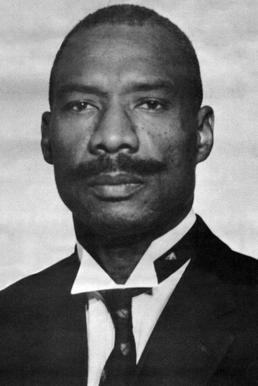
Robert Llewellyn Bradshaw

Biographical Details
Robert Llewellyn Bradshaw
Biography
Introduction & The Father of the Nation
Sir Robert Llewellyn Bradshaw (1916–1978) stands as the towering colossus of modern Kittitian and Nevisian history, universally revered across the West Indies as the undisputed "Father of the Nation" and the first officially proclaimed National Hero of Saint Kitts and Nevis. Rising from profound childhood poverty in a rural village, Bradshaw's extraordinary life trajectory propelled him from an impoverished mechanical apprentice at the Basseterre Sugar Factory into a ferocious trade union titan and the first Premier of Saint Kitts-Nevis-Anguilla. Operating during a century dominated by exploitative colonial plantocracies, Bradshaw mobilized working-class rage into an institutionalized labor movement through the St. Kitts-Nevis Trades and Labour Union and the political machinery of the Labour Party. His monumental leadership shattered centuries of white sugar plantation hegemony, laid the infrastructural foundations of modern social welfare, steered the islands through the turbulent West Indies Federation era alongside peers like Grantley Adams, and culminated in the historic nationalization of the sugar lands, forever reclaiming the island's soil for its native people.
Early Life, Impoverishment, and the Sugar Factory Awakening
Born on September 16, 1916, in the rural working-class enclave of St. Paul's Village, Saint Kitts, Robert Llewellyn Bradshaw entered a society deeply stratified by racial and economic apartheid. The island's economy was entirely monopolized by a white British British planter syndicate that owned virtually all fertile agrarian land and operated the industrial sugar processing facilities. Bradshaw's father, William Bradshaw, a skilled blacksmith, was forced to migrate to the United States in search of economic survival when Robert was merely an infant. Left behind in St. Kitts, the young boy was raised under the strict, loving guardianship of his maternal grandmother, Jane Francis, whose instillation of fierce personal dignity and moral resilience profoundly shaped his character. Despite exhibiting exceptional intellectual brilliance at St. Paul's Primary School, educational advancement for black working-class youths under British colonial rule strictly terminated at the seventh grade.
At sixteen years of age, in 1932, young Bradshaw entered the harsh industrial ecosystem of the Basseterre Sugar Factory—commonly known as the St. Kitts Sugar Factory—as a mechanical machine-room apprentice. The factory operated as the economic citadel and oppressive engine of colonial Saint Kitts. Working amidst deafening industrial machinery, suffocating heat, and hazardous chemical fumes, Bradshaw witnessed firsthand the brutal exploitation of the working class. While British managers and absentee shareholders accrued astronomical profits, thousands of field cane cutters and factory laborers endured starvation wages, hazardous working conditions, seasonal unemployment, and squalid plantation housing. Determined to challenge this systemic injustice, Bradshaw engaged in rigorous self-education during his evening hours. He read voraciously in economics, political philosophy, Caribbean history, and labor jurisprudence. His political awakening crystallized when he uncovered internal factory financial records exposing the staggering disparities between corporate profits and worker compensation, inspiring a lifelong mission to liberate his people from plantocracy domination.
The 1940 Strike and Ascension to Union Titan
In 1940, simmering working-class discontent erupted into open rebellion as sugar factory laborers launched a massive strike demanding wage adjustments to combat severe wartime economic inflation. Emerging as a courageous and highly articulate organizer, the twenty-four-year-old Bradshaw stepped forward to represent his fellow workers, refusing to be intimidated by aristocratic factory executives. Retaliating swiftly, factory owners summarily dismissed Bradshaw from his apprenticeship, intending to blacklist him into permanent economic destitution. Contrary to their intentions, this termination catalyzed the modern Kittitian labor revolution. Unbowed, Bradshaw immediately joined the executive staff of the newly formed St. Kitts-Nevis Trades and Labour Union as a junior clerk.
Under the mentorship of pioneering labor leader Joseph Matthew Sebastian, Bradshaw’s formidable administrative talents, intellectual tenacity, and electrifying oratorical prowess propelled him rapidly through the organizational ranks. He was appointed the first secretary of the Union's crucial Sugar Factory Section and elected to the General Executive Council. When Joseph Matthew Sebastian passed away unexpectedly in 1944, the working class overwhelmingly turned to Bradshaw, electing him President of the St. Kitts-Nevis Trades and Labour Union. Simultaneously, he assumed presidency of the union's political organization, the Workers' League, which he transformed into the mighty St. Kitts-Nevis Labour Party. In these dual leadership roles, Bradshaw forged an unbreakable bond between trade union activism and legislative political mobilization.
"Sugar is our lifeblood, but the land must belong to the people who sweat and bleed upon it. We will no longer be hewers of wood and drawers of water for absentee masters in London." — Robert Llewellyn Bradshaw, addressing thousands of striking agricultural laborers during the height of the sugar factory struggles.
The Watershed Thirteen-Week Strike of 1948 and the Soulbury Commission
Under Bradshaw’s iron-willed leadership, the trade union evolved into an invincible fortress of working-class solidarity. The definitive showdown between labor and colonial plantocracy occurred in 1948 with the historic Thirteen-Week Strike. For over three agonizing months, thousands of agricultural cane cutters and factory workers brought the entire sugar harvest to a complete standstill. The union demanded comprehensive formal recognition, significant wage increments, standardized working hours, and humane workplace safety regulations. Despite facing immense economic hardship, brutal police harassment, and starvation tactics orchestrated by plantation syndicates, Bradshaw maintained impeccable discipline and unity across the working class, organizing community soup kitchens and mutual aid networks.
The crippling economic paralysis forced the British Colonial Office to intervene, appointing the Soulbury Commission of Inquiry to investigate the causes of the industrial unrest. Appointed as a representative member of the commission, Bradshaw fiercely debated British colonial administrators over their conservative assessments. Demonstrating profound economic mastery, Bradshaw authored a brilliant, uncompromising minority report dissenting from the official findings. His scathing manifesto exposed centuries of systemic plantation exploitation and demanded radical land reform, improved housing, and comprehensive social security. The Soulbury minority report established Bradshaw as a premier Caribbean statesman and laid the ideological groundwork for future legislative reforms.
Legislative Conquests and Federal Leadership
Leveraging mass union membership into overwhelming electoral dominance, Bradshaw led the Labour Party to a sweeping landslide victory in the 1946 Legislative Council elections, entering formal internal government. Serving successively as Member for Trade and Production and later Minister of Trade and Production, he initiated progressive policies that channeled sugar export revenues into public infrastructure, sanitation, and public housing. When the British West Indies Federation was established in 1958 to unite ten English-speaking Caribbean territories into a sovereign democratic nation, Bradshaw was elected to the Federal House of Representatives. His stellar administrative reputation earned him the prestigious appointment as Federal Minister of Finance under Prime Minister Grantley Adams. Operating from the federal headquarters in Trinidad, Bradshaw championed fiscal self-reliance, regional customs unionization, and economic integration. When irreconcilable insular rivalries led to the collapse of the Federation in 1962, Bradshaw returned to Saint Kitts more determined than ever to secure total political independence for his people.
Premier of Saint Kitts-Nevis-Anguilla and the Anguilla Crisis
In 1966, following another resounding general election victory, Bradshaw became Chief Minister. On February 27, 1967, his administration achieved a major constitutional milestone when the colony assumed Associated Statehood status with Great Britain, granting complete internal autonomy and elevating Bradshaw to the title of first Premier of Saint Kitts-Nevis-Anguilla. As Premier, Bradshaw embarked on an ambitious modernization campaign: opening secondary education to all working-class children regardless of social background, constructing the modern infrastructure of Basseterre, expanding electrical grids to rural villages, establishing universal public healthcare, and pioneering economic diversification into tourism and manufacturing.
However, his premiership faced an immediate and agonizing geopolitical ordeal with the Anguilla secession crisis of 1967. Harboring deep-seated grievances stemming from decades of administrative neglect by colonial authorities in Basseterre, and led by charismatic separatist figures such as Ronald Webster, Anguillans rejected political union with Saint Kitts. Armed uprisings expelled Kittitian police forces, leading to Anguilla's unilateral declaration of independence and eventual British re-intervention. Bradshaw navigated this heartbreaking constitutional crisis with resolute composure, prioritizing national stability and economic advancement in Saint Kitts and Nevis while maintaining principled opposition to colonial fragmentation.
The 1975 Nationalization of Sugar Lands and Eternal Legacy
Bradshaw’s crowning political achievement—the ultimate fulfillment of his sacred pledge to the working class—occurred in 1975 with the passage of the landmark Sugar Lands Acquisition Act. Through this bold legislative masterstroke, Bradshaw’s government nationalized all arable sugar plantation lands and factory facilities across Saint Kitts, wresting control of the island's economy from foreign syndicates and returning ownership of the soil directly to the Kittitian people. This historic act permanently broke the spine of colonial economic hegemony, transforming former plantation subjects into empowered stakeholders of their own nation.
Wearing his trademark aristocratic tailcoat and Victorian homburg hat—a deliberate, symbolic appropriation of planter-class attire to assert working-class dignity—Bradshaw spent his final years tirelessly drafting the constitution for full sovereign independence. Although diagnosed with terminal spinal cancer, he refused to abandon his governmental duties until his final breath. Sir Robert Llewellyn Bradshaw passed away on May 23, 1978, at the age of sixty-one, mourned deeply across the global Caribbean community. In 1996, the National Assembly unanimously enacted legislation establishing him as the nation's first National Hero. Today, his monumental legacy is commemorated through the Robert L. Bradshaw International Airport, memorial parks in St. Paul's, and annual National Heroes Day celebrations every September 16, ensuring that the immortal spirit of the Father of the Nation continues to inspire future generations.
Major Contributions
- Sir Robert Llewellyn Bradshaw fundamentally transformed the political, social, and economic landscape of Saint Kitts and Nevis, dismantling centuries of white sugar plantocracy rule to establish working-class empowerment and national self-determination.
- As President of the St. Kitts-Nevis Trades and Labour Union and leader of the Labour Party, Bradshaw masterminded the watershed Thirteen-Week Strike of 1948 and authored a revolutionary minority report for the Soulbury Commission.
- His relentless activism secured foundational labor rights, equitable wages, workplace safety regulations, educational equity, and human dignity for thousands of agricultural and factory laborers across the twin islands.
- As the first Premier of Saint Kitts-Nevis-Anguilla and a former Federal Minister of Finance during the West Indies Federation, Bradshaw built the institutional and infrastructural architecture of modern statehood.
- His crowning political and economic achievement occurred in 1975 with the landmark Sugar Lands Acquisition Act, through which his administration nationalized all arable sugar estates and factory assets.
- This decisive legislative act eradicated colonial plantation hegemony forever, returning the island's fertile soil to its native inhabitants and clearing the direct path toward national independence, cementing his eternal legacy as the 'Father of the Nation' and first National Hero.