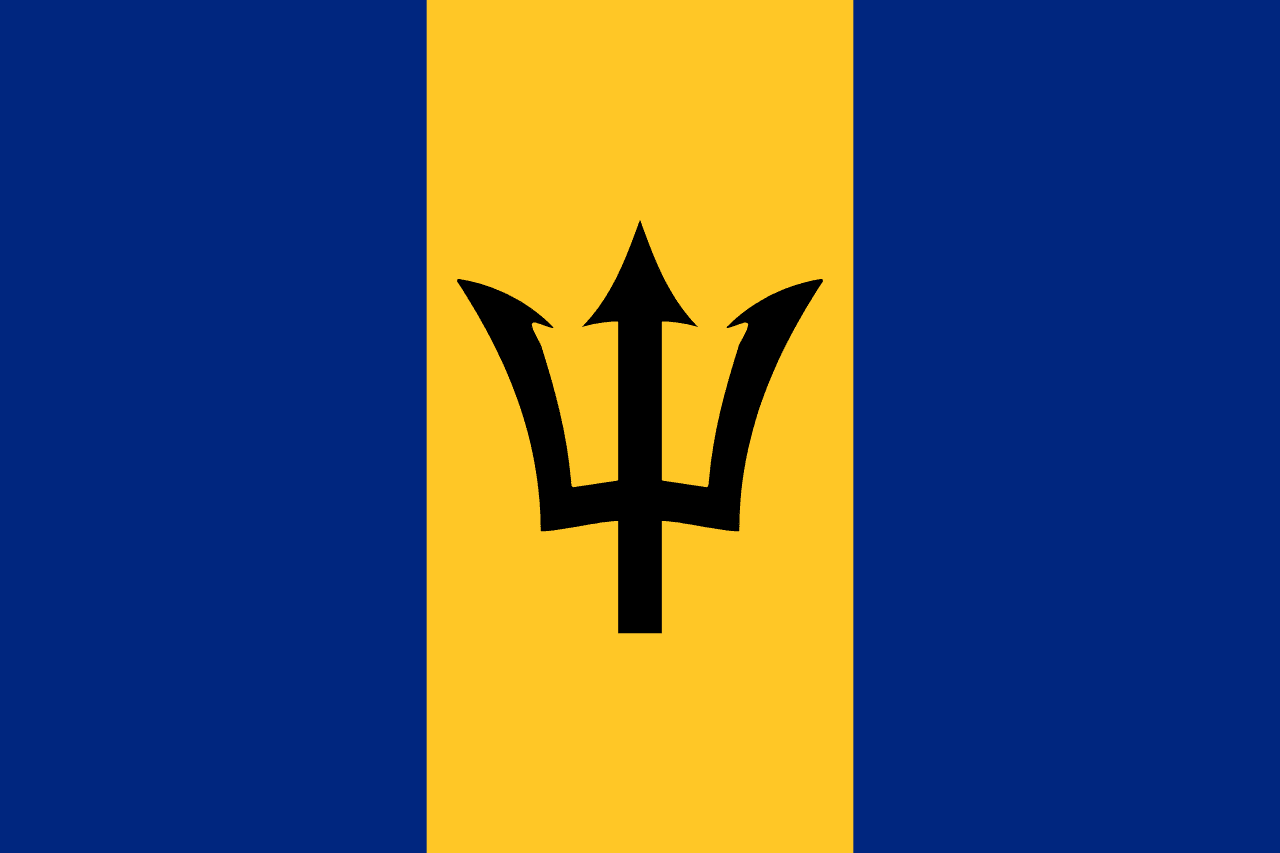
Barbados
The easternmost Caribbean island, known for its rich history and influential leaders.
Figures from Barbados
Historically documented individuals of note.
Bussa
# Bussa: The Unyielding Spirit of Barbadian Freedom ### The Historical Landscape of 18th and 19th Century Barbados The island of Barbados in the late 18th and early 19th centuries was a cornerstone of the British Empire's immense wealth, generated almost entirely through the brutal exploitation of enslaved African labor. Unlike many other Caribbean islands with mountainous terrains that afforded runaway slaves (Maroons) safe havens, Barbados is relatively flat. This geography made the total control of the enslaved population easier for the colonial authorities and plantocracy, cementing a harsh and highly policed plantation society. The sugar revolution had transformed the island into a monoculture economy, where every square inch of arable land was dedicated to the cultivation of sugarcane, and the lives of the enslaved were ruthlessly managed to maximize profit. However, the dawn of the 19th century brought whispers of change. The British Parliament's abolition of the trans-Atlantic slave trade in 1807 was a watershed moment, although it did not end the institution of slavery itself. For the enslaved population in Barbados, this act ignited a spark of hope. The subsequent debates in Britain regarding the Imperial Registry Bill of 1815—a measure intended to register enslaved people to prevent illegal smuggling—further fueled rumors that the British Crown intended to abolish slavery entirely, but that the local Barbadian plantocracy was deliberately withholding their freedom. This volatile mixture of hope, rumor, and profound oppression set the stage for one of the most significant events in Caribbean history. ### Early Life and Enslavement Into this pressure cooker of social and political tension emerged Bussa (often recorded as Busso or Bussoe). The specific details of Bussa's early life remain shrouded in the mists of history, a common reality for many enslaved individuals whose lives were rarely documented with care. Historical consensus indicates that Bussa was born a free man in West Africa, possibly of Igbo descent, and was captured and transported across the Atlantic during the harrowing Middle Passage. Upon arrival in Barbados, Bussa was enslaved at Bayley's Plantation in the eastern parish of St. Philip. Within the rigid hierarchy of the plantation system, Bussa was appointed as a "ranger." A ranger was a senior head officer among the enslaved workers, tasked with overseeing the estate's boundaries, protecting crops, and managing the day-to-day business that required movement between different plantations. > "To be a ranger was to be trusted by the master, but to be Bussa was to use that trust to forge the chains of a rebellion." This position was pivotal. It afforded Bussa a degree of mobility and autonomy that the vast majority of enslaved field laborers were denied. Crucially, it allowed him to traverse the island, observe the landscape, communicate with enslaved individuals on other estates, and meticulously lay the groundwork for a coordinated uprising. His African birth also likely gave him a profound sense of a life lived in freedom, a memory that fueled his determination to break the chains of servitude.  ### Organizing the Resistance The rebellion of 1816 was not a spontaneous riot but a highly sophisticated and carefully planned insurrection. Bussa did not act alone; he collaborated with a network of other "senior" enslaved individuals, including Washington Franklin, Nanny Grigg, and John (a driver at another estate). They utilized the cover of social gatherings, particularly weekend dances and religious meetings, to spread the word, formulate strategies, and solidify their alliance. Their objective was clear: to overthrow the white plantocracy, seize control of the island, and claim the freedom they believed was rightfully theirs. They were acutely aware of the successful Haitian Revolution (1791–1804), which served as a powerful inspiration. The leaders strategized to maximize disruption by coordinating the simultaneous burning of sugarcane fields, the economic lifeblood of the island, while attacking the estates. ### Bussa's Rebellion: The Uprising of 1816 On the evening of Sunday, April 14, 1816—Easter Sunday, a time of symbolic resurrection and hope—the rebellion ignited. It began at Bayley's Plantation, Bussa's home estate, where sugarcane fields were set ablaze. The fires acted as a blazing beacon, signaling other estates across the southern and central parishes of St. Philip, Christ Church, St. John, St. Thomas, and St. George to rise up. Bussa, leading a formidable force of approximately 400 freedom fighters, engaged directly in combat. The rebellion quickly swelled, encompassing thousands of enslaved people. They marched from plantation to plantation, destroying property and demanding their liberty. The sheer scale and rapid spread of the uprising completely caught the colonial authorities off guard. However, the planters and the colonial government responded with overwhelming and brutal force. They mobilized the local white militia and regular British imperial troops, including the heavily armed 1st West India Regiment. Despite the immense courage of Bussa and his fighters, they were ultimately outgunned by the superior weaponry and organized military tactics of the imperial forces. > "The flames of 1816 illuminated not just the cane fields, but the undeniable humanity and demand for liberty of the enslaved." Within three days, the core of the rebellion was suppressed. Tragically, Bussa was killed in the heat of battle, fighting relentlessly for the freedom of his people. Following his death, the rebellion was systematically and violently crushed. ### The Brutal Aftermath and Lasting Legacy The retribution exacted by the colonial government was horrific. Nearly 1,000 enslaved people lost their lives, either killed during the fighting or executed in the brutal aftermath. Hundreds more were subjected to severe public punishments, including flogging, mutilation, and forced exile to other colonies, such as Honduras. The authorities sought to instill absolute terror to ensure such an uprising would never happen again. Despite its military failure and the catastrophic loss of life, Bussa's Rebellion fundamentally altered the trajectory of Barbadian and Caribbean history. It shattered the plantocracy's myth of the "contented slave" and vividly demonstrated the enslaved population's sophisticated capacity for organization and their unyielding desire for freedom. Alongside the rebellions in Demerara (1823) and Jamaica (1831), Bussa's uprising became one of the critical "late slave rebellions" that deeply shocked the British public. These events provided irrefutable evidence that the institution of slavery was inherently unstable, violently maintained, and morally indefensible. They accelerated the momentum of the abolitionist movement in Britain, ultimately culminating in the Slavery Abolition Act of 1833, which paved the way for emancipation in 1834. Today, Bussa is revered as a towering figure in Barbadian history. In 1998, he was officially designated as one of Barbados' ten National Heroes, the only one named from the era of slavery. His legacy is permanently enshrined in the landscape of the island through the Emancipation Statue, created by Barbadian sculptor Karl Broodhagen. Located at a prominent roundabout in Haggatt Hall, the magnificent bronze statue depicts a muscular man with arms raised to the sky, chains broken at his wrists. While it represents all those who fought for freedom, it is universally and affectionately known as the "Bussa Statue." Bussa's life and sacrifice remain a profound testament to the enduring human spirit. He represents the ultimate rejection of oppression and the eternal pursuit of liberty, a legacy that continues to inspire generations in Barbados and across the Caribbean diaspora.
View Profile →Clement Payne
### Introduction Clement Osbourne Payne (1904–1941) was a transformative pioneer of the Caribbean labor movement and is immortalized as one of the National Heroes of Barbados. A man of formidable intellect, electrifying oratorical skill, and unyielding courage, Payne was the critical spark that ignited the 1937 labor rebellions in Barbados. In an era dominated by a deeply entrenched white planter oligarchy, where the black working class was systematically disenfranchised and subjected to crushing poverty, Payne dared to demand basic human dignity, fair wages, and the legal right to unionize. Though his physical time organizing in Barbados was intensely brief—spanning only a few months—his impact permanently shattered the colonial status quo, laying the indispensable groundwork for modern Barbadian democracy and the broader West Indian social revolution. ### Early Life: Roots in Two Islands Clement Payne was born in 1904 in Trinidad, but his roots were profoundly Barbadian. His parents had emigrated from Barbados to Trinidad, a common trajectory for working-class West Indians seeking employment in Trinidad's booming oil and asphalt industries. However, when Payne was just four years old, the family returned to Barbados. He spent his formative years in Bridgetown, attending the Bay Street Boys' School, an institution that produced several notable Barbadian figures. Raised in the heart of the Barbadian working class, Payne experienced firsthand the stifling social and economic conditions that characterized the island in the early 20th century. After completing his schooling, he secured work as a junior clerk. Yet, the limitations imposed by the rigid class and color hierarchies of Barbados offered little prospect for advancement. In 1927, seeking greater opportunities and a more dynamic environment, Payne moved back to the land of his birth, Trinidad. ### The Crucible of Trinidadian Radicalism Payne's return to Trinidad coincided with a period of intense ideological ferment and labor unrest. Unlike Barbados, which was almost entirely reliant on a stagnant sugar economy, Trinidad was industrializing. The oilfields and urban centers were hotbeds of radical political thought, anti-colonial sentiment, and militant trade unionism. Immersed in this volatile environment, Payne was deeply influenced by pioneering Caribbean labor leaders such as [Arthur Cipriani](/profiles/arthur-cipriani) and, most crucially, the fiery Grenadian-born radical [Uriah Butler](/profiles/uriah-butler). Under their indirect and direct influence, Payne evolved from a clerk into a committed, articulate socialist and Pan-Africanist. He developed a sophisticated understanding of class struggle, the mechanics of colonial exploitation, and the absolute necessity of mass organization. When he decided to return to Barbados in March 1937, he was no longer just returning home; he was arriving as a trained, ideologically hardened missionary for the working class. ### Return to Barbados: The Powder Keg The Barbados that Payne returned to in 1937 was effectively a powder keg waiting for a spark. The island was described by historians as the most rigidly conservative of all the British West Indian colonies. A tiny elite of white plantation owners and merchants controlled almost all the arable land, the economy, and the legislature. The vast majority of the black population lived in desperate squalor, suffering from malnutrition, abysmal wages, and zero political representation—the franchise was restricted by a severe property qualification that excluded nearly 95% of the population. > "Educate, agitate, but do not violate!" Recognizing the desperate need for organization, Payne immediately began holding public meetings across Bridgetown. He possessed a magnetic charisma and a booming voice that could command crowds of hundreds, and soon thousands. He urged the working masses to form trade unions, to recognize their collective power, and to demand a living wage. His central message was one of disciplined, educated resistance, famously captured in his rallying cry: *"Educate, agitate, but do not violate!"*  *(Bridgetown, where Payne held his mass rallies)* ### Arrest, Trial, and Deportation Payne's massive popularity and his effectiveness in awakening the political consciousness of the black underclass terrified the Barbadian authorities. The planter elite viewed him not just as a nuisance, but as an existential threat to the colonial order. Unable to charge him directly for his political speech—which he carefully kept within the bounds of the law—the state sought a technicality to neutralize him. When Payne entered Barbados, he had stated his birthplace as Barbados, reflecting his lifelong identity and his parents' heritage, despite technically being born in Trinidad. The authorities seized upon this, charging him with making a false statement to immigration officials. He was brought to trial and convicted. However, Payne was defended by [Grantley Adams](/profiles/grantley-adams), a brilliant young lawyer who would later become the first Premier of Barbados. Adams successfully appealed the conviction, arguing brilliantly that Payne genuinely believed he was Barbadian. Despite the victory in the appellate court, the colonial governor, determined to rid the island of the agitator, bypassed the judicial system entirely and issued an executive order for Payne's immediate deportation on July 26, 1937. ### The 1937 Riots and the Moyne Commission The news that Payne was being secretly deported under the cover of darkness sparked absolute fury among his supporters. On July 26, 1937, the working class of Bridgetown erupted in mass rebellion. For four days, the island was engulfed in riots. Crowds smashed shop windows, overturned cars, and clashed violently with the armed colonial police force. By the time the British authorities brutally suppressed the uprising, 14 civilians were dead, 47 were wounded, and over 400 were arrested. While Payne was physically removed from the island, the 1937 Barbados riots he inadvertently triggered had monumental consequences. Similar labor rebellions were sweeping across the Caribbean—from Trinidad to Jamaica. Forced to address the systemic crisis, the British government appointed the West India Royal Commission, commonly known as the Moyne Commission. The Moyne Commission's subsequent report exposed the horrifying living conditions of the West Indian masses and validated every grievance Payne had articulated. The resulting reforms led to the legalization of trade unions, the introduction of universal adult suffrage, and the beginning of the end of the colonial era in the Caribbean. ### Legacy as a National Hero Clement Payne returned to Trinidad, but the intense struggle and the heartbreak of his deportation had taken a severe toll on his health. He collapsed during a political meeting in Trinidad and passed away in 1941 at the tragically young age of 37. Though he died young, Payne’s legacy in Barbados is unparalleled. He is universally recognized as the father of the Barbadian trade union movement. The political awakening he engineered directly paved the way for the formation of the Barbados Workers' Union and the Barbados Labour Party by figures like Grantley Adams. In 1998, the Parliament of Barbados officially enshrined his legacy by declaring him one of the ten National Heroes of Barbados. Today, the Clement Payne Movement continues to advocate for social justice in his name, ensuring that the man who taught Barbadians to "educate and agitate" will never be forgotten.
View Profile →
Errol Barrow
Errol Walton Barrow (January 21, 1920 – June 1, 1987) stands as one of the most monumental figures in modern Caribbean history, widely revered as the "Father of Independence" for Barbados. Serving as the island nation's first Prime Minister, Barrow was the chief architect of Barbados’ transition from a British colony to a sovereign, self-determining state. Beyond his domestic achievements, he was a tireless champion of regional integration, working alongside other prominent Caribbean leaders to forge alliances that continue to benefit the region today. His legacy is etched deeply into the social, economic, and political fabric of Barbados, characterized by a commitment to equality, education, and social justice. Barrow's visionary leadership transformed a society stratified by colonial legacies into a modern, progressive nation. ### Early Life and Deep Roots in Activism Errol Barrow was born on January 21, 1920, in the rural parish of St. Lucy, Barbados. He hailed from a family deeply embedded in the civic and political life of the island. His father, the Reverend Reginald Grant Barrow, was an Anglican priest known for his progressive and sometimes controversial views, while his mother, Ruth Albertha Barrow (née O'Neal), provided a strong, nurturing environment. Furthermore, his uncle was the prominent political figure [Charles Duncan O'Neal](/profiles/charles-duncan-oneal), a medical doctor and the founder of the Democratic League, one of the earliest political movements in Barbados dedicated to improving the lives of the working class. Growing up in an atmosphere where political discourse and social activism were commonplace, Barrow was instilled with a profound sense of duty to his people. His early education at Harrison College, one of the most prestigious schools in Barbados, highlighted his exceptional intellectual capabilities. He proved to be a brilliant scholar, earning a scholarship in Classics. Despite his privileged educational opportunities, Barrow never lost sight of the vast inequalities that defined Barbadian society in the 1930s—a time marked by labor unrest and the widespread poverty of the Afro-Barbadian majority. These early experiences planted the seeds of a lifelong commitment to tearing down the barriers of class and race that stifled the potential of his compatriots.  ### Service in the Royal Air Force During World War II The outbreak of the Second World War in 1939 altered the trajectory of Barrow's life. Eager to contribute to the war effort and broaden his horizons, he left Barbados for the United Kingdom. In November 1940, he enlisted in the Royal Air Force (RAF), a decision that highlighted both his adventurous spirit and his sense of global duty. Barrow trained as a navigator and was eventually assigned to the 88 Squadron. His service was characterized by extraordinary bravery; he completed 48 operational bombing missions over the European theater, a remarkable feat that required immense courage and technical skill. Following the cessation of hostilities in 1945, Barrow's leadership and competence were further recognized when he was appointed as the personal navigator to the Commander-in-Chief of the British Army of the Rhine in occupied Germany. His military years not only honed his discipline and strategic thinking but also exposed him to a world far larger than the Caribbean, allowing him to witness firsthand the fragility of empires and the resilience of people under extreme duress. > "I do not know what the future holds for me, but I do know that I hold the future in my hands." — Errol Barrow, reflecting on his post-war ambitions. ### Academic Pursuits and the Return to the Caribbean After demobilization in 1947, Barrow remained in London to pursue higher education, a path that would arm him with the intellectual tools necessary to dismantle the colonial apparatus in Barbados. He enrolled at the London School of Economics (LSE), an institution famous for its rigorous academic environment and its role as an incubator for anti-colonial thinkers. Concurrently, he studied law at the Inns of Court (Lincoln's Inn). Barrow proved to be an outstanding student, graduating with a Bachelor of Science in Economics and a law degree. During his time in London, Barrow was deeply involved in the vibrant community of West Indian students and intellectuals. He engaged in fierce debates about the future of the Caribbean, interacting with future leaders like [Forbes Burnham](/profiles/forbes-burnham) and [Michael Manley](/profiles/michael-manley). These interactions solidified his belief in the necessity of regional integration and political independence. Armed with degrees in economics and law, Barrow returned to Barbados in 1950, fully prepared to embark on a career in politics and law, driven by a clear vision of emancipating his island from colonial dependency. ### The Rise to Political Prominence and the Formation of the DLP Upon his return to Barbados, Barrow initially aligned himself with the Barbados Labour Party (BLP), led by [Grantley Adams](/profiles/grantley-adams). In 1951, running on a BLP ticket, he was elected to the Barbadian parliament representing the parish of St. George. However, Barrow soon grew disillusioned with the BLP's conservative pace of social reform and its perceived disconnect from the pressing needs of the working-class masses. He believed that the existing political establishment was too accommodating to the colonial administration and the powerful plantocracy. In 1955, Barrow, along with a group of like-minded progressives, broke away from the BLP to form the Democratic Labour Party (DLP). The newly established party presented a radical, forward-looking platform that prioritized free education, universal healthcare, and the rapid decolonization of the island. Although the DLP faced initial setbacks at the polls, Barrow's tireless campaigning and charismatic leadership slowly built a formidable political machine. By 1961, the political tide had turned. The DLP achieved a sweeping victory, and Barrow became the Premier of Barbados. His ascension to power marked the beginning of an era of unprecedented social and economic transformation. ### The Push for Independence As Premier, Barrow immediately set out to dismantle the remnants of the colonial system. He implemented a series of sweeping reforms aimed at democratizing Barbadian society. He introduced free education at all levels, a revolutionary policy that provided the children of impoverished agricultural workers the opportunity to attend secondary schools and universities. This single policy fundamentally altered the social mobility of the nation, producing a highly educated workforce that would drive the island's future prosperity. However, Barrow's ultimate goal was full political sovereignty. He firmly believed that Barbados possessed the economic stability and intellectual capacity to govern itself. The collapse of the West Indies Federation in 1962, a project Barrow had initially supported but later recognized as fundamentally flawed in its execution, accelerated his push for standalone independence. Through rigorous negotiations with the British government at the Marlborough House conferences, Barrow secured the terms for a peaceful transition. On November 30, 1966, the Union Jack was lowered, and the ultramarine and gold flag of Barbados was raised for the first time. Errol Barrow became the first Prime Minister of a newly independent nation. In his iconic address to the United Nations shortly after independence, Barrow articulated his foreign policy doctrine with a phrase that has since become legendary in Barbadian diplomacy. > "We shall be friends of all, satellites of none." — Errol Barrow to the United Nations, 1966. ### Social and Economic Transformations During his uninterrupted tenure from 1966 to 1976, Barrow's administration oversaw the modernization of Barbados. Recognizing the vulnerability of relying solely on the traditional sugar industry, he aggressively diversified the economy. He championed the development of the tourism sector, transforming the island into a premier global destination. Furthermore, he encouraged the growth of light manufacturing and offshore financial services. Socially, Barrow's government introduced the National Insurance and Social Security scheme, providing a safety net for workers, retirees, and the disabled. He also oversaw the establishment of the Barbados Community College and played an instrumental role in expanding the University of the West Indies (UWI) Cave Hill Campus. His infrastructural projects modernized the island's road networks, expanded the deep-water harbor, and built the Grantley Adams International Airport. Under his stewardship, the standard of living in Barbados rose dramatically, creating a robust middle class. ### Championing Regional Integration Barrow's vision extended far beyond the shores of Barbados. He was a passionate, lifelong advocate for Caribbean unity. Recognizing that the small, newly independent nations of the Caribbean could easily be marginalized in the global economy, he pushed relentlessly for economic and political cooperation. In 1965, he was one of the principal architects of the Caribbean Free Trade Association (CARIFTA), a groundbreaking agreement designed to promote free trade among member states. His commitment to regionalism culminated in the 1973 signing of the Treaty of Chaguaramas, which transformed CARIFTA into the Caribbean Community (CARICOM). Standing shoulder to shoulder with leaders like [Eric Williams](/profiles/eric-williams) of Trinidad and Tobago, Barrow championed the idea that the Caribbean destiny was a shared one. He fiercely defended the sovereignty of the region, strongly opposing foreign intervention and advocating for the Caribbean to be recognized as a zone of peace. ### Later Life, Return to Power, and Enduring Legacy After leading the country for 15 years, Barrow's DLP was defeated in the 1976 general elections by the BLP under [Tom Adams](/profiles/tom-adams). For a decade, Barrow served as the Leader of the Opposition. During this time, he remained a powerful voice in regional politics, vocally criticizing the 1983 US invasion of Grenada, a move he viewed as a gross violation of Caribbean sovereignty. In 1986, Barrow staged a spectacular political comeback, leading the DLP to a landslide victory and securing 24 out of 27 seats in parliament. He returned to the office of Prime Minister with renewed vigor, pledging to reduce taxes and further empower the working class. Tragically, his second term was cut short. On June 1, 1987, Errol Barrow collapsed and died suddenly at his home. The entire Caribbean plunged into mourning for a man who had given so much to his region. Errol Barrow's legacy is immeasurable. He is celebrated as a visionary leader who elevated his country from colonial subservience to dignified independence. His commitment to education and social welfare laid the groundwork for Barbados to boast one of the highest human development indices in the developing world. In 1998, he was posthumously recognized as one of the ten National Heroes of Barbados. His birthday, January 21, is celebrated annually as Errol Barrow Day, serving as a powerful reminder of his enduring impact and his undying belief in the potential of the Barbadian people.
View Profile →Kamau Brathwaite
Edward Kamau Brathwaite (born Lawson Edward Brathwaite; May 11, 1930 – February 4, 2020) stands as one of the most monumental figures in Caribbean literature, history, and postcolonial cultural theory. Over the course of a career spanning more than six decades, Brathwaite single-handedly reshaped the literary landscape of the Caribbean. He was a visionary who rejected the colonial imposition of traditional European aesthetics and linguistic norms, instead elevating the oral traditions, rhythms, and languages of the African diaspora. Known for coining the term "nation language" to describe the authentic voice of the Caribbean people, Brathwaite’s influence extended far beyond poetry into the realms of academic history, where his theories of "creolization" provided a new framework for understanding the complex cultural dynamics of the region. ### Early Life and Formative Years Brathwaite was born into a modest, middle-class family in Bridgetown, Barbados. His father, Hilton Brathwaite, worked as a warehouse clerk, while his mother, Beryl (Gill) Brathwaite, managed the household and nurtured her son's early intellectual curiosity. Growing up in Barbados during the 1930s and 1940s meant coming of age in a deeply stratified, colonial society where British cultural norms were strictly enforced, and the island's African heritage was actively suppressed or marginalized in formal education. Despite these limitations, Brathwaite demonstrated an early and voracious appetite for learning. He attended the prestigious Harrison College, an elite secondary school in Barbados that traditionally groomed the island's brightest young men for roles in the civil service or the professions. While the curriculum at Harrison College was heavily Anglocentric, focusing on Latin, British history, and English literature, it provided Brathwaite with the rigorous academic foundation he would later use to dismantle colonial narratives. It was also during these years that he developed a profound passion for jazz music—an art form that he recognized as a powerful expression of Black diasporic identity and creativity. Jazz would later become a critical rhythmic and structural influence on his poetry.  In 1949, Brathwaite's exceptional academic performance earned him the highly coveted Barbados Island Scholarship, which allowed him to pursue higher education in the United Kingdom. He enrolled at Pembroke College, Cambridge, where he read history. His time at Cambridge was marked by both intellectual awakening and a profound sense of alienation. He was immersed in the canonical texts of Western civilization, but he acutely felt the absence of his own history and culture in the curriculum. He began publishing poetry, literary criticism, and short stories in *Bim*, the pioneering Barbadian literary magazine edited by [Frank Collymore](/profiles/frank-collymore). Through *Bim*, Brathwaite connected with a growing network of West Indian writers who were beginning to articulate a distinct regional consciousness. He graduated from Cambridge with honors in 1953, fully aware that his intellectual journey was just beginning. ### The African Connection and Transformation Perhaps the most pivotal period in Brathwaite’s life occurred shortly after he left Cambridge. In 1955, rather than returning immediately to the Caribbean, he took a position as an Education Officer on the Gold Coast (which would become independent Ghana in 1957). He spent eight transformative years in West Africa, an experience that fundamentally altered his worldview and his approach to art and history. In Ghana, Brathwaite was struck by the profound, undeniable cultural continuities between West Africa and the Caribbean. He observed the rhythms of daily life, the religious practices, the communal structures, and the musical traditions, realizing that the African heritage of the Caribbean had survived the trauma of the Middle Passage and the brutal suppression of the plantation system. It was in Africa that he was given the name "Kamau" by the grandmother of the Kenyan writer Ngũgĩ wa Thiong'o, a name he would eventually adopt legally in the 1970s as a symbol of his reclaimed African identity. This African sojourn provided the raw material for his seminal poetic work, *The Arrivants: A New World Trilogy* (comprising *Rights of Passage*, *Masks*, and *Islands*). In this sweeping epic, Brathwaite traced the historical trajectory of the Black diaspora—from the ancient kingdoms of Africa, through the horrors of the slave trade, to the complex, fragmented reality of the modern Caribbean. The trilogy was a groundbreaking achievement, blending historical narrative with deeply personal reflection and employing a dizzying array of poetic forms, from traditional English meters to the improvisational rhythms of jazz and the call-and-response structures of African oral traditions. ### The Caribbean Artists Movement (CAM) Upon leaving Ghana, Brathwaite returned briefly to the Caribbean, working for the Extra-Mural Department of the University of the West Indies in St. Lucia, before returning to the UK to pursue a PhD at the University of Sussex. It was during this period in London that he made one of his most significant contributions to regional culture: the co-founding of the Caribbean Artists Movement (CAM) in 1966. Alongside the Trinidadian activist [John La Rose](/profiles/john-la-rose) and the Jamaican writer [Andrew Salkey](/profiles/andrew-salkey), Brathwaite established CAM as a forum for West Indian writers, artists, and intellectuals living in the British diaspora. The movement provided a vital space for these creators to debate the nature of Caribbean art, to support each other's work, and to forge a collective identity in the face of British racism and indifference. CAM organized readings, exhibitions, and conferences, effectively launching the careers of numerous prominent figures and solidifying the concept of a unified "Caribbean literature" on the global stage. ### "Nation Language" and Literary Innovation Brathwaite is perhaps best known in literary circles for his theoretical articulation and practical application of "nation language." In his landmark 1984 essay *History of the Voice*, he argued that the language spoken by the descendants of enslaved Africans in the Caribbean was not merely a "dialect" or a degraded form of English, but a fully realized linguistic system with its own grammar, syntax, and expressive power. > "The hurricane does not roar in pentameter." With this famous declaration, Brathwaite asserted that the traditional forms of English poetry—such as the iambic pentameter, which was designed to capture the rhythm of walking through the English countryside—were inherently unsuited to describing the extreme environmental and emotional realities of the Caribbean. Instead, he championed a poetry that drew upon the cadence of calypso, the pulse of reggae, and the spontaneous energy of the spoken word. Later in his career, Brathwaite continued to push the boundaries of literary form with what he called "Sycorax video style." Utilizing early computer technology, he began experimenting with typography, font sizes, and spatial arrangements on the page to visually represent the fragmented, polyphonic nature of Caribbean history and consciousness. This highly visual, almost sculptural approach to poetry demonstrated his relentless drive to invent new modes of expression that could adequately contain the complexities of his heritage. ### Academic Contributions and "Creolization" While Brathwaite was revolutionizing Caribbean poetry, he was simultaneously making groundbreaking contributions as a professional historian. After completing his PhD at Sussex in 1968, he joined the faculty of the University of the West Indies (UWI) at Mona, Jamaica, where he taught for many years. His doctoral dissertation, published in 1971 as *The Development of Creole Society in Jamaica, 1770–1820*, remains a foundational text in Caribbean historiography. In this meticulously researched study, Brathwaite challenged the prevailing view that Caribbean societies were simply fractured, derivative outposts of European empires. Instead, he introduced the concept of "creolization"—a dynamic, ongoing process of cultural exchange and adaptation between the European colonizers and the enslaved Africans. Crucially, Brathwaite emphasized the agency of the enslaved population, demonstrating how they actively shaped the emerging culture, language, and social institutions of the island, rather than merely submitting to cultural erasure. ### Final Years and Enduring Legacy In the early 1990s, Brathwaite accepted a professorship at New York University (NYU), where he continued to teach, write, and inspire new generations of students until his retirement. His later life was marked by both immense global recognition and profound personal tragedy, including the sudden death of his first wife, Doris Monica, and the destruction of his extensive personal archives by a hurricane in Jamaica. These traumatic events found their way into his later, more elegiac poetry, such as *The Zea Mexican Diary* and *Born to Slow Horses*. Kamau Brathwaite passed away in Barbados on February 4, 2020, at the age of 89. His legacy is immeasurable. He received numerous international accolades, including the Neustadt International Prize for Literature, the Griffin Poetry Prize, and the W. E. B. Du Bois Award. But his true triumph lies in the fact that he fundamentally changed the way Caribbean people see themselves and their history. By validating the languages, rhythms, and spiritual traditions of the African diaspora, Kamau Brathwaite provided a region with the vocabulary it needed to claim its own soul.
View Profile →
Samuel Jackman Prescod
### Introduction Samuel Jackman Prescod (c. 1806 – 26 September 1871) stands out as an unparalleled colossus in the rich, turbulent history of Barbados. Widely celebrated as one of the ten National Heroes of Barbados, Prescod was a pioneering journalist, an indomitable political activist, and the very first person of African descent to be elected to the Parliament of Barbados [1]. In an era characterized by brutal systemic inequalities, the disenfranchisement of the non-white majority, and the rigid social hierarchies of a slave-owning plantocracy, Prescod's life was a testament to the unyielding pursuit of justice, human dignity, and democratic representation. His groundbreaking achievements not only dismantled centuries-old barriers but also laid the foundational cornerstones for modern Barbadian democracy. To understand Prescod is to understand the struggle of the Caribbean's transitional period—from the dark days of slavery, through the controversial "Apprenticeship" system, to the dawn of hard-won civil liberties. ### Early Life and the Context of Colonial Barbados Born in the bustling port city of Bridgetown in 1806, Prescod entered a world divided sharply along racial and economic lines. He was the son of Lidia Smith, a free woman of color, and William Prescod, a wealthy white planter [2]. This mixed heritage placed him in the intermediate social stratum of the "free colored," a group that enjoyed nominal freedom but was categorically excluded from the political and economic privileges reserved exclusively for the white plantocracy. The colonial statutes of the time, most notably the discriminatory laws dating back to 1697, expressly forbade non-whites from voting, holding public office, or serving on juries. Growing up, Prescod received an education that was remarkably thorough for a person of his social standing, equipping him with the intellectual tools he would later use to dissect and challenge the colonial establishment. He was heavily influenced by the prevailing winds of abolitionism sweeping through the British Empire. Young Prescod witnessed firsthand the cruelties inflicted upon the enslaved population on the island's vast sugar plantations, as well as the suffocating indignities suffered by the free coloreds. These experiences ignited a burning, unquenchable desire within him to advocate for the marginalized and to dismantle the structures of oppression.  ### The Pen as a Sword: Journalism and Early Activism Recognizing the power of the written word to mobilize the masses and agitate for change, Prescod turned to journalism. He became a forceful and eloquent voice in the Barbadian press. Initially writing for various local papers, he eventually took the helm of *The New Times* and later founded *The Liberal*. Under his editorial guidance, *The Liberal* transformed from a simple news sheet into a formidable political weapon [3]. Prescod used his editorials to launch scathing critiques of the plantocracy, exposing the corruption, greed, and moral bankruptcy of the ruling elite. His writing was characterized by a lucid, incisive style that resonated deeply with both the free colored population and progressive-minded whites. He relentlessly campaigned for the expansion of the franchise and the repeal of discriminatory legislation. His advocacy was not limited to his own social class; he also became a champion for the "Poor Whites" of Barbados (often referred to derogatorily as "Redlegs"), recognizing that class oppression and racial oppression were intertwined tools used by the elite to maintain control. > "He is frequently remembered as the 'saviour of his country' for his relentless pursuit of a Barbados where the rights of the formerly enslaved and the free colored were enshrined not just in law, but in the political fabric of the nation." ### Emancipation, Apprenticeship, and Political Awakening The early 1830s brought monumental shifts to the Caribbean. Through the relentless campaigning of Prescod and his contemporaries, as well as the overarching pressure from British abolitionists, the Barbadian government finally conceded civil rights to free people of color in 1831. However, the true test of Prescod's leadership arrived with the passage of the Slavery Abolition Act of 1833, which nominally ended slavery in 1834 but instituted the deeply flawed "Apprenticeship" system. Under Apprenticeship, the newly "freed" population was compelled to continue working for their former masters for a period of up to six years, often under conditions that were virtually indistinguishable from slavery. Prescod vigorously denounced this system as a cruel farce. He traveled across the island, investigating abuses on the plantations and providing legal and moral support to the apprentices. His relentless pressure, both locally and through correspondences with the Anti-Slavery Society in London, played a crucial role in forcing the premature end of the Apprenticeship system in 1838, granting full freedom to the formerly enslaved population. ### Breaking the Barrier: The 1843 Election Despite the end of slavery, the political machinery of Barbados remained firmly in the grip of the white elite. The franchise was restricted by exorbitant property qualifications designed specifically to keep the black and colored majority out of power. Undeterred, Prescod mobilized a burgeoning political coalition. He was instrumental in forming the Liberal Party, the island's first organized political opposition [4]. The party united the free coloreds, enfranchised blacks, and sympathetic poor whites into a cohesive political force. In 1840, bowing to mounting pressure, the Barbadian legislature passed an act lowering the property qualifications for voting. This was the opening Prescod had fought so hard to create. In the historic election of 1843, Samuel Jackman Prescod ran for a seat in the House of Assembly representing the City of Bridgetown. Against extraordinary odds, and facing the entrenched opposition of the planter class, Prescod emerged victorious. He made history by becoming the first person of African descent to be elected to the Barbadian Parliament. ### The Parliamentary Years and Later Life Inside the House of Assembly, Prescod proved to be a masterful parliamentarian. He served as the leader of the Liberal Party for over a decade, using his platform to advocate for sweeping social and economic reforms. He fought for the establishment of public educational institutions for the black majority, the reform of the biased judicial system, and the protection of workers' rights. He consistently stood in opposition to the narrow, self-serving policies of the plantocracy, often acting as the lone voice of the marginalized in a hostile chamber. His tenure in parliament was marked by a commitment to democratic principles and a profound belief in the potential of the Barbadian people. He believed that education was the ultimate emancipator and worked tirelessly to secure funding for schools. In 1860, after years of grueling political battles, Prescod retired from active parliamentary life. In recognition of his unparalleled legal acumen and his unwavering integrity, he was appointed as a judge of the Assistant Court of Appeal, a position he held with distinction until his death. ### Legacy and Commemoration Samuel Jackman Prescod passed away on September 26, 1871, leaving behind a nation fundamentally transformed by his courage and vision. His passing was mourned by thousands across the island, who recognized that they had lost a titan of their struggle for liberation. Today, Prescod's legacy is deeply woven into the national identity of Barbados. In 1998, the Parliament of Barbados officially declared him a National Hero, cementing his status alongside figures like [Bussa](/profiles/bussa) and Errol Barrow. His portrait graces the Barbadian $20 banknote, and the Samuel Jackman Prescod Institute of Technology stands as a living monument to his belief in the transformative power of education [5]. Prescod's life remains an enduring inspiration, a powerful reminder of the impact that a single, determined individual can have in the face of systemic injustice and overwhelming adversity.
View Profile →Sarah Ann Gill
### Introduction and the Rigid World of 18th Century Barbados Sarah Ann Gill stands as a colossus in the history of Barbados, a woman whose unyielding faith and fierce defiance of a brutal colonial system earned her the distinction of being the island’s first and only female National Hero. Born on February 16, 1795, her life unfolded against the backdrop of one of the most rigidly stratified, racially oppressive, and economically exploitative societies in the British Empire. Barbados in the late 18th and early 19th centuries was a quintessential sugarocracy. The island's economy and social order were entirely dictated by a powerful, deeply entrenched white plantocracy that relied on the brutal enslavement of African people. Sarah Ann Gill was born to a Black mother and a white father, placing her in a complex and often precarious demographic known at the time as "free coloured." While this status afforded her certain legal rights and protections denied to the enslaved population, she nonetheless lived in a society that fundamentally degraded and marginalized people of African descent. The free coloured population occupied a liminal space, navigating a society designed to perpetually enforce white supremacy while constantly fearing the revocation of their fragile liberties. Despite these systemic barriers, Gill emerged as a woman of profound intellect, deep spiritual conviction, and unshakeable moral courage. ### Marriage, Widowhood, and the Rise of Methodism In her youth, she married Alexander George Gill, a union that provided her with social stability and, significantly, property. However, her life took a dramatic turn when she was widowed at the young age of 28. Inheriting her husband's property, she suddenly found herself navigating the patriarchal and racially hostile world of Barbadian commerce and property ownership as an independent woman of color. During this period, a radical new spiritual movement was making its way through the Caribbean: Methodism. Unlike the established Anglican Church, which was deeply intertwined with the plantocracy and often served to justify the institution of slavery, Methodism offered a different theological perspective. It emphasized personal salvation, spiritual equality before God, and often implicitly (and sometimes explicitly) challenged the moral foundations of human bondage. By 1820, Sarah Ann Gill had fully embraced the Methodist faith, finding within its teachings a spiritual validation of her own dignity and a framework for resisting the dehumanizing ethos of the slavocracy. The white elite in Barbados viewed the Methodist missionaries with deep suspicion and visceral hatred. They rightly recognized that the gospel of spiritual equality was dangerously adjacent to the gospel of physical emancipation. This paranoia was significantly amplified following the 1816 slave uprising, famously led by [Bussa](/profiles/bussa). The Bussa Rebellion terrified the plantocracy, leading to a draconian crackdown on any perceived threats to the social order. Missionaries were viewed as outside agitators, and their chapels were seen as incubators of sedition. ### The 1823 Riot and the Flight of the Missionaries Tensions boiled over in 1823. A mob of white rioters, comprised largely of the island's elite planters and merchants, descended upon the Methodist chapel in Bridgetown. In a violent display of racial and religious intolerance, they completely destroyed the building, tearing it down to its foundations. The resident Methodist missionary, Reverend William Shrewsbury, became the target of death threats and was forced to flee the island with his pregnant wife in the dead of night, seeking refuge in neighboring St. Vincent. The destruction of the chapel and the exile of the missionary were intended to be a fatal blow to Methodism in Barbados. The plantocracy believed that without a physical space to gather and without a white British clergyman to lead them, the congregation—composed largely of enslaved people and free people of color—would scatter and submit to the dominant Anglican authority. They severely miscalculated the resolve of Sarah Ann Gill. > "Her house became a sanctuary of faith in a landscape of oppression, transforming the domestic sphere into the ultimate battleground for religious freedom and human dignity." ### Defiance and the Conventiclers Act of 1664 In the wake of the riot, with the congregation terrified and leaderless, Sarah Ann Gill made a decision of extraordinary bravery. She opened the doors of her own home to serve as a meeting place for the displaced Methodists. By transforming her private residence into a public sanctuary, she placed herself in direct confrontation with the full might of the Barbadian state. Her actions were not merely socially unacceptable; they were highly illegal. The local authorities quickly invoked the Conventiclers Act of 1664, an antiquated British law designed to suppress religious dissent. The Act strictly prohibited gatherings of more than five people for religious worship unless the site was a licensed meeting place and the service was led by a licensed, state-approved preacher.  The persecution she faced was relentless and terrifying. White mobs routinely gathered outside her home, hurling insults, threatening to burn the property to the ground, and even firing gunshots at the house while she and her congregation prayed inside. Local magistrates subjected her to a campaign of judicial harassment, repeatedly summoning her to court and prosecuting her for violating the Conventiclers Act. Throughout this grueling ordeal, Gill refused to yield. She boldly defended herself in court, often financing her own legal defenses against the aggressive prosecutions led by the House of Assembly. When warned by magistrates that she was risking her life and property, she famously declared her willingness to face death rather than abandon her faith and her congregation. Her steadfastness provided an impenetrable shield for the vulnerable members of her church, ensuring that the light of Methodism was not extinguished in Barbados. ### International Impact and Enduring Legacy The extraordinary saga of this lone, free woman of color defying the entire Barbadian plantocracy eventually crossed the Atlantic. News of the 1823 riot and the subsequent persecution of Sarah Ann Gill reached the British Parliament. Her ordeal became a cause célèbre for British abolitionists and advocates of religious liberty. On June 25, 1825, the matter was debated in the British House of Commons, resulting in a resolution that heavily condemned the actions of the Barbadian authorities and affirmed the absolute necessity of religious toleration across all colonial dominions. The international pressure eventually forced the Barbadian authorities to back down. Methodism survived its crucible, and a few years later, a new chapel was constructed—built on the very land that Sarah Ann Gill generously donated for that purpose. She lived to see the abolition of slavery in 1834 and continued to serve as a pillar of her community until her death in 1866. In 1998, the Parliament of Barbados passed the Order of National Heroes Act, officially elevating Sarah Ann Gill to the pantheon of the island's greatest historical figures. As the only woman among the ten National Heroes of Barbados, she is forever memorialized not just as a defender of Methodism, but as a towering champion of human rights, religious freedom, and resistance against oppression. Her legacy continues to inspire generations, a testament to the power of unyielding conviction in the face of insurmountable odds.
View Profile →Sir Frank Walcott
### Early Life and The Crucible of Barbadian Society Sir Frank Leslie Walcott was born on September 16, 1916, in the rural parish of St. Peter, Barbados. His birth occurred during a period of profound social and economic inequality in the Caribbean. At the time, Barbados was a British colony deeply entrenched in the plantocracy system, where a small, white elite controlled the vast majority of the land, wealth, and political power. The island's economy was almost entirely dependent on sugar cane cultivation, a labor-intensive industry that relied heavily on the subjugated black working class. Workers faced grueling conditions, abysmal wages, and virtually no legal protections or avenues for collective bargaining. It was within this crucible of systemic oppression and widespread poverty that Walcott's worldview began to take shape. Tragedy struck early in Walcott's life. He was the son of a policeman who died when Frank was still an infant, leaving his mother, Marian Walcott, to raise him alone. Marian, a plantation worker, faced the harsh realities of providing for a child in an unforgiving economic landscape. Seeking better opportunities, she relocated the family to the capital city of Bridgetown, where she found work as a domestic helper. This move from the rural countryside to the urban center exposed the young Frank to a broader cross-section of Barbadian society, from the bustling port where dockworkers toiled to the commercial streets dominated by the merchant elite. Despite the formidable socio-economic barriers, Walcott was a bright and determined student. He attended the Wesley Hall Boys' School, an institution that, while lacking in resources compared to the elite schools of the island, provided a solid foundational education. At Wesley Hall, Walcott distinguished himself in mathematics and debate. His natural aptitude for argumentation and his keen analytical mind were early indicators of the formidable negotiator he would later become. The school also fostered a sense of discipline and purpose, instilling in him a deep-seated belief in the power of education as a tool for social mobility and empowerment.  ### The Labor Movement and The Barbados Workers' Union The 1930s were a turbulent decade in the Caribbean, marked by widespread labor unrest and social upheaval. The culmination of decades of economic exploitation and political disenfranchisement exploded in the 1937 labor riots in Barbados, a watershed moment that forever altered the island's trajectory. Out of the ashes of the riots emerged a newfound determination among the working class to organize and demand their rights. This led to the formation of the Barbados Workers' Union (BWU) in 1941, a pivotal institution in the island's history. Frank Walcott's entry into the labor movement was a natural progression of his lived experiences and his growing political consciousness. He joined the BWU shortly after its inception, quickly rising through the ranks due to his exceptional organizational skills, his fiery yet disciplined rhetoric, and his unwavering commitment to the workers' cause. In 1945, at the relatively young age of 29, Walcott was appointed General Secretary of the BWU, a position he would hold for an astonishing fifty years, interrupted only briefly. As General Secretary, Walcott transformed the BWU into a formidable force for social and economic change. He understood that true empowerment required more than just negotiating better wages; it demanded a fundamental restructuring of the power dynamics in Barbadian society. He was a master negotiator, described by contemporaries as a "forceful but reasonable" advocate who could go toe-to-toe with the most entrenched business interests. > "The worker is not a mere cog in the machinery of production; he is the very soul of the enterprise, and his dignity must be the cornerstone of any progressive society." Under his leadership, the BWU expanded its membership base, organizing workers across various sectors, from the sugar fields to the docks, from the civil service to the emerging tourism industry. Walcott recognized the importance of solidarity and collective action, forging alliances with other regional and international labor organizations. He served three terms as president of the Caribbean Congress of Labour and held prominent leadership roles within the International Confederation of Free Trade Unions and the International Labour Organization (ILO), amplifying the voices of Caribbean workers on the global stage. ### Political Ascendancy and Ideological Shifts Walcott's influence was not confined to the labor movement; he recognized early on that economic rights were inextricably linked to political representation. In 1945, the same year he became General Secretary of the BWU, he was elected to the Barbados House of Assembly. He was initially associated with the Barbados Labour Party (BLP), led by [Grantley Adams](/profiles/grantley-adams), another towering figure in Barbadian history. However, the alliance between Walcott and Adams eventually fractured. Walcott, representing the more radical and uncompromising wing of the labor movement, increasingly found himself at odds with what he perceived as the BLP's moderate and sometimes overly cautious approach to social reform. This ideological divergence culminated in a historic split in the mid-1950s. Walcott, alongside [Errol Barrow](/profiles/errol-barrow), played a pivotal role in the formation of the Democratic Labour Party (DLP) in 1955. The creation of the DLP marked a profound shift in Barbadian politics. The party, heavily backed by the BWU and Walcott's formidable organizing apparatus, championed a more aggressive agenda of social democratic reform, advocating for free education, improved healthcare, and greater economic nationalization. Walcott's political career spanned several decades, serving in the House of Assembly from 1945 to 1966 and again from 1971 to 1976. He was instrumental in shaping the legislative framework that dismantled the remnants of the plantocracy and laid the foundations for a modern, independent Barbados.  ### The Road to Independence and Beyond As Barbados marched toward independence in the 1960s, Walcott's role as a statesman and national leader became even more pronounced. He was a key figure in the constitutional negotiations with the British government, ensuring that the rights of the working class were enshrined in the new nation's legal framework. Following Barbados' independence in 1966, he continued to be a central figure in the country's development. His diplomatic skills were recognized when he was appointed as Barbados' first Ambassador to the United Nations, a role in which he eloquently defended the interests of developing nations and advocated for a more equitable global economic order. Despite his international engagements, he never lost touch with his roots in the labor movement, continuing to guide the BWU through the challenges of a rapidly changing global economy. ### A Lasting Legacy of Empowerment Sir Frank Walcott's legacy is woven into the very fabric of modern Barbados. He passed away on February 24, 1999, leaving behind a nation fundamentally transformed by his tireless advocacy. He was a man of profound intellect, unyielding courage, and deep compassion for the marginalized. In recognition of his monumental contributions, he was officially named one of the eleven National Heroes of Barbados in 1998, a testament to his status as a founding father of the modern nation. The Frank Walcott Labour College, established in 1977, stands as a living memorial to his belief in the power of education to emancipate the working class. His life's work ensured that the descendants of enslaved Africans and indentured laborers in Barbados could live with dignity, security, and a voice in their own destiny. He navigated the complex intersection of labor and politics with a strategic brilliance that few have matched. His story is not just a biography of a trade unionist; it is the story of the Barbadian people's struggle for justice, equality, and self-determination. Sir Frank Walcott remains an enduring symbol of resilience and the transformative power of collective action, a towering figure whose impact will be felt for generations to come.
View Profile →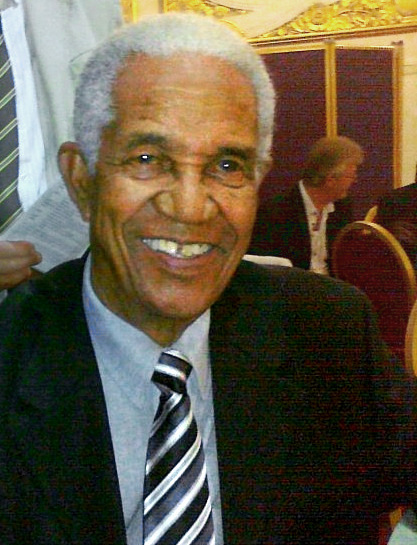
Sir Garfield Sobers
### Introduction The Right Excellent Sir Garfield St Aubrun Sobers, universally known as Garry Sobers, is celebrated as the greatest all-round cricketer in the history of the sport and one of the most prominent cultural icons of the Caribbean [1]. Born in Barbados in 1936, Sobers emerged during a period of profound social and political transition in the West Indies [2]. Over a twenty-year international career spanning from 1954 to 1974, he redefined the possibilities of cricket through his extraordinary batting, bowling versatility, and peerless fielding [3]. Beyond his athletic prowess, Sobers became a symbol of West Indian identity, rising to global prominence at a time when the region was moving away from colonial rule toward self-determination [4]. Knighted by Queen Elizabeth II in 1975 and declared a National Hero of Barbados in 1998, Sobers’ legacy transcends the boundaries of the cricket field, embodying the spirit, resilience, and brilliance of the Caribbean people [5]. ### Early Life and Childhood in Bay Land Garfield Sobers was born on July 28, 1936, in the working-class community of Bay Land, located in the parish of St. Michael, Barbados [6]. He was the fifth of six children born to Shamont Sobers, a merchant seaman, and his wife, Thelma [7]. Life in the Bay Land was financially modest, and the family faced a devastating tragedy in 1942 when Shamont's merchant vessel was torpedoed by a German U-boat in the Atlantic during World War II [8]. Garry was only five years old. The loss of his father thrust the family into severe financial hardship, leaving Thelma to raise six children single-handedly [9]. Sobers was born with polydactyly, a congenital condition resulting in an extra finger on each hand [10]. In his autobiography, Sobers recounts a famous piece of West Indian sporting folklore: he removed the extra digits himself as a boy, using a piece of catgut to restrict blood flow to the extra finger on his left hand until it fell off, and using a sharp knife to remove the second digit when he was fourteen [11]. Despite this physical anomaly, Sobers displayed an innate, extraordinary athletic talent from his earliest years. He was naturally ambidextrous and excelled in every sport he attempted, including football, basketball, and table tennis [12]. Sobers was born in 1936, an era of growing social unrest and political awakening in Barbados. Under the early leadership of figures like [Grantley Adams](/profiles/grantley-adams), the island was beginning to challenge the plantocracy that had dominated its economy since the days of [Bussa](/profiles/bussa)'s rebellion [13]. For a young working-class boy in St. Michael, sport was one of the few avenues for social mobility and self-expression. ### Rise to Prominence and Test Debut Sobers' talent was first recognized by local scouts when he was playing cricket in the pasture lands of St. Michael [14]. At the age of fifteen, he was invited to play for the Police team in the Barbadian division, where he quickly impressed observers with his natural hand-eye coordination and left-arm spin bowling [15]. By 1953, at the age of sixteen, Sobers made his first-class debut for Barbados against a touring Indian team [16]. His performance was so impressive that he was fast-tracked into the West Indies Test team, making his international debut against England at Sabina Park in Jamaica in March 1954, at the age of seventeen [17].  In his debut Test match, Sobers played primarily as a bowler, taking four wickets for 75 runs in the first innings and scoring 14 and 26 runs batting in the lower order [18]. His natural elegance and composure against seasoned English bowlers signaled the arrival of a special talent [19]. Over the next few years, Sobers established himself as a regular member of the West Indies team, gradually moving up the batting order as his batting technique matured [20]. ### The Historic 365 Not Out and Cricketing Versatility The turning point in Sobers' career occurred in early 1958 during the home Test series against Pakistan [21]. On March 1, 1958, at Sabina Park in Kingston, Jamaica, the twenty-one-year-old Sobers scored his maiden Test century [22]. He did not stop there. Battling for over ten hours, Sobers accumulated an astonishing 365 runs not out, breaking the world record for the highest individual score in a Test innings, previously held by England's Sir Len Hutton [23]. The record would stand for thirty-six years until it was broken by another West Indian legend, Brian Lara, in 1994 [24]. > "Garfield Sobers was a player who could do everything. He was a genius who lit up the cricket fields of the world." — Sir Donald Bradman [25] What set Sobers apart from other legendary batsmen of his era was his unmatched versatility as an all-rounder. He was a complete cricketer who could influence a game in every department: 1. **As a Batsman:** He possessed a classical, powerful left-handed technique, capable of playing every shot in the book with immense power and grace [26]. 2. **As a Bowler:** He was unique in his ability to bowl three distinct styles: fast-medium opening bowler, slow left-arm orthodox spin, and left-arm unorthodox spin (chinaman and googly) [27]. He could adjust his bowling style based on the condition of the pitch and the weaknesses of the opposing batsmen. 3. **As a Fielder:** He was a magnificent close-to-the-wicket fielder, particularly in the slips, where his lightning reflexes led to some of the most spectacular catches in cricket history [28]. ### Leadership, the Worrell Legacy, and Barbadian Independence In the early 1960s, West Indies cricket underwent a historic transformation under Sir Frank Worrell, who became the first black cricketer appointed as the long-term captain of the West Indies team [29]. Worrell united the players from different Caribbean islands, replacing insular rivalries with a sense of collective West Indian pride [30]. Sobers developed a close relationship with Worrell, viewing him as a mentor and father figure. Following Worrell's retirement in 1965, Sobers was appointed captain of the West Indies [31]. Under his leadership, the West Indies became the unofficial world champions, defeating England and Australia in memorable series [32]. Sobers captained the West Indies in 39 Test matches, leading by example with his aggressive, positive brand of cricket. As Sobers rose to global prominence, his achievements on the cricket pitch mirrored the political strides being made by [Errol Barrow](/profiles/errol-barrow), who led Barbados to independence in 1966 [33]. For many Barbadians, Sobers was the athletic embodiment of Barrow's vision of a self-reliant, proud nation. His status as a unifying West Indian figure also aligned with the regional federation goals championed by other Caribbean leaders of the era, such as Saint Kitts and Nevis's [Robert Llewellyn Bradshaw](/profiles/robert-llewellyn-bradshaw) [34]. > "Cricket is not just a game; it is an art, a science, and an expression of our West Indian identity." — Sir Garfield Sobers [35] ### Six Sixes in an Over and Global Stardom Sobers’ fame extended beyond international cricket. He played county cricket in England for Nottinghamshire, captaining the team from 1968 to 1973, and played Sheffield Shield cricket in Australia for South Australia [36]. On August 31, 1968, Sobers secured another place in sporting history during a match between Nottinghamshire and Glamorgan at Swansea [37]. Captaining Nottinghamshire, Sobers hit the Glamorgan bowler Malcolm Nash for six consecutive sixes in a single over—the first time this feat had ever been achieved in first-class cricket [38]. The historic event was captured on television and broadcast to millions, cementing Sobers' status as a global sporting superstar [39].  ### Retirement, Stats, and Post-Playing Career Sobers retired from international cricket in 1974 due to chronic knee injuries [40]. His career statistics remain among the most impressive in the history of the game: in 93 Test matches, he scored 8,032 runs at an average of 57.78, took 235 wickets at an average of 34.03, and took 109 catches [41]. He was the first player in history to pass the double milestone of 8,000 runs and 200 wickets in Test cricket [42]. Following his retirement, Sobers spent many years coaching and mentoring young cricketers in Barbados, the United Kingdom, and Australia [43]. He served as a sports ambassador for the Barbados government, promoting the island’s tourism and cultural heritage around the globe [44]. ### Honors, Legacy, and National Hero Status In 1975, Queen Elizabeth II knighted Sobers for his outstanding services to cricket, with the ceremony taking place at the Kensington Oval in Barbados in front of thousands of adoring fans [45]. In 1998, under the National Heroes Act passed by the government of Barbados, Sobers was named one of the ten National Heroes of Barbados [46]. He is the only living person to receive this honor, which entitles him to the prefix "The Right Excellent" [47]. A larger-than-life bronze statue of Sobers stands outside the Kensington Oval, capturing him mid-stroke, a permanent monument to his contribution to the nation [48]. In 2000, Sobers was named one of the five *Wisden* Cricketers of the Century, alongside Sir Donald Bradman, Sir Jack Hobbs, Sir Shane Warne, and Sir Viv Richards [49]. The International Cricket Council (ICC) honored his legacy by naming its annual award for the world's best cricketer the "Sir Garfield Sobers Trophy" [50]. Today, Sir Garfield Sobers remains an active, revered elder statesman of cricket, whose life and career symbolize the rise of Barbados and the wider Caribbean onto the global stage [51].
View Profile →
Sir Grantley Adams
# Sir Grantley Herbert Adams Sir Grantley Herbert Adams (1898–1971) stands as a titan of Caribbean history, widely revered as the principal architect of modern Barbados and a pioneering figure in the West Indian labor movement. His transformation from a prominent elite barrister into a radical champion of the working class profoundly shifted the socio-political landscape of the region. Through decades of relentless advocacy, he shattered the entrenched oligarchy of the era, brought about universal adult suffrage, and distinguished himself globally as the first and only Prime Minister of the West Indies Federation. Today, his enduring legacy forms the bedrock of Barbadian democracy and regional integration.  ### Early Life and Education Grantley Herbert Adams was born on April 28, 1898, in the parish of St. Michael, Barbados. Raised in an era where the island was firmly under British colonial rule and dominated by a white planter oligarchy, Adams demonstrated exceptional intellectual prowess from a young age. He received his early education at St. Giles before progressing to Harrison College, one of the island's most prestigious secondary institutions. His academic excellence earned him the coveted Barbados Scholarship in 1918, which afforded him the opportunity to study abroad. He traveled to the United Kingdom to attend Oxford University, where he studied classics and jurisprudence. His time at Oxford not only refined his legal acumen but also exposed him to the broader intellectual and political currents of the early 20th century, equipping him with the rhetorical and analytical tools he would later use to dismantle colonial inequalities in his homeland. ### Return to Barbados and Legal Career Upon returning to Barbados in the 1920s, Adams established a highly successful practice as a barrister. Initially, his political and social alignment seemed to favor the conservative elite, reflecting his class standing and elite education. He moved in the upper echelons of Barbadian society and was seen as a moderate, respectable professional. However, beneath this veneer, Adams was increasingly troubled by the staggering poverty, harsh working conditions, and systemic disenfranchisement suffered by the black majority in Barbados. ### The 1937 Labor Riots and Political Awakening The turning point in Adams' life—and in the history of Barbados—came during the tumultuous events of 1937. Fueled by widespread economic desperation, abysmal wages, and an absolute lack of political representation for the working class, tensions boiled over into full-scale labor riots across the island. The spark for these riots was the deportation of Clement Payne, a prominent labor activist from Trinidad who had been attempting to organize Barbadian workers. > "He was considered the 'Moses' of the Barbadian working class, leading them out of the wilderness of colonial disenfranchisement and into the promised land of political representation, forever altering the destiny of the Caribbean." Adams boldly stepped forward to serve as the legal representative for Clement Payne. Though he could not prevent Payne's deportation, the experience profoundly radicalized Adams. Witnessing the brutal suppression of the riots and the urgent need for systemic change, he abandoned his conservative affiliations and threw his considerable intellect and influence behind the labor movement. He recognized that legal defense alone was insufficient; political and economic revolution was required to emancipate the masses. ### Rise to Power and the Labour Movement Following the 1937 disturbances, Adams emerged as the undisputed leader of the progressive movement in Barbados. In 1938, he co-founded the Barbados Progressive League, which later evolved into the Barbados Labour Party (BLP). The BLP's mandate was to fight for workers' rights, improved living conditions, and, crucially, political enfranchisement. In 1941, understanding the need for organized labor to complement political action, Adams was instrumental in the formation of the Barbados Workers' Union (BWU). He served as the union's president from 1941 to 1954, successfully intertwining the objectives of the labor union with the political goals of the BLP. Through relentless campaigning both locally and in representations to the British Colonial Office, Adams pushed through monumental legislative reforms. Key achievements during this period included the passage of the Trade Union Act of 1939, which legalized union activity, the establishment of a Wages Board, and the introduction of Minimum Wage Legislation. Crucially, he fought for the Representation of the People Act in 1943, which drastically lowered the income qualifications required to vote, paving the way for the ultimate goal: Universal Adult Suffrage, which was achieved in 1951. ### First Premier of Barbados (1954-1958) As the British government gradually ceded self-governing powers to its colonies, Adams' political dominance was solidified. With the introduction of a ministerial form of government in 1954, Sir Grantley Adams was appointed as the first Premier of Barbados. During his tenure as Premier, Adams focused on nation-building and modernizing the island's infrastructure. His government heavily invested in education, public health, and housing. A crowning achievement of his domestic policy was the conceptualization and initial funding for the Queen Elizabeth Hospital, which aimed to provide quality, accessible healthcare to all Barbadians, regardless of their socio-economic status. His administration also modernized the deep-water harbor and laid the groundwork for the island's transition to a modern economy less dependent on the unstable sugar industry. ### Prime Minister of the West Indies Federation (1958-1962) Sir Grantley Adams was a staunch Pan-Africanist and a passionate believer in regional integration. He envisioned a united Caribbean that could pool its resources and stand as a powerful, independent bloc on the world stage. In 1958, he resigned as Premier of Barbados to take on the most challenging role of his career: the first (and only) Prime Minister of the West Indies Federation. > "To divide the Caribbean is to conquer it; our only salvation lies in the unyielding unity of the West Indian people." The Federation was an ambitious political union comprising ten British Caribbean territories, including Jamaica, Trinidad and Tobago, and the Leeward and Windward Islands. Operating out of the federal capital in Trinidad, Adams faced insurmountable challenges. The Federation was plagued by internal rivalries, insular nationalism, and profound disagreements over freedom of movement, taxation, and federal power, particularly between the larger territories of Jamaica (led by Norman Manley and later Alexander Bustamante) and Trinidad (led by [Eric Williams](/profiles/eric-williams)). Despite Adams' diplomatic efforts to hold the fragile union together, the Federation collapsed in 1962 following a referendum in Jamaica that voted to secede, closely followed by Trinidad and Tobago's withdrawal. The failure of the Federation was a bitter disappointment to Adams, marking the end of his dream for a unified Caribbean state. ### Later Life and Legacy Following the collapse of the Federation, Adams returned to Barbados, where his political rival (and former protégé), [Errol Barrow](/profiles/errol-barrow), had taken the reins of leadership and was steering the island toward full independence, which was achieved in 1966. Adams served as the Leader of the Opposition until his retirement from active politics due to failing health. Sir Grantley Herbert Adams passed away on November 28, 1971. His legacy, however, remains inextricably woven into the fabric of Barbadian society. In 1998, by an act of Parliament, he was officially designated as one of the ten National Heroes of Barbados. His birthday, April 28, is celebrated annually as National Heroes Day. The island's primary aviation hub, the Grantley Adams International Airport, proudly bears his name, standing as a testament to the man who laid the runway for a modern, democratic, and proud Barbados.
View Profile →Sir Hugh Springer
### Introduction and Legacy The Right Excellent Sir Hugh Worrell Springer (1913–1994) stands as a colossal figure in the modern history of Barbados and the wider Caribbean. As a brilliant legal mind, a pioneering trade unionist, a visionary educator, and a distinguished statesman, Springer's life was inexorably linked to the social, political, and educational transformation of his nation. He was instrumental in dismantling the oppressive colonial structures of early twentieth-century Barbados, laying the groundwork for a modern, democratic, and equitable society. Serving as the Organizer and first General Secretary of the Barbados Workers' Union (BWU), an early architect of the University of the West Indies (UWI), and eventually the third native-born Governor-General of Barbados, Sir Hugh Springer's contributions are deeply woven into the very fabric of the nation. In recognition of his unparalleled service, he was rightfully enshrined as one of the National Heroes of Barbados. ### Early Life and Academic Brilliance Hugh Worrell Springer was born on June 22, 1913, in the rural parish of St. Andrew, Barbados. He was born into a society still heavily stratified by race and class, where the remnants of the plantocracy largely controlled the island's economic and political levers, and the black majority faced systemic disenfranchisement and crushing poverty. Despite these societal barriers, Springer possessed an intellect that could not be contained. He received his secondary education at the prestigious Harrison College, an institution renowned for its rigorous academic standards. At Harrison College, Springer excelled spectacularly, demonstrating a profound affinity for classical languages and literature. His academic brilliance culminated in 1931 when he won the highly coveted Barbados Scholarship in Classics. This prestigious award, heavily contested and rarely won, provided him with the opportunity to pursue higher education in the United Kingdom. Springer traveled to England and matriculated at Hertford College, Oxford University. At Oxford, he continued his classical studies, immersing himself in the intellectual traditions of Europe while never losing sight of his Caribbean roots. He earned his Bachelor of Arts degree in 1936, later completing his Master of Arts.  ### Encountering Racism and Return to the Caribbean Following his studies at Oxford, Springer pursued a legal career. He studied at the Inner Temple in London and was formally called to the Bar in 1938. It was during this period in the United Kingdom that Springer confronted the stark realities of imperial racism. Despite his exceptional qualifications, his Oxford degree, and his status as a barrister, he found his early aspirations to teach in England blocked by institutional prejudice. The discrimination he faced in the "mother country" served to radicalize his political consciousness. Recognizing that his talents were unappreciated in an empire built on racial hierarchy, Springer chose to return to his homeland in 1938, determined to use his formidable education and legal expertise to uplift his people and challenge the status quo in Barbados. ### The 1937 Riots and the Birth of the Labour Movement Springer returned to a Barbados that was in the throes of profound social upheaval. The late 1930s were a period of intense labor unrest across the British West Indies, culminating in Barbados with the watershed riots of 1937. These riots were an explosive reaction to widespread poverty, abysmal working conditions, lack of political representation, and the unchecked exploitation of the working class. The colonial government's brutal suppression of the riots highlighted the urgent need for organized, strategic representation for the laboring masses. > "Sir Hugh Springer recognized that true political freedom for Barbados could only be built upon the foundation of economic justice and the organized power of the working class." [1] Stepping into this volatile arena, Springer emerged as a calm, highly organized, and strategic leader. He partnered closely with another towering figure of Barbadian history, [Grantley Adams](/profiles/grantley-adams). Together, they recognized that the raw anger of the masses needed to be channeled into structured, legal, and political institutions. ### Founding the Barbados Workers' Union and Political Career In 1940, Springer played a pivotal role in the founding of the Progressive League, which would later evolve into the Barbados Labour Party (BLP). More significantly, in 1941, he was the driving force behind the creation of the Barbados Workers' Union (BWU). He became the BWU's first Organizer and General Secretary, a position he held from 1940 to 1947. As General Secretary, Springer was the architectural genius of the union. While Adams provided the fiery rhetoric and public face, Springer provided the meticulous organizational framework. He negotiated fiercely but diplomatically with the hostile plantocracy, securing incremental but vital improvements in wages, working conditions, and workers' rights. He drafted the union's constitution and established a solid administrative base that allowed the BWU to become one of the most powerful and effective labor organizations in the Caribbean. Simultaneously, Springer entered formal politics. He was elected to the House of Assembly in 1940, serving until 1947, and became a member of the Executive Committee in 1944, constantly pushing legislative reforms to benefit the working class. ### Architect of Higher Education: The University of the West Indies By 1947, Springer had secured the foundation of the labor movement in Barbados, and his formidable intellect was called upon for a new, regional challenge. He recognized that the long-term sovereignty and development of the Caribbean required local institutions of higher learning to break the intellectual dependency on Britain. He left Barbados to take up the post of the first Registrar of the newly established University College of the West Indies (UCWI) in Jamaica (which later became the University of the West Indies). For over a decade, Springer dedicated himself to building the administrative and academic infrastructure of the UWI from the ground up. His leadership was crucial in establishing the university as a premier institution of higher learning, deeply rooted in the Caribbean context yet globally respected. His work at the UWI cemented his belief in regional integration and the transformative power of education. ### International Service and the Governor-Generalship Following his tenure at the UWI, Sir Hugh Springer embarked on a distinguished international career. He served as the Director of the Commonwealth Education Liaison Unit, the Commonwealth Assistant Secretary-General, and the Secretary-General of the Association of Commonwealth Universities. In these roles, he championed educational access and cooperation across the globe, becoming one of the most respected educational administrators in the Commonwealth. In 1984, Sir Hugh Springer was called back to his homeland to serve in its highest ceremonial office. He was appointed as the fourth Governor-General of Barbados (and the third native-born Barbadian to hold the post). He brought immense dignity, grace, and intellectual gravity to the role, serving with distinction until his retirement in 1990 due to declining health. ### A Legacy Set in Stone Sir Hugh Springer passed away on April 14, 1994, leaving behind a legacy that touches nearly every aspect of modern Barbadian life. He was a man who used his extraordinary gifts not for personal enrichment, but to dismantle the architectures of oppression. In 1998, the Parliament of Barbados rightfully passed the Order of National Heroes Act, officially naming Sir Hugh Worrell Springer as one of the eleven National Heroes of Barbados. Today, his name graces scholarships, buildings, and thoroughfares. He is remembered as a quiet but profoundly effective revolutionary—a brilliant architect of labor, education, and nationhood whose work fundamentally altered the trajectory of the Caribbean.
View Profile →