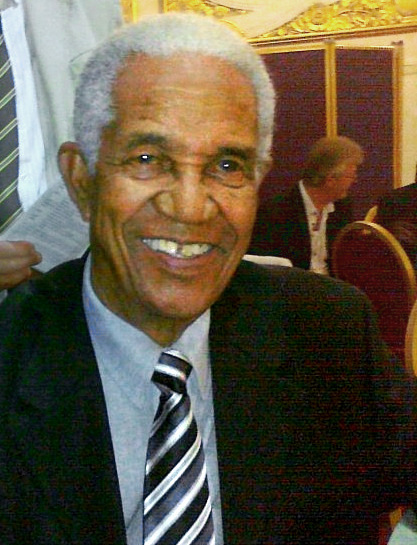
Sir Garfield Sobers

Sir Garfield Sobers
Biography
Introduction
The Right Excellent Sir Garfield St Aubrun Sobers, universally known as Garry Sobers, is celebrated as the greatest all-round cricketer in the history of the sport and one of the most prominent cultural icons of the Caribbean. Born in Barbados in 1936, Sobers emerged during a period of profound social and political transition in the West Indies. Over a twenty-year international career spanning from 1954 to 1974, he redefined the possibilities of cricket through his extraordinary batting, bowling versatility, and peerless fielding. Beyond his athletic prowess, Sobers became a symbol of West Indian identity, rising to global prominence at a time when the region was moving away from colonial rule toward self-determination. Knighted by Queen Elizabeth II in 1975 and declared a National Hero of Barbados in 1998, Sobers’ legacy transcends the boundaries of the cricket field, embodying the spirit, resilience, and brilliance of the Caribbean people.
Early Life and Childhood in Bay Land
Garfield Sobers was born on July 28, 1936, in the working-class community of Bay Land, located in the parish of St. Michael, Barbados. He was the fifth of six children born to Shamont Sobers, a merchant seaman, and his wife, Thelma. Life in the Bay Land was financially modest, and the family faced a devastating tragedy in 1942 when Shamont's merchant vessel was torpedoed by a German U-boat in the Atlantic during World War II. Garry was only five years old. The loss of his father thrust the family into severe financial hardship, leaving Thelma to raise six children single-handedly.
Sobers was born with polydactyly, a congenital condition resulting in an extra finger on each hand. In his autobiography, Sobers recounts a famous piece of West Indian sporting folklore: he removed the extra digits himself as a boy, using a piece of catgut to restrict blood flow to the extra finger on his left hand until it fell off, and using a sharp knife to remove the second digit when he was fourteen. Despite this physical anomaly, Sobers displayed an innate, extraordinary athletic talent from his earliest years. He was naturally ambidextrous and excelled in every sport he attempted, including football, basketball, and table tennis.
Sobers was born in 1936, an era of growing social unrest and political awakening in Barbados. Under the early leadership of figures like Grantley Adams, the island was beginning to challenge the plantocracy that had dominated its economy since the days of Bussa's rebellion. For a young working-class boy in St. Michael, sport was one of the few avenues for social mobility and self-expression.
Rise to Prominence and Test Debut
Sobers' talent was first recognized by local scouts when he was playing cricket in the pasture lands of St. Michael. At the age of fifteen, he was invited to play for the Police team in the Barbadian division, where he quickly impressed observers with his natural hand-eye coordination and left-arm spin bowling. By 1953, at the age of sixteen, Sobers made his first-class debut for Barbados against a touring Indian team. His performance was so impressive that he was fast-tracked into the West Indies Test team, making his international debut against England at Sabina Park in Jamaica in March 1954, at the age of seventeen.
In his debut Test match, Sobers played primarily as a bowler, taking four wickets for 75 runs in the first innings and scoring 14 and 26 runs batting in the lower order. His natural elegance and composure against seasoned English bowlers signaled the arrival of a special talent. Over the next few years, Sobers established himself as a regular member of the West Indies team, gradually moving up the batting order as his batting technique matured.
The Historic 365 Not Out and Cricketing Versatility
The turning point in Sobers' career occurred in early 1958 during the home Test series against Pakistan. On March 1, 1958, at Sabina Park in Kingston, Jamaica, the twenty-one-year-old Sobers scored his maiden Test century. He did not stop there. Battling for over ten hours, Sobers accumulated an astonishing 365 runs not out, breaking the world record for the highest individual score in a Test innings, previously held by England's Sir Len Hutton. The record would stand for thirty-six years until it was broken by another West Indian legend, Brian Lara, in 1994.
"Garfield Sobers was a player who could do everything. He was a genius who lit up the cricket fields of the world." — Sir Donald Bradman
What set Sobers apart from other legendary batsmen of his era was his unmatched versatility as an all-rounder. He was a complete cricketer who could influence a game in every department:
- As a Batsman: He possessed a classical, powerful left-handed technique, capable of playing every shot in the book with immense power and grace.
- As a Bowler: He was unique in his ability to bowl three distinct styles: fast-medium opening bowler, slow left-arm orthodox spin, and left-arm unorthodox spin (chinaman and googly). He could adjust his bowling style based on the condition of the pitch and the weaknesses of the opposing batsmen.
- As a Fielder: He was a magnificent close-to-the-wicket fielder, particularly in the slips, where his lightning reflexes led to some of the most spectacular catches in cricket history.
Leadership, the Worrell Legacy, and Barbadian Independence
In the early 1960s, West Indies cricket underwent a historic transformation under Sir Frank Worrell, who became the first black cricketer appointed as the long-term captain of the West Indies team. Worrell united the players from different Caribbean islands, replacing insular rivalries with a sense of collective West Indian pride. Sobers developed a close relationship with Worrell, viewing him as a mentor and father figure.
Following Worrell's retirement in 1965, Sobers was appointed captain of the West Indies. Under his leadership, the West Indies became the unofficial world champions, defeating England and Australia in memorable series. Sobers captained the West Indies in 39 Test matches, leading by example with his aggressive, positive brand of cricket.
As Sobers rose to global prominence, his achievements on the cricket pitch mirrored the political strides being made by Errol Barrow, who led Barbados to independence in 1966. For many Barbadians, Sobers was the athletic embodiment of Barrow's vision of a self-reliant, proud nation. His status as a unifying West Indian figure also aligned with the regional federation goals championed by other Caribbean leaders of the era, such as Saint Kitts and Nevis's Robert Llewellyn Bradshaw.
"Cricket is not just a game; it is an art, a science, and an expression of our West Indian identity." — Sir Garfield Sobers
Six Sixes in an Over and Global Stardom
Sobers’ fame extended beyond international cricket. He played county cricket in England for Nottinghamshire, captaining the team from 1968 to 1973, and played Sheffield Shield cricket in Australia for South Australia.
On August 31, 1968, Sobers secured another place in sporting history during a match between Nottinghamshire and Glamorgan at Swansea. Captaining Nottinghamshire, Sobers hit the Glamorgan bowler Malcolm Nash for six consecutive sixes in a single over—the first time this feat had ever been achieved in first-class cricket. The historic event was captured on television and broadcast to millions, cementing Sobers' status as a global sporting superstar.
Retirement, Stats, and Post-Playing Career
Sobers retired from international cricket in 1974 due to chronic knee injuries. His career statistics remain among the most impressive in the history of the game: in 93 Test matches, he scored 8,032 runs at an average of 57.78, took 235 wickets at an average of 34.03, and took 109 catches. He was the first player in history to pass the double milestone of 8,000 runs and 200 wickets in Test cricket.
Following his retirement, Sobers spent many years coaching and mentoring young cricketers in Barbados, the United Kingdom, and Australia. He served as a sports ambassador for the Barbados government, promoting the island’s tourism and cultural heritage around the globe.
Honors, Legacy, and National Hero Status
In 1975, Queen Elizabeth II knighted Sobers for his outstanding services to cricket, with the ceremony taking place at the Kensington Oval in Barbados in front of thousands of adoring fans.
In 1998, under the National Heroes Act passed by the government of Barbados, Sobers was named one of the ten National Heroes of Barbados. He is the only living person to receive this honor, which entitles him to the prefix "The Right Excellent". A larger-than-life bronze statue of Sobers stands outside the Kensington Oval, capturing him mid-stroke, a permanent monument to his contribution to the nation.
In 2000, Sobers was named one of the five Wisden Cricketers of the Century, alongside Sir Donald Bradman, Sir Jack Hobbs, Sir Shane Warne, and Sir Viv Richards. The International Cricket Council (ICC) honored his legacy by naming its annual award for the world's best cricketer the "Sir Garfield Sobers Trophy". Today, Sir Garfield Sobers remains an active, revered elder statesman of cricket, whose life and career symbolize the rise of Barbados and the wider Caribbean onto the global stage.
Major Contributions
- The Right Excellent Sir Garfield Sobers is celebrated as the greatest all-round cricketer in the history of the sport, whose international career from 1954 to 1974 revolutionized the game.
- Sobers broke the world record for the highest individual Test score with his 365 not out in 1958, a record that stood for 36 years, and became the first player in first-class cricket to hit six sixes in a single over.
- His unmatched versatility as a world-class batsman, bowler in multiple styles, and fielder redefined the role of the cricket all-rounder.
- Beyond the pitch, Sobers was a powerful cultural ambassador during the West Indies' transition from colonial rule to independence.
- Knighted in 1975 and named one of the ten National Heroes of Barbados in 1998, Sobers has inspired generations of Caribbean people, representing sporting excellence, regional unity, and national pride on the global stage.
