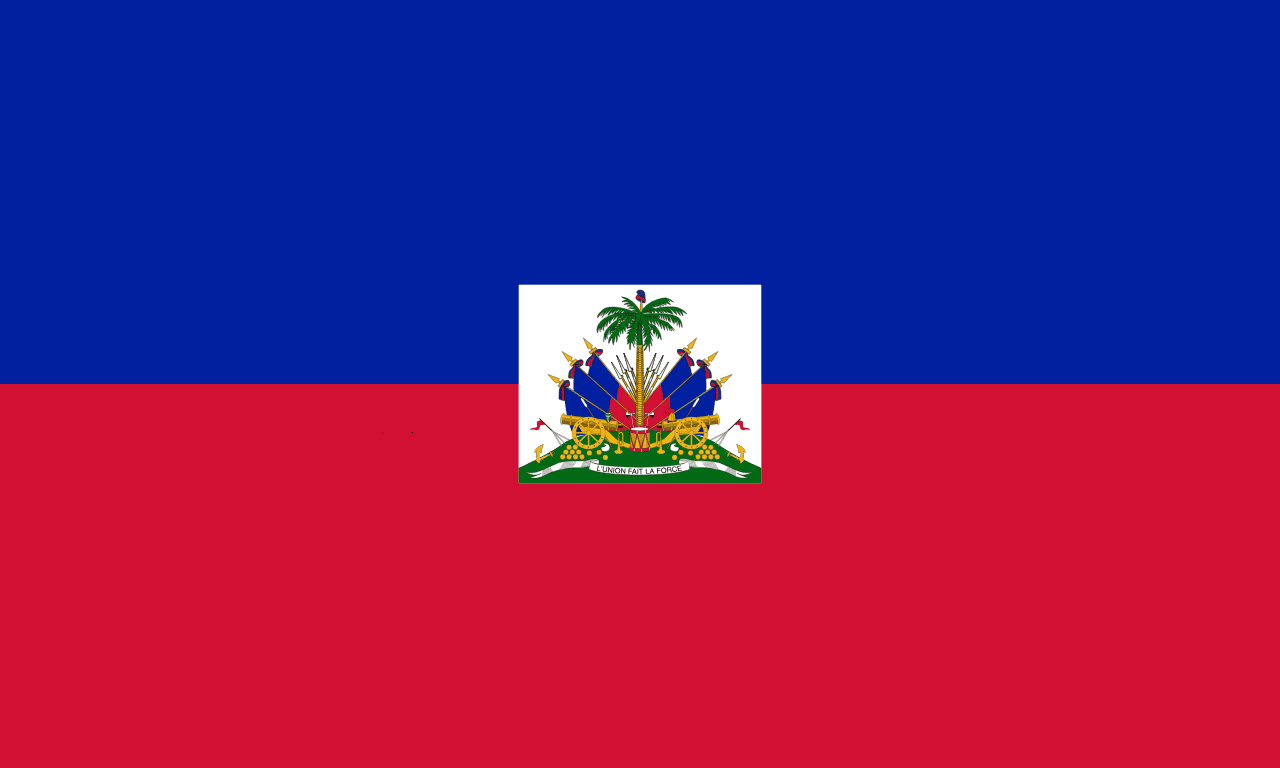
Haiti
The Pearl of the Antilles, the first free Black republic in the world and the only nation born of a successful slave revolt.
Figures from Haiti
Historically documented individuals of note.

Alexandre Pétion
# Alexandre Pétion (1770–1818) ### The Man Who Shaped Two Continents  Among the constellation of heroes who forged the Haitian nation from the crucible of revolution and colonial brutality, **Alexandre Pétion** stands in a singular position — a man of contradictions who was both a child of the slave colony's brutal racial hierarchies and the architect of a republic that would challenge those very hierarchies at every turn. Known to his people by the tender epithet *"Papa Bon Kè"* — **Father Good Heart** — Pétion was a soldier, statesman, land reformer, and internationalist whose influence extended far beyond the shores of Hispaniola. His support of Simón Bolívar would help liberate millions across South America; his land reform policies would reshape Haitian society for generations; and his commitment to constitutional governance would lay the groundwork for the Republic of Haiti's early democratic experiment. --- ### Early Life: Born Between Worlds Alexandre Pétion was born **Anne Alexandre Sabès** on **April 2, 1770**, in Port-au-Prince, the bustling colonial capital of Saint-Domingue — the French colony that occupied the western third of the island of Hispaniola and was, by the late 18th century, the most profitable colony in the world [1]. His birth situated him at the sharpest intersection of colonial Saint-Domingue's rigid racial taxonomy. His father, **Pascal Sabès**, was a wealthy white French *grand blanc* colonist — a member of the planter elite who benefited enormously from the slave economy. His mother, **Ursula**, was a free woman of mixed African and European descent, one of the colony's *affranchis* — the class of free people of color who navigated a precarious existence between the privilege of whiteness and the subjugation of African ancestry [2]. When Pascal Sabès refused to legally acknowledge his son — reportedly unwilling to publicly claim a child whose complexion marked him as non-white — the boy took his maternal family's identity and came to be known simply as **Pétion** [4]. This act of paternal rejection was not incidental; it was the defining wound of Pétion's early life, and it illuminated in personal terms the grotesque injustice of Saint-Domingue's *Code Noir* — the body of law that regulated the lives of the enslaved and the free colored alike. The *gens de couleur* (free people of color), despite often owning property and even enslaved people themselves, were barred from voting, holding public office, sitting with whites in public spaces, or wearing fine clothing [3]. They occupied what scholars have described as a kind of racial purgatory — prosperous enough to see what freedom might mean, but too stigmatized to fully claim it. --- ### Military Education and Revolutionary Awakening In **1788**, Pétion was sent to France to study at the **École Militaire** (Royal Military Academy) in Paris [2][6]. This was not unusual for the sons of the colonial *gens de couleur* elite, and the experience would prove transformative in ways no one could have predicted. France on the eve of 1789 was a society on the edge of volcanic rupture. The ideas of Rousseau, Voltaire, and Montesquieu crackled through the salons and coffeehouses of Paris; the Declaration of the Rights of Man and Citizen was not yet written, but its spirit was already in the air. Pétion absorbed the language of natural rights and human dignity. He returned to Saint-Domingue not merely as a trained artillery officer, but as a man whose political consciousness had been forged in the very furnace of the Enlightenment. He returned to find a colony where the rights proclaimed in Paris meant nothing to most of its inhabitants — where half a million enslaved Africans labored under whip and chain, and where the *gens de couleur*, despite paying taxes and serving in colonial militias, were denied the citizenship that French ideals nominally promised. --- ### The Haitian Revolution: From Insurgent to Commander The world of Saint-Domingue detonated in **August 1791** when enslaved Africans, meeting under the night sky in the Bois Caïman ceremony, launched the uprising that would become the **Haitian Revolution** — the only successful slave revolt in history that produced an independent nation [8]. Pétion's path into the revolution was not immediate; as a *gens de couleur* leader, his political loyalties evolved in response to the revolution's escalating demands. He initially aligned with the complex, shifting factional landscape of the colored elite but ultimately committed fully to the cause of independence. He served under the command of **[Toussaint Louverture](/profiles/toussaint-louverture)**, the revolution's most celebrated military genius, gaining invaluable experience in guerrilla warfare and artillery command [1]. He also fought alongside **[Jean-Jacques Dessalines](/profiles/jean-jacques-dessalines)** and **[Henri Christophe](/profiles/henri-christophe)**, men who were his contemporaries in arms but who would later become his rivals in politics. > *"Should I let posterity know that Alexandre Pétion is the liberator of my homeland?"* > — **Simón Bolívar**, reflecting on Pétion's indispensable support for South American independence [12] The defining military moment came in **1802**, when Pétion made the fateful decision to join the coalition resisting Napoleon Bonaparte's expedition to re-enslave Saint-Domingue, led by General Charles Leclerc [1][10]. This was a decision of enormous courage — Napoleon's armies had just reconquered Guadaloupe, re-enslaving its population, and the message to the Caribbean world was unmistakable. Pétion chose the side of freedom. His artillery expertise proved decisive in the campaign that culminated in the **Battle of Vertières on November 18, 1803**, when the Indigenous Army shattered French colonial power for the last time [10]. On **January 1, 1804**, [Jean-Jacques Dessalines](/profiles/jean-jacques-dessalines) declared Haiti's independence — the birth of the first Black republic in history, and the second republic in the Western Hemisphere. --- ### The Fall of Dessalines and the Birth of the Republic Haiti's independence did not bring peace. [Dessalines](/profiles/jean-jacques-dessalines), proclaiming himself **Emperor Jacques I**, ruled with increasing authoritarianism. His attempts to impose forced labor on the peasantry and his complex policies toward the *gens de couleur* elite built resentment on multiple fronts. On **October 17, 1806**, Dessalines was assassinated near Port-au-Prince in an ambush in which Pétion's role has long been debated by historians — some placing him among the conspirators, others viewing him as a secondary figure in the plot. What followed was a constitutional crisis and civil war. Pétion emerged as the champion of a republican, legislative-checks model of governance, drafting and promulgating the **Constitution of 1806**, which vested significant power in the Senate and constrained the executive — a direct response to Dessalines's imperial excesses [4][1]. [Henri Christophe](/profiles/henri-christophe), the powerful northern general, rejected this constitution outright, finding its limitations on executive authority unacceptable. By **1807**, Haiti had split into two states: Christophe's autocratic Kingdom in the north, and Pétion's **Republic of Haiti** in the south and west [11]. Pétion was elected **President of the Republic of Haiti** in 1807, a position he held until his death — and which he consolidated further under the **Constitution of 1816**, which made him **President for Life** [7][8]. --- ### Presidency: The "Papa Bon Kè" Years  Pétion's administration was characterized above all by his **radical land redistribution program**, arguably the most consequential domestic policy of any early Haitian government. In the years after independence, the state held vast plantations confiscated from French colonists. Rather than maintain them as large state-operated enterprises — the model favored by both [Toussaint Louverture](/profiles/toussaint-louverture) and [Dessalines](/profiles/jean-jacques-dessalines) — Pétion chose to distribute them among former enslaved people and military veterans in small parcels [2][6][7]. This policy was revolutionary on multiple levels. It was the **first large-scale land reform in the Americas**, dismantling the plantation complex that had defined Caribbean colonial life for nearly two centuries. It created a class of **independent smallholder peasants** — people who for the first time in their or their ancestors' experience owned the land they worked. It fulfilled, in concrete material terms, the promise of the revolution. The people called him *"Papa Bon Kè"* — Good-Hearted Father — and they meant it. The consequences were complex. The shift from large-scale export agriculture to subsistence smallholding reduced Haiti's export revenues and made economic development more difficult [8]. But this is a critique that must be measured against the alternative: the perpetuation of plantation labor in another form. Pétion chose his people's human dignity over economic efficiency, and history has largely honored that choice. His education policy was equally significant. While the **Constitution of 1806** did not codify educational rights, Pétion's administration actively built schools throughout the republic, and the **revised Constitution of 1816** mandated that each commune establish public institutions for school-age children [9]. This was, by the standards of 1816, a remarkably egalitarian commitment — one that paralleled contemporary debates in France, Britain, and the United States about universal education, debates that would not be resolved for decades in those countries. --- ### The Bolívar Alliance: Liberating a Continent Perhaps the most globally significant act of Pétion's presidency was his decision to shelter and support **Simón Bolívar** during his years of exile [9][10][11]. In **1815–1816**, Bolívar arrived in Haiti having suffered military defeats across Venezuela and Nueva Granada, his independence movement seemingly broken. Pétion offered him not merely asylum, but **weapons, ships, soldiers, money, and a printing press** [12][13]. Pétion attached one condition: wherever Bolívar's forces triumphed, **slavery must be abolished** [2][11][14]. Bolívar agreed. This condition, extracted by the president of a small Caribbean republic, would reverberate through the history of South America. Venezuela abolished slavery in 1854; Colombia in 1851; Peru in 1854 — and in each case, the ideological seed planted by Pétion's requirement played a role in shaping the terms on which independence was understood. Bolivar himself acknowledged Pétion's indispensability, at one point asking whether posterity should credit Pétion as the true liberator. Statues of Pétion stand today in Venezuela and across Latin America — a Caribbean president honored in lands he never visited, for a freedom he insisted upon [13]. --- ### Death and Legacy Alexandre Pétion died on **March 29, 1818**, in Port-au-Prince, of what contemporary accounts described as yellow fever — a disease that had claimed so many lives in the revolution [1][10]. He was 47 years old. He was, notably, **the only early Haitian head of state to die a natural death while in office** [12] — a distinction that speaks volumes about the violence of early Caribbean politics. He was succeeded by **[Jean-Pierre Boyer](/profiles/jean-pierre-boyer)**, who would reunify the island under Haitian rule by 1820, following [Henri Christophe](/profiles/henri-christophe)'s death. Pétion's legacy is written into the landscape of Haiti itself — in the smallholder farms that still define much of the country's rural economy; in the constitutional tradition of republican governance he championed; in the schools and lycées that trace their origins to his education decrees. It is written into the history of South America, in the independence movements he made possible. And it is written in his people's memory — in the name *Papa Bon Kè*, which carries across two centuries the warmth of a leader who, born into rejection and shaped by revolution, chose, again and again, to govern with his heart.
View Profile →
Catherine Flon
### Introduction Catherine Flon is a name etched into the very fabric of Haitian national identity. She is celebrated across the republic and its diaspora as the woman who stitched together the first Haitian flag during the crucial Congress of Arcahaie in May 1803 [1]. While popular history often simplifies her contribution to that of a patriotic seamstress—frequently drawing comparisons to Betsy Ross of the American Revolution—her role was deeply woven into the broader military, social, and political mobilization of the Haitian Revolution. As the goddaughter of the revolutionary commander [Jean-Jacques Dessalines](/profiles/jean-jacques-dessalines), Flon operated not merely as an isolated artisan, but as an active participant in the liberation struggle, running a workshop that doubled as a training ground for young women and a support hub for the indigenous army [2]. Her legacy represents the vital, yet frequently marginalized, contributions of women who served as nurses, spies, and coordinators in the world's only successful slave revolution. ### Early Life and the Colonial Crucible of Saint-Domingue Catherine Flon was born on December 2, 1772, in the coastal town of Arcahaie, located in the western province of what was then the French colony of Saint-Domingue [1]. At the time of her birth, Saint-Domingue was the wealthiest and most brutally exploitative colony in the Caribbean, often referred to as the "Pearl of the Antilles." Its immense wealth, derived from sugar, coffee, indigo, and cotton, was sustained by the forced labor of hundreds of thousands of enslaved Africans under a regime of terror codified by the *Code Noir*. Flon was born into the class of *gens de couleur libres* (free people of color), a group that occupied a complex social tier between the ruling white colonists (*grands blancs* and *petits blancs*) and the vast population of enslaved Black laborers. Her parents were successful merchants and tradespeople involved in the textile trade, owning a relatively prosperous workshop in Arcahaie [2][3]. This background allowed Catherine to receive training in fine needlework, tailoring, and fabric manipulation—skills that were rare and highly valued in the colonial economy. As the French Revolution of 1789 began to destabilize the colonial order, tensions between Saint-Domingue's racial and class factions erupted. In August 1791, the massive slave uprising sparked by the ceremony at Bois Caïman transformed the colony into a war zone. Seeing the writing on the wall, many free people of color and white colonists began to flee. Catherine's parents ultimately chose to leave Saint-Domingue for France to escape the violence [3]. Catherine, however, refused to abandon her homeland. She remained in Arcahaie, took ownership of the family workshop, and converted it into an independent enterprise where she taught young girls, particularly free women of color and newly liberated Black girls, the art of sewing and design [2]. ### The Rise of the Revolution and Quiet Resistance Throughout the 1790s, the revolution evolved through multiple phases, marked by the rise of [Toussaint Louverture](/profiles/toussaint-louverture) and the abolition of slavery by the French National Convention in 1794. During this period of relative stability under Louverture's leadership, Arcahaie remained a critical strategic point. Flon's workshop flourished, but it also became a site of covert political organization [2]. The situation deteriorated rapidly in 1802 when Napoleon Bonaparte dispatched a massive French expeditionary force led by his brother-in-law, General Charles Leclerc, with the secret mission of disarming the local forces and restoring slavery. The arrest and subsequent deportation of [Toussaint Louverture](/profiles/toussaint-louverture) in June 1802 shattered any remaining illusions of reconciliation with France. The revolutionary leadership fell to Louverture's top generals, most notably [Jean-Jacques Dessalines](/profiles/jean-jacques-dessalines), [Henri Christophe](/profiles/henri-christophe), and [Alexandre Pétion](/profiles/alexandre-petion) [3]. As the conflict escalated into a war of total independence, Flon’s role transformed. She was the goddaughter of [Jean-Jacques Dessalines](/profiles/jean-jacques-dessalines), who placed great trust in her intelligence and discretion [1][2]. Her workshop in Arcahaie was repositioned to support the revolutionary army. Under her guidance, the young women of her workshop produced bandages, military uniforms, and bags for carrying ammunition [2]. Moreover, Flon and her apprentices worked as nurses, establishing a makeshift hospital in Arcahaie to treat soldiers wounded in conflicts along the western coast [2][3]. This work was highly dangerous, as the French army under Leclerc (and later the notoriously brutal General Rochambeau) routinely executed anyone suspected of aiding the revolutionary forces. > "She did not merely stitch bands of cloth; she wove the spirit of an undivided nation, binding the destiny of a free people to the colors of liberty." > — Historical commentary on the creation of the Haitian flag [4]. ### The Congress of Arcahaie and the Creation of the Flag By early 1803, the war had reached a fever pitch. General Rochambeau waged a genocidal campaign, employing torture and mass executions to terrorize the population. This brutality forced a historic alignment. Historically divided by race, class, and regional rivalries, the Black forces led by Dessalines and the Mulatto forces led by [Alexandre Pétion](/profiles/alexandre-petion) realized that they had to unite or face total annihilation. From May 15 to May 18, 1803, the revolutionary leaders convened in Arcahaie for a historic summit known as the Congress of Arcahaie [1]. The goal was to establish a unified military command and define a common national symbol that would represent their alliance. The French tricolor flag, which the revolutionary forces had previously carried to show their nominal loyalty to the ideals of the French Republic, was no longer appropriate. On May 18, 1803, the climax of the congress occurred. In a dramatic public gesture, [Jean-Jacques Dessalines](/profiles/jean-jacques-dessalines) took a French tricolor flag, placed it on a table, and ripped out the white center band [1][5]. The white band represented the French colonizers, and its removal symbolized the complete rejection of French colonial authority. Dessalines then presented the remaining blue and red bands to his goddaughter, Catherine Flon, and commanded her to sew them together [1][5].  Flon took the two strips of cloth and stitched them together. The blue strip was placed at the top, representing the Black population of Haiti, while the red strip was placed at the bottom, representing the Mulatto population [1][5]. According to oral tradition, the sewing was done using Flon’s own hair as thread to reinforce the bond, symbolizing the permanent and unbreakable union between the two groups. Other versions of the story suggest she used her needlework to stitch the words *"Liberté ou la Mort"* (Liberty or Death) or *"L'Union fait la force"* (Unity makes strength) onto the fabric [5]. The creation of the flag was met with immense celebration by the assembled troops, serving as a powerful catalyst for the final push against the French. ### The Triumph of Independence and Post-Revolutionary Years The unity forged at Arcahaie bore fruit on November 18, 1803, when the indigenous army defeated the French at the Battle of Vertières, forcing the evacuation of the remaining French forces. On January 1, 1804, in the city of Gonaïves, [Jean-Jacques Dessalines](/profiles/jean-jacques-dessalines) read the Declaration of Independence, officially renaming the colony Haiti—the original Taíno name for the island. Following the declaration of independence, Haiti entered a tumultuous period of state-building. Dessalines was declared Emperor Jacques I in late 1804 but was assassinated in 1806, leading to a civil war that divided the country into the Northern Kingdom under [Henri Christophe](/profiles/henri-christophe) and the Southern Republic under [Alexandre Pétion](/profiles/alexandre-petion). Throughout these turbulent decades, Catherine Flon chose to live a quiet life in Arcahaie [1]. She resisted invitations to move to the imperial or royal courts, preferring to continue her work as a seamstress and teacher. She remained a beloved figure in her community, recognized as a living monument to the birth of the nation. She died in Arcahaie in 1831 at the age of 58 [1][3].  ### Legacy and Modern Commemoration Catherine Flon is revered today as one of Haiti's greatest national heroes. Her legacy is celebrated annually on May 18, which is observed throughout Haiti and its diaspora as Haitian Flag Day (Fête du Drapeau) [1]. On this day, schools, civic organizations, and community groups host parades, cultural events, and discussions centered on the theme of unity that Flon’s flag represents. Her contribution was formally recognized by the Haitian government in 2000 when her likeness was placed on the 10-gourde banknote, making her the first woman to be featured on Haitian currency [6]. In public schools across Haiti, she is taught as a symbol of female patriotism and courage. Historians and feminist scholars also view Catherine Flon as a critical window into the lives of women in the Haitian Revolution. While colonial archives largely ignored women—focusing instead on the military exploits of men like Louverture, Dessalines, and Christophe—oral histories and local traditions preserved the memory of figures like Flon, Sanité Bélair, and Cécile Fatiman. Her story serves as a reminder that the Haitian Revolution was not won by soldiers alone, but by a collective societal mobilization in which women played indispensable roles.
View Profile →Cécile Fatiman
### Introduction and Historical Context In the annals of the Atlantic World, few events have reshaped the course of human history as profoundly and decisively as the Haitian Revolution (1791–1804). At the epicenter of this monumental struggle for emancipation stood Saint-Domingue, then the most lucrative colony in the French Empire, whose staggering wealth was extracted through the unmitigated brutality of plantation slavery [1]. Within this crucible of suffering and resistance, spiritual leadership proved to be the vital catalyst that unified a diverse and fractured enslaved population. Among the most legendary and revered figures of this epoch is Cécile Fatiman, a Vodou *mambo* (high priestess) whose spiritual authority and revolutionary courage co-presided over the historic Bois Caïman ceremony in August 1791 [2]. Working alongside legendary organizers like [Dutty Boukman](/profiles/dutty-boukman) and laying the groundwork for future liberators such as [Toussaint Louverture](/profiles/toussaint-louverture) and [Jean-Jacques Dessalines](/profiles/jean-jacques-dessalines), Fatiman transformed sacred ritual into an indomitable declaration of war against human bondage [3].  ### Early Life, Lineage, and Origins Cécile Fatiman was born around 1771 in the northern region of Saint-Domingue, during a period of intense social and racial stratification. Historical traditions and oral histories maintain that she was the daughter of an enslaved African woman and a white European aristocrat—specifically identified in numerous historical accounts as a Corsican prince or nobleman [4]. This mixed heritage placed her within a complex socio-racial hierarchy, yet her lived experiences remained inextricably bound to the plight of the enslaved African majority. Striking in appearance, contemporary descriptions often highlighted her piercing green eyes and commanding physical presence, attributes that contributed to her mystical aura among both enslaved people and free people of color [5]. Some contemporary historians and etymologists suggest that her surname, "Fatiman," may represent a French phonetic corruption of "Attiman" or carry echoes of Islamic African heritage, pointing to the deep cultural memories preserved by enslaved Africans brought to the Caribbean [6]. Prior to the outbreak of the revolution, Fatiman managed to secure her freedom, navigating the treacherous legal and social waters of colonial Cap-Français (now Cap-Haïtien). Rather than assimilating into the privileged echelons of the *affranchis* (free people of color), she dedicated her life and spiritual gifts to the underground networks of the enslaved population, rejecting colonial hegemony in favor of ancestral solidarity [1]. ### The Spiritual Underground: Vodou as Revolutionary Praxis To understand Cécile Fatiman's pivotal role in the Haitian Revolution, one must examine the socio-political function of Vodou in colonial Saint-Domingue. Under the draconian *Code Noir* enacted by King Louis XIV, all African religious practices were strictly prohibited, and enslaved people were forcibly baptized into the Roman Catholic faith [7]. In defiance of these oppressive decrees, enslaved Africans synthesized their diverse traditional cosmological beliefs—drawn from Fon, Kongo, Yoruba, and other West and Central African traditions—into the cohesive, clandestine spiritual system known as Vodou [2]. Within the nocturnal gatherings held in the secluded forests and mountains of the northern plains, Vodou transcended mere religious observance; it became the ultimate vehicle for revolutionary praxis and political organization. As a highly initiated *mambo*, Cécile Fatiman wielded immense moral and spiritual authority. She provided healing, spiritual fortification, and a sacred space where enslaved individuals could reclaim their humanity and envision an existence free from the whip [8]. Through rhythmic drumming, sacred songs, and spirit possession, Fatiman fostered a collective consciousness that united disparate plantation laborers into a disciplined, covert revolutionary army capable of executing a synchronized insurrection [3]. > "The god of the white man inspires him with crime, but our god who is good to us orders us to revenge our wrongs. Listen to the voice of liberty, which speaks in the hearts of us all!" > — Traditional invocation attributed to the leaders of the Bois Caïman ceremony [4] ### The Night of Destiny: The Bois Caïman Ceremony The defining moment of Cécile Fatiman's life—and the catalyst for the Haitian Revolution—transpired on the stormy night of August 14, 1791, in a thicket known as Bois Caïman (Alligator Woods) near Morne-Rouge [9]. Enslaved delegates from across the surrounding northern plantations gathered secretly in the torrential rain to finalize strategic plans for a general uprising. Presiding over this momentous assembly were [Dutty Boukman](/profiles/dutty-boukman), a formidable *houngan* (priest) and plantation driver, and Cécile Fatiman, dressed in a pristine white robe that illuminated the darkened forest clearing [5]. As the lightning flashed and thunder echoed across the plains, Fatiman initiated the sacred rites. According to persistent oral traditions and subsequent eyewitness accounts, she became possessed by *Ezili Dantor*, the fierce, protective warrior *lwa* (spirit) associated with motherhood, vengeance, and the defense of the vulnerable [10]. Operating under this divine inspiration, Fatiman performed the ritual sacrifice of a black pig, channeling the life force of the offering to seal a sacred blood covenant among the conspirators [2]. Each participant drank of the consecrated offering, swearing a solemn oath before the ancestral spirits to sever the chains of slavery or perish in the attempt [6]. This ritual was not merely a symbolic gesture; it was a profound psychological and spiritual transformation that eradicated fear and bound the revolutionaries to a shared destiny of liberation. ### Eruption of Freedom: The Haitian Revolution The strategic and spiritual efficacy of the Bois Caïman pact became manifestly evident just days later. On the night of August 22, 1791, the northern plains erupted into flames as thousands of enslaved laborers launched a highly coordinated insurrection against the colonial plantation regime [11]. Sugar mills were dismantled, great houses were torched, and the machinery of slavery was systematically broken across the province. The uprising moved with such velocity and discipline that French colonial authorities were completely overwhelmed [1]. While leaders like [Toussaint Louverture](/profiles/toussaint-louverture), Georges Biassou, and Jean-François Papillon assumed military command on the battlefields, Cécile Fatiman remained a vital spiritual pillar of the revolutionary struggle. Throughout the harrowing twelve-year war—which pitted Haitian freedom fighters against the imperial armies of France, Spain, and Great Britain—Fatiman continued to minister to the soldiers, offering spiritual protection and moral resolve [7]. Her presence served as a living reminder of the sacred oath sworn at Bois Caïman, anchoring the military campaign in an uncompromising spiritual mandate for universal human freedom. ### Marriage to Jean-Louis Pierrot and Presidential Court Following the victorious declaration of Haitian independence by [Jean-Jacques Dessalines](/profiles/jean-jacques-dessalines) on January 1, 1804, Cécile Fatiman transitioned from a clandestine revolutionary organizer to a prominent figure in the new sovereign black republic [12]. She married [Jean-Louis Pierrot](/profiles/jean-louis-pierrot), a distinguished general of the Haitian Revolution who had demonstrated exceptional bravery during the conflict. Pierrot was also a member of the northern military elite that consolidated power during the subsequent reigns of [Henri Christophe](/profiles/henri-christophe) and Jean-Pierre Boyer [8]. In April 1845, Jean-Louis Pierrot was elected President of Haiti, elevating Cécile Fatiman to the position of First Lady of the Republic [10]. During Pierrot's presidency, the couple maintained their primary residence and court in Cap-Haïtien rather than Port-au-Prince, reflecting their deep roots in the northern cradle of the revolution [9]. As First Lady, Fatiman brought an unprecedented aura of revolutionary authenticity and spiritual dignity to the highest levels of Haitian governance. Although Pierrot's tenure was brief—concluding in March 1846 amidst regional political shifts—Fatiman retained her status as a revered national matriarch [11]. > "Cécile Fatiman represents the indispensable synergy between feminine spiritual leadership and political liberation in the Afro-Atlantic world; she consecrated the struggle for human dignity with an oath that eternity cannot erase." > — Modern Caribbean historiographical assessment [12] ### Longevity, Death, and Enduring Legacy Remarkably, Cécile Fatiman survived the tumultuous early decades of Haitian independence, witnessing the consolidation of the state she had helped birth. Historical records and documented oral accounts confirm that she lived an extraordinarily long life, passing away in Cap-Haïtien around 1883 at the reported age of 112 [4]. Her longevity allowed her to serve as a living bridge between the colonial era of enslavement and the late nineteenth-century sovereign Haitian republic, transmitting the authentic memories of Bois Caïman to successive generations of Haitians [5]. Today, Cécile Fatiman is celebrated as one of the national heroines of Haiti and a foundational figure in global Pan-African history [3]. Her legacy challenges traditional, male-dominated narratives of the Haitian Revolution by underscoring the vital leadership of women and the centrality of indigenous spiritual systems in dismantling colonial oppression. Monuments, scholarly treatises, and Vodou invocations continue to honor her memory, ensuring that the priestess in the white robe who lit the fires of liberty at Bois Caïman remains an immortal symbol of resistance, empowerment, and spiritual fortitude [1].
View Profile →
Hector Hyppolite
# Hector Hyppolite: The Visionary Master of Haitian Naïve Art ### The Spiritual and Cultural Landscape of Early 20th Century Haiti To comprehend the vibrant, haunting, and transcendent art of Hector Hyppolite, one must delve into the deep spiritual currents of Haiti. Following its independence in 1804, Haiti found itself isolated from the Western world. In this isolation, a profound syncretic religion solidified among the peasantry: Vodou. Forged in the crucible of slavery, Vodou combined West African religious practices with elements of Roman Catholicism. It was not merely a religion, but a complete worldview, a system of healing, and a source of profound aesthetic inspiration. For decades, the Haitian elite, heavily influenced by European culture and the Catholic Church, marginalized and suppressed Vodou. The peasantry, however, kept the traditions alive. Visual art in Haiti prior to the 1940s was largely formal, academic, and deeply influenced by French traditions, leaving the vast, pulsating spiritual life of the Haitian majority entirely unrepresented on canvas. This was the cultural dichotomy into which Hector Hyppolite was born, and which his brief but explosive artistic career would irrevocably shatter. ### A Life Steeped in Mystery and Spirit Hector Hyppolite was born on September 16, 1894, in the coastal city of Saint-Marc, in the Artibonite department of Haiti. His lineage was deeply entrenched in the spiritual traditions of the island; he was the son and grandson of *houngans* (Vodou priests). From an early age, Hyppolite was immersed in the complex cosmology of the *lwa* (spirits), the intricate rhythms of ceremonial drums, and the creation of *vèvè* (intricate symbolic drawings made on the earth during rituals). Much of Hyppolite’s early life is shrouded in a blend of fact and self-mythologizing. He worked as a shoemaker, a house painter, and a decorator. He claimed to have spent five years traveling abroad between 1915 and 1920, venturing to Cuba and even across the Atlantic to Dahomey (modern-day Benin) and other parts of Africa, tracing his ancestral and spiritual roots [1]. While art historians continue to debate the veracity of these transatlantic journeys, there is no doubt that Hyppolite viewed himself as a cosmopolitan spiritual seeker. Eventually, Hyppolite embraced his familial destiny and became a practicing *houngan*. His artistic impulses were initially channeled entirely into his religious practice. He painted murals in his *ounfò* (temple), decorated altars, and painted the doors of local establishments with vibrant floral and bird motifs in exchange for daily necessities. He worked with whatever materials he could find—often cheap house paint, furniture enamel, and pieces of cardboard or scavenged wood, applying the pigment with cheap brushes, chicken feathers, or his own fingers. ### The Encounter that Changed Haitian Art The trajectory of Hyppolite's life, and the history of Caribbean art, changed dramatically in 1943. DeWitt Peters, an American conscientious objector and watercolorist, had arrived in Haiti to teach English. Recognizing the complete lack of institutional support for local artists, Peters, alongside Haitian intellectuals like [Philippe Thoby-Marcelin](/profiles/philippe-thoby-marcelin), founded the *Centre d'Art* in Port-au-Prince in 1944. The Centre was initially intended for formally trained artists, but it quickly became the epicenter of a massive "naïve" or intuitive art movement. The legend of Hyppolite's discovery is one of the most famous in Caribbean art history. DeWitt Peters was driving through the coastal town of Montrouis (near Saint-Marc) when he noticed the extraordinarily painted doors of a local bar named "Ici la Renaissance." The doors, adorned with brilliant, stylized birds and flowers, captivated him. Peters dispatched Thoby-Marcelin to find the artist. They found Hector Hyppolite living in immense poverty, yet fiercely dedicated to his spiritual duties. Persuaded to move to Port-au-Prince and join the Centre d'Art, Hyppolite was provided with professional materials—canvas, high-quality oils, and proper brushes. For the first time in his life, at the age of 51, he could devote himself entirely to painting.  ### A Frenzy of Creation What followed was one of the most astonishingly productive periods in modern art. Over the course of just three years, from 1945 until his death in 1948, Hyppolite produced an estimated 250 to 600 paintings [2]. His output was frenetic, driven by a profound sense of spiritual urgency. > "I don’t paint what I see, I paint what I dream and what my spirits tell me to paint." — *Hector Hyppolite* Hyppolite's canvases were explosive, surreal, and deeply intimate. He did not paint the external reality of Haitian poverty; he painted the invisible world. His primary subjects were the *lwa* of the Vodou pantheon. He painted *Maitresse Erzulie*, the spirit of love and beauty, often depicting her as a lush, powerful figure intertwined with Christian Marian iconography. He painted *Damballah*, the serpent spirit of creation, and *Bawon Samdi*, the guardian of the cemetery. His style was entirely his own. Unbound by academic rules of perspective or proportion, his compositions were flat but incredibly dynamic, vibrating with intense, unmixed colors—deep blues, fiery reds, and emerald greens. His figures often float in a dreamlike space, surrounded by lush, overgrown tropical flora, esoteric symbols, and mystical beasts. To look at a Hyppolite painting is to look directly into the psychological and spiritual landscape of the artist. ### André Breton and Global Recognition The raw, unfiltered power of Hyppolite's work soon caught the attention of the international avant-garde. In 1945, André Breton, the founder and chief theorist of the Surrealist movement, visited Haiti accompanied by the Cuban artist [Wifredo Lam](/profiles/wifredo-lam). Breton was actively seeking art that bypassed the rational mind and tapped directly into the subconscious. When Breton walked into the Centre d'Art and saw Hyppolite's paintings, he was mesmerized. He famously purchased five of Hyppolite's works on the spot. Breton declared that Hyppolite's art was the pure, unadulterated manifestation of the marvelous, proclaiming that "Hyppolite possesses a secret." Breton wrote extensively about Hyppolite, integrating him into the global Surrealist discourse and championing his work in Europe. Thanks to Breton's enthusiastic endorsement, Hyppolite's paintings were soon exhibited in Paris, New York, and elsewhere. In 1947, his work was featured prominently in a major UNESCO exhibition in Paris, stunning European critics and officially establishing Haitian intuitive art on the world stage. Hyppolite became an international sensation, an icon of the "primitive" genius that mid-century modernists so heavily idealized. ### Legacy of a Visionary Despite his sudden international fame, Hyppolite's life remained relatively modest, and his focus remained heavily on his spiritual obligations in Port-au-Prince. Tragically, his artistic career was cut terribly short. In June 1948, at the height of his creative powers, Hector Hyppolite suffered a fatal heart attack. He was only 54 years old. The impact of Hector Hyppolite on Caribbean art cannot be overstated. Before Hyppolite, the visual expression of the Haitian peasantry was largely confined to ephemeral ritual objects. After Hyppolite, a massive, internationally recognized artistic movement was born. He paved the way for generations of brilliant Haitian artists, such as [Philomé Obin](/profiles/philome-obin), [Rigaud Benoît](/profiles/rigaud-benoit), and [Castera Bazile](/profiles/castera-bazile). Today, Hector Hyppolite's masterpieces hang in the most prestigious museums in the world, including the Museum of Modern Art (MoMA) in New York and the Musée d'Art Moderne de Paris. He is remembered not merely as a "naïve" painter, but as a master visual theologian—a man who used the canvas to bridge the visible world and the divine, proving that true artistic genius requires neither formal training nor the approval of academies, but only the courage to paint what the spirit dictates.
View Profile →
Henri Christophe
### Introduction to a Colossus of Caribbean History Henri Christophe remains one of the most towering, enigmatic, and formidable figures in the history of the Caribbean and the wider Atlantic World. A central leader in the Haitian Revolution, he was an individual whose life traversed the entire spectrum of human experience—from the indignity of enslavement to the absolute pinnacle of monarchical power. Born on October 6, 1767, likely on the island of Grenada (though some historical accounts point to St. Kitts), Christophe emerged in an era defined by brutal chattel slavery, colonial exploitation, and the burgeoning enlightenment ideals that would soon set the world ablaze. His trajectory from an enslaved youth to a free man of color, and ultimately to King Henry I of Haiti, is a testament to his extraordinary military genius, administrative prowess, and unyielding ambition. Christophe's life was inexorably linked to the birth of the first free Black republic in the world, and his legacy is etched not only in the annals of history but in the very stone of the monumental fortresses and palaces he commanded to be built. His story is one of fierce independence, draconian discipline, and a profound, if flawed, vision for Black sovereignty in a hostile world. ### Early Life and the Crucible of the American Revolution Details of Christophe's earliest years are somewhat obscured by the mists of time and the deliberate mythmaking that often accompanies figures of his stature. Most historians agree he was brought to the French colony of Saint-Domingue (modern-day Haiti) as a slave, working in varied capacities. He spent time as a domestic servant, a mason, and a sailor, acquiring a diverse skill set and an intimate understanding of the colonial socio-economic hierarchy. A pivotal moment in his early life occurred in 1779 when he reportedly served as a drummer boy with the Chasseurs-Volontaires de Saint-Domingue, a regiment of free men of color who fought alongside American colonists and French forces at the Siege of Savannah during the American Revolutionary War. This experience was profoundly transformative. Exposure to military discipline, the tactics of European warfare, and the rhetoric of liberty and independence left an indelible mark on the young Christophe. Upon returning to Saint-Domingue, he gained his freedom—either through purchase or military service—and settled in Cap-Français (now Cap-Haïtien). There, he worked in a hotel, managing the billiards room and interacting with the diverse, often tense, strata of Saint-Domingue society: wealthy white planters (grand blancs), working-class whites (petit blancs), and the growing population of free people of color (gens de couleur). This period honed his political acumen and his understanding of the fragile social powder keg that was Saint-Domingue. ### The Eruption of the Haitian Revolution When the Haitian Revolution erupted in August 1791, initiated by a massive slave rebellion in the prosperous Northern Plain, Christophe did not immediately join the vanguard. However, as the conflict escalated into a complex multi-sided war involving the enslaved population, French royalists, French republicans, the British, and the Spanish, his military talents quickly became apparent. He aligned himself with [Toussaint L'Ouverture](/profiles/toussaint-louverture), the brilliant strategist and undisputed leader of the revolutionary forces. Under Toussaint’s mentorship and command, Christophe rose rapidly through the ranks. He distinguished himself in numerous campaigns against European invaders. His physical stature—he was reputedly an imposing figure—matched his commanding presence and tactical brilliance. By the turn of the 19th century, Christophe was one of Toussaint’s most trusted generals, governing the crucial northern province of the colony. He was instrumental in enforcing Toussaint’s agrarian policies, which aimed to restore the colony's shattered economy through a system of forced labor that, while abolishing slavery, tied workers to the plantations to maintain sugar and coffee production. This period revealed Christophe’s lifelong belief in discipline, order, and economic self-sufficiency as the cornerstones of national survival. > "I have never ceased to consider the independence of my country as the most precious of all possessions." — *Henri Christophe*  ### The War of Independence and the Defeat of the French In 1802, Napoleon Bonaparte dispatched a massive expeditionary force under his brother-in-law, General Charles Leclerc, to reassert French control over Saint-Domingue and secretly restore slavery. It was Christophe who famously commanded Cap-Français when the French fleet arrived. Refusing Leclerc’s orders to surrender the city, Christophe boldly declared that he would rather reduce the city to ashes than hand it over to the French—and he made good on his promise, ordering Cap-Français burned to the ground before retreating into the mountainous interior to wage a brutal guerrilla war. Although Toussaint was eventually captured through treachery and died in a French prison, the fight was continued by Christophe and [Jean-Jacques Dessalines](/profiles/jean-jacques-dessalines). The French forces were decimated by fierce resistance and outbreaks of yellow fever. In 1803, at the decisive Battle of Vertières, the French were finally defeated, paving the way for Dessalines to declare the independent nation of Haiti on January 1, 1804. ### A Nation Divided: Christophe vs. Pétion Following the assassination of Emperor Jean-Jacques Dessalines in 1806, Haiti plunged into political chaos and civil war. The nation fractured along geographic and racial lines. In the south and west, [Alexandre Pétion](/profiles/alexandre-petion), a prominent leader of the free people of color, established a republic characterized by land redistribution and a more relaxed, though economically less productive, agrarian system. In the north, Christophe took control, establishing the State of Haiti in 1807 and declaring himself President for Life. Christophe vehemently opposed Pétion's policies, believing that fragmenting the large plantations would lead to economic ruin and leave Haiti vulnerable to European reconquest. He maintained a militarized state, enforcing a strict corvée labor system to ensure high agricultural yields. This ideological and territorial schism defined Haitian politics for over a decade, resulting in a bitter and protracted stalemate between the northern State and the southern Republic. ### The Kingdom of Haiti and Monumental Vision In 1811, seeking to elevate his nation's standing on the world stage and to consolidate his own power, Christophe declared the north a monarchy and crowned himself King Henry I of the Kingdom of Haiti. He created a hereditary nobility, establishing counts, dukes, and barons, and implemented a sophisticated legal code, the Code Henry. King Henry I was obsessed with proving that Black people were capable of achieving the same heights of civilization, governance, and culture as Europeans. He invested heavily in education, importing teachers from Europe and establishing a system of public schooling. He modernized agriculture and fortified the nation's defenses. It was during this period that he commissioned his most enduring legacies: the sprawling, opulent Sans-Souci Palace and the breathtaking Citadelle Laferrière. The Citadelle, perched atop the Bonnet à l'Évêque mountain, is a marvel of military engineering and remains the largest fortress in the Americas. Built by the sweat and blood of tens of thousands of subjects, it was designed to withstand a massive French invasion that never came. Sans-Souci, often compared to Versailles, was a magnificent palace complex intended to showcase the wealth, sophistication, and administrative might of the Black kingdom. ### Fall and Lasting Legacy However, Christophe’s relentless drive and draconian methods sowed the seeds of his own destruction. The populace grew deeply resentful of the harsh labor conditions and the constant military conscription. In 1820, Christophe suffered a severe stroke that left him partially paralyzed. Sensing vulnerability, simmering rebellions in the military and among the peasantry erupted into outright mutiny. Faced with the collapse of his kingdom and the betrayal of his most trusted officers, King Henry I chose to take his own life on October 8, 1820, supposedly shooting himself in the heart with a silver bullet at the Sans-Souci Palace. Following his death, his kingdom was quickly absorbed by the southern republic under Jean-Pierre Boyer, reunifying Haiti. Henri Christophe’s legacy is deeply complex. He was a visionary who championed Black pride, national defense, and economic independence. Yet, he was also an autocrat who replicated some of the oppressive labor structures of the colonial era. Today, he is remembered as a titan of the Haitian Revolution, a flawed but brilliant monarch whose monumental constructions stand as eternal testaments to the indomitable spirit and fierce independence of the Haitian people.
View Profile →
Jacques Roumain
### Introduction and Early Life Born on June 4, 1907, in the vibrant capital of Port-au-Prince, Jacques Roumain emerged from a world defined by immense privilege and political entrenchment. He was a scion of one of Haiti’s most elite and affluent families, a background that traditionally insulated individuals from the stark realities of the agrarian peasantry. His father, Auguste Roumain, was an enormously wealthy landowner, and his maternal grandfather, [Tancrède Auguste](/profiles/tancrede-auguste), had briefly served as the President of Haiti between 1912 and 1913 before his untimely death. This upbringing placed the young Roumain at the very nexus of Haiti’s political and cultural establishment. Yet, even from an early age, Jacques Roumain exhibited a profound intellectual curiosity that transcended the parochial interests of the Haitian bourgeoisie. Recognizing his prodigious intellect, his family sent him abroad in 1922 to pursue an elite education in Europe. Over the next five years, Roumain studied at prestigious Catholic institutions and academies across Switzerland, Belgium, France, Germany, and Spain. His exposure to the European intellectual milieu was transformative. He immersed himself in philosophy, literature, agronomy, and the burgeoning political ideologies of the early 20th century. However, as he wandered the ancient streets of Europe, his heart and mind remained tethered to his homeland, which was enduring a deeply transformative and painful period. ### Political Awakening and the U.S. Occupation When Jacques Roumain returned to Haiti in 1927, he stepped into a nation fraught with tension and indignation. Since 1915, Haiti had been under the military and administrative occupation of the United States. This foreign intervention had profoundly humiliated the Haitian populace, stoking fierce nationalist sentiments and birthing a generation of young intellectuals determined to reclaim their country’s sovereignty and cultural pride. Roumain quickly became a leading voice of this "occupation generation." Rejecting the complacency of his aristocratic peers, Roumain actively challenged the U.S. presence. He recognized that true independence required not just political liberation, but a renaissance of Haitian identity. To this end, he co-founded *La Revue Indigène* (The Indigenous Review), an avant-garde literary journal that sought to celebrate Haitian culture, folklore, and the African roots of the nation, rather than imitating French literary models. The Indigéniste movement was a crucial intellectual rebellion, laying the groundwork for Négritude and pan-African literary movements.  Roumain did not limit his activism to the pen. He co-founded youth organizations, notably the *Ligue de la Jeunesse Patriote Haïtienne* (Haitian Patriotic Youth League), to mobilize young Haitians against the American occupation. His fiery rhetoric and unyielding commitment to the liberation of the Haitian underclass frequently placed him at odds with the local authorities who collaborated with the U.S. marines. ### The Haitian Communist Party and Exile Roumain’s political evolution inevitably led him toward Marxism, which he viewed as the definitive framework for dismantling the deeply entrenched class hierarchies and neocolonial structures strangling his country. After the U.S. occupation officially ended in 1934, Haiti was left under the authoritarian rule of President [Sténio Vincent](/profiles/stenio-vincent). In that same year, Roumain took a monumental and dangerous step: he founded the Haitian Communist Party (Parti Communiste Haïtien - PCH). As the founder and head of the PCH, Roumain organized laborers, advocated for the agrarian peasantry, and vocally condemned the Vincent administration’s oppressive policies. The government’s retaliation was swift and brutal. The Communist Party was outlawed, and Roumain was subjected to constant harassment, arrests, and imprisonment. His incarceration sparked international outrage among left-wing intellectuals. During this tumultuous period, Roumain formed a deep and abiding friendship with the great African American poet Langston Hughes, who had visited Haiti in 1931. Hughes recognized Roumain as a kindred spirit and a brilliant literary talent. When Roumain was imprisoned, Hughes became a vocal champion for his release, campaigning tirelessly on the international stage to draw attention to the injustices in Haiti. Eventually, the unrelenting pressure forced Roumain into exile. He spent the late 1930s traversing the globe, living in New York, Brussels, Paris, and Havana. Exile, though physically separating him from his beloved Haiti, served only to broaden his intellectual horizons. He connected with other prominent anti-colonial and pan-African thinkers, studying ethnology at the Musée de l'Homme in Paris and deepening his anthropological understanding of global peasant movements. ### The Bureau d'Ethnologie and Cultural Defense In 1941, a change in Haiti’s political administration allowed Jacques Roumain to return home. Upon his arrival, he discovered a new cultural crisis. The Catholic Church, backed by elements of the Haitian state, was orchestrating a fierce "anti-superstition campaign" aimed at eradicating Vodou, the spiritual bedrock of the Haitian peasantry. Sacred objects were being destroyed, and practitioners were persecuted. Appalled by this assault on the national soul, Roumain established the Bureau d'Ethnologie (Bureau of Ethnology) and served as its first director. He envisioned the Bureau as an institutional fortress to protect and scientifically study Haitian culture, folklore, archaeology, and Vodou. Through rigorous anthropological research, Roumain sought to legitimize Vodou not as a "superstition," but as a complex, valid religious system and the authentic cultural heartbeat of the Haitian people. This endeavor was a monumental act of cultural preservation that fundamentally shifted how Haiti understood its own heritage. ### Masters of the Dew: A Literary Masterpiece Despite his exhaustive political and anthropological work, Roumain never ceased writing. His creative output culminated in what is universally regarded as his magnum opus, the novel *Gouverneurs de la Rosée* (*Masters of the Dew*). Tragically, the book would be published posthumously in 1944, but its impact would echo across the Caribbean and the world. *Masters of the Dew* tells the poignant story of Manuel, a Haitian peasant who returns to his drought-stricken village, Fonds Rouge, after years of grueling labor in the sugarcane fields of Cuba. He finds his community not only starving for water but fractured by a bitter, generational blood feud. Guided by a profound vision of collective salvation and his love for a woman from the rival faction, Manuel realizes that only unity can save them. He discovers a hidden water source and ultimately sacrifices his own life to end the feud, compelling the villagers to come together in a *coumbite* (a traditional cooperative labor group) to irrigate their dying land. > "We don’t know yet what a force we are, what a single force—all the peasants, all the Negroes of plain and hill, all united. Some day, when we get wise to that, we’ll rise up from one end of the country to the other. Then we’ll call a General Assembly of the Masters of the Dew, a great big coumbite of farmers, and we’ll clear out poverty and plant a new life." Through *Masters of the Dew*, Roumain achieved the perfect synthesis of his Marxist ideology and his deep love for the Haitian peasantry. The novel is not merely a political tract; it is a lyrical, deeply humanistic portrait of rural resilience. Langston Hughes and Mercer Cook later provided the masterful English translation, introducing Roumain’s genius to the Anglophone world. Another breathtaking passage captures Roumain's deep reverence for the agrarian spirit: > "Suddenly the sun was up. It sparkled like a dewy foam across the field of weeds. Master Sun! Honor and respect, Master Sun! We black men greet you with a swirl of hoes snatching bright sparks of fire from the sky." ### Diplomatic Appointment and Tragic Death In 1943, the Haitian government, perhaps seeking to neutralize his radical influence at home, appointed Roumain as the *chargé d'affaires* (diplomatic envoy) to Mexico. While in Mexico, he continued his intellectual pursuits and maintained his vast network of international literary contacts. However, his health began to fail him. In August 1944, Jacques Roumain returned to Port-au-Prince. Shortly after his arrival, on August 18, 1944, he died suddenly at the tragically young age of 37. The official cause of death was recorded as a heart attack, but his abrupt passing shocked the nation and birthed enduring rumors that he had been poisoned by his political enemies. Whether his death was natural or a sinister assassination, Jacques Roumain left behind an indelible legacy. He had successfully bridged the chasm between the elite intellectual and the oppressed laborer. He transformed the Haitian novel into an instrument of social justice and left a body of work that continues to inspire generations of Caribbean writers and activists, solidifying his eternal place as a true Master of the Dew.
View Profile →
Jean-Jacques Dessalines
### Introduction: The Founding Father of Haitian Liberty Jean-Jacques Dessalines (c. September 20, 1758 – October 17, 1806), later consecrated as Emperor Jacques I of Haiti, stands as a colossus of world history and the paramount founding father of the Haitian nation [1]. Revered throughout Haitian culture as *Papa Desalin*, he was the supreme general who transformed an insurrection of enslaved agricultural laborers into the world's first and only successful slave revolution [2]. Where other military leaders of the Atlantic World wavered or sought compromise within the framework of European imperial systems, Dessalines pursued total, uncompromising liberation. Rising from the unspeakable cruelty of chattel slavery on the sugar plantations of Saint-Domingue, he became the primary military sword of [Toussaint Louverture](/profiles/toussaint-louverture), forged the tactical unity between Black and mixed-race forces alongside [Alexandre Pétion](/profiles/alexandre-petion), crushed Napoleon Bonaparte’s veteran legions at the Battle of Vertières, and proclaimed the sovereign independence of the Republic of Haiti on January 1, 1804 [3][4].  Dessalines was more than a brilliant battlefield strategist; he was an uncompromising architect of anti-colonial statecraft [1]. In founding Haiti, he dismantled the foundational myth of European racial supremacy, created the first post-colonial Black republic in the Americas, and established the Western Hemisphere's second independent state after the United States [5]. His subsequent reign as Emperor witnessed the promulgation of the revolutionary Imperial Constitution of 1805, which radically redefined citizenship, banned foreign white land ownership, and decreed that all citizens, regardless of skin tone, would be legally designated as "Black" [6]. His tragic assassination at Pont-Rouge in October 1806 fractured the fledgling state into civil war, yet his spirit was immortalized in popular folklore, literature, and the spiritual pantheon of Haitian Vodou as the eternal defender of Black dignity and human liberty [1][7]. ### From Cormier to the Crucible of Enslavement Jean-Jacques Dessalines was born into chattel slavery on September 20, 1758, on the Cormier plantation, situated in the mountainous district of Grande-Rivière-du-Nord in the northern province of Saint-Domingue [1][8]. At the time of his birth, Saint-Domingue was the undisputed crown jewel of the French overseas empire and the most lucrative colonial possession on earth, generating astronomical wealth through the export of sugar, coffee, indigo, and cotton [2]. However, this unprecedented prosperity was anchored in a system of demonic brutality. Governed nominally by the French *Code Noir* (Black Code), plantation masters and overseers wielded unchecked life-and-death power over more than half a million enslaved Africans and their descendants, using sadistic torture, mutilation, starvation, and grueling field labor to extract profit [9]. Born on the estate of a French planter named Henri Duclos, the young boy was originally known in colonial records as Jean-Jacques Duclos [1][8]. He was forced into field labor from his earliest youth, enduring the backbreaking toil of cane cutting under the tropical sun and the merciless lash of the driver [8]. Unlike his future mentor [Toussaint Louverture](/profiles/toussaint-louverture), who had achieved manumission years before the revolutionary outbreak and worked as an estate steward, Dessalines experienced the unmitigated horrors of the slave regime well into his adulthood [10]. His body bore lifelong physical testimony to this violence: his back and torso were heavily crisscrossed with raised, knotted keloid scars resulting from horrific whippings administered by French overseers [8][10]. In later years, when addressing his troops before battle, Dessalines would dramatically strip off his shirt, expose these savage scars to his soldiers, and declare that death on the battlefield was infinitely preferable to returning to the master's whip [8]. Around 1788, when he was in his late twenties or early thirties, he was sold to a free Black carpenter named Dessalines [1][8]. This master treated him with far greater humanity, teaching him the carpentry trade and providing him with the surname that would one day shake the foundations of European empires [1]. Yet the psychological and emotional trauma of his years in the cane fields never faded. It instilled within Dessalines a ferocious, absolute hatred of chattel slavery and an unshakeable conviction that European colonialism could not be reasoned with or reformed, but had to be utterly destroyed by force of arms [2][8]. ### Rising Through the Fire: The Sword of Toussaint Louverture The spark of liberation was struck on the stormy night of August 14, 1791, when the Vodou high priest [Dutty Boukman](/profiles/dutty-boukman) and priestess [Cécile Fatiman](/profiles/cecile-fatiman) presided over the historic ceremony of Bois Caïman, unleashing a massive, coordinated insurrection across the northern plains [11]. Tens of thousands of enslaved workers rose up, setting fire to the sugarcane plantations and demanding their natural rights [2]. Dessalines immediately joined the insurgent ranks, initially fighting under the command of early rebel chieftains Georges Biassou and Jean-François Papillon [1][8]. His natural physical bravery, towering presence, and instinctive grasp of irregular warfare quickly distinguished him from ordinary combatants [8]. By 1793, as the European powers of Britain and Spain intervened to seize Saint-Domingue and crush the rebellion, Dessalines aligned himself with [Toussaint Louverture](/profiles/toussaint-louverture) [1]. Louverture, a calculating statesman and master of conventional military doctrine, immediately recognized Dessalines' peerless martial instincts, audacity, and unbending determination [10]. While Louverture served as the strategic brain of the revolution, Dessalines became its unstoppable sword [8]. Louverture appointed him as his chief lieutenant, alongside [Henri Christophe](/profiles/henri-christophe), placing him in charge of training raw insurgent recruits into disciplined, professional regiments capable of maneuvering under fire [10][12]. Throughout the mid-to-late 1790s, Dessalines played a decisive role in expelling the British expeditionary force that had invaded the colony, inflicting catastrophic casualties on European troops who succumbed to both guerrilla ambushes and yellow fever [2]. Promoted to brigadier general and later division general, Dessalines was entrusted with the governance of the strategic Artibonite and Saint-Marc departments [1]. During the brutal War of the Knives (1799–1800)—a bloody civil conflict between Louverture's Black northern army and the southern forces of mixed-race general André Rigaud—Dessalines executed Louverture's orders with ruthless military efficiency [13]. His crushing pacification of the South consolidated Louverture's undisputed control over the entire island of Hispaniola, setting the stage for Louverture's promulgation of the autonomous Constitution of 1801 [10][13]. ### The Epic Stand at Crête-à-Pierrot (1802) Napoleon Bonaparte, having seized power in France, was deeply alarmed by the autonomous trajectory of Saint-Domingue [14]. In late 1801, Bonaparte dispatched a massive armada carrying over 20,000 veteran French troops—commanded by his own brother-in-law, General Charles Leclerc—with secret orders to disarm the Black population, arrest the revolutionary generals, and restore chattel slavery [14]. When Leclerc’s fleet arrived in February 1802, the revolutionary commanders knew that the survival of their freedom was at stake [2]. Louverture issued orders for total resistance, and Dessalines put into practice an uncompromising scorched-earth strategy [8]. As French warships approached the port of Saint-Marc, Dessalines personally applied the torch to his own opulent mansion, ordering the entire city burned to the ground so the invaders would inherit nothing but smoldering ruins and ashes [8][15]. The defining military engagement of Dessalines’ revolutionary career occurred in March 1802 at the Siege of Fort Crête-à-Pierrot, a star-shaped redoubt situated on a rocky bluff above the Artibonite River [15][16]. Tasked with holding the fort to pin down French forces while Louverture reorganized defenses in the mountains, Dessalines garrisoned the fortification with approximately 1,200 determined soldiers, including heroic women combatants such as [Marie-Jeanne Lamartinière](/profiles/marie-jeanne-lamartiniere) [16]. They soon found themselves surrounded by over 12,000 veteran French troops under the joint command of Generals Leclerc, Donatien de Rochambeau, and Jean Boudet [15]. On the eve of the French assault, sensing the immense terror of his heavily outnumbered men, Dessalines walked to the center of the fort with a lit torch in one hand and held it directly over an open powder keg of gunpowder [15]. In a booming voice that echoed across the ramparts, he delivered one of the most legendary speeches in military history: > "Take courage, I say to you! I want none along with me who are not determined to die. Let those who want to remain slaves of the French leave the fort; let those, on the contrary, who want to die as free men gather around me! If the French attack, let them enter, and I will blow it up!" [8][15] Electrified by his unflinching resolve, the defenders swore an oath to fight to the death [16]. Over the subsequent three weeks, Dessalines and his garrison repulsed wave after wave of desperate French assaults [15]. The Haitian defenders employed devastating artillery ambushes, holding their fire until the French columns were at point-blank range before unleashing murderous volleys of grapeshot [15][16]. Over 2,000 elite French soldiers and high-ranking officers fell before the walls of Crête-à-Pierrot [15]. When food, water, and gunpowder finally ran out, Dessalines achieved the militarily impossible: on the night of March 24, 1802, he led his surviving troops in a coordinated bayonet charge directly through the encircling French lines, breaking into the surrounding Cahos mountains with minimal casualties [15][16]. Crête-à-Pierrot was a decisive psychological turning point; it shattered the myth of European military supremacy and proved that the Haitian people could outfight Napoleon's finest regiments [2][15]. ### Treachery, Betrayal, and the Unification of the Indigenous Army Despite the heroic defense of Crête-à-Pierrot, the sheer weight of French reinforcements and the defection of key officers compelled Louverture to sign a ceasefire with General Leclerc in May 1802 [10][14]. To preserve his men and keep his weapons intact, Dessalines, along with [Henri Christophe](/profiles/henri-christophe), reluctantly submitted to French authority and was integrated into the colonial military apparatus [1]. In June 1802, Leclerc committed an act of catastrophic treachery: he invited [Toussaint Louverture](/profiles/toussaint-louverture) to a diplomatic conference under false promises of safe conduct, where Louverture was seized, bound in chains, and deported to a freezing dungeon at the Fort de Joux in the Jura Mountains of France, where he perished months later [10]. Dessalines bided his time, maintaining a facade of loyalty while secretly communicating with insurgent Maroon bands operating in the mountains [1][8]. In the late summer of 1802, the true intentions of Napoleon were unmasked: news arrived from the Lesser Antilles that French General Richepanse had successfully reinstated chattel slavery and racial subjugation in Guadeloupe, brutally crushing the resistance led by [Louis Delgrès](/profiles/louis-delgres) [17]. Simultaneously, Leclerc began a systematic campaign across Saint-Domingue to disarm all Black troops and execute any soldier suspected of revolutionary sympathies [14]. In Le Cap, French authorities tied thousands of Black soldiers and their families in pairs, loaded them onto ships, and threw them into the sea to drown [14]. The execution of revolutionary heroes such as [Sanité Bélair](/profiles/sanite-belair) and Charles Bélair demonstrated beyond doubt that the French sought the total re-enslavement and slaughter of the Black population [18]. Recognizing that racial division had historically doomed past rebellions, Dessalines resolved to unite all people of color under a single banner [1][19]. In October 1802, Dessalines permanently abandoned the French army and raised the standard of total revolt [1]. In May 1803, at the historic Congress of Arcahaie, Dessalines met with the prominent mixed-race (*affranchi*) commander [Alexandre Pétion](/profiles/alexandre-petion) [19]. Putting aside years of bloody factional conflict, the two generals embraced, recognizing Dessalines as the Supreme Commander of the unified Indigenous Army (*L'Armée Indigène*) [19].  At Arcahaie on May 18, 1803, Dessalines enacted a profound act of revolutionary symbolism [19]. Taking a French tricolor flag, he stepped before his assembled generals and ripped the white band from its center, casting it to the ground to signify the total and permanent expulsion of the white colonizer from the island [19]. He then presented the remaining blue and red bands to his goddaughter, [Catherine Flon](/profiles/catherine-flon), who stitched them together with hair from her own head to create the first national flag of Haiti [19]. Inscribed upon the banner was the unyielding national motto: *Liberté ou la Mort* ("Liberty or Death") [19]. ### The Climax of Vertières: Smashing Napoleon's Legions Following the death of General Leclerc from yellow fever in November 1802, command of the French expedition fell to Donatien-Marie-Joseph de Vimeur, Vicomte de Rochambeau [14]. Rochambeau unleashed a genocidal campaign of unparalleled savagery, importing hundreds of vicious attack dogs from Cuba trained to devour Black prisoners alive, burning captives at the stake, and drowning thousands in weighted sacks [14]. Yet these monstrous atrocities only hardened the resolve of the Indigenous Army [2]. Operating under the supreme direction of Dessalines, Haitian forces swept across the countryside, isolating the French in coastal garrisons and cutting off their supply lines [8]. The climax of the war occurred on November 18, 1803, at the legendary Battle of Vertières, fought on the rugged heights overlooking Cap-Français [20]. Rochambeau had heavily fortified the redoubt of Vertières, bristling with entrenched cannons and defended by the remnants of France’s elite imperial units [20]. Dessalines directed the grand assault, ordering General François Capois—immortalized in history as "Capois-la-Mort" (Capois the Death)—to lead the vanguard against the fortified heights [20]. Under a blistering hail of French grapeshot and musket fire, Capois and his soldiers charged uphill with superhuman courage [20]. When Capois' horse was decapitated by a cannonball, he leaped to his feet, brandished his sabre, and roared to his men: *"En avant! En avant!"* ("Forward! Forward!") [20]. Even the French defenders, stunned by the fearless magnificence of the Haitian soldiers, briefly ceased firing, and Rochambeau’s personal staff officer rode out to deliver a formal military salute to the bravery of the Black general [20]. Dessalines ordered continuous reinforcements into the fray until the French defenses collapsed under the relentless pressure [20]. The victory at Vertières was absolute and decisive [20]. On November 19, 1803, Rochambeau signed articles of capitulation, agreeing to evacuate the entire French army from Saint-Domingue within ten days [20]. Napoleon had lost over 50,000 soldiers, his wealthiest overseas territory was irrevocably lost, and his dream of establishing a grand French empire in the Americas was shattered forever, compelling him to sell the vast Louisiana territory to the United States [2][14]. ### January 1, 1804: Proclaiming Ayiti to the World On January 1, 1804, in the historic city of Gonaïves, amidst thousands of victorious soldiers and liberated citizens, Jean-Jacques Dessalines took the stage at the Place d'Armes to proclaim the Haitian Declaration of Independence [21]. Drafted by his revolutionary secretary Louis Boisrond-Tonnerre, the declaration was an uncompromising manifesto of decolonization [21]. It formally severed all political ties with France and renounced European domination forever: > "We have dared to be free, let us dare to be so by ourselves and for ourselves. Let us swear to the entire universe, to posterity, to ourselves, to renounce France forever, and to die rather than live under its domination!" [21] In an act of supreme historical justice, Dessalines abolished the French colonial designation "Saint-Domingue" and restored the original indigenous Taíno/Arawak name: **Ayiti** ("land of high mountains"), honoring the original inhabitants of the island who had been exterminated by Spanish colonization three centuries earlier [21]. On that historic morning, Haiti was born as the first sovereign Black republic in modern history, the first post-colonial state in Latin America and the Caribbean, and the only nation on earth established as the direct result of a triumphant slave rebellion [2][21]. The assembled generals unanimously designated Dessalines as Governor-General for life, conferring upon him absolute executive and military power to protect the fledgling state [1][21]. ### The First Empire and the Revolutionary Constitution of 1805 Recognizing that European imperial powers—including France, Britain, Spain, and the United States—viewed a free Black republic as an existential threat to the global slave trade, Dessalines took decisive measures to protect the infant nation [2][22]. In the spring of 1804, in response to genuine conspiracies by remaining French planters to assist a French naval invasion and restore slavery, Dessalines ordered the execution of French colonists who had participated in the colonial apparatus of bondage [8][22]. At the same time, he extended full protection to French humanitarian figures, doctors, teachers, and European allies, including Polish soldiers and German settlers who had defected from the French army to fight on behalf of Haitian freedom [8][22]. In September 1804, matching Napoleon’s coronation in Paris and seeking to project sovereign authority across the Atlantic, Dessalines was proclaimed Emperor of Haiti [1]. On October 8, 1804, he was crowned as Emperor Jacques I of Haiti at the Church of Cap-Haïtien [1]. On May 20, 1805, Emperor Jacques I promulgated the Imperial Constitution of 1805, an extraordinary, avant-garde legal charter that was decades ahead of its time in human rights and racial egalitarianism [6][23]. The 1805 Constitution struck two revolutionary blows against global imperialism. First, Article 12 permanently outlawed foreign white land ownership in Haiti: > "No whiteman of whatever nation he may be, shall put his foot on this territory with the title of master or proprietor, neither shall he in future acquire any property that is here." [6][23] Second, in the monumental Article 14, Dessalines legally abolished all color-based hierarchies inherited from the French racial caste system: > "All acception of colour among the children of one and the same family, of whom the chief magistrate is the father, being necessarily to cease, the Haytians shall hence forward be known only by the generic appellation of Blacks." [6][23] By declaring that all citizens of Haiti—regardless of whether they were Black, mixed-race, or naturalized European defectors (such as the Poles and Germans explicitly exempted from racial prohibitions)—were legally designated as "Black," Dessalines fundamentally inverted white supremacy [23]. He transformed "Blackness" from a marker of colonial enslavement into the universal standard of freedom, citizenship, and revolutionary human dignity [23]. ### Caporalisme Agraire, Agrarian Tensions, and Pont-Rouge Governing a war-ravaged nation proved to be an immense challenge [2]. The twelve-year conflict had destroyed thousands of plantations, flattened cities, and left the treasury depleted [2]. Furthermore, European empires and the United States instituted a crippling diplomatic quarantine and economic embargo against Haiti, refusing to recognize its independence for fear of inspiring slave uprisings in their own territories [22]. To finance the defense of the nation and construct a massive network of inland mountain fortresses—including the colossal Citadelle Laferrière, which he commissioned under the supervision of General [Henri Christophe](/profiles/henri-christophe)—Dessalines instituted a rigorous agrarian policy known as *caporalisme agraire* (agrarian militarism) [2][8]. Under this system, agricultural workers (*cultivateurs*) were bound to state-owned and leased plantations, working under strict military oversight in exchange for a quarter of the harvest proceeds [8]. Dessalines also launched a comprehensive audit of land titles, challenging wealthy mixed-race landowners and military officers who had monopolized former colonial estates [13][19]. When challenged by elites who wished to retain vast private fortunes, Dessalines famously retorted: > "And the poor blacks whose fathers are in Africa, shall they have nothing?" [8][13] These measures, combined with his autocratic governing style, strict trade regulations, and uncompromising military discipline, created growing resentment among both the southern merchant elite led by [Alexandre Pétion](/profiles/alexandre-petion) and northern military commanders such as [Henri Christophe](/profiles/henri-christophe) [1][19]. In October 1806, a coordinated insurrection erupted in the southern departments [1]. Upon receiving word of the rebellion, Dessalines mounted his horse and rushed toward Port-au-Prince with a small escort to re-establish imperial order [1][8]. On the morning of October 17, 1806, at the bridge of Pont-Rouge, just north of Port-au-Prince, Dessalines rode directly into a planned military ambush orchestrated by rebel officers [1][8]. Trapped and betrayed by his own guards, Dessalines was shot, dragged from his saddle, and repeatedly stabbed to death [1][8]. His mutilated corpse was carried into the public square of Port-au-Prince, where it was stoned and defiled by a hostile mob [8][24]. ### The Sacrificial Martyr: Défilée and the Immortal Legacy of Papa Dessalines In the horrific moments following the Emperor’s assassination, when even his former officers feared to approach his butchered remains, a solitary, mentally disturbed, formerly enslaved woman named Dédée Bazile—affectionately known to Haitian history as Défilée-la-Folle (Défilée the Madwoman)—stepped forward [24]. Weeping over the body of the man who had delivered her people from bondage, Défilée gathered the mutilated limbs of the Founding Father into a canvas bag, carried them to the Sainte-Anne cemetery, and ensured that the Father of Haiti received a dignified Christian burial [24]. Her act of profound maternal love and civic devotion transformed Dessalines’ brutal murder into a sacred martyrdom, embedding his memory forever in the spiritual heart of the nation [24]. Following Dessalines' death, the First Empire of Haiti collapsed, and the nation fractured along regional and class lines into a bitter civil war, splitting between Christophe’s State (later Kingdom) of Haiti in the north and Pétion’s Republic of Haiti in the south [1][19]. Yet across two centuries of foreign interventions, economic embargoes, and domestic turmoil, the memory of Jean-Jacques Dessalines has only grown in stature and reverence [2]. In Haitian Vodou, he was consecrated as the powerful warrior *Iwa* Ogou Desalin, invoked by generations of Haitians as the spiritual defender against tyranny and foreign domination [1]. Today, Dessalines is venerated as the undisputed Father of the Haitian Nation (*Papa Desalin*) [1]. The national anthem of Haiti, *La Dessalinienne*, composed in 1904 for the centenary of independence, honors his immortal name and bids all Haitians to march united for the freedom of their ancestral soil [1]. The anniversary of his martyrdom, October 17, is observed as a national holiday across Haiti and throughout the worldwide Haitian diaspora [1]. Standing in the pantheon of global liberators alongside Simón Bolívar, George Washington, and Nelson Mandela, Jean-Jacques Dessalines remains the ultimate symbol of revolutionary Black emancipation—the fearless warrior who broke the chains of enslavement and forged a free homeland from the ashes of empire [2][5]. ### References - [Jean-Jacques Dessalines (1758–1806) - BlackPast](https://www.blackpast.org/global-african-history/dessalines-jean-jacques-1758-1806/) - [The 1805 Imperial Constitution of Haiti - Webster University Archives](https://faculty.webster.edu/corbetre/haiti/history/earlyhaiti/1805-const.htm) - [Haitian Revolution - Encyclopedia Britannica](https://www.britannica.com/topic/Haitian-Revolution) - [Battle of Vertières and the Haitian Declaration of Independence - Caribbean Elections / National Archives](https://www.caribbeanelections.com/) - [The Haitian Declaration of Independence (1804) - Duke University Haiti Digital Archive](https://today.duke.edu/2010/04/haitideclaration.html)
View Profile →
Marie-Jeanne Lamartiniére
Marie-Jeanne Lamartinière (fl. 1802) stands as one of the most compelling and heroic figures of the Haitian Revolution. A fearless combatant, a brilliant tactician, and a tireless nurse, she emerged from the brutal crucible of colonial Saint-Domingue to fight for the liberation of her people. Remembered as a towering symbol of female resistance, she is often invoked alongside other legendary revolutionaries like [Jean-Jacques Dessalines](/profiles/jean-jacques-dessalines), [Toussaint L'Ouverture](/profiles/toussaint-louverture), and [Henri Christophe](/profiles/henri-christophe). Her courage reached its zenith during the legendary Battle of Crête-à-Pierrot, where her actions etched her name permanently into the mythology and history of the first successful slave rebellion in the Americas. ### The Powder Keg of Colonial Saint-Domingue To understand the magnitude of Marie-Jeanne Lamartinière's actions, one must grasp the apocalyptic environment of late 18th-century Saint-Domingue. The French colony was the wealthiest in the world, driven by a staggeringly cruel plantation economy built on the blood and sweat of hundreds of thousands of enslaved Africans. The society was rigidly stratified by a brutal caste system based on race and class: the wealthy white plantocracy, the poor whites (petits blancs), the free people of color (affranchis), and the massive enslaved population. Marie-Jeanne was born in Port-au-Prince into this fractured society. Historical accounts generally identify her as a "mulatto" woman, meaning she likely navigated the complex and tenuous space occupied by free people of color. While the affranchis could own land and even slaves, they were still subjected to humiliating and oppressive racist laws by the white elite. It was an environment of seething resentments. When the French Revolution ignited in 1789 with its promises of *liberté, égalité, fraternité*, the sparks quickly blew across the Atlantic. By 1791, the enslaved population of Saint-Domingue had risen in open revolt, setting the plantations ablaze and beginning a bloody, thirteen-year struggle for absolute freedom. ### Early Life and the Path to Rebellion Little concrete documentation exists regarding Marie-Jeanne’s early childhood, a common tragedy for many figures of marginalized backgrounds during the colonial era. However, oral histories and contemporary accounts suggest she possessed an exceptional intellect and an indomitable spirit. She is believed to have received some formal education, as well as an extensive knowledge of traditional herbal medicine—skills that would later prove invaluable on the blood-soaked battlefields of the revolution. As the revolution engulfed the colony, Marie-Jeanne's path intersected with that of Louis Daure Lamartinière, a passionate and capable officer in the *Armée Indigène* (the Indigenous Army) fighting for liberation. The two formed a formidable partnership, united not just by matrimony but by a shared, burning desire to see a free and independent nation. Unlike many women of her era who were relegated to the rear lines, Marie-Jeanne refused to remain on the sidelines. She fully embedded herself in the military struggle, adopting the uniform of a soldier and riding out to meet the enemy forces alongside her husband.  ### The Emergence of a Revolutionary Fighter By 1802, the Haitian Revolution had entered a desperate and critical phase. Napoleon Bonaparte, having seized power in France, was determined to reclaim Saint-Domingue, reinstitute the profitable system of slavery, and crush the rebel leaders. He dispatched a massive expeditionary force of over 20,000 veteran troops under the command of his brother-in-law, General Charles Leclerc. The arrival of the French armada signaled a war of extermination. As the French forces advanced, attempting to corner the rebel armies, the *Armée Indigène* utilized brutal scorched-earth tactics. It was during this grueling, existential conflict that Marie-Jeanne's legend was solidified. She moved continuously with the troops, enduring the same harsh conditions, the ravaging diseases, and the constant threat of death. She was known to be an excellent horsewoman and a crack shot with a rifle. Dressed in a male military uniform, complete with a sword at her side and a musket in her hands, she commanded immense respect from the soldiers she fought beside. Her presence was a profound psychological boost to the weary fighters, defying the colonial expectations of gender and race. > "In the history of our great struggle for human dignity, the women fought not behind the men, but in front of the bayonets. Marie-Jeanne was the living embodiment of the Haitian spirit—unbreakable, fierce, and free." — Historical reflection on the heroines of the Haitian Revolution. ### The Battle of Crête-à-Pierrot: A Defining Stand The defining moment of Marie-Jeanne’s life, and indeed one of the most legendary engagements of the entire revolution, occurred in March 1802 at the Battle of Crête-à-Pierrot. The fort, located in the Artibonite valley, was a crucial defensive position. Commanded by [Jean-Jacques Dessalines](/profiles/jean-jacques-dessalines), the rebels—numbering roughly 1,200 men and women—found themselves surrounded by a massive French force of over 12,000 heavily armed soldiers. Louis Daure Lamartinière was placed in direct command of the fort's immediate defenses, and Marie-Jeanne stood shoulder-to-shoulder with him. As the French artillery rained devastating fire upon the earthworks, the situation appeared utterly hopeless. Yet, the defenders fought with a ferocity that stunned the European veterans. At the heart of this maelstrom was Marie-Jeanne. Accounts from the battle describe her moving fearlessly along the ramparts under heavy bombardment. She rallied the soldiers, distributed ammunition, and fired her musket into the advancing French columns. ### Tactical Brilliance and Medical Care Marie-Jeanne's contributions at Crête-à-Pierrot went far beyond merely firing a weapon. She exhibited remarkable tactical awareness. When the French launched their massive infantry assaults, she helped direct the defensive fire, identifying weaknesses in the enemy lines. Her bravery was so conspicuous that it reportedly drew the admiration of the French soldiers attacking the fort, who were astounded by the sight of a woman fiercely defending the barricades in full military regalia. Simultaneously, Marie-Jeanne functioned as a critical battlefield medic. When the fighting subsided or the defenders retreated to the inner redoubts, she transitioned immediately from soldier to nurse. Utilizing her knowledge of medicinal plants and improvised medical techniques, she tended to the horrific wounds of the artillery victims, amputated shattered limbs, and provided comfort to the dying. In the claustrophobic, blood-soaked confines of the besieged fort, where water was scarce and hope was dwindling, her tireless efforts saved countless lives and sustained the morale of the garrison for an agonizing three weeks. When the defenders finally orchestrated a daring nighttime breakout through the enemy lines, Marie-Jeanne was among the vanguard, cutting her way through the French forces alongside the surviving soldiers. Her survival of the siege elevated her to an almost mythical status among the Haitian population. ### The Aftermath and Later Life Tragically, Louis Daure Lamartinière did not survive the conclusion of the revolution; he was killed in combat shortly after the breakout from Crête-à-Pierrot. The loss of her husband was a devastating blow, yet Marie-Jeanne's commitment to the cause did not waver. She remained integrated within the military apparatus as the struggle continued toward its bloody, victorious conclusion on January 1, 1804, when Haiti formally declared its independence. Historical records concerning Marie-Jeanne's life after the revolution are sparse and sometimes contradictory. Some accounts suggest she formed relationships with other high-ranking figures in the new Haitian military establishment, remaining a woman of significant influence in the early years of the republic. Unlike the male generals whose post-war political careers were heavily documented, the details of her later years faded from the official ledgers. Nevertheless, her absence from the administrative records does nothing to diminish the colossal scale of her historical impact. ### An Enduring Legacy in Haitian Consciousness Today, Marie-Jeanne Lamartinière is enshrined in the pantheon of Haitian national heroes. She is part of the revered group of *fanm rebèl* (rebel women) who shattered the chains of slavery through sheer force of will, alongside figures like Sanité Bélair and Cécile Fatiman. Often referred to as the "Joan of Arc of Haiti," this moniker, while intended to be complimentary, perhaps understates her unique position as a woman of color fighting against the greatest military superpower of her day to end the institution of chattel slavery. Her legacy serves as a powerful corrective to historical narratives that frame revolution and state-building as exclusively male domains. Marie-Jeanne's story is taught in Haitian schools, celebrated in poetry, and honored in national commemorations. She has been featured on Haitian currency and postage stamps, serving as a constant visual reminder of the nation's foundational struggles. More than two centuries after the smoke cleared at Crête-à-Pierrot, Marie-Jeanne Lamartinière remains a blazing symbol of resistance, an eternal testament to the women who sacrificed everything to birth the world's first free Black republic.
View Profile →
Sanité Bélair
### Introduction Suzanne Bélair, affectionately known to history as Sanité Bélair, stands as one of the most remarkable and defiant military figures of the Haitian Revolution. Born into a slave society during the height of Saint-Domingue's colonial wealth, she rejected the submissive roles dictated by both her gender and the plantation machine [1]. As a free woman of color, she chose to cast her lot with the uprising of the enslaved masses, rising to become a lieutenant in the army of `[Toussaint Louverture](/profiles/toussaint-louverture)` [2]. Alongside her husband, General Charles Bélair, she waged a relentless guerrilla war against the French forces sent by Napoleon Bonaparte to re-establish slavery [3]. Nicknamed the "Tigress" (la tigresse) by her contemporaries for her fierce combat style and tactical intelligence, Sanité Bélair commandingly demonstrated that women were not merely witnesses to the struggle for liberty, but active architects of Haitian freedom [4]. Her execution by French forces in October 1802, marked by a final act of legendary defiance, served as a catalyst that united the revolutionary leadership, cementing her legacy as a founding heroine of the Haitian nation [5].  ### Early Life and the Affranchi Caste Sanité Bélair was born Suzanne Bélair around 1781 in Verrettes, a settlement in the fertile Artibonite valley of Saint-Domingue [2]. At the time, Saint-Domingue was France's most lucrative colony, powered by the labor of hundreds of thousands of enslaved Africans working under unspeakable conditions on sugar and coffee plantations. Sanité was born into the *affranchi* caste (free people of color), which occupied a complex and precarious middle tier in the colonial hierarchy [6]. While *affranchis* could own property and even own slaves, they were subjected to systemic social segregation, legal disenfranchisement, and daily humiliations under the Code Noir and subsequent racial laws. They were barred from holding public office, practicing certain professions, and wearing European-style luxury clothing. Growing up in the Artibonite, a fertile valley framed by steep mountains, Sanité witnessed both the brutality of the slave system and the growing restiveness of the free Black and mixed-race population. When the Haitian Revolution erupted in the northern province in August 1791, initiated by the religious ceremony at Bois Caïman led by `[Dutty Boukman](/profiles/dutty-boukman)` and Cécile Fatiman, the Artibonite quickly became a contested theater of war. The conflict dismantled the traditional social order, presenting free people of color with a choice: side with the colonial status quo in hopes of gaining civil rights, or unite with the insurgent enslaved population to destroy the plantation system entirely. Sanité and her family chose the path of total revolution. ### Marriage, Command, and the Revolutionary Army In 1796, at the young age of fifteen, Suzanne married Charles Bélair, a promising officer in the revolutionary forces [1]. Charles was the nephew of `[Toussaint Louverture](/profiles/toussaint-louverture)`, the brilliant military strategist who had risen to command the revolutionary army. Louverture, recognizing Charles’s intelligence and loyalty, mentored him closely, eventually promoting him to general of brigade. Sanité’s marriage was not a withdrawal into domesticity. Instead, it marked her formal entry into the military life of the revolution. She did not serve in an auxiliary capacity, such as a nurse or camp follower, as was common for women of the era. Rather, she donned the uniform of the revolutionary army, strapped on a sabre, carried a pistol, and rode a horse alongside the male soldiers [7]. Her tactical acumen and raw courage on the battlefield earned her rapid promotion. She rose from sergeant to lieutenant in Toussaint Louverture's forces [2]. Her contemporaries, including the future Emperor `[Jean-Jacques Dessalines](/profiles/jean-jacques-dessalines)`, were astonished by her military discipline and fierce demeanor in battle [4]. She was known for personally training recruits, organizing logistics, and leading cavalry charges. In the rugged terrain of the Artibonite and Matheux mountains, she became a master of guerrilla tactics. She understood that the revolutionary army, often outgunned by European forces, had to rely on speed, ambush, and local knowledge of the mountains to defeat their enemies. ### The Leclerc Expedition and the Rise of Resistance By 1801, `[Toussaint Louverture](/profiles/toussaint-louverture)` had consolidated control over the entire island of Hispaniola and promulgated a constitution that declared him governor-general for life and abolished slavery forever. This act of autonomy enraged Napoleon Bonaparte, who had seized power in France. In late 1801, Bonaparte dispatched a massive expeditionary force of over 20,000 veteran French troops under the command of his brother-in-law, General Charles Leclerc. Leclerc's secret instructions were to disarm the Black population, deport the revolutionary leadership, and restore the pre-1789 colonial regime, including slavery. The French invasion began in February 1802 and initiated months of savage, scorched-earth warfare. Despite fierce resistance, several of Louverture's top generals, including `[Jean-Jacques Dessalines](/profiles/jean-jacques-dessalines)` and `[Henri Christophe](/profiles/henri-christophe)`, were forced to negotiate peace treaties and submit to Leclerc's authority. In May 1802, Toussaint Louverture himself agreed to lay down his arms in exchange for retirement to his plantation. Charles Bélair, following Louverture's lead, also submitted to the French and was incorporated into the colonial army under Leclerc. However, this peace was short-lived. In June 1802, Louverture was treacherously arrested by the French and deported to a cold prison in France, where he would die. Furthermore, rumors began to filter back from the neighboring colony of Guadeloupe that the French had successfully restored slavery there. Leclerc’s forces began a campaign to systematically disarm the Black population of Saint-Domingue. Sanité Bélair refused to accept submission. She recognized that the French promises of freedom were a ruse to disarm the population before reinstating the whip [3]. She urged her husband Charles to break his ties with Leclerc and return to the mountains to launch a new rebellion. In the late summer of 1802, Charles and Sanité Bélair fled into the Matheux mountains and raised the standard of revolt [8]. ### The Matheux Insurrection and Guerrilla Campaign The insurrection launched by the Bélairs was one of the earliest and most significant responses to the threat of re-enslavement. They mobilized thousands of local agricultural laborers, known as *cultivateurs*, who were determined to defend their freedom at all costs. Sanité was the driving force behind the rebellion's military operations [2]. Operating from hidden camps in the Artibonite department, Sanité led hit-and-run attacks on French outposts, cut off communication lines, and ambushed French supply columns [8]. The French soldiers, unaccustomed to the tropical heat and the mountainous terrain, found themselves constantly harassed by the Bélairs' forces. Leclerc, writing to Napoleon, expressed deep frustration at the persistence of the rebellion, noting that even the women of Saint-Domingue fought with a fanatical devotion to the cause of liberty. > "The women here are even more fearsome than the men. They encourage the soldiers to fight, they carry ammunition, and they will choose death over slavery." > — General Charles Leclerc (in letters to Napoleon Bonaparte) Sanité Bélair’s leadership was characterized by her refusal to show fear. She was always at the front of her troops, her voice calling out commands over the din of battle. Under her direction, the insurrection spread rapidly, threatening the French control of the Artibonite plains. ### Betrayal, Capture, and the Military Tribunal Alarmed by the spread of the rebellion, Leclerc ordered General Donatien de Rochambeau, a commander notorious for his extreme cruelty, to crush the Bélairs [8]. Rochambeau deployed heavily armed columns and utilized local collaborators who knew the mountain pathways. In September 1802, French forces launched a surprise multi-pronged attack on the Bélairs' main camp in the Artibonite. Despite a desperate defense led by Sanité, the revolutionary forces were overwhelmed. Sanité fought fiercely to allow her soldiers to retreat, but she was surrounded, overpowered, and captured by the French troops [2]. When Charles Bélair, who had been commanding another division in the mountains, learned that his beloved wife had been captured, he was devastated. Knowing the horrific tortures the French routinely inflicted on captured rebels, and refusing to abandon his wife to her fate, Charles made the fateful decision to surrender himself to the French in hopes of negotiating her release or sharing her destiny [1]. The French had no intention of mercy. The Bélairs were bound in chains and taken to Cap-Français, the colonial capital, where they were placed before a military tribunal composed of French officers and colonial collaborators. The trial was brief. On October 5, 1802, both Charles and Sanité Bélair were found guilty of rebellion against the French Republic and sentenced to death [1]. ### The Defiant Martyrdom The sentencing of the Bélairs highlighted the intersection of colonial racism and gender bias. The tribunal sentenced Charles Bélair, as a military officer, to be executed by a firing squad—a death considered honorable for a soldier. However, because Sanité was a woman, the court decreed that she would not face a firing squad; instead, she was sentenced to be decapitated by the executioner's sword [1]. Sanité Bélair regarded this sentence as an insult to her military rank and her identity as a soldier of liberty. She vehemently protested the court's decision, demanding the right to be shot alongside her husband [7]. On the morning of October 5, 1802, the Bélairs were led to the execution ground in Cap-Français [1]. As she was brought to the scaffold, the executioner approached her with a blindfold and ordered her to kneel and bow her head. Sanité refused. She threw off the blindfold and stood upright, staring directly at the executioner and the gathered crowd. She declared that she had fought as a soldier and would die as one. Her extraordinary bravery and physical resistance on the scaffold unnerved the executioner and the French officers. Recognizing that forcing her to the block would create a chaotic scene, the French officers relented and ordered that she be executed by firing squad instead [7]. Before she was marched to the firing wall, she watched the execution of her husband, Charles. Rather than breaking down in grief, she called out to him, urging him to die bravely and with the dignity of a revolutionary soldier. > "Viv libète! A ba esclavaj!" > (Long live freedom! Down with slavery!) > — Sanité Bélair’s final words before the firing squad When she took her place before the firing squad, she refused to be tied to the post or to have her eyes covered. She looked directly into the barrels of the French muskets. With her final breath, she shouted her defiance. The volley of musketry silenced her voice, but her death sealed her place in the pantheon of revolutionary martyrs. ### Legacy and Commemoration The execution of Sanité and Charles Bélair had the opposite effect of what Leclerc had intended. Rather than terrorizing the population into submission, the death of these two prominent figures, particularly the legendary bravery of Sanité, sent shockwaves through Saint-Domingue. It convinced Black officers still serving in the French army, such as `[Jean-Jacques Dessalines](/profiles/jean-jacques-dessalines)` and `[Henri Christophe](/profiles/henri-christophe)`, that the French sought nothing less than the complete destruction of their leadership and the restoration of slavery. Within weeks of her death, Dessalines and Christophe broke permanently with the French, uniting all revolutionary factions to wage the final war of independence. Sanité Bélair is officially recognized by the Republic of Haiti as a National Heroine [2]. She is celebrated alongside Catherine Flon, who sewed the first Haitian flag, as a symbol of the vital role women played in the liberation of the country. In 2004, to mark the Bicentennial of Haitian Independence, the Bank of the Republic of Haiti issued a commemorative 10-gourde banknote featuring Sanité Bélair’s portrait, making her only the second woman in Haitian history to appear on the nation's currency [9]. Her legacy is a powerful reminder that the Haitian Revolution was not only a struggle led by men, but a collective uprising in which women fought, commanded, and died on the front lines to secure human rights and national sovereignty. Today, streets, schools, and cultural institutions in Haiti bear her name, and she remains a source of inspiration for feminist and anti-colonial movements throughout the Caribbean and the African diaspora.
View Profile →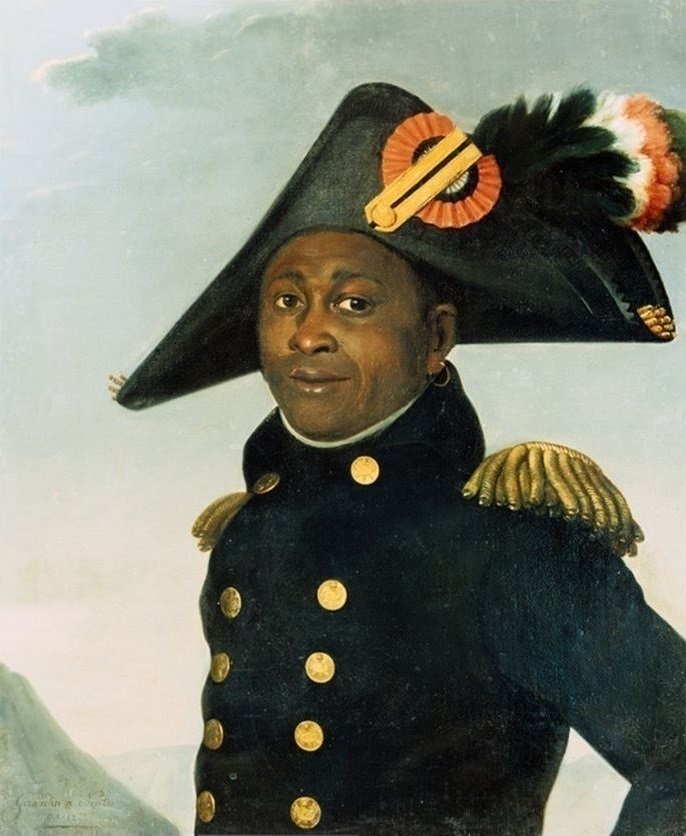
Toussaint Louverture
# Toussaint Louverture: The Black Spartacus and Architect of the Haitian Revolution ### The Jewel of the French Empire To understand the magnitude of Toussaint Louverture's achievements, one must first understand the world into which he was born. In the mid-18th century, the French colony of Saint-Domingue (modern-day Haiti) was the most lucrative colony in the world. It produced roughly sixty percent of the world's coffee and forty percent of its sugar, enriching the French empire to an unprecedented degree. However, this immense wealth was built upon one of the most brutal systems of chattel slavery in human history. The enslaved population, numbering over half a million, vastly outnumbered the white planters and the *gens de couleur libres* (free people of color). It was a society held together by extreme violence, simmering with deep racial, class, and economic tensions. It was in this explosive environment that François-Dominique Toussaint was born, around 1743, on the Bréda plantation near Cap-Français (now Cap-Haïtien). According to oral tradition, he was the grandson of Gaou Guinou, an African nobleman from the Arada people of modern-day Benin [1]. Unlike the vast majority of enslaved people in Saint-Domingue who were subjected to backbreaking field labor and short life expectancies, Toussaint occupied a relatively privileged position on the plantation. He served as a coachman, a livestock handler, and a veterinarian. ### Early Life and the Acquisition of Knowledge Toussaint’s intelligence and quiet ambition were evident early on. He was fortunate to be taught to read and write by his godfather, Pierre Baptiste. His reading was extensive and subversive; he immersed himself in the works of Enlightenment thinkers, notably the Abbé Raynal, whose writings predicted a violent slave uprising in the Americas led by a charismatic savior. Toussaint also acquired a profound knowledge of medicinal plants and traditional African healing practices, a skill set that would later serve him exceptionally well on the battlefield. By 1776, Toussaint had gained his freedom. As a free Black man, he navigated the complex social hierarchy of Saint-Domingue. He rented a small coffee plantation and, remarkably, even owned a small number of slaves himself for a brief period. This period of his life reflects the immense complexities of the colonial Caribbean, where survival and upward mobility often required participation in the very systems that oppressed one's people. However, his life as a relatively obscure freedman was about to be completely upended. ### The Spark of Revolution In 1789, the French Revolution erupted, sending shockwaves across the Atlantic. The Declaration of the Rights of Man and of the Citizen proclaimed that "men are born and remain free and equal in rights." The enslaved population of Saint-Domingue took these words to heart. In August 1791, following a strategic and spiritual gathering known as the Bois Caïman ceremony, the enslaved people of the Northern Province rose in a massive, coordinated rebellion. Initially, Toussaint did not join the insurgency. He stayed on the Bréda plantation to ensure the safety of his family and the plantation manager's family. However, within a few weeks, realizing the magnitude and potential of the uprising, he sent his family to safety in Spanish Santo Domingo and joined the rebel forces. His medical knowledge, organizational skills, and strategic genius quickly propelled him through the ranks. > "I am Toussaint Louverture; my name is perhaps known to you. I have undertaken vengeance. I want Liberty and Equality to reign in Saint-Domingue. I am working to make that happen. Unite yourselves to us, brothers, and fight with us for the same cause." — *Toussaint Louverture, 1793 Proclamation at Camp Turel* ### The Master of Warfare and Diplomacy Toussaint quickly realized that the rebel forces, though brave, lacked the discipline and organization to defeat professional European armies. He began training a core group of soldiers in guerrilla warfare and European military tactics. Among his most trusted lieutenants were [Jean-Jacques Dessalines](/profiles/jean-jacques-dessalines) and [Henri Christophe](/profiles/henri-christophe), both of whom would later become paramount figures in Haitian history. In 1793, the European geopolitical landscape shifted dramatically. France was at war with both Spain and Great Britain. The Spanish in Santo Domingo offered land, provisions, and freedom to the rebel slaves if they would fight against the French. Toussaint allied with the Spanish, achieving the rank of general and scoring a series of brilliant victories against French forces. It was during this period that he adopted the surname "Louverture" (from the French word for "opening"), allegedly because of his uncanny ability to find openings in enemy lines. However, in February 1794, the radical Jacobin government in Paris officially abolished slavery throughout the French empire. Recognizing that the Spanish had no real intention of ending slavery globally, Toussaint executed a brilliant and shocking betrayal: he switched allegiances, joining the French Republic. Turning his battle-hardened troops against his former Spanish allies and the invading British forces (who had been invited by desperate white planters to restore slavery), Toussaint embarked on a relentless campaign of liberation. By 1798, Toussaint had effectively expelled the British from Saint-Domingue—a monumental humiliation for the mighty British Empire. He then turned his attention to internal rivals, defeating the brilliant mulatto general André Rigaud in the bitter and bloody War of Knives (1799–1800). This victory gave Toussaint undisputed control over the entire colony of Saint-Domingue.  ### The Governor-General and the Constitution of 1801 Toussaint's vision for Saint-Domingue was complex. He understood that the colony's survival depended on its economic viability, which in turn relied on the export of sugar and coffee. To restart the devastated economy, he implemented highly controversial labor policies. He essentially forced the formerly enslaved people back to the plantations as paid laborers. While they were no longer legally property and could not be whipped, the system was heavily militarized and deeply unpopular among the masses. In 1801, moving to secure the entire island against foreign invasion and the reinstatement of slavery, Toussaint invaded Spanish Santo Domingo. He conquered the territory, unified the island, and immediately abolished slavery in the eastern half. That same year, Toussaint promulgated a new Constitution for Saint-Domingue. It boldly declared the permanent abolition of slavery and established equality before the law regardless of color. However, it also made Toussaint Governor-General for life with the right to choose his successor, and it formalized his strict labor regimes. While the constitution stopped just short of declaring total independence from France, it asserted a level of autonomy that infuriated the new ruler of France: Napoleon Bonaparte. ### Betrayal, Imprisonment, and Legacy Napoleon, determined to restore direct French control, rebuild the lucrative colonial economy, and covertly reinstate slavery, dispatched a massive armada to Saint-Domingue in 1802. The expedition was commanded by his brother-in-law, General Charles Leclerc. The ensuing war was unimaginably brutal. Toussaint and his generals fought a scorched-earth campaign against the French invaders. However, facing overwhelming numbers and the defection of several of his key generals (including [Jean-Jacques Dessalines](/profiles/jean-jacques-dessalines)), Toussaint eventually agreed to a ceasefire in May 1802. He retired to his plantation, but the French had no intention of leaving him in peace. In June 1802, under the guise of discussing military matters, French officials lured Toussaint to a meeting. It was a trap. He was seized, chained, and deported to France. > "In overthrowing me you have cut down in Saint-Domingue only the trunk of the tree of liberty; it will spring up again from the roots, for they are numerous and they are deep." — *Toussaint Louverture, as he boarded the ship to his exile* Toussaint was imprisoned in the freezing, damp dungeons of Fort de Joux in the Jura Mountains of France. Denied adequate food, medical care, and warmth, the brilliant revolutionary succumbed to pneumonia and malnutrition, dying on April 7, 1803 [2]. Toussaint Louverture did not live to see the final, triumphant climax of the Haitian Revolution. Just months after his death, his former lieutenants, enraged by the realization that Napoleon intended to restore slavery, completely decimated the French army. On January 1, 1804, [Jean-Jacques Dessalines](/profiles/jean-jacques-dessalines) declared the independence of Haiti, the first free Black republic in the world. Toussaint's legacy is immeasurable. He transformed a localized slave rebellion into a geopolitical earthquake. He defeated three of the greatest European empires of his day, shattered the myth of white supremacy, and laid the unshakeable foundation for global abolitionism. His life remains a testament to the indestructible human desire for liberty and dignity.
View Profile →