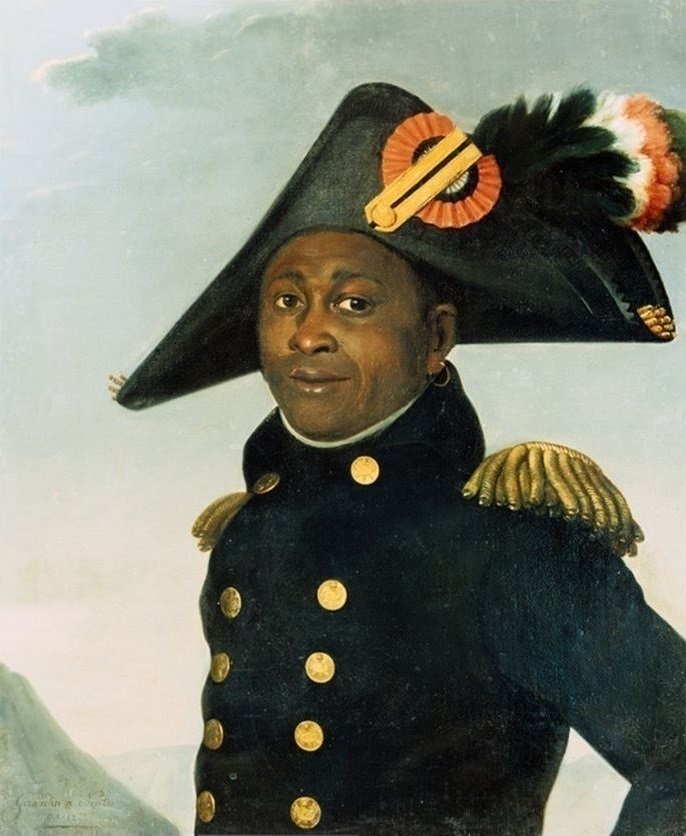
Toussaint Louverture

Toussaint Louverture
Biography
Toussaint Louverture: The Black Spartacus and Architect of the Haitian Revolution
The Jewel of the French Empire
To understand the magnitude of Toussaint Louverture's achievements, one must first understand the world into which he was born. In the mid-18th century, the French colony of Saint-Domingue (modern-day Haiti) was the most lucrative colony in the world. It produced roughly sixty percent of the world's coffee and forty percent of its sugar, enriching the French empire to an unprecedented degree. However, this immense wealth was built upon one of the most brutal systems of chattel slavery in human history. The enslaved population, numbering over half a million, vastly outnumbered the white planters and the gens de couleur libres (free people of color). It was a society held together by extreme violence, simmering with deep racial, class, and economic tensions.
It was in this explosive environment that François-Dominique Toussaint was born, around 1743, on the Bréda plantation near Cap-Français (now Cap-Haïtien). According to oral tradition, he was the grandson of Gaou Guinou, an African nobleman from the Arada people of modern-day Benin. Unlike the vast majority of enslaved people in Saint-Domingue who were subjected to backbreaking field labor and short life expectancies, Toussaint occupied a relatively privileged position on the plantation. He served as a coachman, a livestock handler, and a veterinarian.
Early Life and the Acquisition of Knowledge
Toussaint’s intelligence and quiet ambition were evident early on. He was fortunate to be taught to read and write by his godfather, Pierre Baptiste. His reading was extensive and subversive; he immersed himself in the works of Enlightenment thinkers, notably the Abbé Raynal, whose writings predicted a violent slave uprising in the Americas led by a charismatic savior. Toussaint also acquired a profound knowledge of medicinal plants and traditional African healing practices, a skill set that would later serve him exceptionally well on the battlefield.
By 1776, Toussaint had gained his freedom. As a free Black man, he navigated the complex social hierarchy of Saint-Domingue. He rented a small coffee plantation and, remarkably, even owned a small number of slaves himself for a brief period. This period of his life reflects the immense complexities of the colonial Caribbean, where survival and upward mobility often required participation in the very systems that oppressed one's people. However, his life as a relatively obscure freedman was about to be completely upended.
The Spark of Revolution
In 1789, the French Revolution erupted, sending shockwaves across the Atlantic. The Declaration of the Rights of Man and of the Citizen proclaimed that "men are born and remain free and equal in rights." The enslaved population of Saint-Domingue took these words to heart. In August 1791, following a strategic and spiritual gathering known as the Bois Caïman ceremony, the enslaved people of the Northern Province rose in a massive, coordinated rebellion.
Initially, Toussaint did not join the insurgency. He stayed on the Bréda plantation to ensure the safety of his family and the plantation manager's family. However, within a few weeks, realizing the magnitude and potential of the uprising, he sent his family to safety in Spanish Santo Domingo and joined the rebel forces. His medical knowledge, organizational skills, and strategic genius quickly propelled him through the ranks.
"I am Toussaint Louverture; my name is perhaps known to you. I have undertaken vengeance. I want Liberty and Equality to reign in Saint-Domingue. I am working to make that happen. Unite yourselves to us, brothers, and fight with us for the same cause." — Toussaint Louverture, 1793 Proclamation at Camp Turel
The Master of Warfare and Diplomacy
Toussaint quickly realized that the rebel forces, though brave, lacked the discipline and organization to defeat professional European armies. He began training a core group of soldiers in guerrilla warfare and European military tactics. Among his most trusted lieutenants were Jean-Jacques Dessalines and Henri Christophe, both of whom would later become paramount figures in Haitian history.
In 1793, the European geopolitical landscape shifted dramatically. France was at war with both Spain and Great Britain. The Spanish in Santo Domingo offered land, provisions, and freedom to the rebel slaves if they would fight against the French. Toussaint allied with the Spanish, achieving the rank of general and scoring a series of brilliant victories against French forces. It was during this period that he adopted the surname "Louverture" (from the French word for "opening"), allegedly because of his uncanny ability to find openings in enemy lines.
However, in February 1794, the radical Jacobin government in Paris officially abolished slavery throughout the French empire. Recognizing that the Spanish had no real intention of ending slavery globally, Toussaint executed a brilliant and shocking betrayal: he switched allegiances, joining the French Republic. Turning his battle-hardened troops against his former Spanish allies and the invading British forces (who had been invited by desperate white planters to restore slavery), Toussaint embarked on a relentless campaign of liberation.
By 1798, Toussaint had effectively expelled the British from Saint-Domingue—a monumental humiliation for the mighty British Empire. He then turned his attention to internal rivals, defeating the brilliant mulatto general André Rigaud in the bitter and bloody War of Knives (1799–1800). This victory gave Toussaint undisputed control over the entire colony of Saint-Domingue.
The Governor-General and the Constitution of 1801
Toussaint's vision for Saint-Domingue was complex. He understood that the colony's survival depended on its economic viability, which in turn relied on the export of sugar and coffee. To restart the devastated economy, he implemented highly controversial labor policies. He essentially forced the formerly enslaved people back to the plantations as paid laborers. While they were no longer legally property and could not be whipped, the system was heavily militarized and deeply unpopular among the masses.
In 1801, moving to secure the entire island against foreign invasion and the reinstatement of slavery, Toussaint invaded Spanish Santo Domingo. He conquered the territory, unified the island, and immediately abolished slavery in the eastern half.
That same year, Toussaint promulgated a new Constitution for Saint-Domingue. It boldly declared the permanent abolition of slavery and established equality before the law regardless of color. However, it also made Toussaint Governor-General for life with the right to choose his successor, and it formalized his strict labor regimes. While the constitution stopped just short of declaring total independence from France, it asserted a level of autonomy that infuriated the new ruler of France: Napoleon Bonaparte.
Betrayal, Imprisonment, and Legacy
Napoleon, determined to restore direct French control, rebuild the lucrative colonial economy, and covertly reinstate slavery, dispatched a massive armada to Saint-Domingue in 1802. The expedition was commanded by his brother-in-law, General Charles Leclerc.
The ensuing war was unimaginably brutal. Toussaint and his generals fought a scorched-earth campaign against the French invaders. However, facing overwhelming numbers and the defection of several of his key generals (including Jean-Jacques Dessalines), Toussaint eventually agreed to a ceasefire in May 1802.
He retired to his plantation, but the French had no intention of leaving him in peace. In June 1802, under the guise of discussing military matters, French officials lured Toussaint to a meeting. It was a trap. He was seized, chained, and deported to France.
"In overthrowing me you have cut down in Saint-Domingue only the trunk of the tree of liberty; it will spring up again from the roots, for they are numerous and they are deep." — Toussaint Louverture, as he boarded the ship to his exile
Toussaint was imprisoned in the freezing, damp dungeons of Fort de Joux in the Jura Mountains of France. Denied adequate food, medical care, and warmth, the brilliant revolutionary succumbed to pneumonia and malnutrition, dying on April 7, 1803.
Toussaint Louverture did not live to see the final, triumphant climax of the Haitian Revolution. Just months after his death, his former lieutenants, enraged by the realization that Napoleon intended to restore slavery, completely decimated the French army. On January 1, 1804, Jean-Jacques Dessalines declared the independence of Haiti, the first free Black republic in the world.
Toussaint's legacy is immeasurable. He transformed a localized slave rebellion into a geopolitical earthquake. He defeated three of the greatest European empires of his day, shattered the myth of white supremacy, and laid the unshakeable foundation for global abolitionism. His life remains a testament to the indestructible human desire for liberty and dignity.
Major Contributions
- Toussaint Louverture was the central military and political architect of the Haitian Revolution, arguably the most significant successful slave revolt in human history.
- His strategic brilliance enabled the defeat of the British and Spanish empires, and successfully repelled early French attempts to re-establish control.
- Beyond his military conquests, Louverture drafted the 1801 Constitution of Saint-Domingue, which radically decreed the permanent abolition of slavery and established legal equality across racial lines, planting the seeds for the first free Black republic.
- His actions fundamentally destabilized the global institution of chattel slavery and inspired subsequent liberation movements across the Americas and the Caribbean.

