
Trinidad & Tobago
A vibrant twin-island nation known for its oil and gas, its intellectual giants, and as the birthplace of steelpan and calypso.
Figures from Trinidad & Tobago
Historically documented individuals of note.
Arthur Cipriani
# Arthur Cipriani Arthur Andrew Cipriani (January 31, 1875 – April 18, 1945), widely known as "The Captain" or affectionately referred to by his local nickname "Tattoo," stands as a monumental figure in the history of Trinidad and Tobago. He was an indomitable pioneer of the West Indian labor movement, a tireless champion for the "barefooted man," and an early, vocal advocate for the region's self-government. In an era strictly defined by British colonial rule, rigid racial stratifications, and vast economic inequalities, Cipriani emerged as a unifying leader who bridged the gap between the impoverished working class and the ruling elite. His life and career charted a path from the colonial military structure to the radical vanguard of the early 20th-century Caribbean labor movement, setting the stage for future leaders such as [Tubal Uriah Butler](/profiles/tubal-uriah-butler). ### Early Life and Corsican Heritage Born in Port of Spain on January 31, 1875, Arthur Cipriani was of French-Corsican descent, belonging to a prominent and relatively privileged stratum of Trinidadian society. His early life, however, was marked by profound tragedy. By the time he was six years old, both of his parents had succumbed to a devastating typhoid epidemic that swept through the island. Following this immense personal loss, he was taken in and raised by his paternal aunt, who ensured he received a high-quality education. Cipriani attended St. Mary’s College, one of the premier educational institutions in Trinidad. During his youth, he spent considerable time on his family’s extensive cocoa estates, where he developed a deep, lifelong passion for horses. This passion would lead him to become a highly successful and respected horse trainer and rider. It was in the world of horse racing—a sport that uniquely brought together the colonial elite and the ordinary working-class groomers and stable hands—that Cipriani first began to build a strong rapport with the island's working people. This early interaction with individuals outside of his own social class profoundly shaped his understanding of the socio-economic disparities in colonial Trinidad. ### World War I and the British West Indies Regiment When the First World War broke out in 1914, Cipriani’s trajectory shifted significantly. Driven by a sense of duty, he became instrumental in recruiting local volunteers to serve in the British military. His efforts culminated in the formation of the British West Indies Regiment (BWIR), an effort that saw thousands of Caribbean men enlist to fight for the British Empire. Cipriani himself served as a Captain, traveling to the European front in 1917. However, the war experience proved to be a harsh awakening for both Cipriani and the men he commanded. The West Indian soldiers faced severe racial discrimination, unequal pay, and were often relegated to grueling manual labor rather than combat roles. > "We were asked to fight for an empire that refused to treat us as equal citizens, yet the courage of the West Indian soldier shone through the darkness of prejudice." Witnessing the bravery of the West Indian soldiers juxtaposed against the institutional racism of the British military deeply radicalized Cipriani. When the war ended, he returned to Trinidad in 1919 not merely as a military leader, but as a devoted advocate for the neglected ex-soldiers who had sacrificed so much only to return to a colonial society that offered them little in the way of employment or dignity. ### The Birth of the Trinidad Workingmen's Association (TWA) The post-war period in Trinidad was a cauldron of social unrest, fueled by high inflation, stagnant wages, and widespread unemployment. In 1919, Cipriani threw his support behind striking dock workers in Port of Spain. This pivotal moment marked one of the country's first significant industrial strikes and formally launched his career as a labor leader. In 1923, Cipriani's rising influence culminated in his election as the president of the Trinidad Workingmen’s Association (TWA). Under his dynamic leadership, the TWA was transformed from a struggling organization into a formidable political and industrial force. He mobilized thousands of workers across various sectors—from agriculture to the urban waterfront—and fought relentlessly for an eight-hour workday, minimum wage legislation, and workers' compensation laws. ### Champion of the "Barefooted Man" Cipriani’s political philosophy was centered on uplifting what he famously termed the "barefooted man." Despite his white, middle-class background, he achieved unprecedented popularity among the predominantly Afro-Trinidadian and Indo-Trinidadian working classes. He used his platform to vehemently oppose the Crown Colony system of government, arguing that it was fundamentally undemocratic and inherently exploitative.  In 1925, Trinidad held its first limited elections for the Legislative Council. Cipriani won a seat representing Port of Spain by a landslide, a position he would hold for decades. He also served multiple terms as the Mayor of Port of Spain. Within the Legislative Council, he was a persistent thorn in the side of the colonial administration, introducing motions to establish an Agricultural Bank for poor farmers, demanding better housing for the urban poor, and pushing for universal adult suffrage. ### The Trinidad Labour Party and Later Years Recognizing the need for a formal political apparatus to push for self-government, Cipriani restructured the TWA in 1934, renaming it the Trinidad Labour Party (TLP). This was a landmark event, creating the first modern political party in the territory's history. The TLP aggressively promoted anti-colonialism and laid the ideological groundwork for future independence movements. However, by the late 1930s, the labor movement began to shift. The global Great Depression severely worsened conditions in Trinidad, particularly in the oilfields. A new, more radical generation of labor leaders, most notably [Tubal Uriah Butler](/profiles/tubal-uriah-butler), emerged. Butler and his followers felt that Cipriani’s constitutional, reformist approach was too slow to address the immediate, dire needs of the working class. This ideological split culminated in the violent labor riots of 1937, during which Cipriani's moderate stance caused him to lose support among the more militant workers. Despite this wane in absolute influence, Cipriani remained a highly respected elder statesman of the political left until his death on April 18, 1945. ### Legacy Arthur Cipriani's legacy in the Caribbean is unparalleled. He was the vital transitional figure who moved Trinidadian society from unquestioning colonial subjugation to organized, political self-assertion. His relentless advocacy resulted in tangible social reforms: the introduction of workers' compensation, the end of child labor in certain industries, and the early framework for modern trade unionism. Today, his contributions are immortalized by a prominent statue at the intersection of Independence Square and Frederick Street in Port of Spain, ensuring that "The Captain" continues to watch over the city he loved and the people he fought to liberate.
View Profile →Audrey Jeffers
### Introduction and Formative Years Audrey Layne Jeffers (OBE), born on February 12, 1898, in the vibrant neighborhood of Woodbrook, Port of Spain, stands as an iconic figure in the history of Trinidad and Tobago and the broader Caribbean [1]. Celebrated universally as the "Mother of Trinidadian Philanthropy," Jeffers was a pioneering social worker, a fearless feminist organizer, and a political trailblazer who dismantled centuries-old gender barriers. Her life's work fundamentally transformed social welfare administration in the West Indies and established the precedent for female representation in Caribbean governance. Jeffers was born into a privileged, upper-middle-class family that placed a profound emphasis on civic responsibility, education, and public service. Her father, Henry Israel Jeffers, was a highly respected solicitor and a prominent member of the Port of Spain City Council. Growing up in a household steeped in legal and civic discussions, young Audrey developed an early awareness of governance and community affairs. She received her foundational education at the prestigious Tranquillity Girls' Practising School in Port of Spain, where she demonstrated exceptional academic promise and leadership qualities. In 1913, at the age of fifteen, Jeffers traveled across the Atlantic to London, England, to pursue higher education. She enrolled at Alexander College, where she studied social sciences and earned a formal diploma in social work—a rare educational achievement for a Caribbean woman of her era [2]. Her decade-long residence in London coincided with the tumultuous period of World War I, which served as a profound catalyst for her sociopolitical activism. Entering the dynamic intellectual circles of London, Jeffers established the Union of Students of African Descent, which later evolved into the influential League of Coloured Students. Through this organization, she fostered pan-African solidarity and provided critical welfare support to Black students residing in Britain. During the war, Jeffers actively mobilized resources for West African and Caribbean soldiers serving on the front lines, establishing a specialized fund to supply troops with necessities and comforts [2]. This early wartime organizing honed her administrative capabilities and instilled in her an unshakable conviction that organized social action could alleviate human suffering and elevate marginalized communities. ### The Coterie of Social Workers and Philanthropic Revolution Upon returning to Trinidad in 1920, Jeffers was deeply moved and troubled by the stark socioeconomic disparities plaguing Port of Spain. The aftermath of World War I had triggered severe economic depression across the British West Indies, resulting in rampant unemployment, widespread poverty, inadequate housing, and acute malnutrition among the working class. Jeffers recognized that existing colonial charity structures were sporadic, paternalistic, and entirely inadequate to meet the scale of the crisis. Rejecting the passive role traditionally assigned to women of her social standing, she resolved to mobilize women for structured, systemic social reform. In 1921, Jeffers founded the Coterie of Social Workers (COSW), an organization that would become the cornerstone of Caribbean humanitarianism [1]. Operating under her visionary leadership, the Coterie embarked on a mission to provide comprehensive social safety nets for the most vulnerable segments of society, focusing particularly on destitute women and children. In 1926, Jeffers and the Coterie launched their most famous and revolutionary initiative: the "Penny Lunch" program. Recognizing that impoverished children could not learn while suffering from starvation, the Coterie established free and subsidized meal centers near schools across Port of Spain, San Fernando, Arima, and Tobago [3]. This initiative provided thousands of underprivileged school children with daily nutritious meals, laying the direct institutional groundwork for Trinidad and Tobago's modern National School Feeding Program. > "Social work is not merely an act of charity; it is the fundamental duty of a just society to protect its most vulnerable members and empower women to shape their own destinies." Beyond child nutrition, Jeffers expanded the Coterie's operations to address the entire spectrum of human vulnerability. She established day nurseries to care for the infants of working-class mothers, established hostels for young working women migrating from rural areas to the city, and founded homes for the blind, elderly, and destitute. Her holistic approach to social welfare bridged the gap between immediate humanitarian relief and long-term institutional support.  ### Breaking Political Barriers: City Council and Legislative Council As her philanthropic enterprises expanded, Audrey Jeffers increasingly realized that charitable initiatives alone could not cure systemic social ills. She understood that sustainable reform required political power, legislative advocacy, and direct state intervention. During the 1930s, the political landscape of Trinidad and Tobago was undergoing seismic shifts, driven by labor unrest and the pioneering agitation of labor leaders such as [Arthur Andrew Cipriani](/profiles/arthur-andrew-cipriani) and later firebrands like [Uriah Butler](/profiles/uriah-butler). Working within and around these emerging political currents, Jeffers boldly stepped into the male-dominated political arena. In 1936, Jeffers shattered a glass ceiling that had stood for centuries by becoming the first woman ever elected to the Port of Spain City Council [1]. Running as a candidate who championed social justice, municipal sanitation, housing reform, and women's rights, her victory marked a turning point in Caribbean gender politics. As a city councilor, she utilized her legislative platform to demand increased municipal funding for public health, maternal care, and educational facilities. That same year, she organized the historic First Conference of British West Indian Women Social Workers in Port of Spain. This pioneering convention brought together female leaders from across the Caribbean to formulate a unified regional agenda advocating for women's suffrage, legal equality, and the professional integration of women into public service. Her tireless advocacy reached new historical heights in 1946 when the Governor appointed her to the Legislative Council of Trinidad and Tobago [3]. As the very first female legislator in the nation's history, Jeffers operated as the conscience of the legislature. She advocated vigorously for constitutional reform, workers' rights, and government responsibility for social welfare programs. Her legislative tenure paved the way for future generations of Caribbean political leaders, operating in an era that would soon see the rise of independence movements led by figures like [Eric Williams](/profiles/eric-williams). ### Advocacy for Women's Rights and Later Years Throughout her life, Jeffers remained an uncompromising champion of Black womanhood and gender equity. She campaigned relentlessly for the opening of professional careers to women, famously successfully lobbying the colonial administration to employ female police officers in Trinidad and Tobago to handle sensitive cases involving women and juveniles. She also fought for equal pay, legal protections for illegitimate children, and the elevation of domestic science and technical education for young girls. In recognition of her extraordinary lifetime of humanitarian service and political pioneering, Audrey Jeffers was appointed an Officer of the Order of the British Empire (OBE) by Queen Elizabeth II in 1959 [2]. Even as her health declined in her later years, she remained actively involved in the oversight of the Coterie of Social Workers, mentoring young female activists and ensuring the sustainability of her philanthropic institutions. Audrey Jeffers passed away on June 24, 1968, at the age of seventy, leaving behind a nation forever transformed by her compassion and courage [1]. ### Legacy and Historical Impact Audrey Jeffers' legacy is monumental and enduring. She fundamentally reshaped the social concept of welfare in Trinidad and Tobago, transitioning it from sporadic private charity into a structured civic obligation that informed government policy. The Coterie of Social Workers remains active today, continuing her mission of community service over a century after its founding. In lasting tribute to her monumental contributions, the Government of Trinidad and Tobago named the major highway stretching along the western coastline of Port of Spain the Audrey Jeffers Highway. Today, she is enshrined not only as a mother of philanthropy but as a courageous political pioneer who opened the doors of Caribbean governance to women, leaving an indelible mark on the region's socio-political history. 
View Profile →Beryl McBurnie
Beryl Eugenia McBurnie, affectionately and respectfully known as the "First Lady of Dance" in Trinidad and Tobago, was a pioneering dancer, choreographer, and cultural visionary. At a time when European classical arts were positioned as the only legitimate forms of cultural expression in the colonial Caribbean, McBurnie dedicated her life to unearthing, celebrating, and institutionalizing the rich, vibrant folk traditions of her homeland. By founding the Little Carib Theatre in Port of Spain in 1947, she created the first permanent home for Caribbean folk dance, profoundly shaping the national identity of Trinidad and Tobago and influencing generations of artists across the West Indies. Her work elevated indigenous dance forms like the Bèlè, Limbo, and Shango from marginalized community practices to internationally celebrated art forms, fundamentally altering the cultural landscape of the region. ### Early Life and the Discovery of Folk Born on November 2, 1913, in the neighborhood of Woodbrook in Port of Spain, Trinidad, McBurnie was surrounded from an early age by the rhythmic and cultural diversity of the island. Trinidad was a melting pot of African, Indian, European, and Indigenous influences, but the formal education system and the colonial elite heavily favored Eurocentric culture. Despite this, the young Beryl was captivated by the songs, dances, and rituals of the ordinary people, which were often performed in the poorer neighborhoods. She recalled sneaking out of her middle-class home as a child to observe the Shango ceremonies, the stick-fighting yards, and the Carnival masquerades that took place in the working-class districts. These experiences left an indelible mark on her consciousness. Although she received formal training in classical piano and elocution at the Teachers' Training College, her true passion lay in movement. She recognized the inherent beauty, technical complexity, and historical significance of the folk dances that were routinely dismissed by the colonial authorities as "primitive" or "vulgar." > "Dance is the pulse of a nation. To deny our own rhythms is to deny our own soul." — Beryl McBurnie McBurnie began researching and documenting these traditional dances, traveling extensively across the island to learn the specific movements and rhythms of different rural communities. She understood that these dances were not merely entertainment; they were living repositories of history, survival, and resistance, passed down by enslaved ancestors and indentured laborers. ### The New York Years and "La Belle Rosette" In 1938, determined to broaden her horizons and formalize her training, McBurnie traveled to New York City. She enrolled at Columbia University, where she studied drama and movement. She also studied under modern dance pioneer Martha Graham, absorbing techniques that emphasized emotional expression and the dynamic use of the torso—elements that resonated deeply with African-derived dance forms. In New York, McBurnie immersed herself in the vibrant arts scene of the Harlem Renaissance and the emerging interest in Caribbean culture. She began performing under the stage name "La Belle Rosette" to immense acclaim. She introduced American audiences to Caribbean rhythms, performing at prestigious venues like the 92nd Street Y and the Village Vanguard. She also collaborated with prominent artists, including the legendary American singer, actor, and civil rights activist Paul Robeson. During this period, she popularized Calypso and Caribbean folk dance in the United States, bringing authentic Trinbagonian culture to an international audience. She even appeared in "soundies" (early musical short films), captivating audiences with her charismatic, dynamic, and unapologetically Caribbean performances. She was on the verge of major international stardom, but the pull of her homeland and her commitment to her people's culture proved stronger than the allure of Broadway. ### Return to Trinidad and The Little Carib Theatre In the early 1940s, McBurnie made the fateful decision to return to Trinidad. She abandoned a lucrative career in the US because she believed her true mission was to legitimize and elevate the folk arts in the Caribbean. Upon returning, she worked as a dance instructor for the Department of Education, boldly introducing folk dance into the school curriculum and challenging the absolute dominance of European ballet.  Her most monumental achievement came in 1947 when she founded the Little Carib Theatre in the backyard of her family home on Roberts Street in Woodbrook. It was a modest, galvanized-roof structure, built largely through her sheer willpower and community support, but its cultural impact was revolutionary. The Little Carib became the first permanent theater and dance company in Trinidad dedicated to showcasing local arts. In 1948, the legendary Paul Robeson visited Trinidad specifically to lay the foundation stone for the Little Carib Theatre, a powerful testament to McBurnie's international stature and the political importance of her cultural project. The theater officially opened with a groundbreaking performance titled *Bele*, showcasing the traditional graceful dance of French and African origin, elevating it to high art. ### Championing Caribbean Culture and Identity The Little Carib Theatre became the epicenter of a cultural renaissance in the Caribbean. McBurnie rigorously trained a generation of dancers to perform the Bèlè, the Limbo (a feat of physical prowess originating from the cramped conditions of slave ships), the Kalinda (stick-fighting dance), and the Shango with dignity, precision, and theatrical flair. She proved to local audiences and international critics alike that these forms were as technically demanding and artistically valid as any European classical dance. Her work inspired artists across disciplines and provided a crucial cultural foundation as the nation moved toward independence. The Little Carib provided a safe and nurturing space for local musicians, playwrights, and painters. The renowned St. Lucian poet and Nobel Laureate [Derek Walcott](/profiles/derek-walcott) founded the Trinidad Theatre Workshop, which initially operated out of the Little Carib Theatre. Prominent cultural figures, including [Rex Nettleford](/profiles/rex-nettleford) of Jamaica, who later founded the National Dance Theatre Company of Jamaica, explicitly cited McBurnie as a primary inspiration for their own efforts to institutionalize Caribbean dance. Financial struggles were constant. McBurnie often funded the theater out of her own pocket, famously selling homemade pastelles and organizing tireless fundraisers to keep the doors open, driven by an unwavering belief in her mission. ### Legacy and Final Years Beryl McBurnie's contribution to the cultural landscape of the Caribbean cannot be overstated. She took the marginalized practices of the working class and elevated them to the national stage, forcing colonial society to recognize the beauty and validity of its own heritage. In doing so, she played a crucial role in the psychological decolonization of the Caribbean, instilling a sense of immense pride and self-worth in the people. She provided the essential cultural vocabulary that accompanied political independence in 1962. Her tireless efforts were recognized both locally and internationally. In 1959, she was made an Officer of the Order of the British Empire (OBE). In 1969, the Government of Trinidad and Tobago awarded her the Hummingbird Medal (Gold), and in 1989, she received the Trinity Cross, the nation's highest award, for her unparalleled service to the arts. McBurnie passed away on March 30, 2000, at the age of 86. Her legacy lives on not only in the continued existence of the Little Carib Theatre—which remains a vital cultural institution in Port of Spain—but in the very fabric of Trinidadian culture. Every time a folk dancer takes the stage, every time the rhythms of the Bèlè or the Shango echo through the Caribbean, the pioneering spirit of Beryl McBurnie dances with them.
View Profile →
C.L.R. James
Cyril Lionel Robert James, universally known as C.L.R. James, was a towering figure of 20th-century intellectual history. Born in Trinidad and Tobago, he became a profound historian, a pioneering journalist, a leading Marxist theorist, and a foundational voice in post-colonial literature. His life spanned nearly the entire 20th century, and his work addressed the most pressing issues of his time: imperialism, class struggle, racism, and the cultural dimensions of decolonization. He is arguably best remembered for his 1938 masterwork *The Black Jacobins*, a seminal history of the Haitian Revolution, and his 1963 memoir *Beyond a Boundary*, which revolutionized the way sports—specifically cricket—were understood within the context of society and empire. James was not merely an observer of history; he was an active participant in global anti-colonial movements and a mentor to a generation of Pan-African leaders, including [Kwame Nkrumah](/profiles/kwame-nkrumah) and [Eric Williams](/profiles/eric-williams). ### Early Life in Trinidad Born on January 4, 1901, in Tunapuna, Trinidad—then a British Crown colony—James was the son of a schoolteacher and a bookish mother. His early environment was steeped in the Victorian values imposed by the British educational system, yet surrounded by the vibrant, complex, and often harsh realities of colonial West Indian life. James was a bright student and won a scholarship to the prestigious Queen's Royal College (QRC) in Port of Spain. At QRC, he was immersed in a classical European curriculum, reading Shakespeare, Thackeray, and Dickens. However, his education extended far beyond the classroom. It was on the playing fields of Trinidad where James received his most profound lessons in race, class, and colonial power dynamics. Cricket was not merely a game; it was a microcosm of society. The local clubs were strictly segregated by race and skin shade. James, playing for the Maple Club (associated with middle-class, light-skinned Afro-Trinidadians), keenly observed how the colonial hierarchy dictated social interactions and athletic opportunities. > "What do they know of cricket who only cricket know?" — C.L.R. James, *Beyond a Boundary* During the 1920s, James became a teacher at his alma mater, QRC, where one of his students was the future Prime Minister of Trinidad and Tobago, [Eric Williams](/profiles/eric-williams). He also began his career as a writer and intellectual, joining the "Beacon Group," a circle of progressive Trinidadian writers, including [Alfred Mendes](/profiles/alfred-mendes) and [Albert Gomes](/profiles/albert-gomes), who published *The Beacon* magazine. The group sought to create a distinctively West Indian literature, focusing on the lives of the working class and the "barrack-yard" communities, challenging the polite, Eurocentric literature favored by the colonial elite. Through his short fiction and essays, James emerged as a sharp critic of the colonial establishment and a voice for the marginalized. ### Move to England and Political Awakening In 1932, at the age of 31, James left Trinidad for England. He was invited by his close friend, the legendary Trinidadian cricketer [Learie Constantine](/profiles/learie-constantine), who was living in Nelson, Lancashire, playing league cricket. James brought with him the manuscript for *The Case for West-Indian Self Government*, a blistering critique of British colonial rule and a foundational text for Caribbean independence. In England, James secured a position as a cricket correspondent for the *Manchester Guardian*, becoming the first black sports writer for a major British newspaper. He infused his match reports with sociological insights, elevating sports journalism to a serious literary form. But his time in England also radicalized him. He moved to London, where he encountered the deep poverty of the working class and the rising tide of European fascism. James immersed himself in Marxist literature, quickly aligning himself with the Trotskyist movement, which stood in stark opposition to Stalinism.  James became a prominent figure in left-wing intellectual circles and a leading Pan-Africanist. He chaired the International African Friends of Abyssinia (IAFA), formed in 1935 in response to the Italian invasion of Ethiopia. Through this group, he collaborated with other influential Black intellectuals, including [George Padmore](/profiles/george-padmore) and Jomo Kenyatta, advocating for the liberation of the African continent from imperial control. He passionately argued that the liberation of Africa and the Caribbean was intrinsically linked to the global struggle of the working class. ### The Black Jacobins In 1938, James published *The Black Jacobins: Toussaint L'Ouverture and the San Domingo Revolution*. The book was a historiographical earthquake. Before James, accounts of the Haitian Revolution largely marginalized the enslaved Africans, portraying the abolition of slavery as a benevolent act by enlightened Europeans. James inverted this narrative. He placed Toussaint L'Ouverture and the enslaved masses of San Domingo at the center of their own liberation, demonstrating that they were not passive recipients of freedom, but active, conscious agents of history who defeated the armies of France, Britain, and Spain. *The Black Jacobins* was an explicit intervention into contemporary politics. As independence movements gathered momentum across Africa and the Caribbean, the book served as a blueprint for revolution and a potent reminder of the capacity of colonized peoples to overthrow their oppressors. It established James as a premier Marxist historian and remains required reading in post-colonial studies today. He meticulously detailed how the wealth generated by enslaved labor in the Caribbean fueled the Industrial Revolution in Europe, a thesis later expanded upon by Eric Williams. ### Time in America and Subsequent Deportation In late 1938, James traveled to the United States on a lecture tour. He ended up staying for 15 years. During this period, he became deeply involved in the American socialist movement and the struggle for African American civil rights. In 1939, he traveled to Coyoacán, Mexico, to meet with Leon Trotsky, engaging in intense theoretical debates about the nature of the Soviet Union, the impending World War, and the crucial role of the Black struggle in the United States. James recognized the revolutionary potential of the Black working class in the US, predicting that their struggle for equality would serve as the vanguard for broader social transformation. He collaborated with figures like Raya Dunayevskaya and Grace Lee Boggs, forming the "Johnson-Forest Tendency," which produced critical analyses of state capitalism in the Soviet Union. However, James's radical activities caught the attention of the US government during the McCarthy era. In 1952, he was detained at Ellis Island and interned for several months under threat of deportation. During his confinement, he wrote *Mariners, Renegades and Castaways: The Story of Herman Melville and the World We Live In*, an allegorical critique of American totalitarianism. Ultimately, James was deported back to the UK in 1953. ### Return to the Caribbean and Beyond a Boundary In 1958, on the eve of West Indian independence, James returned to Trinidad at the invitation of his former student, [Eric Williams](/profiles/eric-williams), who was leading the nationalist movement. James edited the ruling party's newspaper, *The Nation*, and was a passionate advocate for the West Indies Federation. However, ideological differences led to a bitter falling out with Williams in 1960. James returned to Britain, deeply disappointed by the conservative, neo-colonial trajectory of post-independence Caribbean politics. In 1963, he published *Beyond a Boundary*, widely considered the greatest book ever written on sports. Blending autobiography, history, and sociology, James explored how cricket reflected the complexities of race, class, and colonial rebellion in the West Indies. He traced the sport's origins to the Victorian ideals of Thomas Arnold and W.G. Grace, and brilliantly analyzed how West Indians appropriated the game to assert their own humanity and demand equality. He famously campaigned for the appointment of [Frank Worrell](/profiles/frank-worrell) as the first Black captain of the West Indies cricket team, viewing it as a crucial symbolic victory for Caribbean self-determination. ### Legacy and Final Years C.L.R. James spent his later years writing, lecturing, and mentoring a new generation of activists and scholars. During the 1960s and 1970s, he emerged as a revered elder statesman for the Black Power and Pan-African movements, profoundly influencing radical thinkers like Stokely Carmichael (Kwame Ture) and [Walter Rodney](/profiles/walter-rodney). He divided his time between Britain, the US (after regaining entry), and Trinidad. He passed away in London on May 31, 1989, at the age of 88. James's legacy is immense. He was a polymath who defied categorization, seamlessly navigating the worlds of revolutionary politics, academic history, and popular culture. His insistence on the agency of the oppressed, his rigorous critique of imperialism, and his profound understanding of the intersections between culture and politics continue to inspire scholars and activists worldwide. He remains a towering testament to the intellectual power and revolutionary spirit of the Caribbean.
View Profile →
Dr. Eric Williams
Dr. Eric Eustace Williams (September 25, 1911 – March 29, 1981) remains one of the most towering figures in the history of the Caribbean. Universally celebrated as the "Father of the Nation" of Trinidad and Tobago, his life was a masterful intersection of intellectual brilliance and pragmatic political leadership. As the first Prime Minister of Trinidad and Tobago, he guided the twin-island nation out from the shadow of the British Empire and into the light of independence in 1962, and eventually to republican status in 1976. Yet, before he ever stood at a political podium, Williams had already profoundly altered the global intellectual landscape. His groundbreaking historical work, *Capitalism and Slavery*, shattered long-held imperial myths and forever changed how historians understand the transatlantic slave trade and the industrial revolution. ### Early Life and Academic Brilliance Eric Williams was born on September 25, 1911, in the capital city of Port of Spain, Trinidad. He was the eldest of twelve children born to Thomas Henry Williams, a minor postal official, and Eliza Frances Boissière. Growing up in a colonial society structured around rigid hierarchies of race and class, young Eric quickly learned that education was the most viable vehicle for upward mobility. He was a student of exceptional promise, attending the prestigious Tranquillity Boys Government School before securing a place at Queen's Royal College (QRC) in Port of Spain. At QRC, Williams did not merely participate; he dominated academically and athletic, distinguishing himself on the football field and in the classroom. His relentless pursuit of academic excellence culminated in his winning of the highly coveted Island Scholarship in 1932. This scholarship was a rare and golden ticket for a colonial subject, enabling him to cross the Atlantic to study at the University of Oxford in England. At Oxford, Williams confronted the epicenter of the British Empire's intellectual establishment. He earned his Bachelor of Arts in History in 1935 with first-class honors. However, it was his subsequent doctoral research that would truly cement his name in the annals of historiography. In 1938, he completed his D.Phil. in History. His doctoral thesis formed the foundational bedrock for what would later become his magnum opus, focusing on the economic realities of the abolition of the slave trade. ### The Scholar: *Capitalism and Slavery* Following the completion of his studies at Oxford, Williams relocated to the United States. In 1939, he joined the faculty of Howard University in Washington, D.C., a premier historically black university, as a professor of social and political science. It was during his tenure at Howard that Williams refined his doctoral thesis and published it as *Capitalism and Slavery* in 1944. The book was nothing short of an intellectual earthquake. Prior to its publication, the prevailing narrative within the British Empire, largely championed by imperial historians, was that the abolition of the transatlantic slave trade and the institution of slavery itself was driven primarily by the moral crusade and humanitarian benevolence of British abolitionists like William Wilberforce. Williams aggressively challenged this self-congratulatory narrative. He argued with meticulous economic data that the abolition of slavery was driven less by humanitarianism and more by cold, hard economics. The slave system, he contended, had already provided the necessary capital to finance the British Industrial Revolution. Once the industrial machinery was in motion, the mercantilist system of monopoly that protected the West Indian sugar plantations became obsolete and an economic hindrance to British free trade. Simply put, slavery was abolished because it was no longer economically profitable for the empire. > "Slavery was not born of racism: rather, racism was the consequence of slavery. Unfree labor in the New World was brown, white, black, and yellow; Catholic, Protestant, and pagan." > — Dr. Eric Williams, *Capitalism and Slavery* This thesis—often referred to today as the "Williams Thesis"—ignited fierce debates among historians for decades, but its core assertion effectively shifted the paradigm of historical study concerning slavery and economic development. ### Transition to Politics: The Caribbean Commission While academia provided a platform for his intellect, Williams's ambitions were increasingly drawn toward practical regional development. In 1944, he began working with the Anglo-American Caribbean Commission (later the Caribbean Commission), an international body formed to research and advise on the economic and social development of the Caribbean territories. His time at the Commission was fraught with tension. Williams, fiercely anti-colonial and deeply committed to the self-determination of Caribbean peoples, frequently clashed with the colonial administrators who staffed the organization. He found their attitudes patronizing and their policies detached from the lived realities of West Indians. In 1955, frustrated by the bureaucratic inertia and the institutionalized colonial mentality of the Commission, Williams dramatically allowed his contract to expire. He returned to Trinidad, bringing with him a potent message of political emancipation. His departure from the Commission was not a retreat; it was the firing of a starting pistol for his political career. ### The "University of Woodford Square" and the Birth of the PNM Upon his return to Trinidad, Williams took his scholarly lectures out of the ivory tower and brought them directly to the people. He began delivering public lectures in Woodford Square in Port of Spain, transforming the public park into what he affectionately dubbed the "University of Woodford Square." Thousands of working-class Trinidadians flocked to hear the brilliant Oxford scholar break down complex historical, economic, and political concepts into language that resonated with their daily struggles.  In January 1956, capitalizing on this massive grassroots mobilization, Williams founded the People’s National Movement (PNM). The party was built on a platform of nationalism, political education, and social reform. The PNM's appeal was immediate and electric. In the general elections later that year, the PNM won a stunning victory, and Eric Williams became the Chief Minister of Trinidad and Tobago. ### "Massa Day Done" As the country navigated the complex transition toward self-government, Williams's rhetoric sharpened against the remnants of colonial subservience. In March 1961, responding to the alignment of local business elites with the opposition, Williams delivered one of the most famous speeches in Caribbean political history at Woodford Square, famously declaring: "Massa Day Done." > "Massa is not a racial term. It's a symbol of a bygone age. Massa day is a social phenomenon and denotes a political awakening..." > — Dr. Eric Williams, 1961 This slogan became a rallying cry for the political and psychological emancipation of the masses. Williams explained that "Massa" represented the absentee European planter who had historically exploited West Indian labor and resources. By declaring the era of "Massa" over, Williams was explicitly calling for the dismantling of the colonial plantation economy and the mentalities that sustained it, urging his people to embrace their destiny as masters of their own nation. ### Independence and National Leadership Williams was a staunch advocate for regional integration. He initially supported the West Indies Federation, formed in 1958, viewing it as the most viable path to independence for the fragmented Caribbean islands. However, the Federation was plagued by political infighting, particularly between its two largest members, Jamaica and Trinidad and Tobago. When Jamaica voted in a 1961 referendum to leave the Federation, Williams pragmatically assessed the situation. He famously declared, "One from ten leaves nought," signaling Trinidad and Tobago's withdrawal and the inevitable collapse of the Federation. Williams immediately pivoted to seek full independence for his country alone. On August 31, 1962, the Union Jack was lowered, and the red, white, and black flag of Trinidad and Tobago was raised. Dr. Eric Williams was sworn in as the nation’s first Prime Minister. His government pursued policies of "pragmatic socialism," focusing heavily on expanding access to education—which he viewed as the ultimate tool for liberation—and improving social services. He famously told the nation's youth that the future of the country was in their school bags. Under his leadership, the state took control of key sectors of the economy, particularly in the burgeoning oil and gas industry, leveraging these resources to build the nation's infrastructure. ### Challenges and Later Years Williams’s tenure was not without severe challenges. The most significant crisis came in 1970 with the Black Power Revolution. Despite Williams's anti-colonial credentials, a new generation of activists, students, and trade unionists felt the economic structures of the country still favored a local elite and foreign corporations, leaving the black and Indian working classes marginalized. Mass protests and a mutiny within the defense force threatened to topple his government. Williams responded with a mix of state force and political concessions, implementing more aggressive policies to increase local ownership and employment in the private sector. He successfully navigated the crisis and went on to oversee Trinidad and Tobago's transition to a Republic within the Commonwealth in 1976, replacing the British Monarch with a local President as Head of State. ### Legacy Dr. Eric Williams served as Prime Minister continuously from 1962 until his death in office on March 29, 1981. His passing marked the end of an era, but his legacy remains inextricably woven into the fabric of Trinidad and Tobago and the wider Caribbean. The Eric Williams Financial Complex (the Twin Towers) in Port of Spain stands as a physical monument to his vision for a modernized nation. Yet, his most enduring monument remains his intellectual courage—his unparalleled ability to redefine the history of his people, not as passive victims of an empire, but as the central actors in the global economic narrative and the architects of their own sovereign destiny.
View Profile →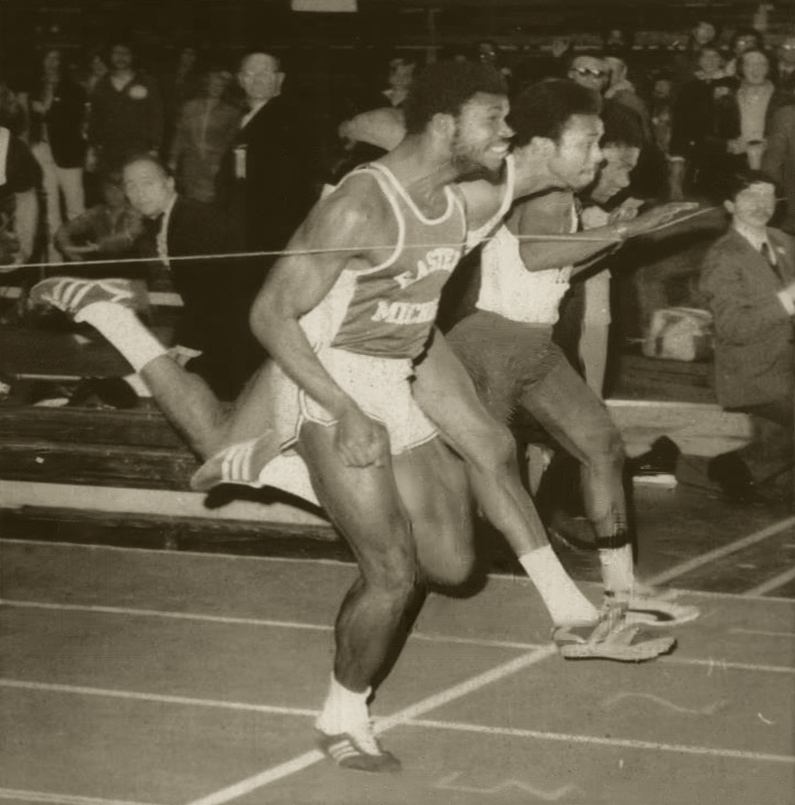
Hasely Crawford
### Early Life and Roots in San Fernando Born on August 16, 1950, in the bustling southern city of San Fernando, Trinidad, Hasely Joachim Crawford grew up in a newly independent nation that was desperately searching for its identity on the world stage. Trinidad and Tobago achieved its independence from British rule in 1962 under the leadership of [Eric Williams](/profiles/eric-williams), a pivotal political moment that filled the nation with a sense of immense pride, optimism, and possibility. The youngest of a large working-class family, Crawford’s early life was deeply embedded in the everyday struggles and vibrancy of Trinbagonian culture. The 1950s and 1960s in Trinidad were an era characterized by the rise of the steelpan, the golden age of calypso, and a burgeoning sense of national self-determination. Amidst this cultural renaissance, young Hasely was finding his footing. Athletics was not his first or only calling. Like many young boys in the Caribbean, he spent his formative years playing cricket and football, taking advantage of the open savannahs and community fields that dotted San Fernando. However, his extraordinary speed became undeniably evident as a teenager. Competing barefoot in local school sports and regional meets, Crawford would consistently outpace his peers with an unrefined but explosive natural gait. He formally began his athletic journey at the age of 17, relatively late for a future world champion. Under the guidance of local coaches who quickly recognized his raw, unbridled talent, he began to transition from a casual runner to a dedicated track athlete. ### The Ascent to the Global Stage The early 1970s marked a significant transition for Crawford as he began to refine his technique and endurance. His international debut occurred at the 1970 Commonwealth Games in Edinburgh, Scotland. Despite lacking the extensive resources, state-of-the-art facilities, and international exposure of his British or American counterparts, the twenty-year-old Trinidadian stunned spectators by securing a bronze medal in the 100-meter sprint. This victory was a clarion call; Crawford was no longer just a local talent—he was a rising star in global athletics, putting the Caribbean on notice. Two years later, Crawford qualified for the 1972 Olympic Games in Munich, Germany. The Munich Games were historically fraught and tragic, overshadowed by the massacre of Israeli athletes, but for Crawford, they represented his first foray into the ultimate theater of athletic competition. He blazed through the preliminary heats, reaching the 100-meter final as a formidable contender and raising the hopes of his entire nation. However, heartbreak struck at the worst possible moment. Midway through the highly anticipated final, Crawford suffered a severe hamstring injury, forcing him to pull up in agony and watch as Soviet sprinter Valeriy Borzov claimed the gold medal. > "It wasn't just my hamstring that snapped in Munich; it was my heart. But the pain taught me that raw speed wasn't enough—I needed absolute resilience and preparation if I was going to conquer the world." The profound disappointment in Munich could have easily derailed a lesser athlete, but for Crawford, it served as a crucible. He spent the next four years undergoing a grueling, obsessive regimen of physical and mental preparation. Recognizing the limitations of training facilities in Trinidad, Crawford made the difficult decision to relocate to the United States, studying and training at Eastern Michigan University under the legendary track coach Bob Parks. There, he relentlessly honed his explosive start, improved his biomechanics, and developed a formidable psychological toughness. He ran alongside other elite athletes, studying their techniques and fortifying his own weaknesses. ### Montreal 1976: The Defining 10.06 Seconds The 1976 Olympic Games in Montreal, Canada, took place against a complex geopolitical backdrop, marked notably by a massive boycott from numerous African nations protesting the participation of New Zealand, whose rugby team had recently toured apartheid South Africa. For the athletes who did compete, the pressure was immense, and the spotlight was brighter than ever. Crawford arrived in Montreal in the absolute prime of his athletic life. Standing 6 feet 3 inches (1.90 meters) tall and weighing nearly 90 kilograms, his imposing physical stature was matched only by his intense, tunnel-vision focus. The men's 100-meter final, held on July 24, 1976, featured a stellar lineup. It included the defending Olympic champion Valeriy Borzov, the American favorite Harvey Glance, and the legendary Jamaican sprinter Don Quarrie. The rivalry between Crawford and Quarrie added a distinctly Caribbean flavor to the ultimate showdown.  When the starting gun fired, Crawford's execution was nothing short of flawless. He exploded out of the blocks, his long, powerful strides eating up the synthetic track with mechanical precision. At the 60-meter mark, he began to pull ahead of the fiercely competitive pack. Pushing through the pain barrier and maintaining his top speed, Crawford crossed the finish line in a blistering 10.06 seconds. He narrowly edged out Don Quarrie by a fraction of a second, with Borzov taking the bronze. In that fleeting 10.06 seconds, Hasely Crawford achieved immortality. He became the first athlete from Trinidad and Tobago to win an Olympic gold medal. The image of Crawford crossing the line, his arms raised in exhausted, triumphant joy, was instantly seared into the national consciousness of his homeland. ### A Nation Transformed The news of Crawford's victory ignited unprecedented, euphoric celebrations across Trinidad and Tobago. A nation of roughly one million people literally brought traffic to a standstill. Calypsonians spontaneously composed and performed songs in his honor, capturing the mood of the moment, and the steelpan yards rang out in jubilation late into the night. The victory was far more than a sporting achievement; it was a profound assertion of Trinbagonian excellence on the global stage. It validated the post-independence identity of the country, proving that they could stand shoulder-to-shoulder with global superpowers. Crawford returned home to a hero's welcome that is still talked about decades later. The government, recognizing the historical magnitude of his achievement, awarded him the Trinity Cross, the highest national honor available in the country at the time. His triumph inspired an entire generation of Caribbean athletes, irrevocably proving that individuals from small island developing states could dominate in the most fiercely contested and widely watched sports in the world. > "He showed us that our smallness on the map did not mean a smallness of spirit or capability. Hasely taught an entire newly independent generation exactly how to win." ### Later Career and Ongoing Challenges Following his Montreal triumph, Crawford continued to compete at the highest international levels. He remained a formidable force in sprinting, capturing another bronze medal at the 1978 Commonwealth Games in Edmonton, Canada. However, sustaining the absolute peak physical condition required for the 100-meter sprint, coupled with the natural aging process, eventually took its toll. He proudly represented Trinidad and Tobago by qualifying for the 1980 Moscow Olympics and the 1984 Los Angeles Olympics. Although he was unable to replicate his 1976 success—eventually failing to advance past the quarter-finals in his final Olympic appearance—his mere presence on the track continued to inspire. Despite these later competitive setbacks, Crawford's status as a revered sporting icon remained unassailable. He officially retired from professional athletics shortly after the 1984 Games, leaving behind a track record that set the gold standard for Caribbean sprinters. ### Lasting Legacy and Civic Impact Crawford's transition from elite athlete to civic leader perfectly demonstrated his enduring, deep-seated commitment to his country. Instead of retreating from public life or moving abroad permanently, he dedicated his post-athletics career to community development, sports administration, and youth mentorship in Trinidad and Tobago. For many years, he served as the Head of Community Relations at the National Gas Company of Trinidad and Tobago (NGC). In this influential corporate role, he spearheaded numerous initiatives to fund local sports clubs, upgrade dilapidated athletic facilities, and provide vital scholarships to disadvantaged youths. In 2001, the Trinidad and Tobago government made a massive, lasting tribute to their first Olympic champion by officially renaming the National Stadium in the capital city of Port of Spain to the **Hasely Crawford Stadium**. This sprawling sporting complex serves as the epicenter for national athletics, football matches, and cultural events, standing as a permanent physical monument to his legacy. Furthermore, Crawford’s immense influence paved the way for future Trinidadian track and field stars. From [Ato Boldon](/profiles/ato-boldon) to [Richard Thompson](/profiles/richard-thompson), and javelin thrower [Keshorn Walcott](/profiles/keshorn-walcott), subsequent Olympic medalists trace their lineage of belief back to Montreal in 1976. By shattering the psychological barrier of what was possible for a Trinbagonian athlete, Hasely Crawford fundamentally altered the trajectory of the nation's sporting history. Today, he is celebrated not only as a phenomenal, world-beating sprinter but as a unifying national father figure whose 10.06 seconds of brilliance continues to echo loudly through the Caribbean and the world.
View Profile →
Lord Kitchener (Aldwyn Roberts)
# Lord Kitchener: The Grandmaster of Calypso ### Early Life and Origins Aldwyn Roberts, immortalized in the annals of music history as Lord Kitchener, was born on April 18, 1922, in the bustling town of Arima, Trinidad. Arima, located in the foothills of the Northern Range, was a town rich in indigenous and Afro-Trinidadian cultural traditions, providing a fertile ground for the musical sensibilities that would later define Roberts' career. His father, a blacksmith by trade, possessed a deep love for music and became Roberts' first musical mentor, teaching the young boy to play the guitar. This early exposure to the melodic and rhythmic structures of Trinidadian folk music would become the cornerstone of his artistic identity. However, tragedy struck early in Roberts' life; by the age of fourteen, he had been orphaned. Forced to navigate the world independently, he turned to music not just as a passion, but as a means of survival. His resilience during these formative years instilled in him a profound understanding of the working-class Trinidadian experience, a theme that would resonate powerfully throughout his extensive discography. ### The Journey to Port of Spain Between 1938 and 1942, the young Aldwyn Roberts began to make a name for himself in local calypso competitions in Arima. His undeniable talent, characterized by a sharp wit, innovative melodies, and a charismatic stage presence, quickly outgrew his hometown. In 1943, seeking broader horizons and a larger stage, he relocated to Port of Spain, the epicentre of Trinidad's vibrant calypso culture. It was here, in the fierce but fraternal environment of the calypso tents, that he encountered established legends of the genre. Recognizing his prodigious talent, the esteemed calypsonian [Growling Tiger](/profiles/growling-tiger) bestowed upon him the sobriquet "Lord Kitchener," after the famous British military leader. This was a common practice among calypsonians, who often adopted grandiose titles to command respect and project authority. Kitchener quickly integrated himself into a pantheon that included the likes of [Attila the Hun](/profiles/attila-the-hun) and [Roaring Lion](/profiles/roaring-lion), absorbing their mastery of double entendre, social commentary, and extempo singing. ### The Windrush Generation and "London Is the Place for Me" Lord Kitchener's destiny became inextricably linked with one of the most significant demographic shifts of the 20th century: the migration of Caribbean people to the United Kingdom, known as the Windrush generation. Following World War II, Britain faced severe labor shortages and looked to its colonies for the workforce needed to rebuild the nation. In 1948, Kitchener boarded the *HMT Empire Windrush* in Jamaica, bound for England.  When the ship docked at Tilbury on June 22, 1948, Kitchener was filmed by Pathé News. In a spontaneous and now-iconic moment, he sang an a cappella rendition of a song he had composed during the voyage, "London Is the Place for Me." > "London is the place for me, London this lovely city. You can go to France or America, India, Asia or Australia, but you must come back to London city." This upbeat, optimistic anthem captured the hopes and aspirations of thousands of West Indian immigrants arriving in the "Mother Country." It stands today as a defining cultural artifact of the era, illustrating the complex relationship between the colonized and the colonizer. ### The British Years: Popularizing Calypso in Europe Kitchener spent the next fourteen years in the United Kingdom, a period of immense creative output and cultural impact. He became a fixture in the London club scene and a regular presence on BBC Radio. His music during this era often documented the immigrant experience, addressing both the joys of discovering a new world and the harsh realities of racism, alienation, and the biting British cold. Songs like "My Landlady" and "The Underground Train" offered poignant, humorous, and sometimes biting critiques of life in England. Kitchener’s sophisticated arrangements, often incorporating elements of jazz and Afro-Cuban rhythms, elevated calypso from a regional folk music to an internationally recognized genre. His success paved the way for subsequent generations of Caribbean artists in Europe, demonstrating the universal appeal of calypso's storytelling and rhythmic vitality. ### Return to Trinidad and Musical Dominance In 1962, as Trinidad and Tobago prepared to celebrate its independence from British rule, Lord Kitchener returned home. His arrival was met with a hero's welcome, and he quickly reclaimed his position at the apex of the calypso world. The post-independence era was a golden age for Trinidadian culture, and Kitchener was its undisputed musical laureate. Over the next three decades, he dominated the annual Carnival competitions with an unprecedented level of success. He won the prestigious Road March title—awarded to the song played most often by steelbands during the Carnival parade—a staggering ten times. Furthermore, Kitchener's profound understanding of the steelpan instrument revolutionized the Panorama competition. He composed melodies specifically tailored to the complex acoustics and percussive power of the steelbands. His intricate, harmonically rich compositions became the gold standard for Panorama arrangers, and his songs won the competition eighteen times, a record that remains unsurpassed. ### Mentorship and the Evolution of Soca Beyond his own performances, Lord Kitchener was a dedicated mentor and a vital institutional figure in the calypso ecosystem. For thirty years, he operated his own calypso tent, the "Calypso Revue." This venue served as a crucial incubator for new talent, where Kitchener fostered the careers of future legends. He provided a platform and invaluable guidance to artists such as the pioneering female calypsonian [Calypso Rose](/profiles/calypso-rose) and the innovative singer-songwriter [David Rudder](/profiles/david-rudder). As musical tastes evolved in the 1970s and 1980s with the emergence of soca—a faster, more dance-oriented offshoot of calypso—Kitchener demonstrated his remarkable versatility. He seamlessly integrated the driving rhythms of soca into his repertoire, proving that even a "Grandmaster" could adapt to the times. His hit "Sugar Bum Bum" (1978) became one of the defining anthems of the early soca era, crossing generational boundaries and securing his relevance for a new era of music lovers. ### Legacy and Final Years Lord Kitchener’s contribution to Caribbean culture is immeasurable. He was not merely a singer; he was a chronicler of his times, a musical innovator, and an ambassador for Trinidadian culture. His lyrics offered a window into the soul of the Caribbean, tackling subjects ranging from political intrigue and social inequality to the joys of Carnival and the complexities of human relationships. > "Calypso is the voice of the people, and Kitchener was its most eloquent spokesman, translating the rhythm of the streets into enduring art." Kitchener passed away on February 11, 2000, leaving behind a monumental catalog of music that continues to be celebrated, studied, and performed worldwide. His legacy is etched in the cultural consciousness of Trinidad and Tobago, and his influence echoes in every beat of a steelpan and every witty turn of phrase in modern calypso and soca. The profound depth of his musical genius transcended borders, solidifying his status as a national treasure. Statues have been erected in his honor, and streets bear his name, yet his truest monument remains the timeless music that continues to inspire. Aldwyn Roberts, the orphan from Arima who became the Lord of Calypso, proved that the rhythms of a small island could indeed move the entire world.
View Profile →
Sir Ellis Clarke
### Introduction and Early Life in Colonial Trinidad Sir Ellis Emmanuel Innocent Clarke (December 28, 1917 – December 30, 2010) stands as one of the most monumental figures in the post-colonial history of the Caribbean. As the principal constitutional architect of modern Trinidad and Tobago, his legal genius, diplomatic acumen, and unwavering commitment to national sovereignty guided the twin-island nation through its most transformative epoch [1]. Serving as Attorney General during the twilight of British colonial rule, the chief draftsman of the 1962 Independence Constitution, the second and final Governor-General, and the historic first President of the Republic of Trinidad and Tobago from 1976 to 1987, Clarke’s life was inextricably bound to the legal and political evolution of his homeland [2]. His legacy represents a vital bridge between colonial subjugation and self-determined republican dignity. Born on December 28, 1917, in the vibrant neighborhood of Belmont, Port of Spain, Ellis Emmanuel Innocent Clarke grew up in a society strictly stratified by British colonial governance [1]. The son of dedicated civil servants—Emmanuel Clarke and his wife Elma—young Ellis was instilled with a rigorous ethic of discipline, intellectual curiosity, and devotion to public service from an early age [3]. In an era when opportunities for social advancement among the local population were severely limited and largely dependent on outstanding academic excellence, Clarke proved to be an extraordinary prodigy. He attended the prestigious St. Mary’s College in Port of Spain, where his formidable intellect quickly set him apart from his peers. In 1938, demonstrating exceptional analytical prowess, he captured the coveted Island Scholarship in Mathematics—a rare and prestigious accolade that provided the financial means for gifted West Indian students to pursue higher education at universities in Great Britain [4]. ### Ascendancy in the Legal and Colonial Service Departing the shores of Trinidad for London in the late 1930s, Clarke made the pivotal decision to pivot from mathematics to the study of law, recognizing that jurisprudence would be the ultimate instrument for societal transformation and nation-building in the Caribbean [1]. He enrolled at University College London (UCL), immersing himself in English common law, constitutional theory, and public jurisprudence [4]. Despite the severe disruptions and anxieties of World War II, Clarke maintained an impeccable academic record. In 1941, he was formally called to the Bar at Gray’s Inn, one of London's historic Inns of Court [2]. Armed with a profound understanding of legal architecture and parliamentary democracy, Clarke returned to Trinidad and Tobago, eager to apply his legal learning to the defense and advocacy of his fellow citizens during a period of burgeoning nationalist sentiment across the British West Indies [3].  Upon returning to Port of Spain, Clarke established a thriving private legal practice, earning widespread acclaim for his courtroom eloquence, meticulous preparation, and sharp analytical mind [1]. His stellar reputation caught the immediate attention of colonial administrators, leading to his recruitment into the public service. In 1954, he was appointed Solicitor-General, a position in which he demonstrated an exceptional mastery of statutory interpretation and administrative law [2]. Two years later, in 1956, he joined the legislative council and assumed the role of Deputy Colonial Secretary [1]. By 1957, Clarke was elevated to the prestigious post of Attorney General of Trinidad and Tobago [3]. During this critical juncture, the political landscape was undergoing seismic shifts under the leadership of Prime Minister [Eric Williams](/profiles/eric-williams) and the People’s National Movement (PNM) [2]. Clarke worked hand-in-glove with [Eric Williams](/profiles/eric-williams), providing indispensable legal counsel as the colony navigated the complexities of internal self-government, the rise and subsequent collapse of the West Indies Federation, and the inevitable march toward total national independence [4]. > "A constitution is not a mere legal document; it is the fundamental charter of a nation's freedom, reflecting the aspirations, dignity, and collective soul of its people." — Sir Ellis Clarke [1] ### The Architectural Mind of the 1962 Independence Constitution Following the dramatic dissolution of the West Indies Federation in early 1962, Dr. [Eric Williams](/profiles/eric-williams) famously declared that "one from ten leaves nought," setting Trinidad and Tobago on a definitive path to independent statehood [2]. As Attorney General and chief constitutional advisor, Sir Ellis Clarke was tasked with the monumental responsibility of drafting the nation's Independence Constitution [4]. At the historic Marlborough House Independence Conference in London in June 1962, Clarke served as the primary legal negotiator. He faced the delicate and contentious task of balancing the nationalist aspirations of the governing majority with the intense apprehensions of opposition factions led by [Rudranath Capildeo](/profiles/rudranath-capildeo), who feared political marginalization in a post-colonial state [1]. Clarke crafted a masterwork of constitutional compromise. He enshrined a robust Bill of Rights, guaranteed judicial independence, protected minority rights through entrenched clauses, and established independent oversight commissions for the civil service, elections, and the judiciary [3]. Adopted upon independence on August 31, 1962, Clarke's constitution provided the stable legal bedrock upon which the new democratic state was born [4].  ### Diplomatic Stewardship on the World Stage With independence formally secured, Trinidad and Tobago required a figure of immense stature, gravitas, and intellect to represent its sovereignty to the global community. Prime Minister [Eric Williams](/profiles/eric-williams) selected Sir Ellis Clarke to serve as the nation’s first Ambassador to the United States, Ambassador to Canada, Ambassador to Mexico, and Permanent Representative to the United Nations—holding these demanding diplomatic posts concurrently from 1962 to 1970 [1]. In October 1962, during the tense and historically decisive days of the Cuban Missile Crisis, Ambassador Clarke presented his diplomatic credentials to U.S. President John F. Kennedy in the Oval Office [2]. At the United Nations in New York, Clarke eloquently defended the rights of newly decolonized nations, advocating firmly for equitable international law, anti-apartheid measures, and economic justice for the developing world [3]. His dignified diplomatic tenure firmly established Trinidad and Tobago as a respected, principled voice in international diplomacy [4]. ### Vice-Regal Leadership: Governor-General to Republic Returning to Trinidad and Tobago in 1970, Clarke was appointed Chairman of the British West Indian Airways (BWIA), demonstrating his administrative versatility and executive capability [3]. However, his highest calls to public service lay ahead. In 1972, Queen Elizabeth II appointed Sir Ellis Clarke to succeed Sir [Solomon Hochoy](/profiles/solomon-hochoy) as the second Governor-General of Trinidad and Tobago, assuming office in early 1973 [1]. As the Queen’s vice-regal representative, Clarke exercised constitutional authority with profound dignity, impartiality, and grace. Yet, both Clarke and Prime Minister [Eric Williams](/profiles/eric-williams) recognized that true psychological and political sovereignty required severing the final vestige of colonial rule—the British monarchy [2]. Once again, Clarke became the principal draftsman of a profound national transformation. He meticulously structured the 1976 Republican Constitution, replacing the British monarch with a President chosen by an Electoral College of Parliament, while preserving parliamentary democracy and keeping the nation within the Commonwealth [4]. On August 1, 1976, Trinidad and Tobago officially became a Republic [1]. > "He possessed a razor-sharp legal intellect paired with a profound diplomatic grace that steered Trinidad and Tobago through its most critical transitions from colony to republic." [3] ### The Historic First Presidency (1976–1987) Upon the proclamation of the Republic on August 1, 1976, Sir Ellis Clarke unanimously assumed the office of interim President [2]. On September 24, 1976, he was formally elected by the Electoral College as the first President of the Republic of Trinidad and Tobago, a date celebrated annually across the nation as Republic Day [1]. Re-elected for a second five-year term in 1982, President Clarke defined the parameters and moral standards of the head of state in a post-colonial Caribbean democracy [4]. While the presidency was largely ceremonial under the constitution, Clarke transformed it into a vital moral anchor, an arbiter of stability, and a unifying national symbol. His greatest constitutional test occurred on March 29, 1981, with the sudden and unexpected death of Prime Minister [Eric Williams](/profiles/eric-williams) [3]. In a moment of unprecedented national shock and potential constitutional void, President Clarke acted with decisive legal precision. Demonstrating impeccable parliamentary judgment, he consulted swiftly with governing party leaders and appointed [George Chambers](/profiles/george-chambers) as Prime Minister, ensuring a seamless, peaceful transition of executive power that preserved national stability [2]. Demitting office in March 1987, Clarke handed over the presidency to [Noor Hassanali](/profiles/noor-hassanali), leaving behind an unblemished record of presidential stewardship [1]. ### Retirement, Elder Statesman, and Enduring Legacy Even after his formal retirement from executive office, Sir Ellis Clarke remained an active, revered elder statesman and the ultimate authority on Caribbean constitutional law [3]. In the 1990s and 2000s, he was repeatedly called upon to lead constitutional review commissions and advise regional governments on legal reform and governance [4]. In recognition of his incomparable lifetime of service, he was awarded the Trinity Cross—then the nation's highest national award—in 1981, alongside the Knight Grand Cross of the Order of St Michael and St George (GCMG) bestowed by Queen Elizabeth II in 1972 [1]. Sir Ellis Clarke passed away peacefully on December 30, 2010, just two days after his 93rd birthday, receiving a full state funeral accorded to a national titan [2]. Today, he is immortalized not merely as a governor or president, but as the intellectual founding father of Trinidad and Tobago’s constitutional democracy—a beacon of legal brilliance, diplomatic elegance, and patriotic devotion whose work continues to safeguard the freedoms of the nation [3].
View Profile →
Tubal Uriah Butler
### Introduction Tubal Uriah "Buzz" Butler (January 21, 1897 – February 20, 1977), affectionately and reverently known as the "Chief Servant," stands as a towering and foundational figure in the modern history of Trinidad and Tobago. A charismatic labor leader, a deeply spiritual preacher, and a relentless champion of the working class, Butler's life was defined by an unyielding commitment to justice and human dignity. Though born in the neighboring island of Grenada, it was in the grimy, sweat-drenched oilfields of southern Trinidad that he would etch his name into the annals of Caribbean history. His militant advocacy culminated in the historic 1937 Labour Riots, a watershed moment that irrevocably transformed the political and social landscape of the British West Indies. By daring to challenge the exploitative colonial establishment and demanding fair wages, better working conditions, and fundamental human rights for the disenfranchised masses, Butler ignited a movement that would ultimately pave the way for trade unionism, universal suffrage, and the nation's eventual independence. ### Early Life and Military Service Born on January 21, 1897, in St. George's, Grenada, Tubal Uriah Butler grew up in a society still heavily influenced by the rigid hierarchies of British colonial rule. From a young age, he exhibited a keen sense of justice and a deep spiritual conviction that would later become the hallmark of his public life. Like many young men of his generation seeking adventure, economic opportunity, and a broader understanding of the world, Butler answered the call of duty during the First World War. He enlisted in the British West Indies Regiment, serving between 1914 and 1918. During his military service, Butler was stationed in Egypt, where he was exposed to a wider array of political ideas and witnessed firsthand the stark contradictions of the British Empire. The West Indian soldiers, despite fighting for the Crown, frequently faced discrimination, unequal pay, and poor treatment compared to their white counterparts. This experience was deeply radicalizing for Butler and many of his peers. Upon returning to Grenada after the war, the harsh realities of colonial neglect hit home. He quickly became involved in political activism, helping to form the Grenada Representative Government Movement and the Grenada Union of Returned Soldiers. These early organizing efforts laid the groundwork for his future role as a master agitator and a voice for the voiceless. ### Migration and the Oilfields In 1921, driven by the limited economic prospects in his native Grenada and the allure of employment in Trinidad's booming petroleum industry, Butler migrated to the neighboring island. He settled in the southern part of Trinidad, the epicenter of the oil boom, and found work as a pipe-fitter. The conditions in the oilfields were brutal. Workers toiled for long hours in dangerous environments for meager wages that barely sustained a dignified standard of living. The colonial administration and the foreign-owned oil companies extracted immense wealth from the land while the local workforce—predominantly Afro-Trinidadian and Indo-Trinidadian laborers—languished in squalor. Butler experienced these indignities intimately. He would later famously recount his experiences to a journalist, vividly describing the degrading nature of the work: > "Do you know what is a shit gang? ... Aha, my boy, well that is where I used to wuk, in the shit gang in the oilfield."  This visceral connection to the "toiling masses" endowed Butler with an unmatched authenticity. He did not speak down to the workers; he spoke from among them. The housing conditions were deplorable, health care was virtually non-existent, and the racial inequalities were stark. For Butler, the exploitation of the "poor Indians and Negroes" was, in his own words, "nothing short of sub-human." [2] ### Rise as a Labour Leader Initially, Butler sought change through established political channels. He joined the Trinidad Labour Party, which was led by the respected [Captain Arthur Cipriani](/profiles/arthur-cipriani). Cipriani was a pioneer in advocating for workers' rights, but his approach was fundamentally moderate, favoring constitutional reform and polite negotiation with the colonial authorities. As the Great Depression ravaged the global economy in the 1930s, the economic suffering in Trinidad intensified. Wages were slashed, and unemployment soared. Butler grew increasingly frustrated with Cipriani's cautious tactics, believing that the crisis demanded more immediate and forceful action. In 1936, the ideological rift became permanent, and Butler parted ways with the Trinidad Labour Party. He founded his own organization, the British Empire Citizens' and Workers' Home Rule Party. Butler's approach was radically different. Drawing on his background as a Spiritual Baptist preacher, he infused his political rhetoric with biblical prophecy, religious fervor, and a militant demand for justice. His speeches were electrifying. He held mass meetings where he would seamlessly weave scripture with socialist principles, calling down divine judgment upon the colonial oppressors. He presented himself as a Moses figure, ordained to lead his people out of bondage. As he once declared: > "After years and years of weeping and groanings, untold miseries and complaining, prayers and petitions, the toiling masses of this colony prayed to the God of Justice and Fair Play, Freedom and Liberty, the God of their ancient and incomparably glorious African forefathers, to send them a leader." ### The Historic 1937 Labour Riots The climax of Butler's agitation arrived in the summer of 1937. Tensions in the southern oilfields had reached a boiling point. A sit-down strike had begun in the Apex oilfields, and the unrest quickly spread. On June 19, 1937, Butler was addressing a massive, fired-up crowd in the village of Fyzabad. The colonial authorities, viewing Butler as a dangerous subversive who was inciting sedition, dispatched the police to arrest him mid-speech. The attempt to silence their "Chief Servant" was the spark that ignited the powder keg. The crowd turned fiercely protective of Butler and violently resisted the police. In the ensuing chaos, a violent confrontation erupted. The police were overwhelmed, and tragically, a police corporal named Charlie King was chased, fell from a window, and was burned to death by the enraged mob. Another officer was also killed. Following the clash, Butler managed to escape and went into hiding, shielded by a network of fiercely loyal supporters. The riots quickly metastasized into a general strike that paralyzed the entire island, sweeping from the oilfields in the south to the sugar estates in the central plains, and reaching the capital city of Port of Spain. The British government was forced to deploy naval troops from the HMS Ajax and HMS Exeter to quell the uprising, resulting in the deaths of over a dozen civilians and the wounding of hundreds more. Though the violence was eventually suppressed, the 1937 Labour Riots fundamentally shattered the illusion of a docile colonial workforce and forced the British government to institute sweeping labor reforms across the Caribbean. ### Arrest, Internment, and World War II After evading capture for months, Butler voluntarily surrendered to the authorities on September 9, 1937. He was tried for sedition and, although acquitted of that specific charge, was convicted of inciting a riot and sentenced to two years in prison. His imprisonment only elevated his status as a martyr for the working class. Upon his release in May 1939, Butler was greeted as a conquering hero. However, his freedom was short-lived. With the outbreak of the Second World War, the colonial government, deeply fearful of his influence and his capacity to disrupt vital wartime oil production, invoked emergency war regulations. On November 28, 1939, Butler was arrested again and interned as a security risk on the offshore island of Nelson Island. He remained locked away for the duration of the war, deprived of his liberty until the allied victory in 1945. ### Later Political Career and Enduring Legacy Released in 1945, Butler wasted no time in resuming his political activities. He formally established the Butler Party and led a major strike in 1947 that further solidified his grip on the labor movement. In the 1950 general elections, the Butler Party won a significant bloc of seats in the Legislative Council. However, the colonial establishment maneuvered to exclude him from the Executive Council, marginalizing him politically in favor of more moderate figures like [Albert Gomes](/profiles/albert-gomes). As Trinidad and Tobago moved closer to independence in 1962, a new generation of political leaders, notably [Eric Williams](/profiles/eric-williams) and the People's National Movement (PNM), captured the national imagination. Butler's influence waned, and his militant, religiously infused populism seemed out of step with the technocratic thrust of the new nation-state. Nevertheless, he remained a revered elder statesman until his death on February 20, 1977. Today, Tubal Uriah "Buzz" Butler is universally recognized as the founding father of the modern trade union movement in Trinidad and Tobago. In 1970, he was awarded the Trinity Cross, the nation's highest honor. The anniversary of the Fyzabad riots, June 19, is celebrated annually as Labour Day, a national public holiday honoring his sacrifices. The Uriah Butler Highway, one of the country's major thoroughfares, bears his name, and a statue of him stands proudly in Fyzabad, immortalizing the "Chief Servant" who stood up to an empire and forever changed the destiny of his people. ### References 1. [Wikipedia - Tubal Uriah Butler](https://en.wikipedia.org/wiki/Tubal_Uriah_Butler) 2. [National Trust of Trinidad and Tobago - Tubal Uriah 'Buzz' Butler](https://nationaltrust.tt/tubal-uriah-buzz-butler/)
View Profile →
V.S. Naipaul
### Early Life in a Polyglot Society Vidiadhar Surajprasad Naipaul was born on August 17, 1932, in the agricultural town of Chaguanas, Trinidad and Tobago. He was born into a world of profound cultural complexity and displacement. His grandparents had emigrated from northern India to the Caribbean as indentured laborers, part of a massive demographic shift orchestrated by the British Empire to replace the labor force on sugar plantations following the abolition of slavery. This heritage deeply informed Naipaul's entire worldview; he grew up in an insular, deeply traditional Hindu community that was, simultaneously, entirely uprooted from its ancestral homeland and marginalized within the broader, Creole-dominated colonial society of Trinidad. His father, Seepersad Naipaul, was a frustrated but ambitious journalist and aspiring creative writer who worked for the Trinidad Guardian. Seepersad's literary aspirations and his struggles against the confining expectations of his conservative Indian family served as the most significant early influence on young Vidiadhar. The family later moved to the capital, Port of Spain, exposing Naipaul to the vibrant, chaotic, and "polyglot" urban environment of mid-century Trinidad. He observed the hustlers, the eccentrics, the colonial administrators, and the simmering racial tensions that characterized the island. Naipaul proved to be a brilliant, highly disciplined student. He attended Queen's Royal College, the premier secondary school for boys in Trinidad, where his academic excellence offered him a tantalizing escape route. Driven by a desperate, almost obsessive desire to leave the limitations of island life—which he often viewed with a mixture of affection and intense claustrophobia—he won a highly competitive Trinidad Government scholarship in 1950. This scholarship afforded him the opportunity to study at any university in the British Commonwealth.  ### The Journey to Oxford and Early Dislocation At the age of eighteen, Naipaul boarded a ship for England, enrolling at University College, Oxford, to read English. The transition from the warm, colorful streets of Port of Spain to the gray, intimidating, and deeply class-bound environment of post-war Oxford was traumatic. Naipaul experienced profound feelings of isolation, inadequacy, and a debilitating sense of "placelessness." He suffered a severe nervous breakdown during his time at university, struggling with depression and a crisis of identity. He was neither fully Indian, nor fully West Indian, nor could he ever be English; he was a colonial subject navigating the heart of the fading Empire. During these dark years, he met Patricia Ann Hale, a fellow student. Patricia became his vital anchor, offering emotional support, encouragement, and editorial assistance that would prove crucial to his survival and subsequent success. They married in 1955, despite the disapproval of both of their families. After graduating with a Bachelor of Arts degree in 1953, Naipaul moved to London, living in a series of cramped, dingy flats and attempting to carve out a living as a writer. He found part-time work broadcasting for the BBC's "Caribbean Voices" program, which provided a meager income and kept him connected to West Indian literary circles, though he largely kept himself aloof from his contemporaries like [George Lamming](/profiles/george-lamming) or [Sam Selvon](/profiles/sam-selvon). ### Literary Breakthrough: The Comedy of Trinidad Naipaul's early attempts at writing were stilted and overly formal, burdened by his attempt to mimic classical English literature. His breakthrough came when he realized that his true subject matter was the world he had left behind. He began typing a story that opened with the line, "Every morning when he got up Hat would sit on the banister of his back-and-front steps and shout across, 'What happening there, Bogart?'" This line broke the dam, leading to a flood of memories and the creation of "Miguel Street" (published in 1959), a collection of linked short stories that captured the tragi-comic lives of the inhabitants of Port of Spain. His first published novels, "The Mystic Masseur" (1957) and "The Suffrage of Elvira" (1958), established him as a brilliant, satirical observer of Trinidadian society. These books were characterized by their sharp wit, perfect ear for dialect, and humorous but unsentimental depiction of the absurdities of colonial politics and social climbing. > "The only lies for which we are truly punished are those we tell ourselves." However, his undisputed early masterpiece arrived in 1961 with the publication of "A House for Mr Biswas." A massive, sweeping novel heavily based on the life of his father, it tells the story of Mohun Biswas, a tragicomic figure whose lifelong, desperate struggle to acquire a home of his own becomes a powerful metaphor for the search for autonomy, identity, and dignity in a chaotic world. The novel won universal acclaim and cemented Naipaul's reputation as one of the most important new voices in literature. ### A Darker Vision: The Post-Colonial World As Naipaul entered the 1970s, his writing underwent a significant thematic and tonal shift. The gentle, nostalgic comedy of his early Trinidadian novels evaporated, replaced by a bleak, cynical, and often devastatingly pessimistic assessment of the post-colonial world. Traveling extensively on assignment, he turned his unsparing gaze toward the newly independent nations of Africa, Asia, and the Caribbean. In novels like "In a Free State" (which won the Booker Prize in 1971), "Guerrillas" (1975), and "A Bend in the River" (1979), Naipaul explored societies in a state of violent breakdown. He depicted former colonies as places of mimicry, corruption, and terrifying instability, where liberation had merely replaced imperial oppression with indigenous tyranny. His famous opening line from "A Bend in the River"—"The world is what it is; men who are nothing, who allow themselves to become nothing, have no place in it"—encapsulated his increasingly unforgiving philosophy. His non-fiction travel writing, including "The Middle Passage" (1962), "An Area of Darkness" (1964) (a controversial account of his first visit to India), and "Among the Believers" (1981) (an exploration of non-Arab Islamic societies), further solidified his reputation as a brilliant but deeply polarizing figure. Critics from the Third World, notably scholars like Edward Said, accused him of being a reactionary, a purveyor of colonial stereotypes, and an "Uncle Tom" who pandered to Western prejudices. Admirers, however, praised his incorruptible honesty, arguing that he possessed the courage to document the failures and cruelties of the developing world without romantic illusions. ### Personal Controversies and Complex Legacy The brilliant clarity of Naipaul's prose often stood in stark contrast to the darkness and cruelty of his personal life, which became the subject of intense public scrutiny following the publication of Patrick French's authorized 2008 biography, "The World Is What It Is." The biography revealed a man who could be deeply callous and emotionally abusive. He was notoriously cruel to his devoted first wife, Patricia, carrying out a 24-year affair with an Anglo-Argentine woman, Margaret Murray Gooding, whom he also treated with alarming volatility. Shortly after Patricia's death from cancer in 1996—a decline Naipaul admitted was exacerbated by his public confession of his use of prostitutes—he abruptly ended his relationship with Gooding and married Nadira Khannum Alvi, a Pakistani journalist who remained fiercely protective of him until his death. Naipaul also deliberately cultivated a public persona of aristocratic arrogance, frequently making misogynistic comments—such as claiming no woman writer could ever equal his talent—and dismissing former friends and literary peers with biting contempt. Despite the severe damage to his personal reputation, his literary stature continued to grow. He was knighted by Queen Elizabeth II in 1990. In 2001, the ultimate validation of his career arrived when he was awarded the Nobel Prize in Literature. The Swedish Academy praised him for his "perceptive narrative and incorruptible scrutiny in works that compel us to see the presence of suppressed histories." Sir V.S. Naipaul died on August 11, 2018, in London at the age of 85. He leaves behind a legacy as complicated as the post-colonial world he chronicled: a man deeply flawed in his personal conduct, often politically reviled for his harsh conclusions, yet universally acknowledged as a master of English prose whose unflinching, unsentimental vision profoundly reshaped 20th-century literature.
View Profile →