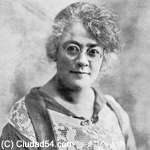
Ercilia Pepín

Ercilia Pepín
Biography
Introduction
Ercilia Pepín Estrella stands as one of the most transcendent figures in the history of Caribbean education, feminism, and patriotic resistance. Designated posthumously as a National Hero (Prócer de la Patria) by the Dominican Republic, Pepín dedicated her life to the total transformation of her nation's pedagogical, civic, and moral landscape. Living through one of the most turbulent periods of the Dominican Republic—characterized by chronic political instability, foreign military occupation, and the rise of a brutal dictatorship—she utilized the classroom not merely as a space for rote learning, but as a crucible for national sovereignty and female empowerment. Her philosophy, deeply rooted in rationalist education and unwavering civic courage, permanently reshaped the Dominican educational curriculum and laid the foundations for the nation's feminist movement.
Historical Context: The Cibao and Dominican Society
To understand the rise and impact of Ercilia Pepín, one must examine the socio-political climate of the Dominican Republic at the turn of the twentieth century. The nation was plagued by caudillismo—a system of political-military dominance by regional warlords—which resulted in constant civil wars and economic instability. The northern valley region, known as the Cibao, and specifically its cultural capital, Santiago de los Caballeros, was a center of intellectual ferment and liberal thought.
Educational opportunities during this era, particularly for girls, were severely restricted. The Dominican state lacked a unified public school system, and teaching methodologies remained archaic, dogmatic, and rote. However, a major intellectual shift was initiated in the late nineteenth century by the arrival of Puerto Rican educator and philosopher Eugenio María de Hostos, who advocated for secular, scientific, and rationalist pedagogy. Hostosian principles emphasized critical thinking, civic responsibility, and the intellectual parity of women—ideals that would become the cornerstone of Pepín’s career.
Early Life and Tutelage
Born on December 7, 1886, in Santiago de los Caballeros, Ercilia Pepín Estrella was the daughter of José Pepín and Edelmira Estrella. Her family was politically connected, yet she experienced tragedy early in life when her mother passed away when Ercilia was only five years old. Following this loss, she was raised in the Nibaje neighborhood by her grandmother, Carlota Estrella, who instilled in her a strong sense of independence and moral duty.
Recognizing her intellectual potential, her family arranged for her to receive private instruction. She became a student of the distinguished Italian professor Salvador Cucurullo, who had established a school in Santiago. Under Cucurullo’s rigorous tutelage, Pepín studied advanced mathematics, physical sciences, geography, French, and Italian. This comprehensive education was exceptional for a young woman of her generation and exposed her to the humanist and scientific currents of European thought, which she would later integrate into her own teaching.
The Call to the Classroom
Pepín’s professional career began at the astonishingly young age of fourteen. In 1900, she was appointed as a teacher in the primary school of Nibaje. Her natural aptitude for teaching and her modern approach to classroom management quickly caught the attention of local authorities. In 1906, at age nineteen, she was named director of the School for Girls in the Barrio Marilopez.
By 1909, she had assumed the directorship of the Escuela Superior de Señoritas, a secondary institution for young women in Santiago. It was in this role that Pepín began to implement her radical pedagogical reforms, transforming the school into a model of Hostosian rationalist education. She believed that education must develop all aspects of the human personality—intellectual, physical, and moral—writing:
"The primary mission of the school is not merely to instruct, but to form citizens who are conscious of their duties and capable of defending their rights."
Educational Reforms and Innovations
Pepín’s reforms were both institutional and curricular, challenging the conservative educational norms of the era. She introduced the concept of the school uniform in the Dominican Republic, arguing that standardized dress fostered a sense of equality among students from different socio-economic backgrounds and eliminated class distinctions in the classroom. She also established strict protocols of mutual respect; students were required to address their teachers with formal honorifics, and teachers were expected to treat their pupils with equal dignity, abandoning the authoritarian methods common in traditional schools.
Curricularly, Pepín modernized instruction by integrating subjects that had previously been ignored or deemed inappropriate for women:
- Scientific Instruction: She introduced laboratory equipment, including microscopes, to teach biology, chemistry, and physics, moving away from purely theoretical textbooks.
- Aesthetic and Physical Education: She added singing, gymnastics, drawing, and cartography to the daily schedule, believing that physical health and artistic appreciation were essential to intellectual development.
- Vocational and Manual Arts: Recognizing the need for women to gain economic independence, she introduced advanced courses in embroidery, sewing, and manual arts, enabling graduates to secure livelihoods beyond traditional domestic roles.
She also insisted on a deep, active patriotism. Pepín was the first educator in Santiago to make the daily singing of the Dominican National Anthem mandatory and to require the national flag to be raised at the start of each school day, cultivating a profound civic consciousness in her students.
Patriotic Resistance to the U.S. Occupation (1916–1924)
In 1916, the United States military occupied the Dominican Republic under the pretext of restoring financial and political stability. Ercilia Pepín emerged as a fierce, vocal opponent of the military intervention, using her public profile to mobilize civilian resistance. She refused to collaborate with the military government and prohibited the occupying forces from entering her school or exercising authority over her curriculum.
Through public lectures, articles, and community organizing, Pepín kept the spirit of Dominican sovereignty alive. She organized groups of women to sew Dominican flags, which were distributed to homes throughout Santiago as silent symbols of defiance. Her resistance culminated on July 24, 1924, when the U.S. occupation forces officially withdrew from the country. Pepín led a massive nationalist demonstration to the Fortaleza San Luis in Santiago, where she personally raised the Dominican flag, declaring the restoration of national dignity.
The Rise of Dominican Feminism
Pepín’s educational work was intrinsically linked to her feminist advocacy. She recognized that the subjection of women was a primary obstacle to national progress. Alongside other early Dominican feminists such as Abigail Mejía and Petronila Angélica Gómez, Pepín argued that women must have full civic and political rights, including the right to vote.
In 1920, she founded the Colegio México de Señoritas, an institution that became a beacon of female intellectual empowerment in the Cibao region. The curriculum at Colegio México was designed to prepare women for university-level studies and professional careers. Pepín used the school as a platform to write and speak on women's suffrage, legal equality, and social justice, establishing her as one of the preeminent feminist theorists of the early twentieth-century Caribbean.
Defying the Dictatorship of Rafael Trujillo
In 1930, General Rafael Trujillo seized power, beginning a thirty-one-year dictatorship characterized by absolute control, terror, and the systematic elimination of political opposition. While many intellectuals and public figures acquiesced to Trujillo's regime out of fear or opportunism, Pepín maintained her commitment to civil liberties and democratic principles.
The decisive break between Pepín and the regime occurred in 1932. Andrés Perozo, a professor and prominent political dissident who was a close associate of Pepín, was brutally assassinated by Trujillo's agents. In an act of extraordinary civic courage, Pepín ordered the Dominican flag at the Colegio México to be lowered to half-mast in mourning and protest.
Trujillo’s response was swift and retaliatory. The government ordered her immediate dismissal as director of the Colegio México and stripped her of her teaching credentials. She was marginalized, placed under constant surveillance by the secret police, and isolated from public life.
Final Years, Death, and Lasting Legacy
Stripped of her livelihood and under political persecution, Pepín’s health rapidly declined. She suffered from a chronic kidney ailment (nephritis) and lived her final years in relative poverty and isolation, supported only by a small circle of loyal friends and former students. She passed away in Santiago on June 14, 1939, at the age of fifty-two.
Despite the regime's attempts to erase her from history, Pepín's legacy survived in the hearts of the generation of women she had educated. Following the fall of the Trujillo dictatorship in 1961, her contributions were officially recognized. In 1996, the Dominican state passed Law 96-25, officially elevating Ercilia Pepín to the status of a National Hero (Prócer de la Patria), the highest honor a Dominican citizen can receive. Today, numerous schools, streets, and municipal districts across the Dominican Republic bear her name, and she is celebrated as the mother of modern Dominican education.
Major Contributions
- Ercilia Pepín revolutionized the Dominican educational system by introducing rationalist, Hostosian pedagogy, implementing standardized school uniforms to promote equality, and expanding the curriculum to include physical sciences, drawing, singing, and vocational training for women.
- Her Colegio México de Señoritas served as a major intellectual incubator for women’s civic consciousness and professional development.
- Additionally, she was a pioneering figure in the early Dominican feminist and suffragist movement, and an outspoken defender of national sovereignty, leading resistance to the 1916–1924 United States military occupation and standing in brave civil opposition to the dictatorship of Rafael Trujillo.

