Civil Rights
An archive of figures whose contributions in the field of civil rightshave significantly impacted Caribbean history and development.
Documented Figures
Classified under Civil Rights.
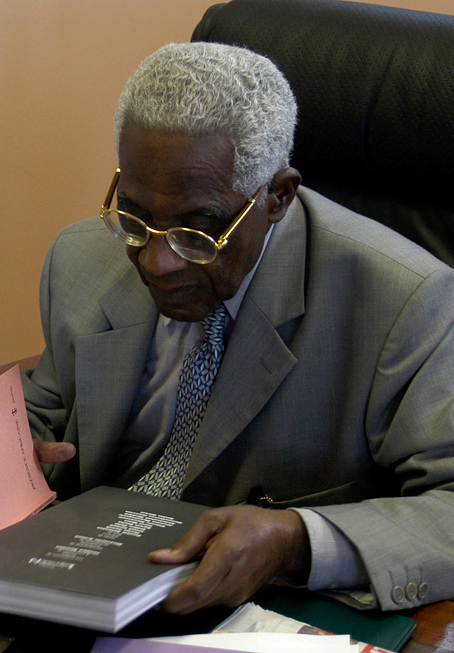
Aimé Césaire
### The Island That Made a Poet To understand Aimé Césaire — the poet, the philosopher, the politician — one must first understand Martinique. When Césaire was born on **26 June 1913** in the village of **Basse-Pointe**, on the northern tip of Martinique, the island had been a French possession for nearly three centuries. Its population, overwhelmingly of African descent, lived under a system that officially recognised them as French citizens after the abolition of slavery in 1848, yet denied them equal dignity, economic opportunity, or cultural recognition in practice [1]. Basse-Pointe sat in the shadow of Mount Pelée, the volcano that had devastated the island's former capital Saint-Pierre just eleven years before Césaire's birth — a catastrophic reminder of the island's precariousness and power. It was a landscape of extraordinary beauty and historical violence: lush sugarcane fields worked, not long before, by enslaved hands; a people carrying the weight of colonialism in their very names, language, and aspirations [2]. Aimé Fernand David Césaire was born into a family of modest means but extraordinary intellectual aspiration. His father, Fernand Césaire, worked as a tax inspector, and his mother, Marie Elléanore Hermine, was a seamstress. There were six children in the household. From his earliest years, the young Aimé demonstrated a ferocious academic brilliance that set him apart from his peers. He excelled at the local school in Basse-Pointe before earning a scholarship to attend the prestigious **Lycée Schoelcher** in Fort-de-France — named after the French abolitionist Victor Schoelcher — where he began to develop the intellectual foundations that would define his life's work [3]. ### Paris and the Birth of Négritude In **1931**, at the age of eighteen, Césaire won a scholarship to continue his studies in France, entering the elite **Lycée Louis-le-Grand** in Paris and later gaining admission to the even more prestigious **École Normale Supérieure** — one of France's *grandes écoles* that has produced generations of the nation's intellectual and political leaders [4]. It was a remarkable achievement for a young Black man from a French Caribbean colony in the early twentieth century, and it placed him at the centre of one of the most intellectually fertile moments in modern history. Paris in the early 1930s was alive with intellectual ferment. Surrealism was reshaping European art and literature. The Harlem Renaissance had sent waves of Black American cultural confidence across the Atlantic. Anti-colonial movements were gathering force across Africa and Asia. Into this ferment stepped Césaire, who quickly became part of a generation of Black students from across the French colonial world studying in Paris and confronting, for the first time, the full weight of their shared condition [4]. The most transformative encounter of his young life was with **Léopold Sédar Senghor**, a student from Senegal who would go on to become that country's first president and one of Africa's most celebrated poets. Together, and alongside **Léon-Gontran Damas** from French Guiana, Césaire and Senghor became the founding triumvirate of what they called **Négritude** — a term Césaire himself coined [4][5]. In **1934**, the three co-founded the student journal ***L'Étudiant noir*** (*The Black Student*), which became the incubator for Négritude thought. The movement was, at its core, a philosophical and literary revolt against the French colonial policy of **assimilation** — the idea that colonial subjects could only achieve full humanity by shedding their African identities and becoming French in culture, language, and aspiration. Négritude rejected this premise entirely. It insisted that African cultural heritage, history, and identity were not burdens to be discarded but treasures to be reclaimed, celebrated, and placed proudly at the centre of a new Black consciousness [5].  > *"My mouth shall be the mouth of those calamities that have no mouth, my voice the freedom of those who break down in the prison holes of despair."* > — Aimé Césaire, *Notebook of a Return to the Native Land* (1939) ### *Cahier d'un retour au pays natal*: A Masterpiece of the 20th Century The work that would secure Césaire's place in the literary canon was composed during his student years and first published in 1939 in the Parisian journal *Volontés*. ***Cahier d'un retour au pays natal*** — translated into English as ***Notebook of a Return to the Native Land*** — is a long, torrential poem of extraordinary ambition and power [6]. The *Cahier* traces the journey of a narrator — clearly autobiographical — who returns to his native Martinique after years of study in France. What he finds is a people ground down by poverty, colonialism, and self-contempt: a society that has internalised its own degradation. The poem moves through waves of despair, anger, and ultimately a fierce, defiant affirmation of Black identity and humanity. Césaire employed the techniques of **Surrealism** — which he had encountered and transformed in Paris — to fracture conventional poetic logic and release a torrent of images, myths, and ancestral memories that European colonialism had suppressed [6][7]. The great French poet **André Breton**, the leader of the Surrealist movement, encountered the poem in Martinique during his wartime exile in 1941 and was overwhelmed by it, calling it "the greatest lyrical monument of this time." Breton helped bring the poem to a wider readership, and it was subsequently published in a bilingual edition with an introduction by Breton — though Césaire was always careful to assert his independence from European Surrealism, insisting that his use of its techniques was in service of an African and Caribbean consciousness, not a European one [7]. The *Cahier* was revised and expanded several times, reaching its definitive form in 1956. It has since been translated into dozens of languages and is considered one of the foundational texts of postcolonial literature worldwide. ### *Discours sur le colonialisme*: A Declaration of War on Colonial Ideology In **1950** (published in expanded form in 1955), Césaire published ***Discours sur le colonialisme*** (*Discourse on Colonialism*), a searing polemical essay that remains one of the most important documents of anticolonial thought ever written [8]. The *Discours* opens with a stark provocation: European civilisation, Césaire argues, is neither civilised nor universal — it is a barbaric system that has revealed its true nature through the colonial enterprise. His central argument is that colonialism does not merely dehumanise the colonised; it also **de-civilises the coloniser**. The violence, racism, and exploitation deployed against colonial peoples do not remain contained in the colonies — they return, transformed, to the heart of Europe itself. In one of the essay's most prophetic passages, Césaire draws a direct line between **European colonialism and the rise of Nazism**: the techniques of terror, racial hierarchy, and industrial murder that horrified Europeans when deployed by Hitler against other Europeans were, he argued, simply the colonial boomerang returning home — methods that Europe had long practised in Africa, Asia, and the Caribbean, now turned against itself [8]. The *Discours* was an immediate sensation in anticolonial circles and has only grown in influence. [Frantz Fanon](/profiles/frantz-fanon), Césaire's most famous student and a fellow Martinican, would develop and extend many of its ideas in his own landmark works. Today, the *Discours* is assigned in universities across the world and remains essential reading for anyone seeking to understand the moral and intellectual architecture of colonialism. ### Mayor of Fort-de-France: Five Decades of Public Service Césaire returned to Martinique in 1939, and despite having composed one of the most incendiary anticolonial poems in literary history, he channelled much of his revolutionary energy into the conventional structures of democratic politics — with remarkable results. In **1945**, he was elected both **Mayor of Fort-de-France**, Martinique's capital, and **Deputy for Martinique** in the French National Assembly in Paris — a dual role he would hold for decades, commuting between the Caribbean and the French parliament [2]. At this stage of his political life, he was a member of the **French Communist Party**, which he saw as the political vehicle most committed to anti-colonialism and racial justice. In **1946**, Césaire successfully championed the landmark legislation that transformed Martinique, Guadeloupe, French Guiana, and Réunion from colonies into **Overseas Departments of France** (*départements d'outre-mer*) — giving their citizens full, formal equality with metropolitan French citizens and access to French social services, education, and welfare provisions. This was a complex political achievement that has been debated ever since: some critics argue that departmentalisation merely replaced one form of colonial dependency with another; defenders argue that it secured genuine material improvements in living standards and political rights for Martinicans [2][3]. In **1956**, Césaire publicly and dramatically resigned from the French Communist Party, publishing an *Open Letter to Maurice Thorez* (the party's leader) in which he explained that the party's Eurocentrism made it incapable of understanding or truly championing the specific conditions of colonised peoples [5]. He argued that the liberation of Black people could not be merely a sub-chapter in a European class struggle — it demanded its own political consciousness and its own leadership. In **1958**, he founded the **Martinican Progressive Party** (*Parti progressiste martiniquais*, PPM), a social-democratic party that remained a major force in Martinican politics for decades. He served as Mayor of Fort-de-France until **2001** — a tenure of over fifty years — transforming the city through investments in culture, education, and infrastructure [2]. He served in the National Assembly until **1993**, making his combined political career one of the longest and most consequential in French Caribbean history. ### Theatre of Decolonisation In the 1960s, as the drama of African decolonisation unfolded around him, Césaire turned to theatre as a new vehicle for his ideas. His plays engage directly with the turbulent history of the postcolonial world: - ***La Tragédie du Roi Christophe*** (1963) tells the story of **Henri Christophe**, the Haitian revolutionary who declared himself king after independence. The play explores the painful ironies of self-rule: the danger that the liberated colonised might reproduce the very structures of oppression they fought to destroy [3]. - ***Une Saison au Congo*** (1966) dramatises the assassination of **Patrice Lumumba**, the Congolese independence leader murdered in 1961 with the complicity of Western powers — a searing indictment of neo-colonialism. - ***Une Tempête*** (1969), his radical reworking of Shakespeare's *The Tempest*, recasts Caliban as a Caribbean Black man resisting his enslavement by the European coloniser Prospero — one of the most celebrated instances of postcolonial literature "writing back" to the European canon. ### Legacy and Death In his final decades, Césaire became a living monument — fêted by presidents and intellectuals alike, the subject of documentaries and academic conferences, his face on postage stamps and murals across Martinique. When he died on **17 April 2008** in Fort-de-France, at the age of ninety-four, French President Nicolas Sarkozy flew to Martinique for the state funeral. Thousands lined the streets of the capital he had governed for over half a century [1]. His influence on Caribbean, African, and global intellectual life is incalculable. He provided the philosophical vocabulary for a generation of anticolonial thinkers and activists. His insistence that Black identity was a source of pride, beauty, and power — at a time when the entire weight of European civilisation was arrayed to argue the opposite — was an act of extraordinary intellectual and moral courage.
View Profile →Alister Hughes
### Introduction to a Grenadian Icon Alister Earl Hewitson Hughes (January 21, 1919 – February 28, 2005) stands as one of the most consequential figures in the modern history of Grenada and the broader Caribbean. Born in the picturesque capital of St. George’s, Grenada, Hughes evolved from a dedicated family businessman into the nation's most formidable, courageous, and internationally respected journalist. At a time when the Caribbean was undergoing profound and often violent political transformations—from colonial rule to independence, through dictatorial regimes, socialist revolutions, and foreign interventions—Hughes was the indispensable chronicler of his island's turbulent journey. His life and career are a testament to the power of a free press and the unyielding pursuit of truth in the face of authoritarian intimidation.  *St. George's, Grenada, the birthplace and lifelong home of Alister Hughes.* ### Early Life and The Retail Years Hughes was born into a respected local family. For the first 36 years of his professional life, his path seemed firmly rooted in commerce rather than the public sphere. He worked diligently in the retail trade, managing and operating his family’s business enterprise, A. Norris Hughes and Sons. This extended period in the commercial sector provided him with a profound understanding of Grenada’s socioeconomic dynamics. He interacted daily with citizens from all walks of life—from the wealthy merchant class to the struggling agricultural workers. This deep immersion in the everyday realities of Grenadian life forged his acute sense of social justice and his profound empathy for his fellow citizens. However, the quiet life of a merchant could not contain his growing concern for the political trajectory of his homeland. As the Caribbean moved toward independence in the mid-20th century, Hughes witnessed the rise of populist leaders and the increasing polarization of Grenadian society. Recognizing the desperate need for an independent and objective voice to document these profound shifts, he made the courageous decision to pivot his career entirely in his late 50s. He transitioned from commerce to journalism, a decision that would not only change his life but would also indelibly alter the historical record of the Caribbean. ### The Turn to Journalism and "The Grenada Newsletter" In 1972, Hughes launched *The Grenada Newsletter*, a publication that would become his defining life's work. Operating initially with modest resources, Hughes served as the founder, editor, publisher, and primary reporter. *The Grenada Newsletter* quickly earned a reputation for its unflinching accuracy, its rigorous political analysis, and its absolute refusal to bow to partisan pressure. It became essential reading not just within Grenada, but for diplomats, international journalists, and expatriates seeking reliable information about the island. His exceptional reporting skills soon caught the attention of the international media. Hughes became a correspondent for major global news organizations, including the BBC, Reuters, and the Associated Press (AP). Through these platforms, he amplified the voices of Grenadians and ensured that the island's political struggles were broadcast to the world. He was meticulous in his note-taking and uncompromising in his editorial independence. ### The Era of Eric Gairy and The Mongoose Gang The 1970s in Grenada were defined by the increasingly authoritarian rule of Sir [Eric Gairy](/profiles/eric-gairy), the country's first Prime Minister following independence in 1974. Gairy's government was marked by corruption, political patronage, and the brutal suppression of dissent. To maintain his grip on power, Gairy employed a notorious private militia known as the "Mongoose Gang," which systematically terrorized political opponents, trade unionists, and journalists. Hughes emerged as one of Gairy's most prominent and fearless critics. He used *The Grenada Newsletter* and his international dispatches to expose the human rights abuses and electoral fraud perpetrated by the regime. This courageous stance came at a significant personal cost. In 1973, while covering pre-independence protests orchestrated by the New Jewel Movement, Hughes was physically attacked and severely beaten by members of the Mongoose Gang. Despite the violence and the constant threats to his life and his family, Hughes refused to be silenced. He continued to report on the worsening crisis, cementing his reputation as a defender of democratic principles. > "To accept honors from the very institutions that historically sought to subjugate us is to scramble our brains. Our recognition must come from our own people, based on the truth of our own actions." > *— Alister Hughes, reflecting on his refusal of a British knighthood.* ### The People's Revolutionary Government and Maurice Bishop The political pressure cooker of Grenada exploded in March 1979 when the New Jewel Movement, led by the charismatic [Maurice Bishop](/profiles/maurice-bishop), overthrow Gairy in a nearly bloodless coup. The establishment of the People's Revolutionary Government (PRG) initially brought immense hope and sweeping social reforms to the island. However, the PRG suspended the constitution, delayed elections, and began to crack down on independent media. Hughes, who had staunchly opposed Gairy's tyranny, found himself equally critical of the PRG's authoritarian tendencies. He argued forcefully that true liberation could not be achieved without a free press and democratic accountability. As a result, his relationship with Bishop's government became deeply strained. The PRG subjected Hughes to constant harassment, surveillance, and intimidation. They viewed his independent reporting as a threat to the revolution's narrative. Yet, Hughes maintained his journalistic integrity, carefully documenting both the achievements of the PRG—such as advancements in education and healthcare—and its alarming political repressions. ### The 1983 Crisis, Intervention, and Imprisonment The most dramatic chapter of Hughes's life unfolded in October 1983. The PRG imploded due to a vicious internal power struggle between Maurice Bishop and a hardline Marxist-Leninist faction led by Bernard Coard. Bishop was placed under house arrest. In a testament to his unparalleled access and journalistic tenacity, Hughes was the last journalist to interview Prime Minister Maurice Bishop before the tragic events that followed. On October 19, 1983, Bishop and several of his cabinet ministers were executed by the military at Fort Rupert. In the chaotic aftermath, the hardline military council seized control and immediately recognized Hughes as a primary threat due to his ability to broadcast the truth to the outside world. Hughes was arrested and thrown into Richmond Hill Prison. He languished there in perilous conditions, uncertain of his fate as the island descended into turmoil. His imprisonment sparked international outrage among press freedom organizations. Hughes was only released days later when a United States-led military coalition intervened in Grenada, overthrowing the military council and restoring a fragile order to the island. ### Later Years, Philosophy, and Legacy Following the 1983 intervention, Hughes resumed his critical role in rebuilding Grenada's democratic institutions. He continued to publish *The Grenada Newsletter* until 1994, documenting the island's transition back to parliamentary democracy and the trials of those responsible for Bishop's murder. Hughes was a man of profound principles. He was a staunch advocate for Caribbean identity and self-determination, deeply skeptical of lingering colonial influences. This philosophy was most famously demonstrated when he publicly declined a British knighthood. He argued that such colonial honors "scramble our brains" and insisted that he preferred recognition from his own Caribbean people. In 1990, his lifelong commitment to truth was formally recognized when he was awarded an honorary Doctor of Laws (LLD) by the University of the West Indies. Beyond journalism, Hughes was a passionate conservationist and an accomplished poet, dedicating his later years to preserving the natural beauty and historical archives of Grenada. He passed away on February 28, 2005, at the age of 86. Today, Alister Hughes is remembered not just as a reporter, but as the conscience of a nation—a man whose pen was indeed mightier than the swords of the dictators and military councils he outlasted.
View Profile →
Anton de Kom
### The Weight of Inherited Chains: Suriname at the Turn of the Twentieth Century To understand Anton de Kom, one must first understand the world into which he was born — a world shaped by centuries of slavery, plantation capitalism, and the elaborate fictions that colonial powers construct to justify the subjugation of entire peoples. **Suriname** — known then as Dutch Guiana — was one of the most brutal plantation colonies in the history of the Atlantic world. From the seventeenth century onward, the Dutch West India Company had transported hundreds of thousands of enslaved Africans to its South American colony to labor under conditions of extraordinary violence, cultivating sugar, coffee, cocoa, and cotton that enriched the Dutch merchant class and fueled the prosperity of cities like Amsterdam and Rotterdam [1]. The formal abolition of slavery came to Suriname in **1863** — nearly three decades after Britain abolished it in its own colonies, and almost a decade after Brazil's resistance to abolition had ended. But abolition in Suriname came with a perverse addendum: the formerly enslaved were compelled to endure a ten-year period of "state supervision" (*staatstoezicht*), during which they were legally required to continue working on plantations under coerced conditions, receiving only minimal compensation [1]. The chains had changed shape, but they had not been broken. It was into this post-abolition Suriname — a society still organized around racial hierarchy, economic exploitation, and the systematic denial of dignity to non-white people — that **Cornelis Gerhard Anton de Kom** was born on **February 22, 1898**, in Paramaribo, the colonial capital [2]. His father was a man who had himself been born into slavery and had survived emancipation; his mother was a free woman. This family background — the son of a formerly enslaved man, growing up in a colony that continued to treat Black and brown people as instruments of extraction rather than as full human beings — would become the furnace in which De Kom's political consciousness was forged.  *Suriname (Dutch Guiana) — the colony whose history of slavery and exploitation Anton de Kom would document and condemn.* ### Education, Migration, and the Making of a Radical De Kom received a solid education for a young man of his background, completing training in bookkeeping and showing exceptional intellectual promise. Yet however capable he was, Suriname's colonial society offered limited horizons for a young Black man from a modest family. Systemic racism pervaded every institution, blocking professional advancement and signaling with relentless clarity that darker-skinned Surinamers existed in a lower tier of the colonial order [2]. In **1920**, de Kom made the decision that would transform his life: he emigrated to the **Netherlands** [2]. He was twenty-two years old. The metropole was, in theory, the seat of the civilization that had colonized Suriname — the place from which laws were written, governors appointed, and the machinery of exploitation managed at a comfortable remove. In practice, the Netherlands of the 1920s was a country beginning to grapple, however haltingly, with socialist and labor movements, international anti-imperialism, and the stirrings of a broader global critique of European colonialism. In the Netherlands, De Kom married **Petronella Borsboom**, a Dutch woman, and together they would have four children [3]. He found work in various commercial capacities, but his energies were increasingly devoted to activism. He moved in radical left-wing circles, joining anti-colonial organizations, attending lectures and political meetings, and reading voraciously in the literature of resistance — from Marxist theory to the writings of the early African independence movement [2]. He was troubled by a fundamental injustice he perceived wherever he looked: the history of Suriname, of the Caribbean, of the colonized world, was being told entirely by the colonizers. The voices of those who had suffered — the enslaved, the indentured, the dispossessed — were absent from the historical record. This absence became his obsession and his mission. ### Return to Suriname: "Papa De Kom" On **January 4, 1933**, Anton de Kom returned to Paramaribo with his wife and children. He had been away for thirteen years. Suriname had changed — and had not changed. The Great Depression had devastated the colony's export economy, throwing thousands of workers into destitution. The colonial administration, headed by Dutch-appointed governors, responded to the economic crisis with austerity and repression rather than relief. Workers in the plantations and in the city's docks and markets were hungry, underpaid, and without recourse [3]. De Kom established an informal **"advice bureau"** at his parents' home in Paramaribo [3]. He invited workers, the unemployed, descendants of enslaved Africans, and indentured laborers brought from Asia to come and speak with him about their grievances — about exploitation, about poverty, about the daily indignities of colonial life. Thousands came. Word spread across the colony that a man had returned from the Netherlands who would listen, who would advise, who understood both the colonial system and the language of rights. The people called him **"Papa De Kom"** — Father De Kom — a title that captured both the reverence they felt for him and the paternal protectiveness he showed toward the most vulnerable [3]. The colonial authorities watched De Kom's rising influence with mounting alarm. He was placed under surveillance. His meetings were monitored. Colonial officials correctly understood that what De Kom was doing — organizing workers, educating them about their rights, connecting their personal suffering to the structural logic of colonialism — was precisely the kind of consciousness-raising that threatened the entire edifice of Dutch rule in Suriname [4]. In early **1933**, De Kom was arrested [3]. The colonial government offered no specific charge that could survive public scrutiny; his crime, in essence, was the crime of telling the truth in a way that the oppressed could hear. His arrest triggered an immediate and dramatic response. On **February 7, 1933** — a day that would enter the historical memory of Suriname as **"Black Tuesday"** — a large crowd of De Kom's supporters gathered in Paramaribo to demand his release [3]. The colonial police, acting on orders from the administration, opened fire on the demonstrators. **Two people were killed and approximately thirty were wounded** [3]. It was an act of colonial violence that shocked even some members of the Dutch political establishment. De Kom was held in jail without charge for three months. The colonial government's ultimate solution was deportation: he and his entire family were banished from Suriname and sent back to the Netherlands [3]. He would never return to the land of his birth. > *"The history of Suriname is a history of violence and exploitation. But it is also the history of resistance — of people who refused, generation after generation, to accept the chains that were placed upon them."* — Anton de Kom, *Wij slaven van Suriname* (1934) [1] ### *Wij Slaven van Suriname*: Writing History from Below In exile in the Netherlands, stripped of his homeland and under the shadow of state surveillance, Anton de Kom wrote the book that would make him immortal. ***Wij slaven van Suriname*** — ***We Slaves of Suriname*** — was published in **1934** [1]. It was, at its core, the first comprehensive historical account of Suriname written from the perspective of the colonized rather than the colonizer. The book is a remarkable work of what we would now call **hybrid writing**: part history, part autobiography, part political manifesto, and part poetry of grief [5]. De Kom traced the entire arc of Dutch colonialism in Suriname, from the earliest European settlements through the transatlantic slave trade to the plantation era and into the twentieth-century continuation of exploitation that he had witnessed with his own eyes. He named names. He cited figures. He described the specific mechanisms of how slavery functioned — not as an abstraction, but as a lived system of violence, humiliation, and psychological destruction [5]. Most powerfully, De Kom argued that the formal abolition of slavery in 1863 had not ended colonialism's essential project. Physical chains had been replaced by economic dependency, poverty, and the internalized sense of inferiority that the colonial system worked systematically to instill in its subjects. "Mental anguish, poverty, and hardship" had succeeded the whip as tools of control [1]. This analysis — decades ahead of its time — anticipates the insights of later post-colonial theorists like Frantz Fanon, Aimé Césaire, and C.L.R. James. The Dutch colonial authorities predictably attempted to suppress the book's circulation in Suriname, recognizing its capacity to inspire the very resistance they had imprisoned De Kom to prevent [4]. But the book survived. It endured. And in the decades that followed, it would become one of the foundational texts of Caribbean and anti-colonial literature. ### World War II: The Final Resistance The cruel irony of Anton de Kom's life is that the Dutch state which had persecuted him as a colonial subject would eventually come to rely on the kind of resistance he embodied when a more immediate threat arrived at its own door. When Nazi Germany occupied the Netherlands in **May 1940**, De Kom — despite everything the Dutch government had done to him — joined the **Dutch Resistance** [4]. His decision to resist fascism was entirely consistent with his lifelong principles. The enemy had changed — from Dutch colonial administrators to German Nazi occupiers — but the logic was the same: oppression must be fought, injustice must be refused, and the dignity of human beings must be defended against those who deny it. He worked with underground networks, distributing resistance literature and organizing against the occupation. In **1944**, De Kom was captured by the German secret police (Gestapo) and arrested [4]. As a political prisoner, he was transported to the **Neuengamme concentration camp** near Hamburg, one of the major Nazi concentration camp systems in which thousands of political prisoners, resistance fighters, and others were worked and starved to death [4]. Anton de Kom died on **April 24, 1945** — less than two weeks before Germany's unconditional surrender — in the Sandbostel camp, a satellite of the Neuengamme system [4]. He had survived Dutch colonial persecution, political exile, and years of surveillance. He died of tuberculosis, his body broken by the conditions of the Nazi camp system. He was forty-seven years old.  *Anton de Kom, circa 1930. A man who fought colonialism with words and fascism with action.* ### Legacy: From Exile to National Hero For decades after his death, Anton de Kom remained a figure known primarily within left-wing and anti-colonial circles in the Netherlands and Suriname. The Dutch state — whose colonial administration had imprisoned, surveilled, and deported him — was in no hurry to celebrate his memory. But history has a way of correcting these silences. As Suriname moved toward independence (achieved in **1975**), De Kom's legacy was reclaimed by the Surinamese people as a founding document of national self-consciousness. The **University of Suriname** was renamed the **Anton de Kom University of Suriname** in his honor — a gesture of remarkable symbolic power, placing his name over the institution through which the nation would educate its future generations [2]. In **2020**, the Dutch government included *Wij slaven van Suriname* in the **Canon of the Netherlands** — an official list of fifty windows into Dutch history considered essential for understanding the nation's past [4]. The inclusion of a book written by a Black Surinamese man who had been deported by the Dutch colonial government represented a profound, belated acknowledgment of a history long suppressed. In **2023**, the Dutch government issued an **official apology** to the descendants of Anton de Kom [4] — part of a broader reckoning with the Netherlands' history of slavery and colonialism, an apology long sought by Surinamese and Caribbean communities. Today, Anton de Kom is recognized as one of the most important figures in the history of anti-colonial resistance — not only in Suriname, but in the broader Atlantic world. His life's trajectory — from the son of a formerly enslaved man in Paramaribo, to political exile in Amsterdam, to resistance fighter in Nazi-occupied Europe, to his death in a concentration camp — is a story of extraordinary moral consistency: a man who, in every chapter of his life, chose to fight the powerful on behalf of the powerless.
View Profile →
Antonio Maceo Grajales
### Early Life and the Crucible of Patriotism Antonio Maceo Grajales, immortalized in Cuban and Caribbean history as the "Bronze Titan" (*El Titán de Bronce*), was born on June 14, 1845, in the rugged, mountainous region of Santiago de Cuba. He was born into a society defined by extreme racial stratification, brutal plantation slavery, and rigid Spanish colonial rule. His father, Marcos Maceo, was a Venezuelan farmer and a free man of color who had fought in the Spanish army, while his mother, `[Mariana Grajales](/profiles/mariana-grajales)`, was an Afro-Cuban woman of Dominican descent. Mariana Grajales was a woman of extraordinary fortitude and deep moral conviction. She instilled in all her children an ironclad sense of discipline, an unyielding hatred for the institution of slavery, and a fierce, burning patriotism for an independent Cuba. The Maceo household was a multiracial, free-thinking enclave where the concepts of liberty, racial equality, and anti-colonialism were discussed daily. Growing up, Antonio worked on his father's small farm, developing immense physical strength, exceptional horsemanship, and an intimate knowledge of the treacherous Oriente terrain—skills that would later prove indispensable in his legendary guerrilla campaigns. ### The Ten Years' War and the Rise of a General When the prominent planter Carlos Manuel de Céspedes initiated the Ten Years' War for independence on October 10, 1868, Antonio Maceo, then 23 years old, immediately joined the insurrection alongside his father and brothers. He entered the conflict as a common private, but his natural aptitude for military strategy, coupled with an almost mythical bravery, propelled him rapidly through the ranks. Within weeks, he was promoted to sergeant, and shortly thereafter, to lieutenant. Maceo operated under the command of the Dominican-born military genius `[Máximo Gómez](/profiles/maximo-gomez)`, from whom he learned the lethal art of the machete charge. The Cuban rebel forces, often vastly outnumbered and severely under-armed, relied on shock tactics, ambushes, and their mastery of the jungle. Maceo became famous for leading devastating cavalry charges, wielding a machete with terrifying efficiency. The Spanish forces soon learned to fear the sound of his approach. Despite his undeniable brilliance, Maceo faced insidious racism from within the ranks of the Cuban revolutionary leadership. Many of the white, aristocratic Creole planters who had started the war were deeply terrified of a "black republic" emerging in Cuba, akin to the Haitian Revolution. They frequently attempted to marginalize Maceo, denying him the supreme commands he deserved. Yet, Maceo remained fiercely loyal to the cause, famously stating that he fought for a nation where color would not dictate a man's worth. ### The Protest of Baraguá By 1878, the Cuban liberation army was exhausted, politically divided, and starving. Recognizing their advantage, the Spanish offered the Pact of Zanjón, a peace treaty that promised amnesty and minor political reforms, but crucially, refused to grant independence and only offered freedom to the enslaved people who had directly fought in the rebel army, leaving the institution of slavery intact. Most of the weary rebel leadership accepted the terms. Antonio Maceo categorically refused. On March 15, 1878, in an event that would become the defining moral cornerstone of the Cuban nation, Maceo met with the Spanish General Arsenio Martínez-Campos under a mango tree in Mangos de Baraguá. In what is known as the *Protesta de Baraguá*, Maceo boldly rejected the pact, declaring that there could be no peace without complete independence and the total abolition of slavery. > "No nos entendemos" (We do not understand each other / We have no deal.) This single act of defiance elevated Maceo from a brilliant military commander to a transcendent national hero. He had salvaged the dignity of the revolution. Though forced into exile shortly thereafter, the Protest of Baraguá ensured that the fire of independence would never be extinguished.  ### Exile, Return, and the Final War The period between 1878 and 1895 was one of restless exile for Maceo. He lived in Jamaica, Haiti, the Dominican Republic, Honduras, and Costa Rica. During this time, he survived numerous assassination attempts by Spanish agents, continuously organizing, fund-raising, and planning for the inevitable resumption of the war. He corresponded extensively with `[José Martí](/profiles/jose-marti)`, the visionary intellectual of the Cuban revolution. While Martí and Maceo sometimes clashed over the balance of civil versus military power in a future republic, they were united by their total devotion to Cuba Libre. In 1895, the Cuban War of Independence finally ignited. Maceo, alongside Gómez and Martí, landed in Cuba to lead the liberation forces. Martí was tragically killed early in the conflict, leaving Gómez and Maceo to execute one of the most audacious military campaigns in Latin American history: the Western Invasion. Their goal was to break out of the rebellious eastern provinces and march across the entire island to the wealthy, heavily fortified western provinces, burning sugar cane fields to destroy the Spanish economic engine. Maceo's leadership during the invasion was nothing short of miraculous. Outnumbered sometimes ten to one, he outmaneuvered the massive Spanish armies, crossed heavily guarded military lines (*trochas*), and brought the war to the very outskirts of Havana. His tactical brilliance and sheer willpower made him an international legend. ### A Hero's Fall and Eternal Legacy On December 7, 1896, near the town of San Pedro del Cacahual, Maceo's forces were ambushed by a Spanish column. During the fierce skirmish, Maceo was struck by a bullet to the jaw and another to the chest, killing him instantly. He was 51 years old. His death sent shockwaves of grief across the island and the international community. The "Bronze Titan," who had survived over 900 combat engagements and bore the scars of 26 bullet and machete wounds, had finally fallen. Today, Antonio Maceo is universally revered as one of the founding fathers of the Cuban nation. His legacy transcends military history; he is a profound symbol of anti-racism, anti-imperialism, and unyielding principled resistance. Monuments to his glory stand in every major Cuban city, but his true monument is the indomitable spirit of resistance that he permanently embedded into the Cuban national identity.
View Profile →Audrey Jeffers
### Introduction and Formative Years Audrey Layne Jeffers (OBE), born on February 12, 1898, in the vibrant neighborhood of Woodbrook, Port of Spain, stands as an iconic figure in the history of Trinidad and Tobago and the broader Caribbean [1]. Celebrated universally as the "Mother of Trinidadian Philanthropy," Jeffers was a pioneering social worker, a fearless feminist organizer, and a political trailblazer who dismantled centuries-old gender barriers. Her life's work fundamentally transformed social welfare administration in the West Indies and established the precedent for female representation in Caribbean governance. Jeffers was born into a privileged, upper-middle-class family that placed a profound emphasis on civic responsibility, education, and public service. Her father, Henry Israel Jeffers, was a highly respected solicitor and a prominent member of the Port of Spain City Council. Growing up in a household steeped in legal and civic discussions, young Audrey developed an early awareness of governance and community affairs. She received her foundational education at the prestigious Tranquillity Girls' Practising School in Port of Spain, where she demonstrated exceptional academic promise and leadership qualities. In 1913, at the age of fifteen, Jeffers traveled across the Atlantic to London, England, to pursue higher education. She enrolled at Alexander College, where she studied social sciences and earned a formal diploma in social work—a rare educational achievement for a Caribbean woman of her era [2]. Her decade-long residence in London coincided with the tumultuous period of World War I, which served as a profound catalyst for her sociopolitical activism. Entering the dynamic intellectual circles of London, Jeffers established the Union of Students of African Descent, which later evolved into the influential League of Coloured Students. Through this organization, she fostered pan-African solidarity and provided critical welfare support to Black students residing in Britain. During the war, Jeffers actively mobilized resources for West African and Caribbean soldiers serving on the front lines, establishing a specialized fund to supply troops with necessities and comforts [2]. This early wartime organizing honed her administrative capabilities and instilled in her an unshakable conviction that organized social action could alleviate human suffering and elevate marginalized communities. ### The Coterie of Social Workers and Philanthropic Revolution Upon returning to Trinidad in 1920, Jeffers was deeply moved and troubled by the stark socioeconomic disparities plaguing Port of Spain. The aftermath of World War I had triggered severe economic depression across the British West Indies, resulting in rampant unemployment, widespread poverty, inadequate housing, and acute malnutrition among the working class. Jeffers recognized that existing colonial charity structures were sporadic, paternalistic, and entirely inadequate to meet the scale of the crisis. Rejecting the passive role traditionally assigned to women of her social standing, she resolved to mobilize women for structured, systemic social reform. In 1921, Jeffers founded the Coterie of Social Workers (COSW), an organization that would become the cornerstone of Caribbean humanitarianism [1]. Operating under her visionary leadership, the Coterie embarked on a mission to provide comprehensive social safety nets for the most vulnerable segments of society, focusing particularly on destitute women and children. In 1926, Jeffers and the Coterie launched their most famous and revolutionary initiative: the "Penny Lunch" program. Recognizing that impoverished children could not learn while suffering from starvation, the Coterie established free and subsidized meal centers near schools across Port of Spain, San Fernando, Arima, and Tobago [3]. This initiative provided thousands of underprivileged school children with daily nutritious meals, laying the direct institutional groundwork for Trinidad and Tobago's modern National School Feeding Program. > "Social work is not merely an act of charity; it is the fundamental duty of a just society to protect its most vulnerable members and empower women to shape their own destinies." Beyond child nutrition, Jeffers expanded the Coterie's operations to address the entire spectrum of human vulnerability. She established day nurseries to care for the infants of working-class mothers, established hostels for young working women migrating from rural areas to the city, and founded homes for the blind, elderly, and destitute. Her holistic approach to social welfare bridged the gap between immediate humanitarian relief and long-term institutional support.  ### Breaking Political Barriers: City Council and Legislative Council As her philanthropic enterprises expanded, Audrey Jeffers increasingly realized that charitable initiatives alone could not cure systemic social ills. She understood that sustainable reform required political power, legislative advocacy, and direct state intervention. During the 1930s, the political landscape of Trinidad and Tobago was undergoing seismic shifts, driven by labor unrest and the pioneering agitation of labor leaders such as [Arthur Andrew Cipriani](/profiles/arthur-andrew-cipriani) and later firebrands like [Uriah Butler](/profiles/uriah-butler). Working within and around these emerging political currents, Jeffers boldly stepped into the male-dominated political arena. In 1936, Jeffers shattered a glass ceiling that had stood for centuries by becoming the first woman ever elected to the Port of Spain City Council [1]. Running as a candidate who championed social justice, municipal sanitation, housing reform, and women's rights, her victory marked a turning point in Caribbean gender politics. As a city councilor, she utilized her legislative platform to demand increased municipal funding for public health, maternal care, and educational facilities. That same year, she organized the historic First Conference of British West Indian Women Social Workers in Port of Spain. This pioneering convention brought together female leaders from across the Caribbean to formulate a unified regional agenda advocating for women's suffrage, legal equality, and the professional integration of women into public service. Her tireless advocacy reached new historical heights in 1946 when the Governor appointed her to the Legislative Council of Trinidad and Tobago [3]. As the very first female legislator in the nation's history, Jeffers operated as the conscience of the legislature. She advocated vigorously for constitutional reform, workers' rights, and government responsibility for social welfare programs. Her legislative tenure paved the way for future generations of Caribbean political leaders, operating in an era that would soon see the rise of independence movements led by figures like [Eric Williams](/profiles/eric-williams). ### Advocacy for Women's Rights and Later Years Throughout her life, Jeffers remained an uncompromising champion of Black womanhood and gender equity. She campaigned relentlessly for the opening of professional careers to women, famously successfully lobbying the colonial administration to employ female police officers in Trinidad and Tobago to handle sensitive cases involving women and juveniles. She also fought for equal pay, legal protections for illegitimate children, and the elevation of domestic science and technical education for young girls. In recognition of her extraordinary lifetime of humanitarian service and political pioneering, Audrey Jeffers was appointed an Officer of the Order of the British Empire (OBE) by Queen Elizabeth II in 1959 [2]. Even as her health declined in her later years, she remained actively involved in the oversight of the Coterie of Social Workers, mentoring young female activists and ensuring the sustainability of her philanthropic institutions. Audrey Jeffers passed away on June 24, 1968, at the age of seventy, leaving behind a nation forever transformed by her compassion and courage [1]. ### Legacy and Historical Impact Audrey Jeffers' legacy is monumental and enduring. She fundamentally reshaped the social concept of welfare in Trinidad and Tobago, transitioning it from sporadic private charity into a structured civic obligation that informed government policy. The Coterie of Social Workers remains active today, continuing her mission of community service over a century after its founding. In lasting tribute to her monumental contributions, the Government of Trinidad and Tobago named the major highway stretching along the western coastline of Port of Spain the Audrey Jeffers Highway. Today, she is enshrined not only as a mother of philanthropy but as a courageous political pioneer who opened the doors of Caribbean governance to women, leaving an indelible mark on the region's socio-political history. 
View Profile →Baron
### Introduction: The Sweet Voice of Calypso and Soca Timothy Watkins (born March 14, 1947), affectionately and universally known throughout the global Caribbean diaspora by his aristocratic stage name "Baron" or "The Calypso Baron," is a legendary Trinidadian vocalist, songwriter, and cultural icon [1]. For over five decades, Baron has stood as one of the most influential and beloved figures in the history of calypso, soca, and parang music [2]. Possessing an instantly recognizable, silky-smooth tenor voice characterized by effortless melodic phrasing and warm vibrato, he fundamentally revolutionized the vocal delivery of calypso, bridging the transition from traditional, speech-inflected kaiso to modern, high-energy soca [3]. In an arena historically dominated by fierce verbal sparring, biting political satire, and aggressive lyrical declamation by giants such as [Mighty Sparrow](/profiles/mighty-sparrow) and [Lord Kitchener](/profiles/lord-kitchener), Baron carved out an immortal legacy as the ultimate purveyor of melodic sweetness, romantic warmth, and joyous celebration [2]. His timeless discography includes some of the most enduring anthems in Caribbean music history, including "Sweet Soca Man," "Melosian Rhapsody," "Doh Rock It So," and "Spanish Woman" [4]. Furthermore, Baron is undisputed as the reigning "King of Parang-Soca," having pioneered a festive subgenre that fuses traditional Venezuelan-Trinidadian Christmas folk rhythms with vibrant soca instrumentation, creating songs that remain essential, inescapable staples of the Caribbean holiday season [3].  ### Early Life, Spiritual Baptist Roots, and Musical Awakening Timothy Watkins was born on March 14, 1947, in the working-class community of Bamboo Village in La Romaine, located in southern Trinidad near the industrial hub of San Fernando [2]. Growing up in post-World War II Trinidad and Tobago, Watkins was immersed in a rich tapestry of African, Indian, and European cultural influences. His formative musical education did not occur in secular music schools, but within the deeply spiritual walls of the Mt. Zion Spiritual Baptist Church in La Romaine, a congregation led by his devout parents [4]. The Spiritual Baptist tradition, an indigenous Afro-Caribbean syncretic religion, places a central emphasis on vocal expression, polyrhythmic clapping, bell-ringing, and soul-stirring hymns known as "trumpeting" and "dudus" [1]. From a very young age, Watkins sang in the church choir and participated in marathon spiritual services. It was during these intense hours of worship that he mastered his exceptional breath control, resonant vocal projection, and distinct emotional delivery. The mournful yet celebratory cadences of Baptist spirituals became permanently etched into his vocal DNA, later imparting a unique, soulful depth to his secular calypso recordings. During his teenage years, Watkins became increasingly captivated by the flourishing calypso scene of Trinidad, listening avidly to radio broadcasts of tent performers and imported American soul and R&B records. Encouraged by friends who recognized his extraordinary vocal talent, he entered the prestigious national television talent competition, *Scouting for Talent*, hosted by the legendary broadcaster Holly Betaudier in the early 1970s [4]. Watkins's electrifying performances won over the judges and television audiences nationwide, earning him top honors and launching his entry into professional entertainment. ### Calypso Debut and the Mentorship of Lord Shorty Following his success on *Scouting for Talent*, Timothy Watkins made his formal professional calypso debut in 1971 at the Original Young Brigade Calypso Tent in Port of Spain [2]. Entering the calypso tent circuit during the early 1970s meant competing alongside legendary veterans. However, young Watkins possessed a secret weapon: a vocal tone so smooth and refined that it immediately set him apart from the gritty, conversational delivery typical of traditional calypsonians. It was during this critical debut season that Watkins forged a life-changing friendship and creative partnership with Garfield Blackman, a visionary musician better known to the world as [Lord Shorty](/profiles/lord-shorty) (and later as [Ras Shorty I](/profiles/ras-shorty-i)) [2]. Shorty was at that exact moment experimenting with complex rhythmic fusions, blending East Indian dholak and dhantal percussion with African calypso rhythms—an innovation that would officially give birth to soca (the "Soul of Calypso") music. Recognizing Watkins's immense vocal potential and regal stage presence, Shorty bestowed upon him the stage name "Baron," declaring that a voice so aristocratic deserved a title of nobility [4]. > "Calypso and soca are the heartbeat of our people, but melody is the soul. I always wanted my music to make people dance, but also make them feel the sweetness of life and the joy of togetherness." — Timothy 'Baron' Watkins [3] Lord Shorty took the young Baron under his creative wing, writing and producing Baron's very first hit single, "Severe Licking," in 1971 [2]. The song became a runaway success in the calypso tents and on national radio. Shorty's sophisticated musical arrangements provided the perfect canvas for Baron's soaring tenor. This mentorship not only launched Baron's career but placed him at the ground floor of the soca revolution, positioning him to become one of the premier vocal interpreters of the new genre. ### The Golden Era of Soca: Timeless Hits and Cross-Generational Appeal Throughout the 1980s and 1990s, Baron entered a golden era of creative productivity and commercial dominance, establishing himself as one of soca music's most prolific and globally celebrated superstars [4]. Teaming up with master arranger Leston Paul and top Caribbean songwriters such as [Merchant](/profiles/merchant) (Mark Hernandez) and [GB](/profiles/gb) (Gregory Ballantyne), Baron released an astonishing string of hit albums that redefined the sonic parameters of soca. In 1984, Baron released "Sweet Soca Man," a track that encapsulated his artistic persona and became an instant regional anthem [1]. Driven by bubbling basslines, crisp brass arrangements, and Baron's seductive vocal delivery, the song became a massive hit at the Trinidad Carnival and across the West Indian diaspora in New York, London, and Toronto. He followed this success with a succession of monumental classics, including the infectious "Doh Rock It So" (1988), "The Jammer," "Feeling It," and "Say Say" [4]. Perhaps his most critically acclaimed artistic triumph occurred in 1988 with the release of "Melosian Rhapsody" [2]. Written by Gregory "GB" Ballantyne and arranged by Leston Paul, "Melosian Rhapsody" was a sophisticated, sweeping composition that celebrated the unifying power of music across cultural boundaries. Baron's vocal performance on the track was masterclass, demonstrating an unprecedented emotional range and harmonic complexity. The song remains widely regarded by musicologists and critics as one of the finest soca compositions ever recorded, earning Baron permanent placement alongside titans like [Black Stalin](/profiles/black-stalin), [David Rudder](/profiles/david-rudder), [Superblue](/profiles/superblue), and [Calypso Rose](/profiles/calypso-rose) [3]. Unlike many carnival hits that fade after the season ends, Baron's recordings possessed an evergreen quality. His music bridged generational divides, appealing equally to mature calypso purists who appreciated his lyrical clarity and younger partygoers captivated by his irresistible dance grooves. Throughout his career, he toured relentlessly across North America, Europe, and the Caribbean, headlining major festivals and serving as a consummate cultural ambassador for Trinidad and Tobago. ### The King of Parang-Soca and Christmas Traditions While Baron's contributions to standard carnival soca are legendary, his impact on the music of the Caribbean Christmas season is arguably even more monumental. In Trinidad and Tobago, the Christmas season is traditionally accompanied by parang—a folk music style of Venezuelan origin featuring acoustic guitars, cuatro, maracas (chac-chacs), and box bass, sung primarily in Spanish by traditional groups led by icons like [Daisy Voisin](/profiles/daisy-voisin) [3]. In the late 1970s and 1980s, pioneering artists began fusing parang rhythms with upbeat soca instrumentation and English lyrics, creating the hybrid genre known as parang-soca. Baron embraced this budding genre with unmatched passion and mastery, quickly becoming its undisputed monarch [1]. His 1980 release "Spanish Woman" became an instant phenomenon, weaving a humorous, romantic narrative over a driving parang-soca beat that forced listeners onto the dance floor. Baron proceeded to record a treasury of Christmas hits that permanently transformed the holiday soundscape of the Caribbean. Tracks such as "It's Christmas," "Come Go," "Rave," "Merry Christmas," and "Christmas do the Boss" became mandatory listening in households, radio stations, and parang fetes throughout the region [4]. His parang-soca catalog achieved a remarkable cultural feat: it established Baron as one of the rare Caribbean artists who dominated national radio airwaves and concert stages year-round, reigning during both the pre-Lenten Carnival euphoria and the festive December holidays alongside chutney pioneers like [Sundar Popo](/profiles/sundar-popo) and parang contemporaries like [Scrunter](/profiles/scrunter) [3]. ### National Honors, Challenges, and Lasting Legacy In recognition of his extraordinary lifetime contributions to the cultural landscape of Trinidad and Tobago, the national government has bestowed numerous prestigious honors upon Timothy Watkins. In 2016, Baron was formally awarded the Humming Bird Medal (Gold), one of the nation's highest National Awards, for his loyal and dedicated service to calypso and soca music [2]. The award ceremony celebrated not only his extensive discography but his role in uplifting the nation's international cultural profile. Further cementing his permanent presence in his home community, the San Fernando City Corporation and the Ministry of Tourism, Culture and the Arts officially honored Baron in February 2022 by renaming Bay Road in La Romaine—the street where he spent much of his life—to "Timothy Watkins 'The Baron' Street" [2]. At the unveiling ceremony, local dignitaries and fellow artists gathered to celebrate the living legend, praising his humility, mentorship of younger artists, and unwavering dedication to South Trinidad. In the mid-2020s, reports emerged regarding health challenges faced by the aging elder statesman. Demonstrating the profound respect and affection the nation holds for its cultural icons, the Trinbago Unified Calypsonians' Organisation (TUCO) and the Ministry of Culture and Community Development rallied to provide comprehensive medical care and financial assistance to ensure his well-being and comfort [5]. This public mobilization underscored Baron's status as a cherished national treasure whose well-being is of paramount importance to the citizens of Trinidad and Tobago. Today, Timothy "Baron" Watkins occupies a sacred place in the pantheon of West Indian music. He proved that calypso and soca could be delivered with supreme vocal sophistication, melodic grace, and romantic warmth without losing their rhythmic potency or authentic cultural roots. His songs remain the eternal soundtrack of Caribbean celebration, ensuring that the legacy of "The Calypso Baron" will continue to inspire and enchant generations of music lovers for decades to come.
View Profile →Blanca Canales
### Introduction and Colonial Context The early decades of the twentieth century in Puerto Rico were defined by profound political, economic, and cultural upheaval following the transfer of the island from Spanish colonial rule to United States sovereignty under the 1898 Treaty of Paris [1]. As American corporate conglomerates rapidly consolidated control over the island's arable lands, traditional subsistence farming gave way to monoculture sugar plantations. This economic transformation displaced hundreds of thousands of *jíbaros* (rural agricultural workers), plunging rural mountain municipalities like Jayuya into severe poverty and unemployment [2]. Simultaneously, American colonial administrators imposed strict policies designed to assimilate the population, including the mandated use of the English language in public schools and the suppression of Puerto Rican national symbols. Within this crucible of displacement and cultural erasure, a fierce nationalist consciousness took root across the central mountain range. Among the most steadfast and visionary figures to emerge from this resistance was Blanca Canales, an educator, social worker, and revolutionary organizer whose uncompromising dedication to Puerto Rican sovereignty would culminate in one of the most significant anti-colonial uprisings in modern American history [1]. ### Early Life, Education, and Social Consciousness Born on February 17, 1906, in the rugged mountain municipality of Jayuya, Blanca Canales Torresola was raised in a family deeply immersed in political intellectualism and patriotic activism [2]. Her parents, Rosario Canales Quintero and Carmen Torresola, fostered an environment where literature, political philosophy, and social justice were vigorously debated. Her father was a respected local figure, while her elder brother, [Nemesio Canales](/profiles/nemesio-canales), gained renown as a prominent journalist, essayist, playwright, and politician who fiercely advocated for women's suffrage and legal reform [3]. Her maternal cousins included Griselio Torresola, who would later participate in nationalist militant actions. Growing up surrounded by such dynamic thinkers, Blanca developed an early analytical understanding of Puerto Rico's colonial dilemma. In the late 1920s, Canales left her mountain hometown to pursue higher education at the University of Puerto Rico at Río Piedras. She earned a bachelor's degree in social work and education, graduating as part of a pioneering generation of Puerto Rican women entering professional fields [2]. Her subsequent work as a rural social worker and public school teacher brought her face-to-face with the devastating human toll of colonial economic exploitation. Traveling through remote barrios, she documented severe child malnutrition, rampant tuberculosis, lack of basic sanitation, and the crushing despair of landless plantation laborers. Canales quickly concluded that philanthropic social work and piecemeal legislative reforms were utterly inadequate to alleviate her people's suffering; only complete political independence and structural self-determination could eradicate the institutionalized poverty afflicting the island [1]. > "We did not rise up out of hatred for any people, but out of an immortal love for our homeland and a sacred duty to defend our right to exist as a free nation."  ### Joining the Nationalist Vanguard In 1931, Canales officially joined the Puerto Rican Nationalist Party (*Partido Nacionalista de Puerto Rico*), which had recently elected Harvard-educated lawyer and charismatic orator [Pedro Albizu Campos](/profiles/pedro-albizu-campos) as its president [3]. Albizu Campos transformed the organization from a moderate political group into a militant anti-colonial vanguard that rejected colonial elections and demanded immediate national recognition. Canales quickly became one of Albizu Campos's most trusted confidantes and regional organizers in the central highlands. Recognizing the essential role of women in the revolutionary struggle, she helped organize and mobilize *Las Hijas de la Libertad* (The Daughters of Freedom), the women's branch of the Nationalist Party [2]. Through this organization, women were trained in political education, public speaking, logistics, and first aid, effectively breaking traditional gender boundaries within Caribbean political movements. As the United States government and local colonial authorities intensified their crackdown on nationalist activities during the 1930s and 1940s—marked by tragic events such as the 1937 Ponce Massacre—Canales turned her familial homestead in Jayuya into a clandestine stronghold [4]. Following the appointment of the first Puerto Rican-born governor, [Jesús T. Piñero](/profiles/jesus-t-pinero), and the subsequent election of [Luis Muñoz Marín](/profiles/luis-munoz-marin), the insular legislature passed Law 53 of 1948, notoriously known as the *Ley de Mordaza* (Gag Law) [4]. Modeled after the federal Smith Act, the Gag Law made it a felony punishable by ten years in prison to display the Puerto Rican flag, sing patriotic anthems, speak or write in favor of independence, or hold pro-sovereignty assemblies. Under this repressive regime, Canales operated with extraordinary courage, secretly stockpiling firearms, ammunition, medical supplies, and handmade Puerto Rican flags within her Jayuya residence in preparation for an island-wide insurrection [1]. ### The Historic Jayuya Uprising (El Grito de Jayuya) By mid-1950, nationalist leadership learned that federal and local authorities were preparing a massive preemptive crackdown to arrest the party's hierarchy and neutralize the independence movement before the implementation of the new Puerto Rico Commonwealth (*Estado Libre Asociado*) constitution [5]. In response, [Pedro Albizu Campos](/profiles/pedro-albizu-campos) ordered an armed revolt across multiple municipalities, including San Juan, Ponce, Mayagüez, Arecibo, Utuado, and Jayuya. On the morning of October 30, 1950, Blanca Canales assumed military command of the nationalist forces in Jayuya, donning a white dress and carrying a pistol alongside her fellow rebels [2]. Canales led an armed contingent into the town center, coordinating simultaneous assaults on strategic symbols of colonial authority. Her group successfully neutralized the municipal police station, severed telephone and telegraph lines to prevent reinforcements, and occupied the U.S. Post Office, where they burned selective draft records that conscripted Puerto Rican youth into the Korean War [4]. In a moment of monumental historical significance, Canales marched her forces into the central public plaza. Defying the draconian Gag Law, she raised the light blue Puerto Rican flag atop the municipal tower and passionately addressed the gathered townspeople, formally declaring the establishment of the free Republic of Puerto Rico (*La República de Puerto Rico*) [1]. > "Our flag represents the blood and dignity of a sovereign people. As long as one Puerto Rican stands to raise it, tyranny will never extinguish our liberty." For three days, Blanca Canales and her small band of nationalists held the liberated town of Jayuya against overwhelming odds [5]. The declaration of the Republic sent shockwaves through Washington and San Juan. Governor [Luis Muñoz Marín](/profiles/luis-munoz-marin) declared martial law and ordered the deployment of the 296th Infantry Regiment of the Puerto Rico National Guard [4]. To dislodge Canales and her fighters, the U.S. military deployed P-47 Thunderbolt fighter planes to bomb and strafe the town, backed by heavy artillery fire—making Jayuya one of the very few localities in American history to be subjected to aerial bombardment by the U.S. military [5]. Despite the destruction of large portions of the town, Canales maintained order, directed defensive positions, and personally tended to wounded comrades until ammunition exhausted and overwhelming mechanized forces reoccupied the municipality.  ### Trial, Imprisonment, and Unwavering Conviction Following the suppression of the Jayuya Uprising, Blanca Canales was arrested along with hundreds of nationalists across the island [1]. She was subjected to rigorous interrogations and placed on trial before local and federal tribunals. Accused of treason against the United States, murder of police officers, and causing extensive property destruction, Canales utilized her courtroom appearances not to plead for leniency, but to deliver blistering indictments of colonial rule and defend the international legality of armed resistance against foreign occupation [2]. She was convicted and sentenced to life imprisonment plus sixty years, the harshest sentence handed down to any female nationalist leader [5]. Canales was initially transferred to the Alderson Federal Prison Camp in West Virginia, where she endured years of harsh isolation, harsh climate, and separation from her homeland [4]. Throughout her incarceration, she emerged as a spiritual and moral pillar for imprisoned revolutionary women, organizing educational circles and maintaining an unbroken correspondence with independence advocates worldwide. She was later transferred to the Vega Baja women's prison in Puerto Rico. During her seventeen years behind bars, Canales refused all offers of conditional parole that required her to renounce her nationalist principles or express remorse for the Jayuya rebellion [1]. Her stoic endurance earned her deep admiration across the political spectrum in Puerto Rico, transforming her into a living martyr of the anti-colonial struggle. ### Pardon, Return to Jayuya, and Historical Legacy By the late 1960s, a growing domestic and international amnesty movement exerted intense pressure on the Puerto Rican government to release aging nationalist prisoners [3]. In 1967, Governor Roberto Sánchez Vilella granted a full executive pardon to Blanca Canales, acknowledging her deteriorating health and the profound respect she commanded among the Puerto Rican populace [2]. Upon her release, she returned to her beloved mountain town of Jayuya, where she was welcomed not as a convicted felon, but as a revered matriarch and national heroine. Canales spent her remaining decades preserving the historical memory of the Nationalist Party and mentoring younger generations of Puerto Rican activists. She insisted that the struggle for social justice, educational equity, and political sovereignty was a continuous, intergenerational duty [1]. Blanca Canales passed away peacefully on July 25, 1996, in Jayuya at the age of ninety [4]. Following her death, her childhood home was restored and converted into the *Casa Museo Blanca Canales*, a historical museum dedicated to her life and the events of the 1950 uprising [2]. Today, historians and political scholars recognize Blanca Canales not only as a brave patriot who led a historic revolt, but as a pioneering feminist figure who shattered patriarchal constraints within Caribbean revolutionary movements, securing an eternal place in the pantheon of Americas' liberation leaders [5].
View Profile →
Boni
### Historical Context: The Crucible of Dutch Suriname During the seventeenth and eighteenth centuries, the Dutch colony of Suriname emerged as one of the most brutal and lucrative plantation economies in the Americas. Driven by European demand for sugar, coffee, cocoa, and cotton, Dutch colonial masters subjected hundreds of thousands of enslaved Africans to relentless chattel labor under draconian laws. The dense, inhospitable rainforests and treacherous swamplands surrounding the coastal plantations, however, offered a perilous yet viable sanctuary for those daring enough to escape. These fugitive slaves, known as Maroons, forged independent, militarized communities deep within the Guianese interior. By the mid-eighteenth century, two major Maroon groups—the Ndyuka (Aukan) and the Saramaka—had waged such fiercely effective guerrilla campaigns that the Dutch colonial administration was forced to sign formal peace treaties with them in 1760 and 1762, respectively [1]. While these treaties granted regional autonomy and freedom to the existing Maroon nations, they came at a heavy moral price: the Ndyuka and Saramaka agreed to cease aiding new runaways and to capture and return future escaped slaves to colonial authorities. In this volatile climate of plantation tyranny and shifting alliances, a new generation of freedom fighters arose along the Cottica River, embodying an uncompromising resistance that refused any accommodation with the slaveholding regime. This fierce resistance found its ultimate expression and military genius in a leader named Bokilifu Boni [2]. ### Early Life and Origins in the Cottica Forests Bokilifu Boni was born around 1730 in the dense interior rainforests along the Cottica River in eastern Suriname [3]. According to oral traditions preserved by the Aluku people and corroborated by eighteenth-century colonial records, Boni’s mother was an enslaved African woman who courageously escaped from a Dutch plantation shortly before his birth [3]. Historical accounts suggest that his father was a Dutch plantation owner or overseer, making Boni of mixed heritage, yet his identity and allegiance were entirely forged within the crucible of Maroon resistance and African retention [4]. Raised under the tutelage of Asikan Sylvester, the aging leader of the Cottica Maroons, young Boni was immersed in the rigorous survival arts of the Amazonian rainforest. He mastered traditional African warfare, spiritual traditions, and the intricate navigation of wetland creeks and jungle trails. Unlike plantation slaves who experienced daily subjugation, Boni grew up as a free man in the wilderness, developing an unshakeable belief in the inherent dignity and liberty of Black people. His formative years coincided with news of slave uprisings across the Caribbean basin, echoing the revolutionary spirit of contemporaries like [Cuffy](/profiles/cuffy), who led the massive Berbice Slave Uprising of 1763 in neighboring Guyana, and foreshadowing the later exploits of [Toussaint Louverture](/profiles/toussaint-louverture) and [Jean-Jacques Dessalines](/profiles/jean-jacques-dessalines) during the Haitian Revolution [5]. ### Rise to Power and the Formation of the Boni Maroons Upon the death of Asikan Sylvester around 1765, Boni was chosen by acclamation to lead the Cottica Maroon community [3]. Recognizing that the Dutch colonial authorities were determined to eliminate any Maroon settlements not covered by the 1760 and 1762 treaties, Boni immediately began transforming his loosely connected forest encampments into a highly disciplined, centralized military confederation. This emerging nation became known to colonial authorities as the Boni Maroons, and to themselves as the Aluku [6]. To strengthen his forces, Boni forged strategic alliances with other legendary Maroon commanders, most notably Baron, a former enslaved soldier who had learned European military engineering before escaping, and Joli-coeur, a fierce warrior driven by a desire to avenge the atrocities committed against his family [7]. Together, this triumvirate launched bold, well-coordinated raids against Dutch plantations along the Cottica and Commewijne rivers. Unlike mere foraging raids, Boni’s military campaigns were designed to systematically dismantle the plantation infrastructure: liberating enslaved Africans, seizing firearms, ammunition, and vital metal tools, and burning sugar refineries to the ground [4]. Boni’s charisma, tactical brilliance, and egalitarian leadership attracted hundreds of newly escaped slaves, rapidly expanding the Aluku ranks into a formidable guerrilla army that struck terror into the hearts of Dutch planters [6]. ### Guerrilla Mastery and the Boni Wars The prolonged conflict that ensued, lasting from 1765 until 1793, became famously immortalized as the Boni Wars [8]. Facing a vastly superior colonial military apparatus equipped with heavy artillery and naval support, Boni pioneered sophisticated guerrilla warfare tactics tailored uniquely to the Guianese topography [4]. He avoided open-field engagements, relying instead on lightning-fast ambushes, false retreat feints, and elaborate networks of hidden pit traps laced with poisoned bamboo spikes [9]. Boni established an extensive intelligence network among enslaved people still working on the plantations, ensuring adequate warning of colonial troop movements. When Dutch forces ventured into the suffocating humidity and malarial swamps of the interior, they found themselves fighting an invisible enemy that struck silently from the jungle canopy before vanishing into thin air [8]. > "We fight not for treaties that bind our brothers in chains, but for absolute liberty. Let the white masters know that so long as one tree stands in these swamps, the Maroons will never bow their necks to the yoke." [7] To counter Boni’s devastating successes, the Dutch West India Company and the Society of Suriname deployed thousands of European mercenaries and regular troops. Most famously, they commissioned Colonel Louis-Henri Fourgeoud and a young Scottish-Dutch officer named John Gabriel Stedman, whose vivid illustrated memoirs later chronicled the immense difficulty and brutality of fighting Boni’s warriors [10]. ### The Construction and Defense of Fort Boekoe The centerpiece of Boni’s defensive strategy was the construction of Fort Boekoe (also spelled Buku), a masterpiece of indigenous military engineering erected around 1771 in the marshy coastal plains near the Commewijne River [11]. Surrounded on all sides by treacherous, deep swamplands and quagmires, Fort Boekoe was virtually inaccessible to standard infantry artillery. Boni and Baron constructed submerged wooden walkways beneath the murky swamp waters, allowing Maroon warriors to enter and exit the fortress rapidly while attacking colonial troops floundering in the chest-deep mud [12]. The fort itself was fortified with tall earthworks, stout wooden palisades, swivel guns captured from plantations, and watchtowers giving commanding views of the surrounding landscape. The name "Boekoe" carried a profound symbolic meaning: it translated to "molder" or "decay," signifying the defenders' solemn oath that they would rather turn to dust and rot in the swamps than surrender their freedom to European slavery [11]. For nearly two years, Fort Boekoe served as the impregnable capital of Maroon resistance, repelling repeated colonial sieges and inflicting humiliating defeats on Dutch detachments [13].  The psychological impact of Fort Boekoe was immense, inspiring enslaved populations across Suriname and proving that European military supremacy was a myth. Desperate to crush the rebellion, Governor Jean-Nepomucène van Espinosa and colonial magistrates took the controversial step of forming the Redi Musu (Red Caps), a specialized corps of enslaved Black men who were promised immediate emancipation and land in exchange for serving as shock troops against the Maroons [14]. In late 1772, after months of grueling siege and guided by a traitor who revealed the secret underwater path, a combined force of European mercenaries and Redi Musu finally breached Fort Boekoe [13]. Despite the loss of their fortress, Boni conducted a brilliant tactical retreat, evacuating the majority of his people, women, and children into the deeper interior without surrendering [12]. ### Exodus Across the Maroni and Enduring Resistance Following the fall of Fort Boekoe, Boni led his people on an epic exodus eastward across the Maroni River into neighboring French Guiana [15]. Establishing new settlements along the Lawa River, Boni reorganized his shattered forces and continued to wage relentless cross-border guerrilla campaigns against Dutch plantations throughout the 1770s and 1780s [6]. Demonstrating remarkable diplomatic skill, Boni navigated complex relationships with indigenous Amerindian nations and attempted to forge alliances with the Ndyuka Maroons who controlled the adjacent territories [16]. However, colonial authorities relentlessly manipulated old rivalries, bribing Ndyuka leaders with firearms and trade goods to prevent a united Maroon front against the Dutch state [1]. Despite facing starvation, tropical epidemics, and constant harassment by colonial patrols, Boni’s people maintained their cohesion, developing a distinct Aluku cultural and linguistic identity that blended African traditions with indigenous Guianese adaptations [15].  ### Betrayal, Assassination, and Immortal Legacy By the early 1790s, the ongoing conflict had placed severe strain on regional stability. Dutch colonial officials intensified their diplomatic pressure on the Ndyuka Maroons, demanding that they honor their 1760 treaty obligations by eliminating Boni, whom the Dutch viewed as an existential threat to the colony's survival [1]. Tragically, on February 19, 1793, during a period of tense negotiations near the Maroni River, Boni was betrayed and assassinated by a Ndyuka commander named Bambi [3]. His death marked the formal end of the Boni Wars, leading the remaining Aluku people to seek permanent asylum under French colonial authority in French Guiana, where their descendants still thrive today along the Lawa and Maroni rivers [15]. Bokilifu Boni stands alongside the greatest icons of Black liberation in Caribbean and South American history. His extraordinary military resilience parallels the exploits of [Nanny of the Maroons](/profiles/nanny-of-the-maroons) in Jamaica and [Joseph Chatoyer](/profiles/joseph-chatoyer) in Saint Vincent [17]. By defending Maroon sovereignty against overwhelming odds for nearly three decades, Boni demonstrated that Black freedom was not a privilege granted by colonial treaties, but an inalienable right secured through courage and unity. Today, Boni is revered as a national hero in both Suriname and French Guiana, symbolizing the eternal struggle against racial oppression and imperialism [16].
View Profile →
Boy Ecury
### Introduction: The Caribbean Martyr of the Dutch Resistance Segundo Jorge Adelberto Ecury (April 23, 1922 – November 6, 1944), universally known to history as **Boy Ecury**, was an Aruban patriot, resistance fighter, and national hero who gave his life fighting against the Nazi occupation of the Netherlands during World War II [1]. Operating deep within the Dutch underground at a time when the swastika flew over Continental Europe, Ecury defied totalitarian fascism through daring acts of armed sabotage, weapons transport, the rescue of downed Allied pilots, and the protection of persecuted civilians and Jews living in hiding [2]. His dark complexion made him exceptionally conspicuous in wartime Holland, yet he refused to retreat to safety, repeatedly choosing frontline resistance over self-preservation. When finally betrayed by a collaborator in November 1944, he endured vicious Gestapo interrogation without breaking, going to his death before a German firing squad at the age of twenty-two with unwavering dignity. Today, Ecury stands as the foremost symbol of Aruban heroism, an immortal testament to the vital contributions of Afro-Caribbean people in the global struggle for human liberation and democratic sovereignty [3]. ### Early Life and Aristocratic Roots in Oranjestad Boy Ecury was born on April 23, 1922, in the historic Rancho neighborhood of Oranjestad, the capital of Aruba [1]. He was the seventh of thirteen children born to Nicasio Segundo "Dundun" Ecury and Ana Paulina Wilhelmina Ernst (affectionately known as Annie) [4]. The Ecury family was among the most prominent, prosperous, and socially distinguished Catholic merchant dynasties on the island [1]. Dundun Ecury was a visionary entrepreneur and civic leader who operated thriving trading ventures, automotive dealerships, and commercial real estate, earning widespread respect across the Dutch Caribbean [4]. The family estate in Rancho—a magnificent architectural complex blending neoclassical Dutch colonial architecture with Caribbean verandas and inner courtyards—served as a vibrant hub of intellectual discourse, familial solidarity, and cultural celebration [5]. Decades later, this historic family residence would be painstakingly restored and established as the **National Archaeological Museum Aruba** (*Museo Arqueologico Nacional Aruba*), permanently cementing the Ecury family name into the physical landscape of the capital [5]. Boy grew up surrounded by a large, close-knit, and exceptionally gifted circle of siblings, including his younger sister [Nydia Ecury](/profiles/nydia-ecury), who would later rise to international prominence as a groundbreaking poet, playwright, actress, and cultural champion of Papiamentu [6]. From an early age, Boy demonstrated a magnetic, charismatic personality, a deep moral compass shaped by his Catholic upbringing, and a fierce athletic spirit [7]. He was a competitive swimmer, a skilled equestrian, and an adventurous youth known for his innate generosity and irrepressible defense of anyone suffering unfair treatment [4].  ### Transatlantic Education: The St. Louis Institute in Oudenbosch Recognizing Boy's sharp intellect and leadership abilities, his father determined that he should pursue higher studies in the mother country. In 1937, at the age of fifteen, Boy sailed across the Atlantic Ocean with his brother to the Netherlands [1]. He enrolled as a boarding student at the prestigious **Instituut Saint-Louis** (St. Louis Institute) in Oudenbosch, a Catholic boarding school in the southern province of North Brabant operated by the Brothers of the Immaculate Conception of the Blessed Virgin Mary [4]. Instituut Saint-Louis was celebrated throughout the Dutch-speaking world for its academic rigor, moral discipline, and extensive commercial curriculum [7]. Boy excelled in his studies, particularly in modern languages and commerce, earning his official business diploma (*Handelsdiploma*) in early 1940 [1]. Beyond academics, he was a star athlete and an exceptionally popular figure on campus, admired by faculty and peers for his stylish dress, polished manners, and infectious wit [4]. Nevertheless, living in late-1930s provincial Holland presented steep social hurdles. As one of the few Black individuals residing in North Brabant, Boy encountered persistent racial curiosity and prejudice [2]. Rather than withdrawing or succumbing to bitterness, he met prejudice with commanding self-respect and athletic excellence, winning over classmates and forming enduring friendships [7]. It was during these student years that he met Luis de Lannoy, a fellow Dutch Caribbean student from Curaçao studying at the Catholic Economic University in nearby Tilburg [1]. Bound by their shared Caribbean identity, native language, and mutual worldview, Ecury and De Lannoy formed a brotherhood that would soon be tested in the crucible of war [8]. ### The Shadow of Blitzkrieg and the Call to Arms On May 10, 1940, Nazi Germany launched a brutal, unprovoked invasion of the neutral Kingdom of the Netherlands [1]. Within days, the Luftwaffe obliterated the historic heart of Rotterdam in a devastating terror bombing, forcing the Dutch armed forces to capitulate to avoid further annihilation [2]. Queen Wilhelmina and the Dutch government-in-exile fled to London. In Aruba, the war transformed the island overnight into a vital strategic asset for the Allied cause, as its massive Lago Oil and Transport Company refinery supplied critical high-octane aviation fuel to the Royal Air Force during the Battle of Britain [9]. For Boy Ecury, the sudden invasion was a profound personal and geopolitical catastrophe. Transatlantic commercial shipping was abruptly severed, cutting off communication and financial wire transfers from his family in Oranjestad [4]. He was stranded in occupied Europe with no legal means of returning home. More significantly, Boy was appalled by the barbaric reality of the Nazi new order: the swift dismantling of Dutch democratic institutions, the introduction of discriminatory anti-Jewish decrees, the looting of national resources, and the arbitrary roundups of Dutch youth for forced labor (*Arbeitseinsatz*) in German munitions factories [2]. Faced with the choice between docile compliance and clandestine rebellion, Boy did not hesitate. His Aruban upbringing, steeped in pride, freedom, and deep Catholic ethics, rendered passivity unthinkable [7]. Alongside his friend Luis de Lannoy, he made the perilous decision to join the Dutch underground resistance, dedicating his life and freedom to the liberation of the Netherlands [1]. 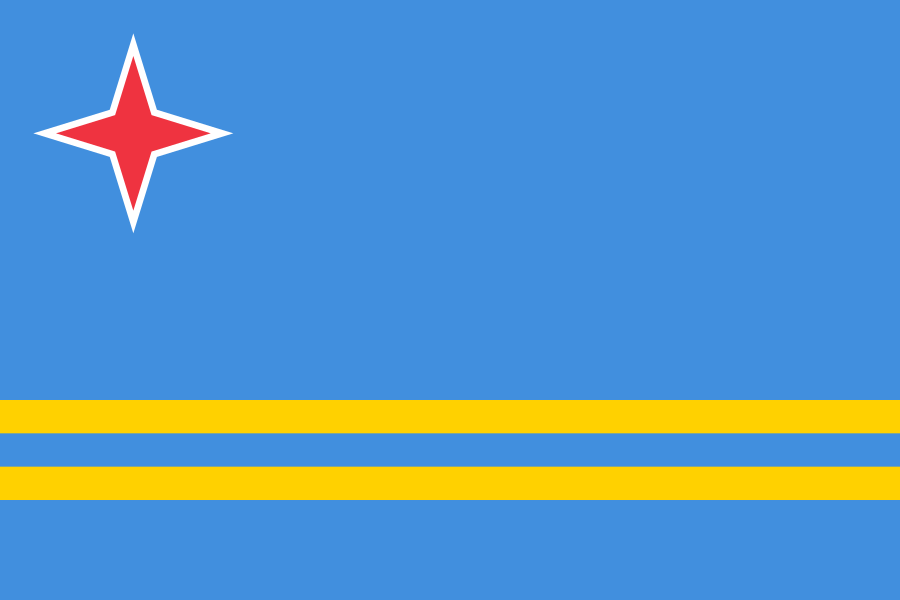 ### Underground Warfare: Sabotage, Intelligence, and Papiamento Encryption Operating initially out of Tilburg and the neighboring town of Oisterwijk in North Brabant, Ecury linked up with local resistance cells affiliated with the *Raad van Verzet* (Council of Resistance or RVV) [10]. Ecury’s contributions to the underground were both audacious and technically sophisticated [1]. He was instrumental in manufacturing homemade incendiary phosphorus devices and improvised explosive timed charges [4]. Using these explosives, Boy and his comrades carried out devastating sabotage missions against German military infrastructure, setting fire to German Wehrmacht truck convoys, blowing up fuel storage depots, and severing critical telephone and telegraph communication lines [10]. On multiple occasions, Boy participated in the derailment of German troop transports and military supply trains carrying heavy equipment toward the Atlantic Wall [1]. In addition to kinetic sabotage, he was deeply involved in weapons smuggling, transporting revolvers, Sten submachine guns, and ammunition beneath his coat through streets patrolled by armed German Feldgendarmerie [4]. He conducted reconnaissance missions, meticulously documenting the coordinates of German anti-aircraft batteries and coastal fortifications for transmission via clandestine radio operators to the Dutch government-in-exile and British intelligence in London [7]. Boy also played an indispensable humanitarian role in the underground network [2]. He participated in armed raids on municipal distribution offices to seize ration cards (*distributiebonnen*) and blank identity papers, distributing them to Jews, political dissidents, and young Dutchmen living illegally in hiding (*onderduikers*) [10]. He escorted Allied airmen whose planes had been shot down over the Low Countries, guiding them between secret safehouses and connecting them to clandestine escape lines leading south through Belgium and occupied France toward neutral Spain [4]. During these covert operations, Boy and Luis de Lannoy possessed a unique, impenetrable weapon: their mother tongue, Papiamento [8]. In crowded tramcars, railway waiting rooms, and public squares teeming with German soldiers and Dutch Nazi informants (*NSB-ers*), the two comrades openly discussed underground missions, drop locations, and security warnings in Papiamento [8]. The occupier’s intelligence officers were completely unable to decipher the creole language, mistaking it for an incomprehensible foreign dialect, allowing Boy and Luis to communicate with impunity in plain sight [8]. > "In the lion's mouth, Boy Ecury fought with a courage that defied all earthly logic. His weapon was not merely the revolver in his pocket or the bomb on the railway track, but an unbreakable moral flame that no fascist occupier could extinguish." [7] ### The Conspicuous Rebel and the Net Closes By 1944, the German occupation had descended into its most desperate and brutal phase. As Allied armies landed in Normandy and advanced toward Belgium, Nazi security services—including the *Sicherheitspolizei* (SiPo) and *Sicherheitsdienst* (SD)—unleashed a ferocious campaign of terror across the occupied Netherlands [2]. For Boy Ecury, the operational environment became unimaginably hazardous [4]. Standing over six feet tall, exceptionally handsome, athletic, and possessed of dark Afro-Caribbean skin, Boy was impossible to blend into a crowd in a wartime Dutch city [1]. While other resistance fighters could disappear into a street crowd or alter their appearance with forged papers, Boy was recognized immediately wherever he went [4]. His comrades repeatedly begged him to go into deep hiding (*onderduiken*) in a remote rural farmhouse until the imminent Allied liberation [7]. Boy categorically refused. He viewed hiding as an act of cowardice when his brothers-in-arms were risking their lives daily [4]. Instead, he continually changed aliases and relocated between underground safehouses in Oisterwijk, Delft, Rotterdam, and The Hague, operating as a core shock-trooper in the *Landelijke Knokploegen* (National Assault Groups or KP) [10]. In February 1944, catastrophe struck when his dearest friend and operational partner, Luis de Lannoy, was arrested by the Gestapo in Tilburg [1]. Shattered but resolute, Boy refused to abandon his friend. Demonstrating legendary audacity, Boy scouted the German prison and devised an armed raid to break De Lannoy out of his cell [1]. The rescue plan was foiled at the eleventh hour when German authorities abruptly reinforced the garrison and transferred De Lannoy to another detention facility in Utrecht [4]. Miraculously, De Lannoy survived brutal interrogations and remained imprisoned until the end of the war, but Boy was now operating without his trusted partner, haunted by the tightening net around him [8]. ### Betrayal by Kees Bitter and the Oranjehotel By the autumn of 1944, the Dutch underground in South Holland was severely compromised from within by one of the most infamous traitors in Dutch wartime history: Kees Bitter [11]. Bitter was a former member of the resistance who had been captured by the Sicherheitsdienst in Rotterdam [11]. Under threat of torture and execution, Bitter chose total collaboration, becoming a high-level *Vertrauensmann* (V-man or confidential informant) for the Gestapo [11]. Armed with intimate insider knowledge of resistance safe houses, drop locations, and passwords, Bitter systematically betrayed dozens of his former comrades to the Nazi executioners [11]. Bitter learned of Boy Ecury's presence and activities within the The Hague and Rotterdam Knokploegen cells [4]. On the morning of Sunday, November 5, 1944, Boy Ecury traveled through Rotterdam to attend Mass at the Saint Elisabeth Parish (H. Elisabeth Church) [1]. Boy was a devout Catholic whose faith provided him with immense spiritual solace amid the horrors of the occupation [4]. As Boy stepped out of the church into the grey autumn air, he was ambushed by a waiting detachment of armed SD agents and German military police, directed to the exact location by Kees Bitter [1]. Boy was carrying concealed handguns and resistance materials in his overcoat [4]. Before he could draw his weapon, he was surrounded, overpowered, and wrestled to the pavement [1]. Boy was immediately transported under armed escort to the notorious Scheveningen penal prison on the outskirts of The Hague, widely known among the Dutch populace as the **"Oranjehotel"** (Orange Hotel) because so many patriots loyal to the House of Orange were locked inside its walls [12]. Boy was thrown into a concrete cell and subjected to grueling, violent interrogations by Gestapo and SD inquisitors [12]. The German officers were desperate to dismantle the KP networks operating in The Hague and Rotterdam before the Allied advance, and they subjected the young Aruban to severe physical torture [4]. Despite intense suffering, Boy Ecury remained utterly unshakeable. He refused to divulge a single name, address, code word, or weapons depot [1]. When his interrogators demanded that he confess and save himself by collaborating, Boy threw his defiance directly into their faces [4]. According to historical accounts preserved by fellow prisoners and his family, Boy declared: > "In the house of my father, there is no place for traitors." — Boy Ecury [4] ### Execution on the Waalsdorpervlakte Recognizing that no amount of torture would break his spirit, the German military court issued a swift summary death sentence [1]. Early the next morning, on Monday, November 6, 1944—less than twenty-four hours after his capture—Boy Ecury was led out of his cell in the Oranjehotel [12]. He was taken into the windswept, barren sand dunes of the **Waalsdorpervlakte**, located in the Meijendel nature reserve north of The Hague [13]. The Waalsdorpervlakte served as the primary secret killing field for the Nazi security apparatus in the western Netherlands; between 1940 and 1945, over 250 Dutch resistance fighters, patriots, and hostages were executed by firing squads in these desolate dunes and dumped into unmarked mass graves [13]. As he was placed before the German firing squad, Boy Ecury maintained total poise and tranquility [4]. In a farewell letter to his loved ones, he conveyed his deep inner peace and religious conviction, expressing that he had performed noble and necessary work for humanity and that he would face his executioners "with a smile on my lips" (*met een glimlach op de lippen*) [4]. He was executed by firing squad on the morning of November 6, 1944. He was just twenty-two years old [1]. The betrayal of Boy Ecury and his comrades did not go unpunished. In January 1945, members of the Dutch underground tracked down the traitor Kees Bitter to a safehouse in Rotterdam; after a clandestine tribunal confirmed his treason, the resistance executed Bitter by poison and shooting, dumping his body into the peat waters of the Rotte river to eliminate any future threat of treachery [11]. ### Repatriation, State Honors, and Eternal Memory In May 1945, the Netherlands was finally liberated by Canadian and Allied forces, bringing an end to the nightmare of Nazi occupation [2]. When news of Boy’s execution reached Aruba, the island was plunged into profound mourning, accompanied by immense communal pride in his extraordinary valor [4]. In 1947, Dundun Ecury embarked on a solemn journey from Aruba to the Netherlands to recover his beloved son’s remains [1]. Working with Dutch forensic authorities and the Red Cross, Dundun traveled to the dunes of the Waalsdorpervlakte, where the mass graves were being excavated and the martyrs identified [4]. Dundun personally identified Boy’s remains, had his son’s body exhumed, and arranged for his repatriation across the ocean [1]. Boy Ecury’s body was transported home aboard a Dutch naval vessel, the *Hr. Ms. Van Speijk*, receiving full military honors upon arrival in Aruban waters [4]. In April 1947, Aruba witnessed the largest and most emotional state funeral in its modern history [1]. Thousands of Aruban citizens, government officials, school children, and Dutch military detachments lined the streets of Oranjestad as a horse-drawn military caisson carried Boy’s flag-draped casket to the Catholic cemetery in Rancho, where he was laid to rest with full military honors [4]. In the decades following his sacrifice, Boy Ecury was immortalized across the Kingdom of the Netherlands and the Caribbean [1]: - In 1984, the Dutch government posthumously conferred upon him the **Verzetsherdenkingskruis** (Resistance Memorial Cross), the highest decoration for anti-Nazi underground resistance [1]. - In 1949, a majestic bronze statue of Boy Ecury was unveiled along Lloyd G. Smith Boulevard in Oranjestad by his grieving mother Annie and Governor Peters, standing today as a national landmark [14]. - A central public park in the capital was christened **Parke Boy Ecury**, hosting national remembrance ceremonies every year on May 4 (National Remembrance Day / *Dodeherdenking*) [14]. - Dutch municipalities, recognizing his pivotal sacrifice, named streets in his honor, including *Boy Ecurystraat* in Amsterdam, Rotterdam, The Hague, Tilburg, and Oisterwijk [10]. - His nephew, the author and filmmaker Ted Schouten, published the definitive biography *Boy Ecury, een Antilliaanse jongen in het verzet* in 1985 and produced an acclaimed documentary celebrating his life [4]. - In 2003, legendary Dutch filmmaker Frans Weisz directed the feature film *Boy Ecury*, starring Steve Leysner, which won multiple Golden Calf awards at the Netherlands Film Festival and introduced his story to a new generation [15]. Boy Ecury’s life and martyrdom shattered colonial stereotypes of passive colonial subjects [3]. He proved that the defense of human freedom knows no geographic, ethnic, or racial boundaries. Alongside cultural titans like [Nydia Ecury](/profiles/nydia-ecury) and [Rufo Wever](/profiles/rufo-wever), and political icons like [Betico Croes](/profiles/betico-croes) and [Jan Hendrik Albert "Shon A" Eman](/profiles/shon-a-eman), Boy Ecury remains an eternal beacon of Aruban dignity, whose ultimate sacrifice illuminated the darkest hours of modern human history [3]. ### References [1] Wikipedia Contributors, "Boy Ecury," Wikipedia, The Free Encyclopedia. [2] Verzetsmuseum Amsterdam, "De Tweede Wereldoorlog en de Nederlandse Antillen." [3] Oostindie, Gert, *Het paradijs overzee: De 'Nederlandse' Caraïben en Nederland*, Amsterdam: Bert Bakker. [4] Schouten, Ted, *Boy Ecury, een Antilliaanse jongen in het verzet*, Zutphen: Walburg Pers, 1985 / 2003. [5] National Archaeological Museum Aruba (MANA), "The Historic Ecury Family Complex in Oranjestad." [6] Rutgers, Wim, "De Caribische jeugdliteratuur van Nydia Ecury," Werkgroep Caraïbische Letteren. [7] Government of Aruba (Gobierno di Aruba), "Boy Ecury: Heroe di nos Pais," Official Historical Archives. [8] Through Their Eyes War Memorial Foundation, "Luis de Lannoy and Boy Ecury: Resistance in Papiamento." [9] Lago Colony Historical Archives, "The Defense of Aruba and the Lago Refinery in World War II." [10] Erfgoed Brabant / Geheugen van Tilburg, "Verzetsgroepen in Oisterwijk en Tilburg: De rol van Boy Ecury." [11] Oorlogsbronnen, "Het verraad van Kees Bitter en de val van de Knokploegen." [12] Nationaal Monument Oranjehotel, "Gevangenen van het Oranjehotel: Segundo Jorge Adelberto Ecury." [13] Erepeloton Waalsdorpervlakte, "De Gevallenen op de Waalsdorpervlakte 1940–1945." [14] VisitAruba Historical Monuments, "Monuments of Oranjestad: The Boy Ecury Memorial." [15] Nederlands Film Festival (NFF), "Boy Ecury (2003) - Directed by Frans Weisz."
View Profile →Bussa
# Bussa: The Unyielding Spirit of Barbadian Freedom ### The Historical Landscape of 18th and 19th Century Barbados The island of Barbados in the late 18th and early 19th centuries was a cornerstone of the British Empire's immense wealth, generated almost entirely through the brutal exploitation of enslaved African labor. Unlike many other Caribbean islands with mountainous terrains that afforded runaway slaves (Maroons) safe havens, Barbados is relatively flat. This geography made the total control of the enslaved population easier for the colonial authorities and plantocracy, cementing a harsh and highly policed plantation society. The sugar revolution had transformed the island into a monoculture economy, where every square inch of arable land was dedicated to the cultivation of sugarcane, and the lives of the enslaved were ruthlessly managed to maximize profit. However, the dawn of the 19th century brought whispers of change. The British Parliament's abolition of the trans-Atlantic slave trade in 1807 was a watershed moment, although it did not end the institution of slavery itself. For the enslaved population in Barbados, this act ignited a spark of hope. The subsequent debates in Britain regarding the Imperial Registry Bill of 1815—a measure intended to register enslaved people to prevent illegal smuggling—further fueled rumors that the British Crown intended to abolish slavery entirely, but that the local Barbadian plantocracy was deliberately withholding their freedom. This volatile mixture of hope, rumor, and profound oppression set the stage for one of the most significant events in Caribbean history. ### Early Life and Enslavement Into this pressure cooker of social and political tension emerged Bussa (often recorded as Busso or Bussoe). The specific details of Bussa's early life remain shrouded in the mists of history, a common reality for many enslaved individuals whose lives were rarely documented with care. Historical consensus indicates that Bussa was born a free man in West Africa, possibly of Igbo descent, and was captured and transported across the Atlantic during the harrowing Middle Passage. Upon arrival in Barbados, Bussa was enslaved at Bayley's Plantation in the eastern parish of St. Philip. Within the rigid hierarchy of the plantation system, Bussa was appointed as a "ranger." A ranger was a senior head officer among the enslaved workers, tasked with overseeing the estate's boundaries, protecting crops, and managing the day-to-day business that required movement between different plantations. > "To be a ranger was to be trusted by the master, but to be Bussa was to use that trust to forge the chains of a rebellion." This position was pivotal. It afforded Bussa a degree of mobility and autonomy that the vast majority of enslaved field laborers were denied. Crucially, it allowed him to traverse the island, observe the landscape, communicate with enslaved individuals on other estates, and meticulously lay the groundwork for a coordinated uprising. His African birth also likely gave him a profound sense of a life lived in freedom, a memory that fueled his determination to break the chains of servitude.  ### Organizing the Resistance The rebellion of 1816 was not a spontaneous riot but a highly sophisticated and carefully planned insurrection. Bussa did not act alone; he collaborated with a network of other "senior" enslaved individuals, including Washington Franklin, Nanny Grigg, and John (a driver at another estate). They utilized the cover of social gatherings, particularly weekend dances and religious meetings, to spread the word, formulate strategies, and solidify their alliance. Their objective was clear: to overthrow the white plantocracy, seize control of the island, and claim the freedom they believed was rightfully theirs. They were acutely aware of the successful Haitian Revolution (1791–1804), which served as a powerful inspiration. The leaders strategized to maximize disruption by coordinating the simultaneous burning of sugarcane fields, the economic lifeblood of the island, while attacking the estates. ### Bussa's Rebellion: The Uprising of 1816 On the evening of Sunday, April 14, 1816—Easter Sunday, a time of symbolic resurrection and hope—the rebellion ignited. It began at Bayley's Plantation, Bussa's home estate, where sugarcane fields were set ablaze. The fires acted as a blazing beacon, signaling other estates across the southern and central parishes of St. Philip, Christ Church, St. John, St. Thomas, and St. George to rise up. Bussa, leading a formidable force of approximately 400 freedom fighters, engaged directly in combat. The rebellion quickly swelled, encompassing thousands of enslaved people. They marched from plantation to plantation, destroying property and demanding their liberty. The sheer scale and rapid spread of the uprising completely caught the colonial authorities off guard. However, the planters and the colonial government responded with overwhelming and brutal force. They mobilized the local white militia and regular British imperial troops, including the heavily armed 1st West India Regiment. Despite the immense courage of Bussa and his fighters, they were ultimately outgunned by the superior weaponry and organized military tactics of the imperial forces. > "The flames of 1816 illuminated not just the cane fields, but the undeniable humanity and demand for liberty of the enslaved." Within three days, the core of the rebellion was suppressed. Tragically, Bussa was killed in the heat of battle, fighting relentlessly for the freedom of his people. Following his death, the rebellion was systematically and violently crushed. ### The Brutal Aftermath and Lasting Legacy The retribution exacted by the colonial government was horrific. Nearly 1,000 enslaved people lost their lives, either killed during the fighting or executed in the brutal aftermath. Hundreds more were subjected to severe public punishments, including flogging, mutilation, and forced exile to other colonies, such as Honduras. The authorities sought to instill absolute terror to ensure such an uprising would never happen again. Despite its military failure and the catastrophic loss of life, Bussa's Rebellion fundamentally altered the trajectory of Barbadian and Caribbean history. It shattered the plantocracy's myth of the "contented slave" and vividly demonstrated the enslaved population's sophisticated capacity for organization and their unyielding desire for freedom. Alongside the rebellions in Demerara (1823) and Jamaica (1831), Bussa's uprising became one of the critical "late slave rebellions" that deeply shocked the British public. These events provided irrefutable evidence that the institution of slavery was inherently unstable, violently maintained, and morally indefensible. They accelerated the momentum of the abolitionist movement in Britain, ultimately culminating in the Slavery Abolition Act of 1833, which paved the way for emancipation in 1834. Today, Bussa is revered as a towering figure in Barbadian history. In 1998, he was officially designated as one of Barbados' ten National Heroes, the only one named from the era of slavery. His legacy is permanently enshrined in the landscape of the island through the Emancipation Statue, created by Barbadian sculptor Karl Broodhagen. Located at a prominent roundabout in Haggatt Hall, the magnificent bronze statue depicts a muscular man with arms raised to the sky, chains broken at his wrists. While it represents all those who fought for freedom, it is universally and affectionately known as the "Bussa Statue." Bussa's life and sacrifice remain a profound testament to the enduring human spirit. He represents the ultimate rejection of oppression and the eternal pursuit of liberty, a legacy that continues to inspire generations in Barbados and across the Caribbean diaspora.
View Profile →
Chief Joseph Chatoyer
### Introduction Chief Joseph Chatoyer, also known in Garifuna history as Satuyé, is revered as the first National Hero of Saint Vincent and the Grenadines [1]. As a paramount chief of the Garifuna (historically designated by British colonizers as the "Black Caribs"), Chatoyer represents the apex of anti-colonial resistance in the windward Caribbean during the late eighteenth century [2]. His leadership during the First and Second Carib Wars challenged the military might of the British Empire and sought to secure a permanent homeland for a unique ethnic group born of African and Indigenous American synthesis [3]. Chatoyer’s life was defined by his diplomatic sophistication, military ingenuity, and unwavering dedication to the sovereignty of his people [4]. His tragic death on March 14, 1795, marked the beginning of the end for the independent Garifuna nation on Saint Vincent, yet it solidified his legacy as an enduring symbol of liberty and indigenous autonomy across the Caribbean and Central America [5]. ### Origins: The Birth of Yurumein and the Garifuna To understand Chatoyer's rise to prominence, one must examine the socio-cultural landscape of Saint Vincent, known as Yurumein to its original inhabitants [6]. By the seventeenth century, the island had become a sanctuary for two distinct populations: the indigenous Kalinago (Yellow Caribs) and shipwrecked or runaway West African slaves [7]. Over decades, these groups intermarried, shared agricultural techniques, and synthesized their languages and customs, giving birth to the Garifuna, or Black Caribs [8]. They developed a formidable maritime culture, utilizing swift piraguas (dugout canoes) to navigate the turbulent waters of the Grenadines, and established thriving agricultural communities based on the cultivation of cassava, sweet potatoes, and tobacco [9]. The Garifuna occupied the fertile windward side of Saint Vincent, a region characterized by rich volcanic soil and dense tropical rainforests [10]. They fiercely defended their territory against European encroachment, establishing a reputation as formidable warriors. While European empires laid claim to the Caribbean islands, Saint Vincent was formally designated a "neutral" island by the British and French under the Treaty of Aix-la-Chapelle in 1748 [11]. This neutrality, however, was a diplomatic fiction. The British coveted the island's fertile plains for sugarcane cultivation, a crop that demanded vast tracts of land and a large enslaved labor force [12]. ### The Encroachment and the First Carib War (1772–1773) Following the Treaty of Paris in 1763, Great Britain assumed formal control of Saint Vincent and began active attempts to survey the island’s northern plains, where the Garifuna resided [13]. British surveyors, backed by armed military escorts, began cutting roads through Garifuna lands, inciting immediate resistance. Joseph Chatoyer emerged as a prominent diplomatic and military leader during this period [14]. Recognizing that British encroachment threatened the very existence of his people, Chatoyer organized a unified front of Garifuna clans to defend their ancestral territory [15]. The conflict erupted into the First Carib War in 1772. Chatoyer utilized the island's rugged, mountainous interior to conduct a highly effective guerrilla campaign [16]. His warriors, familiar with every ravine and ridge, ambushed British patrols, cut off supply lines, and destroyed colonial outposts [17]. Chatoyer also demonstrated remarkable diplomatic skill. He sent envoys to neighboring Martinique to secure arms and ammunition from the French, who were eager to undermine British colonial authority in the region [18]. The resistance of the Garifuna on Saint Vincent during this era shares deep thematic resonance with other Caribbean anti-colonial struggles, such as the rebellion led by [Bussa](/profiles/bussa) in Barbados, or the fierce autonomous campaigns of [Nanny of the Maroons](/profiles/nanny-maroons) in Jamaica [19]. Just as the Jamaican Maroons had forced the British to sign treaties recognizing their autonomy, Chatoyer's military pressure compelled the British colonial administration to seek a diplomatic resolution [20]. ### The Treaty of 1773: An Uneasy Compromise In February 1773, the British government, weary of a costly and protracted war, signed a peace treaty with Chatoyer and other Garifuna chiefs [21]. This treaty was a historic anomaly; it was one of the few instances in which the British Empire was forced to negotiate a formal peace treaty with a non-white indigenous population in the Caribbean [22]. > "The Black Caribs of St. Vincent were a people whose spirit of independence could not be subdued by the arms of Great Britain." — Bryan Edwards, *The History, Civil and Commercial, of the British Colonies in the West Indies* [23] Under the terms of the treaty, the Garifuna ceded a portion of their land to the British but were granted recognized sovereignty over the northern third of Saint Vincent, extending from the Byera River to Point Espagnol [24]. In return, Chatoyer and his fellow chiefs were forced to take an oath of allegiance to King George III, return runaway slaves who had sought refuge in their territories, and promise not to enter into alliances with foreign powers, particularly France [25].  While the treaty brought a temporary cessation of hostilities, it did not resolve the fundamental conflict. British planters continued to view the fertile Garifuna lands with covetous eyes, and the Garifuna remained deeply suspicious of British intentions. During this period, as figures like [Alexander Hamilton](/profiles/alexander-hamilton) were witnessing the transition of colonial power in the northern Caribbean, Chatoyer was staging a radical, armed defense of sovereignty on the shores of Saint Vincent [26]. ### The Interwar Years and the French Alliance The peace established by the 1773 treaty was fragile. During the American Revolutionary War, the French captured Saint Vincent in 1779 with the active assistance of the Garifuna, who saw the French as a lesser threat than the land-hungry British [27]. However, the Treaty of Versailles in 1783 returned the island to British control, and the colonial administration immediately resumed its policy of containment and encroachment against the Garifuna [28]. Tensions reached a boiling point in the early 1790s with the onset of the French Revolution. French republican agents, led by Victor Hugues from Guadeloupe, sought to destabilize British colonies by inciting rebellions among the enslaved and indigenous populations [29]. Hugues sent emissaries, weapons, and revolutionary propaganda to Saint Vincent, promising French assistance in securing full independence for the Garifuna. Chatoyer, recognizing a strategic opportunity to permanently expel the British, forged a formal military alliance with the French republicans [30]. ### The Second Carib War (1795–1796) and the Rise to Dorsetshire Hill In March 1795, Chatoyer launched a coordinated rebellion that marked the beginning of the Second Carib War, also known as the Garifuna Rebellion [31]. Chatoyer divided his forces into two main divisions: he led the eastern force along the windward coast, while his brother, Duval, led the western force along the leeward coast [32]. The campaign was highly coordinated and initially met with spectacular success. Chatoyer’s forces swept through the British sugar plantations, burning crops, liberating enslaved laborers, and driving the British militia back toward the capital, Kingstown [33]. By mid-March, Chatoyer’s eastern force had united with French republican troops and local French settlers at Dorsetshire Hill, a strategic ridge overlooking Kingstown [34]. From this vantage point, Chatoyer prepared to launch a final assault to capture the capital and reclaim the entire island for the Garifuna [35]. The British administration was in a state of panic, realizing that the fall of Kingstown would mean the loss of the colony [36]. > "I will die before I submit to the British." — Attributed to Chief Joseph Chatoyer during his final stand at Dorsetshire Hill [37]. ### The Death of a Hero: March 14, 1795 On the night of March 14, 1795, the British launched a desperate, pre-emptive counter-attack on Dorsetshire Hill [38]. Led by Major Alexander Leith of the British military forces, a detachment of soldiers climbed the steep slopes under the cover of darkness [39]. In the ensuing melee, Chatoyer was confronted by Leith. According to historical accounts, the two men engaged in hand-to-hand combat, during which Chatoyer was run through and killed [40]. .jpg) The death of Chatoyer was a devastating psychological blow to the Garifuna forces. Although they were numerically superior, the loss of their paramount chief and chief strategist shattered their morale. The British succeeded in retaking Dorsetshire Hill, forcing the Garifuna and French forces to retreat into the interior mountains [41]. ### The Defeat and the Garifuna Diaspora Although Chatoyer’s brother, Duval, continued to lead the resistance, the rebellion gradually lost momentum. In 1796, General Ralph Abercromby arrived in Saint Vincent with a massive force of over 4,000 British troops to crush the rebellion once and for all [42]. The Garifuna were eventually forced to surrender. Determined to prevent any future uprisings, the British colonial government decided to deport the entire Garifuna population from Saint Vincent [43]. Over 4,000 Garifuna men, women, and children were rounded up and transported to the barren, waterless island of Baliceaux in the Grenadines [44]. Deprived of proper food, clean water, and shelter, more than half of the refugees died of yellow fever and malnutrition within a few months [45]. In March 1797, the survivors—approximately 2,000 individuals—were packed onto British transport ships and exiled to the island of Roatán off the coast of Honduras [46]. From Roatán, the Garifuna migrated to the mainland of Central America, establishing vibrant communities along the coasts of Honduras, Belize, Guatemala, and Nicaragua [47]. This forced migration birthed the modern Garifuna diaspora, which continues to preserve its unique language, music, and spiritual traditions to this day [48]. ### Legacy and Historical Assessment For over two centuries, Chief Joseph Chatoyer’s memory was preserved primarily through the oral traditions of the Garifuna diaspora [49]. In Saint Vincent, colonial historians often depicted him as a rebellious instigator. However, with the rise of West Indian nationalism and the decolonization movement in the twentieth century, Chatoyer’s historical legacy was reassessed [50]. This legacy of fierce regional pride would later inspire twentieth-century Caribbean leaders such as [Robert Llewellyn Bradshaw](/profiles/robert-llewellyn-bradshaw) as they fought for labor rights and political independence from the British crown [51]. In later generations, pan-Caribbean intellectuals and activists, including [Marcus Garvey](/profiles/marcus-garvey), would look back at these early indigenous and African-descended resistance movements as foundational pillars of regional self-determination [52]. On March 14, 2002, the parliament of Saint Vincent and the Grenadines passed the National Heroes Act, officially declaring Chief Joseph Chatoyer the country's first National Hero [53]. Today, March 14 is celebrated annually as National Heroes Day, a public holiday marked by wreaths laid at his monument at Dorsetshire Hill and cultural festivals celebrating the indigenous heritage of the island [54]. Chatoyer stands as a towering figure of Caribbean resistance, whose fight for sovereignty remains a source of pride for both Vincentians and the global Garifuna community [55].
View Profile →Chief Thomas "Jolly" John
### Introduction Chief Thomas "Jolly" John (died 1941) was a pivotal and courageous leader of the Kalinago (historically referred to as the Carib) people of Dominica, serving as Chief of the Carib Reserve from 1926 to 1930 [2]. His tenure occurred during a period of immense economic hardship and mounting pressure from the British colonial administration, which sought to dismantle the traditional way of life and limited autonomy of the island's indigenous population. Chief Jolly John is best remembered for his defiant stance during the "1930 Carib War" (also known as the Salybia Uprising), a brief but violent confrontation between the Kalinago and colonial police that resulted in the deployment of a British warship, the arrest and deposition of the Chief, and the suspension of the Kalinago chieftainship for over two decades [4]. An educated man who could read and write fluently, Jolly John fought tirelessly for his people’s sovereign rights under the 1903 Carib Reserve agreement, while also collaborating with pioneering anthropologists to document and preserve Kalinago language and customs. Today, he is celebrated in Dominica as a national hero and a symbol of indigenous resistance against colonial oppression. ### Historical Context: The Kalinago and the 1903 Reserve The Kalinago are the indigenous inhabitants of the Lesser Antilles, having survived centuries of European colonisation, forced displacement, and warfare. By the late nineteenth century, their population had been concentrated on the rugged, isolated windward coast of Dominica, in the area surrounding Salybia. In 1903, the British Administrator of Dominica, Hesketh Bell, formally established the Carib Reserve—a tract of approximately 3,700 acres of steep, mountainous land set aside for the exclusive use of the Kalinago people. Under the terms of the 1903 agreement, the office of the Chief was officially recognised by the British Crown, and the chief was granted a small annual stipend and a sash and staff of office as symbols of authority. However, the creation of the Reserve did not guarantee prosperity. The territory was extremely isolated, lacking roads, schools, clinics, and basic infrastructure. To survive, the Kalinago relied on subsistence farming, fishing, traditional basket-weaving, and canoe-building. They also maintained a centuries-old maritime trade network with the neighboring French islands of Martinique, Marie-Galante, and Guadeloupe. This trade, which involved bartering Dominican timber, cassava, and craft goods for French rum, tobacco, and manufactured products, was crucial for the economic survival of the Reserve. The British colonial authorities, however, viewed this traditional commerce through a narrow mercantilist lens, classifying it as illegal smuggling that defrauded the colony of customs revenues [7]. ### Leadership and Early Advocacy Thomas "Jolly" John grew up in this environment of isolation and neglect. Unlike many of his peers, he received an education that allowed him to read and write English with a high degree of fluency. This literacy made him a natural leader and advocate for his community. In April 1926, following the death of the previous chief, Jolly John was chosen by his people and officially recognised by the British administration as the new Kalinago Chief. From the beginning of his chiefdom, Jolly John sought to improve the lives of his people. He repeatedly petitioned the colonial Administrator in Roseau, E.C. Eliot, for basic services. He requested the construction of a proper bridle path connecting the Reserve to the rest of the island, the establishment of a school for Kalinago children, and the appointment of a resident nurse. He also lobbied for an increase in the chief's stipend, arguing that the duties of the office—which included resolving local disputes, distributing communal land, and representing the Reserve to visitors—required adequate financial support. When his petitions were ignored or dismissed by colonial officials, Jolly John did not back down. Instead, he took a firm stance on the sovereignty of the Reserve, arguing that under the 1903 agreement, the Kalinago possessed a degree of independence that exempted them from colonial taxes and customs duties. > "We do not wish for war, but we cannot stand by while our people are starved and our treaty rights are trampled into the dust by those who do not know our hills." — Chief Thomas "Jolly" John during the 1930 crisis. ### The Spark: The Hurricane and the Custom Disputes The year 1930 brought disaster to Dominica. A devastating hurricane swept across the island, destroying crops, flattening homes, and leaving the Kalinago territory in a state of near-famine. With their subsistence economy shattered, the Kalinago were forced to rely more heavily than ever on their traditional trade with the French islands to obtain food, clothing, and other essentials. Administrator E.C. Eliot, however, chose this moment of extreme vulnerability to crack down on what he termed the "smuggling trade" in the Reserve. He ordered the colonial police to patrol the waters and borders of the Reserve and to seize any goods that had not paid Crown duties. For the Kalinago, this was not a simple legal dispute over customs; it was a direct assault on their survival and a violation of their sovereign rights. Chief Jolly John protested the police patrols, warning that the entry of armed officers into the Reserve to search homes and confiscate food would lead to violence. His warnings went unheeded [8]. ### The "Carib War" of 1930 The tensions reached a boiling point on September 19, 1930. A detachment of five armed colonial police officers, led by Corporal Richard Sweeney, entered the Reserve at the hamlet of St. Cyr. Acting on an informant's tip, they raided a local shop, seizing several parcels of tobacco and containers of rum that they claimed were contraband. As the police prepared to carry the goods away, a crowd of Kalinago residents gathered to protest. The confrontation quickly turned violent. The Kalinago, armed only with sticks and stones, surrounded the police, demanding the return of the seized goods. In the melee, the police fired directly into the crowd. Two Kalinago men, Cecil Burnette and Jessop John, were killed instantly, and several others were wounded. The enraged crowd retaliated, overpowering the police, beating them, and forcing them to flee the Reserve without their weapons and seized goods.  When news of the police retreat reached Roseau, Administrator Eliot panicked. Believing a full-scale indigenous rebellion was underway, he contacted the British government and requested immediate military assistance. The Royal Navy responded by dispatching the light cruiser HMS *Delhi*, which was then stationed in the West Indies. The massive warship anchored off the coast of Salybia, training its guns on the Kalinago cliffs. To terrorise the population, the ship's crew fired star shells into the night sky and swept the dark hills with powerful searchlights. A detachment of Royal Marines was landed on the beaches, marching into the Reserve alongside armed police to conduct house-to-house searches, destroy canoes, and hunt for the leaders of the resistance. The Kalinago, outgunned and terrorised, withdrew into the dense forests of the interior. ### Deposition, Imprisonment, and the Silence of the Chief Chief Jolly John was arrested by the marines and taken to Roseau in chains. He was charged with inciting a riot and resisting the authority of the Crown. Along with several of his supporters, he was held in Roseau Prison for several months awaiting trial. In the aftermath of the uprising, Administrator Eliot moved to destroy the political structures of the Kalinago. He officially suspended the office of the Kalinago Chief, declaring that the community had forfeited its right to self-governance. The chief's official staff and sash—the symbols of office—were confiscated by the government. Although Jolly John and the other defendants were eventually released from prison due to lack of evidence of direct incitement, he was never allowed to resume his duties as Chief. The British administration refused to recognise any new chief, and the office remained officially vacant and suppressed for over twenty years, silencing the formal political voice of the Kalinago people [3]. > "The Caribs, under the leadership of their Chief, Jolly John, have shown a persistent refusal to acknowledge the authority of the police within the Reserve, claiming instead a sovereign exemption that the Crown cannot permit." — British Colonial Office Report, 1931. ### Collaboration with Douglas Taylor and Later Life Despite his deposition and the colonial government's efforts to diminish his standing, Jolly John remained the undisputed spiritual and cultural leader of his people. In the mid-1930s, the British anthropologist and linguist Douglas Taylor arrived in Dominica to conduct fieldwork. Taylor settled in the Reserve and formed a close friendship with the deposed chief. Jolly John became Taylor's primary informant, guide, and host. He shared his deep knowledge of Kalinago history, folklore, canoe-building techniques, and basketry. Crucially, Jolly John helped Taylor document the remnants of the Kalinago language, which was then on the verge of extinction. Through his conversations with Jolly John, Taylor was able to compile dictionaries and grammar guides that corrected centuries of European misconceptions about indigenous Caribbean languages. Jolly John’s intellect and dedication to his culture ensured that the linguistic heritage of the Kalinago was preserved for future generations, even as their political autonomy was crushed [6].  ### Death and Lasting Legacy Thomas "Jolly" John died in 1941, during a time when the office of the chief was still suppressed and the Kalinago Reserve remained in deep poverty. He did not live to see the restoration of the chieftainship, which was finally reinstated by the colonial government in 1952 in response to decades of lobbying by the Kalinago and political reformers like [Phyllis Shand Allfrey](/profiles/phyllis-allfrey) and later [Edward Oliver LeBlanc](/profiles/edward-leblanc) [9]. Today, the legacy of Chief Jolly John is celebrated throughout Dominica. The **Jolly John Memorial Park**, established in Bataka in the Saint David Parish, stands as a tribute to his courageous leadership and the resilience of the Kalinago people. Every year during Kalinago Week in September, the community gathers to remember the events of September 19, 1930, honoring those who died and reaffirming the struggle for land rights, cultural preservation, and self-determination that Chief Jolly John championed. His life remains an enduring testament to the refusal of the Caribbean's indigenous people to submit to colonial domination [1].
View Profile →Clarence A. Bain
### Clarence A. Bain: The Voice of Andros and Architect of Majority Rule Clarence Alfred Bain (1904–1971) stands as one of the most revered and formidable champions of freedom, social justice, and political emancipation in the modern history of The Bahamas. A veteran parliamentarian, civil rights pioneer, and cabinet minister, Bain served as the indispensable bridge connecting the rural working people of the Family Islands with the urban political epicenter in Nassau. As a founding member of the legendary "Magnificent Six"—the first parliamentary caucus of the Progressive Liberal Party (PLP) elected in 1956—Bain played a pivotal role in dismantling the entrenched white merchant-financial oligarchy known colloquially as the "Bay Street Boys." Having spent thirty-six years living in the United States during the crucible of the Jim Crow era, the Great Migration, and the rise of the American labor movement, he returned to his homeland in 1954 equipped with an uncompromising commitment to democratic self-determination, racial equality, and working-class dignity. Representing Andros continuously from 1956 until his passing in 1971, Bain was the unvarnished moral conscience of the Majority Rule movement, immortalized for his legendary oratorical prowess, his steadfast loyalty to [Sir Lynden Pindling](/profiles/lynden-pindling), and his enduring political maxim: *"If you can't fish, cut bait; if you can't cut bait, get the hell out of the boat."* [1] ### Early Life and Roots in the "Big Yard" Clarence Alfred Bain was born on July 16, 1904, in the tranquil coastal settlement of Love Hill, situated on the eastern shoreline of Central Andros. He was the son of Alfred Bain and Mary Bain, hardworking Bahamians whose lives were inextricably tied to the maritime and agricultural rhythms of the Out Islands. Andros, known affectionately across the archipelago as the "Big Yard," was by far the largest landmass in The Bahamas—a vast, rugged territory of dense pine forests, tidal creeks, expansive mangrove flats, and inland coppice. The island's inhabitants were the proud descendants of liberated Africans, Black Seminole mariners who had fled enslavement in Florida during the early nineteenth century, and generations of seafaring families who developed a culture of fierce independence and communal resilience. Bain received his early formal education at the Calabash Bay Public School in Central Andros under the colonial pupil-teacher system. Educational opportunities on the Out Islands were deliberately constrained by the colonial administration in Nassau, designed merely to impart basic literacy and numeracy rather than foster intellectual or political ambition. For young Androsian men of Bain's generation, life held few economic paths outside of perilous seasonal labor: diving for commercial sponges on the treacherous Great Bahama Bank (an expanse known simply as "The Mud"), harvesting timber in the interior pineyards, or eking out a subsistence living cultivating sweet potatoes, pigeon peas, and cassava in shallow limestone soils. The white merchant elite in Nassau treated the Out Islands with systematic neglect, extracting taxes and maritime wealth while denying them basic public utilities, paved roads, medical clinics, or secondary schooling. Recognizing that the British colonial structure offered little hope for advancement to an ambitious young Black man, Bain resolved as a teenager to emigrate to the United States around 1918. ### The American Years: Labor, Segregation, and Political Awakening Bain's departure marked the beginning of an extraordinary thirty-six-year American sojourn that would profoundly define his political outlook, character, and worldview. Residing in Florida and various urban centers along the eastern seaboard from 1918 until 1954, Bain lived through the most transformative decades of twentieth-century American history. He experienced the harsh, everyday indignities of Jim Crow segregation, institutionalized disenfranchisement, and racial terror that defined the American South. Yet, this period was also one of unprecedented Black intellectual awakening, labor militancy, and political organizing. During his three and a half decades in the United States, Bain witnessed the rise of Marcus Garvey's Universal Negro Improvement Association (UNIA), which galvanized millions of Afro-descendant people across the Caribbean and North America with its message of racial solidarity, self-reliance, and Pan-African pride. He observed the explosive growth of the industrial trade union movement, participating in working-class labor organizations and learning firsthand the techniques of collective bargaining, community organizing, and direct action. He followed the relentless legal and civic struggles led by the NAACP and early civil rights pioneers fighting for desegregation and the franchise. Working in various trades, Bain developed an instinctive contempt for aristocratic privilege and a deep faith in the power of ordinary working people. This American experience stripped Bain of any residual colonial deference toward the British Crown or the wealthy Nassau oligarchy. When he prepared to return home in the early 1950s, he carried with him not only the savings of a lifetime of honest labor but the seasoned political consciousness of a veteran civil rights advocate. ### Return to The Bahamas and the Rise of the PLP When Clarence Bain returned to The Bahamas in 1954 at the age of fifty, he found a colony on the brink of revolt against a centuries-old racial hierarchy. Since the eighteenth century, political and economic power had been concentrated in the hands of the "Bay Street Boys," a tight-knit clique of white merchants, lawyers, and financiers organized under the banner of the United Bahamian Party (UBP), led by figures such as [Sir Roland Symonette](/profiles/roland-symonette) and [Sir Stafford Sands](/profiles/stafford-sands). This oligarchy maintained its stranglehold through an electoral apparatus characterized by blatant voter suppression: steep property requirements for voters, the total disenfranchisement of women, open public voting in the Out Islands that exposed tenants and laborers to swift economic retaliation by white landowners, and the notorious "company vote" system, which permitted wealthy merchants to register dozens of shell companies and cast multiple ballots across numerous constituencies. In October 1953, the seeds of organized resistance had been sown when William Cartwright, Cyril St. John Stevenson, and Henry Milton Taylor founded the Progressive Liberal Party (PLP)—the first structured political party in Bahamian history. Shortly thereafter, a brilliant young London-trained barrister named [Lynden Pindling](/profiles/lynden-pindling) joined the movement, alongside the fiery merchant [Milo Butler](/profiles/milo-butler). Bain immediately recognized that while the PLP had ignited fervent support in the Over-the-Hill working-class townships of New Providence, the party could never dislodge the Bay Street regime without organizing the vast, impoverished Black majority residing in the Out Islands. Bain enlisted in the PLP without hesitation, offering his grassroots credibility, organizing experience, and deep ancestral ties to Andros to the frontline of the struggle. ### The Historic 1956 General Election and "The Magnificent Six" The general election of June 1956 represented a watershed moment in the democratic evolution of The Bahamas. For the first time, the PLP mounted a coordinated campaign contesting seats on a unified party platform. Clarence Bain accepted the party's nomination for the dual-member constituency of Andros and the Berry Islands, running on a joint slate with Cyril Stevenson. The campaign across Andros was grueling and dangerous. The UBP deployed its maritime monopolies, credit facilities, and local colonial commissioners to intimidate the electorate. Bain and Stevenson navigated the labyrinthine waterways of Andros in open fishing boats, trekking between isolated settlements—from Red Bays, Nicolls Town, and Mastic Point in the north to Fresh Creek, Mangrove Cay, and Kemp's Bay in the south—holding nightly meetings in church halls, lodge rooms, and under open skies. When the votes were counted, Bain and Stevenson achieved a historic triumph, sweeping both seats for Andros and the Berry Islands. In New Providence, [Lynden Pindling](/profiles/lynden-pindling) and labor leader [Randol Fawkes](/profiles/randol-fawkes) captured the Southern District, [Milo Butler](/profiles/milo-butler) won the Western District, and Samuel Isaacs secured the Eastern District. These six men became celebrated across the nation as "The Magnificent Six"—the first official, organized opposition party caucus in the history of the Bahamian House of Assembly [2]. Clarence Bain was the sole native Out Islander in this historic group. While his five colleagues represented the urban populace of Nassau, Bain carried the sole responsibility of giving voice to the long-silenced thousands who lived beyond the capital's shores.  ### Champion of the Forgotten Out Islands Inside the stately, pastel-pink Georgian walls of the House of Assembly in Parliament Square, Clarence Bain became a relentless champion for his people. While the Bay Street members adhered to rigid British parliamentary decorum designed to preserve their authority, Bain broke through the pretense with devastating authenticity. He brought the pungent reality of Out Island poverty directly onto the parliamentary record. When the UBP administration allocated the lion's share of public spending to tourist resorts and commercial projects in Nassau, Bain rose to demand justice for Andros: government-subsidized mail-boat routes to transport farm produce before it spoiled, clean drinking water systems, public clinics with resident nurses to prevent maternal deaths, paved roads linking disconnected settlements, and modern schools to educate working-class children. During the transformative civil struggles of the late 1950s and early 1960s, Bain stood at the forefront of the movement. When [Randol Fawkes](/profiles/randol-fawkes) and the Bahamas Federation of Labour spearheaded the historic nineteen-day General Strike of January 1958, paralyzing the economy, Bain ensured that Androsian laborers stood in solidarity with the taxi drivers and airport workers, preventing the oligarchy from recruiting Out Island strike-breakers. The strike forced the British Colonial Office to intervene, mandating franchise reforms that abolished company votes and enacted universal adult male suffrage. In the general election of 1962, Bahamian women exercised the right to vote for the first time following years of fearless mobilization led by [Dame Doris Johnson](/profiles/doris-johnson) and the Women's Suffrage Movement. The PLP won an overwhelming sixty-five percent of the popular vote across the colony, yet the UBP retained parliamentary control through egregious gerrymandering, in which rural white minority districts with a few hundred voters held equal weight to Black urban districts with tens of thousands of residents. Amid the national heartbreak, Bain defended his Andros seat with an unshakeable majority, confirming the unbreakable loyalty of his constituents. The confrontation peaked on "Black Tuesday"—April 27, 1965. Inside the House of Assembly, the UBP government introduced a rigged Boundaries Commission report designed to entrench their minority rule permanently. In a legendary act of civil defiance, [Lynden Pindling](/profiles/lynden-pindling) seized the ceremonial four-hundred-year-old Speaker's Mace and hurled it out of the window onto Bay Street, declaring that power belonged to the people outside, while [Milo Butler](/profiles/milo-butler) tossed the parliamentary hour glasses into the square. Bain stood shoulder-to-shoulder with his colleagues, marching out onto Parliament Square to address tens of thousands of singing, praying Bahamians. The moral authority of the colonial government was broken forever. Recognizing that Lynden Pindling needed a safe, loyal rural constituency to anchor his national leadership, Bain made one of his most visionary contributions to Bahamian history. He invited and facilitated Pindling's move to contest the Kemp's Bay seat in South Andros for the 1967 election. Bain personally introduced Pindling to every family, church elder, and community leader throughout South Andros, vouching for the young leader with his own unimpeachable reputation. Pindling won Kemp's Bay decisively, initiating a political partnership that anchored Pindling's parliamentary career for the next thirty years. ### January 10, 1967: Majority Rule and Cabinet Stewardship The decades of sacrifice culminated on Tuesday, January 10, 1967—a day forever commemorated as "Majority Rule Day." In an election of breathtaking tension, the PLP and the UBP each won eighteen seats in the thirty-eight-member House of Assembly. Clarence Bain was triumphantly re-elected in Andros, while Pindling carried Kemp's Bay. With the decisive backing of independent Labour MP [Randol Fawkes](/profiles/randol-fawkes), who agreed to join the government as Minister of Labour, and independent member Alvin Braynen, who accepted the post of Speaker, the PLP formed the government. For the first time since representative institutions were established in 1729, the Black majority governed The Bahamas [4].  Premier Lynden Pindling immediately appointed Clarence A. Bain to the historic first Cabinet of the Commonwealth of The Bahamas, naming him Minister without Portfolio (Minister of State). In this capacity, Bain served as the elder statesman and guardian of party integrity. While younger ministers like Arthur D. Hanna, Cecil Wallace-Whitfield, and Carlton Francis ran specific bureaucratic ministries, Bain acted as a roving ambassador for the administration, keeping the government connected to the grassroots and ensuring that Out Island development remained central to national policy. When electoral redistricting created new boundaries for the snap general election of April 1968, in which the PLP won a historic twenty-nine-seat landslide, Bain was elected to represent the newly formed constituency of Mangrove Cay, Andros. ### The Orator of the Movement: "Fish or Cut Bait" In the history of Bahamian public discourse, Clarence Bain is celebrated as one of the most natural, magnetic, and unpretentious orators of his generation. Rejecting the convoluted legal jargon and imperial rhetoric common among the colonial elite, Bain communicated in the rich, expressive idiom of the Bahamian working class. His speeches crackled with humor, folk wisdom, and sharp maritime metaphors drawn from his upbringing among spongers and fishermen. His most celebrated contribution to the political culture of the nation emerged during an internal debate over the discipline, resolve, and sacrifice required to liberate the country. Addressing those who vacillated in the face of ruling-class intimidation or personal ambition, Bain delivered his immortal line: > "If you can't fish, cut bait; if you can't cut bait, get the hell out of the boat." — Clarence A. Bain [1] This rugged fishing metaphor—instantly understood by every Bahamian who had ever worked a sailing smack, where every crew member had to pull their weight or risk capsizing the vessel in heavy seas—became a foundational maxim of the Majority Rule movement. Years later, Sir Lynden Pindling famously quoted Bain's words at a landmark PLP national convention to demand absolute commitment from party members and cabinet officials. It remains one of the most famous and enduring aphorisms in Caribbean political history. ### Final Years, Honors, and Enduring Legacy In his final years, despite declining physical health, Bain remained devoted to the people of Mangrove Cay and Andros. He continued to visit his constituents, inspecting new school constructions, dock improvements, and road paving projects that were transforming the island from an isolated colonial backwater into a modern community. In the New Year's Honours of 1971, Queen Elizabeth II appointed him a Commander of the Most Excellent Order of the British Empire (CBE) in recognition of his lifetime of selfless public service. On July 14, 1971, Clarence Alfred Bain passed away in New Providence at the age of sixty-six, just two days before his sixty-seventh birthday [3]. His passing was mourned across the archipelago as the loss of a founding father. Thousands gathered in Nassau and Andros to pay homage to the man who had given his life to their dignity and freedom. His death triggered a momentous by-election in the Mangrove Cay constituency in September 1971, won by Darrell Rolle, marking the peaceful transition of leadership to a new generation. > "Clarence Bain was the authentic voice of the Out Islands—a man who carried the salt, the grit, and the unyielding dignity of Andros into the halls of Parliament and helped break the chains of oligarchy." — Historical tribute to Clarence A. Bain [3] Today, Clarence A. Bain's monumental contributions are commemorated through major public landmarks across the nation. In Mangrove Cay, Andros, the **Clarence A. Bain Airport** (IATA: MAY, ICAO: MYAB) stands as an enduring lifeline, connecting the community to Nassau, facilitating eco-tourism, and enabling life-saving emergency medical flights. In New Providence, the government named the **Clarence A. Bain Building** on University Drive (Thompson Boulevard) in his honor, a facility that for decades housed vital public service institutions including the Road Traffic Department and Department of Statistics. More than stone or asphalt, Clarence A. Bain's true monument resides in the democratic freedoms enjoyed by the Bahamian people—a living testament to the boy from Love Hill who dared to challenge an empire and lead his nation into the light of Majority Rule.
View Profile →Clarence Bain
Clarence A. Bain (July 16, 1904 – July 14, 1971) stands as a monumental figure in Bahamian history, celebrated as a political pioneer, an eloquent orator, and a relentless advocate for workers' rights. Rising from humble beginnings on the island of Andros to the highest echelons of Bahamian governance, his life trajectory mirrored the political awakening of the Bahamian majority. A foundational member of the Progressive Liberal Party (PLP) and one of the legendary "Magnificent Six," Bain’s contributions were pivotal in dismantling the entrenched oligarchy of the Bay Street Boys and ushering in the era of Majority Rule in The Bahamas. ### Early Life and Foundations in Andros Clarence A. Bain was born on July 16, 1904, in the small, close-knit settlement of Love Hill on the island of Andros, the largest but least developed island in The Bahamas archipelago. Born to parents Alfred and Mary Bain, he grew up in an era where the Bahamian economy was largely dependent on subsistence farming, fishing, and the declining sponging industry. Educational opportunities for black Bahamians were severely restricted, and formal schooling was a luxury. Bain received his early education at the Calabash Bay Public School in Andros. Despite the limitations of his formal academic training, his time in Andros instilled in him a profound understanding of the struggles, the culture, and the indomitable spirit of the Bahamian working class. This intimate connection to the "Family Islands" (the Out Islands) would later become the cornerstone of his political identity. ### The American Sojourn and Political Awakening Like many young Bahamians and West Indians of his generation seeking better economic prospects, Bain emigrated to the United States. He would reside in the U.S. for an astonishing 36 years. This period spanning the 1920s to the early 1950s was a transformative era in American history, characterized by the oppressive racial segregation of the Jim Crow South, the Great Depression, the rise of the American labor movement, and the early rumblings of the modern Civil Rights Movement. Living as a black immigrant in the United States, Bain was thrust into a society rife with systemic inequality, but one that also offered a masterclass in grassroots organization, labor union mobilization, and political resistance. He absorbed the rhetoric of civil rights leaders, witnessed the power of collective bargaining, and understood the necessity of political enfranchisement. This lengthy American sojourn radicalized his worldview. When he looked back at The Bahamas, he recognized that the racial and economic subjugation of the black majority back home was a parallel injustice that demanded a highly organized, militant political response. ### Return to The Bahamas and the Rise of the PLP Upon returning to his homeland in 1954, Bain found a country firmly under the thumb of the "Bay Street Boys"—a tight-knit group of white merchants and lawyers who controlled the Bahamian economy and its political institutions. The electoral system was heavily rigged through gerrymandering, property voting, and the insidious "company vote," which effectively disenfranchised the vast majority of black Bahamians. Bain arrived at a critical juncture. The Progressive Liberal Party (PLP) had been founded just a year prior in 1953, established as the first national political party dedicated to representing the marginalized black majority. Bain enthusiastically threw his lot in with the PLP. He brought with him the organizational acumen and the fierce, unyielding rhetoric he had honed abroad. His charismatic personality and his ability to communicate complex political realities in the vernacular of the common man made him an immediate asset to the burgeoning movement.  ### The Magnificent Six and the 1956 Breakthrough The general election of 1956 represented a watershed moment in Bahamian political history. Running on the PLP ticket, Bain contested and won the seat for the Andros and Berry Islands constituency—a spectacular victory that demonstrated the shifting political tides in the Family Islands. Bain was one of six PLP candidates to secure a seat in the House of Assembly that year. This historic group—comprising Clarence Bain, [Lynden Pindling](/profiles/lynden-pindling), [Milo Butler](/profiles/milo-butler), [Randol Fawkes](/profiles/randol-fawkes), [Cyril Stevenson](/profiles/cyril-stevenson), and [Samuel Isaacs](/profiles/samuel-isaacs)—became immortalized as the "Magnificent Six." Their election marked the very first time an organized opposition bloc had successfully penetrated the Bahamian Parliament. The Magnificent Six disrupted the genteel, exclusionary club of the House of Assembly, introducing aggressive legislative debate and persistently highlighting the glaring inequities in labor rights, housing, education, and voting laws. ### The Struggle for Majority Rule and Black Tuesday Throughout the late 1950s and 1960s, Bain was at the forefront of the struggle for social justice. He played a critical supportive role during the 1958 General Strike, a massive labor protest that paralyzed Nassau and forced the colonial government to institute rudimentary labor reforms and slightly expand the electoral franchise. Bain consistently used his platform to advocate for universal adult suffrage and the elimination of the property vote. > *"If you can't fish, cut bait; if you can't cut bait, get the hell out of the boat."* Bain’s legendary oratory skills made him a beloved figure among the masses. He is most famously credited with the above expression. This sharply worded proverb perfectly encapsulated his no-nonsense approach to nation-building and party loyalty. It was a clarion call for action, demanding that those in the movement either contribute meaningfully to the fight for freedom or step aside. The phrase was later popularized by [Lynden Pindling](/profiles/lynden-pindling) during a fiery PLP convention and remains a staple of Bahamian political lexicon. The climax of this era of agitation was "Black Tuesday" on April 27, 1965. In a dramatic protest against the ruling United Bahamian Party's (UBP) blatant gerrymandering of constituency boundaries, Opposition Leader Lynden Pindling famously hurled the Speaker’s Mace out of the House of Assembly window, declaring that power belonged to the people outside. Simultaneously, [Milo Butler](/profiles/milo-butler) tossed the hourglasses used to limit debate times. Bain stood firmly alongside his colleagues during this radical act of defiance, which galvanized the populace and set the stage for the PLP’s ultimate triumph. ### Cabinet Service and Nation Building The relentless activism of Bain and his contemporaries finally bore fruit on January 10, 1967, when the PLP achieved "Majority Rule," ending centuries of white oligarchic governance. Following this historic victory, Premier [Lynden Pindling](/profiles/lynden-pindling) appointed Clarence Bain to his first cabinet. As a cabinet minister, Bain dedicated himself to dismantling the systemic barriers he had fought against for over a decade. He focused heavily on improving infrastructure, expanding educational access, and ensuring fair labor practices for Bahamian workers. His tenure in government was characterized by a deep, abiding commitment to the rural Bahamians of the Family Islands, ensuring that the newfound prosperity and political power in Nassau radiated outward to communities like his native Andros. ### Legacy and Passing Clarence A. Bain served his constituency and his country with distinction until his death on July 14, 1971, just two days shy of his 67th birthday. In recognition of his extraordinary public service and his pivotal role in shaping modern democracy in The Bahamas, he was appointed a Commander of the Order of the British Empire (CBE) in 1971 shortly before his passing. His legacy is permanently etched into the physical and institutional landscape of The Bahamas. The Clarence A. Bain Building on University Drive in New Providence stood for decades as a central hub of government administration. Furthermore, his beloved Andros honors his memory through the Clarence A. Bain Airport in Mangrove Cay. Today, Clarence Bain is remembered not merely as a politician, but as a fearless pioneer who leveraged the pain of systemic injustice into a triumphant crusade for equality, dignity, and the democratic rights of the Bahamian people.
View Profile →Cleopatra White
### Introduction and Historical Context of British Honduras Cleopatra Eugenie White (1898–1987) stands as one of the most monumental figures in the social, medical, and political history of Belize, formerly known as British Honduras [1]. Born at the turn of the twentieth century, White emerged during an era marked by intense colonial neglect, widespread poverty, and severe public health deficits across the Caribbean region. In British Honduras, healthcare infrastructure was largely centralized within the urban confines of Belize City, leaving vast rural communities and river valleys entirely unserved by formal medical institutions [2]. Throughout her extraordinary sixteen-year career as a frontline rural public health nurse, White defied bureaucratic apathy and geographical isolation to deliver vital medical care, maternal health services, and sanitary education to remote villages [3]. Her pioneering spirit, however, extended far beyond clinical care. Recognizing that public health is intrinsically tied to social organization and community self-governance, White revolutionized grassroots democracy in Belize by establishing the country's very first village council system in Gales Point Manatee [2]. Working alongside prominent contemporaries and drawing inspiration from regional socio-political movements led by figures such as [Marcus Garvey](/profiles/marcus-garvey) and locally championed by [Vivian Seay](/profiles/vivian-seay), White demonstrated that women could serve as primary catalysts for national development, civil resilience, and cultural preservation [4]. Today, her lasting contributions continue to resonate through modern Belizean healthcare institutions, village governance frameworks, and national disaster management protocols. ### Early Life, Orphanhood, and Educational Foundations Cleopatra Eugenie White was born on June 28, 1898, in British Honduras, to parents Joseph and Maria White [4]. Her childhood was struck by profound tragedy when both of her parents died while she was still a young girl, leaving her orphaned in an uncompromising colonial environment that offered minimal social safety nets [5]. Despite the severe emotional and financial hardships of orphanhood, White exhibited an innate intellectual curiosity, immense personal resilience, and a deep-seated compassion for the vulnerable around her. She was fostered and guided by supportive community members who recognized her potential and ensured she received a foundational education [4]. White attended Miss Zeila Braddick’s elementary school for girls, an institution known for instilling strict discipline and academic rigor, before continuing her formal schooling at the Ebenezer Elementary School in Belize City [6]. During her formative years, White witnessed firsthand the ravages of preventable tropical diseases, infant mortality, and poor sanitation that afflicted the working-class populations of Belize City. These early observations ignited her lifelong commitment to nursing and social welfare [1]. Though she never married or had biological children of her own, White possessed an extraordinary maternal devotion that she channeled into raising and mentoring numerous adopted children and community youth [4]. Among those she nurtured was Edward P. Yorke, who would later grow under her guidance to become one of Belize's most respected and renowned educators, ultimately having a major secondary school named in his honor [7]. Through educational perseverance and moral fortitude, White laid the groundwork for a career that would transform public health across her nation.  ### The Black Cross Nurses and Mentor Vivian Seay The defining professional turning point of Cleopatra White's early career occurred through her deep involvement with the Black Cross Nurses Association (BCNA) [4]. Founded in the early 1920s as the women's auxiliary wing of [Marcus Garvey](/profiles/marcus-garvey)'s Universal Negro Improvement Association (UNIA), the Black Cross Nurses sought to combine professional medical training with racial uplift, self-reliance, and community sanitation [1]. In British Honduras, the local chapter was pioneered and led by the formidable nurse and social activist [Vivian Seay](/profiles/vivian-seay) [4]. Recognizing White's exceptional leadership qualities, unwavering work ethic, and natural talent for patient care, Seay took the young nurse under her wing, serving as her primary mentor and professional confidante [5]. Under Seay's tutelage, White quickly ascended through the ranks of the Black Cross Nurses, eventually being appointed as the organization's second matron [1]. In this executive role, White supervised the training of dozens of young Belizean women in basic first aid, hygiene, nutrition, and maternal and infant care [4]. The Black Cross Nurses operated as a quasi-public healthcare force, conducting neighborhood sweeps in Belize City to combat outbreaks of dysentery, malaria, and tuberculosis, while educating impoverished mothers on proper sterilization and infant feeding techniques [2]. This grassroots public health work instilled in White a holistic understanding of medicine—one that viewed health not merely as the treatment of disease, but as the active empowerment of entire communities through education, cleanliness, and preventative care. Her leadership within the BCNA firmly established her reputation as a formidable public servant and paved the way for her formal integration into the colonial government's medical service. > 'Cleopatra White was more than a healthcare provider; she was a foundational architect of rural civic governance in Belize, transforming the role of the public health nurse into that of a community leader and pioneer of local democracy.' ### Rural Healthcare Pioneer: Double Head Cabbage and Gales Point In 1943, recognized for her exceptional clinical aptitude and leadership within the Black Cross Nurses, Cleopatra White was selected as part of the historic first cohort of Belizean nurses to undergo formal, advanced public health training under the colonial medical department [6]. Upon successfully completing her certification, White embarked on what would become the most celebrated phase of her life's work: serving as a frontline rural health nurse [3]. While many medical professionals sought the relative comfort and security of urban hospital assignments in Belize City, White willingly accepted postings in the most remote, underserved rural expanses of the colony [2]. Her initial assignment placed her in the village of Double Head Cabbage, located along the Belize River Valley [4]. Here, she traveled by dugout canoe, horseback, and on foot over treacherous, muddy terrain to attend to difficult childbirths, treat tropical fevers, and administer immunizations to isolated families [2]. However, her most enduring legacy was forged during her subsequent transfer to the Gales Point Manatee community, a picturesque but isolated coastal village situated on a peninsula jutting into the Southern Lagoon [3]. For over sixteen consecutive years, Nurse White served as the sole medical authority for Gales Point and the surrounding rural districts [4]. Operating without modern clinical facilities, electricity, or immediate access to physicians, she delivered hundreds of babies, set broken bones, sutured wounds, and managed chronic ailments with extraordinary diagnostic skill and resourcefulness [1]. To the inhabitants of Gales Point, Nurse White was revered not merely as a medical officer, but as a community matriarch whose clinical expertise was matched only by her profound empathy and tireless dedication. ### Birth of Local Democracy: The First Village Council During her sixteen-year tenure in Gales Point Manatee, Cleopatra White observed a critical institutional void that severely hindered rural progress: isolated villages possessed no formal administrative mechanisms to voice their needs, manage community resources, or organize collective action [2]. Rural communities were governed entirely from afar by colonial district commissioners who rarely visited and little understood local challenges [3]. Driven by her conviction that public health required social cohesion and self-determination, White spearheaded a revolutionary civic experiment [5]. In the early 1950s, she brought together the elders, fishermen, farmers, and mothers of Gales Point to establish the very first organized Village Council in the history of Belize [2]. White designed a structured framework where villagers elected representatives to manage village cleaning campaigns, oversee communal water sources, resolve minor local disputes, and coordinate directly with central government authorities [6]. This pioneering democratic body proved extraordinarily effective, rapidly transforming Gales Point into a cleaner, more organized, and empowered community [3]. When colonial officials observed the remarkable civic stability and improved sanitation achieved by Nurse White's village council, the government officially adopted her model [5]. Throughout the 1950s and 1960s, the Village Council system was systematically replicated across rural Belize, eventually becoming the statutory framework for local rural governance that endures across the nation to this day [2]. Through this groundbreaking initiative, Nurse White cemented her status as a foundational pioneer of grassroots Belizean democracy. > 'In the rural reaches of Gales Point and across the Belize District, Nurse White's tireless dedication during hurricanes and daily medical crises proved that true public health extends beyond medicine into social empowerment and leadership.'  ### Disaster Relief and Hurricane Preparedness Belize's geographical location renders it perennially vulnerable to devastating tropical cyclones, and Cleopatra White stood at the absolute forefront of disaster management and emergency medical relief throughout three of the most catastrophic hurricanes in the nation's history [2]. As a young auxiliary nurse, she participated in relief operations following the horrific 1931 hurricane that destroyed much of Belize City and claimed over two thousand lives [3]. This traumatic experience instilled in her an acute awareness of the need for structured disaster preparedness [2]. Decades later, during her leadership in Gales Point, Nurse White utilized her newly established Village Council to organize rigorous hurricane evacuation drills, establish emergency food shelters, and coordinate rapid medical response teams [3]. Her foresight saved countless lives when Hurricane Janet struck the region in 1955 [2]. Six years later, on October 31, 1961, the apocalyptic category 5 Hurricane Hattie made direct landfall on Belize City, causing unprecedented destruction and displacement [3]. Working tirelessly amidst flooded streets, shattered buildings, and widespread devastation, Nurse White worked around the clock to treat trauma victims, prevent cholera outbreaks, and organize shelter hygiene [1]. Following the hurricane, when the colonial government established the planned refugee resettlement community of Hattieville inland, Nurse White volunteered to serve as the very first resident public health nurse at the newly constructed Hattieville Clinic, restoring hope and medical stability to thousands of displaced survivors [3]. ### Cultural Promotion, Later Years, and National Honors Beyond her medical and civic achievements, Cleopatra White was a passionate advocate for the preservation and celebration of Belizean cultural heritage [6]. In an era when colonial curriculum dominated the schools, she actively organized plays, folklore recitals, and musical performances for schoolchildren in Gales Point and Belize City, instilling pride in local traditions and historical narratives [8]. She collaborated closely with emerging national figures such as [George Cadle Price](/profiles/george-cadle-price) and early labor champions like [Antonio Soberanis Gómez](/profiles/antonio-soberanis-gomez) in cultivating a distinct, prideful national consciousness among the working class [4]. In recognition of her extraordinary, self-sacrificing service to the people of Belize, White received numerous prestigious accolades throughout her lifetime. In 1953, she was awarded the coveted Victoria Medal in recognition of her outstanding achievements in rural community development and public health [3]. Five years later, in 1958, her contributions were acknowledged across the British Commonwealth when she was appointed a Member of the Order of the British Empire (MBE) [6]. White traveled personally to London, England, to accept the insignia, bringing immense pride to her homeland [3]. Cleopatra White retired from active nursing in the late 1960s but remained an esteemed advisor and community elder until her passing in 1987 at the age of 89 [1]. Today, her immortal legacy is permanently enshrined in Belize's healthcare infrastructure through the Cleopatra White Polyclinic, a major multi-specialty medical center in Belize City named in her honor [8]. Through her lifelong dedication, Nurse White forever elevated the standard of public health, empowered rural governance, and etched her name as a true heroine of the Belizean nation.
View Profile →
Clyde van Putten
### Clyde van Putten: Champion of Statian Autonomy and Self-Determination Clyde Ivan van Putten (born September 28, 1962) is one of the most prominent, influential, and unyielding political figures in the modern history of Sint Eustatius, affectionately known across the Caribbean as Statia. Over a political career spanning more than four decades, Van Putten has served as a member of the Parliament of the Netherlands Antilles, an Island Council member, an Executive Commissioner, and the Island Leader of Government. As the founder and long-serving leader of the Progressive Labour Party (PLP), he fundamentally reshaped the electoral landscape of Statia, transitioning it from a system dominated by traditional patronage into an arena defined by principled debates over self-determination, workers' welfare, and constitutional autonomy. Van Putten's public life has been defined by his uncompromising defense of Sint Eustatius's democratic right to self-governance within the Kingdom of the Netherlands. In an era marked by the constitutional dissolution of the Netherlands Antilles on October 10, 2010 (widely known as "10-10-10"), he emerged as the leading and most vocal critic of the island's direct integration into the Dutch state as a "special municipality" (*openbaar lichaam*). To his supporters, Van Putten is a courageous patriot who stood up to colonial paternalism from The Hague and took the fight for Statian dignity to the floor of the United Nations. To his detractors, he has been a polarizing, confrontational firebrand whose resistance to Dutch oversight culminated in the dramatic 2018 Dutch administrative intervention. Regardless of perspective, Van Putten’s enduring influence, grass-roots popularity, and steadfast ideological convictions make him a towering architect of modern Statian political consciousness. ### Early Life, Roots, and Statian Heritage Clyde Ivan van Putten was born on September 28, 1962, in Oranjestad, the historic capital of Sint Eustatius. Growing up on an 8.1-square-mile island steeped in dramatic history, Van Putten was immersed from an early age in the unique cultural and political heritage of "The Golden Rock"—an island that had served as a bustling 18th-century international trading emporium and had famously fired the "First Salute" recognizing American independence in 1776. The Van Putten family has long been synonymous with civic engagement and governance on Sint Eustatius. Growing up, Clyde was surrounded by family members and elders who actively participated in community leadership, most notably veteran political figure [Kenneth van Putten](/profiles/kenneth-van-putten), who served as a senator in the Antillean Parliament and a key island administrator. From this lineage, Clyde absorbed a deep respect for Statia’s cultural identity and an acute awareness of the island's precarious economic dependency on external metropolitan powers. Van Putten received his primary and secondary education on the island, where he distinguished himself through his natural gift for public speaking, debate, and community organizing. Coming of age during the 1970s and 1980s, he witnessed firsthand the social disparities affecting the local working-class population. During this period, the political apparatus of the Windward Islands was largely centered in Curaçao, the seat of the Netherlands Antilles central government, and many Statians felt marginalized and neglected by distant bureaucracies. These formative experiences instilled in Van Putten a lifelong conviction that the people of Sint Eustatius must possess the agency to chart their own socio-economic destiny. ### Entry into Politics and the Antillean Parliament In 1986, at the young age of twenty-four, Van Putten formally entered the political arena by founding the Statia Reformation Party (SRP). While the SRP was a nascent political movement competing against well-entrenched party machinery, it announced Van Putten’s arrival as an energetic, independent-minded youth leader unafraid to challenge the established order. In an environment previously dominated by the long-standing Democratic Party (DP) led by figures such as [Ellis Violenus](/profiles/ellis-violenus) and later [Leonora Sneek-Gibbs](/profiles/leonora-sneek-gibbs), Van Putten’s grass-roots appeal began to build a committed following among working-class voters, youth, and civil servants. Recognizing the need for a broader coalition to effect meaningful change, Van Putten merged his movement with the Sint Eustatius Alliance (SEA) in 1994. Through the SEA, he expanded his political base and honed his skills in coalition governance. His rise through the ranks was swift, culminating in his election to the Parliament of the Netherlands Antilles (*Staten van de Nederlandse Antillen*) in Willemstad, Curaçao, where he served from 1998 to 2002 [1]. As a member of the Antillean Parliament, Van Putten served alongside veteran Windward Islands parliamentarians, such as Saba's iconic leader [Will Johnson](/profiles/will-johnson). In Willemstad, Van Putten earned a reputation as an articulate and fearless advocate for the smaller "SSS Islands" (Sint Maarten, Saba, and Sint Eustatius). He repeatedly took the podium to denounce the disproportionate concentration of budgetary resources in the Leeward Islands (Curaçao and Bonaire) and demanded increased financial allocations for Statian infrastructure, healthcare, education, and port facilities. His parliamentary tenure established him as a national political figure capable of commanding respect across linguistic and geographical divides in the Dutch Caribbean. ### Founding the Progressive Labour Party (PLP) Upon completing his term in the Antillean Parliament, Van Putten recognized that Sint Eustatius needed a permanent, modern, social-democratic political vehicle dedicated specifically to the empowerment of the working class and the protection of island autonomy. On September 5, 2001, he founded the Progressive Labour Party (PLP) [2]. The PLP was established upon principles of democratic socialism, social justice, labor rights, and self-reliance. Van Putten envisioned a party that would act not merely as an election machine, but as a community-driven movement directly accountable to the ordinary citizens of Oranjestad and the countryside. He was elected as the party’s leader, a post he would hold with undisputed authority for nearly two decades. The impact of the new party was immediate. In the 2003 Island Council elections, the PLP broke the traditional political duopoly, capturing two of the five seats on the Island Council. Van Putten entered the local legislature, quickly establishing himself as the primary opposition voice. Over subsequent election cycles, the PLP cemented its position as a dominant political force on the island. Through energetic town hall meetings, radio addresses, and direct personal engagement, Van Putten built an extraordinarily loyal constituency that saw him as their most authentic champion against entrenched local elites and external Dutch interference. > "A people who do not know where they came from cannot know where they are going. We must never allow our island’s proud history of courage and independence to be bartered away for administrative convenience or empty promises." — Clyde van Putten [3] ### The 10-10-10 Dissolution and the Constitutional Crisis The defining chapter of Van Putten's career unfolded during the prolonged negotiations over the dissolution of the Netherlands Antilles. By the mid-2000s, it had become clear that the federation was unraveling, as Curaçao and Sint Maarten pursued autonomous country status (*status aparte*), following the historic path pioneered by Aruba under [Gilberto Francois "Betico" Croes](/profiles/gilberto-francois-betico-croes). In the consultative referendum held on Sint Eustatius in April 2005, the local electorate decisively rejected direct integration into the Netherlands, with 76.6% voting to remain within a restructured Netherlands Antilles [4]. Despite this clear expression of the popular will, the Dutch government determined that maintaining the federation was unviable. In the ensuing round-table conferences, The Hague proposed that Bonaire, Sint Eustatius, and Saba (the BES islands) be integrated directly into the Dutch administrative apparatus as "special public entities" (*openbare lichamen*). When the dissolution took effect on October 10, 2010 (10-10-10), Sint Eustatius was formally reclassified under Dutch law, with Dutch ministries assuming direct responsibility for policing, healthcare, taxation, and education. Van Putten opposed this constitutional arrangement with unmatched vehemence. He argued that the BES structure was a regressive, neocolonial imposition that stripped Statians of legislative self-government and relegated them to second-class citizenship without equal constitutional representation in the Dutch Parliament [5].  ### Executive Governance, the 2014 Referendum, and UN Appeals Between 2011 and 2015, Van Putten served as Commissioner and Island Leader, steering the executive governance of Sint Eustatius during a period of acute socio-economic adjustment. His administration focused on expanding local employment, improving municipal infrastructure, and shielding vulnerable residents from the inflationary shock that accompanied the introduction of the US Dollar and Dutch tax regimes. Firmly convinced that the 2010 constitutional settlement lacked democratic legitimacy, Van Putten spearheaded the organization of a new constitutional referendum on December 17, 2014. In this vote, an overwhelming majority—66.6% of participants—voted for autonomous status within the Kingdom of the Netherlands, while fewer than 1% supported remaining a public entity under the status quo [6]. Although Dutch authorities claimed the referendum was non-binding and invalid due to voter turnout (45.4%) falling short of the statutory 60% threshold, Van Putten maintained that the political mandate for autonomy was undeniable. Following the March 2015 Island Council elections, the PLP secured two seats and formed a governing coalition with independent councilman Reuben Merkman. Van Putten was appointed Leader of Government and Senior Political Advisor, effectively directing island policy. Under his leadership, the Executive Council adopted an ambitious agenda to achieve self-governance. Recognizing that bilateral negotiations with The Hague were stalled, Van Putten took the battle to the international stage. In 2017, he co-founded the Caribbean Progressive Alliance alongside autonomy advocates from Bonaire and Sint Maarten. He retained prominent international decolonization expert Dr. Carlyle Corbin and formally petitioned the United Nations Special Committee on Decolonization (C-24). Van Putten argued that the Kingdom of the Netherlands had failed to fulfill its obligations under Chapter XI, Articles 73 and 74 of the UN Charter, demanding that Sint Eustatius be re-inscribed on the UN list of Non-Self-Governing Territories [7]. > "Statia cannot and will not be governed as an overseas plantation or municipality without equal rights. The relationship between our island and the Netherlands must be built upon mutual respect, dialogue, and true self-determination within the Kingdom." — Clyde van Putten [8]  ### Confrontation with The Hague and the 2018 Administrative Takeover Van Putten's uncompromising campaign for self-governance placed the local administration on a direct collision course with the Dutch government in The Hague. The island government passed resolutions refusing to cooperate with Dutch supervisory bodies, asserting that Dutch laws had no legal standing if they violated Statian self-determination. In response, Dutch Minister of Interior and Kingdom Relations Ronald Plasterk and his successor, State Secretary Raymond Knops, withheld budgetary approvals, accusing the local administration of financial irregularities and administrative paralysis. Tensions reached a fever pitch in October 2017 during an autonomy conference in Curaçao. In an impassioned speech addressing the presence of Dutch military forces and civil servants on the island, Van Putten uttered controversial remarks suggesting that any Dutch military intervention would be met with violent resistance [9]. The remarks provoked immediate international outrage and were seized upon by Dutch politicians. Recognizing the gravity of his language, Van Putten issued an unreserved public apology, stating that his words were uttered in the heat of passion, were reprehensible, and did not reflect his commitment to peaceful, democratic change [10]. However, the political rift proved insurmountable. In late 2017, the Dutch cabinet appointed a "Committee of Wise Men" (the Oosting Committee), chaired by former National Ombudsman Fred Oosting, to investigate governance on the island. In February 2018, the committee published a scathing report alleging "gross neglect of duty," nepotism, financial mismanagement, and lawlessness on Sint Eustatius [11]. Armed with the Oosting report, the Dutch Parliament enacted emergency legislation—the Temporary Act on Neglect of Duty Sint Eustatius (*Wet herstel voorzieningen Sint Eustatius*)—in an extraordinary and unprecedented move. On February 7, 2018, the Dutch government dissolved the democratically elected Island Council, dismissed the Executive Council, and deposed Clyde van Putten from power. A Dutch Government Commissioner, Mike Franco, was appointed to exercise direct, autocratic executive and legislative control over the island [12]. Van Putten denounced the intervention as an illegal "colonial coup d’état" and an egregious violation of democratic norms. He refused to recognize the legitimacy of the commissioner's rule and continued to rally the Statian populace, urging peaceful defiance and legal resistance before regional courts and the United Nations. ### Political Resilience, Electoral Vindication, and Enduring Legacy Despite being stripped of his official office, Van Putten remained the undisputed patriarch of Statian progressive politics. During the years of direct Dutch rule, he focused on strengthening party structures and mentoring a new generation of political leaders. In July 2020, demonstrating strategic foresight, he stepped down as the political leader of the PLP, passing the party's helm to a dynamic young leader, Rechelline Leerdam, while remaining on the electoral slate to provide political guidance [13]. When the Dutch government finally permitted Island Council elections to resume on October 21, 2020, the vote served as a decisive referendum on the 2018 intervention. In a dramatic display of political resilience, the PLP scored a landslide victory, capturing 51.4% of the popular vote and securing three of the five seats on the Island Council [14]. Clyde van Putten was triumphantly re-elected to the legislature, securing the highest individual vote count behind party leader Leerdam. The victory was widely interpreted across the Caribbean as a resounding public rebuke of Dutch unilateralism and a vindication of Van Putten’s lifelong defense of local democracy. In subsequent years, Van Putten continued to serve as a senior statesman in the Island Council, actively scrutinizing the phased restoration of full democracy and advocating for substantial revisions to the WolBES and FinBES laws governing the Caribbean Netherlands. In 2023 and beyond, he spearheaded diplomatic missions to Curaçao, Aruba, and Sint Maarten to build regional coalitions defending Caribbean autonomy. Over a public career spanning four decades, Clyde van Putten has left an indelible mark on Sint Eustatius and the wider Dutch Caribbean. Through his founding of the Progressive Labour Party, his tireless advocacy for constitutional decolonization, and his refusal to yield to metropolitan pressure, Van Putten demonstrated that even the smallest island community possesses an inherent right to dignity, self-government, and democratic respect.
View Profile →
Cornelia Jones
### Introduction and Overview Cornelia Rosina "Cutchie" Jones (September 10, 1907 – December 23, 1979) occupies a towering, trailblazing place in the political and social history of the Dutch Caribbean. Universally celebrated and affectionately remembered across the island as "Ma Jones" or "Cutchie," she shattered centuries of gender barriers by becoming the first woman to serve on the Island Council of Saba in August 1953. This historic achievement simultaneously earned her the distinction of being the first female public officeholder in the entire Dutch Windward Islands—comprising Saba, Sint Eustatius, and Sint Maarten. Operating during an era when formal political power was exclusively dominated by men, Jones emerged as a forceful, compassionate leader who bridged socio-economic and racial divides. Alongside her legislative milestones, she served for decades as the celebrated manager of the Government Guesthouse, acting as the island's premier diplomat, culinary ambassador, and cultural hostess to visiting royalty, international statesmen, and regional leaders such as [Claude Wathey](/profiles/claude-wathey) and [Moises Frumencio da Costa Gomez](/profiles/moises-frumencio-da-costa-gomez).  ### Early Life and Saban Society at the Turn of the Century Cornelia Rosina Jones was born on September 10, 1907, in the tranquil, elevated village of St. John's on the island of Saba. Her birth occurred during a remarkable period of demographic and social transformation in the Dutch Caribbean. She was born to Mary Jane Hassell, a white Saban woman from one of the island's oldest European settlement families, and Fernandus Jones, a skilled Black Saban sailor and mariner. Growing up in a household representing the rich, interwoven racial heritage of Saba, young Cornelia developed an extraordinary resilience and a deep understanding of the island's diverse social fabric. During the early twentieth century, Saba's economy was driven by maritime trade. A vast majority of the island's working-age men were employed on foreign merchant vessels, naval ships, and whaling expeditions, often away from home for months or years at a time. Consequently, Saba functioned as a unique matriarchal society in daily practice. Women managed household economies, cultivated hillside subsistence crops, maintained community schools, and produced exquisite drawn-thread lacework ("Saba Lace") that was exported globally. Growing up surrounded by fiercely independent, capable women, Jones internalized early on that female leadership was the true backbone of island survival, even if formal political governance remained barred to them. > "A community is built not merely by the laws enacted in council chambers, but by the warmth, sustenance, and dignity we extend to one another under our own roofs." ### The Government Guesthouse: Hostess to the World Before entering formal political life, Cornelia Jones established her reputation as the most hospitable and formidable presence on Saba through her leadership of the official Government Guesthouse. In an era long before modern hotels, commercial resorts, or regular aviation connected Saba to the outside world, the Government Guesthouse—situated first in the administrative capital of The Bottom and later expanded to Windwardside—served as the sole diplomatic, administrative, and social hub of the island. As the manager, head hostess, and master chef of the Government Guesthouse, "Cutchie" Jones held a position of profound informal influence. The guesthouse hosted Dutch colonial governors, visiting ministers from The Hague, Caribbean parliamentarians, international journalists, scientific researchers, and esteemed travel writers. Jones ran the establishment with impeccable standards, warmth, and commanding authority. Conversations at her dining table shaped island policy and regional perceptions. Her culinary mastery—blending traditional Saban flavors with European refinement—became legendary across the West Indies. Visiting leaders quickly learned that to understand the true pulse, needs, and grievances of the Saban people, one first had to listen to the wise counsel of Ma Jones over dinner. ### Political Awakening and Universal Suffrage The aftermath of World War II catalyzed a massive political awakening across the Dutch Caribbean. In 1948, universal adult suffrage was officially enacted throughout the Netherlands Antilles, granting women the legal right to vote and stand for public office for the first time. As political movements organized across the islands under pioneers like [Efraín Jonckheer](/profiles/efrain-jonckheer) in Curaçao, Saban women began asserting their voice in municipal affairs. Recognizing that true community advancement required direct legislative participation, Jones formally entered the political arena in 1951. She aligned herself with the *Nationale Volkspartij* (NVP / National People's Party), a dynamic political organization dedicated to social welfare, local infrastructure improvement, and expanded political representation for the working classes. Her reputation for integrity, benevolence, and administrative competence made her an immediately formidable candidate on the NVP ticket. ### Shattering the Glass Ceiling: The Historic Appointment of 1953 The defining moment of Jones's political career—and a watershed event in Caribbean gender equality—arrived in August 1953. Following the resignation of Island Council member Kenneth Peterson, Cornelia Rosina Jones was officially called to take her seat on the Island Council of Saba. When she walked into the historic council chambers in The Bottom and took her oath of office, she completely shattered a centuries-old male monopoly on political power. Her accession made her the very first woman to serve on the Saba Island Council and the first female public officeholder in the history of the Dutch Windward Islands. In a political culture where debates had long been conducted exclusively by male merchants and landowners, Jones brought a refreshing, pragmatic, and deeply human-centric perspective to municipal governance.  ### Legislative Priorities and Community Leadership During her tenure on the Island Council, Jones proved to be a pragmatic and collaborative lawmaker who prioritized the practical welfare of ordinary Sabans above partisan squabbling. She utilized her legislative platform to champion critical social infrastructure that directly impacted daily life. Among her top priorities were the expansion of public health initiatives, the improvement of clean sanitation and cistern water catchment systems, support for primary education, and better working conditions for civil servants and laborers. Jones understood that Saba's geographical isolation required robust government support for vulnerable populations, particularly the elderly and single mothers whose husbands were lost at sea or working abroad. Her legislative advocacy worked in seamless tandem with her role at the Government Guesthouse; she frequently used her direct personal access to visiting federal dignitaries from Curaçao and the Netherlands—including future leaders like [Juancho Evertsz](/profiles/juancho-evertsz)—to lobby effectively for increased federal subsidies and infrastructural grants for Saba. > "When a woman steps into the halls of governance, she carries with her the hopes of every child and the struggles of every family. Our duty is to ensure that power serves the vulnerable, not just the privileged." ### Royal Honor and Later Years Cornelia Jones's extraordinary dual career of public service and diplomatic hospitality did not go unnoticed by the Crown. In solemn recognition of her tireless devotion to the community, her pioneering role in Caribbean women's political leadership, and her exemplary service as the hostess of Saba, Queen Juliana of the Netherlands bestowed upon her a prestigious Royal Decoration. This knighthood cemented her status as one of the most respected citizens in the Kingdom of the Netherlands. Even after stepping down from active electoral politics, Ma Jones remained the revered matriarch of Saban society. Her home in The Bottom continued to function as an informal community center where politicians, citizens, and youth sought advice, mediation, and encouragement. She remained a steadfast voice for civic unity and cultural preservation until her peaceful passing on December 23, 1979, at the age of 72. ### Enduring Legacy and Modern Impact The historical legacy of Cornelia Rosina "Cutchie" Jones continues to resonate powerfully across the Caribbean today. By courageously taking her seat on the Island Council in 1953, she blazed a trail that made it possible for subsequent generations of female leaders—such as future Saban commissioners, island councilors, and Prime Minister [Maria Liberia-Peters](/profiles/maria-liberia-peters)—to rise to the highest levels of governance without questioning their rightful place in the corridors of power. In contemporary Saba, her memory is cherished as a symbol of unity, hospitality, and female empowerment. To ensure that her monumental contributions are permanently permanently etched into the consciousness of future generations, one of the primary academic buildings at the Saba Comprehensive School was formally named in her honor. Today, students walking through the Cornelia Jones house are reminded daily of the pioneering Saban woman of mixed heritage who governed with grace, fed the world with warmth, and led her island into a more equitable democratic future.
View Profile →Dame Constance Mitcham
## Dame Constance Mitcham: The Trailblazer for Women in Power Dame Constance Viola Mitcham, DBE (born 1947), is an unparalleled pioneer in the political and legal history of Saint Kitts and Nevis. Breaking through the rigid, male-dominated barriers of Caribbean politics, she made history in 1984 as the first woman ever elected to the National Assembly. A brilliant attorney and a fierce advocate for human rights, her tenure in government fundamentally transformed the legal landscape for women, children, and families across the Federation. Her life's work serves as a masterclass in legislative advocacy and the unyielding pursuit of equality. ### Early Life and the Legal Landscape Constance Mitcham was born in 1947 in Saint Kitts, during a time when the British West Indies were firmly under colonial rule. The societal structures of the era were highly stratified, with deeply entrenched gender roles that largely relegated women to domestic spheres or lower-tier employment. The legal profession and the halls of political power were almost exclusively the domain of men. Despite these systemic barriers, Mitcham exhibited exceptional intellectual acuity and a strong sense of justice from an early age. She pursued higher education with a determination to challenge the status quo, eventually qualifying as a lawyer. Entering the legal profession in the Caribbean required immense resilience; female attorneys were a rarity, and they often faced skepticism regarding their capabilities. However, Mitcham quickly proved her mettle, displaying a formidable grasp of constitutional and family law. She went on to found her own successful law firm, Mitcham & Benjamin, cementing her reputation as a legal powerhouse long before she entered the political arena. ### The Political Ascent and Breaking the Glass Ceiling The 1980s marked a pivotal era for Saint Kitts and Nevis. The nation achieved independence in 1983 under the leadership of [Kennedy Simmonds](/profiles/kennedy-simmonds) and the People's Action Movement (PAM). The newly sovereign state was busy forging its identity, yet the voices of women remained critically underrepresented in its highest legislative bodies. > "True national development is impossible when half the population is excluded from the rooms where the laws of the land are written." In 1984, Constance Mitcham shattered the ultimate glass ceiling. Running as a candidate in the general elections, she campaigned vigorously on a platform of social reform, economic empowerment, and justice. Her eloquence, legal expertise, and deep connection to the grassroots community propelled her to victory. When the results were tallied, she became the first woman ever elected to the National Assembly of Saint Kitts and Nevis—a watershed moment that inspired a generation of women across the Caribbean to pursue leadership roles.  ### Ministerial Tenure: A Champion for the Vulnerable Mitcham's election was not merely symbolic; it was the catalyst for profound legislative action. Serving as a minister from 1984 to 1995, she was assigned portfolios that allowed her to directly impact the social welfare of the nation. She understood that legal reform was the most effective tool for dismantling institutionalized inequality. Her focus centered squarely on the rights of women and children, demographics that had historically been marginalized by colonial-era legislation. One of her most significant battles was for the labor rights of women. Prior to her tenure, women frequently faced termination from employment due to pregnancy, an injustice that plunged many families into poverty. Mitcham spearheaded legislation that guaranteed women the right to retain their jobs during pregnancy. Furthermore, she was instrumental in the introduction of maternity grants and fought successfully to increase paid maternity leave to an unprecedented 13 weeks, ensuring economic security for new mothers. ### The Status of Children’s Act and Family Reform Perhaps Dame Constance's most lasting legacy lies in her dismantling of archaic laws regarding illegitimacy. In the post-colonial Caribbean, children born out of wedlock bore a severe legal and social stigma. They were often denied inheritance rights and could not automatically carry their father's name, perpetuating cycles of disenfranchisement. Recognizing the cruelty of punishing children for the circumstances of their birth, Mitcham championed the Status of Children’s Act. This landmark legislation revolutionized family law in Saint Kitts and Nevis. It mandated that children born out of wedlock were legally entitled to inherit from their fathers and could bear their father’s surname on their birth certificates. This single act restored dignity and financial rights to thousands of Kittitians and Nevisians. Additionally, Mitcham was a driving force behind the establishment of a dedicated ministry for women’s affairs, institutionalizing the fight for gender equality within the government structure. She also supported the expansion of the School Feeding Programme, ensuring that the nation's poorest children had access to daily, nutritious meals, thereby improving educational outcomes and public health. ### Global Representation and Lasting Legacy Beyond her domestic achievements, Dame Constance served as a formidable representative of Saint Kitts and Nevis on the international stage. She participated in numerous global forums on women's rights, sharing the Federation's progressive legislative models with other developing nations. Her transition from a pioneering local politician to an international stateswoman demonstrated her versatile diplomatic skills. In recognition of her extraordinary contributions to the law, politics, and the advancement of women, she was honored with the title of Dame Commander of the Most Excellent Order of the British Empire (DBE). This prestigious accolade underscored her status as a national icon. Today, Dame Constance Mitcham remains an active and revered elder stateswoman. She continues to inspire female leaders, lawyers, and activists. Her journey from a young girl in colonial Saint Kitts to the halls of Parliament and the highest honors of the state is a testament to the power of legislative advocacy. She did not just occupy a seat at the table; she used her position to rewrite the rules, ensuring that the justice system served all citizens, regardless of gender or birthright.
View Profile →Dame Doris Johnson
### Introduction Dame Doris Sands Johnson stands as a monumental figure in the modern political and social development of the Commonwealth of The Bahamas. As an educator, activist, author, and politician, her life's work dismantled long-standing systems of gender and racial exclusion, laying the foundations for contemporary Bahamian democracy. At a time when the colony was dominated by a wealthy white mercantile oligarchy known as the "Bay Street Boys," Johnson emerged as the intellectual and rhetorical heart of the Women's Suffrage Movement. Her historic 1959 address to members of the House of Assembly was a watershed moment that catalyzed the enfranchisement of Bahamian women. Later, as the first woman appointed to the Senate, the first woman to serve in the Cabinet, and the first woman President of the Senate, she pioneered female leadership in the Caribbean. Through her academic leadership and her seminal book, *The Quiet Revolution in the Bahamas*, Johnson not only participated in the country's transition to Majority Rule and independence but also documented it, ensuring that future generations would understand the struggle for Bahamian self-determination. ### Early Life, Family, and Educational Hurdles Doris Louise Sands was born on June 19, 1921, in the historic settlement of St. Agnes, New Providence [1]. She was born into a Bahamian society defined by deep racial segregation, economic disparity, and colonial hierarchy. The majority of the population was of African descent, yet they held virtually no political power and faced systemic barriers in education, employment, and civic participation. Growing up in Nassau, Doris experienced these obstacles firsthand. Despite the lack of resources, she demonstrated an early passion for learning and a fierce intelligence. At the age of fifteen, she entered the colonial educational system as a pupil-teacher [2], a common apprenticeship system of the era where promising students assisted in teaching younger children while continuing their own studies under the guidance of a headmaster. This early experience solidified her lifelong belief in the transformative power of education. In 1943, she married Ratal Allen Johnson, and the couple welcomed a son [3]. The responsibilities of marriage and motherhood did not deter her academic ambitions. However, in the 1940s and 1950s, options for higher education within The Bahamas were virtually nonexistent for Black Bahamians, especially women. To obtain a university degree, she had to look abroad, embarking on a path that would require immense personal sacrifice and resilience. ### Academic Brilliance and International Education Doris Johnson's educational journey took her across North America, where she amassed credentials that made her one of the most highly educated Bahamians of her generation. She first traveled to the United States to study at Virginia Union University, a historically Black university in Richmond, Virginia [1]. In 1956, she graduated with a Bachelor of Arts degree in English and Education [2]. She then traveled to Canada to pursue further studies, enrolling at Macdonald College of McGill University, where she studied educational administration [1]. She continued her advanced training at the University of Toronto, earning a Master of Education degree [2]. This international exposure allowed her to study different educational models and connect with global movements for civil rights and colonial liberation. Her academic journey culminated in 1964 when she obtained a Doctor of Education (Ed.D.) degree from New York University [2]. With this achievement, Dr. Johnson made history as the first Bahamian woman to earn a doctorate in Education [2]. Her dissertation and research focused on standardizing and reforming the Bahamian curriculum, a body of work that she would later use to reform the national school system. ### The Rise of the Women's Suffrage Movement Upon returning to the Bahamas in the late 1950s, Dr. Johnson found a colony on the cusp of a political awakening. The Progressive Liberal Party (PLP) had been founded in 1953 as the first national political party, representing the Black majority and challenging the rule of the United Bahamian Party (UBP). However, while Black men were fighting for fair representation, Bahamian women of all races were completely disenfranchised. Dr. Johnson quickly became a central figure in the Women's Suffrage Movement, joining other pioneering activists such as Mary Ingraham, Mabel Walker, Georgiana Symonette, and Eugenia Lockhart. These women recognized that Majority Rule and true democracy could never be achieved as long as half the population was denied the right to vote.  The movement faced intense opposition from the UBP government and the conservative merchant elite, who argued that women were not suited for political life. Dr. Johnson utilized her educational background and oratorical skills to organize petitions, deliver public lectures, and mobilize women across the family islands. She brought a sophisticated intellectual framework to the movement, linking the struggle for women's votes to the broader global fight against colonial rule and racial oppression. ### The Landmark 1959 Address and the London Delegation The defining moment of the suffrage campaign occurred in January 1959. The Suffrage Movement had collected thousands of signatures demanding the enfranchisement of women, and Dr. Johnson requested permission to address the members of the House of Assembly directly. The ruling UBP members, adhering to strict colonial protocols, refused to allow a woman to speak inside the House chamber [3]. Undeterred, Dr. Johnson and her supporters organized an alternative forum. On January 19, 1959, she delivered her address to a gathering of sympathetic parliamentarians and citizens in a nearby magistrate's court [3]. Her speech was a masterclass in political rhetoric, combining constitutional law, moral philosophy, and democratic theory. > "Mr. Speaker and members of the Honourable House of Assembly, today invincible womanhood, mother of men and ruler of the world, raises her noble head and approaches the courts of justice with the clarion call for equal rights for all Bahamian Women." — Dr. Doris Johnson [4] In the address, she systematically dismantled the arguments against women's suffrage, pointing out the absurdity of a system that taxed women but denied them representation. She concluded with a direct challenge to the male politicians: > "We women press this demand and ask such enactment on the basis of not who is right, but what is right for our country. We seek no compromise. There is no alternative. We abhor any delaying action. We women ask only that you gentlemen move now to secure the rights of fifty-four thousand women, including your wives and daughters." — Dr. Doris Johnson [4] To maintain the pressure, Dr. Johnson led a delegation of suffragettes to London in 1961 [1]. They met with the British Secretary of State for the Colonies, Iain Macleod, presenting the petition and arguing that the colonial government was violating basic human rights. Their advocacy succeeded. Later that year, the Bahamian legislature passed the bill granting women the right to vote. On November 26, 1962, Bahamian women voted for the first time in a general election, a historic milestone that transformed the electorate and paved the way for the PLP's victory in 1967. ### Political Ascent and Legislative Milestones With the acquisition of voting rights, Dr. Johnson transitioned from activism to direct political participation. She formally joined the PLP, working closely with the party's leader, [Lynden Pindling](/profiles/lynden-pindling). In the historic general election of 1967, she contested the Eleuthera constituency, becoming one of the first women to run for a seat in the House of Assembly [1]. While she was not elected, her campaign was crucial in breaking down barriers for female candidates. Following the election, which resulted in a tie and the subsequent formation of the first PLP government under Prime Minister [Lynden Pindling](/profiles/lynden-pindling), Dr. Johnson was appointed to the Senate [2]. This appointment made her the first woman to serve in the Bahamian Senate [2]. Her political ascent continued rapidly. In 1968, Pindling appointed her to his Cabinet as the Minister of Transportation [1]. In this role, she became the first female Cabinet Minister in Bahamian history, managing the colony's infrastructure, aviation, and maritime affairs during a period of rapid economic growth. Following the nation's independence from Great Britain on July 10, 1973, Dr. Johnson was elected as the President of the Senate [2]. She was the first woman to hold this prestigious post, serving with distinction from 1973 until her retirement from the legislature in 1982 [2]. In 1979, she achieved another historic milestone when she was appointed to act as the Governor-General of the Bahamas during the temporary absence of Sir Gerald Cash, making her the first woman to perform the duties of the head of state [1]. ### "The Quiet Revolution" and Intellectual Legacy In addition to her political duties, Dr. Johnson was a passionate writer and historian. In 1972, she published her landmark book, *The Quiet Revolution in the Bahamas* [1]. The book is a seminal account of the socio-political transformation of the archipelago from the early 1950s to the achievement of Majority Rule. In the text, Johnson argued that the transition of power from the white oligarchy to the Black majority was a "quiet revolution" because it was achieved through peaceful, democratic, and legal means—specifically through the ballot box, labor strikes, and civil rights organizing—rather than the violent insurrections that characterized other colonial territories. She documented the critical role of trade unionists like [Randol Fawkes](/profiles/randol-fawkes) and religious leaders in mobilizing the population. Her second book, *Age of Awareness* (1980), focused on the role of education and cultural identity in post-independence Bahamas, urging young Bahamians to take pride in their heritage and participate in national development [1]. ### Later Years, Passing, and Posthumous Recognition In recognition of her extraordinary service to the British Empire and the Commonwealth, Queen Elizabeth II appointed Dr. Johnson as a Dame Commander of the Most Excellent Order of the British Empire (DBE) in 1979 [1]. Henceforth known as Dame Doris Johnson, she remained an active mentor to young women entering public life. Dame Doris Johnson passed away in Nassau on June 21, 1983, at the age of sixty-two [1]. Her passing was marked by national mourning, and she was honored with a state funeral attended by political and civic leaders from across the region. Her legacy remains central to the identity of The Bahamas. The Doris Johnson Senior High School in Nassau was established and named in her honor [2]. In 2023, during the 50th anniversary celebrations of Bahamian independence, Dame Doris Johnson was posthumously honored as a National Hero, the country's highest civic honor, securing her place in history as the mother of Bahamian democracy.
View Profile →
Dame Georgiana Nellie Robinson
# Dame Georgiana Nellie Robinson  Dame Georgiana Ellen "Nellie" Robinson, affectionately known throughout her life and beyond as "Miss Nellie," stands as a towering figure in the history of Antigua and Barbuda. Born on December 7, 1880, in St. John’s, Antigua, she emerged as a pioneering educator, an unstinting advocate for social justice, and a community leader whose impact is woven deeply into the fabric of the nation. She is recognized not only as an exceptional historical figure but also as the sole female National Hero of Antigua and Barbuda, a testament to her profound, multifaceted contributions to her country during a deeply transformative era in Caribbean history. ### Early Life and the American Experience Nellie Robinson was the second of eight children born to Margaret and George Robinson. Growing up in the late 19th-century colonial Caribbean meant living in a society heavily stratified by race, class, and social standing. The legacy of slavery, though abolished nearly fifty years prior, still cast a long shadow over the economic and educational opportunities available to the black majority. When she was about ten years old, economic circumstances and the search for better opportunities led her family to send her to the United States. Her time in America was far from the idealized childhood often depicted in literature. Arriving as a young immigrant, she was quickly thrust into the labor force. By the time she was thirteen, Nellie was working various jobs to support herself and contribute to her family, serving as a child nurse, a governess, and a domestic helper. This period was crucial in shaping her worldview. Experiencing the harsh realities of racial discrimination and the grueling life of domestic labor in the United States instilled in her a profound sense of resilience and an acute awareness of the inequities that plagued Black people across the diaspora. > "Education is not a privilege reserved for the fortunate few; it is the fundamental right of every child, the only true key to unlocking the chains of circumstance." Despite the demands of her work, she recognized early on that education was the most reliable pathway to social mobility and empowerment. This realization would become the defining conviction of her life. ### Return to Antigua and the Pursuit of Education In 1894, at the age of fourteen, Nellie Robinson returned to her native Antigua. Driven by an insatiable thirst for knowledge, she sought to continue her education, enrolling at Coke College, an institution located on East Street in St. John’s. However, her formal schooling there was cut short when the college was forced to close its doors due to severe financial difficulties. In a colonial system that offered virtually no safety net or alternative educational avenues for young Black women, the closure of Coke College could have easily marked the end of her academic journey. Instead, it became a catalyst for her independence. Nellie pursued her education autodidactically. Through relentless self-study and sheer determination, she successfully prepared for and passed the Senior Cambridge examinations, an impressive feat that required mastery of a rigorous British curriculum. Additionally, she obtained formal certifications in music, rounding out an education that would soon benefit countless others. ### The Founding of the TOR Memorial School In late 19th-century Antigua, the educational landscape was highly exclusive. Secondary education was largely the preserve of the white colonial elite and a small, privileged segment of the mixed-race middle class. Admission to the few existing secondary schools was frequently denied to children based on their race, their socio-economic status, religious denomination, or whether they were considered "illegitimate" by birth. Deeply frustrated by this systemic discrimination and the blatant denial of opportunity to intelligent, capable Black children, Nellie decided to take matters into her own hands. In April 1898, at the remarkably young age of eighteen, she began teaching her younger siblings and the children of family friends. What began as a modest, informal tutoring session quickly expanded as word of her exceptional teaching abilities and welcoming philosophy spread through the community. This grassroots initiative soon blossomed into the Thomas Oliver Robinson (TOR) Memorial High School, named in poignant tribute to her late brother who had died of typhoid fever. The TOR Memorial School was revolutionary. It stood in direct defiance of the colonial educational establishment by operating on principles of radical inclusivity. The school offered secondary education to all children, regardless of their skin color, religious affiliation, parental marital status, or ability to pay exorbitant fees. Furthermore, it was a co-educational institution, breaking down gender barriers at a time when boys and girls were traditionally educated separately and unequally. ### A Lifetime of Educational Leadership The TOR Memorial School became an academic sanctuary and an incubator for Antigua’s future leaders. For an astonishing 57 years, "Miss Nellie" served as the school's principal and primary driving force. Her pedagogical approach was holistic, blending rigorous academic standards with a strong emphasis on character development, discipline, and the arts. She demanded excellence from her students, refusing to let them internalize the low expectations set for them by colonial society. She was known to be a strict disciplinarian, yet her students revered her because her sternness was rooted in a profound, unwavering love and a desperate desire to see them succeed. By the time she retired in 1955 at the age of 75, she had personally molded the minds and characters of thousands of Antiguans, many of whom went on to become prominent figures in politics, medicine, law, and education. ### Beyond the Classroom: Civic and Social Contributions Dame Nellie Robinson’s impact extended far beyond the walls of her school. She was a tireless civic leader who understood that community development required engagement on multiple fronts. During World War I, she distinguished herself as the only Black woman to serve on the local Mobilization Committee. In this role, she actively encouraged young Antiguan men to enlist, while simultaneously becoming a fierce advocate for their welfare. When she discovered the substandard conditions and discriminatory treatment faced by Black West Indian soldiers aboard transport ships and in the camps, she used her platform to publicly lobby for better living conditions, better rations, and fairer treatment, demonstrating a courage that few of her contemporaries possessed. Her commitment to civic duty was further evidenced by her service on the Water Preservation Committee beginning in 1912, an essential role given Antigua's historical struggles with drought and water management. Furthermore, she was a cultural pioneer. Long before the modern Antigua Carnival was formalized in 1957, Nellie Robinson recognized the importance of cultural expression and heritage. She organized and led Antigua's first Arts and Cultural Committee, championing local pageants, musical performances, and theatrical productions that laid the crucial groundwork for the vibrant cultural festivals the island celebrates today. She was also instrumental in youth development outside the classroom, serving as a foundational figure in the establishment of the Girl Guides movement in Antigua. She viewed the Guiding movement as an essential tool for empowering young girls, teaching them leadership, self-reliance, and community service. ### Legacy and Honors Dame Georgiana Nellie Robinson passed away on April 29, 1972, at the age of 91, leaving behind an unparalleled legacy of service and upliftment. The seeds she planted through the TOR Memorial School and her extensive civic work fundamentally altered the trajectory of Antiguan society. In recognition of her monumental contributions to the nation, she was posthumously awarded the highest honor of the state. In 2006, coinciding with the 25th anniversary of Antigua and Barbuda's political independence, she was named a Dame Companion of The Most Exalted Order of National Hero (DNH). To this day, she remains the only woman to hold this prestigious title. In December 2023, a bust in her likeness was erected at the site of the original TOR Memorial School, ensuring that her physical presence, much like her enduring influence, remains a permanent fixture in the heart of the nation she helped to build.
View Profile →Dame Lois Browne-Evans
### A Nation's Conscience: The Life of Dame Lois Browne-Evans  In the long arc of Bermuda's history — an arc stretching from the earliest English settlement of 1609, through centuries of slavery, segregation, and colonial paternalism — few figures stand as tall as Dame Lois Yvonne Browne-Evans. Born on 1 June 1927 in Pembroke Parish, she entered a world sharply divided by race and class. Bermuda in the late 1920s was, despite its picturesque facade of pastel cottages and turquoise harbours, a deeply stratified society. A white merchant oligarchy dominated virtually every lever of economic and political power. Black Bermudians — the majority of the island's population — were largely shut out of professional life, barred from many public spaces, and denied meaningful political representation. It was into this world that Lois Browne-Evans was born, and it was this world that she would spend her entire career fighting to transform. ### Early Life and Education The daughter of a building contractor father and a housekeeper mother, Lois Browne-Evans grew up in modest but determined circumstances. She attended the Central School in Hamilton and then went on to The Berkeley Institute, the historically Black secondary school that served as an intellectual cradle for a generation of Bermudian leaders.[1] At Berkeley, she distinguished herself academically and developed the fierce, disciplined intelligence that would later make her one of the most formidable courtroom and parliamentary advocates in the island's history. After completing secondary school, Browne-Evans initially worked as a teacher and bookkeeper, professions that were among the few considered respectable for Black Bermudian women at the time. Yet she harboured a larger ambition. She had set her sights on the law — a profession then almost entirely the preserve of white men in Bermuda. Undaunted, she crossed the Atlantic to study at **King's College London**, immersing herself in jurisprudence and legal theory. In June 1953, she was called to the Bar at the **Middle Temple** in London, one of the most ancient of the English Inns of Court.[2] ### Breaking the Bar When Lois Browne-Evans returned to Bermuda later in 1953, she made history: she became **the island's first female barrister**.[3] This was no ceremonial achievement. In the atmosphere of mid-century Bermuda, a Black woman practising law was a radical act. She established her own independent legal practice, building a clientele drawn from Bermuda's Black and working-class communities — people who had long lacked adequate legal representation. As a criminal defence lawyer, Browne-Evans earned a reputation for fearlessness. She took on cases that other lawyers avoided, defending the marginalized and the stigmatized. Her courtroom manner was described by contemporaries as powerful, incisive, and relentless. She possessed the rare gift of translating complex legal arguments into language that resonated with ordinary people, a skill that would serve her equally well on the floor of Parliament.[4] > *"She was the kind of lawyer who made you feel that justice was actually possible, even when the system was arrayed against you."* > — A contemporary's description of Browne-Evans's legal career, cited in Bermudian historical records ### Into the Political Arena By the early 1960s, Bermuda was entering a period of profound, if turbulent, political transformation. The island's constitutional framework was evolving under pressure from the global tide of decolonization, the American civil rights movement, and the stirrings of Black political consciousness at home. In 1963, two pivotal events occurred simultaneously: universal adult suffrage — the right of all adults, regardless of property ownership or race, to vote — was introduced for the first time in Bermuda; and Lois Browne-Evans stood for election to the House of Assembly.[5] She won a seat for the **Devonshire North** constituency, becoming **the first Black woman ever elected to Bermuda's House of Assembly**.[3] It was a historic breakthrough, but Browne-Evans saw it as a beginning, not an end. She was elected as a member of the **Progressive Labour Party (PLP)**, which had been founded that same year as the political voice of the Black majority and the working class. The PLP stood in direct opposition to the ruling white merchant elite who had governed Bermuda for generations through the informal mechanisms of the oligarchy. ### Leader of the Opposition In 1968, Bermuda underwent another constitutional landmark: the island held its first general election under a new written constitution, establishing a formal two-party system. The United Bermuda Party (UBP), led by [Sir Henry "Jack" Tucker](/profiles/sir-henry-jack-tucker), won that election. The PLP took its place as the official opposition — and Lois Browne-Evans took the helm as its leader.[6] In doing so, she achieved yet another historic first: she became **the first woman to serve as Leader of the Opposition in the British Commonwealth**.[2] This was not merely a Bermudian distinction; it was a milestone of global significance, occurring at a time when women in leadership positions — let alone women of colour — remained exceedingly rare across the entire Commonwealth of nations. Browne-Evans led the PLP in opposition from **1968 to 1972** and again from **1976 to 1985**, serving across two separate stints that together spanned nearly two decades of parliamentary combat.[1] She was a tireless and combative opposition leader, pressing the government relentlessly on issues of racial inequality, labour rights, constitutional reform, and social justice. Her parliamentary speeches were known for their moral clarity and rhetorical power, drawing on her deep legal training and her visceral understanding of the injustices faced by Black Bermudians. ### The 1977 Crisis and the Death Penalty Among the most dramatic and consequential episodes of Browne-Evans's career was her campaign in 1977 against the executions of Larry Tacklyn and Erskine "Buck" Burrows, two Black Bermudian men sentenced to death for murder. As a lifelong opponent of capital punishment, Browne-Evans argued passionately — and in Tacklyn's case, as his defence counsel — that the death penalty was, in her own words, a **"barbarism of slavery and the colonial era"** and that it was **"time for us to stop treating wrong-doers as if they were animals."**[7] Her campaign ultimately failed. The executions were carried out in December 1977, triggering significant civil unrest and riots across the island. The episode crystallized Browne-Evans's role not merely as a politician but as Bermuda's moral conscience — a figure willing to take deeply unpopular stands in defence of principle, even when the political cost was high.[8] ### The Long Road to Power  For most of her political career, Lois Browne-Evans led a party in opposition, fighting for a community that had long been denied its share of power. The PLP's wait was long — over three decades of opposition — but when the historic breakthrough finally came, Browne-Evans was there to be part of it. In **November 1998**, the Progressive Labour Party won Bermuda's general election for the very first time, ending thirty years of UBP rule in a moment of extraordinary national significance.[9] In recognition of her lifetime of service and her pioneering role in building the PLP, the new PLP government appointed Dame Lois Browne-Evans as **Bermuda's first female Attorney General** in 1999.[1] The appointment closed a symbolic circle: the woman who had been Bermuda's first female barrister in 1953 now became the first woman to hold the island's highest legal office. In that same year, she was appointed a **Dame Commander of the Order of the British Empire (DBE)**, one of the highest honours in the British honours system.[3] Browne-Evans continued to serve in Parliament until 2003, when she retired after four decades of continuous service to her constituents in Devonshire North. She passed away on **29 May 2007**, just three days before what would have been her eightieth birthday, leaving behind a legacy that the nation would soon formally recognize as unparalleled. ### A Nation's First Hero In **2008**, the Government of Bermuda posthumously declared Dame Lois Browne-Evans **Bermuda's first-ever National Hero** — a title that had never previously existed in the island's history.[3] It was a fitting recognition of a woman who had, in the span of one lifetime, shattered barriers of race and gender in the law, the legislature, and the highest offices of government. The **Dame Lois Browne-Evans Building** in Hamilton, which houses the Bermuda Police Service headquarters and the island's justice services, now bears her name. A bronze statue of her stands at the building's entrance — a permanent, public monument to the woman who gave her life to the cause of justice for all Bermudians.[3] For generations of young Bermudians, particularly young Black women, her story represents proof that the highest levels of public life are open to all — not as a gift granted by the powerful, but as a right won through courage, intellect, and relentless perseverance.
View Profile →
Dame Marguerite Pindling
### Introduction Dame Marguerite Pindling (née McKenzie; born June 26, 1932) stands as one of the most beloved, formidable, and enduring figures in the modern political and social history of The Bahamas [1]. Universally revered as the "Mother of the Nation," she spent more than six decades at the epicentre of Bahamian public life. Her extraordinary life arc—from a humble childhood walking barefoot along the shores of South Andros and ancestral ties anchored in Great Exuma, to the frontlines of the democratic revolution that achieved Majority Rule and Independence, to the apex of constitutional statehood as the tenth Governor-General of the Commonwealth of The Bahamas—embodies the transformative journey of the Bahamian people themselves [1][2]. As the steadfast political partner and wife of the nation's founding father, [Sir Lynden Pindling](/profiles/lynden-pindling), she provided the grassroots organizing genius, emotional resilience, and mass charismatic appeal that sustained the Progressive Liberal Party (PLP) through decades of historic struggle [3]. Beyond politics, her visionary leadership of the Bahamas Red Cross Society and countless charitable foundations cemented her reputation as a compassionate champion of the vulnerable, while her tenure at Government House solidified her legacy as an impartial, unifying matriarch of a sovereign Caribbean nation [2][4].  *The national flag of The Bahamas, representing the sovereign nation whose democracy, independence, and civic institutions Dame Marguerite Pindling championed across six decades.* ### Ancestral Roots, Exuma Heritage, and Early Life in South Andros Marguerite Matilda McKenzie was born on June 26, 1932, in the rural, seaside settlement of Long Bay Cays on South Andros [1][2]. She was one of eighteen children born to Reuben McKenzie and Viola (née Bain) McKenzie, growing up in a household where discipline, faith, and mutual support were indispensable daily virtues [2][3]. Her ancestral heritage, however, was anchored deeply in the island of Great Exuma. Her father Reuben was born and reared in the historic settlement of Jolly Hall, Exuma, a lineage connecting her to the proud seafaring, boatbuilding, and farming traditions of the Exuma cays [5]. Throughout her public life, Dame Marguerite spoke warmly of her Exuma roots, acknowledging how the resilience and independent spirit of Exumians flowed through her veins alongside her South Andros upbringing [5]. Growing up in South Andros during the Great Depression and the Second World War meant living in an isolated Out Island environment largely untouched by modern infrastructure. There were no paved roads, municipal electricity, or indoor plumbing in Long Bay Cays. Daily life was governed by subsistence farming, sponge fishing, and community gathering around the local church. Marguerite attended the local public primary all-age school, where she excelled in reading and recitation, absorbing the oral traditions and deep community bonds characteristic of Bahamian family island life [2]. She embraced her modest upbringing with unshakeable pride, famously describing her beginnings throughout her later career: > "I was just a barefoot girl from Andros. We walked barefoot to school, we played along the shore, and we learned early that dignity does not come from wealth, high social standing, or shoes, but from character, faith, and honest toil." [3] In 1946, at the age of fourteen, Marguerite left South Andros to seek broader educational and economic horizons in Nassau, the colonial capital on New Providence [1][2]. Moving in with her older sister in the historic African Bahamian community of the Over-the-Hill district, she enrolled at the Western Senior School [1]. Nassau in the post-war era was a bustling port city defined by rigid racial segregation and social hierarchy. Completing her schooling with high marks, she entered the workforce, securing employment as an assistant and receptionist in the photographic studios of prominent colonial photographers Stanley Toogood and subsequently Colyn Rees [1][3]. In the photography studio, Marguerite developed a meticulous eye for poise, presentation, and public engagement—skills that would later make her one of the most charismatic, camera-ready public figures in West Indian political history [3]. ### Marriage to Lynden Pindling and the Dawn of a Movement (1956) In the mid-1950s, Marguerite's life took a historic turn when she met Lynden Oscar Pindling, a brilliant and ambitious young Black Bahamian barrister who had recently returned from London after earning his law degree at King's College and being called to the bar at the Middle Temple [1][2]. Pindling was captivated by Marguerite’s beauty, sharp wit, and down-to-earth warmth. On May 5, 1956, the couple was united in holy matrimony at St. Anne's Anglican Church in Fox Hill, Nassau [1][4]. Their wedding occurred on the precipice of a political earthquake. Just weeks after their marriage, in June 1956, [Sir Lynden Pindling](/profiles/lynden-pindling) contested and won a seat in the House of Assembly representing the Southern District of New Providence as a candidate for the fledgling Progressive Liberal Party (PLP) [2]. The young couple was immediately thrust into frontline colonial politics. Over the next four decades, their home became an operational nerve center for the party, a welcoming sanctuary for working-class citizens seeking advice, and a salon where the future of Bahamian independence was vigorously debated. Together they raised four children: Obafemi, Leslie, Michelle, and Monique, balancing the intense demands of domestic life with the unrelenting pressures of political leadership [1]. ### Grassroots Campaigning, Women's Suffrage, and the Battle for Majority Rule (1956–1967) From the moment she became Mrs. Pindling, Marguerite refused to be a passive political spectator. The Bahamas of the late 1950s was governed by an entrenched, white mercantile oligarchy known as the "Bay Street Boys," organized politically under the United Bahamian Party (UBP) and led by figures such as [Sir Roland Symonette](/profiles/roland-symonette) and [Sir Stafford Sands](/profiles/stafford-sands) [6]. The UBP maintained its grip on power through undemocratic mechanisms, including property requirements for voting, plural voting (which allowed wealthy landowners to cast votes in multiple districts), and pervasive racial segregation across hotels, restaurants, and public facilities [6]. Marguerite recognized that political liberation required organizing ordinary people at the grassroots level. She became an indispensable force within the Women's Branch of the PLP. Working in tandem with pioneering suffragettes such as [Dame Doris Johnson](/profiles/doris-johnson), Marguerite took to the frontlines of the Women's Suffrage Movement, which successfully won the right to vote for Bahamian women in 1961 [1][3]. In the general election of November 1962—the first time women exercised their franchise in Bahamian history—Marguerite spearheaded door-to-door voter registration drives, organizing logistics, transporting elderly women to polling stations, and explaining ballot procedures to first-time voters [3]. Her political style was defined by genuine empathy and an innate ability to connect with working people. While her husband mounted legal and parliamentary challenges—such as the historic "Black Tuesday" protest of April 27, 1965, when he threw the Speaker's mace out of the House of Assembly window—Marguerite traveled tirelessly across the archipelago [2]. She traversed the Family Islands by mailboat and small skiff, visiting Andros, Exuma, Cat Island, and Eleuthera to mobilize islanders who had long felt neglected by the Nassau-centric elite. She held rallies in church halls, organized fundraising cookouts, and established community networks that formed the backbone of the PLP’s electoral machine [3]. The climax of this struggle arrived on January 10, 1967, an election day that altered Bahamian destiny forever. The vote resulted in an 18–18 deadlock between the UBP and the PLP [6]. With the crucial support of Labour leader [Randol Fawkes](/profiles/randol-fawkes) and independent member Sir Alvin Braynen, [Sir Lynden Pindling](/profiles/lynden-pindling) formed the first government representing the majority Black population, an epochal achievement known as **Majority Rule** [6]. As thousands danced in the streets of Nassau on that historic night, Marguerite stood shoulder-to-shoulder with her husband, having earned her place as the "First Lady of Majority Rule" [3]. ### First Lady of Independence and Nation-Building (1967–1992) Following Majority Rule, Sir Lynden became Premier and subsequently Prime Minister, leading the nation to full sovereign Independence from Great Britain on July 10, 1973 [1][2]. As the wife of the Prime Minister, Dame Marguerite served as the diplomatic and social face of the new Commonwealth. She accompanied her husband to the historic constitutional conferences at Marlborough House in London, represented The Bahamas at Commonwealth Heads of Government Meetings, and hosted world leaders and royalty, including Queen Elizabeth II and Prince Philip [1][2]. On July 10, 1973, at Clifford Park in Nassau, she witnessed the lowering of the British Union Jack and the raising of the black, aquamarine, and gold flag of The Bahamas. Throughout the 1970s and 1980s, as the Pindling administration expanded public education, created the National Insurance Board, and established national institutions, Marguerite remained her husband's most trusted confidante and sharpest political sounding board. On the campaign trail, her presence was electric. Clad in vibrant party colors, with an unmatched sense of style and elegance, "Lady P" would warm up crowds of tens of thousands, delivering passionate, extemporaneous speeches that bridged political policy with grassroots reality. She helped guide the PLP through six consecutive general election victories (1967, 1968, 1972, 1977, 1982, and 1987), an unprecedented era of political dominance in the Anglophone Caribbean [1][3]. ### Philanthropy and Lifelong Humanitarian Service While frontline politics consumed much of her energy, Dame Marguerite made an equally profound mark through non-partisan charitable work and community development [1][4]. She believed fervently that national development was meaningless if vulnerable citizens were left behind in illness, poverty, or neglect. Her most enduring philanthropic legacy was her leadership of the **Bahamas Red Cross Society**. In 1976, she was appointed Chairperson of the Red Cross Fundraising Committee, a voluntary post she held with tireless passion for fifteen consecutive years until 1991 [1][4]. Under her stewardship, the annual Red Cross Ball was transformed from a modest social gathering into the preeminent philanthropic gala on the Bahamian calendar, attracting international patrons, corporate sponsors, and civic leaders [4]. Through her innovative fundraising drives and fairs across New Providence and the Family Islands—including special campaigns in Exuma and Andros—she raised millions of dollars to support disaster relief, emergency ambulances, elderly meal delivery services, and community first-aid training across the country [4][5]. In addition to the Red Cross, Dame Marguerite served as a devoted patron and advocate for the **Children’s Emergency Hostel**, an institution offering shelter, medical care, and protection to abandoned, abused, and neglected children [1][3]. She made regular, unpublicized visits to the hostel, organizing donations of food, clothing, and educational supplies. She was also a dedicated supporter of the **Hope Dale School** for children with special physical and intellectual needs, fighting to integrate children with disabilities into mainstream national care [1]. Her philanthropy was never detached or ceremonial; she was known to personally visit the sick in Princess Margaret Hospital and quiet communities Over-the-Hill, cementing her popular title as "Mother of the Nation" [3].  *Government House on Mount Fitzwilliam in Nassau, where Dame Marguerite Pindling resided and presided as the tenth Governor-General of The Bahamas from 2014 to 2019.* ### The Governor-Generalship: Ascending Mount Fitzwilliam (2014–2019) On August 26, 2000, [Sir Lynden Pindling](/profiles/lynden-pindling) passed away after a valiant battle with prostate cancer [1]. Dame Marguerite bore her grief with immense public grace, continuing to participate in civic events and serving as the guardian of his national legacy. Over the ensuing decade, she emerged as an elder stateswoman respected across political divides. In 2012, she was appointed by Queen Elizabeth II as Deputy to the Governor-General, periodically executing the constitutional duties of head of state when [Sir Arthur Foulkes](/profiles/sir-arthur-foulkes) was abroad [1][2]. Following Sir Arthur's retirement, Queen Elizabeth II officially appointed Dame Marguerite Pindling as the tenth Governor-General of the Commonwealth of The Bahamas on July 8, 2014 [1][2]. She became only the second woman in Bahamian history to occupy the nation’s highest constitutional office, following [Dame Ivy Dumont](/profiles/ivy-dumont) [1]. Her swearing-in ceremony at Government House on Mount Fitzwilliam was a moment of profound symbolic resonance for the Bahamian people. Here was a woman who had begun life in the remote pine yards of South Andros, whose paternal roots were in the soil of Exuma, taking the constitutional oath to represent the Crown at the summit of the Bahamian state [2][5]. In her inaugural address, she pledged to use her high office to unite a divided nation: > "I come to this high office as a servant of the Bahamian people. Everything I have ever achieved in this life, I owe to God and to the people of this Commonwealth, who opened their hearts to me as a young girl from the Family Islands. Let us put aside division and bitterness. The Bahamas is our common heritage, and its greatness lies in the unity of its people, the strength of its families, and our unwavering faith in Almighty God." [2][7] During her five-year tenure as Governor-General (2014–2019), Dame Marguerite brought warmth, regal poise, and absolute accessibility to Government House. Succeeded in the tradition of early Governors-General such as [Milo Butler](/profiles/milo-butler) and [Sir Gerald Cash](/profiles/gerald-cash), she threw open the gates of Mount Fitzwilliam to thousands of primary school students, community organizers, youth groups, and senior citizens [2][7]. She was a passionate champion of youth empowerment, urging young Bahamians to shun gang violence and crime in favor of educational excellence, civic pride, and entrepreneurial ambition. She discharged her constitutional duties—presiding over parliamentary openings, administering oaths of office to Prime Ministers, Cabinet ministers, and judges, and hosting foreign ambassadors—with flawless impartiality and stately dignity [1][2]. Dame Marguerite officially retired from the governor-generalship on June 28, 2019, at the age of eighty-seven, handing over the reins of office to the Honorable Cornelius A. Smith [1][7]. At her state farewell ceremony, leaders from all political parties gathered to praise her lifetime of devotion, her unshakeable integrity, and her profound impact on Bahamian democracy [7]. ### Honours, Distinctions, and Enduring Legacy Dame Marguerite’s monumental contributions to national life have been recognized through the highest civilian honors of both the Commonwealth and the British realm [1][2]. In 2007, Queen Elizabeth II named her a Dame Commander of the Most Distinguished Order of Saint Michael and Saint George (DCMG) in recognition of her decades of community service, charitable work, and political leadership [1][4]. Upon her appointment as Governor-General in 2014, she was elevated to **Dame Grand Cross of the Most Distinguished Order of Saint Michael and Saint George (GCMG)** [1][2]. In 2018, with the establishment of the independent Bahamian national honors system under the National Honours Act, Dame Marguerite was invested as a Member of the prestigious **Order of the Nation (ON)**, conferring upon her the highest domestic civil honour of The Bahamas [1][7]. Today, Dame Marguerite Pindling remains an iconic living legend of Caribbean statehood and women's empowerment. Her journey exemplifies how courage, grassroots tenacity, and moral purpose can overcome colonial disadvantage and humble beginnings to shape the destiny of a nation. Whether walking the rural footpaths of South Andros, celebrating her heritage in Exuma, rallying the masses on the campaign trail for Majority Rule, or inspecting the Royal Bahamas Defence Force guard of honour at Government House, Dame Marguerite has indelibly inscribed her name into the history of The Bahamas as the quintessential "Mother of the Nation." ### References - [Dame Marguerite Pindling - Wikipedia](https://en.wikipedia.org/wiki/Marguerite_Pindling) - [Her Excellency Dame Marguerite Pindling, GCMG, ON - Government of The Bahamas](https://www.bahamas.gov.bs/wps/portal/public/gov/government/contacts/governorgenerals/damemargueritepindling) - [Dame Marguerite Pindling: The Bahamian Project](https://www.bahamianproject.com/dame-marguerite-pindling/) - [Farewell Ceremony for Her Excellency Dame Marguerite Pindling, GCMG, ON - Bahamas High Commission London](https://bahamashclondon.net/2019/07/04/farewell-ceremony-for-her-excellency-dame-marguerite-pindling-gcmg-on/) - [Exuma Women's Summit Hears From Dame Marguerite Pindling - The Tribune](http://www.tribune242.com/news/2022/oct/20/exuma-womens-summit-hears-dame-marguerite-pindling/)
View Profile →David Hamilton Jackson
### Introduction David Hamilton Jackson (1884–1946), widely revered as the "Black Moses" of the United States Virgin Islands, was a towering figure in the struggle for civil rights, press freedom, and labor justice in the Caribbean. Operating during a critical transitional period in Virgin Islands history—spanning both Danish colonial rule and the early years of American administration—Jackson dedicated his life to dismantling the oppressive structures that disenfranchised the Black working class. Through his fierce journalism, his establishment of the territory's first labor union, and his relentless political advocacy, he fundamentally transformed the socioeconomic landscape of the islands, giving a voice and political agency to the impoverished and marginalized masses. ### Early Life in the Danish West Indies Born on September 28, 1884, in Estate East Hill on the island of St. Croix, Jackson grew up in the Danish West Indies—a colonial society defined by deeply entrenched racial and economic inequalities. His father was a local schoolteacher, and his mother was a free Black woman originating from British Antigua. Raised in a household that valued education and critical thinking, Jackson was acutely aware of the systemic injustices surrounding him from a young age. In the early 20th century, the Danish West Indies were struggling economically, and the vast majority of the Black population lived in abject poverty. They were bound to the sugar plantations under oppressive labor conditions that barely differed from the era of chattel slavery. Jackson initially followed in his father's footsteps, working as a schoolteacher, an accountant, and a clerk. However, his outspoken nature and his willingness to criticize the colonial administration and the Catholic Church led to frequent clashes with the Danish authorities. He was repeatedly dismissed from his teaching positions for his refusal to remain silent about the inequities he witnessed, experiences that only fueled his commitment to political reform and social justice. ### The Fight for Freedom of the Press One of the most oppressive aspects of Danish colonial rule was a draconian 1779 censorship law that strictly prohibited the publication of independent newspapers. The colonial government maintained a strict monopoly on the press, ensuring that the grievances of the Black majority could never be formally articulated or circulated. Recognizing that an uninformed populace could never successfully mobilize against its oppressors, Jackson decided to take the fight directly to the seat of colonial power. In 1915, funded by the pennies and small donations of impoverished laborers who believed in his vision, Jackson traveled across the Atlantic to Denmark. There, he petitioned the Danish King and the parliament, demanding the repeal of the censorship laws. His eloquence and unyielding persistence paid off; he successfully secured the repeal of the 1779 edict. > "A people without a voice is a people without power; to speak our truth, we must own the presses that print it." Returning to St. Croix as a hero, Jackson immediately established *The Herald*, the first free and independent newspaper in the history of the Virgin Islands. The inaugural issue was published on November 1, 1915. *The Herald* became a powerful tool for civic education, exposing the horrific working conditions on the plantations and providing a rallying point for the disenfranchised workers. ### The Labor Movement and the Great Strike Recognizing that political freedom was inextricably linked to economic justice, Jackson co-founded the St. Croix Labor Union in 1915 alongside other early activists. Prior to this, laborers were forced to work from "sunup to sundown" for pennies a day, with no legal recourse to demand better conditions. Jackson traveled extensively across the estates of St. Croix, organizing workers and building a formidable coalition capable of challenging the powerful plantocracy.  In January 1916, Jackson led the newly formed union in a historic general strike. Thousands of sugarcane workers across St. Croix refused to work until their demands were met. The strike brought the island's economy to a standstill. Despite threats of violence and severe retaliation from the plantation owners, the workers held their ground. After several tense weeks, the planters capitulated. The strike resulted in a monumental victory: the standard workday was reduced to nine hours, and wages were significantly increased. This watershed moment broke the absolute power of the plantation owners and marked the birth of the modern labor movement in the Virgin Islands. ### Transfer to US Rule and the Fight for Citizenship In 1917, against the backdrop of World War I, Denmark sold the islands to the United States for $25 million, and they were renamed the United States Virgin Islands. While many islanders initially hoped the transfer would bring American democratic ideals and economic prosperity, they soon found themselves under a naval administration that offered them neither the rights of US citizens nor the ability to self-govern. Jackson, alongside peers like [Rothschild Francis](/profiles/rothschild-francis), immediately pivoted his activism to confront the new American administration. He traveled to Washington, D.C., to lobby Congress for full US citizenship for Virgin Islanders, an end to naval rule, and the establishment of a civilian government. Though it would take years of relentless pressure, his advocacy laid the essential groundwork for the eventual passage of the Organic Act of 1936, which granted universal suffrage and civilian rule to the territory. ### Later Career and Enduring Legacy To better advocate for his people, Jackson later pursued formal legal studies at the University of Chicago and Howard University. Returning to the Virgin Islands as a qualified attorney, he continued to represent laborers and the poor in court. Throughout his later life, he served in various critical public roles, including as a judge, a member of the Colonial Council, and a key political leader until his death on May 30, 1946. Today, David Hamilton Jackson is remembered as the father of the Virgin Islands civil rights movement. His legacy is officially commemorated every year on November 1st, a public holiday known as "Liberty Day," "D. Hamilton Jackson Day," or "Bull and Bread Day." On this day, Virgin Islanders gather to eat roast beef and bread—a tradition tracing back to the celebratory feast Jackson organized following the launch of *The Herald*. Jackson’s life stands as a testament to the power of a single, determined individual to uplift an entire population through courage, organization, and an unwavering commitment to justice.
View Profile →Dr. E.F. Gordon
Dr. Edgar Fitzgerald Gordon, widely affectionately and sometimes contentiously known by his moniker "Mazumbo," remains an absolutely towering figure in the history of Bermuda. Born in Trinidad and Tobago, Dr. Gordon brought a fierce intellect, a powerful sense of justice, and an unyielding charisma to a deeply segregated and oligarchic Bermudian society. Through his tireless advocacy, his sharp political maneuvering, and his fearless confrontation of the island’s white establishment, he earned the title of the "father of trade unionism" in Bermuda. He was a physician by training but a revolutionary by vocation, laying the critical groundwork for the modern political, social, and labor rights framework that contemporary Bermudians inherit today. ### Early Life and Medical Education Edgar Fitzgerald Gordon was born on March 20, 1895, in Port of Spain, Trinidad and Tobago. He was raised in a Caribbean environment that, while under British colonial rule, possessed a distinct cultural and social dynamic that exposed him early to the complexities of race, class, and colonial administration. Recognizing his profound intellectual capabilities, his family supported his pursuit of higher education abroad, a common trajectory for the bright and ambitious youth of the Caribbean middle class during that era. Gordon traveled across the Atlantic to Scotland, enrolling at the prestigious University of Edinburgh to study medicine. His time in Edinburgh was formative not only academically but also socially and politically. It was a cosmopolitan environment where he interacted with other colonial subjects and was exposed to progressive political ideologies and the burgeoning movements for colonial independence and workers' rights that were sweeping across Europe following the First World War. During his studies in Scotland, he met and married Clara Christian, a woman of strong Catholic faith who would become his life partner, even though their relationship would later face significant strains. Dr. Gordon successfully earned his medical degree, graduating as a fully qualified physician ready to serve, but with a political consciousness that would quickly expand his sense of duty far beyond the clinic. ### Arrival in Bermuda and the Social Climate Dr. Gordon arrived in Bermuda in 1924, ostensibly to establish a medical practice and provide healthcare to the island's Black population. What he encountered upon his arrival, however, was a deeply entrenched system of racial segregation and economic exploitation. Bermuda in the 1920s and 30s was firmly under the control of a powerful white oligarchy, frequently referred to colloquially as the "Forty Thieves." This elite group of merchant families controlled the island's wealth, its commerce, and, crucially, its political system. Voting rights in Bermuda at the time were strictly tied to property ownership, a mechanism designed specifically to disenfranchise the vast majority of the Black population and poor white citizens. Segregation was systemic, infecting every aspect of daily life—from schools and seating in theaters to employment opportunities and nursing care in the hospitals. Dr. Gordon, possessing the independent status of a medical professional and the fiery temperament of a Caribbean intellectual, refused to accept this status quo. He quickly became known not just as a competent and compassionate doctor, but as a fearless, outspoken critic of the Bermudian establishment. He used his platform to highlight the gross inequalities in healthcare, education, and economic opportunity, drawing the ire of the ruling class and inspiring hope among the marginalized.  ### The Rise of Trade Unionism and the BWA The turning point in Dr. Gordon’s public life, and in the history of Bermuda, came in the mid-1940s with the formation of the Bermuda Workers Association (BWA). While he was not the sole founder, he became its most prominent and effective leader, serving as the president of the BWA from 1945 until his death in 1955. Under his visionary leadership, the BWA transformed from a loose coalition of dissatisfied workers into a formidable, highly organized political and economic force. Dr. Gordon realized that the only way to challenge the power of the "Forty Thieves" was through the collective organization of the working class. He tirelessly traveled across the island, holding mass meetings, delivering electrifying speeches, and educating workers about their rights. He tackled discriminatory practices head-on, fighting for better wages, safer working conditions, and the desegregation of the workplace. His efforts were instrumental in breaking the monopoly of the white oligarchy and forcing the government to recognize the legitimate grievances of the Black majority. > "He fired the imagination of the masses and alerted the country to the necessity of social justice." This assessment of Dr. Gordon perfectly captures his impact. He was a master orator who could articulate the pain and aspirations of the common people with unmatched eloquence. He adopted the nickname "Mazumbo"—a defiant, African-sounding moniker that served to unnerve the white establishment and assert a strong, unapologetic Black identity in a society that demanded subservience. ### The Landmark 1946 Petition Perhaps Dr. Gordon's most historically significant act of political defiance was the drafting and presentation of the 1946 petition to the British Colonial Office. Frustrated by the intransigence of the local Bermudian government and their refusal to enact meaningful reforms, Gordon bypassed them entirely. He authored a comprehensive, searing indictment of Bermuda's political, economic, and social systems, demanding the intervention of the British Crown. Gordon personally spearheaded the campaign to gather signatures, ultimately securing the support of nearly 5,000 Bermudians—a staggering number representing a significant portion of the adult Black population. He traveled to London himself to present the petition to the Secretary of State for the Colonies. The petition demanded a Royal Commission to investigate the island's conditions, calling for the expansion of the franchise, the abolition of segregation, and the implementation of social security and free education. While the British government did not immediately grant all the demands or send a Royal Commission, the petition was a watershed moment. It forced the Colonial Office to command the local Bermudian government to investigate the claims, leading to the grudging but inevitable dismantling of the most overt forms of segregation and laying the crucial groundwork for universal adult suffrage, which would finally be achieved in the decades following his death. ### Political Career and Later Years Building on the momentum of the BWA, Dr. Gordon successfully ran for a seat in the Bermudian Parliament. As an elected Member of Colonial Parliament (MCP), he brought his fight directly to the floor of the legislature. He was a disruptive, relentless force in the House of Assembly, constantly introducing motions for reform, challenging the budget allocations that favored the elite, and demanding accountability. His political career was not without intense controversy and personal cost. The establishment constantly sought to undermine him, and even within his own ranks, his autocratic leadership style and uncompromising nature sometimes caused friction. His personal life was equally complex; though he remained legally married to Clara Christian due to their strict Catholic beliefs, they lived separate lives for many years. Dr. Gordon had several children, passing on his legacy of leadership; notably, his daughter, [Pamela Gordon](/profiles/pamela-gordon), would go on to break the ultimate political glass ceiling by becoming the first female Premier of Bermuda in 1997. Dr. Edgar Fitzgerald Gordon passed away in 1955. His death was a monumental loss for the labor movement and the fight for civil rights in Bermuda. However, the seeds he planted had already taken deep root. The BWA evolved into the Bermuda Industrial Union (BIU), which continued the struggle for workers' rights. In 2011, in long-overdue recognition of his transformative impact on the nation, Dr. Gordon was officially declared a National Hero of Bermuda. His legacy as a fearless trailblazer who sacrificed his own comfort to ensure a more equitable society endures, reminding generations of Bermudians that social justice is never freely given, but must be demanded and fought for with unwavering conviction.
View Profile →Ebenezer Theodore Joshua
### Introduction Ebenezer Theodore Joshua (May 23, 1908 – March 14, 1991), affectionately known throughout Saint Vincent and the Grenadines as "Papa Josh" or simply "Comrade," was a towering figure in the political and labor history of the Caribbean. As the first Chief Minister of Saint Vincent from 1960 to 1967, Joshua guided his nation through the turbulent waters of decolonization, laying the institutional and psychological groundwork for democratic governance. But before he was a statesman, Joshua was a fierce trade unionist, an anti-colonial agitator, and a champion of the disenfranchised working class. His career, spanning nearly three decades of active public service, was marked by an unwavering commitment to dismantling the oppressive "plantocracy" that had dominated the island's economic and social landscape for centuries. Through his leadership of the People's Political Party (PPP) and the Federated Industrial and Agricultural Workers Union (FIAWU), Joshua transformed the political consciousness of ordinary Vincentians, empowering them to claim their rightful place in the nation's destiny. ### Early Life and the Colonial Context Ebenezer Theodore Joshua was born on May 23, 1908, in Kingstown, the capital of Saint Vincent. At the time of his birth, Saint Vincent was a British colony deeply entrenched in a socio-economic system designed to enrich a small, land-owning elite at the expense of the vast majority of the population. The sugar and arrowroot plantations formed the backbone of the economy, but the wealth they generated rarely trickled down to the laborers. Instead, these workers faced abject poverty, substandard housing, and virtually no political representation, as voting rights were historically tied to property ownership. Joshua's early life provided him with a clear view of these systemic inequalities. He received his early education at the Kingstown Anglican School before moving on to the Intermediate High School. In a colonial society where access to secondary education was severely limited, this schooling marked him as a young man of promise. Following his graduation, Joshua entered the workforce, serving first as a primary school teacher and later as a clerk for a local lawyer. These early professions exposed him to the everyday struggles of the Vincentian people—from the lack of educational opportunities to the injustices embedded in the colonial legal system. However, realizing the limitations placed on ambitious young Black men in colonial Saint Vincent, Joshua, like many of his peers, looked abroad for broader horizons. ### The Trinidad Years: A Political Awakening In the late 1930s, Joshua migrated to Trinidad, a decision that would profoundly alter the trajectory of his life and the history of Saint Vincent. Trinidad was, at the time, a hotbed of labor unrest and anti-colonial agitation, fueled by the booming oil industry and a growing urban working class. The Trinidadian economy, bolstered by oil extraction, presented an entirely different environment than the agrarian society of Saint Vincent. The industrial setting fostered a more organized, militant working-class consciousness. It was here that Joshua experienced his political awakening. He found employment in the oilfields, stepping directly into the center of the region's most militant labor movement. Joshua quickly fell under the mentorship of the charismatic Grenadian-born labor leader, [Tubal Uriah "Buzz" Butler](/profiles/tubal-uriah-buzz-butler). Butler, who led the British Empire Workers and Citizens Home Rule Party, recognized Joshua's intellect and oratorical skills. Between 1938 and 1950, Joshua served as an official of the powerful Oilfields Workers' Trade Union (OWTU), gaining invaluable experience in mass-based politics, strike organization, and collective bargaining. The OWTU was one of the most powerful unions in the British West Indies, and his tenure there exposed him to sophisticated strategies of collective resistance. > "For the working masses, Ebenezer Joshua was not merely a politician; he was the great awakener who struck the match of political consciousness in the darkest corners of the Caribbean plantocracy." During this crucial developmental period, Joshua also honed his skills as a public speaker on the Butler Party platform. His fiery rhetoric and ability to connect with the "man-in-the-street" made him a prominent figure in Trinidadian labor circles. He even contested a seat in the 1950 Trinidadian general elections representing San Fernando. Although he did not win, his strong showing against the incumbent solidified his credentials as a formidable political organizer. It was also during these years as an expatriate worker that he married Ivy Joshua, a woman who would become his most trusted political partner and a formidable labor leader in her own right. ### Return to Saint Vincent and the Labor Struggle Armed with the tactical knowledge and revolutionary zeal he had acquired in Trinidad, Joshua returned to Saint Vincent in 1951. His timing was impeccable. The island was on the precipice of profound political change, preparing for its first elections under universal adult suffrage—a milestone that meant the Black working-class majority would finally have a voice in the legislature. Upon his return, Joshua joined the Eighth Army of Liberation, a populist political movement that swept all the elected seats in the 1951 elections. Joshua was elected to the assembly, marking the beginning of his formal political career. However, he quickly realized that a broader, more militant vehicle was needed to enact the sweeping reforms he envisioned. He recognized that true liberation required not just political representation, but economic disruption. In 1952, he and Ivy broke away to form the People's Political Party (PPP). Crucially, the PPP did not operate in a vacuum. It was the political arm of the newly established Federated Industrial and Agricultural Workers Union (FIAWU), which the Joshuas also founded. The PPP was conceived as the political vanguard, while the FIAWU acted as the boots on the ground. This dual-pronged approach—combining political representation with grassroots labor organizing—proved unstoppable. Joshua championed the "functionally disenfranchised masses," focusing his efforts on agricultural laborers, waterfront workers, and domestic servants. The FIAWU engaged in a series of intense and sometimes violent strikes against the wealthy planter class, demanding better wages, holiday pay, and humane working conditions. The most famous of these confrontations occurred at the Mt. Bentinck sugar factory, where Ivy Joshua famously led workers in a militant strike in 1962. These labor disputes were deeply polarizing. To the colonial establishment and the elite, Joshua was a dangerous agitator; to the poor, he was a liberator. ### First Chief Minister and the Path to Autonomy Joshua's unwavering defense of the working class translated into immense political popularity. From 1956 to 1961, he served as the Leader of the Legislative Council. In 1960, constitutional reforms granted Saint Vincent greater internal self-government, and Ebenezer Theodore Joshua made history by being appointed the nation's first Chief Minister, a post he held until 1967.  During his tenure as Chief Minister and Minister of Finance, Joshua worked tirelessly to dismantle the vestiges of colonialism. His administration prioritized infrastructure development, expanding access to education, and improving public health facilities. He oversaw the construction of schools and the expansion of the civil service to include more native Vincentians, challenging the long-standing practice of reserving top administrative posts for British expatriates. He strongly advocated for land reform, seeking to break the monopoly of the great estates and distribute land to peasant farmers. Under his leadership, Saint Vincent navigated the complex transition away from direct British colonial rule, laying the legislative and economic foundations for the independent state it would eventually become. Despite his administrative responsibilities, Joshua never abandoned his populist roots. His anti-colonial platform remained explicit, and he continued to challenge colonial authorities and foreign corporate interests whenever they conflicted with the welfare of Vincentians. ### Later Career, Decline, and Legacy By the late 1960s, the political landscape in Saint Vincent was shifting. A new generation of politicians, led by Milton Cato and the Saint Vincent Labour Party (SVLP), began to challenge Joshua's dominance. In the 1967 elections, the PPP lost its majority, and Joshua was replaced as Chief Minister by Cato. Despite this setback, "Papa Josh" remained a powerful force in Vincentian politics throughout the 1970s. He continued to serve in the legislature and even returned to the cabinet as Minister of Trade and Agriculture from 1972 to 1974. However, as the push for full independence accelerated—ultimately achieved in 1979—his influence began to wane. He retired from active politics in 1979, shortly before the nation gained full independence. Ebenezer Theodore Joshua passed away on March 14, 1991. He left political life much as he had entered it: with very little personal wealth, a testament to his incorruptibility and his dedication to public service over private gain. Today, Joshua is revered as a pioneer of Vincentian democracy and one of the most important figures in the nation's history. His legacy is etched into the social fabric of the islands, evident in the labor rights and democratic institutions that Vincentians enjoy today. In recognition of his monumental contributions, the former E.T. Joshua Airport in Arnos Vale was named in his honor. He remains a symbol of resistance, an architect of autonomy, and the eternal champion of the Caribbean working class.
View Profile →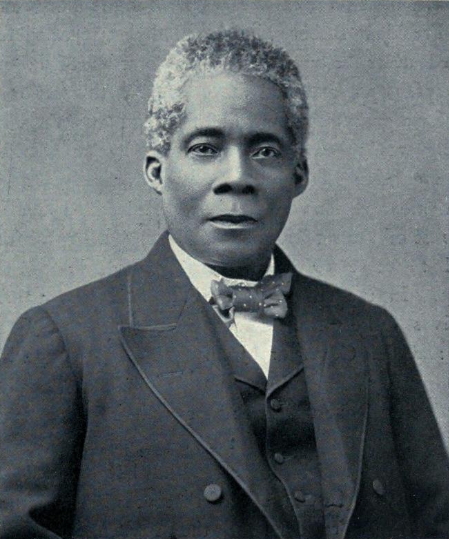
Edward Wilmot Blyden
### Introduction: The Titan of Global Pan-African Thought Edward Wilmot Blyden (3 August 1832 – 7 February 1912) stands as one of the most consequential intellectual figures in the modern history of the African diaspora. Universally recognized as the "Father of Pan-Africanism," Blyden was a polymath of extraordinary proportions: a classical educator, multilingual linguist, Presbyterian theologian, globetrotting diplomat, and pioneering political philosopher [1]. Born in the vibrant Caribbean port of Charlotte Amalie on the island of St. Thomas—then part of the Danish West Indies—Blyden transcended colonial boundaries to become the foremost defender of African racial dignity and cultural autonomy during the nineteenth century. His intellectual journey bridged three continents, weaving together Caribbean resilience, the antebellum racial struggles of North America, the pioneering nation-building experiments of Liberia, and the complex civilizational tapestries of British and Islamic West Africa [2]. At a historical moment when pseudoscientific racism and European colonial expansion sought to dehumanize people of African descent, Blyden articulated a revolutionary philosophical counter-narrative. He was the first modern thinker to coin and systemize the concept of the **"African Personality,"** asserting that African peoples possessed a distinct, communal, and spiritual genius that was vital to the harmonious development of global civilization [3]. His seminal writings, most notably his 1887 magnum opus *Christianity, Islam and the Negro Race*, fundamentally dismantled Eurocentric missionary assumptions and legitimized indigenous African social structures [4]. Blyden’s enduring vision of race pride, educational decolonization, and continental self-determination laid the intellectual foundations upon which subsequent Caribbean and global Pan-African titans—such as [Marcus Garvey](/profiles/marcus-garvey), [George Padmore](/profiles/george-padmore), [Aimé Césaire](/profiles/aime-cesaire), and [Frantz Fanon](/profiles/frantz-fanon)—would build their movements for liberation in the twentieth century [5].  ### Early Life and Formative Years in Charlotte Amalie, St. Thomas Edward Wilmot Blyden was born on August 3, 1832, in Charlotte Amalie, the bustling harbor capital of St. Thomas in the Danish West Indies (modern-day United States Virgin Islands) [1]. He was the third of seven children born to Romeo and Judith Blyden, free and literate Black citizens of proud Igbo descent [2]. Romeo Blyden was a skilled tailor of respected standing, while Judith was a talented dressmaker and educator [3]. Growing up in an urban Danish Caribbean trading hub that served as an international entrepôt, young Edward was exposed from infancy to a cosmopolitan crosscurrent of languages and cultures, hearing Dutch, English, Spanish, Danish, and Caribbean Creole spoken across the wharves and markets of Charlotte Amalie [6]. In 1842, when Edward was ten years old, the Blyden family relocated temporarily to Puerto Cabello, Venezuela, where they resided for two years [2]. During this period, the precocious youth quickly attained fluency in Spanish, demonstrating the formidable aptitude for philology that would become a hallmark of his adult scholarship [6]. Upon returning to St. Thomas in 1844, Blyden came under the personal mentorship of the Reverend John P. Knox, an American Presbyterian clergyman who arrived to pastor the local Protestant Dutch Reformed Church [1]. Knox was instantly captivated by Blyden’s sharp analytical intellect, voracious appetite for classical literature, and moral gravity, inviting the young boy into his private study to tutor him in theology, rhetoric, and classical languages [2]. Blyden's adolescence in the Virgin Islands unfolded against a backdrop of momentous revolutionary upheaval. In July 1848, when Blyden was fifteen, thousands of enslaved laborers on neighboring St. Croix rose in a coordinated rebellion led by Moses "General Buddhoe" Gottlieb, forcing Danish Governor Peter von Scholten to proclaim the immediate emancipation of all enslaved people in the Danish West Indies [7]. Witnessing this dramatic assertion of Black humanity left an indelible impression on the young Blyden, instilling within him a permanent conviction that the liberation of Black people required unwavering moral resolve, collective solidarity, and an unshakeable defense of human dignity [7]. This atmosphere of resistance in the Virgin Islands would later inspire subsequent generations of freedom fighters, including Crucian labor leaders during the 1878 Fireburn and twentieth-century civil rights advocates such as [David Hamilton Jackson](/profiles/hamilton-jackson) and cultural pioneer [Alton Augustus Adams](/profiles/alton-adams) [8]. ### Racial Rejection in America and the Exodus to Liberia (1850–1851) Recognizing Blyden's extraordinary academic brilliance and deep spiritual conviction, Reverend Knox arranged for the eighteen-year-old youth to travel to the United States in May 1850, intending for him to enter theological college and prepare for the Presbyterian ministry [1]. Blyden arrived in North America in the company of Knox's wife, expecting his intellectual merits to speak for themselves. Instead, he collided head-on with the virulent institutional white supremacy of antebellum America [2]. In rapid succession, Blyden applied for admission to Rutgers Theological Seminary in New Brunswick, New Jersey, and two additional Presbyterian seminaries; all three institutions summarily refused him entry solely on account of his African ancestry [1][2]. The rejection occurred in the volatile shadow of the Compromise of 1850 and the passage of the draconian Fugitive Slave Act, which legally mandated the capture of escaped slaves even within free northern states and placed every free Black person under perpetual threat of kidnapping and re-enslavement [6]. Disillusioned by the hypocrisy of white American Christian institutions that preached the brotherhood of man while violently enforcing racial caste, Blyden realized that America offered no dignified future for an ambitious Black scholar seeking unfettered intellectual growth [3]. During this crisis of faith and geography, Blyden encountered officials of the American Colonization Society (ACS) and the Presbyterian Board of Foreign Missions, who proposed an alternative horizon: the young republic of Liberia, established on the West African coast as a sovereign haven for free Black emigrants [1]. Refusing to submit to second-class status in the United States, Blyden embraced the call of ancestral repatriation. In December 1850, he boarded the packet ship *Edgar* in Baltimore, sailing across the Atlantic Ocean and arriving in the harbor of Monrovia on January 26, 1851 [2]. Stepping foot onto the soil of Africa at age eighteen, Blyden transformed what began as an agonizing personal trauma of racial exclusion into a lifelong, majestic mission of continental redemption [3]. ### Linguistic Mastery and Educational Leadership at Liberia College Upon his arrival in Monrovia, Blyden immediately enrolled at the newly founded Alexander High School, a Presbyterian preparatory academy directed by the Reverend David A. Wilson [2]. Demonstrating a phenomenal capacity for scholarly acquisition, Blyden rapidly mastered Latin, ancient Greek, and biblical Hebrew, astonishing his instructors with his command of classical philology and philosophical exposition [6]. By 1853, while still a student, he was appointed assistant tutor; by 1858, following Wilson's departure, Blyden was appointed Principal of Alexander High School [1]. That same year, having completed rigorous theological examinations, he was formally ordained as a Presbyterian minister by the Presbytery of West Africa [2]. Blyden's linguistic horizons expanded far beyond the European classical canon. Recognizing that Arabic was the lingua franca of commerce, diplomacy, and scholarship across vast swaths of interior West Africa, Blyden embarked on a dedicated, self-directed quest to master the language [4]. In 1866, with financial support from benefactors, he undertook an arduous six-month expedition to the Middle East, residing in Beirut (where he attended lectures at the Syrian Protestant College) and Cairo, immersing himself in classical Quranic Arabic and Islamic jurisprudence [1][4]. He became one of the few Western-educated scholars of his era completely fluent in Arabic, allowing him to converse and negotiate directly with Muslim scholars, emirs, and merchants across the West African hinterland [4]. In 1862, following the establishment of Liberia College in Monrovia, Blyden was appointed the inaugural Professor of Greek and Latin Languages and Literature [1]. He immediately became the institution's intellectual engine. Blyden argued vigorously that higher education in Africa must reject the uncritical mimicry of European academic models [3]. In his celebrated 1881 inaugural address as President of Liberia College—a post he held with distinction from 1880 to 1884—he laid out a revolutionary pedagogical vision for an autonomous African university [1][6]. He demanded that classical studies be balanced with the systematic study of indigenous African languages, African customary laws, folklore, and African history [3]. He sought to relocate the college from the coastal Americo-Liberian enclave of Monrovia into the interior, aiming to bridge the deep social divide between coastal settlers and indigenous tribal populations [2]. > "The African must advance by methods of his own. He must possess a power distinct from that of the European. It has been proved that he cannot acquire all of European civilization without losing his own identity. We must not surrender our personality; if you surrender your personality, you have nothing left to give the world." — Edward Wilmot Blyden, *Inaugural Address as President of Liberia College* (1881) [3]  ### Political Battles, Statesmanship, and Diplomatic Service at the Court of St. James Blyden's immense intellectual stature inevitably drew him into the turbulent vortex of Liberian statecraft. In 1864, President Daniel Bashiel Warner appointed the 32-year-old Blyden as Liberia's Secretary of State [1]. In this executive cabinet post, Blyden sought to reorient the republic's entire geopolitical orientation. He vehemently opposed the coastal merchant elite who dominated the True Whig Party and the Republican establishment, accusing them of maintaining a superficial, Euro-American caste system that exploited and marginalized the native African population [2]. Blyden championed a bold policy of continental integration: he demanded the granting of full citizenship and legislative representation to indigenous Africans, advocated for the aggressive expansion of Liberia’s borders into the interior, and called for an influx of dark-skinned Black emigrants from the Caribbean and the United States to build an agrarian African democracy [2][6]. These radical positions provoked violent hostility from the light-skinned, mixed-race Americo-Liberian ruling oligarchy [1]. When Blyden aligned himself with President Edward James Roye—a dark-skinned pure Black statesman who was elected president in 1869 on a platform of interior development and racial parity—political tensions boiled over into civil insurrection [2]. In October 1871, a violent political coup led by rival coastal factions deposed President Roye (who was tragically killed shortly thereafter). A lynch mob targeted Blyden in Monrovia, forcing him to flee for his life under cover of darkness to the British colony of Sierra Leone [1][2]. Despite this political trauma, Blyden’s international standing remained untouchable. He returned to public service repeatedly, serving as Liberia’s Minister of the Interior from 1880 to 1882 and contesting the Liberian presidency as an independent reform candidate in 1885 [1]. Furthermore, Blyden served as the young republic's most formidable diplomatic asset on the world stage. Between 1877 and 1878, and again in 1892, Blyden was commissioned as Liberia’s Minister Plenipotentiary and Envoy Extraordinary (Ambassador) to the **Court of St. James** in London [1][9]. In this role, he made history as one of the very first Black diplomats ever accredited to the supreme royal court of a European imperial power [9]. At the Court of St. James, Blyden captivated Victorian London with his aristocratic bearing, linguistic erudition, and eloquent oratory. He was received by Queen Victoria, engaged in philosophical dialogues with Prime Minister William Ewart Gladstone, and befriended leading British scholars, parliamentarians, and abolitionists [1][9]. Blyden utilized his London posting to defend the territorial sovereignty of Liberia against encroaching British and French imperial ambitions, fiercely negotiating border treaties and securing international recognition for African sovereignty [9]. Remarkably, when the impoverished Liberian legislature repeatedly failed to transmit his diplomatic salary, Blyden endured severe personal financial privation, relying on his own resourcefulness and book royalties to maintain the dignity of Liberia’s legation in the British capital [9]. In 1905, he concluded his formal diplomatic career by serving as Liberia’s Minister Plenipotentiary to the Republic of France in Paris [1]. ### Intellectual Magnum Opus: *Christianity, Islam and the Negro Race* (1887) In 1887, Blyden published the masterwork that sealed his immortality in world philosophy: ***Christianity, Islam and the Negro Race***, printed in London by W.B. Whittingham & Co. [4]. The book—a collection of meticulously argued essays, lectures, and sociological treatises—sent profound shockwaves throughout the academic, missionary, and theological establishments of Europe, America, and West Africa [10]. In this groundbreaking text, Blyden offered the first comprehensive comparative analysis of how the two dominant world religions interacted with African societies [4]. With searing analytical clarity, he argued that European Christian missionary efforts in Africa, despite good intentions, had exerted a psychologically crippling and denationalizing effect upon African converts [10]. European Christianity, Blyden asserted, arrived entangled with white racial supremacy, cultural arrogance, and European aesthetics. It taught Africans to despise their ancestral traditions, reject their indigenous languages, and view themselves as perpetual subordinates to white spiritual masters, instilling a debilitating "slave psychology" that undermined racial self-reliance [4][10]. Conversely, Blyden offered a daring and controversial defense of Islam's role in African development [4]. Drawing upon his extensive travels through the West African interior and his direct engagements with Mandinka and Fulani scholars, Blyden demonstrated that Islam had historically integrated seamlessly into African cultures without destroying indigenous selfhood [4][10]. Islam, he argued, brought universal brotherhood, literacy, civic discipline, sobriety, and architectural advancement, while allowing Africans to retain their cultural autonomy, racial pride, and political agency [4]. Unlike the racial segregation endemic to Western Christianity, Islam treated all believers, regardless of skin color, with authentic egalitarian fraternity [10]. > "Africa may yet prove to be the spiritual conservatory of the world. When the civilised nations, in consequence of their wonderful material development, shall have had their spiritual susceptibilities blunted through the agency of a captivating and absorbing materialism, it may be that they have to resort to Africa to recover some of the simple elements of faith." — Edward Wilmot Blyden, *Christianity, Islam and the Negro Race* (1887) [4] Blyden did not seek the wholesale conversion of Africa to Islam; rather, he issued a prophetic summons for the creation of an **Independent African Church**—an ecclesiastical body entirely led, financed, and doctrinally rooted in African soil, free from European missionary paternalism [10]. His theological critique inspired the burgeoning "Ethiopianism" movement across Southern and West Africa, which saw indigenous African Christians break away from European denominations to form self-governing churches [2]. ### The African Personality, Cultural Autonomy, and the Sierra Leone Years Central to Blyden’s enduring philosophical system was his conceptualization of the **"African Personality"** [3]. In a series of influential lectures delivered across West Africa and Great Britain—most notably his 1893 landmark address *Study and Race* delivered before the Young Men's Literary Association in Freetown—Blyden systematically articulated a doctrine of cultural pluralism and racial integrity [3][11]. Blyden rejected the Eurocentric thesis that humanity progressed along a single hierarchical ladder with European civilization at the apex. Instead, he argued that each human race possessed a distinct, God-given genius and mission [3]. While European civilization was characterized by aggressive scientific inquiry, technological conquest, individualism, and relentless commercial materialism, African civilization was characterized by deep spiritual receptivity, communion with nature, egalitarian community cohesion, and intuitive artistic expression [3][11]. > "It is sad to think that there are some Africans, especially among those who have enjoyed the advantages of foreign training, who are blind enough to the radical facts of humanity as to say, 'Let us do away with our African personality and be lost, if possible, in another race.' Preach this doctrine as much as you like, no one will do it, for no one can do it, for when you have done away with your personality, you have done away with yourselves. Your place has been assigned you in the universe as Africans, and there is no room for you as anything else." — Edward Wilmot Blyden, *Study and Race* (1893) [11] Blyden's later career was deeply entwined with the British colony of Sierra Leone, where he found an intellectually vibrant and welcoming home [1]. Following his exile from Liberia in 1871, Blyden founded and edited ***The Negro*** newspaper in Freetown in 1872, the very first English-language periodical in West Africa explicitly dedicated to promoting race solidarity and Pan-African consciousness [1][2]. The colonial government of Sierra Leone repeatedly enlisted Blyden’s unique diplomatic and linguistic talents. In 1872 and 1873, Governor Sir Arthur Kennedy appointed him as a special diplomatic commissioner to the powerful Muslim kingdoms of the interior, including Falaba and Timbo (in modern-day Guinea) [1]. Traveling without military escort, Blyden established vital treaties of commerce and amity, earning the profound respect of Islamic monarchs [1][2]. From 1901 to 1906, Blyden served as the **Director of Mohammedan Education** for the Sierra Leone government [1]. In this capacity, he pioneered a culturally sensitive educational curriculum that introduced modern mathematics, English, and scientific instruction into Islamic madrasas while preserving Arabic literacy, Islamic religious training, and traditional cultural norms [1][2]. Through this work, Blyden bridged centuries of suspicion between Western colonial authorities and the Muslim populations of West Africa, modeling how modern education could be synthesized harmoniously with Islamic and African traditions [2]. ### Sunset, Funeral in Freetown, and Immortal Global Legacy In his final years, Blyden lived in Freetown, surrounded by a devoted circle of West African scholars, civic leaders, and younger intellectuals who revered him as the grand patriarch of African intellectual liberation [1]. Even as his physical health waned due to respiratory ailments and old age, his brilliant mind remained alert, continuing to publish essays advocating for African self-rule, educational independence, and the preservation of native land tenure systems against European concessionaires [2]. On **February 7, 1912**, Edward Wilmot Blyden passed away at his home in Freetown at the age of 79 [1]. His death precipitated unprecedented collective mourning across West Africa and the Atlantic diaspora. His state funeral on February 9 was one of the largest public gatherings in the history of Sierra Leone. In a scene that symbolized his life’s mission of ecumenical and racial harmony, thousands of mourners from every walk of life walked behind his cortege: European colonial dignitaries, Christian bishops and clergymen, dozens of white-robed Muslim imams and scholars, indigenous chiefs from the interior, and thousands of ordinary citizens [1][2]. He was laid to rest in the Muslim section of the Racecourse Cemetery in Freetown, in accordance with the profound affection and reverence he commanded within the Islamic community [1]. Blyden’s intellectual legacy is monumental, casting a long and radiant shadow across the twentieth century. He provided the core conceptual vocabulary that animated every major Black liberation movement of modern times [5]. [Marcus Garvey](/profiles/marcus-garvey), whose Universal Negro Improvement Association (UNIA) mobilized millions across the Caribbean, the Americas, and Africa, drew directly upon Blyden’s teachings of racial self-reliance, African redemption, and the slogan "Africa for the Africans" [5]. [George Padmore](/profiles/george-padmore), the Trinidadian-born intellectual who organized the historic Fifth Pan-African Congress in Manchester in 1945, explicitly cited Blyden as the ideological forefather of scientific Pan-Africanism [5]. In the French-speaking Caribbean and West Africa, Blyden’s doctrine of the African Personality served as the direct precursor to the **Négritude** movement developed by [Aimé Césaire](/profiles/aime-cesaire) and Léopold Sédar Senghor [3][5]. Post-colonial African statesmen such as Dr. Nnamdi Azikiwe of Nigeria and Osagyefo Dr. Kwame Nkrumah of Ghana heralded Blyden as the prophet who restored the African mind from colonial amnesia [5]. Today, the memory of Edward Wilmot Blyden is celebrated across the Caribbean and Africa. In the United States Virgin Islands, where his journey began on the hills of Charlotte Amalie, his legacy is commemorated through educational institutions and public honors [8]. In Liberia and Sierra Leone, monuments and university buildings bear his name. More than a century after his passing, Edward Wilmot Blyden remains immortal: a boy from the Danish West Indies who challenged the empires of the world, reclaimed the dignity of an entire continent, and bequeathed to humanity the timeless truth of the African soul [1][5]. ### References - [Edward Wilmot Blyden - Wikipedia](https://en.wikipedia.org/wiki/Edward_Wilmot_Blyden) - [Edward Wilmot Blyden (1832–1912) - BlackPast.org](https://www.blackpast.org/global-african-history/blyden-edward-wilmot-1832-1912/) - [Blyden, Edward Wilmot - Dictionary of African Christian Biography](https://dacb.org/stories/liberia/blyden-edwardw/) - [Edward Wilmot Blyden: Pan-Negro Patriot 1832-1912 - Hollis R. Lynch (Oxford University Press)](https://academic.oup.com/book/edward-wilmot-blyden) - [Virgin Islands Public Figures: Edward Wilmot Blyden - Virgin Islands Department of Education](https://www.vide.vi/) - [Christianity, Islam and the Negro Race - Internet Archive](https://archive.org/details/christianityisla00blyduoft)
View Profile →Ellen Peters
### Early Life and Formation Ellen Dolly Peters, BEM (18 November 1894 – 1995) was one of the most consequential figures in twentieth-century Montserratian history — a teacher, trade unionist, activist, and political architect whose influence shaped the very foundations of representative government on the island, even as the discriminatory conventions of her era barred her from holding office herself. Born in the village of **St. Patrick's**, in the southern reaches of Montserrat, to Rosanna (née O'Garro) and Levons Elias Dolly, Ellen entered the world at the dawn of a century that would be defined by seismic transformations in colonial society across the Caribbean. Montserrat at the time of her birth was a British Crown Colony locked in the slow, grinding aftermath of emancipation. The plantation economy had long since ceased to be dominant — the island was too rugged and small to compete with larger sugar producers — but the social hierarchies forged by slavery persisted with stubborn force. Land was concentrated in the hands of a small white and light-skinned merchant class. The majority of Montserratians, of African descent, scratched out livelihoods as sharecroppers on lime and sea island cotton estates, often toiling under conditions that bore a grim resemblance to the forced labour that had been, in theory, abolished. Child labour was rampant. Wages were exploitatively low. The colonial administration offered little recourse. Into this world, Ellen Dolly arrived with uncommon aptitude and drive. By the age of thirteen — a remarkable fact that speaks both to her precocity and to the desperate need for teachers in rural Montserrat — she had already begun teaching at **St. Augustine School** [1]. Education was her first calling and her most enduring vocation. After marrying Abraham Peters in 1912 and settling in the village of **Kinsale**, she continued teaching while immersing herself in the intellectual life of the community through local debating societies. These forums were more than social clubs — they were incubators of political consciousness in a society that had no formal avenues for ordinary people, especially women, to participate in governance.  ### The Crucible of the 1940s: Rising Consciousness The 1940s were transformative years for the entire British Caribbean. The devastating labour rebellions of the 1930s — from Trinidad to Barbados to Jamaica — had shaken the foundations of the colonial system and prompted the British government to commission the **Moyne Report** (published 1945), which acknowledged the systemic poverty and inequality afflicting Caribbean workers and recommended sweeping social and political reforms. Across the region, ordinary men and women were awakening to the possibility of demanding change. Ellen Peters was among the most vocal voices on Montserrat. By the 1940s, she had grown into a formidable public speaker, honing her skills through years of debate and classroom instruction. She became a fierce and very public critic of the injustices she witnessed daily: **child labour** in the fields, the crushing poverty of sharecroppers, institutionalized racism that determined a person's economic ceiling by the shade of their skin, and the near-total absence of worker protections under colonial law [2]. Her criticism was not abstract political theory — it was rooted in lived experience and the suffering of her neighbours. > *"She was a woman who could move a crowd. She understood that the workers had rights, and she was not afraid to say so, loudly and clearly, at a time when few dared."* > — Historical accounts from Montserratian community memory When the **Montserrat Trades and Labour Union (MTLU)** was formally established in **1946**, Ellen Peters joined immediately and became one of its most vital members [1]. The MTLU was not merely a collective bargaining organization — it was a political force, the institutional expression of a people demanding to be treated with dignity. Peters used her exceptional skills as a debater and orator to amplify the union's message, speaking at meetings, organizing workers, and articulating the moral case for fair wages and humane conditions in language that was accessible, passionate, and impossible to ignore. ### The Kingmaker: Forging Montserrat's First Chief Minister Perhaps the most historically significant dimension of Ellen Peters' career was her role as the architect behind **[William Henry Bramble](/profiles/william-henry-bramble)**'s political ascendancy. Bramble, who would go on to become Montserrat's first Chief Minister when the ministerial system was introduced in 1960, was not an inevitable political giant. His rise was shaped in no small measure by the strategic intelligence and tireless advocacy of Ellen Peters. When Bramble challenged **Robert Griffith** for the leadership of the MTLU in **1951**, Peters threw her considerable influence behind him [3]. She did not merely endorse him from a distance — she was instrumental in crafting his political narrative, reportedly writing many of his most significant and stirring speeches, and campaigning energetically for his election across the island's communities. In the debates and rallies of that pivotal period, her voice was indispensable. **Why did she not seek office herself?** The answer is a pointed commentary on the gender politics of mid-century Montserrat. Peters was, by all contemporary accounts, aware that her outspoken nature and her gender made her candidacy politically untenable in a society that, while beginning to democratize, still clung to patriarchal assumptions about women's roles [2]. She made a calculated choice: to exercise her power through a proxy, to be the mind and the voice behind the throne rather than to court the near-certain rejection of seeking it herself. This was not resignation — it was strategic brilliance born of necessity. > *"She wrote those speeches. She was the intelligence behind the movement."* > — Accounts preserved in Montserratian oral and written historical tradition When universal adult suffrage was introduced and Montserrat held its first democratic elections in **1952**, Bramble's Montserrat Labour Party swept to victory. The five elected legislators — Bramble, Robert W. Griffith, Theodore Edgecombe, Michael Walkinshaw, and Brunel W. Edwards — represented the triumph of the labour movement that Peters had helped to build. In 1960, when Bramble became the island's first Chief Minister, a position whose very existence was a milestone in Montserratian self-determination, Ellen Peters' hand was embedded in that history [4]. ### General Secretary of the MTLU and Later Life Ellen Peters did not retire from public life after the 1952 elections. She continued her labor activism with the same intensity, serving as the **General Secretary of the MTLU from 1954 until her retirement in 1968** — fourteen years at the administrative and strategic heart of the island's most important workers' organization [1]. During this period, she helped navigate the union through the turbulent transitions of decolonization and the collapse of the West Indies Federation (1962), as Montserrat chose to remain a British Dependent Territory rather than pursue full independence or associated statehood. In parallel with her union work, Peters never abandoned education. She continued teaching until her retirement from the classroom in 1968, a career spanning more than five decades [4]. After retiring, rather than withdrawing into private life, she became a **youth counsellor for the Social League of Catholic Women**, channelling her lifelong commitment to community service into mentoring the next generation [5]. Her contributions were recognized with three significant honours: - **Order of Merit**, awarded by the Montserrat Allied Workers' Union in **1980** [5] - **British Empire Medal (BEM)**, awarded in **1983** for her contributions to the labour movement [5] - ***Pro Ecclesia et Pontifice***, awarded in **1984** for her service to the Catholic Church and her decades of teaching [5] ### Legacy Ellen Dolly Peters died in **1995**, at the extraordinary age of **100**, having lived through slavery's aftermath, two World Wars, the rise of Caribbean democracy, and the birth of a new constitutional order on her island home. She did not hold elected office — but she built the political infrastructure that made elected office meaningful for generations of Montserratians. Her story is a vital corrective to any narrow understanding of political power. Leadership is not only exercised in Parliament or at a Chief Minister's desk. It is exercised in the fields, in union halls, in community debating societies, in the careful drafting of speeches that move people to claim their dignity. Ellen Peters understood this profoundly and lived it completely. She remains one of the most consequential — and most underrecognized — figures in Caribbean political history.
View Profile →Elma Francois
### Early Life: A Daughter of the Soil Elma Francois was born on **October 14, 1897**, in the village of Overland, St. Vincent, in the heart of the Windward Islands. She entered the world as a child of the soil — her parents were agricultural laborers, and her earliest years were defined by the grinding poverty that shaped the lives of most Afro-Caribbean working people in the twilight of the Victorian era. St. Vincent was a British Crown Colony where the plantation economy had long since calcified into an immovable system of racial and economic hierarchy, one that dispensed cruelty to its laborers with bureaucratic efficiency. From a young age, Elma was put to work picking cotton and toiling in the sugar factories, the same brutal routines that had claimed the bodies and spirits of generations before her. Yet something distinguished her almost immediately: she refused to accept the logic of exploitation as a natural order. As a teenager, she made her first attempt at labor organizing, rallying her fellow factory workers to demand better conditions. The response from management was swift and predictable — she was dismissed from her job. That early sacking would prove to be the first of many acts of institutional retaliation she would face throughout her life, and each time, rather than retreat, she advanced [1][2]. In **1919**, at the age of twenty-two, Francois made the fateful decision to migrate to Trinidad and Tobago, leaving behind her young son Conrad in the care of her mother. She arrived in Port of Spain with little more than her resolve, initially finding work as a domestic servant and washerwoman in the colony's bustling capital. It was grinding, invisible labor — the kind historically performed by Black women across the Caribbean and treated as something less than work — but Port of Spain also offered something St. Vincent could not: a world in ferment [3].  *Historical map of Trinidad and Tobago from the late nineteenth century, the colonial landscape Elma Francois would come to challenge.* ### Finding Her Politics: The World of Colonial Port of Spain Trinidad in the 1920s was alive with competing ideologies. The Pan-African ideas of Marcus Garvey circulated through the streets and barber shops of Laventille. The labor movement — led by figures like **Captain Arthur Cipriani**, who helmed the Trinidad Workingmen's Association (TWA) — was gaining political momentum, even if it operated largely within a reformist, constitutionalist framework. The influence of international communism and socialism was filtering into the colony through pamphlets, newspapers, and the testimony of returning sailors and students [4]. Francois threw herself into this world with ferocious energy. She joined the TWA and educated herself voraciously, reading every political text she could obtain. Contemporaries recalled her holding **"rap sessions" by candlelight** in public squares across Port of Spain, drawing together workers, the unemployed, and the curious, and speaking to them in the vivid, unadorned language of the street rather than the studied cadences of the educated class. She was known simply as **"Comrade Francois,"** and there was no irony in the title — she was, in every sense, a comrade to those who came to listen [5][6]. She eventually concluded that the TWA's reformist approach was insufficient to address the structural violence of colonialism. Francois began gravitating toward Marxist analysis, which she synthesized with a fierce Afro-Caribbean consciousness. By the early 1930s, the Great Depression had devastated the economies of the British West Indies. Unemployment was catastrophic. Workers in the oilfields of southern Trinidad, the sugar estates of central Trinidad, and the docks of Port of Spain were living in conditions of desperate precarity [7]. ### Building the Movement: NUM and NWCSA In **1934**, Elma Francois and her partner James (Jim) Barrette co-founded the **National Unemployed Movement (NUM)**, one of the first organizations in the Caribbean to explicitly advocate for the rights of the unemployed as a distinct political constituency. The NUM organized marches, submitted petitions to the colonial government, and created mutual aid networks for those who had been cast aside by the collapsing economy. Building on this foundation, in **1935**, Francois and her allies founded the **Negro Welfare Cultural and Social Association (NWCSA)**, a boldly Marxist-oriented organization that took a wider view of liberation. The NWCSA's ideology was grounded in Black internationalism — the belief that the struggle of African-descended workers in Trinidad was connected to the struggles of Black people across the globe. When Italy invaded Ethiopia (Abyssinia) in 1935, the NWCSA was at the forefront of local protests, connecting the colonial violence in Africa to the colonial violence in Trinidad. Crucially, despite its name, the NWCSA maintained an interracial membership that welcomed Indian and Chinese workers, reflecting Francois's belief that class solidarity had to transcend racial lines [7][8]. The NWCSA also played a pivotal role in building the formal labor movement in Trinidad. The organization helped to establish and grow trade unions including the **Federated Workers Trade Union** and the **Seamen and Waterfront Workers Trade Union**, institutions that would underpin workers' bargaining power for decades to come [3]. > *"Elma Francois was not just a labor organizer. She was an ideologist, a strategist, and a moral force — one of the most significant political intellects the Caribbean produced in the twentieth century."* ### The 1937 Sedition Trial: A Woman Alone Before the Law The defining moment of Elma Francois's public life came in the wake of what historians call the **"Butler Riots"** of 1937 — a series of explosive labor uprisings ignited by oil worker and labor agitator [Tubal Uriah "Buzz" Butler](/profiles/tubal-uriah-buzz-butler). Beginning in the southern oilfields, the strikes and disturbances swept across Trinidad during the summer of 1937, terrifying the colonial administration and forcing it into confrontation with the labor movement it had long tried to co-opt or suppress. The authorities moved swiftly to decapitate the movement's leadership. Elma Francois was arrested and charged with **sedition** — specifically, for her fiery speeches and her organizing work with the NWCSA. She thus became the **first woman in the history of Trinidad and Tobago to be charged with sedition**, a milestone that carried the full weight of colonial judicial violence behind it [1][2]. What happened next astonished even her allies. Francois declined to retain a lawyer, choosing instead to defend herself in court. The sedition trials ran from **October 1937 through February 1938**, playing out before a jury composed entirely of men. Francois took the stand in her own defense and spoke with an eloquence and intelligence that belied the colonial assumption that a Black working-class woman from St. Vincent could not match wits with the Crown. She dissected the charges against her, questioned the legitimacy of the laws she was accused of breaking, and turned the courtroom into a platform for her broader political views. The jury returned a verdict of **not guilty**. The acquittal was a sensation — a historic triumph not only for Francois personally, but for the labor movement, for Black women in the Caribbean, and for all those who had dared to challenge colonial authority on its own terrain [4][9].  ### The Final Years and the Anti-War Stance In the years following her acquittal, Francois continued to organize, though the colonial government remained watchful. When World War II erupted, she took a position that again set her apart from the mainstream: she vocally opposed the conscription and voluntary enlistment of Black men into the British armed forces. Her argument was pointed and principled — why should Black people, who were subjected to systematic racial discrimination within the British Empire, be expected to lay down their lives for a Crown that did not recognize their full humanity? It was a position that drew fierce criticism but also articulated a logic that would resonate across the Caribbean and the broader African diaspora [1][2]. Elma Francois died on **April 17, 1944**, at the age of forty-six, from complications arising from a thyroid condition. She had spent nearly three decades fighting, organizing, writing, speaking, and sacrificing for a vision of a world without exploitation or racial hierarchy — and she died without seeing that world arrive. ### Legacy: National Heroine In **1987**, the government of Trinidad and Tobago officially declared Elma Francois a **National Heroine** of the Republic — one of only a handful of women to be accorded that distinction. The recognition came more than four decades after her death, a reflection both of how long it can take for history to acknowledge its most radical figures and of the enduring power of the movement she helped build. Today, the **Elma Francois Institute** at the Cipriani College of Labour and Cooperative Studies bears her name, a fitting tribute to a woman who believed that education and political consciousness were weapons of liberation. Streets, community centers, and cultural events in Trinidad and Tobago continue to invoke her memory. She stands as an enduring symbol of the inseparable connections between the struggles for labor rights, racial justice, women's liberation, and anti-colonial sovereignty in the Caribbean [5][6]. > *"She was one of those rare human beings who never separated the personal from the political. Every wash she took in, every meeting she attended, every speech she gave was an act of resistance."*
View Profile →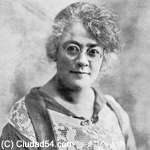
Ercilia Pepín
### Introduction Ercilia Pepín Estrella stands as one of the most transcendent figures in the history of Caribbean education, feminism, and patriotic resistance. Designated posthumously as a National Hero (*Prócer de la Patria*) by the Dominican Republic, Pepín dedicated her life to the total transformation of her nation's pedagogical, civic, and moral landscape [1]. Living through one of the most turbulent periods of the Dominican Republic—characterized by chronic political instability, foreign military occupation, and the rise of a brutal dictatorship—she utilized the classroom not merely as a space for rote learning, but as a crucible for national sovereignty and female empowerment [2]. Her philosophy, deeply rooted in rationalist education and unwavering civic courage, permanently reshaped the Dominican educational curriculum and laid the foundations for the nation's feminist movement. ### Historical Context: The Cibao and Dominican Society To understand the rise and impact of Ercilia Pepín, one must examine the socio-political climate of the Dominican Republic at the turn of the twentieth century. The nation was plagued by *caudillismo*—a system of political-military dominance by regional warlords—which resulted in constant civil wars and economic instability. The northern valley region, known as the Cibao, and specifically its cultural capital, Santiago de los Caballeros, was a center of intellectual ferment and liberal thought. Educational opportunities during this era, particularly for girls, were severely restricted. The Dominican state lacked a unified public school system, and teaching methodologies remained archaic, dogmatic, and rote. However, a major intellectual shift was initiated in the late nineteenth century by the arrival of Puerto Rican educator and philosopher [Eugenio María de Hostos](/profiles/eugenio-maria-de-hostos), who advocated for secular, scientific, and rationalist pedagogy. Hostosian principles emphasized critical thinking, civic responsibility, and the intellectual parity of women—ideals that would become the cornerstone of Pepín’s career [3]. ### Early Life and Tutelage Born on December 7, 1886, in Santiago de los Caballeros, Ercilia Pepín Estrella was the daughter of José Pepín and Edelmira Estrella [4]. Her family was politically connected, yet she experienced tragedy early in life when her mother passed away when Ercilia was only five years old. Following this loss, she was raised in the Nibaje neighborhood by her grandmother, Carlota Estrella, who instilled in her a strong sense of independence and moral duty. Recognizing her intellectual potential, her family arranged for her to receive private instruction. She became a student of the distinguished Italian professor Salvador Cucurullo, who had established a school in Santiago [5]. Under Cucurullo’s rigorous tutelage, Pepín studied advanced mathematics, physical sciences, geography, French, and Italian. This comprehensive education was exceptional for a young woman of her generation and exposed her to the humanist and scientific currents of European thought, which she would later integrate into her own teaching.  ### The Call to the Classroom Pepín’s professional career began at the astonishingly young age of fourteen. In 1900, she was appointed as a teacher in the primary school of Nibaje [2]. Her natural aptitude for teaching and her modern approach to classroom management quickly caught the attention of local authorities. In 1906, at age nineteen, she was named director of the School for Girls in the Barrio Marilopez [6]. By 1909, she had assumed the directorship of the Escuela Superior de Señoritas, a secondary institution for young women in Santiago. It was in this role that Pepín began to implement her radical pedagogical reforms, transforming the school into a model of Hostosian rationalist education. She believed that education must develop all aspects of the human personality—intellectual, physical, and moral—writing: > "The primary mission of the school is not merely to instruct, but to form citizens who are conscious of their duties and capable of defending their rights." [2] ### Educational Reforms and Innovations Pepín’s reforms were both institutional and curricular, challenging the conservative educational norms of the era. She introduced the concept of the school uniform in the Dominican Republic, arguing that standardized dress fostered a sense of equality among students from different socio-economic backgrounds and eliminated class distinctions in the classroom [1]. She also established strict protocols of mutual respect; students were required to address their teachers with formal honorifics, and teachers were expected to treat their pupils with equal dignity, abandoning the authoritarian methods common in traditional schools. Curricularly, Pepín modernized instruction by integrating subjects that had previously been ignored or deemed inappropriate for women: * **Scientific Instruction:** She introduced laboratory equipment, including microscopes, to teach biology, chemistry, and physics, moving away from purely theoretical textbooks [3]. * **Aesthetic and Physical Education:** She added singing, gymnastics, drawing, and cartography to the daily schedule, believing that physical health and artistic appreciation were essential to intellectual development [6]. * **Vocational and Manual Arts:** Recognizing the need for women to gain economic independence, she introduced advanced courses in embroidery, sewing, and manual arts, enabling graduates to secure livelihoods beyond traditional domestic roles [1]. She also insisted on a deep, active patriotism. Pepín was the first educator in Santiago to make the daily singing of the Dominican National Anthem mandatory and to require the national flag to be raised at the start of each school day, cultivating a profound civic consciousness in her students [4]. ### Patriotic Resistance to the U.S. Occupation (1916–1924) In 1916, the United States military occupied the Dominican Republic under the pretext of restoring financial and political stability. Ercilia Pepín emerged as a fierce, vocal opponent of the military intervention, using her public profile to mobilize civilian resistance. She refused to collaborate with the military government and prohibited the occupying forces from entering her school or exercising authority over her curriculum [1]. Through public lectures, articles, and community organizing, Pepín kept the spirit of Dominican sovereignty alive. She organized groups of women to sew Dominican flags, which were distributed to homes throughout Santiago as silent symbols of defiance [5]. Her resistance culminated on July 24, 1924, when the U.S. occupation forces officially withdrew from the country. Pepín led a massive nationalist demonstration to the Fortaleza San Luis in Santiago, where she personally raised the Dominican flag, declaring the restoration of national dignity [6].  ### The Rise of Dominican Feminism Pepín’s educational work was intrinsically linked to her feminist advocacy. She recognized that the subjection of women was a primary obstacle to national progress. Alongside other early Dominican feminists such as [Abigail Mejía](/profiles/abigail-mejia) and [Petronila Angélica Gómez](/profiles/petronila-angelica-gomez), Pepín argued that women must have full civic and political rights, including the right to vote [7]. In 1920, she founded the *Colegio México de Señoritas*, an institution that became a beacon of female intellectual empowerment in the Cibao region [8]. The curriculum at Colegio México was designed to prepare women for university-level studies and professional careers. Pepín used the school as a platform to write and speak on women's suffrage, legal equality, and social justice, establishing her as one of the preeminent feminist theorists of the early twentieth-century Caribbean. ### Defying the Dictatorship of Rafael Trujillo In 1930, General [Rafael Trujillo](/profiles/rafael-trujillo) seized power, beginning a thirty-one-year dictatorship characterized by absolute control, terror, and the systematic elimination of political opposition. While many intellectuals and public figures acquiesced to Trujillo's regime out of fear or opportunism, Pepín maintained her commitment to civil liberties and democratic principles [5]. The decisive break between Pepín and the regime occurred in 1932. Andrés Perozo, a professor and prominent political dissident who was a close associate of Pepín, was brutally assassinated by Trujillo's agents [6]. In an act of extraordinary civic courage, Pepín ordered the Dominican flag at the Colegio México to be lowered to half-mast in mourning and protest [2]. Trujillo’s response was swift and retaliatory. The government ordered her immediate dismissal as director of the Colegio México and stripped her of her teaching credentials [6]. She was marginalized, placed under constant surveillance by the secret police, and isolated from public life. ### Final Years, Death, and Lasting Legacy Stripped of her livelihood and under political persecution, Pepín’s health rapidly declined. She suffered from a chronic kidney ailment (nephritis) and lived her final years in relative poverty and isolation, supported only by a small circle of loyal friends and former students [9]. She passed away in Santiago on June 14, 1939, at the age of fifty-two. Despite the regime's attempts to erase her from history, Pepín's legacy survived in the hearts of the generation of women she had educated. Following the fall of the Trujillo dictatorship in 1961, her contributions were officially recognized. In 1996, the Dominican state passed Law 96-25, officially elevating Ercilia Pepín to the status of a National Hero (*Prócer de la Patria*), the highest honor a Dominican citizen can receive [4]. Today, numerous schools, streets, and municipal districts across the Dominican Republic bear her name, and she is celebrated as the mother of modern Dominican education.
View Profile →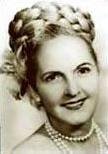
Felisa Rincón de Gautier
### Introduction & Historical Era Felisa Rincón de Gautier (January 9, 1897 – September 16, 1994), affectionately known across the Caribbean and the Americas as "Doña Fela," stands as one of the most transformative political figures of the twentieth century. As the first woman elected as mayor of a capital city in the Western Hemisphere—serving as Mayor of San Juan, Puerto Rico, from 1946 to 1969—she redefined municipal governance, shattered entrenched patriarchal barriers, and pioneered a comprehensive civic philosophy known as "benevolent maternalism." Her twenty-two-year tenure occurred during a tumultuous and defining epoch in Puerto Rican history, marked by the transition from direct colonial administration by the United States to the establishment of the *Estado Libre Asociado* (Commonwealth), rapid industrialization under Operation Bootstrap, and intense social stratification. Within this dynamic climate, Doña Fela emerged as a fierce advocate for the working class, women's suffrage, and urban modernization, leaving an indelible mark on the physical, social, and cultural landscape of San Juan [1]. ### Early Life, Family Background, and Formative Struggles Born on January 9, 1897, in the eastern municipality of Ceiba, Puerto Rico, Felisa Rincón Marrero was the eldest of nine children born to Enrique Rincón Plumey, a schoolteacher and attorney, and Rita Marrero Rivera [2]. Her early childhood was steeped in the rich traditions of rural Puerto Rico, but her life altered dramatically when her mother died giving birth when Felisa was just eleven years old. Thrust into the role of matriarch for her eight younger siblings, Felisa was forced to forgo formal higher education to manage the household. This early assumption of overwhelming domestic responsibility instilled in her a profound sense of duty, organizational discipline, and maternal care that would later characterize her political career [3]. Despite the interruption of her schooling, her intellectual curiosity remained unquenched. Her father, a man of letters and political consciousness, encouraged her to read widely and engage in discussions regarding island governance and civil rights. In the early 1920s, seeking economic independence and new horizons, Rincón moved to New York City, where she learned the art of haute couture and seamstress work while observing the vibrant civic activism of urban American immigrant communities [4]. Upon returning to San Juan, she shattered gender norms by establishing herself as a successful entrepreneur, opening a fashionable clothing boutique called *Felisa's Style Shop* and a renowned flower shop. These entrepreneurial ventures not only provided financial stability but also integrated her deeply into the social fabric of San Juan, bringing her into daily contact with women from diverse socioeconomic backgrounds and exposing her to the severe inequalities plaguing the city's slums [5]. > *"My opponents campaign just before the elections and then they disappear. I start campaigning the day after the election and never stop."* [6]  ### Political Awakening and the Struggle for Suffrage During the 1920s and 1930s, Puerto Rico was gripped by intense political agitation. The debate over island sovereignty raged between pro-statehood factions, advocates of autonomy like [Antonio R. Barceló](/profiles/antonio-r-barcelo), and radical independence leaders such as [Pedro Albizu Campos](/profiles/pedro-albizu-campos). Concurrently, Puerto Rican women were organizing to demand the right to vote. Felisa Rincón became a passionate feminist suffragist, joining the vanguard of women who argued that true democratic governance was impossible without female representation [7]. When universal suffrage was finally extended to literate women in 1932 (and universal suffrage for all adults in 1935), she was among the very first women to officially register to vote in San Juan, viewing the ballot not merely as a symbolic right, but as a vital instrument for social engineering and poverty alleviation [8]. Her activist zeal drew her into the inner circles of emerging political reformers. In 1938, she joined forces with the charismatic visionary [Luis Muñoz Marín](/profiles/luis-munoz-marin) to co-found the Popular Democratic Party (*Partido Popular Democrático*, PPD). Operating under the rallying cry *"Pan, Tierra y Libertad"* (Bread, Land, and Liberty), the PPD sought to dismantle the grip of absentee sugar corporations and elevate the impoverished *jíbaro* (rural peasant) and urban laborer. Working alongside dedicated leaders like future First Lady [Inés Mendoza](/profiles/ines-mendoza) and debating legal scholars such as [Gilberto Concepción de Gracia](/profiles/gilberto-concepcion-de-gracia), Doña Fela proved to be a masterful grassroots organizer. She went door-to-door in San Juan's most impoverished *barriadas*, mobilizing women and disenfranchised laborers who had never before participated in the electoral process [9]. In 1940, she married Jenaro A. Gautier, a prominent lawyer who fully supported her political ambitions, creating a formidable partnership dedicated to public service [10]. ### Rise to Power and Municipal Leadership In 1946, when the sitting mayor of San Juan resigned, the Board of Commissioners appointed Felisa Rincón de Gautier to fill the vacancy, making her the first woman to govern a capital city in the Americas [11]. In 1948, she faced the electorate directly and won a resounding victory, initiating a dominant twenty-two-year administration that spanned six consecutive terms until her voluntary retirement in 1969 [12]. When Doña Fela assumed office, San Juan was facing an unprecedented urban crisis. Operation Bootstrap was driving hundreds of thousands of rural Puerto Ricans into the capital in search of factory employment. Shanty towns, lacking basic sanitation, running water, and electricity, proliferated along the Martín Peña Channel and across the city margins. Rather than viewing these displaced families as a municipal nuisance, Rincón de Gautier embraced them with her characteristic philosophy of "benevolent maternalism." She argued that city government should function as an extended family, providing compassionate care, direct resources, and unwavering institutional support to its most vulnerable dependents [13].  ### Major Municipal Reforms and Institutional Innovations Doña Fela revolutionized the daily administration of San Juan by dismantling bureaucratic walls. Every Wednesday, she hosted an "Open House" (*Casa Abierta*) at the historic Casa Alcaldía. Thousands of citizens queued along the Plaza de Armas to meet personally with the mayor. Whether a resident needed prescription medication, legal aid, housing repair materials, or a pair of shoes for a child to attend school, Doña Fela listened patiently and dispensed immediate municipal assistance [14]. Critics sometimes dismissed this approach as clientelism, but historians recognize it as a pioneering form of radical municipal accessibility and community-focused public welfare that bypassed suffocating red tape [15]. Recognizing that systemic poverty could only be broken through early childhood intervention, she established *Las Escuelas Maternales* (Maternal Schools) in 1949. These revolutionary municipal preschools provided comprehensive daily childcare, nutritional meals, early literacy training, and medical check-ups for impoverished children, enabling mothers to enter the expanding industrial workforce. This visionary initiative was so successful that when the United States federal government designed the national "Head Start" program in the 1960s, federal administrators sent delegations to San Juan to study Doña Fela's centers as a primary working model [16]. In healthcare and infrastructure, her achievements were equally monumental. She spearheaded the complete renovation and expansion of the San Juan Municipal Hospital, elevating it to become the first medical facility in Puerto Rico to earn full accreditation from the American Hospital Association [17]. She initiated massive slum clearance projects, collaborating with the insular government to construct public housing projects (*caseríos*) equipped with modern utilities, recreational parks, and community centers. Furthermore, she transformed sanitation services, paved hundreds of miles of urban roads, and expanded municipal waste management [18]. > *"True leadership is not about wielding authority from a distant office; it is about opening the doors of governance so that the poorest child knows the city belongs to them."* [19] Perhaps the most famous cultural anecdote of her administration occurred during the Christmas seasons of 1952, 1953, and 1954. Remembering the magical winters of her youth in New York City, Doña Fela partnered with Eastern Airlines executive Eddie Rickenbacker to fly refrigerated planeloads of real snow into San Juan. Gathered at Sixto Escobar Stadium and Luis Muñoz Rivera Park, thousands of tropical children who had never left the island were treated to snowball fights, sled rides, and winter festivities. While political opponents debated the symbolism of importing American snow, for generations of Puerto Ricans, it cemented her reputation as a leader who cared deeply about bringing joy to working-class families [20]. ### International Diplomacy, Later Life, and Lasting Legacy Beyond Puerto Rico, Rincón de Gautier became an international ambassador for Latin American democracy and women's political empowerment. During the Cold War, the United States Department of State frequently invited her to lecture across Latin America, Asia, and Europe as a living exemplar of progressive civic leadership within a democratic framework [21]. She served as a prominent delegate to the Inter-American Congress of Municipalities and established sister-city relationships that integrated San Juan into global urban networks. Recognizing her tireless efforts, governments around the world bestowed prestigious decorations upon her, including the Order of Isabella the Catholic from Spain, the Medal of Honor of the Joan of Arc Society in France, and the Simón Bolívar Medal from Venezuela [22]. After stepping down as mayor in 1969 at the age of 72, Doña Fela remained an influential elder stateswoman within the Popular Democratic Party and a mentor to generations of female politicians. She passed away on September 16, 1994, in San Juan, at the age of 97, mourned by tens of thousands of citizens who lined the streets for her state funeral [23]. Today, her historic residence in Old San Juan operates as the *Casa Museo Felisa Rincón de Gautier*, preserving her extensive archives, personal artifacts, and inspiring memory. Her life remains a testament to the power of feminist courage, compassionate governance, and tireless public service [24].
View Profile →Françoise Ega
Françoise Ega (born Françoise Marcelle Modock on November 11, 1920 – died March 8, 1976) was a pioneering Afro-Martinican writer, trade unionist, and grassroots activist whose life and literary work boldly confronted the intersecting oppressions of race, gender, and labor exploitation in post-war France [1]. Best known for her monumental, posthumously published masterpiece *Lettres à une noire* (Letters to a Black Woman), Ega exposed the clandestine neo-slavery endured by Antillean and African women working as live-in domestic servants (*bonnes à tout faire*) within affluent French bourgeois households during the tumultuous 1960s [2]. Operating from working-class neighborhoods in Marseille, she transformed her personal lived experiences into powerful sociopolitical testimony and organized militant trade union resistance [3]. Standing alongside intellectual giants of Caribbean anticolonial thought such as [Aimé Césaire](/profiles/aime-cesaire) and [Frantz Fanon](/profiles/frantz-fanon), Françoise Ega carved out a uniquely working-class, feminist voice that gave uncompromising agency to the most invisible subaltern laborers of the French colonial diaspora [4]. Her courageous activism not only provided critical support systems for thousands of Caribbean migrants arriving in mainland France but also established her as a foundational predecessor of modern intersectional feminism and postcolonial literature [1]. ### Early Life in Le Morne-Rouge and Migration Françoise Marcelle Modock was born on November 11, 1920, in Le Morne-Rouge, a lush, mountainous commune situated directly beneath the imposing shadow of Mount Pelée in northern Martinique [5]. Her birth occurred less than two decades after the catastrophic 1902 volcanic eruption that decimated the former cultural capital of Saint-Pierre, shaping a resilient, close-knit rural community raised on memories of survival and collective reconstruction [5]. Coming from a modest working-class background, her father, Claude Modock, worked as a gamekeeper and forestry worker, while her mother, Déhé Partel, earned a living as a skilled seamstress [1]. Raised with strong moral convictions and a deep appreciation for hard work, young Françoise excelled in her primary studies and subsequently earned a professional typing diploma—a rare and valuable qualification for an Antillean woman of her generation [3]. Seeking greater economic opportunities during the restrictive years of World War II and its immediate aftermath, she migrated to mainland France in the mid-1940s [4]. In 1946, she married Franz Ega, a fellow Martinican soldier serving in the French military [5]. Due to her husband's military assignments, Françoise spent significant periods residing in French sub-Saharan Africa during the twilight of formal colonial rule, immersing herself in the complex sociopolitical realities of African communities facing colonial domination [2]. These international experiences sharpened her political consciousness and deepened her pan-African solidarity. By the mid-1950s, the Ega family permanently relocated to France, settling in the vibrant, multicultural port city of Marseille, specifically residing in the working-class districts of La Busserine and Les Chartreux [1]. It was here, amidst the bustling immigrant working class of Mediterranean France, that Françoise Ega would find her true calling as a grassroots organizer and literary crusader [6]. ### Community Leadership and Grassroots Activism in Marseille Upon establishing her life in Marseille, Françoise Ega encountered a rapidly expanding population of Caribbean and African migrants arriving in southern France seeking employment and education [3]. However, these migrants faced rampant housing discrimination, severe racial prejudice, cultural isolation, and predatory employers [1]. Refusing to remain a passive observer, Ega emerged as a dynamic and tireless community leader, transforming her home into an informal social refuge and organizing hub for displaced Antilleans and Guianese [4]. To institutionalize this solidarity, Ega co-founded and led several foundational community organizations, most notably the Association of Antillean and Guianese Workers (AMITAG) and the Antillo-Guianese Cultural and Sports Association (ACSAG) [5]. Through these grassroots associations, she organized comprehensive reception committees for newly arrived Caribbean youths at the Marseille port and train stations [2]. Recognizing that literacy and legal knowledge were essential weapons against exploitation, Ega established free adult evening classes, typing workshops, and legal clinics to assist migrants in navigating complex French labor laws, obtaining secure housing, and securing fair employment contracts [6]. Furthermore, she utilized cultural production as a tool for community cohesion and political empowerment. She organized traditional Antillean theater productions, dance festivals, and literature readings that allowed expatriate workers to celebrate their Creole heritage while building mutual solidarity across ethnic lines [1]. Her relentless community leadership earned her the affectionate and reverent nickname "Mam'Ega" among thousands of Caribbean workers across southern France, solidifying her reputation as a fearless protector of immigrant rights and a fierce opponent of systemic institutional racism [3]. ### The BUMIDOM Era and the Plight of Antillean Women During the 1960s, the French government instituted a massive, state-sponsored demographic engineering program known as BUMIDOM (*Bureau pour le développement des migrations dans les départements d'outre-mer*) [4]. Designed to curb rising unemployment and defuse anticolonial unrest in Martinique, Guadeloupe, and Réunion while supplying mainland France with cheap labor, BUMIDOM systematically recruited tens of thousands of young Caribbean men and women [2]. While men were largely funneled into heavy industrial factory labor or low-ranking public sector jobs, thousands of young Antillean women were lured to Paris, Marseille, and Lyon with promises of vocational training, administrative education, and social upward mobility [6]. Instead of receiving education, these women found themselves systematically diverted into isolated, exploitative employment as domestic servants (*bonnes à tout faire*) in affluent French households [3]. Trapped in live-in arrangements, stripped of their social networks, and paid meager wages that were frequently withheld for arbitrary "room and board" deductions, these Antillean women experienced conditions akin to modern-day indentured servitude [1]. They endured grueling sixteen-hour workdays, physical and psychological abuse, sexual harassment, and profound alienation in a racially hostile society [4].  Witnessing the shattered lives of these young Caribbean women arriving at her community centers in Marseille, Françoise Ega was consumed by profound righteous indignation [5]. She realized that bourgeois French society—and even mainstream French feminist movements—remained willfully blind to the hyper-exploitation of Black domestic workers happening behind closed doors [2]. Deciding that external observation was insufficient to expose this clandestine oppression, Ega made a remarkable and courageous decision: she suspended her comfortable community leadership duties and took jobs undercover as a domestic cleaning woman in bourgeois homes across Marseille to directly experience, document, and organize workers from within [6]. ### *Lettres à une noire*: Undercover Testimony and Literary Masterpiece Between 1962 and 1964, while keeping grueling hours scrubbing floors, washing laundry, and enduring the daily indignities inflicted by affluent white employers, Françoise Ega kept a meticulous, clandestine journal [1]. She structured her poignant writings as an episodic series of epistolary letters addressed to Carolina Maria de Jesus, an Afro-Brazilian favela resident whose autobiographical book *Quarto de Despejo* (*Child of the Dark*) had recently been translated into French and had profoundly inspired Ega [2]. The resulting manuscript, *Lettres à une noire*, stands as a monumental achievement in Francophone literature [3]. Written with searing emotional raw power, sharp sociological insight, and dark irony, the book dismantles the myth of French civilizational benevolence [4]. Ega meticulously chronicles the physical exhaustion, spatial segregation—such as being forced to eat cold leftovers in cramped kitchens and sleep in unheated attic maid rooms (*chambres de bonne*)—and the dehumanizing paternalism of white employers who treated Black adult women as ignorant beasts of burden [6]. > "I write to you, Carolina, because you alone can understand the crushing weight of the scrub brush and the silent tears shed over the dirty laundry of those who view our Black skin as the livery of natural servitude. But we are not slaves; our dignity is invincible, and our labor demands justice." [2] Crucially, *Lettres à une noire* is not merely a catalog of victimhood; it is a militant handbook of working-class resistance and intersectional solidarity [5]. Ega depicts how Caribbean, Spanish, Italian, and North African domestic workers forged covert networks of mutual aid across balconies and courtyard stairwells, sharing food, legal advice, and emotional support [1]. Anticipating modern intersectional feminist theory by decades, Ega articulated how race, class, and gender intersected to create unique vulnerabilities for Black migrant women, creating a literary work that echoes the radical intellectual legacy of pioneering writers like [Paulette Nardal](/profiles/paulette-nardal) and later Caribbean literary luminaries such as [Maryse Condé](/profiles/maryse-conde) [4]. ### Trade Unionism, Later Writings, and Enduring Legacy Françoise Ega did not confine her activism to literature. Operating alongside central labor syndicates, she became an active trade unionist within the Catholic workers' movement and the French Democratic Confederation of Labour (CFDT) [5]. She organized union strikes, negotiated standard employment contracts for domestic workers, demanded mandatory weekly rest days, and fought for inclusion in the French social security and pension systems [3]. Alongside her epistolary masterpiece, Ega authored significant autobiographical and cultural works. In 1966, she published *Le Temps des madras* (The Time of the Madras), a lyrical and nostalgic childhood memoir celebrating traditional rural Martinican culture, Creole values, and female resilience in Le Morne-Rouge [6]. She also worked extensively on the novel *L’Alizé ne soufflait plus* (The Trade Wind No Longer Blew), which explored the deep traumas of maritime migration and cultural displacement, eventually published posthumously in 2000 [1]. Françoise Ega died prematurely on March 8, 1976—symbolically on International Women's Day—in her beloved working-class neighborhood of La Busserine in Marseille, at the age of fifty-five [5]. Two years after her passing, in 1978, *Lettres à une noire* was published by Éditions L'Harmattan, sending shockwaves through French sociological and literary circles [2]. Today, Ega is celebrated globally as a visionary matriarch of Afro-European feminist literature and labor rights [4]. Her writings continue to inspire contemporary movements defending the rights of undocumented workers and domestic laborers across Europe and the Americas, ensuring that the voice of "Mam'Ega" resounds eternally wherever working women fight for dignity and liberation [3].
View Profile →
Frantz Fanon
### Historical Context: Colonial Martinique and Assimilation Frantz Fanon was born on July 20, 1925, in Fort-de-France, the capital of the French Caribbean colony of Martinique [1]. At the time of his birth, Martinique was governed under a deeply entrenched colonial hierarchy that promoted cultural assimilation while systematically denying true political and racial equality to the Black majority. The French colonial policy of assimilation sought to shape the local Afro-Caribbean bourgeoisie into "Black Frenchmen," teaching them to despise their African heritage and embrace Parisian language, values, and manners as the pinnacle of human civilization [2]. Within this suffocating social structure, race and class were inextricably intertwined: white descendants of plantation owners (the békés) held economic dominance, a mixed-race and Black middle class served the colonial administration, and the vast majority of Black laborers remained trapped in agricultural poverty. Growing up in a middle-class family—his father Félix Casimir Fanon was a customs inspector and his mother Éléonore Médélice was a shopkeeper of mixed Afro-Martinican and Alsatian descent—young Fanon experienced firsthand the subtle and overt psychological fractures inflicted by a society obsessed with racial gradation and cultural mimicry [3]. This early exposure to colonial alienation laid the groundwork for his revolutionary lifelong quest to dismantle imperial domination. ### Early Life and the Influence of Aimé Césaire Fanon received his secondary education at the prestigious Lycée Schoelcher in Fort-de-France, where he encountered a figure who would fundamentally alter the course of his intellectual development: the poet and statesman [Aimé Césaire](/profiles/aime-cesaire) [4]. Césaire had recently returned from Paris, bringing with him the fiery, anti-colonial ideology of the Négritude movement, which he had co-founded with Léopold Sédar Senghor and Léon-Gontran Damas. As Fanon’s literature and philosophy teacher, Césaire delivered impassioned lectures that challenged the Eurocentric curriculum and urged Antillean youth to take pride in their Blackness and African roots [4]. Alongside the pioneering intellectual work of Martinican salonistes like [Paulette Nardal](/profiles/paulette-nardal), Césaire’s teachings electrified Fanon, instilling in him a profound consciousness of racial pride and anti-imperialism [5]. However, while Fanon deeply revered Césaire as an intellectual spiritual father, he would eventually diverge from Césaire’s later political path. When Césaire supported departmentalization in 1946—integrating Martinique fully into the French Republic—Fanon came to believe that true liberation could never be achieved through assimilation or legislative compromise with the colonizer, but only through total decolonization and the revolutionary overthrow of colonial structures [6]. ### World War II and the Reality of European Racism The outbreak of World War II brought the brutal reality of fascism directly to Martinique's shores when the island fell under the control of the Vichy regime, represented by Admiral Georges Robert [3]. Thousands of racist white French sailors were stationed on the island, subjecting the Antillean population to daily indignities and racial abuse. Disgusted by Vichy collaboration and driven by a patriotic duty to fight tyranny, eighteen-year-old Fanon slipped away from Martinique in 1943 to join the Free French forces in Dominica [1]. He was subsequently shipped to North Africa and Europe, serving with distinction in the French Army’s 5th Infantry Division during the grueling Battle of Alsace, where he was wounded by shrapnel and awarded the Croix de Guerre for bravery [7]. Yet, Fanon’s wartime military service proved to be a profoundly disillusioning watershed moment. Within the ranks of the liberating French army, he experienced blatant racial segregation and institutional white supremacy: white troops were given superior food, equipment, and medical quarters, while Black Antillean and African tirailleurs were treated as expendable cannon fodder [2]. When Nazi Germany surrendered, white French troops led the victory parades, while Black soldiers were quietly pushed to the back. This hypocrisy shattered Fanon’s belief in French universalism, teaching him that to the European mind, a Black man remained inferior regardless of his patriotism or sacrifice [8]. ### Psychiatric Revolution and Medical Training in Lyon Following the war, Fanon remained in France on a military scholarship, enrolling at the University of Lyon to study medicine, psychiatry, literature, and philosophy [1]. Immersing himself in the intellectual ferment of postwar France, he studied phenomenology, existentialism, and psychoanalysis, reading deeply the works of Maurice Merleau-Ponty, Jean-Paul Sartre, Karl Marx, and Sigmund Freud [9]. During his psychiatric residency, Fanon trained under the innovative Catalan psychiatrist François Tosquelles at the Saint-Alban psychiatric hospital [10]. Tosquelles practiced institutional psychotherapy, a revolutionary methodology that treated psychiatric clinics not as human warehouses, but as democratic, cooperative communities where patients actively participated in hospital management and work therapy. Fanon realized that mental illness could not be understood purely through biological or neurological lenses; it was deeply intertwined with social, economic, and political alienation [10]. He synthesized these clinical insights with his lived experiences as a Black man in a white-dominated world, concluding that colonialism was an inherently pathogenic system that systematically distorted the human psyche [8]. ### Black Skin, White Masks: Anatomy of Colonial Sociopathy In 1952, at the age of twenty-seven, Fanon published his first canonical masterpiece, Black Skin, White Masks (Peau noire, masques blancs), originally written as his doctoral thesis in psychiatry before being rejected by his conservative medical faculty for its radical philosophical tone [2]. The book is a searing psychoanalytic diagnosis of the psychological toll of racism and colonial subjugation. Fanon explored how the Antillean and colonized subject is forced to wear a "white mask"—adopting European language, culture, and psychology—in a desperate bid for human recognition in a world governed by white supremacy [11]. He argued that racism creates a profound existential inferiority complex, splitting the Black psyche and alienating individuals from their own bodies and history. > "The Black man has no ontological resistance in the eyes of the white man... For the Black man there is only one destiny. And it is white." [11] Fanon dissects the neuroses of interracial desire, language adoption, and cultural mimicry, demonstrating that colonial racism is a sociopathic structure that dehumanizes both the oppressed and the oppressor. Crucially, Black Skin, White Masks was not merely a diagnostic critique; it was a call to psycho-political liberation. Fanon declared that true catharsis required disalienation—rejecting European standards of humanity and refusing to be imprisoned by the past. His analysis provided an indispensable theoretical framework for future Black liberation thinkers, resonating deeply with the intellectual movements of contemporaries like [C. L. R. James](/profiles/c-l-r-james) and anticipating the radical consciousness of [Stokely Carmichael](/profiles/stokely-carmichael) and Walter Rodney [12]. ### The Blida-Joinville Years and Algerian Revolutionary Awakening In 1953, seeking to apply his psychiatric theories in a colonial setting, Fanon accepted the post of Chef de Service (Head of Psychiatry) at the Blida-Joinville Psychiatric Hospital in Algeria [13]. Upon arriving, he found a racially segregated asylum where European patients received modern psychotherapy while indigenous Muslim Algerians were subjected to primitive confinement, shock treatments, and racist theories by French clinicians asserting that North Africans had "primitively developed brains" incapable of complex emotion [14]. Fanon immediately revolutionized the hospital, desegregating wards, introducing Tosquelles' social therapy, establishing patient committees, and incorporating traditional Algerian storytelling, music, and religious practices into psychiatric treatment [10].  When the Algerian War of Independence erupted in November 1954 under the leadership of the National Liberation Front (FLN), Fanon’s hospital became a microcosm of colonial violence. By day, Fanon treated French police officers and paratroopers suffering from psychological breakdowns caused by torturing Algerian suspects; by night, he secretly treated traumatized FLN freedom fighters who had been subjected to that exact same torture [14]. Witnessing this horrific symmetry of colonial brutality radicalized Fanon completely. He concluded that psychiatric healing was impossible within a colonial structure that continuously generated trauma. In a historic open letter of resignation submitted to the French Resident Minister in December 1956, Fanon declared that colonialism was a systematic negation of human madness and dignity, relinquishing his medical post to join the Algerian revolution openly [13]. ### Exile in Tunis, El Moudjahid, and Pan-African Diplomacy Expelled from Algeria by French authorities in early 1957, Fanon relocated to Tunis, Tunisia, where he emerged as a central intellectual and diplomatic figure for the FLN provisional government [1]. Joining the editorial board of El Moudjahid, the FLN’s official French-language newspaper, Fanon wrote blistering incisive articles articulating the philosophical and moral justification for Algerian armed resistance [15]. His essays analyzed the role of women in the revolution, the transformation of the veil from a traditional garment into a revolutionary camouflage, and the restructuring of the Algerian family under the pressures of anti-colonial war—themes later compiled in his influential 1959 book A Dying Colonialism (L'An V de la révolution algérienne) [16].  In 1960, the FLN appointed Fanon as its roving Ambassador to Ghana, placing him at the vibrant epicenter of Pan-African anti-imperialism in Accra [1]. There, he forged close relationships with visionary African leaders such as Kwame Nkrumah, Patrice Lumumba, and Roberto Holden. Fanon traveled extensively across Mali, Ethiopia, and Guinea, working tireless diplomatic channels to open southern supply routes across the Sahara Desert for Algerian combatants [14]. He envisioned the Algerian struggle not as an isolated national revolt, but as the vanguard of a continental African revolution against Western imperialism, sharing the radical internationalist vision later championed by figures like [Fidel Castro](/profiles/fidel-castro) and [Che Guevara](/profiles/che-guevara) [17]. ### The Wretched of the Earth: Canonical Manifesto of Liberation In late 1960, during a grueling diplomatic reconnaissance mission across the Sahara, Fanon was diagnosed with acute myeloid leukemia [13]. Knowing that his life was slipping away rapidly, he spent his final ten months working in a feverish intellectual frenzy in Tunis and Rome, dictating his magnum opus, The Wretched of the Earth (Les Damnés de la Terre), to his devoted wife Josie Fanon [18]. Published in 1961 with a fiery, provocative preface by Jean-Paul Sartre, the book immediately became one of the most canonical and revolutionary texts of the twentieth century [19]. In The Wretched of the Earth, Fanon presents an uncompromising analysis of decolonization. He argues that because colonialism is established and maintained solely through systematic violence, it cannot be reformed through peaceful negotiation; it must be completely dismantled through counter-violence by the colonized masses [19]. For Fanon, armed struggle serves a dual purpose: it destroys the colonial machinery and acts as a cathartic, cleansing force that purges the colonized subject of internalized inferiority and despair. > "Decolonization is the meeting of two forces, opposed to each other by their very nature... Decolonization never takes place unnoticed, for it influences individuals and modifies them fundamentally." [19] Equally profound was Fanon’s prophetic warning in the chapter titled "The Pitfalls of National Consciousness." Long before post-colonial disillusionment swept Africa and the Caribbean, Fanon predicted that replacing white colonial rulers with a corrupt, self-serving native bourgeoisie would lead to neo-colonial dependency, dictatorship, and economic stagnation [20]. He insisted that true independence required radical decentralization, socialist redistribution of wealth, and the continuous political elevation of the peasant masses. ### Untimely Death and Global Immortality In October 1961, Fanon traveled to Bethesda, Maryland, for experimental cancer treatment at the National Institutes of Health, arranged by American contacts [13]. Tragically, the treatment came too late. On December 6, 1961, Frantz Fanon died of pneumonia resulting from leukemia at the age of just thirty-six, only days after receiving the first published copies of The Wretched of the Earth [1]. In accordance with his final wishes, his body was smuggled back across the Tunisian border into revolutionary Algeria, where he was buried with full military honors in an FLN martyrs' cemetery in Ain Kerma [14]. Though Fanon’s life was cut tragically short, his monumental intellectual legacy shaped global liberation movements for generations. His writings became essential reading for anti-apartheid activists in South Africa, Palestinian resistance fighters, the Black Panther Party in the United States, and Caribbean revolutionary theorists like [Édouard Glissant](/profiles/edouard-glissant) and [Marcus Garvey](/profiles/marcus-garvey) scholars [21]. Frantz Fanon remains an eternal lighthouse of anti-colonial philosophy, reminding oppressed peoples everywhere that true freedom demands the courageous creation of a new, emancipated humanity.
View Profile →George Augustus McIntosh
George Augustus McIntosh was born on March 6, 1886, in Kingstown, the capital of Saint Vincent and the Grenadines. At the time, Saint Vincent was a crown colony under the British Windward Islands administration. The social structure of the island was highly stratified, with a small white plantocracy owning the vast majority of arable land, a colored middle class seeking political reforms but excluded from power, and a large black working class consisting of impoverished estate laborers, peasant farmers, and urban workers [1]. This social inequality was exacerbated by the decline of the sugar industry and the devastating eruption of the La Soufrière volcano in 1902, which displaced thousands and caused widespread economic ruin [1]. Growing up in this environment, McIntosh was the son of Donald McIntosh, a Scottish immigrant, and Charlotte Glasgow, a Vincentian woman [1]. His mixed heritage placed him within the rising colored middle class, but his life’s work would be defined by his solidarity with the poor [1]. At the age of 17, McIntosh began working as a trainee pharmacist at the Kingstown General Hospital, which would later be renamed the [Milton Cato](/profiles/milton-cato) Memorial Hospital in honor of the island’s first prime minister. Under the tutelage of colonial medical officers, McIntosh acquired a deep knowledge of pharmacology and medicine, receiving his official certification as a pharmacist in 1909 [1]. After a brief period working in Grenada, he returned to Saint Vincent to establish his own business on Middle Street in Kingstown [1].  ### The Middle Street Pharmacy as a Political Cradle McIntosh’s pharmacy, known simply as "McIntosh's Drug Store," quickly became much more than a commercial enterprise [1]. Located near the bustling Kingstown market square, it served as a vital community hub and a sanctuary for the poor [1]. During the early 20th century, healthcare was a luxury that the vast majority of Vincentians could not afford. McIntosh frequently provided free medical consultations, diagnosed ailments, and prepared affordable, low-cost remedies or even gave them away free of charge to those in desperate need [1]. Through these interactions, McIntosh developed a profound understanding of the deep-seated grievances, economic exploitation, and absolute lack of political representation facing the Vincentian working class [1]. To combat the high levels of illiteracy and build political awareness, McIntosh placed a large blackboard outside his shop [1]. Each day, he wrote summaries of local and international news, explained legislative developments, and educated the public on their rights. The pharmacy became a cradle of political consciousness, where laborers gathered to discuss their struggles and learn about the wider world. ### Representative Government and Early Activism (1919–1934) In 1919, McIntosh co-founded the Saint Vincent Representative Government Association (RGA) alongside other prominent members of the colored middle class [1]. The RGA campaigned vigorously against the autocratic Crown Colony system, advocating for the reintroduction of elected representation in the Legislative Council, which had been abolished in the late 19th century [1]. Their efforts culminated in the 1925 constitution, which allowed for a limited number of elected seats in the legislature, though the franchise remained heavily restricted to wealthy property owners [1]. McIntosh also turned his attention to municipal politics. He was elected to the Kingstown Board (the local town council) and served as its chairman for ten terms [1]. On the board, he fought for urban improvements, sanitation, public markets, and better housing for Kingstown’s working-class residents. His municipal work demonstrated his practical administrative abilities and solidified his reputation as a dedicated public servant who could bridge the gap between the middle class and the laboring masses. ### The Watershed of 1935: Riots, Arrest, and Treason Trial The year 1935 marked a turning point in the history of Saint Vincent and the wider Caribbean. The Great Depression had devastated the regional economy, leading to mass unemployment, plummeting wages, and extreme poverty [2]. Despite these conditions, the colonial administration under Administrator Arthur Francis Grimble and the Governor of the Windward Islands, Sir Selwyn MacGregor Grier, decided to introduce a series of new tax measures in the Legislative Council [2]. These included increased customs duties on essential goods such as matches, food, and clothing, which would disproportionately affect the poorest Vincentians [2]. On October 21, 1935, a large, angry crowd of working-class Vincentians gathered outside the Court House in Kingstown, where the Legislative Council was meeting to approve the taxes [2]. The demonstrators demanded to speak with Governor Grier or Administrator Grimble to voice their grievances [2]. When the authorities refused to meet them and dismissed their concerns, the situation escalated into civil unrest [2]. Protesters forced their way into the courthouse yard, and riots broke out in Kingstown and spread to rural areas, with laborers striking on estates and blocking roads [2]. Because of his reputation as a trusted advocate, the crowds turned to McIntosh, urging him to act as their representative [2]. McIntosh went to the Court House to mediate between the demonstrators and the colonial officials, attempting to defuse the violence by conveying the people’s demands for tax relief and land reform [2]. However, the colonial authorities, alarmed by the scale of the uprising, interpreted his mediation as instigation. On November 11, 1935, McIntosh was arrested and charged with treason-felony, a capital offense [2]. His trial, which took place from December 5 to December 11, 1935, became a sensation [2]. The colonial prosecution attempted to paint McIntosh as the mastermind behind a communist conspiracy to overthrow the government. However, the defense successfully demonstrated that McIntosh had acted solely as a peaceful mediator trying to prevent bloodshed [2]. The trial ended abruptly when the presiding magistrate dismissed all charges, concluding that there was no credible evidence to justify the case [2]. McIntosh’s acquittal was met with massive public celebrations in the streets of Kingstown. He emerged from the ordeal as a national hero and the undisputed leader of the working class. > "He is the father of our modern political consciousness, the man who stood in the dock for the working people of Saint Vincent when the colonial authorities sought to crush their spirits." — Historical Vincentian perspective on the 1935 trial.  ### The Workingmen's Cooperative Association and Legislative Dominance Recognizing the need for a structured organization to channel the newly awakened political consciousness of the working class, McIntosh founded the Saint Vincent Workingmen’s Cooperative Association (SVWCA) in early 1936 [2]. The SVWCA was a unique institution, combining the functions of a cooperative society, a trade union, and a political party [2]. This structure was designed to bypass the legal restrictions on trade unions in the colony at the time. Under McIntosh’s leadership, the SVWCA organized estate workers, dockworkers, and peasant farmers. In the 1937 Legislative Council elections—the first held under a slightly expanded franchise—the SVWCA contested five elected seats and won all of them, securing a majority of the elected members [2]. For the next fourteen years, McIntosh and his association dominated the Legislative Council, using their platform to push for sweeping social and economic reforms. ### Social Reform, Religious Freedom, and Regional Alliances During his tenure in the Legislative Council, McIntosh championed numerous causes that laid the foundation for the modern Vincentian state [1]. He was instrumental in passing the Workingmen’s Compensation Act, establishing land settlement schemes that purchased large estates to be subdivided and sold to peasant farmers, and advocating for civil service salary reforms. He also campaigned for educational improvements, including compulsory primary education and the creation of an agricultural school [1]. One of McIntosh’s most enduring achievements was his defense of the Spiritual Baptists, a religious group popularly known as "Shakers" [1]. The Shakerism Prohibition Ordinance of 1912 had banned the religion, reflecting the colonial authorities' and established churches' prejudice against African-derived religious practices [1]. McIntosh fought tirelessly against this discrimination. In 1939, he introduced a motion in the Legislative Council calling on the government to define "Shakerism" and provide a right of appeal for those convicted under the ordinance [1]. His advocacy began the long struggle that eventually led to the repeal of the ban in 1965. McIntosh also recognized that the struggles of Vincentian workers were part of a broader regional movement. He was a founding member of the Caribbean Labour Congress (CLC) in 1945, working alongside other pioneering Caribbean leaders such as [Robert Llewellyn Bradshaw](/profiles/robert-llewellyn-bradshaw) of Saint Kitts, [Grantley Adams](/profiles/grantley-adams) of Barbados, [Norman Manley](/profiles/norman-manley) of Jamaica, and [Tubal Uriah "Buzz" Butler](/profiles/tubal-uriah-buzz-butler) of Trinidad and Tobago. He advocated for a West Indian Federation and regional self-government, believing that the Caribbean islands could only achieve true independence through unity. ### Suffrage, Decline, and Legacy The introduction of universal adult suffrage in 1951 transformed the political landscape of Saint Vincent. While McIntosh had spent decades campaigning for the right of every Vincentian to vote, the new electorate was larger and more radical than the old one. In the 1951 elections, the SVWCA was swept aside by the rise of the political firebrand [Ebenezer Joshua](/profiles/ebenezer-joshua) and his Eight Army of Liberation, which later became the People's Political Party (PPP). Joshua's populist rhetoric and direct appeal to agricultural workers resonated more strongly with the newly enfranchised masses, and the SVWCA lost all its seats. Following this defeat, McIntosh retired from active politics, returning to his pharmacy and his local community work. He passed away on November 1, 1963. Today, George Augustus McIntosh is recognized as the "Father of Trade Unionism" and a pioneer of democracy in Saint Vincent and the Grenadines. Although the country’s sole official National Hero remains Paramount Chief [Joseph Chatoyer](/profiles/joseph-chatoyer), there is a strong and persistent movement in Vincentian society to elevate McIntosh to the same status in recognition of his role in forging the nation's political consciousness.
View Profile →
George Maduro
George John Lionel Maduro (July 15, 1916 – February 8, 1945) was a distinguished Dutch resistance hero, a reserve officer in the Dutch cavalry, and a law student whose legacy echoes profoundly through both the Caribbean and the Netherlands. Born in the Dutch Caribbean island of Curaçao to a prominent Sephardic Jewish family, Maduro’s life was tragically cut short by the Holocaust, yet his incredible bravery and selflessness immortalized him. His wartime heroism during the German invasion of the Netherlands earned him the nation’s highest military honor. Today, he is most widely remembered as the namesake and inspiration for Madurodam, the famous miniature city in The Hague built as a living memorial to his sacrifice. ### Early Life in Curaçao George Maduro was born in Willemstad, Curaçao, into a wealthy and deeply influential Sephardic Jewish family. He was the only son of Joshua and Rebecca Levy Maduro, who were cousins. The Maduro family had roots stretching back centuries in the Caribbean, being instrumental in the economic and cultural development of Curaçao. His father, Joshua, was a remarkably successful businessman who spearheaded the flourishing shipping and trading company S.E.L. Maduro & Sons, a cornerstone of the island's maritime commerce. Growing up in the vibrant, multicultural environment of Willemstad, George enjoyed a life of privilege. His childhood was spent in the family’s grand residence at Scharlooweg 55, affectionately known as "Beau Senior," located in the affluent Scharloo neighborhood. Despite this affluent background, George was known for his humility, sharp intellect, and strong moral compass. The Jewish community in Curaçao was tightly knit, and the Maduro family's philanthropic nature undoubtedly influenced young George's worldview. Recognizing the need for a broader education to prepare him for eventual leadership within the family business and society, his parents sent him across the Atlantic. At just ten years old, George left the sun-drenched shores of Curaçao for The Hague in the Netherlands to continue his schooling. ### Education and Military Training Transitioning from the Caribbean to the cooler, more rigid environment of the Netherlands was a significant shift, but George adapted well. He completed his secondary education in The Hague, demonstrating a keen mind and an aptitude for leadership. In 1934, he enrolled at Leiden University to study law. At Leiden, he was a vibrant participant in student life, known for his charismatic personality and deep sense of justice.  However, the dark clouds of fascism were gathering over Europe. Recognizing the looming threat of war, Maduro decided to fulfill his military obligations with distinction. He trained as a reserve officer in the Dutch cavalry, a role that required discipline, tactical acumen, and physical courage. By the time the German war machine turned its sights on Western Europe, Maduro was serving as a reserve second lieutenant, ready to defend his adopted home. ### The Battle of the Netherlands and Villa Dorrepaal On May 10, 1940, the "Phoney War" ended violently for the Netherlands as Nazi Germany launched a massive surprise invasion. The German strategy relied heavily on elite paratroopers (Fallschirmjäger) dropped behind Dutch lines to secure vital airfields and bridges, specifically aiming to capture The Hague and the Dutch royal family. During the chaotic early days of the invasion, German forces captured Villa Dorrepaal (also known as Villa Leeuwenbergh) in Rijswijk. From this fortified position, they controlled the nearby Oude Tolbrug (bridge) over the river Vliet with devastating machine-gun fire. This chokepoint severely hindered Dutch troop movements and posed a critical threat to the defense of The Hague. > "Under heavy enemy fire, Maduro led a lightning-fast and tactical assault, demonstrating superior acts of courage, ingenuity, and loyalty that would later define his legacy as a true hero of the resistance." Seeing the strategic peril, Lieutenant George Maduro took the initiative. He organized a daring counterattack with a small detachment of Dutch soldiers. Maduro first ordered anti-tank guns to fire upon the villa to suppress the German defenders. Then, exhibiting extraordinary personal bravery, he personally led his men in a charge across the bridge under heavy machine-gun fire. They successfully stormed the villa, overwhelming the German paratroopers and forcing them to surrender or retreat. This tactical victory temporarily broke the German defensive lines around Ypenburg Airport, slowing their advance. Though the Netherlands would ultimately capitulate days later following the devastating bombing of Rotterdam, Maduro’s exceptional gallantry at Villa Dorrepaal stood out as a beacon of Dutch resistance. ### Occupation and the Resistance The Dutch surrender marked the beginning of a brutal Nazi occupation. As a military officer, Maduro was initially detained at the infamous Scheveningen prison, nicknamed the "Oranjehotel" for housing political prisoners and resistance members. After a brief period, he was released, but the oppressive reality of the occupation quickly set in, especially for the Jewish population. When the Nazi authorities mandated that all Jews wear the yellow Star of David, Maduro categorically refused. Driven by his unyielding spirit and sense of duty, he went into hiding and fully immersed himself in the Dutch resistance. He became a vital operative, utilizing his intellect and connections to help smuggle downed Allied pilots out of occupied Europe. His network facilitated perilous escape routes, typically guiding pilots south through occupied France and into neutral Spain, from where they could return to the United Kingdom to continue the fight. ### Betrayal and Death in Dachau Living in the shadows as a Jewish resistance fighter was incredibly dangerous. Maduro was arrested multiple times but managed to evade long-term captivity until his final mission. In 1943, while attempting to escape to England via Spain to join the Free Dutch forces, Maduro was betrayed by a collaborator. He was captured by the Gestapo and subjected to brutal interrogations. Despite the torture, he refused to betray his comrades in the resistance. Maduro was transferred through a series of prisons, including a harrowing stint in Saarbrücken, before finally being deported to the Dachau concentration camp in Germany. Even in the horrific conditions of Dachau, survivors remembered his resilience and the comfort he provided to his fellow inmates. Tragically, just months before the camp was liberated by American forces, George Maduro succumbed to typhus on February 8 (or 9), 1945. He was 28 years old. ### Madurodam and Lasting Legacy In the aftermath of World War II, the full extent of George Maduro’s heroism became known. In 1946, the Dutch government posthumously awarded him the Knight 4th Class of the Military William Order (Militaire Willems-Orde), the oldest and highest military decoration in the Netherlands. He is the only Dutch citizen of Antillean descent to receive this honor. Devastated by the loss of their only son, Joshua and Rebecca Maduro sought a way to honor his memory that would celebrate life and look to the future rather than dwell solely on the tragedy of his death. They provided the foundational capital for a unique project in The Hague: a miniature city that would serve both as a monument to George and as a charitable foundation to benefit youth organizations. Opened in 1952, **Madurodam** has since welcomed tens of millions of visitors. Beyond its charming 1:25 scale models of Dutch landmarks, it functions as a living memorial. A scale model of George Maduro’s birth house in Curaçao stands proudly in the park, and a dedicated exhibit tells the story of the brave young law student from the Caribbean who gave his life for the freedom of others. George Maduro remains a towering symbol of courage, the unbreakable bond between the Caribbean and the Netherlands, and the enduring fight against tyranny.
View Profile →George S. Key
George S. Key was an African American laborer whose life became irrevocably intertwined with one of the most significant and harrowing episodes of early American imperialism and labor exploitation in the Caribbean: the Navassa Island uprising of 1889. While much of his early life remains obscured by the historical marginalization of working-class Black Americans in the post-Reconstruction era, Key’s role in the bloody revolt against the Navassa Phosphate Company propelled him into the center of a landmark United States Supreme Court case. His struggle and subsequent trial shed a glaring light on the continuation of slavery-like conditions well after the Emancipation Proclamation, exposing the brutal realities of debt peonage, corporate greed, and the human cost of American territorial expansion. ### The Guano Islands Act and the Lure of Navassa To understand the tragic trajectory of George S. Key's life, one must first examine the geopolitical and economic forces that brought him to the middle of the Caribbean Sea. In the mid-19th century, guano—accumulated bird and bat excrement—was one of the most valuable commodities on earth. Rich in nitrogen and phosphorus, it was an essential fertilizer that revolutionized agriculture and sustained the agricultural booms in the United States and Europe. In response to the high demand and the British monopoly on Peruvian guano, the U.S. Congress passed the Guano Islands Act in 1856. This unprecedented legislation allowed any U.S. citizen who discovered guano on an unclaimed, uninhabited island to claim it in the name of the United States. It marked the nation's first significant foray into overseas territorial acquisition, laying the groundwork for future imperial expansions. Navassa Island, a tiny, remote, and forbidding limestone outcropping located in the Jamaica Channel between Haiti and Jamaica, was claimed under this Act in 1857. It was an inhospitable place—entirely devoid of fresh water, covered in jagged rocks, and baked by the relentless Caribbean sun. Yet, its deep crevices held lucrative deposits of phosphate. By the 1880s, the Navassa Phosphate Company of Baltimore, Maryland, had taken control of the mining operations. To extract the valuable mineral, the company required a cheap, expendable workforce. They found their targets in the impoverished Black neighborhoods of Baltimore.  ### The Trap of Debt Peonage Like hundreds of other desperate men, George S. Key was recruited by agents of the Navassa Phosphate Company with promises of fair wages, decent living conditions, and a free return passage after a fifteen-month contract. For Black men facing severe economic discrimination and limited opportunities in 1880s Baltimore, the offer seemed like a lifeline. However, upon arriving at the desolate island, Key and his fellow laborers quickly realized they had been sold into a system of brutal debt peonage. The reality of Navassa was a nightmare. The work was physically agonizing; laborers used pickaxes and dynamite to dislodge the hard phosphate rock, then carried heavy loads in baskets under the blistering sun. The company controlled every aspect of their lives. Rations were meager and often spoiled, leading to widespread malnutrition and disease. Furthermore, the company operated a "company store" where basic necessities and extra food were sold at exorbitant markups. Laborers were paid in company scrip, not U.S. currency, and the inflated prices ensured that the men went deeper into debt the longer they worked. Discipline on the island was enforced by white supervisors who wielded absolute power. Punishments were draconian and arbitrary. Men who failed to meet their daily quotas or who resisted orders were subjected to horrific abuse. A common punishment was being "triced up"—having one’s hands tied behind the back and being suspended from a rope, causing agonizing pain and frequently dislocating shoulders. It was within this crucible of suffering and exploitation that George S. Key labored, his humanity stripped away by corporate overseers who viewed the Black workers as less than human. > "The conditions on Navassa Island were a chilling echo of the antebellum South. For George S. Key and his fellow laborers, the Emancipation Proclamation was a dead letter, replaced by the iron fist of the Navassa Phosphate Company." ### The Breaking Point: The Uprising of 1889 The boiling point was reached in the late summer of 1889. The laborers, driven to the brink of starvation and maddened by the relentless brutality of the supervisors, began to organize. On September 14, 1889, a dispute erupted over the weighing of the phosphate—a common point of contention, as workers frequently accused the supervisors of rigging the scales to shortchange them on their quotas. The altercation quickly escalated into a full-scale rebellion. In the ensuing chaos, the pent-up rage of the laborers was unleashed upon their tormentors. Armed with stones, pickaxes, and whatever crude weapons they could fashion, the Black workers clashed with the heavily armed white supervisors. The riot was brief but immensely violent. Five white officers were killed in the uprising, including James Mahon, a superintendent known for his particularly cruel treatment of the men. George S. Key was directly implicated in the clash that resulted in Mahon's death. For a fleeting moment, the laborers seized control of Navassa Island. However, their victory was short-lived. The company managed to signal a passing ship, which alerted the authorities. The U.S. government, prioritizing the protection of corporate property and white lives, swiftly dispatched a warship to the island. The rebellion was crushed, and the laborers, including Key, were placed in irons and transported back to Baltimore to face justice in a legal system heavily stacked against them. ### The Trial and the Brotherhood of Liberty The return of the Navassa laborers sparked a media frenzy. The trials of George S. Key, [Henry Jones](/profiles/henry-jones), and [Edward Smith](/profiles/edward-smith) were sensationalized in the press, which often depicted the Black men as savage mutineers. However, as the trial unfolded in the federal court in Maryland, a very different narrative began to emerge. Recognizing the profound racial and legal implications of the case, the Black community of Baltimore rallied behind the accused. The Brotherhood of Liberty, a pioneering African American civil rights organization founded by Reverend Harvey Johnson, spearheaded the defense. They retained prominent attorneys, including [Everett J. Waring](/profiles/everett-j-waring), the first Black lawyer admitted to the Maryland bar, to represent the men. During the trial, the defense team systematically exposed the horrors of Navassa Island. Witness after witness testified to the starvation diets, the tricing up, the extortionate company store, and the overall conditions that the defense explicitly compared to slavery. They argued that the men had acted in self-defense against intolerable, life-threatening abuse. Despite the compelling evidence of the company’s atrocities, the all-white jury remained unmoved by the laborers' plight. On December 2, 1889, George S. Key was convicted of first-degree murder for the death of James Mahon and sentenced to death by hanging.  ### A Supreme Constitutional Challenge The legal battle did not end with the guilty verdicts. The defense team, backed by the Brotherhood of Liberty, appealed the case to the United States Supreme Court. They presented a bold constitutional argument: that Navassa Island, a guano rock claimed by a private corporation, was not formally part of the United States. Therefore, they argued, the U.S. federal courts lacked jurisdiction to try crimes committed there. This legal strategy transformed George S. Key's fight for his life into a landmark test of American imperial power. In the 1890 case *Jones v. United States* (which consolidated the appeals of Key and his co-defendants), the Supreme Court delivered its ruling. The Court affirmed the constitutionality of the Guano Islands Act, declaring that the President had the authority to annex such territories and that U.S. law did, indeed, apply. The convictions and death sentences of Key, Jones, and Smith were upheld, firmly establishing the legal framework for future U.S. overseas territories. ### Executive Clemency and Legacy With the legal avenues exhausted, Key faced the gallows. However, the trial had succeeded in shifting public opinion. The horrifying revelations of the Navassa phosphate mines had disgusted many Americans. A massive grassroots campaign for executive clemency was launched, supported by Black churches, labor unions, and even sympathetic white citizens who were appalled by the corporate abuses. Petitions flooded the desk of President [Benjamin Harrison](/profiles/benjamin-harrison). The campaigners argued that executing men who had been pushed to murder by conditions analogous to slavery would be a gross miscarriage of justice. In the spring of 1891, acknowledging the extraordinary circumstances and the systemic abuse the laborers had endured, President Harrison commuted the death sentences of George S. Key and his co-defendants to life imprisonment. While George S. Key spent the remainder of his life behind bars, his legacy is one of profound historical significance. His participation in the Navassa Island uprising and the ensuing legal battles shone a piercing light on the dark underbelly of America's Gilded Age. The ordeal of Key and his fellow laborers forced a national reckoning with the exploitation of Black workers in the post-Civil War era and prompted greater scrutiny of overseas corporate operations. Today, George S. Key is remembered not merely as a convicted mutineer, but as a central figure in a vital struggle for human rights, labor protections, and the ongoing fight against systemic racial injustice in the American legal system.
View Profile →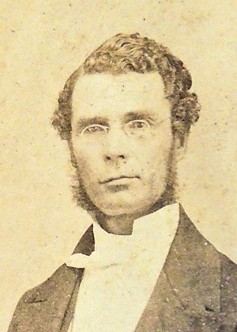
George William Gordon
### Introduction: The Martyr of Morant Bay George William Gordon stands as one of the most towering and sacrificial figures in the history of Jamaica and the broader Caribbean [1]. Proclaimed a National Hero of Jamaica in 1969 alongside his political ally [Paul Bogle](/profiles/paul-bogle), Gordon was a wealthy biracial landowner, magistrate, business magnate, and member of the Jamaican House of Assembly who defied the prejudices of his class to become the uncompromising champion of the impoverished black peasantry [2]. Operating in the tumultuous post-emancipation era of the mid-19th century, Gordon waged a relentless political and constitutional battle against colonial corruption, judicial oppression, and systemic racism [3]. His struggle reached a tragic and defining climax during the 1865 Morant Bay Rebellion, culminating in his illegal martial law execution ordered by Governor [Edward Eyre](/profiles/edward-eyre) [2]. Gordon’s martyrdom shocked the British Empire, dismantled centuries of planter-controlled oligarchic governance, and laid the cornerstone for modern Jamaican democracy and racial justice [1].  ### Early Life and Rise to Wealth George William Gordon was born into slavery around 1820 on the Cherry Garden Estate in the parish of St. Andrew, near Kingston [3]. He was the second of eight children born to Joseph Gordon, a wealthy aristocratic Scottish planter and attorney who managed numerous sugar estates across Jamaica, and Ann Rattray, an enslaved black woman on his plantation [3]. Born into the complex socio-racial hierarchy of colonial Jamaica, the young George was largely neglected by his father during his early childhood and received little formal schooling [4]. However, possessing exceptional intelligence, remarkable drive, and an insatiable appetite for learning, Gordon taught himself reading, writing, mathematics, and commercial accounting [4]. At the age of ten, Gordon was sent to school in Jamaica and subsequently entered the commercial houses of Kingston as a clerk [3]. Demonstrating extraordinary business acumen, he established his own produce and timber merchant business by his late teens [4]. By his mid-twenties, Gordon had amassed an immense personal fortune [3]. He expanded his empire aggressively, investing heavily in urban real estate, agricultural shipping, and rural plantations across Jamaica [3]. In a remarkable turn of historical irony, when his white father Joseph Gordon fell into severe financial ruin during the economic downturn following the abolition of slavery in 1834, it was George William Gordon who paid off his father's vast debts and purchased the very Cherry Garden Estate where his mother had once been enslaved [3]. Despite achieving admission into the highest echelons of Jamaican economic elite, Gordon refused to adopt the callous attitudes of the white plantocracy, remaining deeply empathetic to the struggles of the newly emancipated black masses [5]. ### Political Awakening and Religious Conversion During the 1840s and 1850s, Gordon underwent a profound spiritual and political transformation [3]. Disillusionment with the hypocrisy and moral bankruptcy of the Anglican church—which served primarily as the ideological defender of the white planter class—led Gordon to convert to the Native Baptist faith [5]. He was deeply influenced by the egalitarian teachings of radical missionary abolitionists such as [William Knibb](/profiles/william-knibb) and the revolutionary memory of National Hero [Sam Sharpe](/profiles/samuel-sharpe), who had led the 1831 Christmas Rebellion [5]. Gordon established independent Baptist chapels across the island, preaching a gospel of spiritual liberation, racial equality, and self-reliance [1]. It was during his religious organizing in the eastern parish of St. Thomas-in-the-East that Gordon discovered a passionate local deacon named [Paul Bogle](/profiles/paul-bogle), ordaining him and establishing a lifelong political and spiritual alliance [2]. In 1850, Gordon entered colonial politics, winning election to the Jamaican House of Assembly as the representative for St. Thomas-in-the-East [3]. He also served as a Justice of the Peace and a parish magistrate [3]. In the Assembly, Gordon formed the backbone of the small "Town Party" opposition, consistently voting against measures intended to tax the peasantry and restrict their voting rights [4]. He used his platform to expose corrupt public officials, condemn the deplorable conditions of colonial prisons and poor-houses, and fight for public education and healthcare for the black working class [4]. ### Champion of the Peasantry and Clash with Governor Eyre By the early 1860s, Jamaica had plunged into an acute socio-economic crisis [5]. A succession of devastating droughts destroyed local subsistence crops, while the American Civil War disrupted international trade, causing the cost of imported foodstuffs and basic textiles to skyrocket [5]. Simultaneously, the planter-controlled Assembly enacted regressive taxation that fell heavily on poor smallholders while exempting plantation owners [4]. Worse still, the colonial judicial system was entirely controlled by planter-magistrates who routinely evicted black peasants from ancestral lands and denied them fair wages [5]. George William Gordon became the most vocal and fearless critic of this oppressive system [3]. His fiery advocacy brought him into direct, bitter conflict with Governor [Edward Eyre](/profiles/edward-eyre), an autocratic colonial administrator who despised black advancement and viewed any dissent as sedition [2]. When Gordon publicly exposed a white magistrate for locking a poor black man in an outhouse without food or water, Governor Eyre retaliated by arbitrarily stripping Gordon of his commission as a Justice of the Peace and removing him from the St. Thomas vestry [3]. Undeterred, Gordon purchased even more land in the parish, subdivided it into affordable plots, and sold them to black peasants to help them meet the property qualifications required to vote [4]. > "I feel it my duty to stand up for the poor and oppressed of this land. If Governor Eyre continues his course of despotic tyranny, the grievances of the people will burst forth in an avalanche that no colonial bayonet can restrain." — George William Gordon, public address on Jamaican conditions [4] ### The Undercurrents of Rebellion (1864–1865) Tensions reached a boiling point in 1865 following the "Underhill Letter" controversy [5]. Dr. Edward Underhill, secretary of the Baptist Missionary Society in Great Britain, wrote a letter to the British Colonial Office detailing the extreme starvation and suffering of the Jamaican peasantry [5]. Governor Eyre dismissed the report as slander, prompting Gordon to organize a series of massive public protests across the island known as the "Underhill Meetings" [5]. Gordon chaired the largest meeting in Kingston, drafting resolutions demanding immediate royal intervention and agrarian reform [4]. In response to the peasants' petitions, Queen Victoria’s government issued the infamous "Queen’s Advice," a callous document distributed by Governor Eyre which told impoverished black Jamaicans that their poverty was due to laziness and advised them to work harder for planter wages rather than seek government relief [3]. The publication of the Queen’s Advice provoked indignation and despair across the island [5]. In St. Thomas-in-the-East, Gordon counseled [Paul Bogle](/profiles/paul-bogle) and local laborers to organize peaceful deputations to demand justice before the courts, warning the colonial administration that the people's patience was exhausted [2]. ### The Morant Bay Rebellion and Arrest On October 11, 1865, [Paul Bogle](/profiles/paul-bogle) led a protest march of hundreds of peasants to the Morant Bay Courthouse to protest unjust arrests and land evictions [2]. Confronted by the local volunteer militia, stones were thrown, and the militia fired directly into the crowd, killing several protesters [2]. A chaotic riot ensued; the courthouse was burned to the ground, eighteen officials and militiamen were killed, and open insurrection spread across the parish [2]. Governor [Edward Eyre](/profiles/edward-eyre) immediately declared martial law across the eastern parishes and dispatched British warships and troops to crush the uprising with ruthless brutality [2]. At the time of the rebellion, George William Gordon was residing far away at his home in Kingston, a city where civil law remained strictly in effect and martial law had not been proclaimed [3]. Gordon had took no part in the violence and had consistently advocated for constitutional, political solutions [3]. However, Governor Eyre saw the rebellion as the perfect opportunity to eliminate his most formidable political nemesis [3]. On October 17, Eyre issued a warrant for Gordon’s arrest [4]. Hearing of the warrant, Gordon demonstrated his absolute belief in the rule of law and his own innocence by voluntarily walking into military headquarters in Kingston to turn himself in [3]. ### Illegal Trial, Execution, and National Heroism Knowing that no civil court in Kingston could possibly convict Gordon of treason without evidence, Governor Eyre personally supervised Gordon's forcible capture and abduction [3]. Eyre ordered Gordon stripped, put in irons, and loaded aboard the warship *HMS Wolverine* [4]. He was illegally transported from Kingston—where martial law did not exist—directly into the martial law zone of Morant Bay to face a military tribunal [3]. On October 21, 1865, Gordon was subjected to a mock court-martial presided over by young, inexperienced British naval officers [4]. He was denied legal counsel, denied the right to call defense witnesses, and confronted with forged documents and hearsay evidence obtained from terrified prisoners under torture [4]. Despite conducting a brilliant self-defense that dismantled the prosecution's case, Gordon was found guilty of high treason and sedition and sentenced to death by hanging [3]. On the eve of his execution, confined in a darkened cell, Gordon wrote a heartbreaking yet majestic farewell letter to his beloved wife, Lucy Gordon [3]. > "I did not expect that, not being a rebel, I should have been tried and condemned in this way. I never advised or took part in any rebellion... I die peacefully, believing that the cause of justice and truth will ultimately prevail." — Excerpt from George William Gordon's last letter to his wife, Lucy Gordon, October 1865 [3] On the morning of October 23, 1865, George William Gordon was hanged from the arched ruins of the burnt Morant Bay Courthouse alongside eighteen other Jamaicans [2]. His body was left hanging for twenty-four hours before being thrown into a mass trench [4]. Days later, his comrade [Paul Bogle](/profiles/paul-bogle) executed at the exact same spot [2].  Gordon’s illegal execution unleashed a tempest of political outrage in Great Britain [1]. Liberal intellectuals, philosophers, and scientists—led by John Stuart Mill, Charles Darwin, and Thomas Huxley—formed the Jamaica Committee, demanding Governor Eyre be tried for murder [4]. Although Eyre narrowly escaped prison, he was disgraced and dismissed from office [4]. The scandal forced the British Crown to abolish Jamaica's centuries-old planter Assembly and institute Direct Crown Colony governance, implementing sweeping judicial and medical reforms that Gordon had championed for decades [1]. In 1969, the independent Government of Jamaica officially proclaimed George William Gordon a National Hero of Jamaica alongside [Paul Bogle](/profiles/paul-bogle), [Marcus Garvey](/profiles/marcus-garvey), [Norman Manley](/profiles/norman-manley), and [Alexander Bustamante](/profiles/alexander-bustamante) [1]. Today, the meeting place of the Jamaican Parliament in Kingston is proudly named **Gordon House** in his permanent honor [1]. His visage graces Jamaican currency, and his legacy stands as an immortal testament to the principle that righteous resistance against tyranny is the highest duty of a citizen [2].
View Profile →Gérard Grignon
## Introduction Gérard Grignon (born April 16, 1943, in Saint-Pierre) stands as one of the most defining political figures in the modern history of Saint Pierre and Miquelon. For over two decades, he served as the archipelago’s Deputy in the French National Assembly, vigorously defending the interests of the tiny French overseas collectivity. Situated just off the coast of Newfoundland, Canada, Saint Pierre and Miquelon is a unique remnant of the once-vast French colonial empire in North America. Grignon’s political career was forged in the crucible of geographical isolation, economic transition, and intense international diplomacy. He emerged as a fierce advocate for his homeland during a period when its primary economic lifeline—the cod fishing industry—faced total collapse due to shifting international maritime borders and environmental exhaustion. Grignon’s relentless pursuit of economic diversification, his dramatic protests against Canadian maritime policies, and his foundational role in local politics have permanently etched his name into the annals of Caribbean and transatlantic French history.  ### Early Life and the Archipelago's Identity Born in the spring of 1943 during the turbulent years of World War II, Gérard Grignon grew up in a profoundly maritime culture. Saint Pierre and Miquelon, a rugged archipelago buffeted by the icy winds of the North Atlantic, was entirely reliant on the bountiful fishing grounds of the Grand Banks. The local identity was inexorably tied to the sea, built by generations of Basque, Breton, and Norman fishermen who had braved the harsh waters for centuries. Grignon was raised in this tight-knit community, where the rhythms of life were dictated by the departure and return of the fishing fleets. Understanding the fragility of an economy based on a single resource, Grignon developed an acute awareness of the archipelago's vulnerabilities. The physical isolation from metropolitan France meant that local leaders needed to possess not only a deep understanding of local needs but also the political acumen to navigate the corridors of power in Paris. Grignon, with his passionate rhetoric and profound connection to his roots, was well-positioned to become the voice of his people on the national stage. ### Rise to Political Prominence Grignon entered the political arena during a period of shifting dynamics in the French overseas territories. Recognizing the need for a cohesive political force that prioritized the specific interests of Saint Pierre and Miquelon over the ideological battles of metropolitan France, he founded *Archipel Demain* (Archipelago Tomorrow) in 1985. This center-right political movement was designed to serve as a robust local platform, advocating for economic development, social progress, and greater autonomy within the framework of the French Republic. The turning point in Grignon’s career came in 1986. Following a by-election to replace the incumbent [Albert Pen](/profiles/albert-pen), Grignon was elected as the Deputy for Saint Pierre and Miquelon in the French National Assembly. Entering the Palais Bourbon in Paris, Grignon affiliated himself with center-right parliamentary groups, including the Union for French Democracy (UDF) and later the Union for a Popular Movement (UMP). Over the next two decades, he would be re-elected in 1988, 1993, 1997, and 2002, demonstrating the enduring trust the local population placed in his leadership. > "To represent an archipelago of just over 6,000 souls in an assembly of hundreds is not merely a matter of legislative duty; it is a relentless fight for visibility, a constant reminder to the Republic that its borders extend far beyond the continent." ### The Cod Wars and the 1993 Arrest Grignon’s tenure in the National Assembly was defined by the existential crisis that struck Saint Pierre and Miquelon in the late 1980s and early 1990s. The 1982 United Nations Convention on the Law of the Sea (UNCLOS) allowed nations to claim a 200-nautical-mile Exclusive Economic Zone (EEZ). Given the archipelago’s proximity to Canada, the overlapping claims resulted in a fierce diplomatic and legal dispute between Paris and Ottawa over the rich fishing grounds of the Grand Banks. In 1992, an international arbitration tribunal in New York issued a ruling that shocked the local population. The tribunal awarded Saint Pierre and Miquelon an EEZ that was drastically smaller than France had claimed, effectively confining the archipelago's fishing fleet to a narrow corridor and cutting them off from the most lucrative cod fishing areas. Compounding this disaster, the Canadian government, reacting to the severe depletion of cod stocks, imposed a sweeping moratorium on cod fishing in the region. The industrial fishing and processing sector, which constituted the backbone of the archipelago's economy, collapsed almost overnight. Unemployment soared, and the future of the community looked bleak.  It was during this crisis that Grignon demonstrated his uncompromising commitment to his constituents. In January 1993, tension reached a boiling point. In a highly publicized act of civil disobedience aimed at forcing the French and Canadian governments to address the crisis, Grignon, alongside Senator [Albert Pen](/profiles/albert-pen) and other local officials, boarded a local trawler. Defying the Canadian restrictions, the vessel deliberately crossed into the disputed maritime boundary. The Canadian Coast Guard intercepted the trawler, and the crew, including the two French parliamentarians, were arrested and taken to St. John’s, Newfoundland. > "The 1993 protest was a desperate cry from an isolated people. By sacrificing their own freedom, Grignon and his colleagues forced the eyes of two nations upon a crisis that threatened to erase a centuries-old way of life." Though their detention was brief, the diplomatic fallout was immense. The incident forced Paris to recognize the severity of the crisis and ultimately paved the way for a 1994 bilateral agreement between France and Canada regarding regional fisheries management. More importantly, it solidified Grignon’s reputation as a leader willing to put his own liberty on the line to defend the livelihoods of his people. ### Economic Restructuring and the Territorial Council The aftermath of the fishery collapse required a massive and painful economic transition. Grignon knew that Saint Pierre and Miquelon could no longer rely solely on the sea. As a Deputy, he tirelessly lobbied the national government for structural adjustment funds, emergency subsidies, and investment in new economic sectors. He championed initiatives to develop local tourism, modernize infrastructure, and promote the archipelago as a strategic European outpost in North America. Beyond his role in the National Assembly, Grignon also served deeply in local governance. From April 1, 1994, to July 6, 1996, he served as the President of the General Council (later known as the Territorial Council) of Saint Pierre and Miquelon. In this executive role, he was instrumental in deploying the financial aid secured from Paris to support displaced fisheries workers and fund retraining programs. Navigating the resentment and despair of a community that had lost its primary industry required a delicate balance of empathy and pragmatism. Grignon worked to diversify the economy by exploring opportunities in aquaculture, port services, and cultural tourism, emphasizing the region's unique French heritage in North America. ### Later Career and Enduring Legacy Grignon remained a steadfast presence in the National Assembly through the early 2000s. He continued to advocate for the modernization of the territory's health and education systems and pushed for improved transportation links to both mainland Canada and Europe. His deep institutional knowledge and long-standing relationships in Paris ensured that Saint Pierre and Miquelon, despite its small size, consistently punched above its weight in budget negotiations and policy discussions. In the 2007 legislative elections, shifting political winds and a desire for new leadership in the archipelago led to Grignon's defeat by [Annick Girardin](/profiles/annick-girardin), a rising star from the left-wing Radical Party of the Left (PRG). Although his tenure in the National Assembly had come to an end, his commitment to public service did not wane. Recognizing his vast experience and expertise in matters concerning overseas territories, Grignon was appointed to the French Economic, Social and Environmental Council (CESE), where he served from 2010 to 2015. Today, Gérard Grignon is remembered as the architect of modern Saint Pierre and Miquelon. He steered the archipelago through its most profound existential crisis, transitioning a society mourning the loss of its historical maritime economy toward a more diversified and resilient future. His foundation of *Archipel Demain* permanently reshaped the local political landscape, ensuring that the unique voice of the archipelago continues to be heard. Through his two decades of national legislative service and his dramatic defense of his constituents' rights on the high seas, Grignon remains a towering figure of resilience, leadership, and unwavering devotion to his island home.
View Profile →
Gertrudis Gómez de Avellaneda
### Introduction: "La Peregrina" and the Romantic Awakening Gertrudis Gómez de Avellaneda stands as one of the most visionary, courageous, and monumental literary figures of the nineteenth-century Hispanic world. Revered across the Spanish-speaking diaspora as *La Peregrina* (The Pilgrim), she shattered the entrenched gender barriers of her era to become a celebrated Romantic poet, acclaimed dramatist, pioneering feminist, and fiercely original abolitionist novelist [1]. Born in colonial Cuba during an era marked by rigid social conservatism and chattel slavery, Gómez de Avellaneda forged a transnational literary career that bridged the Caribbean and continental Europe [2]. Her masterpiece, the novel *Sab* (1841), predated Harriet Beecher Stowe's *Uncle Tom's Cabin* by more than a decade, offering a scathing indictment of Cuban slavery while simultaneously drawing revolutionary parallels between the oppression of enslaved Africans and the subjugation of women in patriarchal society [3]. Through her prolific output and fearless intellectual independence, she reshaped the contours of Caribbean literature and established an enduring legacy of progressive humanism [4]. ### Formative Years in Colonial Puerto Príncipe Gertrudis Gómez de Avellaneda was born on March 23, 1814, in the historic city of Santa María del Puerto Príncipe (modern-day Camagüey), located in the heart of central Cuba [2]. Her father, Manuel Gómez de Avellaneda, was a Spanish naval officer in charge of the port of Nuevitas, while her mother, Francisca de Arteaga y Betancourt, belonged to the wealthy Creole aristocracy of Puerto Príncipe [3]. Affectionately known as "Tula" to her intimate circle, she spent her childhood immersed in the rich cultural traditions of colonial Cuba. Her father's sudden death in 1823, followed by her mother's remarriage to a Spanish lieutenant colonel, introduced early psychological turmoil and a profound sense of displacement that would later permeate her Romantic poetry [4]. Showing prodigious literary talent from a tender age, she composed her first verses under the mentorship of the great Cuban Romantic poet [José María Heredia](/profiles/jose-maria-heredia), whose patriotic and passionate lyricism left an indelible mark on her evolving aesthetic consciousness [5]. She also engaged deeply with the intellectual currents shaping Cuban identity, paralleling the early philosophical inquiries of [Félix Varela](/profiles/felix-varela). ### Crossing the Atlantic: Exile, Literary Salons, and Pseudonyms In 1836, fearing the escalating slave rebellions and anti-colonial unrest in Cuba, her stepfather moved the family to Spain [5]. Setting sail across the Atlantic, the twenty-two-year-old Gertrudis composed one of her most famous works, *Al partir* ("On Leaving"), a heartbreaking sonnet addressed to her beloved native island that immortalized her perpetual longing for the Caribbean homeland [6]. Arriving in Andalusia, she lived briefly in A Coruña and Seville before settling in Madrid in 1840. In the bustling imperial capital, she quickly integrated into elite literary circles, adopting the evocative pseudonym *La Peregrina* to symbolize her perpetual wanderlust and spiritual exile [6]. Her vibrant intellectual salon attracted prominent Spanish Romantics, including Alberto Lista and José de Espronceda. In 1841, she published her first collection of poetry, *Poesías*, to universal acclaim. Her verse was celebrated for its extraordinary lyrical fluidity, emotional intensity, and masterful exploration of existential yearning, unrequited passion, and metaphysical questioning, cementing her position as a leading light of Hispanic Romanticism [7]. > "¡Perla del mar! ¡Estrella de Occidente! / ¡Hermosa Cuba! Tu brillante cielo / la noche cubre con su opaco velo..." ("Pearl of the sea! Star of the West! / Beautiful Cuba! Your brilliant sky / night covers with its opaque veil...") — Gertrudis Gómez de Avellaneda, *Al partir* [6]  ### *Sab*: Abolitionist Pioneerism in Hispanic Literature In 1841, Gómez de Avellaneda published her groundbreaking anti-slavery novel, *Sab*, in Madrid [7]. Set against the lush backdrop of the sugar plantations of Puerto Príncipe, the novel tells the tragic story of Sab, an enslaved mulatto man of extraordinary moral nobility and intellectual refinement who falls deeply in love with his white master's daughter, Carlota [8]. Through Sab's eloquent monologues and poignant observations, the novel delivers a devastating critique of chattel slavery, exposing the inherent cruelty, economic greed, and moral hypocrisy of the colonial plantation economy [8]. Remarkably progressive for its time, *Sab* directly compared the physical bondage of enslaved laborers to the legal and social bondage of women within nineteenth-century marriage, asserting that women, denied property rights and personal autonomy, were effectively enslaved within gilded domestic spheres [9]. This radical intersectional analysis shocked Spanish colonial authorities; royal censors viewed the book as dangerous and subversive, issuing a royal decree that banned the importation and circulation of *Sab* within Cuba [9]. Alongside contemporaries like [Cirilo Villaverde](/profiles/cirilo-villaverde) and intellectual patron [Domingo Delmonte](/profiles/domingo-delmonte), Gómez de Avellaneda laid the moral foundation for the Cuban abolitionist movement. ### Feminist Pioneer: *Dos mujeres* and Institutional Defiance Never one to conform to societal expectations, Gómez de Avellaneda boldly challenged nineteenth-century moral orthodoxy in both her life and work. In 1842, she published her second major novel, *Dos mujeres* ("Two Women"), which boldly defended a woman's right to intellectual independence, emotional fulfillment, and divorce—a scandalous proposition in deeply Catholic Spain [10]. Her personal life was equally independent; she engaged in passionate, highly publicized romances, famously maintaining a fiery correspondence with the intellectual Ignacio de Cepeda and bearing a daughter out of wedlock with the poet Gabriel García Tassára [10]. In 1853, following the death of the poet Juan Nicasio Gallego, Gómez de Avellaneda put her name forward for election to the prestigious Royal Spanish Academy (Real Academia Española) [11]. Despite possessing literary credentials superior to most male academicians, her candidacy was fiercely rejected on the sole grounds of her gender. This institutional sexism sparked widespread public debate, prompting her to write brilliant essays defending women's intellectual equality and historical contributions to global civilization [11]. > "No es la mujer un ser inferior destinado exclusivamente al placer o a la servidumbre del hombre; es su par intelectual y moral en la gran obra de la civilización." ("Woman is not an inferior being destined exclusively for the pleasure or servitude of man; she is his intellectual and moral peer in the great work of civilization.") — Gertrudis Gómez de Avellaneda [11]  ### Dramatist of Triumph: The Stage and Spiritual Exploration Beyond poetry and fiction, Gómez de Avellaneda achieved spectacular triumph as one of the preeminent playwrights of the Spanish Romantic theater [12]. During the 1840s and 1850s, sixteen of her original dramas were produced on the premier stages of Madrid. Her historical tragedies, such as *Alfonso Munio* (1844), *Saúl* (1849), and her acknowledged dramatic masterpiece *Baltasar* (1858), demonstrated an extraordinary command of dramatic tension, majestic biblical themes, and psychological complexity [12]. Critics praised her theatrical genius, noting that she infused classical Spanish drama with renewed vigor and profound philosophical depth. Following the premature death of her first husband, Pedro Verdugo, and later her second husband, Domingo Verdugo, her later writings took on a deeply spiritual, mystical tone. She explored themes of divine grace, human mortality, and redemptive suffering, establishing herself as a versatile woman of letters capable of mastering every major literary genre of her century [13]. ### Return to Cuba, Coronation in Havana, and Final Years In 1859, Gómez de Avellaneda returned triumphant to her native Cuba alongside her second husband, who had been appointed to a high governmental post [13]. Her homecoming was met with ecstatic national jubilation. On January 27, 1860, in a grand ceremony at the Teatro Tacón in Havana, she was publicly crowned with a golden laurel wreath as Cuba's supreme poetess, an event attended by the island's intellectual elite and celebrated by national icon [José Martí](/profiles/jose-marti) in subsequent literary histories [14]. During her stay in Cuba, she founded and edited the pioneering literary magazine *Álbum Cubano de lo Bueno y lo Bello*, which featured articles advocating for female education, moral progress, and cultural development [14]. She also mentored emerging writers, including Afro-Cuban poets inspired by [Gabriel de la Concepción Valdés](/profiles/gabriel-de-la-concepcion-valdes) (Plácido). Following her husband's death in 1863, a grieving Gómez de Avellaneda returned to Madrid via the United States and London. Spending her final years editing her complete works, she died in Madrid on February 1, 1873 [15]. Today, she is immortalized as a foundational architect of Caribbean literature and a pioneer of global feminist and abolitionist thought. ### Literary Legacy and Modern Reevaluation Gertrudis Gómez de Avellaneda's extensive literary canon continues to captivate modern scholars and readers worldwide. As one of the earliest voices linking anti-colonialism, abolitionism, and feminism in the Hispanic world, her pioneering contributions remain a vital cornerstone of Caribbean intellectual history.
View Profile →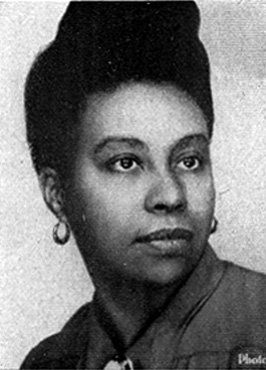
Gerty Archimède
## Gerty Archimède: The Trailblazing Advocate of the French West Indies ### Introduction and Historical Significance Gerty Marie Archimède stands as one of the most formidable legal minds, political pioneers, and feminist icons in the history of the Caribbean [1]. Born into the rigid colonial hierarchies of early twentieth-century Guadeloupe, she shattered systemic gender and racial barriers to become the very first woman lawyer in the French West Indies and only the second Black woman ever elected to the French National Assembly [2]. Operating during a turbulent era marked by the decline of classical colonialism, post-World War II departmentalization, and global labor awakenings, Archimède dedicated her entire life to the defense of the disenfranchised. Her fierce advocacy placed her in conversation and collaboration with leading intellectual and political luminaries of the era, including Martinican poet and statesman [Aimé Césaire](/profiles/aime-cesaire), French Guianese colonial administrator [Félix Éboué](/profiles/felix-eboue), and fellow trailblazing Guadeloupean deputy [Eugénie Éboué-Tell](/profiles/eugenie-eboue-tell) [3]. Throughout her career, Archimède wielded the law not merely as an instrument of courtroom defense, but as a revolutionary weapon for social justice, anticolonial solidarity, and the liberation of Antillean women [4]. ### Early Life and Foundations in Morne-à-l'Eau Gerty Archimède was born on April 26, 1909, in the vibrant agrarian municipality of Morne-à-l'Eau, located on the island of Grande-Terre in Guadeloupe [1]. She was the eldest of five daughters born to Justin Archimède and Marie-Mariette Françoise [5]. Her father, an artisan baker by trade, was a deeply civic-minded individual who rose to prominence in local politics, serving both as a member of the General Council and as the mayor of Morne-à-l'Eau [3]. From her earliest childhood, Gerty was immersed in political discourse, social debates, and the daily struggles of rural Guadeloupean workers. Justin Archimède instilled in his daughters a fervent belief in the power of education, civic duty, and moral courage, refusing to let conventional gender expectations limit their intellectual horizons [6]. During the 1920s, educational opportunities for women of color in the French Antilles were severely restricted. Undeterred, Archimède completed her primary education with excellence in her hometown before attending the Lycée Gerville-Réache in Basse-Terre [2]. Demonstrating a sharp analytical mind and a passion for justice, she moved to neighboring Martinique to begin her preparatory legal studies [5]. At the time, the intellectual climate in the French West Indies was beginning to stir with early expressions of Négritude and cultural pride, nurtured by pioneering thinkers such as [Paulette Nardal](/profiles/paulette-nardal) [7]. Fueled by these burgeoning movements, Archimède resolved to travel across the Atlantic to complete her legal education in metropolitan France.  ### Academic Pursuits and Legal Trailblazing Arriving in Paris during the lively and politically charged interwar period, Archimède enrolled at the prestigious Sorbonne to pursue her law degree [3]. Life in the French capital presented significant financial and cultural challenges for a young Caribbean woman. To finance her rigorous university studies, she worked diligently in various administrative and banking positions, displaying the extraordinary determination and resilience that would define her entire career [6]. In Paris, she witnessed firsthand the intellectual vibrancy of the Antillean and African diaspora, further sharpening her understanding of colonial exploitation and workers' rights [4]. Upon successfully obtaining her law degree, Archimède made a triumphant return to her homeland. In 1939, she etched her name into history by officially joining the Bar of Guadeloupe [1]. By doing so, she became the first female lawyer to practice in the French West Indies and was celebrated across the francophone world as a groundbreaking figure for women of color in the legal profession [2]. Entering a courtroom domain entirely dominated by elite colonial men, Archimède quickly earned a reputation as a fierce, brilliant, and deeply compassionate litigator. She chose not to cater to wealthy commercial clients; instead, she focused her legal practice on defending impoverished agricultural laborers, trade unionists, and victims of systemic exploitation [5]. Her courtroom oratory was legendary, blending precise statutory knowledge with passionate appeals to human dignity. ### Political Awakening and the Departmentalization Era The aftermath of World War II catalyzed a monumental shift in the political landscape of the French Caribbean [3]. As the old colonial regime faced mounting demands for equality and self-determination, Archimède stepped onto the national political stage. She formally joined the French Communist Party (PCF), attracted by its uncompromising platform advocating for worker solidarity, anticolonial liberation, and social equality [6]. In the historic elections of 1946, Archimède was elected as a deputy representing Guadeloupe in the French National Assembly [1]. Serving alongside [Eugénie Éboué-Tell](/profiles/eugenie-eboue-tell), she became one of the first two female deputies from Guadeloupe and the second Black woman to sit in the French parliament [2]. During her legislative tenure from 1946 to 1951, Archimède played a pivotal role in the enactment and implementation of the historic Law of Departmentalization of March 19, 1946 [4]. This transformational law officially integrated Guadeloupe, Martinique, French Guiana, and Réunion into the French Republic as overseas departments. Archimède fought tirelessly on the parliamentary floor to ensure that departmentalization was not merely a symbolic legal status, but a guarantee of substantive economic and social equality [7]. She campaigned vigorously for the extension of French social security benefits, labor protections, equal healthcare access, and standardized wages for Caribbean workers, fiercely challenging metropolitan parliamentarians who sought to maintain colonial-era wage differentials [5]. > [!NOTE] > Throughout her legislative service, Archimède viewed departmentalization as a battleground for human rights, relentlessly pressing the French state to fulfill its promises of liberty, equality, and fraternity for all Antillean citizens. ### Advocacy for Women and Grassroots Leadership Beyond her parliamentary achievements in Paris, Archimède recognized that lasting social transformation required grassroots empowerment at home [6]. In 1948, she founded the Guadeloupean federation of the Union of French Women, which shortly thereafter evolved into the autonomous Union des Femmes Guadeloupéennes (UFG) [2]. As the guiding force behind the UFG, Archimède mobilized thousands of working-class women across the archipelago. The organization became a powerful vehicle for progressive change, establishing literacy programs, demanding maternity protections, fighting for equal pay for female agricultural workers, and advocating for child welfare services [4]. Archimède also maintained a robust presence in local governance. In 1945, she was elected as a general councillor for the canton of Morne-à-l'Eau, serving as a vocal advocate for rural municipal development [1]. Later, in 1953, she was elected as the deputy mayor of the capital city, Basse-Terre, working closely with Mayor Elie Chaufrein to improve public infrastructure, sanitation, and educational facilities for underserved neighborhoods [3]. Her leadership style was deeply rooted in community accessibility; her home and law office remained open to anyone seeking legal counsel or protection from injustice, regardless of their ability to pay [5]. > "Gerty Archimède was not merely a defender of the law; she was a shield for the oppressed, a beacon of feminist pride, and an unyielding force who taught Caribbean women that justice is not granted by the powerful—it must be claimed with courage." — Antillean Historical Review [6] ### Bâtonnière and International Activism Archimède’s legal prowess reached its formal zenith in 1967 when her peers elected her as the Bâtonnière (President of the Bar Association) of Guadeloupe, a prestigious position she held with distinction until 1970 [4]. She was the first woman to lead the bar, reinforcing her status as a pioneer in judicial leadership [2]. During this period, the Caribbean and global political climate was rife with civil rights struggles and revolutionary movements. Archimède utilized her stature as Bâtonnière to champion international human rights and anticolonial solidarity across the Americas, paralleling the intellectual trajectories of radical Caribbean theorists like [Frantz Fanon](/profiles/frantz-fanon) [7]. One of the most defining and dramatic episodes of her legal career occurred in 1969 involving the prominent American civil rights activist and philosopher [Angela Davis](/profiles/angela-davis) [6]. While traveling back from a conference in Havana, Cuba, Davis and her companions stopped in Guadeloupe, where French colonial customs officials arbitrarily confiscated their passports under political pressure [6]. Facing imminent detention and harassment, Davis sought the counsel of Archimède. With commanding legal authority and fearless intimidation of the customs authorities, Archimède intervened directly at the airport. She successfully forced the officials to return the passports, ensuring Davis's safe passage [6]. In her autobiography, Angela Davis warmly commemorated Archimède’s profound dignity, sharp intelligence, and unwavering solidarity, describing her as an unforgettable hero of the international Black liberation struggle [6]. ### Later Years and Enduring Legacy Gerty Archimède continued her tireless legal and political advocacy until her health began to decline in the late 1970s [1]. She passed away on April 15, 1980, in her beloved hometown of Morne-à-l'Eau at the age of 70, leaving behind an extraordinary legacy of public service [5]. Her funeral was attended by thousands of mourning citizens, workers, and dignitaries from across the Caribbean, testifying to the deep affection and reverence she commanded [3]. Today, Archimède is immortalized as a foundational matriarch of Guadeloupean modern history [6]. Her former residence in Basse-Terre has been preserved and transformed into the Musée Gerty-Archimède, serving as a national center for historical education and human rights advocacy [4]. Numerous public schools, streets, and squares across Guadeloupe, as well as prominent thoroughfares in Paris and Nanterre, bear her name in permanent tribute to her monumental contributions [7]. By breaking gender barriers in the courtroom and parliament, defending the disenfranchised, and championing Caribbean dignity, Gerty Archimède established an enduring blueprint for feminist leadership and legal activism that continues to inspire generations throughout the global diaspora [4].
View Profile →
Gilberto Francois "Betico" Croes
# Gilberto Francois "Betico" Croes ### Introduction and Early Life Gilberto François "Betico" Croes (25 January 1938 – 26 November 1986) remains one of the most revered and foundational figures in the history of the Caribbean, standing tall as a beacon of Aruban sovereignty and national identity. Widely affectionately known as the "Libertador" (Liberator) and the undisputed "father of the Aruban nation," his life’s work fundamentally altered the political geography of the Kingdom of the Netherlands and secured a distinct, autonomous future for the island of Aruba. Born on January 25, 1938, in the town of Santa Cruz, Aruba, Croes grew up in a society that was rapidly changing yet still politically subjugated to the centralized administration in Curaçao under the framework of the Netherlands Antilles. His upbringing in Santa Cruz, deeply embedded in the local culture, instilled in him a profound love for his homeland and its people. This intrinsic connection to Aruban heritage would later fuel his relentless drive for self-determination. Like many ambitious young men of his era seeking advancement, Croes left the Caribbean to pursue higher education in the Netherlands. He attended the Teacher's Training College in Hilversum, a period that not only provided him with formal pedagogical training but also exposed him to European political thought, the mechanisms of democratic governance, and the stark contrast between colonial administration and self-rule. In 1959, he earned his headmaster’s certificate and returned to Aruba, determined to contribute to his community. He began his professional career as a dedicated educator, working as a teacher at the Sint Jozef School and later at Antonius College. His time in the classroom was formative; it allowed him to connect directly with the younger generation and their families, deeply understanding their aspirations, frustrations, and the pervasive feeling of being politically marginalized within the Antillean structure. ### The Rise to Political Prominence Croes’s transition from education to politics was driven by his growing conviction that systemic change was necessary to secure Aruba’s future. In 1967, he officially entered the political arena as a member of the Aruban People's Party (AVP), one of the established political forces on the island. He quickly demonstrated an innate political acumen, a charismatic speaking style, and an ability to mobilize the masses. However, his vision for Aruba's immediate and aggressive pursuit of autonomy clashed with the more conservative elements within the AVP. Failing to secure the leadership of the party and realizing that the existing political apparatus was insufficient to achieve his ambitious goals, Croes made a decisive and historic move. In 1971, he broke away from the AVP and founded his own political party, the *Movimiento Electoral di Pueblo* (MEP). The MEP was not just another political faction; it was a movement built entirely around the principle of self-determination and the pursuit of a separate status for Aruba. As the founding leader of the MEP, a position he would hold until his untimely death, Croes galvanized the Aruban electorate. He articulated a vision of an Aruba that governed its own internal affairs, managed its own economy, and celebrated its own distinct cultural identity, free from the overriding influence of Curaçao. > "Si mi cai na caminda, gara e bandera y sigui cu e lucha." > *(If I fall down along the way, grab the flag and continue the battle.)* > — Betico Croes, embodying his relentless spirit for Aruban autonomy.  ### The Struggle for Status Aparte The central pillar of Croes's political career was the relentless campaign for *status aparte*—a separate, autonomous status within the Kingdom of the Netherlands, effectively seceding from the Netherlands Antilles but remaining under the Dutch crown. This was a complex and unprecedented demand that required navigating intense resistance not only from the central Antillean government in Willemstad but also from the Dutch government in The Hague, which was hesitant to fragment its Caribbean territories. Croes employed a multifaceted strategy that combined grassroots mobilization at home with high-stakes diplomatic maneuvering abroad. He traveled extensively throughout the region and internationally, seeking support from neighboring Latin American countries and presenting Aruba's case to international forums. His diplomatic efforts were crucial in elevating the Aruban cause from a domestic administrative dispute to an international question of self-determination. At home, he led the call for the historic 1977 referendum, a masterstroke of democratic leverage. In this referendum, a vast and overwhelming majority of the Aruban population voted in favor of the *status aparte*. This undeniable mandate from the people provided Croes with the ultimate political ammunition. Armed with the democratic will of the Aruban people, he engaged in grueling negotiations with the Dutch government. The culmination of these efforts was the Round Table Conference in 1981, and eventually, the definitive agreement that paved the way for Aruba's transition to a separate country within the Kingdom. ### Forging a National Identity Betico Croes recognized that true autonomy required more than just constitutional changes; it required the forging of a strong, unifying national identity. He understood the power of symbols and was instrumental in institutionalizing the markers of Aruban nationhood. Long before the *status aparte* was officially realized, Croes championed the creation of an Aruban flag and a national anthem. In 1976, largely due to his relentless advocacy, Aruba officially adopted its own flag—a bold design featuring a red star and yellow stripes on a field of blue, symbolizing the island's unique heritage and its aspirations. In the same year, "Aruba Dushi Tera" was officially adopted as the national anthem. These were not mere administrative acts; they were profound assertions of Aruban distinctiveness. By giving the people a flag to rally behind and an anthem to sing, Croes cemented the emotional and cultural foundation of the new nation he was fighting to build. ### Tragic End and Enduring Legacy The tragedy of Betico Croes’s life is that he did not live to fully see the realization of his ultimate dream. On the night of December 31, 1985—just hours before Aruba’s *status aparte* was to officially take effect on January 1, 1986—Croes was involved in a horrific and devastating car accident. The crash left him with severe injuries, and he slipped into a profound coma. Despite extensive medical care in a Dutch nursing facility, he never regained consciousness. He passed away nearly a year later, on November 26, 1986. His death sent shockwaves of grief throughout Aruba and the broader Caribbean. The man who had fought so hard to bring his nation to the threshold of a new era was lost just as they crossed it. However, in death, Croes was elevated from a political leader to an immortal national hero. He is venerated as the "Libertador," the architect of modern Aruba. Today, his legacy is ubiquitous across the island. His birthday, January 25, is celebrated annually as "Betico Croes Day," an official national holiday marked by cultural events, sporting competitions, and solemn memorial services that celebrate Aruban identity. Plazas, streets, and monuments, including a prominent statue in Oranjestad, stand in his honor, serving as constant reminders of his sacrifice and vision. Betico Croes's life is a testament to the power of unwavering conviction. He transformed a localized feeling of marginalization into a successful, peaceful democratic movement for self-determination. His story is not just an Aruban story; it is a critical chapter in the history of Caribbean decolonization, demonstrating how charismatic leadership and democratic mobilization can reshape political realities. He remains the eternal symbol of Aruban pride and autonomy. Furthermore, his influence extended beyond the borders of Aruba. His successful negotiation of *status aparte* set a precedent within the Kingdom of the Netherlands, ultimately influencing the later dismantling of the Netherlands Antilles in 2010, when Curaçao and Sint Maarten also acquired similar autonomous status. Betico Croes, the teacher from Santa Cruz, taught his nation how to stand on its own two feet, leaving behind a legacy that will endure as long as the Aruban flag flies.
View Profile →
Gladys Morrell
### Introduction Gladys Carlyon De Courcy Misick Morrell (1888–1969) stands as one of the most transformative figures in Bermudian history. An unyielding advocate for women's rights, social welfare, and environmental preservation, Morrell dedicated her life to challenging the rigid patriarchal systems of colonial Bermuda. She is best remembered as the primary architect and enduring leader of the Bermuda women’s suffrage movement, a thirty-year campaign that finally broke the political monopoly of men on the island. Recognized posthumously as a National Hero of Bermuda in 2015, Morrell’s legacy extends far beyond the ballot box; she was a pioneer who helped build the foundations of modern healthcare and social services in her homeland. ### Early Life and Deep Bermudian Roots Gladys was born on June 2, 1888, in the western parish of Somerset, Bermuda. She was born into a family of substantial privilege and political standing. Her father, Terence Misick, served as a Member of the Colonial Parliament, providing Gladys with a front-row seat to the workings of political power—and its glaring exclusions. Her mother, Thalia Jane Dalzell Misick (née Wells), was born in British Guiana to Bermudian parents, underscoring the family's deep roots within the broader Caribbean and colonial Atlantic spheres. Growing up in the late 19th and early 20th centuries, Morrell lived in a Bermuda that was strictly stratified by race, class, and gender. Political power was monopolized by a small oligarchy of white, male property owners. Women, regardless of their wealth, property, or education, were entirely excluded from the franchise and the halls of power. From a young age, Morrell displayed a sharp intellect and an acute awareness of these injustices, chafing against the societal expectations that sought to confine women of her class to domestic and purely social roles. ### Education and the Spark of Activism Unlike most Bermudian girls of her era, Morrell pursued a rigorous formal education. She initially attended the Bermuda High School for Girls, where she demonstrated a formidable academic aptitude. Driven by a desire for higher learning and professional advancement, she traveled to England to continue her education. She enrolled at the North London Collegiate School for Girls, an institution known for its progressive approach to female education, before securing a scholarship to Royal Holloway College, part of the University of London. In 1911, she graduated with a Bachelor of Arts honors degree in English, becoming one of the first Bermudian women to earn a university degree. > "A society that silences the voices of half its citizens is a society that operates with half its wisdom." It was during these formative years in London that the seeds of her lifelong activism were sown. Morrell harbored a deep ambition to become a lawyer, but this path was abruptly blocked: law schools and the legal profession in England were completely barred to women at the time. This institutional discrimination profoundly radicalized her. Denied a legal career, she channeled her formidable energies into the burgeoning British women’s suffrage movement. She aligned herself with prominent suffragists like Millicent Fawcett, participating in rallies, meetings, and major demonstrations. Notably, she took part in the famous suffrage march from Land's End to Taunton, enduring public hostility to demand the right to vote. These experiences in the crucible of the British suffrage campaign provided Morrell with the tactical knowledge, political vocabulary, and unshakeable resolve she would later deploy in Bermuda. ### World War I and Global Perspectives Following her graduation, Morrell traveled to India, gaining further exposure to the complexities of the British Empire and the diverse struggles of its subjects. When World War I erupted, she did not retreat to the safety of Bermuda. Instead, she volunteered for the Red Cross, demonstrating her commitment to service and her willingness to face danger. She worked near the front lines in Verdun, France, one of the war's most brutal and prolonged battles. There, she tended to wounded soldiers, assisted with critical food distribution, and witnessed firsthand the immense sacrifices made by men and women alike. This wartime experience solidified her belief in the fundamental equality of the sexes in bearing the burdens of society, reinforcing her conviction that women must also share in its political direction. ### The Thirty-Year Struggle for Suffrage Returning to Bermuda after the war, Morrell found her homeland frustratingly unchanged. The political machinery remained firmly in the grip of men, and the idea of women voting was still widely dismissed as radical and unnatural. Undeterred, Morrell set out to dismantle this patriarchal edifice. In 1923, she co-founded the Bermuda Woman Suffrage Society (BWSS) and served as its indefatigable secretary and primary strategist.  The campaign she led was characterized by relentless organization, eloquent advocacy, and strategic civil disobedience. Morrell recognized that the most potent weapon in the suffragists' arsenal was the very law that excluded them. The Bermudian franchise was based on property ownership, yet female property owners were denied the vote. Morrell and her allies weaponized this contradiction by reviving the classic democratic rallying cry: "Taxation without representation is tyranny." In a series of highly publicized acts of civil disobedience, Morrell and other suffragists simply refused to pay their parish taxes. The local government responded by seizing their property. Year after year, the authorities would confiscate Morrell’s furniture and put it up for public auction. In a coordinated display of solidarity, her fellow suffragists and supporters would attend the auctions, buy back the furniture, and promptly return it to her home. This annual spectacle embarrassed the colonial government, garnered significant press attention both locally and abroad, and kept the suffrage issue squarely in the public eye. ### The Landmark Victory of 1944 The struggle was long and arduous. Morrell faced entrenched sexism, public ridicule, and fierce resistance from the conservative establishment. However, her persistence, combined with the changing global tide of women's rights following World War II, gradually eroded the opposition. Finally, in 1944, after three decades of unyielding pressure, the Bermuda House of Assembly capitulated. A bill was passed granting property-owning women the right to vote. While this victory was a crucial milestone, it was not the end of the journey. The 1944 act only enfranchised women who met the same stringent property qualifications required of men, leaving many working-class and Black Bermudian women without a voice. However, Morrell’s triumph broke the fundamental gender barrier, laying the essential groundwork for the later struggles led by figures like [E.F. Gordon](/profiles/e-f-gordon) and [Roosevelt Brown](/profiles/roosevelt-brown), which eventually culminated in universal adult suffrage in 1963. ### Beyond the Ballot: Healthcare and Social Welfare Gladys Morrell’s vision for Bermuda extended far beyond political rights; she was deeply concerned with the island's social and physical well-being. Recognizing the dire lack of healthcare access for many Bermudians, particularly in rural and poorer parishes, she co-founded the Bermuda Welfare Society. Through this organization, Morrell was instrumental in establishing Bermuda's first district nursing service. This initiative brought trained nurses directly into communities to provide essential care, significantly reducing infant mortality and improving public health outcomes across the island. Her advocacy in this arena demonstrated her holistic approach to social justice, recognizing that political enfranchisement meant little without the basic right to health and human dignity. She also campaigned vigorously for better educational opportunities for women, fighting to establish college scholarships so that other young Bermudian women could follow in her academic footsteps. ### Environmental Conservation and Later Life As she advanced in age, Morrell's activism broadened to encompass the natural environment of her beloved island. She was acutely aware of the threat that rapid development posed to Bermuda’s fragile ecosystem. In 1951, she took decisive action to preserve a piece of the island's natural heritage by donating a two-acre tract of land in Somerset to the Imperial Order of the Daughters of the Empire (Sandys Chapter). Even after the dissolution of the suffrage society following the 1944 victory, Morrell remained a vital force in civic life. She actively mentored younger generations of women, encouraging them to step into the political arena and supporting organizations like the Bermuda Civic and Political Association. She understood that securing the vote was only the first step; women now needed to use that power to shape the island's future. ### Death and Enduring Legacy Gladys Morrell passed away on January 6, 1969, at the age of 80. She was buried in Somerset, the parish of her birth, leaving behind a Bermuda profoundly changed by her lifetime of labor. Her legacy was officially cemented in 2015 when the Government of Bermuda posthumously declared her a National Hero, honoring her monumental contributions to the island’s social and political evolution. Today, the land she donated in 1951 is managed by the Bermuda National Trust and is known as the Gladys Morrell Nature Reserve. This tranquil space, perched on a hill above Mangrove Bay and home to endemic flora, serves as a living monument to a woman who fought tirelessly to protect and elevate her community. Gladys Morrell remains an enduring symbol of courage, resilience, and the relentless pursuit of equality, her name forever etched into the foundation of modern, democratic Bermuda.
View Profile →Gwendolyn Lizarraga
### Introduction Gwendolyn Margaret Lizarraga, MBE (née Smith; July 11, 1901 – June 9, 1975), affectionately revered across Belize as "Madam Liz," stands as a towering colossus in the socio-political and economic emancipation of modern Belize [1][2]. A fearless iconoclast, pioneering entrepreneur, and impassioned champion of working-class women, she shattered centuries of entrenched patriarchal tradition in what was then British Honduras [3]. In 1961, she inscribed her name into the history books by becoming the first woman ever elected to the national Legislative Assembly [1][4]. Shortly thereafter, she broke another monumental barrier when Premier [George Price](/profiles/george-price) appointed her as the country’s first female Cabinet Minister, entrusting her with the vital portfolios of Education, Housing, and Social Services [2][5]. Whether commanding timber camps in the dense mahogany jungles or commanding respect on the floor of parliament, Madam Liz fought relentlessly for gender equality, fair labor standards, and the fundamental dignity of the Belizean people [3][6]. ### Early Life, Education, and Entrepreneurial Defiance Gwendolyn Margaret Smith was born on July 11, 1901, in the remote settlement of Maskall Village in the Belize District of British Honduras [1][2]. Born to Sidney Smith and Guadalupe Baeza, she spent her formative years navigating both the vibrant urban culture of Belize City and the rugged rural hinterlands [1]. She received her early education at Mr. Datsun Primary School and St. Mary’s Primary School, before attending the prestigious St. Catherine’s Academy, a girls' secondary institution run by the Sisters of Mercy that instilled in her a sharp analytical intellect and a deep sense of moral obligation to the underprivileged [1][2]. In 1926, at the age of twenty-five, she married Victor Manuel Lizarraga, a talented photographer, with whom she built a loving family comprising five children [1][5]. Refusing to be confined by the restrictive Victorian gender norms that dictated early twentieth-century colonial society, Gwendolyn ventured boldly into the male-dominated world of commerce, agriculture, and forestry [3]. She established and personally managed extensive chicle and mahogany timber operations in the dense interior rainforests of British Honduras [1][2]. In an era when respectable women were expected to be demure and domestic, Madam Liz became a legendary figure of defiance and executive authority. She routinely drove a rugged Land Rover over treacherous logging trails, wore trousers and knee-high leather boots, carried a licensed sidearm for protection in the wilderness, and smoked cigarettes with unflinching self-assurance [1][3]. Operating in a cutthroat colonial industry dominated by powerful foreign conglomerates like the Belize Estate and Produce Company, she held her ground with extraordinary business acumen. She earned the fierce, lifelong loyalty of her forest workers—known locally as chicleros and mahogany cutters—by treating them with unprecedented fairness, humanity, and respect [3][5]. ### Championing Labor Rights and Equal Pay Madam Liz’s firsthand experiences as an employer in the remote timber camps exposed her directly to the severe economic exploitation and systemic inequalities suffered by the Belizean working class, particularly female laborers [3][6]. Long before organized feminist movements gained a foothold in the Caribbean basin, she emerged as a vocal and uncompromising crusader for labor rights and gender equity [1][6]. She instituted strict revolutionary policies on her own agricultural and timber concessions, guaranteeing equal pay for equal work regardless of gender—a radical and unprecedented stance in the 1930s and 1940s [1][3]. As the labor movement in British Honduras began to coalesce under early working-class champions like [Antonio Soberanis Gómez](/profiles/antonio-soberanis-gomez), Gwendolyn Lizarraga lent her formidable voice, organizational skill, and financial resources to the anti-colonial labor struggle [1][3]. In April 1943, during the foundational organizing meetings of the British Honduran Trade Union (BHTU), she was invited as a keynote speaker [1][3]. Addressing a packed hall of male laborers and union organizers, she passionately urged trade union leaders to embed explicit protections for female workers into their core constitutional platform, demanding equal wages, humane working conditions, and an absolute end to the gender wage gap [1][3][6]. Her impassioned speech galvanized working women across Belize City, establishing her as the undisputed political godmother of the Belizean women's rights movement [3][4]. > "Where there is hatred, let us sow love; where there is oppression, let us plant the seeds of justice and equal reward for the toil of every woman's hand." [4][5] ### Grassroots Mobilization: The United Women's Group and Credit Union Recognizing that true socio-economic liberation required systematic political organization, Madam Liz aligned herself with the burgeoning nationalist anti-colonial movement led by [George Price](/profiles/george-price) and the People's United Party (PUP) [5][7]. In 1959, she took a historic step by founding the United Women's Group (UWG), conceived as the dynamic women's socio-political wing of the PUP [3][6]. Traveling tirelessly by boat, truck, and foot across coastal villages, interior towns, and river settlements, she mobilized thousands of women from diverse ethnic backgrounds—Creole, Mestizo, Garifuna, and Maya—uniting them into a formidable, disciplined political constituency [3][6]. Through the UWG, women were educated on their civil rights, encouraged to participate actively in public discourse, and prepared for leadership roles in community governance [3][6].  Madam Liz understood with profound structural clarity that political empowerment was inextricably linked to financial independence [3][7]. In colonial Belize, working-class women were systematically barred from accessing traditional commercial bank loans or acquiring real estate independently of male co-signers or husbands [3]. To shatter this economic servitude, she co-founded the United Women's Credit Union [2][3][7]. Through this cooperative financial institution, modest weekly savings from washerwomen, cooks, teachers, and domestic workers were pooled together into a collective capital fund [3]. Under Madam Liz's guidance, the credit union provided accessible micro-loans that enabled hundreds of Belizean women to purchase their own parcels of land, construct family homes, and establish independent small enterprises [2][3][7]. This initiative fundamentally altered the socio-economic landscape of Belize City, transforming marginalized women into autonomous property owners and empowered economic actors [3][7]. ### Political Breakthrough: First Female Legislator and Cabinet Minister By 1961, Madam Liz’s immense grassroots popularity and tangible contributions to national development made her a natural and formidable candidate for national political office [1][4]. In the historic general election of March 1961—the first held under a new ministerial constitution granting greater self-governance—she stood as the People's United Party candidate for the Pickstock electoral division in Belize City [1][4]. Running a spirited, highly organized campaign that galvanized the urban working class, she won a resounding victory by a landslide, etching her name indelibly in history as the first woman ever elected to the British Honduras Legislative Assembly [1][4][7]. Following her electoral triumph, Premier [George Price](/profiles/george-price) recognized her exceptional executive abilities and visionary dynamism, appointing her as Minister of Education, Housing, and Social Services [2][5][7]. With this landmark appointment, she became the first woman in the history of Belize to hold a Cabinet portfolio [1][2]. Madam Liz approached her ministerial duties with the same relentless energy and practical efficiency that characterized her business career [3]. She was decisively re-elected by her Pickstock constituents in the general elections of 1965 and 1969, serving continuously in Cabinet for thirteen transformative years [1][4]. As Minister of Housing, she spearheaded visionary urban planning schemes to alleviate the squalid, overcrowded living conditions of the urban poor [2][7]. She oversaw the acquisition of land and the construction of new low-cost residential neighborhoods, most notably King's Park in Belize City, ensuring that working-class families had access to affordable, dignified housing equipped with proper sanitation and clean water [2][7]. As Minister of Education, she democratized access to secondary learning by establishing the country’s first national system of public junior secondary schools, breaking the elite denominational monopoly on higher education and opening academic doors for thousands of underprivileged youth across rural and urban zones [2][5][7]. In Social Services, she expanded welfare protections for elderly citizens, orphaned children, and destitute families, laying the institutional foundations of Belize's modern social safety net [2][7]. ### Later Years, National Honors, and Immortal Legacy By 1974, declining health forced Madam Liz to step back from active political life, retiring from her cabinet post and legislative seat shortly before the 1974 general election [1][4]. Even in retirement, she remained a revered national matriarch and elder stateswoman, frequently consulted by political leaders, trade unionists, and grassroots activists seeking her wisdom and moral guidance [3]. On June 9, 1975, Gwendolyn Margaret Lizarraga passed away peacefully in Belize City at the age of seventy-three, leaving behind a nation profoundly and permanently transformed by her courage, compassion, and vision [1][2]. Her passing was mourned across the entire country, and she was accorded an official state funeral befitting her monumental stature [2][4]. In recognition of her lifetime of pioneering service, the government of independent Belize posthumously conferred upon her the highest national honors, cementing her legacy as a foundational National Heroine of Belize [4][7]. In 1999, her memory was immortalized with the founding of the Gwendolyn Lizarraga High School (affectionately known as "Gwen Liz") in Belize City, a public secondary institution dedicated to academic excellence and social inclusion [2][7]. Furthermore, numerous streets, avenues, and women's empowerment centers across the nation bear her name as an enduring tribute [2][7]. Each year during National Women's Month and on National Heroes and Benefactors Day, Belizeans celebrate the indelible footprint of Madam Liz [4][7]. She is remembered not merely as the first woman to hold political power, but as a fearless pioneer who taught generations of Caribbean women to stand tall, claim their equal economic and political rights, and build a more just and equitable society [1][3][6].
View Profile →Henry Jones
### Early Life and Origins Henry Jones (fl. 1725–1750) was a pivotal, albeit complex, figure in the early history of Protestant missionary work in the colonial Americas and the Caribbean. Born into modest circumstances in early 18th-century England, the precise details of his childhood remain sparsely documented. However, it is known that he entered the orbit of the Society for the Propagation of the Gospel in Foreign Parts (SPG), an organization founded in 1701 with the dual mandate of serving the spiritual needs of British colonists and proselytizing among Indigenous and enslaved populations in the burgeoning British Empire. Jones's early education likely focused heavily on theology, classical languages, and the rigid ecclesiastical structures of the Church of England, preparing him for a life of service in the most far-flung and inhospitable corners of the empire. His initiation into missionary work did not begin in the warm climes of the Caribbean, but rather in the freezing, rugged environment of Newfoundland. Assigned there in the 1720s, Jones faced almost unimaginable hardships. The colonial outposts in Newfoundland were brutal; the winters were severe, the settlements were geographically isolated, and the local populations—mostly fishermen and transient workers—were notoriously resistant to organized religion. > "The missionary's lot in the early colonial period was one of profound isolation, balancing the demands of a distant ecclesiastical hierarchy with the brutal realities of survival on the frontier." — *Historians on the SPG Missions* Jones labored in Newfoundland for years, struggling against both the elements and the apathy of his flock. His letters to the SPG during this period recount a life of poverty, near-starvation, and the constant threat of disease. Despite his zealous efforts to establish schools and maintain regular church services, he found himself chronically underfunded and overwhelmed by the sheer vastness of his parish. ### The Shift to the Caribbean By the late 1740s, Jones's health and morale were severely depleted. Desperate for a reprieve from the harsh Northern winters and seeking better financial security, he petitioned the SPG for a transfer. The opportunity arose in the Caribbean, a region that was rapidly becoming the economic engine of the British Empire due to the immensely profitable sugar trade and the brutal system of chattel slavery that supported it.  In 1749, Jones traveled south, initially passing through Barbados before eventually setting his sights on Jamaica and the broader Western Caribbean. Jamaica at this time was a place of extreme wealth and extreme cruelty, dominated by a planter class that viewed religious instruction for enslaved Africans with intense suspicion, fearing it might lead to rebellion. ### Mission to the Mosquito Coast Jones's Caribbean assignment was not limited to the established parishes of Jamaica. He was drawn into a highly ambitious and politically sensitive project: a mission to the Mosquito Coast (modern-day Nicaragua and Honduras). The British Crown and colonial administrators in Jamaica, such as Governor [Edward Trelawny](/profiles/edward-trelawny), were keenly interested in forging alliances with the Miskito people. The Miskito were crucial allies against the Spanish Empire, and the British believed that introducing them to the Church of England would solidify their loyalty. Jones arrived on the Mosquito Coast around 1750, stepping into a complex geopolitical powder keg. His task was to learn the local languages, establish a mission, and convert the Miskito leaders. This was a radically different environment from Newfoundland. Here, Jones had to navigate the intricate diplomacy of Indigenous politics, the constant threat of Spanish incursions, and the rugged, tropical terrain of the Central American coast. > "To convert the heathen in these parts is not merely a matter of saving souls, but of securing the very borders of His Majesty's empire against the encroaching Spanish threat." — *Governor Trelawny, 1749* Despite his best efforts, Jones's mission on the Mosquito Coast met with limited success. The Miskito were pragmatic in their alliances and showed little interest in the rigid dogmas of the Church of England, preferring instead the trade goods and military support the British offered. Furthermore, Jones's health, already compromised by his years in Newfoundland, continued to decline in the humid, malaria-ridden environment of the Caribbean coast. ### Final Years in Jamaica Returning to Jamaica, Jones sought to settle into a more conventional clerical role. He attempted to minister to the local populations, but he frequently clashed with the wealthy sugar planters. The plantocracy in Jamaica was famously irreligious and deeply hostile to any missionary who suggested that enslaved people possessed souls equal to those of their masters in the eyes of God. Figures like [Thomas Thistlewood](/profiles/thomas-thistlewood) embodied the brutal realities of plantation life, an environment where a missionary's message of spiritual equality was viewed as seditious. Jones's later years in Jamaica were marked by ongoing financial struggles and a growing sense of disillusionment with the imperial project. He had traversed the length of the British Americas, from the ice floes of Newfoundland to the sweltering jungles of the Mosquito Coast, witnessing firsthand the human cost of empire. While his specific successes in terms of conversions were few, his extensive correspondence with the SPG provides invaluable historical insights into the early colonial societies of the Americas, the conditions of the frontier, and the complexities of Indigenous-European relations in the 18th century. His life serves as a poignant microcosm of the 18th-century missionary experience—caught between the lofty ideals of faith and the brutal, pragmatic realities of colonialism. ### Historical Context and Legacy To understand Henry Jones is to understand the mechanisms of the early British Empire. The Church of England was not merely a spiritual institution but an arm of state policy. Missionaries like Jones were dispatched not just to spread the Gospel, but to Anglicize the frontier, to pacify Indigenous populations, and to provide a veneer of moral justification for the imperial enterprise. Yet, men like Jones were often left unsupported by the very institutions that sent them. They were the foot soldiers of a vast bureaucracy, expected to perform miracles with meager resources. In the Caribbean, Jones encountered an economic system so rapacious that it left little room for the spiritual concerns he had been sent to address. The stark contrast between the immense wealth of the Jamaican planters and the desperate poverty of the enslaved populations, combined with his own struggles for subsistence, undoubtedly shaped his worldview. Although Henry Jones may not be a household name in the annals of Caribbean history, his life trajectory illuminates the vast, interconnected world of the 18th-century Atlantic. His journey from Newfoundland to Jamaica highlights the mobility required of colonial officials and missionaries, and the vast differences in the environments and societies they encountered. His failure on the Mosquito Coast reveals the limits of British cultural imperialism when confronted with robust, independent Indigenous nations. Ultimately, Jones's legacy is preserved in the archives of the SPG, his letters serving as a vital primary source for historians studying the intersection of religion, empire, and frontier life in the early modern period.
View Profile →Henry Sidambarom
Henry Sidambarom (born July 5, 1863 – died September 15, 1952) stands as one of the most transformative yet historically underrepresented figures in the socio-political landscape of the French Caribbean [1]. Widely revered as the "Gandhi of Guadeloupe" for his unwavering, non-violent advocacy and monumental legal crusades, Sidambarom dedicated his remarkably long life to dismantling the oppressive colonial hierarchies that subjugated Indian indentured laborers—known locally as *engagés*—and their descendants [2]. Operating within a deeply fractured post-emancipation colonial society, he emerged as a formidable Justice of the Peace, municipal councilor, and human rights defender who fundamentally redefined civic integration and legal identity in Guadeloupe [3]. His lifelong struggle against the systematic disenfranchisement of the Indo-Guadeloupean community not only reshaped the electoral and political demographics of the island but also established a profound legacy of multicultural solidarity alongside figures of Afro-Caribbean resistance such as [Louis Delgrès](/profiles/louis-delgres) and [Victor Schœlcher](/profiles/victor-schoelcher) [1]. Through his meticulous legal acumen and unyielding moral courage, Sidambarom successfully bridged the divide between servitude and full French citizenship, securing the civic dignity of tens of thousands of people. ### Early Life and the Indian Indentured Diaspora To understand the magnitude of Henry Sidambarom’s achievements, one must examine the turbulent socio-economic realities of nineteenth-century Guadeloupe. Following the final abolition of enslaved African labor in 1848, the French colonial administration and the powerful white plantation oligarchy—the *békés*—faced an acute labor shortage on their vast sugarcane estates [4]. In response, colonial authorities instituted the system of *engagisme* (indentured servitude), importing over 42,000 contract laborers from the Indian subcontinent between 1854 and 1889, primarily from Tamil-speaking regions of South India such as the Madras Presidency, Pondicherry, and Karikal [4]. It was into this marginalized immigrant community that Henry Moutou Sidambarom was born on July 5, 1863, in the rural commune of Capesterre-Belle-Eau [5]. His father, Joseph Sidambarom, and his mother, Allamélou, were Indian immigrants who had endured the grueling transoceanic voyage to work the fertile volcanic soils of Basse-Terre [5]. Growing up on the plantation periphery, young Henry witnessed firsthand the stark realities of indentured life. Despite contractual promises of fair wages, medical care, and free repatriation upon the completion of five-year terms, the *engagés* were subjected to neo-feudal exploitation, arbitrary wage deductions, severe physical abuse, and horrific living conditions [6]. Furthermore, the colonial legal apparatus treated Indian workers as permanent aliens and stateless pariahs, systematically denying them civil status, public education, and political representation [2]. Unlike many of his peers who were deprived of schooling, Henry Sidambarom demonstrated exceptional intellectual aptitude from an early age. Encouraged by his family, he acquired a formal French education while retaining fluency in Tamil and Guadeloupean Creole [5]. This unique multilingual competence and cultural fluency allowed him to navigate both the insular world of the Indian barracks and the bureaucratic machinery of the French colonial state, uniquely positioning him to become the voice of a silenced diaspora [3]. ### Professional Entry and Awakening In 1884, at the age of twenty-one, Sidambarom secured a pivotal position at the head office of Indian immigration (*Commissariat de l'Immigration*) in the capital city of Basse-Terre [5]. Employed as an interpreter and administrative clerk, he was tasked with processing employment contracts, civil registries, and repatriation requests [3]. This professional access proved to be his political awakening. Deep within the archives and daily dockets of the immigration office, Sidambarom uncovered undeniable documentary evidence of systemic injustice: falsified labor contracts, unlawful contract extensions, ignored reports of plantation violence, and thousands of illegitimate denials of repatriation [6]. Recognizing that colonial authorities were deliberately exploiting the legal illiteracy of Indian laborers to maintain a captive, disenfranchised workforce, Sidambarom began utilizing his official position to assist workers in drafting legal grievances and demanding their contractual rights [3]. His office soon transformed into a sanctuary for aggrieved laborers across Guadeloupe. > "To remain silent in the face of the systematic disenfranchisement of our people is to become an accomplice to our own servitude. We do not beg for benevolence; we demand the equality and dignity promised by the laws of the Republic." [1] This bold stance inevitably drew the ire of the colonial plantocracy and administrative officials, who viewed an educated, articulate Indian advocate as a direct threat to the colonial economic order. Despite enduring bureaucratic harassment and professional marginalization, Sidambarom refused to abandon his advocacy, realizing that true liberation required moving beyond individual labor grievances to contest the very political status of Indian descendants in the French Empire [4]. ### The Landmark Legal Battle for Citizenship (1904–1923) By the turn of the twentieth century, a substantial population of Indo-Guadeloupeans had been born on French soil (*jus soli*), yet they remained trapped in a legal void, denied the right to vote, serve on juries, or run for public office [2]. In 1904, Henry Sidambarom took a historic and unprecedented step: he formally registered as a candidate in the municipal elections of Capesterre-Belle-Eau and demanded that the names of Indian descendants be inscribed on the official electoral rolls [1]. When colonial election administrators summarily rejected his candidacy and purged Indian voters from the registries on the grounds that they were "foreigners of Indian origin," Sidambarom launched a monumental lawsuit against the French state [4].  This initiated a grueling legal struggle that lasted nearly two decades (1904–1923). Sidambarom’s legal strategy was as brilliant as it was relentless. He argued before colonial tribunals and metropolitan courts in Paris that since Indian indentured recruitment had ceased in 1889, and since Indian laborers were subjected to French colonial taxation and laws, their descendants born in Guadeloupe were legally entitled to full French nationality and citizenship under constitutional law [2]. The reactionary white plantocracy resisted fiercely, funding lengthy legal appeals and lobbying the Ministry of Colonies in Paris to reject Sidambarom's petitions [3]. Conservative politicians feared that enfranchising tens of thousands of Indo-Guadeloupeans would disrupt existing electoral balances and empower progressive, working-class coalitions [6]. In response, Sidambarom forged strategic alliances with emerging Afro-Guadeloupean political figures and socialist leaders, notably forming a mutual understanding with progressive pioneers who followed the legacy of early labor organizers like [Hégésippe Jean Légitimus](/profiles/hegesippe-jean-legitimus) [1]. He organized island-wide petition drives, public rallies, and legal defense funds, maintaining an attitude of absolute non-violence and constitutional rigor that earned him widespread moral authority [5]. > "Henry Sidambarom waged a nineteen-year war not with weapons of violence, but with the unyielding power of jurisprudence, patience, and moral clarity, becoming the true Gandhi of the French Caribbean." [3] His tireless perseverance finally bore fruit following World War I. During the war, many Indo-Guadeloupeans had volunteered to fight and die for France in the trenches of Europe, further exposing the hypocrisy of denying them citizenship at home [4]. On April 5, 1923, the Court of Cassation and the French colonial administration issued a definitive decree ruling in favor of Sidambarom [2]. The judgment officially recognized the full French citizenship and universal voting rights of all descendants of Indian indentured laborers in Guadeloupe [3]. In a single historic stroke, over 40,000 Indo-Guadeloupeans were transformed from stateless colonial subjects into enfranchised citizens possessing equal civil and political rights [4]. ### Political Career as Municipal Councilor and Justice of the Peace Armed with victory and the overwhelming support of the newly enfranchised electorate, Henry Sidambarom embarked on a distinguished public career that spanned nearly half a century. He served as a municipal councilor for his hometown of Capesterre-Belle-Eau for forty-eight consecutive years, from 1897 until 1945 [5]. Throughout his tenure on the municipal council, he championed infrastructure development in rural working-class districts, advocated for universal primary education, expanded access to clean water and healthcare, and fought relentlessly against land grabs by sugar syndicates [1]. In 1945, at the advanced age of eighty-two, Sidambarom was appointed Justice of the Peace (*Juge de paix*) for the canton of Capesterre-Belle-Eau, a prestigious judicial post he held with immense distinction until his death in 1952 [5]. As Justice of the Peace, he became renowned for his profound wisdom, impartiality, and deep compassion for the poor. He utilized his courtroom not merely to dispense penal judgment, but to mediate agrarian conflicts between plantation laborers and landowners, protect smallholders from predatory lending, and safeguard the civil rights of vulnerable families regardless of their racial or ethnic background [3]. His judicial philosophy emphasized reconciliation, human dignity, and social equity, solidifying his status as a venerated elder statesman across the Caribbean archipelago [6]. ### Lasting Legacy and Historical Impact Henry Sidambarom passed away peacefully in Capesterre-Belle-Eau on September 15, 1952, at the age of eighty-nine [5]. His death mourned an entire island, uniting Indo-Guadeloupeans and Afro-Guadeloupeans in collective grief and gratitude [1]. In 1948, local municipal councils had unanimously petitioned the French government to award him the National Order of the Legion of Honour, recognizing his monumental contributions to civic pacification and human rights [5]. Today, Sidambarom is celebrated as a foundational architect of modern Guadeloupean identity. By successfully integrating the Indian diaspora into the civic fabric of the island without sacrificing their cultural heritage, he fostered a uniquely creolized, pluralistic society [4]. His life paved the way for future generations of Caribbean human rights advocates and legal luminaries, including pioneering lawyers and political leaders like [Gerty Archimède](/profiles/gerty-archimede) [1]. In recent decades, his historical stature has received widespread international recognition. The 150th anniversary of his birth in 2013 sparked major cultural commemorations across Guadeloupe and France, culminating in official visits from Indian diplomatic delegations [6]. In 2020, Guadeloupe officially declared the "Year of Henry Sidambarom," establishing memorials, educational curricula, and naming public schools and squares in his honor [3]. Furthermore, a commemorative bust of Sidambarom was unveiled in Karikal, India, symbolically reconnecting the Caribbean diaspora with their ancestral homeland [4]. Through his profound legal courage and unwavering humanist vision, Henry Sidambarom secured an eternal place among the great liberators of the Caribbean.
View Profile →Hilbourne Frank
# Sir Thomas Hilbourne Frank: Defender of Barbuda's Communal Soul Sir Thomas Hilbourne Frank (December 6, 1931 – March 29, 2020) stands as the undisputed patriarch of modern Barbudan political identity. For over four decades, he served as the political, moral, and philosophical guardian of Barbuda, fiercely defending the island's unique communal land rights against encroachment by central government authorities and foreign developers. As the founding political leader of the Barbuda People's Movement (BPM), a long-serving Member of Parliament, and a multi-term Chairman of the Barbuda Council, Frank's life was defined by a singular, unwavering mission: to protect the autonomy, heritage, and collective ownership of the Barbudan people.  ### The Unique Context of Barbuda's Land To understand Hilbourne Frank, one must first understand the historical anomaly of Barbuda's land tenure system, which is arguably one of the most unique socio-economic structures in the Caribbean. Unlike its sister island of Antigua, which was heavily dominated by a traditional sugar plantation economy characterized by freehold land ownership, Barbuda's history took a different path. From 1685, the entire 62-square-mile island was leased by the British Crown to the Codrington family. When slavery was abolished in 1834, the Codringtons eventually abandoned their lease, leaving the newly emancipated Barbudans largely to their own devices. Isolated and ignored by the colonial administration in Antigua, the Barbudans forged a deeply egalitarian, self-reliant society. They developed an unwritten, customary system of communal land ownership: no single person owned the land, but every Barbudan had an inherent right to use it for housing, grazing livestock, and subsistence farming. This collective ownership became the bedrock of Barbudan identity—a social safety net that prevented homelessness and fostered a profound connection to the soil. It was this sacred, centuries-old inheritance that Hilbourne Frank would spend his entire adult life defending. ### Early Life and Awakening Hilbourne Frank was born on December 6, 1931, in the island's only settlement, Codrington. Growing up in mid-century Barbuda, he experienced firsthand the tight-knit, cooperative nature of the community, as well as its systemic neglect by the colonial center in Antigua. Seeking higher education, a rarity for Barbudans of his generation, Frank traveled to the sister island to attend the prestigious Antigua Grammar School, graduating in 1950. He subsequently began a career as a schoolteacher, dedicating himself to the education and upliftment of the youth. However, as the political climate in the Caribbean began to shift in the 1960s, Frank's focus inevitably turned toward the structural inequalities defining the Antigua-Barbuda relationship. The central government in St. John's, Antigua, led by the formidable [Vere Cornwall Bird](/profiles/vere-cornwall-bird) and the Antigua Labour Party (ALP), viewed Barbuda essentially as a dependency. The ALP's economic vision centered on foreign investment, mass tourism, and the privatization of land—a model fundamentally incompatible with Barbuda's communal heritage. Frank realized that without organized political resistance, Barbuda's land would be parceled off and sold to the highest bidder. > "We are Barbudans first. Our land is not just real estate to be sold to the highest bidder; it is our heritage, our social security, and our very identity as a people." ### Rise of the Barbuda People's Movement In response to these existential threats, Hilbourne Frank became the driving force behind the creation of the Barbuda People's Movement (BPM). Founded as a political vehicle to assert Barbudan self-determination, the BPM argued that Barbudans were a distinct people with rights that superseded the administrative convenience of a unitary state with Antigua. Under Frank's leadership, the BPM became the dominant political force on the island. Frank's political philosophy was not rooted in malice toward Antigua, but rather in a fierce protectionism of Barbudan culture. He campaigned tirelessly to educate his people on their constitutional rights and the legal mechanisms needed to shield their land from the central government's reach. His efforts culminated in the passage of the Barbuda Local Government Act of 1976, which formally established the Barbuda Council and granted it administrative authority over agriculture, forestry, and local development on the island. ### The 1981 Independence Crisis The most critical juncture of Frank's career arrived during the lead-up to the independence of Antigua and Barbuda from Great Britain in 1981. As the [Vere Cornwall Bird](/profiles/vere-cornwall-bird) administration pushed aggressively for full sovereignty as a twin-island state, Frank and the BPM vehemently opposed the forced amalgamation. Frank understood that in a fully independent, unitary state, the Antiguan parliamentary majority could easily override the Barbuda Council and dismantle the communal land system. At the constitutional negotiations held at Lancaster House in London, Frank led the Barbudan delegation in a historic standoff. He petitioned the British government to allow Barbuda to remain a British dependency or to transition into a United Nations trust territory. > "To force us into a unitary state with Antigua without constitutional guarantees for our land is to sentence the Barbudan way of life to death by gradual extinction." The British government, eager to shed its colonial responsibilities, refused Barbuda's request for separation. However, Frank's uncompromising stance forced a crucial compromise. The powers of the Barbuda Council were constitutionally entrenched in the 1981 Independence Constitution, making it significantly harder for the central government to unilaterally alter Barbuda's local governance. While Frank did not win separation, he secured the legal fortress that would protect Barbuda's land for the next four decades.  ### Parliamentary Career and Constant Vigilance Following independence, Frank continued his fight from within the system. He served as the sole Member of Parliament representing Barbuda in the national House of Representatives from 1989 until his retirement in 2004. Simultaneously, he served two extended tenures as the Chairman of the Barbuda Council (1979–1985 and 1989–1997). His tenure in parliament was marked by constant, grueling battles against the central government. Whenever the administration in St. John's attempted to sign long-term leases with foreign developers for massive luxury resorts on Barbuda—often bypassing the Barbuda Council entirely—Frank would launch legal challenges. He utilized the courts, public protests, and international advocacy to block illegal sand mining operations and unauthorized hotel developments. He famously clashed with the central government over projects like the K-Club resort, continually asserting that under the Barbuda Local Government Act, the consent of the Barbudan people was a mandatory prerequisite for any development. His insistence on legal due process infuriated central government politicians but cemented his status as a hero at home. ### Retirement and Lasting Legacy In 2004, after 15 years as an MP and decades of public service, Hilbourne Frank retired from active electoral politics. In recognition of his monumental contributions to the nation, and as a gesture of reconciliation from the central government, he was knighted on November 1, 2004, becoming Sir Thomas Hilbourne Frank. Even in retirement, his influence loomed large. The ideological foundation he laid culminated in the historic Barbuda Land Act of 2007. This legislation finally codified into national law what Frank had spent his life arguing: that all land in Barbuda is owned collectively by the people of Barbuda, and that major developments require the majority consent of the people. Sir Hilbourne Frank passed away peacefully in his beloved hometown of Codrington on March 29, 2020, at the age of 88. He died knowing that the communal system he fought so fiercely to protect was still intact. Today, he is remembered not just as a politician, but as a "soldier of the soil"—a visionary leader who recognized that the true wealth of a people lies not in the commercial value of their land, but in their collective ownership of it.
View Profile →
Hugh Mulzac
### Introduction Hugh Nathaniel Mulzac (1886–1971) stands as a monumental figure in maritime history and the civil rights movement, forever remembered as the first African-American to command a ship in the United States Merchant Marine. Born in the small, sun-drenched outpost of Union Island in Saint Vincent and the Grenadines, his life was defined by the sea and a relentless, decades-long battle against the entrenched systemic racism of the early-to-mid 20th century [1]. Mulzac's journey from a young Caribbean islander with nautical ambitions to the historic captain of the *SS Booker T. Washington* during World War II is a testament to extraordinary resilience. Beyond his pioneering achievements on the water, Mulzac was a fierce labor activist, a staunch advocate for integrated workplaces, and a man who famously refused to command a segregated "Jim Crow" vessel, forcing the U.S. government to change its policies during a critical global conflict [2].  ### Early Life and Caribbean Roots Hugh Mulzac was born on March 26, 1886, on Union Island, a small landmass in the Grenadines archipelago, which was then a part of the British colony of Saint Vincent. Growing up surrounded by the Caribbean Sea, the ocean was an inescapable reality and a natural calling for the young Mulzac. The maritime traditions of the West Indies ran deep in his community, where inter-island trading and boat-building were ways of life. His grandfather had been a shipwright, and his father was a planter who managed an estate, but it was the sea that captured Mulzac's imagination. He received his early education on Saint Vincent, completing high school there [3]. The British colonial education system provided a strict foundation, but Mulzac knew that his future lay beyond the shores of his home island. Driven by a desire to see the world and master the intricacies of navigation, he went to sea shortly after finishing his secondary education. His early years were spent serving as an ordinary seaman on British merchant vessels, learning the ropes of seamanship the hard way—through grueling physical labor, long voyages across turbulent oceans, and the strict hierarchy of shipboard life. ### Nautical Education and World War I Recognizing that ambition alone would not secure him the command he desired, Mulzac sought formal education to back up his practical experience. He traveled to the United Kingdom and enrolled in the Nautical School in Swansea, Wales [4]. This was a significant achievement for a young Black man from the Caribbean at the turn of the century. At Swansea, he mastered navigation, maritime law, and ship management, eventually earning his mate's license. When World War I erupted, Mulzac put his skills to use, serving as a ship's officer on both British and American vessels. He braved the treacherous, U-boat-infested waters of the Atlantic, delivering vital supplies to the Allied war effort. It was during this period that he became intimately familiar with the American maritime industry, eventually choosing to immigrate to the United States. He became a naturalized U.S. citizen in 1918, hoping that the "Land of Opportunity" would allow him to realize his ultimate dream: commanding his own ocean-going vessel [1]. ### The Jim Crow Merchant Marine In 1920, Mulzac made history by becoming the first African American to pass the rigorous United States shipping master’s examination [2]. Earning his Master's license meant he was legally and professionally qualified to command any vessel on the ocean. However, he quickly ran head-first into the brutal reality of America's racial caste system. The U.S. maritime industry was deeply segregated, and the unwritten rule of the sea was that a Black man could not command a white crew. Despite holding the highest possible certification, shipping companies outright refused to hire Mulzac as a captain or even as a mate. For over two decades, he was humiliatingly forced to work below his qualifications, primarily finding employment in the steward’s department—working as a cook or a chief steward [4]. It was a crushing blow to a man who had dedicated his life to mastering navigation, yet he refused to leave the sea. He endured the indignity, biding his time and fighting for better conditions as an early and active member of the National Maritime Union, advocating for the rights of all sailors, regardless of race. ### The Black Star Line and [Marcus Garvey](/profiles/marcus-garvey) During this frustrating period, Mulzac found a brief glimmer of hope in the Black nationalist movement led by [Marcus Garvey](/profiles/marcus-garvey). Garvey’s Universal Negro Improvement Association (UNIA) had launched the Black Star Line, an ambitious shipping venture intended to facilitate global trade among Black nations and transport passengers to Africa. To Mulzac, a Black-owned shipping line seemed like the perfect opportunity to finally exercise his command credentials. In 1920, Mulzac joined the Black Star Line and was appointed chief officer on the *SS Yarmouth*, one of the line's prominent vessels [5]. However, the dream quickly soured. Mulzac was a seasoned, highly trained mariner, and he was deeply dismayed by the poor management, financial mismanagement, and lack of maritime expertise among the Black Star Line's leadership. He realized that the enterprise was being run by political opportunists rather than experienced shipping professionals. Unwilling to compromise his professional standards, Mulzac resigned from the UNIA in 1921, later writing critical assessments of the venture's inevitable failure [6]. ### World War II and the SS Booker T. Washington The onset of World War II dramatically shifted the landscape of the American maritime industry. The U.S. required a massive fleet to transport troops and supplies across the globe, leading to the rapid construction of "Liberty ships." The demand for experienced mariners skyrocketed. In 1942, at the age of 56, Mulzac's moment finally arrived. The U.S. Maritime Commission offered him the command of the *SS Booker T. Washington*, the very first Liberty ship named in honor of an African American, [Booker T. Washington](/profiles/booker-t-washington) [1]. However, the offer came with an insulting caveat: the commission intended for the ship to have an all-Black crew, strictly adhering to military segregation policies. Mulzac, a lifelong integrationist and union man, firmly rejected the condition. He knew that accepting a segregated ship would only reinforce the racist notion that Black and white sailors could not work together. > "Under no circumstances will I command a Jim Crow ship," Mulzac boldly declared to the government officials. "Everything I had been fighting for all my life was at stake... I could not accept the command of the Booker T. Washington if she was to be manned by a segregated crew." [2] His principled stand sparked a tense standoff, but with the backing of the NAACP, powerful labor unions, and a desperate need for captains, the Maritime Commission caved. Mulzac was granted an integrated crew, representing over a dozen nationalities and multiple races, all working harmoniously under his command.  Between 1942 and 1947, Captain Mulzac led the *Booker T. Washington* on 22 highly successful round-trip voyages. He transported approximately 18,000 soldiers and critical armaments to the European and Pacific theaters [4]. Despite facing the constant threat of Nazi U-boats and navigating treacherous war zones, Mulzac never lost a single crew member or passenger, proving definitively that an integrated crew led by a Black captain could operate with supreme excellence. ### The McCarthy Era and Blacklisting Mulzac returned from World War II a decorated hero, but his triumph was short-lived. Following the war, the U.S. shipping industry reverted to its discriminatory practices. Private commercial vessels once again refused to hire him as a master, stripping him of the command he had so valiantly exercised during the global crisis [3]. To make matters worse, the post-war period ushered in the Red Scare and the McCarthy era. Mulzac’s radical past, his lifelong dedication to militant labor unions, and his outspoken socialist political views made him a prime target for the U.S. government's anti-communist witch hunts. In 1950, citing national security concerns, the Coast Guard revoked his seaman’s papers and his master’s license, effectively blacklisting him from the industry he had dedicated his life to [4]. For a decade, Mulzac was grounded, forced to take odd jobs to survive while enduring immense political persecution. Yet, just as he had fought the shipping bosses, he fought the federal government. He engaged in a grueling 15-year legal battle to clear his name. Finally, in 1960, a federal judge ruled that the revocation of his license was unconstitutional, and his credentials were fully restored [7]. ### Later Years and Legacy At the age of 74, Mulzac briefly returned to the sea, working as a night mate—a quiet end to a tumultuous career. In 1963, he published his autobiography, *A Star to Steer By*, a powerful memoir detailing his battles against the dual evils of racial capitalism and Jim Crow segregation. The book remains a seminal text in maritime and African-American history [8]. Hugh Mulzac passed away in New York in 1971 at the age of 84. He left behind a legacy that transcended the ocean. By refusing to compromise his dignity and demanding equality on the decks of the *SS Booker T. Washington*, he struck a massive blow against institutional racism. He proved that excellence knows no color line, and his courage paved the way for generations of minority mariners who followed in his wake. Today, Mulzac is celebrated not just as a master mariner from the Grenadines, but as a towering pioneer of the civil rights movement.
View Profile →
Ignace
### Introduction: The Vanguard of Antillean Emancipation At the close of the eighteenth century, the Caribbean was engulfed in a tumultuous wave of revolutionary upheavals that irrevocably shook the foundations of European imperial hegemony [1]. While the French Revolution proclaimed universal human liberty, brotherhood, and equality across the Atlantic, the Caribbean colonies became the brutal testing ground where those ideals collided with the entrenched economic interests of the plantation elite. In this fiery crucible arose Joseph Ignace (c. 1769/1772 – May 25, 1802), an Afro-Guadeloupean military officer and freedom fighter whose uncompromising dedication to emancipation made him one of the most heroic figures in Antillean history [2]. Alongside legendary compatriots such as Colonel [Louis Delgrès](/profiles/louis-delgres) and the fierce revolutionary heroine [Solitude](/profiles/la-mulatresse-solitude), Ignace stood as an unyielding bulwark against the counter-revolutionary designs of Napoleon Bonaparte [3]. Serving as commander of Fort de la Victoire in Pointe-à-Pitre and leading the desperate, heroic defense at the Redoute de Baimbridge, Ignace embodied the revolutionary covenant of *"Vivre libre ou mourir"* ("Live free or die"), sacrificing his life to ensure that the sacred freedom of his people would never be willingly surrendered to the re-imposition of chattel slavery [4]. ### Early Life, Craftsmanship, and Revolutionary Awakening in Pointe-à-Pitre Joseph Ignace was born in Guadeloupe around 1769 or 1772, into the bustling port city of Pointe-à-Pitre [1]. Born into the intermediate social stratum of free people of color (*gens de couleur libres*), he grew up intimately aware of the stark racial inequalities, legal disenfranchisement, and visceral cruelties that underpinned the French colonial plantation economy [5]. The social fabric of Guadeloupe and its dependencies, including Marie-Galante, was deeply structured by a rigid racial hierarchy where even free persons of African descent faced humiliating social barriers, exclusion from civil offices, and constant vulnerability to re-enslavement [6]. Before taking up arms in defense of human dignity, Ignace trained and worked as a master carpenter in Pointe-à-Pitre [2]. His craft provided him with a high degree of technical skill, autonomy, and organizational acumen, establishing his standing as a respected artisan within the urban working-class networks of Grande-Terre. His carpentry work required precise calculation, logistical planning, and the command of apprentices—skills that would later translate directly into exceptional military engineering and battlefield coordination [5]. When the revolutionary winds of 1789 reached the shores of the Lesser Antilles, the archipelago fractured along deep political, racial, and class fault lines. Royalist white planters clung desperately to their racial prerogatives and property in human flesh, while enslaved laborers and free persons of color mobilized to demand the full application of the Declaration of the Rights of Man and of the Citizen. In 1792, young Ignace took his first decisive steps into political militancy by participating actively in the revolutionary uprisings in Pointe-à-Pitre [1]. This early insurrection marked his baptism of fire, demonstrating his natural tactical leadership, his charisma among urban workers and dockers, and his steadfast commitment to the burgeoning cause of republican emancipation [6].  ### Military Service under Victor Hugues and the Republican Defense of Guadeloupe (1794–1801) The trajectory of Ignace’s life was fundamentally transformed in the spring of 1794. In February of that year (16 Pluviôse An II), the French National Convention issued its historic decree formally abolishing chattel slavery across all territories of the French Republic [2]. However, by the time news reached the Caribbean, traitorous royalist plantation owners in Guadeloupe had conspired with Great Britain, surrendering the colony to British expeditionary forces to preserve the institution of human bondage [7]. In June 1794, French republican commissioner [Victor Hugues](/profiles/victor-hugues) arrived off the coast of Grande-Terre with a modest fleet and a small contingent of regular troops, carrying the decree of abolition [7]. Hugues immediately proclaimed the liberation of all enslaved people and called upon them to defend the Republic. Joseph Ignace was among the first to enlist in the newly formed republican army. Thousands of former enslaved laborers joined the ranks, transforming the French republican military in the Caribbean into an authentic army of liberation. Throughout the ferocious campaigns that followed, Ignace distinguished himself through remarkable courage, discipline, and strategic clarity [1]. The Black and mixed-race soldiers of Guadeloupe waged an unrelenting, multi-year guerrilla and conventional war that systematically drove the British invasion forces from every garrison on the island. While contemporary liberator [Toussaint Louverture](/profiles/toussaint-louverture) was forging an autonomous Black army in Saint-Domingue, Ignace and his comrades proved on the battlefields of Guadeloupe that soldiers of African descent were fully capable of outmaneuvering and crushing the finest professional regiments of the European empires [5]. Recognizing his sharp tactical mind and unwavering authority over his men, the republican administration promoted Ignace sequentially through the officer ranks. He advanced to lieutenant, attained the rank of captain in early 1801, and was subsequently elevated to *chef de bataillon* (battalion commander) [1]. He was entrusted with the command of Fort de la Victoire (historically also called Fort Union), the formidable coastal fortress safeguarding the port, commercial harbor, and bay of Pointe-à-Pitre [8]. Under Ignace's command, the fort became not merely a military stronghold, but a proud bastion of Black citizenship and republican dignity. > "Live free or die! We have taken up arms not to revolt against legitimate authority, but to preserve the sacred liberty that France herself bestowed upon us. Better an honorable grave than the renewed ignominy of the master's whip." — Attributed to Commander Joseph Ignace, rallying his troops at Pointe-à-Pitre, May 1802 [4] ### The Lacrosse Crisis and the Precursor Insurrection of October 1801 By the turn of the nineteenth century, the political landscape in metropolitan France had taken a sharp, reactionary turn. Following the Coup of 18 Brumaire in November 1799, Napoleon Bonaparte seized absolute control as First Consul. Bonaparte viewed the emancipated Caribbean colonies through a cold, mercantilist lens, resolving to resurrect France’s lucrative overseas plantation empire fueled by the forced labor of enslaved Africans [3]. In May 1801, Bonaparte dispatched Rear-Admiral Jean-Baptiste Raymond de Lacrosse to Guadeloupe as Captain-General [9]. Lacrosse was an autocratic, openly racist administrator who regarded the high military ranks held by Black and colored officers as an intolerable insult to colonial hierarchy. Upon arriving, Lacrosse initiated a systematic policy of political purge and racial revanchism. He harassed non-white officers, rescinded military appointments, ordered the arbitrary arrests of prominent Black citizens, and attempted to disarm the colonial battalions while exiling resistance sympathizers to outlying posts, including Marie-Galante [5, 9]. Joseph Ignace was not a man to tolerate the dismantling of hard-won republican liberties. In October 1801, when Lacrosse attempted to arrest prominent officer Magloire Pélage in Pointe-à-Pitre, the local garrison exploded in armed rebellion [1]. Ignace played a decisive and fearless role in this insurrection between October 21 and October 24, 1801 [9]. Marshaling the loyal soldiers of Fort de la Victoire, Ignace coordinated with other colonial units to surround Lacrosse's headquarters, neutralize the governor’s loyalist guard, and place Lacrosse under arrest [2]. Demonstrating extraordinary political maturity, the insurgent officers refrained from executing the despotic administrator. Instead, they placed Lacrosse aboard a neutral Danish vessel and expelled him from the colony to the neighboring British island of Dominica [2]. A provisional governing council was established under the leadership of Magloire Pélage, with officers including [Louis Delgrès](/profiles/louis-delgres) and Joseph Ignace ensuring order, maintaining agricultural production, and repeatedly declaring their unswerving fidelity to the French Republic—provided that the Republic respected universal freedom and the equal rights of all citizens [6].  ### General Richepanse’s Expedition and Metropolitan Betrayal (May 1802) The fragile tranquility maintained by the provisional council was abruptly shattered in the spring of 1802. With the signing of the Treaty of Amiens in March 1802, France secured a temporary peace with Great Britain, freeing Bonaparte to deploy the full military might of the French state toward crushing colonial autonomy. Bonaparte officially prepared the Law of 20 May 1802, which legalized the restoration of slavery and the transatlantic slave trade across French overseas territories [3]. To execute this counter-revolutionary mandate in Guadeloupe, Bonaparte dispatched an armada carrying an elite expeditionary corps of more than 3,500 veteran troops commanded by General Antoine Richepanse (often spelled Richepance) [1]. Arriving in the harbor of Pointe-à-Pitre on May 6, 1802, Richepanse concealed his ultimate objective of re-enslavement behind duplicitous diplomatic assurances of republican brotherhood. He demanded that colonial garrisons assemble without weapons to pay formal homage to the metropolitan forces [5]. While senior officer Magloire Pélage and several others naively chose obedience and capitulation, Joseph Ignace immediately penetrated the metropolitan deception [2]. As French troops began disarming colonial soldiers, loading them into the suffocating holds of transport vessels, and executing dissenters without trial, Ignace recognized that surrender meant chains, the whip, and total destruction [8]. Ensconced within Fort de la Victoire with his loyal battalion, Ignace categorically refused Richepanse’s repeated ultimatums to capitulate [1]. On the night of May 9–10, 1802, Ignace executed a masterstroke of military audacity. Under cover of torrential Caribbean rain and impenetrable darkness, he led approximately 600 to 700 fully armed combatants out of Fort de la Victoire, successfully slipped past French naval blockades, crossed the Rivière Salée that divides Grande-Terre from Basse-Terre, and marched swiftly southward to join forces with Colonel [Louis Delgrès](/profiles/louis-delgres) [1, 4]. ### The Alliance with Delgrès and the Defense of Fort Saint-Charles The arrival of Joseph Ignace in Basse-Terre electrified the resistance. Colonel [Louis Delgrès](/profiles/louis-delgres), commanding the district of Basse-Terre, recognized Ignace’s indomitable tactical spirit and appointed him as one of his primary field generals [3]. On May 10, 1802, Delgrès issued his immortal manifesto, *« À l'univers tout entier, le dernier cri de l'innocence et du désespoir »* ("To the entire universe, the last cry of innocence and despair"), an extraordinary philosophical document that denounced Napoleonic tyranny and called upon world history to witness their righteous fight for liberty [3]. Together, Delgrès and Ignace organized the defense of Basse-Terre, transforming the formidable ramparts of Fort Saint-Charles (later rechristened Fort Delgrès) into the headquarters of Antillean freedom [7]. Joining their ranks were regular republican soldiers, armed plantation workers, and legendary women combatants, most notably the fierce and heavily pregnant revolutionary [Solitude](/profiles/la-mulatresse-solitude) [3]. For nearly two weeks, French expeditionary columns commanded by Richepanse launched relentless assaults against the insurgent lines across the Galion River and the surrounding hills. Black soldiers, driven by the profound knowledge of what defeat would mean for their children and families, fought with astonishing heroism, inflicting severe casualties upon Napoleon’s elite European regiments [2]. However, Richepanse possessed overwhelming artillery superiority and complete command of the sea, subjecting Fort Saint-Charles to a devastating round-the-clock bombardment [5]. By May 20, the insurgent high command realized that remaining enclosed within the fortress would inevitably result in starvation, munitions exhaustion, and encirclement. Delgrès and Ignace devised a bold, two-pronged strategic counter-offensive: Delgrès would evacuate the fort to wage an active guerrilla campaign on the heights of the Soufrière volcano at Matouba, while Ignace would execute a daring breakthrough across enemy lines back into Grande-Terre, assault the French rear at Pointe-à-Pitre, seize their supply depots, and ignite a general rebellion among the tens of thousands of agricultural laborers on the sugar plantations [1, 2]. ### The Heroic Breakout and the Stand at the Redoute de Baimbridge (May 25, 1802) On the night of May 22–23, 1802, Ignace executed this perilous operational plan. Leading a vanguard of approximately 600 devoted soldiers, he broke out through the rear postern of Fort Saint-Charles (*la poterne du Galion*), skillfully bypassed the French encirclement lines in Basse-Terre, and undertook a grueling forced march across the rugged volcanic interior [4]. Recrossing the Rivière Salée, Ignace burst into Grande-Terre, completely blindsiding the French garrison. Rather than remaining on the defensive, Ignace seized the fortified redoubt at Baimbridge (Redoute de Baimbridge), situated atop the strategic heights of Les Abymes, less than two kilometers from the city gates of Pointe-à-Pitre [8]. The sudden appearance of Ignace on the heights of Baimbridge threw the French colonial administration into absolute panic. French communication lines were severed, supply convoys were frozen, and the specter of a general slave uprising loomed over Pointe-à-Pitre [5]. General Gobert, commanding the French forces in Pointe-à-Pitre, scrambled every available metropolitan battalion, augmented by colonial collaborator regiments commanded by Magloire Pélage, to crush the redoubt before the rebellion could spread [1]. On the dawn of May 25, 1802, French forces launched an all-out assault against the earthen ramparts of Baimbridge [2]. What followed was one of the bloodiest and most savage battles in the history of the Lesser Antilles. Outnumbered by more than three to one and possessing only limited artillery and cartridges, Ignace and his fighters repulsed wave after wave of French bayonet charges across hours of merciless combat [4]. The defenders fought with the superhuman tenacity of people fighting for their absolute right to exist as free human beings. By the late afternoon of May 25, the redoubt’s ammunition was completely exhausted. French infantry breached the palisades, and the battle deteriorated into brutal, hand-to-hand combat with bayonets, cutlasses, and clubbed muskets [1]. Realizing that the position was doomed and determined never to be captured alive, tortured by colonial judges, or dragged back into chattel slavery, Joseph Ignace fulfilled the sacred oath of the revolution [6]. Raising his own service pistol to his head, Commander Ignace pulled the trigger, choosing death in freedom over life in chains [1, 2]. Enraged by the heavy casualties they had suffered, the French forces carried out a merciless massacre within the redoubt. Nearly all of Ignace’s 600 comrades were slaughtered on the ramparts or executed on the field [4]. Three days later, on May 28, 1802, on the mountainsides of Matouba, Colonel [Louis Delgrès](/profiles/louis-delgres) and 400 surviving comrades followed Ignace’s sublime example, detonating their gunpowder magazines rather than surrender to Napoleonic tyranny [3]. > "To fall with arms in hand, defending the rights of human nature, is the highest duty of the soldier citizen. Ignace did not yield; he sealed his devotion to freedom with his own life upon the ramparts of Baimbridge." — Auguste Lacour, *Histoire de la Guadeloupe* (1855) [10] ### Memory, Erasure, and Enduring Legacy in Caribbean Historiography In the immediate aftermath of the battle, French colonial authorities subjected Joseph Ignace’s corpse to horrific desecration. His body was transported to Pointe-à-Pitre, decapitated, and his severed head was placed upon an iron pike at the Place de la Victoire—the very square where the abolition of slavery had been proclaimed eight years earlier—serving as a grotesque warning to any who dared to challenge white supremacy [7]. General Richepanse subsequently reinstated chattel slavery with draconian brutality, executing thousands of Black citizens, revoking civil rights, and reinstating the whip until the second and permanent abolition of slavery in 1848 [5]. For more than a half-century, official French colonial historiography attempted to obliterate the memory of Joseph Ignace, dismissing him in colonial reports as a violent mutineer or a bloodthirsty bandit. However, his heroism lived on in the collective memory of the Guadeloupean people, whispered in Creole songs, oral folk traditions, and plantation wakes (*veillées*) across Grande-Terre, Basse-Terre, and Marie-Galante [6]. In the 1850s, colonial magistrate and historian [Auguste Lacour](/profiles/auguste-lacour) meticulously examined judicial archives and interviewed aging eyewitnesses to write his monumental four-volume *Histoire de la Guadeloupe*, rescuing Ignace's military genius and uncompromising sacrifice from historical oblivion [10]. In the twentieth century, the rise of the Négritude movement championed by visionary Martinican intellectual [Aimé Césaire](/profiles/aime-cesaire) and subsequent generations of Antillean writers restored Joseph Ignace to his rightful pedestal as a titan of global liberation [3]. Alongside [Louis Delgrès](/profiles/louis-delgres) and [Solitude](/profiles/la-mulatresse-solitude), Ignace is venerated throughout the French Antilles as a foundational father of liberty. On May 22, 1998, commemorating the sesquicentennial (150th anniversary) of the 1848 abolition of slavery, the municipality of Les Abymes unveiled a monumental bronze statue of Joseph Ignace created by celebrated Guadeloupean sculptor Jacky Poulier on the Boulevard des Héros [1, 11]. Furthermore, the Lycée Polyvalent de Baimbridge and major thoroughfares across Guadeloupe bear his name today. Commander Ignace's life and death remain an immortal testament to the principle that human liberty is absolute, inviolable, and worthy of the ultimate sacrifice. ### References - [Histoire de la Guadeloupe (1855–1860) by Auguste Lacour](https://gallica.bnf.fr/ark:/12148/bpt6k5446059q) - [Joseph Ignace, figure héroïque de la résistance guadeloupéenne de 1802 - Fondation pour la mémoire de l'esclavage](https://memoire-esclavage.org) - [The 1802 Resistance in Guadeloupe: Louis Delgrès, Joseph Ignace, and the Struggle Against Slavery - Slavery and Remembrance](https://slaveryandremembrance.org) - [Joseph Ignace: Biographie d'un héros de la liberté - Une Autre Histoire](https://une-autre-histoire.org) - [Joseph Ignace - Enslaved: Peoples of the Historical Slave Trade](https://enslaved.org)
View Profile →Ione Tyson
### Introduction Ione Tyson remains one of the most consequential yet profoundly unsung heroines in the modern history of Nevis. A dedicated social worker, a fierce advocate for the marginalized, and a visionary for women’s and children’s rights, Tyson’s life’s work was woven into the very fabric of social welfare on the island. Operating during an era when the social safety net was fragile and the voices of women were often marginalized in the political arena, Tyson emerged as a relentless force for equity. Her legacy is not merely etched in policy changes, but in the generations of Nevisian families she supported, educated, and empowered. ### Early Life and Roots in Nevis Born on the verdant island of Nevis, Ione Tyson grew up intimately acquainted with both the breathtaking beauty and the stark socio-economic realities of Caribbean life. In the early-to-mid 20th century, Nevis was primarily an agrarian society, heavily dependent on agriculture and grappling with the legacies of colonialism. The Tyson family, a deeply rooted name on the island, instilled in Ione a profound sense of community responsibility and a strong moral compass. From a young age, Tyson exhibited an innate empathy and an unusual perceptiveness regarding the struggles of her neighbors. She witnessed firsthand the hardships faced by single mothers, the lack of resources for early childhood education, and the pervasive silence surrounding domestic issues. These early observations would become the crucible in which her lifelong commitment to social justice was forged. Education was a luxury for many, but Tyson pursued it with a fierce determination, recognizing early on that knowledge would be her most potent tool in the fight against systemic inequity. She was particularly inspired by the community networks—often led informally by women—that stepped in where formal institutions failed. ### The Landscape of Social Welfare in Mid-Century Nevis To understand the magnitude of Ione Tyson’s contributions, one must contextualize the era in which she operated. Before the formalization of the Department of Community Development and Social Services, social welfare in the Federation of St. Kitts and Nevis was largely ad hoc, reliant on religious institutions, benevolent societies, and informal community support. Women, though the backbone of the domestic economy and community life, had little formal political power or legal protection against domestic and economic abuses. > "The true measure of our island's wealth is not found in our sugar or our soil, but in the safety of our children and the dignity of our women. Until the most vulnerable are secure, none of us are truly free." > — *Attributed to Ione Tyson during a community welfare gathering in Charlestown.* Tyson began her career at a time when the concept of professional social work was still in its infancy in the Eastern Caribbean. The challenges were monumental: rampant poverty, high infant mortality, limited access to maternal healthcare, and a legal framework that offered little protection against domestic violence. It was a landscape that required not just a practitioner, but a pioneer. ### Rise as a Social Worker and Advocate Armed with her education and an unyielding spirit, Tyson officially entered the realm of social work. She did not confine herself to an office; rather, she was a constant presence in the villages and parishes across Nevis, from St. George Gingerland to St. James Windward. Tyson understood that true social work required cultural fluency—the ability to speak with people in their own spaces and on their own terms. She became a critical liaison between the disenfranchised populace and the rudimentary government services available at the time. When resources were scarce, she mobilized community action. Tyson was instrumental in establishing informal clinics, organizing food drives during economic downturns, and advocating for better sanitation and housing conditions. Her approach was holistic; she recognized that a child’s well-being was inextricably linked to their mother's economic independence and physical safety.  ### Championing Women's and Children's Rights Perhaps Ione Tyson’s most enduring legacy lies in her militant, yet deeply compassionate, advocacy for women and children. Long before international conventions like CEDAW (Convention on the Elimination of All Forms of Discrimination Against Women) became part of the local political lexicon, Tyson was fighting for the principles they embodied. She tackled the taboo subject of domestic abuse head-on, providing safe havens for women fleeing violent homes. In a society where family matters were fiercely private, she bravely pulled the curtain back, demanding that the community and the law recognize violence against women as a public crisis, not a private sorrow. Tyson worked tirelessly to educate women on their legal rights, forming grassroots support groups that served as the precursors to organizations like the Nevis National Women’s Council. For children, Tyson was a fierce protector. She advocated for mandatory and accessible primary education, recognizing that early intervention was the only way to break the cycle of poverty. She was known to personally visit the homes of truant children, not to reprimand, but to understand the underlying causes—be it lack of food, shoes, or the need to work in the fields—and find solutions. She fought for the establishment of proper juvenile justice protocols, ensuring that young offenders were treated with a focus on rehabilitation rather than mere punishment. > "To protect a child is to preserve the future of Nevis. Every child we lose to neglect is a piece of our island's soul extinguished." > — *Ione Tyson on the necessity of child welfare programs.* ### Methodologies and Community Education What set Ione Tyson apart from bureaucratic administrators was her deep reliance on community education and participatory development. She did not believe in a top-down approach to social welfare. Instead, Tyson initiated adult literacy programs for women, firmly believing that a woman who could read a contract or a government notice was far less likely to be exploited. These informal classes, often held in church halls or beneath the shade of tamarind trees, became safe spaces where women could discuss their personal challenges and organize collective action. Tyson also collaborated closely with the local healthcare sector, recognizing the intersection of public health and social work. She allied herself with district nurses and midwives to ensure that rural mothers received proper postnatal care and nutritional advice. Her advocacy led to the implementation of school feeding programs, ensuring that the poorest children in Nevis received at least one nutritious meal a day. She recognized that a hungry child could not learn, and an uneducated child was doomed to repeat the cycle of poverty. Furthermore, she was a pioneering voice in addressing the mental health toll of poverty and domestic strife. At a time when mental health was severely stigmatized, Tyson advocated for compassionate care for those suffering from what we now recognize as depression and trauma. She was a counselor, a confidante, and a friend to those who had been ostracized by society. ### Political Influence and Institutionalizing Welfare While Tyson never sought elected office, her political influence was profound. She understood that while grassroots work was essential, systemic change required legislation. She lobbied local magistrates, colonial administrators, and later, the elected leaders of the newly formed Nevis Island Administration, demanding better funding for social welfare programs. Her meticulous record-keeping of the cases she handled provided undeniable statistical evidence of the island's social needs. When policymakers argued that funds were unavailable, Tyson would present them with the stark realities: the number of malnourished children, the rates of domestic violence, and the economic cost of neglecting the island’s most vulnerable. Her data-driven advocacy, combined with her compelling storytelling, made her an formidable force in the halls of power. She often worked alongside other regional luminaries in the fight for Caribbean development, though her focus always remained intensely local. By laying the groundwork for institutionalized welfare, she ensured that the safety net would survive long after her own tenure ended. ### Later Years and Enduring Legacy As the Federation of St. Kitts and Nevis moved toward independence and the modernization of its governmental structures, Ione Tyson’s foundational work became the bedrock upon which modern social services in Nevis were built. Though she often eschewed public accolades, preferring the quiet satisfaction of a life changed or a family saved, her influence was undeniable. She mentored a generation of younger social workers, instilling in them her ethos of compassionate, boots-on-the-ground advocacy. Even in her later years, as her physical mobility waned, her voice remained a powerful force in community meetings and local councils. Politicians and policymakers frequently sought her counsel, knowing that her finger was on the true pulse of the Nevisian people. Today, the framework of the Ministry of Social Development and Gender Affairs in Nevis bears the indelible imprint of Ione Tyson’s life’s work. Every domestic violence protocol enacted, every child protection service launched, and every initiative aimed at female economic empowerment is, in essence, a continuation of the struggle she began decades ago. Ione Tyson stands as a colossus in the social history of Nevis—a testament to the power of one woman’s unwavering commitment to justice, equity, and the transformative power of radical empathy.
View Profile →
Jagernath Lachmon
### Introduction Jagernath Lachmon (September 21, 1916 – October 19, 2001) stands universally revered as one of the founding fathers of modern Suriname and the towering architect of its post-colonial political stability [1]. For over half a century, Lachmon served as the undisputed leader of the Progressive Reform Party (*Vooruitstrevende Hervormings Partij* or VHP), championing political emancipation, universal suffrage, and democratic governance [2]. His most enduring contribution to Caribbean and South American statesmanship was his pioneering philosophy of *verbroederingspolitiek*—a visionary policy of ethnic fraternization and political bridge-building designed to unite Suriname's diverse racial communities [3]. Holding the world record as the longest-serving parliamentarian in history, Lachmon steered his nation through peaceful decolonization, civil unrest, and military dictatorship, earning the affectionate title *Vader des Vaderlands* (Father of the Nation) [4]. ### Colonial Suriname: Contract Labor and Multi-Ethnic Fabric To appreciate the genius of Lachmon's leadership, one must examine the unique and intricate demographic tapestry of twentieth-century Suriname [1]. Following the abolition of slavery in the Dutch colony in 1863, the plantation economy faced a severe labor shortage. To replace enslaved African labor, the Dutch colonial administration orchestrated the mass importation of indentured contract laborers from British India and the Dutch East Indies (modern-day Indonesia) [2]. Between 1873 and 1916, more than 34,000 Indian indentured laborers—known locally as Hindustanis—arrived in Suriname to work under grueling conditions on sugar, rice, and coffee estates [3]. By the early twentieth century, these contract laborers and their descendants chose to remain in Suriname, establishing vibrant agricultural communities primarily in peripheral rural districts such as Nickerie and Saramacca [4]. However, colonial society remained deeply segmented along ethnic, geographical, and cultural lines. The urban center of Paramaribo was dominated by Afro-Surinamese Creoles and a Dutch-speaking colonial elite, while Hindustani and Javanese populations remained rural, politically disenfranchised, and culturally isolated [1]. As national consciousness began to stir in the 1930s and 1940s, the impending transition toward self-rule posed a profound existential question: could such a deeply divided multi-ethnic society forge a unified democratic nation without collapsing into racial conflict? [2]  ### Early Life, Legal Education under De Miranda, and Political Awakening Jagernath Lachmon was born on September 21, 1916, in the rural Corantijnpolder of Nickerie District, the youngest of six children born to indentured laborers who had emigrated from Uttar Pradesh, India [1]. Growing up amidst the hardscrabble reality of rural agricultural life, young Jagernath displayed exceptional intellectual aptitude and a relentless drive for education [3]. In 1929, at just thirteen years of age, he made the daunting journey to the capital city of Paramaribo to attend higher elementary school (*Meer Uitgebreid Lager Onderwijs* or MULO), lodging with acquaintances and working odd jobs to support his studies [4]. After completing his secondary education, Lachmon embarked on a legal career. In colonial Suriname, aspiring attorneys could qualify through rigorous apprenticeships under established legal practitioners [2]. Lachmon secured a prestigious clerkship under [Julius Caesar de Miranda](/profiles/julius-caesar-de-miranda), a brilliant Creole jurist who would later become Suriname's first Prime Minister [1]. The mentorship between De Miranda—a sophisticated urban Creole—and Lachmon—a rural Hindustani youth—was deeply transformative [3]. De Miranda not only trained Lachmon in strict constitutional law and jurisprudence but also treated him with profound equality and respect. This formative inter-ethnic bond convinced Lachmon early on that cross-cultural cooperation was both possible and essential for Suriname's advancement [4]. In 1943, Lachmon successfully passed his law examinations, becoming one of the very first Hindustani attorneys in Suriname [2]. ### Founding of the VHP and the Doctrine of Verbroederingspolitiek As a practicing lawyer, Lachmon quickly became a trusted advocate and counselor for the marginalized Hindustani community, defending their legal rights and articulating their grievances [1]. Recognizing that true socio-economic progress required political power, Lachmon entered the political arena. In 1947, he co-founded the *Vatan Hitkari* party, which merged with other political groups in January 1949 to form the United Hindustani Party (*United Hindustaanse Partij*), later famously rebranded as the Progressive Reform Party (*Vooruitstrevende Hervormings Partij* or VHP) [3]. Lachmon was elected chairman of the VHP, a position he would hold with unchallenged authority for an astonishing fifty-two years until his death [4]. Under Lachmon's guidance, the VHP secured substantial representation in the general elections of 1949—the first held under universal suffrage [2]. It was during this pivotal post-war era that Lachmon formulated his signature political doctrine: *verbroederingspolitiek* (fraternization policy) [1]. Lachmon posited that in a multi-racial society lacking an absolute majority ethnic group, democracy could not function as a winner-take-all contest. Instead, political stability required explicit power-sharing, mutual compromise, and ongoing dialogue between ethnic leaders [3]. Rather than seeking ethnic dominance, Lachmon insisted on forging parliamentary alliances that gave all major ethnic communities a direct stake in national governance [4]. > 'In our rich and diverse multi-ethnic Surinamese family, no single group must ever seek to dominate another. True national harmony is achieved not through confrontation, but through the patient embrace of brotherhood and mutual respect.' > — Jagernath Lachmon addressing the National Assembly of Suriname ### The Road to Independence and Partnership with Johan Pengel The practical manifestation of *verbroederingspolitiek* was the historic, enduring political alliance between Jagernath Lachmon and [Johan Adolf Pengel](/profiles/johan-adolf-pengel), the charismatic Creole leader of the National Party of Suriname (NPS) [1]. Throughout the 1950s and 1960s, Lachmon and Pengel formed a powerful political tandem that effectively governed Suriname as an autonomous country within the Kingdom of the Netherlands [2]. While Pengel served as Prime Minister representing the Creole urban working class, Lachmon served as Chairman of the Estates of Suriname (Parliament), representing the rural agricultural communities [3]. Together, they maintained social peace, expanded infrastructure, and navigated complex constitutional negotiations with the Dutch Crown [4]. When the question of complete national independence surged to the forefront in the early 1970s under Creole Prime Minister [Henck Arron](/profiles/henck-arron), Lachmon initially urged caution [1]. Feared by many Hindustanis who worried that rapid independence without racial safeguards might lead to Creole hegemony or civil conflict—as had occurred in neighboring Guyana—Lachmon opposed premature separation [2]. Tensions escalated dramatically in 1974 and 1975, prompting massive emigration of Surinamese citizens to the Netherlands [3]. However, demonstrating supreme statesmanship and preventing a potentially violent national schism, Lachmon ultimately reached a historic compromise with Arron in late 1975 [4]. Lachmon agreed to support independence in exchange for constitutional guarantees protecting minority rights and parliamentary democracy [1]. On November 25, 1975, Lachmon proudly embraced Arron as the flag of independent Suriname was hoisted, exemplifying national unity above partisan division [2].  ### The Military Coup, 'The Bending Reed' Philosophy, and Restoration of Democracy Suriname's fragile democracy suffered a devastating blow on February 25, 1980, when a group of non-commissioned military officers led by Sergeant [Desi Bouterse](/profiles/desi-bouterse) staged a violent coup d'état, overthrowing the Arron government and suspending the constitution [1]. The military regime dissolved parliament, banned political parties, and instituted a brutal dictatorship that culminated in the December Murders of 1982, wherein fifteen prominent democracy advocates were executed [3]. During this dark and perilous decade, Lachmon exhibited remarkable resilience and strategic wisdom, guiding democratic resistance through his famous philosophy of 'the bending reed' (*het buigende riet*) [4]. Drawing inspiration from Mahatma Gandhi's principles of non-violent resistance, Lachmon explained that a rigid, stubborn tree breaks violently before the fierce winds of a hurricane, whereas a slender reed bends low to the ground during the storm, only to stand tall and straight once the gale has passed [1]. Avoiding direct armed confrontation that would have provoked massive civilian bloodshed, Lachmon maintained patient, persistent pressure on the military junta through quiet diplomacy, legal maneuvering, and civil mobilization [2]. When economic collapse and international isolation forced Bouterse to permit a transition toward civilian rule, Lachmon played a pivotal role in organizing the opposition [3]. He united traditional political rivals—including Creole leader [Ronald Venetiaan](/profiles/ronald-venetiaan)—into the Front for Democracy and Development (*Front voor Democratie en Ontwikkeling*) [4]. In the triumphant landmark elections of November 1987, the multi-ethnic opposition alliance won an overwhelming landslide victory, capturing 40 of the 51 parliamentary seats and successfully restoring civilian democratic constitutional governance to Suriname [1]. Lachmon was rightfully re-elected as Chairman of the National Assembly, guiding presidential transitions for leaders such as [Ramsewak Shankar](/profiles/ramsewak-shankar) and [Fred Ramdat Misier](/profiles/fred-ramdat-misier) [2]. ### Final Years, Statesmanship, and Lasting Legacy Throughout the 1990s, Lachmon remained the elder statesman and moral compass of Surinamese politics [1]. Even as younger political figures emerged, including future president [Chan Santokhi](/profiles/chan-santokhi), Lachmon's authority within the VHP and national parliament remained unassailable [3]. In 1999, his extraordinary longevity and dedication to public service were officially recognized by the *Guinness Book of World Records*, which certified him as the world's longest-serving parliamentarian, having completed more than fifty years of elective office [4]. On October 19, 2001, while on an official parliamentary delegation visit to The Hague in the Netherlands, Jagernath Lachmon passed away peacefully in his hotel room at the age of 85 [2]. His death prompted profound nationwide mourning across all ethnic and social strata in Suriname. He was accorded a state funeral of unprecedented scale in Paramaribo, where tens of thousands of citizens gathered to pay their final respects [1]. Today, his majestic bronze statue stands proudly on the *Onafhankelijkheidsplein* (Independence Plaza) opposite the Presidential Palace, a perpetual testament to his life's work [3]. Jagernath Lachmon bequeathed to Suriname and the Caribbean a timeless legacy: the enduring demonstration that dialogue, ethnic fraternization, and peaceful compromise are the ultimate bulwarks of democratic nationhood [4].
View Profile →James Alexander George Smith "J.A.G.S." McCartney
### Early Life and The Seeds of Activism James Alexander George Smith McCartney, affectionately known throughout the Caribbean as "J.A.G.S." McCartney, was born on June 30, 1945, on the island of Grand Turk in the Turks and Caicos Islands. He was born into a period of relative obscurity for the small archipelago, which was then a dependency of Jamaica and largely neglected by the British colonial administration. The islands' economy was historically tied to the salt industry, a grueling and physically demanding trade that offered little in the way of prosperity for the local population. It was in this environment of economic stagnation and political marginalization that the future leader's consciousness was formed. J.A.G.S. McCartney was the son of Harvey O. B. Fernandez McCartney, a prominent Jamaican barrister, and Sally McCartney (née Taylor), a respected Sunday school pianist from the Turks and Caicos. His father's legal background and connection to Jamaica deeply influenced the young McCartney. He was named after James Alexander George Smith, a revered Jamaican legislator known for his staunch defense of civil liberties and his eloquent advocacy for the rights of the colonized. This namesake was perhaps prophetic, foreshadowing the path McCartney would eventually take. From a young age, McCartney faced significant personal challenges. He was born with a congenital heart condition, a diagnosis that led doctors to predict a severely limited physical life. However, McCartney defied these medical expectations with a characteristic stubbornness and vitality. He remained highly active, refusing to let his condition define his capabilities. This early display of resilience would become a hallmark of his political career. Due to the limited medical and educational facilities in the Turks and Caicos at the time, his heart condition necessitated frequent travel to Jamaica. It was there that he completed his secondary education at the Happy Grove High School. His time in Jamaica during the 1950s and 60s was profoundly transformative. He was immersed in an intellectual and political ferment, heavily influenced by the anti-colonial and civil rights movements sweeping the globe. The philosophies of Jamaican national heroes like Norman Manley and Sir Alexander Bustamante, the Pan-African vision of [Marcus Garvey](/profiles/marcus-garvey), and the eloquent demand for justice by Dr. Martin Luther King Jr. all left an indelible mark on his developing worldview.  ### The Bahamian Crucible and Labor Activism Before launching his political career in his homeland, McCartney sought opportunities abroad, eventually settling in the neighboring Bahamas. The Bahamas during the late 1960s was undergoing its own profound political transformation, culminating in the rise of the Progressive Liberal Party (PLP) and the push for majority rule. McCartney eagerly threw himself into this dynamic environment. In the Bahamas, he transitioned from a student of political philosophy to an active participant in the struggle for social justice. He became deeply involved in labor activism, recognizing that economic empowerment was a prerequisite for true political freedom. He was instrumental in organizing labor strikes, challenging the entrenched economic interests that exploited workers, and demanding better wages and working conditions. His experiences in the Bahamas honed his organizational skills and his ability to mobilize the masses. He also authored a book during this period, *A Black Boy in the Bahamas*, which chronicled his experiences and articulated his vision for a more equitable society. ### Return to Turks and Caicos and The PDM In 1971, McCartney returned to the Turks and Caicos Islands, bringing with him the wealth of experience and political acumen he had acquired in Jamaica and the Bahamas. He found his homeland largely unchanged—still struggling with economic underdevelopment, high unemployment, and a colonial administration that seemed indifferent to the needs of the local population, affectionately known as "Belongers." Recognizing the urgent need for systemic change, McCartney founded the People's Democratic Movement (PDM). The PDM was not merely a political party; it was a grassroots movement aimed at awakening the political consciousness of the Turks and Caicos Islanders. McCartney's platform was radical for its time and place: he demanded greater self-determination, an end to systemic inequality, and a focused effort to elevate the socioeconomic status of the local population. > "We cannot wait for others to define our destiny; we must seize the reins of our own future and build a nation that reflects the dignity and aspirations of our people." McCartney was a charismatic and electrifying orator. He traveled across the islands, engaging directly with the people, listening to their grievances, and articulating a vision of a more prosperous and independent Turks and Caicos. He was particularly focused on mobilizing the youth, recognizing them as the engine of future progress. ### The First Chief Minister McCartney's tireless campaigning and his compelling vision resonated deeply with the electorate. In 1976, following the introduction of a new constitution that granted greater internal self-government to the islands, the PDM swept to victory in the general elections. At the remarkably young age of 31, J.A.G.S. McCartney was sworn in as the first Chief Minister of the Turks and Caicos Islands, becoming one of the youngest democratically elected leaders in the world at that time. His tenure as Chief Minister was marked by a flurry of activity and a bold reform agenda. His administration prioritized the "Turkification" of the civil service. For decades, senior government positions had been overwhelmingly held by British expatriates. McCartney recognized that true self-governance required local expertise and leadership. He initiated sweeping educational reforms and aggressively promoted the appointment of qualified Belongers to key administrative roles, ensuring that the government truly reflected the people it served. Furthermore, McCartney was a staunch advocate for economic diversification, seeking to move the islands away from reliance on foreign aid and towards sustainable local industries, including tourism and offshore finance, while ensuring that the benefits of development flowed to the local population. He also began the delicate and complex process of negotiating with the United Kingdom regarding the ultimate political status of the islands, laying the groundwork for potential future independence.  ### A Tragic End and an Enduring Legacy Tragically, J.A.G.S. McCartney's life and his visionary leadership were cut short abruptly. On May 9, 1980, he was killed in a private plane crash while flying over New Jersey in the United States. He was just 34 years old. His sudden death sent shockwaves through the Turks and Caicos Islands and the wider Caribbean region. At the time of his death, he was actively engaged in discussions with the British government concerning the future trajectory of the territory. The loss of such a dynamic and promising leader was a profound blow to the nascent nation. However, McCartney's legacy proved to be as enduring as his spirit. He had fundamentally altered the political landscape of the Turks and Caicos Islands, instilling a sense of national pride and a belief in the capacity of the Belongers to govern themselves. In recognition of his foundational role in the nation's history, J.A.G.S. McCartney was posthumously declared the first National Hero of the Turks and Caicos Islands. The country observes National Heroes Day on the last Monday of May, a day intimately tied to the commemoration of his life and his monumental contributions. He remains an iconic figure, a symbol of youthful dynamism, unyielding courage, and the unwavering pursuit of self-determination. His brief but luminous career continues to inspire generations of Turks and Caicos Islanders to strive for a better, more equitable future.
View Profile →James Ronald Webster
### Introduction and Historical Significance James Ronald Webster stands immortalized in Caribbean political history as the undisputed "Father of the Nation" of Anguilla and the principal architect of the 1967 Anguillan Revolution [1]. At a time when decolonization across the British West Indies generally followed a predictable path toward federated or independent statehood under centralized island capitals, Webster led a counter-revolutionary rebellion that defied conventional post-colonial narratives [2]. Born into humble circumstances on an island historically neglected by colonial authorities, Webster transformed deep-seated popular grievance into a disciplined, unwavering self-determination movement [3]. His leadership during the tumultuous late 1960s successfully prevented Anguilla from being forcefully absorbed into the Associated State of Saint Christopher-Nevis-Anguilla under the administration of Kittitian Premier [Robert Llewellyn Bradshaw](/profiles/robert-llewellyn-bradshaw) [2]. Characterized by an extraordinary blend of resolute personal courage, moral conviction rooted in his Seventh-day Adventist faith, and astute political pragmatism, Webster guided Anguilla through secession, armed British intervention, and complex constitutional negotiations [4]. His steadfast refusal to compromise the freedom and dignity of his people ultimately secured direct British administration and laid the structural foundation for Anguilla's modern status as a self-governing British Overseas Territory boasting economic resilience and political stability [1]. Today, Webster's legacy transcends partisan divides, symbolizing the profound power of grassroots resistance and the enduring quest for island identity in the Caribbean archipelagic experience [5]. ### Early Life, Upbringing, and Emigration James Ronald Webster was born on March 2, 1926, in the fishing village of Island Harbour on the northeastern coast of Anguilla [1]. He was one of sixteen children born to Robert Livingstone Webster and Mary Octavia Webster, devout members of a close-knit Seventh-day Adventist community [4]. During Webster’s childhood, Anguilla suffered from extreme poverty and profound administrative neglect by the central colonial government located on the larger island of Saint Kitts [2]. The island lacked paved roads, electricity, running water, basic healthcare facilities, and secondary schools [5]. For survival, Anguillans relied on subsistence farming, traditional boat building, seasonal migration, and remittances from relatives working abroad [3]. Faced with limited economic prospects at home, Webster left school at the tender age of ten and emigrated to the neighboring Dutch-French island of Saint Maarten in 1936 [1]. There, he secured employment on the Mary’s Fancy dairy estate owned by a wealthy Dutch family [4]. Demonstrating remarkable work ethic, integrity, and keen business acumen, the young Webster rapidly rose through the ranks from a basic farm laborer to trusted estate supervisor [1]. Over the course of twenty-four years in Saint Maarten, his employers grew so deeply reliant on his managerial capabilities and integrity that upon their passing, they bequeathed the extensive dairy estate and business holdings to him [4]. Through meticulous financial management and real estate investments, Webster amassed considerable personal wealth, transforming himself into a successful self-made entrepreneur before deciding to return to his homeland [1]. ### Return to Anguilla and the Roots of Discontent In 1960, having achieved financial independence abroad, James Ronald Webster returned permanently to Anguilla with a strong desire to contribute to the upliftment of his native community [1]. He invested heavily in the local economy, establishing grocery and hardware stores that supplied essential goods to residents in The Valley and surrounding districts [3]. However, upon his return, Webster was deeply distressed to observe that Anguilla had experienced virtually no infrastructural or socioeconomic progress during his quarter-century absence [2]. The island remained trapped in severe underdevelopment, deliberately marginalized by the central administration in Saint Kitts, which funneled British grant-in-aid and tax revenues almost exclusively into Kittitian sugar infrastructure and public works [5]. Tensions reached a boiling point in the mid-1960s when Great Britain announced plans to grant Associated Statehood to Saint Christopher-Nevis-Anguilla, conferring full internal autonomy to the federated state under Premier [Robert Llewellyn Bradshaw](/profiles/robert-llewellyn-bradshaw) [2]. Anguillans across all social strata viewed this arrangement with existential dread, anticipating permanent political subjugation and economic erasure under an iron-fisted Kittitian regime [3]. Bradshaw's infamous rhetoric—including alleged threats to turn Anguilla into a "desert" where residents would be forced to consume bones—ignited widespread outrage and solidified grassroots resistance [2]. Working alongside prominent local activists such as newspaper publisher [Atlin Harrigan](/profiles/atlin-harrigan), Webster helped channel public dissent into organized political opposition [5]. As Chairman of the newly formed Anguilla Island Council, Webster emerged as the primary spokesman for public grievance, utilizing his independent wealth to finance public rallies, travel to regional conferences, and print petition materials demanding direct separation from Saint Kitts [1]. ### The 1967 Anguillan Revolution and Secession On February 27, 1967, Saint Christopher-Nevis-Anguilla officially became an Associated State, triggering immediate resistance across Anguilla [2]. Under Webster's decisive leadership, the Anguillan population engaged in civil disobedience, culminating on May 30, 1967—a historic day remembered as Separation Day—when armed Anguillans marched on the police headquarters in The Valley and expelled the Kittitian police force from the island without bloodshed [5]. Following this bold ejection of colonial authority, Webster and his contemporaries established a provisional government to administer the island's affairs [2].  To legitimize the revolutionary movement before the international community, Webster organized a historic referendum on July 11, 1967 [2]. The turnout was staggering, with 1,813 Anguillans voting overwhelmingly in favor of secession from Saint Kitts, while only five individuals voted against [5]. Shortly thereafter, the Republic of Anguilla was declared, with Webster serving as the Chairman of the Island Council and Chief Executive [1]. Throughout subsequent diplomatic negotiations—including the contentious 1967 Barbados Conference where Caribbean leaders such as [Vere Bird](/profiles/vere-bird) of Antigua and [John Compton](/profiles/john-compton) of Saint Lucia attempted to pressure Anguilla into returning to the union—Webster stood immovable as a "man of steel" [2]. > "We are dedicated to the cause of freedom and self-determination. We shall never surrender our birthright nor subject our people to foreign dictation. Anguilla must be free to chart its own destiny." [2] The deadlock culminated on March 19, 1969, when the British government launched "Operation Sheepskin," deploying over 300 Red Devil paratroopers and London Metropolitan Police officers to reassert control over what London mistakenly perceived as a "mafia-run" rebel enclave [3]. Demonstrating profound strategic brilliance, Webster instructed the civilian population not to offer armed resistance. Instead, British troops stepping onto the beaches were greeted by smiling Anguillans waving Union Jacks and offering fresh coconuts [3]. This masterclass in non-violent resistance completely disarmed the military intervention, embarrassing the British government globally and forcing London to acknowledge the legitimacy of Anguilla's grievances, ultimately resulting in the establishment of direct British administration separate from Saint Kitts [2]. ### Political Leadership as First Chief Minister Following the successful separation from Saint Kitts, the British government formalized Anguilla’s new constitutional status through the Anguilla Council elections, where James Ronald Webster's People's Progressive Party (PPP) secured commanding victories [6]. When the island was granted a ministerial system of government under the Anguilla Constitution Order of 1976, Webster was sworn in as Anguilla's first Chief Minister on February 10, 1976 [1]. During his initial tenure, his administration prioritized fundamental nation-building projects, including expanding the road network, electrification of rural villages, establishing reliable potable water systems, and laying the groundwork for a modern public education system [5]. However, internal political ideological splits emerged within his cabinet regarding the pace of administrative modernization and governance style [6]. In February 1977, a parliamentary vote of no confidence led to his temporary displacement as Chief Minister by his former Minister of Works, [Emile Gumbs](/profiles/emile-gumbs) [6]. Unfazed by this setback, Webster reorganized his political base, forming the Anguilla United Movement (AUM) [1]. In the landmark May 1980 general elections, Webster returned triumphantly to power, sweeping the polls and reclaiming the office of Chief Minister [6]. During his second term (1980–1984), Webster achieved the ultimate constitutional fulfillment of the Anguilla Revolution: on December 19, 1980, the British Parliament enacted the Anguilla Act, formally and permanently severing all constitutional ties between Anguilla and Saint Kitts and Nevis [2]. This landmark legislation recognized Anguilla as a distinct British Dependent Territory, securing the self-determination Webster had fought fourteen years to achieve [1]. ### Later Years, Centenary, and Lasting Legacy James Ronald Webster left active political office following the 1984 elections, retiring to private life alongside his devoted wife, Cleopatra Webster [3]. Throughout his retirement, he remained a deeply revered elder statesman, frequently consulted by successive political leaders and celebrated during annual national festivities [1]. Despite his immense national stature, Webster maintained his characteristic humility, devoting his later years to quiet contemplation, community charity, and active participation in the Seventh-day Adventist Church [4]. In formal recognition of his heroic sacrifices and paramount role in preserving the island's identity, the Government of Anguilla bestowed upon him the highest national honor, declaring him Anguilla's sole National Hero and designating his birthday, March 2, as a public holiday celebrated annually as James Ronald Webster Day [5].  On December 9, 2016, James Ronald Webster passed away peacefully at the age of 90, sparking widespread mourning across the Caribbean region [3]. In January 2017, he was accorded a solemn state funeral attended by regional heads of state and thousands of grateful citizens [3]. His remains were entombed in a dedicated mausoleum overlooking the Ronald Webster Park in The Valley, ensuring his physical presence remains intertwined with the island's civic heart [3]. As Anguilla marked the centenary of his birth in 2026 with week-long cultural and educational commemorations, Webster's unyielding courage, integrity, and visionary leadership continue to serve as the guiding moral compass for the nation he birthed [5].
View Profile →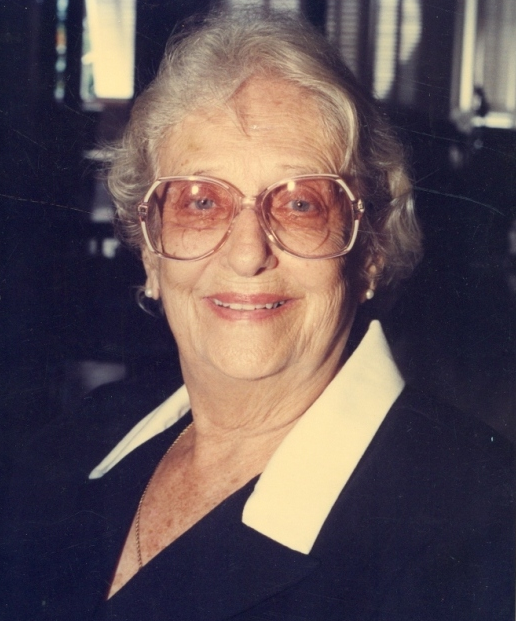
Janet Jagan
### Introduction Janet Jagan (née Rosenberg) was one of the most influential and controversial political figures in 20th-century Caribbean history. Serving as the first female President of Guyana from 1997 to 1999, she was also the first American-born woman and the first Jewish person to serve as a head of state in South America. Her life was defined by a remarkable journey from the suburbs of Chicago to the vanguard of the Guyanese anti-colonial movement. Alongside her husband, [Cheddi Jagan](/profiles/cheddi-jagan), she co-founded the Political Affairs Committee (PAC) and the People’s Progressive Party (PPP), shaping the political landscape of British Guiana and steering the colony through its turbulent transition to independent Guyana. Her career spanned more than half a century of legislative work, ministerial leadership, grassroots organizing, and journalistic activism.  ### Early Life, Education, and Marriage Janet Rosalie Rosenberg was born on October 20, 1920, in Chicago, Illinois, to a middle-class Jewish family. Her maternal grandparents were Jewish immigrants from Romania, and her paternal grandparents had emigrated from Hungary. Growing up in a relatively conservative household, Janet was encouraged to pursue education but was expected to follow traditional gender roles. However, she early on showed a fiercely independent spirit, joining various progressive organizations and developing a keen interest in aviation, political science, and social welfare. She attended the University of Detroit and later Wayne State University and Michigan State College. In 1942, while working as a student nurse at the Cook County School of Nursing in Chicago, she met a charismatic young dentistry student from British Guiana, [Cheddi Jagan](/profiles/cheddi-jagan). The two connected deeply over their shared interest in Marxist theory, colonial liberation, and social justice. Their relationship blossomed rapidly, and they were married on August 5, 1943, despite the fierce opposition of both of their families—Janet's parents disapproved of her marrying a non-white foreigner, while Cheddi's parents, who were traditional East Indian sugar plantation workers, were wary of an American Jewish daughter-in-law. In December 1943, Janet left the United States and accompanied Cheddi to British Guiana, arriving in a colony dominated by the sugar oligarchy and marked by deep racial, class, and gender divisions. She immediately took up work in her husband's dental clinic in Georgetown, but her focus quickly shifted to the appalling living and working conditions of the colony's working class. ### Anti-Colonial Activism and the WPEO Upon her arrival in British Guiana, Jagan found a society where the vast majority of the population, particularly women, were disenfranchised and exploited. She threw herself into labor organizing and social activism. In 1946, Jagan co-founded the Women's Political and Economic Organisation (WPEO) alongside [Winifred Gaskin](/profiles/winifred-gaskin) and Frances Stafford. The WPEO was the first political organization in British Guiana dedicated entirely to women's rights, advocating for universal adult suffrage, better working conditions for domestic and industrial female workers, and women's education. Jagan wrote: > "We had to fight on two fronts: against the colonial authorities who denied us our basic political rights, and against a patriarchal system that kept women in subjection." Through the WPEO, Jagan mobilized women across ethnic divisions, organizing rallies and educational seminars that bridged the gap between Afro-Guyanese and Indo-Guyanese women. In the same year, 1946, Janet and Cheddi Jagan, along with labor leaders Ashton Chase and H.J.M. Hubbard, formed the Political Affairs Committee (PAC). The PAC was designed to raise political consciousness and coordinate the anti-colonial struggle. Janet Jagan served as the editor and principal writer of the *PAC Bulletin*, a newsletter that exposed the abuses of colonial administrators and sugar estate owners, introducing socialist ideals to the local population. ### Founding of the PPP and the 1953 Constitutional Crisis The work of the PAC laid the foundation for the establishment of the People's Progressive Party (PPP) on January 1, 1950. The PPP was British Guiana's first modern, mass-based political party. It was structured as a multi-racial coalition, uniting the Indo-Guyanese population (led by [Cheddi Jagan](/profiles/cheddi-jagan)) and the Afro-Guyanese population (led by [Forbes Burnham](/profiles/forbes-burnham)). Janet Jagan was elected as the party's General Secretary, a position she held continuously for twenty years, from 1950 to 1970. Her organizational skills, attention to detail, and tireless work ethic made her the administrative backbone of the party. In 1950, Jagan became the first woman elected to the Georgetown City Council, breaking a significant barrier in local government. Three years later, in April 1953, British Guiana held its first elections under universal adult suffrage. The PPP won a landslide victory, capturing 18 of the 24 seats in the House of Assembly. Janet Jagan was elected as a member of the legislature and was appointed Deputy Speaker, making her the first woman to hold that post in the Caribbean. However, the PPP's radical platform of land reform, labor rights, and national independence alarmed the British colonial administration and the United States government. Under the shadow of the Cold War, Winston Churchill's government feared that the Jagans would establish a communist outpost in South America. On October 9, 1953, after the PPP government had been in office for only 133 days, the British government suspended the constitution, declared a state of emergency, sent in troops, and dismissed the elected ministers. ### Imprisonment and the Split in the PPP In the crackdown that followed the suspension, the colonial authorities restricted the movement of PPP leaders. In 1954, Janet Jagan was arrested and charged with possessing banned literature and holding political meetings in violation of the emergency regulations. She was sentenced to six months of hard labor at the Georgetown Prison. Her time in prison was difficult, but she refused to compromise her principles. She later recalled: > "Prison was designed to break our spirit, but it only strengthened our resolve to rid our country of colonial domination."  After her release, Jagan was placed under house arrest and restricted to the municipal boundaries of Georgetown for two years. During this period of political isolation, the colonial administration sought to dismantle the PPP. In 1955, the party suffered a devastating ideological and racial split. [Forbes Burnham](/profiles/forbes-burnham) broke away from the Jagans to form the People's National Congress (PNC), which became a predominantly Afro-Guyanese party, while the PPP became increasingly associated with the Indo-Guyanese community. This division would plague Guyanese politics for decades. ### Ministerial Leadership and Opposition Despite these setbacks, the PPP won the 1957 elections. Janet Jagan was elected to the legislature and was appointed Minister of Labour, Health, and Housing. In this role, she implemented major reforms, including expanding rural healthcare clinics, establishing new housing schemes for working-class families, and strengthening labor laws to protect agricultural workers. Her tenure was marked by a practical focus on improving the daily lives of citizens. In 1961, the PPP was again victorious, and Jagan served as a senator and later as Minister of Home Affairs from 1963 to 1964. This was a period of intense civil unrest, ethnic violence, and CIA-sponsored destabilization campaigns aimed at preventing Cheddi Jagan from leading an independent Guyana. Janet Jagan resigned her ministerial post in June 1964 in protest over the colonial police force's handling of the civil disturbances and their failure to protect citizens. When British Guiana achieved independence as Guyana in 1966 under a coalition led by [Forbes Burnham](/profiles/forbes-burnham), the PPP was forced into opposition. Burnham's PNC regime maintained power through a series of increasingly fraudulent elections. During the long "opposition years" (1964–1992), Janet Jagan remained a vital voice. She edited the *Mirror* newspaper, which became a leading voice of resistance against Burnham's authoritarian rule and press censorship. She was also a founding member of the Union of Guyanese Journalists and founded the Women's Progressive Organisation (WPO), which continued to lobby for gender equality and human rights. ### Return to Democracy and the Presidency In 1992, following international pressure and the end of the Cold War, Guyana held its first free and fair elections in nearly three decades. The PPP won, and Cheddi Jagan was sworn in as President, with Janet Jagan serving as First Lady. During this time, she represented Guyana at various international forums and served as chairperson of the Guyana National Deciduous Fruit Company and other social organizations. On March 6, 1997, Cheddi Jagan died of a heart attack. The nation was plunged into grief. In the transitional government that followed, Janet Jagan was appointed Prime Minister and First Vice President by President Samuel Hinds. Later that year, the PPP selected her as its presidential candidate for the December 1997 elections. Her candidacy was met with fierce opposition from the PNC, led by Desmond Hoyte, who attacked her on the basis of her foreign birth and her age (she was 77 at the time). Despite a polarizing campaign, Janet Jagan won the election, becoming the first female President of Guyana and the first American-born woman to serve as a head of state in the Western Hemisphere. She was sworn in on December 19, 1997. Her presidency was marked by intense political unrest, protests, and street violence orchestrated by the opposition, who challenged the election results. Despite the instability, Jagan worked to maintain economic reforms, improve infrastructure, and address social inequality. In August 1999, following a mild stroke and advice from her doctors, she voluntarily resigned the presidency, handing over power to her finance minister, Bharrat Jagdeo. ### Later Years, Death, and Legacy In retirement, Janet Jagan remained active in the PPP and continued to write and publish, including children's books that celebrated Guyanese history and culture. She died on March 28, 2009, in Georgetown at the age of 88. Her funeral was attended by thousands of Guyanese from all walks of life. Janet Jagan's legacy is complex and deeply felt. To her supporters, she was a champion of the poor, a pioneer for women's liberation, and a founding mother of the Guyanese nation. To her detractors, she was a Marxist ideologue whose early radicalism contributed to the Cold War conflicts that fractured Guyana along ethnic lines. Regardless of political perspective, her place as a towering figure in the history of Caribbean politics and the global struggle for women's political representation is secure.
View Profile →Jeremiah Gumbs
### Introduction: The Roving Ambassador of Anguilla Jeremiah Gumbs (February 18, 1913 – April 8, 2004) stands as one of the most transformative figures in modern Anguillian history, revered simultaneously as the pioneering patriarch of the island's tourism industry and its tireless diplomatic champion on the world stage. Operating during an era defined by rapid decolonization across the Caribbean, Gumbs emerged as a beacon of patriotic self-reliance during the historic 1967 Anguilla Revolution. As the proprietor of the Rendezvous Bay Hotel—Anguilla's very first beachfront resort—he proved that the island's pristine natural beauty could sustain an independent economy free from external domination. When political tensions boiled over against the central government in St. Kitts, Gumbs assumed the mantle of Anguilla's "Roving Ambassador," traveling to the United Nations in New York to passionately defend his homeland's right to self-determination alongside revolutionary contemporaries such as [Ronald Webster](/profiles/ronald-webster) and [Atlin Harrigan](/profiles/atlin-harrigan) [1]. His remarkable life bridged the diaspora experience with foundational nation-building, leaving an indelible legacy on the economic and political landscape of the eastern Caribbean. ### Early Life and Diaspora Struggles Born on February 18, 1913, in the settlement of The Valley, Anguilla, Jeremiah Gumbs entered a world characterized by severe economic hardship and colonial neglect [2]. At the turn of the twentieth century, Anguilla was administered by the British Colonial Office as a dependency attached to St. Kitts and Nevis. The island lacked basic infrastructure, including paved roads, electricity, running water, and adequate medical facilities. The youngest of nine children in a working-class family, Gumbs learned early the virtues of resilience, hard work, and communal solidarity. Limited local employment opportunities forced young male Anguillians into migratory labor streams across the Caribbean basin. As a young man, Gumbs joined this exodus, traveling first to the Dominican Republic to endure grueling labor in the sugarcane fields, and later securing employment at the booming oil refineries in Aruba and Curaçao [3]. Despite the arduous nature of his early migratory labor, Gumbs harbored fierce ambitions for personal advancement and education. In 1938, he emigrated to the United States, settling in Brooklyn, New York, where he enrolled in academic studies with the intention of becoming a dentist. However, the outbreak of World War II dramatically altered his trajectory. Drafted into the United States Army, Gumbs served with distinction, gaining valuable organizational and leadership skills that would later serve him in both business and diplomacy [3]. Following his honorable discharge from the military, he relocated to Perth Amboy, New Jersey. There, demonstrating consummate entrepreneurial sagacity, he founded Gumbs Fuels, a thriving fuel oil, heating, and air-conditioning enterprise. Throughout his decades in the American diaspora, Gumbs remained deeply tethered to his Anguillian roots. He frequently mobilized fellow expatriates, organizing fundraising drives to dispatch critical medical supplies, educational materials, and financial aid back to schools and clinics across his impoverished native island [4]. > "The lion roared, but that little mouse in the Caribbean refuses to curl up." > — Jeremiah Gumbs addressing international observers regarding Anguilla's courageous defiance against external domination [1]. ### Pioneering Anguilla's Tourism Industry By the late 1950s, while many Caribbean island administrations were beginning to explore hospitality and tourism, Anguilla remained largely isolated and underdeveloped. Jeremiah Gumbs, however, possessed a visionary foresight that pierced through the island's infrastructural limitations. In 1959, he and his devoted wife, Lydia Gumbs, made the bold decision to return to Anguilla to pioneer the local tourism industry [4]. Recognizing the unmatched allure of the island's powdery white sand beaches and crystal-clear turquoise waters, Gumbs acquired extensive coastal acreage along the southwestern shore at Rendezvous Bay. Building a resort on Anguilla in the early 1960s was a monumental feat of perseverance. With no public electrical grid or municipal water supply available, Gumbs engineered his own independent utilities, installing heavy-duty diesel generators and constructing extensive cisterns to harvest rainwater. In 1962, the Rendezvous Bay Hotel officially opened its doors to guests, marking the birth of modern Anguillian tourism [5].  The Rendezvous Bay Hotel was much more than a commercial venture; it was a profound statement of economic nationalism. Gumbs deliberately employed and trained local Anguillians, instilling pride in hospitality while proving that the island did not need to rely on agricultural subsidies or subservience to administrative centers in St. Kitts. During the tumultuous revolutionary period that followed, the hotel served as the de facto headquarters for visiting international journalists, foreign diplomats, and mediators, transforming Gumbs' dining room into the intellectual epicenter of Anguilla's struggle for constitutional freedom [6]. ### The 1967 Revolution and United Nations Diplomacy The political climate of the eastern Caribbean shifted dramatically in early 1967 when the British government attempted to divest its direct colonial responsibilities by creating the Associated State of Saint Christopher-Nevis-Anguilla. Under this arrangement, the federation was granted internal autonomy under the leadership of Premier [Robert Llewellyn Bradshaw](/profiles/robert-llewellyn-bradshaw) in St. Kitts [1]. Anguillians, who had endured decades of systemic marginalization and resource deprivation under Kittitian administration, overwhelmingly rejected the union. Led by grassroots leaders like [Ronald Webster](/profiles/ronald-webster) and [Peter Adams](/profiles/peter-adams), the island erupted in open rebellion on May 30, 1967, expelling the St. Kitts police force and declaring an independent republic. Recognizing the urgent need for international representation to prevent military intervention and secure global legitimacy, the newly formed Anguilla leadership appointed Jeremiah Gumbs as the island's official "Roving Ambassador" [7]. Leveraging his American connections, political acumen, and eloquence, Gumbs spearheaded diplomatic overtures in North America and Europe. His most defining moment arrived in August 1967 when, accompanied by Harvard law professor and legal advisor Roger Fisher, Gumbs appeared before the United Nations Sub-Committee III on Decolonization (the Committee of 24) in New York [7]. Before the international community, Gumbs delivered a stirring defense of Anguillian sovereignty. He articulated with devastating clarity how the tri-island union violated the fundamental principles of self-determination enshrined in the UN Charter. He exposed the lack of basic infrastructure on Anguilla and argued that forcing his people under the sub-imperial authority of St. Kitts was a betrayal of democratic values. His passionate advocacy captured the attention of global media, transforming the "Anguilla problem" from an obscure colonial squabble into a celebrated cause célèbre of human liberty [8]. Furthermore, during this intense patriotic awakening, his wife Lydia Gumbs collaborated with New York graphic designer Marvin Oberman to co-design the iconic "Three Dolphins Flag" adopted by the Republic of Anguilla on September 29, 1967—an enduring emblem of unity, strength, and endurance that remains deeply cherished on the island today [8]. > "We seek only the right to govern ourselves, to build our schools, to pave our roads, and to determine our own destiny free from subjugation." > — Jeremiah Gumbs testifying before the United Nations Committee on Decolonization [7].  ### Later Years and Lasting Legacy Following the eventual resolution of the conflict—which resulted in Anguilla successfully separating from St. Kitts and Nevis to become a distinct British Dependent Territory with substantial self-rule—Jeremiah Gumbs transitioned back to private life while remaining a venerated elder statesman [2]. He continued to expand and operate the Rendezvous Bay Hotel, welcoming generations of visitors and mentoring young Anguillian entrepreneurs. His pioneering vision laid the groundwork for Anguilla's modern economic identity as a premier, upscale luxury tourism destination. Jeremiah Gumbs passed away peacefully on April 8, 2004, at the age of 91, leaving behind a monumental legacy of patriotism, enterprise, and civic devotion [2]. In posthumous recognition of his monumental achievements, the Government of Anguilla christened the main arterial thoroughfare leading along the southern coast as the "Jeremiah Gumbs Highway" [5]. Today, Gumbs is celebrated across the Caribbean not only as the father of Anguillian hospitality but as a fearless diplomatic warrior whose voice resonated across the halls of the United Nations to safeguard his people's freedom and dignity [9].
View Profile →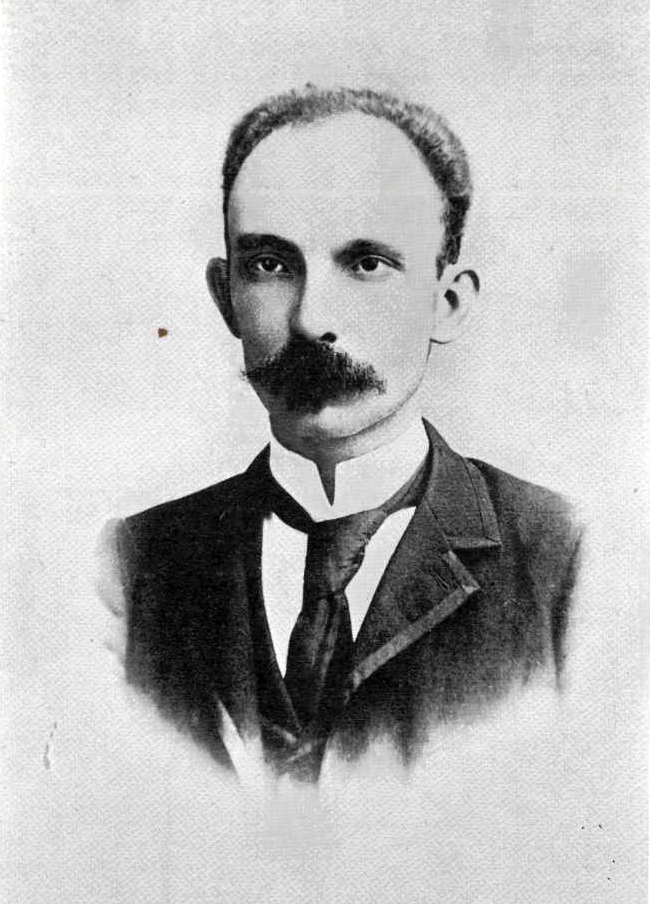
José Martí
### Introduction: The Apostle of Antillean Freedom José Julián Martí Pérez (January 28, 1853 – May 19, 1895), revered across Latin America and the Caribbean as "El Apóstol" (The Apostle) and the National Hero of Cuba, was a monumental poet, essayist, journalist, philosopher, and political visionary whose brief life transformed the trajectory of the Americas [1]. Martí stood as the intellectual architect and moral conscience of Cuba’s final war of independence against the Spanish Empire. Beyond his tireless organizing on behalf of Cuban sovereignty, he was a pioneering literary master who ignited the Spanish-American *Modernismo* movement, an uncompromising champion of racial equality, and one of the most perceptive early critics of rising North American imperialism [2]. Martí envisioned an independent Cuba not merely as a sovereign state, but as an equitable, democratic republic founded upon universal human dignity—summarized in his eternal maxim: *"Con todos, y para el bien de todos"* ("With all, and for the good of all") [3].  > "I want the first law of our republic to be the love of Cubans for the full dignity of man. Every true man must feel on his own cheek the blow struck against the cheek of any other man." > — José Martí [1] ### Early Life, Mentorship, and the Crucible of Havana José Martí was born on January 28, 1853, on Calle Paula in Havana, Cuba, into a modest family during the twilight of Spanish imperial dominion in the West Indies. His father, Mariano Martí Navarro, was a Spanish artillery sergeant and petty customs officer from Valencia; his mother, Leonor Pérez Cabrera, was a native of Tenerife in the Canary Islands [2]. Growing up among seven younger sisters in the crowded streets of colonial Havana, Martí was acutely conscious of the vast social chasms that structured island society—an oppressive colonial bureaucracy, a deeply entrenched sugar oligarchy, and the brutal reality of African chattel slavery [3]. In 1865, at the age of twelve, Martí enrolled in the Escuela de Instrucción Primaria Superior Municipal de Varones, an institution directed by Rafael María de Mendive. Mendive was a distinguished poet, classical scholar, and fervent Cuban patriot who recognized Martí’s exceptional intellect and assumed financial responsibility for his secondary education at the Instituto de Segunda Enseñanza [1]. Mendive became far more than an academic instructor; he served as Martí’s spiritual mentor, introducing him to the ideals of freedom, universal justice, civic morality, and democratic governance. When the Ten Years' War (*Guerra de los Diez Años*) erupted in eastern Cuba on October 10, 1868, under the leadership of Carlos Manuel de Céspedes, Mendive’s home became a salon of patriotic fervor. The young Martí was permanently radicalized by these meetings, dedicating his emerging literary talents entirely to the cause of Antillean emancipation [4]. ### Political Awakening, Hard Labor in San Lázaro, and First Exile In January 1869, at just sixteen years old, Martí launched his journalistic career by publishing the satirical sheet *El Diablo Cojuelo* alongside his close friend and schoolmate Fermín Valdés Domínguez. Shortly thereafter, he founded the political newspaper *La Patria Libre*, in which he published his first major dramatic poem, *Abdala* [4]. Set in a fictionalized ancient Nubia facing foreign conquest, *Abdala* served as a transparent, passionate allegory for Cuba’s fight against Spanish rule, featuring a warrior-poet who declares that love of country is not a blind adoration of the land, but an invincible commitment to human justice. Martí’s open defiance provoked swift colonial retribution. In October 1869, Spanish paramilitary volunteers (*Voluntarios*) raided the home of Valdés Domínguez and intercepted a letter signed by Martí and Fermín that condemned a former schoolmate who had enlisted in the Spanish army, branding his service an act of treason to the fatherland. In March 1870, Martí was tried by a military court-martial. Rather than pleading for mercy or disavowing the document, the seventeen-year-old youth courageously accepted full authorship and reaffirmed his devotion to Cuban independence [1]. Convicted of sedition, Martí was sentenced to six years of hard labor in the horrific stone quarries of San Lázaro (*canteras de San Lázaro*) in Havana. At San Lázaro, Martí was subjected to backbreaking manual labor under the tropical sun, forced to break and haul limestone while bound in heavy iron shackles. The chains scarred his legs, producing chronic ulcers, suppurating wounds, and physical ailments that tormented him for the rest of his life [2]. Yet the experience deepened his empathy for the oppressed: in the quarries, he labored shoulder-to-shoulder with impoverished free Afro-Cubans, enslaved men, and young children condemned by the penal system. Alarmed by his deteriorating health, his parents and influential family friends successfully petitioned the colonial authorities to commute his sentence to internment on the Isla de Pinos (now Isla de la Juventud). In January 1871, the Spanish governor deported the eighteen-year-old Martí to Spain [3]. ### Intellectual Peregrinations: Spain, Mexico, and Guatemala Arriving in Madrid in early 1871, Martí published *El presidio político en Cuba* (*Political Imprisonment in Cuba*), a devastating first-person exposé that laid bare the barbarism and institutional cruelty of Spain's colonial penal system. The pamphlet was acclaimed by Spanish liberals and established his reputation as a formidable polemicist [1]. While in Spain, Martí continued his academic studies at the Central University of Madrid before transferring to the University of Zaragoza. In 1874, he graduated with advanced degrees in Civil and Canon Law (*Licenciado en Derecho*) and Philosophy and Letters (*Licenciado en Filosofía y Letras*) [2]. When the short-lived First Spanish Republic was declared in 1873, Martí published *La República Española ante la Revolución Cubana*, in which he argued with razor-sharp logic that a Spanish republic that claimed to champion human liberty could not morally maintain a despotic colonial empire in Cuba [4]. Following his graduation, Martí traveled across Europe, visiting Paris where he met the literary giant Victor Hugo, before sailing to Veracruz, Mexico, in early 1875 to reunite with his exiled family [1]. In Mexico City, Martí immersed himself in the vibrant cultural life of the post-reform Republic, writing extensively for *Revista Universal*, lecturing at the Liceo Hidalgo, and publishing theatrical works such as *Amor con amor se paga*. Mexico was also where Martí forged an enduring brotherhood with his lifelong confidant Manuel Mercado, and where he met and fell in love with Carmen Zayas-Bazán e Hidalgo, the daughter of an affluent Cuban exile family [2]. When the military coup of General Porfirio Díaz in late 1876 curtailed intellectual and political freedoms in Mexico, Martí departed for Guatemala in 1877. In Guatemala City, he was appointed professor of literature and philosophy at the prestigious Escuela Normal Central. Martí was revered by his students, among them María García Granados, the cultured daughter of former Guatemalan president Miguel García Granados. María fell deeply and unrequitedly in love with Martí. After Martí returned briefly to Mexico in December 1877 to marry Carmen Zayas-Bazán and brought his bride back to Guatemala, the heartbroken María tragically died of illness—an event that Martí immortalized years later in his celebrated elegy "La Niña de Guatemala" in *Versos sencillos* [4]. In 1878, when Guatemala’s liberal dictator Justo Rufino Barrios arbitrarily dismissed the Cuban director of the Normal School, Martí resigned his professorship in principled protest, refusing to compromise his intellectual autonomy under autocracy [1]. ### The New York Exile and the Modernist Literary Revolution With the conclusion of the Ten Years' War through the controversial Pact of Zanjón in 1878, Martí returned to Havana under a general amnesty. Working in legal clerkships, he joined patriotic conspiracies alongside Afro-Cuban intellectual and journalist Juan Gualberto Gómez, advocating for the underground insurrection known as the *Guerra Chiquita* ("Little War"), led by General Calixto García [3]. Spanish authorities soon detected Martí’s revolutionary oratory at the Liceo de Guanabacoa; in September 1879, he was arrested once more and expelled to Spain. Evading his captors, Martí sailed from Spain to France and then onward to New York City, arriving in January 1880 [2]. With the exception of a six-month sojourn in Caracas, Venezuela, in 1881—where he founded the influential *Revista Venezolana* before being banished by dictator Antonio Guzmán Blanco—New York would remain Martí's operational headquarters for the next fifteen years [1].  In New York, Martí worked as an international correspondent, translator, and diplomat, serving as consul for Uruguay, Paraguay, and Argentina [2]. His journalistic chronicles (*crónicas*), published across Latin America in landmark periodicals such as *La Nación* of Buenos Aires, *La Opinión Nacional* of Caracas, and *El Partido Liberal* of Mexico, established him as the continent's most admired prose stylist [1]. Martí revolutionized Spanish-language literature, stripping Castilian prose of its archaic rigidities and infusing it with muscular rhythms, luminous impressionistic imagery, and moral urgency. Alongside the Nicaraguan poet Rubén Darío, Martí is celebrated as the founding father of *Modernismo* [4]. Martí’s poetic innovations began with *Ismaelillo* (1882), a luminous, intimate collection dedicated to his infant son, José Francisco, written in tender, crystalline stanzas that signaled the birth of modernist lyricism [4]. In 1889, Martí created *La Edad de Oro* ("The Golden Age"), an illustrated monthly magazine written entirely for Latin American children. Through stories like "Los tres héroes" (celebrating Simón Bolívar, José de San Martín, and Miguel Hidalgo), *La Edad de Oro* taught younger generations the values of racial harmony, anticolonial courage, and continental solidarity [3]. In 1891, while recuperating from chronic illness in the Catskill Mountains, Martí penned his poetic masterpiece, *Versos sencillos* ("Simple Verses"). The collection’s opening quatrains—*"Yo soy un hombre sincero / de donde crece la palma..."*—would later be adapted into the lyrics of "Guantanamera", the world’s most recognized Cuban song [4]. ### "Nuestra América" and Anti-Imperialist Thought Martí’s intellectual maturity coincided with the emergence of the United States as an aggressive industrial empire. Observing American society from within, Martí admired its democratic dynamism and mechanical ingenuity, but he grew deeply alarmed by its predatory capitalist excess, pervasive racial violence against African Americans, and imperial ambition toward the Caribbean and Central America [1]. In January 1891, Martí published his seminal essay *"Nuestra América"* ("Our America") simultaneously in *La Revista Ilustrada de Nueva York* and Mexico's *El Partido Liberal* [5]. *Nuestra América* remains one of the foundational texts of decolonial and pan-American philosophy. In it, Martí issued an urgent wake-up call to the peoples stretching from the Rio Grande to Patagonia, urging them to shake off their intellectual subservience to European and North American models [1]. He argued that Latin American nations must govern themselves according to their own indigenous, African, and mestizo realities rather than adopting imported constitutions: *"With the oppressed, one had to make common cause, to secure the system against the interests and habits of the oppressor."* [5]. Above all, Martí warned of the northern colossus whose expansionist gaze threatened the sovereign future of the continent, insisting that a free, independent Cuba and Puerto Rico were the indispensable balance points protecting Latin America from annexation [1]. ### Mobilizing the Diaspora: Tampa, Key West, and the Cuban Revolutionary Party Martí understood that the failure of earlier Cuban rebellions stemmed from regional factionalism, distrust between civilian leaders and military commanders, and the alienation of the working class and Afro-Cubans [3]. Determined to build a modern, democratic liberation movement, Martí turned his attention to the Cuban diaspora in the United States, particularly the thousands of cigar makers (*tabaqueros*) in Tampa (Ybor City) and Key West (*Cayo Hueso*), Florida [2]. 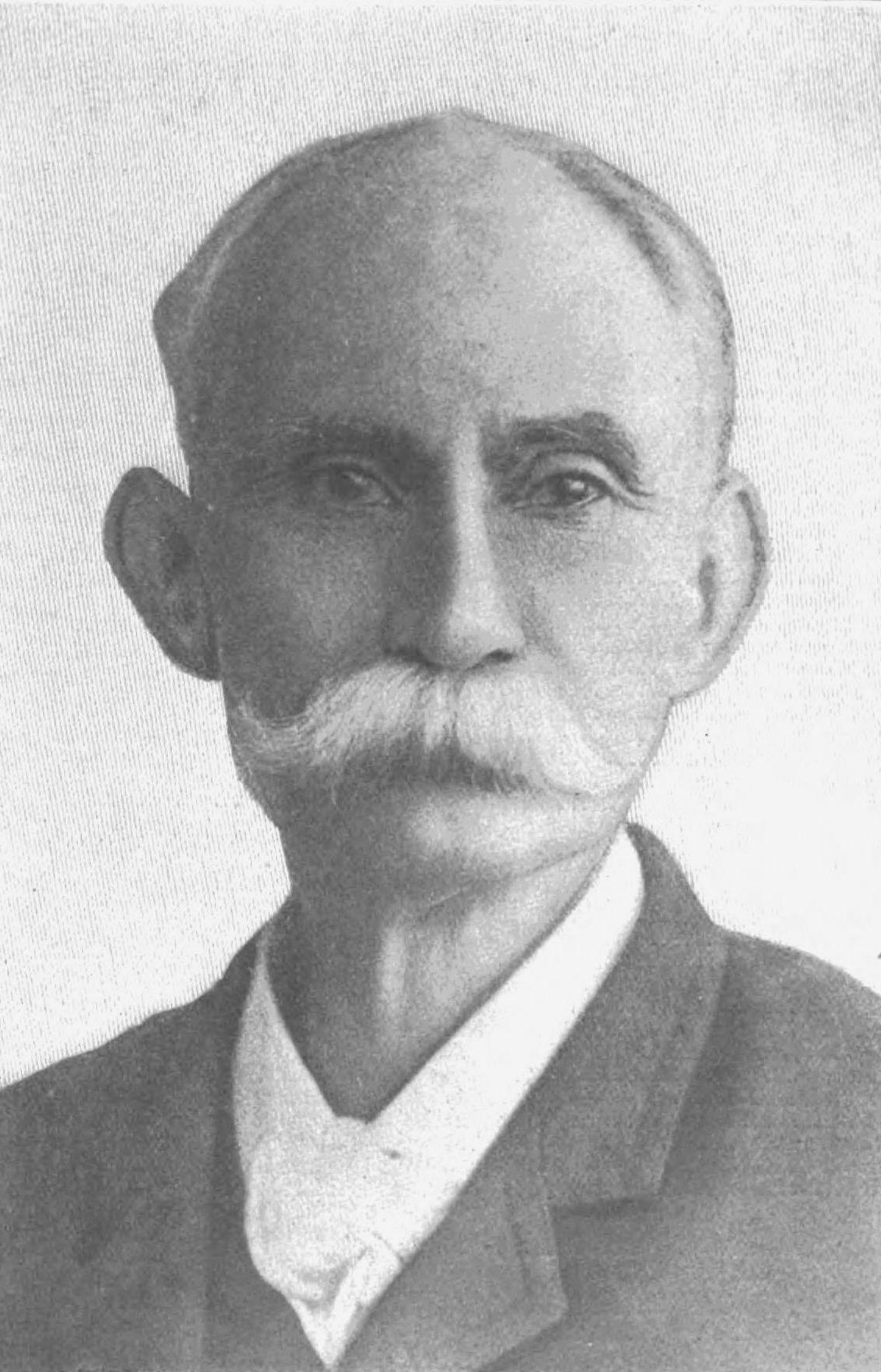 In November 1891, invited by the patriotic Club Ignacio Agramonte, Martí traveled to Tampa. In the union halls and cigar factories, where cigar rollers pooled their money to hire *lectores* (readers) to read aloud literature and politics during work shifts, Martí delivered two of the most electrifying orations in Latin American history: *"Con todos, y para el bien de todos"* on November 26, and *"Los pinos nuevos"* on November 27 [3]. The tobacco workers, both Black and white, embraced Martí as their spiritual brother. They instituted the "un día de haber"—donating one day’s wages every week to fund the coming revolution [2]. On January 5, 1892, in Key West, Martí drafted the statutes for the **Partido Revolucionario Cubano** (PRC, Cuban Revolutionary Party), officially proclaimed on April 10, 1892. Martí was democratically elected as its *Delegado* (Delegate), its chief executive officer [1]. The PRC was a revolutionary creation without historical precedent: an anti-colonial party founded in exile that operated under democratic principles, uniting all social strata, classes, and races. Crucially, Article 1 of the PRC charter declared that the party was established not only to achieve the absolute independence of Cuba, but also to aid in the liberation of Puerto Rico [1]. On March 14, 1892, Martí launched the newspaper *Patria* in New York, which served as the weekly ideological organ of the party, articulating the doctrine of a war fought without hatred, aimed at social justice rather than military despotism [3]. To ensure military victory, Martí orchestrated a historic alliance among the veteran generals of the Ten Years' War. He traveled to the Dominican Republic to recruit General [Máximo Gómez](/profiles/maximo-gomez), the brilliant Dominican-born tactician, convincing him to accept supreme military command of the Liberation Army [2]. He journeyed to Costa Rica to enlist General [Antonio Maceo](/profiles/antonio-maceo), the legendary "Bronze Titan" of Cuban arms, and General Flor Crombet. Martí also maintained close strategic coordination with regional anticolonial stalwarts, including the Puerto Rican independence leader [Ramón Emeterio Betances](/profiles/ramon-betances) in Paris and Dominican hero [Gregorio Luperón](/profiles/gregorio-luperon) [1]. ### The Montecristi Manifesto and the Expedition of 1895 By late 1894, Martí’s clandestine logistics reached fruition in the Fernandina Plan: three chartered merchant vessels (*Lagonda*, *Almadena*, and *Baracoa*) were loaded in Fernandina, Florida, with modern rifles, ammunition, and medical supplies to launch simultaneous amphibious landings in Cuba [2]. In January 1895, however, US federal authorities, acting on intelligence supplied by the Spanish legation, seized the vessels and impounded the weaponry. The loss was a staggering financial and logistical catastrophe. Yet Martí refused to yield; transforming defeat into resolution, he immediately dispatched the secret order to Havana authorizing the uprising across the island on February 24, 1895—sparking the historic *Grito de Baire* [3]. Martí slipped out of New York and joined General [Máximo Gómez](/profiles/maximo-gomez) at his home in Montecristi, Dominican Republic. There, on March 25, 1895, Martí and Gómez signed the **Manifesto of Montecristi** (*El Manifiesto de Montecristi*), the definitive ideological charter of the Cuban War of Independence [1]. In this masterpiece of political ethics, Martí affirmed that the war was not waged out of malice against the Spanish people, but against the archaic and extractive colonial system; that it would welcome Spaniards who chose to respect Cuban freedom; that it rejected racial prejudice and affirmed that Black and white Cubans were equal brothers in arms; and that it was designed to establish a civil republic free from the scourge of military caudillismo [1]. ### The Necessary War, Landing at Playitas, and the Final March On April 1, 1895, Martí, Gómez, and four companions sailed from Montecristi aboard a small schooner. After transferring to the German cargo steamer *Nordstrand*, they approached the southeastern coast of Cuba on a stormy, pitch-black night. Lowering a small wooden rowboat into towering breakers, the six men rowed through perilous surf and landed at **Playitas de Cajobabo**, near Baracoa, on April 11, 1895 [2]. Martí's wartime diary (*Diario de campaña*) recorded the exultant entry: *"Arribamos a Playitas. Salto. Llevo el remo de proa... Dicha grande."* ("We arrive at Playitas. I leap out. I take the bow oar... Great joy.") [3]. For five grueling weeks, Martí marched through the rugged mountains of the Sierra Maestra alongside the insurgent fighters (*mambises*). Despite his fragile frame, Martí carried his rifle, knapsack, and ammunition with unflagging stamina, tending to wounded soldiers, providing botanical remedies, and inspiring the troops with his speeches. On May 2, 1895, General [Máximo Gómez](/profiles/maximo-gomez) conferred upon Martí the official military rank of Major General of the Liberation Army [2]. On May 5, 1895, Martí, Gómez, and [Antonio Maceo](/profiles/antonio-maceo) met at the historic **Conference of La Mejorana** to settle the governance of the insurrection. Maceo, mindful of the political bickering that had crippled the Ten Years' War, argued for a military junta composed of generals until independence was won. Martí vehemently disagreed, insisting that a sovereign, civilian government must guide the revolution from its inception to prevent the rise of a military dictatorship [1]. Though tensions ran high, Martí’s civilian democratic framework ultimately prevailed in the subsequent assemblies of the Republic in Arms. ### Martyrdom at Dos Ríos and Immortal Legacy By mid-May 1895, the Cuban forces were encamped near the confluence of the Contramaestre and Cauto rivers at Dos Ríos. On the night of May 18, 1895, seated in his tent by candlelight, Martí penned his final, unfinished letter to his Mexican confidant Manuel Mercado—a document that serves as his definitive political testament: > "I am in daily danger of giving my life for my country and for my duty... of preventing in time, through the independence of Cuba, the United States from spreading across the West Indies and falling with that additional force upon our lands of America. All I have done up to this day, and all I shall do, is toward that end." > — José Martí to Manuel Mercado, May 18, 1895 [1] On the morning of May 19, 1895, Spanish infantry and cavalry commanded by Colonel José Ximénez de Sandoval launched a surprise assault on the Cuban camp. General [Máximo Gómez](/profiles/maximo-gomez) ordered Martí to stay behind with the reserves, knowing that Martí’s life was indispensable to the ideological and diplomatic survival of the revolution [2]. But Martí, driven by an acute sense of personal honor and refusing to remain shielded while Cuban soldiers shed blood, drew his revolver, mounted his white horse (a mount gifted to him by General José Maceo), and rode directly toward the Spanish line alongside a young courier, Ángel de la Guardia [3]. Veering through high brush toward a Spanish firing squad, Martí was struck by three bullets: one in the chest, one in the neck, and one in the leg. He fell mortally wounded from his saddle onto the Cuban earth, dying instantly at the age of forty-two [2]. Spanish troops recovered his body, transferred his remains under heavy guard to Santiago de Cuba, and interred him at the Santa Ifigenia Cemetery, where his mausoleum stands today, illuminated by a beam of sunlight in accordance with the verse from his *Versos sencillos*: > *"No me entierren en lo oscuro / A morir como un traidor; / ¡Yo soy bueno, y como bueno / Moriré de cara al sol!"* > ("Do not bury me in the dark / To die like a traitor; / I am good, and as a good man / I shall die facing the sun!") [4] José Martí’s death sent shockwaves through the Americas, instantly consecrating him as the supreme martyr of Cuban freedom. His sacrifice catalyzed the liberation struggle that culminated in the end of Spanish rule in 1898. More than a century after his death, Martí’s legacy endures as a beacon of artistic brilliance, ethical politics, and decolonial emancipation. His writings continue to inspire generations throughout the Caribbean, Latin America, and the world, cementing his eternal standing as "El Apóstol" of human dignity and freedom. ### References - [José Martí: Cuban Patriot - University of Florida Press](https://upf.com/book.asp?id=9780813001098) - [José Martí: National Hero of Cuba - Encyclopaedia Britannica](https://www.britannica.com/biography/Jose-Marti) - [Centro de Estudios Martianos - Vida y Obra de José Martí](http://www.josemarti.cu/) - [José Martí: Versos sencillos - Ediciones Cátedra](https://www.catedra.com/libro/letras-hispanicas/versos-sencillos-jose-marti-9788437618999/) - [Our America by José Martí: Writings on Latin America and the Struggle for Cuban Independence - Monthly Review Press](https://monthlyreview.org/product/our_america/)
View Profile →Joseph Ford
### Introduction Joseph Russell "T-Joe" Ford (August 15, 1929 – January 19, 2008) stands as one of the most transformative political and social figures in the modern history of The Bahamas. Born into a working-class family on the southernmost Bahamian island of Great Inagua, Ford's life trajectory mirrored the broader struggle of the Bahamian laboring classes against systemic economic exploitation. As a prominent politician, trade unionist, and Member of Parliament for the Inagua and Mayaguana constituency from 1968 to 1982, Ford is best remembered for his relentless advocacy on behalf of the salt workers of Matthew Town. In an era when multinational corporations wielded immense, largely unchecked power over local populations, Ford fearlessly challenged the Morton Salt Company, ultimately securing unprecedented labor rights, fair wages, and humane working conditions for his constituents. His political career, deeply intertwined with the Bahamian struggle for Majority Rule alongside figures like [Lynden Pindling](/profiles/lynden-pindling), cemented his legacy as a champion of the marginalized and a central architect of modern Bahamian labor law. ### Early Life and the Salt Island Context Joseph Russell Ford was born on August 15, 1929, in Matthew Town, Great Inagua, the youngest of seven children born to Joseph and Lillian Ford. Affectionately known throughout his life as "T-Joe" or "Lil Joe," Ford grew up in an environment where the rhythm of life was entirely dictated by the extraction of salt. Great Inagua, a sun-scorched, arid island, boasts a natural geography perfectly suited for solar salt production. Since the 1600s, the island's shallow saline lakes had been harvested for salt, initially by enslaved laborers and later by generations of Bahamian workers who endured grueling, back-breaking conditions under the relentless Caribbean sun.  Growing up in Matthew Town, the young Ford witnessed firsthand the severe economic disparities that defined his community. The town operated fundamentally as a "one-company town." In this closed economic ecosystem, the employer controlled not just the wages, but often the housing, the local stores, and the overall livelihood of the island's residents. This dynamic bred a culture of dependency and vulnerability. For the workers, raking salt was physically agonizing work, characterized by blinding glare off the white salt flats, corrosive exposure to highly concentrated brine, and wages that barely covered the cost of basic survival. Ford's early observations of these hardships instilled in him a deep-seated sense of justice and an unwavering commitment to the dignity of labor. ### The Modernization of the Salt Industry In 1954, the economic landscape of Great Inagua underwent a seismic shift when the Chicago-based Morton Salt Company acquired the local saline operation in Matthew Town. The acquisition ushered in an era of rapid industrialization. The company expanded the salt pans to cover a staggering 300,000 acres, transforming the facility into one of the largest solar saline operations in North America, capable of producing over a million pounds of salt annually. While this modernization brought increased global revenue and efficiency to the salt trade, the benefits rarely trickled down to the Bahamian laborers. The transition from manual raking to mechanized harvesting altered the nature of the work, but it did not dismantle the entrenched power imbalances. The workers remained subject to precarious employment conditions, lack of job security, and wages that failed to reflect the immense profitability of the industry. It was within this crucible of industrial expansion and lingering colonial-era labor practices that Joseph Ford found his political calling. > "The wealth extracted from the flats of Inagua must reflect the sweat and dignity of the Bahamian worker, not just the balance sheets of foreign boardrooms." ### Political Awakening and the Struggle for Majority Rule As the 1960s dawned, The Bahamas was swept up in the "Peaceful Revolution"—a nationwide political and social awakening aimed at dismantling the white oligarchic rule of the "Bay Street Boys" and achieving Majority Rule for the Black Bahamian majority. Ford, recognizing that the economic liberation of the Inagua salt workers was inextricably linked to the broader national struggle for democratic representation, threw himself into frontline politics. Campaigning on a platform of labor rights, social justice, and economic empowerment, Ford was first elected to the House of Assembly in 1968, representing the Inagua and Mayaguana constituency. His election coincided with the dawn of a new political era in The Bahamas, as the Progressive Liberal Party (PLP) consolidated its power following the historic 1967 achievement of Majority Rule. As a parliamentarian, Ford quickly distinguished himself not as a quiet backbencher, but as a vocal, unyielding advocate for the "labouring masses." ### The Great Salt Labor Dispute Ford’s defining political battle commenced in the early 1970s. In 1971, the Bahamian government passed the landmark **Fair Labour Standards Act**, a progressive piece of legislation designed to establish minimum wages, maximum working hours, and standard overtime pay across the nation. However, when the time came to implement these new standards, the Morton Salt Company fiercely resisted. Employing a creative legal maneuver, the company's attorneys argued that they were exempt from the new labor protections. They claimed that their salt manufacturing operations fell under an antiquated piece of legislation known as the "Animal Husbandry Act." By this logic, the multinational corporation attempted to classify the mass industrial harvesting of sea salt as a form of "seasonal agricultural work," similar to farming, which would legally allow them to bypass the minimum wage and overtime requirements of the Fair Labour Standards Act. Ford was incensed by what he viewed as a blatant attempt to exploit a legal loophole at the expense of his constituents. He took the fight directly to the floor of the House of Assembly. Rejecting the agricultural classification, Ford delivered impassioned speeches detailing the arduous, industrial reality of the salt works. He successfully tabled a motion calling for a formal Select Committee to aggressively investigate Morton Salt's labor practices and operations on Great Inagua. His strategic use of parliamentary procedure forced the issue onto the national stage, creating intense public pressure. The threat of a government-backed investigation, coupled with Ford's ability to mobilize the local workforce, forced the management of Morton Salt to the negotiating table. Refusing to deal solely with local managers who lacked decision-making power, Ford escalated the dispute, ultimately traveling to Chicago to engage in direct negotiations with the company's executive ownership. ### Victory and Lasting Impact Ford's tenacity yielded a historic victory. During the Chicago negotiations, he secured sweeping concessions from Morton Salt. The company officially abandoned its attempt to classify the workers under the Animal Husbandry Act, agreeing instead to fully comply with the Fair Labour Standards Act. This resulted in immediate, substantial improvements in wages, the institution of standard working hours, guaranteed overtime pay, and vastly improved workplace safety protocols. > "T-Joe was part of a mighty band of brothers who fought for freedom and justice, proving that even the most remote island worker commands the full protection of the law." This victory resonated far beyond the shores of Great Inagua. By successfully forcing a massive multinational corporation to bow to local labor laws, Ford established a crucial legal and cultural precedent in the newly independent Bahamas (which achieved full independence in 1973). His actions signaled that the post-colonial Bahamian government would actively defend its working class against foreign corporate exploitation, emboldening labor unions and workers across the archipelago, from the dockworkers in Nassau to the hospitality staff in Freeport. ### Post-Political Career and Legacy Joseph Ford was re-elected in 1972 and continued to serve his constituents until he lost his seat in the 1982 general election, capping 14 years of dedicated parliamentary service. However, his departure from frontline politics did not mark the end of his public life. He transitioned into a highly successful career in the insurance industry, bringing his formidable negotiating skills to the private sector. Furthermore, he remained active in public administration, serving with distinction on the executive board of the Commonwealth Telecommunications Union, where he helped shape regional communications policy. In recognition of his lifetime of service to the Crown and the Bahamian people, Ford was awarded the Member of the Order of the British Empire (M.B.E.) in the 1983 New Year Honours. Joseph Russell "T-Joe" Ford passed away on January 19, 2008. His death was mourned nationally, drawing tributes from across the political spectrum. He was eulogized by former Prime Minister [Perry Christie](/profiles/perry-christie), who praised Ford for his "passion, principles, and uncompromising patriotism." Today, Ford is remembered not just as a politician, but as a fearless defender of the working class whose courage fundamentally altered the balance of power between labor and capital in The Bahamas, ensuring that the wealth harvested from the sun and sea of Inagua finally served the people who raked it.
View Profile →
Joseph Ignace
### Introduction: The Vanguard of Caribbean Emancipation At the close of the eighteenth century, the Caribbean was engulfed in a tumultuous wave of revolutionary upheavals that irrevocably shook the foundations of European imperial hegemony [1]. While the French Revolution proclaimed universal human liberty, brotherhood, and equality across the Atlantic, the Caribbean colonies became the brutal testing ground where those ideals collided with the entrenched economic interests of the plantation elite. In this fiery crucible arose Joseph Ignace (c. 1769/1772 – May 25, 1802), an Afro-Guadeloupean military officer and freedom fighter whose uncompromising dedication to emancipation made him one of the most heroic figures in Antillean history [2]. Alongside legendary compatriots such as Colonel [Louis Delgrès](/profiles/louis-delgres) and the fierce revolutionary heroine [Solitude](/profiles/solitude), Ignace stood as an unyielding bulwark against the counter-revolutionary designs of Napoleon Bonaparte [3]. Serving as commander of Fort de la Victoire in Pointe-à-Pitre and leading the desperate, heroic defense at the Redoute de Baimbridge, Ignace embodied the revolutionary covenant of *"Vivre libre ou mourir"* ("Live free or die"), sacrificing his life to ensure that the sacred freedom of his people would never be willingly surrendered to the re-imposition of chattel slavery [4]. ### Early Life, Carpentry, and the Sparks of Revolution in Pointe-à-Pitre Joseph Ignace was born in Guadeloupe around 1769 or 1772, into the bustling port city of Pointe-à-Pitre [1]. Born into the intermediate social stratum of free people of color (*gens de couleur libres*), he grew up intimately aware of the stark racial inequalities, legal disenfranchisement, and visceral cruelties that underpinned the French colonial plantation economy [5]. Before taking up arms in defense of human dignity, Ignace trained and worked as a master carpenter in Pointe-à-Pitre [2]. His craft provided him with a high degree of technical skill, autonomy, and organizational acumen, establishing his standing as a respected artisan within the urban artisan class of Grande-Terre. When the revolutionary winds of 1789 reached the shores of Guadeloupe, the island fractured along deep political, racial, and class divisions. Royalist white planters clung desperately to their racial prerogatives and property in human flesh, while enslaved laborers and free persons of color mobilized to demand full civil and political equality. In 1792, young Ignace took his first decisive steps into political militancy by participating actively in the revolutionary uprising in Pointe-à-Pitre [1]. This early insurrection marked his baptism of fire, demonstrating his natural tactical leadership and his steadfast commitment to the burgeoning cause of republican emancipation [6].  ### Military Service in the Republican Army and the First Abolition (1794–1801) The trajectory of Ignace’s life was fundamentally transformed in 1794. In February of that year, the French National Convention issued its historic decree formally abolishing slavery across all French territories [2]. When British invasion forces landed in Guadeloupe, invited by traitorous royalist plantation owners who sought to preserve the slave regime, revolutionary commissioner [Victor Hugues](/profiles/victor-hugues) arrived with a small republican contingent carrying the abolition decree [7]. Hugues mobilized the newly emancipated Black population, transforming them into a formidable republican army that waged an unrelenting campaign to repel the British invaders. Joseph Ignace enlisted in these republican armed forces, where his sharp intellect, discipline, and fearless battlefield leadership quickly distinguished him among his peers [1]. Throughout the Caribbean campaigns of the late 1790s, Ignace proved himself an exceptional combat officer. While contemporaries like [Toussaint Louverture](/profiles/toussaint-louverture) consolidated power in Saint-Domingue, Ignace defended the frontiers of republican freedom in the Lesser Antilles, demonstrating that soldiers of African descent were fully capable of meeting and defeating the finest professional regiments of European empires [5]. Recognizing his strategic competence and martial bravery, the republican administration promoted Ignace sequentially through the ranks, advancing him to captain in 1801 and subsequently appointing him *chef de bataillon* (battalion commander) [1]. He was entrusted with the command of Fort de la Victoire (also historically known as Fort Union), the critical coastal citadel guarding the harbor and bay of Pointe-à-Pitre [8]. > "Live free or die! We have taken up arms not to revolt against legitimate authority, but to preserve the sacred liberty that France herself bestowed upon us. Better an honorable grave than the renewed ignominy of the master's whip." — Joseph Ignace, rallying his troops at Pointe-à-Pitre, May 1802 [4] ### The Lacrosse Crisis and the Uprising of October 1801 By the dawn of the nineteenth century, the political climate in metropolitan France had taken a sharp, reactionary turn. Napoleon Bonaparte seized absolute control of the French state as First Consul and immediately began plotting to resurrect France's lucrative overseas slave empire [3]. In 1801, Bonaparte dispatched Rear Admiral Jean-Baptiste Raymond de Lacrosse to Guadeloupe as Captain-General [9]. Lacrosse was an arrogant, deeply racist administrator who held deep contempt for the Black and mixed-race officers who had bled to defend the island for the Republic. Upon arriving, Lacrosse initiated a systematic campaign of revanchism, attempting to disarm colonial troops, demoting officers of color, and subjecting republican veterans to arbitrary arrests and humiliations [5]. Joseph Ignace was not a man to tolerate the subversion of hard-won republican liberties. In October 1801, when Lacrosse attempted to arrest prominent officer Magloire Pélage, the garrison of Pointe-à-Pitre revolted [1]. Ignace played a decisive and central role in this military rebellion between October 21 and October 24, 1801 [9]. Marshaling the troops of Fort de la Victoire, Ignace coordinated with other colonial units to neutralize Lacrosse's loyalist guards, arrest the tyrannical governor, and expel him from Guadeloupe on a ship bound for the neighboring island of Dominica [2]. A provisional governing council led by Pélage and supported by officers such as [Louis Delgrès](/profiles/louis-delgres) and Ignace assumed civilian and military control, maintaining public order, preserving economic production, and adamantly affirming their continued allegiance to the French Republic and universal freedom [6].  ### General Richepanse's Expedition and Metropolitan Betrayal (May 1802) The fragile peace achieved by the provisional council was shattered in the spring of 1802. Following the Treaty of Amiens with Great Britain, Napoleon Bonaparte prepared massive expeditionary armadas to crush Black autonomy in the Caribbean, officially preparing the Law of 20 May 1802 to restore chattel slavery and the Atlantic slave trade [3]. On May 6, 1802, a formidable French armada carrying over 3,500 veteran metropolitan troops commanded by General Antoine Richepanse arrived in the waters of Pointe-à-Pitre [1]. Richepanse carried secret instructions from Bonaparte to disarm all soldiers of color, purge the colonial officer corps, and subjugate the Black population once again to the plantation whip [5]. Upon landing, Richepanse concealed his true intentions, demanding that colonial regiments assemble without arms to pay homage to the expeditionary force. While some senior officers, including Magloire Pélage, naively chose compliance, Ignace immediately saw through the metropolitan deceit [2]. When French soldiers surrounded the colonial contingents, disarming them, locking them into the holds of ships, and executing several dissenters on the spot, Ignace knew that submission meant a return to slavery and death [8]. Stationed inside Fort de la Victoire with his loyal battalion, Ignace categorically refused Richepanse's summons to lay down his arms [1]. In a daring and masterfully executed nocturnal maneuver on the night of May 9–10, 1802, Ignace slipped out of Fort de la Victoire with approximately 600 to 700 armed combatants, crossed the Rivière Salée that separated Grande-Terre from Basse-Terre, and marched swiftly southward to merge forces with Colonel [Louis Delgrès](/profiles/louis-delgres) [1, 4]. ### The Alliance with Delgrès and the Siege of Fort Saint-Charles The union of Joseph Ignace and [Louis Delgrès](/profiles/louis-delgres) galvanized the armed resistance against Napoleonic imperialism. On May 10, 1802, Delgrès proclaimed open insurrection and published his immortal manifesto, *« À l'univers tout entier, le dernier cri de l'innocence et du désespoir »* ("To the entire universe, the last cry of innocence and despair"), calling upon all lovers of humanity to witness the perfidy of the French government [3]. Ignace was appointed as one of Delgrès's primary field commanders, organizing the fortification of Basse-Terre and the formidable ramparts of Fort Saint-Charles (later renamed Fort Delgrès) [7]. For nearly two weeks, French expeditionary columns under Richepanse assaulted the insurgent positions in Basse-Terre, meeting ferocious resistance from Black soldiers, plantation laborers, and revolutionary women such as [Solitude](/profiles/solitude) [3]. However, as Richepanse brought up heavy siege artillery and encircled the fortress, the rebel high command recognized that a protracted siege within Fort Saint-Charles would inevitably lead to attrition and surrender [5]. Delgrès and Ignace devised a daring, audacious counter-offensive: while Delgrès held the French army in check around the volcano slopes of Basse-Terre, Ignace would break through the enemy lines under cover of darkness, march back across the island to Grande-Terre, strike the French rear in Pointe-à-Pitre, seize their naval and supply bases, and ignite a massive general uprising among the thousands of plantation workers in Grande-Terre [1, 2]. ### The Battle of Baimbridge and the Ultimate Sacrifice (May 25, 1802) On the night of May 22–23, 1802, Ignace and a picked force of approximately 600 devoted soldiers slipped silently out of Fort Saint-Charles, eluding French patrols and crossing the rugged mountainous terrain of Basse-Terre [4]. Crossing the Rivière Salée once more, Ignace launched a surprise assault on Grande-Terre, taking control of the redoubt at Baimbridge (Redoute de Baimbridge) in the hills of Les Abymes, directly overlooking and threatening Pointe-à-Pitre [8]. The sudden reappearance of Ignace in Grande-Terre sent shockwaves of panic through the French colonial command in Pointe-à-Pitre, paralyzing their communications and threatening to cut off Richepanse's rear supply lines [5]. Recognizing the existential danger posed by Ignace's presence, French General Gobert rapidly assembled an overwhelming force of regular metropolitan troops, augmented by collaborator units commanded by Magloire Pélage [1]. On the morning of May 25, 1802, the French forces launched a massive, coordinated assault on the Redoute de Baimbridge [2]. What ensued was one of the most savage and desperate battles in Caribbean history. Outnumbered more than three to one and severely lacking heavy artillery and ammunition, Ignace and his combatants repelled wave after wave of French bayonet charges throughout hours of grueling combat [4]. By the late afternoon of May 25, the redoubt’s ammunition was exhausted, and French troops breached the earthen ramparts, resulting in brutal hand-to-hand combat [1]. Recognizing that the position was lost and steadfastly refusing to be taken alive to endure the torture of colonial tribunals and the humiliation of re-enslavement, Joseph Ignace fulfilled his sacred oath to "live free or die" [6]. In an act of sublime revolutionary defiance, he turned his own pistol upon himself, firing a bullet into his head and falling dead upon the soil he had fought so valiantly to liberate [1, 2]. The enraged French soldiers slaughtered nearly all of Ignace's remaining comrades, killing an estimated 600 to 700 insurgents on the ramparts and summarily executing the wounded [4]. Three days later, on May 28, 1802, on the mountain slopes of Matouba, [Louis Delgrès](/profiles/louis-delgres) and 400 surviving comrades followed Ignace’s glorious example, detonating their gunpowder magazine rather than surrender [3]. > "To fall with arms in hand, defending the rights of human nature, is the highest duty of the soldier citizen. Ignace did not yield; he sealed his devotion to freedom with his own life upon the ramparts of Baimbridge." — Auguste Lacour, *Histoire de la Guadeloupe* (1855) [10] ### Historical Legacy, Memorialization, and Afro-Caribbean Consciousness Following the catastrophic defeat of the 1802 insurrection, French colonial authorities reimposed chattel slavery in Guadeloupe with unfathomable brutality, executing thousands of freedom fighters and subjecting the population to severe repression until the final abolition of slavery in 1848 [5]. For decades, colonial authorities attempted to expunge Joseph Ignace's name from historical records, portraying him in official metropolitan chronicles as an outlaw or a bandit. However, his memory was reverently preserved through oral history by the people of Guadeloupe, and later meticulously documented in the monumental four-volume *Histoire de la Guadeloupe* by 19th-century chronicler [Auguste Lacour](/profiles/auguste-lacour) [10]. During the twentieth century, the rise of the Négritude movement championed by intellectuals such as [Aimé Césaire](/profiles/aime-cesaire) ignited a profound historical renaissance that restored Joseph Ignace to his rightful place in the pantheon of world liberators [3]. In Guadeloupe, Ignace is venerated as a foundational national hero whose tactical brilliance and uncompromising moral courage symbolize the eternal struggle for human self-determination [2]. On May 22, 1998, commemorating the 150th anniversary of the definitive abolition of slavery, a monumental bronze statue of Joseph Ignace created by celebrated Guadeloupean sculptor Jacky Poulier was unveiled on the Boulevard des Héros in Les Abymes, standing alongside monuments dedicated to [Louis Delgrès](/profiles/louis-delgres) and [Solitude](/profiles/solitude) [1, 11]. Furthermore, the Lycée Polyvalent de Baimbridge and various public avenues bear his memory, ensuring that generations of Caribbean citizens continue to draw inspiration from the carpenter of Pointe-à-Pitre who dared to defy an empire in the name of universal liberty [8].
View Profile →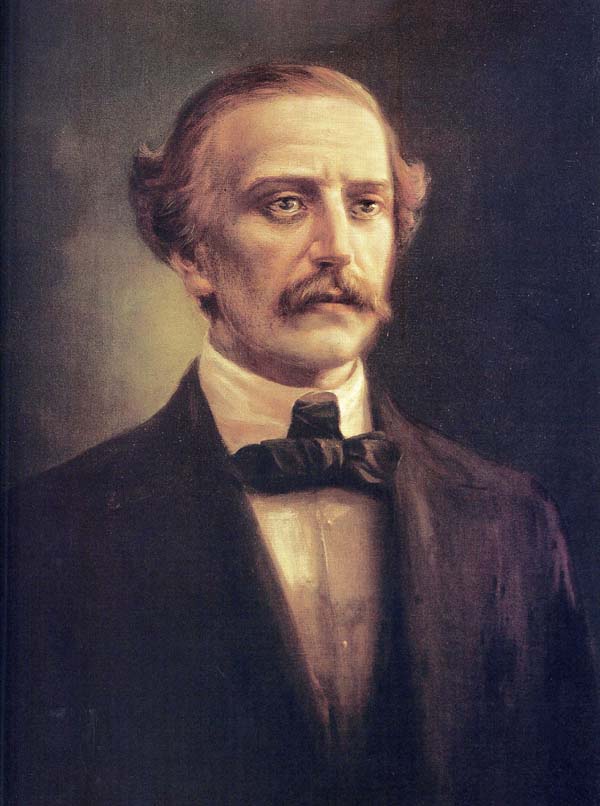
Juan Pablo Duarte
### Early Life and the Dominican Context Juan Pablo Duarte y Díez was born on January 26, 1813, in the city of Santo Domingo, during a tumultuous period in Hispaniola's history known as the "España Boba" (Foolish Spain) era [1]. This period was characterized by the Spanish Crown's neglect of its colony of Santo Domingo, which had recently returned to Spanish rule after a brief French occupation. Duarte's father, Juan José Duarte Rodríguez, was a Spanish merchant from Vejer de la Frontera who had settled in Santo Domingo and established a successful maritime store. His mother, Manuela Díez Jiménez, was a Dominican woman from the eastern town of El Seibo, the daughter of a Spanish father and a Dominican mother. Duarte grew up in a middle-class household that valued education and culture. However, his childhood was shaped by the geopolitical instability of the island. In 1821, José Núñez de Cáceres declared the "Ephemeral Independence" of Santo Domingo, attempting to align the territory with Simón Bolívar's Gran Colombia. This experiment lasted only nine weeks. In February 1822, Haitian President [Jean-Pierre Boyer](/profiles/jean-pierre-boyer) led a military invasion and annexed Santo Domingo, unifying the entire island of Hispaniola under Haitian rule [2]. The Haitian occupation, which lasted for 22 years, brought profound social, economic, and cultural transformations. Boyer abolished slavery, confiscated church properties, and instituted agricultural reforms. However, the occupation also involved the suppression of Spanish colonial culture, the closure of the University of Santo Domingo, and heavy taxation to pay France for indemnity. These policies generated deep-seated resentment among the Spanish-speaking, Catholic population of the eastern part of the island, who felt culturally and politically marginalized [2].  *The flag of the Dominican Republic, originally designed by Duarte and featuring a white cross dividing blue and red panels.* ### European Travels and Intellectual Awakening Duarte's parents, recognizing the limited educational opportunities under Haitian rule and hoping to shelter him from the political climate, sent him to study abroad in 1829. Duarte traveled first to the United States, spending time in New York, and then to England, France, and Spain [1]. It was during his time in Spain, particularly in Barcelona, that Duarte experienced an intellectual awakening. Barcelona in the early 1830s was a city alive with romantic nationalism and liberal ideas. Duarte witnessed the debates surrounding constitutionalism, civil liberties, and national identity [3]. He became deeply influenced by the concepts of representative democracy, popular sovereignty, and the romantic belief in the destiny of nations. He returned to Santo Domingo in 1832, not as a merchant's apprentice, but as a revolutionary visionary, determined to see his homeland established as a free, sovereign, and democratic republic. ### The Founding of La Trinitaria Upon his return to Santo Domingo, Duarte began offering free classes in history, geography, languages, and mathematics to the local youth. These lessons served as a cover for political discussions, where Duarte instilled national pride and the desire for self-determination in his students [3]. On July 16, 1838, Duarte took a decisive step toward active revolution. He gathered eight of his most trusted companions at the home of Josefa Brea in Santo Domingo and founded a secret revolutionary society called **La Trinitaria** [2]. The founders included Juan Isidro Pérez, Pedro Alejandro Pina, Jacinto de la Concha, Félix María Ruiz, José María Serra, Benito González, Felipe Alfau, and Juan Nepomuceno Ravelo. They were later joined by others, including [Francisco del Rosario Sánchez](/profiles/francisco-del-rosario-sanchez) and [Matías Ramón Mella](/profiles/matias-ramon-mella). The society's name reflected its organizational structure, which was designed to maintain strict secrecy. Members were organized in independent cells of three. Each member only knew the identity of the person who recruited them and the two individuals they recruited [2]. If a member was captured by Haitian authorities, they could only betray two others, protecting the integrity of the broader network. The Trinitarios took a solemn oath to fight for: > "...a free, sovereign, and independent Republic, free from all foreign domination, to be called the Dominican Republic." To build public support and spread their nationalist ideals without drawing the suspicion of the Haitian police, the Trinitarios established two public front organizations: *La Filantrópica* (The Philanthropic Society) and *La Dramática* (The Dramatic Society). These groups staged theatrical plays that contained subtle, coded messages of liberty and rebellion. The plays were highly popular, fostering a sense of national identity among the populace [3]. ### The 1843 Reformist Movement and Exile By 1843, discontent with President Boyer's regime had spread to Haiti itself, leading to the rise of a reformist movement known as *La Réforme*, led by General Charles Hérard [1]. Duarte saw this as an opportunity. He aligned the Trinitarios with Hérard's forces to help overthrow Boyer, believing that a reformist Haitian government would be more receptive to Dominican self-determination. Boyer was successfully overthrown in March 1843, but Hérard soon realized that the Dominican reformers did not merely want reform; they wanted complete separation. Hérard marched a military force into Santo Domingo to crush the independence movement. He ordered the arrest of the Trinitario leaders. Duarte was forced to go into hiding and eventually fled the island, seeking refuge in Caracas, Venezuela. His family remained behind, facing harassment and having their property confiscated by the authorities.  *A locator map of the Dominican Republic, sharing the island of Hispaniola with Haiti in the heart of the Greater Antilles.* ### The Declaration of Independence: February 27, 1844 During Duarte's exile, the leadership of the revolutionary movement fell to [Francisco del Rosario Sánchez](/profiles/francisco-del-rosario-sanchez) and [Matías Ramón Mella](/profiles/matias-ramon-mella). Sánchez took command of La Trinitaria, while Mella worked to coordinate military support [2]. Despite Duarte's absence, the revolutionary momentum grew, fueled by his letters and financial support from Venezuela. On the night of February 27, 1844, the conspirators gathered at the Puerta del Conde (The Count's Gate) in Santo Domingo. Mella fired his famous *trabucazo* (blunderbuss shot) to signal the start of the uprising, and Sánchez raised the new blue, red, and white flag of the Dominican Republic. The Haitian garrison, caught off guard and facing a popular revolt, surrendered. The Dominican Republic was officially declared a free and independent nation. ### Return and Political Disillusionment Duarte returned to Santo Domingo on March 15, 1844, greeted as a hero. He was appointed to the Central Governing Board, the provisional government of the new republic [1]. However, his return marked the beginning of a bitter political struggle. The young nation was deeply divided. The liberal Trinitarios, led by Duarte, advocated for a fully sovereign democratic republic. Conversely, a conservative faction, composed of wealthy landowners, merchants, and military officers led by General [Pedro Santana](/profiles/pedro-santana), believed the nation could not survive on its own [4]. They feared a renewed Haitian invasion and sought a protectorate under France or Spain in exchange for sovereignty. Duarte strongly opposed any submission to foreign powers, declaring: > “Nuestra Patria ha de ser libre e independiente de toda potencia extranjera o se hunde la isla”. [1] Tensions escalated, and in July 1844, General Santana marched his troops into Santo Domingo and staged a military coup. Santana declared himself dictator, arrested the Trinitarios, and labeled them "traitors to the homeland" [4]. In September 1844, Duarte, Sánchez, Mella, and their families were formally banished from the country. ### Decades of Exile and the Restoration War Duarte began a long, painful exile that would last for most of the remainder of his life. He returned to Venezuela, living for a time in Caracas and later seeking isolation in the remote town of San Fernando de Apure in the Venezuelan llanos (grasslands) [1]. During his absence, Santana's conservative faction dominated Dominican politics, alternating power with Buenaventura Báez. In 1861, Santana's fears of Haitian reconquest led him to take the ultimate step: he officially annexed the Dominican Republic back to Spain, turning it into a Spanish province [4]. This act of betrayal sparked the Dominican Restoration War (1863–1865), a popular guerrilla war to reclaim independence [2]. When news of the uprising reached Duarte in Venezuela, he emerged from his isolation. He sold his family's remaining assets to buy weapons and traveled back to the Dominican Republic, arriving in Monte Cristi in March 1864. Duarte offered his services to the restoration government. However, his presence created discomfort among the new generation of restoration leaders, who feared his prestige might undermine their authority. Seeking to avoid internal division, the restoration government sent Duarte back to Venezuela on a diplomatic mission to secure financial and political support from the Venezuelan government. Once back in Venezuela, he was largely forgotten and marginalized by the Dominican leadership. ### Final Years and Posthumous Legacy Duarte spent his final years in Caracas, living in poverty and declining health, cared for by his sisters Rosa and Francisca. He died on July 15, 1876, at the age of 63, without ever seeing his homeland free again [1]. Duarte's historical rehabilitation began in 1884, when President Fernando Arturo de Meriño ordered the repatriation of his remains. His bones were returned to Santo Domingo and received with national honors. In 1944, on the centenary of independence, his remains were interred in the Altar de la Patria, a mausoleum in Santo Domingo, alongside those of Sánchez and Mella. Today, Juan Pablo Duarte is revered as the primary Founding Father (*Padre de la Patria*) of the Dominican Republic. He is remembered not as a military conqueror, but as an intellectual giant, a man of pure democratic ideals, and a moral exemplar who sacrificed his wealth, his family's well-being, and his own life for the dream of a free and sovereign nation.
View Profile →
Julia de Burgos
Julia Constanza Burgos García, known universally as Julia de Burgos, stands as a titan of Caribbean literature and one of the most brilliant, uncompromising poets of the twentieth century. Born on February 17, 1914, in the barrio of Santa Cruz in Carolina, Puerto Rico, she emerged from crushing poverty to become a foundational figure in Latin American poetry, a fierce advocate for Puerto Rican independence, and a trailblazing feminist. Her legacy, far from being confined to the written word, is intimately woven into the complex history of the Puerto Rican diaspora, colonial resistance, and the early articulation of Afro-Caribbean and intersectional feminist identity. ### Early Life and the Crucible of Poverty The eldest of thirteen children born to Francisco Burgos Hance, a farmer and member of the National Guard, and Paula García de Burgos, Julia’s early life was marked by both the natural beauty of the island and the brutal realities of economic deprivation. The rural landscape of Carolina left an indelible mark on her imagination, providing the ecological imagery that would later define much of her poetic output. However, this idyllic environment was sharply contrasted by immense hardship. Tragically, six of her younger siblings succumbed to malnutrition and preventable diseases during childhood. This early encounter with mortality and the systemic inequalities of a colonized Puerto Rico profoundly shaped her worldview, instilling in her a lifelong commitment to social justice and the defense of the marginalized. Despite the formidable obstacles posed by poverty, de Burgos demonstrated an exceptional intellect and an insatiable hunger for learning. Recognizing her potential, her family pooled their meager resources to ensure she received an education. She attended elementary school in Carolina, where her academic brilliance quickly became apparent. By the age of fourteen, her talents earned her a scholarship to the prestigious University High School at the University of Puerto Rico (UPR) in Río Piedras. ### Education and the Formation of an Intellectual Entering the University of Puerto Rico in 1931 was a transformative experience for the young scholar. At UPR, de Burgos was exposed to a vibrant intellectual milieu teeming with anti-colonial sentiment and literary innovation. She immersed herself in the study of literature, philosophy, and history, refining the poetic voice that was already beginning to stir within her. In 1933, at the age of just nineteen, she completed her studies and earned her teaching certificate. Following graduation, she accepted a teaching position in the rural municipality of Naranjito. It was here, surrounded by the dramatic topography of the island's interior, that she found profound inspiration. The nearby Río Grande de Loíza became the subject of one of her most famous and revered poems. In "Río Grande de Loíza," the river ceases to be merely a body of water; it transforms into a potent metaphor for the Puerto Rican soul—a repository of the island's pain, its African heritage, and its enduring strength. The poem also reflects her burgeoning awareness of the deep scars left by slavery and colonialism, establishing her as an early voice of Afro-Antillean pride.  ### A Voice for Independence: The Puerto Rican Nationalist Party The 1930s in Puerto Rico were characterized by intense political upheaval, economic depression, and violent clashes between the U.S.-appointed colonial government and the Puerto Rican Nationalist Party, led by [Pedro Albizu Campos](/profiles/pedro-albizu-campos). De Burgos was deeply radicalized by these events. Refusing to remain a passive observer, she threw herself into the struggle for national liberation. She became the Secretary General of the *Hijas de la Libertad* (Daughters of Freedom), the women's branch of the Nationalist Party. Her activism was not confined to organizing; she used her pen as a weapon, writing fiery essays and delivering speeches that championed independence and condemned U.S. imperialism. Her political convictions were inseparable from her poetry. For de Burgos, the liberation of the Puerto Rican nation was intimately connected to the liberation of the Puerto Rican woman. ### The Feminist Poetics of Julia de Burgos Julia de Burgos’s poetry was revolutionary in its fierce rejection of the patriarchal constraints of her era. In a deeply conservative, Catholic society that expected women to be docile, domestic, and subservient, de Burgos demanded absolute autonomy over her body, her intellect, and her destiny. > "I am life, strength, woman. > I am the route of all my own liberation." > — *From "Yo misma fui mi ruta" (I Was My Own Route)* Her iconic poem, "Yo misma fui mi ruta," is a manifesto of self-emancipation. In it, she dismantles the traditional roles assigned to women, declaring herself the architect of her own path. She challenged the dual standards of morality and dared to write openly about female desire, romantic passion, and emotional turmoil. Her first two collections, *Poema en veinte surcos* (1938) and *Canción de la verdad sencilla* (1939), established her as a literary force, though her unapologetic boldness often alienated the conservative literary establishment of the island. ### Migration, Love, and Exile: The New York and Havana Years Seeking a broader intellectual horizon and fleeing the stifling social mores of Puerto Rico, de Burgos migrated to New York City in 1940. This move was partly motivated by her intense and tumultuous romance with Juan Isidro Jimenes Grullón, a Dominican physician and political exile. The couple soon relocated to Havana, Cuba, a city that was then a vibrant hub of Latin American arts and revolutionary politics. In Havana, de Burgos enrolled at the University of Havana, mingled with prominent intellectuals, and experienced a period of profound creative fertility. However, her relationship with Jimenes Grullón was fraught with difficulties. His aristocratic family reportedly rejected her due to her Afro-Caribbean ancestry and her lack of wealth. The eventual dissolution of their relationship was a devastating blow that triggered a deep depression. Heartbroken, she left Cuba in 1942 and returned to New York City alone. ### The Final Years: Struggle in El Barrio De Burgos’s return to New York marked the beginning of a tragic decline. While she found work as a journalist for *Pueblos Hispanos*, a progressive Spanish-language newspaper, she struggled to survive in a city that was often deeply hostile to Puerto Rican migrants. She faced the dual burdens of racism and sexism, and her economic situation became increasingly desperate. During this period, she wrote some of her most haunting and melancholic poetry, reflecting the alienation, displacement, and existential despair of the migrant experience. She turned to alcohol to numb the pain of her broken heart, her poverty, and her physical ailments, which included cirrhosis of the liver. Despite her profound suffering, her creative spirit endured, resulting in the poems that would later be collected in her posthumous volume, *El mar y tú: otros poemas* (1954). ### Tragedy and Posthumous Legacy The conclusion of Julia de Burgos’s life is one of the most heartbreaking chapters in literary history. On July 6, 1953, at the age of just thirty-nine, she collapsed on a sidewalk in East Harlem (El Barrio). Because she carried no identification, she was taken to a hospital where she passed away shortly after. Her body was transported to the city morgue and, remaining unclaimed, she was buried in a pauper’s grave on Hart Island under the name "Jane Doe." It was only through the tireless efforts of her friends and colleagues that her identity was eventually discovered. Her remains were exhumed and repatriated to Puerto Rico. In stark contrast to her lonely death, her return to the island was met with a hero's welcome. She was given a state funeral in her hometown of Carolina, honored as a martyr of the national culture. Today, Julia de Burgos is celebrated not just as a brilliant poet, but as a cultural icon and a fierce ancestor to the Nuyorican poetry movement that flourished in the 1970s. Writers like [Pedro Pietri](/profiles/pedro-pietri) and Giannina Braschi stand on the foundation she built. Her insistence on naming her intersecting identities—as a woman, a Puerto Rican, a person of African descent, and an anti-colonial subject—makes her work remarkably contemporary. Through her immortal verses, she transcended the tragedy of her final days, ensuring that her voice would echo across generations as a testament to the enduring power of the human spirit.
View Profile →
Julien Fédon
### Introduction Julien Fédon (c. 1750s – c. 1796) stands as one of the most formidable and legendary anti-colonial revolutionary figures in Caribbean history [1]. As a free man of mixed French and African heritage, Fédon defied the rigid racial hierarchies of late eighteenth-century slave society to lead a sweeping, fifteen-month insurrection against British colonial rule in Grenada [2]. Known to history as Fédon's Rebellion (1795–1796), this fierce uprising united free people of color, French republican sympathizers, and thousands of enslaved Africans in a radical quest to abolish slavery and establish a revolutionary republic inspired by the French and Haitian Revolutions [3]. Though ultimately suppressed by massive British military reinforcements, Fédon's rebellion shook the foundations of the British Empire in the West Indies, transforming him into an enduring folk hero and a potent symbol of Black liberation and Grenadian sovereignty [4]. ### Eighteenth-Century Grenada: Colonial Rivalries and Socio-Political Dynamics To understand the explosive nature of Fédon's uprising, one must examine the complex socio-political landscape of eighteenth-century Grenada [1]. For over a century, Grenada had been a French colony, during which time a distinct French-Creole culture took root. Enslaved Africans were baptized in the Roman Catholic faith, and a substantial class of free people of color (*gens de couleur libres*) emerged, many of whom became prosperous plantation owners and merchants [2]. However, the geopolitical destiny of Grenada shifted dramatically with the Treaty of Paris in 1763, which ceded the island to Great Britain [3]. Although France briefly recaptured Grenada during the American Revolutionary War between 1779 and 1783, the Treaty of Versailles restored British supremacy [1]. Under British rule, colonial authorities systematically sought to dismantle French socio-religious institutions and entrench British Protestant hegemony. British laws stripped French-speaking Roman Catholics—particularly free people of color—of their civil and political rights. They were barred from voting, denied the right to stand for elections to the colonial assembly, and subjected to discriminatory land policies and social humiliation [4]. This systematic disenfranchisement created deep-seated resentment among the French-Creole population. While white British planters consolidated their control over the island's lucrative sugar estates, the *gens de couleur* found themselves marginalized in a land they had helped cultivate. Simultaneously, the vast majority of the island's population consisted of enslaved Africans subjected to brutal plantation labor under the British slave codes [2]. This volatile combination of an aggrieved free mixed-race elite and an oppressed enslaved population created fertile ground for revolution. 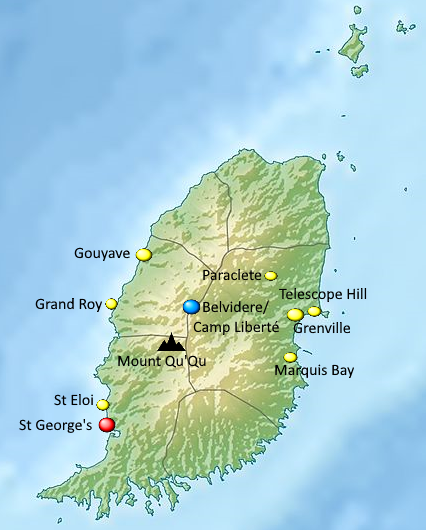 ### Early Life, Lineage, and the Belvidere Estate Julien Fédon was born in the island of Martinique during the 1750s to Pierre Fédon, a French jeweler from Bordeaux, and a freed Black woman [1]. The family migrated to Grenada in the 1770s, where Pierre Fédon acquired land and established his family among the island's growing class of free people of color [3]. By the early 1790s, Julien Fédon had inherited and expanded his family's holdings, becoming the owner of the expansive Belvidere Estate, a coffee and cocoa plantation nestled in the rugged, mountainous interior of Saint John Parish near Gouyave [2]. Fédon married Marie Rose Cavelan, a mixed-race woman from a prominent local family, cementing his status within the upper echelons of Grenada's French-Creole society [1]. Despite his wealth, property, and ownership of enslaved laborers, Fédon was acutely aware of the precarious nature of his freedom under British rule [3]. As a Catholic and a man of African descent, he suffered the same civil indignities and legal disabilities that plagued his peers. Proud, charismatic, and fiercely intelligent, Fédon refused to accept second-class citizenship [4]. His Belvidere Estate, surrounded by dense rainforests and steep ridges, gradually became a sanctuary for dissident free people of color who gathered to discuss politics, philosophy, and the mounting injustices perpetrated by the British administration led by Lieutenant Governor [Ninian Home](/profiles/ninian-home) [2]. ### Revolutionary Spark: Influence of the French and Haitian Revolutions The explosion of the French Revolution in 1789 sent shockwaves across the Atlantic world, carrying radical ideals of *Liberté, égalité, fraternité* into the slave societies of the Caribbean [1]. For Grenada's oppressed French-Creole population, the revolutionary decree of the National Convention in Paris abolishing slavery in all French colonies resonated with electrifying force [3]. More profoundly, the momentous outbreak of the Haitian Revolution in 1791—led initially by figures like [Toussaint Louverture](/profiles/toussaint-louverture)—demonstrated that Black and mixed-race people could organize, wage armed struggle, and defeat European imperial powers [4]. Fédon established clandestine communications with French revolutionary authorities in the neighboring island of Guadeloupe, where the dynamic republican commissioner [Victor Hugues](/profiles/victor-hugues) had successfully ousted British forces and proclaimed the abolition of slavery [2]. Hugues recognized the strategic value of sparking a revolutionary uprising in British Grenada. He supplied Fédon with arms, ammunition, revolutionary cockades, and official commissions appointing Fédon as General of the French Republican Army in Grenada [3]. Bolstered by republican ideology and promise of military support, Fédon began forging an unprecedented multi-racial coalition, uniting property-owning free people of color, radical French white settlers, and thousands of enslaved Africans eager to break their chains [1]. > 'Live free or die! We demand the immediate overthrow of British tyranny and the total abolition of slavery across this island. Let those who oppose the rights of man tremble before the justice of the people!' > — Attributed to Julien Fédon's Revolutionary Proclamation, March 1795 ### Outbreak and Trajectory of Fédon’s Rebellion (1795–1796) On the night of March 2–3, 1795, Fédon launched his historic insurrection with highly coordinated, simultaneous assaults on the coastal towns of Grenville (La Baye) on the east coast and Gouyave (Charlotte Town) on the west coast [1]. The rebel forces overwhelmed the British garrisons, looted armories, and captured dozens of wealthy British planters and officials [2]. Among the most prominent hostages captured during the sweeping initial offensive was Lieutenant Governor [Ninian Home](/profiles/ninian-home), who was taken prisoner while attempting to return to the capital by sea [3]. Following their swift initial victories, Fédon withdrew his consolidated forces to his mountain fortress at the Belvidere Estate, which he fortified heavily and renamed *Camp de la Liberté* (Camp Liberty) [4]. From this impregnable highland stronghold, Fédon issued a declaration demanding unconditional British surrender and proclaiming Grenada a free republic under French revolutionary protection [1]. Enslaved workers across the island abandoned their plantations en masse to join Fédon's ranks, swelling his revolutionary army to over 7,000 fighters [2]. Within weeks, the rebels controlled the vast majority of Grenada's countryside, isolating the British colonial administration and its remaining garrison inside the capital city of St. George's [3].  The conflict quickly escalated into a brutal, total war. British forces launched repeated, desperate attempts to storm Camp de la Liberté, but Fédon's skilled use of guerrilla tactics, intimate knowledge of the mountainous terrain, and the fierce determination of his fighters repulsed the assault columns with heavy casualties [4]. When British naval and land forces initiated a massive artillery bombardment against the rebel camp in April 1795, Fédon carried out his warning to execute hostages if attacked, ordering the execution of Lieutenant Governor [Ninian Home](/profiles/ninian-home) and forty-seven other British prisoners [2]. This uncompromising act underscored the existential nature of the rebellion and struck terror into the British Caribbean establishment [1]. ### British Suppression, Mysterious Disappearance, and Aftermath By late 1795, the British Empire recognized that losing Grenada could trigger a domino effect of anti-slavery revolutions across the British West Indies, threatening their entire colonial economy [3]. Desperate to reassert supremacy, the British government dispatched massive military reinforcements to the Caribbean under the command of General [Ralph Abercromby](/profiles/ralph-abercromby) [4]. By spring 1796, thousands of battle-hardened British regulars, accompanied by German mercenaries and naval squadrons, encircled Grenada [1]. Abercromby initiated a methodical, overwhelming campaign to cut off Fédon's supply lines from Guadeloupe and isolate the highland fortresses [2]. Despite enduring months of starvation, disease, and relentless cannon fire, the revolutionary army defended every ridge and valley with extraordinary bravery [3]. Finally, on June 19, 1796, British storming parties breached the defenses of Fédon's ultimate mountain stronghold at Mount Qua Qua [4]. In the ferocious hand-to-hand combat that ensued, hundreds of rebel defenders were killed or captured [1]. Remarkably, amidst the chaos of the final British breakthrough, Julien Fédon vanished into the dense rainforest [2]. Despite massive British manhunts, generous financial bounties, and widespread interrogations, Fédon was never captured [3]. Historical theories regarding his ultimate fate vary: some accounts suggest he drowned in a small canoe attempting to sail across the rough channel to Trinidad or South America, while local oral traditions maintain that he lived out his remaining years in clandestine freedom among the remote maroon communities in Grenada's interior mountains [4]. The rebellion's aftermath was catastrophic for the insurgents: British authorities executed hundreds of captured rebels, exiled prominent French-Creole families, and sold thousands of participating enslaved people to brutal plantations in Spanish Honduras [1]. ### Historical Legacy and Modern Remembrance For more than a century following the uprising, British colonial historiography depicted Julien Fédon as a ruthless traitor and violent fanatic, attempting to erase the anti-slavery and republican dimensions of his movement [2]. However, with the rise of anti-colonial consciousness and Caribbean nationalism in the twentieth century, Fédon underwent a profound historical reassessment [3]. Today, he is celebrated as Grenada's first national hero and a visionary pioneer of Caribbean liberation [4]. Fédon's struggle deeply inspired modern Grenadian political leaders. During the Grenada Revolution of 1979–1983, Prime Minister [Maurice Bishop](/profiles/maurice-bishop) and the People's Revolutionary Government frequently invoked Fédon's name and legacy as the spiritual foundation of their struggle for self-determination and social justice [1]. Even prior leaders such as [Eric Gairy](/profiles/eric-gairy) acknowledged the symbolic power of Camp Belvidere in Grenadian folklore [2]. Fédon's Rebellion is now widely recognized by historians as an integral chapter of the wider Atlantic Revolutions, standing alongside the exploits of Haitian revolutionaries like [Jean-Jacques Dessalines](/profiles/jean-jacques-dessalines) and [Henri Christophe](/profiles/henri-christophe) [3]. Through his uncompromising defiance of empire and slavery, Julien Fédon immortalized himself in the pantheon of Caribbean freedom fighters [4].
View Profile →Julio Antonio "Chacho" Abraham
### Early Life and the Socio-Political Awakening of Bonaire In the first half of the twentieth century, the working-class population of Bonaire faced severe economic hardship and political marginalization within the colonial structure of the Netherlands Antilles. Governed largely from central administrative offices in Curaçao, Bonaireans suffered from underfunded schools, inadequate medical care, limited economic mobility, and a political system dominated by traditional elite merchant families. It was out of this crucible of socio-economic disenfranchisement that Julio Antonio Abraham emerged as an iconic champion of the people, igniting a populist political awakening that would forever transform the political landscape of the Dutch Caribbean [1]. Born on August 10, 1909, in Willemstad, Curaçao, to a family with deep Bonairean roots, Julio Antonio Abraham—affectionately known across the islands by his popular nicknames "Chacho" and "Djul"—was educated during a period of intense ideological fermentation across the Caribbean [2]. From his youth, he exhibited a brilliant oratorical gift, a ferocious intellect, and an uncompromising sense of social justice. When he settled permanently in Bonaire, Abraham was deeply moved by the quiet dignity and resilience of the local laborers, salt pan workers, and fishermen who toiled under immense hardship without authentic political representation. He closely monitored the regional anti-colonial and labor movements sweeping the islands, drawing inspiration from pioneering Antillean statesmen such as [Moises Frumencio da Costa Gomez](/profiles/moises-frumencio-da-costa-gomez), who was actively organizing the working classes in Curaçao to demand universal suffrage and internal constitutional autonomy from the Netherlands. ### Founding the Bonaire Democratic Party and Navigating Political Dualism Recognizing that true socio-economic empowerment could only be achieved through organized political solidarity, Julio Antonio Abraham channeled his grassroots activism into formal institutional power. On August 10, 1954—coinciding auspiciously with his forty-fifth birthday—Abraham formally established the **Bonaire Democratic Party** (*Partido Demokrátiko Boneriano*, PDB) [1]. The founding of the PDB marked a revolutionary watershed moment in Bonairean history. Built upon progressive social-democratic principles, the party pledged to dismantle class privilege, champion workers' syndicalism, expand public education, and demand equitable financial allocation and self-determination for Bonaire within the Antillean constellation. In analyzing the historiography of modern Bonairean politics, it is essential to clarify a frequent historical conflation surrounding Abraham's legacy. Within popular discourse and retrospective summaries celebrating Bonaire's patriotic empowerment, Chacho Abraham is occasionally misidentified as the founder of the rival Bonaire Patriotic Union (*Patriotische Unie van Bonaire*, UPB). In historical reality, the UPB was established later, in October 1969, by prominent figures such as Rudi Ellis, emerging as the Christian-democratic counterweight to Abraham's social-democratic movement [3]. Together, Abraham's PDB and the subsequently formed UPB would establish the enduring bipolar political system that defined Bonairean democracy for nearly half a century. While Abraham was the undisputed progenitor of the PDB rather than the UPB, the fact that his name is so frequently associated with the broader patriotic empowerment of the island speaks volumes about his universal status as the symbolic father of modern Bonairean political consciousness. > "A people cannot truly progress unless they hold the reins of their own political destiny and stand as respected equals within the Caribbean community." [1] Under Chacho Abraham's charismatic leadership, the PDB rapidly mobilized the working-class districts of Kralendijk, Antriol, Tera Kora, and the historic northern village of Rincon. Abraham was a master of grassroots communication, conducting fiery, eloquent town hall meetings in the native Papiamentu language. He gave voice to the daily struggles of ordinary citizens, articulating a bold vision where Bonaireans would no longer be second-class citizens in their own land, but active masters of their socio-economic fate. Throughout his campaigns, he frequently collaborated with business visionaries like [Lodewijk "Lodi" Gerharts](/profiles/lodewijk-lodi-gerharts) to ensure that political autonomy went hand-in-hand with robust infrastructure and commercial modernization. ### Parliamentary Leadership in the Staten van de Nederlandse Antillen Chacho Abraham's political influence extended far beyond the local Island Council; he was a powerhouse within the national parliament, the *Staten van de Nederlandse Antillen* [2]. Following the introduction of universal suffrage, Abraham contested the landmark 1949 parliamentary elections, successfully capturing Bonaire's representation. As a parliamentarian, he was a formidable debater and a fearless advocate for the smaller islands of the federation. He relentlessly challenged the central government in Willemstad whenever he perceived that budgetary distributions unfairly favored Curaçao at the expense of Bonaire, Saba, and St. Eustatius. During his tenure in the Staten throughout the 1950s, Abraham successfully championed landmark legislative acts that directly improved the living standards of the Bonairean people. He secured vital funding for the construction of modern paved road networks, the expansion of the electrical grid into rural neighborhoods, the building of public primary and secondary schools, and the establishment of improved medical clinics staffed by qualified professionals [2]. He also fought tirelessly for labor protections, including standardized working hours, workplace safety regulations, and fair wage structures for dockworkers and agricultural laborers.  In the national arena, Abraham built strategic legislative coalitions with progressive Antillean leaders, working alongside future Prime Minister [Efraín Jonckheer](/profiles/efrain-jonckheer) and engaging in deep constitutional dialogue with Aruban leaders like [Betico Croes](/profiles/betico-croes) and statesman [Juancho Evertsz](/profiles/juancho-evertsz). Abraham staunchly advocated for a decentralized federal structure that respected the unique cultural identity and local autonomy of each island entity, laying the intellectual groundwork for subsequent constitutional reforms across the Dutch Caribbean. ### Champion of Socio-Economic Empowerment and Working-Class Rights At the core of Chacho Abraham's political ideology was an unyielding commitment to socio-economic empowerment through human capital development. He firmly believed that political freedom was meaningless without economic security and intellectual enlightenment. To break the historical cycle of poverty, Abraham initiated scholarship programs that enabled talented Bonairean youth from modest backgrounds to travel abroad to Curaçao, the Netherlands, and the United States to pursue higher education and professional degrees [1]. He understood that creating an indigenous class of educated doctors, engineers, teachers, and public administrators was the ultimate safeguard for Bonaire's future autonomy. Furthermore, Abraham was deeply devoted to the preservation and elevation of Bonairean cultural identity. At a time when colonial norms discouraged the formal use of Papiamentu and marginalized local folk traditions, Abraham proudly celebrated folklore, traditional music, and indigenous historical memory. He placed special emphasis on uplifting the historic village of Rincon—founded in the sixteenth century by enslaved Africans—recognizing it as the spiritual heart of Bonairean cultural resilience. His frequent community gatherings in Rincon solidified an unbreakable bond between his political movement and the village's inhabitants. > "Chacho Abraham gave an fearless voice to the voiceless masses of Bonaire, igniting a flame of political self-respect that transformed our governance structure forever." [4] ### Posthumous Honors, the Abraham Dynasty, and Enduring Legacy Tragically, Julio Antonio "Chacho" Abraham's brilliant life was cut short when he passed away prematurely on January 2, 1961, in Amsterdam, at the age of only 51 [2]. His unexpected death sent a wave of profound grief across Bonaire and the entire Netherlands Antilles. Thousands of mourners lined the streets of Kralendijk to pay their final respects to the man who had dedicated his life to lifting them from political obscurity. Though his physical presence departed, Chacho Abraham's institutional and familial legacy endured with remarkable potency. His founding of the PDB established a political dynasty that shaped Bonairean governance for generations. His remarkable life, along with the subsequent influential political careers of his brother Lorenzo Antonio ("Toon") Abraham and his son Jopie Abraham—both of whom became dominant figures in Antillean politics—is chronicled extensively in Trix van Bennekom's acclaimed historical study, *Abraham: Kroniek van een politieke dynastie* [4]. Today, his grandson Clark Abraham continues the family's leadership tradition within the very party Chacho founded. In recognition of his monumental contributions to Antillean democracy, the government of the Netherlands Antilles honored Julio Antonio Abraham posthumously in 1976 by issuing a commemorative postage stamp bearing his portrait [2]. In the historic center of Rincon, a prominent public statue of Chacho Abraham stands tall, gazing out over the community he loved so fiercely. For every Bonairean exercising their democratic right to vote, attaining higher education, or speaking out for local self-determination, the profound legacy of Julio Antonio "Chacho" Abraham remains an evergreen beacon of courage, patriotism, and empowerment.
View Profile →Laura Wernet-Paskel
### Early Life and the Island She Called Home Laura Simona Paskel was born on **February 18, 1911**, in the sun-baked village of Santa Cruz, on the southern coast of Aruba — a small, arid island in the southern Caribbean that had been under Dutch colonial administration for nearly three centuries. The Aruba into which she was born was a place of stark contrasts: a devoutly Catholic, Papiamento-speaking society rooted in deep colonial tradition, yet simmering with the first stirrings of political awakening and industrial transformation. Her family were modest Catholic farmers, and Laura was the eldest of three children — a position that would instil in her a lifelong sense of responsibility toward others [1]. The Aruba of the early twentieth century was on the cusp of dramatic change. The discovery of oil deposits in nearby Venezuela had prompted Shell and Standard Oil (through its Lago subsidiary) to establish massive refineries on the island beginning in the late 1920s, and by the 1930s and 1940s, Aruba had transformed from a sleepy, subsistence-farming island into one of the most economically significant oil refining hubs in the Western world. Yet this industrial prosperity was largely controlled by foreign corporations, and the vast majority of ordinary Arubans — especially women and rural families — remained distant from the levers of power and social advancement. It was into this contradictory world that Laura Paskel grew up, and it was against this backdrop that she would forge a life of extraordinary resilience and ambition [2].  ### Crossing the Ocean: Education in the Netherlands At the remarkable age of **fifteen**, Laura Paskel made a journey that very few Aruban girls of her generation would dare to contemplate. On the advice of Dominican nuns who recognised her exceptional intellectual potential, she boarded a ship and sailed to the Netherlands to pursue a formal teaching education — a voyage of thousands of miles from the only home she had ever known. She enrolled at the **Roman Catholic teacher training college in Reuver**, in the Dutch province of Limburg, dedicating years to her studies far from her family, her island, and her language [3]. In **1931**, Laura Paskel graduated with her *Akte van Bekwaamheid als Onderwijzeres* — a formal teaching certificate — making her and her classmate Magdalena de Cuba the **first two Aruban women to qualify as teachers through study in the Netherlands**. This was no small feat in an era when higher education for women in the Caribbean was barely conceivable, and when the Dutch educational establishment was still largely a male domain. The achievement announced to Aruba that its daughters were capable of competing, and excelling, at the highest levels of European academic life [3]. ### "Miss Laura": A Dedicated Educator Upon her return to Aruba, Laura Paskel was appointed as a teacher at the **Maria School in Santa Cruz** — the very community where she had grown up. She quickly became beloved by her pupils and their families, earning the affectionate title **"Miss Laura."** She brought to the classroom not only rigorous academic training but also a deep commitment to Aruban identity and community uplift. Her teaching was understood not merely as instruction in reading and arithmetic, but as an act of empowerment — equipping children from humble backgrounds with the tools to claim their place in a rapidly changing world [3]. However, the deeply patriarchal customs of the era intervened. In **1937**, following her marriage to **Willem Wernet**, Laura was compelled to resign from her teaching post. At the time, it was common practice — often enforced by colonial educational regulations — for women to forfeit their public sector positions upon marriage. The underlying assumption was that a married woman's duty lay entirely within the domestic sphere. For Laura Wernet-Paskel, this was a profound injustice, and it would become one of the driving forces behind her later political activism [3]. Rather than withdrawing into domesticity, she channelled her energies in new directions. She managed her husband's businesses and raised **seven children**, but she also did something quietly radical: she **opened a private library in her own home**, lending books to local clergy, neighbours, and community members at a time when Aruba had no public library. This act — making knowledge freely available to all who sought it — encapsulated the philosophy that would define her entire life [3]. ### A Pioneer at the Ballot Box When Laura Wernet-Paskel returned to teaching on a contract basis in **1948**, working at the Maria School and later at Filomena College in San Nicolaas, she re-entered public life at a moment of extraordinary political ferment. The year **1949** marked Aruba's first parliamentary elections under a new system of universal adult suffrage — a transformative shift that, for the first time, gave ordinary Arubans, men and women alike, the right to vote and to stand for office [2]. Laura Wernet-Paskel seized the moment. She became the **first woman in Aruba's history to stand as a candidate for political office**, running under the banner of the **UNA** (*Unión Nacionalista Arubano*, or National Aruban Union), a party that championed Aruban autonomy within the Kingdom of the Netherlands. Her candidacy was extraordinary not just as a gender milestone but as a courageous public statement: she was demanding that women's voices be heard in the halls of power, at a time when many in Aruban society — men and women alike — considered politics an exclusively male domain. She ran for office **three times** in total, and while she did not win a seat, her persistent candidacy cracked open a door that subsequent generations would push wide open [1][4]. > *"She was a woman ahead of her time — a teacher, a writer, a fighter for justice — who refused to accept that the world as it was, was the world as it had to be."* Her political activism extended beyond the ballot box. In **1951**, she lent her voice and moral authority to Aruban women who were organising protests against the government-sanctioned brothel at *Campo Alegre* (known locally as *Juwana Morto*). These protests were among the first organised expressions of women's collective political power in Aruban history, and Wernet-Paskel's involvement helped legitimise the movement in the eyes of the broader community [5]. ### A Writer Who Preserved Her Island's Soul Through all the upheavals of her life — the years away in the Netherlands, the forced resignation from teaching, the demands of motherhood, and the rough-and-tumble of electoral politics — Laura Wernet-Paskel never stopped writing. She composed **poetry and short stories**, contributing to a nascent Aruban literary tradition at a time when Papiamento-language literature was still finding its feet. But her most significant literary achievement was her book ***Ons Eilantje Aruba*** ("Our Little Island of Aruba") — a work of local history that documented the people, traditions, and character of Aruba for future generations [1][6]. Published posthumously, *Ons Eilantje Aruba* is recognised as a landmark work: **the first written history of Aruba by a woman**. In an era when history was almost exclusively written by men — usually colonial administrators, missionaries, or Dutch scholars — Wernet-Paskel's decision to record Aruba's story from the perspective of an Aruban woman born in a village farm was a profoundly subversive and vital act. The book preserves voices and perspectives that might otherwise have been lost entirely [3]. ### Final Years and Passing Laura Wernet-Paskel died on **September 8, 1962**, at the age of fifty-one — far too young, and with much yet to give. She left behind seven children, a school full of former pupils who carried her lessons in their hearts, a community she had served in countless ways, and a manuscript that would outlive her. The Aruba she left was still, in many ways, struggling with the colonial structures she had spent her adult life challenging. But the seeds she had planted — in education, in politics, in literature, in the consciousness of Aruban women — would bear fruit in the decades to come [1]. ### Legacy and Lasting Honour The recognition of Laura Wernet-Paskel's contributions has grown steadily in the years since her death. In **1992**, the Sint Janschool in Kadushi Largo was renamed **Colegio Laura Wernet-Paskel** in her honour, ensuring that generations of Aruban children would learn under the name of the island's most pioneering female educator [3]. In **1999**, the government of Aruba named her **"Woman of the Millennium"** — a tribute to the extraordinary breadth and depth of her contributions. She has also been honoured on **commemorative postage stamps**, and efforts have been made to name a street in Aruba — *Caya Laura Wernet-Paskel* — in her memory [6]. Perhaps the most poignant recognition came from the Netherlands itself. In **2021**, the municipality of The Hague named a street and courtyard in the Escamp neighbourhood the **Laura Wernet-Paskelhof** — making her the **only person from Aruba** among the eight individuals so honoured in that particular Dutch development project. The gesture was deeply symbolic: the same country whose educational system she had crossed an ocean to master, and whose colonial customs had forced her out of a job she loved, was now permanently engraving her name into its urban landscape [6].  Laura Wernet-Paskel's life is a story about the stubborn refusal to be silenced. She was, in every sense, a woman who acted before the world was ready for her — and changed it anyway.
View Profile →
Leonora Sneek-Gibbs
### Introduction and Trailblazing Pioneer Leonora Viola "Nora" Sneek-Gibbs (1949 – May 23, 2022) stands enshrined in Caribbean history as an extraordinary political trailblazer, educator, entrepreneur, and humanitarian champion of Sint Eustatius [1]. Widely revered with affectionate respect across the island simply as "Nora," she shattered glass ceilings that had endured for centuries, emerging as a defining matriarch of modern Statian governance and civic empowerment [2]. Throughout a celebrated career spanning over five decades, Sneek-Gibbs combined unwavering moral integrity with visionary leadership, dedicating every fiber of her being to the advancement of her island community.  Her monumental place in regional history was permanently secured in 1991 when she achieved a breakthrough milestone as the first woman ever elected to the Island Council of Sint Eustatius [2]. She later ascended to the highest levels of national executive leadership, becoming the first Statian woman appointed as State Secretary in the Cabinet of the Netherlands Antilles [1]. Yet, Sneek-Gibbs's influence far transcended governmental chambers; as an impassioned educational advocate leading the SPICE Foundation, a successful hospitality entrepreneur, and a tireless lioness of civic charity, she fundamentally transformed the socio-economic landscape of Sint Eustatius, leaving a legacy of empowerment that continues to inspire future generations. ### Early Life, Educational Passion, and Youth Empowerment Born in Sint Eustatius in 1949, Leonora Viola Gibbs came of age during a period when the island's close-knit population relied heavily on communal resilience, mutual aid, and traditional values [1]. From early childhood, she exhibited an exceptional aptitude for academic leadership and an innate sensitivity to the struggles of underprivileged youth. She recognized early on that for a small Caribbean island to achieve genuine self-reliance in a rapidly modernizing world, rigorous education and international exposure were non-negotiable imperatives. Driven by this profound conviction, Sneek-Gibbs channeled her early career into educational advocacy and youth empowerment [3]. She understood that talent was universally distributed across Statia, but opportunity was not. This realization culminated in her pivotal role as the founding President and Chairperson of the St. Eustatius Promotion of International Culture and Education (SPICE) Foundation [4]. Under her visionary stewardship, the SPICE Foundation evolved into an intellectual powerhouse and lifesaver for aspiring young Statians. > "Education is the paramount key that unlocks the boundless potential of our youth. When we invest fearlessly in their minds and provide them with international bridges, we secure the sovereign future and lasting prosperity of Statia." — Leonora Sneek-Gibbs Through the SPICE Foundation, Sneek-Gibbs worked relentlessly to secure scholarships, study grants, and mentorship programs for local high school graduates [4]. She personally counseled hundreds of students navigating the daunting transition from their small Caribbean community to universities in the European Netherlands, the United States, and across the wider Caribbean region. Furthermore, she served with distinction as Vice President of the board for the Gertrude Judson Bicentennial Public Library, transforming it into a vibrant community hub for literacy, digital inclusion, and lifelong learning [5]. ### Historic Political Breakthroughs and Island Council Service In the late 1980s, driven by an urgent desire to institute structural administrative renewal and champion the rights of women and families, Sneek-Gibbs made the courageous decision to enter active politics [2]. At the time, the political arena across the Dutch Windward Islands was overwhelmingly male-dominated, with rigid structural barriers discouraging female candidates. Undeterred, she launched grassroots campaigns characterized by radical transparency, empathy, and practical grassroots solutions. History was made during the momentous elections of 1991 when Leonora Sneek-Gibbs triumphed at the polls, becoming the very first woman elected as a member of the Island Council of Sint Eustatius [2]. Her election marked a watershed moment for gender equality in Caribbean governance. Serving in the legislature from 1991 to 1994, and subsequently being appointed Deputy (Commissioner) and member of the Executive Council, she demonstrated formidable administrative competence [1]. As Commissioner, Sneek-Gibbs oversaw complex portfolios encompassing public education, healthcare administration, social welfare, and cultural affairs [3]. She instituted reforms aimed at raising local educational standards, improving public medical clinic accessibility, and establishing safety nets for single mothers and the elderly. Throughout her political journey, she collaborated closely with regional contemporaries, including esteemed Sint Maarten political giant [Claude Wathey](/profiles/claude-wathey), while demonstrating that compassionate leadership and fiscal responsibility were mutually reinforcing principles. ### National Leadership as State Secretary of the Netherlands Antilles Sneek-Gibbs's exceptional administrative reputation propelled her onto the national stage between 1994 and 1997, when she was appointed State Secretary in the federal cabinet of the Netherlands Antilles stationed in Willemstad, Curaçao [1]. This prestigious executive elevation made her the first woman from Sint Eustatius to hold federal cabinet rank—a historic testament to her remarkable political acumen and diplomatic skill. During her tenure as State Secretary, Sneek-Gibbs was entrusted with critical national portfolios focusing on constitutional renewal, nation-building, administrative decentralization, and governmental integrity [1]. Operating during a tumultuous period of constitutional reassessment across the five-island federation, she served as a crucial bridging voice between the central government in Curaçao and the smaller outer islands. She worked harmoniously with respected prime ministers and Antillean leaders including [Miguel Pourier](/profiles/miguel-pourier) and [Maria Liberia-Peters](/profiles/maria-liberia-peters), consistently advocating for constitutional frameworks that protected municipal autonomy while fostering regional solidarity. > "True governance requires absolute transparency, ethical courage, and a steadfast, unyielding dedication to serving the most vulnerable in our island communities. Leadership is not a privilege of power, but a sacred duty of service." — Leonora Sneek-Gibbs Her federal policy initiatives laid critical groundwork for administrative integrity protocols and anti-corruption safeguards within public service across the islands [1]. She navigated complex inter-island fiscal negotiations with consummate grace, ensuring that federal resource distributions honored the developmental needs of Sint Eustatius. ### Entrepreneurship, Civic Leadership, and Royal Knighthood Beyond her towering political achievements, Leonora Sneek-Gibbs was a dynamic entrepreneur and a foundational pillar of Statia's business community [3]. Alongside her devoted husband, Nicolaas "Koos" Sneek—himself a highly respected Statian politician, economist, and Island Council member—she established and operated iconic local hospitality establishments, most notably the *Talk of the Town* and the *Blue Bead Restaurant* [6]. These thriving enterprises functioned as vital culinary and cultural landmarks in Oranjestad, driving local employment, boosting tourism, and serving as welcoming gathering spaces for community discourse. Sneek-Gibbs's commitment to grassroots philanthropy was truly legendary [7]. She dedicated over four decades of tireless service to the St. Eustatius Lions Club, serving repeatedly as Club President, Membership Chairperson, and zone leader [8]. Under her magnetic leadership, the Lions Club executed countless humanitarian projects, including organizing vision screenings for schoolchildren, distributing holiday provisions to impoverished households, and financing medical evacuations for critically ill residents. She was also a prominent driving force within the Quota International Club, spearheading initiatives to support women and disadvantaged youths [3]. In resounding recognition of her extraordinary lifetime achievements, humanitarian selflessness, and transformative public service, Queen Beatrix of the Netherlands bestowed upon Leonora Sneek-Gibbs a prestigious royal knighthood, appointing her a Knight (*Ridder*) in the Order of Orange-Nassau [1]. This lofty royal decoration symbolized the universal respect and gratitude she had earned across the entire Kingdom of the Netherlands. ### Passing and Enduring Tribute: The Search and Rescue Vessel 'Nora' On May 23, 2022, Leonora Viola "Nora" Sneek-Gibbs passed away peacefully in Sint Maarten at the age of 72, following a period of illness [1]. Her passing cast a profound veil of mourning across Sint Eustatius, Saba, Sint Maarten, and the wider Caribbean. Dignitaries, ordinary citizens, former students, and political rivals joined together in solemn unity to celebrate the life of an irreplaceable Statian matriarch [3]. Yet, her magnificent legacy continues to navigate the waters surrounding her beloved home [9]. In 2025, the Island Government of Sint Eustatius commissioned a state-of-the-art maritime Search and Rescue (SAR) emergency patrol vessel to safeguard island waters. Following an enthusiastic island-wide public contest where citizens were invited to nominate a name reflecting peak Statian heroism and dedication, the vessel was proudly christened the ***Nora*** in her eternal honor [10]. Officially inaugurated in November 2025 at Oranjestad Harbor, the SAR vessel *Nora* serves as a living, operational monument to Sneek-Gibbs's life [10]. Just as Leonora Sneek-Gibbs spent her lifetime guiding her people through political storms, educational challenges, and personal hardships, the *Nora* now patrols the Caribbean Sea, offering guidance, rescue, and protection to mariners in distress. Through her historic breakthroughs, civic triumphs, and enduring namesake vessel, Leonora Sneek-Gibbs remains immortalized as the eternal guiding light of Sint Eustatius. ### References [1] Wikipedia Biographical Archives. "Leonora Sneek-Gibbs: First Female Island Council Member and State Secretary of Sint Eustatius." [2] SMN News Archive. "Tribute to Statia Pioneer and Trailblazer Leonora 'Nora' Sneek-Gibbs." [3] The Daily Herald Sint Maarten. "Statia Community Mourns Loss of Former Commissioner and Business Leader Nora Sneek-Gibbs." [4] SXM Talks & SPICE Foundation Archives. "Advancing International Culture and Education: The Leadership of Nora Sneek-Gibbs." [5] Gertrude Judson Bicentennial Public Library Annual Reports. "Board Leadership and Literacy Initiatives in St. Eustatius." [6] Caribbean Hospitality & Business Review. "The Culinary and Community Impact of Talk of the Town and Blue Bead Restaurant." [7] St. Eustatius Lions Club Historical Records. "Four Decades of Humanitarian Service and Lions Club Leadership." [8] The Daily Herald. "Lions Club Celebrates Lifetime Contributions of Knight in the Order of Orange-Nassau Leonora Sneek-Gibbs." [9] Statia Government Official Communications. "Announcement of Public Naming Contest for New Search and Rescue Vessel." [10] Statia Government Official Press Release (2025). "Official Inauguration of SAR Vessel 'Nora' in Honor of Late Trailblazer Leonora Sneek-Gibbs."
View Profile →Leslie Pierre
# Leslie Pierre: A Pillar of Grenadian Journalism and Freedom ### Introduction Leslie Pierre (November 19, 1928 – December 21, 2014) remains an indelible and monumental figure in the history of Caribbean media, civil rights, and social justice. Affectionately and proudly referring to himself as a "Wharf Boy," Pierre’s life was deeply intertwined with the socio-political evolution of Grenada. From the colonial era through the turbulent years of the revolution and into the modern democratic age, Pierre stood as a relentless guardian of free speech and press independence. Over an expansive career spanning more than half a century, he distinguished himself not merely as the esteemed editor and publisher of *The Grenadian Voice*, but as a moral compass for a nation navigating profound historical transformations. His unwavering commitment to democratic principles, even at the cost of his own freedom, cements his legacy as one of Grenada’s foremost patriots.  ### Early Life and the "Wharf Boy" Roots Born on November 19, 1928, Leslie Pierre was raised in the vibrant Green Street area of the Wharf/Carenage community in St. George's, Grenada. In the 1930s and 1940s, the Carenage was the beating economic and social heart of the island—a bustling waterfront where sailors, merchants, and working-class citizens intermingled. This dynamic environment exposed the young Pierre to a multitude of perspectives and instilled in him a profound respect for the everyday struggles of the Grenadian people. Education in colonial Grenada was a privilege that Pierre utilized to the fullest, developing a sharp intellect and a masterful command of the English language. Beyond his academic pursuits, Pierre found a sense of purpose and discipline in the local scouting movement. His dedication to the principles of scouting—duty, honor, and community service—propelled him through the ranks. He would eventually succeed Wilfred Redhead to become Grenada's Commissioner of Scouts. This early leadership experience was foundational, teaching him how to organize, inspire, and lead by example, traits that would later define his journalistic and political defiance. ### Grenada Before the Revolution To understand the magnitude of Leslie Pierre's contributions, one must appreciate the complex political landscape of Grenada during the mid-20th century. The island was transitioning from British colonial rule toward independence, a period dominated by the populist but increasingly authoritarian leadership of Eric Gairy. During these years, Pierre established himself as a prominent voice in the community. He was a man of diverse interests—engaged in commerce, civic organizations, and public discourse. Pierre firmly believed that a robust, independent press was the absolute prerequisite for a functioning democracy. Long before the crisis of the 1980s, he advocated for transparency and accountability. His widely read column, "Personally Speaking," became a touchstone for critical thought. In an era where political patronage often dictated public narratives, Pierre’s writings were an oasis of balanced, fearless commentary. He did not shy away from criticizing the excesses of the Gairy regime, establishing a reputation for uncompromising integrity that transcended partisan politics. ### The Rise of the PRG and The Birth of The Grenadian Voice The political climax of Grenada's 20th century arrived in March 1979, when the New Jewel Movement (NJM), led by [Maurice Bishop](/profiles/maurice-bishop), overthrew the Gairy government in a bloodless coup. The establishment of the People's Revolutionary Government (PRG) was initially met with widespread enthusiasm, as many Grenadians hoped for an end to corruption and the dawn of progressive social reforms. However, the PRG quickly suspended the constitution, banned opposition parties, and established a monopoly over the media. For a staunch democrat like Leslie Pierre, the suspension of civil liberties was an intolerable betrayal of the revolution's promises. The silencing of independent newspapers created a dangerous vacuum. In response, Pierre, alongside a courageous cadre of colleagues including Lloyd Noel and future Prime Minister [Tillman Thomas](/profiles/tillman-thomas), decided to take a stand. In 1981, they pooled their resources and launched *The Grenadian Voice*. > "A free press is not a luxury granted by the state; it is the fundamental lifeblood of a free people. When the voices of dissent are silenced, the soul of the nation is imperiled." *The Grenadian Voice* was conceived as a beacon of independent thought. Its inaugural issues carefully but firmly challenged the PRG's narrative, advocating for a return to constitutional rule and the holding of free and fair elections. ### Imprisonment Without Trial The PRG, deeply paranoid and increasingly authoritarian, viewed the publication of *The Grenadian Voice* not as an exercise in civic journalism, but as an act of blatant counter-revolution. The government moved swiftly and ruthlessly. After only a few issues, the newspaper was forcibly shuttered, its equipment confiscated, and its founders branded as enemies of the state. On July 11, 1981, Leslie Pierre was arrested by state security forces. He was transported to the notorious Richmond Hill Prison, where he was stripped of his name and assigned the identity of prisoner No. 119. The charges against him were vague and legally baseless, revolving around "subversive activities" and posing a "threat to national security." For over two years, Pierre languished in Richmond Hill without being formally charged or brought before a judge. The conditions of his detention were designed to break his spirit. He was subjected to psychological pressure, isolation from his family, and the constant threat of violence. Yet, Pierre's resolve only hardened. He became a symbol of stoic resistance inside the prison walls. His refusal to sign false confessions or beg for clemency inspired his fellow political prisoners. Outside, human rights organizations and the international community pointed to his imprisonment as undeniable proof of the PRG's dictatorial slide. ### Release and the Rebirth of The Grenadian Voice The tragedy of the Grenadian Revolution culminated in October 1983, when internal factionalism led to the assassination of Maurice Bishop and the subsequent intervention by United States and Caribbean allied forces. On October 27, 1983, as the military operation unfolded, the gates of Richmond Hill Prison were opened. Leslie Pierre walked out into a shattered, traumatized nation. Remarkably, despite the agonizing injustice of his two-year incarceration, Pierre emerged entirely devoid of vindictiveness or bitterness. He understood that Grenada needed healing, not retribution. Almost immediately, he set about the monumental task of resurrecting *The Grenadian Voice*. Under his renewed leadership, the paper became the vital organ for national reconciliation. It provided a forum for the complex, often painful debates required to rebuild democratic institutions. Pierre resumed his "Personally Speaking" column, using his immense moral authority to caution against repeating the mistakes of the past and urging his fellow citizens to fiercely guard their newly restored freedoms. ### Legacy, Community Leadership, and Passing In his later years, Leslie Pierre's influence expanded beyond the newsroom. He recognized that preserving Grenada's physical and cultural heritage was just as critical as protecting its political institutions. He became a founding member and director of the Willie Redhead Foundation, an organization passionately dedicated to the preservation of Grenada's historic architecture and national traditions. Furthermore, Pierre extended his advocacy to the natural environment. He co-founded the East Caribbean Coalition for Environmental Awareness (ECCEA), campaigning vigorously for the protection of marine life, particularly cetaceans, in Caribbean waters. Leslie Pierre passed away on December 21, 2014, at the age of 86. His passing was mourned as the loss of a national treasure. He is remembered not merely as a victim of political oppression, but as an indomitable champion of the human spirit. His life's work stands as a permanent reminder to the Caribbean and the world that the price of liberty is eternal vigilance, and that true patriotism requires the courage to speak truth to power.
View Profile →
Lola Rodríguez de Tió
### Introduction Dolores "Lola" Rodríguez de Astudillo y Ponce de León, known to history as Lola Rodríguez de Tió (September 14, 1843 – November 10, 1924), was a defining figure in the intellectual, political, and cultural landscape of the Caribbean. A revolutionary poet, pioneering feminist, and fierce advocate for the independence of both Puerto Rico and Cuba, her life was a testament to the power of words in the struggle against colonial oppression. In an era when women were largely confined to the domestic sphere and deprived of formal intellectual agency, Rodríguez de Tió defied all expectations. She shattered the restrictive gender norms of nineteenth-century Spanish colonial society, emerging as a paramount voice for liberation, human rights, and Caribbean solidarity. Her legacy is etched into the very soul of Puerto Rico, most notably through her authorship of the original, revolutionary lyrics to "La Borinqueña"—a fiery call to arms that became the anthem of the independence movement. Beyond her nationalist fervour, she was a dedicated abolitionist and an early champion of women's education, believing deeply that political liberation was impossible without the social and intellectual emancipation of women. ### Early Life and Defiance of Social Norms Born on September 14, 1843, in the southwestern town of San Germán, Puerto Rico, Lola was raised in a privileged and aristocratic environment. Her father, Sebastián Rodríguez de Astudillo, was a prominent lawyer and magistrate, while her mother, Carmen Ponce de León, was a descendant of the island's early Spanish colonizers. Despite their elite status, her family cultivated an environment that valued intellectual curiosity and humanist ideals. Home-tutored by her parents and private instructors, the young Lola demonstrated a precocious intellect and an insatiable appetite for literature, history, and political philosophy. Even in her youth, she exhibited a fiercely independent spirit that challenged the restrictive customs imposed on women of her class. In a profound act of personal rebellion, she demanded to cut her hair short—an unheard-of stylistic choice for a woman of her standing in the 1850s. This cropped hairstyle became a lifelong personal trademark, serving as a visible, daily rejection of the superficial expectations of femininity and a bold assertion of her autonomy. > "She famously defied expectations regarding appearance and behavior, demanding to wear her hair short—a life-long personal trademark that symbolized her refusal to conform to anti-women social norms." Her early life was also shaped by the oppressive reality of Spanish colonial rule. Puerto Rico in the mid-19th century was a society deeply stratified by class and race, reliant on the brutal system of chattel slavery, and governed by authoritarian dictates from Madrid. Growing up in this environment, Rodríguez de Tió developed a profound empathy for the marginalized and a burning resentment against colonial tyranny. ### Literary Awakening and "Mis Cantares" In 1863, she married Bonocio Tió Segarra, a prominent journalist and poet who shared her liberal and abolitionist views. Their home quickly transformed into a vibrant intellectual salon, a clandestine gathering place where writers, politicians, and dissidents congregated to discuss art, philosophy, and the forbidden topic of independence. Her literary career blossomed during this period. In 1876, she published her first collection of poetry, *Mis Cantares* (My Songs), in Mayagüez. The book was a critical success, selling out rapidly and establishing her as a formidable voice in Latin American literature. *Mis Cantares* was deeply romantic in style, yet heavily infused with patriotic undertones. Through her verses, she captured the lush beauty of the Puerto Rican landscape while subtly weaving in themes of liberty, identity, and the yearning for self-determination. Her poetry was not merely artistic expression; it was a political instrument designed to awaken the national consciousness of her people. ### The Anthem of a Revolution: La Borinqueña Rodríguez de Tió's most enduring contribution to the Puerto Rican independence movement occurred in 1868, in the fervent build-up to the *Grito de Lares*—the first major revolt against Spanish rule on the island. Inspired by the revolutionary spirit sweeping the Caribbean, she penned original lyrics to the melody of a popular danza, transforming it into a revolutionary anthem known as "La Borinqueña." Her lyrics were a direct, unabashed call for armed insurrection. They rejected passivity and demanded that Puerto Ricans take up their machetes to fight for freedom, drawing direct inspiration from the ongoing liberation struggles in neighboring Cuba: > ¡Despierta, borinqueño, que han dado la señal! > ¡Despierta de ese sueño, que es hora de luchar! > A ese llamar patriótico ¿no arde tu corazón? > ¡Ven! Nos será simpático el ruido del cañón. > > Mira, ya el cubano libre será; > le dará el machete su libertad... > > ...Ya no queremos déspotas, caiga el tirano ya, > las mujeres indómitas también sabrán luchar. *(Awake, Borinqueño, they have given the signal! / Awake from that sleep, it is time to fight! / To this patriotic call, does your heart not burn? / Come! The roar of the cannon will be music to our ears... / Look, the Cuban will soon be free; / the machete will give him his liberty... / We no longer want despots, let the tyrant fall now, / the unconquerable women will also know how to fight.)*  The *Grito de Lares* ultimately failed to secure independence, but Rodríguez de Tió's words lived on, becoming the sacred hymn of Puerto Rican patriotism. Her inclusion of the line "las mujeres indómitas también sabrán luchar" was particularly revolutionary, seamlessly integrating the feminist struggle into the broader fight for national liberation. ### Exile and Caribbean Solidarity Because of her subversive writings and her family's active support for the independence movement, the Spanish authorities branded Lola Rodríguez de Tió an enemy of the state. She and her husband were subjected to intense surveillance, harassment, and ultimately, repeated banishments from their homeland. Their first exile took them to Caracas, Venezuela, in 1877, where they were warmly received by the local intellectual community. However, the pull of the Caribbean independence struggle drew them to Cuba, and later to New York City in the 1890s. New York was the epicenter of the Antillean exile community, a hotbed of revolutionary activity where dissidents plotted the downfall of the Spanish empire. Here, Rodríguez de Tió cemented her alliance with the towering figure of the Cuban independence movement, [José Martí](/profiles/jose-marti). Martí deeply respected her intellect and political acumen, viewing her as an equal partner in the struggle. She became highly active in the Cuban Revolutionary Party, organizing fundraising efforts and serving as president of the "Rius Rivera" political club in 1896, a rare leadership role for a woman at the time. It was during this period of exile that she penned the immortal lines that forever bound the destinies of Cuba and Puerto Rico: > *Cuba y Puerto Rico son* > *de un pájaro las dos alas,* > *reciben flores y balas* > *sobre el mismo corazón.* > > (Cuba and Puerto Rico are / the two wings of one bird, / they receive flowers and bullets / over the same heart.) This poignant stanza from her poem "A Cuba" encapsulated the shared history, cultural affinity, and mutual suffering of the two islands under Spanish colonialism. It remains one of the most widely quoted verses in Caribbean literature, a timeless symbol of Antillean solidarity. ### Pioneering Caribbean Feminism While her contributions to nationalism are legendary, Rodríguez de Tió was equally radical in her feminism. She recognized that the liberation of a nation was hollow if half its population remained subjugated by patriarchal customs. She was a fierce critic of the religious and social doctrines that sought to keep women uneducated and confined to domestic servitude. In 1884, during the inauguration of a school for young women in Mayagüez, she delivered a groundbreaking speech titled "La educación de la mujer" (The Education of Women). In this speech, she articulated a progressive vision where women were granted equal access to intellectual and academic resources. She argued that denying women education was a deliberate mechanism of control, and that an educated female populace was essential for the advancement of modern society. She viewed education not just as a tool for personal enlightenment, but as a political necessity. In 1908, she urged her fellow citizens to embrace global knowledge, declaring: "We should be a pueblo that can understand itself in all languages!" Her feminism was intrinsically linked to her anti-colonialism; she understood that breaking the chains of empire required breaking the chains of gender inequality. ### Later Years and Enduring Legacy Following the Spanish-American War of 1898, Puerto Rico transitioned from Spanish colonial rule to American military occupation. Deeply disillusioned by the United States' refusal to grant Puerto Rico its independence, Rodríguez de Tió chose not to return to her homeland permanently. Instead, she and her family relocated to a newly independent Cuba in 1899, settling in Havana. In Cuba, she was treated as a national hero. She continued her literary and cultural work, helping to found the Cuban Academy of Arts and Letters in 1901 and serving as a vital bridge between the intellectual communities of Havana and San Juan. She lived out the remainder of her days in Cuba, remaining an outspoken advocate for social justice until her death on November 10, 1924, at the age of 81. Today, Lola Rodríguez de Tió is revered as a founding mother of Puerto Rican nationalism and Caribbean feminism. Her original lyrics to "La Borinqueña" continue to be sung by those who dream of a free Puerto Rico. Her life stands as a powerful testament to the indomitable spirit of Caribbean women, proving true her own prophetic words: the unconquerable women will always know how to fight.
View Profile →
Louis Delgrès
### Introduction and Historical Context of Late 18th-Century Caribbean The late eighteenth century in the Caribbean was an era marked by seismic cataclysms, revolutionary fervor, and the relentless struggle for human emancipation. Against the backdrop of the Atlantic slave trade and the brutal plantation economy that fueled European empires, the French Revolution of 1789 sent shockwaves throughout the Antillean archipelago [1]. The declaration of the Rights of Man and of the Citizen ignited intense debates regarding the universality of liberty, equality, and fraternity. In this crucible of insurrection and colonial transformation emerged Louis Delgrès, a visionary Afro-Caribbean military officer whose uncompromising dedication to human dignity would culminate in one of the most heroic and tragic stands against colonial oppression in recorded history [2]. While contemporaries such as [Toussaint Louverture](/profiles/toussaint-louverture) and [Jean-Jacques Dessalines](/profiles/jean-jacques-dessalines) were forging the path toward Haitian independence in nearby Saint-Domingue, Delgrès became the immortal champion of freedom in Guadeloupe, leading an armed resistance against the autocratic ambitions of Napoleon Bonaparte [3]. ### Early Life, Origins in Martinique, and Entry into the French Military Louis Delgrès was born on August 2, 1766, in the vibrant port city of Saint-Pierre, Martinique [1]. Born into a complex social hierarchy as a free person of color (*gens de couleur libres*), he was the son of Elisabeth Elisabeth, a free woman of African descent, and Louis Delgrès, a white French colonial official and tax receiver representing the King of France [2]. This mixed heritage granted young Louis access to a formal education and social mobility denied to the enslaved masses, yet he remained acutely aware of the systemic racism and legal disenfranchisement that plagued non-white populations across the French Antilles. Possessing an intellectual curiosity and a deep sense of discipline, Delgrès entered the military, joining the colonial militia where he rapidly distinguished himself through tactical brilliance, unyielding courage, and natural leadership [3]. When revolutionary conflicts erupted between imperial powers, Delgrès committed his sword to the French Republic, viewing the revolutionary government as the ultimate guarantor of universal human rights and racial equality.  ### Revolutionary Wars: Battling the British and the Transformation of Guadeloupe Throughout the 1790s, the Caribbean theater became a fierce battleground where British, French, and Spanish forces vied for territorial supremacy. In 1794, the French National Convention officially abolished chattel slavery across all colonies, transforming the French republican army into an army of liberation [3]. Delgrès served with distinction during these turbulent years, participating in numerous campaigns against British invasion forces who sought to capture French islands and restore plantation slavery. Working alongside figures such as [Victor Hugues](/profiles/victor-hugues), who brought the decree of emancipation to Guadeloupe, Delgrès demonstrated exceptional strategic acumen [3]. He fought bravely in Saint-Vincent during the Carib War alongside allies inspired by revolutionaries like [Julien Fédon](/profiles/julien-fedon) in Grenada. Captured by the British and held as a prisoner of war in Great Britain, Delgrès never wavered in his republican convictions [1]. Upon his release and exchange, he returned to Guadeloupe, earning sequential promotions until he attained the rank of colonel (*chef de brigade*), commanding the fortress of Basse-Terre [1]. ### The 1802 Crisis: Napoleon Bonaparte and the Reintroduction of Slavery The dawn of the nineteenth century brought a dark counter-revolutionary tide. By 1801, Napoleon Bonaparte had consolidated absolute power as First Consul of France and sought to rebuild a lucrative global empire built on the subjugation of colonial labor [1]. Viewing the emancipated Black populations of the Caribbean as an obstacle to imperial hegemony and economic exploitation, Bonaparte enacted the Law of 20 May 1802, which formally stripped away universal rights and sanctioned the reintroduction of chattel slavery across French colonies [1]. To execute this nefarious mandate in Guadeloupe, Bonaparte dispatched a massive expeditionary armada of over 4,000 elite troops commanded by General Antoine Richepanse [2]. Upon arriving in Guadeloupe in May 1802, Richepanse immediately initiated a ruthless campaign of disarmament, arbitrary arrests, and racial purges targeting Black and mixed-race military officers. Understanding that submission meant chains, the whip, and social death for his people, Louis Delgrès made a fateful decision: he rejected French imperial tyranny and raised the banner of armed rebellion [2]. > "To the entire universe, the last cry of innocence and despair! ... Resistance to oppression is a natural right. The divinity itself cannot be offended that we defend the cause of justice and humanity." — Louis Delgrès, Proclamation of May 10, 1802 ### The Heroic Resistance of Guadeloupe and the Battle of Matouba Rallying a devoted coalition of regular soldiers, plantation laborers, and revolutionary fighters—including legendary figures such as [Joseph Ignace](/profiles/joseph-ignace) and the fearless freedom fighter [La Mulâtresse Solitude](/profiles/la-mulatresse-solitude)—Delgrès organized a formidable defense of Guadeloupe [3]. On May 10, 1802, he issued his immortal manifesto, *« À l'univers entier, le dernier cri de l'innocence et du désespoir »* ("To the entire universe, the last cry of innocence and despair"). Published and distributed across the island, this extraordinary document served as both a philosophical indictment of Napoleonic treachery and a passionate appeal to global conscience [3]. For nearly three weeks, Delgrès and his outgunned forces waged a ferocious guerilla war against Richepanse’s seasoned European legions. The fighting raged across the rugged terrain of Basse-Terre, with Black revolutionaries demonstrating astonishing bravery and inflicting heavy casualties upon the invading forces [2]. However, facing insurmountable odds, depleted munitions, and relentless naval bombardments, Delgrès executed a strategic tactical retreat toward the slopes of the Soufrière volcano, fortifying his remaining troops at the habitation d'Anglemont in Matouba [2].  ### "Vivre libres ou mourir": The Ultimate Sacrifice and Proclamation By May 28, 1802, French expeditionary columns had encircled the redoubt at Matouba. Realizing that military victory was no longer possible and refusing to allow his soldiers and their families to be captured and re-enslaved, Delgrès made the ultimate revolutionary sacrifice [1]. Adopting the defiant revolutionary motto *"Vivre libres ou mourir"* ("Live free or die"), Delgrès and approximately 400 of his loyal combatants—including women and children who had fled to the compound for protection—gathered inside the main gunpowder magazine [2]. As the French troops breached the perimeter and stormed the courtyard, Delgrès ignited the explosive stores. The resulting explosion shook the foundations of the mountain, instantly annihilating Delgrès, his followers, and numerous advancing French soldiers [2]. This sublime act of martyrdom echoed across the Atlantic world as an uncompromising declaration that freedom was more precious than life itself. ### Enduring Legacy, Memorialization, and Impact on Afro-Caribbean Historiography Although Richepanse temporarily succeeded in re-establishing slavery in Guadeloupe—a brutal regime that lasted until the permanent abolition of slavery in 1848—Delgrès’s martyrdom transformed him into an immortal beacon of Afro-Caribbean resistance and human dignity [1]. His sacrifice served as a moral condemnation of colonial empires and inspired subsequent generations of anti-colonial thinkers, writers, and revolutionaries. In the twentieth century, towering Antillean intellectuals such as [Aimé Césaire](/profiles/aime-cesaire) and writers like Maryse Condé immortalized Delgrès in plays, poems, and historical treatises, framing his stand at Matouba as a foundational moment in the forging of Caribbean consciousness [3]. In 1989, coinciding with the bicentennial of the French Revolution, the historic fortress in Basse-Terre where he once commanded was officially renamed Fort Delgrès in his honor [2]. Furthermore, plaques and monuments across Guadeloupe and Martinique, alongside his symbolic inscription at the Panthéon in Paris, ensure that Louis Delgrès is remembered eternally not merely as a tragic soldier, but as a universal guardian of human liberty whose defiant cry continues to resonate wherever oppression exists [2].
View Profile →Marcus Canul
### Introduction and Overview Marcus Canul (c. 1820s – September 1872) stands as a legendary military general, political chief, and indomitable defender of indigenous sovereignty in the history of Belize [1]. For over a century, colonial historiography relegated Canul to the status of a rebellious bandit and marauder who terrorized British settlements. However, rigorous modern historical re-examination has unveiled Canul as a sophisticated, patriotic leader of the Icaiche Maya who waged a legitimate, heroic defense against British imperial encroachment [2]. Operating during the volatile decades of the mid-19th century, Canul united indigenous factions along the contested frontier of northern and western Belize, fighting resolutely to protect ancestral Maya lands, preserve their economic self-determination, and demand formal recognition from European colonial powers [3]. Canul’s life and military campaigns represent one of the most significant anti-colonial indigenous resistances in Caribbean and Central American history, paralleling the fierce struggles waged by early freedom fighters such as [Joseph Chatoyer](/profiles/joseph-chatoyer) in St. Vincent and later nationalist figures like [Thomas Vincent Ramos](/profiles/thomas-vincent-ramos) [4]. Today, Marcus Canul is celebrated as a national hero by the Maya community and modern Belizean historians, symbolizing the enduring resilience, territorial pride, and martial valor of the Maya civilization in the face of overwhelming imperial hegemony [5]. ### Historical Context: The Caste War and Imperial Encroachment To comprehend the rise of Marcus Canul, one must examine the profound geopolitical convulsions generated by the Caste War of Yucatán (Guerra de Castas), which erupted in 1847 [2][6]. Initiated by the native Maya population against the oppressive political and economic domination of the white and mestizo elite (the Yucatecos) in southeastern Mexico, the conflict transformed the entire Yucatán Peninsula into a fierce battleground for indigenous liberation. As the war intensified, independent Maya states emerged, most notably the Cruzoob (Chan Santa Cruz Maya) in the east and the Icaiche Maya in the deep southern rainforests bordering British Honduras [3]. During this period, the British settlement of Belize (formally declared the Colony of British Honduras in 1862) was aggressively expanding its commercial logging footprint [1]. British timber conglomerates, hungry for lucrative mahogany and logwood exports to fuel European industrialization, pushed relentlessly deeper into the interior forests of the northern and western districts along the Río Hondo and Río Bravo. This expansion occurred entirely without the consent of the indigenous Maya who had inhabited and cultivated these lands for millennia [5]. British logging enterprises indiscriminately cut down sacred forests, destroyed Maya agricultural milpas (cornfields), and disrupted traditional hunting grounds, treating indigenous territory as terra nullius—empty land free for colonial extraction [4].  ### Rise to Leadership and Defense of Maya Sovereignty By the 1860s, Marcus Canul had risen through martial prowess and political sagacity to become the *General Superior* and principal chief of the Icaiche Maya [1][2]. Operating from fortified forest strongholds near the borderlands, Canul recognized that British commercial logging posed an existential threat to the survival and autonomy of his people. Rather than engaging in chaotic violence, Canul adopted a highly structured, sovereign foreign policy: he asserted formal legal ownership over the forests of northern and western Belize and demanded that British timber companies pay annual financial rental agreements (*renta*) and tax compensation for the timber extracted from Maya soil [3][4]. Canul’s demand for land rent was a profound direct challenge to the authority of the British Crown. It established that the Maya were not passive subjects of European empires, but sovereign landowners entitled to economic compensation and diplomatic respect [5]. When British logging magnates—backed by the colonial administration in Belize Town—arrogantly refused to pay rental fees and continued their unauthorized logging incursions, Canul mobilized the Icaiche military apparatus to enforce territorial boundaries and protect their homeland [1]. > "The forests and rivers are the inheritance of our fathers. We shall not permit strangers to strip our lands and leave our children in poverty without paying the tribute demanded by justice." ### Military Campaigns and Asserting Authority Canul proved to be a master of asymmetric woodland warfare, utilizing the dense rainforest terrain to neutralize the technological superiority of British colonial weaponry. Beginning in the mid-1860s, he launched a series of highly disciplined, tactical campaigns aimed at disrupting illegal British logging camps, confiscating timber equipment, and enforcing rent collection along the Río Bravo and Booth’s River [2][3]. One of the most dramatic demonstrations of Canul’s military effectiveness occurred in December 1866 during the **Battle of San Pedro (Qualm Hill)** [1][4]. When a detachment of British colonial troops and armed civil posse marched into the interior to dislodge Maya forces and protect logging interests, Canul led a brilliant tactical ambush. The Icaiche fighters completely routed the British forces, inflicting significant casualties and forcing a chaotic retreat back to the coast [1]. Canul successfully captured several prominent British logging agents and soldiers, holding them as prisoners of war to compel the colonial administration to engage in formal diplomatic negotiations regarding land boundaries and rental payments [4]. The victory at San Pedro sent shockwaves of panic through the ruling elite in Belize Town. Fearful that Canul’s forces would overrun the entire northern territory, the Lieutenant Governor declared martial law and urgently appealed to the Governor of Jamaica for imperial reinforcements [3]. Troop ships dispatched detachments of the renowned West India Regiment to fortify northern outposts, underscoring the immense martial threat that Marcus Canul posed to the British Empire in Central America [5]. ### The Battle of Orange Walk (1872) Tensions between the Icaiche Maya and the British colonial administration culminated on September 1, 1872, in the historic **Battle of Orange Walk**—the last major armed conflict fought on Belizean soil [1][6]. Frustrated by continuous British incursions, the refusal of colonial authorities to honor rental tributes, and aggressive trade blockades imposed against Maya settlements, Canul organized a bold offensive against the strategic garrison town of Orange Walk [2]. At dawn on September 1, Canul commanded a force of approximately 150 to 180 veteran Icaiche warriors across the Río Hondo into Orange Walk [1][6]. His strategic objectives were to neutralize the military barracks, seize accumulated timber tax revenues, and capture the District Magistrate to force a definitive peace treaty recognizing Maya land sovereignty [2]. Launching a multi-pronged surprise assault, Canul’s forces swiftly captured the town center and surrounded the fortified British barracks, which were defended by a detachment of the 1st West India Regiment under the command of Lieutenant Smith [6]. A fierce, hours-long battle ensued, characterized by intense urban combat and heavy musket fire across the barricades [1]. The disciplined West India Regiment soldiers utilized their defensive fortifications to withstand the repeated advances of the Maya warriors. Demonstrating remarkable personal courage, General Canul led his men from the frontlines, actively directing fire against the barracks gate [2]. During the height of the engagement, Canul was struck by a British rifle bullet, sustaining a severe, mortal wound to the chest [1][6]. Recognizing the loss of their commander and facing mounting casualties against fortified artillery, the Icaiche officers executed an orderly, tactical withdrawal, carrying their dying general across the border back into the safety of Mexican territory [2]. ### Historiographical Shift: From "Bandit" to National Hero Marcus Canul succumbed to his battle wounds shortly after returning to Icaiche territory in September 1872 [1]. Following his death, the British colonial administration embarked on an extensive ideological campaign to vilify his memory. For over a century, colonial textbooks and official dispatches depicted Canul as a bloodthirsty bandit, a foreign invader, and a lawless marauder whose defeat symbolized the triumph of British "civilization" over indigenous "savagery" [4][5]. This distorted historiography served to justify the subsequent pacification and expropriation of Maya lands across northern Belize. However, with the rise of the Belizean independence movement in the late 20th century—spearheaded by visionaries like [George Cadle Price](/profiles/george-cadle-price) and championed alongside indigenous renaissance movements—a profound revisionist historiography took root [5]. Indigenous scholars, notably through organizations such as the Northern Maya Association of Belize, alongside progressive academic historians, meticulously deconstructed colonial archives [4]. They revealed that Canul was not a foreign bandit, but an indigenous patriot defending territorial integrity against unprovoked imperial aggression [3]. His demands for land rent were validated as sophisticated legal assertions of indigenous sovereignty. ### Lasting Legacy in Modern Belize Today, Marcus Canul occupies a revered position in the pantheon of Belizean history. He stands alongside modern giants like [Thomas Vincent Ramos](/profiles/thomas-vincent-ramos) and [Philip Goldson](/profiles/philip-goldson) as a pillar of anti-colonial resistance and national dignity [5]. Annual commemorative ceremonies are held in Orange Walk and Corozal districts to honor his sacrifice and celebrate the rich cultural heritage of the Maya people [4]. Canul’s legacy has profoundly shaped modern Belize’s multi-ethnic identity, reinforcing the crucial truth that the nation’s history is rooted not only in British logging settlements, but equally in the fierce, unyielding resistance of its indigenous populations [3]. Educational curricula across Belize now teach the Battle of Orange Walk not as a colonial victory over bandits, but as a tragic and heroic stand for indigenous freedom [6]. Through monuments, cultural festivals, and scholarly literature, General Marcus Canul is immortalized as an eternal sentinel of Maya sovereignty and an inspirational icon in the global struggle for indigenous rights [1][5].
View Profile →
Marcus Garvey
# Marcus Garvey: The Pan-African Visionary ### Early Life in Jamaica Marcus Mosiah Garvey Jr. was born on August 17, 1887, in the coastal town of St. Ann's Bay, Jamaica. He was the youngest of eleven children born to Marcus Mosiah Garvey Sr., a stonemason, and Sarah Jane Richards, a domestic worker. His father was known to be a stern, well-read man who possessed an extensive personal library, which instilled in young Marcus a voracious appetite for reading and a deep respect for intellectual pursuit. Despite this early exposure to literature, the Garvey family faced severe economic hardships, forcing Marcus to leave school at the age of fourteen. He became an apprentice in a printing shop in Kingston, a trade that would inadvertently become the foundation of his future as a global communicator and propagandist. In the bustling capital, Garvey was exposed to the stark realities of racial and class inequalities that plagued colonial Jamaica. His involvement in the printer's union and his participation in a strike in 1908 marked his first foray into political activism, awakening a lifelong commitment to advocating for the rights of the marginalized. ### Travels and the Awakening of Pan-Africanism Driven by a restless intellect and a desire to understand the broader condition of Black people, Garvey embarked on a series of travels across Central and South America between 1910 and 1912. Working as a timekeeper and a newspaper editor in Costa Rica and Panama, he witnessed firsthand the exploitation of Black migrant workers on the banana plantations and the construction of the Panama Canal. These experiences solidified his growing conviction that the suffering of Black people was a global phenomenon, rooted in systemic racism and economic disenfranchisement. In 1912, Garvey traveled to London, the heart of the British Empire. There, he worked for the *African Times and Orient Review*, a journal published by the prominent Egyptian nationalist Dusé Mohamed Ali. This environment was crucial for Garvey's ideological development. He was introduced to a vibrant community of African and Caribbean intellectuals, and he immersed himself in the study of African history. It was during this period that he read Booker T. Washington's autobiography, *Up From Slavery*, a book that profoundly influenced his views on self-reliance and economic independence.  ### The Founding of the UNIA Armed with a clear vision and a burning sense of purpose, Garvey returned to Jamaica in 1914 and founded the Universal Negro Improvement Association (UNIA). The organization's motto, "One God! One Aim! One Destiny!" encapsulated its mission to unite the African diaspora and foster a sense of racial pride, economic self-sufficiency, and political empowerment. Initially, the UNIA struggled to gain traction among the Jamaican elite, who were wary of Garvey's radical message. Seeking a more receptive audience, and hoping to meet his intellectual hero Booker T. Washington, Garvey relocated to the United States in 1916. ### The Harlem Renaissance and the Rise of a Global Movement Establishing the UNIA's headquarters in Harlem, New York, Garvey found himself in the epicenter of Black cultural and political life in America. He proved to be a masterful orator, possessing an unparalleled ability to captivate audiences with his booming voice, dramatic flair, and empowering rhetoric. > "A people without the knowledge of their past history, origin and culture is like a tree without roots. Up, you mighty race, accomplish what you will!" Garvey's message resonated deeply with African Americans facing the brutal realities of Jim Crow segregation, racial violence, and economic exclusion. The UNIA grew at an astonishing rate, establishing hundreds of branches across the United States, the Caribbean, Central America, and Africa. At its zenith, the organization claimed millions of members, making it the largest mass movement in African American history. Garvey established the *Negro World* newspaper, which became a powerful tool for disseminating his Pan-Africanist ideology, featuring articles in English, French, and Spanish to reach a global audience. ### The Black Star Line and Economic Nationalism Central to Garvey's philosophy was the belief that political equality could only be achieved through economic strength. To realize this vision, he launched a series of ambitious business ventures under the UNIA umbrella, including restaurants, grocery stores, and a publishing house. His most famous and audacious enterprise, however, was the Black Star Line, a steamship corporation established in 1919. The Black Star Line was designed to facilitate trade and travel among the global Black community, challenging the dominance of white-owned shipping companies. More than a business venture, the shipping line served as a powerful symbol of Black capability and independence. Thousands of working-class Black people bought shares in the company, investing their meager savings in Garvey's vision of self-determination. The sight of a ship owned and operated entirely by Black people navigating international waters was a source of immense pride and inspiration. ### Opposition, Downfall, and Legacy Garvey's meteoric rise and his unapologetic Black nationalism inevitably drew the ire of the establishment. He faced fierce opposition from white supremacists, colonial governments, and even some integrationist Black leaders, notably [W. E. B. Du Bois](/profiles/w-e-b-du-bois), who viewed Garvey's separatist philosophy as dangerous and impractical. More significantly, Garvey attracted the attention of the United States government, particularly J. Edgar Hoover and the Bureau of Investigation (the precursor to the FBI). Hoover launched a relentless campaign to infiltrate the UNIA and discredit its leader. The Black Star Line, plagued by mismanagement, sabotage, and the purchase of unseaworthy vessels, provided the government with the ammunition it needed. In 1922, Garvey and several associates were indicted for mail fraud related to the sale of Black Star Line stock. Following a controversial trial, Garvey was convicted in 1923 and sentenced to five years in prison. After serving a portion of his sentence, his sentence was commuted by President Calvin Coolidge in 1927, on the condition of his immediate deportation to Jamaica. Although he continued his political activism in Jamaica and later in London, where he moved in 1935, he never regained the massive global influence he wielded in Harlem. Marcus Garvey died in London in 1940, relatively impoverished and isolated. Yet, his physical death did not mark the end of his influence. Garveyism laid the ideological groundwork for the civil rights movement, the Black Power movement, and the Rastafari religion, which reveres him as a prophet. His unwavering belief in the beauty, dignity, and potential of Black people transformed the consciousness of the African diaspora. He taught a displaced people to look to Africa with pride, not shame, and his powerful exhortation—"Up, you mighty race"—continues to inspire generations of activists, artists, and leaders striving for liberation and equality across the globe. His legacy is a testament to the enduring power of a visionary idea in the face of insurmountable odds.
View Profile →
Marie-Jeanne Lamartiniére
Marie-Jeanne Lamartinière (fl. 1802) stands as one of the most compelling and heroic figures of the Haitian Revolution. A fearless combatant, a brilliant tactician, and a tireless nurse, she emerged from the brutal crucible of colonial Saint-Domingue to fight for the liberation of her people. Remembered as a towering symbol of female resistance, she is often invoked alongside other legendary revolutionaries like [Jean-Jacques Dessalines](/profiles/jean-jacques-dessalines), [Toussaint L'Ouverture](/profiles/toussaint-louverture), and [Henri Christophe](/profiles/henri-christophe). Her courage reached its zenith during the legendary Battle of Crête-à-Pierrot, where her actions etched her name permanently into the mythology and history of the first successful slave rebellion in the Americas. ### The Powder Keg of Colonial Saint-Domingue To understand the magnitude of Marie-Jeanne Lamartinière's actions, one must grasp the apocalyptic environment of late 18th-century Saint-Domingue. The French colony was the wealthiest in the world, driven by a staggeringly cruel plantation economy built on the blood and sweat of hundreds of thousands of enslaved Africans. The society was rigidly stratified by a brutal caste system based on race and class: the wealthy white plantocracy, the poor whites (petits blancs), the free people of color (affranchis), and the massive enslaved population. Marie-Jeanne was born in Port-au-Prince into this fractured society. Historical accounts generally identify her as a "mulatto" woman, meaning she likely navigated the complex and tenuous space occupied by free people of color. While the affranchis could own land and even slaves, they were still subjected to humiliating and oppressive racist laws by the white elite. It was an environment of seething resentments. When the French Revolution ignited in 1789 with its promises of *liberté, égalité, fraternité*, the sparks quickly blew across the Atlantic. By 1791, the enslaved population of Saint-Domingue had risen in open revolt, setting the plantations ablaze and beginning a bloody, thirteen-year struggle for absolute freedom. ### Early Life and the Path to Rebellion Little concrete documentation exists regarding Marie-Jeanne’s early childhood, a common tragedy for many figures of marginalized backgrounds during the colonial era. However, oral histories and contemporary accounts suggest she possessed an exceptional intellect and an indomitable spirit. She is believed to have received some formal education, as well as an extensive knowledge of traditional herbal medicine—skills that would later prove invaluable on the blood-soaked battlefields of the revolution. As the revolution engulfed the colony, Marie-Jeanne's path intersected with that of Louis Daure Lamartinière, a passionate and capable officer in the *Armée Indigène* (the Indigenous Army) fighting for liberation. The two formed a formidable partnership, united not just by matrimony but by a shared, burning desire to see a free and independent nation. Unlike many women of her era who were relegated to the rear lines, Marie-Jeanne refused to remain on the sidelines. She fully embedded herself in the military struggle, adopting the uniform of a soldier and riding out to meet the enemy forces alongside her husband.  ### The Emergence of a Revolutionary Fighter By 1802, the Haitian Revolution had entered a desperate and critical phase. Napoleon Bonaparte, having seized power in France, was determined to reclaim Saint-Domingue, reinstitute the profitable system of slavery, and crush the rebel leaders. He dispatched a massive expeditionary force of over 20,000 veteran troops under the command of his brother-in-law, General Charles Leclerc. The arrival of the French armada signaled a war of extermination. As the French forces advanced, attempting to corner the rebel armies, the *Armée Indigène* utilized brutal scorched-earth tactics. It was during this grueling, existential conflict that Marie-Jeanne's legend was solidified. She moved continuously with the troops, enduring the same harsh conditions, the ravaging diseases, and the constant threat of death. She was known to be an excellent horsewoman and a crack shot with a rifle. Dressed in a male military uniform, complete with a sword at her side and a musket in her hands, she commanded immense respect from the soldiers she fought beside. Her presence was a profound psychological boost to the weary fighters, defying the colonial expectations of gender and race. > "In the history of our great struggle for human dignity, the women fought not behind the men, but in front of the bayonets. Marie-Jeanne was the living embodiment of the Haitian spirit—unbreakable, fierce, and free." — Historical reflection on the heroines of the Haitian Revolution. ### The Battle of Crête-à-Pierrot: A Defining Stand The defining moment of Marie-Jeanne’s life, and indeed one of the most legendary engagements of the entire revolution, occurred in March 1802 at the Battle of Crête-à-Pierrot. The fort, located in the Artibonite valley, was a crucial defensive position. Commanded by [Jean-Jacques Dessalines](/profiles/jean-jacques-dessalines), the rebels—numbering roughly 1,200 men and women—found themselves surrounded by a massive French force of over 12,000 heavily armed soldiers. Louis Daure Lamartinière was placed in direct command of the fort's immediate defenses, and Marie-Jeanne stood shoulder-to-shoulder with him. As the French artillery rained devastating fire upon the earthworks, the situation appeared utterly hopeless. Yet, the defenders fought with a ferocity that stunned the European veterans. At the heart of this maelstrom was Marie-Jeanne. Accounts from the battle describe her moving fearlessly along the ramparts under heavy bombardment. She rallied the soldiers, distributed ammunition, and fired her musket into the advancing French columns. ### Tactical Brilliance and Medical Care Marie-Jeanne's contributions at Crête-à-Pierrot went far beyond merely firing a weapon. She exhibited remarkable tactical awareness. When the French launched their massive infantry assaults, she helped direct the defensive fire, identifying weaknesses in the enemy lines. Her bravery was so conspicuous that it reportedly drew the admiration of the French soldiers attacking the fort, who were astounded by the sight of a woman fiercely defending the barricades in full military regalia. Simultaneously, Marie-Jeanne functioned as a critical battlefield medic. When the fighting subsided or the defenders retreated to the inner redoubts, she transitioned immediately from soldier to nurse. Utilizing her knowledge of medicinal plants and improvised medical techniques, she tended to the horrific wounds of the artillery victims, amputated shattered limbs, and provided comfort to the dying. In the claustrophobic, blood-soaked confines of the besieged fort, where water was scarce and hope was dwindling, her tireless efforts saved countless lives and sustained the morale of the garrison for an agonizing three weeks. When the defenders finally orchestrated a daring nighttime breakout through the enemy lines, Marie-Jeanne was among the vanguard, cutting her way through the French forces alongside the surviving soldiers. Her survival of the siege elevated her to an almost mythical status among the Haitian population. ### The Aftermath and Later Life Tragically, Louis Daure Lamartinière did not survive the conclusion of the revolution; he was killed in combat shortly after the breakout from Crête-à-Pierrot. The loss of her husband was a devastating blow, yet Marie-Jeanne's commitment to the cause did not waver. She remained integrated within the military apparatus as the struggle continued toward its bloody, victorious conclusion on January 1, 1804, when Haiti formally declared its independence. Historical records concerning Marie-Jeanne's life after the revolution are sparse and sometimes contradictory. Some accounts suggest she formed relationships with other high-ranking figures in the new Haitian military establishment, remaining a woman of significant influence in the early years of the republic. Unlike the male generals whose post-war political careers were heavily documented, the details of her later years faded from the official ledgers. Nevertheless, her absence from the administrative records does nothing to diminish the colossal scale of her historical impact. ### An Enduring Legacy in Haitian Consciousness Today, Marie-Jeanne Lamartinière is enshrined in the pantheon of Haitian national heroes. She is part of the revered group of *fanm rebèl* (rebel women) who shattered the chains of slavery through sheer force of will, alongside figures like Sanité Bélair and Cécile Fatiman. Often referred to as the "Joan of Arc of Haiti," this moniker, while intended to be complimentary, perhaps understates her unique position as a woman of color fighting against the greatest military superpower of her day to end the institution of chattel slavery. Her legacy serves as a powerful corrective to historical narratives that frame revolution and state-building as exclusively male domains. Marie-Jeanne's story is taught in Haitian schools, celebrated in poetry, and honored in national commemorations. She has been featured on Haitian currency and postage stamps, serving as a constant visual reminder of the nation's foundational struggles. More than two centuries after the smoke cleared at Crête-à-Pierrot, Marie-Jeanne Lamartinière remains a blazing symbol of resistance, an eternal testament to the women who sacrificed everything to birth the world's first free Black republic.
View Profile →Marius Hurard
### A Child of Abolition Marius Hurard was born on **October 14, 1848**, in [Saint-Pierre, Martinique](/islands/martinique) — a date of profound symbolism. The very year of his birth was the year that the French Second Republic, swept up in the revolutionary fervour sweeping Europe, formally abolished slavery throughout its colonies. The child who came into the world as the last shackles fell was destined to spend his life fighting to make that emancipation real: in the courts, in the legislature, in the streets, and above all, in the press. Saint-Pierre at mid-century was the undisputed capital of the French Antilles — a bustling, cosmopolitan city of some 26,000 souls, crammed onto a narrow strip of coastline beneath the brooding green cone of [Mount Pelée](/islands/martinique). It was called the "Paris of the West Indies," and for good reason: its waterfront warehouses, its Parisian-style iron balconies, its opera house, its rum distilleries, and its fashionable cafés made it the most vibrant city in the Caribbean. But beneath the sophistication lay a society riven by the deepest contradictions. The white Creole planter class — the *békés* — still controlled the land and the great sugar *habitations* as they had for two centuries. The formerly enslaved majority and the growing class of free people of color were nominally citizens of the French Republic, but education, economic power, and social respectability remained jealously guarded by the old elite. It was into this world of magnificent promise and grinding inequality that Marius Hurard was born, and it was this world he would spend his life trying to transform.  *The ruins of Saint-Pierre, Martinique, after the 1902 eruption of Mount Pelée — the city that was Hurard's home and battlefield for over fifty years. (Public domain, via Wikimedia Commons)* ### The Making of a Republican Lawyer The details of Hurard's early education are somewhat sparse in the historical record, but the trajectory of his career makes clear that he received an excellent formation in law, almost certainly in metropolitan France, as was common for the aspirational men of color who formed the backbone of the Antillean professional class. He returned to Saint-Pierre as a **brilliant lawyer** (*avocat*), a profession that gave him not only a livelihood but a platform, a set of rhetorical skills, and an intimate understanding of the machinery of the French legal and colonial system — a system he would spend decades both exploiting and challenging. By the time Hurard came of age professionally, the political context in Martinique had shifted dramatically. The collapse of the Second Empire and the establishment of the **Third Republic** in 1870 had restored universal male suffrage to the colonies — a right that had been stripped away after the coup of 1851. Black Martinicans, who formed the vast majority of the male electorate, could now vote again. The question was who would harness that electoral power, and to what ends. The conservative *béké* establishment — clerical, anti-republican, and determined to preserve their economic dominance — represented one pole. The emerging republican movement, rooted in the free colored bourgeoisie and urban working class, represented the other. Hurard threw himself into the republican camp with the full force of his personality and his pen. ### Founding *Les Colonies*: The Voice of Black Republicanism In **January 1878**, Marius Hurard made his most lasting mark on Martinican history when he founded the newspaper ***Les Colonies*** in Saint-Pierre. The founding of *Les Colonies* was an act of radical political ambition. At a time when the established press was largely controlled by or sympathetic to the *béké* elite, Hurard created what contemporaries recognized as **"the first journal of the republican men of color in Martinique."** [1] The paper was ferociously republican, anti-clerical, and anti-reactionary. Its columns attacked the entrenched power of the conservative planter class, championed the rights of agricultural workers and the urban poor, and demanded that the full panoply of French republican rights — education, suffrage, civil equality — be extended in practice as well as theory to all Martinicans. In an era when newspapers were the primary instrument of political life, *Les Colonies* was Hurard's greatest weapon. > *"We confess we cannot understand this panic. Where could one be better off than in St. Pierre?"* > — Marius Hurard, writing in *Les Colonies*, May 7, 1902 [2] The newspaper was more than a political organ: it was a community institution. It documented the struggles of cane workers against the *usiniers* (sugar mill owners), reported on political developments in the French National Assembly that affected the colony, and gave a voice to a population that had for centuries been silenced. For over two decades, *Les Colonies* served as the daily companion and champion of the Black republican community of Saint-Pierre. ### President of the General Council: The Battle for Secular Education Hurard's journalistic influence was matched by his political ascent. He served as **President of the General Council of Martinique** — the island's primary deliberative body — most notably in **1880–1881** and again in **1888**. These were years of titanic political struggle, and Hurard was at the center of it all. His most celebrated achievement as president of the General Council was his campaign for **secular, free, and universal public education**. In the 1880s, education in Martinique remained almost entirely in the hands of religious congregations — specifically, the clergy connected to the dominant conservative Catholic institutions — and was effectively reserved for the children of those who could afford private fees, meaning largely the white and light-skinned elite. The mass of Black Martinicans, the sons and daughters of the formerly enslaved, had no realistic access to quality education. Hurard understood that education was not merely a social good but a political weapon. An educated Black electorate could not be manipulated, could not be intimidated, could vote intelligently and organize effectively. His fight for *l'école laïque* (the secular school) was therefore inseparable from his broader political project of genuine republican equality. Facing obstruction from the colonial administration and from the clerical establishment, Hurard took matters into his own hands with characteristic boldness. He engineered a vote in the General Council to fund, recruit, and pay secular teachers directly — bypassing the metropolitan government's inaction and the *bekés*' resistance. He personally traveled to metropolitan France to recruit qualified secular teachers and bring them to Martinique, well ahead of the generalization of the landmark **Ferry Laws** that would eventually secularize education throughout the French Republic in the 1880s. The results were concrete and lasting: Hurard's efforts led directly to the creation of the **Lycée de Saint-Pierre** (1881), the first secular public *lycée* for boys on the island, and the **Pensionnat Colonial** (1884), a secular boarding school for girls. These institutions represented a genuine rupture with the colonial educational order and opened the doors of learning to a generation of Martinicans who would otherwise have been denied them. [3] ### Deputy to the French National Assembly: Twelve Years of Parliamentary Combat In **1881**, Marius Hurard was elected as a **Deputy of Martinique to the French National Assembly**, a position he would hold for twelve remarkable years until **1893**. Representing Martinique in the Palais Bourbon in Paris placed him at the very heart of French republican politics during its most formative decade, and he used the platform relentlessly. In Paris, Hurard argued for the full assimilation of Martinique as a French department — the principle that Martinicans should enjoy not some colonial simulacrum of French rights but the genuine article. He pushed for the extension of French labor laws, for trade regulations that would protect Martinican workers against the stranglehold of the *usiniers*, and for the secular educational reforms that were simultaneously being rolled out in metropolitan France to be applied with equal vigour in the colonies. The 1880s were also years of ferocious internal strife within the republican movement itself. In **1885**, a rupture occurred between Hurard and his fellow republican politician Ernest Deproge, who accused Hurard of excessive political pragmatism and of colluding with *béké* autonomist factions on certain economic questions. The split was real and consequential: Deproge founded the *Parti Radical Socialiste Martiniquais* (also known as the *Union Républicaine*), while Hurard reorganized his own faction into the ***Parti Républicain Progressiste***. These rival republican parties — both rooted in the Black and colored Creole political tradition — competed fiercely throughout the late 1880s and 1890s, making Martinican politics a battlefield of extraordinary intensity. [4] ### The Sugar Crisis and the Defense of Workers The backdrop to all of Hurard's political battles was an economy in painful transformation. The late nineteenth century witnessed the industrialization of the [Martinican](/islands/martinique) sugar industry — the rise of the great *usines centrales* (central sugar factories), which concentrated production, drove down the wages of cane workers, and further entrenched the economic dominance of the great landowning families, both *béké* and metropolitan French. The small-scale peasant cultivators and day laborers who formed the base of the Black community found themselves squeezed between falling sugar prices on world markets and the relentless downward pressure of the *usiniers* on their wages and land rights. Through his law practice, his newspaper, and his political speeches, Hurard gave voice to these workers. *Les Colonies* documented labor abuses, reported on strikes and protests, and demanded that republican political equality be matched by a measure of economic justice. His position was always complex — he was himself, by the 1890s, the owner of significant rum distillery interests, placing him in an ambiguous relationship with the very economic structures he critiqued — but his political allegiance to the working class of color remained consistent and fierce. [5] ### The Final Years: Political Twilight and Volcanic Rumblings Hurard lost his seat in the National Assembly in **1893**, and although he remained an influential figure in Martinican public life — through *Les Colonies*, through his law practice, and through continued involvement in local politics — he never again reached the heights of national elected office. The political landscape was shifting: new voices, more radical in some respects, were emerging, and the factional wars of the republican movement continued to fragment Hurard's coalition. Yet *Les Colonies* kept publishing, week after week, year after year, remaining one of the principal organs of political opinion in Saint-Pierre well into the new century. By **1902**, Hurard was in his early fifties, a senior statesman of Martinican journalism and political life, his newspaper an institution of the city. In the spring of that year, [Mount Pelée](/islands/martinique) began to stir. Ash falls, earth tremors, and the suffocating smell of sulfur had been alarming the population for weeks. A local political crisis compounded the natural one: **legislative elections were scheduled for May 11, 1902**, and neither the colonial government nor the political establishment wanted a mass evacuation that might disenfranchise voters or destabilize the political situation. Hurard, for reasons that historians still debate — electoral calculation, genuine scientific scepticism, civic loyalty, or simple fatal optimism — used *Les Colonies* to reassure his readers. The paper published an interview with Gaston Landes, a professor at the Lycée, drawing comparisons to the relatively benign activity of Vesuvius above Naples. On **May 7, 1902** — the last edition the newspaper would ever publish — Hurard's editorials were still urging calm: > *"Saint-Pierre at the foot of Mount Pelée is no more dangerous than Naples at the foot of Vesuvius."* > — *Les Colonies*, May 7, 1902 [6] ### May 8, 1902: The End of a World At **8:02 in the morning of May 8, 1902**, Mount Pelée unleashed a catastrophic pyroclastic surge — a superheated cloud of gas, rock, and volcanic ash traveling at devastating speed — that obliterated Saint-Pierre in minutes. The city that had been the "Paris of the West Indies," the city Hurard had loved and fought for and argued about and celebrated in print for a quarter century, was gone. Approximately **30,000 people** perished in the space of moments. Among them was **Marius Hurard**, along with his entire editorial staff and the offices of *Les Colonies*. [7] The destruction was so complete that very few survived. The most famous survivor was [Louis-Auguste Cyparis](/profiles/cyparis), a prisoner whose thick-walled underground cell shielded him from the blast, and who would later travel the world with Barnum & Bailey's Circus as living proof of the catastrophe's scale. In the years that followed, the pioneering volcanologist [Franck Perret](/profiles/franck-perret) would arrive in Martinique to study the volcano's continued activity and eventually establish the museum that now preserves the memory of that terrible day. The destruction of Saint-Pierre did not merely kill Marius Hurard and his newspaper. It shattered an entire political and cultural world — the world of Black republican Saint-Pierre, of the colored bourgeoisie that had created the most vibrant Francophone Caribbean city of the era, of a political tradition that had produced schools, newspapers, elected representatives, and the beginnings of a genuinely egalitarian vision for Martinique's future. The island's political and cultural center of gravity shifted permanently to Fort-de-France. ### Legacy: The Man Who Built the Schools and Printed the Truth Marius Hurard's legacy is complex and contested, as befits a man who lived in complex and contested times. The paternalistic assumptions that sometimes colored his rhetoric — the ways in which even the most progressive politicians of his era could reproduce the hierarchies they claimed to oppose — have attracted critical scrutiny from later historians. His role in downplaying the volcanic danger in the days before the eruption has made him a figure of tragedy as much as of heroism. Yet the ledger of his positive achievements is substantial. The secular schools he built, at personal and political cost, educated generations of Martinicans. His newspaper gave a voice to a community that had never had one. His twelve years in the French National Assembly kept Martinique's demands for full republican equality on the metropolitan political agenda. His fierce opposition to the *béké* establishment modeled a form of political engagement that would inspire later generations of Martinican leaders — among them, in spirit and in method, figures like [Aimé Césaire](/profiles/aime-cesaire), who would take up the fight for Martinican dignity and departmentalization in the generation that followed.  *The ruins of Saint-Pierre's cathedral, 1902. The entire city where Hurard built his newspaper and his career was obliterated in minutes. (Public domain, via Wikimedia Commons)* Hurard was born in the year slavery ended in [Martinique](/islands/martinique). He died when the city he loved ended — a symmetry so tragic it feels almost literary. But between those two endings, he filled a lifetime with furious, consequential, often brilliant political and journalistic labor in the service of a community that had been told it did not deserve education, representation, or a voice. He gave them all three, for as long as he could, in print and in person, until the volcano took it all away. ### References 1. [Marius Hurard — Wikipedia](https://fr.wikipedia.org/wiki/Marius_Hurard) 2. [Marius Hurard — Assemblée nationale (French National Assembly biographical record)](https://www.assemblee-nationale.fr/sycomore/fiche.asp?num_dept=4279) 3. [Marius Hurard et l'école laïque en Martinique — saintjoseph972.com](https://www.saintjoseph972.com/marius-hurard) 4. [Les Colonies — efgwrites.com (historical overview of the newspaper)](https://www.efgwrites.com/les-colonies-martinique) 5. [Marius Hurard et la presse républicaine — La Tribune des Antilles](https://www.latribunedesantilles.net/marius-hurard) 6. [L'éruption de la Montagne Pelée et ses victimes — memorial1902.org](https://www.memorial1902.org) 7. [The 1902 eruption of Mount Pelée — The Guardian](https://www.theguardian.com/science/2002/may/08/martinique1902) 8. [Marius Hurard — AMARHISFA (Association Martiniquaise pour la Recherche en Histoire et Sciences Sociales)](https://www.amarhisfa.fr/marius-hurard) 9. [Les Colonies et la catastrophe du 8 mai 1902 — azmartinique.com](https://www.azmartinique.com/les-colonies-1902) 10. [Category: 1902 eruption of Mount Pelée — Wikimedia Commons](https://commons.wikimedia.org/wiki/Category:1902_eruption_of_Mount_Pel%C3%A9e)
View Profile →Mary Evelyn Wood
### Introduction Mary Evelyn Wood (November 20, 1900 – 1978), universally and affectionately remembered across the Cayman Islands as "Miss Evie," was a trailblazing nurse, devoted educator, pioneering women's rights advocate, and historic political leader [1]. Operating at the grassroots level of Caymanian society during some of its most challenging developmental decades, Wood dedicated her entire life to the physical, intellectual, and political empowerment of her people [2]. In 1962, she etched her name indelibly into Caribbean history by becoming the first woman ever elected to the Legislative Assembly of the Cayman Islands [3]. Her breaking of the political glass ceiling was the culmination of decades of selfless community service, including her heroic medical nursing during devastating epidemics and her leadership in the struggle for female suffrage [4]. In formal recognition of her profound contributions to the democratic evolution and humanitarian fabric of the nation, she was posthumously designated a National Hero of the Cayman Islands in 2011 [2]. ### Historical Context of Bodden Town and Early 20th-Century Cayman To understand the life and mission of Mary Evelyn Wood, one must examine the unique historical context of Bodden Town, her birthplace and lifelong home [2]. Located on the southern coast of Grand Cayman, Bodden Town served as the original historic capital of the Cayman Islands during the eighteenth and nineteenth centuries before administrative functions shifted to George Town. At the turn of the twentieth century, Bodden Town remained a proud, tightly knit, but economically isolated rural settlement. Connected to other districts only by rugged coastal tracks and footpaths, the community relied almost entirely on subsistence agriculture, localized fishing, and the remittances of seafaring men [5]. Public utilities, formal healthcare facilities, and secondary educational institutions were non-existent. Without hospitals or trained physicians residing in the rural districts, medical crises often spelled catastrophe, leaving families dependent on traditional herbal remedies, community wisdom, and the compassion of lay practitioners. It was in this environment of communal self-reliance and austere hardship that Wood developed an unshakeable resolve to serve vulnerable populations and advocate for systematic improvements in living standards [2]. ### Early Life and Educator Years Mary Evelyn Wood was born on November 20, 1900, in Bodden Town, the youngest of six children born to respectable working-class parents, Charles and Julietta Wood [3]. Raised in a devoutly Christian household where community service and moral integrity were paramount values, young Evie exhibited an early thirst for knowledge and a natural inclination toward caregiving. Recognizing the severe educational deficits facing the youth of her district, she took it upon herself to address the problem directly. In her early twenties, during the 1920s, she established a private community school within the humble confines of her father's home in Bodden Town [2]. Operating as the sole teacher, she provided essential primary education—teaching literacy, arithmetic, history, and scripture—to dozens of local children who otherwise lacked access to formal schooling [6]. Her classroom became a beacon of learning in the district, earning her the lasting respect of parents and instilling a sense of dignity and ambition in generations of students who would go on to build modern Cayman. Her experience as an educator highlighted systemic inequalities across the islands, convincing her that institutional reform was desperately needed. ### The Devoted Nurse and the Typhoid Epidemic While education was her first platform of public service, Mary Evelyn Wood's most legendary humanitarian contributions emerged through her work as a healthcare provider [2]. Training as a practical nurse, she acquired essential skills in hygiene, patient care, and disease management. During the 1930s, the Cayman Islands were struck by several severe health crises, most notably a devastating epidemic of typhoid fever that swept through Grand Cayman [3]. Typhoid, a water-borne bacterial infection causing high fevers, abdominal agony, and mortality in an era before widespread antibiotic availability, caused widespread panic across the isolated districts [5].  Undeterred by the risk of contagion, "Miss Evie" stepped forward with extraordinary heroism. She traveled relentlessly across unpaved roads and bush paths, moving from house to house in Bodden Town, Savannah, and as far as West Bay, tending to stricken families [2]. She administered fluids, bathed feverish patients, sanitized living quarters, and comforted the grieving, often working tirelessly for days on end with little sleep or financial compensation [6]. Her fearless devotion earned her near-saintly status among the populace. Community members recalled her impact with awe, inspiring historical reflections on her service: > *"When disease and despair threatened to overwhelm our isolated villages, Miss Evie walked through the darkness with healing hands and an undaunted spirit. She did not ask for wealth or praise; she simply saw suffering and dedicated her very soul to alleviating it, demonstrating a love for her people that no political office could ever fully measure."* [4] ### The Fight for Women's Suffrage By the mid-twentieth century, as post-World War II democratic movements swept across the Caribbean, Caymanian women began questioning their exclusion from the political process [4]. Despite bearing the immense burden of maintaining the island's domestic economy while men were at sea, women were legally barred from voting or holding public office under colonial law. Mary Evelyn Wood emerged as a passionate vocal supporter of women's rights and political equality [3]. Standing alongside pioneering female figures such as [Annie Huldah Bodden](/profiles/annie-huldah-bodden), Wood mobilized women in Bodden Town and across Grand Cayman to demand civic representation. In August 1957, Wood was among the prominent signatories of a historic petition presented to the Legislative Assembly of Justices and Vestry, signed by hundreds of Caymanian women demanding the right to vote [4]. The petition ignited intense political debate, overcoming deeply entrenched patriarchal resistance. The movement achieved a monumental triumph with the enactment of the Sex Disqualification (Removal) Law in December 1958, formally granting women universal adult suffrage [3]. When the new Constitution came into effect in 1959—with [Sybil Ione McLaughlin](/profiles/sybil-ione-mclaughlin) taking office as Clerk—women exercised their franchise for the very first time. Demonstrating her willingness to lead in civic duties, Wood also made legal history by becoming the very first woman in the Cayman Islands to serve on a jury, dismantling yet another barrier to gender equality [2]. ### The Historic 1962 Election and Legislative Career With the achievement of suffrage, Mary Evelyn Wood transitioned from grassroots activist to active political organizer. In 1961, when progressive political visionary [Ormond Panton](/profiles/ormond-panton) founded the National Democratic Party (NDP)—the first structured political party in Caymanian history—Wood immediately recognized the vehicle necessary to modernize the country [7]. She became a core leadership figure in the party, serving diligently as the NDP's treasurer and the highly effective chair of its Bodden Town District Committee [2]. Working closely with party stalwarts like [William Warren Conolly](/profiles/william-warren-conolly), she campaigned on a platform advocating for social justice, improved healthcare infrastructure, public education expansions, and greater local representation in governance [7].  The general election of November 22, 1962, proved to be a watershed moment. Following Jamaica's formal decision to choose independence, the Cayman Islands elected to remain a direct British Crown dependency, necessitating a newly elected Legislative Assembly [5]. Running as an NDP candidate in her native Bodden Town constituency, Wood mounted a dynamic, grassroots campaign fueled by her vast network of former students and grateful nursing patients. When the ballots were counted, Mary Evelyn Wood emerged triumphant, making landmark history as the first woman ever elected to the Legislative Assembly of the Cayman Islands [3]. (Her colleague [Annie Huldah Bodden](/profiles/annie-huldah-bodden) had previously served as a nominated member starting in 1961, but Wood was the first chosen by popular vote [6]). In the assembly, Wood served with fierce integrity, championing the needs of rural communities, the elderly, and public health initiatives, thereby proving that women were formidable and effective legislators [2]. ### Later Years, Honours, and Lasting Legacy Following her historic political tenure, Wood retired from active electoral politics but remained a revered elder stateswoman and community matriarch in Bodden Town [2]. Her lifetime of selfless dedication did not go unrecognized by the Crown. In 1965, she was awarded the Cayman Islands Certificate and Badge of Honour, celebrating her decades of service as a nurse, teacher, and lawmaker [3]. She continued to mentor young community leaders and support local cultural preservation until her death in 1978 at the age of 78 [1]. Her legacy only deepened with time. In 2011, during National Heroes Day celebrations focusing on pioneers of democracy, the government formally proclaimed Mary Evelyn Wood a National Hero of the Cayman Islands [2]. Joining an esteemed roster that includes [Jim Bodden](/profiles/jim-bodden) and [Sybil Ione McLaughlin](/profiles/sybil-ione-mclaughlin), Miss Evie's memory is preserved through historical markers in Bodden Town, museum exhibitions featuring her medical artifacts and handiwork, and educational curricula across the territory [4]. Her pioneering courage opened the doors of parliament to generations of Caribbean women, cementing her stature as a true mother of modern Caymanian democracy.
View Profile →
Mary Prince
### Born Into Chains: Bermuda in the Age of Slavery **Mary Prince** was born around **1788** at Brackish Pond, in the parish of Devonshire, **Bermuda** — a small British colonial archipelago whose economy, though distinct from the plantation-driven islands of the wider Caribbean, was nonetheless thoroughly embedded in the institution of slavery. Unlike the sugar-producing islands of Jamaica, Barbados, or Trinidad, Bermuda's enslaved population was primarily employed in domestic service, maritime labor, and the harvesting of salt from the island's pans. This did not make the institution less brutal; it simply gave brutality a different face. Mary Prince was born into bondage, the property of Charles Myners and later the Darrell and Williams families. From her very earliest years, she existed in the condition that defined so many thousands of lives across the British Caribbean: legally invisible, economically exploited, physically vulnerable, and without recourse to any law or institution that recognized her humanity. Yet the story of Mary Prince is not simply a story of victimization. It is, above all, a story of **voice** — of a woman who refused to let the machinery of slavery silence her, and who found a way, against enormous odds, to force the world to hear her testimony. [1]  *The front page of the first edition of* The History of Mary Prince, *published in London in 1831. Public domain, via Wikimedia Commons.* ### Childhood and the First Rupture Mary Prince spent her earliest years in relative proximity to her family, serving in the household of Captain and Mrs. Williams, who treated her with what she later described as comparative kindness. But this tenuous stability shattered when she was approximately **twelve years old**: she was sold away from her mother and siblings in a public auction, a scene she recounted in her narrative with harrowing specificity. The separation was not merely an economic transaction; it was a deliberate severing of human bonds that the slave economy required in order to function, and it inflicted psychological wounds that Mary Prince carried for the rest of her life. > *"I was soon surrounded by strange men, who examined and handled me in the same manner that a butcher would a calf or lamb he was about to purchase."* > — Mary Prince, *The History of Mary Prince* (1831) She was sold to Captain John Ingham, whose household became the site of the first of many sustained regimes of violence. She and the other enslaved people in his care were subjected to regular physical beatings, psychological cruelty, and overwork — experiences that she documented in her narrative with a directness that shocked Victorian readers. [2] ### The Salt Ponds of Turks Island Perhaps the most physically devastating chapter of Mary Prince's enslavement came when she was taken to **Turks Island** — a salt-producing dependency in what is now the Turks and Caicos Islands — by her then-owner, Mr. D— (widely understood to be Mr. Darrel). The labor on the salt ponds was grueling beyond description. Enslaved workers stood in brine for hours at a time, raking and carrying salt under a tropical sun, their skin cracked and bleeding from the corrosive salt water. The conditions caused permanent damage to Mary Prince's joints and health, injuries from which she never fully recovered. This period represents one of the most significant chapters in her narrative, because it reveals the overlooked geography of Caribbean slavery. When people in Britain imagined slavery, they imagined sugar plantations in Jamaica or Barbados — not the brutal salt industry of smaller, less celebrated islands. Mary Prince's testimony placed these overlooked sites of suffering onto the map of the abolitionist imagination. [3] ### Antigua: Marriage and a Sharpening Resistance After years of suffering in Bermuda and Turks Island, Mary Prince was eventually taken to **Antigua**, where she was enslaved by John Adams Wood, a merchant, and his wife. In Antigua, despite continuing to endure physical abuse and overwork, Mary Prince found space for two important developments in her interior life: she joined the **Moravian Church**, finding in its communal religious practice a form of dignity and community that slavery sought to extinguish; and she entered into a marriage with **Daniel James**, a free Black man, whom she wed in 1826. [4] The Woods refused to allow her to purchase her freedom, a denial that was not uncommon but that represented, in Mary Prince's case, a particular cruelty, because the law technically allowed enslaved people in some circumstances to buy their way out of bondage. Her growing awareness of both her legal rights and of the abolitionist movement sharpened her determination to find freedom by another means. ### London and the Path to Freedom In **1828**, John and Mary Wood brought Mary Prince to London as their domestic servant, a decision that would prove to be a crucial miscalculation. While slavery was still perfectly legal in British Caribbean colonies, the legal status of enslaved people on English soil was far more ambiguous following the Somerset case of 1772, which had established that an enslaved person could not be compelled to return to a colony against their will. [5] Mary Prince exploited this legal grey zone. After enduring continued mistreatment in London, she left the Woods' household — not without enormous courage, given that departure meant losing any chance of returning to her husband in Antigua as a free woman, since the Woods refused to grant her manumission. She sought refuge first with the **Moravian Church** and then made contact with the **Anti-Slavery Society**, whose secretary, **Thomas Pringle**, took her into his household and became her advocate. ### The Autobiography: Dictating a Life into History Because Mary Prince was illiterate — a direct consequence of the deliberate policy of keeping enslaved people uneducated — she could not write her own story. Instead, she dictated it to **Susanna Strickland** (later Susanna Moodie), a writer residing in Pringle's home. Strickland transcribed Prince's words, and Pringle edited the manuscript, adding a preface and supplementary materials. The resulting book, ***The History of Mary Prince, a West Indian Slave, Related by Herself***, was published in **London in 1831**. [6] It was the **first autobiography by a Black woman ever published in Britain** — a fact whose significance cannot be overstated. In an era when enslaved people were legally classified as property, when their testimony was inadmissible in court and their personhood unrecognized by law, Mary Prince's narrative broke through the silence with the force of an indictment. The book ran through **three editions in its first year**, a testament to its explosive impact on a British public already primed by decades of abolitionist organizing. ### Legal Battles and Parliamentary Petitions The publication of the narrative was not without consequence. John Wood, furious at the portrait of him in the book, brought a **libel suit** against Pringle, claiming the narrative was false and defamatory. Mary Prince appeared as a witness in the proceedings — making her, in a profound historical irony, a subject of law who had never been recognized as a legal person. The court ultimately ruled against some of the narrative's allegations, but the legal battles only amplified public attention on the book and on the cause of Caribbean emancipation. [7] Mary Prince also acted in her own name: she **petitioned the British Parliament** directly — making her arguably the **first woman in Britain to petition Parliament** in her own right — calling for the freedom of herself and all enslaved people in the British Caribbean. Though her personal petition for freedom was unsuccessful (the Woods refused to sell her, and she could not return to Antigua without being re-enslaved), her political action was part of a rising tide of pressure on Parliament that could not be ignored. [8] ### The Abolition Act and an Unknown Ending The **Slavery Abolition Act was passed in 1833**, just two years after the publication of Mary Prince's narrative. While no single document or action can be credited with passing such landmark legislation, historians consistently recognize her autobiography as one of the most powerful catalysts of the final phase of the British abolitionist movement. It gave the abstract arguments of politicians and philosophers a human face, a human voice, and a catalogue of human suffering rendered in precise and unflinching detail. What happened to Mary Prince after 1833 is not known. The historical record falls silent, and she disappears from documentation. Whether she was able to return to Antigua, whether she was reunited with her husband Daniel James, whether she lived to see Emancipation fully enacted — all of this remains unknown. This silence is itself historically significant: it reflects the structural invisibility of enslaved and formerly enslaved women, whose lives were considered worth recording by official institutions only when they were useful to larger causes. ### A Legacy Across Two Centuries In the two centuries since its publication, *The History of Mary Prince* has never been out of print. It is studied in universities across the English-speaking world as a foundational text in the literatures of slavery, women's autobiography, and Caribbean writing. Bermuda has honored her with a **national monument** and commemorations, and her story has been adapted for theater, film, and documentary. She is widely recognized as one of the most important figures in the history of Caribbean resistance to slavery and in the history of women's political action in the British Empire. [9]
View Profile →Milo Butler
Sir Milo Boughton Butler stands as a colossus in the modern history of the Commonwealth of The Bahamas. As a fiery political reformer, a self-made entrepreneur, and a passionate champion for the disenfranchised Black majority, Butler’s life was a testament to the struggle for racial, social, and economic equality in the Caribbean. His political journey culminated in him becoming the first Bahamian-born Governor-General following the nation's independence in 1973, a symbolic victory that marked the end of centuries of British colonial administration and minority rule. ### The Colonial Context and the Segregated Bahamas To understand the rise and impact of Sir Milo Butler, one must examine the socio-political landscape of the Bahamas during the early and mid-20th century. Under British colonial rule, the archipelago was characterized by a rigid racial hierarchy and a massive economic divide. Although the vast majority of the population was Black, political power and economic resources were concentrated in the hands of a small, white merchant elite. This powerful group, which controlled the commerce of Bay Street in Nassau, was known collectively as the "Bay Street Boys." Through their political vehicle, the United Bahamian Party (UBP), the Bay Street Boys maintained their dominance using systemic tools of disenfranchisement. The electoral system favored them heavily through property qualifications, which restricted the vote to landowners; plural voting, which allowed wealthy men to cast ballots in every electoral district where they owned property; and the open ballot system, which forced voters to declare their choice aloud in front of employers, often leading to voter intimidation. It was within this oppressive structure that Milo Butler lived and worked, resolving to dismantle it from the inside out. ### Early Life, Florida, and Education Milo Boughton Butler was born in Nassau, New Providence, on August 11, 1906, to George Raleigh Butler and Frances Manesta Butler (née Thompson) [1]. His parents were hard-working Bahamians of modest means, and he grew up in the historic "Over-the-Hill" district of Nassau. His childhood was shaped by the communal values of the local neighborhood, but his horizon expanded significantly when he traveled to Florida as a youth. While in the United States, Butler attended the George Washington School [1]. This period was pivotal in his personal development, as it exposed him directly to the harsh realities of the Jim Crow South. The legal segregation, racial violence, and blatant inequality he witnessed in Florida left an indelible mark on his consciousness. It became clear to him that the struggle for civil rights and human dignity was a global endeavor, and he returned to the Bahamas determined to fight the more subtle but equally damaging forms of institutional racism present in his homeland. Upon his return, Butler continued his education at the public school on the Out Island of Rum Cay, which connected him to the rural, agricultural way of life of the Bahamian "Family Islands" [1]. He later completed his formal education at the Boys' Central School in Nassau, armed with a sharp mind and a growing desire for social reform. In 1928, he married Caroline Loretta Watson, a union that would bless them with ten children [2]. His family would become his bedrock, supporting him through decades of political turmoil. ### Commercial Roots: The Grocery Store as a Community Hub At the tender age of 17, Butler embarked on a career in business [1]. Facing the systemic barriers that prevented Black Bahamians from accessing credit from white-owned banks, he relied on his own ingenuity to open a small grocery shop in "The Pond" area of Nassau. Through sheer determination and hard work, this venture grew into a substantial family-owned enterprise known as "Milo B. Butler & Sons" (today the Milo Butler Group) [2]. Butler's grocery store was far more than a commercial shop; it served as a vital community hub and a lifeline for working-class families. In an era when the white merchant oligarchy controlled the prices of goods and credit, Butler operated his business with a social conscience. He frequently extended credit to cash-strapped families, provided free food to those in dire need, and used his store as a forum for political discussions. His success as a Black businessman in direct competition with the "Bay Street Boys" proved that Black Bahamians could achieve economic independence. The daily struggles he faced in securing import licenses and competing against the entrenched cartels of Bay Street sharpened his political analysis, convincing him that economic power could not be divorced from political power. ### Entry into Politics: Challenging Sir Harry Oakes In 1936, Milo Butler made his first foray into formal politics by contesting the Western District seat in the House of Assembly [1]. His opponent was Sir Harry Oakes, a fabulous wealth-holder, gold mining magnate, and close associate of the colonial establishment. Oakes possessed immense financial resources, and in an era of open voting and property qualifications, Butler's bid was viewed by many as a foolhardy crusade. Though he was unsuccessful in this initial attempt, Butler's campaign galvanized the working-class voters of the Western District. The opportunity for redemption came quickly. In 1937, a by-election was called, and Butler ran again [1]. This time, his grassroots organization and message of reform triumphed. He captured the seat, representing the Western District until 1947 [2]. During this decade in the House of Assembly, Butler established himself as a fierce, uncompromising advocate for the poor. He was a lone voice against the colonial government, repeatedly demanding better working conditions, higher wages, and the introduction of a secret ballot. ### The Speaker's Hourglass: The 1956 Defiance Although Butler lost his seat in 1947 due to the systemic manipulation of the electoral boundaries by the ruling oligarchy, his political exile was temporary. He returned to represent the Western District in 1956, a year that would define his legacy as a legislative rebel [1]. By this time, the Progressive Liberal Party (PLP) had been formed as the first national political party representing the Black majority, and Butler became one of its most prominent and fiery leaders. In 1956, in an effort to stifle the lengthy speeches of the PLP opposition members who were exposing the injustices of the colonial administration, the UBP government introduced a new rule. The rule limited the length of parliamentary speeches to twelve minutes, with the time tracked by the Speaker’s official hourglass. > "He was a lion in the House of Assembly who was not afraid to roar. Sir Milo Butler stood as a giant who fought for the ordinary man when others stayed silent." During a heated debate on the rule, Butler grew incensed at this blatant attempt to silence the voice of the people. In a dramatic act of defiance that shocked Nassau’s establishment, he marched up to the Speaker's dais, grabbed the hourglass, and threw it out of the window of the House of Assembly to the street below [1]. When questioned about his actions, Butler reportedly compared the act to Moses casting down the tablets of the Ten Commandments in anger at the Israelites' disobedience. The gesture became an instant symbol of the rejection of colonial authority and the rules designed to maintain white minority rule.  ### Black Tuesday and the Battle for Equal Representation The battle for equal rights reached a fever pitch in the mid-1960s. The PLP, led by the charismatic lawyer [Lynden Pindling](/profiles/lynden-pindling) and supported by labor leaders like [Randol Fawkes](/profiles/randol-fawkes), was pushing for a fair distribution of legislative seats. The UBP government had gerrymandered the boundaries so that the sparsely populated Out Islands, which they controlled, had far more seats than the heavily populated, Black-majority districts of New Providence. This confrontation culminated on April 27, 1965, a day known in Bahamian history as "Black Tuesday." During a session of the House of Assembly, Pindling delivered a speech denouncing the gerrymandered boundaries. He then walked to the Speaker's table, picked up the ceremonial mace—the symbol of the House's authority—and threw it out of the window to the thousands of protesters gathered in the square below, declaring that authority belonged to the people. Following Pindling's lead, Milo Butler picked up the Speaker's hourglass and hurled it out of the same window [1]. These dual acts of symbolic defiance sent a message to the UBP: the era of minority rule was drawing to a close, and the Bahamian people would no longer accept the legitimacy of an undemocratic parliament. ### The Dawn of Majority Rule and Cabinet Appointments The historic turning point occurred on January 10, 1967, when the Bahamas held a general election that resulted in a tie between the PLP and the UBP. With the support of independent representative [Randol Fawkes](/profiles/randol-fawkes) and the representative for the Out Islands, the PLP was able to form the government, ushering in "Majority Rule" [2]. This was a watershed moment in Bahamian history, ending over two centuries of white minority control and placing the government in the hands of the Black majority. Milo Butler, who had switched constituencies to represent Bain Town, was a key architect of this victory. In the newly formed government led by Prime Minister [Lynden Pindling](/profiles/lynden-pindling), Butler was appointed to several cabinet positions where he could implement practical reforms: * **Minister of Health and Welfare (1967):** He modernized public health services and expanded medical care to the Family Islands [2]. * **Minister of Labour, Agriculture, and Fisheries (1968–1970):** He championed labor rights, raising the minimum wage, and promoting local food production to reduce dependency on imports [2]. * **Minister of Agriculture and Fisheries (1970–1972):** He continued his work in empowering local farmers and fishermen, establishing cooperative marketing programs [2]. * **Minister without Portfolio (1972):** He served as a senior advisor to the Prime Minister during the critical negotiations for independence [2]. ### The First Bahamian-Born Governor-General On July 10, 1973, The Bahamas officially became an independent nation, ending its status as a British colony. To mark this new era, the government sought to replace the traditional British colonial governors with a Bahamian who represented the struggles and achievements of the people. There was no candidate more fitting than Milo Butler. On August 1, 1973, Sir Milo Boughton Butler was sworn in as the first Bahamian-born Governor-General of the Commonwealth of The Bahamas [2]. His appointment was met with widespread celebration across the nation. The boy from "The Pond" who had fought the colonial system for decades was now the Queen's official representative, residing in Government House on Mount Fitzwilliam. During his tenure, he was honored by Queen Elizabeth II with the titles of Knight Grand Cross of the Most Excellent Order of St. St. Michael and St. George (GCMG) and Knight Grand Cross of the Royal Victorian Order (GCVO) [2]. Despite these elite titles, Sir Milo remained a man of the people, keeping the gates of Government House open and continuing to walk among the citizens of Nassau.  ### Death and Enduring Legacy Sir Milo Butler served as Governor-General until his death on January 22, 1979, following a period of illness [1]. His passing was marked by national mourning and a state funeral attended by leaders from across the Caribbean and the world. Today, Sir Milo Butler is revered as a national hero of the modern Bahamas. His legacy is woven into the daily life of the nation: * **Rawson Square Statue:** A bronze statue of Sir Milo stands in Rawson Square, Nassau, looking toward the parliament buildings where he fought his greatest battles. * **Currency:** His portrait graces the Bahamian twenty-dollar banknote ($20), a daily reminder of his contribution to national sovereignty. * **Folk Song:** His remarkable journey is immortalized in the popular Bahamian folk song, *"From the Pond to Government Hill."* * **Milo Butler Highway:** A major four-lane highway in New Providence is named in his honor. Sir Milo Butler's life stands as a beacon of courage, demonstrating that systemic oppression can be overcome through steadfast determination, grassroots mobilization, and an unyielding commitment to the welfare of the ordinary citizen.
View Profile →
Nanny of the Maroons
# Nanny of the Maroons Queen Nanny, or Nanny of the Maroons, is one of the most celebrated figures in Jamaican history and a towering symbol of resistance against British colonial rule in the Caribbean. Born around 1686, she became the spiritual, cultural, and military leader of the Windward Maroons, a community of formerly enslaved Africans who had escaped into the rugged, treacherous terrain of Jamaica's Blue Mountains. Unlike many historical figures whose lives are documented extensively in written archives, Nanny's legacy has been preserved largely through the rich oral traditions of the Maroon people, supplemented by the often fearful and bewildered accounts of British colonial officers. Today, she is honored as Jamaica’s only female National Hero, an enduring icon of freedom, resilience, and the indomitable spirit of the African diaspora. ### Early Life and Origins While precise details of her birth and early life remain elusive, historical consensus and Maroon oral traditions suggest that Nanny was born in present-day Ghana, West Africa, and belonged to the Asante (Ashanti) people. The Asante were renowned for their formidable military organization and deep spiritual traditions, both of which Nanny would later employ with devastating effectiveness in Jamaica. Captured and forced into the transatlantic slave trade, Nanny survived the horrors of the Middle Passage and arrived in Jamaica. According to legend, she was never truly enslaved, or if she was, she escaped almost immediately upon arrival. Some accounts suggest she came to the island with several brothers—including [Cudjoe](/profiles/cudjoe), [Accompong](/profiles/accompong), [Quao](/profiles/quao), and [Johnny](/profiles/johnny)—who also became legendary Maroon leaders. While Cudjoe and Accompong led the Leeward Maroons in the western part of the island, Nanny and Quao established their stronghold in the eastern Blue Mountains, organizing the Windward Maroons. ### The Windward Maroons and Nanny Town The environment of the Blue Mountains was incredibly harsh, featuring steep inclines, deep ravines, and dense rainforests. Yet, under Nanny's leadership, the Maroons turned this inhospitable terrain into an impenetrable fortress. She established a community that would become known as Nanny Town. Strategically located on a high ridge overlooking the Stony River, Nanny Town was accessible only by a narrow, treacherous path that forced any attackers to approach in single file. In this hidden sanctuary, Nanny fostered a thriving community. The Maroons cultivated crops such as yams, plantains, and peppers, and raised livestock. They operated a highly organized society based on Asante customs, maintaining their language, religious practices, and communal values. Nanny was not just a military tactician but also a Chieftainess, governing the daily lives of her people and ensuring their physical and cultural survival. ### Military Leadership and Guerrilla Warfare During the First Maroon War (c. 1720–1739), the British colonial government launched numerous campaigns to eradicate the Maroon threat. The Maroons frequently raided plantations to free enslaved people and acquire weapons and supplies, fundamentally threatening the island's plantation economy. Nanny’s military genius lay in her mastery of guerrilla warfare. She understood that fighting the well-armed British military in open combat was suicidal. Instead, she utilized the terrain to her advantage. Her fighters used a system of communication based on the abeng—a cow horn whose distinct sounds could carry across valleys, transmitting complex messages that the British could not decipher. > "The Maroons were invisible, striking from the shadows of the forest and vanishing before a shot could be returned. Their leader, a woman of fierce countenance, seemed to control the very elements of the jungle." > — A synthesis of British colonial accounts regarding the Maroon resistance. Nanny’s forces were famous for their camouflage. They would cover themselves in branches and leaves, standing motionless until British soldiers walked right into an ambush. The British were continuously outmaneuvered, suffering heavy casualties from traps and sudden strikes. One of the most famous legends is that of Nanny's "boiling pot," a cauldron she supposedly kept boiling without fire in a narrow mountain pass, which mesmerized British soldiers who would fall in and die. Historians view this as an allegory for her brilliant traps and the sheer terror the British experienced in the unfamiliar jungle.  ### Obeah and Spiritual Power A crucial aspect of Nanny's leadership was her role as an *Obeah* woman. In traditional Asante culture, spiritual leaders held immense power, acting as intermediaries between the physical world and the ancestors. For the Maroons, Nanny's spiritual authority was a source of profound strength and unity. She was believed to possess supernatural powers that protected her warriors from British bullets. One persistent legend claims that Nanny could catch British musket balls in her hands (or sometimes other parts of her body) and fire them back. While the British dismissed Obeah as "witchcraft" and used it to portray her as a demonic figure—sometimes referring to her in dispatches as "the old Hagg"—her followers understood it as a profound spiritual shield. This religious cohesion made the Maroons fiercely loyal and completely fearless in battle. ### The Treaty of 1740 and Later Years By 1739, the prolonged and costly war forced the British to the negotiating table. [Cudjoe](/profiles/cudjoe) signed a peace treaty for the Leeward Maroons, granting them autonomy and land in exchange for an agreement to return runaway slaves and assist the British in repelling foreign invasions. Nanny was deeply opposed to this treaty, seeing it as a betrayal of the fundamental principle of freedom for all enslaved people. However, realizing the pragmatic necessity of peace for her community's survival, she eventually agreed to a similar treaty for the Windward Maroons in 1740. As part of this agreement, Nanny and her followers were granted 500 acres of land, where they established "New Nanny Town," modern-day Moore Town. Nanny's exact date and cause of death are unknown, though she is believed to have died around 1760. Her remains are supposedly buried at "Bump Grave" in Moore Town, a sacred site for modern Maroons. ### Legacy Nanny of the Maroons represents the ultimate defiance against the institution of slavery. In 1975, the government of Jamaica declared her a National Hero, the only woman to receive this honor. Her portrait graces the Jamaican $500 banknote, ensuring her face is seen by millions daily. Beyond formal honors, Nanny lives on in the cultural memory of the Caribbean. She is immortalized in poetry, song, and literature, standing as a beacon of Black female empowerment and anti-colonial resistance. The community she fought to establish, Moore Town, still exists today, preserving the unique Maroon heritage and proving that her fight for autonomy was ultimately victorious.
View Profile →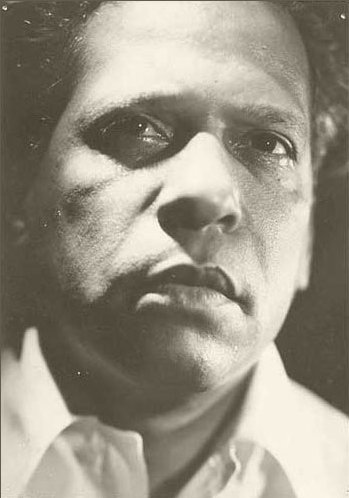
Nicolás Guillén
### Early Life in Camagüey Nicolás Cristóbal Guillén Batista was born on **July 10, 1902**, in the provincial city of Camagüey, Cuba — a place steeped in colonial architecture, racial hierarchy, and the lingering wounds of the independence wars. Cuba at the dawn of the twentieth century was a nation technically free from Spain but caught in the suffocating embrace of North American economic imperialism and its own deeply entrenched racial stratification. The island's Afro-descendant population, though numerically significant and culturally vital, was largely consigned to poverty, denied political representation, and subjected to the everyday humiliations of a social order that continued to prize European ancestry above all else. Nicolás Guillén was born into this charged environment as the son of **Argelia Batista** and **Nicolás Guillén Urra**, a journalist and liberal senator who was a man of mixed African and European heritage. His father's prominence in civic life gave young Nicolás an early exposure to the world of ideas, journalism, and political struggle — but also to its brutal consequences. In **1917**, when Guillén was just fifteen years old, his father was murdered by government forces, a political assassination that left the family in economic precarity and emotionally devastated. This loss was, by Guillén's own account, an "emotional catastrophe" that would permanently shape the urgency and grief woven into his poetry. [1]  *Nicolás Guillén, photographed in 1942. Public domain, via Wikimedia Commons.* ### From Typesetter to Poet In the aftermath of his father's death, Guillén took on work as a **typesetter** to help support his family — a role that placed him directly in the world of the printed word, with ink on his hands even before he found his own literary voice. He enrolled at the **University of Havana** in 1921 to study law, following a path that seemed to promise respectability and stability, but he abandoned his studies after only a single year. The pull of journalism and literature was too strong. Throughout the 1920s, he contributed articles and poems to local Camagüey publications, finding his footing as a writer while developing his acute social conscience. [2] Havana in the 1920s was a city in ferment — politically volatile, culturally experimental, and racially divided. The *negrismo* movement, a literary and artistic trend that celebrated Afro-Hispanic cultural expressions, was sweeping through Cuba and the broader Caribbean. Poets and intellectuals were grappling with questions of national identity: what did it mean to be Cuban, and could that identity honestly be constructed while ignoring the African roots of so much of the island's music, language, religion, and labor? ### The Birth of a Distinctive Voice: *Motivos de son* (1930) Guillén's answer came in **1930** with the publication of *Motivos de son*, a slender but explosive debut collection that sent shockwaves through Cuban literary culture. The book drew its form and spirit from the ***son*** — the Afro-Cuban music and dance tradition that blended African percussion and rhythm with Spanish melody and verse. Guillén translated the *son*'s syncopated pulse directly into poetry, capturing the vernacular speech, the humor, the tragedy, and the dignity of Black life in Havana's working-class neighborhoods. [3] Poems such as *"Negro bembón"* and *"Mulata"* were neither exoticizing nor sentimental — they were precise, rhythmically alive, and politically pointed. Guillén did not write *about* Afro-Cubans as objects of curiosity; he wrote *from within* that world, with full knowledge of its textures. The collection was celebrated and debated in equal measure, signaling the arrival of a writer who refused to confine Cuban literature to the Eurocentric palate. ### *Sóngoro cosongo* (1931) and the Creole Manifesto A year later, Guillén published **Sóngoro cosongo** (1931), a collection whose very title was drawn from an onomatopoeic phrase evoking the rhythms of Afro-Cuban drumming. In its famous prologue, Guillén issued what amounted to a literary manifesto: he argued forcefully that any authentic Cuban national poetry *must* incorporate the African element — that to pretend otherwise was to falsify the nation's very soul. He wrote of the need for a poetry that reflected the "criollo" spirit, one that synthesized Spain and Africa into something entirely new. [4] The book marked a decisive shift. Guillén's poetry was no longer content to celebrate Afro-Cuban culture in isolation; it was now insisting on that culture's central place in the definition of Cuban nationhood. This was a radical claim in 1931, and it established Guillén as the pre-eminent voice of the Afro-Cuban literary movement. > *"Cuba is not European, nor is it African. It is something original, something unto itself, born from the encounter of two worlds."* > — Nicolás Guillén, reflecting on Cuban cultural identity ### Toward Social Protest: *West Indies, Ltd.* (1934) By 1934, Guillén's lens had widened from Cuba to the entire Caribbean basin. **West Indies, Ltd.** was his most explicitly anti-imperialist collection to date, indicting the entire colonial and neo-colonial apparatus that kept the Caribbean poor, racially stratified, and economically dependent on foreign capital. The title itself was a bitter irony — the Caribbean rendered as a corporate entity, its peoples reduced to labor costs on a balance sheet. [5] This work established Guillén's international credentials as a poet of the Third World avant la lettre — a voice for the colonized and dispossessed wherever they existed. His poetry began to be translated into multiple languages and read across Latin America, Africa, and Europe. ### The Spanish Civil War and Communist Commitment In **1937**, Guillén formally joined the **Communist Party of Cuba** (at the time organized as the Popular Socialist Party) and traveled to **Spain**, where he participated in the Congress of Anti-Fascist Writers in Valencia and reported from the front lines of the Spanish Civil War, supporting the Republican cause against Franco's nationalist forces. The experience profoundly deepened his political commitments and inspired his collection **España: Poema en cuatro angustias y una esperanza** (1937), a searing elegiac tribute to the Republic's struggle and to the international community of writers and fighters who rallied to its defense. [6] Back in Cuba, Guillén continued to write and agitate, producing **Cantos para soldados y sones para turistas** (1937) and **El son entero** (1947), which cemented his reputation as the singular voice of Cuban poetry. He ran for political office as a communist candidate in 1940 and was a constant thorn in the side of successive Cuban governments. ### Exile and Return Under the authoritarian rule of **Fulgencio Batista**, Guillén's political activities made him a marked man. In **1953**, upon returning from a trip to Chile, he was denied re-entry into Cuba and spent the next several years in exile, moving between Latin American countries and Europe, maintaining his literary output and his political solidarity with leftist and anti-colonial movements worldwide. [7] The triumph of the **Cuban Revolution in January 1959** brought him home. Guillén returned to Cuba as a celebrated figure, his decades of struggle now aligned with the revolutionary government. In **1961**, he was a founding force behind the **Unión Nacional de Escritores y Artistas de Cuba (UNEAC)** — the National Union of Writers and Artists of Cuba — and served as its **president for over 25 years**, until his death, shaping Cuba's entire cultural apparatus and its relationship to world literature. [8]  *The province of Camagüey, Cuba — birthplace of Nicolás Guillén.* ### Awards and International Recognition Guillén received some of the highest honors available to a poet and intellectual of the twentieth century. In **1954**, he was awarded the **Stalin Peace Prize** (later renamed the Lenin Peace Prize) by the Soviet Union in recognition of his contributions to the international peace and anti-fascist movements. In **1976**, he received the **International Botev Prize** from Bulgaria. And in **1983**, he became the inaugural recipient of Cuba's own **National Prize for Literature**, recognizing his foundational role in shaping Cuban letters. [9] His poetry was translated into dozens of languages and was read, recited, and sung across Africa, Asia, and Latin America. In the Spanish-speaking world, he became synonymous with the idea that poetry could be both artistically sophisticated and politically engaged — that the rhythms of the street and the concert hall could carry the weight of history. ### Death and Legacy Nicolás Guillén died on **July 16, 1989**, in Havana, just six days after his 87th birthday. He was mourned across the Spanish-speaking world and honored in Cuba as the nation's **Poeta Nacional** — National Poet. His body of work, spanning more than sixty years, had transformed Latin American literature and given the African diaspora one of its most powerful poetic voices. His legacy endures not only in the study of literature but in the ongoing conversations about race, identity, and decolonization in Cuba and across the Caribbean. He demonstrated that *son*, the most vernacular of cultural forms, could become a vehicle for profound historical witness — and that the voices of the dispossessed, rendered with artistry and precision, could resonate across continents and generations.
View Profile →
Noel Lloyd
### Introduction Noel Lloyd (December 3, 1936 – August 3, 2008) stands as one of the most consequential figures in the modern history of the British Virgin Islands (BVI). Widely recognized as a patriot, activist, and national hero, Lloyd’s enduring legacy is inextricably linked to his fearless leadership of the Positive Action Movement (PAM) during the late 1960s. In an era when many Caribbean territories were grappling with the complex transitions of decolonization and the looming threats of neocolonial exploitation, Lloyd emerged as a vocal defender of local land rights and self-determination. His resolute stand against the Bates-Hill Agreement—a sweeping concession that would have alienated massive tracts of prime land from Virgin Islanders for nearly two centuries—ensured that the economic and physical landscape of the BVI remained in the hands of its people. ### Early Life and International Exposure Born in the British Virgin Islands in 1936, Noel Lloyd grew up in a territory that was largely agrarian, geographically isolated, and economically overlooked by its colonial administrators in London. Opportunities for upward mobility were scarce, prompting many young Virgin Islanders to seek their fortunes abroad. Lloyd was no exception. Seeking broader horizons, he traveled to the United Kingdom, where he enlisted and served in the Royal Air Force (RAF). His time in the UK exposed him to post-war British society, the rumblings of global civil rights movements, and the broader struggles of colonized peoples worldwide. Following his service in the RAF, Lloyd's adventurous spirit took him to Kenya, a nation then navigating its own tumultuous path to independence from British rule. In Kenya, Lloyd operated a tool-making plant, gaining valuable experience as an entrepreneur and observing firsthand the mechanics of a post-colonial African state. This international exposure was crucial in shaping his worldview. He witnessed the profound importance of land ownership to national sovereignty and identity. When he returned to the British Virgin Islands in the mid-1960s, he did not return as a mere spectator, but as a worldly, politically awakened individual with a deep, uncompromising love for his homeland. ### The Bates-Hill Agreement: A Neocolonial Threat Upon his return to the BVI, Lloyd found a territory on the cusp of dramatic change. The global tourism boom was beginning to reach the Caribbean, and the BVI government, led by figures such as [Hamilton Lavity Stoutt](/profiles/hamilton-lavity-stoutt), was desperate to attract foreign investment to modernize the territory’s infrastructure. However, this desperation led to a catastrophic misstep. In 1968, the BVI government entered into the Bates-Hill Agreement, signing 199-year leases with a British development company headed by Ken Bates. The terms of the agreement were staggering in their scope and inequity. The company was granted control over approximately 60 acres of newly reclaimed land at Wickham’s Cay in the heart of the capital, Road Town. Even more alarmingly, the agreement handed over nearly three-quarters of the entire island of Anegada to the developers.  The stipulations of the leases effectively created foreign enclaves within the territory. Local Virgin Islanders were to be barred from these prime lands, excluded from meaningful participation in the resulting economic enterprises, and relegated to the role of manual laborers and service staff for the expected influx of expatriates and tourists. It was a classic neocolonial arrangement, threatening to dispossess the local population of their physical birthright and economic future. ### The Birth of the Positive Action Movement Recognizing the existential threat posed by the Bates-Hill Agreement, Noel Lloyd refused to remain silent. In December 1968, he took a step that would forever alter the trajectory of BVI history: he took to the streets of Road Town in protest. Initially, Lloyd marched entirely alone. Carrying a placard and facing intense public scrutiny—as well as the potential wrath of colonial authorities and local politicians—he boldly challenged the legitimacy of the land giveaway. > "Are we to be strangers in our own land? We must stand up now, or forever be tenants in the country of our birth." His solitary act of defiance was a catalyst. It resonated deeply with the simmering, yet unvoiced, anxieties of the local populace. Soon, the lone protester was joined by dozens, then hundreds of Virgin Islanders. From this groundswell of grassroots resistance, Lloyd formally organized the Positive Action Movement (PAM). PAM became the vanguard of the anti-agreement struggle, mobilizing the community through peaceful marches, public education campaigns, and vocal demands for government accountability. ### The Struggle and the Victory The protests led by Lloyd and PAM completely disrupted the political status quo in the BVI. They demanded that the agreements be revoked and that the land be returned to the people. The local government found itself entirely paralyzed by the scale of the popular uprising, forcing the intervention of the British Foreign and Commonwealth Office (FCO). Pressured by the undeniable local opposition orchestrated by Lloyd, the FCO appointed a commission of enquiry, famously chaired by Lord Wooding. The Wooding Commission was tasked with investigating the terms of the Bates-Hill Agreement and its impact on the territory. Lloyd and his supporters presented a compelling, unassailable case against the leases, highlighting their exploitative nature and the lack of public consultation.  *(Representative image of Caribbean colonial administrative centers)* The Commission ultimately ruled in favor of the people. It concluded that the agreements were highly inequitable and recommended their dissolution. The British government bought out the developer's interests, effectively returning Wickham's Cay and Anegada to the control of the BVI government, to be developed for the benefit of Virgin Islanders. This victory was monumental. It not only saved the physical land but also established a precedent for public participation and transparency in BVI governance. Wickham's Cay eventually became the commercial and financial heart of Road Town, underpinning the territory’s future prosperity in offshore finance and tourism—a prosperity that would have been entirely funneled to foreign developers had Lloyd not intervened. ### Later Life and Lasting Legacy Following the successful campaign against the Bates-Hill Agreement, Noel Lloyd remained a respected elder statesman and community advocate, though he never sought formal political office. He preferred the role of a vigilant citizen, always ready to speak out when he felt the rights of Virgin Islanders were being compromised. In October 2007, the BVI government officially recognized his monumental contributions by presenting him with the BVI Award of Certificate and the Badge of Honour. Less than a year later, on August 3, 2008, Noel Lloyd passed away after a courageous battle with cancer. Today, his memory is permanently enshrined in the heart of the territory he saved. The Noel Lloyd Positive Action Movement Park, located appropriately on the very reclaimed land of Wickham's Cay that he fought to reclaim, serves as a daily reminder of his heroism. A bronze statue of Lloyd stands proudly in the park, ensuring that future generations of Virgin Islanders understand that their inheritance was secured by the courage of a man who, when faced with overwhelming odds, simply refused to back down.
View Profile →P. Austin Bramble
### Early Life and Family Legacy Percival Austin Bramble was born on **January 24, 1931**, in Montserrat, a small emerald-green island in the Leeward Islands chain of the British Caribbean. He came of age at the very moment when a new social and political order was being forged across the West Indies — a period defined by the dismantling of plantation-era hierarchies, the rise of labour unions, and the first stirrings of mass democratic participation. To understand P. Austin Bramble is to understand the extraordinary dynasty that shaped Montserrat's modern political history. His father, [William Henry Bramble](/profiles/william-henry-bramble), known affectionately as "Willy B," was the dominant figure of mid-twentieth-century Montserratian politics. As founder of the **Montserrat Labour Party (MLP)** in 1951 — built on the foundations of the Montserrat Trades and Labour Union — the elder Bramble championed universal adult suffrage and shepherded the island into the age of representative government. When a new constitution in 1960 introduced the ministerial system, William Henry Bramble became Montserrat's **first Chief Minister**, a position he would hold for a decade. Growing up in the shadow of such a towering figure, P. Austin Bramble absorbed the rhythms of public life from boyhood.  P. Austin Bramble pursued education and several vocational paths before entering politics. He worked as a **teacher** early in his career, instilling in him a lifelong appreciation for education as a tool of social upliftment. He later spent nearly a decade — from **1952 to 1961** — working as a **laboratory technician in Curaçao**, gaining exposure to the wider Caribbean world and the experiences of working-class people far from home. On his return to Montserrat, he built a career as a **hardware dealer and building contractor** from 1961 to 1965, establishing himself as a credible figure in the island's small but growing private sector.[1] --- ### Entry into Politics and Break with the MLP In **1966**, P. Austin Bramble entered the Legislative Council as a member of his father's Montserrat Labour Party, winning the Plymouth seat. His early ministerial career saw him serve as **Minister of Communications and Works (1966–1969)** and subsequently as **Minister of Education, Health and Welfare**, roles that gave him deep insight into the developmental needs of ordinary Montserratians.[1] But the relationship between father and son was not without tension. The late 1960s brought a growing controversy around land policy on the island — specifically, the increasing number of **holiday and retirement homes** being acquired by foreign nationals, particularly from the United Kingdom and North America. Critics of the MLP government argued that the land allocation process favoured foreign developers at the expense of local Montserratians. P. Austin Bramble, who held a different vision for how the island's resources should be managed, found himself at odds with his father's approach. The resulting disagreement led to his **expulsion from the MLP** shortly before the 1970 general election — a dramatic rupture that set the stage for one of the most remarkable electoral moments in Montserratian history.[1][4] --- ### The Rise to Chief Minister Undeterred, Percival Austin Bramble co-founded the **Progressive Democratic Party (PDP)**, a new political movement that channelled widespread public frustration with the MLP's long dominance. The **1970 general election** delivered a stunning verdict: the PDP won **all seven seats** in the Legislative Council in a landslide that swept away the party his father had built. It was both a political revolution and a deeply personal moment — a son succeeding his father in the island's highest office, each representing a distinct vision for Montserrat's future. P. Austin Bramble was sworn in as **Chief Minister of Montserrat in December 1970**, a position he would hold through two terms until November 1978. His eight-year tenure coincided with a period of enormous change both for Montserrat and the wider Caribbean region — an era marked by decolonization debates, regional integration movements, and the challenge of building modern welfare states on small-island economies. > *"The signing of the Treaty of Chaguaramas was an act of faith — faith that small nations, united, could chart a course for their own prosperity."* --- ### Regional Statesman: The CARICOM Treaty Perhaps the single most historically significant act of P. Austin Bramble's political career came on **April 17, 1974**, when he affixed his signature to the **Treaty of Chaguaramas** on behalf of Montserrat at a Special Conference of Heads of Government of the Commonwealth Caribbean Countries held in **Castries, Saint Lucia**. The treaty had originally been signed on July 4, 1973, by the leaders of Barbados ([Errol Barrow](/profiles/errol-barrow)), Guyana ([Forbes Burnham](/profiles/forbes-burnham)), Jamaica ([Michael Manley](/profiles/michael-manley)), and Trinidad and Tobago ([Eric Williams](/profiles/eric-williams)) — the four giants of post-war Caribbean nationalism. By adding Montserrat's signature in 1974, Bramble made his tiny island — with a population of barely ten thousand — a founding member of the **Caribbean Community (CARICOM)**, the most ambitious experiment in regional integration the Caribbean had ever attempted.[1][4] The significance of this act cannot be overstated. CARICOM was designed not merely as a trade body, but as a framework for **foreign policy coordination, functional cooperation** in labour relations, social security, health, and education — the very building blocks of statehood for small, resource-limited nations. By committing Montserrat to this project, Bramble signalled his belief that the island's future lay in collective Caribbean solidarity rather than isolated dependence on Britain. Decades later, as fellow signatories passed from the scene, P. Austin Bramble came to be recognized as the **last surviving signatory** of the original Treaty of Chaguaramas — a distinction that underscored his singular place in Caribbean history and brought renewed attention to his legacy long after his years in office.[5]  --- ### Social Reforms and Domestic Governance While his regional legacy was anchored by the CARICOM signing, Bramble's domestic record during his two terms as Chief Minister was equally substantive. He presided over the introduction of **free medical care for the elderly**, a landmark social welfare measure that relieved some of Montserrat's most vulnerable citizens from the burden of healthcare costs.[2] He also laid the **foundations for the island's modern social security system**, creating institutional frameworks that would endure far beyond his time in office. In **1975**, Bramble achieved a notable constitutional milestone when he successfully negotiated with the British government to allow a **local Speaker to preside over the Legislative Council** — a small but symbolically powerful step toward greater self-governance that reduced the visible hand of colonial oversight in the island's parliamentary life.[1] On the economic front, his administration promoted the establishment of **factory units** to diversify employment options beyond agriculture and construction, and he championed the introduction of a **medical school** on the island — an initiative that would, in later decades, become an important source of economic activity for Montserrat.[2] --- ### Defeat, Legacy, and Honours The **November 1978 general election** brought Bramble's tenure to a close. His Progressive Democratic Party was defeated, and he was succeeded as Chief Minister by **John Alfred Osborne**. Rather than a repudiation of his governance, the result reflected the normal democratic rhythms of a maturing electorate, as well as the economic anxieties that accompanied Montserrat's transition away from traditional livelihoods. In the years following his departure from frontline politics, the stature of P. Austin Bramble's contributions was increasingly recognized by his island and by the wider Caribbean community. He was awarded the **Order of Excellence (OE)** — one of Montserrat's highest honours — in recognition of his political leadership, his dedication to education, and his economic stewardship of the island.[6] As the decades passed and his fellow CARICOM founding signatories died one by one, Bramble's historical significance only grew. He became a living symbol of Caribbean integration — a reminder that Montserrat, for all its smallness, had stood at the table when the architecture of a new regional order was being constructed. Photographs of him speaking at CARICOM commemorative events, well into his eighties, captured a man who carried history in his very presence. Percival Austin Bramble's life spans nearly a century of Montserratian and Caribbean history — from the last decades of colonial plantation society, through the turbulent birth of independence movements, to the era of regional community-building. In him, the story of a small island's ambition for dignity, self-determination, and belonging on the world stage finds one of its most eloquent embodiments.
View Profile →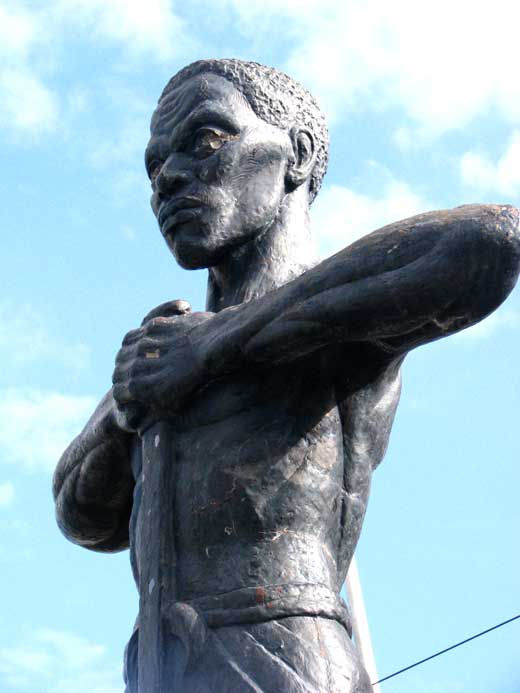
Paul Bogle
# Paul Bogle Paul Bogle (c. 1822 – 1865) was a Jamaican Baptist deacon, political activist, and a towering figure in the fight for social justice in post-emancipation Jamaica. He is most famous for leading the 1865 Morant Bay Rebellion, a pivotal uprising that fundamentally altered the political and social landscape of the island. Living in an era when the formal abolition of slavery had failed to bring true freedom or equality to the Black majority, Bogle dedicated his life to advocating for the impoverished, the disenfranchised, and the oppressed. Today, he is revered as a National Hero of Jamaica, a martyr for civil rights, and an enduring symbol of resistance against systemic injustice. ### Early Life and Post-Emancipation Jamaica Paul Bogle was born around 1822, likely in the parish of St. Thomas-in-the-East, Jamaica. He lived his early years during the twilight of legalized slavery, witnessing the passage of the Emancipation Act in 1834 and the final abolition of the apprenticeship system in 1838. However, the end of slavery did not mean the end of oppression. The white plantocracy—the wealthy owners of the sugar estates—retained strict control over the island's land, economy, and legal system. For the newly freed Black peasants, life was a continuous struggle for survival. Wages on the estates were kept artificially low, and severe droughts and crop failures in the early 1860s brought widespread starvation. Furthermore, the legal system was heavily biased; local magistrates were often plantation owners who used their power to penalize Black workers and evict them from their lands. Politically, the Black majority was completely silenced. The colonial assembly enforced a high poll tax that effectively stripped the right to vote from almost anyone who wasn't a wealthy landowner. It was in this cauldron of misery, exploitation, and disenfranchisement that Paul Bogle emerged as a leader. ### Religious Leadership and Political Awakening Bogle was a successful farmer and a man of some means, owning about 500 acres of land in the rural district of Stony Gut. His true influence, however, stemmed from his role as a deacon in the Native Baptist Church. The Native Baptist movement was independent of the European missionary churches; it integrated African spiritual traditions and became a vital space for community organizing and political discourse among Black Jamaicans. At his chapel in Stony Gut, Bogle preached a gospel of spiritual equality and social justice. He formed a close alliance with [George William Gordon](/profiles/george-william-gordon), a wealthy mixed-race businessman and politician who was one of the few voices in the Jamaican Assembly advocating for the rights of the poor. Gordon recognized Bogle’s leadership qualities and ordained him as a deacon. Together, they organized the people of St. Thomas, urging them to unite and demand fair treatment. ### The Road to Rebellion By 1865, tensions in Jamaica had reached a boiling point. The American Civil War had disrupted trade, driving up the cost of basic goods, while a severe outbreak of cholera and smallpox ravaged the poorest communities. In desperation, the peasants of St. Ann parish drafted a petition to Queen Victoria, begging for access to Crown lands so they could farm and feed their families. The response they received, known as "The Queen's Advice," was entirely devoid of sympathy. Governor [Edward John Eyre](/profiles/edward-john-eyre), a notorious racist who despised the Black population, enthusiastically distributed the decree. The document essentially told the peasants to work harder for the planters and not to expect any handouts. > "Skin for skin, the iron has entered our souls. We have been oppressed for too long, and we must demand our rights. We will march for justice, for we are the children of God, not the slaves of men." > — A sentiment frequently attributed to Paul Bogle during his sermons at Stony Gut. Infuriated by this dismissal, Bogle began organizing secret meetings. In August 1865, he led a deputation of small farmers on a grueling 45-mile march from Stony Gut to the capital, Spanish Town, to meet with Governor Eyre and present their grievances. Eyre blatantly refused to see them. This rejection convinced Bogle that peaceful petitioning within the corrupt colonial system was futile.  ### The Morant Bay Rebellion The spark that ignited the powder keg occurred on October 7, 1865. Bogle and a group of supporters attended a trial at the Morant Bay courthouse. When a Black man was convicted and heavily fined on a trivial charge, a spectator protested. The police attempted to arrest the protester, but Bogle and his men intervened, overpowering the police and freeing the man. Warrants were immediately issued for Bogle's arrest. On October 10, when police arrived at Stony Gut to apprehend him, they were beaten back by the villagers. Knowing that the government would retaliate with brutal force, Bogle decided to take the offensive. On October 11, 1865, Paul Bogle led several hundred men and women, armed with sticks, cutlasses, and a few muskets, into Morant Bay. They marched in military formation to the courthouse where the local vestry was meeting. The confrontation quickly escalated. The volunteer militia panicked and fired into the crowd, killing seven protesters. In response, the enraged crowd rioted. They set fire to the courthouse and surrounding buildings, killing the custos (chief magistrate) and over a dozen other officials and militia members. ### Martial Law and Execution The retaliation from Governor Eyre was swift, merciless, and wildly disproportionate. Eyre declared martial law in the eastern parishes and dispatched heavily armed troops to crush the uprising. Over the next few weeks, soldiers engaged in a campaign of terror, burning over a thousand homes in Stony Gut and surrounding villages. Nearly 500 Black Jamaicans were killed, many of them flogged and executed without trial. Eyre also used the rebellion as a pretext to eliminate his political rival, [George William Gordon](/profiles/george-william-gordon), having him illegally transported to Morant Bay, subjected to a sham trial, and hanged, despite Gordon having no direct involvement in the riot. Paul Bogle retreated into the Blue Mountains but was eventually captured by Maroon forces who were working with the colonial government. He was brought back to Morant Bay, briefly tried by a court-martial, and hanged on October 24, 1865, at the very courthouse he had burned. ### Legacy While Bogle was executed as a traitor, his sacrifice fundamentally changed Jamaica. The sheer brutality of Eyre’s crackdown caused a massive scandal in England, leading to a Royal Commission of Inquiry. Eyre was recalled and dismissed in disgrace. The crisis also forced the Jamaican Assembly to dissolve itself, leading to the imposition of direct Crown Colony rule. While not fully democratic, this transition stripped power from the corrupt local plantocracy and paved the way for crucial social reforms in education, health, and infrastructure. In 1969, Paul Bogle was rightfully recognized as a National Hero of Jamaica. His image has been featured on the two-dollar note and the ten-cent coin. Bogle remains a powerful inspiration, a testament to the fact that when marginalized people stand up against institutional oppression, they can alter the course of history.
View Profile →
Paulette Nardal
# Paulette Nardal ### Introduction Paulette Nardal remains one of the most vital yet historically overlooked figures in the development of modern Black intellectualism. Born in the late 19th century in the French colony of Martinique, she emerged as a pioneering journalist, an impassioned feminist, and the undisputed "godmother" of the Négritude movement. Long before the term *Négritude* was formally coined by [Aimé Césaire](/profiles/aime-cesaire), [Léopold Sédar Senghor](/profiles/leopold-sedar-senghor), and [Léon Gontran Damas](/profiles/leon-gontran-damas), Nardal was cultivating the fertile intellectual soil from which the movement would ultimately blossom. Through her groundbreaking bilingual journal, *La Revue du monde noir*, and her legendary Sunday salons in Paris, Nardal constructed a vital trans-Atlantic bridge connecting Francophone intellectuals from the Caribbean and Africa with the vibrant, radical minds of the American Harlem Renaissance. Despite her central role in awakening an international Black consciousness, her contributions were heavily marginalized by patriarchal narratives. Only in recent decades has her foundational legacy been rightfully restored, securing her place in the pantheon of global civil rights pioneers and Caribbean luminaries. ### Early Life and The pursuit of Excellence Félix-Jeanne Paulette Nardal was born on October 12, 1896, in Le François, a commune on the eastern coast of Martinique. She was the eldest of seven daughters in a distinguished and highly educated Afro-descendant family that embodied the island's emerging Black bourgeoisie. Her father, Paul Nardal, was a trailblazer in his own right, becoming the first Black public works engineer in Martinique. He was instrumental in building vital infrastructure on the island and received a scholarship to train in France. Her mother, Louise Achille, was an accomplished music teacher and pianist who instilled in her daughters a deep appreciation for the arts, culture, and academic rigor. Growing up in a colonial society structured by strict racial hierarchies and colorism, the Nardal household became a sanctuary of intellectual ambition. Paul and Louise raised their seven daughters—Paulette, Émilie, Alice, Lucy, Jane, Andrée, and Cécile—with an unwavering commitment to education, expecting them to excel in a world that would inevitably place barriers in their path due to both their race and their gender. Paulette was a voracious reader, displaying an early talent for languages and literature. After completing her early education at the Colonial Boarding School for Girls in Fort-de-France, she initially worked as a schoolteacher, one of the few respectable professions available to educated Martinican women of her era. However, her intellectual appetite yearned for a larger stage, prompting her to set her sights on the academic capital of the francophone world. ### A Parisian Pioneer at the Sorbonne In 1920, at the age of 24, Paulette Nardal embarked on a transatlantic journey to France, marking a profound turning point in her life. She achieved historic distinction by becoming the first Black student to enroll at the prestigious Sorbonne (the University of Paris). This achievement shattered the racial and gender barriers of the French academy. In Paris, she immersed herself in the study of English language and literature, a choice that would prove essential to her future role as a cultural conduit. At the Sorbonne, her academic focus turned toward the African diaspora. Her thesis examined Harriet Beecher Stowe's seminal anti-slavery novel, *Uncle Tom's Cabin*. Delving into Stowe's work, Nardal developed a profound understanding of the historical struggles of African Americans and the broader implications of the transatlantic slave trade. This research ignited her lifelong passion for bridging the cultural and political gaps between Black populations across the globe. She began to recognize the interconnected struggles of Black people in the Americas, the Caribbean, and Africa, laying the ideological groundwork for a unified global Black consciousness.  ### The Clamart Salon: Birthplace of Négritude By the late 1920s, Paulette was joined in Paris by her sisters, notably Jane and Andrée. Together, they transformed their apartment at 7 Rue Hébert in the Parisian suburb of Clamart into a vibrant cultural and intellectual epicenter. This space, widely known as "Le Salon de Clamart," became a sanctuary for Black expatriates, students, artists, and thinkers from across the global diaspora. Inspired by the literary salons of the French Enlightenment and the vibrant gatherings of the Harlem Renaissance, the Nardal sisters hosted weekly Sunday meetings. Here, the air buzzed with debates on colonialism, racial identity, the psychological impact of assimilation, and the urgent need for a cohesive Black cultural awakening. Crucially, Paulette leveraged her fluency in English to invite African American luminaries who were visiting or living in Paris, including [Alain Locke](/profiles/alain-locke), [Claude McKay](/profiles/claude-mckay), Mercer Cook, and Countee Cullen. > "We were but women, real pioneers—let's say that we blazed the trail for them." — Paulette Nardal, reflecting on how she and her sisters laid the groundwork for the male founders of the Négritude movement. It was within the walls of the Clamart Salon that the young students [Aimé Césaire](/profiles/aime-cesaire) (from Martinique), [Léopold Sédar Senghor](/profiles/leopold-sedar-senghor) (from Senegal), and [Léon Gontran Damas](/profiles/leon-gontran-damas) (from French Guiana) first met and mingled with Harlem Renaissance writers. Nardal's salon provided them with the critical vocabulary and cross-cultural solidarity that they would later synthesize into the philosophical framework of *Négritude*—a movement dedicated to reclaiming and celebrating Black identity, heritage, and pride in the face of French colonial assimilation. ### La Revue du Monde Noir To amplify the discourse flourishing in her salon, Paulette Nardal co-founded the bilingual journal *La Revue du monde noir* (The Review of the Black World) in 1931, alongside the Haitian scholar Dr. Léo Sajous. Nardal served as the journal's primary editor, translator, and a frequent contributor. Published in both French and English, the journal was a groundbreaking publication that explicitly aimed to create an intellectual and moral tie among Black people worldwide, without distinction of nationality. Though it only ran for six issues before running out of funding, *La Revue du monde noir* was profoundly influential. It published essays, poetry, and cultural critiques that championed African art, highlighted the brutalities of colonialism, and celebrated the resilience of the Black spirit. Through her meticulous translations, Nardal introduced the francophone world to the poetry of the Harlem Renaissance, allowing the revolutionary ideas of the "New Negro" movement to cross the language barrier. Her own essays in the journal explored themes of Black female identity, challenging the intersectional oppression faced by women of color long before the term "intersectionality" was coined. ### War, Tragedy, and Resilience The late 1930s brought turbulent geopolitical shifts, and the outbreak of World War II interrupted Nardal's intellectual ascendancy in Paris. In 1939, sensing the imminent danger of the Nazi invasion, she boarded a ship to flee Europe and return to Martinique. Tragically, her vessel was torpedoed by a German submarine off the coast of England. In the chaotic evacuation, Nardal leapt from the sinking ship into a lifeboat, fracturing both of her patellas (kneecaps). She spent nearly a year in a British hospital, surviving the ordeal but suffering a lifelong disability that required her to use a cane for the rest of her life. > "Despite physical trauma and the encroaching shadows of war, Nardal's spirit remained unbroken. She returned to her homeland not as a defeated exile, but as a seasoned visionary ready to ignite a new wave of social progress." Returning to Martinique during the oppressive Vichy regime, Nardal refused to let her physical limitations curtail her activism. She transitioned into a new phase of her life, deeply committed to feminism, social work, and civic education. ### Feminist Activism and International Diplomacy In Martinique, Nardal recognized the urgent need to uplift local women, many of whom were marginalized and disenfranchised by both colonial rule and entrenched patriarchal norms. In 1944, when French women were finally granted the right to vote, she founded *Le Rassemblement Féminin*, a grassroots organization aimed at encouraging Martinican women to exercise their new political rights and participate actively in civic life. To further this mission, she established the journal *La Femme dans la Cité* (Woman in the City) in 1945. The publication focused on women's education, political awareness, and social welfare, making the compelling case that the advancement of Martinique depended entirely on the empowerment of its women. Nardal also spearheaded initiatives to improve the working conditions of domestic workers and established a choir, *La Joie de Chanter*, celebrating Afro-Caribbean musical traditions and European classical works, reflecting her enduring love for music inherited from her mother. In 1946, Nardal's international expertise and unyielding advocacy earned her a historic appointment. She became the first Black woman to hold an official post in the newly formed United Nations, working in the Division of Non-Self-Governing Territories. There, she utilized her extensive knowledge of colonial dynamics and her diplomatic acumen to advocate for the rights and eventual self-determination of colonized peoples worldwide. ### Legacy and Belated Recognition Paulette Nardal passed away on February 16, 1985, in Fort-de-France, Martinique, at the age of 88. For decades, her immense contributions to global Black intellectual history were heavily eclipsed by the celebrated male figures of the Négritude movement. History books frequently heralded Césaire, Senghor, and Damas as the solitary architects of francophone Black consciousness, relegating Nardal to a mere footnote or defining her simply as a "hostess." However, modern scholarship has systematically corrected this historical erasure, rightfully re-centering Paulette Nardal as the indispensable *initiatrice* (initiator) of the movement. Without the Clamart Salon, without her meticulous translations, and without *La Revue du monde noir*, the ideological fusion required for Négritude might never have occurred. Today, Nardal is celebrated as a titanic figure of Pan-Africanism, a pioneer of intersectional feminism, and a proud daughter of Martinique. In 2018, a promenade in Paris was named in her honor, and calls have grown to induct her into the Panthéon, France's highest posthumous honor. Paulette Nardal's life stands as a testament to the power of cross-cultural solidarity, the resilience of the Black female intellectual, and the enduring truth that the most profound revolutions often begin in the living rooms of visionary women.
View Profile →
Pauulu Kamarakafego
### Dr. Pauulu Kamarakafego: Revolutionary Scientist, Civil Rights Titan, and Pan-African Visionary Dr. Pauulu Kamarakafego (born Roosevelt Brown on November 28, 1932 – April 23, 2007), officially designated as a National Hero of Bermuda, stands as one of the most brilliant, radical, and globally transformative figures in Caribbean and Atlantic history. Operating at the unique intersection of radical political activism, civil rights mobilization, and cutting-edge ecological engineering, Kamarakafego waged a lifelong war against systemic oppression, colonial disenfranchisement, and environmental degradation. In his native Bermuda, he immortalized his legacy as the chief architect of universal adult suffrage, dismantling a centuries-old oligarchy and granting the basic human right of the ballot to the working-class Black majority. Concurrently, on the world stage, he emerged as a formidable Pan-African leader and a United Nations humanitarian scientist who deployed renewable energy systems and sustainable infrastructure across dozens of developing nations. His extraordinary life bridges the local grassroots struggle for democratic dignity with the global movement for Third World liberation and sustainable self-reliance. ### Historical Context: Segregated Bermuda Under the Oligarchy To understand the revolutionary trajectory of Pauulu Kamarakafego, one must first examine the entrenched socio-political dynamics of Bermuda during the early-to-mid twentieth century. Unlike many Caribbean islands that transitioned toward mass political representation in the 1940s, Bermuda remained under the iron grip of a powerful, predominantly white merchant and banking elite colloquially known as the "Forty Thieves." Racial segregation was deeply codified across the island; Black Bermudians faced systemic discrimination in employment, housing, education, and public accommodations, relegated to separate schools, segregated theater balconies, and excluded from civil service leadership. Most insidiously, political power was locked behind a restrictive property-based franchise. Only landowners possessing property valued at £60 or more were permitted to vote, while those owning multiple properties enjoyed plural voting rights across different parishes. This system effectively disenfranchised over half of the adult population—particularly Black working-class citizens—ensuring minority colonial dominance. Early pioneers like labour leader [E. F. Gordon](/profiles/e-f-gordon) had initiated the struggle for workers' rights, but the political fortress of voting disenfranchisement remained firmly intact as Roosevelt Brown came of age. ### Early Life and Academic Odyssey in Ecological Engineering Born Roosevelt Brown on November 28, 1932, in Pembroke Parish, Bermuda, young Pauulu exhibited a rare intellectual curiosity and a fierce independent spirit from his earliest days. Growing up surrounded by the natural beauty and ecological sensitivities of an isolated island ecosystem, he developed a deep fascination with science, nature, and mechanical ingenuity. Recognizing that educational opportunities for Black Bermudians were stifled at home, he embarked on an extensive academic odyssey in the United States during the peak of the American civil rights movement. He pursued rigorous scientific studies across several institutions, including New York University, the University of South Carolina, and North Carolina College. Navigating the harsh realities of Jim Crow racial segregation in the American South, his worldview expanded radically. He connected anti-Black racism in America with colonial subjugation in Bermuda and imperialist exploitation across Africa. His scientific prowess culminated in his admission to the prestigious California Institute of Technology (Caltech). In 1959, at a time when very few Black scholars held advanced STEM degrees from elite institutions, he earned a groundbreaking Doctor of Philosophy (PhD) in Ecological Engineering. Long before "green technology" became a mainstream global movement, Kamarakafego pioneered scientific methodologies focused on harmonizing human engineering with natural ecosystems—a technical skillset he viewed not as a pathway to personal corporate wealth, but as an instrument for human liberation. ### The Crusade for Universal Adult Suffrage in Bermuda Armed with his doctorate and an uncompromising revolutionary consciousness, Kamarakafego returned to Bermuda in the early 1960s determined to dismantle the island's archaic political structures. Recognizing that voting disenfranchisement was the linchpin of racial and economic oppression, he founded and became the dynamic chairman of the Committee for Universal Adult Suffrage (CUAS). Deploying grassroots organizing tactics learned alongside American civil rights activists, he galvanized the working-class masses across Bermuda. He organized mass public rallies, educational workshops, and island-wide petition drives demanding the immediate abolition of the property qualification and the establishment of "one person, one vote." Kamarakafego faced intense hostility, surveillance, and economic intimidation from the ruling establishment, but his intellectual charisma and relentless energy could not be suppressed. He famously educated ordinary citizens on constitutional law and civil disobedience, transforming political apathy into militant democratic engagement. Under the immense pressure generated by the CUAS movement, the Bermudian government was forced to capitulate. In 1963, the Parliamentary Election Act passed, introducing universal adult suffrage to Bermuda for the first time in its history. This monumental victory irrevocably altered the balance of political power, opening the doors of parliamentary democracy to all Bermudians regardless of property or birthright. > "Knowledge acquired from society does not belong to the individual, but must be used to benefit the community and the entire world." > — Dr. Pauulu Kamarakafego on the purpose of education and science ### Founding the Progressive Labour Party and Parliamentary Leadership The triumph of universal adult suffrage paved the immediate way for party politics in Bermuda. In 1963, Kamarakafego played a foundational role in establishing Bermuda's first formal political party, the Progressive Labour Party (PLP), serving as an ideological compass and strategic organizer alongside iconic champions such as [Lois Browne-Evans](/profiles/lois-browne-evans) and [Walter Robinson](/profiles/walter-robinson). In the historic 1968 general election—the first conducted under equal universal suffrage—he ran under the PLP banner and was elected Member of Parliament (MP) representing the constituency of Hamilton East. In the House of Assembly, Kamarakafego was a fearless orator who challenged colonial policies, demanded educational reforms, and fought for environmental protection laws. Yet, his political greatness was defined equally by his profound humility and selflessness. Following a subsequent electoral setback where PLP parliamentary leader [Walter Robinson](/profiles/walter-robinson) lost his seat, Kamarakafego voluntarily stepped down and resigned his parliamentary seat in Hamilton East. This extraordinary sacrifice triggered a by-election that allowed Robinson to triumphantly re-enter the House of Assembly and resume leadership of the opposition—a selfless maneuver rarely paralleled in parliamentary history.  ### The 1969 Black Power Conference and Global Pan-Africanism While transforming local politics, Kamarakafego operated as a premier statesman of the international Pan-African and Black Power movements. Deeply inspired by early Pan-African visionaries like [Marcus Garvey](/profiles/marcus-garvey) and intellectual peers such as [C. L. R. James](/profiles/c-l-r-james), he viewed Bermuda not as an isolated colony, but as a vital node in the global Black diaspora. In July 1969, defying government attempts to block international delegates, Kamarakafego organized and hosted the historic International Black Power Conference in Bermuda. This landmark gathering brought together hundreds of civil rights fighters, revolutionary intellectuals, and liberation leaders from across the United States, the Caribbean, and Africa, establishing solidarity networks that defied imperial borders. His international leadership expanded throughout the 1970s. He played a steering role in the Congress of African Peoples in Atlanta in 1970 and served as a primary organizer for the historic Sixth Pan-African Congress held in Dar es Salaam, Tanzania, in 1974. Working closely with visionary African heads of state, including Ghanaian president [Kwame Nkrumah](/profiles/kwame-nkrumah), Tanzanian president Julius Nyerere, and Kenyan leaders, Kamarakafego helped articulate a global anti-imperialist strategy centered on economic sovereignty, technological transfer, and cultural pride. During his extensive fieldwork across the African continent, particularly in Liberia and Kenya, he formally adopted the name Pauulu Kamarakafego—a name symbolizing his rebirth and unbreakable kinship with ancestral African heritage. ### Global Humanitarian Scientist: Ecological Engineering in Action Beyond the political rostrum, Dr. Kamarakafego spent decades deploying his scientific genius in direct service to humanity as a global consultant for the United Nations, the World Health Organization, and various international development agencies. Unlike theoretical academics, Kamarakafego practiced hands-on, barefoot ecological engineering. Recognizing that developing nations could never achieve true independence while relying on expensive Western fuel and infrastructure imports, he traversed the globe teaching rural communities how to construct self-sustaining technologies. Working extensively across rural Africa, Papua New Guinea, Vanuatu, and the Caribbean, he engineered and built low-cost solar energy collectors, wind turbines, biogas digestors, micro-hydroelectric dams, and rainwater harvesting systems. He pioneered sustainable housing designs utilizing indigenous, locally sourced materials such as bamboo and compressed earth blocks, resistant to tropical storms and seismic activity. His ecological projects empowered impoverished villages with clean drinking water, renewable sanitation systems, and electrical autonomy, proving that environmental sustainability and grassroots economic emancipation were inextricably linked. ### Autobiography (*Me One!*) and Immortal National Hero Legacy In 2002, Dr. Kamarakafego published his highly celebrated autobiography, *Me One: The Autobiography of Dr. Pauulu Kamarakafego*. Transcribed from decades of personal cassette recordings and field notes, the memoir provided a captivating, unvarnished chronicle of his journey from a segregated Bermudian boy to a globally revered liberation scientist and confidant of world leaders. When Dr. Pauulu Kamarakafego transitioned to the ancestors on April 23, 2007, at the age of seventy-four, tributes poured in from grassroots activists and heads of state worldwide. In recognition of his monumental lifetime achievements, the Government of Bermuda posthumously inducted him as an official National Hero of Bermuda. Today, his legacy endures as an eternal beacon for environmental justice, democratic equality, and Pan-African solidarity. He demonstrated with uncompromising brilliance that true political freedom must be anchored in knowledge, self-reliance, and an unyielding dedication to the upliftment of all people.
View Profile →
Pedro Albizu Campos
### Introduction: The Awakening of "El Maestro" Pedro Albizu Campos stands as one of the most towering, uncompromising, and deeply intellectual figures in the modern history of Latin America and the Caribbean. Universally revered among his followers as *El Maestro* (The Teacher), Albizu Campos dedicated his entire adult life to the pursuit of absolute sovereignty and complete independence for Puerto Rico [1]. Born into the complex racial and colonial hierarchy of late nineteenth-century Puerto Rico, his trajectory from an impoverished youth in Ponce to a brilliant Harvard-educated attorney defies conventional colonial narratives. Rather than assimilating into the American imperial establishment that sought to co-opt his legal brilliance, Albizu Campos transformed his elite education into a formidable ideological weapon against U.S. colonialism [2]. His leadership of the Nationalist Party of Puerto Rico shaped decades of fierce anti-imperialist resistance, establishing a legacy of radical defiance that continues to reverberate across the Caribbean archipelago and global anti-colonial movements [3]. ### Early Life and Racial Dynamics in Colonial Ponce Born on September 12, 1891, in the southern coastal city of Ponce, Pedro Albizu Campos emerged during a period of profound geopolitical convulsion. His birth occurred precisely seven years before the Spanish-American War of 1898, which resulted in Spain ceding Puerto Rico to the United States under the Treaty of Paris [1]. Albizu Campos was the son of Alejandro Albizu Romero, a wealthy Basque merchant, and Juana Campos, a domestic worker of African descent [2]. For years, his father refused to formally recognize him, exposing the young Pedro early on to the stinging realities of racial and class marginalization within Puerto Rican society. Raised largely by his mother in modest circumstances, Albizu Campos exhibited extraordinary intellectual precocity. Ponce during the late nineteenth and early twentieth centuries was a hotbed of liberal thought, intellectual autonomy, and political agitation, heavily influenced by early revolutionary thinkers like [Ramón Emeterio Betances](/profiles/ramon-emeterio-betances) [3]. This vibrant intellectual milieu instilled in Albizu Campos a deep appreciation for Hispanic culture, civic duty, and the historical identity of the Puerto Rican people. ### Academic Excellence: From University of Vermont to Harvard Law Despite severe financial hardships, Albizu Campos graduated at the top of his class from Ponce High School. His exceptional academic performance earned him a scholarship in 1912 to study engineering at the University of Vermont [3]. Transferring to Harvard University in 1913, Albizu Campos flourished in one of the world's most prestigious academic environments. At Harvard, he earned a Bachelor of Arts degree in chemical engineering and literature before enrolling in the Harvard Law School [4]. During his university years, he mastered six languages, including English, French, German, Portuguese, and Italian, alongside his native Spanish. He became deeply involved in international student movements, founding the Cosmopolitan Club at Harvard and engaging with global anti-colonial leaders from Ireland, India, and Egypt [5]. It was during this period that his political consciousness matured; he observed firsthand how empires justified subjugation through racial hierarchy and legalistic maneuvering. His interactions with Indian nationalists and Irish republicans convinced him that Puerto Rico's struggle was inextricably linked to the worldwide movement for self-determination and human dignity [6]. > "La patria es valor y sacrificio." ("The homeland is courage and sacrifice.") — Pedro Albizu Campos [4]  ### Military Service and the Crystallization of Anti-Colonial Consciousness With the outbreak of World War I, Albizu Campos volunteered for the United States Army, joining the segregated 375th Infantry Regiment [5]. Assigned to Puerto Rican units that were subjected to strict racial segregation and systemic discrimination, he experienced the profound contradiction of risking his life for a democracy that denied basic civil rights and self-determination to his own people and categorized him as a second-class citizen due to his African heritage [6]. Upon his discharge as a First Lieutenant in 1919, he returned to Harvard to complete his law degree. However, institutional racism once again manifested when university professors delayed his final exams and diploma graduation ceremonies, allegedly to prevent a dark-skinned Puerto Rican student from graduating as valedictorian [7]. This humiliating experience shattered any lingering illusions Albizu Campos held regarding American benevolence or the possibility of achieving equality through assimilation, solidifying his resolve to dismantle U.S. colonial rule. ### Leadership of the Puerto Rican Nationalist Party Returning to Puerto Rico in 1921, Albizu Campos passed the bar exam and established a legal practice in Ponce. Rather than pursuing lucrative corporate representation for U.S. agricultural syndicates, he offered legal counsel primarily to impoverished agricultural workers and disenfranchised rural laborers [7]. In 1924, he joined the Nationalist Party of Puerto Rico, which had been founded two years earlier to demand immediate independence [8]. His mesmerizing oratory, profound legal arguments, and moral austerity quickly propelled him to the forefront of the movement. By 1930, Albizu Campos was elected president of the Nationalist Party [8]. Under his guidance, the party adopted a militant, uncompromising posture, rejecting participation in colonial elections which he viewed as legitimizing foreign subjugation. He traveled extensively across Latin America, rallying support from figures such as [José de Diego](/profiles/jose-de-diego) and framing Puerto Rico's independence as a vital matter of continental security and cultural survival for the entire Spanish-speaking world [9]. ### The Sugar Strikes, The Ponce Massacre, and Federal Confrontation During the 1930s, the Great Depression devastated Puerto Rico's monoculture economy, which was dominated by U.S. sugar corporations. Albizu Campos organized massive agricultural strikes, leading workers against exploitative wages and land dispossession [9]. His growing influence alarmed federal authorities and colonial administrators, including Governor Blanton Winship. The confrontation reached a boiling point following the assassination of police chief E. Francis Riggs by Nationalist militants in 1936 [10]. Shortly thereafter, Albizu Campos and several Nationalist leaders were arrested and charged with sedition and conspiracy to overthrow the U.S. government. After a first jury composed largely of Puerto Ricans ended in a deadlock, a packed second jury dominated by American residents convicted Albizu Campos, sentencing him to ten years in the federal penitentiary in Atlanta, Georgia [11]. While he was imprisoned, state violence escalated dramatically, culminating in the tragic Ponce Massacre on March 21, 1937, where peaceful Nationalist marchers were fired upon by police, leaving 19 civilians dead and over 200 wounded [11]. > "Empires never surrender their colonies voluntarily; sovereignty must be wrested through the moral and physical unity of the oppressed." — Pedro Albizu Campos [10]  ### The 1950 Uprising, Imprisonment, and Final Years Following his release and return to Puerto Rico in 1947, Albizu Campos faced a new political landscape shaped by the rise of [Luis Muñoz Marín](/profiles/luis-munoz-marin) and the creation of the Estado Libre Asociado (Commonwealth) status [12]. Viewing this constitutional arrangement as a colonial facade designed to disguise permanent servitude, Albizu Campos orchestrated the Nationalist revolts of October 1950 [12]. Uprisings erupted across several towns, most notably in Jayuya, where nationalists proclaimed the free Republic of Puerto Rico, leading the U.S. military to bombard the town from the air [13]. Simultaneously, nationalists [Oscar Collazo](/profiles/oscar-collazo) and [Griselio Torresola](/profiles/griselio-torresola) attacked Blair House in Washington, D.C., in an attempt to assassinate President Harry S. Truman, while in 1954, [Lolita Lebrón](/profiles/lolita-lebron) led an armed demonstration inside the U.S. House of Representatives [13]. Albizu Campos was arrested again at his residence in Old San Juan after a tense standoff. Spending nearly 26 years of his life behind bars, Albizu Campos suffered deteriorating health in prison, alleging that he was subjected to human radiation experiments by prison guards—claims that were met with official denial but sparked widespread outrage and concern among human rights observers [14]. Pardoned shortly before his death by Governor [Luis Muñoz Marín](/profiles/luis-munoz-marin), Pedro Albizu Campos passed away on April 21, 1965. His funeral procession drew tens of thousands of mourners, solidifying his status as an immortal martyr of Caribbean liberty [14]. ### Legacy and Historical Impact Pedro Albizu Campos remains an enduring symbol of resistance against colonialism and a foundational figure in Puerto Rican political thought. His unwavering commitment to national sovereignty, rigorous legal defense of self-determination, and profound sacrifice continue to inspire generations of scholars, activists, and leaders across the Caribbean diaspora.
View Profile →
Philip Goldson
### Roots in British Honduras: A Colonial Childhood Philip Stanley Wilberforce Goldson was born on **July 25, 1923**, in Belize City, in what was then known as **British Honduras** — a small Central American colony of the British Empire sandwiched between Guatemala to the west and Mexico to the north, with the Caribbean Sea stretching endlessly to the east [3]. He was the second son of Peter Edward Goldson and Florence Matilda Babb Goldson, a family of modest means navigating life under the weight of colonial rule [4]. The Belize City of Goldson's childhood was a place of stark contrasts: a vibrant urban port community defined by the timber and chicle industries, yet marked by deep social inequality, racial stratification, and the pervasive subordination of colonial governance. The great hurricane of 1931 had devastated the city when Goldson was only eight years old, a catastrophe that deepened existing poverty and reinforced for an entire generation the fragility of life under distant colonial administrators who held all the real power. Despite the absence of formal secondary schooling — a luxury unavailable to most boys of his social background — Goldson was relentlessly self-educated. Studying at night and through correspondence, he earned his **Cambridge University Overseas Junior Certificate in 1939** and his **Senior School Certificate in 1941** [3][5]. These achievements were remarkable for a young man with no secondary school foundation, and they signalled the disciplined, tenacious intellect that would define his entire public career. ### From Civil Servant to Voice of the People In 1941, Goldson joined the **British Honduras Civil Service**, where he worked for six years before his restless conscience drew him towards journalism and activism [3][4]. During his civil service years, he honed his writing skills, editing the *Civil Service Chronicle* and the cultural quarterly *OUTLOOK* for St. John's College, and contributing short stories to the **BBC in London** [4][5]. He was a man for whom the written and spoken word were not merely instruments of communication but weapons of liberation. Goldson also became deeply involved in the **labour movement**, serving as the national organiser and general secretary of the **General Workers' Union** — giving him direct contact with the working poor whose suffering and grievances would motivate his political activism for the rest of his life [3]. By the late 1940s, the political temperature in British Honduras was rising. The sudden devaluation of the British Honduran dollar by the colonial government in 1949 — which immediately reduced the purchasing power of ordinary citizens — ignited widespread outrage and gave birth to organised nationalist resistance. From this ferment emerged the **People's Committee**, which would shortly become the **People's United Party (PUP)** — and Goldson was at its founding [6]. ### Co-Founding the People's United Party In **1950**, alongside [George Price](/profiles/george-price) and other nationalist luminaries, Philip Goldson helped found the **People's United Party**, the organisation that would drive Belize to independence and reshape its political landscape for generations [4][5]. Goldson served as Assistant Secretary of the PUP, using his position to articulate the nationalist cause through journalism as much as through political organising. His platform was *The Belize Billboard*, one of the territory's most influential newspapers, and Goldson wielded its columns with unflinching courage. In **1951**, he and his colleague **Leigh Richardson** published an editorial that would change the course of both their lives. The piece argued, plainly and defiantly, that there were *"two roads to independence: evolution and revolution"* [5][7]. The colonial authorities regarded this as sedition — a direct incitement to revolt against the Crown. > *"There are two roads to independence: evolution and revolution."* — Philip Goldson and Leigh Richardson, editorial in *The Belize Billboard*, 1951 — the statement that led to their imprisonment for sedition. Both men were arrested, tried, and sentenced to **one year of hard labour** [3][4]. Goldson served his sentence without flinching. And characteristically, he used his imprisonment productively: he studied law by correspondence from his prison cell, emerging from incarceration with his intellect sharpened, his resolve steeled, and his commitment to Belizean freedom more ferocious than before [5][7]. His imprisonment, far from silencing him, made him a martyr and a symbol of principled resistance to colonial rule. ### A Multi-Party Democratic Architect Goldson's subsequent political career was as complex as it was long. Following shifts in ideology and strategy within the PUP, he eventually departed from the party and became one of the most important architects of Belize's **two-party democratic system** — a contribution every bit as significant as his earlier nationalist agitation. From **1958 to 1973**, he was a central figure in the **National Independence Party (NIP)**, providing a credible opposition to the PUP's dominance [1]. Then, in **1973**, he was one of the founding forces behind the **United Democratic Party (UDP)**, which merged the NIP with other opposition groups to create the major political force that would eventually form government and remains one of Belize's two dominant parties today [1][4].  *The Philip S. W. Goldson International Airport in Belize City — renamed in 1989 to honour his decades of service to the nation.* From **1965 to 1998**, Goldson served as a member of the **House of Representatives** for the Albert constituency in Belize City — more than three decades of unbroken legislative service [4]. He served in various ministerial capacities, including as Minister of Housing and Home Affairs, and was consistently one of the most powerful voices in the legislature, whether in government or in opposition. ### The Sentinel of Sovereignty: Guatemala and the Territorial Dispute If one issue defined Philip Goldson's later career above all others, it was the **defence of Belizean sovereignty** against Guatemala's long-standing and, in Goldson's view, entirely unfounded territorial claim to all of Belize [1][4]. Guatemala had refused to recognise Belizean independence when it was achieved on **September 21, 1981**, insisting that the entire country — 22,966 square kilometres — was rightfully Guatemalan territory, a claim rooted in a disputed succession of colonial treaties. Goldson was Guatemala's most persistent and vocal critic within Belize. He consistently warned against complacency among the Belizean public, insisting that national independence could never be taken for granted in the face of a determined neighbour's irredentist claims. He refused to soften his position even as successive governments explored negotiated compromises, earning both admirers and critics for his uncompromising stance. In the 1990s, when negotiations between Belize and Guatemala intensified in ways Goldson believed threatened Belizean territorial integrity, he founded the **National Alliance for Belizean Rights (NABR)** — an organisation dedicated to educating the public about the details of the dispute and mobilising civil society to resist any settlement that ceded Belizean land or maritime areas [1][4]. It was a final act of patriotic vigilance from a man who had spent his entire adult life in service of his country's freedom. > *"Philip Goldson consistently warned against taking national independence for granted and insisted that the Belizean people remain informed and vigilant."* — Documented in multiple national tributes following his death in 2001. ### Legacy: Father of Democracy Philip Goldson passed away on **October 3, 2001**, at the age of 78, having spent more than half a century in active public life [1][4]. In **2008**, he was formally designated a **National Hero of Belize**, the highest honour the state can bestow [2]. The tributes to Goldson are not merely ceremonial. In **1989**, the **Philip Goldson International Airport** in Belize City — the country's principal international gateway — was renamed in his honour, ensuring that every traveller entering or departing Belize encounters his name [4][6]. His former residence has been converted into the **Goldson House for Democracy and Patriotism** in Belmopan, serving as a museum, research centre, and living monument to his role in establishing and defending Belizean democracy [5][7]. His soubriquet — **"Father of Democracy"** — is not merely honorific. It speaks to a specific and irreplaceable contribution: while [George Price](/profiles/george-price) is rightly celebrated as the "Father of the Nation" for leading Belize to independence, it was Goldson who gave that nation a functioning democratic opposition. Without him, the PUP's dominance might have calcified into the kind of one-party hegemony that blighted other post-colonial states in the region. Goldson's insistence on building credible, principled opposition parties — the NIP and then the UDP — ensured that Belizean democracy would be competitive, accountable, and genuinely pluralistic. His story is one of extraordinary moral courage: a man who endured imprisonment for speaking truth to colonial power, who studied law in a prison cell, who built parties and institutions, who stood for decades in the legislature arguing for the rights of the poor, the disabled, and the territorially vulnerable — and who never stopped believing, even in his final years, that democracy required constant tending and defence. Philip Goldson was not merely a politician. He was a journalist, a trade unionist, a legal thinker, a party builder, and a guardian of national sovereignty. He embodied the full scope of what it means to dedicate a life to public service in the truest and most demanding sense of that phrase.
View Profile →Pompey
## Pompey **Enslaved Freedom Fighter of [Exuma](/islands/exuma) · Bahamian National Hero · Leader of the 1830 Revolt**  ### The World That Made a Hero To understand Pompey — the man, the rebel, the legend — one must first understand the world that forged him: the sun-scorched cotton estates of [Exuma](/islands/exuma), [The Bahamas](/islands/the-bahamas), a world constructed entirely upon the exploitation of enslaved African men and women, and the audacious, violent machinery of empire that sustained it. The Bahamas had not always been an agricultural colony. The island chain's poor, thin soils and fickle rains made large-scale plantation farming a marginal enterprise. But history changed course dramatically after the American Revolutionary War (1775–1783), when thousands of Loyalist settlers — planters and merchants who had remained loyal to the British Crown — fled the newly independent United States and sought refuge in the British Caribbean. The British government offered generous land grants across the Bahamian islands to compensate these displaced settlers, and with the Loyalists came their most valuable and most brutalized asset: enslaved African people.[1] Among the most prominent of these Loyalist landowners was **Denys Rolle** (1725–1797), a wealthy British landowner who had earlier attempted to establish a utopian agricultural settlement called Rollestown in East Florida. When Britain ceded Florida to Spain following the Revolutionary War, Denys Rolle relocated his entire enslaved workforce — men, women, and children — to approximately 7,000 acres of land he was granted on **Great Exuma** in the Bahamas. On this land, the enslaved workers cleared bush, built homes, cultivated provision grounds, and established the plantation settlements that would become known as Steventon, Rolleville, and Rolle Town.[2] When Denys Rolle died in 1797, his son, **Lord John Rolle** (1750–1842), inherited the Exuma estates. Unlike his father, Lord John Rolle resided primarily in England as an **absentee landlord**, managing his Bahamian holdings through an overseer. The distance between owner and plantation deepened the cruelties of the system — overseers had enormous power over the lives of the enslaved, and conditions on the Rolle estates became notoriously brutal. By the eve of emancipation, Lord Rolle held somewhere between 350 and 400 enslaved people, making him one of the single largest slaveholders in the entire Bahamas.[2][3] It was into this world — a world of forced labor, broken families, and systematic dehumanization — that Pompey was born, likely around 1798, on the Rolle plantation in **Steventon, Great Exuma**.[3] --- ### Who Was Pompey? Almost nothing of Pompey's personal history was recorded by those who held power over him. Enslaved people in the British Caribbean were catalogued in plantation ledgers not as individuals with histories, hopes, and families, but as units of labor and property — counted alongside livestock and tools. What we know of Pompey comes primarily from colonial administrative records surrounding the 1830 rebellion he led, and from the oral traditions preserved by the Exumian community across generations. What the historical record does tell us is this: by 1830, Pompey was approximately **32 years old**, a **blacksmith** by trade, and a recognized leader within the enslaved community of the Rolle Plantation.[3][4] A blacksmith in the plantation hierarchy occupied a position of relative skill and visibility — forging and repairing the iron tools that made agricultural work possible, Pompey would have moved between the fields, the forge, and the plantation quarters. He would have known nearly everyone on the estate. He would have understood, with particular clarity, how the machinery of slavery worked — and perhaps, how it might be broken. There is no evidence that Pompey ever personally met Lord Rolle, who remained comfortably in England while the suffering on his estates deepened. But the actions Pompey took in 1830 would reverberate all the way to the colonial government in Nassau, and far beyond. --- ### The Crisis of 1830: Relocation and Resistance By the late 1820s, the soil of the Rolle estates in Exuma had been largely exhausted by decades of intensive cotton cultivation. The agricultural model that the Loyalists had imported from the American South was failing across the Bahamas — the thin limestone soils of the out-islands simply could not sustain the punishing demands of cash-crop agriculture indefinitely. To maximize profit on his remaining fertile holdings, Lord Rolle's overseer announced in 1829–1830 a sweeping plan: **77 enslaved men, women, and children from the Steventon plantation were to be forcibly relocated to Cat Island**, where the land remained more productive.[4][5] For the enslaved community of Steventon, this decree was nothing short of catastrophic. They had spent decades — indeed, generations — building lives on this land. They had cultivated provision grounds where they grew their own food. They had established kinship networks, friendships, family structures, and community ties that gave meaning and dignity to lives otherwise defined by bondage. To be moved like livestock to another island, to have everything familiar ripped away with no recourse, no appeal, no voice — this was an act of profound violence, even within the brutal logic of the slave system itself.[5] Pompey refused to accept it. > *"He accepted thirty-nine lashes of the whip rather than see his people moved against their will — and in doing so, he told the world that these people were not property. They were human beings with the right to remain where they had built their homes."* In an act of organized, strategic defiance, Pompey led a group of **approximately 44 to 80 enslaved people** into the bush of Great Exuma, evading their overseers and refusing to board the transport vessel that would carry them to Cat Island.[3][4] For several weeks, they hid among the scrub forests and cays of the island, beyond the reach of plantation authority. But Pompey's ambitions went far beyond simple flight. --- ### The Voyage to Nassau: A 130-Mile Act of Courage Rather than merely escaping into the bush, Pompey organized something far bolder. The group **seized one of Lord Rolle's own boats** and set sail for Nassau — the capital of the Bahamas, some **130 miles away** — with the explicit intention of **petitioning the British Governor directly** to halt their forced relocation.[4][6] This was an extraordinary act, remarkable for both its audacity and its strategic sophistication. Pompey and his companions were not simply running away from slavery. They were attempting to use the legal and political structures of the colonial system against the plantation class — appealing to British imperial authority, which, by 1830, was increasingly sympathetic to abolitionist sentiment, to protect their rights as human beings. The group was **intercepted before reaching Nassau** and returned to Exuma under armed escort. But the damage to planter authority had already been done. The news of their bold voyage spread across the colony, electrifying the enslaved population and alarming the white planter class in equal measure. Governor **Sir James Carmichael Smyth**, who served as Governor of the Bahamas from 1829 to 1833 and was himself a known abolitionist, became aware of the case. He was broadly sympathetic to the plight of the enslaved and intervened decisively: **the order to relocate the enslaved people to Cat Island was cancelled.**[6][7] The rebellion had achieved its central goal. --- ### Punishment and Dignity Victory, however, came at a personal cost for Pompey. As the acknowledged leader of the rebellion, he was singled out for punishment by the plantation authorities. He was sentenced to receive **39 lashes** — the maximum legally permitted flogging under colonial law.[4] By all historical accounts, Pompey accepted this punishment **without breaking**, reportedly submitting to the flogging in order to spare his fellow rebels from further retribution. His stoic endurance of this brutal public punishment only deepened his legend among the Exumian community. He had sailed across open water to challenge the most powerful institution in the colonial Caribbean, had forced a reversal of a planter's order, and had stood tall under the lash — all without surrender. In the aftermath of the whipping, the enslaved workers on the Rolle plantation staged further unrest. They **refused to work** — a powerful economic weapon in a system entirely dependent on their labor — and the colonial authorities were forced to deploy **military troops** to restore order on the estate.[6] The rebellion's reverberations continued long after Pompey's punishment, making clear to the colonial government that the enslaved population of the Bahamas was not passive, not compliant, and not prepared to be treated as mere property. Governor Carmichael Smyth went further: he suspended the local colonial officials — including magistrates — who had overseen the flogging of the returning rebels, citing their excessive cruelty. This intervention caused a furious political backlash from the pro-slavery establishment in Nassau, but it also demonstrated that the moral tide was turning.[7] --- ### The Legacy of the Rolle Name One of the most enduring and remarkable legacies of the Rolle plantation in Exuma is the prevalence of the surname **Rolle** throughout the Bahamian islands today. When slavery was formally abolished across the British Empire — first by the Slavery Abolition Act of 1833 (which took effect in 1834), and then fully upon the conclusion of the Apprenticeship period in **1838** — the formerly enslaved people of Exuma faced the question of identity: who were they, now that the shackles of the law had been lifted? Many chose, or were compelled by social convention, to adopt the surname of their former enslaver, as was common across the Caribbean. But in Exuma, this practice took on a particular power and twist. Lord John Rolle, who died in 1842 leaving **no direct heirs**, reportedly bequeathed his Exuma landholdings to the formerly enslaved people who had worked his estates — a remarkable act, whether motivated by guilt, pragmatism, or genuine benevolence.[2] As a result, the people of Exuma became landowners, community builders, and shapers of their own future. They established thriving settlements throughout Great Exuma. And they carried the surname **Rolle** — not as a badge of servitude, but as a marker of belonging, of community, of the land they had labored to build and had finally been allowed to own. Today, Rolle is among the **most common surnames in the Bahamas**, especially in Exuma, where communities like Rolleville and Rolle Town stand as testaments to the people who transformed a name of bondage into a name of pride. Pompey, the blacksmith from Steventon, is the most celebrated of those who bore — or resisted the bearing of — that name. --- ### Emancipation and Its Aftermath Pompey did not live to see full emancipation come to the Bahamas. The exact date of his death is unrecorded — another casualty of a system that refused to count the humanity of enslaved people. What is certain is that his rebellion in 1830 is widely considered **the pivotal act of resistance** that accelerated abolitionist sentiment within the colonial administration and demonstrated to the British imperial government that the system of slavery in the Bahamas was reaching a point of unsustainability. Four years after Pompey's rebellion, the Slavery Abolition Act brought formal emancipation to the British Empire. In the Bahamas, as elsewhere, enslaved people entered a period of **Apprenticeship** — a cruelly misnamed transitional arrangement that kept them bound to plantation labor for a further four years. Full, unconditional freedom came to the Bahamas in **1838**. The Bahamas that emerged from emancipation was one fundamentally shaped by the acts of resistance — large and small, dramatic and quiet — that Pompey and countless unnamed others had performed across the decades of bondage. Their insistence on being treated as human beings, their strategic use of legal channels, their willingness to absorb punishment rather than capitulate — all of this created the moral and social conditions in which emancipation became not just politically necessary, but morally inevitable. --- ### A Hero Remembered: Monuments, Museums, and Marathons For generations after his death, Pompey's story was preserved primarily through oral tradition — passed from grandmother to grandchild, from elder to youth, in the communities of Great Exuma. His name carried weight even when it was not written in books. In time, formal recognition followed. **The Pompey Museum of Slavery and Emancipation**, located in downtown Nassau on Bay Street and housed in the historic **Vendue House** — itself a former slave market where human beings were bought and sold — was dedicated in **1992** as a permanent institution preserving the history of slavery and freedom in [The Bahamas](/islands/the-bahamas).[8] The irony and power of situating a museum honoring an enslaved freedom fighter inside a building that once auctioned enslaved people is deliberate and profound. The museum houses shackles, chains, historical documents, artifacts, and exhibits tracing the arc from the transatlantic slave trade to emancipation, with Pompey's story at its moral center. In Steventon, Great Exuma, a **memorial statue** honoring Pompey stands on a seaside cliff overlooking the waters from which he launched his audacious voyage. Nearby are the ruins of the old Steventon jail, where he was held following his capture — a haunting, tangible remnant of the colonial machinery he dared to challenge.[9] The **Run for Pompey** — an annual charitable race held in Great Exuma — draws participants from across the Bahamas and beyond to run in his honor. Now in its eleventh year as of 2025, the event raises funds for the **Pompey Scholarship**, which provides financial support for a deserving student from Exuma to attend college or university, transforming the memory of a man denied his own freedom into opportunity for the next generation.[10] Most significantly, in October 2025, on National Heroes Day, Pompey was **formally designated a National Hero of the Commonwealth of the Bahamas** — the highest honor the nation can bestow.[11] He joined a select pantheon of figures who shaped Bahamian identity, including [Hubert Ingraham](/profiles/hubert-ingraham) and other foundational leaders of the modern Bahamian state. For the people of Exuma — many of them descendants of the very community Pompey fought to protect — this recognition was long overdue and deeply personal. > *"Pompey's rebellion was not merely a moment of individual courage. It was a collective declaration by an entire community that they were human beings who could not be moved, displaced, or destroyed without a fight."* --- ### The Enduring Meaning of Pompey What makes Pompey's story so extraordinary — and so relevant — is not just the dramatic events of 1830, but the strategic intelligence and moral clarity he brought to an impossible situation. He did not simply flee. He did not simply endure. He organized, he planned, he sailed across open water, and he petitioned the highest authority available to him. He used the systems of empire against the slaveholders of empire, and he won — at the cost of 39 lashes across his back. His rebellion reminds us that resistance to injustice does not always look like violence. Sometimes it looks like 44 people slipping into the bush at night, seizing a boat at dawn, and sailing toward justice across 130 miles of open Caribbean sea. For generations of Bahamians — and particularly for the people of [Exuma](/islands/exuma), who carry in their very surnames the complex, painful, and resilient history of the Rolle plantations — Pompey is not merely a historical figure. He is an ancestor, a protector, a proof that dignity and courage could survive even the most brutal conditions human beings have ever inflicted upon one another. The communities that grew from the ashes of the Rolle plantation — Steventon, Rolleville, Rolle Town, and beyond — and the children of Exuma who today receive scholarships in his name, are the living legacy of a 32-year-old blacksmith who, one day in 1830, decided that enough was enough. [L.W. Young](/profiles/lw-young), among other Bahamian educators and historians, has worked to ensure that stories like Pompey's are passed on to future generations — recognizing that national identity, for the Bahamas, is inseparable from the memory of those who fought for freedom in the darkest hours of the colonial era. Pompey of Exuma belongs not only to the history of [The Bahamas](/islands/the-bahamas), but to the universal history of human dignity and resistance. ### References 1. [Run for Pompey — Pompey's Story](https://www.runforpompey.com) 2. [Bahamasairtours — Denys Rolle and Lord John Rolle History in Exuma](https://www.bahamasairtours.com) 3. [NativeStew — Pompey Rolle and the 1830 Rebellion](https://www.nativestew.com) 4. [DiscoverExuma — Pompey Memorial Steventon](https://www.discoverexuma.com) 5. [Uncommon Caribbean — Pompey of Exuma](https://www.uncommoncaribbean.com) 6. [Bahamas Government — Pompey Designated National Hero (2025)](https://www.bahamas.gov.bs) 7. [Wikipedia — Pompey (Bahamas)](https://en.wikipedia.org/wiki/Pompey_(Bahamas)) 8. [Bahamas.com — Pompey Museum of Slavery and Emancipation](https://www.bahamas.com) 9. [Exuma Guide — Pompey and the Rolle Plantation](https://www.exumaguide.com) 10. [Tribune242 — Pompey and Bahamian National History](https://www.tribune242.com)
View Profile →
Prince Klaas (King Court)
### Introduction and Legacy Prince Klaas, also historically referred to as King Court, King Tackey, or by his original African name, Kwaku Takyi, remains one of the most towering and consequential figures in the history of Antigua and Barbuda. Born in the late seventeenth or early eighteenth century in present-day Ghana, Klaas emerged from the brutal crucible of the transatlantic slave trade to become the architect of one of the most sophisticated and ambitious slave rebellions in the Caribbean. In 1736, he spearheaded a complex conspiracy intended to completely overthrow the British colonial apparatus on the island of Antigua, annihilate the white plantocracy, and establish a sovereign, African-ruled state. Although the rebellion was ultimately betrayed and brutally suppressed before it could be executed, Prince Klaas's vision, leadership, and unyielding resistance against the institution of chattel slavery cemented his legacy. Today, he is venerated not merely as a rebel, but as a visionary freedom fighter and a National Hero of Antigua and Barbuda, symbolizing the unquenchable human thirst for liberty and self-determination. ### The Transatlantic Slave Trade and Antigua's Sugar Economy To fully comprehend the magnitude of Prince Klaas's undertaking, one must first understand the horrifying realities of eighteenth-century Antigua. By the 1730s, the island had been entirely transformed by the sugar revolution. The lush landscape had been clear-cut to make way for vast, sprawling sugar estates, and the economy was inextricably bound to the grueling, labor-intensive cultivation of sugarcane. This insatiable demand for labor was met through the continuous importation of captive Africans. Antigua was a quintessential "slave society"—a place where the enslaved population vastly outnumbered the white colonial elite, often by ratios exceeding ten to one. The plantocracy maintained their tenuous grip on power through a system of institutionalized terror, relying on draconian slave codes, torture, and horrific public executions to suppress any hint of dissent. The conditions on the sugar estates were universally lethal; life expectancy for an enslaved African upon arriving in the Caribbean was shockingly brief, characterized by malnutrition, disease, and relentless physical exploitation.  ### The Akan Origins and the "Coromantee" Identity Prince Klaas was an Akan man, hailing from the Gold Coast (modern-day Ghana). In the taxonomy of the British slave trade, people from this region were collectively referred to as "Coromantees." The Coromantees were highly prized by planters for their physical strength and agricultural expertise, but they were also deeply feared. Coming from highly organized, militaristic societies with long histories of state-building and warfare, Coromantees had a formidable reputation for resisting enslavement. They shared a common linguistic and cultural framework, which allowed them to communicate and organize more effectively than many other enslaved groups who had been deliberately mixed to prevent communication. Klaas, widely believed to have held royal or elite status in his homeland prior to his capture, commanded immense respect among his fellow Akan captives. His aristocratic bearing and deep knowledge of traditional customs gave him an aura of authority that transcended his enslaved status. ### Enslavement and Life in Antigua Klaas arrived in Antigua around 1701 and was purchased by Thomas Kerby, a prominent and wealthy merchant and planter. As was common practice, he was stripped of his African name, Kwaku Takyi, and renamed "Court" (often referred to as King Court) or "Klaas." Unlike the vast majority of enslaved Africans who were condemned to the grueling, backbreaking labor of the cane fields, Klaas occupied a somewhat privileged position within the brutal hierarchy of the slave system. He served as a trusted headman or driver, a role that required administrative capability and granted him an unusual degree of mobility. He was permitted to travel between different estates, visit the capital city of St. John's, and interact with a wide network of both enslaved people and free people of color. This mobility, intended by Kerby to maximize Klaas's utility to the estate, inadvertently provided Klaas with the perfect cover to meticulously organize a massive, island-wide conspiracy. > "The conspiracy of 1736 was not a mere riot, but a highly sophisticated political operation aimed at the complete decapitation of the colonial state and the reclamation of African sovereignty in the Americas." [1] ### The Genesis of the 1736 Conspiracy For years, Prince Klaas quietly and methodically built a coalition. He understood that a successful rebellion required unity among the diverse African ethnic groups on the island. He collaborated closely with other skilled, relatively mobile enslaved men, most notably a brilliant carpenter named Tomboy. Together, they recruited trusted lieutenants across various plantations, operating a clandestine network that communicated through hidden messages, traditional drumming, and coded language. The plan was breathtaking in its audacity: they aimed not merely to escape, but to conquer. They envisioned a coordinated, simultaneous uprising that would seize control of the island's fortifications, capture the armories, and establish a new kingdom with Klaas as its sovereign. ### The Crowning Ceremony In early 1736, a pivotal event occurred in a pasture near St. John's. Prince Klaas orchestrated a massive, public Akan cultural ceremony. To the white observers, the event appeared to be nothing more than a lively, harmless "Negro dance" or cultural festival. In reality, it was a profound, sacred ritual of coronation. Surrounded by his followers, Klaas was ritually purified and crowned "King of the Black Antiguans." He was presented with an umbrella—a traditional West African symbol of royalty and authority—and his followers swore blood oaths of loyalty to him and to the impending revolution. This brilliant act of subversive theater solidified his leadership and spiritually bound the conspirators to their deadly task without arousing the immediate suspicion of the colonial authorities. ### The Gunpowder Plot The tactical centerpiece of the rebellion was planned for October 11, 1736. On this date, the colonial elite of Antigua were scheduled to gather in St. John's for a grand ball celebrating the coronation of King George II of Great Britain. The conspirators managed to smuggle a massive quantity of gunpowder into the cellar of the building where the ball was to be held. Tomboy and his associates planned to detonate the explosives during the height of the festivities, instantly annihilating the governor, the prominent planters, and the military leadership. The explosion was to be the signal for a general, island-wide uprising, where enslaved people on every estate would rise up, seize weapons, and take control of Antigua in the ensuing chaos. ### Betrayal, Discovery, and the Brutal Aftermath Tragically for Klaas and his followers, the ball was postponed at the last minute due to the death of the governor's son. The delay proved fatal to the conspiracy. As the new date approached, rumors of the plot began to circulate. The colonial authorities, operating on a tip from an informant—an enslaved man who broke ranks—launched a frantic and sweeping investigation. They quickly uncovered the gunpowder and began arresting suspected leaders. The colonial response was swift, merciless, and designed to induce maximum terror. Prince Klaas was captured, subjected to brutal interrogation, and subjected to a show trial. He was found guilty of treason and sentenced to one of the most agonizing forms of execution conceivable. On October 19, 1736, Prince Klaas was "broken on the wheel"—a gruesome medieval punishment where his limbs were shattered with an iron bar before he was left to die slowly in agonizing pain. He reportedly endured this horrific torture with extraordinary stoicism, refusing to betray his comrades or beg for mercy. Following his death, his head was severed and displayed on a pole as a grim warning. Over the next several months, the colonial government systematically hunted down the remaining conspirators. A total of 88 enslaved individuals were executed in the aftermath of the plot; some were burned at the stake, others were starved to death in gibbets, and many were hanged. ### Historical Legacy and National Hero Despite its failure, the 1736 conspiracy profoundly shook the foundations of the British Caribbean. It laid bare the fragility of white supremacy and demonstrated the intellectual and organizational capabilities of the enslaved population. Prince Klaas's ultimate sacrifice became an enduring symbol of resistance. For generations, his story was whispered among the enslaved, keeping the flame of liberty alive. In modern times, Prince Klaas has been rightfully elevated to his proper place in history. In 1998, the government of Antigua and Barbuda posthumously awarded him the Most Exalted Order of the National Hero. A striking monument now stands in his honor on Independence Drive in St. John's, depicting him powerfully blowing a conch shell—the traditional Caribbean clarion call to freedom and rebellion. Prince Klaas's legacy transcends the borders of Antigua; he is remembered throughout the diaspora as a brilliant strategist, a fearless monarch, and a martyr who gave his life for the ultimate cause of human emancipation.
View Profile →
Queen Agnes
### Introduction Axeline "Queen Agnes" Elizabeth Salomon (c. 1858 – after 1888) was a legendary labor leader and resistance fighter in the Danish West Indies (modern-day U.S. Virgin Islands). She rose to historical prominence as one of the "Four Queens" who led the historic 1878 labor rebellion on the island of St. Croix, an event popularly known as the "Fireburn" [1]. Alongside [Queen Mary](/profiles/queen-mary) (Mary Thomas), [Queen Mathilda](/profiles/queen-mathilda) (Mathilda McBean), and Susana "Bottom Belly" Abramsen, Queen Agnes organized and mobilized plantation laborers to rise up against the oppressive, semi-feudal labor contracts imposed by Danish colonial authorities [2]. Her actions during the revolt, particularly at the Carlton Plantation, and her subsequent imprisonment in Denmark and St. Croix, made her a symbol of Caribbean working-class resistance, gendered leadership, and the struggle for human dignity.  ### Socio-Economic Context: Post-Emancipation Peonage To understand the rise of Queen Agnes, one must examine the socio-economic conditions of St. Croix in the mid-to-late nineteenth century. In 1848, Governor Peter von Scholten officially emancipated the enslaved population of the Danish West Indies in the face of a massive, organized uprising of enslaved workers. However, the plantocracy and the Danish colonial government quickly moved to subvert this newly won freedom. In 1849, the colonial administration enacted the Labor Act (Arbejdsregulativet), which designed a system of debt peonage that bound formerly enslaved workers to their plantations in conditions that closely mirrored slavery [3]. Under this act, laborers were forced to sign annual contracts. They were classified as "first-class," "second-class," or "third-class" workers, receiving extremely low wages. They were required to work long, grueling hours—typically from sunrise to sunset—and were forbidden from leaving their plantations without written permission from their employers. The only day of the year when workers were permitted to terminate their contracts, seek new employers, or leave their estates was October 1st, which became known as "Contract Day" or "Quarter Day" [3]. By 1878, thirty years after emancipation, the laborers’ frustration reached a boiling point. Wages had stagnated or decreased, inflation had driven up the cost of basic goods, and the island had suffered from droughts and crop failures. Laborers realized that despite their legal freedom, they were trapped in a cycle of poverty and exploitation with no upward mobility. ### Early Life and Identity of Axeline Salomon Axeline Elizabeth Salomon, who was commonly known by her middle name, Agnes, was born on St. Croix around 1858. Unlike the wealthy colonial administrators who kept detailed journals, the lives of Black working-class women like Agnes were rarely recorded in detail unless they ran afoul of the colonial legal system. Consequently, much of what historians know about Agnes’s early life comes from the police records, census data, and interrogation transcripts compiled after the 1878 uprising [4]. Agnes grew up on St. Croix, living and working within the network of sugar plantations that dominated the island’s economy. She was a member of the Moravian Church, a Protestant denomination that had a significant presence in the Danish West Indies and provided one of the few avenues of education and spiritual community for the Black population [4]. By the time of the rebellion in 1878, Agnes was an unmarried young woman of about twenty. She was already a mother of three children, a testament to the immense domestic and financial responsibilities she carried while laboring in the sugarcane fields [4]. Her daily life was defined by the double burden of agricultural labor under the hot Caribbean sun and the care of her young family, all within the constraints of the restrictive 1849 Labor Act. ### The Spark: October 1, 1878 (Contract Day) On October 1, 1878, thousands of plantation workers from across St. Croix traveled to the port town of Frederiksted, which served as the commercial center for the island’s sugar trade. It was Contract Day, and the town was filled with laborers seeking to renew their agreements, change employers, or celebrate the brief moment of mobility granted by the law [2]. Tensions were high. Workers had hoped that the colonial government would announce the repeal of the Labor Act and a raise in the daily wage. When it became clear that no reforms were forthcoming, peaceful protests turned into angry demonstrations [3]. The situation escalated dramatically when a rumor spread through the crowd that a popular laborer named Henry Plum had been severely beaten by colonial police and had died in the local hospital. Enraged by this apparent act of police brutality, the crowd descended upon the Frederiksted Fort (Fort Frederik), where the local police and military had barricaded themselves [2]. Lacking firearms, the workers used stones, sticks, and tools to attack the fort. When the military fired into the crowd, killing several protesters, the demonstration erupted into a full-scale insurrection [3]. The laborers, realizing they could not breach the fort’s stone walls, turned their anger toward the town itself, systematically setting fire to the commercial buildings and sugar warehouses. ### The Carlton Plantation Uprising and Agnes's Leadership As the fires consumed Frederiksted, the rebellion spread outward into the rural plantation districts [2]. The workers organized themselves into groups, marching from estate to estate, dismantling machinery, and burning sugarcane fields and plantation houses. It was during this phase that Axeline Salomon emerged as a key strategist and leader, earning the title "Queen." On the morning of Wednesday, October 2, 1878, Agnes was active at the Carlton Plantation, a large sugar estate located east of Frederiksted [5]. Carlton became the site of a violent clash. A group of Danish soldiers, sent to reinforce Frederiksted, had left a military cart at the plantation. A crowd of rebels, including Agnes, confronted the soldiers. In the ensuing struggle, two Danish soldiers were killed [5]. According to later testimonies from witnesses and co-defendants, Agnes played an active role in inciting the violence at Carlton [4]. She was described as carrying a lantern, using its flame to ignite the dry trash in the sugarcane fields and urging the crowd to confront the military. Interrogation records from the Commission of 1878 detail how Agnes spoke openly about the events, displaying a bold lack of fear that inspired her peers [4]. The rebellion raged for several days, destroying over fifty plantations and causing massive economic damage to the Danish colony [2]. The colonial governor deployed the military, supported by armed volunteers and sailors from foreign warships, to ruthlessly suppress the uprising. Over a hundred Black laborers were shot or executed, and hundreds more were arrested. ### The Colonial Crackdown and Trial In the wake of the Fireburn, Danish authorities established a special military commission to investigate the rebellion and punish the leaders. Axeline Salomon was arrested and subjected to intense interrogation [4]. The trial records, preserved in the Danish National Archives, reveal the bias of the colonial judicial system, which was designed to protect the interests of the plantocracy and assert colonial dominance. Despite these hostile conditions, Agnes and her co-defendants, including [Queen Mary](/profiles/queen-mary) and [Queen Mathilda](/profiles/queen-mathilda), remained defiant. On September 2, 1880, the commission sentenced Axeline Salomon to death for her role in the rebellion, specifically for her participation in the Carlton Plantation killings and arson [4]. The Supreme Court in Copenhagen confirmed the death sentence on May 23, 1881 [4]. However, executing three women who had become folk heroines threatened to spark further unrest. Seeking to defuse the situation, King Christian IX of Denmark commuted the death sentences of Agnes, Mary, and Mathilda to life imprisonment at hard labor [4]. ### Exile and Imprisonment in Copenhagen In July 1882, Agnes, Mary Thomas, and Mathilda McBean were placed aboard the Danish naval ship *Valdemar* and transported across the Atlantic to Denmark [2]. They were incarcerated in the Kvindefængslet på Christianshavn (the women's prison in Christianshavn, Copenhagen) [4]. The transition from the tropical climate of St. Croix to the cold, damp cells of Copenhagen was brutal. The women faced severe culture shock, freezing winters, and isolation. In prison, they were forced to perform hard labor, primarily sewing, knitting, and cleaning. Agnes’s prison records note that she arrived with almost no personal belongings, carrying only a single pair of earrings [4]. Despite their imprisonment, the "Queens of the Fireburn" captured the imagination of the Danish public. They were visited by journalists and artists, who were struck by their dignity and resilience. Their legacy of resistance was similar in spirit to other Caribbean slave rebellions, such as those led by [Bussa](/profiles/bussa) in Barbados, [Sam Sharpe](/profiles/sam-sharpe) in Jamaica, and [Tula](/profiles/tula) in Curaçao, showing a shared regional history of fighting against colonial bondage. ### Return to St. Croix After serving several years in Denmark, the colonial administration decided to return the women to St. Croix. The cost of maintaining them in Copenhagen, combined with concerns about their health and growing public sympathy in Denmark, prompted their repatriation. In the late 1880s, Agnes, Mary, and Mathilda were sent back to St. Croix, where they were incarcerated at the Bassin Jailhouse in Christiansted to serve out the remainder of their sentences [2]. The traditional folk song of St. Croix commemorates their return and the memory of the jailhouse: > *Queen Mary, oh where you gon' go burn?* > *Queen Mary, oh where you gon' go burn?* > *Don't ask me nothin' at all.* > *Just give me the match and oil.* > *Bassin Jailhouse, ah there the money there.* [1] Agnes was eventually released from prison, though the exact date of her release and her life afterward remain obscured by history. She lived out her final years on the island she had fought to liberate, witnessing the gradual decline of the Danish colonial system. ### Legacy and Commemoration Axeline "Queen Agnes" Salomon’s legacy is celebrated throughout the Virgin Islands. She represents the intersection of racial, class, and gender resistance in Caribbean history. In a society that sought to render Black working-class women invisible, Agnes forced her way into the historical record through her courage and leadership. Her struggle for labor rights echoed across the region, matching the later efforts of figures like [Clement Payne](/profiles/clement-payne) in Barbados and [David Hamilton Jackson](/profiles/hamilton-jackson) in St. Croix. To honor her and her fellow leaders, the "Three Queens Fountain" was erected at Blackbeard’s Castle in Charlotte Amalie, St. Thomas. The monument features bronze statues of Queen Mary, Queen Agnes, and Queen Mathilda. Agnes is depicted holding a lantern, a tribute to her role in lighting the fires of resistance that swept across St. Croix in 1878 [2]. Every year on October 1st, Virgin Islanders celebrate Contract Day, reciting the names of the Queens and singing the folk songs that preserve their memory. Queen Agnes remains an enduring symbol of the fight for labor rights, freedom, and human dignity in the Caribbean. 
View Profile →
Queen Mary (Mary Thomas)
## Queen Mary: The Flame of Resistance in the Danish West Indies ### Introduction Mary Thomas (c. 1848 – 1905), immortalized in history as "Queen Mary," is one of the most revered figures in the labor history of the Caribbean. A central leader of the 1878 St. Croix labor revolt known as the "Fireburn," her legacy is a testament to the enduring struggle for justice, dignity, and fair labor practices in the post-emancipation era. Emerging from the harsh realities of plantation life in the Danish West Indies (now the U.S. Virgin Islands), Queen Mary transformed from a laborer into a legendary symbol of resistance against colonial oppression and economic exploitation. ### The Post-Emancipation Reality To understand the significance of Mary Thomas, one must understand the context of the Danish West Indies in the late 19th century. Although slavery was officially abolished in the colony in 1848—precipitated by a massive uprising led by figures like John Gottlieb (General Buddhoe)—the realities of freedom for the Black population were severely constrained. The colonial government instituted the Labor Act of 1849, a deeply oppressive system designed to maintain the plantation economy by binding workers to the land. Under this system, workers were required to sign annual contracts on October 1st, known as "Contract Day." They were subjected to fixed, starvation-level wages, harsh working conditions, and severe restrictions on their mobility. The pass system effectively made it illegal for laborers to leave their plantations or seek better employment without the explicit permission of the estate owners. For thirty years, this system of indentured servitude bred deep resentment and a simmering anger among the laboring class. ### Early Life of Mary Thomas Details about Mary Thomas's early life are relatively sparse, a common reality for working-class individuals and women of color in colonial records. It is believed she was born in Antigua around 1848, the very year slavery ended in the Danish territories. Sometime in the 1860s, she migrated to St. Croix, joining the workforce on the island's sugar plantations. Before the events of 1878, records indicate she worked on various estates and had several children. She was known to be a woman of strong character, having been previously arrested for minor acts of defiance—a precursor to her future role as a revolutionary leader. Her life was defined by the grueling physical labor of the cane fields and the daily humiliations of a racially stratified and economically exploitative society. > "Queen Mary, ah where you gon' go burn? / Queen Mary, ah where you gon' go burn? / Don't ask me nothin' t'all / Just give me the match and oil / Bassin Jailhouse, ah there the money dey." > — Traditional Virgin Islands folk song commemorating the Fireburn. ### The Eruption of the Fireburn The tension reached a breaking point on October 1, 1878. As laborers gathered in the town of Frederiksted for Contract Day, rumors circulated that the colonial authorities would deny their demands for higher wages and better living conditions. Furthermore, the workers' request to freely leave the island to seek better opportunities was vehemently opposed by the planters. When their demands were flatly rejected, the accumulated anger of three decades erupted. The workers began to riot, targeting the symbols of their oppression: the sugar plantations and the colonial infrastructure. This uprising became known as the "Fireburn," the largest labor revolt in the history of the Danish colonial empire. ### The Three Queens During the Fireburn, leadership naturally emerged from the ranks of the workers. Among the most prominent leaders were three women: Mary Thomas, Axeline "Agnes" Elizabeth Salomon, and Matilde McBean. The laborers bestowed the title of "Queen" upon them, a title that held deep cultural significance, rooted in African traditions and the social structures of Caribbean societies. The "Queens" were not only strategic leaders but also moral authorities who inspired the crowds and directed the course of the uprising. Queen Mary, in particular, became the face of the rebellion. Armed with a cane knife and a torch, she was reportedly at the forefront of the demonstrations. The revolt lasted for several days, during which over 50 plantations—more than half the island's agricultural infrastructure—were set ablaze. The sky over St. Croix glowed red with the fires of resistance.  ### Suppression, Imprisonment, and Exile The Danish colonial authorities responded with overwhelming military force. Troops were dispatched to crush the rebellion, resulting in the deaths of over a hundred laborers. Hundreds more were arrested in the brutal crackdown that followed. Mary Thomas, along with Queen Agnes and Queen Matilda, was captured and brought before a military tribunal. Recognized as the instigators of the Fireburn, they were initially sentenced to death for their roles in the uprising. However, due to various political considerations and perhaps a fear of turning them into even greater martyrs, their sentences were commuted to life imprisonment with hard labor. In 1882, the colonial authorities, deeming the presence of the Queens too dangerous on the island, transferred them to Denmark. They were incarcerated in the Women's Prison in Christianshavn, Copenhagen. The sight of these Caribbean women in a European prison was a stark physical manifestation of the colonial relationship. Despite their harsh circumstances, their spirit remained unbroken. Eventually, in 1887, they were returned to St. Croix to serve the remainder of their sentences in Christiansted. Mary Thomas lived out her final years on the island, passing away in 1905. ### Legacy: I Am Queen Mary For over a century, the story of Queen Mary was kept alive primarily through oral history, folk songs, and the deeply held cultural memory of the Virgin Islands people. She became an icon of resistance, an embodiment of the strength and resilience of Caribbean women. In recent years, her legacy has received profound international recognition. In 2018, to mark the centennial of the sale of the Danish West Indies to the United States, a monumental public sculpture titled *I Am Queen Mary* was unveiled in Copenhagen. Created collaboratively by Virgin Islands artist La Vaughn Belle and Danish artist Jeannette Ehlers, the striking statue sits in front of the West Indian Warehouse. It depicts Queen Mary seated majestically in a wicker chair—reminiscent of the iconic photograph of Huey P. Newton—holding a torch in one hand and a cane knife in the other. This monument, Denmark's first public statue of a Black woman, forces a confrontation with the nation's colonial past and honors the heroism of those who fought against it. Queen Mary’s life story—from a laborer in the cane fields to a leader of a massive rebellion, and finally to a global symbol of anti-colonial resistance—demonstrates the profound impact of grassroots activism. She remains a powerful reminder that the fight for labor rights and human dignity in the Caribbean was forged in fire and led by those with the most to lose.
View Profile →
Queen Mathilda
### Introduction The narrative of Caribbean labor resistance is incomplete without the fiery rebellion of 1878 on the island of St. Croix, Danish West Indies. Known historically as the "Fireburn," this uprising stands as a monumental struggle for human dignity and labor rights in the post-emancipation era. At the absolute vanguard of this rebellion stood a group of women who mobilized, organized, and directed the workers in their demands for fair compensation and basic respect. Among these revered leaders was Mathilda McBean, popularly crowned by her contemporaries and posterity as **Queen Mathilda**. While her life spans the dates of 1849 to 1899 within the institutional records of the [Caribbean Legacy Archive](/profiles/queen-mathilda), her actions in October 1878 carved her name into the history of the Virgin Islands. Alongside [Queen Mary](/profiles/queen-mary) and [Queen Agnes](/profiles/queen-agnes), Queen Mathilda became a symbol of unyielding resistance against colonial exploitation and the oppressive structural remnants of chattel slavery. ### The Post-Emancipation Labor Trap: The 1849 Labor Act To comprehend the spark that ignited the Fireburn, one must examine the socio-economic reality of St. Croix in the mid-19th century. Although Governor Peter von Scholten had declared the emancipation of all enslaved people in the Danish West Indies in 1848, the colonial planter class and government quickly enacted legislative measures to ensure that the newly freed population remained economically subjugated [1]. The most pernicious of these measures was the Labor Act of 1849 [2]. This Act established a highly restrictive labor system designed to maintain a cheap, stable workforce for the sugar plantations [3]. Under this law, laborers were forced to enter into legally binding, annual contracts. These agreements could only be terminated or changed on a single day of the year: October 1st, commonly referred to as "Contract Day." If a worker failed to secure a new contract or did not wish to renew their existing one, they could be arrested for vagrancy or forced back onto the plantation. Furthermore, the wages were capped at a meager rate—typically between 10 and 15 cents a day—and workers were subjected to harsh disciplinary codes, poor housing, and limited freedom of movement [2]. The physical conditions of labor on the estates differed very little from the pre-1848 era of slavery, fostering a deep, generational resentment among the Afro-Crucian population.  ### The Spark of Frederiksted: October 1, 1878 By the late 1870s, the tension on St. Croix had reached a boiling point [4]. The combination of low wages, a devastating drought, and the arbitrary cruelty of estate managers made the annual Contract Day a focal point of anxiety and resistance. On October 1, 1878, thousands of agricultural laborers gathered in the town of Frederiksted, on the western coast of St. Croix, hoping to negotiate better contracts or find new employers [3]. As the day progressed, rumors spread through the crowd that a popular laborer had been beaten or killed by police. Frustrations quickly boiled over, and the crowd began to clash with the local gendarmerie [4]. When the police retreated into the Frederiksted fort, the laborers took control of the town [1]. What began as a protest rapidly transformed into a full-scale insurrection. The workers dismantled structures, armed themselves, and began setting fire to public buildings, sugar warehouses, and shops. The flames soon spread from Frederiksted into the surrounding countryside, as laborers marched from estate to estate, burning sugarcane fields and great houses. This dramatic, red-lit night gave the uprising its permanent name: the "Fireburn" [5]. ### Mathilda McBean: Identity and Early Life Historical records regarding the early life of Mathilda McBean are scarce, and discrepancies exist between institutional archives and modern historical research. In the official records of the Caribbean Legacy Archive, she is listed as having lived from 1849 to 1899. However, pioneering research by Virgin Islands historians suggests that Mathilda McBean was born around September 1857 at Estate Robe's Hill on St. Croix [6]. This would make her a young woman in her late teens or early twenties—approximately 21 years old—at the time of the 1878 revolt [6]. > "We will not work for these wages; we will burn the country down before we submit." > — A rallying cry attributed to the leaders of the 1878 Fireburn. Regardless of the exact year of her birth, Mathilda was a product of the harsh estate labor system. Growing up in the agricultural fields of St. Croix, she witnessed firsthand the transition from chattel slavery to contract servitude. Her youth did not deter her; rather, it provided her with the energy and resolve to challenge the status quo. She possessed a natural eloquence and command that allowed her to sway crowds, making her a natural organizer when the opportunity arose [6]. ### Leadership and Mobilization in the Fireburn During the initial outbreak of the Fireburn in Frederiksted, Mathilda McBean quickly rose to a position of leadership. The laborers organized themselves under "Queens," a title derived from West African traditions of maternal authority and leadership during times of crisis. These Queens served as the operational commanders of the revolt, directing groups of workers, coordinating the movement of people across the island, and providing the ideological and emotional support necessary to sustain the rebellion [1]. Queen Mathilda was particularly noted for her role as a primary mobilizer. While [Queen Mary](/profiles/queen-mary) was known for her fierce, confrontational stance at the forefront of physical confrontations, and [Queen Agnes](/profiles/queen-agnes) organized the logistical transport of fuel and supplies, Queen Mathilda focused on the critical task of mass communication and recruitment. She traversed the estates, urging workers to leave their fields, refuse their contracts, and join the march [1]. She was instrumental in organizing the collection of kerosene and the preparation of torches, which were used to set fire to the sugar estates [6]. Witnesses during her subsequent trial testified that Mathilda was seen leading large groups of chanting laborers, holding a torch aloft, and calling for the destruction of the plantations that had enslaved them. Over the course of several days, the rebels burned over 50 plantations and devastated the colonial economy of St. Croix [4].  ### Arrest, Trial, and Exile in Denmark The Danish colonial government responded to the Fireburn with brutal military force. Troops were dispatched, and martial law was declared. Over the course of the next few weeks, the rebellion was systematically suppressed. Hundreds of laborers were arrested, and dozens were summarily executed by firing squad. Mathilda McBean, along with the other primary Queens, was arrested in late October 1878 [4]. The colonial authorities, recognizing the deep influence of these women, conducted extensive trials to determine the ringleaders of the revolt. The trials revealed the highly organized nature of the uprising and the central role played by the Queens. Mathilda and her co-conspirators were originally sentenced to death for their participation in the rebellion and arson [6]. However, the Danish Crown, wary of creating martyrs and facing international scrutiny, commuted the death sentences to life imprisonment with hard labor [1]. In 1882, Queen Mathilda, [Queen Mary](/profiles/queen-mary), and [Queen Agnes](/profiles/queen-agnes) were extradited to Denmark to serve their sentences [3]. They were incarcerated in the Christianshavn Women's Prison (*Kvindefængslet*) in Copenhagen [1]. The transition from the tropical climate of St. Croix to the damp, freezing cells of Copenhagen was incredibly harsh [6]. Despite the physical toll, historical records from the prison note that the Crucian women maintained a dignified and resilient demeanor, refusing to be broken by their captors. ### Return and Final Years In the late 1880s, facing growing public pressure in Denmark and persistent unrest in the Virgin Islands, the Danish government decided to commute the sentences of the surviving Fireburn leaders. In 1889, Queen Mathilda, along with [Queen Mary](/profiles/queen-mary) and [Queen Agnes](/profiles/queen-agnes), was allowed to return to St. Croix [3]. Upon their return, they were met as heroes by the local population. However, the colonial authorities kept them under close surveillance, restricting their movement and preventing them from participating in any further labor organizing [1]. Mathilda McBean spent her remaining years in relative obscurity, working in agricultural labor but revered by her community as a living legend of the struggle for freedom. She passed away around 1899, marking the end of a life dedicated to the fight against colonial oppression. ### Legacy and Commemoration The legacy of Queen Mathilda and the Fireburn remains a cornerstone of the cultural identity of the U.S. Virgin Islands. In the decades following the revolt, the story of the Queens was kept alive through oral traditions, folk songs, and annual commemorations on Contract Day (October 1st). In the 20th century, as the Virgin Islands witnessed the rise of modern civil rights leaders like [David Hamilton Jackson](/profiles/hamilton-jackson), the Fireburn was recognized as the foundational event in the island's labor movement. Modern political and civic leaders, including Governors [Alexander Farrelly](/profiles/alexander-farrelly) and [Cyril E. King](/profiles/cyril-king), have repeatedly highlighted the historical debt the territory owes to the 1878 rebels. Furthermore, cultural figures such as the musician [Alton Augustus Adams](/profiles/alton-adams) drew inspiration from the spirit of resistance that these Queens embodied. The "Three Queens Fountain," a bronze monument located at Blackbeard's Castle in Charlotte Amalie, St. Thomas, stands as a permanent tribute to Queen Mathilda, [Queen Mary](/profiles/queen-mary), and [Queen Agnes](/profiles/queen-agnes) [7]. In recent years, the collaborative monument *I Am Queen Mary*, created by artists La Vaughn Belle and Jeannette Ehlers in Copenhagen, has further elevated the global recognition of these women, connecting the history of St. Croix to the broader dialogue on Danish colonial legacy and the African diaspora. Queen Mathilda's life serves as an enduring reminder that the fight for labor rights and human dignity is often led by the most marginalized, whose courage can shake the foundations of colonial power.
View Profile →
Ramón Emeterio Betances
### Introduction Dr. Ramón Emeterio Betances y Alacán, recognized as *El Padre de la Patria* (The Father of the Puerto Rican Nation), is one of the most towering and multifaceted figures in Caribbean history. Living through a tumultuous nineteenth century marked by Spanish colonial oppression, the horrors of chattel slavery, and regional struggles for self-determination, Betances forged a legacy that unified the disciplines of medicine, social reform, diplomacy, and revolutionary struggle [1]. His work was not restricted to the shores of Puerto Rico; rather, he conceived a grand vision of a unified Caribbean, advocating for the *Confederación Antillana* (Antillean Confederacy) to protect the islands from both European imperialism and the expansionist ambitions of the United States [2]. His life, characterized by unrelenting exile, profound humanitarian dedication, and radical political theory, remains a foundational pillar of Puerto Rican national identity [3].  ### Early Life and Ancestry Born on April 8, 1827, in the coastal municipality of Cabo Rojo, Puerto Rico, Betances was raised in an environment that exposed him early to the complexities of race and class in a colonial society [4]. His father, Felipe Betances Ponce, was a Dominican-born merchant who accumulated significant landholdings, while his mother, María del Carmen Alacán de Hoffmann, was of French and Puerto Rican heritage [4][5]. Despite their relative wealth, the family's lineage was subjected to the scrutiny of the Spanish racial caste system. To secure their property and social standing, Felipe Betances petitioned the colonial courts to legally declare the family "white" [6]. This racial reclassification was a common practice among affluent mixed-race families seeking to navigate the legal limitations of the era. However, Ramón Emeterio Betances famously rejected this designation. Throughout his life, he proudly asserted his identity as *prietuzco* ("blackish"), aligning himself with the island's marginalized and Afro-descendant populations and rejecting the racial hierarchies that underpinned the colonial administration [6]. ### The Paris Years: Medical Education and Ideology In 1846, Betances traveled to France to pursue higher education, enrolling first at the Lycée de Toulouse and later at the prestigious Faculty of Medicine at the University of Paris [4]. His years in France were formative, exposing him to the cutting edge of nineteenth-century medical science and the radical political currents of Europe [5]. He witnessed firsthand the French Revolution of 1848, which overthrew the July Monarchy and established the French Second Republic [5]. The revolutionary slogans of *liberté, égalité, fraternité* and the temporary abolition of slavery in French colonies deeply resonated with the young student. Specializing in ophthalmology and surgery, Betances graduated in 1855, returning to Puerto Rico with a sophisticated medical education and an unwavering commitment to republicanism, human rights, and social justice [4][5]. ### El Médico de los Pobres: The Cholera Epidemic of 1856 Upon his return to Puerto Rico, Betances established his medical practice in Mayagüez [4]. In 1856, a devastating cholera epidemic swept through the municipality, threatening to obliterate the local population, particularly the poor and enslaved who lived in overcrowded, unhygienic quarters [4][7]. Working alongside fellow physician Dr. José Francisco Basora, Betances threw himself into the crisis, earning the moniker *El Médico de los Pobres* (The Doctor of the Poor) [1][6]. Betances recognized that containment and sanitation were key to stopping the spread of the waterborne disease [4][7]. He pressured the local municipal government to take aggressive sanitation measures, including the burning of contaminated slave barracks and the establishment of temporary camps to isolate the infected [4][7]. He and Basora worked tirelessly, providing free medical treatment and medication to thousands of impoverished residents and enslaved laborers [6][7]. Betances even established a temporary emergency clinic, which he later helped develop into the permanent San Antonio Hospital in Mayagüez [4][6]. During the crisis, he frequently clashed with Spanish military officers and colonial bureaucrats, openly prioritizing the treatment of dying slaves over the administrative concerns of the colonial elite [6]. This humanitarian defiance cemented his reputation as a defender of the oppressed [7]. ### La Sociedad Secreta Abolicionista and the Waters of Liberty His medical work among the enslaved population deepened his resolve to eradicate slavery [1]. In late 1856, Betances co-founded *La Sociedad Secreta Abolicionista* (The Secret Abolitionist Society) in Mayagüez, alongside prominent reformists such as [Segundo Ruiz Belvis](/profiles/segundo-ruiz-belvis) [5]. The society operated clandestinely to exploit a loophole in Spanish colonial law. Under the laws of the time, the price of an enslaved infant was significantly lower before they were baptized [6]. The society members devised a brilliant scheme known as the *aguas de libertad* (waters of liberty) [6]. On Sundays, Betances and his co-conspirators would wait near the font of the Church of Nuestra Señora de la Candelaria [6]. When enslaved parents brought their newborn children for baptism, the society members would secretly hand them the funds required to purchase the child's freedom from their master [6]. The parents would present the money to the master's representative on the spot, legally emancipating the infant. Minutes later, the child would be baptized as a free citizen [6]. Through this clandestine network, Betances personally financed and secured the freedom of hundreds of children, directly challenging the economic basis of the colonial plantation system [7]. ### Los Diez Mandamientos de los Hombres Libres As his abolitionist and pro-independence activities grew, Betances drew the ire of Spanish colonial governors [4]. In 1867, following a military mutiny in San Juan that the government blamed on reformists, Governor José María Marchessi ordered the exile of Betances and [Segundo Ruiz Belvis](/profiles/segundo-ruiz-belvis) [4]. The two patriots fled to the Danish island of Saint Thomas, a bustling free port that served as a refuge for Caribbean political exiles [5]. While in Saint Thomas, Betances drafted one of his most influential political texts, a proclamation titled *Los Diez Mandamientos de los Hombres Libres* (The Ten Commandments of Free Men), published in November 1867 [5][8]. The document was a direct response to Spanish colonial rule, framing the demands of the Puerto Rican people in the moral language of rights: > "Puerto Ricans: The Government of Spain accuses you of being bad Spaniards... If you want us to be Spaniards, let us have the rights of Spaniards... If you do not grant them, we will know how to conquer them." [8] The ten "commandments" laid out by Betances were: 1. The abolition of slavery [8]. 2. The right to vote on all taxes [8]. 3. Freedom of worship [8]. 4. Freedom of speech [8]. 5. Freedom of the press [8]. 6. Freedom of commerce [8]. 7. The right of assembly [8]. 8. The right to bear arms [8]. 9. Inviolability of the citizen [8]. 10. The right to elect authorities [8]. This manifesto served as the ideological blueprint for the independence movement, arguing that if Spain denied these basic rights, separation was the only logical and honorable path forward [5]. ### The Grito de Lares (1868): Rebellion and Exile From Saint Thomas and the Dominican Republic, Betances began organizing an armed insurrection to overthrow Spanish rule [4][5]. He coordinated with revolutionary committees across Puerto Rico, providing arms, funding, and strategic guidance [1]. He designed the revolutionary flag—a white cross dividing four panels of red and blue with a yellow star in the upper left—which was hand-sewn by the revolutionary leader [Mariana Bracetti](/profiles/mariana-bracetti) [5].  The uprising, known as the *Grito de Lares* (Cry of Lares), was scheduled for late September 1868 [1]. The movement inspired the revolutionary poet [Lola Rodríguez de Tió](/profiles/lola-rodriguez-de-tio) to write the patriotic lyrics of the national anthem, 'La Borinqueña,' urging Puerto Ricans to rebel [1]. However, Spanish authorities discovered the conspiracy beforehand, forcing the revolutionaries to launch the rebellion prematurely on September 23, 1868 [1]. Led by figures like Manuel Rojas, the rebels captured the town of Lares, declaring the Republic of Puerto Rico [1][5]. Betances, who was attempting to ship arms and reinforcements from Saint Thomas, was blocked by Danish authorities who confiscated his ship under pressure from the Spanish government [1][5]. Lacking weapons and reinforcements, the rebellion was quickly suppressed by the Spanish military [1]. Despite its immediate failure, the *Grito de Lares* became a sacred milestone in Puerto Rican history, establishing the national flag and the enduring dream of sovereignty [5]. ### The Diplomat of the Caribbean: Exile and the Antillean Confederacy Following the failure of the Lares uprising, Betances spent the remainder of his life in exile, transforming into a global diplomat for Caribbean liberation [4][5]. He resided in the Dominican Republic, where he formed a close political alliance with the nationalist leader [Gregorio Luperón](/profiles/gregorio-luperon), supporting Dominican resistance against efforts to annex the country to the United States [4]. Betances later relocated to New York and eventually settled permanently in Paris in 1872 [4]. From his Parisian residence, he acted as the official representative of the Cuban revolutionary movement, working closely with [José Martí](/profiles/jose-marti) and other Antillean patriots like [Eugenio María de Hostos](/profiles/eugenio-maria-de-hostos) [1][2]. He mobilized financial support, published articles defending the Cuban war of independence, and utilized his medical reputation to influence French intellectuals and politicians in favor of the Antillean cause [2]. Throughout this period, Betances championed the concept of the *Confederación Antillana* (Antillean Confederacy), a proposed union of Cuba, the Dominican Republic, and Puerto Rico [2]. He believed that only a united Caribbean could resist the geopolitical domination of European empires and the rising imperialist threat of the United States [2]. > "Antillanos, uníos! (Antilleans, unite!)" he frequently wrote, urging regional solidarity. [2] ### Final Years in Paris and Lasting Legacy In his final years, Betances suffered from failing health but continued his intellectual and diplomatic work [4]. He wrote extensively, producing literary essays, translations, and political tracts [4]. He was awarded the Legion of Honor by the French government for his medical and scientific contributions [4]. On September 16, 1898, as the Spanish-American War concluded and Puerto Rico was transferred from Spanish colonial rule to United States administration, Betances passed away in his home in Paris at the age of 71 [1]. His dying wish was to be buried in his homeland. In 1920, his ashes were returned to Puerto Rico and interred in his birthplace of Cabo Rojo, where a monument stands in his honor [4]. Today, he is revered as a pioneer of Caribbean unity, a passionate advocate for human dignity, and the ultimate symbol of Puerto Rican patriotism [1][7].
View Profile →.jpg)
Roosevelt "Rosie" Douglas
### Introduction Roosevelt "Rosie" Douglas stands as one of the most charismatic, intellectually formidable, and internationally connected political figures in the modern history of the Commonwealth of Dominica. A lifelong Pan-Africanist, socialist activist, and human rights advocate, Douglas spent decades on the global stage fighting against systemic racism, imperialism, and economic dependency before rising to become the Prime Minister of Dominica in February 2000 [1][2]. His political career was defined by a remarkable journey: born into Dominican wealth, he became a radical student organizer in Canada, served prison time as a convicted ringleader of the famous 1969 Sir George Williams University affair, was deported as a national security threat, and eventually returned to his home country to lead the Dominica Labour Party (DLP) to power [1][2][3]. Though his premiership was tragically cut short by his sudden death just eight months after taking office, his legacy remains a powerful symbol of Caribbean self-determination and the global struggle for racial justice. ### Early Life, Family, and Privileged Roots Roosevelt Douglas was born on October 15, 1941, in Portsmouth, the second-largest town in Dominica, which was then a British Windward Islands colony [1]. He was born into a family of substantial privilege. His father, Robert Bernard Douglas, was a prominent and wealthy businessman, coconut estate owner, and conservative politician who served in the local legislature [1][2]. Robert Bernard Douglas was known for his eccentric habit of naming his children after prominent global leaders of the mid-20th century; Roosevelt was named after U.S. President Franklin D. Roosevelt, while his siblings included brothers named Attlee, Adenauer, and Michael [2][4]. Despite the family's wealth and conservative political leanings, Portsmouth was a hotbed of working-class consciousness and agricultural labor. Growing up in this coastal town, Douglas was exposed to the sharp contrast between his family's affluence and the poverty of the local estate workers [2]. This early exposure laid the groundwork for his eventual political radicalization. He received his secondary education at the Dominica Grammar School in Roseau, where he excelled academically and athletically. In the early 1960s, Douglas left Dominica to pursue higher education in Canada. He initially enrolled at the Ontario Agricultural College (now part of the University of Guelph) to study agriculture, intending to return to Dominica to manage his family's estates [1][2]. During this early period, Douglas was politically conservative, even joining the Progressive Conservative Party of Canada and campaigning for Prime Minister John Diefenbaker [2]. However, his move to Montreal to study political science and economics at Sir George Williams University (now Concordia University) and later McGill University coincided with a period of intense global upheaval, transforming his political philosophy. ### The Sir George Williams Affair: Fire, Prison, and Deportation By the late 1960s, Montreal was a hub of student activism, civil rights mobilization, and Black Power consciousness. As Douglas interacted with African, Caribbean, and African-American students, his views shifted from conservative reformism to radical anti-imperialism and Pan-Africanism. He became a leader in the Caribbean Students' Association and began speaking out against global supremacy and colonial exploitation. This activism culminated in the Sir George Williams University Affair of 1969, a watershed moment in Canadian race relations [5]. In the spring of 1968, six West Indian biology students accused a white professor, Perry Anderson, of racial discrimination, alleging that he systematically gave lower grades to Black students regardless of their academic performance [5]. The university administration's slow and defensive response to these allegations sparked widespread anger among the student body. > "We are not here to destroy. We are here to build a system of justice where color does not dictate a student's worth." > — Roosevelt Douglas speaking during the student sit-in [3]. On January 29, 1969, after months of administrative inaction, students occupied the computer center on the ninth floor of the Henry F. Hall Building to protest institutional racism [5]. Douglas, then a graduate student at McGill, was invited by the occupiers to help coordinate the protest and act as a spokesperson [3][5]. The occupation lasted for 14 days, drawing international media attention.  On February 11, 1969, negotiations broke down, and the police were called in to clear the building [5]. The raid turned violent. In the ensuing chaos, a fire broke out in the computer center, destroying millions of dollars worth of equipment [5]. The police arrested 97 students, including Douglas, who was identified as a principal organizer of the occupation [5]. The trial of the student leaders was a sensational event in Canada and the Caribbean. Douglas was convicted of obstruction and conspiracy, receiving a two-year prison sentence. He served 18 months in a maximum-security prison in Quebec before being paroled [1]. In 1976, the Canadian government officially deported Douglas, labeling him a threat to national security [1][3]. Douglas famously declared to the Canadian press upon his deportation that the next time he set foot in Canada, it would be as a Prime Minister [1][3]. ### Return to Dominica and Global Activism Upon his return to Dominica in 1976, Douglas plunged into local politics [2]. The island was in the process of negotiating its independence from Great Britain. Douglas advocated for immediate, unconditional independence and the establishment of a socialist republic. He founded the Popular Independence Committee and later the Dominica Liberation Movement Alliance (DLMA), a left-wing coalition that sought to challenge the dominance of the traditional political parties. Douglas was a key organizer of the popular protests in 1979 against the government of Prime Minister [Patrick John](/profiles/patrick-john) [6]. Patrick John's administration had attempted to pass laws restricting press freedom and banning union strikes, leading to widespread public outrage. The protests, which Douglas helped coordinate, eventually forced [Patrick John](/profiles/patrick-john) to resign, paving the way for interim government elections [6]. Throughout the late 1970s and 1980s, Douglas built an extensive network of international alliances [2]. He traveled to Cuba, where he formed a close friendship with Fidel Castro, and to Libya, securing scholarship funds from Muammar Gaddafi for young Dominicans to study abroad [2]. He also visited the Soviet Union and China, advocating for Third World solidarity and support for the anti-apartheid movement in South South Africa. His radical international connections drew intense scrutiny from Western intelligence agencies, which monitored his travels. ### The Dominica Labour Party and the Path to Power Despite his international profile, Douglas struggled electorally in the early 1980s. In the 1980 general elections, the DLMA failed to win any seats, as the electorate chose the conservative Dominica Freedom Party led by Dame [Eugenia Charles](/profiles/eugenia-charles) [7]. Realizing that radical third-party politics had limited electoral viability in Dominica, Douglas and other DLMA members eventually dissolved the alliance and merged with the Dominica Labour Party (DLP) in 1985. Douglas was elected to the House of Assembly in 1985, representing his home constituency of Portsmouth. He established himself as a fierce parliamentary opponent of the [Eugenia Charles](/profiles/eugenia-charles) administration, criticizing her alignment with the United States—particularly during the 1983 invasion of Grenada—and advocating for agricultural reforms and social welfare programs. In 1992, Douglas’s older brother, Michael Douglas, who had been serving as the political leader of the DLP, died of cancer [4]. Rosie Douglas was chosen to succeed him as party leader [2][4]. Under his leadership, the DLP underwent a strategic modernization. While maintaining its traditional commitment to democratic socialism and workers' rights, Rosie worked to reassure the business community and international investors that a DLP government would be pragmatic and stable. ### Prime Minister and Final Days The culmination of Douglas’s long political journey came in the general elections of January 31, 2000. The DLP won 10 out of 21 seats in the House of Assembly. To form a government, Douglas negotiated a historic coalition agreement with the Dominica Freedom Party (DFP), which held 2 seats. On February 3, 2000, Rosie Douglas was sworn in as Prime Minister of Dominica. As Prime Minister, Douglas sought to reposition Dominica on the global stage [2]. He worked to diversify the island's economy away from its heavy reliance on banana exports, which were threatened by international trade rulings. He advocated for the creation of the Caribbean Court of Justice and promoted regional integration within the Organisation of Eastern Caribbean States (OECS). In the summer of 2000, Douglas fulfilled his deportation-day promise [3]. He traveled to Canada on an official state visit as the Prime Minister of Dominica [1][3]. During his visit, he was received with honors by Canadian officials and returned to Montreal to speak at Concordia University, the very institution where he had been arrested 31 years earlier [1][3]. His address focused on reconciliation, education, and the ongoing struggle for global equality. On October 1, 2000, just eight months after taking office, Douglas was found dead in his bed at his residence in Portsmouth [1]. The cause of death was a sudden heart attack, believed to have been brought on by exhaustion and the immense stress of his office [1]. He was 58 years old. His death sent shockwaves through Dominica and the wider Caribbean. He was succeeded as Prime Minister by his close colleague [Pierre Charles](/profiles/pierre-charles) [7].  ### Legacy and Significance Roosevelt "Rosie" Douglas is remembered as a towering figure of the Caribbean Left. He successfully bridged the gap between the radical global movements of the 1960s and 1970s and the pragmatic parliamentary politics of the late 20th century. While critics during his life pointed to his ties to Libya and Cuba as evidence of dangerous radicalism, supporters saw him as a visionary who refused to let Dominica be constrained by Cold War divisions. Today, he is celebrated in Dominica as a champion of Portsmouth and the working class, a leader who spent his life fighting for social justice, racial equality, and Caribbean dignity.
View Profile →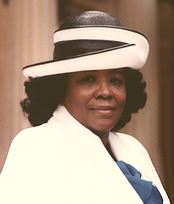
Rosita Missick-Butterfield
### Dr. Rosita Beatrice Missick-Butterfield: Trailblazer for Women in Turks and Caicos Governance and Nationhood The Honorable Dr. Rosita Beatrice Missick-Butterfield, MBE (November 14, 1936 – January 10, 2015), stands as a monumental figure in the political, civic, and spiritual development of the Turks and Caicos Islands. Operating across an era defined by profound constitutional upheaval and rapid economic modernization, Butterfield repeatedly shattered systemic barriers to expand the horizons of female leadership across the British Caribbean. In 1984, she achieved an indelible milestone in archipelagic history by becoming the first woman ever elected to the Legislative Council (now the House of Assembly), representing her home district of Kew, North Caicos, for the Progressive National Party (PNP). Seven years later, in 1991, she ascended to the pinnacle of parliamentary authority as the first female Speaker of the House of Assembly, guiding the territory through complex legislative sessions with poise, impartiality, and unwavering dignity. Beyond the halls of Parliament, Butterfield was a woman of multifaceted brilliance: a dedicated healthcare professional who practiced nursing and midwifery in Jamaica, the United States, and her native islands; a dynamic commercial leader who co-founded the Butterfield Gold Group of Companies; an ordained pastor and First Lady of the Faith Tabernacle Church of God; and an enduring patron of education who championed the establishment of the Turks and Caicos Islands Community College (TCICC). Anchored by her personal philosophy that "Anything is Possible," Dr. Butterfield's life was a testament to Christian service, civic duty, and the unstoppable advancement of Caribbean women. [1] ### Early Life and Educational Foundations in North Caicos Rosita Beatrice Missick was born on November 14, 1936, in the agricultural settlement of Kew on the island of North Caicos. Her parents, Isaiah V. Missick and Savelitta A. Missick (née Higgs), were respected members of the local community who instilled in their children a rigorous Christian faith, deep self-respect, and an unshakeable commitment to communal solidarity. During the 1930s and 1940s, North Caicos—often celebrated as the "Garden Island" of the archipelago due to its comparatively fertile soil, freshwater lenses, and citrus groves—was a quiet, isolated rural enclave. The territory as a whole was an impoverished dependency of the British Crown, administered through the Governor of Jamaica. Modern amenities such as electricity, paved roads, and piped water were non-existent, and transportation between the Caicos cays and the administrative capital on Grand Turk was conducted entirely by wooden sailing sloops navigating treacherous reefs. In this close-knit island society, young Rosita displayed exceptional intelligence, discipline, and a natural compassion for the vulnerable. She received her elementary education at the Kew Elementary School and Bottle Creek Elementary School on North Caicos, walking long distances along rugged dirt tracks to attend classes. Demonstrating outstanding academic aptitude, she was subsequently sent to the capital island to attend Grand Turk Secondary School, which was then the premier institution of secondary learning in the territory. Following her graduation, Missick felt an immediate calling to public service. She began her working life as a young primary schoolteacher in North Caicos, dedicating her early adulthood to instructing village children in literacy, arithmetic, and moral discipline. However, as she observed the severe lack of medical infrastructure and the tragic, preventable health crises that routinely afflicted rural island families, she resolved to pursue professional medical training abroad. [2] ### The Healing Arts: Jamaican Training and American Experience At the midpoint of the twentieth century, healthcare across the Turks and Caicos Islands was rudimentary, with no resident physician on North Caicos and expectant mothers facing perilous childbirth without professional assistance. Driven by an urgent desire to alleviate human suffering, Missick departed her homeland in the 1950s to study nursing in Kingston, Jamaica, then the preeminent hub of medical instruction and West Indian intellectual life. Enrolling in rigorous clinical programs, she qualified as both a Registered General Nurse (RGN) and a State Certified Midwife. Her time in Jamaica exposed her to modern clinical pharmacology, surgical assistance, and comprehensive public health methodologies, while also broadening her Caribbean political consciousness during the heady years preceding regional federation and independence. Seeking further clinical specialization and international experience, Missick subsequently migrated to the United States. For nearly a decade, she worked within major American medical facilities and urban hospitals, refining her skills in emergency care, obstetrics, and healthcare administration under demanding conditions. At a time when thousands of Caribbean emigrants remained permanently in the diaspora, Missick maintained an enduring fidelity to her native soil. Rejecting opportunities for permanent settlement abroad, she returned to the Turks and Caicos Islands in the 1970s, bringing back invaluable expertise to her country’s nascent public health apparatus. Upon her return, Nurse Missick was appointed as a government clinic nurse, a vital post she held for eight years. Operating across rural North Caicos and the burgeoning settlement of Providenciales, she traveled across rocky roads and remote coastal settlements by foot, boat, and rugged vehicles to treat infections, deliver newborns, conduct vaccinations, and care for the elderly. Her clinical skill, matched by an innate bedside tenderness, earned her the enduring affection of families across the archipelago. Through her hands-on healthcare practice, she developed an intimate understanding of the daily hardships faced by ordinary Turks and Caicos Islanders, laying the deep foundation of trust that would later propel her into public office. [3]  ### Breaking the Glass Ceiling: The Historic 1984 General Election By the late 1970s and early 1980s, the Turks and Caicos Islands were experiencing rapid political and economic transformations. The introduction of the 1976 Constitution had replaced the traditional administrative board with a ministerial system of government, creating the office of Chief Minister and fostering the rise of modern political parties. Visionary leader [J.A.G.S. McCartney](/profiles/jags-mccartney) mobilized the working classes through the People's Democratic Movement (PDM), while contemporaries such as [Norman Saunders](/profiles/norman-saunders) and [Hilly Ewing](/profiles/hilly-ewing) consolidated power through the Progressive National Party (PNP). However, despite the essential organizing work performed by women within church congregations, school boards, and civic societies, political representation remained an exclusive fraternity of men. Rosita Butterfield—who by then had married fellow visionary entrepreneur Dr. Albray Victor Butterfield Sr.—refused to accept the political disenfranchisement of women. In 1984, she took the bold step of entering frontline electoral politics. Aligning herself with the Progressive National Party led by Chief Minister [Norman Saunders](/profiles/norman-saunders), she secured the party's nomination for the constituency of Kew, North Caicos, for the upcoming general election scheduled for May 29, 1984. Her candidacy was greeted with intense public interest and significant skepticism from traditional patriarchal circles. Undaunted, Butterfield mounted an energetic, grassroots campaign. She traveled house to house across the hamlets of Kew, Whitby, and Sandy Point, engaging constituents on agricultural support, healthcare access, youth education, and infrastructural development for the Family Islands. Her deep family roots in Kew, combined with her years of selfless medical service as a clinic nurse, resonated powerfully with voters. > "Anything is possible if you have faith, discipline, and a heart dedicated to serving others. The doors that seem closed to our women and our young people will open if we possess the courage to knock and the resolve to enter." — Dr. Rosita Beatrice Missick-Butterfield [1] On May 29, 1984, the voters of Kew delivered a historic verdict: Rosita Butterfield won the seat by a decisive margin, becoming the **first woman ever elected to the Legislative Council in the history of the Turks and Caicos Islands**. Her triumph shattered a centuries-old gender barrier, igniting celebrations across North Caicos and signaling a new era of civic inclusion across the British Caribbean. [4] ### Constitutional Upheaval and Legislative Stewardship Butterfield’s arrival in Parliament coincided with one of the most tumultuous periods in the political history of the Turks and Caicos Islands. In March 1985, Chief Minister [Norman Saunders](/profiles/norman-saunders) was arrested in Miami, Florida, on federal conspiracy charges related to the narcotics transit trade, plunging the territory into an unprecedented international crisis. Following Saunders' resignation, [Nathaniel Francis](/profiles/nathaniel-francis) assumed the chief ministership, but ongoing governance inquiries culminated in the landmark 1986 Blom-Cooper Commission of Inquiry. The British government subsequently took the extraordinary step of suspending the territory's constitution, dissolving the Ministerial Cabinet, and establishing direct administrative rule under the British Governor. Throughout this acute constitutional crisis, Rosita Butterfield emerged as a vital pillar of stability, integrity, and calm leadership. In 1986, she was appointed Deputy Speaker of the House, a position she held with distinction until 1988. In an environment fraught with intense political rancor and public disillusionment, Butterfield used her parliamentary platform to defend constitutional propriety, demand administrative accountability, and maintain a steady focus on the socio-economic needs of everyday citizens. Between 1987 and 1988, she was selected to serve as Chair of the Legislative Council’s Employment Bill Committee. In this vital capacity, Butterfield spearheaded comprehensive reviews of territorial labor statutes. As foreign capital and resort developers began to invest heavily in Providenciales, she fought tenaciously to protect native Belonger employment rights, mandate safe workplace environments, and guarantee fair compensation for local laborers. Following the restoration of constitutional self-government in 1988, she continued her legislative service as an appointed Member of Parliament for the Progressive National Party, earning broad bipartisan respect from colleagues across party lines, including figures such as [Clement Howell](/profiles/clement-howell). [5]  ### The First Female Speaker of the House (1991–1993) The pinnacle of Butterfield’s legislative career arrived following the general election of April 1991. The Progressive National Party returned to power under the leadership of Chief Minister Charles Washington Misick. When the newly formed Parliament convened to elect its presiding officer, Butterfield was nominated to take the chair. With overwhelming support from across the political aisle, she made history once again: Rosita Butterfield was sworn in as the **first female Speaker of the Legislative Council** (later formalized as the House of Assembly) of the Turks and Caicos Islands. As Speaker, Butterfield held the supreme constitutional responsibility for regulating parliamentary debates, upholding the Standing Orders, and safeguarding the rights and privileges of the legislature against executive overreach. Dressed in the ceremonial robes and tricorn hat of the Westminster tradition, she brought an authoritative yet empathetic presence to the chair. She presided over landmark debates regarding economic diversification, tourism expansion, environmental conservation, and educational modernization. She was widely praised for her strict impartiality, ensuring that opposition voices received fair representation while maintaining decorum and order during fiercely contested debates. In recognition of her extraordinary service to parliamentary democracy, healthcare, and community welfare, Queen Elizabeth II appointed Rosita Butterfield a Member of the Most Excellent Order of the British Empire (MBE) in the New Year Honours of 1992. When she retired from the Speakership and active parliamentary life in 1994, she had established enduring precedents for parliamentary procedure and proven beyond doubt that women could govern with unsurpassed excellence. [6] ### Commercial Enterprise and the Creation of Butterfield Gold While achieving historic milestones in public governance, Dr. Butterfield was simultaneously building a formidable commercial legacy in the private sector alongside her husband, Dr. Albray Victor Butterfield Sr. (who was also honored as an MBE recipient). Recognizing that true national sovereignty required indigenous economic self-reliance, the Butterfields established the Butterfield Gold Group of Companies in Providenciales. What began as a modest family endeavor blossomed into one of the largest, most successful indigenous business conglomerates in the history of the Turks and Caicos Islands. The Butterfield Gold Group encompassed a wide array of essential enterprises, including Butterfield Gold Supermarket—the premier full-service food and goods market serving Providenciales—alongside Butterfield Motors Ltd, bulk wholesale distribution, heavy construction, commercial real estate developments such as Butterfield Square, and financial services. Following her departure from the legislature in 1994, Dr. Butterfield assumed active executive leadership as the Chief Executive Officer, Corporate Secretary, and Director of the Butterfield Gold Group of Companies. Her keen analytical mind, honed through decades of clinical administration and parliamentary governance, ensured the company's financial resilience and continuous growth. Under her stewardship, Butterfield Gold became one of the largest private employers in the territory, providing steady employment, competitive wages, and professional advancement to hundreds of native Belongers and Caribbean immigrants. Through their commercial vision, the Butterfields played an indispensable role in transforming Providenciales from a sleepy maritime island into a vibrant international tourism and commercial hub. [7] ### Educational Vision: Founding the Community College Dr. Butterfield was an ardent advocate for human resource development, maintaining that political emancipation was meaningless without intellectual and professional empowerment. Throughout the late twentieth century, native Turks and Caicos Islanders faced severe educational barriers: with no domestic tertiary institution, ambitious young islanders were forced to travel abroad to Jamaica, the Bahamas, the United Kingdom, or the United States to obtain university degrees or professional certifications—a financial burden that excluded the vast majority of working-class families. Working alongside visionary educational advocates such as [Clarence Selver](/profiles/clarence-selver), Dr. Butterfield served as a driving force behind the conceptualization, legislative approval, and physical development of the Turks and Caicos Islands Community College (TCICC). When the institution officially opened its doors in 1994–1995, Butterfield served as one of its foundational council members and community benefactors. She championed the establishment of accredited degree programs in nursing, education, business administration, and the building trades, ensuring that young islanders could acquire professional credentials at home. Her tireless advocacy helped forge an indigenous professional class equipped to lead the country's public administration, healthcare institutions, and expanding tourism industries. [8] ### Spiritual Ministry, Pastoral Leadership, and the ARB Foundation Underpinning every dimension of Dr. Butterfield’s life was an unwavering, deeply personal Christian faith. She viewed public leadership, commerce, and healthcare not as vehicles for personal enrichment, but as divine platforms for ministry and servant leadership. Together with her husband, she was an instrumental leader of the Faith Tabernacle Church of God in Providenciales, serving as an ordained pastor and First Lady of the congregation. Pastor Butterfield was a beloved shepherd to her flock. She delivered passionate, uplifting sermons rooted in scriptural truth, provided private pastoral counseling to individuals facing marital or financial distress, and directed dynamic youth and women’s ministries. Her church became a sanctuary of hope and social assistance for the marginalized, offering food pantries, emergency clothing drives, and spiritual refuge to newly arrived immigrants and struggling families. To institutionalize her charitable endeavors, Dr. Butterfield established the **ARB Foundation**, a private philanthropic non-profit organization named in honor of her family. Through the ARB Foundation, she channeled personal resources into higher education scholarships for underprivileged students, funded specialized overseas medical treatments for critically ill islanders, and provided emergency relief following destructive hurricanes. Her philanthropic vision was intimately interwoven with family life: together with Dr. Albray Butterfield Sr., she nurtured five children—Alleveia L. Butterfield-Chan Jon Chu, Albray V. Butterfield Jr., Adulson A. Butterfield, Keisha A. Butterfield, and nephew/adopted son Royal S. Robinson Sr. (who would himself rise to national prominence as Chief Land Surveyor, Minister of Finance, and Deputy Premier of the Turks and Caicos Islands). [9] ### Passing, State Funeral, and Enduring National Legacy In her later years, Dr. Butterfield retired from active executive duties, though she remained a revered elder statesman, matriarch, and moral compass for the nation. On January 10, 2015, surrounded by family, Dr. Rosita Beatrice Missick-Butterfield passed away in Nassau, Bahamas, at the age of seventy-eight. Her passing elicited an extraordinary outpouring of grief and national gratitude across the Caribbean. Flags were flown at half-mast, and tributes poured in from leaders of every political persuasion, recognizing her as an irreplaceable founding mother of modern Turks and Caicos. Premier Dr. Rufus Ewing led the national eulogies, reflecting on her transformative impact: > "Dr. Rosita Butterfield was a woman of extraordinary grace, fortitude, and vision. She did not merely witness history; she authored it with her own hands, proving that women belong at the highest levels of national decision-making in the Turks and Caicos Islands." — Premier Dr. Rufus Ewing, State Memorial Address [4] In tribute to her stellar contributions to the nation, the Cabinet of the Turks and Caicos Islands accorded Dr. Butterfield the supreme honor of a full State Funeral—the first ever granted to a female leader in the territory’s history. Preceded by solemn lying-in-state ceremonies at the Faith Tabernacle Church of God and the House of Assembly, the official state service took place on February 5, 2015, at the Gustavus Lightbourne Sports Complex in Providenciales. Dignitaries, international diplomats, former premiers, church leaders, and thousands of ordinary citizens gathered to pay their final respects. Notably, the authorization and organization of her funeral established a vital constitutional precedent, directly inspiring the territory’s government to formally draft and institutionalize official protocols for state and ceremonial funerals. In 2023, Dr. Butterfield was posthumously inducted into the Turks and Caicos Islands National Honours and Awards, permanently enshrining her among the premier nation builders of the archipelago. Today, her name endures as a symbol of barrier-shattering courage, professional excellence, and dedicated public service. From the fertile fields of Kew to the presiding chair of the House of Assembly and the bustling commercial centers of Providenciales, Dr. Rosita Missick-Butterfield demonstrated that with faith, integrity, and perseverance, anything is indeed possible. [10]
View Profile →
Rothschild Francis
# Rothschild Francis: The Unyielding Voice of the Virgin Islands Rothschild "Polly" Francis (1891–1963) stands as a towering, transformative figure in the history of the United States Virgin Islands. A pioneering labor leader, self-educated intellectual, fierce civil rights activist, and fearless journalist, Francis defined the early struggle for democracy and civil liberties in the territory following its transfer from Danish to American sovereignty in 1917. At a time when the local population faced significant economic hardship, systemic disenfranchisement, and strict military rule, Francis emerged as a relentless advocate for the marginalized and oppressed. He is best remembered for founding the influential newspaper *The Emancipator*, fiercely campaigning for a civilian government to replace the U.S. Naval administration, and demanding full United States citizenship for all Virgin Islanders. Through his unyielding dedication to democratic ideals, he fundamentally altered the political landscape of the Caribbean. ### Early Life in the Danish West Indies Rothschild Francis was born in 1891 on the island of St. Thomas, which was then a crucial part of the Danish West Indies. Growing up during the final decades of Danish colonial rule, Francis witnessed firsthand the vast inequalities that defined Caribbean society of the era. The local economy, which had historically been driven by the brutal realities of the trans-Atlantic slave trade, sugar cultivation, and maritime commerce, had long been in a state of severe decline. The majority of the Afro-Caribbean population suffered under systemic poverty, agonizingly low wages, and severely limited educational opportunities. Social mobility was virtually non-existent for those outside the privileged colonial elite. Despite the lack of formal educational structures for the working class, Francis was a man of immense intellectual curiosity. Primarily self-educated, he possessed a voracious appetite for knowledge, studying history, law, and political philosophy. This self-directed education cultivated within him an acute sense of justice and a deep understanding of the mechanics of oppression—insights that would guide his lifelong crusade for equality. In 1917, amidst the geopolitical anxieties of World War I, the United States purchased the islands from Denmark for $25 million, renaming them the United States Virgin Islands. For many local residents, the transfer of sovereignty brought a profound wave of optimism. They firmly believed that becoming part of the United States—a nation fundamentally founded on principles of liberty and justice—would usher in an era of democratic ideals, economic prosperity, and the immediate granting of American citizenship. However, the reality of the transfer fell drastically short of these lofty expectations. Rather than integrating the islands as a democratic territory, the U.S. government placed them under the jurisdiction of the Department of the Navy. Rather than experiencing the promises of democracy, Virgin Islanders found themselves subjected to strict, autocratic military rule. They were governed by naval officers who possessed virtually unchecked executive, legislative, and judicial powers. The local population remained devoid of constitutional protections, political self-determination, and the U.S. citizenship they so deeply coveted. It was within this crucible of profound disappointment and paternalistic colonial administration that Rothschild Francis forged his powerful political ideology. > "The transfer of the Virgin Islands did not bring the freedom and democracy promised by the American flag; instead, it brought military rule. We demanded nothing less than our birthright as citizens—a fight that could not be silenced by the gavel of a naval judge." ### *The Emancipator* and the Power of the Press Recognizing that the people desperately needed a platform to voice their grievances and organize their resistance, Francis turned to the power of journalism. In 1921, he founded a newspaper aptly named *The Emancipator*. Through its pages, Francis launched a sustained, courageous, and highly effective campaign against the abuses and systemic failures of the naval administration. *The Emancipator* was not merely a newspaper; it served as the intellectual, social, and political heart of the Virgin Islands' early civil rights movement. Francis used the publication to ruthlessly expose government corruption, criticize the heavy-handed and often arbitrary policies of naval officials, and highlight the severe economic exploitation of the working class. He consistently fought for fair wages, better working conditions, and the fundamental right of local residents to have a meaningful say in their own governance. By articulating the deepest frustrations of the common people, Francis quickly became the most visible and vocal opponent of naval rule in the territory. His editorials were sharp, uncompromising, and deeply rooted in the democratic principles espoused by the United States Constitution—principles he argued were being hypocritically denied to the people of the Virgin Islands. He drew stark contrasts between the democratic rhetoric of the American mainland and the dictatorial reality of the islands' governance, creating a compelling moral argument that resonated both locally and abroad.  ### The Fight for Civilian Government and Citizenship Francis’s activism was by no means confined to the printing press. He was fundamentally a man of action who took the fight directly to the halls of political power. As an elected member of the Colonial Council, the local legislative body at the time, he pushed tirelessly for legislative reforms and relentlessly challenged the colonial authority of the naval governors at every turn. His political vision was clear and uncompromising: the complete removal of military rule, the establishment of a fully functional civilian government, and the extension of full United States citizenship to all Virgin Islanders. To achieve these ambitious goals, Francis realized he needed to build power from the ground up. He organized labor unions to empower the working class, leading strikes and negotiations that demanded basic dignity and a living wage for laborers who had long been exploited. Simultaneously, Francis built strategic alliances with prominent progressive organizations on the U.S. mainland. He collaborated extensively with the American Civil Liberties Union (ACLU), utilizing their legal expertise and political connections to amplify his cause. Francis traveled to Washington, D.C., to testify directly before the United States Congress. During these landmark hearings, he passionately and eloquently articulated the plight of his people. He exposed the inherent contradictions of a purportedly democratic nation administering a colonial military regime, forcing American lawmakers to confront the realities of their territorial policies. His tireless efforts laid the critical groundwork that would eventually lead to the granting of U.S. citizenship to Virgin Islanders in 1927 (which was later expanded in 1932), as well as the transition to a civilian government under the Department of the Interior in 1931. Although these sweeping victories took time to fully materialize, it was unequivocally Francis’s early, uncompromising agitation that set the wheels of historical change in motion. ### Persecution, Legal Battles, and Resilience Unsurprisingly, Francis’s relentless challenge to the status quo made him a prime target for the naval administration. The military governors and their appointed officials viewed him not as a legitimate civil rights leader, but as a dangerous agitator, a subversive threat to public order, and an enemy of the state. As a result, Francis faced intense political persecution and a series of exhausting legal battles designed specifically to silence him, discredit his movement, and bankrupt his newspaper. In 1924, he was convicted of criminal libel after publishing an editorial that heavily criticized a local police officer for brutality and abuse of power. The naval-appointed judges, who operated without the standard checks and balances of a civilian justice system, were eager to penalize him. Despite aggressively appealing the decision and receiving significant legal support and representation from the ACLU, the conviction was ultimately upheld. Just two years later, in 1926, the administration struck again. Francis was indicted and convicted on charges of embezzlement. Modern historians, legal scholars, and contemporary Virgin Islands legislators have heavily scrutinized these convictions, almost universally characterizing them as deeply suspicious, entirely politically motivated, and orchestrated specifically to crush his political influence and destroy his reputation among the masses. These drawn-out legal battles exacted a heavy toll on Francis, both personally and financially. The relentless harassment, combined with the financial ruin brought upon *The Emancipator*, eventually forced him to step away from the forefront of Virgin Islands politics. He subsequently relocated to the U.S. mainland, where he lived out the remainder of his life in relative obscurity. However, his spirit remained unbroken, and the ideological seeds he had planted in the minds of Virgin Islanders continued to grow and bear fruit long after his departure. ### Legacy and Modern Recognition Rothschild Francis passed away in 1963, living just long enough to see many of his core political goals realized, though he rarely received the credit he deserved during his lifetime. Today, his legacy as a foundational figure in the Virgin Islands' quest for civil rights remains deeply ingrained in the territory's historical consciousness. He is revered not just as a labor leader or a journalist, but as a profound visionary who sacrificed his own freedom, reputation, and livelihood to secure the democratic rights of future generations. His extraordinary contributions have been memorialized in numerous ways across the Virgin Islands, ensuring that his name will never be forgotten. The historic Market Square in Charlotte Amalie, St. Thomas—a central commercial and social gathering place for the community for centuries—was officially renamed Rothschild Francis Square in his honor. This bustling center of commerce now serves as a permanent monument to his fight for the working class. In Educators Park on St. Thomas, a prominent bust of Francis stands proudly alongside other revered historical figures such as [Edith Williams](/profiles/edith-williams) and [J. Antonio Jarvis](/profiles/j-antonio-jarvis). October 5th is officially designated as Rothschild Francis Day in the territory, a day dedicated to reflecting on his immense contributions to civil liberties, journalism, and labor rights. Furthermore, in recent years, the Virgin Islands Legislature has undertaken significant efforts to posthumously pardon Francis for his libel and embezzlement convictions, formally recognizing the unjust, corrupt, and politically motivated nature of his prosecution by the naval administration. This movement for exoneration reflects a broader, crucial reckoning with the colonial history of the territory and serves as the ultimate vindication of a man who was always on the right side of history. Rothschild Francis’s life is a powerful testament to the enduring power of the press, the unbreakable resilience of the human spirit, and the perpetual quest for equality. He boldly dared to demand that the promises of democracy be extended across the ocean to the shores of the Virgin Islands, and in doing so, he forever altered the political and social trajectory of his homeland.
View Profile →Ruby Ann Darling
### Introduction Ruby Ann Darling (née Cooper), born on June 28, 1941, in Nassau, stands as a monumental figure in the history of [The Bahamas](/islands/the-bahamas). Widely celebrated as a trailblazer for gender equality, democratic participation, and political representation, she forever etched her name into Bahamian history as the very first woman to register to vote, and subsequently the first to cast a ballot in a Bahamian general election. Beyond this historic milestone, Darling’s life encompasses decades of distinguished public service, extending from the Bahamian Senate and the House of Assembly to her enduring work as an ordained minister, community counselor, and ultimately, as Deputy to the Governor-General. Her profound connection to [Exuma](/islands/exuma), coupled with her unwavering commitment to the enfranchisement and empowerment of Bahamian women, cements her legacy as a foundational pillar of modern Bahamian democracy. ### Early Life and the Socio-Political Context of The Bahamas Born in the capital city of Nassau but boasting deep familial and cultural roots in the island of [Exuma](/islands/exuma), Ruby Ann Cooper came of age during an era of profound social, economic, and political inequality in [The Bahamas](/islands/the-bahamas). In the 1940s and 1950s, the archipelago was still firmly under British colonial rule and dominated by an elite group of white merchants and politicians colloquially known as the "Bay Street Boys." This oligarchy maintained its grip on power through a deeply inequitable electoral system that heavily favored property owners and effectively disenfranchised the vast majority of the Black Bahamian population. Moreover, the political landscape was exclusively male. Women in The Bahamas, regardless of their race or social standing, were completely barred from participating in the democratic process. They could not vote in elections, nor could they stand for public office. As Darling grew up, the murmurs of dissatisfaction were transforming into a cohesive, organized push for majority rule and universal adult suffrage. The formation of the Progressive Liberal Party (PLP) in 1953 signaled the dawn of a new political consciousness among the Bahamian masses, setting the stage for the dramatic civil rights battles that would define Darling’s youth. ### The Bahamian Women’s Suffrage Movement To understand the magnitude of Ruby Ann Darling’s historic act, one must first recognize the Herculean efforts of the Bahamian Women's Suffrage Movement. Initiated by fierce advocates like Mary Ingraham, Eugenia Lockhart, Mabel Walker, and the indomitable [Dame Doris Johnson](/profiles/doris-johnson), the movement relentlessly challenged the patriarchal status quo. In 1959, the suffragettes presented a historic petition to the Bahamian parliament, demanding the right to vote. When the local all-male assembly balked, the women bypassed them, raising funds to send a delegation, led by [Dame Doris Johnson](/profiles/doris-johnson), directly to the Colonial Office in London in 1960.  The pressure mounted both locally and internationally until the Bahamian legislature finally capitulated, passing the General Assembly Elections Act in 1961, which granted women the right to vote, effective in 1962. It was a staggering victory for civil rights, but the law's passage was only the first step. The true realization of this hard-fought right required Bahamian women to step forward, register their names on the electoral rolls, and walk into the polling booths. ### Seizing the Prize: The First Woman to Register and Vote As the date for voter registration approached in the summer of 1962, a young Ruby Ann Cooper found herself perfectly positioned by fate and timing. She had turned twenty-one—the legal voting age—on Friday, June 29, 1962. When the voter registration offices opened their doors on the following Monday, July 2, 1962, she made a deliberate and conscious decision to be the first in line. Reflecting on that momentous morning in later interviews, Darling described feeling a profound, almost divine mandate to honor the sacrifices of the suffragettes who had paved the way for her generation: > "The Lord said Ruby they fought for it and you're the one to get the prize [the opportunity to register to vote]. You better be there because I made you 21-years-old on Friday. When Monday comes you better be the person to put your name there so that you can capture the prize for those who fought so valiantly for it." True to her word, Ruby Ann Cooper became the very first woman in the history of [The Bahamas](/islands/the-bahamas) to register to vote. Months later, during the general election held on November 26, 1962, she followed through on this promise by becoming the first woman to cast a ballot. Her bold participation sent shockwaves through the political establishment. In a highly symbolic demonstration of the changing times, the enfranchisement of women and the anticipation of their eventual election to parliament forced the all-male House of Assembly to literally change its physical infrastructure, resulting in the installation of the very first female toilet facilities in the parliamentary building that same year. ### Ascension to Parliament and Legislative Service Darling’s historic firsts were merely the prologue to a long and distinguished career in frontline politics. A steadfast supporter of the Progressive Liberal Party (PLP) and the ongoing movement for social justice, she translated her early political consciousness into active public service. In 1982, recognizing her leadership qualities and her symbolic resonance with the Bahamian electorate, she was appointed to the Senate, serving in the upper chamber of the Bahamian Parliament for five years. However, it was the 1987 Bahamian general election that truly solidified her political legacy. Running on the PLP ticket, Darling was elected as the Member of Parliament for the George Town/Ragged Island constituency, drawing upon her deep family ties to [Exuma](/islands/exuma). Her victory was historic in its own right, making her only the second woman ever elected to the Bahamian House of Assembly. As a legislator, Darling brought a unique perspective to the floor, advocating passionately for family island development, the expansion of social services, and the continuing empowerment of Bahamian women. She proved that she was not just a symbol of the electorate, but a highly capable architect of legislative change. ### Ministry, Mentorship, and Continued Public Service Beyond the halls of parliament, Ruby Ann Darling’s life has been deeply rooted in spiritual leadership and community care. She is widely known throughout the archipelago as Reverend Ruby Ann Darling, an ordained minister and a dedicated professional counselor. Her ministry has allowed her to touch the lives of countless Bahamians on a personal level, providing spiritual guidance, conflict resolution, and emotional support to families in crisis. Her work as a counselor seamlessly complemented her political advocacy, giving her a profound understanding of the grassroots issues affecting everyday citizens. Her reputation as a woman of unparalleled integrity and her lifelong dedication to the nation have led to numerous high-level appointments in her later years. In 2022, she was appointed as an Ambassador for Women Affairs in the Commonwealth of The Bahamas, a role perfectly suited to the woman who first broke the electoral gender barrier. In this capacity, she continued to champion gender equity, acting as a mentor to a new generation of female political leaders and activists. Furthermore, recognizing her status as a revered elder stateswoman, the government has repeatedly called upon her to serve in the highest echelons of state. In 2023 and again in 2024, she was sworn in as the Deputy to the Governor-General of [The Bahamas](/islands/the-bahamas), assuming the duties of the head of state and representing the Crown in official capacities. ### A Lasting Legacy Rev. Ruby Ann Darling’s life story is a testament to the power of being present when history calls. By stepping forward on July 2, 1962, she shattered a centuries-old barrier and opened the floodgates for female political participation in the country. She did not rest on the laurels of that single act, but instead dedicated the next six decades of her life to public service, community healing, and national development. Today, she is celebrated not merely as a pioneer of women's suffrage, but as a matriarch of Bahamian democracy, whose courage and faith continue to illuminate the path for future generations in [The Bahamas](/islands/the-bahamas) and the wider Caribbean. ### References 1. [Wikipedia: Ruby Ann Darling](https://en.wikipedia.org/wiki/Ruby_Ann_Darling) 2. [Bahamas Government: Deputy to the Governor-General](https://www.bahamas.gov.bs)
View Profile →
Sam Sharpe
### Early Life in the Chains of Slavery Samuel "Sam" Sharpe, affectionately known to his followers as "Daddy Sharpe," was born into the brutal and dehumanizing system of plantation slavery in the parish of St. James, Jamaica, around 1801. Born on a plantation owned by Samuel and Jane Sharpe, his early life was shaped by the harsh realities of the Caribbean sugar economy, a system built on the blood, sweat, and uncompensated labor of African captives and their descendants. The early 19th century in Jamaica was a period of simmering tension. The British abolitionist movement was gaining momentum across the Atlantic, while the local plantocracy desperately clung to their violent, exploitative economic model. Despite being born into bondage, Sharpe possessed a brilliant, inquiring mind and an indomitable spirit. In a society that actively criminalized the education of enslaved people, Sharpe achieved the extraordinary feat of teaching himself to read and write. ### Intellectual Awakening and Literacy Sharpe's literacy was a revolutionary act in itself. It provided him with the key to unlock the intellectual and theological debates of his time. He avidly read local and international newspapers, following the abolitionist debates in the British Parliament. He also immersed himself in the Bible, extracting profound philosophical and moral truths. Sharpe became a devoted member and eventually a deacon at the Burchell Baptist Church in Montego Bay. The Native Baptist movement in Jamaica was unique; it blended orthodox Christian teachings with African spiritual traditions, providing a rare space where enslaved individuals could exercise autonomy and leadership. As a deacon, Sharpe was granted a "ticket" that allowed him to travel between estates to preach. This mobility was crucial. He used his pulpit not just to save souls, but to awaken minds. ### The Historical and Theological Context To truly understand the magnitude of Sam Sharpe's achievements, one must examine the oppressive architecture of Jamaican colonial society in the 1820s and 1830s. The plantocracy operated a regime of terror, utilizing draconian laws to monitor every aspect of an enslaved person's existence. In this panopticon of suffering, the Native Baptist Church emerged as an underground sanctuary. Unlike the established Anglican Church, which was firmly aligned with the interests of the slaveholders and preached subservience, the Native Baptist movement resonated with the visceral spiritual needs of the enslaved. Sharpe’s ascent to the role of a deacon was a testament to his immense charisma and his ability to articulate the collective agony and the deferred dreams of his people. He didn’t merely preach the gospel; he weaponized it against the institution of slavery, pointing out the glaring hypocrisy of a supposedly Christian empire sanctioning the torture of human beings. ### The Ideological Foundation for Freedom Sharpe's theology was fundamentally liberationist. He interpreted the Christian gospel as a mandate for physical and spiritual freedom, preaching that no man had the right to hold another in bondage, as all were equal in the eyes of God. He systematically educated his congregation about the abolitionist efforts in England, convincing many that the British Crown had already granted them freedom, but that the local planters were maliciously withholding it. This belief, though factually premature, provided the ideological fuel for mass mobilization. By late 1831, Sharpe had conceptualized a brilliant and unprecedented strategy: a widespread, organized campaign of passive resistance. > "I would rather die upon yonder gallows than live my life in slavery." ### Strategic Economic Resistance Sharpe’s organizational genius lay in his sophisticated understanding of economics. He recognized that the vast fortunes of the absentee planters in England and the local overseers were entirely dependent on the uninterrupted processing of sugar cane. Sugar cane must be harvested and milled quickly before the sucrose degrades. By timing his proposed strike immediately after the brief respite of the Christmas holidays—the narrow window before the intensive harvest season began—Sharpe aimed to paralyze the economic lifeblood of the colony. It was a masterclass in strategic leverage.  The plan was for the enslaved workers to lay down their tools and refuse to work unless they were officially recognized as free men and paid a fair wage for their labor. Sharpe moved clandestinely from estate to estate in the western parishes, holding secret midnight meetings. He swore his followers to an oath of solidarity on the Bible, demanding strict discipline and non-violence. He believed that if they simply refused to work, the plantation owners would be forced to capitulate without a drop of blood being shed. However, the sheer scale of the mobilization and the deep-seated anger of the enslaved population made the strike impossible to contain as a purely peaceful protest. ### The Baptist War (The Christmas Rebellion) On December 27, 1831, the Kensington Estate in St. James was set ablaze, lighting up the night sky and serving as the undeniable signal that the strike had transformed into a full-scale armed rebellion. This uprising became known as the Baptist War, or the Christmas Rebellion. It was the largest slave revolt in the history of the British Caribbean, eventually involving an estimated 60,000 enslaved people across several parishes. The rebels engaged in guerrilla warfare, burning plantation houses and destroying the infrastructure of the sugar industry. The colonial response was swift, brutal, and overwhelming. The British military, aided by local white militias, ruthlessly crushed the rebellion within a matter of weeks. The retaliation was horrific; hundreds of enslaved people were killed in skirmishes, and hundreds more were subjected to summary executions and brutal floggings without trial. ### Trial, Execution, and Lasting Legacy Sam Sharpe was captured in the aftermath of the rebellion. He was subjected to a show trial and sentenced to death by hanging. On May 23, 1832, he was executed in Montego Bay. While standing on the gallows, he delivered his immortal words, choosing death over continued subjugation. Though the Baptist War was a military defeat, it was a monumental political victory. The sheer scale, organization, and devastation of the rebellion sent shockwaves through London. It unequivocally demonstrated to the British Parliament that the institution of slavery in Jamaica was entirely unsustainable and that the enslaved population would continue to shed blood until they were free.  ### Impact on Emancipation and National Hero Status Less than a year after Sharpe's execution, the British Parliament passed the Slavery Abolition Act of 1833, officially ending the institution of slavery across the British Empire. Sam Sharpe's martyrdom was the catalyst that finally broke the chains of bondage in Jamaica. His legacy is one of unparalleled courage, intellectual brilliance, and moral clarity. In 1982, the Jamaican government rightfully bestowed upon him the Order of National Hero, cementing his status in the pantheon of figures like [Nanny of the Maroons](/profiles/nanny-of-the-maroons) and [Paul Bogle](/profiles/paul-bogle). Today, his face adorns the Jamaican $50 banknote, and the site of his execution is now known as Sam Sharpe Square, a permanent monument to the man who laid down his life so that a nation could be free.
View Profile →Samuel Haynes
### Introduction: The Nationalist Voice of Belize Samuel Alfred Haynes (1899–1971) stands as one of the most intellectually vibrant, politically fearless, and culturally foundational figures in the modern history of Belize [1]. A decorated soldier, militant civil rights activist, prolific Pan-Africanist journalist, and gifted lyricist, Haynes dedicated his life to dismantling colonial oppression and instilling a profound sense of dignity, liberty, and self-determination among Black people in British Honduras and across the global diaspora [2]. Operating during a turbulent epoch characterized by global war, racial violence, and colonial exploitation, Haynes emerged from the crucible of working-class Belize City to become a pivotal leader in the 1919 Ex-Servicemen's Riot—an event widely recognized by historians as the first major anti-colonial uprising in 20th-century Belize [3]. His militant advocacy soon drew the attention of legendary Jamaican Pan-Africanist [Marcus Garvey](/profiles/marcus-garvey), catapulting Haynes into the highest executive echelons of the Universal Negro Improvement Association (UNIA) in the United States [4]. Yet, despite his international prominence as a civil rights leader and editor of the world-renowned *Negro World* newspaper, Haynes' most enduring and universally celebrated contribution to his homeland lies in his literary genius [5]. He is the immortal lyricist of 'Land of the Gods,' a stirring patriotic poem written in defiance of colonial subjugation that was later adapted under the leadership of [George Cadle Price](/profiles/george-cadle-price) to become 'Land of the Free'—the official national anthem of an independent Belize [6]. Through his words, activism, and visionary courage, Samuel Haynes provided the ideological and spiritual soundtrack for a nation fighting to claim its freedom. ### Early Life in Colonial British Honduras Samuel Alfred Haynes was born in 1899 in the British colony of British Honduras, growing up within the vibrant yet deeply impoverished working-class neighborhoods of Belize Town (now Belize City) [1]. At the turn of the century, British Honduras existed under a rigid colonial hierarchy dominated by a white merchant elite and foreign forestry conglomerates who controlled the colony's land, mahogany trade, and political institutions [3]. The majority non-white population faced disenfranchisement, economic marginalization, and systemic racial discrimination [2]. Despite these oppressive socio-economic barriers, young Haynes exhibited an exceptional command of language, an acute intellect, and a voracious appetite for literature and history [4]. Educated in local colonial schools, he quickly perceived the stark contradictions between the British ideals of liberty taught in the classroom and the daily subjugation experienced by Belizean laborers [1]. As a young man coming of age amidst the intellectual currents of the early 1900s, Haynes was deeply influenced by the struggles of the working class and the emerging cultural consciousness within the Caribbean. He developed a deep reverence for the natural beauty of his homeland—its barrier reef, pristine rivers, and dense mahogany forests—while simultaneously harboring a burning indignation toward the colonial structures that denied his people the rights to the wealth beneath their feet [6]. This duality of immense patriotic love for the land and fierce resistance against colonial rule would become the defining hallmark of his entire philosophical and literary trajectory. 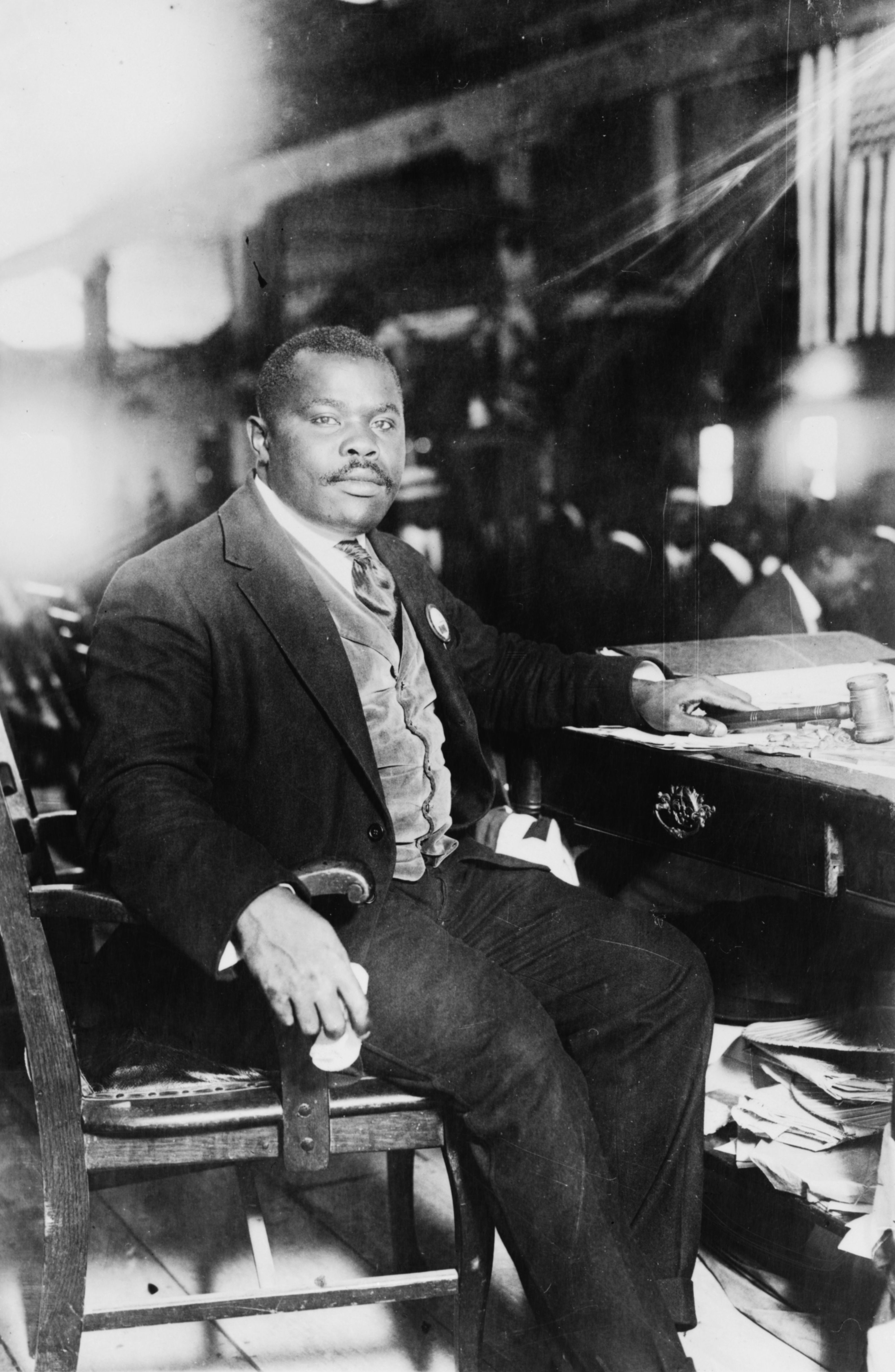 ### World War I Service with the British West Indies Regiment With the outbreak of the First World War in 1914, the British Empire called upon its colonial subjects across the Caribbean to defend King and Country [1]. Driven by a complex mixture of youthful idealism, economic necessity, and the promise that military service would earn political respect and equal citizenship for West Indians, Samuel Haynes enlisted in the British Army in 1916 [7]. He was assigned to the British West Indies Regiment (BWIR), joining hundreds of fellow Belizean and West Indian volunteers on the arduous journey across the Atlantic [3]. Haynes served with distinction in the grueling Middle Eastern theatre, participating in military campaigns against the Ottoman Empire in Egypt, Palestine, and Mesopotamia [1]. However, the reality of military service proved to be a bitter, disillusioning awakening for Haynes and his compatriots [3]. Rather than being treated as honorable brothers-in-arms, Black soldiers of the BWIR were subjected to virulent racism by British commanders [7]. They were frequently segregated, issued inferior rations, denied commissions as officers, and relegated to hazardous, menial labor tasks such as digging trenches, hauling heavy ammunition under enemy artillery fire, and clearing sanitation ditches [3]. When West Indian soldiers dared to protest these indignities, they were met with draconian military discipline [7]. For Haynes, witnessing the shedding of Black blood for an empire that viewed them as racially inferior shattered any lingering illusions of benevolent colonial benevolence [1]. The battlefield became his ideological crucible, transforming the educated young soldier into a radical, militant anti-colonial nationalist determined to fight for self-determination upon his return home. > 'Samuel Haynes transformed the bitter disillusionment of Black West Indian veterans into a powerful beacon of anti-colonial nationalism, giving voice to a burgeoning Belizean identity through organizational leadership and immortal verse.' ### The 1919 Ex-Servicemen's Riot and Awakening of Anti-Colonialism In 1919, Samuel Haynes and his fellow surviving veterans returned to British Honduras expecting welcoming heroes' receptions and promised employment opportunities [3]. Instead, they stepped off the troopships into a colony gripped by severe economic recession, exorbitant inflation, food shortages, and widespread racial hostility from colonial administrators [7]. Compounding their grievance, colonial officials refused to grant the returning veterans their promised military pensions and back pay, while local white merchants artificially inflated the prices of basic foodstuffs [3]. The simmering fury boiled over on the night of July 22, 1919, when hundreds of exasperated ex-servicemen marched through the streets of Belize Town in what erupted into the historic 1919 Ex-Servicemen's Riot [1]. The uprising quickly gained massive popular support from the urban working class, targeting colonial businesses, government buildings, and oppressive merchant establishments [3]. Samuel Haynes emerged as a primary intellectual and strategic leader during the revolt [7]. While sharing the justifiable anger of the veterans, Haynes also demonstrated extraordinary maturity and tactical foresight [1]. Once the initial demonstration made its powerful statement against colonial oppression, Haynes used his commanding respect among the troops to help restore civil order, preventing unnecessary loss of life while channeling the movement's energy into organized political demands [7]. In the aftermath of the uprising, when colonial authorities cracked down and imprisoned several veteran leaders, Haynes spearheaded public agitation and legal defense efforts, ultimately securing pardons and concessions from the colonial governor [1]. The 1919 uprising permanently altered the political landscape of Belize, marking the birth of modern Belizean labor consciousness and setting the stage for future nationalist leaders like [Antonio Soberanis Gómez](/profiles/antonio-soberanis-gomez) and [Philip Goldson](/profiles/philip-goldson). ### Leadership in Marcus Garvey's Universal Negro Improvement Association (UNIA) Recognizing that local agitation needed global solidarity, Samuel Haynes channeled the momentum of the 1919 veterans' movement into organizing the British Honduras division of the Universal Negro Improvement Association (UNIA) [4]. Founded by the brilliant Jamaican visionary [Marcus Garvey](/profiles/marcus-garvey), the UNIA preached racial pride, Black economic independence, Pan-African unity, and anti-colonial self-reliance [2]. Haynes became the general secretary and intellectual dynamo of the local Belize City branch, which quickly swelled to become one of the most active and influential UNIA chapters in the entire Caribbean, boasting thousands of dedicated members [4]. Working closely with prominent local organizers such as nurse [Vivian Seay](/profiles/vivian-seay), Haynes established local UNIA businesses, educational cooperatives, and mutual aid societies that empowered the Belizean working class [3]. In July 1921, Haynes orchestrated a historic triumph by successfully inviting [Marcus Garvey](/profiles/marcus-garvey) himself to visit British Honduras [4]. Garvey's arrival in Belize City was met with ecstatic jubilation by thousands of citizens [3]. During his stay, Garvey recognized the extraordinary oratorical brilliance, organizational genius, and ideological clarity of young Samuel Haynes [1]. Impressed by his leadership, Garvey personally recruited Haynes to relocate to the United States to assume executive leadership responsibilities within the global UNIA headquarters [5]. Accepting the call to advance the international Black liberation struggle, Haynes migrated to America in the early 1920s, embarking on a brilliant career on the world stage [4]. > 'O, Land of the Free by the Carib Sea, / Our manhood we pledge to thy liberty! / No tyrants here linger, despots must flee / This tranquil haven of democracy.'  ### Journalistic Contributions: Editing the Negro World in the United States Upon arriving in the United States, Samuel Haynes rose rapidly through the national ranks of the UNIA [1]. He was elected President of the influential Pittsburgh Division of the UNIA, where he mobilized thousands of African American steelworkers and Caribbean immigrants, championing civil rights, labor equity, and Black entrepreneurship across the industrial Midwest [5]. His leadership caught the attention of the global movement's intellectual elite, leading to his appointment to the editorial board of the *Negro World*—the official global newspaper of the UNIA [4]. With a weekly circulation reaching hundreds of thousands of readers across the Americas, Europe, and Africa, the *Negro World* was the most widely read and influential Black newspaper on the planet [5]. As an editor and contributing writer, Haynes utilized his sharp, eloquent pen to denounce European colonialism in Africa and the Caribbean, expose racial lynching and segregation in the Jim Crow South, and advocate for international human rights [1]. His journalistic essays were celebrated for their analytical rigor and passionate defense of Black dignity [4]. Even while operating in the United States, Haynes never forgot his native Belize; he regularly published articles detailing the economic exploitation of British Honduras, keeping the struggles of the Belizean working class visible before an international audience [3]. ### 'Land of the Gods': Composition of the Immortal Anthem Despite his international travels and global activism, Samuel Haynes’ heart remained inextricably tethered to his beloved Belize [1]. During the late 1920s, while reflecting deeply on the natural splendor, cultural resilience, and unrealized destiny of his homeland, Haynes penned a masterful poetic ode originally titled 'Land of the Gods' [6]. Written during an era when Belizeans were forced to sing 'God Save the King' and pledge allegiance to a distant British monarch, Haynes' poem was a revolutionary act of cultural reclamation [4]. The lyrics painted a breathtaking panorama of Belize's physical geography—its Baymen heritage, the sparkling Caribbean Sea, the fertile river valleys, and the majestic forest canopy—while embedding a profound political philosophy of freedom, democracy, and resistance against tyranny [6]. Lines such as *'No tyrants here linger, despots must flee / This tranquil haven of democracy'* were direct rebukes of colonial despotism and a rallying cry for self-determination [4]. Recognizing the emotional power of Haynes' verse, prominent Belizean musical director and composer Selwyn Walford Young composed a majestic, stirring musical score to accompany the poem in 1963 [6]. Together, Haynes' words and Young's music created an anthem that immediately captivated the hearts of the Belizean people, becoming the unofficial patriotic hymn of the nationalist movement [1]. ### Adaptation to 'Land of the Free' and National Legacy As British Honduras accelerated along the path toward peaceful decolonization under the leadership of Premier [George Cadle Price](/profiles/george-cadle-price) and the People's United Party during the 1960s and 1970s, the quest for authentic national symbols took center stage [6]. Price and the nationalist leadership recognized that Samuel Haynes' 'Land of the Gods' perfectly encapsulated the soul and aspirations of the emerging nation [1]. With slight modifications to adapt the phrasing for modern independence—most notably retitling the work 'Land of the Free'—the song was officially adopted as the national anthem of Belize upon the attainment of sovereign independence on September 21, 1981 [6]. Although Samuel Haynes passed away in 1971 before witnessing the official lowering of the Union Jack and the raising of the Belizean flag, his spirit lives on every time his anthem is sung across the nation [1]. Today, he is revered as a national hero of Belize [2]. In posthumous recognition of his monumental life's work, the Belizean government and community leaders established the Samuel Haynes Institute of Excellence in Belize City—a premier educational and community development center dedicated to uplifting young Belizeans through academic support, arts, and leadership training [8]. From the trenches of World War I to the executive suites of the UNIA and the eternal verses of the national anthem, Samuel Haynes dedicated his entire existence to the liberation of his people, bequeathing to Belize a legacy of freedom that will endure forever.
View Profile →
Samuel Jackman Prescod
### Introduction Samuel Jackman Prescod (c. 1806 – 26 September 1871) stands out as an unparalleled colossus in the rich, turbulent history of Barbados. Widely celebrated as one of the ten National Heroes of Barbados, Prescod was a pioneering journalist, an indomitable political activist, and the very first person of African descent to be elected to the Parliament of Barbados [1]. In an era characterized by brutal systemic inequalities, the disenfranchisement of the non-white majority, and the rigid social hierarchies of a slave-owning plantocracy, Prescod's life was a testament to the unyielding pursuit of justice, human dignity, and democratic representation. His groundbreaking achievements not only dismantled centuries-old barriers but also laid the foundational cornerstones for modern Barbadian democracy. To understand Prescod is to understand the struggle of the Caribbean's transitional period—from the dark days of slavery, through the controversial "Apprenticeship" system, to the dawn of hard-won civil liberties. ### Early Life and the Context of Colonial Barbados Born in the bustling port city of Bridgetown in 1806, Prescod entered a world divided sharply along racial and economic lines. He was the son of Lidia Smith, a free woman of color, and William Prescod, a wealthy white planter [2]. This mixed heritage placed him in the intermediate social stratum of the "free colored," a group that enjoyed nominal freedom but was categorically excluded from the political and economic privileges reserved exclusively for the white plantocracy. The colonial statutes of the time, most notably the discriminatory laws dating back to 1697, expressly forbade non-whites from voting, holding public office, or serving on juries. Growing up, Prescod received an education that was remarkably thorough for a person of his social standing, equipping him with the intellectual tools he would later use to dissect and challenge the colonial establishment. He was heavily influenced by the prevailing winds of abolitionism sweeping through the British Empire. Young Prescod witnessed firsthand the cruelties inflicted upon the enslaved population on the island's vast sugar plantations, as well as the suffocating indignities suffered by the free coloreds. These experiences ignited a burning, unquenchable desire within him to advocate for the marginalized and to dismantle the structures of oppression.  ### The Pen as a Sword: Journalism and Early Activism Recognizing the power of the written word to mobilize the masses and agitate for change, Prescod turned to journalism. He became a forceful and eloquent voice in the Barbadian press. Initially writing for various local papers, he eventually took the helm of *The New Times* and later founded *The Liberal*. Under his editorial guidance, *The Liberal* transformed from a simple news sheet into a formidable political weapon [3]. Prescod used his editorials to launch scathing critiques of the plantocracy, exposing the corruption, greed, and moral bankruptcy of the ruling elite. His writing was characterized by a lucid, incisive style that resonated deeply with both the free colored population and progressive-minded whites. He relentlessly campaigned for the expansion of the franchise and the repeal of discriminatory legislation. His advocacy was not limited to his own social class; he also became a champion for the "Poor Whites" of Barbados (often referred to derogatorily as "Redlegs"), recognizing that class oppression and racial oppression were intertwined tools used by the elite to maintain control. > "He is frequently remembered as the 'saviour of his country' for his relentless pursuit of a Barbados where the rights of the formerly enslaved and the free colored were enshrined not just in law, but in the political fabric of the nation." ### Emancipation, Apprenticeship, and Political Awakening The early 1830s brought monumental shifts to the Caribbean. Through the relentless campaigning of Prescod and his contemporaries, as well as the overarching pressure from British abolitionists, the Barbadian government finally conceded civil rights to free people of color in 1831. However, the true test of Prescod's leadership arrived with the passage of the Slavery Abolition Act of 1833, which nominally ended slavery in 1834 but instituted the deeply flawed "Apprenticeship" system. Under Apprenticeship, the newly "freed" population was compelled to continue working for their former masters for a period of up to six years, often under conditions that were virtually indistinguishable from slavery. Prescod vigorously denounced this system as a cruel farce. He traveled across the island, investigating abuses on the plantations and providing legal and moral support to the apprentices. His relentless pressure, both locally and through correspondences with the Anti-Slavery Society in London, played a crucial role in forcing the premature end of the Apprenticeship system in 1838, granting full freedom to the formerly enslaved population. ### Breaking the Barrier: The 1843 Election Despite the end of slavery, the political machinery of Barbados remained firmly in the grip of the white elite. The franchise was restricted by exorbitant property qualifications designed specifically to keep the black and colored majority out of power. Undeterred, Prescod mobilized a burgeoning political coalition. He was instrumental in forming the Liberal Party, the island's first organized political opposition [4]. The party united the free coloreds, enfranchised blacks, and sympathetic poor whites into a cohesive political force. In 1840, bowing to mounting pressure, the Barbadian legislature passed an act lowering the property qualifications for voting. This was the opening Prescod had fought so hard to create. In the historic election of 1843, Samuel Jackman Prescod ran for a seat in the House of Assembly representing the City of Bridgetown. Against extraordinary odds, and facing the entrenched opposition of the planter class, Prescod emerged victorious. He made history by becoming the first person of African descent to be elected to the Barbadian Parliament. ### The Parliamentary Years and Later Life Inside the House of Assembly, Prescod proved to be a masterful parliamentarian. He served as the leader of the Liberal Party for over a decade, using his platform to advocate for sweeping social and economic reforms. He fought for the establishment of public educational institutions for the black majority, the reform of the biased judicial system, and the protection of workers' rights. He consistently stood in opposition to the narrow, self-serving policies of the plantocracy, often acting as the lone voice of the marginalized in a hostile chamber. His tenure in parliament was marked by a commitment to democratic principles and a profound belief in the potential of the Barbadian people. He believed that education was the ultimate emancipator and worked tirelessly to secure funding for schools. In 1860, after years of grueling political battles, Prescod retired from active parliamentary life. In recognition of his unparalleled legal acumen and his unwavering integrity, he was appointed as a judge of the Assistant Court of Appeal, a position he held with distinction until his death. ### Legacy and Commemoration Samuel Jackman Prescod passed away on September 26, 1871, leaving behind a nation fundamentally transformed by his courage and vision. His passing was mourned by thousands across the island, who recognized that they had lost a titan of their struggle for liberation. Today, Prescod's legacy is deeply woven into the national identity of Barbados. In 1998, the Parliament of Barbados officially declared him a National Hero, cementing his status alongside figures like [Bussa](/profiles/bussa) and Errol Barrow. His portrait graces the Barbadian $20 banknote, and the Samuel Jackman Prescod Institute of Technology stands as a living monument to his belief in the transformative power of education [5]. Prescod's life remains an enduring inspiration, a powerful reminder of the impact that a single, determined individual can have in the face of systemic injustice and overwhelming adversity.
View Profile →
Sanité Bélair
### Introduction Suzanne Bélair, affectionately known to history as Sanité Bélair, stands as one of the most remarkable and defiant military figures of the Haitian Revolution. Born into a slave society during the height of Saint-Domingue's colonial wealth, she rejected the submissive roles dictated by both her gender and the plantation machine [1]. As a free woman of color, she chose to cast her lot with the uprising of the enslaved masses, rising to become a lieutenant in the army of `[Toussaint Louverture](/profiles/toussaint-louverture)` [2]. Alongside her husband, General Charles Bélair, she waged a relentless guerrilla war against the French forces sent by Napoleon Bonaparte to re-establish slavery [3]. Nicknamed the "Tigress" (la tigresse) by her contemporaries for her fierce combat style and tactical intelligence, Sanité Bélair commandingly demonstrated that women were not merely witnesses to the struggle for liberty, but active architects of Haitian freedom [4]. Her execution by French forces in October 1802, marked by a final act of legendary defiance, served as a catalyst that united the revolutionary leadership, cementing her legacy as a founding heroine of the Haitian nation [5].  ### Early Life and the Affranchi Caste Sanité Bélair was born Suzanne Bélair around 1781 in Verrettes, a settlement in the fertile Artibonite valley of Saint-Domingue [2]. At the time, Saint-Domingue was France's most lucrative colony, powered by the labor of hundreds of thousands of enslaved Africans working under unspeakable conditions on sugar and coffee plantations. Sanité was born into the *affranchi* caste (free people of color), which occupied a complex and precarious middle tier in the colonial hierarchy [6]. While *affranchis* could own property and even own slaves, they were subjected to systemic social segregation, legal disenfranchisement, and daily humiliations under the Code Noir and subsequent racial laws. They were barred from holding public office, practicing certain professions, and wearing European-style luxury clothing. Growing up in the Artibonite, a fertile valley framed by steep mountains, Sanité witnessed both the brutality of the slave system and the growing restiveness of the free Black and mixed-race population. When the Haitian Revolution erupted in the northern province in August 1791, initiated by the religious ceremony at Bois Caïman led by `[Dutty Boukman](/profiles/dutty-boukman)` and Cécile Fatiman, the Artibonite quickly became a contested theater of war. The conflict dismantled the traditional social order, presenting free people of color with a choice: side with the colonial status quo in hopes of gaining civil rights, or unite with the insurgent enslaved population to destroy the plantation system entirely. Sanité and her family chose the path of total revolution. ### Marriage, Command, and the Revolutionary Army In 1796, at the young age of fifteen, Suzanne married Charles Bélair, a promising officer in the revolutionary forces [1]. Charles was the nephew of `[Toussaint Louverture](/profiles/toussaint-louverture)`, the brilliant military strategist who had risen to command the revolutionary army. Louverture, recognizing Charles’s intelligence and loyalty, mentored him closely, eventually promoting him to general of brigade. Sanité’s marriage was not a withdrawal into domesticity. Instead, it marked her formal entry into the military life of the revolution. She did not serve in an auxiliary capacity, such as a nurse or camp follower, as was common for women of the era. Rather, she donned the uniform of the revolutionary army, strapped on a sabre, carried a pistol, and rode a horse alongside the male soldiers [7]. Her tactical acumen and raw courage on the battlefield earned her rapid promotion. She rose from sergeant to lieutenant in Toussaint Louverture's forces [2]. Her contemporaries, including the future Emperor `[Jean-Jacques Dessalines](/profiles/jean-jacques-dessalines)`, were astonished by her military discipline and fierce demeanor in battle [4]. She was known for personally training recruits, organizing logistics, and leading cavalry charges. In the rugged terrain of the Artibonite and Matheux mountains, she became a master of guerrilla tactics. She understood that the revolutionary army, often outgunned by European forces, had to rely on speed, ambush, and local knowledge of the mountains to defeat their enemies. ### The Leclerc Expedition and the Rise of Resistance By 1801, `[Toussaint Louverture](/profiles/toussaint-louverture)` had consolidated control over the entire island of Hispaniola and promulgated a constitution that declared him governor-general for life and abolished slavery forever. This act of autonomy enraged Napoleon Bonaparte, who had seized power in France. In late 1801, Bonaparte dispatched a massive expeditionary force of over 20,000 veteran French troops under the command of his brother-in-law, General Charles Leclerc. Leclerc's secret instructions were to disarm the Black population, deport the revolutionary leadership, and restore the pre-1789 colonial regime, including slavery. The French invasion began in February 1802 and initiated months of savage, scorched-earth warfare. Despite fierce resistance, several of Louverture's top generals, including `[Jean-Jacques Dessalines](/profiles/jean-jacques-dessalines)` and `[Henri Christophe](/profiles/henri-christophe)`, were forced to negotiate peace treaties and submit to Leclerc's authority. In May 1802, Toussaint Louverture himself agreed to lay down his arms in exchange for retirement to his plantation. Charles Bélair, following Louverture's lead, also submitted to the French and was incorporated into the colonial army under Leclerc. However, this peace was short-lived. In June 1802, Louverture was treacherously arrested by the French and deported to a cold prison in France, where he would die. Furthermore, rumors began to filter back from the neighboring colony of Guadeloupe that the French had successfully restored slavery there. Leclerc’s forces began a campaign to systematically disarm the Black population of Saint-Domingue. Sanité Bélair refused to accept submission. She recognized that the French promises of freedom were a ruse to disarm the population before reinstating the whip [3]. She urged her husband Charles to break his ties with Leclerc and return to the mountains to launch a new rebellion. In the late summer of 1802, Charles and Sanité Bélair fled into the Matheux mountains and raised the standard of revolt [8]. ### The Matheux Insurrection and Guerrilla Campaign The insurrection launched by the Bélairs was one of the earliest and most significant responses to the threat of re-enslavement. They mobilized thousands of local agricultural laborers, known as *cultivateurs*, who were determined to defend their freedom at all costs. Sanité was the driving force behind the rebellion's military operations [2]. Operating from hidden camps in the Artibonite department, Sanité led hit-and-run attacks on French outposts, cut off communication lines, and ambushed French supply columns [8]. The French soldiers, unaccustomed to the tropical heat and the mountainous terrain, found themselves constantly harassed by the Bélairs' forces. Leclerc, writing to Napoleon, expressed deep frustration at the persistence of the rebellion, noting that even the women of Saint-Domingue fought with a fanatical devotion to the cause of liberty. > "The women here are even more fearsome than the men. They encourage the soldiers to fight, they carry ammunition, and they will choose death over slavery." > — General Charles Leclerc (in letters to Napoleon Bonaparte) Sanité Bélair’s leadership was characterized by her refusal to show fear. She was always at the front of her troops, her voice calling out commands over the din of battle. Under her direction, the insurrection spread rapidly, threatening the French control of the Artibonite plains. ### Betrayal, Capture, and the Military Tribunal Alarmed by the spread of the rebellion, Leclerc ordered General Donatien de Rochambeau, a commander notorious for his extreme cruelty, to crush the Bélairs [8]. Rochambeau deployed heavily armed columns and utilized local collaborators who knew the mountain pathways. In September 1802, French forces launched a surprise multi-pronged attack on the Bélairs' main camp in the Artibonite. Despite a desperate defense led by Sanité, the revolutionary forces were overwhelmed. Sanité fought fiercely to allow her soldiers to retreat, but she was surrounded, overpowered, and captured by the French troops [2]. When Charles Bélair, who had been commanding another division in the mountains, learned that his beloved wife had been captured, he was devastated. Knowing the horrific tortures the French routinely inflicted on captured rebels, and refusing to abandon his wife to her fate, Charles made the fateful decision to surrender himself to the French in hopes of negotiating her release or sharing her destiny [1]. The French had no intention of mercy. The Bélairs were bound in chains and taken to Cap-Français, the colonial capital, where they were placed before a military tribunal composed of French officers and colonial collaborators. The trial was brief. On October 5, 1802, both Charles and Sanité Bélair were found guilty of rebellion against the French Republic and sentenced to death [1]. ### The Defiant Martyrdom The sentencing of the Bélairs highlighted the intersection of colonial racism and gender bias. The tribunal sentenced Charles Bélair, as a military officer, to be executed by a firing squad—a death considered honorable for a soldier. However, because Sanité was a woman, the court decreed that she would not face a firing squad; instead, she was sentenced to be decapitated by the executioner's sword [1]. Sanité Bélair regarded this sentence as an insult to her military rank and her identity as a soldier of liberty. She vehemently protested the court's decision, demanding the right to be shot alongside her husband [7]. On the morning of October 5, 1802, the Bélairs were led to the execution ground in Cap-Français [1]. As she was brought to the scaffold, the executioner approached her with a blindfold and ordered her to kneel and bow her head. Sanité refused. She threw off the blindfold and stood upright, staring directly at the executioner and the gathered crowd. She declared that she had fought as a soldier and would die as one. Her extraordinary bravery and physical resistance on the scaffold unnerved the executioner and the French officers. Recognizing that forcing her to the block would create a chaotic scene, the French officers relented and ordered that she be executed by firing squad instead [7]. Before she was marched to the firing wall, she watched the execution of her husband, Charles. Rather than breaking down in grief, she called out to him, urging him to die bravely and with the dignity of a revolutionary soldier. > "Viv libète! A ba esclavaj!" > (Long live freedom! Down with slavery!) > — Sanité Bélair’s final words before the firing squad When she took her place before the firing squad, she refused to be tied to the post or to have her eyes covered. She looked directly into the barrels of the French muskets. With her final breath, she shouted her defiance. The volley of musketry silenced her voice, but her death sealed her place in the pantheon of revolutionary martyrs. ### Legacy and Commemoration The execution of Sanité and Charles Bélair had the opposite effect of what Leclerc had intended. Rather than terrorizing the population into submission, the death of these two prominent figures, particularly the legendary bravery of Sanité, sent shockwaves through Saint-Domingue. It convinced Black officers still serving in the French army, such as `[Jean-Jacques Dessalines](/profiles/jean-jacques-dessalines)` and `[Henri Christophe](/profiles/henri-christophe)`, that the French sought nothing less than the complete destruction of their leadership and the restoration of slavery. Within weeks of her death, Dessalines and Christophe broke permanently with the French, uniting all revolutionary factions to wage the final war of independence. Sanité Bélair is officially recognized by the Republic of Haiti as a National Heroine [2]. She is celebrated alongside Catherine Flon, who sewed the first Haitian flag, as a symbol of the vital role women played in the liberation of the country. In 2004, to mark the Bicentennial of Haitian Independence, the Bank of the Republic of Haiti issued a commemorative 10-gourde banknote featuring Sanité Bélair’s portrait, making her only the second woman in Haitian history to appear on the nation's currency [9]. Her legacy is a powerful reminder that the Haitian Revolution was not only a struggle led by men, but a collective uprising in which women fought, commanded, and died on the front lines to secure human rights and national sovereignty. Today, streets, schools, and cultural institutions in Haiti bear her name, and she remains a source of inspiration for feminist and anti-colonial movements throughout the Caribbean and the African diaspora.
View Profile →Sarah Ann Gill
### Introduction and the Rigid World of 18th Century Barbados Sarah Ann Gill stands as a colossus in the history of Barbados, a woman whose unyielding faith and fierce defiance of a brutal colonial system earned her the distinction of being the island’s first and only female National Hero. Born on February 16, 1795, her life unfolded against the backdrop of one of the most rigidly stratified, racially oppressive, and economically exploitative societies in the British Empire. Barbados in the late 18th and early 19th centuries was a quintessential sugarocracy. The island's economy and social order were entirely dictated by a powerful, deeply entrenched white plantocracy that relied on the brutal enslavement of African people. Sarah Ann Gill was born to a Black mother and a white father, placing her in a complex and often precarious demographic known at the time as "free coloured." While this status afforded her certain legal rights and protections denied to the enslaved population, she nonetheless lived in a society that fundamentally degraded and marginalized people of African descent. The free coloured population occupied a liminal space, navigating a society designed to perpetually enforce white supremacy while constantly fearing the revocation of their fragile liberties. Despite these systemic barriers, Gill emerged as a woman of profound intellect, deep spiritual conviction, and unshakeable moral courage. ### Marriage, Widowhood, and the Rise of Methodism In her youth, she married Alexander George Gill, a union that provided her with social stability and, significantly, property. However, her life took a dramatic turn when she was widowed at the young age of 28. Inheriting her husband's property, she suddenly found herself navigating the patriarchal and racially hostile world of Barbadian commerce and property ownership as an independent woman of color. During this period, a radical new spiritual movement was making its way through the Caribbean: Methodism. Unlike the established Anglican Church, which was deeply intertwined with the plantocracy and often served to justify the institution of slavery, Methodism offered a different theological perspective. It emphasized personal salvation, spiritual equality before God, and often implicitly (and sometimes explicitly) challenged the moral foundations of human bondage. By 1820, Sarah Ann Gill had fully embraced the Methodist faith, finding within its teachings a spiritual validation of her own dignity and a framework for resisting the dehumanizing ethos of the slavocracy. The white elite in Barbados viewed the Methodist missionaries with deep suspicion and visceral hatred. They rightly recognized that the gospel of spiritual equality was dangerously adjacent to the gospel of physical emancipation. This paranoia was significantly amplified following the 1816 slave uprising, famously led by [Bussa](/profiles/bussa). The Bussa Rebellion terrified the plantocracy, leading to a draconian crackdown on any perceived threats to the social order. Missionaries were viewed as outside agitators, and their chapels were seen as incubators of sedition. ### The 1823 Riot and the Flight of the Missionaries Tensions boiled over in 1823. A mob of white rioters, comprised largely of the island's elite planters and merchants, descended upon the Methodist chapel in Bridgetown. In a violent display of racial and religious intolerance, they completely destroyed the building, tearing it down to its foundations. The resident Methodist missionary, Reverend William Shrewsbury, became the target of death threats and was forced to flee the island with his pregnant wife in the dead of night, seeking refuge in neighboring St. Vincent. The destruction of the chapel and the exile of the missionary were intended to be a fatal blow to Methodism in Barbados. The plantocracy believed that without a physical space to gather and without a white British clergyman to lead them, the congregation—composed largely of enslaved people and free people of color—would scatter and submit to the dominant Anglican authority. They severely miscalculated the resolve of Sarah Ann Gill. > "Her house became a sanctuary of faith in a landscape of oppression, transforming the domestic sphere into the ultimate battleground for religious freedom and human dignity." ### Defiance and the Conventiclers Act of 1664 In the wake of the riot, with the congregation terrified and leaderless, Sarah Ann Gill made a decision of extraordinary bravery. She opened the doors of her own home to serve as a meeting place for the displaced Methodists. By transforming her private residence into a public sanctuary, she placed herself in direct confrontation with the full might of the Barbadian state. Her actions were not merely socially unacceptable; they were highly illegal. The local authorities quickly invoked the Conventiclers Act of 1664, an antiquated British law designed to suppress religious dissent. The Act strictly prohibited gatherings of more than five people for religious worship unless the site was a licensed meeting place and the service was led by a licensed, state-approved preacher.  The persecution she faced was relentless and terrifying. White mobs routinely gathered outside her home, hurling insults, threatening to burn the property to the ground, and even firing gunshots at the house while she and her congregation prayed inside. Local magistrates subjected her to a campaign of judicial harassment, repeatedly summoning her to court and prosecuting her for violating the Conventiclers Act. Throughout this grueling ordeal, Gill refused to yield. She boldly defended herself in court, often financing her own legal defenses against the aggressive prosecutions led by the House of Assembly. When warned by magistrates that she was risking her life and property, she famously declared her willingness to face death rather than abandon her faith and her congregation. Her steadfastness provided an impenetrable shield for the vulnerable members of her church, ensuring that the light of Methodism was not extinguished in Barbados. ### International Impact and Enduring Legacy The extraordinary saga of this lone, free woman of color defying the entire Barbadian plantocracy eventually crossed the Atlantic. News of the 1823 riot and the subsequent persecution of Sarah Ann Gill reached the British Parliament. Her ordeal became a cause célèbre for British abolitionists and advocates of religious liberty. On June 25, 1825, the matter was debated in the British House of Commons, resulting in a resolution that heavily condemned the actions of the Barbadian authorities and affirmed the absolute necessity of religious toleration across all colonial dominions. The international pressure eventually forced the Barbadian authorities to back down. Methodism survived its crucible, and a few years later, a new chapel was constructed—built on the very land that Sarah Ann Gill generously donated for that purpose. She lived to see the abolition of slavery in 1834 and continued to serve as a pillar of her community until her death in 1866. In 1998, the Parliament of Barbados passed the Order of National Heroes Act, officially elevating Sarah Ann Gill to the pantheon of the island's greatest historical figures. As the only woman among the ten National Heroes of Barbados, she is forever memorialized not just as a defender of Methodism, but as a towering champion of human rights, religious freedom, and resistance against oppression. Her legacy continues to inspire generations, a testament to the power of unyielding conviction in the face of insurmountable odds.
View Profile →Sir Etienne Dupuch
Sir Etienne Dupuch (February 16, 1899 – August 23, 1991) stands as a towering colossus in the modern history of [The Bahamas](/islands/the-bahamas). An iconic journalist, an astute politician, and a fearless crusader for civil rights, his life was interwoven with the struggle for equality, majority rule, and press freedom in the Caribbean. For more than half a century, he served as the guiding force behind *The Tribune*, using his editorial pen not merely to document history, but to actively shape it. Through times of intense racial segregation, colonial elitism, and political upheaval, Dupuch emerged as a deeply principled, albeit complex, figure whose defining act of defiance in 1956 permanently altered the social fabric of his island nation. ### Early Life and the Shadow of War Born Alfred Étienne Jérôme Dupuch in Nassau on February 16, 1899, he was the son of Leon Dupuch, a man who had founded *The Nassau Tribune* as a voice for the marginalized. When his father died in 1914, Etienne was thrust into adulthood prematurely. However, before he could fully take up his father's mantle in the world of publishing, the drumbeats of the First World War echoed across the Atlantic. Demonstrating a fierce sense of duty, a 17-year-old Dupuch enlisted in the British Army. He served with distinction in the British West Indies Regiment, venturing far from the turquoise waters of his homeland. His military service saw him deployed across multiple theaters of war, including Egypt, Belgium, France, and Italy. The horrors and vast scope of the global conflict profoundly shaped his worldview. He witnessed men of different backgrounds bleeding and dying side-by-side, laying the ideological groundwork for his lifelong disdain for racial prejudice and systemic inequality. For his courageous service, he was awarded the British War Medal and the Victory Medal, eventually returning to Nassau as one of its most respected veterans. ### The Tribune: A Half-Century at the Helm Upon returning to [The Bahamas](/islands/the-bahamas) following the Great War, Dupuch officially assumed control of *The Tribune* in 1919. He would remain its editor and publisher for a staggering 54 years, until 1973. This incredible tenure earned him a place in the *Guinness Book of World Records* as the world's longest-serving newspaper editor. Under his stewardship, *The Tribune* was not just a chronicler of events; it became the undisputed conscience of the nation. Sir Etienne wielded the newspaper as a sword against corruption, colonial apathy, and, most importantly, the insidious color bar that divided Bahamian society. In an era when black Bahamians were systemically disenfranchised and relegated to second-class citizenship by a wealthy, white merchant elite, Dupuch’s editorials were a clarion call for justice. He wrote with a fiery, unyielding passion that often drew the ire of the establishment, yet he refused to be silenced, cementing his legacy as a titan of Caribbean press freedom.  ### The 1956 Anti-Discrimination Resolution Sir Etienne’s political career was just as impactful as his journalistic one. He served as an elected member of the House of Assembly for 24 years (1925–1942 and 1949–1956), and later in the Legislative Council (1960–1964) and the Senate (1964–1968). However, his crowning political achievement—and arguably the defining moment of his life—occurred on the evening of January 23, 1956. At that time, [The Bahamas](/islands/the-bahamas) operated under a rigid, unspoken system of apartheid. Black Bahamians were barred from hotels, restaurants, movie theaters, and other public accommodations. Determined to shatter this status quo, Dupuch introduced a landmark resolution in the House of Assembly to outlaw racial discrimination in all public places. The conservative establishment immediately attempted to kill the measure by referring it to a select committee—a notorious legislative "graveyard" where progressive bills went to die. When the motion to bury the resolution passed by a margin of two votes, Dupuch's righteous fury erupted. Defying the Speaker of the House, Asa Pritchard, who repeatedly ordered him to take his seat, Dupuch stood his ground. > "You can call the whole police force, you can call the whole British Army, I will go to jail tonight, but I refuse to sit down!" His defiant stand caused an uproar that suspended the House. Outside Parliament, a massive crowd of supporters had gathered, electrified by his boldness. Although the legislative wheels were temporarily stalled, the social walls had already come crashing down. Within 24 hours of his dramatic parliamentary protest, major hotels, theaters, and businesses across Nassau voluntarily dropped their discriminatory policies, fearing a massive public uprising. Dupuch’s solitary act of courage had effectively broken the back of the Bahamian color bar overnight. ### The Complex Web of Bahamian Politics Despite his heroic stance on civil rights, Sir Etienne Dupuch was a deeply complex and fiercely independent political figure. As the push for Majority Rule gained momentum in the late 1950s and 1960s, the political landscape of [The Bahamas](/islands/the-bahamas) polarized into two dominant factions: the white-dominated United Bahamian Party (UBP) and the black-led Progressive Liberal Party (PLP), spearheaded by emerging leaders like [Lynden Pindling](/profiles/lynden-pindling). Dupuch often found himself caught in the crossfire. While historically mischaracterized by some as a founding member of the UBP, he in fact operated as a maverick. He was a champion of the marginalized, yet he also valued stability, incremental progress, and conservative economic principles. He frequently clashed with [Lynden Pindling](/profiles/lynden-pindling) and the PLP, criticizing what he perceived as their radical tactics and populist rhetoric in the pages of *The Tribune*. Conversely, he was deeply suspicious of the UBP establishment that he had fought for decades. His independent streak meant that he was often a lonely voice of moderation, beloved by the masses for his 1956 resolution, yet politically alienated from the deeply partisan machinery that ultimately delivered Majority Rule in 1967. ### Later Years, Honours, and Knighthood Sir Etienne’s monumental contributions to journalism and civil society did not go unrecognized. In 1949, he was made a Member of the Order of the British Empire (OBE). However, his most prestigious honor came in 1965, when he was knighted by Queen Elizabeth II for his services to [The Bahamas](/islands/the-bahamas). Further reflecting his international stature and devout Catholic faith, he was also awarded a Papal Knighthood (the Order of St. Gregory the Great) by Pope Pius XII. Even in his twilight years, after passing the daily operations of *The Tribune* to his daughter, Eileen Dupuch Carron, in 1973, he continued to write his famous column, offering incisive commentary on Bahamian affairs until his final days. ### Enduring Legacy Sir Etienne Dupuch passed away on August 23, 1991, at the age of 92. His passing marked the end of an era for Bahamian journalism and politics. He is remembered not just as a man who commanded the printing presses, but as the architect of modern Bahamian civil rights. His 1956 resolution was the vital spark that ignited the modern political consciousness of [The Bahamas](/islands/the-bahamas), proving that a single individual, armed with unyielding conviction and a powerful platform, could topple entrenched systems of oppression. Today, his name remains synonymous with journalistic integrity, courage, and the relentless pursuit of equality. ### References 1. [Wikipedia: Etienne Dupuch](https://en.wikipedia.org/wiki/Etienne_Dupuch) 2. [The Tribune: The Day the Colour Bar Broke](http://www.tribune242.com/) 3. [Bahamas B2B: Sir Etienne Dupuch](https://www.bahamasb2b.com/)
View Profile →
Sir Lynden Pindling
### Introduction Sir Lynden Oscar Pindling, KCMG, PC, widely revered as the "Father of the Nation," was the central political figure in the modern history of the Bahamas [1]. Over a career that spanned more than four decades, Pindling transformed the Bahamas from a racially segregated, oligarchic British colony into a prosperous, sovereign, and self-confident democratic state [2]. As the leader of the Progressive Liberal Party (PLP) from 1956 to 1997, he led the historic movement that dismantled the rule of the white mercantile elite, achieving "Majority Rule" in 1967 and steering the nation to full independence from Great Britain on July 10, 1973 [3]. Pindling served as Premier and then Prime Minister of the Bahamas for twenty-five consecutive years (1967–1992), making him one of the longest-serving democratic leaders in the Western Hemisphere [2]. Affectionately called "Black Moses" by his supporters, he used his political dominance to implement social security, expand public education, establish the Royal Bahamas Defence Force, and promote Bahamianization of the economy [4]. Though his later years in office were shadowed by economic challenges and unproven allegations of systemic government corruption during the drug-trafficking era of the 1980s, Pindling’s legacy as the architect of the modern Bahamian state remains unchallenged [2].  ### Early Life and the Segregated Bahamas Lynden Oscar Pindling was born on March 22, 1930, in Nassau, New Providence [2]. His father, Arnold Pindling, was a native of Jamaica who had immigrated to the Bahamas to serve as a police officer in the colonial force, and his mother was Viola Pindling [4]. Growing up in the historic over-the-hill community of Nassau, Pindling experienced firsthand a society defined by rigid racial and economic stratification. Although Black people made up the vast majority of the Bahamian population, political and economic power was concentrated in the hands of a small group of white merchants and lawyers, collectively known as the "Bay Street Boys." The Bay Street Boys controlled the colonial legislature, the House of Assembly, through a combination of gerrymandered electoral boundaries, property qualifications for voting, and the practice of plural voting (which allowed wealthy landowners to vote in multiple districts). Black Bahamians were excluded from major commercial sectors, segregated in hotels, theatres, and restaurants, and denied access to quality secondary education and high-level jobs in the civil service. Pindling was a brilliant student who attended the Government High School in Nassau from 1943 to 1948 [4]. His academic achievements and his father's savings enabled him to pursue higher education abroad, a rare opportunity for a young Black Bahamian at the time. In 1948, at the age of eighteen, Pindling traveled to London to study law [2]. ### Educational Foundations in London Pindling enrolled at King’s College, University of London, where he immersed himself in the study of English common law [4]. London in the late 1940s and early 1950s was a hotbed of anti-colonial activity. Students and intellectuals from Africa, the Caribbean, and Asia gathered in the imperial capital, debating decolonization, pan-Africanism, and socialism. While Pindling was not a radical ideologue, his time in London exposed him to these global movements and sharpened his awareness of the injustices of the colonial system in the Bahamas. In 1952, Pindling graduated with an LL.B. degree [4]. He was called to the English Bar at the Middle Temple in 1953, qualifying as a barrister [4]. Equipped with his legal training and a desire to challenge the colonial oligarchy, Pindling boarded a ship back to Nassau. He returned as one of a small, elite group of university-educated Black Bahamians, ready to enter the public arena. ### Return to Nassau and the Rise of the PLP Upon returning to the Bahamas in late 1953, Pindling opened a private law practice, representing working-class Black Bahamians who had previously lacked competent legal representation. Shortly after his return, he joined the newly formed Progressive Liberal Party (PLP), which had been founded in 1953 by William Cartwright, Cyril Stevenson, and Henry Milton Taylor [2]. The PLP was the first national political party in the Bahamas, established to challenge the Bay Street Boys, advocate for the rights of the Black majority, and push for electoral reform. Pindling’s intelligence, legal expertise, and natural oratorical skills quickly made him a central figure in the party. In 1956, he was elected to the House of Assembly representing the Southern District of New Providence [4]. That same year, the PLP parliamentary caucus chose Pindling as their leader. He was only twenty-six years old. As the leader of the opposition in the House of Assembly, Pindling faced the formidable task of taking on the United Bahamian Party (UBP), the political vehicle of the Bay Street Boys led by `[Stafford Sands](/profiles/stafford-sands)`. The UBP used its wealth, control of the press, and the electoral system to maintain its grip on power. Pindling realized that the fight for racial equality and majority rule could not be won within the confines of the legislature alone; it required mobilizing the masses and staging public demonstrations.  ### Black Tuesday and the Mace Incident (1965) The struggle between the PLP and the UBP reached a boiling point in the mid-1960s over the issue of electoral redistricting. The UBP government introduced a boundary plan that continued to gerrymander the electoral districts, giving disproportionate weight to white-dominated areas and sparsely populated outer islands while reducing the representation of densely populated Black urban areas in Nassau. On Tuesday, April 27, 1965—a day that would enter Bahamian folklore as "Black Tuesday"—Pindling led a historic protest in the House of Assembly. During a heated debate on the redistricting bill, Pindling stood up and walked to the Speaker's table. He picked up the Speaker’s Mace, the heavy gilded staff that symbolized the authority of the legislature, and walked to an open window. Addressing the massive crowd of thousands of Black Bahamians gathered on Bay Street below, Pindling held the mace aloft and declared: > "This is the symbol of authority, and the authority of the government belongs to the people, and the people are outside!" > — Lynden Pindling on Black Tuesday, April 27, 1965 Pindling then threw the mace out the window, where it shattered on the street below. Moments later, fellow PLP leader `[Milo Butler](/profiles/milo-butler)` threw the Speaker’s hourglass out the window as well, symbolizing that the government's time was up. The PLP members then walked out of the chamber, joining the cheering crowds on the street. The "Black Tuesday" protest was a defining moment. It demonstrated Pindling's willingness to use dramatic, symbolic acts of civil disobedience to challenge the establishment, and it galvanized the Black population, cementing Pindling’s status as their undisputed leader—their "Black Moses." ### The 1967 Election and Majority Rule The defining test of Pindling's leadership came in the general election of January 10, 1967. The PLP campaigned on a platform of social justice, electoral equality, and majority rule, while the UBP spent heavily to defend its position. When the ballots were counted, the result was a historic tie: the PLP and the UBP had each won 18 seats in the 38-seat House of Assembly. The remaining two seats were held by `[Randol Fawkes](/profiles/randol-fawkes)`, the sole representative of the Bahamas Labour Party, and Alvin Braynen, an Independent member. For several tense days, the political future of the Bahamas hung in the balance. Pindling worked behind the scenes to secure the support of the two independent members. Braynen agreed to accept the position of Speaker of the House, which did not vote except to break ties. Fawkes, a passionate champion of the working class, agreed to support the PLP, throwing the balance of power to Pindling. On January 16, 1967, Lynden Pindling was sworn in as the first Black Premier of the Bahamas. The achievement of "Majority Rule" was celebrated as a peaceful revolution, a historic Emancipation that ended centuries of white minority rule and restored dignity to the Black majority. ### The Road to Independence (1973) Having achieved majority rule, Pindling immediately began preparing the Bahamas for full independence. Under his leadership, the Bahamas underwent major constitutional revisions in 1969, which granted the territory greater internal self-government and changed Pindling’s title from Premier to Prime Minister. The push for independence was not without opposition. Many in the business community and the white minority feared that independence would lead to economic instability and the flight of foreign capital. A faction within the PLP, concerned about Pindling's growing power, broke away to form the Free National Movement (FNM). Pindling, however, was resolute. He campaigned on a clear platform of immediate independence in the general election of 1972. The PLP won a decisive landslide, winning 29 of the 38 seats in the House of Assembly. With this mandate, Pindling traveled to London to negotiate the final independence constitution. On July 10, 1973, the Bahamas became an independent, sovereign nation [2]. At a midnight ceremony attended by Prince Charles, the British Union Jack was lowered, and the new aquamarine, gold, and black Bahamian flag was raised. Pindling stood before his people as the Prime Minister of a free nation. ### State-Building and Economic Reforms As Prime Minister of an independent Bahamas, Pindling embarked on an ambitious program of state-building and economic transformation. He introduced the policy of "Bahamianization," which required foreign-owned businesses in tourism, banking, and commerce to hire and promote Bahamian citizens [2]. The policy succeeded in creating a large, stable Black middle class and opening up professional opportunities that had previously been closed to them. Pindling's government invested heavily in public infrastructure. He built schools, clinics, and roads throughout the "Family Islands" (the outer islands), bringing electricity and clean water to communities that had been neglected for centuries. In 1974, he established the National Insurance Board, providing the country with its first comprehensive social security system. In 1980, he founded the Royal Bahamas Defence Force (RBDF) to patrol the country's vast maritime borders and combat illegal immigration and poaching. Under Pindling's leadership, Nassau solidified its reputation as one of the world's premier offshore financial centers and a leading destination for international tourism. Pindling maintained a close, pragmatic relationship with foreign investors, ensuring that the Bahamas remained a tax haven while using state resources to develop public tourism infrastructure. ### The Drug Era and the Commission of Inquiry (1984) By the late 1970s and early 1980s, the Bahamas’ geographic location—an archipelago of hundreds of isolated cays situated between Colombia and the United States—made it an ideal transit point for the international drug trade. Smugglers, including the notorious Medellín Cartel, bribed local officials, police, and politicians to use Bahamian islands (such as Norman's Cay) as refueling bases for planes carrying cocaine to Florida. The drug trade brought an influx of dirty money, rising crime rates, and international embarrassment. U.S. law enforcement officials and media outlets began accusing Pindling’s government of complicity in the trade, alleging that senior ministers and Pindling himself had accepted bribes to look the other way. Under intense domestic pressure and facing a growing political crisis, Pindling appointed a Royal Commission of Inquiry in 1984 to investigate drug trafficking and corruption [2]. The Commission's report, released in late 1984, found widespread corruption within the Bahamian police force and the cabinet. Several of Pindling's close political allies and cabinet ministers were forced to resign. The Commission investigated Pindling's personal bank accounts, noting that he had received millions of dollars in unidentified cash deposits and loans that exceeded his official salary. However, the Commission stopped short of finding any direct evidence that Pindling had personally accepted drug bribes, concluding that while his personal finances were highly irregular, there was no proof of criminal complicity. Pindling vigorously denied all allegations of corruption, asserting that the funds were personal gifts and loans from friends. Despite the scandal, Pindling’s political base remained loyal. He framed the allegations as an imperialist attack by the United States on Bahamian sovereignty. In the general election of 1987, Pindling led the PLP to another victory, demonstrating his enduring appeal to the Bahamian electorate. ### Defeat, Retirement, and Legacy Pindling’s long tenure finally came to an end in the general election of August 19, 1992. The Bahamian economy was suffering from a global recession, and the public had grown weary of the PLP’s twenty-five years in power. The Free National Movement (FNM), led by Hubert Ingraham—a former PLP cabinet minister who had been expelled from the party during the corruption scandals—won a landslide victory. Pindling accepted the defeat with dignity, stepping down as Prime Minister and serving as the Leader of the Opposition in the House of Assembly [2]. He remained the leader of the PLP until 1997, when he retired from active politics after forty-one years of continuous parliamentary service. In 1983, Pindling had been knighted by Queen Elizabeth II, becoming a Knight Commander of the Order of St Michael and St George (KCMG) [4]. On August 26, 2000, Sir Lynden Pindling passed away in Nassau after a long battle with prostate cancer [2]. His death was met with national mourning. Tens of thousands of Bahamians lined the streets of Nassau to watch his state funeral procession. Today, Sir Lynden Pindling is remembered as the primary architect of the modern Bahamas. His portrait appears on the Bahamian one-dollar bill, and Nassau’s international airport was renamed the Lynden Pindling International Airport in his honor. While his career was not without controversy, his contribution to the liberation, development, and national identity of the Bahamas remains the defining chapter of the country's modern history.
View Profile →
Solitude (The Mulatress)
The history of the Caribbean is inscribed with the epic struggles of men and women who defied the crushing brutality of chattel slavery to assert their humanity and demand absolute freedom [1]. Among the most legendary and revered figures of this relentless resistance is La Mulâtresse Solitude, known simply as Solitude [2]. A heroic Guadeloupean freedom fighter, her fierce participation in the 1802 insurrection against the reintroduction of slavery ordered by First Consul [Napoleon Bonaparte](/profiles/napoleon-bonaparte) has immortalized her as a timeless symbol of women's leadership, courage, and unyielding defiance against colonial tyranny [3]. Fighting alongside legendary revolutionary commanders such as [Louis Delgrès](/profiles/louis-delgres) and [Joseph Ignace](/profiles/joseph-ignace), Solitude chose the perils of armed resistance over submission, embodying the immortal revolutionary slogan of the Guadeloupean insurgents: *Vivre libre ou mourir* (Live free or die). ### Early Life and the Brutality of the Code Noir Born around 1772 in the French Caribbean colony of Guadeloupe, the woman who would later be immortalized as Solitude entered a world strictly governed by the dehumanizing mandates of the *Code Noir* [1]. Historical traditions record that she was originally named Rosalie, the daughter of an enslaved African woman who endured the horrors of the Middle Passage or coastal captivity, and a French sailor who sexually assaulted her [2]. As a *mulâtresse* (a person of mixed African and European heritage born into slavery), her early existence was marked by profound alienation and violence. Under colonial law, the child followed the status of the mother, condemning young Rosalie to the relentless exploitation of the plantation economy. Growing up surrounded by the cane fields of Basse-Terre, Rosalie bore witness to the daily atrocities inflicted upon enslaved laborers by white planters and overseers. The plantation hierarchy was designed to crush the human spirit through physical torture, forced labor, and social fragmentation [3]. Yet, even within the suffocating confines of bondage, enslaved populations cultivated rich networks of cultural survival and covert resistance. Inspired by news of slave revolts across the Caribbean—most notably the explosive beginnings of the Haitian Revolution led by figures like [Toussaint Louverture](/profiles/toussaint-louverture)—Rosalie developed an acute consciousness of liberation. It was during these formative years of internal resistance that she began to distance herself from the colonial structures, eventually adopting the name "Solitude"—a testament to her fierce independence, spiritual fortitude, and self-reliance in a world determined to subjugate her. ### The First Abolition of Slavery in 1794 The revolutionary fervor sweeping through mainland France following 1789 inevitably sent seismic shockwaves across the Atlantic colonies. In February 1794, the French National Convention officially decreed the abolition of slavery throughout all French territories [1]. Shortly thereafter, the revolutionary commissioner [Victor Hugues](/profiles/victor-hugues) arrived in Guadeloupe with a fleet and a small force, carrying the decree of freedom and rallying the newly emancipated Black and mixed-race population to drive out the occupying British forces who had been invited by royalist white planters to preserve the slave economy [2]. For the first time in her life, Solitude experienced the sweet taste of liberty. The period between 1794 and 1802 transformed Guadeloupean society. Emancipatees established smallholdings, integrated into the local defense forces, and reveled in their status as free citizens. Solitude reportedly joined a community of Maroons and independent cultivators in the lush, mountainous interior of Basse-Terre. Here, amidst the volcanic valleys and dense tropical forests, free Black men and women built self-sustaining agricultural communities governed by their own social norms, fiercely protective of their hard-won autonomy.  > "To have known the sweetness of freedom after the bitterness of chains makes the thought of returning to bondage a fate worse than death itself. We stand upon this soil not as property, but as sovereign children of liberty." ### Napoleon Bonaparte's Betrayal and the 1802 Invasion The dawn of freedom, however, was tragically brief. By 1799, [Napoleon Bonaparte](/profiles/napoleon-bonaparte) had seized power in France as First Consul. Driven by imperial ambitions and heavily influenced by the colonial planting lobby, Napoleon sought to restore French economic dominance in the Americas by re-establishing the lucrative plantation system [3]. Following the Treaty of Amiens in early 1802, which brought a temporary peace with Great Britain, Napoleon enacted the Law of 20 May 1802, officially restoring slavery and the slave trade in colonies where it had not been successfully enforced, while secretly ordering military expeditions to crush Black authority in Saint-Domingue (Haiti) and Guadeloupe [1]. In May 1802, a formidable French expeditionary force consisting of 3,400 heavily armed troops commanded by General Antoine Richepance arrived in the waters of Guadeloupe. Richepance's orders were ruthless: disarm all Black and mixed-race soldiers, purge the military leadership, and return the Black population to plantation servitude [2]. While some colonial officers, such as [Magloire Pélage](/profiles/magloire-pelage), chose compliance or capitulation, a valiant core of revolutionary officers refused to surrender their freedom. Led by the charismatic colonel [Louis Delgrès](/profiles/louis-delgres) and the fearless captain [Joseph Ignace](/profiles/joseph-ignace), the insurgents issued a resounding call to arms, publishing a historic proclamation to the universe declaring their intention to fight to the death to preserve their liberty. ### The Battle for Liberty: Solitude in the Insurrection When the call to defend freedom echoed across the valleys of Guadeloupe, Solitude did not hesitate. Although she was several months pregnant at the time, she answered the summons of [Louis Delgrès](/profiles/louis-delgres) and rallied to the insurgent camps at Dolé and Fort Saint-Charles [3]. In doing so, she became one of the most prominent female combatants in the anti-slavery war, transforming from an independent rural cultivator into a frontline revolutionary soldier. Historical accounts and oral traditions describe Solitude fighting with astonishing ferocity alongside male insurgents. Wielding a machete and a musket, she engaged French colonial troops in desperate skirmishes through the rugged terrain of Basse-Terre. Her presence on the battlefield served as a powerful moral force; she rallied the fighters, tended to the wounded, and exhorted her comrades to give no quarter to the invaders who sought to re-enslave them and their unborn children [2]. Her heroism shattered traditional colonial gender dynamics, proving that women were vital pillars of revolutionary warfare.  > "Live free or die! We prefer death to the chains of slavery, and our blood shall nourish the soil of liberty for generations unborn." ### Capture, Execution, and the Martyrdom of Matouba Despite their overwhelming courage and tactical brilliance, the Guadeloupean insurgents were eventually outnumbered and outgunned by Richepance's well-supplied reinforcements. By late May 1802, insurgent forces had been pushed back into their mountain strongholds. On May 28, 1802, surrounded at the habitation D'Anglemont in Matouba on the slopes of the Soufrière volcano, [Louis Delgrès](/profiles/louis-delgres) and approximately 400 of his followers made a legendary sacrifice. Rather than face capture and re-enslavement, they ignited their gunpowder stores, blowing themselves up and taking hundreds of advancing French soldiers with them in a defiant final explosion of liberty [1]. Solitude was captured around the time of the fall of Matouba, wounded but surviving the carnage. Recognized as a prominent leader among the rebels, she was thrown into a colonial prison and sentenced to death by military tribunal. However, in a display of cold, economic calculation, French colonial authorities stayed her execution because of her advanced pregnancy [3]. Under the restored laws of slavery, the unborn child represented valuable property to the colonial state. Solitude spent her final months in a damp cell, carrying her child to term under the shadow of the gallows. On November 28, 1802, Solitude gave birth to her child. Just one day later, on November 29, 1802, with her bodily utility to the slave system fulfilled, the colonial authorities brought her to the scaffold. At approximately 30 years of age, La Mulâtresse Solitude was hanged. Her newborn child was immediately consigned to slavery, entering the world handcuffed by the very system its mother had died fighting to destroy [2]. ### Historical Legacy and Cultural Immortality For over a century, official colonial histories attempted to erase or minimize the heroic resistance of Solitude and the 1802 insurgents. Yet, her memory survived in the rich oral traditions of the Guadeloupean people and in brief notations in 19th-century historical accounts by writers such as Auguste Lacour [1]. In 1972, her global legacy was permanently cemented with the publication of André Schwarz-Bart's landmark novel, *La Mulâtresse Solitude*, which wove historical facts with poetic resonance to present her story to the world [3]. Today, Solitude stands venerated as a foundational matriarch of Caribbean freedom. Her sacrifices are commemorated through public monuments across the francophone world, including the striking statue sculpted by Jacky Poulier erected in Les Abymes, Guadeloupe, in 1999, and a monument inaugurated in the Jardin Solitude in Paris in 2022—making her the first Black woman honored with a statue in the French capital [2]. Solitude's life remains an eternal beacon of resilience, reminding future generations that the liberation of the Caribbean was forged through the unflinching courage of women who dared to defy empire.
View Profile →
Sophie Redmond
### Early Life and the Colonial Context Jeane Sophie Everdine Redmond, born on January 14, 1907, in Paramaribo, Suriname, emerged into a world heavily stratified by race, class, and colonial power. At the dawn of the 20th century, Suriname was deeply entrenched in its status as a Dutch colony. The social hierarchy was rigidly defined, with white European administrators at the top, and the Afro-Surinamese population, along with indentured laborers from India and Java, positioned at the bottom. Opportunities for social and economic advancement were severely limited for the Afro-Surinamese community, and for black women, the barriers were almost insurmountable. Sophie was born to a father who served as a teacher in the Moravian Church. Education was highly valued in her household, but it was bounded by the expectations of the era. For a bright, young Black woman in colonial Suriname, the highest conceivable professional ambition was to become a schoolteacher. Her father encouraged her to follow in his footsteps, believing that teaching offered the most respectable and secure path available to her. However, from a young age, Sophie demonstrated a formidable will and a visionary understanding of her own potential. She harbored a profound ambition that defied the restrictive norms of her society: she wanted to become a physician. ### Defying the Odds: The Battle for Education The path to becoming a doctor was fraught with institutional resistance. The *Geneeskundige School* (Medical School) in Paramaribo was an elite institution, predominantly serving white or light-skinned men. When Sophie expressed her intention to enroll, she faced intense opposition, not just from the society at large, but from her own family. Her father, concerned about the inevitable heartbreak and discrimination she would face, urged her to reconsider. > "I will either study to become a doctor, or I will work as a domestic servant scrubbing floors. There is no middle ground for my ambition." Faced with her ultimatum, her father relented and supported her endeavor. But the hurdles had only just begun. The principal of the medical school initially refused her enrollment, citing her race and gender as prohibitive factors. Sophie's sheer persistence, coupled with an unassailable academic record, eventually forced the administration's hand. In 1925, she was admitted to the *Geneeskundige School*. Over the next decade, she navigated an environment that was often hostile, excelling in her studies while confronting the prejudices of her peers and professors. In 1935, Sophie Redmond made history. She graduated as the school’s fifth female graduate and, most significantly, the very first Black woman to earn a medical degree in Suriname. Her graduation was not merely a personal triumph; it was a watershed moment for the Afro-Surinamese community, shattering the myth of intellectual inferiority that underpinned the colonial system. ### The Doctor of the Poor Upon graduating, Dr. Redmond opened a medical practice in Paramaribo. While she was now a qualified physician, her approach to medicine transcended the traditional boundaries of clinical practice. She quickly became affectionately known as *"datra fu pôtisma"*—the "doctor of the poor." Dr. Redmond was acutely aware of the systemic poverty and marginalization that plagued the Afro-Surinamese working class. She frequently treated needy patients free of charge, ensuring that healthcare was a right rather than a privilege reserved for the wealthy. But her practice was more than a clinic; it evolved into a vital community center. Patients came to her not only for physical ailments but for counsel on marital disputes, financial crises, and familial challenges. She recognized that the physical health of her patients was inextricably linked to their socio-economic well-being, and she positioned herself as a holistic healer and community leader.  ### Cultural Champion: Embracing Sranantongo and the Koto Dr. Redmond's activism extended deep into the cultural sphere. In a society where Dutch culture was exalted and local traditions were marginalized, she became a fierce advocate for Surinamese identity, particularly Afro-Surinamese heritage. The colonial elite often viewed Sranantongo, the local creole language, with disdain, dismissing it as a language of the uneducated. Dr. Redmond, however, embraced it. She recognized Sranantongo as the authentic voice of the people and used it deliberately in her practice and public addresses to foster a sense of pride and unity. Similarly, she challenged Eurocentric beauty standards and dress codes. Dr. Redmond proudly wore the *koto*, the traditional Afro-Surinamese dress, both in her daily life and on public occasions. By wearing the *koto*, she elevated a symbol of working-class Afro-Surinamese culture to a position of professional respectability. She campaigned tirelessly for her people to appreciate local products, local culture, and their own inherent dignity, fighting the internalized racism that centuries of colonialism had instilled. ### Media and Theatrical Activism Dr. Redmond was a pioneer in utilizing mass media and the arts for public education and social change. In the late 1940s, she recognized the burgeoning power of radio and launched a weekly program on the AVROS station titled *"Datra, mi wan aksi wan sani"* ("Doctor, I have a question to ask"). Broadcast in Sranantongo, the show was a revolutionary step in public health communication. She addressed a wide array of topics, from basic hygiene and nutrition to child-rearing and disease prevention. By communicating in the vernacular, she democratized medical knowledge, making it accessible to the masses who were often excluded from formal education. > "To heal the body, one must first educate the mind. Our culture is not our burden; it is our foundation for a healthier society." Beyond radio, Dr. Redmond turned to the stage. She was a talented playwright and actress, writing plays that served as powerful vehicles for social commentary and education. Her theatrical works, often performed in Sranantongo, tackled pressing issues of the day. She wrote plays to educate the public about the importance of voting and democratic participation, anticipating the eventual achievement of universal suffrage. She also wrote plays demystifying medical procedures, such as blood transfusions, which were often met with suspicion and fear by the local populace. Through humor, drama, and relatable characters, she broke down complex socio-medical concepts, proving that art could be a potent tool for public health and political mobilization. ### Political Ambitions and Lasting Legacy As Suriname moved towards greater self-governance in the mid-20th century, Dr. Redmond's activism naturally gravitated toward politics. She was a staunch advocate for women's suffrage and equal opportunities. In 1950, demonstrating her commitment to active political engagement, she stood for election as an independent candidate in the parliamentary elections for Paramaribo. Although she did not win a seat, her candidacy was a powerful statement against the patriarchal political establishment and paved the way for future generations of women in Surinamese politics. In her personal life, Dr. Redmond married Louis Emile Monkau, a distiller, in 1941. The couple remained childless, but Dr. Redmond's maternal care was essentially extended to the entire community she served. Tragically, her life was cut short when she passed away in Paramaribo on September 18, 1955, at the age of 48. Her sudden death was mourned across the nation, leaving a void in the medical and activist communities. Today, Sophie Redmond is celebrated as a monumental figure in Surinamese history. Her legacy is etched into the landscape of Paramaribo, where the prominent Dr. Sophie Redmondstraat bears her name. She is remembered not just as a medical pioneer who broke through the formidable barriers of race and gender, but as a fearless advocate for the poor, a champion of cultural pride, and a visionary who understood that true healing requires both medical intervention and social justice. Her life remains a powerful testament to the impact one dedicated individual can have on the cultural and political awakening of a nation.
View Profile →
Stephen Campbell
### Introduction Stephen Joseph Campbell (1897–1966) was a pioneering Lokono (Arawak) politician and activist, whose life and career marked a watershed moment in the history of Guyana's Indigenous peoples. As the first Amerindian member of the British Guiana Legislative Council, Campbell emerged as the primary advocate for Indigenous land rights, education, and political representation during the crucial years leading to Guyana’s independence [1]. At a time when national politics was dominated by the racial and ideological divisions of the coastal populations, Campbell gave voice to the marginalized communities of the vast interior, ensuring that their ancestral land claims were legally recognized and protected under the country's independence constitution [2].  ### Early Life and Catholic Mission Heritage Stephen Joseph Campbell was born on December 26, 1897, in Santa Rosa, Moruca, located in the Essequibo region of British Guiana [3]. His parents, Tiburtio A. Campbell and Maria dos Santos, were of Lokono (Arawak) and Portuguese descent, a heritage reflective of the historical migrations and missionary settlements in the North West District. Moruca was home to a large population of Amerindians who had converted to Roman Catholicism, and the Santa Rosa Mission was a central institution in the community. Tragedy struck early in Campbell's life when both of his parents died, leaving him orphaned at a young age [4]. He was raised by his grandmother, who instilled in him a deep faith and a strong sense of community responsibility. Campbell attended the Santa Rosa Catholic Mission School, which was one of the few institutions providing formal education to Indigenous children in the interior at the time. Under the guidance of Catholic priests and teachers, Campbell excelled academically and became literate in English, a skill that would later prove crucial in his political advocacy [5]. ### Diverse Professional Life in the Interior Because opportunities for Indigenous youth were severely limited in colonial British Guiana, Campbell pursued a variety of occupations that took him across the length and breadth of the country's rugged interior. He began his working life as a teacher and catechist, serving in remote communities in the Pomeroon, Moruca, and Rupununi regions [3]. In these roles, he not only educated children but also acted as a community leader, liaison, and spiritual counselor for Indigenous families who were often isolated from the colonial administration. To support his family, Campbell also engaged in physical labor. He worked as a rubber-tapper (collecting balata from the forest canopy), as a farmer cultivating subsistence crops, and as a laborer in the bauxite mines of Mackenzie (now Linden) [4]. These diverse experiences gave Campbell a profound, firsthand understanding of the socio-economic challenges facing the interior population. He witnessed the exploitation of Amerindian laborers, the lack of medical facilities and schools in the interior, and, most importantly, the vulnerability of Indigenous families who had no legal title to the land they had inhabited for generations [5]. ### Entry into Colonial Politics For much of the colonial period, the political affairs of British Guiana were directed from Georgetown, with little regard for the interior. The constitution of the colony restricted voting rights based on property and income qualifications, effectively disenfranchising the vast majority of the Amerindian population. However, the constitutional reforms of the 1950s, which introduced universal adult suffrage, began to change the political dynamics. Following the suspension of the constitution in 1953 and the subsequent political realignment, a new election was scheduled for 1957. A group of politicians formed the National Labour Front (NLF), a conservative party that sought to represent the interests of the rural and interior communities, offering an alternative to the Marxist-leaning People's Progressive Party (PPP) led by [Cheddi Jagan](/profiles/cheddi-jagan) and the newly formed People's National Congress (PNC) led by [Forbes Burnham](/profiles/forbes-burnham). Campbell, now 60 years old and widely respected in the North West District, was invited to run as the NLF candidate for the North West constituency [6]. ### The Historic 1957 Election The election of September 1957 was a historic turning point. Stephen Campbell ran a vigorous campaign, traveling by canoe and on foot through the rivers and creeks of the North West District to meet with Amerindian voters. He spoke to them about the need for representation, education, and the protection of their lands. On September 10, 1957, the election results were announced. Campbell won his seat, defeating his opponents and becoming the first Amerindian in the history of British Guiana to be elected to the Legislative Council [7]. His victory was celebrated throughout the interior as a triumph for Indigenous representation. When he was sworn in, Campbell entered a chamber dominated by lawyers, merchants, and political theorists from Georgetown. Yet, he stood as a representative of the first peoples of the Guianas, determined to bring their issues to the national stage. ### The Struggle for Amerindian Land Rights As British Guiana moved closer to independence in the early 1960s, Campbell realized that the greatest threat facing the Amerindian population was the lack of legal title to their ancestral lands. Under British colonial law, all lands in the interior not explicitly granted to private owners were classified as Crown Lands. The Amerindians lived on these lands by custom, but they had no legal ownership. Campbell feared that once the British withdrew, a sovereign government dominated by coastal political parties might expropriate these lands for mining, forestry, or agricultural colonization, displacing the Indigenous communities. To strengthen his advocacy, Campbell joined The United Force (TUF) party, led by the prominent businessman Peter D'Aguiar [8]. TUF represented a coalition of conservative, middle-class, and religious interests, and it gained significant support among the Amerindian population due to Campbell's influence. As the deputy leader of TUF, Campbell became the primary voice for the interior during the negotiations for the country's independence. ### The London Conferences and the Duncan Sandys Petition Between 1962 and 1965, a series of Constitutional Conferences were held at Lancaster House in London to negotiate the terms under which British Guiana would become independent. Campbell traveled to London to participate in these conferences, representing the interests of the Amerindian people. During the 1962 conference, Campbell took a historic step. He presented a petition written on a long, beautifully inscribed scroll to the British Secretary of State for the Colonies, Duncan Sandys [9]. The petition was signed by twenty-six Amerindian captains (chiefs) representing communities across the colony. The document demanded that the British government secure legal land titles for the Amerindian people as a non-negotiable precondition for granting independence to British Guiana. In private meetings with Sandys, Campbell argued passionately that the Amerindians, as the original inhabitants of the country, had a natural and moral right to their lands. He warned that without constitutional protections, their way of life would be destroyed. The historian Sydney Allicock later summarized the spirit of Campbell's struggle: > "Stephen Campbell fought not just for land ownership in a legal sense, but for the space so that Indigenous peoples could live in harmony with other living things." [10] Campbell’s persistent lobbying bore fruit. The British government agreed that the Amerindian land claims must be addressed. In the final Independence Agreement of 1965, a provision was inserted requiring the government of the newly independent nation to establish a commission to investigate and resolve the land claims of the Indigenous population.  ### Final Years and the Birth of the Lands Commission In the December 1964 elections, held under a system of proportional representation, TUF entered into a coalition government with [Forbes Burnham](/profiles/forbes-burnham)’s PNC, displacing [Cheddi Jagan](/profiles/cheddi-jagan)’s PPP. Campbell was appointed Parliamentary Secretary (effectively Permanent Secretary) in the Ministry of Home Affairs, with special responsibility for Amerindian Affairs [11]. In this role, Campbell began the work of preparing for the Amerindian Lands Commission. However, his health was failing. He had spent decades traveling through the humid and demanding environment of the interior, which took a heavy toll on his body. In early 1966, he traveled to Toronto, Canada, for medical treatment. Stephen Campbell died in Toronto on May 12, 1966—just two weeks before Guyana celebrated its independence on May 26 [11]. He was buried in Canada, far from the rivers and forests of Moruca, but his legacy was already secured. As a direct result of the constitutional provisions Campbell had fought for, the Amerindian Lands Commission was formally established in 1966. The Commission conducted a comprehensive survey of Indigenous communities, culminating in a landmark report in 1969 that recommended the granting of legal land titles to dozens of Amerindian villages. This report laid the foundation for the Amerindian Act of 1976 and its subsequent revisions, which legally recognized Indigenous ownership of large swathes of Guyana's interior [12]. ### Legacy and National Recognition Today, Stephen Campbell is recognized as a national hero of Guyana. In honor of his contributions, the Guyanese government declared September to be Amerindian Heritage Month, with September 10—the anniversary of his election to the Legislative Council in 1957—celebrated annually as Amerindian Heritage Day [13]. In 2018, the Ministry of Citizenship building in Georgetown was officially renamed the Stephen Campbell House in his honor. He is remembered as a visionary leader who bridged the gap between the traditional lifestyle of the interior and the modern political system, ensuring that the first peoples of Guyana would have a permanent, secure place in the independent nation.
View Profile →Stephen Dillet
# Stephen Dillet: Breaking Barriers in Bahamian Governance ### Introduction and Early Life The historical landscape of the Caribbean is defined by individuals whose lives bridged the immense chasms of race, class, and colonial power. Among these towering figures in the history of the Bahamas is Stephen Dillet (c. 1797–1880). Remembered as a pioneering statesman, public official, and astute businessman, Dillet achieved what was once thought impossible: he became the first person of African descent to be elected to the Bahamian House of Assembly. His life story is not merely one of personal triumph, but a reflection of the tumultuous era of the 19th-century Caribbean, marked by revolution, emancipation, and the arduous struggle for civil rights. Stephen Dillet was born around 1797 in Saint-Domingue, the French colony that would soon become the independent nation of Haiti following the most successful slave rebellion in human history. His parentage reflected the complex social hierarchies of the colony. His father, Etienne Dillet, was a French army officer, while his mother, Hester Argo (also recorded as Mary Catherine Esther Argo), was a woman of African descent. In Saint-Domingue, free people of color often occupied a precarious middle ground, possessing some wealth and education but denied the full rights of white citizens. The eruption of the Haitian Revolution forced the Dillet family into exile. Fleeing the violence and instability that consumed Saint-Domingue, Dillet and his mother sought refuge elsewhere. Their journey, however, was interrupted. Around 1802, when Stephen was just a young boy of five or seven years old, the vessel on which they were traveling was intercepted by a British privateer. Rather than reaching their intended destination, they were brought to Nassau, the capital of the British colony of the Bahamas. This dramatic twist of fate set the stage for Dillet’s remarkable life in a new land. ### Rise to Prominence in Nassau Arriving in Nassau as a refugee, young Stephen faced significant challenges. The Bahamas in the early 19th century was a deeply stratified society. A small, white elite—primarily composed of descendants of the Eleutheran Adventurers and Loyalist refugees from the American Revolution—dominated the political and economic life of the colony. The majority of the population consisted of enslaved Africans, while a growing class of free people of color navigated the restrictive "civil disabilities" laws that denied them the right to vote, serve on juries, or hold public office. Despite these systemic barriers, Dillet demonstrated remarkable resilience and industry. He was apprenticed as a tailor, a trade that provided a path to economic independence. Through skill, hard work, and business acumen, Dillet established himself as a highly successful tailor, notably serving the British military garrison stationed in Nassau. His business success allowed him to amass property and wealth, which were crucial prerequisites for social mobility in colonial society. Dillet’s rise was also facilitated by his integration into key social institutions. He became a prominent member of the local Freemasonry community and served as a vestryman at Christ Church Cathedral. These affiliations connected him with the influential figures of Nassau, granting him a degree of respectability and social standing that was exceptional for a man of color at the time. His polished manners, European features, and wealth allowed him to traverse the social divides of Nassau, even as he remained fundamentally disenfranchised by the colonial legal system. ### The Fight for Civil Rights The 1820s and 1830s were a period of profound transformation in the British Caribbean. The abolitionist movement in Britain was gaining momentum, culminating in the Slavery Abolition Act of 1833. In the Bahamas, free people of color began organizing to demand the repeal of the discriminatory laws that relegated them to second-class citizenship. Dillet emerged as a leading voice in this movement, using his influence and resources to advocate for equality. > "The election of Stephen Dillet shattered the centuries-old assumption that governance in the Bahamas was the exclusive preserve of the white elite, paving the way for a more representative democracy." In 1830, following intense lobbying by free people of color and pressure from the British Colonial Office, the Bahamian legislature reluctantly passed an act granting limited rights to free non-white subjects. However, full civil equality was not achieved until 1833, when an act was passed that entirely removed the civil disabilities affecting free people of color. This legislative victory opened the door for men like Dillet, who met the strict property qualifications, to vote and run for political office. ### The Historic Election of 1833 The general election of 1833 was a watershed moment in Bahamian history. It was the first election in which men of color could participate as voters and candidates. Stephen Dillet boldly put himself forward as a candidate for the House of Assembly. His campaign was a test of the new legal reality, challenging the deeply entrenched prejudices of the white establishment. Dillet was successfully elected, marking a monumental achievement. However, the white elite, alarmed by this challenge to their dominance, sought to block his entry into the legislature. Using a technicality, they initially barred Dillet from taking his seat. The ensuing political controversy highlighted the intense resistance to racial equality in the colony. A special election was held in 1834 to resolve the dispute, and Dillet emerged victorious once again. When he finally took his seat in the House of Assembly in 1834, Stephen Dillet officially became the first person of African descent to serve in the Bahamian parliament. His presence in the legislative chamber was a profound symbol of changing times, challenging the racist ideologies that had underpinned colonial rule for centuries. He paved the way for other men of color, such as [John Deane](/profiles/john-deane) and [Thomas Minns](/profiles/thomas-minns), who also entered the legislature during this transformative period. ### Parliamentary Career and Public Service Dillet’s career in the House of Assembly spanned many years, during which he proved himself to be an effective and dedicated legislator. He navigated the complex and often hostile environment of colonial politics with skill and diplomacy. His perspective as a man of color allowed him to advocate for the interests of the newly emancipated population, although his politics were often moderate, reflecting his status as a wealthy property owner. It is important to acknowledge the historical complexities of Dillet’s life. Modern historians note that, like many successful free people of color in the 19th-century Caribbean, Dillet himself owned enslaved people before emancipation. This paradox underscores the nuanced reality of race and class in the colonial era, where economic survival and social advancement were often inextricably linked to the institution of slavery, even for those who suffered under its broader racial hierarchy. Beyond his legislative duties, Dillet compiled an extraordinary record of public service. He held numerous significant administrative positions that were previously reserved exclusively for white men. In 1846, he was appointed Postmaster General of the Bahamas. He later served as the Inspector of the Police Force (1851), Coroner, Justice of the Peace, and Deputy Adjutant-General of the New Providence Militia. His appointment to these roles demonstrated not only his competence but also the gradual, albeit slow, erosion of racial barriers in the colonial administration. ### Later Life and Legacy Throughout his life, Dillet resided in a grand home in Nassau, known today as Balcony House. This iconic building, characterized by its distinctive wooden balcony overhanging the street, is now a museum and stands as a tangible link to Dillet’s life and the 19th-century history of the Bahamas. It is the oldest existing wooden residential building in Nassau, serving as a monument to his lasting presence in the city. Stephen Dillet remained a respected and influential figure in Bahamian society until his death in 1880 at the age of approximately 83. His passing was mourned by many, and he was remembered for his pioneering role in Bahamian politics and his lifelong dedication to public service. Today, Stephen Dillet’s legacy is commemorated in various ways. The Stephen Dillet Primary School in Nassau bears his name, ensuring that future generations of Bahamians are educated about his pivotal role in their nation's history. He is remembered as a trailblazer who, through sheer determination and intellect, dismantled the racial barriers of the colonial establishment. His life story from a young refugee fleeing revolution to a towering statesman in the Bahamian House of Assembly remains one of the most compelling narratives of the Caribbean legacy. He stands as a testament to the enduring human spirit and the relentless pursuit of equality and representation. 
View Profile →Sybil Ione McLaughlin
### Introduction The Honourable Sybil Ione McLaughlin, MBE, JP (August 24, 1928 – May 10, 2022) stands as one of the most monumental figures in the modern political and constitutional history of the Cayman Islands [1]. Universally revered as a "lady of firsts," she shattered gender barriers across the British Commonwealth during a transformative era of Caribbean self-governance [2]. As the first female Clerk of the Legislative Assembly in the Commonwealth and later the first female Speaker of the House in the Cayman Islands, McLaughlin was instrumental in institutionalizing parliamentary democracy, procedural decorum, and administrative excellence in the territory [3]. In recognition of her unparalleled lifetime of service to the state, the church, and the community, she was declared a National Hero of the Cayman Islands in 1996—becoming the first woman and the first living person to receive the nation's highest honor [4]. Her career bridged the transition from a quiet seafaring dependency to a sophisticated global financial center governed by robust democratic institutions. ### Historical Context of Early 20th-Century Cayman To truly appreciate the magnitude of Sybil McLaughlin's achievements, one must examine the socio-economic and political landscape of the Cayman Islands during the early decades of the twentieth century [5]. For generations, Grand Cayman, Cayman Brac, and Little Cayman existed in geographic and political isolation, functioning primarily as a dependency of Jamaica under the broader umbrella of the British Empire. The local economy was deeply anchored in seafaring, turtle fishing, and rope making, with a significant portion of the adult male population spending long months away at sea in the merchant marine [5]. Consequently, Caymanian society was largely matriarchal in daily practice, with women managing households, local commerce, and community survival; yet, formal political power and administrative authority remained strictly dominated by colonial administrators and male magistrates. Educational opportunities were scarce, and advanced professional avenues for women were virtually non-existent outside of primary school teaching or domestic work. The institutional apparatus of government was rudimentary, operating out of modest administrative offices under the direction of a Commissioner appointed by the Governor of Jamaica. It was within this traditional, slow-paced island society that the seeds of modern constitutional governance were waiting to be sown—a transformation that McLaughlin would ultimately help architect and lead [6]. ### Early Life, Education, and Nicaraguan Roots Sybil Ione Bush was born on August 24, 1928, in Mobile, Alabama, to Caymanian parents, Captain Charles Christopher Bush and Lottie Verona Bush [4]. Her father was a respected master mariner whose seafaring career brought the family briefly to the United States. However, tragedy struck early in Sybil's life when Captain Bush died prematurely. In 1930, when Sybil was just two years old, her widowed mother relocated the family back to Grand Cayman to be surrounded by their extended kinship network [2]. Growing up in George Town during the global Great Depression required resilience, discipline, and a strong sense of communal responsibility. Seeking broader educational horizons than what was available locally at the time, Sybil spent significant portions of her formative youth in Nicaragua, residing with relatives while attending the prestigious Baptist College in Managua [4]. This international immersion proved deeply transformative. She mastered fluency in the Spanish language, developed an international perspective rare among her peers, and excelled in rigorous commercial and secretarial training programs [3]. Her formal education instilled in her a meticulous attention to detail, impeccable grammar, and a profound respect for structured administration—qualities that would define her professional trajectory upon her permanent return to her island home. ### Entry into the Civil Service Upon completing her studies in Nicaragua, Sybil returned to Grand Cayman in 1945, entering the workforce at the age of seventeen [3]. Armed with her commercial qualifications, she secured a position as a clerk-typist in the Office of the Commissioner—the nerve center of local colonial administration [2]. In an era without modern technology, where government records, legal correspondences, and administrative decrees were produced on manual typewriters and archived by hand, McLaughlin quickly distinguished herself through her extraordinary work ethic, absolute reliability, and sharp intellect. Her duties exposed her to the intricate workings of colonial governance, legal drafting, and public administration [5]. Over the next fourteen years, she steadily earned the respect of successive Commissioners and local magistrates, proving herself indispensable to the daily operation of the government. This period also witnessed the gradual awakening of Caymanian political consciousness, culminating in intense debates regarding the islands' future relationship with Jamaica and the United Kingdom. Throughout this crucial pre-constitutional era, McLaughlin observed the inner mechanics of governance, quietly preparing for the leadership responsibilities that historical change would soon thrust upon her. ### A Constitutional Milestone: First Clerk of the Legislative Assembly The year 1959 marked a definitive watershed in Caymanian history. Following years of political agitation and advocacy by local leaders—including pioneering figures like [Annie Huldah Bodden](/profiles/annie-huldah-bodden) and [Ormond Panton](/profiles/ormond-panton)—the Cayman Islands received its first written constitution [6]. This landmark document formally established the Legislative Assembly of the Cayman Islands, granted universal adult suffrage, and separated the territory's administration from Jamaica ahead of the latter's independence. As the newly codified legislature required a highly capable administrator to manage its operations, draft parliamentary journals, and advise members on complex legislative procedures, Sybil McLaughlin was appointed as the first Clerk of the Legislative Assembly in 1959 [1]. In doing so, she achieved a historic milestone not just for the Cayman Islands, but globally: she became the very first female Clerk of Parliament anywhere in the Commonwealth of Nations [3].  Navigating uncharted waters, McLaughlin sought to establish the highest standards of parliamentary practice. She undertook extensive attachments and professional training with major parliamentary bodies abroad, including the British House of Commons in Westminster, the Stormont Parliament in Northern Ireland, and the legislatures of Grenada and Trinidad and Tobago [2]. She brought back institutional knowledge that transformed the local assembly into a professional, dignified legislative body. Furthermore, from 1965 to 1984, she served with distinction as the first secretary to the Cayman Islands Branch of the Commonwealth Parliamentary Association (CPA) [4]. Her tenure saw early political giants clash over the direction of the islands, with leaders like [William Warren Conolly](/profiles/william-warren-conolly) and [Thomas William Farrington](/profiles/thomas-william-farrington) shaping legislation under her watchful administrative eye alongside contemporaries such as [Mary Evelyn Wood](/profiles/mary-evelyn-wood). Throughout her twenty-five years as Clerk, she remained the institutional memory and steady anchor of Caymanian democracy. ### Speaker of the House After retiring from her arduous duties as Clerk in 1984, McLaughlin remained a revered authority on governance and civic duty. However, her country called upon her once again for a historic assignment. In February 1991, following constitutional amendments and parliamentary restructuring, Sybil McLaughlin made history a second time when she was appointed as the first female Speaker of the Legislative Assembly (now the Parliament of the Cayman Islands) [1]. Taking the Speaker's chair, she presided over parliamentary debates with legendary majesty, poise, and absolute impartiality [7]. She was renowned for her encyclopedic knowledge of Standing Orders and her ability to command respect from lawmakers across the political divide. Reflecting on the profound journey of her nation and the precious nature of democratic institutions, McLaughlin memorably observed: > *"Self-government is a state of affairs that has never come easily to nations. Even today there are tens of millions of people in the world whose every move is governed by alien forces far from their own borders. By this measure, then, the Cayman Islands must surely be counted among the blessed lands on this planet since our roots of self-government can clearly be traced back 150 years..."* [6] Her tenure as Speaker reinforced the supremacy of parliament and ensured that the legislative branch maintained rigorous oversight and decorum during a period of explosive economic growth and modernization in the Cayman Islands [5]. ### Community Leadership and Faith Beyond the halls of parliament, Sybil McLaughlin was a tireless champion for civil society, cultural preservation, and women's empowerment [4]. Recognizing the need to elevate professional opportunities for women, she became a founding member of the Business & Professional Women's Club of Grand Cayman, using her platform to mentor young Caymanian women entering government and corporate sectors [2]. A believer in civic engagement, she also helped charter the Rotary Sunrise Club and was instrumental in founding the Cayman Islands Tennis Club, promoting healthy recreation and sportsmanship [4]. Deeply grounded in Christian faith, McLaughlin was a lifelong, devout member of the Moravian Church. For decades, she served humbly as the church organist and Sunday school teacher, enriching the spiritual life of her community [4]. In a reflective interview later in her life, she expressed her enduring philosophy of humility and gratitude: > *"It’s nice being a senior … you learn some good things over the years, and it’s nice knowing you have done some good things too … that’s the way it’s supposed to happen. I go to church and pray to God to give me peace and contentment … I’m just grateful for the things that God has blessed me with over the years."* [7] ### Designation as National Hero and Final Legacy In 1996, the government and people of the Cayman Islands bestowed upon Sybil McLaughlin their highest possible tribute: she was designated a National Hero of the Cayman Islands [1]. She was the first woman and the first living individual to receive this prestigious honor, joining the late [Jim Bodden](/profiles/jim-bodden) in the national pantheon [8]. This recognition celebrated not merely her firsts as Clerk and Speaker, but her foundational role in building the nation's civil institutions from the ground up [6]. Her extraordinary life story was immortalized in the definitive biography *From Island Girl to National Hero* (2015), authored by her daughter-in-law, Heather R. McLaughlin, ensuring that future generations would understand the sacrifices and triumphs of this pioneering matriarch [8].  Sybil McLaughlin passed away peacefully on May 10, 2022, at the advanced age of 93, leaving behind an indelible legacy [1]. State dignitaries, Caribbean leaders, and ordinary citizens mourned the loss of a national treasure whose life exemplified integrity, public service, and pioneering grace. Today, the Parliament of the Cayman Islands stands as a living testament to her dedication, operating upon the procedural foundations she constructed with unwavering devotion over half a century.
View Profile →Sybil Joyce Hylton
### Introduction: The Mother of Probation In the pantheon of Caribbean social reformers, few figures cast as transformative and enduring a shadow over juvenile justice and child welfare as the Honourable **Sybil Joyce Hylton**. Revered across the Cayman Islands as the undisputed "Mother of Probation," Hylton dedicated her 93-year lifespan to the protection of vulnerable youth, the modernization of social services, and the compassionate reform of the penal system [1]. Born on August 25, 1913, during an era when social safety nets were virtually non-existent in the Western Caribbean, Hylton relied on moral courage, relentless advocacy, and profound empathy to dismantle antiquated legal practices that treated troubled children as hardened adult criminals. Operating in a mid-twentieth-century society experiencing rapid economic modernization and structural dislocation, she engineered the Cayman Islands' first formal probation, welfare, and juvenile court frameworks. Designated a National Hero of the Cayman Islands in 2011, Hylton stands alongside political and legislative titans as a testament to the power of citizen activism and social empathy in building a just and humane society [2]. ### Early Life and Social Awakening Born Sybil Joyce Russell in the Cayman Islands in 1913, she grew up in a traditional, close-knit island community where extended families and church networks traditionally absorbed societal shocks. However, as the Cayman Islands began its rapid post-war economic transition from a quiet maritime society into a bustling regional center of commerce and tourism, the traditional social fabric began to fray. Family structures faced immense strain as men embarked on long overseas seafaring voyages or foreign labor contracts, leaving mothers and grandparents to raise youth amidst rapid cultural shifts and economic disparity. Young Sybil was educated locally and developed an early reputation for acute social sensitivity and civic responsibility. Her defining moment of moral awakening occurred in the early 1950s when she attended a session of the local magistrate's court in George Town. There, she witnessed a profound miscarriage of restorative justice: a young juvenile offender, accused of a minor infraction, was subjected to the harsh, punitive criminal procedures designed for adult felons [3]. She watched in dismay as the terrified youth was sentenced without social inquiry, counseling, or rehabilitation, destined for incarceration alongside adult criminals. This traumatizing courtroom spectacle ignited a lifelong fire within Sybil Hylton. She realized that without a dedicated legal framework to protect juvenile offenders and investigate the root causes of delinquency—such as neglect, poverty, and family breakdown—the legal system was merely compounding trauma and manufacturing career criminals. Refusing to accept the status quo, she embarked on a single-minded campaign to lobby colonial administrators, local magistrates, and powerful legislators like [Thomas William Farrington](/profiles/thomas-william-farrington) and [Ormond L. Panton](/profiles/ormond-l-panton) for comprehensive juvenile justice reform [1].  ### Pioneering the Probation and Welfare System For years, Hylton worked tirelessly as an unpaid volunteer and informal court advisor, preparing background social inquiry reports for judges and taking troubled youth into her own personal care. Her persistent lobby bore monumental fruit in the late 1950s and early 1960s when the government formally agreed to overhaul its legal machinery. She was instrumental in drafting and championing legislation that established a specialized Juvenile Court system, ensuring that minors were judged in private, supportive settings focused on rehabilitation rather than public retribution [2]. In 1963, recognizing her unmatched expertise and dedication, the Cayman Islands Government formally appointed Sybil Joyce Hylton as the nation's very first Probation and Welfare Officer [3]. This appointment marked the official birth of the Cayman Islands Probation and Welfare Department. Working initially with minimal staff and resources, Hylton built the department from the ground up. She served as its director and guiding spirit for nearly two decades until her formal retirement in 1982. During her tenure, Hylton revolutionized social intervention methodologies across Grand Cayman, Cayman Brac, and Little Cayman. She instituted mandatory pre-sentence social investigations, domestic violence counseling, foster care placements, and community rehabilitation programs. She worked closely with visionary pioneering women in government such as [Sybil Ione McLaughlin](/profiles/sybil-ione-mclaughlin), the first Speaker of the Legislative Assembly, and [Mary Evelyn Wood](/profiles/mary-evelyn-wood), the first woman elected to the legislature, to ensure that national budget allocations prioritized child welfare, maternal health, and indigent relief. > "A child who stands before the court is not a broken vessel to be discarded into a prison cell, but a crying soul crying out for guidance, structure, and the redeeming power of human compassion." — Sybil Joyce Hylton's plea to the Legislative Assembly [1] ### Broad-Based Community Leadership and Youth Empowerment Sybil Hylton understood that probation and courtroom intervention were ultimately reactive measures; true social salvation required proactive youth empowerment and community development. To prevent juvenile delinquency before it took root, she dedicated her evenings and weekends to establishing robust youth mentorship and civic organizations across the islands. She became a foundational pillar of the scouting movement in the Cayman Islands, working tirelessly to organize Boy Scout and Girl Guide troops that instilled self-reliance, leadership, and ethical values in generations of young Caymanians. She recognized that structured extracurricular activities provided a vital refuge for youth from fractured homes. Furthermore, Hylton served with distinction on the Cayman Islands Adoption Board, ensuring that orphaned and abandoned children were placed in loving, stable environments subjected to rigorous welfare oversight [3]. Her volunteerism extended into the wider civic arena through active leadership in the Lions Club of Grand Cayman and various church benevolent societies. Whether organizing food drives for the elderly during hurricane aftermaths, fundraising for medical treatments for indigent children, or mentoring young social workers entering the civil service, Hylton embodied the absolute ideal of civic duty. Her home was widely known as a safe haven where troubled teenagers, distressed mothers, and destitute elders could always find a warm meal, sympathetic counsel, and fierce advocacy.  ### Honours, Recognition, and National Hero Status Sybil Joyce Hylton's monumental contributions to social justice and human development did not go unnoticed by her island community or the British Crown. In 1968, she was awarded the Cayman Islands Certificate and Badge of Honour in recognition of her pioneering welfare initiatives [2]. A decade later, in 1978, Queen Elizabeth II appointed her a Member of the Order of the British Empire (MBE), elevating her life's work to international acclaim and cementing her status as one of the preeminent social reformers in the Caribbean basin [1]. Even after her formal retirement from the civil service in 1982, Hylton remained the moral conscience of the nation on matters of youth welfare. She continued to advise government ministers, mentor probation officers, and speak out passionately against policies that threatened social equity. When she passed away on October 1, 2006, at the venerable age of 93, the entire nation went into mourning. Her passing marked the end of an era of pioneering social construction, but her institutional legacy remained vibrant. In 2011, during a historic National Heroes Day ceremony, the Cayman Islands Government officially bestowed upon Sybil Joyce Hylton the title of National Hero of the Cayman Islands [3]. She became one of the very few women enshrined in the nation's highest pantheon of honor, standing proudly alongside legislative luminaries like [Thomas William Farrington](/profiles/thomas-william-farrington), [James Manoah Bodden](/profiles/james-manoah-bodden), [William Warren Conolly](/profiles/william-warren-conolly), and composer [Leila Elberta Ross-Shier](/profiles/leila-elberta-ross-shier). > "She found our judicial system punishing children as adults, and through the sheer force of her moral conviction, she birthed a modern social welfare system that has saved thousands of lives." — National Heroes Day Proclamation [2] Today, the modern Department of Children and Family Services and the Department of Community Rehabilitation in the Cayman Islands operate directly on the compassionate, restorative foundations laid by Sybil Joyce Hylton. Her name is invoked in courtrooms, social work classrooms, and community centers across the region as the eternal "Mother of Probation"—a beacon of boundless empathy whose life demonstrated that the true measure of a society lies in its treatment of its most vulnerable children.
View Profile →
The Mirabal Sisters
The Mirabal Sisters—Patria, Minerva, and María Teresa, alongside their surviving sister Dedé—stand as towering figures of resistance in the Caribbean and the world. Known clandestinely as "Las Mariposas" (The Butterflies), their profound courage and ultimate sacrifice in the fight against the brutal dictatorship of [Rafael Trujillo](/profiles/rafael-trujillo) fundamentally altered the trajectory of the Dominican Republic. Their deaths on November 25, 1960, not only catalyzed the downfall of the Trujillo regime but also enshrined them as global symbols against political oppression and gender-based violence. ### Early Life in Ojo de Agua Born into a prosperous farming family in the rural town of Ojo de Agua, Salcedo, the Mirabal sisters enjoyed a comfortable and relatively sheltered upbringing. Their parents, Enrique Mirabal Fernández and Mercedes Reyes Camilo, cultivated a thriving estate that provided the family with economic stability and social standing in the Dominican Republic. Patria Mercedes, the eldest, was born in 1924. She was known for her artistic sensibilities and strong religious faith, marrying early and focusing on raising her family. Bélgica Adela, known as Dedé, followed in 1925, embodying the pragmatic and grounding force within the family. María Argentina Minerva, born in 1926, was characterized by her fierce intellect, deep sense of justice, and outspoken nature. The youngest, Antonia María Teresa, born in 1935, idolized Minerva and eventually followed closely in her ideological footsteps. Despite their affluent background, the sisters were educated women who were acutely aware of the realities surrounding them. Minerva, in particular, was sent to a Catholic boarding school, the Colegio Inmaculada Concepción in La Vega. It was here that her political awakening began. She learned of the atrocities committed by the regime—the disappearances, the censorship, the pervasive fear—through the stories of her classmates whose families had fallen victim to the state. This environment sowed the seeds of a deep-seated anti-Trujillista sentiment that would come to define her life and pull her sisters into the vortex of revolution. ### The Shadow of the Dictatorship To understand the magnitude of the Mirabal sisters' defiance, one must grasp the suffocating nature of [Rafael Trujillo](/profiles/rafael-trujillo)'s rule. Taking power in 1930, Trujillo established a totalitarian state characterized by a personality cult, systemic corruption, and ruthless suppression of dissent. The Secret Police (SIM) operated with impunity, utilizing torture and assassination to silence any opposition. The regime demanded absolute loyalty; portraits of Trujillo were mandatory in every home, and the phrase "God and Trujillo" became a compulsory national mantra. The Mirabal family's first direct confrontation with the dictator occurred in 1949. Trujillo, known for his predatory behavior toward young women, took an interest in the beautiful and defiant Minerva during a state-sponsored party. When Minerva openly rejected his advances and implicitly questioned his politics, the dictator's wrath was swift. The family was placed under intense surveillance, and Enrique Mirabal was imprisoned and tortured, leading to his premature death shortly after his release. This personal tragedy solidified the sisters' resolve; the political had become deeply personal.  ### Minerva's Defiance and the 14th of June Movement Minerva's path to direct resistance was characterized by academic and political persistence. She pursued a law degree at the University of Santo Domingo, becoming the first woman to graduate from the institution's law program. However, in a petty act of vindictiveness, the Trujillo regime denied her the license to practice law. Far from silencing her, this injustice merely fueled her revolutionary activities. During her time at the university, Minerva connected with other dissidents, including Manolo Tavárez Justo, whom she would marry. Together, they began organizing a clandestine network aimed at overthrowing the dictatorship. This network eventually coalesced into the *14th of June Revolutionary Movement* (Agrupación Política 14 de Junio), named in honor of a failed, foreign-backed expedition aimed at toppling Trujillo in 1959. > "If they kill me, I shall take my arms out of the grave and I shall be stronger." — Minerva Mirabal Under the alias "Las Mariposas" (The Butterflies), the sisters became the soul of the resistance. Patria, initially hesitant due to her religious convictions and family obligations, joined the movement after witnessing a massacre by Trujillo's forces in the mountains. She offered her home as a safe house for storing weapons and coordinating activities. María Teresa, young and fervent, became a vital operative, enduring torture and imprisonment without betraying the movement or her sisters. ### Arrests, Imprisonment, and Torture The activities of the 14th of June Movement could not remain hidden indefinitely from Trujillo's pervasive spy network. By early 1960, the regime began a massive crackdown, arresting hundreds of members, including Minerva, María Teresa, and their husbands. In the notorious La 40 prison, the sisters and their comrades faced unspeakable horrors. Despite enduring physical and psychological torture, Minerva and María Teresa refused to yield. Their imprisonment sparked international outrage and condemnation from the Organization of American States (OAS). Bowing to international pressure, Trujillo released the female political prisoners in August 1960, a rare concession that was, in reality, a calculated trap. While the sisters were free, their husbands remained incarcerated. The regime intentionally transferred the men to a remote prison in Puerto Plata, knowing the sisters would make the arduous journey across treacherous mountain roads to visit them, thus isolating them and making them vulnerable to a coordinated strike. > "We cannot allow our children to grow up in this corrupt and tyrannical regime. We have to fight against it, and I am willing to give up everything, even my life if necessary." — Patria Mirabal ### The Assassination On November 25, 1960, Patria, Minerva, and María Teresa, accompanied by their driver Rufino de la Cruz, traveled to Puerto Plata to visit their imprisoned husbands. On their return journey, as they navigated a desolate stretch of mountain road, their vehicle was intercepted by Trujillo's secret police. The women were dragged from their jeep, led into a sugarcane field, and brutally beaten and strangled to death. To mask the political assassination, the agents placed their lifeless bodies back into the vehicle and pushed it off a cliff, attempting to stage a tragic car accident. However, the public saw through the flimsy cover-up. The sheer brutality of murdering three unarmed, widely respected women shocked the Dominican conscience to its core. Rather than intimidating the populace, the martyrdom of the Mirabal sisters shattered the paralyzing fear that had sustained the dictatorship for thirty years. ### Legacy and the Fall of the Regime The assassination of Las Mariposas was the beginning of the end for [Rafael Trujillo](/profiles/rafael-trujillo). The domestic outrage and international isolation that followed emboldened the resistance. Just six months later, on May 30, 1961, Trujillo was assassinated by a group of dissidents, effectively ending one of the darkest chapters in Latin American history. Dedé Mirabal, the sole surviving sister, devoted her life to preserving the memory of her sisters. She courageously raised their children and transformed their former home in Salcedo into a museum, ensuring that the legacy of Las Mariposas would educate and inspire future generations. She lived to be 88, passing away in 2014 after decades of advocacy. The cultural impact of the Mirabal sisters extends far beyond political history. They have been immortalized in literature, most notably in Julia Alvarez's renowned 1994 novel *In the Time of the Butterflies*, which was later adapted into a feature film. Their faces adorn Dominican currency, and their home province of Salcedo was officially renamed Hermanas Mirabal Province in 2007. Through these tributes, Las Mariposas have become eternal symbols of feminist empowerment and democratic resilience, demonstrating that true power lies in the unbreakable will of the people. In 1999, the United Nations General Assembly officially designated November 25—the anniversary of their murder—as the International Day for the Elimination of Violence against Women. Today, the Mirabal sisters are remembered not merely as victims of a brutal regime, but as architects of a nation's liberation. Their courage transcends borders, reminding the world that the pursuit of justice and freedom often exacts the highest of prices, but that the spirit of resistance can never be truly extinguished.
View Profile →
Theodolph Faulkner
### Early Life on Anegada Theodolph Halburn Faulkner was born on August 18, 1914, on the island of Anegada, a flat coral and limestone atoll that stands in stark contrast to the mountainous, volcanic topography of the rest of the British Virgin Islands. Born to Withmore and Marie Faulkner, young Theodolph grew up in a community characterized by its relative isolation, rugged self-sufficiency, and deep connection to the sea. Anegada, known for its treacherous surrounding reefs and historical shipwrecks, fostered a hardy population of fishers, sailors, and shipwrights. Like many of his peers, Faulkner was immersed in this maritime culture from a very young age. He learned the currents, the reefs, and the weather patterns, eventually becoming a highly respected sea captain. However, it was not merely his physical prowess or navigational skills that set him apart from his contemporaries. From his earliest school days, Faulkner exhibited a voracious appetite for reading. Books, newspapers, and any literature he could find became his windows to the wider world. This insatiable curiosity and habit of intense reading equipped him with a broad vocabulary and an acute understanding of political and social dynamics. He developed into a fiercely articulate young man, a gifted debater who could hold the attention of any room. In the small, tight-knit community of 'The Settlement' on Anegada, Faulkner was often the center of passionate discussions, holding court on the issues of the day. He recognized early on that his island, despite its unique beauty, was severely neglected by the colonial administration. Anegada suffered from a chronic lack of basic infrastructure; there were no proper medical facilities, inadequate educational resources, and a general feeling of abandonment by the powers residing in Road Town, Tortola, and the distant colonial headquarters in Antigua. Faulkner's early life thus forged a man who was intimately connected to the struggles of his people, armed with the intellectual tools and oratorical skills necessary to one day articulate their grievances on a national stage. ### The Political Wilderness of the British Virgin Islands  To fully understand the magnitude of Faulkner's later actions, one must grasp the bleak political landscape of the British Virgin Islands during the first half of the twentieth century. In 1901, the Legislative Council of the Virgin Islands—which had provided a semblance of local representation, however flawed and restricted—was unceremoniously abolished. The British colonial authorities decided that the territory could be more efficiently administered through direct rule. Consequently, for nearly five decades, the people of the BVI were entirely disenfranchised. They had no elected representatives, no voice in the drafting of laws, and no say in how taxes were collected or allocated. The territory was governed as a mere appendage of the Leeward Islands Federation, with major decisions made in Antigua by a Governor and locally executed by an appointed Commissioner. This autocratic system bred deep resentment among the populace. The local economy was stagnant, reliant on subsistence agriculture, fishing, and remittances from Virgin Islanders who had migrated to places like the Dominican Republic, Cuba, or the United States Virgin Islands for work. Public services were abysmal. Roads were unpaved and treacherous, schools were underfunded, and healthcare was virtually nonexistent outside of the most rudimentary provisions in Road Town. The colonial administrators, often British expatriates serving short terms, were largely disconnected from the daily realities and suffering of the people they governed. They viewed the BVI as an unprofitable, obscure outpost of the Empire, unworthy of significant investment. Into this environment of entrenched neglect and political voicelessness, Theodolph Faulkner would emerge as a transformative force, demanding not just improved services, but the restoration of fundamental human dignity and democratic rights for his people. ### A Personal Tragedy Ignites a Public Movement The turning point in BVI history, and in the life of Theodolph Faulkner, arrived in 1947, spurred by a deeply personal and agonizing experience. Faulkner's wife, who was pregnant, fell seriously ill and required urgent medical attention that was simply unavailable on Anegada. With no other options, Faulkner transported her across the open ocean to Road Town, Tortola, seeking care at the Cottage Hospital (later known as Peebles Hospital). Upon arriving, Faulkner encountered the stark realities of the colonial healthcare system. He had a bitter dispute with the resident medical officer regarding the inadequate treatment and dismissive attitude directed toward his wife. The exact details of the medical complication have faded into history, but the emotional impact on Faulkner was explosive. The personal indignity he suffered crystallized his broader frustrations with the systemic failures of the government. Refusing to be silenced or sent away quietly, Faulkner did something unprecedented: he took his grievances directly to the people. Night after night, he stood in the bustling marketplace of Road Town, transforming his personal anger into a powerful, public indictment of the colonial regime. > "A people without a voice in their own land are a people condemned to suffer in silence. We must demand our right to govern our own destiny." His speeches were electrifying. Drawing on his years of voracious reading and his natural oratorical flair, Faulkner excoriated the Commissioner, the medical establishment, and the entire apparatus of direct rule. He spoke of the lack of roads, the failing schools, the absent doctors, and the fundamental injustice of taxation without representation. His words resonated deeply with the working-class citizens of Tortola, who gathered in increasingly large crowds to hear him. The colonial authorities were alarmed. The Commissioner attempted to suppress the gatherings, sending police to intimidate the crowds and threatening Faulkner and his listeners with imprisonment for disturbing the peace or sedition. But the threats only served to validate Faulkner's message. The spark had been struck, and the marketplace gatherings evolved from a localized complaint into a full-fledged, grassroots political awakening. ### The Great March of 1949 Faulkner's individual crusade soon attracted the support of other prominent community figures who recognized that the moment for decisive action had arrived. Most notably, he aligned with [Isaac "Glanny" Fonseca](/profiles/isaac-glanny-fonseca) and [Carlton de Castro](/profiles/carlton-de-castro), two respected leaders who helped organize and amplify the movement. Together, these three men—who would later be enshrined as National Heroes—channelled the widespread discontent into a structured, unified demonstration of popular will. They planned a massive protest, an event that would come to be known as the Great March of 1949. The organizers spent weeks mobilizing the population, traveling across the islands, and spreading the word. On November 24, 1949, history was made. More than 1,500 Virgin Islanders—a staggering figure that represented a massive percentage of the territory's adult population—gathered in Road Town. They marched through the dusty streets in a disciplined, peaceful, yet intensely resolute procession. The destination was the Commissioner's Office. This was not a riot, but a profound assertion of civic agency. Faulkner, Fonseca, and de Castro led the sea of people, eventually confronting Commissioner J.A.C. Cruikshank. They presented him with a formal petition that boldly outlined their grievances and demanded the immediate end of direct rule from Antigua. The petition explicitly called for the restoration of a local legislature, insisting that the people of the Virgin Islands were fully capable of managing their own affairs. The sheer scale and determination of the Great March completely overwhelmed the colonial administration. It proved undeniably that the demand for self-determination was not the agitations of a few malcontents, but the unified voice of a nation in waiting. ### Restoration and Legacy The Great March of 1949 achieved its primary objective with remarkable speed. The British government, realizing that the political situation in the BVI was no longer tenable under the old system, conceded to the demands. Exactly one year later, on November 20, 1950, the Legislative Council of the Virgin Islands was officially reconstituted. This marked the end of the dark era of direct rule and the beginning of modern representative democracy in the territory. Elections were subsequently held, and the BVI embarked on its long path toward self-government and eventual economic prosperity. Theodolph Faulkner did not merely retreat to private life after this victory. He continued to serve his people, translating his activism into formal political leadership. He was elected to the newly restored Legislative Council in 1954 and again in 1960, representing Anegada and continuing to advocate for infrastructure, education, and healthcare improvements. Today, Theodolph Faulkner's legacy is foundational to the identity of the British Virgin Islands. His childhood home in 'The Settlement' on Anegada has been preserved as the Faulkner House Museum, standing as a national monument to his courage. Furthermore, the main government complex on Anegada is proudly named the Theodolph Faulkner Administration Building. Perhaps most significantly, the events he set in motion are commemorated annually on the fourth Monday of November as a public holiday, 'The 1949 Great March and Restoration Day.' By raising his voice in the marketplace, Faulkner shattered fifty years of silence, proving that the courage of one individual, fueled by conviction, can literally change the course of a nation's history. His life remains an enduring testament to the power of grassroots activism and the unyielding human desire for self-determination.
View Profile →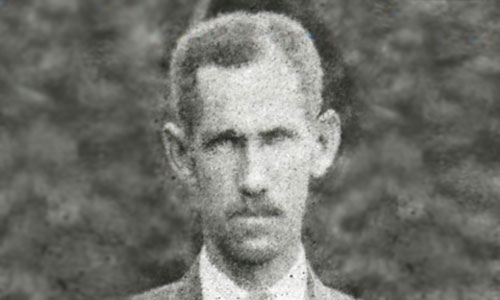
Thomas Manchester
# Thomas Manchester: The Aristocrat Who Championed the Working Class ### Introduction Thomas Manchester (1880–1943) stands as a monumental figure in the history of [St. Kitts](/islands/st-kitts), fundamentally shaping the island’s trajectory from a deeply unequal colonial plantation economy to a politically awakened society championed by organized labor. Born into the highly privileged echelons of the St. Kitts plantocracy—a social class that held a near-absolute monopoly on land, wealth, and political power—Manchester made the extraordinary choice to abandon his class interests in favor of radical empathy and political defiance. That choice ultimately cost him his wealth, his estates, and his social standing among the island’s elite. By founding the Workers’ League and championing the creation of the St. Kitts-Nevis Trades and Labour Union, Manchester laid the very foundation upon which later political titans like [Robert Llewellyn Bradshaw](/profiles/robert-llewellyn-bradshaw) would build the modern, independent Kittitian nation. His life remains one of the most compelling narratives of sacrifice and solidarity in the Caribbean labor movement. ### Early Life and the Privileges of the Plantocracy Thomas Manchester was born on August 16, 1880, into a world of immense comfort, status, and influence. He was the sixth child and second son of James Thomas Allan Manchester and Ann Catherine Atherton. The Manchester family was an undisputed cornerstone of the colonial establishment in the parish of Sandy Point. His father, James, was not only a devout pillar of the St. Ann’s Anglican Church but also a man of formidable economic power. James owned both the Lynch’s and New Guinea sugar estates, served as the attorney for the Blake’s plantation, and sat on the St. Kitts Executive Council, the highest advisory body to the British colonial administrator. Growing up as one of seven children in this affluent, aristocratic environment, young Thomas was thoroughly insulated from the crushing poverty that defined the lives of the black majority working the sugar cane fields. Like many sons of the wealthy Caribbean elite, he was sent abroad for his higher education, journeying to Canada to study construction engineering. The years spent in North America provided him with a much broader perspective on infrastructure, modern governance, and social organization—intellectual tools he would later weaponize against the very colonial system that had enriched his family. Upon his return to [St. Kitts](/islands/st-kitts), Manchester assumed his expected role within the family enterprise. He took on the management of Lynch’s Estate, oversaw operations at the New Guinea estate (which served as his sisters’ inheritance), and established a successful hardware and building materials store on Main Street in Sandy Point. He also married into the regional colonial elite. On January 14, 1919, he wed Ada Killikelly, the only daughter of Reverend Charles Killikelly, a prominent Wesleyan Minister based in neighboring Montserrat. The two had met while Manchester was utilizing his engineering expertise in Montserrat, having been requested by the Anglican community to supervise the reconstruction of church edifices severely damaged by recent storms. Their lavish wedding was a major societal event, heavily attended by the upper crust of Kittitian and Montserratian society. The expensive jewelry exchanged between the bride and groom underscored the immense wealth and privilege the couple enjoyed. They returned to St. Kitts merely two days after the ceremony to settle into their comfortable life, and welcomed their only daughter, Kathleen Dorothy, on December 4, 1923. ### The Sandy Point Fire and Political Awakening Despite his aristocratic background, Manchester was deeply community-oriented and civic-minded. In 1923, he took the initiative to form the St. Ann’s Cricket Club, fostering local engagement and sporting camaraderie. However, it was a near-catastrophe in his hometown that truly awakened his political conscience and radicalized his worldview. Shortly after his return from Canada and his marriage, a massive, terrifying fire threatened the town of Sandy Point. The colonial administration’s woefully inadequate, disorganized response to the fire crisis shattered any lingering illusions Manchester held about the benevolence of Crown Colony rule. The gross inefficiency of the local government, the complete absence of protective social legislation, and the stark juxtaposition of his own secure wealth against the extreme vulnerability of the laboring classes profoundly disturbed him. He recognized that the colonial government functioned primarily to protect the lucrative sugar industry and the planters, leaving the human beings who actually powered the economy entirely unprotected. Channeling his profound outrage, Manchester took directly to the press, leveraging his status to attack the establishment. In a scathing public letter published in the *St. Kitts-Nevis Daily Bulletin*, he indicted the colonial government for its sheer negligence: > *"…long before this fire occurred the attention of the government was drawn to the fact that a fire brigade with proper implements was imperative necessary for the protection of the town but as per usual the request was pigeonholed."* He went further, explicitly connecting the physical danger of the fires to the structural poverty and unregulated housing forced upon the working class by the sugar barons. Expressing the urgent concerns of local property owners and residents alike, he wrote: > *"Old dilapidated huts are allowed to be placed immediately near cane fields adjoining the town of Sandy Point and in some instances cooking with open fires is being done inside, under or alongside these houses. Is there no law, Mr. Editor restricting the placing of houses within certain distances from cane fields adjoining the town of Sandy Point?"* His growing disillusionment with the colonial state culminated in a powerful, defining question that would become the central thesis of his entire political life—a quote that still resonates in Caribbean political history: > *"What is the good of a government that does so little to protect, and safeguard against destructive elements, the people whom it represents?"* ### Personal Tragedy and the Birth of the Workers' League In 1928, personal tragedy struck the Manchester household when Ada died prematurely at the age of just 38. Grief-stricken and left to raise his young daughter Kathleen alone, Manchester immersed himself completely in his work and, increasingly, in the political struggles of the St. Kitts working class. Known affectionately throughout Sandy Point as "Mr. Tom," he became a famously reliable benefactor for anyone facing hardship. Working closely with his trusted friend Alwyn Ribeiro, Manchester began to advocate aggressively for the sugar workers, publicly demanding better wages and humane living conditions. This was a highly controversial and dangerous stance for a man of his station; his advocacy on behalf of the disenfranchised black laborers quickly aroused the bitter resentment and hostility of the sugar barons, who had previously been his peers and social equals. Recognizing that individual charity was insufficient and that systemic political change was urgently required, Manchester sought to build organizational power. He had already tested the political waters in 1922 as a founding member of the St. Kitts Taxpayers Association, an organization aiming to ensure efficiency and responsibility in government. But by the early 1930s, the need for a mass, grassroots movement was undeniable. In 1932, alongside other progressive, intelligent men who understood the depth of the labor crisis, he founded the Workers' League. The League's primary objective was to fight for the political and economic rights of the laboring class and to dismantle the autocratic Crown Colony system by aggressively demanding elected representation in the Legislative Council. That same year, on October 28, 1932, Manchester and [W. A. H. Seaton](/profiles/w-a-h-seaton) traveled as representatives of St. Kitts-Nevis to the historic West Indian Conference held in Dominica. There, they convened with other regional leaders to discuss the political future of the Caribbean, laying the early ideological groundwork for West Indian federation and eventual self-government. ### The Buckley's Riots and the Push for Unionization The crushing economic depression of the 1930s severely exacerbated the misery of the St. Kitts sugar workers, culminating in the violent Buckley's Riots of January 1935. While armed rebellion and violence were never on the Workers' League's official agenda, Manchester deeply understood the root causes of the workers' desperation and refused to condemn them. The Buckley's riots marked a watershed moment in Caribbean history, serving as the opening salvo for the region-wide labor rebellions that would subsequently sweep through Jamaica, Trinidad, and Barbados in the late 1930s. In the aftermath of the violence, the colonial state cracked down mercilessly. Manchester and the Workers' League leadership stood in firm solidarity with the persecuted workers. They quietly and effectively facilitated the escape of several targeted rioters to the neighboring islands of St. Eustatius, Saba, and St. Barths. For those captured by the colonial police, Manchester financed and coordinated crucial legal representation during the subsequent sedition and riot trials.  The Buckley's uprising proved definitively to Manchester that the explosive frustration of the working class required a disciplined, legally recognized framework to channel their energy and negotiate effectively against the plantocracy. When the colonial government finally passed legislation legalizing trade unions in the territory, Manchester immediately sprang into action. He enlisted his cousin, [Edgar Challenger](/profiles/edgar-challenger), to draft the necessary framework and officially establish the St. Kitts-Nevis Trades and Labour Union in 1940. This Union, birthed from Manchester’s foresight and funding, would soon be taken over by a young [Robert Llewellyn Bradshaw](/profiles/robert-llewellyn-bradshaw), who would transform it into the dominant, unstoppable political force on the island. ### Legislative Tenure and Final Sacrifice Manchester's tireless advocacy and unimpeachable integrity earned him the overwhelming support of the enfranchised populace. In 1937, he was successfully elected to the Legislative Council as a candidate for the Workers' League, effectively breaking the plantocracy's long-standing monopoly on legislative power. He was resoundingly re-elected in 1940 and was subsequently elevated to serve as a member of the Executive Council for the Presidency of St. Kitts-Nevis-Anguilla, as well as a member of the Federal Executive Council for the entire Leeward Islands Colony. However, the immense toll of his political labor began to break him both physically and financially. A severe illness incapacitated him for nearly a year. When he finally returned to the political arena, he found that the radical momentum of the Workers' League had accelerated beyond his control. The League was rapidly outgrowing its aristocratic founder, beginning to view his post-illness moderation as a hindrance. On January 11, 1941, the *Union Messenger*—typically a staunch ally of his work—published a remarkably critical view of Manchester’s new political stance: > *"We are in sympathy with the situation he (Manchester) is endeavoring to represent; but we must also admit that the tendency to great caution, which certainly has its advantages, and which, in this instance, seems to have reached the borderland of fear may be not unnaturally, the reaction to prolonged illness."* Perhaps even more tragic than his eventual political sidelining was his complete financial ruin. Manchester’s overwhelmingly generous spirit and his single-minded, whole-hearted devotion to the labor movement caused him to utterly neglect his personal enterprises and family businesses. As his debts mounted astronomically, the colonial establishment—eager to punish the man they viewed as a "class traitor"—showed absolutely no mercy. His creditors threatened immediate foreclosure. To satisfy the crushing debts, his beloved Lynch’s estate was sold off, but the proceeds were not enough. In a final act of familial solidarity, his sisters were forced to sell the New Guinea estate just to rescue him from debtor's prison. Having sacrificed his physical health, his inherited fortune, and his social standing for the liberation of the Kittitian working class, Thomas Manchester died entirely spent, shortly after these financial losses, on January 31, 1943. He was 62 years old (though some historical accounts erroneously record his age as 52). Regardless of the numerical discrepancy, he died having laid down his entire life for a righteous movement that would, within a single generation, secure the democratic freedom, dignity, and independence of St. Kitts and Nevis. ### References 1. [Historic St. Kitts - Thomas Manchester](https://www.historicstkitts.kn/people/thomas-manchester)
View Profile →
Thomas Pringle
Thomas Pringle (1789–1834) was a profoundly influential Scottish writer, poet, and abolitionist who served as the Secretary of the Anti-Slavery Society during the most critical years of the British campaign to end chattel slavery. Though he is often celebrated as the "father of South African poetry" for his vivid literary works documenting the landscape and peoples of the Cape Colony, his most lasting and monumental contribution to global history—and particularly to the Caribbean—was his unwavering advocacy for the enslaved. Chief among these contributions was his pivotal support for [Mary Prince](/profiles/mary-prince), an enslaved woman originally from [Bermuda](/islands/bermuda) and later [Antigua and Barbuda](/islands/antigua-and-barbuda), whose harrowing 1831 autobiography Pringle helped bring to the world. ### Early Life and Scottish Roots Born on January 5, 1789, at Blaiklaw (now Blakelaw), a farm in Roxburghshire, Scotland, Pringle's early life was marked by physical adversity. An accident in infancy left him permanently lamed, requiring him to use crutches for the rest of his life. Because he could not engage in the arduous physical labor expected on a Scottish farm, his family encouraged his intellectual pursuits. He attended the local grammar school in Kelso before moving on to the University of Edinburgh, where he immersed himself in the classics, history, and literature. During his time in Edinburgh, Pringle demonstrated a sharp editorial mind and a deep well of empathy. He became involved in various literary magazines, eventually catching the attention of prominent Scottish literary figures like Sir Walter Scott. Despite his early successes in the vibrant Scottish literary scene of the early 19th century, Pringle struggled to achieve financial stability. This economic precarity, combined with the difficult post-Napoleonic War conditions in Britain, prompted him to seek a new life abroad. ### The South African Chapter In 1820, Pringle led a party of Scottish emigrants to the Cape Colony in South Africa, an expedition supported by the British government. In South Africa, Pringle’s innate sense of justice quickly put him at odds with the colonial administration under Governor Lord Charles Somerset. Appalled by the autocratic rule and the mistreatment of indigenous African populations, Pringle turned to the written word as his weapon. He co-founded the *South African Commercial Advertiser*, the colony's first independent newspaper, and a literary magazine. He utilized these platforms to champion the freedom of the press and to fiercely criticize colonial policies that subjugated the local population. Unsurprisingly, his criticisms were met with severe backlash. The colonial government suppressed his publications, effectively financially ruining him, and forcing him to return to London in 1826. ### Secretary of the Anti-Slavery Society Returning to England, Pringle was a man whose worldview had been radically shaped by witnessing colonial oppression firsthand. His reputation as a principled and articulate defender of human rights preceded him. In March 1827, this reputation earned him the appointment as Secretary of the Anti-Slavery Society (formally the Society for the Mitigation and Gradual Abolition of Slavery Throughout the British Dominions).  In this role, Pringle was the administrative and ideological engine room of the British abolitionist movement. He worked alongside legendary figures such as William Wilberforce and Thomas Fowell Buxton. Pringle drafted pamphlets, organized public meetings, corresponded with abolitionists across the Atlantic, and lobbied Members of Parliament. He provided the vital intellectual and logistical framework needed to challenge the deeply entrenched and highly lucrative West Indian plantocracy. ### The Pivotal Alliance with Mary Prince Thomas Pringle's tenure as Secretary would be forever defined by his intersection with [Mary Prince](/profiles/mary-prince). Late in 1828, Prince, who had been brought to London by her brutal enslavers, the Wood family of [Antigua and Barbuda](/islands/antigua-and-barbuda), walked away from their household. Under English law, she was technically free on English soil, but she was legally barred from returning to her husband in Antigua without being re-enslaved unless she could secure formal manumission. Penniless and suffering from severe rheumatism, Prince eventually found her way to the Moravian missionaries and the Anti-Slavery Society in Aldermanbury. Recognizing her profound distress and her extraordinary resilience, Pringle and his wife Margaret took Prince into their own home, employing her as a domestic servant. Pringle was profoundly moved by Prince's oral accounts of her life. He heard first-hand of the brutal whippings, the separation of families, the gruelling labor in the salt ponds of Turks and Caicos, and the systemic dehumanization characteristic of Caribbean slavery. Realizing that the British public desperately needed to hear this unvarnished truth, Pringle encouraged Mary to dictate her life story. > "The idea of writing Mary's history was first suggested by herself... I was struck with the extraordinary and terrifying details of the system, as described by one who had so long and so severely suffered under it." > — Thomas Pringle Prince dictated her narrative to Susanna Strickland (later Moodie), a writer living in the Pringle household, while Pringle served as the editor. He took this responsibility with profound seriousness. ### Editing and Defending "The History of Mary Prince" Published in 1831, *The History of Mary Prince, a West Indian Slave* was a literary and political earthquake. It was the first autobiography of a Black enslaved woman published in the United Kingdom.  Pringle wrote the preface and extensive footnotes for the book, authenticating Prince's claims and contextualizing the systemic nature of the abuses she described. Aware that pro-slavery advocates would attempt to discredit the narrative, Pringle meticulously verified as many details as possible. He publicly declared that he had merely "pruned" the manuscript of grammatical errors to make it readable for a British audience, but had vehemently preserved Prince's "exact expressions" and omitted no factual details, however shocking. The publication brought immense backlash. The West India Interest—the powerful lobbying group of Caribbean planters and slave-owners—recognized the existential threat the book posed to their wealth. Pro-slavery forces launched vicious character assassinations against both Prince and Pringle. John Adams Wood Jr., Prince's former enslaver from [Antigua and Barbuda](/islands/antigua-and-barbuda), sued Pringle for libel in 1833. Furthermore, James Macqueen, a pro-slavery editor, published a scathing review calling Prince a "worthless woman" and accusing Pringle of fabricating the narrative. In a devastating blow, Pringle lost the libel case against Wood by default; he simply did not have the funds or the ability to transport witnesses from the West Indies to London to legally corroborate Prince's deeply personal account of her torture. Despite the legal defeat, the court of public opinion was irrevocably swayed. Mary Prince’s undeniable truth, fiercely defended and amplified by Thomas Pringle, laid bare the myth of the "happy slave" that the planters had so carefully curated. ### Legacy and Final Years Thomas Pringle dedicated the remainder of his increasingly fragile life to the cause. He worked tirelessly up to the passing of the Slavery Abolition Act in August 1833, which formally decreed the gradual abolition of slavery throughout the British Empire, taking effect on August 1, 1834. Tragically, Pringle did not live to see the long-term fruits of his labor. His health, always delicate, was broken by the immense stress of the libel suits and his relentless work ethic. He contracted tuberculosis (consumption) and died on December 5, 1834, just months after the legal end of slavery in the British Empire. Thomas Pringle’s legacy is a testament to the power of allyship and the written word. In a world dominated by wealthy, pro-slavery interests, he leveraged his skills as an editor, his platform as an administrator, and his fundamental human decency to elevate the voices of the oppressed. By providing [Mary Prince](/profiles/mary-prince) with the sanctuary, the platform, and the fierce defense she needed to share her story, Pringle played an indispensable role in dismantling one of humanity's most brutal institutions. ### References 1. [Thomas Pringle - Britannica](https://www.britannica.com/biography/Thomas-Pringle) 2. [Mary Prince - Wikipedia](https://en.wikipedia.org/wiki/Mary_Prince) 3. [Thomas Pringle - Wikipedia](https://en.wikipedia.org/wiki/Thomas_Pringle)
View Profile →Thomas Vincent Ramos
### Introduction and Ancestral Heritage Thomas Vincent Ramos (September 17, 1887 – November 13, 1955) stands as one of the most venerated civil rights activists, educators, and visionary leaders in the history of Belize [1]. Celebrated officially as a National Hero, Ramos dedicated his life to uplifting the Garifuna people from systemic socioeconomic marginalization and asserting their rightful place within the national consciousness of Central America. To understand the profound magnitude of Ramos’s life work, one must first examine the harrowing and heroic trajectory of the Garifuna lineage. Born from the intermingling of Indigenous Arawak, Kalinago (Carib), and escaped African enslaved people on the Eastern Caribbean island of St. Vincent (Hairoun), the Garifuna forged a fiercely independent society [2]. Under the valiant leadership of figures like [Joseph Chatoyer](/profiles/joseph-chatoyer), they resisted British colonial subjugation for decades during the Carib Wars. Following Chatoyer’s death and their ultimate defeat in 1796, thousands of Garifuna were forcibly exiled by the British Crown to the inhospitable island of Roatán off the coast of Honduras in 1797. Undeterred by displacement and extreme adversity, the survivors migrated across the Caribbean coast of Central America, establishing vibrant coastal settlements in Honduras, Guatemala, and southern British Honduras (now Belize). It was within this rich yet structurally oppressed diaspora that Thomas Vincent Ramos emerged. Combining intellectual rigor, spiritual devotion, and relentless grassroots community organizing, Ramos transformed a fragmented and neglected population into a politically proud and culturally cohesive community [3]. ### Early Life, Education, and Migration to Belize Thomas Vincent Ramos was born on September 17, 1887, in the bustling port town of Puerto Cortés, Honduras. His mother was a Belizean Garifuna woman who instilled in him a deep appreciation for his ancestral roots across the border [1]. From his earliest years, Ramos exhibited an insatiable thirst for knowledge and academic self-improvement. Recognizing that formal education was the primary vehicle for collective liberation, he pursued his primary studies in Wesleyan Methodist mission schools. Not content with basic literacy, the ambitious young Ramos enrolled in rigorous international correspondence courses, mastering complex disciplines such as business administration, journalism, accounting, and public speaking [3]. These foundational skills endowed him with the articulate eloquence and organizational acumen that would later define his negotiations with British colonial governors. During his teenage years, Ramos migrated north to the Stann Creek District of British Honduras, feeling a profound pull toward the growing Garifuna settlements along the Belizean coast. By 1923, he had permanently established his residence in Dangriga (then known as Stann Creek Town), which served as the cultural capital of the Garifuna population in Belize [4]. In 1914, he married Elisa Marian Fuentes, a partnership that provided profound emotional stability and resulted in a large, devoted family [1]. To support his household and finance his activist endeavors, Ramos worked tirelessly across multiple occupations: he served as a dedicated school teacher, managed a local grocery store, cultivated agricultural plots as a farmer, and actively promoted youth sports and musical initiatives [3]. This multifaceted immersion into daily community life allowed Ramos to witness firsthand the severe inequities suffered by his people under British colonial rule. ### The Socio-Political Climate of Colonial Belize In the early decades of the 20th century, British Honduras operated under a rigid colonial hierarchy that heavily favored a small white elite of timber merchants, absentee landowners, and colonial administrators [4]. The indigenous Maya and Afro-descendant populations—including the Creoles and the Garifuna—were subjected to institutionalized racism, economic exploitation, and political disenfranchisement. Southern Belize, particularly the Stann Creek and Toledo districts where the majority of Garifuna resided, suffered from profound governmental neglect. There were virtually no paved roads connecting the south to Belize Town, healthcare facilities were abysmal or non-existent, and educational institutions received meager funding from the colonial treasury [5]. Furthermore, the Garifuna faced unique sociocultural prejudices. Often stereotyped by colonial authorities and neighboring communities through distorted historical narratives, they were systematically excluded from civil service positions, administrative roles, and medical professions. In this suffocating atmosphere of racial exclusion, anti-colonial agitation began to brew across the territory. Ramos’s activism developed alongside early Belizean labor movements led by figures such as [Antonio Soberanis Gómez](/profiles/antonio-soberanis-gomez), who challenged the exploitative wage structures of the Belize Estate and Produce Company during the Great Depression [5]. While contemporaries like Soberanis focused heavily on labor mobilization in the capital, Ramos recognized that the Garifuna required a specialized socio-cultural and civil rights awakening to preserve their identity and secure fundamental human dignities from the Crown. ### Grassroots Activism and Mutual Aid Societies Witnessing the devastating impact of poverty, disease, and lack of social safety nets in Dangriga, Ramos initiated a groundbreaking era of grassroots institutional building. In 1924, he founded the **Carib Development and Sick Aid Society**, a pioneering mutual aid organization designed to provide comprehensive healthcare assistance, financial aid during severe illnesses, and dignified burial stipends for impoverished Garifuna families [1][3]. In an era long before modern social security or universal healthcare existed in Central America, Ramos’s society literally saved countless lives and prevented grieving families from falling into absolute financial ruin. > "We must unite not merely to preserve the memory of our ancestors, but to construct a living fortress of dignity, health, and self-reliance for generations yet unborn." Seeking to bridge the artificial colonial borders that separated the Garifuna nation, Ramos expanded his organizational framework by establishing the **Carib International Society** [1]. This transnational network connected Garifuna communities across British Honduras, the Republic of Honduras, and Guatemala, fostering regional solidarity and economic cooperation. In 1921, recognizing the powerful unifying force of visual symbolism, Ramos designed the official **Garifuna Flag** [6]. Composed of three horizontal stripes—black representing the resilience and suffering of the African heritage, white symbolizing peace and liberation, and yellow denoting the warmth of the sun and agricultural abundance—the flag became an immortal emblem of Garifuna sovereignty and cultural pride.  ### The Campaign for Garifuna Settlement Day While Ramos achieved monumental success in mutual aid and economic solidarity, he understood that true liberation required the official validation of Garifuna history within the civic calendar of the colony. For decades, the arrival of the Garifuna to the shores of Belize had been treated as a footnote by British colonial historians. Ramos sought to immortalize the historic events of November 19, 1823, when a large contingent of Garifuna exiles led by Alejo Beni landed on the shores of southern Belize seeking refuge and freedom [3][4]. In 1941, Ramos formally established "Carib Disembarkment Day" and launched a relentless political lobbying campaign directed at the British colonial administration. Drawing upon his refined skills in journalism and public speaking, he petitioned Governor Sir John Adams Hunter, arguing passionately that the Garifuna’s immense agricultural, infrastructural, and cultural contributions to British Honduras merited formal state recognition [4]. Encountering bureaucratic resistance and colonial skepticism, Ramos persisted with unwavering determination, mobilizing community petitions, organizing civic parades, and demonstrating the overwhelming economic and moral force of the Garifuna populace. His tireless advocacy yielded a historic triumph: in 1943, the colonial government officially granted public holiday status to Carib Disembarkment Day in the Stann Creek District [3]. The following year, in 1944, recognition was successfully extended to the Toledo District. This breakthrough marked the first time in Caribbean colonial history that an indigenous and Afro-descendant community successfully compelled a British administration to legally establish a holiday honoring their anti-colonial migration and heritage [5]. In 1977, under the broader nationalistic movement led by Premier [George Cadle Price](/profiles/george-cadle-price) and supported by patriots like [Philip Goldson](/profiles/philip-goldson), the holiday was expanded nationwide across all of Belize and renamed **Garifuna Settlement Day** [4]. ### Advocacy for Healthcare, Civil Rights, and Community Welfare Ramos’s vision extended far beyond cultural commemoration; he was a pragmatic civil rights strategist who fought vigorously for systemic institutional reforms. During the 1930s and 1940s, southern Belize suffered from alarming mortality rates due to malaria, tuberculosis, and infant complications. The Stann Creek District Hospital was chronically understaffed and operated exclusively by personnel who did not speak the Garifuna language or understand local customs, leading to widespread mistrust and inadequate healthcare delivery [1]. Ramos directly challenged the colonial Department of Health, demanding the immediate recruitment and professional medical training of native Garifuna women as nurses and healthcare practitioners in southern hospitals [1][5]. He argued that language access and cultural representation were fundamental human rights in medical care. Due to his relentless public pressure and diplomatic negotiations, the colonial administration conceded, opening doors for generations of Garifuna women to enter the medical professions and dramatically improving health outcomes across the region. Furthermore, Ramos lobbied for agricultural subsidies to protect Garifuna farmers from predatory fruit conglomerates and spearheaded the creation of youth community centers to cultivate leadership and moral integrity among the next generation [3]. ### Lasting Legacy and National Hero Status Thomas Vincent Ramos passed away on November 13, 1955, in his beloved hometown of Dangriga at the age of 68 [1]. His funeral was one of the largest solemn gatherings in the history of southern Belize, attended by thousands of mourners from across Central America who arrived to pay homage to their fallen champion. Though he did not live to see Belize attain independence in 1981, his tireless foundational work was instrumental in shaping the multi-ethnic democratic ethos of the modern nation. In recognition of his extraordinary contributions to human rights, cultural preservation, and national unity, the Government of Belize bestowed upon Thomas Vincent Ramos the highest posthumous honor, officially designating him a **National Hero of Belize** [4]. Today, his legacy vibrates powerfully across the nation every November 19 during Garifuna Settlement Day. The festivities commence at dawn with the *Yurumein*—a deeply moving, traditional re-enactment where Garifuna boats approach the coastline amidst the thunderous, sacred rhythms of Primero and Segunda drums, chanting ancestral songs of exile and homecoming [4][6]. Moreover, his name is permanently etched into the physical geography of the nation along the Thomas Vincent Ramos Highway, and his former residence in Dangriga has been transformed into the T.V. Ramos Monument and Museum [3]. As global recognition of Garifuna culture culminated in UNESCO proclaiming the Garifuna language, dance, and music as a Masterpiece of the Oral and Intangible Heritage of Humanity in 2001, Thomas Vincent Ramos is universally celebrated as the visionary architect who transformed a marginalized exile community into an enduring, globally respected pillar of human resilience [2][5].
View Profile →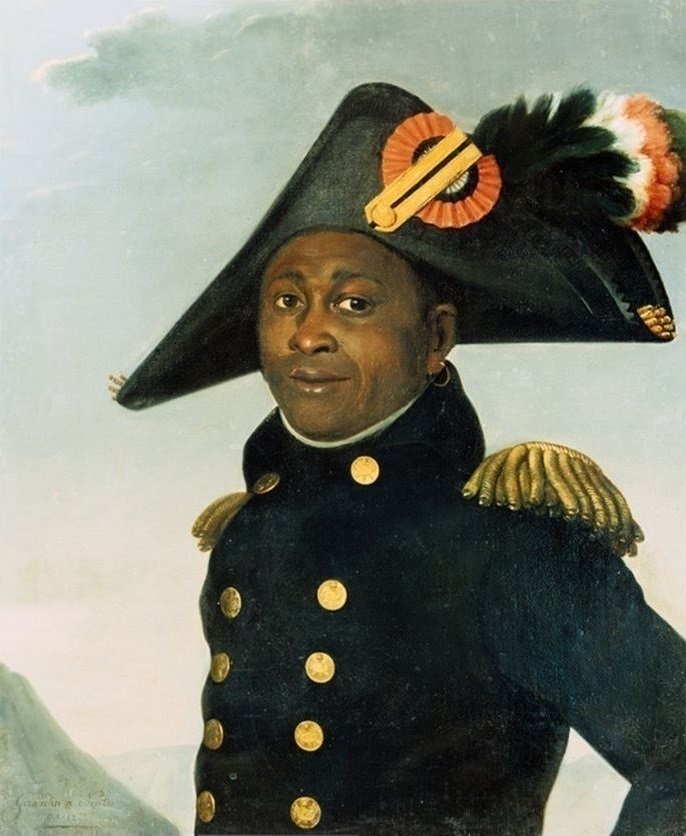
Toussaint Louverture
# Toussaint Louverture: The Black Spartacus and Architect of the Haitian Revolution ### The Jewel of the French Empire To understand the magnitude of Toussaint Louverture's achievements, one must first understand the world into which he was born. In the mid-18th century, the French colony of Saint-Domingue (modern-day Haiti) was the most lucrative colony in the world. It produced roughly sixty percent of the world's coffee and forty percent of its sugar, enriching the French empire to an unprecedented degree. However, this immense wealth was built upon one of the most brutal systems of chattel slavery in human history. The enslaved population, numbering over half a million, vastly outnumbered the white planters and the *gens de couleur libres* (free people of color). It was a society held together by extreme violence, simmering with deep racial, class, and economic tensions. It was in this explosive environment that François-Dominique Toussaint was born, around 1743, on the Bréda plantation near Cap-Français (now Cap-Haïtien). According to oral tradition, he was the grandson of Gaou Guinou, an African nobleman from the Arada people of modern-day Benin [1]. Unlike the vast majority of enslaved people in Saint-Domingue who were subjected to backbreaking field labor and short life expectancies, Toussaint occupied a relatively privileged position on the plantation. He served as a coachman, a livestock handler, and a veterinarian. ### Early Life and the Acquisition of Knowledge Toussaint’s intelligence and quiet ambition were evident early on. He was fortunate to be taught to read and write by his godfather, Pierre Baptiste. His reading was extensive and subversive; he immersed himself in the works of Enlightenment thinkers, notably the Abbé Raynal, whose writings predicted a violent slave uprising in the Americas led by a charismatic savior. Toussaint also acquired a profound knowledge of medicinal plants and traditional African healing practices, a skill set that would later serve him exceptionally well on the battlefield. By 1776, Toussaint had gained his freedom. As a free Black man, he navigated the complex social hierarchy of Saint-Domingue. He rented a small coffee plantation and, remarkably, even owned a small number of slaves himself for a brief period. This period of his life reflects the immense complexities of the colonial Caribbean, where survival and upward mobility often required participation in the very systems that oppressed one's people. However, his life as a relatively obscure freedman was about to be completely upended. ### The Spark of Revolution In 1789, the French Revolution erupted, sending shockwaves across the Atlantic. The Declaration of the Rights of Man and of the Citizen proclaimed that "men are born and remain free and equal in rights." The enslaved population of Saint-Domingue took these words to heart. In August 1791, following a strategic and spiritual gathering known as the Bois Caïman ceremony, the enslaved people of the Northern Province rose in a massive, coordinated rebellion. Initially, Toussaint did not join the insurgency. He stayed on the Bréda plantation to ensure the safety of his family and the plantation manager's family. However, within a few weeks, realizing the magnitude and potential of the uprising, he sent his family to safety in Spanish Santo Domingo and joined the rebel forces. His medical knowledge, organizational skills, and strategic genius quickly propelled him through the ranks. > "I am Toussaint Louverture; my name is perhaps known to you. I have undertaken vengeance. I want Liberty and Equality to reign in Saint-Domingue. I am working to make that happen. Unite yourselves to us, brothers, and fight with us for the same cause." — *Toussaint Louverture, 1793 Proclamation at Camp Turel* ### The Master of Warfare and Diplomacy Toussaint quickly realized that the rebel forces, though brave, lacked the discipline and organization to defeat professional European armies. He began training a core group of soldiers in guerrilla warfare and European military tactics. Among his most trusted lieutenants were [Jean-Jacques Dessalines](/profiles/jean-jacques-dessalines) and [Henri Christophe](/profiles/henri-christophe), both of whom would later become paramount figures in Haitian history. In 1793, the European geopolitical landscape shifted dramatically. France was at war with both Spain and Great Britain. The Spanish in Santo Domingo offered land, provisions, and freedom to the rebel slaves if they would fight against the French. Toussaint allied with the Spanish, achieving the rank of general and scoring a series of brilliant victories against French forces. It was during this period that he adopted the surname "Louverture" (from the French word for "opening"), allegedly because of his uncanny ability to find openings in enemy lines. However, in February 1794, the radical Jacobin government in Paris officially abolished slavery throughout the French empire. Recognizing that the Spanish had no real intention of ending slavery globally, Toussaint executed a brilliant and shocking betrayal: he switched allegiances, joining the French Republic. Turning his battle-hardened troops against his former Spanish allies and the invading British forces (who had been invited by desperate white planters to restore slavery), Toussaint embarked on a relentless campaign of liberation. By 1798, Toussaint had effectively expelled the British from Saint-Domingue—a monumental humiliation for the mighty British Empire. He then turned his attention to internal rivals, defeating the brilliant mulatto general André Rigaud in the bitter and bloody War of Knives (1799–1800). This victory gave Toussaint undisputed control over the entire colony of Saint-Domingue.  ### The Governor-General and the Constitution of 1801 Toussaint's vision for Saint-Domingue was complex. He understood that the colony's survival depended on its economic viability, which in turn relied on the export of sugar and coffee. To restart the devastated economy, he implemented highly controversial labor policies. He essentially forced the formerly enslaved people back to the plantations as paid laborers. While they were no longer legally property and could not be whipped, the system was heavily militarized and deeply unpopular among the masses. In 1801, moving to secure the entire island against foreign invasion and the reinstatement of slavery, Toussaint invaded Spanish Santo Domingo. He conquered the territory, unified the island, and immediately abolished slavery in the eastern half. That same year, Toussaint promulgated a new Constitution for Saint-Domingue. It boldly declared the permanent abolition of slavery and established equality before the law regardless of color. However, it also made Toussaint Governor-General for life with the right to choose his successor, and it formalized his strict labor regimes. While the constitution stopped just short of declaring total independence from France, it asserted a level of autonomy that infuriated the new ruler of France: Napoleon Bonaparte. ### Betrayal, Imprisonment, and Legacy Napoleon, determined to restore direct French control, rebuild the lucrative colonial economy, and covertly reinstate slavery, dispatched a massive armada to Saint-Domingue in 1802. The expedition was commanded by his brother-in-law, General Charles Leclerc. The ensuing war was unimaginably brutal. Toussaint and his generals fought a scorched-earth campaign against the French invaders. However, facing overwhelming numbers and the defection of several of his key generals (including [Jean-Jacques Dessalines](/profiles/jean-jacques-dessalines)), Toussaint eventually agreed to a ceasefire in May 1802. He retired to his plantation, but the French had no intention of leaving him in peace. In June 1802, under the guise of discussing military matters, French officials lured Toussaint to a meeting. It was a trap. He was seized, chained, and deported to France. > "In overthrowing me you have cut down in Saint-Domingue only the trunk of the tree of liberty; it will spring up again from the roots, for they are numerous and they are deep." — *Toussaint Louverture, as he boarded the ship to his exile* Toussaint was imprisoned in the freezing, damp dungeons of Fort de Joux in the Jura Mountains of France. Denied adequate food, medical care, and warmth, the brilliant revolutionary succumbed to pneumonia and malnutrition, dying on April 7, 1803 [2]. Toussaint Louverture did not live to see the final, triumphant climax of the Haitian Revolution. Just months after his death, his former lieutenants, enraged by the realization that Napoleon intended to restore slavery, completely decimated the French army. On January 1, 1804, [Jean-Jacques Dessalines](/profiles/jean-jacques-dessalines) declared the independence of Haiti, the first free Black republic in the world. Toussaint's legacy is immeasurable. He transformed a localized slave rebellion into a geopolitical earthquake. He defeated three of the greatest European empires of his day, shattered the myth of white supremacy, and laid the unshakeable foundation for global abolitionism. His life remains a testament to the indestructible human desire for liberty and dignity.
View Profile →
Tubal Uriah Butler
### Introduction Tubal Uriah "Buzz" Butler (January 21, 1897 – February 20, 1977), affectionately and reverently known as the "Chief Servant," stands as a towering and foundational figure in the modern history of Trinidad and Tobago. A charismatic labor leader, a deeply spiritual preacher, and a relentless champion of the working class, Butler's life was defined by an unyielding commitment to justice and human dignity. Though born in the neighboring island of Grenada, it was in the grimy, sweat-drenched oilfields of southern Trinidad that he would etch his name into the annals of Caribbean history. His militant advocacy culminated in the historic 1937 Labour Riots, a watershed moment that irrevocably transformed the political and social landscape of the British West Indies. By daring to challenge the exploitative colonial establishment and demanding fair wages, better working conditions, and fundamental human rights for the disenfranchised masses, Butler ignited a movement that would ultimately pave the way for trade unionism, universal suffrage, and the nation's eventual independence. ### Early Life and Military Service Born on January 21, 1897, in St. George's, Grenada, Tubal Uriah Butler grew up in a society still heavily influenced by the rigid hierarchies of British colonial rule. From a young age, he exhibited a keen sense of justice and a deep spiritual conviction that would later become the hallmark of his public life. Like many young men of his generation seeking adventure, economic opportunity, and a broader understanding of the world, Butler answered the call of duty during the First World War. He enlisted in the British West Indies Regiment, serving between 1914 and 1918. During his military service, Butler was stationed in Egypt, where he was exposed to a wider array of political ideas and witnessed firsthand the stark contradictions of the British Empire. The West Indian soldiers, despite fighting for the Crown, frequently faced discrimination, unequal pay, and poor treatment compared to their white counterparts. This experience was deeply radicalizing for Butler and many of his peers. Upon returning to Grenada after the war, the harsh realities of colonial neglect hit home. He quickly became involved in political activism, helping to form the Grenada Representative Government Movement and the Grenada Union of Returned Soldiers. These early organizing efforts laid the groundwork for his future role as a master agitator and a voice for the voiceless. ### Migration and the Oilfields In 1921, driven by the limited economic prospects in his native Grenada and the allure of employment in Trinidad's booming petroleum industry, Butler migrated to the neighboring island. He settled in the southern part of Trinidad, the epicenter of the oil boom, and found work as a pipe-fitter. The conditions in the oilfields were brutal. Workers toiled for long hours in dangerous environments for meager wages that barely sustained a dignified standard of living. The colonial administration and the foreign-owned oil companies extracted immense wealth from the land while the local workforce—predominantly Afro-Trinidadian and Indo-Trinidadian laborers—languished in squalor. Butler experienced these indignities intimately. He would later famously recount his experiences to a journalist, vividly describing the degrading nature of the work: > "Do you know what is a shit gang? ... Aha, my boy, well that is where I used to wuk, in the shit gang in the oilfield."  This visceral connection to the "toiling masses" endowed Butler with an unmatched authenticity. He did not speak down to the workers; he spoke from among them. The housing conditions were deplorable, health care was virtually non-existent, and the racial inequalities were stark. For Butler, the exploitation of the "poor Indians and Negroes" was, in his own words, "nothing short of sub-human." [2] ### Rise as a Labour Leader Initially, Butler sought change through established political channels. He joined the Trinidad Labour Party, which was led by the respected [Captain Arthur Cipriani](/profiles/arthur-cipriani). Cipriani was a pioneer in advocating for workers' rights, but his approach was fundamentally moderate, favoring constitutional reform and polite negotiation with the colonial authorities. As the Great Depression ravaged the global economy in the 1930s, the economic suffering in Trinidad intensified. Wages were slashed, and unemployment soared. Butler grew increasingly frustrated with Cipriani's cautious tactics, believing that the crisis demanded more immediate and forceful action. In 1936, the ideological rift became permanent, and Butler parted ways with the Trinidad Labour Party. He founded his own organization, the British Empire Citizens' and Workers' Home Rule Party. Butler's approach was radically different. Drawing on his background as a Spiritual Baptist preacher, he infused his political rhetoric with biblical prophecy, religious fervor, and a militant demand for justice. His speeches were electrifying. He held mass meetings where he would seamlessly weave scripture with socialist principles, calling down divine judgment upon the colonial oppressors. He presented himself as a Moses figure, ordained to lead his people out of bondage. As he once declared: > "After years and years of weeping and groanings, untold miseries and complaining, prayers and petitions, the toiling masses of this colony prayed to the God of Justice and Fair Play, Freedom and Liberty, the God of their ancient and incomparably glorious African forefathers, to send them a leader." ### The Historic 1937 Labour Riots The climax of Butler's agitation arrived in the summer of 1937. Tensions in the southern oilfields had reached a boiling point. A sit-down strike had begun in the Apex oilfields, and the unrest quickly spread. On June 19, 1937, Butler was addressing a massive, fired-up crowd in the village of Fyzabad. The colonial authorities, viewing Butler as a dangerous subversive who was inciting sedition, dispatched the police to arrest him mid-speech. The attempt to silence their "Chief Servant" was the spark that ignited the powder keg. The crowd turned fiercely protective of Butler and violently resisted the police. In the ensuing chaos, a violent confrontation erupted. The police were overwhelmed, and tragically, a police corporal named Charlie King was chased, fell from a window, and was burned to death by the enraged mob. Another officer was also killed. Following the clash, Butler managed to escape and went into hiding, shielded by a network of fiercely loyal supporters. The riots quickly metastasized into a general strike that paralyzed the entire island, sweeping from the oilfields in the south to the sugar estates in the central plains, and reaching the capital city of Port of Spain. The British government was forced to deploy naval troops from the HMS Ajax and HMS Exeter to quell the uprising, resulting in the deaths of over a dozen civilians and the wounding of hundreds more. Though the violence was eventually suppressed, the 1937 Labour Riots fundamentally shattered the illusion of a docile colonial workforce and forced the British government to institute sweeping labor reforms across the Caribbean. ### Arrest, Internment, and World War II After evading capture for months, Butler voluntarily surrendered to the authorities on September 9, 1937. He was tried for sedition and, although acquitted of that specific charge, was convicted of inciting a riot and sentenced to two years in prison. His imprisonment only elevated his status as a martyr for the working class. Upon his release in May 1939, Butler was greeted as a conquering hero. However, his freedom was short-lived. With the outbreak of the Second World War, the colonial government, deeply fearful of his influence and his capacity to disrupt vital wartime oil production, invoked emergency war regulations. On November 28, 1939, Butler was arrested again and interned as a security risk on the offshore island of Nelson Island. He remained locked away for the duration of the war, deprived of his liberty until the allied victory in 1945. ### Later Political Career and Enduring Legacy Released in 1945, Butler wasted no time in resuming his political activities. He formally established the Butler Party and led a major strike in 1947 that further solidified his grip on the labor movement. In the 1950 general elections, the Butler Party won a significant bloc of seats in the Legislative Council. However, the colonial establishment maneuvered to exclude him from the Executive Council, marginalizing him politically in favor of more moderate figures like [Albert Gomes](/profiles/albert-gomes). As Trinidad and Tobago moved closer to independence in 1962, a new generation of political leaders, notably [Eric Williams](/profiles/eric-williams) and the People's National Movement (PNM), captured the national imagination. Butler's influence waned, and his militant, religiously infused populism seemed out of step with the technocratic thrust of the new nation-state. Nevertheless, he remained a revered elder statesman until his death on February 20, 1977. Today, Tubal Uriah "Buzz" Butler is universally recognized as the founding father of the modern trade union movement in Trinidad and Tobago. In 1970, he was awarded the Trinity Cross, the nation's highest honor. The anniversary of the Fyzabad riots, June 19, is celebrated annually as Labour Day, a national public holiday honoring his sacrifices. The Uriah Butler Highway, one of the country's major thoroughfares, bears his name, and a statue of him stands proudly in Fyzabad, immortalizing the "Chief Servant" who stood up to an empire and forever changed the destiny of his people. ### References 1. [Wikipedia - Tubal Uriah Butler](https://en.wikipedia.org/wiki/Tubal_Uriah_Butler) 2. [National Trust of Trinidad and Tobago - Tubal Uriah 'Buzz' Butler](https://nationaltrust.tt/tubal-uriah-buzz-butler/)
View Profile →
Tula
# Tula: The Hero of Curaçao's 1795 Slave Revolt In the rich and often turbulent history of the Caribbean, few names resonate with the same enduring power and moral clarity as Tula, the legendary leader of the 1795 slave revolt in Curaçao. For centuries, colonial authorities attempted to suppress his memory, branding him a criminal, an insurgent, and a dangerous radical. Today, however, Tula stands as a paramount national hero, an emblem of resistance, and a pioneering voice for human rights whose intellectual brilliance and unyielding courage forever altered the trajectory of the Dutch Caribbean. His struggle was not merely a spontaneous outburst of violent frustration but a highly organized, politically astute campaign for liberty, deeply rooted in the philosophical currents of the late eighteenth century. Tula's revolt represented the most significant challenge to the institution of slavery in the history of the Netherlands Antilles. ### The Crucible of Colonial Curaçao To understand Tula's monumental impact, one must first grasp the harrowing reality of late eighteenth-century Curaçao. Unlike the massive sugar-producing colonies of the British and French Caribbean, Curaçao's arid climate made large-scale plantation agriculture exceedingly difficult. Instead, the island functioned primarily as a commercial hub—a bustling, cosmopolitan entrepôt for the Dutch West India Company, heavily involved in the transatlantic slave trade. However, slavery remained the brutal foundation of the local economy. Enslaved people worked in backbreaking conditions on *landhuizen* (plantation houses) producing crops like maize, aloe, and sorghum, or laboured in the treacherous salt pans under the scorching Caribbean sun. The enslaved population endured severe malnourishment, vicious corporal punishment, and a total deprivation of basic human rights. The colonial administration enacted draconian laws to control every aspect of their lives, forbidding them from gathering, carrying weapons, or leaving their plantations without permission. The psychological toll of this dehumanization was immense, yet beneath the surface of coerced obedience, a deep reservoir of resistance was constantly brewing. It was within this cauldron of exploitation that Tula, an enslaved man laboring at the Knip plantation (also known as Kenepa) in the western part of the island, emerged as a transformative figure. ### Early Life and the Makings of a Revolutionary As with many enslaved figures, the exact details of Tula's early life remain lost to history, primarily because historical records were kept by those who sought to oppress him rather than humanize him. We do not know his exact birth date, his ancestry, or the specific circumstances of his early years. Yet, contemporary accounts and oral histories passed down through generations paint a picture of a man of immense physical presence, undeniable charisma, and, most importantly, extraordinary intellect. Tula was not isolated from the broader currents of global history. The late eighteenth century was an era of profound political upheaval, marked by the American Revolution and the French Revolution, which championed the enlightened ideals of "Liberty, Equality, and Fraternity." News traveled across the Atlantic via sailors, merchants, and the clandestine networks of the enslaved themselves. Tula was acutely aware of the successful slave rebellion in Saint-Domingue (modern-day Haiti), led by brilliant strategists like Toussaint Louverture. In a striking demonstration of his political awareness and global perspective, Tula even adopted the nickname "Rigaud," after the Haitian mixed-race military leader André Rigaud, signaling his ideological alignment with the wider Caribbean struggle for emancipation. Tula recognized that the institution of slavery was a man-made construct, not a divine mandate, and he spent years educating himself on the political shifts happening in Europe and the Americas. ### The Spark of Rebellion By 1795, the geopolitical landscape had shifted dramatically, providing the catalyst Tula needed. The French Republic had invaded the Netherlands, establishing the Batavian Republic and forcing the Dutch Stadtholder to flee. Crucially, the revolutionary government in France had abolished slavery in all its territories in 1794. For Tula, this presented a profound legal and moral argument: if the Dutch were now subjects of the French, and the French had decreed the abolition of slavery, then the enslaved people of Curaçao were inherently and legally free. The breaking point arrived on the morning of August 17, 1795. At the Knip plantation, owned by the notoriously harsh Caspar Lodewijk van Uytrecht, Tula and a group of approximately forty to fifty enslaved individuals laid down their agricultural tools. They approached their enslaver and unequivocally announced that they would no longer work as slaves, demanding the freedom that was rightfully theirs. This audacious act of defiance was the spark that ignited a massive conflagration. Tula, alongside his trusted lieutenants, including the formidable [Bastiaan Karpata](/profiles/bastiaan-karpata), Pedro Wakao, and Louis Mercier, began a strategic and highly organized march across the island.  ### The March for Freedom Tula's leadership was characterized by a remarkable degree of military discipline and strategic foresight. Rather than leading a chaotic rampage of vengeance, Tula sought to build a disciplined coalition. He explicitly forbade the unnecessary harming of white civilians, focusing instead on dismantling the economic machinery of slavery. As they marched southeast towards the capital of Willemstad, they moved methodically from plantation to plantation—including Santa Cruz, Porto Mari, and San Nicolas—liberating their brethren, breaking open storehouses, and swelling their ranks. At its zenith, the rebel army grew to nearly 2,000 strong. This staggering figure represented a significant portion of the island's entire enslaved population, demonstrating Tula's unparalleled ability to inspire and mobilize his people. The colonial government, initially caught off guard by the scale and organization of the uprising, panicked. Governor Johannes de Veer dispatched military units to suppress the rebellion, leading to several intense skirmishes. Tula's forces, despite being armed primarily with agricultural tools, machetes, and a few captured muskets, utilized the rugged, cactus-strewn terrain of western Curaçao to their advantage. They engaged in effective guerrilla tactics, ambushing colonial patrols and initially outmaneuvering the European militia. ### The Dialogue with Father Schinck: A Vision of Equality Perhaps the most extraordinary episode of the 1795 revolt occurred when the colonial government, desperate to end the standoff without a protracted war that would ruin the island's economy, sent a Franciscan priest, Father Jacobus Schinck, to negotiate with the rebels at the Porto Mari plantation. The dialogue between Tula and Father Schinck, meticulously preserved in the colonial archives, is a testament to Tula's intellectual prowess and his profound moral philosophy. Tula did not ask for better rations or reduced working hours; he demanded unequivocal freedom based on the shared, inherent humanity of all people. > "We have been abused too much, we do not seek to harm anyone, and we are just seeking our freedom. French Negroes gained their freedom, Holland was occupied by the French, then we must be free here." When Father Schinck attempted to use religious arguments to pacify the rebels, urging submission to their earthly masters in exchange for heavenly rewards, Tula swiftly dismantled his logic with a piercing theological and humanist counter-argument: > "Sir, Father, do not all the people stem from a common father Adam and Eve? Did I do wrong by releasing 22 of my brothers from their confinement, which they were unjustly thrown into? ... Ah, Father, even an animal is treated better than us." Tula's words laid bare the hypocrisy of a colonial system that preached Christian brotherhood while practicing unspeakable cruelty. His demands were clear, articulate, and anchored in the very Enlightenment ideals that European powers claimed to revere but violently denied to people of African descent. ### Betrayal, Capture, and Execution Despite the moral superiority of their cause and their initial tactical successes, the rebels faced insurmountable odds. The colonial forces were soon heavily reinforced by the local white militia and, tragically, by free people of color and loyalist slaves who had been promised rewards and who feared the loss of their own precarious social status. The colonial administration launched a brutal counter-offensive, pushing the rebels back into the hills. The struggle lasted for nearly a month, marked by deprivation and relentless pursuit. Ultimately, it was not sheer military force that defeated Tula, but betrayal. On September 19, 1795, Tula and his closest ally, [Bastiaan Karpata](/profiles/bastiaan-karpata), were betrayed by a fellow enslaved person who had been offered a substantial bounty and freedom by the colonial authorities. The colonial justice system sought to make a horrific, unforgettable example of the rebel leaders to terrorize the remaining enslaved population and deter any future uprisings. After a summary trial, on October 3, 1795, Tula, Karpata, and Pedro Wakao were subjected to a gruesome public execution at the Rif in Willemstad. Tula was subjected to unspeakable torture; his bones were broken on a wheel, and his face was burned, before he was finally decapitated. His head was placed on a spike, and his body was cast into the sea, a grim warning designed to erase his existence. ### A Legacy of Liberation For over a century and a half, the official colonial narrative in Curaçao demonized Tula, erasing his intellectual contributions and reducing his righteous rebellion to an act of base criminality. However, the spirit of his resistance could not be extinguished. In the shadows, away from the eyes of the authorities, the enslaved population kept his memory alive through oral traditions, particularly through the subversive rhythms and lyrics of *Tambú* music. In the late 20th century, as movements for decolonization, Black pride, and historical reckoning swept across the Caribbean, scholars, activists, and the people of Curaçao began to reclaim Tula's narrative. Today, the transformation of his legacy is absolute. In 2010, Tula was officially proclaimed a national hero of Curaçao. He is no longer seen as a rebel, but as a visionary patriot, an early human rights advocate, and the island's most significant historical figure. The site of his initial defiance, the Knip plantation, now houses the Tula Museum, dedicated to educating the public about the history of slavery and the heroic struggle for emancipation. In the heart of Willemstad, the *Desenkandená* (Unchained) monument stands in the *Parke di Lucha pa Libertat* (Park of the Struggle for Liberty). The towering sculpture, crafted by local artist Nel Simon, depicts an enslaved person triumphantly breaking the chains of bondage, serving as a permanent, powerful homage to Tula and the thousands who marched with him. Furthermore, August 17, the day the revolt began, is officially commemorated as *Dia di Lucha pa Libertat* (Day of Resistance), a national holiday of reflection, cultural pride, and celebration of Curaçao's enduring spirit. Tula's 1795 revolt did not immediately end slavery on the island—emancipation would not formally arrive until July 1, 1863—but it shattered the illusion of enslaved complacency and struck a fatal, irreversible blow to the moral foundations of the institution. Tula remains a shining beacon of courage in the Caribbean, reminding generations that the human desire for freedom is an unstoppable force that cannot be crushed by chains, torture, or the passage of time.
View Profile →
William Henry Bramble
### The Island That Shaped Him Montserrat — the so-called "Emerald Isle of the Caribbean" — is a tiny British Overseas Territory of some 40 square miles, lying in the Leeward Islands of the Lesser Antilles. Its volcanic peaks, lush green hills, and Irish-tinged cultural heritage have long made it distinctive among its Caribbean neighbours. But in the early twentieth century, Montserrat was also a place of stark inequality: a colony where the legacy of slavery and the plantation system still cast long shadows, where a small white planter oligarchy controlled land and wealth, and where the vast majority of the Black working population existed in conditions of grinding poverty and political voicelessness. It was into this world that **William Henry Bramble** was born on **October 8, 1901** [1]. Bramble's origins were deeply humble. His mother was Mary Ryan, and his father was J.T. Allen, himself a social activist — a fact that perhaps planted early seeds of civic consciousness in the young William. Economic hardship meant that Bramble could not complete even a full primary education. He laboured on the family farm, learned various trades through practical experience, and spent time as a member of the Seventh-day Adventist Church. In his youth he worked as a travelling book peddler, moving between Montserrat and the neighbouring island of Dominica — an experience that gave him both an intimate knowledge of ordinary Caribbean life and an instinct for reaching people on their own terms [1][2]. He subsequently found work at Montserrat Co. Ltd. and on local plantations, and later established himself as a trader and undertaker. These occupations kept him in constant contact with the island's poor and working class — a constituency he would spend his entire political career fighting for. What Bramble lacked in formal education he more than compensated for in moral authority, practical intelligence, and an unshakeable conviction that the people of Montserrat deserved better [4].  ### The Labour Movement: Forging a Political Identity The arc of William Bramble's rise from plantation worker to political leader tracks closely with the broader transformation of Caribbean society in the mid-twentieth century. Across the British West Indies, the post-World War II era was a period of ferment: returning soldiers who had served in British forces brought back heightened expectations of dignity and rights; international decolonisation movements were gaining momentum; and British colonial administrators, under pressure from London as well as from local populations, were beginning — tentatively — to extend democratic rights to their Caribbean subjects. In Montserrat, the pivotal moment came in **1951** with the introduction of **universal adult suffrage** — the right of every adult, regardless of gender, property ownership, or literacy, to vote. This single reform shattered the old order of property-weighted politics, in which the planter elite had used economic qualifications to exclude the Black majority from electoral participation. Suddenly, the numbers mattered: and the numbers favoured leaders who could speak to the poor [7]. Bramble had already been building the organisational infrastructure for this moment. He had succeeded **Robert Griffith** as the leader of the local **Labour Union**, forging it into an effective advocacy organisation for Montserrat's workers. In **1952**, capitalising on the newly extended franchise, he led the **Montserrat Labour Party (MLP)** to victory in the island's first genuinely democratic general elections, winning a seat in the Legislative Council that would be the springboard for everything that followed [6][7]. > *"Bramble's genius was in understanding that political power and labour power were not separate things — they were the same fight, carried on by different means."* Throughout the 1950s, Bramble consolidated his position as the dominant figure in Montserratian politics. He was a commanding presence: plain-spoken, principled, and deeply attuned to the grievances of the people who sent him to the legislature. Where the old colonial establishment had governed through deference to tradition and the authority of the Crown, Bramble governed through an accountability forged in village meetings, in trade union halls, and in the fields where his constituents laboured. ### The West Indies Federation and the Question of Regionalism The late 1950s brought a new and complex challenge: the question of regional federation. The British government, partly motivated by a desire to divest itself of its Caribbean colonial responsibilities in an orderly fashion, sponsored the creation of the **West Indies Federation** in **1958** — a political union of ten British Caribbean territories stretching from Jamaica in the north to Trinidad in the south. Montserrat, as a small island of some 12,000 people, was one of the smaller members. Bramble participated actively in federation politics, including as a **signatory to the 1956 preparatory agreements** that paved the way for the Federation's establishment, and later as a representative in the short-lived **Federal Parliament**. He engaged pragmatically with the federation project while remaining characteristically focused on what it meant for ordinary Montserratians. His doubts about whether a small island like Montserrat could sustain full independence within or without a federation were grounded not in timidity but in a clear-eyed assessment of economic realities [4]. When the West Indies Federation collapsed in **1962** — following Jamaica's withdrawal after a referendum, and then Trinidad's — Bramble faced a fundamental question about Montserrat's future. He chose, along with the island's population, to remain a **British Crown Colony** rather than pursue independence. This decision, sometimes controversial in retrospect, reflected his priority: the welfare and security of the Montserratian people. In the absence of the economic resources and institutional capacity for viable independent statehood, association with Britain offered stability. It was the pragmatism of a man who always put people before ideology [8]. ### First Chief Minister: Building a Nation With the introduction of the ministerial system of government, **William Henry Bramble became Montserrat's first Chief Minister in January 1960** — a position he would hold until December 1970, a full decade of transformative leadership. His tenure represented the most significant shift in Montserrat's governance since the abolition of slavery: for the first time, a Black man from an impoverished background held the highest executive office in the island, accountable to a democratically elected legislature [1][5]. As Chief Minister, Bramble pursued an agenda rooted in social justice and practical development. He worked to improve **housing conditions** for the island's poorest residents, many of whom were landless and lived in inadequate dwellings. He promoted **labour rights**, drawing on his years as a union leader to craft policies that protected workers from exploitation. He laid legislative foundations that would shape Montserratian governance for generations, and he pursued economic development initiatives including the early promotion of **tourism** as a means of diversifying the island's economy beyond its traditional agricultural base [1][7]. His relationship with the British Governor — who retained significant reserve powers under the colonial constitutional framework — was one of constant negotiation. Bramble understood how to push within the limits of what the system allowed, winning concessions through persistence, moral suasion, and democratic legitimacy rather than confrontation. It was a governing style shaped by decades of labour organising: knowing when to apply pressure and when to build coalitions.  ### Family, Succession, and a Complex Legacy Bramble was married to **Ann Daly** and had **five children**. Among them was **Percival Austin Bramble**, who would follow his father into politics, eventually serving as Montserrat's **second Chief Minister** from 1970 to 1978. The relationship between father and son in political life was not always smooth — Percival was expelled from the MLP shortly before the 1970 election over a disagreement with his father regarding land allocation, and went on to found his own party — but the Bramble family's combined contribution to Montserratian governance across two generations is without parallel in the island's political history [8]. William Henry Bramble lived to the remarkable age of **eighty-seven**, dying on **October 17, 1988**. He had survived to see Montserrat transform from a plantation colony to a self-governing territory, to witness the rise and fall of the West Indies Federation, and to observe his own son lead the island he had helped to build. He died seventeen years before the Soufrière Hills volcano would begin the slow destruction of much of what his generation had built — including the airport that bore his name. ### A Name Preserved in Stone and in History In **1995**, Montserrat's main airport — originally known as **Blackburne Airport** — was renamed the **W.H. Bramble Airport** in his honour. The airport had been the island's gateway to the world, the point of arrival and departure for thousands of Montserratians and visitors alike. In a cruel irony of history, the same year that saw the airport renamed also saw the awakening of the **Soufrière Hills volcano**, whose escalating eruptions over the following two years buried much of southern Montserrat — including the airport — under ash and pyroclastic debris. By **1997**, the W.H. Bramble Airport was destroyed. The loss was a physical metaphor for the catastrophic displacement of two-thirds of Montserrat's population during the volcanic crisis — but the name, and the man behind it, endured [9]. In **2014**, the Government of Montserrat bestowed upon William Henry Bramble the highest honour it could confer: the title of **National Hero**. The posthumous designation recognised not merely his political achievements but the totality of his life's work — the decades of labour organising, the hard-won democratic victories, the tireless advocacy for the island's poorest citizens, and the moral example he set for all who followed him into public life [3]. His portrait is permanently displayed at Montserrat's ports of entry, ensuring that every visitor and returning resident encounters the face of the man who, more than any other, brought democratic self-governance to the Emerald Isle of the Caribbean [10]. > *"William Bramble proved that leadership is not about where you start, but about who you carry with you as you go."* The legacy of "Willy B" is not reducible to any single act or office. It is the sum of a life lived in service: to his union brothers and sisters in the fields, to his constituents in the legislative council, to his island on the world stage, and to the simple, radical idea that the poorest person on the smallest island deserves a government that hears their voice.
View Profile →William J. Anderson
William J. Anderson (c. 1845–1914) stands as a pivotal but often unsung hero in the annals of Caribbean labor history and American diplomatic affairs. Serving as a United States Consul during the late 19th century, Anderson bravely broke ranks with the political establishment and powerful corporate interests of the Gilded Age to expose the horrific abuses occurring on Navassa Island. At a time when Western powers viewed the Caribbean primarily as an unregulated frontier for resource extraction and profit, Anderson distinguished himself as a steadfast advocate for the human rights and dignity of marginalized laborers. His exhaustive investigations and vocal defense of African American guano miners—who were subjected to conditions akin to enslavement—brought international and national attention to a systemic crisis, fundamentally altering the discourse on labor rights and corporate accountability in U.S. territorial possessions. ### Early Life and Ideological Formation Born in the tumultuous decades preceding the American Civil War, William J. Anderson came of age in an era defined by the struggle over slavery, emancipation, and the subsequent failures of Reconstruction. Raised in a socially conscious family in the northeastern United States, Anderson was exposed early to the tenets of the abolitionist movement. His educational background in law and political science imbued him with a profound respect for constitutional liberties and equal protection under the law. During his university years, he was deeply influenced by the writings and speeches of prominent civil rights leaders, including the legendary [Frederick Douglass](/profiles/frederick-douglass), whose own diplomatic career in the Caribbean would later intersect with Anderson’s efforts. Anderson’s legal training focused on international law and human rights, a relatively nascent field at the time. He observed with growing concern how the rapid industrialization of the United States and the expansion of American imperial interests often came at the expense of vulnerable populations. These formative experiences forged a moral compass that would guide his later actions. When Anderson entered the diplomatic corps, he carried with him a resolute belief that the protections of the U.S. Constitution should extend to all citizens, regardless of race or geography. ### Diplomatic Assignment and the Guano Islands Act In the 1880s, Anderson was appointed to a consular post in the Caribbean, a region teeming with geopolitical tension and exploitative commercial enterprises. His jurisdiction placed him in close proximity to the operations authorized under the Guano Islands Act of 1856. This controversial federal law allowed U.S. citizens to take possession of unclaimed, uninhabited islands containing guano (bird excrement used as a highly valuable agricultural fertilizer) and declare them as U.S. territories. Navassa Island, a barren, rocky outcrop located in the Jamaica Channel between Jamaica and Hispaniola, was claimed by the United States under this act, despite vehement protests from the Haitian government, which asserted historical sovereignty over the island. The Navassa Phosphate Company of Baltimore assumed control of the island's mining operations. To extract the lucrative phosphate, the company recruited hundreds of African American men from the docks and streets of Baltimore, Maryland. These workers were lured by false promises of easy work, good pay, and tropical environs. Instead, they were transported to a desolate, sun-scorched rock where they found themselves trapped in a penal-like environment, completely cut off from the outside world and any legal recourse. ### The Atrocities of Navassa Island As a U.S. Consul stationed in the region, Anderson began receiving disturbing, fragmented reports from sympathetic sailors and smuggled letters regarding the true nature of the Navassa Phosphate Company's operations. Driven by his commitment to justice, Anderson initiated a clandestine investigation into the island's conditions. What he uncovered was a system of peonage and forced labor that shocked his conscience. The Black miners were subjected to backbreaking labor, forced to dig out phosphate from jagged limestone pits with pickaxes and dynamite under the relentless Caribbean sun. They worked in clouds of toxic, choking dust, often lacking adequate food, fresh water, and basic medical care. The white overseers employed by the company ruled the island with absolute, tyrannical authority. Punishments for minor infractions or perceived insubordination included severe beatings, being placed in stocks, and being tied up and left exposed to the elements. Anderson meticulously documented these abuses, compiling sworn affidavits and detailed reports intended for the State Department. In one of his most searing dispatches back to Washington, he famously declared: > "The soil of Navassa is stained not only with the bird guano that brings our nation wealth, but with the blood and sweat of free men reduced to a state of barbarism and enslavement by the insatiable appetite of corporate greed. We cannot fly the flag of liberty over an island of chains."  Despite Anderson's relentless attempts to raise the alarm, his reports were initially buried or dismissed by bureaucrats in Washington, many of whom were financially or politically aligned with the powerful fertilizer trusts. ### The 1889 Riot and the U.S. Response The brutal conditions on Navassa Island inevitably reached a breaking point. On September 14, 1889, simmering tensions exploded into a full-scale rebellion. The riot was sparked when a white supervisor violently kicked a Black worker back into a mining pit during a dispute over work quotas. Exhausted, starved, and pushed to the brink of desperation, the miners revolted against their overseers. In the ensuing chaos, five white company men were killed, and the workers briefly took control of the island. The response from the U.S. government was swift and militaristic. The U.S. Navy dispatched a warship to quell the uprising, ultimately arresting 18 Black miners and transporting them to Baltimore in irons to face federal murder charges. The American press, heavily influenced by corporate narratives, initially painted the miners as savage mutineers. It was during this critical juncture that William J. Anderson’s prior documentation and advocacy became indispensable. Refusing to let the miners be railroaded by a biased legal system, Anderson broke protocol and leaked portions of his reports to sympathetic journalists, civil rights leaders, and religious organizations. His actions provided the crucial context that the riot was not an act of unprovoked malice, but a desperate act of self-defense against systemic torture. ### Advocacy and the Supreme Court Trial Anderson’s explosive reports galvanized the African American community in Baltimore and beyond. The Brotherhood of Galilean Fishermen, a prominent Black fraternal organization, alongside pioneering civil rights attorneys like [Everett J. Waring](/profiles/everett-j-waring), stepped forward to fund and organize the miners' legal defense. The case, *Jones v. United States* (1890), eventually reached the Supreme Court. The defense argued that the United States did not have legitimate jurisdiction over Navassa Island, and even if it did, the men were acting in justifiable self-defense against illegal enslavement. While the Supreme Court ultimately ruled against the miners—cementing the constitutionality of the Guano Islands Act and affirming U.S. jurisdiction—the trial served as a massive public forum for Anderson’s findings. The horrific details of life on Navassa were entered into the public record, horrifying the nation. Despite the court's ruling, three of the lead organizers of the riot were sentenced to hang. Refusing to accept this injustice, Anderson, alongside [Frederick Douglass](/profiles/frederick-douglass) and a coalition of Black churches and progressive activists, launched a massive petition campaign directed at President [Benjamin Harrison](/profiles/benjamin-harrison). Anderson argued passionately that executing these men would be tantamount to state-sanctioned murder on behalf of a corrupt corporation. > "To hang these men is to hang the very principles of justice our Republic was founded upon. They did not strike against the law; they struck against a tyranny that the law had failed to regulate." Bowing to the immense public pressure and the undeniable evidence of corporate abuse compiled by Anderson, President Harrison commuted the death sentences of the three men to life imprisonment in 1891, a rare and significant victory for racial justice during that era. ### Legacy and Impact on Worker Rights William J. Anderson’s diplomatic career suffered due to his whistleblowing; he was quietly reassigned and eventually forced into early retirement by vindictive political adversaries. However, his legacy as a champion of human rights remains indelible. His courage in exposing the Navassa Island atrocities forced the U.S. government to reckon with the human cost of its imperial ambitions. The Navassa incident, propelled into the spotlight by Anderson’s uncompromising integrity, led to increased scrutiny of labor practices in overseas territories and contributed to early regulatory frameworks aimed at protecting workers from corporate exploitation. Today, Anderson is remembered not merely as a diplomat, but as a pioneering advocate for labor rights and racial equality. His willingness to sacrifice his own career to amplify the voices of the voiceless stands as a powerful testament to the enduring fight for justice in the Caribbean and beyond.
View Profile →
William Knibb
### Introduction: The Titan of Caribbean Emancipation Reverend William Knibb (7 September 1803 – 15 November 1845) stands as one of the most formidable, courageous, and transformative figures in the history of Jamaica and the transatlantic abolitionist movement [1]. An English Baptist missionary, schoolteacher, orator, and social visionary, Knibb dedicated his life to the spiritual dignity, physical liberation, and socioeconomic empowerment of enslaved and newly emancipated Black Jamaicans [2]. Operating during the twilight of the British sugar empire, Knibb emerged as the fiercest moral adversary of the Jamaican plantocracy—a ruthless colonial oligarchy that maintained hundreds of thousands of African men, women, and children in brutal chattel bondage [3].  Knibb’s fearless advocacy reached a historic watershed during the 1831–1832 Baptist War (also known as the Christmas Rebellion), led by the enslaved Baptist deacon and Jamaican National Hero [Sam Sharpe](/profiles/sam-sharpe) [1]. Falsely accused by enraged white planters of inciting the insurrection, Knibb endured arrest, death threats, and the physical destruction of his chapels by white supremacist vigilantes [4]. Rather than retreat, Knibb returned to Great Britain in 1832 to launch a blistering, nationwide oratorical campaign that shattered the political influence of the West India Interest in Parliament [2]. His explosive public addresses and devastating testimony before parliamentary select committees directly compelled the passage of the Slavery Abolition Act 1833 [5]. Following legal emancipation, Knibb spearheaded the fight against the oppressive six-year "apprenticeship" system, ultimately bringing about complete, unconditional freedom on August 1, 1838 [1]. Recognizing that legal freedom without economic autonomy was an illusion, Knibb pioneered the revolutionary **Free Village System**, purchasing large tracts of land and selling freehold plots to formerly enslaved families to establish self-sufficient peasant communities such as Kettering and Granville [3]. His radical commitment to racial equality and social justice laid the intellectual and spiritual foundations later inherited by Jamaican freedom fighters like [George William Gordon](/profiles/george-william-gordon) and [Paul Bogle](/profiles/paul-bogle) [6]. In 1988, on the 150th anniversary of full emancipation, the Government of Jamaica posthumously conferred upon William Knibb the **Order of Merit (OM)**—making him the first white man ever to receive Jamaica’s third-highest national honour [1]. --- ### Early Life and Spiritual Calling in Kettering William Knibb was born on September 7, 1803, in the market town of Kettering in Northamptonshire, England [2]. He was one of eight children born to Thomas Knibb, a tradesman who suffered repeated financial hardship, and Mary Dexter Knibb, a woman of deep Christian faith and exceptional moral fortitude [7]. Kettering occupied a unique place in the history of British nonconformity; it was the birthplace of the Baptist Missionary Society (BMS), founded in 1792 by William Carey, Andrew Fuller, and John Ryland [2]. Raised in an atmosphere saturated with missionary zeal, young William absorbed values of universal brotherhood, biblical literacy, and evangelical compassion from an early age. Knibb received his early education at the Kettering Grammar School [7]. In 1816, at the age of thirteen, he was apprenticed to John Gray Fuller, a prominent printer in Bristol and the son of BMS founder Andrew Fuller [2]. Moving to Bristol—a thriving commercial port city historically enriched by the transatlantic slave trade—Knibb mastered the craft of printing, typesetting, and publishing, skills that would later prove invaluable during his political campaigns [7]. Concurrently, he attended the Broadmead Baptist Church, where he was baptized by Dr. John Ryland and began teaching at a Sunday school for working-class children in the poor districts of Bristol [2]. In 1822, William’s older brother, Thomas Knibb, was appointed by the Baptist Missionary Society as master of a mission school for enslaved and free children in Kingston, Jamaica [1]. Thomas was a passionate, gifted educator, but tropical disease proved lethal; in April 1823, after only a few months on the island, Thomas succumbed to yellow fever [7]. When news of his brother’s tragic death reached the printing office in Bristol, William was profoundly moved. Without hesitation, he confronted his employer and declared his life's purpose: "I will go! If the Society will accept me, I will go and take my brother’s place" [2]. --- ### Arrival in Jamaica: Kingston and Spanish Town (1824–1829) In October 1824, after being formally accepted by the Baptist Missionary Society and marrying Mary Watkins—a courageous woman who became his indispensable partner throughout his missionary trials—Knibb set sail for Jamaica aboard the ship *Ocean* [7]. He landed in Morant Bay in January 1825 and reached Kingston in February, immediately assuming control of the East Queen Street Baptist Day School [1]. In Kingston, Knibb took charge of hundreds of Black pupils, many of them enslaved children who attended with the reluctant permission of their masters or under cover of night [2]. Under Knibb’s dynamic pedagogy, the school flourished, demonstrating the intellectual brilliance of Black children and directly refuting the racist dogma of the colonial plantocracy [3]. In 1829, Knibb was transferred to Spanish Town (then the capital of Jamaica) and nearby Ridgemount, where he assisted the veteran missionary James Phillippo and was ordained as a fully consecrated minister of the gospel [1]. Living in Kingston and Spanish Town brought Knibb face-to-face with the daily, unspeakable barbarities of chattel slavery [3]. He watched enslaved men, women, and children being auctioned at the public vendue, witnessed brutal public floggings on the parade grounds, and listened to congregants recount harrowing stories of families torn apart by sale [5]. White overseers and plantocrats viewed Christian education and literacy among enslaved people with pathological paranoia, correctly sensing that the gospel of Christian equality was incompatible with human bondage [4]. Knibb’s diary entries during this period record his mounting moral outrage at the colonial system, setting the stage for his emergence as an unapologetic activist [7]. --- ### Pastoral Leadership in Falmouth and the Sugar Economy In 1830, following the death of missionary James Mann, Knibb was called to pastor the Baptist church in Falmouth, the bustling parish capital of Trelawny on Jamaica's north coast [1]. Trelawny was the jewel of the British West Indian sugar empire, boasting over eighty expansive sugar estates powered by more than 26,000 enslaved laborers [3]. The enslaved population outnumbered the white planter class by more than twenty to one, creating an atmosphere of constant tension, surveillance, and planter brutality [4]. Knibb’s arrival transformed Falmouth’s Suffield Baptist Church into the vibrant epicenter of spiritual and communal life for the enslaved population of western Jamaica [1]. Thousands of enslaved field laborers walked miles through the dark after grueling sixteen-hour workdays on the cane pieces to attend Knibb’s services, prayer meetings, and literacy classes [2]. Knibb preached a message of divine love, human dignity, and spiritual freedom that resonated deeply with the oppressed workforce. He instituted a class-leader system, appointing trustworthy and respected enslaved elders as deacons and leaders within the church, granting Black men and women administrative autonomy and spiritual leadership entirely denied to them in secular society [3]. Knibb’s magnetic preaching and genuine love for his congregation caused church membership to swell rapidly, eventually numbering thousands of communicants and inquirers across Trelawny [7]. However, this rapid growth provoked visceral terror among white estate owners, attorneys, and bookkeepers, who viewed Knibb’s chapel as a hotbed of sedition and insolence [4]. Local magistrates began passing repressive parish regulations to prohibit nighttime worship, harassed church members, and publicly threatened Knibb with violence if he did not cease teaching enslaved people to read [2]. --- ### The 1831 Baptist War and Planter Retaliation In late December 1831, the simmering grievances of Jamaica's enslaved majority culminated in the largest slave rebellion in the island’s history: the Great Jamaican Slave Revolt, also known as the **Baptist War** or the **Christmas Rebellion** [1]. The uprising was conceived and led by [Sam Sharpe](/profiles/sam-sharpe), an educated, deeply religious enslaved deacon in the Montego Bay Baptist Church [4]. Drawing inspiration from biblical teachings of liberty and news of British parliamentary debates on abolition, Sharpe organized an underground network of enslaved leaders across western Jamaica, planning a widespread nonviolent general strike immediately following the Christmas holidays [3]. The laborers resolved to withhold their labor after December 27, 1831, until white estate owners agreed to pay wages and recognize their natural freedom [4]. When Knibb arrived at Salter’s Hill near Falmouth on December 27 to dedicate a newly constructed chapel, he learned of the planned strike [2]. Fully aware of the merciless military power of the British garrison and the local white militia, Knibb addressed the assembled congregation of over a thousand enslaved laborers, pleading with them not to strike or resort to force: "I hear that some of you believe the King of England has made you free. It is not true! Go back to your work, I beseech you... Do not bring blood upon your heads!" [7]. Despite Knibb’s desperate warnings, the movement could not be contained. When plantation managers attempted to coerce workers at gunpoint, violence erupted. Enslaved rebels set fire to the trash houses and cane fields of the Kensington Estate in St. James, triggering a massive insurrection that swept across the parishes of St. James, Trelawny, Hanover, and Westmoreland [4]. Over 20,000 enslaved freedom fighters mobilized under Sharpe's lieutenants, burning estates and driving colonial forces into coastal enclaves [1]. Although the rebellion was predominantly targeted at property rather than human life—only fourteen whites were killed—the colonial authorities responded with apocalyptic savagery. British regular troops under Sir Willoughby Cotton and the Jamaican militia crushed the uprising, executing over 500 enslaved people through firing squads and public hangings, including [Sam Sharpe](/profiles/sam-sharpe) himself, who walked to the scaffold with immortal dignity [3]. --- ### Arrest, Persecution, and the Colonial Church Union In their fury and humiliation, the white plantocracy sought a convenient scapegoat, blaming the Baptist missionaries for the uprising [4]. On January 1, 1832, Knibb was arrested at his home in Falmouth by the local militia, alongside fellow missionaries Francis Gardner and William Whitehorne [1]. He was subjected to vile insults, denied medical attention, and marched under armed guard under the scorching sun to Montego Bay, where he was incarcerated in a stifling, disease-ridden guardroom [7]. During Knibb's imprisonment, white planters, magistrates, and colonial militia officers organized a violent vigilante terrorist network known as the **Colonial Church Union (CCU)**, led by the Anglican rector of St. Ann, George Wilson Bridges [4]. The CCU’s stated objective was to eradicate nonconformist Christianity from Jamaica, expel all "sectarian" missionaries, and maintain slavery by terror [2]. Between January and March 1832, CCU mobs rampaged across the island, burning, blowing up, and dismantling more than twenty Baptist and Methodist chapels [1]. In Falmouth, while Knibb languished in custody, a mob of white militia officers and town magistrates systematically pulled down the Suffield Baptist Church, reducing the magnificent sanctuary to rubble and using its timber to construct a white supremacist club [7]. Knibb faced imminent danger of extrajudicial execution. Planters circulated fabricated petitions demanding his lynching, and colonial prosecutors attempted to bribe and torture enslaved prisoners into testifying that Knibb had preached armed rebellion [2]. However, enslaved Christians displayed extraordinary heroism; even when faced with the lash and the gallows, Knibb's congregants steadfastly refused to utter false testimonies against their beloved minister [7]. With zero evidence of complicity, the Attorney General in Spanish Town was forced to drop the capital charges of high treason, and Knibb was released on bail in February 1832 [1]. However, with his chapel demolished and CCU death squads actively hunting him, it became evident that his continued presence in Jamaica was impossible without resolving the fundamental question of slavery itself [3]. --- ### The 1832 Campaign in Britain: "Whatever May Be the Consequence, I Will Speak!" Recognizing that the survival of Christian missions and the basic humanity of the Black population could never coexist with colonial slavery, the Jamaican Baptist missionaries decided that William Knibb must travel to England to lay the unvarnished truth before the British public and the Imperial Parliament [1]. Knibb embarked for Britain in April 1832, arriving in London in early June [2]. Upon his arrival, Knibb was confronted by the timid leadership of the Baptist Missionary Society. The Society's executive committee, terrified of political entanglements and losing wealthy patrons, strictly instructed Knibb to confine his public remarks to the destruction of property and religious persecution, admonishing him not to attack the institution of slavery itself [7]. Knibb rejected this compromise with righteous indignation. He declared that if the Society would not allow him to plead the cause of the enslaved, he would resign his commission, throw himself upon the public, and walk barefoot through the streets of England to tell the horrors he had witnessed [2]. On June 21, 1832, the pivotal confrontation occurred during the BMS Annual General Meeting held at the packed Spa Fields Chapel in London [1]. When Knibb rose to speak, he began by describing the missionary work in Jamaica, but quickly pivoted to expose the systemic brutality, torture, and moral filth of chattel slavery [7]. As his voice swelled with passionate fury, the BMS secretary, John Dyer, visibly alarmed by the political nature of the address, reached up from behind and forcefully tugged on Knibb's coat tails, whispering for him to sit down and be silent [2]. Knibb wheeled around, repudiated the restraint with majestic defiance, and proclaimed to the stunned auditorium: > "Whatever may be the consequence, I will speak. At the risk of my connexion with the Society, and of all I hold dear, I will avow this... Lord, open the eyes of Christians in England, to see the evil of slavery and to banish it from the earth!" The auditorium erupted in an ocean of thunderous applause, tears, and standing ovations [2]. Knibb’s audacious defiance broke the conspiracy of institutional silence forever, aligning the British evangelical movement irreversibly with the cause of immediate, unconditional emancipation [5]. Over the next eighteen months, Knibb became the moral battering ram of the British abolitionist movement [1]. Alongside fellow returned missionary Thomas Burchell and anti-slavery stalwarts such as Thomas Fowell Buxton and Joseph Sturge, Knibb traversed England, Scotland, and Wales, addressing hundreds of thousands of citizens in town halls, cathedrals, and public squares [2]. In great metropolitan centers like London, Manchester, Bristol, and Edinburgh, Knibb held audiences spellbound with his electrifying oratory. At massive rallies in London's Exeter Hall, he dramatically produced and cast down upon the stage heavy iron slave collars, branding irons, and cat-o'-nine-tails whips smuggled out of Jamaica, forcing the British public to look upon the physical instruments of colonial sadism [7]. In July 1832, Knibb delivered four days of grueling, meticulous testimony before the Select Committees of the House of Commons and the House of Lords on the State of the West Indian Colonies [1]. Under hostile interrogation from pro-slavery peers and plantation shareholders, Knibb provided forensic, unimpeachable evidence of planter atrocities, the illegal demolition of chapels, the corruption of colonial magistrates, and the heroic, peaceful martyrdom of [Sam Sharpe](/profiles/sam-sharpe) [3]. His testimony dismantled the plantocracy's propaganda and generated an irresistible national movement that compelled Parliament to introduce legislation. On August 28, 1833, King William IV gave royal assent to the **Slavery Abolition Act 1833**, declaring the end of legal slavery across the British Empire effective August 1, 1834 [5]. --- ### Abolition of 1833 and Defeating the "Apprenticeship" Fraud Armed with over £13,000 raised in Great Britain to compensate for the destroyed chapels, William Knibb returned in triumph to Jamaica in August 1834 [1]. Upon his arrival in Falmouth, he was met at the wharf by thousands of weeping, singing Black Jamaicans who hailed him as their spiritual father and liberator [7]. Knibb immediately organized the reconstruction of the Suffield Baptist Church, supervising the erection of a colossal stone sanctuary with double galleries designed to seat 3,000 worshippers—the largest chapel on the island [1]. However, Knibb’s celebration was cut short by the realization that the Abolition Act contained a fraudulent, exploitative loophole: the **Apprenticeship System** [3]. Designed by the British government to appease the plantocracy, the system mandated that while all enslaved children under six were immediately free, all adult field hands were reclassified as "predial apprentices" and forced to continue working forty and a half hours per week without wages for their former masters for a period of six years [5]. Apprenticeship proved to be slavery under another name. Planters used their absolute control over housing, food rations, and medical care to extort unpaid labor from the apprentices [3]. Special Magistrates, predominantly former British military officers who were wined and dined by estate owners, routinely sentenced apprentices to horrific floggings and solitary confinement for petty infractions. Worse still, planters installed the **treadmill**—a massive revolving wooden wheel upon which recalcitrant workers were suspended by their wrists and forced to march continuously under threat of having their shins smashed and their bodies lacerated by the cat-o'-nine-tails [5]. Knibb declared unrelenting war on the apprenticeship fraud [2]. He meticulously documented every case of abuse in Trelawny, recording the names of brutal magistrates, overseers, and injured workers. When the Quaker philanthropist Joseph Sturge arrived in Jamaica in 1837 to investigate conditions, Knibb guided him through the estates and workhouses, providing the irrefutable data that Sturge subsequently published in England in his blockbuster exposé, *The West Indies in 1837* [1]. The revelations provoked national outrage across Great Britain, unleashing a flood of petitions demanding an immediate end to the system [2]. Faced with mounting unrest across Jamaica and relentless pressure from Westminster, the Jamaican House of Assembly was forced to capitulate, voting to dissolve apprenticeship two years early, on August 1, 1838 [3]. --- ### The Midnight of Freedom: July 31 – August 1, 1838 The historic transition to full and unconditional freedom occurred on the night of July 31, 1838, in a scene that has entered the immortal annals of Caribbean history [1]. More than ten thousand emancipated Black men, women, and children packed into the magnificent Falmouth Baptist Church and overflowed into the surrounding streets and courtyards [7]. As the midnight hour approached, Knibb ascended the high mahogany pulpit, surrounded by his deacons and fellow ministers. He instructed the massive congregation to observe a solemn, breathless silence [2]. Every eye was fixed on the face of the town clock, and the only sound in the sanctuary was the ticking of the clock and the quiet sobs of people anticipating the end of nearly three centuries of human bondage [7]. At one minute before twelve, Knibb pointed his finger to the clock and whispered to the congregation: > "The hour is come; the monster is dying..." As the first stroke of midnight resonated from the belfry, Knibb threw his hands into the air, held aloft a shattered iron chain, and proclaimed with all the power of his voice: > "The monster is dead! The Negro is free!"  The immense congregation erupted in a scene of indescribable ecstasy, weeping, embracing, shouting praises to God, and singing the Doxology [2]. On the morning of August 1, 1838, Knibb led the freed people in a symbolic, ceremonial funeral of slavery [1]. In the courtyard of the Falmouth chapel, they dug a deep grave and lowered into the earth a wooden coffin containing iron slave collars, handcuffs, leg irons, and the whip, sealing the grave with a headstone inscribed: **"Colonial Slavery died July 31st, 1838, Aged 276 Years."** [7] --- ### Architect of Freedom: The Free Village Movement While legal freedom had been won, William Knibb recognized that real, permanent emancipation was impossible so long as the freed people remained economically dependent on the white sugar estates [3]. Immediately following August 1, 1838, Jamaican planters launched a vicious economic counter-offensive: they imposed exorbitant rents on the small estate cottages and provision grounds that freed families had occupied for generations, often demanding rents higher than the weekly wages they paid [5]. When workers refused to work for starvation wages of sixpence a day, planters sent armed bailiffs to evict families, rip down roofs, uproot yam grounds, and chop down breadfruit and mango trees [3]. Knibb realized that without independent land ownership, the freed people would be forced back into a new form of feudal serfdom [1]. Working in close partnership with fellow Baptist ministers James Phillippo and Thomas Burchell, Knibb devised the revolutionary **Free Village System** [3]. Because white planters flatly refused to sell small plots of land to Black laborers, Knibb bypassed them by securing massive personal loans and donations from English abolitionists like Joseph Sturge and the Birmingham anti-slavery committee [2]. Knibb purchased vast, bankrupt sugar plantations and coffee estates, subdivided the land into freehold plots ranging from one-half to two acres, and sold them to emancipated families at cost price, allowing them to pay off their parcels in manageable installments [1]. In 1840, Knibb founded the premier Free Village of **Kettering**, situated near Duncans in Trelawny and named in honor of his English birthplace [1]. There, he established his personal residence alongside dozens of Black families who built substantial stone cottages, planted provision grounds, and erected a school and a chapel [7]. Knibb also founded **Granville**, named after the pioneer British abolitionist Granville Sharp, as well as Refuge, Martha Brae, and Waldensia [3]. Within these villages, the freed people cultivated export crops such as pimento, ginger, and coffee alongside subsistence crops, creating a vibrant, self-reliant peasant economy completely insulated from the coercion of estate overseers [5]. The Free Village movement spread rapidly across Jamaica; within seven years of emancipation, more than 200 Free Villages had been founded, settling over 100,000 newly emancipated Jamaicans on their own independent soil [3]. --- ### Calabar College, West African Missions, and Final Days Throughout his pastoral career, Knibb was a passionate advocate for Black indigenous leadership and education [1]. He vehemently rejected the paternalistic colonial notion that Black people required perpetual white supervision. In 1842, Knibb led the Jamaican Baptist churches in declaring full financial and administrative independence from the Baptist Missionary Society in London, transforming the Jamaican Baptist Union into a self-governing, self-funding indigenous denomination [2]. To ensure a continuous pipeline of educated, native Jamaican Christian leaders, Knibb played a leading role in the establishment of **Calabar Theological College** in 1843 at Calabar, near Rio Bueno in Trelawny [1]. The institution was established specifically to train Black Jamaican men for the Christian ministry and the teaching profession [7]. (The college later relocated to Kingston, evolving into the present-day United Theological College of the West Indies) [1]. Concurrently, Knibb championed the concept of the "African Mission" [2]. He believed that emancipated Afro-Jamaicans had a divine mission to return to their ancestral homeland to spread education, Christianity, and technical skills. In 1840, Knibb attended the World Anti-Slavery Convention in London, advocating for the suppression of the ongoing transatlantic slave trade to Brazil and Cuba [7]. Upon his return, he recruited and financed the first contingent of Jamaican Christian missionaries, who sailed for Fernando Po (Bioko) and the Cameroons in West Africa in 1843, initiating a historic transatlantic reverse migration of faith and education [2]. --- ### Death, Enduring Legacy, and National Commemoration William Knibb’s relentless schedule of preaching, traveling hundreds of miles on horseback, managing land settlements, and engaging in intense political warfare wore down his physical constitution [7]. In early November 1845, after preaching at Falmouth and supervising church business in the tropical heat, Knibb contracted yellow fever [1]. He retired to his home in the Free Village of Kettering, where his condition deteriorated rapidly. On the morning of November 15, 1845, surrounded by his devoted wife Mary and his fellow ministers, William Knibb died at the age of forty-two [2]. News of Knibb’s premature death plunged the island into profound mourning [7]. On Sunday, November 16, 1845, his funeral procession from Kettering to Falmouth was followed by an estimated 8,000 mourners—the vast majority formerly enslaved laborers who wept openly for the man they called their "Father," their "Deliverer," and the "Friend of the Negro" [1]. Knibb was interred in the churchyard of the Falmouth Baptist Church beneath a marble tombstone that remains a site of pilgrimage to this day [7]. Today, William Knibb is remembered as one of the most heroic figures in the annals of Atlantic abolitionism and Jamaican nation-building [1]. The **William Knibb Memorial Baptist Church** in Falmouth stands as an architectural and historical landmark honoring his sacrifice [3]. In education, the **William Knibb Memorial High School** in Martha Brae, Trelawny, preserves his name and values; among its distinguished alumni is the legendary Jamaican eight-time Olympic gold medalist Usain Bolt [1]. In 1988, marking the sesquicentennial of full emancipation, the Government of Jamaica formally recognized Knibb's monumental contributions by posthumously conferring upon him the **Order of Merit (OM)** [1]. As a fearless preacher who looked into the face of tyranny and declared that freedom was the birthright of every human soul, William Knibb remains permanently enshrined in the heart of Caribbean heritage.
View Profile →