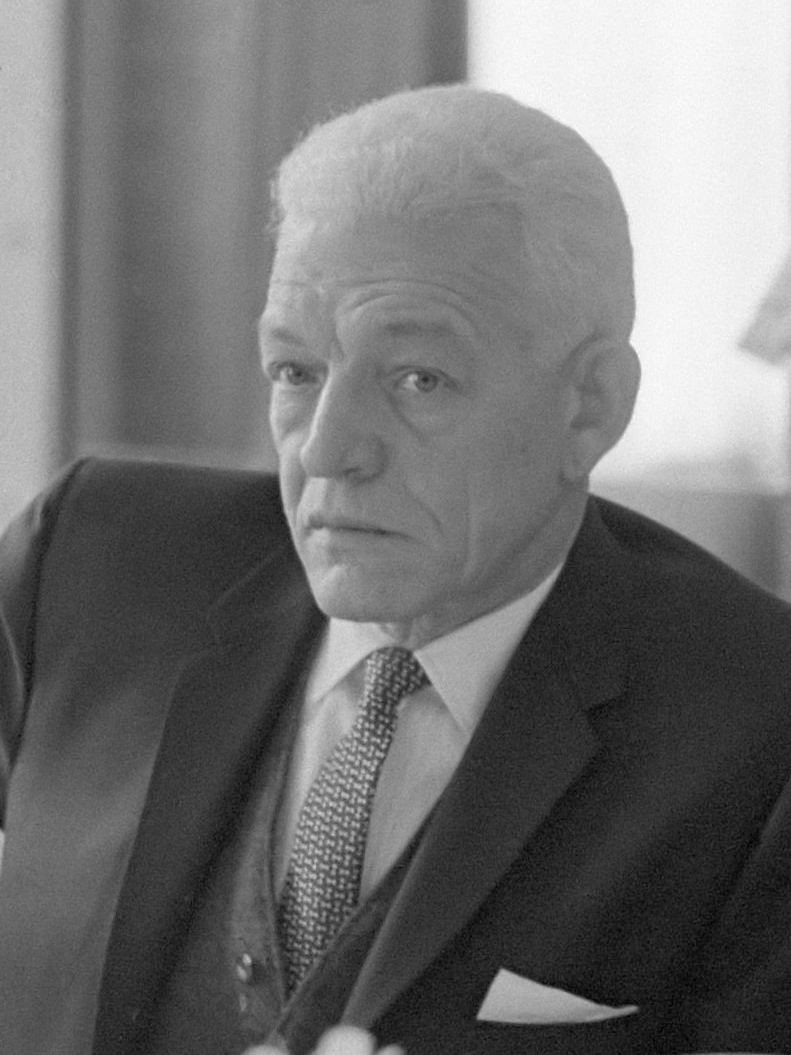
Juan Bosch

Biographical Details
Juan Bosch
Biography
Introduction and Dominican Context
Juan Emilio Bosch Gaviño (1909–2001) stands as a towering titan of twentieth-century Latin American history, embodying a rare and profound synthesis of intellectual brilliance, literary mastery, and unwavering democratic activism. As the first democratically elected president of the Dominican Republic following the assassination of the brutal dictator Rafael Trujillo, Bosch marked the dawn of modern democratic governance in a nation scarred by decades of authoritarianism and foreign intervention. Beyond his transformative political career—during which he founded two of the Dominican Republic's most dominant political parties, the Dominican Revolutionary Party (PRD) and the Dominican Liberation Party (PLD)—Bosch is universally celebrated as one of the finest short-story writers and social essayists in the Spanish-language literary canon. Known affectionately throughout the hemisphere as "El Profesor", his life was a relentless crusade for social justice, constitutionalism, and national sovereignty.
Early Life and Literary Awakening
Juan Bosch was born on June 30, 1909, in the rural town of La Vega, located in the fertile Cibao Valley of the Dominican Republic. His parents, José Bosch Subirats, a Spanish immigrant of Catalan descent, and Ángela Gaviño Costales, a Puerto Rican of Galician heritage, raised him in an environment that valued hard work and intellectual curiosity. Growing up in La Vega during a period of profound socio-economic transformation—including the first United States military occupation of the Dominican Republic (1916–1924)—the young Bosch developed an acute awareness of the struggles endured by rural peasantry and urban laborers.
In his youth, Bosch moved to Santo Domingo to pursue formal education and soon immersed himself in the city's vibrant literary circles. By the early 1930s, he began publishing short stories and poems that captured the raw, unvarnished reality of Dominican rural life. In 1933, at the age of twenty-four, he published his seminal short story collection Camino Real, which revolutionized Dominican literature through its introduction of social realism and mastery of vernacular speech. Three years later, in 1936, he published his acclaimed novel La Mañosa, a gripping narrative detailing the destructive recurrent civil wars and revolutions that plagued the Dominican countryside prior to the Trujillo era. Through these pioneering works, Bosch established himself as a literary luminary whose narrative precision and deep empathy won admiration across Latin America, earning praise from future Nobel laureates such as Gabriel García Márquez and Pablo Neruda.
Opposition to the Trujillo Dictatorship and Exile
The defining political crucible of Bosch's life began with the rise of General Rafael Trujillo, who seized power in 1930 and established one of the most ruthless and totalitarian dictatorships in modern Latin American history. Recognizing Bosch's growing intellectual influence, the Trujillo regime attempted to co-opt the young writer by offering him a government post. Recognizing the moral compromise required to serve the dictatorship, Bosch made the courageous decision to leave his homeland in 1938, embarking on what would become a twenty-three-year exile.
Settling initially in Puerto Rico and later in Havana, Cuba, Bosch dedicated his exile to organizing political resistance against the Trujillo regime while simultaneously continuing his prolific literary output. In 1939, alongside other prominent Dominican exiles in Havana, Bosch co-founded the Dominican Revolutionary Party (PRD). The party was constructed on a platform of democratic socialism, anti-imperialism, and direct advocacy for the working classes. Throughout the 1940s and 1950s, Bosch traveled extensively across Costa Rica, Venezuela, Chile, and Bolivia, serving as a professor, lecturer, and key organizer within the democratic anti-dictatorial movements of the Caribbean Basin. During this dynamic period, he forged enduring democratic alliances with regional leaders and engaged in intellectual dialogues with revolutionary figures, including early encounters with Fidel Castro during the Cuban political struggles against Fulgencio Batista.
"There is no more noble mission on earth than working for the freedom and dignity of our people. True democracy is not merely the right to vote; it is the right to live without fear, without hunger, and without exploitation." — Juan Bosch, address to Dominican exiles
Triumphant Return and the Landmark 1962 Elections
The geopolitical landscape of the Dominican Republic shattered on May 30, 1961, when Rafael Trujillo was assassinated by a conspiracy of dissidents, ending over thirty years of absolute despotic rule. After more than two decades in exile, Juan Bosch returned to Santo Domingo in October 1961, receiving a tumultuous welcome from hundreds of thousands of citizens eager for a democratic rebirth. As the presidential candidate for the PRD in the milestone December 1962 elections—the first free and fair multi-party elections held in the nation since 1924—Bosch conducted a revolutionary campaign.
Possessing exceptional oratorical skills and utilizing daily radio broadcasts, Bosch bypassed the traditional political elites and spoke directly to the impoverished masses, whom he famously popularized as the "hijos de Machepa" (the children of Machepa, representing the underprivileged peasants and workers) in contrast to the "tutumpotes" (the entrenched wealthy oligarchy). His message of social reconciliation, agrarian reform, and structural justice resonated deeply across the island. On December 20, 1962, Bosch won a decisive landslide victory, capturing nearly 60 percent of the popular vote and securing substantial democratic majorities in both chambers of the National Congress.
The Seven-Month Presidency and the Progressive Constitution of 1963
On February 27, 1963—the 119th anniversary of Dominican independence—Juan Bosch was inaugurated as President of the Dominican Republic amidst immense national optimism and international attention. His administration immediately embarked on an ambitious program of structural modernization and social democratization. The crowning achievement of his brief presidency was the promulgation of the Constitution of April 1963, widely recognized by historians and legal scholars as the most progressive, democratic, and socially advanced charter in Dominican history.
The 1963 Constitution introduced unprecedented guarantees for civil and human rights. It enshrined constitutional labor protections, including the right to unionize and strike, guaranteed equal pay for equal work, and established profit-sharing mechanisms for agricultural and industrial workers. Furthermore, the charter mandated secular public education, granted full legal equality to children born out of wedlock, prohibited monopolies, and initiated comprehensive agrarian reforms designed to redistribute fallow state and private lands to landless peasantry. However, these sweeping progressive reforms deeply alarmed traditional centers of power. The conservative landed aristocracy, the hierarchy of the Roman Catholic Church, and reactionary factions within the military leadership—fueled by intense Cold War anti-communist hysteria—conspired systematically to destabilize the democratic government.
The 1963 Military Coup and the 1965 Revolution
On September 25, 1963, after exactly seven months in office, President Juan Bosch was overthrown in a violent, reactionary military coup d'état led by right-wing generals supported by economic oligarchs. The military junta abolished the progressive 1963 Constitution, dissolved Congress, and forced Bosch back into exile in Puerto Rico. The ouster of the nation's first democratically elected leader plunged the Dominican Republic into severe political instability and popular indignation.
The simmering public resentment erupted on April 24, 1965, sparking the Dominican Civil War. Young, reform-minded military officers led by Colonel Francisco Caamaño Deñó, allied with civilian movements, launched a popular armed uprising known as the Constitutionalist Revolution. Fighting under the slogan "Vuelta a la Constitución sin Elecciones" (Return to the Constitution without Elections), the Constitutionalists successfully defeated the right-wing military forces and stood on the verge of restoring Juan Bosch to the presidency. Fearful that a constitutionalist victory would result in a "second Cuba" in the Caribbean, United States President Lyndon B. Johnson ordered the military invasion of the Dominican Republic on April 28, 1965, deploying over 42,000 U.S. troops under Operation Power Pack to suppress the pro-Bosch revolution.
"They ousted us from power because we refused to govern for a privileged minority. But they could not oust us from the hearts of the Dominican people, nor can they kill the constitutional dream of justice." — Juan Bosch, reflecting on the 1963 coup d'état
Ideological Rebuilding and Founding of the PLD
Following the negotiated settlement of the 1965 conflict and the withdrawal of foreign troops, Bosch returned to contest the highly militarized 1966 presidential elections, which resulted in the ascension of conservative figure Joaquín Balaguer under conditions of widespread state-sponsored intimidation. Profoundly affected by the U.S. intervention and the limitations of representative democracy in a neo-colonial context, Bosch underwent a significant ideological evolution during the late 1960s. He published landmark sociological texts, including Pentagonism: A Substitute for Imperialism (1968) and Social Composition of the Dominican Republic (1970), offering rigorous Marxist-influenced analyses of Latin American dependence and class structures.
In 1973, concluding that the PRD had abandoned its foundational principles and fallen under the control of populist factionalism led by figures like José Francisco Peña Gómez, Bosch resigned from the party he had created thirty-four years earlier. In December 1973, he founded the Dominican Liberation Party (PLD), conceiving it as a disciplined, cadre-based organization dedicated to national liberation and ethical governance. Bosch ran as the PLD presidential candidate in several subsequent elections, nurturing a new generation of Dominican political leaders, including future three-term president Leonel Fernández and Danilo Medina.
Literary Mastery and Enduring Legacy
Throughout his extraordinary political journey, Juan Bosch never abandoned his literary vocation. Over the course of seven decades, he authored over fifty volumes of fiction, history, political theory, and biography, including celebrated studies such as David: Biography of a King (1963) and Judas Iscariot: The Slandered One (1955). His short stories remain mandatory reading in schools across the Spanish-speaking world, revered for their structural perfection, dramatic tension, and poignant humanism.
Juan Bosch passed away peacefully in Santo Domingo on November 1, 2001, at the age of ninety-two, receiving state honors and massive popular mourning. He was interred in his hometown of La Vega. Today, Bosch is universally remembered as the moral conscience of modern Dominican democracy and an intellectual giant of the Americas. In recognition of his indelible contributions, major national infrastructure—including the Juan Bosch Bridge, the Juan Bosch Metro Station in Santo Domingo, and the vast Ciudad Juan Bosch urban development—bears his name, standing as enduring monuments to a visionary educator who dedicated his life to teaching a nation how to read, how to think, and how to govern itself in freedom.
Major Contributions
- Juan Bosch made monumental contributions to democratic governance, political thought, and literature across Latin America and the Caribbean.
- As the founder of the Dominican Revolutionary Party (PRD) in 1939 and later the Dominican Liberation Party (PLD) in 1973, he institutionalized the party system and modern democratic participation in the Dominican Republic.
- Serving as the first democratically elected post-Trujillo President in 1963, Bosch authored the landmark 1963 Constitution, which introduced unprecedented civil liberties, labor protections, agrarian reform, and secular education to the nation.
- Simultaneously, Bosch established himself as a master of Latin American literature whose pioneering short stories and sociological analyses—such as *Camino Real*, *La Mañosa*, and *Social Composition of the Dominican Republic*—profoundly shaped historical sociology and social realism throughout the Spanish-speaking world.

