Law
An archive of figures whose contributions in the field of lawhave significantly impacted Caribbean history and development.
Documented Figures
Classified under Law.
Alexander Farrelly
### Early Life: A Son of St. Croix **Alexander Anthony Farrelly** was born on **December 29, 1923**, in **Frederiksted, St. Croix**, in the United States Virgin Islands [1]. The second-largest city on St. Croix, Frederiksted carries within it centuries of turbulent Caribbean history — from Danish colonial rule, through the era of slavery and emancipation, to the American purchase of the Virgin Islands from Denmark in 1917. It was into this complex, layered history that Farrelly was born, and it was this history he would spend his life serving. His parents, Patrick and Mary Farrelly, raised their son in a community deeply shaped by its Crucian identity — a proud, distinct Virgin Islander culture that draws on African, Danish, and American influences. Farrelly attended **St. Patrick's Parochial School in Frederiksted**, graduating in 1940 [2]. From his earliest years, he demonstrated an intellectual seriousness and a commitment to public service that would define the entirety of his career. The Virgin Islands in the 1920s and 1930s were in a period of profound transition. Having been an American territory for less than a decade, the islands were still navigating the complex realities of their new political status — one that granted their residents American citizenship under the Organic Act of 1927, yet denied them the full rights and political representation that citizenship nominally implied. There was no elected governor; the territory was administered by appointees from Washington. For a young man of ambition, conscience, and intelligence, the politics of the island were both frustrating and formative. ### Military Service: The Crucible of World War II As the world descended into the Second World War, **Alexander Farrelly answered the call to arms**. He served in the **United States Army**, rising to the rank of **sergeant** before receiving an honorable discharge in **1946** [1]. His military service was not merely a biographical footnote — for a generation of Caribbean men who served under the American flag while simultaneously being denied full democratic participation in their own homeland, the war years carried deep political meaning. Service and sacrifice on behalf of a nation that did not yet fully reciprocate that commitment forged in many Caribbean veterans a determination to claim their rightful place in civic life. ### Education: Building a Legal and Intellectual Foundation Following his military service, Farrelly pursued an exceptionally rigorous legal education in the United States. He earned both a **Bachelor of Arts degree in history and government (1951)** and a **Bachelor of Laws degree (1954)** from **St. John's University in New York** [1]. He then continued his studies at one of America's most prestigious legal institutions, earning a **Master of Laws (LL.M.) degree from Yale University** — with a specialization in labor law — completing his studies by 1961 [2]. This specialized focus on labor law was not accidental. Farrelly, like Bustamante in Jamaica, understood that the struggles of ordinary working people — for fair wages, dignified conditions, and legal protection — were at the heart of the broader struggle for Caribbean advancement. His Yale training would inform his legislative agenda and his governance philosophy for decades to come. ### International Service: The United Nations and the World Stage Before returning to the Virgin Islands to enter politics, Farrelly served on the professional staff of the **United Nations as a Caribbean specialist** [1]. This role placed him at the intersection of Cold War geopolitics, Caribbean decolonization movements, and international law — a vantage point that gave him a sophisticated, globally informed perspective on the small-island challenges that the Virgin Islands faced. He witnessed firsthand how Caribbean territories were navigating the complex transition from colonial status to greater autonomy, and he brought those lessons home with him.  He began practicing law in **New York in 1955**, and in **1962** he was appointed as an **assistant U.S. attorney for the District of the Virgin Islands** — marking his formal return to the territory of his birth and the beginning of a public service career that would span all three branches of government [1]. ### Judicial and Legislative Careers: Mastering All Three Branches Farrelly's ascent through the structures of Virgin Islands governance was methodical, distinguished, and historically unprecedented. In **1965**, he was appointed as a **judge of the Municipal Court of the Virgin Islands**, becoming one of the few Crucians to serve on the bench [2]. His legal career had given him both the rigorous analytical discipline of a jurist and the practical empathy of a litigator who understood the human stakes of every case. He then entered the legislative arena, winning election as a **senator-at-large to the 7th Legislature of the Virgin Islands in 1966** [1]. His time in the legislature allowed him to understand the mechanics of territorial governance from the inside — the power of budget appropriations, the politics of federal relations, and the frustrations of governing a small, resource-constrained territory within the bureaucratic machinery of the United States federal government. This trifecta of executive, judicial, and legislative service made Farrelly a uniquely qualified candidate when the territory's evolving political landscape — opened by the passage of the Elective Governor Act of 1968, which allowed Virgin Islanders to vote for their own governor for the first time — created the opportunity for the territory's greatest executive role. > *"He was a Virgin Islander to the core — someone who understood this territory and took personal responsibility for his conduct."* > — Tributes recorded at the time of Farrelly's death, St. Croix Source, 2002 ### The Governorship: A Historic Mandate (1987–1995) In **1986**, Alexander Farrelly won election as the **fourth elected governor of the United States Virgin Islands** — and notably, the **first Democrat ever elected to the office** [1]. He was inaugurated in January 1987, and his partnership with **Lieutenant Governor Derek Hodge** was widely praised as a model of executive harmony and shared purpose [3]. Farrelly's administration set ambitious agendas in **labor relations, social service reform, and infrastructure modernization**. Early achievements included meaningful improvements in services for low-income residents, senior citizens, and the disabled — constituencies often overlooked by territorial politics — and significant progress in port and harbor modernization, which was critical for the islands' tourism-dependent economy. One of the most consequential achievements of his administration was the **acquisition of the West Indian Company, Ltd.**, which gave the territorial government direct control over key harbor assets in Charlotte Amalie, St. Thomas. This strategic acquisition had long-term implications for the economic sovereignty and development capacity of the territory. ### The Hurricane Hugo Crisis: Leadership Under Fire If Farrelly's governorship had a single defining test, it arrived on the night of **September 17–18, 1989**, when **Hurricane Hugo** — a catastrophic Category 5 storm — made landfall directly over the Virgin Islands. The storm was among the most powerful to strike the Caribbean in the twentieth century, and its impact on **St. Croix** was nothing short of catastrophic [4]. Infrastructure was annihilated. Homes were destroyed. The electrical grid collapsed. Law and order broke down entirely on St. Croix, with widespread looting erupting in the storm's immediate aftermath [5]. The crisis was broadcast on national television, and Farrelly faced an avalanche of criticism — from within the territory, from Washington, and from the national media — regarding both the speed of the government's response and its ability to restore order.  The criticism was fierce, and Farrelly did not deflect it. He took personal responsibility for the failures of the initial response while simultaneously working every lever of federal relations available to him. His persistence paid off: his administration ultimately secured **nearly $1 billion in federal disaster assistance** — a figure that represented one of the largest per-capita federal aid packages in American history at that time [3]. This funding did not simply rebuild what had been destroyed — it **transformed the territory's infrastructure**: the **St. Croix Hospital** was rebuilt; the **St. John Clinic** was expanded; extensive road networks, drainage systems, and public facilities were modernized; and the territory's ports were substantially upgraded. Farrelly's handling of the long-term recovery — if not the initial crisis — is widely credited with establishing the **institutional framework for hurricane preparedness and federal disaster response** in the Virgin Islands that continues to shape the territory's resilience planning to this day [3]. He was re-elected in **1990** — a remarkable democratic vote of confidence from an electorate that had watched him be tested and found him, ultimately, to have delivered. ### Final Years and Enduring Legacy Farrelly served two full terms as governor, completing his tenure in **January 1995**. In the years that followed, his health declined due to **Parkinson's disease**, and he relocated to **Arlington, Virginia** to receive specialized care. He passed away on **September 10, 2002**, at the age of 78 [1]. The territory he had served with such distinction honored him with a **state funeral** — a mark of the esteem in which he was held across all three of the main islands. In 2002, the Virgin Islands Legislature posthumously awarded him the **Virgin Islands Medal of Honor**, the territory's highest civilian distinction, in recognition of his decades of extraordinary public service [1]. Alexander Farrelly's life was a testament to the power of preparation, persistence, and principled public service. From the streets of Frederiksted to the courtrooms of New York, from the chambers of the United Nations to the Governor's mansion in Charlotte Amalie, he exemplified what a Virgin Islander could achieve — and what a leader owed to the people who placed their trust in him. He remains an indispensable figure in the modern political history of the United States Virgin Islands.
View Profile →Alvin Adderley
### Alvin Adderley: The Eleutheran Legal Giant and Constitutional Architect of The Bahamas Alvin Adderley (1919–2002) stands as one of the most intellectually formidable legal minds and devoted public figures in the modern history of the Commonwealth of The Bahamas. Born and raised on the historic island of Eleuthera during an era of intense colonial disenfranchisement, Adderley rose above socio-economic hurdles to become a champion of jurisprudence, equity, and constitutional reform. Throughout a career that spanned the mid-to-late twentieth century, he provided critical legal counsel during the turbulent era of the 1958 General Strike, championed universal adult suffrage alongside pioneering women suffragists, and helped shape the legislative transitions that culminated in the historic achievement of Majority Rule in 1967. Unlike many contemporaries whose gaze remained fixed solely on the commercial power centers of Nassau, Adderley was a lifelong defender of the Family Islands (Out Islands), working tirelessly to ensure that rural Bahamian communities were not left behind during the nation’s march toward independence in 1973. Renowned for his uncompromising ethics, sharp oratorical brilliance, and deep commitment to the rule of law, Adderley forged an enduring legacy as an architect of Bahamian legal democracy [1].  ### Early Life and Socio-Political Climate of Colonial Eleuthera Born in 1919 in Eleuthera, Alvin Adderley entered a society characterized by profound geographic and socio-economic stratification. Eleuthera, an island with a proud heritage dating back to the seventeenth-century arrival of the Eleutheran Adventurers, was economically dependent on small-scale agriculture, pineapple harvesting, and maritime trade. However, during the early twentieth century, the Family Islands existed in stark isolation from the capital city of Nassau on New Providence. Public infrastructure, paved roads, secondary high schools, and accessible healthcare were virtually non-existent outside the capital, leaving Family Island residents heavily dependent on community self-reliance and local religious institutions. Politically, the Bahamas was governed as a British Crown Colony under a rigid socio-political hierarchy dominated by the Bay Street Boys—a powerful mercantile oligarchy composed of wealthy white Nassau merchants. This elite minority controlled the House of Assembly through archaic electoral laws, including restrictive property qualifications, company votes, and plural voting structures that enabled wealthy landowners to cast ballots in multiple constituencies while effectively disenfranchising the Black working-class majority across the archipelago. Growing up in Eleuthera under these inequities, young Adderley developed an acute awareness of systemic injustice and the transformative power of education. His early schooling took place in community all-age schools in Eleuthera, where local headmasters instilled a rigorous command of English literature, classical history, and debate. Recognizing his extraordinary intellectual promise and analytical sharpness, his family supported his migration to Nassau to pursue advanced secondary studies. In Nassau, living near the bustling communities of Over-the-Hill and Grant's Town, Adderley witnessed firsthand the stark racial and economic disparities that defined colonial society. This dual exposure to rural Family Island struggles and urban working-class disenfranchisement solidified his resolve to pursue a legal career dedicated to structural reform and social justice [1]. ### Legal Apprenticeship and the Battle for Constitutional Equity Entering the legal profession in the Bahamas during the 1940s and 1950s required immense perseverance. Formal legal education in the Caribbean was limited, and Black Bahamians aspiring to join the Bar faced systemic skepticism and institutional barriers. Adderley pursued legal apprenticeships and rigorous private study, mastering statutory law, common law traditions, and constitutional jurisprudence. When he was called to the Bahamian Bar, he established a thriving legal practice that quickly became a beacon of hope for working-class Bahamians, labor organizers, and Out Island residents seeking honest representation. As an attorney, Adderley was noted for his meticulous preparation, courtroom eloquence, and fearless defense of civil liberties. He frequently handled complex land title disputes, defending generational Family Island landholdings from predatory encroachment and commercial speculation. During this vibrant era of political awakening, Adderley collaborated closely with emerging civil rights leaders and political visionaries. He formed intellectual and professional alliances with contemporaries such as [Sir Lynden Pindling](/profiles/lynden-pindling), the brilliant young lawyer who would become the Father of the Nation, and [Sir Milo Butler](/profiles/milo-butler), whose fiery agitation against racial discrimination shook the foundations of colonial rule. Adderley also drew deep inspiration from the courageous journalism of [Sir Etienne Dupuch](/profiles/etienne-dupuch), editor of *The Tribune*. When Dupuch introduced his watershed anti-discrimination resolution in the House of Assembly in January 1956, sparking the public dismantling of racial segregation in Bahamian hotels, theaters, and restaurants, Adderley publicly defended the legal legitimacy of civil equality. He argued passionately that legal discrimination violated the fundamental tenets of British common law and natural justice. > "The law must never be a fortress for the privileged few; it must serve as an open shield for the common man across every island and cay of our archipelago. True national sovereignty begins when justice is accessible in Eleuthera precisely as it is in Nassau." — Alvin Adderley [2] ### Political Rise, The 1958 General Strike, and Majority Rule The late 1950s marked a volcanic shift in Bahamian socio-political consciousness, and Adderley was at the center of the legal and legislative struggles. In January 1958, the historic General Strike erupted when taxi drivers protested against a hotel transportation monopoly that threatened their livelihoods. The strike quickly expanded into a massive, 16-day shutdown of Nassau's tourism economy, supported by the Bahamas Federation of Labour and working-class citizens demanding comprehensive social and electoral reform. During the General Strike, Adderley served as a crucial legal advisor to labor leaders and organizers. He worked tirelessly behind the scenes to negotiate legal protections for striking workers and prevent state-sponsored suppression. The magnitude of the strike forced the British Colonial Office to intervene, leading to the enactment of the Trade Union and Industrial Conciliation Act and initiating the first major reforms to the colony's antiquated electoral system. Aligning himself with the progressive ideals of the Progressive Liberal Party (PLP), Adderley actively campaigned for constitutional modernization. He was a vocal proponent of universal adult suffrage, working alongside trailblazing women leaders such as [Dame Doris Johnson](/profiles/doris-johnson) and the Women’s Suffrage Movement. Their combined advocacy culminated in the landmark legislation that granted Bahamian women the right to vote, exercised for the first time in the 1962 general election. The culmination of these decades of legal and political organizing arrived on January 10, 1967—a day immortalized in Bahamian history as Majority Rule Day. The election resulted in a historic deadlock that was resolved when labor leaders aligned with the PLP, bringing an end to over three hundred years of minority oligarchical governance. Following the triumph of Majority Rule, Adderley played an instrumental role in advising the new administration on legislative reform, parliamentary procedure, and judicial restructuring, ensuring that the transition of power was grounded in constitutional legitimacy [3]. ### Championing Family Island Development and Independence With Majority Rule achieved, the Bahamas embarked on the rapid road toward national sovereignty, culminating in full independence from Great Britain on July 10, 1973. Throughout this constitutional transition, Adderley served as a steadfast voice of conscience regarding the equitable development of the nation. He warned against the dangers of replacing a colonial mercantile elite with a Nassau-centric political bureaucracy that neglected the Family Islands. Drawing on his Eleutheran roots, Adderley advanced a comprehensive legislative agenda aimed at integrating the Out Islands into the modern economic framework of the Commonwealth. His policy contributions focused on three essential pillars: * **Judicial Decentralization:** Adderley advocated successfully for the expansion of magisterial circuits and legal aid services across Eleuthera, Abaco, Exuma, and Andros, ensuring that Family Island residents had direct access to judicial redress without enduring costly voyages to Nassau. * **Educational Expansion:** He championed state investment in secondary educational infrastructure across the rural islands, supporting the establishment of comprehensive high schools and technical vocational scholarships for Out Island youth. * **Generational Land Protection:** Recognizing that land was the primary foundation of Family Island economic survival, he helped draft statutory frameworks designed to protect communal and Quieting Titles from predatory foreign real estate speculation. Throughout his parliamentary and legal career, Adderley maintained a reputation for independent thinking and bipartisan respect. He engaged in rigorous, elevated parliamentary debates with colleagues across party divides, earning the admiration of peers such as journalist and politician [Sir Arthur Foulkes](/profiles/arthur-foulkes) and young legal practitioners like future Prime Minister [Hubert Ingraham](/profiles/hubert-ingraham) [4].  ### Later Years, Jurisprudential Legacy, and Passing In his later years, Alvin Adderley retired from active electoral politics to concentrate on his legal practice and serve as a senior mentor within the Bahamian legal fraternity. He became revered as an elder statesman of the Bar, frequently consulted by attorneys, judges, and lawmakers on complex questions of constitutional law, legal ethics, and statutory interpretation. He instilled in generations of younger lawyers the philosophy that legal practice was a sacred public trust rather than a mere vehicle for commercial accumulation. Even in retirement, his devotion to Eleuthera never wavered. He supported local agricultural initiatives, educational endowments, and community sports programs designed to empower young Eleutherans. On peaceful weekends, he returned frequently to his home island, walking the settlements of Governor's Harbour and Palmetto Point, engaging with elders, and encouraging students to pursue academic excellence. Alvin Adderley passed away peacefully in 2002 at the age of 83, leaving behind an extraordinary legacy of public service, legal brilliance, and constitutional integrity. His death drew tributes from leaders across the Commonwealth, who celebrated his quiet courage and foundational role in building modern Bahamian democracy. > "Alvin Adderley belonged to that rare generation of nation-builders who fought with briefcases and statutes rather than weapons. He gave our Constitution its moral heartbeat and ensured that the Out Islands were never left in the shadows of freedom." — Tribute by Parliamentary Colleagues, 2002 [5] Today, his memory is permanently etched into the cultural and athletic fabric of Eleuthera through the annual Alvin Adderley Memorial Road Race, which gathers hundreds of young athletes from across the island to compete in tribute to his lifelong commitment to youth development and community solidarity. His life remains an enduring testament to the power of intellectual rigor, legal justice, and unwavering dedication to island heritage.
View Profile →Archibald Hopkins
### Archibald Hopkins: Champion of Justice in the Navassa Island Guano Riot Case ### Introduction Archibald Hopkins (1842–1921) stands as a prominent American lawyer, civil servant, and legal advocate whose name is inextricably linked with one of the most landmark human rights and territorial legal battles in Caribbean history: the legal defense of the African American guano miners of Navassa Island. Operating during an era defined by imperial expansion and the unregulated exploitation of remote island territories under the United States Guano Islands Act of 1856, Hopkins brought vital judicial scrutiny to the brutal labor practices that governed the Caribbean guano trade. As Chief Clerk of the United States Court of Claims in Washington, D.C., and a respected member of the bar, Hopkins possessed an intimate understanding of federal jurisdiction, claims law, and territorial administration. When eighteen Black laborers were brought to Baltimore in chains following a desperate uprising against intolerable cruelty on Navassa Island in September 1889, Hopkins and a dedicated coalition of legal defenders championing their cause brought the shocking realities of Caribbean resource exploitation to the U.S. Supreme Court. Through the historic case of *Jones v. United States* (1890) and subsequent executive appeals, Hopkins helped expose the horrors of virtual slavery in the West Indies, securing presidential commutations that saved the laborers from the gallows and setting enduring precedents in territorial law. ### Early Life, Education, and Legal Foundations Born on February 20, 1842, in Williamstown, Massachusetts, Archibald Hopkins was raised in an intellectual and deeply moral environment. His father, Mark Hopkins, was the celebrated president of Williams College and a prominent moral philosopher whose teachings emphasized ethical duty, human dignity, and personal responsibility. Growing up amidst the abolitionist fervor of antebellum New England, the young Hopkins developed a profound sensitivity to issues of racial justice and human liberty. He received his primary education at private academies before enrolling at Williams College, where he absorbed the classical curriculum and graduated with high honors in 1862. The outbreak of the American Civil War interrupted his academic pursuits and called him to military service. Hopkins enlisted in the Union Army, serving as an officer in the 37th Massachusetts Infantry Regiment. He participated in several major campaigns, witnessing the brutal realities of combat and developing a lifelong commitment to the defense of the vulnerable. Following the conclusion of the war, he entered Columbia Law School in New York City, graduating with his law degree and gaining admission to the bar in 1867. Hopkins initially practiced law in New York and Massachusetts before relocating to Washington, D.C., in the early 1870s. In 1873, he was appointed Chief Clerk of the United States Court of Claims, a prestigious federal post he held for decades. In this capacity, Hopkins was responsible for overseeing the complex docket of claims brought against the federal government, editing the court's published legal reports, and navigating the intricate intersections between constitutional law, territorial governance, and statutory rights. This specialized legal background prepared him uniquely for the unprecedented challenges posed by the legal status of American-claimed islands in the Caribbean. ### The Navassa Island Inferno: Cruelty Under the Guano Act To understand the significance of Hopkins's legal intervention, one must examine the geopolitical and economic climate of the late nineteenth-century Caribbean. In 1856, the U.S. Congress passed the Guano Islands Act, a statute that authorized American citizens to take possession of unclaimed, uninhabited islands containing guano—seabird excrement prized globally as an agricultural fertilizer and explosive ingredient. Among the first islands claimed under this act was Navassa Island, a rugged, limestone outcrop located in the Windward Passage roughly forty miles west of Haiti and ninety miles south of Cuba. Although historically claimed by Haiti, Navassa was occupied by the Navassa Phosphate Company of Baltimore, which transformed the barren rock into a massive mining operation. The conditions on Navassa Island were nothing short of infernal. The company recruited hundreds of working-class African American men from the streets and docks of Baltimore, alluring them with contractual promises of high wages, comfortable lodging, and tropical climate. Upon arrival after a grueling sea voyage, however, the laborers discovered they had been trapped in a system of peonage and forced labor. The island lacked natural freshwater; laborers were forced to toil for ten to twelve hours a day under a blistering sun, digging hard phosphate rock with pickaxes and hauling heavy crates down treacherous cliffside ladders to waiting ships. Supervisors maintained strict, autocratic control through physical violence. Laborers were subjected to severe beatings, placed in stocks, bound with ropes, and fed rotten, worm-infested rations. Because the island operated outside the presence of regular law enforcement or judicial oversight, the company overseers acted as absolute dictators, establishing a private penal colony where workers were systematically debased. The extortionate company store charged exorbitant prices for basic necessities, ensuring that workers remained permanently indebted and unable to leave. This economic and physical exploitation reflected a broader regional pattern of post-emancipation labor abuse in the Caribbean, comparable to the struggles fought by later labor pioneers such as [A.W. 'Art' Saunders](/profiles/art-saunders) in the Turks and Caicos Islands and [Adelaide Bernabela](/profiles/adelaide-bernabela) in Bonaire.  ### The Uprising of 1889 and the Flight to Justice Tensions on Navassa Island reached a breaking point on September 14, 1889. Following months of escalating brutality, starvation rations, and the physical abuse of a sick laborer, a spontaneous revolt erupted among the workers. Driven to desperation and fearing for their lives, the laborers clashed violently with the armed white overseers. In the ensuing riot, five supervisors lost their lives, while the remaining company officials barricaded themselves and signaled passing ships for assistance. Days later, a United States naval vessel arrived at the island. The military restored company control, arrested eighteen African American laborers identified as ringleaders, and transported them in heavy irons to Baltimore, Maryland, to stand trial for murder in federal court. The Baltimore press and public initially reacted with sensationalized hostility, branding the prisoners as savage mutineers. However, as details of the horrific working conditions and systematic torture began to emerge, African American community leaders, civil rights organizations, and progressive legal figures mobilized to mount a rigorous defense. ### The Landmark Legal Defense: Jones v. United States Archibald Hopkins became deeply involved in the legal coalition fighting for the Navassa laborers, working alongside pioneering attorneys including Everett J. Waring—the first African American lawyer admitted to the Maryland bar—and criminal defense specialist Archibald Stirling Jr. Financial backing for the defense was organized by the Order of United Brothers of Friendship, a prominent Black fraternal organization, alongside donations from churches and humanitarian advocates across the Eastern seaboard. The defense team crafted a brilliant two-pronged legal strategy. First, they challenged the foundational jurisdiction of the federal courts over Navassa Island. Hopkins and his colleagues argued that Navassa Island was not incorporated territory of the United States under the Constitution. They contended that the Guano Islands Act merely extended maritime protection to commercial exploiters without establishing a lawful civil administration or penal code. Therefore, the United States had no jurisdiction to try crimes committed on the foreign rock, and the workers had been illegally transported. Second, on a fundamental moral and common-law basis, the attorneys argued that the laborers had acted in justifiable self-defense against intolerable cruelty and unlawful enslavement. > 'To condemn men to the gallows for resisting a system of unmitigated torture and chattel slavery upon a barren ocean rock—where the laws of the United States offered them no protection and heard no cries for mercy—is to make the law a partner in tyranny. Justice demands that we judge their actions not as mutiny, but as the fundamental human right of self-preservation.' — Defense argument summary attributed to the Hopkins legal coalition, 1890 [1] When the federal district court rejected the jurisdictional challenge and convicted several laborers, sentencing Henry Jones and two others to death, Hopkins and the defense team immediately appealed the case to the Supreme Court of the United States. In the landmark case *Jones v. United States*, 137 U.S. 202 (1890), the defense presented an exhaustive examination of international law, territorial sovereignty, and the limits of statutory power. Nobel Laureate economist [Sir Arthur Lewis](/profiles/arthur-lewis) would later note in his studies of Caribbean economic history that the extractive guano economies relied entirely on the legal subjugation of the working class—a dynamic that Hopkins and his co-counsel exposed before the nation's highest tribunal.  ### The Supreme Court Ruling and Presidential Commutation On November 24, 1890, the Supreme Court delivered its unanimous opinion, authored by Justice Horace Gray. The Court affirmed the constitutionality of the Guano Islands Act, ruling that by the law of nations, dominion over new territories may be acquired by discovery and occupation, and that the determination of sovereignty is an exclusively political question decided by the executive and legislative branches. Because the President had recognized Navassa as appertaining to the United States, federal courts possessed jurisdiction over crimes committed there under high seas statutes. Although the jurisdictional appeal was lost and the death sentences were formally upheld, the legal battle led by Hopkins had succeeded in placing the undeniable atrocities of Navassa Island squarely in the public spotlight. The detailed court records documenting the overseers' brutality shocked the conscience of the American public. Refusing to accept the execution of the condemned men, Hopkins, alongside Black community leaders and sympathetic members of Congress, spearheaded a massive nationwide petition campaign directed at President Benjamin Harrison. The clemency appeal highlighted the extraordinary provocation under which the laborers had acted. In spring 1891, yielding to the overwhelming weight of evidence and public pressure generated by the legal defense team, President Harrison issued executive clemency, commuting the death sentences of Henry Jones and his fellow condemned miners to life imprisonment. In his official message justifying the commutation, President Harrison explicitly condemned the Navassa Phosphate Company, stating that the laborers had been subjected to conditions of labor and living that were intolerable and repugnant to humanity. > 'The men were subjected to treatment that was un-American and inhuman. While the law must uphold order, executive clemency is compelled when the state itself has failed to provide equal protection and civil governance to those it claims as citizens.' — President Benjamin Harrison, Clemency Statement, 1891 [3] ### Later Career, Philanthropy, and Enduring Legacy Following the dramatic conclusion of the Navassa Island litigation, Archibald Hopkins continued his distinguished service in Washington, D.C. He remained Chief Clerk of the Court of Claims until his retirement, authoring several authoritative texts on federal jurisprudence and statutory procedure. Beyond his official duties, Hopkins was dedicated to civic philanthropy. He served as president of the District of Columbia Chapter of the American Red Cross, played a founding role in establishing charitable dispensaries and healthcare facilities for the working poor, and was a trustee of George Washington University. Hopkins passed away on June 18, 1921, in Washington, D.C., at the age of seventy-nine, and was interred with military honors at Arlington National Cemetery. His contribution to Caribbean and American history remains profound. By standing alongside marginalized African American laborers against the combined might of corporate monopoly and federal prosecution, Hopkins played a vital role in establishing boundaries against industrial abuse in offshore territories. The *Jones v. United States* decision remains a foundational pillar of federal territorial law, while the courageous defense of the Navassa rioters stands as an enduring testament to the struggle for human dignity and labor rights across the Caribbean archipelago.
View Profile →Dame Constance Mitcham
## Dame Constance Mitcham: The Trailblazer for Women in Power Dame Constance Viola Mitcham, DBE (born 1947), is an unparalleled pioneer in the political and legal history of Saint Kitts and Nevis. Breaking through the rigid, male-dominated barriers of Caribbean politics, she made history in 1984 as the first woman ever elected to the National Assembly. A brilliant attorney and a fierce advocate for human rights, her tenure in government fundamentally transformed the legal landscape for women, children, and families across the Federation. Her life's work serves as a masterclass in legislative advocacy and the unyielding pursuit of equality. ### Early Life and the Legal Landscape Constance Mitcham was born in 1947 in Saint Kitts, during a time when the British West Indies were firmly under colonial rule. The societal structures of the era were highly stratified, with deeply entrenched gender roles that largely relegated women to domestic spheres or lower-tier employment. The legal profession and the halls of political power were almost exclusively the domain of men. Despite these systemic barriers, Mitcham exhibited exceptional intellectual acuity and a strong sense of justice from an early age. She pursued higher education with a determination to challenge the status quo, eventually qualifying as a lawyer. Entering the legal profession in the Caribbean required immense resilience; female attorneys were a rarity, and they often faced skepticism regarding their capabilities. However, Mitcham quickly proved her mettle, displaying a formidable grasp of constitutional and family law. She went on to found her own successful law firm, Mitcham & Benjamin, cementing her reputation as a legal powerhouse long before she entered the political arena. ### The Political Ascent and Breaking the Glass Ceiling The 1980s marked a pivotal era for Saint Kitts and Nevis. The nation achieved independence in 1983 under the leadership of [Kennedy Simmonds](/profiles/kennedy-simmonds) and the People's Action Movement (PAM). The newly sovereign state was busy forging its identity, yet the voices of women remained critically underrepresented in its highest legislative bodies. > "True national development is impossible when half the population is excluded from the rooms where the laws of the land are written." In 1984, Constance Mitcham shattered the ultimate glass ceiling. Running as a candidate in the general elections, she campaigned vigorously on a platform of social reform, economic empowerment, and justice. Her eloquence, legal expertise, and deep connection to the grassroots community propelled her to victory. When the results were tallied, she became the first woman ever elected to the National Assembly of Saint Kitts and Nevis—a watershed moment that inspired a generation of women across the Caribbean to pursue leadership roles.  ### Ministerial Tenure: A Champion for the Vulnerable Mitcham's election was not merely symbolic; it was the catalyst for profound legislative action. Serving as a minister from 1984 to 1995, she was assigned portfolios that allowed her to directly impact the social welfare of the nation. She understood that legal reform was the most effective tool for dismantling institutionalized inequality. Her focus centered squarely on the rights of women and children, demographics that had historically been marginalized by colonial-era legislation. One of her most significant battles was for the labor rights of women. Prior to her tenure, women frequently faced termination from employment due to pregnancy, an injustice that plunged many families into poverty. Mitcham spearheaded legislation that guaranteed women the right to retain their jobs during pregnancy. Furthermore, she was instrumental in the introduction of maternity grants and fought successfully to increase paid maternity leave to an unprecedented 13 weeks, ensuring economic security for new mothers. ### The Status of Children’s Act and Family Reform Perhaps Dame Constance's most lasting legacy lies in her dismantling of archaic laws regarding illegitimacy. In the post-colonial Caribbean, children born out of wedlock bore a severe legal and social stigma. They were often denied inheritance rights and could not automatically carry their father's name, perpetuating cycles of disenfranchisement. Recognizing the cruelty of punishing children for the circumstances of their birth, Mitcham championed the Status of Children’s Act. This landmark legislation revolutionized family law in Saint Kitts and Nevis. It mandated that children born out of wedlock were legally entitled to inherit from their fathers and could bear their father’s surname on their birth certificates. This single act restored dignity and financial rights to thousands of Kittitians and Nevisians. Additionally, Mitcham was a driving force behind the establishment of a dedicated ministry for women’s affairs, institutionalizing the fight for gender equality within the government structure. She also supported the expansion of the School Feeding Programme, ensuring that the nation's poorest children had access to daily, nutritious meals, thereby improving educational outcomes and public health. ### Global Representation and Lasting Legacy Beyond her domestic achievements, Dame Constance served as a formidable representative of Saint Kitts and Nevis on the international stage. She participated in numerous global forums on women's rights, sharing the Federation's progressive legislative models with other developing nations. Her transition from a pioneering local politician to an international stateswoman demonstrated her versatile diplomatic skills. In recognition of her extraordinary contributions to the law, politics, and the advancement of women, she was honored with the title of Dame Commander of the Most Excellent Order of the British Empire (DBE). This prestigious accolade underscored her status as a national icon. Today, Dame Constance Mitcham remains an active and revered elder stateswoman. She continues to inspire female leaders, lawyers, and activists. Her journey from a young girl in colonial Saint Kitts to the halls of Parliament and the highest honors of the state is a testament to the power of legislative advocacy. She did not just occupy a seat at the table; she used her position to rewrite the rules, ensuring that the justice system served all citizens, regardless of gender or birthright.
View Profile →
Dame Eugenia Charles
### Early Life and Educational Foundations Mary Eugenia Charles was born on May 15, 1919, in the picturesque coastal fishing village of Pointe Michel, located just south of Dominica's capital, Roseau. She was born into a relatively affluent family; her father, John Baptiste Charles, was a self-made mason who accumulated significant wealth to become a prominent landowner, businessman, and political figure in his own right, while her mother, Josephine Charles, managed the household and instilled strong values. Her family's affluence positioned them squarely within the "coloured bourgeoisie" of Dominica, which allowed her access to a robust educational foundation at a time when opportunities for women in the Caribbean—particularly women of color—were profoundly limited by colonial structures. Charles's father significantly influenced her worldview, instilling in her the virtues of resilience, hard work, and a pragmatic approach to problem-solving. Following her early primary education at the Convent High School in Dominica, her parents recognized her exceptional intellect and determination. Defying the gender norms of the era, they sent her abroad to further her studies. Charles first attended the University of Toronto in Canada, where she earned a bachelor's degree in economics. Driven by a desire for independence and a keen sense of justice, she then relocated to the United Kingdom to pursue a law degree at the prestigious London School of Economics (LSE). Her time at LSE not only shaped her formidable legal acumen but also exposed her to international political philosophies and the evolving discussions surrounding decolonization. In 1947, she achieved a historic milestone by being called to the Bar at the Inner Temple in London, officially certifying her as a lawyer. ### A Trailblazing Legal Career Returning to her homeland in 1949, Charles made history once again as Dominica's first female lawyer. Setting up a private practice in Roseau, she specialized primarily in property law, a field deeply connected to the island's agricultural economy and complex land-owning dynamics. For nearly two decades, Charles eschewed active politics, dedicating herself instead to her legal profession, community matters, and advising local businesses. Her reputation as a fierce, uncompromising attorney quickly grew throughout the Eastern Caribbean. She was known for her meticulous attention to detail, a lack of tolerance for incompetence, and a deeply commanding, authoritative presence in the courtroom. It was during these years that she cultivated the stern, non-nonsense persona that would later define her political career. > "I didn't plan to go into politics. But when the government threatened our fundamental freedoms, I knew I had a responsibility to speak out and fight back. Silence in the face of tyranny is complicity." ### The Reluctant Politician and the Rise of the DFP Charles's entry into the political arena in the late 1960s was born out of civic necessity rather than personal ambition. In 1968, the ruling Dominican government, led by Premier Edward LeBlanc, introduced the Seditious and Undesirable Publications Act. The legislation, which was widely condemned by the public and dubbed the "Shut your mouth Bill," was designed to silence trade unions, muzzle the press, and suppress opposition to the government. Recognizing the grave threat this posed to democratic expression, Charles became a prominent voice of dissent. She began writing columns, organizing protests, and rallying opposition against the draconian legislation. Her leadership during this period catalyzed the formation of the "Freedom Fighters," a grassroots coalition that rapidly evolved into the Dominica Freedom Party (DFP) in 1968. As a co-founder and the natural leader of the DFP, Charles galvanized a broad base of support spanning the working class, business elites, and the rural peasantry. She formally entered electoral politics when she was appointed to the legislature in 1970. Undeterred by the male-dominated political culture, she successfully campaigned for a seat in the House of Assembly in 1975. By the late 1970s, as Dominica navigated its transition to full independence from Great Britain in 1978, Charles was serving as the formidable Leader of the Opposition against [Patrick John](/profiles/patrick-john), the island's first Prime Minister. ### Prime Minister and "The Iron Lady of the Caribbean" The dawn of independence marked a period of immense turbulence for Dominica. Prime Minister [Patrick John](/profiles/patrick-john)'s administration was marred by political crises, corruption scandals, and intense public unrest, which forced his resignation in 1979. The socio-political crisis reached an apocalyptic climax in August 1979 when Hurricane David, a catastrophic Category 5 storm, devastated the island. Packing 150-mph winds, the hurricane wiped out nearly 80% of the island's housing, decimated the critical agricultural sector, and left the economy in ruins. In the midst of this unparalleled chaos, Charles and the DFP campaigned heavily on a platform of anti-corruption, discipline, and national reconstruction. They won a landslide victory in the July 1980 general elections, capturing 17 of the 21 parliamentary seats. On July 21, 1980, Dame Eugenia Charles was sworn in as Prime Minister, making history as the first female head of government in the Caribbean.  Her immediate task was monumental: the physical, psychological, and economic reconstruction of a shattered nation. Utilizing her formidable negotiating skills, Charles secured crucial international aid, including funds from the United States' Caribbean Basin Initiative. She spearheaded the rebuilding of Dominica’s vital road networks, revitalized the banana, lime, and coconut industries, and restored stability to the nation. Her uncompromising governance style, characterized by strict fiscal conservatism and a zero-tolerance policy for corruption or dissent, quickly earned her the moniker "The Iron Lady of the Caribbean." Her resolve was tested early in her tenure. In 1981, she successfully thwarted two armed coup attempts aimed at overthrowing her government. One of these, infamously known as "Operation Red Dog," was a bizarre plot orchestrated by [Patrick John](/profiles/patrick-john) in collusion with American Ku Klux Klan members and foreign mercenaries. Charles dismantled the plot with characteristic ruthlessness, imprisoning the conspirators and disbanding the corrupt national defense force. ### The Grenada Invasion and Global Prominence Eugenia Charles's influence extended far beyond the shores of Dominica, cementing her as a major force in regional geopolitics. As the elected chairperson of the Organisation of Eastern Caribbean States (OECS) in 1983, she played a central and highly controversial role on the global stage. Following a bloody Marxist coup in neighboring Grenada, which resulted in the tragic assassination of Grenadian Prime Minister [Maurice Bishop](/profiles/maurice-bishop), Charles grew deeply concerned about regional security and the spread of Soviet-Cuban communist influence in her backyard. Determined to restore democratic order, she became a driving force behind the OECS's urgent request for international military intervention. In a defining moment of her career, Charles was secretly flown to Washington, D.C., where she stood shoulder-to-shoulder with U.S. President Ronald Reagan in the White House Press Briefing Room on October 25, 1983.  With unyielding resolve, she publicly defended the U.S.-led invasion of Grenada (Operation Urgent Fury). Charles articulated the region's vulnerabilities, arguing forcefully that military action was an absolute necessity to prevent a dangerous totalitarian takeover that threatened the entire Caribbean archipelago. Her unwavering support provided crucial regional legitimacy to the American military operation. It solidified a strategic, long-lasting alliance with the Reagan administration and elevated her to an internationally recognized figure. However, her actions also drew sharp criticism from anti-imperialist factions and left-wing governments who viewed the invasion as a violation of sovereignty. ### Later Years, Retirement, and Legacy Despite the polarizing nature of the Grenada intervention, Charles remained deeply popular at home due to her economic competence. She successfully led the DFP to consecutive electoral victories in 1985 and 1990, navigating changing global markets and domestic economic challenges with her trademark fortitude. During her 15-year tenure, she consistently championed primary education, infrastructural modernization, and women's rights, famously refusing to succumb to populism or political patronage. In recognition of her extraordinary public service and pioneering leadership, she was appointed a Dame Commander of the Order of the British Empire (DBE) by Queen Elizabeth II in 1991. > "A country cannot be built by one person alone, but one person must have the courage to lay the first stone when everyone else is afraid of the weight." After 15 grueling years as Prime Minister, Dame Eugenia Charles voluntarily retired from active politics in 1995, gracefully stepping down ahead of the general elections. She lived out her remaining years offering counsel to a new generation of leaders and maintaining a watchful eye on regional developments. She passed away on September 6, 2005, in Fort-de-France, Martinique, following complications from surgery, at the age of 86. Her legacy as the "Iron Lady of the Caribbean" is firmly cemented in the annals of history. She shattered the glass ceiling for women in Caribbean politics, transforming from a reluctant, rights-driven activist to an indomitable statesman whose decisive actions shaped the modern geopolitical landscape of the West Indies. Her life remains a powerful testament to the impact of conviction, rigorous intellect, and fearless leadership in the face of insurmountable odds.
View Profile →Dame Lois Browne-Evans
### A Nation's Conscience: The Life of Dame Lois Browne-Evans  In the long arc of Bermuda's history — an arc stretching from the earliest English settlement of 1609, through centuries of slavery, segregation, and colonial paternalism — few figures stand as tall as Dame Lois Yvonne Browne-Evans. Born on 1 June 1927 in Pembroke Parish, she entered a world sharply divided by race and class. Bermuda in the late 1920s was, despite its picturesque facade of pastel cottages and turquoise harbours, a deeply stratified society. A white merchant oligarchy dominated virtually every lever of economic and political power. Black Bermudians — the majority of the island's population — were largely shut out of professional life, barred from many public spaces, and denied meaningful political representation. It was into this world that Lois Browne-Evans was born, and it was this world that she would spend her entire career fighting to transform. ### Early Life and Education The daughter of a building contractor father and a housekeeper mother, Lois Browne-Evans grew up in modest but determined circumstances. She attended the Central School in Hamilton and then went on to The Berkeley Institute, the historically Black secondary school that served as an intellectual cradle for a generation of Bermudian leaders.[1] At Berkeley, she distinguished herself academically and developed the fierce, disciplined intelligence that would later make her one of the most formidable courtroom and parliamentary advocates in the island's history. After completing secondary school, Browne-Evans initially worked as a teacher and bookkeeper, professions that were among the few considered respectable for Black Bermudian women at the time. Yet she harboured a larger ambition. She had set her sights on the law — a profession then almost entirely the preserve of white men in Bermuda. Undaunted, she crossed the Atlantic to study at **King's College London**, immersing herself in jurisprudence and legal theory. In June 1953, she was called to the Bar at the **Middle Temple** in London, one of the most ancient of the English Inns of Court.[2] ### Breaking the Bar When Lois Browne-Evans returned to Bermuda later in 1953, she made history: she became **the island's first female barrister**.[3] This was no ceremonial achievement. In the atmosphere of mid-century Bermuda, a Black woman practising law was a radical act. She established her own independent legal practice, building a clientele drawn from Bermuda's Black and working-class communities — people who had long lacked adequate legal representation. As a criminal defence lawyer, Browne-Evans earned a reputation for fearlessness. She took on cases that other lawyers avoided, defending the marginalized and the stigmatized. Her courtroom manner was described by contemporaries as powerful, incisive, and relentless. She possessed the rare gift of translating complex legal arguments into language that resonated with ordinary people, a skill that would serve her equally well on the floor of Parliament.[4] > *"She was the kind of lawyer who made you feel that justice was actually possible, even when the system was arrayed against you."* > — A contemporary's description of Browne-Evans's legal career, cited in Bermudian historical records ### Into the Political Arena By the early 1960s, Bermuda was entering a period of profound, if turbulent, political transformation. The island's constitutional framework was evolving under pressure from the global tide of decolonization, the American civil rights movement, and the stirrings of Black political consciousness at home. In 1963, two pivotal events occurred simultaneously: universal adult suffrage — the right of all adults, regardless of property ownership or race, to vote — was introduced for the first time in Bermuda; and Lois Browne-Evans stood for election to the House of Assembly.[5] She won a seat for the **Devonshire North** constituency, becoming **the first Black woman ever elected to Bermuda's House of Assembly**.[3] It was a historic breakthrough, but Browne-Evans saw it as a beginning, not an end. She was elected as a member of the **Progressive Labour Party (PLP)**, which had been founded that same year as the political voice of the Black majority and the working class. The PLP stood in direct opposition to the ruling white merchant elite who had governed Bermuda for generations through the informal mechanisms of the oligarchy. ### Leader of the Opposition In 1968, Bermuda underwent another constitutional landmark: the island held its first general election under a new written constitution, establishing a formal two-party system. The United Bermuda Party (UBP), led by [Sir Henry "Jack" Tucker](/profiles/sir-henry-jack-tucker), won that election. The PLP took its place as the official opposition — and Lois Browne-Evans took the helm as its leader.[6] In doing so, she achieved yet another historic first: she became **the first woman to serve as Leader of the Opposition in the British Commonwealth**.[2] This was not merely a Bermudian distinction; it was a milestone of global significance, occurring at a time when women in leadership positions — let alone women of colour — remained exceedingly rare across the entire Commonwealth of nations. Browne-Evans led the PLP in opposition from **1968 to 1972** and again from **1976 to 1985**, serving across two separate stints that together spanned nearly two decades of parliamentary combat.[1] She was a tireless and combative opposition leader, pressing the government relentlessly on issues of racial inequality, labour rights, constitutional reform, and social justice. Her parliamentary speeches were known for their moral clarity and rhetorical power, drawing on her deep legal training and her visceral understanding of the injustices faced by Black Bermudians. ### The 1977 Crisis and the Death Penalty Among the most dramatic and consequential episodes of Browne-Evans's career was her campaign in 1977 against the executions of Larry Tacklyn and Erskine "Buck" Burrows, two Black Bermudian men sentenced to death for murder. As a lifelong opponent of capital punishment, Browne-Evans argued passionately — and in Tacklyn's case, as his defence counsel — that the death penalty was, in her own words, a **"barbarism of slavery and the colonial era"** and that it was **"time for us to stop treating wrong-doers as if they were animals."**[7] Her campaign ultimately failed. The executions were carried out in December 1977, triggering significant civil unrest and riots across the island. The episode crystallized Browne-Evans's role not merely as a politician but as Bermuda's moral conscience — a figure willing to take deeply unpopular stands in defence of principle, even when the political cost was high.[8] ### The Long Road to Power  For most of her political career, Lois Browne-Evans led a party in opposition, fighting for a community that had long been denied its share of power. The PLP's wait was long — over three decades of opposition — but when the historic breakthrough finally came, Browne-Evans was there to be part of it. In **November 1998**, the Progressive Labour Party won Bermuda's general election for the very first time, ending thirty years of UBP rule in a moment of extraordinary national significance.[9] In recognition of her lifetime of service and her pioneering role in building the PLP, the new PLP government appointed Dame Lois Browne-Evans as **Bermuda's first female Attorney General** in 1999.[1] The appointment closed a symbolic circle: the woman who had been Bermuda's first female barrister in 1953 now became the first woman to hold the island's highest legal office. In that same year, she was appointed a **Dame Commander of the Order of the British Empire (DBE)**, one of the highest honours in the British honours system.[3] Browne-Evans continued to serve in Parliament until 2003, when she retired after four decades of continuous service to her constituents in Devonshire North. She passed away on **29 May 2007**, just three days before what would have been her eightieth birthday, leaving behind a legacy that the nation would soon formally recognize as unparalleled. ### A Nation's First Hero In **2008**, the Government of Bermuda posthumously declared Dame Lois Browne-Evans **Bermuda's first-ever National Hero** — a title that had never previously existed in the island's history.[3] It was a fitting recognition of a woman who had, in the span of one lifetime, shattered barriers of race and gender in the law, the legislature, and the highest offices of government. The **Dame Lois Browne-Evans Building** in Hamilton, which houses the Bermuda Police Service headquarters and the island's justice services, now bears her name. A bronze statue of her stands at the building's entrance — a permanent, public monument to the woman who gave her life to the cause of justice for all Bermudians.[3] For generations of young Bermudians, particularly young Black women, her story represents proof that the highest levels of public life are open to all — not as a gift granted by the powerful, but as a right won through courage, intellect, and relentless perseverance.
View Profile →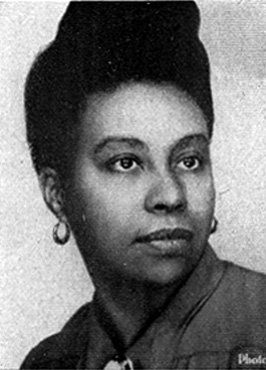
Gerty Archimède
## Gerty Archimède: The Trailblazing Advocate of the French West Indies ### Introduction and Historical Significance Gerty Marie Archimède stands as one of the most formidable legal minds, political pioneers, and feminist icons in the history of the Caribbean [1]. Born into the rigid colonial hierarchies of early twentieth-century Guadeloupe, she shattered systemic gender and racial barriers to become the very first woman lawyer in the French West Indies and only the second Black woman ever elected to the French National Assembly [2]. Operating during a turbulent era marked by the decline of classical colonialism, post-World War II departmentalization, and global labor awakenings, Archimède dedicated her entire life to the defense of the disenfranchised. Her fierce advocacy placed her in conversation and collaboration with leading intellectual and political luminaries of the era, including Martinican poet and statesman [Aimé Césaire](/profiles/aime-cesaire), French Guianese colonial administrator [Félix Éboué](/profiles/felix-eboue), and fellow trailblazing Guadeloupean deputy [Eugénie Éboué-Tell](/profiles/eugenie-eboue-tell) [3]. Throughout her career, Archimède wielded the law not merely as an instrument of courtroom defense, but as a revolutionary weapon for social justice, anticolonial solidarity, and the liberation of Antillean women [4]. ### Early Life and Foundations in Morne-à-l'Eau Gerty Archimède was born on April 26, 1909, in the vibrant agrarian municipality of Morne-à-l'Eau, located on the island of Grande-Terre in Guadeloupe [1]. She was the eldest of five daughters born to Justin Archimède and Marie-Mariette Françoise [5]. Her father, an artisan baker by trade, was a deeply civic-minded individual who rose to prominence in local politics, serving both as a member of the General Council and as the mayor of Morne-à-l'Eau [3]. From her earliest childhood, Gerty was immersed in political discourse, social debates, and the daily struggles of rural Guadeloupean workers. Justin Archimède instilled in his daughters a fervent belief in the power of education, civic duty, and moral courage, refusing to let conventional gender expectations limit their intellectual horizons [6]. During the 1920s, educational opportunities for women of color in the French Antilles were severely restricted. Undeterred, Archimède completed her primary education with excellence in her hometown before attending the Lycée Gerville-Réache in Basse-Terre [2]. Demonstrating a sharp analytical mind and a passion for justice, she moved to neighboring Martinique to begin her preparatory legal studies [5]. At the time, the intellectual climate in the French West Indies was beginning to stir with early expressions of Négritude and cultural pride, nurtured by pioneering thinkers such as [Paulette Nardal](/profiles/paulette-nardal) [7]. Fueled by these burgeoning movements, Archimède resolved to travel across the Atlantic to complete her legal education in metropolitan France.  ### Academic Pursuits and Legal Trailblazing Arriving in Paris during the lively and politically charged interwar period, Archimède enrolled at the prestigious Sorbonne to pursue her law degree [3]. Life in the French capital presented significant financial and cultural challenges for a young Caribbean woman. To finance her rigorous university studies, she worked diligently in various administrative and banking positions, displaying the extraordinary determination and resilience that would define her entire career [6]. In Paris, she witnessed firsthand the intellectual vibrancy of the Antillean and African diaspora, further sharpening her understanding of colonial exploitation and workers' rights [4]. Upon successfully obtaining her law degree, Archimède made a triumphant return to her homeland. In 1939, she etched her name into history by officially joining the Bar of Guadeloupe [1]. By doing so, she became the first female lawyer to practice in the French West Indies and was celebrated across the francophone world as a groundbreaking figure for women of color in the legal profession [2]. Entering a courtroom domain entirely dominated by elite colonial men, Archimède quickly earned a reputation as a fierce, brilliant, and deeply compassionate litigator. She chose not to cater to wealthy commercial clients; instead, she focused her legal practice on defending impoverished agricultural laborers, trade unionists, and victims of systemic exploitation [5]. Her courtroom oratory was legendary, blending precise statutory knowledge with passionate appeals to human dignity. ### Political Awakening and the Departmentalization Era The aftermath of World War II catalyzed a monumental shift in the political landscape of the French Caribbean [3]. As the old colonial regime faced mounting demands for equality and self-determination, Archimède stepped onto the national political stage. She formally joined the French Communist Party (PCF), attracted by its uncompromising platform advocating for worker solidarity, anticolonial liberation, and social equality [6]. In the historic elections of 1946, Archimède was elected as a deputy representing Guadeloupe in the French National Assembly [1]. Serving alongside [Eugénie Éboué-Tell](/profiles/eugenie-eboue-tell), she became one of the first two female deputies from Guadeloupe and the second Black woman to sit in the French parliament [2]. During her legislative tenure from 1946 to 1951, Archimède played a pivotal role in the enactment and implementation of the historic Law of Departmentalization of March 19, 1946 [4]. This transformational law officially integrated Guadeloupe, Martinique, French Guiana, and Réunion into the French Republic as overseas departments. Archimède fought tirelessly on the parliamentary floor to ensure that departmentalization was not merely a symbolic legal status, but a guarantee of substantive economic and social equality [7]. She campaigned vigorously for the extension of French social security benefits, labor protections, equal healthcare access, and standardized wages for Caribbean workers, fiercely challenging metropolitan parliamentarians who sought to maintain colonial-era wage differentials [5]. > [!NOTE] > Throughout her legislative service, Archimède viewed departmentalization as a battleground for human rights, relentlessly pressing the French state to fulfill its promises of liberty, equality, and fraternity for all Antillean citizens. ### Advocacy for Women and Grassroots Leadership Beyond her parliamentary achievements in Paris, Archimède recognized that lasting social transformation required grassroots empowerment at home [6]. In 1948, she founded the Guadeloupean federation of the Union of French Women, which shortly thereafter evolved into the autonomous Union des Femmes Guadeloupéennes (UFG) [2]. As the guiding force behind the UFG, Archimède mobilized thousands of working-class women across the archipelago. The organization became a powerful vehicle for progressive change, establishing literacy programs, demanding maternity protections, fighting for equal pay for female agricultural workers, and advocating for child welfare services [4]. Archimède also maintained a robust presence in local governance. In 1945, she was elected as a general councillor for the canton of Morne-à-l'Eau, serving as a vocal advocate for rural municipal development [1]. Later, in 1953, she was elected as the deputy mayor of the capital city, Basse-Terre, working closely with Mayor Elie Chaufrein to improve public infrastructure, sanitation, and educational facilities for underserved neighborhoods [3]. Her leadership style was deeply rooted in community accessibility; her home and law office remained open to anyone seeking legal counsel or protection from injustice, regardless of their ability to pay [5]. > "Gerty Archimède was not merely a defender of the law; she was a shield for the oppressed, a beacon of feminist pride, and an unyielding force who taught Caribbean women that justice is not granted by the powerful—it must be claimed with courage." — Antillean Historical Review [6] ### Bâtonnière and International Activism Archimède’s legal prowess reached its formal zenith in 1967 when her peers elected her as the Bâtonnière (President of the Bar Association) of Guadeloupe, a prestigious position she held with distinction until 1970 [4]. She was the first woman to lead the bar, reinforcing her status as a pioneer in judicial leadership [2]. During this period, the Caribbean and global political climate was rife with civil rights struggles and revolutionary movements. Archimède utilized her stature as Bâtonnière to champion international human rights and anticolonial solidarity across the Americas, paralleling the intellectual trajectories of radical Caribbean theorists like [Frantz Fanon](/profiles/frantz-fanon) [7]. One of the most defining and dramatic episodes of her legal career occurred in 1969 involving the prominent American civil rights activist and philosopher [Angela Davis](/profiles/angela-davis) [6]. While traveling back from a conference in Havana, Cuba, Davis and her companions stopped in Guadeloupe, where French colonial customs officials arbitrarily confiscated their passports under political pressure [6]. Facing imminent detention and harassment, Davis sought the counsel of Archimède. With commanding legal authority and fearless intimidation of the customs authorities, Archimède intervened directly at the airport. She successfully forced the officials to return the passports, ensuring Davis's safe passage [6]. In her autobiography, Angela Davis warmly commemorated Archimède’s profound dignity, sharp intelligence, and unwavering solidarity, describing her as an unforgettable hero of the international Black liberation struggle [6]. ### Later Years and Enduring Legacy Gerty Archimède continued her tireless legal and political advocacy until her health began to decline in the late 1970s [1]. She passed away on April 15, 1980, in her beloved hometown of Morne-à-l'Eau at the age of 70, leaving behind an extraordinary legacy of public service [5]. Her funeral was attended by thousands of mourning citizens, workers, and dignitaries from across the Caribbean, testifying to the deep affection and reverence she commanded [3]. Today, Archimède is immortalized as a foundational matriarch of Guadeloupean modern history [6]. Her former residence in Basse-Terre has been preserved and transformed into the Musée Gerty-Archimède, serving as a national center for historical education and human rights advocacy [4]. Numerous public schools, streets, and squares across Guadeloupe, as well as prominent thoroughfares in Paris and Nanterre, bear her name in permanent tribute to her monumental contributions [7]. By breaking gender barriers in the courtroom and parliament, defending the disenfranchised, and championing Caribbean dignity, Gerty Archimède established an enduring blueprint for feminist leadership and legal activism that continues to inspire generations throughout the global diaspora [4].
View Profile →Hunter J. Francois
### Hunter J. Francois: The Classical Visionary of Saint Lucian Education and Public Life Hunter J. François (1924–2014) stands as one of the most intellectually formidable and politically independent figures in the modern history of Saint Lucia. As a lawyer, educator, musician, and statesman, François played a foundational role in shaping the island’s transition from a British crown colony to an independent state. Serving as the Minister of Education, Health, and Social Services from 1964 to 1974, and later as Deputy Premier during the period of Associated Statehood, he pioneered the democratization of tertiary education in Saint Lucia through the conceptualization and construction of the Morne Fortune Educational Complex. After leaving active politics, he continued to serve his country as Saint Lucia’s first Parliamentary Commissioner (Ombudsman) and as the co-founder and first President of the Saint Lucia School of Music. Throughout his life, François was known for his uncompromising integrity, classical learning, and refusal to conform to partisan orthodoxy, making him a unique and enduring voice in Saint Lucian history. ### Early Life, Education, and Classical Foundations Born on February 19, 1924, in the southern district of Choiseul, Saint Lucia, François grew up in an era when the island was a colonial outpost in the British West Indies. Choiseul was a community deeply rooted in traditional arts and crafts, pottery, and farming, set against the dramatic backdrop of the Pitons. François’s early life was marked by the typical hardships of the pre-war Caribbean, but his family recognized his exceptional intellectual promise. His formal education began at the Anglican Infant and Primary schools in the capital, Castries. He subsequently secured a place at St. Mary’s College, the island's premier secondary school for boys. St. Mary’s College was an institution of legendary academic rigor, serving as the training ground for Saint Lucia’s intellectual elite. François’s classmates and contemporaries included other notable figures who would shape the intellectual landscape of the region, such as [Sir Arthur Lewis](/profiles/sir-arthur-lewis), the future Nobel Laureate in Economics, and [Derek Walcott](/profiles/derek-walcott), the future Nobel Laureate in Literature. At St. Mary’s, François developed a profound appreciation for the humanities, particularly classical languages and literature. He was a brilliant orator with an extraordinary memory, capable of reciting long passages of English prose and poetry, such as Macaulay’s writings, by heart. His mastery of language and debate naturally led him toward a career in law. He pursued private legal studies and was called to the Bar in 1949. Over the next decade, he established a successful legal practice in Castries, gaining a reputation for his sharp intellect, eloquence, and dedication to the rule of law. Beyond his professional duties, François was an accomplished pianist. He studied under Chester Catlow, an American concert pianist who had retired to Saint Lucia. For François, music was not merely a hobby but a vital form of intellectual and spiritual expression. His home became a salon for classical music, literature, and political debate. He married Olive François, and together they fostered a deeply artistic household, passing their musical talents to their children. His son, Luther François, would later become one of the Caribbean’s most celebrated jazz saxophonists, composers, and bandleaders, while his daughter, Deanna Clarke, would continue to champion his intellectual legacy.  ### Political Awakening and the Formation of the UWP In the 1950s, Saint Lucia was caught in the winds of political change. The introduction of universal adult suffrage in 1951 shifted the balance of power, allowing the working-class majority to challenge the political hegemony of the traditional planter-merchant oligarchy. François entered the political arena in 1954, contesting the Choiseul seat as an independent candidate. Although he was unsuccessful in this initial bid, the experience deepened his commitment to public service and political organizing. François eventually joined the People’s Progressive Party (PPP), led by [George Charles](/profiles/george-charles). The PPP was the primary political vehicle representing the emerging middle class and professional interests, often competing against the Saint Lucia Labour Party (SLP), which had deep ties to the trade union movement. By the early 1960s, Saint Lucian politics had become highly fractured, and many leaders realized that a unified coalition was necessary to lead the island toward self-government. In 1964, a historic political realignment occurred. The PPP merged with the National Labour Movement (NLM), led by a charismatic young politician named [Sir John Compton](/profiles/sir-john-compton). This merger resulted in the creation of the United Workers Party (UWP). François was a founding member of the UWP, representing the intellectual wing of the new party. In the general election of 1964, François contested the Castries East constituency and won his seat. The UWP secured a majority in the legislature, and John Compton became Chief Minister. François was appointed to the cabinet as the Minister of Education, Health, and Social Services, a sprawling portfolio that would allow him to implement his visionary ideas for Saint Lucian development. ### Transforming Saint Lucian Education: The Morne Fortune Complex When François took office as Minister of Education in 1964, the island's educational infrastructure was severely deficient. Secondary education was still a luxury reserved for the wealthy or a few scholarship winners, and tertiary education was non-existent. Students wishing to pursue higher education had to go abroad, creating a significant brain drain and limiting opportunities for social mobility. François believed that Saint Lucia's greatest resource was its human capital. He argued that a small island nation with limited land and no natural resources could only succeed by cultivating the minds of its citizens. He envisioned an education system that was democratic, comprehensive, and accessible to all. > 'A small island nation cannot afford the luxury of ignorance. We have no vast gold mines or oil fields; our only resource is the raw intelligence of our people, and it is the duty of the state to refine that resource through education.' — Hunter J. François [1] His signature achievement was the transformation of Morne Fortune. Located on a steep hill overlooking Castries, Morne Fortune had been a strategic military fortress during the 18th and 19th centuries, changing hands between the British and French fourteen times. The abandoned military barracks and brick structures stood as grim reminders of colonial warfare and occupation. François proposed a radical plan: to reclaim this site of colonial conflict and convert it into a tertiary education complex. Despite skepticism from critics who doubted the feasibility of the project and the suitability of the historic buildings, François persisted. He successfully oversaw the renovation of the military barracks and established the Morne Fortune Educational Complex. This complex housed several key institutions, including the Teachers' Training College, the Technical College, and the Morne Secondary School. For the first time, Saint Lucian students had access to local tertiary, vocational, and teacher training programs, laying the groundwork for the modern tertiary education system of the country. In 1985, these institutions were formally merged to create the Sir Arthur Lewis Community College (SALCC). The library at SALCC was named the Hunter J. François Library in his honor, reflecting his role as the architect of the college. Throughout his tenure, François also advocated for a balanced curriculum. In a famous 1978 article, he defended the teaching of Latin in Saint Lucian schools. While critics dismissed Latin as an outdated colonial subject, François argued that it provided West Indian students with a strong foundation in grammar, vocabulary, and analytical thinking, enabling them to compete globally. Scholars have noted that his defense of the classics was a sophisticated form of 'triangulation,' reclaiming European classical heritage as a tool of intellectual liberation for the post-colonial Caribbean.  ### Associated Statehood, Cabinet Conflict, and Resignation In 1967, Saint Lucia achieved Associated Statehood, which granted the island full control over its internal affairs while the United Kingdom retained responsibility for defense and foreign relations. John Compton became the first Premier, and François was appointed Deputy Premier, solidifying his position as the second most powerful leader in the government. However, the partnership between Compton and François was increasingly strained by ideological and personal differences. Compton was a highly pragmatic, action-oriented leader who built a centralized administration and demanded strict discipline from his cabinet. François, by contrast, was an independent-minded intellectual who valued debate and refused to act as a rubber stamp for executive decisions. He was one of the few ministers who consistently challenged Compton on policy matters and governance styles. The tension peaked over Compton's leadership style, which François viewed as increasingly autocratic. François did not hesitate to criticize the Premier publicly and privately, leading to heated clashes. In late 1972, refusing to compromise his principles, François resigned from the cabinet, relinquishing his ministerial portfolio. His departure was a significant blow to the UWP administration, as he was widely respected for his intellect and integrity. In 1974, François formally left the UWP and joined the opposition Saint Lucia Labour Party (SLP). He contested the Central Castries seat as an SLP candidate in the 1974 general elections, but the UWP’s political machine was too strong, and he was unsuccessful. François subsequently retired from active electoral politics, returning to his legal practice. ### The First Ombudsman: Protecting Citizens' Rights Although he had left electoral politics, François’s commitment to public service and good governance remained undiminished. When Saint Lucia attained full independence in 1979 under John Compton’s UWP government, the new constitution established the office of the Parliamentary Commissioner (Ombudsman) to investigate complaints of administrative injustice and abuse of power by public authorities. In 1982, Hunter François was appointed as Saint Lucia’s first Parliamentary Commissioner. He held this position until 1991, establishing the office as a critical pillar of democratic accountability. The task was challenging; the office was severely underfunded, and many public officials were resistant to scrutiny. During his tenure, François was a vocal advocate for the independence and authority of the Ombudsman. In his annual reports to Parliament, he expressed deep frustration that his recommendations were frequently ignored by successive administrations. He argued that the Ombudsman’s office could not function effectively without a permanent parliamentary committee dedicated to reviewing and enforcing its findings and holding public officials accountable. His work in defining the role of the Ombudsman laid the foundation for administrative justice in Saint Lucia. ### Founding the School of Music and Late Life Alongside his legal and public career, François remained a passionate patron of the arts. He believed that cultural education, particularly music, was essential for the spiritual and intellectual development of a nation. In 1987, he was a key figure in the establishment of the Saint Lucia School of Music, serving as its first President. Under his leadership, the school developed a structured curriculum in classical and Caribbean music, training generations of Saint Lucian musicians and music educators. He also served as Chairman of the Board of Radio St. Lucia and was selected to participate in a special international commission that examined the Haitian government during the political crises of the late 1980s. In his later years, François retired from public life, spending his time playing the piano, reading, and offering counsel to young lawyers and political figures. He passed away on November 15, 2014, at the age of 90. His death marked the end of an era of Saint Lucian politics characterized by classical education, intellectual debate, and independent leadership. ### Tributes and Legacy Hunter J. François’s passing was mourned across the political spectrum. Former Prime Minister [Dr. Kenny Anthony](/profiles/kenny-anthony) paid tribute to his independent mind and refusal to yield to partisan tribe: > 'Hunter François was a man of independent mind, a radical political thinker, and one of the finest orators this country has ever produced. He was, in many ways, the last of the great politicians of his era.' — Dr. Kenny Anthony [6] The Saint Lucian government honored his memory by naming a major road in Monchy, Gros Islet, the 'Hunter J. François Drive.' Today, François is remembered as the architect of Saint Lucia's tertiary education system and a champion of artistic and administrative excellence. His life serves as a powerful reminder that Caribbean national development must be rooted in intellectual rigor, cultural expression, and the defense of democratic institutions.
View Profile →McWelling "Mac" Todman
### Introduction McWelling "Mac" Todman, CBE, QC (December 25, 1923 – March 7, 1996) was a pioneering legal counsel, dedicated civil servant, and key constitutional architect of the British Virgin Islands (BVI). As the first native-born British Virgin Islander to establish a private law practice in the territory, Todman broke through colonial barriers, dismantling the monopoly held by foreign practitioners and demonstrating that local professionals possessed the capacity to manage their own country's legal and commercial affairs [1]. Over a career that spanned several of the territory's most transformative decades, he served in crucial administrative roles, sat on the Public Service Commission for nearly a quarter of a century, and shaped the BVI's legal framework during its rise as a global financial services hub. A man of formidable intellect, compelling oratory, and deep religious faith, Todman was widely regarded as a moral anchor for the territory—a leader who guided the BVI away from colonial dependency and toward self-governance and self-determination [2].  ### Early Life and the Colonial Context McWelling Todman was born on Christmas Day, December 25, 1923, on the island of Tortola, British Virgin Islands [2]. Growing up in the 1920s and 1930s, Todman experienced a society characterized by extreme geographic isolation, economic deprivation, and a complete lack of secondary educational opportunities. The presidency of the British Virgin Islands had been stripped of its local Legislative Council in 1902, leaving the territory under the direct autocratic control of a British Commissioner who answered to the Governor of the Leeward Islands in Antigua. The local economy was based almost entirely on subsistence farming, livestock raising, and maritime trade with the nearby United States Virgin Islands (USVI). Despite these hardships, Todman showed a remarkable academic aptitude from an early age. Since secondary schools did not exist in the BVI during his youth, the only available pathway for intellectually gifted young locals was the teaching profession. Following this path, Todman began his career as a primary school teacher on Tortola [2]. In this role, he was responsible for educating classrooms of children under challenging conditions, using minimal resources. This experience proved foundational; it honed his public speaking abilities, his patience, and his dedication to community development. Teaching also exposed him to the widespread structural inequalities of the colonial system, fueling a lifelong belief that education and institutional reform were the essential pillars of local empowerment. ### Civil Service and Regional Governance In the late 1940s, Todman transitioned from the classroom to the colonial administration, entering the civil service. His administrative competence and diligence stood out, and within the British colonial structure, he was designated for higher administrative responsibilities. In the mid-1950s, he was transferred to Antigua, the administrative center of the Leeward Islands, where he served in key administrative posts. His career took a major regional turn in 1957 when he was appointed to the civil service of the Federation of the West Indies [2]. Established in 1958, the Federation was a political union of several British Caribbean colonies, including Jamaica, Trinidad and Tobago, Barbados, and the Leeward and Windward Islands, designed to achieve joint independence from the United Kingdom. Todman was stationed in Barbados, where he worked at the center of the federal administrative structure. This period of regional service was highly formative. Working alongside future Caribbean leaders, economists, and legal scholars, Todman was exposed to the vital debates surrounding federalism, decolonization, and economic planning. Although the Federation of the West Indies dissolved in 1962 due to national rivalries and constitutional disagreements, Todman returned to the British Virgin Islands with a vastly broadened perspective. He had witnessed the complexities of governance and returned with a firm conviction that the BVI must take active control of its own political and constitutional destiny. ### Constitutional Advocacy and the 1950 Critique Upon his return to the BVI, Todman became directly involved in the territory's constitutional struggles. In 1949, the "Great March" led by [Theodolph Faulkner](/profiles/theodolph-faulkner), [Isaac Fonseca](/profiles/isaac-fonseca), and Carlton de Castro had mobilized the BVI population to demand the reinstatement of local legislative representation. In response, the British government passed the Constitutional Act of 1950, which restored the BVI Legislative Council. While many celebrated this restoration, Todman analyzed the new constitution with critical skepticism. He recognized that the Legislative Council was granted very little actual power, as the British Commissioner retained an absolute veto and executive authority, and the franchise remained restricted. In a critique that became a cornerstone of BVI political history, Todman described the 1950 constitution as: > "an instrument minimal in its intent and its effect" [3] Todman argued that the British government had done the bare minimum to appease local unrest, restoring a powerless advisory council rather than granting genuine self-governance or executive authority to local representatives. Throughout the 1950s and 1960s, Todman used his administrative experience and legal knowledge to advocate for progressive constitutional reforms. He worked alongside local leaders to push for the transfer of executive power to elected ministers, culminating in the 1967 Constitution, which introduced the ministerial system of government under the territory's first Chief Minister, [Lavity Stoutt](/profiles/lavity-stoutt) [4]. ### A Legal Trailblazer: Founding McW. Todman & Co. To better serve his country's legal needs, Todman traveled to the United Kingdom to pursue formal legal training. He entered the Honourable Society of Gray's Inn in London, where he studied English common law. He was called to the Bar in London, and upon returning to Tortola, he made history in 1969 by establishing **McW. Todman & Co.** in Road Town [1]. This was a milestone event: Todman was the first native British Virgin Islander to establish a private law practice in the territory [1]. Prior to this, the legal profession in the BVI was dominated by British colonial officials and lawyers from other Caribbean islands who traveled to Tortola for court sessions. By founding his own firm, Todman shattered the colonial monopoly and demonstrated that local people could successfully manage their own legal affairs. McW. Todman & Co. grew rapidly, establishing a reputation for legal excellence, integrity, and client dedication. As the BVI began to develop its corporate registry and trust sectors in the late 1970s and 1980s, eventually passing the historic International Business Companies (IBC) Act in 1984 under the leadership of Chief Minister [Cyril Romney](/profiles/cyril-romney) [5], Todman's firm was at the forefront of this economic revolution. He became a leading expert in corporate and commercial law, helping to draft local legislation and advising the government on how to regulate the burgeoning offshore financial services industry. Beyond his commercial work, Todman was deeply committed to mentoring young BVI lawyers. He used his firm as a training ground, providing clerkships and mentorship to native islanders who aspired to enter the legal profession. Many of the territory's current judges, senior lawyers, and political leaders began their careers under Todman's guidance, ensuring that his legacy of legal excellence was passed on to future generations. ### Public Service Commission and Professional Leadership Despite a thriving private practice, Todman remained dedicated to public service. In 1970, he was appointed to the newly established British Virgin Islands Public Service Commission (PSC), the independent body responsible for the appointment, promotion, and discipline of civil servants. Todman served on the PSC for an astonishing twenty-four years, from 1970 until 1994, during which he helped guide the civil service through the challenges of rapid modernization [2]. He was a fierce advocate for the professionalization of the public sector, arguing that promotions must be based on merit and performance rather than political patronage or colonial favoritism. His presence on the Commission provided stability and reassurance to the territory's civil servants during a period of significant political change. In recognition of his outstanding contributions to the legal profession and public service, Todman received numerous honors. In 1970, he was appointed an Officer of the Order of the British Empire (OBE). In 1980, he was elevated to Queen's Counsel (QC), a prestigious designation reflecting his status as one of the territory's leading barristers [2]. In 1988, he was awarded the Commander of the Order of the British Empire (CBE). He also served as the President of the BVI Bar Association from 1982 to 1986, where he worked to uphold the standards of the legal profession and foster cooperation among local practitioners. ### Faith, Family, and Oratory Outside of his professional life, Todman was a man of deep religious faith and community commitment. In 1952, he married Audrey Creque, and the couple had three children [2]. Their home was known as a place of hospitality, culture, and intellectual discussion. Todman was a dedicated lay preacher at the Road Town Methodist Church. His sermons were legendary for their theological depth, intellectual clarity, and rhetorical power [2]. He possessed a rich, resonant voice and a command of the English language that captivated his congregations. Friends and colleagues noted that his preaching style reflected his legal training—logical, persuasive, and deeply rooted in moral principles. He used his pulpit to address not only spiritual matters but also the ethical responsibilities of citizenship, arguing that a just society could only be built on a foundation of personal integrity, social responsibility, and mutual respect. ### Death and Legacy McWelling "Mac" Todman died on March 7, 1996, at the age of 72 [2]. His passing was mourned throughout the British Virgin Islands and the wider Caribbean. In an obituary published in the London newspaper *The Independent*, he was remembered as a man of profound intellect and humility who had played a central role in shaping his country's destiny: > "A man of profound intellect and deep-seated humility, Mac Todman did not merely practice the law; he helped forge the civic consciousness of the British Virgin Islands." [2] Today, Todman's legacy is visible in the robust BVI legal profession, the independent civil service, and the territory's continued commitment to self-government. The firm he founded, McW. Todman & Co., remains one of the most prestigious law practices in the territory, serving as a living monument to his pioneering spirit. He is remembered as a true founding father of the modern British Virgin Islands, a leader who proved that local people possessed the capability, intellect, and moral authority to govern their own affairs and shape their own future.
View Profile →
Norman Manley
### A Nation's Architect: Norman Washington Manley  **Norman Washington Manley** (July 4, 1893 – September 2, 1969) stands as one of the towering figures of Caribbean history — a man whose intellect, integrity, and unshakeable belief in the dignity of his people transformed a colonial backwater into a proud, sovereign nation. Lawyer, scholar, athlete, political visionary, and statesman, Manley wore each identity with equal distinction. As the founder of the People's National Party, Jamaica's first Premier, and a principal architect of independence, he gave institutional form to the aspirations of generations of Jamaicans who had lived under the weight of British colonial rule. Declared a National Hero of Jamaica in 1969 — the very year of his death — his legacy endures in the law schools, political institutions, and democratic culture he helped forge. --- ### Early Life: Roxborough to the World Norman Manley was born on **July 4, 1893**, in the rural community of **Roxborough in Manchester, Jamaica**, to Thomas Albert Samuel Manley, a planter and produce dealer of mixed African and English descent, and Margaret Ann (née Shearer), a pen keeper of partial Irish ancestry [1]. He was one of four children, and his early years were spent on his father's country property — a pastoral upbringing that would ground him in the realities of Jamaican rural life even as he rose to extraordinary heights of learning and influence. The death of his father during his boyhood precipitated a move; his mother relocated the family to **St. Catherine**, where they settled on a property called *Belmont* [2]. It was here that Manley's formidable academic abilities first began to attract notice. He attended Guanaboa Vale Elementary School from the age of eight, then embarked on his secondary education at **Wolmer's Boys' School** in Kingston, before transferring to **Beckford and Smith's** (now St. Jago High School) in Spanish Town to remain closer to home [3]. His academic brilliance eventually won him an **Open Scholarship to Jamaica College**, one of the island's most prestigious secondary institutions. At Jamaica College, Manley proved himself to be no narrow scholar — he was a formidable all-round athlete, excelling at football, cricket, boxing, and track and field. This combination of intellectual and physical excellence would characterize his entire life. After graduating, he taught briefly at Jamaica College and at the Hope Farm School, mentoring younger Jamaicans even as he prepared for the even greater stage that awaited him. --- ### The Rhodes Scholarship and the Crucible of War Manley's academic reputation earned him a **Rhodes Scholarship to Jesus College, Oxford** — one of the most prestigious academic honours in the British Empire [4]. He arrived at Oxford in 1914, the world's great universities still humming with the confident pace of Edwardian learning, only for that world to be shattered almost immediately by the outbreak of **World War I**. Manley did not hesitate. He enlisted in the **Royal Field Artillery** of the British Army and served with distinction on the Western Front [5]. His courage under fire was formally recognised when he was awarded the **Military Medal (MM)** for bravery in action — a decoration that reflected not only physical valour but the force of character that would define his public life. War was not merely an interruption; it was a crucible. The experience of fighting alongside men of every background, and the exposure to the brutal realities of European imperialism in its most naked form, deepened Manley's convictions about equality, justice, and the right of peoples to determine their own destiny. Returning to Oxford in 1919 after the Armistice, Manley distinguished himself academically as he had militarily. He graduated with a **Bachelor of Civil Law (BCL) with First Class Honours** — among the highest academic distinctions the university could confer [6]. He also won the prestigious **Lee Prizeman (Essay)** award and received a **Certificate of Honour** at Gray's Inn, where he was called to the Bar in **1921** [7]. He had arrived in England as a colonial subject and left as one of the most credentialed legal minds the Caribbean had ever produced. --- ### Jamaica's Greatest Barrister Manley returned to Jamaica and established a legal career of almost legendary renown. Rising with extraordinary speed through the profession, he was appointed **King's Counsel (KC)** in **1932** — a recognition of the very highest level of legal advocacy [8]. He became the first Jamaican to argue a case before the **Judicial Committee of the Privy Council** in London, Jamaica's highest court of appeal, a distinction that underscored both his exceptional skill and his standing among his peers. In the courtroom, Manley was formidable: meticulous in his research, devastating in cross-examination, and capable of oratory that could move a jury to tears or a judge to reconsideration. Popular folklore in Jamaica held that if someone were in the most serious legal trouble — facing the gallows, perhaps, or confronting the full weight of the colonial state — then their best and perhaps only hope was to secure the services of *Mr. Manley* [9]. He was known particularly for his willingness to represent the dispossessed, the worker, the ordinary Jamaican who had little voice before the colonial legal establishment. It was his reputation as an advocate for justice — not merely for the wealthy — that made his transition into politics not a departure from his legal career but its natural continuation. --- ### The Turbulent Year of 1938: Birth of the PNP The year **1938** changed Jamaica forever. Driven by the economic devastation of the Great Depression, the island's labouring classes — plantation workers, dock workers, domestic servants — erupted in a series of strikes and riots that shook the foundations of colonial rule. The unrest began at the **Frome sugar estate** in Westmoreland in April 1938 and rapidly spread to Kingston and beyond. Workers demanded better wages, human dignity, and an end to the grinding poverty imposed by a system designed to benefit the British Empire, not the Jamaican people. Into this moment of crisis stepped two cousins who would define Jamaican politics for a generation: **Norman Manley** and [Alexander Bustamante](/profiles/alexander-bustamante). Bustamante, a charismatic and flamboyant labour agitator, became the voice of the streets — famously baring his chest to police during a confrontation and daring them to shoot, a moment of theatrical courage that made him a hero of the working class [10]. Manley, the cerebral barrister, provided essential legal support to striking workers and, in a celebrated act of family loyalty and professional courage, **defended Bustamante himself** when the colonial authorities arrested the labour leader. But Manley understood that legal victories alone could not transform Jamaica. What the island needed was a political vehicle capable of channelling the energy of 1938 into lasting constitutional change. In **September 1938**, just months after the peak of the unrest, Manley founded the **People's National Party (PNP)** [11]. He would serve as its president for the next **31 years**, until the very last days of his life. The PNP drew its early membership largely from the professional and educated middle class — lawyers, teachers, journalists — but its declared mission was explicitly the empowerment of the masses. Manley articulated a vision of Jamaica not as a colonial possession, but as a sovereign democratic nation in which political power belonged to the people. Universal adult suffrage was central to this vision. --- ### Cousins, Rivals, and the Making of Two-Party Democracy The relationship between Norman Manley and [Alexander Bustamante](/profiles/alexander-bustamante) is one of the great dramas of Caribbean political history — a story of family bonds, ideological divergence, and competing visions of what Jamaica should become. Initially, the cousins operated in allied spheres: Bustamante commanding the labour movement and Manley providing its political and legal scaffolding. But their temperaments and ambitions were too different to sustain a permanent alliance. In **1943**, Bustamante founded the **Jamaica Labour Party (JLP)**, creating a rival political vehicle aligned directly with his Bustamante Industrial Trade Union (BITU) [12]. When **Universal Adult Suffrage** was finally granted in **1944** — a cause Manley had championed tirelessly — it was the JLP that won the first election held under the new system, with Bustamante becoming Chief Minister [13]. Manley and the PNP spent the next decade in opposition, refining their policies and expanding their base. The rivalry between the two parties — and between the two cousins who led them — was often fierce, occasionally personal, and always consequential. Yet it also produced something remarkable: a functioning two-party democratic system in a newly self-governing Caribbean island, a model of political pluralism that would prove more durable than many of its contemporaries elsewhere in the decolonising world. --- ### Premier of Jamaica: Building the Nation In **1955**, Norman Manley led the PNP to its first general election victory, becoming **Chief Minister of Jamaica** [14]. Re-elected in **1959**, he was elevated to the newly created title of **Premier** — the first and only person to hold that office in Jamaican history before independence [15]. These years represent the pinnacle of his constructive political achievement. Under his leadership, Jamaica achieved **full internal self-government in 1959**, with the local government gaining authority over most domestic affairs [16]. Manley used this period to lay the institutional foundations of a modern state: building the civil service, expanding education, promoting economic development, and enshrining the rule of law as the bedrock of public life. He was a constitutionalist to his core — a man who believed that political freedom was only meaningful if undergirded by strong, impartial institutions. > *"I say that the mission of my generation was to win self-government for Jamaica, to win political power which is the final power for the black masses of my country from which I spring. I am proud to stand here today and say to you who fought that fight with me, say it with gladness and pride, mission accomplished for my generation."* > — **Norman Washington Manley**, final address to the PNP Annual Conference, 1969 [17] Manley was also an early and passionate advocate for **West Indian regionalism**. He saw the fragmented islands of the British Caribbean not as isolated outposts but as a potential federation that could achieve, collectively, the economic scale and political weight that none could attain alone. He championed Jamaica's membership in the **West Indies Federation**, which was formally established in **1958** [18]. --- ### The Federation Referendum and the Road to Independence Manley's commitment to the West Indies Federation was genuine and deeply held, but it put him on a collision course with popular sentiment — and with [Alexander Bustamante](/profiles/alexander-bustamante), who ran a potent campaign against federation, arguing that Jamaica would be subsidising poorer islands at the expense of its own development. In a bold act of democratic principle, Manley called a **referendum on September 19, 1961** to let the Jamaican people decide the question themselves — an unprecedented step in Caribbean political history [19]. The result was a defeat for his federalist vision: approximately **54% voted to withdraw** from the Federation, with 251,935 "No" votes against 216,400 "Yes" votes [20]. The West Indies Federation subsequently collapsed. Manley accepted the verdict with characteristic dignity. Rather than allowing the defeat to paralyse his government, he immediately pivoted to the task of securing Jamaica's independence as a separate nation. He **chaired the joint committee that drafted Jamaica's independence constitution** and personally led the team that negotiated the terms of independence with the British government [21]. In the **general election of April 1962**, Manley lost to Bustamante's JLP — meaning that it was Bustamante, not Manley, who became the first Prime Minister of independent Jamaica when the island achieved sovereignty on **August 6, 1962** [22]. For a lesser man, this might have felt like history's cruel joke: to lay all the groundwork for independence only to be denied the moment of formal triumph. But Manley moved gracefully into the role of **Leader of the Opposition**, in which he helped define the norms and responsibilities of parliamentary opposition in a young democracy — a contribution as important, in its way, as any he had made in government. --- ### Family, Culture, and the Manley Dynasty No account of Norman Manley is complete without his wife, **Edna Manley** (née Swithenbank, 1900–1987), whom he married in **1921** [23]. Born in England, Edna was a sculptor of extraordinary talent who became the acknowledged "mother of Jamaican art." Her work — deeply rooted in themes of social change, national identity, and the spiritual life of the Jamaican people — both reflected and inspired the nationalist movement her husband led. She helped found the **Jamaica School of Art and Craft** (later renamed the Edna Manley College of the Visual and Performing Arts) and was a founding member of the National Gallery of Jamaica. Together, Norman and Edna had two sons, Douglas and **Michael Manley** (1924–1997). Michael followed his father into politics, succeeding him as leader of the PNP in **1969** and serving three terms as Prime Minister (1972–1980 and 1989–1992) [24]. A champion of democratic socialism, Caribbean solidarity, and the rights of the developing world, Michael carried his father's torch into a new era — making the Manleys the most consequential political family in Jamaican history. Notably, Norman Manley was also the first cousin of [Alexander Bustamante](/profiles/alexander-bustamante), his great political rival. Their kinship — and the way it was both reinforced and tested by their political rivalry — gives the founding of modern Jamaica an almost Shakespearean dimension: two men of the same blood, united by love of country but divided by temperament and method, between them giving their nation its democratic form. --- ### Death and Posthumous Honours Norman Manley retired from active political life on **July 4, 1969** — fittingly, his 76th birthday — due to failing health. He delivered one final, electrifying address to the PNP's annual conference, in which he declared his generation's mission accomplished and challenged the next to build upon the political foundations they had laid. He spoke of the need to reconstruct Jamaica's social and economic life — to move from the achievement of political freedom to the harder work of genuine equality. Just weeks later, on **September 2, 1969**, Norman Washington Manley died [25]. In recognition of his incomparable contribution to Jamaican nationhood, he was posthumously declared a **National Hero of Jamaica** — one of only seven individuals to receive that honour [26]. His legacy is commemorated across Jamaica: the **Norman Manley International Airport** in Kingston bears his name, as does the **Norman Manley Law School**, the principal institution for legal education in the anglophone Caribbean. The law school is a particularly fitting tribute — honouring a man who used the law not merely as a profession, but as an instrument of justice and liberation. --- ### Enduring Legacy Norman Manley's place in Caribbean history is secured by the breadth and depth of his achievement. He was a man of the highest intellectual calibre — a First Class Honours graduate of Oxford, a Military Medal winner, King's Counsel, and the foremost barrister of his generation — who chose to place all of those gifts in the service of the least powerful members of his society. He built institutions that outlasted him: the PNP, which has shaped Jamaican politics for nearly nine decades; the constitutional framework of an independent Jamaica; the Norman Manley Law School, which has trained Caribbean lawyers for generations. He stood alongside and against figures like [Alexander Bustamante](/profiles/alexander-bustamante) and helped give Jamaica a two-party democracy when such things were far from guaranteed. His story is inseparable from those of other Caribbean giants: [Marcus Garvey](/profiles/marcus-garvey), whose pan-African vision animated the broader movement for Black self-determination in which Manley participated; [Alexander Bustamante](/profiles/alexander-bustamante), his cousin and greatest political rival; and later leaders like [Portia Simpson Miller](/profiles/portia-simpson-miller), who inherited a democratic tradition Manley did so much to build. In his final speech, Manley posed the question that has animated every Jamaican generation since: having won political freedom, what will we build with it? The question was his final gift — a challenge, not a conclusion. It is the measure of his greatness that Jamaicans are still answering it. ### References 1. [Norman Manley — Wikipedia](https://en.wikipedia.org/wiki/Norman_Manley) 2. [Norman Manley — Jamaica Information Service](https://jis.gov.jm/information/heroes/norman-washington-manley/) 3. [Norman Manley — National Library of Jamaica](https://nlj.gov.jm/history-notes/norman-washington-manley/) 4. [Norman Manley — Norman Manley Law School](https://nmls.edu.jm/about/norman-manley/) 5. [Norman Manley — Britannica](https://www.britannica.com/biography/Norman-Manley) 6. [Norman Manley — Jamaica National Heritage Trust](https://jnht.com/national-heroes/norman-manley/) 7. [The 1938 Labour Riots and the Birth of Jamaican Party Politics](https://www.cambridge.org/core) 8. [Norman Manley — The Guardian Obituary](https://www.theguardian.com) 9. [West Indies Federation Referendum 1961 — Jamaica Observer](https://www.jamaicaobserver.com) 10. [The Manley Family Legacy — Jamaica Observer](https://www.jamaicaobserver.com)
View Profile →Ormond L. Panton
# Ormond Lauder Panton, OBE: Progressive Visionary and Father of Modern Caymanian Politics ### Introduction: The Dawn of Political Self-Determination During the middle decades of the twentieth century, the Cayman Islands experienced a profound social and political awakening. For over two centuries, the governance of the islands had been administered through a paternalistic colonial framework and a traditional Vestry system that largely reflected the interests of a small, entrenched merchant elite. As post-war decolonization movements swept across the Caribbean region, a new generation of educated, progressive thinkers began to demand formal representation, constitutional reform, and equal rights for all citizens. At the very forefront of this vanguard stood Ormond Lauder Panton, OBE (1920–1992), a brilliant attorney, fearless defender of the underprivileged, and the foundational architect of modern party politics in the Cayman Islands. Revered today as a National Hero of the Cayman Islands alongside colleagues such as [Sybil McLaughlin](/profiles/sybil-mclaughlin) and [Jim Bodden](/profiles/jim-bodden), Ormond Panton dedicated his life to breaking down socio-economic barriers and establishing true democratic self-governance [1]. ### Early Life, Legal Practice, and Champion of the People Born on June 24, 1920, into a well-known Caymanian family, Ormond Lauder Panton exhibited a keen intellect and a fierce sense of justice from an early age. Pursuing a career in law, he underwent rigorous training to become an attorney-at-law, returning to practice in George Town at a time when legal representation was frequently out of reach for the majority of the working-class population. Panton quickly established himself as a formidable courtroom advocate and a compassionate counselor who willingly accepted cases regardless of a client's financial standing or social background [2]. Throughout the 1940s and 1950s, Panton became recognized as the undisputed champion of the socially disadvantaged and non-white communities across Grand Cayman, Cayman Brac, and Little Cayman. He vigorously fought against systemic workplace discrimination, unfair labor practices, and judicial prejudice. His law office became a sanctuary where disenfranchised citizens could seek defense against arbitrary colonial administrative decisions. Working closely with peers like [William Warren Connolly](/profiles/william-warren-connolly), Panton used the legal system as a catalyst for social reform, insisting that the rule of law must apply equally to the powerful and the poor alike [3]. > "Ormond Panton was not merely a courtroom lawyer; he was the conscience of a developing nation. When he stood before the bar, he spoke for every Caymanian who had been denied a voice in the halls of power." [4] ### The Historic 1955 Privy Council Triumph Panton’s reputation as a pioneering legal scholar reached international milestones in 1955 during a high-stakes constitutional and criminal defense battle. Confronting a flawed local trial that threatened the fundamental due process rights of his defendants, Panton refused to accept the status quo of the colonial judicial hierarchy. Displaying extraordinary legal courage, he appealed the matter all the way to the Judicial Committee of the Privy Council in London—the highest appellate court in the British Empire [5]. In doing so, Ormond Panton made history as the very first Caymanian attorney to ever appear before the Privy Council. Arriving in London, he presented an articulate, masterfully reasoned argument that exposed critical procedural irregularities in the local courts and successfully secured a landmark triumph for fair trial rights. This historic victory not only vindicated his clients but also permanently elevated the standard of jurisprudence throughout the Cayman Islands. It demonstrated to colonial administrators that local attorneys possessed the world-class expertise required to hold the crown accountable to the constitutional principles of justice.  ### Regional Diplomacy and the West Indies Federation As the British government initiated plans to reorganize its Caribbean colonies during the late 1950s, Ormond Panton stepped onto the regional diplomatic stage. He was chosen as the youngest delegate to represent the Cayman Islands at the historic constitutional conferences discussing the formation of the **West Indies Federation**. At these summits, Panton engaged in intense debates alongside legendary Caribbean statesmen, including Jamaica's [Norman Manley](/profiles/norman-manley) and [Alexander Bustamante](/profiles/alexander-bustamante), as well as Barbados's [Grantley Adams](/profiles/grantley-adams) [6]. Panton possessed a nuanced, sophisticated vision for his homeland. While he strongly advocated for progressive self-government and modernization, he was also deeply protective of Cayman's unique economic structure and autonomy. Unlike many regional politicians who favored immediate total integration, Panton supported maintaining constructive political and economic ties with Jamaica and the broader federation while safeguarding local Caymanian control over taxation and internal trade. Although the West Indies Federation ultimately collapsed in 1962, Panton’s diplomatic maneuvers ensured that the Cayman Islands emerged from the transition with a clear trajectory toward a tailored constitutional framework distinct from Jamaica. ### Founding the National Democratic Party (NDP) Recognizing that modern democracy required formal ideological organization rather than individual personality clashes, Ormond Panton took a revolutionary step in 1961 by establishing the **National Democratic Party (NDP)**. Co-founded alongside progressive allies such as [William Warren Connolly](/profiles/william-warren-connolly), the NDP stands in history as the very first formally organized political party in the Cayman Islands [7]. The NDP established a bold, progressive platform aimed at comprehensive social reform. It demanded greater self-determination, the expansion of public education, improved healthcare infrastructure, and fair political representation for working-class laborers and marginalized communities. This progressive agenda stood in stark contrast to the conservative Christian Democratic Party (CDP), led by veteran politicians [Thomas William Farrington](/profiles/thomas-william-farrington) and Edgar Merren, who favored a more cautious approach that preserved existing colonial hierarchies. Through dynamic town hall meetings and grassroots organizing, Panton ignited a level of political engagement never before witnessed in Caymanian history.  ### The 1962 Electoral Victory and Colonial Obstruction The watershed moment of Panton’s political career arrived during the general elections of November 1962. Running a disciplined, energetic campaign under the NDP banner, Panton captured the imagination of the electorate. When the ballots were counted, the National Democratic Party won a decisive victory, securing seven of the twelve elected seats in the Legislative Assembly. With this triumph, Ormond Panton became the first politician in Caymanian history to win a democratic election as the leader of a political party, earning the mandate to become the island's first de facto leader of government [8]. However, the forces of colonial conservatism reacted swiftly to block Panton’s progressive agenda. At the time, the British constitutional framework empowered the colonial Administrator (Commissioner Jack Rose) to appoint additional nominated members to the legislature and Executive Council. Fearing Panton's reformist zeal and nationalistic policies, Commissioner Rose exercised these controversial reserve powers to appoint nominated members sympathetic to the defeated opposition. By artificially diluting the NDP's elected majority, colonial authorities successfully thwarted democratic majority rule, keeping Panton from securing control of the Executive Council [9]. Although this political obstruction prevented Panton from formally leading the government and eventually contributed to the dissolution of the NDP, his moral victory permanently discredited autocratic colonial interference and laid the inevitable groundwork for constitutional ministerial government. > "They may have used colonial maneuvers to deny Ormond Panton the executive leadership in 1962, but they could never take away his mandate from the people. He won the ultimate victory by planting the seeds of modern Caymanian democracy." [10] ### Later Years, Community Leadership, and National Hero Status Following the active party struggles of the 1960s, Ormond Panton transitioned into a revered elder statesman and civic leader. He channeled his immense energies into community development, mentoring a younger generation of politicians who would later dominate Caymanian public life, including future National Hero [Jim Bodden](/profiles/jim-bodden). Panton played a pioneering role in national commerce and connectivity by serving as a director for Cayman Airways, helping to build the national flag carrier into a pillar of tourism and economic independence [11]. Furthermore, he became one of the first chartered members of Rotary Club in the Cayman Islands, championing numerous philanthropic initiatives for youth and healthcare. In 1984, in recognition of his lifetime of selfless service and transformative impact on society, Her Majesty Queen Elizabeth II appointed Ormond Lauder Panton an Officer of the Order of the British Empire (OBE). When he passed away on January 22, 1992, at the age of 71, thousands paid tribute to the man who had fought tirelessly for equality and justice. In 2011, the Cayman Islands government officially elevated Ormond Lauder Panton to the rank of **National Hero of the Cayman Islands**, enshrining his legacy forever as a visionary founder of modern democratic governance.
View Profile →
Paul Adderley
## Introduction The Honourable Paul Lawrence Adderley (August 15, 1928 – September 19, 2012) stands as a towering figure in the political and legal history of [The Bahamas](/islands/the-bahamas). Widely regarded as one of the chief architects of the modern Bahamian state, Adderley’s legacy is defined by his powerful intellect, his unassailable integrity, and his fierce dedication to the rule of law. Serving as the country's first and longest-serving Attorney-General of the 20th century, he laid the legal framework for an independent Bahamas and defended its sovereignty during some of its most challenging decades. His career, spanning more than half a century, saw him navigate the turbulent waters of pre-independence politics, the formation of splinter parties, and ultimately a triumphant return to the governing Progressive Liberal Party (PLP). As a framer of the Bahamian Constitution and a statesman of the highest order, Adderley’s contributions to nation-building are indelibly etched into the fabric of the country. ## Early Life, Family Legacy, and Education Born in Nassau, New Providence, on August 15, 1928, Paul Adderley was destined for a life of public service. He was born into an environment of exceptional privilege and heavy expectation. His father, the Honourable Alfred Francis Adderley, was a pioneering Black Bahamian lawyer, politician, and community leader who set a formidable standard for excellence in the racially stratified society of the colonial Bahamas. His mother, Ethel M. L. Adderley, provided a nurturing environment that emphasized education, discipline, and civic responsibility. Growing up in this intellectually stimulating household, young Paul was acutely aware of the systemic inequalities that characterized the era of the United Bahamian Party (UBP) oligarchy, yet he was equally insulated by his family's elite status among the Black Bahamian middle class. Adderley’s formal education began at Mrs. Maude Wright’s Primary School, a well-regarded institution in Nassau. He later attended the prestigious Government High School, a crucible for many of the nation’s future leaders. Exhibiting the rigorous analytical mind that would later define his legal career, he matriculated at St. Catharine's College, Cambridge University in the United Kingdom. There, he earned a Bachelor of Arts in Law in 1950 and a Bachelor of Laws (LL.B.) in 1951. Following in his father's footsteps, he was called to the English Bar at the Middle Temple in 1953. Later that same year, he returned home and was called to the Bahamas Bar, marking the beginning of a distinguished legal practice that would parallel his rise in politics.  ## Entry into Politics and Early PLP Years Upon his return to The Bahamas in the 1950s, the political landscape was shifting. The majority Black population was beginning to agitate against the entrenched white mercantile elite known as the "Bay Street Boys." Adderley, with his Cambridge pedigree and deep sense of justice, naturally gravitated toward the burgeoning progressive movement. He joined the Progressive Liberal Party (PLP), which had been founded in 1953 to champion the cause of majority rule. In 1961, Adderley was elected to the House of Assembly as a PLP representative for the Western District of New Providence. He quickly established himself as a formidable parliamentary debater, working alongside dynamic figures such as [Lynden Pindling](/profiles/lynden-pindling) and [Sir Arthur Foulkes](/profiles/sir-arthur-foulkes). Adderley’s deep knowledge of constitutional law and parliamentary procedure made him an invaluable asset to the opposition. However, his strict adherence to institutional norms and legal propriety would soon place him at odds with the more populist elements of the party leadership. ## Black Tuesday, the Schism, and the National Democratic Party The watershed moment in Adderley’s early political career came during the events surrounding "Black Tuesday" on April 27, 1965. In protest of the UBP's gerrymandering and unfair electoral boundaries, PLP leader Lynden Pindling dramatically threw the Speaker's Mace—the symbol of the Speaker's authority—out of the window of the House of Assembly. While this act of defiance electrified the masses and cemented Pindling's populist appeal, it deeply troubled Adderley. A staunch constitutionalist, Adderley viewed the desecration of parliamentary symbols as a dangerous departure from the rule of law. This philosophical divide, coupled with disagreements over the strategic direction of the party, led Adderley to break away from the PLP later in 1965. Along with other moderate intellectuals and professionals, notably Orville Turnquest and Sir Arthur Foulkes, Adderley co-founded the National Democratic Party (NDP). > "He was a man of the highest intellect and unassailable integrity, a giant of a man who believed implicitly in the sanctity of the law and the Constitution." > — *Former Prime Minister Perry Christie on Paul Adderley* The NDP attempted to position itself as a credible, moderate alternative to both the entrenched UBP and the populist PLP. However, in the highly polarized climate of the 1967 general election—the election that would finally deliver Majority Rule—the NDP failed to win a single seat. The electorate had firmly rallied behind Pindling's PLP. Despite this crushing defeat, Adderley's brief tenure as the leader of the NDP underscored his political courage and his willingness to sacrifice personal ambition for his core legal and ethical principles. ## Return to the PLP and the Road to Independence Recognizing that the path forward for the nation required unity, and with the goal of independence now firmly on the horizon, Adderley reconciled with Pindling and returned to the PLP in 1972. His return was fortuitous for the country. As The Bahamas geared up for the critical independence negotiations in London, Pindling desperately needed Adderley's unmatched legal acumen. Adderley played a pivotal role in drafting the Constitution of an independent Bahamas. As one of the chief framers, he ensured that the new constitutional framework enshrined fundamental human rights, established a robust independent judiciary, and balanced the powers of the executive and legislative branches. His meticulous attention to detail and his profound understanding of Westminster constitutional principles were instrumental in securing a smooth transition from a self-governing colony to a fully sovereign nation on July 10, 1973. ## The Longest-Serving Attorney General Upon independence, Prime Minister Lynden Pindling appointed Paul Adderley as the nation's first Attorney-General, a position he would hold for an unprecedented 17 years until 1989. This marathon tenure remains the longest of any Attorney-General in Bahamian history. During these formative years, Adderley essentially built the modern Bahamian legal system. He was responsible for updating colonial statutes, drafting new legislation suitable for a sovereign state, and establishing the administrative machinery of the Ministry of Legal Affairs. His tenure as Attorney-General was marked by his fierce independence and absolute incorruptibility. He often found himself defending the government against legal challenges while simultaneously ensuring that the executive branch did not overstep its constitutional bounds. Adderley was known for his rigorous prosecution of the law, earning a reputation as a stern, unyielding guardian of justice. ## Defending the Nation: National Security and Foreign Affairs Adderley's immense capacity for work meant that he often held multiple high-level cabinet portfolios simultaneously. Between 1973 and 1992, he served at various times as Minister of External Affairs (Foreign Affairs), Minister of Education, Minister of National Security, and Minister of Finance. His tenure as Minister of National Security (1987–1992) coincided with one of the most perilous periods in Bahamian history: the height of the illicit drug trade. The Bahamas, due to its geography, had become a major transshipment point for Colombian cocaine destined for the United States. This era brought unprecedented waves of crime, corruption, and international pressure. Adderley stood firmly on the front lines, vigorously defending Bahamian sovereignty against foreign encroachments while aggressively expanding the Royal Bahamas Defence Force and the Royal Bahamas Police Force to combat the cartels. His steadfast leadership during this turbulent time was critical in preserving the institutional integrity of the state. As Minister of External Affairs, Adderley was the eloquent voice of The Bahamas on the global stage. He represented the country at the United Nations, the Commonwealth, and the Organization of American States, consistently championing the rights of small island developing states and fighting against apartheid in South Africa. ## Later Career, Governor-Generalcy, and Final Years Following the PLP's historic defeat to the Free National Movement (FNM) in 1992, Adderley stepped back from frontline electoral politics. However, his service to the nation was far from over. He returned to private legal practice but remained a sought-after advisor on constitutional and national issues. In 2002, recognizing his unparalleled expertise, the government appointed him as co-chairman of the Constitutional Review Commission. In this capacity, he embarked on a comprehensive review of the very Constitution he had helped draft three decades earlier, engaging citizens across the archipelago in a dialogue about the future of their democracy. Adderley’s lifetime of service was capped with his appointment as Acting Governor-General of The Bahamas, a role he fulfilled with characteristic dignity and grace from December 1, 2005, to February 1, 2006. This final public office served as a fitting bookend to a career entirely devoted to the Bahamian state. ## Legacy and Passing The Honourable Paul Lawrence Adderley passed away on September 19, 2012, at the age of 84. He was survived by his wife, Lilith Rosena Adderley, and his daughters, Dr. Catherine Adderley, Dr. Rosanne Adderley, and Paula Adderley. His passing was mourned by the entire nation, and he was accorded a Full State Funeral at Christ Church Cathedral in Nassau. Today, Paul Adderley is remembered as a colossus of Bahamian history. The building housing the Office of the Attorney General and the Ministry of Legal Affairs is appropriately named in his honor. His life’s work—rooted in a powerful intellect, unshakeable principles, and an unwavering commitment to the sovereignty of The Bahamas—ensures that he will forever be revered as one of the paramount founding fathers of the modern Bahamian nation. ### References 1. [Biography of Paul Adderley](https://www.bahamas.gov.bs) 2. [Paul Adderley - Wikipedia](https://en.wikipedia.org/wiki/Paul_Adderley) 3. [The Life and Legacy of Paul Adderley](http://www.tribune242.com)
View Profile →Sir Edward Richards
### Early Life and Origins Sir Edward Trenton "ET" Richards (1908–1991) was an indelible force in the political and social evolution of Bermuda, leading the island through one of its most transformative and turbulent eras. Born on October 4, 1908, in the colonial territory of British Guiana (now the independent nation of Guyana), Richards grew up in a region characterized by a complex racial hierarchy and a British colonial administration that largely marginalized the majority Afro-Caribbean population. His early experiences in British Guiana deeply influenced his perspective on colonialism, social equity, and the absolute necessity of systemic reform. He witnessed the structural inequalities inherent in colonial societies, an education that would serve him profoundly in his adopted home of Bermuda. In 1930, Richards arrived in Bermuda to take up a teaching position at The Berkeley Institute, a historically black secondary school that produced many of the island's most prominent intellectuals and leaders. As an educator, he was deeply invested in the intellectual and moral development of his students, teaching them not only the standard curriculum but also instilling in them a sense of dignity and a critical understanding of the world around them. His tenure at Berkeley allowed him to directly shape a generation of Bermudians who would eventually lead the charge against segregation and systemic inequality. ### The Pen and The Sword: Journalism and Law Beyond the classroom, Richards found a potent platform for his ideas in journalism. He served as an associate editor for the *Bermuda Recorder*, a pioneering black-owned newspaper that was the primary voice for Bermuda's marginalized black majority. Through the *Recorder*, Richards began to vocalize his opposition to the entrenched segregation and social injustice that defined Bermudian society at the time. His editorials were sharp, analytical, and uncompromising in their demand for civil rights, laying the groundwork for the burgeoning civil rights movement on the island. Recognizing that true systemic change required a deep understanding of the law and the mechanisms of power, Richards pursued legal studies. He traveled to the United Kingdom and was called to the bar at Middle Temple in 1946. Armed with a profound legal acumen, he returned to Bermuda, not merely as a teacher or a journalist, but as a formidable legal advocate capable of challenging discriminatory laws directly within the colonial judicial system. ### Entrance into Politics and Historic Firsts Richards' political career was defined by a series of monumental "firsts" that shattered the glass ceilings of Bermudian society. In 1948, he was elected to the Bermudian Parliament to represent Warwick Parish. At the time, the Parliament was dominated by a white, property-owning elite, and the presence of a black representative advocating for civil rights was a radical departure from the status quo. Richards navigated this hostile environment with a combination of strategic brilliance, unyielding principle, and a pragmatism that earned him the grudging respect of his political adversaries. > "To lead in times of peace is a privilege; to lead in times of deep societal division is a profound test of one's fundamental character and vision for a united future." In 1964, Richards became one of the first black members of the United Bermuda Party (UBP). This decision was controversial, as the UBP was initially viewed by many as the party of the white establishment. However, Richards believed that the most effective way to dismantle segregation and enact meaningful reform was from within the halls of power, rather than solely from the outside. His strategy proved effective, as he slowly pushed the UBP toward more progressive policies and helped bridge the deep racial divides within the country.  ### Premiership and Constitutional Reform Richards' steady ascent culminated on December 29, 1971, when he succeeded Sir Henry Tucker as the government leader. This historic moment marked the first time a Black Bermudian had led the government. During his administration, he undertook the monumental task of negotiating constitutional amendments with the United Kingdom. These negotiations were delicate and required a deep understanding of both constitutional law and the political sensitivities of a colony moving toward greater autonomy. His efforts were successful, and the title of "Government Leader" was transitioned to "Premier," making him the first individual to hold that office in Bermuda's history. In 1970, in recognition of his tireless service and transformative leadership, he was awarded a knighthood, becoming the first Black man in Bermuda to receive this honor. This distinction was not merely a personal triumph but a symbolic victory for all Black Bermudians, signaling a permanent shift in the island's racial and political dynamics. ### Leadership During Turbulence Richards' tenure as Premier was not without profound challenges. The early 1970s were a period of intense social upheaval and racial tension in Bermuda. The island was rocked by a series of high-profile political murders, including the assassination of the Governor, Sir Richard Sharples, in 1973. During these crises, Richards provided a steady, calming presence. His moderate approach to reform and his unwavering commitment to the rule of law helped prevent the island from descending into deeper chaos. He consistently advocated for peaceful, democratic change, rejecting the radicalism that threatened to tear the social fabric apart. His administration also focused on expanding social services, improving education, and creating economic opportunities for marginalized communities. He understood that political equality was meaningless without economic enfranchisement, and he worked tirelessly to dismantle the economic structures of segregation. ### Legacy and National Hero Status Sir Edward Richards resigned as Premier in 1975, leaving behind a fundamentally transformed Bermuda. He passed away in May 1991, but his legacy endures as a cornerstone of modern Bermudian history. He is officially recognized as a National Hero of Bermuda, a testament to his role in dismantling segregation and helping to shape the island's modern political framework. His life's work demonstrated that profound systemic change could be achieved through intellect, strategic pragmatism, and an unwavering commitment to justice. He remains a towering figure not only in Bermuda but across the Caribbean, a symbol of the intellectual and political prowess that drove the region toward decolonization and equality.
View Profile →
Sir Ellis Clarke
### Introduction and Early Life in Colonial Trinidad Sir Ellis Emmanuel Innocent Clarke (December 28, 1917 – December 30, 2010) stands as one of the most monumental figures in the post-colonial history of the Caribbean. As the principal constitutional architect of modern Trinidad and Tobago, his legal genius, diplomatic acumen, and unwavering commitment to national sovereignty guided the twin-island nation through its most transformative epoch [1]. Serving as Attorney General during the twilight of British colonial rule, the chief draftsman of the 1962 Independence Constitution, the second and final Governor-General, and the historic first President of the Republic of Trinidad and Tobago from 1976 to 1987, Clarke’s life was inextricably bound to the legal and political evolution of his homeland [2]. His legacy represents a vital bridge between colonial subjugation and self-determined republican dignity. Born on December 28, 1917, in the vibrant neighborhood of Belmont, Port of Spain, Ellis Emmanuel Innocent Clarke grew up in a society strictly stratified by British colonial governance [1]. The son of dedicated civil servants—Emmanuel Clarke and his wife Elma—young Ellis was instilled with a rigorous ethic of discipline, intellectual curiosity, and devotion to public service from an early age [3]. In an era when opportunities for social advancement among the local population were severely limited and largely dependent on outstanding academic excellence, Clarke proved to be an extraordinary prodigy. He attended the prestigious St. Mary’s College in Port of Spain, where his formidable intellect quickly set him apart from his peers. In 1938, demonstrating exceptional analytical prowess, he captured the coveted Island Scholarship in Mathematics—a rare and prestigious accolade that provided the financial means for gifted West Indian students to pursue higher education at universities in Great Britain [4]. ### Ascendancy in the Legal and Colonial Service Departing the shores of Trinidad for London in the late 1930s, Clarke made the pivotal decision to pivot from mathematics to the study of law, recognizing that jurisprudence would be the ultimate instrument for societal transformation and nation-building in the Caribbean [1]. He enrolled at University College London (UCL), immersing himself in English common law, constitutional theory, and public jurisprudence [4]. Despite the severe disruptions and anxieties of World War II, Clarke maintained an impeccable academic record. In 1941, he was formally called to the Bar at Gray’s Inn, one of London's historic Inns of Court [2]. Armed with a profound understanding of legal architecture and parliamentary democracy, Clarke returned to Trinidad and Tobago, eager to apply his legal learning to the defense and advocacy of his fellow citizens during a period of burgeoning nationalist sentiment across the British West Indies [3].  Upon returning to Port of Spain, Clarke established a thriving private legal practice, earning widespread acclaim for his courtroom eloquence, meticulous preparation, and sharp analytical mind [1]. His stellar reputation caught the immediate attention of colonial administrators, leading to his recruitment into the public service. In 1954, he was appointed Solicitor-General, a position in which he demonstrated an exceptional mastery of statutory interpretation and administrative law [2]. Two years later, in 1956, he joined the legislative council and assumed the role of Deputy Colonial Secretary [1]. By 1957, Clarke was elevated to the prestigious post of Attorney General of Trinidad and Tobago [3]. During this critical juncture, the political landscape was undergoing seismic shifts under the leadership of Prime Minister [Eric Williams](/profiles/eric-williams) and the People’s National Movement (PNM) [2]. Clarke worked hand-in-glove with [Eric Williams](/profiles/eric-williams), providing indispensable legal counsel as the colony navigated the complexities of internal self-government, the rise and subsequent collapse of the West Indies Federation, and the inevitable march toward total national independence [4]. > "A constitution is not a mere legal document; it is the fundamental charter of a nation's freedom, reflecting the aspirations, dignity, and collective soul of its people." — Sir Ellis Clarke [1] ### The Architectural Mind of the 1962 Independence Constitution Following the dramatic dissolution of the West Indies Federation in early 1962, Dr. [Eric Williams](/profiles/eric-williams) famously declared that "one from ten leaves nought," setting Trinidad and Tobago on a definitive path to independent statehood [2]. As Attorney General and chief constitutional advisor, Sir Ellis Clarke was tasked with the monumental responsibility of drafting the nation's Independence Constitution [4]. At the historic Marlborough House Independence Conference in London in June 1962, Clarke served as the primary legal negotiator. He faced the delicate and contentious task of balancing the nationalist aspirations of the governing majority with the intense apprehensions of opposition factions led by [Rudranath Capildeo](/profiles/rudranath-capildeo), who feared political marginalization in a post-colonial state [1]. Clarke crafted a masterwork of constitutional compromise. He enshrined a robust Bill of Rights, guaranteed judicial independence, protected minority rights through entrenched clauses, and established independent oversight commissions for the civil service, elections, and the judiciary [3]. Adopted upon independence on August 31, 1962, Clarke's constitution provided the stable legal bedrock upon which the new democratic state was born [4].  ### Diplomatic Stewardship on the World Stage With independence formally secured, Trinidad and Tobago required a figure of immense stature, gravitas, and intellect to represent its sovereignty to the global community. Prime Minister [Eric Williams](/profiles/eric-williams) selected Sir Ellis Clarke to serve as the nation’s first Ambassador to the United States, Ambassador to Canada, Ambassador to Mexico, and Permanent Representative to the United Nations—holding these demanding diplomatic posts concurrently from 1962 to 1970 [1]. In October 1962, during the tense and historically decisive days of the Cuban Missile Crisis, Ambassador Clarke presented his diplomatic credentials to U.S. President John F. Kennedy in the Oval Office [2]. At the United Nations in New York, Clarke eloquently defended the rights of newly decolonized nations, advocating firmly for equitable international law, anti-apartheid measures, and economic justice for the developing world [3]. His dignified diplomatic tenure firmly established Trinidad and Tobago as a respected, principled voice in international diplomacy [4]. ### Vice-Regal Leadership: Governor-General to Republic Returning to Trinidad and Tobago in 1970, Clarke was appointed Chairman of the British West Indian Airways (BWIA), demonstrating his administrative versatility and executive capability [3]. However, his highest calls to public service lay ahead. In 1972, Queen Elizabeth II appointed Sir Ellis Clarke to succeed Sir [Solomon Hochoy](/profiles/solomon-hochoy) as the second Governor-General of Trinidad and Tobago, assuming office in early 1973 [1]. As the Queen’s vice-regal representative, Clarke exercised constitutional authority with profound dignity, impartiality, and grace. Yet, both Clarke and Prime Minister [Eric Williams](/profiles/eric-williams) recognized that true psychological and political sovereignty required severing the final vestige of colonial rule—the British monarchy [2]. Once again, Clarke became the principal draftsman of a profound national transformation. He meticulously structured the 1976 Republican Constitution, replacing the British monarch with a President chosen by an Electoral College of Parliament, while preserving parliamentary democracy and keeping the nation within the Commonwealth [4]. On August 1, 1976, Trinidad and Tobago officially became a Republic [1]. > "He possessed a razor-sharp legal intellect paired with a profound diplomatic grace that steered Trinidad and Tobago through its most critical transitions from colony to republic." [3] ### The Historic First Presidency (1976–1987) Upon the proclamation of the Republic on August 1, 1976, Sir Ellis Clarke unanimously assumed the office of interim President [2]. On September 24, 1976, he was formally elected by the Electoral College as the first President of the Republic of Trinidad and Tobago, a date celebrated annually across the nation as Republic Day [1]. Re-elected for a second five-year term in 1982, President Clarke defined the parameters and moral standards of the head of state in a post-colonial Caribbean democracy [4]. While the presidency was largely ceremonial under the constitution, Clarke transformed it into a vital moral anchor, an arbiter of stability, and a unifying national symbol. His greatest constitutional test occurred on March 29, 1981, with the sudden and unexpected death of Prime Minister [Eric Williams](/profiles/eric-williams) [3]. In a moment of unprecedented national shock and potential constitutional void, President Clarke acted with decisive legal precision. Demonstrating impeccable parliamentary judgment, he consulted swiftly with governing party leaders and appointed [George Chambers](/profiles/george-chambers) as Prime Minister, ensuring a seamless, peaceful transition of executive power that preserved national stability [2]. Demitting office in March 1987, Clarke handed over the presidency to [Noor Hassanali](/profiles/noor-hassanali), leaving behind an unblemished record of presidential stewardship [1]. ### Retirement, Elder Statesman, and Enduring Legacy Even after his formal retirement from executive office, Sir Ellis Clarke remained an active, revered elder statesman and the ultimate authority on Caribbean constitutional law [3]. In the 1990s and 2000s, he was repeatedly called upon to lead constitutional review commissions and advise regional governments on legal reform and governance [4]. In recognition of his incomparable lifetime of service, he was awarded the Trinity Cross—then the nation's highest national award—in 1981, alongside the Knight Grand Cross of the Order of St Michael and St George (GCMG) bestowed by Queen Elizabeth II in 1972 [1]. Sir Ellis Clarke passed away peacefully on December 30, 2010, just two days after his 93rd birthday, receiving a full state funeral accorded to a national titan [2]. Today, he is immortalized not merely as a governor or president, but as the intellectual founding father of Trinidad and Tobago’s constitutional democracy—a beacon of legal brilliance, diplomatic elegance, and patriotic devotion whose work continues to safeguard the freedoms of the nation [3].
View Profile →
Sir Orville Turnquest
## Introduction Sir Orville Alton Turnquest (born July 19, 1929) stands as one of the most distinguished figures in the modern history of [The Bahamas](/islands/the-bahamas). A man of profound intellect and unwavering conviction, Turnquest's legacy spans the realms of jurisprudence, national politics, and the highest diplomatic and ceremonial echelons of Bahamian society. As a preeminent legal mind, a foundational pillar of the Bahamian opposition movement, Deputy Prime Minister, and eventually the sixth Governor-General of The Bahamas, his life story is inextricably woven into the fabric of the nation's democratic development and maturation. His journey from the modest enclaves of Grants Town to the regal halls of Government House reflects a steadfast commitment to the rule of law, constitutional integrity, and the enduring belief in a unified Bahamian identity. Turnquest was not merely a politician; he was a statesman who helped architect the modern political landscape of his beloved archipelago. ## Early Life and Legal Ascendancy Born on July 19, 1929, in Grants Town, a historic, vibrant working-class settlement in New Providence, Orville Turnquest was the son of Robert and Gwendolyn Turnquest. The Grants Town of his youth was a community defined by its tight-knit social bonds, cultural richness, and the collective aspirations of a people seeking greater representation and opportunity under colonial rule. Education was paramount in the Turnquest household. Young Orville attended the prestigious Government High School from 1942 to 1945, an institution that cultivated many of the nation’s future leaders. There, he earned his Cambridge Junior and Senior Certificates, as well as his London Matriculation Certificate, marking himself early on as a young man of exceptional academic promise. Turnquest's path into the legal profession began in the traditional manner of the era: through articled clerkship. From 1947 to 1953, he apprenticed in the esteemed law chambers of the legendary A. F. Adderley. This rigorous mentorship instilled in him a deep reverence for the law. In June 1953, Turnquest was called to the Bahamas Bar. Not content to rest on his laurels, he subsequently pursued advanced legal studies at the University of London, earning a Bachelor of Laws degree with honours. By 1960, his legal acumen was further validated when he was admitted to the English Bar as a member of Lincoln's Inn. > "The law, in its most profound sense, is the sturdy shield that guards the rights of the citizen and the structural beam that upholds a free society. Our duty is not merely to practice it, but to protect its sanctity." In private practice, Turnquest became a titan of the Bahamian legal fraternity. He served as a senior partner in the prestigious firm of Dupuch and Turnquest. His peers recognized his leadership and expertise, electing him President of the Bahamas Bar Association and Chairman of the Bahamas Bar Council from 1970 to 1972. Through his legal career, he championed constitutional rights and laid the groundwork for his eventual transition into the political arena. ## A Shift in Political Tides: The Progressive Liberal Party and The Dissident Three Turnquest’s entry into politics was driven by the fervent anti-colonial and pro-majority rule sentiments sweeping the Caribbean in the mid-20th century. He aligned himself with the Progressive Liberal Party (PLP), the vanguard of the majority rule movement. His organizational skills and intellectual heft were quickly recognized, and he served as the Secretary-General of the PLP from 1960 to 1962. In 1962, he successfully contested the South Central constituency, entering Parliament as a dynamic and forceful representative. However, the political landscape of the 1960s was highly volatile. As the PLP navigated its strategy to challenge the entrenched United Bahamian Party (UBP) oligarchy, internal ideological rifts began to emerge. The watershed moment came following the events of "Black Tuesday" in 1965, when Sir Lynden Pindling famously threw the mace out of the window of the House of Assembly to protest gerrymandering. While the act was deeply symbolic and galvanized the masses, Turnquest, alongside notable figures like [Paul Adderley](/profiles/paul-adderley) and Spurgeon Bethel, felt profound unease with the party’s direction and tactics, favoring a more constitutionally grounded approach to systemic reform. This principled disagreement led to their departure from the PLP. The trio, famously dubbed the "Dissident Three," took a bold and politically risky step by forming the National Democratic Party (NDP). Though the NDP ultimately struggled to gain mass electoral traction against the monolithic rise of the PLP, the formation of the party demonstrated Turnquest’s unwavering commitment to political plurality, constitutionalism, and the belief that principled opposition was essential to a healthy democracy.  ## The Free National Movement and Decades in Opposition Following the dissolution of the NDP, Turnquest's political journey saw him become a foundational pillar of the Free National Movement (FNM). Formed by a coalition of former PLP dissidents—including his close associate [Sir Arthur Foulkes](/profiles/sir-arthur-foulkes)—and remnants of the old UBP, the FNM sought to provide a viable, center-right democratic alternative to Pindling's dominant PLP administration. For decades, Turnquest was the intellectual and organizational backbone of the FNM. During the long, often grueling years in opposition, he served the party in virtually every major capacity: Chairman, Treasurer, and ultimately Deputy Leader from 1987 to 1994. From 1972 to 1979, he provided razor-sharp critique and policy alternatives as the Leader of the Opposition in the Senate. Turnquest’s endurance during these wilderness years is a testament to his resilience. He faced an overwhelmingly popular government, yet he consistently articulated a vision for The Bahamas rooted in economic liberalization, strict adherence to the rule of law, and governmental transparency. He returned to the House of Assembly in 1982, continuing to serve as a formidable parliamentarian until 1994. His steady hand and legal brilliance ensured that the FNM remained a credible government-in-waiting. ## Government Triumph: The Ingraham Administration (1992-1994) The political tide finally turned in August 1992. Under the leadership of Hubert Ingraham, the FNM achieved a historic election victory, ending 25 years of PLP rule. For Turnquest, it was the culmination of decades of sacrifice and political maneuvering. In the new administration, Turnquest’s vast experience and seniority were immediately utilized. He was appointed Deputy Prime Minister, Attorney-General, and Minister of Foreign Affairs. As Attorney-General, he spearheaded vital reforms to modernize the Bahamian judicial system, enhance the efficiency of the courts, and reinforce the independence of the judiciary. As Minister of Foreign Affairs, Turnquest was instrumental in repositioning The Bahamas on the global stage, fostering stronger bilateral ties with the United States and deepening the nation's engagement within CARICOM and the Commonwealth. His tenure in the cabinet, though relatively brief (1992-1994), was highly impactful. He provided gravitas and a stabilizing presence to a newly formed government eager to implement its "Deliverance" mandate. > "To build a nation is not merely to construct roads and schools, but to fortify the institutions of justice and to ensure that the dignity of every citizen is protected under the law." ## Governor-General and Statesman (1995-2001) On January 3, 1995, Sir Orville Turnquest reached the zenith of his public life when he was sworn in as the sixth Governor-General of an independent Bahamas. Upon his assumption of the office, he was knighted by Queen Elizabeth II, becoming a Knight Grand Cross of the Order of St. Michael and St. George (GCMG). As the representative of the Head of State, Sir Orville redefined the role of Governor-General. Rather than treating the position as purely ceremonial, he imbued it with a profound sense of active civic duty. He traveled extensively throughout the Family Islands, ensuring that the presence of the highest office in the land was felt beyond the capital of Nassau. Perhaps his most enduring legacy as Governor-General was his passionate championing of the "One Bahamas" movement. In an effort to bridge historical, racial, and political divides, Sir Orville utilized his office to promote national unity, cultural pride, and a shared sense of Bahamian identity. His dignified bearing, combined with his approachability and genuine affection for the Bahamian people, made him a beloved and widely respected figure across all political divides. ## Legacy of a Bahamian Patriot Sir Orville Turnquest retired from the office of Governor-General on November 13, 2001. His life post-retirement remained active, characterized by his continued involvement in the Anglican Church—where he served as Chancellor of the Diocese of Nassau and The Bahamas—and his role as an elder statesman whose counsel was sought by leaders across the political spectrum. His legacy is one of unwavering integrity, immense intellectual contribution to Bahamian jurisprudence, and a steadfast dedication to the democratic process. Alongside contemporaries like [Paul Adderley](/profiles/paul-adderley) and [Sir Arthur Foulkes](/profiles/sir-arthur-foulkes), Turnquest belongs to a rarefied pantheon of Bahamian leaders who shaped the nation's transition from a colony to a vibrant, modern democracy. He did not merely witness history; he was one of its chief architects, a man whose love for his country was matched only by his lifelong labor to ensure its success. ### References 1. [Wikipedia - Orville Turnquest](https://en.wikipedia.org/wiki/Orville_Turnquest) 2. [Government of The Bahamas - Sir Orville Turnquest](https://www.bahamas.gov.bs/wps/portal/public/gov/government/contacts/directory%20of%20contacts/listed%20alphabetically/profiles/sir%20orville%20turnquest/) 3. [The University of the West Indies - Sir Orville Turnquest](https://www.uwi.edu/)
View Profile →
Sir S.W. Tapley Seaton
### Early Life and Formative Years Sir Samuel Weymouth Tapley Seaton, born on July 28, 1950, in the vibrant island of Saint Kitts, stands as a colossus in the modern history of Saint Kitts and Nevis. His life trajectory perfectly mirrors the island's journey from a British colonial territory to a fully independent and sovereign nation. Seaton’s father, William A. Seaton, and mother, Pearl A. Seaton (née Godwin), instilled in him a profound sense of civic duty and intellectual curiosity from a young age. Growing up in Basseterre, the capital, Seaton was surrounded by the palpable energy of a Caribbean society on the cusp of political evolution. The 1950s and 60s in Saint Kitts were characterized by robust labor movements and a growing clamor for self-determination, led by stalwarts such as [Robert Llewellyn Bradshaw](/profiles/robert-llewellyn-bradshaw), who would become the first Premier of the state. This environment undoubtedly shaped young Tapley's understanding of law, justice, and governance. ### Educational Pursuits and Legal Training Seaton’s formal education began at the Epworth Junior School, followed by the Basseterre High School and the prestigious St. Kitts-Nevis Grammar School. Recognizing his exceptional aptitude for the law, he pursued higher education at the University of the West Indies (UWI), Cave Hill Campus in Barbados. In a historic milestone, he graduated in 1973 as a member of the university's inaugural cohort of law graduates. This was a significant moment not just for Seaton, but for the Caribbean, as it marked the localization of legal education and the deliberate effort to cultivate home-grown jurisprudence. Following his time at UWI, he proceeded to the Hugh Wooding Law School in Trinidad and Tobago and the Norman Manley Law School in Jamaica. He earned his Legal Education Certificate in 1975, effectively mastering the intricacies of West Indian legal frameworks. Always eager to broaden his horizons, Seaton also earned a Diploma in French from the University of Bordeaux and completed specialized training in legal drafting at the University of Ottawa, Canada. ### Ascent in the Legal Profession Upon returning to Saint Kitts, Seaton quickly distinguished himself in the public service. He began his career as Crown Counsel, a role that required immense dedication and an intricate understanding of prosecutorial duties. He also served as the acting High Court Registrar. His sharp intellect, unyielding integrity, and meticulous attention to detail did not go unnoticed. In 1980, at the remarkably young age of 29, he was appointed as the Attorney General of Saint Kitts and Nevis. This appointment was historic; he was the youngest person to hold the office of Attorney General in the entire Commonwealth. His tenure as Attorney General, which spanned from 1980 to 1995, was characterized by monumental constitutional and legislative achievements. He was not merely a legal advisor to the government; he was an architect of the nation's future. > "Law is not merely the codification of rules; it is the scaffolding upon which we build the aspirations, the dignity, and the freedom of our people." ### Architect of the Constitution and Attorney General One of Sir Tapley Seaton's most profound and enduring legacies is his role in drafting the 1983 Independence Constitution of Saint Kitts and Nevis. As the Attorney General during this critical transition phase, he was tasked with translating the political aspirations of a newly independent nation into a robust, democratic legal framework. The constitution had to balance the unique dynamics of the twin-island federation, ensuring equitable representation and safeguarding fundamental human rights. His brilliant legal drafting skills, honed in Ottawa and tested in the Caribbean, were instrumental in establishing a constitution that has endured for decades.  Following his historic 15-year tenure as Attorney General, Sir Tapley transitioned into private practice. For two decades, he operated a highly successful law firm, becoming a mentor to a new generation of Kittitian and Nevisian lawyers. His civic engagement deepened; he served as the President of the Saint Kitts and Nevis Bar Association and the OECS (Organization of Eastern Caribbean States) Bar Association. His commitment to the rule of law was regional in scope, influencing legal standards across the Eastern Caribbean. ### Regional Impact and Mentorship Sir Tapley's influence extended far beyond the shores of Saint Kitts and Nevis. In the broader context of the Caribbean community (CARICOM), his legal mind was frequently sought after to resolve complex regional disputes and to draft treaties that fostered economic and political integration. He worked extensively with the Eastern Caribbean Central Bank (ECCB) and was heavily involved in drafting the Securities Act of 2000, a landmark piece of legislation that modernized the financial regulatory framework of the sub-region. His collaborative approach to regional jurisprudence helped harmonize laws across the Organization of Eastern Caribbean States (OECS), making it easier for businesses to operate seamlessly across borders and ensuring uniform protection of civil liberties. Furthermore, as a mentor, Sir Tapley was unceasingly generous with his time and knowledge. He understood that the longevity of the Caribbean's legal institutions depended on the caliber of the next generation of attorneys. Young lawyers frequently visited his chambers, where he imparted not just technical legal skills, but the ethical imperatives of the profession. He stressed the importance of integrity, urging junior counsel to remember that their primary duty was to justice rather than merely to their clients. This philosophy of servant-leadership was the hallmark of his entire career, reinforcing public trust in the legal system during a time when young democracies often struggle with institutional credibility. ### Civic Engagement and Preservation Beyond the courtroom, Sir Tapley was a passionate advocate for the preservation of the nation's cultural and historical heritage. He was deeply aware that a nation without a knowledge of its past is like a tree without roots. He served as the first President of the Saint Christopher National Trust and was the Vice President of the Brimstone Hill Fortress National Park Society.  Under his stewardship, significant strides were made to protect the architectural and historical landmarks of Saint Kitts, ensuring that the legacy of those who fought against colonial subjugation was never forgotten. He was a champion of environmental conservation, recognizing the fragility of the Caribbean ecosystem and the need for sustainable development. ### Governor-General and Lasting Legacy In September 2015, Sir Tapley Seaton reached the pinnacle of his public service career when he was appointed the fourth Governor-General of Saint Kitts and Nevis by Her Majesty Queen Elizabeth II. In this vice-regal role, he served as the constitutional Head of State, bringing a wealth of legal expertise and an aura of dignity to the office. During his tenure, which lasted until January 2023, he was a unifying figure, transcending partisan politics and promoting national cohesion. He used his platform to advocate for education, youth empowerment, and the arts. His speeches were masterclasses in civics and patriotism, constantly reminding the citizenry of their collective responsibility to build a resilient and prosperous nation. He received numerous accolades throughout his life, including the Commander of the Royal Victorian Order (CVO) in 1985, the title of King's Counsel (KC), and in 2015, he was knighted as a Knight Grand Cross of the Order of St Michael and St George (GCMG). Sir Samuel Weymouth Tapley Seaton passed away on June 29, 2023, leaving behind an indelible mark on the Caribbean legal and political landscape. His life was a testament to the power of education, the nobility of public service, and the enduring importance of constitutional democracy. From the classrooms of Basseterre to the highest office in the land, his journey is a source of immense pride for the people of Saint Kitts and Nevis.
View Profile →
Sir Shridath Ramphal
### Introduction Sir Shridath "Sonny" Ramphal stands as one of the most towering diplomatic figures of the twentieth century, not only within the Caribbean but across the global stage. As a lawyer, politician, and international civil servant, Ramphal's career was defined by an unyielding commitment to the ideals of regional integration, the sovereignty of developing nations, and the universal defense of human rights. From his early days drafting the legal frameworks of a nascent Guyana to his fifteen-year tenure as the second Secretary-General of the Commonwealth, Ramphal emerged as a key architect of post-colonial international relations. His diplomacy was instrumental in the dismantling of apartheid in South Africa, the mediation of Zimbabwe’s independence, and the restructuring of regional governance through the Caribbean Community (CARICOM). His life’s work represents a bridge between the decolonization movements of the mid-twentieth century and the contemporary struggle for global economic and environmental justice. ### Early Life and Education Shridath Ramphal was born on October 3, 1928, in New Amsterdam, British Guiana (now Guyana) [1]. He was the eldest of five children born to James "Jimmy" Ramphal and Grace Ramphal. His family background was deeply rooted in the education and social advancement of the colony; his father, Jimmy Ramphal, was a pioneering Presbyterian schoolteacher who dedicated his life to expanding secondary education opportunities for the Indo-Guyanese community and the working class [2]. This environment of intellectual curiosity and social service profoundly shaped young Shridath’s world view. Ramphal completed his secondary education at the prestigious Queen’s College in Georgetown, the colony's capital, where he excelled academically [2]. Like many ambitious West Indians of his generation, he looked to the United Kingdom to pursue professional training. In 1947, he traveled to London to study law at King's College London [1]. During his time in the metropole, he immersed himself in the legal culture of the empire, being called to the bar at Gray’s Inn in 1951, where he won the Arden Scholarship [3]. He went on to earn a Master of Laws degree, cementing a legal brilliance that would soon become his primary tool in dismantling colonial structures [3]. ### The Dream of Federation (1953–1962) Upon returning to British Guiana in 1953, Ramphal was appointed crown counsel in the Attorney General’s Office [2]. This was a turbulent era in Guyanese history, marked by intense political struggles for self-determination led by nationalist figures such as [Cheddi Jagan](/profiles/cheddi-jagan) and [Forbes Burnham](/profiles/forbes-burnham). Ramphal, however, directed much of his early energy toward the grand vision of West Indian unity. He strongly believed that the individual colonies of the Caribbean were too small to survive independently in the post-colonial world, and that federating was the only path to genuine sovereignty. In 1958, Ramphal joined the federal civil service of the newly established West Indies Federation [1]. Relocating to Trinidad, he served as a legal draftsman and was eventually promoted to assistant attorney-general in 1961 [1]. The Federation, which brought together ten English-speaking Caribbean territories, was plagued by regional rivalries, economic disputes, and constitutional disagreements. Despite the efforts of committed federalists, the project collapsed in 1962 after Jamaica voted to withdraw in a national referendum. The dissolution of the Federation was a bitter disappointment for Ramphal, but it solidified his resolve to find other, more resilient avenues for Caribbean integration. > "The West Indies Federation collapsed because we loved our separate islands more than we loved our collective region. It was a tragedy of small differences." — Sir Shridath Ramphal [4] ### Architect of Guyana’s Independence and Foreign Policy (1965–1975) Following the collapse of the Federation, Ramphal spent time in the United States as a Guggenheim Fellow at Harvard Law School [3]. However, the call of nation-building was strong. In 1965, on the eve of Guyana’s independence, Prime Minister [Forbes Burnham](/profiles/forbes-burnham) invited Ramphal to return home to serve as the country’s Attorney General [2]. Ramphal accepted the post, playing a central role in drafting the 1966 independence constitution of Guyana [2].  In 1967, Ramphal's responsibilities expanded when he was appointed Minister of State for Foreign Affairs [1]. In 1972, he became the Minister of Foreign Affairs, a post he held until 1975 [1]. During this period, Ramphal crafted a highly sophisticated foreign policy for Guyana, which had recently declared itself a Cooperative Republic. He aligned the nation with the Non-Aligned Movement, seeking to navigate the tensions of the Cold War by establishing relationships with both Western democracies and socialist states, while advocating for the economic rights of the global South [5]. ### Elevating CARIFTA to CARICOM Ramphal recognized that while political federation had failed, economic cooperation was essential for the Caribbean. Working closely with Prime Minister [Forbes Burnham](/profiles/forbes-burnham) of Guyana, Prime Minister [Eric Williams](/profiles/eric-williams) of Trinidad and Tobago, and Prime Minister [Errol Barrow](/profiles/errol-barrow) of Barbados, Ramphal became a key diplomat in the transition from the Caribbean Free Trade Association (CARIFTA) to the Caribbean Community (CARICOM) [5]. The Treaty of Chaguaramas, signed in 1973, formally established CARICOM, creating a framework for functional cooperation, common market integration, and foreign policy coordination among member states. Ramphal's legal draftsmanship and diplomatic tact were instrumental in negotiating the terms of the treaty, ensuring that the interests of smaller, less-developed countries in the region were protected. ### Commonwealth Secretary-General (1975–1990) Ramphal’s diplomatic successes in the Caribbean and his leadership within the Non-Aligned Movement did not go unnoticed. At the Commonwealth Heads of Government Meeting (CHOGM) in Kingston, Jamaica, in 1975, he was unanimously elected as the second Secretary-General of the Commonwealth [1]. He was the first person from the developing world to hold the office, a transition that marked a shift in the Commonwealth from an Anglocentric club of former colonies into a multicultural, multilateral forum of equals [6].  Ramphal served three consecutive terms as Secretary-General, holding the post until 1990 [1]. Throughout his fifteen years at the helm, he worked tirelessly to leverage the moral authority of the Commonwealth to address global economic disparities and racial injustice. He championed the cause of "small states," advocating for international mechanisms to protect vulnerable island nations from economic shocks and security threats [6]. ### Dismantling Apartheid and the Gleneagles Agreement The defining battle of Ramphal’s tenure as Secretary-General was the campaign against the racist apartheid regime in South Africa. Ramphal believed that the Commonwealth could not claim any moral standing if it tolerated racial oppression within or outside its ranks. He mobilized the organization to implement economic, political, and cultural sanctions against Pretoria [6]. In 1977, Ramphal drafted the Gleneagles Agreement, which committed Commonwealth members to discouraging sporting contacts with South Africa [7]. This agreement dealt a significant psychological blow to the apartheid regime, which valued international sporting competition, particularly in rugby and cricket. Ramphal faced fierce opposition from British Prime Minister Margaret Thatcher, who opposed economic sanctions, arguing they were counterproductive. Despite this high-profile conflict, Ramphal maintained a unified front among the remaining Commonwealth nations, keeping the pressure on South Africa [6]. In 1986, Ramphal convened the Commonwealth Eminent Persons Group (EPG), co-chaired by Malcolm Fraser of Australia and Olusegun Obasanjo of Nigeria [8]. The EPG traveled to South Africa, met with imprisoned leader Nelson Mandela, and formulated a programmatic framework for a peaceful transition to democratic rule. The EPG's report dismantled the South African government's propaganda and paved the way for the eventual international consensus on mandatory sanctions [8]. > "Sonny Ramphal was one of the true heroes of our liberation. When others wavered, his voice was a clarion call for justice." — Nelson Mandela [9] ### Zimbabwe's Independence and the Lancaster House Conference Another monumental success of Ramphal's diplomacy was his mediation in the independence of Zimbabwe (formerly Rhodesia). By the late 1970s, the nation was locked in a brutal civil war between the white-minority government of Ian Smith and the African liberation forces led by Robert Mugabe and Joshua Nkomo. During the 1979 Lancaster House Conference in London, negotiations frequently reached deadlocks, particularly over the issue of land redistribution. The liberation forces refused to sign any agreement that did not guarantee the return of land to the black majority, while the British and Rhodesian governments insisted on protecting private property rights. Ramphal intervened behind the scenes, securing a critical promise from the United States government to fund a land-acquisition program [10]. This assurance broke the deadlock, leading to the signing of the Lancaster House Agreement and the birth of democratic Zimbabwe in 1980 [10]. ### The West Indian Commission and "Time for Action" After stepping down as Commonwealth Secretary-General in 1990, Ramphal returned his focus to the Caribbean. In 1989, CARICOM heads of government established the West Indian Commission, appointing Ramphal as its chairman [11]. The commission was tasked with conducting a comprehensive review of the region’s development and proposing strategies for the future of Caribbean integration. Under Ramphal's leadership, the commission traveled throughout the Caribbean and its diaspora, consulting with citizens from all walks of life. The resulting 1992 report, titled *Time for Action*, remains a landmark text in Caribbean integration studies [11]. The report warned that the Caribbean risked marginalization in a rapidly globalizing world unless it deepened its integration process. It proposed several radical reforms, including the creation of the Association of Caribbean States (ACS) to bridge the gap between English, Spanish, and French-speaking territories, and the establishment of a regional court of final appeal, which eventually became the Caribbean Court of Justice (CCJ) [11]. ### Academic Stewardship and Later Years In addition to his diplomatic work, Ramphal was a passionate supporter of education in the Commonwealth. He served as Chancellor of the University of the West Indies (1989–2003), Chancellor of the University of Warwick (1989–2002), and Chancellor of the University of Guyana (1990–1992) [1]. In these roles, he advocated for research-led development and regional educational collaboration. Ramphal also served on several high-level international commissions, including the Independent Commission on International Development Issues (the Brandt Commission), the Independent Commission on Disarmament and Security Issues (the Palme Commission), and the World Commission on Environment and Development (the Brundtland Commission). Through these forums, he helped coin the term "sustainable development," linking environmental protection with global economic equity. Sir Shridath Ramphal passed away on August 30, 2024, at the age of 95 [1]. His passing was met with global mourning, with leaders from Africa, the Caribbean, and the Commonwealth paying tribute to a man who spent his life crafting agreements, building institutions, and fighting for a more just global order.
View Profile →