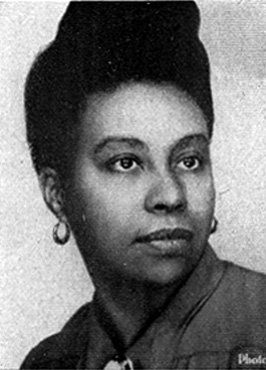
Gerty Archimède

Gerty Archimède
Biography
Gerty Archimède: The Trailblazing Advocate of the French West Indies
Introduction and Historical Significance
Gerty Marie Archimède stands as one of the most formidable legal minds, political pioneers, and feminist icons in the history of the Caribbean. Born into the rigid colonial hierarchies of early twentieth-century Guadeloupe, she shattered systemic gender and racial barriers to become the very first woman lawyer in the French West Indies and only the second Black woman ever elected to the French National Assembly. Operating during a turbulent era marked by the decline of classical colonialism, post-World War II departmentalization, and global labor awakenings, Archimède dedicated her entire life to the defense of the disenfranchised. Her fierce advocacy placed her in conversation and collaboration with leading intellectual and political luminaries of the era, including Martinican poet and statesman Aimé Césaire, French Guianese colonial administrator Félix Éboué, and fellow trailblazing Guadeloupean deputy Eugénie Éboué-Tell. Throughout her career, Archimède wielded the law not merely as an instrument of courtroom defense, but as a revolutionary weapon for social justice, anticolonial solidarity, and the liberation of Antillean women.
Early Life and Foundations in Morne-à-l'Eau
Gerty Archimède was born on April 26, 1909, in the vibrant agrarian municipality of Morne-à-l'Eau, located on the island of Grande-Terre in Guadeloupe. She was the eldest of five daughters born to Justin Archimède and Marie-Mariette Françoise. Her father, an artisan baker by trade, was a deeply civic-minded individual who rose to prominence in local politics, serving both as a member of the General Council and as the mayor of Morne-à-l'Eau. From her earliest childhood, Gerty was immersed in political discourse, social debates, and the daily struggles of rural Guadeloupean workers. Justin Archimède instilled in his daughters a fervent belief in the power of education, civic duty, and moral courage, refusing to let conventional gender expectations limit their intellectual horizons.
During the 1920s, educational opportunities for women of color in the French Antilles were severely restricted. Undeterred, Archimède completed her primary education with excellence in her hometown before attending the Lycée Gerville-Réache in Basse-Terre. Demonstrating a sharp analytical mind and a passion for justice, she moved to neighboring Martinique to begin her preparatory legal studies. At the time, the intellectual climate in the French West Indies was beginning to stir with early expressions of Négritude and cultural pride, nurtured by pioneering thinkers such as Paulette Nardal. Fueled by these burgeoning movements, Archimède resolved to travel across the Atlantic to complete her legal education in metropolitan France.
Academic Pursuits and Legal Trailblazing
Arriving in Paris during the lively and politically charged interwar period, Archimède enrolled at the prestigious Sorbonne to pursue her law degree. Life in the French capital presented significant financial and cultural challenges for a young Caribbean woman. To finance her rigorous university studies, she worked diligently in various administrative and banking positions, displaying the extraordinary determination and resilience that would define her entire career. In Paris, she witnessed firsthand the intellectual vibrancy of the Antillean and African diaspora, further sharpening her understanding of colonial exploitation and workers' rights.
Upon successfully obtaining her law degree, Archimède made a triumphant return to her homeland. In 1939, she etched her name into history by officially joining the Bar of Guadeloupe. By doing so, she became the first female lawyer to practice in the French West Indies and was celebrated across the francophone world as a groundbreaking figure for women of color in the legal profession. Entering a courtroom domain entirely dominated by elite colonial men, Archimède quickly earned a reputation as a fierce, brilliant, and deeply compassionate litigator. She chose not to cater to wealthy commercial clients; instead, she focused her legal practice on defending impoverished agricultural laborers, trade unionists, and victims of systemic exploitation. Her courtroom oratory was legendary, blending precise statutory knowledge with passionate appeals to human dignity.
Political Awakening and the Departmentalization Era
The aftermath of World War II catalyzed a monumental shift in the political landscape of the French Caribbean. As the old colonial regime faced mounting demands for equality and self-determination, Archimède stepped onto the national political stage. She formally joined the French Communist Party (PCF), attracted by its uncompromising platform advocating for worker solidarity, anticolonial liberation, and social equality. In the historic elections of 1946, Archimède was elected as a deputy representing Guadeloupe in the French National Assembly. Serving alongside Eugénie Éboué-Tell, she became one of the first two female deputies from Guadeloupe and the second Black woman to sit in the French parliament.
During her legislative tenure from 1946 to 1951, Archimède played a pivotal role in the enactment and implementation of the historic Law of Departmentalization of March 19, 1946. This transformational law officially integrated Guadeloupe, Martinique, French Guiana, and Réunion into the French Republic as overseas departments. Archimède fought tirelessly on the parliamentary floor to ensure that departmentalization was not merely a symbolic legal status, but a guarantee of substantive economic and social equality. She campaigned vigorously for the extension of French social security benefits, labor protections, equal healthcare access, and standardized wages for Caribbean workers, fiercely challenging metropolitan parliamentarians who sought to maintain colonial-era wage differentials.
[!NOTE] Throughout her legislative service, Archimède viewed departmentalization as a battleground for human rights, relentlessly pressing the French state to fulfill its promises of liberty, equality, and fraternity for all Antillean citizens.
Advocacy for Women and Grassroots Leadership
Beyond her parliamentary achievements in Paris, Archimède recognized that lasting social transformation required grassroots empowerment at home. In 1948, she founded the Guadeloupean federation of the Union of French Women, which shortly thereafter evolved into the autonomous Union des Femmes Guadeloupéennes (UFG). As the guiding force behind the UFG, Archimède mobilized thousands of working-class women across the archipelago. The organization became a powerful vehicle for progressive change, establishing literacy programs, demanding maternity protections, fighting for equal pay for female agricultural workers, and advocating for child welfare services.
Archimède also maintained a robust presence in local governance. In 1945, she was elected as a general councillor for the canton of Morne-à-l'Eau, serving as a vocal advocate for rural municipal development. Later, in 1953, she was elected as the deputy mayor of the capital city, Basse-Terre, working closely with Mayor Elie Chaufrein to improve public infrastructure, sanitation, and educational facilities for underserved neighborhoods. Her leadership style was deeply rooted in community accessibility; her home and law office remained open to anyone seeking legal counsel or protection from injustice, regardless of their ability to pay.
"Gerty Archimède was not merely a defender of the law; she was a shield for the oppressed, a beacon of feminist pride, and an unyielding force who taught Caribbean women that justice is not granted by the powerful—it must be claimed with courage." — Antillean Historical Review
Bâtonnière and International Activism
Archimède’s legal prowess reached its formal zenith in 1967 when her peers elected her as the Bâtonnière (President of the Bar Association) of Guadeloupe, a prestigious position she held with distinction until 1970. She was the first woman to lead the bar, reinforcing her status as a pioneer in judicial leadership. During this period, the Caribbean and global political climate was rife with civil rights struggles and revolutionary movements. Archimède utilized her stature as Bâtonnière to champion international human rights and anticolonial solidarity across the Americas, paralleling the intellectual trajectories of radical Caribbean theorists like Frantz Fanon.
One of the most defining and dramatic episodes of her legal career occurred in 1969 involving the prominent American civil rights activist and philosopher Angela Davis. While traveling back from a conference in Havana, Cuba, Davis and her companions stopped in Guadeloupe, where French colonial customs officials arbitrarily confiscated their passports under political pressure. Facing imminent detention and harassment, Davis sought the counsel of Archimède. With commanding legal authority and fearless intimidation of the customs authorities, Archimède intervened directly at the airport. She successfully forced the officials to return the passports, ensuring Davis's safe passage. In her autobiography, Angela Davis warmly commemorated Archimède’s profound dignity, sharp intelligence, and unwavering solidarity, describing her as an unforgettable hero of the international Black liberation struggle.
Later Years and Enduring Legacy
Gerty Archimède continued her tireless legal and political advocacy until her health began to decline in the late 1970s. She passed away on April 15, 1980, in her beloved hometown of Morne-à-l'Eau at the age of 70, leaving behind an extraordinary legacy of public service. Her funeral was attended by thousands of mourning citizens, workers, and dignitaries from across the Caribbean, testifying to the deep affection and reverence she commanded.
Today, Archimède is immortalized as a foundational matriarch of Guadeloupean modern history. Her former residence in Basse-Terre has been preserved and transformed into the Musée Gerty-Archimède, serving as a national center for historical education and human rights advocacy. Numerous public schools, streets, and squares across Guadeloupe, as well as prominent thoroughfares in Paris and Nanterre, bear her name in permanent tribute to her monumental contributions. By breaking gender barriers in the courtroom and parliament, defending the disenfranchised, and championing Caribbean dignity, Gerty Archimède established an enduring blueprint for feminist leadership and legal activism that continues to inspire generations throughout the global diaspora.
Major Contributions
- Gerty Archimède made historic contributions to the legal profession, women's rights, and political representation in the French West Indies.
- In 1939, she became the first woman admitted to the Bar of Guadeloupe, breaking long-standing racial and gender barriers to serve as a tireless advocate for impoverished agricultural laborers, union workers, and political dissidents.
- As one of the first two female deputies from Guadeloupe elected to the French National Assembly in 1946—and the second Black woman deputy in French history—she played an instrumental role in implementing the March 1946 Law of Departmentalization.
- On the parliamentary floor, Archimède successfully championed the extension of French social security benefits, labor protections, equal standardized wages, and public healthcare access to Caribbean workers.
- Locally, she founded the Union des Femmes Guadeloupéennes (UFG) in 1948, creating a grassroots force that mobilized thousands of women to secure maternity leave, equal pay, and child welfare protections across the archipelago.
- Serving later as the deputy mayor of Basse-Terre and the first female Bâtonnière (head of the bar association) of Guadeloupe between 1967 and 1970, she leveraged her legal authority to defend international civil rights.
- Most notably, her decisive courtroom intervention in 1969 secured the release and protection of American civil rights activist Angela Davis.
- Archimède’s life work established an enduring structural framework for legal activism, Antillean self-determination, and feminist leadership throughout the Caribbean.
