Abaco
The Loyalist Heritage, land of master boatbuilders, historic lighthouse keepers, and a deep-rooted maritime tradition.
Figures from Abaco
Historically documented individuals of note.
Captain Harry Malone
### Introduction: Master Mariner of the Sea of Abaco Captain Harry Malone stands as an indelible pillar of the maritime heritage of the Abaco Islands and one of the quintessential pioneers of modern Bahamian commercial fisheries [1]. Born and raised in Hope Town on Elbow Cay, Captain Malone belonged to that storied lineage of Bahamian sea captains who possessed an almost supernatural intimacy with the shifting shoals, labyrinthine barrier reefs, and crystalline depths of the Sea of Abaco and the Little Bahama Bank [2]. Operating during a pivotal era of economic transition—spanning the mid-20th century when the collapse of the historic sponge trade threatened insular out-island communities with acute economic ruin—Captain Malone served as a visionary vanguard [3]. He recognized the immense untapped potential of the Caribbean spiny lobster (*Panulirus argus*) and offshore pelagic fisheries, fundamentally transforming traditional subsistence smacking into a flourishing, multi-million-dollar export industry that became the economic lifeblood of the northern Bahamas [4]. Beyond his commercial acumen, Captain Malone was revered as a master navigator, mentor of mariners, and an unyielding civic custodian of Abaco's seafaring traditions [1]. ### Ancestral Heritage and Early Life in Hope Town The maritime destiny of Captain Harry Malone was woven into the very fabric of his ancestry [1]. He was a direct descendant of [Wyannie Malone](/profiles/wyannie-malone), the resilient Loyalist widow who, having fled Charleston, South Carolina following the American Revolutionary War, arrived on the shores of Elbow Cay in 1785 to co-found the settlement of Hope Town [5]. For generations, the Malones and their allied island families lived entirely by their wits and the bounty of the ocean [2]. Surrounded by the turbulent Atlantic on the east and the protected, shallow expanse of the Sea of Abaco on the west, young Harry grew up in an environment where learning to sail a dinghy preceded formal literacy [6]. In the early decades of the 20th century, Hope Town was an insular, tightly knit maritime outpost [5]. The community’s livelihood revolved around citrus orchards, coastal turtling, shark fishing, and the daring trade of wrecking—salvaging cargo from unfortunate merchant vessels that ran aground on the jagged offshore barrier reefs [2]. Elbow Cay’s docks were perpetually alive with the scents of pine pitch, oakum, and curing canvas [7]. Just across the water lay Man-O-War Cay, where master shipwrights like [William "Pa" Albury](/profiles/pa-albury) were perfecting the iconic Bahamian smack boat and dinghy, celebrated throughout the Caribbean for their speed, shallow draft, and unmatched seaworthiness [8]. Immersed in this vibrant nautical culture, young Harry absorbed the craft of timber selection, boat rigging, and harbor seamanship from boyhood, preparing him for a lifetime upon open waters [1]. > "To know the Abaco reefs, a captain must learn to read the living colors of the water before he reads the stars; the turquoise of the sandbanks, the brown shadow of coral heads, and the dark sapphire of the ocean drop-off are the only charts that never lie." ### Apprenticeship to the Sea and the Traditional Smack Era Before modern electronic navigation, satellite positioning, or motorized fathometers, Bahamian navigation was an art form mastered through decades of rigorous observation, generational memory, and dead reckoning [6]. Captain Harry Malone began his seafaring career in the arduous world of the sailing smack boats [3]. These wooden vessels, ranging from 30 to 60 feet in length, were rigged with towering mainsails and heavy canvas jibs, engineered to navigate both shallow bank waters and rough oceanic passages [8]. Crucially, they were equipped with flooded "wet wells"—perforated midship holds that allowed seawater to circulate continuously, keeping the catch alive during journeys that lasted weeks at sea [7]. Under the tutelage of veteran captains, Malone learned to "read the water"—a legendary Bahamian skill wherein a navigator gauges water depth down to inches and identifies submerged coral heads solely by interpreting subtle gradations of ocean color and wave shape [6]. He mastered the perilous cuts along the outer barrier reef, such as North Bar Channel, Tilloo Cut, and the treacherous Whale Cay Passage, where Atlantic rollers collided violently with outgoing bank tides [2]. On trading voyages, he sailed smacks laden with conch, dried fish, and green sea turtles through the Berry Islands and across the Great Bahama Bank into Nassau harbor, as well as to markets in Key West and Miami [3]. His peerless handling of canvas and helm during sudden squalls and tropical storms earned him an early reputation across the cays as one of the most capable and calm master mariners of his generation [1].  ### Pioneering the Modern Bahamian Crawfish Industry The turning point in Captain Harry Malone’s career—and the economic destiny of the Abaco cays—arrived in the late 1930s and 1940s [3]. For decades, the sponge gathering industry had been the premier employer across the Bahamas; however, between 1938 and 1939, a devastating fungal blight wiped out over 90% of the commercial sponge beds on the Great and Little Bahama Banks [4]. Facing widespread poverty and the potential depopulation of out-island settlements, Bahamian mariners were compelled to reinvent their relationship with the sea [2]. Captain Malone was among the earliest pioneers to recognize that the vast, shallow limestone platforms surrounding Abaco harbored an extraordinary, untapped commercial resource: the Caribbean spiny lobster (*Panulirus argus*), known universally throughout the islands as "crawfish" [4]. While crawfish had historically been regarded as subsistence food or local bait, Captain Malone foresaw its commercial value as a luxury culinary commodity in postwar North America [9]. Transitioning his operations, Captain Malone innovated harvesting methods that set the standard for generations to come [1]. Equipped with traditional glass-bottom buckets and wooden tickler poles, Malone and his crews combed the reef shallows and sea-grass beds [7]. He championed the use of the Bahamian "bully net" and the "Hawaiian sling"—a handheld underwater speargun invented in the Bahamas that allowed free-divers to harvest crawfish selectively without damaging coral structures or catching undersized females bearing eggs [4]. As demand escalated, Captain Malone led the fleet into deeper waters across the Little Bahama Bank and the northern cays, exploring virgin grounds from Green Turtle Cay to Walker's Cay [2]. Furthermore, he was an early adopter and refiner of artificial habitats, known locally as "crawfish condos" or *casitas*—low-lying concrete and timber structures placed upon the sea floor that mimicked natural limestone ledges [9]. This practice not only protected the crustacean populations from natural predators but also established predictable, sustainable harvesting corridors, propelling Abaco to the forefront of the national fishing economy [4].  ### Offshore Deep-Sea Fisheries and Technological Innovation Captain Malone’s ambitions extended well beyond the shallow banks and reef flats [1]. Recognizing that the deep Atlantic waters off the eastern edge of the Abacos—where the continental shelf plummets thousands of feet into the ocean abyss—teemed with pelagic and deepwater finfish, he pioneered deep-sea trolling and bottom-drop fishing campaigns [2]. He charted previously unknown underwater drop-offs and ridges along the barrier reef, targeting yellowtail snapper, Nassau grouper, mutton snapper, and deepwater silk snapper [7]. When motorized propulsion and early mechanical refrigeration began replacing pure sail and wet wells in the post-World War II era, Captain Malone was among the first Abaco skippers to successfully integrate diesel engines and insulated ice-box holds into commercial vessels [3]. This technological leap allowed his crew to venture much farther offshore for extended periods, preserving the delicate crawfish tails and high-grade fish in prime condition for the emerging export packing houses established in Marsh Harbour and Nassau [4]. His daring offshore exploits caught the admiration of prominent contemporaries, including the famed Abaconian aviator [Captain Leonard Thompson](/profiles/leonard-thompson) and Olympic gold-medalist sailor [Sir Durward Knowles](/profiles/durward-knowles), both of whom recognized Malone's genius in maritime navigation and his fearless understanding of Bahamian wind and current systems [10]. Malone served as an indispensable mentor to dozens of young deckhands and apprentices, instilling in them rigorous navigational discipline, deep-sea survivability, and an unwavering respect for maritime safety [1]. > "The sea does not belong to any single man, but if you treat her with discipline, patience, and honor, she will feed entire generations of islanders." ### Advocacy for Bahamian Fisheries Sovereignty As the Bahamian crawfish industry exploded into a premier export earner in the 1960s and 1970s, it attracted aggressive incursions by foreign industrial fishing fleets, particularly commercial poachers operating out of South Florida and the Caribbean basin [4]. Equipped with steel-hulled trawlers and non-selective traps, these foreign vessels threatened to deplete the fragile coral reef habitats and strip Bahamian waters of their resources [9]. Captain Harry Malone became a resolute and outspoken champion for native fishermen [1]. Utilizing his considerable moral authority and leadership among the Abaco fleet, Malone lobbied colonial and post-independence administrators in Nassau to implement strict conservation regulations and assert sovereign maritime control [4]. His relentless advocacy, joined by fellow fishermen across the islands, found fertile ground during the tenure of Premier [Sir Roland Symonette](/profiles/roland-symonette) and culminated under the administration of Prime Minister [Sir Lynden Pindling](/profiles/lynden-pindling) [11]. The Bahamian government enacted groundbreaking legislation reserving commercial fishing and crawfish harvesting exclusively for Bahamian citizens, banned harmful destructive fishing technologies, and declared the historic 200-nautical-mile Exclusive Economic Zone (EEZ) in 1977 [4]. These policies safeguarded the livelihood of thousands of family-owned fishing enterprises across Abaco and cemented the Bahamas' position as one of the best-managed and most sustainable spiny lobster fisheries in the world [9]. ### Civic Leadership and Maritime Preservation in Hope Town Despite spending weeks at a time on open waters, Captain Harry Malone remained intimately anchored to his home community of Hope Town on Elbow Cay [1]. He served as an informal harbor master, community mediator, and a trusted civic elder [5]. Whenever ferocious hurricanes or winter nor'easters threatened the cays, Captain Malone was among the first to organize vessel evacuations into the protected hurricane holes of Hope Town harbour and Man-O-War Cay [2]. He held a deep reverence for Hope Town’s architectural and historical landmarks, most notably the iconic, red-and-white candy-striped Elbow Cay Lighthouse, constructed in 1863 by the British Imperial Lighthouse Service [12]. While modern automation replaced manned lighthouses throughout the world, Captain Malone and the citizens of Elbow Cay passionately defended their historic beacon, ensuring that its hand-cranked, kerosene-vapor mechanism remained operational—a beacon that continues to guide vessels into harbor by hand to this day [12]. In his later years, Captain Malone worked alongside regional historians and boatbuilders, such as [Haziel Albury](/profiles/haziel-albury) of Man-O-War Cay, sharing oral histories, navigation lore, and traditional fishing wisdom [8]. He contributed artifacts, personal ship logs, and historical recollections to the Wyannie Malone Historical Museum in Hope Town, ensuring that future generations would understand the sheer grit, seafaring brilliance, and courage of the men and women who carved a civilized life out of the limestone cays [5]. ### Enduring Legacy of an Abaco Pioneer Captain Harry Malone passed away leaving behind an enduring legacy that reverberates throughout the maritime culture of the Bahamas [1]. He lived through a transformative epoch in West Indian history, witnessing the evolution of his native islands from an isolated British crown colony reliant on hand-sails and salvaged wood into a confident, sovereign maritime nation [11]. Today, Captain Malone is remembered not merely as an extraordinary fisherman, but as an architect of out-island economic self-reliance [4]. By pioneering commercial crawfishing, perfecting the navigation of the perilous Abaco barrier reefs, and fiercely defending Bahamian marine resources, he ensured that the sea remained a sustainable provider for the people of Abaco for generations to come [1]. In Hope Town, along the breezy lanes between the harbour and the Atlantic bluffs, the name of Captain Harry Malone remains synonymous with the golden era of Bahamian master mariners—a towering symbol of courage, navigational mastery, and unbreakable island pride [1].
View Profile →Captain Leonard Thompson
### Introduction: The Aviator Who Connected Abaco to the World Captain Leonard Maurice Thompson, OBE (1917–2008), stands as one of the most remarkable aviators, entrepreneurs, and parliamentarians in the modern history of The Bahamas. A native son of Hope Town, Abaco, Thompson lived a life that mirrored the transformative journey of the Bahamian archipelago from isolated colonial outposts into an interconnected modern nation. During World War II, Thompson and his brothers answered the call of the British Empire, earning national acclaim from journalist [Sir Etienne Dupuch](/profiles/etienne-dupuch) as "The Fighting Thompsons." Piloting four-engine Avro Lancaster heavy bombers on perilous night missions over Nazi Germany, Thompson survived being shot down and endured eighteen months of harsh confinement as a prisoner of war before returning home to rebuild his beloved islands. In the post-war era, he emerged as a founding father of Bahamian civil aviation, pioneering amphibious seaplane services with Bahamas Airways and establishing charter flights that brought life-saving medical care, airmail, and commerce to the remote Out Islands. As a long-serving Member of the House of Assembly representing Abaco (1949–1967) and the visionary developer behind Treasure Cay and the Great Abaco Beach Hotel, Captain Thompson laid the modern economic and infrastructural foundations of northern Abaco. ### Early Life in Hope Town and the Spark of Flight Leonard Maurice Thompson was born on June 17, 1917, in the picturesque settlement of Hope Town on Elbow Cay, Abaco. He was the son of William Maurice Thompson and Lena Muriel Albury, born into an established Bahamian family with deep roots in the Out Islands. Thompson’s lineage traced back to the British Loyalist refugees who settled in the Abaco cays following the American Revolutionary War in 1783, including ties to the town's founding matriarch, [Wyannie Malone](/profiles/wyannie-malone). On his father's side, he was the great-grandson of the famed master mariner and wrecker known throughout the islands as "Old Keg" Thompson. Growing up in Hope Town during the 1920s meant living in an era when the sea was the sole lifeline. The settlement possessed no paved roads, electricity, or telephones, and travel to Nassau required days of arduous voyaging aboard wooden sailing smacks through unpredictable waters. If an islander fell critically ill or suffered a catastrophic injury, medical help was often days away, and mortality was an accepted reality of Out Island existence. It was during Thompson’s boyhood that a single, miraculous event changed the course of his life and opened his imagination to the sky. In the mid-1920s, an emergency arose in Hope Town when a resident required immediate medical intervention to survive. Captain Arthur B. "Chalk," the pioneering American aviator and founder of Chalk’s Flying Service in Miami, flew an open-cockpit amphibious biplane across the Gulf Stream and landed gracefully in the calm waters of Hope Town harbor, carrying a physician who successfully treated the patient. For the young Leonard, witnessing an airplane land on his home waters was nothing short of an epiphany. While other Abaco boys dreamed of captaining wooden schooners or diving for sponges, Leonard became consumed by a singular ambition: he wanted to fly. > "From the very moment I watched that seaplane gracefully touch down on the waters of Hope Town harbor to save a neighbor's life, the sea was no longer my only horizon. I knew my life belonged in the sky." — Captain Leonard M. Thompson [1] 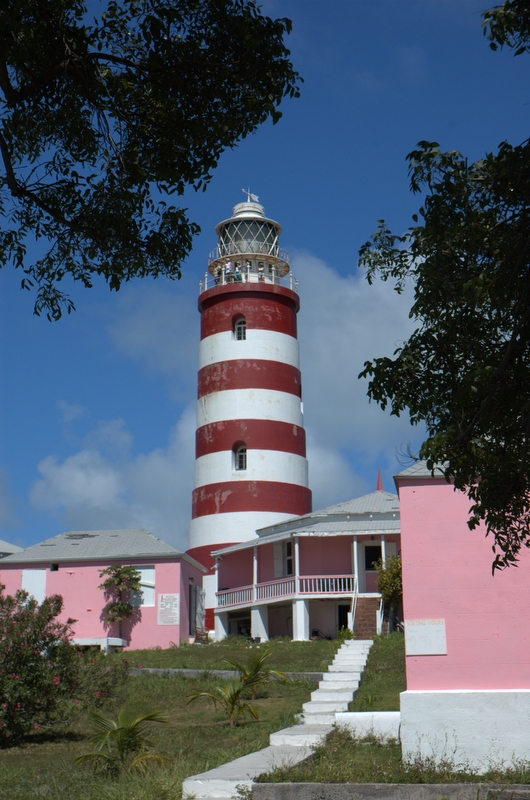 ### World War II: "The Fighting Thompsons" and Royal Canadian Air Force When World War II erupted in September 1939, the remote islands of the Bahamas were drawn into the global fight against fascism. In Hope Town, the Thompson household became a symbol of extraordinary patriotism. Four brothers volunteered for active Allied service: Hartis, Leonard, Chester, and William Maurice Jr. Their collective dedication captured the imagination of the entire colony. In Nassau, [Sir Etienne Dupuch](/profiles/etienne-dupuch), the influential editor and publisher of *The Tribune*, famously celebrated the brothers as "The Fighting Thompsons" in his newspaper columns, turning them into national heroes. While Hartis joined the Royal Air Force (later rising to become the Bahamas' first Director of Civil Aviation) and Chester and Maurice enlisted in the Royal Navy, Leonard sought the quickest path into an airplane cockpit. Because the Bahamas had no flight training academies or military aviation facilities, Leonard traveled to Canada to volunteer for the Royal Canadian Air Force (RCAF). Displaying a natural mechanical aptitude inherited from generations of Abaco boatbuilders, he initially enlisted and qualified as an aero engine mechanic. However, Thompson never lost sight of his childhood dream of flying. He applied for pilot training under the British Commonwealth Air Training Plan (BCATP), the massive Allied initiative that trained aviators across the vast plains of Canada. Through rigorous testing and extensive flight hours in single-engine Harvards and twin-engine trainers, Thompson demonstrated superior airmanship, calm judgment, and precise navigation skills. He earned his pilot’s wings, received an officer's commission, and was deployed across the North Atlantic to England to join the Allied strategic bombing campaign. ### RAF Bomber Command, the Avro Lancaster, and the Fall over Europe In the United Kingdom, Thompson was assigned to Royal Air Force Bomber Command, taking the controls of the Avro Lancaster—the legendary four-engine heavy bomber that formed the backbone of the Allied air offensive against the Third Reich. Piloting a Lancaster was among the most hazardous combat assignments of World War II. Night after night, Thompson and his seven-man crew flew through pitch-black skies, facing ferocious anti-aircraft artillery flak, radar-guided German night fighters, and freezing sub-zero altitudes to drop payloads on heavily fortified industrial targets in the Ruhr Valley, Berlin, and occupied western Europe. Bomber Command aircrews suffered catastrophic losses, with more than 55,000 airmen killed during the war—a casualty rate approaching fifty percent. Thompson proved to be an exceptionally cool-headed and skilled aircraft commander, successfully guiding his Lancaster crew through twenty-four grueling combat sorties. On his twenty-fifth mission in early 1944, Thompson’s luck ran out over enemy territory. His aircraft was caught in the glare of enemy searchlight batteries and raked by deadly flak and fighter cannon fire. With his Lancaster engulfed in flames and spinning out of control, Captain Thompson held the shuddering aircraft level, remaining at the controls to allow his crew members sufficient time to bail out into the night sky before abandoning the aircraft himself. Thompson parachuted safely into occupied territory, but he was captured shortly thereafter by German soldiers.  ### Confinement as a POW and the Brutal Winter Marches Following his capture, Thompson was processed into the German military prison camp network for Allied air officers (Stalag Luft). For the next eighteen months, Thompson lived behind barbed wire as a Prisoner of War (POW). Life in the camps was defined by gnawing hunger, severe cold, insect infestations, and deep psychological isolation, relieved only by occasional Red Cross food parcels and the quiet solidarity of fellow Allied aviators. In January 1945, as the Soviet Red Army launched its massive winter offensive from the east, the German High Command ordered the forced evacuation of Stalag Luft camps. In what became known to history as the "Long March," tens of thousands of Allied prisoners were marched westward through sub-zero blizzards, deep snowdrifts, and freezing temperatures with little food and no medical care. Men collapsed by the roadsides from exhaustion, frostbite, and dysentery. Drawing upon his inner resolve and physical resilience, Captain Thompson survived the harrowing weeks on the frozen roads of central Europe until British and American forces finally overran the retreating German armies and liberated the prisoners in the spring of 1945. > "We flew through the dark, burning skies of Europe not knowing if we would ever see the sun rise over the Abaco cays again. Surviving that war gave me an unbreakable purpose: to return home and help build a modern Bahamas where our remote islands were no longer cut off from the world." — Captain Leonard M. Thompson [4] ### Pioneering Commercial Aviation in the Bahamas Captain Thompson returned home to Nassau in late 1945 as a decorated veteran and national hero. While many returning servicemen sought peaceful retirements, Thompson immediately converted his wartime flight credentials into a commercial pilot's license. He realized that the isolation he had experienced in his youth—and the power of aviation he had witnessed during the war—held the secret to unlocking the future of the Bahamas. In 1945, Thompson joined Bahamas Airways, the pioneer domestic airline originally founded by Sir Harold Christie. At the time, virtually none of the Out Islands possessed paved terrestrial runways. Civil aviation in the archipelago depended almost entirely on amphibious seaplanes and flying boats, including the Grumman Widgeon, Grumman Goose, and Consolidated Catalina. Thompson became the undisputed master of Out Island water flying. He landed his aircraft in shallow harbor basins, narrow tidal creeks, open sounds, and choppy open sea, reading water depth and coral formations by subtle variations in turquoise hue. Thompson’s flights were far more than commercial transportation; they were vital lifelines. Just as Captain Chalk had saved a neighbor's life in Thompson's childhood, Captain Thompson became famous across the Bahamas for flying daring emergency medical evacuations—often braving gale-force squalls and pitch-black nights without radar or runway lights to airlift critically ill patients, laboring mothers, and injured fishermen to the hospital in Nassau. He carried the first regular airmail, essential machine parts, and government officials to settlements that had previously waited weeks for a mailboat. Later, Thompson founded his own charter aviation enterprise, Thompson Air Charters, operating direct charter routes between South Florida, Nassau, and Abaco. His flights introduced the very first post-war American bonefishermen, yachtsmen, and real estate investors to the pristine waters of the northern Bahamas, sparking the birth of Family Island tourism. ### Service in the House of Assembly (1949–1967) In 1949, recognizing his deep popularity and leadership, the voters of Abaco elected Captain Leonard Thompson to the Bahamian House of Assembly. He served as the Member of Parliament for Abaco continuously for nearly two decades, winning successive re-elections until 1967. Thompson’s tenure in the colonial legislature spanned one of the most dynamic periods of political modernization in Bahamian history, characterized by the emergence of party politics under the United Bahamian Party (UBP) led by figures such as Premier [Sir Roland Symonette](/profiles/roland-symonette), the introduction of universal adult suffrage in 1962, and the historic advent of Majority Rule in 1967. In parliament, Thompson distinguished himself as a tireless champion for Out Island development. While colonial budgets were traditionally concentrated on Nassau, Thompson insisted that the Out Islands could not prosper without modern infrastructure. He successfully lobbied for the installation of public docks, navigational lighthouses, post offices, government schools, and clinics across the Abaco settlements. Most importantly, Thompson recognized that the era of the seaplane was giving way to land-based commercial aviation. He became the chief legislative advocate for building paved airstrips throughout Abaco, directly assisting in the planning and development of runways at Marsh Harbour, Green Turtle Cay, and Treasure Cay. ### Masterminding Treasure Cay and Abaco Tourism Beyond politics and the cockpit, Thompson possessed an extraordinary vision for property development and tourism. In the 1950s, northern mainland Abaco remained largely uninhabited bushland. One particular peninsula, known historically as "Sand Bank Cays," was a windswept expanse of scrub, mangrove, and blinding white sand, where early Loyalist pioneers had briefly established the Carleton settlement in 1783 before abandoning it due to harsh conditions. Thompson saw what others missed: an extraordinary, crescent-shaped three-and-a-half-mile beach of powdery white sand and translucent aquamarine water. Around this time, Leonard and his brother Roscoe participated in maritime salvage expeditions on historic colonial-era shipwrecks along the treacherous Abaco barrier reef, successfully recovering antique silver and gold coins and artifacts. Inspired by these discoveries and the swashbuckling history of the cays, Thompson rechristened the Sand Bank property **Treasure Cay**. To turn his ambitious dream of an international resort into reality, Thompson joined forces in the early 1960s with Mississippi industrialist and multimillionaire Dumas Milner. Together, they launched a colossal engineering program. Thompson oversaw the dredging of interior mangrove shallows into a protected deep-water marina, the construction of an international airstrip capable of receiving multi-engine passenger aircraft, and the installation of road networks, power generators, and modern utilities. They constructed the luxurious Treasure Cay Beach Hotel and Marina and commissioned renowned golf course architect Dick Wilson to design an 18-hole championship golf course. Treasure Cay quickly became a world-class resort destination, attracting international yachting and sportfishing enthusiasts. Later, Thompson was also instrumental in the founding and construction of the Great Abaco Beach Hotel in Marsh Harbour (now the Abaco Beach Resort), cementing Marsh Harbour's status as the commercial capital and boating hub of the Abacos. ### The 1971–1973 Independence Crisis and the Greater Abaco Council In the late 1960s and early 1970s, the Bahamas experienced a profound political realignment. In 1967, the Progressive Liberal Party (PLP), led by [Sir Lynden Pindling](/profiles/lynden-pindling), achieved Majority Rule, bringing an end to decades of minority rule by the Bay Street oligarchy. By 1971, the Pindling administration announced that it would lead the country to full national independence from Great Britain in July 1973. The prospect of independence ignited deep anxiety on Abaco. The island’s residents—predominantly descendants of 18th-century Loyalists who had fled the American Revolution to remain subjects of the British Crown—cherished their historical connection to the monarchy. Many feared that a centralized government in Nassau would marginalize the Out Islands, impose punitive taxes, and neglect Abaconian interests. In response, Captain Leonard Thompson, along with colleagues Errington "Bumpy" Watkins and Sherwin Archer, formed the **Greater Abaco Council (GAC)**. Thompson served as the organization’s most prominent public spokesman. In 1971, the GAC organized a mass petition addressed to Her Majesty Queen Elizabeth II, requesting that Abaco be excluded from an independent Bahamas and retained as a self-governing British Crown Colony, similar to Bermuda or the Cayman Islands. The petition was signed by over 1,400 registered Abaco voters—representing more than two-thirds of the island’s electorate. Thompson traveled to London to lobby members of the British Parliament at Westminster and present the petition to the British Foreign and Commonwealth Office. However, British Foreign Secretary Sir Alec Douglas-Home and the UK Government made it clear that they would not support the fragmentation or partition of The Bahamas, insisting that the archipelago enter independence as a single sovereign nation. When Britain formally rejected the petition in 1972, Captain Thompson demonstrated profound civic integrity and respect for the rule of law. Acknowledging that constitutional avenues had been exhausted, Thompson retired from active political life. When more radical elements formed the Abaco Independence Movement (AIM) in late 1973, attempting to recruit American libertarian financiers and foreign mercenaries to orchestrate an armed secession, Thompson firmly disavowed them. He publicly condemned illegal schemes, arguing that Abaco must pursue its prosperity peacefully within the sovereign Commonwealth of The Bahamas. ### *I Wanted Wings*, Honours, and Enduring Legacy In his later years, Thompson turned his attention to documenting the history he had helped create. He published his acclaimed autobiography, titled *I Wanted Wings: The Autobiography of Leonard M. Thompson* (also frequently referenced in Bahamian aviation circles as his memoirs of flight, *I Wanted to Fly*). The memoir remains a classic of Bahamian literature, chronicling the vanished world of 1920s Out Island life, the terrors of World War II bomber operations, the resilience of POW survival, and the post-war modernization of the islands. In recognition of his distinguished wartime valor, pioneering contributions to Caribbean civil aviation, and decades of public service in tourism and the legislature, Queen Elizabeth II appointed Captain Thompson an Officer of the Most Excellent Order of the British Empire (OBE). Captain Leonard Maurice Thompson passed away in 2008 at the age of ninety. His passing marked the end of an era, but his impact remains visible across every corner of Abaco. In May 2016, the Government of The Bahamas paid permanent tribute to his memory by officially renaming Marsh Harbour International Airport the **Leonard M. Thompson International Airport** (MHH). Today, as modern jetliners touch down on the runway in Marsh Harbour, every visitor and resident arrives under the name of the boy from Hope Town whose love of flight helped build the modern Bahamas.
View Profile →Haziel Albury
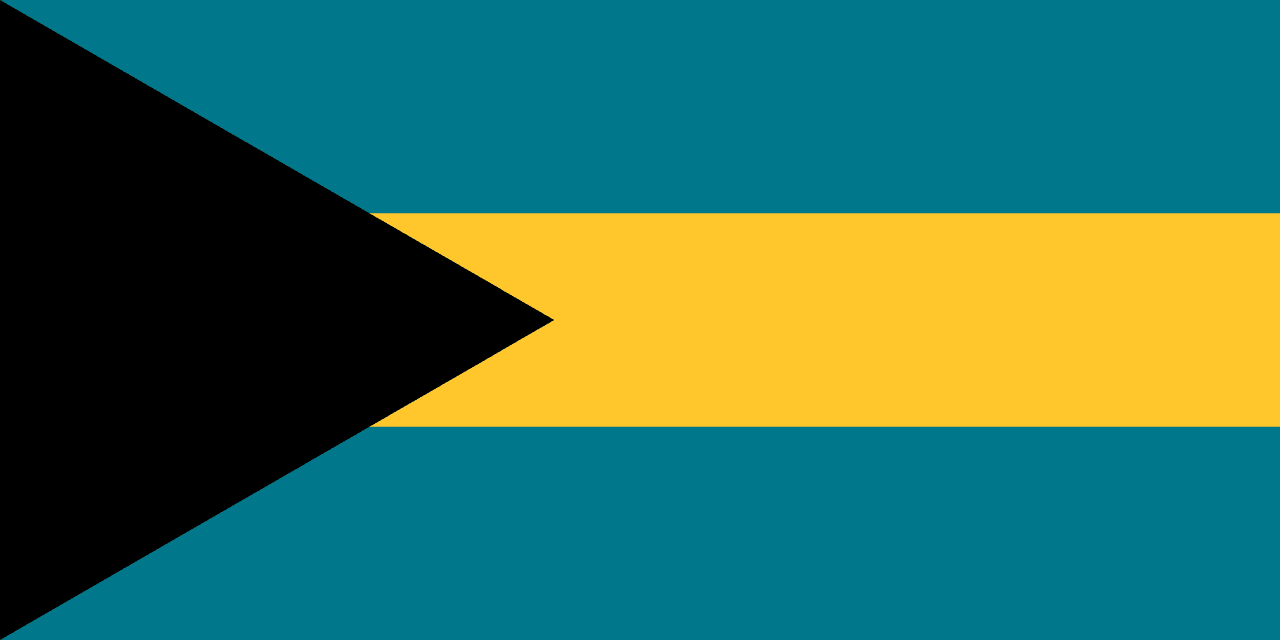
### Introduction: The Chronicler and Patriarch of Man-O-War Cay Haziel Lavern Albury (1914–1996) stands as one of the most revered historians, master shipwrights, authors, and cultural guardians in the modern history of the Commonwealth of The Bahamas [1]. Born and raised on the slender, barrier island of Man-O-War Cay in the Abaco archipelago, Albury embodied the fiercely independent, seafaring spirit of the Bahamian Out Islands [2]. In a community internationally celebrated as the "Boatbuilding Capital of The Bahamas," he served for decades not merely as a builder of wooden vessels and a keeper of timber, but as the island's collective memory, moral compass, and primary civic patriarch [3]. Wearing the hats of schoolmaster, lay preacher, Justice of the Peace, barber, and postmaster, Albury was the undisputed anchor of Man-O-War Cay throughout the twentieth century [1]. His monumental 1977 publication, *Man-O-War, My Island Home: A History of an Outer Bahama Island*, stands as a landmark work of Caribbean local historiography, rescuing centuries of oral folklore, Loyalist lineage, and maritime craftsmanship from obscurity [4]. Through his role in establishing the Man-O-War Heritage Museum and his representation of Bahamian traditional arts at institutions such as the Smithsonian Institution, Haziel Albury ensured that the unique cultural legacy of Abaco's wooden boatbuilders would be permanently enshrined in the national consciousness [5].  *The national flag of The Bahamas, representing the sovereign maritime nation whose Out Island traditions Haziel Albury faithfully chronicled.* ### Loyalist Roots and the Settlement of the Abaco Cays To fully comprehend the life and philosophical convictions of Haziel Albury, one must trace the deep ancestral roots that bound his family to the Sea of Abaco [2]. Following the conclusion of the American Revolutionary War in 1783, thousands of British Loyalists—loyal subjects of the Crown who refused allegiance to the newly independent United States—faced persecution, confiscation of property, and exile [6]. Many evacuated British outposts in New York, Georgia, and the Carolinas to seek sanctuary in the British colony of the Bahama Islands [6]. In 1785, a significant wave of Loyalist refugees arrived in the uninhabited cays off Great Abaco Island. Among these early arrivals was the famed matriarch [Wyannie Malone](/profiles/wyannie-malone), a Loyalist widow from Charleston, South Carolina, who settled on nearby Elbow Cay and founded Hope Town [6]. These Loyalist settlers brought with them skilled woodworking traditions, architectural methods from colonial North America, and deep Protestant religious convictions. Over the subsequent decades, these refugees intermarried with established families of Eleutheran Adventurer stock who had migrated north from Harbour Island and Eleuthera [2]. On Man-O-War Cay—a narrow, six-mile crescent of sand and coral limestone lying northeast of Marsh Harbour—settlement coalesced around the descendants of Benjamin Archer, an early Loyalist grantee, and Eleanor Archer, whose daughter married into the Albury family [2][4]. The Alburys, of English lineage dating back to seventeenth-century settlements in Bermuda and Eleuthera, rapidly became the predominant family on the cay [4]. The island developed a remarkably cohesive, self-contained society. Characterized by strict temperance, deep Christian piety rooted in the Plymouth Brethren and Methodist traditions, and an unbending work ethic, Man-O-War Cay evolved into a place where alcohol was strictly forbidden, locks were unnecessary on doors, and community survival depended entirely on mutual reliance, boat construction, and the harvest of the sea [3][7]. > "To understand Man-O-War Cay, you have to understand the sea and the timber. Our forefathers came to these rocky cays with little more than an axe, an adze, and an unshakeable faith in God. They carved a life out of the wilderness, built vessels that could weather any hurricane, and gave us a heritage of honest toil that no storm can wash away." — Haziel L. Albury, *Man-O-War, My Island Home* [4] ### Early Life, Upbringing, and the Ordeal of the 1926 Hurricane Haziel Lavern Albury was born on Man-O-War Cay on November 16, 1914, into the home of Richard Edgar "Eddie" Albury and Eufleetie Constance (née Saunders) Albury [1][8]. Growing up during the interwar period, Haziel experienced an Out Island existence defined by isolation, manual labor, and intimate communion with the marine environment [2]. During his childhood, the settlement lacked electricity, indoor plumbing, telephone connections, and motorized transport [4]. Potable water was gathered painstakingly from rainfall channeled off cedar-shingled roofs into subterranean stone cisterns, while light was provided by kerosene lanterns [4]. The sea was both the highway and the larder of the settlement. From an early age, Haziel learned to handle sailing dinghies, navigate shallow banks dotted with razor-sharp coral heads, and fish the deep Atlantic drops beyond the outer barrier reef [4]. His early education was conducted in the island's small, one-room all-age schoolhouse, where discipline was strict and literacy was reinforced through scripture and classical readers [1]. Outside the schoolhouse, the shorelines and timber yards served as his true university. Young Haziel watched his father, uncles, and cousins fell native trees, saw heavy timbers, and transform raw wood into seafaring vessels [3]. The resilience of the island community was forged in the crucible of devastating natural disasters. In September and October 1926, the Bahamian archipelago was struck by two catastrophic hurricanes that decimated the Out Islands, obliterating fleets, sweeping away citrus orchards, and leveling homes across Abaco [4][9]. In his writings, Haziel vividly recounted how his family survived the terrifying tempest when their timber-frame house was blown off its foundation pins: > "Most of the shingles on the roof blew off, and Papa seemed to breathe a sigh of relief when the house slid off the ground pins onto the ground, thus making the building firmer. The house trembled or shook less... Afterward, everyone agreed that they were the best dough-boys they had ever eaten. That experience is a bright spot in my memories of the hurricane." — Haziel L. Albury, *Man-O-War, My Island Home* [4] This miraculous survival instilled in young Haziel a lifelong reverence for the providential protection of God and the architectural integrity of Bahamian woodcraft [4].  *A map of the Bahamian archipelago, highlighting the northern islands of Great Abaco and the surrounding cays where Haziel Albury lived and worked.* ### Master Shipwright: Preserving the Wooden Boatbuilding Tradition By the mid-twentieth century, Man-O-War Cay had achieved international renown as the premier boatbuilding center of the West Indies [3]. While larger Bahamian shipyards in Nassau, such as Symonette Shipyards owned by [Sir Roland Symonette](/profiles/roland-symonette), catered to commercial shipping, repair, and rum-running craft, Man-O-War Cay became legendary for handcrafted perfection, aesthetic grace, and unyielding seaworthiness [3][10]. Haziel Albury stood at the vibrant center of this artisanal world. Trained in traditional woodworking, timber joinery, and maritime architecture, he worked alongside the grand masters of the craft, most notably master builder [William "Pa" Albury](/profiles/william-pa-albury) and William H. "Uncle Will" Albury (1899–1987) at the famous William H. Albury Shipyard [3][11]. The shipwrights of Man-O-War worked without formal blueprints, drafting tables, or modern power tools. Instead, they built vessels entirely "by eye" and by "half-models"—carving half-hull wooden models from alternating layers of contrasting woods to perfect the hydrodynamics before laying a single timber on the building blocks [3][11]. The construction of an authentic Abaco boat was a masterclass in ecological knowledge and botanical selection [3]. Haziel and his fellow shipwrights trekked into the dense, mosquito-infested coppice forests of Great Abaco to search for native hardwoods possessing natural curves [3]. They sought out Madeira (*Swietenia mahagoni*, wild mahogany) and horseflesh (*Lysiloma sabicu*) trees whose branches and roots had naturally grown into the exact sweeping angles required for the stem, sternpost, and structural rib frames ("knees") of a vessel [3][11]. Because the grain of the wood followed the natural curvature of the tree limb, these one-piece natural knees possessed unmatched structural integrity that could never crack or split under heavy ocean swells [3]. For planking and deck beams, they utilized durable native yellow pine, imported long-leaf pitch pine, and marine mahogany, fastened with galvanized boat spikes, bronze bolts, or wooden trunnels [3]. Each seam was driven with cotton and oakum, pounded tight with caulking irons and sealed with boiling pitch [3]. Under this exacting craftsmanship, the yard produced two legendary classes of vessels: - **The Abaco Dinghy**: A 12- to 16-foot double-ended wooden row and sailing dinghy featuring a clean moon sheer, generous beam, and extraordinary stability. Handled by oars, sculling oar, or a simple sprit sail, it became the indispensable workhorse for generations of Bahamian conchers, spongers, and fishermen [3]. - **Ocean-Going Wooden Schooners and Yachts**: Formidable sailing freighters, fishing smacks, and custom cruising ketches reaching up to 60 feet in length, including the famous two-masted schooner *William H. Albury* (originally launched as *Esperanto* in 1963) and the *Traveler* [11]. Haziel's intimate role in the boatbuilding culture was unique. Beyond his hands-on woodworking, he was the social catalyst of the shipyard [1][12]. On Saturday afternoons, Haziel operated as the island's master barber right inside the breezy sawdust-scented confines of the William H. Albury Shipyard [1][12]. Sitting in his barber's chair beneath half-completed hulls and hanging timber knees, island men—from veteran ship captains like [Captain Jerry Albury](/profiles/jerry-albury) and [Captain Harry Malone](/profiles/captain-harry-malone) to apprentice carpenters—gathered to discuss wind patterns, timber harvests, biblical passages, and island affairs [1][12]. These lively exchanges allowed Haziel to absorb the collective oral history of four generations of seafarers. The maritime reputation of Abaco's craftsmen extended across the nation, inspiring Bahamian racing champions such as Olympic gold medalist [Sir Durward Knowles](/profiles/durward-knowles) and Exuma regatta legend [Captain Rolly Gray](/profiles/captain-rolly-gray), who frequently acknowledged the supreme sea-kindliness of Abaco-built craft [13]. ### Schoolmaster, Lay Preacher, and Community Pillar Haziel Albury's impact on Man-O-War Cay transcended his naval carpentry. In an unincorporated Out Island community devoid of formal municipal bureaucracy or a permanent police force, order, education, and social cohesion were maintained by trusted elders who wore many civic hats [1]. Albury was the preeminent community leader of his generation [1]. For years during the 1960s and early 1970s, he served as the Head Teacher and Principal of the Man-O-War All Age School [1][7]. In the classroom, "Mr. Haziel" was renowned for his patience, moral rectitude, and demanding standards [1]. He viewed education as the essential shield against provincialism, ensuring that island children mastered English grammar, arithmetic, maritime geography, and Bahamian natural history while simultaneously instilling the virtues of hard work and self-reliance [1][7]. Many of his former pupils went on to become prominent shipbuilders, master mariners, entrepreneurs, and public servants across The Bahamas [7]. In spiritual affairs, Albury was a devoted lay preacher and elder in the island's Christian Brethren assembly [1]. He lived a life of unyielding Christian conviction, never drinking alcohol, swearing, or compromising his moral code [1]. On Sundays and during community gatherings, his resonant, measured voice filled the chapel, preaching sermons centered on grace, honest labor, and mutual responsibility [1]. He was the chosen officiant for community ceremonies, blessing newly launched vessels, opening town meetings, and comforting grieving families when tragedy struck on the water [1][14]. Furthermore, Albury served as a Justice of the Peace (JP) and official Marriage Officer for the Abaco district [1]. In this role, he mediated domestic and property disputes with absolute fairness, legally formalized unions, and administered legal declarations [1]. For decades, he also operated the island's post office, telegraph station, and wireless telephone relay, serving as the essential communications bridge between Man-O-War Cay, the capital in Nassau, and family members sailing the Atlantic [1]. When Her Majesty Queen Elizabeth II and Prince Philip toured The Bahamas, Haziel Albury was selected to represent his community, presenting hand-crafted gifts from Man-O-War Cay and speaking with the British monarch with dignified Out Island composure [8]. ### Author of 'Man-O-War, My Island Home' (1977) During the mid-twentieth century, The Bahamas underwent sweeping political and social changes. The rise of majority rule under [Sir Lynden Pindling](/profiles/lynden-pindling) in 1967 and the attainment of national independence in 1973 signaled the dawn of a modern, sovereign nation [15]. Concurrently, the Out Islands were rapidly opening to international tourism, fiberglass boat manufacturing, and modern technology. Haziel Albury realized with acute urgency that the oral histories, ancestral folklore, and traditional woodcraft of Man-O-War Cay were in imminent danger of vanishing forever [4]. Determined to preserve his people's story, Albury spent years conducting meticulous research, gathering family bibles, transcribing colonial land grants, and recording the memories of the island's oldest residents [4]. In 1977, he published his masterwork: *Man-O-War, My Island Home: A History of an Outer Bahama Island*, featuring beautiful illustrations by American artist Nancy Sawin [4][16]. The book was a triumph of cultural preservation and folk historiography [4]. Written in an authentic, engaging, and deeply personal voice, Albury wove together: - Detailed genealogical lineages tracing every founding family back to their Loyalist and Adventurer origins [4]. - An exhaustive historical chronicle of the nineteenth-century "wrecking" industry, detailing how licensed wrecking sloops legally salvaged stranded vessels on the treacherous reefs of the Abaco coast under British maritime law [4]. - Accounts of economic booms and busts, from nineteenth-century pineapple farming and citrus cultivation to the rise and catastrophic fungal blight of the marine sponging industry in the 1930s [4]. - A comprehensive, step-by-step description of the master shipwright's craft, recording for posterity the specialized terminology, tools, timber types, and building sequences of traditional Bahamian wooden vessels [4]. - Harrowing first-hand survivor narratives of historic hurricanes, community customs, spiritual revivals, and the linguistic idiosyncrasies of Bahamian Out Island English [4]. *Man-O-War, My Island Home* was hailed by historians, sociologists, and bibliophiles as a masterpiece of Bahamian literature [4][17]. It was reprinted in multiple editions, became a cherished staple in libraries across the Caribbean, and served as an indispensable guide for visiting yachtsmen, scholars, and generations of Abaconians seeking their ancestral roots [4][17]. ### Founding the Museum and Cultural Custodianship Albury's devotion to heritage extended far beyond the printed page. He recognized that preserving history required tangible, physical preservation of the tools and artifacts that defined island life [5]. Throughout his later years, he systematically collected historic boatbuilding tools—antique broadaxes, adzes, shipwrights' compasses, hand-forged caulking mallets, and wooden block planes—that had been discarded in favor of modern power tools [5][18]. His personal collection and relentless advocacy laid the direct foundation for the establishment of the **Man-O-War Heritage Museum** [5]. Housed in a charming, restored wooden schoolhouse building in the center of the settlement, the museum stands today as a living monument to the island's maritime soul [5][18]. Among its most beloved exhibits is an artifact crafted by Haziel's own hands: a hand-hewn wooden bathtub that he built from native timber for his young children in an era before modern plumbing arrived on the cay [5][18]. This simple domestic object remains a powerful educational centerpiece for visiting school groups, symbolizing the resourcefulness, familial devotion, and woodworking mastery that defined Haziel's life [5][18]. Albury's expertise was recognized on the international stage. In 1994, when the Smithsonian Institution dedicated its world-renowned Festival of American Folklife on the National Mall in Washington, D.C., to the maritime traditions and culture of The Bahamas, Haziel Albury was selected as a key consultant and cultural exemplar [19]. His writings and ethnographic documentation informed Smithsonian curators, introducing hundreds of thousands of international visitors to the genius of Abaco's wooden boatbuilders and the living folklore of the Family Islands [19]. ### Personal Life, Passing, and Enduring Legacy In his personal life, Haziel Albury was anchored by his deep devotion to his family. In 1946, he married Patience Wilhelmena "Ena" Albury (1929–1957) [1][8]. Together they weathered the challenges of young island parenthood until tragedy struck with her untimely passing in 1957 [8]. Facing the grief of early widowerhood, Albury poured his heart into caring for his children and his community. He later found enduring companionship and love with Mary Edna Albury (1935–2015), with whom he shared decades of marriage, mutual service, and intellectual collaboration [1][8]. Haziel Lavern Albury passed away in 1996, surrounded by the family and community he had served with singular devotion for more than eight decades [1]. His passing was mourned throughout the Abaco Cays and across the national cultural landscape of The Bahamas [1]. Today, Haziel Albury's legacy is woven into the very fabric of Man-O-War Cay. The island's boatbuilding tradition, though transitioned from massive wooden schooners to the high-performance fiberglass center-console craft of Albury Brothers Boats, still traces its genetic lineage directly back to the principles of seaworthiness, clean entry, and integrity championed by Haziel and Uncle Will [3][11]. The Man-O-War Heritage Museum continues to preserve his artifacts and writings, while *Man-O-War, My Island Home* remains the gold standard of Out Island history [4][5]. In an era when rapid modernization threatened to wash away the memory of early Caribbean maritime settlements, Haziel Albury stood firm as a master builder and faithful scribe. Like the deep-rooted Madeira knees that hold an Abaco schooner fast against the fury of the Atlantic, Albury provided the sturdy structural framework that keeps Bahamian heritage anchored, resilient, and unshakeable for future generations. ### References - [Man-O-War, My Island Home: A History of an Outer Bahama Island (Haziel L. Albury)](https://www.goodreads.com/book/show/3287311-man-o-war-my-island-home) - [Man-O-War Heritage Museum - Island History & Boatbuilding](https://mowmuseum.com/) - [Smithsonian Center for Folklife and Cultural Heritage - 1994 Festival of American Folklife: The Bahamas](https://festival.si.edu/past-program/1994/the-bahamas) - [Abaco Sun - A History of Boatbuilding on Man-O-War Cay](https://abacosun.com/) - [Wyannie Malone Historical Museum - Hope Town & Abaco Heritage](https://hopetownmuseum.com/)
View Profile →Sir Charles Carter
### Early Life and Abaco Roots Sir Charles Carter’s life and legacy are inextricably linked to the pine forests, turquoise waters, and fiercely independent spirit of [Abaco](/islands/abaco). Born in the early 1930s in the bustling settlement of Marsh Harbour, Carter grew up in a period when the Family Islands of [The Bahamas](/islands/the-bahamas) were largely marginalized by the central authorities in Nassau. At the time, Abaco was a rugged frontier, deeply reliant on traditional boatbuilding, artisanal fishing, and the booming but often exploitative timber industry. Carter’s early years were shaped by this demanding environment. His father was a master boatbuilder whose vessels navigated the treacherous reefs of the Bahamian archipelago, and his mother was a dedicated local schoolteacher who instilled in him a profound belief in the transformative power of education. In a community where formal schooling was often cut short to accommodate the grueling demands of maritime and agricultural labor, Carter’s parents were resolute. They ensured he received the best education available, emphasizing that knowledge was the true currency of freedom. This foundational emphasis on learning would later define his approach to civic leadership, public policy, and political empowerment. The Abaco of Carter’s youth was a place of stark economic contrasts. While the island possessed immense natural wealth, its people often saw little of the financial benefits. The timber companies, predominantly foreign-owned and operated, extracted vast quantities of the prized Abaco pine, but the local workforce labored under harsh conditions with limited prospects for upward mobility or land ownership. Observing these systemic inequities firsthand, a young Charles Carter began to cultivate a deep-seated commitment to social justice and economic self-determination for his fellow Abaconians. ### The Awakening: Social Activism and Civic Leadership Carter's transition from a perceptive youth to a vocal civic leader occurred during the late 1950s and early 1960s, a transformative and highly volatile era in Bahamian history. As the winds of change swept through the Caribbean, bringing decolonization and civil rights to the forefront, the political landscape in Nassau was beginning to shift radically with the rise of the progressive movement and the push toward majority rule.  However, politics in Abaco were exceptionally complex and often conservative. The island had a significant population that remained loyal to the old guard and was deeply suspicious of the political machinery operating in the capital. Carter recognized that if Abaco was to thrive in a modernizing Bahamas, its people needed a unified, progressive voice that could articulate their unique concerns without succumbing to the isolationism that had historically held the island back. He began his civic career by organizing local cooperatives for fishermen and farmers, aiming to circumvent the predatory middlemen who dictated market prices in Nassau. These early grassroots initiatives required immense organizational skill and patience. By pooling their resources, local producers were able to negotiate better prices and secure equipment, which not only improved the economic standing of many Abaconian families but also established Carter as a trusted, pragmatic leader. He was recognized as a man who understood the sea and the soil, yet possessed the intellectual rigor to negotiate effectively with government bureaucrats and foreign investors alike. > "To build Abaco is to build The Bahamas. Our strength lies not just in Nassau, but in the resilient, fiercely independent islands that form the true backbone of this archipelagic nation." ### Entering Politics: The Road to Independence As the 1960s progressed, Carter’s expanding influence inevitably drew him into the national political arena. He aligned himself with the progressive forces pushing for majority rule, a stance that required immense personal and political courage in Abaco, where political loyalties were fiercely divided along racial and class lines. The monumental achievement of Majority Rule in 1967, spearheaded by figures like [Lynden Pindling](/profiles/lynden-pindling), was a watershed moment for The Bahamas. However, the subsequent push for full national independence from Great Britain in 1973 created significant turbulence, particularly in Abaco. A vocal and well-funded faction known as the Abaco Independence Movement (AIM) emerged, aggressively advocating for the island to secede from The Bahamas and remain a British Crown Colony. The AIM movement was fueled by a potent mix of genuine economic anxiety, racial tension, and political maneuvering, threatening to fracture the nascent nation before it even began. It was during this precarious period that Charles Carter truly distinguished himself as a national statesman. He vigorously opposed secession, undertaking a tireless, often dangerous campaign across Abaco’s scattered and remote settlements to argue for national unity. Carter eloquently made the case that Abaco’s future lay in a united, independent Bahamas, provided that the island was given a fair, constitutionally protected seat at the national table. His unparalleled credibility as a native son of Abaco, coupled with his proven track record of fighting for local economic rights, helped to calm fears, dismantle misinformation, and ultimately marginalize the separatist rhetoric. ### Championing Abaco's Development Following the peaceful achievement of independence in 1973, Carter was elected to the Bahamas House of Assembly, representing his beloved Abaco. His tenure in the legislature was marked by a relentless, laser-focused dedication to infrastructure, healthcare, and education, which he viewed as the essential pillars of sustainable development. Carter was instrumental in securing unprecedented government funding for the electrification of remote Abaco settlements, many of which had relied on kerosene and generators for generations. He pushed through legislation for the expansion of the island's road network, connecting isolated farming communities to the main ports, and oversaw the modernization of the docks to facilitate better inter-island trade. He argued passionately on the floor of the House of Assembly that the Family Islands could not merely serve as weekend retreats or raw material outposts for Nassau’s elite; they had to become self-sustaining economic engines in their own right. Furthermore, he championed the expansion of secondary and vocational education on the island. Remembering his mother’s unwavering dedication to teaching, Carter spearheaded the construction of new schools and modern vocational training centers. He understood that as the Bahamian economy diversified into tourism and financial services, the youth of Abaco needed modern skills. By bringing these institutions to the island, he ensured that the next generation of Abaconians would not be forced into the internal migration to Nassau that had depleted the Family Islands of their brightest minds for decades.  ### Relationship with Hubert Ingraham and the Post-Independence Era Carter’s influence extended far beyond his own direct political achievements; he served as a crucial mentor and a towering inspirational figure for younger politicians emerging from Abaco, most notably [Hubert Ingraham](/profiles/hubert-ingraham). Ingraham, who would later rise to become Prime Minister of The Bahamas, shared Carter’s deep, authentic roots in the Abaconian working class and his unyielding commitment to Family Island empowerment. While Carter and Ingraham occasionally found themselves on different sides of the political aisle—especially as the political landscape evolved and the Free National Movement (FNM) gained national prominence—their mutual respect was undeniable and highly public. Carter’s pioneering work in demanding equitable treatment for Abaco laid the structural, infrastructural, and ideological groundwork that Ingraham would later build upon on a national scale. Together, their intertwined legacies cemented Abaco’s reputation as a crucible for strong, fiercely independent-minded Bahamian leaders who consistently challenged and reformed Nassau-centric policies. > "He taught a generation of leaders that true political power is not about shouting the loudest in the capital, but about remembering and resolving the quiet struggles of the people back home." ### Knighthood and Later Years In profound recognition of his extraordinary lifetime contributions to national unity, infrastructural development, and unwavering public service, Charles Carter was knighted by Queen Elizabeth II, officially becoming Sir Charles Carter. The honor was widely celebrated across [The Bahamas](/islands/the-bahamas), but nowhere was the jubilation more intense than in Abaco, where he was revered as a hometown hero who had elevated the island’s stature and dignity on the national and international stage. Even after retiring from active, frontline political life, Sir Charles remained a formidable and highly respected presence in Abaco’s civic affairs. He transitioned into the role of elder statesman, serving on numerous corporate and philanthropic boards, advising local government councils, and mentoring young entrepreneurs. Furthermore, he became a passionate and early advocate for environmental conservation. Recognizing that Abaco’s pristine environment—its coral reefs, pine forests, and mangroves—was its most valuable and vulnerable asset, he frequently spoke out against unchecked foreign development that threatened the ecological balance of the island's delicate marine habitats. ### Legacy Sir Charles Carter’s legacy is permanently woven into the very fabric of modern Abaco and the broader Bahamas. He is remembered by historians as the principal architect of the island’s successful integration into an independent Bahamian state, a leader who navigated the treacherous waters of secessionist sentiment with unparalleled wisdom, courage, and grace. His life’s work fundamentally altered the deeply ingrained dynamic between Nassau and the Family Islands, proving that political power, economic vitality, and cultural significance did not have to be monopolized by the capital. Today, the thriving, diverse economy of Abaco—driven by high-end tourism, resilient agriculture, and a robust local business sector—stands as a living testament to his enduring vision. Sir Charles Carter was infinitely more than just a politician; he was the definitive champion of the Abaconian spirit, a man who ensured that his island home would forever be recognized, respected, and celebrated as a vital, indispensable pillar of [The Bahamas](/islands/the-bahamas). ### References 1. [History of the Abaco Islands and The Bahamas](https://en.wikipedia.org/wiki/Abaco_Islands) 2. [Bahamian Political History and Independence](https://en.wikipedia.org/wiki/The_Bahamas)
View Profile →Sir Durward Knowles
Sir Durward Randolph Knowles (November 2, 1917 – February 24, 2018), affectionately known throughout [The Bahamas](/islands/the-bahamas) as the "Sea Wolf," was a titan of Caribbean athletics and a towering figure in Bahamian civic life. As a legendary sailor, Knowles etched his name into the annals of history by winning his nation's first-ever Olympic medal in 1956, and subsequently capturing its first Olympic gold medal at the 1964 Tokyo Games. Beyond his unparalleled maritime exploits, which spanned an astonishing eight Olympic Games over forty years, Sir Durward was a devoted humanitarian. His later decades were defined by his relentless advocacy for disabled individuals, making him an enduring symbol of national pride, resilience, and "Service Above Self." ### Early Life and Maritime Roots Born on November 2, 1917, in Nassau on the island of New Providence, Durward Knowles came of age in an era when [The Bahamas](/islands/the-bahamas) was a British Crown Colony heavily dependent on the sea for its economic and cultural survival. The ocean was not merely a backdrop to Bahamian life; it was the highway, the larder, and the proving ground. His father, Captain Harry Knowles, was a highly respected seaman, marine pilot, and yachtsman. It was under his father’s exacting tutelage that young Durward was introduced to the rigors and rhythms of the sea. Growing up in Nassau, Knowles attended Queen’s College, where he graduated in 1934. However, his true education took place on the water. Following his schooling, he apprenticed under his father, absorbing the intricate details of navigation, wind patterns, and vessel handling. This deep, instinctual understanding of the ocean currents and trade winds surrounding the Bahamian archipelago gave Knowles an intrinsic advantage over foreign competitors who learned to sail in more forgiving inland waters. In 1936, Knowles formally began his competitive sailing journey by crewing for his father in a Star Class race. The Star Class—a 22.7-foot fixed-keel racing sloop known for demanding extraordinary tactical skill and physical endurance—would become the defining vessel of his life. ### The Rise of a Sailing Legend By the late 1940s, Knowles had established himself as a dominant force in local and regional regattas, yet the international stage beckoned. At the time of the 1948 London Olympics, [The Bahamas](/islands/the-bahamas) did not yet possess an officially recognized National Olympic Committee. Undeterred, Knowles qualified to represent Great Britain. Competing in the treacherous waters off the British coast, he and his Bahamian crewmate Sloane Farrington sailed their Star Class boat brilliantly, finishing in an agonizingly close fourth place, just missing the podium. This near-miss merely fueled his ambition. Recognizing the need for sovereign representation, Bahamian sporting officials, with strong encouragement from Knowles and others, established the Bahamas Olympic Association in 1952. By the time the 1956 Olympic Games in Melbourne, Australia, rolled around, Sir Durward and Sloane Farrington were sailing under the Bahamian flag. In a fiercely competitive fleet, the Bahamian duo navigated their way to a bronze medal. It was a watershed moment in Caribbean sports history: the first Olympic medal ever won by [The Bahamas](/islands/the-bahamas). > "The sea is a strict master, but it is also a fair one. It does not care where you come from or what flag you fly; it only respects preparation and resolve."  ### Historic Triumphs: The 1964 Tokyo Gold Knowles’ crowning athletic achievement arrived at the 1964 Olympic Games in Tokyo, Japan. Sailing with a new crewmate, [Cecil Cooke](/profiles/cecil-cooke), Knowles faced a formidable fleet of the world’s most elite yachtsmen in Sagami Bay. The weather conditions were notoriously difficult, with shifting winds and heavy seas testing the limits of the sailors' endurance and tactical acumen. The 1964 regatta came down to a dramatic and suspenseful final race. Knowles and Cooke needed a near-perfect finish to secure the overall victory. Leveraging decades of experience navigating the unpredictable waters of the Caribbean, the "Sea Wolf" brilliantly outmaneuvered his American and European rivals. Knowles and Cooke crossed the finish line to secure the gold medal in the Star class. The impact of this victory on [The Bahamas](/islands/the-bahamas) cannot be overstated. Still a British colony inching toward majority rule and independence, the Bahamian populace erupted in joyous celebration. The image of the Bahamian flag being raised in Tokyo to the highest mast resonated as a powerful symbol of national capability and identity. Knowles and Cooke returned to Nassau as absolute heroes, proving that athletes from a small island nation could conquer the world stage. ### Unmatched Longevity and Dedication Following his 1964 triumph, Knowles could have easily retired into the comforts of sporting immortality. Instead, his love for the sport and his competitive fire kept him on the water. He continued to represent his country at the highest levels, competing in the 1968 Mexico City and 1972 Munich Olympics. Remarkably, after a long hiatus from Olympic competition, Knowles made a stunning return at the 1988 Seoul Games. At 70 years old, he competed once again in the Star class, making him one of the few athletes in history to compete in eight Olympic Games over a span of forty years. His longevity was a testament to his physical conditioning, his strategic brilliance, and an unyielding passion for sailing that transcended generations. ### A Legacy of Philanthropy: The BAPD While his Olympic medals cemented his legacy in the sporting arena, it was his humanitarian work that defined his character. Sir Durward believed firmly that his prominence should be leveraged for the betterment of society, particularly for the most vulnerable. Guided by the Rotary Club motto of "Service Above Self," he became a dedicated philanthropist. His most profound civic contribution was his decades-long leadership of the Bahamas Association for the Physically Disabled (BAPD). Taking the helm as president in 1991, Knowles transformed the organization. Before his intervention, resources for disabled Bahamians were severely lacking. Under his visionary stewardship, the BAPD underwent a massive expansion. He spearheaded fundraising campaigns to build extensions to their facilities and fought to hire full-time physiotherapists to provide critical care for disabled children and adults. Recognizing the severe mobility challenges faced by the families of disabled children, Knowles utilized his vast network of friends and business associates to purchase a specially equipped bus for the organization. This single act revolutionized the lives of many families, providing safe, reliable transportation for medical care and social outings. Sir Durward was known for his relentless, persuasive fundraising; he possessed the "audacity to go after" whatever was needed, refusing to take no for an answer when it came to advocating for those who could not advocate for themselves. > "We cannot simply sail past those in need. The true measure of our society is how we care for those who require our help to navigate the storms of life." ### Final Years and Enduring Legacy In recognition of his immense contributions to sports and society, Durward Knowles was appointed an Officer of the Order of the British Empire (OBE) in 1965 and was formally knighted by Queen Elizabeth II in 1996, becoming Sir Durward Knowles. In his twilight years, Sir Durward remained an active, visible, and deeply beloved figure in Bahamian society. In May 2016, following the passing of a fellow Olympian, he assumed the title of the oldest living Olympic champion in the world—a distinction he carried with characteristic humility and grace. Approaching his centennial, he authored his autobiography, appropriately titled *Never Give Up*, imparting his philosophy of resilience and community service to the next generation. Sir Durward Knowles passed away on February 24, 2018, at the extraordinary age of 100. His state funeral was a national event, drawing dignitaries, athletes, and the everyday citizens whose lives he had touched. He left behind a legacy that is permanently woven into the fabric of [The Bahamas](/islands/the-bahamas). He proved that excellence on the world stage was possible for Bahamians, and more importantly, he demonstrated that the greatest victories are won not on the water, but in the service of one's fellow man. ### References 1. [Sir Durward Knowles - Wikipedia](https://en.wikipedia.org/wiki/Durward_Knowles) 2. [Sir Durward Knowles - Olympics.com](https://olympics.com/en/athletes/durward-randolph-knowles) 3. [Remembering Sir Durward Knowles - World Sailing](https://www.sailing.org/2018/02/25/remembering-sir-durward-knowles/)
View Profile →
Sir Gerald Cash
### Introduction Sir Gerald Christopher Cash stands as a titan of Bahamian history, a statesman whose steady hand, brilliant legal mind, and unwavering dedication to public service helped shape the modern Commonwealth of [The Bahamas](/islands/the-bahamas). Born into an era of colonial rule and deep social stratifications, Cash rose to become a widely respected barrister, an independent and principled politician, and ultimately the longest-serving Governor-General of an independent Bahamas. His life story is inextricably linked to the peaceful but profound transformation of his island nation, from a British colony to a sovereign, democratic state. Over a career spanning more than half a century, Sir Gerald embodied the quiet dignity and steadfast resolve required to bridge the deep divides of race and class in the 20th-century Bahamas, earning him knighthoods and the enduring affection of his people. ### Early Life and Precocious Intellect Gerald Christopher Cash was born in Nassau, The Bahamas, on May 28, 1917, to Wilfred Gladstone Cash and Lillian Cash. The Nassau of his youth was a profoundly different place than the bustling tourist hub it is today. It was a deeply segregated society where economic and political power was concentrated in the hands of a small white merchant elite, often referred to as the "Bay Street Boys." For a young Black Bahamian, opportunities for advancement were fiercely limited, often requiring extraordinary talent, unyielding discipline, and the support of a dedicated family. Cash possessed all three. From a young age, he exhibited a precocious intellect that set him apart from his peers. He began his formal education at Eastern Senior High School before advancing to the prestigious Government High School in Nassau. At the time, Government High School was the premier educational institution for Black Bahamians, serving as a crucible for the future leaders of the nation. Cash's academic brilliance culminated in an extraordinary achievement: at the tender age of 15, he graduated with the Cambridge Senior School Certificate. This accomplishment not only underscored his remarkable intellectual capacity but also signaled the arrival of a young man destined for greatness. ### A Trailblazer in the Legal Profession Following his graduation, Cash set his sights on the legal profession, recognizing the law as a powerful tool for social mobility and advocacy. In 1940, at the age of 23, he was called to the Bahamas Bar as a counsel and attorney of the Supreme Court. He practiced law in Nassau for five years, gaining invaluable experience and establishing a reputation for his meticulous preparation and courtroom eloquence. However, Cash's ambition extended beyond the shores of his island home. In 1945, seeking to further his legal education and formalize his credentials on an international stage, he traveled to London to study at the Society of the Middle Temple, one of the four Inns of Court exclusively entitled to call members to the English Bar. > "In the hallowed halls of the Middle Temple, young Cash demonstrated that the intellectual rigor nurtured in the Caribbean was more than a match for the institutions of the Empire, returning home not just as a lawyer, but as a symbol of Bahamian potential." His time in the United Kingdom was marked by rigorous study and academic excellence. He passed his bar examinations with class-two honors, a significant achievement for a student from the colonies, and was called to the English Bar as a barrister-at-law on November 17, 1948. Later that same year, he returned to Nassau, resuming his private practice with the added prestige and authority of a London-trained barrister. ### Entry into Politics and the Fight for Equality Cash’s return to Nassau coincided with a period of growing political awakening in The Bahamas. The post-war era brought with it a rising demand for civil rights, democratic representation, and an end to systemic discrimination. In 1949, Cash entered the political fray, running for the House of Assembly as an independent candidate. He was elected as the Senior Representative for the Western District of New Providence. As a Member of Parliament, Cash distinguished himself through his independent thinking and his commitment to justice. Unlike many politicians of his era who aligned themselves strictly with the established oligarchy or the emerging progressive movements like those led by figures such as [Sir Lynden Pindling](/profiles/lynden-pindling), Cash maintained an independent stance that allowed him to serve as a crucial bridge between opposing factions. He was re-elected in 1956 as the Junior Representative for the same district, serving a total of 14 years in the House of Assembly.  One of the defining moments of his early political career was his involvement in the 1956 Resolution, a landmark legislative effort aimed at ending racial discrimination in public places in The Bahamas. Cash’s legal expertise and his measured, persuasive arguments were instrumental in this fight for equality, helping to dismantle the institutionalized segregation that had long plagued Bahamian society. His competence and integrity were recognized by the colonial administration as well, leading to his appointment as a member of the Executive Council, where he served from 1958 to 1962. In this role, Cash gained crucial executive experience, navigating the complex administrative machinery of the colony during a time of intense political transition. ### The Road to Independence and the Senate The 1960s brought sweeping changes to The Bahamas, culminating in the attainment of internal self-government in 1964 and the historic election of the Progressive Liberal Party (PLP) in 1967, which broke the stranglehold of the Bay Street Boys. Through these turbulent years, Cash’s reputation as an elder statesman and an impartial arbiter of the law continued to grow. In 1969, he was appointed to the Senate, the upper house of the Bahamian Parliament. His leadership qualities quickly came to the fore. He served as Vice-President of the Senate from 1970 to 1972, and in 1972, on the eve of Bahamian independence, he was elevated to the position of President of the Senate. It was in this capacity that Cash presided over the crucial legislative sessions that paved the way for the birth of a new, sovereign nation on July 10, 1973. His steady hand at the helm of the Senate ensured that the transition to independence was orderly, dignified, and rooted in the rule of law. ### The Highest Office: Governor-General Following independence, the role of Governor-General—the representative of the British monarch and the de facto head of state—became a powerful symbol of the new nation's sovereignty and its enduring ties to the Commonwealth. The first Bahamian to hold this office was [Sir Milo Butler](/profiles/milo-butler), a fiery and beloved champion of the people. Between 1973 and 1976, Sir Gerald Cash served as Deputy to Governor-General Sir Milo Butler on five separate occasions, filling in during periods of illness or absence. When Sir Milo passed away in 1979 after a prolonged illness, Cash, who had been acting in the role since 1976, was naturally and substantively appointed as the second Governor-General of The Bahamas. > "As Governor-General, Sir Gerald Cash was the embodiment of grace and neutrality. In an era marked by intense political partisanship, his office remained a sanctuary of national unity." Sir Gerald's tenure as Governor-General, which lasted from 1979 until his retirement in 1988, is widely regarded as a golden era for the office. He brought to Government House a profound sense of decorum, an encyclopedic knowledge of the constitution, and an unwavering commitment to impartiality. During the 1980s, a period occasionally marked by domestic political controversies and the challenges of nation-building, Cash served as a unifying figure. He hosted numerous foreign dignitaries, including Queen Elizabeth II, and carried out his constitutional duties with a flawless precision that set the standard for all who would follow him.  ### A Champion of Bahamian Sports While Sir Gerald's legacy in law and politics is monumental, his contributions to the cultural and social life of The Bahamas were equally significant, particularly in the realm of sports. He was not just an armchair enthusiast but a dedicated administrator who believed passionately in the power of athletics to build character and foster national pride. Cash was instrumental in the formation of both the Bahamas Amateur Athletic Association (BAAA) and the Bahamas Olympic Association. He worked tirelessly to ensure that Bahamian athletes had the resources, training, and international recognition they deserved. He served as *Chef de Mission* for Bahamian teams at various prestigious international events, including the 1968 Olympic Games in Mexico City. His dedication to the Olympic movement was internationally recognized in 1982 when he was awarded the prestigious Silver Medal of the Olympic Order. ### Knighthoods, Family, and Final Years Throughout his illustrious career, Sir Gerald was repeatedly recognized by the British Crown for his extraordinary service. He was appointed an Officer of the Order of the British Empire (OBE) in 1964. This was followed by a series of high honors: Knight Commander of the Royal Victorian Order (KCVO) in 1977, Knight Grand Cross of the Order of St Michael and St George (GCMG) in 1980, and finally, Knight Grand Cross of the Royal Victorian Order (GCVO) in 1985, bestowed personally by Queen Elizabeth II. Behind the public figure was a devoted family man. Sir Gerald was married to Dorothy Long, and together they raised three children: a daughter, Sharon, and two sons, Gordon and Gerald Jr. His family was a source of great strength and grounding throughout his demanding public life. After retiring from the office of Governor-General in 1988, Sir Gerald remained a revered elder statesman in The Bahamas. In 1996, in a fitting tribute to his lifelong commitment to education and national development, the Flamingo Gardens Primary School was officially renamed the Gerald C. Cash Primary School. Sir Gerald Christopher Cash passed away on January 6, 2003, at the age of 85, following a massive stroke. His death was mourned across the nation, with political leaders from all sides praising his integrity, his intellect, and his monumental contributions to the Bahamian state. He left behind a legacy that continues to inspire. From the courtrooms of Nassau to the halls of the Middle Temple, from the contentious debates of the House of Assembly to the dignified corridors of Government House, Sir Gerald Cash devoted his life to the pursuit of justice, equality, and the sovereign dignity of The Bahamas. ### References 1. [Wikipedia - Gerald Cash](https://en.wikipedia.org/wiki/Gerald_Cash) 2. [Government of The Bahamas - Sir Gerald Cash Biography](https://www.bahamas.gov.bs/)
View Profile →
Sir Orville Turnquest
## Introduction Sir Orville Alton Turnquest (born July 19, 1929) stands as one of the most distinguished figures in the modern history of [The Bahamas](/islands/the-bahamas). A man of profound intellect and unwavering conviction, Turnquest's legacy spans the realms of jurisprudence, national politics, and the highest diplomatic and ceremonial echelons of Bahamian society. As a preeminent legal mind, a foundational pillar of the Bahamian opposition movement, Deputy Prime Minister, and eventually the sixth Governor-General of The Bahamas, his life story is inextricably woven into the fabric of the nation's democratic development and maturation. His journey from the modest enclaves of Grants Town to the regal halls of Government House reflects a steadfast commitment to the rule of law, constitutional integrity, and the enduring belief in a unified Bahamian identity. Turnquest was not merely a politician; he was a statesman who helped architect the modern political landscape of his beloved archipelago. ## Early Life and Legal Ascendancy Born on July 19, 1929, in Grants Town, a historic, vibrant working-class settlement in New Providence, Orville Turnquest was the son of Robert and Gwendolyn Turnquest. The Grants Town of his youth was a community defined by its tight-knit social bonds, cultural richness, and the collective aspirations of a people seeking greater representation and opportunity under colonial rule. Education was paramount in the Turnquest household. Young Orville attended the prestigious Government High School from 1942 to 1945, an institution that cultivated many of the nation’s future leaders. There, he earned his Cambridge Junior and Senior Certificates, as well as his London Matriculation Certificate, marking himself early on as a young man of exceptional academic promise. Turnquest's path into the legal profession began in the traditional manner of the era: through articled clerkship. From 1947 to 1953, he apprenticed in the esteemed law chambers of the legendary A. F. Adderley. This rigorous mentorship instilled in him a deep reverence for the law. In June 1953, Turnquest was called to the Bahamas Bar. Not content to rest on his laurels, he subsequently pursued advanced legal studies at the University of London, earning a Bachelor of Laws degree with honours. By 1960, his legal acumen was further validated when he was admitted to the English Bar as a member of Lincoln's Inn. > "The law, in its most profound sense, is the sturdy shield that guards the rights of the citizen and the structural beam that upholds a free society. Our duty is not merely to practice it, but to protect its sanctity." In private practice, Turnquest became a titan of the Bahamian legal fraternity. He served as a senior partner in the prestigious firm of Dupuch and Turnquest. His peers recognized his leadership and expertise, electing him President of the Bahamas Bar Association and Chairman of the Bahamas Bar Council from 1970 to 1972. Through his legal career, he championed constitutional rights and laid the groundwork for his eventual transition into the political arena. ## A Shift in Political Tides: The Progressive Liberal Party and The Dissident Three Turnquest’s entry into politics was driven by the fervent anti-colonial and pro-majority rule sentiments sweeping the Caribbean in the mid-20th century. He aligned himself with the Progressive Liberal Party (PLP), the vanguard of the majority rule movement. His organizational skills and intellectual heft were quickly recognized, and he served as the Secretary-General of the PLP from 1960 to 1962. In 1962, he successfully contested the South Central constituency, entering Parliament as a dynamic and forceful representative. However, the political landscape of the 1960s was highly volatile. As the PLP navigated its strategy to challenge the entrenched United Bahamian Party (UBP) oligarchy, internal ideological rifts began to emerge. The watershed moment came following the events of "Black Tuesday" in 1965, when Sir Lynden Pindling famously threw the mace out of the window of the House of Assembly to protest gerrymandering. While the act was deeply symbolic and galvanized the masses, Turnquest, alongside notable figures like [Paul Adderley](/profiles/paul-adderley) and Spurgeon Bethel, felt profound unease with the party’s direction and tactics, favoring a more constitutionally grounded approach to systemic reform. This principled disagreement led to their departure from the PLP. The trio, famously dubbed the "Dissident Three," took a bold and politically risky step by forming the National Democratic Party (NDP). Though the NDP ultimately struggled to gain mass electoral traction against the monolithic rise of the PLP, the formation of the party demonstrated Turnquest’s unwavering commitment to political plurality, constitutionalism, and the belief that principled opposition was essential to a healthy democracy.  ## The Free National Movement and Decades in Opposition Following the dissolution of the NDP, Turnquest's political journey saw him become a foundational pillar of the Free National Movement (FNM). Formed by a coalition of former PLP dissidents—including his close associate [Sir Arthur Foulkes](/profiles/sir-arthur-foulkes)—and remnants of the old UBP, the FNM sought to provide a viable, center-right democratic alternative to Pindling's dominant PLP administration. For decades, Turnquest was the intellectual and organizational backbone of the FNM. During the long, often grueling years in opposition, he served the party in virtually every major capacity: Chairman, Treasurer, and ultimately Deputy Leader from 1987 to 1994. From 1972 to 1979, he provided razor-sharp critique and policy alternatives as the Leader of the Opposition in the Senate. Turnquest’s endurance during these wilderness years is a testament to his resilience. He faced an overwhelmingly popular government, yet he consistently articulated a vision for The Bahamas rooted in economic liberalization, strict adherence to the rule of law, and governmental transparency. He returned to the House of Assembly in 1982, continuing to serve as a formidable parliamentarian until 1994. His steady hand and legal brilliance ensured that the FNM remained a credible government-in-waiting. ## Government Triumph: The Ingraham Administration (1992-1994) The political tide finally turned in August 1992. Under the leadership of Hubert Ingraham, the FNM achieved a historic election victory, ending 25 years of PLP rule. For Turnquest, it was the culmination of decades of sacrifice and political maneuvering. In the new administration, Turnquest’s vast experience and seniority were immediately utilized. He was appointed Deputy Prime Minister, Attorney-General, and Minister of Foreign Affairs. As Attorney-General, he spearheaded vital reforms to modernize the Bahamian judicial system, enhance the efficiency of the courts, and reinforce the independence of the judiciary. As Minister of Foreign Affairs, Turnquest was instrumental in repositioning The Bahamas on the global stage, fostering stronger bilateral ties with the United States and deepening the nation's engagement within CARICOM and the Commonwealth. His tenure in the cabinet, though relatively brief (1992-1994), was highly impactful. He provided gravitas and a stabilizing presence to a newly formed government eager to implement its "Deliverance" mandate. > "To build a nation is not merely to construct roads and schools, but to fortify the institutions of justice and to ensure that the dignity of every citizen is protected under the law." ## Governor-General and Statesman (1995-2001) On January 3, 1995, Sir Orville Turnquest reached the zenith of his public life when he was sworn in as the sixth Governor-General of an independent Bahamas. Upon his assumption of the office, he was knighted by Queen Elizabeth II, becoming a Knight Grand Cross of the Order of St. Michael and St. George (GCMG). As the representative of the Head of State, Sir Orville redefined the role of Governor-General. Rather than treating the position as purely ceremonial, he imbued it with a profound sense of active civic duty. He traveled extensively throughout the Family Islands, ensuring that the presence of the highest office in the land was felt beyond the capital of Nassau. Perhaps his most enduring legacy as Governor-General was his passionate championing of the "One Bahamas" movement. In an effort to bridge historical, racial, and political divides, Sir Orville utilized his office to promote national unity, cultural pride, and a shared sense of Bahamian identity. His dignified bearing, combined with his approachability and genuine affection for the Bahamian people, made him a beloved and widely respected figure across all political divides. ## Legacy of a Bahamian Patriot Sir Orville Turnquest retired from the office of Governor-General on November 13, 2001. His life post-retirement remained active, characterized by his continued involvement in the Anglican Church—where he served as Chancellor of the Diocese of Nassau and The Bahamas—and his role as an elder statesman whose counsel was sought by leaders across the political spectrum. His legacy is one of unwavering integrity, immense intellectual contribution to Bahamian jurisprudence, and a steadfast dedication to the democratic process. Alongside contemporaries like [Paul Adderley](/profiles/paul-adderley) and [Sir Arthur Foulkes](/profiles/sir-arthur-foulkes), Turnquest belongs to a rarefied pantheon of Bahamian leaders who shaped the nation's transition from a colony to a vibrant, modern democracy. He did not merely witness history; he was one of its chief architects, a man whose love for his country was matched only by his lifelong labor to ensure its success. ### References 1. [Wikipedia - Orville Turnquest](https://en.wikipedia.org/wiki/Orville_Turnquest) 2. [Government of The Bahamas - Sir Orville Turnquest](https://www.bahamas.gov.bs/wps/portal/public/gov/government/contacts/directory%20of%20contacts/listed%20alphabetically/profiles/sir%20orville%20turnquest/) 3. [The University of the West Indies - Sir Orville Turnquest](https://www.uwi.edu/)
View Profile →
William "Pa" Albury
### Introduction In the sweeping archipelago of [The Bahamas](/nations/the-bahamas), few names evoke the smell of freshly adzed mahogany and the rhythmic slapping of waves against a flawless hull quite like William "Pa" Albury. Nestled within the protected waters of [Abaco](/islands/abaco), [Man-O-War Cay](/islands/man-o-war-cay) is a strip of land barely two and a half miles long, yet it casts a colossal shadow over the maritime history of the Caribbean. At the center of this legacy stands William "Pa" Albury—the undisputed patriarch of the island’s legendary boatbuilding tradition. For generations, "Pa" Albury was not merely a master shipwright; he was the cultural and industrial heartbeat of an isolated community that transformed the raw, unforgiving elements of the sea into a canvas of nautical perfection. His life story is inextricably woven into the transition of Bahamian maritime commerce, from the golden age of traditional wooden sailing smacks to the internationally acclaimed, modern fiberglass vessels known today as Albury Brothers boats. ### The Loyalist Heritage and Cultural Isolation To understand the genius of William "Pa" Albury, one must first understand the unique crucible of [Man-O-War Cay](/islands/man-o-war-cay). The island’s history is deeply rooted in the aftermath of the American Revolution. In the late 18th century, British Loyalists fleeing the newly formed United States found refuge in the Out Islands of [The Bahamas](/nations/the-bahamas). These settlers brought with them agrarian skills, but the thin, rocky topsoil of the Abacos quickly proved inhospitable to large-scale plantation farming. Forced to look toward the ocean for survival, the Loyalists adapted. They became wreckers, fishermen, spongers, and, most importantly, shipbuilders. Man-O-War Cay became a deeply insular, tightly knit community. The island was notoriously conservative, religious, and famously "dry" (prohibiting the sale of alcohol), which fostered a culture of intense discipline, self-reliance, and an almost monastic devotion to manual labor [1]. During a time when political figures like [Lynden Pindling](/profiles/lynden-pindling) were beginning to shape the modern political landscape in Nassau, the Out Islands remained largely isolated, governed by the rhythm of the tides and the seasonal demands of the sea. It was within this environment of geographical isolation and strict cultural ethos that the Albury family first began to experiment with the natural resources available to them, harvesting timber from the dense Bahamian coppice to fashion survival out of wood and wind. > "In a place where the sea is your only highway, a boat is not a luxury—it is your legs, your livelihood, and your life. Pa Albury built boats as if he were building salvation itself." ### Early Life and the Apprenticeship of the Sea Born into this unbroken lineage of maritime survivalists, William "Pa" Albury was immersed in the sights, sounds, and scents of shipbuilding from the moment he could walk. His early life was defined by the rigorous apprenticeship typical of Man-O-War Cay. Formal education was secondary to the practical mastery of tools: the adze, the drawknife, the caulking iron, and the hand saw. Pa Albury learned to scour the neighboring islands and the mainland of [Abaco](/islands/abaco) for the perfect timber. The cornerstone of their craft was the native Bahamian Madeira (often locally spelled "Madera"), a dense, highly rot-resistant mahogany. Finding the right wood was an art form in itself. Pa Albury would venture into the bush looking for naturally curved Madeira branches and trunks that perfectly matched the intended shape of a boat’s ribs or stems. This practice, known as "grown frames," ensured that the grain of the wood followed the curve of the hull, granting the vessels an unparalleled structural integrity that could withstand the punishing ground swells of the Atlantic and the sudden fury of Caribbean hurricanes.  ### The Master Shipwright and the Golden Age of Wooden Smacks By the mid-20th century, William "Pa" Albury had established himself as the island's preeminent shipwright. Under his watchful eye, the shipyards of Man-O-War Cay reached their zenith. He was the chief architect behind some of the largest and most beautifully crafted wooden vessels in the Caribbean. These included the famous Bahamian sailing smacks—robust, heavy-displacement schooners used for sponging, fishing, and inter-island freight. One of the most remarkable aspects of Pa Albury’s methodology was his reliance on instinct and experience over modern engineering. He notoriously built his boats entirely "by eye." He did not use blueprints or lofting tables. Instead, he possessed an innate geometric intuition, conceptualizing the complex curves, the beam, the draft, and the deadrise in his mind, and translating them directly into the timber. He carved half-hull models from solid blocks of wood to demonstrate the design to prospective buyers, adjusting the sheer line with a few masterful strokes of a plane until it looked "right." This intuitive engineering resulted in hulls that were uniquely suited to the Bahamian environment: shallow enough to navigate the treacherous coral heads and sandbanks of the Sea of Abaco, yet heavy and stable enough to cut through deep-ocean chop. His most famous creations were not just commercial workhorses but objects of immense nautical beauty. The iconic "Abaco Dinghy," a smaller, sprit-rigged vessel used for maneuvering in tight anchorages and shallow fishing grounds, became a masterclass in functional art under his stewardship. Today, surviving wooden Abaco dinghies built in the Albury tradition are highly prized collector's items. ### A Culture of Perfection and Meticulous Craftsmanship To work in Pa Albury’s shipyard was to submit to a standard of uncompromising perfection. He demanded absolute precision from his sons, nephews, and the community members he employed. A joint that was not perfectly flush, or a plank that fought its fastenings, was immediately discarded. He understood that out on the ocean, craftsmanship was the only thing standing between a crew and catastrophe. > "He didn't just build a boat to float; he built a boat to fight the ocean and win. The sheer line had to be sweet, the entry had to be sharp, and the ribs had to be strong enough to crack a reef before the reef cracked them." This philosophy institutionalized the boatbuilding reputation of [Man-O-War Cay](/islands/man-o-war-cay). Yachtsmen, commercial fishermen, and wealthy patrons from the United States and Great Britain began to bypass larger, industrial shipyards to commission vessels from Pa Albury. The island's economy flourished, buoyed by the sawdust and sweat of his expansive waterfront operation, which at times employed dozens of men and served as the absolute economic anchor for the community. ### Transition to Fiberglass: The Albury Brothers Legacy As the 20th century progressed into its latter half, the boatbuilding industry faced a profound technological disruption. The advent of fiberglass offered a lighter, cheaper, and lower-maintenance alternative to traditional wood. Concurrently, the mature stands of Madeira trees across [Abaco](/islands/abaco) were becoming dangerously depleted due to overharvesting. Many traditional wooden boatbuilders across the Caribbean folded, unable to adapt to the changing market. However, the legacy of William "Pa" Albury proved resilient. He had instilled a foundational ethos in his descendants—particularly Willard, Maurice, and Benny—who formally established Albury Brothers Boats. While "Pa" was a traditionalist rooted in the smell of cedar and mahogany, he recognized that the survival of the island’s maritime supremacy depended on adaptation. In the 1980s, the Albury family made the monumental transition from wooden hulls to fiberglass. But rather than adopting mass-production techniques that compromised quality, they applied Pa Albury’s meticulous standards to the new medium. They took the exact, sea-proven lines of his wooden boats—the sharp entry, the gradual deadrise, the balanced center of gravity that provided an incredibly "sea-kindly" ride—and created fiberglass molds. The resulting Albury Brothers center-console runabouts became instantly legendary. They retained the visual grace and rough-water performance of their wooden ancestors while offering the durability of modern composites [2]. Today, an Albury Brothers boat is considered one of the finest, most seaworthy outboard vessels in the world, a direct continuation of Pa Albury's intuitive naval architecture. ### Legacy and The Patriarch of the Sea William "Pa" Albury passed away having witnessed the transformation of his quiet, isolated cay into an internationally recognized hub of maritime excellence. His life's work bridged two entirely different eras of seafaring: the romantic, labor-intensive age of the wooden sailing smack, and the fast-paced, technologically advanced era of the fiberglass sportfisher. His lasting legacy is visible not only in the lines of the boats that still bear his family name but in the very social fabric of [Man-O-War Cay](/islands/man-o-war-cay). The island remains a beacon of Bahamian boatbuilding heritage, home to the Man-O-War Heritage Museum where half-hull models carved by his hands are displayed like religious artifacts. By maintaining his uncompromising standards of quality, and by passing down his intuitive understanding of how water interacts with a hull, William "Pa" Albury did more than build boats. He forged a cultural identity for the [Abaco](/islands/abaco) islands that endures to this day, leaving behind a legacy that continues to slice smoothly through the turquoise waters of the Bahamian archipelago. ### References 1. [Albury Brothers History](https://alburybrothers.com/history/) 2. [Man-O-War Heritage Museum](https://manowarmuseum.com/)
View Profile →Wyannie Malone
Wyannie Malone (c. 1770 – c. 1835) is an iconic figure in the history of the Bahamas, famously known as the matriarch and founding mother of Hope Town on [Elbow Cay](/islands/elbow-cay) in the [Abaco Islands](/islands/abaco). Born in South Carolina in the American colonies, Wyannie Malone’s life was irrevocably shaped by the turbulent events of the American Revolutionary War. Her enduring legacy is not just one of survival against immense odds but of pioneering spirit and community-building in a remote, challenging environment. ### The Tides of Revolution: Early Life in South Carolina Wyannie Malone’s origins trace back to the British colonies in America, specifically South Carolina, where she was born around the year 1770. Though details about her early life are relatively sparse, historical records indicate that she grew up in a period of mounting political tension. The thirteen colonies were increasingly divided between those who sought independence from British rule—the Patriots—and those who remained steadfastly loyal to King George III—the Loyalists or Tories. Wyannie’s family, which possessed deep ancestral roots in the United Kingdom, aligned with the Loyalists, maintaining their allegiance to the Crown. > "To be a Loyalist in the American colonies during the twilight of the Revolution was to live under constant threat—stripped of property, alienated from neighbors, and forced into an uncertain exile." Wyannie married a tradesman, a cooper who constructed barrels, and together they built a life in South Carolina, raising a family that included sons Ephraim and David, and a daughter often referred to as "Young Wyannie". When the Revolutionary War erupted, her husband and older sons participated in the Loyalist cause, with some serving in the local loyalist militias. However, as the war progressed and the tide turned in favor of the Patriots, life became increasingly perilous for Loyalist families. Following the Siege of Charleston and the eventual British defeat, the Malones, like tens of thousands of other Loyalists, were subjected to persecution, property confiscation, and violence. Tragedy struck the Malone family when Wyannie’s husband passed away shortly after the conflict's conclusion. According to historical lore passed down through generations, on his deathbed, he urged Wyannie to take their children and flee the newly independent United States. He envisioned a safer haven in the Bahamas, a territory that remained firmly under British control and was offering land grants to Loyalist refugees to encourage settlement and economic development.  ### A Widow’s Resolve: The Journey to the Bahamas The journey from South Carolina to the Bahamas in the late 18th century was fraught with danger. In 1785, the recently widowed Wyannie Malone made the courageous decision to heed her late husband’s advice. Gathering her children and whatever meager possessions they had left, she joined an exodus of Loyalists seeking asylum. The voyage across the treacherous waters of the Atlantic and the Gulf Stream was arduous, marked by storms, piracy, and the constant threat of disease. However, Wyannie's resilience shone through. She was accompanied not only by her immediate family but also by other Loyalist refugees, including Jacob Adams, a soldier who had served alongside her son Ephraim and who would later marry "Young Wyannie." In 1785, the group arrived in the Abaco Cays. At that time, the Abacos were largely uninhabited and wild, characterized by dense scrub, rocky soil, and a stunning but unforgiving marine environment. The British government had promised these settlers provisions and land, but the reality upon arrival was stark. The environment was vastly different from the fertile agricultural lands of South Carolina; traditional plantation farming was nearly impossible on the small cays. ### Landfall at Elbow Cay: The Founding of Hope Town Legend holds that in September 1785, Wyannie Malone and her family rowed into the sheltered, deep-water harbor of Elbow Cay. Recognizing the strategic value of the protected anchorage and the potential for a fresh start, Wyannie decided to establish a permanent settlement there. This small encampment, carved out of the wilderness by a widow and her children, would eventually grow into the thriving community known as **Hope Town**. > "They arrived with little more than the clothes on their backs and a profound hope for a better tomorrow. Thus, the aptly named Hope Town was born." The early years on Elbow Cay were characterized by sheer survival. The settlers had to adapt quickly to their new environment. They constructed rudimentary shelters from local timber and thatch. Without the ability to cultivate large-scale cash crops like cotton or tobacco, the Malones turned to the sea. Subsistence fishing, trapping turtles, and small-scale subsistence farming became the cornerstones of their daily existence. The isolation was profound, with the nearest significant settlement being Nassau, several days' sail away. Wyannie Malone, serving as the matriarch, was the glue that held the fragile community together. Her leadership, born of necessity, guided the early settlers through hurricanes, droughts, and the ever-present threat of starvation. The community's growth was slow but steady, bolstered by intermarriage among the small founding families and the arrival of a few other hardy souls willing to brave the isolation of the cays. ### Survival and the Era of Wreckers As Hope Town stabilized into a permanent village, its economy began to evolve. By the early to mid-19th century, the descendants of Wyannie Malone and other early settlers found a new, lucrative, albeit controversial, source of income: wrecking. The waters surrounding the Abacos were notoriously treacherous, littered with uncharted reefs and shoals. Merchant ships navigating the busy shipping lanes between Europe, the Americas, and the Caribbean frequently ran aground. The residents of Hope Town became highly skilled at salvaging cargo from these doomed vessels. "Wrecking" became a highly organized and legally regulated industry in the Bahamas. When a ship struck a reef, the cry of "Wreck ashore!" would go out, and the men of Hope Town would race in their dinghies to the site, saving lives and salvaging goods for a percentage of the cargo's value. The wealth generated by wrecking brought a brief period of prosperity to Hope Town, allowing the residents to build the charming, New England-style clapboard houses that still characterize the settlement today. The architecture reflects the Loyalist origins of the settlers, reminiscent of the coastal villages they had left behind in America. However, the era of wrecking began to decline with the construction of the Elbow Reef Lighthouse in 1863. The British Imperial Lighthouse Service built the iconic candy-striped beacon to make the shipping lanes safer, much to the chagrin of the local wreckers who saw it as a threat to their livelihood. Despite initial resistance, the lighthouse eventually became the most famous symbol of Hope Town and the Abacos.  ### The Matriarch's Legacy: Hope Town Today Wyannie Malone lived out her days on Elbow Cay, witnessing the transformation of a desolate shore into a vibrant, tightly-knit maritime community. Though the exact date of her death is unrecorded, believed to be around 1835, her legacy is indelibly stamped on the Bahamas. Her descendants multiplied, with the Malone name and related bloodlines—such as the Adams, Bethels, and Russells—spreading throughout the Abacos, the wider Bahamas, and eventually to Florida and beyond. For generations, the families of Hope Town remained highly endogamous, preserving their distinct cultural identity, dialect, and traditions. Today, Wyannie Malone is celebrated not merely as a historical footnote, but as a founding mother whose courage paved the way for generations. The [Wyannie Malone Historical Museum](/locations/wyannie-malone-historical-museum), situated in the heart of Hope Town, stands as a testament to her life and the Loyalist history of the Abacos. Founded in the late 1970s, the museum houses artifacts, genealogical records, and memorabilia that chronicle the journey from persecution in America to prosperity in the Bahamas. Through the story of Wyannie Malone, we gain a profound insight into the Loyalist experience in the Caribbean—a narrative of displacement, endurance, and the ultimate triumph of the human spirit in forging a new destiny across the sea. Her founding of Hope Town remains one of the most compelling chapters in the rich tapestry of Bahamian history. ### References 1. [Wyannie Malone Historical Museum](https://hopetownmuseum.com/) 2. [History of Hope Town - Hope Town Guide](https://hopetownguide.com/history-of-hope-town/) 3. [The Loyalist Founders of Abaco - Sail Abacos](https://sailabacos.com/)
View Profile →