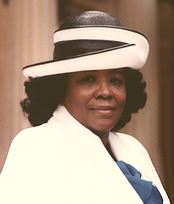
Clarence Selver
Biography
Introduction and Archipelagic Historical Context
The history of the Turks and Caicos Islands during the latter half of the twentieth century is defined by a profound and sweeping socioeconomic transformation. For centuries, the archipelagic economy relied heavily on the grueling, labor-intensive salt-raking industry centered in Grand Turk, Salt Cay, and South Caicos, supplemented by traditional seafaring, boatbuilding, and agricultural subsistence farming across the fertile settlements of North Caicos and Middle Caicos. However, as global salt markets collapsed in the mid-twentieth century, the islands faced severe economic stagnation, prompting widespread emigration and a search for a new national direction. By the 1970s, a burgeoning national consciousness took hold, championed by visionary political pioneers such as J.A.G.S. McCartney, who founded the People's Democratic Movement (PDM) to advocate for self-determination, social justice, and Belonger empowerment. Within this dynamic crucible of cultural awakening and institutional development emerged Clarence Selver—a towering cultural icon, dedicated educator, traditional music enthusiast, and civic pioneer whose life's work became dedicated to ensuring that native Turks and Caicos Islanders were equipped to lead their own modernization.
Early Life, Cultural Roots, and Musical Heritage
Clarence Selver was born and raised amidst the lush, verdant landscapes of North Caicos, an island traditionally celebrated as the "Garden Island" of the archipelago due to its rich soil, abundant rainfall, and historical agricultural plantations. Growing up in close-knit settlements such as Kew and Whitby, Selver was immersed in a traditional archipelagic way of life where community solidarity, oral history, and church life formed the bedrock of daily existence. From an early age, he developed a profound appreciation for the rich cultural heritage of the Turks and Caicos Islands, recognizing that traditional expressions were vital repositories of collective memory and resilience.
Among his deepest cultural passions was the preservation and promotion of traditional archipelagic music, particularly ripsaw music—the distinctive folk genre of the Turks and Caicos characterized by the rhythmic scraping of a carpenter's handsaw accompanied by goatskin drums, accordions, and maracas. In traditional island communities, music was not merely casual entertainment; it was the social glue that bound generations together during community celebrations, harvest festivals, and church gatherings. Selver frequently championed local musicians, church choirs, and cultural festivals, understanding that oral traditions and musical heritage provided a vital sense of identity amidst rapid societal change.
"Our cultural heritage is the compass by which future generations of Turks and Caicos Islanders must navigate the shifting tides of modernization. Without our traditions, music, and stories, we risk becoming strangers in our own land."
Throughout his early years, Selver observed the widening gap between the traditional lifestyle of the Family Islands and the modern demands of an increasingly globalized Caribbean. He recognized that if native Belongers were to thrive without losing their cultural soul, education and cultural pride had to advance hand in hand.
Educational Leadership and the Founding of TCICC
Driven by an unwavering conviction that human resource development was the cornerstone of true national empowerment, Clarence Selver entered the arena of public service and political leadership. Aligning himself with the People's Democratic Movement (PDM), the party founded on the grassroots principles of J.A.G.S. McCartney, Selver quickly established himself as a champion for educational reform and rural development. He ran for public office representing the constituency of North Caicos West—encompassing historical settlements such as Kew, Whitby, and Sandy Point—where he earned the overwhelming trust of his constituents, securing election to the Turks and Caicos House of Assembly (formerly the Legislative Council) for three consecutive terms between 1995 and 2003.
Following the decisive PDM victory in the 1995 general election under the leadership of Chief Minister Derek Taylor and alongside veteran leaders like Nathaniel Francis, Selver was elevated to the Cabinet as the Minister of Education, Health, Youth, Sports, and Gender Affairs. It was during this ministerial tenure that Selver achieved his most monumental institutional contribution to the territory: spearheading the formal establishment and expansion of the Turks and Caicos Islands Community College (TCICC). Prior to 1995, tertiary and professional education was largely out of reach for the majority of islanders, requiring families to incur exorbitant costs to send students abroad to Jamaica, the Bahamas, the United Kingdom, or the United States. Selver worked tirelessly to dismantle these educational barriers, overseeing the official opening of TCICC in March 1995. Under his visionary guidance, the college established campuses across Grand Turk, Providenciales, and North Caicos, offering accredited degrees in business, nursing, building trades, and teacher education. This pivotal democratization of learning created an indigenous professional class equipped to manage the booming tourism and offshore financial sectors.
Civic Pioneering, Political Integrity, and Grassroots Advocacy
Within the political arena, Clarence Selver earned a formidable reputation as a meticulous parliamentarian and a man of unyielding personal integrity. Over his decades of service within the People's Democratic Movement, he rose to hold key executive positions, including National Chairman and Deputy Leader of the party. In the legislative chamber, Selver was renowned for his forensic scrutiny of national budgets, his advocacy for equitable resource distribution to the Family Islands, and his impassioned defense of healthcare and youth sport infrastructure.
Selver's representation of North Caicos West was marked by tangible grassroots improvements. He consistently lobbied for upgraded road networks, improved ferry docking facilities to connect North Caicos with Providenciales, agricultural revitalization projects, and modern primary healthcare clinics. He understood that true development could not be confined to the resort corridors of Providenciales while traditional communities were left behind.
"True representation requires the courage to stand alone when party dogma diverges from the fundamental needs of the people you have sworn to serve."
This commitment to principled representation faced its ultimate test during the tumultuous political landscape of 2016. Convinced that internal party machinery had grown disconnected from the authentic needs of the grassroots community, and having been bypassed during internal candidate selections, Selver made the bold decision to break from rigid party orthodoxy. In the 2016 general election, he courageously mounted a campaign as an Independent candidate for North Caicos West. This historic pivot sent a clear message across the archipelago: Selver's ultimate loyalty was not to political emblems or party hierarchies, but to the constitutional rights and holistic well-being of the constituents he had sworn to protect.
Cultural Stewardship and Later Public Service
Even beyond his active legislative tenure, Clarence Selver remained a pillar of public governance and civic mentorship across the Turks and Caicos Islands. His extensive experience in administration and public policy led to his appointment to several crucial regulatory and oversight bodies, including notable service as a dedicated member of the Health Appeals Tribunal. In these governance roles, he brought a calm, fair-minded wisdom, ensuring that public institutions maintained transparency, due process, and compassion for everyday citizens.
Simultaneously, Selver continued his lifelong stewardship of archipelagic culture. He was a frequent vocal contributor to public forums, heritage workshops, and radio symposiums discussed across regional broadcasts such as Radio Turks and Caicos. He strongly advocated for the formal incorporation of Turks and Caicos cultural studies, traditional music appreciation, and local folk history into the primary and secondary school curricula. Selver argued passionately that young islanders growing up in an era of rapid digital globalization and intense expatriate immigration needed a strong foundation in their native history to maintain their civic confidence and cultural identity.
Enduring Legacy in the Turks and Caicos Islands
Today, Clarence Selver is rightfully remembered as one of the chief architects of modern national identity and educational accessibility in the Turks and Caicos Islands. His multi-faceted legacy bridges the transition from traditional colonial subsistence to confident, educated self-governance. As an educator and ministerial leader, his founding role in the Turks and Caicos Islands Community College transformed the life trajectories of countless young Belongers, establishing an intellectual foundation that continues to drive the nation's economy. As a musician and cultural icon, he elevated traditional archipelagic heritage, ensuring that the rhythmic resonance of ripsaw music and the wisdom of island storytelling remained integral to the national character. And as a civic pioneer, his unwavering integrity and grassroots courage set an enduring standard for public parliamentary service. Clarence Selver's life stands as a testament to the power of dedicated leadership grounded in cultural pride and educational empowerment.
Major Contributions
- Clarence Selver made profound and lasting contributions to the educational, cultural, and political landscape of the Turks and Caicos Islands.
- As Minister of Education in the mid-1990s, his most monumental achievement was co-architecting and overseeing the formal establishment and expansion of the Turks and Caicos Islands Community College (TCICC) in 1995.
- This transformative institution democratized higher education across the archipelago, enabling thousands of native Belongers to earn professional, vocational, and academic qualifications locally without the prohibitive costs of studying abroad.
- By integrating technical training with academic rigor, Selver directly empowered a new generation of civil servants, educators, and business leaders equipped to steer the territory through its rapid socioeconomic transition into a premier tourism and financial center.
- Beyond educational infrastructure, Selver served as a vital cultural steward and civic pioneer for North Caicos and the wider nation.
- As a champion of traditional archipelagic arts—including ripsaw music, communal storytelling, and folk heritage—he ensured that youth programs and national policies preserved native identity amidst accelerating globalization.
- His legislative career, spanning three consecutive victories representing North Caicos West and tenure as Deputy Leader and National Chairman of the People's Democratic Movement (PDM), raised the standard of parliamentary debate and governance oversight.
- Furthermore, his courageous 2016 run as an Independent candidate cemented his legacy as a principled political figure who placed grassroots community advocacy and integrity above partisan orthodoxy.