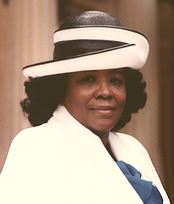
Rosita Missick-Butterfield
Biographical Details
Rosita Missick-Butterfield
Biography
Dr. Rosita Beatrice Missick-Butterfield: Trailblazer for Women in Turks and Caicos Governance and Nationhood
The Honorable Dr. Rosita Beatrice Missick-Butterfield, MBE (November 14, 1936 – January 10, 2015), stands as a monumental figure in the political, civic, and spiritual development of the Turks and Caicos Islands. Operating across an era defined by profound constitutional upheaval and rapid economic modernization, Butterfield repeatedly shattered systemic barriers to expand the horizons of female leadership across the British Caribbean. In 1984, she achieved an indelible milestone in archipelagic history by becoming the first woman ever elected to the Legislative Council (now the House of Assembly), representing her home district of Kew, North Caicos, for the Progressive National Party (PNP). Seven years later, in 1991, she ascended to the pinnacle of parliamentary authority as the first female Speaker of the House of Assembly, guiding the territory through complex legislative sessions with poise, impartiality, and unwavering dignity. Beyond the halls of Parliament, Butterfield was a woman of multifaceted brilliance: a dedicated healthcare professional who practiced nursing and midwifery in Jamaica, the United States, and her native islands; a dynamic commercial leader who co-founded the Butterfield Gold Group of Companies; an ordained pastor and First Lady of the Faith Tabernacle Church of God; and an enduring patron of education who championed the establishment of the Turks and Caicos Islands Community College (TCICC). Anchored by her personal philosophy that "Anything is Possible," Dr. Butterfield's life was a testament to Christian service, civic duty, and the unstoppable advancement of Caribbean women.
Early Life and Educational Foundations in North Caicos
Rosita Beatrice Missick was born on November 14, 1936, in the agricultural settlement of Kew on the island of North Caicos. Her parents, Isaiah V. Missick and Savelitta A. Missick (née Higgs), were respected members of the local community who instilled in their children a rigorous Christian faith, deep self-respect, and an unshakeable commitment to communal solidarity. During the 1930s and 1940s, North Caicos—often celebrated as the "Garden Island" of the archipelago due to its comparatively fertile soil, freshwater lenses, and citrus groves—was a quiet, isolated rural enclave. The territory as a whole was an impoverished dependency of the British Crown, administered through the Governor of Jamaica. Modern amenities such as electricity, paved roads, and piped water were non-existent, and transportation between the Caicos cays and the administrative capital on Grand Turk was conducted entirely by wooden sailing sloops navigating treacherous reefs.
In this close-knit island society, young Rosita displayed exceptional intelligence, discipline, and a natural compassion for the vulnerable. She received her elementary education at the Kew Elementary School and Bottle Creek Elementary School on North Caicos, walking long distances along rugged dirt tracks to attend classes. Demonstrating outstanding academic aptitude, she was subsequently sent to the capital island to attend Grand Turk Secondary School, which was then the premier institution of secondary learning in the territory. Following her graduation, Missick felt an immediate calling to public service. She began her working life as a young primary schoolteacher in North Caicos, dedicating her early adulthood to instructing village children in literacy, arithmetic, and moral discipline. However, as she observed the severe lack of medical infrastructure and the tragic, preventable health crises that routinely afflicted rural island families, she resolved to pursue professional medical training abroad.
The Healing Arts: Jamaican Training and American Experience
At the midpoint of the twentieth century, healthcare across the Turks and Caicos Islands was rudimentary, with no resident physician on North Caicos and expectant mothers facing perilous childbirth without professional assistance. Driven by an urgent desire to alleviate human suffering, Missick departed her homeland in the 1950s to study nursing in Kingston, Jamaica, then the preeminent hub of medical instruction and West Indian intellectual life. Enrolling in rigorous clinical programs, she qualified as both a Registered General Nurse (RGN) and a State Certified Midwife. Her time in Jamaica exposed her to modern clinical pharmacology, surgical assistance, and comprehensive public health methodologies, while also broadening her Caribbean political consciousness during the heady years preceding regional federation and independence.
Seeking further clinical specialization and international experience, Missick subsequently migrated to the United States. For nearly a decade, she worked within major American medical facilities and urban hospitals, refining her skills in emergency care, obstetrics, and healthcare administration under demanding conditions. At a time when thousands of Caribbean emigrants remained permanently in the diaspora, Missick maintained an enduring fidelity to her native soil. Rejecting opportunities for permanent settlement abroad, she returned to the Turks and Caicos Islands in the 1970s, bringing back invaluable expertise to her country’s nascent public health apparatus.
Upon her return, Nurse Missick was appointed as a government clinic nurse, a vital post she held for eight years. Operating across rural North Caicos and the burgeoning settlement of Providenciales, she traveled across rocky roads and remote coastal settlements by foot, boat, and rugged vehicles to treat infections, deliver newborns, conduct vaccinations, and care for the elderly. Her clinical skill, matched by an innate bedside tenderness, earned her the enduring affection of families across the archipelago. Through her hands-on healthcare practice, she developed an intimate understanding of the daily hardships faced by ordinary Turks and Caicos Islanders, laying the deep foundation of trust that would later propel her into public office.
Breaking the Glass Ceiling: The Historic 1984 General Election
By the late 1970s and early 1980s, the Turks and Caicos Islands were experiencing rapid political and economic transformations. The introduction of the 1976 Constitution had replaced the traditional administrative board with a ministerial system of government, creating the office of Chief Minister and fostering the rise of modern political parties. Visionary leader J.A.G.S. McCartney mobilized the working classes through the People's Democratic Movement (PDM), while contemporaries such as Norman Saunders and Hilly Ewing consolidated power through the Progressive National Party (PNP). However, despite the essential organizing work performed by women within church congregations, school boards, and civic societies, political representation remained an exclusive fraternity of men.
Rosita Butterfield—who by then had married fellow visionary entrepreneur Dr. Albray Victor Butterfield Sr.—refused to accept the political disenfranchisement of women. In 1984, she took the bold step of entering frontline electoral politics. Aligning herself with the Progressive National Party led by Chief Minister Norman Saunders, she secured the party's nomination for the constituency of Kew, North Caicos, for the upcoming general election scheduled for May 29, 1984.
Her candidacy was greeted with intense public interest and significant skepticism from traditional patriarchal circles. Undaunted, Butterfield mounted an energetic, grassroots campaign. She traveled house to house across the hamlets of Kew, Whitby, and Sandy Point, engaging constituents on agricultural support, healthcare access, youth education, and infrastructural development for the Family Islands. Her deep family roots in Kew, combined with her years of selfless medical service as a clinic nurse, resonated powerfully with voters.
"Anything is possible if you have faith, discipline, and a heart dedicated to serving others. The doors that seem closed to our women and our young people will open if we possess the courage to knock and the resolve to enter." — Dr. Rosita Beatrice Missick-Butterfield
On May 29, 1984, the voters of Kew delivered a historic verdict: Rosita Butterfield won the seat by a decisive margin, becoming the first woman ever elected to the Legislative Council in the history of the Turks and Caicos Islands. Her triumph shattered a centuries-old gender barrier, igniting celebrations across North Caicos and signaling a new era of civic inclusion across the British Caribbean.
Constitutional Upheaval and Legislative Stewardship
Butterfield’s arrival in Parliament coincided with one of the most tumultuous periods in the political history of the Turks and Caicos Islands. In March 1985, Chief Minister Norman Saunders was arrested in Miami, Florida, on federal conspiracy charges related to the narcotics transit trade, plunging the territory into an unprecedented international crisis. Following Saunders' resignation, Nathaniel Francis assumed the chief ministership, but ongoing governance inquiries culminated in the landmark 1986 Blom-Cooper Commission of Inquiry. The British government subsequently took the extraordinary step of suspending the territory's constitution, dissolving the Ministerial Cabinet, and establishing direct administrative rule under the British Governor.
Throughout this acute constitutional crisis, Rosita Butterfield emerged as a vital pillar of stability, integrity, and calm leadership. In 1986, she was appointed Deputy Speaker of the House, a position she held with distinction until 1988. In an environment fraught with intense political rancor and public disillusionment, Butterfield used her parliamentary platform to defend constitutional propriety, demand administrative accountability, and maintain a steady focus on the socio-economic needs of everyday citizens.
Between 1987 and 1988, she was selected to serve as Chair of the Legislative Council’s Employment Bill Committee. In this vital capacity, Butterfield spearheaded comprehensive reviews of territorial labor statutes. As foreign capital and resort developers began to invest heavily in Providenciales, she fought tenaciously to protect native Belonger employment rights, mandate safe workplace environments, and guarantee fair compensation for local laborers. Following the restoration of constitutional self-government in 1988, she continued her legislative service as an appointed Member of Parliament for the Progressive National Party, earning broad bipartisan respect from colleagues across party lines, including figures such as Clement Howell.
The First Female Speaker of the House (1991–1993)
The pinnacle of Butterfield’s legislative career arrived following the general election of April 1991. The Progressive National Party returned to power under the leadership of Chief Minister Charles Washington Misick. When the newly formed Parliament convened to elect its presiding officer, Butterfield was nominated to take the chair. With overwhelming support from across the political aisle, she made history once again: Rosita Butterfield was sworn in as the first female Speaker of the Legislative Council (later formalized as the House of Assembly) of the Turks and Caicos Islands.
As Speaker, Butterfield held the supreme constitutional responsibility for regulating parliamentary debates, upholding the Standing Orders, and safeguarding the rights and privileges of the legislature against executive overreach. Dressed in the ceremonial robes and tricorn hat of the Westminster tradition, she brought an authoritative yet empathetic presence to the chair. She presided over landmark debates regarding economic diversification, tourism expansion, environmental conservation, and educational modernization. She was widely praised for her strict impartiality, ensuring that opposition voices received fair representation while maintaining decorum and order during fiercely contested debates.
In recognition of her extraordinary service to parliamentary democracy, healthcare, and community welfare, Queen Elizabeth II appointed Rosita Butterfield a Member of the Most Excellent Order of the British Empire (MBE) in the New Year Honours of 1992. When she retired from the Speakership and active parliamentary life in 1994, she had established enduring precedents for parliamentary procedure and proven beyond doubt that women could govern with unsurpassed excellence.
Commercial Enterprise and the Creation of Butterfield Gold
While achieving historic milestones in public governance, Dr. Butterfield was simultaneously building a formidable commercial legacy in the private sector alongside her husband, Dr. Albray Victor Butterfield Sr. (who was also honored as an MBE recipient). Recognizing that true national sovereignty required indigenous economic self-reliance, the Butterfields established the Butterfield Gold Group of Companies in Providenciales.
What began as a modest family endeavor blossomed into one of the largest, most successful indigenous business conglomerates in the history of the Turks and Caicos Islands. The Butterfield Gold Group encompassed a wide array of essential enterprises, including Butterfield Gold Supermarket—the premier full-service food and goods market serving Providenciales—alongside Butterfield Motors Ltd, bulk wholesale distribution, heavy construction, commercial real estate developments such as Butterfield Square, and financial services.
Following her departure from the legislature in 1994, Dr. Butterfield assumed active executive leadership as the Chief Executive Officer, Corporate Secretary, and Director of the Butterfield Gold Group of Companies. Her keen analytical mind, honed through decades of clinical administration and parliamentary governance, ensured the company's financial resilience and continuous growth. Under her stewardship, Butterfield Gold became one of the largest private employers in the territory, providing steady employment, competitive wages, and professional advancement to hundreds of native Belongers and Caribbean immigrants. Through their commercial vision, the Butterfields played an indispensable role in transforming Providenciales from a sleepy maritime island into a vibrant international tourism and commercial hub.
Educational Vision: Founding the Community College
Dr. Butterfield was an ardent advocate for human resource development, maintaining that political emancipation was meaningless without intellectual and professional empowerment. Throughout the late twentieth century, native Turks and Caicos Islanders faced severe educational barriers: with no domestic tertiary institution, ambitious young islanders were forced to travel abroad to Jamaica, the Bahamas, the United Kingdom, or the United States to obtain university degrees or professional certifications—a financial burden that excluded the vast majority of working-class families.
Working alongside visionary educational advocates such as Clarence Selver, Dr. Butterfield served as a driving force behind the conceptualization, legislative approval, and physical development of the Turks and Caicos Islands Community College (TCICC). When the institution officially opened its doors in 1994–1995, Butterfield served as one of its foundational council members and community benefactors. She championed the establishment of accredited degree programs in nursing, education, business administration, and the building trades, ensuring that young islanders could acquire professional credentials at home. Her tireless advocacy helped forge an indigenous professional class equipped to lead the country's public administration, healthcare institutions, and expanding tourism industries.
Spiritual Ministry, Pastoral Leadership, and the ARB Foundation
Underpinning every dimension of Dr. Butterfield’s life was an unwavering, deeply personal Christian faith. She viewed public leadership, commerce, and healthcare not as vehicles for personal enrichment, but as divine platforms for ministry and servant leadership. Together with her husband, she was an instrumental leader of the Faith Tabernacle Church of God in Providenciales, serving as an ordained pastor and First Lady of the congregation.
Pastor Butterfield was a beloved shepherd to her flock. She delivered passionate, uplifting sermons rooted in scriptural truth, provided private pastoral counseling to individuals facing marital or financial distress, and directed dynamic youth and women’s ministries. Her church became a sanctuary of hope and social assistance for the marginalized, offering food pantries, emergency clothing drives, and spiritual refuge to newly arrived immigrants and struggling families.
To institutionalize her charitable endeavors, Dr. Butterfield established the ARB Foundation, a private philanthropic non-profit organization named in honor of her family. Through the ARB Foundation, she channeled personal resources into higher education scholarships for underprivileged students, funded specialized overseas medical treatments for critically ill islanders, and provided emergency relief following destructive hurricanes. Her philanthropic vision was intimately interwoven with family life: together with Dr. Albray Butterfield Sr., she nurtured five children—Alleveia L. Butterfield-Chan Jon Chu, Albray V. Butterfield Jr., Adulson A. Butterfield, Keisha A. Butterfield, and nephew/adopted son Royal S. Robinson Sr. (who would himself rise to national prominence as Chief Land Surveyor, Minister of Finance, and Deputy Premier of the Turks and Caicos Islands).
Passing, State Funeral, and Enduring National Legacy
In her later years, Dr. Butterfield retired from active executive duties, though she remained a revered elder statesman, matriarch, and moral compass for the nation. On January 10, 2015, surrounded by family, Dr. Rosita Beatrice Missick-Butterfield passed away in Nassau, Bahamas, at the age of seventy-eight.
Her passing elicited an extraordinary outpouring of grief and national gratitude across the Caribbean. Flags were flown at half-mast, and tributes poured in from leaders of every political persuasion, recognizing her as an irreplaceable founding mother of modern Turks and Caicos. Premier Dr. Rufus Ewing led the national eulogies, reflecting on her transformative impact:
"Dr. Rosita Butterfield was a woman of extraordinary grace, fortitude, and vision. She did not merely witness history; she authored it with her own hands, proving that women belong at the highest levels of national decision-making in the Turks and Caicos Islands." — Premier Dr. Rufus Ewing, State Memorial Address
In tribute to her stellar contributions to the nation, the Cabinet of the Turks and Caicos Islands accorded Dr. Butterfield the supreme honor of a full State Funeral—the first ever granted to a female leader in the territory’s history. Preceded by solemn lying-in-state ceremonies at the Faith Tabernacle Church of God and the House of Assembly, the official state service took place on February 5, 2015, at the Gustavus Lightbourne Sports Complex in Providenciales. Dignitaries, international diplomats, former premiers, church leaders, and thousands of ordinary citizens gathered to pay their final respects. Notably, the authorization and organization of her funeral established a vital constitutional precedent, directly inspiring the territory’s government to formally draft and institutionalize official protocols for state and ceremonial funerals.
In 2023, Dr. Butterfield was posthumously inducted into the Turks and Caicos Islands National Honours and Awards, permanently enshrining her among the premier nation builders of the archipelago. Today, her name endures as a symbol of barrier-shattering courage, professional excellence, and dedicated public service. From the fertile fields of Kew to the presiding chair of the House of Assembly and the bustling commercial centers of Providenciales, Dr. Rosita Missick-Butterfield demonstrated that with faith, integrity, and perseverance, anything is indeed possible.
Major Contributions
- Dr. Rosita Beatrice Missick-Butterfield made foundational and historic contributions to the Turks and Caicos Islands as a political pioneer, healthcare practitioner, entrepreneur, and civic leader.
- In 1984, she shattered centuries of gender exclusion by becoming the first woman ever elected to the Legislative Council (representing Kew, North Caicos for the Progressive National Party).
- In 1991, she achieved another constitutional milestone by being elected as the first female Speaker of the House of Assembly, presiding over the legislature during a vital era of economic expansion and constitutional maturation.
- In these roles, along with her service as Deputy Speaker and Chair of the Employment Bill Committee, she established modern parliamentary decorum and championed Belonger labor protections.
- Beyond her political career, Dr. Butterfield played a transformative role in the socioeconomic development of the archipelago.
- As a trained nurse and midwife with extensive clinical experience in Jamaica and the United States, she provided dedicated healthcare across rural settlements for eight years.
- Alongside her husband, Dr. Albray V.
- Butterfield Sr.
- , she co-founded the Butterfield Gold Group of Companies, building an indigenous commercial empire in supermarket retail, automotive sales, construction, and real estate that powered the modern development of Providenciales.
- Furthermore, she was an essential founding supporter and council member of the Turks and Caicos Islands Community College (TCICC), an ordained pastor of Faith Tabernacle Church of God, and founder of the philanthropic ARB Foundation, leaving an indelible legacy of female empowerment, Christian service, and national development.