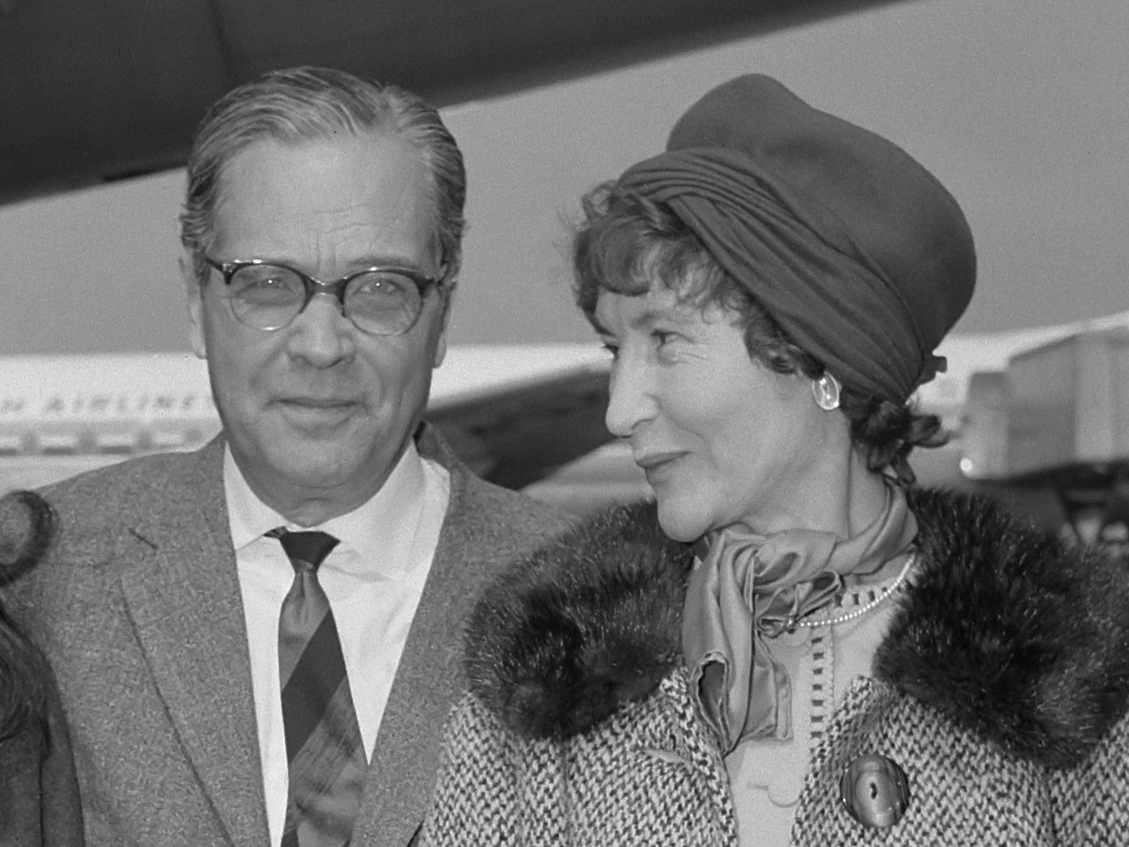
Cola Debrot

Cola Debrot
Biography
Introduction and Historical Context
Dr. Nicolaas "Cola" Debrot (May 4, 1902 – December 3, 1981)—frequently cited in regional historiography and biographical compendia as Dr. Nicomedes Antonia "Cola" Debrot—stands as one of the most intellectually versatile, culturally foundational, and politically transformative figures in the modern history of the Dutch Caribbean. A true Renaissance man of the twentieth century, Debrot seamlessly embodied the roles of pioneering novelist, poet, literary critic, practicing physician, high-ranking diplomat, and historic statesman. His extraordinary life unfolded against the backdrop of an era marked by monumental socio-economic shifts: the rapid industrialization of the ABC islands (Aruba, Bonaire, and Curaçao) following the establishment of global oil refineries, the progressive dismantling of colonial hierarchies, and the birth of constitutional democracy under the 1954 Charter for the Kingdom of the Netherlands (Het Statuut). Within this dynamic crucible, Debrot served as both an artistic vanguard and a constitutional anchor, articulating a modern Caribbean humanism that reconciled European intellectual traditions with the vibrant, multi-ethnic realities of his homeland.
.jpg)
Debrot achieved an indelible milestone in Caribbean governance in 1962 when Queen Juliana appointed him Governor of the Netherlands Antilles (Gouverneur van de Nederlandse Antillen), making him the very first native Antillean to ever hold the highest executive office in the territory’s three-century colonial history. For eight turbulent and transformative years, he governed a six-island federation navigating intense labor struggles, rapid modernization, and the historic Trinta di Mei labor uprising of 1969. Simultaneously, as the author of the landmark 1935 novella Mijn zuster de negerin ("My Black Sister"), he is universally celebrated as the founding father of modern Dutch Antillean literature. His profound philosophy of "tropical existentialism" challenged racial binaries, interrogated colonial guilt, and forged an authentic Antillean consciousness that paved the way for successive literary luminaries including Boeli van Leeuwen, Pierre Lauffer, Tip Marugg, and Frank Martinus Arion.
Bonaire Roots, Lineage, and Formative Caribbean Years
Cola Debrot was born on May 4, 1902, in Kralendijk on the tranquil island of Bonaire. He was the son of Jean Jacques Debrot, a prominent plantation owner, merchant, and official whose lineage traced back to French-Swiss Huguenots who had settled in the Caribbean generations earlier. His father managed several major agricultural estates, most notably the historic plantation of Slagbaai (now part of the Washington Slagbaai National Park) in northwestern Bonaire, where young Cola spent his early days immersed in the rugged cactus-strewn landscape, salt flats, and turquoise waters of his native island. His mother, Marie Antoinette Clémence Nouel, hailed from a respected Venezuelan family, imbuing the household with Hispanic warmth, Latin American cultural sensibilities, and Spanish literary influences.
Growing up in a multilingual environment where Papiamentu was spoken alongside Spanish, Dutch, and French, Debrot developed an early and acute sensitivity to the complex linguistic and racial mosaic of the Leeward Antilles. While his family occupied a position of social and economic privilege within the patrician planter class, Cola interacted freely with Afro-Bonairean workers, fishers, and rural storytellers, absorbing the folklore, spiritual worldview, and rhythmic cadence of the island’s oral culture. As a young boy, he moved with his family to Curaçao, where he completed his primary and preparatory education at the prestigious St. Thomas College in Willemstad. He also spent extended periods visiting family in Caracas, Venezuela, broadening his horizons to encompass the continental Latin American mainland. In 1916, at the age of fourteen, following the customary trajectory of Antillean elites, Debrot boarded a transatlantic steamship bound for the Netherlands to pursue his secondary education at a gymnasium, embarking on a European sojourn that would fundamentally shape his intellectual destiny.
European Crucible: Law, Medicine, and the Avant-Garde
Upon arriving in the Netherlands, the young Debrot plunged headlong into the rigorous academic and artistic currents of interwar Europe. Displaying an insatiable intellectual curiosity, he initially enrolled at Utrecht University to study law, successfully earning his candidaats and doctorandus degrees in jurisprudence in 1927. Yet, legal theory alone could not satisfy his deep humanitarian impulses or his desire for tangible human service. Debrot subsequently made the bold decision to pivot to medicine, enrolling at the University of Amsterdam. Over the next decade, he balanced exhaustive medical training, clinical internships, and laboratory research with an astonishingly fertile artistic life, ultimately qualifying as a certified medical doctor (arts) in 1941.
During the late 1920s and 1930s, Debrot lived a cosmopolitan, nomadic life, traveling extensively across France, Spain, Germany, and North Africa. In Paris in 1928, he encountered Estelle Reed, a brilliant American modern dancer, choreographer, and pupil of Martha Graham. The two formed an instant, enduring intellectual and romantic bond, marrying soon after. Estelle introduced Cola to the vanguard circles of modern European dance, theater, and visual arts, while she would later become one of the premier English translators of his Caribbean fiction.
Settling in Amsterdam, Debrot became an indispensable figure in Dutch literary and philosophical circles. He associated intimately with modernist titans such as Menno ter Braak, Simon Vestdijk, Martinus Nijhoff, and Jan Engelman. He immersed himself in French existentialism, Freudian psychoanalysis, and modern European prose, but he found European bourgeois society increasingly sterile, rationalist, and disconnected from genuine human vitality. This profound sense of spiritual displacement between his warm, vibrant Caribbean origins and the cold, cerebral metropole of Europe served as the creative crucible for his greatest literary breakthrough.
Literary Masterpiece: 'Mijn zuster de negerin' and Tropical Existentialism
In 1935, Debrot published his debut novella, Mijn zuster de negerin ("My Sister the Negro" / "My Black Sister"), in the avant-garde literary journal Forum. The work sent shockwaves through the Dutch-speaking literary establishment and is universally recognized today as the foundational cornerstone of modern Antillean literature. Written in spare, evocative, and psychologically incisive prose, the novella introduced the revolutionary concept of "tropical existentialism"—a philosophical framework that examined the alienation, identity crises, and moral reckonings of the Caribbean individual caught between European colonial socialization and authentic Antillean heritage.
"In the Caribbean, we cannot escape each other. Black and white, Europe and Africa, are bound together not merely by historical circumstance, but by the deeper, inescapable brotherhood of blood and shared destiny." — Cola Debrot
The plot of Mijn zuster de negerin follows Frits Ruprecht, a young man of Dutch-Antillean plantation descent who returns to Curaçao after living in Europe for fourteen years. Cynical, spiritually exhausted, and alienated by European intellectualism, Frits seeks solace and a sense of primal belonging on his deceased parents' plantation, Miraflores. That evening, driving through the dark island countryside, he encounters Maria, a beautiful young Afro-Curaçaoan woman who had been his childhood playmate and is now an employee on the estate. Infatuated by her grace and viewing her as the living embodiment of the island’s sensual soul, Frits prepares to seduce her, replaying the age-old colonial pattern of white patriarchal conquest.
At the pivotal climax, however, the old Black estate overseer, Wancho, intervenes and reveals a startling truth: Maria is Frits's half-sister, fathered by his late plantation-owner father with an Afro-Caribbean woman. Rather than reacting with horror, shame, or racial disgust, Frits experiences a profound existential awakening and moral epiphany. He casts aside his predatory desires and embraces Maria with pure, fraternal love, recognizing that she is his true sister in every sense—biologically, spiritually, and culturally. Through this embrace, Debrot deconstructed centuries of colonial hypocrisy, miscegenation taboos, and racial oppression. He demonstrated that Antillean identity was inherently syncretic, forged through shared bloodlines and mutual suffering, and that true freedom required whites to acknowledge and embrace their Black kin with unconditional dignity.
Beyond this seminal novella, Debrot continued to produce profound literature across multiple genres. In 1940, alongside Dutch poets Ed. Hoornik and Han G. Hoekstra, he co-founded the influential literary magazine Criterium, which became the premier platform for a new generation of realist and romantic-rationalist writers in the Netherlands. He published acclaimed novellas such as Bid voor Camille Willocq (1946) and De vervolgden (1982), powerful poetry collections including Heimwee naar het Zuiden (1946) and Navrante zomer (1964), and pioneering scholarly essays that systematized Antillean literary and theatrical history.
World War II: The Physician in the Dutch Resistance
When Nazi Germany invaded and occupied the Netherlands in May 1940, Cola Debrot was residing in Amsterdam, completing his medical licensing. Rather than attempting to flee or retreating into comfortable detachment, Dr. Debrot chose the path of active, perilous moral resistance. Establishing a general medical practice in Amsterdam during the darkest years of the occupation, he operated at the dangerous intersection of medical duty and clandestine anti-fascist resistance.
Dr. Debrot utilized his medical clinic as a safe sanctuary for Dutch Resistance fighters, persecuted intellectuals, and Jewish citizens fleeing deportation to concentration camps. Capitalizing on his medical authority, he routinely falsified official health diagnoses, issue fabricated medical exemption certificates, and diagnosed patients with contagious conditions to protect young Dutch men from forced deportation to German labor camps (Arbeitseinsatz). Furthermore, he provided covert medical treatment to wounded underground partisans who could not seek assistance at public hospitals without alerting the Gestapo. This dangerous humanitarian work mirrored the heroic courage of his fellow Antillean contemporary, the resistance martyr Boy Ecury, underscoring the deep commitment of Antilleans to the liberation of the Netherlands from totalitarian tyranny. Debrot's wartime experiences deepened his ethical philosophy, cementing his belief that human dignity must be defended across all borders and ideologies.
Post-War Return, Constitutional Diplomacy, and the 1954 Charter
Following the liberation of the Netherlands in 1945, Debrot felt an irresistible call to return to the Caribbean. In late 1948, he returned to Curaçao, where he established a medical practice as a general practitioner and public health physician. However, his extraordinary intellect, legal training, and commanding moral stature quickly made him indispensable to the public administration of the Netherlands Antilles. The post-war era witnessed a surging wave of decolonization and self-determination across the Caribbean, led on Curaçao by legal visionary Moises Frumencio da Costa Gomez and political leader Efraïn Jonckheer.
Recognizing Debrot's rare synthesis of legal expertise, diplomatic tact, and cross-cultural empathy, the government appointed him in 1952 as Minister Plenipotentiary of the Netherlands Antilles (Waarnemend Gevolmachtigd Minister) in The Hague. From 1955 to 1962, he served as Director of the Cabinet of the Minister Plenipotentiary, acting as the primary diplomatic bridge between the Antillean government in Willemstad and the Dutch Crown in The Hague. In this critical post, Debrot played an instrumental behind-the-scenes role during the historic Round Table Conferences (Ronde Tafel Conferenties) that culminated in the promulgation of the Charter for the Kingdom of the Netherlands (Statuut voor het Koninkrijk der Nederlanden) on December 15, 1954. The Charter permanently dismantled the old colonial hierarchy, transforming the Netherlands Antilles and Suriname into autonomous constituent countries equal in partnership with the European Netherlands. Debrot’s diplomatic skill ensured that Antillean internal sovereignty was respected while maintaining cooperative ties in defense, foreign policy, and kingdom jurisprudence.
The Historic Governorship and the Crucible of 'Trinta di Mei'
In September 1962, Cola Debrot achieved the pinnacle of his public career when he was officially appointed and sworn in as the Governor of the Netherlands Antilles by Queen Juliana. This appointment was an epochal watershed in Caribbean history: after more than three centuries of European colonial administrators dispatched from The Hague, Debrot became the very first native Antillean to serve as Governor. His elevation was celebrated across Aruba, Bonaire, Curaçao, Sint Maarten, Sint Eustatius, and Saba as a triumphant symbol of national maturity and political dignity.
"True political leadership in our islands requires more than administrative decrees; it demands an intimate communion with the cultural soul, the complex heritage, and the unyielding dignity of our people." — Governor Cola Debrot
As Governor, Debrot served a dual constitutional function: representing the Dutch Head of State while simultaneously serving as the head of the territorial government in Willemstad. He approached the office not as a distant colonial bureaucrat, but as a compassionate native son and medical doctor attentive to the health of the entire social body. His governorship, spanning from 1962 to 1970, coincided with profound socio-economic transformations, marked by the automation of the Shell refinery, rising unemployment among working-class Afro-Curaçaoans, and growing demands for racial equality and labor justice.
This social volcano erupted on May 30, 1969, in the monumental labor uprising known as Trinta di Mei. What began as a peaceful strike by contracting workers at the Shell refinery led by labor leaders Wilson "Papa" Godett and Amador Nita quickly transformed into a massive march on Willemstad. When police opened fire and seriously wounded Godett, widespread fury ignited: rioting broke out, and historic commercial sections of Willemstad were set ablaze. With the local government incapacitated and the social fabric strained to its breaking point, Governor Debrot faced the supreme crisis of his political life.
Debrot handled the catastrophe with extraordinary constitutional calm, human empathy, and moral restraint. While Dutch marines were temporarily deployed under kingdom treaty obligations to restore public order, Debrot adamantly resisted calls by conservative factions for prolonged martial repression or authoritarian crackdowns. Recognizing that the uprising was the legitimate outcry of an economically marginalized and racially alienated working class, he facilitated the resignation of the existing cabinet under Prime Minister Ciro Kroon and oversaw the installation of an interim government headed by Gerald Sprockel. Furthermore, Debrot called early general parliamentary elections for September 1969, which dramatically transformed Antillean politics by bringing Godett and Nita’s newly formed labor party, the Frente Obrero i Liberashon 30 di Mei (FOL), directly into parliament. Through his decisive and humane stewardship, Debrot prevented civil war, guided the nation peacefully through its greatest trauma, and laid the foundations for a more egalitarian, racially inclusive democracy.
Cultural Stewardship, the Cola Debrot Prize, and Immortal Legacy
Even while carrying the crushing burdens of national governance, Debrot remained the undisputed cultural conscience and intellectual patron of the Dutch Caribbean. He championed the formal recognition and preservation of Papiamentu, encouraging its use in literature, theater, and public discourse alongside authors like Pierre Lauffer and dramatists like Nydia Ecury. He was a tireless patron of local painting, classical and folkloric music, and architecture, frequently opening the Governor’s Palace in Willemstad to Antillean artists, poets, and musicians.
In 1968, in resounding tribute to his monumental cultural leadership, the Island Government of Curaçao established the Premio Cola Debrot (Cola Debrot Prize). It remains to this day the most prestigious cultural, artistic, and scientific award in the Dutch Caribbean. Bestowed annually on his birthday (May 4), the prize rotates among eight distinguished disciplines: literature, visual arts, music, dance, theater, film, architecture, and science. Over the decades, it has honored the Caribbean’s greatest minds, including Boeli van Leeuwen, Tip Marugg, Frank Martinus Arion, and composer Wim Statius Muller, standing as an eternal living monument to Debrot’s holistic vision of cultural excellence.
Debrot retired from the Governorship in 1970, succeeded by Bernadito M. Leito, the first Black Antillean Governor. In his later years, Debrot returned to the Netherlands, settling in Amsterdam where he continued writing, mentoring Caribbean students, and organizing his extensive archives. He endured declining health in his final years and passed away peacefully in Amsterdam on December 3, 1981, at the age of 79. His passing was mourned across the entire Kingdom of the Netherlands, with flags lowered to half-mast throughout the ABC and Windward Islands. Today, Dr. Nicolaas "Cola" Debrot remains immortalized as a foundational titan of Caribbean civilization—a visionary who united the healing touch of a physician, the poetic soul of a master writer, and the selfless wisdom of an enlightened statesman to lead his people into the modern world.
References Literatuurmuseum. "Nicolaas Debrot (Cola Debrot): Arts, Schrijver, Diplomaat en Bestuurder." Biografisch Woordenboek van Nederland. Encyclopedia of Caribbean Literature. "Debrot, Cola (1902–1981): Founding Voice of Dutch Antillean Literature and Statesmanship." Rutgers, Wim. Beneden en boven de wind: Literair leven in de Nederlandse Antillen en Aruba. De Bezige Bij, Amsterdam. Nationaal Archief Nederland. "Gouverneur Nicolaas Debrot en de staatkundige hervormingen van de Nederlandse Antillen (1962–1970)." Anderson, William A., and Russell R. Dynes. Social Movements, Violence and Change: The May Movement in Curaçao. Ohio State University Press. Digital Library for Dutch Literature (DBNL). "Cola Debrot en de geboorte van het Antilliaanse literaire bewustzijn: Biografie en Bibliografie." Oostindie, Gert, and Peter Verton. Ki sorto di Reino? / What kind of Kingdom? Governance and Politics in the Netherlands Antilles. Amsterdam University Press. Encyclopedie van Curaçao. "Geschiedenis en Winnaars van de prestigieuze Premio Cola Debrot (1968–Heden)."
Major Contributions
- Dr. Nicolaas "Cola" Debrot made historic, multi-disciplinary contributions to Caribbean civilization as the foundational architect of modern Dutch Antillean literature and the first native-born Governor of the Netherlands Antilles.
- His 1935 novella, *Mijn zuster de negerin*, introduced the paradigm of "tropical existentialism" and fundamentally redefined Caribbean post-colonial literature, dismantling colonial racial taboos by celebrating the shared bloodline and fraternal solidarity uniting Black and white Antilleans.
- As an essayist, poet, and co-founder of the avant-garde journal *Criterium*, he gave intellectual structure to Dutch Caribbean arts, while his valorous wartime medical service in occupied Amsterdam provided crucial sanctuary and fraudulent health exemptions that saved countless resistance fighters and Jewish citizens from Nazi deportation.
- In public governance and kingdom diplomacy, Debrot served as Minister Plenipotentiary in The Hague, where he was instrumental in negotiating the historic 1954 Charter for the Kingdom of the Netherlands (*Het Statuut*), which granted the Netherlands Antilles complete internal autonomy.
- Appointed Governor in 1962, he shattered three centuries of European colonial administrative monopolies.
- His steady, empathetic constitutional leadership during the watershed *Trinta di Mei* labor uprising of 1969 prevented armed escalation, facilitated the rise of working-class Afro-Curaçaoan representation in parliament, and preserved democratic continuity.
- In 1968, his extraordinary cultural patronage was permanently immortalized through the establishment of the *Premio Cola Debrot* (Cola Debrot Prize), the highest and most coveted artistic and scientific distinction in the Dutch Caribbean.
