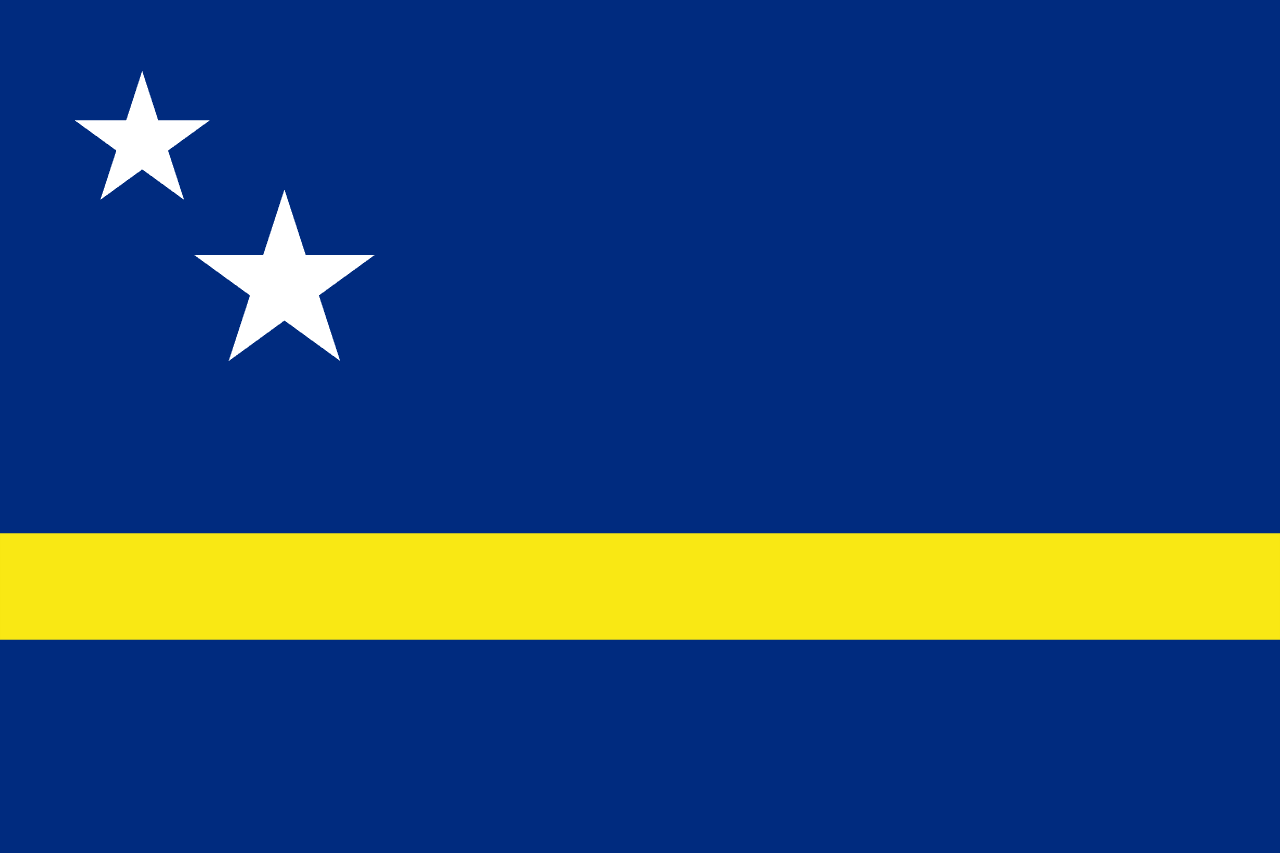
Curaçao
The Dutch Caribbean Jewel, a land of vibrant Papiamento heritage and a heroic history of resistance and autonomy.
Figures from Curaçao
Historically documented individuals of note.
Boeli van Leeuwen
### Introduction and Historical Context The early twentieth century in Curaçao marked a period of profound socio-economic and cultural metamorphosis. Following the discovery of vast oil reserves in Venezuela, the establishment of the Royal Dutch Shell refinery in Willemstad in 1915 irrevocably transformed the island from a quiet, economically stagnant colonial trading post into an industrialized, bustling Caribbean crossroad [1]. This rapid modernization attracted thousands of migrant workers from across the West Indies, Europe, and Latin America, creating a highly complex, stratified, and polyglot society. At the pinnacle of this social hierarchy sat the traditional Protestant patrician elite and the Dutch colonial administrative apparatus, while the vast majority of the population navigated life in the rich creole vernacular of Papiamentu. Within this dynamic crucible of colliding cultures, colonial legal structures, and emerging Antillean identity emerged Willem Cornelis Jacobus 'Boeli' van Leeuwen, born on October 10, 1922, in Willemstad [2]. Alongside intellectual giants such as [Cola Debrot](/profiles/cola-debrot) and [Pierre Lauffer](/profiles/pierre-lauffer), Van Leeuwen would become one of the most celebrated and profound literary and legal figures in the history of the Netherlands Antilles. Operating simultaneously as a high-ranking government jurist and a fiercely independent existentialist novelist, Van Leeuwen dedicated his life to exploring the profound paradoxes of Caribbean existence, straddling the rigid demands of European legalism and the vibrant, unpredictable reality of tropical life. ### Lineage, Early Years, and European Crucible Boeli van Leeuwen was born into a distinguished and influential patrician family with deep administrative roots in Curaçao. His father served as a respected district judge and high-ranking colonial official, immersing young Boeli from an early age in the formal mechanisms of law, governance, and civic responsibility [1]. Despite his family's elite status, Van Leeuwen's boyhood was deeply shaped by the vibrant cultural environment of Otrobanda and Punda, where the cadences of Papiamentu and Spanish were as familiar to him as the formal Dutch spoken in his household and at school. In the late 1930s, following the traditional trajectory of young Antillean elites, he traveled to the Netherlands to pursue higher education, eventually enrolling in law school. However, the outbreak of World War II and the subsequent Nazi occupation of the Netherlands violently disrupted his studies and shattered his youthful idealism [2]. Trapped in Europe during the brutal war years, Van Leeuwen endured profound displacement, constant danger, and existential anxiety—experiences that mirrored the displacement of many colonial subjects trapped in the metropole. It was during this dark period that he immersed himself in European existentialist philosophy, reading Friedrich Nietzsche, Albert Camus, Jean-Paul Sartre, and Søren Kierkegaard [3]. These philosophical encounters profoundly shaped his intellectual framework, teaching him to view human existence not as a pre-ordained rational order, but as an ongoing struggle for meaning amidst cosmic absurdity and isolation. Following the liberation of Europe, Van Leeuwen resumed his legal credentials, earning his doctorate in law from the University of Amsterdam before undertaking postgraduate studies in civil law and Hispanic philosophy at the University of Barcelona in Spain [1]. This Mediterranean sojourn enriched his worldview, bridging his European legal training with the Hispanic passion that deeply influenced Caribbean culture. After briefly practicing law in Caracas, Venezuela—where he witnessed firsthand the volatile political realities of Latin America—he returned permanently to his native Curaçao in the early 1950s [1].  ### Return to Curaçao: The Proconsul and Legal Architect Upon his return to Willemstad, Van Leeuwen entered public service during a pivotal era in Caribbean constitutional history. The ratification of the Charter for the Kingdom of the Netherlands in 1954 granted the Netherlands Antilles equal autonomy within the Kingdom, initiating a complex transition toward local self-governance. Equipped with formidable legal acumen and a deep understanding of island dynamics, Van Leeuwen rose rapidly through the administrative ranks. He was appointed Secretary of the Island Territory of Curaçao (Eilandssecretaris), the highest civil service position in the local government, a post he held with immense distinction for nearly three decades until his retirement in 1982 [1]. In this capacity, famously referred to by contemporaries as the island's 'Proconsul,' Van Leeuwen served as the bureaucratic backbone and chief legal advisor to successive island councils and political leaders, including figures like [Moises Frumencio da Costa Gomez](/profiles/moises-frumencio-da-costa-gomez) and [Efraïn Jonckheer](/profiles/efrain-jonckheer). He guided Curaçao through decades of immense structural modernization, economic shifts, and social upheaval. Most notably, during the historic May 30, 1969 labor uprising (*Trinta di Mei*), when workers protested racial inequality and economic disenfranchisement, burning large sections of Willemstad, Van Leeuwen was instrumental in maintaining administrative continuity and drafting the legal frameworks that facilitated peaceful democratic reform and greater social equity [2]. Yet, his commitment to justice extended far beyond the corridors of power. Following his official retirement in 1982, Van Leeuwen refused to retreat into quiet privilege. Instead, he established an active, unpaid *pro-deo* (public defender) legal practice [1]. For over two decades, he operated out of a modest office, dedicating his formidable legal talents to defending the poorest and most marginalized residents of Curaçao, including undocumented immigrants from Haiti and the Dominican Republic, impoverished laborers, and disenfranchised citizens. He viewed legal advocacy not merely as a profession, but as a sacred moral duty to protect the vulnerable from the cold machinery of state bureaucracy. > "We are strangers on earth, cast upon these rocks in the Caribbean sun, caught between the immense weight of European legalism and the raw, anarchic vitality of our tropical existence." ### Literary Awakening: The Tropical Diaspora and Existentialism While Van Leeuwen navigated the daily intricacies of colonial and post-colonial law, he simultaneously cultivated a monumental literary career that would earn him international acclaim. In 1959, he burst onto the literary scene with his masterpiece debut novel, *De rots der struikeling* (The Rock of Stumbling) [3]. The novel was greeted with widespread critical exaltation and was awarded the prestigious Vijverberg Prize (now known as the Ferdinand Bordewijk Prize) in 1961, marking one of the first times a Caribbean author received such high literary distinction in the Dutch-speaking world [1]. *De rots der struikeling* introduced the quintessential figure of the Antillean existentialist anti-hero through its protagonist, Eddy Lejeune—a Curaçaoan who studies in Europe, survives wartime horrors, and ultimately dies a meaningless death while searching for gold in a Venezuelan river [3]. Through Lejeune's reconstructed papers, Van Leeuwen articulated the profound alienation of the 'tropical diaspora': the psychological condition of the Antillean intellectual who feels spiritually homeless both in the cold, rational metropole of Europe and on the small, racially divided island of his birth. This seminal work became the foundation of Van Leeuwen's celebrated 'displaced person' trilogy, followed by *Een vreemdeling op aarde* (A Stranger on Earth, 1962) and *De eerste Adam* (The First Adam, 1966) [3]. Throughout these novels, Van Leeuwen explored themes of guilt, sexuality, biblical mythology, and the tension between individual free will and societal constraint. Alongside fellow literary luminaries such as [Tip Marugg](/profiles/tip-marugg) and [Frank Martinus Arion](/profiles/frank-martinus-arion), Van Leeuwen forged a distinctly Caribbean post-colonial literature that challenged traditional European narrative forms while deeply interrogating the moral landscape of the West Indies.  ### Philosophical Legacy: The Concept of 'Genial Anarchy' After a period of relative literary silence during the heightened political tensions of the 1970s, Van Leeuwen experienced a brilliant creative renaissance in the late 1980s. He published the critically acclaimed novels *Schilderijen van een zigeuner* (Paintings of a Gypsy, 1988) and *Het teken van Jona* (The Sign of Jonah, 1988), works that exhibited a mature, deeply philosophical acceptance of human imperfection and divine grace [1]. In recognition of his lifetime of literary excellence and cultural leadership, he was awarded the Cola Debrot Prize in 1983, the highest cultural distinction bestowed by the government of Curaçao [2]. However, perhaps his most enduring sociological and philosophical contribution came with the publication of his 1990 essay collection, *Geniale anarchie* (Genial Anarchy) [3]. In these brilliant essays, Van Leeuwen offered a revolutionary reinterpretation of Curaçaoan society. Pushing back against rigid European sociological models that viewed Caribbean island nations as chaotic or deficient democracies, Van Leeuwen argued that Curaçao operated under a unique and sophisticated system of 'genial anarchy.' He posited that beneath the formal, often dysfunctional bureaucratic structures imposed by colonial history, the island's true stability stemmed from an informal, highly improvisational network of interpersonal relationships, extended family ties, humor, and mutual tolerance [3]. In a genial anarchy, citizens bypass rigid bureaucratic dogmas through human warmth, empathy, and creative problem-solving, allowing a multi-ethnic society to live in remarkable peace. This concept became a foundational paradigm for Caribbean cultural studies, offering a dignified and authentic lens through which to understand Antillean social dynamics. > "Curaçao is not a society of rigid laws; it is a genial anarchy where human warmth and spontaneous survival override the sterile mandates of the state." ### Final Years and Immortal Legacy Boeli van Leeuwen remained an active intellectual, philosopher, and legal defender in Willemstad until his final days. Surrounded by his beloved books and visited constantly by young writers, jurists, and citizens seeking counsel, he became an iconic elder statesman of Caribbean letters. On November 28, 2007, Van Leeuwen passed away in his beloved Willemstad at the age of 85 [2]. His death was mourned across the Kingdom of the Netherlands as the passing of a titan. The island government accorded him full official honors, recognizing that no individual had done more to bridge the gap between legal jurisprudence and humanistic compassion in Curaçao. To ensure that his monumental intellectual legacy endures, the government established the biennial Boeli van Leeuwen Prize, awarded to individuals or organizations that make outstanding contributions to the cultural, legal, or intellectual enrichment of Curaçao [2]. Today, Boeli van Leeuwen's novels remain essential reading for anyone seeking to comprehend the existential soul of the Caribbean, standing as an enduring testament to the power of literature to illuminate the deepest complexities of the human condition.
View Profile →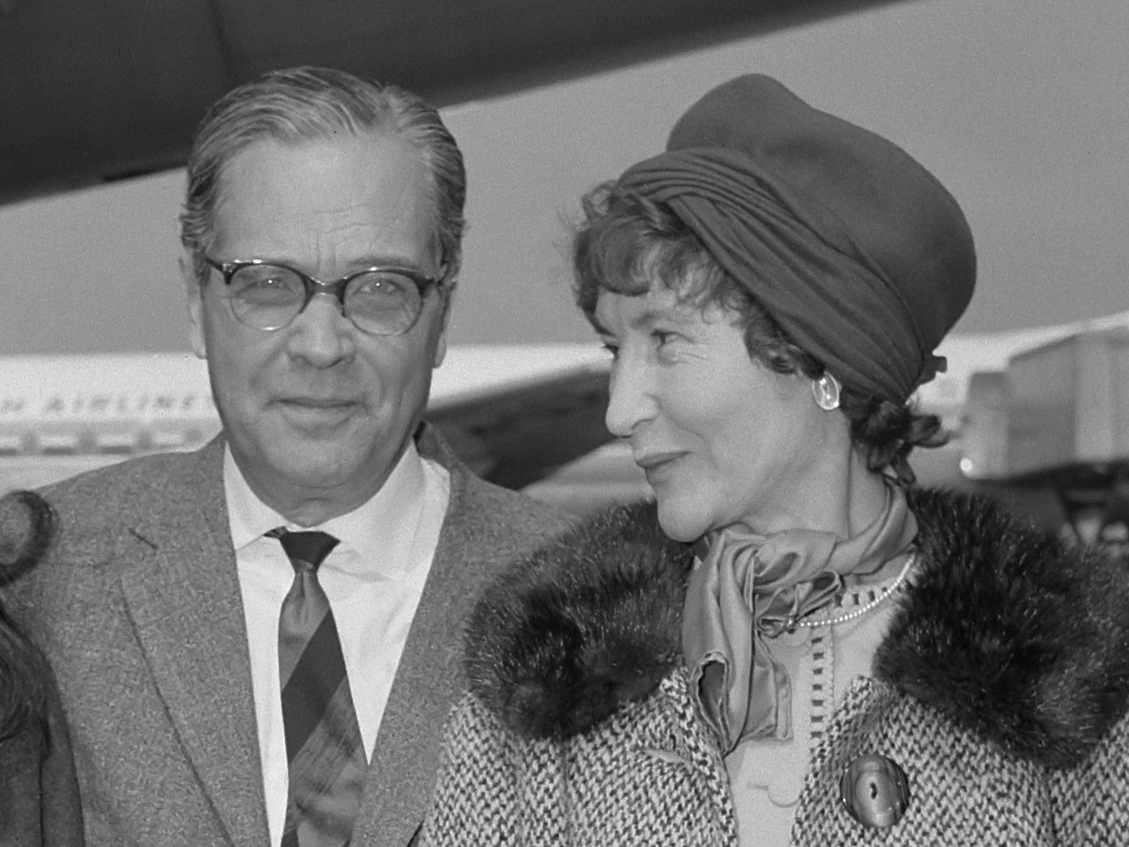
Cola Debrot
### Introduction and Historical Context Dr. Nicolaas "Cola" Debrot (May 4, 1902 – December 3, 1981)—frequently cited in regional historiography and biographical compendia as Dr. Nicomedes Antonia "Cola" Debrot—stands as one of the most intellectually versatile, culturally foundational, and politically transformative figures in the modern history of the Dutch Caribbean [1]. A true Renaissance man of the twentieth century, Debrot seamlessly embodied the roles of pioneering novelist, poet, literary critic, practicing physician, high-ranking diplomat, and historic statesman [2]. His extraordinary life unfolded against the backdrop of an era marked by monumental socio-economic shifts: the rapid industrialization of the ABC islands (Aruba, Bonaire, and Curaçao) following the establishment of global oil refineries, the progressive dismantling of colonial hierarchies, and the birth of constitutional democracy under the 1954 Charter for the Kingdom of the Netherlands (*Het Statuut*) [3]. Within this dynamic crucible, Debrot served as both an artistic vanguard and a constitutional anchor, articulating a modern Caribbean humanism that reconciled European intellectual traditions with the vibrant, multi-ethnic realities of his homeland. .jpg) Debrot achieved an indelible milestone in Caribbean governance in 1962 when Queen Juliana appointed him Governor of the Netherlands Antilles (*Gouverneur van de Nederlandse Antillen*), making him the very first native Antillean to ever hold the highest executive office in the territory’s three-century colonial history [4]. For eight turbulent and transformative years, he governed a six-island federation navigating intense labor struggles, rapid modernization, and the historic *Trinta di Mei* labor uprising of 1969 [5]. Simultaneously, as the author of the landmark 1935 novella *Mijn zuster de negerin* ("My Black Sister"), he is universally celebrated as the founding father of modern Dutch Antillean literature [6]. His profound philosophy of "tropical existentialism" challenged racial binaries, interrogated colonial guilt, and forged an authentic Antillean consciousness that paved the way for successive literary luminaries including [Boeli van Leeuwen](/profiles/boeli-van-leeuwen), [Pierre Lauffer](/profiles/pierre-lauffer), [Tip Marugg](/profiles/tip-marugg), and [Frank Martinus Arion](/profiles/frank-martinus-arion) [2]. ### Bonaire Roots, Lineage, and Formative Caribbean Years Cola Debrot was born on May 4, 1902, in Kralendijk on the tranquil island of Bonaire [1]. He was the son of Jean Jacques Debrot, a prominent plantation owner, merchant, and official whose lineage traced back to French-Swiss Huguenots who had settled in the Caribbean generations earlier [2]. His father managed several major agricultural estates, most notably the historic plantation of Slagbaai (now part of the Washington Slagbaai National Park) in northwestern Bonaire, where young Cola spent his early days immersed in the rugged cactus-strewn landscape, salt flats, and turquoise waters of his native island [6]. His mother, Marie Antoinette Clémence Nouel, hailed from a respected Venezuelan family, imbuing the household with Hispanic warmth, Latin American cultural sensibilities, and Spanish literary influences [1]. Growing up in a multilingual environment where Papiamentu was spoken alongside Spanish, Dutch, and French, Debrot developed an early and acute sensitivity to the complex linguistic and racial mosaic of the Leeward Antilles [2]. While his family occupied a position of social and economic privilege within the patrician planter class, Cola interacted freely with Afro-Bonairean workers, fishers, and rural storytellers, absorbing the folklore, spiritual worldview, and rhythmic cadence of the island’s oral culture [6]. As a young boy, he moved with his family to Curaçao, where he completed his primary and preparatory education at the prestigious St. Thomas College in Willemstad [1]. He also spent extended periods visiting family in Caracas, Venezuela, broadening his horizons to encompass the continental Latin American mainland [2]. In 1916, at the age of fourteen, following the customary trajectory of Antillean elites, Debrot boarded a transatlantic steamship bound for the Netherlands to pursue his secondary education at a gymnasium, embarking on a European sojourn that would fundamentally shape his intellectual destiny [1]. ### European Crucible: Law, Medicine, and the Avant-Garde Upon arriving in the Netherlands, the young Debrot plunged headlong into the rigorous academic and artistic currents of interwar Europe [2]. Displaying an insatiable intellectual curiosity, he initially enrolled at Utrecht University to study law, successfully earning his candidaats and doctorandus degrees in jurisprudence in 1927 [1]. Yet, legal theory alone could not satisfy his deep humanitarian impulses or his desire for tangible human service. Debrot subsequently made the bold decision to pivot to medicine, enrolling at the University of Amsterdam [2]. Over the next decade, he balanced exhaustive medical training, clinical internships, and laboratory research with an astonishingly fertile artistic life, ultimately qualifying as a certified medical doctor (*arts*) in 1941 [1]. During the late 1920s and 1930s, Debrot lived a cosmopolitan, nomadic life, traveling extensively across France, Spain, Germany, and North Africa [2]. In Paris in 1928, he encountered Estelle Reed, a brilliant American modern dancer, choreographer, and pupil of Martha Graham [7]. The two formed an instant, enduring intellectual and romantic bond, marrying soon after. Estelle introduced Cola to the vanguard circles of modern European dance, theater, and visual arts, while she would later become one of the premier English translators of his Caribbean fiction [7]. Settling in Amsterdam, Debrot became an indispensable figure in Dutch literary and philosophical circles [2]. He associated intimately with modernist titans such as Menno ter Braak, Simon Vestdijk, Martinus Nijhoff, and Jan Engelman [1]. He immersed himself in French existentialism, Freudian psychoanalysis, and modern European prose, but he found European bourgeois society increasingly sterile, rationalist, and disconnected from genuine human vitality [6]. This profound sense of spiritual displacement between his warm, vibrant Caribbean origins and the cold, cerebral metropole of Europe served as the creative crucible for his greatest literary breakthrough [3]. ### Literary Masterpiece: 'Mijn zuster de negerin' and Tropical Existentialism In 1935, Debrot published his debut novella, *Mijn zuster de negerin* ("My Sister the Negro" / "My Black Sister"), in the avant-garde literary journal *Forum* [6]. The work sent shockwaves through the Dutch-speaking literary establishment and is universally recognized today as the foundational cornerstone of modern Antillean literature [2]. Written in spare, evocative, and psychologically incisive prose, the novella introduced the revolutionary concept of "tropical existentialism"—a philosophical framework that examined the alienation, identity crises, and moral reckonings of the Caribbean individual caught between European colonial socialization and authentic Antillean heritage [3]. > "In the Caribbean, we cannot escape each other. Black and white, Europe and Africa, are bound together not merely by historical circumstance, but by the deeper, inescapable brotherhood of blood and shared destiny." — Cola Debrot The plot of *Mijn zuster de negerin* follows Frits Ruprecht, a young man of Dutch-Antillean plantation descent who returns to Curaçao after living in Europe for fourteen years [6]. Cynical, spiritually exhausted, and alienated by European intellectualism, Frits seeks solace and a sense of primal belonging on his deceased parents' plantation, Miraflores [3]. That evening, driving through the dark island countryside, he encounters Maria, a beautiful young Afro-Curaçaoan woman who had been his childhood playmate and is now an employee on the estate [6]. Infatuated by her grace and viewing her as the living embodiment of the island’s sensual soul, Frits prepares to seduce her, replaying the age-old colonial pattern of white patriarchal conquest [2]. At the pivotal climax, however, the old Black estate overseer, Wancho, intervenes and reveals a startling truth: Maria is Frits's half-sister, fathered by his late plantation-owner father with an Afro-Caribbean woman [6]. Rather than reacting with horror, shame, or racial disgust, Frits experiences a profound existential awakening and moral epiphany [3]. He casts aside his predatory desires and embraces Maria with pure, fraternal love, recognizing that she is his true sister in every sense—biologically, spiritually, and culturally [2]. Through this embrace, Debrot deconstructed centuries of colonial hypocrisy, miscegenation taboos, and racial oppression [6]. He demonstrated that Antillean identity was inherently syncretic, forged through shared bloodlines and mutual suffering, and that true freedom required whites to acknowledge and embrace their Black kin with unconditional dignity [3]. Beyond this seminal novella, Debrot continued to produce profound literature across multiple genres [2]. In 1940, alongside Dutch poets Ed. Hoornik and Han G. Hoekstra, he co-founded the influential literary magazine *Criterium*, which became the premier platform for a new generation of realist and romantic-rationalist writers in the Netherlands [1]. He published acclaimed novellas such as *Bid voor Camille Willocq* (1946) and *De vervolgden* (1982), powerful poetry collections including *Heimwee naar het Zuiden* (1946) and *Navrante zomer* (1964), and pioneering scholarly essays that systematized Antillean literary and theatrical history [8]. ### World War II: The Physician in the Dutch Resistance When Nazi Germany invaded and occupied the Netherlands in May 1940, Cola Debrot was residing in Amsterdam, completing his medical licensing [1]. Rather than attempting to flee or retreating into comfortable detachment, Dr. Debrot chose the path of active, perilous moral resistance [5]. Establishing a general medical practice in Amsterdam during the darkest years of the occupation, he operated at the dangerous intersection of medical duty and clandestine anti-fascist resistance [2]. Dr. Debrot utilized his medical clinic as a safe sanctuary for Dutch Resistance fighters, persecuted intellectuals, and Jewish citizens fleeing deportation to concentration camps [5]. Capitalizing on his medical authority, he routinely falsified official health diagnoses, issue fabricated medical exemption certificates, and diagnosed patients with contagious conditions to protect young Dutch men from forced deportation to German labor camps (*Arbeitseinsatz*) [1]. Furthermore, he provided covert medical treatment to wounded underground partisans who could not seek assistance at public hospitals without alerting the Gestapo [2]. This dangerous humanitarian work mirrored the heroic courage of his fellow Antillean contemporary, the resistance martyr [Boy Ecury](/profiles/boy-ecury), underscoring the deep commitment of Antilleans to the liberation of the Netherlands from totalitarian tyranny [3]. Debrot's wartime experiences deepened his ethical philosophy, cementing his belief that human dignity must be defended across all borders and ideologies [1]. ### Post-War Return, Constitutional Diplomacy, and the 1954 Charter Following the liberation of the Netherlands in 1945, Debrot felt an irresistible call to return to the Caribbean [1]. In late 1948, he returned to Curaçao, where he established a medical practice as a general practitioner and public health physician [2]. However, his extraordinary intellect, legal training, and commanding moral stature quickly made him indispensable to the public administration of the Netherlands Antilles [4]. The post-war era witnessed a surging wave of decolonization and self-determination across the Caribbean, led on Curaçao by legal visionary [Moises Frumencio da Costa Gomez](/profiles/moises-frumencio-da-costa-gomez) and political leader [Efraïn Jonckheer](/profiles/efrain-jonckheer) [3].  Recognizing Debrot's rare synthesis of legal expertise, diplomatic tact, and cross-cultural empathy, the government appointed him in 1952 as Minister Plenipotentiary of the Netherlands Antilles (*Waarnemend Gevolmachtigd Minister*) in The Hague [1]. From 1955 to 1962, he served as Director of the Cabinet of the Minister Plenipotentiary, acting as the primary diplomatic bridge between the Antillean government in Willemstad and the Dutch Crown in The Hague [4]. In this critical post, Debrot played an instrumental behind-the-scenes role during the historic Round Table Conferences (*Ronde Tafel Conferenties*) that culminated in the promulgation of the Charter for the Kingdom of the Netherlands (*Statuut voor het Koninkrijk der Nederlanden*) on December 15, 1954 [3]. The Charter permanently dismantled the old colonial hierarchy, transforming the Netherlands Antilles and Suriname into autonomous constituent countries equal in partnership with the European Netherlands [4]. Debrot’s diplomatic skill ensured that Antillean internal sovereignty was respected while maintaining cooperative ties in defense, foreign policy, and kingdom jurisprudence [5]. ### The Historic Governorship and the Crucible of 'Trinta di Mei' In September 1962, Cola Debrot achieved the pinnacle of his public career when he was officially appointed and sworn in as the Governor of the Netherlands Antilles by Queen Juliana [4]. This appointment was an epochal watershed in Caribbean history: after more than three centuries of European colonial administrators dispatched from The Hague, Debrot became the very first native Antillean to serve as Governor [1]. His elevation was celebrated across Aruba, Bonaire, Curaçao, Sint Maarten, Sint Eustatius, and Saba as a triumphant symbol of national maturity and political dignity [3]. > "True political leadership in our islands requires more than administrative decrees; it demands an intimate communion with the cultural soul, the complex heritage, and the unyielding dignity of our people." — Governor Cola Debrot As Governor, Debrot served a dual constitutional function: representing the Dutch Head of State while simultaneously serving as the head of the territorial government in Willemstad [4]. He approached the office not as a distant colonial bureaucrat, but as a compassionate native son and medical doctor attentive to the health of the entire social body [2]. His governorship, spanning from 1962 to 1970, coincided with profound socio-economic transformations, marked by the automation of the Shell refinery, rising unemployment among working-class Afro-Curaçaoans, and growing demands for racial equality and labor justice [5]. This social volcano erupted on May 30, 1969, in the monumental labor uprising known as *Trinta di Mei* [5]. What began as a peaceful strike by contracting workers at the Shell refinery led by labor leaders Wilson "Papa" Godett and Amador Nita quickly transformed into a massive march on Willemstad. When police opened fire and seriously wounded Godett, widespread fury ignited: rioting broke out, and historic commercial sections of Willemstad were set ablaze [7]. With the local government incapacitated and the social fabric strained to its breaking point, Governor Debrot faced the supreme crisis of his political life [4]. Debrot handled the catastrophe with extraordinary constitutional calm, human empathy, and moral restraint [5]. While Dutch marines were temporarily deployed under kingdom treaty obligations to restore public order, Debrot adamantly resisted calls by conservative factions for prolonged martial repression or authoritarian crackdowns [4]. Recognizing that the uprising was the legitimate outcry of an economically marginalized and racially alienated working class, he facilitated the resignation of the existing cabinet under Prime Minister Ciro Kroon and oversaw the installation of an interim government headed by Gerald Sprockel [5]. Furthermore, Debrot called early general parliamentary elections for September 1969, which dramatically transformed Antillean politics by bringing Godett and Nita’s newly formed labor party, the *Frente Obrero i Liberashon 30 di Mei* (FOL), directly into parliament [7]. Through his decisive and humane stewardship, Debrot prevented civil war, guided the nation peacefully through its greatest trauma, and laid the foundations for a more egalitarian, racially inclusive democracy [4]. ### Cultural Stewardship, the Cola Debrot Prize, and Immortal Legacy Even while carrying the crushing burdens of national governance, Debrot remained the undisputed cultural conscience and intellectual patron of the Dutch Caribbean [2]. He championed the formal recognition and preservation of **Papiamentu**, encouraging its use in literature, theater, and public discourse alongside authors like [Pierre Lauffer](/profiles/pierre-lauffer) and dramatists like [Nydia Ecury](/profiles/nydia-ecury) [6]. He was a tireless patron of local painting, classical and folkloric music, and architecture, frequently opening the Governor’s Palace in Willemstad to Antillean artists, poets, and musicians [3]. In 1968, in resounding tribute to his monumental cultural leadership, the Island Government of Curaçao established the **Premio Cola Debrot** (Cola Debrot Prize) [8]. It remains to this day the most prestigious cultural, artistic, and scientific award in the Dutch Caribbean [6]. Bestowed annually on his birthday (May 4), the prize rotates among eight distinguished disciplines: literature, visual arts, music, dance, theater, film, architecture, and science [8]. Over the decades, it has honored the Caribbean’s greatest minds, including [Boeli van Leeuwen](/profiles/boeli-van-leeuwen), [Tip Marugg](/profiles/tip-marugg), [Frank Martinus Arion](/profiles/frank-martinus-arion), and composer Wim Statius Muller, standing as an eternal living monument to Debrot’s holistic vision of cultural excellence [2]. Debrot retired from the Governorship in 1970, succeeded by Bernadito M. Leito, the first Black Antillean Governor [4]. In his later years, Debrot returned to the Netherlands, settling in Amsterdam where he continued writing, mentoring Caribbean students, and organizing his extensive archives [1]. He endured declining health in his final years and passed away peacefully in Amsterdam on December 3, 1981, at the age of 79 [1]. His passing was mourned across the entire Kingdom of the Netherlands, with flags lowered to half-mast throughout the ABC and Windward Islands [2]. Today, Dr. Nicolaas "Cola" Debrot remains immortalized as a foundational titan of Caribbean civilization—a visionary who united the healing touch of a physician, the poetic soul of a master writer, and the selfless wisdom of an enlightened statesman to lead his people into the modern world [6]. ### References [1] Literatuurmuseum. "Nicolaas Debrot (Cola Debrot): Arts, Schrijver, Diplomaat en Bestuurder." Biografisch Woordenboek van Nederland. [2] Encyclopedia of Caribbean Literature. "Debrot, Cola (1902–1981): Founding Voice of Dutch Antillean Literature and Statesmanship." [3] Rutgers, Wim. *Beneden en boven de wind: Literair leven in de Nederlandse Antillen en Aruba*. De Bezige Bij, Amsterdam. [4] Nationaal Archief Nederland. "Gouverneur Nicolaas Debrot en de staatkundige hervormingen van de Nederlandse Antillen (1962–1970)." [5] Anderson, William A., and Russell R. Dynes. *Social Movements, Violence and Change: The May Movement in Curaçao*. Ohio State University Press. [6] Digital Library for Dutch Literature (DBNL). "Cola Debrot en de geboorte van het Antilliaanse literaire bewustzijn: Biografie en Bibliografie." [7] Oostindie, Gert, and Peter Verton. *Ki sorto di Reino? / What kind of Kingdom? Governance and Politics in the Netherlands Antilles*. Amsterdam University Press. [8] Encyclopedie van Curaçao. "Geschiedenis en Winnaars van de prestigieuze Premio Cola Debrot (1968–Heden)."
View Profile →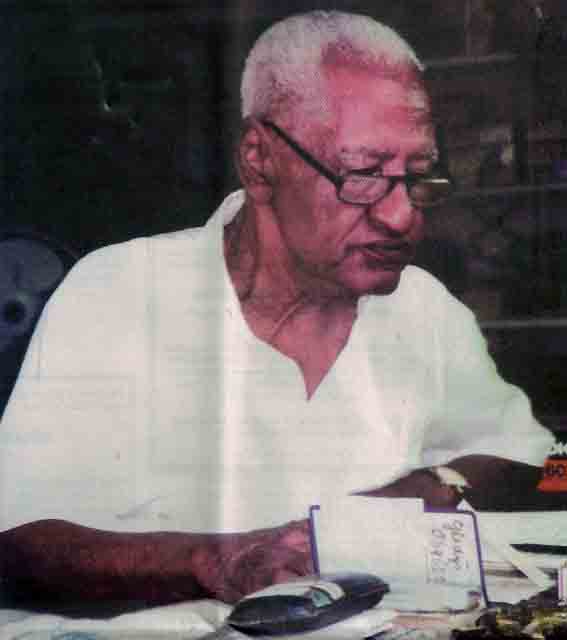
Elis Juliana
Elis Juliana stands as one of the most towering cultural titan and visionary polymaths in the history of the Dutch Caribbean [1]. Revering him as the undisputed "cultural conscience" and "griot" of Curaçao, historians, artists, and linguists celebrate his monumental life's work as a poet, visual artist, sculptor, folklorist, self-taught archaeologist, and ethnologist [2]. Born into deep economic deprivation during an era when foreign industrialization threatened to obliterate the ancestral memory of Afro-Curaçaoan society, Juliana dedicated his life to rescuing, cataloging, and elevating the tangible and intangible heritage of his people [3]. Alongside fellow literary icons such as [Pierre Lauffer](/profiles/pierre-lauffer) and Luis Daal, Juliana formed the revered *Grote Drie* ("The Big Three") of 20th-century Papiamentu literature, proving that the creole mother tongue possessed the aesthetic range, emotional subtlety, and intellectual power to produce masterworks of modern poetry [4]. Yet Juliana was far more than an elite literary practitioner; he was a decolonial memory-keeper who traversed the scrublands and rural *kunuku* estates of the ABC islands (Aruba, Bonaire, and Curaçao) with a tape recorder and pickaxe, listening to the elderly generation whose parents had endured chattel slavery [2][5]. His pioneering collaboration with Father Paul Brenneker culminated in the world-famous **Zikinzá collection**—a vast archive of over 1,400 field recordings documenting ancient songs, herbal medicine, ancestral folklore, and work rhythms [1][3]. Through his unique philosophical and ethnographical methodology, later coined by scholars as *Julianismo*, he insisted that Afro-Caribbean communities should not merely be examined from above by colonial researchers, but understood from within through their own nuanced "ways of speaking" (*forma di papia*) [2]. From delicate coral stone sculptures to crystalline haikus, Elis Juliana breathed eternal dignity into the soul of Curaçao [6]. ### Early Life and Humble Beginnings in Nieuw Nederland Elis Juliana was born on August 8, 1927, in the working-class neighborhood of Nieuw Nederland, situated just outside the historic urban core of Willemstad, Curaçao [1][7]. He was born a twin alongside his sister to Maria Antonia "Mayo" Juliana, an impoverished Afro-Curaçaoan washerwoman, and Hosé "Hosé'i Ñaña" Alvares, a skilled tailor and itinerant folk musician [7]. In an autobiographical anecdote that poignantly encapsulated the destitute conditions of his childhood, Juliana frequently recounted that his mother had intended to name him "Ellis" with two 'l's; however, the colonial civil registration office demanded an extra administrative fee for the additional letter, which his mother could not afford, leaving his legal name permanently recorded as "Elis" [1][8]. Growing up in the tight-knit but economically strained alleyways of Nieuw Nederland, young Elis was endowed with voracious curiosity and an acute visual imagination [1]. In an environment where expensive toys and lavish excursions were non-existent, Juliana famously described the modest earthen yard behind his home as his "Disney World" [7]. Armed with a discarded magnifying glass, the young boy spent endless hours crouched in the dirt, observing the complex architecture of ant colonies, the movement of beetles, and the textures of native cacti and coral stone formations [7][8]. This innate habit of close, reverent observation of microscopic detail laid the empirical foundation for his future dual vocations as a naturalist-folklorist and a visual artist [2].  Juliana received his basic primary schooling at the St. Jozef elementary school, after which he enrolled in the local Catholic craft school (*ambachtsschool*) to study technical mechanics and ironworking [1][7]. However, his family's severe financial hardship forced him to terminate his formal schooling at the age of fifteen so that he could enter the workforce full-time to support his mother and siblings [7][8]. Juliana subsequently held a diverse array of working-class occupations: he was employed as a mechanical apprentice at the Royal Netherlands Marine barracks, laboured at the burgeoning Shell oil refinery, served as a correctional prison guard, and later wore the uniform of a colonial police officer [1][7]. These varied manual jobs immersed Juliana directly within the daily struggles, slang, and humor of ordinary working-class Antilleans, giving him an intimate, unmediated understanding of the very community whose cultural survival he would soon champion [2]. ### The Crucible of Industrial Modernization and Cultural Erasure To understand the urgency that animated Elis Juliana's life work, one must recognize the seismic economic and social transformation that swept Curaçao during the first half of the twentieth century [3]. Following the establishment of the Royal Dutch Shell oil refinery (Isla) in 1915 and 1918, Curaçao transformed virtually overnight from an impoverished, agrarian-maritime colony into one of the largest oil-refining centers in the world [1][3]. The rapid influx of capital, modern wage labor, and foreign workers brought immense material development, but it also triggered a catastrophic rupture with traditional rural folklife [2][3]. As rural families abandoned the agricultural *mondi* (scrubland wilderness) to settle in dense urban enclaves around Willemstad, ancestral practices—such as the communal *seú* harvest rituals, rhythmic agricultural work songs (*kantika di trabou*), and the clandestine drumming ceremonies of the *tambú*—were rapidly stigmatized as backward or superstitious relics of the past [1][5]. Furthermore, the Dutch colonial educational curriculum and the Roman Catholic Church systematically suppressed the native Papiamentu language in classrooms, enforcing Dutch as the sole legitimate vehicle for intellectual and civic life [4][9]. Juliana realized with terrifying clarity that the elderly generation—the *grandinan* who held the centuries-old oral libraries of Afro-Curaçaoan music, herbal medicine, and philosophy dating back to the era of the 1795 slave rebellion led by [Tula](/profiles/tula)—were dying off, taking an entire civilization's memory with them to the grave [2][5]. > "A people without memory is like a tree without roots; when the wind of modernity blows, it falls without knowing why it stood. We must listen to the elders, for in their whispered words lies the blueprint of our survival." [2] ### The Zikinzá Odyssey: Fieldwork with Father Paul Brenneker In 1958, a serendipitous encounter fundamentally altered the course of Caribbean cultural preservation [1][5]. Juliana crossed paths with Father Paul Brenneker (1912–1996), a Dutch Roman Catholic Dominican friar, missionary, and passionate ethnographer who shared Juliana's deep alarm over the erosion of indigenous Antillean culture [3][5]. Recognizing each other as kindred spirits, the Afro-Curaçaoan mechanic-artist and the Dutch priest forged an unprecedented, lifelong research partnership that defied the colonial racial divides of the 1950s [1][5].  Equipped with a portable reel-to-reel tape recorder, photographic cameras, notebooks, and archaeological trowels, Juliana and Brenneker spent decades traversing the unpaved roads and remote *kunukus* of Curaçao, Bonaire, and Aruba [3][5]. They sought out the *grandinan* (community elders), interviewing 267 key tradition-bearers, some of whom had been born as early as 1853 under the brutal yoke of Dutch plantation slavery [1][5]. Juliana's innate warmth, mastery of dialectal Papiamentu, and shared cultural heritage were crucial; where colonial government officials or European academics were met with guarded silence, Juliana was welcomed onto verandas with open arms [2][5]. Between 1958 and the late 1960s, the duo amassed approximately 1,400 audio recordings comprising folk songs, spiritual incantations, personal memoirs, funeral laments, children's rhymes, riddles (*konta kuenta*), and intricate *Nanzi* spider-tales rooted in West African Ashanti mythology [1][3][5]. This monumental body of work became known as the **Zikinzá collection**, named after an archaic Afro-Antillean rhythm and song form [1][5]. In addition to sound recordings, Brenneker and Juliana published the encyclopedic ten-volume series *Sambumbu* (1969–1975), which documented traditional architecture, medicinal plants, religious syncretism, and social customs across the ABC islands [5][10]. Today preserved and digitized by NAAM (National Archaeological Anthropological Memory Management), the Zikinzá archive remains the single most important ethnographic repository of 20th-century Dutch Caribbean cultural history [3][5]. ### Julianismo: Decolonizing the Archive from Within Elis Juliana's contribution to anthropology and archaeology was fundamentally revolutionary because it broke decisively with Western ethnographic paradigms [2]. Caribbean scholars today analyze his distinct theoretical framework under the concept of **Julianismo** [2]. Where imperial anthropologists treated colonial subjects as passive informants to be categorized and analyzed from afar, Juliana approached the *grandinan* as equal intellectual partners, philosophers, and co-curators of their own history [2]. Central to *Julianismo* was Juliana's exploration of what he designated as *forma di papia* ("ways of speaking") [2]. Juliana recognized that for centuries, enslaved and disenfranchised Afro-Curaçaoans had developed sophisticated linguistic strategies—employing double entendre, irony, coded proverbs, and deliberate ambiguity—to critique oppressive masters without suffering violent retribution [2]. Juliana termed this the "poetics of concealment" [2]. He demonstrated that these oral expressions were not primitive folklore, but rigorous intellectual survival mechanisms that required deep cultural literacy to decode [2]. Furthermore, Juliana practiced what modern scholars call multimodal material archaeology [2][3]. Long before formal archaeological legislation existed in the Netherlands Antilles, Juliana served as a field researcher and investigator for the Archaeological-Anthropological Institute of the Netherlands Antilles (AAINA) [2][3]. With his hands, he unearthed pre-Columbian Amerindian artifacts of the Caiquetio and Arawak peoples, while simultaneously rescuing post-emancipation everyday material culture—such as discarded iron *chapis* (agricultural hoes), wooden pounding mortars, clay cooking vessels, and traditional *tambú* barrel drums [1][3]. For Juliana, the soil and the oral voice were two halves of the same sacred book [2]. ### The "Big Three" and Poetic Mastery in Papiamentu Alongside his ethnographical fieldwork, Elis Juliana emerged as a literary luminary who helped catalyze a renaissance in Papiamentu poetry [4][9]. In the mid-20th century, alongside his close contemporaries [Pierre Lauffer](/profiles/pierre-lauffer) and Luis Daal, Juliana formed the triumvirate celebrated as the *Grote Drie* ("The Big Three") of Curaçaoan literature [4][9]. While intellectuals like [Cola Debrot](/profiles/cola-debrot) and [Boeli van Leeuwen](/profiles/boeli-van-leeuwen) often explored Antillean existential identity through Dutch-language prose, and children's authors like [Nilda Pinto](/profiles/nilda-pinto) adapted folklore for schools, Juliana and Lauffer elevated native Papiamentu into a rigorous poetic language of the highest order [4][9]. Juliana burst onto the literary scene in 1956 with the publication of his iconic poetry collection **Flor di Datu** (*Cactus Flower*), followed in 1961 by **Flor di Anglo** [1][4]. In these volumes, Juliana discarded conventional, rigid European rhyming meters in favor of free verse informed by the natural cadence of Antillean speech and the intoxicating syncopations of the *tumba* and *tambú* [4][9]. His poems celebrated the dignity of washerwomen, street vendors, sugarcane cutters, and fishermen, transforming ordinary working-class experiences into epic lyrical portraits [1][4]. His acclaimed poem *"E Nigrita Catan"* captured the bittersweet complexities of Afro-Caribbean female identity under colonial hierarchies with breathtaking lyricism [4]. Juliana was also a daring literary innovator who introduced the Japanese **haiku** to the Papiamentu language [6][7]. In masterly collections such as *Un mushi di haiku* (1993) and *Haiku den lus di animal* (2007), he utilized the strict seventeen-syllable form to distill Caribbean nature, human foolishness, and ecological wisdom into sharp, crystalline epigrams [6][7]. > *Bichi ta siegu / ma e sa unda koba / saka probecho.* > > "The worm is blind, / yet it knows where to dig / to reap its reward." [6][7] Beyond poetry, Juliana authored sociopolitical treatises, most notably **OPI** (*Organisashon Planifikashon Independensia*), a multi-volume philosophical exploration examining the psychological, cultural, and economic prerequisites for authentic Antillean independence and self-reliance [10]. ### Visual Arts and Coral Sculptures: Giving Form to Ancestral Spirits Elis Juliana's creative genius was inherently multidisciplinary; what he could not capture in verses or audio reels, he carved into physical form [1][11]. As a self-taught visual artist, Juliana began exhibiting his drawings, paintings, and sculptures in the 1960s, quickly establishing himself as one of the premier visual artists in the Dutch Caribbean [1][11]. His most celebrated artistic achievements were his **coral stone sculptures** [1][11]. Working with porous, weathered coral limestone gathered along the rugged north coast of Curaçao, Juliana allowed the natural crevices, fossils, and indentations of the marine stone to dictate the contours of his work [1][11]. His sculptures frequently depicted maternal archetypes—reverent mother-and-child compositions symbolizing the resilience of the Caribbean matriarchy—as well as solemn ancestral figures emerging from the bedrock [1][11]. He also sculpted extensively in local hardwood (*guayacán*), mahogany, and recycled metal [1]. In recognition of his mastery, Elis Juliana was awarded the prestigious **Cola Debrot Prize** for the visual arts in 1973, Curaçao's highest civilian cultural distinction [1][11]. ### Final Honors, Death, and Enduring Legacy Throughout his twilight years, Elis Juliana was universally revered as the living embodiment of Curaçao's cultural soul [1][7]. In 1986, the Pierre Lauffer Foundation honored his literary lifetime achievements with the **Chapi di Plata** (Silver Rake Prize), an award symbolizing deep love and cultivation of the native language [4][9]. He was made an Officer in the Order of Orange-Nassau and became a beloved national mentor to younger generations of writers, musicians, and visual artists across the ABC islands, including folklorist [Frans Booi](/profiles/frans-booi) in Bonaire [5]. The crowning institutional recognition of his life arrived on June 18, 2013, when the University of Curaçao (UoC) conferred upon Elis Juliana the degree of **Doctor Honoris Causa** (Honorary Doctorate) in recognition of his peerless, lifelong contributions to literature, linguistics, archaeology, and anthropology [1][7]. The ceremony was an intensely emotional moment of national celebration, acknowledging that a man who had been forced to leave craft school at fifteen had achieved what no university seminar could: the rescue of an entire nation's collective consciousness [7][8]. Just five days after receiving his honorary doctorate, on **June 23, 2013**, Elis Juliana passed away peacefully in Willemstad at the age of 85 [1][7]. His passing plunged Curaçao into profound national mourning, with government flags flown at half-mast and cultural tributes resounding across the Caribbean [7]. Today, his legacy lives vibrantly on the walls of Willemstad—immortalized in massive street murals in Punda and Otrabanda—in school textbooks, and within the halls of NAAM [1][5]. Elis Juliana proved to the world that within the humble, whispered songs of the Caribbean *kunuku* lies a treasury of human wisdom as vast and enduring as the ocean itself [2].
View Profile →
George Maduro
George John Lionel Maduro (July 15, 1916 – February 8, 1945) was a distinguished Dutch resistance hero, a reserve officer in the Dutch cavalry, and a law student whose legacy echoes profoundly through both the Caribbean and the Netherlands. Born in the Dutch Caribbean island of Curaçao to a prominent Sephardic Jewish family, Maduro’s life was tragically cut short by the Holocaust, yet his incredible bravery and selflessness immortalized him. His wartime heroism during the German invasion of the Netherlands earned him the nation’s highest military honor. Today, he is most widely remembered as the namesake and inspiration for Madurodam, the famous miniature city in The Hague built as a living memorial to his sacrifice. ### Early Life in Curaçao George Maduro was born in Willemstad, Curaçao, into a wealthy and deeply influential Sephardic Jewish family. He was the only son of Joshua and Rebecca Levy Maduro, who were cousins. The Maduro family had roots stretching back centuries in the Caribbean, being instrumental in the economic and cultural development of Curaçao. His father, Joshua, was a remarkably successful businessman who spearheaded the flourishing shipping and trading company S.E.L. Maduro & Sons, a cornerstone of the island's maritime commerce. Growing up in the vibrant, multicultural environment of Willemstad, George enjoyed a life of privilege. His childhood was spent in the family’s grand residence at Scharlooweg 55, affectionately known as "Beau Senior," located in the affluent Scharloo neighborhood. Despite this affluent background, George was known for his humility, sharp intellect, and strong moral compass. The Jewish community in Curaçao was tightly knit, and the Maduro family's philanthropic nature undoubtedly influenced young George's worldview. Recognizing the need for a broader education to prepare him for eventual leadership within the family business and society, his parents sent him across the Atlantic. At just ten years old, George left the sun-drenched shores of Curaçao for The Hague in the Netherlands to continue his schooling. ### Education and Military Training Transitioning from the Caribbean to the cooler, more rigid environment of the Netherlands was a significant shift, but George adapted well. He completed his secondary education in The Hague, demonstrating a keen mind and an aptitude for leadership. In 1934, he enrolled at Leiden University to study law. At Leiden, he was a vibrant participant in student life, known for his charismatic personality and deep sense of justice.  However, the dark clouds of fascism were gathering over Europe. Recognizing the looming threat of war, Maduro decided to fulfill his military obligations with distinction. He trained as a reserve officer in the Dutch cavalry, a role that required discipline, tactical acumen, and physical courage. By the time the German war machine turned its sights on Western Europe, Maduro was serving as a reserve second lieutenant, ready to defend his adopted home. ### The Battle of the Netherlands and Villa Dorrepaal On May 10, 1940, the "Phoney War" ended violently for the Netherlands as Nazi Germany launched a massive surprise invasion. The German strategy relied heavily on elite paratroopers (Fallschirmjäger) dropped behind Dutch lines to secure vital airfields and bridges, specifically aiming to capture The Hague and the Dutch royal family. During the chaotic early days of the invasion, German forces captured Villa Dorrepaal (also known as Villa Leeuwenbergh) in Rijswijk. From this fortified position, they controlled the nearby Oude Tolbrug (bridge) over the river Vliet with devastating machine-gun fire. This chokepoint severely hindered Dutch troop movements and posed a critical threat to the defense of The Hague. > "Under heavy enemy fire, Maduro led a lightning-fast and tactical assault, demonstrating superior acts of courage, ingenuity, and loyalty that would later define his legacy as a true hero of the resistance." Seeing the strategic peril, Lieutenant George Maduro took the initiative. He organized a daring counterattack with a small detachment of Dutch soldiers. Maduro first ordered anti-tank guns to fire upon the villa to suppress the German defenders. Then, exhibiting extraordinary personal bravery, he personally led his men in a charge across the bridge under heavy machine-gun fire. They successfully stormed the villa, overwhelming the German paratroopers and forcing them to surrender or retreat. This tactical victory temporarily broke the German defensive lines around Ypenburg Airport, slowing their advance. Though the Netherlands would ultimately capitulate days later following the devastating bombing of Rotterdam, Maduro’s exceptional gallantry at Villa Dorrepaal stood out as a beacon of Dutch resistance. ### Occupation and the Resistance The Dutch surrender marked the beginning of a brutal Nazi occupation. As a military officer, Maduro was initially detained at the infamous Scheveningen prison, nicknamed the "Oranjehotel" for housing political prisoners and resistance members. After a brief period, he was released, but the oppressive reality of the occupation quickly set in, especially for the Jewish population. When the Nazi authorities mandated that all Jews wear the yellow Star of David, Maduro categorically refused. Driven by his unyielding spirit and sense of duty, he went into hiding and fully immersed himself in the Dutch resistance. He became a vital operative, utilizing his intellect and connections to help smuggle downed Allied pilots out of occupied Europe. His network facilitated perilous escape routes, typically guiding pilots south through occupied France and into neutral Spain, from where they could return to the United Kingdom to continue the fight. ### Betrayal and Death in Dachau Living in the shadows as a Jewish resistance fighter was incredibly dangerous. Maduro was arrested multiple times but managed to evade long-term captivity until his final mission. In 1943, while attempting to escape to England via Spain to join the Free Dutch forces, Maduro was betrayed by a collaborator. He was captured by the Gestapo and subjected to brutal interrogations. Despite the torture, he refused to betray his comrades in the resistance. Maduro was transferred through a series of prisons, including a harrowing stint in Saarbrücken, before finally being deported to the Dachau concentration camp in Germany. Even in the horrific conditions of Dachau, survivors remembered his resilience and the comfort he provided to his fellow inmates. Tragically, just months before the camp was liberated by American forces, George Maduro succumbed to typhus on February 8 (or 9), 1945. He was 28 years old. ### Madurodam and Lasting Legacy In the aftermath of World War II, the full extent of George Maduro’s heroism became known. In 1946, the Dutch government posthumously awarded him the Knight 4th Class of the Military William Order (Militaire Willems-Orde), the oldest and highest military decoration in the Netherlands. He is the only Dutch citizen of Antillean descent to receive this honor. Devastated by the loss of their only son, Joshua and Rebecca Maduro sought a way to honor his memory that would celebrate life and look to the future rather than dwell solely on the tragedy of his death. They provided the foundational capital for a unique project in The Hague: a miniature city that would serve both as a monument to George and as a charitable foundation to benefit youth organizations. Opened in 1952, **Madurodam** has since welcomed tens of millions of visitors. Beyond its charming 1:25 scale models of Dutch landmarks, it functions as a living memorial. A scale model of George Maduro’s birth house in Curaçao stands proudly in the park, and a dedicated exhibit tells the story of the brave young law student from the Caribbean who gave his life for the freedom of others. George Maduro remains a towering symbol of courage, the unbreakable bond between the Caribbean and the Netherlands, and the enduring fight against tyranny.
View Profile →Lucina da Costa Gomez-Matheeuws
### Introduction: Pioneering Governance in the Netherlands Antilles Lucina Elena da Costa Gomez-Matheeuws (April 5, 1929 – January 7, 2017) stands as a towering figure in the political and social history of the Caribbean. Emerging during a transformative epoch of decolonization and constitutional restructuring within the Dutch Empire, she shattered gender barriers to become the first female Prime Minister of the Netherlands Antilles. Her career spanned decades of dedicated public service, marked by profound contributions to public health, environmental welfare, youth empowerment, and the advancement of women's rights across Curaçao and its sister islands. Operating within a complex political landscape dominated by colonial legacies and male leadership, da Costa Gomez-Matheeuws demonstrated exceptional diplomatic acumen and legislative pragmatism. As a core leader of the National People's Party (*Partido Nacional di Pueblo* or PNP), she helped navigate the Netherlands Antilles through turbulent socio-economic transitions, establishing a progressive framework for social welfare that continues to influence Caribbean governance today [1]. ### Early Life and Professional Beginnings Born on April 5, 1929, in Willemstad, Curaçao, Lucina Matheeuws came of age during a period of intense rapid modernization on the island. The establishment and expansion of the Royal Dutch Shell oil refinery had transformed Curaçao from a quiet colonial outpost into a bustling, diverse industrial hub of the Caribbean. This economic boom brought significant migration, labor dynamism, and growing calls for political representation among the local population, who remained disenfranchised under traditional colonial structures. Educated locally in Willemstad, Matheeuws exhibited early academic excellence and a rigorous flair for administrative organization. Entering government service as a young woman—a rare career trajectory for women of her generation—she secured a position at the Secretariat of the Court of Justice. Her sharp analytical skills and professionalism quickly earned her promotions, leading to her appointment as secretary to the chairman of the Government Council (*Regeringsraad*), the executive administrative body of the island before full autonomous governance was realized [3]. Working at the very nerve center of colonial administration provided Matheeuws with an unparalleled, firsthand education in jurisprudence, public administration, and legislative drafting, sowing the seeds for her future leadership. ### Political Awakening and Alliance During her tenure in government service, Lucina crossed paths with Dr. [Moises Frumencio da Costa Gomez](/profiles/moises-frumencio-da-costa-gomez), a visionary jurist and the undisputed architect of Antillean autonomy. Dr. da Costa Gomez had founded the National People's Party (PNP) in 1948 with the mission of securing self-determination and universal suffrage for the people of the Netherlands Antilles. Their professional collaboration blossomed into a deep intellectual and personal partnership, culminating in their marriage [3]. Becoming Lucina da Costa Gomez-Matheeuws, she found herself at the epicenter of Antillean political evolution. Her husband served as the Chairman of the Governing Council and subsequently as the first Prime Minister of the Netherlands Antilles from 1951 to 1954, successfully negotiating the landmark Charter for the Kingdom of the Netherlands (*Statuut voor het Koninkrijk der Nederlanden*) in 1954 [4]. While Dr. da Costa Gomez was the public face of autonomy, Lucina was a vital strategic confidante, organizational force, and grassroots mobilizer within the PNP. Following her husband's untimely passing in 1966, she did not retreat from public life; instead, she resolved to carry forward their shared vision of democratic empowerment and social equity. ### The Trinta di Mei and Rise to Parliament The late 1960s brought unprecedented socio-political upheaval to Curaçao. Despite constitutional autonomy within the Kingdom, economic disparities, racial stratification, and labor exploitation persisted, erupting violently on May 30, 1969, in the historic labor uprising known as *Trinta di Mei* [3]. The uprising catalyzed the collapse of the government and compelled a radical re-evaluation of Antillean society, demanding authentic grassroots representation and social justice for the Afro-Curaçaoan majority. In the crucible of the subsequent general elections of August 1969, Lucina da Costa Gomez-Matheeuws stood as a beacon of stability and reform for the PNP. Campaigning tirelessly across urban neighborhoods and rural districts, she won a seat as a member of the Staten (Parliament) of the Netherlands Antilles [1]. Her election marked a decisive shift toward inclusive governance. In Parliament, she distinguished herself by bridging polarized political factions and championing legislative measures aimed at alleviating poverty, expanding educational access, and protecting vulnerable workers.  > "True autonomy is not merely the shifting of political boundaries or constitutional charters; it is the daily empowerment of our people—especially our women and youth—to shape their own destinies within a just and compassionate society." [1] ### Transformative Ministerial Tenure Recognized for her administrative brilliance and deep commitment to social welfare, da Costa Gomez-Matheeuws was appointed Minister of Health and Environment, Welfare, Youth, Sports, Culture, and Recreation in 1970, a robust portfolio she managed with distinction until 1977 [1]. Over these seven years, she engineered a comprehensive modernization of the island's social infrastructure. Recognizing that healthcare was a fundamental human right, she spearheaded initiatives to expand community medical clinics, improve sanitation standards across the islands, and invest in preventative healthcare education [3]. Within the cultural sphere, she actively promoted local arts and fostered national pride by institutionalizing support for indigenous traditions and sports programs for disadvantaged youth. Crucially, da Costa Gomez-Matheeuws utilized her ministerial authority to advocate for profound legal reforms regarding family law and women's rights. At the time, remnants of archaic colonial legal codes severely restricted married women's economic and legal independence. She tirelessly championed legislative reforms that dismantled these archaic patriarchal provisions, granting women full legal autonomy to enter contracts, manage property, and function independently within society [3]. Her visionary policies laid the groundwork for modern gender equality across Curaçao, Aruba, Bonaire, Sint Maarten, Sint Eustatius, and Saba. ### Shattering the Glass Ceiling: Prime Minister In October 1977, amidst a period of delicate political transition and coalition recalibration, Lucina da Costa Gomez-Matheeuws achieved a historic milestone: she was sworn in as Prime Minister of the Netherlands Antilles (*ad interim* from October 4 to October 14, 1977) [1][4]. With this appointment, she became the first woman in the history of the Netherlands Antilles—and indeed within the entire Kingdom of the Netherlands—to lead a government executive [2]. Though her tenure as Prime Minister was brief due to the interim nature of the coalition restructuring, its symbolic and structural impact was monumental. She governed with calm decisiveness, ensuring executive continuity and demonstrating that women could command the highest echelons of state power. Her leadership shattered longstanding Caribbean gender prejudices and established a powerful precedent that directly inspired future female leaders across the region, most notably her PNP colleague [Maria Liberia-Peters](/profiles/maria-liberia-peters), who would later serve multiple extended terms as Prime Minister alongside leaders like [Juancho Evertsz](/profiles/juancho-evertsz).  > "By stepping into the highest political office of the Netherlands Antilles, Lucina da Costa Gomez-Matheeuws permanently dismantled the gendered barriers of Caribbean leadership, proving that the governance of our islands belongs equally to the women who nurture their foundations." [2] ### Elder Stateswoman and Lasting Legacy Following her departure from active cabinet politics, da Costa Gomez-Matheeuws remained an indispensable intellectual pillar of Curaçaoan public life. She was appointed to the prestigious Council of Advisors (*Raad van Advies*), the highest independent advisory body to the government and parliament on legislative and constitutional matters [5]. For years, she lent her immense institutional knowledge and legal acumen to reviewing state policies, earning widespread reverence as a revered elder stateswoman. She passed away on January 7, 2017, in Willemstad, at the age of 87, mourned across the Kingdom as a matriarch of democratic governance [1]. In tribute to her monumental contributions, the government of Curaçao dedicated a major traffic roundabout near the Renaissance Mall in Willemstad in her honor in 2015 [3]. Her legacy endures not only in the modernized welfare structures of Curaçao but in the vibrant, undeniable presence of women leading Caribbean democracy today.
View Profile →
Manuel Piar
### Colonial Caste Hierarchies and Revolutionary Ferment The late eighteenth century across the Spanish Main and the Caribbean archipelago was an era of intense ideological ferment, marked by the rigid stratification of colonial society and the stirring of anti-imperial revolution [1]. In the Spanish Captaincy General of Venezuela and the neighboring Dutch West Indies, social status was strictly dictated by a complex, oppressive caste system known as the *sistema de castas* [1]. At the apex sat European-born Spaniards (*peninsulares*) and wealthy white creole elites (*mantuanos*), who monopolized political power and land ownership [2]. Beneath them labored a vast, disenfranchised population of enslaved Africans, indigenous peoples, and a rapidly growing demographic of free mixed-race individuals known as *pardos* or *mestizos* [1]. It was into this fraught, combustible racial hierarchy that Manuel Carlos María Francisco Piar Gómez was born on April 28, 1774, in the vibrant port city of Willemstad on the Dutch island of Curaçao [2]. His parentage itself reflected the cross-cultural crossroads of the Caribbean: his father, Fernando Alonso Piar, was a Spanish merchant and mariner from the Canary Islands, while his mother, María Isabel Gómez, was a Curaçaoan woman of African and Indigenous mixed heritage [3]. Growing up as a *pardo* youth in the bustling, cosmopolitan maritime hub of Willemstad, Piar experienced firsthand the sting of racial marginalization, yet he also benefited from the island's dynamic intellectual and commercial currents [2]. Lacking access to formal elite schooling due to his racial classification, the fiercely intelligent youth educated himself, mastering seafaring, navigation, and carpentry while becoming fluent in Dutch, Spanish, Papiamento, English, and French [4]. During his early maritime voyages, Piar forged lasting ties with fellow Curaçaoan revolutionaries, including the future patriot naval commander [Luis Brión](/profiles/luis-brion), and eagerly absorbed the radical egalitarian ideals emanating from the French and Haitian Revolutions [3]. ### Entry into the Venezuelan War of Independence Piar’s military initiation began in the turbulent waters of the Caribbean, where he fought against British naval incursions in Curaçao and gained tactical experience that would later prove invaluable on the mainland [2]. Drawn by the outbreak of the independence movement against Spanish royalist rule, Piar immigrated to Venezuela in 1810 to pledge his sword to the nascent First Republic [1]. Serving initially as a naval ensign at Puerto Cabello, his exceptional courage, tactical ingenuity, and natural charisma quickly propelled him through the patriot ranks [4]. Following the collapse of the First Republic and the brutal royalist reconquest led by General Domingo Monteverde, Piar joined forces with eastern creole leaders such as [Santiago Mariño](/profiles/santiago-marino) in the daring Campaign of the East (1813) [1]. Piar proved to be a master of asymmetric warfare and siege defense [5]. In 1813 and again in 1814, he played a decisive role in defending the patriot stronghold of Maturín against overwhelming royalist sieges, inflicting crushing defeats on Spanish commanders and earning promotion to general [5]. Unlike aristocratic white creole generals who often maintained a haughty distance from their enlisted men, Piar lived, marched, and bled alongside his *pardo*, indigenous, and freed African troops [3]. His egalitarian leadership inspired fierce, unwavering loyalty among the common soldiers, who viewed him not merely as a military commander, but as a genuine champion of social liberation and racial equality [6]. > "Our struggle for independence is meaningless if it merely exchanges the tyranny of Spanish masters for the oligarchy of white creole landowners. Liberty must be universal, or it is nothing." [6] ### Liberator of Guayana and the Triumph at San Félix By 1816, following repeated setbacks suffered by the patriot forces under [Simón Bolívar](/profiles/simon-bolivar) in the northern central provinces, General Piar conceived a strategic vision that would fundamentally alter the trajectory of the war [1]. He recognized that continuing to wage attrition warfare along the heavily fortified Caribbean coast was futile [4]. Instead, Piar advocated for shifting the theater of operations south to the vast, resource-rich province of Guayana along the Orinoco River valley [1]. Guayana offered immense strategic advantages: secure interior communication lines untouched by Spanish naval blockade, vast herds of cattle to feed starving patriot armies, and access to international trade routes via the Orinoco delta [4]. Launching the Guayana Campaign in late 1816 with a dedicated force of *pardo* lancers, indigenous archers, and infantry, Piar systematically besieged royalist garrisons across the interior [5]. The defining climax of his military career occurred on April 11, 1817, at the momentous Battle of San Félix [1]. Meeting the reinforced royalist army commanded by Spanish Brigadier General Miguel de la Torre on the open plains near the Caroní River, Piar executed a brilliant tactical encirclement [4]. Despite facing superior Spanish artillery and disciplined European infantry, Piar’s cavalry—led by ferocious lancers—overwhelmed the royalist lines in a matter of hours [1]. The Spanish defeat was absolute; de la Torre fled with a handful of survivors, leaving behind extensive weaponry, artillery, and treasure [5].  The triumph at San Félix was the undisputed turning point of the Venezuelan War of Independence [1]. It forced the Spanish evacuation of Angostura (modern-day Ciudad Bolívar) and fortified castles along the Orinoco, permanently securing Guayana as an impregnable patriot base [4]. When [Simón Bolívar](/profiles/simon-bolivar) arrived in Guayana weeks later, he found a liberated province overflowing with cattle, arms, and wealth—resources that directly enabled Bolívar to establish the Third Republic, convene the Congress of Angostura, and launch his legendary liberation campaigns across New Granada and Peru alongside commanders like [Antonio José de Sucre](/profiles/antonio-jose-de-sucre) and [José Antonio Páez](/profiles/jose-antonio-paez) [2]. For this peerless achievement, Piar was rightfully promoted to General-in-Chief and immortalized as the "Liberator of Guayana" [1]. ### Ideological Conflict and Advocacy for Pardo Equality Despite his monumental military triumphs, Piar’s meteoric rise exacerbated deep-seated political and racial anxieties within the high command of the patriot army [3]. The supreme leadership of the independence movement remained overwhelmingly dominated by *mantuanos*—aristocratic white creole landowners such as [Simón Bolívar](/profiles/simon-bolivar)—who sought political autonomy from Spain but were terrified of social revolution or any dismantling of colonial caste privileges [6]. Piar became increasingly vocal in his criticism of this racial hegemony [3]. He openly questioned why *pardo* and black soldiers, who shed the majority of the blood on the battlefield, were systematically denied elite commands and meaningful political participation in the emerging republic [6]. Reports and rumors began to circulate among the creole elite that Piar was conspiring to incite a *pardocracia*—a race-based social revolution modeled after the Haitian Revolution that would overthrow the white patriot leadership and establish an egalitarian multiracial state [1]. Whether Piar actually planned an armed insurrection against Bolívar or was simply organizing legitimate political opposition to creole elitism remains a subject of intense historiographical debate [2]. However, to Bolívar and his inner circle, Piar’s immense popularity among the armed masses represented an existential threat to military unity and the hierarchical social order [3]. ### Arrest, Trial, and Tragic Execution In the summer of 1817, tension between Piar and the supreme command reached a breaking point [1]. Stripped of his military command by Bolívar, Piar attempted to withdraw to Maturín to rally his loyal supporters [4]. In September 1817, Bolívar ordered his arrest on charges of insubordination, desertion, and conspiring to incite racial civil war [1]. Piar was apprehended in Aragua de Cumaná by patriot officers and transported in chains to the newly liberated capital of Angostura [4]. There, a military court-martial was convened under the presidency of Piar’s former Curaçaoan compatriot, Admiral [Luis Brión](/profiles/luis-brion) [2]. The trial was swift and heavily influenced by political necessity; despite Piar’s impassioned defense of his revolutionary patriotism and his undeniable contributions to the republic, the tribunal found him guilty of treason and sentenced him to death [1]. On October 16, 1817, against the exterior wall of the Angostura Cathedral, General-in-Chief Manuel Piar faced a patriot firing squad [4]. Displaying characteristic stoicism and courage to the very end, he refused to have his eyes bandaged [2]. As the rifles aimed at his chest, the Liberator of Guayana uttered his final words: > "Viva la Patria! (Long live the Fatherland!)" [1] The execution of Manuel Piar sent shockwaves through the patriot ranks and remains one of the most tragic, controversial episodes in Latin American history [6]. Bolívar himself admitted that the execution was a harsh political necessity designed to assert supreme authority and prevent racial fragmentation within the army [1]. In the centuries following his death, however, historical scholarship has increasingly rehabilitated Piar’s reputation [3]. No longer viewed merely as an insubordinate conspirator, he is celebrated today across Venezuela and Curaçao as a brilliant military strategist, a foundational pillar of Venezuelan independence, and a visionary martyr who dared to demand true racial equality and social justice within the revolutionary struggle [2]. Monuments in Plaza Piar in Willemstad and across Venezuela stand as enduring testaments to the Curaçao-born liberator who gave his life for a more egalitarian Caribbean mainland [3].
View Profile →
Moises Frumencio da Costa Gomez
### Introduction & Historical Era Moisés Frumencio da Costa Gomez (October 27, 1907 – November 22, 1966), universally revered across the Dutch Caribbean as "Dòktor" and celebrated as the "Father of Political Autonomy," was a brilliant jurist, statesman, and visionary political pioneer. Serving as the Chairman of the first Governing Council (*Regeringsraad*) and subsequently as the first Prime Minister of the Netherlands Antilles from 1951 to 1954, he orchestrated the constitutional dismantling of colonial rule in the Dutch Caribbean [1]. His intellectual rigor and relentless diplomatic persistence culminated in the historic Charter for the Kingdom of the Netherlands (*Statuut voor het Koninkrijk der Nederlanden*) in 1954, which transformed Curaçao, Aruba, Bonaire, Sint Maarten, Sint Eustatius, and Saba from subordinate colonial territories into an autonomous constituent country equal in partnership with the Netherlands [2]. Operating in an era marked by the decline of global empires, the rise of Caribbean self-determination, and the socio-economic transformations brought by the oil refining industry, Da Costa Gomez dedicated his life to empowering the Afro-Curaçaoan working class and building modern democratic institutions [3]. ### Early Life, Academic Excellence, and Legal Foundations Born on October 27, 1907, in the vibrant Otrobanda neighborhood of Willemstad, Curaçao, Moisés Frumencio da Costa Gomez grew up in a society deeply stratified along racial, class, and colonial lines. At the time, governance was monopolized by a colonial governor appointed by The Hague and a small elite advisory council, while the vast majority of the population lacked basic political rights and lived under economic hardship [4]. Displaying exceptional academic promise at St. Thomas College in Willemstad, the young Da Costa Gomez was awarded a prestigious government scholarship at the age of fifteen to pursue secondary and higher education in the Netherlands [5]. Immersing himself in the rigorous academic environment of Europe, he enrolled at Radboud University Nijmegen, earning his law degree in 1932. Driven to understand the structural mechanics of colonial dominance, he advanced to the University of Amsterdam, where he completed his doctorate in state and administrative law in 1935 [6]. His doctoral dissertation, titled *Het wetgevend orgaan van Curaçao, bezien in het kader van de Nederlands-koloniale politiek* (The Legislative Body of Curaçao, Viewed in the Context of Dutch Colonial Politics), was a masterpiece of constitutional analysis and political courage. In it, Da Costa Gomez systematically deconstructed the flaws of colonial rule and boldly advocated for complete internal self-government, democratization, and universal suffrage for the people of Curaçao [7]. This thesis served not merely as an academic exercise, but as the foundational blueprint for the constitutional revolution he would lead over the next two decades [8]. > *"Let us begin by obtaining half of what we want, and then ask for the rest. But if we walk away now and leave everything as it is, then we must begin again and fight for the first half."* [9] _(cropped).jpg) ### Return to Curaçao, Political Awakening, and Founding the PNP Upon returning to Curaçao in the late 1930s, Dr. Da Costa Gomez entered public service as a civil servant and legal advisor across various government departments, including the Department of Finance and the judiciary. However, his true calling lay in grassroots political mobilization [10]. During World War II, Curaçao's oil refineries became vital to the Allied war effort, accelerating industrialization and drawing thousands of workers to Willemstad. Recognizing that the working class required organized political representation to challenge the colonial status quo, Da Costa Gomez began conducting educational study groups across the island, teaching citizens about civil rights, labor organization, and constitutional law [11]. In April 1948, channeling this widespread civic awakening, he co-founded the National People's Party (*Partido Nacional di Pueblo*, PNP / *Nationale Volkspartij*, NVP). As the undisputed leader of the PNP, Da Costa Gomez built a formidable political coalition uniting Afro-Curaçaoan laborers, civil servants, and progressive intellectuals [12]. The party's platform was revolutionary for the era: it demanded immediate universal suffrage, universal public education, the legalization and promotion of indigenous cultural expressions, and full internal autonomy within a restructured Dutch Kingdom. Through masterful public speaking in both Papiamentu and Dutch, "Dòktor" inspired a profound sense of national dignity and political agency among people who had long been marginalized by colonial elites [13]. ### Negotiating Autonomy and Executive Leadership The late 1940s and early 1950s were defined by intense, high-stakes constitutional negotiations between delegations from the Netherlands Antilles, Suriname, and the Dutch government in The Hague. Da Costa Gomez served as the pivotal Chairman of the Antillean delegations during the grueling Round Table Conferences (*Ronde Tafel Conferenties*) between 1948 and 1954 [14]. Navigating complex diplomatic currents, he drafted the *Proeve van een Rijksgrondwet* (1948), a visionary constitutional proposal outlining a decentralized kingdom structure based on equality and mutual respect. His pragmatic yet unwavering diplomacy proved crucial in breaking deadlocks with Dutch imperial authorities and mediating tensions with regional peers, such as Aruban leaders like [Betico Croes](/profiles/betico-croes)'s political predecessors who sought distinct island representation [15]. In 1951, following the enactment of the Interim Regulations (*Interimregeling*) which granted preliminary self-government, Da Costa Gomez achieved a monumental milestone by becoming the President of the Governing Council (*Regeringsraad*), effectively assuming the responsibilities of prime minister [16]. When formal cabinet structures were instituted, he was officially sworn in as the first Prime Minister of the Netherlands Antilles, governing from 1951 until December 1954 [17]. During his premier administration, he laid the modern administrative foundations of the state. He expanded public school networks, instituted labor protections and social security frameworks, and fostered indigenous Antillean leadership across the civil service, working alongside notable intellectuals and future leaders such as Governor [Cola Debrot](/profiles/cola-debrot) and protégé [Juancho Evertsz](/profiles/juancho-evertsz) [18].  ### The 1954 Charter, Cultural Emancipation, and Parliamentary Opposition The crowning achievement of Da Costa Gomez's political life occurred on December 15, 1954, with the formal signing and promulgation of the Charter for the Kingdom of the Netherlands (*Statuut*). Signed by Queen Juliana, the Charter marked the official end of colonial subordination, establishing the Netherlands Antilles as an autonomous country with complete control over its internal affairs, judiciary, education, and cultural policies [19]. While fierce electoral competition with the rival Democratic Party, led by [Efraín Jonckheer](/profiles/efrain-jonckheer), resulted in the PNP transitioning to the parliamentary opposition shortly before the formal promulgation ceremony, Da Costa Gomez was universally acknowledged by friend and foe alike as the primary architect of the Charter [20]. Beyond constitutional frameworks, Da Costa Gomez led a profound cultural emancipation. For centuries, the colonial administration and church authorities had suppressed traditional Afro-Curaçaoan practices, most notably *tambú*—a rhythmic music and dance form born out of the slave trade. Viewing cultural pride as inseparable from political freedom, Da Costa Gomez successfully repealed the criminal ban on *tambú* in 1952, restoring a vital pillar of Afro-Caribbean heritage [21]. He also spearheaded campaigns to rehabilitate and honor historical freedom fighters who had been branded as criminals by colonial historiography, notably championing the memory of [Tula](/profiles/tula), the heroic leader of the 1795 slave revolt in Curaçao [22]. Furthermore, recognizing that long-term autonomy required homegrown intellectual capacity, he relentlessly petitioned for the establishment of a national institution of higher learning, laying the conceptual groundwork for what would become the national university [23]. > *"True autonomy is not merely written in legal charters; it lives in the dignity of a people who govern their own destiny and celebrate their own heritage without fear."* [24] ### Later Years, Death, and Immortal Legacy Following his tenure as Prime Minister, Dr. Da Costa Gomez remained a towering figure in the Parliament of the Netherlands Antilles and the Island Council of Curaçao, serving as the conscience of the nation and a vigilant defender of constitutional rights until his final days [25]. He continued his legal practice and mentorship of young Antillean scholars, insisting that democratic vigilance was an ongoing civic duty. On November 22, 1966, Moisés Frumencio da Costa Gomez passed away unexpectedly in Willemstad at the age of 59. His death plunged the islands into profound national mourning, with thousands attending his state funeral to pay tribute to their beloved "Dòktor" [26]. Today, his legacy permeates every facet of modern Dutch Caribbean governance and identity. In 1973, a majestic bronze monument was erected in his honor at Gomezplein in the heart of Willemstad [27]. In 2011, reflecting his lifelong dedication to education, the national university was officially renamed the *University of Curaçao Dr. Moises Frumencio da Costa Gomez (UoC)* [28]. In 2023, the Government of Curaçao formally proclaimed him the "Political Emancipator of the Dutch Antilles." Dr. Moises Frumencio da Costa Gomez remains immortalized as a visionary statesman who wielded the power of law and democratic mobilization to lead his people from colonial shadows into the light of autonomy [29].
View Profile →Nilda Pinto
### Introduction and Socio-Linguistic Landscape In the first half of the twentieth century, the educational and cultural landscape of Curaçao was defined by a rigid colonial hierarchy that systematically suppressed the native indigenous culture of the island. Under the governing policies of the Netherlands Antilles, formal Dutch was strictly enforced as the sole legitimate language of government, administration, and public instruction [1]. Meanwhile, Papiamentu—the melodic, expressive creole language born from the synthesis of African, Portuguese, Spanish, Dutch, and indigenous Arawak linguistic elements—was spoken by virtually the entire local population in their daily domestic and communal lives. Despite its universality, colonial authorities and elite institutions dismissed Papiamentu as an ungrammatical 'street language' or dialect unfit for formal education or literary expression [2]. Children entering elementary schools were subjected to a jarring pedagogical alienation, forbidden from speaking their mother tongue on school grounds and forced to learn reading and arithmetic in a European language many had never heard at home. It was within this restrictive, culturally oppressive environment that Nilda Maria Geerdink-Jesurun Pinto emerged as a revolutionary educational pioneer, folklore preservationist, and beloved author [1]. Working alongside early cultural visionaries and contemporaries such as [Pierre Lauffer](/profiles/pierre-lauffer), [Elis Juliana](/profiles/elis-juliana), and [Guillermo Rosario](/profiles/guillermo-rosario), Pinto dedicated her brief but extraordinarily impactful life to shattering colonial educational taboos. By pioneering children's literature in Papiamentu and systematically preserving the island's rich Afro-Caribbean folklore, she restored cultural dignity to Antillean youth and laid the foundation for the modern linguistic emancipation of Curaçao. ### Childhood in Otrobanda and Pedagogical Calling Nilda Maria Jesurun Pinto was born on December 12, 1918, in the vibrant working-class quarter of Otrobanda in Willemstad, Curaçao [1]. Located across the St. Anna Bay from the administrative center of Punda, Otrobanda was a bustling, culturally dynamic neighborhood where traditional Afro-Curaçaoan customs, music, and oral storytelling flourished in the courtyards and alleys. Growing up surrounded by this rich oral heritage, young Nilda developed an acute sensitivity to the beauty, rhythm, and expressive nuance of Papiamentu. She received her primary and secondary education at the St. Martinus Gesticht (St. Martin School), a prestigious girls' academy operated by the Franciscan Nuns of Roosendaal [2]. Demonstrating exceptional academic brilliance and a natural affinity for teaching, she chose to pursue a career in education—one of the few professional avenues open to ambitious Antillean women of her generation. In the late 1930s, she traveled across the Atlantic to the Netherlands to complete advanced pedagogical studies and obtain her formal teacher certification [1]. Upon successfully securing her teaching credentials, Pinto returned to Curaçao in 1939 and was immediately hired as a faculty member at her alma mater, the St. Martinus Gesticht [2]. Stepping into the classroom as a fully certified instructor, Pinto witnessed firsthand the profound emotional and cognitive toll that the exclusive use of Dutch imposed on young Antillean children. She observed how bright, eager students became mute, intimidated, and disengaged when forced to navigate foreign Dutch vocabulary, while their rich inner imaginations and cultural references remained entirely ignored [1]. Refusing to accept this pedagogical injustice, Pinto resolved to transform the classroom from a site of cultural erasure into a sanctuary of native self-expression.  ### Pioneering Papiamentu Literacy and Song Driven by a deep conviction that true intellectual development must be anchored in a child's native language, Nilda Pinto embarked on a fearless campaign to introduce Papiamentu into formal youth culture and education. Recognizing that music was one of the most powerful pedagogical tools for children, she began collecting, composing, and transcribing traditional children's songs that had been passed down orally for generations. In 1944, she achieved a historic breakthrough with the publication of *Corsouw ta kanta* (Curaçao Sings) [2]. This seminal volume was the first published collection of local children's songs presented entirely in Papiamentu, accompanied by musical notation. For the very first time, Antillean schoolchildren could open a published book and sing songs that reflected their own tropical environment, local customs, and mother tongue. The book was an instant sensation, bringing immense joy to classrooms and homes across the island and challenging the colonial assumption that local culture lacked formal educational value. Building upon this success, Pinto recognized the urgent need for formal linguistic tools to bridge the gap between Dutch and Papiamentu. In 1947, she authored and published *Nos dushi Papiamento* (Our Sweet Papiamento), a groundbreaking grammar and reading textbook [1]. Designed both to help native speakers understand the formal structure of their language and to assist Dutch educators and expatriates in learning the vernacular, the book represented a major milestone in the intellectual legitimization of Papiamentu. Pinto's work boldly asserted that Papiamentu was not a corrupt dialect, but a sophisticated, rule-governed language deserving of respect and academic study. > "A child cannot truly soar in the classroom if their mother tongue is clipped at the schoolhouse door. Our sweet Papiamento is not merely language; it is the soul of our children." ### Reclaiming Anansi: Cuentanan di Nanzi and Oral Preservation While her contributions to classroom literacy were profound, Nilda Pinto's most monumental achievement in Caribbean cultural history came with her pioneering work as a folklore preservationist. For over two centuries during the brutal era of plantation slavery in Curaçao, enslaved Africans had preserved their spiritual resilience and communal identity through oral storytelling. At the center of this oral tradition were the tales of Kompa Nanzi (Anansi the Spider), the mythical trickster hero brought across the Middle Passage from West Africa [3]. In the context of Caribbean slavery, Nanzi evolved into a profound symbol of subversive resistance: a physically small, vulnerable spider who relied on superior intellect, wit, and cunning to consistently outsmart, humiliate, and survive the powerful, greedy master figure known as Shon Arei [3]. By the mid-twentieth century, as modernization and Western media spread across Curaçao, these invaluable oral tales were in imminent danger of being lost forever with the passing of elderly storytellers. Recognizing this cultural emergency, Pinto undertook a rigorous ethnographical mission. She traveled extensively across urban barrios and rural districts, sitting on porches with elderly Curaçaoans to record, transcribe, and meticulously edit dozens of traditional Nanzi stories [2]. In 1952, she published her magnum opus, *Cuentanan di Nanzi* (Stories of Nanzi) [3]. This landmark publication gathered twenty-five classic Nanzi stories written in vibrant, authentic Papiamentu, specifically adapted for young readers while retaining the subversive humor and moral complexity of the original oral traditions [3]. By transforming unwritten folk heritage into a classic work of written children's literature, Pinto single-handedly rescued the Afro-Curaçaoan narrative tradition from oblivion. Her book cemented Kompa Nanzi as an immortal national icon and provided Antillean children with a profound literary link to their African ancestry. Fellow luminaries such as [Elis Juliana](/profiles/elis-juliana) and [Frank Martinus Arion](/profiles/frank-martinus-arion) would later build upon Pinto's foundational folkloric preservation to construct modern Antillean literary identity.  ### Broadcasting Pioneer: The Curom Radio Broadcasts and Youth Choirs Nilda Pinto understood that achieving true cultural emancipation required reaching families beyond the traditional classroom. With the advent of mass broadcasting in the Netherlands Antilles, she quickly seized upon radio as a revolutionary medium for public education and cultural pride. Beginning in 1943, she produced, directed, and hosted a weekly children's radio program on Curom (Curaçaosche Radio Omroep, which later evolved into radio Z86) [1]. Her program made broadcast history as one of the very first radio shows conducted entirely in Papiamentu. Every week, thousands of families across Curaçao, Aruba, and Bonaire gathered around their radio sets to listen to 'Juffrouw Nilda' read stories, recite poetry, discuss moral virtues, and celebrate island traditions [2]. Her gentle, authoritative voice became a beloved fixture in Antillean households, democratizing access to literature and instilling deep linguistic pride in working-class youth. To accompany her broadcasts, Pinto founded and conducted a specialized youth choir named *De Kanariepietjes* (The Canary Peeps) [1]. Composed of local schoolchildren, the choir performed traditional folk songs and Pinto's original compositions live on the airwaves and at major civic events across the island. Through *De Kanariepietjes*, Pinto nurtured the artistic talents of generations of young musicians and demonstrated that Antillean youth could execute choral performances of the highest artistic excellence using their native creole tongue. > "Through the tales of Kompa Nanzi and the melodies of our island songs, Nilda Pinto gave the children of Curaçao the greatest gift of all: the right to see themselves as the heroes of their own stories." ### Tragic Untimely Death and Enduring National Legacy In the early 1950s, Nilda Pinto married a Dutch civil engineer and health official named Geerdink, adding Geerdink to her surname [1]. Following her husband's professional reclassification, she relocated with him to the town of Hengelo in the eastern Netherlands. Despite the physical distance from her beloved Caribbean homeland, she remained tirelessly devoted to Antillean literary projects, working on new collections of folklore and educational materials. However, her brilliant journey was cut tragically short. On April 17, 1954, Nilda Pinto suffered severe complications during pregnancy and passed away suddenly in Hengelo at the young age of 35 [1]. The news of her untimely death sent shockwaves of profound grief across Curaçao and the entire Netherlands Antilles. Flags were flown at half-mast, radio stations broadcast solemn tributes, and thousands mourned the loss of the young teacher who had given the nation's children their voice. Later that year, her final posthumous work, *Corsouw ta konta* (Curaçao Tells, 1954), was published, further enriching the island's folkloric treasury [2]. Despite her brief life, Nilda Pinto's structural and cultural impact on Curaçao remains immeasurable. In 1962, recognizing her profound contributions to youth education, the island government inaugurated the *Nilda Pinto Huishoudschool* in Willemstad, a premier vocational training institute that continues to thrive today as the *Nilda Pinto SBO* [2]. Her name graces streets and public squares across Curaçao, and in 2023, the municipality of Amsterdam unveiled a dedicated street and historical marker in Amsterdam-Zuidoost—*Nilda Pintostraat*—honoring her as a pioneering hero of Antillean cultural heritage within the Kingdom [2]. Most importantly, her literary works have achieved immortality. *Cuentanan di Nanzi* has been continually republished, translated, and adapted into modern bilingual editions (Papiamentu-Dutch, Papiamentu-English, and Papiamentu-Spanish), serving as mandatory foundational reading in Caribbean curricula [3]. Today, Nilda Pinto is universally revered not only as the mother of Papiamentu children's literature, but as a courageous cultural emancipator whose vision ensured that the stories, songs, and soul of the Caribbean would endure for generations to come.
View Profile →Pierre Lauffer
### Introduction: The Voice of Curaçaoan Identity Pierre Lauffer (August 22, 1920 – June 14, 1981) stands immortalized as the "National Poet of Curaçao," a literary visionary whose transformative works validated and elevated Papiamentu to an internationally recognized artistic language [1][2]. Working during an era when Eurocentric colonial norms dismissed the island's native Creole tongue as mere vernacular unfit for formal literature or education, Lauffer embarked on a lifelong cultural crusade. Through his masterful poetry, lyrical prose, and cultural activism, he demonstrated the profound emotional resonance, philosophical depth, and rhythmic beauty of Papiamentu [3]. As a pioneer of indigenous Caribbean literature and co-founder of the influential *Di-Nos* movement, Lauffer gave voice to the historical struggles, rural traditions, and soul of the Afro-Curaçaoan people, firmly anchoring language at the very heart of Antillean national identity [2]. ### Early Life and Linguistic Awakening Born on August 22, 1920, in Curaçao, Pierre Lauffer grew up immersed in the duality of island life during the early 20th century [1]. While the bustling port of Willemstad was rapidly industrializing under the influence of the international oil trade, the *Bandabou* countryside preserved rich, centuries-old oral traditions, folktales, and musical idioms rooted in the island's African and working-class heritage. Educated within the Dutch colonial school system, Lauffer was subjected to strict educational policies that mandated the exclusive use of Dutch and actively discouraged the speaking of Papiamentu on school grounds [5]. Despite these restrictions, young Pierre developed a voracious appetite for world literature, absorbing classical poetry and dramatic forms. Yet, as he listened to the vivid storytelling of local elders and the cadence of daily street life, he realized that imported European languages could never truly capture the psychological reality or tropical nuance of his homeland [6]. This early realization ignited his ambition to forge a sophisticated, indigenous literary canon that reflected the authentic consciousness of Curaçao. ### Creative Rebellion: The 'Julio Perrenal' Trio The outbreak of World War II brought profound isolation and internal reflection to the Caribbean. Serving in the military police during the war years, Lauffer formed an intimate intellectual fellowship with two brilliant fellow writers, [René de Rooy](/profiles/rene-de-rooy) and [Jules de Palm](/profiles/jules-de-palm) [6]. Lamenting the pervasive dominance of imported American tunes and Latin American boleros on local radio, the trio recognized that cultural colonization was eroding Antillean self-esteem. In 1944, they devised a bold artistic intervention: pooling their talents under the collective pseudonym **Julio Perrenal**, they composed and published a groundbreaking collection of original secular songs written entirely in Papiamentu [6]. Combining infectious local rhythms with sophisticated poetic lyrics, the Julio Perrenal songbook was an instant cultural sensation. This collaborative triumph proved that Papiamentu could captivate the popular imagination while maintaining artistic elegance, emboldening Lauffer to take his most daring literary step.  > "To speak and write in Papiamentu is to breathe the authentic soul of Curaçao; our language is the repository of our history, our sorrow, and our unconquerable joy." [1] ### The Revolution of *Patria* In 1944, Pierre Lauffer published *Patria* ("Homeland"), a seminal volume universally celebrated as the very first collection of published poetry written exclusively in Papiamentu [2][5]. The release of *Patria* was nothing short of a cultural revolution. Prior to Lauffer, formal Antillean literature was almost exclusively composed in Dutch or Spanish by the colonial elite. With *Patria*, Lauffer boldly shattered this linguistic hierarchy, claiming the native mother tongue as a vehicle for sublime lyrical expression [4]. The poems within the collection explored themes of intense patriotism, deep adoration for the harsh, arid beauty of the Curaçaoan landscape, and an unapologetic celebration of the island's mixed cultural heritage. His verses captured the whispering of the trade winds through the *kwihi* trees and the vibrant dignity of the working class. Critics and readers alike were astounded by his vocabulary, rhythm, and structural innovation. *Patria* single-handedly legitimized Papiamentu in the eyes of the intelligentsia, igniting a literary renaissance that inspired an entire generation of Antillean writers to abandon colonial mimicry and write from their own indigenous reality. ### The *Di-Nos* Movement and Cultural Awakening Building upon the momentum of his literary debut, Lauffer became the philosophical anchor of the *Di-Nos* ("Of Ours" or "Ours") cultural movement [2][3]. The *Di-Nos* ethos championed the preservation, study, and elevation of indigenous Curaçaoan folklore, history, and artistic expression. Working in close intellectual synergy with renowned cultural anthropologist and fellow poet [Elis Juliana](/profiles/elis-juliana), Lauffer sought to decolonize the Antillean mind by instilling a profound sense of pride in local customs [7]. While Juliana became celebrated for his razor-sharp ironies and sociological documentation of Afro-Curaçaoan life, Lauffer earned the mantle of the "King of Melancholy," crafting introspective, deeply lyrical verses that explored the existential depths of the islander's soul [7]. Together, they formed an unstoppable cultural force. In 1971, Lauffer edited and compiled *Di nos: antologia di nos literatura*, a monumental anthology that chronicled the evolution of native literature and served as a foundational textbook for generations of students [3][8]. This work permanently codified the island's literary history and ensured that indigenous voices would never again be marginalized.  > "Through the rhythmic cadence of his verse and the unyielding courage of his advocacy, Pierre Lauffer transformed a suppressed vernacular into the defining monument of Antillean national pride." [3] ### Masterworks and Social Critique Throughout the 1950s, 60s, and 70s, Lauffer produced a prolific body of masterpieces across poetry and prose, including seminal volumes such as *Kumbu*, *Njapa*, and *Raspá* [1][8]. While celebrated for his romantic nature poetry, Lauffer was equally a fearless social critic who used his pen to expose the historical traumas and ongoing injustices of colonial society. Nowhere is this more powerful than in his epic masterpiece, *"Balada di Buchi Fil"* ("The Ballad of Buchi Fil") [2][10]. The poem tells the harrowing story of an enslaved man of immense physical and moral strength who faces sadistic brutality on a colonial plantation. When the master vengefully sells Buchi Fil's beloved wife, the tragic hero chooses defiance and death over broken submission. Recited across the Caribbean, *"Balada di Buchi Fil"* stands as one of the most searing indictments of slavery in Caribbean literature, channeling the unyielding revolutionary spirit of historical freedom fighters like [Tula](/profiles/tula). Through such evocative works, Lauffer compelled Antillean society to confront its painful past as a necessary step toward collective healing and true liberation. ### Educator and Immortal Legacy Beyond his creative writing, Pierre Lauffer was a dedicated public servant, educator, and linguistic scholar. Recognizing that cultural longevity depended on the youth, he authored numerous foundational textbooks and pedagogical guides that made the formal teaching of Papiamentu possible in primary and secondary schools [5]. His tireless lexicographical work helped standardize grammar and spelling, paving the way for Papiamentu to eventually gain official language status alongside Dutch and English. Following his passing on June 14, 1981, his family, friends, and fellow intellectuals established the *Fundashon Pierre Lauffer* to safeguard his extensive archives, promote literary awards, and publish posthumous collections [1][9]. Today, schools, streets, and cultural monuments across Curaçao bear his name. Pierre Lauffer remains the undisputed architect of modern Papiamentu literature, an enduring cultural symbol who taught an entire nation to love, speak, and write their truth in their own voice.
View Profile →
Tula
# Tula: The Hero of Curaçao's 1795 Slave Revolt In the rich and often turbulent history of the Caribbean, few names resonate with the same enduring power and moral clarity as Tula, the legendary leader of the 1795 slave revolt in Curaçao. For centuries, colonial authorities attempted to suppress his memory, branding him a criminal, an insurgent, and a dangerous radical. Today, however, Tula stands as a paramount national hero, an emblem of resistance, and a pioneering voice for human rights whose intellectual brilliance and unyielding courage forever altered the trajectory of the Dutch Caribbean. His struggle was not merely a spontaneous outburst of violent frustration but a highly organized, politically astute campaign for liberty, deeply rooted in the philosophical currents of the late eighteenth century. Tula's revolt represented the most significant challenge to the institution of slavery in the history of the Netherlands Antilles. ### The Crucible of Colonial Curaçao To understand Tula's monumental impact, one must first grasp the harrowing reality of late eighteenth-century Curaçao. Unlike the massive sugar-producing colonies of the British and French Caribbean, Curaçao's arid climate made large-scale plantation agriculture exceedingly difficult. Instead, the island functioned primarily as a commercial hub—a bustling, cosmopolitan entrepôt for the Dutch West India Company, heavily involved in the transatlantic slave trade. However, slavery remained the brutal foundation of the local economy. Enslaved people worked in backbreaking conditions on *landhuizen* (plantation houses) producing crops like maize, aloe, and sorghum, or laboured in the treacherous salt pans under the scorching Caribbean sun. The enslaved population endured severe malnourishment, vicious corporal punishment, and a total deprivation of basic human rights. The colonial administration enacted draconian laws to control every aspect of their lives, forbidding them from gathering, carrying weapons, or leaving their plantations without permission. The psychological toll of this dehumanization was immense, yet beneath the surface of coerced obedience, a deep reservoir of resistance was constantly brewing. It was within this cauldron of exploitation that Tula, an enslaved man laboring at the Knip plantation (also known as Kenepa) in the western part of the island, emerged as a transformative figure. ### Early Life and the Makings of a Revolutionary As with many enslaved figures, the exact details of Tula's early life remain lost to history, primarily because historical records were kept by those who sought to oppress him rather than humanize him. We do not know his exact birth date, his ancestry, or the specific circumstances of his early years. Yet, contemporary accounts and oral histories passed down through generations paint a picture of a man of immense physical presence, undeniable charisma, and, most importantly, extraordinary intellect. Tula was not isolated from the broader currents of global history. The late eighteenth century was an era of profound political upheaval, marked by the American Revolution and the French Revolution, which championed the enlightened ideals of "Liberty, Equality, and Fraternity." News traveled across the Atlantic via sailors, merchants, and the clandestine networks of the enslaved themselves. Tula was acutely aware of the successful slave rebellion in Saint-Domingue (modern-day Haiti), led by brilliant strategists like Toussaint Louverture. In a striking demonstration of his political awareness and global perspective, Tula even adopted the nickname "Rigaud," after the Haitian mixed-race military leader André Rigaud, signaling his ideological alignment with the wider Caribbean struggle for emancipation. Tula recognized that the institution of slavery was a man-made construct, not a divine mandate, and he spent years educating himself on the political shifts happening in Europe and the Americas. ### The Spark of Rebellion By 1795, the geopolitical landscape had shifted dramatically, providing the catalyst Tula needed. The French Republic had invaded the Netherlands, establishing the Batavian Republic and forcing the Dutch Stadtholder to flee. Crucially, the revolutionary government in France had abolished slavery in all its territories in 1794. For Tula, this presented a profound legal and moral argument: if the Dutch were now subjects of the French, and the French had decreed the abolition of slavery, then the enslaved people of Curaçao were inherently and legally free. The breaking point arrived on the morning of August 17, 1795. At the Knip plantation, owned by the notoriously harsh Caspar Lodewijk van Uytrecht, Tula and a group of approximately forty to fifty enslaved individuals laid down their agricultural tools. They approached their enslaver and unequivocally announced that they would no longer work as slaves, demanding the freedom that was rightfully theirs. This audacious act of defiance was the spark that ignited a massive conflagration. Tula, alongside his trusted lieutenants, including the formidable [Bastiaan Karpata](/profiles/bastiaan-karpata), Pedro Wakao, and Louis Mercier, began a strategic and highly organized march across the island.  ### The March for Freedom Tula's leadership was characterized by a remarkable degree of military discipline and strategic foresight. Rather than leading a chaotic rampage of vengeance, Tula sought to build a disciplined coalition. He explicitly forbade the unnecessary harming of white civilians, focusing instead on dismantling the economic machinery of slavery. As they marched southeast towards the capital of Willemstad, they moved methodically from plantation to plantation—including Santa Cruz, Porto Mari, and San Nicolas—liberating their brethren, breaking open storehouses, and swelling their ranks. At its zenith, the rebel army grew to nearly 2,000 strong. This staggering figure represented a significant portion of the island's entire enslaved population, demonstrating Tula's unparalleled ability to inspire and mobilize his people. The colonial government, initially caught off guard by the scale and organization of the uprising, panicked. Governor Johannes de Veer dispatched military units to suppress the rebellion, leading to several intense skirmishes. Tula's forces, despite being armed primarily with agricultural tools, machetes, and a few captured muskets, utilized the rugged, cactus-strewn terrain of western Curaçao to their advantage. They engaged in effective guerrilla tactics, ambushing colonial patrols and initially outmaneuvering the European militia. ### The Dialogue with Father Schinck: A Vision of Equality Perhaps the most extraordinary episode of the 1795 revolt occurred when the colonial government, desperate to end the standoff without a protracted war that would ruin the island's economy, sent a Franciscan priest, Father Jacobus Schinck, to negotiate with the rebels at the Porto Mari plantation. The dialogue between Tula and Father Schinck, meticulously preserved in the colonial archives, is a testament to Tula's intellectual prowess and his profound moral philosophy. Tula did not ask for better rations or reduced working hours; he demanded unequivocal freedom based on the shared, inherent humanity of all people. > "We have been abused too much, we do not seek to harm anyone, and we are just seeking our freedom. French Negroes gained their freedom, Holland was occupied by the French, then we must be free here." When Father Schinck attempted to use religious arguments to pacify the rebels, urging submission to their earthly masters in exchange for heavenly rewards, Tula swiftly dismantled his logic with a piercing theological and humanist counter-argument: > "Sir, Father, do not all the people stem from a common father Adam and Eve? Did I do wrong by releasing 22 of my brothers from their confinement, which they were unjustly thrown into? ... Ah, Father, even an animal is treated better than us." Tula's words laid bare the hypocrisy of a colonial system that preached Christian brotherhood while practicing unspeakable cruelty. His demands were clear, articulate, and anchored in the very Enlightenment ideals that European powers claimed to revere but violently denied to people of African descent. ### Betrayal, Capture, and Execution Despite the moral superiority of their cause and their initial tactical successes, the rebels faced insurmountable odds. The colonial forces were soon heavily reinforced by the local white militia and, tragically, by free people of color and loyalist slaves who had been promised rewards and who feared the loss of their own precarious social status. The colonial administration launched a brutal counter-offensive, pushing the rebels back into the hills. The struggle lasted for nearly a month, marked by deprivation and relentless pursuit. Ultimately, it was not sheer military force that defeated Tula, but betrayal. On September 19, 1795, Tula and his closest ally, [Bastiaan Karpata](/profiles/bastiaan-karpata), were betrayed by a fellow enslaved person who had been offered a substantial bounty and freedom by the colonial authorities. The colonial justice system sought to make a horrific, unforgettable example of the rebel leaders to terrorize the remaining enslaved population and deter any future uprisings. After a summary trial, on October 3, 1795, Tula, Karpata, and Pedro Wakao were subjected to a gruesome public execution at the Rif in Willemstad. Tula was subjected to unspeakable torture; his bones were broken on a wheel, and his face was burned, before he was finally decapitated. His head was placed on a spike, and his body was cast into the sea, a grim warning designed to erase his existence. ### A Legacy of Liberation For over a century and a half, the official colonial narrative in Curaçao demonized Tula, erasing his intellectual contributions and reducing his righteous rebellion to an act of base criminality. However, the spirit of his resistance could not be extinguished. In the shadows, away from the eyes of the authorities, the enslaved population kept his memory alive through oral traditions, particularly through the subversive rhythms and lyrics of *Tambú* music. In the late 20th century, as movements for decolonization, Black pride, and historical reckoning swept across the Caribbean, scholars, activists, and the people of Curaçao began to reclaim Tula's narrative. Today, the transformation of his legacy is absolute. In 2010, Tula was officially proclaimed a national hero of Curaçao. He is no longer seen as a rebel, but as a visionary patriot, an early human rights advocate, and the island's most significant historical figure. The site of his initial defiance, the Knip plantation, now houses the Tula Museum, dedicated to educating the public about the history of slavery and the heroic struggle for emancipation. In the heart of Willemstad, the *Desenkandená* (Unchained) monument stands in the *Parke di Lucha pa Libertat* (Park of the Struggle for Liberty). The towering sculpture, crafted by local artist Nel Simon, depicts an enslaved person triumphantly breaking the chains of bondage, serving as a permanent, powerful homage to Tula and the thousands who marched with him. Furthermore, August 17, the day the revolt began, is officially commemorated as *Dia di Lucha pa Libertat* (Day of Resistance), a national holiday of reflection, cultural pride, and celebration of Curaçao's enduring spirit. Tula's 1795 revolt did not immediately end slavery on the island—emancipation would not formally arrive until July 1, 1863—but it shattered the illusion of enslaved complacency and struck a fatal, irreversible blow to the moral foundations of the institution. Tula remains a shining beacon of courage in the Caribbean, reminding generations that the human desire for freedom is an unstoppable force that cannot be crushed by chains, torture, or the passage of time.
View Profile →