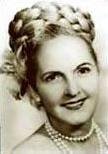
Felisa Rincón de Gautier

Felisa Rincón de Gautier
Biography
Introduction & Historical Era
Felisa Rincón de Gautier (January 9, 1897 – September 16, 1994), affectionately known across the Caribbean and the Americas as "Doña Fela," stands as one of the most transformative political figures of the twentieth century. As the first woman elected as mayor of a capital city in the Western Hemisphere—serving as Mayor of San Juan, Puerto Rico, from 1946 to 1969—she redefined municipal governance, shattered entrenched patriarchal barriers, and pioneered a comprehensive civic philosophy known as "benevolent maternalism." Her twenty-two-year tenure occurred during a tumultuous and defining epoch in Puerto Rican history, marked by the transition from direct colonial administration by the United States to the establishment of the Estado Libre Asociado (Commonwealth), rapid industrialization under Operation Bootstrap, and intense social stratification. Within this dynamic climate, Doña Fela emerged as a fierce advocate for the working class, women's suffrage, and urban modernization, leaving an indelible mark on the physical, social, and cultural landscape of San Juan.
Early Life, Family Background, and Formative Struggles
Born on January 9, 1897, in the eastern municipality of Ceiba, Puerto Rico, Felisa Rincón Marrero was the eldest of nine children born to Enrique Rincón Plumey, a schoolteacher and attorney, and Rita Marrero Rivera. Her early childhood was steeped in the rich traditions of rural Puerto Rico, but her life altered dramatically when her mother died giving birth when Felisa was just eleven years old. Thrust into the role of matriarch for her eight younger siblings, Felisa was forced to forgo formal higher education to manage the household. This early assumption of overwhelming domestic responsibility instilled in her a profound sense of duty, organizational discipline, and maternal care that would later characterize her political career.
Despite the interruption of her schooling, her intellectual curiosity remained unquenched. Her father, a man of letters and political consciousness, encouraged her to read widely and engage in discussions regarding island governance and civil rights. In the early 1920s, seeking economic independence and new horizons, Rincón moved to New York City, where she learned the art of haute couture and seamstress work while observing the vibrant civic activism of urban American immigrant communities. Upon returning to San Juan, she shattered gender norms by establishing herself as a successful entrepreneur, opening a fashionable clothing boutique called Felisa's Style Shop and a renowned flower shop. These entrepreneurial ventures not only provided financial stability but also integrated her deeply into the social fabric of San Juan, bringing her into daily contact with women from diverse socioeconomic backgrounds and exposing her to the severe inequalities plaguing the city's slums.
"My opponents campaign just before the elections and then they disappear. I start campaigning the day after the election and never stop."
Political Awakening and the Struggle for Suffrage
During the 1920s and 1930s, Puerto Rico was gripped by intense political agitation. The debate over island sovereignty raged between pro-statehood factions, advocates of autonomy like Antonio R. Barceló, and radical independence leaders such as Pedro Albizu Campos. Concurrently, Puerto Rican women were organizing to demand the right to vote. Felisa Rincón became a passionate feminist suffragist, joining the vanguard of women who argued that true democratic governance was impossible without female representation. When universal suffrage was finally extended to literate women in 1932 (and universal suffrage for all adults in 1935), she was among the very first women to officially register to vote in San Juan, viewing the ballot not merely as a symbolic right, but as a vital instrument for social engineering and poverty alleviation.
Her activist zeal drew her into the inner circles of emerging political reformers. In 1938, she joined forces with the charismatic visionary Luis Muñoz Marín to co-found the Popular Democratic Party (Partido Popular Democrático, PPD). Operating under the rallying cry "Pan, Tierra y Libertad" (Bread, Land, and Liberty), the PPD sought to dismantle the grip of absentee sugar corporations and elevate the impoverished jíbaro (rural peasant) and urban laborer. Working alongside dedicated leaders like future First Lady Inés Mendoza and debating legal scholars such as Gilberto Concepción de Gracia, Doña Fela proved to be a masterful grassroots organizer. She went door-to-door in San Juan's most impoverished barriadas, mobilizing women and disenfranchised laborers who had never before participated in the electoral process. In 1940, she married Jenaro A. Gautier, a prominent lawyer who fully supported her political ambitions, creating a formidable partnership dedicated to public service.
Rise to Power and Municipal Leadership
In 1946, when the sitting mayor of San Juan resigned, the Board of Commissioners appointed Felisa Rincón de Gautier to fill the vacancy, making her the first woman to govern a capital city in the Americas. In 1948, she faced the electorate directly and won a resounding victory, initiating a dominant twenty-two-year administration that spanned six consecutive terms until her voluntary retirement in 1969.
When Doña Fela assumed office, San Juan was facing an unprecedented urban crisis. Operation Bootstrap was driving hundreds of thousands of rural Puerto Ricans into the capital in search of factory employment. Shanty towns, lacking basic sanitation, running water, and electricity, proliferated along the Martín Peña Channel and across the city margins. Rather than viewing these displaced families as a municipal nuisance, Rincón de Gautier embraced them with her characteristic philosophy of "benevolent maternalism." She argued that city government should function as an extended family, providing compassionate care, direct resources, and unwavering institutional support to its most vulnerable dependents.
Major Municipal Reforms and Institutional Innovations
Doña Fela revolutionized the daily administration of San Juan by dismantling bureaucratic walls. Every Wednesday, she hosted an "Open House" (Casa Abierta) at the historic Casa Alcaldía. Thousands of citizens queued along the Plaza de Armas to meet personally with the mayor. Whether a resident needed prescription medication, legal aid, housing repair materials, or a pair of shoes for a child to attend school, Doña Fela listened patiently and dispensed immediate municipal assistance. Critics sometimes dismissed this approach as clientelism, but historians recognize it as a pioneering form of radical municipal accessibility and community-focused public welfare that bypassed suffocating red tape.
Recognizing that systemic poverty could only be broken through early childhood intervention, she established Las Escuelas Maternales (Maternal Schools) in 1949. These revolutionary municipal preschools provided comprehensive daily childcare, nutritional meals, early literacy training, and medical check-ups for impoverished children, enabling mothers to enter the expanding industrial workforce. This visionary initiative was so successful that when the United States federal government designed the national "Head Start" program in the 1960s, federal administrators sent delegations to San Juan to study Doña Fela's centers as a primary working model.
In healthcare and infrastructure, her achievements were equally monumental. She spearheaded the complete renovation and expansion of the San Juan Municipal Hospital, elevating it to become the first medical facility in Puerto Rico to earn full accreditation from the American Hospital Association. She initiated massive slum clearance projects, collaborating with the insular government to construct public housing projects (caseríos) equipped with modern utilities, recreational parks, and community centers. Furthermore, she transformed sanitation services, paved hundreds of miles of urban roads, and expanded municipal waste management.
"True leadership is not about wielding authority from a distant office; it is about opening the doors of governance so that the poorest child knows the city belongs to them."
Perhaps the most famous cultural anecdote of her administration occurred during the Christmas seasons of 1952, 1953, and 1954. Remembering the magical winters of her youth in New York City, Doña Fela partnered with Eastern Airlines executive Eddie Rickenbacker to fly refrigerated planeloads of real snow into San Juan. Gathered at Sixto Escobar Stadium and Luis Muñoz Rivera Park, thousands of tropical children who had never left the island were treated to snowball fights, sled rides, and winter festivities. While political opponents debated the symbolism of importing American snow, for generations of Puerto Ricans, it cemented her reputation as a leader who cared deeply about bringing joy to working-class families.
International Diplomacy, Later Life, and Lasting Legacy
Beyond Puerto Rico, Rincón de Gautier became an international ambassador for Latin American democracy and women's political empowerment. During the Cold War, the United States Department of State frequently invited her to lecture across Latin America, Asia, and Europe as a living exemplar of progressive civic leadership within a democratic framework. She served as a prominent delegate to the Inter-American Congress of Municipalities and established sister-city relationships that integrated San Juan into global urban networks. Recognizing her tireless efforts, governments around the world bestowed prestigious decorations upon her, including the Order of Isabella the Catholic from Spain, the Medal of Honor of the Joan of Arc Society in France, and the Simón Bolívar Medal from Venezuela.
After stepping down as mayor in 1969 at the age of 72, Doña Fela remained an influential elder stateswoman within the Popular Democratic Party and a mentor to generations of female politicians. She passed away on September 16, 1994, in San Juan, at the age of 97, mourned by tens of thousands of citizens who lined the streets for her state funeral. Today, her historic residence in Old San Juan operates as the Casa Museo Felisa Rincón de Gautier, preserving her extensive archives, personal artifacts, and inspiring memory. Her life remains a testament to the power of feminist courage, compassionate governance, and tireless public service.
Major Contributions
- Felisa Rincón de Gautier made groundbreaking contributions to municipal governance, women's political representation, and public welfare in the Caribbean and the Americas.
- As the first female mayor of a capital city in the Western Hemisphere, she dismantled entrenched gender barriers in executive leadership and proved that women could successfully steer major urban centers through rapid socio-economic transitions.
- Her signature governing philosophy, "benevolent maternalism," transformed San Juan City Hall from an exclusive administrative bureaucracy into an accessible community sanctuary through her weekly "Open House" policy, providing direct, compassionate assistance to thousands of marginalized residents.
- Furthermore, Rincón de Gautier pioneered early childhood educational and social infrastructure that served as an international model.
- Her establishment of *Las Escuelas Maternales* in 1949 provided free, comprehensive childcare, education, and healthcare to impoverished urban children, directly enabling women to enter the formal labor market and serving as the foundational blueprint for the United States federal Head Start program.
- Through her aggressive public housing initiatives, healthcare modernizations—including achieving the first American Hospital Association accreditation for a Puerto Rican hospital—and tireless diplomatic advocacy across Latin America, Doña Fela permanently elevated the standard of municipal public service and left an enduring legacy of social justice across the region.

