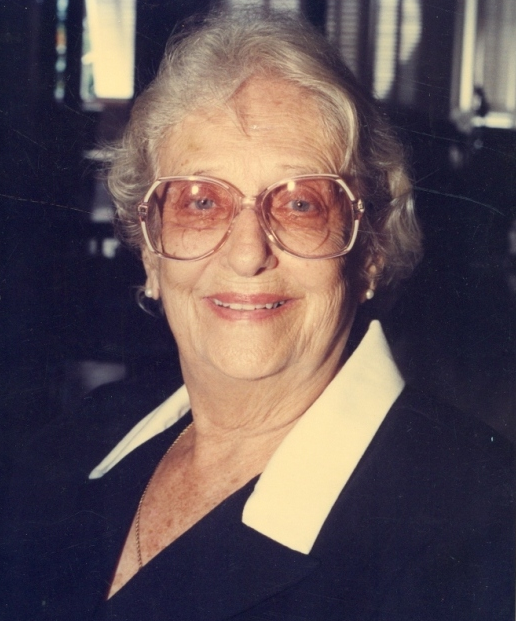
Janet Jagan

Janet Jagan
Biography
Introduction
Janet Jagan (née Rosenberg) was one of the most influential and controversial political figures in 20th-century Caribbean history. Serving as the first female President of Guyana from 1997 to 1999, she was also the first American-born woman and the first Jewish person to serve as a head of state in South America. Her life was defined by a remarkable journey from the suburbs of Chicago to the vanguard of the Guyanese anti-colonial movement. Alongside her husband, Cheddi Jagan, she co-founded the Political Affairs Committee (PAC) and the People’s Progressive Party (PPP), shaping the political landscape of British Guiana and steering the colony through its turbulent transition to independent Guyana. Her career spanned more than half a century of legislative work, ministerial leadership, grassroots organizing, and journalistic activism.
Early Life, Education, and Marriage
Janet Rosalie Rosenberg was born on October 20, 1920, in Chicago, Illinois, to a middle-class Jewish family. Her maternal grandparents were Jewish immigrants from Romania, and her paternal grandparents had emigrated from Hungary. Growing up in a relatively conservative household, Janet was encouraged to pursue education but was expected to follow traditional gender roles. However, she early on showed a fiercely independent spirit, joining various progressive organizations and developing a keen interest in aviation, political science, and social welfare.
She attended the University of Detroit and later Wayne State University and Michigan State College. In 1942, while working as a student nurse at the Cook County School of Nursing in Chicago, she met a charismatic young dentistry student from British Guiana, Cheddi Jagan. The two connected deeply over their shared interest in Marxist theory, colonial liberation, and social justice. Their relationship blossomed rapidly, and they were married on August 5, 1943, despite the fierce opposition of both of their families—Janet's parents disapproved of her marrying a non-white foreigner, while Cheddi's parents, who were traditional East Indian sugar plantation workers, were wary of an American Jewish daughter-in-law.
In December 1943, Janet left the United States and accompanied Cheddi to British Guiana, arriving in a colony dominated by the sugar oligarchy and marked by deep racial, class, and gender divisions. She immediately took up work in her husband's dental clinic in Georgetown, but her focus quickly shifted to the appalling living and working conditions of the colony's working class.
Anti-Colonial Activism and the WPEO
Upon her arrival in British Guiana, Jagan found a society where the vast majority of the population, particularly women, were disenfranchised and exploited. She threw herself into labor organizing and social activism. In 1946, Jagan co-founded the Women's Political and Economic Organisation (WPEO) alongside Winifred Gaskin and Frances Stafford. The WPEO was the first political organization in British Guiana dedicated entirely to women's rights, advocating for universal adult suffrage, better working conditions for domestic and industrial female workers, and women's education. Jagan wrote:
"We had to fight on two fronts: against the colonial authorities who denied us our basic political rights, and against a patriarchal system that kept women in subjection."
Through the WPEO, Jagan mobilized women across ethnic divisions, organizing rallies and educational seminars that bridged the gap between Afro-Guyanese and Indo-Guyanese women.
In the same year, 1946, Janet and Cheddi Jagan, along with labor leaders Ashton Chase and H.J.M. Hubbard, formed the Political Affairs Committee (PAC). The PAC was designed to raise political consciousness and coordinate the anti-colonial struggle. Janet Jagan served as the editor and principal writer of the PAC Bulletin, a newsletter that exposed the abuses of colonial administrators and sugar estate owners, introducing socialist ideals to the local population.
Founding of the PPP and the 1953 Constitutional Crisis
The work of the PAC laid the foundation for the establishment of the People's Progressive Party (PPP) on January 1, 1950. The PPP was British Guiana's first modern, mass-based political party. It was structured as a multi-racial coalition, uniting the Indo-Guyanese population (led by Cheddi Jagan) and the Afro-Guyanese population (led by Forbes Burnham). Janet Jagan was elected as the party's General Secretary, a position she held continuously for twenty years, from 1950 to 1970. Her organizational skills, attention to detail, and tireless work ethic made her the administrative backbone of the party.
In 1950, Jagan became the first woman elected to the Georgetown City Council, breaking a significant barrier in local government. Three years later, in April 1953, British Guiana held its first elections under universal adult suffrage. The PPP won a landslide victory, capturing 18 of the 24 seats in the House of Assembly. Janet Jagan was elected as a member of the legislature and was appointed Deputy Speaker, making her the first woman to hold that post in the Caribbean.
However, the PPP's radical platform of land reform, labor rights, and national independence alarmed the British colonial administration and the United States government. Under the shadow of the Cold War, Winston Churchill's government feared that the Jagans would establish a communist outpost in South America. On October 9, 1953, after the PPP government had been in office for only 133 days, the British government suspended the constitution, declared a state of emergency, sent in troops, and dismissed the elected ministers.
Imprisonment and the Split in the PPP
In the crackdown that followed the suspension, the colonial authorities restricted the movement of PPP leaders. In 1954, Janet Jagan was arrested and charged with possessing banned literature and holding political meetings in violation of the emergency regulations. She was sentenced to six months of hard labor at the Georgetown Prison. Her time in prison was difficult, but she refused to compromise her principles. She later recalled:
"Prison was designed to break our spirit, but it only strengthened our resolve to rid our country of colonial domination."
After her release, Jagan was placed under house arrest and restricted to the municipal boundaries of Georgetown for two years. During this period of political isolation, the colonial administration sought to dismantle the PPP. In 1955, the party suffered a devastating ideological and racial split. Forbes Burnham broke away from the Jagans to form the People's National Congress (PNC), which became a predominantly Afro-Guyanese party, while the PPP became increasingly associated with the Indo-Guyanese community. This division would plague Guyanese politics for decades.
Ministerial Leadership and Opposition
Despite these setbacks, the PPP won the 1957 elections. Janet Jagan was elected to the legislature and was appointed Minister of Labour, Health, and Housing. In this role, she implemented major reforms, including expanding rural healthcare clinics, establishing new housing schemes for working-class families, and strengthening labor laws to protect agricultural workers. Her tenure was marked by a practical focus on improving the daily lives of citizens.
In 1961, the PPP was again victorious, and Jagan served as a senator and later as Minister of Home Affairs from 1963 to 1964. This was a period of intense civil unrest, ethnic violence, and CIA-sponsored destabilization campaigns aimed at preventing Cheddi Jagan from leading an independent Guyana. Janet Jagan resigned her ministerial post in June 1964 in protest over the colonial police force's handling of the civil disturbances and their failure to protect citizens.
When British Guiana achieved independence as Guyana in 1966 under a coalition led by Forbes Burnham, the PPP was forced into opposition. Burnham's PNC regime maintained power through a series of increasingly fraudulent elections. During the long "opposition years" (1964–1992), Janet Jagan remained a vital voice. She edited the Mirror newspaper, which became a leading voice of resistance against Burnham's authoritarian rule and press censorship. She was also a founding member of the Union of Guyanese Journalists and founded the Women's Progressive Organisation (WPO), which continued to lobby for gender equality and human rights.
Return to Democracy and the Presidency
In 1992, following international pressure and the end of the Cold War, Guyana held its first free and fair elections in nearly three decades. The PPP won, and Cheddi Jagan was sworn in as President, with Janet Jagan serving as First Lady. During this time, she represented Guyana at various international forums and served as chairperson of the Guyana National Deciduous Fruit Company and other social organizations.
On March 6, 1997, Cheddi Jagan died of a heart attack. The nation was plunged into grief. In the transitional government that followed, Janet Jagan was appointed Prime Minister and First Vice President by President Samuel Hinds. Later that year, the PPP selected her as its presidential candidate for the December 1997 elections.
Her candidacy was met with fierce opposition from the PNC, led by Desmond Hoyte, who attacked her on the basis of her foreign birth and her age (she was 77 at the time). Despite a polarizing campaign, Janet Jagan won the election, becoming the first female President of Guyana and the first American-born woman to serve as a head of state in the Western Hemisphere. She was sworn in on December 19, 1997.
Her presidency was marked by intense political unrest, protests, and street violence orchestrated by the opposition, who challenged the election results. Despite the instability, Jagan worked to maintain economic reforms, improve infrastructure, and address social inequality. In August 1999, following a mild stroke and advice from her doctors, she voluntarily resigned the presidency, handing over power to her finance minister, Bharrat Jagdeo.
Later Years, Death, and Legacy
In retirement, Janet Jagan remained active in the PPP and continued to write and publish, including children's books that celebrated Guyanese history and culture. She died on March 28, 2009, in Georgetown at the age of 88. Her funeral was attended by thousands of Guyanese from all walks of life.
Janet Jagan's legacy is complex and deeply felt. To her supporters, she was a champion of the poor, a pioneer for women's liberation, and a founding mother of the Guyanese nation. To her detractors, she was a Marxist ideologue whose early radicalism contributed to the Cold War conflicts that fractured Guyana along ethnic lines. Regardless of political perspective, her place as a towering figure in the history of Caribbean politics and the global struggle for women's political representation is secure.
Major Contributions
- Janet Jagan made monumental contributions to the political development, gender equality, and democratic consolidation of Guyana.
- As a co-founder of the Political Affairs Committee (PAC) and the People’s Progressive Party (PPP), she helped establish the country's first modern political party and was a central force in the movement for universal adult suffrage and independence from British colonial rule.
- She broke numerous political barriers for women in the Caribbean, serving as the first female elected to the Georgetown City Council, the first female Deputy Speaker of the legislature, the first female cabinet minister, the first female Prime Minister, and ultimately, the first female President of Guyana.
- Throughout her career, she championed the rights of working-class citizens, specifically targeting improvements in public health, labor standards, and housing.
- She founded the Women's Progressive Organisation (WPO) to empower Guyanese women and advocate for their social and economic liberation.
- As the long-time editor of the Mirror newspaper, she also played a crucial role in defending press freedom and resisting authoritarian rule, cementing her legacy as a founding mother of the Guyanese nation.

