Juan Pablo Duarte

Biographical Details
Juan Pablo Duarte
Biography
Early Life and the Dominican Context
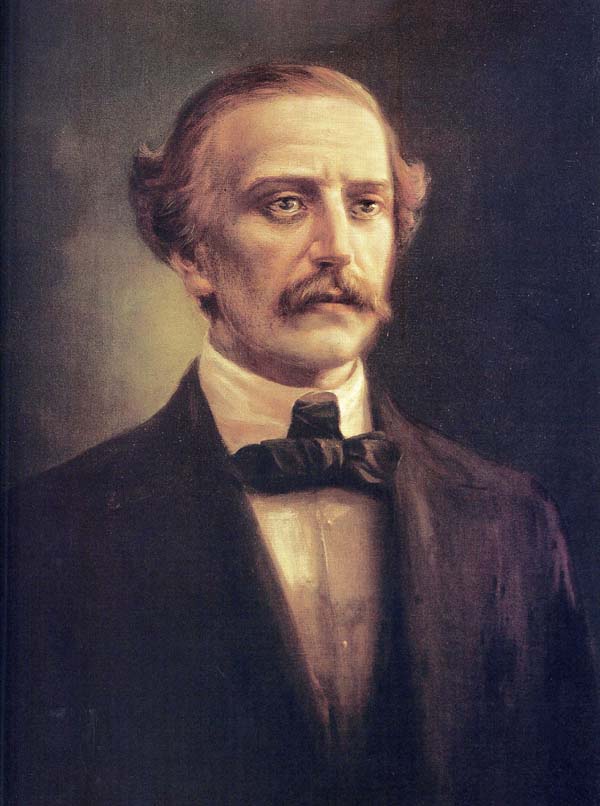
Juan Pablo Duarte y Díez was born on January 26, 1813, in the city of Santo Domingo, during a tumultuous period in Hispaniola's history known as the "España Boba" (Foolish Spain) era. This period was characterized by the Spanish Crown's neglect of its colony of Santo Domingo, which had recently returned to Spanish rule after a brief French occupation. Duarte's father, Juan José Duarte Rodríguez, was a Spanish merchant from Vejer de la Frontera who had settled in Santo Domingo and established a successful maritime store. His mother, Manuela Díez Jiménez, was a Dominican woman from the eastern town of El Seibo, the daughter of a Spanish father and a Dominican mother.
Duarte grew up in a middle-class household that valued education and culture. However, his childhood was shaped by the geopolitical instability of the island. In 1821, José Núñez de Cáceres declared the "Ephemeral Independence" of Santo Domingo, attempting to align the territory with Simón Bolívar's Gran Colombia. This experiment lasted only nine weeks. In February 1822, Haitian President Jean-Pierre Boyer led a military invasion and annexed Santo Domingo, unifying the entire island of Hispaniola under Haitian rule.
The Haitian occupation, which lasted for 22 years, brought profound social, economic, and cultural transformations. Boyer abolished slavery, confiscated church properties, and instituted agricultural reforms. However, the occupation also involved the suppression of Spanish colonial culture, the closure of the University of Santo Domingo, and heavy taxation to pay France for indemnity. These policies generated deep-seated resentment among the Spanish-speaking, Catholic population of the eastern part of the island, who felt culturally and politically marginalized.
The flag of the Dominican Republic, originally designed by Duarte and featuring a white cross dividing blue and red panels.
European Travels and Intellectual Awakening
Duarte's parents, recognizing the limited educational opportunities under Haitian rule and hoping to shelter him from the political climate, sent him to study abroad in 1829. Duarte traveled first to the United States, spending time in New York, and then to England, France, and Spain.
It was during his time in Spain, particularly in Barcelona, that Duarte experienced an intellectual awakening. Barcelona in the early 1830s was a city alive with romantic nationalism and liberal ideas. Duarte witnessed the debates surrounding constitutionalism, civil liberties, and national identity. He became deeply influenced by the concepts of representative democracy, popular sovereignty, and the romantic belief in the destiny of nations. He returned to Santo Domingo in 1832, not as a merchant's apprentice, but as a revolutionary visionary, determined to see his homeland established as a free, sovereign, and democratic republic.
The Founding of La Trinitaria
Upon his return to Santo Domingo, Duarte began offering free classes in history, geography, languages, and mathematics to the local youth. These lessons served as a cover for political discussions, where Duarte instilled national pride and the desire for self-determination in his students.
On July 16, 1838, Duarte took a decisive step toward active revolution. He gathered eight of his most trusted companions at the home of Josefa Brea in Santo Domingo and founded a secret revolutionary society called La Trinitaria. The founders included Juan Isidro Pérez, Pedro Alejandro Pina, Jacinto de la Concha, Félix María Ruiz, José María Serra, Benito González, Felipe Alfau, and Juan Nepomuceno Ravelo. They were later joined by others, including Francisco del Rosario Sánchez and Matías Ramón Mella.
The society's name reflected its organizational structure, which was designed to maintain strict secrecy. Members were organized in independent cells of three. Each member only knew the identity of the person who recruited them and the two individuals they recruited. If a member was captured by Haitian authorities, they could only betray two others, protecting the integrity of the broader network. The Trinitarios took a solemn oath to fight for:
"...a free, sovereign, and independent Republic, free from all foreign domination, to be called the Dominican Republic."
To build public support and spread their nationalist ideals without drawing the suspicion of the Haitian police, the Trinitarios established two public front organizations: La Filantrópica (The Philanthropic Society) and La Dramática (The Dramatic Society). These groups staged theatrical plays that contained subtle, coded messages of liberty and rebellion. The plays were highly popular, fostering a sense of national identity among the populace.
The 1843 Reformist Movement and Exile
By 1843, discontent with President Boyer's regime had spread to Haiti itself, leading to the rise of a reformist movement known as La Réforme, led by General Charles Hérard. Duarte saw this as an opportunity. He aligned the Trinitarios with Hérard's forces to help overthrow Boyer, believing that a reformist Haitian government would be more receptive to Dominican self-determination.
Boyer was successfully overthrown in March 1843, but Hérard soon realized that the Dominican reformers did not merely want reform; they wanted complete separation. Hérard marched a military force into Santo Domingo to crush the independence movement. He ordered the arrest of the Trinitario leaders. Duarte was forced to go into hiding and eventually fled the island, seeking refuge in Caracas, Venezuela. His family remained behind, facing harassment and having their property confiscated by the authorities.
A locator map of the Dominican Republic, sharing the island of Hispaniola with Haiti in the heart of the Greater Antilles.
The Declaration of Independence: February 27, 1844
During Duarte's exile, the leadership of the revolutionary movement fell to Francisco del Rosario Sánchez and Matías Ramón Mella. Sánchez took command of La Trinitaria, while Mella worked to coordinate military support. Despite Duarte's absence, the revolutionary momentum grew, fueled by his letters and financial support from Venezuela.
On the night of February 27, 1844, the conspirators gathered at the Puerta del Conde (The Count's Gate) in Santo Domingo. Mella fired his famous trabucazo (blunderbuss shot) to signal the start of the uprising, and Sánchez raised the new blue, red, and white flag of the Dominican Republic. The Haitian garrison, caught off guard and facing a popular revolt, surrendered. The Dominican Republic was officially declared a free and independent nation.
Return and Political Disillusionment
Duarte returned to Santo Domingo on March 15, 1844, greeted as a hero. He was appointed to the Central Governing Board, the provisional government of the new republic. However, his return marked the beginning of a bitter political struggle.
The young nation was deeply divided. The liberal Trinitarios, led by Duarte, advocated for a fully sovereign democratic republic. Conversely, a conservative faction, composed of wealthy landowners, merchants, and military officers led by General Pedro Santana, believed the nation could not survive on its own. They feared a renewed Haitian invasion and sought a protectorate under France or Spain in exchange for sovereignty.
Duarte strongly opposed any submission to foreign powers, declaring:
“Nuestra Patria ha de ser libre e independiente de toda potencia extranjera o se hunde la isla”.
Tensions escalated, and in July 1844, General Santana marched his troops into Santo Domingo and staged a military coup. Santana declared himself dictator, arrested the Trinitarios, and labeled them "traitors to the homeland". In September 1844, Duarte, Sánchez, Mella, and their families were formally banished from the country.
Decades of Exile and the Restoration War
Duarte began a long, painful exile that would last for most of the remainder of his life. He returned to Venezuela, living for a time in Caracas and later seeking isolation in the remote town of San Fernando de Apure in the Venezuelan llanos (grasslands).
During his absence, Santana's conservative faction dominated Dominican politics, alternating power with Buenaventura Báez. In 1861, Santana's fears of Haitian reconquest led him to take the ultimate step: he officially annexed the Dominican Republic back to Spain, turning it into a Spanish province.
This act of betrayal sparked the Dominican Restoration War (1863–1865), a popular guerrilla war to reclaim independence. When news of the uprising reached Duarte in Venezuela, he emerged from his isolation. He sold his family's remaining assets to buy weapons and traveled back to the Dominican Republic, arriving in Monte Cristi in March 1864.
Duarte offered his services to the restoration government. However, his presence created discomfort among the new generation of restoration leaders, who feared his prestige might undermine their authority. Seeking to avoid internal division, the restoration government sent Duarte back to Venezuela on a diplomatic mission to secure financial and political support from the Venezuelan government. Once back in Venezuela, he was largely forgotten and marginalized by the Dominican leadership.
Final Years and Posthumous Legacy
Duarte spent his final years in Caracas, living in poverty and declining health, cared for by his sisters Rosa and Francisca. He died on July 15, 1876, at the age of 63, without ever seeing his homeland free again.
Duarte's historical rehabilitation began in 1884, when President Fernando Arturo de Meriño ordered the repatriation of his remains. His bones were returned to Santo Domingo and received with national honors. In 1944, on the centenary of independence, his remains were interred in the Altar de la Patria, a mausoleum in Santo Domingo, alongside those of Sánchez and Mella.
Today, Juan Pablo Duarte is revered as the primary Founding Father (Padre de la Patria) of the Dominican Republic. He is remembered not as a military conqueror, but as an intellectual giant, a man of pure democratic ideals, and a moral exemplar who sacrificed his wealth, his family's well-being, and his own life for the dream of a free and sovereign nation.
Major Contributions
- Juan Pablo Duarte is revered as the primary Founding Father (Padre de la Patria) of the Dominican Republic.
- In 1838, he founded La Trinitaria, a secret revolutionary society that organized the movement for independence from Haitian rule.
- Duarte formulated the democratic and republican principles of the new state, advocating for a free, sovereign nation with separation of powers and civil liberties.
- Through his intellectual and moral leadership, he inspired the revolution that culminated in the declaration of Dominican independence on February 27, 1844, and his unyielding stance against foreign protectorates remains the cornerstone of Dominican national sovereignty.