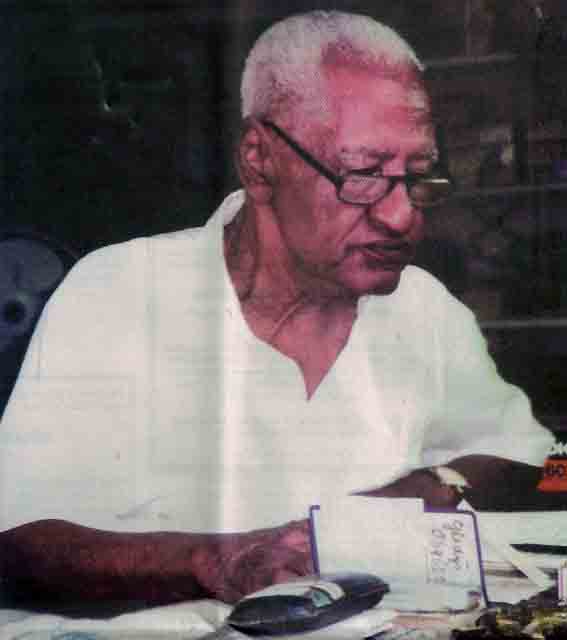
Nilda Pinto

Nilda Pinto
Biography
Introduction and Socio-Linguistic Landscape
In the first half of the twentieth century, the educational and cultural landscape of Curaçao was defined by a rigid colonial hierarchy that systematically suppressed the native indigenous culture of the island. Under the governing policies of the Netherlands Antilles, formal Dutch was strictly enforced as the sole legitimate language of government, administration, and public instruction. Meanwhile, Papiamentu—the melodic, expressive creole language born from the synthesis of African, Portuguese, Spanish, Dutch, and indigenous Arawak linguistic elements—was spoken by virtually the entire local population in their daily domestic and communal lives. Despite its universality, colonial authorities and elite institutions dismissed Papiamentu as an ungrammatical 'street language' or dialect unfit for formal education or literary expression. Children entering elementary schools were subjected to a jarring pedagogical alienation, forbidden from speaking their mother tongue on school grounds and forced to learn reading and arithmetic in a European language many had never heard at home. It was within this restrictive, culturally oppressive environment that Nilda Maria Geerdink-Jesurun Pinto emerged as a revolutionary educational pioneer, folklore preservationist, and beloved author. Working alongside early cultural visionaries and contemporaries such as Pierre Lauffer, Elis Juliana, and Guillermo Rosario, Pinto dedicated her brief but extraordinarily impactful life to shattering colonial educational taboos. By pioneering children's literature in Papiamentu and systematically preserving the island's rich Afro-Caribbean folklore, she restored cultural dignity to Antillean youth and laid the foundation for the modern linguistic emancipation of Curaçao.
Childhood in Otrobanda and Pedagogical Calling
Nilda Maria Jesurun Pinto was born on December 12, 1918, in the vibrant working-class quarter of Otrobanda in Willemstad, Curaçao. Located across the St. Anna Bay from the administrative center of Punda, Otrobanda was a bustling, culturally dynamic neighborhood where traditional Afro-Curaçaoan customs, music, and oral storytelling flourished in the courtyards and alleys. Growing up surrounded by this rich oral heritage, young Nilda developed an acute sensitivity to the beauty, rhythm, and expressive nuance of Papiamentu. She received her primary and secondary education at the St. Martinus Gesticht (St. Martin School), a prestigious girls' academy operated by the Franciscan Nuns of Roosendaal. Demonstrating exceptional academic brilliance and a natural affinity for teaching, she chose to pursue a career in education—one of the few professional avenues open to ambitious Antillean women of her generation. In the late 1930s, she traveled across the Atlantic to the Netherlands to complete advanced pedagogical studies and obtain her formal teacher certification. Upon successfully securing her teaching credentials, Pinto returned to Curaçao in 1939 and was immediately hired as a faculty member at her alma mater, the St. Martinus Gesticht. Stepping into the classroom as a fully certified instructor, Pinto witnessed firsthand the profound emotional and cognitive toll that the exclusive use of Dutch imposed on young Antillean children. She observed how bright, eager students became mute, intimidated, and disengaged when forced to navigate foreign Dutch vocabulary, while their rich inner imaginations and cultural references remained entirely ignored. Refusing to accept this pedagogical injustice, Pinto resolved to transform the classroom from a site of cultural erasure into a sanctuary of native self-expression.
Pioneering Papiamentu Literacy and Song
Driven by a deep conviction that true intellectual development must be anchored in a child's native language, Nilda Pinto embarked on a fearless campaign to introduce Papiamentu into formal youth culture and education. Recognizing that music was one of the most powerful pedagogical tools for children, she began collecting, composing, and transcribing traditional children's songs that had been passed down orally for generations. In 1944, she achieved a historic breakthrough with the publication of Corsouw ta kanta (Curaçao Sings). This seminal volume was the first published collection of local children's songs presented entirely in Papiamentu, accompanied by musical notation. For the very first time, Antillean schoolchildren could open a published book and sing songs that reflected their own tropical environment, local customs, and mother tongue. The book was an instant sensation, bringing immense joy to classrooms and homes across the island and challenging the colonial assumption that local culture lacked formal educational value. Building upon this success, Pinto recognized the urgent need for formal linguistic tools to bridge the gap between Dutch and Papiamentu. In 1947, she authored and published Nos dushi Papiamento (Our Sweet Papiamento), a groundbreaking grammar and reading textbook. Designed both to help native speakers understand the formal structure of their language and to assist Dutch educators and expatriates in learning the vernacular, the book represented a major milestone in the intellectual legitimization of Papiamentu. Pinto's work boldly asserted that Papiamentu was not a corrupt dialect, but a sophisticated, rule-governed language deserving of respect and academic study.
"A child cannot truly soar in the classroom if their mother tongue is clipped at the schoolhouse door. Our sweet Papiamento is not merely language; it is the soul of our children."
Reclaiming Anansi: Cuentanan di Nanzi and Oral Preservation
While her contributions to classroom literacy were profound, Nilda Pinto's most monumental achievement in Caribbean cultural history came with her pioneering work as a folklore preservationist. For over two centuries during the brutal era of plantation slavery in Curaçao, enslaved Africans had preserved their spiritual resilience and communal identity through oral storytelling. At the center of this oral tradition were the tales of Kompa Nanzi (Anansi the Spider), the mythical trickster hero brought across the Middle Passage from West Africa. In the context of Caribbean slavery, Nanzi evolved into a profound symbol of subversive resistance: a physically small, vulnerable spider who relied on superior intellect, wit, and cunning to consistently outsmart, humiliate, and survive the powerful, greedy master figure known as Shon Arei. By the mid-twentieth century, as modernization and Western media spread across Curaçao, these invaluable oral tales were in imminent danger of being lost forever with the passing of elderly storytellers. Recognizing this cultural emergency, Pinto undertook a rigorous ethnographical mission. She traveled extensively across urban barrios and rural districts, sitting on porches with elderly Curaçaoans to record, transcribe, and meticulously edit dozens of traditional Nanzi stories. In 1952, she published her magnum opus, Cuentanan di Nanzi (Stories of Nanzi). This landmark publication gathered twenty-five classic Nanzi stories written in vibrant, authentic Papiamentu, specifically adapted for young readers while retaining the subversive humor and moral complexity of the original oral traditions. By transforming unwritten folk heritage into a classic work of written children's literature, Pinto single-handedly rescued the Afro-Curaçaoan narrative tradition from oblivion. Her book cemented Kompa Nanzi as an immortal national icon and provided Antillean children with a profound literary link to their African ancestry. Fellow luminaries such as Elis Juliana and Frank Martinus Arion would later build upon Pinto's foundational folkloric preservation to construct modern Antillean literary identity.
Broadcasting Pioneer: The Curom Radio Broadcasts and Youth Choirs
Nilda Pinto understood that achieving true cultural emancipation required reaching families beyond the traditional classroom. With the advent of mass broadcasting in the Netherlands Antilles, she quickly seized upon radio as a revolutionary medium for public education and cultural pride. Beginning in 1943, she produced, directed, and hosted a weekly children's radio program on Curom (Curaçaosche Radio Omroep, which later evolved into radio Z86). Her program made broadcast history as one of the very first radio shows conducted entirely in Papiamentu. Every week, thousands of families across Curaçao, Aruba, and Bonaire gathered around their radio sets to listen to 'Juffrouw Nilda' read stories, recite poetry, discuss moral virtues, and celebrate island traditions. Her gentle, authoritative voice became a beloved fixture in Antillean households, democratizing access to literature and instilling deep linguistic pride in working-class youth. To accompany her broadcasts, Pinto founded and conducted a specialized youth choir named De Kanariepietjes (The Canary Peeps). Composed of local schoolchildren, the choir performed traditional folk songs and Pinto's original compositions live on the airwaves and at major civic events across the island. Through De Kanariepietjes, Pinto nurtured the artistic talents of generations of young musicians and demonstrated that Antillean youth could execute choral performances of the highest artistic excellence using their native creole tongue.
"Through the tales of Kompa Nanzi and the melodies of our island songs, Nilda Pinto gave the children of Curaçao the greatest gift of all: the right to see themselves as the heroes of their own stories."
Tragic Untimely Death and Enduring National Legacy
In the early 1950s, Nilda Pinto married a Dutch civil engineer and health official named Geerdink, adding Geerdink to her surname. Following her husband's professional reclassification, she relocated with him to the town of Hengelo in the eastern Netherlands. Despite the physical distance from her beloved Caribbean homeland, she remained tirelessly devoted to Antillean literary projects, working on new collections of folklore and educational materials. However, her brilliant journey was cut tragically short. On April 17, 1954, Nilda Pinto suffered severe complications during pregnancy and passed away suddenly in Hengelo at the young age of 35. The news of her untimely death sent shockwaves of profound grief across Curaçao and the entire Netherlands Antilles. Flags were flown at half-mast, radio stations broadcast solemn tributes, and thousands mourned the loss of the young teacher who had given the nation's children their voice. Later that year, her final posthumous work, Corsouw ta konta (Curaçao Tells, 1954), was published, further enriching the island's folkloric treasury.
Despite her brief life, Nilda Pinto's structural and cultural impact on Curaçao remains immeasurable. In 1962, recognizing her profound contributions to youth education, the island government inaugurated the Nilda Pinto Huishoudschool in Willemstad, a premier vocational training institute that continues to thrive today as the Nilda Pinto SBO. Her name graces streets and public squares across Curaçao, and in 2023, the municipality of Amsterdam unveiled a dedicated street and historical marker in Amsterdam-Zuidoost—Nilda Pintostraat—honoring her as a pioneering hero of Antillean cultural heritage within the Kingdom. Most importantly, her literary works have achieved immortality. Cuentanan di Nanzi has been continually republished, translated, and adapted into modern bilingual editions (Papiamentu-Dutch, Papiamentu-English, and Papiamentu-Spanish), serving as mandatory foundational reading in Caribbean curricula. Today, Nilda Pinto is universally revered not only as the mother of Papiamentu children's literature, but as a courageous cultural emancipator whose vision ensured that the stories, songs, and soul of the Caribbean would endure for generations to come.
Major Contributions
- Nilda Pinto pioneered children's literature and native language instruction in Papiamentu during an era when colonial educational policy strictly enforced Dutch and suppressed creole culture.
- Her revolutionary publications, including the first Papiamentu songbook 'Corsouw ta kanta' (1944) and the foundational textbook 'Nos dushi Papiamento' (1947), legitimized the local vernacular in formal academic environments and proved that native language literacy is essential for the emotional and intellectual development of Caribbean youth.
- As a pioneering folklore preservationist and broadcaster, Pinto single-handedly rescued centuries of Afro-Curaçaoan oral traditions from extinction by recording and publishing 'Cuentanan di Nanzi' (1952), immortalizing the subversive West African trickster spider Kompa Nanzi in written literature.
- Through her weekly children's radio program on Curom—one of the first broadcast regularly in Papiamentu—and her direction of the 'De Kanariepietjes' youth choir, she democratized mass media for creole speakers and fostered enduring cultural pride across the Netherlands Antilles.
- Her legacy is institutionalized today in vocational academies, curriculum standards, and public landmarks across Curaçao and the Netherlands.