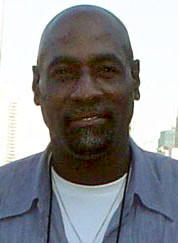
Sir Vivian Richards

Sir Vivian Richards
Biography
Sir Vivian Richards
Sir Isaac Vivian Alexander Richards, universally known as "Sir Viv" or the "Master Blaster," is a transcendent figure whose impact reaches far beyond the boundaries of a cricket pitch. Born on March 7, 1952, in the neighborhood of Ovals in St. John’s, Antigua, he is widely regarded as one of the greatest batsmen in the history of the sport. However, his legacy in Antigua and Barbuda, and throughout the broader Caribbean, is fundamentally intertwined with the post-colonial struggle for identity, Black pride, and regional excellence. He is a celebrated National Hero of Antigua and Barbuda, symbolizing the defiant, fearless spirit of a people shaking off the yoke of centuries of colonial domination.
Early Life and Sporting Roots
Vivian Richards was born to Malcolm and Grathel Richards, growing up in a working-class environment that was rich in community spirit and athletic passion. His father, Malcolm, was a leading fast bowler in Antiguan club cricket and served as the master of the local prison, instilling in young Viv a deep sense of discipline and a profound love for the game.
Richards attended St. John’s Boys School and later the Antigua Grammar School. During his formative years, cricket was not his only sporting pursuit; he was an exceptionally gifted athlete across the board. In fact, his prowess on the football field was so significant that he represented Antigua and Barbuda in international football, playing in qualifying matches for the 1974 FIFA World Cup. This dual-sport capability highlighted his immense natural coordination, speed, and competitive fire.
However, it was cricket that ultimately captured his destiny. The dusty pitches of Ovals were his first training ground, where he learned to bat against older, faster boys using rudimentary equipment. These early, tough encounters forged the aggressive, uncompromising batting technique that would later terrorize the world's premier fast bowlers.
The Ascent to Global Dominance
Richards made his first-class cricket debut for the Leeward Islands in January 1972. His raw talent, marked by incredible hand-eye coordination and brutal power, quickly caught the attention of scouts. In 1974, he relocated to England to play county cricket for Somerset, where he would enjoy a legendary partnership with English all-rounder Ian Botham and become one of the most prolific run-scorers in the English domestic game.
His international debut for the West Indies followed later that same year against India. Though his first match was unassuming, he announced his arrival on the world stage in his second Test match, scoring a magnificent, unbeaten 192 in New Delhi. This innings was the dawn of a spectacular international career that spanned from 1974 to 1991.
During this period, the West Indies cricket team evolved into a globally dominant force, and Viv Richards was the lethal, beating heart of their batting lineup. He played a pivotal role in the West Indies' triumphs in the first two Cricket World Cups in 1975 and 1979. In the 1979 final against England, his breathtaking century (138 not out) remains one of the most iconic performances in limited-overs history.
"I didn't want to just beat the opposition; I wanted to demoralize them. I wanted them to know that we were equals, if not superiors, on the field of play."
The Swagger, The Helmet, and The Symbolism
To understand the phenomenon of Sir Viv Richards, one must look beyond his extraordinary statistics—8,540 Test runs at an average of over 50, and 6,721 ODI runs at a blistering strike rate. What made Richards an icon was how he played.
He possessed an unmistakable swagger as he walked to the crease, slowly chewing gum, exuding an aura of absolute invincibility. Most famously, during an era when fast bowling was incredibly dangerous and bouncers were weaponized to intimidate batsmen, Richards steadfastly refused to wear a batting helmet. Armed only with a maroon West Indies cap, he hooked and pulled the fastest bowlers in the world—Dennis Lillee, Jeff Thomson, Bob Willis, and Imran Khan—with disdainful ease.
This refusal to wear a helmet was not merely an act of macho bravado; it was a deeply psychological and political statement. For West Indian fans, Richards standing bareheaded against hostile bowling was a powerful metaphor for Black resistance and Caribbean sovereignty. He was confronting the former colonial masters on their own turf, on his own terms, and utterly dominating them.
The Captaincy and The Golden Era
In 1985, Viv Richards took over the captaincy of the West Indies Test team from Clive Lloyd. Under his leadership, the team maintained an unprecedented aura of invincibility. Richards captained the West Indies in 50 Test matches from 1985 to 1991. Astoundingly, he never lost a single Test series as captain, winning 27 of those matches.
His leadership style was passionate, demanding, and uncompromising. He instilled a fierce self-belief in his squad, demanding that they play not just for themselves, but for the pride of the entire Caribbean region. The "Blackwash" series victories against England during his tenure were a source of immense pride for West Indians globally, functioning as a sporting vindication against historical racial prejudices.
Beyond the Boundary: Activism and Pan-Africanism
Sir Viv Richards' influence extended profoundly into the realm of social justice and political activism. He was deeply influenced by the Black power movement and the writings of figures like Nelson Mandela and Steve Biko. He viewed West Indies cricket as a vehicle for Black consciousness and empowerment.
This conviction was most powerfully demonstrated in 1983 and 1984. During the height of the oppressive apartheid regime in South Africa, the South African government, facing a global sporting boycott, offered astronomical sums of money to international cricketers to participate in "rebel tours." While several high-profile players succumbed to the financial temptation, Richards was reportedly offered a blank cheque—estimated at over one million dollars, a fortune at the time—to play in South Africa.
Richards categorically refused the offer. He stated unequivocally that to play in apartheid South Africa would be a betrayal of his race, his principles, and the millions of Black South Africans suffering under systemic oppression. His refusal elevated him from a sporting superstar to a global icon of moral integrity and anti-racist solidarity.
Legacy, Honors, and Continuing Influence
Retiring from international cricket in 1991, Sir Viv left a void in the sport that has never truly been filled. In 1999, recognizing his immense contributions to the nation's international profile and his status as an inspirational figure, the government of Antigua and Barbuda awarded him a knighthood, making him Sir Isaac Vivian Alexander Richards.
In 2000, a panel of experts appointed by the Wisden Cricketers' Almanack named him one of the five best cricketers of the 20th century. Furthermore, his homeland honored him by constructing the Sir Vivian Richards Stadium, a state-of-the-art facility built for the 2007 Cricket World Cup.
In 2022, he received the Order of the Caribbean Community (OCC), the highest honor bestowed by CARICOM, recognizing his lifelong commitment to regional integration, Caribbean identity, and excellence. Today, Sir Viv continues to serve as an ambassador for Antigua and Barbuda, his voice still resonating with the same authority, pride, and passion that once characterized his majestic batting. He remains a living monument to Caribbean greatness.
Major Contributions
- Sir Vivian Richards revolutionized the sport of cricket through his aggressive batting style, his psychological dominance over bowlers, and his highly successful tenure as captain of the West Indies (1985-1991), during which he never lost a Test series.
- He was instrumental in establishing the West Indies as the undisputed champions of world cricket, winning two World Cups and uniting the Caribbean region through sporting excellence.
- Off the field, Richards was a profound symbol of Pan-Africanism and Black pride.
- His famous refusal of a million-dollar contract to play in apartheid South Africa solidified his legacy as a man of unbreakable moral conviction.
- He redefined Caribbean identity on the global stage, using his platform to combat racism and assert the dignity and sovereignty of post-colonial nations.

