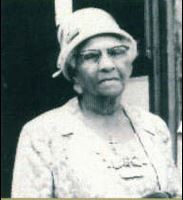
Jamaica Kincaid

Jamaica Kincaid
Biography
Jamaica Kincaid: The Unflinching Voice of Post-Colonial Literature, Memory, and Defiance
Jamaica Kincaid (born Elaine Potter Richardson on May 25, 1949, in St. John's, Antigua) is widely revered as one of the most daring, original, and intellectually uncompromising writers of the late twentieth and early twenty-first centuries. Across an illustrious career spanning more than five decades as an essayist, novelist, memoirist, and educator, Kincaid has radically reshaped Anglophone literature by interrogating the interlocking traumas of British imperialism, maternal ambivalence, gendered power, racial subjugation, and the disorienting pain of exile. Rejecting the sentimentalized, postcard fantasy of the Caribbean as an idyllic tropical playground, her writing exposes the raw historical scars of exploitation and the hypocrisy of both colonial masters and post-colonial political elites, notably the entrenched political dynasty of V.C. Bird and Sir Lester Bird. Her lyrical, rhythmic, and incantatory prose—forged through her work at The New Yorker, her seminal novels including Annie John and The Autobiography of My Mother, her non-fiction masterpiece A Small Place, and her professorship at Harvard University—has secured her an unshakeable place alongside Caribbean literary titans such as Derek Walcott, Aimé Césaire, Frantz Fanon, and V.S. Naipaul.
Early Life and Colonial Upbringing in St. John's
Kincaid was born Elaine Potter Richardson in St. John's, the seaside capital of the British Leeward Island colony of Antigua. Her biological father was Roderick Potter, an illiterate taxi driver and mechanic whom she never intimately knew during her youth; her upbringing was anchored by her formidable mother, Annie Richardson Drew, a proud immigrant from Dominica of mixed Carib (Kalinago) and African lineage, and her stepfather, David Drew, a skilled but economically struggling carpenter. For the first nine years of her life, Elaine was an only child who basked in an intensely passionate, symbiotic relationship with her mother. Annie Richardson, an intelligent, literate, and fiercely protective matriarch, taught young Elaine to read before she was four years old, bathed her in herbal infusions, tailored beautiful dresses for her, and made her the absolute center of the domestic universe.
However, this golden era of maternal devotion came to an abrupt, traumatic end in 1958 with the birth of the first of three half-brothers: Joseph, Dalma, and Devon Drew. In keeping with traditional patriarchal customs of the era, her mother redirected her emotional affection, financial resources, and long-term ambitions entirely toward her male offspring. Elaine was abruptly displaced from her privileged status and relegated to the role of an unpaid household servant, tasked with scrubbing cloth diapers in galvanized tubs, cooking, and minding the infant boys while her own intellectual needs were treated as secondary or burdensome. This sudden emotional estrangement and perceived maternal betrayal became the psychological wellspring for much of Kincaid's future fiction and memoir.
Her intellectual development was further complicated by the rigid colonial educational system. Attending the Princess Margaret School in St. John's, Elaine was educated under an archaic British curriculum designed to assimilate colonial subjects into loyal servants of the British Crown. West Indian schoolchildren were required to sing "Rule, Britannia!" and "God Save the King," celebrate Empire Day, and commit vast passages of English verse to memory, including William Wordsworth's celebrated poem "I Wandered Lonely as a Cloud" with its homage to daffodils—a flower that never grew in the tropical soil of Antigua. The brutal realities of the transatlantic slave trade, the eradication of the indigenous Carib peoples, and the rich traditions of Afro-Caribbean folklore were scrubbed from the classroom or treated as shameful primitive relics. A brilliant, willful student who won scholarships through academic merit, Elaine recognized the absurdity of this educational indoctrination. She found solace in the St. John's Public Library, devouring Charlotte Brontë, John Milton, and the King James Bible, often stealing and hiding library books that colonial administrators deemed inappropriate for a young Black girl.
Migration, Au Pair Exile, and Radical Self-Reinvention
By 1966, the economic fortunes of the Drew household had worsened, and David Drew suffered chronic illness. At the age of seventeen, Elaine’s mother arranged for her to leave Antigua to work as an au pair (nanny and domestic helper) for an affluent white family in Scarsdale, an exclusive suburb of New York City. The family's explicit expectation was that Elaine would work tirelessly and send regular financial remittances back to St. John's to finance her brothers' schooling and support the household.
Upon arriving in New York, however, Elaine enacted a radical, irrevocable rebellion against familial and societal expectations. Recognizing that subservience to her mother’s demands would extinguish her own life possibilities, she severed all communication with Antigua. She refused to send any money home, left her mother’s letters unopened in drawers, and refused to provide a forwarding address when she relocated. Working by day caring for wealthy suburban children, she attended night school at Westchester Community College to complete her high school equivalency, subsequently enrolling in photography and writing courses at the New School for Social Research in Manhattan, and briefly attending Franconia College in New Hampshire on a scholarship.
Throwing herself into the vibrant downtown counterculture of 1970s Manhattan, she bleached her hair honey-blonde, shaved her eyebrows, dressed in vintage 1920s coats and tailored menswear, and became an ubiquitous fixture in the city's artistic and literary circles. In 1973, at the age of twenty-four, she took the definitive step of legally discarding her birth name, Elaine Potter Richardson, and christening herself Jamaica Kincaid. The name was a deliberate, poetic act of self-creation: "Jamaica" paid homage to the Caribbean region and the indigenous Taíno name Xaymaca, while "Kincaid" was selected purely for its rhythmic cadence and aesthetic elegance. Crucially, the pseudonym offered her protective armor and artistic anonymity, ensuring that her family in Antigua would not immediately discover that she had begun publishing raw, autobiographical accounts of their domestic life.
The New Yorker, William Shawn, and "Girl"
Kincaid's writing career gained initial momentum with freelance assignments and humorous interviews for teenage and feminist periodicals such as Ingénue (where she memorably interviewed Gloria Steinem), The Village Voice, and The Paris Review. Her breakthrough arrived when writer George W.S. Trow introduced her to William Shawn, the legendary, reclusive editor of The New Yorker. Recognizing an extraordinary literary talent characterized by rhythmic precision, deadpan irony, and a searing outsider’s perspective, Shawn hired Kincaid as a staff writer in 1976.
For the next two decades, Kincaid was an integral voice at the magazine. She contributed numerous sketches to the "Talk of the Town" section, often writing under the persona of "Our Far-Flung Correspondent". Her dispatches captured the cultural absurdities of New York society, Caribbean carnival parades in Crown Heights, and literary salons with an effortless, sophisticated humor that subverted conventional magazine prose. Her personal life also became intertwined with the magazine's inner circle: in 1979, she married William Shawn’s son, the classical composer Harold Allen Shawn, with whom she had two children, Harold and Annie.
In June 1978, The New Yorker published Kincaid’s prose piece "Girl," an astonishing literary achievement that established her as a master of modern prose. Composed of a single, breathless 650-word sentence separated only by semicolons, "Girl" captures the relentless, incantatory stream of domestic advice, moral admonitions, sexual warnings, and cultural commands delivered by an Antiguan mother to her young daughter. Mixing practical Caribbean folklore ("soak salt fish overnight before you cook it; don't eat fruits on the street—flies will follow you") with harsh gender policing ("on Sundays try to walk like a lady and not like the slut you are so bent on becoming"), the piece masterfully illustrates how maternal care and patriarchal oppression become tangled in a colonized society. "Girl" was hailed as a tour de force and remains one of the most widely anthologized short works in world literature.
Breakthrough Masterworks: Annie John and Lucy
In 1983, Kincaid published her first collection, At the Bottom of the River, comprising ten lyrical, surreal prose poems including "Girl". Defying conventional narrative structures, the collection explored metaphysical themes of death, consciousness, and the longing for spiritual unity through a unique synthesis of Caribbean oral rhythm, biblical cadences, and modernist dreamscapes. The book was greeted with immense critical acclaim, earning Kincaid the Morton Dauwen Zabel Award from the American Academy and Institute of Arts and Letters.
Two years later, in 1985, Kincaid achieved worldwide acclaim with her debut novel, Annie John. Set in colonial Antigua, the novel charts the emotional, psychological, and intellectual coming-of-age of its eponymous heroine Annie John, moving from the idyllic paradise of early childhood closeness with her mother to the agonizing rift of adolescence. Kincaid brilliantly weaves this personal rupture with the larger drama of anti-colonial resistance: in a celebrated scene, Annie defiantly defaces a portrait of Christopher Columbus in her history book, writing a subversive caption that exposes the violence of European conquest. Ending with Annie boarding a ship bound for England, the novel stands as a classic Caribbean bildungsroman, capturing the painful necessity of departing one's homeland in order to claim sovereign personhood.
In 1990, Kincaid published Lucy, a razor-sharp, autobiographical novel that directly confronted the immigrant experience in North America. The novel follows nineteen-year-old Lucy Josephine Potter, who arrives from the Caribbean to serve as an au pair for Lewis and Mariah, a wealthy, seemingly enlightened white couple living in New York. With cool, unflinching clarity, Lucy exposes the cracks beneath the surface of American domesticity, deconstructing the unexamined white privilege and maternal condescension of her employer Mariah. When Mariah excitedly drags Lucy to a hillside covered in blooming yellow daffodils, expecting her to feel euphoric delight, Lucy experiences visceral anger and grief, remembering how colonial schoolmasters had forced her to memorize Wordsworth’s verses celebrating flowers she had never seen:
"I remembered an old poem I had been made to memorize when I was a girl of ten, a poem about some flowers they called daffodils... I had to stand on a platform, in a room full of other boys and girls, and recite this poem... I wanted to kill them, I wished that the girl and the poet and the daffodils were all dead." — Jamaica Kincaid, Lucy
Through Lucy's refusal to perform gratitude or submit to the colonial gaze, Kincaid created one of modern literature’s most powerful portraits of post-colonial defiance and female autonomy.
A Small Place: The Indictment of Empire, Tourism, and Corruption
In 1988, Kincaid published what is widely recognized as her non-fiction masterpiece: A Small Place. Running fewer than ninety pages, this scorching, polemical essay fundamentally revolutionized post-colonial discourse by confronting the Western reader directly in the second person ("You are a tourist..."). Kincaid strips away the romantic veil of Caribbean tourism, exposing how the modern tourist industry functions as a direct continuation of chattel slavery and imperial exploitation. She lays bare the grotesque disparity between the foreign visitor basking in luxury resorts and the impoverished Antiguan citizen living without running water, reliable electricity, or decent healthcare:
"An ugly thing, that is what you are when you become a tourist, an ugly, empty thing, a stupid thing, a piece of rubbish pausing here and there to gaze at this and taste that, and it will never occur to you that the people who inhabit the place in which you have just paused cannot stand you, that behind their closed doors they laugh at your strange headdresses and your ugly expressions... they envy you your ability to leave your own banality on a whim and enjoy the banality of others." — Jamaica Kincaid, A Small Place
With unrelenting candor, Kincaid does not merely assault British colonial history; she delivers a scathing indictment of Antigua's post-independence political leadership. She targets the entrenched, corrupt government led by Prime Minister V.C. Bird (Vere Cornwall Bird) and his powerful sons, including Deputy Prime Minister Sir Lester Bird. Kincaid condemns the Bird administration for selling Antigua’s natural heritage to foreign casino syndicates, turning the island into a haven for money laundering and offshore finance, and tolerating gross nepotism while public infrastructure fell into ruin. She points out that following the 1974 earthquake, the historic St. John’s Public Library was left a shuttered, rotting ruin for decades, while government officials constructed lavish private mansions and preserved the segregated exclusivity of the Mill Reef Club.
The manuscript proved too incendiary for The New Yorker; Robert Gottlieb, who had replaced William Shawn as editor, rejected the essay as too angry, bitter, and hostile for the magazine’s readership. Undeterred, Kincaid published it with Farrar, Straus and Giroux. In Antigua, A Small Place caused a political earthquake; the Bird government informally banned the book and treated Kincaid as persona non grata for years, warning that she was damaging the nation’s vital tourist economy. Despite this backlash, the work became an instant classic of post-colonial literature, studied worldwide alongside the revolutionary writings of Frantz Fanon and Aimé Césaire.
Masterworks of Loss, Botany, and Family: The 1990s and 2000s
In 1995, Kincaid severed her twenty-year relationship with The New Yorker, resigning in protest over the celebrity-driven, sensationalist editorial changes implemented by editor Tina Brown. Turning her full creative energies toward long-form prose, she published The Autobiography of My Mother in 1996, which many scholars consider her supreme fictional achievement.
Set in early twentieth-century Dominica, the novel is narrated by seventy-year-old Xuela Claudette Richardson, whose Carib mother died at the moment of her birth. Denied motherly love and raised in an atmosphere of colonial neglect by a corrupt, mercenary father and a hostile stepmother, Xuela embarks on a life of radical, stoic self-ownership. She rejects marriage, refuses the domestic submission demanded of Caribbean women, and undergoes self-induced abortions rather than bring children into a colonized world designed to degrade them. The novel is an unsparing meditation on the psychological aftermath of genocide, slavery, and imperial erasure:
"To the people who had lost, everything was an effort: to walk, to lie down, to sleep, to see each other, to look at themselves, to speak, to know each other, to be kind, to love, to be loved; and for these people, defeat was not only a part of life, defeat was their life." — Jamaica Kincaid, The Autobiography of My Mother
The Autobiography of My Mother won the Boston Book Review’s Fisk Fiction Prize and the prestigious Anisfield-Wolf Book Award, while being shortlisted for the National Book Critics Circle Award and the PEN/Faulkner Award.
In 1997, Kincaid published My Brother, a deeply moving, agonizing memoir recounting the final year of life of her youngest half-brother, Devon Drew, who died of complications from AIDS in Antigua in 1996 at the age of thirty-three. Returning to her homeland after decades of estrangement, Kincaid spent months at Devon's bedside in the dilapidated, under-resourced Holberton Hospital. She smuggled life-saving antiretroviral drugs from the United States to prolong his life, while confronting the suffocating silence, religious stigma, and homophobia surrounding HIV/AIDS in Caribbean society. The memoir is both a tender act of sibling mourning and a furious critique of the systemic failures of public healthcare in the post-colonial Caribbean. My Brother was a finalist for the National Book Award and won France's prestigious Prix Femina Étranger in 2000.
In 1999, Kincaid expanded her intellectual territory with My Garden (Book):, a collection of essays that pioneered post-colonial botanical criticism. Chronicling her passion for gardening at her home in Vermont, Kincaid interrogated the political history of botany, demonstrating how British plant hunters, royal botanical gardens, and the Linnaean taxonomic system mirrored military conquest by renaming and uprooting indigenous flora across the globe. She followed this with Mr. Potter (2002), a poetic novel examining the life of her illiterate biological father, and See Now Then (2013), an incisive novel chronicling the dissolution of a long marriage in a New England village, which earned the American Book Award from the Before Columbus Foundation.
Academic Leadership, Prestigious Honors, and Enduring Legacy
In addition to her groundbreaking publications, Kincaid has exerted a profound influence as a teacher and literary mentor. She taught literature and creative writing at Bennington College in Vermont for many years, inspiring countless emerging authors. In 2013, she joined the faculty of Harvard University as Professor of African and African American Studies and Professor of the Practice of Fiction in the Department of English, a position from which she has continued to educate and influence generations of scholars and writers.
Throughout her career, Kincaid has received widespread international acclaim. She was elected to the American Academy of Arts and Letters in 2004 and the American Academy of Arts and Sciences in 2009. In 2017, she was awarded the prestigious international Dan David Prize in Literature for her penetrating explorations of post-colonial history and identity. In 2021, she was elected an International Writer of the Royal Society of Literature, and in 2022, she received the Paris Review Hadada Award for lifetime achievement.
Today, Jamaica Kincaid stands as a towering giant of world literature. Alongside illustrious peers such as Jean Rhys, George Lamming, C.L.R. James, and Derek Walcott, she transformed Caribbean writing from a regional tradition into an indispensable force of global literature. Her courageous refusal to compromise, her lyrical stylistic precision, and her unwavering dedication to telling the unvarnished truth about power, history, and human connection ensure that her legacy will endure for generations to come.
References
- Encyclopaedia Britannica - Jamaica Kincaid
- The Paris Review - Jamaica Kincaid, The Art of Fiction No. 152
- Harvard University Department of English - Jamaica Kincaid Profile
- The New Yorker - Contributors: Jamaica Kincaid
- Anisfield-Wolf Book Awards - Jamaica Kincaid Winner Profile
- Dan David Prize - Jamaica Kincaid Laureate
Major Contributions
- Jamaica Kincaid is widely recognized as one of the most transformative, courageous, and stylistically singular voices in modern Caribbean and global post-colonial literature.
- Through seminal literary works such as *At the Bottom of the River* (1983), *Annie John* (1985), *Lucy* (1990), and *The Autobiography of My Mother* (1996), she revolutionized Caribbean letters by deconstructing the complex intersections of colonial subjugation, maternal ambivalence, female bodily autonomy, and the psychological dislocations of exile.
- Her lyrical, incantatory prose and unflinching autobiographical candor dismantled conventional post-colonial narratives, establishing women's interior lives and the fraught mother-daughter relationship as central battlegrounds for historical memory, self-definition, and anti-colonial resistance.
- Beyond her groundbreaking fiction, Kincaid delivered one of the twentieth century's most piercing anti-colonial polemics in *A Small Place* (1988), which exposed the parasitic nature of post-colonial tourism, the institutional corruption of the Bird political dynasty, and the enduring economic ravages of British imperialism in Antigua.
- Her innovative non-fiction, including *My Garden (Book):* (1999) and *My Brother* (1997), pioneered ecological post-colonial criticism by exposing how botanical taxonomy mirrored imperial conquest, while confronting the devastating stigma of HIV/AIDS in the Caribbean.
- As a longtime staff writer for *The New Yorker*, a distinguished Professor of African and African American Studies and English at Harvard University, and the recipient of prestigious international honors including the Prix Femina Étranger, the Anisfield-Wolf Book Award, and the Dan David Prize, Kincaid has profoundly reshaped the landscape of contemporary world literature.