
Aruba
One Happy Island, a land of unique Papiamento heritage and a heroic journey toward Status Aparte and self-governance.
Figures from Aruba
Historically documented individuals of note.

Boy Ecury
### Introduction: The Caribbean Martyr of the Dutch Resistance Segundo Jorge Adelberto Ecury (April 23, 1922 – November 6, 1944), universally known to history as **Boy Ecury**, was an Aruban patriot, resistance fighter, and national hero who gave his life fighting against the Nazi occupation of the Netherlands during World War II [1]. Operating deep within the Dutch underground at a time when the swastika flew over Continental Europe, Ecury defied totalitarian fascism through daring acts of armed sabotage, weapons transport, the rescue of downed Allied pilots, and the protection of persecuted civilians and Jews living in hiding [2]. His dark complexion made him exceptionally conspicuous in wartime Holland, yet he refused to retreat to safety, repeatedly choosing frontline resistance over self-preservation. When finally betrayed by a collaborator in November 1944, he endured vicious Gestapo interrogation without breaking, going to his death before a German firing squad at the age of twenty-two with unwavering dignity. Today, Ecury stands as the foremost symbol of Aruban heroism, an immortal testament to the vital contributions of Afro-Caribbean people in the global struggle for human liberation and democratic sovereignty [3]. ### Early Life and Aristocratic Roots in Oranjestad Boy Ecury was born on April 23, 1922, in the historic Rancho neighborhood of Oranjestad, the capital of Aruba [1]. He was the seventh of thirteen children born to Nicasio Segundo "Dundun" Ecury and Ana Paulina Wilhelmina Ernst (affectionately known as Annie) [4]. The Ecury family was among the most prominent, prosperous, and socially distinguished Catholic merchant dynasties on the island [1]. Dundun Ecury was a visionary entrepreneur and civic leader who operated thriving trading ventures, automotive dealerships, and commercial real estate, earning widespread respect across the Dutch Caribbean [4]. The family estate in Rancho—a magnificent architectural complex blending neoclassical Dutch colonial architecture with Caribbean verandas and inner courtyards—served as a vibrant hub of intellectual discourse, familial solidarity, and cultural celebration [5]. Decades later, this historic family residence would be painstakingly restored and established as the **National Archaeological Museum Aruba** (*Museo Arqueologico Nacional Aruba*), permanently cementing the Ecury family name into the physical landscape of the capital [5]. Boy grew up surrounded by a large, close-knit, and exceptionally gifted circle of siblings, including his younger sister [Nydia Ecury](/profiles/nydia-ecury), who would later rise to international prominence as a groundbreaking poet, playwright, actress, and cultural champion of Papiamentu [6]. From an early age, Boy demonstrated a magnetic, charismatic personality, a deep moral compass shaped by his Catholic upbringing, and a fierce athletic spirit [7]. He was a competitive swimmer, a skilled equestrian, and an adventurous youth known for his innate generosity and irrepressible defense of anyone suffering unfair treatment [4].  ### Transatlantic Education: The St. Louis Institute in Oudenbosch Recognizing Boy's sharp intellect and leadership abilities, his father determined that he should pursue higher studies in the mother country. In 1937, at the age of fifteen, Boy sailed across the Atlantic Ocean with his brother to the Netherlands [1]. He enrolled as a boarding student at the prestigious **Instituut Saint-Louis** (St. Louis Institute) in Oudenbosch, a Catholic boarding school in the southern province of North Brabant operated by the Brothers of the Immaculate Conception of the Blessed Virgin Mary [4]. Instituut Saint-Louis was celebrated throughout the Dutch-speaking world for its academic rigor, moral discipline, and extensive commercial curriculum [7]. Boy excelled in his studies, particularly in modern languages and commerce, earning his official business diploma (*Handelsdiploma*) in early 1940 [1]. Beyond academics, he was a star athlete and an exceptionally popular figure on campus, admired by faculty and peers for his stylish dress, polished manners, and infectious wit [4]. Nevertheless, living in late-1930s provincial Holland presented steep social hurdles. As one of the few Black individuals residing in North Brabant, Boy encountered persistent racial curiosity and prejudice [2]. Rather than withdrawing or succumbing to bitterness, he met prejudice with commanding self-respect and athletic excellence, winning over classmates and forming enduring friendships [7]. It was during these student years that he met Luis de Lannoy, a fellow Dutch Caribbean student from Curaçao studying at the Catholic Economic University in nearby Tilburg [1]. Bound by their shared Caribbean identity, native language, and mutual worldview, Ecury and De Lannoy formed a brotherhood that would soon be tested in the crucible of war [8]. ### The Shadow of Blitzkrieg and the Call to Arms On May 10, 1940, Nazi Germany launched a brutal, unprovoked invasion of the neutral Kingdom of the Netherlands [1]. Within days, the Luftwaffe obliterated the historic heart of Rotterdam in a devastating terror bombing, forcing the Dutch armed forces to capitulate to avoid further annihilation [2]. Queen Wilhelmina and the Dutch government-in-exile fled to London. In Aruba, the war transformed the island overnight into a vital strategic asset for the Allied cause, as its massive Lago Oil and Transport Company refinery supplied critical high-octane aviation fuel to the Royal Air Force during the Battle of Britain [9]. For Boy Ecury, the sudden invasion was a profound personal and geopolitical catastrophe. Transatlantic commercial shipping was abruptly severed, cutting off communication and financial wire transfers from his family in Oranjestad [4]. He was stranded in occupied Europe with no legal means of returning home. More significantly, Boy was appalled by the barbaric reality of the Nazi new order: the swift dismantling of Dutch democratic institutions, the introduction of discriminatory anti-Jewish decrees, the looting of national resources, and the arbitrary roundups of Dutch youth for forced labor (*Arbeitseinsatz*) in German munitions factories [2]. Faced with the choice between docile compliance and clandestine rebellion, Boy did not hesitate. His Aruban upbringing, steeped in pride, freedom, and deep Catholic ethics, rendered passivity unthinkable [7]. Alongside his friend Luis de Lannoy, he made the perilous decision to join the Dutch underground resistance, dedicating his life and freedom to the liberation of the Netherlands [1]. 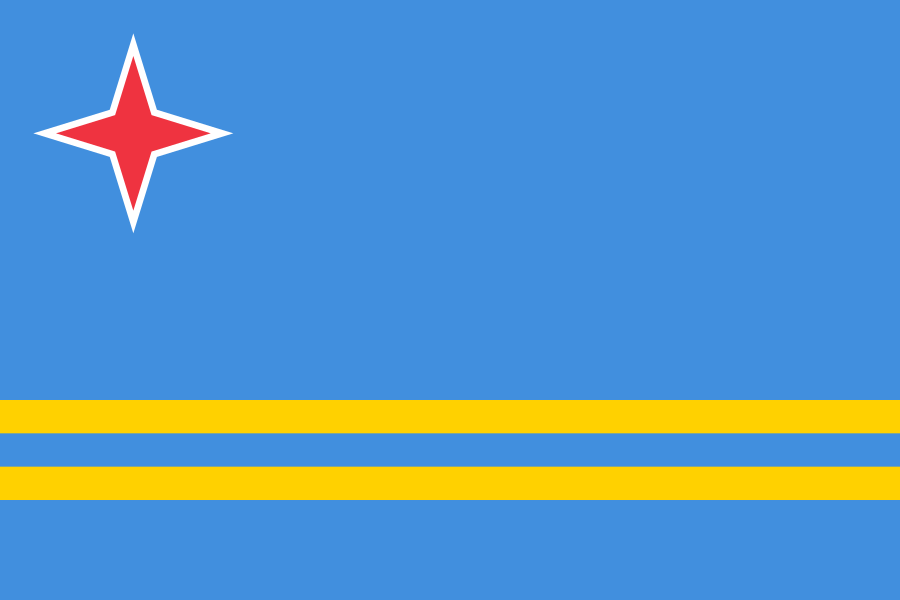 ### Underground Warfare: Sabotage, Intelligence, and Papiamento Encryption Operating initially out of Tilburg and the neighboring town of Oisterwijk in North Brabant, Ecury linked up with local resistance cells affiliated with the *Raad van Verzet* (Council of Resistance or RVV) [10]. Ecury’s contributions to the underground were both audacious and technically sophisticated [1]. He was instrumental in manufacturing homemade incendiary phosphorus devices and improvised explosive timed charges [4]. Using these explosives, Boy and his comrades carried out devastating sabotage missions against German military infrastructure, setting fire to German Wehrmacht truck convoys, blowing up fuel storage depots, and severing critical telephone and telegraph communication lines [10]. On multiple occasions, Boy participated in the derailment of German troop transports and military supply trains carrying heavy equipment toward the Atlantic Wall [1]. In addition to kinetic sabotage, he was deeply involved in weapons smuggling, transporting revolvers, Sten submachine guns, and ammunition beneath his coat through streets patrolled by armed German Feldgendarmerie [4]. He conducted reconnaissance missions, meticulously documenting the coordinates of German anti-aircraft batteries and coastal fortifications for transmission via clandestine radio operators to the Dutch government-in-exile and British intelligence in London [7]. Boy also played an indispensable humanitarian role in the underground network [2]. He participated in armed raids on municipal distribution offices to seize ration cards (*distributiebonnen*) and blank identity papers, distributing them to Jews, political dissidents, and young Dutchmen living illegally in hiding (*onderduikers*) [10]. He escorted Allied airmen whose planes had been shot down over the Low Countries, guiding them between secret safehouses and connecting them to clandestine escape lines leading south through Belgium and occupied France toward neutral Spain [4]. During these covert operations, Boy and Luis de Lannoy possessed a unique, impenetrable weapon: their mother tongue, Papiamento [8]. In crowded tramcars, railway waiting rooms, and public squares teeming with German soldiers and Dutch Nazi informants (*NSB-ers*), the two comrades openly discussed underground missions, drop locations, and security warnings in Papiamento [8]. The occupier’s intelligence officers were completely unable to decipher the creole language, mistaking it for an incomprehensible foreign dialect, allowing Boy and Luis to communicate with impunity in plain sight [8]. > "In the lion's mouth, Boy Ecury fought with a courage that defied all earthly logic. His weapon was not merely the revolver in his pocket or the bomb on the railway track, but an unbreakable moral flame that no fascist occupier could extinguish." [7] ### The Conspicuous Rebel and the Net Closes By 1944, the German occupation had descended into its most desperate and brutal phase. As Allied armies landed in Normandy and advanced toward Belgium, Nazi security services—including the *Sicherheitspolizei* (SiPo) and *Sicherheitsdienst* (SD)—unleashed a ferocious campaign of terror across the occupied Netherlands [2]. For Boy Ecury, the operational environment became unimaginably hazardous [4]. Standing over six feet tall, exceptionally handsome, athletic, and possessed of dark Afro-Caribbean skin, Boy was impossible to blend into a crowd in a wartime Dutch city [1]. While other resistance fighters could disappear into a street crowd or alter their appearance with forged papers, Boy was recognized immediately wherever he went [4]. His comrades repeatedly begged him to go into deep hiding (*onderduiken*) in a remote rural farmhouse until the imminent Allied liberation [7]. Boy categorically refused. He viewed hiding as an act of cowardice when his brothers-in-arms were risking their lives daily [4]. Instead, he continually changed aliases and relocated between underground safehouses in Oisterwijk, Delft, Rotterdam, and The Hague, operating as a core shock-trooper in the *Landelijke Knokploegen* (National Assault Groups or KP) [10]. In February 1944, catastrophe struck when his dearest friend and operational partner, Luis de Lannoy, was arrested by the Gestapo in Tilburg [1]. Shattered but resolute, Boy refused to abandon his friend. Demonstrating legendary audacity, Boy scouted the German prison and devised an armed raid to break De Lannoy out of his cell [1]. The rescue plan was foiled at the eleventh hour when German authorities abruptly reinforced the garrison and transferred De Lannoy to another detention facility in Utrecht [4]. Miraculously, De Lannoy survived brutal interrogations and remained imprisoned until the end of the war, but Boy was now operating without his trusted partner, haunted by the tightening net around him [8]. ### Betrayal by Kees Bitter and the Oranjehotel By the autumn of 1944, the Dutch underground in South Holland was severely compromised from within by one of the most infamous traitors in Dutch wartime history: Kees Bitter [11]. Bitter was a former member of the resistance who had been captured by the Sicherheitsdienst in Rotterdam [11]. Under threat of torture and execution, Bitter chose total collaboration, becoming a high-level *Vertrauensmann* (V-man or confidential informant) for the Gestapo [11]. Armed with intimate insider knowledge of resistance safe houses, drop locations, and passwords, Bitter systematically betrayed dozens of his former comrades to the Nazi executioners [11]. Bitter learned of Boy Ecury's presence and activities within the The Hague and Rotterdam Knokploegen cells [4]. On the morning of Sunday, November 5, 1944, Boy Ecury traveled through Rotterdam to attend Mass at the Saint Elisabeth Parish (H. Elisabeth Church) [1]. Boy was a devout Catholic whose faith provided him with immense spiritual solace amid the horrors of the occupation [4]. As Boy stepped out of the church into the grey autumn air, he was ambushed by a waiting detachment of armed SD agents and German military police, directed to the exact location by Kees Bitter [1]. Boy was carrying concealed handguns and resistance materials in his overcoat [4]. Before he could draw his weapon, he was surrounded, overpowered, and wrestled to the pavement [1]. Boy was immediately transported under armed escort to the notorious Scheveningen penal prison on the outskirts of The Hague, widely known among the Dutch populace as the **"Oranjehotel"** (Orange Hotel) because so many patriots loyal to the House of Orange were locked inside its walls [12]. Boy was thrown into a concrete cell and subjected to grueling, violent interrogations by Gestapo and SD inquisitors [12]. The German officers were desperate to dismantle the KP networks operating in The Hague and Rotterdam before the Allied advance, and they subjected the young Aruban to severe physical torture [4]. Despite intense suffering, Boy Ecury remained utterly unshakeable. He refused to divulge a single name, address, code word, or weapons depot [1]. When his interrogators demanded that he confess and save himself by collaborating, Boy threw his defiance directly into their faces [4]. According to historical accounts preserved by fellow prisoners and his family, Boy declared: > "In the house of my father, there is no place for traitors." — Boy Ecury [4] ### Execution on the Waalsdorpervlakte Recognizing that no amount of torture would break his spirit, the German military court issued a swift summary death sentence [1]. Early the next morning, on Monday, November 6, 1944—less than twenty-four hours after his capture—Boy Ecury was led out of his cell in the Oranjehotel [12]. He was taken into the windswept, barren sand dunes of the **Waalsdorpervlakte**, located in the Meijendel nature reserve north of The Hague [13]. The Waalsdorpervlakte served as the primary secret killing field for the Nazi security apparatus in the western Netherlands; between 1940 and 1945, over 250 Dutch resistance fighters, patriots, and hostages were executed by firing squads in these desolate dunes and dumped into unmarked mass graves [13]. As he was placed before the German firing squad, Boy Ecury maintained total poise and tranquility [4]. In a farewell letter to his loved ones, he conveyed his deep inner peace and religious conviction, expressing that he had performed noble and necessary work for humanity and that he would face his executioners "with a smile on my lips" (*met een glimlach op de lippen*) [4]. He was executed by firing squad on the morning of November 6, 1944. He was just twenty-two years old [1]. The betrayal of Boy Ecury and his comrades did not go unpunished. In January 1945, members of the Dutch underground tracked down the traitor Kees Bitter to a safehouse in Rotterdam; after a clandestine tribunal confirmed his treason, the resistance executed Bitter by poison and shooting, dumping his body into the peat waters of the Rotte river to eliminate any future threat of treachery [11]. ### Repatriation, State Honors, and Eternal Memory In May 1945, the Netherlands was finally liberated by Canadian and Allied forces, bringing an end to the nightmare of Nazi occupation [2]. When news of Boy’s execution reached Aruba, the island was plunged into profound mourning, accompanied by immense communal pride in his extraordinary valor [4]. In 1947, Dundun Ecury embarked on a solemn journey from Aruba to the Netherlands to recover his beloved son’s remains [1]. Working with Dutch forensic authorities and the Red Cross, Dundun traveled to the dunes of the Waalsdorpervlakte, where the mass graves were being excavated and the martyrs identified [4]. Dundun personally identified Boy’s remains, had his son’s body exhumed, and arranged for his repatriation across the ocean [1]. Boy Ecury’s body was transported home aboard a Dutch naval vessel, the *Hr. Ms. Van Speijk*, receiving full military honors upon arrival in Aruban waters [4]. In April 1947, Aruba witnessed the largest and most emotional state funeral in its modern history [1]. Thousands of Aruban citizens, government officials, school children, and Dutch military detachments lined the streets of Oranjestad as a horse-drawn military caisson carried Boy’s flag-draped casket to the Catholic cemetery in Rancho, where he was laid to rest with full military honors [4]. In the decades following his sacrifice, Boy Ecury was immortalized across the Kingdom of the Netherlands and the Caribbean [1]: - In 1984, the Dutch government posthumously conferred upon him the **Verzetsherdenkingskruis** (Resistance Memorial Cross), the highest decoration for anti-Nazi underground resistance [1]. - In 1949, a majestic bronze statue of Boy Ecury was unveiled along Lloyd G. Smith Boulevard in Oranjestad by his grieving mother Annie and Governor Peters, standing today as a national landmark [14]. - A central public park in the capital was christened **Parke Boy Ecury**, hosting national remembrance ceremonies every year on May 4 (National Remembrance Day / *Dodeherdenking*) [14]. - Dutch municipalities, recognizing his pivotal sacrifice, named streets in his honor, including *Boy Ecurystraat* in Amsterdam, Rotterdam, The Hague, Tilburg, and Oisterwijk [10]. - His nephew, the author and filmmaker Ted Schouten, published the definitive biography *Boy Ecury, een Antilliaanse jongen in het verzet* in 1985 and produced an acclaimed documentary celebrating his life [4]. - In 2003, legendary Dutch filmmaker Frans Weisz directed the feature film *Boy Ecury*, starring Steve Leysner, which won multiple Golden Calf awards at the Netherlands Film Festival and introduced his story to a new generation [15]. Boy Ecury’s life and martyrdom shattered colonial stereotypes of passive colonial subjects [3]. He proved that the defense of human freedom knows no geographic, ethnic, or racial boundaries. Alongside cultural titans like [Nydia Ecury](/profiles/nydia-ecury) and [Rufo Wever](/profiles/rufo-wever), and political icons like [Betico Croes](/profiles/betico-croes) and [Jan Hendrik Albert "Shon A" Eman](/profiles/shon-a-eman), Boy Ecury remains an eternal beacon of Aruban dignity, whose ultimate sacrifice illuminated the darkest hours of modern human history [3]. ### References [1] Wikipedia Contributors, "Boy Ecury," Wikipedia, The Free Encyclopedia. [2] Verzetsmuseum Amsterdam, "De Tweede Wereldoorlog en de Nederlandse Antillen." [3] Oostindie, Gert, *Het paradijs overzee: De 'Nederlandse' Caraïben en Nederland*, Amsterdam: Bert Bakker. [4] Schouten, Ted, *Boy Ecury, een Antilliaanse jongen in het verzet*, Zutphen: Walburg Pers, 1985 / 2003. [5] National Archaeological Museum Aruba (MANA), "The Historic Ecury Family Complex in Oranjestad." [6] Rutgers, Wim, "De Caribische jeugdliteratuur van Nydia Ecury," Werkgroep Caraïbische Letteren. [7] Government of Aruba (Gobierno di Aruba), "Boy Ecury: Heroe di nos Pais," Official Historical Archives. [8] Through Their Eyes War Memorial Foundation, "Luis de Lannoy and Boy Ecury: Resistance in Papiamento." [9] Lago Colony Historical Archives, "The Defense of Aruba and the Lago Refinery in World War II." [10] Erfgoed Brabant / Geheugen van Tilburg, "Verzetsgroepen in Oisterwijk en Tilburg: De rol van Boy Ecury." [11] Oorlogsbronnen, "Het verraad van Kees Bitter en de val van de Knokploegen." [12] Nationaal Monument Oranjehotel, "Gevangenen van het Oranjehotel: Segundo Jorge Adelberto Ecury." [13] Erepeloton Waalsdorpervlakte, "De Gevallenen op de Waalsdorpervlakte 1940–1945." [14] VisitAruba Historical Monuments, "Monuments of Oranjestad: The Boy Ecury Memorial." [15] Nederlands Film Festival (NFF), "Boy Ecury (2003) - Directed by Frans Weisz."
View Profile →Evelyn Farrell
Evelyn Farrell (born April 10, 1960) stands as a monumental figure in the annals of Caribbean sports history, celebrated as a **pioneering sprinter**, a **versatile multi-sport athlete**, and a **transformative sports administrator** [1]. Widely recognized as the first woman to represent Aruba at the Olympic Games, Farrell shattered gender barriers and carried the athletic aspirations of her island nation onto the world stage during a critical period of geopolitical transition [2]. Competing first for the Netherlands Antilles at the **1984 Summer Olympics** in Los Angeles, she later made history at the **1988 Summer Olympics** in Seoul as part of Aruba's inaugural independent Olympic delegation following the island's attainment of *Status Aparte* [2][3]. Beyond her competitive sprinting triumphs, Farrell transitioned into an esteemed sports governance leader, serving as the President of the **Aruba Athletic Federation** (*Arubaanse Atletiek Bond*) from 2013 to 2021 and earning election to the executive council of the **North American, Central American and Caribbean Athletic Association (NACAC)** [1][4]. Her lifelong dedication to athletic excellence, infrastructure development, and youth empowerment has cemented her legacy as an enduring beacon of Caribbean resilience and leadership.  ### Early Life and Aruban Sports Context Born in Oranjestad, Aruba, on April 10, 1960, Evelyn Farrell came of age during an era of profound cultural and political awakening across the Dutch Caribbean [1][2]. During her childhood and adolescence, Aruba was governed as an island territory within the Netherlands Antilles, a centralized administrative structure dominated by Curaçao. Within this context, Aruban national identity was fervently being asserted by visionary political leaders such as [Betico Croes](/profiles/betico-croes), who campaigned tirelessly for greater local autonomy and cultural distinctiveness. This burgeoning national pride found a natural and powerful outlet in competitive sports, which served as a unifying force across the island's diverse communities. From an early age, Farrell exhibited extraordinary physical aptitude and an unyielding competitive drive. Unlike specialized athletes of the modern era, she immersed herself in a wide array of sporting disciplines, utilizing the island's developing athletic facilities to hone her speed, agility, and endurance [5]. While track and field quickly emerged as her premier discipline, she simultaneously excelled as a standout basketball player, competing fiercely for the legendary Aruban championship team, the **Vitality Stars** [5]. Her athletic versatility also extended to competitive volleyball and softball, leagues that formed the bedrock of Aruban community life during the 1970s [5]. Key foundational benefits of her multi-sport background included: * **Explosive Athletic Power:** Hitting the hardwood in basketball and driving through softball bases built tremendous lower-body burst essential for short-distance sprinting. * **Tactical Discipline:** Team environments fostered deep mental fortitude and strategic spatial awareness. * **Community Leadership:** Excelling across multiple sports made her a highly visible role model for young girls across Oranjestad. These formative experiences provided the bedrock for her future international triumphs, inspiring a generation of young Aruban women who had rarely seen a female athlete achieve dominance across multiple competitive arenas simultaneously. ### The 1984 Summer Olympics in Los Angeles By the early 1980s, Farrell had established herself as the undisputed sprint queen of the Netherlands Antilles, dominating local and regional track and field meets. Competing against premier sprinters from across the Caribbean basin—a region renowned for producing legendary track titans like [Merlene Ottey](/profiles/merlene-ottey), [Arthur Wint](/profiles/arthur-wint), and [Hasely Crawford](/profiles/hasely-crawford)—Farrell demonstrated that athletes from small island territories could compete at the highest international levels [6]. In 1983, she achieved her lifetime personal bests, clocking an impressive **11.73 seconds** in the 100-meter dash and **24.7 seconds** in the 200-meter sprint [6][7]. These elite performances secured her qualification for the 1984 Summer Olympics in Los Angeles, California. At the 1984 Los Angeles Games, Farrell represented the Netherlands Antilles, wearing the blue, white, and red uniform of the combined federation [2][3]. The atmosphere at the Los Angeles Memorial Coliseum was electric, marked by intense international media scrutiny and the presence of the world's most celebrated athletes. Competing in the women's 100-meter sprint, Farrell lined up against seasoned global competitors in the preliminary heats. She ran a courageous race, clocking an official time of **11.94 seconds** to finish sixth in her heat [2][6]. Although she did not advance to the quarterfinals, her performance was a watershed moment for Aruban athletics. She demonstrated composure, flawless starting technique, and fierce determination under immense pressure. Her presence in Los Angeles signaled to young women across the southern Caribbean that the pinnacle of global sports was within reach through rigorous discipline and self-belief. > "To step onto the Olympic track carrying the hopes of your island is an honor that transforms an athlete forever. We ran not just for personal times, but to prove that Caribbean women possessed the speed, grace, and strength to stand proud on the world stage." ### Status Aparte and the Historic 1988 Seoul Olympics The mid-1980s brought monumental geopolitical evolution to Aruba. On January 1, 1986, following years of diplomatic negotiations led by statesmanship titans like [Betico Croes](/profiles/betico-croes), Aruba officially achieved *Status Aparte*, becoming an autonomous country within the Kingdom of the Netherlands. This historic political transition granted Aruba the constitutional right to establish its own independent institutions, including the formation of the **Aruban Olympic Committee** (*Comité Olímpico Arubano*), which received official recognition from the International Olympic Committee (IOC) [3][8]. This milestone set the stage for the **1988 Summer Olympics** in Seoul, South Korea, where Aruba would send its very first independent Olympic delegation. Evelyn Farrell was selected as the centerpiece of this historic team, earning the monumental distinction of becoming the **first female Olympian to represent the newly autonomous nation of Aruba** [1][3].  The opening ceremony in Seoul on September 17, 1988, represented a deeply emotional triumph for Aruban national pride. When the delegation marched into the Olympic Stadium behind the distinct blue flag adorned with its red star and twin yellow stripes, Farrell walked at the forefront of history. Competing in Seoul, she took on a grueling double sprint schedule, entering both the 100-meter and 200-meter events [2][6]. In the 100-meter heats, she faced off against the fastest sprinters on the globe, finishing eighth in her heat [2][7]. Days later, she returned to the track for the 200-meter event, again finishing eighth amidst world-class competition [2][7]. While her times reflected the immense challenge of facing fully professionalized global sprint machines, Farrell's participation in Seoul transcended mere statistical results. She had successfully bridged two eras of Aruban history, transforming from a representative of a combined Antillean entity into the foundational female symbol of independent Aruban Olympic heritage. ### Transition to Leadership and Sports Governance Following her retirement from active sprint competition, Farrell refused to step away from the sporting arena. Recognizing that the long-term success of Caribbean athletes depended heavily on robust institutional support, modern coaching methodologies, and equitable resource distribution, she channeled her formidable competitive energies into sports administration and governance [1]. She became a tireless advocate for local athletes, working within various sports clubs and regional associations before ascending to the top executive tier of Aruban athletics. In 2013, Farrell was elected President of the **Aruba Athletic Federation** (*Arubaanse Atletiek Bond* - AAB), a leadership position she held with distinction for eight impactful years until 2021 [1][4]. During her two-term presidency, Farrell revolutionized track and field administration on the island. Her strategic governance initiatives focused on several core pillars: * **Infrastructure Modernization:** She advocated passionately for the upgrade of the **Guillermo Prospero Trinidad Stadium** in Oranjestad, ensuring local sprinters and throwers had access to international-standard all-weather tracks and facilities [4]. * **Grassroots Development:** She instituted structured youth talent identification programs across Aruban primary and secondary schools, specifically targeting young girls to encourage lifelong participation in physical activity. * **Coaching Education:** She facilitated international certification workshops to elevate local technical standards. Farrell's administrative acumen soon commanded regional and international respect. In 2019, her peers across the hemisphere elected her as an executive member of the **North American, Central American and Caribbean Athletic Association (NACAC)** Council for the 2019–2023 term [1]. Serving on the NACAC governing board alongside prominent regional administrators, she championed the interests of small island developing states (SIDS), ensuring that development grants, coaching seminars, and competitive opportunities were distributed fairly to smaller Caribbean federations [1]. Furthermore, she represented Aruba as a delegate and candidate within organizational committees of the International Association of Athletics Federations (IAAF, now **World Athletics**), actively shaping governance reforms and gender equity policies on a global scale [6]. Demonstrating her holistic commitment to inclusivity, Farrell also served as a dedicated advisor for para-athletics within the **Aruba Paralympic Committee**, working diligently to expand competitive pathways for differently-abled athletes across the Caribbean [1]. ### Lasting Legacy and Cultural Impact Today, Evelyn Farrell occupies a revered position within the cultural and historical tapestry of the Caribbean. Her trailblazing accomplishments are prominently preserved and celebrated in the **Sports Museum of Aruba** (*Museo di Deporte di Aruba*), where extensive exhibition space is dedicated to her Olympic uniforms, racing spikes, and administrative achievements [8]. Her journey from multi-sport local phenom in Oranjestad to two-time Olympian and international sports executive serves as an enduring blueprint for female athletic empowerment. By consistently defying limitations and breaking glass ceilings both on the track and in the boardroom, Farrell proved that sports can serve as a vital engine for national development, gender equality, and international diplomacy. Her life's work remains an inspiring testament to the power of dedication, cementing her rightful place among the pantheon of Caribbean historical pioneers.
View Profile →
Gilberto Francois "Betico" Croes
# Gilberto Francois "Betico" Croes ### Introduction and Early Life Gilberto François "Betico" Croes (25 January 1938 – 26 November 1986) remains one of the most revered and foundational figures in the history of the Caribbean, standing tall as a beacon of Aruban sovereignty and national identity. Widely affectionately known as the "Libertador" (Liberator) and the undisputed "father of the Aruban nation," his life’s work fundamentally altered the political geography of the Kingdom of the Netherlands and secured a distinct, autonomous future for the island of Aruba. Born on January 25, 1938, in the town of Santa Cruz, Aruba, Croes grew up in a society that was rapidly changing yet still politically subjugated to the centralized administration in Curaçao under the framework of the Netherlands Antilles. His upbringing in Santa Cruz, deeply embedded in the local culture, instilled in him a profound love for his homeland and its people. This intrinsic connection to Aruban heritage would later fuel his relentless drive for self-determination. Like many ambitious young men of his era seeking advancement, Croes left the Caribbean to pursue higher education in the Netherlands. He attended the Teacher's Training College in Hilversum, a period that not only provided him with formal pedagogical training but also exposed him to European political thought, the mechanisms of democratic governance, and the stark contrast between colonial administration and self-rule. In 1959, he earned his headmaster’s certificate and returned to Aruba, determined to contribute to his community. He began his professional career as a dedicated educator, working as a teacher at the Sint Jozef School and later at Antonius College. His time in the classroom was formative; it allowed him to connect directly with the younger generation and their families, deeply understanding their aspirations, frustrations, and the pervasive feeling of being politically marginalized within the Antillean structure. ### The Rise to Political Prominence Croes’s transition from education to politics was driven by his growing conviction that systemic change was necessary to secure Aruba’s future. In 1967, he officially entered the political arena as a member of the Aruban People's Party (AVP), one of the established political forces on the island. He quickly demonstrated an innate political acumen, a charismatic speaking style, and an ability to mobilize the masses. However, his vision for Aruba's immediate and aggressive pursuit of autonomy clashed with the more conservative elements within the AVP. Failing to secure the leadership of the party and realizing that the existing political apparatus was insufficient to achieve his ambitious goals, Croes made a decisive and historic move. In 1971, he broke away from the AVP and founded his own political party, the *Movimiento Electoral di Pueblo* (MEP). The MEP was not just another political faction; it was a movement built entirely around the principle of self-determination and the pursuit of a separate status for Aruba. As the founding leader of the MEP, a position he would hold until his untimely death, Croes galvanized the Aruban electorate. He articulated a vision of an Aruba that governed its own internal affairs, managed its own economy, and celebrated its own distinct cultural identity, free from the overriding influence of Curaçao. > "Si mi cai na caminda, gara e bandera y sigui cu e lucha." > *(If I fall down along the way, grab the flag and continue the battle.)* > — Betico Croes, embodying his relentless spirit for Aruban autonomy.  ### The Struggle for Status Aparte The central pillar of Croes's political career was the relentless campaign for *status aparte*—a separate, autonomous status within the Kingdom of the Netherlands, effectively seceding from the Netherlands Antilles but remaining under the Dutch crown. This was a complex and unprecedented demand that required navigating intense resistance not only from the central Antillean government in Willemstad but also from the Dutch government in The Hague, which was hesitant to fragment its Caribbean territories. Croes employed a multifaceted strategy that combined grassroots mobilization at home with high-stakes diplomatic maneuvering abroad. He traveled extensively throughout the region and internationally, seeking support from neighboring Latin American countries and presenting Aruba's case to international forums. His diplomatic efforts were crucial in elevating the Aruban cause from a domestic administrative dispute to an international question of self-determination. At home, he led the call for the historic 1977 referendum, a masterstroke of democratic leverage. In this referendum, a vast and overwhelming majority of the Aruban population voted in favor of the *status aparte*. This undeniable mandate from the people provided Croes with the ultimate political ammunition. Armed with the democratic will of the Aruban people, he engaged in grueling negotiations with the Dutch government. The culmination of these efforts was the Round Table Conference in 1981, and eventually, the definitive agreement that paved the way for Aruba's transition to a separate country within the Kingdom. ### Forging a National Identity Betico Croes recognized that true autonomy required more than just constitutional changes; it required the forging of a strong, unifying national identity. He understood the power of symbols and was instrumental in institutionalizing the markers of Aruban nationhood. Long before the *status aparte* was officially realized, Croes championed the creation of an Aruban flag and a national anthem. In 1976, largely due to his relentless advocacy, Aruba officially adopted its own flag—a bold design featuring a red star and yellow stripes on a field of blue, symbolizing the island's unique heritage and its aspirations. In the same year, "Aruba Dushi Tera" was officially adopted as the national anthem. These were not mere administrative acts; they were profound assertions of Aruban distinctiveness. By giving the people a flag to rally behind and an anthem to sing, Croes cemented the emotional and cultural foundation of the new nation he was fighting to build. ### Tragic End and Enduring Legacy The tragedy of Betico Croes’s life is that he did not live to fully see the realization of his ultimate dream. On the night of December 31, 1985—just hours before Aruba’s *status aparte* was to officially take effect on January 1, 1986—Croes was involved in a horrific and devastating car accident. The crash left him with severe injuries, and he slipped into a profound coma. Despite extensive medical care in a Dutch nursing facility, he never regained consciousness. He passed away nearly a year later, on November 26, 1986. His death sent shockwaves of grief throughout Aruba and the broader Caribbean. The man who had fought so hard to bring his nation to the threshold of a new era was lost just as they crossed it. However, in death, Croes was elevated from a political leader to an immortal national hero. He is venerated as the "Libertador," the architect of modern Aruba. Today, his legacy is ubiquitous across the island. His birthday, January 25, is celebrated annually as "Betico Croes Day," an official national holiday marked by cultural events, sporting competitions, and solemn memorial services that celebrate Aruban identity. Plazas, streets, and monuments, including a prominent statue in Oranjestad, stand in his honor, serving as constant reminders of his sacrifice and vision. Betico Croes's life is a testament to the power of unwavering conviction. He transformed a localized feeling of marginalization into a successful, peaceful democratic movement for self-determination. His story is not just an Aruban story; it is a critical chapter in the history of Caribbean decolonization, demonstrating how charismatic leadership and democratic mobilization can reshape political realities. He remains the eternal symbol of Aruban pride and autonomy. Furthermore, his influence extended beyond the borders of Aruba. His successful negotiation of *status aparte* set a precedent within the Kingdom of the Netherlands, ultimately influencing the later dismantling of the Netherlands Antilles in 2010, when Curaçao and Sint Maarten also acquired similar autonomous status. Betico Croes, the teacher from Santa Cruz, taught his nation how to stand on its own two feet, leaving behind a legacy that will endure as long as the Aruban flag flies.
View Profile →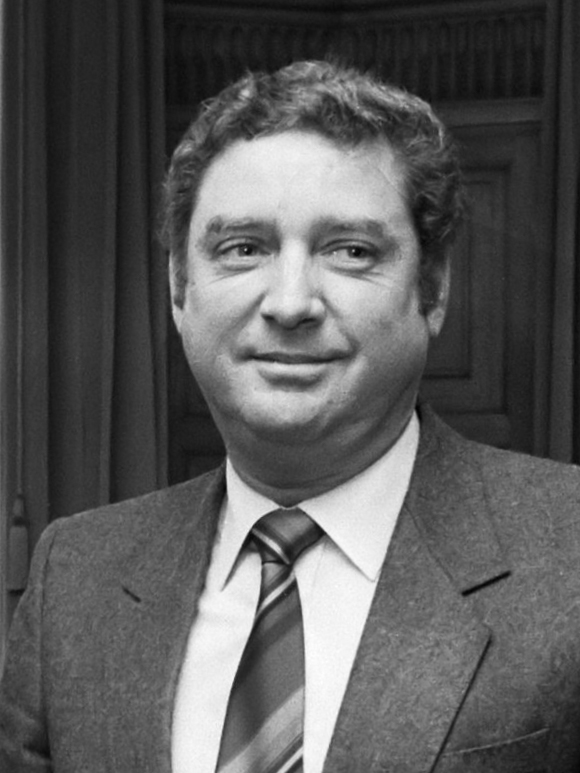
Henny Eman
### Introduction and Political Heritage Jan Hendrik Albert "Henny" Eman (born March 20, 1948 – passed away January 6, 2025) stands as one of the most consequential, visionary statesmen in modern Caribbean history, serving as the historic first and third Prime Minister of Aruba [1]. As the intellectual architect and political strategist behind Aruba's transition to sovereign nationhood within the Kingdom of the Netherlands, Eman guided his island through its most turbulent constitutional and economic transformations [2]. Born in Oranjestad into the island's most revered political dynasty, Henny Eman was destined from birth to inherit a profound family mantle of public service and self-determination [3]. His grandfather, [Henny Eman (Shon A)](/profiles/henny-eman-shon-a) (Jan Hendrik Albert "Shon A." Eman), founded the Aruban People's Party (AVP — *Arubaanse Volkspartij*) in 1942 and etched his name into history by presenting the very first formal petition to Queen Wilhelmina during World War II, demanding separation from the administrative control of Curaçao [4]. His father, [Shon A. Eman](/profiles/shon-a-eman) (Albert Eman), valiantly carried this torch of Aruban autonomy throughout the mid-twentieth century [5]. Young Henny grew up saturated in this rich legacy of constitutional advocacy, instilling in him an unshakeable conviction that Aruba possessed the distinct cultural identity, economic capacity, and political maturity required to govern itself as an autonomous nation [6]. This generational mission would later be shared by his younger brother, [Mike Eman](/profiles/mike-eman), who would eventually follow in his footsteps to become the island's Prime Minister, solidifying the Eman family as the foundational pillars of modern Aruban democracy [7]. ### Early Years, Leiden Education, and AVP Leadership During his formative years in Oranjestad, Henny Eman witnessed firsthand the rapid socio-economic modernization of Aruba fueled by the colossal oil refining operations of the Lago Oil and Transport Company in San Nicolas [8]. Recognizing that the future struggles for Aruban sovereignty would require formidable legal and diplomatic expertise, Eman traveled to the Netherlands to pursue higher education [9]. He enrolled at the prestigious Leiden University, where he immersed himself in jurisprudence, constitutional law, and public administration [1]. His time in Europe sharpened his intellect, broadened his worldview, and provided him with deep insights into the workings of the Dutch political system—skills that would prove indispensable in future negotiations with the Crown [2]. In the late 1970s, tragedy struck the Eman family with the unexpected and untimely death of his brother, Shon A. Eman Jr., who had been leading the AVP [10]. Responding to the urgent call of duty, Henny returned to Aruba to assume the leadership of the party at a critical juncture in the island's political evolution [11]. > "Status aparte was never merely a political arrangement; it was the realization of our profound dignity and the unshakeable declaration that Aruba could shape its own destiny within the Kingdom." Upon taking the helm of the AVP, Eman faced a shifting political landscape dominated by the charismatic electoral movement of [Betico Croes](/profiles/betico-croes) and his People's Electoral Movement (MEP — *Movimiento Electoral di Pueblo*) [12]. Rather than engaging in bitter reactionary politics, Eman undertook a comprehensive modernization of the AVP, transforming the historic movement into a progressive, forward-looking Christian Democratic party [6]. He articulated a sophisticated vision of self-determination combined with fiscal responsibility, social market economics, and strong international partnerships, rapidly rebuilding the AVP into a formidable political force capable of shaping national destiny [13]. ### The Architect of Status Aparte The early 1980s marked the decisive turning point in Aruba's constitutional history, culminating in intense, multi-year diplomatic negotiations between Aruba, the Netherlands Antilles, and the Dutch government [14]. While [Betico Croes](/profiles/betico-croes) mobilized passionate mass popular support across the island for *Separacion*, Henny Eman played an equally critical, sophisticated role as the constitutional diplomat and pragmatic negotiator during the historic Round Table Conferences in The Hague in 1981 and 1983 [15]. Inside the formal conference halls, Eman demonstrated masterly diplomatic temperament, arguing persuasively that Aruba's separation from the Netherlands Antilles federation was not an act of rebellion, but a legitimate constitutional restructuring necessary to preserve regional harmony and economic efficiency [2]. Although Eman and Croes were fierce political and electoral rivals on the domestic front, they forged a strategic, patriotic unity on the global stage, presenting an unbreakable Aruban front to Dutch parliamentary skeptics [12].  Through grueling rounds of diplomacy, Eman helped author and finalize the complex constitutional accords that officially dismantled the six-island constellation administration over Aruba [16]. The landmark agreement established Aruba's *Status aparte*—an autonomous country status directly under the sovereignty of the Kingdom of the Netherlands, complete with its own constitution, parliament, judiciary, central bank, and currency [17]. The formal date for the inception of this newborn autonomous nation was set for January 1, 1986, representing the triumphant realization of a struggle initiated by Eman's grandfather over four decades earlier [4]. ### Historic First Premier and the 1986 Economic Crisis The dawn of January 1, 1986, should have been a moment of unbridled national celebration, but it arrived shrouded in profound tragedy and economic anxiety [18]. Just hours before the midnight inception of *Status aparte*, [Betico Croes](/profiles/betico-croes) was involved in a catastrophic automobile accident on New Year's Eve 1985, falling into a deep coma from which he would tragically never recover [12]. In the historic general elections held to form the first parliament of autonomous Aruba, Henny Eman led the AVP coalition to victory, officially taking the oath of office as Aruba's 1st Prime Minister [1]. However, Eman inherited what was arguably the most dire economic crisis in modern Caribbean history [19]. In late 1985, Exxon unexpectedly shutdown and dismantled the Lago Oil and Transport Company refinery in San Nicolas, an industrial behemoth that had accounted for over fifty percent of the island's gross domestic product and provided over thirty percent of government fiscal revenues [8]. Overnight, thousands of Aruban workers lost their livelihoods, unemployment skyrocketed past a staggering twenty percent, real estate values collapsed, and government coffers were virtually empty [19]. International financial analysts and European skeptics predicted that autonomous Aruba would instantly default, bankrupt itself, and be forced to beg for Dutch re-annexation [20]. Demonstrating nerves of steel and unflinching leadership, Prime Minister Eman refused to succumb to despair [21]. During his momentous first term (1986–1989), he instituted rigorous austerity stabilization measures, established the independent Central Bank of Aruba, stabilized the newly minted Aruban florin, and rallied his citizenry with a message of collective resilience and patriotic duty [22]. ### The Economic Miracle: Tourism and Transformation Confronted with the structural collapse of the oil refining economy, Prime Minister Henny Eman conceptualized and executed a breathtaking, masterfully orchestrated economic transformation that pivoted Aruba entirely toward luxury and sustainable international tourism [19]. Recognizing that the island's pristine white-sand beaches, reliable sunshine, and welcoming culture were invaluable natural assets, Eman personally spearheaded aggressive international diplomatic and commercial missions to attract premier global hotel developers and foreign direct investment [23]. He established a transparent, attractive regulatory framework, offering tax incentives and land development guarantees while ensuring strict environmental and architectural guidelines to protect the island's aesthetic appeal [21]. Under his dynamic leadership, world-class five-star resort brands constructed expansive properties along Palm Beach and Eagle Beach, injecting hundreds of millions of dollars into the local economy [24]. > "When the refinery fires went cold and darkness threatened our economy, Henny Eman ignited the bright lights of tourism, engineering a miracle that saved our newborn nation." To support this explosive influx of luxury travelers, Eman's administration initiated massive modernization projects across the island's core infrastructure [25]. He oversaw the comprehensive expansion of Queen Beatrix International Airport, transforming it into a state-of-the-art regional aviation hub equipped with US Pre-Clearance facilities [26]. Simultaneously, he modernized the Port of Oranjestad to accommodate the world's largest luxury cruise liners and invested heavily in utility desalination plants and road networks [27]. This bold, decisive strategy unleashed what economic historians universally celebrate as the "Aruban Economic Miracle" [19]. Within three years, unemployment plummeted from over twenty percent to virtually zero, forcing the island to import labor to sustain its booming hospitality sector, and propelling Aruba to one of the highest per capita income levels in the entire Western Hemisphere [28].  ### Second Premiership, Final Years, and Enduring Legacy Following the democratic elections of 1989, Eman transitioned gracefully into opposition, where he served as a rigorous, constructive watchdog during the premiership of political rival [Nelson Oduber](/profiles/nelson-oduber) [1]. In 1994, the Aruban electorate returned Henny Eman to the premiership with a resounding mandate, kicking off his second extended period of governance which spanned two consecutive terms until 2001 [1]. During this second administration, Prime Minister Eman focused on consolidating macroeconomic stability, enhancing public education, investing in community neighborhood revitalization (*Barrios*), and championing early sustainability initiatives [29]. He also solidified Aruba's diplomatic reputation as a reliable, highly respected autonomous partner within the Kingdom of the Netherlands and across the wider Caribbean community [30]. After stepping down from active electoral politics in 2001, Eman assumed the role of elder statesman, offering quiet counsel and mentorship to subsequent generations of leaders, including current Prime Minister [Evelyn Wever-Croes](/profiles/evelyn-wever-croes) and his brother [Mike Eman](/profiles/mike-eman) [31]. Henny Eman passed away on January 6, 2025, at the age of 76, prompting an outpouring of profound national grief and international tributes [32]. On January 13, 2025, the government and people of Aruba bestowed upon him a solemn, majestic state funeral, honoring the leader who had carried the flag of autonomy and rescued the nation from economic extinction [33]. Exactly one year later, on January 6, 2026, the Government of Aruba officially renamed a major vital thoroughfare—the section of road from the Mahuma Roundabout to the Sun Plaza Roundabout—as **Henny Eman Boulevard**, ensuring that future generations will forever journey along a path bearing the name of the founding father of modern, prosperous Aruba [34].
View Profile →Jan Hendrik Albert "Shon A" Eman
### Early Life and the Eman Family Legacy Cornelis Albert "Shon A" Eman, widely celebrated and remembered in Aruban history simply as "Shon A" (a respectful Papiamento moniker meaning 'Mr. A'), was born on May 17, 1916, in Oranjestad, Aruba. To understand the life, struggles, and ultimate political trajectory of Shon A Eman, one must look at the deeply entrenched legacy of the Eman family in Aruban civil society. He was the son of Jan Hendrik Albert "Henny" Eman, affectionately known as "Old Henny," the patriarch of modern Aruban politics and the founder of the Aruban People's Party (Arubaanse Volkspartij, AVP). From a young age, Shon A was steeped in discussions about governance, colonial relationships, and the unique identity of the Aruban people. During the early 20th century, the island of Aruba underwent a radical economic and demographic transformation. For centuries, the island had been a quiet, predominantly agrarian and trade-based outpost of the Dutch Empire. However, the arrival of the Lago Oil and Transport Company in the 1920s brought a massive influx of wealth, infrastructure, and migrant labor. This economic boom created a stark contrast between Aruba and the administrative center of the Netherlands Antilles in Curaçao. Arubans, fueled by their newfound economic self-sufficiency, began to resent the centralized control wielded by Willemstad. It was within this climate of burgeoning nationalism and economic prosperity that Shon A Eman came of age, inheriting not just his father's political machinery, but his profound dream of Aruban self-determination. ### The Struggle for Autonomy and the Status Aparte The central defining mission of Shon A Eman's life was the pursuit of what would eventually become known as the *Status Aparte*—a separate constitutional status for Aruba within the Kingdom of the Netherlands, free from the administrative control of Curaçao. After the end of the Second World War, the global wave of decolonization began to ripple through the Caribbean. The Dutch government, recognizing the need to modernize its colonial relationships, convened a series of Round Table Conferences (RTC) to discuss the future of its overseas territories. In 1948, Shon A Eman traveled to The Hague as a key delegate representing the Aruban people. Armed with a petition signed by thousands of his compatriots—a monumental feat of grassroots organizing for the era—he laid out a comprehensive argument for why Aruba deserved self-government. He argued that the island's unique cultural, economic, and historical trajectory necessitated a decentralized approach to governance. > "Our wealth should not merely subsidize the administration of others, but must be the foundation upon which the Aruban people build their own sovereign destiny within the Kingdom." Though full separation was not immediately granted, Shon A's fierce advocacy laid the indispensable groundwork. The conferences eventually led to the signing of the Charter for the Kingdom of the Netherlands in 1954, which granted autonomy to the Netherlands Antilles as a whole, though Aruba remained part of this collective entity. Despite this partial victory, Shon A never wavered in his ultimate goal of a distinct and separate Aruban identity.  ### Leadership in the Island Council In 1951, an important restructuring of local governance occurred with the abolition of the old *Raad van Politie* (Police Council) and the establishment of the *Eilandsraad* (Island Council). This gave Aruba its first real taste of democratic local governance. Shon A Eman was elected to the Island Council and served with distinction for sixteen consecutive years until his death. His tenure was marked by a pragmatic yet deeply passionate approach to island development. He focused on improving education, healthcare, and infrastructure, recognizing that political autonomy required a robust, educated, and healthy populace. Furthermore, in 1958, he expanded his political influence by becoming a member of the *Staten* (Parliament) of the Netherlands Antilles. Operating in Willemstad, the very center of the administration he frequently opposed, Shon A proved himself to be a skilled orator and a shrewd negotiator. He frequently clashed with politicians from Curaçao over budget allocations and administrative overreach, consistently championing Aruban interests without breaking the fragile unity of the Antillean state. He worked tirelessly to build alliances and foster a sense of Aruban nationalism that was inclusive and forward-looking. ### Legacy and Passing the Torch Tragically, Shon A Eman passed away prematurely on July 13, 1967. His sudden death sent shockwaves through the Aruban community, leaving a temporary void in the leadership of the autonomy movement. However, the foundation he had built was indestructible. The struggle for the *Status Aparte* was subsequently taken up by his contemporaries, including the legendary `[Betico Croes](/profiles/betico-croes)`, who had briefly worked alongside the AVP before founding the MEP (Movimiento Electoral di Pueblo). The Eman family's political dynasty also continued to flourish. Shon A's son, Jan Hendrik Albert "Henny" Eman, would eventually realize his father's lifelong dream when he became the very first Prime Minister of a newly autonomous Aruba in 1986. Decades later, his grandson, Mike Eman, would also serve as Prime Minister, proving the enduring nature of the AVP and the Eman vision. Today, Shon A Eman is immortalized not only in the annals of Aruban history but also physically, through a prominent statue located at the Monument 18 di maart in Oranjestad, which stands as a testament to his indomitable spirit and his crucial role as the architect of modern Aruban autonomy.
View Profile →Jossy Mansur
### Introduction and Aruban Historical Context The twentieth century in Aruba was marked by dynamic social evolution, dramatic economic shifts, and a fierce political quest for national identity and constitutional autonomy. For decades, the island's economy and social fabric were dominated by the colossal Lago Oil & Transport Company refinery in San Nicolas, which drew migrant workers from across the Caribbean and the world, transforming Aruba into a cosmopolitan melting pot [1]. As the refinery industry fluctuated and eventually curtailed operations in the latter half of the century, Aruba pivoted brilliantly toward international tourism and financial services [2]. During this era of rapid modernization, Arubans found themselves navigating a complex sociocultural identity born of indigenous Caiquetio roots, Spanish and Dutch colonial history, Afro-Caribbean heritage, and the influential commercial entrepreneurship of Levantine emigrants [3]. Amidst this vibrant intellectual and political awakening stood Jossy Mehsen Mansur—a titanic Aruban publisher, fearless journalist, pioneering linguist, and meticulous historian whose profound intellectual energy helped forge the modern cultural and linguistic identity of Aruba [2]. ### Lebanese Heritage, Family Foundations, and Early Life Jossy Mehsen Mansur was born on June 7, 1934, in the bustling port capital of Oranjestad, Aruba, into a prominent and close-knit family of Lebanese descent [1]. His parents were part of the historic wave of Levantine pioneers who traversed the Atlantic in the early twentieth century seeking economic refuge and entrepreneurial opportunity across the Caribbean basin [2]. Combining extraordinary work ethic with astute business acumen, the Mansur family rapidly established a formidable commercial enterprise in Aruba, building extensive interests spanning maritime shipping, import-export trading, wholesale distribution, and cigarette manufacturing, eventually expanding into banking, real estate, and hospitality [2]. Growing up within this industrious entrepreneurial household in Oranjestad, young Jossy was exposed to a polyglot world of international commerce, yet he developed an intense, lifelong passion for the island's native vernacular language: Papiamento [3]. A melodic and expressive Afro-Portuguese Creole enriched by Spanish, Dutch, English, and indigenous Arawak vocabulary, Papiamento was spoken in every Aruban home and street corner [3]. However, during Mansur's formative years, colonial administrative structures relegated Papiamento to informal status, while Dutch was strictly enforced as the sole language of government, law, and formal instruction [3]. Recognizing this linguistic divide as a barrier to authentic national consciousness, Mansur resolved early in his life to champion the dignity, intellectual validity, and formal standardization of his mother tongue [4].  ### Founding of *Diario* and the Struggle for *Status Aparte* Driven by a conviction that a truly free people must possess an independent and fearless press, Jossy Mansur founded the daily newspaper *Diario* on November 3, 1980 [2]. Serving as founder, publisher, and long-time editor-in-chief, Mansur built *Diario* into the most widely read, influential, and dominant Papiamento-language newspaper in Aruba [2]. The establishment of *Diario* coincided precisely with the climax of Aruba's historic political struggle for *Status Aparte*—the movement for constitutional autonomy that sought to separate Aruba from the administrative dominance of Curaçao within the Netherlands Antilles and establish it as an autonomous country directly under the Kingdom of the Netherlands [1]. Mansur aligned the powerful editorial voice of *Diario* with the legitimate national aspirations of the Aruban people. He worked in close intellectual synergy with legendary political charismatic figure [Betico Croes](/profiles/betico-croes), universally revered as the *Libertador* of Aruba, and later engaged dynamically with subsequent national leaders such as [Henny Eman](/profiles/henny-eman) and [Nelson Oduber](/profiles/nelson-oduber) [2]. *Diario* became the daily intellectual battlefield where Aruban self-determination was debated, defended, and popularized among the grassroots population in their own mother tongue [2]. Under Mansur's fearless direction, the newspaper was renowned for its fierce editorial independence, frequently adopting critical stances against bureaucratic incompetence, government corruption, and policies detrimental to the island's working class [3]. > "A nation that cannot read, speak, and debate its future in its own mother tongue remains shackled to colonial shadows. Papiamento is not merely a dialect; it is the intellectual architecture of Aruban freedom." [2] ### Monumental Contributions to Papiamento Lexicography While many newspaper publishers viewed their daily publications as ephemeral records of passing events, Jossy Mansur approached journalism as a rigorous linguistic laboratory. He observed with deep concern that Papiamento lacked standardized spelling rules, unified grammatical frameworks, and comprehensive reference dictionaries, which hindered its adoption in schools and courts [3]. Stepping forward as a pioneering lexicographer and linguist, Mansur dedicated decades of meticulous scholarly labor to elevating Papiamento into a formalized literary medium [4]. In recognition of his unrivaled linguistic expertise, Mansur was appointed president of Aruba's official Orthography Commission in 1976 and subsequently led the official Grammar Commission in 1978 [4]. His leadership guided the complex technical debates that established the official etymological and phonological spelling conventions for Aruban Papiamento [4]. In 1991, Mansur achieved a crowning lexicographical milestone with the publication of his monumental dictionary, *Dictionary English-Papiamento / Papiamento-English*, published through his publishing house, Edicionnan Clasico Diario [3]. This exhaustive 510-page masterwork served as an indispensable bridge connecting Arubans to the global English-speaking world and remains a foundational text for scholars, translators, and students [3]. Mansur's literary output was prodigious. He compiled and published *Diccionario Avanza* (an advanced Papiamento-Dutch dictionary) and authored *Frasenan, Dichonan y Proverbionan Famoso*, a treasured cultural archive preserving traditional Aruban idioms, folklore, and proverbs [3]. Furthermore, to prove that Papiamento possessed the structural elegance to convey complex world literature, Mansur translated classic works, notably Daniel Defoe's *Robinson Crusoe*, into high-literary Papiamento, enriching the island's literary canon [3]. ### Historian of Aruba and Fearless Investigative Journalism Beyond his lexicographical triumphs, Jossy Mansur possessed a deep reverence for historical truth. He understood that a small island nation could easily lose its cultural anchoring under the overwhelming influx of mass tourism and globalization if it lacked a well-documented national history [3]. Taking on the mantle of national historian, Mansur conducted extensive archival research to author *Historia di Aruba 1499–1824*, published in 1993 [3]. This seminal historical treatise meticulously documented the island's pre-Columbian Caiquetio indigenous society, the dramatic encounters during Spanish colonization, and the complex socioeconomic dynamics under Dutch West India Company rule [3]. Mansur's historical writings instilled a profound sense of pride and historical continuity among modern Arubans, ensuring that their pre-colonial and early colonial heritage was respected and understood [3]. As a journalist, Mansur's investigative courage commanded international attention. He operated with an unyielding belief that no entity or official was above public scrutiny [3]. This fearless independence was thrust onto the global stage during the global media frenzy surrounding the tragic disappearance of U.S. teenager Natalee Holloway in Aruba in 2005 [1]. While international media outlets descended upon the island, Mansur utilized *Diario* to publish hard-hitting investigative reports that boldly questioned the efficiency and transparency of the local police investigation [1]. He frequently appeared on major international television networks, refusing to bow to local political pressure seeking to protect the island's tourism image at the expense of journalistic truth [1]. > "History is not a privilege reserved for imperial powers; small island nations must write their own chronicles, lest their legacy be erased by the tides of time." [3] ### Enduring Legacy in Aruba and the Caribbean Jossy Mehsen Mansur passed away on October 15, 2016, at the age of 82, leaving behind a monumental legacy that forever altered the cultural topography of Aruba [1]. Throughout his extraordinary life, he successfully bridged the worlds of commercial enterprise, media leadership, academic scholarship, and historical preservation [2]. His lifelong advocacy culminated in one of Aruba's proudest cultural milestones: the official legislative recognition of Papiamento as an official language of Aruba alongside Dutch [4]. Today, every Aruban child who studies their native language in school, every journalist who reports freely on public affairs, and every scholar studying Caribbean linguistics walks along a vibrant path illuminated by Jossy Mansur's visionary genius and unshakable love for his island home [2].
View Profile →
Juan Chabaya "Padu" Lampe
### Introduction Juan Chabaya Lampe (April 26, 1920 – November 28, 2019), widely celebrated by his stage name **Padú del Caribe** (Father of the Caribbean) or simply **Padú Lampe**, was a towering cultural figure, multi-instrumentalist, composer, painter, and author from Aruba. Often revered as the "Father of Aruban Culture," [1] Padú's influence spanned nearly a century, shaping the artistic and national identity of his beloved island. He is best known globally and locally as the co-composer of "Aruba Dushi Tera," the island's beloved national anthem [2]. However, his artistic genius extended far beyond a single patriotic waltz. Padú was a prolific pianist who composed over 400 musical works, a recognized painter whose visual art was exhibited internationally, and a philosopher who authored several books on parapsychology and metaphysics [3]. His life reflects the evolution of Aruba from a colonial outpost of the Netherlands Antilles into a self-governing, culturally confident country in the Caribbean Sea. ### Early Life and Musical Awakening Padú was born on April 26, 1920, on Nassaustraat in Oranjestad, the capital of Aruba. At the time of his birth, Aruba was a quiet island whose economy was transitioning, marked by the arrival of the oil refining industry in the late 1920s. Padú grew up in a household saturated with music. His father, Henry Lampe, was a prominent local pianist, composer, and bandleader who regularly organized musical gatherings with Padú’s uncles [4]. Under his father's gentle guidance, Padú was introduced to the piano at an early age. The home was filled with the sounds of traditional Caribbean rhythms, classical European compositions, and South American melodies, particularly waltzes from nearby Venezuela. A defining moment in Padú's childhood occurred when he was just eight years old. While walking through his neighborhood in Oranjestad, he heard a young boy playing the piano through an open window. The pianist was the eleven-year-old [Rufo Wever](/profiles/rufo-wever), who would also go on to become a legendary Aruban musician [5]. Struck by the beauty of Wever's playing, the young Padú declared to himself, "I want to play just like that." This encounter sparked a lifelong friendship and creative partnership between the two boys, who would go on to shape the soundtrack of Aruba’s national consciousness. By the age of twelve, Padú was already a proficient multi-instrumentalist. In addition to the piano, he had mastered the clarinet, mandolin, and the *cuatro* (a traditional four-stringed Latin American guitar) [4]. ### The Rise of "Padú del Caribe" and International Fame As he entered adulthood, Padú developed a unique playing style that blended the formal structure of European classical music with the syncopated, expressive rhythms of the Caribbean. He was particularly drawn to Creole waltzes, danzas, tumbas, and mazurkas, which he played with a characteristic sensitivity and syncopated phrasing. In the 1940s and 1950s, he adopted the stage name "Padú del Caribe," a title honoring his grandfather, whom he affectionately called "padushi" (meaning grandfather in Papiamento) [3]. Padú's musical reputation quickly spread beyond the shores of Aruba. During the 1950s and 1960s, he achieved remarkable popularity in Venezuela, Colombia, the United States, and the Netherlands. His waltzes and Creole compositions resonated deeply with South American audiences, who shared a similar musical heritage. In Venezuela, Padú became a household name; his 1960 album, *Padu del Caribe en Venezuela*, was a massive commercial success, selling over 50,000 copies in its first year of release—an extraordinary feat for an Aruban artist at the time [2, 5]. He frequently performed on Venezuelan television and radio, showcasing his virtuosity and promoting Aruban culture to millions of viewers. Among his many compositions, one of his most enduring and beautiful love songs was "Abo So" (You Alone), a waltz he composed for his beloved wife, Daisy Croes [3]. The song, marked by its tender melody and romantic lyrics in Papiamento, remains a standard in the Aruban musical canon, performed at weddings and cultural celebrations across the island. > "Music is the language of the soul, and through Papiamento, we express the very essence of what it means to be Aruban." [6] ### The Creation of "Aruba Dushi Tera" In 1951, Padú Lampe and his childhood friend [Rufo Wever](/profiles/rufo-wever) collaborated on a song that would forever define their legacies [5]. The two musicians wanted to create a melody that captured the unique beauty, history, and spirit of Aruba. The result was "Aruba Dushi Tera" (Aruba, Sweet Land), a waltz composed by Padú Lampe with lyrics written by Wever. The song was a love letter to the island, celebrating its rocky landscapes, its watapana trees, and the warm hospitality of its people. The song was first popularized by the children's choir "De Trupialen" and was broadcast over Radio Kelkboom, the island's pioneering radio station [2]. In an era when Aruba was seeking greater recognition of its distinct identity within the Netherlands Antilles, "Aruba Dushi Tera" became a cultural rallying cry. For decades, it was sung informally as an unofficial anthem, representing the pride of the Aruban people. In the 1970s, as the movement for Aruban autonomy (*Status Aparte*) gained momentum under the political leadership of [Gilberto Francois "Betico" Croes](/profiles/gilberto-francois-betico-croes) and the historical advocacy of [Jan Hendrik Albert "Shon A" Eman](/profiles/jan-hendrik-albert-shon-a-eman), the local government decided to establish an official national anthem. A government committee was formed, consisting of Padú Lampe, [Rufo Wever](/profiles/rufo-wever), and the writer and cultural activist Hubert "Lio" Booi [2]. To ensure the song reflected the political aspirations of the era, Hubert Booi contributed a third verse, which highlighted the Aruban people's love for freedom and their determination to shape their own destiny. On March 16, 1976, the Island Council of Aruba officially adopted "Aruba Dushi Tera" as the national anthem, alongside the newly designed national flag [2]. The anthem was performed publicly for the first time on March 18, 1976, at the Wilhelmina Stadium in Oranjestad, during a historic ceremony that marked the birth of Aruba's modern national symbols [2]. Today, March 18 is celebrated annually as Flag and Anthem Day (*Dia di Himno y Bandera*), a national holiday where Padú's waltz is sung by thousands of Arubans in a powerful display of unity.  ### Metaphysics, Literature, and Hypnosis While music was Padú's primary medium of expression, he was an intellectual with a wide range of interests. He had a deep, lifelong curiosity about parapsychology, spirituality, and metaphysics, which he studied extensively. His philosophical pursuits were not merely casual hobbies; they represented a serious effort to understand the universe and the human mind. In 1960, Padú published his first book, *The 3rd Element*, which explored the relationship between physical vibrations, spiritual energy, and the connection between the material and spiritual worlds [3]. This work, which reflected his unique cosmological views, is preserved in the special *Coleccion Arubiana* at the National Library of Aruba. In 1964, Padú traveled to New Jersey in the United States, where he took a formal examination administered by the "Society to Advanced Ethical Hypnosis." He passed the exam and received a certificate as a qualified "hypnotechnician," which authorized him to practice clinical hypnosis [4]. Back in Aruba, he used his knowledge to help individuals overcome personal struggles and achieve mental harmony. In 1976, Padú published another significant book, *Harmoniology: The Art and Science of Living in Harmony with the Universal Laws* [7]. The book offered practical guidance on how to align one's life with spiritual principles to achieve peace, physical health, and emotional well-being. In 1986, with the financial support of the Prince Bernhard Cultural Fund of the Netherlands Antilles, he published three additional books written in Papiamento, focusing on cultural and philosophical themes [4]. His literary contributions helped elevate Papiamento as a language of philosophical and academic discourse at a time when Dutch was still the dominant language of instruction and administration. ### Visual Art and Painting Padú’s creative output also extended to the canvas. He was a self-taught painter who began creating art in his youth. His paintings, which often featured Aruban landscapes, flora, and abstract representations of spiritual themes, were noted for their vibrant colors and emotional depth. In 1939, when he was only nineteen years old, Padú participated in an international art exhibition in New York City [3]. His painting, titled *"Typical View of Aruba"*, won a bronze medal, marking his first major success as a visual artist. Throughout his long life, he continued to paint, holding numerous solo and group exhibitions in Aruba and abroad. His artwork can still be found in public buildings, galleries, and private collections throughout the island, serving as a visual testament to his love for his homeland. ### Later Years, Honors, and Legacy Throughout his life, Padú remained a humble and beloved figure in Aruba. He lived a simple life in Oranjestad, always accessible to the public and eager to mentor young musicians and artists. His home was a cultural hub where writers, musicians, and politicians would gather to discuss the future of Aruban culture. Padú received numerous prestigious awards for his lifelong service to the arts and culture. The Queen of the Netherlands appointed him a Knight of the Order of Oranje-Nassau, and he received the *Zilveren Anjer* (Silver Carnation) from the Prince Bernhard Cultural Fund for his preservation and promotion of Creole music [3, 4]. On March 17, 2017, the government of Aruba dedicated a new public square in the heart of Oranjestad, naming it **Plasa Padú** [2]. At the center of the plaza, a bronze monument created by Aruban sculptor Ciro Abath was unveiled. The monument depicts Padú Lampe and [Rufo Wever](/profiles/rufo-wever) standing together at a piano, with a bust of Hubert "Lio" Booi nearby, commemorating their collaboration on the national anthem [2]. The square, which features a fountain with musical elements, has become a popular gathering place and a symbol of national pride.  Padú lived to the extraordinary age of ninety-nine, passing away peacefully at his home in Oranjestad on November 28, 2019 [1]. His death was met with a national period of mourning, with flags flown at half-mast and tribute concerts held across the island. He was laid to rest with a state funeral, attended by thousands of citizens who came to pay their respects to the man who had given them their national voice. Padú del Caribe’s legacy lives on in every note of "Aruba Dushi Tera," in the vibrant colors of his paintings, and in the enduring pride of the Aruban people who continue to celebrate his life as the ultimate expression of their cultural heritage.
View Profile →Laura Wernet-Paskel
### Early Life and the Island She Called Home Laura Simona Paskel was born on **February 18, 1911**, in the sun-baked village of Santa Cruz, on the southern coast of Aruba — a small, arid island in the southern Caribbean that had been under Dutch colonial administration for nearly three centuries. The Aruba into which she was born was a place of stark contrasts: a devoutly Catholic, Papiamento-speaking society rooted in deep colonial tradition, yet simmering with the first stirrings of political awakening and industrial transformation. Her family were modest Catholic farmers, and Laura was the eldest of three children — a position that would instil in her a lifelong sense of responsibility toward others [1]. The Aruba of the early twentieth century was on the cusp of dramatic change. The discovery of oil deposits in nearby Venezuela had prompted Shell and Standard Oil (through its Lago subsidiary) to establish massive refineries on the island beginning in the late 1920s, and by the 1930s and 1940s, Aruba had transformed from a sleepy, subsistence-farming island into one of the most economically significant oil refining hubs in the Western world. Yet this industrial prosperity was largely controlled by foreign corporations, and the vast majority of ordinary Arubans — especially women and rural families — remained distant from the levers of power and social advancement. It was into this contradictory world that Laura Paskel grew up, and it was against this backdrop that she would forge a life of extraordinary resilience and ambition [2].  ### Crossing the Ocean: Education in the Netherlands At the remarkable age of **fifteen**, Laura Paskel made a journey that very few Aruban girls of her generation would dare to contemplate. On the advice of Dominican nuns who recognised her exceptional intellectual potential, she boarded a ship and sailed to the Netherlands to pursue a formal teaching education — a voyage of thousands of miles from the only home she had ever known. She enrolled at the **Roman Catholic teacher training college in Reuver**, in the Dutch province of Limburg, dedicating years to her studies far from her family, her island, and her language [3]. In **1931**, Laura Paskel graduated with her *Akte van Bekwaamheid als Onderwijzeres* — a formal teaching certificate — making her and her classmate Magdalena de Cuba the **first two Aruban women to qualify as teachers through study in the Netherlands**. This was no small feat in an era when higher education for women in the Caribbean was barely conceivable, and when the Dutch educational establishment was still largely a male domain. The achievement announced to Aruba that its daughters were capable of competing, and excelling, at the highest levels of European academic life [3]. ### "Miss Laura": A Dedicated Educator Upon her return to Aruba, Laura Paskel was appointed as a teacher at the **Maria School in Santa Cruz** — the very community where she had grown up. She quickly became beloved by her pupils and their families, earning the affectionate title **"Miss Laura."** She brought to the classroom not only rigorous academic training but also a deep commitment to Aruban identity and community uplift. Her teaching was understood not merely as instruction in reading and arithmetic, but as an act of empowerment — equipping children from humble backgrounds with the tools to claim their place in a rapidly changing world [3]. However, the deeply patriarchal customs of the era intervened. In **1937**, following her marriage to **Willem Wernet**, Laura was compelled to resign from her teaching post. At the time, it was common practice — often enforced by colonial educational regulations — for women to forfeit their public sector positions upon marriage. The underlying assumption was that a married woman's duty lay entirely within the domestic sphere. For Laura Wernet-Paskel, this was a profound injustice, and it would become one of the driving forces behind her later political activism [3]. Rather than withdrawing into domesticity, she channelled her energies in new directions. She managed her husband's businesses and raised **seven children**, but she also did something quietly radical: she **opened a private library in her own home**, lending books to local clergy, neighbours, and community members at a time when Aruba had no public library. This act — making knowledge freely available to all who sought it — encapsulated the philosophy that would define her entire life [3]. ### A Pioneer at the Ballot Box When Laura Wernet-Paskel returned to teaching on a contract basis in **1948**, working at the Maria School and later at Filomena College in San Nicolaas, she re-entered public life at a moment of extraordinary political ferment. The year **1949** marked Aruba's first parliamentary elections under a new system of universal adult suffrage — a transformative shift that, for the first time, gave ordinary Arubans, men and women alike, the right to vote and to stand for office [2]. Laura Wernet-Paskel seized the moment. She became the **first woman in Aruba's history to stand as a candidate for political office**, running under the banner of the **UNA** (*Unión Nacionalista Arubano*, or National Aruban Union), a party that championed Aruban autonomy within the Kingdom of the Netherlands. Her candidacy was extraordinary not just as a gender milestone but as a courageous public statement: she was demanding that women's voices be heard in the halls of power, at a time when many in Aruban society — men and women alike — considered politics an exclusively male domain. She ran for office **three times** in total, and while she did not win a seat, her persistent candidacy cracked open a door that subsequent generations would push wide open [1][4]. > *"She was a woman ahead of her time — a teacher, a writer, a fighter for justice — who refused to accept that the world as it was, was the world as it had to be."* Her political activism extended beyond the ballot box. In **1951**, she lent her voice and moral authority to Aruban women who were organising protests against the government-sanctioned brothel at *Campo Alegre* (known locally as *Juwana Morto*). These protests were among the first organised expressions of women's collective political power in Aruban history, and Wernet-Paskel's involvement helped legitimise the movement in the eyes of the broader community [5]. ### A Writer Who Preserved Her Island's Soul Through all the upheavals of her life — the years away in the Netherlands, the forced resignation from teaching, the demands of motherhood, and the rough-and-tumble of electoral politics — Laura Wernet-Paskel never stopped writing. She composed **poetry and short stories**, contributing to a nascent Aruban literary tradition at a time when Papiamento-language literature was still finding its feet. But her most significant literary achievement was her book ***Ons Eilantje Aruba*** ("Our Little Island of Aruba") — a work of local history that documented the people, traditions, and character of Aruba for future generations [1][6]. Published posthumously, *Ons Eilantje Aruba* is recognised as a landmark work: **the first written history of Aruba by a woman**. In an era when history was almost exclusively written by men — usually colonial administrators, missionaries, or Dutch scholars — Wernet-Paskel's decision to record Aruba's story from the perspective of an Aruban woman born in a village farm was a profoundly subversive and vital act. The book preserves voices and perspectives that might otherwise have been lost entirely [3]. ### Final Years and Passing Laura Wernet-Paskel died on **September 8, 1962**, at the age of fifty-one — far too young, and with much yet to give. She left behind seven children, a school full of former pupils who carried her lessons in their hearts, a community she had served in countless ways, and a manuscript that would outlive her. The Aruba she left was still, in many ways, struggling with the colonial structures she had spent her adult life challenging. But the seeds she had planted — in education, in politics, in literature, in the consciousness of Aruban women — would bear fruit in the decades to come [1]. ### Legacy and Lasting Honour The recognition of Laura Wernet-Paskel's contributions has grown steadily in the years since her death. In **1992**, the Sint Janschool in Kadushi Largo was renamed **Colegio Laura Wernet-Paskel** in her honour, ensuring that generations of Aruban children would learn under the name of the island's most pioneering female educator [3]. In **1999**, the government of Aruba named her **"Woman of the Millennium"** — a tribute to the extraordinary breadth and depth of her contributions. She has also been honoured on **commemorative postage stamps**, and efforts have been made to name a street in Aruba — *Caya Laura Wernet-Paskel* — in her memory [6]. Perhaps the most poignant recognition came from the Netherlands itself. In **2021**, the municipality of The Hague named a street and courtyard in the Escamp neighbourhood the **Laura Wernet-Paskelhof** — making her the **only person from Aruba** among the eight individuals so honoured in that particular Dutch development project. The gesture was deeply symbolic: the same country whose educational system she had crossed an ocean to master, and whose colonial customs had forced her out of a job she loved, was now permanently engraving her name into its urban landscape [6].  Laura Wernet-Paskel's life is a story about the stubborn refusal to be silenced. She was, in every sense, a woman who acted before the world was ready for her — and changed it anyway.
View Profile →Nydia Ecury
### Introduction: The Voice of the Dutch Caribbean Nydia Maria Enrica Ecury (February 2, 1926 – March 2, 2012) stands as one of the most formidable literary and cultural figures in the history of the Dutch Caribbean [1]. A celebrated poet, pioneering dramatist, masterful actress, and tireless cultural translator, Ecury dedicated her life to championing the artistic dignity of the ABC islands (Aruba, Bonaire, and Curaçao). Operating in a complex colonial sociolinguistic landscape where European norms often sought to marginalize indigenous cultural expression, Ecury became a fiercely eloquent advocate for **Papiamentu**—the native creole language of the islands [2]. Through her groundbreaking theatrical productions, multilingual poetry collections, and profound literary translations, she bridged linguistic divides and granted immortal literary voice to the Antillean experience.  ### Early Life and Heritage in Rancho, Oranjestad Born on February 2, 1926, in the vibrant neighborhood of Rancho in Oranjestad, Aruba, Nydia Ecury was the tenth of thirteen children born to Nundis "Dudu" Ecury and his wife [1]. The Ecury family was prominent, industrious, and deeply respected within Aruban society. Their family residence—a magnificent architectural blend of traditional Dutch colonial structure and Caribbean verandas—was a bustling center of intellectual discourse, familial warmth, and communal gathering. Today, this historic estate has been preserved as the **National Archaeological Museum Aruba**, standing as a permanent monument to the family's enduring legacy on the island [1]. Unlike many of her siblings who were sent across the Atlantic to pursue formal secondary and university education in the Netherlands, Nydia's educational trajectory took a distinct path that exposed her to the broader Anglophone world. She traveled to Canada to attend Havergal College in Toronto, where she immersed herself in English literature, journalism, and the performing arts [1]. This intensive exposure to world literature outside the strict confines of the Dutch colonial curriculum broadened her worldviews and honed her sensibilities as a communicator. It cultivated in her an acute appreciation for linguistic nuance—a skill that would later define her career as the region's foremost cultural translator. ### The Shadow of War and the Legacy of Boy Ecury The formative years of Ecury's young adulthood were profoundly shaped by the global tragedy of World War II and a devastating personal loss that would forever mark her family's consciousness. While Nydia studied in North America, her elder brother, [Boy Ecury](/profiles/boy-ecury) (Segundo Jorge Adelberto Ecury), was attending university in the Netherlands when the Nazi occupation began [3]. Driven by an unshakeable moral compass and fierce fierce defiance against tyranny, Boy joined the Dutch resistance movement. He carried out sabotage missions, sheltered persecuted Jews and Allied pilots, and became a celebrated resistance leader [3]. Tragically, in November 1944, [Boy Ecury](/profiles/boy-ecury) was betrayed, captured by the Gestapo, subjected to brutal interrogation without breaking, and executed by firing squad on the Waalsdorpervlakte [3]. The heroic martyrdom of her brother instilled in Nydia a profound sense of existential purpose and moral duty. It taught her that cultural identity, freedom of expression, and human dignity were precious values worth fighting for against any oppressive system. This unwavering resistance to cultural subjugation became the philosophical bedrock of her subsequent literary crusade on behalf of Caribbean identity. > "To speak and write in Papiamentu is not merely a communicative act; it is a declaration of spiritual liberation, giving voice to the very soul of our mother earth and honoring the bloodline that binds our scattered Antillean history." [2] ### Relocation to Curaçao and the Sociolinguistic Awakening In 1957, following her education and early career experiences, Ecury relocated from Aruba to Willemstad, Curaçao, which would become her permanent home and the primary stage for her cultural activism for the next five decades [1]. At the time of her arrival, Curaçao was undergoing a profound sociopolitical transition. While the oil refineries had brought rapid modernization and economic influx, colonial hierarchies still dominated cultural institutions. Dutch remained the exclusive language of government, formal administration, and elite schooling, while **Papiamentu**—the vibrant tongue spoken by the vast majority of the population—was routinely dismissed by colonial authorities as an unrefined "dialect" unfit for high literature or serious dramatic art [2]. Ecury rejected this linguistic apartheid with intellectual ferocity. Alongside visionary peer luminaries such as [Cola Debrot](/profiles/cola-debrot) and [Frank Martinus Arion](/profiles/frank-martinus-arion), she recognized that true self-determination required linguistic emancipation [2]. She set out to prove that Papiamentu possessed the lyrical elegance, emotional depth, and dramatic flexibility required to stand alongside the classical languages of Europe. ### Revolutionizing Caribbean Theater: The Co-Founding of Thalia In 1967, Ecury took a monumental step in redefining Caribbean performing arts by co-founding **Thalia**, a groundbreaking theater group in Curaçao [4]. Established alongside peers such as [Pacheco Domacassé](/profiles/pacheco-domacasse), Thalia was conceived as a revolutionary platform for indigenous dramatic expression. Prior to Thalia, theater in Willemstad largely consisted of visiting Dutch troupes performing European plays for expatriate audiences. Ecury and her collaborators shattered this mold by creating high-caliber theatrical productions performed entirely in Papiamentu, featuring local actors and addressing themes directly relevant to Antillean society [4]. Within Thalia, Ecury wore every conceivable hat: she was a lead actress, director, scriptwriter, and translator. Utilizing her mastery of English, Dutch, Spanish, and Papiamentu, she embarked on an ambitious project of translating world dramatic masterpieces into the local language [4]. She translated complex works by William Shakespeare, Federico García Lorca, Tennessee Williams, Edward Albee, and Arthur Miller into Papiamentu [1]. Her translation of Molière's classical comedies and George Bernard Shaw's dramas did not merely convert words literally; she transposed cultural idioms, ensuring that the biting social satire and emotional resonance of the originals struck deep chords within Antillean audiences. > "Through translation and masterful stagecraft, Nydia Ecury did not merely adapt European dramas for Caribbean audiences; she transformed world literature into the authentic, rhythmic heartbeat of the Antillean people." [4] Her commanding stage presence was legendary. In 1980, she mesmerized audiences with her celebrated one-woman theatrical performance *Luna di Papel* (Paper Moon), a tour de force of storytelling, poetry recitation, and dramatic monologue accompanied by live musical improvisations [1]. She also expanded her dramatic repertoire to cinema, delivering a haunting and memorable performance in the acclaimed 1986 Antillean film *Almacita di Desolato*, directed by Felix de Rooy [1]. ### Literary Contributions and Poetic Masterpieces While theater was her public pulpit, poetry was Ecury’s intimate sanctuary. Over her prolific career, she published six major collections of poetry that cemented her status as one of the premier literary voices of the Caribbean [1]. Her debut collection, *Tres rosea* (Three Breaths, 1972), co-authored with Mila Palm and Guillermo Rosario, signaled the arrival of a bold new poetic consciousness. This was followed by her celebrated solo collections, including *Bos di Sanger* (Voice of Blood, 1976), *Na mi kurason mará* (Tied to My Heart, 1995), and the seminal bilingual collection *Kantika pa Mama Tera* (Song for Mother Earth, 1984) [2]. Ecury’s poetry is characterized by its remarkable thematic breadth and linguistic dexterity. She wrote fluidly across three languages—Papiamentu, Dutch, and English—often choosing the language that best matched the emotional texture of the poem [2]. Her verse explored the complexities of modern womanhood, the sacred tenderness of maternal bonds, the pain of historical displacement, and the joyous celebration of Caribbean resilience. She wrote with unflinching honesty about love, grief, aging, and social injustice, utilizing sensory imagery drawn directly from the Aruban desert flora and the rhythmic cadence of Curaçaoan waves. ### International Ambassador and Enduring Legacy Beyond her domestic achievements, Ecury served as an eloquent cultural ambassador for the Netherlands Antilles on the global stage. She represented the islands at more than twenty prestigious international literary festivals across Europe, the Americas, and the Caribbean, mesmerizing international audiences with her bilingual readings and impassioned lectures on creole linguistics [1]. Her immense contributions to literature and society were recognized with numerous prestigious honors. She was knighted by the Dutch Crown as a Knight in the **Order of Orange-Nassau**, received the prestigious **Chapi di Plata** cultural award, and was honored three times with Netherlands Royal Decorations [1]. In a touching tribute to her artistic inspiration, the renowned Curaçaoan classical composer Wim Statius Muller composed a graceful waltz dedicated entirely to her, simply titled *Nydia* [1]. Nydia Ecury passed away peacefully in Willemstad on March 2, 2012, having just celebrated her 86th birthday [1]. Her passing provoked widespread mourning across the Dutch Caribbean and the Kingdom of the Netherlands. Today, her legacy endures not only in the standardized textbooks of Papiamentu literature but in the vibrant cultural pride of a people whose voices she elevated to eternal artistic beauty. ### References [1] Wikipedia Contributors, "Nydia Ecury," Wikipedia, The Free Encyclopedia. [2] Rutgers, Wim, "De Caribische jeugdliteratuur van Nydia Ecury," Werkgroep Caraïbische Letteren. [3] Lago Colony Historical Archives, "The Life and Sacrifice of Boy Ecury." [4] Theater Encyclopedie, "Thalia Toneelgroep Curaçao and Nydia Ecury."
View Profile →Rufo Wever
### Introduction The cultural history of Aruba is deeply intertwined with its musical heritage, and no individual has left a more indelible mark on the island’s sonic landscape than Rufo Inocencio Wever. Born in the early 20th century, Wever was a composer, musician, and cultural preservationist whose life was defined by an extraordinary devotion to the sounds of his homeland. Though the official records of the [Caribbean Legacy Archive](/profiles/rufo-wever) list his life dates as 1916 to 1976, biographical accounts often record his birth on December 8, 1917, and his passing on December 30, 1977 [1]. Despite these slight historical discrepancies, his legacy remains undisputed: Wever is the co-composer of Aruba's beloved national anthem, "Aruba Dushi Tera," and a pioneer who formalized and preserved Aruban folk music [2]. Alongside his close friend and frequent collaborator, the legendary pianist [Juan Chabaya "Padu" Lampe](/profiles/padu-lampe), Wever elevated Aruban music from local folklore to a structured, celebrated national art form, cementing his place in the pantheon of Dutch Caribbean cultural heroes. ### Early Life and Multi-Instrumental Mastery Rufo Wever was born in Oranjestad, the bustling capital of Aruba, during a period of transition for the island [3]. From a very young age, Wever exhibited a profound affinity for music. Recognizing his talent, his family enrolled him in formal piano lessons at the age of six. He quickly outgrew basic instruction, displaying a rare, intuitive understanding of harmony and melody. As he grew, Wever did not restrict himself to the piano [4]. He became a multi-instrumentalist, teaching himself to play the guitar, saxophone, clarinet, and various percussion instruments traditional to the Dutch Caribbean. His ability to move effortlessly between wind, string, and keyboard instruments allowed him to develop a holistic understanding of arrangement. By the age of fifteen, Wever was already organizing local musicians, culminating in the formation of his first orchestra, the Melody Boys [3]. The Melody Boys quickly gained popularity, performing at weddings, community gatherings, and local theaters. The group’s performances introduced Arubans to fresh arrangements of traditional waltzes and tumbas, showcasing Wever’s early genius as a bandleader and composer.  ### The Preservation of the Cah'i Orgel One of Wever's most significant, yet frequently overlooked, contributions to Aruban culture was his work with the *cah'i orgel* (also spelled *caha di orgel*), the Caribbean barrel organ [5]. Known colloquially as the "tingilingi box," this mechanical instrument, which plays music from a cylinder pinned with metal nails, is a cornerstone of Aruban folk music [5]. By the early 20th century, the art of maintaining and pinning music for the cah'i orgel was in danger of dying out, as the instruments were imported from Europe and few locals knew how to program them with Aruban rhythms [6]. In 1937, at just twenty years old, Wever established his own business dedicated to the cah'i orgel [5]. He spent years dissecting the instruments, learning to repair their complex wooden and metal mechanisms. More importantly, Wever mastered the highly specialized craft of "pinning" the cylinders [6]. He translated Aruban waltzes, mazurkas, and tumbas into the mechanical language of the cylinder, ensuring that the instrument could play the authentic rhythms of the island rather than imported European tunes. Through his workshop, Wever single-handedly kept the cah'i orgel tradition alive, providing instruments for local festivals and documenting dozens of traditional melodies that would have otherwise been lost to time [5]. ### Triumph Over Adversity: The Loss of His Arm At the age of twenty-four, at the height of his musical and entrepreneurial career, Rufo Wever suffered a devastating car accident [3]. The crash resulted in severe injuries, forcing doctors to amputate his left arm. For a pianist and multi-instrumentalist, such a loss would normally signal the end of a performing career. The Aruban community feared that their brightest musical star had been permanently silenced. However, Wever possessed an extraordinary resilience [4]. Refusing to abandon his passion, he worked closely with medical professionals to design a custom prosthetic arm specifically engineered to allow him to interact with the piano keys. Through sheer determination and hours of daily practice, Wever retrained himself to play the piano using his right hand for melody and his prosthetic left arm to strike the accompanying bass chords. His return to the stage was a triumph of the human spirit. He not only resumed performing but began appearing on local television and recording albums, demonstrating to the island that physical limitations could not stifle his creative output. > "Music is the soul of our people, and no accident can take that away from me." > — A quote attributed to Rufo Wever following his return to performing. ### The Creation of "Aruba Dushi Tera" In the early 1950s, Aruba was experiencing a growing sense of national identity, separate from the broader administration of the Netherlands Antilles. During this period of cultural awakening, Rufo Wever collaborated with his close friend, the composer and performer [Juan Chabaya "Padu" Lampe](/profiles/padu-lampe), to write a song that would capture the unique spirit and beauty of their island [2]. The result of their collaboration was "Aruba Dushi Tera" (Aruba, Sweet Land), composed as a gentle, flowing waltz [2]. Wever composed the melodic line and harmonic structure, while Padu Lampe wrote the patriotic lyrics in Papiamento, the native Creole language of the ABC islands. The song was a love letter to the island’s landscape, its flora, and the warm character of its people. Initially recorded as a simple waltz, "Aruba Dushi Tera" captured the hearts of the Aruban public [2]. It was played at schools, public events, and on the radio, becoming an unofficial anthem of hope and unity. On March 18, 1976, under the political leadership of [Betico Croes](/profiles/betico-croes), who was pushing for Aruba's *Status Aparte* (autonomous status within the Kingdom of the Netherlands), "Aruba Dushi Tera" was officially adopted as the national anthem of Aruba [2]. For the official adoption, a third verse was added by the prominent Aruban poet and educator Hubert "Lio" Booi, further enriching the song’s message of patriotism and resilience. ### A Prolific Repertoire and Cultural Impact While the national anthem remains Wever’s most famous work, his total output as a composer was staggeringly large [4]. Over the course of his life, he composed more than 400 musical works. He was a master of Caribbean and Latin American rhythms, composing not only traditional Aruban waltzes and tumbas but also mazurkas, polkas, boleros, calypsos, mambos, and zambas [4]. His first formal composition, the waltz *Arubanita*, became a sensation in the region. During the historic 1954 visit of Queen Juliana of the Netherlands to the Dutch Caribbean, *Arubanita* was selected as the featured piece for the state ball [3]. It is local lore that it was the only song the Queen danced to during her entire visit, a moment of immense pride for Wever and the island of Aruba [3]. Other famous compositions, such as the waltzes *Souvenir di Aruba*, *Aruba*, and the lively tumbas *Pan Cayente* and *Fiesta den Cura* (the latter co-composed with [Padu Lampe](/profiles/padu-lampe)), defined the sound of Aruban celebrations for generations. Wever's music was characterized by a unique blending of European classical structures—such as the waltz—with the syncopated, rhythmic drive of African-diasporic traditions, creating a distinctly Aruban sound [4]. His work laid the foundation for future generations of Aruban musicians, providing a structured repertoire that could be taught, studied, and performed globally. ### Death, Legacy, and Commemoration Rufo Wever passed away in late December 1977, leaving behind a rich musical legacy that continues to define Aruban identity [3]. He did not live to see Aruba achieve its coveted *Status Aparte* in 1986, a milestone for which his national anthem provided the soundtrack, but his contributions were deeply honored by the new government and the Aruban people. His work influenced other Aruban cultural figures, including the writer [Laura Wernet-Paskel](/profiles/laura-wernet), who documented early Aruban life, and the creative duo of [Boy Ecury](/profiles/boy-ecury) and [Nydia Ecury](/profiles/nydia-ecury), who championed Aruban identity through resistance and the arts. Politicians like [Shon A Eman](/profiles/shon-a-eman) and [Henny Eman](/profiles/henny-eman) repeatedly praised Wever's music as the cultural fuel that powered the island's quest for autonomy. In 1998, the government of Aruba established the **Scol di Musica Rufo Wever** (Rufo Wever Music School) in Oranjestad. The school was designed to preserve his legacy by providing formal musical education to Aruban youth, ensuring that the traditional instruments and rhythms he loved—including the piano, classical guitar, and the cah'i orgel—would continue to be taught. Today, a bronze monument depicting Rufo Wever and [Padu Lampe](/profiles/padu-lampe) stands in Oranjestad, commemorating their roles as the artistic fathers of the nation. His compositions remain staple pieces for Aruban orchestras, and "Aruba Dushi Tera" is sung with pride by Arubans around the world. Wever's life stands as a testament to the power of music to unite a community, preserve heritage, and triumph over personal tragedy.
View Profile →