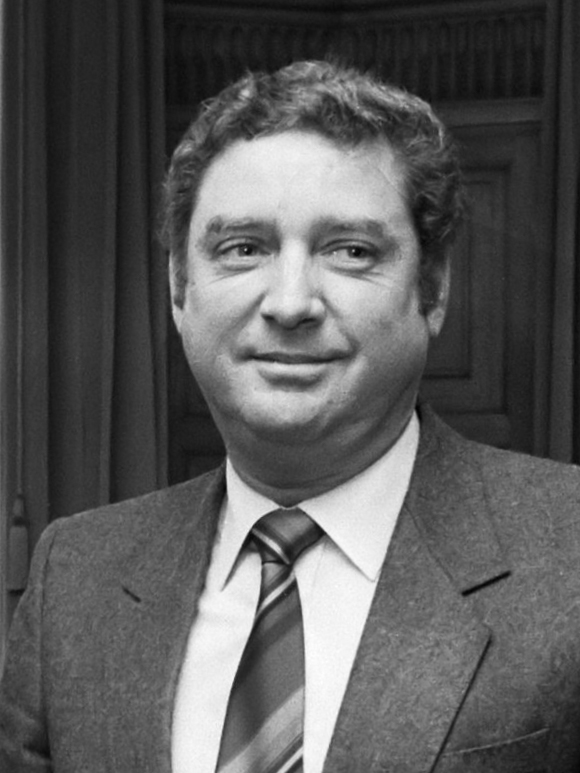
Gilberto Francois "Betico" Croes

Gilberto Francois "Betico" Croes
Biography
Gilberto Francois "Betico" Croes
Introduction and Early Life
Gilberto François "Betico" Croes (25 January 1938 – 26 November 1986) remains one of the most revered and foundational figures in the history of the Caribbean, standing tall as a beacon of Aruban sovereignty and national identity. Widely affectionately known as the "Libertador" (Liberator) and the undisputed "father of the Aruban nation," his life’s work fundamentally altered the political geography of the Kingdom of the Netherlands and secured a distinct, autonomous future for the island of Aruba. Born on January 25, 1938, in the town of Santa Cruz, Aruba, Croes grew up in a society that was rapidly changing yet still politically subjugated to the centralized administration in Curaçao under the framework of the Netherlands Antilles. His upbringing in Santa Cruz, deeply embedded in the local culture, instilled in him a profound love for his homeland and its people. This intrinsic connection to Aruban heritage would later fuel his relentless drive for self-determination.
Like many ambitious young men of his era seeking advancement, Croes left the Caribbean to pursue higher education in the Netherlands. He attended the Teacher's Training College in Hilversum, a period that not only provided him with formal pedagogical training but also exposed him to European political thought, the mechanisms of democratic governance, and the stark contrast between colonial administration and self-rule. In 1959, he earned his headmaster’s certificate and returned to Aruba, determined to contribute to his community. He began his professional career as a dedicated educator, working as a teacher at the Sint Jozef School and later at Antonius College. His time in the classroom was formative; it allowed him to connect directly with the younger generation and their families, deeply understanding their aspirations, frustrations, and the pervasive feeling of being politically marginalized within the Antillean structure.
The Rise to Political Prominence
Croes’s transition from education to politics was driven by his growing conviction that systemic change was necessary to secure Aruba’s future. In 1967, he officially entered the political arena as a member of the Aruban People's Party (AVP), one of the established political forces on the island. He quickly demonstrated an innate political acumen, a charismatic speaking style, and an ability to mobilize the masses. However, his vision for Aruba's immediate and aggressive pursuit of autonomy clashed with the more conservative elements within the AVP. Failing to secure the leadership of the party and realizing that the existing political apparatus was insufficient to achieve his ambitious goals, Croes made a decisive and historic move.
In 1971, he broke away from the AVP and founded his own political party, the Movimiento Electoral di Pueblo (MEP). The MEP was not just another political faction; it was a movement built entirely around the principle of self-determination and the pursuit of a separate status for Aruba. As the founding leader of the MEP, a position he would hold until his untimely death, Croes galvanized the Aruban electorate. He articulated a vision of an Aruba that governed its own internal affairs, managed its own economy, and celebrated its own distinct cultural identity, free from the overriding influence of Curaçao.
"Si mi cai na caminda, gara e bandera y sigui cu e lucha." (If I fall down along the way, grab the flag and continue the battle.) — Betico Croes, embodying his relentless spirit for Aruban autonomy.
The Struggle for Status Aparte
The central pillar of Croes's political career was the relentless campaign for status aparte—a separate, autonomous status within the Kingdom of the Netherlands, effectively seceding from the Netherlands Antilles but remaining under the Dutch crown. This was a complex and unprecedented demand that required navigating intense resistance not only from the central Antillean government in Willemstad but also from the Dutch government in The Hague, which was hesitant to fragment its Caribbean territories.
Croes employed a multifaceted strategy that combined grassroots mobilization at home with high-stakes diplomatic maneuvering abroad. He traveled extensively throughout the region and internationally, seeking support from neighboring Latin American countries and presenting Aruba's case to international forums. His diplomatic efforts were crucial in elevating the Aruban cause from a domestic administrative dispute to an international question of self-determination.
At home, he led the call for the historic 1977 referendum, a masterstroke of democratic leverage. In this referendum, a vast and overwhelming majority of the Aruban population voted in favor of the status aparte. This undeniable mandate from the people provided Croes with the ultimate political ammunition. Armed with the democratic will of the Aruban people, he engaged in grueling negotiations with the Dutch government. The culmination of these efforts was the Round Table Conference in 1981, and eventually, the definitive agreement that paved the way for Aruba's transition to a separate country within the Kingdom.
Forging a National Identity
Betico Croes recognized that true autonomy required more than just constitutional changes; it required the forging of a strong, unifying national identity. He understood the power of symbols and was instrumental in institutionalizing the markers of Aruban nationhood. Long before the status aparte was officially realized, Croes championed the creation of an Aruban flag and a national anthem.
In 1976, largely due to his relentless advocacy, Aruba officially adopted its own flag—a bold design featuring a red star and yellow stripes on a field of blue, symbolizing the island's unique heritage and its aspirations. In the same year, "Aruba Dushi Tera" was officially adopted as the national anthem. These were not mere administrative acts; they were profound assertions of Aruban distinctiveness. By giving the people a flag to rally behind and an anthem to sing, Croes cemented the emotional and cultural foundation of the new nation he was fighting to build.
Tragic End and Enduring Legacy
The tragedy of Betico Croes’s life is that he did not live to fully see the realization of his ultimate dream. On the night of December 31, 1985—just hours before Aruba’s status aparte was to officially take effect on January 1, 1986—Croes was involved in a horrific and devastating car accident. The crash left him with severe injuries, and he slipped into a profound coma. Despite extensive medical care in a Dutch nursing facility, he never regained consciousness. He passed away nearly a year later, on November 26, 1986.
His death sent shockwaves of grief throughout Aruba and the broader Caribbean. The man who had fought so hard to bring his nation to the threshold of a new era was lost just as they crossed it. However, in death, Croes was elevated from a political leader to an immortal national hero. He is venerated as the "Libertador," the architect of modern Aruba.
Today, his legacy is ubiquitous across the island. His birthday, January 25, is celebrated annually as "Betico Croes Day," an official national holiday marked by cultural events, sporting competitions, and solemn memorial services that celebrate Aruban identity. Plazas, streets, and monuments, including a prominent statue in Oranjestad, stand in his honor, serving as constant reminders of his sacrifice and vision.
Betico Croes's life is a testament to the power of unwavering conviction. He transformed a localized feeling of marginalization into a successful, peaceful democratic movement for self-determination. His story is not just an Aruban story; it is a critical chapter in the history of Caribbean decolonization, demonstrating how charismatic leadership and democratic mobilization can reshape political realities. He remains the eternal symbol of Aruban pride and autonomy.
Furthermore, his influence extended beyond the borders of Aruba. His successful negotiation of status aparte set a precedent within the Kingdom of the Netherlands, ultimately influencing the later dismantling of the Netherlands Antilles in 2010, when Curaçao and Sint Maarten also acquired similar autonomous status. Betico Croes, the teacher from Santa Cruz, taught his nation how to stand on its own two feet, leaving behind a legacy that will endure as long as the Aruban flag flies.
Major Contributions
- Gilberto Francois "Betico" Croes is universally recognized as the architect of Aruba's *status aparte*.
- His primary contribution was successfully leading the political movement that separated Aruba from the Netherlands Antilles, establishing it as an autonomous country within the Kingdom of the Netherlands in 1986.
- Beyond political restructuring, he was the driving force behind the creation of Aruba's national identity, instrumental in the adoption of the Aruban flag and the national anthem, "Aruba Dushi Tera," fundamentally shaping the cultural and political landscape of the modern Aruban nation.