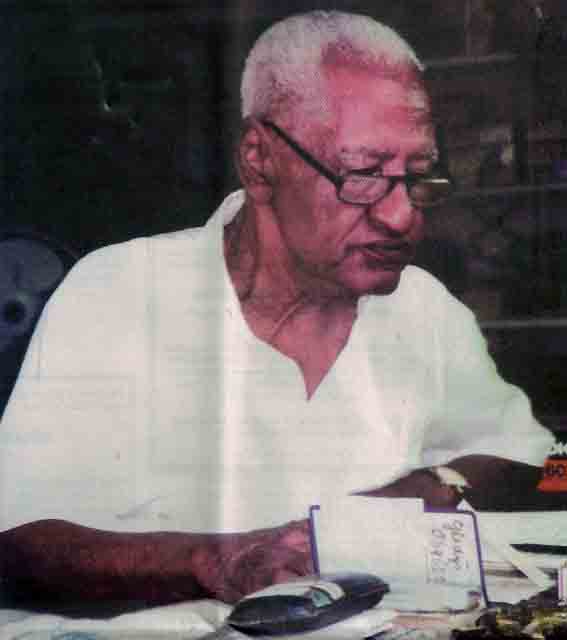
Moises Frumencio da Costa Gomez

Moises Frumencio da Costa Gomez
Biography
Introduction & Historical Era
Moisés Frumencio da Costa Gomez (October 27, 1907 – November 22, 1966), universally revered across the Dutch Caribbean as "Dòktor" and celebrated as the "Father of Political Autonomy," was a brilliant jurist, statesman, and visionary political pioneer. Serving as the Chairman of the first Governing Council (Regeringsraad) and subsequently as the first Prime Minister of the Netherlands Antilles from 1951 to 1954, he orchestrated the constitutional dismantling of colonial rule in the Dutch Caribbean. His intellectual rigor and relentless diplomatic persistence culminated in the historic Charter for the Kingdom of the Netherlands (Statuut voor het Koninkrijk der Nederlanden) in 1954, which transformed Curaçao, Aruba, Bonaire, Sint Maarten, Sint Eustatius, and Saba from subordinate colonial territories into an autonomous constituent country equal in partnership with the Netherlands. Operating in an era marked by the decline of global empires, the rise of Caribbean self-determination, and the socio-economic transformations brought by the oil refining industry, Da Costa Gomez dedicated his life to empowering the Afro-Curaçaoan working class and building modern democratic institutions.
Early Life, Academic Excellence, and Legal Foundations
Born on October 27, 1907, in the vibrant Otrobanda neighborhood of Willemstad, Curaçao, Moisés Frumencio da Costa Gomez grew up in a society deeply stratified along racial, class, and colonial lines. At the time, governance was monopolized by a colonial governor appointed by The Hague and a small elite advisory council, while the vast majority of the population lacked basic political rights and lived under economic hardship. Displaying exceptional academic promise at St. Thomas College in Willemstad, the young Da Costa Gomez was awarded a prestigious government scholarship at the age of fifteen to pursue secondary and higher education in the Netherlands.
Immersing himself in the rigorous academic environment of Europe, he enrolled at Radboud University Nijmegen, earning his law degree in 1932. Driven to understand the structural mechanics of colonial dominance, he advanced to the University of Amsterdam, where he completed his doctorate in state and administrative law in 1935. His doctoral dissertation, titled Het wetgevend orgaan van Curaçao, bezien in het kader van de Nederlands-koloniale politiek (The Legislative Body of Curaçao, Viewed in the Context of Dutch Colonial Politics), was a masterpiece of constitutional analysis and political courage. In it, Da Costa Gomez systematically deconstructed the flaws of colonial rule and boldly advocated for complete internal self-government, democratization, and universal suffrage for the people of Curaçao. This thesis served not merely as an academic exercise, but as the foundational blueprint for the constitutional revolution he would lead over the next two decades.
"Let us begin by obtaining half of what we want, and then ask for the rest. But if we walk away now and leave everything as it is, then we must begin again and fight for the first half."
_(cropped).jpg)
Return to Curaçao, Political Awakening, and Founding the PNP
Upon returning to Curaçao in the late 1930s, Dr. Da Costa Gomez entered public service as a civil servant and legal advisor across various government departments, including the Department of Finance and the judiciary. However, his true calling lay in grassroots political mobilization. During World War II, Curaçao's oil refineries became vital to the Allied war effort, accelerating industrialization and drawing thousands of workers to Willemstad. Recognizing that the working class required organized political representation to challenge the colonial status quo, Da Costa Gomez began conducting educational study groups across the island, teaching citizens about civil rights, labor organization, and constitutional law.
In April 1948, channeling this widespread civic awakening, he co-founded the National People's Party (Partido Nacional di Pueblo, PNP / Nationale Volkspartij, NVP). As the undisputed leader of the PNP, Da Costa Gomez built a formidable political coalition uniting Afro-Curaçaoan laborers, civil servants, and progressive intellectuals. The party's platform was revolutionary for the era: it demanded immediate universal suffrage, universal public education, the legalization and promotion of indigenous cultural expressions, and full internal autonomy within a restructured Dutch Kingdom. Through masterful public speaking in both Papiamentu and Dutch, "Dòktor" inspired a profound sense of national dignity and political agency among people who had long been marginalized by colonial elites.
Negotiating Autonomy and Executive Leadership
The late 1940s and early 1950s were defined by intense, high-stakes constitutional negotiations between delegations from the Netherlands Antilles, Suriname, and the Dutch government in The Hague. Da Costa Gomez served as the pivotal Chairman of the Antillean delegations during the grueling Round Table Conferences (Ronde Tafel Conferenties) between 1948 and 1954. Navigating complex diplomatic currents, he drafted the Proeve van een Rijksgrondwet (1948), a visionary constitutional proposal outlining a decentralized kingdom structure based on equality and mutual respect. His pragmatic yet unwavering diplomacy proved crucial in breaking deadlocks with Dutch imperial authorities and mediating tensions with regional peers, such as Aruban leaders like Betico Croes's political predecessors who sought distinct island representation.
In 1951, following the enactment of the Interim Regulations (Interimregeling) which granted preliminary self-government, Da Costa Gomez achieved a monumental milestone by becoming the President of the Governing Council (Regeringsraad), effectively assuming the responsibilities of prime minister. When formal cabinet structures were instituted, he was officially sworn in as the first Prime Minister of the Netherlands Antilles, governing from 1951 until December 1954. During his premier administration, he laid the modern administrative foundations of the state. He expanded public school networks, instituted labor protections and social security frameworks, and fostered indigenous Antillean leadership across the civil service, working alongside notable intellectuals and future leaders such as Governor Cola Debrot and protégé Juancho Evertsz.
The 1954 Charter, Cultural Emancipation, and Parliamentary Opposition
The crowning achievement of Da Costa Gomez's political life occurred on December 15, 1954, with the formal signing and promulgation of the Charter for the Kingdom of the Netherlands (Statuut). Signed by Queen Juliana, the Charter marked the official end of colonial subordination, establishing the Netherlands Antilles as an autonomous country with complete control over its internal affairs, judiciary, education, and cultural policies. While fierce electoral competition with the rival Democratic Party, led by Efraín Jonckheer, resulted in the PNP transitioning to the parliamentary opposition shortly before the formal promulgation ceremony, Da Costa Gomez was universally acknowledged by friend and foe alike as the primary architect of the Charter.
Beyond constitutional frameworks, Da Costa Gomez led a profound cultural emancipation. For centuries, the colonial administration and church authorities had suppressed traditional Afro-Curaçaoan practices, most notably tambú—a rhythmic music and dance form born out of the slave trade. Viewing cultural pride as inseparable from political freedom, Da Costa Gomez successfully repealed the criminal ban on tambú in 1952, restoring a vital pillar of Afro-Caribbean heritage. He also spearheaded campaigns to rehabilitate and honor historical freedom fighters who had been branded as criminals by colonial historiography, notably championing the memory of Tula, the heroic leader of the 1795 slave revolt in Curaçao. Furthermore, recognizing that long-term autonomy required homegrown intellectual capacity, he relentlessly petitioned for the establishment of a national institution of higher learning, laying the conceptual groundwork for what would become the national university.
"True autonomy is not merely written in legal charters; it lives in the dignity of a people who govern their own destiny and celebrate their own heritage without fear."
Later Years, Death, and Immortal Legacy
Following his tenure as Prime Minister, Dr. Da Costa Gomez remained a towering figure in the Parliament of the Netherlands Antilles and the Island Council of Curaçao, serving as the conscience of the nation and a vigilant defender of constitutional rights until his final days. He continued his legal practice and mentorship of young Antillean scholars, insisting that democratic vigilance was an ongoing civic duty. On November 22, 1966, Moisés Frumencio da Costa Gomez passed away unexpectedly in Willemstad at the age of 59. His death plunged the islands into profound national mourning, with thousands attending his state funeral to pay tribute to their beloved "Dòktor".
Today, his legacy permeates every facet of modern Dutch Caribbean governance and identity. In 1973, a majestic bronze monument was erected in his honor at Gomezplein in the heart of Willemstad. In 2011, reflecting his lifelong dedication to education, the national university was officially renamed the University of Curaçao Dr. Moises Frumencio da Costa Gomez (UoC). In 2023, the Government of Curaçao formally proclaimed him the "Political Emancipator of the Dutch Antilles." Dr. Moises Frumencio da Costa Gomez remains immortalized as a visionary statesman who wielded the power of law and democratic mobilization to lead his people from colonial shadows into the light of autonomy.
Major Contributions
- Moisés Frumencio da Costa Gomez is historically celebrated as the "Father of Political Autonomy" for the Netherlands Antilles, having orchestrated the peaceful constitutional transition of the Dutch Caribbean from colonial subordination to internal self-government.
- As the author of the landmark 1935 doctoral thesis on Curaçaoan legislative reform and the lead negotiator at the Round Table Conferences between 1948 and 1954, he conceived and achieved the Charter for the Kingdom of the Netherlands (*Statuut* of 1954).
- Serving as the Chairman of the first Governing Council and the first Prime Minister of the Netherlands Antilles (1951–1954), he established the modern civil service, instituted labor and social security protections, expanded public education, and championed universal suffrage, permanently transforming the socio-political landscape of the islands.
- In addition to his monumental constitutional achievements, Da Costa Gomez was a transformative pioneer of cultural emancipation and working-class empowerment.
- Co-founding the National People's Party (PNP) in 1948, he mobilized the historically marginalized Afro-Curaçaoan population and instilled a deep sense of national identity.
- He repealed the colonial criminal ban on traditional *tambú* music in 1952, championed the historical rehabilitation of freedom fighters such as the 1795 slave revolt leader Tula, and laid the conceptual foundation for the national university, which today proudly bears his name as the University of Curaçao Dr. Moises Frumencio da Costa Gomez.