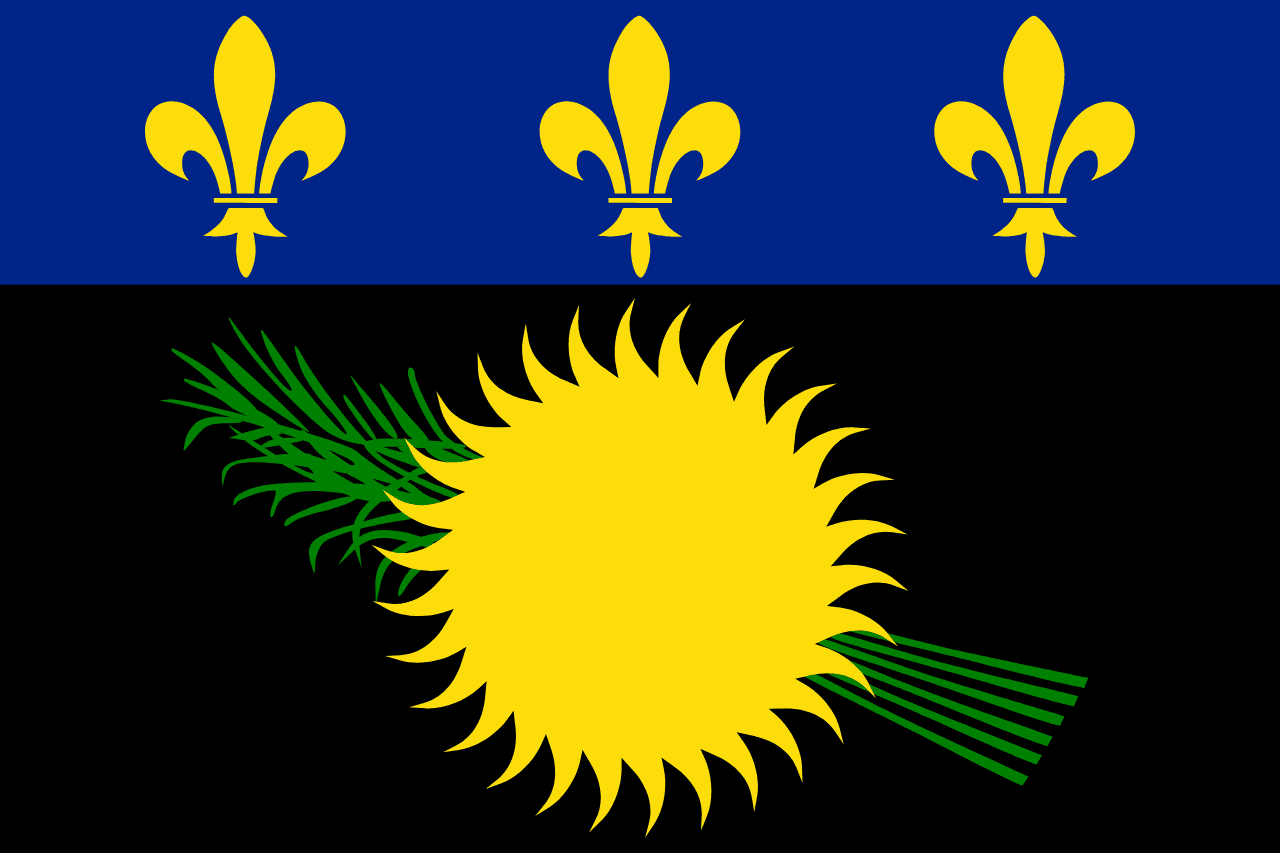
Guadeloupe
The Butterfly Island, a land of fierce resistance against slavery and home to giants of the Négritude movement and global literature.
Figures from Guadeloupe
Historically documented individuals of note.
Françoise Ega
Françoise Ega (born Françoise Marcelle Modock on November 11, 1920 – died March 8, 1976) was a pioneering Afro-Martinican writer, trade unionist, and grassroots activist whose life and literary work boldly confronted the intersecting oppressions of race, gender, and labor exploitation in post-war France [1]. Best known for her monumental, posthumously published masterpiece *Lettres à une noire* (Letters to a Black Woman), Ega exposed the clandestine neo-slavery endured by Antillean and African women working as live-in domestic servants (*bonnes à tout faire*) within affluent French bourgeois households during the tumultuous 1960s [2]. Operating from working-class neighborhoods in Marseille, she transformed her personal lived experiences into powerful sociopolitical testimony and organized militant trade union resistance [3]. Standing alongside intellectual giants of Caribbean anticolonial thought such as [Aimé Césaire](/profiles/aime-cesaire) and [Frantz Fanon](/profiles/frantz-fanon), Françoise Ega carved out a uniquely working-class, feminist voice that gave uncompromising agency to the most invisible subaltern laborers of the French colonial diaspora [4]. Her courageous activism not only provided critical support systems for thousands of Caribbean migrants arriving in mainland France but also established her as a foundational predecessor of modern intersectional feminism and postcolonial literature [1]. ### Early Life in Le Morne-Rouge and Migration Françoise Marcelle Modock was born on November 11, 1920, in Le Morne-Rouge, a lush, mountainous commune situated directly beneath the imposing shadow of Mount Pelée in northern Martinique [5]. Her birth occurred less than two decades after the catastrophic 1902 volcanic eruption that decimated the former cultural capital of Saint-Pierre, shaping a resilient, close-knit rural community raised on memories of survival and collective reconstruction [5]. Coming from a modest working-class background, her father, Claude Modock, worked as a gamekeeper and forestry worker, while her mother, Déhé Partel, earned a living as a skilled seamstress [1]. Raised with strong moral convictions and a deep appreciation for hard work, young Françoise excelled in her primary studies and subsequently earned a professional typing diploma—a rare and valuable qualification for an Antillean woman of her generation [3]. Seeking greater economic opportunities during the restrictive years of World War II and its immediate aftermath, she migrated to mainland France in the mid-1940s [4]. In 1946, she married Franz Ega, a fellow Martinican soldier serving in the French military [5]. Due to her husband's military assignments, Françoise spent significant periods residing in French sub-Saharan Africa during the twilight of formal colonial rule, immersing herself in the complex sociopolitical realities of African communities facing colonial domination [2]. These international experiences sharpened her political consciousness and deepened her pan-African solidarity. By the mid-1950s, the Ega family permanently relocated to France, settling in the vibrant, multicultural port city of Marseille, specifically residing in the working-class districts of La Busserine and Les Chartreux [1]. It was here, amidst the bustling immigrant working class of Mediterranean France, that Françoise Ega would find her true calling as a grassroots organizer and literary crusader [6]. ### Community Leadership and Grassroots Activism in Marseille Upon establishing her life in Marseille, Françoise Ega encountered a rapidly expanding population of Caribbean and African migrants arriving in southern France seeking employment and education [3]. However, these migrants faced rampant housing discrimination, severe racial prejudice, cultural isolation, and predatory employers [1]. Refusing to remain a passive observer, Ega emerged as a dynamic and tireless community leader, transforming her home into an informal social refuge and organizing hub for displaced Antilleans and Guianese [4]. To institutionalize this solidarity, Ega co-founded and led several foundational community organizations, most notably the Association of Antillean and Guianese Workers (AMITAG) and the Antillo-Guianese Cultural and Sports Association (ACSAG) [5]. Through these grassroots associations, she organized comprehensive reception committees for newly arrived Caribbean youths at the Marseille port and train stations [2]. Recognizing that literacy and legal knowledge were essential weapons against exploitation, Ega established free adult evening classes, typing workshops, and legal clinics to assist migrants in navigating complex French labor laws, obtaining secure housing, and securing fair employment contracts [6]. Furthermore, she utilized cultural production as a tool for community cohesion and political empowerment. She organized traditional Antillean theater productions, dance festivals, and literature readings that allowed expatriate workers to celebrate their Creole heritage while building mutual solidarity across ethnic lines [1]. Her relentless community leadership earned her the affectionate and reverent nickname "Mam'Ega" among thousands of Caribbean workers across southern France, solidifying her reputation as a fearless protector of immigrant rights and a fierce opponent of systemic institutional racism [3]. ### The BUMIDOM Era and the Plight of Antillean Women During the 1960s, the French government instituted a massive, state-sponsored demographic engineering program known as BUMIDOM (*Bureau pour le développement des migrations dans les départements d'outre-mer*) [4]. Designed to curb rising unemployment and defuse anticolonial unrest in Martinique, Guadeloupe, and Réunion while supplying mainland France with cheap labor, BUMIDOM systematically recruited tens of thousands of young Caribbean men and women [2]. While men were largely funneled into heavy industrial factory labor or low-ranking public sector jobs, thousands of young Antillean women were lured to Paris, Marseille, and Lyon with promises of vocational training, administrative education, and social upward mobility [6]. Instead of receiving education, these women found themselves systematically diverted into isolated, exploitative employment as domestic servants (*bonnes à tout faire*) in affluent French households [3]. Trapped in live-in arrangements, stripped of their social networks, and paid meager wages that were frequently withheld for arbitrary "room and board" deductions, these Antillean women experienced conditions akin to modern-day indentured servitude [1]. They endured grueling sixteen-hour workdays, physical and psychological abuse, sexual harassment, and profound alienation in a racially hostile society [4].  Witnessing the shattered lives of these young Caribbean women arriving at her community centers in Marseille, Françoise Ega was consumed by profound righteous indignation [5]. She realized that bourgeois French society—and even mainstream French feminist movements—remained willfully blind to the hyper-exploitation of Black domestic workers happening behind closed doors [2]. Deciding that external observation was insufficient to expose this clandestine oppression, Ega made a remarkable and courageous decision: she suspended her comfortable community leadership duties and took jobs undercover as a domestic cleaning woman in bourgeois homes across Marseille to directly experience, document, and organize workers from within [6]. ### *Lettres à une noire*: Undercover Testimony and Literary Masterpiece Between 1962 and 1964, while keeping grueling hours scrubbing floors, washing laundry, and enduring the daily indignities inflicted by affluent white employers, Françoise Ega kept a meticulous, clandestine journal [1]. She structured her poignant writings as an episodic series of epistolary letters addressed to Carolina Maria de Jesus, an Afro-Brazilian favela resident whose autobiographical book *Quarto de Despejo* (*Child of the Dark*) had recently been translated into French and had profoundly inspired Ega [2]. The resulting manuscript, *Lettres à une noire*, stands as a monumental achievement in Francophone literature [3]. Written with searing emotional raw power, sharp sociological insight, and dark irony, the book dismantles the myth of French civilizational benevolence [4]. Ega meticulously chronicles the physical exhaustion, spatial segregation—such as being forced to eat cold leftovers in cramped kitchens and sleep in unheated attic maid rooms (*chambres de bonne*)—and the dehumanizing paternalism of white employers who treated Black adult women as ignorant beasts of burden [6]. > "I write to you, Carolina, because you alone can understand the crushing weight of the scrub brush and the silent tears shed over the dirty laundry of those who view our Black skin as the livery of natural servitude. But we are not slaves; our dignity is invincible, and our labor demands justice." [2] Crucially, *Lettres à une noire* is not merely a catalog of victimhood; it is a militant handbook of working-class resistance and intersectional solidarity [5]. Ega depicts how Caribbean, Spanish, Italian, and North African domestic workers forged covert networks of mutual aid across balconies and courtyard stairwells, sharing food, legal advice, and emotional support [1]. Anticipating modern intersectional feminist theory by decades, Ega articulated how race, class, and gender intersected to create unique vulnerabilities for Black migrant women, creating a literary work that echoes the radical intellectual legacy of pioneering writers like [Paulette Nardal](/profiles/paulette-nardal) and later Caribbean literary luminaries such as [Maryse Condé](/profiles/maryse-conde) [4]. ### Trade Unionism, Later Writings, and Enduring Legacy Françoise Ega did not confine her activism to literature. Operating alongside central labor syndicates, she became an active trade unionist within the Catholic workers' movement and the French Democratic Confederation of Labour (CFDT) [5]. She organized union strikes, negotiated standard employment contracts for domestic workers, demanded mandatory weekly rest days, and fought for inclusion in the French social security and pension systems [3]. Alongside her epistolary masterpiece, Ega authored significant autobiographical and cultural works. In 1966, she published *Le Temps des madras* (The Time of the Madras), a lyrical and nostalgic childhood memoir celebrating traditional rural Martinican culture, Creole values, and female resilience in Le Morne-Rouge [6]. She also worked extensively on the novel *L’Alizé ne soufflait plus* (The Trade Wind No Longer Blew), which explored the deep traumas of maritime migration and cultural displacement, eventually published posthumously in 2000 [1]. Françoise Ega died prematurely on March 8, 1976—symbolically on International Women's Day—in her beloved working-class neighborhood of La Busserine in Marseille, at the age of fifty-five [5]. Two years after her passing, in 1978, *Lettres à une noire* was published by Éditions L'Harmattan, sending shockwaves through French sociological and literary circles [2]. Today, Ega is celebrated globally as a visionary matriarch of Afro-European feminist literature and labor rights [4]. Her writings continue to inspire contemporary movements defending the rights of undocumented workers and domestic laborers across Europe and the Americas, ensuring that the voice of "Mam'Ega" resounds eternally wherever working women fight for dignity and liberation [3].
View Profile →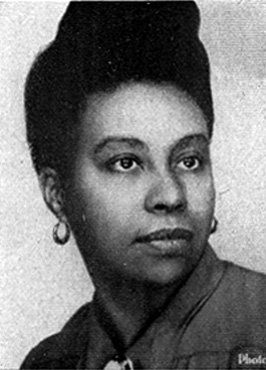
Gerty Archimède
## Gerty Archimède: The Trailblazing Advocate of the French West Indies ### Introduction and Historical Significance Gerty Marie Archimède stands as one of the most formidable legal minds, political pioneers, and feminist icons in the history of the Caribbean [1]. Born into the rigid colonial hierarchies of early twentieth-century Guadeloupe, she shattered systemic gender and racial barriers to become the very first woman lawyer in the French West Indies and only the second Black woman ever elected to the French National Assembly [2]. Operating during a turbulent era marked by the decline of classical colonialism, post-World War II departmentalization, and global labor awakenings, Archimède dedicated her entire life to the defense of the disenfranchised. Her fierce advocacy placed her in conversation and collaboration with leading intellectual and political luminaries of the era, including Martinican poet and statesman [Aimé Césaire](/profiles/aime-cesaire), French Guianese colonial administrator [Félix Éboué](/profiles/felix-eboue), and fellow trailblazing Guadeloupean deputy [Eugénie Éboué-Tell](/profiles/eugenie-eboue-tell) [3]. Throughout her career, Archimède wielded the law not merely as an instrument of courtroom defense, but as a revolutionary weapon for social justice, anticolonial solidarity, and the liberation of Antillean women [4]. ### Early Life and Foundations in Morne-à-l'Eau Gerty Archimède was born on April 26, 1909, in the vibrant agrarian municipality of Morne-à-l'Eau, located on the island of Grande-Terre in Guadeloupe [1]. She was the eldest of five daughters born to Justin Archimède and Marie-Mariette Françoise [5]. Her father, an artisan baker by trade, was a deeply civic-minded individual who rose to prominence in local politics, serving both as a member of the General Council and as the mayor of Morne-à-l'Eau [3]. From her earliest childhood, Gerty was immersed in political discourse, social debates, and the daily struggles of rural Guadeloupean workers. Justin Archimède instilled in his daughters a fervent belief in the power of education, civic duty, and moral courage, refusing to let conventional gender expectations limit their intellectual horizons [6]. During the 1920s, educational opportunities for women of color in the French Antilles were severely restricted. Undeterred, Archimède completed her primary education with excellence in her hometown before attending the Lycée Gerville-Réache in Basse-Terre [2]. Demonstrating a sharp analytical mind and a passion for justice, she moved to neighboring Martinique to begin her preparatory legal studies [5]. At the time, the intellectual climate in the French West Indies was beginning to stir with early expressions of Négritude and cultural pride, nurtured by pioneering thinkers such as [Paulette Nardal](/profiles/paulette-nardal) [7]. Fueled by these burgeoning movements, Archimède resolved to travel across the Atlantic to complete her legal education in metropolitan France.  ### Academic Pursuits and Legal Trailblazing Arriving in Paris during the lively and politically charged interwar period, Archimède enrolled at the prestigious Sorbonne to pursue her law degree [3]. Life in the French capital presented significant financial and cultural challenges for a young Caribbean woman. To finance her rigorous university studies, she worked diligently in various administrative and banking positions, displaying the extraordinary determination and resilience that would define her entire career [6]. In Paris, she witnessed firsthand the intellectual vibrancy of the Antillean and African diaspora, further sharpening her understanding of colonial exploitation and workers' rights [4]. Upon successfully obtaining her law degree, Archimède made a triumphant return to her homeland. In 1939, she etched her name into history by officially joining the Bar of Guadeloupe [1]. By doing so, she became the first female lawyer to practice in the French West Indies and was celebrated across the francophone world as a groundbreaking figure for women of color in the legal profession [2]. Entering a courtroom domain entirely dominated by elite colonial men, Archimède quickly earned a reputation as a fierce, brilliant, and deeply compassionate litigator. She chose not to cater to wealthy commercial clients; instead, she focused her legal practice on defending impoverished agricultural laborers, trade unionists, and victims of systemic exploitation [5]. Her courtroom oratory was legendary, blending precise statutory knowledge with passionate appeals to human dignity. ### Political Awakening and the Departmentalization Era The aftermath of World War II catalyzed a monumental shift in the political landscape of the French Caribbean [3]. As the old colonial regime faced mounting demands for equality and self-determination, Archimède stepped onto the national political stage. She formally joined the French Communist Party (PCF), attracted by its uncompromising platform advocating for worker solidarity, anticolonial liberation, and social equality [6]. In the historic elections of 1946, Archimède was elected as a deputy representing Guadeloupe in the French National Assembly [1]. Serving alongside [Eugénie Éboué-Tell](/profiles/eugenie-eboue-tell), she became one of the first two female deputies from Guadeloupe and the second Black woman to sit in the French parliament [2]. During her legislative tenure from 1946 to 1951, Archimède played a pivotal role in the enactment and implementation of the historic Law of Departmentalization of March 19, 1946 [4]. This transformational law officially integrated Guadeloupe, Martinique, French Guiana, and Réunion into the French Republic as overseas departments. Archimède fought tirelessly on the parliamentary floor to ensure that departmentalization was not merely a symbolic legal status, but a guarantee of substantive economic and social equality [7]. She campaigned vigorously for the extension of French social security benefits, labor protections, equal healthcare access, and standardized wages for Caribbean workers, fiercely challenging metropolitan parliamentarians who sought to maintain colonial-era wage differentials [5]. > [!NOTE] > Throughout her legislative service, Archimède viewed departmentalization as a battleground for human rights, relentlessly pressing the French state to fulfill its promises of liberty, equality, and fraternity for all Antillean citizens. ### Advocacy for Women and Grassroots Leadership Beyond her parliamentary achievements in Paris, Archimède recognized that lasting social transformation required grassroots empowerment at home [6]. In 1948, she founded the Guadeloupean federation of the Union of French Women, which shortly thereafter evolved into the autonomous Union des Femmes Guadeloupéennes (UFG) [2]. As the guiding force behind the UFG, Archimède mobilized thousands of working-class women across the archipelago. The organization became a powerful vehicle for progressive change, establishing literacy programs, demanding maternity protections, fighting for equal pay for female agricultural workers, and advocating for child welfare services [4]. Archimède also maintained a robust presence in local governance. In 1945, she was elected as a general councillor for the canton of Morne-à-l'Eau, serving as a vocal advocate for rural municipal development [1]. Later, in 1953, she was elected as the deputy mayor of the capital city, Basse-Terre, working closely with Mayor Elie Chaufrein to improve public infrastructure, sanitation, and educational facilities for underserved neighborhoods [3]. Her leadership style was deeply rooted in community accessibility; her home and law office remained open to anyone seeking legal counsel or protection from injustice, regardless of their ability to pay [5]. > "Gerty Archimède was not merely a defender of the law; she was a shield for the oppressed, a beacon of feminist pride, and an unyielding force who taught Caribbean women that justice is not granted by the powerful—it must be claimed with courage." — Antillean Historical Review [6] ### Bâtonnière and International Activism Archimède’s legal prowess reached its formal zenith in 1967 when her peers elected her as the Bâtonnière (President of the Bar Association) of Guadeloupe, a prestigious position she held with distinction until 1970 [4]. She was the first woman to lead the bar, reinforcing her status as a pioneer in judicial leadership [2]. During this period, the Caribbean and global political climate was rife with civil rights struggles and revolutionary movements. Archimède utilized her stature as Bâtonnière to champion international human rights and anticolonial solidarity across the Americas, paralleling the intellectual trajectories of radical Caribbean theorists like [Frantz Fanon](/profiles/frantz-fanon) [7]. One of the most defining and dramatic episodes of her legal career occurred in 1969 involving the prominent American civil rights activist and philosopher [Angela Davis](/profiles/angela-davis) [6]. While traveling back from a conference in Havana, Cuba, Davis and her companions stopped in Guadeloupe, where French colonial customs officials arbitrarily confiscated their passports under political pressure [6]. Facing imminent detention and harassment, Davis sought the counsel of Archimède. With commanding legal authority and fearless intimidation of the customs authorities, Archimède intervened directly at the airport. She successfully forced the officials to return the passports, ensuring Davis's safe passage [6]. In her autobiography, Angela Davis warmly commemorated Archimède’s profound dignity, sharp intelligence, and unwavering solidarity, describing her as an unforgettable hero of the international Black liberation struggle [6]. ### Later Years and Enduring Legacy Gerty Archimède continued her tireless legal and political advocacy until her health began to decline in the late 1970s [1]. She passed away on April 15, 1980, in her beloved hometown of Morne-à-l'Eau at the age of 70, leaving behind an extraordinary legacy of public service [5]. Her funeral was attended by thousands of mourning citizens, workers, and dignitaries from across the Caribbean, testifying to the deep affection and reverence she commanded [3]. Today, Archimède is immortalized as a foundational matriarch of Guadeloupean modern history [6]. Her former residence in Basse-Terre has been preserved and transformed into the Musée Gerty-Archimède, serving as a national center for historical education and human rights advocacy [4]. Numerous public schools, streets, and squares across Guadeloupe, as well as prominent thoroughfares in Paris and Nanterre, bear her name in permanent tribute to her monumental contributions [7]. By breaking gender barriers in the courtroom and parliament, defending the disenfranchised, and championing Caribbean dignity, Gerty Archimède established an enduring blueprint for feminist leadership and legal activism that continues to inspire generations throughout the global diaspora [4].
View Profile →Henry Sidambarom
Henry Sidambarom (born July 5, 1863 – died September 15, 1952) stands as one of the most transformative yet historically underrepresented figures in the socio-political landscape of the French Caribbean [1]. Widely revered as the "Gandhi of Guadeloupe" for his unwavering, non-violent advocacy and monumental legal crusades, Sidambarom dedicated his remarkably long life to dismantling the oppressive colonial hierarchies that subjugated Indian indentured laborers—known locally as *engagés*—and their descendants [2]. Operating within a deeply fractured post-emancipation colonial society, he emerged as a formidable Justice of the Peace, municipal councilor, and human rights defender who fundamentally redefined civic integration and legal identity in Guadeloupe [3]. His lifelong struggle against the systematic disenfranchisement of the Indo-Guadeloupean community not only reshaped the electoral and political demographics of the island but also established a profound legacy of multicultural solidarity alongside figures of Afro-Caribbean resistance such as [Louis Delgrès](/profiles/louis-delgres) and [Victor Schœlcher](/profiles/victor-schoelcher) [1]. Through his meticulous legal acumen and unyielding moral courage, Sidambarom successfully bridged the divide between servitude and full French citizenship, securing the civic dignity of tens of thousands of people. ### Early Life and the Indian Indentured Diaspora To understand the magnitude of Henry Sidambarom’s achievements, one must examine the turbulent socio-economic realities of nineteenth-century Guadeloupe. Following the final abolition of enslaved African labor in 1848, the French colonial administration and the powerful white plantation oligarchy—the *békés*—faced an acute labor shortage on their vast sugarcane estates [4]. In response, colonial authorities instituted the system of *engagisme* (indentured servitude), importing over 42,000 contract laborers from the Indian subcontinent between 1854 and 1889, primarily from Tamil-speaking regions of South India such as the Madras Presidency, Pondicherry, and Karikal [4]. It was into this marginalized immigrant community that Henry Moutou Sidambarom was born on July 5, 1863, in the rural commune of Capesterre-Belle-Eau [5]. His father, Joseph Sidambarom, and his mother, Allamélou, were Indian immigrants who had endured the grueling transoceanic voyage to work the fertile volcanic soils of Basse-Terre [5]. Growing up on the plantation periphery, young Henry witnessed firsthand the stark realities of indentured life. Despite contractual promises of fair wages, medical care, and free repatriation upon the completion of five-year terms, the *engagés* were subjected to neo-feudal exploitation, arbitrary wage deductions, severe physical abuse, and horrific living conditions [6]. Furthermore, the colonial legal apparatus treated Indian workers as permanent aliens and stateless pariahs, systematically denying them civil status, public education, and political representation [2]. Unlike many of his peers who were deprived of schooling, Henry Sidambarom demonstrated exceptional intellectual aptitude from an early age. Encouraged by his family, he acquired a formal French education while retaining fluency in Tamil and Guadeloupean Creole [5]. This unique multilingual competence and cultural fluency allowed him to navigate both the insular world of the Indian barracks and the bureaucratic machinery of the French colonial state, uniquely positioning him to become the voice of a silenced diaspora [3]. ### Professional Entry and Awakening In 1884, at the age of twenty-one, Sidambarom secured a pivotal position at the head office of Indian immigration (*Commissariat de l'Immigration*) in the capital city of Basse-Terre [5]. Employed as an interpreter and administrative clerk, he was tasked with processing employment contracts, civil registries, and repatriation requests [3]. This professional access proved to be his political awakening. Deep within the archives and daily dockets of the immigration office, Sidambarom uncovered undeniable documentary evidence of systemic injustice: falsified labor contracts, unlawful contract extensions, ignored reports of plantation violence, and thousands of illegitimate denials of repatriation [6]. Recognizing that colonial authorities were deliberately exploiting the legal illiteracy of Indian laborers to maintain a captive, disenfranchised workforce, Sidambarom began utilizing his official position to assist workers in drafting legal grievances and demanding their contractual rights [3]. His office soon transformed into a sanctuary for aggrieved laborers across Guadeloupe. > "To remain silent in the face of the systematic disenfranchisement of our people is to become an accomplice to our own servitude. We do not beg for benevolence; we demand the equality and dignity promised by the laws of the Republic." [1] This bold stance inevitably drew the ire of the colonial plantocracy and administrative officials, who viewed an educated, articulate Indian advocate as a direct threat to the colonial economic order. Despite enduring bureaucratic harassment and professional marginalization, Sidambarom refused to abandon his advocacy, realizing that true liberation required moving beyond individual labor grievances to contest the very political status of Indian descendants in the French Empire [4]. ### The Landmark Legal Battle for Citizenship (1904–1923) By the turn of the twentieth century, a substantial population of Indo-Guadeloupeans had been born on French soil (*jus soli*), yet they remained trapped in a legal void, denied the right to vote, serve on juries, or run for public office [2]. In 1904, Henry Sidambarom took a historic and unprecedented step: he formally registered as a candidate in the municipal elections of Capesterre-Belle-Eau and demanded that the names of Indian descendants be inscribed on the official electoral rolls [1]. When colonial election administrators summarily rejected his candidacy and purged Indian voters from the registries on the grounds that they were "foreigners of Indian origin," Sidambarom launched a monumental lawsuit against the French state [4].  This initiated a grueling legal struggle that lasted nearly two decades (1904–1923). Sidambarom’s legal strategy was as brilliant as it was relentless. He argued before colonial tribunals and metropolitan courts in Paris that since Indian indentured recruitment had ceased in 1889, and since Indian laborers were subjected to French colonial taxation and laws, their descendants born in Guadeloupe were legally entitled to full French nationality and citizenship under constitutional law [2]. The reactionary white plantocracy resisted fiercely, funding lengthy legal appeals and lobbying the Ministry of Colonies in Paris to reject Sidambarom's petitions [3]. Conservative politicians feared that enfranchising tens of thousands of Indo-Guadeloupeans would disrupt existing electoral balances and empower progressive, working-class coalitions [6]. In response, Sidambarom forged strategic alliances with emerging Afro-Guadeloupean political figures and socialist leaders, notably forming a mutual understanding with progressive pioneers who followed the legacy of early labor organizers like [Hégésippe Jean Légitimus](/profiles/hegesippe-jean-legitimus) [1]. He organized island-wide petition drives, public rallies, and legal defense funds, maintaining an attitude of absolute non-violence and constitutional rigor that earned him widespread moral authority [5]. > "Henry Sidambarom waged a nineteen-year war not with weapons of violence, but with the unyielding power of jurisprudence, patience, and moral clarity, becoming the true Gandhi of the French Caribbean." [3] His tireless perseverance finally bore fruit following World War I. During the war, many Indo-Guadeloupeans had volunteered to fight and die for France in the trenches of Europe, further exposing the hypocrisy of denying them citizenship at home [4]. On April 5, 1923, the Court of Cassation and the French colonial administration issued a definitive decree ruling in favor of Sidambarom [2]. The judgment officially recognized the full French citizenship and universal voting rights of all descendants of Indian indentured laborers in Guadeloupe [3]. In a single historic stroke, over 40,000 Indo-Guadeloupeans were transformed from stateless colonial subjects into enfranchised citizens possessing equal civil and political rights [4]. ### Political Career as Municipal Councilor and Justice of the Peace Armed with victory and the overwhelming support of the newly enfranchised electorate, Henry Sidambarom embarked on a distinguished public career that spanned nearly half a century. He served as a municipal councilor for his hometown of Capesterre-Belle-Eau for forty-eight consecutive years, from 1897 until 1945 [5]. Throughout his tenure on the municipal council, he championed infrastructure development in rural working-class districts, advocated for universal primary education, expanded access to clean water and healthcare, and fought relentlessly against land grabs by sugar syndicates [1]. In 1945, at the advanced age of eighty-two, Sidambarom was appointed Justice of the Peace (*Juge de paix*) for the canton of Capesterre-Belle-Eau, a prestigious judicial post he held with immense distinction until his death in 1952 [5]. As Justice of the Peace, he became renowned for his profound wisdom, impartiality, and deep compassion for the poor. He utilized his courtroom not merely to dispense penal judgment, but to mediate agrarian conflicts between plantation laborers and landowners, protect smallholders from predatory lending, and safeguard the civil rights of vulnerable families regardless of their racial or ethnic background [3]. His judicial philosophy emphasized reconciliation, human dignity, and social equity, solidifying his status as a venerated elder statesman across the Caribbean archipelago [6]. ### Lasting Legacy and Historical Impact Henry Sidambarom passed away peacefully in Capesterre-Belle-Eau on September 15, 1952, at the age of eighty-nine [5]. His death mourned an entire island, uniting Indo-Guadeloupeans and Afro-Guadeloupeans in collective grief and gratitude [1]. In 1948, local municipal councils had unanimously petitioned the French government to award him the National Order of the Legion of Honour, recognizing his monumental contributions to civic pacification and human rights [5]. Today, Sidambarom is celebrated as a foundational architect of modern Guadeloupean identity. By successfully integrating the Indian diaspora into the civic fabric of the island without sacrificing their cultural heritage, he fostered a uniquely creolized, pluralistic society [4]. His life paved the way for future generations of Caribbean human rights advocates and legal luminaries, including pioneering lawyers and political leaders like [Gerty Archimède](/profiles/gerty-archimede) [1]. In recent decades, his historical stature has received widespread international recognition. The 150th anniversary of his birth in 2013 sparked major cultural commemorations across Guadeloupe and France, culminating in official visits from Indian diplomatic delegations [6]. In 2020, Guadeloupe officially declared the "Year of Henry Sidambarom," establishing memorials, educational curricula, and naming public schools and squares in his honor [3]. Furthermore, a commemorative bust of Sidambarom was unveiled in Karikal, India, symbolically reconnecting the Caribbean diaspora with their ancestral homeland [4]. Through his profound legal courage and unwavering humanist vision, Henry Sidambarom secured an eternal place among the great liberators of the Caribbean.
View Profile →
Joseph Ignace
### Introduction: The Vanguard of Caribbean Emancipation At the close of the eighteenth century, the Caribbean was engulfed in a tumultuous wave of revolutionary upheavals that irrevocably shook the foundations of European imperial hegemony [1]. While the French Revolution proclaimed universal human liberty, brotherhood, and equality across the Atlantic, the Caribbean colonies became the brutal testing ground where those ideals collided with the entrenched economic interests of the plantation elite. In this fiery crucible arose Joseph Ignace (c. 1769/1772 – May 25, 1802), an Afro-Guadeloupean military officer and freedom fighter whose uncompromising dedication to emancipation made him one of the most heroic figures in Antillean history [2]. Alongside legendary compatriots such as Colonel [Louis Delgrès](/profiles/louis-delgres) and the fierce revolutionary heroine [Solitude](/profiles/solitude), Ignace stood as an unyielding bulwark against the counter-revolutionary designs of Napoleon Bonaparte [3]. Serving as commander of Fort de la Victoire in Pointe-à-Pitre and leading the desperate, heroic defense at the Redoute de Baimbridge, Ignace embodied the revolutionary covenant of *"Vivre libre ou mourir"* ("Live free or die"), sacrificing his life to ensure that the sacred freedom of his people would never be willingly surrendered to the re-imposition of chattel slavery [4]. ### Early Life, Carpentry, and the Sparks of Revolution in Pointe-à-Pitre Joseph Ignace was born in Guadeloupe around 1769 or 1772, into the bustling port city of Pointe-à-Pitre [1]. Born into the intermediate social stratum of free people of color (*gens de couleur libres*), he grew up intimately aware of the stark racial inequalities, legal disenfranchisement, and visceral cruelties that underpinned the French colonial plantation economy [5]. Before taking up arms in defense of human dignity, Ignace trained and worked as a master carpenter in Pointe-à-Pitre [2]. His craft provided him with a high degree of technical skill, autonomy, and organizational acumen, establishing his standing as a respected artisan within the urban artisan class of Grande-Terre. When the revolutionary winds of 1789 reached the shores of Guadeloupe, the island fractured along deep political, racial, and class divisions. Royalist white planters clung desperately to their racial prerogatives and property in human flesh, while enslaved laborers and free persons of color mobilized to demand full civil and political equality. In 1792, young Ignace took his first decisive steps into political militancy by participating actively in the revolutionary uprising in Pointe-à-Pitre [1]. This early insurrection marked his baptism of fire, demonstrating his natural tactical leadership and his steadfast commitment to the burgeoning cause of republican emancipation [6].  ### Military Service in the Republican Army and the First Abolition (1794–1801) The trajectory of Ignace’s life was fundamentally transformed in 1794. In February of that year, the French National Convention issued its historic decree formally abolishing slavery across all French territories [2]. When British invasion forces landed in Guadeloupe, invited by traitorous royalist plantation owners who sought to preserve the slave regime, revolutionary commissioner [Victor Hugues](/profiles/victor-hugues) arrived with a small republican contingent carrying the abolition decree [7]. Hugues mobilized the newly emancipated Black population, transforming them into a formidable republican army that waged an unrelenting campaign to repel the British invaders. Joseph Ignace enlisted in these republican armed forces, where his sharp intellect, discipline, and fearless battlefield leadership quickly distinguished him among his peers [1]. Throughout the Caribbean campaigns of the late 1790s, Ignace proved himself an exceptional combat officer. While contemporaries like [Toussaint Louverture](/profiles/toussaint-louverture) consolidated power in Saint-Domingue, Ignace defended the frontiers of republican freedom in the Lesser Antilles, demonstrating that soldiers of African descent were fully capable of meeting and defeating the finest professional regiments of European empires [5]. Recognizing his strategic competence and martial bravery, the republican administration promoted Ignace sequentially through the ranks, advancing him to captain in 1801 and subsequently appointing him *chef de bataillon* (battalion commander) [1]. He was entrusted with the command of Fort de la Victoire (also historically known as Fort Union), the critical coastal citadel guarding the harbor and bay of Pointe-à-Pitre [8]. > "Live free or die! We have taken up arms not to revolt against legitimate authority, but to preserve the sacred liberty that France herself bestowed upon us. Better an honorable grave than the renewed ignominy of the master's whip." — Joseph Ignace, rallying his troops at Pointe-à-Pitre, May 1802 [4] ### The Lacrosse Crisis and the Uprising of October 1801 By the dawn of the nineteenth century, the political climate in metropolitan France had taken a sharp, reactionary turn. Napoleon Bonaparte seized absolute control of the French state as First Consul and immediately began plotting to resurrect France's lucrative overseas slave empire [3]. In 1801, Bonaparte dispatched Rear Admiral Jean-Baptiste Raymond de Lacrosse to Guadeloupe as Captain-General [9]. Lacrosse was an arrogant, deeply racist administrator who held deep contempt for the Black and mixed-race officers who had bled to defend the island for the Republic. Upon arriving, Lacrosse initiated a systematic campaign of revanchism, attempting to disarm colonial troops, demoting officers of color, and subjecting republican veterans to arbitrary arrests and humiliations [5]. Joseph Ignace was not a man to tolerate the subversion of hard-won republican liberties. In October 1801, when Lacrosse attempted to arrest prominent officer Magloire Pélage, the garrison of Pointe-à-Pitre revolted [1]. Ignace played a decisive and central role in this military rebellion between October 21 and October 24, 1801 [9]. Marshaling the troops of Fort de la Victoire, Ignace coordinated with other colonial units to neutralize Lacrosse's loyalist guards, arrest the tyrannical governor, and expel him from Guadeloupe on a ship bound for the neighboring island of Dominica [2]. A provisional governing council led by Pélage and supported by officers such as [Louis Delgrès](/profiles/louis-delgres) and Ignace assumed civilian and military control, maintaining public order, preserving economic production, and adamantly affirming their continued allegiance to the French Republic and universal freedom [6].  ### General Richepanse's Expedition and Metropolitan Betrayal (May 1802) The fragile peace achieved by the provisional council was shattered in the spring of 1802. Following the Treaty of Amiens with Great Britain, Napoleon Bonaparte prepared massive expeditionary armadas to crush Black autonomy in the Caribbean, officially preparing the Law of 20 May 1802 to restore chattel slavery and the Atlantic slave trade [3]. On May 6, 1802, a formidable French armada carrying over 3,500 veteran metropolitan troops commanded by General Antoine Richepanse arrived in the waters of Pointe-à-Pitre [1]. Richepanse carried secret instructions from Bonaparte to disarm all soldiers of color, purge the colonial officer corps, and subjugate the Black population once again to the plantation whip [5]. Upon landing, Richepanse concealed his true intentions, demanding that colonial regiments assemble without arms to pay homage to the expeditionary force. While some senior officers, including Magloire Pélage, naively chose compliance, Ignace immediately saw through the metropolitan deceit [2]. When French soldiers surrounded the colonial contingents, disarming them, locking them into the holds of ships, and executing several dissenters on the spot, Ignace knew that submission meant a return to slavery and death [8]. Stationed inside Fort de la Victoire with his loyal battalion, Ignace categorically refused Richepanse's summons to lay down his arms [1]. In a daring and masterfully executed nocturnal maneuver on the night of May 9–10, 1802, Ignace slipped out of Fort de la Victoire with approximately 600 to 700 armed combatants, crossed the Rivière Salée that separated Grande-Terre from Basse-Terre, and marched swiftly southward to merge forces with Colonel [Louis Delgrès](/profiles/louis-delgres) [1, 4]. ### The Alliance with Delgrès and the Siege of Fort Saint-Charles The union of Joseph Ignace and [Louis Delgrès](/profiles/louis-delgres) galvanized the armed resistance against Napoleonic imperialism. On May 10, 1802, Delgrès proclaimed open insurrection and published his immortal manifesto, *« À l'univers tout entier, le dernier cri de l'innocence et du désespoir »* ("To the entire universe, the last cry of innocence and despair"), calling upon all lovers of humanity to witness the perfidy of the French government [3]. Ignace was appointed as one of Delgrès's primary field commanders, organizing the fortification of Basse-Terre and the formidable ramparts of Fort Saint-Charles (later renamed Fort Delgrès) [7]. For nearly two weeks, French expeditionary columns under Richepanse assaulted the insurgent positions in Basse-Terre, meeting ferocious resistance from Black soldiers, plantation laborers, and revolutionary women such as [Solitude](/profiles/solitude) [3]. However, as Richepanse brought up heavy siege artillery and encircled the fortress, the rebel high command recognized that a protracted siege within Fort Saint-Charles would inevitably lead to attrition and surrender [5]. Delgrès and Ignace devised a daring, audacious counter-offensive: while Delgrès held the French army in check around the volcano slopes of Basse-Terre, Ignace would break through the enemy lines under cover of darkness, march back across the island to Grande-Terre, strike the French rear in Pointe-à-Pitre, seize their naval and supply bases, and ignite a massive general uprising among the thousands of plantation workers in Grande-Terre [1, 2]. ### The Battle of Baimbridge and the Ultimate Sacrifice (May 25, 1802) On the night of May 22–23, 1802, Ignace and a picked force of approximately 600 devoted soldiers slipped silently out of Fort Saint-Charles, eluding French patrols and crossing the rugged mountainous terrain of Basse-Terre [4]. Crossing the Rivière Salée once more, Ignace launched a surprise assault on Grande-Terre, taking control of the redoubt at Baimbridge (Redoute de Baimbridge) in the hills of Les Abymes, directly overlooking and threatening Pointe-à-Pitre [8]. The sudden reappearance of Ignace in Grande-Terre sent shockwaves of panic through the French colonial command in Pointe-à-Pitre, paralyzing their communications and threatening to cut off Richepanse's rear supply lines [5]. Recognizing the existential danger posed by Ignace's presence, French General Gobert rapidly assembled an overwhelming force of regular metropolitan troops, augmented by collaborator units commanded by Magloire Pélage [1]. On the morning of May 25, 1802, the French forces launched a massive, coordinated assault on the Redoute de Baimbridge [2]. What ensued was one of the most savage and desperate battles in Caribbean history. Outnumbered more than three to one and severely lacking heavy artillery and ammunition, Ignace and his combatants repelled wave after wave of French bayonet charges throughout hours of grueling combat [4]. By the late afternoon of May 25, the redoubt’s ammunition was exhausted, and French troops breached the earthen ramparts, resulting in brutal hand-to-hand combat [1]. Recognizing that the position was lost and steadfastly refusing to be taken alive to endure the torture of colonial tribunals and the humiliation of re-enslavement, Joseph Ignace fulfilled his sacred oath to "live free or die" [6]. In an act of sublime revolutionary defiance, he turned his own pistol upon himself, firing a bullet into his head and falling dead upon the soil he had fought so valiantly to liberate [1, 2]. The enraged French soldiers slaughtered nearly all of Ignace's remaining comrades, killing an estimated 600 to 700 insurgents on the ramparts and summarily executing the wounded [4]. Three days later, on May 28, 1802, on the mountain slopes of Matouba, [Louis Delgrès](/profiles/louis-delgres) and 400 surviving comrades followed Ignace’s glorious example, detonating their gunpowder magazine rather than surrender [3]. > "To fall with arms in hand, defending the rights of human nature, is the highest duty of the soldier citizen. Ignace did not yield; he sealed his devotion to freedom with his own life upon the ramparts of Baimbridge." — Auguste Lacour, *Histoire de la Guadeloupe* (1855) [10] ### Historical Legacy, Memorialization, and Afro-Caribbean Consciousness Following the catastrophic defeat of the 1802 insurrection, French colonial authorities reimposed chattel slavery in Guadeloupe with unfathomable brutality, executing thousands of freedom fighters and subjecting the population to severe repression until the final abolition of slavery in 1848 [5]. For decades, colonial authorities attempted to expunge Joseph Ignace's name from historical records, portraying him in official metropolitan chronicles as an outlaw or a bandit. However, his memory was reverently preserved through oral history by the people of Guadeloupe, and later meticulously documented in the monumental four-volume *Histoire de la Guadeloupe* by 19th-century chronicler [Auguste Lacour](/profiles/auguste-lacour) [10]. During the twentieth century, the rise of the Négritude movement championed by intellectuals such as [Aimé Césaire](/profiles/aime-cesaire) ignited a profound historical renaissance that restored Joseph Ignace to his rightful place in the pantheon of world liberators [3]. In Guadeloupe, Ignace is venerated as a foundational national hero whose tactical brilliance and uncompromising moral courage symbolize the eternal struggle for human self-determination [2]. On May 22, 1998, commemorating the 150th anniversary of the definitive abolition of slavery, a monumental bronze statue of Joseph Ignace created by celebrated Guadeloupean sculptor Jacky Poulier was unveiled on the Boulevard des Héros in Les Abymes, standing alongside monuments dedicated to [Louis Delgrès](/profiles/louis-delgres) and [Solitude](/profiles/solitude) [1, 11]. Furthermore, the Lycée Polyvalent de Baimbridge and various public avenues bear his memory, ensuring that generations of Caribbean citizens continue to draw inspiration from the carpenter of Pointe-à-Pitre who dared to defy an empire in the name of universal liberty [8].
View Profile →
Louis Delgrès
### Introduction and Historical Context of Late 18th-Century Caribbean The late eighteenth century in the Caribbean was an era marked by seismic cataclysms, revolutionary fervor, and the relentless struggle for human emancipation. Against the backdrop of the Atlantic slave trade and the brutal plantation economy that fueled European empires, the French Revolution of 1789 sent shockwaves throughout the Antillean archipelago [1]. The declaration of the Rights of Man and of the Citizen ignited intense debates regarding the universality of liberty, equality, and fraternity. In this crucible of insurrection and colonial transformation emerged Louis Delgrès, a visionary Afro-Caribbean military officer whose uncompromising dedication to human dignity would culminate in one of the most heroic and tragic stands against colonial oppression in recorded history [2]. While contemporaries such as [Toussaint Louverture](/profiles/toussaint-louverture) and [Jean-Jacques Dessalines](/profiles/jean-jacques-dessalines) were forging the path toward Haitian independence in nearby Saint-Domingue, Delgrès became the immortal champion of freedom in Guadeloupe, leading an armed resistance against the autocratic ambitions of Napoleon Bonaparte [3]. ### Early Life, Origins in Martinique, and Entry into the French Military Louis Delgrès was born on August 2, 1766, in the vibrant port city of Saint-Pierre, Martinique [1]. Born into a complex social hierarchy as a free person of color (*gens de couleur libres*), he was the son of Elisabeth Elisabeth, a free woman of African descent, and Louis Delgrès, a white French colonial official and tax receiver representing the King of France [2]. This mixed heritage granted young Louis access to a formal education and social mobility denied to the enslaved masses, yet he remained acutely aware of the systemic racism and legal disenfranchisement that plagued non-white populations across the French Antilles. Possessing an intellectual curiosity and a deep sense of discipline, Delgrès entered the military, joining the colonial militia where he rapidly distinguished himself through tactical brilliance, unyielding courage, and natural leadership [3]. When revolutionary conflicts erupted between imperial powers, Delgrès committed his sword to the French Republic, viewing the revolutionary government as the ultimate guarantor of universal human rights and racial equality.  ### Revolutionary Wars: Battling the British and the Transformation of Guadeloupe Throughout the 1790s, the Caribbean theater became a fierce battleground where British, French, and Spanish forces vied for territorial supremacy. In 1794, the French National Convention officially abolished chattel slavery across all colonies, transforming the French republican army into an army of liberation [3]. Delgrès served with distinction during these turbulent years, participating in numerous campaigns against British invasion forces who sought to capture French islands and restore plantation slavery. Working alongside figures such as [Victor Hugues](/profiles/victor-hugues), who brought the decree of emancipation to Guadeloupe, Delgrès demonstrated exceptional strategic acumen [3]. He fought bravely in Saint-Vincent during the Carib War alongside allies inspired by revolutionaries like [Julien Fédon](/profiles/julien-fedon) in Grenada. Captured by the British and held as a prisoner of war in Great Britain, Delgrès never wavered in his republican convictions [1]. Upon his release and exchange, he returned to Guadeloupe, earning sequential promotions until he attained the rank of colonel (*chef de brigade*), commanding the fortress of Basse-Terre [1]. ### The 1802 Crisis: Napoleon Bonaparte and the Reintroduction of Slavery The dawn of the nineteenth century brought a dark counter-revolutionary tide. By 1801, Napoleon Bonaparte had consolidated absolute power as First Consul of France and sought to rebuild a lucrative global empire built on the subjugation of colonial labor [1]. Viewing the emancipated Black populations of the Caribbean as an obstacle to imperial hegemony and economic exploitation, Bonaparte enacted the Law of 20 May 1802, which formally stripped away universal rights and sanctioned the reintroduction of chattel slavery across French colonies [1]. To execute this nefarious mandate in Guadeloupe, Bonaparte dispatched a massive expeditionary armada of over 4,000 elite troops commanded by General Antoine Richepanse [2]. Upon arriving in Guadeloupe in May 1802, Richepanse immediately initiated a ruthless campaign of disarmament, arbitrary arrests, and racial purges targeting Black and mixed-race military officers. Understanding that submission meant chains, the whip, and social death for his people, Louis Delgrès made a fateful decision: he rejected French imperial tyranny and raised the banner of armed rebellion [2]. > "To the entire universe, the last cry of innocence and despair! ... Resistance to oppression is a natural right. The divinity itself cannot be offended that we defend the cause of justice and humanity." — Louis Delgrès, Proclamation of May 10, 1802 ### The Heroic Resistance of Guadeloupe and the Battle of Matouba Rallying a devoted coalition of regular soldiers, plantation laborers, and revolutionary fighters—including legendary figures such as [Joseph Ignace](/profiles/joseph-ignace) and the fearless freedom fighter [La Mulâtresse Solitude](/profiles/la-mulatresse-solitude)—Delgrès organized a formidable defense of Guadeloupe [3]. On May 10, 1802, he issued his immortal manifesto, *« À l'univers entier, le dernier cri de l'innocence et du désespoir »* ("To the entire universe, the last cry of innocence and despair"). Published and distributed across the island, this extraordinary document served as both a philosophical indictment of Napoleonic treachery and a passionate appeal to global conscience [3]. For nearly three weeks, Delgrès and his outgunned forces waged a ferocious guerilla war against Richepanse’s seasoned European legions. The fighting raged across the rugged terrain of Basse-Terre, with Black revolutionaries demonstrating astonishing bravery and inflicting heavy casualties upon the invading forces [2]. However, facing insurmountable odds, depleted munitions, and relentless naval bombardments, Delgrès executed a strategic tactical retreat toward the slopes of the Soufrière volcano, fortifying his remaining troops at the habitation d'Anglemont in Matouba [2].  ### "Vivre libres ou mourir": The Ultimate Sacrifice and Proclamation By May 28, 1802, French expeditionary columns had encircled the redoubt at Matouba. Realizing that military victory was no longer possible and refusing to allow his soldiers and their families to be captured and re-enslaved, Delgrès made the ultimate revolutionary sacrifice [1]. Adopting the defiant revolutionary motto *"Vivre libres ou mourir"* ("Live free or die"), Delgrès and approximately 400 of his loyal combatants—including women and children who had fled to the compound for protection—gathered inside the main gunpowder magazine [2]. As the French troops breached the perimeter and stormed the courtyard, Delgrès ignited the explosive stores. The resulting explosion shook the foundations of the mountain, instantly annihilating Delgrès, his followers, and numerous advancing French soldiers [2]. This sublime act of martyrdom echoed across the Atlantic world as an uncompromising declaration that freedom was more precious than life itself. ### Enduring Legacy, Memorialization, and Impact on Afro-Caribbean Historiography Although Richepanse temporarily succeeded in re-establishing slavery in Guadeloupe—a brutal regime that lasted until the permanent abolition of slavery in 1848—Delgrès’s martyrdom transformed him into an immortal beacon of Afro-Caribbean resistance and human dignity [1]. His sacrifice served as a moral condemnation of colonial empires and inspired subsequent generations of anti-colonial thinkers, writers, and revolutionaries. In the twentieth century, towering Antillean intellectuals such as [Aimé Césaire](/profiles/aime-cesaire) and writers like Maryse Condé immortalized Delgrès in plays, poems, and historical treatises, framing his stand at Matouba as a foundational moment in the forging of Caribbean consciousness [3]. In 1989, coinciding with the bicentennial of the French Revolution, the historic fortress in Basse-Terre where he once commanded was officially renamed Fort Delgrès in his honor [2]. Furthermore, plaques and monuments across Guadeloupe and Martinique, alongside his symbolic inscription at the Panthéon in Paris, ensure that Louis Delgrès is remembered eternally not merely as a tragic soldier, but as a universal guardian of human liberty whose defiant cry continues to resonate wherever oppression exists [2].
View Profile →
Maryse Condé
### Introduction: The Literary Titan of the African Diaspora Maryse Condé stands as one of the most monumental, visionary, and intellectually fearless voices in world literature and modern Antillean thought [1]. A Guadeloupean novelist, playwright, critic, and academic, Condé dedicated her extraordinary six-decade career to interrogating the complex legacies of colonialism, transatlantic slavery, racial identity, and gender across the global African diaspora [2]. Refusing to be confined by dogmatic ideologies or romanticized notions of Black history, she crafted sweeping historical epics and intimate psychological portraits that exposed the triumphs, contradictions, and traumas of Black populations from seventeenth-century West Africa and colonial New England to contemporary Paris and the Caribbean [3]. Alongside fellow Antillean luminaries such as [Aimé Césaire](/profiles/aime-cesaire), [Frantz Fanon](/profiles/frantz-fanon), and [Édouard Glissant](/profiles/edouard-glissant), Condé revolutionized the literary landscape of the francophone world, ultimately elevating Caribbean historical fiction onto the international stage and earning global veneration as a guardian of diasporic memory [1]. ### Early Life in Pointe-à-Pitre and the Awakening of Antillean Identity Born Maryse Liliane Appoline Boucolon on February 11, 1934, in Pointe-à-Pitre, Guadeloupe, Condé was the youngest of eight children in a prosperous, highly educated bourgeois family [1]. Her father, Auguste Boucolon, was a prominent bank founder, and her mother, Jeanne Quidal, was a pioneering school teacher [2]. Growing up in an affluent household that strictly assimilated into French cultural norms, young Maryse was insulated from the harsh realities of working-class Antillean life and the deeper African roots of Caribbean folklore. In her autobiography, *Tales from the Heart: True Stories from My Childhood*, she recalled how her family celebrated French literature and customs while harboring ambivalent feelings toward their own Caribbean heritage [2]. It was not until she read the radical works of Martinican intellectual [Aimé Césaire](/profiles/aime-cesaire) during her adolescence that Condé experienced a profound political and cultural awakening, realizing the deep fractures inflicted by colonial alienation and igniting her lifelong quest to explore the Black identity [1].  ### Student Years in Paris, Political Awakening, and Exile in West Africa In 1953, at the age of nineteen, Condé left Guadeloupe for Paris to attend the prestigious Lycée Fénelon and the Sorbonne, majoring in English literature [1]. Her arrival in the French capital exposed her to intense racism and the turbulent political currents of the anti-colonial era. In Paris, she became actively involved with Caribbean and African expatriate circles, engaging deeply with the anti-colonial philosophy of [Frantz Fanon](/profiles/frantz-fanon) and the Marxist liberation movements sweeping the Global South [2]. Following her marriage to African actor Mamadou Condé in 1958, she embarked on a transformative twelve-year sojourn across West Africa, living and teaching in Côte d'Ivoire, Guinea, Senegal, and Ghana during the heady era of post-independence African nationalism [2]. While teaching in Ghana during the regime of Kwame Nkrumah, she formed friendships with influential diaspora writers such as [C. L. R. James](/profiles/c-l-r-james), African American Maya Angelou, and Malcolm X [3]. However, experiencing first-hand the political corruption, deportation, and social turmoil of emerging African states stripped Condé of any naive romanticism regarding the African continent, a profound disillusionment that would decisively shape her literary realism [3]. ### Academic Career and Return to the Caribbean Returning to France in 1970, Condé pursued rigorous academic scholarship, earning her doctorate in comparative literature from the Sorbonne in 1976 with a groundbreaking dissertation on Black stereotypes in francophone literature [1]. Establishing herself as a formidable scholar and literary critic, she embarked on an illustrious academic career that bridged the Atlantic. Over the following decades, she held prestigious professorships at Columbia University—where she founded the Center for French and Francophone Studies—as well as UC Berkeley, UCLA, the University of Virginia, and the University of Maryland [2]. Despite her extensive travels and academic commitments in North America and Europe, Condé maintained an umbilical connection to the Caribbean. She frequently returned to Guadeloupe, fostering local Antillean literature and engaging in vibrant dialogues with regional writers like [Simone Schwarz-Bart](/profiles/simone-schwarz-bart), [Patrick Chamoiseau](/profiles/patrick-chamoiseau), and Haitian novelist [Jacques Roumain](/profiles/jacques-roumain) [1]. > "I don't write to please anybody. I write to say what I think is true... We must not hide the fractures and failures of our history; we must confront them with unflinching honesty if we are ever to truly understand our freedom." — Maryse Condé ### Masterworks of Historical Fiction: *Ségou* and *I, Tituba, Black Witch of Salem* Condé’s literary genius achieved worldwide acclaim with the publication of her monumental two-volume historical masterpiece, *Ségou* (1984–1985) [1]. Set in the Bambara Empire of Mali between 1797 and 1860, the epic chronicle traces the generational saga of the Traoré family as their proud civilization collapses under the simultaneous pressures of the Islamic holy wars, the European slave trade, and French colonial conquest [2]. Praised by critics as the African equivalent of *One Hundred Years of Solitude*, *Ségou* became an instant bestseller, celebrated for its astonishing historical research, narrative sweep, and psychological complexity [3]. Following this triumph, Condé published *I, Tituba, Black Witch of Salem* (*Moi, Tituba, Sorcière... Noire de Salem*, 1986), a brilliant feminist revisionist novel that reclaims the lost voice of Tituba, the enslaved Afro-Barbadian woman accused of witchcraft during the 1692 Salem witch trials [1]. Condé endowed Tituba with spiritual agency, humor, and sensuality, intertwining her story with historical figures and highlighting the intersection of racial oppression and misogyny in puritanical America [2].  ### Exploring Intersectional Themes: Colonialism, Gender, and Diaspora Throughout her prolific output of over twenty novels, numerous plays, and critical essays, Condé consistently dismantled monolithic narratives of race and gender [1]. In works such as *Crossing the Mangrove* (*Traversée de la mangrove*, 1989), she utilized a multi-voiced narrative structure reminiscent of William Faulkner to dissect the tight-knit, often suffocating social fabric of a rural Guadeloupean village [2]. Her 1995 novel *Windward Heights* (*La Migration des cœurs*) offered a daring Caribbean reinterpretation of Emily Brontë's *Wuthering Heights*, relocating the tragic tale of obsessive love to late nineteenth-century Cuba and Guadeloupe following the abolition of slavery [3]. Condé’s fiction deeply resonated with African American Caribbean writers like [Paule Marshall](/profiles/paule-marshall), as both authors explored the diasporic search for home and the resilience of Black women facing patriarchal and colonial structures [2]. Condé refused to portray Black characters merely as passive victims; instead, she illuminated their moral ambiguities, internal conflicts, and fierce capacity for survival [3]. ### Global Recognition, the Alternative Nobel Prize, and Immortal Legacy Maryse Condé’s profound contributions to global letters earned her the highest honors bestowed in the literary world. She was named a Commandeur de l'Ordre des Arts et des Lettres and a Grand Officier de la Légion d'honneur by the French government [1]. In 2018, when the Swedish Academy postponed the traditional Nobel Prize in Literature due to internal controversy, the global literary community organized the New Academy Prize in Literature—widely recognized as the Alternative Nobel Prize—and awarded it to Condé [3]. The judging panel praised her for describing the ravages of colonialism and the postcolonial chaos in a language that is both precise and overwhelming [3]. Even in her final years, battling degenerative neurological illness, she continued to dictate masterful works such as *The Gospel According to the New World* (2023), which was shortlisted for the International Booker Prize [2]. When Maryse Condé passed away on April 2, 2024, at the age of ninety, she left behind an imperishable literary legacy that enriched Caribbean civilization and permanently transformed how the global African diaspora understands its past, present, and future [1].
View Profile →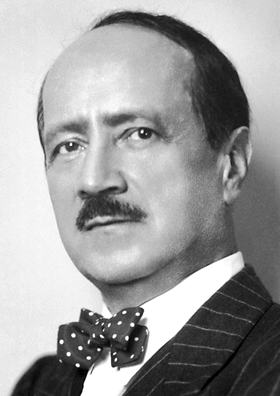
Saint-John Perse
### Introduction: The Diplomat-Poet of the Antillean Sea Alexis Léger (May 31, 1887 – September 20, 1975), globally celebrated by his literary pseudonym **Saint-John Perse**, remains one of the most enigmatic and luminous figures in twentieth-century world literature and international statecraft [1]. Born into the creole planter society on a small coral islet off the coast of Pointe-à-Pitre, Guadeloupe, Léger rose through intellect and administrative mastery to become the highest-ranking civil servant in French foreign policy—serving as Secretary-General of the Ministry of Foreign Affairs (*Secrétaire général du Quai d'Orsay*) during the harrowing geopolitical crises of the 1930s [2]. Concurrently, writing under a strict pseudonym to preserve the absolute neutrality and discretion demanded by his diplomatic office, he created a monumental body of epic, rhythmic verse that fundamentally revolutionized modern Francophone poetics. In 1960, he was awarded the Nobel Prize in Literature "for the soaring flight and the evocative imagery of his poetry which in a visionary fashion reflects the conditions of our time" [3]. Throughout his long life spanning global diplomacy, political exile in the United States, and worldwide acclaim, his poetic imagination remained eternally anchored in the marine horizons, tropical vegetation, and sensory brilliance of his native Caribbean. ### Childhood on the Islet: Guadeloupe and the Crucible of Memory Alexis Léger was born on May 31, 1887, on Îlet-à-Feuilles (later renamed Saint-Léger-les-Feuilles), a private family-owned coral islet nestled in the Petit Cul-de-Sac Marin near the harbor entrance of Pointe-à-Pitre, Guadeloupe [1]. His family belonged to the long-established French creole (*béké*) elite of the Lesser Antilles, tracing their ancestral presence in Guadeloupe back to 1815 [4]. His father, Amédée Léger, was an attorney of distinction who served as President of the General Council of Guadeloupe, while his mother, Marie Pauline Renée Dormoy, descended from a prominent lineage of colonial planters [2]. The family divided their existence between their elegant town residence in Pointe-à-Pitre, the tranquil seclusion of Îlet-à-Feuilles, and two vast agricultural estates: "La Joséphine," a coffee plantation nestled in the cool volcanic heights of Saint-Claude beneath the Soufrière volcano, and "Bois-Debout," an extensive sugarcane plantation situated along the windswept eastern coast of Capesterre-Belle-Eau [4]. For the first twelve years of his life, young Alexis was immersed in an island universe of extraordinary sensory intensity. He was surrounded by the rhythmic roar of the Atlantic surf, the vibrant turquoise shoals of the Caribbean Sea, the warm fragrance of crushed sugarcane and roasting coffee beans, and the lush biodiversity of equatorial rainforests, hummingbirds, and frigatebirds [5]. Raised largely by Afro-Guadeloupean nurses, domestic servants, and Creole sailors, the young boy developed an intimate reverence for the island's botanical life, oral traditions, and maritime culture [1]. He learned to sail small boats through treacherous coral reefs and absorbed the elemental cadences of tropical weather—from torrential equatorial downpours to the terrifying stillness that preceded tropical hurricanes. This immersion in Caribbean nature formed the foundational bedrock of his artistic sensibility. Decades later, the sights, textures, and rhythms of Guadeloupe would surge through his verses, providing the elemental metaphors of sea, salt, and trade winds that defined his mature poetry. > "Palms...! Then was the world for us a boundless space, where the winds had the scent of raw sugar and sea salt... A childhood nourished on fresh sap and sea spray, under the high command of the trade winds." — Saint-John Perse, *Pour fêter une enfance* [5]  ### Economic Ruin and Exile to Mainland France The idyllic world of Alexis Léger’s Antillean childhood came to an abrupt, traumatic end toward the close of the nineteenth century. In February 1897, a catastrophic earthquake rocked Pointe-à-Pitre, collapsing historic colonial residences and devastating the island's infrastructure [4]. This natural disaster coincided with a severe worldwide collapse in cane sugar prices, triggered by the industrial expansion of European sugar beet production. Simultaneously, escalating socio-political tensions and labor unrest undermined the economic viability of the traditional plantation system [1]. The Léger family's estates were heavily mortgaged, and within a few short years, their ancestral wealth evaporated. Faced with financial ruin, the Léger family made the agonizing decision to liquidate their remaining holdings and depart Guadeloupe permanently in March 1899 [4]. Alexis, then eleven years old, watched the emerald peaks of Basse-Terre sink beneath the Atlantic horizon—a voyage into exile from which he would never return to live in the Caribbean [1]. The family settled in the southwestern French city of Pau, in the shadow of the Pyrenees. For the young boy who had known only the boundless warmth, light, and freedom of the tropics, provincial France felt damp, confining, and emotionally frigid. He was enrolled at the Lycée de Pau, where he excelled academically, finding solace in classical Greek and Latin literature, botany, and maritime navigation [2]. ### Literary Awakening in Bordeaux and the Publication of *Éloges* In 1904, Léger moved to Bordeaux to pursue studies in law, political economy, and medicine at the University of Bordeaux [2]. During his university years, he began circulating his first experimental prose poems among avant-garde literary journals. His extraordinary linguistic gift, marked by majestic cadences, incantatory rhythms, and rare botanical and nautical vocabulary, caught the attention of prominent writers, including Francis Jammes, Paul Claudel, André Gide, Jacques Rivière, and Valery Larbaud [6]. Claudel, himself a distinguished diplomat and devout Catholic poet, recognized in Léger a kindred spirit possessing a cosmic, architectural vision of language. In 1911, Léger published his debut poetry collection, *Éloges* (Praises), under the name Saint-Léger Léger [5]. The collection, which featured the celebrated cycles "Images à Crusoé" and "Pour fêter une enfance," was an astonishing celebration of his lost Antillean childhood. Unlike the melancholic nostalgia typical of romantic exile poetry, *Éloges* re-created Guadeloupe through an objective, ritualistic feast of the senses—cataloging native fruits, sea breezes, coral shoals, and domestic plantation scenes with aristocratic elegance and linguistic precision [5]. *Éloges* immediately established him as one of the most original and formidable poetic voices in modern French literature. ### The Diplomatic Ascendance: China, Aristide Briand, and the Quai d'Orsay Despite his immediate literary success, Léger possessed no desire to live as a Parisian bohemian or commercial man of letters. Believing that poetry was a sacred interior vocation that should never be compromised by financial dependence or public exhibitionism, he resolved to pursue a career in statecraft [1]. In 1914, on the eve of World War I, he successfully sat for the competitive entrance examinations for the French diplomatic service, supported by his mentor Philippe Berthelot, the powerful Secretary-General of the Ministry of Foreign Affairs [2]. In 1916, Léger received his first major foreign assignment as secretary of the French legation in Beijing (Peking), China [2]. He spent five transformative years in China during the turbulent warlord era, traveling extensively through the Gobi Desert, Mongolia, and the Chinese interior. He rented an isolated, abandoned Taoist temple in the Western Hills outside Beijing (Tianjie), where he immersed himself in Eastern philosophy, equestrian expeditions, and poetic composition [1]. It was in this mountain hermitage that he composed *Anabase* (Anabasis), a sweeping epic poem chronicling the conquests, migrations, and spiritual yearnings of human civilizations across desolate landscapes [7]. Published in 1924 under the newly adopted pseudonym **Saint-John Perse**—a pen name designed to shield his diplomatic identity from public scrutiny—*Anabase* became an international literary milestone, translated into English by T.S. Eliot in 1930 and into German by Rainer Maria Rilke and Walter Benjamin [7]. In 1921, Léger accompanied the French delegation to the Washington Naval Conference in the United States [2]. There, his razor-sharp analytical mind and profound grasp of Asian and international affairs caught the attention of French Prime Minister and Foreign Minister Aristide Briand. Briand was so impressed that he appointed Léger his *chef de cabinet* (chief of staff) at the Quai d'Orsay [1]. For the next decade (1921–1932), Léger served as Briand's closest advisor, confidant, and principal foreign policy architect. He collaborated intimately on the Locarno Treaties of 1925, which sought post-war reconciliation with Weimar Germany, and the 1928 Kellogg-Briand Pact, which outlawed war as an instrument of national policy [2]. Crucially, Léger was the primary drafter of the historic 1930 "Briand Memorandum on the Organization of a Regime of European Federal Union"—the first official diplomatic proposal in modern history advocating for a unified European community [2]. In February 1933, at the age of forty-five, Léger reached the absolute summit of the French diplomatic hierarchy when he was appointed Secretary-General of the Ministry of Foreign Affairs [1]. As the highest permanent civil servant in French foreign policy, he directed the Quai d'Orsay through seven tumultuous years of escalating European crisis.  ### Defending the Republic: Resistance to Appeasement and Vichy Persecution Throughout the 1930s, Léger adopted an uncompromising, clear-eyed stance against the expansionist threat posed by Adolf Hitler’s Nazi Germany [1]. Unlike many contemporary politicians who favored appeasement, Léger warned repeatedly that concessions to Berlin would only embolden Nazi aggression. He advocated for a firm Franco-British alliance and sought diplomatic agreements with the Soviet Union and Central European states to encircle the German threat [2]. In September 1938, Léger accompanied Prime Minister Édouard Daladier to the fateful Munich Conference [1]. Although deeply opposed to the capitulation to Hitler’s demands regarding Czechoslovakia, he witnessed Daladier and British Prime Minister Neville Chamberlain sign the Munich Agreement. Léger regarded Munich as a catastrophic moral and strategic failure. His principled refusal to endorse further appeasement earned him bitter enemies among French political defeatists, pro-fascist factions, and German diplomats, who labeled him an obstacle to peace [2]. When World War II erupted in September 1939, Léger worked tirelessly to coordinate the Allied war effort. However, in May 1940, as the German military breached French defenses, political intrigues brought about his downfall. Prime Minister Paul Reynaud, influenced by appeasement-leaning advisors, abruptly dismissed Léger from his post as Secretary-General [1]. When the collaborationist Vichy regime was installed under Marshal Philippe Pétain in June 1940, Léger refused all offers of compromise or cooperation. Recognizing that his life was in immediate danger, he boarded a ship for England, eventually finding refuge in the United States in July 1940 [2]. The Vichy government retaliated against Léger with vindictive fury. In October 1940, Pétain issued an official decree stripping Léger of his French citizenship, revoking his membership in the Legion of Honor, and confiscating all his personal assets [1]. Concurrently, the Gestapo ransacked his apartment on Avenue de Camoëns in Paris, seizing his private papers and destroying several unpublished epic poetic manuscripts—an irreplaceable literary loss that haunted the poet for the remainder of his life. ### Exile in America and the Resurgence of Song Arriving penniless and dispossessed in Washington, D.C., Léger found a crucial sanctuary through the intervention of the American poet and Librarian of Congress, Archibald MacLeish [1]. MacLeish secured for him an appointment as an honorary consultant in French literature at the Library of Congress, providing Léger with a modest income, a quiet office, and access to the world’s greatest collection of books [2]. Surrounded by exile and the catastrophe of war, the diplomat Alexis Léger fell silent, allowing the poet Saint-John Perse to reclaim his voice after nearly two decades of administrative restraint. In the United States, Perse entered the most prolific creative period of his life. During a stay on the wind-battered coast of Long Beach Island, New Jersey, in the summer of 1941, he composed *Exil* (Exile), a towering metaphysical meditation on homelessness, temporal dislocation, and the enduring power of language [7]. This was followed by a sequence of sweeping masterworks written in rhythmic versets: *Pluies* (Rains, 1943), *Neiges* (Snows, 1944), and *Vents* (Winds, 1946)—a monumental epic inspired by the vast geography, winds, and spiritual energies of the North American continent [7]. In 1957, he published *Amers* (Seamarks), a transcendent oceanic hymn celebrating the sea as the cradle of civilization, love, and human renewal [7]. > "Poetry is not merely a way of knowing; it is even more a way of living—of living entirely, in one’s entirety, and with one’s whole being." — Saint-John Perse, Nobel Banquet Speech, 1960 [3] Following the liberation of France in 1944, the provisional French government under General Charles de Gaulle formally restored Léger’s citizenship, diplomatic rank, and honors, offering him senior ambassadorial posts [2]. However, deeply wounded by his wartime betrayal, Léger declined to re-enter active diplomatic service. He chose to remain in Washington, D.C., until 1957, when American benefactors and French admirers presented him with a coastal estate, "Les Vigneaux," on the Giens peninsula in southern France [1]. For the remainder of his life, he divided his seasons between the United States and the Mediterranean shore of Provence. ### The 1960 Nobel Prize in Literature In October 1960, the Swedish Academy awarded Saint-John Perse the Nobel Prize in Literature [3]. The citation celebrated his poetic grandeur, honoring him "for the soaring flight and the evocative imagery of his poetry which in a visionary fashion reflects the conditions of our time" [3]. On December 10, 1960, at the Nobel banquet in Stockholm's City Hall, Perse delivered one of the most revered acceptance speeches in the history of the prize [3]. In an era dominated by rapid scientific and technological advancement, he articulated a profound defense of poetry, arguing that poetic intuition and scientific inquiry were complementary paths toward human truth. He declared that poetry was not an idle luxury or decorative amusement, but a fundamental spiritual necessity—an act of moral conscience that upheld human dignity amid material uncertainty [3]. The award cemented his position alongside Paul Valéry, Stéphane Mallarmé, and Arthur Rimbaud in the pantheon of modern French poets. ### The Antillean Heritage and Caribbean Literary Dialogue Although Saint-John Perse lived and died thousands of miles from the island of his birth, his Caribbean origins remained the beating heart of his artistic identity [4]. Unlike contemporary European poets whose imagery drew upon urban life or classical ruins, Perse’s verse was saturated with the primal dynamics of the tropical environment: the seasonal pulse of trade winds (*les alizés*), the blinding light of the tropics, mangrove swamps, torrential cloudbursts, and the immensity of the ocean [5]. His relationship to the Caribbean was complex, mirroring the historical contradictions of his era. As a descendant of the white planter oligarchy, Perse celebrated an aristocratic memory of the pre-modern plantation world, viewing it through an idealized, timeless prism [4]. Yet, his work served as a crucial catalyst for modern Caribbean literature. In his historic 1992 Nobel Lecture, Saint Lucian poet and dramatist [Derek Walcott](/profiles/derek-walcott) delivered a nuanced tribute to Perse in *The Antilles: Fragments of an Epic Memory*, acknowledging that despite the social divisions of colonial history, Perse had captured the genuine light, foliage, and elemental majesty of the archipelago [8]: > "Saint-John Perse’s poetry was formed by the dazzle of the Caribbean light, the salt spray of its trade winds, and the deep, elegiac memory of an island childhood that never ceased to haunt his exile." — Derek Walcott [8] Similarly, Martinican philosopher and writer Édouard Glissant engaged extensively with Perse's work, analyzing how Perse’s poetic nomadism and oceanic imagination anticipated modern Caribbean concepts of relation and exile [9]. While Aimé Césaire articulated the revolutionary voice of Negritude and African resistance, Perse voiced the profound experience of Caribbean displacement and the eternal call of the sea [9]. In Pointe-à-Pitre, Guadeloupe, his legacy is officially preserved at the **Musée Saint-John Perse**, established in 1987 in the historic Maison Souques-Pagès—an exquisite 19th-century metal-framed colonial mansion designed by the workshops of Gustave Eiffel [10]. The museum displays archival documents, personal artifacts, first editions, and family photographs, celebrating the enduring bond between the Nobel laureate and his native island. ### Final Years and Eternal Rest In his late years, Perse continued to write, publishing *Chronique* (1960), *Oiseaux* (Birds, 1962, illustrated by Georges Braque), and *Chant pour un équinoxe* (Song for an Equinox, 1971) [7]. In 1958, he married Dorothy Milburn Russell, an American with whom he shared his final peaceful years between Georgetown and Provence [2]. On September 20, 1975, Alexis Léger passed away at his home in Giens at the age of eighty-eight [1]. He was laid to rest in the small cemetery on the Giens peninsula, perched on a cliff overlooking the azure waters of the Mediterranean Sea [2]. To the very end, he remained a poet of the horizon—a Guadeloupean child whose memory of a small coral islet expanded into a universal song of human dignity, exile, and oceanic beauty.
View Profile →
Simone Schwarz-Bart
## Simone Schwarz-Bart: Voice of Antillean Resilience and Matriarchal Folklore ### Introduction and Literary Horizon Simone Schwarz-Bart stands among the most celebrated and visionary literary figures of the Francophone Caribbean [1]. Renowned as a novelist, playwright, and essayist, her luminous body of work has fundamentally reshaped the landscape of Antillean literature by elevating the voices, struggles, and profound spiritual resilience of Caribbean women [2]. Emerging during a vibrant literary Renaissance that saw the rise of global Caribbean intellectuals such as [Maryse Condé](/profiles/maryse-conde), [Aimé Césaire](/profiles/aime-cesaire), and [Édouard Glissant](/profiles/edouard-glissant), Schwarz-Bart carved out a uniquely incantatory narrative space [3]. Her prose seamlessly interweaves Creole oral traditions, rural folklore, historical memory, and poetic realism to chronicle the multi-generational survival of the descendants of enslaved Africans [4]. Through her masterpieces—most notably Pluie et vent sur Télumée Miracle (The Bridge of Beyond)—she transformed the historical trauma of the Guadeloupean peasantry into a universal celebration of human dignity, matriarchal strength, and cultural endurance [5]. ### Early Life, Heritage, and Creole Roots Simone Schwarz-Bart was born Simone Brumant on January 8, 1938, in the town of Saintes, located in the Charente-Maritime department of metropolitan France [1]. Her parents were natives of Guadeloupe; her father was a career military soldier serving in the French armed forces, and her mother was a dedicated schoolteacher [6]. When Simone was just three months old, her mother returned with her to Guadeloupe, where she spent her formative childhood and adolescent years deeply embedded in the island's lush landscape and vibrant Creole culture [3]. Growing up between the rural district of Goyave and the bustling urban port city of Pointe-à-Pitre, young Simone absorbed the rich oral traditions, proverbial wisdom, and storytelling rhythms of the Guadeloupean people [2]. In early mid-century Guadeloupe, daily life was shaped by the enduring legacies of the plantation economy, social stratification, and the quiet, unyielding strength of Antillean women who held families and communities together through severe economic hardship [5]. These women—grandmothers, mothers, and godmothers who carried historical memory through spoken tales and daily rituals—became the foundational inspiration for Schwarz-Bart’s future literary imagination [4]. Surrounded by the natural majesty of the island's rivers, sugarcane fields, and looming volcano, she developed a profound ecological and spiritual consciousness that paralleled the pioneering cultural investigations of earlier Antillean thinkers like [Paulette Nardal](/profiles/paulette-nardal) [3].  ### Education, Exile, and Meeting André Schwarz-Bart Simone Brumant completed her primary and secondary schooling in Guadeloupe, excelling as a brilliant and deeply inquisitive student [1]. Seeking to pursue higher education, she relocated to Paris in the mid-1950s to study at the Sorbonne [6]. The Parisian environment during this post-war period was a dynamic crossroads for students, artists, and activists from across the African and Caribbean diaspora, buzzing with debates on anticolonialism, Négritude, and existentialism inspired by intellectuals such as [Léon-Gontran Damas](/profiles/leon-gontran-damas) and [Frantz Fanon](/profiles/frantz-fanon) [3]. While navigating university life in the French capital, Simone experienced the poignant dualities of exile—an intense longing for her Caribbean homeland coupled with a broadening intellectual horizon [5]. It was during this transformative Parisian chapter that she met André Schwarz-Bart, a celebrated French writer of Polish-Jewish descent who had just won the prestigious Prix Goncourt in 1959 for his monumental Holocaust novel, The Last of the Just [2]. Their meeting sparked an extraordinary personal and artistic union. They married in 1963, forging a profound partnership built on mutual respect, deep empathy, and a shared dedication to exploring human suffering and historical survival [4]. Together, they recognized a profound historical parallel between the Jewish Holocaust and the centuries-long tragedy of the transatlantic slave trade and Caribbean enslavement [4]. This communion of historical traumas laid the philosophical groundwork for their subsequent literary collaborations. ### Collaborative Masterpieces and Literary Genesis The literary collaboration between Simone and André Schwarz-Bart produced some of the most ambitious historical narratives in modern French literature [6]. In 1967, they co-authored Un plat de porc aux bananes vertes (A Plate of Pork with Green Bananas), which marked the beginning of a projected multi-volume cycle entitled La Mulâtresse Solitude [1]. The novel told the harrowing story of a Caribbean woman ending her days in a Parisian asylum, exploring themes of historical displacement, alienation, and memory [3]. Through this joint effort, Simone began honing her distinctive literary voice, blending André's historical rigor with her own visceral connection to Caribbean sensory experience and Creole idioms [5]. Decades later, their collaborative spirit culminated in the publication of the monumental six-volume encyclopedic work Hommage à la femme noire (In Praise of Black Women), published between 1988 and 1989 [2]. This sprawling, highly acclaimed compendium meticulously documented the overlooked histories, heroic leadership, and cultural contributions of Black women from ancient African queens and heroines of the diaspora to contemporary political and artistic pioneers [4]. By writing Black women back into universal history, Schwarz-Bart solidified her commitment to feminist historiography and pan-African solidarity, elevating figures who had long been marginalized by colonial narratives [6]. ### Masterpiece: Pluie et vent sur Télumée Miracle Simone Schwarz-Bart achieved international literary immortality as a solo author with the publication of her 1972 novel, Pluie et vent sur Télumée Miracle (translated into English as The Bridge of Beyond) [1]. Widely hailed as a masterpiece of twentieth-century literature, the novel won the prestigious Grand prix des lectrices de Elle and established Schwarz-Bart as a premier voice in Francophone letters [6]. The novel chronicles three generations of Guadeloupean women from the proud Lougandor family—the revered grandmother Toussine (known affectionately as Reine-Sans-Nom), her daughter Victoire, and her resilient granddaughter Télumée, who narrates the epic saga [4]. Set against the lush, unforgiving backdrop of rural Guadeloupe in the decades following the abolition of slavery, the novel follows Télumée as she confronts crushing poverty, heartbreak, racial injustice, and social exploitation [3]. Rather than succumbing to despair, Télumée draws profound spiritual nourishment from the ancestral wisdom of Reine-Sans-Nom and the natural environment around her [5]. Schwarz-Bart crafted the novel's prose with an enchanting, lyrical cadence that mirrors the oral storytelling traditions of Creole culture, weaving local proverbs, metaphors, and folk beliefs directly into the French language [4]. The novel stands as a monumental tribute to the indomitable spirit of Caribbean women who, like bamboo reeds in a tropical hurricane, bend under the fierce winds of life but refuse to break [2]. > [!NOTE] > Pluie et vent sur Télumée Miracle is celebrated not merely as a work of fiction, but as a cultural scripture that restored dignity, philosophical depth, and poetic grace to the forgotten rural women of the French Antilles. > "Thus I have lived, thus I have been a woman... I stand here in my garden, sturdy and unshaken, like a towering tree that has weathered every storm, holding the memory of my people in the roots of my soul." — Pluie et vent sur Télumée Miracle [5] ### Playwriting and Dramatic Innovations Demonstrating her remarkable creative versatility, Schwarz-Bart later expanded her literary explorations into the realm of theatre [1]. In 1987, she published the widely acclaimed play Ton beau capitaine (Your Handsome Captain), a poignant one-act drama that explored the intimate human toll of economic migration in the contemporary Caribbean [6]. The play centers on Wilnour, a Haitian agricultural laborer working as a migrant cane cutter in Guadeloupe, and his wife Marie-Ange, who remains behind in impoverished Haiti [3]. Separated by the Caribbean Sea, the couple communicates exclusively through recorded cassette tapes sent back and forth across the water [5]. Through this minimalist and emotionally devastating theatrical framework, Schwarz-Bart illuminated the profound isolation, economic displacement, and relational fracturing caused by modern neocolonial labor systems [4]. Ton beau capitaine was performed to critical acclaim on stages across Europe, the Caribbean, and North America [4]. The play showcased Schwarz-Bart’s deep pan-Caribbean empathy, transcending island boundaries to express profound solidarity with the Haitian working class and reflecting the regional humanism advocated by contemporaries like [Edouard Glissant](/profiles/edouard-glissant) [3]. Her dramatic dialogue captured the nuances of longing, fidelity, and dignity under the weight of systemic economic oppression. ### Later Works, Global Nomadism, and Lasting Legacy Throughout her adult life, Simone Schwarz-Bart embraced a nomadic global existence, residing at various periods in Senegal, Switzerland, metropolitan France, and her beloved Guadeloupe [2]. In 1979, she published the enchanting novel Ti Jean L'horizon, a magical realist epic that incorporated Caribbean mythology, African ancestral memories, and science fiction elements to explore the quest for Antillean identity across time and space [6]. Following the passing of her husband André Schwarz-Bart in 2006, Simone dedicated herself to managing their shared literary estate and completing several unpublished manuscripts they had conceived together, including the novel L'Étoile du matin (2009) [1]. In recognition of her extraordinary contributions to literature and the preservation of Francophone cultural heritage, Schwarz-Bart was named a Commandeur des Arts et des Lettres by the French government and has received numerous lifetime achievement accolades across the globe [4]. Today, she resides primarily in Guadeloupe, where her home in Goyave—named La Soufrière—has long served as a cultural gathering place for writers, scholars, and artists [3]. Simone Schwarz-Bart’s literary legacy remains a towering monument in Caribbean letters [5]. By capturing the majestic folklore, linguistic beauty, and matriarchal power of Guadeloupe, she has ensured that the stories of Antillean women continue to resonate with timeless, universal brilliance across the world [5].
View Profile →
Solitude (The Mulatress)
The history of the Caribbean is inscribed with the epic struggles of men and women who defied the crushing brutality of chattel slavery to assert their humanity and demand absolute freedom [1]. Among the most legendary and revered figures of this relentless resistance is La Mulâtresse Solitude, known simply as Solitude [2]. A heroic Guadeloupean freedom fighter, her fierce participation in the 1802 insurrection against the reintroduction of slavery ordered by First Consul [Napoleon Bonaparte](/profiles/napoleon-bonaparte) has immortalized her as a timeless symbol of women's leadership, courage, and unyielding defiance against colonial tyranny [3]. Fighting alongside legendary revolutionary commanders such as [Louis Delgrès](/profiles/louis-delgres) and [Joseph Ignace](/profiles/joseph-ignace), Solitude chose the perils of armed resistance over submission, embodying the immortal revolutionary slogan of the Guadeloupean insurgents: *Vivre libre ou mourir* (Live free or die). ### Early Life and the Brutality of the Code Noir Born around 1772 in the French Caribbean colony of Guadeloupe, the woman who would later be immortalized as Solitude entered a world strictly governed by the dehumanizing mandates of the *Code Noir* [1]. Historical traditions record that she was originally named Rosalie, the daughter of an enslaved African woman who endured the horrors of the Middle Passage or coastal captivity, and a French sailor who sexually assaulted her [2]. As a *mulâtresse* (a person of mixed African and European heritage born into slavery), her early existence was marked by profound alienation and violence. Under colonial law, the child followed the status of the mother, condemning young Rosalie to the relentless exploitation of the plantation economy. Growing up surrounded by the cane fields of Basse-Terre, Rosalie bore witness to the daily atrocities inflicted upon enslaved laborers by white planters and overseers. The plantation hierarchy was designed to crush the human spirit through physical torture, forced labor, and social fragmentation [3]. Yet, even within the suffocating confines of bondage, enslaved populations cultivated rich networks of cultural survival and covert resistance. Inspired by news of slave revolts across the Caribbean—most notably the explosive beginnings of the Haitian Revolution led by figures like [Toussaint Louverture](/profiles/toussaint-louverture)—Rosalie developed an acute consciousness of liberation. It was during these formative years of internal resistance that she began to distance herself from the colonial structures, eventually adopting the name "Solitude"—a testament to her fierce independence, spiritual fortitude, and self-reliance in a world determined to subjugate her. ### The First Abolition of Slavery in 1794 The revolutionary fervor sweeping through mainland France following 1789 inevitably sent seismic shockwaves across the Atlantic colonies. In February 1794, the French National Convention officially decreed the abolition of slavery throughout all French territories [1]. Shortly thereafter, the revolutionary commissioner [Victor Hugues](/profiles/victor-hugues) arrived in Guadeloupe with a fleet and a small force, carrying the decree of freedom and rallying the newly emancipated Black and mixed-race population to drive out the occupying British forces who had been invited by royalist white planters to preserve the slave economy [2]. For the first time in her life, Solitude experienced the sweet taste of liberty. The period between 1794 and 1802 transformed Guadeloupean society. Emancipatees established smallholdings, integrated into the local defense forces, and reveled in their status as free citizens. Solitude reportedly joined a community of Maroons and independent cultivators in the lush, mountainous interior of Basse-Terre. Here, amidst the volcanic valleys and dense tropical forests, free Black men and women built self-sustaining agricultural communities governed by their own social norms, fiercely protective of their hard-won autonomy.  > "To have known the sweetness of freedom after the bitterness of chains makes the thought of returning to bondage a fate worse than death itself. We stand upon this soil not as property, but as sovereign children of liberty." ### Napoleon Bonaparte's Betrayal and the 1802 Invasion The dawn of freedom, however, was tragically brief. By 1799, [Napoleon Bonaparte](/profiles/napoleon-bonaparte) had seized power in France as First Consul. Driven by imperial ambitions and heavily influenced by the colonial planting lobby, Napoleon sought to restore French economic dominance in the Americas by re-establishing the lucrative plantation system [3]. Following the Treaty of Amiens in early 1802, which brought a temporary peace with Great Britain, Napoleon enacted the Law of 20 May 1802, officially restoring slavery and the slave trade in colonies where it had not been successfully enforced, while secretly ordering military expeditions to crush Black authority in Saint-Domingue (Haiti) and Guadeloupe [1]. In May 1802, a formidable French expeditionary force consisting of 3,400 heavily armed troops commanded by General Antoine Richepance arrived in the waters of Guadeloupe. Richepance's orders were ruthless: disarm all Black and mixed-race soldiers, purge the military leadership, and return the Black population to plantation servitude [2]. While some colonial officers, such as [Magloire Pélage](/profiles/magloire-pelage), chose compliance or capitulation, a valiant core of revolutionary officers refused to surrender their freedom. Led by the charismatic colonel [Louis Delgrès](/profiles/louis-delgres) and the fearless captain [Joseph Ignace](/profiles/joseph-ignace), the insurgents issued a resounding call to arms, publishing a historic proclamation to the universe declaring their intention to fight to the death to preserve their liberty. ### The Battle for Liberty: Solitude in the Insurrection When the call to defend freedom echoed across the valleys of Guadeloupe, Solitude did not hesitate. Although she was several months pregnant at the time, she answered the summons of [Louis Delgrès](/profiles/louis-delgres) and rallied to the insurgent camps at Dolé and Fort Saint-Charles [3]. In doing so, she became one of the most prominent female combatants in the anti-slavery war, transforming from an independent rural cultivator into a frontline revolutionary soldier. Historical accounts and oral traditions describe Solitude fighting with astonishing ferocity alongside male insurgents. Wielding a machete and a musket, she engaged French colonial troops in desperate skirmishes through the rugged terrain of Basse-Terre. Her presence on the battlefield served as a powerful moral force; she rallied the fighters, tended to the wounded, and exhorted her comrades to give no quarter to the invaders who sought to re-enslave them and their unborn children [2]. Her heroism shattered traditional colonial gender dynamics, proving that women were vital pillars of revolutionary warfare.  > "Live free or die! We prefer death to the chains of slavery, and our blood shall nourish the soil of liberty for generations unborn." ### Capture, Execution, and the Martyrdom of Matouba Despite their overwhelming courage and tactical brilliance, the Guadeloupean insurgents were eventually outnumbered and outgunned by Richepance's well-supplied reinforcements. By late May 1802, insurgent forces had been pushed back into their mountain strongholds. On May 28, 1802, surrounded at the habitation D'Anglemont in Matouba on the slopes of the Soufrière volcano, [Louis Delgrès](/profiles/louis-delgres) and approximately 400 of his followers made a legendary sacrifice. Rather than face capture and re-enslavement, they ignited their gunpowder stores, blowing themselves up and taking hundreds of advancing French soldiers with them in a defiant final explosion of liberty [1]. Solitude was captured around the time of the fall of Matouba, wounded but surviving the carnage. Recognized as a prominent leader among the rebels, she was thrown into a colonial prison and sentenced to death by military tribunal. However, in a display of cold, economic calculation, French colonial authorities stayed her execution because of her advanced pregnancy [3]. Under the restored laws of slavery, the unborn child represented valuable property to the colonial state. Solitude spent her final months in a damp cell, carrying her child to term under the shadow of the gallows. On November 28, 1802, Solitude gave birth to her child. Just one day later, on November 29, 1802, with her bodily utility to the slave system fulfilled, the colonial authorities brought her to the scaffold. At approximately 30 years of age, La Mulâtresse Solitude was hanged. Her newborn child was immediately consigned to slavery, entering the world handcuffed by the very system its mother had died fighting to destroy [2]. ### Historical Legacy and Cultural Immortality For over a century, official colonial histories attempted to erase or minimize the heroic resistance of Solitude and the 1802 insurgents. Yet, her memory survived in the rich oral traditions of the Guadeloupean people and in brief notations in 19th-century historical accounts by writers such as Auguste Lacour [1]. In 1972, her global legacy was permanently cemented with the publication of André Schwarz-Bart's landmark novel, *La Mulâtresse Solitude*, which wove historical facts with poetic resonance to present her story to the world [3]. Today, Solitude stands venerated as a foundational matriarch of Caribbean freedom. Her sacrifices are commemorated through public monuments across the francophone world, including the striking statue sculpted by Jacky Poulier erected in Les Abymes, Guadeloupe, in 1999, and a monument inaugurated in the Jardin Solitude in Paris in 2022—making her the first Black woman honored with a statue in the French capital [2]. Solitude's life remains an eternal beacon of resilience, reminding future generations that the liberation of the Caribbean was forged through the unflinching courage of women who dared to defy empire.
View Profile →