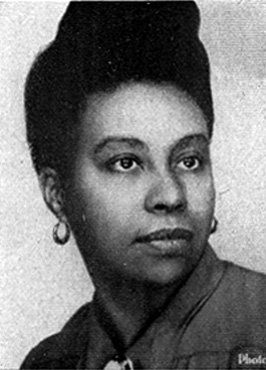
Henry Sidambarom

Henry Sidambarom
Biography
Henry Sidambarom (born July 5, 1863 – died September 15, 1952) stands as one of the most transformative yet historically underrepresented figures in the socio-political landscape of the French Caribbean. Widely revered as the "Gandhi of Guadeloupe" for his unwavering, non-violent advocacy and monumental legal crusades, Sidambarom dedicated his remarkably long life to dismantling the oppressive colonial hierarchies that subjugated Indian indentured laborers—known locally as engagés—and their descendants. Operating within a deeply fractured post-emancipation colonial society, he emerged as a formidable Justice of the Peace, municipal councilor, and human rights defender who fundamentally redefined civic integration and legal identity in Guadeloupe. His lifelong struggle against the systematic disenfranchisement of the Indo-Guadeloupean community not only reshaped the electoral and political demographics of the island but also established a profound legacy of multicultural solidarity alongside figures of Afro-Caribbean resistance such as Louis Delgrès and Victor Schœlcher. Through his meticulous legal acumen and unyielding moral courage, Sidambarom successfully bridged the divide between servitude and full French citizenship, securing the civic dignity of tens of thousands of people.
Early Life and the Indian Indentured Diaspora
To understand the magnitude of Henry Sidambarom’s achievements, one must examine the turbulent socio-economic realities of nineteenth-century Guadeloupe. Following the final abolition of enslaved African labor in 1848, the French colonial administration and the powerful white plantation oligarchy—the békés—faced an acute labor shortage on their vast sugarcane estates. In response, colonial authorities instituted the system of engagisme (indentured servitude), importing over 42,000 contract laborers from the Indian subcontinent between 1854 and 1889, primarily from Tamil-speaking regions of South India such as the Madras Presidency, Pondicherry, and Karikal.
It was into this marginalized immigrant community that Henry Moutou Sidambarom was born on July 5, 1863, in the rural commune of Capesterre-Belle-Eau. His father, Joseph Sidambarom, and his mother, Allamélou, were Indian immigrants who had endured the grueling transoceanic voyage to work the fertile volcanic soils of Basse-Terre. Growing up on the plantation periphery, young Henry witnessed firsthand the stark realities of indentured life. Despite contractual promises of fair wages, medical care, and free repatriation upon the completion of five-year terms, the engagés were subjected to neo-feudal exploitation, arbitrary wage deductions, severe physical abuse, and horrific living conditions. Furthermore, the colonial legal apparatus treated Indian workers as permanent aliens and stateless pariahs, systematically denying them civil status, public education, and political representation.
Unlike many of his peers who were deprived of schooling, Henry Sidambarom demonstrated exceptional intellectual aptitude from an early age. Encouraged by his family, he acquired a formal French education while retaining fluency in Tamil and Guadeloupean Creole. This unique multilingual competence and cultural fluency allowed him to navigate both the insular world of the Indian barracks and the bureaucratic machinery of the French colonial state, uniquely positioning him to become the voice of a silenced diaspora.
Professional Entry and Awakening
In 1884, at the age of twenty-one, Sidambarom secured a pivotal position at the head office of Indian immigration (Commissariat de l'Immigration) in the capital city of Basse-Terre. Employed as an interpreter and administrative clerk, he was tasked with processing employment contracts, civil registries, and repatriation requests. This professional access proved to be his political awakening. Deep within the archives and daily dockets of the immigration office, Sidambarom uncovered undeniable documentary evidence of systemic injustice: falsified labor contracts, unlawful contract extensions, ignored reports of plantation violence, and thousands of illegitimate denials of repatriation.
Recognizing that colonial authorities were deliberately exploiting the legal illiteracy of Indian laborers to maintain a captive, disenfranchised workforce, Sidambarom began utilizing his official position to assist workers in drafting legal grievances and demanding their contractual rights. His office soon transformed into a sanctuary for aggrieved laborers across Guadeloupe.
"To remain silent in the face of the systematic disenfranchisement of our people is to become an accomplice to our own servitude. We do not beg for benevolence; we demand the equality and dignity promised by the laws of the Republic."
This bold stance inevitably drew the ire of the colonial plantocracy and administrative officials, who viewed an educated, articulate Indian advocate as a direct threat to the colonial economic order. Despite enduring bureaucratic harassment and professional marginalization, Sidambarom refused to abandon his advocacy, realizing that true liberation required moving beyond individual labor grievances to contest the very political status of Indian descendants in the French Empire.
The Landmark Legal Battle for Citizenship (1904–1923)
By the turn of the twentieth century, a substantial population of Indo-Guadeloupeans had been born on French soil (jus soli), yet they remained trapped in a legal void, denied the right to vote, serve on juries, or run for public office. In 1904, Henry Sidambarom took a historic and unprecedented step: he formally registered as a candidate in the municipal elections of Capesterre-Belle-Eau and demanded that the names of Indian descendants be inscribed on the official electoral rolls. When colonial election administrators summarily rejected his candidacy and purged Indian voters from the registries on the grounds that they were "foreigners of Indian origin," Sidambarom launched a monumental lawsuit against the French state.
This initiated a grueling legal struggle that lasted nearly two decades (1904–1923). Sidambarom’s legal strategy was as brilliant as it was relentless. He argued before colonial tribunals and metropolitan courts in Paris that since Indian indentured recruitment had ceased in 1889, and since Indian laborers were subjected to French colonial taxation and laws, their descendants born in Guadeloupe were legally entitled to full French nationality and citizenship under constitutional law.
The reactionary white plantocracy resisted fiercely, funding lengthy legal appeals and lobbying the Ministry of Colonies in Paris to reject Sidambarom's petitions. Conservative politicians feared that enfranchising tens of thousands of Indo-Guadeloupeans would disrupt existing electoral balances and empower progressive, working-class coalitions. In response, Sidambarom forged strategic alliances with emerging Afro-Guadeloupean political figures and socialist leaders, notably forming a mutual understanding with progressive pioneers who followed the legacy of early labor organizers like Hégésippe Jean Légitimus. He organized island-wide petition drives, public rallies, and legal defense funds, maintaining an attitude of absolute non-violence and constitutional rigor that earned him widespread moral authority.
"Henry Sidambarom waged a nineteen-year war not with weapons of violence, but with the unyielding power of jurisprudence, patience, and moral clarity, becoming the true Gandhi of the French Caribbean."
His tireless perseverance finally bore fruit following World War I. During the war, many Indo-Guadeloupeans had volunteered to fight and die for France in the trenches of Europe, further exposing the hypocrisy of denying them citizenship at home. On April 5, 1923, the Court of Cassation and the French colonial administration issued a definitive decree ruling in favor of Sidambarom. The judgment officially recognized the full French citizenship and universal voting rights of all descendants of Indian indentured laborers in Guadeloupe. In a single historic stroke, over 40,000 Indo-Guadeloupeans were transformed from stateless colonial subjects into enfranchised citizens possessing equal civil and political rights.
Political Career as Municipal Councilor and Justice of the Peace
Armed with victory and the overwhelming support of the newly enfranchised electorate, Henry Sidambarom embarked on a distinguished public career that spanned nearly half a century. He served as a municipal councilor for his hometown of Capesterre-Belle-Eau for forty-eight consecutive years, from 1897 until 1945. Throughout his tenure on the municipal council, he championed infrastructure development in rural working-class districts, advocated for universal primary education, expanded access to clean water and healthcare, and fought relentlessly against land grabs by sugar syndicates.
In 1945, at the advanced age of eighty-two, Sidambarom was appointed Justice of the Peace (Juge de paix) for the canton of Capesterre-Belle-Eau, a prestigious judicial post he held with immense distinction until his death in 1952. As Justice of the Peace, he became renowned for his profound wisdom, impartiality, and deep compassion for the poor. He utilized his courtroom not merely to dispense penal judgment, but to mediate agrarian conflicts between plantation laborers and landowners, protect smallholders from predatory lending, and safeguard the civil rights of vulnerable families regardless of their racial or ethnic background. His judicial philosophy emphasized reconciliation, human dignity, and social equity, solidifying his status as a venerated elder statesman across the Caribbean archipelago.
Lasting Legacy and Historical Impact
Henry Sidambarom passed away peacefully in Capesterre-Belle-Eau on September 15, 1952, at the age of eighty-nine. His death mourned an entire island, uniting Indo-Guadeloupeans and Afro-Guadeloupeans in collective grief and gratitude. In 1948, local municipal councils had unanimously petitioned the French government to award him the National Order of the Legion of Honour, recognizing his monumental contributions to civic pacification and human rights.
Today, Sidambarom is celebrated as a foundational architect of modern Guadeloupean identity. By successfully integrating the Indian diaspora into the civic fabric of the island without sacrificing their cultural heritage, he fostered a uniquely creolized, pluralistic society. His life paved the way for future generations of Caribbean human rights advocates and legal luminaries, including pioneering lawyers and political leaders like Gerty Archimède.
In recent decades, his historical stature has received widespread international recognition. The 150th anniversary of his birth in 2013 sparked major cultural commemorations across Guadeloupe and France, culminating in official visits from Indian diplomatic delegations. In 2020, Guadeloupe officially declared the "Year of Henry Sidambarom," establishing memorials, educational curricula, and naming public schools and squares in his honor. Furthermore, a commemorative bust of Sidambarom was unveiled in Karikal, India, symbolically reconnecting the Caribbean diaspora with their ancestral homeland. Through his profound legal courage and unwavering humanist vision, Henry Sidambarom secured an eternal place among the great liberators of the Caribbean.
Major Contributions
- Henry Sidambarom’s most monumental contribution was his triumphant 19-year legal crusade (1904–1923) that secured full French citizenship, civil equality, and universal voting rights for over 40,000 Indian indentured laborers (*engagés*) and their descendants in Guadeloupe.
- Operating against the entrenched interests of the colonial plantocracy, he dismantled the systemic legal disenfranchisement that had kept the Indo-Guadeloupean community as stateless pariahs since the mid-nineteenth century.
- His victory fundamentally transformed the electoral and social demographics of the French Caribbean, integrating the Indian diaspora into the civic polity while inspiring peaceful, constitutional methods of human rights defense.
- Beyond his landmark legal victory, Sidambarom contributed nearly half a century of dedicated public service as a municipal councilor in Capesterre-Belle-Eau (1897–1945) and later as a Justice of the Peace (1945–1952).
- In these roles, he championed rural infrastructure, universal primary education, healthcare access, and equitable labor dispute resolution.
- By bridging cultural divides and fostering solidarity between Indo-Guadeloupean and Afro-Guadeloupean communities, Sidambarom acted as a foundational architect of modern, multicultural Creole society in Guadeloupe, leaving an enduring global legacy of non-violent resistance and civic dignity.