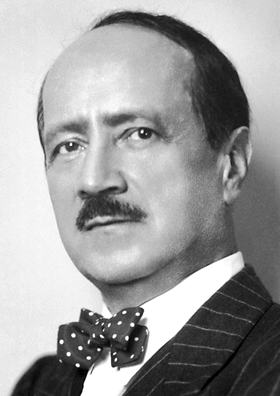
Saint-John Perse

Saint-John Perse
Biography
Introduction: The Diplomat-Poet of the Antillean Sea
Alexis Léger (May 31, 1887 – September 20, 1975), globally celebrated by his literary pseudonym Saint-John Perse, remains one of the most enigmatic and luminous figures in twentieth-century world literature and international statecraft. Born into the creole planter society on a small coral islet off the coast of Pointe-à-Pitre, Guadeloupe, Léger rose through intellect and administrative mastery to become the highest-ranking civil servant in French foreign policy—serving as Secretary-General of the Ministry of Foreign Affairs (Secrétaire général du Quai d'Orsay) during the harrowing geopolitical crises of the 1930s. Concurrently, writing under a strict pseudonym to preserve the absolute neutrality and discretion demanded by his diplomatic office, he created a monumental body of epic, rhythmic verse that fundamentally revolutionized modern Francophone poetics. In 1960, he was awarded the Nobel Prize in Literature "for the soaring flight and the evocative imagery of his poetry which in a visionary fashion reflects the conditions of our time". Throughout his long life spanning global diplomacy, political exile in the United States, and worldwide acclaim, his poetic imagination remained eternally anchored in the marine horizons, tropical vegetation, and sensory brilliance of his native Caribbean.
Childhood on the Islet: Guadeloupe and the Crucible of Memory
Alexis Léger was born on May 31, 1887, on Îlet-à-Feuilles (later renamed Saint-Léger-les-Feuilles), a private family-owned coral islet nestled in the Petit Cul-de-Sac Marin near the harbor entrance of Pointe-à-Pitre, Guadeloupe. His family belonged to the long-established French creole (béké) elite of the Lesser Antilles, tracing their ancestral presence in Guadeloupe back to 1815. His father, Amédée Léger, was an attorney of distinction who served as President of the General Council of Guadeloupe, while his mother, Marie Pauline Renée Dormoy, descended from a prominent lineage of colonial planters. The family divided their existence between their elegant town residence in Pointe-à-Pitre, the tranquil seclusion of Îlet-à-Feuilles, and two vast agricultural estates: "La Joséphine," a coffee plantation nestled in the cool volcanic heights of Saint-Claude beneath the Soufrière volcano, and "Bois-Debout," an extensive sugarcane plantation situated along the windswept eastern coast of Capesterre-Belle-Eau.
For the first twelve years of his life, young Alexis was immersed in an island universe of extraordinary sensory intensity. He was surrounded by the rhythmic roar of the Atlantic surf, the vibrant turquoise shoals of the Caribbean Sea, the warm fragrance of crushed sugarcane and roasting coffee beans, and the lush biodiversity of equatorial rainforests, hummingbirds, and frigatebirds. Raised largely by Afro-Guadeloupean nurses, domestic servants, and Creole sailors, the young boy developed an intimate reverence for the island's botanical life, oral traditions, and maritime culture. He learned to sail small boats through treacherous coral reefs and absorbed the elemental cadences of tropical weather—from torrential equatorial downpours to the terrifying stillness that preceded tropical hurricanes. This immersion in Caribbean nature formed the foundational bedrock of his artistic sensibility. Decades later, the sights, textures, and rhythms of Guadeloupe would surge through his verses, providing the elemental metaphors of sea, salt, and trade winds that defined his mature poetry.
"Palms...! Then was the world for us a boundless space, where the winds had the scent of raw sugar and sea salt... A childhood nourished on fresh sap and sea spray, under the high command of the trade winds." — Saint-John Perse, Pour fêter une enfance
Economic Ruin and Exile to Mainland France
The idyllic world of Alexis Léger’s Antillean childhood came to an abrupt, traumatic end toward the close of the nineteenth century. In February 1897, a catastrophic earthquake rocked Pointe-à-Pitre, collapsing historic colonial residences and devastating the island's infrastructure. This natural disaster coincided with a severe worldwide collapse in cane sugar prices, triggered by the industrial expansion of European sugar beet production. Simultaneously, escalating socio-political tensions and labor unrest undermined the economic viability of the traditional plantation system. The Léger family's estates were heavily mortgaged, and within a few short years, their ancestral wealth evaporated.
Faced with financial ruin, the Léger family made the agonizing decision to liquidate their remaining holdings and depart Guadeloupe permanently in March 1899. Alexis, then eleven years old, watched the emerald peaks of Basse-Terre sink beneath the Atlantic horizon—a voyage into exile from which he would never return to live in the Caribbean. The family settled in the southwestern French city of Pau, in the shadow of the Pyrenees. For the young boy who had known only the boundless warmth, light, and freedom of the tropics, provincial France felt damp, confining, and emotionally frigid. He was enrolled at the Lycée de Pau, where he excelled academically, finding solace in classical Greek and Latin literature, botany, and maritime navigation.
Literary Awakening in Bordeaux and the Publication of Éloges
In 1904, Léger moved to Bordeaux to pursue studies in law, political economy, and medicine at the University of Bordeaux. During his university years, he began circulating his first experimental prose poems among avant-garde literary journals. His extraordinary linguistic gift, marked by majestic cadences, incantatory rhythms, and rare botanical and nautical vocabulary, caught the attention of prominent writers, including Francis Jammes, Paul Claudel, André Gide, Jacques Rivière, and Valery Larbaud. Claudel, himself a distinguished diplomat and devout Catholic poet, recognized in Léger a kindred spirit possessing a cosmic, architectural vision of language.
In 1911, Léger published his debut poetry collection, Éloges (Praises), under the name Saint-Léger Léger. The collection, which featured the celebrated cycles "Images à Crusoé" and "Pour fêter une enfance," was an astonishing celebration of his lost Antillean childhood. Unlike the melancholic nostalgia typical of romantic exile poetry, Éloges re-created Guadeloupe through an objective, ritualistic feast of the senses—cataloging native fruits, sea breezes, coral shoals, and domestic plantation scenes with aristocratic elegance and linguistic precision. Éloges immediately established him as one of the most original and formidable poetic voices in modern French literature.
The Diplomatic Ascendance: China, Aristide Briand, and the Quai d'Orsay
Despite his immediate literary success, Léger possessed no desire to live as a Parisian bohemian or commercial man of letters. Believing that poetry was a sacred interior vocation that should never be compromised by financial dependence or public exhibitionism, he resolved to pursue a career in statecraft. In 1914, on the eve of World War I, he successfully sat for the competitive entrance examinations for the French diplomatic service, supported by his mentor Philippe Berthelot, the powerful Secretary-General of the Ministry of Foreign Affairs.
In 1916, Léger received his first major foreign assignment as secretary of the French legation in Beijing (Peking), China. He spent five transformative years in China during the turbulent warlord era, traveling extensively through the Gobi Desert, Mongolia, and the Chinese interior. He rented an isolated, abandoned Taoist temple in the Western Hills outside Beijing (Tianjie), where he immersed himself in Eastern philosophy, equestrian expeditions, and poetic composition. It was in this mountain hermitage that he composed Anabase (Anabasis), a sweeping epic poem chronicling the conquests, migrations, and spiritual yearnings of human civilizations across desolate landscapes. Published in 1924 under the newly adopted pseudonym Saint-John Perse—a pen name designed to shield his diplomatic identity from public scrutiny—Anabase became an international literary milestone, translated into English by T.S. Eliot in 1930 and into German by Rainer Maria Rilke and Walter Benjamin.
In 1921, Léger accompanied the French delegation to the Washington Naval Conference in the United States. There, his razor-sharp analytical mind and profound grasp of Asian and international affairs caught the attention of French Prime Minister and Foreign Minister Aristide Briand. Briand was so impressed that he appointed Léger his chef de cabinet (chief of staff) at the Quai d'Orsay. For the next decade (1921–1932), Léger served as Briand's closest advisor, confidant, and principal foreign policy architect. He collaborated intimately on the Locarno Treaties of 1925, which sought post-war reconciliation with Weimar Germany, and the 1928 Kellogg-Briand Pact, which outlawed war as an instrument of national policy. Crucially, Léger was the primary drafter of the historic 1930 "Briand Memorandum on the Organization of a Regime of European Federal Union"—the first official diplomatic proposal in modern history advocating for a unified European community.
In February 1933, at the age of forty-five, Léger reached the absolute summit of the French diplomatic hierarchy when he was appointed Secretary-General of the Ministry of Foreign Affairs. As the highest permanent civil servant in French foreign policy, he directed the Quai d'Orsay through seven tumultuous years of escalating European crisis.
Defending the Republic: Resistance to Appeasement and Vichy Persecution
Throughout the 1930s, Léger adopted an uncompromising, clear-eyed stance against the expansionist threat posed by Adolf Hitler’s Nazi Germany. Unlike many contemporary politicians who favored appeasement, Léger warned repeatedly that concessions to Berlin would only embolden Nazi aggression. He advocated for a firm Franco-British alliance and sought diplomatic agreements with the Soviet Union and Central European states to encircle the German threat.
In September 1938, Léger accompanied Prime Minister Édouard Daladier to the fateful Munich Conference. Although deeply opposed to the capitulation to Hitler’s demands regarding Czechoslovakia, he witnessed Daladier and British Prime Minister Neville Chamberlain sign the Munich Agreement. Léger regarded Munich as a catastrophic moral and strategic failure. His principled refusal to endorse further appeasement earned him bitter enemies among French political defeatists, pro-fascist factions, and German diplomats, who labeled him an obstacle to peace.
When World War II erupted in September 1939, Léger worked tirelessly to coordinate the Allied war effort. However, in May 1940, as the German military breached French defenses, political intrigues brought about his downfall. Prime Minister Paul Reynaud, influenced by appeasement-leaning advisors, abruptly dismissed Léger from his post as Secretary-General. When the collaborationist Vichy regime was installed under Marshal Philippe Pétain in June 1940, Léger refused all offers of compromise or cooperation. Recognizing that his life was in immediate danger, he boarded a ship for England, eventually finding refuge in the United States in July 1940.
The Vichy government retaliated against Léger with vindictive fury. In October 1940, Pétain issued an official decree stripping Léger of his French citizenship, revoking his membership in the Legion of Honor, and confiscating all his personal assets. Concurrently, the Gestapo ransacked his apartment on Avenue de Camoëns in Paris, seizing his private papers and destroying several unpublished epic poetic manuscripts—an irreplaceable literary loss that haunted the poet for the remainder of his life.
Exile in America and the Resurgence of Song
Arriving penniless and dispossessed in Washington, D.C., Léger found a crucial sanctuary through the intervention of the American poet and Librarian of Congress, Archibald MacLeish. MacLeish secured for him an appointment as an honorary consultant in French literature at the Library of Congress, providing Léger with a modest income, a quiet office, and access to the world’s greatest collection of books. Surrounded by exile and the catastrophe of war, the diplomat Alexis Léger fell silent, allowing the poet Saint-John Perse to reclaim his voice after nearly two decades of administrative restraint.
In the United States, Perse entered the most prolific creative period of his life. During a stay on the wind-battered coast of Long Beach Island, New Jersey, in the summer of 1941, he composed Exil (Exile), a towering metaphysical meditation on homelessness, temporal dislocation, and the enduring power of language. This was followed by a sequence of sweeping masterworks written in rhythmic versets: Pluies (Rains, 1943), Neiges (Snows, 1944), and Vents (Winds, 1946)—a monumental epic inspired by the vast geography, winds, and spiritual energies of the North American continent. In 1957, he published Amers (Seamarks), a transcendent oceanic hymn celebrating the sea as the cradle of civilization, love, and human renewal.
"Poetry is not merely a way of knowing; it is even more a way of living—of living entirely, in one’s entirety, and with one’s whole being." — Saint-John Perse, Nobel Banquet Speech, 1960
Following the liberation of France in 1944, the provisional French government under General Charles de Gaulle formally restored Léger’s citizenship, diplomatic rank, and honors, offering him senior ambassadorial posts. However, deeply wounded by his wartime betrayal, Léger declined to re-enter active diplomatic service. He chose to remain in Washington, D.C., until 1957, when American benefactors and French admirers presented him with a coastal estate, "Les Vigneaux," on the Giens peninsula in southern France. For the remainder of his life, he divided his seasons between the United States and the Mediterranean shore of Provence.
The 1960 Nobel Prize in Literature
In October 1960, the Swedish Academy awarded Saint-John Perse the Nobel Prize in Literature. The citation celebrated his poetic grandeur, honoring him "for the soaring flight and the evocative imagery of his poetry which in a visionary fashion reflects the conditions of our time".
On December 10, 1960, at the Nobel banquet in Stockholm's City Hall, Perse delivered one of the most revered acceptance speeches in the history of the prize. In an era dominated by rapid scientific and technological advancement, he articulated a profound defense of poetry, arguing that poetic intuition and scientific inquiry were complementary paths toward human truth. He declared that poetry was not an idle luxury or decorative amusement, but a fundamental spiritual necessity—an act of moral conscience that upheld human dignity amid material uncertainty. The award cemented his position alongside Paul Valéry, Stéphane Mallarmé, and Arthur Rimbaud in the pantheon of modern French poets.
The Antillean Heritage and Caribbean Literary Dialogue
Although Saint-John Perse lived and died thousands of miles from the island of his birth, his Caribbean origins remained the beating heart of his artistic identity. Unlike contemporary European poets whose imagery drew upon urban life or classical ruins, Perse’s verse was saturated with the primal dynamics of the tropical environment: the seasonal pulse of trade winds (les alizés), the blinding light of the tropics, mangrove swamps, torrential cloudbursts, and the immensity of the ocean.
His relationship to the Caribbean was complex, mirroring the historical contradictions of his era. As a descendant of the white planter oligarchy, Perse celebrated an aristocratic memory of the pre-modern plantation world, viewing it through an idealized, timeless prism. Yet, his work served as a crucial catalyst for modern Caribbean literature. In his historic 1992 Nobel Lecture, Saint Lucian poet and dramatist Derek Walcott delivered a nuanced tribute to Perse in The Antilles: Fragments of an Epic Memory, acknowledging that despite the social divisions of colonial history, Perse had captured the genuine light, foliage, and elemental majesty of the archipelago:
"Saint-John Perse’s poetry was formed by the dazzle of the Caribbean light, the salt spray of its trade winds, and the deep, elegiac memory of an island childhood that never ceased to haunt his exile." — Derek Walcott
Similarly, Martinican philosopher and writer Édouard Glissant engaged extensively with Perse's work, analyzing how Perse’s poetic nomadism and oceanic imagination anticipated modern Caribbean concepts of relation and exile. While Aimé Césaire articulated the revolutionary voice of Negritude and African resistance, Perse voiced the profound experience of Caribbean displacement and the eternal call of the sea.
In Pointe-à-Pitre, Guadeloupe, his legacy is officially preserved at the Musée Saint-John Perse, established in 1987 in the historic Maison Souques-Pagès—an exquisite 19th-century metal-framed colonial mansion designed by the workshops of Gustave Eiffel. The museum displays archival documents, personal artifacts, first editions, and family photographs, celebrating the enduring bond between the Nobel laureate and his native island.
Final Years and Eternal Rest
In his late years, Perse continued to write, publishing Chronique (1960), Oiseaux (Birds, 1962, illustrated by Georges Braque), and Chant pour un équinoxe (Song for an Equinox, 1971). In 1958, he married Dorothy Milburn Russell, an American with whom he shared his final peaceful years between Georgetown and Provence.
On September 20, 1975, Alexis Léger passed away at his home in Giens at the age of eighty-eight. He was laid to rest in the small cemetery on the Giens peninsula, perched on a cliff overlooking the azure waters of the Mediterranean Sea. To the very end, he remained a poet of the horizon—a Guadeloupean child whose memory of a small coral islet expanded into a universal song of human dignity, exile, and oceanic beauty.
Major Contributions
- Saint-John Perse (Alexis Léger) made extraordinary, dual contributions to twentieth-century world literature and international statecraft.
- As Secretary-General of the French Ministry of Foreign Affairs (1933–1940) and chief advisor to Nobel Peace Laureate Aristide Briand, Léger was a primary architect of modern multilateral diplomacy.
- He played a foundational role in drafting the Locarno Treaties of 1925, the 1928 Kellogg-Briand Pact outlawing war, and the historic 1930 Briand Memorandum proposing the first institutional framework for a European Federal Union.
- During the crises of the 1930s, he stood as an unyielding opponent of totalitarian aggression and Nazi appeasement, sacrificing his career, citizenship, and personal assets rather than collaborate with the Vichy regime.
- In the realm of literature, Perse was awarded the 1960 Nobel Prize in Literature for his visionary, epic poetry that expanded the boundaries of the French language through expansive rhythmic versets and elemental imagery.
- Deeply shaped by his Antillean childhood in Guadeloupe, masterpieces such as *Éloges*, *Anabase*, *Exil*, *Vents*, and *Amers* established a cosmic poetics of nomadism, memory, and oceanic relation that profoundly influenced global modernist poetry and earned the lasting reverence of major Caribbean writers, including Nobel laureate Derek Walcott.
