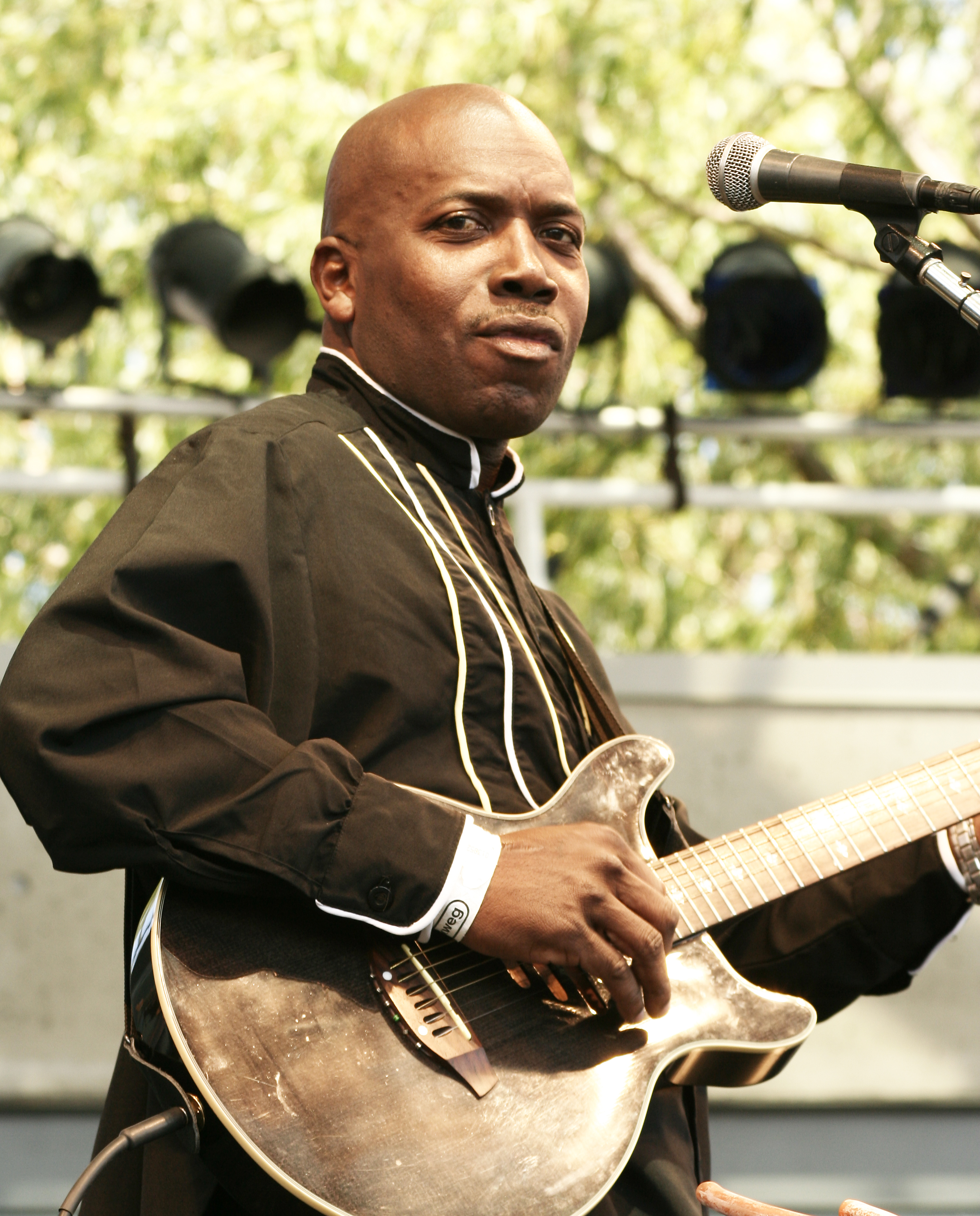
Andy Palacio

Andy Palacio
Biography
Andy Palacio: The Garifuna Cultural Ambassador and Global Pioneer of Punta Rock
Andy Palacio (December 2, 1960 – January 19, 2008) stands as one of the most celebrated and historically significant musicians, cultural activists, and public figures in the modern history of Belize and the wider Caribbean and Central American diaspora. Born in the remote coastal village of Barranco in southern Belize, Palacio dedicated his life to rescuing, modernizing, and promoting the rich cultural heritage of the Garifuna people (Garinagu). Beginning his career as a rural high school educator, he underwent a profound political and cultural awakening while volunteering in the Nicaraguan Literacy Campaign in 1980, where he witnessed the alarming extinction of the Garifuna language among younger generations. Driven by a fierce determination to prevent cultural erasure in his homeland, Palacio turned to music as an instrument of cultural preservation and resistance. He became the global pioneer and leading exponent of Punta Rock, a high-energy genre synthesizing traditional Garifuna sacred rhythms with modern instrumentation. In his later years, through visionary collaborations with producer Ivan Duran and Stonetree Records, Palacio founded The Garifuna Collective and released his critically acclaimed masterpiece album, Wátina (2007). Serving as Belize’s official Cultural Ambassador and Deputy Administrator of the National Institute of Culture and History (NICH), Palacio was instrumental in securing UNESCO's proclamation of Garifuna language, music, and dance as a Masterpiece of the Oral and Intangible Heritage of Humanity. Honored as a UNESCO Artist for Peace, his extraordinary life left an indelible mark on global world music and indigenous rights.
Roots in Coastal Barranco and Garifuna Heritage
Andy Palacio was born on December 2, 1960, in the coastal settlement of Barranco, the southernmost Garifuna village in the Toledo District of Belize. To understand Palacio’s life and mission is to understand the dramatic, resilient history of the Garifuna people. Descended from West and Central Africans who intermarried with indigenous Island Caribs (Kalinago) and Arawaks on the Caribbean island of St. Vincent (Yurumein), the Garinagu fiercely resisted British colonial subjugation. Led by legendary paramount chiefs such as Joseph Chatoyer, who died defending their sovereignty in 1797, the Garinagu were eventually exiled by British forces to Roatan Island off the coast of Honduras, from where they migrated and established vibrant coastal communities across Belize, Honduras, Guatemala, and Nicaragua.
Growing up in Barranco, young Palacio was immersed in a community deeply rooted in ancestral traditions. Daily life was accompanied by the polyrhythmic beats of the primero and segunda drums, the soulful melodies of acoustic paranda songs, and the sacred, multi-day spiritual ceremonies known as dugu, where ancestors are honored and propitiated. Despite the immense cultural wealth of Barranco, the village faced severe economic marginalization, geographic isolation, and a steady outward migration of working-age adults seeking employment in Belize City or North America.
Palacio received his early education in local mission schools before completing his secondary and tertiary studies to become a high school social studies teacher. In the classrooms of Belize, he observed with growing unease that colonial educational models and encroaching North American media were creating a widening disconnect between Garifuna youth and their ancestral language. Many young people, fearing social prejudice, were abandoning the fluent Kweyol-Arawak linguistic structures of their parents in favor of English and Belizean Creole.
The Nicaraguan Literacy Campaign Awakening
In 1980, at the age of nineteen, Palacio made a decision that forever altered the trajectory of his life and career. Following the triumph of the Sandinista Revolution in Nicaragua, the government launched the historic National Literacy Campaign (Cruzada Nacional de Alfabetización), calling on international volunteers to help eradicate illiteracy across rural and coastal communities. Eager to contribute to regional social transformation, Palacio traveled to Nicaragua and volunteered as a literacy brigadista.
He was assigned to the isolated Caribbean coastal region around Orinoco and Pearl Lagoon, home to Nicaragua's historical Garifuna population. While teaching literacy, Palacio eagerly sought out local Garifuna elders, expecting to converse in their shared ancestral tongue. Instead, he encountered a devastating reality: while elderly residents retained faint cultural memories and snippets of traditional songs, the Garifuna language had suffered complete linguistic extinction among the children and young adults, who spoke only English Creole and Spanish. The cultural transmission had been entirely broken.
This encounter profoundly shook young Palacio. It was a stark, living preview of what awaited the Garifuna communities of Belize if aggressive steps were not taken to revitalize the culture. He realized that formal classroom teaching was insufficient to counteract the overwhelming tides of cultural assimilation.
"When I went to Nicaragua and saw Garifuna people who could no longer speak their mother tongue or sing their ancestral songs, it hit me like a physical blow. I realized that if we did not fight for our culture right then in Belize, we were looking at our own extinction. Music became my weapon of preservation." — Andy Palacio
Revolutionizing Garifuna Music: The Rise of Punta Rock
Returning to Belize with renewed revolutionary fire, Palacio abandoned his formal teaching career to become a full-time musician, cultural organizer, and broadcaster. He recognized that to capture the imagination of young Garinagu, traditional music had to be made exciting, contemporary, and commercially viable. During the early 1980s, brilliant Belizean artist and musician Pen Cayetano had begun experimenting with Punta Rock—a genre that took the traditional sacred and secular punta rhythm, played on hollowed wooden drums, and electrified it by adding electric lead guitars, driving basslines, synthesized keyboards, and energetic arrangements.
Palacio enthusiastically embraced Punta Rock, forming bands and recording tracks that quickly transformed the Belizean music landscape. Throughout the late 1980s and 1990s, he released a string of successful albums, including Nabi, Til Da Mawnin, and Keimoun (1995). His music electrified dancehalls across Belize, Honduras, Guatemala, and the sprawling Garifuna diaspora communities in New York, Los Angeles, and Chicago. By singing catchy, dynamic lyrics entirely in the Garifuna language, Palacio instilled an unprecedented wave of cultural pride among youth, proving that their indigenous tongue belonged on modern radio stations and international stages alongside reggae, soca, and salsa.
As his influence expanded, Palacio used his platform to foster national unity across Belize's diverse ethnic tapestry—bridging Garifuna, Maya, Mestizo, and Creole populations. His cultural leadership resonated deeply with the foundational nation-building vision of political leaders and historical figures such as George Price, the Father of the Nation, cultural documentarians like Monrad Metzgen, feminist organizers such as Gwendolyn Lizarraga, indigenous rights defenders like Marcus Canul, and nursing pioneers like Cleopatra White.
Stonetree Records, Paul Nabor, and the Masterpiece Wátina
By the late 1990s, while Punta Rock enjoyed immense commercial success, Palacio grew concerned that electronic production and fast tempos were overshadowing the deep, soulful acoustic roots of Garifuna paranda music. He sought a more intimate, organic artistic direction that would immortalize the voices of elderly master musicians. This quest led to his historic partnership with Belizean producer Ivan Duran and the establishment of Stonetree Records in Benque Viejo del Carmen.
Palacio and Duran embarked on an extensive musical archaeology project across Central America, recording veteran acoustic guitarists and percussionists for the groundbreaking compilation Paranda (1999). During this endeavor, Palacio played an indispensable role in introducing the international music world to Paul Nabor (Nabi), a legendary seventy-year-old fisherman, parandero, and spiritual temple leader from Punta Gorda. Palacio encouraged Nabor to record his deeply emotional composition "Naguya Nei" ("I Am Moving On"), which became an instant Garifuna anthem and catapulted the elder musician to global veneration.
Building on this acoustic renaissance, Palacio and Duran founded The Garifuna Collective—a multigenerational ensemble that united master drummers, singers, and guitarists across age divides. The collective retreated to a makeshift recording studio inside a thatched house by the sea in Hopkins Village to craft what would become Palacio's magnum opus: the 2007 album Wátina ("I Called Out").
Wátina seamlessly blended acoustic paranda, punta rhythms, soulful melodies, and social commentary. Featuring instruments such as turtle shells, sisal shakers (chakka), and indigenous drums, the album explored themes of ancestral connection, political corruption, migration, and indigenous survival. Upon its release, Wátina became a global phenomenon. It reached number one on the European World Music Charts, received ecstatic reviews from mainstream international media, and was universally acclaimed as one of the finest world music recordings of the decade.
Global Ambassador, UNESCO Recognition, and Untimely Passing
Andy Palacio’s monumental contributions to cultural preservation were formally recognized by the Government of Belize, which appointed him as the nation's official Cultural Ambassador and Deputy Administrator of the National Institute of Culture and History (NICH). In this official capacity, Palacio was not merely a performer but a cultural statesman. He spearheaded Belize’s intensive diplomatic and academic campaign at the United Nations Educational, Scientific and Cultural Organization (UNESCO).
His relentless advocacy bore historic fruit in May 2001, when UNESCO officially proclaimed the Garifuna Language, Music, and Dance as a "Masterpiece of the Oral and Intangible Heritage of Humanity." This prestigious international designation mandated global protection and funding for Garifuna cultural institutions, fulfilling the vow Palacio had made to himself two decades earlier in Nicaragua.
Throughout 2007, Palacio and The Garifuna Collective embarked on a triumphant world tour, performing at major concert halls and festivals across North America, Europe, and Latin America. In October 2007, Palacio was awarded the prestigious WOMEX Award in Seville, Spain—the global music industry's highest honor—and was formally designated a UNESCO Artist for Peace.
Tragically, at the absolute zenith of his international career, Palacio suffered a sudden medical emergency. On January 16, 2008, he experienced a severe stroke and subsequent heart attack in Belize City. Despite emergency medical evacuation to Chicago and subsequent return to Belize, Andy Palacio passed away on January 19, 2008, at the age of 47. His untimely death plunged Belize and the global music community into profound mourning.
Thousands of grieving citizens, dignitaries, and fellow musicians attended his official state funeral in Belize City, after which his body was carried by sea across the Caribbean waters back to his native village of Barranco for traditional burial accompanied by sacred drumming.
"Andy Palacio did not just sing songs; he resurrected the pride of a nation and placed the Garifuna soul onto the world stage. His voice remains an eternal flame warning us to cherish who we are before time washes it away." — Tribute by Ivan Duran and The Garifuna Collective, 2008
Today, Andy Palacio is immortalized as a national hero in all but name. His pioneering vision ensured that Garifuna culture not only survived the threats of modern assimilation but flourished as a beacon of indigenous pride, resilience, and artistic brilliance for generations to come.
Major Contributions
- Andy Palacio made extraordinary and historically transcendent contributions to the preservation, modernization, and global recognition of Garifuna culture and music.
- As the premier pioneer and innovator of Punta Rock and modern Paranda, he transformed traditional indigenous rhythms into an internationally celebrated art form, reversing decades of cultural erosion and linguistic loss among young Garinagu across Central America and the diaspora.
- Through visionary collaborations with Stonetree Records and the establishment of The Garifuna Collective, he produced landmark albums such as *Wátina* (2007) and rescued master acoustic musicians like Paul Nabor from obscurity.
- In his public and official service as Belize’s Cultural Ambassador and Deputy Administrator of the National Institute of Culture and History (NICH), Palacio successfully spearheaded the campaign that secured UNESCO's 2001 proclamation of Garifuna language, dance, and music as a Masterpiece of the Oral and Intangible Heritage of Humanity.
- Honored as a UNESCO Artist for Peace and recipient of the prestigious WOMEX Award, Palacio cemented his enduring legacy as one of the Caribbean and Central America’s most profound cultural statesmen.