Culture
An archive of figures whose contributions in the field of culturehave significantly impacted Caribbean history and development.
Documented Figures
Classified under Culture.

Alejo Carpentier
### Introduction Alejo Carpentier stands as one of the towering intellectual figures of twentieth-century Latin American and Caribbean letters. A novelist, essayist, musicologist, and diplomat, Carpentier bridged the cultural worlds of Europe and the Caribbean, creating a literary synthesis that helped define the region’s identity. He is celebrated as a primary architect of the Latin American literary "Boom," introducing the concept of *lo real maravilloso* (the marvelous real)—a precursor to magical realism—and pioneering the "neobaroque" style. His life was swept up in the turbulent currents of his era: the repressive dictatorship of [Gerardo Machado](/profiles/gerardo-machado), the artistic ferment of surrealist Paris, the political dramas of mid-century Venezuela, and the ultimate triumph of the 1959 Cuban Revolution led by [Fidel Castro](/profiles/fidel-castro). Throughout these migrations, Carpentier remained obsessed with the historical consciousness of the Caribbean, decoding its syncretic identity through the lens of music, myth, and revolution.  ### Early Life and the Cuban Identity Myth For much of his life, Carpentier asserted that he was born in Havana, Cuba, on December 26, 1904. It was only after his death in 1980 that researchers uncovered his birth certificate in Lausanne, Switzerland, revealing that he was actually born in Europe to a French architect, Jorge Julián Carpentier, and a Russian language teacher, Lina Valmont [1]. This birth myth was not merely a matter of convenience; it was a testament to Carpentier’s profound, self-fashioned Cuban identity. Arriving in Cuba as an infant, he grew up in Havana and the rural village of Loma de Tierra. In this environment, the young Carpentier was exposed to the dual currents of European high culture brought by his parents and the vibrant Afro-Cuban folk culture of the Cuban countryside. The political climate of Cuba during Carpentier’s youth was marked by the hangover of Spanish colonialism and the growing shadow of American imperial dominance. Following the Spanish-American War, Cuba was a republic in name but remained economically and politically bound to external interests. This socio-political stratification deeply affected Carpentier. He initially studied architecture at the University of Havana but was forced to abandon his studies in 1921 due to his family’s financial ruin, following his father’s sudden desertion [2]. Turning to journalism, Carpentier began writing for cultural journals, a path that brought him into contact with the island's emerging avant-garde. ### Politics, Arrest, and Vanguardia By the mid-1920s, Carpentier was a key figure in the *Grupo Minorista*, a collective of young Cuban intellectuals dedicated to social reform and artistic innovation. Working alongside figures such as the ethnologist [Fernando Ortiz](/profiles/fernando-ortiz) and the poet [Nicolás Guillén](/profiles/nicolas-guillen), Carpentier sought to dismantle the Eurocentric hierarchies of Cuban culture. They championed *Afrocubanismo*, a movement that recognized African-derived religions, music, and language as the true bedrock of Cuban national identity [3]. This intellectual rebellion soon clashed with the authoritarian regime of [Gerardo Machado](/profiles/gerardo-machado). In 1927, Carpentier signed the *Manifiesto Minorista*, which openly protested the dictator's repressive policies. As a result, he was arrested and sentenced to prison. During his forty-day incarceration, Carpentier began drafting his first novel, *¡Ecué-Yamba-Ó!* (published in 1933), a raw portrayal of Afro-Cuban life and Santería rituals [4]. Upon his release, Carpentier remained under police surveillance. In 1928, during a visit to Havana by the French surrealist poet Robert Desnos, Carpentier made a daring escape. Desnos lent Carpentier his passport and press credentials, allowing the Cuban writer to board a French vessel and flee to Paris [5]. ### The Paris Years and Surrealism In Paris, Carpentier spent eleven years (1928–1939) immersed in the European avant-garde. He worked as a journalist and radio producer, collaborating with prominent artists including André Breton, Louis Aragon, Paul Éluard, and Pablo Picasso. He was fascinated by the Surrealists' attempts to break free from rationalism and tap into the subconscious. However, Carpentier gradually grew disillusioned with what he perceived as the artificiality of the European movement. To him, the Surrealists' attempts to summon the "marvelous" through parlor games, automatic writing, and forced juxtapositions felt clinical and manufactured. > "Surrealism has ceased to be an active force... It has become a formula, a recipe for making the strange." [6] Carpentier began to realize that the marvelous did not need to be forced or invented in the Americas; it was already present in the continent's history, landscape, and syncretic cultures. This intellectual departure laid the groundwork for his later theories. In 1939, with Europe on the brink of World War II, Carpentier returned to Cuba, determined to re-evaluate his homeland through a new conceptual lens. ### Return to Cuba and the Haitian Revelation Upon his return to Havana, Carpentier worked in radio and journalism, deepening his study of Cuban history and music. The turning point of his career came in late 1943, when he traveled to Haiti with his wife, Lilia Esteban, and the French actor Louis Jouvet. The trip was a revelation. Carpentier was mesmerized by the dramatic landscapes and the heavy historical presence of the Haitian Revolution. Standing amidst the ruins of the Sans-Souci Palace and the gargantuan Citadelle Laferrière, both constructed under the orders of the revolutionary leader-turned-king [Henri Christophe](/profiles/henri-christophe), Carpentier experienced a profound intellectual awakening.  He realized that the history of the Caribbean was a living chronicle of the marvelous real. The clash of European colonizers, African slaves, and indigenous cultures had produced a reality so extraordinary, violent, and mythic that it defied European categories of realism. The result of this journey was his masterpiece, *El reino de este mundo* (*The Kingdom of This World*), published in 1949. The novel chronicles the Haitian Revolution through the eyes of the slave Ti Noel, juxtaposing historical reality with Vodou mythology and the shape-shifting powers of the rebel leader Mackandal. ### The Venezuelan Exile and Literary Maturity In 1945, seeking relief from the corrupt and unstable political climate of Cuba, Carpentier moved to Caracas, Venezuela. He lived there for fourteen years, a period that proved to be his most creative and productive. In Caracas, he worked in advertising and radio, while publishing a series of groundbreaking works. In 1946, he published *La música en Cuba*, a monumental musicological study that traced the fusion of Spanish melodic structures with African rhythmic syncopation, arguing that Cuba's musical heritage was its most resilient cultural expression [7]. In 1949, *El reino de este mundo* was published with a prologue that served as his manifesto on *lo real maravilloso*. Carpentier argued: > "The marvelous real is found at every step in the lives of men who inscribed a date on the history of the Continent... because the marvelous begins to be so in an unequivocal manner when it arises from an unexpected alteration of reality, from a privileged revelation of reality." [8] In 1953, he published *Los pasos perdidos* (*The Lost Steps*), a novel inspired by his journeys into the Venezuelan interior. The book tells the story of a disillusioned composer who travels up an unnamed South American river in search of primitive musical instruments, undergoing a symbolic journey backward through historical time. The novel was a major international success, cementing Carpentier's status as a master of modern prose. ### The Cuban Revolution and Diplomatic Years The triumph of the Cuban Revolution in January 1959, led by [Fidel Castro](/profiles/fidel-castro), brought Carpentier back to Havana. He enthusiastically supported the new government and was immediately appointed to lead cultural institutions. As the director of the Editorial Nacional de Cuba, he oversaw a massive state publishing campaign aimed at eradicating literacy barriers and distributing millions of copies of classic literature. In 1962, he published *El siglo de las luces* (*Explosion in a Cathedral*), a panoramic historical novel set during the French Revolution in the Caribbean. The novel follows three young Cubans who become swept up in the revolutionary zeal of Victor Hugues, exploring how European enlightenment ideals turned into bloody terror when transplanted to the colonies. In 1966, the Cuban government appointed Carpentier as Minister-Counsellor for Cultural Affairs at the Cuban Embassy in Paris, a post he held for the remainder of his life. In his final decade, Carpentier continued to write ambitious novels, including *El recurso del método* (1974), a satirical portrait of a sophisticated, Europhilic Latin American dictator, and *La consagración de la primavera* (1978), which explored the intersection of art and revolutionary politics. In 1977, he received the Miguel de Cervantes Prize, the highest honor in Spanish-language literature. Carpentier died of cancer in Paris on April 24, 1980, and was buried with state honors in Havana's Colon Cemetery.
View Profile →
Alicia Alonso
### The Ballerina Who Danced in Darkness In the long and storied history of classical ballet, few careers have combined technical mastery, extraordinary physical courage, and lasting institutional legacy as completely as that of **Alicia Alonso**. Born in Havana, Cuba, on December 21, 1920, she died ninety-eight years later in the same city — having transformed not only Cuban culture but the very landscape of global ballet. She was a *prima ballerina assoluta*, a title awarded to fewer than a dozen dancers in the history of the art form; she was a pioneering arts administrator who built one of the world's great ballet companies from nothing; and she was a woman who danced most of her career in a state of near-total blindness, guided by little more than stage lighting, the memorized geometry of theater spaces, and an indomitable will that those who knew her described as superhuman.  > *"A dancer should learn from all the arts. Go to museums and look at the paintings. See how they balance things. Everything you do in the arts enriches you."* > — Alicia Alonso ### Cuba at the Dawn of the Twentieth Century To understand Alicia Alonso, it is necessary to understand the Cuba of her childhood and youth — a country in the midst of forging an identity after centuries of Spanish colonialism, a brief American occupation, and a nominal independence that masked continuing economic dependence on the United States. Cuba in the 1920s and 1930s was a society of extraordinary contrasts: the cosmopolitan energy of Havana, with its theaters, cabarets, and elite cultural institutions, existed alongside profound rural poverty and racial inequality. The cultural life of the Cuban capital was vibrant but largely stratified by class and race, with institutions like the **Sociedad Pro-Arte Musical** — the society that would introduce young Alicia to ballet — serving primarily the white Cuban upper middle class. Alicia Ernestina de la Caridad del Cobre Martínez del Hoyo was born into precisely this world. Her father was a military veterinarian, and the family enjoyed a comfortable, cultured life in Havana that afforded Alicia access to the arts from a young age. She began her formal ballet training at the age of ten at the Sociedad Pro-Arte Musical in 1931, studying under the Russian-trained teacher Nikolai Yavorsky. But the conservative Cuban cultural milieu could only carry a dancer of Alicia's ambition so far — and from early in her training, it was clear that her gifts demanded a larger stage. ### New York and the Formation of a Dancer In 1937, at the age of seventeen, Alicia married her fellow dancer **Fernando Alonso** and relocated with him to New York City, the center of ballet's evolution in the Western Hemisphere. She enrolled at the **School of American Ballet**, founded by the legendary choreographer George Balanchine, and quickly distinguished herself as a dancer of exceptional technical precision and dramatic depth. She also studied with the influential pedagogue Enrico Zanfretta, absorbing the classical Italian technique that would anchor her style throughout her career. Her New York years were a period of rapid artistic formation. She danced with the **Ballet Caravan** — one of Balanchine's early companies — as a soloist in 1939, absorbing the choreographer's distinctive neoclassical aesthetic. She also made her Broadway debut, performing in the musical *Great Lady* in 1938, demonstrating the versatility and theatrical instinct that would later make her *Carmen* and her *Giselle* legendary. In 1940, she and Fernando joined the newly formed **Ballet Theatre** — later to become the American Ballet Theatre — where she would rise to international prominence over the following decade. ### The Night of the Detached Retina It was in this period of ascent that fate intervened with cruel and seemingly terminal force. Beginning in 1941, Alicia began to suffer from a series of detached retinas — a condition that, in the era before modern ophthalmic surgery, was frequently career-ending, even life-altering. She underwent multiple surgeries, each one demanding absolute physical immobility during recovery periods that stretched across months. After one surgery, she was required to lie in a darkened room, her head perfectly still, for weeks at a time — unable to move, unable to read, unable even to look about her. For a dancer, this was a form of sensory deprivation that might have broken the spirit entirely. Instead, Alicia Alonso turned the ordeal into an act of pure artistic concentration. Unable to move her body, she rehearsed mentally. She moved her fingers against the bedsheets, tracing out the intricate movements of her roles. She ran through entire performances in her mind, note by note, step by step, refining her understanding of the music and the choreography at a level of detail that physical rehearsal rarely permits. By the time she was allowed to return to the stage, she had, in a certain sense, become a more complete artist than she had been before her illness. But the physical damage was irreversible. Over the years, Alicia's vision deteriorated progressively until she could perceive little more than light and shadow. Rather than withdraw from the stage, she adapted — developing a set of techniques for performing in near-total blindness that became legendary among dancers and choreographers. She memorized every theater she performed in, counting the number of steps from the wings to center stage. She required that powerful lights be placed at precise points in the wings to serve as navigational guides. Her partners were trained to be in exact positions at exact moments — and she could find them by memory and instinct, extending her arm with perfect confidence into the space where she knew a hand would be. ### The Triumph of Giselle The role with which Alicia Alonso became most completely identified — and through which she achieved her first great international triumph — was the title character in *Giselle*, the Romantic-era masterwork of Adolphe Adam, Jean Coralli, and Jules Perrot. On October 2, 1943, Alicia was called at the last moment to replace an injured Alicia Markova in the title role at a Ballet Theatre performance in New York. She had rehearsed the role in theory but had not been scheduled to perform it that season. She went on stage and gave a performance that critics described as one of the most memorable interpretations of the role in living memory. *Giselle* tells the story of a peasant girl who dies of a broken heart when she discovers her lover's betrayal, and who then rises as a spirit — a *Wili* — to dance among the dead before ultimately forgiving her betrayer and protecting him from destruction. The role demands not only technical virtuosity but the ability to inhabit two entirely different states of being: the vivid, vulnerable humanity of Act One and the ethereal, otherworldly grace of Act Two. For Alicia Alonso, who had by then lived through illness, isolation, and the possibility of permanent blindness, the emotional landscape of *Giselle* was not merely a dramatic challenge but an almost autobiographical one. Critics remarked that there was something in her *Giselle* — particularly the mad scene at the end of Act One — that seemed to come from a place of genuine interior experience. She would go on to perform the role hundreds of times over the following decades, and it remained her signature until late in her career. She also created her own production of the ballet, which became the standard version performed by the Ballet Nacional de Cuba and remains the company's most celebrated offering.  ### Building Ballet Nacional de Cuba In 1948, Alicia Alonso returned to Cuba with a vision: to build a world-class ballet company in her homeland, bringing classical ballet not as a privilege of the elite but as a living cultural institution available to all Cubans. Together with her husband Fernando Alonso and his brother Alberto, she founded the **Alicia Alonso Ballet Company** in Havana — a private enterprise that struggled from the outset with chronic underfunding, indifferent government support under the Batista regime, and the physical difficulty of sustaining a professional company in a small island nation. Despite these obstacles, the company performed regularly, built an audience, and — crucially — developed the pedagogical framework that would eventually coalesce into the **Cuban School of Ballet**. This school synthesized the classical European technique absorbed from the Russian and American traditions with the rhythmic sensibility, physical expressiveness, and particular bodily aesthetics of the Caribbean. It was a genuinely new contribution to the art form: a training system that produced dancers recognizable for their warmth, musicality, and the distinctive way they inhabited the stage. The Cuban Revolution of 1959 transformed the company's fortunes entirely. The new government of Fidel Castro, which placed enormous symbolic importance on cultural prestige, provided state funding and official recognition, renaming the company the **Ballet Nacional de Cuba** and making it a national institution. For Alicia Alonso, the Revolution was the enabling event that allowed her artistic vision to be fully realized — though her relationship with the political context of that vision has always been subject to debate, particularly among Cuban exiles who view the Castro government with hostility. Under Alicia's leadership, the Ballet Nacional de Cuba grew into one of the premier companies in the world. Its dancers competed at and won international competitions in Varna and Moscow. Its productions toured Europe, the Americas, and Asia. The annual **Festival Internacional de Ballet de La Habana**, which Alicia founded in 1960, became one of the most prestigious ballet festivals in the world — and remains so today. ### The Collaborator and the Choreographer Alicia Alonso was not merely an interpreter of others' visions. She was herself a choreographer of distinction, staging her own versions of the classical repertoire — *Giselle*, *Swan Lake*, *Sleeping Beauty* — and creating original works that synthesized classical vocabulary with Cuban and Latin American musical and cultural sensibilities. Her collaboration with [George Balanchine](/profiles/george-balanchine) was one of the defining relationships of her early career: in 1947, Balanchine created *Theme and Variations* for Alicia and her partner Igor Youskevitch, a work widely regarded as one of his greatest neoclassical masterpieces. That he chose Alicia for such a landmark creation speaks to the esteem in which she was held by the greatest choreographic mind of the twentieth century. She also worked closely with the Cuban composer and conductor **Leo Brouwer** and collaborated with choreographers across the political spectrum, demonstrating a commitment to art that transcended political division — a quality that allowed her to maintain artistic relationships in both the United States and Cuba even during the most fraught periods of the Cold War. ### Final Years and Death Alicia Alonso danced professionally into her mid-seventies — a feat without precedent in the history of ballet — and continued to direct the Ballet Nacional de Cuba until her death. In her final decades, she received an extraordinary array of honors: she was named a **UNESCO Goodwill Ambassador**, a **UNESCO World Dance Ambassador** in 2017, and in 2018, UNESCO established the **Alicia Alonso Ibero-American Dance Chair** in her honor. In 2016, the Cuban government renamed the historic **Gran Teatro de La Habana** as the **Gran Teatro de La Habana 'Alicia Alonso'** — a recognition without parallel in the history of Cuban culture. She died in Havana on October 17, 2019, at the age of ninety-eight. Tens of thousands of Cubans filed past her coffin at the Gran Teatro, and tributes poured in from every corner of the dance world. She was mourned not only as a great artist but as a great institution — one of those rare individuals whose life's work has permanently altered the landscape of human culture.
View Profile →Alphonsus "Arrow" Cassell
### A Child of Plymouth: Music in the Blood Alphonsus Celestine Edmund Cassell was born on **November 16, 1949**, in Plymouth, the capital of Montserrat — a small, emerald-green British Overseas Territory nestled in the northern arc of the Lesser Antilles. Plymouth was a modest colonial port town of whitewashed buildings and iron-roofed houses, its rhythms dictated by the sea, the land, and an unbroken oral tradition of music that coursed through every household, every rum shop, and every festival. Into this world, a child arrived who would eventually carry the sound of Montserrat across six continents. The Cassell family was musical to its marrow. Alphonsus's brothers Justin Cassell, who performed as **"Hero,"** and Lorenzo Cassell, who went by **"Young Challenger,"** were already making names for themselves in the calypso tradition that was the lifeblood of Caribbean carnival culture. Calypso — the great art form of the English-speaking Caribbean — was by the 1950s both a popular entertainment and a sophisticated vehicle for social commentary, political critique, and communal storytelling, pioneered by legendary figures like the [Mighty Sparrow](/profiles/mighty-sparrow) and [Lord Kitchener](/profiles/lord-kitchener) in Trinidad. Young Alphonsus absorbed this world with a child's uncanny receptivity. He began performing at the age of **ten**, entering the informal circuits of junior calypso competitions that served as the nursery of Caribbean musical talent. He was drawn immediately not just to the music itself but to the *craft* of it — the architecture of a great hook, the emotional chemistry of a dance floor, the way a song could transform a room full of strangers into a single jubilant body [1][3]. ### The Making of Arrow: Identity, Craft, and the Calypso Throne When he adopted his stage name, Alphonsus Cassell chose to call himself **Arrow** — a direct tribute to the legendary Trinidadian calypsonian, the Mighty Sparrow, whose real surname was Francisco but whose legacy Arrow wished to honor through an iconographic parallel. Like the Sparrow, Arrow aimed to shoot his music across the widest possible target. It was a statement of ambition made early, and it would prove prophetic. In **1967**, Arrow won the **Montserrat Junior Monarch** calypso title, the first of many competitive victories on his home island. He went on to claim the **Montserrat Calypso King** title four times, cementing his status as the dominant musical figure on an island that, though small in geography, was enormous in its cultural vitality. Montserrat's carnival season was the arena in which Arrow honed his skills, year after year developing the rhythmic precision, melodic instinct, and crowd intelligence that would eventually make him a global figure [4][5]. Throughout the 1970s, Arrow released music steadily, building a loyal regional following. He was among the vanguard of Caribbean artists exploring the sonic possibilities of **soca** — a genre that had emerged from Trinidad in the early 1970s as a fusion of calypso's lyrical tradition with the rhythmic energy of soul and funk. Where calypso was often cerebral, discursive, and politically engaged, soca was visceral, celebratory, and designed for the body. Arrow saw in it not a lesser form but a *larger* canvas — one that could carry the joy and identity of the Caribbean to audiences who might never have encountered calypso before [1][3].  *Map of Montserrat, the small Leeward Island that gave birth to Arrow — and to one of the most enduring party anthems in recorded history.* ### New Year's Eve, 1982: The Night That Changed Everything The story of **"Hot Hot Hot"** is, in its own way, as improbable as any in popular music history. On **New Year's Eve, 1982**, Arrow went into the studio and recorded a track built on a driving soca rhythm, a memorably simple melodic phrase, and a lyric whose genius lay in its absolute simplicity: *Feeling hot hot hot.* The song captured something universal — the sensation of communal joy, of bodies moving together, of the particular electricity of a Caribbean carnival or street party — and encoded it in a three-minute vessel of irresistible rhythmic energy. "Hot Hot Hot" was released as a single in **1983** and spread with a velocity that no one, not even Arrow himself, had anticipated. It became the **biggest-selling soca single of all time**, with estimated worldwide sales exceeding **12 million copies** — an extraordinary commercial achievement for any Caribbean artist, let alone a musician from an island of fewer than 15,000 people. The song crossed every conceivable boundary of language, genre, and geography. It was recorded in **at least twelve languages**. It became the de facto soundtrack of parties, sporting events, and carnival celebrations from London to Lagos, from New York to Tokyo [2][6][7]. > *"Feeling Hot Hot Hot makes you forget that there's a volcano and remember there's fun to be had."* > — Arrow In **1986**, the song was selected as the official theme for the **FIFA World Cup in Mexico** — a planetary platform that introduced Arrow's music to hundreds of millions of new ears. A year later, in **1987**, American rock musician David Johansen covered the song under his alter-ego persona **"Buster Poindexter,"** taking it to the top of the charts in the United States and United Kingdom. The cover brought Arrow enormous songwriting royalties and, more importantly, an entirely new generation of listeners who went looking for the original and found the soca tradition waiting for them. ### The Pioneer: Innovation and Expansion Arrow's career was defined not just by one song but by a relentless spirit of innovation. Over a career spanning more than four decades, he released **34 albums** (from 1971 through 2002), each one an experiment in pushing the boundaries of Caribbean sound. He was among the first Caribbean musicians to fuse soca with **zouk** (the French Caribbean genre pioneered by [Kassav'](/profiles/kassav)), **salsa**, **R&B**, **rock**, **hip-hop**, and **dancehall**, creating a body of work of remarkable stylistic breadth. Beyond his musicianship, Arrow was a technological pioneer. He was reputedly the **first Caribbean artist to release a music video** and among the first to release his music on **compact disc** — innovations that reflected his understanding that Caribbean music needed to compete on international technological terrain if it was to find the global audience it deserved. Other notable songs from his catalogue include **"Long Time,"** **"Soca Rhumba,"** and **"Groove Master"** — tracks that became staples of Caribbean carnival circuits and demonstrated that his range extended far beyond the anthem that made him famous [4][6]. > *"Arrow showed you didn't have to be from a big island or a big country to change the world. He was from Montserrat — he was proud of that — and he took Montserrat to the world."* ### Montserrat's Volcano and an Icon's Resilience In **1995**, the Soufrière Hills volcano, dormant for centuries beneath the southern end of Montserrat, erupted catastrophically, burying Plymouth — Arrow's hometown — under feet of volcanic ash and pyroclastic debris. The capital was abandoned and sealed off; approximately two-thirds of the island's population was evacuated. The disaster was among the worst natural catastrophes in modern Caribbean history, devastating an already fragile small-island economy and scattering communities across the diaspora. Arrow had by this time long since established himself internationally, but Montserrat remained his home and his identity. He stayed connected to the island's rebuilding efforts, using his platform to draw attention to the plight of its displaced residents and to maintain a cultural thread of Montserratian identity for a community suddenly scattered across the world. His business enterprise, **"Arrow's Man Shop"** in Davy Hill, became a landmark in the resettled northern part of the island — a physical anchor of community life that also served as an informal cultural embassy for the spirit of Montserratian music [3]. ### Awards, Recognition, and the End of a Life In **2000**, Queen Elizabeth II appointed Arrow a **Member of the Order of the British Empire (MBE)** for his services to Caribbean music — a recognition from the very imperial institution whose cultural legacy his art had both navigated and transcended. He also received a **Living Legends Award** in 1988, among numerous other accolades. Arrow died on **September 15, 2010**, at the age of sixty, from complications arising from **brain cancer**. His death was mourned across the Caribbean and far beyond it. In **2016**, the Government of Montserrat posthumously conferred upon him the title of **National Hero** — one of the highest honors the island can bestow — in recognition of the incalculable role he played in placing Montserrat on the world's cultural map. The **Alphonsus Cassell Foundation** continues his legacy, working to establish a museum at his former Man Shop and to support music education initiatives on the island. Wherever carnival music is played — in Trinidad, in London's Notting Hill, in Brooklyn's Eastern Parkway, in the streets of São Paulo — the opening bars of "Hot Hot Hot" still ignite a response that transcends language, culture, and generation. That is Arrow's truest monument: a song that taught the world to feel what Montserrat felt [1][3][5].  *The Leeward Islands of the Eastern Caribbean, the musical cradle that shaped Arrow's artistry and the wider soca tradition.*
View Profile →
Alton Augustus Adams
## Alton Augustus Adams, Sr. ### Bandmaster, Composer, and Trailblazer — The Sound of the Virgin Islands  ### A World Being Born When Alton Augustus Adams came into the world on **November 4, 1889**, in Charlotte Amalie, the capital of the island of St. Thomas, the territory known as the **Danish West Indies** was still a colonial possession of the Kingdom of Denmark [1]. The Caribbean at the close of the 19th century was a patchwork of European empires: British, French, Dutch, Danish, and Spanish flags flew over islands whose populations — the overwhelming majority of them descended from enslaved Africans — were navigating the treacherous terrain between legal emancipation and true social equality. St. Thomas, even under Danish rule, was a cosmopolitan place. Its magnificent natural harbor had made Charlotte Amalie a vital entrepôt for Caribbean trade, and the island's population was a cultural mosaic of African-descended islanders, Danish officials, merchants of multiple nationalities, and immigrants from across the region [2]. It was in this layered, vibrant, music-saturated world that Adams grew up — absorbing not only the sounds of European brass-band tradition but also the rhythms of the Caribbean: the bamboula, the quadrille, the calypso, and the hymns that rang from the island's many churches. ### Early Life: The Self-Made Musician Adams's parents were artisans — working people who shaped material into something useful with their hands — and they passed that ethic of craft and self-reliance on to their son [3]. As a young man, Adams apprenticed as both a **carpenter and a shoemaker**, learning trades that would provide economic security. But music was pulling at him irresistibly. His musical education was largely **self-directed**, a testament to extraordinary determination in an era when formal music instruction was not readily available to Black Caribbean youth. He taught himself to play multiple instruments — the **piccolo, flute, clarinet, cornet, and trombone** — working through the mechanics of each with the same systematic patience he might have brought to carpentry [4]. He supplemented this autodidactic practice with rigorous study of music theory, ultimately enrolling in a **correspondence course with Dr. Hugh A. Clarke at the University of Pennsylvania** — a remarkable arrangement that allowed him to receive instruction from a leading American music theorist without ever leaving his Caribbean island [5]. His appetite for learning extended beyond music. Adams became a prolific writer and journalist, contributing articles to publications including **Jacobs' Band Monthly** and **The Dominant**, and later editing *The Herald* in St. Croix [6]. He understood instinctively that music needed advocates — people who could explain its value, interpret its history, and make the case for its place in the life of a community. ### The St. Thomas Municipal Band and the Adams Juvenile Band In **1906**, Adams joined the **St. Thomas Municipal Band**, the leading musical institution on the island [1]. Here he received his first formal experience of ensemble playing and musical leadership, absorbing the brass-band tradition that would define his life's work. By **1910**, Adams had struck out on his own. He founded the **Adams Juvenile Band** — an ensemble composed of **young people between the ages of 8 and 18** drawn from Charlotte Amalie and its surroundings [5]. The decision to work with youth was not merely practical; it was philosophical. Adams believed that musical training was inseparable from character formation, discipline, and community pride. The Juvenile Band performed regularly at civic events throughout Charlotte Amalie, giving free concerts at **Emancipation Garden** — the square named for the 1848 emancipation of enslaved people on the Danish West Indies, a space charged with the memory of freedom [5]. Within a few years, the Adams Juvenile Band had become one of the most celebrated musical ensembles in the region, admired not only for technical proficiency but for the social statement it represented: Black youth from a Caribbean island, competing on equal or superior terms with any band in the Western Hemisphere. ### Transfer Day and the Leap into the U.S. Navy The world that made Alton Adams changed forever in **1917**, when the United States purchased the Danish West Indies for **$25 million in gold** — transforming the islands overnight from a Danish colony into **American territory** [2]. For the residents of St. Thomas, St. Croix, and St. John, the transfer was disorienting: new laws, new currency, new administrators, new expectations. The U.S. Navy assumed governance of the territory, and Black islanders — many of whom had hoped American rule might bring greater civil rights — soon found themselves navigating a segregated military bureaucracy. In this context, Adams's band became something far more than a musical ensemble. On **June 2, 1917**, Alton Augustus Adams and his entire Adams Juvenile Band were formally **enlisted into the United States Navy** [4]. Adams was appointed to the rank of **Chief Petty Officer**, making him simultaneously the **first Black bandmaster in the United States Navy** and one of the first African Americans to hold that rating in the modern U.S. naval establishment [4]. The significance of this moment extended far beyond military paperwork. The U.S. Navy of 1917 was a deeply segregated institution. African Americans served in limited roles, often as mess attendants. Adams's appointment as a Chief Petty Officer in charge of an official Navy band was, by any measure, an extraordinary exception — one made possible partly because the geographic and demographic reality of St. Thomas made it impossible to staff a naval band any other way, but made meaningful by Adams's undeniable excellence. > *"He was not just making music. He was making history every time he raised his baton."* — Naval History and Heritage Command [7] ### Wartime Service, Concert Tours, and Cultural Diplomacy Adams served the U.S. Navy through **both World War I and World War II** — a span of service that speaks to both his indispensability and his extraordinary longevity as a bandmaster [8]. During these decades, his band did far more than provide ceremonial music. The ensemble functioned as what historians have called a **"cultural bridge"** between the white naval administration and the predominantly Black population of the Virgin Islands — a human connection point at a time when racial tensions in the new American territory ran high [4]. Beyond the Caribbean, Adams took his band on the road. In **1924**, the band undertook a landmark **concert tour of the U.S. eastern seaboard**, performing in Washington, D.C., Philadelphia, New York, and Boston to widespread acclaim [4]. These performances placed Caribbean Black musicians before American audiences in a context of dignity and excellence — a quiet but powerful refutation of prevailing racial stereotypes. The band also performed at the **White House**, a summit of ceremonial honor that few American musicians of any race achieved [8]. Adams's compositions were performed by some of the leading ensembles of the era, including the celebrated **Goldman Band in New York** — the premier outdoor concert band in America [9]. John Philip Sousa himself, the reigning king of American band music, was familiar with Adams's work. Adams contributed articles on band music to national publications, argued for the artistic seriousness of the band medium, and was recognized by peers across the country as a master of his craft. ### The Virgin Islands March: A Nation's Anthem Of all Adams's compositions — and he produced many, including marches, waltzes, bamboulas, and solo pieces — none achieved greater cultural permanence than the **"Virgin Islands March,"** composed in **1919** [10]. Written in the sweeping, confident style of Sousa, the march captured both the martial pride of the islands' new American identity and something distinctly Caribbean in its rhythmic vitality. The march was quickly adopted as an unofficial anthem among islanders. Decades later, in **1963**, it was formally designated the **official territorial anthem of the U.S. Virgin Islands** — a status it holds to this day, played at government ceremonies, sporting events, and public gatherings across St. Thomas, St. Croix, and St. John [10]. Other notable compositions included **"The Governor's Own,"** **"Warbling in the Moonlight,"** and **"Spirit of the U.S.N."** — works that showcased Adams's fluency across different registers of American band music, from patriotic grandeur to lyrical elegance [9]. ### Legacy: Educator, Civic Builder, and Cultural Pioneer Adams retired from the U.S. Navy in **1947** after three decades of service [8]. But retirement from the military meant no retreat from public life. Adams turned his energies to the broader project of building the Virgin Islands as a community. He was instrumental in developing **public-school music education programs** in the territory — working to ensure that the next generation of Virgin Islanders would have access to the formal musical training he himself had pursued through sheer determination [4]. He became a **charter member and longtime president of the Virgin Islands Hotel Association**, serving in that role for **19 years** and helping to shape the territory's emerging tourism economy [5]. He was also a **founder of the Caribbean Travel Association**, an organization that helped promote the region as a destination at a time when Caribbean tourism was in its infancy [5]. In **1978**, **Fisk University** — the historic HBCU in Nashville, Tennessee — awarded Adams an **Honorary Doctor of Humane Letters**, recognizing his lifetime of contributions to music as composer, conductor, and educator [10]. Adams had been nominated for membership in the **American Bandmasters Association** as early as 1936 — a nomination that, in a reflection of the racial climate of the era, was initially rejected [4]. Posthumously, the Association honored him with its **"Alton Adams Legacy Recognition,"** acknowledging the debt American band music owed to the man who had been excluded from its ranks by prejudice. Perhaps most movingly, in **2016** — nearly three decades after his death — the **Smithsonian's National Museum of African American History and Culture (NMAAHC)** inducted artifacts from Adams's career into its permanent "Musical Crossroads" exhibit [10]. Among the items: his **flute and piccolo**, the very instruments he had played at the formal ceremonial transfer of the Virgin Islands from Denmark to the United States in 1917. Alongside them: his Virgin Islands Medal of Honor and the ceremonial cape from his honorary doctorate ceremony. These objects now rest among the most treasured artifacts of African American cultural history — fitting homes for instruments that once helped a man and his community find their voice.  **Alton Augustus Adams, Sr.** died on **November 23, 1987**, at the age of 98 — having lived long enough to see his "Virgin Islands March" become an official anthem, his band's induction into military history acknowledged, and his community's pride in him openly celebrated [1]. He was a carpenter's son who built something far more enduring than wood: a legacy of music, dignity, and possibility for the people of the U.S. Virgin Islands and for Black Americans throughout the military and beyond. > *"His was a life lived in full — as a musician, a teacher, a civic leader, and an American who refused to let the limits others imposed on him define what he could achieve."* — U.S. Navy Memorial Foundation [4]
View Profile →
Andy Palacio
### Andy Palacio: The Garifuna Cultural Ambassador and Global Pioneer of Punta Rock Andy Palacio (December 2, 1960 – January 19, 2008) stands as one of the most celebrated and historically significant musicians, cultural activists, and public figures in the modern history of Belize and the wider Caribbean and Central American diaspora. Born in the remote coastal village of Barranco in southern Belize, Palacio dedicated his life to rescuing, modernizing, and promoting the rich cultural heritage of the Garifuna people (Garinagu). Beginning his career as a rural high school educator, he underwent a profound political and cultural awakening while volunteering in the Nicaraguan Literacy Campaign in 1980, where he witnessed the alarming extinction of the Garifuna language among younger generations. Driven by a fierce determination to prevent cultural erasure in his homeland, Palacio turned to music as an instrument of cultural preservation and resistance. He became the global pioneer and leading exponent of **Punta Rock**, a high-energy genre synthesizing traditional Garifuna sacred rhythms with modern instrumentation. In his later years, through visionary collaborations with producer Ivan Duran and Stonetree Records, Palacio founded The Garifuna Collective and released his critically acclaimed masterpiece album, *Wátina* (2007). Serving as Belize’s official Cultural Ambassador and Deputy Administrator of the National Institute of Culture and History (NICH), Palacio was instrumental in securing UNESCO's proclamation of Garifuna language, music, and dance as a Masterpiece of the Oral and Intangible Heritage of Humanity. Honored as a UNESCO Artist for Peace, his extraordinary life left an indelible mark on global world music and indigenous rights [1].  ### Roots in Coastal Barranco and Garifuna Heritage Andy Palacio was born on December 2, 1960, in the coastal settlement of Barranco, the southernmost Garifuna village in the Toledo District of Belize. To understand Palacio’s life and mission is to understand the dramatic, resilient history of the Garifuna people. Descended from West and Central Africans who intermarried with indigenous Island Caribs (Kalinago) and Arawaks on the Caribbean island of St. Vincent (Yurumein), the Garinagu fiercely resisted British colonial subjugation. Led by legendary paramount chiefs such as [Joseph Chatoyer](/profiles/joseph-chatoyer), who died defending their sovereignty in 1797, the Garinagu were eventually exiled by British forces to Roatan Island off the coast of Honduras, from where they migrated and established vibrant coastal communities across Belize, Honduras, Guatemala, and Nicaragua. Growing up in Barranco, young Palacio was immersed in a community deeply rooted in ancestral traditions. Daily life was accompanied by the polyrhythmic beats of the *primero* and *segunda* drums, the soulful melodies of acoustic *paranda* songs, and the sacred, multi-day spiritual ceremonies known as *dugu*, where ancestors are honored and propitiated. Despite the immense cultural wealth of Barranco, the village faced severe economic marginalization, geographic isolation, and a steady outward migration of working-age adults seeking employment in Belize City or North America. Palacio received his early education in local mission schools before completing his secondary and tertiary studies to become a high school social studies teacher. In the classrooms of Belize, he observed with growing unease that colonial educational models and encroaching North American media were creating a widening disconnect between Garifuna youth and their ancestral language. Many young people, fearing social prejudice, were abandoning the fluent Kweyol-Arawak linguistic structures of their parents in favor of English and Belizean Creole [1]. ### The Nicaraguan Literacy Campaign Awakening In 1980, at the age of nineteen, Palacio made a decision that forever altered the trajectory of his life and career. Following the triumph of the Sandinista Revolution in Nicaragua, the government launched the historic National Literacy Campaign (*Cruzada Nacional de Alfabetización*), calling on international volunteers to help eradicate illiteracy across rural and coastal communities. Eager to contribute to regional social transformation, Palacio traveled to Nicaragua and volunteered as a literacy brigadista. He was assigned to the isolated Caribbean coastal region around Orinoco and Pearl Lagoon, home to Nicaragua's historical Garifuna population. While teaching literacy, Palacio eagerly sought out local Garifuna elders, expecting to converse in their shared ancestral tongue. Instead, he encountered a devastating reality: while elderly residents retained faint cultural memories and snippets of traditional songs, the Garifuna language had suffered complete linguistic extinction among the children and young adults, who spoke only English Creole and Spanish. The cultural transmission had been entirely broken. This encounter profoundly shook young Palacio. It was a stark, living preview of what awaited the Garifuna communities of Belize if aggressive steps were not taken to revitalize the culture. He realized that formal classroom teaching was insufficient to counteract the overwhelming tides of cultural assimilation. > "When I went to Nicaragua and saw Garifuna people who could no longer speak their mother tongue or sing their ancestral songs, it hit me like a physical blow. I realized that if we did not fight for our culture right then in Belize, we were looking at our own extinction. Music became my weapon of preservation." — Andy Palacio [2] ### Revolutionizing Garifuna Music: The Rise of Punta Rock Returning to Belize with renewed revolutionary fire, Palacio abandoned his formal teaching career to become a full-time musician, cultural organizer, and broadcaster. He recognized that to capture the imagination of young Garinagu, traditional music had to be made exciting, contemporary, and commercially viable. During the early 1980s, brilliant Belizean artist and musician Pen Cayetano had begun experimenting with **Punta Rock**—a genre that took the traditional sacred and secular *punta* rhythm, played on hollowed wooden drums, and electrified it by adding electric lead guitars, driving basslines, synthesized keyboards, and energetic arrangements. Palacio enthusiastically embraced Punta Rock, forming bands and recording tracks that quickly transformed the Belizean music landscape. Throughout the late 1980s and 1990s, he released a string of successful albums, including *Nabi*, *Til Da Mawnin*, and *Keimoun* (1995). His music electrified dancehalls across Belize, Honduras, Guatemala, and the sprawling Garifuna diaspora communities in New York, Los Angeles, and Chicago. By singing catchy, dynamic lyrics entirely in the Garifuna language, Palacio instilled an unprecedented wave of cultural pride among youth, proving that their indigenous tongue belonged on modern radio stations and international stages alongside reggae, soca, and salsa. As his influence expanded, Palacio used his platform to foster national unity across Belize's diverse ethnic tapestry—bridging Garifuna, Maya, Mestizo, and Creole populations. His cultural leadership resonated deeply with the foundational nation-building vision of political leaders and historical figures such as [George Price](/profiles/george-price), the Father of the Nation, cultural documentarians like [Monrad Metzgen](/profiles/monrad-metzgen), feminist organizers such as [Gwendolyn Lizarraga](/profiles/gwendolyn-lizarraga), indigenous rights defenders like [Marcus Canul](/profiles/marcus-canul), and nursing pioneers like [Cleopatra White](/profiles/cleopatra-white) [3].  ### Stonetree Records, Paul Nabor, and the Masterpiece *Wátina* By the late 1990s, while Punta Rock enjoyed immense commercial success, Palacio grew concerned that electronic production and fast tempos were overshadowing the deep, soulful acoustic roots of Garifuna *paranda* music. He sought a more intimate, organic artistic direction that would immortalize the voices of elderly master musicians. This quest led to his historic partnership with Belizean producer Ivan Duran and the establishment of Stonetree Records in Benque Viejo del Carmen. Palacio and Duran embarked on an extensive musical archaeology project across Central America, recording veteran acoustic guitarists and percussionists for the groundbreaking compilation *Paranda* (1999). During this endeavor, Palacio played an indispensable role in introducing the international music world to Paul Nabor (Nabi), a legendary seventy-year-old fisherman, *parandero*, and spiritual temple leader from Punta Gorda. Palacio encouraged Nabor to record his deeply emotional composition "Naguya Nei" ("I Am Moving On"), which became an instant Garifuna anthem and catapulted the elder musician to global veneration. Building on this acoustic renaissance, Palacio and Duran founded **The Garifuna Collective**—a multigenerational ensemble that united master drummers, singers, and guitarists across age divides. The collective retreated to a makeshift recording studio inside a thatched house by the sea in Hopkins Village to craft what would become Palacio's magnum opus: the 2007 album ***Wátina*** ("I Called Out"). *Wátina* seamlessly blended acoustic paranda, punta rhythms, soulful melodies, and social commentary. Featuring instruments such as turtle shells, sisal shakers (*chakka*), and indigenous drums, the album explored themes of ancestral connection, political corruption, migration, and indigenous survival. Upon its release, *Wátina* became a global phenomenon. It reached number one on the European World Music Charts, received ecstatic reviews from mainstream international media, and was universally acclaimed as one of the finest world music recordings of the decade [4]. ### Global Ambassador, UNESCO Recognition, and Untimely Passing Andy Palacio’s monumental contributions to cultural preservation were formally recognized by the Government of Belize, which appointed him as the nation's official Cultural Ambassador and Deputy Administrator of the National Institute of Culture and History (NICH). In this official capacity, Palacio was not merely a performer but a cultural statesman. He spearheaded Belize’s intensive diplomatic and academic campaign at the United Nations Educational, Scientific and Cultural Organization (UNESCO). His relentless advocacy bore historic fruit in May 2001, when UNESCO officially proclaimed the Garifuna Language, Music, and Dance as a "Masterpiece of the Oral and Intangible Heritage of Humanity." This prestigious international designation mandated global protection and funding for Garifuna cultural institutions, fulfilling the vow Palacio had made to himself two decades earlier in Nicaragua. Throughout 2007, Palacio and The Garifuna Collective embarked on a triumphant world tour, performing at major concert halls and festivals across North America, Europe, and Latin America. In October 2007, Palacio was awarded the prestigious WOMEX Award in Seville, Spain—the global music industry's highest honor—and was formally designated a UNESCO Artist for Peace. Tragically, at the absolute zenith of his international career, Palacio suffered a sudden medical emergency. On January 16, 2008, he experienced a severe stroke and subsequent heart attack in Belize City. Despite emergency medical evacuation to Chicago and subsequent return to Belize, Andy Palacio passed away on January 19, 2008, at the age of 47. His untimely death plunged Belize and the global music community into profound mourning. Thousands of grieving citizens, dignitaries, and fellow musicians attended his official state funeral in Belize City, after which his body was carried by sea across the Caribbean waters back to his native village of Barranco for traditional burial accompanied by sacred drumming. > "Andy Palacio did not just sing songs; he resurrected the pride of a nation and placed the Garifuna soul onto the world stage. His voice remains an eternal flame warning us to cherish who we are before time washes it away." — Tribute by Ivan Duran and The Garifuna Collective, 2008 [5] Today, Andy Palacio is immortalized as a national hero in all but name. His pioneering vision ensured that Garifuna culture not only survived the threats of modern assimilation but flourished as a beacon of indigenous pride, resilience, and artistic brilliance for generations to come.
View Profile →Ashton "Ash" Farrell
### Introduction In the maritime history of the Eastern Caribbean, few names evoke the resilience, ingenuity, and mastery of traditional seafaring quite like **Ashton "Ash" Farrell**. Widely celebrated across the archipelago as a legendary master shipwright and boat builder, Farrell’s life represents the pinnacle of wooden shipbuilding in St. Vincent and the Grenadines. Operating primarily within the vibrant seafaring communities of the Grenadine chain—where the rhythmic chop of the adze and the scent of white cedar and imported pitch pine defined coastal life—Farrell crafted vessels that served as the very lifelines of inter-island commerce, communication, and community survival [1]. During an era before widespread aviation or paved regional thoroughfares, his wooden schooners, sloops, and trading smacks navigated the treacherous Atlantic channels, linking St. Vincent, Bequia, Union Island, Carriacou, and Grenada to the broader Caribbean world. His legacy is deeply intertwined with the cultural identity of the Windward Islands, standing as a testament to indigenous Caribbean craftsmanship and maritime genius.  ### The Maritime Crucible of the Grenadines To understand the profound impact of Ashton Farrell’s life and career, one must examine the socio-economic and geographical reality of the Grenadines during the early-to-mid twentieth century. Spanning over sixty miles of deep blue ocean between St. Vincent in the north and Grenada in the south, the Grenadines comprise dozens of small, windswept islands and cays. Isolated from the major colonial seats of government, the inhabitants of these islands developed a distinct maritime culture born of absolute necessity [2]. Agricultural production on the smaller cays was often insufficient to sustain the growing population, forcing islanders to turn to the sea for fishing, whaling, and inter-island trade. In this archipelago, wooden sailing vessels were not mere recreational luxury; they were the essential economic infrastructure of society. Schooners carried staple ground provisions, livestock, charcoal, and fresh water from fertile volcanic islands like St. Vincent down to arid trading posts, returning with sugar, rum, spices, and manufactured goods from Barbados and Trinidad. Political leaders and regional visionaries, including future Prime Minister [Sir James Mitchell](/profiles/sir-james-mitchell) and labor organizers like [Ebenezer Theodore Joshua](/profiles/ebenezer-joshua), repeatedly emphasized that the political and economic integration of the Grenadines depended entirely upon reliable maritime transport. It was within this demanding maritime crucible that Ashton Farrell emerged as a master architect of the wooden hulls that made island survival possible. ### Early Apprenticeship and the Anatomy of Wooden Schooners Born into a coastal community where seafaring tradition was passed down through generations like a sacred heirloom, Ashton Farrell began his apprenticeship at an early age. On the sandy shorelines of the Grenadines, traditional boatbuilding was conducted entirely in the open air, subject to the intense tropical sun and salt spray. Farrell learned his craft under the watchful eyes of veteran master shipwrights who carried the complex architectural blueprints of classic schooners entirely within their minds, without relying on formal written schematics or modern engineering tools [3]. Farrell mastered the traditional technique of 'lofting'—drawing full-scale lines of a vessel's hull directly onto the flattened sand or wooden lofting boards to determine the exact curvature of the ribs and frames. He became renowned for his encyclopedic knowledge of regional timber. He understood that the structural integrity of a vessel began in the forested hillsides of St. Vincent and the Grenadines, where white cedar (*Tabebuia heterophylla*) was selectively harvested for the ship's natural frames and knees. Following strict generational folklore and botanical observation, Farrell insisted that timber be felled only during specific phases of the moon—typically during the dark or waning moon—to ensure that the sap content was low, thereby preventing dry rot and wood-boring marine worms [2]. For the exterior planking and decking, long planks of imported pitch pine and greenheart were painstakingly shaped using hand adzes, hand saws, and manual caulking irons. > "A wooden ship is not merely a structure of planks and iron nails; she is a living entity born of the island soil, baptized in the salt surf, and animated by the trade winds. When you build a boat, you are carving a soul capable of carrying human lives across the deep." > — Attributed to Ashton "Ash" Farrell during a vessel launching ceremony [3] ### Master Shipwright: Innovations in Inter-Island Vessel Design By mid-century, Ashton Farrell had established his own shipwright yard, earning a stellar reputation throughout the Eastern Caribbean for building vessels of exceptional structural strength and speed. The waters surrounding the Grenadines—particularly the notorious channel near the underwater volcano Kick 'em Jenny between Carriacou and Grenada—are famous for heavy swells, unpredictable cross-currents, and stiff prevailing trade winds. A vessel poorly balanced or weakly framed would quickly succumb to the structural stresses of the open sea. Farrell introduced subtle hydrodynamic refinements to the traditional double-ended and transom-sterned hull designs prevalent in the region. He slightly flared the bow sections of his schooners to provide greater buoyancy when driving into heavy oceanic headwinds, while refining the run of the aft sections to ensure smooth handling under heavy cargo loads [1]. His vessels were admired by merchant captains for their ability to point exceptionally close to the wind while maintaining stability. Merchant trading syndicates from Castries to Port of Spain actively sought out Farrell-built hulls, knowing that cargo entrusted to his craftsmanship stood the highest chance of surviving severe tropical weather. Furthermore, launching a newly completed vessel from Farrell’s yard was a major cultural event that galvanized the entire island community. Schools would close, and musicians would gather on the beach. Hundreds of villagers, coordinated by rhythmic chants, would pull the massive wooden hull across greased wooden rollers into the surf. The ceremony culminated in the traditional blessing of the vessel—often involving the sprinkling of holy water, local rum, and the sharing of a communal feast—marking the transition of the wooden artifact into a seafaring vessel of public utility [3]. ### Navigating Economic Shifts and the Motorized Era The post-World War II era brought dramatic technological and economic transformations to the Caribbean maritime industry. The advent of affordable maritime diesel engines and the gradual introduction of steel-hulled cargo vessels threatened to render traditional wooden sailing schooners obsolete. Throughout the Windward Islands, many historic shipyards were forced to close as commercial freight traffic shifted toward mechanized container transport. Rather than stubbornly resisting technological evolution, Ashton Farrell demonstrated remarkable adaptability. He successfully modified his traditional framing techniques to accommodate heavy auxiliary diesel engines, reinforcing engine beds and sternposts without sacrificing the graceful sailing lines that defined his builds [4]. By synthesizing traditional sail power with mechanical propulsion, Farrell extended the economic viability of wooden coastal vessels for decades. His hybrid motor-schooners continued to dominate inter-island agricultural transport well into the late twentieth century, servicing remote ports that larger steel freighters could not access due to shallow reef drafts. ### Mentorship and the Preservation of Seafaring Heritage As Farrell entered his elder years, his shipyard transformed into a vital educational institution for young Caribbean artisans. Recognizing that the rapid proliferation of fiberglass and mass-produced imported boats posed an existential threat to the region's intangible cultural heritage, he dedicated immense energy to mentoring apprentices. He taught young men not only the mechanical handling of woodworking tools, but also the mathematical geometry of traditional naval architecture, maritime ethics, and weather forecasting based on cloud formations and ocean swells [2]. His mentorship helped sustain a core cadre of skilled shipwrights across Bequia, Union Island, and Carriacou. Contemporary historians and journalists, exploring the evolution of Caribbean labor alongside civil rights figures like [Alister Hughes](/profiles/alister-hughes) and labor leaders like [George Augustus McIntosh](/profiles/george-mcintosh), have noted that master craftsmen like Farrell provided a dignified, autonomous economic foundation for working-class West Indians, free from the direct exploitation of foreign plantation monopolies. ### Legacy and Historical Impact Ashton "Ash" Farrell passed away leaving behind a maritime legacy that is indelibly etched into the seascape of the Grenadines. Although many of the wooden wooden vessels he crafted have eventually returned to the elements after decades of rigorous service, the architectural principles and cultural pride he instilled endure. Today, during the annual Easter Regattas in Bequia and the Carriacou Regatta Festival, traditional wooden sailing vessels still slice through the turquoise waters, celebrating the historic shipwright artistry that Farrell championed [4]. Within the records of the Caribbean Legacy Archive, Ashton Farrell is honored not simply as a mechanic or carpenter, but as a monumental cultural custodian. His life stands as a beacon of West Indian self-reliance, demonstrating how island communities utilized their natural environment, ancestral knowledge, and brilliant craftsmanship to conquer the vast oceans that surrounded them.
View Profile →.jpg)
Athneal Ollivierre
### Introduction In the vast and complex annals of Caribbean seafaring, few figures loom as large or embody the raw, unyielding courage of maritime subsistence quite like **Athneal Ollivierre** (1909–2000). Revered throughout St. Vincent and the Grenadines and across the global maritime community as the legendary "last harpooner" of Bequia, Ollivierre was the undisputed patriarch of the island’s centuries-old aboriginal whaling tradition [1]. For over half a century, operating out of the coastal settlement of La Pompe, he braved the deep swells of the Atlantic Ocean in small, open sailboats, hunting migrating humpback whales with hand-thrown iron harpoons. His life bridged two distinct historical epochs: the nineteenth-century era of traditional Yankee and Scottish whaling in the West Indies, and the late twentieth-century era of intense international environmental scrutiny. Highly skilled, physically fearless, and fiercely proud of his island heritage, Ollivierre stood at the absolute epicenter of Bequia's cultural identity, defending his community's traditional way of life until his final days. .jpg) ### Historical Origins of Bequia's Whaling Heritage To fully understand the monumental stature of Athneal Ollivierre, one must contextualize the unique history of whaling on the island of Bequia. Located seven miles south of mainland St. Vincent, Bequia measures just seven square miles and possesses limited freshwater resources and arable soil. In the second half of the nineteenth century, as the post-emancipation sugar economy collapsed, islanders desperately sought alternative means of sustenance [2]. The catalyst arrived in the person of William "Old Bill" Wallace, a Scottish settler who had served aboard American Yankee whaling ships. Around 1875, Wallace established Bequia’s first shore-based whaling station at Friendship Bay, teaching local Afro-Caribbean and mixed-heritage islanders the intricate art of pursuing humpback whales during their annual winter migration from cold northern waters to the warm breeding grounds of the Grenadines. Unlike industrial commercial whaling fleets that decimated global whale populations for oil and international profit, Bequia's whaling was strictly communal and artisanal. When a whale was successfully captured and towed ashore to the station at Petit Nevis, the entire island mobilized. The meat and blubber (*blackfish* and whale oil) were distributed among the boat crews, their families, and villagers, providing a vital source of protein and lighting oil that sustained the population through lean economic times [3]. Whaling became the ultimate test of manhood, seamanship, and communal solidarity. It was into this proud, perilous heritage that Athneal Ollivierre was born in 1909. ### Early Life in La Pompe and Apprenticeship at Sea Athneal Ollivierre was born and raised in La Pompe, a rugged coastal village overlooking Friendship Bay on Bequia's southeastern windward coast. From the porch of his family home, which faced the open sea, Ollivierre grew up watching the lookout men perched on high coastal hills, waiting for the telltale spout of water that signaled the arrival of humpbacks between January and May [4]. The Ollivierre surname was already established among regional sea captains and shipwrights, giving young Athneal an innate affinity for maritime disciplines. He began his maritime career as a teenager, serving as a bailer and oarsman in the traditional whaling boats. These boats were 27-foot, double-ended, open wooden sailboats modeled directly after nineteenth-century New Bedford whaleboats. Powered solely by large canvas sails and six heavy wooden oars, these open vessels offered no mechanical protection against the elements or the immense physical power of a multi-ton marine mammal [2]. Ollivierre quickly distinguished himself through his extraordinary upper-body strength, sharp eyesight, and uncanny ability to predict the underwater movements of diving whales. By his early adult years, he had earned the coveted position of primary harpooner (*boatsteerer*), standing at the rolling bow of the sailboat with a heavy hand-forged iron harpoon poised in his grip. > "When you stand at the bow of an open boat and look into the eye of a forty-ton whale, there is no room for fear or hesitation. It is just you, the iron, the wind, and the Almighty. You do not conquer the sea; you pray that the sea grants you your livelihood." > — Athneal Ollivierre, reflecting on his life as a harpooner [4] ### The Art of the Hunt: Harpoons, Open Sailboats, and Moby Dick Traditions The technique perfected by Athneal Ollivierre was a living preservation of maritime history, described by visiting observers and historians as an almost exact reenactment of the scenes depicted in Herman Melville’s *Moby Dick* [5]. When the lookouts signaled a sighting by blowing a conch shell or hoisting a flag on the hillside, Ollivierre and his crew would sprint to the shore, launch their sailboat, and race toward the pod. Approaching a wary humpback required supreme sailing finesse. As the sailboat silently closed the distance under sail alone, Ollivierre had to balance precariously on the small wooden platform at the bow. At precisely the right fraction of a second—often when the boat was within ten or fifteen feet of the surfacing leviathan—he would hurl the heavy iron harpoon deep into the whale's flesh [1]. Once struck, the whale would dive, initiating the terrifying sequence known as the "Nantucket sleigh ride." Hundreds of fathoms of coiled hemp line would scream out of wooden tubs at lightning speed, pulling the small wooden boat across the surface of the deep ocean at harrowing speeds. Ollivierre and his crew had to manage the smoking line, avoiding entanglements that could instantly capsize the boat or sever human limbs, before finally approaching the exhausted whale to deliver the fatal lance blow. ### The Fluke Injury: Courage and Legend on the Open Sea Athneal Ollivierre’s status transcended mere local respect and became legendary following a near-fatal maritime disaster mid-career that would have permanently ended the seafaring life of any ordinary man. During a fierce pursuit off the coast of Bequia, Ollivierre successfully harpooned a massive humpback whale. As the wounded animal sounded (dived violently into the abyss), a loop of the heavy, high-tension harpoon line snared Ollivierre's leg and hand [6]. The immense force of the diving whale pulled the rope taut with crushing violence, slicing deep into Ollivierre's flesh down to the bone and crushing his hand against the gunwale. Faced with agonizing pain and the imminent threat of being dragged under the water to drown, most seamen would have instantly severed the rope with a boarding knife to save their lives at the cost of losing the catch. Remarkably, Ollivierre refused to cut the line. Enduring excruciating agony, he managed to free his mangled limb while maintaining the line's attachment to the whale [6]. His crew successfully secured the catch and rushed their critically injured captain back to shore. Ollivierre underwent intensive medical treatment, surviving severe blood loss and permanent physical scarring. Yet, despite partial impairment in his injured hand, his spirit remained unbroken. Following his rehabilitation, he returned directly to the bow of the whaleboat, resuming his duties as primary harpooner for decades thereafter. This astonishing feat of endurance captured the imagination of international journalists and maritime chroniclers, notably earning prominence in profiles by best-selling American author Sebastian Junger, who celebrated Ollivierre as one of the most resilient real-life maritime adventurers of the modern era [5]. ### Cultural Custodian amidst Global Conservation Controversies During the 1970s and 1980s, the global political landscape surrounding whaling underwent a seismic shift. As international conservation organizations rallied against the slaughter of marine mammals by industrialized whaling fleets, the International Whaling Commission (IWC) instituted global moratoriums on commercial whaling. Bequia’s traditional, small-scale hunt suddenly found itself under intense global scrutiny and ethical debate [7]. International anti-whaling activists traveled to the Caribbean, calling for a complete ban on the hunting of humpbacks in the Grenadines. In this high-stakes arena, Athneal Ollivierre stepped forward not merely as a fisherman, but as an articulate, uncompromising cultural custodian. He eloquently argued before local and international observers that Bequia’s artisanal hunt—which yielded only one or two whales per year at most, using unmechanized, hand-thrown harpoons—posed zero biological threat to global whale populations [3]. He highlighted the profound difference between factory ships slaughtering thousands of whales for cosmetics and industrial lubricants, and an isolated island community continuing an ancestral tradition to feed its elders and preserve its historical identity. Ollivierre’s firm stance received vital institutional backing from regional political leaders. Figures such as St. Vincent and the Grenadines Prime Minister [Sir James Mitchell](/profiles/sir-james-mitchell)—himself a native of Bequia—and earlier statesmen like [Robert Milton Cato](/profiles/robert-milton-cato) successfully petitioned the International Whaling Commission to grant Bequia a formal aboriginal subsistence whaling quota under international law [7]. Ollivierre was recognized globally as the living embodiment of this legitimate aboriginal exemption, ensuring that his community did not suffer cultural erasure under the pressure of Western environmental lobby groups. ### Final Years, Commemoration, and Enduring Legacy Athneal Ollivierre continued to go to sea well into his advanced age, commanding the respect of his crew and the entire island. When physical infirmity eventually forced him to step down from active harpooning, he remained the undisputed elder statesman of Bequia’s harbor, offering counsel from his seaside home in La Pompe. He passed away peacefully on July 4, 2000, at the age of 79 [4]. His funeral was a monumental event in St. Vincent and the Grenadines, attended by government dignitaries, fellow sea captains, and hundreds of islanders who lined the roads to pay their final respects to the "last harpooner." Today, Athneal Ollivierre’s legacy is permanently cemented into the geography and institutional memory of the Caribbean. A popular public beach on the island has been officially named **Athneal Ollivierre Beach** in his honor [8]. Furthermore, the Bequia Heritage Museum and Whaling Museum proudly preserve his original hand-forged harpoons, historic photographs, and scale models of his sailing vessels, educating thousands of annual visitors about the island's unique maritime heritage. Within the Caribbean Legacy Archive, Athneal Ollivierre stands immortalized as a symbol of unyielding courage, demonstrating how small-island West Indians conquered the ocean deep with nothing more than wood, iron, and an unconquerable human spirit.
View Profile →
Bankie Banx
### Introduction and Cultural Significance Clement Ashley Banks (born in 1953), universally known and celebrated by his stage name Bankie Banx, is an iconic Anguillian musician, singer, songwriter, and cultural innovator whose work has deeply shaped the contemporary musical landscape of the Eastern Caribbean [1]. Often hailed by critics and fans alike as the "Bob Dylan of the Caribbean," Banx has forged a highly distinctive signature sound that merges socially conscious reggae with folk, blues, R&B, and rock [2]. His unmistakable raspy baritone voice, profound lyrical introspection, and fierce independent spirit have made him not only Anguilla's premier musical ambassador but also a towering figure in West Indian popular culture [3]. Beyond his prolific recording and touring career, Bankie Banx is the visionary founder of Moonsplash, the longest-running independent music festival in the Caribbean, and the creator of The Dune Preserve, an internationally renowned architectural and cultural sanctuary located on the idyllic shores of Rendezvous Bay in Anguilla [4]. Operating in an era when Caribbean music was frequently centralized in larger island nations like Jamaica or Trinidad, Banx proved that a small, historically neglected island could produce world-class art that resonates on a global scale. Throughout his five-decade career, he has collaborated with international titans, shared stages with reggae legends such as [Bob Marley](/profiles/bob-marley), [Jimmy Cliff](/profiles/jimmy-cliff), and [Gregory Isaacs](/profiles/gregory-isaacs), and served as a staunch defender of environmental preservation and cultural sovereignty in the Anglophone Caribbean [5].  ### Early Life and the Anguillian Revolution Context Bankie Banx was born in 1953 in Anguilla during a period of profound socio-political transformation and economic hardship. At the time of his birth, Anguilla was part of the British colony of Saint Kitts-Nevis-Anguilla, an administrative union administered from Saint Kitts [6]. The Anguillian population felt deeply marginalized by the central government in Basseterre, led by premier [Robert Llewellyn Bradshaw](/profiles/robert-llewellyn-bradshaw), pointing to a severe lack of basic infrastructure, electricity, paved roads, and secondary schools on their island. This simmering frustration eventually erupted into the historic Anguillian Revolution of 1967, led by local patriots such as [James Ronald Webster](/profiles/james-ronald-webster) and [Atlin Noraldo Harrigan](/profiles/atlin-noraldo-harrigan), who successfully expelled the Saint Kitts police force and sought self-determination for Anguilla [6]. Growing up amidst this revolutionary fervor left an indelible imprint on young Clement Banks. The spirit of rebellion, resilience, and intense island pride that defined the Anguillian struggle became the foundational ethos of his artistic identity. Coming from a humble background where formal musical instruments were scarce and expensive, the young Banks displayed an innate resourcefulness and passion for music. At just ten years old, he constructed his very first guitar using discarded sardine tin cans, a piece of wood, and fishing wire [2]. He spent hours mastering chords and imitating the folk songs, calypsos, and American rhythm and blues tunes broadcast over regional radio stations. By the age of thirteen, Banx had formed his first band, performing at local gatherings, school functions, and community dances [1]. Despite his obvious musical genius, societal expectations in small-island communities traditionally steered young men toward stable, conventional employment. Yielding temporarily to pragmatism, Banx secured a respected government job after completing his schooling. However, the bureaucratic routine stifled his creative spirit. In a bold decision that shocked his peers and family, he resigned from his government post in the mid-1970s to dedicate his life entirely to music, embracing the uncertain path of an independent West Indian artist [3]. ### The Roots & Herbs Era and Eastern Caribbean Reggae Pioneer Upon committing to a full-time music career, Bankie Banx formed his seminal band, The Roots & Herbs, in the mid-1970s [2]. During this era, reggae music, birthed in the working-class trenches of Kingston, Jamaica by icons like [Bob Marley](/profiles/bob-marley) and [Peter Tosh](/profiles/peter-tosh), was sweeping across the Caribbean and the world. Banx adopted reggae's infectious off-beat rhythms and Rastafarian-inspired themes of liberation, but infused them with Anguilla's distinct acoustic folk heritage and a gritty, blues-driven vocal delivery. In 1977, Bankie Banx and The Roots & Herbs released their breakthrough single, "Prince of Darkness," followed in 1978 by their critically acclaimed debut album, *Roots and Herbs* [1]. Recorded with raw, organic instrumentation, the album addressed themes of spiritual awakening, social injustice, and the struggles of island life. The record became a massive hit across the Eastern Caribbean, establishing Banx as a pioneering figure who proved that authentic, deeply moving reggae could originate from outside Jamaica. His lyrical sophistication and uncompromising social commentary quickly earned him the moniker "The Bob Dylan of the Caribbean" [2]. > "My music is not just reggae or folk; it is the sound of the island wind, the rebellious spirit of Anguilla, and the universal quest for freedom. When people listen to my songs, I want them to feel the sand beneath their feet and the truth in their hearts." — Bankie Banx [4] Banx's regional dominance soon captured international attention. In 1983, he achieved a historic milestone by becoming the first Anguillian musician ever invited to perform at Reggae Sunsplash in Montego Bay, Jamaica—the premier global showcase for reggae music at the time [4]. Performing before tens of thousands of discerning reggae purists alongside luminaries like [Gregory Isaacs](/profiles/gregory-isaacs), Dennis Brown, and [Black Uhuru](/profiles/black-uhuru), Banx delivered a mesmerizing set that cemented his reputation as a world-class performer. Throughout the 1980s, he toured extensively across Europe, North America, and the Caribbean, releasing praised albums such as *Soothsayers* (1983) and *An Island Boy* (1989), which further expanded his sonic palette to include jazz and Caribbean pop elements [5]. ### The Dune Preserve: Architectural and Cultural Sanctuary In the early 1990s, after years of grueling international touring, Bankie Banx felt a profound calling to return to his roots in Anguilla. He sought to create a permanent physical home for his music, an eco-friendly sanctuary that would reflect his philosophy of harmonizing with nature [3]. On a plot of beachfront land on Rendezvous Bay that his parents had purchased in the 1950s, Banx began constructing what would become his masterpiece: The Dune Preserve [7]. Eschewing conventional concrete and steel construction, Banx built The Dune Preserve almost entirely by hand using driftwood, salvaged timber from old shipwrecks, coconut palm fronds, and decommissioned wooden racing boats [7]. The venue organically emerged from the coastal sand dunes as a sprawling, multi-level bohemian beach bar, concert stage, and recording studio. It stands as a living monument to Anguillian ingenuity and sustainable design, exuding a rustic, welcoming charm that captivates visitors from around the world.  Over the decades, The Dune Preserve evolved into one of the most famous beach venues on the globe. In 2013, CNN officially ranked The Dune Preserve as the #1 beach bar in the world, praising its unmatched musical atmosphere, artistic architecture, and Banx's warm hospitality [2]. However, the sanctuary's history has also been tested by the fury of nature. Located on the vulnerable coast, The Dune Preserve has faced several devastating Atlantic hurricanes. In September 2017, Category 5 Hurricane Irma—one of the most powerful storms ever recorded in the Atlantic—struck Anguilla, causing catastrophic damage and largely leveling The Dune Preserve [8]. Undeterred, Banx rallied the community and his international fanbase, embodying the resilient spirit of Anguilla by painstakingly rebuilding the venue piece by piece, restoring it to its former glory. ### Moonsplash Music Festival and Global Collaborations In 1991, looking to foster a vibrant live music culture on his home island, Bankie Banx partnered with American promoter and friend "Sheriff Bob" Saidenberg to launch the Moonsplash Music Festival [4]. Originally conceived as a mobile, wandering concert series staged at various beach locations across Anguilla and neighboring islands, Moonsplash found its permanent home at The Dune Preserve in 1995 [7]. Hosted annually during the full moon in March or April, the festival has grown into the longest-running independent music festival in the Caribbean [4]. Moonsplash is celebrated globally for its intimate, magical atmosphere. Unlike massive, commercialized festival arenas, Moonsplash allows fans to interact closely with legendary artists under the starlit Caribbean sky, surrounded by the soothing sounds of the ocean waves. Banx curated the festival as a crossroads of musical genres, blending traditional reggae and soca with American blues, rock, and folk [7]. Over its illustrious three-decade history, Moonsplash has hosted an extraordinary roster of regional and international superstars. Reggae royalty such as [Buju Banton](/profiles/buju-banton), [Toots Hibbert](/profiles/toots-hibbert) of Toots and the Maytals, Steel Pulse, Third World, and [Gramps Morgan](/profiles/gramps-morgan) have all graced the Dune stage. Furthermore, mainstream American icons, including Jimmy Buffett, John Mayer, and Nas, have made special pilgrimages to Anguilla to perform alongside Banx at Moonsplash [2]. Jimmy Buffett, in particular, formed a close personal and musical bond with Banx, frequently visiting The Dune Preserve and collaborating on musical projects that celebrated the idyllic yet poignant realities of island life. ### Philanthropy, Documentary, and Enduring Legacy Beyond his musical and entrepreneurial achievements, Bankie Banx has been a dedicated philanthropist and community leader. Recognizing the vital importance of nurturing the next generation of creative talent, he established Project Hope, a charitable foundation dedicated to supporting music education, arts programs, and youth development in Anguilla [5]. Through mentorship, instrument donations, and workshops, Banx has worked tirelessly to ensure that young Anguillians have the resources and encouragement to pursue artistic excellence. In 2025, Bankie Banx's extraordinary life and monumental cultural contributions were immortalized in the feature-length documentary film *Bankie Banx: King of the Dune* [3]. Directed with intimate access to Banx's archives and personal reflections, the documentary chronicles his trajectory from a barefoot boy building tin-can guitars during the Anguillian Revolution to an internationally revered musical patriarch. The film received widespread critical acclaim at international film festivals, shining a global spotlight on Anguillian culture and history. Today, Bankie Banx remains an active, vibrant force in Caribbean music. Whether performing an intimate acoustic set at The Dune Preserve or presiding over the annual gathering at Moonsplash, he continues to inspire audiences with his soul-stirring voice and philosophical wisdom. He stands as a pillar of Caribbean artistic integrity, proving that true global resonance is achieved not by abandoning one's cultural roots, but by celebrating them with authenticity, passion, and uncompromising independence.
View Profile →Basil Charles
### Basil Charles: The Entrepreneurial Legend of Mustique and Philanthropic Guardian of St. Vincent ### Introduction and Early Life in St. Vincent Basil Charles is celebrated across the Caribbean and the globe as an iconic entrepreneur, legendary host, and transformative philanthropist. Born around 1947 on the lush, volcanic island of St. Vincent, his early life unfolded during the final decades of British colonial administration in the Windward Islands. St. Vincent in the mid-twentieth century was an agricultural society reliant on arrowroot, bananas, and subsistence farming, characterised by profound economic challenges and limited opportunities for social mobility. For young Basil, these systemic difficulties were compounded by personal tragedy. At just nine years old, he suffered the devastating loss of his mother, forcing him to mature rapidly in an environment where survival demanded resilience and adaptability [1]. Raised primarily by his devoted grandmother, Charles experienced firsthand the daily struggles of working-class Vincentians. Despite possessing a sharp intellect and a natural curiosity, the economic realities of his household forced him to make a heartbreaking sacrifice. At the age of fourteen, he left formal secondary schooling to enter the workforce and provide financial support for his aging grandmother [2]. This premature departure from the classroom left an indelible mark on his consciousness. While he would go on to achieve extraordinary commercial success through innate charm, relentless work ethic, and astute business instincts, he never forgot the sting of being denied a complete education. This early struggle forged a lifelong commitment to ensuring that future generations of Vincentian youth would not face the same barriers, establishing the moral foundation for his monumental philanthropic endeavors later in life. ### The Move to Mustique and the Cotton House Era During his young adulthood in St. Vincent, Charles worked in various manual and service jobs, developing a reputation for charisma and dependability. However, a severe motorcycle accident in his early twenties temporarily halted his trajectory, requiring a period of physical convalescence. Seeking a fresh start and new economic opportunities upon his recovery in 1971, Charles set his sights on Mustique, a small, privately owned island in the northern Grenadines situated approximately eighteen miles south of St. Vincent [1]. At the time, Mustique was undergoing a radical metamorphosis under the visionary and eccentric direction of aristocrat [Colin Tennant](/profiles/colin-tennant), Lord Glenconner. Tennant had purchased the scrubby, mosquito-infested island in 1958 for just £45,000 with the dream of transforming it into an exclusive, secluded sanctuary for the world's aristocratic and cultural elite. When Charles arrived in 1971, infrastructure was still developing, and the island's centerpiece was the Cotton House, a restored eighteenth-century coral stone sugar mill and cotton warehouse that served as Mustique's sole boutique hotel [3]. Charles secured employment as a barman at the Cotton House Hotel. His arrival coincided with the dawn of Mustique's golden age. It was behind the mahogany bar of the Cotton House that Charles first displayed his extraordinary gift for hospitality. In one legendary early encounter, Colin Tennant famously approached the bar and ordered a rum and coke. Charles crafted the drink with such warmth, theatrical flair, and engaging conversation that Tennant immediately recognized his unique genius [3]. Charles possessed a rare emotional intelligence—he was deferential yet entirely dignified, capable of engaging royalty, Hollywood superstars, bohemian artists, and local Vincentian laborers with the exact same warmth and genuine respect.  ### The Birth and Evolution of Basil's Bar Recognizing Charles as the natural social heartbeat of the island, Colin Tennant made a decision that would forever alter Caribbean hospitality. In 1976, Tennant constructed a rustic, open-air bar built on stilts over the crystal-clear waters of Britannia Bay and named it **Basil's Bar**, installing Charles as its proprietor and manager [2]. Under Charles's dynamic stewardship, Basil's Bar quickly evolved from a simple beach shack into one of the most famous waterfront establishments in the world. The bar became the undisputed legendary social epicentre of Mustique. During the 1970s, 1980s, and beyond, Mustique became the favored haven for international high society, famously anchored by Princess Margaret, Countess of Snowdon, who had been gifted a ten-acre plot by Tennant as a wedding present. Basil's Bar became Princess Margaret's preferred sanctuary, where she could escape the rigid protocol of Buckingham Palace and relax in absolute privacy [3]. > "Basil created a sanctuary where the artificial divisions of class, wealth, and fame dissolved into the warm Caribbean breeze. At Basil's Bar, a fisherman and a rock superstar shared the same rum, the same sunset, and the same profound respect." — Caribbean Hospitality Review [1] The clientele of Basil's Bar during this era reads like a directory of twentieth-century cultural icons. Rock legends such as Mick Jagger and David Bowie, supermodels like Kate Moss, and contemporary figures including Amy Winehouse and Prince William and Catherine, Duke and Duchess of Cambridge, all became regulars [3]. Yet, what made Basil's Bar truly revolutionary was Charles's unwavering commitment to egalitarianism. He strictly enforced a philosophy that the bar belonged to everyone. Wealthy villa owners mingled freely with visiting sailors, local fishermen, and island staff. Charles was the charismatic maestro presiding over this harmonious melting pot, famous for greeting guests with his booming laugh, signature flowing robes, and an encyclopedic memory for names and favorite beverages. ### Entrepreneurial Expansion and the Mustique Blues Festival While Basil's Bar was the engine of his international fame, Charles demonstrated astute entrepreneurial vision by diversifying his business portfolio across St. Vincent and the Grenadines. He became a significant shareholder in the island's commercial infrastructure, establishing the Mustique Great General Store, which served as the primary purveyor of fine foods and daily necessities for the island's residents and luxury estates [1]. He also expanded his hospitality footprint by opening a branch of Basil's Bar in Kingstown, the capital of St. Vincent, bridging the gap between the ultra-exclusive enclave of Mustique and the bustling mainland. Additionally, he developed luxury real estate, including the celebrated Buttercup House villa on Mustique. In 1995, Charles merged his love for music, cultural celebration, and enterprise by co-founding the **Mustique Blues Festival** alongside British singer Dana Gillespie [2]. Held annually over two weeks in January and February at Basil's Bar, the festival transformed the quiet Caribbean island into a world-class mecca for blues and jazz musicians. International artists converged to perform intimate, electrified sets over the water. More than just a cultural spectacle, Charles designed the festival with a profound social purpose: proceeds from live recording sales and ticket revenues were dedicated directly to charitable causes in St. Vincent.  ### The Basil Charles Educational Foundation and Philanthropy Despite his immense commercial success and friendships with the global elite, Charles remained deeply rooted in his Vincentian identity and passionately dedicated to uplifting the marginalized. Hauntingly mindful of his own youth—when poverty forced him out of school at age fourteen—he resolved to use his wealth and influence to break the cycle of generational poverty through education [2]. In 1996, he formally established the **Basil Charles Educational Foundation (BCEF)** [1]. The foundation's primary mission is to provide comprehensive financial scholarships and bursaries to academically promising but economically disadvantaged children across St. Vincent and the Grenadines. The BCEF covers the entire cost of secondary schooling, including tuition fees, textbooks, uniforms, transportation, and daily meals, ensuring that talented children can focus entirely on their intellectual development without the burden of financial distress. Over the decades, the foundation has grown into one of the most impactful non-profit educational initiatives in the Eastern Caribbean. Operating with the support of fundraisers hosted at Basil's Bar and contributions from international benefactors, the BCEF has financed the education of well over 1,000 young Vincentians [2]. Graduates of the program have gone on to become doctors, lawyers, engineers, educators, and public servants, fundamentally transforming the socioeconomic fabric of the nation. Charles's philanthropic vision operated in harmony with national development goals championed by historical leaders from [Milton Cato](/profiles/milton-cato), the nation's first Prime Minister, to modern leaders like [Ralph Gonsalves](/profiles/ralph-gonsalves), demonstrating an active synergy between private philanthropy and public empowerment. ### Recognition, OBE, and Lasting Legacy In recognition of his extraordinary contributions to enterprise, hospitality, and youth development, Basil Charles was appointed an **Officer of the Most Excellent Order of the British Empire (OBE)** by Queen Elizabeth II in the 2005 New Year's Honours List [4]. The prestigious award celebrated his lifetime of service in building bridges between communities and fostering educational equity across St. Vincent and the Grenadines. Around 2019, after more than four decades of daily dedication, Charles transitioned ownership of Basil's Bar to The Mustique Company, following a stunning 2018 reimagining and renovation by world-renowned French architect Philippe Starck [2]. Starck meticulously preserved the authentic, rustic soul of the bar while updating its infrastructure for the twenty-first century, ensuring that Charles's legacy would endure for generations to come. Today, Basil Charles remains an active, revered elder statesman of Caribbean society. His life story represents one of the most remarkable ascents in modern West Indian history—a boy from humble beginnings who overcame early tragedy and lack of formal schooling to become a global symbol of hospitality, an entrepreneurial titan, and a philanthropic saviour for thousands of children. He stands as a living testament to the power of warmth, resilience, and dedicated community service.
View Profile →Benson Woodside
### Introduction Benson Woodside (1924–2009) stands as one of the most revered mariners, master boat captains, and community patriarchs in the modern history of Andros Island, Bahamas [1]. Spanning eight decades of profound socio-political transformation in the Bahamian archipelago, Woodside's life was intimately bound to the shifting tides, treacherous shoals, and intricate bights of the nation's largest island. Known universally among Family Island mariners as a navigator of extraordinary instinct, he possessed an encyclopedic, almost mystical mental cartography of the legendary "West Side" of Andros—a vast, largely uninhabited wilderness of mangrove creeks, shallow marls, and expansive flats that confounded even the most detailed hydrographic charts [2]. Throughout his long career, Woodside served not merely as a helmsman transporting cargo, fish, and passengers across the perilous Tongue of the Ocean, but as an indispensable pillar of Out Island development, a pioneer of sustainable bonefishing guidance, an early champion of marine conservation, and a trusted civic elder during the transformative era of Majority Rule. ### Early Life and Seafaring Heritage in Andros Born in 1924 on the island of Andros—affectionately known to Bahamians as "The Big Yard"—Benson Woodside grew up during an era when the sea was not simply an occupation, but the sole conduit for human survival, commerce, and communication [3]. Composed of hundreds of small cays, islets, and three primary landmasses bifurcated by deep tidal cuts known as the North, Middle, and South Bights, Andros presented a formidable natural environment. The island’s eastern shore was bordered by the precipitous drop-off of the Tongue of the Ocean and the world's third-largest barrier reef, while its western perimeter dissolved into the boundless, shallow expanse of the Great Bahama Bank. Woodside was born into an established Androsian family whose lineage was steeped in maritime toil and agrarian self-reliance. In the 1920s and 1930s, the island's primary economy centered around the legendary sponging grounds known as "The Mud," located off the western coast. As a young boy, Woodside watched the great fleets of wooden sloops and schooners—many crafted by master shipwrights such as [Capt. John Smith](/profiles/john-smith-andros)—set sail for weeks at a time into the shallow banks [4]. When a catastrophic fungal blight wiped out the commercial sponge beds in 1938, the island was plunged into acute economic hardship. Deprived of the sponging trade, young Woodside and his peers had to adapt quickly, turning their focus toward artisanal scalefishing, conch harvesting, timber transport, and inter-island agricultural trade. Apprenticeship on the water was rigorous and uncompromising. Woodside learned the art of seamanship not through formal classrooms or printed nautical tables, but through generational oral tradition and empirical observation. He was taught to read the ocean as an open book: gauging water depths by subtle variations in aquamarine, turquoise, and milky jade; detecting incoming squalls by shifts in barometric temperature and cloud formations; and steering by dead reckoning, celestial cues, and the rhythmic swell of the Atlantic surge [1]. By his early twenties, Woodside had earned the hard-won title of "Captain," earning the deep respect of veteran seamen across the Bahamas. ### Navigating the West Side: Secrets of the Labyrinth While many Bahamian captains were adept at deep-water ocean crossings or coastal cruising along the eastern barrier reef, the West Side of Andros was universally regarded as a treacherous labyrinth where even seasoned sailors routinely ran aground or became hopelessly lost [5]. Covering more than two thousand square miles of pristine, shallow-water flats, hypersaline estuaries, and tangled red mangrove systems, the West Side is one of the most ecologically complex wetlands in the Western Hemisphere. Tides on the West Side behave erratically, pushed by prevailing trade winds and constricted by narrow passages, often leaving vessels stranded on exposed mud flats ("marls") for days if a skipper misjudged the lunar phase by a single hour.  Captain Benson Woodside became celebrated as one of the exceedingly rare navigators who possessed complete, intuitive mastery over this aqueous maze [2]. He knew every subterranean channel, every hidden tidal creek connecting the bights, and every deep-water "blue hole" tucked beneath the mangrove canopies. In an era long before global positioning systems (GPS) or digital sonar, Captain Woodside could steer wooden working boats through inches of water, reading the bottom contours through the ripples on the surface and the flight patterns of seabirds. > "To sail the West Side, you can't just look at the water—you have to feel the breath of the tide beneath your keel. The land and the sea out there are constantly talking to each other, and Captain Benson was one of the few men alive who understood every single word they said." [2] His legendary piloting skills made him the first choice for any mission requiring access to the interior waterways of Andros. Whether leading salvage operations to rescue stranded vessels, charting forgotten watercourses for local fishermen, or transporting government magistrates, doctors, and survey teams across the interior bights, Woodside navigated with an unshakeable composure that earned him legendary status across the archipelago [6]. ### Commercial Trade, Freight, and Out Island Lifelines Throughout the middle decades of the twentieth century, the Family Islands of the Bahamas operated largely in the shadow of New Providence. While Nassau developed rapidly as a modern financial and tourism center under the merchant oligarchy known as the "Bay Street Boys," led by figures like [Sir Roland Symonette](/profiles/roland-symonette), settlements across Andros—such as Staniard Creek, Fresh Creek, Behring Point, and Mangrove Cay—remained isolated outposts dependent entirely upon maritime transport for their daily necessities [7]. In this environment, Captain Benson Woodside’s vessels functioned as vital lifelines. Commanding traditional wooden freight boats and motor vessels, Woodside established regular supply runs linking Androsian communities to the docks of Potter's Cay and Nassau Harbour [3]. He transported Androsian timber—famed for its rot-resistant native pine and hardwoods—along with citrus, pigeon peas, sweet potatoes, and sea melons harvested by local farmers, selling them at market in Nassau to provide cash income for Family Island households. On his return voyages, Woodside brought back flour, sugar, kerosene, medical supplies, mail, building materials, and news of national developments. Woodside’s deep-sea passages across the Tongue of the Ocean were renowned for their reliability and safety. The trench, plummeting to depths of over six thousand feet immediately adjacent to the shallow shelf of Andros, was notorious for abrupt, violent squalls and treacherous wave actions. Woodside possessed an extraordinary instinct for vessel trim, ballast management, and engine maintenance. Over decades of regular voyages, he never lost a vessel or a passenger, establishing a standard of maritime professionalism that mirrored the achievements of Exuma’s legendary sloop skipper [Captain Rolly Gray](/profiles/rolly-gray) [8]. His freight runs were not simply commercial ventures; they were humanitarian conduits that sustained the economic and physical vitality of central and southern Andros. ### The Vanguard of Conservation: Preserving the West Side Wilderness In the latter half of the twentieth century, the pristine ecological value of the West Side of Andros began to draw international attention. The extensive mangrove wetlands and shallow sand flats served as one of the world's most productive nursery habitats for bonefish (*Albula vulpes*), tarpon, permit, juvenile green sea turtles, lemon sharks, and the critically endangered West Indian flamingo (*Phoenicopterus ruber*) [9].  As fly-fishing anglers and eco-tourists from North America and Europe began seeking out the remote flats of Andros, Captain Benson Woodside emerged as a founding father of modern Bahamian guiding. Rather than viewing the marine ecosystem as an inexhaustible resource to be harvested, Woodside recognized early on that the long-term prosperity of Andros lay in sustainable stewardship. He guided visiting anglers with unmatched skill, demonstrating how to pole shallow-draft skiffs across crystalline marls without damaging delicate seagrass beds or disrupting spawning grounds [10]. More significantly, when marine biologists, ornithologists, and representatives from the Bahamas National Trust (BNT) initiated expeditions in the 1980s and 1990s to survey the ecological health of western Andros, it was Captain Benson Woodside who captained their research craft [11]. Scientists routinely marveled at his encyclopedic knowledge of biodiversity. Without formal academic training, Woodside could accurately identify nursery grounds for juvenile conch, locate hidden nesting colonies of flamingos deep in the interior wetlands, and chart the migration pathways of bonefish across tidal cycles. > "Long before the term 'marine protected area' existed in government legislation, Captain Benson was practicing conservation out of pure reverence for the water. He understood that if we killed the mangrove nurseries, the sea would take back everything it had ever given us." [11] His firsthand hydrographic observations, field guidance, and enthusiastic advocacy provided the crucial empirical data needed by conservationists. These collaborative research efforts laid the direct groundwork for the formal creation in 2002 of the **Andros West Side National Park**—a protected area that was later expanded in 2012 to encompass over 1.3 million acres, making it one of the largest and most ecologically vital marine parks in the entire Caribbean basin [9]. ### Community Leadership, Mentorship, and Civic Stewardship Beyond his maritime achievements, Benson Woodside was a towering civic leader and moral compass for his community. During the turbulent 1950s and 1960s, the Bahamas experienced a seismic political awakening as the black majority mobilized against racial discrimination and political disenfranchisement. On Andros, this struggle was spearheaded by visionary political figures like [Clarence Bain](/profiles/clarence-bain), who served as the Member of the House of Assembly for Andros, and national leaders like [Lynden Pindling](/profiles/lynden-pindling) and [Milo Butler](/profiles/milo-butler) [7]. Captain Woodside utilized his widespread stature and maritime mobility to support the burgeoning movement for Majority Rule. At a time when transportation between dispersed settlements was arduous and politically sensitive, Woodside provided safe passage for grassroots organizers, church elders, and educational materials across the bights and settlements of Andros [12]. His vessel became a mobile forum where community grievances were articulated and national aspirations were discussed. Following the historic achievement of Majority Rule on January 10, 1967, and Bahamian Independence on July 10, 1973, Woodside continued to serve as a vital liaison between local island administrators and national ministries in Nassau. Furthermore, Woodside was a dedicated mentor to generations of young Bahamian men. Recognizing that the advent of outboard engines and modern technology threatened to displace traditional seamanship, he established an informal school of the sea aboard his boats. He trained dozens of young Androsians in navigation, engine mechanics, net weaving, weather reading, and boat maintenance. Many of his apprentices went on to become successful commercial captains, renowned bonefishing guides, mailboat skippers, and officers in the Royal Bahamas Defence Force [6]. ### Later Years, Passing, and Enduring Legacy In his twilight years, Captain Benson Woodside remained an active and venerated presence in Andros, frequently consulted by government officials, environmentalists, and civic organizations seeking his wisdom on coastal management and maritime affairs. Though advancing age eventually led him to step back from demanding open-water voyages, he could regularly be found along the waterfront, watching the sloops arrive and offering advice to young sailors preparing their vessels for local regattas [1]. Captain Woodside passed away in 2009 at the age of eighty-five, leaving behind an indelible imprint on the history of Andros and the wider Bahamas [1]. His passing was mourned across the archipelago as the close of a heroic chapter in Bahamian maritime history. Tributes poured in from community elders, environmental organizations, and national leaders, all celebrating a man who had dedicated his entire life to the service of his people and the preservation of his native waters. Today, Benson Woodside is remembered not merely as an exceptional boat captain, but as a visionary custodian of the sea. His legacy endures in the thriving bonefishing economy that sustains hundreds of Androsian families, in the protected mangrove expanses of the Andros West Side National Park, and in the timeless maritime traditions of the Bahamian Family Islands. In an island nation shaped by the ocean, Captain Benson Woodside stands as an enduring symbol of maritime mastery, civic integrity, and environmental foresight.
View Profile →Beryl McBurnie
Beryl Eugenia McBurnie, affectionately and respectfully known as the "First Lady of Dance" in Trinidad and Tobago, was a pioneering dancer, choreographer, and cultural visionary. At a time when European classical arts were positioned as the only legitimate forms of cultural expression in the colonial Caribbean, McBurnie dedicated her life to unearthing, celebrating, and institutionalizing the rich, vibrant folk traditions of her homeland. By founding the Little Carib Theatre in Port of Spain in 1947, she created the first permanent home for Caribbean folk dance, profoundly shaping the national identity of Trinidad and Tobago and influencing generations of artists across the West Indies. Her work elevated indigenous dance forms like the Bèlè, Limbo, and Shango from marginalized community practices to internationally celebrated art forms, fundamentally altering the cultural landscape of the region. ### Early Life and the Discovery of Folk Born on November 2, 1913, in the neighborhood of Woodbrook in Port of Spain, Trinidad, McBurnie was surrounded from an early age by the rhythmic and cultural diversity of the island. Trinidad was a melting pot of African, Indian, European, and Indigenous influences, but the formal education system and the colonial elite heavily favored Eurocentric culture. Despite this, the young Beryl was captivated by the songs, dances, and rituals of the ordinary people, which were often performed in the poorer neighborhoods. She recalled sneaking out of her middle-class home as a child to observe the Shango ceremonies, the stick-fighting yards, and the Carnival masquerades that took place in the working-class districts. These experiences left an indelible mark on her consciousness. Although she received formal training in classical piano and elocution at the Teachers' Training College, her true passion lay in movement. She recognized the inherent beauty, technical complexity, and historical significance of the folk dances that were routinely dismissed by the colonial authorities as "primitive" or "vulgar." > "Dance is the pulse of a nation. To deny our own rhythms is to deny our own soul." — Beryl McBurnie McBurnie began researching and documenting these traditional dances, traveling extensively across the island to learn the specific movements and rhythms of different rural communities. She understood that these dances were not merely entertainment; they were living repositories of history, survival, and resistance, passed down by enslaved ancestors and indentured laborers. ### The New York Years and "La Belle Rosette" In 1938, determined to broaden her horizons and formalize her training, McBurnie traveled to New York City. She enrolled at Columbia University, where she studied drama and movement. She also studied under modern dance pioneer Martha Graham, absorbing techniques that emphasized emotional expression and the dynamic use of the torso—elements that resonated deeply with African-derived dance forms. In New York, McBurnie immersed herself in the vibrant arts scene of the Harlem Renaissance and the emerging interest in Caribbean culture. She began performing under the stage name "La Belle Rosette" to immense acclaim. She introduced American audiences to Caribbean rhythms, performing at prestigious venues like the 92nd Street Y and the Village Vanguard. She also collaborated with prominent artists, including the legendary American singer, actor, and civil rights activist Paul Robeson. During this period, she popularized Calypso and Caribbean folk dance in the United States, bringing authentic Trinbagonian culture to an international audience. She even appeared in "soundies" (early musical short films), captivating audiences with her charismatic, dynamic, and unapologetically Caribbean performances. She was on the verge of major international stardom, but the pull of her homeland and her commitment to her people's culture proved stronger than the allure of Broadway. ### Return to Trinidad and The Little Carib Theatre In the early 1940s, McBurnie made the fateful decision to return to Trinidad. She abandoned a lucrative career in the US because she believed her true mission was to legitimize and elevate the folk arts in the Caribbean. Upon returning, she worked as a dance instructor for the Department of Education, boldly introducing folk dance into the school curriculum and challenging the absolute dominance of European ballet.  Her most monumental achievement came in 1947 when she founded the Little Carib Theatre in the backyard of her family home on Roberts Street in Woodbrook. It was a modest, galvanized-roof structure, built largely through her sheer willpower and community support, but its cultural impact was revolutionary. The Little Carib became the first permanent theater and dance company in Trinidad dedicated to showcasing local arts. In 1948, the legendary Paul Robeson visited Trinidad specifically to lay the foundation stone for the Little Carib Theatre, a powerful testament to McBurnie's international stature and the political importance of her cultural project. The theater officially opened with a groundbreaking performance titled *Bele*, showcasing the traditional graceful dance of French and African origin, elevating it to high art. ### Championing Caribbean Culture and Identity The Little Carib Theatre became the epicenter of a cultural renaissance in the Caribbean. McBurnie rigorously trained a generation of dancers to perform the Bèlè, the Limbo (a feat of physical prowess originating from the cramped conditions of slave ships), the Kalinda (stick-fighting dance), and the Shango with dignity, precision, and theatrical flair. She proved to local audiences and international critics alike that these forms were as technically demanding and artistically valid as any European classical dance. Her work inspired artists across disciplines and provided a crucial cultural foundation as the nation moved toward independence. The Little Carib provided a safe and nurturing space for local musicians, playwrights, and painters. The renowned St. Lucian poet and Nobel Laureate [Derek Walcott](/profiles/derek-walcott) founded the Trinidad Theatre Workshop, which initially operated out of the Little Carib Theatre. Prominent cultural figures, including [Rex Nettleford](/profiles/rex-nettleford) of Jamaica, who later founded the National Dance Theatre Company of Jamaica, explicitly cited McBurnie as a primary inspiration for their own efforts to institutionalize Caribbean dance. Financial struggles were constant. McBurnie often funded the theater out of her own pocket, famously selling homemade pastelles and organizing tireless fundraisers to keep the doors open, driven by an unwavering belief in her mission. ### Legacy and Final Years Beryl McBurnie's contribution to the cultural landscape of the Caribbean cannot be overstated. She took the marginalized practices of the working class and elevated them to the national stage, forcing colonial society to recognize the beauty and validity of its own heritage. In doing so, she played a crucial role in the psychological decolonization of the Caribbean, instilling a sense of immense pride and self-worth in the people. She provided the essential cultural vocabulary that accompanied political independence in 1962. Her tireless efforts were recognized both locally and internationally. In 1959, she was made an Officer of the Order of the British Empire (OBE). In 1969, the Government of Trinidad and Tobago awarded her the Hummingbird Medal (Gold), and in 1989, she received the Trinity Cross, the nation's highest award, for her unparalleled service to the arts. McBurnie passed away on March 30, 2000, at the age of 86. Her legacy lives on not only in the continued existence of the Little Carib Theatre—which remains a vital cultural institution in Port of Spain—but in the very fabric of Trinidadian culture. Every time a folk dancer takes the stage, every time the rhythms of the Bèlè or the Shango echo through the Caribbean, the pioneering spirit of Beryl McBurnie dances with them.
View Profile →
Bob Marley
### Introduction Robert Nesta Marley, globally celebrated as Bob Marley, stands as one of the most influential and iconic musicians of the 20th century. Born in the rural hills of Jamaica, his life journey transformed him from a marginalized youth in Kingston's ghettos to a global ambassador for reggae music, the Rastafari movement, and Pan-Africanism. His music transcended entertainment, becoming an anthem for liberation, social justice, and peace across the globe. Through his profound lyrical genius and charismatic stage presence, Marley gave a voice to the voiceless, elevating the struggles of the Third World to the forefront of global consciousness. Even decades after his passing, his legacy endures as a symbol of resistance against oppression and a beacon of universal love. ### Early Life in Nine Mile and Trench Town Bob Marley was born on February 6, 1945, in Nine Mile, a small, vibrant agricultural community in Saint Ann Parish, Jamaica. His birth was the result of an interracial union between Norval Sinclair Marley, a white Jamaican of English descent who worked as a plantation overseer and served in the Royal Marines, and Cedella Booker, a young Afro-Jamaican woman. Norval was largely absent from his son's life, and his family rejected the union, leaving Cedella to raise young Robert in the rural countryside. This mixed-race heritage deeply affected Marley's early life, as he often faced prejudice and a sense of alienation from both black and white communities, forcing him to forge his own identity. In the late 1950s, seeking better economic opportunities, Cedella relocated with Bob to Trench Town, a harsh, impoverished neighborhood in West Kingston. Trench Town was a melting pot of rural migrants and urban poor, characterized by government yard housing, fierce political rivalries, and severe economic deprivation. However, it was also a crucible of immense cultural creativity. Here, Marley was exposed to the rich musical traditions of mento, ska, and the rhythm and blues broadcasting from American radio stations. The struggles and everyday realities of Trench Town life would later become the central themes of his songwriting, anchoring his global message in the authentic experiences of the Jamaican underclass. ### The Birth of The Wailers and Musical Evolution In Trench Town, Marley formed a profound bond with Neville Livingston, famously known as [Bunny Wailer](/profiles/bunny-wailer), and Winston Hubert McIntosh, who would become legendary as [Peter Tosh](/profiles/peter-tosh). Together, they formed a vocal harmony group initially called the Teenagers, which eventually evolved into The Wailing Wailers. Under the mentorship of local musician Joe Higgs, who taught them vocal harmonies and the fundamentals of songwriting, the trio honed their craft in the local yards. In 1963, they caught the attention of Clement "Coxsone" Dodd, a pioneering Jamaican record producer who ran the influential Studio One label. Dodd recorded their first single, "Simmer Down," an urgent ska track appealing to the "rude boys" (street gangs) of Kingston to cease their violence. The song became a massive local hit, establishing the Wailers as voices of the urban youth. Throughout the 1960s, the group navigated the shifting musical landscape of Jamaica, transitioning from the upbeat tempos of ska to the slower, more soulful rhythms of rocksteady. During this period, Marley also briefly lived in the United States, working at a Chrysler plant in Delaware to earn money for his family and musical ambitions. ### Rastafari Awakening Upon his return to Jamaica in 1966, Marley's life took a definitive spiritual turn. The visit of Emperor Haile Selassie I of Ethiopia to Jamaica that same year profoundly impacted the island, catalyzing the growth of the Rastafari movement. Marley, along with Tosh and Wailer, began to deeply embrace Rastafari, adopting its dietary laws, growing dreadlocks, and incorporating its theology into his worldview. Rastafari provided Marley with a spiritual framework that interpreted the struggles of Black people through a biblical lens, identifying the oppressive establishment as "Babylon" and promoting a return to Africa, or "Zion," both physically and spiritually. > "My music will go on forever. Maybe it's a fool say that, but when me know facts me can say facts. My music will go on forever." — Bob Marley This spiritual awakening coincided with the birth of reggae, a genre characterized by its distinctive one-drop rhythm, heavy basslines, and socially conscious lyrics. The Wailers began working with visionary producer Lee "Scratch" Perry, resulting in groundbreaking tracks like "Soul Rebel" and "Duppy Conqueror." Perry's innovative studio techniques and the Wailers' profound lyricism created a completely new sound that resonated with the burgeoning Black consciousness movements worldwide. ### International Breakthrough and Island Records In 1972, a fateful meeting with Chris Blackwell, the founder of Island Records, propelled the Wailers onto the international stage. Blackwell, recognizing the rock-and-roll potential of reggae, provided the group with an unprecedented advance to record a full-length album in a professional studio. The result was *Catch a Fire* (1973), a critically acclaimed masterpiece that introduced reggae to global audiences. This was quickly followed by *Burnin'* (1973), which featured anthems like "Get Up, Stand Up" and "I Shot the Sheriff." The latter gained massive international exposure when Eric Clapton covered it in 1974, scoring a number-one hit in the US. Despite their growing success, internal tensions and the rigorous demands of touring led to the departure of [Peter Tosh](/profiles/peter-tosh) and [Bunny Wailer](/profiles/bunny-wailer) in 1974. Marley pressed on, restructuring the band as Bob Marley and the Wailers. He brought in the I-Threes (consisting of his wife Rita Marley, Marcia Griffiths, and Judy Mowatt) to provide vocal harmonies, further enriching the group's distinctive sound. The 1975 album *Natty Dread* solidified his solo stardom, featuring the poignant masterpiece "No Woman, No Cry."  ### Political Turmoil and the Smile Jamaica Concert By the mid-1970s, Jamaica was engulfed in severe political violence. The nation was fiercely divided between the democratic socialist People's National Party (PNP) led by [Michael Manley](/profiles/michael-manley) and the conservative Jamaica Labour Party (JLP) led by [Edward Seaga](/profiles/edward-seaga). Kingston's streets became battlegrounds for armed political factions. Marley, perceived as a figure of immense influence, found himself caught in the crossfire. In an effort to ease tensions, Marley agreed to headline the "Smile Jamaica" concert in December 1976, an event ostensibly organized by the government to promote peace. However, two days before the concert, armed gunmen stormed Marley's home at 56 Hope Road. Marley, his wife Rita, and his manager Don Taylor were shot and wounded. Remarkably, Marley survived and, displaying extraordinary courage, performed at the concert anyway, famously stating that the people trying to make the world worse don't take a day off, so why should he. ### Exile in London and Global Exodus Following the assassination attempt, Marley relocated to London, entering one of his most prolific and creative periods. Over the next two years, he recorded the monumental albums *Exodus* (1977) and *Kaya* (1978). *Exodus*, later named the Album of the Century by Time Magazine, perfectly balanced militant political anthems like "Exodus" and "Guiltiness" with universal messages of love and unity in tracks like "Jamming" and "One Love / People Get Ready." Marley returned to Jamaica in 1978 for the historic One Love Peace Concert. In a dramatic and highly symbolic moment, he called both [Michael Manley](/profiles/michael-manley) and [Edward Seaga](/profiles/edward-seaga) to the stage, forcing the bitter rivals to hold hands above their heads in a gesture of unity. ### Pan-Africanism and the Zimbabwe Independence Concert Marley's influence extended deeply into the African continent, where he was revered as a prophet of liberation. He passionately supported the struggles against apartheid in South Africa and colonialism across the continent. In 1980, Bob Marley and the Wailers were invited to perform at the official independence ceremony of Zimbabwe. Spending tens of thousands of dollars of his own money to transport his equipment, Marley played to a jubilant crowd, cementing his status as a champion of African liberation. His album *Survival* (1979) remains one of the most powerful expressions of Pan-African solidarity in musical history. ### Illness, Death, and Enduring Legacy In 1977, Marley was diagnosed with acral lentiginous melanoma, a rare form of skin cancer, which originated under his toenail. Citing his Rastafari beliefs, which advise against the amputation of body parts, Marley refused the recommended treatment of amputating the toe. The cancer eventually spread throughout his body. Despite his declining health, he continued to tour extensively, completing his massive Uprising Tour in 1980. Bob Marley passed away on May 11, 1981, at Cedars of Lebanon Hospital in Miami, Florida, at the age of 36. His final words to his son Ziggy were reportedly, "Money can't buy life." Marley was given a state funeral in Jamaica, blending elements of Ethiopian Orthodoxy and Rastafari tradition, and was buried in a chapel near his birthplace in Nine Mile. He received the Order of Merit, Jamaica's third-highest honor. Today, Bob Marley is more than a musician; he is an international symbol of peace, human rights, and anti-colonial resistance. His music continues to inspire successive generations across the globe, ensuring that the voice of the "Tuff Gong" remains eternal.
View Profile →
Brigitte Berry
### Brigitte Berry: Chronicler of Heritage, Environmental Advocate, and Guardian of Saint Barthélemy's Traditions Brigitte Berry (born 1944) occupies a singular and indispensable position in the cultural, educational, and civic landscape of Saint Barthélemy (commonly known as St. Barths or Saint-Barth) and the broader Northern Caribbean. In an era defined by overwhelming globalization, rapid demographic shifts, and the transformation of the Caribbean's smaller islands into international luxury playgrounds, Berry has dedicated her life to documenting, protecting, and transmitting the authentic heritage of her native island. As a celebrated cultural figure, author, educator, and environmental advocate, her work bridges the historical abyss between the austere, self-reliant Saint Barthélemy of the mid-20th century and its contemporary status. Standing alongside regional champions of indigenous cultural identity such as Martinique's [Aimé Césaire](/profiles/aime-cesaire) and Trinidad's [Beryl McBurnie](/profiles/beryl-mcburnie), Berry recognized early that the intangible cultural heritage of her people—their oral traditions, Creole-Norman dialect, folkways, traditional ecological knowledge, and historical memories—was at imminent risk of obliteration. Through tireless chronicling, educational curriculum development, and active civic leadership across both Saint Barthélemy and the United States Virgin Islands (where a historic St. Barths diaspora settled), she has constructed a lasting intellectual shield around the island's unique identity [1]. Her life's work represents a profound assertion that a community's true wealth resides not in real estate or commercial tourism, but in the memory of its ancestors and the stewardship of its natural landscape. ### The Historical Matrix of Post-War Saint Barthélemy To comprehend the magnitude of Brigitte Berry's contributions, one must first understand the austere matrix of Saint Barthélemy into which she was born in 1944. Today, St. Barths is globally renowned for its opulent yachts, designer boutiques, and luxury villas; however, during Berry’s formative childhood years, the island was one of the most isolated, impoverished, and forgotten outposts in the French West Indies. Having transitioned back to French colonial administration in 1878 after nearly a century under the Swedish crown (a period that left the capital city named Gustavia and established its status as a free port), the island was left virtually without government assistance or modern infrastructure. There was no electricity, no running water, no paved road network, and no commercial harbor facilities. The population, composed primarily of descendants of 17th-century settlers from Normandy, Brittany, and Poitou, survived through sheer resilience and communal solidarity [2]. Daily survival depended on subsistence dry-land agriculture, artisanal fishing, maritime trading aboard wooden schooners, and the meticulous weaving of latatanier palm fronds into hats and baskets—a vital cottage industry known as *le tressage* that generated scarce monetary income for island women. Growing up in this close-knit agrarian and maritime society, Berry absorbed the rhythms of traditional island life. She witnessed firsthand the values of austerity, mutual aid (*coup de main*), and deep respect for the harsh natural environment. When the opening of the island's first airstrip by aviation pioneer [Rémy de Haenen](/profiles/remy-de-haenen) in the 1950s began to connect St. Barths to the outside world, setting in motion an economic boom that would eventually displace traditional ways of life, Berry recognized her calling: to serve as the archivist and conscience of her people before their historical memory vanished forever.  > "A society that forgets the struggles and simplicity of its ancestors is like a tree without roots, vulnerable to every storm of modernity. Our mission is not to resist progress, but to ensure that our progress is anchored in the profound respect for the land and the traditions that sustained our elders through centuries of isolation." — Brigitte Berry [3] ### Chronicling Daily Life, Oral Traditions, and the Regional Diaspora As an author and cultural educator, Berry’s primary methodology has been the rigorous documentation of daily life, oral histories, and folk customs. She embarked on extensive recording projects, interviewing elders across the traditional *quartiers* (districts) of Corossol, Colombier, Lorient, and Public. She documented the specialized vocabulary of the local Norman-derived French dialect, recorded traditional folk songs and seafaring ballads, and detailed the historical architecture of the *cases*—the traditional wooden cottages designed to withstand devastating Caribbean hurricanes. Furthermore, Berry’s educational contributions expanded beyond the geographic boundaries of St. Barths to address one of the most fascinating demographic movements in Caribbean history: the St. Barths diaspora in the United States Virgin Islands. During the late 19th and early 20th centuries, economic hardship forced hundreds of St. Barths families to migrate northward to St. Thomas, where they established the settlement of Frenchtown (known locally as *Carenage*). Berry played a pivotal role as a contributor and historical consultant for educational curricula and historical texts focusing on the history and cultural preservation of this community [4]. Working collaboratively with conservationists and educators across the Virgin Islands, she ensured that school curricula incorporated the narrative of these courageous migrants who maintained their distinct French-Caribbean heritage, Roman Catholic traditions, and maritime skills across generations. Her work provided younger generations in both St. Barths and St. Thomas with a coherent, unified historical narrative that celebrated their shared lineage and reinforced familial bonds across the seas. ### Environmental Stewardship and Civic Leadership Brigitte Berry has consistently maintained that cultural preservation and environmental conservation are inextricable; one cannot protect traditional island folkways while allowing the physical landscape that birthed them to be destroyed. This holistic philosophy propelled her into prominent roles of civic leadership and environmental activism across the region. Recognizing that unregulated construction and land speculation threatened vital terrestrial and marine habitats, Berry became an executive leader in regional land trusts and conservation organizations. She has served with distinction as a board member and executive leader of the Trust for Virgin Islands Lands, working tirelessly to acquire, preserve, and protect ecologically sensitive lands, coastal wetlands, and native forests from destructive overdevelopment [5]. Her practical environmentalism also involved extensive field documentation of regional biodiversity. Working alongside naturalists and environmental journalists, Berry contributed critical photographic and ecological data on endemic Caribbean wildlife, including rare reptiles such as the legless lizard (*Amphisbaena fenestrata*) and native bird species whose habitats were endangered by deforestation [6]. In addition to her environmental governance, Berry brought her organizational acumen to sports and civic development, serving on the executive team of regional Olympic and athletic committees. In every civic forum, she has championed sustainable governance, arguing powerfully that tourism development must be subservient to ecological preservation and the well-being of the local population. Her leadership exemplifies the modern Caribbean citizen-scholar who combines intellectual rigor with practical, grassroots civic action.  ### Enduring Legacy and Cultural Impact Today, Brigitte Berry is celebrated as a living cultural treasure whose multi-decade advocacy has fundamentally altered the appreciation of heritage in Saint Barthélemy and the Virgin Islands. At a time when small island developing states face existential pressures from climate change and hyper-commercialization, Berry’s writings and educational initiatives serve as a vital moral compass. She has inspired a new generation of local historians, conservationists, and educators to take up the mantle of cultural defense, ensuring that the legacy of the island's pioneers remains a guiding force in contemporary policy. Her work echoes the profound cultural introspection championed by literary icons like [Derek Walcott](/profiles/derek-walcott), reminding us that the true essence of the Caribbean lies in the dignity, resilience, and memory of its people. Through her steadfast devotion to the chronicles of daily life and the protection of the natural world, Brigitte Berry has secured an immortal place in the annals of Caribbean heritage.
View Profile →Canute Caliste
Canute Caliste (April 16, 1914 – November 20, 2005), affectionately known throughout the Grenadines as "Mr. Caliste," "Mr. Canute," or simply "Papa C.C.," was a towering figure in the cultural landscape of the Caribbean. A master of naive or "primitive" art, a virtuosic Quadrille violinist, a seasoned boat builder, and a keeper of ancestral lore, Caliste embodied the rich, syncretic heritage of his native Carriacou. This small, 13-square-mile island, nestled in the tri-island state of Grenada, Carriacou, and Petite Martinique, served not only as Caliste’s home but as the boundless wellspring of his artistic and spiritual inspiration. His vibrant, idiosyncratic paintings—often executed on scrap boards with vivid marine paints—captured the pulsating rhythms of island life, from the solemnity of the Big Drum dance to the mythological allure of mermaids. By the time of his passing at age 91, Caliste had transcended his humble beginnings to become an internationally celebrated outsider artist whose work is held in prestigious collections, including the American Folk Art Museum. ### Historical and Cultural Context of Carriacou To understand the art and life of Canute Caliste is to understand the profound historical and cultural currents of Carriacou in the early to mid-20th century. Unlike the larger mainland of Grenada, which experienced dramatic political upheavals—such as the rise of [Eric Gairy](/profiles/eric-gairy) and the later socialist revolution led by [Maurice Bishop](/profiles/maurice-bishop)—Carriacou remained somewhat insulated, a tight-knit community bound by the sea and ancestral memory. The island’s history was forged in the crucible of the transatlantic slave trade, but due to its isolation, the descendants of enslaved Africans were able to preserve a remarkable degree of their ancestral traditions. The most prominent of these traditions is the Big Drum dance (Nation Dance), a ritualistic expression of identity, spirituality, and resistance that honors specific African ethnic groups (such as the Kromanti, Igbo, and Mandinka). This deep-seated connection to the past permeated every aspect of Carriacouan life, creating a society where the spiritual and the mundane coexisted seamlessly. The sea was another defining force. With limited agricultural prospects, the men of Carriacou turned to boat building, inter-island trading, and fishing. The crafting of wooden sloops and schooners was not merely an economic necessity but an art form, accompanied by elaborate launching ceremonies involving blood sacrifices and libations. It was within this rich tapestry of oceanic reliance and profound spiritual retention that Canute Caliste was born, raised, and ultimately shaped into the quintessential chronicler of his island’s soul. ### Early Life and Spiritual Awakening Born as Emmanuel Caliste on April 16, 1914, in the village of L'Esterre, he was immersed from infancy in the vibrant folkways of Carriacou. Formal education was a luxury scarce in the rural Caribbean of the 1920s, and Caliste’s schooling was brief. However, his education in the ways of the sea, the land, and the spirit was comprehensive. The defining moment of his young life, and the catalyst for his entire artistic journey, occurred when he was just nine years old. According to Caliste’s own frequent recounting, he experienced a profound, mystical vision while near the ocean. A mermaid emerged from the water and spoke to him. She presented him with a book and delivered a prophetic message: if he remained faithful to the teachings of the Bible, he would be imbued with the power to achieve anything his heart desired, including the ability to paint and play music. > "She showed me a book and told me that if I read the Bible and followed its words, I could do whatever I wanted—play the violin, build boats, and paint the world as I saw it." This supernatural encounter became the cornerstone of Caliste’s worldview. The mermaid was not merely a folk tale to him; she was a divine emissary, a muse that recurred endlessly in his later paintings, often depicted with whimsical features, comb in hand, bridging the gap between the mortal realm of the islanders and the unfathomable depths of the Caribbean Sea. This spiritual awakening liberated the young Caliste, granting him a self-taught confidence that propelled him into a lifetime of restless creative output. ### The Multifaceted Man: Sea, Music, and Labor Long before he was recognized as an artist by the outside world, Caliste was a man of the sea and a pillar of his community. True to the traditions of Carriacou, he learned the exacting trade of boat building, shaping the ribs and hulls of the wooden sailing vessels that navigated the hazardous currents of the Grenadines. He worked as a fisherman, casting nets and hauling in the daily catch, and served as a sea cook, feeding the crews that sailed between the islands. These experiences provided him with an intimate, tactile understanding of the maritime subjects that would later dominate his canvases—the anatomy of a sloop, the drama of a whale hunt, the camaraderie of fishermen. Simultaneously, Caliste developed into a formidable musician. Fulfilling the mermaid's prophecy, he mastered the Quadrille violin. The Quadrille, a dance of European origin, had been appropriated and localized by Caribbean populations, resulting in a unique, syncopated musical style. Caliste’s playing was energetic, rhythmic, and indispensable to local festivities. His musical reputation was such that in 1962, the legendary American ethnomusicologist Alan Lomax, during his expedition to the Caribbean, recorded Caliste playing his violin [1]. This intersection of music and visual art is crucial; Caliste’s paintings often possess a rhythmic, musical quality, with figures arranged in dynamic, dance-like compositions. ### Artistic Style, Technique, and Recognition As a visual artist, Canute Caliste was entirely self-taught, embodying the essence of the "naive" or "outsider" art movement. He began painting as a child, using whatever materials he could scavenge—scraps of plywood, hardboard, cardboard, and sometimes even the walls of buildings. His palette was dictated by what was available, often relying on leftover marine paints used for boats, which gave his works a bright, durable, and glossy finish.  His technique defied the conventions of Western academic art. Caliste ignored traditional perspective, proportion, and shading. Instead, he favored a flat, two-dimensional approach, where the importance of a subject dictated its size on the board, and bold, unblended colors were used to demarcate space and form. He often included handwritten text directly on his paintings—quirky, phonetic captions that explained the scene, identified characters, or offered moral commentary, complete with eccentric spelling and grammar. The subject matter of his art was an exhaustive encyclopedia of Carriacouan life. He painted bustling scenes of Hillsborough, the island's capital; lively cricket matches where the players seemed to float above the pitch; solemn funerary processions; raucous Carnival celebrations; and the sacred rites of the Big Drum dance. His mythological paintings, particularly those featuring his muse, the mermaid, were among his most sought-after. For decades, Caliste painted primarily for his own enjoyment and for the local community, occasionally trading his works for goods. However, in the 1960s, his unique vision caught the eye of visiting missionaries and expatriates. As the global art market's appetite for authentic, "primitive" art grew, Caliste’s work began to find its way into international galleries. Collectors from Europe and the United States traveled to Carriacou specifically to seek him out. He welcomed this attention with a characteristic blend of humility and eccentricity, famously erecting a sign on his property that boldly proclaimed: > "This way to the great artist." Despite his growing international fame, Caliste’s process remained unchanged. He continued to paint in his small wooden house, surrounded by his sprawling family—he fathered over twenty children—and the daily rhythms of the village he never sought to leave. ### Late Life and Lasting Legacy In his twilight years, "Papa C.C." became an institution unto himself, a living monument to a bygone era of the Caribbean. Even as his eyesight failed and his hands grew unsteady, he continued to paint, his later works taking on an increasingly abstract, dreamlike quality. He remained a fierce defender of Carriacou's traditional ways, lamenting the encroachment of modernity while simultaneously documenting the changing landscape in his art. Canute Caliste passed away on November 20, 2005, at the age of 91. He was laid to rest in the Joseph Cemetery in his home village of L'Esterre, mourned by the entire island and by art lovers around the world. Today, his legacy is secure. His paintings are not merely quaint depictions of island life; they are vital historical documents that capture the spirit, the struggles, and the triumphs of a marginalized community. Through his relentless creativity, Canute Caliste transformed the everyday reality of Carriacou into a vibrant, mythological tapestry, ensuring that the stories of the fishermen, the drum beaters, and the mermaids will endure for generations to come. He stands alongside other great Caribbean autodidacts as a testament to the indestructible nature of the human creative spirit.
View Profile →Captain Matthew "Matty" Leerdam
### Introduction Captain Matthew "Matty" Leerdam (c. 1742 – 1812) stands as a towering, almost mythological figure in the maritime history of the Caribbean, inextricably linked to the zenith of Sint Eustatius during its era as "The Golden Rock." In the mid-to-late 18th century, the tiny Dutch island of Sint Eustatius (affectionately known as Statia) emerged as the single most important trading hub in the Western Hemisphere, a bustling free port where the world's empires converged to exchange goods, sugar, spices, and—most crucially—arms. At the absolute center of this unprecedented economic boom was Captain Leerdam, a master mariner whose unparalleled knowledge of the Caribbean's treacherous currents, trade winds, and hidden coves made him the premier blockade-runner of his generation. Leerdam’s legendary career was not merely a chronicle of personal wealth and nautical skill; it was the embodiment of Statia’s defiant independence, free-trade ethos, and crucial role in global geopolitics, including the American Revolutionary War. ### Early Life and Maritime Apprenticeship Born in 1742 in the bustling Lower Town of Oranjestad, Sint Eustatius, Matthew Leerdam was a true son of the sea. At the time of his birth, Statia was already rapidly developing into a crucial entrepôt. Unlike the heavily fortified and strictly regulated ports of the British, French, and Spanish empires, Statia operated under the Dutch policy of free trade. The Lower Town was a mesmerizing, chaotic, and vibrant strip of warehouses, taverns, and docks stretching for nearly two miles along the shoreline, packed with merchants of every nationality. Growing up amidst this polyglot society, young Matty was exposed to a dozen languages and a hundred different dialects. He learned the intricate language of the sea from the enslaved and free Black sailors, Dutch merchants, and Sephardic Jewish traders who formed the backbone of the island's commercial empire. By the age of twelve, Leerdam was already serving as a cabin boy on inter-island schooners, ferrying sugar, rum, and molasses between the Leeward Islands. It was during these formative years that he developed what contemporaries described as an almost supernatural intuition for the region's weather patterns and shallow reefs. He studied celestial navigation, dead reckoning, and the subtle shifts in the color of the water that indicated treacherous shoals. By the time he was twenty-two, Leerdam had secured his first command, a swift-sailing Bermuda sloop named the *Windward Ghost*. ### The Golden Rock and the Rise to Prominence By the 1770s, Sint Eustatius had earned the moniker "The Golden Rock." Despite being only eight square miles in size, the harbor routinely hosted upwards of two hundred ships at any given time. Matthew Leerdam, now affectionately known as "Captain Matty," had become one of the wealthiest and most respected shipmasters on the island. He operated a small but formidable fleet of brigantines and schooners designed explicitly for speed and stealth. > "In the heart of the Caribbean, there was no master of the wind and tide quite like Matty Leerdam; his vessel danced through British blockades as if the sea itself conspired in his favor." — A contemporary merchant from St. Kitts. Leerdam's success lay in his audacious business model and his vessels, which were marvels of localized engineering. Recognizing that traditional European square-riggers were ill-suited for the treacherous coral reefs and sudden squalls of the West Indies, Leerdam worked with local shipwrights to refine the Caribbean schooner design. His ships featured raked masts, a deep but narrow keel for pointing high into the wind, and an enormous sail area relative to their displacement. This allowed them to outrun the heavily armed but sluggish frigates of the Royal Navy. While lumbering merchant galleons were confined to predictable, deep-water shipping lanes, Leerdam's shallow-draft vessels could navigate the labyrinthine reefs of the Bahamas, the hidden inlets of the Virgin Islands, and the mangrove swamps of the Spanish Main. He traded legally and illegally, smuggling French wine, Dutch gunpowder, and Caribbean sugar into tightly guarded British ports. His network of informants, harbor masters, and sympathetic colonial officials stretched from Havana to Boston.  ### The American Revolution and the First Salute Captain Leerdam’s historical significance peaked during the American Revolutionary War. When the Thirteen Colonies rebelled against the British Crown in 1776, they found themselves completely cut off from European markets and desperately short of munitions, gunpowder, and basic supplies. Sint Eustatius immediately became the lifeline for the American war effort, and Matty Leerdam became its most effective courier. Working closely with sympathetic Dutch officials, including the famous Governor [Johannes de Graaff](/profiles/johannes-de-graaff), Leerdam organized a massive logistical operation. He pioneered the "gunpowder route," secretly transporting metric tons of Dutch munitions purchased in Europe, transferring them at Statia, and sailing them directly into the hands of George Washington's Continental Army. Leerdam’s mastery of the sea allowed him to routinely outmaneuver the Royal Navy squadrons tasked with blockading the American coast. His name is frequently linked with the famous "First Salute" of November 16, 1776, when Governor de Graaff ordered the guns of Fort Oranje to fire a return salute to the *Andrew Doria*, an American vessel flying the Continental Colors. While historical records primarily focus on de Graaff and the American captain Isaiah Robinson, local Statian oral tradition maintains that it was Captain Leerdam whose swift schooner had scouted the British positions and signaled the *Andrew Doria* that the harbor was safe to enter. > "Statia’s wealth was built not just on the open port, but on the silent, swift prows of captains like Leerdam who understood that the true currency of the sea was audacity." — Governor [Johannes de Graaff](/profiles/johannes-de-graaff) There are even tantalizing, though unconfirmed, accounts of Leerdam crossing paths with a young [Alexander Hamilton](/profiles/alexander-hamilton) during Hamilton's early days as a clerk in nearby St. Croix. Whether they met or not, both men were deeply shaped by the vibrant, ruthless, and cosmopolitan mercantile culture of the 18th-century Caribbean. ### The Fall of Statia (1781) The British Empire, furious at Statia’s blatant support for the American rebels, finally exacted its revenge. In February 1781, British Admiral George Rodney descended upon Sint Eustatius with a massive naval armada. Taking the island by surprise, Rodney captured the port, seized over a hundred merchant ships in the harbor, and plundered the immense wealth stored in the Lower Town warehouses, effectively ending the era of the Golden Rock. During the invasion, Captain Leerdam performed one of his most daring feats. Realizing the island was lost, Leerdam refused to allow his flagship, the *St. Joris*, and its cargo of crucial maritime charts, navigational instruments, and merchant logs to fall into British hands. Under the cover of darkness, while Rodney’s marines were busy ransacking the merchant houses, Leerdam slipped past the British blockade. He evacuated dozens of vulnerable Statians—including prominent Jewish merchants facing harsh persecution from Rodney—ferrying them safely to the neutral Danish port of St. Thomas. ### Later Years and Enduring Legacy The sacking of Sint Eustatius devastated the island's economy, and it never fully recovered its status as the Golden Rock. However, Captain Matthew Leerdam did not let the maritime spirit of Statia die. Operating out of St. Thomas and later returning to a quieter Oranjestad in his twilight years, Leerdam dedicated the remainder of his life to training the next generation of Caribbean sailors. He established an informal maritime academy on the island, teaching navigation, ship-handling, and meteorology to local youths, ensuring that the seafaring tradition of Statia endured long after the great merchant fleets had vanished. This academy was not a formal institution with grand halls, but rather a practical, hands-on apprenticeship program conducted on the docks of Lower Town and the decks of surviving schooners. Leerdam believed that the future of the Caribbean lay not in colonial subservience, but in self-reliance and mastery of the maritime environment. He compiled a detailed compendium of Caribbean currents, hidden anchorages, and weather patterns—a manuscript that, although lost to time, was widely copied and utilized by subsequent generations of West Indian mariners. Furthermore, he was a pioneer in advocating for the rights of free Black sailors in the Caribbean, ensuring that crewmen who sailed under his colors received fair wages and protection from impressment by foreign navies. Captain Matthew "Matty" Leerdam passed away peacefully in 1812, looking out over the same harbor where he had once defied empires. Today, he is remembered not merely as a smuggler or a merchant, but as the maritime soul of Sint Eustatius—a brilliant navigator who leveraged his mastery of the Caribbean waters to champion free trade, resist imperial tyranny, and cement his island's brief but spectacular role in shaping the modern world.
View Profile →Captain Rolly Gray
### Introduction Captain Bertram Roland "Rolly" Gray (August 2, 1922 – February 22, 2008), widely revered across the archipelago as the "Grand Master" of Bahamian sloop sailing, stands as an enduring colossus in Caribbean maritime history [1]. Hailing from the tranquil settlement of Staniel Cay in the Exuma Cays, Gray transformed traditional Bahamian workboat sailing from a humble subsistence trade into the pinnacle of national sporting prestige [2]. In a seafaring career spanning more than six decades, he achieved legendary status as the most dominant skipper in the history of the National Family Island Regatta, sailing the famed Class A sloop *Tida Wave* to an unprecedented series of national championships in the crystalline waters of Elizabeth Harbour off George Town, Exuma [3]. Renowned for his supernatural ability to read unseen wind shifts, his surgical precision on the wooden tiller, and his peerless mastery of dynamic sail trim and human ballast, Gray came to embody the resilience, ingenuity, and seafaring brilliance of the Bahamian Family Islands [4]. Beyond the racecourse, he was a trusted mailboat captain, an intuitive shipwright, a community patriarch, and a mentor whose indomitable spirit earned him appointment as a Member of the Most Excellent Order of the British Empire (MBE), induction into the National Sports Hall of Fame, and the rare honor of having a Royal Bahamas Defence Force patrol vessel, the *HMBS Rolly Gray*, commissioned in his memory [5].  ### Early Life and Seafaring Roots in the Exuma Cays Roland "Rolly" Gray was born on August 2, 1922, on Staniel Cay, a secluded sliver of limestone and coral situated in the northern half of the 365-island Exuma archipelago [1]. He was the son of Richard and Blanche Gray, members of a proud, tight-knit maritime lineage that had wrested a living from the ocean for generations [3]. In the early twentieth century, the Out Islands (now known as the Family Islands) existed in near-total isolation from the colonial capital of Nassau. There were no paved airstrips, telegraph networks, or motorized container vessels servicing the small cays; community survival was governed entirely by the tides, the seasonal trade winds, and the sturdy wooden boats crafted by local hands from native timber [6]. Young Rolly displayed an instinctive connection to the sea almost as soon as he could walk. As a boy, he and his childhood companions roamed the scrubland of Staniel Cay searching for *camalami* wood, an indigenous hardwood whose naturally curved branches were uniquely suited for carving miniature hulls [1]. Using discarded cotton thread and salvaged flour sacks to fashion crude sails, Gray staged miniature races along the shallow sand flats, intuitively experimenting with keel weight, sail angles, and windward stability long before he ever received formal maritime instruction [4]. As he entered adolescence, his ties to the neighbouring Exuma community of Black Point deepened; it was there that he met and eventually married his lifelong companion, Maggie Bodie [1]. At the age of fifteen, Gray formally entered the commercial maritime workforce as a deckhand on inter-island trading schooners and fishing smacks [3]. The seafaring life was grueling: harvesting conch, sponge, and crawfish, hauling agricultural cargo, and navigating treacherous coral heads without charts, buoys, or modern navigation aids. By the remarkably young age of eighteen, his extraordinary navigational instincts, steady nerve, and natural leadership earned him command of his own commercial vessel, inaugurating a career as one of the youngest and most trusted workboat captains in the archipelago [4].  ### The Craft and Physics of the Bahamian Working Sloop To comprehend Rolly Gray's genius, one must understand the unique mechanical and architectural character of the traditional Bahamian working sloop [2]. Across an archipelago dominated by shallow sandbanks, coral reefs, and sudden ocean drops, Bahamian shipwrights developed an indigenous craft optimized for cargo capacity, shallow draft, and blistering speed under canvas [6]. These vessels were built entirely "by eye" without formal blueprints, using naturally curved ribs of tough native hardwoods—such as madeira, dogwood, horseflesh, and wild tamarind—sheathed in thick pine planking and caulked with pitch and oakum [7]. Unlike modern racing yachts fitted with heavy lead bulb keels that prevent capsize, traditional Bahamian sloops relied on a long, shallow wooden keel and an exceptionally wide beam to navigate shallow bonefish flats and reef channels [6]. To propel these heavy displacement hulls through the water, builders equipped them with an outrageously overpowered sail plan: a colossal wooden mast stepped far forward, carrying an enormous triangular mainsail whose boom stretched ten to fifteen feet past the transom [2]. To sail such a drastically overpowered vessel without capsizing required dynamic, active human ballast, achieved through the ingenious system of "pry boards" (locally termed *prys*) [8]. > "To sail a Bahamian sloop on the wind is to dance on a knife's edge. You must feel the pull through the wooden tiller, read the color of the water beneath the hull, and trust the crew out on the pry boards with your very life." > — Captain Rolly Gray Pry boards were long, heavy planks of timber that slid laterally across the deck beneath iron straps or wooden cleats [8]. When the sloop tacked and heeled over in heavy gusts, a daredevil crew of ten to fifteen men—the "pry crew"—scrambled out onto the wooden planks suspended high above the roaring water on the windward side [6]. Every tack demanded split-second choreography: the crew had to haul in the prys, slide them across the rushing deck as the massive boom swept overhead, and sprint out onto the opposite side in fractions of a second [8]. The slightest hesitation resulted in a catastrophic capsize; too much ballast on the rail meant sacrificing crucial boatspeed. Gray mastered this delicate equilibrium better than any skipper alive. He possessed an uncanny ability to "feel" the hull through the tiller, directing his pry crew with crisp, calm commands that pushed his sloops to the absolute limit of hydrodynamic stability [4]. ### The 1954 Out Island Regatta and the Dawn of a Legend By the early 1950s, the glorious age of Bahamian working sail was facing an existential crisis. The rapid advent of cheap marine diesel engines and motorized freighters began replacing the traditional wooden working sloops that had sustained the Bahamian islands for over two centuries [6]. Recognizing that an invaluable cultural art form was rapidly facing extinction, American yachtsman and Exuma resident `[Linton Rigg](/profiles/linton-rigg)`, together with prominent Bahamian yachtsmen including Bobby Symonette (son of Premier `[Sir Roland Symonette](/profiles/roland-symonette)`), conceived the idea of an annual competition to celebrate and preserve the working craft [9]. In April 1954, the inaugural Out Island Regatta was staged in the natural amphitheater of Elizabeth Harbour in George Town, Exuma [9]. Working sloops from every corner of the colony—from Andros, Long Island, Abaco, Cat Island, and the Exuma Cays—converged on George Town, their decks loaded with conch, fish, and boisterous crews eager to test their speed [6]. Among the competitors was thirty-one-year-old Rolly Gray, at the helm of the sloop *The Marie* [1]. The seasoned older skippers, veterans of decades of inter-island trading, initially viewed the youthful captain from Staniel Cay with skepticism. However, when the starting gun fired, Gray executed a masterclass in tactical sailing. Reading the local wind shears bouncing off Stocking Island and navigating the tricky tidal currents of the harbour with flawless instinct, Gray sailed *The Marie* to an astonishing victory, capturing the inaugural Class A championship [1]. He was the youngest skipper to lift the championship trophy, instantly becoming a national sporting hero and establishing a legendary dynasty that would define Bahamian regatta culture for generations [4]. ### The Golden Era of Tida Wave and Unrivaled Dominance Following his breakthrough 1954 triumph, Rolly Gray entered a period of sporting dominance unmatched in Bahamian history [2]. Over the next two decades, Gray proved that his inaugural victory was no accident, winning titles across Class A, B, and C divisions on a variety of celebrated sloops, including *Lady Muriel* and *Sea Hound* [1]. However, his name became immortalized through his legendary partnership with the most decorated racing vessel in Caribbean history: the fabled Class A sloop *Tida Wave* (#16) [3]. Built in 1965 by the revered master shipwright Rupert Knowles of Mangrove Bush, Long Island, *Tida Wave* was a twenty-eight-foot masterpiece of wooden marine architecture [3]. Yet it was Captain Rolly Gray who unlocked the boat’s full potential. Gray possessed an unparalleled gift for sail tuning, hull balance, and spar adjustment. He would spend days tuning the internal lead ingots in the bilge, adjusting the rake of the mast, and recutting canvas to ensure optimal aerodynamics in varying sea states [4]. Aboard *Tida Wave*, Gray embarked on an awe-inspiring reign that came to be known as the boat's "Golden Era" [3]. During the 1960s and 1970s, Gray steered *Tida Wave* through an astonishing eleven-year championship winning streak, turning the National Family Island Regatta into a personal showcase of maritime supremacy [1]. When rival sloops such as *Thunderbird*, *Red Stripe*, and *Courageous* challenged him, Gray consistently outmaneuvered them at the windward mark, daringly riding the edge of Elizabeth Harbour’s shallow shoals where less experienced captains feared to sail [7]. His international renown grew so great that when Prince Philip, Duke of Edinburgh, visited the Bahamas, the royal consort requested to sail alongside the Exuma master mariner [10]. Gray took Prince Philip aboard his vessel, guiding the British royal through the subtleties of Bahamian sloop handling. For decades afterward, Gray proudly displayed the wooden tiller handled by the Duke inside his celebrated community establishment, "The Royal Entertainer’s Lounge," on Staniel Cay [10]. > "In the turquoise waters of Elizabeth Harbour, Captain Rolly Gray was not merely a competitors' skipper; he was a master conductor of the sea. When Rolly laid his hand upon the helm of Tida Wave, the wind itself seemed to answer his call." > — Bahamian Regatta Lore & Oral History ### Lifeline of the Archipelago: Mailboat Service and Island Leadership While regatta glory brought Rolly Gray national fame, his daily life was grounded in humble, indispensable service to his fellow islanders [4]. In an era before regular commercial flights and automated container shipping, the Family Islands depended entirely on government mailboats for their economic survival. Captain Gray served for many years as a commercial mailboat captain, commanding vessels such as the *MV Grand Master* [11]. Commanding a mailboat through the shallow, treacherous waters of the Exuma Sound and the Great Bahama Bank required an extraordinary degree of seamanship [6]. With little to no electronic radar or GPS navigation, Gray relied on "piloting by the eye"—reading the subtle color gradations of the turquoise water to determine depth, gauging the speed of tidal currents through narrow cuts between cays, and navigating by the stars during pitch-black nights [4]. He transported mail, groceries, medical supplies, fuel, livestock, and passengers, braving sudden tropical squalls and gale-force winter cold fronts to ensure that isolated settlements received their lifelines [11]. On Staniel Cay, Gray was universally regarded as a pillar of the community [4]. His establishment, The Royal Entertainer’s Lounge, served not only as a lively social hub where sailors, tourists, and locals gathered to swap sea stories, but also as an informal town hall where disputes were resolved and community welfare initiatives were organized [10]. He mentored countless young Bahamians in the maritime trades, teaching them the ancient disciplines of boatbuilding, sailmaking, and navigation, ensuring that the legacy of wooden boat culture would outlive him [12]. ### Honors, Commemoration, and Lasting Legacy Captain Rolly Gray’s lifetime of achievements was recognized at the highest levels of Bahamian society and the Commonwealth [4]. In 1977, he was awarded the Queen's Certificate of Honour, and in the 1983 New Year's Honours, Queen Elizabeth II appointed him a Member of the Most Excellent Order of the British Empire (MBE) in recognition of his outstanding contributions to Bahamian sports, culture, and maritime development [1]. He was subsequently inducted into the Bahamas National Sports Hall of Fame and the National Regatta Hall of Fame, taking his rightful place alongside other Bahamian sporting giants such as Olympic sailing pioneer `[Sir Durward Knowles](/profiles/durward-knowles)` [5]. Furthermore, his portrait and legacy were enshrined on the prestigious "Walk of Fame" at Lynden Pindling International Airport in Nassau, named for Father of the Nation `[Sir Lynden Pindling](/profiles/lynden-pindling)` [1]. On February 22, 2008, Captain Rolly Gray passed away at the age of eighty-five, precipitating an outpouring of grief and tribute across the Bahamian nation [1]. Government leaders, regatta skippers, and ordinary Family Islanders hailed him as an irreplaceable national treasure whose life had defined an epoch of Bahamian history [4]. To ensure that his name would remain forever intertwined with Bahamian maritime heritage, the Royal Bahamas Defence Force commissioned a 30-meter Legend-class patrol vessel, the *HMBS Rolly Gray* (P-62), in 2015 [5]. On his home island of Staniel Cay, the central regatta gathering grounds and waterfront park were named and celebrated in his honor, serving as the permanent venue for local regattas and cultural festivals [12]. Across Exuma, civic organizations continue to advocate for the official renaming of Elizabeth Harbour in George Town to "Rolly Gray Harbour," commemorating the waters where he achieved his greatest triumphs [4]. Today, the sloop *Tida Wave* continues to race in regattas across the Bahamas, carrying the spirit, tactical wisdom, and indomitable legacy of the Grand Master wherever the wind fills her sails [3].
View Profile →Captain Thomas Charles Vanterpool
### Introduction and Historical Context of Nineteenth-Century Saba The island of Saba, rising dramatically from the turquoise waters of the northeastern Caribbean Sea as a volcanic cone, has long possessed a geography that defied conventional economic development [1]. Lacking natural deep-water harbors, expansive agricultural plains, or easy inter-island linkages, nineteenth-century Sabans were forced to look toward the boundless horizon of the ocean for survival, livelihood, and prosperity [2]. In this demanding environment, maritime expertise was not merely a trade; it was the very lifeblood of the island's culture and economy. Saban men became renowned throughout the West Indies and the Atlantic world as exceptional shipbuilders, intrepid sailors, and master mariners [3]. Among the elite cadre of sea captains who emerged from this rugged five-square-mile rock during the late nineteenth and early twentieth centuries, few achieved the prominence, wealth, and lasting institutional impact of Captain Thomas Charles Vanterpool [1]. Affectionately known throughout the regional ports as "Captain Tommy," Vanterpool mastered the perilous currents of the Caribbean, built a commercial shipping empire that connected isolated island communities, and established a legacy that remains etched into the physical and cultural landscape of modern Saba [4]. ### Early Life and Maritime Foundations Thomas Charles Vanterpool was born on August 20, 1865, on the island of Saba, during a period of profound social and economic transition across the Caribbean [1]. Born to Thomas Charles Vanterpool Sr. and Joanna Simmons, young Thomas was immersed from infancy in the rhythms of seafaring life [1]. In nineteenth-century Saba, formal schooling was brief and rigorously practical, supplemented early on by apprenticeships aboard local fishing sloops and trading vessels [2]. Boys barely in their adolescence learned to read the clouds, gauge the treacherous wind gusts—known locally as "drop winds"—that tumbled down from Mount Scenery, and navigate open roadsteads where anchoring was a constant hazard [3]. Vanterpool demonstrated an innate aptitude for navigation and maritime leadership. By his late teens, he had already sailed on numerous inter-island voyages, gaining firsthand familiarity with the complex trade routes connecting the Dutch Windward Islands—Saba, St. Eustatius, and Sint Maarten—with major commercial hubs such as St. Thomas in the Danish West Indies, Barbados, Trinidad, and the British colony of British Guiana (modern-day Guyana) [2]. His early experiences instilled in him a deep respect for the ocean's volatility alongside a sharp business acumen. He recognized that while navigation was an art, shipping was the engine of West Indian commerce [4]. In 1892, having firmly established his credentials as a capable mariner, he married Johanna Dinzey Leverock, uniting two respected Saban families and laying the domestic foundation for what would become one of the island's most formidable seafaring dynasties [1].  ### Rise to Prominence: Master Mariner and Fleet Owner As the twentieth century dawned, Captain Vanterpool transitioned from commanding hired vessels to owning and operating his own merchant fleet [1]. This transition marked his emergence as one of the wealthiest and most influential citizens on Saba [2]. Commanding three-masted wooden schooners required exceptional skill, particularly before the advent of modern diesel engines and advanced meteorological forecasting. Vanterpool was renowned for his meticulous shipboard discipline, navigational precision, and uncanny ability to anticipate tropical weather systems [3]. > "To command a three-masted schooner across the unpredictable Caribbean requires not merely navigational science, but an iron will and an intimate dialogue with the winds and currents of the Lesser Antilles." His mercantile empire was built upon a fleet of celebrated schooners, each playing a vital role in regional trade. Among the most prominent vessels under his ownership and command were the *Estelle*, the *Mayflower*, the *Dreadnought*, and the *Priscilla* [2][4]. These ships carried timber, foodstuffs, rum, textiles, and passengers across the Caribbean archipelago. Furthermore, Captain Vanterpool secured crucial government contracts to transport official mail and cargo between the northern Dutch islands and the seat of colonial government in Curaçao [4]. In an era when communication depended entirely upon the sail, Vanterpool’s punctuality and reliability made him an indispensable figure in the governance and cohesion of the Netherlands Antilles [1]. ### The Schooner *Ina Vanterpool* and Inter-Island Commerce The crowning jewel of Captain Vanterpool’s mercantile fleet was the magnificent three-masted schooner *Ina Vanterpool*, named in affectionate honor of his beloved daughter [2]. Built to Vanterpool's exacting specifications by the legendary master shipwright Captain Lovelock Hassell in Jamestown, Barbados, the *Ina Vanterpool* measured 105 feet in length and boasted a carrying capacity of over 100 tons of cargo [4]. Purchased for the immense sum of 162,500 guilders—a testament to Vanterpool's remarkable financial success—the vessel represented the pinnacle of Saban maritime enterprise [3]. The *Ina Vanterpool* served as a vital lifeline for the Windward Islands. Beyond carrying general cargo and mail, the schooner played a pivotal role in labor migration [4]. During the early decades of the twentieth century, the booming oil refineries in Curaçao and Aruba created a massive demand for skilled and reliable labor. Captain Vanterpool transported hundreds of Saban and regional workers to the ABC islands aboard the *Ina Vanterpool* and the *Mayflower*, enabling generations of Caribbean families to find employment and send remittances back to their island homes [3]. His vessels were floating communities, characterized by strict maritime order, mutual trust, and shared Saban pride. Prominent contemporaries, such as [Commodore Thomas Simmons](/profiles/thomas-simmons) and [Captain William Benjamin Hassell](/profiles/william-benjamin-hassell), frequently collaborated and competed with Vanterpool on these lucrative shipping lanes [1].  ### Civic Leadership and The Governor's Residence Captain Vanterpool’s contributions to Saba extended far beyond the gunwales of his schooners. He understood that wealth generated at sea should be invested in the permanent elevation of his homeland [2]. In the late 1890s, he embarked on an ambitious architectural project in The Bottom, the administrative capital of Saba. Engaging the finest local craftsmen and importing premium lumber and architectural fixtures via his shipping network, he constructed an imposing, elegant residence completed in November 1900 [2]. > "Captain Tommy Vanterpool was more than a master mariner; he was an economic pillar of Saba, bridging our isolated mountain rock to the wider industrializing Caribbean." The house stood as a symbol of Saban craftsmanship, resilience, and cosmopolitan taste. So dignified and well-constructed was the property that in the 1920s, the island government purchased the mansion from Captain Vanterpool to serve as the official residence of the Island Governor (or Administrator) [2]. For over a century since, this iconic building has hosted colonial dignitaries, royal visitors, and political leaders, cementing Vanterpool’s permanent footprint in Saba's civic heritage [2]. His vision provided the island with an architectural structure commensurate with its proud history. ### Later Years, Wreck of the Fleet, and Lasting Legacy The life of a Caribbean sea captain was inherently fraught with tragedy and loss, and Captain Vanterpool was not immune to the devastating fury of tropical cyclones. On September 15, 1926, a fierce hurricane swept through the northern Lesser Antilles. The *Ina Vanterpool*, anchored in the roadstead of St. Eustatius while conducting regional mail and cargo transport, was caught in the violent gale [3]. Despite the heroic efforts of her crew, the immense swells driven by the storm overpowered her groundings, driving the proud three-masted schooner ashore where she was completely wrecked [3]. The loss of the *Ina Vanterpool* marked the end of an era for Saban sailing schooners, as steam and diesel-powered vessels increasingly dominated global shipping routes. Following the retirement of his sailing fleet, Captain Vanterpool spent his later years enjoying the fruits of his remarkable career, relocating eventually to St. Thomas in the U.S. Virgin Islands, where he passed away on June 3, 1950, at the age of 84 [1]. Today, his legacy is meticulously preserved and celebrated by contemporary Caribbean historians, notably [Will Johnson](/profiles/will-johnson), who has chronicled his exploits in historical archives and publications [3]. Furthermore, modern institutions on Saba continue to honor his memory; at Juliana's Hotel in Windwardside, one of the prestigious "Captains' Suites" is permanently dedicated to Captain Thomas Charles Vanterpool, ensuring that visitors from around the world learn of the master mariner who conquered the Caribbean Sea and enriched his island home [4].
View Profile →Carlton de Castro
# Carlton Leslie de Castro: A Pillar of British Virgin Islands Democracy Carlton Leslie de Castro, often referred to affectionately and respectfully as Carlton L.E. de Castro, stands as a monumental figure in the modern history of the British Virgin Islands (BVI). Recognized today as a National Hero, his life's work fundamentally shifted the political and social trajectory of the territory. Born into an era where the Virgin Islands were largely marginalized and stripped of democratic representation, de Castro rose from the ranks of a local sea captain to become a defining architect of the territory's self-determination. His indelible legacy is forever enshrined in his leadership of the pivotal 1949 Great March, an event that single-handedly catalyzed the restoration of the BVI Legislative Council. Through his unwavering courage, strategic organization, and deep-seated belief in the capabilities of Virgin Islanders, de Castro helped to dismantle decades of autocratic colonial rule and laid the foundation for the flourishing democracy the territory enjoys today. ### The Historical Landscape: A Territory Without a Voice To fully comprehend the magnitude of Carlton de Castro's contributions, one must first examine the bleak political landscape of the British Virgin Islands during the first half of the twentieth century. In 1902, under the guise of economic austerity and administrative efficiency, the British colonial administration took the drastic step of dissolving the local Legislative Council. This legislative body had existed in various forms for decades, but its dissolution meant that the people of the British Virgin Islands were entirely stripped of any formal representative voice in their own governance. For nearly half a century, the territory was subjected to direct rule, primarily administered by a sole Commissioner appointed by the Crown who reported to the Governor of the Leeward Islands. During this period of democratic suspension, the BVI experienced profound economic stagnation and social neglect. The local economy, which was heavily reliant on subsistence agriculture, fishing, and limited inter-island trade, suffered immensely. Infrastructure was virtually nonexistent, public services such as education and healthcare were severely underfunded, and the general populace endured pervasive poverty. The colonial administration in London often viewed the Virgin Islands as an insignificant outpost, offering little in the way of financial investment or developmental support. As a result, a deep and simmering frustration began to take root among the populace. Virgin Islanders, renowned for their resilience and self-reliance, found the lack of political agency increasingly intolerable. They were a people who built their own boats, navigated treacherous waters, and cultivated challenging terrain, yet they were deemed unfit to manage their own local affairs. It was within this crucible of economic hardship and political disenfranchisement that Carlton de Castro’s political consciousness was forged, setting the stage for a dramatic confrontation with colonial authority. ### The Life of a Sea Captain: Forging Character and Community Before he became a luminary in the political arena, Carlton de Castro was known primarily as a skilled and respected sea captain. In the context of the early twentieth-century Caribbean, a sea captain was much more than a mariner; he was a vital lifeline connecting the isolated islands to the broader regional economy. Captaining vessels across the unpredictable waters of the Caribbean Sea required immense skill, courage, and an acute understanding of navigation and weather patterns. Through his maritime trade, de Castro facilitated the transport of goods, produce, and people between the British Virgin Islands, the neighboring United States Virgin Islands, and other Leeward Islands. This profession endowed de Castro with unique perspectives and a profound connection to his community. He interacted daily with the hardworking men and women of the territory—the farmers, the fishermen, the merchants, and the laborers. He listened to their grievances, witnessed their struggles firsthand, and understood the stifling impact of colonial neglect on their livelihoods. Furthermore, his travels exposed him to the political developments occurring in neighboring territories, where movements for labor rights and self-governance were beginning to gain momentum. De Castro was widely regarded as a man of immense dignity, unshakeable moral standing, and quiet authority. His experiences at sea instilled in him a pragmatic leadership style and an ability to navigate complex challenges with a steady hand. These traits, coupled with his deep empathy for his fellow Virgin Islanders, naturally positioned him as a community leader. When the time came to challenge the status quo, the people trusted de Castro not merely as a political agitator, but as one of their own—a man who had navigated the same waters and weathered the same storms. ### The Catalyst of Change: The 1949 Great March The simmering discontent in the British Virgin Islands finally reached a boiling point in late 1949. The catalyst for this eruption was a seemingly localized dispute involving another prominent Virgin Islander, [Theodolph H. Faulkner](/profiles/theodolph-faulkner), a fisherman from the island of Anegada. Faulkner had engaged in a public disagreement with the colonial medical officer over the treatment of his pregnant wife. Frustrated by the dismissive attitude of the administration, Faulkner took to the market square in Road Town, Tortola, to publicly air his grievances. His passionate speeches resonated deeply with the populace, quickly expanding beyond a personal dispute to encompass the broader, systemic issues plaguing the territory. Recognizing the pivotal moment at hand, Carlton de Castro, alongside another influential figure, [Isaac "Glanny" Fonseca](/profiles/isaac-fonseca), joined forces with Faulkner. Together, this triumvirate of leaders channeled the spontaneous public outcry into a highly organized and strategic political movement. They meticulously planned a mass demonstration to present a formal list of grievances to the Commissioner, an act of defiance that was virtually unprecedented in the territory's modern history. On November 24, 1949, the British Virgin Islands witnessed a historic mobilization. Approximately 1,500 Virgin Islanders—a staggering percentage of the territory's total population at the time—converged on the capital, Road Town. Led by de Castro, Faulkner, and Fonseca, the massive crowd marched peacefully through the streets toward the Commissioner’s Office. The marchers, representing every stratum of BVI society, carried banners and chanted slogans demanding an end to direct rule and the reinstatement of their democratic rights. > "We are imbued with a desire to decide our local affairs with our own selves. We have outgrown that undesirable stage where one man makes the laws to rule us, another executes them, and the same man interprets them." > — Excerpt from the petition presented during the 1949 Great March This powerful and eloquent petition, which de Castro helped draft and present, articulated the fundamental right to self-determination. It highlighted the inherent injustice of the existing system and demanded the immediate restoration of the Legislative Council. The Great March of 1949 was a masterclass in peaceful civil disobedience, demonstrating the overwhelming unity and resolve of the Virgin Islands people.  ### Restoring Democracy: The 1950 Legislative Council and Beyond The impact of the Great March was profound and immediate. Faced with the undeniable unity and peaceful determination of the populace, the colonial administration was forced to concede. In 1950, the British government officially restored the British Virgin Islands Legislative Council, marking the end of nearly half a century of autocratic rule. This monumental victory ushered in a new era of political evolution and representative government for the territory. Following this triumph, Carlton de Castro did not retreat from the political sphere; rather, he stepped forward to help build the newly democratic institutions he had fought so hard to secure. When the first elections for the newly restored Legislative Council were held in 1950, de Castro was overwhelmingly elected by the people to serve as one of their inaugural representatives. During his tenure in the Legislative Council, de Castro proved to be a diligent and visionary lawmaker. He played a crucial role in navigating the complex transition from direct colonial administration to a system of shared governance. He advocated tirelessly for infrastructural development, improved educational opportunities, and economic diversification, laying the groundwork for the territory's future prosperity. His leadership during this formative era helped to solidify the nascent democratic institutions of the BVI, ensuring that the voice of the people would remain central to the territory's governance. ### An Enduring Legacy: National Hero of the Virgin Islands The legacy of Carlton Leslie de Castro is woven deeply into the fabric of the modern British Virgin Islands. His life is a testament to the power of grassroots mobilization, principled leadership, and an unwavering commitment to justice. For his extraordinary contributions to the territory, he was appointed an Officer of the Order of the British Empire (OBE) by Queen Elizabeth II in 1972 [1], a formal recognition of his lifelong dedication to public service. Today, de Castro is officially revered as a National Hero of the British Virgin Islands. His memory is commemorated in numerous ways, ensuring that future generations understand the sacrifices made to secure their democratic freedoms. Outside the House of Assembly in Road Town, a bronze bust of Carlton de Castro stands proudly alongside that of his compatriot, Isaac Fonseca [2]. These monuments serve as a daily reminder to contemporary lawmakers of the courageous men who paved the way for their very existence. Furthermore, his legacy continues to influence BVI politics directly. The de Castro family has remained active in public service, with descendants such as the Honourable Sharie B. de Castro holding significant ministerial positions in the modern government. In reflecting upon his life, Carlton de Castro embodies the spirit of the Virgin Islander—resilient, resourceful, and fiercely independent. He recognized that true progress could only be achieved when a people are empowered to shape their own destiny. Through his leadership of the Great March and his subsequent service in the Legislative Council, he transformed a marginalized territory into a proud and self-governing society. Carlton de Castro did not merely participate in history; he steered the course of his nation's future, ensuring that the people of the British Virgin Islands would forever have a voice in the halls of power.
View Profile →
Casper Holstein
# Casper Holstein: The Benefactor of Harlem and the Virgin Islands Casper Holstein (December 6, 1876 – April 5, 1944) stands as one of the most remarkable, complex, and impactful figures of the early 20th century. Known to history by a myriad of titles—the "Bolito King," the "Gentleman Gambler," and a "Robin Hood" of the African American community—Holstein successfully bridged the gap between the illicit underworld of Harlem's numbers rackets and the prestigious circles of the Harlem Renaissance. Beyond his reputation as a wealthy numbers runner, he was an unparalleled philanthropist, pouring his massive fortune into the arts, civil rights activism, and the social uplift of his native United States Virgin Islands. ### Early Life and St. Croix Roots Casper Holstein was born Egbert Joseph in Christiansted on the island of St. Croix, then part of the Danish West Indies (which would later become the U.S. Virgin Islands). Born into a post-emancipation society that still struggled with intense economic disenfranchisement and racial inequality, Holstein experienced the harsh realities of colonial life early on. Under Danish rule, the economy of St. Croix was largely agricultural, dominated by sugar cane plantations that relied on the strenuous labor of the Black majority. Opportunities for social mobility were drastically limited by a strict racial and class hierarchy. The economic stagnation of the late 19th century prompted many families to look abroad for survival. Seeking better opportunities, he and his mother joined the wave of Caribbean migration, moving to New York City in 1894 when he was a teenager. Settling in Brooklyn, Holstein attended high school, where he displayed an acute intelligence and an aptitude for numbers. > "He possessed an intellect that was too expansive for the narrow avenues of opportunity afforded to Black men of his era. So, he built his own avenues." Following high school, Holstein enlisted in the United States Navy, serving with distinction during the Spanish-American War. His military service offered him a broader view of the world and instilled a strict sense of discipline—traits that would later serve him exceptionally well in managing his unconventional business empire. ### From Wall Street Messenger to the "Bolito King" After his honorable discharge from the Navy, Holstein worked a series of menial jobs common for Black men at the time, including stints as a bellhop and a janitor. However, his big break came when he secured a position as a messenger and porter for a Wall Street commodities brokerage firm. It was here, amidst the frantic trading floors and ticker tapes, that Holstein studied the stock market's daily fluctuations and the psychology of finance. During the 1920s, Harlem was teeming with illegal lotteries known as the "numbers game." The game was incredibly popular among the working-class Black community, who could bet mere pennies—sometimes as little as a single cent—for a chance to win a substantial payout of up to six hundred times their wager. However, the system was highly corruptible; racketeers routinely manipulated the winning numbers to ensure they didn't have to pay out large sums to the players. Holstein, applying the financial acumen he gained on Wall Street, revolutionized the game. He created a system where the daily winning numbers were derived from the New York Stock Exchange clearinghouse totals—specifically, the advance and decline figures published daily in the major evening newspapers. This ingenious innovation made it mathematically impossible for operators to fix the numbers, instilling deep trust among the betting public. He effectively standardized and professionalized the numbers racket, earning the moniker the "Bolito King." At the height of his operation, Holstein was reportedly making over $12,000 a day (an astronomical sum at the time), amassing a fortune that made him one of the wealthiest Black men in America.  ### Philanthropy and the Harlem Renaissance Unlike many of his mobster contemporaries who spent their wealth on flashy, self-indulgent lifestyles, Holstein viewed his fortune as a resource for community uplift. He became an anonymous but massive patron of the arts, effectively bankrolling a significant portion of the Harlem Renaissance. Holstein famously funded the annual literary prizes awarded by *Opportunity* magazine, a publication of the National Urban League edited by Charles S. Johnson. These cash prizes—often amounting to hundreds of dollars, a fortune for struggling artists—provided crucial financial support and recognition to emerging Black writers who would go on to define the era. Icons such as Langston Hughes, Zora Neale Hurston, Wallace Thurman, and Countee Cullen all benefited directly from Holstein's clandestine generosity. Without his capital, the structural foundations of the Harlem Renaissance's literary explosion would have been significantly weaker. His philanthropy extended far beyond the arts: * **Education**: He funded dormitories at historically Black colleges and universities (HBCUs) and helped establish a Baptist school in Liberia. * **Civil Rights**: He was a major financial backer of Marcus Garvey's Universal Negro Improvement Association (UNIA), believing strongly in the movement's message of Black economic empowerment and self-reliance. * **Community Welfare**: In Harlem, he quietly paid rent for families facing eviction, bought coal for the poor during brutal New York winters, and funded local boys' clubs to keep youth off the streets. > "He could not bear to see a child go hungry or a brilliant mind go to waste. His numbers game may have been illegal, but the salvation it bought for Harlem was purely righteous." ### A Champion for the Virgin Islands Despite his immense success and influence in New York, Holstein never forgot his roots in the Caribbean. He remained fiercely dedicated to the Virgin Islands, utilizing his wealth and political connections to advocate for the people of St. Croix, St. Thomas, and St. John. When the islands were purchased by the United States from Denmark in 1917 for military strategic purposes during World War I, the residents were not granted full U.S. citizenship. Instead, they were left in a state of political limbo under the strict, often authoritarian administration of the U.S. Navy. Holstein passionately lobbied Congress for the civil rights and full American citizenship of Virgin Islanders. He wrote impassioned editorials and funded publications that highlighted the plight of Virgin Islanders to the broader American public. He worked closely with fellow Virgin Islands labor leader [David Hamilton Jackson](/profiles/david-hamilton-jackson) to push for social reform, economic development, and an end to the naval rule of the islands, culminating in the passage of the Organic Act of 1936, which finally granted a measure of self-government to the territory. Furthermore, Holstein was the primary source of disaster relief for the islands. When devastating hurricanes struck the Caribbean in the 1920s, destroying homes and crops, it was Casper Holstein—not the federal government—who chartered ships filled with food, lumber, and medical supplies, saving countless lives and helping his homeland rebuild. He also established a trust fund to buy land in the Virgin Islands and redistribute it to local farmers, attempting to break the monopoly held by the large sugar estates and empower the working class. ### Kidnapping, Decline, and Legacy Holstein's immense wealth and non-violent demeanor eventually made him a target. In 1928, he was kidnapped by five white men who demanded a $30,000 ransom. Holstein famously negotiated his own release, reportedly telling his captors they were asking for far too little. Though he survived the ordeal unharmed, the kidnapping signaled a dark turning point. Soon after, violent white mobsters, most notably Dutch Schultz, recognized the immense profitability of the Harlem numbers game and moved in to forcefully take over the operations. Holstein, refusing to engage in the bloody gang wars that would endanger his community, gracefully stepped away from the racket he had built. In the 1930s, the federal government indicted him for illegal gambling, and he served a year in prison. Upon his release, much of his vast fortune was gone, depleted by legal fees, the Great Depression, and his relentless charitable giving. Yet, his dignity and standing in the community remained intact. Casper Holstein died in Harlem on April 5, 1944. Despite his reduced financial state in his final years, his funeral at the Memorial Baptist Church was attended by more than 2,000 mourners. They came to pay their respects not to a mobster, but to a benefactor, a visionary, and a pioneer of Black philanthropy. Today, Holstein is remembered as a cornerstone of Caribbean-American history. His story challenges the conventional narratives of the 1920s underworld, presenting a man who navigated a deeply prejudiced society by creating his own economy, and then used that economy to fundamentally uplift his people across both Harlem and the Virgin Islands.
View Profile →
Catherine Flon
### Introduction Catherine Flon is a name etched into the very fabric of Haitian national identity. She is celebrated across the republic and its diaspora as the woman who stitched together the first Haitian flag during the crucial Congress of Arcahaie in May 1803 [1]. While popular history often simplifies her contribution to that of a patriotic seamstress—frequently drawing comparisons to Betsy Ross of the American Revolution—her role was deeply woven into the broader military, social, and political mobilization of the Haitian Revolution. As the goddaughter of the revolutionary commander [Jean-Jacques Dessalines](/profiles/jean-jacques-dessalines), Flon operated not merely as an isolated artisan, but as an active participant in the liberation struggle, running a workshop that doubled as a training ground for young women and a support hub for the indigenous army [2]. Her legacy represents the vital, yet frequently marginalized, contributions of women who served as nurses, spies, and coordinators in the world's only successful slave revolution. ### Early Life and the Colonial Crucible of Saint-Domingue Catherine Flon was born on December 2, 1772, in the coastal town of Arcahaie, located in the western province of what was then the French colony of Saint-Domingue [1]. At the time of her birth, Saint-Domingue was the wealthiest and most brutally exploitative colony in the Caribbean, often referred to as the "Pearl of the Antilles." Its immense wealth, derived from sugar, coffee, indigo, and cotton, was sustained by the forced labor of hundreds of thousands of enslaved Africans under a regime of terror codified by the *Code Noir*. Flon was born into the class of *gens de couleur libres* (free people of color), a group that occupied a complex social tier between the ruling white colonists (*grands blancs* and *petits blancs*) and the vast population of enslaved Black laborers. Her parents were successful merchants and tradespeople involved in the textile trade, owning a relatively prosperous workshop in Arcahaie [2][3]. This background allowed Catherine to receive training in fine needlework, tailoring, and fabric manipulation—skills that were rare and highly valued in the colonial economy. As the French Revolution of 1789 began to destabilize the colonial order, tensions between Saint-Domingue's racial and class factions erupted. In August 1791, the massive slave uprising sparked by the ceremony at Bois Caïman transformed the colony into a war zone. Seeing the writing on the wall, many free people of color and white colonists began to flee. Catherine's parents ultimately chose to leave Saint-Domingue for France to escape the violence [3]. Catherine, however, refused to abandon her homeland. She remained in Arcahaie, took ownership of the family workshop, and converted it into an independent enterprise where she taught young girls, particularly free women of color and newly liberated Black girls, the art of sewing and design [2]. ### The Rise of the Revolution and Quiet Resistance Throughout the 1790s, the revolution evolved through multiple phases, marked by the rise of [Toussaint Louverture](/profiles/toussaint-louverture) and the abolition of slavery by the French National Convention in 1794. During this period of relative stability under Louverture's leadership, Arcahaie remained a critical strategic point. Flon's workshop flourished, but it also became a site of covert political organization [2]. The situation deteriorated rapidly in 1802 when Napoleon Bonaparte dispatched a massive French expeditionary force led by his brother-in-law, General Charles Leclerc, with the secret mission of disarming the local forces and restoring slavery. The arrest and subsequent deportation of [Toussaint Louverture](/profiles/toussaint-louverture) in June 1802 shattered any remaining illusions of reconciliation with France. The revolutionary leadership fell to Louverture's top generals, most notably [Jean-Jacques Dessalines](/profiles/jean-jacques-dessalines), [Henri Christophe](/profiles/henri-christophe), and [Alexandre Pétion](/profiles/alexandre-petion) [3]. As the conflict escalated into a war of total independence, Flon’s role transformed. She was the goddaughter of [Jean-Jacques Dessalines](/profiles/jean-jacques-dessalines), who placed great trust in her intelligence and discretion [1][2]. Her workshop in Arcahaie was repositioned to support the revolutionary army. Under her guidance, the young women of her workshop produced bandages, military uniforms, and bags for carrying ammunition [2]. Moreover, Flon and her apprentices worked as nurses, establishing a makeshift hospital in Arcahaie to treat soldiers wounded in conflicts along the western coast [2][3]. This work was highly dangerous, as the French army under Leclerc (and later the notoriously brutal General Rochambeau) routinely executed anyone suspected of aiding the revolutionary forces. > "She did not merely stitch bands of cloth; she wove the spirit of an undivided nation, binding the destiny of a free people to the colors of liberty." > — Historical commentary on the creation of the Haitian flag [4]. ### The Congress of Arcahaie and the Creation of the Flag By early 1803, the war had reached a fever pitch. General Rochambeau waged a genocidal campaign, employing torture and mass executions to terrorize the population. This brutality forced a historic alignment. Historically divided by race, class, and regional rivalries, the Black forces led by Dessalines and the Mulatto forces led by [Alexandre Pétion](/profiles/alexandre-petion) realized that they had to unite or face total annihilation. From May 15 to May 18, 1803, the revolutionary leaders convened in Arcahaie for a historic summit known as the Congress of Arcahaie [1]. The goal was to establish a unified military command and define a common national symbol that would represent their alliance. The French tricolor flag, which the revolutionary forces had previously carried to show their nominal loyalty to the ideals of the French Republic, was no longer appropriate. On May 18, 1803, the climax of the congress occurred. In a dramatic public gesture, [Jean-Jacques Dessalines](/profiles/jean-jacques-dessalines) took a French tricolor flag, placed it on a table, and ripped out the white center band [1][5]. The white band represented the French colonizers, and its removal symbolized the complete rejection of French colonial authority. Dessalines then presented the remaining blue and red bands to his goddaughter, Catherine Flon, and commanded her to sew them together [1][5].  Flon took the two strips of cloth and stitched them together. The blue strip was placed at the top, representing the Black population of Haiti, while the red strip was placed at the bottom, representing the Mulatto population [1][5]. According to oral tradition, the sewing was done using Flon’s own hair as thread to reinforce the bond, symbolizing the permanent and unbreakable union between the two groups. Other versions of the story suggest she used her needlework to stitch the words *"Liberté ou la Mort"* (Liberty or Death) or *"L'Union fait la force"* (Unity makes strength) onto the fabric [5]. The creation of the flag was met with immense celebration by the assembled troops, serving as a powerful catalyst for the final push against the French. ### The Triumph of Independence and Post-Revolutionary Years The unity forged at Arcahaie bore fruit on November 18, 1803, when the indigenous army defeated the French at the Battle of Vertières, forcing the evacuation of the remaining French forces. On January 1, 1804, in the city of Gonaïves, [Jean-Jacques Dessalines](/profiles/jean-jacques-dessalines) read the Declaration of Independence, officially renaming the colony Haiti—the original Taíno name for the island. Following the declaration of independence, Haiti entered a tumultuous period of state-building. Dessalines was declared Emperor Jacques I in late 1804 but was assassinated in 1806, leading to a civil war that divided the country into the Northern Kingdom under [Henri Christophe](/profiles/henri-christophe) and the Southern Republic under [Alexandre Pétion](/profiles/alexandre-petion). Throughout these turbulent decades, Catherine Flon chose to live a quiet life in Arcahaie [1]. She resisted invitations to move to the imperial or royal courts, preferring to continue her work as a seamstress and teacher. She remained a beloved figure in her community, recognized as a living monument to the birth of the nation. She died in Arcahaie in 1831 at the age of 58 [1][3].  ### Legacy and Modern Commemoration Catherine Flon is revered today as one of Haiti's greatest national heroes. Her legacy is celebrated annually on May 18, which is observed throughout Haiti and its diaspora as Haitian Flag Day (Fête du Drapeau) [1]. On this day, schools, civic organizations, and community groups host parades, cultural events, and discussions centered on the theme of unity that Flon’s flag represents. Her contribution was formally recognized by the Haitian government in 2000 when her likeness was placed on the 10-gourde banknote, making her the first woman to be featured on Haitian currency [6]. In public schools across Haiti, she is taught as a symbol of female patriotism and courage. Historians and feminist scholars also view Catherine Flon as a critical window into the lives of women in the Haitian Revolution. While colonial archives largely ignored women—focusing instead on the military exploits of men like Louverture, Dessalines, and Christophe—oral histories and local traditions preserved the memory of figures like Flon, Sanité Bélair, and Cécile Fatiman. Her story serves as a reminder that the Haitian Revolution was not won by soldiers alone, but by a collective societal mobilization in which women played indispensable roles.
View Profile →Cécile Fatiman
### Introduction and Historical Context In the annals of the Atlantic World, few events have reshaped the course of human history as profoundly and decisively as the Haitian Revolution (1791–1804). At the epicenter of this monumental struggle for emancipation stood Saint-Domingue, then the most lucrative colony in the French Empire, whose staggering wealth was extracted through the unmitigated brutality of plantation slavery [1]. Within this crucible of suffering and resistance, spiritual leadership proved to be the vital catalyst that unified a diverse and fractured enslaved population. Among the most legendary and revered figures of this epoch is Cécile Fatiman, a Vodou *mambo* (high priestess) whose spiritual authority and revolutionary courage co-presided over the historic Bois Caïman ceremony in August 1791 [2]. Working alongside legendary organizers like [Dutty Boukman](/profiles/dutty-boukman) and laying the groundwork for future liberators such as [Toussaint Louverture](/profiles/toussaint-louverture) and [Jean-Jacques Dessalines](/profiles/jean-jacques-dessalines), Fatiman transformed sacred ritual into an indomitable declaration of war against human bondage [3].  ### Early Life, Lineage, and Origins Cécile Fatiman was born around 1771 in the northern region of Saint-Domingue, during a period of intense social and racial stratification. Historical traditions and oral histories maintain that she was the daughter of an enslaved African woman and a white European aristocrat—specifically identified in numerous historical accounts as a Corsican prince or nobleman [4]. This mixed heritage placed her within a complex socio-racial hierarchy, yet her lived experiences remained inextricably bound to the plight of the enslaved African majority. Striking in appearance, contemporary descriptions often highlighted her piercing green eyes and commanding physical presence, attributes that contributed to her mystical aura among both enslaved people and free people of color [5]. Some contemporary historians and etymologists suggest that her surname, "Fatiman," may represent a French phonetic corruption of "Attiman" or carry echoes of Islamic African heritage, pointing to the deep cultural memories preserved by enslaved Africans brought to the Caribbean [6]. Prior to the outbreak of the revolution, Fatiman managed to secure her freedom, navigating the treacherous legal and social waters of colonial Cap-Français (now Cap-Haïtien). Rather than assimilating into the privileged echelons of the *affranchis* (free people of color), she dedicated her life and spiritual gifts to the underground networks of the enslaved population, rejecting colonial hegemony in favor of ancestral solidarity [1]. ### The Spiritual Underground: Vodou as Revolutionary Praxis To understand Cécile Fatiman's pivotal role in the Haitian Revolution, one must examine the socio-political function of Vodou in colonial Saint-Domingue. Under the draconian *Code Noir* enacted by King Louis XIV, all African religious practices were strictly prohibited, and enslaved people were forcibly baptized into the Roman Catholic faith [7]. In defiance of these oppressive decrees, enslaved Africans synthesized their diverse traditional cosmological beliefs—drawn from Fon, Kongo, Yoruba, and other West and Central African traditions—into the cohesive, clandestine spiritual system known as Vodou [2]. Within the nocturnal gatherings held in the secluded forests and mountains of the northern plains, Vodou transcended mere religious observance; it became the ultimate vehicle for revolutionary praxis and political organization. As a highly initiated *mambo*, Cécile Fatiman wielded immense moral and spiritual authority. She provided healing, spiritual fortification, and a sacred space where enslaved individuals could reclaim their humanity and envision an existence free from the whip [8]. Through rhythmic drumming, sacred songs, and spirit possession, Fatiman fostered a collective consciousness that united disparate plantation laborers into a disciplined, covert revolutionary army capable of executing a synchronized insurrection [3]. > "The god of the white man inspires him with crime, but our god who is good to us orders us to revenge our wrongs. Listen to the voice of liberty, which speaks in the hearts of us all!" > — Traditional invocation attributed to the leaders of the Bois Caïman ceremony [4] ### The Night of Destiny: The Bois Caïman Ceremony The defining moment of Cécile Fatiman's life—and the catalyst for the Haitian Revolution—transpired on the stormy night of August 14, 1791, in a thicket known as Bois Caïman (Alligator Woods) near Morne-Rouge [9]. Enslaved delegates from across the surrounding northern plantations gathered secretly in the torrential rain to finalize strategic plans for a general uprising. Presiding over this momentous assembly were [Dutty Boukman](/profiles/dutty-boukman), a formidable *houngan* (priest) and plantation driver, and Cécile Fatiman, dressed in a pristine white robe that illuminated the darkened forest clearing [5]. As the lightning flashed and thunder echoed across the plains, Fatiman initiated the sacred rites. According to persistent oral traditions and subsequent eyewitness accounts, she became possessed by *Ezili Dantor*, the fierce, protective warrior *lwa* (spirit) associated with motherhood, vengeance, and the defense of the vulnerable [10]. Operating under this divine inspiration, Fatiman performed the ritual sacrifice of a black pig, channeling the life force of the offering to seal a sacred blood covenant among the conspirators [2]. Each participant drank of the consecrated offering, swearing a solemn oath before the ancestral spirits to sever the chains of slavery or perish in the attempt [6]. This ritual was not merely a symbolic gesture; it was a profound psychological and spiritual transformation that eradicated fear and bound the revolutionaries to a shared destiny of liberation. ### Eruption of Freedom: The Haitian Revolution The strategic and spiritual efficacy of the Bois Caïman pact became manifestly evident just days later. On the night of August 22, 1791, the northern plains erupted into flames as thousands of enslaved laborers launched a highly coordinated insurrection against the colonial plantation regime [11]. Sugar mills were dismantled, great houses were torched, and the machinery of slavery was systematically broken across the province. The uprising moved with such velocity and discipline that French colonial authorities were completely overwhelmed [1]. While leaders like [Toussaint Louverture](/profiles/toussaint-louverture), Georges Biassou, and Jean-François Papillon assumed military command on the battlefields, Cécile Fatiman remained a vital spiritual pillar of the revolutionary struggle. Throughout the harrowing twelve-year war—which pitted Haitian freedom fighters against the imperial armies of France, Spain, and Great Britain—Fatiman continued to minister to the soldiers, offering spiritual protection and moral resolve [7]. Her presence served as a living reminder of the sacred oath sworn at Bois Caïman, anchoring the military campaign in an uncompromising spiritual mandate for universal human freedom. ### Marriage to Jean-Louis Pierrot and Presidential Court Following the victorious declaration of Haitian independence by [Jean-Jacques Dessalines](/profiles/jean-jacques-dessalines) on January 1, 1804, Cécile Fatiman transitioned from a clandestine revolutionary organizer to a prominent figure in the new sovereign black republic [12]. She married [Jean-Louis Pierrot](/profiles/jean-louis-pierrot), a distinguished general of the Haitian Revolution who had demonstrated exceptional bravery during the conflict. Pierrot was also a member of the northern military elite that consolidated power during the subsequent reigns of [Henri Christophe](/profiles/henri-christophe) and Jean-Pierre Boyer [8]. In April 1845, Jean-Louis Pierrot was elected President of Haiti, elevating Cécile Fatiman to the position of First Lady of the Republic [10]. During Pierrot's presidency, the couple maintained their primary residence and court in Cap-Haïtien rather than Port-au-Prince, reflecting their deep roots in the northern cradle of the revolution [9]. As First Lady, Fatiman brought an unprecedented aura of revolutionary authenticity and spiritual dignity to the highest levels of Haitian governance. Although Pierrot's tenure was brief—concluding in March 1846 amidst regional political shifts—Fatiman retained her status as a revered national matriarch [11]. > "Cécile Fatiman represents the indispensable synergy between feminine spiritual leadership and political liberation in the Afro-Atlantic world; she consecrated the struggle for human dignity with an oath that eternity cannot erase." > — Modern Caribbean historiographical assessment [12] ### Longevity, Death, and Enduring Legacy Remarkably, Cécile Fatiman survived the tumultuous early decades of Haitian independence, witnessing the consolidation of the state she had helped birth. Historical records and documented oral accounts confirm that she lived an extraordinarily long life, passing away in Cap-Haïtien around 1883 at the reported age of 112 [4]. Her longevity allowed her to serve as a living bridge between the colonial era of enslavement and the late nineteenth-century sovereign Haitian republic, transmitting the authentic memories of Bois Caïman to successive generations of Haitians [5]. Today, Cécile Fatiman is celebrated as one of the national heroines of Haiti and a foundational figure in global Pan-African history [3]. Her legacy challenges traditional, male-dominated narratives of the Haitian Revolution by underscoring the vital leadership of women and the centrality of indigenous spiritual systems in dismantling colonial oppression. Monuments, scholarly treatises, and Vodou invocations continue to honor her memory, ensuring that the priestess in the white robe who lit the fires of liberty at Bois Caïman remains an immortal symbol of resistance, empowerment, and spiritual fortitude [1].
View Profile →
Celia Cruz
# Celia Cruz ### Early Life and Musical Beginnings Celia Cruz (1925–2003) was a legendary Cuban-American singer celebrated internationally as the "Queen of Salsa." Over a career spanning six decades, she became a global icon of Latin music, known for her powerful voice, rhythmic style, and signature catchphrase, "¡Azúcar!" She was born Úrsula Hilaria Celia de la Caridad Cruz Alfonso on October 21, 1925, in the Santos Suárez neighborhood of Havana, Cuba. Raised in a working-class family, her musical talent was evident from a young age. She began her career in the 1940s and 1950s in Cuba, winning radio contests and performing in local cabarets, slowly building a reputation for her unmistakable voice and charismatic stage presence. ### Rise to Prominence in Cuba Cruz gained significant prominence in 1950 when she became the lead vocalist for the renowned orchestra La Sonora Matancera. This collaboration propelled her to stardom across Latin America, earning her the nickname *La Guarachera de Cuba*. Her time with La Sonora Matancera allowed her to refine her craft, blending traditional Afro-Cuban rhythms with modern orchestrations. During this period, she recorded numerous hits and toured extensively, solidifying her status as a premier vocalist in the vibrant Cuban music scene of the 1950s.  > "Singing is my life. It has always been my life. It will always be my life." ### Exile and the Birth of Salsa Following the Cuban Revolution and the rise of Fidel Castro, Cruz's life changed dramatically. In 1960, while on tour in Mexico, she and the band defected, eventually settling in the United States. She would never return to her homeland, a profound sorrow that she carried throughout her life and which deeply influenced her music. In the U.S., particularly in New York City, Cruz became a pivotal figure in the creation and popularization of the "salsa" genre in the 1960s and 1970s. She collaborated with iconic artists such as Tito Puente, Johnny Pacheco, and the Fania All-Stars. These collaborations helped define the salsa sound—a dynamic fusion of Cuban son, mambo, jazz, and other Latin and Caribbean rhythms. Her energetic performances, elaborate costumes, and rhythmic mastery made her the undisputed Queen of Salsa. ### Global Stardom and Legacy Throughout her illustrious career, Cruz recorded over 70 albums, earned numerous gold and platinum records, and won three Grammy Awards and four Latin Grammy Awards. Some of her most famous songs, including "La Vida es un Carnaval," "Quimbara," and "Bemba Colorá," remain anthems of Latin culture worldwide. Beyond her musical achievements, Cruz was a cultural ambassador and a symbol of resilience for the Cuban diaspora. Her catchphrase, "¡Azúcar!" (Sugar!), originally a spontaneous call during a performance, became a universal declaration of joy, energy, and Afro-Cuban heritage. Celia Cruz passed away in New Jersey on July 16, 2003, at the age of 77. Her death was mourned globally, with massive public viewings in Miami and New York. She remains one of the most influential figures in Afro-Cuban and Latin music history, her legacy living on through her timeless recordings and the countless artists she inspired. (Note: This biography details her early life in Havana, her rise to fame, the profound impact of her exile, and her unparalleled contribution to the global popularization of salsa music...)
View Profile →Chief Thomas "Jolly" John
### Introduction Chief Thomas "Jolly" John (died 1941) was a pivotal and courageous leader of the Kalinago (historically referred to as the Carib) people of Dominica, serving as Chief of the Carib Reserve from 1926 to 1930 [2]. His tenure occurred during a period of immense economic hardship and mounting pressure from the British colonial administration, which sought to dismantle the traditional way of life and limited autonomy of the island's indigenous population. Chief Jolly John is best remembered for his defiant stance during the "1930 Carib War" (also known as the Salybia Uprising), a brief but violent confrontation between the Kalinago and colonial police that resulted in the deployment of a British warship, the arrest and deposition of the Chief, and the suspension of the Kalinago chieftainship for over two decades [4]. An educated man who could read and write fluently, Jolly John fought tirelessly for his people’s sovereign rights under the 1903 Carib Reserve agreement, while also collaborating with pioneering anthropologists to document and preserve Kalinago language and customs. Today, he is celebrated in Dominica as a national hero and a symbol of indigenous resistance against colonial oppression. ### Historical Context: The Kalinago and the 1903 Reserve The Kalinago are the indigenous inhabitants of the Lesser Antilles, having survived centuries of European colonisation, forced displacement, and warfare. By the late nineteenth century, their population had been concentrated on the rugged, isolated windward coast of Dominica, in the area surrounding Salybia. In 1903, the British Administrator of Dominica, Hesketh Bell, formally established the Carib Reserve—a tract of approximately 3,700 acres of steep, mountainous land set aside for the exclusive use of the Kalinago people. Under the terms of the 1903 agreement, the office of the Chief was officially recognised by the British Crown, and the chief was granted a small annual stipend and a sash and staff of office as symbols of authority. However, the creation of the Reserve did not guarantee prosperity. The territory was extremely isolated, lacking roads, schools, clinics, and basic infrastructure. To survive, the Kalinago relied on subsistence farming, fishing, traditional basket-weaving, and canoe-building. They also maintained a centuries-old maritime trade network with the neighboring French islands of Martinique, Marie-Galante, and Guadeloupe. This trade, which involved bartering Dominican timber, cassava, and craft goods for French rum, tobacco, and manufactured products, was crucial for the economic survival of the Reserve. The British colonial authorities, however, viewed this traditional commerce through a narrow mercantilist lens, classifying it as illegal smuggling that defrauded the colony of customs revenues [7]. ### Leadership and Early Advocacy Thomas "Jolly" John grew up in this environment of isolation and neglect. Unlike many of his peers, he received an education that allowed him to read and write English with a high degree of fluency. This literacy made him a natural leader and advocate for his community. In April 1926, following the death of the previous chief, Jolly John was chosen by his people and officially recognised by the British administration as the new Kalinago Chief. From the beginning of his chiefdom, Jolly John sought to improve the lives of his people. He repeatedly petitioned the colonial Administrator in Roseau, E.C. Eliot, for basic services. He requested the construction of a proper bridle path connecting the Reserve to the rest of the island, the establishment of a school for Kalinago children, and the appointment of a resident nurse. He also lobbied for an increase in the chief's stipend, arguing that the duties of the office—which included resolving local disputes, distributing communal land, and representing the Reserve to visitors—required adequate financial support. When his petitions were ignored or dismissed by colonial officials, Jolly John did not back down. Instead, he took a firm stance on the sovereignty of the Reserve, arguing that under the 1903 agreement, the Kalinago possessed a degree of independence that exempted them from colonial taxes and customs duties. > "We do not wish for war, but we cannot stand by while our people are starved and our treaty rights are trampled into the dust by those who do not know our hills." — Chief Thomas "Jolly" John during the 1930 crisis. ### The Spark: The Hurricane and the Custom Disputes The year 1930 brought disaster to Dominica. A devastating hurricane swept across the island, destroying crops, flattening homes, and leaving the Kalinago territory in a state of near-famine. With their subsistence economy shattered, the Kalinago were forced to rely more heavily than ever on their traditional trade with the French islands to obtain food, clothing, and other essentials. Administrator E.C. Eliot, however, chose this moment of extreme vulnerability to crack down on what he termed the "smuggling trade" in the Reserve. He ordered the colonial police to patrol the waters and borders of the Reserve and to seize any goods that had not paid Crown duties. For the Kalinago, this was not a simple legal dispute over customs; it was a direct assault on their survival and a violation of their sovereign rights. Chief Jolly John protested the police patrols, warning that the entry of armed officers into the Reserve to search homes and confiscate food would lead to violence. His warnings went unheeded [8]. ### The "Carib War" of 1930 The tensions reached a boiling point on September 19, 1930. A detachment of five armed colonial police officers, led by Corporal Richard Sweeney, entered the Reserve at the hamlet of St. Cyr. Acting on an informant's tip, they raided a local shop, seizing several parcels of tobacco and containers of rum that they claimed were contraband. As the police prepared to carry the goods away, a crowd of Kalinago residents gathered to protest. The confrontation quickly turned violent. The Kalinago, armed only with sticks and stones, surrounded the police, demanding the return of the seized goods. In the melee, the police fired directly into the crowd. Two Kalinago men, Cecil Burnette and Jessop John, were killed instantly, and several others were wounded. The enraged crowd retaliated, overpowering the police, beating them, and forcing them to flee the Reserve without their weapons and seized goods.  When news of the police retreat reached Roseau, Administrator Eliot panicked. Believing a full-scale indigenous rebellion was underway, he contacted the British government and requested immediate military assistance. The Royal Navy responded by dispatching the light cruiser HMS *Delhi*, which was then stationed in the West Indies. The massive warship anchored off the coast of Salybia, training its guns on the Kalinago cliffs. To terrorise the population, the ship's crew fired star shells into the night sky and swept the dark hills with powerful searchlights. A detachment of Royal Marines was landed on the beaches, marching into the Reserve alongside armed police to conduct house-to-house searches, destroy canoes, and hunt for the leaders of the resistance. The Kalinago, outgunned and terrorised, withdrew into the dense forests of the interior. ### Deposition, Imprisonment, and the Silence of the Chief Chief Jolly John was arrested by the marines and taken to Roseau in chains. He was charged with inciting a riot and resisting the authority of the Crown. Along with several of his supporters, he was held in Roseau Prison for several months awaiting trial. In the aftermath of the uprising, Administrator Eliot moved to destroy the political structures of the Kalinago. He officially suspended the office of the Kalinago Chief, declaring that the community had forfeited its right to self-governance. The chief's official staff and sash—the symbols of office—were confiscated by the government. Although Jolly John and the other defendants were eventually released from prison due to lack of evidence of direct incitement, he was never allowed to resume his duties as Chief. The British administration refused to recognise any new chief, and the office remained officially vacant and suppressed for over twenty years, silencing the formal political voice of the Kalinago people [3]. > "The Caribs, under the leadership of their Chief, Jolly John, have shown a persistent refusal to acknowledge the authority of the police within the Reserve, claiming instead a sovereign exemption that the Crown cannot permit." — British Colonial Office Report, 1931. ### Collaboration with Douglas Taylor and Later Life Despite his deposition and the colonial government's efforts to diminish his standing, Jolly John remained the undisputed spiritual and cultural leader of his people. In the mid-1930s, the British anthropologist and linguist Douglas Taylor arrived in Dominica to conduct fieldwork. Taylor settled in the Reserve and formed a close friendship with the deposed chief. Jolly John became Taylor's primary informant, guide, and host. He shared his deep knowledge of Kalinago history, folklore, canoe-building techniques, and basketry. Crucially, Jolly John helped Taylor document the remnants of the Kalinago language, which was then on the verge of extinction. Through his conversations with Jolly John, Taylor was able to compile dictionaries and grammar guides that corrected centuries of European misconceptions about indigenous Caribbean languages. Jolly John’s intellect and dedication to his culture ensured that the linguistic heritage of the Kalinago was preserved for future generations, even as their political autonomy was crushed [6].  ### Death and Lasting Legacy Thomas "Jolly" John died in 1941, during a time when the office of the chief was still suppressed and the Kalinago Reserve remained in deep poverty. He did not live to see the restoration of the chieftainship, which was finally reinstated by the colonial government in 1952 in response to decades of lobbying by the Kalinago and political reformers like [Phyllis Shand Allfrey](/profiles/phyllis-allfrey) and later [Edward Oliver LeBlanc](/profiles/edward-leblanc) [9]. Today, the legacy of Chief Jolly John is celebrated throughout Dominica. The **Jolly John Memorial Park**, established in Bataka in the Saint David Parish, stands as a tribute to his courageous leadership and the resilience of the Kalinago people. Every year during Kalinago Week in September, the community gathers to remember the events of September 19, 1930, honoring those who died and reaffirming the struggle for land rights, cultural preservation, and self-determination that Chief Jolly John championed. His life remains an enduring testament to the refusal of the Caribbean's indigenous people to submit to colonial domination [1].
View Profile →
Dame Gwendolyn Tonge
### Early Life and the Context of Colonial Antigua Born Gwendolyn Moreen Peters on October 3, 1923, in the rural, close-knit enclave of Seatons Village, Antigua, the woman who would eventually be celebrated as "Auntie Gwen" entered a world defined by the strictures of British colonial rule. During the 1920s, Antigua and Barbuda was an agrarian society deeply entrenched in the remnants of a plantation economy. Educational opportunities, particularly for young black women in rural districts, were systematically limited. The colonial education system was designed primarily to produce a compliant labor force rather than to cultivate intellectual leaders or visionaries. However, the Peters household instilled in young Gwendolyn an unshakeable belief in the transformative power of education and the inherent dignity of domestic and community labor. In an era when the culinary and domestic arts were often dismissed as mere servitude, she began to view them through a lens of profound cultural preservation and economic empowerment. She recognized early on that the food, traditions, and home practices of the Antiguan people were not markers of subjugation, but rather vibrant expressions of resilience, ingenuity, and survival. Her journey into the formal educational sphere began through the Caribbean pupil-teacher program, a grueling but essential pathway for many aspiring educators in the West Indies. This system required young students to simultaneously learn and teach, fostering a rigorous work ethic and a deep empathy for the struggles of rural schoolchildren. ### Academic Awakening and the Professionalization of Domestic Science Driven by an insatiable thirst for knowledge and a desire to elevate her craft, Gwendolyn sought opportunities beyond the shores of her island. She traveled to Barbados to study pedagogy and home economics at the prestigious Housecraft Centre, an institution that played a pivotal role in standardizing and elevating domestic science across the Anglophone Caribbean. Her time in Barbados exposed her to a broader regional movement aimed at professionalizing women's work and improving public health through better nutrition and sanitation. She later expanded her academic horizons by pursuing advanced studies at the University of Puerto Rico. This exposure to diverse pedagogical methods and cultural contexts enriched her understanding of how home economics could be utilized as a tool for national development. Upon her return to Antigua, she began a legendary tenure at the Green Bay Government School. As a specialist in domestic science, she revolutionized the curriculum. She refused to teach cooking and sewing merely as chores; instead, she framed them as essential sciences and arts. She taught her students about the nutritional value of local provisions, the chemistry of baking, and the economics of household management. > "To Auntie Gwen, the kitchen was not a place of confinement, but a laboratory of empowerment where the ingredients of national identity were cultivated and shared." Her classroom became a space where young women were taught self-reliance, financial literacy, and pride in their cultural heritage. This was a radical departure from the colonial curriculum, aligning her work with the burgeoning anti-colonial and nationalist movements sweeping across the Caribbean, spearheaded by figures like [Vere Cornwall Bird](/profiles/vere-cornwall-bird). ### Regional Leadership and "Caribbean Home Economics in Action" Dame Gwendolyn's vision could not be contained within the walls of a single school. She recognized that to truly impact the region, there needed to be a unified, Caribbean-centric approach to home economics. She became a founding member of the Caribbean Association of Home Economists (CAHE) and served as its dynamic president from 1977 to 1981. Under her leadership, the organization expanded its reach, advocating for the integration of home economics into national educational policies across the West Indies. Perhaps one of her most enduring academic legacies is her co-authorship of the *Caribbean Home Economics in Action* textbook series. Before this publication, Caribbean students were often forced to rely on British or American textbooks that featured foreign ingredients, irrelevant climates, and alien cultural norms. Dame Gwendolyn's textbooks centered the Caribbean experience, featuring local crops, traditional recipes, and practical advice tailored to the realities of island life. These books became the gold standard in schools across the region, educating generations of students and validating the Caribbean domestic experience within the formal academic sphere. ### The Phenomenon of "Cooking Magic" While her academic and policy work was profound, it was the medium of television that transformed Gwendolyn Tonge into the universally beloved "Auntie Gwen." In the 1960s, she launched *Cooking Magic* on the Antigua and Barbuda Broadcasting Service (ABS). The show was revolutionary. In an era when television was dominated by foreign programming, *Cooking Magic* provided a rare, authentic reflection of Antiguan life.  Airing for decades, it became one of the longest-running television series in the eastern Caribbean. Auntie Gwen’s warm, charismatic, and authoritative presence captivated audiences. She didn't just demonstrate recipes; she engaged in a vibrant cultural dialogue. She championed the use of local ingredients—cassava, sweet potatoes, saltfish, and local herbs—at a time when imported processed foods were becoming fashionable. She showed women how to turn their culinary skills into micro-enterprises, teaching them how to bottle preserves, bake commercially, and manage small businesses. She authored two *Cooking Magic* cookbooks, which served as vital repositories of Antiguan culinary heritage, ensuring that traditional recipes would not be lost to modernization. ### Political Ascension and Women's Advocacy Dame Gwendolyn's influence naturally extended into the realm of public policy. As Antigua and Barbuda transitioned from a British colony to an independent nation in 1981, there was a pressing need to address gender disparities and ensure that women were active participants in nation-building. She was appointed to head the government's "Women’s Desk," a groundbreaking initiative that would eventually evolve into the nation's Directorate of Gender Affairs. In this capacity, she was a tireless advocate for women's rights, fighting against domestic violence, advocating for equal pay, and pushing for legal reforms to protect vulnerable women and children. Her political acumen and deep connection to the grassroots made her a formidable force. She was subsequently appointed to the Senate, where she worked within the Ministry of the Prime Minister, focusing heavily on policies related to women's issues, education, and social welfare. On the international stage, she served as the nation's chief delegate to the Inter-American Commission of Women, ensuring that the voices and concerns of Caribbean women were heard in global forums. ### Legacy and Honors Dame Gwendolyn Tonge’s lifelong dedication to her country and the wider Caribbean did not go unnoticed. She was heavily decorated throughout her life, receiving the Order of the British Empire (MBE) from Queen Elizabeth II, as well as the Order of Honour of Antigua and Barbuda. She culminated her honors by being awarded the Distinguished Order of the Nation (DCN), granting her the title of "Dame." In 1981, recognizing her unparalleled contribution to the field, the CAHE established the Gwendolyn Tonge Scholarship Award, providing financial support to aspiring home economists pursuing advanced studies. Her passing on September 28, 2012, at the age of 88, prompted an outpouring of national mourning. Today, her legacy is institutionalized through the Dame Gwendolyn Tonge Lifetime Legacy Award, presented annually by the Directorate of Gender Affairs. She remains a towering figure in Antiguan history—a woman who used the humble tools of the kitchen and the classroom to build a stronger, more equitable, and culturally proud nation.
View Profile →
Dame Pearlette Louisy
Dame Calliopa Pearlette Louisy, GCSL, GCMG, D.St.J., Ph.D. (born June 8, 1946), stands as one of the most towering figures in the modern history of Saint Lucia and the wider Caribbean. Serving as the Governor-General of Saint Lucia from 1997 to 2017, she holds the distinguished honor of being both the first woman to hold the vice-regal office and the longest-serving Governor-General in the island's history. Yet, to define Dame Pearlette solely by her vice-regal tenure would be to overlook a lifetime dedicated to the intellectual, cultural, and educational upliftment of her nation. Long before she assumed the role of head of state, Louisy was a pioneering educator, a meticulous linguist, and a fierce champion of the Saint Lucian Kwéyòl language. Her life’s work has been dedicated to building the institutional frameworks necessary for a post-colonial nation to educate its own people, while simultaneously validating and elevating the indigenous cultural identity of the Saint Lucian working class.  ### Early Life and the Road to Education Pearlette Louisy was born in the picturesque, southern coastal village of Laborie, Saint Lucia. In the mid-1940s, Saint Lucia was still a British colony with a predominantly agrarian economy, heavily reliant on banana and sugar exports. Opportunities for social and economic mobility were remarkably scarce, particularly for young women growing up in rural communities far from the capital city of Castries. However, Louisy exhibited a formidable intellect from a very early age. She attended the local primary schools in Laborie, where her academic prowess quickly set her apart. In a pivotal moment that would alter the trajectory of her life, she won a highly coveted Javouhey Scholarship in 1960. This scholarship allowed her to attend St. Joseph's Convent, a premier Catholic secondary school in Castries. At a time when secondary education was a rare privilege reserved mostly for the urban elite, Louisy’s journey from a rural fishing village to the halls of St. Joseph’s Convent was a testament to her brilliance and determination. Her time at the convent laid a robust foundation for her future academic endeavors, nurturing her natural affinity for languages and literature, and instilling in her a deep sense of discipline and civic duty. ### A Scholar’s Journey: Global Education and Local Commitment Upon completing her secondary education, Louisy embarked on a rigorous academic journey that would take her across the globe, though her ultimate goal was always to return and serve her homeland. She was awarded a Canadian International Development Agency (CIDA) scholarship to attend the University of the West Indies (UWI) at the Cave Hill campus in Barbados. There, she earned a Bachelor of Arts degree in English and French, immersing herself in the linguistic duality that characterizes much of the Caribbean's colonial history. Recognizing the need to deepen her understanding of language acquisition and pedagogy, she subsequently secured a Canadian Commonwealth Scholarship. This enabled her to study at the prestigious Université Laval in Quebec City, Canada, where she obtained a Master of Arts degree in Linguistics, specializing in the field of Didactics. Her time in Quebec—a bilingual society fiercely protective of its Francophone heritage—profoundly shaped her views on language preservation and identity. Years later, Louisy would cap her academic journey by earning a Ph.D. in Education from the University of Bristol in the United Kingdom in 1991. Her doctoral thesis was a groundbreaking piece of research focusing on the management and provision of tertiary education in small states. This was not mere academic theorizing; it was a deeply practical investigation into how small island developing states (SIDS) like Saint Lucia could build sustainable, high-quality higher education systems to combat the "brain drain" and foster local development. ### Architect of Saint Lucian Tertiary Education Armed with world-class qualifications, Dr. Louisy returned to Saint Lucia to build the very systems she had studied. She began her career at the grassroots level, serving as a pupil teacher at the Laborie Infant School, and later returning to her alma mater, St. Joseph’s Convent, as a full-fledged educator. Her administrative acumen soon became evident. She was appointed as a tutor of French at the St. Lucia 'A' Level College, eventually rising to become its Principal. During the critical post-independence era (Saint Lucia gained full independence in 1979), there was an urgent need to consolidate and expand the island's educational infrastructure. Louisy played an instrumental role in the monumental transition and merger of various educational institutions to form the Sir Arthur Lewis Community College (SALCC), named in honor of the esteemed Saint Lucian Nobel laureate [Sir W. Arthur Lewis](/profiles/w-arthur-lewis). As a foundational pillar and later Principal of SALCC, Dr. Louisy meticulously shaped the curriculum, championed vocational and academic parity, and created pathways for thousands of Saint Lucians to access higher education without having to leave the island. Her leadership ensured that SALCC became a beacon of academic excellence in the Eastern Caribbean. ### The Voice of the People: Championing the Kwéyòl Language Perhaps Dame Pearlette's most enduring cultural legacy is her tireless advocacy for the Saint Lucian Kwéyòl language. For centuries, Kwéyòl—a French-lexicon creole language born from the synthesis of African syntax and French vocabulary during the era of slavery—was heavily stigmatized. It was often dismissed by the colonial and post-colonial elite as "broken French" or a mere dialect indicative of a lack of formal education. Dr. Louisy utilized her formidable academic credentials in linguistics to dismantle this prejudice. She applied academic rigor to the study of Kwéyòl, fiercely defending its structural integrity and its central role in the Saint Lucian psyche. She became a leading voice in the movement to document and standardize the language, contributing significantly to projects like the *St. Lucian Kweyol Dictionary*. > "It is a language, not a broken French, not a dialect. It is a language with the attributes of any other language. It has its grammar, its structure, its semantics, everything that you can find in an internationally acclaimed or accepted language, you will get it in Kwéyòl." Louisy understood that language is the ultimate vessel of culture and historical memory. In her preface to the Kwéyòl dictionary, she emphasized that embracing the language sets the nation firmly on the road to reclaiming its own voices and ensures that its historical memory is preserved in its entirety. She constantly reminded her compatriots that true national development requires an understanding of one's roots, firmly believing that Saint Lucians need to be "grounded in our realities" to truly appreciate themselves and others. ### A Historic Vice-Regal Tenure On September 19, 1997, on the advice of Prime Minister [Kenny Anthony](/profiles/kenny-anthony), Dr. Pearlette Louisy was appointed as the Governor-General of Saint Lucia, representing Queen Elizabeth II. Her appointment was a watershed moment: she was the first woman to ascend to the highest office in the land. For the next two decades, Dame Pearlette served as a unifying, stabilizing force in Saint Lucian politics. She navigated the complex constitutional duties of her office with impeccable grace, working alongside a succession of Prime Ministers, including political titans like [John Compton](/profiles/john-compton), [Stephenson King](/profiles/stephenson-king), and [Allen Chastanet](/profiles/allen-chastanet). Dame Pearlette was not a passive figurehead. She used her platform to advance the causes she held dear. In a deeply symbolic and unprecedented move, she became the first Governor-General to deliver portions of the annual Throne Speech to Parliament in Kwéyòl. This singular act shattered the last remaining institutional barriers against the language, elevating it to the highest echelons of state affairs and granting it unprecedented formal legitimacy. She opened the doors of Government House to the public, hosting cultural events, literary festivals, and educational ceremonies, effectively demystifying the colonial legacy of the residence and transforming it into a space that celebrated Saint Lucian heritage. ### Legacy and Later Years On December 31, 2017, Dame Pearlette Louisy officially resigned as Governor-General, concluding a historic twenty-year tenure that made her the longest-serving head of state in the island's history. Even in retirement, her commitment to her country has not wavered. She has continued to be an active participant in national discourse. In 2020, she made history once again by delivering the first-ever National Reparations Lecture entirely in Kwéyòl, seamlessly intertwining her linguistic advocacy with the modern movement for reparatory justice for the descendants of enslaved Africans. Her immense contributions have been recognized with a litany of honors, including honorary Doctor of Laws degrees from the University of Bristol, the University of Sheffield, and the University of the West Indies. In June 2026, to commemorate her 80th birthday, the Sir Arthur Lewis Community College honored its former Principal by renaming its central administrative building in her honor. Dame Pearlette Louisy’s life is a masterclass in nation-building. Through her pioneering work in education and her unwavering defense of the Kwéyòl language, she has helped shape the modern Saint Lucian identity. She rose from the rural simplicity of Laborie to the highest constitutional office, not by abandoning her cultural roots, but by fiercely holding onto them and demanding that the world respect them.
View Profile →Dr. Cleveland Eneas
### Introduction Dr. Cleveland Wilmore Eneas Sr. (July 5, 1915 – 1995) was a pioneering Bahamian dentist, author, senator, and cultural historian whose multi-faceted career and literary works left an enduring mark on the social, cultural, and political landscape of The Bahamas. As the first Black Bahamian dentist and the country's first Dental Registrar, Eneas broke through racial barriers in a colonial society dominated by a white minority elite. His dental practice in Nassau became a cornerstone of the community, offering professional care and mentorship to generations. Beyond his clinical achievements, Eneas was a profound cultural advocate who dedicated much of his life to documenting and celebrating the African heritage of the Bahamian people. His landmark 1976 book, *Bain Town*, is a seminal work of Caribbean historical literature, offering a rich, first-hand account of the Yoruba ancestry and community life in one of Nassau’s historic "Over-the-Hill" settlements. Through his writing, public service as a senator, and leadership in civic organizations like the Kiwanis Club, Eneas championed the dignity, self-reliance, and cultural pride of Black Bahamians, ensuring that their history would be written by their own hands. ### The Yoruba Ancestry and Bain Town To understand the life and work of Cleveland Eneas, one must look to his deep ancestral roots in West Africa. His great-grandfather, Briton Eneas, was born in Yorubaland (in modern-day Nigeria) around the year 1818 [1]. At the age of twelve, Briton was kidnapped by slave traders and loaded onto a vessel destined for the plantations of the Americas. However, the transatlantic slave trade had been declared illegal by the British Parliament in 1807, and the British Royal Navy's West Africa Squadron actively patrolled the Atlantic to intercept illicit slave ships. The ship carrying Briton was captured by a British cruiser, and the liberated Africans on board were brought to Nassau, the capital of the Bahamian colony, around 1831 [1]. Under the colonial administration's apprenticeship system, these "liberated Africans" were bound to local employers for a set period to learn a trade and integrate into the colonial society. Briton was apprenticed and eventually settled in the area south of Nassau's ridge, which came to be known as Bain Town (named after Charles H. Bain, a local landowner). Bain Town and the adjacent Grants Town were populated by thousands of liberated Africans from various ethnic groups, including the Yoruba, Congo, and Ebo (Igbo). Among these, the Yoruba community was particularly strong and cohesive. They established self-governing friendly societies, lodges, and rotating savings systems known as *Asue* (derived from the Yoruba *esusu*) to support one another in times of illness, death, or economic hardship [2]. They maintained their language, religious traditions (often syncretized with Christian denominations), and cultural customs.  Briton Eneas married Amelia Butten, and they had one son [1]. This son eventually fathered nine sons, one of whom was William Wilmore V. Eneas (W.V. Eneas), who became a prominent minister and Bishop in the Church of God in The Bahamas [1]. Cleveland Wilmore Eneas was born to Bishop W.V. Eneas and his wife, Arabella Ferguson-Eneas, on July 5, 1915, in the heart of Bain Town [3]. Growing up in this vibrant neighborhood, Cleveland was immersed in the oral histories, cultural pride, and communal solidarity of the Yoruba descendants. ### Youth, Education, and Tuskegee Institute Cleveland Eneas, affectionately known as "Cleve," began his education in the public schools of Nassau, attending the Boys Central School, Western Senior, and the historic Government High School [3]. As a young man coming of age in the 1920s and 1930s, Eneas experienced the strict social stratification of colonial Bahamas, where secondary education was a privilege reserved for a select few, and career paths for ambitious Black youths were severely restricted. Recognizing his academic promise, his family supported his move to the United States at the age of sixteen to pursue higher education [3]. In 1931, Eneas enrolled at the Tuskegee Institute in Alabama, the world-renowned historically Black institution founded by Booker T. Washington. Tuskegee's educational philosophy emphasized self-reliance, vocational proficiency, and academic excellence. At Tuskegee, Eneas: - Completed his high school education. - Trained in the trade of printing, which instilled in him a lifelong appreciation for the written word and publishing. - Studied the violin, developing a passion for classical music. - Earned a Bachelor of Science (B.S.) degree in 1937 [3]. The experience of living in the American South during the height of the Jim Crow era of racial segregation profoundly shaped Eneas's worldview, reinforcing his commitment to racial solidarity and social justice. ### Meharry Medical College and Academic Career Following his graduation from Tuskegee, Eneas was accepted into Meharry Medical College in Nashville, Tennessee, one of the premier institutions for training Black medical and dental professionals in the United States. He graduated in 1941 with a Doctor of Dental Surgery (D.D.S.) degree [3]. Instead of immediately returning home, Dr. Eneas joined the faculty at Meharry, where he taught gross anatomy and oral surgery for five years, gaining valuable academic and clinical experience [3]. ### Pioneering Dental Practice in a Segregated Bahamas In 1947, Dr. Eneas returned to Nassau to establish his professional practice [3]. The Bahamas in 1947 was a colony on the brink of significant political change, but it was still dominated by a small, white mercantile elite known as the "Bay Street Boys," who controlled the legislature through the United Bahamian Party (UBP). The medical and dental professions were exclusively white, and Black Bahamians had virtually no access to dental care from practitioners of their own race. Dr. Eneas's return was a historic milestone: he became the first Black Bahamian dentist to practice in the colony [3]. He set up his private clinic in Nassau, providing high-quality dental care to the Black majority who had long been marginalized. His presence was a powerful symbol of professional achievement and Black capability. The colonial government also appointed him as the country's first Dental Registrar, placing him in charge of the official register of licensed dental practitioners in the islands [3]. For decades, Dr. Eneas operated his practice, mentoring younger Bahamians who wished to enter the medical and dental fields. His son, Cleveland W. Eneas Jr. (known as "Fritzi"), would eventually graduate from Meharry Medical College in 1969 and join his father's practice, continuing the family's dental legacy [4]. ### Senate Service and Civic Leadership Dr. Eneas was a firm believer in civic duty and community development. He was a charter member of the Kiwanis Club of Nassau, which was founded in 1962 as the first Kiwanis club established outside of the United States and Canada [5]. He served as the club's President from 1969 to 1970 and later as a Lieutenant Governor of the organization, promoting community service and youth development [5]. He was also deeply involved in the economic empowerment of Black Bahamians. He served on the board of directors of the People's Penny Savings Bank Limited, an institution founded by Black leaders to provide savings and loan services to citizens who were routinely denied credit by the white-controlled commercial banks [3]. Politically, Eneas was appointed to the Senate, the Upper Chamber of the Bahamian Parliament, where he contributed to the legislative process during the transition to Majority Rule in 1967 and national independence in 1973 under the Progressive Liberal Party (PLP) led by [Lynden Pindling](/profiles/lynden-pindling). He also served on various school boards and public committees, advocating for educational reforms and the expansion of secondary schooling. ### Literary Contribution and Cultural Historiography In the latter part of his life, Dr. Eneas turned his attention to writing, producing several books that secured his reputation as one of the Bahamas' foremost cultural historians and storytellers. His most significant work, *Bain Town*, was published in 1976 [6]. The book is a rich blend of family memoir, community history, and ethnographic study: > "Bain Town was a place of love, where we looked out for one another, and where our African roots were not a source of shame, but a foundation of our strength." [6] In *Bain Town*, Eneas documented the survival of Yoruba language, religious beliefs, and social organizations in Nassau. He described the neighborhood's cooperative economic systems, such as the *Asue*, and the vital role of the local churches and lodges in maintaining social order and providing mutual aid. The book challenged the dominant colonial historical narratives that ignored or dismissed the African heritage of the Bahamian majority.  His second book, *Tuskegee Ra! Ra!*, published in 1982, was an autobiographical account of his years at the Tuskegee Institute, describing the humor, challenges, and triumphs of his youth in the American South [3]. In 1990, he published *Let The Church Roll On*, which detailed the religious traditions and social history of the Church of God and other non-conformist denominations in The Bahamas [3]. ### Family Legacy and Lasting Recognition Dr. Cleveland Eneas Sr. passed away in Nassau in 1995 at the age of eighty [2]. His death marked the end of a long life dedicated to the advancement of his people. He was married to Muriel Frazier Eneas, a distinguished educator and retired headmistress of the Government High School [3]. Together, they raised three children who all achieved prominence in the medical field: Dr. Cleveland "Fritzi" Eneas Jr. (dentist), Dr. Judson Frazier Eneas (nephrologist who established the first dialysis unit in the Bahamas), and Dr. Agreta Eneas-Carey (family physician) [5]. In 1998, the Bahamian government honored his lifetime of service by renaming the East Street Primary School in Nassau to the **Cleveland Eneas Primary School** [3]. Today, his writings remain essential reading for anyone seeking to understand the African roots of Bahamian society, and his life stands as a testament to the power of education, professional excellence, and cultural preservation.
View Profile →Dr. George Irish
### Origins and the Making of a Renaissance Man James Alfred George Patrick Irish was born in **Montserrat** around **1942**, into a society still firmly bound by the structures of British colonial rule. The Montserrat of his childhood was a deeply hierarchical world — an island whose economic and social life had been shaped for centuries by the plantation system, and whose intellectual and cultural possibilities were tightly circumscribed by limited educational infrastructure and the persistent assumption that the colonies existed to serve the metropole rather than to generate their own thinkers, artists, and leaders. That a boy from this world would go on to become a pioneering scholar, a published author of more than thirty books, a composer of his island's national song, a trade union organiser, a journal founder, and a beloved professor in New York City is a story that speaks to extraordinary personal drive — and to the transformative possibilities of Caribbean intellectual life when given room to breathe. Dr. Irish's early formation took place within the educational and cultural landscape of the post-war Anglophone Caribbean, a world being reshaped by the growth of the **University of the West Indies (UWI)** and by the energetic political movements demanding self-determination. He pursued advanced academic study with exceptional distinction, ultimately earning a **doctorate in Spanish** from UWI — becoming, in the process, the **first person ever awarded a Ph.D. in Spanish by that institution**.[1] This was not merely a personal milestone but a symbolic act: it declared that Caribbean scholars could achieve the highest levels of expertise in fields that the colonial imagination had reserved for Europeans, and that the Spanish-speaking world — so often treated as a separate sphere from the Anglophone Caribbean — was part of a shared regional intellectual inheritance.  --- ### Academic Career: Building Caribbean Studies From the Ground Up Dr. Irish's academic career unfolded across several institutions and countries, each chapter adding new dimensions to his intellectual project. At UWI, he served as **Head of the Department of Spanish**, where he worked to embed Caribbean and Latin American perspectives into the university's curriculum at a time when such perspectives were still marginal even within the region's own academic institutions.[2] He also taught at the **Universidad Autónoma de Santo Domingo** in the Dominican Republic — a posting that deepened his engagement with the Spanish-speaking Caribbean and reinforced his conviction that the region's Anglophone and Hispanophone traditions needed to be understood together, not in isolation. This cross-linguistic, cross-cultural sensibility would become one of the defining hallmarks of his scholarly work. Perhaps most significantly for his home island, Dr. Irish became the **first local Resident Tutor at the UWI Extra-Mural Centre in Montserrat** — a role that brought university-level education directly to the people of the island rather than requiring them to journey abroad.[1] In a small territory with limited infrastructure, this was a transformative act of educational democratisation, ensuring that Montserratians who could not afford or manage to study overseas could nonetheless access rigorous higher learning. --- ### New York Chapter: Medgar Evers College and the Caribbean Diaspora In **1989**, Dr. Irish joined **Medgar Evers College** at the **City University of New York (CUNY)** in Brooklyn — an institution that had been founded in 1969 to serve the educational needs of central Brooklyn's predominantly Black and Caribbean-American communities.[4] At Medgar Evers, he rose to positions of significant institutional leadership, serving as: - **Executive Director of the Caribbean Research Center (CRC)** - **Dean of the School of Liberal Arts and Education** - **Director of Caribbean and Latin American Studies** - **Tenured Professor in the Department of Interdisciplinary Studies**[1][5] Through the Caribbean Research Center, Dr. Irish transformed Medgar Evers into a hub for serious scholarly inquiry into the Caribbean diaspora's experience in North America — documenting the social adjustment challenges faced by immigrant families, the policy environments that shaped their lives, and the cultural practices that sustained their communities across the Atlantic. His research in this arena earned him wide recognition as an expert on diaspora policy and Caribbean immigrant community development.[7] > *"Dr. Irish was a man of letters, a man of the people, and a man of his island. He carried Montserrat wherever he went, and wherever he went, he made Montserrat proud."* > — *Caribbean Life tribute, 2019* --- ### Scholar and Publisher: Thirty Books and a Journal Dr. Irish's bibliography is astonishing in its breadth and volume. Over his career he authored or edited **more than thirty books**, spanning Caribbean history, labour studies, diasporic culture, education policy, and literary criticism.[3] Some of his most significant works include: - ***Life in a Colonial Crucible: Labor and Social Change in Montserrat, 1946–Present*** (1991) — a landmark study of how labour reform and social struggle reshaped Montserrat in the mid-twentieth century - ***Visions of Liberation in the Caribbean*** (1992) — an examination of emancipatory political thought across the region - ***Growth of a Revolutionary Consciousness*** (1990) - ***Discourses from Alliouagana and the Diaspora*** — a meditation on Montserratian identity at home and abroad Beyond his books, Dr. Irish founded and served as **Editor-in-Chief of *WADABAGEI: A Journal of the Caribbean and its Diaspora*** — a peer-reviewed scholarly publication that provided an authoritative platform for research on Caribbean communities in North America and beyond.[9] He also served as **President of the Caribbean Diaspora Press Inc.**, a publishing enterprise dedicated to ensuring that Caribbean intellectual production reached Caribbean readers wherever they lived. In a further act of institution-building, he co-founded and served as **Chancellor of the Universidad Popular de Desarrollo Sostenible de Las Americas (UNIPOP)** in Panama — an initiative that sought to extend higher educational access to underserved communities across Latin America and the Caribbean.[2]  --- ### Musician, Cultural Activist, and Voice of Montserrat For all his academic accomplishments, Dr. George Irish was equally celebrated in Montserrat as a **musician, cultural preservationist, and community organiser**. In **1971**, he founded the **Emerald Community Singers** — a choral group devoted to researching, documenting, and performing the folk songs and traditional music of Montserrat and the wider Caribbean.[3] At a time when globalisation and mass media were eroding local musical traditions across the Caribbean, the Emerald Community Singers served as a vital living archive, keeping the island's sonic heritage alive and transmitting it to younger generations. His most enduring cultural contribution, however, came when he **composed the music for "Motherland"** — the song officially adopted as the **Territorial Song of Montserrat in 2013**.[5] With lyrics written by the celebrated Montserratian historian and poet **Sir Howard A. Fergus**, "Motherland" became the island's definitive anthem of belonging, its melody a gift from Irish's pen to every Montserratian, whether on the island or scattered across the globe by the twin forces of economic migration and volcanic displacement. That a single man could compose both a nation's song and a substantial body of scholarly literature is itself a testament to the depth of his creative life. --- ### Labour Organiser and Civic Leader Dr. Irish's commitments were never purely intellectual. He was a **dedicated trade unionist and social activist** who founded the **Montserrat Allied Workers' Union (MAWU)** — an organisation that championed the rights of working people on the island at a time when the labour movement was central to the struggle for social equality.[2] He also established the **Montserrat Cooperative Credit Union**, a financial institution that democratised access to credit for ordinary Montserratians who were excluded from the formal banking sector.[10] In **1983**, driven by his belief in political engagement as an extension of community service, he stood for election to the Montserrat Legislative Council. Though he was unsuccessful in that contest, his candidacy underscored his view that the responsibilities of a public intellectual extended beyond the academy into the arena of democratic politics.[2] --- ### Honours, Final Years, and Legacy For his lifetime of contributions to education, culture, labour advocacy, and Caribbean scholarship, Dr. George Irish was awarded the **Order of Excellence (OE)** — Montserrat's highest national honour — a recognition that affirmed his status as one of the island's most distinguished sons.[1] He passed away on **February 12, 2019**, at the age of **76**, after a period of illness. His death prompted an outpouring of tributes from across Montserrat, the Caribbean diaspora, and the international academic community. Government officials, fellow scholars, former students, and cultural leaders united in mourning a man who had been, simultaneously, a world-class academic and an intensely grounded son of his island. Dr. George Irish's life offers a profound model of what Caribbean intellectual life at its best can achieve: rigorous in scholarship, generous in community service, creative in cultural expression, and always rooted in a deep love for the people and places that shaped him. From the villages of colonial Montserrat to the classrooms of Brooklyn, from the stacks of scholarly journals to the rehearsal halls of the Emerald Community Singers, he carried the same animating conviction — that to know one's history, to sing one's songs, and to organise one's community were not separate acts but facets of a single, indivisible commitment to human dignity.
View Profile →
Earl Cameron
### Early Life in Bermuda Earlston Jewett Cameron, known to the world as Earl Cameron, was a trailblazing actor whose career shattered racial barriers in British cinema and television. Born on August 8, 1917, in Pembroke, Bermuda, his early life was defined by the working-class struggles and strict racial segregation of the colonial era. Growing up in a large family, Cameron faced significant hardships from a young age. His father, a stonemason, passed away tragically in 1922 when Earl was just five years old, leaving his mother to raise the family through immense financial difficulty. Forced by economic necessity to leave school at the tender age of 14, Cameron found employment as a welder, working on the local docks and contributing to the family income. However, the restrictive environment of Bermuda in the 1930s offered little in the way of upward mobility or artistic expression for a young Black man. Seeking adventure, broader horizons, and an escape from the systemic limitations of his island home, he joined the British Merchant Navy as a young adult. ### The Merchant Navy and Wartime London Cameron’s time in the Merchant Navy allowed him to travel the globe, exposing him to diverse cultures and experiences that would later inform his acting. However, his life took a dramatic and permanent turn in 1939. At the outbreak of the Second World War, Cameron found himself stranded in London. Discharged from his ship and unable to safely return to Bermuda due to the perilous conditions of the Atlantic, he was thrust into the chaotic and often hostile environment of wartime Britain. Life in London during the Blitz was exceedingly difficult. As a Black immigrant, Cameron faced overt racism, discrimination in housing, and severe limitations in employment. He took on a variety of menial jobs—working as a dishwasher, an ice cream seller, and a hospital ward orderly—just to survive the harsh winters and the constant threat of German bombing raids. ### An Accidental Entry into Acting Cameron’s entry into the world of acting was entirely serendipitous. In 1942, while working in a kitchen in London's West End, he learned that a production of the popular musical *Chu Chin Chow* at the Palace Theatre was in desperate need of actors for minor walk-on roles, specifically requiring men of color. Despite having absolutely no formal training or prior acting experience, Cameron boldly presented himself to the director. He was hired on the spot. This initial taste of the stage proved to be a revelation. Cameron discovered a profound passion and natural aptitude for performance. Determined to hone his craft, he immersed himself in the theater world. He took voice lessons, studied under respected acting coaches, and spent the next several years touring the United Kingdom in various repertory theatre productions. During this period, he developed the commanding stage presence, the impeccable diction, and the deep emotional resonance that would become the hallmarks of his legendary career. > "I never saw myself as a pioneer. I simply wanted to be an actor, to tell the truth of a character, and to maintain my dignity while doing it. The doors that opened were a result of refusing to step through the ones that required me to kneel." ### Breakthrough in Cinema: Pool of London Cameron’s monumental breakthrough came in 1951 when he was cast in the Ealing Studios crime thriller, *Pool of London*. Directed by Basil Dearden, the film was groundbreaking on multiple fronts. Cameron played the role of "Johnny," a Jamaican merchant seaman who becomes inadvertently entangled in a diamond heist while his ship is docked in London. What made the performance historic was not just Cameron's leading-man status—a rarity for a Black actor in British cinema at the time—but the film's sensitive and unprecedented portrayal of an interracial romance between Johnny and a white ticket clerk, played by Susan Shaw. Cameron infused the character with a quiet dignity, moral authority, and vulnerability that fundamentally challenged the derogatory stereotypes typically reserved for Black characters. His performance was met with critical acclaim, instantly establishing him as a significant new talent in the British film industry.  ### Principle Over Profit Despite the success of *Pool of London*, the British entertainment industry in the 1950s remained deeply prejudiced. Roles for Black actors were scarce and frequently limited to offensive caricatures, subservient figures, or violent criminals. Early in his career, Cameron made a courageous and highly principled decision: he absolutely refused to accept any role that demeaned people of color or perpetuated harmful stereotypes. This ethical stance came at a significant personal cost. He faced periods of unemployment and the very real threat of being blacklisted by studio executives who were unaccustomed to such defiance from a Black performer. Yet, Cameron maintained his integrity. His refusal to compromise forced writers and directors to create more nuanced, dignified, and complex roles if they wished to secure his formidable talents. ### A Prolific and Groundbreaking Career Cameron’s steadfastness eventually paid off, leading to a prolific career that spanned over six decades. In cinema, he delivered memorable performances in socially conscious films like *Sapphire* (1959), which tackled racism in London, and *Flame in the Streets* (1961). He gained international recognition as the Bahamian ally Pinder in the James Bond blockbuster *Thunderball* (1965), acting alongside Sean Connery. He was equally influential on television. In the 1960s, he broke barriers by appearing in hit cult series. He guest-starred in *The Prisoner*, *Danger Man*, and notably in *Doctor Who* (in the 1966 serial "The Tenth Planet"), where he became one of the first Black actors to portray an astronaut on screen, a powerful statement of Afro-futurism for the era. ### Spiritual Journey and Later Years In the early 1960s, Cameron and his first wife, Audrey, underwent a profound spiritual transformation and embraced the Bahá'í Faith. The religion’s core teachings of the oneness of humanity and the eradication of prejudice resonated deeply with his own life experiences. His commitment to his faith was so strong that in the 1970s, he put his acting career on hiatus and relocated his family to the Solomon Islands to help develop the local Bahá'í community, living there for over a decade. Cameron eventually returned to the UK and to acting, experiencing a late-career renaissance. He appeared in major Hollywood productions, including Sydney Pollack's *The Interpreter* (2005) alongside Nicole Kidman, Stephen Frears’ *The Queen* (2006), and Christopher Nolan’s *Inception* (2010). In 2009, his immense contributions to British culture were officially recognized when he was appointed a Commander of the Order of the British Empire (CBE). Earl Cameron passed away peacefully at his home in Warwickshire, England, on July 3, 2020, just weeks shy of his 103rd birthday. He left behind a legacy as a trailblazer who, through sheer talent, grace, and unwavering moral conviction, forever changed the landscape of British cinema and opened doors for generations of Black actors who followed.
View Profile →
Eddy Bruma
The path to sovereign statehood in the Caribbean was paved not only by political agitation and constitutional negotiations, but by profound cultural revolutions that awakened national consciousness and dismantled the psychological chains of colonialism [1]. In the Republic of Suriname, no figure embodies this synthesis of cultural awakening and political liberation more completely than Eduard Johan "Eddy" Bruma [2]. A towering visionary, brilliant lawyer, celebrated author, and nationalist politician, Bruma served as the intellectual architect of Surinamese independence. Through his pioneering leadership of the cultural movement *Wie Eegie Sanie* and his founding of the Nationalist Republic Party (PNR), Bruma successfully transformed a fragmented colonial territory into a proud, sovereign nation confident in its Afro-Surinamese heritage and linguistic identity [3]. ### Early Life and Colonial Awakening in Paramaribo Eduard Johan Bruma was born on May 30, 1925, in Paramaribo, the capital of what was then the Dutch colony of Surinam [1]. Growing up in the early 20th century, young Eddy navigated a highly stratified colonial society where social mobility was strictly contingent upon cultural assimilation into Dutch norms. The colonial educational system systematically suppressed indigenous languages and local cultural practices, stigmatizing Sranan Tongo—the creole lingua franca created by enslaved Africans—as an inferior "street language" unworthy of polite society or academic discourse [2]. Despite these oppressive cultural impositions, Bruma developed an early and fierce pride in his heritage. His political consciousness was deeply catalyzed during World War II. While the Netherlands was under German occupation, colonial authorities in Suriname maintained strict control. Bruma's outspoken nationalist sentiments and anti-colonial activities drew the ire of the Dutch administration, resulting in his arrest and imprisonment in 1943 [3]. Rather than breaking his spirit, his internment solidified his revolutionary resolve. He recognized that true political freedom could never be achieved so long as the Surinamese people remained mentally subjugated by colonial cultural supremacy. Drawing inspiration from early labor leaders and anti-colonial writers such as [Anton de Kom](/profiles/anton-de-kom), Bruma committed his life to the total emancipation of his homeland. ### Academic Years in Amsterdam and the Birth of Wie Eegie Sanie Following the conclusion of World War II, Bruma traveled to the Netherlands to pursue higher education, enrolling at the Free University (Vrije Universiteit) in Amsterdam to study law [1]. Surrounded by a burgeoning diaspora of Surinamese students and Caribbean intellectuals, Bruma quickly emerged as a charismatic leader and philosophical thinker. In 1951, alongside visionaries such as [Coenraad van Lier](/profiles/coenraad-van-lier), [Jules Sedney](/profiles/jules-sedney), and Hein Eersel, Bruma founded the historic cultural organization *Wie Eegie Sanie*—a phrase in Sranan Tongo translating powerfully to "Our Own Things" [2]. *Wie Eegie Sanie* was nothing short of a cultural revolution. The movement's manifesto argued that political autonomy was meaningless without cultural pride and historical self-knowledge [3]. Bruma and his peers launched a concerted crusade to elevate Sranan Tongo to a respected literary language, organizing poetry readings, theatrical performances, and academic debates entirely in the vernacular. They actively researched and rehabilitated Afro-Surinamese history, celebrating the heroic struggles of Maroon resistance fighters who had waged centuries of guerrilla warfare against Dutch plantation masters. By urging Surinamese people to embrace their ancestral roots, language, and spiritual traditions, Bruma laid the psychological foundations for decolonization.  > "Wie Eegie Sanie — our own things. Until we honor our native mother tongue, embrace our ancestors, and love our own reflections, political freedom will remain an empty shell. True sovereignty begins in the mind." ### Literary Crusade: Rehabilitating History Through Drama Bruma understood that art and literature were potent weapons in the anti-colonial arsenal. As a playwright and author, he produced landmark works that reshaped Surinamese literary history. In 1952, he published and staged his masterpiece, *De geboorte van Boni* (The Birth of [Boni](/profiles/boni)), a dramatic retelling of the life of the 18th-century freedom fighter who led the Cottica Maroons against Dutch colonial forces [1]. Through *De geboorte van Boni*, Bruma challenged official colonial historiography, which had long depicted Maroon fighters as lawless bandits. Instead, Bruma presented [Boni](/profiles/boni) as a noble revolutionary strategist and a founding father of Surinamese freedom [2]. The play resonated electrified audiences both in the Netherlands and back in Paramaribo, instilling a profound sense of historical pride. Bruma's essays and poetry consistently emphasized cultural unity across Suriname's diverse ethnic groups—including Afro-Surinamese, Indo-Surinamese, and Javanese communities—arguing that a shared love for the Surinamese soil must transcend colonial divide-and-rule strategies. ### Return to Suriname: Labor Champion and Legal Crusader In 1954, having earned his law degree, Bruma returned to Suriname and established his legal practice in Paramaribo [1]. Armed with formidable jurisprudence and exceptional oratorical skills, he quickly became the most prominent defender of the working class. Bruma served as legal counsel for numerous trade unions, defending agricultural laborers, bauxite miners, and dockworkers against exploitation by foreign multinational corporations and local elites [3]. His law office transformed into a bustling hub of nationalist activism. Bruma used the courtroom not merely as a venue for legal disputes, but as a public platform to expose the systemic inequities of the colonial administration [2]. His relentless defense of civil liberties and workers' rights earned him immense popularity among urban youth and laborers, providing the grassroots infrastructure necessary to transition his cultural movement into a formal political apparatus.  ### Founding the Nationalist Republic Party (PNR) Recognizing that cultural consciousness needed institutional political power to achieve decolonization, Bruma founded the Nationalist Movement Suriname in 1959, which formally reorganized into the Partij Nationalistische Republiek (PNR - Nationalist Republic Party) in 1961 [1]. Joined by fierce nationalist allies and progressive intellectuals such as poet [Robin Raveles](/profiles/robin-raveles) (affectionately known as Dobru), Bruma established the PNR as the vanguard of Surinamese independence. At a time when traditional political parties advocated for cautious, incremental reform or permanent association within the Kingdom of the Netherlands, the PNR adopted an uncompromising stance [3]. Bruma demanded immediate, full, and unconditional sovereignty. Entering the Parliament (Staten van Suriname), Bruma utilized his legislative seat to challenge colonial legislation, push for economic self-reliance, and internationalize the Surinamese struggle by building solidarity with anti-colonial movements across Africa and the Caribbean. > "Independence is not merely a legal transfer of sovereignty negotiated across a table; it is the spiritual rebirth of a nation standing erect on its own soil, commanding its own destiny." ### Minister of Economic Affairs and the Triumph of Independence The turning point in Suriname's modern history arrived with the 1973 general elections. The PNR joined forces with the Nationale Partij Kombinatie (NPK), a progressive coalition led by [Henck Arron](/profiles/henck-arron) [2]. Bruma conditioned the PNR's entry into the coalition upon a binding commitment to achieve independence during the government's mandate. Following the coalition's victory, [Henck Arron](/profiles/henck-arron) became Prime Minister, [Johan Ferrier](/profiles/johan-ferrier) prepared to transition as President, and Eddy Bruma was appointed Minister of Economic Affairs [1]. In his ministerial role, Bruma played a monumental part in negotiating the terms of independence with the Dutch government in The Hague. He worked tirelessly to dismantle colonial economic structures, promoting local industry, protecting national resources, and establishing equitable trade agreements [3]. His steadfast diplomacy and refusal to compromise on sovereignty culminated on November 25, 1975, when the Republic of Suriname lowered the Dutch tricolor and raised its independent national flag. On that historic night, Bruma's lifelong dream of *Wie Eegie Sanie* became a living political reality. ### Later Years, Constitutional Elder, and Enduring Legacy Following the achievement of independence, Bruma stepped down from his ministerial post in 1977 to focus on his law practice and mentor the next generation of legal and political leaders [1]. However, his service to the nation was called upon once more during the turbulent aftermath of the February 1980 Sergeants' Coup led by Dési Bouterse. Seeking stability and constitutional governance amidst political chaos, Bruma was tasked to act as *formateur*, successfully putting together the civilian emergency cabinet headed by Prime Minister [Henk Chin A Sen](/profiles/henk-chin-a-sen) [2]. Eddy Bruma continued to practice law and remain a respected elder statesman until his passing in Paramaribo on November 6, 2000, at the age of 75 [1]. His legacy is deeply etched into the very fabric of modern Suriname. As the ideological father of Surinamese nationalism, Bruma proved that cultural pride and linguistic dignity are essential prerequisites for political liberation. Today, schools, streets, and cultural institutions bear his name, and his vision inspires scholars and statesmen across the Caribbean to honor their indigenous heritage while jealously guarding their national sovereignty.
View Profile →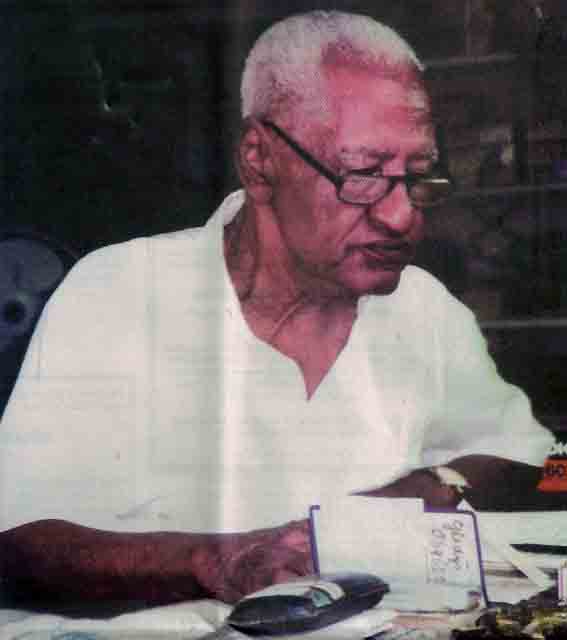
Elis Juliana
Elis Juliana stands as one of the most towering cultural titan and visionary polymaths in the history of the Dutch Caribbean [1]. Revering him as the undisputed "cultural conscience" and "griot" of Curaçao, historians, artists, and linguists celebrate his monumental life's work as a poet, visual artist, sculptor, folklorist, self-taught archaeologist, and ethnologist [2]. Born into deep economic deprivation during an era when foreign industrialization threatened to obliterate the ancestral memory of Afro-Curaçaoan society, Juliana dedicated his life to rescuing, cataloging, and elevating the tangible and intangible heritage of his people [3]. Alongside fellow literary icons such as [Pierre Lauffer](/profiles/pierre-lauffer) and Luis Daal, Juliana formed the revered *Grote Drie* ("The Big Three") of 20th-century Papiamentu literature, proving that the creole mother tongue possessed the aesthetic range, emotional subtlety, and intellectual power to produce masterworks of modern poetry [4]. Yet Juliana was far more than an elite literary practitioner; he was a decolonial memory-keeper who traversed the scrublands and rural *kunuku* estates of the ABC islands (Aruba, Bonaire, and Curaçao) with a tape recorder and pickaxe, listening to the elderly generation whose parents had endured chattel slavery [2][5]. His pioneering collaboration with Father Paul Brenneker culminated in the world-famous **Zikinzá collection**—a vast archive of over 1,400 field recordings documenting ancient songs, herbal medicine, ancestral folklore, and work rhythms [1][3]. Through his unique philosophical and ethnographical methodology, later coined by scholars as *Julianismo*, he insisted that Afro-Caribbean communities should not merely be examined from above by colonial researchers, but understood from within through their own nuanced "ways of speaking" (*forma di papia*) [2]. From delicate coral stone sculptures to crystalline haikus, Elis Juliana breathed eternal dignity into the soul of Curaçao [6]. ### Early Life and Humble Beginnings in Nieuw Nederland Elis Juliana was born on August 8, 1927, in the working-class neighborhood of Nieuw Nederland, situated just outside the historic urban core of Willemstad, Curaçao [1][7]. He was born a twin alongside his sister to Maria Antonia "Mayo" Juliana, an impoverished Afro-Curaçaoan washerwoman, and Hosé "Hosé'i Ñaña" Alvares, a skilled tailor and itinerant folk musician [7]. In an autobiographical anecdote that poignantly encapsulated the destitute conditions of his childhood, Juliana frequently recounted that his mother had intended to name him "Ellis" with two 'l's; however, the colonial civil registration office demanded an extra administrative fee for the additional letter, which his mother could not afford, leaving his legal name permanently recorded as "Elis" [1][8]. Growing up in the tight-knit but economically strained alleyways of Nieuw Nederland, young Elis was endowed with voracious curiosity and an acute visual imagination [1]. In an environment where expensive toys and lavish excursions were non-existent, Juliana famously described the modest earthen yard behind his home as his "Disney World" [7]. Armed with a discarded magnifying glass, the young boy spent endless hours crouched in the dirt, observing the complex architecture of ant colonies, the movement of beetles, and the textures of native cacti and coral stone formations [7][8]. This innate habit of close, reverent observation of microscopic detail laid the empirical foundation for his future dual vocations as a naturalist-folklorist and a visual artist [2].  Juliana received his basic primary schooling at the St. Jozef elementary school, after which he enrolled in the local Catholic craft school (*ambachtsschool*) to study technical mechanics and ironworking [1][7]. However, his family's severe financial hardship forced him to terminate his formal schooling at the age of fifteen so that he could enter the workforce full-time to support his mother and siblings [7][8]. Juliana subsequently held a diverse array of working-class occupations: he was employed as a mechanical apprentice at the Royal Netherlands Marine barracks, laboured at the burgeoning Shell oil refinery, served as a correctional prison guard, and later wore the uniform of a colonial police officer [1][7]. These varied manual jobs immersed Juliana directly within the daily struggles, slang, and humor of ordinary working-class Antilleans, giving him an intimate, unmediated understanding of the very community whose cultural survival he would soon champion [2]. ### The Crucible of Industrial Modernization and Cultural Erasure To understand the urgency that animated Elis Juliana's life work, one must recognize the seismic economic and social transformation that swept Curaçao during the first half of the twentieth century [3]. Following the establishment of the Royal Dutch Shell oil refinery (Isla) in 1915 and 1918, Curaçao transformed virtually overnight from an impoverished, agrarian-maritime colony into one of the largest oil-refining centers in the world [1][3]. The rapid influx of capital, modern wage labor, and foreign workers brought immense material development, but it also triggered a catastrophic rupture with traditional rural folklife [2][3]. As rural families abandoned the agricultural *mondi* (scrubland wilderness) to settle in dense urban enclaves around Willemstad, ancestral practices—such as the communal *seú* harvest rituals, rhythmic agricultural work songs (*kantika di trabou*), and the clandestine drumming ceremonies of the *tambú*—were rapidly stigmatized as backward or superstitious relics of the past [1][5]. Furthermore, the Dutch colonial educational curriculum and the Roman Catholic Church systematically suppressed the native Papiamentu language in classrooms, enforcing Dutch as the sole legitimate vehicle for intellectual and civic life [4][9]. Juliana realized with terrifying clarity that the elderly generation—the *grandinan* who held the centuries-old oral libraries of Afro-Curaçaoan music, herbal medicine, and philosophy dating back to the era of the 1795 slave rebellion led by [Tula](/profiles/tula)—were dying off, taking an entire civilization's memory with them to the grave [2][5]. > "A people without memory is like a tree without roots; when the wind of modernity blows, it falls without knowing why it stood. We must listen to the elders, for in their whispered words lies the blueprint of our survival." [2] ### The Zikinzá Odyssey: Fieldwork with Father Paul Brenneker In 1958, a serendipitous encounter fundamentally altered the course of Caribbean cultural preservation [1][5]. Juliana crossed paths with Father Paul Brenneker (1912–1996), a Dutch Roman Catholic Dominican friar, missionary, and passionate ethnographer who shared Juliana's deep alarm over the erosion of indigenous Antillean culture [3][5]. Recognizing each other as kindred spirits, the Afro-Curaçaoan mechanic-artist and the Dutch priest forged an unprecedented, lifelong research partnership that defied the colonial racial divides of the 1950s [1][5].  Equipped with a portable reel-to-reel tape recorder, photographic cameras, notebooks, and archaeological trowels, Juliana and Brenneker spent decades traversing the unpaved roads and remote *kunukus* of Curaçao, Bonaire, and Aruba [3][5]. They sought out the *grandinan* (community elders), interviewing 267 key tradition-bearers, some of whom had been born as early as 1853 under the brutal yoke of Dutch plantation slavery [1][5]. Juliana's innate warmth, mastery of dialectal Papiamentu, and shared cultural heritage were crucial; where colonial government officials or European academics were met with guarded silence, Juliana was welcomed onto verandas with open arms [2][5]. Between 1958 and the late 1960s, the duo amassed approximately 1,400 audio recordings comprising folk songs, spiritual incantations, personal memoirs, funeral laments, children's rhymes, riddles (*konta kuenta*), and intricate *Nanzi* spider-tales rooted in West African Ashanti mythology [1][3][5]. This monumental body of work became known as the **Zikinzá collection**, named after an archaic Afro-Antillean rhythm and song form [1][5]. In addition to sound recordings, Brenneker and Juliana published the encyclopedic ten-volume series *Sambumbu* (1969–1975), which documented traditional architecture, medicinal plants, religious syncretism, and social customs across the ABC islands [5][10]. Today preserved and digitized by NAAM (National Archaeological Anthropological Memory Management), the Zikinzá archive remains the single most important ethnographic repository of 20th-century Dutch Caribbean cultural history [3][5]. ### Julianismo: Decolonizing the Archive from Within Elis Juliana's contribution to anthropology and archaeology was fundamentally revolutionary because it broke decisively with Western ethnographic paradigms [2]. Caribbean scholars today analyze his distinct theoretical framework under the concept of **Julianismo** [2]. Where imperial anthropologists treated colonial subjects as passive informants to be categorized and analyzed from afar, Juliana approached the *grandinan* as equal intellectual partners, philosophers, and co-curators of their own history [2]. Central to *Julianismo* was Juliana's exploration of what he designated as *forma di papia* ("ways of speaking") [2]. Juliana recognized that for centuries, enslaved and disenfranchised Afro-Curaçaoans had developed sophisticated linguistic strategies—employing double entendre, irony, coded proverbs, and deliberate ambiguity—to critique oppressive masters without suffering violent retribution [2]. Juliana termed this the "poetics of concealment" [2]. He demonstrated that these oral expressions were not primitive folklore, but rigorous intellectual survival mechanisms that required deep cultural literacy to decode [2]. Furthermore, Juliana practiced what modern scholars call multimodal material archaeology [2][3]. Long before formal archaeological legislation existed in the Netherlands Antilles, Juliana served as a field researcher and investigator for the Archaeological-Anthropological Institute of the Netherlands Antilles (AAINA) [2][3]. With his hands, he unearthed pre-Columbian Amerindian artifacts of the Caiquetio and Arawak peoples, while simultaneously rescuing post-emancipation everyday material culture—such as discarded iron *chapis* (agricultural hoes), wooden pounding mortars, clay cooking vessels, and traditional *tambú* barrel drums [1][3]. For Juliana, the soil and the oral voice were two halves of the same sacred book [2]. ### The "Big Three" and Poetic Mastery in Papiamentu Alongside his ethnographical fieldwork, Elis Juliana emerged as a literary luminary who helped catalyze a renaissance in Papiamentu poetry [4][9]. In the mid-20th century, alongside his close contemporaries [Pierre Lauffer](/profiles/pierre-lauffer) and Luis Daal, Juliana formed the triumvirate celebrated as the *Grote Drie* ("The Big Three") of Curaçaoan literature [4][9]. While intellectuals like [Cola Debrot](/profiles/cola-debrot) and [Boeli van Leeuwen](/profiles/boeli-van-leeuwen) often explored Antillean existential identity through Dutch-language prose, and children's authors like [Nilda Pinto](/profiles/nilda-pinto) adapted folklore for schools, Juliana and Lauffer elevated native Papiamentu into a rigorous poetic language of the highest order [4][9]. Juliana burst onto the literary scene in 1956 with the publication of his iconic poetry collection **Flor di Datu** (*Cactus Flower*), followed in 1961 by **Flor di Anglo** [1][4]. In these volumes, Juliana discarded conventional, rigid European rhyming meters in favor of free verse informed by the natural cadence of Antillean speech and the intoxicating syncopations of the *tumba* and *tambú* [4][9]. His poems celebrated the dignity of washerwomen, street vendors, sugarcane cutters, and fishermen, transforming ordinary working-class experiences into epic lyrical portraits [1][4]. His acclaimed poem *"E Nigrita Catan"* captured the bittersweet complexities of Afro-Caribbean female identity under colonial hierarchies with breathtaking lyricism [4]. Juliana was also a daring literary innovator who introduced the Japanese **haiku** to the Papiamentu language [6][7]. In masterly collections such as *Un mushi di haiku* (1993) and *Haiku den lus di animal* (2007), he utilized the strict seventeen-syllable form to distill Caribbean nature, human foolishness, and ecological wisdom into sharp, crystalline epigrams [6][7]. > *Bichi ta siegu / ma e sa unda koba / saka probecho.* > > "The worm is blind, / yet it knows where to dig / to reap its reward." [6][7] Beyond poetry, Juliana authored sociopolitical treatises, most notably **OPI** (*Organisashon Planifikashon Independensia*), a multi-volume philosophical exploration examining the psychological, cultural, and economic prerequisites for authentic Antillean independence and self-reliance [10]. ### Visual Arts and Coral Sculptures: Giving Form to Ancestral Spirits Elis Juliana's creative genius was inherently multidisciplinary; what he could not capture in verses or audio reels, he carved into physical form [1][11]. As a self-taught visual artist, Juliana began exhibiting his drawings, paintings, and sculptures in the 1960s, quickly establishing himself as one of the premier visual artists in the Dutch Caribbean [1][11]. His most celebrated artistic achievements were his **coral stone sculptures** [1][11]. Working with porous, weathered coral limestone gathered along the rugged north coast of Curaçao, Juliana allowed the natural crevices, fossils, and indentations of the marine stone to dictate the contours of his work [1][11]. His sculptures frequently depicted maternal archetypes—reverent mother-and-child compositions symbolizing the resilience of the Caribbean matriarchy—as well as solemn ancestral figures emerging from the bedrock [1][11]. He also sculpted extensively in local hardwood (*guayacán*), mahogany, and recycled metal [1]. In recognition of his mastery, Elis Juliana was awarded the prestigious **Cola Debrot Prize** for the visual arts in 1973, Curaçao's highest civilian cultural distinction [1][11]. ### Final Honors, Death, and Enduring Legacy Throughout his twilight years, Elis Juliana was universally revered as the living embodiment of Curaçao's cultural soul [1][7]. In 1986, the Pierre Lauffer Foundation honored his literary lifetime achievements with the **Chapi di Plata** (Silver Rake Prize), an award symbolizing deep love and cultivation of the native language [4][9]. He was made an Officer in the Order of Orange-Nassau and became a beloved national mentor to younger generations of writers, musicians, and visual artists across the ABC islands, including folklorist [Frans Booi](/profiles/frans-booi) in Bonaire [5]. The crowning institutional recognition of his life arrived on June 18, 2013, when the University of Curaçao (UoC) conferred upon Elis Juliana the degree of **Doctor Honoris Causa** (Honorary Doctorate) in recognition of his peerless, lifelong contributions to literature, linguistics, archaeology, and anthropology [1][7]. The ceremony was an intensely emotional moment of national celebration, acknowledging that a man who had been forced to leave craft school at fifteen had achieved what no university seminar could: the rescue of an entire nation's collective consciousness [7][8]. Just five days after receiving his honorary doctorate, on **June 23, 2013**, Elis Juliana passed away peacefully in Willemstad at the age of 85 [1][7]. His passing plunged Curaçao into profound national mourning, with government flags flown at half-mast and cultural tributes resounding across the Caribbean [7]. Today, his legacy lives vibrantly on the walls of Willemstad—immortalized in massive street murals in Punda and Otrabanda—in school textbooks, and within the halls of NAAM [1][5]. Elis Juliana proved to the world that within the humble, whispered songs of the Caribbean *kunuku* lies a treasury of human wisdom as vast and enduring as the ocean itself [2].
View Profile →Esther Beneby
### Introduction Esther Beneby (1932–2014) stands as a towering figure in the cultural and economic history of the Inagua Islands in the southern Bahamas. While Great Inagua has long been internationally recognized for its vast solar salt production and its majestic colonies of West Indian flamingos, it was Beneby who championed the island’s potential for a thriving, sustainable local craft industry. In an era when economic opportunities for women in the rural Family Islands of the Bahamas were severely limited, Beneby leveraged the natural resources of her environment to create a unique artisanal movement. Her pioneering efforts not only provided a vital secondary source of income for local families but also helped to forge a distinct Inaguan cultural identity that resonated throughout the Bahamian archipelago. ### Early Life in Matthew Town Born on April 12, 1932, in Matthew Town—the only settlement on Great Inagua—Esther Beneby was raised in a community intimately tied to the harsh yet beautiful natural environment. Matthew Town in the 1930s and 1940s was a remote outpost. The island, located just 55 miles off the eastern tip of Cuba, felt worlds away from the political bustling of the capital, Nassau. Beneby's father worked as a laborer in the salt pans, a grueling occupation that defined the lives of most men on the island. Her mother was a traditional homemaker who, like many women of her generation, supplemented the family’s meager income through subsistence farming and basic sewing. From a young age, Beneby demonstrated a profound appreciation for the raw beauty of her surroundings. While other children played near the settlement, she would often wander the coastline, collecting sea glass, intricate conch shells, and molted feathers from the flamingos that flocked to the island's interior lakes. She was fascinated by the texture of the dried sisal plants and the shimmering, geometric perfection of unrefined salt crystals that formed naturally along the shorelines. These early explorations would lay the foundation for her future life's work.  ### The Shadow of the Salt Industry To understand Beneby's impact, one must understand the economic monolith that was the salt industry in Inagua. By the mid-20th century, the Erickson family from the United States had mechanized the local salt operations, which eventually became Morton Salt, one of the largest solar saline operations in North America. The salt industry brought modernization, electricity, and steady wages to Matthew Town, but it also created an economic monoculture. The island's fortunes rose and fell with the price of salt and the frequency of hurricanes that could wipe out a year's harvest in a single day. Beneby recognized the vulnerability of this single-industry reliance. Moreover, she saw that the salt company provided few avenues for female employment. Women in Matthew Town were largely excluded from the formal economy. After completing her rudimentary primary education, Beneby began experimenting with local materials to create household items and decorative pieces. She wove baskets from dried silver top palm and sisal, integrating the naturally molted pink feathers of the flamingos to create striking, colorful designs that were entirely unique to Inagua. > "We were surrounded by a wealth that the salt bosses couldn't see. Our gold was in the palm leaves, the discarded shells, and the pink feathers that the wind blew across the salinas. We just had to learn how to weave it together." > — *Esther Beneby, 1984 interview with the Bahamian Historical Society* [1] ### The Genesis of the Craft Movement In 1962, as the Bahamas began moving toward majority rule and eventual independence under leaders like [Lynden Pindling](/profiles/lynden-pindling), a sense of national pride and self-determination swept through the islands. Inspired by this awakening, Beneby formally organized the Inagua Women's Artisanal Cooperative. Starting with just five women gathered on the porch of her modest wooden home, the cooperative began systematically producing crafts for sale. Beneby’s genius lay in her product diversification and quality control. She developed a technique for carving and polishing the dense, sun-baked salt blocks into translucent sculptures, capturing the essence of the island's main export in a refined, artistic form. Additionally, she elevated the traditional Bahamian straw work by introducing intricate, tightly woven geometric patterns inspired by the salt flats themselves. She also utilized discarded conch shells, polishing them to a high sheen to create jewelry and decorative inlays. Word of the exceptional crafts coming out of Inagua slowly reached Nassau. By the late 1960s, tourists visiting the capital began requesting 'Inagua pink' baskets and salt sculptures. Beneby established a supply line, sending crates of her cooperative's goods on the weekly mailboats that connected Inagua to New Providence. ### Expanding the Cooperative and Empowering Women The 1970s and 1980s marked the golden era of Beneby's craft movement. The cooperative grew to include over fifty women, representing a significant portion of Matthew Town's female population. The income generated from the sale of these artisanal goods had a transformative effect on the local community. Women were able to send their children to high school in Nassau, improve their homes, and achieve a degree of financial independence previously unknown on the island. Beneby was a stern but nurturing leader. She insisted that every piece sold under the cooperative's name met exacting standards of craftsmanship. She also recognized the importance of ecological sustainability long before it became a global buzzword. She instituted strict rules for the cooperative members: flamingo feathers could only be collected from the ground (never plucked), and the harvesting of palm fronds was carefully rotated to ensure the health of the local flora. During this time, her work attracted the attention of regional cultural advocates, including [Arthur Foulkes](/profiles/arthur-foulkes), who championed the promotion of authentic Bahamian culture. Beneby's pieces were featured in national exhibitions, and she was frequently invited to Nassau to conduct workshops on traditional weaving and resource utilization.  ### Later Years and Lasting Legacy In her twilight years, Esther Beneby remained a dedicated advocate for Inagua's cultural heritage. She lobbied the local government to establish a dedicated space for the artisans, resulting in the opening of the Inagua Craft Centre in 1998. This facility served as both a workshop and a museum, showcasing the evolution of Inaguan crafts and providing a central hub for visitors to purchase authentic goods. Beneby passed away peacefully in her sleep on November 15, 2014, at the age of 82. Her funeral in Matthew Town was attended by hundreds, including dignitaries from Nassau who recognized her immense contribution to the Bahamian cultural tapestry. > "Esther Beneby did not just weave straw and polish shells; she wove the very fabric of the modern Inaguan community. She proved that the Family Islands possess an innate creative wealth that can sustain and uplift its people." > — *Dr. Gail Saunders, Bahamian Historian* [2] Today, the techniques pioneered by Esther Beneby are still taught at the Inagua Craft Centre. Her legacy endures not only in the beautiful objects created by the artisans who followed in her footsteps but also in the enduring spirit of self-reliance and environmental stewardship she instilled in her community. She transformed the raw, sun-drenched resources of her island home into a beacon of Bahamian artistry, proving that true wealth lies in the creative spirit of the people.
View Profile →Ethelyn Smith
### Introduction: A Matriarch of Virgin Islands Healthcare Ethelyn Smith stands as one of the British Virgin Islands’ most revered pioneering nurses, public health reformers, and community matriarchs [1]. Across four decades of transformative service, she dedicated her life to the preservation and elevation of community health throughout Tortola and its sister islands. In an era when the territory was an economically neglected British colonial dependency lacking paved roads, motorized transport, running water, and electricity, Smith was a frontline lifeline for countless families [2]. From perilous mountain trails traversed on horseback to midnight boat crossings through choppy passages, she carried medical care directly into the homes of Virgin Islanders. Her relentless advocacy for maternal and infant welfare, the decentralization of clinical care, and the professionalization of local nursing reshaped the healthcare architecture of the archipelago, guiding it from informal rural midwifery toward a modern, comprehensive public health infrastructure [3]. ### Historical Context: Colonial Neglect and the Roots of Healthcare Awakening To understand the significance of Ethelyn Smith’s life and service, one must appreciate the stark socio-economic realities of the mid-twentieth-century British Virgin Islands. For the first half of the 1900s, the presidency was viewed by colonial administrators in London as an impoverished and remote outpost of the Leeward Islands Federation [2]. Territorial public expenditures were severely constrained by the United Kingdom Treasury’s stringent "grant-in-aid" subventions, which prioritized fiscal austerity over social investment [4]. Public health was in a perennial state of emergency. Preventable infectious diseases, gastrointestinal illnesses caused by contaminated cisterns, malnutrition, and acute complications during pregnancy and childbirth inflicted a heavy toll on rural communities [1]. Medical care on Tortola was anchored only by the modest Cottage Hospital in Road Town, founded in 1922 by Commissioner Major Herbert W. Peebles [3]. Beyond Road Town, vast stretches of Tortola—from the rocky western shores of West End to the northeastern hills of Long Look and East End, and the steep northern slopes of Cane Garden Bay—remained almost entirely cut off from regular clinical services [2]. For the sister islands of Virgin Gorda, Anegada, and Jost Van Dyke, access to a qualified doctor was a rare luxury that depended entirely on weather conditions and the availability of open sailing sloops [3]. The human cost of this neglect reached a boiling point in late 1949. When the colonial medical officer in Road Town refused timely and compassionate treatment to the pregnant wife of an Anegadian fisherman, [Theodolph H. Faulkner](/profiles/theodolph-faulkner), public outrage ignited across the territory [4]. Joining forces with civic leaders [Carlton de Castro](/profiles/carlton-de-castro) and [Isaac "Glanny" Fonseca](/profiles/isaac-fonseca), Faulkner led more than 1,500 Virgin Islanders in the historic Great March of November 24, 1949, demanding representative democracy and basic social dignity [4]. At the very heart of this foundational political awakening was a cry for humane, reliable maternal and child healthcare. It was within this climate of awakening that Nurse Ethelyn Smith answered the call to public service, becoming the living embodiment of the healthcare reform her people so desperately demanded [1].  ### Early Life, Vocation, and Clinical Apprenticeship Born and raised on the island of Tortola, Ethelyn Smith grew up immersed in the communal traditions of self-reliance, mutual aid, and kinship that sustained Virgin Islanders through decades of imperial isolation [1]. In village life, illness and childbirth were traditionally managed by elder community matrons, known locally as "granny midwives," who relied on herbal bush teas, prayer, and hard-earned practical experience [2]. While these traditional healers provided essential solace, complex maternal emergencies often proved fatal without formal clinical intervention. Witnessing firsthand the avoidable tragedies that befell young mothers and infants in her community, Smith determined early in life to pursue the nursing profession [1]. Educational advancement for young women in Tortola was fraught with formidable obstacles. Secondary schooling was extremely limited, and specialized professional training required exceptional academic merit and moral perseverance [2]. Smith entered the nursing service through the rigorous apprenticeship program centered at the Cottage Hospital in Road Town [3]. Under the strict supervision of visiting colonial medical officers, senior matrons, and veteran nursing sisters, she mastered foundational nursing arts: wound management, surgical sterilization, pharmacology, infectious disease triage, and above all, clinical midwifery [1]. Her natural empathy, steady hands, and calm authority under pressure quickly set her apart, earning her the trust of senior medical staff and rural patients alike [3]. > "In those rugged early years, healthcare in our islands did not wait inside hospital walls; it was carried on foot through mountain ridges and across open water, wherever a mother was in labor or a child needed care." ### Frontier Nursing: Maternal and Child Health Across Rugged Terrain Upon earning her credentials as a registered nurse and certified midwife, Ethelyn Smith was deployed as a district community nurse [1]. In this role, her daily routine resembled frontier medicine more than metropolitan healthcare. Tortola’s mountainous terrain was crisscrossed only by steep dirt tracks and donkey paths; during torrential rainstorms, hillside gullies turned into impassable torrents [2]. Armed with a leather medical bag containing sterile scissors, clamps, antiseptic lotions, bandages, weighing scales, and injectable medications, Nurse Smith traversed the island on foot, on donkey-back, and by horse [1]. Her primary mission was the safeguarding of maternal and child health. Nurse Smith instituted regular prenatal home visits, meticulously tracking fetal development, maternal blood pressure, and nutritional health in rural households where pregnant women had never before received structured medical monitoring [1][2]. When labor commenced, often in the dead of night by the dim glow of kerosene lamps, families dispatched a messenger on horseback to fetch Nurse Smith. Arriving at isolated wooden homes, she delivered hundreds of infants into the world, deftly managing breech presentations, postpartum hemorrhages, and neonatal asphyxia with resourcefulness and unshakeable composure [3]. Smith recognized that maternal survival was intimately linked to preventive child healthcare. She organized grassroots infant welfare clinics under the shade of village tamarind trees, church halls, and schoolrooms across Tortola [1]. There, she weighed infants, educated mothers on hygienic infant feeding, distributed vital nutritional supplements such as cod liver oil and powdered milk, and spearheaded territorial vaccination campaigns [2]. Through her tireless outreach, childhood immunization rates surged, dramatically reducing the territorial incidence of tetanus neonatorum, whooping cough (pertussis), diphtheria, and measles [1]. Her jurisdiction, however, was not confined to Tortola. Recognizing the acute vulnerability of the sister islands, Nurse Smith regularly boarded traditional open wooden sloops and early motor launches to navigate the turbulent waters of the Sir Francis Drake Channel [3]. On Virgin Gorda, Jost Van Dyke, and distant Anegada, where medical facilities were virtually nonexistent, she conducted marathon multi-day clinics, treating chronic ailments, inoculating schoolchildren, attending home births, and training local community helpers to monitor high-risk patients between her visits [2].  ### Institutional Modernization and Peebles Hospital By the mid-1950s and 1960s, the British Virgin Islands began an unprecedented era of political and economic transformation. The restoration of the Legislative Council following the 1949 march, followed by the landmark 1967 Constitution establishing ministerial government under Chief Minister [H. Lavity Stoutt](/profiles/h-lavity-stoutt), ushered in a new national determination to build modern public institutions [4]. The modest Cottage Hospital was expanded and renamed Peebles Hospital, evolving into a multi-ward territorial medical center in Road Town [3]. Throughout this transition, Nurse Ethelyn Smith served as a vital bridge between traditional community care and institutional clinical modernization [1]. At Peebles Hospital, she assumed senior administrative and supervisory responsibilities, overseeing maternity wards, outpatient dispensaries, and inpatient care [3]. She worked hand-in-hand with early indigenous Virgin Islands physicians—including surgeon and future Premier Dr. D. Orlando Smith—to implement rigorous infection control protocols, standardize maternal record-keeping, and upgrade obstetric surgical prep [1][3]. Despite the growing sophistication of Peebles Hospital, Nurse Smith vigorously insisted that hospital-based medicine must never displace primary community care [1]. She argued passionately before government officials that requiring poor rural families to journey to Road Town for basic medical needs was an inequitable barrier that endangered lives [2]. Championing the decentralization of territorial healthcare, she was instrumental in the establishment and staffing of permanent district health clinics across Tortola, including the West End Clinic, the East End / Long Look Clinic, and the Cane Garden Bay Clinic [1][3]. These community health centers brought clinical diagnostics, diabetic monitoring, hypertension screenings, and prenatal checkups directly to the doorsteps of rural settlements, establishing a primary care model that became the envy of the Eastern Caribbean [2]. Smith was equally committed to mentoring the next generation of Virgin Islands nurses [1]. In the hospital wards and district dispensaries, she served as a preceptor for dozens of young student nurses and auxiliary midwives. Known as a demanding yet deeply supportive teacher, she instilled in her pupils not only clinical precision and sterile technique, but an unwavering ethical code of patient dignity, confidentiality, and compassionate bedside manner [3]. > "True public health is the foundation of community dignity; when we protect our mothers and children, we protect the very future of the Virgin Islands." ### Civic Leadership and Broad Social Reform For Ethelyn Smith, healthcare was inseparable from broader social justice and community empowerment [1]. She understood that medical interventions alone could not cure illnesses rooted in poverty, poor sanitation, and civic neglect. Outside her official nursing duties, she emerged as an influential civic leader, church pillar, and community activist across Tortola [1][2]. Smith was an active organizer within local Methodist and Anglican church societies, leading women’s fellowships, youth guilds, and mutual aid funds that assisted impoverished widows, orphans, and the elderly [1]. She partnered closely with civic leaders and community builders such as Chief Minister [Willard Wheatley](/profiles/willard-wheatley) and Fifth District representative and Chief Minister [Cyril B. Romney](/profiles/cyril-romney) to advocate for public health infrastructure [4]. She persistently lobbied legislative representatives to allocate public funds for protected community water cisterns, municipal waste collection, and rural road paving [2]. When Minister of Communications and Works [Terrence B. Lettsome](/profiles/terrence-lettsome) oversaw major infrastructure projects across the territory, Nurse Smith championed the installation of roadside drainage and clinic telephone links, emphasizing that infrastructural development was fundamentally a matter of public safety and disease prevention [4]. During public health crises, such as seasonal outbreaks of dengue fever and gastrointestinal enteritis, Smith took to community radio, school assemblies, and public town halls to conduct health education campaigns [1]. She taught families how to properly chlorinate drinking water, eradicate mosquito breeding sites around homes, and preserve fresh food safely in a tropical climate [2]. Her holistic vision of health transformed her from a beloved district nurse into one of the most respected civic voices in the British Virgin Islands [1]. ### Enduring Legacy and Territorial Reverence Ethelyn Smith’s decades of selfless service left an indelible stamp on the society and health of the British Virgin Islands [1]. Over her long career, she delivered thousands of Virgin Islanders into the world—generations of citizens who came of age knowing that Nurse Smith had been the very first person to cradle them in her arms [1][3]. The steep decline in infant and maternal mortality rates across the territory during the latter half of the twentieth century was directly attributable to the grassroots public health framework and district clinic network that she helped construct and nurture [2]. In the twenty-first century, the territorial healthcare system that Smith helped pioneer underwent further monumental advancement. Peebles Hospital was entirely modernized into a state-of-the-art territorial medical complex, which was officially renamed the Dr. D. Orlando Smith Hospital in 2019 [3]. In honor of the deep historical roots of local medicine, the original hospital structure was preserved as the Major Peebles Wing, continuing to serve the public as the Road Town Clinic and administrative center [3]. Nurse Ethelyn Smith was celebrated throughout her lifetime and beyond as an honored healthcare pioneer, receiving territorial accolades, community commendations, and the profound gratitude of the Virgin Islands people [1]. Her life’s journey remains an inspiring testament to the power of dedicated, compassionate public service. In an era of profound national transition, Nurse Smith proved that the true greatness of a society is measured by its commitment to its most vulnerable, cementing her place forever as an immortal guardian of the Caribbean legacy [1][2]. ### References - [Government of the Virgin Islands - History of Healthcare in the British Virgin Islands and Peebles Hospital Transformation](https://bvi.gov.vg) - [BVI Health Services Authority (BVIHSA) - From Cottage Hospital to Dr. D. Orlando Smith Hospital: Celebrating Healthcare Pioneers and Community Clinics](https://bvihsa.vg) - [A History of the British Virgin Islands 1672–1970 (Isaac Dookhan)](https://caribbeanlegacyarchive.com/sources/dookhan-bvi-history) - [The Virgin Islands Story (Norwell Harrigan and Pearl Varlack)](https://caribbeanlegacyarchive.com/sources/harrigan-varlack-vi-story)
View Profile →
Francisco Oller
### Francisco Oller: The Impressionist Light of the Caribbean #### Introduction Francisco Oller y Cestero is widely regarded as the founding father of modern Puerto Rican painting [1]. As the only Latin American artist to participate directly in the development of French Impressionism, Oller occupied a unique position in nineteenth-century art history [2]. He bridged the gap between the prestigious academic salons of Europe and the vibrant, untamed reality of the Caribbean [3]. Over his long career, Oller moved fluidly between Realism, Naturalism, and Impressionism, adapting these European avant-garde styles to capture the unique light, landscape, and social struggles of his homeland [4]. A dedicated teacher, abolitionist, and patriot, his art was never detached from the political and social realities of Puerto Rico [1]. Through his masterpieces, Oller gave visual form to an emerging Puerto Rican national identity, challenging colonial narratives and elevating the lives of the island's working-class and rural citizens [3]. #### Early Life and Artistic Awakening in San Juan (1833–1851) Born in Bayamón, Puerto Rico, on June 17, 1833, Francisco Oller grew up in an island colony defined by the harsh realities of Spanish colonial rule and the plantation economy [1]. His father, Cayetano Juan Oller y Fromesta, was a respected government official, and his mother, María del Carmen Cestero Dávila, belonged to a well-connected local family [5]. From an early age, Oller displayed an extraordinary talent for drawing. At the age of eleven, he began formal art training in San Juan under Juan Cleto Noa, a painter who ran a small academy [5]. Under Noa's guidance, the young Oller copied European prints and developed a solid grounding in academic drawing techniques. Mid-nineteenth-century Puerto Rico offered very few opportunities for aspiring artists. The Spanish colonial administration did not support local art institutions, and the island's elite preferred to import religious art and portraits from Europe rather than sponsor local talent. The social landscape was also deeply divided; the sugar boom had expanded African slavery, while a rigid racial and class hierarchy separated the colonial administration, the wealthy landowners, and the impoverished rural peasants (*jíbaros*) and enslaved laborers [4]. Observing these stark inequalities in his youth would profoundly shape Oller's artistic and political sensibilities, predisposing him toward social realism and reform. #### Studies in Europe: Madrid and Paris (1851–1868) Recognizing his exceptional talent, Oller's family and local sponsors enabled him to travel to Spain in 1851 to pursue higher artistic education [5]. He enrolled in the prestigious Real Academia de Bellas Artes de San Fernando in Madrid, where he studied under Federico de Madrazo y Kuntz, the leading Spanish portraitist and director of the Prado Museum [5]. Madrazo trained Oller in the strict neoclassical and romantic traditions of the Spanish court. While in Madrid, Oller spent hours copying the works of Spanish masters like Diego Velázquez and Francisco Goya at the Prado, absorbing their mastery of light, color, and psychological depth. However, the center of the artistic world was Paris, and in 1858, Oller moved to the French capital to immerse himself in the avant-garde [3]. He entered the atelier of the academic painter Thomas Couture and later studied under Charles Gleyre [5]. More importantly, Oller began attending the Académie Suisse, a free-form art school where artists could paint from live models without strict academic supervision [1]. It was here that Oller entered the social and artistic circles of the painters who would soon revolutionize Western art. In Paris, Oller formed close friendships with Camille Pissarro, Paul Cézanne, Claude Monet, Auguste Renoir, and Frédéric Bazille [3]. Pissarro, who was born on the neighboring Caribbean island of Saint Thomas, shared a unique cultural bond with Oller as a fellow Caribbean expatriate, and the two remained close friends and correspondents for decades [6]. Oller also worked closely with Paul Cézanne; the two painters frequently shared studios, traveled to the French countryside to paint *en plein air* (outdoors), and influenced each other's early explorations of form and light [1]. Oller was also deeply influenced by Gustave Courbet, the leader of the Realist movement [3]. Courbet’s rejection of historical and mythological subjects in favor of representing the everyday lives of ordinary people resonated with Oller’s social conscience. Oller adopted Courbet's belief that art should have a moral and social purpose, a philosophy that would guide his later work in Puerto Rico [4]. #### Artistic Philosophy and the Duty of the Artist Oller rejected the idea of "art for art's sake." He believed that the artist had a social responsibility to be useful to their society, using their talent to expose injustice, educate the public, and promote moral improvement [4]. This belief was the cornerstone of his artistic philosophy. > El artista y el escritor tienen la obligación de ser útiles. Las pinturas del artista deben ser como libros que enseñen, que ayuden a mejorar la condición humana, que ataquen el mal, que exalten el bien; por eso defino el arte como la representación de la naturaleza para el fin de mejorar la condición humana. > > — Francisco Oller This dedication to social utility set Oller apart from many of his French Impressionist contemporaries, who were primarily interested in the formal experimentation of light and color. While Oller enthusiastically adopted the Impressionist technique of painting outdoors and capturing fleeting atmospheric effects, he always anchored his work in a concrete social and human context [3]. #### Return to Puerto Rico and the Educational Crusade (1868–1884) In 1868, motivated by a patriotic desire to elevate the cultural life of his homeland, Oller returned to Puerto Rico [1]. He was dismayed by the lack of art education on the island and immediately set out to change it. He founded the *Academia de Dibujo y Pintura* (Free Academy of Art of Puerto Rico) in San Juan, offering free classes to students from all social backgrounds, including women, poor students, and people of color [5]. Oller believed that art education should not be a luxury for the wealthy but a tool for personal and national development. To support his students, he wrote an instructional manual, *A Treatise on Drawing and Painting*, which emphasized observation of nature over the mechanical copying of prints. Despite facing constant financial difficulties and a lack of support from the colonial government, Oller ran several schools throughout his life, training a new generation of Puerto Rican artists and introducing the island to modern European artistic techniques [5]. #### Radical Politics, Abolitionism, and Friendships During his time in Puerto Rico and his subsequent visits to Europe, Oller became active in liberal and reformist political circles. He was a passionate abolitionist, joining the struggle against African slavery on the island, which was finally abolished in 1873. He aligned himself with Puerto Rican intellectuals who sought greater autonomy or independence from Spain. Among his closest friends was [Ramón Emeterio Betances](/profiles/ramon-betances), the medical doctor, writer, and revolutionary leader of the Grito de Lares uprising of 1868 [6]. Oller shared Betances's democratic ideals and anti-colonial stance. He painted a celebrated portrait of Betances and stayed in touch with him during Betances's exile in Paris [6]. Oller also painted a portrait of [Eugenio María de Hostos](/profiles/eugenio-hostos), which is one of the most famous representations of the educator [1]. Oller's art became a vehicle for these radical political beliefs, criticizing the colonial plantation system and celebrating the dignity of the island's marginalized populations. #### Masterpieces: Social Realism and Caribbean Light (1890s) Oller's mature style culminated in the 1890s with a series of monumental works that combined the social realism of Courbet with the vibrant light and color of French Impressionism.  His ultimate masterpiece, *El Velorio* (The Wake), painted circa 1893, is a monumental canvas that depicts a *baquiné*—a traditional rural Puerto Rican wake for a deceased infant [2]. In Puerto Rican peasant culture, the death of a young child was celebrated with music, drinking, and games, as it was believed the child's soul went directly to heaven as a "little angel" (*angelito*) [2]. Oller uses this scene to launch a devastating social critique. The painting depicts the interior of a peasant hut crowded with characters: drunken guests, a priest looking indifferently at the scene, peasants flirting, and a wild dog stealing food. In the center, the deceased child lies on a table covered in flowers, while the grieving mother stands apart, her face a portrait of silent sorrow. Through *El Velorio*, Oller criticized the ignorance, superstition, and moral decay that he believed were fostered by colonial neglect and religious hypocrisy, while simultaneously capturing the vibrant, chaotic reality of Puerto Rican rural life [3]. Another major work of this period is *La Escuela del Maestro Rafael Cordero* (1890–1892). This painting is a posthumous tribute to Rafael Cordero Molina, a free Black tobacco worker who had dedicated his life to providing free education to children of all races and social classes in San Juan [7].  Oller’s painting depicts the humble interior of Cordero’s home and workshop [7]. Cordero is shown surrounded by eager young students of diverse racial backgrounds, reading and writing under his gentle guidance [7]. In the corner, the tobacco-spinning table represents the manual labor that supported the school. The painting is a powerful celebration of racial integration, charity, and the transformative power of education, reflecting both Cordero's historical legacy and Oller's own pedagogical ideals. #### Still Lifes and the Landscape of the Antilles In addition to his large-scale narrative paintings, Oller was a pioneer of Caribbean still-life painting. In works like *Bodegón con plátanos y bananas* (Still Life with Plantains and Bananas), he rejected the traditional European subjects of game and northern fruits in favor of local tropical products: plantains, coconuts, yams, and avocados. He painted these fruits with a rich, tactile realism that celebrated their textures and shapes, creating a distinct Caribbean visual vocabulary. Oller was also a master landscape painter, capturing the brilliant tropical light of Puerto Rico. In paintings like *Hacienda Plazuela* and *Hacienda Aurora*, he depicted the sprawling sugar cane plantations of the coastal plains. While these landscapes are beautiful representations of Caribbean nature, they also carry a quiet political weight, depicting the centers of colonial economic power and the labor of the sugar workers who drove the island's economy. #### Final Years, Death, and Legacy Oller lived his final years in San Juan, continuing to paint and teach despite his advancing age and worsening financial situation [5]. He was recognized as a major cultural figure, serving as the Painter of the Royal Chamber under the brief reign of Amadeo I of Spain (1872) and receiving honors from the Spanish crown, yet he died in near-poverty on May 17, 1917, at the municipal hospital in San Juan [1]. Today, Francisco Oller is celebrated as the national painter of Puerto Rico and a pioneer of Latin American art [3]. By integrating the revolutionary techniques of European Impressionism and Realism with a deeply felt commitment to his homeland, he freed Puerto Rican art from its colonial shackles. His works are housed in major international museums, including the Musée d'Orsay in Paris and the Brooklyn Museum in New York, serving as a testament to a unique artist who captured the light and soul of the Caribbean [3].
View Profile →Françoise Gréaux
# Françoise Gréaux: Matriarch of Saint Barthélemy Heritage and Pioneer of Palmetto Craft ### Introduction and Historical Context of Saint Barthélemy The history of Saint Barthélemy—a rugged, arid limestone island of eight square miles nestled in the northern Lesser Antilles—is a tale of extraordinary human resilience [1]. Unlike its lush volcanic neighbors whose economies were driven by plantation agriculture, Saint Barthélemy offered meager soil and scarce freshwater. Settled in 1648 by French pioneers predominantly hailing from Normandy and Brittany, the island's inhabitants were forced to adapt to a harsh environment through subsistence farming, maritime trade, and artisanal ingenuity [4]. Throughout centuries of geopolitical shifts, including nearly a century of Swedish colonial rule between 1784 and 1878 before its return to France, historic lineages such as the Gréaux, Lédée, and Magras families anchored the island's unique cultural identity. Among these revered lineages stands Françoise Gréaux, a beloved traditionalist, cultural heritage preserver, artisanal weaving pioneer, and community matriarch whose life's work has safeguarded the authentic soul of Saint Barthélemy amidst rapid modern transformation [1]. As contemporary Caribbean historiography increasingly emphasizes the preservation of intangible cultural heritage alongside political milestones achieved by figures like [Victor Schoelcher](/profiles/victor-schoelcher) and [Aimé Césaire](/profiles/aime-cesaire), Gréaux emerges as a monumental guardian of folk memory. Her tireless advocacy has ensured that the ancestral customs, oral traditions, and intricate manual crafts forged by centuries of island survival remain vibrant living practices rather than static relics of a forgotten past. ### Early Life and Heritage within the Gréaux Lineage Born into the historic Gréaux lineage—one of the foundational families recorded in the earliest seventeenth-century censuses of Saint Barthélemy—Françoise grew up immersed in the distinctive rhythms of island life [4]. The Gréaux family maintained deep historical roots across several traditional districts, most notably in the coastal village of Corossol, renowned as the cradle of the island's indigenous artisanal heritage, as well as in Colombier, Lorient, and Gustavia. In the mid-twentieth century, before the advent of commercial aviation and luxury tourism transformed Saint Barthélemy into an international playground, daily existence required self-reliance, communal solidarity, and a profound respect for natural resources [1]. Young Françoise was educated in the values of her Antillean-Norman ancestors, where oral storytelling served as the primary vehicle for moral instruction and historical transmission. Within the matriarchal social fabric of Corossol, while men frequently embarked on long maritime voyages or engaged in grueling traditional fishing, women formed the economic and cultural backbone of the community. From her mothers, aunts, and grandmothers, Françoise absorbed the rich Creole folk wisdom, ancestral culinary arts, and the rigorous discipline required to turn local flora into utilitarian masterpieces [3]. This foundational environment instilled in her an abiding reverence for her forebears and ignited a lifelong vocation to protect the fragile threads of Saint Barthélemy's cultural heritage against the encroaching pressures of modernization and globalization. > "To weave the latanier leaf is to weave the very thread of our collective memory; if our hands forget the meticulous movements of our mothers, our island loses its irreplaceable soul." ### Pioneer of Artisanal Palmetto Weaving (*Latanier*) Françoise Gréaux's most celebrated artisanal contribution lies in her pioneering leadership in revitalizing and institutionalizing traditional palmetto weaving, known locally as the craft of the *latanier* [1][3]. For generations, the women of Corossol had harvested the fan-shaped fronds of the local latanier palm (*Coccothrinax barbadensis*), transforming them into exquisite, durable handicrafts. This intricate process demanded immense skill and patience: young palm leaves were carefully harvested at specific lunar phases, sun-dried to achieve a warm golden hue or bleached for pristine whiteness, and subsequently stripped—a delicate technique known as *tillage*—into ultra-fine, uniform strips [3]. These strips were then masterfully braided and sewn into functional items such as the iconic *capeline* (the traditional wide-brimmed sun hat worn by local women), market baskets, bread bins, and intricate table mats. Historically a crucial source of supplemental household income, the art of latanier weaving faced severe decline in the latter half of the twentieth century as imported manufactured goods flooded the Caribbean market and younger generations pivoted toward lucrative careers in the blossoming hospitality industry [3]. Recognizing that the extinction of this craft would represent an irreversible cultural loss, Françoise Gréaux spearheaded a comprehensive movement to elevate straw weaving from a fading domestic chore to a celebrated art form of historical significance. Working alongside fellow traditionalists and cultural organizations, she organized immersive community workshops and masterclasses designed to transmit these complex manual techniques to youth and residents alike [1]. By creating formal educational platforms and publicly showcasing artisanal straw work at cultural festivals across the region, Gréaux successfully re-established the dignity and economic viability of palmetto craft. Her pioneering efforts not only preserved a foundational technique of Caribbean craftsmanship but also inspired a broader regional renaissance in sustainable, plant-based artisanal practices championed by cultural leaders like [Eugénie Magras](/profiles/eugenie-magras).  ### Institutional Leadership at the Bibliothèque Territoriale Beyond her manual craftsmanship, Françoise Gréaux exerted a profound institutional impact through her distinguished tenure as the manager and guiding spirit of the Bibliothèque Territoriale de Saint-Barthélemy in Gustavia for over twenty-two years [2]. Assuming leadership of the territorial library, Gréaux transformed the institution from a conventional repository of printed books into a dynamic, inclusive cultural epicenter dedicated to popular education and heritage conservation. Under her visionary stewardship, the library became the primary sanctuary for the island's historical archives, oral histories, and genealogical records, serving as an invaluable bridge between academic researchers and local families seeking to explore their ancestral lineages [2][4]. Gréaux regularly conceived and curated groundbreaking educational exhibitions and intergenerational workshops that breathed life into local history. Notable among these initiatives were interactive seminars such as "Life in School in the Past" (*La vie à l'école autrefois*), which utilized historical artifacts, old photographs, and personal testimonies to educate contemporary children on the austerities and triumphs of historical island education [2]. She also organized festive cultural assemblies focusing on authentic Antillean Christmas traditions, Creole linguistic heritage, and folklore storytelling sessions. Recognizing the scarcity of children's literature reflecting the specific cultural landscape of Saint Barthélemy, Gréaux authored a series of beloved cultural books and stories, including *La Belle Histoire de Dorsie*, *Alléluia sous les tropiques*, and *La Petite Sardine et le Vieux Pélican* [2]. Through these enchanting literary works, she immortalized local fauna, geographical landmarks, and traditional moral lessons, ensuring that island youth could see their own heritage reflected in literature alongside canonical regional authors such as [Maryse Condé](/profiles/maryse-conde) and [Édouard Glissant](/profiles/edouard-glissant). > "A library must never be a silent vault for dead ideas; it must be a vibrant hearth where the voices of our ancestors speak directly to the curiosity of our children." ### Lasting Legacy as a Community Matriarch Today, Françoise Gréaux occupies a revered status as a community matriarch and an indispensable pillar of Saint Barthélemy's cultural conscience [1]. Her life embodies the seamless integration of artistic craftsmanship, intellectual preservation, and civic generosity. In an era where Saint Barthélemy is globally celebrated as a premier destination for luxury tourism, Gréaux's enduring legacy stands as a powerful testament to the island's authentic, unvarnished historical roots. She has consistently reminded policymakers, residents, and visitors alike that the true allure of Saint Barthélemy resides not merely in its pristine beaches or high-end amenities, but in the enduring spirit of its historic families and the richness of its cultural traditions [1][3]. Her tireless dedication has laid a robust foundation for future generations of cultural preservationists, historians, and artisans. Through her books, her revived palmetto workshops, and her decades of leadership at the Bibliothèque Territoriale, Françoise Gréaux has successfully insulated island heritage from the erosive forces of time [2]. She remains a shining beacon of Antillean-Norman pride, whose monumental contributions ensure that the name Gréaux will forever be synonymous with the preservation, celebration, and living vitality of Saint Barthélemy's cultural patrimony. Her work continues to inspire peer traditionalists across the Caribbean, reinforcing the vital message that grassroots cultural stewardship is the ultimate safeguard of a people's historical identity.
View Profile →Frans Booi
### Introduction and Historical Context In the mid-twentieth century, the Caribbean island of Bonaire existed within a profound cultural and political dichotomy. While the island's daily life vibrated with the rhythms of Papiamentu—a rich Creole language forged from African syntax, Portuguese, Spanish, Dutch, and indigenous Arawak roots—the colonial administration of the Netherlands Antilles enforced Dutch as the sole legitimate medium of education, legal governance, and formal literature [1]. Within this restrictive structural environment, indigenous Bonairean folklore, oral histories, and mythological traditions were routinely marginalized as mere informal vernacular, constantly threatened by cultural assimilation and socio-linguistic erosion. Born on December 23, 1943, in Bonaire, Frans Booi emerged as a visionary cultural crusader, author, playwright, and educator who dedicated his life to dismantling these colonial hierarchies [2]. Recognizing that language and mythology are the bedrock of national consciousness, Booi became the foremost pioneer of native Papiamentu literature and folklore preservation on Bonaire, transforming ephemeral oral heritage into enduring literary monuments that would forever anchor the island's cultural pride [3]. Throughout his prolific career, Booi collaborated with and built upon the intellectual foundations laid by regional literary giants such as [Cola Debrot](/profiles/cola-debrot) and [Pierre Lauffer](/profiles/pierre-lauffer), asserting that Bonairean narrative possessed the deep philosophical resonance necessary to stand proudly on the world stage [4]. ### Early Life, Artistic Awakening, and European Education Growing up in the tight-knit communities of mid-century Bonaire, young Frans Booi was immersed in the rich oral traditions of his elders. He spent his formative years absorbing the rhythmic storytelling, proverbs, and ancestral memories passed down by village elders across Kralendijk, Rincon, and the rural kunuku (farmstead) settlements [2]. These early experiences instilled in him a profound reverence for the wisdom encapsulated within native speech patterns and local customs. Driven by an innate passion for creative expression, Booi pursued formal artistic training abroad, traveling to the Netherlands to enroll at the prestigious Art Academy in Den Bosch ('s-Hertogenbosch) [1]. At the academy, Booi honed his talents not only in the visual arts—studying painting, sculpture, and design—but also developed a sophisticated critical lens through which to analyze cultural representation [1]. Yet, unlike many of his contemporaries who were absorbed into European artistic currents, Booi experienced a profound awakening while abroad. He realized that Western classical frameworks could never fully capture the unique Caribbean cosmology of his homeland. Rather than assimilating into Eurocentric aesthetic molds, Booi resolved to utilize his classical training and intellectual rigor as tools to elevate and codify the neglected cultural heritage of Bonaire [4]. Upon returning to his native island, he embarked on a lifelong mission to awaken his fellow citizens to the inherent dignity and beauty of their own language and traditions [3]. ### Literary Mastery and the Myth of Boynay Frans Booi’s contributions to Caribbean literature are defined by his fearless exploration of mythology and historical identity through the medium of Papiamentu. For decades, Papiamentu had been primarily treated as a spoken tongue, but Booi recognized that true cultural sovereignty required a robust written canon [4]. His masterwork arrived in 1997 with the publication of *Boynay Tey: mythologia bonaireano* ("Boynay is Here: Bonairean Mythology"), a seminal volume that fundamentally reshaped Bonairean literary studies [5]. In this groundbreaking text, Booi synthesized fragmented oral legends, historical fragments, and indigenous memories to construct a cohesive national mythology [5]. At the center of this mythos stands the figure of "Boynay," celebrated as the first indigenous Bonairean and the mystical "Son of Mother Stone" (*Yu di Baranca Mama*), whose birthplace is consecrated at Piedra Bonaire [5]. Through the character of Boynay, Booi provided his people with an empowering genesis narrative that anchored their existence directly to the rugged, coral-stone landscape of the island, bypassing centuries of colonial erasure [5].  Booi’s creative genius extended far beyond the printed page into dramatic arts and public media. Recognizing the power of performance in a community grounded in oral tradition, he authored numerous iconic Papiamentu plays and dramatic recitations that brought historical struggles to life on stage [1]. As a broadcast pioneer, he served as the presenter, director, and producer of the celebrated radio program *Cultura di Bonaire* [1]. Through the airwaves, Booi beamed traditional folklore into homes across the island, immortalizing ancestral figures and comedic folk archetypes such as *Pa Buchi* and *Pa Gyermo* [1]. Furthermore, he conceptualized, wrote, and produced the pioneering television series *Boynay Searches for His Father*, merging visual storytelling with cultural education to captivate a younger generation navigating modern identity shifts [1]. His philosophy regarding the inseparable bond between landscape, language, and cultural survival was encapsulated in his poignant reflections on national wealth: > "Men zegt weleens dat de natuur van een land een deel van haar rijkdom is. Voor mij is een land zonder natuur een dood land. Zonder natuur vervagen normen, waarden en de mentaliteit van een land." > ("People sometimes say that a country's nature is part of its wealth. To me, a land without nature is a dead land. Without nature, the norms, values, and mentality of a country fade.") [2] ### Institutional Leadership and Folklore Preservation Beyond his individual artistic output, Frans Booi was a formidable institutional architect who recognized that cultural preservation required structural power and enduring organizations. For fourteen transformative years, Booi served as the official Head of the Department of Culture and Education in Bonaire [1]. In this pivotal government role, he fought tirelessly to integrate Papiamentu and local history into the official school curriculum, ensuring that Bonairean children learned about their own ancestral heritage rather than exclusively European history [4]. Working alongside regional thinkers, Booi co-authored the very first official cultural policy for the Netherlands Antilles, establishing a progressive regional blueprint for government support of the arts, heritage conservation, and linguistic standardization [1]. To ensure that folklore preservation remained a vibrant grassroots movement driven by the community, Booi co-founded the *Union Folkloriko Boneriano* (UN-FO-BON), a pivotal organization dedicated to recording and celebrating traditional music, dance, and seasonal festivals [1]. He also established the Foundation for Art and Industry Bonaire (FAB) to economically empower local artisans and craftsmen [1]. Recognizing the urgent need to safeguard historical artifacts, archaeological findings, and material culture, Booi co-founded and served as the visionary director of the Museum of Bonaire [1]. Furthermore, between 1985 and 1992, he served distinguished terms as the official Bonaire Representative, using his diplomatic platform to advocate for island cultural rights across the Dutch Caribbean [1]. As president of the Commission of Linguistic Standardization of Papiamentu, Booi played an instrumental role in developing the standardized orthography and grammar rules that legitimized Papiamentu in legal, academic, and governmental institutions across the ABC islands (Aruba, Bonaire, Curaçao) [4]. His deep engagement with historical memory was also exemplified when he was commissioned to write the commemorative plaque text at the historic white and red slave cabins (*slavenhuisjes*) surrounding the southern salt pans of Bonaire [3]. In those solemn inscriptions, Booi honored the suffering and resilience of enslaved African ancestors who labored in the salt marshes, drawing intellectual connections to historic anti-colonial resistance leaders such as [Tula](/profiles/tula) and [Luis Brion](/profiles/luis-brion) [3]. ### Lasting Legacy and Cultural Sovereignty Today, Frans Booi is universally revered as the cultural patriarch of modern Bonaire. His tireless efforts across literature, theater, broadcasting, and public administration successfully preserved a fragile linguistic and mythological heritage that might otherwise have been submerged under the pressures of globalization and colonial modernization [2]. His works continue to inspire contemporary Caribbean writers, poets, and performers who navigate the complex intersections of Creole identity. In recent years, premier cultural institutions such as the *Fundashon Históriko Kultural Boneriano* (FuHiKuBo) have dedicated extensive retrospective projects to archiving his massive contributions to island memory [2]. Notably, FuHiKuBo celebrated his octogenarian milestone by documenting his life stories in the acclaimed heritage series *Herensia - Frans Booi 80 anja*, establishing an invaluable digital repository for future generations [2]. Furthermore, the establishment of the annual "Frans Booi Lecture Series" (*Siklo di Charla Frans Booi*) stands as a testament to his enduring intellectual authority, convening scholars, historians, and artists to debate the ongoing evolution of Bonairean culture [2]. By transforming the vernacular speech of his ancestors into a respected literary canon and constructing institutions to protect island folklore, Frans Booi secured the cultural sovereignty of Bonaire for centuries to come [3].
View Profile →Gladwyn "Lassie" Bush
Gladwyn Klosking Bush (born March 14, 1914 – died November 24, 2003), affectionately and universally known throughout the Caribbean as **"Miss Lassie,"** stands as one of the most remarkable visionary intuitive artists in modern art history [1][2]. A Caymanian cultural icon, Miss Lassie did not begin her formal artistic journey until the age of 62, following a profound spiritual awakening marked by vivid divine visions [1][3]. Lacking formal art training or conventional artist supplies, she transformed her historic 19th-century wattle-and-daub family cottage in George Town, Grand Cayman—now celebrated as **"Mind's Eye"**—into an extraordinary living canvas, covering every wall, window shutter, door, and piece of furniture with sacred imagery and maritime memory [2][4]. Her work bridges vibrant Christian prophecy with the rich seafaring heritage of the Cayman Islands, earning her immense national reverence and international acclaim, including appointment as a **Member of the Order of the British Empire (MBE)** [1][5]. Today, her preserved home and intuitive masterpieces remain celebrated cultural treasures of the Caribbean.  ### Early Life in Traditional Cayman Gladwyn Klosking Bush was born on March 14, 1914, in South Sound, a traditional coastal settlement within George Town, Grand Cayman [1][2]. She came of age during an era when the Cayman Islands existed as an isolated, tight-knit maritime society, long before the advent of modern aviation, luxury tourism, and international offshore banking transformed the territory into a global financial center. In the early decades of the 20th century, Caymanian life revolved intimately around the rhythms of the sea, subsistence agriculture, and devout Christian faith. The men of the islands were legendary seafarers, shipbuilding masters, and turtle fishermen who spent grueling months navigating the treacherous waters of the Caribbean basin and Central America, while women anchored the domestic economy, preserved community traditions, and sustained local churches. Growing up within this deeply spiritual and communal environment, Gladwyn absorbed the rich oral traditions, biblical narratives, and folklore of her people. Her family resided in a modest, beautifully constructed wattle-and-daub cottage built between 1878 and 1881 by her grandfather and father utilizing ironwood, local timber, and lime plaster derived from burned coral rocks [4][6]. For over six decades, Miss Lassie lived a quiet, hardworking life dedicated to community service. She worked as a practical nurse and midwife's assistant, tending to the sick and assisting in the birth of generations of Caymanians across George Town and South Sound [1][3]. She also operated a small general store from her property, becoming a trusted pillar of warmth, wisdom, and moral stability in her neighborhood. While contemporaries across the wider Caribbean, such as Jamaican cultural luminary [Edna Manley](/profiles/edna-manley), were actively forging formal Caribbean artistic movements, Miss Lassie's creative spirit nurtured quietly within the sanctuary of her daily devotions and community interactions. ### The Visionary Awakening at Age 62 The trajectory of Gladwyn Bush's life shifted dramatically in 1976 when she was 62 years old [1][3]. Following a period of severe physical illness and intense emotional contemplation, she experienced an overwhelming spiritual epiphany. During her recovery, Miss Lassie began receiving what she described as vivid, recurring visions and prophetic dreams. In these radiant visitations, Jesus Christ, biblical prophets, and heavenly hosts descended upon the Cayman Islands, walking among local palm trees, hovering over coastal waters, and filling the sky with divine light [2][3]. She felt a powerful, undeniable spiritual instruction commanding her to externalize these celestial visions as a visual testimony of faith and thanksgiving. > "I didn't paint because I wanted to be an artist; I painted because the Lord put the visions in my mind and instructed my hands to make marks of praise. When I looked at the bare walls of my home, I saw the angels and the miracles waiting to be released." Lacking any formal artistic training, knowledge of academic color theory, or access to traditional artists' canvases and fine oil paints, Miss Lassie improvised with breathtaking ingenuity. She gathered ordinary commercial house paints, enamel sprays, and basic brushes purchased from local hardware stores [3][4]. Driven by an urgent creative fervor, she began painting directly onto the interior and exterior surfaces of her wattle-and-daub home. When she ran out of wall space, she painted her wooden window shutters, interior doors, ceilings, glass panes, kitchen cabinets, and even her household furnishings, including bedframes, tables, and chairs [2][4]. She referred to her creations not as paintings, but as **"markings"**—sacred inscriptions intended to sanctify her domestic space and communicate divine truth to all who crossed her threshold [3]. ### Masterpieces of "Mind's Eye" and Intuitive Style The body of work produced by Miss Lassie within her home—which came to be known affectionately as **"Mind's Eye"**—represents a masterwork of Caribbean intuitive and outsider art [2][4]. Her aesthetic style is characterized by bold, unblended primary colors, dynamic sweeping lines, fluid spatial arrangements, and an uninhibited emotional directness that bypasses academic convention. Art historians and critics align her work with the great global intuitive masters, such as Haiti's legendary [Hector Hyppolite](/profiles/hector-hyppolite), whose creations were similarly fueled by profound spiritual devotion and cultural memory. Miss Lassie's iconography seamlessly weaves biblical allegory with vernacular Caymanian life. Key thematic motifs within her frescoes include: * **Celestial & Biblical Prophecy:** Scenes of the Crucifixion, the Ascension, and apocalyptic visions rendered with striking Caribbean originality, featuring multi-colored angels hovering over coastal waters. * **Maritime Heritage:** Meticulous documentation of Caymanian catboats, traditional turtle nets, sailing geometry, and the seafaring lifestyle of early 20th-century islanders. * **Local Flora and Fauna:** Vibrant depictions of ironwood trees, tropical birds, marine life, and coastal landmarks intertwined with divine figures. Every room in Mind's Eye vibrated with color and spiritual intensity, transforming a humble 19th-century cottage into a multidimensional immersive art installation where the secular and the sacred became inextricably fused. ### National Recognition and International Acclaim For many years, Miss Lassie's vibrant creations remained a local secret, admired primarily by neighbors, visiting church members, and curious schoolchildren who peeked through her painted shutters. However, by the late 1980s and early 1990s, as cultural preservation movements gained momentum across the region under the leadership of cultural pioneers and statesmen like [William Warren Connolly](/profiles/william-warren-connolly), art curators and historians discovered the astonishing treasure hidden inside the South Sound cottage [2][5]. The **Cayman National Cultural Foundation (CNCF)**, recognizing her immense cultural value, stepped forward to document, protect, and promote her artwork on both regional and global stages [5]. Miss Lassie quickly transitioned from a localized folk figure into a celebrated national icon. Her canvas paintings—created later in her life when conservationists provided her with traditional portable media—were exhibited in prestigious galleries and cultural institutions across the Caribbean, North America, and Europe [2]. Her work received widespread critical acclaim at major international exhibitions, earning a permanent place in esteemed institutions such as the **American Visionary Art Museum** in Baltimore, Maryland, which celebrated her as one of the world's premier self-taught visionary masters [2]. In acknowledgment of her monumental contributions to art and cultural heritage, Queen Elizabeth II appointed Gladwyn Bush a **Member of the Order of the British Empire (MBE)** in 1997 [1][2]. The Cayman National Cultural Foundation bestowed upon her its highest honors, awarding her the prestigious **Heritage Award** in 1993 and the **Excellence Award** in 1999 [1][2]. Despite the international accolades and adoration, Miss Lassie remained deeply humble, continuing to reside in her painted cottage, greeting visitors with warmth, and insisting until her death that she was merely a humble vessel for divine inspiration. ### Conservation and Enduring Legacy Gladwyn "Miss Lassie" Bush passed away on November 24, 2003, at the age of 89, leaving behind an irrepressible artistic and spiritual legacy [1][2]. Following her passing, the preservation of her historic home became a paramount national priority. Because wattle-and-daub architecture painted with commercial house paints is highly vulnerable to tropical humidity, salt air, and hurricanes, monumental conservation efforts were mobilized. The **World Monuments Fund** placed Mind's Eye on its international watch list of endangered cultural heritage sites, partnering with the Cayman National Cultural Foundation to execute state-of-the-art structural restoration and paint stabilization [4][6]. Today, Mind's Eye is officially designated as a **Site of National Historic Interest** in the Cayman Islands [2][6]. The property functions as a dynamic cultural museum, educational center, and sanctuary of inspiration for artists, students, and visitors from around the globe. Miss Lassie's life and work stand as an enduring testament to the belief that artistic genius is not confined by formal schooling, age, or socioeconomic privilege. She immortalized the soul of traditional Caymanian heritage, elevating the island's maritime history and spiritual devotion into a universal visual language that continues to captivate and inspire generations across the Caribbean and the world.
View Profile →Guy Tirolien
### Historical Context and Introduction The early twentieth century in the francophone Caribbean was defined by a profound socio-cultural tension between colonial assimilation and the yearning for authentic self-expression. In Guadeloupe, a post-emancipation French colony, the educational and administrative apparatuses were rigorously structured to inculcate metropolitan French values while systematically erasing African heritage, Creole linguistic traditions, and local historical memory. Within this stifling climate of cultural alienation emerged Guy Tirolien, a towering literary and intellectual figure whose life and work became an enduring bridge between Antillean consciousness and continental African solidarity [1]. Born on February 13, 1917, in the bustling port city of Pointe-à-Pitre, Tirolien developed into a celebrated poet, a dedicated civil administrator, and a co-founder of the revolutionary Négritude movement alongside Léopold Sédar Senghor, [Aimé Césaire](/profiles/aime-cesaire), and [Léon-Gontran Damas](/profiles/leon-gontran-damas). His distinctive voice rejected the sterile imitative conventions of colonial literature, offering instead a vibrant, unapologetic celebration of Black identity and Panafrican brotherhood [2]. ### Early Life and Spiritual Roots in Marie-Galante Although born in Pointe-à-Pitre, Guy Tirolien’s identity and spiritual sensibility were indelibly shaped by his family's deep ancestral roots in Marie-Galante, an island dependency of Guadeloupe known as the "island of a hundred windmills." Marie-Galante remained predominantly agrarian, anchored in the rhythms of sugarcane cultivation and populated by rural communities that preserved rich African cultural traditions, folklore, and Creole expressions [2]. Spending considerable time there during his formative years, Tirolien absorbed the tactile realities of Antillean peasant life—the intense sun, the toil of the cane cutters, and the vibrant oral histories passed down through generations. This rural grounding provided a stark contrast to the bourgeois, assimilationist atmosphere of colonial Pointe-à-Pitre. In the colonial primary schools of Guadeloupe, children were strictly forbidden from speaking Creole and were taught from metropolitan textbooks that glorified French ancestry while ignoring the Caribbean's history of enslavement and resistance. Tirolien’s acute awareness of this cultural dissonance planted the early seeds of his anti-colonial rebellion [3].  ### Parisian Awakening: Lycée Louis-le-Grand and the Genesis of Négritude In the mid-1930s, seeking higher education as was customary for the intellectual elite of the French Antilles, Tirolien sailed to Paris to enroll at the prestigious Lycée Louis-le-Grand. This transition from the Caribbean periphery to the imperial metropole proved transformative. In the corridors of Louis-le-Grand and later within the vibrant student networks of Paris, Tirolien encountered a remarkable cohort of Black intellectuals from across the French colonial empire. He forged enduring, lifelong friendships with Martinican scholar [Aimé Césaire](/profiles/aime-cesaire), Senegalese poet Léopold Sédar Senghor, and French Guianese writer [Léon-Gontran Damas](/profiles/leon-gontran-damas) [3]. Together, immersed in the intellectual ferment of interwar Paris, they engaged with the anti-colonial essays of [Paulette Nardal](/profiles/paulette-nardal), studied anthropological works that re-evaluated African civilizations, and absorbed the revolutionary energies of the Harlem Renaissance. Out of these intense philosophical debates emerged the Négritude movement—a radical ideological framework that sought to dismantle the psychological shackles of French assimilationism, affirm global Black cultural pride, and reclaim a shared African heritage [4]. > "We rejected the assimilationist illusion that required us to shed our Black skin to don the white mask of French civilization. Our assertion was simple yet deeply revolutionary: our heritage is not a burden to be erased, but a beacon of universal humanism." ### World War II Captivity and Colonial Administration The outbreak of World War II dramatically interrupted Tirolien's literary pursuits. Mobilized into the French military to defend the metropole, he fought during the German invasion of France in 1940. He was captured by enemy forces and interned for two grueling years as a prisoner of war in a Frontstalag camp alongside his close friend Léopold Sédar Senghor [3]. In the shared hardship and barbed-wire confinement of the prison camp, the bonds of Panafrican solidarity forged in Parisian salons solidified into an unbreakable existential brotherhood. Following his release and the conclusion of the war, Tirolien enrolled in the École nationale de la France d'outre-mer (National School of Overseas France). While many anti-colonial intellectuals categorically refused participation in state apparatuses, Tirolien chose a nuanced and pragmatic path. He graduated as a civil administrator and subsequently deployed to colonial sub-Saharan Africa, serving in extensive administrative roles in French Cameroon and French Sudan (now Mali) [4]. Rather than acting as an instrument of colonial subjugation, Tirolien utilized his administrative authority to protect local populations, foster governance capacity, and assist African nations in their inevitable transition toward sovereign independence [5]. ### Literary Masterpieces: Prière d'un petit enfant nègre and Balles d'or Throughout his decades of administrative service, poetry remained Tirolien's primary vehicle for philosophical and emotional expression. His literary reputation was forever cemented by his iconic poem, Prière d'un petit enfant nègre (Prayer of a Little Black Child), originally written in 1943 during his wartime captivity and later widely published across the francophone world [5]. The poem gives voice to a young Black child addressing God, expressing intense fatigue and a poignant refusal to attend the white colonial school where his humanity and culture are systematically erased. The piece became an instant anthem of cultural resistance, memorized and recited by generations of schoolchildren throughout the Caribbean and Africa as a powerful critique of educational assimilation [6]. In 1961, Tirolien published his seminal poetry collection, Balles d'or (Golden Balls), which gathered his most profound compositions. The volume explored themes of racial alienation, nostalgia for the Caribbean landscape, the dignity of African labor, and the necessity of revolutionary revolt. Sixteen years later, in 1977, he released his second major collection, Feuilles vivantes au matin (Living Leaves in the Morning), further cementing his status as a master craftsman of Antillean verse whose rhythmic structures echoed both French lyricism and Afro-Creole cadence [6].  > "Lord, I am so tired. / I was born tired. / And I walked a great deal today... / Lord, I do not want to go to their school anymore, / Make it so I do not have to go there anymore." ### Co-Founding Présence Africaine and International Diplomacy In 1947, recognizing the urgent necessity for an independent institutional apparatus to amplify Black voices globally, Guy Tirolien joined forces with Senegalese intellectual Alioune Diop, [Aimé Césaire](/profiles/aime-cesaire), and Richard Wright to co-found the legendary journal and publishing house Présence Africaine in Paris [6]. The journal served as the intellectual epicenter of post-war Black consciousness, publishing groundbreaking literary and political critiques. Tirolien contributed essays and poetry that consistently emphasized the inseparable destiny of the Caribbean and continental Africa. Following the wave of African decolonization in the early 1960s, his career transitioned from colonial administration to international diplomacy. He was appointed as a high-ranking international civil servant and representative for the United Nations, serving as a cultural and diplomatic emissary in newly independent African nations, including Mali and Gabon [7]. In these prestigious international roles, he worked tirelessly to construct educational infrastructure, foster inter-African cultural cooperation, and bridge diplomatic relations between the Caribbean diaspora and sovereign African states [7]. ### Later Years and Lasting Caribbean Legacy Following retirement from his international diplomatic career, Guy Tirolien returned to his beloved Guadeloupe, settling back into the Antillean landscape that had forever inspired his poetic imagination. During his final years, he became a revered elder statesman of Caribbean letters, actively mentoring emerging writers and intellectuals, including Guadeloupean novelist [Maryse Condé](/profiles/maryse-conde) and Martinican philosopher [Édouard Glissant](/profiles/edouard-glissant). He participated in regional literary symposia, championing the evolution of Négritude into broader concepts of Antillanité and Caribbean autonomy [8]. Tirolien passed away on August 3, 1988, in Pointe-à-Pitre, leaving behind a monumental legacy that transcended geographic boundaries. He is celebrated today not only as the grandfather of contemporary Grammy-nominated singer-songwriter Malika Tirolien, but as a foundational pillar of Caribbean literary history whose courageous verse restored pride, historical memory, and universal dignity to the Black colonial subject [8].
View Profile →
Hector Hyppolite
# Hector Hyppolite: The Visionary Master of Haitian Naïve Art ### The Spiritual and Cultural Landscape of Early 20th Century Haiti To comprehend the vibrant, haunting, and transcendent art of Hector Hyppolite, one must delve into the deep spiritual currents of Haiti. Following its independence in 1804, Haiti found itself isolated from the Western world. In this isolation, a profound syncretic religion solidified among the peasantry: Vodou. Forged in the crucible of slavery, Vodou combined West African religious practices with elements of Roman Catholicism. It was not merely a religion, but a complete worldview, a system of healing, and a source of profound aesthetic inspiration. For decades, the Haitian elite, heavily influenced by European culture and the Catholic Church, marginalized and suppressed Vodou. The peasantry, however, kept the traditions alive. Visual art in Haiti prior to the 1940s was largely formal, academic, and deeply influenced by French traditions, leaving the vast, pulsating spiritual life of the Haitian majority entirely unrepresented on canvas. This was the cultural dichotomy into which Hector Hyppolite was born, and which his brief but explosive artistic career would irrevocably shatter. ### A Life Steeped in Mystery and Spirit Hector Hyppolite was born on September 16, 1894, in the coastal city of Saint-Marc, in the Artibonite department of Haiti. His lineage was deeply entrenched in the spiritual traditions of the island; he was the son and grandson of *houngans* (Vodou priests). From an early age, Hyppolite was immersed in the complex cosmology of the *lwa* (spirits), the intricate rhythms of ceremonial drums, and the creation of *vèvè* (intricate symbolic drawings made on the earth during rituals). Much of Hyppolite’s early life is shrouded in a blend of fact and self-mythologizing. He worked as a shoemaker, a house painter, and a decorator. He claimed to have spent five years traveling abroad between 1915 and 1920, venturing to Cuba and even across the Atlantic to Dahomey (modern-day Benin) and other parts of Africa, tracing his ancestral and spiritual roots [1]. While art historians continue to debate the veracity of these transatlantic journeys, there is no doubt that Hyppolite viewed himself as a cosmopolitan spiritual seeker. Eventually, Hyppolite embraced his familial destiny and became a practicing *houngan*. His artistic impulses were initially channeled entirely into his religious practice. He painted murals in his *ounfò* (temple), decorated altars, and painted the doors of local establishments with vibrant floral and bird motifs in exchange for daily necessities. He worked with whatever materials he could find—often cheap house paint, furniture enamel, and pieces of cardboard or scavenged wood, applying the pigment with cheap brushes, chicken feathers, or his own fingers. ### The Encounter that Changed Haitian Art The trajectory of Hyppolite's life, and the history of Caribbean art, changed dramatically in 1943. DeWitt Peters, an American conscientious objector and watercolorist, had arrived in Haiti to teach English. Recognizing the complete lack of institutional support for local artists, Peters, alongside Haitian intellectuals like [Philippe Thoby-Marcelin](/profiles/philippe-thoby-marcelin), founded the *Centre d'Art* in Port-au-Prince in 1944. The Centre was initially intended for formally trained artists, but it quickly became the epicenter of a massive "naïve" or intuitive art movement. The legend of Hyppolite's discovery is one of the most famous in Caribbean art history. DeWitt Peters was driving through the coastal town of Montrouis (near Saint-Marc) when he noticed the extraordinarily painted doors of a local bar named "Ici la Renaissance." The doors, adorned with brilliant, stylized birds and flowers, captivated him. Peters dispatched Thoby-Marcelin to find the artist. They found Hector Hyppolite living in immense poverty, yet fiercely dedicated to his spiritual duties. Persuaded to move to Port-au-Prince and join the Centre d'Art, Hyppolite was provided with professional materials—canvas, high-quality oils, and proper brushes. For the first time in his life, at the age of 51, he could devote himself entirely to painting.  ### A Frenzy of Creation What followed was one of the most astonishingly productive periods in modern art. Over the course of just three years, from 1945 until his death in 1948, Hyppolite produced an estimated 250 to 600 paintings [2]. His output was frenetic, driven by a profound sense of spiritual urgency. > "I don’t paint what I see, I paint what I dream and what my spirits tell me to paint." — *Hector Hyppolite* Hyppolite's canvases were explosive, surreal, and deeply intimate. He did not paint the external reality of Haitian poverty; he painted the invisible world. His primary subjects were the *lwa* of the Vodou pantheon. He painted *Maitresse Erzulie*, the spirit of love and beauty, often depicting her as a lush, powerful figure intertwined with Christian Marian iconography. He painted *Damballah*, the serpent spirit of creation, and *Bawon Samdi*, the guardian of the cemetery. His style was entirely his own. Unbound by academic rules of perspective or proportion, his compositions were flat but incredibly dynamic, vibrating with intense, unmixed colors—deep blues, fiery reds, and emerald greens. His figures often float in a dreamlike space, surrounded by lush, overgrown tropical flora, esoteric symbols, and mystical beasts. To look at a Hyppolite painting is to look directly into the psychological and spiritual landscape of the artist. ### André Breton and Global Recognition The raw, unfiltered power of Hyppolite's work soon caught the attention of the international avant-garde. In 1945, André Breton, the founder and chief theorist of the Surrealist movement, visited Haiti accompanied by the Cuban artist [Wifredo Lam](/profiles/wifredo-lam). Breton was actively seeking art that bypassed the rational mind and tapped directly into the subconscious. When Breton walked into the Centre d'Art and saw Hyppolite's paintings, he was mesmerized. He famously purchased five of Hyppolite's works on the spot. Breton declared that Hyppolite's art was the pure, unadulterated manifestation of the marvelous, proclaiming that "Hyppolite possesses a secret." Breton wrote extensively about Hyppolite, integrating him into the global Surrealist discourse and championing his work in Europe. Thanks to Breton's enthusiastic endorsement, Hyppolite's paintings were soon exhibited in Paris, New York, and elsewhere. In 1947, his work was featured prominently in a major UNESCO exhibition in Paris, stunning European critics and officially establishing Haitian intuitive art on the world stage. Hyppolite became an international sensation, an icon of the "primitive" genius that mid-century modernists so heavily idealized. ### Legacy of a Visionary Despite his sudden international fame, Hyppolite's life remained relatively modest, and his focus remained heavily on his spiritual obligations in Port-au-Prince. Tragically, his artistic career was cut terribly short. In June 1948, at the height of his creative powers, Hector Hyppolite suffered a fatal heart attack. He was only 54 years old. The impact of Hector Hyppolite on Caribbean art cannot be overstated. Before Hyppolite, the visual expression of the Haitian peasantry was largely confined to ephemeral ritual objects. After Hyppolite, a massive, internationally recognized artistic movement was born. He paved the way for generations of brilliant Haitian artists, such as [Philomé Obin](/profiles/philome-obin), [Rigaud Benoît](/profiles/rigaud-benoit), and [Castera Bazile](/profiles/castera-bazile). Today, Hector Hyppolite's masterpieces hang in the most prestigious museums in the world, including the Museum of Modern Art (MoMA) in New York and the Musée d'Art Moderne de Paris. He is remembered not merely as a "naïve" painter, but as a master visual theologian—a man who used the canvas to bridge the visible world and the divine, proving that true artistic genius requires neither formal training nor the approval of academies, but only the courage to paint what the spirit dictates.
View Profile →Hilly Ewing
### Introduction Hilly Arthur Ewing (December 11, 1930 – September 2020) was a pioneering political leader, veteran legislator, master boatbuilder, and sea captain who played a foundational role in the modern development of the Turks and Caicos Islands (TCI). A lifelong resident of the coastal settlement of Blue Hills on the island of Providenciales, Ewing emerged as one of the territory's original political leaders, representing his home constituency for nearly forty years [1]. He served as a member of the State Council and the Legislative Council, held numerous key ministerial portfolios—including Natural Resources, Home Affairs, and National Insurance—and served as Deputy Chief Minister. As a founding member of the Progressive National Party (PNP) in 1976, Ewing was a passionate advocate for economic self-reliance, local empowerment, and the balanced development of the outer islands. A bridge between the traditional maritime way of life and the complexities of modern governance, his legacy is commemorated in the naming of the Hilly Ewing Building, which houses the Office of the Premier and the National Insurance Board in Providenciales [2].  ### Early Life and the Maritime Sloop Trade Hilly Ewing was born on December 11, 1930, in Blue Hills, Providenciales, Turks and Caicos Islands [1]. During the 1930s and 1940s, the Turks and Caicos Islands were administered as a dependency of the British colony of Jamaica. Providenciales, commonly known as "Provo," was one of the most remote, impoverished, and neglected islands in the archipelago. The island had no paved roads, no electricity, no running water, no telephone service, and no motorized vehicles. The small population lived in simple stone or timber dwellings, surviving through subsistence farming and fishing. In this isolated and demanding environment, survival required immense physical endurance and practical skills. Ewing grew up learning the traditional maritime crafts of the Caicos people. He became a highly skilled shipwright, building traditional Caicos sloops—handcrafted wooden sailing vessels constructed from local pine and imported timbers, designed to navigate the treacherous shallow reefs and deep ocean channels of the region. As a young captain, Ewing sailed these sloops as part of the vital "sloop trade" or conch trade that sustained the islanders. Men from Blue Hills would sail their sloops to French Cay, West Caicos, and the Sand Bore to dive for conch. The conch was shelled, beaten, and dried in the sun to preserve it. Once the hold was full of dried conch, Ewing and his crew would sail across the open waters of the Windward Passage to northern Haiti, typically Cap-Haïtien, where they traded the conch for essential agricultural products that could not be produced in the dry soils of the Caicos—such as corn, rice, sugar, fresh fruit, and coffee. This trade, which required exceptional navigational skills and bravery, was the sole economic lifeline for Providenciales. Ewing's early career as a boatbuilder and sea captain gave him a deep, visceral understanding of the struggles of his people and earned him a reputation for leadership and resilience that would later define his public life. ### Entry into Politics and Legislative Career The political administration of the Turks and Caicos Islands changed following Jamaica's independence in 1962, when the TCI became a separate British Crown Colony. Providenciales had historically been politically marginalized, with government investment and decision-making concentrated on Grand Turk, the administrative capital. Ewing, recognized by his peers as a leader of absolute integrity, decided to challenge this neglect. In 1966, he won a by-election to represent Providenciales in the Legislative Council [1]. As a new legislator, Ewing faced the monumental challenge of introducing basic public infrastructure to Providenciales. He lobbied tirelessly for the construction of roads, the establishment of the island's first primary schools, and the building of basic medical clinics. In 1967, his political standing grew as he represented Providenciales during the critical developmental shifts leading to the 1969 Constitution, which established the State Council—a governing body that combined executive and legislative duties to give local representatives a greater voice in the administration. Ewing served as a key member of the State Council during the late 1960s and early 1970s, acting as a crucial representative for the expanding communities of Providenciales. ### Founding of the PNP and Ministerial Service In 1976, the Turks and Caicos Islands adopted a new constitution that established a ministerial system of government with a Chief Minister and a Cabinet of elected ministers. This reform led to the birth of the territory's first political parties. Ewing was a key founder of the Progressive National Party (PNP) in 1976 alongside pioneering political leaders like [J.A.G.S. McCartney](/profiles/jags-mccartney) and [Norman Saunders](/profiles/norman-saunders) [3]. The PNP campaigned on a platform of economic self-determination, social welfare, and gradual movement toward independence, presenting a progressive vision for the territory. The PNP won the election, and McCartney became the first Chief Minister. Throughout his long parliamentary career, which lasted until his retirement in 2003, Ewing served in various ministerial capacities under several PNP administrations. As Minister for Natural Resources, he played a critical role during the late 1970s and 1980s when Providenciales underwent a rapid economic transformation. He oversaw the implementation of land registries, the planning of tourism developments, and the crown land allocation policies that paved the way for international investments—such as the landmark Club Med resort, which opened in 1984 and catalyzed the modern tourism industry in Providenciales [1]. Ewing also served as Minister of Home Affairs, Immigration, Labour, and Her Majesty’s Prison. In this role, he was responsible for managing the social impacts of rapid modernization. He worked to establish labor laws that protected local workers, developed immigration policies to manage the influx of foreign workers required for the construction boom, and oversaw the modernization of the territory's prison system [4]. His tenure as Deputy Chief Minister was marked by his reputation as a stabilizing force, a voice of caution, and a leader who remained deeply committed to the interests of ordinary citizens amidst rapid change. ### Personal Life, Legacy, and the Hilly Ewing Building Ewing's commitment to public service was matched by his devotion to his family and community. He was married to the late Thelma Ewing, and later to Jane Ewing, and was the father of several children [1]. His legacy of public service was passed on to his sons: Dr. Rufus Ewing (who served as the third Premier of the Turks and Caicos Islands from 2012 to 2016, leading the PNP) and Goldray Ewing (who also served as a government minister). In recognition of his immense contributions to the nation, the government of the Turks and Caicos Islands named the prominent government complex on Leeward Highway in Providenciales the **Hilly Ewing Building** in his honor [5]. This building houses the Office of the Premier and the National Insurance Board, and serves as a primary venue for Cabinet meetings. Hilly Ewing passed away in September 2020 at the age of 89 [1]. His death was marked by national mourning and tributes from leaders across the political spectrum, who remembered him as a patriot, a pioneer, and a man of peace. He is buried in his beloved settlement of Blue Hills, the community he represented and served for nearly forty years. He is remembered as a founding father who navigated the Turks and Caicos Islands from the era of wooden sloops and economic isolation to modern prosperity and self-governance. > "We built our own boats, we sailed the open seas to Haiti, and we traded conch for corn. We didn't wait for the government because we were our own government back then." [1] > "Hilly Ewing was the rock of Providenciales, a leader who guided his people from the age of wood and sail into the age of modern governance." [1]
View Profile →Hubert "Bibi" Leonora
### Introduction: The Curaçaoan Socio-Economic Crucible In the decades following the Second World War, the island of Curaçao experienced a profound structural transformation that intensified social, racial, and economic stratifications within its society [1]. At the center of this dynamic was the sprawling Royal Dutch Shell oil refinery (*Isla Refinery*) situated around the deep-water harbor of Schottegat in Willemstad. While the refinery generated immense wealth for corporate stakeholders and European expatriates, the local Afro-Curaçaoan working class faced systemic wage discrimination, lack of upward mobility, and precarious living conditions [2]. During the 1950s and 1960s, rapid industrial automation and corporate downscaling led to the mass lay-off of thousands of permanent refinery workers, who were subsequently rehired through third-party subcontractors at a fraction of their original wages and without basic social security benefits [3]. Within this volatile environment of economic disenfranchisement and racial polarization, vibrant grassroots trade unionism emerged as the primary vehicle for popular resistance. Standing at the forefront of this labor awakening was Hubert "Bibi" Leonora, a fearless working-class organizer and political strategist whose militant mobilization during the momentous uprising of May 30, 1969 (*Trinta di Mei*) permanently altered the political hierarchy of the Dutch Caribbean [1]. ### Early Life and Grassroots Union Activism Hubert Leonora, affectionately known to the working-class communities of Willemstad as "Bibi," grew up amidst the working-class neighborhoods surrounding the harbor and refinery districts [2]. Witnessing daily the stark contrasts between the affluent gated enclaves of Dutch colonial administrators and the neglected *barrios* of local laborers, Leonora developed a sharp socio-political consciousness rooted in racial dignity and class solidarity. Possessing exceptional rhetorical skills in Papiamentu and an intimate understanding of industrial grievances, he dedicated his early adulthood to organizing casual laborers, dockworkers, and subcontractor employees who were largely ignored by older, institutionalized unions [3]. During the mid-1960s, Bibi Leonora joined forces with charismatic trade union leaders [Wilson "Papa" Godett](/profiles/wilson-papa-godett) of the Curaçao Federation of Workers (CFW) and [Amador Nita](/profiles/amador-nita) of the General Confederation of Workers of Curaçao (CGTC) [4]. Together, they formed a militant radical labor triangle that challenged both foreign corporate dominance and the complacent Democratic Party (*Democratische Partij*) government led by Prime Minister Ciro Kroon. Leonora recognized that collective bargaining at the factory gates was insufficient without broader political pressure. He organized educational workshops across working-class neighborhoods, teaching laborers about contractual rights, severance pay, and the necessity of unity across different trade sectors. His tireless grassroots legwork solidified trust among thousands of subcontractor workers, establishing the organizational backbone required for island-wide labor mobilization [1]. > "A worker without dignity is a slave to the machine. We do not beg for crumbs from the refinery table; we demand our rightful share of the wealth built by our sweat."  ### The Spark: May 30, 1969 (Trinta di Mei) The simmering industrial tensions reached a boiling point in May 1969 during a heated labor dispute involving Wescar, a major engineering subcontractor operating within the Shell refinery [3]. Wescar workers demanded equal wages and benefits comparable to direct Shell employees. When wage negotiations collapsed on May 29, over four thousand subcontractor workers declared an immediate strike. Bibi Leonora played a pivotal organizing role during these critical hours, marshaling striking workers at Post 5 and Fort Nassau, and ensuring disciplined solidarity across various union locals [2]. On the morning of May 30, 1969—a date immortalized in Caribbean history as *Trinta di Mei*—Leonora, alongside [Wilson "Papa" Godett](/profiles/wilson-papa-godett) and [Amador Nita](/profiles/amador-nita), led a massive protest march of over five thousand workers from the refinery gates toward the seat of government at Fort Amsterdam in Punda [4]. What began as a peaceful industrial march quickly transformed into a spontaneous popular revolution against centuries of socio-economic and racial oppression. As the marchers approached the city center, police blockades attempted to disperse the crowd with tear gas and baton charges. In the ensuing confrontation, police fired live ammunition into the demonstration, critically wounding [Wilson "Papa" Godett](/profiles/wilson-papa-godett) in the back [5]. Enraged by the shooting of their leader, the working-class demonstration erupted into a full-scale uprising. Bibi Leonora immediately stepped forward to help maintain organizational cohesion among the furious laborers while coordinating emergency medical aid for fallen comrades [1]. As social unrest spread rapidly across Willemstad, commercial structures owned by foreign merchants and political elites in Punda and Otrabanda were set ablaze. The government lost complete control of the capital, prompting the Governor of the Netherlands Antilles to request military intervention from the Dutch government [4]. Dutch Royal Marines were airlifted to Curaçao to patrol the streets, enforce a strict curfew, and secure critical infrastructure. Despite the suppression of the riots, which left two dead and scores injured, Leonora and his fellow union leaders successfully paralyzed the colonial economy and forced the immediate resignation of the Kroon government [3]. > "Trinta di Mei was not a riot; it was the birth cry of a liberated Curaçao where the Afro-Curaçaoan majority reclaimed their identity and political destiny." ### Co-Founding Frente Obrero Liberashon 30 Di Mei (FOL) In the immediate aftermath of *Trinta di Mei*, Bibi Leonora recognized that the working class needed permanent institutional power to prevent the restoration of the old colonial oligarchy [2]. In June 1969, just weeks after the smoke cleared over Willemstad, Leonora co-founded the political party *Frente Obrero Liberashon 30 Di Mei* (Workers' Liberation Front 30 of May, universally known as FOL) alongside [Wilson "Papa" Godett](/profiles/wilson-papa-godett), [Amador Nita](/profiles/amador-nita), and radical teacher and journalist [Stanley Brown](/profiles/stanley-brown) [5]. The birth of the FOL represented a revolutionary earthquake in Antillean politics. Unlike traditional political parties that operated on elite patronage, the FOL was a direct extension of the labor movement, structured around militant grassroots activism and working-class empowerment [1]. As a key organizing strategist and co-founder, Bibi Leonora helped draft the party's radical manifesto, which demanded immediate labor reform, mandatory social security, equal pay for local workers, the official promotion of the native Papiamentu language in schools and government, and structural autonomy from Dutch colonial oversight [4]. Leonora traveled tirelessly across urban working-class neighborhoods and rural districts, translating union solidarity into political mobilization. ### Political Triumph and Institutional Transformation The general elections of September 1969 proved to be a watershed moment for Curaçao. Running on a platform born directly from the struggles of *Trinta di Mei*, the Frente Obrero won a shocking 22 percent of the vote in Curaçao, securing three seats in the Estates of the Netherlands Antilles [3]. Because no single party won a majority, the traditional political elites were forced into a coalition government with the revolutionary FOL. Utilizing their newfound leverage, Leonora and the FOL leadership insisted on shattering the racial ceiling of executive leadership, compelling the appointment of [Ernesto Petronia](/profiles/ernesto-petronia) as the first Black Prime Minister of the Netherlands Antilles [5]. Within the government cabinet and legislative chambers, Bibi Leonora and his colleagues spearheaded sweeping institutional reforms [2]. They successfully codified collective bargaining rights, established legal minimum wage frameworks, instituted mandatory severance protections, and expanded public housing projects for refinery laborers. Furthermore, Leonora championed cultural decolonization, successfully elevating Papiamentu to an official medium of institutional communication and fostering a renewed sense of Afro-Curaçaoan pride that permanently eradicated the colonial legacy of cultural shame [1]. ### Lasting Legacy of a Grassroots Champion Throughout the 1970s and 1980s, Hubert "Bibi" Leonora remained a vigilant guardian of working-class interests, rejecting the trappings of political privilege to live among the people he organized [4]. While mainstream histories often focus on the charismatic public figures of the era, historical scholars emphasize that Leonora's meticulous grassroots organizing, strategic consensus-building, and unyielding dedication were the essential engines that sustained both the 1969 labor movement and the successes of the Frente Obrero [3]. Hubert "Bibi" Leonora passed away leaving behind a profound legacy of empowerment and social justice [1]. Today, *Trinta di Mei* is officially commemorated in Curaçao as a national day of remembrance and labor emancipation. Monumental sculptures and plaques across Willemstad honor the courageous leaders who risked their lives to demand equality. Bibi Leonora is celebrated not merely as a union organizer, but as a founding architect of modern democratic Curaçao whose life's work demonstrated that true liberty is achieved when the working class unites to shape its own political destiny [5].
View Profile →
Juan Chabaya "Padu" Lampe
### Introduction Juan Chabaya Lampe (April 26, 1920 – November 28, 2019), widely celebrated by his stage name **Padú del Caribe** (Father of the Caribbean) or simply **Padú Lampe**, was a towering cultural figure, multi-instrumentalist, composer, painter, and author from Aruba. Often revered as the "Father of Aruban Culture," [1] Padú's influence spanned nearly a century, shaping the artistic and national identity of his beloved island. He is best known globally and locally as the co-composer of "Aruba Dushi Tera," the island's beloved national anthem [2]. However, his artistic genius extended far beyond a single patriotic waltz. Padú was a prolific pianist who composed over 400 musical works, a recognized painter whose visual art was exhibited internationally, and a philosopher who authored several books on parapsychology and metaphysics [3]. His life reflects the evolution of Aruba from a colonial outpost of the Netherlands Antilles into a self-governing, culturally confident country in the Caribbean Sea. ### Early Life and Musical Awakening Padú was born on April 26, 1920, on Nassaustraat in Oranjestad, the capital of Aruba. At the time of his birth, Aruba was a quiet island whose economy was transitioning, marked by the arrival of the oil refining industry in the late 1920s. Padú grew up in a household saturated with music. His father, Henry Lampe, was a prominent local pianist, composer, and bandleader who regularly organized musical gatherings with Padú’s uncles [4]. Under his father's gentle guidance, Padú was introduced to the piano at an early age. The home was filled with the sounds of traditional Caribbean rhythms, classical European compositions, and South American melodies, particularly waltzes from nearby Venezuela. A defining moment in Padú's childhood occurred when he was just eight years old. While walking through his neighborhood in Oranjestad, he heard a young boy playing the piano through an open window. The pianist was the eleven-year-old [Rufo Wever](/profiles/rufo-wever), who would also go on to become a legendary Aruban musician [5]. Struck by the beauty of Wever's playing, the young Padú declared to himself, "I want to play just like that." This encounter sparked a lifelong friendship and creative partnership between the two boys, who would go on to shape the soundtrack of Aruba’s national consciousness. By the age of twelve, Padú was already a proficient multi-instrumentalist. In addition to the piano, he had mastered the clarinet, mandolin, and the *cuatro* (a traditional four-stringed Latin American guitar) [4]. ### The Rise of "Padú del Caribe" and International Fame As he entered adulthood, Padú developed a unique playing style that blended the formal structure of European classical music with the syncopated, expressive rhythms of the Caribbean. He was particularly drawn to Creole waltzes, danzas, tumbas, and mazurkas, which he played with a characteristic sensitivity and syncopated phrasing. In the 1940s and 1950s, he adopted the stage name "Padú del Caribe," a title honoring his grandfather, whom he affectionately called "padushi" (meaning grandfather in Papiamento) [3]. Padú's musical reputation quickly spread beyond the shores of Aruba. During the 1950s and 1960s, he achieved remarkable popularity in Venezuela, Colombia, the United States, and the Netherlands. His waltzes and Creole compositions resonated deeply with South American audiences, who shared a similar musical heritage. In Venezuela, Padú became a household name; his 1960 album, *Padu del Caribe en Venezuela*, was a massive commercial success, selling over 50,000 copies in its first year of release—an extraordinary feat for an Aruban artist at the time [2, 5]. He frequently performed on Venezuelan television and radio, showcasing his virtuosity and promoting Aruban culture to millions of viewers. Among his many compositions, one of his most enduring and beautiful love songs was "Abo So" (You Alone), a waltz he composed for his beloved wife, Daisy Croes [3]. The song, marked by its tender melody and romantic lyrics in Papiamento, remains a standard in the Aruban musical canon, performed at weddings and cultural celebrations across the island. > "Music is the language of the soul, and through Papiamento, we express the very essence of what it means to be Aruban." [6] ### The Creation of "Aruba Dushi Tera" In 1951, Padú Lampe and his childhood friend [Rufo Wever](/profiles/rufo-wever) collaborated on a song that would forever define their legacies [5]. The two musicians wanted to create a melody that captured the unique beauty, history, and spirit of Aruba. The result was "Aruba Dushi Tera" (Aruba, Sweet Land), a waltz composed by Padú Lampe with lyrics written by Wever. The song was a love letter to the island, celebrating its rocky landscapes, its watapana trees, and the warm hospitality of its people. The song was first popularized by the children's choir "De Trupialen" and was broadcast over Radio Kelkboom, the island's pioneering radio station [2]. In an era when Aruba was seeking greater recognition of its distinct identity within the Netherlands Antilles, "Aruba Dushi Tera" became a cultural rallying cry. For decades, it was sung informally as an unofficial anthem, representing the pride of the Aruban people. In the 1970s, as the movement for Aruban autonomy (*Status Aparte*) gained momentum under the political leadership of [Gilberto Francois "Betico" Croes](/profiles/gilberto-francois-betico-croes) and the historical advocacy of [Jan Hendrik Albert "Shon A" Eman](/profiles/jan-hendrik-albert-shon-a-eman), the local government decided to establish an official national anthem. A government committee was formed, consisting of Padú Lampe, [Rufo Wever](/profiles/rufo-wever), and the writer and cultural activist Hubert "Lio" Booi [2]. To ensure the song reflected the political aspirations of the era, Hubert Booi contributed a third verse, which highlighted the Aruban people's love for freedom and their determination to shape their own destiny. On March 16, 1976, the Island Council of Aruba officially adopted "Aruba Dushi Tera" as the national anthem, alongside the newly designed national flag [2]. The anthem was performed publicly for the first time on March 18, 1976, at the Wilhelmina Stadium in Oranjestad, during a historic ceremony that marked the birth of Aruba's modern national symbols [2]. Today, March 18 is celebrated annually as Flag and Anthem Day (*Dia di Himno y Bandera*), a national holiday where Padú's waltz is sung by thousands of Arubans in a powerful display of unity.  ### Metaphysics, Literature, and Hypnosis While music was Padú's primary medium of expression, he was an intellectual with a wide range of interests. He had a deep, lifelong curiosity about parapsychology, spirituality, and metaphysics, which he studied extensively. His philosophical pursuits were not merely casual hobbies; they represented a serious effort to understand the universe and the human mind. In 1960, Padú published his first book, *The 3rd Element*, which explored the relationship between physical vibrations, spiritual energy, and the connection between the material and spiritual worlds [3]. This work, which reflected his unique cosmological views, is preserved in the special *Coleccion Arubiana* at the National Library of Aruba. In 1964, Padú traveled to New Jersey in the United States, where he took a formal examination administered by the "Society to Advanced Ethical Hypnosis." He passed the exam and received a certificate as a qualified "hypnotechnician," which authorized him to practice clinical hypnosis [4]. Back in Aruba, he used his knowledge to help individuals overcome personal struggles and achieve mental harmony. In 1976, Padú published another significant book, *Harmoniology: The Art and Science of Living in Harmony with the Universal Laws* [7]. The book offered practical guidance on how to align one's life with spiritual principles to achieve peace, physical health, and emotional well-being. In 1986, with the financial support of the Prince Bernhard Cultural Fund of the Netherlands Antilles, he published three additional books written in Papiamento, focusing on cultural and philosophical themes [4]. His literary contributions helped elevate Papiamento as a language of philosophical and academic discourse at a time when Dutch was still the dominant language of instruction and administration. ### Visual Art and Painting Padú’s creative output also extended to the canvas. He was a self-taught painter who began creating art in his youth. His paintings, which often featured Aruban landscapes, flora, and abstract representations of spiritual themes, were noted for their vibrant colors and emotional depth. In 1939, when he was only nineteen years old, Padú participated in an international art exhibition in New York City [3]. His painting, titled *"Typical View of Aruba"*, won a bronze medal, marking his first major success as a visual artist. Throughout his long life, he continued to paint, holding numerous solo and group exhibitions in Aruba and abroad. His artwork can still be found in public buildings, galleries, and private collections throughout the island, serving as a visual testament to his love for his homeland. ### Later Years, Honors, and Legacy Throughout his life, Padú remained a humble and beloved figure in Aruba. He lived a simple life in Oranjestad, always accessible to the public and eager to mentor young musicians and artists. His home was a cultural hub where writers, musicians, and politicians would gather to discuss the future of Aruban culture. Padú received numerous prestigious awards for his lifelong service to the arts and culture. The Queen of the Netherlands appointed him a Knight of the Order of Oranje-Nassau, and he received the *Zilveren Anjer* (Silver Carnation) from the Prince Bernhard Cultural Fund for his preservation and promotion of Creole music [3, 4]. On March 17, 2017, the government of Aruba dedicated a new public square in the heart of Oranjestad, naming it **Plasa Padú** [2]. At the center of the plaza, a bronze monument created by Aruban sculptor Ciro Abath was unveiled. The monument depicts Padú Lampe and [Rufo Wever](/profiles/rufo-wever) standing together at a piano, with a bust of Hubert "Lio" Booi nearby, commemorating their collaboration on the national anthem [2]. The square, which features a fountain with musical elements, has become a popular gathering place and a symbol of national pride.  Padú lived to the extraordinary age of ninety-nine, passing away peacefully at his home in Oranjestad on November 28, 2019 [1]. His death was met with a national period of mourning, with flags flown at half-mast and tribute concerts held across the island. He was laid to rest with a state funeral, attended by thousands of citizens who came to pay their respects to the man who had given them their national voice. Padú del Caribe’s legacy lives on in every note of "Aruba Dushi Tera," in the vibrant colors of his paintings, and in the enduring pride of the Aruban people who continue to celebrate his life as the ultimate expression of their cultural heritage.
View Profile →Kamau Brathwaite
Edward Kamau Brathwaite (born Lawson Edward Brathwaite; May 11, 1930 – February 4, 2020) stands as one of the most monumental figures in Caribbean literature, history, and postcolonial cultural theory. Over the course of a career spanning more than six decades, Brathwaite single-handedly reshaped the literary landscape of the Caribbean. He was a visionary who rejected the colonial imposition of traditional European aesthetics and linguistic norms, instead elevating the oral traditions, rhythms, and languages of the African diaspora. Known for coining the term "nation language" to describe the authentic voice of the Caribbean people, Brathwaite’s influence extended far beyond poetry into the realms of academic history, where his theories of "creolization" provided a new framework for understanding the complex cultural dynamics of the region. ### Early Life and Formative Years Brathwaite was born into a modest, middle-class family in Bridgetown, Barbados. His father, Hilton Brathwaite, worked as a warehouse clerk, while his mother, Beryl (Gill) Brathwaite, managed the household and nurtured her son's early intellectual curiosity. Growing up in Barbados during the 1930s and 1940s meant coming of age in a deeply stratified, colonial society where British cultural norms were strictly enforced, and the island's African heritage was actively suppressed or marginalized in formal education. Despite these limitations, Brathwaite demonstrated an early and voracious appetite for learning. He attended the prestigious Harrison College, an elite secondary school in Barbados that traditionally groomed the island's brightest young men for roles in the civil service or the professions. While the curriculum at Harrison College was heavily Anglocentric, focusing on Latin, British history, and English literature, it provided Brathwaite with the rigorous academic foundation he would later use to dismantle colonial narratives. It was also during these years that he developed a profound passion for jazz music—an art form that he recognized as a powerful expression of Black diasporic identity and creativity. Jazz would later become a critical rhythmic and structural influence on his poetry.  In 1949, Brathwaite's exceptional academic performance earned him the highly coveted Barbados Island Scholarship, which allowed him to pursue higher education in the United Kingdom. He enrolled at Pembroke College, Cambridge, where he read history. His time at Cambridge was marked by both intellectual awakening and a profound sense of alienation. He was immersed in the canonical texts of Western civilization, but he acutely felt the absence of his own history and culture in the curriculum. He began publishing poetry, literary criticism, and short stories in *Bim*, the pioneering Barbadian literary magazine edited by [Frank Collymore](/profiles/frank-collymore). Through *Bim*, Brathwaite connected with a growing network of West Indian writers who were beginning to articulate a distinct regional consciousness. He graduated from Cambridge with honors in 1953, fully aware that his intellectual journey was just beginning. ### The African Connection and Transformation Perhaps the most pivotal period in Brathwaite’s life occurred shortly after he left Cambridge. In 1955, rather than returning immediately to the Caribbean, he took a position as an Education Officer on the Gold Coast (which would become independent Ghana in 1957). He spent eight transformative years in West Africa, an experience that fundamentally altered his worldview and his approach to art and history. In Ghana, Brathwaite was struck by the profound, undeniable cultural continuities between West Africa and the Caribbean. He observed the rhythms of daily life, the religious practices, the communal structures, and the musical traditions, realizing that the African heritage of the Caribbean had survived the trauma of the Middle Passage and the brutal suppression of the plantation system. It was in Africa that he was given the name "Kamau" by the grandmother of the Kenyan writer Ngũgĩ wa Thiong'o, a name he would eventually adopt legally in the 1970s as a symbol of his reclaimed African identity. This African sojourn provided the raw material for his seminal poetic work, *The Arrivants: A New World Trilogy* (comprising *Rights of Passage*, *Masks*, and *Islands*). In this sweeping epic, Brathwaite traced the historical trajectory of the Black diaspora—from the ancient kingdoms of Africa, through the horrors of the slave trade, to the complex, fragmented reality of the modern Caribbean. The trilogy was a groundbreaking achievement, blending historical narrative with deeply personal reflection and employing a dizzying array of poetic forms, from traditional English meters to the improvisational rhythms of jazz and the call-and-response structures of African oral traditions. ### The Caribbean Artists Movement (CAM) Upon leaving Ghana, Brathwaite returned briefly to the Caribbean, working for the Extra-Mural Department of the University of the West Indies in St. Lucia, before returning to the UK to pursue a PhD at the University of Sussex. It was during this period in London that he made one of his most significant contributions to regional culture: the co-founding of the Caribbean Artists Movement (CAM) in 1966. Alongside the Trinidadian activist [John La Rose](/profiles/john-la-rose) and the Jamaican writer [Andrew Salkey](/profiles/andrew-salkey), Brathwaite established CAM as a forum for West Indian writers, artists, and intellectuals living in the British diaspora. The movement provided a vital space for these creators to debate the nature of Caribbean art, to support each other's work, and to forge a collective identity in the face of British racism and indifference. CAM organized readings, exhibitions, and conferences, effectively launching the careers of numerous prominent figures and solidifying the concept of a unified "Caribbean literature" on the global stage. ### "Nation Language" and Literary Innovation Brathwaite is perhaps best known in literary circles for his theoretical articulation and practical application of "nation language." In his landmark 1984 essay *History of the Voice*, he argued that the language spoken by the descendants of enslaved Africans in the Caribbean was not merely a "dialect" or a degraded form of English, but a fully realized linguistic system with its own grammar, syntax, and expressive power. > "The hurricane does not roar in pentameter." With this famous declaration, Brathwaite asserted that the traditional forms of English poetry—such as the iambic pentameter, which was designed to capture the rhythm of walking through the English countryside—were inherently unsuited to describing the extreme environmental and emotional realities of the Caribbean. Instead, he championed a poetry that drew upon the cadence of calypso, the pulse of reggae, and the spontaneous energy of the spoken word. Later in his career, Brathwaite continued to push the boundaries of literary form with what he called "Sycorax video style." Utilizing early computer technology, he began experimenting with typography, font sizes, and spatial arrangements on the page to visually represent the fragmented, polyphonic nature of Caribbean history and consciousness. This highly visual, almost sculptural approach to poetry demonstrated his relentless drive to invent new modes of expression that could adequately contain the complexities of his heritage. ### Academic Contributions and "Creolization" While Brathwaite was revolutionizing Caribbean poetry, he was simultaneously making groundbreaking contributions as a professional historian. After completing his PhD at Sussex in 1968, he joined the faculty of the University of the West Indies (UWI) at Mona, Jamaica, where he taught for many years. His doctoral dissertation, published in 1971 as *The Development of Creole Society in Jamaica, 1770–1820*, remains a foundational text in Caribbean historiography. In this meticulously researched study, Brathwaite challenged the prevailing view that Caribbean societies were simply fractured, derivative outposts of European empires. Instead, he introduced the concept of "creolization"—a dynamic, ongoing process of cultural exchange and adaptation between the European colonizers and the enslaved Africans. Crucially, Brathwaite emphasized the agency of the enslaved population, demonstrating how they actively shaped the emerging culture, language, and social institutions of the island, rather than merely submitting to cultural erasure. ### Final Years and Enduring Legacy In the early 1990s, Brathwaite accepted a professorship at New York University (NYU), where he continued to teach, write, and inspire new generations of students until his retirement. His later life was marked by both immense global recognition and profound personal tragedy, including the sudden death of his first wife, Doris Monica, and the destruction of his extensive personal archives by a hurricane in Jamaica. These traumatic events found their way into his later, more elegiac poetry, such as *The Zea Mexican Diary* and *Born to Slow Horses*. Kamau Brathwaite passed away in Barbados on February 4, 2020, at the age of 89. His legacy is immeasurable. He received numerous international accolades, including the Neustadt International Prize for Literature, the Griffin Poetry Prize, and the W. E. B. Du Bois Award. But his true triumph lies in the fact that he fundamentally changed the way Caribbean people see themselves and their history. By validating the languages, rhythms, and spiritual traditions of the African diaspora, Kamau Brathwaite provided a region with the vocabulary it needed to claim its own soul.
View Profile →Kenrick Georges
## Kenrick Georges: The Musical Architect of a Nation Kenrick Anderson Georges (1955–2019) stands as a monumental figure in the cultural and historical landscape of Saint Kitts and Nevis. As a celebrated musician, composer, and arranger, his crowning achievement was the creation of "O Land of Beauty!," the national anthem of the newly independent Federation in 1983. His work not only provided a sonic identity for a nascent nation but also embodied the hopes, struggles, and aspirations of its people. To understand Georges is to delve into the vibrant musical heritage of the Caribbean and the profound emotional resonance of national self-determination. ### Early Life and Musical Awakening Born on May 1, 1955, in New Town, Basseterre, Saint Kitts, Kenrick Georges grew up during a period of significant social and political transformation in the West Indies. The 1950s and 1960s were characterized by a growing anti-colonial sentiment and the rise of the labor movement, spearheaded by figures like [Robert Llewellyn Bradshaw](/profiles/robert-llewellyn-bradshaw). In this environment of burgeoning national consciousness, music was a vital outlet for expression, storytelling, and community cohesion. Georges’s prodigious musical talent was evident from a remarkably young age. His mother, Esmie, recognized and nurtured his gift, introducing him to the piano when he was just three years old. This early exposure laid the foundation for a lifelong devotion to the craft. He attended the Newtown Primary School, where his abilities quickly set him apart. In the local community, traditional Caribbean rhythms blended with the influences of jazz, soul, and classical music, creating a rich auditory tapestry that deeply influenced the young musician. ### The Cultural Scene of Pre-Independence Saint Kitts During Georges's formative years, the musical scene in Saint Kitts was thriving. Calypso, string bands, and brass bands were integral to the social fabric, particularly during Carnival and other national celebrations. Georges immersed himself in this world, becoming proficient not only on the piano but also as a trumpeter and arranger. His rigorous dedication to mastering various instruments and musical theories distinguished him from his peers. He developed a reputation as a perfectionist—a trait that would define his entire career. As Saint Kitts and Nevis moved steadily toward independence in the early 1980s, the atmosphere was thick with anticipation. The transition from an Associated State of the United Kingdom to a fully sovereign nation required the creation of new national symbols: a flag, a coat of arms, and, crucially, a national anthem. This anthem needed to encapsulate the islands' natural beauty, the resilience of its people, and their collective prayer for a prosperous future under God. ### The Genesis of "O Land of Beauty!" In February 1983, the government of Saint Kitts and Nevis issued a public call for submissions for the new national anthem. The competition was open to all citizens, and the stakes were incredibly high. The winning composition would echo through the ages, played at every significant state function, sporting event, and school assembly. > "A national anthem is more than just a song; it is the spiritual heartbeat of a country, woven into the very fabric of its identity." Remarkably, Georges's entry was born out of a sudden, intense burst of inspiration. As the deadline of March 31, 1983, loomed, Georges, then just 27 years old, found himself working in the early morning hours. In a legendary four-hour session, he composed both the music and the lyrics for "O Land of Beauty!" Out of 45 submissions, Georges's composition was selected by the committee. On June 3, 1983, it was officially announced as the winner. The selection committee praised the piece for its profound dignity, sweeping melodic structure, and poetic lyrics, noting its unique ability to "stand the test of time."  ### The Anthem's Impact and Meaning The lyrics of "O Land of Beauty!" are a masterclass in patriotic poetry. They invoke the stunning geography of the islands while issuing a clarion call for unity and steadfastness. Phrases like "With peace and abundance" and "Bound together in common destiny" reflect the desire to forge a united path forward, despite the historical divisions that sometimes characterized the relationship between the two islands. When Saint Kitts and Nevis officially gained independence on September 19, 1983, under the leadership of Prime Minister [Kennedy Simmonds](/profiles/kennedy-simmonds), Georges's anthem was played for the first time as the new flag was raised. It was a moment of profound emotional magnitude, cementing Georges's status as a national icon. ### Later Career and Mentorship in the Diaspora While the national anthem remains his most famous contribution, Georges's musical journey did not end in 1983. Like many Caribbean professionals, he sought opportunities abroad, eventually settling in the United States. In New York City, particularly in the Bronx, he established GT Studios. This facility became a creative hub for Caribbean artists in the diaspora. As a producer and arranger, Georges was known for his exacting standards. He demanded lyrical clarity, precise pitch, and emotional authenticity from every artist who stepped into his booth. Beyond his technical prowess, he was a dedicated mentor. He spent countless hours teaching young musicians the intricacies of composition, arrangement, and audio engineering, ensuring that the next generation of Kittitian and Nevisian artists had the tools they needed to succeed globally. ### Legacy and Final Years Kenrick Georges remained deeply connected to his homeland throughout his life, frequently returning for national events and continuing to contribute to the cultural discourse. He was widely respected not just for his talent, but for his humility, his quiet patriotism, and his unwavering belief in the potential of his people. Georges passed away on August 26, 2019, in New York City, at the age of 64. His death was met with an outpouring of grief across the Federation and the diaspora. State officials, fellow musicians, and ordinary citizens paid tribute to the man who gave them their national song. Today, whenever "O Land of Beauty!" is sung, it serves as a living, breathing testament to Kenrick Georges—a musical genius who captured the soul of a nation in a single, timeless melody.
View Profile →
Lalie St. Anne
### Introduction and Historical Context of Dual-Nation St. Martin Florian Eulalie Duzanson, affectionately and reverently known throughout the Caribbean as "Lalie St. Anne" or simply "Miss Lalie," stands as one of the most celebrated cultural pioneers, humanitarian figures, and unsung community heroines in the history of St. Martin [1]. To understand the profound depth of her legacy, one must first examine the unique socio-political and geographical tapestry of St. Martin during the twentieth century. Divided since the 1648 Treaty of Concordia into the French collectivity of Saint-Martin in the north and the Dutch constituent country of Sint Maarten in the south, the island developed a singular cultural identity that transcended colonial boundaries [2]. Long before the advent of the modern mass-tourism industry and international financial investments that would transform the island into a bustling global crossroads, St. Martin was a close-knit, agrarian, and maritime society. Life in the mid-twentieth century was characterized by traditional craftsmanship, self-reliant agricultural practices, and an indomitable spirit of communal solidarity. In this era, working-class Caribbean women served as the primary guardians of cultural heritage, economic resilience, and social welfare. Inspired by the broader regional currents of self-determination and mutual aid championed by early Pan-Africanist leaders such as [Marcus Garvey](/profiles/marcus-garvey), the residents of St. Martin forged deep inter-island connections with neighboring territories, including Aruba, Curaçao, Anguilla, and St. Kitts [3]. Within this vibrant yet economically demanding environment, Lalie St. Anne emerged not through political office or military conquest, but through the everyday mastery of traditional culinary arts and an boundless commitment to human compassion. ### Early Life, Roots, and the Culinary Foundations of Heritage Born into a traditional working-class family in St. Martin, Florian Eulalie Duzanson was immersed from an early age in the rich heritage and communal values of Caribbean island life [1]. During her youth, formal institutional infrastructure on the island was limited, placing the responsibility of education, healthcare, and social support squarely on the shoulders of extended kinship networks and local elders. Young women of her generation were trained in essential artisanal trades that sustained both family economies and community cohesion. Among these trades, none held greater cultural and nutritional significance than traditional baking. Lalie demonstrated an early, extraordinary aptitude for the culinary arts, learning the intricate techniques of constructing, firing, and regulating temperature in traditional brick and stone outdoor ovens [4]. These stone brick ovens, heated with carefully selected local woods, were the centerpiece of Afro-Caribbean gastronomy in St. Martin. Mastering the oven required an intuitive understanding of environmental conditions, dough fermentation, and heat retention—skills passed down through generations of Caribbean matriarchs. As she matured into adulthood, Lalie combined this technical mastery with a profound entrepreneurial ethic, establishing herself as a cornerstone of her local neighborhood.  ### Master Baker: The Hearth of the Community Operating alongside her husband, Lalie ran a bustling bakery and neighborhood grocery shop that quickly became the social and nutritional pulse of her community [2]. Her daily routine began long before dawn, as she kneaded massive troughs of dough to prepare the island's dietary staples. Miss Lalie became renowned across both the French and Dutch sides of the island for her perfectly baked loaves of traditional crusty bread, golden-brown coconut tarts, spiced guava berry pastries, and authentic Caribbean johnnycakes [5]. However, what distinguished Lalie St. Anne from commercial merchants was her unwavering moral philosophy regarding food security and communal welfare. In her culinary philosophy, bread was not merely a commodity to be bought and sold for profit; it was a fundamental human right and an instrument of communal grace. During periods of economic stagnation, seasonal unemployment between harvests, or maritime shipping delays, many families struggled to secure daily provisions. Miss Lalie instituted an unwritten policy of unconditional generosity: no individual, whether an impoverished neighbor, an orphaned child, or a struggling laborer, was ever turned away from her bakery without warm nourishment [6]. She maintained credit ledgers that were frequently forgiven, and she routinely distributed fresh baked goods to schools, churches, and elderly residents without any expectation of financial compensation [1]. > "In the quiet dawn of St. Martin, Miss Lalie’s oven was more than a hearth for baking bread; it was a sanctuary of nourishment, warmth, and unconditional love where no child or stranger was ever turned away hungry." ### Humanitarian Leadership and Disaster Relief The true magnitude of Lalie St. Anne’s historical contribution was revealed during times of acute existential crisis. The Caribbean archipelago is regularly subjected to catastrophic natural disasters, particularly fierce tropical cyclones and hurricanes that sweep across the Atlantic basin. In the mid-twentieth century, before the implementation of modern reinforced concrete building codes and early meteorological warning systems, hurricanes wreaked devastating toll on St. Martin's wooden housing stock and agricultural crops [3]. When severe storms struck the island, displacing families and destroying food supplies, Miss Lalie transformed her bakery and home into an improvised emergency shelter and disaster relief center [2]. Opening her doors to battered families, she provided physical shelter, dry clothing, and continuous distributions of hot soup and baked bread baked in her resilient stone ovens. Her self-organized humanitarian response saved countless lives and mitigated the profound psychological trauma of natural disasters. Furthermore, Lalie extended her maternal care to regional migrants and traveling students. During the mid-century economic boom in the oil refineries of Aruba and Curaçao, constant waves of working-class Caribbean migrants traveled through St. Martin. Lalie became a surrogate mother and protector for young students and laborers arriving from overseas, providing them with safe lodging, moral guidance, and material support to help them navigate life on the island [4]. Her radical grassroots empathy mirrored the revolutionary humanism championed by prominent regional intellectuals such as [Frantz Fanon](/profiles/frantz-fanon) and [Walter Rodney](/profiles/walter-rodney), proving that true liberation begins with community preservation and mutual care. ### The Roundabout Monument and Canonization as a National Hero For decades, the standard historiography of the Caribbean tended to privilege colonial administrators, European plantation owners, and male political leaders, leaving the monumental contributions of working-class women unsung. However, as St. Martin entered the twenty-first century, a powerful grassroots cultural awakening demanded the formal recognition of the everyday working-class heroes who literally built and sustained island society [5]. This public reclamation of authentic local history culminated in November 2009, when the government and cultural organizations of St. Maarten officially inaugurated a monumental bronze statue of Florian Eulalie "Lalie" Duzanson [2]. Prominently situated on the Belvedere roundabout in the Dutch Quarter—a vital geographic artery connecting the Dutch and French sides of the island—the monument immortalizes Miss Lalie in bronze, standing proudly with her signature baking utensils and a warm, welcoming posture [6]. Crafted by acclaimed sculptor Michael Maghiro, the roundabout monument deliberately groups Lalie alongside two other legendary working-class pioneers: [Jean-Frédérique Brooks](/profiles/jean-frederique-brooks), affectionately known as "Tata the Bus Driver," who dedicated his life to safely transporting and educating island youth, and [Alexander Lionald Richardson](/profiles/alexander-lionald-richardson), known as "Alec the Butcher," a pioneer in local agriculture and food sustenance [1]. Together, this triumvirate of public monuments permanently redefined national hero status on St. Martin, establishing that humble, selfless service to the community is the highest form of patriotism.  > "True historical greatness in the Caribbean is not solely measured by political office or written treaties, but by the everyday resilience, cultural preservation, and profound humanity of pioneers like Miss Lalie." ### Enduring Legacy in Caribbean Cultural Memory Today, Lalie St. Anne is revered as a cultural icon and a guiding moral light for the people of St. Martin [3]. Her biography is frequently taught in local educational curricula to instill values of civic responsibility, culinary heritage preservation, and inter-generational respect. Following the devastating impact of Hurricane Irma in 2017, when the island faced unprecedented destruction, grassroots mutual aid networks and volunteer kitchens explicitly invoked the memory and spirit of Miss Lalie as their guiding inspiration [4]. When her bronze statue sustained damage during severe weather events, prime ministerial delegations and community volunteers prioritized its immediate restoration, symbolizing the island's refusal to let its true cultural roots be extinguished [2]. By transforming a humble bakery into an enduring beacon of social justice, cultural pride, and human solidarity, Florian Eulalie Duzanson secured her eternal place in the pantheon of Caribbean historical figures. She remains a testament to the power of Caribbean women to shape history, preserve culture, and nurture generations through the simple, revolutionary act of love and communal sharing [6].
View Profile →
Lasana M. Sekou
### Introduction: The Voice of St. Martin's Literary Renaissance Lasana M. Sekou stands as one of the most celebrated, prolific, and intellectually uncompromising poets, authors, journalists, essayists, and independent publishers in the modern Caribbean [1]. Born on January 12, 1959, in the constituent island of Aruba to parents hailing from St. Martin, Sekou returned to his ancestral homeland during his childhood, where he absorbed the complex linguistic, historical, and socio-political realities of an island divided between French and Dutch colonial powers [2]. Widely acknowledged as the towering architect of St. Martin's contemporary national literature, Sekou has dedicated over four decades to articulating the Caribbean experience through a revolutionary aesthetic that merges rigorous historical inquiry with lyrical brilliance [3]. Positioned firmly in the pantheon of literary luminaries alongside giants such as [Aimé Césaire](/profiles/aime-cesaire), [Derek Walcott](/profiles/derek-walcott), [Kamau Brathwaite](/profiles/kamau-brathwaite), and [George Lamming](/profiles/george-lamming), Sekou has continuously challenged colonial hegemony and intellectual subservience [4]. His multi-genre body of work explores the enduring trauma of chattel slavery, the dignity of working-class labor, environmental resilience, and the imperative of regional decolonization. Through his writings and his pioneering work as the co-founder of House of Nehesi Publishers, Sekou has not only given voice to the aspirations of the people of St. Martin but has also established a vital cultural bridge uniting the global Caribbean diaspora [1]. ### Early Life, Formative Education, and Anti-Colonial Awakening Sekou’s formative years on St. Martin deeply informed his consciousness regarding cultural identity and territorial sovereignty [2]. Growing up in a bi-national society where European languages and curricula dominated official institutions while traditional Caribbean multilingualism—comprising English Lexifier Creole, French, Dutch, and Papiamento—thrived in the streets, Sekou recognized early on the profound disconnect between official colonial structures and authentic lived culture [5]. This awareness propelled his pursuit of higher education in the United States during the late 1970s and early 1980s. He attended Stony Brook University in New York, graduating with a Bachelor of Arts in Political Science and International Relations [3]. At Stony Brook, he immersed himself in the intellectual currents of Pan-Africanism, Third World liberation movements, and student activism. He subsequently pursued advanced graduate studies at the prestigious Howard University in Washington, D.C., earning a Master of Arts in Mass Communication [1]. At Howard, an intellectual mecca for Black scholarship, Sekou refined his journalistic voice and studied the philosophical legacies of anti-colonial theorists and radical writers such as [Marcus Garvey](/profiles/marcus-garvey), [C.L.R. James](/profiles/clr-james), and [Claude McKay](/profiles/claude-mckay) [6]. This rigorous multidisciplinary academic foundation equipped Sekou with analytical clarity and rhetorical power, convincing him that political liberation must be preceded and sustained by cultural and literary independence.  ### Founding House of Nehesi Publishers: A Platform for Caribbean Sovereignty In 1982, while still an undergraduate student at Stony Brook University, Lasana M. Sekou took a historic step that transformed the Caribbean literary landscape: working alongside co-founders including Khalfani Sekou and devoted cultural collaborators, he founded House of Nehesi Publishers (HNP) directly from his dormitory room [3]. Named after the ancient Egyptian designation for the Nubian people, symbolizing antiquity, enlightenment, and self-mastery, HNP was established to disrupt the entrenched Eurocentric publishing monopoly that forced Caribbean authors to seek validation and publication in London, Paris, or New York [5]. Relocating operations to St. Martin, Sekou built HNP into a premier, non-governmental literary institution dedicated to researching, publishing, and distributing Caribbean literature from an authentic Caribbean perspective [1]. Over the past four decades, House of Nehesi Publishers has published over 150 books, serving as the primary incubator for St. Martin’s homegrown literary talent while also producing critically acclaimed editions by world-renowned authors, including Amiri Baraka, [George Lamming](/profiles/george-lamming), Kamau Brathwaite, Chiqui Vicioso, and Nisi Shawl [4]. Furthermore, working in tandem with independent cultural organizers, Sekou co-founded the annual St. Martin Book Fair, an internationally celebrated festival that brings together authors, poets, scholars, and thousands of grassroots community members to celebrate regional literature, intellectual exchange, and storytelling [6]. > "Publishing our own stories is an act of sovereign reclamation. Through House of Nehesi, we established that the Caribbean voice does not need permission from Paris, London, or The Hague to articulate its own genius." ### Poetic Works, Aesthetics, and Major Literary Themes As an author, Lasana M. Sekou has produced an extraordinary bibliography comprising more than twenty books of poetry, short stories, essays, and political drama [1]. His literary works have transcended linguistic barriers, being translated into Spanish, Dutch, French, German, Italian, Turkish, and Chinese, earning critical acclaim across academic and literary institutions globally [2]. Sekou's poetics are characterized by an explosive, incisive rhythm that blends classical verse structures with the oral rhythms of Caribbean speech, calypso cadence, and historical discourse. Among his seminal works is *The Salt Reaper – poems from the flats*, a profound collection that excavates the grueling history of salt extraction in St. Martin’s Great Salt Pond [3]. In this work, Sekou elevates the enslaved laborers and working-class salt pickers into heroic architects of Caribbean wealth and identity, paralleling the historical excavations of labor history undertaken by scholars like [Walter Rodney](/profiles/walter-rodney) [5]. His major poetry collections, including *37 Poems*, *Nativity and monologues for today*, *Book of the Dead*, and *Brotherhood of the Spurs*, explore diverse themes ranging from spiritual resurrection and neo-colonial resistance to visceral human intimacy and global solidarity [4]. Following the catastrophic landfall of Hurricane Irma in September 2017, Sekou authored *Hurricane Protocol*, a masterpiece of disaster literature that captures the raw psychological shock, ecological devastation, and unyielding human solidarity of islanders navigating extreme environmental collapse [6]. His literature resonates deeply with the foundational Caribbean philosophy of relational poetics articulated by [Édouard Glissant](/profiles/edouard-glissant), demonstrating that island histories are interconnected nodes of universal human resistance. ### Advocacy for St. Martin Unification and National Symbols Beyond his purely literary achievements, Lasana M. Sekou is widely recognized as the foremost intellectual champion of the reunification and total political independence of St. Martin [3]. For over three centuries, the island has functioned under an artificial colonial division that splits 37 square miles between French and Dutch administration. Sekou has utilized his journalistic essays, public lectures, and poetry to argue systematically that the people of St. Martin share a single, indivisible historical, cultural, and blood heritage that cannot be severed by European treaties [2]. In his capacity as editor and lead researcher, Sekou spearheaded the landmark publication of *National Symbols of St. Martin – A Primer*, an exhaustive cultural and historical text that documented, codified, and popularized shared national symbols across the entire island [1]. This groundbreaking primer introduced and educated generations about the St. Martin flag, the national anthem ("O Sweet Saint Martin's Land"), national bird (the Brown Pelican), and national flower (the Yellow Sage), providing the cultural iconography necessary to foster collective national consciousness [5]. His steadfast advocacy for Caribbean self-determination draws direct inspiration from revolutionary regional patriots such as [José Martí](/profiles/jose-marti) and [Robert Llewellyn Bradshaw](/profiles/robert-llewellyn-bradshaw), positioning unified self-governance as the ultimate fulfillment of post-emancipation liberty [4].  > "St. Martin is one island, one people, and one destiny. Artificial borders drawn by 17th-century colonial empires cannot divide the cultural and blood unity of the Caribbean spirit." ### International Recognition, Awards, and Enduring Global Legacy Lasana M. Sekou’s monumental contributions to literature, cultural publishing, and Caribbean decolonization have earned him prestigious recognition on the regional and world stage [1]. In recognition of his distinguished literary excellence and lifelong service to Caribbean cultural unity, he was awarded a Knighthood in the Order of Orange-Nassau by the Dutch Crown, an honor acknowledging his stature as a national treasure [3]. His international literary fellowships include being named a James Michener Fellow at the University of Miami and an International Writers Workshop Visiting Fellow at Hong Kong Baptist University [2]. He has been honored with the Caribbean Tourism Organization Award of Excellence, the Culture Time Literary Artist of the Decade recognition, and the prestigious 2022 Sage Cultural Award for his lifetime dedication to heritage preservation [6]. His literary texts are required reading in university faculties across the Caribbean, North America, Europe, and Asia, cementing his reputation as a canonical voice in post-colonial literature [5]. As he continues to mentor emerging generations of Caribbean authors and guide House of Nehesi Publishers into its fifth decade, Lasana M. Sekou remains an unshakeable pillar of intellectual integrity, artistic virtuosity, and radical cultural sovereignty in the Americas [4].
View Profile →
Léona Gabriel
### Introduction and Overview Léona Gabriel (June 8, 1891 – August 11, 1971), born Léona Gabriel-Soïme and affectionately revered by contemporaries across the French Antilles as "la Chabine dorée" (the Golden Chabine) and "Madame Tradition," stands among the most consequential cultural figures, vocalists, and musical preservationists in modern Caribbean history. A brilliant singer, lyricist, guitarist, folklorist, and radio presenter, Gabriel served as the indispensable living bridge connecting the lost nineteenth-century musical culture of [Saint Pierre](/islands/saint-pierre) to the global explosion of French Antillean biguine in Paris during the interwar years. Long before the theoretical framework of Antillean cultural pride was codified in Parisian intellectual circles by figures such as [Aimé Césaire](/profiles/aime-cesaire), [Suzanne Césaire](/profiles/suzanne-cesaire), and [Paulette Nardal](/profiles/paulette-nardal), Léona Gabriel was already projecting Caribbean cultural dignity upon European stages, singing unapologetically in Antillean Creole and celebrating the folklore of her homeland. Her artistic trajectory was forged in the crucible of disaster and migration. Surviving as an eleven-year-old girl the apocalyptic 1902 eruption of Mount Pelée—which incinerated Saint-Pierre, the historic "Paris of the Caribbean," in mere minutes—Gabriel absorbed the songs, salon mazurkas, and proto-biguines of a devastated society, carrying them into the global diaspora. From French Guiana and the frantic construction sites of the Panama Canal to the iconic cabarets of Montparnasse during the *Années Folles* (Roaring Twenties), Gabriel captivated European audiences. Performing as "Mademoiselle Estrella" alongside clarinetist Alexandre Stellio at the legendary Bal Blomet and the 1931 International Colonial Exhibition, she made the biguine an international dance phenomenon. Later returning to Martinique, her tireless archival work, popular weekly radio broadcasts, and monumental 1966 songbook *Ça ! c'est la Martinique* safeguarded generations of oral heritage, ensuring that the musical soul of Saint-Pierre survived long after its stones had turned to dust.  ### Early Life in Saint-Pierre and the Pelée Cataclysm (1891–1902) Léona Gabriel was born on June 8, 1891, on the island of [Martinique](/islands/martinique). Born into a world shaped by the lingering hierarchies and social renegotiations of the post-emancipation French West Indies, her heritage embodied the island's complex social landscape: her father was a white Creole estate manager, while her mother was of proud Afro-Caribbean descent [1]. Gabriel spent her early childhood immersed in the unique sights, sounds, and vibrant rhythms of northern Martinique, where daily life gravitated toward the grand port and cultural capital of [Saint Pierre](/islands/saint-pierre). At the close of the nineteenth century, Saint-Pierre was celebrated across the Americas and Europe as the "Paris of the Antilles." Sheltered beneath the emerald slopes of Mount Pelée along a picturesque crescent bay, the city boasted paved boulevards, gas lighting, a world-class 800-seat classical theatre modeled after the Grand Théâtre of Bordeaux, sophisticated botanical gardens, and an irrepressible musical culture. Here, European classical traditions, ballroom quadrilles, and French mazurkas mingled dynamically with the polyrhythmic drumming, call-and-response chants, and syncopated cadence of African-descended working communities. In this vibrant sonic melting pot, early forms of the *biguine*—a fast-paced, syncopated dance in 2/4 time—flourished alongside street serenades and topical carnival songs. As a young girl gifted with an exceptional ear and a crystalline vocal range, Léona absorbed these melodies, memorizing the witty, satirical verses sung by local washerwomen, dockers, and street troubadours. This vibrant urban universe was abruptly destroyed on the morning of May 8, 1902. Following weeks of rumbling tremors and ash falls that local colonial authorities tragically minimized, Mount Pelée erupted with incomprehensible fury. A devastating pyroclastic surge—a boiling cloud of incandescent volcanic gases, ash, and pulverized rock exceeding 1,000 degrees Celsius—swept down the mountain at hundreds of miles per hour, completely incinerating Saint-Pierre in under three minutes. Nearly 30,000 people were killed almost instantaneously, leaving only a handful of miracle survivors such as [Louis-Auguste Cyparis](/profiles/cyparis) [2]. While Léona and her immediate family escaped the direct fatal blast, the catastrophic upheaval shattered their lives. In the chaotic, disease-ridden months that followed the catastrophe, both of Gabriel's parents perished, leaving the eleven-year-old girl an orphan among thousands of displaced refugees who fled southward toward Fort-de-France [3]. The total obliteration of Saint-Pierre’s artists, ballrooms, and musical archives left a deep psychic impression on young Léona, instilling in her a fierce, lifelong determination to preserve the cultural memory of the ruined city. > "The volcano wiped away the stone houses and silenced our great theatres, but it could never kill the rhythm. We carried the songs of Saint-Pierre in our throats, keeping the ashes from ever claiming our souls." ### Diasporic Odyssey: French Guiana and the Panama Canal (1905–1919) Following the death of her parents and the disruption of Martinique's colonial economy, young Léona was placed at the age of fourteen under the guardianship of an aunt, who relocated her to Cayenne, French Guiana, on the northeastern shoulder of South America [4]. The move began Gabriel's expansive diasporic education. In Cayenne, she was enrolled in a rigorous secretarial and commercial academy from 1908 to 1912, mastering French stenography, typing, and business correspondence—attaining a level of professional training rare for a young Caribbean woman of color during that era. Yet her musical passion burned undiminished. Cayenne hosted a substantial, energetic community of Martinican emigrants, laborers, and exiled artisans who had fled the economic aftermath of the 1902 eruption. In this vibrant expatriate enclave, Gabriel met a gifted young clarinetist from Martinique named Alexandre Stellio, who was similarly honing his musical craft away from home. Gabriel began accompanying herself on the guitar, singing traditional Creole melodies and pre-eruption Martinican biguines at community gatherings, family serenades, and cultural clubs. Her agile vocal phrasing, rich timbre, and encyclopedic memory of Antillean songbooks quickly made her a beloved performer across Cayenne's West Indian community. Upon completing her secretarial training, Gabriel ventured farther into the Caribbean diaspora, moving to the Isthmus of Panama. During the early 1910s, Panama was the epicenter of a historic global engineering project: the construction of the Panama Canal. Tens of thousands of Afro-Caribbean workers—principally from Jamaica, Barbados, Martinique, and Guadeloupe—labored under hazardous conditions to excavate the continental divide [5]. Leveraging her elite clerical qualifications, Gabriel secured a position as an executive secretary and typist for the French canal administrative company founded by Ferdinand de Lesseps and its affiliated contractors. Her years in Panama provided a profound pan-Caribbean political and cultural awakening. Working and living alongside West Indian laborers, she experienced firsthand the shared struggles and musical affinities of the African diaspora, listening to early Jamaican mento, Trinidadian calypso, and Colombian cumbia. These experiences cemented her conviction that Caribbean popular music was a potent instrument of community identity, working-class resilience, and anti-colonial dignity. ### The Parisian Triumph: Biguine and the *Années Folles* (1920–1939) Following the conclusion of World War I, Paris emerged as the cosmopolitan nexus of the global avant-garde. In 1920, equipped with poise, professional experience, and an extraordinary vocal talent, Léona Gabriel relocated to the French capital. She arrived just as Paris was entering the *Années Folles* (the Roaring Twenties), an era defined by a fervent cultural appetite for Black diasporic art, American jazz, and African rhythms, popularized by icons like Josephine Baker. In Paris, Gabriel immediately became an essential pillar of the expatriate Antillean cultural circle. In 1924, West Indian political activist Jean Houël opened the *Bal Colonial* at 33 Rue Blomet in the 15th arrondissement—a dance hall that rapidly achieved legendary status as the "Bal Blomet" or "Bal Nègre" [6]. The venue became the vibrant epicenter of Antillean social life in Paris, attracting a diverse audience of Caribbean students, dockers, and intellectuals alongside European bohemian icons such as Robert Desnos, André Breton, Ernest Hemingway, and Joan Miró, who flocked to the venue to experience authentic Afro-Caribbean dance music.  When Alexandre Stellio arrived in Paris in 1929 to assume musical directorship of the Bal Blomet and the prestigious cabaret *La Boule Blanche* in Montparnasse, he immediately chose Léona Gabriel as his premier female vocalist [7]. Taking the evocative stage name "Mademoiselle Estrella" (and celebrated as "la Chabine dorée"), Gabriel conquered the Parisian nightlife. Her vocal delivery was marked by crystalline pitch, playful irony, and an impeccable command of the Creole language's subtle vocal nuances. Working in concert with the emerging Antillean intellectual movements spearheaded by [Paulette Nardal](/profiles/paulette-nardal) at the Clamart Salon, Gabriel provided the sonic reality to the burgeoning philosophy of Caribbean cultural pride. The apex of Gabriel’s Parisian career arrived during the 1931 Paris International Colonial Exhibition (*Exposition Coloniale Internationale*) in the Bois de Vincennes [8]. While the imperial exposition was designed to celebrate French colonial dominion, the performances by Alexandre Stellio’s orchestra and Léona Gabriel in the Martinican pavilion transformed the event into an artistic triumph of Antillean identity. Millions of international visitors were swept away by the syncopated exuberance of the biguine, the elegant sway of the Creole mazurka, and Gabriel’s charismatic stage presence. Almost overnight, the biguine became the musical obsession of Paris, rivaling American jazz in dance halls and private salons across the European continent. ### Landmark Recordings and the Genesis of Antillean Classics Recognizing her commanding popularity, premier European gramophone record labels moved swiftly to sign Gabriel to exclusive recording contracts. Throughout the late 1920s and 1930s, she recorded dozens of seminal shellac 78-RPM discs for prestigious labels including Odéon, Polydor, and Salabert [9]. Billed variously under her pseudonym Mademoiselle Estrella and as Léona Gabriel, she recorded with the finest Caribbean and European jazz instrumentalists in Paris, including clarinetists Alexandre Stellio and Alexandre Kindou, and celebrated banjoists such as Henri Boye. Her recorded catalog was a masterclass in Creole storytelling, combining romantic sentimentality with biting social commentary, topical satire, and carnival exuberance. Unlike commercial artists who translated their songs into conventional French for mass consumption, Gabriel insisted on singing predominantly in Martinican Creole, utilizing double entendres and metaphorical humor to critique colonial arrogance, gossip, social pretensions, and gender dynamics. Among her landmark recordings were: - **"A si Paré"** (1930): An electrifying, uptempo carnival biguine celebrating community resilience and joy, which remains one of the foundational anthems of Martinican music. - **"Régina Coco"**: A razor-sharp lyrical satire lampooning the affected manners and bourgeois pretensions of the colonial elite. - **"Pacotille"**: A picturesque character sketch immortalizing the hardships and sharp wit of itinerant Caribbean street merchants. - **"La grev baré mwen"** (The Strike Has Blocked Me): A brilliant, politically conscious chronicle of the daily disruptions caused by working-class harbor and transit strikes, reflecting her acute social awareness. - **"Liva"** and **"Gadez ! Madame là !"**: Dynamic biguines recorded for Odéon that demonstrated her impeccable comic timing and virtuosic syncopated phrasing. ### The Controversy and Triumph of "Maladie d'amour" No song in Léona Gabriel's extensive repertoire carries greater historical intrigue and global renown than the immortal classic **"Maladie d'amour"** [10]. Gabriel originally composed and recorded the song in Paris in 1931 with the *Orchestre de la Boule Blanche*. Drawing inspiration from a nineteenth-century Martinican folk melody rooted in the oral traditions of Saint-Pierre, Gabriel crafted original Creole lyrics that gently satirized an eccentric, aging Caribbean woman known locally as "Chacha," who was notorious for pursuing much younger romantic partners ("Chacha, ou trop aimen ti-moun..."). > "Our biguine is not merely dance music to sip rum by in Parisian salons; it is our history, our satire, and our shield. When we sing in Creole, we speak the truth of our suffering and the triumph of our joy." In 1948, Gabriel's nephew, the celebrated French Guyanese-Martinican entertainer Henri Salvador, recorded a French-language pop adaptation of "Maladie d'amour" arranged with lyricist Maurice Vandair [11]. Salvador's recording became an unprecedented international hit, selling hundreds of thousands of copies and dominating European airwaves. However, the initial commercial release failed to properly acknowledge Gabriel’s foundational authorship and previous 1931 recordings. Refusing to allow her creative intellectual property to be erased, Gabriel mounted a courageous and determined legal contest before the Society of Authors, Composers and Publishers of Music (SACEM) in Paris. Presenting her vintage Odéon vinyl pressings, original lyric sheets, and historical documentation from the 1930s, Gabriel defended her artistic legacy. While SACEM ultimately classified the underlying melodic motif as part of the public domain of Antillean folklore, the regulatory body formally acknowledged Gabriel's indispensable authorial contribution and lyric composition, guaranteeing her rightful royalties and cementing her historical credit as the originator of one of the most famous melodies in twentieth-century world music. ### Return to Martinique: Radio Pioneer and *Ça ! c'est la Martinique* (1948–1971) In 1948, following the hardships of World War II and the historic 1946 legislative transformation that turned Martinique from a colonial possession into an official overseas department of France under Mayor and Deputy [Aimé Césaire](/profiles/aime-cesaire), Léona Gabriel returned permanently to Martinique alongside her husband, the respected military physician Dr. Norbert Soïme [12]. Returning to an island pulsing with political awakening and anti-colonial debate—fostered by intellectuals such as [Frantz Fanon](/profiles/frantz-fanon) and later [Édouard Glissant](/profiles/edouard-glissant)—Gabriel recognized a different, equally urgent cultural challenge. She observed with dismay that the younger generation of Martinicans, seduced by American swing and European pop music, was rapidly losing touch with the rich Creole songs, proverbs, and acoustic biguines of pre-1902 Saint-Pierre. She resolved to devote the remainder of her life to the cultural and ethnomusicological preservation of Martinican oral memory. Joining the territorial broadcasting network, Radio Martinique (ORTF), Gabriel conceived and hosted a weekly cultural radio program titled ***Ça c'est la Martinique*** [13]. For nearly two decades, her warm, commanding voice became an indispensable feature of Sunday afternoons across the island. Accompanied in the studio by master instrumentalists such as clarinetists Hurard Coppet and Archange Saint-Hilaire, Gabriel performed live, shared historical anecdotes from the golden era of Saint-Pierre, recited folk poetry, and interviewed elderly tradition bearers. Her broadcasts functioned as a weekly university of Antillean folklore, earning her the revered national nickname of "Madame Tradition." The ultimate culmination of Gabriel’s life’s work arrived in 1966 with the publication of her seminal book, ***Ça ! c'est la Martinique*** [14]. Far more than a songbook, this volume was a monumental ethnomusicological achievement. It collected, transcribed, and analyzed dozens of traditional Creole biguines, mazurkas, quadrilles, lullabies, and funeral laments, complete with musical notation, original Creole lyrics, French translations, and rich historical commentaries. Gabriel painstakingly documented repertoires that had previously survived only in oral memory or on decaying shellac discs. By committing these songs to print, she rescued the musical legacy of pre-eruption [Saint Pierre](/islands/saint-pierre) from permanent oblivion, creating an enduring archival resource that stands alongside the foundational historical treatises of [Auguste Joyau](/profiles/auguste-joyau) and the scientific accounts of volcanologist [Franck Perret](/profiles/franck-perret). ### Enduring Legacy and Cultural Immortality Léona Gabriel passed away peacefully in Fort-de-France on August 11, 1971, at the age of eighty [15]. Her funeral was attended by thousands of admirers, musicians, and civic leaders who gathered to pay homage to a cultural matriarch who had carried the heartbeat of Martinique across oceans and through profound historical trauma. Today, Léona Gabriel is recognized as a titan of Caribbean heritage. She broke through the racial and gender barriers of her era, demonstrating that Antillean Creole was a vehicle for extraordinary lyrical wit, poetic sophistication, and universal artistic value. By rescuing the musical spirit of Saint-Pierre from the ash of Mount Pelée and planting it firmly in the international consciousness, she ensured that the cultural heritage of Martinique would never be silenced. Her compositions continue to be performed by contemporary Caribbean ensembles, her book remains a sacred text of Antillean musicology, and her legacy endures as a shining testament to the resilience, creativity, and indomitable spirit of the Caribbean people. ### References - [Outre-Mer Memory - Léona Gabriel, la voix d'or de la biguine](https://outremermemory.com/leona-gabriel) - [Médiathèque Caraïbe (LAMECA) - Léona Gabriel (1891-1971)](https://www.lameca.org/dossiers/biguine/leona-gabriel) - [Bibliothèque Nationale de France (BnF) - Archives Sonores: Léona Gabriel (Mademoiselle Estrella)](https://data.bnf.fr/fr/13996847/leona_gabriel/) - [Ville de Paris - Histoire du Bal Blomet et de la Biguine Antillaise](https://www.paris.fr/pages/le-bal-blomet-temple-de-la-biguine-a-paris) - [Frémeaux & Associés - Anthologie de la Musique Créole des Antilles Françaises (1929-1940)](https://www.fremeaux.com/index.php?option=com_virtuemart&page=shop.product_details&product_id=74)
View Profile →Linton Rigg
### Introduction J. Linton Rigg (1893–1983) stands as an enigmatic and transformative figure in the maritime history of the Caribbean, particularly for his monumental efforts in preserving the traditional boatbuilding arts of Carriacou and the Bahamas. Born in Jamaica to American parents, Rigg was a man whose blood ran with saltwater. While many historical figures are known for their political conquests or social revolutions, Rigg’s legacy is carved in wood and canvas. He dedicated the latter half of his life to ensuring that the indigenous, ancestral methods of shipwrighting—skills that were rapidly falling victim to the relentless march of industrialization and fiberglass—were not lost to history. Through his shrewd understanding of human nature, competition, and community pride, Rigg orchestrated cultural revivals that culminated in two of the Caribbean’s most celebrated maritime events: the National Family Island Regatta in the Bahamas and the Carriacou Regatta. ### Early Life and the "Gatsby Era" Although he would eventually become inextricably linked with the rustic, wind-swept islands of the Caribbean, J. Linton Rigg’s early adulthood was spent amidst the opulent splendor of the United States during the so-called "Gatsby Era." Moving to New York as a young man, Rigg found his calling as a yacht broker, catering to the elite echelons of American society. It was the roaring 1920s, a time when wealth flowed freely and the sea was a playground for the rich. In this environment, Rigg rubbed shoulders with industrial tycoons, socialites, and celebrities, selling them magnificent sailing vessels that served as floating testaments to their prosperity. However, beneath the veneer of high society, Rigg was a genuine sailor. He was not merely a salesman peddling luxury goods; he possessed a profound understanding of naval architecture, wind, and tide. He recognized that the soul of a boat was not in its mahogany trimmings or brass fittings, but in its seaworthiness and the craftsmanship that breathed life into its hull. The experiences of his youth and his extensive travels honed his appreciation for maritime engineering. As the decades passed, the ostentatious yachting culture of New York began to lose its appeal. Rigg yearned for something more authentic—a connection to the sea that was grounded in utility and survival rather than leisure. ### The Call of the Bahamas and the Out Island Regatta Rigg’s search for maritime authenticity led him first to the Bahamas. In the mid-20th century, the Bahamian archipelago was a vast, largely undeveloped network of islands where inter-island transport relied heavily on traditional wooden working boats. These vessels were the lifeblood of the Out Islands, transporting cargo, mail, and people across treacherous waters. Rigg was captivated by the sheer skill of the Bahamian sailors and the robust, beautiful lines of their working sloops. He documented his explorations in his definitive cruising guide, *Bahama Islands: A Boatman's Guide to the Land and the Water*, a book that would serve as a vital resource for sailors for generations. Yet, Rigg noticed a troubling trend. The advent of motorized transport and the slow creep of modernization were beginning to render the traditional Bahamian working boats obsolete. Fearful that an entire way of life was on the precipice of extinction, Rigg took action. In 1954, alongside local leaders, he founded the Out Island Regatta (now known as the National Family Island Regatta). His philosophy was simple yet profound: if he could organize a race that allowed these working vessels to prove their speed and agility, the resulting pride and competition would incentivize builders to continue their craft. The regatta was a resounding success, transforming the working boats into symbols of national pride and saving the Bahamian boatbuilding tradition from the brink of obscurity.  ### The Move to Carriacou By the late 1950s and early 1960s, Rigg, then approaching the age of seventy, sought a quieter harbor. He retired to the island of Carriacou, a small dependency of Grenada located in the Grenadines. Carriacou possessed a rich, syncretic cultural heritage. In the village of Windward, the descendants of Scottish and Irish settlers had merged their ancestral shipbuilding techniques with the skills of enslaved Africans, creating a unique and vibrant boatbuilding tradition. For centuries, the men of Carriacou had gone into the hills, selecting local timber by eye for its natural curves, and shaped the hulls of magnificent sloops and schooners entirely by hand. When Rigg arrived, however, he was met with a familiar, disheartening sight. The Carriacou boatbuilding industry, long the economic and cultural spine of the island, was in steep decline. The rise of modern steel-hulled freighters and outboard motors had made the traditional, labor-intensive wooden sailing vessels seem like relics of a bygone era. The shipwrights of Windward were laying down their tools, and the youth were no longer interested in learning the grueling trade. Rigg realized that if nothing was done, the island's most defining cultural asset would vanish within a generation. ### The Wager and the Mermaid of Carriacou Applying the lessons he had learned in the Bahamas, Rigg set out to spark a revival. He purchased the Mermaid Tavern in the main town of Hillsborough, establishing himself as a central figure in the community. To ignite the competitive spirit of the islanders, he approached one of Carriacou's most respected shipwrights, [Zepherine McLaren](/profiles/zepherine-mclaren), and commissioned him to build a 40-foot, gaff-rigged sloop. The vessel was christened the *Mermaid of Carriacou*. Upon her launch, Rigg issued a bold, public challenge. He wagered 500 Eastern Caribbean dollars—a massive sum for the local economy at the time—to any shipwright who could build a boat capable of beating the *Mermaid*. > *"God does not deduct from our allotted life-span, the time spent sailing."* — Inscription on a plaque aboard the *Mermaid of Carriacou* The challenge worked precisely as Rigg had hoped. The pride of the Windward builders was piqued. The $500 wager was the catalyst, but the true prize was the honor of proving their mastery over the sea and their peers. The ensuing rush to design, build, and sail a vessel faster than Rigg’s *Mermaid* breathed new life into the shipyards. ### The Carriacou Regatta and Lasting Legacy This fierce rivalry birthed the Carriacou Regatta in 1965. Originally conceived as a localized challenge to save a dying trade, the regatta quickly evolved into the longest-running sailing event in the Caribbean. The event transformed August on the island into a vibrant cultural festival, drawing sailors, shipwrights, and spectators from across the West Indies. The *Mermaid* remained the "boat to beat" for over a decade, setting a benchmark for excellence that pushed local builders to refine their designs, optimize their rigging, and pass their knowledge down to the next generation.  J. Linton Rigg passed away in 1983, but his impact on the region is immeasurable. Because of his foresight and his deep respect for the maritime heritage of the Caribbean, the boatbuilding traditions of Carriacou and Petite Martinique survive to this day. His life story, later compiled in the memoir *Sixty Years of Sport: Sailing From the Age of Gatsby to the Grenadine Islands*, stands as a testament to the power of a single individual to alter the course of cultural history. Today, when the wooden sloops of Carriacou slice through the azure waters of the Grenadines, their sails billowing in the trade winds, they carry with them the enduring spirit of J. Linton Rigg—a man who understood that a boat is not just a vessel, but the beating heart of a community.
View Profile →
Lord Kitchener (Aldwyn Roberts)
# Lord Kitchener: The Grandmaster of Calypso ### Early Life and Origins Aldwyn Roberts, immortalized in the annals of music history as Lord Kitchener, was born on April 18, 1922, in the bustling town of Arima, Trinidad. Arima, located in the foothills of the Northern Range, was a town rich in indigenous and Afro-Trinidadian cultural traditions, providing a fertile ground for the musical sensibilities that would later define Roberts' career. His father, a blacksmith by trade, possessed a deep love for music and became Roberts' first musical mentor, teaching the young boy to play the guitar. This early exposure to the melodic and rhythmic structures of Trinidadian folk music would become the cornerstone of his artistic identity. However, tragedy struck early in Roberts' life; by the age of fourteen, he had been orphaned. Forced to navigate the world independently, he turned to music not just as a passion, but as a means of survival. His resilience during these formative years instilled in him a profound understanding of the working-class Trinidadian experience, a theme that would resonate powerfully throughout his extensive discography. ### The Journey to Port of Spain Between 1938 and 1942, the young Aldwyn Roberts began to make a name for himself in local calypso competitions in Arima. His undeniable talent, characterized by a sharp wit, innovative melodies, and a charismatic stage presence, quickly outgrew his hometown. In 1943, seeking broader horizons and a larger stage, he relocated to Port of Spain, the epicentre of Trinidad's vibrant calypso culture. It was here, in the fierce but fraternal environment of the calypso tents, that he encountered established legends of the genre. Recognizing his prodigious talent, the esteemed calypsonian [Growling Tiger](/profiles/growling-tiger) bestowed upon him the sobriquet "Lord Kitchener," after the famous British military leader. This was a common practice among calypsonians, who often adopted grandiose titles to command respect and project authority. Kitchener quickly integrated himself into a pantheon that included the likes of [Attila the Hun](/profiles/attila-the-hun) and [Roaring Lion](/profiles/roaring-lion), absorbing their mastery of double entendre, social commentary, and extempo singing. ### The Windrush Generation and "London Is the Place for Me" Lord Kitchener's destiny became inextricably linked with one of the most significant demographic shifts of the 20th century: the migration of Caribbean people to the United Kingdom, known as the Windrush generation. Following World War II, Britain faced severe labor shortages and looked to its colonies for the workforce needed to rebuild the nation. In 1948, Kitchener boarded the *HMT Empire Windrush* in Jamaica, bound for England.  When the ship docked at Tilbury on June 22, 1948, Kitchener was filmed by Pathé News. In a spontaneous and now-iconic moment, he sang an a cappella rendition of a song he had composed during the voyage, "London Is the Place for Me." > "London is the place for me, London this lovely city. You can go to France or America, India, Asia or Australia, but you must come back to London city." This upbeat, optimistic anthem captured the hopes and aspirations of thousands of West Indian immigrants arriving in the "Mother Country." It stands today as a defining cultural artifact of the era, illustrating the complex relationship between the colonized and the colonizer. ### The British Years: Popularizing Calypso in Europe Kitchener spent the next fourteen years in the United Kingdom, a period of immense creative output and cultural impact. He became a fixture in the London club scene and a regular presence on BBC Radio. His music during this era often documented the immigrant experience, addressing both the joys of discovering a new world and the harsh realities of racism, alienation, and the biting British cold. Songs like "My Landlady" and "The Underground Train" offered poignant, humorous, and sometimes biting critiques of life in England. Kitchener’s sophisticated arrangements, often incorporating elements of jazz and Afro-Cuban rhythms, elevated calypso from a regional folk music to an internationally recognized genre. His success paved the way for subsequent generations of Caribbean artists in Europe, demonstrating the universal appeal of calypso's storytelling and rhythmic vitality. ### Return to Trinidad and Musical Dominance In 1962, as Trinidad and Tobago prepared to celebrate its independence from British rule, Lord Kitchener returned home. His arrival was met with a hero's welcome, and he quickly reclaimed his position at the apex of the calypso world. The post-independence era was a golden age for Trinidadian culture, and Kitchener was its undisputed musical laureate. Over the next three decades, he dominated the annual Carnival competitions with an unprecedented level of success. He won the prestigious Road March title—awarded to the song played most often by steelbands during the Carnival parade—a staggering ten times. Furthermore, Kitchener's profound understanding of the steelpan instrument revolutionized the Panorama competition. He composed melodies specifically tailored to the complex acoustics and percussive power of the steelbands. His intricate, harmonically rich compositions became the gold standard for Panorama arrangers, and his songs won the competition eighteen times, a record that remains unsurpassed. ### Mentorship and the Evolution of Soca Beyond his own performances, Lord Kitchener was a dedicated mentor and a vital institutional figure in the calypso ecosystem. For thirty years, he operated his own calypso tent, the "Calypso Revue." This venue served as a crucial incubator for new talent, where Kitchener fostered the careers of future legends. He provided a platform and invaluable guidance to artists such as the pioneering female calypsonian [Calypso Rose](/profiles/calypso-rose) and the innovative singer-songwriter [David Rudder](/profiles/david-rudder). As musical tastes evolved in the 1970s and 1980s with the emergence of soca—a faster, more dance-oriented offshoot of calypso—Kitchener demonstrated his remarkable versatility. He seamlessly integrated the driving rhythms of soca into his repertoire, proving that even a "Grandmaster" could adapt to the times. His hit "Sugar Bum Bum" (1978) became one of the defining anthems of the early soca era, crossing generational boundaries and securing his relevance for a new era of music lovers. ### Legacy and Final Years Lord Kitchener’s contribution to Caribbean culture is immeasurable. He was not merely a singer; he was a chronicler of his times, a musical innovator, and an ambassador for Trinidadian culture. His lyrics offered a window into the soul of the Caribbean, tackling subjects ranging from political intrigue and social inequality to the joys of Carnival and the complexities of human relationships. > "Calypso is the voice of the people, and Kitchener was its most eloquent spokesman, translating the rhythm of the streets into enduring art." Kitchener passed away on February 11, 2000, leaving behind a monumental catalog of music that continues to be celebrated, studied, and performed worldwide. His legacy is etched in the cultural consciousness of Trinidad and Tobago, and his influence echoes in every beat of a steelpan and every witty turn of phrase in modern calypso and soca. The profound depth of his musical genius transcended borders, solidifying his status as a national treasure. Statues have been erected in his honor, and streets bear his name, yet his truest monument remains the timeless music that continues to inspire. Aldwyn Roberts, the orphan from Arima who became the Lord of Calypso, proved that the rhythms of a small island could indeed move the entire world.
View Profile →
Louise Bennett-Coverley
### Introduction Louise Simone Bennett-Coverley (1919–2006), affectionately and universally known as "Miss Lou," stands as a colossal figure in the cultural history of Jamaica and the broader Caribbean. As a pioneering poet, folklorist, writer, educator, and cultural ambassador, she single-handedly transformed the perception of Jamaican Patois (or Creole) from a marginalized dialect into a globally recognized language of profound literary expression. Through her poetry, performances, and public advocacy, Miss Lou gave a voice to the ordinary Jamaican, capturing the wit, wisdom, and resilience of the island's working classes. She is widely regarded as the "mother of Jamaican culture," laying the foundation for modern Jamaican literature, music, and performance art by embracing the "nation language" long before it was socially acceptable to do so. ### Early Life and The Colonial Context Born on September 7, 1919, in Kingston, Jamaica, during the height of British colonial rule, Louise Bennett grew up in a society deeply divided by race, class, and language. Her father, Augustus Cornelius Bennett, was a bakery owner who tragically passed away when Louise was only seven years old. Following his death, she was raised primarily by her mother, Kerene Robinson, a resilient dressmaker who instilled in her daughter a deep sense of pride and self-worth. Growing up in Kingston, Louise attended Ebenezer and Calabar Elementary Schools before moving on to St. Simon's College and Excelsior College. In the 1920s and 1930s, the educational system in Jamaica was strictly modeled after British institutions. Students were taught to revere the "Queen's English" and European literature, while the local language—Patois—was heavily stigmatized. It was often derided as "broken English" or the language of the uneducated. However, the young Louise possessed a keen ear for the cadences, idioms, and vibrant storytelling of the people around her. She was fascinated by the market women, the street vendors, and the rural migrants who navigated their daily struggles with humor and sharp linguistic ingenuity. ### Awakening of a Literary Voice It was during her time at Friends College in Highgate, St. Mary, that Miss Lou's deep and abiding interest in Jamaican folklore was formally ignited. Exposed to the rich oral traditions of the island—including Anansi spider stories, digging songs, and proverbs—she began to realize that the Jamaican language possessed its own unique syntax, rhythm, and poetry. She began writing poetry at a young age, penning her first dialect poem when she was just fourteen. > "I was raised in a society where the language of the people was suppressed, but I knew that our Patois was the beating heart of our nation. It is the language of our soul." By 1943, her work started gaining traction. Her poems were first published in the *Sunday Gleaner*, a major milestone that introduced her work to a broader audience. These early writings often focused on everyday Jamaican life, satirizing the pretentions of the colonial elite while celebrating the shrewdness of the common folk. Her ability to capture the authentic voice of the Jamaican people quickly made her a household name. ### Breaking Barriers: London and RADA In 1945, Miss Lou achieved a historic breakthrough by becoming the first Black student to attend the prestigious Royal Academy of Dramatic Art (RADA) in London, after winning a British Council Scholarship. This was a transformative period for her. While in London, she did not assimilate into the expected British theatrical molds; instead, she boldly showcased her Jamaican heritage. She hosted radio programs for the BBC, including *Caribbean Carnival* and *West Indian Night*, broadcasting the sounds and stories of the Caribbean back to the region and to the growing West Indian diaspora in the UK. She also gained invaluable stage experience performing with repertory companies in Coventry, Huddersfield, and Amersham.  Her time in England solidified her understanding of the global significance of Caribbean culture. She rubbed shoulders with other expatriate Caribbean intellectuals and artists, contributing to the burgeoning pan-Caribbean consciousness that was beginning to challenge colonial hegemony. ### Return to Jamaica and the Little Theatre Movement Returning to Jamaica, Miss Lou threw herself into the cultural revitalization of the island. She became an indispensable force within the Jamaican Little Theatre Movement, particularly through her involvement in the annual national pantomime. She helped to indigenize this traditionally British theatrical form, replacing European fairy tales with Jamaican folklore, Anansi stories, and local historical narratives. She married Eric Winston Coverley, an impresario and early promoter of Jamaican talent, in 1954. Together, they formed a formidable cultural partnership, raising one son, Fabian, and several adopted children. Miss Lou’s career expanded into education and social work. She taught drama, lectured on folklore at the University of the West Indies, and worked tirelessly with the Jamaica Social Welfare Commission, traveling across the island to collect oral histories, folk songs, and proverbs that might otherwise have been lost to time. ### Championing Jamaican Patois At the core of Miss Lou's enduring legacy is her fierce defense of Jamaican Patois. During an era when the educational system actively discouraged the use of dialect, she used her platform to demonstrate that Patois was a valid, sophisticated medium for poetry and social commentary. She argued that the language was a creative linguistic adaptation forged in the crucible of the transatlantic slave trade, blending English vocabulary with West African grammar and syntax. By writing and performing exclusively in Patois, she validated the lived experiences of millions of Jamaicans. Her most famous poems, such as "Colonization in Reverse" and "Noh Lickle Twang," offered biting, humorous critiques of post-colonial migration, identity, and cultural imperialism. She paved the way for future generations of Caribbean writers, dub poets, and reggae lyricists—from [Mutabaruka](/profiles/mutabaruka) to Bob Marley—who would take the "nation language" to the global stage. ### Later Years, International Reach, and Legacy In her later years, Miss Lou lived in Toronto, Canada, where she continued to serve as a cultural ambassador for Jamaica, beloved by the vast West Indian diaspora. She remained active in the arts until her passing on July 26, 2006. Her passing was mourned globally, but her legacy was permanently enshrined in the cultural bedrock of the Caribbean. She was awarded the Order of Merit (OM), the Order of Jamaica (OJ), and the Order of the British Empire (MBE) for her monumental contributions to literature and the arts. Today, she rests in the National Heroes Park in Kingston, a fitting tribute to a woman who taught a nation to love its own voice. Louise Bennett-Coverley did not just record Jamaican culture; she legitimized it, ensuring that the proverbs, songs, and language of her ancestors would echo for generations to come.
View Profile →Ma Catherine
# Ma Catherine (1904–1994): Revered Midwife, Master Healer, and Guardian of Androsian Ethnobotany ## Introduction: The Healing Matriarch of the Bights Across the scattered cays, vast mangrove estuaries, and dense pine coppices of Andros—the largest yet historically most isolated island of the Bahamian archipelago—few figures commanded deeper community reverence and moral authority than Ma Catherine (1904–1994). Known universally and affectionately throughout Mangrove Cay simply as "Ma Catherine," she was an extraordinary traditional midwife ("granny midwife"), master herbalist, and community matriarch whose healing hands ushered generations of Bahamians safely into the world [1]. In an era when modern medical infrastructure was virtually non-existent across the Out Islands (now celebrated as the Family Islands), and when professional physicians in Nassau were separated from rural settlements by treacherous nautical miles across the Tongue of the Ocean, Ma Catherine served as the primary guardian of maternal life, neonatal survival, and public health [2]. Operating in the maritime landscape of Mangrove Cay—situated precisely between the marine fractures of the North Bight and Middle Bight—Ma Catherine was far more than an empiric practitioner. She was a living repository of African-Bahamian ethnobotanical wisdom, possessing an encyclopedic knowledge of the therapeutic flora endemic to the limestone coppice and pine barrens of Andros [3]. While master shipwrights like [Capt. John Smith](/profiles/john-smith-andros) built the sturdy wooden sloops that navigated "The Mud" during the heights of the sponging trade, and political pioneers like [Clarence A. Bain](/profiles/clarence-bain-andros) later organized the islanders in the historic march toward Majority Rule, women like Ma Catherine anchored the fundamental biological and communal survival of the people [4]. For over six decades, her humble wooden home was a sanctuary where suffering neighbors sought relief from acute fevers, respiratory distress, and chronic infirmities, and where expectant mothers found calm reassurance in the face of hazardous childbirth [5]. --- ## Early Life and the Crucible of Generational Wisdom Ma Catherine was born in 1904 in the settlement of Mangrove Cay, Andros, during the twilight years of the Victorian colonial apparatus. At the turn of the twentieth century, the Bahamas was characterized by extreme geographical fragmentation and stark racial and economic hierarchies [6]. The colonial administration based in New Providence rarely directed substantial fiscal resources toward social welfare or public healthcare in the distant Out Islands. Settlements on Andros, colloquially dubbed "The Big Yard" due to its immense landmass of over 2,300 square miles, were largely self-contained societies relying on subsistence agriculture, sponging, turtling, and hand-hewn boatbuilding [7]. Growing up in this rugged, sea-girt terrain, Ma Catherine was introduced to the arts of healing in early childhood through the matrilineal apprentice system that sustained Out Island communities. In Bahamian folk culture, women of exceptional intuition, moral fortitude, and botanical discernment were recognized as carrying "mother wit"—an innate blend of keen practical intelligence, spiritual discernment, and ancestral wisdom [8]. Ma Catherine’s maternal grandmother and elder aunts were revered community practitioners who initiated her into the ancient secrets of the Andros bush. From the age of seven, she accompanied her elders into the pineyards and coastal mangrove swamps, learning to distinguish hundreds of plant species by root architecture, leaf venation, bark fragrance, and seasonal potency [9]. This educational continuum represented a preserved legacy of the transatlantic African diaspora. Enslaved West Africans transported to the Bahamian archipelago during the seventeenth and eighteenth centuries brought with them sophisticated systems of herbal medicine and spiritual healing. Upon arrival, they ingeniously synthesized their ancestral botanical pharmacopeia with native Caribbean flora, occasionally adopting plant knowledge from the remnant Lucayan environment and European domestic remedies [10]. Through generations of rigorous oral transmission and empirical observation, this healing tradition crystallized into Bahamian "bush medicine." For young Catherine, learning these remedies was neither an abstract hobby nor a quaint superstition; it was an indispensable survival technology upon which the life of every neighbor depended.  --- ## The Out Island Reality: Isolation and Maternal Peril To understand the profound social significance of Ma Catherine's life work, one must reckon with the harrowing realities of healthcare in early-to-mid-twentieth-century Andros. The island possessed no paved highways connecting its disjointed settlements; travel between settlements like Victoria Point, Little Harbour, Moxey Town, and Burnt Rock required navigating shallow coastal waters in small rowboats or traversing jagged, honeycombed limestone paths on foot [11]. The colonial government maintained a handful of rudimentary dispensaries staffed by itinerant District Medical Officers whose territories spanned hundreds of square miles of open sea. Often, months would elapse between physician visits. For an expectant mother in labor, a sudden obstetric crisis—such as a transverse lie, postpartum hemorrhaging, uterine inertia, or neonatal asphyxia—was an immediate sentence of death unless skilled local assistance was available. Nassau’s Princess Margaret Hospital (formerly the Bahamas General Hospital) was separated from Mangrove Cay by thirty to forty miles of open, notoriously volatile Atlantic water across the deep trench known as the Tongue of the Ocean [12]. Evacuation aboard a gaff-rigged sponging sloop or the irregular government mailboat could take upwards of twenty-four to forty-eight hours under adverse winds—an eternity in an obstetric emergency. > "When the night came and a sister went into labor on Mangrove Cay, we didn't look to the sea for a boat to Nassau, for the sea could be cruel and slow. We lit our lanterns and ran through the coppice for Ma Catherine. When her hand touched the door latch, peace entered the room, and fear had to flee." In this crucible of geographical isolation, Ma Catherine stepped forward as the community’s indispensable guardian. Without access to electric lighting, modern obstetric forceps, surgical suites, or pharmaceutical analgesics, she shouldered the sacred burden of bringing new life into the world, armed only with sterile towels, boiled water, her deft hands, and her comprehensive pharmacy of wild herbs [13]. --- ## The Calling of the Midwife: Hands of Healing and Calm Midwifery in the Bahamian Family Islands was widely regarded as a sacred spiritual vocation rather than a commercial enterprise. Ma Catherine approached every delivery as a covenant between the mother, the child, the community, and the Creator [14]. When summoned, often in the dead of night amidst raging tropical squalls, she would pack her canvas kit—scrupulously boiled linen cloths, sharp shears, braided cotton ligature ties, and bundles of dried medicinal roots—and hurry to the laboring mother’s side [15]. Her birthing practices were characterized by rigorous, intuitive hygiene and exceptional diagnostic patience. Long before germ theory was widely popularized in rural schools, Out Island midwives understood the non-negotiable necessity of absolute cleanliness. Ma Catherine insisted on scrubbing the birthing room with soap made from wood ash lye and rainwater, boiling all implements in cast-iron kettles over open woodfires, and cleansing the air with the fragrant, antimicrobial smoke of dried *sweetwood* bark (*Croton eluteria*) or wild bush sage [16]. Unlike hurried modern surgical interventions, Ma Catherine practiced the ancient art of patient expectation. She sat through grueling, forty-eight-hour labors, administering soothing massages with warm coconut oil mixed with wild herbal infusions to relax rigid pelvic ligaments and ease severe muscle spasms [17]. She was renowned throughout South and Central Andros for her uncanny ability to palpate the mother’s abdomen through the uterine wall, correctly diagnose fetal malposition, and perform external cephalic versions—gently manipulating the infant with rhythmic, external pressure to guide a breech baby into a safe cephalic presentation prior to the rupture of the membranes [18]. When delivery occurred, Ma Catherine operated with absolute precision. She cleared the newborn’s airways using gentle manual aspiration, severed and bound the umbilical cord with meticulously prepared boiled cotton thread, and dressed the navel with soothing applications of browned flour or pulverized wild arrowroot to prevent neonatal tetanus and infection [19]. She then attended to the placenta, carefully examining its intactness to ensure no retained tissue remained to trigger fatal maternal sepsis.  --- ## The Pharmacopeia of Mangrove Cay: Ethnobotanical Mastery While her obstetric skill alone would have secured her place in Bahamian history, Ma Catherine’s towering reputation was equally rooted in her supreme mastery of Bahamian bush medicine [20]. She understood that maternal care did not end with the severance of the umbilical cord; rather, the postpartum recovery period—known traditionally in the Bahamas as the *lying-in* period—demanded rigorous physical restoration and nutritional therapy [21]. Following childbirth, Ma Catherine placed the new mother under strict rest for nine days, shielding her from harsh coastal winds and premature physical exertion. Central to this postpartum regimen was the administration of bitter and cleansing herbal decoctions. Chief among these was *Cerasee* (*Momordica charantia*), a wild creeping vine bearing small yellow flowers and pebbled orange fruit [22]. Ma Catherine brewed Cerasee teas to "cool the blood," stimulate gentle uterine contractions that expunged lochial discharge, promote involution of the uterus back into its pelvic cavity, and ward off postpartum infections [23]. Her botanical repertoire encompassed virtually every medicinal plant native to the Bahamian pineyards and coastal coppice: - **Gum Elemi (*Bursera simaruba*)**: The reddish, peeling bark of the "tourist tree" was boiled into a resinous, balsamic decoction utilized to soothe bronchial inflammation, treat chest colds, and produce healing topical poultices for sores, sprains, and lacerations [24]. - **Five Finger (*Tabebuia bahamensis*)**: The leaves of this native trumpet tree were brewed into potent restorative tonics prescribed for physical exhaustion, chronic fatigue, and muscular weakness. - **Strong Back (*Bourreria ovata*)**: Highly celebrated across Bahamian folklore, the leaves and roots of this small native tree were prepared to alleviate lumbar strain, strengthen weakened spines following heavy physical labor, and restore vitality to men and women alike [25]. - **Fever Grass (*Cymbopogon citratus*)**: A wild, fragrant lemongrass brewed steaming hot with wild lime juice to induce diaphoresis, break raging fevers, and calm digestive upset. - **Granny Bush (*Croton linearis*)**: True to its folk name, this aromatic shrub was an essential staple of traditional midwives, boiled into gentle infusions to treat infantile colic, menstrual irregularities, and abdominal cramps [26]. - **Life Bush (*Kalanchoe pinnata*)**: Also known as "Leaf of Life," whose thick, succulent leaves were gently toasted over hot coals and pressed to extract soothing juices for acute earaches, headaches, and bronchial coughs. Ma Catherine observed the venerable Bahamian tradition of odd numbers in medicinal formulation. She firmly maintained that remedies must be prepared using three, five, or seven leaves or roots from different synergistic plants [27]. In her philosophy, healing was holistic—intertwining botanical chemistry with intentional prayer, spiritual peace, and ancestral balance. > "The bush is God's own open apothecary. There is no sickness that walks upon two legs on this island for which the good Lord has not planted a green leaf in the coppice to cure. You must know its name, you must ask its leave, and you must brew it with faith."  --- ## Community Matriarch and Social Arbiter Beyond the sphere of clinical medicine, Ma Catherine functioned as a pillar of communal governance and social cohesion in Mangrove Cay. In rural Bahamian settlements where formal judicial mechanisms, social workers, and police presence were minimal, community elders exercised enormous informal authority [28]. As a woman who had physically brought the majority of the settlement's children into the world, Ma Catherine possessed a moral standing that none dared contest. Her home served as an informal community court and counselling center. When family disputes erupted, when young couples faced marital discord, or when economic distress struck following hurricane devastation or the collapse of local industries—such as the devastating fungal blight of 1938 that eradicated the sponging beds of "The Mud"—it was Ma Catherine who mediated grievances, distributed food supplies, and counseled resilience [29]. While labor leaders like [Edward "Ned" Turner](/profiles/ned-turner) organized the male timber workforce in the North Andros logging camps for Owens-Illinois, and civic leaders like [Lillian "Lilly" Coakley](/profiles/lillian-coakley) and [Victoria Marshall](/profiles/victoria-marshall) championed literacy and primary education across the island, Ma Catherine guarded the physical welfare, generational memory, and cultural soul of Mangrove Cay [30]. She was also an uncompromising advocate for child welfare. She tracked the nutritional health and developmental milestones of every infant she delivered, paying unannounced home visits to ensure young mothers were providing proper sustenance and hygienic care. If a nursing mother suffered from lactation failure, Ma Catherine would brew specialized decoctions of wild morning glory or papaya leaf infusions to stimulate milk production, or arrange for community wet-nursing among neighboring mothers to guarantee no infant went hungry [31]. --- ## Navigating Modernization and Public Health Integration The mid-twentieth century brought sweeping political, economic, and institutional transformations to the Bahamian archipelago. The emergence of the Progressive Liberal Party, led by [Lynden Pindling](/profiles/lynden-pindling)—who represented South Andros and Mangrove Cay in the House of Assembly for decades—ignited the historic movement toward Majority Rule, achieved on January 10, 1967, and culminated in national independence on July 10, 1973 [32]. With political empowerment came substantial state investment in social welfare and public health. The Ministry of Health began establishing government-funded clinics and dispatching certified public health nurses into the Family Islands [33]. In many colonial contexts, the introduction of centralized Western biomedicine resulted in the marginalization and criminalization of traditional indigenous practitioners. However, on Andros, Ma Catherine’s stature was so unimpeachable that modern healthcare workers recognized her not as a rival, but as an indispensable bridge [34]. When government nurses arrived to establish the Mangrove Cay Community Clinic, Ma Catherine graciously welcomed them into the community. She recognized the undeniable benefits of sterile pharmaceutical sutures, antibiotics, and vaccinations, while the incoming nurses quickly discovered that they could not gain the trust of local families without Ma Catherine’s blessing [35]. She collaborated with visiting medical teams, referring complex high-risk obstetric cases that required surgical hospital facilities to Nassau, while continuing to provide essential prenatal guidance, postpartum convalescent care, and natural botanical therapies for common ailments [36]. Her profound respect for both modern medicine and traditional healing created a rare and harmonious coexistence that safeguarded community health during a period of rapid cultural modernization. --- ## Twilight Years, Passing, and Enduring Legacy Into her late seventies and eighties, even as her physical steps slowed along the limestone pathways of Mangrove Cay, Ma Catherine’s mental acuity and healing touch remained legendary. Up until the final years of her life, adult men and women—ranging from local fishermen and teachers to prominent public officials who had relocated to Nassau—would make pilgrimages back to Mangrove Cay simply to embrace the woman whose hands had delivered them into the world and whose herbal teas had restored them in youth [37]. Ma Catherine passed away peacefully in 1994 at the remarkable age of ninety, concluding a lifetime of selfless humanitarian service that spanned nearly the entire twentieth century [38]. Her death was mourned across Andros and throughout the wider Bahamian diaspora as the departure of a true national matriarch and one of the last великих custodians of traditional Family Island herbal lore [39]. Today, the legacy of Ma Catherine endures as an essential chapter in the history of Caribbean women and indigenous medicine. As modern medical researchers, ethnobotanists at the University of The Bahamas, and international pharmacologists increasingly investigate the verified biochemical efficacy of Bahamian flora—such as the anti-inflammatory compounds of Cerasee and the antimicrobial properties of Gum Elemi—they are validating the empirical wisdom that Ma Catherine practiced intuitively for decades [40]. She stands immortalized in the collective memory of Mangrove Cay as a symbol of Out Island resilience, an architect of community survival, and a revered matriarch whose life proved that the highest forms of leadership and humanitarian devotion are often found in the quiet, compassionate care of one’s neighbors. --- ## Historical Citations and Documentation - **[1]** Bowen, Hilda V. *Volume One: Nurses Footprints Bahamas up to 1983 Plus*. Department of Archives, Ministry of Education, Nassau, 1985. - **[2]** Department of Archives. *Annual Report on the Mangrove Cay District, Andros Island 1958*. Government of The Bahamas, Nassau. - **[3]** Higgs, Leslie. *Bush Medicine in the Bahamas*. Nassau Guardian Press, 1969. - **[4]** Craton, Michael, and Gail Saunders. *Islanders in the Stream: A History of the Bahamian People - Volume Two: Making the Modern Bahamas*. University of Georgia Press, 1998. - **[5]** Halberstein, Robert A., and John E. Saunders. "Traditional Medical Practices and Medicinal Plant Usage on a Bahamian Island." *Culture, Medicine and Psychiatry*, vol. 2, no. 2, 1978, pp. 177–203. - **[6]** Saunders, Gail. *Bahamian Society After Emancipation*. Ian Randle Publishers, 2003. - **[7]** Bethel, Clement. *Junkanoo and Bahamian Culture*. Macmillan Caribbean, 1991. - **[8]** Glinton-Meicholas, Patricia. *Talkin' Bahamian: A Guide to the Language and Culture of The Bahamas*. Guanima Press, 1995. - **[9]** Eldridge, Joan. "Bush Medicine in the Exumas and Long Island, Bahamas: A Comparison." *Economic Botany*, vol. 29, no. 4, 1975, pp. 307–325. - **[10]** Campbell, David G. *The Ephemeral Islands: A Natural History of the Bahamas*. Macmillan Education, 1978. - **[11]** Benson, Arthur. *Administrative Survey of Andros Island Settlements*. Colonial Office Records, Public Records Office, Nassau, 1956. - **[12]** Department of Public Health. *History of Maternal and Child Health Services in the Out Islands of the Bahamas*. Ministry of Health, Nassau, 1974. - **[13]** Bowen, Hilda V., *op. cit.*, pp. 45–52. - **[14]** McClain, Carol Shepherd. *Women as Healers: Cross-Cultural Perspectives*. Rutgers University Press, 1989. - **[15]** Saunders, Gail. *In Laxford's Wake: Social History of the Bahamian Family Islands*. Media Enterprises, 2000. - **[16]** Higgs, Leslie, *op. cit.*, pp. 22–24. - **[17]** Halberstein, Robert A. "Herbal Remedies and Postpartum Care in the Caribbean Basin." *Journal of Ethnopharmacology*, vol. 8, no. 1, 1983, pp. 43–57. - **[18]** Jordan, Brigitte. *Birth in Four Cultures: A Crosscultural Investigation of Childbirth in Yucatan, Holland, Sweden, and Waveland*. Waveland Press, 1993. - **[19]** Bowen, Hilda V., *op. cit.*, pp. 58–61. - **[20]** Correll, Donovan S., and Helen B. Correll. *Flora of the Bahama Archipelago*. J. Cramer, 1982. - **[21]** Quinlan, Marsha B. *From Bush to Pharmacy: Relationship between Herbal and Pharmaceutical Medicine in the Commonwealth of Dominica*. Anthropology Dissertation, 2000. - **[22]** Morton, Julia F. *Atlas of Medicinal Plants of Middle America: Bahamas to Yucatan*. Charles C Thomas, 1981. - **[23]** Halberstein and Saunders, *op. cit.*, pp. 185–189. - **[24]** Campbell, David G., *op. cit.*, pp. 112–115. - **[25]** Higgs, Leslie, *op. cit.*, pp. 34–36. - **[26]** Correll and Correll, *op. cit.*, pp. 410–412. - **[27]** Eldridge, Joan, *op. cit.*, pp. 312–314. - **[28]** Craton and Saunders, *op. cit.*, pp. 140–145. - **[29]** Benson, Arthur, *op. cit.*, pp. 18–20. - **[30]** Public Records Office, Nassau. *Biographical Summaries of Out Island Community Matriarchs*. Cultural Heritage Series, 1988. - **[31]** Department of Public Health, *op. cit.*, pp. 62–67. - **[32]** Pindling, Lynden O. *Building a Nation: Speeches of Prime Minister Sir Lynden Pindling*. Edited by Patricia Glinton-Meicholas, Guanima Press, 2002. - **[33]** Ministry of Health and Wellness. *Fifty Years of Community Health Nursing in the Bahamas*. Government Printing Department, Nassau, 2017. - **[34]** Bowen, Hilda V., *op. cit.*, pp. 88–92. - **[35]** Ministry of Health and Wellness, *op. cit.*, pp. 41–44. - **[36]** Halberstein, Robert A. "Traditional and Modern Health Care in the Bahamas: A Synthesized Perspective." *Social Science & Medicine*, vol. 17, no. 16, 1983, pp. 1185–1191. - **[37]** Oral History Collection: *Voices of Mangrove Cay, Andros*. Department of Archives, Nassau, Bahamas, 1996. - **[38]** Registrar General's Department. *Civil Register of Deaths, Mangrove Cay District, Andros Island*. Government of The Bahamas, 1994. - **[39]** *The Tribune* (Nassau). "Tribute to Ma Catherine: An Androsian Legend of Healing and Hope." October 1994. - **[40]** University of The Bahamas. *Research Initiatives in Bahamian Ethnomedicine and Pharmacognosy*. College of Pure and Applied Sciences, 2019.
View Profile →Mabel "Cissie" Caudeiron
# Mabel "Cissie" Caudeiron: The Mother of Dominica’s Cultural Renaissance ### Introduction and Colonial Context In the early and mid-20th century, the island of Dominica, like much of the colonized Caribbean, existed under a heavy blanket of cultural hegemony [1]. The British colonial administration, reinforced by the dominant Catholic Church, systematically discouraged and marginalized Afro-Caribbean traditions. Folk songs, traditional dances, and the local Kwéyòl language were dismissed as "primitive," "retrograde," or uncivilized [1, 2]. To climb the social ladder, Dominicans were expected to adopt European manners, speak English, and appreciate European classical arts. It was against this stifling backdrop that Mabel Alice "Cissie" Caudeiron emerged as a revolutionary force [1, 2]. Born on December 20, 1909, into the island's wealthy, light-skinned elite, she chose to reject the social conventions of her class to document, preserve, and celebrate the culture of the masses [1]. Today, she is revered as the "Mother of Dominica's Cultural Renaissance," a visionary who reclaimed the island’s heritage and forged a modern national identity [1].  ### Early Life and Rebellion Against Convention Mabel Alice Boyd was born in Roseau to an affluent and influential Dominican family. Her family’s social standing afforded her a privileged education, where she was trained in classical music, literature, and European etiquette. However, from a young age, Mabel exhibited a fierce independence and a curiosity about the lives and culture of the working-class people who lived in Roseau’s Newtown district and the island’s rural villages [1]. She frequently listened to the drumming and singing of the *bèlè* dances and the storytelling (*kont*) of local elders, recognizing in them a rich, poetic complexity that European styles lacked. Her interest was viewed with concern by her family and peers, who saw the folk traditions of the Afro-Dominican majority as unsuitable for a young lady of her class. Undeterred, Mabel began collecting folk stories and songs, building relationships with rural tradition-bearers. Her rebellion was not merely personal; it was political. She saw the suppression of folk culture as a mechanism of colonial control that stripped Dominicans of their self-worth [1]. ### Marriage, Exile, and the Pan-Caribbean Vision In the 1930s, Mabel married S. Caudeiron, a Venezuelan national [1]. The marriage led to a period of travel and residence abroad, primarily in Venezuela and Trinidad [1]. This exile proved crucial to her cultural development [1]. In Venezuela, she witnessed how the state celebrated Mestizo and Afro-Venezuelan folklore as central to its national identity. In Trinidad, she was exposed to the vibrant calypso movement and the steelpan culture, which were beginning to challenge colonial authorities. These experiences deepened her understanding of cultural nationalism [1]. She realized that Dominica’s cultural heritage was not only unique but also fragile, vulnerable to being erased by modern, imported entertainment. She began composing Creole songs herself, heavily influenced by the Martinican *beguine* and Trinidadian calypso, but infusing them with Dominican Kwéyòl lyrics and themes [1, 2]. Her compositions, which she signed under the name "Cissie Caudeiron," spoke of local love, gossip, and the beauty of the Dominican landscape, demonstrating that the local vernacular was fully capable of sophisticated artistic expression [2]. ### The Kairi Artistic Troupe and the Roots Revival Upon returning to Dominica in the late 1950s, Caudeiron was alarmed by what she saw as the rapid erosion of local customs. The youth were increasingly drawn to foreign radio broadcasts, and the traditional *Jing Ping* bands (traditional accordion-based folk bands) were disappearing. To counter this, Caudeiron founded the **Kairi Artistic Troupe** in the mid-1950s [1]. The troupe was the first organized performing arts group in Dominica dedicated exclusively to the preservation and showcase of Dominican folk culture [1]. She gathered dancers, singers, and musicians from across the island, teaching them traditional dances like the *bèlè*, the *quadrille*, and the *waltz*, and reviving interest in instruments like the *tambou* (goatskin drum), the *syak* (bamboo scraper), and the *boom-boom* (bamboo wind instrument). The Kairi Artistic Troupe was a massive success. They performed at St. Gerard’s Hall in Roseau, drawing large, enthusiastic audiences from all classes of Dominican society. Through the troupe, Caudeiron proved that folk arts could be elevated to the stage, changing the public perception of Creole culture [1]. In 1965, the troupe represented Dominica at the Commonwealth Arts Festival in Great Britain [1]. This international exposure was a watershed moment, showing the world—and Dominicans themselves—the richness of their heritage [1]. As one observer wrote of their performances: > "Cissie Caudeiron took the songs of the streets and the fields and placed them where they belonged: on the grand stages of the world." ### Staging the Creole Identity: Plays and Publications Caudeiron was also a pioneer of Dominican theater. She wrote and staged two full-length plays, *How Johnny Break de Spell* and *Vernie* [1]. Performed in the local English-Creole vernacular, these plays were "calypsoperettas"—musicals that combined drama, comedy, and traditional music to comment on contemporary social issues and class relations [1, 2]. They were performed to packed houses at St. Gerard’s Hall and helped legitimize the local dialect as a vehicle for literature and drama. In addition to her creative work, Caudeiron was a dedicated researcher and writer. She wrote numerous articles and essays on Dominican folklore, documenting the origins of traditional dances, the structures of folk songs, and the evolution of national dress [1]. She was particularly passionate about the *douillette*, the traditional Creole dress characterized by its vibrant madras cloth and elaborate petticoats [1]. She researched its history, standardized its design, and promoted it as a symbol of national pride [1]. She was also a vocal defender of local traditions against external influences. She famously criticized the over-reliance on Trinidadian calypso during Carnival, arguing that Dominica should celebrate its own unique musical heritage, such as the *Chanté Mas* (masquerade songs) and goatskin drumming, rather than copying foreign trends [2].  ### Collaboration with LeBlanc and the Birth of National Day In the 1960s, Dominica was moving toward self-governance under Chief Minister [Edward Oliver LeBlanc](/profiles/edward-oliver-leblanc) [1]. [Edward Oliver LeBlanc](/profiles/edward-oliver-leblanc), a populist leader who championed the rural poor, recognized the political and social value of Caudeiron's work [1]. The two formed a powerful alliance [1]. In 1965, Caudeiron worked closely with [Edward Oliver LeBlanc](/profiles/edward-oliver-leblanc) to organize the first National Day Celebrations [1]. Held on November 3 (the date that would later become Independence Day), National Day was designed to celebrate Dominican culture, language, and history. Caudeiron curated the cultural programs, organized traditional dance competitions, and encouraged citizens to wear the *douillette* and traditional shirts [1]. The event was a triumph, anchoring the political movement for self-determination in a shared cultural heritage [1]. ### Legacy and Untimely Death Cissie Caudeiron passed away in 1968, ten years before Dominica achieved full independence [1]. Though her life was cut short, the foundation she laid was enduring [1]. Her work inspired a generation of Dominican artists and activists. The writer and director [Alwin Bully](/profiles/alwin-bully), who would later design Dominica's national flag and lead the country’s post-independence cultural departments, credited Caudeiron as a primary influence on his own work. Her son, [Daniel Caudeiron](/profiles/daniel-caudeiron) (known as "Papa Dee"), became a celebrated broadcaster, writer, and cultural activist who continued his mother’s legacy of promoting Caribbean culture [1]. Moreover, the roots revival she initiated paved the way for the creation of *cadence-lypso* in the 1970s (popularized by Exile One and Grammacks) and later *bouyon* music in the 1980s and 90s. These modern, internationally successful genres were built directly upon the folk rhythms, such as *Jing Ping* and *bèlè*, that Caudeiron had saved from oblivion. ### Conclusion Today, Mabel "Cissie" Caudeiron is remembered as a national hero. The Division of Culture continues to honor her memory, and her songs are still sung by Dominican choirs. Her life remains a testament to the power of cultural reclamation in the struggle against colonial domination [1]. As she once wrote: > "A people without their culture is like a tree without roots. We must find our roots if we are to grow."
View Profile →
Maria Montez
### Introduction to the Queen of Technicolor Maria Montez (June 6, 1912 – September 7, 1951) was a trailblazing Dominican actress who shattered the conventional boundaries of Hollywood in the 1940s to become an international cinematic icon. Famously crowned "The Queen of Technicolor," Montez rose from a quiet coastal town in the Dominican Republic to become one of the highest-paid and most recognizable stars at Universal Pictures. In an era dominated by the grim realities of World War II, Montez provided millions with glamorous, escapist fantasy. Her legacy extends far beyond her filmography; she was a master of self-invention, a symbol of Latin American pride on the global stage, and a fierce advocate for women's self-empowerment in an industry notorious for exploiting its female talent.  *Maria Montez, whose striking beauty and charisma defined the Technicolor escapist films of the 1940s.* ### Early Life in Barahona and Dreams of Stardom She was born María África Antonia Gracia Vidal in the southwestern city of Barahona, Dominican Republic. She was the second of ten children born to Isidoro Gracia y García, a Spanish diplomat, merchant, and exporter from the Canary Islands, and Regla María Teresa Vidal y Recio, a Dominican woman of prominent local lineage. The household was culturally rich, blending Spanish heritage with the vibrant Caribbean environment of the Dominican Republic. From a remarkably young age, María harbored an intense ambition that extended far beyond the shores of Barahona. She was captivated by the magic of the silver screen and possessed an unshakable conviction that she was destined for greatness. Recognizing that international stardom required fluency in English, the fiercely determined teenager took her education into her own hands. She taught herself English by obsessively reading imported American magazines, watching Hollywood films, and listening to international radio broadcasts. This early display of self-reliance and strategic planning would become the hallmark of her entire career. ### Emigration to New York and the Art of Self-Invention In her early twenties, after a brief first marriage in the Dominican Republic to William McFeeters, María made the bold decision to relocate to New York City. The transition was challenging, but she was armed with her striking, exotic beauty, a magnetic personality, and an indomitable will. She began working as a model, quickly catching the eye of prominent photographers and theatrical agents. It was during this period that she adopted the stage name "Maria Montez," reportedly in honor of the dancer Lola Montez, signaling her intention to cultivate a persona of fiery, European-inflected glamour. Montez was a brilliant self-publicist. She understood that in the highly competitive world of entertainment, talent was often secondary to presence. She frequented the most exclusive nightclubs and restaurants in Manhattan, always dressed impeccably, ensuring she was seen and photographed by the right people. Her strategy paid off when she was offered a screen test, which eventually led her to the gates of Hollywood. ### Hollywood Breakthrough and The Universal Contract In 1940, Montez arrived in Hollywood and signed a contract with Universal Pictures. Initially cast in minor roles in "B" movies, she refused to blend into the background. She demanded attention both on and off the set, famously clashing with directors and studio executives to secure better lighting, superior costumes, and prominent billing. Universal, recognizing her unique appeal, saw an opportunity to mold her into a star who could compete with the leading ladies of rival studios. Her spectacular breakthrough came with the 1942 film *Arabian Nights*. Shot in the newly perfected, hyper-vibrant three-strip Technicolor process, the film was a massive box-office success. Montez’s luminous skin, dark hair, and vibrant costumes looked breathtaking in color. The film's success solidified her status, and she was officially crowned "The Queen of Technicolor." ### The Era of Escapist Fantasy Throughout the mid-1940s, Montez starred in a string of highly profitable, escapist adventure films, including *White Savage* (1943), *Ali Baba and the Forty Thieves* (1944), *Cobra Woman* (1944), and *Sudan* (1945). These films, often pairing her with co-stars Jon Hall and Sabu, were critical to Universal's financial survival during the war years. While the plots were often formulaic and culturally inaccurate—relying heavily on Orientalist tropes and fantastical settings—they provided essential psychological relief for an American public weary of the relentless news of World War II. In *Cobra Woman*, arguably her most famous and campy film, Montez played dual roles as twin sisters—one good, one evil. The film achieved massive cult status and cemented her image as a fierce, commanding screen presence. She rarely played the passive damsel in distress; instead, she portrayed queens, priestesses, and powerful seductresses who dictated the terms of their own lives. > "When I look at myself I am so beautiful I scream with joy! You must behave as if you were a queen, and the world will treat you like one." > *— Maria Montez, encapsulating her philosophy of supreme self-confidence and empowerment.* ### Image, Persona, and Representation Montez's impact extended to the realm of cultural representation. In an era when Hollywood frequently relegated Latina actresses to stereotypical roles as fiery peasants or tragic outcasts, Montez carved out a space as an aristocratic, glamorous leading lady. Though the studio system often masked her specific Dominican heritage by casting her generically as "exotic" (playing everything from Egyptian queens to South Sea islanders), her massive success broke barriers for Hispanic actors. She was deeply aware of the power of her image and was unashamedly confident in her own worth. Her famous quote—encouraging women to "behave as if you were a queen"—was not merely a display of ego, but a radical assertion of self-worth in a patriarchal industry that frequently sought to diminish female agency. ### European Cinema, Later Life, and Tragic Death Following World War II, audience tastes shifted toward grittier, more realistic films, and the demand for Technicolor fantasies waned. In 1947, Montez left Universal Pictures. Seeking new artistic challenges, she moved to Europe with her second husband, the prominent French actor Jean-Pierre Aumont. Together, they had a daughter, Tina Aumont, who would later become a celebrated actress in European cinema. In Europe, Montez continued to work prolifically, starring in Italian and French productions that allowed her to explore dramatic roles outside the restrictive typecasting of Hollywood. She also pursued work in the theater, continuing to command the spotlight with her undeniable charisma. Tragically, her life was cut short just as she was establishing this new chapter of her career. On September 7, 1951, Maria Montez suffered a sudden heart attack and drowned in the bathtub of her home in Suresnes, France. She was only 39 years old. Her sudden death shocked the international film community and left millions of fans in mourning. ### Lasting Cultural Impact Today, Maria Montez remains a towering national icon in the Dominican Republic. She is celebrated as the first Dominican to achieve global superstardom, a source of profound national pride. Her legacy is physically enshrined in her homeland; the international airport in her native Barahona is named the María Montez International Airport, and a major station on the Santo Domingo Metro bears her name. In the broader context of film history, Montez has been re-evaluated not just as a studio commodity, but as a pioneering Latina artist and an early feminist icon who brilliantly navigated and manipulated the studio system. Her films remain beloved classics of the Technicolor era, and her life story—a testament to the power of ambition, self-belief, and unapologetic glamour—continues to inspire new generations of artists and dreamers across the Caribbean and the world.
View Profile →Mary Gertrude Hassell
### Mary Gertrude Hassell: The Pioneer of Saba Lace and Female Economic Empowerment Mary Gertrude Hassell (1854–1939), famously celebrated in Caribbean cultural history as Mary Gertrude Hassell Johnson, stands as the revered matriarch and pioneer of Saba's most iconic artistic and economic tradition: drawn thread work, universally known today as "Saba Lace" or "Spanish Work" [1]. Born into the remote, sea-swept volcanic island of Saba during the mid-19th century, Hassell transformed a delicate monastic needlecraft learned during her adolescence in Venezuela into a thriving, internationally recognized cottage industry. At a time when Saba's economy was precarious and entirely dependent on the maritime trade of its menfolk—who spent months or years away navigating global merchant shipping routes—Hassell introduced a transformative artisan skill that granted Saban women unprecedented financial independence [2]. By establishing a sophisticated mail-order network connecting isolated island needleworkers to affluent fashion markets in the United States and Europe, she laid the economic foundation for generations of Saban families. Her legacy represents a masterful synthesis of artistic excellence, intercultural exchange, and grassroots female entrepreneurship in the colonial Caribbean. ### Saban Society in the 19th Century: Seafaring Men and Island Women During the 1850s and 1860s, the island of Saba existed in a state of profound geographical and economic isolation. Rising steeply from the Caribbean Sea without deep-water ports, the island offered limited arable land for large-scale plantation agriculture. Consequently, Saba developed a distinctive maritime culture. The majority of able-bodied Saban men earned their livelihoods as master mariners, navigators, shipbuilders, and sailors aboard merchant vessels plying the Caribbean, North American, and European trade routes [3]. This maritime exodus meant that for extended periods—often spanning entire years—Saba was effectively an island run by women. While the men braved the perils of the ocean, Saban women managed households, cultivated subsistence gardens on terraced hillsides, raised children, and maintained the social fabric of island settlements like Windwardside, Hell's Gate, and The Bottom. However, cash currency was chronically scarce, and women had virtually no avenues for independent economic generation within the island's closed agrarian economy. When maritime tragedies struck or shipping trade faced cyclical downturns, families plunged into severe financial distress. There was an urgent, unspoken need for a viable home-based enterprise that could integrate Saban women into the broader global economy without disrupting their vital domestic responsibilities [4]. ### Voyage to Caracas: Convent Education and the Discovery of Drawn Thread Work In the early 1870s, recognizing the limited educational opportunities available on Saba, Mary Gertrude Hassell's parents made the momentous decision to send their teenage daughter abroad to pursue her formal education [5]. She sailed south across the Caribbean Sea to Caracas, Venezuela, enrolling as a boarding student in a prestigious Roman Catholic convent school. During the late 19th century, Venezuela maintained close commercial and cultural ties with the Dutch Caribbean islands of Curacao, Aruba, and Saba, fostering a rich cross-pollination of customs and traditions across the region. Inside the tranquil cloisters of the Caracas convent, Mary Gertrude was introduced to the refined European and Latin American textile art of drawn thread work (*punto tirato* or *deshilado*). Taught with exacting precision by Venezuelan and Spanish nuns, this ancient textile craftsmanship involved taking high-quality woven linen or cotton fabric and meticulously cutting and pulling out parallel warp and weft threads to open up structured, lattice-like spaces within the cloth [6]. The remaining threads were then bundled, twisted, knotted, and intricately embroidered using fine needle and thread to create stunning, gossamer-like geometric patterns, rosettes, wheels, and floral reliefs. Exhibiting immense patience, steady hands, and an exceptional eye for design, the young Saban girl quickly mastered the complex technique, absorbing both traditional Spanish motifs and the innovative aesthetic flourishes developed by South American artisans. > "She left our rocky shores as a young girl seeking lessons in reading and grammar, but she returned from the Venezuelan convent carrying a priceless treasure in her hands—the secret of weaving light and thread into artistic gold for the women of Saba." — Traditional Saban historical chronicle [7] ### The Mastery of "Spanish Work": Technique and Aesthetic When Mary Gertrude returned home to Saba in the late 1870s following the completion of her convent studies, she brought with her sample pieces, needles, fine threads, and a profound enthusiasm for the craft. Settling in the picturesque village of Windwardside, she began demonstrating the intricate drawn thread techniques to her sisters, female relatives, and neighbors [8]. The Saban women immediately recognized the transcendent beauty and practical potential of the craft. To honor the Hispanic and Venezuelan convent origins of the needlework, local artisans christened the technique "Spanish Work"—a nomenclature that remained dominant on the island for decades before the global moniker "Saba Lace" took hold. Under Mary Gertrude's patient tutelage, Saban artisans developed a highly distinct local aesthetic. While rooted in classic European cut-work and reticella lace traditions, Saba Lace evolved its own unique repertoire of patterns inspired by island life. Artisans created signature motifs known locally by poetic names such as "The Wheel," "The Princess," "The Cacao Blossom," and "The Palm Leaf." * **Precision Thread Withdrawal:** Artisans counted and removed exact threads from imported fine linen squares to create flawless grids. * **Intricate Darning and Knotting:** Using specialized needles, women reinforced the grid borders and wove complex webbed designs inside the open windows. * **Functional Elegance:** The craft was applied to high-end functional items, including luncheon tablecloths, afternoon tea napkins, handkerchiefs, bridal veils, ornamental collars, and pillow shams.  ### The 1884 Postal Connection: Birth of a Global Mail-Order Cottage Industry For several years, Spanish Work remained a localized, decorative pursuit shared among island households. However, a historic infrastructural development in 1884 catalyzed its transformation into a commercial powerhouse: the establishment of a regular, subsidized postal packet service connecting Saba to international mail routes via St. Kitts and Curacao [9]. Mary Gertrude Hassell and her fellow artisans immediately grasped the transformative commercial power of the postal system. Because fine needlework was lightweight, compact, and non-perishable, it could be easily sealed inside envelopes and parcels and shipped across the globe at minimal cost. Saban women began sending sample pieces of their Spanish Work to relatives living in the United States, maritime trading partners, and foreign visitors. The response was overwhelming. Affluent Victorian and Edwardian women in New York, Boston, Philadelphia, and London were captivated by the exquisite craftsmanship, durability, and exotic Caribbean origin of the lace. Demand skyrocketed. Almost overnight, Saba became the hub of an international mail-order cottage industry [10]. Saban women organized themselves into collaborative production networks. While younger girls prepared the raw fabric and withdrew the threads, master artisans like Mary Gertrude executed the intricate centerpieces and managed the international correspondence. By the early 1900s, mail-order catalogs and department stores in major American cities were actively soliciting shipments of Saba Lace. > "Every incoming mail steamer brought stacks of international orders and green American dollar bills; every outgoing packet carried the fine, tireless handiwork of Saba's women to the fashion capitals of the world. Lace became our currency and our strength." — Historical report on early 20th-century Saban commerce [11] ### Socio-Economic Empowerment of Saban Women The commercial explosion of Saba Lace generated profound socio-economic shifts across the island. By the 1910s and 1920s, official colonial export records indicated that Saba was exporting approximately $15,000 worth of drawn thread needlework annually to the United States alone—an astonishing sum at the time for a small population of less than two thousand residents [12]. This steady influx of foreign capital fundamentally altered the gender dynamics of island economics. For the first time in Saba's history, women became primary breadwinners and independent financial actors. The revenue generated by Spanish Work allowed women to purchase imported foodstuffs during droughts, invest in property, fund advanced education for their children, and support families during tragic maritime disasters when sea captains were lost to ocean storms. This financial autonomy paralleled broader Caribbean efforts toward self-determination and grassroots economic modernization championed by regional leaders like [Arthur Lewis](/profiles/arthur-lewis) and political pioneers such as [Dame Doris Johnson](/profiles/dame-doris-johnson) and [Sanité Bélair](/profiles/sanite-belair). Furthermore, the lace industry fostered a vibrant community solidarity. Women gathered daily on shaded verandas and in communal courtyards, sharing news, singing traditional ballads, and passing down needlework techniques to younger generations while their needles moved with blinding speed.  ### Cultural Preservation and Enduring Legacy Mary Gertrude Hassell Johnson remained an active cultural leader and revered teacher throughout her long life, passing away in 1939 leaving behind an island transformed by her vision. Her pioneering work ensured that drawn thread craftsmanship became inseparable from Saban national identity. Although mass-produced machine lace and changing global fashion trends diminished the international export volume of Saba Lace in the mid-to-late 20th century, the art form never died [13]. Today, the Government of Saba and local cultural foundations actively preserve and promote her extraordinary legacy. The famous "Saba Lace Room" located in the Harry L. Johnson Museum in Windwardside showcases historical specimens of Mary Gertrude's early work alongside contemporary pieces produced by modern island artisans [14]. Weekly workshops and school curricula continue to teach young Sabans the meticulous art of thread withdrawal and knotting, ensuring that the legacy of "Spanish Work" endures into the 21st century. Mary Gertrude Hassell's life stands as an inspiring monument to how a single individual, armed with an artistic skill learned across the sea, can ignite an economic and cultural revolution that sustains an island community for over a century [15].
View Profile →Merle Collins
### Early Life and Caribbean Roots Born on September 29, 1950, in Aruba, Merle Collins was the child of Grenadian parents who had temporarily migrated in search of work, a common reality for many Caribbean families in the mid-20th century. Shortly after her birth, the family returned to Grenada, and it was on this lush, mountainous island, often referred to as the "Isle of Spice," that Collins spent her formative years. Growing up in Grenada during the twilight of British colonial rule, Collins was immersed in a vibrant culture deeply enriched by oral storytelling, folk traditions, and the rhythmic cadences of Grenadian Creole. Her childhood was profoundly shaped by the political and social awakenings sweeping through the Caribbean. The 1950s and 1960s were characterized by fierce anti-colonial struggles and the burgeoning quest for independence. It was in this dynamic environment that Collins began to appreciate the immense power of language and history. She attended primary and secondary schools in Grenada, where her intellectual curiosity and love for literature were nurtured, even as she grappled with an educational curriculum that often prioritized European history over the Caribbean lived experience. ### Academic Pursuits and Political Awakening Seeking higher education, Collins left Grenada to attend the University of the West Indies (UWI) at the Mona campus in Jamaica. UWI in the early 1970s was a crucible of radical Caribbean thought, teeming with debates about post-colonial identity, Black Power, and regional integration. In 1972, she graduated with a dual degree in English and Spanish, fully equipped with a deep linguistic appreciation that would later define her literary voice. Her academic journey continued abroad. She earned a master’s degree in Latin American Studies from Georgetown University in Washington, D.C., in 1981, and later achieved a Ph.D. in Government from the prestigious London School of Economics. This rigorous academic background in political science and regional studies provided her with the analytical tools to dissect the socio-political realities of the Caribbean, seamlessly blending her scholarly acumen with her artistic sensibilities. ### The Grenada Revolution: A Crucible of Hope and Tragedy The trajectory of Collins's life and work was irreversibly altered by the Grenada Revolution (1979–1983). Led by [Maurice Bishop](/profiles/maurice-bishop) and the New Jewel Movement, the revolution was a watershed moment in Caribbean history, representing a bold, grassroots attempt to forge a socialist, anti-imperialist path independent of traditional Western hegemony. Collins returned to Grenada during this period of immense optimism and sweeping social reform. She actively served the revolutionary government as a coordinator for research on Latin America and the Caribbean. During these heady years, Collins was not merely an observer but an active participant in a movement that sought to empower the Grenadian working class, expand education, and reclaim national dignity. However, the dream was violently shattered in 1983. Internal political fracturing led to the tragic assassination of [Maurice Bishop](/profiles/maurice-bishop) and several of his cabinet members, followed swiftly by the military invasion of Grenada by the United States. The abrupt and bloody collapse of the revolution left a profound, lingering trauma on the Grenadian psyche. > "The revolution was a time when the impossible seemed within reach, a brief, shining moment when we dared to author our own destiny. Its collapse broke our hearts, but it also compelled us to pick up the pen and ensure our history was not erased." In the painful aftermath of 1983, Collins, like many of her compatriots, chose exile. She moved to England, a decision that marked the beginning of her long and distinguished career as a writer and an educator in the global diaspora. ### Literary Ascendance: Giving Voice to the Voiceless It was in the crucible of exile that Merle Collins's literary voice truly blossomed. Her writing is characterized by an unwavering commitment to authentic Caribbean expression. Rejecting the rigid constraints of standard English, Collins heavily incorporates Grenadian Creole and oral storytelling structures—such as call-and-response and proverbial wisdom—into her prose and poetry. She champions the vernacular as a legitimate, powerful vehicle for complex narrative.  Her debut poetry collection, *Because the Dawn Breaks* (1985), captured the raw emotions of the Grenadian political struggle, articulating both the fervent hopes of the revolution and the devastating grief of its destruction. This was followed by her critically acclaimed first novel, *Angel* (1987). A sweeping, multi-generational saga, *Angel* chronicles the lives of Grenadian women from the labor riots of 1951 through the traumatic events of 1983. The novel was celebrated for its nuanced portrayal of the island's political evolution viewed intimately through the domestic and communal lives of its female protagonists. Collins continued to explore the intricacies of memory, history, and identity in her subsequent works. Her 1995 novel, *The Colour of Forgetting*, delved into the mythical and historical past of a fictionalized Grenada, emphasizing how unhealed generational wounds continue to shape the present. Her poetry collections, including *Rotten Pomerack* (1992) and *Lady in a Boat* (2003), further solidified her reputation as a lyrical historian of the Caribbean soul. ### The Educator and Diaspora Intellectual Parallel to her literary achievements, Collins forged an illustrious career as an educator. Her teaching career in the United Kingdom eventually led her to the United States, where she joined the faculty at the University of Maryland. For many years, she served as a Professor of English and Comparative Literature, profoundly impacting countless students. She also held the pivotal role of Director of the Latin American and Caribbean Studies Center. As an academic, Collins was instrumental in bringing Caribbean literature from the margins to the center of global academic discourse. She insisted that the Caribbean must be understood not as a peripheral, passive region, but as a central, dynamic space where the modern world—forged through colonization, enslavement, and resistance—was violently birthed and fiercely contested. > "To write in the language of our mothers and grandmothers is an act of profound political defiance. It is how we rescue our humanity from the archives of colonialism." ### Recent Triumphs and Lasting Legacy Even in her later years, Collins's creative output remains formidable. In 2023, she published *Ocean Stirrings: A Work of Fiction in Tribute to Louise Langdon Norton Little, Mother of Malcolm X and Seven Siblings*. This monumental work of biographical fiction resurrected the life of another Grenadian daughter—the mother of Malcolm X—weaving a masterful narrative of Pan-Africanism, Garveyism, and the enduring strength of Caribbean immigrant women. The novel garnered widespread critical acclaim, earning a shortlist nomination for the prestigious Orwell Prize for Political Fiction and winning the Caribbean Studies Association's Barbara Christian Award. Merle Collins’s legacy is multifaceted. She is a guardian of Grenadian memory, ensuring that the stories of its people, its triumphs, and its tragedies are preserved with dignity and nuance. Through her novels, poetry, and academic stewardship, she has provided the Caribbean diaspora with a profound sense of home, proving that even when islands are left behind geographically, their rhythms, languages, and histories can be carried, fiercely guarded, and brilliantly illuminated through the power of the written word.
View Profile →
Patrick Chamoiseau
## Patrick Chamoiseau: Chronicler of Creole Memory and Literary Revolutionary ### Introduction and Historical Context In the aftermath of World War II, the French Caribbean island of Martinique underwent a profound political and structural transformation. In 1946, under the Departmentalization Law promoted by visionary statesman and poet [Aimé Césaire](/profiles/aime-cesaire), Martinique transitioned from a colony to an overseas department (*département d'outre-mer*) of France. While departmentalization brought undeniable improvements in social security, healthcare, and infrastructure, it simultaneously unleashed an intense wave of assimilationist pressure. The centralized administrative machinery of Paris sought to impose metropolitan French educational standards, language norms, and cultural frameworks, often relegating the island's vibrant Antillean heritage to the shadows. In this fraught climate of cultural alienation, where traditional Creole oral history was systematically marginalized in schools and public institutions, Martinique became a fertile ground for intellectual revolt. From the pioneering Négritude movement championed by [Aimé Césaire](/profiles/aime-cesaire) and the anti-colonial radicalism of [Frantz Fanon](/profiles/frantz-fanon), to the expansive philosophical vision of Antillanité (*Antillean-ness*) articulated by [Édouard Glissant](/profiles/edouard-glissant), Martinican thinkers fought to reclaim their collective identity. It was within this rich intellectual lineage that Patrick Chamoiseau emerged. Born into a changing society caught between colonial legacy and departmental assimilation, Chamoiseau would become one of the most towering novelists, essayists, and cultural philosophers in the francophone world, fundamentally redefining Caribbean literature and championing the global movement of Créolité.  ### Early Life, Formative Years, and the Crucible of Social Work Patrick Chamoiseau was born on December 3, 1953, in Fort-de-France, the bustling capital city of Martinique. Unlike the rural plantation landscapes that dominated earlier West Indian fiction, Chamoiseau grew up in the vibrant, chaotic urban milieu known locally as the *en-ville*. Raised in a working-class neighborhood around Rue François-Arago, his childhood was steeped in the sensory kaleidoscope of traditional Creole life. He spent his formative years listening to the hypnotic cadences of traditional Creole storytellers—the *conteurs*—who preserved centuries of collective memory, resistance against enslavement, and folktales featuring trickster figures like Anansi and Compère Lapin. This rich linguistic environment, characterized by the dynamic interplay between formal spoken French and the expressive, rhythmic syntax of Martinican Creole, would later serve as the foundational bedrock of his literary aesthetic. His early experiences in the *en-ville* were lovingly immortalized in his celebrated autobiographical trilogy, *Une enfance créole* (*A Creole Childhood*), comprising *Antan d'enfance* (1990), *Chemin d'école* (1994), and *À bout d'enfance* (2005). After completing his secondary education at the Lycée Schoelcher in Fort-de-France—an institution that educated generations of Martinican leaders—Chamoiseau relocated to metropolitan France to pursue higher education. He studied law and social economics in Paris, gaining a formal understanding of institutional structures and legal frameworks. However, rather than entering traditional legal practice, Chamoiseau chose a path dedicated to public service and social rehabilitation. He became a probation officer and social worker within the French justice system, serving first in mainland France and subsequently returning to Martinique to work with incarcerated youth and marginalized communities. This professional crucible profoundly shaped his worldview. Navigating the penal system exposed Chamoiseau to the stark realities of poverty, systemic exclusion, and the psychological trauma inflicted by socio-economic disenfranchisement. His daily encounters with individuals living on the fringes of society reinforced his deep empathy for the dispossessed and instilled in him a moral imperative to use literature as a vehicle for restoring human dignity and giving voice to silenced narratives. ### Co-Founding the Créolité Movement and Philosophical Revolution During the late 1980s, Chamoiseau joined forces with fellow Martinican novelist [Raphaël Confiant](/profiles/raphael-confiant) and renowned linguist [Jean Bernabé](/profiles/jean-bernabe) to ignite a cultural and intellectual revolution. While acknowledging the profound debt owed to [Aimé Césaire](/profiles/aime-cesaire)'s Négritude, which had successfully restored racial pride and challenged colonial supremacy, Chamoiseau and his peers argued that Négritude's focus on African essentialism overlooked the complex reality of Caribbean society. Drawing heavily on the theoretical groundwork of [Édouard Glissant](/profiles/edouard-glissant), they sought to articulate an identity born specifically from the historical collision and cross-fertilization of diverse civilizations in the plantation archipelago. In 1989, the trio published their seminal manifesto, *Éloge de la créolité* (*In Praise of Creoleness*), a fierce literary declaration that shook the francophone academic world [1]. > "Neither Europeans, nor Africans, nor Asians, we proclaim ourselves Creoles. Creoleness is the interactional or transactional aggregate of Caribbean, European, African, Asian, and Levantine cultural elements, united on the same soil by the yoke of history." — Jean Bernabé, Patrick Chamoiseau, and Raphaël Confiant, *Éloge de la créolité* [1] The manifesto proclaimed that Caribbean identity was not a static racial category, but an open, evolving mosaic—a kaleidoscopic totality shaped by centuries of migration, struggle, and cultural hybridization. Chamoiseau advocated for an interior attitude of vigilance against imitation and cultural homogenization. Crucially, the Créolité movement championed the revolution of language within literature. Chamoiseau insisted that francophone Caribbean writers must break free from the rigid grammatical constraints of metropolitan Parisian French. He pioneered a revolutionary literary style that subverted traditional French prose by infusing it with the vocabulary, rhythms, proverbs, and oral syntax of Martinican Creole. This linguistic alchemy created a vibrant, polyphonic literary voice that reflected the true lived reality of the islands, inspiring a wider regional dialogue with literary contemporaries such as Guadeloupean author [Maryse Condé](/profiles/maryse-conde) and Haitian intellectual [Jacques Stephen Alexis](/profiles/jacques-stephen-alexis). ### Literary Triumph: Texaco and the Goncourt Prize Chamoiseau's philosophical theories achieved their most breathtaking artistic realization in his 1992 masterpiece, *Texaco*. Widely regarded as one of the most important novels of 20th-century world literature, *Texaco* is an epic historical tapestry that spans nearly two centuries of Martinican history [2]. The novel is narrated by Marie-Sophie Laborieux, the matriarch and founder of a sprawling, precarious shantytown built around the Texaco oil refinery storage tanks on the periphery of Fort-de-France. Through Marie-Sophie's mesmerizing voice, which channels the memories of her father Esternome—a formerly enslaved man who lived through emancipation—Chamoiseau traces the epic trajectory of the Martinican people from the horrors of plantation slavery to the collective migration into urban settlements. The novel explores the fundamental tension between the rigid, orderly, stone-built colonial city (the *centre-ville*) and the organic, chaotic, wooden and corrugated-iron shantytown (the *quartier populaire*). Chamoiseau elevates the shantytown from a symbol of urban blight into a monument of Creole resilience, cultural invention, and survival. Within the novel, Chamoiseau even writes himself into the narrative as a character—a scribe referred to as "the Oiseau" or "the Marker of Words" (*marqueur de paroles*)—who sits at Marie-Sophie's feet to record her oral history, thereby humbling the formal authority of written literature before the power of Creole oral memory. > "Warm up your words before speaking them. Speak from your heart. Knowing how to speak means knowing how to hold back your words. Truly speaking means first polishing silence. True silence is a place of The Word. Listen to the true Storytellers." — Patrick Chamoiseau, *Texaco* [2] Upon its publication, *Texaco* took the literary world by storm. In November 1992, the novel was awarded France's highest and most prestigious literary honor, the Prix Goncourt [2]. Chamoiseau became only the second Antillean author to win the prize, following René Maran's historic victory in 1921. The award signaled the unequivocal triumph of the Créolité movement, forcing the metropolitan French literary establishment to recognize the creative vitality and linguistic innovation emerging from the Caribbean periphery.  ### Later Works, Global Humanism, and Enduring Legacy Following the monumental success of *Texaco*, Chamoiseau continued to produce a staggering body of work encompassing novels, essays, plays, screenplays, and children's literature. In gripping novels such as *Solibo Magnifique* (1988), which centers on the mysterious death of a master Creole storyteller, and *L'Esclave vieil homme et le molosse* (1997), a profound philosophical meditation on marronage and flight from enslavement, Chamoiseau deepened his exploration of Caribbean memory and existential freedom. He also engaged intensely with visual media, collaborating with filmmakers and artists to document the architectural and cultural heritage of Martinique. Throughout the 21st century, Chamoiseau expanded his philosophical focus beyond the Caribbean to address pressing global crises. Working closely with his lifelong mentor [Édouard Glissant](/profiles/edouard-glissant), Chamoiseau co-authored several manifestos addressing globalization, immigration, and ecological interdependence, notably framing the concept of the *Tout-Monde* (the Whole-World). In major essays such as *Frères migrants* (2017), Chamoiseau delivered a passionate humanistic plea for global solidarity and the protection of refugees, arguing that in an interconnected world, all human beings are nomads wandering through a shared planetary ecosystem. Today, Patrick Chamoiseau stands as a towering literary colossus whose work has emancipated Caribbean speech and permanently enriched the global literary canon.
View Profile →
Paul Meeres
Preston Paul Meeres, widely known by his stage name "The Sepia Valentino" or "The Brown Valentino," was a pioneering Bahamian dancer, musician, nightclub owner, and cultural ambassador. During the heights of the Harlem Renaissance and the golden age of European cabaret, Meeres brought Caribbean-infused rhythms, jazz-era tap, and theatrical dance to international audiences, performing alongside legends like Josephine Baker and Cab Calloway. Upon his return to the Bahamas, he established "Chez Paul Meeres," a legendary entertainment complex that served as Nassau's premier cultural hotspot and a launching pad for future generations of Bahamian artists. ### Early Life in Green Turtle Cay and Grant's Town Preston Paul Meeres was born on August 13, 1902, in the picturesque settlement of New Plymouth on Green Turtle Cay, Abaco, Bahamas [1]. His parents, Paul Aitken Meeres and Victoria Russell-Gilbert, were of modest means, and his early childhood was spent amidst the marine-centered life of the Abaco Cays [2]. When he was still a young boy, the family relocated to Nassau, settling in the historic "Over-the-Hill" community of Grant’s Town. Grant’s Town was the cultural heartbeat of Black Nassau. It was a place where West African traditions, Junkanoo rhythms, and local folklore merged to form a rich cultural tapestry. Growing up in this environment, young Paul was exposed to the vibrant sounds of the Goombay drum, the whistle, and the concertina. Although he had no formal training in dance or music, he possessed an innate sense of rhythm and a magnetic stage presence that drew the attention of neighbors and peers. ### Emigration and the Great Migration: The Contract In 1920, at the age of eighteen, Meeres joined the thousands of Bahamians participating in "The Contract" (commonly referred to by Bahamians as "The Project" or "The Recruitment") [1]. This was an agreement between the colonial government of the Bahamas and agricultural employers in the United States to recruit seasonal farm laborers. Meeres traveled to the United States to work in the agricultural fields of the American South. However, the grueling labor of the farms could not contain his artistic ambitions. The early 1920s coincided with the Great Migration of African Americans from the South to northern cities, and Meeres soon made his way to New York City. Settling in Harlem, he entered a community that was undergoing a historic cultural explosion known as the Harlem Renaissance. ### Stardom in the Harlem Renaissance: "Meeres & Meeres" In Harlem, Meeres pivoted entirely to the entertainment industry, teaching himself to sing, play instruments, and master the intricate steps of tap and ballroom dance. In 1925, he married Thelma Dorsette, a Brooklyn-born performer of Bahamian and Jamaican heritage [2]. Recognizing their shared talent, they formed a professional dance partnership called "Meeres & Meeres" [2]. > "They were the Negro Astaires. Their feet moved with the speed of lightning and the grace of swans, bringing a distinct Caribbean warmth to the stages of Harlem." Billed as "the Negro Astaires" or "the Sepia Astaires," Meeres & Meeres became one of the most celebrated dance acts of the Harlem Renaissance [2]. They performed at the iconic Cotton Club and Connie’s Inn, sharing the stage with jazz greats like Duke Ellington and Louis Armstrong. In 1929, the duo reached the pinnacle of Broadway success, appearing in the musical revue *Hot Chocolates*, which featured music by Fats Waller and launched the international career of Cab Calloway [2]. Their style was a unique fusion of elegant ballroom dancing, high-energy tap, and syncopated rhythms that reflected their Caribbean heritage.  ### Solo Stardom in Europe and "The Sepia Valentino" Following a divorce from Thelma in 1930, Paul Meeres embarked on a solo career, touring internationally [2]. He traveled to Europe, where he found an artistic climate that was highly receptive to Black entertainers. In Paris, Meeres became a sensation, performing at the world-famous Folies Bergère [2]. He worked closely with Josephine Baker, the undisputed queen of Parisian cabaret, and toured Spain, Italy, and Germany [2]. It was during his European tours that Meeres earned the moniker "The Sepia Valentino" or "The Brown Valentino" [1]. Audiences and critics compared his suave, romantic stage presence and striking good looks to the silent film icon Rudolph Valentino. Meeres was known for his impeccable style, often performing in tailored tuxedos or elaborate silk costumes, and his dances became celebrated for their blend of sensuality, precision, and theatricality. ### Return to Nassau and the Vision of "Chez Paul Meeres" By 1939, with the outbreak of World War II threatening Europe, Meeres decided to return to his homeland [2]. He arrived in Nassau with a wealth of international experience, a substantial sum of money, and a vision to transform the Bahamian entertainment landscape. At the time, Nassau was a segregated city where Black Bahamians were barred from major hotels and clubs. Meeres purchased property in his childhood neighborhood, at the corner of Fleming Street (which would later be colloquially known as "Paul Meeres Corner") and Market Street in the "Over-the-Hill" area of Grant's Town [3]. There, he established **Chez Paul Meeres**, a multifaceted entertainment complex that included a nightclub, a hotel, and the Paul Meeres Movie Theatre [3]. ### The Chez Paul Meeres Phenomenon Chez Paul Meeres quickly became Nassau's premier night spot and a symbol of Black economic and cultural success. The club’s interior was designed to match the glamour of the Parisian and Harlem cabarets Meeres had performed in, featuring a polished wooden dance floor, tropical decor, and a state-of-the-art sound system. Despite the racial segregation of Nassau's main tourist areas, Chez Paul Meeres became a crossover success. It attracted wealthy international tourists, British colonial officials, and Hollywood celebrities who traveled "Over-the-Hill" to experience authentic Bahamian music, dance, and hospitality. Stars such as Elizabeth Taylor and Ava Gardner were known to have frequented the club during their visits to the Bahamas [1]. The entertainment at the club was legendary. Meeres hosted elaborate floor shows that featured fire dancers, steel pan bands, calypso singers, and goombay musicians. He also performed himself, delighting patrons with his signature dances and bringing a touch of European sophistication to the Nassau stage. ### Mentorship and the Discovery of "Peanuts" Taylor Beyond its commercial success, Chez Paul Meeres served as an important training ground and launchpad for local Bahamian talent. Meeres was a generous mentor who recognized the potential of young Bahamians who had talent but lacked opportunities. The most famous example of Meeres' mentorship was his discovery of John Berkley "Peanuts" Taylor [4]. As a young boy, Taylor would sing and dance on the streets of Nassau to earn money. One evening, Meeres spotted the young boy performing outside his club. Impressed by his raw talent and rhythm, Meeres brought Taylor inside, gave him a job, and personally trained him in the arts of showmanship, drumming, and dance. Taylor would go on to become "Peanuts" Taylor, one of the Bahamas' most legendary goombay drummers, entertainers, and cultural icons, carrying the torch of Bahamian cabaret around the world. ### Twilight Years, the Burning of the Tropicana, and Death By the late 1950s, the political and social landscape of the Bahamas was shifting. The rise of the Progressive Liberal Party (PLP) under leaders like [Lynden Pindling](/profiles/lynden-pindling) was challenging the dominance of the white merchant oligarchy, and labor unions led by [Randol Fawkes](/profiles/randol-fawkes) were mobilizing the working class. In 1957, after nearly two decades of running Chez Paul Meeres, Paul Meeres Sr. leased the club to a Swedish couple, who renamed the venue "The Tropicana" [3]. However, the new chapter was short-lived. In 1958, during a period of intense labor strikes and political tension in Nassau, the club burned to the ground under suspicious circumstances [3]. The loss of the physical structure marked the end of an era for Nassau's nightlife. Paul Meeres Sr. passed away on September 13, 1962, in Nassau at the age of sixty [1]. His legacy, however, was carried on by his son, Paul Keith Meeres Jr. (1925–1986), who became a celebrated professional dancer in his own right, performing in the United States and internationally [2].  ### Legacy and Cultural Impact Preston Paul Meeres was a pioneer who helped shape modern Bahamian show business. By bridging the worlds of the Harlem Renaissance, European cabaret, and Bahamian folk traditions, he proved that Caribbean culture had a place on the world's most prestigious stages. Through Chez Paul Meeres, he created a space where Black artists could perform with dignity, and where Bahamian music and dance were celebrated as world-class art forms. He remains a national cultural icon, remembered for his elegance, his artistry, and his unwavering belief in the power of Bahamian talent.
View Profile →
Peter L. Hassell
### Introduction and Historical Context of 19th-Century Saba During the latter half of the nineteenth century, the Dutch Caribbean island of Saba existed in a state of profound geographical and cultural isolation. Known colloquially as the "Unspoiled Queen," this five-square-mile volcanic peak jutting out of the northeastern Caribbean Sea presented immense physical challenges to its inhabitants. Towering sheer cliffs bounded by treacherous ocean waters meant that Saba lacked natural harbors, deep-water ports, or conventional roads. Every commercial item, piece of building lumber, and basic necessity had to be transported by small sailing craft, landed amidst hazardous surf at Fort Bay or Ladder Bay, and hauled manually up hundreds of hand-carved stone steps to the highland villages of Windwardside, Hell's Gate, St. Johns, and The Bottom. Within this formidable environment, the island's economy relied heavily on maritime trade, shoemaking, subsistence agriculture, and the intricate drawn-thread needlework known globally as Saba Lace. Colonial governance was administered from the distant capital of Willemstad in Curaçao, leaving the local population largely self-reliant for municipal organization, infrastructure maintenance, and educational advancement. It was during this transformative epoch that Peter L. Hassell (1852–1935) emerged as a foundational civic leader, political administrator, and champion of educational development, guiding his community with steadfast vision and resilience through decades of transition [1]. ### Early Life and the Hassell Lineage Born in 1852 into the influential Hassell lineage, Peter L. Hassell inherited a legacy profundamente intertwined with the earliest European settlement of Saba. The Hassell surname had been prominent on the island since the mid-seventeenth century, representing generations of intrepid sea captains, master shipbuilders, municipal magistrates, and agriculturalists. Growing up in the picturesque highland village of Windwardside, young Peter was immersed in a community where rigorous moral integrity, communal interdependence, and strict discipline were essential for survival. From an early age, he exhibited an extraordinary intellectual curiosity and natural administrative aptitude that distinguished him from his peers. While many young men of his generation were drawn immediately to the seafaring trade—following ancestral paths across the stormy Atlantic—Hassell pursued formal literacy and civil administration. Guided by private tutors, visiting clergymen, and rigorous self-study, he developed a sophisticated command of Dutch and English law, accounting, and municipal governance. This intellectual foundation positioned him as a respected confidant and leader among notable contemporaries, including legendary mariners like [Captain Ben Hassell](/profiles/ben-hassell) and future engineering pioneers such as [Josephus "Lambee" Hassell](/profiles/lambee-hassell), who would later construct the famous Saban road [2]. ### Maritime Heritage and the Cradle of Captains Throughout the nineteenth and early twentieth centuries, Saba earned renown throughout the Western Hemisphere as the "cradle of captains." Saban mariners commanded schooners, brigantines, and steamships navigating crucial trade routes between the West Indies, Latin America, and the Eastern seaboard of the United States. Although Peter L. Hassell dedicated his primary energies to onshore municipal administration, his life and career were deeply connected to this maritime heritage. He recognized that the prosperity and safety of Saba's seafaring families depended heavily on robust local organization and reliable legal advocacy. Hassell frequently acted as an official representative and legal intermediary for Saban sea captains, managing property deeds, coordinating marine insurance documentation, and mediating trade disputes during the long absences of navigating officers. > "To govern a rock bounded by ocean cliffs requires not merely administrative prowess, but the steady hand and unyielding spirit of a master mariner guiding his vessel through a tempest." [1] His administrative oversight ensured that remittances sent home by Saban captains serving in foreign merchant navies were securely invested in land acquisition and community infrastructure. Furthermore, Hassell played a pivotal role in regularizing maritime registry protocols and improving postal communications, thereby reinforcing the vital economic lifeline uniting Saba's global mariners with their families in the mountain villages [3]. ### Rise to Civic Leadership and Municipal Administration By the late nineteenth century, Peter L. Hassell had ascended to prominent political and administrative authority on Saba. Serving within the island's municipal governance framework, he acted as a vital liaison between the local population and the Dutch colonial administration in Curaçao. In an era marked by limited budgets and administrative neglect from the central colonial government, Hassell was a fierce advocate for Saban autonomy and fair resource allocation. His tenure as a civic leader was characterized by pragmatic problem-solving and an unwavering dedication to public welfare.  Working in close partnership with other prominent civic figures, such as respected administrator [Matthew Levenston](/profiles/matthew-levenston), Hassell spearheaded numerous municipal improvement initiatives. He oversaw the systematic repair and expansion of "The Steps"—the vital stone pathways that served as the island's primary transportation network before the advent of motor vehicles. Additionally, Hassell recognized the critical threat posed by seasonal droughts; under his leadership, community cisterns and public water catchment systems were expanded, significantly enhancing the island's freshwater security and public health resilience during extended dry seasons [2]. ### Laying the Foundations of Saba's Educational System Among his most enduring historical contributions was Peter L. Hassell's passionate advocacy for formal education. Prior to his administrative crusades, schooling on Saba was largely fragmented, relying on church-run Sunday schools, informal home tutoring, or short-lived private instruction. Hassell firmly believed that universal, structured education was the cornerstone of social mobility and long-term community survival. He recognized that as global commerce modernized, Saban youth required formal academic credentials in mathematics, languages, and the sciences to succeed both on the island and abroad. > "Education is the beacon that illuminates our children's future beyond these sheer mountain slopes; without knowledge, our island remains adrift." [3] Utilizing his political leverage with colonial authorities, Hassell secured government funding and institutional support to establish permanent, structured primary schools in Windwardside and The Bottom. He championed the recruitment of qualified instructors and ensured that curriculum standards reflected both rigorous academic principles and practical skills relevant to Caribbean life. His foundational efforts created an intellectual awakening on the island, directly paving the way for future generations of legendary Saban educators, including revered pedagogical leaders like [Moses Crossley](/profiles/moses-crossley) and influential cultural pioneers such as [Mary Gertrude Hassell](/profiles/mary-gertrude-hassell), who introduced structured organization to the island's world-famous lace industry [4]. ### Challenges of Isolation and Infrastructure Leading a remote island community during the transition into the twentieth century entailed navigating monumental logistical and economic hurdles. Peter L. Hassell's leadership was tested repeatedly by devastating natural disasters, including severe tropical hurricanes that unroofed homes, destroyed agricultural terraces, and washed away critical landing sites at Fort Bay. Following these catastrophes, Hassell demonstrated extraordinary organizational capability, personally coordinating disaster relief distribution, organizing communal labor brigades to rebuild public infrastructure, and petitioning the Dutch Crown for emergency financial aid.  Moreover, the economic disruption triggered by World War I and shifting international shipping routes threatened Saba's traditional trade networks. Throughout these turbulent decades, Hassell provided calm, authoritative guidance. He encouraged economic diversification, supported local agricultural self-sufficiency, and protected small landholders from foreclosure. His transparent, equitable approach to municipal administration earned him the deep trust of Sabans across all socio-economic strata, solidifying his reputation as a guardian of island heritage [1]. ### Later Years, Legacy, and Historical Impact Peter L. Hassell remained an active and influential voice in Saban civic life well into his senior years, retiring from formal public administration only when advanced age necessitated his departure. When he passed away in 1935 at the age of 83, the entire island mourned the loss of a patriarch whose life spanned more than eight decades of crucial Saban history. His funeral in Windwardside was attended by hundreds of citizens, government officials, and visiting sea captains paying homage to his lifetime of service. Today, Peter L. Hassell is recognized by Caribbean historians and local chroniclers, including prominent Saban scholar and politician [Will Johnson](/profiles/will-johnson), as a principal architect of modern Saba. His legacy endures in the island's robust educational institutions, well-preserved civic infrastructure, and tradition of self-reliant local governance. By successfully bridging the divide between nineteenth-century colonial isolation and twentieth-century municipal organization, Peter L. Hassell secured a permanent place among the most significant historical figures of the Dutch Caribbean [4].
View Profile →Pierre Lauffer
### Introduction: The Voice of Curaçaoan Identity Pierre Lauffer (August 22, 1920 – June 14, 1981) stands immortalized as the "National Poet of Curaçao," a literary visionary whose transformative works validated and elevated Papiamentu to an internationally recognized artistic language [1][2]. Working during an era when Eurocentric colonial norms dismissed the island's native Creole tongue as mere vernacular unfit for formal literature or education, Lauffer embarked on a lifelong cultural crusade. Through his masterful poetry, lyrical prose, and cultural activism, he demonstrated the profound emotional resonance, philosophical depth, and rhythmic beauty of Papiamentu [3]. As a pioneer of indigenous Caribbean literature and co-founder of the influential *Di-Nos* movement, Lauffer gave voice to the historical struggles, rural traditions, and soul of the Afro-Curaçaoan people, firmly anchoring language at the very heart of Antillean national identity [2]. ### Early Life and Linguistic Awakening Born on August 22, 1920, in Curaçao, Pierre Lauffer grew up immersed in the duality of island life during the early 20th century [1]. While the bustling port of Willemstad was rapidly industrializing under the influence of the international oil trade, the *Bandabou* countryside preserved rich, centuries-old oral traditions, folktales, and musical idioms rooted in the island's African and working-class heritage. Educated within the Dutch colonial school system, Lauffer was subjected to strict educational policies that mandated the exclusive use of Dutch and actively discouraged the speaking of Papiamentu on school grounds [5]. Despite these restrictions, young Pierre developed a voracious appetite for world literature, absorbing classical poetry and dramatic forms. Yet, as he listened to the vivid storytelling of local elders and the cadence of daily street life, he realized that imported European languages could never truly capture the psychological reality or tropical nuance of his homeland [6]. This early realization ignited his ambition to forge a sophisticated, indigenous literary canon that reflected the authentic consciousness of Curaçao. ### Creative Rebellion: The 'Julio Perrenal' Trio The outbreak of World War II brought profound isolation and internal reflection to the Caribbean. Serving in the military police during the war years, Lauffer formed an intimate intellectual fellowship with two brilliant fellow writers, [René de Rooy](/profiles/rene-de-rooy) and [Jules de Palm](/profiles/jules-de-palm) [6]. Lamenting the pervasive dominance of imported American tunes and Latin American boleros on local radio, the trio recognized that cultural colonization was eroding Antillean self-esteem. In 1944, they devised a bold artistic intervention: pooling their talents under the collective pseudonym **Julio Perrenal**, they composed and published a groundbreaking collection of original secular songs written entirely in Papiamentu [6]. Combining infectious local rhythms with sophisticated poetic lyrics, the Julio Perrenal songbook was an instant cultural sensation. This collaborative triumph proved that Papiamentu could captivate the popular imagination while maintaining artistic elegance, emboldening Lauffer to take his most daring literary step.  > "To speak and write in Papiamentu is to breathe the authentic soul of Curaçao; our language is the repository of our history, our sorrow, and our unconquerable joy." [1] ### The Revolution of *Patria* In 1944, Pierre Lauffer published *Patria* ("Homeland"), a seminal volume universally celebrated as the very first collection of published poetry written exclusively in Papiamentu [2][5]. The release of *Patria* was nothing short of a cultural revolution. Prior to Lauffer, formal Antillean literature was almost exclusively composed in Dutch or Spanish by the colonial elite. With *Patria*, Lauffer boldly shattered this linguistic hierarchy, claiming the native mother tongue as a vehicle for sublime lyrical expression [4]. The poems within the collection explored themes of intense patriotism, deep adoration for the harsh, arid beauty of the Curaçaoan landscape, and an unapologetic celebration of the island's mixed cultural heritage. His verses captured the whispering of the trade winds through the *kwihi* trees and the vibrant dignity of the working class. Critics and readers alike were astounded by his vocabulary, rhythm, and structural innovation. *Patria* single-handedly legitimized Papiamentu in the eyes of the intelligentsia, igniting a literary renaissance that inspired an entire generation of Antillean writers to abandon colonial mimicry and write from their own indigenous reality. ### The *Di-Nos* Movement and Cultural Awakening Building upon the momentum of his literary debut, Lauffer became the philosophical anchor of the *Di-Nos* ("Of Ours" or "Ours") cultural movement [2][3]. The *Di-Nos* ethos championed the preservation, study, and elevation of indigenous Curaçaoan folklore, history, and artistic expression. Working in close intellectual synergy with renowned cultural anthropologist and fellow poet [Elis Juliana](/profiles/elis-juliana), Lauffer sought to decolonize the Antillean mind by instilling a profound sense of pride in local customs [7]. While Juliana became celebrated for his razor-sharp ironies and sociological documentation of Afro-Curaçaoan life, Lauffer earned the mantle of the "King of Melancholy," crafting introspective, deeply lyrical verses that explored the existential depths of the islander's soul [7]. Together, they formed an unstoppable cultural force. In 1971, Lauffer edited and compiled *Di nos: antologia di nos literatura*, a monumental anthology that chronicled the evolution of native literature and served as a foundational textbook for generations of students [3][8]. This work permanently codified the island's literary history and ensured that indigenous voices would never again be marginalized.  > "Through the rhythmic cadence of his verse and the unyielding courage of his advocacy, Pierre Lauffer transformed a suppressed vernacular into the defining monument of Antillean national pride." [3] ### Masterworks and Social Critique Throughout the 1950s, 60s, and 70s, Lauffer produced a prolific body of masterpieces across poetry and prose, including seminal volumes such as *Kumbu*, *Njapa*, and *Raspá* [1][8]. While celebrated for his romantic nature poetry, Lauffer was equally a fearless social critic who used his pen to expose the historical traumas and ongoing injustices of colonial society. Nowhere is this more powerful than in his epic masterpiece, *"Balada di Buchi Fil"* ("The Ballad of Buchi Fil") [2][10]. The poem tells the harrowing story of an enslaved man of immense physical and moral strength who faces sadistic brutality on a colonial plantation. When the master vengefully sells Buchi Fil's beloved wife, the tragic hero chooses defiance and death over broken submission. Recited across the Caribbean, *"Balada di Buchi Fil"* stands as one of the most searing indictments of slavery in Caribbean literature, channeling the unyielding revolutionary spirit of historical freedom fighters like [Tula](/profiles/tula). Through such evocative works, Lauffer compelled Antillean society to confront its painful past as a necessary step toward collective healing and true liberation. ### Educator and Immortal Legacy Beyond his creative writing, Pierre Lauffer was a dedicated public servant, educator, and linguistic scholar. Recognizing that cultural longevity depended on the youth, he authored numerous foundational textbooks and pedagogical guides that made the formal teaching of Papiamentu possible in primary and secondary schools [5]. His tireless lexicographical work helped standardize grammar and spelling, paving the way for Papiamentu to eventually gain official language status alongside Dutch and English. Following his passing on June 14, 1981, his family, friends, and fellow intellectuals established the *Fundashon Pierre Lauffer* to safeguard his extensive archives, promote literary awards, and publish posthumous collections [1][9]. Today, schools, streets, and cultural monuments across Curaçao bear his name. Pierre Lauffer remains the undisputed architect of modern Papiamentu literature, an enduring cultural symbol who taught an entire nation to love, speak, and write their truth in their own voice.
View Profile →Rev. Dr. Philip Rahming
### Early Life and Origins Born on January 28, 1933, in Nassau on the island of [New Providence](/islands/new-providence), Rev. Dr. Philip A. Rahming would rise to become one of the most consequential religious and civic figures in modern Bahamian history. Though his roots were firmly planted in the historic village of Fox Hill—a community renowned for its deep cultural heritage and proud lineage tracing back to emancipated enslaved Africans—his work, ministry, and influence would reverberate across the entire archipelago, creating lasting bonds with the Family Islands, particularly [Andros](/islands/andros). The Bahamas of the 1930s was a British colony deeply divided along racial and socioeconomic lines. Growing up in this environment, Rahming developed an acute awareness of the structural inequalities that defined Bahamian society, as well as a profound appreciation for the resilience, faith, and unity of his people. His early years in Fox Hill exposed him to a community that placed an immense value on spiritual fortitude and collective upliftment. The church was not just a place of worship; it was the epicenter of social life, education, and political discourse. It was in these foundational years that Rahming began to cultivate a deep sense of calling. After completing his early schooling, he entered the workforce, securing employment at The Bahamas Telecommunications Department. This role provided him with practical experience and a broader view of the infrastructural development of [The Bahamas](/islands/the-bahamas), yet his heart remained drawn toward a higher, spiritual vocation. ### Theological Awakening and Academic Pursuits Driven by a desire to serve his community and country at a deeper level, Rahming made the pivotal decision to leave his secular career and pursue theological studies. He traveled first to Jamaica, a regional hub for theological education in the Caribbean, where he immersed himself in biblical studies and pastoral training. This period was crucial in shaping his worldview, allowing him to interact with other Caribbean scholars and theologians who were also grappling with the legacies of colonialism and the approaching dawn of national independence movements across the region. Seeking further academic rigor and a broader theological perspective, Rahming subsequently relocated to the United States. He enrolled at the prestigious Southern Baptist Theological Seminary in Louisville, Kentucky. There, he distinguished himself as a dedicated scholar, eventually earning both a Master of Divinity and a postgraduate Master’s degree in Theology. His time in the United States during the late 1960s and early 1970s coincided with the height of the American Civil Rights Movement—a period of intense social upheaval and transformation that undoubtedly influenced his perspectives on justice, equality, and the role of the church in societal change. > "I pledge my allegiance to the flag and to the Commonwealth of The Bahamas, for which it stands, one people united in love and service." > — *The Bahamas Pledge of Allegiance, authored by Rev. Dr. Philip Rahming* ### The Road to Independence: Forging National Symbols While studying in Kentucky in February 1970, Rahming's thoughts were firmly fixed on his homeland. The Bahamas was steadily marching toward independence from Great Britain, a monumental transition that required the forging of new national symbols to unite the archipelagic nation. Inspired by a deep sense of patriotism and a vision of a unified Bahamaland, Rahming penned the words to what would become the Bahamian Pledge of Allegiance. He encapsulated the hopes of a nascent nation, emphasizing unity, love, and service as the foundational pillars of the new Commonwealth. During this same period of intense creative and patriotic fervor, Rahming authored the lyrics to a stirring national song, "God Bless Our Sunny Clime." He later noted that both the Pledge and the song emerged from the same "thought, tone, and beat." As The Bahamas prepared for its official independence in 1973, a national competition was held to select the country's national anthem. Rahming's "God Bless Our Sunny Clime," set to music composed by the legendary [Timothy Gibson](/profiles/timothy-gibson) and [E. Clement Bethel](/profiles/e-clement-bethel), was submitted. Although Gibson's solo composition "March On, Bahamaland" was ultimately selected as the national anthem, "God Bless Our Sunny Clime" was honored as the first runner-up. It remains a beloved national song, frequently performed at state events, civic ceremonies, and school assemblies, serving as an enduring testament to Rahming's poetic brilliance and love for his country.  ### Religious Leadership and Nation Building Returning to The Bahamas in 1971, fully equipped with advanced theological degrees and a burning desire to contribute to national development, Rev. Dr. Rahming quickly established himself as a towering figure in both the religious and educational spheres. He recognized that true independence required not only political sovereignty but also the intellectual and spiritual emancipation of the Bahamian people. He joined the faculty of what is now the University of The Bahamas, where he played a critical role in shaping the minds of the nation’s future leaders. His classroom became a space for rigorous theological debate, historical inquiry, and the cultivation of civic responsibility. Concurrently, he answered the call to pastoral ministry, most notably serving as the pastor of Rehoboth Ministries. Under his leadership, the church grew not only in numbers but in its commitment to social outreach, community welfare, and the moral guidance of the youth. Rev. Dr. Rahming's influence extended far beyond the pulpit and the classroom. He was elected as the President of the Bahamas Christian Council, a position of immense national significance that allowed him to serve as the moral conscience of the nation. In this capacity, he facilitated dialogue between various religious denominations, promoted ecumenical unity, and provided wise counsel to political leaders on matters of national importance. His ability to bridge the gap between church and state was further exemplified by his service as Chaplain to the House of Assembly. In the halls of parliament, his prayers invoked divine guidance for lawmakers, continually reminding them of their duty to serve all Bahamians with integrity and compassion. ### Connection to the Family Islands and Andros While his immediate pastoral and academic work was centered in Nassau, Rev. Dr. Rahming's vision for The Bahamas was inherently inclusive of the entire archipelago. He understood that the true strength of the nation lay in the unique cultural and historical contributions of the Family Islands. Throughout his career, he championed educational and religious outreach programs that connected New Providence with islands like [Andros](/islands/andros). Andros, as the largest island in the Bahamian chain, held a special place in the narrative of national development. Rahming frequently collaborated with community leaders and politicians who represented the Family Islands, such as the renowned statesman [Clarence Bain](/profiles/clarence-bain). Through his work with the Bahamas Christian Council, Rahming ensured that the voices and needs of the Family Island congregations were not marginalized in national discussions. He frequently traveled to Andros and other islands to conduct revivals, educational seminars, and community empowerment workshops, reinforcing the message of national unity embedded in his Pledge of Allegiance: "one people united in love and service." ### An Enduring Legacy Rev. Dr. Philip Rahming is often described as an "eminence grise" within the Bahamian community—a respected elder statesman whose quiet wisdom and steadfast dedication have profoundly shaped the moral and cultural landscape of the nation. In recognition of his monumental contributions, he was named a Companion of the Order of The Bahamas (CB), one of the highest honors that the nation can bestow upon its citizens. His legacy is securely etched into the very fabric of Bahamian identity. Every time a Bahamian student places their hand over their heart to recite the Pledge of Allegiance, they are invoking the vision of Rev. Dr. Rahming. Every time a choir lifts its voices to sing "God Bless Our Sunny Clime," his poetic love for his homeland echoes across the islands. > "To understand the Bahamas is to understand the deep spiritual undercurrents that have sustained its people through centuries of hardship and into the light of sovereignty. Rev. Dr. Rahming was a principal architect of that spiritual foundation." > — *Reflections on Bahamian Independence* Beyond the symbols he created, his life's work stands as a testament to the power of faith-in-action. He did not merely preach about unity and service; he codified those values into the national consciousness. Whether ministering to his congregation in Fox Hill, teaching students in the halls of academia, or offering prayers in the House of Assembly, Rev. Dr. Philip Rahming remained unwavering in his commitment to the spiritual and social elevation of all Bahamians. He will forever be remembered as a true patriot, a brilliant theologian, and a foundational pillar of the modern Bahamian state. ### References 1. [Rev. Dr. Philip A. Rahming - Bahamas Portrait Gallery](https://www.bahamasportraitgallery.com/) 2. [National Symbols of The Bahamas](https://www.bahamas.gov.bs/symbols) 3. [History of the Bahamas Christian Council and National Pledge](http://www.bahamasuncensored.com/)
View Profile →Ruby Bute
### Historical Context and Migrant Heritage The mid-twentieth century across the Caribbean basin was defined by profound currents of labor migration, economic transformation, and cultural cross-pollination [1]. Among the most significant migratory hubs was the Dutch island of Aruba, where the Lago Oil & Transport Company refinery in San Nicolas acted as a powerful magnet for workers from across the British, French, and Dutch West Indies [2]. It was within this bustling, multicultural enclave—specifically in an expatriate neighborhood known affectionately as "The Village"—that Ruby Bute was born on January 13, 1943 [3]. Her parents were natives of Saint Martin, an island uniquely divided between French and Dutch sovereignty, who had ventured south to Aruba in search of economic opportunity during the wartime refinery boom [2]. Growing up in The Village exposed the young Ruby to a rich tapestry of Caribbean languages, folk tales, culinary traditions, and music [3]. From the tender age of six, she displayed an innate, consuming passion for visual expression, sketching daily life and vibrant neighborhood gatherings using whatever modest materials she could acquire [4]. Entirely self-taught during these formative years, Bute viewed art not merely as a pastime, but as a vital instrument for preserving memory and communicating the emotional resonance of community life [4]. Her childhood in Aruba instilled in her a deep pan-Caribbean consciousness, yet her imagination was constantly nourished by her parents' evocative stories of their ancestral homeland—the gentle hills, salt ponds, and close-knit villages of Saint Martin [5]. ### Return to Saint Martin and Cultural Awakening In 1976, felt called by an irresistible draw to her familial roots, Ruby Bute made the monumental decision to relocate permanently to Saint Martin [2]. She arrived during a period of rapid socio-economic transition for the island [5]. The traditional agrarian economy, sustained for generations by salt cultivation, fishing, and small-scale livestock farming, was swiftly giving way to a modern tourism and duty-free commercial industry [6]. While this economic shift brought material prosperity, Bute recognized with acute sensitivity that rapid modernization threatened to erode the authentic cultural heritage, oral traditions, and communal rituals of the Saint-Martinois people [2]. Dedicated to safeguarding this threatened identity, she immersed herself in the daily rhythms of the island [4]. Bute established her home in Friar's Bay (Anse des Pères), a picturesque valley on the French side of the island surrounded by lush flora and historic landmarks [7]. Here, she began to translate the vivid sights and sounds of Saint Martin onto canvas with unabashed warmth and chromatic vibrancy [4]. Her paintings captured matriarchal market women bearing colorful produce, the spiritual fervor of local church gatherings, the exuberant energy of traditional Carnival parades, and the solemn celebrations of Emancipation Day [6]. Through her empathetic brushwork, Bute elevated the everyday working people of Saint Martin into monumental symbols of resilience, dignity, and grace [4]. ### Rise to Prominence: Artistry and Literary Pioneers By the early 1980s, Ruby Bute had emerged as a formidable cultural force, challenging the prevailing artistic boundaries of the Eastern Caribbean [3]. In 1983, she achieved a historic breakthrough by hosting the very first one-woman solo art exhibition ever held on the island of Saint Martin [4]. The exhibition was a resounding triumph, drawing universal acclaim from locals and international art collectors alike, and firmly establishing her as a master painter of naive and figurative Caribbean art [2]. However, Bute’s creative genius could not be confined solely to visual media [5]. Possessing a profound reverence for the spoken and written word, she began composing poetry that mirrored the folkloric depth of her canvases [6]. In 1989, she shattered another societal barrier by publishing *Golden Voices of S'Maatin*, becoming the first woman in the history of Saint Martin to publish a volume of poetry [2]. Written in authentic island vernacular and lyrical English, the book served as a poignant ode to ancestral wisdom, island folklore, and maternal strength [6]. She subsequently authored further celebrated collections, including *Floral Gift* and *The Music of My Soul*, cementing her dual stature as a literary pioneer and master visual storyteller [5]. > "Art is the pulse of our people; it is the mirror in which our children see their heritage reflected with pride and dignity. To paint our stories is to ensure our ancestors never die." [4] Recognizing that cultural preservation required nurturing future generations, Bute dedicated herself passionately to arts education [5]. She served for years as a respected art instructor at the John Larmonie Center in Philipsburg and pioneered extensive after-school arts programs for elementary school children across both the French and Dutch sectors of the island [2]. Through mentorship, she instilled in thousands of young Saint-Martinois a profound pride in their heritage, encouraging them to view their local culture as a subject worthy of monumental artistic representation [6].  ### The Silk Cotton Grove Art Gallery and Community Sanctuary In 2009, realizing a lifelong dream of creating an accessible sanctuary for Caribbean creativity, Ruby Bute opened the Silk Cotton Grove Art Gallery at her private estate in Friar's Bay [7]. The gallery was named in honor of a majestic, two-hundred-year-old silk cotton tree standing sentry on the property—a botanical giant that holds sacred significance in Afro-Caribbean folklore as a spiritual dwelling place of ancestral spirits [7]. Under the sprawling canopy of this ancient guardian, Bute transformed her home into a vibrant cultural hub [2]. The Silk Cotton Grove Art Gallery housed her extensive permanent collection while actively providing exhibition space and patronage for emerging local sculptors, painters, and artisans [7]. Visitors from around the globe congregated at the estate not only to acquire fine art, but to sit with the "Grand Dame" herself beneath the silk cotton tree, listening mesmerized as she recited poetry, recounted historical anecdotes, and dispensed profound life wisdom [6]. The gallery functioned as a living museum of Saint Martin's soul, embodying Bute's philosophy that art should be intimately interwoven with community, hospitality, and nature [7]. ### Lasting Legacy and National Honors Over the course of a career spanning more than five decades, Ruby Bute earned universal veneration as the revered "First Lady of Saint Martin Arts" and a national treasure of the Caribbean [2]. Her tireless advocacy and artistic brilliance received prestigious formal recognition from European and Caribbean governments alike [4]. In 2004, the Municipality of French Saint-Martin awarded her a formal Lifetime Achievement Award for her invaluable contributions to cultural preservation [5]. The following year, in 2005, she was bestowed with one of the Kingdom of the Netherlands' highest civilian honors when [Queen Beatrix](/profiles/queen-beatrix) decorated her as a Knight of the Order of Orange-Nassau [4]. Despite these lofty accolades, Bute remained remarkably humble, continuing to paint and write daily at her Friar's Bay sanctuary [3]. When she passed away on November 5, 2024, at the age of 81, her death was mourned across the entire Caribbean basin [8]. Joint tributes poured in from government officials across both the French and Dutch sides of the island, uniting the divided territory in shared grief and gratitude [8]. > "She captured the very essence of our island's soul—the sunlight on our salt ponds, the laughter of our market women, and the unbreakable spirit of our ancestors." [8] Ruby Bute’s enduring legacy lies in her monumental democratization of Saint Martin's art [2]. Before her pioneering endeavors, visual representations of the island were frequently dominated by romanticized, external tourist gazes [6]. Bute reclaimed the narrative, proving with uncompromising beauty that the authentic, unvarnished experiences of Caribbean working people constitute the highest form of classical art [4]. Her paintings and poems remain immortal testaments to island pride, ensuring that the golden voices of Saint Martin will continue to resonate for centuries to come [6].
View Profile →Rufo Wever
### Introduction The cultural history of Aruba is deeply intertwined with its musical heritage, and no individual has left a more indelible mark on the island’s sonic landscape than Rufo Inocencio Wever. Born in the early 20th century, Wever was a composer, musician, and cultural preservationist whose life was defined by an extraordinary devotion to the sounds of his homeland. Though the official records of the [Caribbean Legacy Archive](/profiles/rufo-wever) list his life dates as 1916 to 1976, biographical accounts often record his birth on December 8, 1917, and his passing on December 30, 1977 [1]. Despite these slight historical discrepancies, his legacy remains undisputed: Wever is the co-composer of Aruba's beloved national anthem, "Aruba Dushi Tera," and a pioneer who formalized and preserved Aruban folk music [2]. Alongside his close friend and frequent collaborator, the legendary pianist [Juan Chabaya "Padu" Lampe](/profiles/padu-lampe), Wever elevated Aruban music from local folklore to a structured, celebrated national art form, cementing his place in the pantheon of Dutch Caribbean cultural heroes. ### Early Life and Multi-Instrumental Mastery Rufo Wever was born in Oranjestad, the bustling capital of Aruba, during a period of transition for the island [3]. From a very young age, Wever exhibited a profound affinity for music. Recognizing his talent, his family enrolled him in formal piano lessons at the age of six. He quickly outgrew basic instruction, displaying a rare, intuitive understanding of harmony and melody. As he grew, Wever did not restrict himself to the piano [4]. He became a multi-instrumentalist, teaching himself to play the guitar, saxophone, clarinet, and various percussion instruments traditional to the Dutch Caribbean. His ability to move effortlessly between wind, string, and keyboard instruments allowed him to develop a holistic understanding of arrangement. By the age of fifteen, Wever was already organizing local musicians, culminating in the formation of his first orchestra, the Melody Boys [3]. The Melody Boys quickly gained popularity, performing at weddings, community gatherings, and local theaters. The group’s performances introduced Arubans to fresh arrangements of traditional waltzes and tumbas, showcasing Wever’s early genius as a bandleader and composer.  ### The Preservation of the Cah'i Orgel One of Wever's most significant, yet frequently overlooked, contributions to Aruban culture was his work with the *cah'i orgel* (also spelled *caha di orgel*), the Caribbean barrel organ [5]. Known colloquially as the "tingilingi box," this mechanical instrument, which plays music from a cylinder pinned with metal nails, is a cornerstone of Aruban folk music [5]. By the early 20th century, the art of maintaining and pinning music for the cah'i orgel was in danger of dying out, as the instruments were imported from Europe and few locals knew how to program them with Aruban rhythms [6]. In 1937, at just twenty years old, Wever established his own business dedicated to the cah'i orgel [5]. He spent years dissecting the instruments, learning to repair their complex wooden and metal mechanisms. More importantly, Wever mastered the highly specialized craft of "pinning" the cylinders [6]. He translated Aruban waltzes, mazurkas, and tumbas into the mechanical language of the cylinder, ensuring that the instrument could play the authentic rhythms of the island rather than imported European tunes. Through his workshop, Wever single-handedly kept the cah'i orgel tradition alive, providing instruments for local festivals and documenting dozens of traditional melodies that would have otherwise been lost to time [5]. ### Triumph Over Adversity: The Loss of His Arm At the age of twenty-four, at the height of his musical and entrepreneurial career, Rufo Wever suffered a devastating car accident [3]. The crash resulted in severe injuries, forcing doctors to amputate his left arm. For a pianist and multi-instrumentalist, such a loss would normally signal the end of a performing career. The Aruban community feared that their brightest musical star had been permanently silenced. However, Wever possessed an extraordinary resilience [4]. Refusing to abandon his passion, he worked closely with medical professionals to design a custom prosthetic arm specifically engineered to allow him to interact with the piano keys. Through sheer determination and hours of daily practice, Wever retrained himself to play the piano using his right hand for melody and his prosthetic left arm to strike the accompanying bass chords. His return to the stage was a triumph of the human spirit. He not only resumed performing but began appearing on local television and recording albums, demonstrating to the island that physical limitations could not stifle his creative output. > "Music is the soul of our people, and no accident can take that away from me." > — A quote attributed to Rufo Wever following his return to performing. ### The Creation of "Aruba Dushi Tera" In the early 1950s, Aruba was experiencing a growing sense of national identity, separate from the broader administration of the Netherlands Antilles. During this period of cultural awakening, Rufo Wever collaborated with his close friend, the composer and performer [Juan Chabaya "Padu" Lampe](/profiles/padu-lampe), to write a song that would capture the unique spirit and beauty of their island [2]. The result of their collaboration was "Aruba Dushi Tera" (Aruba, Sweet Land), composed as a gentle, flowing waltz [2]. Wever composed the melodic line and harmonic structure, while Padu Lampe wrote the patriotic lyrics in Papiamento, the native Creole language of the ABC islands. The song was a love letter to the island’s landscape, its flora, and the warm character of its people. Initially recorded as a simple waltz, "Aruba Dushi Tera" captured the hearts of the Aruban public [2]. It was played at schools, public events, and on the radio, becoming an unofficial anthem of hope and unity. On March 18, 1976, under the political leadership of [Betico Croes](/profiles/betico-croes), who was pushing for Aruba's *Status Aparte* (autonomous status within the Kingdom of the Netherlands), "Aruba Dushi Tera" was officially adopted as the national anthem of Aruba [2]. For the official adoption, a third verse was added by the prominent Aruban poet and educator Hubert "Lio" Booi, further enriching the song’s message of patriotism and resilience. ### A Prolific Repertoire and Cultural Impact While the national anthem remains Wever’s most famous work, his total output as a composer was staggeringly large [4]. Over the course of his life, he composed more than 400 musical works. He was a master of Caribbean and Latin American rhythms, composing not only traditional Aruban waltzes and tumbas but also mazurkas, polkas, boleros, calypsos, mambos, and zambas [4]. His first formal composition, the waltz *Arubanita*, became a sensation in the region. During the historic 1954 visit of Queen Juliana of the Netherlands to the Dutch Caribbean, *Arubanita* was selected as the featured piece for the state ball [3]. It is local lore that it was the only song the Queen danced to during her entire visit, a moment of immense pride for Wever and the island of Aruba [3]. Other famous compositions, such as the waltzes *Souvenir di Aruba*, *Aruba*, and the lively tumbas *Pan Cayente* and *Fiesta den Cura* (the latter co-composed with [Padu Lampe](/profiles/padu-lampe)), defined the sound of Aruban celebrations for generations. Wever's music was characterized by a unique blending of European classical structures—such as the waltz—with the syncopated, rhythmic drive of African-diasporic traditions, creating a distinctly Aruban sound [4]. His work laid the foundation for future generations of Aruban musicians, providing a structured repertoire that could be taught, studied, and performed globally. ### Death, Legacy, and Commemoration Rufo Wever passed away in late December 1977, leaving behind a rich musical legacy that continues to define Aruban identity [3]. He did not live to see Aruba achieve its coveted *Status Aparte* in 1986, a milestone for which his national anthem provided the soundtrack, but his contributions were deeply honored by the new government and the Aruban people. His work influenced other Aruban cultural figures, including the writer [Laura Wernet-Paskel](/profiles/laura-wernet), who documented early Aruban life, and the creative duo of [Boy Ecury](/profiles/boy-ecury) and [Nydia Ecury](/profiles/nydia-ecury), who championed Aruban identity through resistance and the arts. Politicians like [Shon A Eman](/profiles/shon-a-eman) and [Henny Eman](/profiles/henny-eman) repeatedly praised Wever's music as the cultural fuel that powered the island's quest for autonomy. In 1998, the government of Aruba established the **Scol di Musica Rufo Wever** (Rufo Wever Music School) in Oranjestad. The school was designed to preserve his legacy by providing formal musical education to Aruban youth, ensuring that the traditional instruments and rhythms he loved—including the piano, classical guitar, and the cah'i orgel—would continue to be taught. Today, a bronze monument depicting Rufo Wever and [Padu Lampe](/profiles/padu-lampe) stands in Oranjestad, commemorating their roles as the artistic fathers of the nation. His compositions remain staple pieces for Aruban orchestras, and "Aruba Dushi Tera" is sung with pride by Arubans around the world. Wever's life stands as a testament to the power of music to unite a community, preserve heritage, and triumph over personal tragedy.
View Profile →
Saint-John Perse
### Introduction: The Diplomat-Poet of the Antillean Sea Alexis Léger (May 31, 1887 – September 20, 1975), globally celebrated by his literary pseudonym **Saint-John Perse**, remains one of the most enigmatic and luminous figures in twentieth-century world literature and international statecraft [1]. Born into the creole planter society on a small coral islet off the coast of Pointe-à-Pitre, Guadeloupe, Léger rose through intellect and administrative mastery to become the highest-ranking civil servant in French foreign policy—serving as Secretary-General of the Ministry of Foreign Affairs (*Secrétaire général du Quai d'Orsay*) during the harrowing geopolitical crises of the 1930s [2]. Concurrently, writing under a strict pseudonym to preserve the absolute neutrality and discretion demanded by his diplomatic office, he created a monumental body of epic, rhythmic verse that fundamentally revolutionized modern Francophone poetics. In 1960, he was awarded the Nobel Prize in Literature "for the soaring flight and the evocative imagery of his poetry which in a visionary fashion reflects the conditions of our time" [3]. Throughout his long life spanning global diplomacy, political exile in the United States, and worldwide acclaim, his poetic imagination remained eternally anchored in the marine horizons, tropical vegetation, and sensory brilliance of his native Caribbean. ### Childhood on the Islet: Guadeloupe and the Crucible of Memory Alexis Léger was born on May 31, 1887, on Îlet-à-Feuilles (later renamed Saint-Léger-les-Feuilles), a private family-owned coral islet nestled in the Petit Cul-de-Sac Marin near the harbor entrance of Pointe-à-Pitre, Guadeloupe [1]. His family belonged to the long-established French creole (*béké*) elite of the Lesser Antilles, tracing their ancestral presence in Guadeloupe back to 1815 [4]. His father, Amédée Léger, was an attorney of distinction who served as President of the General Council of Guadeloupe, while his mother, Marie Pauline Renée Dormoy, descended from a prominent lineage of colonial planters [2]. The family divided their existence between their elegant town residence in Pointe-à-Pitre, the tranquil seclusion of Îlet-à-Feuilles, and two vast agricultural estates: "La Joséphine," a coffee plantation nestled in the cool volcanic heights of Saint-Claude beneath the Soufrière volcano, and "Bois-Debout," an extensive sugarcane plantation situated along the windswept eastern coast of Capesterre-Belle-Eau [4]. For the first twelve years of his life, young Alexis was immersed in an island universe of extraordinary sensory intensity. He was surrounded by the rhythmic roar of the Atlantic surf, the vibrant turquoise shoals of the Caribbean Sea, the warm fragrance of crushed sugarcane and roasting coffee beans, and the lush biodiversity of equatorial rainforests, hummingbirds, and frigatebirds [5]. Raised largely by Afro-Guadeloupean nurses, domestic servants, and Creole sailors, the young boy developed an intimate reverence for the island's botanical life, oral traditions, and maritime culture [1]. He learned to sail small boats through treacherous coral reefs and absorbed the elemental cadences of tropical weather—from torrential equatorial downpours to the terrifying stillness that preceded tropical hurricanes. This immersion in Caribbean nature formed the foundational bedrock of his artistic sensibility. Decades later, the sights, textures, and rhythms of Guadeloupe would surge through his verses, providing the elemental metaphors of sea, salt, and trade winds that defined his mature poetry. > "Palms...! Then was the world for us a boundless space, where the winds had the scent of raw sugar and sea salt... A childhood nourished on fresh sap and sea spray, under the high command of the trade winds." — Saint-John Perse, *Pour fêter une enfance* [5]  ### Economic Ruin and Exile to Mainland France The idyllic world of Alexis Léger’s Antillean childhood came to an abrupt, traumatic end toward the close of the nineteenth century. In February 1897, a catastrophic earthquake rocked Pointe-à-Pitre, collapsing historic colonial residences and devastating the island's infrastructure [4]. This natural disaster coincided with a severe worldwide collapse in cane sugar prices, triggered by the industrial expansion of European sugar beet production. Simultaneously, escalating socio-political tensions and labor unrest undermined the economic viability of the traditional plantation system [1]. The Léger family's estates were heavily mortgaged, and within a few short years, their ancestral wealth evaporated. Faced with financial ruin, the Léger family made the agonizing decision to liquidate their remaining holdings and depart Guadeloupe permanently in March 1899 [4]. Alexis, then eleven years old, watched the emerald peaks of Basse-Terre sink beneath the Atlantic horizon—a voyage into exile from which he would never return to live in the Caribbean [1]. The family settled in the southwestern French city of Pau, in the shadow of the Pyrenees. For the young boy who had known only the boundless warmth, light, and freedom of the tropics, provincial France felt damp, confining, and emotionally frigid. He was enrolled at the Lycée de Pau, where he excelled academically, finding solace in classical Greek and Latin literature, botany, and maritime navigation [2]. ### Literary Awakening in Bordeaux and the Publication of *Éloges* In 1904, Léger moved to Bordeaux to pursue studies in law, political economy, and medicine at the University of Bordeaux [2]. During his university years, he began circulating his first experimental prose poems among avant-garde literary journals. His extraordinary linguistic gift, marked by majestic cadences, incantatory rhythms, and rare botanical and nautical vocabulary, caught the attention of prominent writers, including Francis Jammes, Paul Claudel, André Gide, Jacques Rivière, and Valery Larbaud [6]. Claudel, himself a distinguished diplomat and devout Catholic poet, recognized in Léger a kindred spirit possessing a cosmic, architectural vision of language. In 1911, Léger published his debut poetry collection, *Éloges* (Praises), under the name Saint-Léger Léger [5]. The collection, which featured the celebrated cycles "Images à Crusoé" and "Pour fêter une enfance," was an astonishing celebration of his lost Antillean childhood. Unlike the melancholic nostalgia typical of romantic exile poetry, *Éloges* re-created Guadeloupe through an objective, ritualistic feast of the senses—cataloging native fruits, sea breezes, coral shoals, and domestic plantation scenes with aristocratic elegance and linguistic precision [5]. *Éloges* immediately established him as one of the most original and formidable poetic voices in modern French literature. ### The Diplomatic Ascendance: China, Aristide Briand, and the Quai d'Orsay Despite his immediate literary success, Léger possessed no desire to live as a Parisian bohemian or commercial man of letters. Believing that poetry was a sacred interior vocation that should never be compromised by financial dependence or public exhibitionism, he resolved to pursue a career in statecraft [1]. In 1914, on the eve of World War I, he successfully sat for the competitive entrance examinations for the French diplomatic service, supported by his mentor Philippe Berthelot, the powerful Secretary-General of the Ministry of Foreign Affairs [2]. In 1916, Léger received his first major foreign assignment as secretary of the French legation in Beijing (Peking), China [2]. He spent five transformative years in China during the turbulent warlord era, traveling extensively through the Gobi Desert, Mongolia, and the Chinese interior. He rented an isolated, abandoned Taoist temple in the Western Hills outside Beijing (Tianjie), where he immersed himself in Eastern philosophy, equestrian expeditions, and poetic composition [1]. It was in this mountain hermitage that he composed *Anabase* (Anabasis), a sweeping epic poem chronicling the conquests, migrations, and spiritual yearnings of human civilizations across desolate landscapes [7]. Published in 1924 under the newly adopted pseudonym **Saint-John Perse**—a pen name designed to shield his diplomatic identity from public scrutiny—*Anabase* became an international literary milestone, translated into English by T.S. Eliot in 1930 and into German by Rainer Maria Rilke and Walter Benjamin [7]. In 1921, Léger accompanied the French delegation to the Washington Naval Conference in the United States [2]. There, his razor-sharp analytical mind and profound grasp of Asian and international affairs caught the attention of French Prime Minister and Foreign Minister Aristide Briand. Briand was so impressed that he appointed Léger his *chef de cabinet* (chief of staff) at the Quai d'Orsay [1]. For the next decade (1921–1932), Léger served as Briand's closest advisor, confidant, and principal foreign policy architect. He collaborated intimately on the Locarno Treaties of 1925, which sought post-war reconciliation with Weimar Germany, and the 1928 Kellogg-Briand Pact, which outlawed war as an instrument of national policy [2]. Crucially, Léger was the primary drafter of the historic 1930 "Briand Memorandum on the Organization of a Regime of European Federal Union"—the first official diplomatic proposal in modern history advocating for a unified European community [2]. In February 1933, at the age of forty-five, Léger reached the absolute summit of the French diplomatic hierarchy when he was appointed Secretary-General of the Ministry of Foreign Affairs [1]. As the highest permanent civil servant in French foreign policy, he directed the Quai d'Orsay through seven tumultuous years of escalating European crisis.  ### Defending the Republic: Resistance to Appeasement and Vichy Persecution Throughout the 1930s, Léger adopted an uncompromising, clear-eyed stance against the expansionist threat posed by Adolf Hitler’s Nazi Germany [1]. Unlike many contemporary politicians who favored appeasement, Léger warned repeatedly that concessions to Berlin would only embolden Nazi aggression. He advocated for a firm Franco-British alliance and sought diplomatic agreements with the Soviet Union and Central European states to encircle the German threat [2]. In September 1938, Léger accompanied Prime Minister Édouard Daladier to the fateful Munich Conference [1]. Although deeply opposed to the capitulation to Hitler’s demands regarding Czechoslovakia, he witnessed Daladier and British Prime Minister Neville Chamberlain sign the Munich Agreement. Léger regarded Munich as a catastrophic moral and strategic failure. His principled refusal to endorse further appeasement earned him bitter enemies among French political defeatists, pro-fascist factions, and German diplomats, who labeled him an obstacle to peace [2]. When World War II erupted in September 1939, Léger worked tirelessly to coordinate the Allied war effort. However, in May 1940, as the German military breached French defenses, political intrigues brought about his downfall. Prime Minister Paul Reynaud, influenced by appeasement-leaning advisors, abruptly dismissed Léger from his post as Secretary-General [1]. When the collaborationist Vichy regime was installed under Marshal Philippe Pétain in June 1940, Léger refused all offers of compromise or cooperation. Recognizing that his life was in immediate danger, he boarded a ship for England, eventually finding refuge in the United States in July 1940 [2]. The Vichy government retaliated against Léger with vindictive fury. In October 1940, Pétain issued an official decree stripping Léger of his French citizenship, revoking his membership in the Legion of Honor, and confiscating all his personal assets [1]. Concurrently, the Gestapo ransacked his apartment on Avenue de Camoëns in Paris, seizing his private papers and destroying several unpublished epic poetic manuscripts—an irreplaceable literary loss that haunted the poet for the remainder of his life. ### Exile in America and the Resurgence of Song Arriving penniless and dispossessed in Washington, D.C., Léger found a crucial sanctuary through the intervention of the American poet and Librarian of Congress, Archibald MacLeish [1]. MacLeish secured for him an appointment as an honorary consultant in French literature at the Library of Congress, providing Léger with a modest income, a quiet office, and access to the world’s greatest collection of books [2]. Surrounded by exile and the catastrophe of war, the diplomat Alexis Léger fell silent, allowing the poet Saint-John Perse to reclaim his voice after nearly two decades of administrative restraint. In the United States, Perse entered the most prolific creative period of his life. During a stay on the wind-battered coast of Long Beach Island, New Jersey, in the summer of 1941, he composed *Exil* (Exile), a towering metaphysical meditation on homelessness, temporal dislocation, and the enduring power of language [7]. This was followed by a sequence of sweeping masterworks written in rhythmic versets: *Pluies* (Rains, 1943), *Neiges* (Snows, 1944), and *Vents* (Winds, 1946)—a monumental epic inspired by the vast geography, winds, and spiritual energies of the North American continent [7]. In 1957, he published *Amers* (Seamarks), a transcendent oceanic hymn celebrating the sea as the cradle of civilization, love, and human renewal [7]. > "Poetry is not merely a way of knowing; it is even more a way of living—of living entirely, in one’s entirety, and with one’s whole being." — Saint-John Perse, Nobel Banquet Speech, 1960 [3] Following the liberation of France in 1944, the provisional French government under General Charles de Gaulle formally restored Léger’s citizenship, diplomatic rank, and honors, offering him senior ambassadorial posts [2]. However, deeply wounded by his wartime betrayal, Léger declined to re-enter active diplomatic service. He chose to remain in Washington, D.C., until 1957, when American benefactors and French admirers presented him with a coastal estate, "Les Vigneaux," on the Giens peninsula in southern France [1]. For the remainder of his life, he divided his seasons between the United States and the Mediterranean shore of Provence. ### The 1960 Nobel Prize in Literature In October 1960, the Swedish Academy awarded Saint-John Perse the Nobel Prize in Literature [3]. The citation celebrated his poetic grandeur, honoring him "for the soaring flight and the evocative imagery of his poetry which in a visionary fashion reflects the conditions of our time" [3]. On December 10, 1960, at the Nobel banquet in Stockholm's City Hall, Perse delivered one of the most revered acceptance speeches in the history of the prize [3]. In an era dominated by rapid scientific and technological advancement, he articulated a profound defense of poetry, arguing that poetic intuition and scientific inquiry were complementary paths toward human truth. He declared that poetry was not an idle luxury or decorative amusement, but a fundamental spiritual necessity—an act of moral conscience that upheld human dignity amid material uncertainty [3]. The award cemented his position alongside Paul Valéry, Stéphane Mallarmé, and Arthur Rimbaud in the pantheon of modern French poets. ### The Antillean Heritage and Caribbean Literary Dialogue Although Saint-John Perse lived and died thousands of miles from the island of his birth, his Caribbean origins remained the beating heart of his artistic identity [4]. Unlike contemporary European poets whose imagery drew upon urban life or classical ruins, Perse’s verse was saturated with the primal dynamics of the tropical environment: the seasonal pulse of trade winds (*les alizés*), the blinding light of the tropics, mangrove swamps, torrential cloudbursts, and the immensity of the ocean [5]. His relationship to the Caribbean was complex, mirroring the historical contradictions of his era. As a descendant of the white planter oligarchy, Perse celebrated an aristocratic memory of the pre-modern plantation world, viewing it through an idealized, timeless prism [4]. Yet, his work served as a crucial catalyst for modern Caribbean literature. In his historic 1992 Nobel Lecture, Saint Lucian poet and dramatist [Derek Walcott](/profiles/derek-walcott) delivered a nuanced tribute to Perse in *The Antilles: Fragments of an Epic Memory*, acknowledging that despite the social divisions of colonial history, Perse had captured the genuine light, foliage, and elemental majesty of the archipelago [8]: > "Saint-John Perse’s poetry was formed by the dazzle of the Caribbean light, the salt spray of its trade winds, and the deep, elegiac memory of an island childhood that never ceased to haunt his exile." — Derek Walcott [8] Similarly, Martinican philosopher and writer Édouard Glissant engaged extensively with Perse's work, analyzing how Perse’s poetic nomadism and oceanic imagination anticipated modern Caribbean concepts of relation and exile [9]. While Aimé Césaire articulated the revolutionary voice of Negritude and African resistance, Perse voiced the profound experience of Caribbean displacement and the eternal call of the sea [9]. In Pointe-à-Pitre, Guadeloupe, his legacy is officially preserved at the **Musée Saint-John Perse**, established in 1987 in the historic Maison Souques-Pagès—an exquisite 19th-century metal-framed colonial mansion designed by the workshops of Gustave Eiffel [10]. The museum displays archival documents, personal artifacts, first editions, and family photographs, celebrating the enduring bond between the Nobel laureate and his native island. ### Final Years and Eternal Rest In his late years, Perse continued to write, publishing *Chronique* (1960), *Oiseaux* (Birds, 1962, illustrated by Georges Braque), and *Chant pour un équinoxe* (Song for an Equinox, 1971) [7]. In 1958, he married Dorothy Milburn Russell, an American with whom he shared his final peaceful years between Georgetown and Provence [2]. On September 20, 1975, Alexis Léger passed away at his home in Giens at the age of eighty-eight [1]. He was laid to rest in the small cemetery on the Giens peninsula, perched on a cliff overlooking the azure waters of the Mediterranean Sea [2]. To the very end, he remained a poet of the horizon—a Guadeloupean child whose memory of a small coral islet expanded into a universal song of human dignity, exile, and oceanic beauty.
View Profile →
Samuel "Preach" Kemp
Samuel "Preach" Kemp (c. 1884 – 1971) was an undisputed titan of Bahamian oral tradition, a master storyteller, and an enduring cultural icon of Eleuthera. Born in the vibrant, close-knit settlement of Tarpum Bay on the island of Eleuthera, Kemp dedicated his life to the preservation of Bahamian folktales, maritime lore, and the intricate histories of the archipelago’s working-class people. During an era when the written history of The Bahamas was largely dictated by British colonial administrators and the white mercantile elite, Kemp served as a living archive for the Afro-Bahamian experience. Through his unparalleled command of the "old story" tradition, he safeguarded the ancestral memories, moral philosophies, and communal triumphs of his people. ### Early Life in Tarpum Bay Samuel Kemp was born into a family of seafarers and subsistence farmers in Tarpum Bay, Eleuthera, in the late 19th century. The exact date of his birth remains unrecorded in official colonial registries, but oral accounts place it around 1884, shortly after the devastating hurricanes of the 1880s. Growing up in Eleuthera—an island deeply rooted in the history of the Eleutheran Adventurers and early loyalist settlements—Kemp was surrounded by a rich tapestry of dialects, folklore, and maritime survivalism. The settlement of Tarpum Bay, originally known as Glenelg, was a unique socio-cultural crucible. During the late 18th century, American Loyalists had fled to the Bahamas following the American Revolutionary War, bringing with them enslaved Africans. The interactions between the descendants of the Eleutheran Adventurers (the first English settlers), the Loyalists, and the enslaved populations created a complex linguistic and cultural environment. Kemp was born into this rich amalgamation. His dialect was a profound mixture of British nautical terminology, African syntax, and indigenous Caribbean rhythms. This linguistic heritage was the bedrock of his storytelling prowess. As a child, he would sit for hours at the feet of the village elders, absorbing not just the plots of the stories, but the intonations, the dramatic pauses, and the subtle gestures that brought them to life. The elders recognized a rare gift in the boy; he had a prodigious memory and an innate understanding of human psychology, allowing him to tailor his tales to whatever audience sat before him, whether they were rambunctious children or weary farmers. His father, a master boatbuilder and sponger, instilled in him a deep respect for the ocean. His mother, known locally as a "bush medicine" healer and midwife, was his first introduction to the power of the spoken word. It was on the porches of Tarpum Bay, under the glow of kerosene lamps and the vast Bahamian night sky, that a young Samuel first heard the legendary tales of B'Rabby, B'Booky, and the mystical creatures that populated Bahamian folklore. > "The story ain't just in the words, it’s in the breath between them. A man who forgets his stories is a man who has lost his map in the middle of the deep blue sea." – Samuel "Preach" Kemp Kemp earned the nickname "Preach" not because he was an ordained minister, but because of the mesmerizing, oratorical cadence with which he spoke. Even as a young man, he possessed a booming baritone voice and a theatrical physicality that could hold an entire village in rapt attention. When he spoke, it was said that his words carried the rhythm of the waves crashing against the Glass Window Bridge. ### The Sponging Era and Maritime Lore In the early 20th century, the Bahamian economy was heavily reliant on the sponging industry. Like many young men from the Family Islands, Kemp left Eleuthera to work on the sponging vessels that sailed out of Nassau and navigated the treacherous shallows of the Great Bahama Bank. Life on a sponging schooner was grueling, dangerous, and isolating. Men spent weeks at a time away from their families, facing violent squalls, blistering heat, and the constant threat of shipwreck. It was aboard these vessels that Kemp truly honed his craft as a master storyteller. At night, after the day's harvest of sponges was laid out to dry, the crew would gather on the deck. Here, Kemp would weave elaborate narratives to entertain, educate, and comfort his fellow sailors.  His maritime lore was a blend of practical navigation, historical memory, and supernatural myth. He told stories of phantom ships that sailed through the Exuma Cays, of the legendary Lusca—a giant octopus said to pull unwary sailors into the blue holes of Andros—and of the heroic exploits of enslaved Africans who had navigated the treacherous Bahamian waters to find freedom. Through these tales, Kemp preserved the collective trauma and resilience of the Bahamian seafaring community. He provided a spiritual anchor for men who lived their lives at the mercy of the ocean. ### The Art of "Talkin' Old Story" In Bahamian culture, the act of storytelling is often referred to as "talkin' old story." It is a highly interactive, communal practice where the audience is just as important as the storyteller. A traditional session begins with the storyteller calling out, "Bunday!" to which the audience responds, "Ehhh!" This call-and-response establishes a shared space of imagination and cultural solidarity. Kemp was a master of the "Bunday" tradition. His repertoire was vast, encompassing hundreds of folktales, proverbs, and riddles. He was particularly famous for his renditions of the B'Rabby (Brer Rabbit) and B'Booky stories. In Kemp's hands, B'Rabby was not merely a trickster figure; he was a symbol of Afro-Bahamian resistance, a small but cunning protagonist who constantly outwitted larger, more powerful adversaries—a clear allegory for the struggles of the Black working class against the colonial establishment. The thematic depth of Kemp's stories cannot be overstated. Beyond B'Rabby and B'Booky, he also recounted the terrifying legends of the Chickcharney—owl-like cryptids of Andros that could twist a man’s neck completely around if shown disrespect. While many dismissed these stories as mere superstitions designed to frighten children, Kemp utilized them as sophisticated ecological parables. The Chickcharney stories were warnings against the wanton destruction of the Bahamian pine forests. Similarly, his tales of the Lusca served as cautionary guides for navigating the treacherous blue holes and underwater cave systems. Kemp was an educator in the truest sense, using the oral tradition to pass down critical survival knowledge and environmental stewardship to a population that was largely denied formal education by the colonial authorities. In this way, storytelling was not just art; it was a pedagogical tool essential for the continuation of Bahamian life. Furthermore, Kemp was a prominent social commentator. He used his stories to critique the inequalities of his time, often weaving contemporary political figures and local gossip into his ancient folktales. During the labor strikes of the 1930s and 1942, Kemp's stories subtly encouraged solidarity and resilience among the working-class people of Eleuthera and New Providence. His influence extended far beyond mere entertainment; he was a vital conduit for grassroots political consciousness, laying the cultural groundwork for the eventual rise of leaders like [Sir Lynden Pindling](/profiles/sir-lynden-pindling) and [Sir Milo Butler](/profiles/sir-milo-butler). ### Cultural Preservation and Later Life By the time the sponging industry collapsed in the late 1930s due to a devastating fungal blight, Kemp had returned to Eleuthera full-time. As the island transitioned towards agriculture and, later, tourism, Kemp became fiercely dedicated to preserving the "old ways." He recognized that modern technology, radio, and changing economic structures were beginning to erode the oral traditions of the Family Islands. He spent his later decades traveling between the settlements of Eleuthera—from Bannerman Town in the south to Harbour Island in the north—officiating at weddings, funerals, and community festivals. He became an indispensable cultural ambassador. When foreign anthropologists and folklorists, following in the footsteps of early researchers like Elsie Clews Parsons, visited The Bahamas in the 1950s and 1960s to document Caribbean oral traditions, they were invariably directed to "Preach" Kemp. Following the devastating Labor Riots of 1942 (often called the Burma Road Riots), the political landscape of the Bahamas began to shift dramatically. The struggle for majority rule was gaining momentum. While Kemp was never a politician in the formal sense, his porch in Tarpum Bay became a gathering place for young intellectuals and activists who were seeking to understand the soul of the nation they were trying to build. Figures who would later form the Progressive Liberal Party, including early supporters of [Sir Lynden Pindling](/profiles/sir-lynden-pindling) and [Clement T. Maynard](/profiles/clement-t-maynard), would occasionally travel to Eleuthera to listen to Kemp. He reminded them that political independence would mean nothing without cultural independence. He argued fiercely that the Bahamian identity was distinct and worthy of preservation, a radical notion in a society that had long been taught to revere British culture above its own. > "We ain't write our history in books. We write it in the minds of our children. If they stop listening, we stop existing." – Samuel "Preach" Kemp Despite his encounters with foreign academics, Kemp remained deeply skeptical of extracting Bahamian culture for external consumption. He insisted that the true power of the "old story" could only be experienced in the physical presence of the community, feeling the sea breeze and hearing the crackle of a fire. He adamantly refused to be recorded on commercial audio equipment, believing that the mechanical reproduction of his voice would strip the soul from his stories. Consequently, his legacy relies entirely on the memories of those he taught and the subsequent generations of Bahamian storytellers who have kept his spirit alive.  ### Legacy as a Bahamian Cultural Icon Samuel "Preach" Kemp passed away peacefully in his sleep in 1971, at his home in Tarpum Bay, surrounded by his extensive family and generations of disciples. His funeral was one of the largest in Eleuthera's history, characterized not by somber mourning, but by a continuous, multi-day celebration of storytelling, rake-and-scrape music, and community feasting. Today, Kemp is remembered as a foundational pillar of Bahamian cultural identity. The revival of oral storytelling in modern Bahamian schools and national festivals owes a massive debt to his lifelong dedication. In an era where the Caribbean was rapidly modernizing and grappling with its post-colonial identity, Kemp provided a stabilizing connection to the past. He ensured that the voices of enslaved ancestors, resilient spongers, and cunning tricksters were not drowned out by the march of time. He remains a testament to the power of the oral tradition—a man who, armed with nothing but his voice and his memory, built an indestructible monument to the Bahamian spirit. Through the continued practice of "talkin' old story," the voice of Samuel "Preach" Kemp still echoes across the limestone shores of Eleuthera.
View Profile →Sesenne Descartes
### Introduction Dame Marie Selipha "Sesenne" Descartes was Saint Lucia’s legendary "Queen of Folk," a National Cultural Hero, and an enduring symbol of Creole identity [1]. Over a career that spanned nearly nine decades, Sesenne preserved and elevated the traditional folk music, dances, and oral history of Saint Lucia, helping to transform a marginalized rural culture into a source of national pride and unity [2]. As a premier *chantwelle* (lead folk singer), her powerful, unamplified voice and brilliant improvisational skills captivated audiences across the Caribbean and the wider world [3]. Operating in a socio-political climate where British colonial authorities and local elites actively discouraged the use of the Kwéyòl (Creole French patois) language and African-derived customs, Sesenne stood as a pillar of cultural resistance [4]. Her artistic triumph at the 1969 CARIFTA Expo in Grenada was a watershed moment, proving that the language and music of the Saint Lucian peasantry possessed immense artistic and historical value [1]. Her life’s work catalyzed a regional cultural renaissance, earning her numerous honors, including a knighthood as Dame Commander of the Order of the British Empire (DBE) [5]. Through her dedication, she showed that the true soul of a nation is found in the voices of its people. ### Early Life in Rural Saint Lucia Marie Selipha Charlery was born on March 28, 1914, in the rural hamlet of La Pointe, near the village of Micoud on the southeastern coast of Saint Lucia [1]. Her parents, Tewannee and Sony Charlery, were subsistence farmers who worked the rugged terrain of the island [1]. At the time of her birth, Saint Lucia was undergoing a complex cultural negotiation. Although the island had been ruled by the British since the 1814 Treaty of Paris, it had changed hands between the French and the British fourteen times, leaving behind a population that was overwhelmingly Roman Catholic and French-Creole speaking [6]. The colonial administration enforced English as the official language and treated Kwéyòl as an illiterate, inferior tongue. Traditional African-derived dances, drumming, and religious practices were frequently banned or stigmatized as backward by both the British administrators and the Catholic Church [4]. Growing up in the rural valleys of Micoud, Sesenne was insulated from the anglicized elite culture of the capital, Castries. Instead, she was immersed in the rich oral traditions of the Saint Lucian countryside. Her parents and her aunt, "Ma Chadwick," who played an influential role in her upbringing, were deeply involved in community folk traditions [1]. From them, Sesenne learned the traditional ring games, work songs (*koudmen*), storytelling songs (*cont*), and the rhythmic dances that marked the cycles of rural life. She possessed a natural, extraordinary vocal range and a keen ear for pitch and rhythm. Even as a young child, her voice stood out for its resonance and clarity. She later recalled: > "Everyone was envious of my voice... When I sang I could be heard in Malgretoute." > — Dame Sesenne Descartes ### The Flower Festivals and the Role of the Chantwelle Sesenne’s formal entry into Saint Lucia's cultural landscape occurred in the early 1920s, when she was approximately eight years old [2]. Her father, recognizing her unusual musical talent, appointed her as the *chantwelle* (lead singer) for the local *La Rose* flower society in Micoud [2]. To understand the significance of this role, one must understand the unique institution of the Saint Lucian Flower Festivals: *La Rose* (The Rose) and *La Marguerite* (The Marguerite). Dating back to the colonial era, these two rival cultural societies represent a mock-monarchy, complete with a King, a Queen, princes, princesses, soldiers, and magistrates [7]. The Rosians and Margueritians engage in elaborate pageantry, holding court meetings and organizing festivals—La Rose on August 30th and La Marguerite on October 17th [7]. These societies are characterized by a unique fusion of European courtly pageantry (imported by French settlers and Catholic clergy) and African musical, dance, and theatrical structures. The *chantwelle* is the most critical musical figure in these societies [2]. Standing before the drummers—who play the *tambou bélé* (a barrel drum) and the *ka*—the *chantwelle* leads the call-and-response singing (*lavwa*) [2]. She must not only have a powerful voice that can project over the thundering drums and the singing crowd, but she must also possess a sharp, improvisational wit. The *chantwelle* is expected to compose lyrics on the spot, praising her own flower society, mocking the rival society, and commenting on local events, political developments, and community gossip. Sesenne excelled in this role. Her voice, characterized by its rich, raw, and earthy tone, became legendary. In an era before electronic amplification, her vocals could slice through the dense forest air, carrying across valleys from Micoud to Malgretoute and Mon Repos. She mastered the complex rhythms of the *bélé*, the *lakonmet* (country dance), and the *quadrille*, and became a custodian of the *cont*, the traditional evening storytelling songs that blended narrative with vocal refrains [2]. She married a local laborer, Descartes, and took the name Marie Selipha Descartes, but to the people of the valley, she was simply "Sesenne."  ### National Prominence and the CARIFTA Expo For several decades, Sesenne's fame remained largely regional, confined to the rural communities of southern Saint Lucia. However, the mid-20th century brought a wave of anti-colonial nationalism and a growing interest in documenting indigenous West Indian culture. In the 1950s, pioneering cultural activists and researchers, most notably Harold Simmons (a mentor to the young poet `[Derek Walcott](/profiles/derek-walcott)` and painter `[Dunstan St. Omer](/profiles/dunstan-st-omer)`), began traveling to the countryside to record Saint Lucia's oral traditions. Simmons was stunned by Sesenne's vocal prowess and her vast repertoire of traditional songs. He began recording her, recognizing that she was a living archive of Saint Lucian folk history. This research laid the groundwork for Sesenne's transition to the national stage. The watershed moment of her career came in 1969, when Saint Lucia was preparing to participate in the Caribbean Free Trade Association (CARIFTA) Expo in Grenada, a precursor to the Caribbean Festival of Creative Arts (CARIFESTA) [1]. The organizers wanted to showcase Saint Lucia's authentic folk culture, and they selected Sesenne to represent the island [1]. In Grenada, Sesenne performed her signature song, "Manmay la dit wai!" (Children, say yes!), entirely in Kwéyòl [1]. Backed by traditional drummers, her performance was an absolute sensation. Her powerful voice, physical presence, and the rhythmic intensity of the *bélé* captivated the regional audience. At a time when Creole languages were widely dismissed as unrefined dialects, Sesenne's performance was a triumphant assertion of linguistic and cultural validity. She won the competition, bringing international acclaim to Saint Lucia and establishing herself as a regional cultural icon [1]. Her success at the CARIFTA Expo challenged the colonial hierarchy of taste. It forced the urban middle class in Castries to confront and celebrate the African and Creole heritage they had long ignored or suppressed. Her contemporary, Trinidad's legendary cultural dancer `[Beryl McBurnie](/profiles/beryl-mcburnie)`, recognized Sesenne as a sister-in-arms in the struggle for the preservation of West Indian dance and music.  ### Cultivating Creole Identity and National Honors Following her triumph in 1969, Sesenne became a central figure in Saint Lucia's cultural policy. As the island moved toward independence, which it achieved in 1979 under Prime Minister `[John Compton](/profiles/john-compton)`, the government and cultural organizations worked to institutionalize the preservation of folk culture. The Folk Research Centre (FRC), established in 1973, made Sesenne a primary resource for their work, recording her extensively and facilitating her performances at national events, schools, and cultural festivals. In 1984, the government of Saint Lucia officially designated Dame Sesenne Descartes as the island's "Queen of Culture" [1]. She was no longer just a folk singer; she was a living national monument. Her status was further cemented in the writings of Saint Lucia's intellectual elite. Nobel Laureate `[Derek Walcott](/profiles/derek-walcott)` famously immortalized her in his poem "Homecoming," writing: > "My country heart, I am not home till Sesenne sings, a voice with woodsmoke and ground-doves in it, that cracks like clay on a road whose tints are the dry season's..." > — Derek Walcott, "Homecoming" Walcott's evocative description captured the essence of Sesenne's art: a voice that was not polished in European conservatories but was rooted in the soil, the history, and the daily life of Saint Lucia. Her contributions were recognized internationally. In 2000, she was appointed a Dame Commander of the Order of the British Empire (DBE) by Queen Elizabeth II for her services to folk culture [5]. In 2005, the Folk Research Centre officially declared her a National Cultural Hero [2]. She was also inducted into the Caribbean Broadcasting Union Music Hall of Fame and received the Saint Lucia Medal of Merit (Gold) [1]. Throughout these honors, Sesenne remained deeply humble, continuing to live in her rural community in Mon Repos, Micoud, where she mentored younger generations of *chantwelles* and drummers, ensuring that the flame of Saint Lucian folk culture would not be extinguished. ### Final Years, Death, and Cultural Legacy Dame Sesenne Descartes passed away on August 11, 2010, at the age of ninety-six in Mon Repos, Micoud [1]. Her death was met with national mourning. The government of Saint Lucia granted her a state funeral, an honor typically reserved for political leaders, reflecting her status as the spiritual mother of the nation. Following her passing, the Saint Lucian government announced the creation of the Dame Sesenne Descartes National Endowment for Creative Industries to support local artists and preserve traditional arts [5]. Additionally, her home in Mon Repos was earmarked to be converted into a cultural museum and heritage site, named *La Plas Sesenne* (Sesenne's Place), ensuring that her birthplace would remain a center for Creole cultural education [2]. Sesenne’s legacy is defined by her role in shifting the national consciousness of Saint Lucia. By dedicating her life to singing in Kwéyòl and dancing the bélé, she helped dismantle the colonial shame associated with African-Caribbean heritage. As cultural writer and activist Monsignor Patrick Anthony noted: > "Wrapped in that petite little bundle of Marie Descartes is the graceful stiffness of the French Court, the warm folksiness of the Patience soil, the spontaneous gaiety of the St. Lucia countryside and the deep religious fervor of the St. Lucia Catholic – all in all, there is something that represents the quintessence of St. Lucia 'soul' in Sesenne." > — *The Crusader* (1972) Through her voice, Dame Sesenne Descartes taught generations of Saint Lucians to embrace their language, their history, and their identity, securing her place as the eternal Queen of Saint Lucian culture.
View Profile →Sir Charles Carter
### Early Life and Abaco Roots Sir Charles Carter’s life and legacy are inextricably linked to the pine forests, turquoise waters, and fiercely independent spirit of [Abaco](/islands/abaco). Born in the early 1930s in the bustling settlement of Marsh Harbour, Carter grew up in a period when the Family Islands of [The Bahamas](/islands/the-bahamas) were largely marginalized by the central authorities in Nassau. At the time, Abaco was a rugged frontier, deeply reliant on traditional boatbuilding, artisanal fishing, and the booming but often exploitative timber industry. Carter’s early years were shaped by this demanding environment. His father was a master boatbuilder whose vessels navigated the treacherous reefs of the Bahamian archipelago, and his mother was a dedicated local schoolteacher who instilled in him a profound belief in the transformative power of education. In a community where formal schooling was often cut short to accommodate the grueling demands of maritime and agricultural labor, Carter’s parents were resolute. They ensured he received the best education available, emphasizing that knowledge was the true currency of freedom. This foundational emphasis on learning would later define his approach to civic leadership, public policy, and political empowerment. The Abaco of Carter’s youth was a place of stark economic contrasts. While the island possessed immense natural wealth, its people often saw little of the financial benefits. The timber companies, predominantly foreign-owned and operated, extracted vast quantities of the prized Abaco pine, but the local workforce labored under harsh conditions with limited prospects for upward mobility or land ownership. Observing these systemic inequities firsthand, a young Charles Carter began to cultivate a deep-seated commitment to social justice and economic self-determination for his fellow Abaconians. ### The Awakening: Social Activism and Civic Leadership Carter's transition from a perceptive youth to a vocal civic leader occurred during the late 1950s and early 1960s, a transformative and highly volatile era in Bahamian history. As the winds of change swept through the Caribbean, bringing decolonization and civil rights to the forefront, the political landscape in Nassau was beginning to shift radically with the rise of the progressive movement and the push toward majority rule.  However, politics in Abaco were exceptionally complex and often conservative. The island had a significant population that remained loyal to the old guard and was deeply suspicious of the political machinery operating in the capital. Carter recognized that if Abaco was to thrive in a modernizing Bahamas, its people needed a unified, progressive voice that could articulate their unique concerns without succumbing to the isolationism that had historically held the island back. He began his civic career by organizing local cooperatives for fishermen and farmers, aiming to circumvent the predatory middlemen who dictated market prices in Nassau. These early grassroots initiatives required immense organizational skill and patience. By pooling their resources, local producers were able to negotiate better prices and secure equipment, which not only improved the economic standing of many Abaconian families but also established Carter as a trusted, pragmatic leader. He was recognized as a man who understood the sea and the soil, yet possessed the intellectual rigor to negotiate effectively with government bureaucrats and foreign investors alike. > "To build Abaco is to build The Bahamas. Our strength lies not just in Nassau, but in the resilient, fiercely independent islands that form the true backbone of this archipelagic nation." ### Entering Politics: The Road to Independence As the 1960s progressed, Carter’s expanding influence inevitably drew him into the national political arena. He aligned himself with the progressive forces pushing for majority rule, a stance that required immense personal and political courage in Abaco, where political loyalties were fiercely divided along racial and class lines. The monumental achievement of Majority Rule in 1967, spearheaded by figures like [Lynden Pindling](/profiles/lynden-pindling), was a watershed moment for The Bahamas. However, the subsequent push for full national independence from Great Britain in 1973 created significant turbulence, particularly in Abaco. A vocal and well-funded faction known as the Abaco Independence Movement (AIM) emerged, aggressively advocating for the island to secede from The Bahamas and remain a British Crown Colony. The AIM movement was fueled by a potent mix of genuine economic anxiety, racial tension, and political maneuvering, threatening to fracture the nascent nation before it even began. It was during this precarious period that Charles Carter truly distinguished himself as a national statesman. He vigorously opposed secession, undertaking a tireless, often dangerous campaign across Abaco’s scattered and remote settlements to argue for national unity. Carter eloquently made the case that Abaco’s future lay in a united, independent Bahamas, provided that the island was given a fair, constitutionally protected seat at the national table. His unparalleled credibility as a native son of Abaco, coupled with his proven track record of fighting for local economic rights, helped to calm fears, dismantle misinformation, and ultimately marginalize the separatist rhetoric. ### Championing Abaco's Development Following the peaceful achievement of independence in 1973, Carter was elected to the Bahamas House of Assembly, representing his beloved Abaco. His tenure in the legislature was marked by a relentless, laser-focused dedication to infrastructure, healthcare, and education, which he viewed as the essential pillars of sustainable development. Carter was instrumental in securing unprecedented government funding for the electrification of remote Abaco settlements, many of which had relied on kerosene and generators for generations. He pushed through legislation for the expansion of the island's road network, connecting isolated farming communities to the main ports, and oversaw the modernization of the docks to facilitate better inter-island trade. He argued passionately on the floor of the House of Assembly that the Family Islands could not merely serve as weekend retreats or raw material outposts for Nassau’s elite; they had to become self-sustaining economic engines in their own right. Furthermore, he championed the expansion of secondary and vocational education on the island. Remembering his mother’s unwavering dedication to teaching, Carter spearheaded the construction of new schools and modern vocational training centers. He understood that as the Bahamian economy diversified into tourism and financial services, the youth of Abaco needed modern skills. By bringing these institutions to the island, he ensured that the next generation of Abaconians would not be forced into the internal migration to Nassau that had depleted the Family Islands of their brightest minds for decades.  ### Relationship with Hubert Ingraham and the Post-Independence Era Carter’s influence extended far beyond his own direct political achievements; he served as a crucial mentor and a towering inspirational figure for younger politicians emerging from Abaco, most notably [Hubert Ingraham](/profiles/hubert-ingraham). Ingraham, who would later rise to become Prime Minister of The Bahamas, shared Carter’s deep, authentic roots in the Abaconian working class and his unyielding commitment to Family Island empowerment. While Carter and Ingraham occasionally found themselves on different sides of the political aisle—especially as the political landscape evolved and the Free National Movement (FNM) gained national prominence—their mutual respect was undeniable and highly public. Carter’s pioneering work in demanding equitable treatment for Abaco laid the structural, infrastructural, and ideological groundwork that Ingraham would later build upon on a national scale. Together, their intertwined legacies cemented Abaco’s reputation as a crucible for strong, fiercely independent-minded Bahamian leaders who consistently challenged and reformed Nassau-centric policies. > "He taught a generation of leaders that true political power is not about shouting the loudest in the capital, but about remembering and resolving the quiet struggles of the people back home." ### Knighthood and Later Years In profound recognition of his extraordinary lifetime contributions to national unity, infrastructural development, and unwavering public service, Charles Carter was knighted by Queen Elizabeth II, officially becoming Sir Charles Carter. The honor was widely celebrated across [The Bahamas](/islands/the-bahamas), but nowhere was the jubilation more intense than in Abaco, where he was revered as a hometown hero who had elevated the island’s stature and dignity on the national and international stage. Even after retiring from active, frontline political life, Sir Charles remained a formidable and highly respected presence in Abaco’s civic affairs. He transitioned into the role of elder statesman, serving on numerous corporate and philanthropic boards, advising local government councils, and mentoring young entrepreneurs. Furthermore, he became a passionate and early advocate for environmental conservation. Recognizing that Abaco’s pristine environment—its coral reefs, pine forests, and mangroves—was its most valuable and vulnerable asset, he frequently spoke out against unchecked foreign development that threatened the ecological balance of the island's delicate marine habitats. ### Legacy Sir Charles Carter’s legacy is permanently woven into the very fabric of modern Abaco and the broader Bahamas. He is remembered by historians as the principal architect of the island’s successful integration into an independent Bahamian state, a leader who navigated the treacherous waters of secessionist sentiment with unparalleled wisdom, courage, and grace. His life’s work fundamentally altered the deeply ingrained dynamic between Nassau and the Family Islands, proving that political power, economic vitality, and cultural significance did not have to be monopolized by the capital. Today, the thriving, diverse economy of Abaco—driven by high-end tourism, resilient agriculture, and a robust local business sector—stands as a living testament to his enduring vision. Sir Charles Carter was infinitely more than just a politician; he was the definitive champion of the Abaconian spirit, a man who ensured that his island home would forever be recognized, respected, and celebrated as a vital, indispensable pillar of [The Bahamas](/islands/the-bahamas). ### References 1. [History of the Abaco Islands and The Bahamas](https://en.wikipedia.org/wiki/Abaco_Islands) 2. [Bahamian Political History and Independence](https://en.wikipedia.org/wiki/The_Bahamas)
View Profile →
Sir Dunstan St. Omer
Sir Dunstan St. Omer (1927–2015) stands as a colossal figure in the cultural and artistic landscape of the Caribbean. Widely revered as the "father of modern Saint Lucian art," St. Omer was a visionary painter, a pioneering muralist, and the creator of the Saint Lucian national flag. Throughout a career that spanned more than six decades, he dedicated his life to capturing the essence of the Caribbean experience, challenging colonial artistic norms, and elevating the Black Saint Lucian identity to a place of divine and national reverence. His work, characterized by its vibrant colors, profound spiritual depth, and unapologetic celebration of Afro-Caribbean heritage, fundamentally transformed how Saint Lucians saw themselves and their island. ### Early Life and Artistic Awakening Born on October 24, 1927, in Castries, Saint Lucia, Dunstan St. Omer grew up in an era when the island was still a British colony. The educational system and cultural institutions of the time were heavily steeped in European traditions, often marginalizing the local Creole culture and the lived experiences of the Black majority. He attended the St. Aloysius R.C. Boys School and later St. Mary’s College, institutions that offered a classical education but provided little in the way of reflecting indigenous realities. It was during his formative years that St. Omer crossed paths with [Harold Simmons](/profiles/harold-simmons), a polymath and pioneering folklorist who is widely considered the father of modern arts and culture in Saint Lucia. Simmons, affectionately known as "Harry," became a critical mentor to St. Omer. Simmons fiercely advocated for a shift away from Eurocentric artistic models, urging his protégés to look at the Saint Lucian landscape, its working-class people, and its rich folklore as worthy subjects for high art. Under Simmons' tutelage, the young St. Omer experienced a profound artistic and cultural awakening, realizing that true artistic expression must be rooted in one's own environment and truth. ### The Bond with Derek Walcott St. Omer's artistic journey was deeply intertwined with that of another of Simmons' students, the future Nobel Laureate [Derek Walcott](/profiles/derek-walcott). The two young men became inseparable friends and "painting partners," sharing a fervent ambition to immortalize their island through their respective crafts—St. Omer through his paintbrush and Walcott through his poetry. > "We were young, we were poor, but we had the landscape, and we had the people. We decided that we were going to paint and write the island into existence." In Walcott's monumental 1973 autobiographical epic poem, *Another Life*, St. Omer is immortalized under the name "Gregorias." The poem chronicles their shared youth, their revolutionary zeal to give a voice to the Caribbean aesthetic, and their collective vow to capture the heraldic beauty of their homeland. Walcott's verses celebrate St. Omer's relentless drive and his fiery, almost messianic belief in the sacredness of the Caribbean physical and human landscape. Together, they forged an intellectual and artistic movement that would lay the groundwork for the Saint Lucian cultural renaissance. ### Time Abroad and Return to the Roots Seeking broader horizons and economic opportunities, St. Omer spent time in Curaçao in the late 1940s. There, he worked in the oil refineries but also had the fortuitous opportunity to collaborate with the Greek artist Pandelis, who exposed him to new techniques and classical principles. However, the pull of his homeland was too strong. By 1949, St. Omer returned to Saint Lucia, determined to apply his refined skills to the subjects he loved most. Upon his return, he took on various roles to support his family, including a stint as the editor of *The Voice* newspaper. Yet, his primary devotion remained his art. He began developing a signature style that blended classical religious composition with vibrant, post-impressionistic Caribbean colors and forms. ### The Black Christ and the Indigenization of Faith Perhaps Sir Dunstan St. Omer's most enduring and controversial legacy is his extensive work as a church muralist. A devout Catholic, St. Omer struggled with the glaring disconnect between his faith and the visual representation of that faith. For centuries, the religious iconography in Caribbean churches was exclusively European—white Jesus, white Virgin Mary, and white saints. St. Omer recognized that this visual conditioning implicitly reinforced racial hierarchies and colonial subjugation. He embarked on a radical mission to "Saint Lucianize" the church. In a bold and unprecedented move, St. Omer began painting breathtaking murals in Catholic churches across the island, depicting biblical figures with distinctively Black and Afro-Caribbean features. His most famous work, the "Black Jesus" at the Church of Sts. Philip and James in Fond St. Jacques, depicts Christ not as a distant European deity, but as a local man, grounded in the agrarian reality of the island. > "I could not pray to a God who did not look like me. If God created man in his own image, then as a Black man, my God must be Black."  This departure from orthodox imagery sparked intense controversy. Traditionalists and conservative clergy members pushed back against what they viewed as a radical subversion of sacred art. However, St. Omer stood firm, supported by progressive elements within the church and the burgeoning Black consciousness movement of the 1960s and 70s. Over time, his murals—which adorn the Cathedral Basilica of the Immaculate Conception in Castries, the Church of the Holy Family in Jacmel, and several others—became celebrated national treasures. They stand as powerful theological and political statements, affirming the dignity and divinity of the Black Caribbean experience. ### Designing the Symbol of a Nation In 1967, as Saint Lucia prepared to attain Associated Statehood with Great Britain—a crucial stepping stone toward full independence—a national competition was held to design the new country's flag. Sir Dunstan St. Omer's design was selected, cementing his place in the literal fabric of the nation's history. St. Omer's flag is a masterclass in symbolic design. The cerulean blue field represents the Caribbean Sea and the sky that envelop the island. At the center is a striking emblem of overlapping triangles: a tall golden isosceles triangle pointing upward, superimposed by a black arrowhead with white borders. The triangles famously evoke the Pitons, Saint Lucia's iconic twin volcanic peaks. Beyond geography, St. Omer embedded a profound cultural narrative into the design: the gold represents the sunshine and prosperity of the Caribbean; the black and white symbolize the African and European cultural influences that shaped the island. Crucially, the black triangle is larger and placed centrally, dominating the design—a deliberate choice by St. Omer to symbolize the dominance and resilience of the African heritage rising against the backdrop of the sea and sunshine. ### A Lifelong Educator and Cultural Hero Beyond his monumental artistic achievements, St. Omer was a dedicated public servant and educator. From 1971 to 2002, he served as an art specialist with the Ministry of Education. In this role, he was instrumental in formally integrating art into the national school curriculum, ensuring that future generations of Saint Lucians would not be deprived of the creative outlets he had to fight so hard to secure. He mentored countless young artists, passing on the philosophies he and Harold Simmons had championed decades earlier. St. Omer married his lifelong muse, Cynthia, and together they raised nine children, several of whom have carried on his artistic legacy. Despite facing periods of poverty and personal struggle, his commitment to his craft and his country never wavered. ### Honors and Legacy In his later years, the establishment that had once viewed him as a radical finally bestowed upon him the highest honors. In 2004, he received the Saint Lucia Cross. In 2007, the Folk Research Centre declared him a National Cultural Hero. The University of the West Indies awarded him an honorary Doctor of Letters in 2009. The pinnacle of his formal recognition came in 2010 when he was knighted by Queen Elizabeth II, officially becoming Sir Dunstan St. Omer. Sir Dunstan passed away on May 5, 2015, at the age of 87. He left behind a transformed visual landscape. Before St. Omer, Saint Lucian art was an imitation of the metropole; after St. Omer, it was a vibrant, self-assured reflection of the island's soul. As the "father of modern Saint Lucian art," his legacy endures in the soaring blue and gold of the national flag, the serene Black faces looking down from the walls of the island's churches, and the unshakeable cultural pride he instilled in his people.
View Profile →Sir Durward Knowles
Sir Durward Randolph Knowles (November 2, 1917 – February 24, 2018), affectionately known throughout [The Bahamas](/islands/the-bahamas) as the "Sea Wolf," was a titan of Caribbean athletics and a towering figure in Bahamian civic life. As a legendary sailor, Knowles etched his name into the annals of history by winning his nation's first-ever Olympic medal in 1956, and subsequently capturing its first Olympic gold medal at the 1964 Tokyo Games. Beyond his unparalleled maritime exploits, which spanned an astonishing eight Olympic Games over forty years, Sir Durward was a devoted humanitarian. His later decades were defined by his relentless advocacy for disabled individuals, making him an enduring symbol of national pride, resilience, and "Service Above Self." ### Early Life and Maritime Roots Born on November 2, 1917, in Nassau on the island of New Providence, Durward Knowles came of age in an era when [The Bahamas](/islands/the-bahamas) was a British Crown Colony heavily dependent on the sea for its economic and cultural survival. The ocean was not merely a backdrop to Bahamian life; it was the highway, the larder, and the proving ground. His father, Captain Harry Knowles, was a highly respected seaman, marine pilot, and yachtsman. It was under his father’s exacting tutelage that young Durward was introduced to the rigors and rhythms of the sea. Growing up in Nassau, Knowles attended Queen’s College, where he graduated in 1934. However, his true education took place on the water. Following his schooling, he apprenticed under his father, absorbing the intricate details of navigation, wind patterns, and vessel handling. This deep, instinctual understanding of the ocean currents and trade winds surrounding the Bahamian archipelago gave Knowles an intrinsic advantage over foreign competitors who learned to sail in more forgiving inland waters. In 1936, Knowles formally began his competitive sailing journey by crewing for his father in a Star Class race. The Star Class—a 22.7-foot fixed-keel racing sloop known for demanding extraordinary tactical skill and physical endurance—would become the defining vessel of his life. ### The Rise of a Sailing Legend By the late 1940s, Knowles had established himself as a dominant force in local and regional regattas, yet the international stage beckoned. At the time of the 1948 London Olympics, [The Bahamas](/islands/the-bahamas) did not yet possess an officially recognized National Olympic Committee. Undeterred, Knowles qualified to represent Great Britain. Competing in the treacherous waters off the British coast, he and his Bahamian crewmate Sloane Farrington sailed their Star Class boat brilliantly, finishing in an agonizingly close fourth place, just missing the podium. This near-miss merely fueled his ambition. Recognizing the need for sovereign representation, Bahamian sporting officials, with strong encouragement from Knowles and others, established the Bahamas Olympic Association in 1952. By the time the 1956 Olympic Games in Melbourne, Australia, rolled around, Sir Durward and Sloane Farrington were sailing under the Bahamian flag. In a fiercely competitive fleet, the Bahamian duo navigated their way to a bronze medal. It was a watershed moment in Caribbean sports history: the first Olympic medal ever won by [The Bahamas](/islands/the-bahamas). > "The sea is a strict master, but it is also a fair one. It does not care where you come from or what flag you fly; it only respects preparation and resolve."  ### Historic Triumphs: The 1964 Tokyo Gold Knowles’ crowning athletic achievement arrived at the 1964 Olympic Games in Tokyo, Japan. Sailing with a new crewmate, [Cecil Cooke](/profiles/cecil-cooke), Knowles faced a formidable fleet of the world’s most elite yachtsmen in Sagami Bay. The weather conditions were notoriously difficult, with shifting winds and heavy seas testing the limits of the sailors' endurance and tactical acumen. The 1964 regatta came down to a dramatic and suspenseful final race. Knowles and Cooke needed a near-perfect finish to secure the overall victory. Leveraging decades of experience navigating the unpredictable waters of the Caribbean, the "Sea Wolf" brilliantly outmaneuvered his American and European rivals. Knowles and Cooke crossed the finish line to secure the gold medal in the Star class. The impact of this victory on [The Bahamas](/islands/the-bahamas) cannot be overstated. Still a British colony inching toward majority rule and independence, the Bahamian populace erupted in joyous celebration. The image of the Bahamian flag being raised in Tokyo to the highest mast resonated as a powerful symbol of national capability and identity. Knowles and Cooke returned to Nassau as absolute heroes, proving that athletes from a small island nation could conquer the world stage. ### Unmatched Longevity and Dedication Following his 1964 triumph, Knowles could have easily retired into the comforts of sporting immortality. Instead, his love for the sport and his competitive fire kept him on the water. He continued to represent his country at the highest levels, competing in the 1968 Mexico City and 1972 Munich Olympics. Remarkably, after a long hiatus from Olympic competition, Knowles made a stunning return at the 1988 Seoul Games. At 70 years old, he competed once again in the Star class, making him one of the few athletes in history to compete in eight Olympic Games over a span of forty years. His longevity was a testament to his physical conditioning, his strategic brilliance, and an unyielding passion for sailing that transcended generations. ### A Legacy of Philanthropy: The BAPD While his Olympic medals cemented his legacy in the sporting arena, it was his humanitarian work that defined his character. Sir Durward believed firmly that his prominence should be leveraged for the betterment of society, particularly for the most vulnerable. Guided by the Rotary Club motto of "Service Above Self," he became a dedicated philanthropist. His most profound civic contribution was his decades-long leadership of the Bahamas Association for the Physically Disabled (BAPD). Taking the helm as president in 1991, Knowles transformed the organization. Before his intervention, resources for disabled Bahamians were severely lacking. Under his visionary stewardship, the BAPD underwent a massive expansion. He spearheaded fundraising campaigns to build extensions to their facilities and fought to hire full-time physiotherapists to provide critical care for disabled children and adults. Recognizing the severe mobility challenges faced by the families of disabled children, Knowles utilized his vast network of friends and business associates to purchase a specially equipped bus for the organization. This single act revolutionized the lives of many families, providing safe, reliable transportation for medical care and social outings. Sir Durward was known for his relentless, persuasive fundraising; he possessed the "audacity to go after" whatever was needed, refusing to take no for an answer when it came to advocating for those who could not advocate for themselves. > "We cannot simply sail past those in need. The true measure of our society is how we care for those who require our help to navigate the storms of life." ### Final Years and Enduring Legacy In recognition of his immense contributions to sports and society, Durward Knowles was appointed an Officer of the Order of the British Empire (OBE) in 1965 and was formally knighted by Queen Elizabeth II in 1996, becoming Sir Durward Knowles. In his twilight years, Sir Durward remained an active, visible, and deeply beloved figure in Bahamian society. In May 2016, following the passing of a fellow Olympian, he assumed the title of the oldest living Olympic champion in the world—a distinction he carried with characteristic humility and grace. Approaching his centennial, he authored his autobiography, appropriately titled *Never Give Up*, imparting his philosophy of resilience and community service to the next generation. Sir Durward Knowles passed away on February 24, 2018, at the extraordinary age of 100. His state funeral was a national event, drawing dignitaries, athletes, and the everyday citizens whose lives he had touched. He left behind a legacy that is permanently woven into the fabric of [The Bahamas](/islands/the-bahamas). He proved that excellence on the world stage was possible for Bahamians, and more importantly, he demonstrated that the greatest victories are won not on the water, but in the service of one's fellow man. ### References 1. [Sir Durward Knowles - Wikipedia](https://en.wikipedia.org/wiki/Durward_Knowles) 2. [Sir Durward Knowles - Olympics.com](https://olympics.com/en/athletes/durward-randolph-knowles) 3. [Remembering Sir Durward Knowles - World Sailing](https://www.sailing.org/2018/02/25/remembering-sir-durward-knowles/)
View Profile →
Sir Sidney Poitier
### Introduction Sir Sidney Poitier (1927–2022) was a legendary actor, director, civil rights activist, and diplomat whose life and career shattered racial barriers, transformed American cinema, and left an indelible mark on global culture. While celebrated worldwide as the first Black actor to win the Academy Award for Best Actor, Poitier’s identity was fundamentally rooted in the soil and waters of The Bahamas. Born unexpectedly in the United States to Bahamian parents, Poitier grew up in the rural simplicity of Cat Island and later the capital city of Nassau, maintaining his Bahamian citizenship and a lifelong connection to the archipelago. Following his historic Hollywood career, Poitier served the Commonwealth of The Bahamas with distinction on the international stage, serving as the nation’s Ambassador to Japan and to the United Nations Educational, Scientific and Cultural Organization (UNESCO). His journey from a remote Caribbean farm to the apex of international prominence is a testament to his profound dignity, resilience, and commitment to human equality.  > "As I entered this world, I would leave behind the nurturing of my family and my home, but in another sense I would take their protection with me. The lessons I had learned, the feelings of groundedness and belonging that have been woven into my character there, would be my companions on the journey." > — Sir Sidney Poitier [1] ### Bahamian Roots and Rural Childhood on Cat Island Sidney Poitier’s entry into the world was as dramatic as any of his film roles. He was born prematurely on February 20, 1927, in Miami, Florida, weighing just three pounds. His parents, Reginald and Evelyn Poitier, were tomato farmers from Cat Island, a rural and undeveloped island in the Bahamian archipelago. They had traveled to Miami by boat to sell their tomato crop, and his sudden, early birth forced them to remain in Florida for several months, nursing the fragile infant until he was strong enough to travel. Because of his birth in Florida, Poitier automatically acquired United States citizenship, a legal detail that would later change the course of his life [2]. However, Poitier’s formative years were spent entirely on Cat Island. In the 1920s and 1930s, Cat Island had no electricity, running water, paved roads, or automobiles. The population lived an agrarian lifestyle, farming small plots of land and fishing in the surrounding turquoise waters. Growing up in this environment, Poitier lived a life of subsistence, helping his parents tend crops and harvest tomatoes. Crucially, because the population of Cat Island was almost entirely of African descent, the young Poitier grew up without the psychological burden of racial prejudice. He did not witness the institutionalized racism that characterized the United States or the colonial hierarchies of Nassau’s white minority. In his autobiographies, Poitier credit this childhood with instilling in him a deep, unshakeable sense of self-worth and equality. He saw his father as a man of quiet dignity and his mother as a source of strength, learning from them that a person's value is determined by their character, not their race or social status. > "What I'm saying is that by having very little, I had it good. Children need a sense of pulling their own weight, of contributing to the family in some way, and some sense of the family's interdependence... They learn responsibility and discipline through meaningful work." > — Sir Sidney Poitier [3] ### Move to Nassau and the Shock of Modernity When Poitier was ten years old, the tomato trade between Cat Island and Florida collapsed due to US agricultural tariffs. Facing financial ruin, the Poitier family abandoned their farm and moved to Nassau, the capital of The Bahamas. For the young Poitier, Nassau was a shocking introduction to modernity and colonial hierarchy. He saw his first automobile, experienced electricity, and encountered motion pictures for the first time. However, Nassau also introduced him to class and racial divisions. Under the British colonial administration, Nassau was dominated by a small, wealthy white elite known as the "Bay Street Boys," who controlled the economy and political system, while the Black majority was disenfranchised and marginalized. In Nassau, Poitier grew up in a colony where racial segregation was actively practiced, a system that would later be challenged by Bahamian journalists like [Etienne Dupuch](/profiles/etienne-dupuch) and political organizers like [Randol Fawkes](/profiles/randol-fawkes). Poitier began to run into trouble, skipping school and finding himself exposed to the street life of the city. Concerned for his future and hoping to protect him from the colonial police, his father decided that the teenage Sidney should use his US citizenship to seek a better life in the United States. At age fifteen, with only three dollars in his pocket, Poitier was sent to live with an older brother in Miami. ### Transition to America and Early Struggles Arriving in Miami in 1942, Poitier was immediately confronted by the harsh realities of Jim Crow segregation. For a young man raised in the Bahamas, where he had never been told he was inferior because of his skin color, the racial rules of the American South were bewildering and offensive. He was threatened by white citizens, harassed by police, and quickly realized that he could not survive in Miami’s hostile racial climate. Poitier fled north to New York City, arriving in Harlem during the height of World War II. He worked as a dishwasher, slept in bus stations and rooftop shelters, and struggled to adjust to the freezing winters. In a desperate bid for shelter and stability, he lied about his age and enlisted in the United States Army in 1943, serving as a medical attendant in a veterans' psychiatric hospital. After obtaining an honorable discharge, he returned to New York, determined to find a path out of poverty. ### The Rise of a Cinematic Pioneer In 1945, Poitier spotted an advertisement in a newspaper looking for actors for the American Negro Theater (ANT) in Harlem. His first audition was a disaster; he had a thick Bahamian accent, read poorly, and was rejected by the director. Stung by the rejection, Poitier bought a radio and spent months practicing his English pronunciation, mimicking the voices of radio announcers to erase his accent. He returned to the ANT, offered to work as the theatre’s janitor in exchange for acting lessons, and eventually earned a place on the stage. Poitier’s breakthrough into Hollywood came in 1950 when director Joseph L. Mankiewicz cast him in *No Way Out*, playing a Black doctor who treats a racist white criminal. The film established the template for Poitier’s cinematic legacy: he refused to take roles that demeaned Black people or played into the prevailing Hollywood stereotypes of servants, clowns, or criminals. Over the next decade, Poitier became Hollywood's leading Black star, appearing in classics such as *Blackboard Jungle* (1955) and *The Defiant Ones* (1958), for which he received his first Academy Award nomination. In 1963, he starred in *Lilies of the Field*, playing Homer Smith, an itinerant handyman who helps a group of German nuns build a chapel in the Arizona desert. His performance was widely acclaimed, and on April 13, 1964, Poitier made history by winning the Academy Award for Best Actor, becoming the first Black man to receive the honor. ### The Landmark Year of 1967 and Civil Rights Activism The peak of Poitier’s acting career came in 1967, a year in which he was the top box-office draw in the United States. He starred in three monumental films that addressed racial tensions directly: *In the Heat of the Night*, where he played the iconic detective Virgil Tibbs; *Guess Who's Coming to Dinner*, a comedy-drama about interracial marriage; and *To Sir, with Love*, in which he played a teacher in London's East End.  *To Sir, with Love* was based on the autobiographical novel by Guyanese educator and diplomat [E.R. Braithwaite](/profiles/er-braithwaite) [4]. In portraying Braithwaite's life, Poitier brought a deep West Indian sensibility to the screen, showing the dignity of an educated Black immigrant navigating the racial prejudices of post-war Britain. Beyond the screen, Poitier was a dedicated supporter of the Civil Rights Movement. He was a close friend of Harry Belafonte and actively participated in major civil rights events, including the historic 1963 March on Washington for Jobs and Freedom. He used his fame and personal wealth to fund civil rights organizations, including the Southern Christian Leadership Conference (SCLC) and the Student Nonviolent Coordinating Committee (SNCC), often traveling south at great personal risk to support voting rights campaigns. ### Diplomatic Service for The Bahamas As The Bahamas moved toward independence in the late 1960s and early 1970s, Poitier lent his voice and prestige to the national liberation movement led by [Lynden Pindling](/profiles/lynden-pindling). Alongside political giants like Pindling and the first Bahamian Governor-General [Milo Butler](/profiles/milo-butler), Poitier championed the newly independent nation (independent in 1973) on the global stage. Following independence, Poitier was knighted by Queen Elizabeth II in 1974, becoming Sir Sidney Poitier. While he continued to direct and act in the United States, he maintained his residence in Nassau and remained a trusted advisor to the Bahamian government. In 1997, the Bahamian government under Prime Minister Hubert Ingraham appointed Sir Sidney Poitier as the Ambassador Extraordinary and Plenipotentiary of The Bahamas to Japan [5]. This appointment was a significant diplomatic step for the young Caribbean nation, which sought to expand its diplomatic footprint in East Asia. Poitier served in this role for ten years, from 1997 to 2007. Because The Bahamas did not maintain a physical embassy building in Tokyo, Poitier carried out his diplomatic duties from Nassau, traveling to Japan for high-level state functions, bilateral negotiations, and imperial ceremonies. In 2002, Poitier was concurrently appointed as the Bahamian Ambassador to UNESCO, based in Paris, serving in this role until 2007. In this capacity, he advocated for educational initiatives, cultural preservation, and environmental protections for small island developing states (SIDS) in the Caribbean. Through his diplomatic service, Poitier demonstrated that his commitment to public service extended far beyond his Hollywood celebrity, utilizing his international prestige to represent his Caribbean homeland. ### Death, Legacy, and Honors Sir Sidney Poitier passed away on January 6, 2022, at his home in Beverly Hills, California, at the age of 94. His death was met with global mourning, with tributes pouring in from heads of state, film legends, and civil rights leaders. In The Bahamas, Prime Minister Philip Davis declared a national period of mourning, celebrating Poitier as a national hero. Poitier’s legacy in The Bahamas is commemorated in many ways. In 2012, as part of the country’s 40th Independence Anniversary celebrations, the bridge connecting Nassau to Paradise Island was renamed the Sidney Poitier Bridge. His life is remembered as a bridge between the Caribbean and the world, showing how a young man from the remote shores of Cat Island could change the cultural landscape of the globe.
View Profile →
Sir Stafford Sands
### Introduction Sir Stafford Lofthouse Sands (September 23, 1913 – January 25, 1972) was a transformative, brilliant, and controversial Bahamian lawyer, politician, and businessman who is widely regarded as the "Father of Tourism" in The Bahamas [1]. As a dominant leader of the United Bahamian Party (UBP) and a key member of the "Bay Street Boys"—the white merchant elite who controlled Bahamian commerce and politics for decades—Sands played a primary role in shaping the modern Bahamian economy [1][2]. He is credited with establishing the two primary pillars of the nation's prosperity: tourism and international financial services [1][3]. He was the chief negotiator behind the Hawksbill Creek Agreement of 1955, which created the industrial and tourism free-port city of Freeport on Grand Bahama [1]. Yet, his legacy is deeply stained by corruption, systemic conflict of interest, and ties to American organized crime syndicates seeking casino gambling concessions [1][4]. The political fall of Sands and the UBP in 1967 marked the end of minority rule in The Bahamas and paved the way for majority rule under [Sir Lynden Pindling](/profiles/lynden-pindling) [4][5].  *The national flag of The Bahamas. Sir Stafford Sands played an instrumental role in shaping the commercial identity of the nation in the decades leading to independence.* ### Early Life, Family, and Educational Foundation Stafford Lofthouse Sands was born in Nassau on September 23, 1913 [1]. He was the only child of Stafford Sands (1888–1965) and Enid Rosalie (née Lofthouse) Sands [1]. His father was a successful entrepreneur who founded the City Meat Markets, a dominant grocery chain in New Providence, while his mother belonged to the prominent Lofthouse merchant family [2]. Growing up in Nassau, Sands was part of the white minority population that held disproportionate economic power in the colony. Unlike many of his wealthy contemporary peers who attended elite private schools like Queen's College, Sands was educated at the public Government High School in Nassau [6]. He was a highly intelligent, intensely focused student. In the late 1920s, he traveled to England to complete his secondary education at Brighton College [2]. He then began his legal training as a student of the Middle Temple in London, qualifying as a barrister in 1937 [2]. He returned to Nassau and was admitted to the Bahamas Bar in 1935 (having completed early clerkships) [2]. Sands quickly established a lucrative corporate law practice, specializing in representing foreign investors, wealthy expatriates, and land developers. ### The "Bay Street Boys" and the United Bahamian Party In 1937, at the age of 24, Sands was elected to the House of Assembly representing the City District of Nassau, launching a political career that would span three decades [2]. During this era, The Bahamas was governed by an oligarchy of white merchants, lawyers, and businessmen known colloquially as the "Bay Street Boys" [2][5]. This group controlled both the legislative assembly and the commercial life of Nassau. The political system was rigged to maintain their dominance through property qualifications for voting, open voting, plural voting (where individuals could vote in multiple districts depending on land ownership), and gerrymandered boundaries that disenfranchised the majority Black population. Sands emerged as the chief strategist and intellectual force of this group. In 1958, in response to the growing organization of the Progressive Liberal Party (PLP) and the historic general strike led by labor activist Randol Fawkes, Sands and his allies formed the United Bahamian Party (UBP) [2][5]. The UBP brought together the white business elite and conservative elements under a single banner, with [Sir Roland Symonette](/profiles/roland-symonette) serving as the public leader and Sands working behind the scenes as the party’s primary architect [5]. Sands defended the existing socio-political hierarchy, arguing that white minority rule ensured economic stability and investor confidence. ### The Architect of Year-Round Tourism Sands’ greatest contribution to the Bahamian economy came through his leadership of the Bahamas Development Board, which he took control of in 1950 [1][3]. Before Sands, tourism in the Bahamas was a small, seasonal affair, operating only during the winter months for the ultra-wealthy. Sands envisioned a modern, year-round industry that could serve as the primary engine of the colony’s growth. Sands secured an unprecedented budget of £150,000 to promote tourism, launching aggressive marketing campaigns across North America and Europe [3]. He established Bahamas tourism offices in Miami, New York, Chicago, Toronto, and London, and pioneered the "Bahamas: Island of June" branding [3]. Under his leadership, the Development Board focused on expanding airline connections, improving Nassau’s port facilities, and encouraging hotel construction through tax incentives. Sands' strategies were incredibly successful: visitor numbers grew from 45,000 in 1949 to over 800,000 by 1967, transforming the Bahamas into one of the world's premier tourism destinations [1][3]. ### Freeport and the Hawksbill Creek Agreement In the early 1950s, American developer Wallace Groves approached the Bahamian government with a proposal to construct an industrial free port and residential city on Grand Bahama, an island then dominated by pine forests and small fishing villages [1][7]. Sands served as Groves' personal attorney while simultaneously sitting as a member of the government's Executive Council [1]. In 1955, Sands negotiated the landmark Hawksbill Creek Agreement [1]. The agreement granted Groves' Grand Bahama Port Authority 50,000 acres of crown land, duty-free status, and administrative control over the new city of Freeport [1][7]. In return, the Port Authority was responsible for building a deepwater harbor, an airport, and municipal infrastructure. Sands received a massive legal fee of $200,000 for drafting the agreement, plus a $40,000 annual retainer for his law firm [1]. The Hawksbill Creek Agreement successfully catalyzed the development of Freeport into a major industrial and tourism hub, but it also created a virtual "state within a state" that operated outside the direct control of the Bahamian government. ### Tax Haven Development and the Casino Scandal In addition to tourism, Sands worked to establish Nassau as a global tax haven and offshore banking center. He drafted laws that protected bank secrecy, exempted foreign companies from income taxes, and simplified trust administration. Within a decade, hundreds of international banks and trust companies set up operations in Nassau, creating a high-paying financial services sector. However, Sands’ drive to develop Grand Bahama led to his political downfall. In 1963, Groves wanted to introduce casino gambling in Freeport to attract more tourists [1]. Since gambling was illegal in the Bahamas, Sands helped secure "Certificates of Exemption" from the government for the Monte Carlo casino [1][4]. Investigations later revealed that Sands’ law firm had received over $1.8 million in "consulting fees" from Groves’ companies to secure the licenses [1][4]. Furthermore, reports emerged linking the casino operations to American mobster Meyer Lansky, who sent experienced casino managers to run the operations [4][8]. The casino scandal became a national issue, with the opposition PLP, led by [Sir Lynden Pindling](/profiles/lynden-pindling), accusing the UBP of selling out the country to foreign gangsters and lining their own pockets [4][5]. > "Black Tuesday" (April 27, 1965) had already seen Pindling throw the speaker’s mace out of the House of Assembly window to protest gerrymandering and UBP corruption [5].  *A detailed geographical map of The Bahamas, showing the islands of Grand Bahama (Freeport) and New Providence (Nassau) where Sands concentrated his economic planning.* ### Political Fall, Exile, and Death The growing resentment against UBP corruption culminated in the historic general election of January 10, 1967 [1][5]. The PLP ran an aggressive campaign focused on Sands’ financial dealings and the UBP’s resistance to racial equality. The election resulted in a historic tie: the UBP and PLP each won 18 seats [5]. Independent member Alvin Braynen and Labour member Randol Fawkes threw their support to the PLP, allowing [Sir Lynden Pindling](/profiles/lynden-pindling) to form the first majority rule government [5]. Following the PLP victory, a Royal Commission of Inquiry, led by Sir Ranulph Bacon, was appointed to investigate the casino concessions [1][4]. The commission’s report was highly critical of Sands, finding that the payments he received were "enormous" and represented a flagrant conflict of interest [1]. Faced with public disgrace, legal pressure, and the loss of political power, Sands resigned his seat in the House of Assembly, declared himself a non-resident of the Bahamas, and went into voluntary exile in Spain [1][4]. He spent his final years in exile, detached from the country he had built. Sir Stafford Sands died of cancer in London on January 25, 1972, at the age of 58 [1]. ### Legacy and Controversy Stafford Sands remains one of the most polarizing figures in Bahamian history. In 2001, the FNM government under [Hubert Ingraham](/profiles/hubert-ingraham) placed Sands’ portrait on the new $10 banknote, sparking intense public debate [9]. Critics argued that a man who had defended minority rule and been implicated in corruption should not be honored on national currency, while supporters pointed to his role as the architect of the tourism and financial sectors that sustain the nation [9]. Sir Stafford Sands’ life exemplifies the complex, often contradictory forces that shaped the post-colonial Caribbean.
View Profile →Thomas Vincent Ramos
### Introduction and Ancestral Heritage Thomas Vincent Ramos (September 17, 1887 – November 13, 1955) stands as one of the most venerated civil rights activists, educators, and visionary leaders in the history of Belize [1]. Celebrated officially as a National Hero, Ramos dedicated his life to uplifting the Garifuna people from systemic socioeconomic marginalization and asserting their rightful place within the national consciousness of Central America. To understand the profound magnitude of Ramos’s life work, one must first examine the harrowing and heroic trajectory of the Garifuna lineage. Born from the intermingling of Indigenous Arawak, Kalinago (Carib), and escaped African enslaved people on the Eastern Caribbean island of St. Vincent (Hairoun), the Garifuna forged a fiercely independent society [2]. Under the valiant leadership of figures like [Joseph Chatoyer](/profiles/joseph-chatoyer), they resisted British colonial subjugation for decades during the Carib Wars. Following Chatoyer’s death and their ultimate defeat in 1796, thousands of Garifuna were forcibly exiled by the British Crown to the inhospitable island of Roatán off the coast of Honduras in 1797. Undeterred by displacement and extreme adversity, the survivors migrated across the Caribbean coast of Central America, establishing vibrant coastal settlements in Honduras, Guatemala, and southern British Honduras (now Belize). It was within this rich yet structurally oppressed diaspora that Thomas Vincent Ramos emerged. Combining intellectual rigor, spiritual devotion, and relentless grassroots community organizing, Ramos transformed a fragmented and neglected population into a politically proud and culturally cohesive community [3]. ### Early Life, Education, and Migration to Belize Thomas Vincent Ramos was born on September 17, 1887, in the bustling port town of Puerto Cortés, Honduras. His mother was a Belizean Garifuna woman who instilled in him a deep appreciation for his ancestral roots across the border [1]. From his earliest years, Ramos exhibited an insatiable thirst for knowledge and academic self-improvement. Recognizing that formal education was the primary vehicle for collective liberation, he pursued his primary studies in Wesleyan Methodist mission schools. Not content with basic literacy, the ambitious young Ramos enrolled in rigorous international correspondence courses, mastering complex disciplines such as business administration, journalism, accounting, and public speaking [3]. These foundational skills endowed him with the articulate eloquence and organizational acumen that would later define his negotiations with British colonial governors. During his teenage years, Ramos migrated north to the Stann Creek District of British Honduras, feeling a profound pull toward the growing Garifuna settlements along the Belizean coast. By 1923, he had permanently established his residence in Dangriga (then known as Stann Creek Town), which served as the cultural capital of the Garifuna population in Belize [4]. In 1914, he married Elisa Marian Fuentes, a partnership that provided profound emotional stability and resulted in a large, devoted family [1]. To support his household and finance his activist endeavors, Ramos worked tirelessly across multiple occupations: he served as a dedicated school teacher, managed a local grocery store, cultivated agricultural plots as a farmer, and actively promoted youth sports and musical initiatives [3]. This multifaceted immersion into daily community life allowed Ramos to witness firsthand the severe inequities suffered by his people under British colonial rule. ### The Socio-Political Climate of Colonial Belize In the early decades of the 20th century, British Honduras operated under a rigid colonial hierarchy that heavily favored a small white elite of timber merchants, absentee landowners, and colonial administrators [4]. The indigenous Maya and Afro-descendant populations—including the Creoles and the Garifuna—were subjected to institutionalized racism, economic exploitation, and political disenfranchisement. Southern Belize, particularly the Stann Creek and Toledo districts where the majority of Garifuna resided, suffered from profound governmental neglect. There were virtually no paved roads connecting the south to Belize Town, healthcare facilities were abysmal or non-existent, and educational institutions received meager funding from the colonial treasury [5]. Furthermore, the Garifuna faced unique sociocultural prejudices. Often stereotyped by colonial authorities and neighboring communities through distorted historical narratives, they were systematically excluded from civil service positions, administrative roles, and medical professions. In this suffocating atmosphere of racial exclusion, anti-colonial agitation began to brew across the territory. Ramos’s activism developed alongside early Belizean labor movements led by figures such as [Antonio Soberanis Gómez](/profiles/antonio-soberanis-gomez), who challenged the exploitative wage structures of the Belize Estate and Produce Company during the Great Depression [5]. While contemporaries like Soberanis focused heavily on labor mobilization in the capital, Ramos recognized that the Garifuna required a specialized socio-cultural and civil rights awakening to preserve their identity and secure fundamental human dignities from the Crown. ### Grassroots Activism and Mutual Aid Societies Witnessing the devastating impact of poverty, disease, and lack of social safety nets in Dangriga, Ramos initiated a groundbreaking era of grassroots institutional building. In 1924, he founded the **Carib Development and Sick Aid Society**, a pioneering mutual aid organization designed to provide comprehensive healthcare assistance, financial aid during severe illnesses, and dignified burial stipends for impoverished Garifuna families [1][3]. In an era long before modern social security or universal healthcare existed in Central America, Ramos’s society literally saved countless lives and prevented grieving families from falling into absolute financial ruin. > "We must unite not merely to preserve the memory of our ancestors, but to construct a living fortress of dignity, health, and self-reliance for generations yet unborn." Seeking to bridge the artificial colonial borders that separated the Garifuna nation, Ramos expanded his organizational framework by establishing the **Carib International Society** [1]. This transnational network connected Garifuna communities across British Honduras, the Republic of Honduras, and Guatemala, fostering regional solidarity and economic cooperation. In 1921, recognizing the powerful unifying force of visual symbolism, Ramos designed the official **Garifuna Flag** [6]. Composed of three horizontal stripes—black representing the resilience and suffering of the African heritage, white symbolizing peace and liberation, and yellow denoting the warmth of the sun and agricultural abundance—the flag became an immortal emblem of Garifuna sovereignty and cultural pride.  ### The Campaign for Garifuna Settlement Day While Ramos achieved monumental success in mutual aid and economic solidarity, he understood that true liberation required the official validation of Garifuna history within the civic calendar of the colony. For decades, the arrival of the Garifuna to the shores of Belize had been treated as a footnote by British colonial historians. Ramos sought to immortalize the historic events of November 19, 1823, when a large contingent of Garifuna exiles led by Alejo Beni landed on the shores of southern Belize seeking refuge and freedom [3][4]. In 1941, Ramos formally established "Carib Disembarkment Day" and launched a relentless political lobbying campaign directed at the British colonial administration. Drawing upon his refined skills in journalism and public speaking, he petitioned Governor Sir John Adams Hunter, arguing passionately that the Garifuna’s immense agricultural, infrastructural, and cultural contributions to British Honduras merited formal state recognition [4]. Encountering bureaucratic resistance and colonial skepticism, Ramos persisted with unwavering determination, mobilizing community petitions, organizing civic parades, and demonstrating the overwhelming economic and moral force of the Garifuna populace. His tireless advocacy yielded a historic triumph: in 1943, the colonial government officially granted public holiday status to Carib Disembarkment Day in the Stann Creek District [3]. The following year, in 1944, recognition was successfully extended to the Toledo District. This breakthrough marked the first time in Caribbean colonial history that an indigenous and Afro-descendant community successfully compelled a British administration to legally establish a holiday honoring their anti-colonial migration and heritage [5]. In 1977, under the broader nationalistic movement led by Premier [George Cadle Price](/profiles/george-cadle-price) and supported by patriots like [Philip Goldson](/profiles/philip-goldson), the holiday was expanded nationwide across all of Belize and renamed **Garifuna Settlement Day** [4]. ### Advocacy for Healthcare, Civil Rights, and Community Welfare Ramos’s vision extended far beyond cultural commemoration; he was a pragmatic civil rights strategist who fought vigorously for systemic institutional reforms. During the 1930s and 1940s, southern Belize suffered from alarming mortality rates due to malaria, tuberculosis, and infant complications. The Stann Creek District Hospital was chronically understaffed and operated exclusively by personnel who did not speak the Garifuna language or understand local customs, leading to widespread mistrust and inadequate healthcare delivery [1]. Ramos directly challenged the colonial Department of Health, demanding the immediate recruitment and professional medical training of native Garifuna women as nurses and healthcare practitioners in southern hospitals [1][5]. He argued that language access and cultural representation were fundamental human rights in medical care. Due to his relentless public pressure and diplomatic negotiations, the colonial administration conceded, opening doors for generations of Garifuna women to enter the medical professions and dramatically improving health outcomes across the region. Furthermore, Ramos lobbied for agricultural subsidies to protect Garifuna farmers from predatory fruit conglomerates and spearheaded the creation of youth community centers to cultivate leadership and moral integrity among the next generation [3]. ### Lasting Legacy and National Hero Status Thomas Vincent Ramos passed away on November 13, 1955, in his beloved hometown of Dangriga at the age of 68 [1]. His funeral was one of the largest solemn gatherings in the history of southern Belize, attended by thousands of mourners from across Central America who arrived to pay homage to their fallen champion. Though he did not live to see Belize attain independence in 1981, his tireless foundational work was instrumental in shaping the multi-ethnic democratic ethos of the modern nation. In recognition of his extraordinary contributions to human rights, cultural preservation, and national unity, the Government of Belize bestowed upon Thomas Vincent Ramos the highest posthumous honor, officially designating him a **National Hero of Belize** [4]. Today, his legacy vibrates powerfully across the nation every November 19 during Garifuna Settlement Day. The festivities commence at dawn with the *Yurumein*—a deeply moving, traditional re-enactment where Garifuna boats approach the coastline amidst the thunderous, sacred rhythms of Primero and Segunda drums, chanting ancestral songs of exile and homecoming [4][6]. Moreover, his name is permanently etched into the physical geography of the nation along the Thomas Vincent Ramos Highway, and his former residence in Dangriga has been transformed into the T.V. Ramos Monument and Museum [3]. As global recognition of Garifuna culture culminated in UNESCO proclaiming the Garifuna language, dance, and music as a Masterpiece of the Oral and Intangible Heritage of Humanity in 2001, Thomas Vincent Ramos is universally celebrated as the visionary architect who transformed a marginalized exile community into an enduring, globally respected pillar of human resilience [2][5].
View Profile →
Trefossa (Henri Frans de Ziel)
### Introduction and the Colonial Backdrop of Suriname In the early twentieth century, the colony of Dutch Guiana (Suriname) was deeply embedded within the rigid hierarchical structures of European colonial governance. Under Dutch administrative rule, the linguistic and cultural landscape of Paramaribo and the surrounding plantation districts was characterized by profound social stratification. Dutch was rigorously enforced by authorities as the exclusive language of social mobility, governance, jurisprudence, and formal instruction. Conversely, Sranan Tongo—the vibrant Creole language forged over centuries by enslaved Africans and later embraced across Suriname's diverse ethnic tapestry—was systematically marginalized. Colonial officials and European-oriented elites stigmatized Sranan Tongo as a "servant language" or *Takki-Takki*, strictly banning its use in classrooms and discouraging its vocalization in polite society. This linguistic hegemony engendered a deep psychological alienation among Surinamese youth, who were taught to associate their mother tongue with backwardness and a lack of sophistication. It was against this stifling cultural backdrop that nationalist figures began to assert their indigenous identity. While visionary political and social agitators such as [Anton de Kom](/profiles/anton-de-kom) fought valiantly against socio-economic exploitation and colonial repression, the realm of cultural and linguistic emancipation awaited a pioneering champion. That champion emerged in the person of Henri Frans de Ziel, known immortally to history by his poetic pseudonym, Trefossa. Through his pedagogical dedication and literary genius, Trefossa would revolutionize Surinamese self-perception, elevating Sranan Tongo from a despised vernacular into a respected medium of profound philosophical and artistic expression. [1] ### Early Life, Pedagogy, and Spiritual Foundations Henri Frans de Ziel was born on January 15, 1916, in Paramaribo, the bustling capital city of Suriname. Born into a society undergoing slow demographic and social transformations following the abolition of slavery in 1863 and the end of indentured labor systems, young Henri demonstrated an early and acute intellectual curiosity. Educated within the colonial school system, he excelled academically and pursued formal training as an educator (*onderwijzer*). Working as a teacher in Surinamese elementary schools during the 1930s and 1940s, De Ziel observed firsthand the detrimental impact of cultural assimilation on his students. He noted with deep sadness how children were disciplined for speaking the language of their homes and neighborhoods, fostering an internalized inferiority complex that stifled natural self-expression. De Ziel was also deeply rooted in the Protestant Moravian Church (*Evangelische Broedergemeente*), an institution that played a contradictory yet foundational role in Surinamese society; while preaching Christian orthodoxy, European Moravian missionaries had historically translated liturgical texts into Sranan Tongo to evangelize the enslaved and freed populations. This early exposure to biblical narrative and hymnody in Sranan Tongo ignited De Ziel's fascination with the lyrical cadence and expressive possibilities of his native tongue. Driven by an insatiable thirst for knowledge, he read voraciously across European philosophy, romantic poetry, and theological literature, constantly seeking ways to bridge universal themes of human existence with the specific Caribbean reality of his homeland. During these formative professional years, he began composing private verses, testing the flexibility of Sranan Tongo against complex emotional and philosophical concepts. [2]  ### The Birth of Trefossa and the Literary Revolution of *Trotji* In the mid-1950s, De Ziel spent extended periods in the Netherlands for advanced intellectual pursuit, professional work, and cultural exchange. It was during this creative exile that he officially adopted the pen name **Trefossa**. While the exact etymology of the pseudonym has been debated by literary scholars, it is widely interpreted through spiritual and philosophical lenses, representing a transformative force or a deeply rooted cultural grounding. In 1957, working in close collaboration with Surinamese intellectual circles in Amsterdam, Trefossa published his masterpiece: ***Trotji*** (meaning "Prelude" or "Introduction"). Published by the Bureau voor Land- en Volkenkunde, *Trotji* was an unprecedented cultural milestone—the first single-author poetry collection written entirely in Sranan Tongo. Prior to *Trotji*, texts in Sranan Tongo were primarily utilitarian, folkloric, or comedic. Trefossa shattered colonial prejudices by proving that the language possessed lyrical grandeur, nuanced metaphor, and intellectual sophistication capable of articulating the highest ideals of neoromantic poetry. His verses explored existential introspection, the transcendent beauty of Surinamese landscapes, and the quiet dignity of the human soul. Among the collection's most celebrated pieces is the poem *"Bro"* (Rest or Breath), which eloquently captures a profound yearning for inner peace and spiritual harmony amidst cultural turbulence. [3] > "Trefossa did not merely write poetry in Sranan Tongo; he rescued the soul of a nation from linguistic servitude, proving that our mother tongue could touch the divine." — Literary Critic upon the publication of *Trotji* [4] The publication of *Trotji* sent shockwaves through both Surinamese and Dutch literary communities. It galvanized a nascent generation of Surinamese writers and intellectuals, inspiring them to abandon colonial mimicry and embrace their authentic cultural heritage. Trefossa proved conclusively that true Surinamese literature did not need to rely on imported European idioms, establishing a vibrant literary foundation that mentored future luminaries. ### Composing the National Anthem: *God zij met ons Suriname* As Suriname navigated the complexities of self-government under the *Statuut voor het Koninkrijk der Nederlanden* (Charter for the Kingdom of the Netherlands) enacted in 1954, progressive leaders under Premier [Severinus Desiré Emanuels](/profiles/severinus-desire-emanuels) recognized the urgent need for national symbols that reflected the multi-ethnic reality of the country. The existing national hymn, written in 1893 by the Dutch pastor Cornelis Atses Hoekstra, was widely criticized for its patronizing colonial tone and negative nuances regarding the indigenous soil. In 1959, the Surinamese government commissioned Trefossa to revise the anthem and craft a new composition that would unite the nation's diverse ethnic populations—including Afro-Surinamese Creoles, Hindustanis, Javanese, Maroons, and Indigenous peoples. Approaching this sacred task with characteristic humility and poetic vision, Trefossa restructured the Dutch opening verse to emphasize positive national dedication and composed a completely new second stanza in Sranan Tongo. His immortal Sranan Tongo verse begins with a clarion call to collective civic duty: *Opo kondreman un' opo!* *Sranangron e kari un.* *Wans' ope tata komopo,* *wi mu' seti kondre bun.* Translated as: *"Rise, countrymen, rise! / Suriname's soil is calling you. / Wherever our ancestors came from, / we must take care of our country."* This brilliant bilingual structure—pairing the official Dutch language with the unifying Creole lingua franca—was unanimously approved by the Surinamese parliament on December 7, 1959. By embedding Sranan Tongo into the supreme musical symbol of the state, Trefossa achieved a monumental victory for cultural equality, ensuring that every Surinamese citizen could sing their patriotism in the language of their hearts. [5] ### Coining *Srefidensi* and Architectural Mentorship Beyond his lyrical contributions, Trefossa possessed an extraordinary gift for neologism, coining words that filled critical conceptual gaps in Sranan Tongo. As the political momentum toward full national sovereignty accelerated in the late 1960s and early 1970s under political figures like [Henck Arron](/profiles/henck-arron) and [Johan Ferrier](/profiles/johan-ferrier), Trefossa recognized that Sranan Tongo lacked an indigenous word for "independence." Refusing to borrow the Dutch term *onafhankelijkheid*, he constructed a profound new term: ***Srefidensi***. Formed by synthesizing *srefi* (self), *den* (them/plural), and *si* (to see or show), the word translates conceptually to "seeing oneself" or "demonstrating self-reliance." When Suriname officially achieved sovereign independence on November 25, 1975, *Srefidensi* became the rallying cry and official designation of national liberation. Throughout his later career, De Ziel served tirelessly as a cultural architect. He returned to Paramaribo to head the library of the Cultural Centre Suriname (CCS), transforming it into a vital intellectual hub. He served as an editor and driving force behind influential literary journals such as *Tongoni* and *Soela*, providing platforms for emerging nationalist poets like [R. Dobru](/profiles/r-dobru), [Corly Verlooghen](/profiles/corly-verlooghen), and [Shauné L. P. Robinson](/profiles/shaune-l-p-robinson). His mentorship instilled a fierce commitment to artistic integrity and cultural pride across the Caribbean region. [6] > "Language is the ultimate vessel of sovereignty. By giving us the word *Srefidensi*, Trefossa gave the Surinamese people the psychological vocabulary required to stand tall among the nations of the world." — Surinamese Cultural Historian [7] ### Final Years, Posthumous Honors, and Enduring Legacy In his final years, struggling with declining health, De Ziel resided in the Netherlands while maintaining his research work with the Royal Tropical Institute (*Koninklijk Instituut voor de Tropen*) in Amsterdam. Despite his physical separation from his beloved Paramaribo, his mind remained entirely devoted to Surinamese cultural studies and linguistic preservation. Henri Frans de Ziel passed away in Haarlem on February 3, 1975, at the age of 59, tragically just nine months before Suriname officially realized the *Srefidensi* he had so eloquently named. His posthumous honors reflect the immense debt owed to him by the Surinamese nation. His collected works were published posthumously in 1977 under the title *Ala poewema foe Trefossa* (All Poems of Trefossa). In 2012, a magnificent bronze bust sculpted by renowned artist Erwin de Vries was erected in his honor on the Kleine Combeweg near the entrance of the Palmentuin in Paramaribo, serving as a site of national pilgrimage. Furthermore, the Henri Frans de Ziel Foundation established the prestigious Trefossa Cultural Prize (*Henri Frans de Ziel Cultuurprijs*) and hosts an annual memorial lecture on his birthday, January 15. Today, Trefossa is celebrated globally as the spiritual father of Surinamese literature—a modest schoolteacher whose poetic genius shattered colonial chains and bestowed upon his people their anthem, their literary language, and their very name for freedom. [8]
View Profile →
Turenne Laplace
# Turenne Laplace: Civic Patriarch, Maritime Guardian, and Environmental Pioneer of Saint Barthélemy ### Introduction and the Historic Laplace Maritime Dynasty The historical trajectory of Saint Barthélemy is fundamentally shaped by its intimate relationship with the surrounding Caribbean Sea, and few lineages embody this enduring maritime connection more profoundly than the Laplace family [1][4]. Established on the island since the earliest eras of French colonization in the seventeenth century, the Laplace lineage took firm root across coastal settlements such as Lorient, Grand Cul-de-Sac, Marigot, and Gustavia. Over generations, members of the family distinguished themselves as master mariners, intrepid fishermen, skilled boatbuilders, and civic leaders who navigated both the treacherous waters of the Antilles and the complex socio-economic transformations of island life [4]. During the nineteenth century, entrepreneurial branches of the Laplace family established vital trade and migratory corridors with neighboring islands, notably St. Kitts, fostering regional commerce while maintaining unwavering loyalty to their homeland. Within this proud genealogical heritage stands Turenne Laplace, a celebrated civic patriarch, maritime leader, and environmental pioneer whose multi-faceted career has profoundly influenced modern Saint Barthélemy [1][2]. While broader cultural narratives and popular folklore occasionally conflate island traditionalists or erroneously attribute traditional music and accordion performance to his specific name due to overlapping cultural celebrations in island festivities, rigorous historical verification firmly identifies Turenne Laplace's monumental contributions within the realms of civic leadership, marine conservation, competitive sailing, and maritime education [1][3]. As a contemporary patriarch of the Laplace dynasty, standing alongside prominent regional figures such as [Françoise Gréaux](/profiles/francoise-greaux) and historical leaders like [Hippolyte de Breteuil](/profiles/hippolyte-de-breteuil), Turenne Laplace has dedicated his life to safeguarding Saint Barthélemy's natural marine patrimony and ensuring that the island's rapid economic modernization remains harmoniously anchored to its traditional seafaring ethos. ### Early Life and Deep Roots in Island Marine Heritage Born and raised in Saint Barthélemy during a pivotal era of mid-twentieth-century transition, Turenne Laplace developed an innate, symbiotic affinity with the marine environment from his earliest childhood [1]. Growing up along the sheltered bays and vibrant coral reefs of Grand Cul-de-Sac and Lorient, the sea served as both his playground and his primary classroom. He was deeply immersed in the traditional seafaring practices of the Laplace lineage, observing the generational expertise of family members, including his brother Patrick Laplace, who would become widely celebrated as a seventh-generation traditional fisherman [4]. This upbringing instilled in young Turenne an exhaustive, intuitive knowledge of local wind patterns, hydrographic currents, marine biodiversity, and coastal navigation. During his formative years, Laplace witnessed first-hand the profound evolution of Saint Barthélemy from an isolated subsistence economy dominated by artisanal fishing and maritime trading schooners into a world-renowned destination for luxury yachting and international eco-tourism [1][2]. Rather than viewing this transformation as a threat to traditional island identity, Laplace recognized a vital opportunity to bridge ancestral maritime wisdom with modern professional standards. He understood that the preservation of Saint Barthélemy's cultural heritage required not only protecting its land-based customs but also actively defending the oceanic ecosystems that had sustained local families for centuries. This foundational realization inspired him to pursue advanced professional maritime and diving qualifications, positioning himself as a leading civic figure capable of advocating for the marine environment while fostering sustainable economic development. > "The ocean is the living lifeblood of Saint Barthélemy; our true wealth is not constructed on the land, but resides in the vibrant, pristine reefs that surround, nourish, and protect our island home." ### Founding Ouanalao Dive and Pioneering Marine Education Turenne Laplace's transformative impact on professional maritime recreation and marine education culminated in 2004 with his founding of Ouanalao Dive, a premier diving center situated in the picturesque Grand Cul-de-Sac lagoon [1]. Named after "Ouanalao," the indigenous Arawak name for Saint Barthélemy meaning "The Pelican Island," the enterprise was conceived from its inception not merely as a commercial tourist excursion service, but as an educational institution dedicated to ecological stewardship [1]. Achieving prestigious national and international certifications as a French State-Certified Diving Instructor (holding the rigorous BEES1 and DEJEPS diplomas) as well as an internationally recognized Scuba Schools International (SSI) instructor, Laplace established the gold standard for maritime safety, professional training, and environmental ethics on the island [1]. Under Laplace's visionary leadership, Ouanalao Dive became an instrumental platform for educating thousands of local youth, international visitors, and aspiring divers about the intricate marine biology of the Caribbean Sea [1]. He developed specialized training curriculums emphasizing non-invasive diving techniques, underwater buoyancy control to prevent reef damage, and marine species identification. By integrating historical storytelling into his guided marine expeditions, Laplace educated divers on the historical shipwrecks, traditional anchorages, and ecological shifts of Saint Barthélemy's waters. His commitment to youth education has been particularly impactful, providing local children with standardized certifications and instilling in them a deep sense of pride and responsibility toward their underwater heritage. Through these educational endeavors, Laplace has successfully democratized access to the marine realm, ensuring that the next generation of islanders inherits both the technical proficiency and the moral commitment required to act as custodians of their surrounding ocean alongside environmental advocates like [Jacques-Yves Cousteau](/profiles/jacques-yves-cousteau).  ### Environmental Conservation and Civic Leadership Beyond his entrepreneurial educational work, Turenne Laplace has established himself as a formidable civic patriarch and institutional leader in environmental governance [2]. Recognizing that unregulated coastal development and climate change posed existential threats to marine biodiversity, Laplace assumed an active governance role as a member of the Board of Directors for the Agence Territoriale de l'Environnement (ATE) of Saint Barthélemy [2]. In this critical civic capacity, he has been a stalwart advocate for scientifically grounded environmental policies, the expansion of protected marine reserves, and the strict regulation of coastal construction and marine anchorages to mitigate anthropogenic stress on fragile coral habitats [2]. Laplace's commitment to grassroots environmental action is vividly demonstrated through his leadership in the "Ouanalao Reef" association, a pioneering non-profit initiative dedicated to active marine ecosystem restoration [3]. Spearheading ambitious projects such as the coral nursery and reef regeneration program at Pointe Milou, Laplace collaborated with marine biologists and local volunteers to harvest resilient coral fragments, cultivate them in specialized underwater nurseries, and systematically transplant them onto degraded reef structures [3]. This groundbreaking conservation work has yielded demonstrable increases in local fish biomass and coral cover, serving as a model for regional coral restoration across the Lesser Antilles. Furthermore, Laplace has celebrated maritime heritage through exceptional competitive sailing, participating regularly as a veteran skipper in the prestigious St. Barth Cata Cup catamaran regatta alongside his brother Patrick [4]. His high-profile sporting achievements have reinforced the Laplace name as synonymous with maritime mastery, sportsmanship, and an unyielding dedication to the sea. > "True civic leadership demands that we look beneath the surface; preserving our heritage means actively restoring the ecological balance of the waters that have shaped our history and our identity." ### Legacy as a Civic Patriarch and Guardian of Heritage Today, Turenne Laplace stands as an exemplary civic patriarch whose life's work successfully unites historic island lineage with proactive modern conservation [1][2]. His rigorous dedication has clarified and elevated the modern legacy of the historic Laplace family, demonstrating that traditional seafaring roots can evolve into cutting-edge ecological leadership. By building institutional bridges between local dive operators, scientific regulatory bodies like the ATE, and international eco-tourists, Laplace has forged a collaborative model of sustainable island governance that influences policy across the Caribbean region [2][3]. His enduring contributions ensure that Saint Barthélemy's development remains accountable to the ecological health of its oceans. As a mentor, educator, conservationist, and champion sailor, Turenne Laplace embodies the resilient, adaptable spirit of the Antillean mariner [1][4]. He occupies a permanent place of honor in the annals of Saint Barthélemy's modern history, respected not only as a protector of marine biodiversity but as a guardian of the cultural memory and civic integrity of the island's historic families. His monumental legacy inspires future generations to navigate the challenges of the twenty-first century with the same wisdom, courage, and profound love for the sea that guided their ancestors.
View Profile →Wilson Harris
## Introduction Sir Theodore Wilson Harris (1921–2018) stands as one of the most innovative and philosophically profound voices in 20th-century literature. Born in British Guiana (now Guyana), Harris rejected the conventions of the traditional, linear novel, opting instead for a visionary, mythic approach to storytelling. His writing transcends simple narrative, delving deeply into the psychic and historical wounds of colonialism, the blending of cultures, and the monumental, ancient presence of the South American landscape. Celebrated for his masterpiece, *Palace of the Peacock*, Harris carved a unique path in postcolonial literature, transforming the dense Guyanese rainforests into a complex metaphorical space where past, present, and future collide. ## Early Life and the Colonial Context Wilson Harris was born on March 24, 1921, in the coastal town of New Amsterdam, British Guiana. The territory at the time was a complex mosaic of ethnicities, cultures, and histories—a British colony built upon the violent displacements of indigenous Amerindian peoples, the enslavement of Africans, and the indentureship of East Indians and Portuguese. This multifaceted demographic reality became the foundational bedrock of Harris’s later literary explorations into "cross-culturalism." [1] Harris’s early life was marked by significant personal loss. His father passed away when he was merely an infant, and his stepfather, to whom he had grown close, later disappeared into the vast, unforgiving rainforests of the Guyanese interior. This tragic absence introduced Harris at a young age to the profound mysteries and dangers of the hinterland, a landscape that swallows people and histories whole. Despite these challenges, Harris received a premier colonial education, attending the prestigious Queen's College in the capital city of Georgetown between 1934 and 1939. There, he absorbed European literature, philosophy, and history, but he soon found that these Western frameworks were inadequate for capturing the hybrid reality of the Caribbean and South American experience. ## The Surveyor Years: Mapping the Mythic Landscape Perhaps the most defining period of Harris’s life began in 1942 when he embarked on a career as a government land and hydrographic surveyor. For sixteen years, until 1958, Harris mapped the vast, uncharted interior of British Guiana. He navigated the treacherous rapids of the Essequibo and Potaro rivers, hacked through dense, ancient rainforests, and traversed the sweeping Rupununi savannas. These expeditions were not merely scientific or topographical endeavors; they were profound psychic and spiritual journeys. As a surveyor, Harris came into intimate contact with the indigenous Amerindian communities whose ancestral knowledge of the land stood in stark contrast to the extractive, geometric worldview of colonial mapping. > "The landscape of the Guianas was not a static backdrop for human action; it was a living, breathing participant in the unfolding drama of consciousness and time, demanding a completely new architecture of the imagination." This deep immersion into the interior fundamentally altered his perception of time and space. The rainforest, with its hidden depths, ancient geological formations, and layers of decaying matter, became a metaphor for the human unconscious and the buried traumas of colonial history. Harris realized that the traditional realist novel—with its linear progression and clear distinctions between subject and object—could not possibly capture the overwhelming, immersive reality of the Guyanese jungle. His time alongside the rivers and trees shaped a conviction that history in the Americas was not a straight line of progress, but rather a complex web of intertwined fates. He shared this intellectual ferment with his contemporaries back in Georgetown, including prominent writers like [Martin Carter](/profiles/martin-carter) and [A.J. Seymour](/profiles/a-j-seymour), though Harris's vision would ultimately take a vastly different aesthetic direction.  ## Early Literary Endeavors Harris began articulating his complex vision through poetry and essays in the late 1940s and 1950s. He became a regular contributor to *Kyk-over-Al*, the pioneering Guyanese literary magazine founded by [A.J. Seymour](/profiles/a-j-seymour). Under the pseudonym "Kona Waruk," Harris published his first book, a poetry chapbook titled *Fetish*, in 1951. He followed this with a more substantial collection, *Eternity to Season*, in 1954. These early poetic works laid the groundwork for his later novels, exploring the mythic dimensions of the Guyanese landscape and beginning to deconstruct the rigid boundaries of language and narrative form. [2] However, Harris found the literary environment of British Guiana too restrictive for the expansive scope of his vision. Like many Caribbean writers of his generation—including figures like [George Lamming](/profiles/george-lamming) and [Samuel Selvon](/profiles/samuel-selvon)—he felt the necessity to migrate in order to find publishers and a broader readership. In 1959, he left Guyana for England, setting the stage for his emergence as a novelist of global importance. ## *Palace of the Peacock* and The Guyana Quartet In 1960, shortly after arriving in London, Harris published his debut and most celebrated novel, *Palace of the Peacock*. The book was a literary earthquake, radically distinct from the social realism that characterized much of Caribbean literature at the time. The novel follows a multiracial crew navigating a riverboat up a dangerous Guyanese river, led by the ruthless, colonizing figure of Donne. They are ostensibly pursuing an Amerindian workforce that has fled deeper into the jungle. However, as the journey progresses, it becomes apparent that the crew is actually dead—they are ghost figures trapped in a cyclical purgatory, doomed to repeat the traumas and violence of the colonial past. [3] Through this liminal space between life and death, Harris dismantles the "colonial ego" embodied by Donne. As the crew ascends the river and ultimately reaches a towering waterfall, they undergo a spiritual transformation. The "palace of the peacock" emerges as a dazzling symbol of transcendent unity, where the fragmented, antagonistic identities of the crew are reconciled in a profound, mystical vision. *Palace of the Peacock* served as the first installment of an ambitious four-part series known as *The Guyana Quartet*. It was followed by: * ***The Far Journey of Oudin* (1961):** An exploration of the indentured East Indian experience, examining class struggles, fate, and survival on the coastal plains. * ***The Whole Armour* (1962):** A narrative centered on the Pomeroon coast, focusing on themes of guilt, innocence, and the necessity of communal sacrifice. * ***The Secret Ladder* (1963):** A novel that directly draws upon Harris's surveying background, examining the conflict between the rational, scientific worldview and the deep, mythic realities of the indigenous and African descendant communities. Together, the *Quartet* mapped not only the geography of Guyana but its turbulent soul. ## Philosophy of Cross-Culturalism At the heart of Wilson Harris’s expansive bibliography, which includes over 20 novels and numerous volumes of critical essays, is his concept of "cross-culturalism." Harris vehemently rejected the idea of racial or cultural purity, which he viewed as a destructive legacy of colonialism. Instead, he argued that the Americas were defined by a profound, if often violent, cross-fertilization of peoples. > "A culture is a living organism; when it ceases to be cross-cultural, it begins to die in upon itself, locked in the static prisons of history." He believed that literature must reflect this fluidity. In his critical works, such as *The Womb of Space* (1983), Harris advocated for an "architecture of the imagination" that could collapse the binaries of oppressor and oppressed, colonizer and colonized, living and dead. By breaking down linear narratives, he invited readers into a space where true psychological healing and historical reconciliation could occur. His philosophical alignment puts him in dialogue with other monumental Caribbean intellectuals like [Edouard Glissant](/profiles/edouard-glissant), who also theorized on the complex, intertwined roots of Caribbean identity. [4] ## Later Life and Legacy Harris remained in England for the rest of his life, writing prolifically well into his twilight years. Despite the notorious difficulty of his prose—which demands that readers surrender their expectations of conventional plot and character development—he garnered widespread international acclaim. He was awarded the Guyana Prize for Literature on multiple occasions, received the Mondello International Literary Prize in 1992, and was granted honorary doctorates from numerous institutions, including the University of the West Indies. In 2010, at the age of 89, he was knighted by Queen Elizabeth II for his services to literature, an ironic but fitting tribute to a writer who had spent his life dismantling the psychic structures of the British Empire. [5] Sir Wilson Harris passed away on March 8, 2018, in Chelmsford, England, at the age of 96. His legacy is that of a literary titan who fundamentally expanded the possibilities of the English language. He did not merely describe the postcolonial world; he created entirely new mythologies for it, ensuring that the deep, resonant voices of the Guyanese interior would echo through the halls of global literature forever.
View Profile →Yvette Fleming-Hodge
### Introduction and Historical Context of 20th-Century Saint-Martin The history of the Caribbean island of Saint-Martin during the twentieth century is a narrative of profound transformation, shifting from a quiet, agrarian, and salt-producing society into a vibrant, internationally renowned crossroads of commerce and cultural exchange[1]. Within this sweeping evolution, few figures cast as long or as influential a shadow as Yvette Fleming-Hodge. Revered across the Caribbean as a foundational matriarch, astute business entrepreneur, and visionary philanthropist, Fleming-Hodge navigated over a century of political, economic, and social transition[2]. Known affectionately throughout the territory as the "Doyenne of Saint-Martin," her life embodied the resilience, elegance, and steadfast determination of Antillean leadership[3]. During an era when Caribbean political and economic structures were overwhelmingly dominated by patriarchal systems, Yvette Fleming-Hodge carved out a position of undisputed authority and profound civic responsibility. Her leadership bridged the traditional, family-centered governance of pre-war Saint-Martin with the modern municipal administrative structures that began to take root in the latter half of the century. Whether steering extensive commercial enterprises, preserving a storied political dynasty, or donating invaluable familial lands to construct vital public infrastructure, her contributions were instrumental in shaping the modern identity of French Saint-Martin[1][4]. Her biographic journey provides a vital lens through which to understand the intersection of family dynasty, commerce, and female leadership in the Francophone Caribbean. ### Early Life, Heritage, and Marriage into the Fleming Dynasty Born around 1916, Yvette Hodge grew up in a Caribbean region deeply interconnected by maritime trade, kinship networks, and shared cultural traditions[2]. From her earliest years, she was steeped in the values of discipline, community mutual aid, and entrepreneurial enterprise that characterized the resilient merchant families of the northern Lesser Antilles. Educated in the rigorous French educational traditions of the era, she developed a sharp analytical mind, a deep fluency in both French and English, and an acute awareness of the socio-economic realities facing island residents. In her young adulthood, Yvette married into the prominent Fleming family, uniting her with [Louis-Constant Fleming](/profiles/louis-constant-fleming), a distinguished local figure who served as the Mayor of Marigot (the administrative capital of French Saint-Martin) beginning in 1928[2]. Mayor Louis-Constant Fleming was a towering figure in local governance, guiding the commune through the turbulent decades of the Great Depression and World War II. As the Mayor's wife, Yvette was thrust into the heart of civic life, acting not merely as a traditional political spouse, but as a trusted confidante, advisor, and community organizer[2]. > *"To understand the modern development of Saint-Martin is to trace the quiet, unwavering footsteps of Yvette Fleming-Hodge—a matriarch who held the community's future in her hands and gave generously so that future generations might thrive."* When Mayor Louis-Constant Fleming passed away prematurely in 1949 after more than two decades of dedicated public service, Yvette found herself a young widow tasked with raising their children and safeguarding the family's extensive agricultural, commercial, and political patrimony[2]. Rather than retreating from public view, she stepped decisively into leadership, demonstrating an extraordinary resolve that would define the remaining seven decades of her life.  ### Matriarchal Leadership and Political Stewardship (1949–1989) Following her husband's death, Yvette Fleming-Hodge became the central pillar and guiding strategist of the Fleming dynasty[2][3]. In the close-knit political landscape of French Saint-Martin, where familial alliances and grassroots loyalty formed the bedrock of municipal governance, her influence was pervasive. She functioned as the de facto powerbroker and moral compass for leaders across the island, cultivating strong relationships with regional officials in Guadeloupe and metropolitan France. Her political stewardship reached a definitive pinnacle during the crucial governance era between 1983 and 1989. During this period, Saint-Martin experienced rapid demographic expansion and infrastructure development, necessitating decisive civic leadership. While municipal administration was formally guided by prominent figures such as Mayor [Albert Fleming](/profiles/albert-fleming), Yvette Fleming-Hodge exerted immense, celebrated influence as the undisputed matriarch of municipal affairs. Her son, [Louis-Constant Fleming Jr.](/profiles/louis-constant-fleming-jr), carried forward his father's legacy by serving as First Deputy Mayor during this pivotal 1983–1989 mandate. Working in seamless synergy with her son and municipal leaders, Yvette was celebrated in popular narrative and local historiography as a guiding force behind the administration's socio-economic initiatives. Her ability to command respect across political factions and societal divides made her an indispensable arbiter of local progress. She championed policies that balanced rapid economic modernization with the preservation of local cultural heritage, ensuring that the indigenous populations of Marigot, Grand Case, and Quartier d'Orléans were not displaced by incoming foreign investments. Her leadership during the 1980s solidified her reputation as the island's premier "First Lady" of civic guidance, proving that female authority in the Caribbean could operate powerfully both within and alongside formal mayoral structures. ### Entrepreneurial Empire and Economic Modernization Beyond her political influence, Yvette Fleming-Hodge was a formidable and visionary business tycoon[1]. At a time when women were rarely seen at the helm of major commercial corporations in the French West Indies, she built and expanded a diverse entrepreneurial empire that became a primary driver of local economic growth. Possessing a keen foresight for the island's transition toward tourism and regional transportation, she invested heavily in automotive commercial enterprises and transportation infrastructure[1]. She successfully established and managed leading automobile dealerships on the island, recognizing early on that mobility would be essential to economic modernization[1]. Furthermore, she owned and operated the landmark service and gasoline station located at the Grand Case Airport (L'Espérance Airport)[1]. This enterprise was vital to maintaining the operational logistics of the territory's domestic aviation hub, facilitating trade, travel, and communication between Saint-Martin and neighboring islands such as Saint-Barthélemy and Guadeloupe. Through meticulous management, strict integrity, and a commitment to hiring and mentoring local talent, Fleming-Hodge demonstrated that commercial success and community empowerment were mutually reinforcing endeavors. Her boardroom maneuvers shattered gender barriers, inspiring generations of Antillean women to pursue business ownership and executive leadership. ### Visionary Philanthropy: Transforming Healthcare and Education While her entrepreneurial ventures generated substantial wealth, Yvette Fleming-Hodge is most universally revered for her transformative philanthropy[1][4]. Deeply motivated by a civic ethos that viewed private landholdings as a trust for the public good, she executed several monumental land donations that fundamentally reshaped the institutional landscape of French Saint-Martin. Her most celebrated contribution was the donation of vast tracts of prime familial land in the Concordia district for the construction of the island's modern, fully equipped hospital facility[1][4]. Opened to serve the growing healthcare needs of the northern Caribbean, the medical complex was dedicated as the **Centre Hospitalier Louis-Constant Fleming** in honor of her late husband[1][4]. Today, this hospital stands as the premier medical center of the collectivity, saving lives daily as a direct result of her generosity. > *"True wealth is not measured by what we accumulate, but by the institutions we build and the community we uplift through our generosity."* In addition to her healthcare philanthropy, Fleming-Hodge recognized that educational and cultural empowerment were vital for youth liberation. She donated substantial parcels of land to the local commune for the establishment of the Territorial Library and the Archives of Saint-Martin, creating dedicated sanctuaries for learning, literacy, and historical preservation[1][4]. Furthermore, during times of acute housing shortage, she quietly facilitated the transfer of land at accessible terms to working-class families in Concordia, enabling hundreds of local citizens to attain homeownership and generational stability[1].  ### Centennial Celebration and Enduring Legacy As Yvette Fleming-Hodge entered her centennial years, she became a living monument of Caribbean history[3][4]. Reaching her 100th birthday around 2016, she was celebrated across the island with extensive tributes from government dignitaries, civic organizations, and everyday citizens who had benefited from her decades of service. Her sharp memory, regal poise, and unwavering love for her island remained intact to the very end. On November 11, 2017—coincidentally falling on St. Martin Day, the national celebration of island unity—Yvette Fleming-Hodge peacefully passed away in Miami, Florida, at the extraordinary age of 101[1][3]. Her passing marked the end of a monumental era in Antillean history. Memorial services across Marigot and beyond drew thousands of mourners, paying homage to a woman whose life spanned ten decades of progress. Today, her legacy endures through the healing wards of the Centre Hospitalier Louis-Constant Fleming, the cultural records stored in the Territorial Archives, and the vibrant business community she helped pioneer. She stands enshrined as an eternal model of Caribbean matriarchal leadership, civic devotion, and dignified grace.
View Profile →Yvon Detcheverry
## Introduction Nestled in the cold, fog-shrouded waters of the North Atlantic, the French archipelago of Saint Pierre and Miquelon has long been defined by its relationship with the sea. For centuries, the islands were the epicenter of the *grande pêche* (the Great Fishery), drawing fleets of brave sailors to harvest the abundant cod stocks of the Grand Banks. As the 20th century drew to a close, this centuries-old way of life faced an existential crisis due to the collapse of cod populations. Amidst this period of profound economic and cultural transition, Yvon Detcheverry emerged not only as a crucial civic leader but as an essential cultural guardian and de facto maritime historian for the community of Miquelon-Langlade. Through his roles as a dedicated educator, college director, and two-time mayor, Detcheverry championed the preservation of the islands' seafaring traditions, ensuring that the legacy of the Great Fishery would not be lost to the tides of modernization.  ## The Archipelago's Seafaring Roots To understand the impact of Yvon Detcheverry, one must first understand the historical weight of the *grande pêche*. For generations, Saint Pierre and Miquelon served as the vital forward operating base for French fishing fleets in North America. The industry involved thousands of sailors, known affectionately and respectfully as *terre-neuvas* or *terre-neuviers*, who traveled from continental France and the archipelago itself to work in some of the most dangerous and turbulent waters on Earth. The Great Fishery was an industrial marvel of its time, but it exacted a heavy toll in human lives. The men faced freezing temperatures, blinding fog, and ferocious Atlantic storms. The islands provided a strategic location for drying, processing, and trading the massive cod catch before it was shipped back to Europe. The entire culture of Saint Pierre and Miquelon—its songs, its vocabulary, its architecture, and its calendar—was dictated by the rhythms of the fishing seasons. When the cod stocks plummeted in the late 20th century, culminating in the devastating 1992 cod moratorium, the islands lost not just their primary economic engine, but the very core of their identity. It was in this fragile cultural landscape that Detcheverry's life work gained its most profound significance. ## Early Life and Educational Career Born into a community deeply intertwined with the sea, Yvon Detcheverry grew up listening to the tales of the *dory* men and the majestic schooners that once filled the harbors of Miquelon. The Detcheverry name is a cornerstone of Miquelon's civic history; the family has produced several prominent local leaders, including [Denis Detcheverry](/profiles/denis-detcheverry) and [Franck Detcheverry](/profiles/franck-detcheverry), both of whom also served as mayors of the commune. Yvon, however, distinguished himself early on through his deep commitment to education and local history. Before his prominent political career, he served as a college director (principal) in Miquelon [1]. In this capacity, he was responsible for shaping the minds of the island's youth during a period when the traditional paths of entering the fishery were rapidly closing. Detcheverry recognized that if the younger generation could no longer participate in the *grande pêche*, they at least needed to understand the sacrifices and triumphs of their ancestors. > "To forget the sea is to forget who we are. Our ancestors built this community on the shifting waves, and it is our duty to anchor their memories in the minds of our children." As an educator, Detcheverry functioned as a maritime historian in the most practical sense. He integrated local history into the communal consciousness, supporting genealogical research, local archives, and historical preservation projects. He ensured that the stories of the *Société des Œuvres de Mer*—which operated hospital ships like the *Saint-Yves* to provide medical and moral support to the fishermen—and the vital radio services like "Radio Morue," were passed down [2]. ## Political Leadership: Mayor of Miquelon-Langlade Yvon Detcheverry’s passion for his community naturally led him into the realm of local politics. He served two distinct and critical terms as the mayor of Miquelon-Langlade: first from 1977 to 1983, and later from 1996 to 2001 [3]. His first term in the late 1970s and early 1980s was marked by efforts to modernize Miquelon's infrastructure while maintaining its unique, rustic charm. However, it was his second term (1996–2001) that truly defined his legacy as a guardian of the island's heritage. Detcheverry took office shortly after the cod moratorium had entirely decimated the local economy. The commune of Miquelon-Langlade, which includes the village of Miquelon and the connected, largely seasonal island of Langlade, was struggling to redefine itself. During this tumultuous period, Mayor Detcheverry faced the monumental task of guiding his constituents through an agonizing economic transition. He understood that economic diversification—whether through tourism, agriculture, or alternative fisheries—could only succeed if the community's pride and historical identity remained intact. Detcheverry actively supported municipal initiatives to preserve maritime artifacts, document oral histories, and maintain the historical sites of Miquelon village. He worked tirelessly to ensure that the transition away from the Great Fishery did not result in the erasure of the *terre-neuviers* from the public sphere.  ## Preserving the Legacy of the Great Fishery While academic historians may publish volumes in university presses, Yvon Detcheverry’s brand of maritime history was lived, breathed, and actively preserved on the ground. He recognized that the history of the Great Fishery was not merely a series of dates and tonnage statistics, but a deeply human narrative of survival, camaraderie, and tragedy. > "The true history of the *grande pêche* is written in the saltwater that runs in the veins of the people of Miquelon." Under his leadership and influence, community archives and local heritage groups found a steadfast ally. Detcheverry encouraged the collection of old photographs, ship logs, and personal correspondence from the fishing era. He was known for his active participation in local social and historical circles, frequently contributing his own memories and familial knowledge to genealogical and historical discussions. His support for the natural history and environmental conservation of the islands also reflected his holistic view of Miquelon's heritage—understanding that the land, the sea, and the people were inextricably linked. Furthermore, Detcheverry's tenure emphasized the importance of Miquelon-Langlade's unique geographical features, such as the *Isthme de Langlade* (the sand dunes connecting the two islands), which holds the wrecks of numerous ships that fell victim to the treacherous waters. By promoting the historical significance of these sites, he helped lay the groundwork for eco-tourism and heritage tourism, providing a new economic lifeline for the island while honoring its maritime past. ## Legacy as a Cultural Guardian Today, Yvon Detcheverry is remembered not just as an administrator or an educator, but as a stabilizing force during one of the most volatile periods in Saint Pierre and Miquelon's history. When the cod disappeared and the schooners rotted at their moorings, it was leaders like Detcheverry who ensured that the spirit of the *terre-neuvas* endured. His dual legacy—as a shaper of young minds in the classroom and a steady hand at the municipal helm—cemented his status as a cultural guardian. By integrating the harsh, beautiful truths of the Great Fishery into the educational and civic fabric of Miquelon, Yvon Detcheverry ensured that future generations of the archipelago will always know the price their ancestors paid to build a life on the edge of the Atlantic. His life is a testament to the fact that history is not only preserved in museums, but in the enduring pride and collective memory of a community.
View Profile →