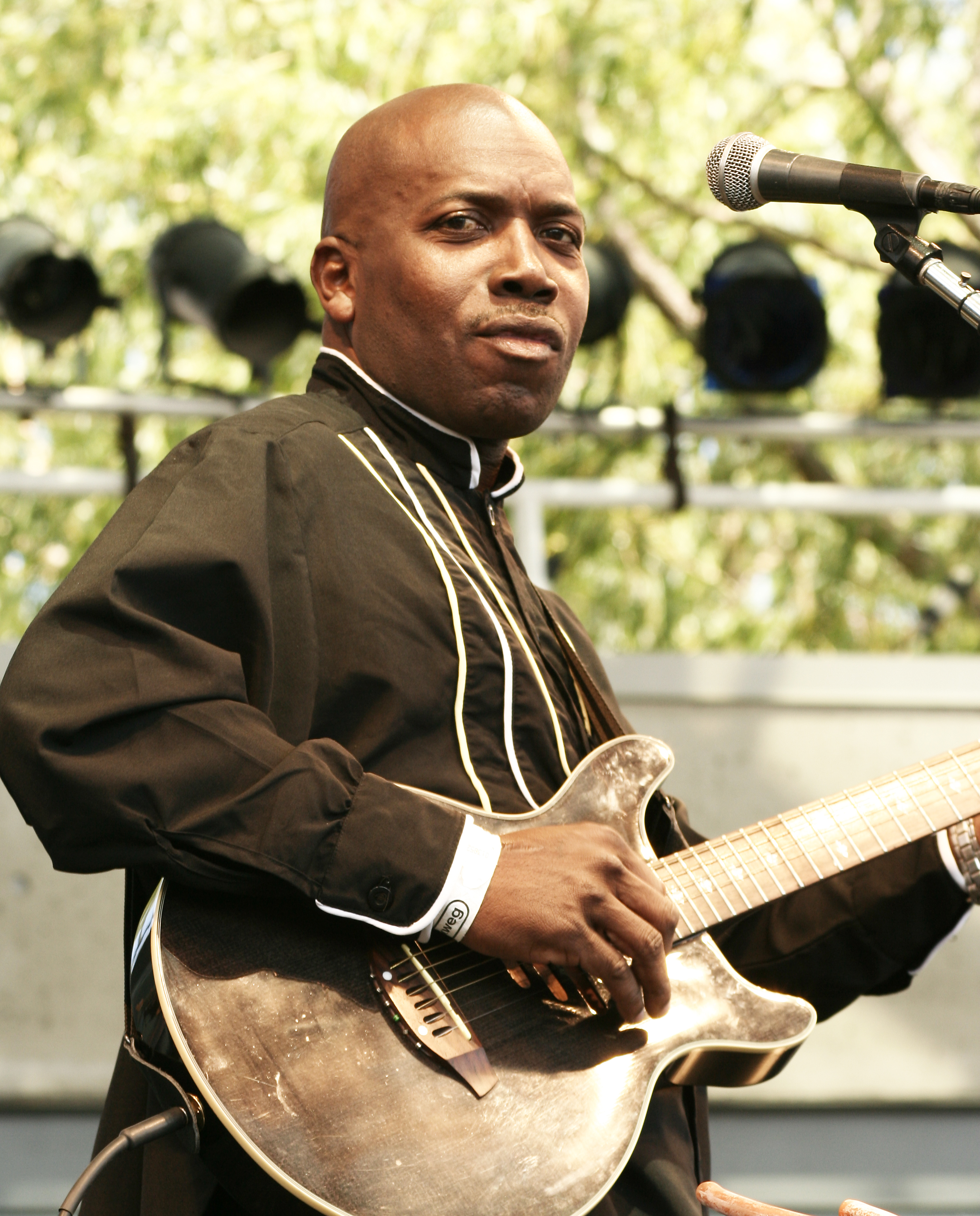
Philip Goldson

Biographical Details
Philip Goldson
Biography
Roots in British Honduras: A Colonial Childhood
Philip Stanley Wilberforce Goldson was born on July 25, 1923, in Belize City, in what was then known as British Honduras — a small Central American colony of the British Empire sandwiched between Guatemala to the west and Mexico to the north, with the Caribbean Sea stretching endlessly to the east. He was the second son of Peter Edward Goldson and Florence Matilda Babb Goldson, a family of modest means navigating life under the weight of colonial rule.
The Belize City of Goldson's childhood was a place of stark contrasts: a vibrant urban port community defined by the timber and chicle industries, yet marked by deep social inequality, racial stratification, and the pervasive subordination of colonial governance. The great hurricane of 1931 had devastated the city when Goldson was only eight years old, a catastrophe that deepened existing poverty and reinforced for an entire generation the fragility of life under distant colonial administrators who held all the real power.
Despite the absence of formal secondary schooling — a luxury unavailable to most boys of his social background — Goldson was relentlessly self-educated. Studying at night and through correspondence, he earned his Cambridge University Overseas Junior Certificate in 1939 and his Senior School Certificate in 1941. These achievements were remarkable for a young man with no secondary school foundation, and they signalled the disciplined, tenacious intellect that would define his entire public career.
From Civil Servant to Voice of the People
In 1941, Goldson joined the British Honduras Civil Service, where he worked for six years before his restless conscience drew him towards journalism and activism. During his civil service years, he honed his writing skills, editing the Civil Service Chronicle and the cultural quarterly OUTLOOK for St. John's College, and contributing short stories to the BBC in London. He was a man for whom the written and spoken word were not merely instruments of communication but weapons of liberation.
Goldson also became deeply involved in the labour movement, serving as the national organiser and general secretary of the General Workers' Union — giving him direct contact with the working poor whose suffering and grievances would motivate his political activism for the rest of his life.
By the late 1940s, the political temperature in British Honduras was rising. The sudden devaluation of the British Honduran dollar by the colonial government in 1949 — which immediately reduced the purchasing power of ordinary citizens — ignited widespread outrage and gave birth to organised nationalist resistance. From this ferment emerged the People's Committee, which would shortly become the People's United Party (PUP) — and Goldson was at its founding.
Co-Founding the People's United Party
In 1950, alongside George Price and other nationalist luminaries, Philip Goldson helped found the People's United Party, the organisation that would drive Belize to independence and reshape its political landscape for generations. Goldson served as Assistant Secretary of the PUP, using his position to articulate the nationalist cause through journalism as much as through political organising.
His platform was The Belize Billboard, one of the territory's most influential newspapers, and Goldson wielded its columns with unflinching courage. In 1951, he and his colleague Leigh Richardson published an editorial that would change the course of both their lives. The piece argued, plainly and defiantly, that there were "two roads to independence: evolution and revolution". The colonial authorities regarded this as sedition — a direct incitement to revolt against the Crown.
"There are two roads to independence: evolution and revolution." — Philip Goldson and Leigh Richardson, editorial in The Belize Billboard, 1951 — the statement that led to their imprisonment for sedition.
Both men were arrested, tried, and sentenced to one year of hard labour. Goldson served his sentence without flinching. And characteristically, he used his imprisonment productively: he studied law by correspondence from his prison cell, emerging from incarceration with his intellect sharpened, his resolve steeled, and his commitment to Belizean freedom more ferocious than before. His imprisonment, far from silencing him, made him a martyr and a symbol of principled resistance to colonial rule.
A Multi-Party Democratic Architect
Goldson's subsequent political career was as complex as it was long. Following shifts in ideology and strategy within the PUP, he eventually departed from the party and became one of the most important architects of Belize's two-party democratic system — a contribution every bit as significant as his earlier nationalist agitation.
From 1958 to 1973, he was a central figure in the National Independence Party (NIP), providing a credible opposition to the PUP's dominance. Then, in 1973, he was one of the founding forces behind the United Democratic Party (UDP), which merged the NIP with other opposition groups to create the major political force that would eventually form government and remains one of Belize's two dominant parties today.
The Philip S. W. Goldson International Airport in Belize City — renamed in 1989 to honour his decades of service to the nation.
From 1965 to 1998, Goldson served as a member of the House of Representatives for the Albert constituency in Belize City — more than three decades of unbroken legislative service. He served in various ministerial capacities, including as Minister of Housing and Home Affairs, and was consistently one of the most powerful voices in the legislature, whether in government or in opposition.
The Sentinel of Sovereignty: Guatemala and the Territorial Dispute
If one issue defined Philip Goldson's later career above all others, it was the defence of Belizean sovereignty against Guatemala's long-standing and, in Goldson's view, entirely unfounded territorial claim to all of Belize. Guatemala had refused to recognise Belizean independence when it was achieved on September 21, 1981, insisting that the entire country — 22,966 square kilometres — was rightfully Guatemalan territory, a claim rooted in a disputed succession of colonial treaties.
Goldson was Guatemala's most persistent and vocal critic within Belize. He consistently warned against complacency among the Belizean public, insisting that national independence could never be taken for granted in the face of a determined neighbour's irredentist claims. He refused to soften his position even as successive governments explored negotiated compromises, earning both admirers and critics for his uncompromising stance.
In the 1990s, when negotiations between Belize and Guatemala intensified in ways Goldson believed threatened Belizean territorial integrity, he founded the National Alliance for Belizean Rights (NABR) — an organisation dedicated to educating the public about the details of the dispute and mobilising civil society to resist any settlement that ceded Belizean land or maritime areas. It was a final act of patriotic vigilance from a man who had spent his entire adult life in service of his country's freedom.
"Philip Goldson consistently warned against taking national independence for granted and insisted that the Belizean people remain informed and vigilant." — Documented in multiple national tributes following his death in 2001.
Legacy: Father of Democracy
Philip Goldson passed away on October 3, 2001, at the age of 78, having spent more than half a century in active public life. In 2008, he was formally designated a National Hero of Belize, the highest honour the state can bestow.
The tributes to Goldson are not merely ceremonial. In 1989, the Philip Goldson International Airport in Belize City — the country's principal international gateway — was renamed in his honour, ensuring that every traveller entering or departing Belize encounters his name. His former residence has been converted into the Goldson House for Democracy and Patriotism in Belmopan, serving as a museum, research centre, and living monument to his role in establishing and defending Belizean democracy.
His soubriquet — "Father of Democracy" — is not merely honorific. It speaks to a specific and irreplaceable contribution: while George Price is rightly celebrated as the "Father of the Nation" for leading Belize to independence, it was Goldson who gave that nation a functioning democratic opposition. Without him, the PUP's dominance might have calcified into the kind of one-party hegemony that blighted other post-colonial states in the region. Goldson's insistence on building credible, principled opposition parties — the NIP and then the UDP — ensured that Belizean democracy would be competitive, accountable, and genuinely pluralistic.
His story is one of extraordinary moral courage: a man who endured imprisonment for speaking truth to colonial power, who studied law in a prison cell, who built parties and institutions, who stood for decades in the legislature arguing for the rights of the poor, the disabled, and the territorially vulnerable — and who never stopped believing, even in his final years, that democracy required constant tending and defence.
Philip Goldson was not merely a politician. He was a journalist, a trade unionist, a legal thinker, a party builder, and a guardian of national sovereignty. He embodied the full scope of what it means to dedicate a life to public service in the truest and most demanding sense of that phrase.
Major Contributions
- Philip Goldson's contributions to Belize span journalism, trade unionism, party politics, and the defence of national sovereignty across more than fifty years of public life.
- As a co-founder of the People's United Party (PUP) in 1950 alongside George Price, he helped launch the nationalist movement that ultimately delivered independence in 1981.
- His 1951 imprisonment for sedition — after publishing a defiant editorial in the Belize Billboard — made him a symbol of press freedom and anti-colonial resistance.
- Equally significant was his role in building Belize's two-party democratic system: he was a central figure in founding the National Independence Party (NIP) and later the United Democratic Party (UDP) in 1973, providing the credible opposition that kept Belizean democracy genuinely competitive and accountable.
- He served in the House of Representatives for the Albert constituency for over 30 years (1965–1998).
- In his later career, he founded the National Alliance for Belizean Rights (NABR) to defend Belizean sovereignty against Guatemalan territorial claims, and he consistently championed the rights of the poor, the disabled, and the politically marginalised.
- Officially recognised as a National Hero of Belize in 2008, his legacy is memorialized by the Philip Goldson International Airport (renamed 1989) and the Goldson House for Democracy and Patriotism.