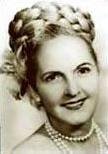
Blanca Canales

Blanca Canales
Biography
Introduction and Colonial Context
The early decades of the twentieth century in Puerto Rico were defined by profound political, economic, and cultural upheaval following the transfer of the island from Spanish colonial rule to United States sovereignty under the 1898 Treaty of Paris. As American corporate conglomerates rapidly consolidated control over the island's arable lands, traditional subsistence farming gave way to monoculture sugar plantations. This economic transformation displaced hundreds of thousands of jíbaros (rural agricultural workers), plunging rural mountain municipalities like Jayuya into severe poverty and unemployment. Simultaneously, American colonial administrators imposed strict policies designed to assimilate the population, including the mandated use of the English language in public schools and the suppression of Puerto Rican national symbols. Within this crucible of displacement and cultural erasure, a fierce nationalist consciousness took root across the central mountain range. Among the most steadfast and visionary figures to emerge from this resistance was Blanca Canales, an educator, social worker, and revolutionary organizer whose uncompromising dedication to Puerto Rican sovereignty would culminate in one of the most significant anti-colonial uprisings in modern American history.
Early Life, Education, and Social Consciousness
Born on February 17, 1906, in the rugged mountain municipality of Jayuya, Blanca Canales Torresola was raised in a family deeply immersed in political intellectualism and patriotic activism. Her parents, Rosario Canales Quintero and Carmen Torresola, fostered an environment where literature, political philosophy, and social justice were vigorously debated. Her father was a respected local figure, while her elder brother, Nemesio Canales, gained renown as a prominent journalist, essayist, playwright, and politician who fiercely advocated for women's suffrage and legal reform. Her maternal cousins included Griselio Torresola, who would later participate in nationalist militant actions. Growing up surrounded by such dynamic thinkers, Blanca developed an early analytical understanding of Puerto Rico's colonial dilemma.
In the late 1920s, Canales left her mountain hometown to pursue higher education at the University of Puerto Rico at Río Piedras. She earned a bachelor's degree in social work and education, graduating as part of a pioneering generation of Puerto Rican women entering professional fields. Her subsequent work as a rural social worker and public school teacher brought her face-to-face with the devastating human toll of colonial economic exploitation. Traveling through remote barrios, she documented severe child malnutrition, rampant tuberculosis, lack of basic sanitation, and the crushing despair of landless plantation laborers. Canales quickly concluded that philanthropic social work and piecemeal legislative reforms were utterly inadequate to alleviate her people's suffering; only complete political independence and structural self-determination could eradicate the institutionalized poverty afflicting the island.
"We did not rise up out of hatred for any people, but out of an immortal love for our homeland and a sacred duty to defend our right to exist as a free nation."
Joining the Nationalist Vanguard
In 1931, Canales officially joined the Puerto Rican Nationalist Party (Partido Nacionalista de Puerto Rico), which had recently elected Harvard-educated lawyer and charismatic orator Pedro Albizu Campos as its president. Albizu Campos transformed the organization from a moderate political group into a militant anti-colonial vanguard that rejected colonial elections and demanded immediate national recognition. Canales quickly became one of Albizu Campos's most trusted confidantes and regional organizers in the central highlands. Recognizing the essential role of women in the revolutionary struggle, she helped organize and mobilize Las Hijas de la Libertad (The Daughters of Freedom), the women's branch of the Nationalist Party. Through this organization, women were trained in political education, public speaking, logistics, and first aid, effectively breaking traditional gender boundaries within Caribbean political movements.
As the United States government and local colonial authorities intensified their crackdown on nationalist activities during the 1930s and 1940s—marked by tragic events such as the 1937 Ponce Massacre—Canales turned her familial homestead in Jayuya into a clandestine stronghold. Following the appointment of the first Puerto Rican-born governor, Jesús T. Piñero, and the subsequent election of Luis Muñoz Marín, the insular legislature passed Law 53 of 1948, notoriously known as the Ley de Mordaza (Gag Law). Modeled after the federal Smith Act, the Gag Law made it a felony punishable by ten years in prison to display the Puerto Rican flag, sing patriotic anthems, speak or write in favor of independence, or hold pro-sovereignty assemblies. Under this repressive regime, Canales operated with extraordinary courage, secretly stockpiling firearms, ammunition, medical supplies, and handmade Puerto Rican flags within her Jayuya residence in preparation for an island-wide insurrection.
The Historic Jayuya Uprising (El Grito de Jayuya)
By mid-1950, nationalist leadership learned that federal and local authorities were preparing a massive preemptive crackdown to arrest the party's hierarchy and neutralize the independence movement before the implementation of the new Puerto Rico Commonwealth (Estado Libre Asociado) constitution. In response, Pedro Albizu Campos ordered an armed revolt across multiple municipalities, including San Juan, Ponce, Mayagüez, Arecibo, Utuado, and Jayuya. On the morning of October 30, 1950, Blanca Canales assumed military command of the nationalist forces in Jayuya, donning a white dress and carrying a pistol alongside her fellow rebels.
Canales led an armed contingent into the town center, coordinating simultaneous assaults on strategic symbols of colonial authority. Her group successfully neutralized the municipal police station, severed telephone and telegraph lines to prevent reinforcements, and occupied the U.S. Post Office, where they burned selective draft records that conscripted Puerto Rican youth into the Korean War. In a moment of monumental historical significance, Canales marched her forces into the central public plaza. Defying the draconian Gag Law, she raised the light blue Puerto Rican flag atop the municipal tower and passionately addressed the gathered townspeople, formally declaring the establishment of the free Republic of Puerto Rico (La República de Puerto Rico).
"Our flag represents the blood and dignity of a sovereign people. As long as one Puerto Rican stands to raise it, tyranny will never extinguish our liberty."
For three days, Blanca Canales and her small band of nationalists held the liberated town of Jayuya against overwhelming odds. The declaration of the Republic sent shockwaves through Washington and San Juan. Governor Luis Muñoz Marín declared martial law and ordered the deployment of the 296th Infantry Regiment of the Puerto Rico National Guard. To dislodge Canales and her fighters, the U.S. military deployed P-47 Thunderbolt fighter planes to bomb and strafe the town, backed by heavy artillery fire—making Jayuya one of the very few localities in American history to be subjected to aerial bombardment by the U.S. military. Despite the destruction of large portions of the town, Canales maintained order, directed defensive positions, and personally tended to wounded comrades until ammunition exhausted and overwhelming mechanized forces reoccupied the municipality.
Trial, Imprisonment, and Unwavering Conviction
Following the suppression of the Jayuya Uprising, Blanca Canales was arrested along with hundreds of nationalists across the island. She was subjected to rigorous interrogations and placed on trial before local and federal tribunals. Accused of treason against the United States, murder of police officers, and causing extensive property destruction, Canales utilized her courtroom appearances not to plead for leniency, but to deliver blistering indictments of colonial rule and defend the international legality of armed resistance against foreign occupation. She was convicted and sentenced to life imprisonment plus sixty years, the harshest sentence handed down to any female nationalist leader.
Canales was initially transferred to the Alderson Federal Prison Camp in West Virginia, where she endured years of harsh isolation, harsh climate, and separation from her homeland. Throughout her incarceration, she emerged as a spiritual and moral pillar for imprisoned revolutionary women, organizing educational circles and maintaining an unbroken correspondence with independence advocates worldwide. She was later transferred to the Vega Baja women's prison in Puerto Rico. During her seventeen years behind bars, Canales refused all offers of conditional parole that required her to renounce her nationalist principles or express remorse for the Jayuya rebellion. Her stoic endurance earned her deep admiration across the political spectrum in Puerto Rico, transforming her into a living martyr of the anti-colonial struggle.
Pardon, Return to Jayuya, and Historical Legacy
By the late 1960s, a growing domestic and international amnesty movement exerted intense pressure on the Puerto Rican government to release aging nationalist prisoners. In 1967, Governor Roberto Sánchez Vilella granted a full executive pardon to Blanca Canales, acknowledging her deteriorating health and the profound respect she commanded among the Puerto Rican populace. Upon her release, she returned to her beloved mountain town of Jayuya, where she was welcomed not as a convicted felon, but as a revered matriarch and national heroine.
Canales spent her remaining decades preserving the historical memory of the Nationalist Party and mentoring younger generations of Puerto Rican activists. She insisted that the struggle for social justice, educational equity, and political sovereignty was a continuous, intergenerational duty. Blanca Canales passed away peacefully on July 25, 1996, in Jayuya at the age of ninety. Following her death, her childhood home was restored and converted into the Casa Museo Blanca Canales, a historical museum dedicated to her life and the events of the 1950 uprising. Today, historians and political scholars recognize Blanca Canales not only as a brave patriot who led a historic revolt, but as a pioneering feminist figure who shattered patriarchal constraints within Caribbean revolutionary movements, securing an eternal place in the pantheon of Americas' liberation leaders.
Major Contributions
- Blanca Canales made historic contributions to Puerto Rican national consciousness, feminist leadership in anti-colonial movements, and social welfare in the central highlands.
- As a pioneering rural social worker and educator, she documented and combated the severe poverty, illiteracy, and health crises afflicting the agrarian population of early 20th-century Puerto Rico, arguing that structural political sovereignty was essential to socio-economic justice.
- By co-organizing *Las Hijas de la Libertad*, she systematically dismantled gender barriers within Caribbean political activism, training women in leadership, logistics, and grassroots organizing.
- Her leadership of the October 30, 1950 Jayuya Uprising (*El Grito de Jayuya*) marked a defining watershed in Caribbean colonial history.
- By successfully occupying Jayuya, raising the forbidden Puerto Rican flag, and declaring the Republic of Puerto Rico, Canales internationalized the island's colonial status at a time when local and federal laws criminalized pro-sovereignty expression.
- Her unwavering 17-year imprisonment without renouncing her principles established her as an enduring symbol of resistance and moral integrity.
- Today, her preserved residence, the *Casa Museo Blanca Canales*, serves as a vital educational institution educating future generations on civic duty, historical memory, and human rights.