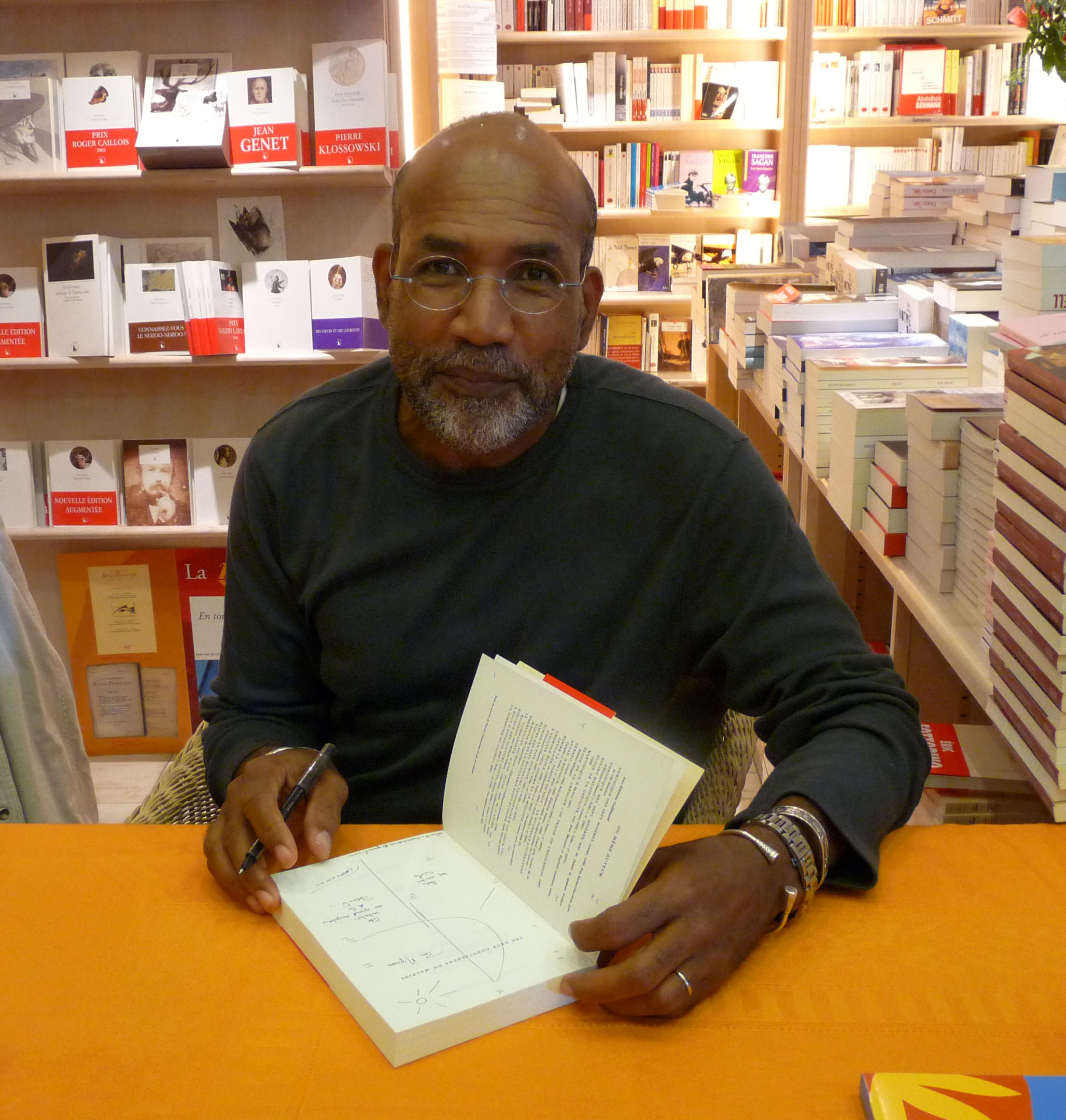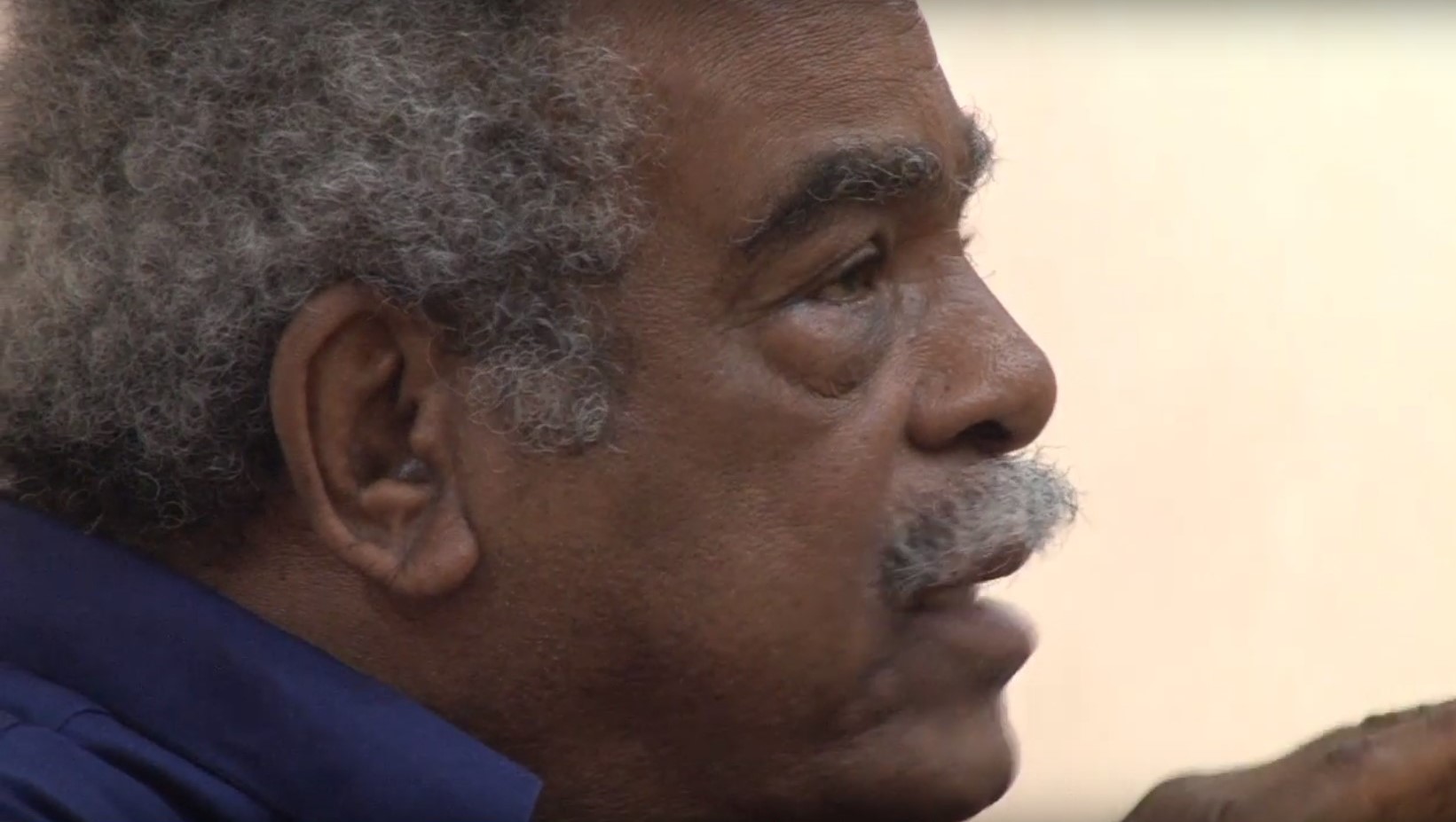
Édouard Glissant

Édouard Glissant
Biography
Édouard Glissant: The Poetic Philosopher of Relation and Caribbeanness
Édouard Glissant (born September 21, 1928, in Sainte-Marie, Martinique; died February 3, 2011, in Paris, France) stands as one of the most intellectually monumental and visionary literary figures in contemporary Caribbean and postcolonial history. A world-renowned novelist, poet, philosopher, and cultural theorist, Glissant fundamentally transformed global understandings of cultural identity, language, and historical memory. In an era dominated by rigid colonial binaries and essentialist definitions of race and nationhood, Glissant formulated the seminal philosophical and cultural concepts of Antillanité (Caribbeanness), Créolisation (Creolization), and the Poetics of Relation. Throughout a prolific career spanning over six decades, he produced an extraordinary body of award-winning literature—including groundbreaking novels, intricate poetic collections, and profound theoretical treatises—that challenged dominant Eurocentric narratives and celebrated the dynamic, pluralistic reality of the Caribbean archipelago. As an educator, activist, and institution builder, Glissant’s intellectual legacy extends far beyond literary criticism, offering a radical and liberating framework for navigating the complex interconnectedness of the modern globalized world.
Early Life, Lycée Schœlcher, and Intellectual Roots in Martinique
Born in the rural eastern commune of Sainte-Marie on the Atlantic coast of Martinique, Glissant’s early life was deeply shaped by the dramatic agricultural landscape and complex colonial sociology of the French Caribbean. Sainte-Marie was a region characterized by rolling sugarcane plantations, historical distilleries, and a vibrant rural peasantry whose daily lives were structured by the legacies of slavery and colonial exploitation. Glissant’s family recognized his exceptional intellectual promise from an early age, ensuring he received rigorous schooling despite the economic constraints typical of pre-war Martinique.
In 1938, he earned a scholarship to attend the prestigious Lycée Schœlcher in the capital city of Fort-de-France. Named after the French abolitionist Victor Schoelcher, the lycée was the intellectual crucible of Martinique, educating the island's future political and cultural elite. It was within these colonial walls that a young Glissant encountered the towering presence of Aimé Césaire, who had recently returned from Paris and was teaching philosophy and literature at the school. Césaire’s passionate advocacy for Négritude—a movement celebrating Black racial pride and African cultural heritage—made an indelible impression on Glissant. During these formative secondary school years, Glissant also formed enduring intellectual friendships with contemporaries who would shape anti-colonial discourse, most notably the future revolutionary psychiatrist and philosopher Frantz Fanon.
Academic Exodus to Paris, Political Activism, and Anti-Colonial Resistance
In 1946, following the end of World War II and the official departmentalization of Martinique as an overseas department of France, Glissant received a scholarship from the French government to pursue higher education in Paris. Arriving in the French capital during a period of intense post-war existentialist debate and rising anti-colonial fervor, he enrolled at the Sorbonne and studied philosophy, literature, and ethnology at the Musée de l'Homme. In Paris, Glissant became deeply immersed in the vibrant community of African and Caribbean intellectuals and artists. He participated in literary circles, collaborated with anti-colonial journals, and began publishing his early poetry.
However, Glissant was not content with purely academic pursuits; he recognized that cultural liberation was inextricably linked to political self-determination. In 1961, alongside fellow writers Paul Niger and Bébert Maisonneuve, he co-founded the Front des Antillais et Guyanais pour l'Autonomie (FAGA), an organization explicitly demanding political autonomy for the French Caribbean islands and French Guiana. Alarmed by his radical activism during the heightened tensions of the Algerian War, the French government under President Charles de Gaulle officially dissolved FAGA. Authorities banned Glissant from leaving metropolitan France and placed him under administrative interdiction between 1961 and 1965, effectively exiling him from his native Martinique.
Return to Martinique: The Institut Martiniquais d'Études and Acoma
Upon the lifting of his travel ban in 1965, Glissant returned to Martinique with a renewed commitment to institutional and cultural transformation. He realized that the French colonial education system in the Caribbean suffered from severe structural alienation, systematically teaching Martinican youth Eurocentric history, geography, and literature while completely ignoring their own Caribbean environment and historical realities.
In response, Glissant founded the Institut Martiniquais d'Études (IME) in 1967 in Fort-de-France. The IME was a pioneering private secondary school dedicated to developing a curriculum rooted in Caribbean historical consciousness, local geography, and cultural identity. Glissant believed that authentic intellectual liberation required Caribbean people to reclaim their own historical narrative from the fragmentation imposed by slavery and colonialism. To further disseminate these critical ideas, he established the influential socio-literary journal Acoma (1971–1973), which published rigorous analyses of Caribbean political economy, sociology, and literature. Through the IME and Acoma, Glissant cultivated a new generation of Martinican thinkers who were deeply anchored in their regional reality rather than looking exclusively to Paris for cultural validation.
'Creolization is not merely a blending of cultures or a simple crossbreeding; it is an unpredictable, dynamic, and continuous process of world encounter where cultural elements collide and produce something entirely unforeseen.' — Édouard Glissant
Formulating Antillanité (Caribbeanness) Beyond Négritude
During the 1970s and early 1980s, Glissant synthesized his reflections into his monumental collection of essays, Le Discours antillais (Caribbean Discourse, 1981). It was in this seminal work that he formally articulated the concept of Antillanité (Caribbeanness). While Glissant maintained deep respect for his mentor Aimé Césaire, Antillanité represented a critical philosophical departure from Césaire’s Négritude.
Glissant argued that while Négritude had performed an essential historical function by restoring racial pride and reconnecting Caribbean people to their African roots, its focus on a singular, essentialist African lineage risked overlooking the unique, multi-layered reality of the Caribbean archipelago. For Glissant, Caribbean identity was not rooted in a distant continent or a pure lineage, but in the specific geographical and historical convergence that occurred within the Caribbean sea. Antillanité celebrated the composite nature of the region—a vibrant synthesis of Indigenous, African, European, and Asian cultures forged through the violent crucible of plantation slavery and survival. He conceptualized the Caribbean not as a fragmented collection of isolated island colonies, but as an interconnected submarine network of shared history, resistance, and cultural creativity.
The Philosophy of Créolisation and the Poetics of Relation
Expanding upon Antillanité, Glissant formulated his globally transformative theories of Créolisation (Creolization) and the Poetics of Relation, culminating in his landmark philosophical treatise Poétique de la Relation (Poetics of Relation, 1990). Glissant distinguished creolization from traditional notions of métissage (hybridity or crossbreeding). While hybridity often suggests a predictable mixing of two distinct elements resulting in a fixed third category, creolization is defined by its radical unpredictability and continuous, open-ended motion.
Glissant saw the Caribbean plantation as the historical laboratory of creolization, where diverse enslaved peoples, stripped of their original languages and institutions, innovated new creole languages, spiritualities, and art forms out of chaotic survival. He famously declared that the entire modern world was becoming creolized (Le Tout-Monde), as global migration, rapid communication, and cultural exchange broke down traditional ethnic and national boundaries. Within his Poetics of Relation, Glissant utilized the ecological metaphor of the rhizome—inspired by philosophers Gilles Deleuze and Félix Guattari—to contrast relational identity with single-root identity. A totalitarian single root kills everything around it to secure its own territory, whereas a rhizome extends horizontal branches, connecting with other roots in a web of mutual transformation without losing its own specificity.
'We demand the right to opacity for everyone. Opacity is not enclosure within an impenetrable fortress, but the subsistence within an irreducible singularity. Opacity is that which protects the Diverse.' — Édouard Glissant
Global Academic Career, Le Tout-Monde, and Late Life
A central and revolutionary tenet of Glissant’s relational philosophy is the 'right to opacity' (le droit à l'opacité). Glissant vigorously critiqued Western intellectual traditions that demand total transparency—the colonial requirement that 'the Other' must be completely transparent, classified, measured, and understood according to Western standards in order to be accepted. Glissant argued that this demand for transparency is inherently reductive and aggressive. Instead, he asserted that every individual and culture possesses an inherent right to remain opaque, complex, and irreducible. Recognizing opacity allows human beings to engage in relation, solidarity, and mutual respect without needing to assimilate or dominate one another.
By the late 1980s, Glissant’s profound theoretical insights had earned him immense global acclaim. He entered a distinguished academic career in the United States, serving as Distinguished Professor of French at Louisiana State University (1988–1995), where he directed the Center for French and Francophone Studies. In 1995, he was appointed Distinguished Professor of French at the City University of New York (CUNY) Graduate Center, a position he held until his death. During this period, he also served as the Editor-in-Chief of the UNESCO Courier (1982–1988), using his international platform to champion global cultural diversity and intercultural dialogue.
Enduring Legacy and Impact on Contemporary Caribbean Thought
Throughout his lifetime, Glissant’s literary brilliance was recognized with prestigious honors, including the Prix Renaudot in 1958 for his first novel La Lézarde (The Ripening), the Prix Charles Veillon for Le Quatrième Siècle (The Fourth Century), and numerous international lifetime achievement awards. When Édouard Glissant passed away in Paris on February 3, 2011, at the age of 82, his death was mourned globally as the loss of one of humanity's most profound humanists. His body was returned to Martinique and buried in the coastal cemetery of Le Diamant, facing the iconic Diamond Rock and the Caribbean Sea.
Today, Glissant’s conceptual frameworks continue to exert a monumental influence across literary studies, anthropology, sociology, and postcolonial philosophy. His visionary theories directly inspired the Créolité (Creoleness) literary movement led by Martinican writers Patrick Chamoiseau, Raphaël Confiant, and linguist Jean Bernabé, who dedicated their landmark 1989 manifesto Éloge de la créolité to him. Furthermore, celebrated Caribbean authors such as Guadeloupean novelist Maryse Condé have drawn extensively upon his relational aesthetics. Ultimately, Édouard Glissant bequeathed to the world a hopeful, liberating philosophy: a rejection of tribalism and colonial domination in favor of an open, creolized world where diversity is cherished and human solidarity is forged through the endless beauty of Relation.
Major Contributions
- Édouard Glissant made monumental contributions to Caribbean literature, postcolonial philosophy, and global cultural theory through his formulation of key concepts such as Antillanité (Caribbeanness), Créolisation (Creolization), and the Poetics of Relation.
- By shifting the intellectual focus beyond continental origins toward the archipelago reality of the Caribbean, he provided a revolutionary framework for understanding identity as dynamic, composite, and interconnected.
- His award-winning literary novels, poetry, and essays—coupled with his assertion of the universal 'right to opacity'—challenged Eurocentric assimilation and deeply inspired major Caribbean cultural movements, including the Créolité school.
- Beyond his theoretical and literary brilliance, Glissant contributed significantly to institutional development and global intercultural dialogue.
- He founded the Institut Martiniquais d'Études (IME) and the journal Acoma to reform Caribbean education and anchor intellectual inquiry in regional realities.
- As Distinguished Professor at CUNY Graduate Center and Editor-in-Chief of the UNESCO Courier, he championed global diversity and non-hierarchical cultural exchange, leaving an enduring global legacy as one of the most influential humanist thinkers of the modern era.