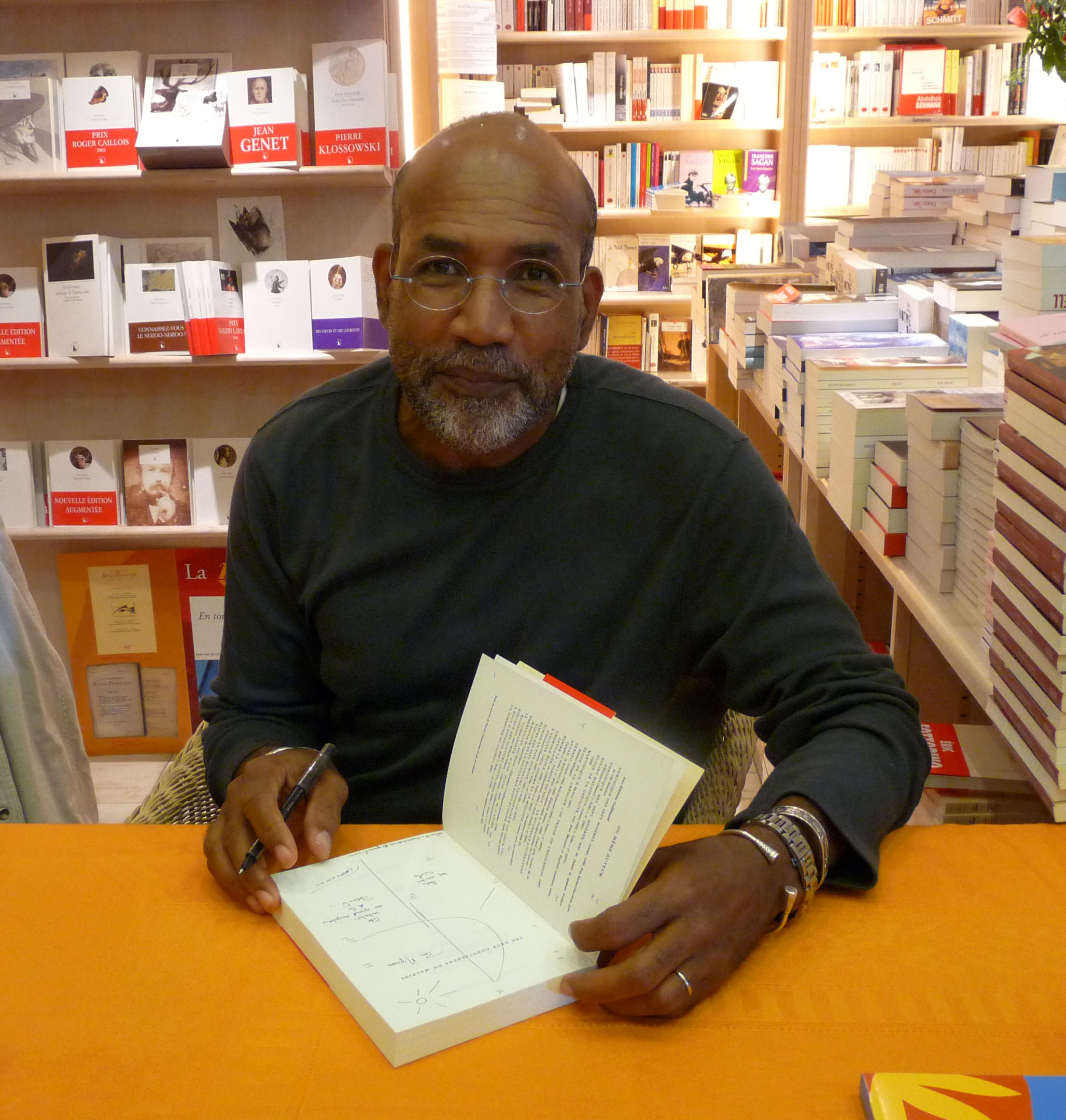
Patrick Chamoiseau

Patrick Chamoiseau
Biography
Patrick Chamoiseau: Chronicler of Creole Memory and Literary Revolutionary
Introduction and Historical Context
In the aftermath of World War II, the French Caribbean island of Martinique underwent a profound political and structural transformation. In 1946, under the Departmentalization Law promoted by visionary statesman and poet Aimé Césaire, Martinique transitioned from a colony to an overseas department (département d'outre-mer) of France. While departmentalization brought undeniable improvements in social security, healthcare, and infrastructure, it simultaneously unleashed an intense wave of assimilationist pressure. The centralized administrative machinery of Paris sought to impose metropolitan French educational standards, language norms, and cultural frameworks, often relegating the island's vibrant Antillean heritage to the shadows. In this fraught climate of cultural alienation, where traditional Creole oral history was systematically marginalized in schools and public institutions, Martinique became a fertile ground for intellectual revolt. From the pioneering Négritude movement championed by Aimé Césaire and the anti-colonial radicalism of Frantz Fanon, to the expansive philosophical vision of Antillanité (Antillean-ness) articulated by Édouard Glissant, Martinican thinkers fought to reclaim their collective identity. It was within this rich intellectual lineage that Patrick Chamoiseau emerged. Born into a changing society caught between colonial legacy and departmental assimilation, Chamoiseau would become one of the most towering novelists, essayists, and cultural philosophers in the francophone world, fundamentally redefining Caribbean literature and championing the global movement of Créolité.
Early Life, Formative Years, and the Crucible of Social Work
Patrick Chamoiseau was born on December 3, 1953, in Fort-de-France, the bustling capital city of Martinique. Unlike the rural plantation landscapes that dominated earlier West Indian fiction, Chamoiseau grew up in the vibrant, chaotic urban milieu known locally as the en-ville. Raised in a working-class neighborhood around Rue François-Arago, his childhood was steeped in the sensory kaleidoscope of traditional Creole life. He spent his formative years listening to the hypnotic cadences of traditional Creole storytellers—the conteurs—who preserved centuries of collective memory, resistance against enslavement, and folktales featuring trickster figures like Anansi and Compère Lapin. This rich linguistic environment, characterized by the dynamic interplay between formal spoken French and the expressive, rhythmic syntax of Martinican Creole, would later serve as the foundational bedrock of his literary aesthetic. His early experiences in the en-ville were lovingly immortalized in his celebrated autobiographical trilogy, Une enfance créole (A Creole Childhood), comprising Antan d'enfance (1990), Chemin d'école (1994), and À bout d'enfance (2005).
After completing his secondary education at the Lycée Schoelcher in Fort-de-France—an institution that educated generations of Martinican leaders—Chamoiseau relocated to metropolitan France to pursue higher education. He studied law and social economics in Paris, gaining a formal understanding of institutional structures and legal frameworks. However, rather than entering traditional legal practice, Chamoiseau chose a path dedicated to public service and social rehabilitation. He became a probation officer and social worker within the French justice system, serving first in mainland France and subsequently returning to Martinique to work with incarcerated youth and marginalized communities. This professional crucible profoundly shaped his worldview. Navigating the penal system exposed Chamoiseau to the stark realities of poverty, systemic exclusion, and the psychological trauma inflicted by socio-economic disenfranchisement. His daily encounters with individuals living on the fringes of society reinforced his deep empathy for the dispossessed and instilled in him a moral imperative to use literature as a vehicle for restoring human dignity and giving voice to silenced narratives.
Co-Founding the Créolité Movement and Philosophical Revolution
During the late 1980s, Chamoiseau joined forces with fellow Martinican novelist Raphaël Confiant and renowned linguist Jean Bernabé to ignite a cultural and intellectual revolution. While acknowledging the profound debt owed to Aimé Césaire's Négritude, which had successfully restored racial pride and challenged colonial supremacy, Chamoiseau and his peers argued that Négritude's focus on African essentialism overlooked the complex reality of Caribbean society. Drawing heavily on the theoretical groundwork of Édouard Glissant, they sought to articulate an identity born specifically from the historical collision and cross-fertilization of diverse civilizations in the plantation archipelago. In 1989, the trio published their seminal manifesto, Éloge de la créolité (In Praise of Creoleness), a fierce literary declaration that shook the francophone academic world.
"Neither Europeans, nor Africans, nor Asians, we proclaim ourselves Creoles. Creoleness is the interactional or transactional aggregate of Caribbean, European, African, Asian, and Levantine cultural elements, united on the same soil by the yoke of history." — Jean Bernabé, Patrick Chamoiseau, and Raphaël Confiant, Éloge de la créolité
The manifesto proclaimed that Caribbean identity was not a static racial category, but an open, evolving mosaic—a kaleidoscopic totality shaped by centuries of migration, struggle, and cultural hybridization. Chamoiseau advocated for an interior attitude of vigilance against imitation and cultural homogenization. Crucially, the Créolité movement championed the revolution of language within literature. Chamoiseau insisted that francophone Caribbean writers must break free from the rigid grammatical constraints of metropolitan Parisian French. He pioneered a revolutionary literary style that subverted traditional French prose by infusing it with the vocabulary, rhythms, proverbs, and oral syntax of Martinican Creole. This linguistic alchemy created a vibrant, polyphonic literary voice that reflected the true lived reality of the islands, inspiring a wider regional dialogue with literary contemporaries such as Guadeloupean author Maryse Condé and Haitian intellectual Jacques Stephen Alexis.
Literary Triumph: Texaco and the Goncourt Prize
Chamoiseau's philosophical theories achieved their most breathtaking artistic realization in his 1992 masterpiece, Texaco. Widely regarded as one of the most important novels of 20th-century world literature, Texaco is an epic historical tapestry that spans nearly two centuries of Martinican history. The novel is narrated by Marie-Sophie Laborieux, the matriarch and founder of a sprawling, precarious shantytown built around the Texaco oil refinery storage tanks on the periphery of Fort-de-France. Through Marie-Sophie's mesmerizing voice, which channels the memories of her father Esternome—a formerly enslaved man who lived through emancipation—Chamoiseau traces the epic trajectory of the Martinican people from the horrors of plantation slavery to the collective migration into urban settlements.
The novel explores the fundamental tension between the rigid, orderly, stone-built colonial city (the centre-ville) and the organic, chaotic, wooden and corrugated-iron shantytown (the quartier populaire). Chamoiseau elevates the shantytown from a symbol of urban blight into a monument of Creole resilience, cultural invention, and survival. Within the novel, Chamoiseau even writes himself into the narrative as a character—a scribe referred to as "the Oiseau" or "the Marker of Words" (marqueur de paroles)—who sits at Marie-Sophie's feet to record her oral history, thereby humbling the formal authority of written literature before the power of Creole oral memory.
"Warm up your words before speaking them. Speak from your heart. Knowing how to speak means knowing how to hold back your words. Truly speaking means first polishing silence. True silence is a place of The Word. Listen to the true Storytellers." — Patrick Chamoiseau, Texaco
Upon its publication, Texaco took the literary world by storm. In November 1992, the novel was awarded France's highest and most prestigious literary honor, the Prix Goncourt. Chamoiseau became only the second Antillean author to win the prize, following René Maran's historic victory in 1921. The award signaled the unequivocal triumph of the Créolité movement, forcing the metropolitan French literary establishment to recognize the creative vitality and linguistic innovation emerging from the Caribbean periphery.
Later Works, Global Humanism, and Enduring Legacy
Following the monumental success of Texaco, Chamoiseau continued to produce a staggering body of work encompassing novels, essays, plays, screenplays, and children's literature. In gripping novels such as Solibo Magnifique (1988), which centers on the mysterious death of a master Creole storyteller, and L'Esclave vieil homme et le molosse (1997), a profound philosophical meditation on marronage and flight from enslavement, Chamoiseau deepened his exploration of Caribbean memory and existential freedom. He also engaged intensely with visual media, collaborating with filmmakers and artists to document the architectural and cultural heritage of Martinique.
Throughout the 21st century, Chamoiseau expanded his philosophical focus beyond the Caribbean to address pressing global crises. Working closely with his lifelong mentor Édouard Glissant, Chamoiseau co-authored several manifestos addressing globalization, immigration, and ecological interdependence, notably framing the concept of the Tout-Monde (the Whole-World). In major essays such as Frères migrants (2017), Chamoiseau delivered a passionate humanistic plea for global solidarity and the protection of refugees, arguing that in an interconnected world, all human beings are nomads wandering through a shared planetary ecosystem. Today, Patrick Chamoiseau stands as a towering literary colossus whose work has emancipated Caribbean speech and permanently enriched the global literary canon.
Major Contributions
- Patrick Chamoiseau revolutionized Caribbean and world literature by co-founding the Créolité (Creoleness) movement alongside Jean Bernabé and Raphaël Confiant.
- Through their seminal 1989 manifesto *Éloge de la créolité*, Chamoiseau dismantled universalist colonial frameworks and established a new theoretical paradigm that celebrated cultural hybridization, multilingualism, and the complex mosaic of Caribbean identity.
- His advocacy for integrating the syntax, rhythms, and oral storytelling traditions of Martinican Creole into formal prose emancipated West Indian literature from metropolitan French constraints.
- As a Goncourt Prize-winning author, his magnum opus *Texaco* preserved the collective historical memory of Martinique's working-class and marginalized communities, elevating the Creole shantytown into a universal symbol of human resilience and creative survival.
- Beyond literature, Chamoiseau's philosophical contributions alongside Édouard Glissant regarding relationality, ecology, and the *Tout-Monde* have provided profound ethical frameworks for addressing modern global challenges, migration, and post-colonial cultural preservation.
