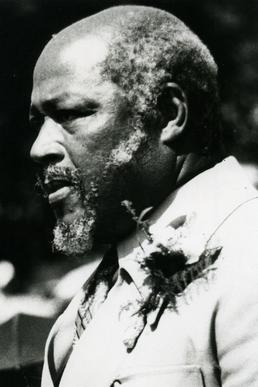
Ione Tyson

Biographical Details
Ione Tyson
Biography
Introduction
Ione Tyson remains one of the most consequential yet profoundly unsung heroines in the modern history of Nevis. A dedicated social worker, a fierce advocate for the marginalized, and a visionary for women’s and children’s rights, Tyson’s life’s work was woven into the very fabric of social welfare on the island. Operating during an era when the social safety net was fragile and the voices of women were often marginalized in the political arena, Tyson emerged as a relentless force for equity. Her legacy is not merely etched in policy changes, but in the generations of Nevisian families she supported, educated, and empowered.
Early Life and Roots in Nevis
Born on the verdant island of Nevis, Ione Tyson grew up intimately acquainted with both the breathtaking beauty and the stark socio-economic realities of Caribbean life. In the early-to-mid 20th century, Nevis was primarily an agrarian society, heavily dependent on agriculture and grappling with the legacies of colonialism. The Tyson family, a deeply rooted name on the island, instilled in Ione a profound sense of community responsibility and a strong moral compass.
From a young age, Tyson exhibited an innate empathy and an unusual perceptiveness regarding the struggles of her neighbors. She witnessed firsthand the hardships faced by single mothers, the lack of resources for early childhood education, and the pervasive silence surrounding domestic issues. These early observations would become the crucible in which her lifelong commitment to social justice was forged. Education was a luxury for many, but Tyson pursued it with a fierce determination, recognizing early on that knowledge would be her most potent tool in the fight against systemic inequity. She was particularly inspired by the community networks—often led informally by women—that stepped in where formal institutions failed.
The Landscape of Social Welfare in Mid-Century Nevis
To understand the magnitude of Ione Tyson’s contributions, one must contextualize the era in which she operated. Before the formalization of the Department of Community Development and Social Services, social welfare in the Federation of St. Kitts and Nevis was largely ad hoc, reliant on religious institutions, benevolent societies, and informal community support. Women, though the backbone of the domestic economy and community life, had little formal political power or legal protection against domestic and economic abuses.
"The true measure of our island's wealth is not found in our sugar or our soil, but in the safety of our children and the dignity of our women. Until the most vulnerable are secure, none of us are truly free." — Attributed to Ione Tyson during a community welfare gathering in Charlestown.
Tyson began her career at a time when the concept of professional social work was still in its infancy in the Eastern Caribbean. The challenges were monumental: rampant poverty, high infant mortality, limited access to maternal healthcare, and a legal framework that offered little protection against domestic violence. It was a landscape that required not just a practitioner, but a pioneer.
Rise as a Social Worker and Advocate
Armed with her education and an unyielding spirit, Tyson officially entered the realm of social work. She did not confine herself to an office; rather, she was a constant presence in the villages and parishes across Nevis, from St. George Gingerland to St. James Windward. Tyson understood that true social work required cultural fluency—the ability to speak with people in their own spaces and on their own terms.
She became a critical liaison between the disenfranchised populace and the rudimentary government services available at the time. When resources were scarce, she mobilized community action. Tyson was instrumental in establishing informal clinics, organizing food drives during economic downturns, and advocating for better sanitation and housing conditions. Her approach was holistic; she recognized that a child’s well-being was inextricably linked to their mother's economic independence and physical safety.
Championing Women's and Children's Rights
Perhaps Ione Tyson’s most enduring legacy lies in her militant, yet deeply compassionate, advocacy for women and children. Long before international conventions like CEDAW (Convention on the Elimination of All Forms of Discrimination Against Women) became part of the local political lexicon, Tyson was fighting for the principles they embodied.
She tackled the taboo subject of domestic abuse head-on, providing safe havens for women fleeing violent homes. In a society where family matters were fiercely private, she bravely pulled the curtain back, demanding that the community and the law recognize violence against women as a public crisis, not a private sorrow. Tyson worked tirelessly to educate women on their legal rights, forming grassroots support groups that served as the precursors to organizations like the Nevis National Women’s Council.
For children, Tyson was a fierce protector. She advocated for mandatory and accessible primary education, recognizing that early intervention was the only way to break the cycle of poverty. She was known to personally visit the homes of truant children, not to reprimand, but to understand the underlying causes—be it lack of food, shoes, or the need to work in the fields—and find solutions. She fought for the establishment of proper juvenile justice protocols, ensuring that young offenders were treated with a focus on rehabilitation rather than mere punishment.
"To protect a child is to preserve the future of Nevis. Every child we lose to neglect is a piece of our island's soul extinguished." — Ione Tyson on the necessity of child welfare programs.
Methodologies and Community Education
What set Ione Tyson apart from bureaucratic administrators was her deep reliance on community education and participatory development. She did not believe in a top-down approach to social welfare. Instead, Tyson initiated adult literacy programs for women, firmly believing that a woman who could read a contract or a government notice was far less likely to be exploited. These informal classes, often held in church halls or beneath the shade of tamarind trees, became safe spaces where women could discuss their personal challenges and organize collective action.
Tyson also collaborated closely with the local healthcare sector, recognizing the intersection of public health and social work. She allied herself with district nurses and midwives to ensure that rural mothers received proper postnatal care and nutritional advice. Her advocacy led to the implementation of school feeding programs, ensuring that the poorest children in Nevis received at least one nutritious meal a day. She recognized that a hungry child could not learn, and an uneducated child was doomed to repeat the cycle of poverty.
Furthermore, she was a pioneering voice in addressing the mental health toll of poverty and domestic strife. At a time when mental health was severely stigmatized, Tyson advocated for compassionate care for those suffering from what we now recognize as depression and trauma. She was a counselor, a confidante, and a friend to those who had been ostracized by society.
Political Influence and Institutionalizing Welfare
While Tyson never sought elected office, her political influence was profound. She understood that while grassroots work was essential, systemic change required legislation. She lobbied local magistrates, colonial administrators, and later, the elected leaders of the newly formed Nevis Island Administration, demanding better funding for social welfare programs.
Her meticulous record-keeping of the cases she handled provided undeniable statistical evidence of the island's social needs. When policymakers argued that funds were unavailable, Tyson would present them with the stark realities: the number of malnourished children, the rates of domestic violence, and the economic cost of neglecting the island’s most vulnerable. Her data-driven advocacy, combined with her compelling storytelling, made her an formidable force in the halls of power.
She often worked alongside other regional luminaries in the fight for Caribbean development, though her focus always remained intensely local. By laying the groundwork for institutionalized welfare, she ensured that the safety net would survive long after her own tenure ended.
Later Years and Enduring Legacy
As the Federation of St. Kitts and Nevis moved toward independence and the modernization of its governmental structures, Ione Tyson’s foundational work became the bedrock upon which modern social services in Nevis were built. Though she often eschewed public accolades, preferring the quiet satisfaction of a life changed or a family saved, her influence was undeniable.
She mentored a generation of younger social workers, instilling in them her ethos of compassionate, boots-on-the-ground advocacy. Even in her later years, as her physical mobility waned, her voice remained a powerful force in community meetings and local councils. Politicians and policymakers frequently sought her counsel, knowing that her finger was on the true pulse of the Nevisian people.
Today, the framework of the Ministry of Social Development and Gender Affairs in Nevis bears the indelible imprint of Ione Tyson’s life’s work. Every domestic violence protocol enacted, every child protection service launched, and every initiative aimed at female economic empowerment is, in essence, a continuation of the struggle she began decades ago. Ione Tyson stands as a colossus in the social history of Nevis—a testament to the power of one woman’s unwavering commitment to justice, equity, and the transformative power of radical empathy.
Major Contributions
- Ione Tyson's major contributions centered on the institutionalization and humanization of social welfare on the island of Nevis.
- She pioneered grassroots interventions for domestic violence, establishing safe havens and educational programs for vulnerable women long before they were mandated by law.
- Her relentless advocacy directly influenced the development of modern child protection services and juvenile justice reforms in Nevis, shifting the focus from punitive measures to rehabilitation and systemic support.
- Furthermore, Tyson was instrumental in integrating public health with social work, championing school feeding programs and adult literacy initiatives that economically and socially empowered marginalized Nevisian women.
- By bridging the gap between impoverished communities and bureaucratic administrators, she laid the foundational framework for what would eventually become the modern Department of Community Development and Social Services in the Nevis Island Administration.