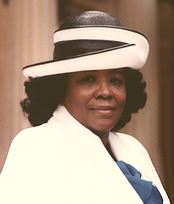
Mary "Mama Mary" Robinson
Biography
The Mother of the Village: Mary "Mama Mary" Robinson of Anguilla
In the long and storied tradition of Caribbean matriarchal leadership, few figures command the same depth of reverence as those known simply by their first name — or by the affectionate title that communities bestow upon women of extraordinary moral stature. Mary Robinson, known throughout her community as "Mama Mary," was one such figure: a woman whose life in Anguilla was so profoundly intertwined with the wellbeing of her neighbours that she became, in the fullest sense, a mother to her entire community.
Anguilla: A World of Resilience and Mutual Aid
To understand Mary Robinson, one must first understand the island that made her. Anguilla is the most northerly of the Leeward Islands, a flat, coral limestone island of extraordinary natural beauty and extraordinary historical hardship. Unlike the volcanic islands of the Eastern Caribbean, Anguilla possessed no great agricultural wealth — no sugar plantations to speak of, no rivers, and limited fresh water. What it possessed in abundance was the resilience of its people.
For generations, Anguillan society functioned through networks of mutual obligation so deeply embedded in the cultural fabric that the line between family and neighbour was nearly invisible. The extended family was the primary unit of social organisation, and within that system, grandmothers and elder women occupied positions of immense informal authority. They were the keepers of knowledge — of herbal medicine, of midwifery, of agricultural practice, of community history — and they were the moral centres around whom communities organised their lives.
The surname Robinson, while not among the most statistically common in Anguilla, was nonetheless woven into the island's social landscape, and Mary Robinson's particular branch of that family was rooted in the quiet rhythms of daily Anguillan life: fishing, salt-raking, keeping small livestock, cultivating kitchen gardens, and sustaining the community through the shared labour that small island survival demanded.
Birth, Formation, and the Weight of History
Mary Robinson — "Mama Mary," as she came to be universally known — was born in Anguilla in the early decades of the twentieth century, a period when the island existed in a condition of profound political ambiguity. Anguilla was then part of the colony of St. Kitts-Nevis-Anguilla, an administrative arrangement that Anguillians had long regarded with deep dissatisfaction. Geographically remote from St. Kitts, economically neglected, and culturally distinct, Anguilla's people developed a fierce sense of self-reliance that would eventually culminate in the remarkable events of 1967 — the Anguilla Revolution, in which the island's people peacefully but firmly expelled the authority of St. Kitts and demanded their own political future.
Mary Robinson came of age in the pre-revolutionary decades, when daily life on Anguilla required both material ingenuity and social solidarity. The absence of adequate medical facilities made traditional knowledge of herbal medicine and midwifery not merely culturally valuable but genuinely life-saving. Women of Mary's generation served as the frontline of healthcare in a system where formal medical care was distant and expensive. They delivered babies, nursed the sick, prepared the dying, and kept community knowledge alive through the oral traditions that Anguillan culture depended upon.
"In Anguilla, the grandmothers held the island together. When the men were gone to sea or to the cane fields in St. Croix, it was the women who kept the households running, the children raised, and the community intact." — Common oral historical testimony from Anguillian community accounts.
The Title That Defined a Life
The honorific "Mama Mary" was not self-adopted — it was a gift from the community, bestowed organically over years of demonstrated love and service. In Anguillan tradition, as across the Caribbean, the title "Mama" or "Mother" attached to a woman's name signifies not merely age or biological parenthood but a recognition of her role as a communal caregiver, a moral authority, and a source of wisdom that transcends individual family lines. To be called "Mama" by the community was to be recognized as belonging to everyone — and this was the honour that Mary Robinson earned and carried for much of her adult life.
Her home was, as so many homes of such women have been across the Caribbean, a kind of informal community centre. It was a place where disputes were settled through counsel, where the bereaved were comforted, where expectant mothers received guidance, where the hungry were fed, and where the stories of the community — its genealogies, its histories, its defeats and its dignities — were preserved in the amber of spoken memory. Mary Robinson was a living archive of Anguillan experience.
The Revolutionary Era and Its Context
The period in which Mama Mary Robinson reached the fullness of her community authority coincided with one of the most consequential political upheavals in Anguillan history. The Anguilla Revolution of 1967 — in which Anguillians, led by James Ronald Webster, expelled St. Kitts police and declared their intention to be governed from within — was not merely the work of politicians and freedom fighters. It was sustained at its grass roots by exactly the kind of community networks that women like Mary Robinson embodied and maintained.
Historical accounts of the Revolution consistently acknowledge the critical role played by Anguillan women as logistical coordinators, moral sustainers, and community organisers during the tense weeks and months of the uprising. When the men who led the resistance were forced to take cover, it was women who ensured they were fed, sheltered, and informed. It was women who maintained community morale through song, through prayer, and through the practical genius of mutual aid. Women like Albena Lake-Hodge emerged in the formal political sphere, but behind every political leader stood a network of community elders whose quiet authority made collective action possible.
Mama Mary Robinson was part of that network. While her name did not appear in the dispatches sent to London or the negotiations conducted with British officials, her presence was felt in the cohesion of her community, in the confidence of the people around her, and in the conviction — rooted in generations of Anguillan self-reliance — that this island and its people were capable of governing themselves.
Healing, Nurturing, and the Preservation of Knowledge
Mama Mary's practical contributions to her community were rooted in the intersection of traditional knowledge and human compassion. As a woman of deep faith — the Protestant churches that dominated Anguillan religious life were central to community organisation, and Mary was a devoted member of her congregation — she integrated spiritual care with practical service in a way that was characteristic of Caribbean community leadership at its finest.
She was known for her knowledge of traditional plant medicine: the preparation of bush teas and poultices derived from Anguilla's flora that had sustained generations of islanders before pharmaceutical medicine became accessible. She was known for her ability to counsel couples and families through conflict, bringing to bear not the authority of formal training but the accumulated wisdom of a life spent in close observation of human nature and community dynamics. And she was known for her extraordinary capacity to welcome the stranger — a virtue that held particular significance in Anguilla, where the relationship between the island's people and outsiders had been shaped by centuries of colonial experience.
Legacy and Meaning
Mary "Mama Mary" Robinson represents something that written history has too long neglected: the extraordinary contribution of Caribbean women who operated entirely outside the formal structures of political and institutional power, yet whose influence on the lived reality of their communities was immeasurable. She did not legislate, command armies, or sign treaties. She fed the hungry, comforted the bereaved, guided the young, and held the memory of her people with fierce and loving care.
In the context of Anguillian identity — an identity built on the proud foundation of self-determination, community solidarity, and the insistence that a small island people could govern and sustain themselves — Mama Mary Robinson was not peripheral but central. She was one of the human foundations upon which that identity rested.
Her story is also the story of countless thousands of Caribbean women whose names have been lost to the indifference of official record-keeping. To recover her name, to place it in the historical record alongside the politicians and revolutionaries, is to tell a truer and more complete story of what Caribbean resilience actually looks like — not only in the extraordinary moments of revolution and nation-building, but in the quiet, daily, irreplaceable labour of those who held the community together from one generation to the next.
Major Contributions
- Mary "Mama Mary" Robinson made profound contributions to the social, spiritual, and cultural life of Anguilla across the mid-twentieth century — a period that encompassed the island's most critical political transformation.
- As a community matriarch in the deepest Caribbean tradition, she served as an informal healer drawing on generations of traditional botanical knowledge, a counsellor to families navigating hardship, and a preserver of oral history and cultural memory during an era before formal cultural institutions existed to perform these functions.
- Her home functioned as an informal community centre, and her moral authority — earned through decades of selfless service rather than appointment — made her one of the anchoring figures of her village's social fabric.
- During the volatile period surrounding the 1967 Anguilla Revolution, community elders like Mama Mary played essential logistical and morale-sustaining roles in the broader network of women who supported the revolutionary effort led by [James Ronald Webster](/profiles/james-ronald-webster).
- Her legacy exemplifies the indispensable but historically overlooked contribution of Caribbean women to the project of community survival and self-determination, and her story is an essential component of the complete historical record of Anguillian society.