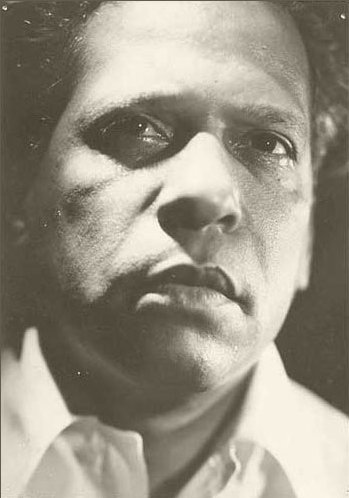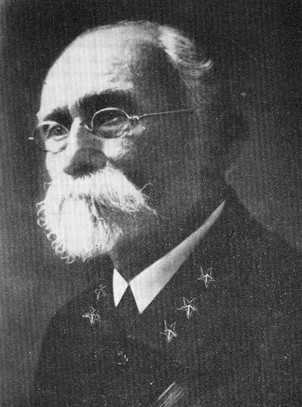
Máximo Gómez

Máximo Gómez
Biography
Máximo Gómez y Báez (November 18, 1836 – June 17, 1905), universally revered as "El Generalísimo," stands as one of the most formidable and brilliant military strategists in the history of the Americas. A Dominican by birth but famously a "Cuban by heart," Gómez was the primary military architect of Cuba's grueling, decades-long struggle for independence from the Spanish Empire. Across two major wars—the Ten Years' War (1868–1878) and the War of Independence (1895–1898)—Gómez transformed a ragtag rebellion into a sophisticated guerrilla army capable of paralyzing the colonial economy and breaking the will of a conventional European military force. His life is a testament to the power of internationalist solidarity in the Caribbean and the unyielding pursuit of self-determination.
Early Life and Dominican Roots
Gómez was born on November 18, 1836, in the rural town of Baní in the Dominican Republic. He came from a modest, lower-middle-class family; his parents, Andrés Gómez Guerrero and María Clemencia Báez Pérez, instilled in him a strict sense of discipline. Initially, his mother harbored hopes that her son would join the priesthood, and young Máximo was enrolled in a religious seminary. However, the turbulent political landscape of 19th-century Hispaniola soon interrupted his ecclesiastical studies. In the mid-1850s, a series of Haitian invasions threatened the Dominican Republic. Driven by a burgeoning sense of duty, a teenage Gómez left the seminary and joined the Dominican army.
He saw his first combat during the Battle of Santomé in 1856, where he demonstrated a natural aptitude for leadership and military strategy. A few years later, when the Dominican Republic was controversially re-annexed by Spain, Gómez served as a captain in the Spanish army reserves. This period was formative yet deeply troubling for Gómez. While he honed his understanding of conventional military operations and logistics, he was simultaneously exposed to the harsh realities of Spanish colonial rule. The arrogance of the imperial officers, their disdain for the local population, and the systemic brutality he witnessed began to sow the seeds of a deep anti-colonial resentment.
Transition to Cuba and the Awakening
The Dominican Restoration War eventually forced the Spanish to abandon the island in 1865. As a reserve officer in the Spanish military, Gómez was relocated to Cuba alongside his family. Settling in the eastern region of the island, he attempted to build a quiet life as a farmer. However, the Cuba he encountered was a society built on the brutal foundation of chattel slavery and the extreme exploitation of the peasantry by the Spanish metropole.
The stark contrast between the wealth of the Spanish elites and the suffering of the enslaved Afro-Cuban population profoundly affected Gómez. His conscience could not reconcile his position as a former colonial officer with the injustices he saw daily. When the Cuban revolution erupted in 1868, spearheaded by Carlos Manuel de Céspedes with the historic "Grito de Yara," Gómez made the definitive choice of his life: he resigned his commission, severed all ties with the Spanish crown, and offered his sword to the cause of Cuban liberty.
The Ten Years' War and the Machete Charge
During the Ten Years' War (1868–1878), Gómez quickly rose through the ranks of the Mambises (the Cuban guerrilla fighters) due to his unparalleled tactical brilliance. He fundamentally reshaped the way the Cuban rebels fought. Realizing that the insurgents were chronically short on firearms, ammunition, and conventional military supplies, Gómez introduced a tactic that would become legendary: the machete charge.
The machete was a common agricultural tool used for cutting sugarcane, readily available to the formerly enslaved and peasant fighters who made up the bulk of the rebel forces. Gómez recognized its potential as an instrument of psychological and physical terror in close-quarters combat. The first major demonstration of this tactic occurred at the Battle of Pino de Baire in late 1868. Leading a vastly outnumbered and under-armed group of rebels, Gómez ambushed a well-equipped Spanish column of some 700 men. Bursting from the dense tropical vegetation, the Mambises closed the distance before the Spanish could form their firing lines, unleashing a devastating hand-to-hand assault.
The psychological impact on the Spanish troops was catastrophic; the sight of charging fighters wielding razor-sharp machetes neutralized Spain's advantage in artillery and repeating rifles. Under Gómez's command, the machete charge became a sophisticated maneuver, often combined with lightning-fast cavalry strikes. He meticulously trained other rising stars of the revolution, including the legendary Antonio Maceo, the "Bronze Titan," turning the Liberation Army into a highly mobile and lethal force capable of defeating Spanish columns in mere minutes, as seen in the Battle of Palo Seco in 1873.
Exile and the Crucible of Leadership
Despite heroic efforts, the Ten Years' War ended in a bitter stalemate with the Pact of Zanjón in 1878. Refusing to accept anything less than full independence and the complete abolition of slavery, Gómez rejected the pact and went into exile. The subsequent years were a period of intense hardship, itinerant wandering, and deep reflection. He lived briefly in Jamaica before moving to Honduras, where he accepted a position as a general in the Honduran army. Despite securing a stable income, Gómez's primary focus remained the liberation of Cuba. He maintained a vast network of correspondence with Cuban exiles scattered across the Americas, tirelessly analyzing the failures of the first war and formulating new doctrines for future conflicts. He eventually returned to the Dominican Republic, settling in Montecristi, where he continued to plot the overthrow of Spanish rule.
It was during this long exile that his complex relationship with José Martí, the intellectual and spiritual father of the Cuban independence movement, unfolded. Initially, the two men clashed. In 1884, fearing that military leaders like Gómez might impose a dictatorship after independence, Martí wrote a famous and sternly worded letter to the General, warning against the dangers of militarism:
"A nation is not founded, General, as a military camp is set up... What guarantees can there be that civic freedoms—the sole object for which it is worth throwing a country into a struggle—will be better respected tomorrow?"
Gómez, a man of action who believed a strong military command was necessary to win the war, was stung but ultimately respected Martí's unwavering commitment to civilian democracy. Over the years, their mutual respect deepened into a profound brotherhood. By the early 1890s, recognizing that they needed each other to succeed, they reconciled. Martí came to deeply admire the austere, incorruptible General, later writing to a colleague:
"I come away from Gómez in love, and I cannot remember him without tenderness."
Together, they authored the Montecristi Manifesto in 1895, the foundational document that outlined the ideological and strategic framework for the final "Necessary War."
The Final War of Independence (1895–1898)
In 1895, Gómez, Martí, and Antonio Maceo returned to Cuba to launch the ultimate war for liberation. The tragic death of Martí in combat at Dos Ríos just weeks into the campaign was a devastating blow, but it only strengthened Gómez's resolve. As General-in-Chief, Gómez executed his magnum opus: the "Invasion from Oriente to Occidente."
This audacious campaign aimed to spread the rebellion from its traditional stronghold in the mountainous east to the wealthy, heavily fortified western provinces. It was a logistical and strategic masterpiece. Accompanied by Maceo, Gómez led his forces across a heavily guarded island, outmaneuvering an army of over 200,000 Spanish regulars with just a fraction of that number.
Gómez understood that Spain's ability to wage war depended on the economic engine of the western sugar plantations. Consequently, he implemented a ruthless, uncompromising scorched-earth policy. He issued decrees ordering the cessation of all agricultural labor and the destruction of the sugar mills. To his commanders, he made his strategy plain: the colonial economy had to be annihilated so that the Spanish treasury could no longer finance the occupation. "The war will not end," he declared, "until not a single stone is left standing on another."
The Spanish military apparatus, deeply frustrated and unable to pin down Gómez's mobile guerrilla units in conventional combat, resorted to drastic measures. General Valeriano Weyler was sent to Cuba to implement the infamous "reconcentrado" policy, forcing rural populations into concentration camps to starve the rebels of support. Despite this brutality and immense suffering, Gómez's forces endured, maintaining the offensive and slowly bleeding the Spanish empire dry.
U.S. Intervention and Final Years
By 1898, the Cuban Liberation Army had effectively neutralized Spanish control over the countryside. However, just as victory was imminent, the United States intervened in the conflict following the explosion of the USS Maine. The Spanish-American War resulted in the swift defeat of Spain, but it sidelined the Cuban revolutionaries. Gómez was deeply disillusioned by the American occupation and the imposition of the Platt Amendment, which compromised Cuba's hard-won sovereignty. He lamented that the Americans treated the Cubans not as allies, but as subjects incapable of self-governance.
Despite his immense popularity and the near-universal desire for him to become the first president of the new Cuban republic, Gómez flatly refused. He argued that he was a soldier, not a politician, and he would not allow his military prestige to overshadow the establishment of a civilian government. He accepted only a modest pension and spent his final years acting as a moral compass for the young nation, famously declaring himself "Dominican by birth, Cuban by heart."
Máximo Gómez died in Havana on June 17, 1905, at the age of 68. His passing was mourned as a profound national tragedy. He left behind a legacy of absolute integrity, military brilliance, and a trans-Caribbean commitment to freedom. He proved that true leadership is defined not by the power one wields, but by the power one is willing to relinquish for the good of the republic.
Major Contributions
- Máximo Gómez was the paramount military strategist of the Cuban Wars of Independence, successfully pioneering asymmetric guerrilla warfare and the devastating "machete charge" to neutralize the numerical and technological superiority of the Spanish colonial army.
- His leadership in the Ten Years' War and the War of Independence of 1895 forged a unified, highly effective Cuban Liberation Army capable of crippling the colonial economy and pushing the Spanish Empire to the brink of defeat.
- Beyond his military genius, Gómez established an enduring standard for civic virtue and democratic integrity in Latin America.
- By strictly refusing the Cuban presidency after the war and yielding power to civilian authorities, he provided a powerful counter-example to the era's prevalent caudillismo, cementing his legacy as a transnational hero committed entirely to the principles of liberty rather than personal ambition.