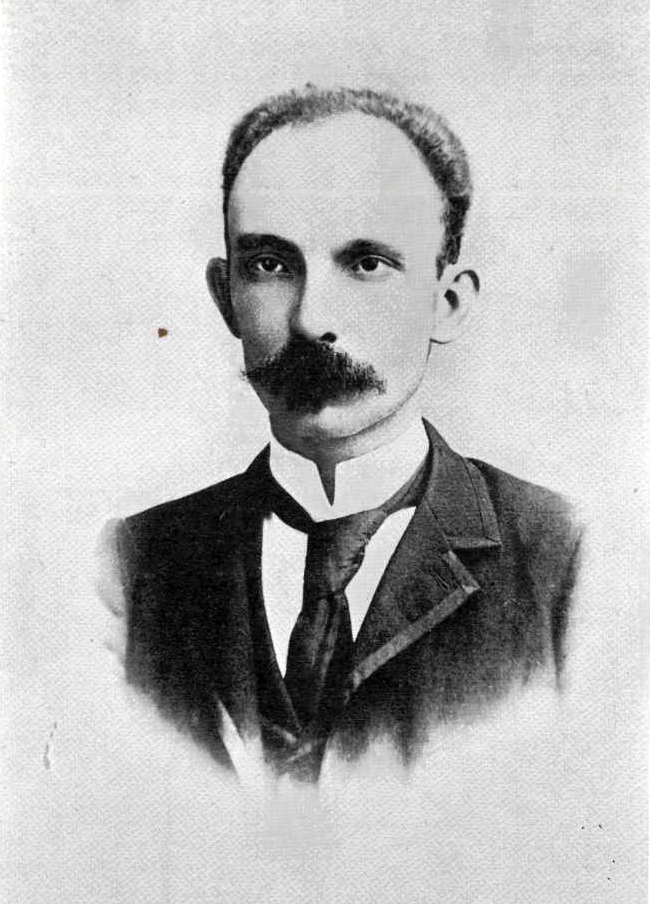
José Martí

José Martí
Biography
Introduction: The Apostle of Antillean Freedom
José Julián Martí Pérez (January 28, 1853 – May 19, 1895), revered across Latin America and the Caribbean as "El Apóstol" (The Apostle) and the National Hero of Cuba, was a monumental poet, essayist, journalist, philosopher, and political visionary whose brief life transformed the trajectory of the Americas. Martí stood as the intellectual architect and moral conscience of Cuba’s final war of independence against the Spanish Empire. Beyond his tireless organizing on behalf of Cuban sovereignty, he was a pioneering literary master who ignited the Spanish-American Modernismo movement, an uncompromising champion of racial equality, and one of the most perceptive early critics of rising North American imperialism. Martí envisioned an independent Cuba not merely as a sovereign state, but as an equitable, democratic republic founded upon universal human dignity—summarized in his eternal maxim: "Con todos, y para el bien de todos" ("With all, and for the good of all").
"I want the first law of our republic to be the love of Cubans for the full dignity of man. Every true man must feel on his own cheek the blow struck against the cheek of any other man." — José Martí
Early Life, Mentorship, and the Crucible of Havana
José Martí was born on January 28, 1853, on Calle Paula in Havana, Cuba, into a modest family during the twilight of Spanish imperial dominion in the West Indies. His father, Mariano Martí Navarro, was a Spanish artillery sergeant and petty customs officer from Valencia; his mother, Leonor Pérez Cabrera, was a native of Tenerife in the Canary Islands. Growing up among seven younger sisters in the crowded streets of colonial Havana, Martí was acutely conscious of the vast social chasms that structured island society—an oppressive colonial bureaucracy, a deeply entrenched sugar oligarchy, and the brutal reality of African chattel slavery.
In 1865, at the age of twelve, Martí enrolled in the Escuela de Instrucción Primaria Superior Municipal de Varones, an institution directed by Rafael María de Mendive. Mendive was a distinguished poet, classical scholar, and fervent Cuban patriot who recognized Martí’s exceptional intellect and assumed financial responsibility for his secondary education at the Instituto de Segunda Enseñanza. Mendive became far more than an academic instructor; he served as Martí’s spiritual mentor, introducing him to the ideals of freedom, universal justice, civic morality, and democratic governance. When the Ten Years' War (Guerra de los Diez Años) erupted in eastern Cuba on October 10, 1868, under the leadership of Carlos Manuel de Céspedes, Mendive’s home became a salon of patriotic fervor. The young Martí was permanently radicalized by these meetings, dedicating his emerging literary talents entirely to the cause of Antillean emancipation.
Political Awakening, Hard Labor in San Lázaro, and First Exile
In January 1869, at just sixteen years old, Martí launched his journalistic career by publishing the satirical sheet El Diablo Cojuelo alongside his close friend and schoolmate Fermín Valdés Domínguez. Shortly thereafter, he founded the political newspaper La Patria Libre, in which he published his first major dramatic poem, Abdala. Set in a fictionalized ancient Nubia facing foreign conquest, Abdala served as a transparent, passionate allegory for Cuba’s fight against Spanish rule, featuring a warrior-poet who declares that love of country is not a blind adoration of the land, but an invincible commitment to human justice.
Martí’s open defiance provoked swift colonial retribution. In October 1869, Spanish paramilitary volunteers (Voluntarios) raided the home of Valdés Domínguez and intercepted a letter signed by Martí and Fermín that condemned a former schoolmate who had enlisted in the Spanish army, branding his service an act of treason to the fatherland. In March 1870, Martí was tried by a military court-martial. Rather than pleading for mercy or disavowing the document, the seventeen-year-old youth courageously accepted full authorship and reaffirmed his devotion to Cuban independence. Convicted of sedition, Martí was sentenced to six years of hard labor in the horrific stone quarries of San Lázaro (canteras de San Lázaro) in Havana.
At San Lázaro, Martí was subjected to backbreaking manual labor under the tropical sun, forced to break and haul limestone while bound in heavy iron shackles. The chains scarred his legs, producing chronic ulcers, suppurating wounds, and physical ailments that tormented him for the rest of his life. Yet the experience deepened his empathy for the oppressed: in the quarries, he labored shoulder-to-shoulder with impoverished free Afro-Cubans, enslaved men, and young children condemned by the penal system. Alarmed by his deteriorating health, his parents and influential family friends successfully petitioned the colonial authorities to commute his sentence to internment on the Isla de Pinos (now Isla de la Juventud). In January 1871, the Spanish governor deported the eighteen-year-old Martí to Spain.
Intellectual Peregrinations: Spain, Mexico, and Guatemala
Arriving in Madrid in early 1871, Martí published El presidio político en Cuba (Political Imprisonment in Cuba), a devastating first-person exposé that laid bare the barbarism and institutional cruelty of Spain's colonial penal system. The pamphlet was acclaimed by Spanish liberals and established his reputation as a formidable polemicist. While in Spain, Martí continued his academic studies at the Central University of Madrid before transferring to the University of Zaragoza. In 1874, he graduated with advanced degrees in Civil and Canon Law (Licenciado en Derecho) and Philosophy and Letters (Licenciado en Filosofía y Letras). When the short-lived First Spanish Republic was declared in 1873, Martí published La República Española ante la Revolución Cubana, in which he argued with razor-sharp logic that a Spanish republic that claimed to champion human liberty could not morally maintain a despotic colonial empire in Cuba.
Following his graduation, Martí traveled across Europe, visiting Paris where he met the literary giant Victor Hugo, before sailing to Veracruz, Mexico, in early 1875 to reunite with his exiled family. In Mexico City, Martí immersed himself in the vibrant cultural life of the post-reform Republic, writing extensively for Revista Universal, lecturing at the Liceo Hidalgo, and publishing theatrical works such as Amor con amor se paga. Mexico was also where Martí forged an enduring brotherhood with his lifelong confidant Manuel Mercado, and where he met and fell in love with Carmen Zayas-Bazán e Hidalgo, the daughter of an affluent Cuban exile family.
When the military coup of General Porfirio Díaz in late 1876 curtailed intellectual and political freedoms in Mexico, Martí departed for Guatemala in 1877. In Guatemala City, he was appointed professor of literature and philosophy at the prestigious Escuela Normal Central. Martí was revered by his students, among them María García Granados, the cultured daughter of former Guatemalan president Miguel García Granados. María fell deeply and unrequitedly in love with Martí. After Martí returned briefly to Mexico in December 1877 to marry Carmen Zayas-Bazán and brought his bride back to Guatemala, the heartbroken María tragically died of illness—an event that Martí immortalized years later in his celebrated elegy "La Niña de Guatemala" in Versos sencillos. In 1878, when Guatemala’s liberal dictator Justo Rufino Barrios arbitrarily dismissed the Cuban director of the Normal School, Martí resigned his professorship in principled protest, refusing to compromise his intellectual autonomy under autocracy.
The New York Exile and the Modernist Literary Revolution
With the conclusion of the Ten Years' War through the controversial Pact of Zanjón in 1878, Martí returned to Havana under a general amnesty. Working in legal clerkships, he joined patriotic conspiracies alongside Afro-Cuban intellectual and journalist Juan Gualberto Gómez, advocating for the underground insurrection known as the Guerra Chiquita ("Little War"), led by General Calixto García. Spanish authorities soon detected Martí’s revolutionary oratory at the Liceo de Guanabacoa; in September 1879, he was arrested once more and expelled to Spain. Evading his captors, Martí sailed from Spain to France and then onward to New York City, arriving in January 1880. With the exception of a six-month sojourn in Caracas, Venezuela, in 1881—where he founded the influential Revista Venezolana before being banished by dictator Antonio Guzmán Blanco—New York would remain Martí's operational headquarters for the next fifteen years.
In New York, Martí worked as an international correspondent, translator, and diplomat, serving as consul for Uruguay, Paraguay, and Argentina. His journalistic chronicles (crónicas), published across Latin America in landmark periodicals such as La Nación of Buenos Aires, La Opinión Nacional of Caracas, and El Partido Liberal of Mexico, established him as the continent's most admired prose stylist. Martí revolutionized Spanish-language literature, stripping Castilian prose of its archaic rigidities and infusing it with muscular rhythms, luminous impressionistic imagery, and moral urgency. Alongside the Nicaraguan poet Rubén Darío, Martí is celebrated as the founding father of Modernismo.
Martí’s poetic innovations began with Ismaelillo (1882), a luminous, intimate collection dedicated to his infant son, José Francisco, written in tender, crystalline stanzas that signaled the birth of modernist lyricism. In 1889, Martí created La Edad de Oro ("The Golden Age"), an illustrated monthly magazine written entirely for Latin American children. Through stories like "Los tres héroes" (celebrating Simón Bolívar, José de San Martín, and Miguel Hidalgo), La Edad de Oro taught younger generations the values of racial harmony, anticolonial courage, and continental solidarity. In 1891, while recuperating from chronic illness in the Catskill Mountains, Martí penned his poetic masterpiece, Versos sencillos ("Simple Verses"). The collection’s opening quatrains—"Yo soy un hombre sincero / de donde crece la palma..."—would later be adapted into the lyrics of "Guantanamera", the world’s most recognized Cuban song.
"Nuestra América" and Anti-Imperialist Thought
Martí’s intellectual maturity coincided with the emergence of the United States as an aggressive industrial empire. Observing American society from within, Martí admired its democratic dynamism and mechanical ingenuity, but he grew deeply alarmed by its predatory capitalist excess, pervasive racial violence against African Americans, and imperial ambition toward the Caribbean and Central America.
In January 1891, Martí published his seminal essay "Nuestra América" ("Our America") simultaneously in La Revista Ilustrada de Nueva York and Mexico's El Partido Liberal. Nuestra América remains one of the foundational texts of decolonial and pan-American philosophy. In it, Martí issued an urgent wake-up call to the peoples stretching from the Rio Grande to Patagonia, urging them to shake off their intellectual subservience to European and North American models. He argued that Latin American nations must govern themselves according to their own indigenous, African, and mestizo realities rather than adopting imported constitutions: "With the oppressed, one had to make common cause, to secure the system against the interests and habits of the oppressor.". Above all, Martí warned of the northern colossus whose expansionist gaze threatened the sovereign future of the continent, insisting that a free, independent Cuba and Puerto Rico were the indispensable balance points protecting Latin America from annexation.
Mobilizing the Diaspora: Tampa, Key West, and the Cuban Revolutionary Party
Martí understood that the failure of earlier Cuban rebellions stemmed from regional factionalism, distrust between civilian leaders and military commanders, and the alienation of the working class and Afro-Cubans. Determined to build a modern, democratic liberation movement, Martí turned his attention to the Cuban diaspora in the United States, particularly the thousands of cigar makers (tabaqueros) in Tampa (Ybor City) and Key West (Cayo Hueso), Florida.
In November 1891, invited by the patriotic Club Ignacio Agramonte, Martí traveled to Tampa. In the union halls and cigar factories, where cigar rollers pooled their money to hire lectores (readers) to read aloud literature and politics during work shifts, Martí delivered two of the most electrifying orations in Latin American history: "Con todos, y para el bien de todos" on November 26, and "Los pinos nuevos" on November 27. The tobacco workers, both Black and white, embraced Martí as their spiritual brother. They instituted the "un día de haber"—donating one day’s wages every week to fund the coming revolution.
On January 5, 1892, in Key West, Martí drafted the statutes for the Partido Revolucionario Cubano (PRC, Cuban Revolutionary Party), officially proclaimed on April 10, 1892. Martí was democratically elected as its Delegado (Delegate), its chief executive officer. The PRC was a revolutionary creation without historical precedent: an anti-colonial party founded in exile that operated under democratic principles, uniting all social strata, classes, and races. Crucially, Article 1 of the PRC charter declared that the party was established not only to achieve the absolute independence of Cuba, but also to aid in the liberation of Puerto Rico. On March 14, 1892, Martí launched the newspaper Patria in New York, which served as the weekly ideological organ of the party, articulating the doctrine of a war fought without hatred, aimed at social justice rather than military despotism.
To ensure military victory, Martí orchestrated a historic alliance among the veteran generals of the Ten Years' War. He traveled to the Dominican Republic to recruit General Máximo Gómez, the brilliant Dominican-born tactician, convincing him to accept supreme military command of the Liberation Army. He journeyed to Costa Rica to enlist General Antonio Maceo, the legendary "Bronze Titan" of Cuban arms, and General Flor Crombet. Martí also maintained close strategic coordination with regional anticolonial stalwarts, including the Puerto Rican independence leader Ramón Emeterio Betances in Paris and Dominican hero Gregorio Luperón.
The Montecristi Manifesto and the Expedition of 1895
By late 1894, Martí’s clandestine logistics reached fruition in the Fernandina Plan: three chartered merchant vessels (Lagonda, Almadena, and Baracoa) were loaded in Fernandina, Florida, with modern rifles, ammunition, and medical supplies to launch simultaneous amphibious landings in Cuba. In January 1895, however, US federal authorities, acting on intelligence supplied by the Spanish legation, seized the vessels and impounded the weaponry. The loss was a staggering financial and logistical catastrophe. Yet Martí refused to yield; transforming defeat into resolution, he immediately dispatched the secret order to Havana authorizing the uprising across the island on February 24, 1895—sparking the historic Grito de Baire.
Martí slipped out of New York and joined General Máximo Gómez at his home in Montecristi, Dominican Republic. There, on March 25, 1895, Martí and Gómez signed the Manifesto of Montecristi (El Manifiesto de Montecristi), the definitive ideological charter of the Cuban War of Independence. In this masterpiece of political ethics, Martí affirmed that the war was not waged out of malice against the Spanish people, but against the archaic and extractive colonial system; that it would welcome Spaniards who chose to respect Cuban freedom; that it rejected racial prejudice and affirmed that Black and white Cubans were equal brothers in arms; and that it was designed to establish a civil republic free from the scourge of military caudillismo.
The Necessary War, Landing at Playitas, and the Final March
On April 1, 1895, Martí, Gómez, and four companions sailed from Montecristi aboard a small schooner. After transferring to the German cargo steamer Nordstrand, they approached the southeastern coast of Cuba on a stormy, pitch-black night. Lowering a small wooden rowboat into towering breakers, the six men rowed through perilous surf and landed at Playitas de Cajobabo, near Baracoa, on April 11, 1895. Martí's wartime diary (Diario de campaña) recorded the exultant entry: "Arribamos a Playitas. Salto. Llevo el remo de proa... Dicha grande." ("We arrive at Playitas. I leap out. I take the bow oar... Great joy.").
For five grueling weeks, Martí marched through the rugged mountains of the Sierra Maestra alongside the insurgent fighters (mambises). Despite his fragile frame, Martí carried his rifle, knapsack, and ammunition with unflagging stamina, tending to wounded soldiers, providing botanical remedies, and inspiring the troops with his speeches. On May 2, 1895, General Máximo Gómez conferred upon Martí the official military rank of Major General of the Liberation Army.
On May 5, 1895, Martí, Gómez, and Antonio Maceo met at the historic Conference of La Mejorana to settle the governance of the insurrection. Maceo, mindful of the political bickering that had crippled the Ten Years' War, argued for a military junta composed of generals until independence was won. Martí vehemently disagreed, insisting that a sovereign, civilian government must guide the revolution from its inception to prevent the rise of a military dictatorship. Though tensions ran high, Martí’s civilian democratic framework ultimately prevailed in the subsequent assemblies of the Republic in Arms.
Martyrdom at Dos Ríos and Immortal Legacy
By mid-May 1895, the Cuban forces were encamped near the confluence of the Contramaestre and Cauto rivers at Dos Ríos. On the night of May 18, 1895, seated in his tent by candlelight, Martí penned his final, unfinished letter to his Mexican confidant Manuel Mercado—a document that serves as his definitive political testament:
"I am in daily danger of giving my life for my country and for my duty... of preventing in time, through the independence of Cuba, the United States from spreading across the West Indies and falling with that additional force upon our lands of America. All I have done up to this day, and all I shall do, is toward that end." — José Martí to Manuel Mercado, May 18, 1895
On the morning of May 19, 1895, Spanish infantry and cavalry commanded by Colonel José Ximénez de Sandoval launched a surprise assault on the Cuban camp. General Máximo Gómez ordered Martí to stay behind with the reserves, knowing that Martí’s life was indispensable to the ideological and diplomatic survival of the revolution. But Martí, driven by an acute sense of personal honor and refusing to remain shielded while Cuban soldiers shed blood, drew his revolver, mounted his white horse (a mount gifted to him by General José Maceo), and rode directly toward the Spanish line alongside a young courier, Ángel de la Guardia.
Veering through high brush toward a Spanish firing squad, Martí was struck by three bullets: one in the chest, one in the neck, and one in the leg. He fell mortally wounded from his saddle onto the Cuban earth, dying instantly at the age of forty-two. Spanish troops recovered his body, transferred his remains under heavy guard to Santiago de Cuba, and interred him at the Santa Ifigenia Cemetery, where his mausoleum stands today, illuminated by a beam of sunlight in accordance with the verse from his Versos sencillos:
"No me entierren en lo oscuro / A morir como un traidor; / ¡Yo soy bueno, y como bueno / Moriré de cara al sol!" ("Do not bury me in the dark / To die like a traitor; / I am good, and as a good man / I shall die facing the sun!")
José Martí’s death sent shockwaves through the Americas, instantly consecrating him as the supreme martyr of Cuban freedom. His sacrifice catalyzed the liberation struggle that culminated in the end of Spanish rule in 1898. More than a century after his death, Martí’s legacy endures as a beacon of artistic brilliance, ethical politics, and decolonial emancipation. His writings continue to inspire generations throughout the Caribbean, Latin America, and the world, cementing his eternal standing as "El Apóstol" of human dignity and freedom.
References
- José Martí: Cuban Patriot - University of Florida Press
- José Martí: National Hero of Cuba - Encyclopaedia Britannica
- Centro de Estudios Martianos - Vida y Obra de José Martí
- José Martí: Versos sencillos - Ediciones Cátedra
- Our America by José Martí: Writings on Latin America and the Struggle for Cuban Independence - Monthly Review Press
Major Contributions
- José Martí’s monumental contributions span politics, philosophy, literature, and continental diplomacy, making him one of the most transformative figures in modern Caribbean and Latin American history.
- Politically, Martí unified the fractured factions of the Cuban independence movement by founding the Cuban Revolutionary Party (PRC) in 1892—a pioneering anti-colonial party created in exile that operated on democratic principles and mobilized thousands of working-class Afro-Cuban and white tobacco workers in Florida.
- Alongside General Máximo Gómez and General Antonio Maceo, he organized the War of 1895 ("The Necessary War"), authoring the Manifesto of Montecristi which set forth an egalitarian, democratic blueprint for a republic free of racial prejudice and military autocracy, while explicitly championing the liberation of Puerto Rico.
- Intellectually and culturally, Martí was a primary catalyst of the Spanish-American *Modernismo* movement, revolutionizing Castilian prose and lyric poetry through seminal masterworks such as *Ismaelillo* (1882), *Versos sencillos* (1891), and the children's classic *La Edad de Oro* (1889).
- In his prophetic 1891 essay *"Nuestra América"*, Martí formulated a cornerstone of Latin American anti-imperialist thought, calling for genuine decolonization, the protection of indigenous and Afro-descendant cultures, and collective continental defense against the expansionist ambitions of the United States.
- Revered as Cuba’s "National Hero" and "The Apostle," Martí’s synthesis of ethical action, literary beauty, and selfless martyrdom remains an enduring global symbol of universal human dignity.

