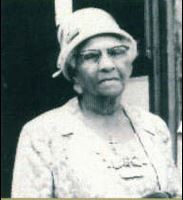
Dame Georgiana Nellie Robinson

Dame Georgiana Nellie Robinson
Biography
Dame Georgiana Nellie Robinson
Dame Georgiana Ellen "Nellie" Robinson, affectionately known throughout her life and beyond as "Miss Nellie," stands as a towering figure in the history of Antigua and Barbuda. Born on December 7, 1880, in St. John’s, Antigua, she emerged as a pioneering educator, an unstinting advocate for social justice, and a community leader whose impact is woven deeply into the fabric of the nation. She is recognized not only as an exceptional historical figure but also as the sole female National Hero of Antigua and Barbuda, a testament to her profound, multifaceted contributions to her country during a deeply transformative era in Caribbean history.
Early Life and the American Experience
Nellie Robinson was the second of eight children born to Margaret and George Robinson. Growing up in the late 19th-century colonial Caribbean meant living in a society heavily stratified by race, class, and social standing. The legacy of slavery, though abolished nearly fifty years prior, still cast a long shadow over the economic and educational opportunities available to the black majority. When she was about ten years old, economic circumstances and the search for better opportunities led her family to send her to the United States.
Her time in America was far from the idealized childhood often depicted in literature. Arriving as a young immigrant, she was quickly thrust into the labor force. By the time she was thirteen, Nellie was working various jobs to support herself and contribute to her family, serving as a child nurse, a governess, and a domestic helper. This period was crucial in shaping her worldview. Experiencing the harsh realities of racial discrimination and the grueling life of domestic labor in the United States instilled in her a profound sense of resilience and an acute awareness of the inequities that plagued Black people across the diaspora.
"Education is not a privilege reserved for the fortunate few; it is the fundamental right of every child, the only true key to unlocking the chains of circumstance."
Despite the demands of her work, she recognized early on that education was the most reliable pathway to social mobility and empowerment. This realization would become the defining conviction of her life.
Return to Antigua and the Pursuit of Education
In 1894, at the age of fourteen, Nellie Robinson returned to her native Antigua. Driven by an insatiable thirst for knowledge, she sought to continue her education, enrolling at Coke College, an institution located on East Street in St. John’s. However, her formal schooling there was cut short when the college was forced to close its doors due to severe financial difficulties.
In a colonial system that offered virtually no safety net or alternative educational avenues for young Black women, the closure of Coke College could have easily marked the end of her academic journey. Instead, it became a catalyst for her independence. Nellie pursued her education autodidactically. Through relentless self-study and sheer determination, she successfully prepared for and passed the Senior Cambridge examinations, an impressive feat that required mastery of a rigorous British curriculum. Additionally, she obtained formal certifications in music, rounding out an education that would soon benefit countless others.
The Founding of the TOR Memorial School
In late 19th-century Antigua, the educational landscape was highly exclusive. Secondary education was largely the preserve of the white colonial elite and a small, privileged segment of the mixed-race middle class. Admission to the few existing secondary schools was frequently denied to children based on their race, their socio-economic status, religious denomination, or whether they were considered "illegitimate" by birth.
Deeply frustrated by this systemic discrimination and the blatant denial of opportunity to intelligent, capable Black children, Nellie decided to take matters into her own hands. In April 1898, at the remarkably young age of eighteen, she began teaching her younger siblings and the children of family friends. What began as a modest, informal tutoring session quickly expanded as word of her exceptional teaching abilities and welcoming philosophy spread through the community.
This grassroots initiative soon blossomed into the Thomas Oliver Robinson (TOR) Memorial High School, named in poignant tribute to her late brother who had died of typhoid fever. The TOR Memorial School was revolutionary. It stood in direct defiance of the colonial educational establishment by operating on principles of radical inclusivity. The school offered secondary education to all children, regardless of their skin color, religious affiliation, parental marital status, or ability to pay exorbitant fees. Furthermore, it was a co-educational institution, breaking down gender barriers at a time when boys and girls were traditionally educated separately and unequally.
A Lifetime of Educational Leadership
The TOR Memorial School became an academic sanctuary and an incubator for Antigua’s future leaders. For an astonishing 57 years, "Miss Nellie" served as the school's principal and primary driving force. Her pedagogical approach was holistic, blending rigorous academic standards with a strong emphasis on character development, discipline, and the arts. She demanded excellence from her students, refusing to let them internalize the low expectations set for them by colonial society.
She was known to be a strict disciplinarian, yet her students revered her because her sternness was rooted in a profound, unwavering love and a desperate desire to see them succeed. By the time she retired in 1955 at the age of 75, she had personally molded the minds and characters of thousands of Antiguans, many of whom went on to become prominent figures in politics, medicine, law, and education.
Beyond the Classroom: Civic and Social Contributions
Dame Nellie Robinson’s impact extended far beyond the walls of her school. She was a tireless civic leader who understood that community development required engagement on multiple fronts.
During World War I, she distinguished herself as the only Black woman to serve on the local Mobilization Committee. In this role, she actively encouraged young Antiguan men to enlist, while simultaneously becoming a fierce advocate for their welfare. When she discovered the substandard conditions and discriminatory treatment faced by Black West Indian soldiers aboard transport ships and in the camps, she used her platform to publicly lobby for better living conditions, better rations, and fairer treatment, demonstrating a courage that few of her contemporaries possessed.
Her commitment to civic duty was further evidenced by her service on the Water Preservation Committee beginning in 1912, an essential role given Antigua's historical struggles with drought and water management.
Furthermore, she was a cultural pioneer. Long before the modern Antigua Carnival was formalized in 1957, Nellie Robinson recognized the importance of cultural expression and heritage. She organized and led Antigua's first Arts and Cultural Committee, championing local pageants, musical performances, and theatrical productions that laid the crucial groundwork for the vibrant cultural festivals the island celebrates today.
She was also instrumental in youth development outside the classroom, serving as a foundational figure in the establishment of the Girl Guides movement in Antigua. She viewed the Guiding movement as an essential tool for empowering young girls, teaching them leadership, self-reliance, and community service.
Legacy and Honors
Dame Georgiana Nellie Robinson passed away on April 29, 1972, at the age of 91, leaving behind an unparalleled legacy of service and upliftment. The seeds she planted through the TOR Memorial School and her extensive civic work fundamentally altered the trajectory of Antiguan society.
In recognition of her monumental contributions to the nation, she was posthumously awarded the highest honor of the state. In 2006, coinciding with the 25th anniversary of Antigua and Barbuda's political independence, she was named a Dame Companion of The Most Exalted Order of National Hero (DNH). To this day, she remains the only woman to hold this prestigious title. In December 2023, a bust in her likeness was erected at the site of the original TOR Memorial School, ensuring that her physical presence, much like her enduring influence, remains a permanent fixture in the heart of the nation she helped to build.
Major Contributions
- Dame Georgiana Nellie Robinson revolutionized the educational landscape of Antigua and Barbuda by founding the Thomas Oliver Robinson (TOR) Memorial High School in 1898.
- At a time when secondary education was highly exclusionary and restricted by race, class, and birth status, her co-educational institution provided high-quality schooling to marginalized Black children.
- For 57 years, she mentored and educated thousands of students, fundamentally altering the socio-economic trajectory of the island's working class.
- Beyond education, her contributions spanned social justice, culture, and community welfare.
- She served on the WWI Mobilization Committee, lobbying intensely for the fair treatment of Black West Indian soldiers.
- She also laid the cultural groundwork for the modern Antigua Carnival by pioneering the island's first Arts and Cultural Committee, and she helped establish the Girl Guides movement in Antigua, promoting leadership and empowerment among young women.

