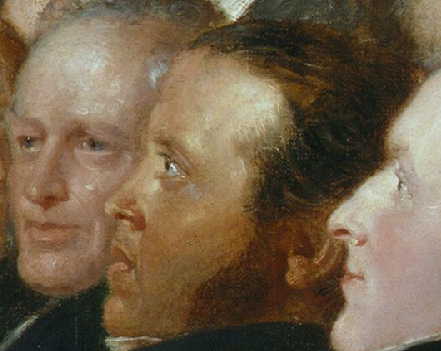
Osmond Fairclough

Osmond Fairclough
Biography
Osmond Theodore Fairclough
Osmond Theodore (O.T.) Fairclough (1904–1970) remains one of the most consequential, yet often understated, figures in the modern political history of Jamaica. As the primary architect and founding father of the People’s National Party (PNP), and the visionary behind the groundbreaking Public Opinion newspaper, Fairclough laid the intellectual and organizational foundation for Jamaican self-government. While history frequently highlights the charismatic leadership of his contemporaries, it was Fairclough’s unyielding determination, structural acumen, and radical imagination that coalesced the fragmented nationalist sentiments of the 1930s into a unified, formidable political movement. His life’s work was dedicated to dismantling the deep-seated racial and economic hierarchies of colonial Jamaica and empowering the Black majority to claim their rightful place in the governance of their nation.
Early Life and Formative Years
Osmond Theodore Fairclough was born on February 28, 1904, in the rural district of Bethel Town, Westmoreland, Jamaica. Raised in a period when the British Empire still firmly dictated the socioeconomic realities of its Caribbean colonies, Fairclough grew up acutely aware of the limitations placed upon Jamaicans of African descent. The colonial administration severely restricted the political enfranchisement of the Black majority, reserving legislative power and economic control for a small, white elite and expatriate class.
Despite these systemic barriers, Fairclough was an exceptional student, demonstrating an early aptitude for organization, economics, and critical thought. He attended the prestigious Calabar High School in Kingston, an institution known for producing several of Jamaica’s future leaders. Graduating from Calabar in 1922, Fairclough quickly realized that the colonial glass ceiling offered very little room for a bright, ambitious young Black man to rise in the professional ranks of his own country. Seeking better opportunities and an escape from the suffocating racial caste system of Jamaica, he made the consequential decision to migrate to neighboring Haiti.
The Haitian Experience
Fairclough spent approximately eight years in Haiti, a period that profoundly shaped his political, economic, and racial consciousness. Unlike Jamaica, Haiti was the world’s first free Black republic, a nation forged through a successful slave revolution. For a young Jamaican accustomed to British colonial subjugation and the pervasive myth of white supremacy, the Haitian context provided a radical, living alternative. He saw firsthand a society where Black people managed their own affairs, governed their own institutions, and navigated the complexities of international finance.
In Haiti, Fairclough secured a position at the National Bank of Haiti. Over his tenure, he proved himself to be a brilliant financier and manager, eventually rising to the prestigious rank of regional or assistant manager. This role not only sharpened his administrative and financial skills but also demonstrated his capacity to lead at an executive level. His time in Haiti solidified his belief in the intellectual and leadership capabilities of Black people, a conviction that would later drive his unyielding political organizing in Jamaica.
Return to a Segregated Jamaica
In 1934, Fairclough returned to his homeland, heavily armed with executive experience, financial expertise, and a broadened worldview. However, he returned to a Jamaica that was still rigidly segregated along lines of race and class. The upper echelons of business and commerce were fiercely guarded by the colonial elite.
When Fairclough sought employment commensurate with his impressive resume at the foreign-owned commercial banks in Kingston, he was met with explicit, degrading racism. Despite his proven track record as a bank manager in Haiti, he was summarily rejected for managerial roles because of his dark skin. In one particularly egregious instance that has since become a part of Jamaican political lore, a commercial bank offered the highly qualified former regional manager a position as a janitor or porter.
"We must build a nation where the Black man is no longer a tenant in his own country, but the architect of its future."
This profound insult was a turning point in Fairclough’s life. Rather than breaking his spirit, this overt discrimination served as the catalyst for his radicalization. He realized that personal advancement was impossible without systemic change, and that the only way to dismantle the oppressive colonial apparatus was to organize the masses and demand absolute self-government.
The Launch of Public Opinion
Recognizing that the fight against colonialism required an intellectual awakening, Fairclough turned to journalism. He believed that the nationalist movement needed a vehicle to disseminate radical ideas, challenge the colonial narrative, and unify the emerging intelligentsia. In February 1937, Fairclough founded the weekly newspaper Public Opinion.
Public Opinion was an immediate sensation and a profound disruption to the conservative media landscape of Jamaica. In its very first editorial, titled "New Wine in New Bottles," Fairclough articulated the paper’s mission: to organize the unorganized public sentiment of the island and to focus attention on the urgent need for national development and self-determination.
To achieve this, Fairclough assembled a brilliant cadre of progressive thinkers, writers, and activists. The paper featured contributions from heavyweights such as the historian Hedley Powell Jacobs, the radical journalist Frank Hill, the pioneering feminist and playwright Una Marson, and the fiery novelist Roger Mais. Public Opinion championed universal adult suffrage, human rights, and the formation of a robust labor movement, effectively serving as the intellectual incubator for Jamaica's anti-colonial struggle.
The Crucible of 1938 and the Birth of the PNP
The year 1938 is universally recognized as the watershed moment in modern Jamaican history. Frustration over low wages, horrific working conditions, and widespread poverty erupted into massive labor riots across the island. The sugar workers in Frome and the dockworkers in Kingston led strikes that paralyzed the colonial economy.
While figures like Alexander Bustamante emerged as the charismatic leaders of the labor uprising, Fairclough recognized that street protests, without a cohesive political strategy, would not result in lasting structural change. He possessed the tenacity of purpose to insist that the energy of the labor movement must be channeled into a formal, organized political party dedicated to achieving self-government.
Fairclough began holding intensive strategic meetings with his Public Opinion circle. He knew that to gain broad legitimacy, the new party needed a leader with unimpeachable standing in Jamaican society. He set his sights on Norman Manley, the island's most brilliant and respected barrister. Manley was initially hesitant to enter the chaotic fray of politics, but Fairclough was relentless. He repeatedly approached Manley, arguing passionately that it was his patriotic duty to lead the movement for Jamaican independence.
Fairclough’s persistence paid off. On September 18, 1938, the People's National Party (PNP) was officially launched at the Ward Theatre in Kingston, with Norman Manley as its leader. However, it was Fairclough who had done the painstaking groundwork, drafting the initial frameworks and rallying the essential progressive voices to make the launch possible.
General Secretary and the Engine of the Party
Following the party's formation, Fairclough assumed the role of the PNP’s first General Secretary. In this capacity, he was the literal engine of the organization. He traveled tirelessly across the island, setting up party groups, educating the peasantry and working class on their political rights, and building the grassroots infrastructure that would sustain the PNP for decades to come.
Fairclough’s vision for the PNP was deeply rooted in egalitarianism and a commitment to the Black intelligentsia. He firmly believed that only a nationalist party, driven by the intellectual and moral force of the Jamaican people, could dismantle the colonial apparatus. Under his organizational leadership, the PNP became a formidable machine that successfully campaigned for universal adult suffrage, which was finally granted by the colonial authorities in 1944, drastically shifting the balance of power to the Jamaican majority.
Later Life and Enduring Legacy
Throughout his life, Fairclough remained a steadfast servant of the Jamaican people, often working tirelessly behind the scenes while others took the spotlight of elected office. He continued to manage Public Opinion, ensuring it remained a voice for the marginalized, a forum for Caribbean literature, and a check on political power. He passed away in 1970, having lived to see his ultimate dream—an independent Jamaica—realized in 1962.
"He possessed a quiet radicalism, a profound belief that the Jamaican people were capable of governing themselves, and he dedicated every waking hour to proving that belief true."
Today, O.T. Fairclough is revered as a founding father of Jamaican nationalism. To honor his unparalleled dedication to the grassroots workers of the political movement, the PNP established the O.T. Fairclough Trust Fund. This fund provides educational grants and support to long-standing party workers and their families, a fitting tribute to a man who always prioritized the welfare and education of the ordinary citizen over personal glory.
Osmond Fairclough's story is a remarkable testament to the power of resilience. Denied a place in the colonial economy because of his race, he chose not to accept defeat. Instead, he built the very institutions—both in the press and in politics—that would eventually dismantle that colonial economy, leaving an indelible mark on the Caribbean and laying the cornerstone for a free Jamaica.
Major Contributions
- Osmond Theodore Fairclough’s most significant contribution was serving as the primary catalyst and architect for the People’s National Party (PNP) in 1938, effectively birthing the organized political movement for Jamaican self-government.
- By relentlessly recruiting Norman Manley and laying the grassroots infrastructure as the party's first General Secretary, Fairclough transformed the fragmented anger of the 1938 labor riots into a cohesive, enduring political machine capable of dismantling colonial rule.
- Equally impactful was his establishment of the *Public Opinion* newspaper in 1937, which shattered the conservative media monopoly in colonial Jamaica.
- The publication not only escalated the nationalist agenda but also provided an unprecedented platform for progressive Caribbean intellectuals, writers, and activists to advocate for universal adult suffrage, human rights, and the realization of an independent Jamaican identity.