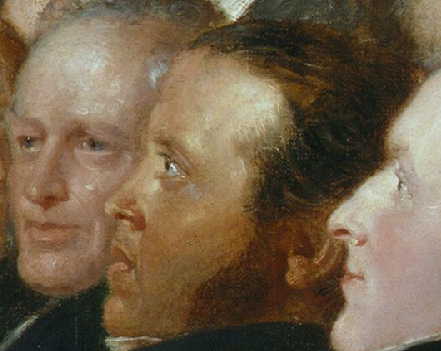
William Knibb

William Knibb
Biography
Introduction: The Titan of Caribbean Emancipation
Reverend William Knibb (7 September 1803 – 15 November 1845) stands as one of the most formidable, courageous, and transformative figures in the history of Jamaica and the transatlantic abolitionist movement. An English Baptist missionary, schoolteacher, orator, and social visionary, Knibb dedicated his life to the spiritual dignity, physical liberation, and socioeconomic empowerment of enslaved and newly emancipated Black Jamaicans. Operating during the twilight of the British sugar empire, Knibb emerged as the fiercest moral adversary of the Jamaican plantocracy—a ruthless colonial oligarchy that maintained hundreds of thousands of African men, women, and children in brutal chattel bondage.
Knibb’s fearless advocacy reached a historic watershed during the 1831–1832 Baptist War (also known as the Christmas Rebellion), led by the enslaved Baptist deacon and Jamaican National Hero Sam Sharpe. Falsely accused by enraged white planters of inciting the insurrection, Knibb endured arrest, death threats, and the physical destruction of his chapels by white supremacist vigilantes. Rather than retreat, Knibb returned to Great Britain in 1832 to launch a blistering, nationwide oratorical campaign that shattered the political influence of the West India Interest in Parliament. His explosive public addresses and devastating testimony before parliamentary select committees directly compelled the passage of the Slavery Abolition Act 1833.
Following legal emancipation, Knibb spearheaded the fight against the oppressive six-year "apprenticeship" system, ultimately bringing about complete, unconditional freedom on August 1, 1838. Recognizing that legal freedom without economic autonomy was an illusion, Knibb pioneered the revolutionary Free Village System, purchasing large tracts of land and selling freehold plots to formerly enslaved families to establish self-sufficient peasant communities such as Kettering and Granville. His radical commitment to racial equality and social justice laid the intellectual and spiritual foundations later inherited by Jamaican freedom fighters like George William Gordon and Paul Bogle. In 1988, on the 150th anniversary of full emancipation, the Government of Jamaica posthumously conferred upon William Knibb the Order of Merit (OM)—making him the first white man ever to receive Jamaica’s third-highest national honour.
Early Life and Spiritual Calling in Kettering
William Knibb was born on September 7, 1803, in the market town of Kettering in Northamptonshire, England. He was one of eight children born to Thomas Knibb, a tradesman who suffered repeated financial hardship, and Mary Dexter Knibb, a woman of deep Christian faith and exceptional moral fortitude. Kettering occupied a unique place in the history of British nonconformity; it was the birthplace of the Baptist Missionary Society (BMS), founded in 1792 by William Carey, Andrew Fuller, and John Ryland. Raised in an atmosphere saturated with missionary zeal, young William absorbed values of universal brotherhood, biblical literacy, and evangelical compassion from an early age.
Knibb received his early education at the Kettering Grammar School. In 1816, at the age of thirteen, he was apprenticed to John Gray Fuller, a prominent printer in Bristol and the son of BMS founder Andrew Fuller. Moving to Bristol—a thriving commercial port city historically enriched by the transatlantic slave trade—Knibb mastered the craft of printing, typesetting, and publishing, skills that would later prove invaluable during his political campaigns. Concurrently, he attended the Broadmead Baptist Church, where he was baptized by Dr. John Ryland and began teaching at a Sunday school for working-class children in the poor districts of Bristol.
In 1822, William’s older brother, Thomas Knibb, was appointed by the Baptist Missionary Society as master of a mission school for enslaved and free children in Kingston, Jamaica. Thomas was a passionate, gifted educator, but tropical disease proved lethal; in April 1823, after only a few months on the island, Thomas succumbed to yellow fever. When news of his brother’s tragic death reached the printing office in Bristol, William was profoundly moved. Without hesitation, he confronted his employer and declared his life's purpose: "I will go! If the Society will accept me, I will go and take my brother’s place".
Arrival in Jamaica: Kingston and Spanish Town (1824–1829)
In October 1824, after being formally accepted by the Baptist Missionary Society and marrying Mary Watkins—a courageous woman who became his indispensable partner throughout his missionary trials—Knibb set sail for Jamaica aboard the ship Ocean. He landed in Morant Bay in January 1825 and reached Kingston in February, immediately assuming control of the East Queen Street Baptist Day School.
In Kingston, Knibb took charge of hundreds of Black pupils, many of them enslaved children who attended with the reluctant permission of their masters or under cover of night. Under Knibb’s dynamic pedagogy, the school flourished, demonstrating the intellectual brilliance of Black children and directly refuting the racist dogma of the colonial plantocracy. In 1829, Knibb was transferred to Spanish Town (then the capital of Jamaica) and nearby Ridgemount, where he assisted the veteran missionary James Phillippo and was ordained as a fully consecrated minister of the gospel.
Living in Kingston and Spanish Town brought Knibb face-to-face with the daily, unspeakable barbarities of chattel slavery. He watched enslaved men, women, and children being auctioned at the public vendue, witnessed brutal public floggings on the parade grounds, and listened to congregants recount harrowing stories of families torn apart by sale. White overseers and plantocrats viewed Christian education and literacy among enslaved people with pathological paranoia, correctly sensing that the gospel of Christian equality was incompatible with human bondage. Knibb’s diary entries during this period record his mounting moral outrage at the colonial system, setting the stage for his emergence as an unapologetic activist.
Pastoral Leadership in Falmouth and the Sugar Economy
In 1830, following the death of missionary James Mann, Knibb was called to pastor the Baptist church in Falmouth, the bustling parish capital of Trelawny on Jamaica's north coast. Trelawny was the jewel of the British West Indian sugar empire, boasting over eighty expansive sugar estates powered by more than 26,000 enslaved laborers. The enslaved population outnumbered the white planter class by more than twenty to one, creating an atmosphere of constant tension, surveillance, and planter brutality.
Knibb’s arrival transformed Falmouth’s Suffield Baptist Church into the vibrant epicenter of spiritual and communal life for the enslaved population of western Jamaica. Thousands of enslaved field laborers walked miles through the dark after grueling sixteen-hour workdays on the cane pieces to attend Knibb’s services, prayer meetings, and literacy classes. Knibb preached a message of divine love, human dignity, and spiritual freedom that resonated deeply with the oppressed workforce. He instituted a class-leader system, appointing trustworthy and respected enslaved elders as deacons and leaders within the church, granting Black men and women administrative autonomy and spiritual leadership entirely denied to them in secular society.
Knibb’s magnetic preaching and genuine love for his congregation caused church membership to swell rapidly, eventually numbering thousands of communicants and inquirers across Trelawny. However, this rapid growth provoked visceral terror among white estate owners, attorneys, and bookkeepers, who viewed Knibb’s chapel as a hotbed of sedition and insolence. Local magistrates began passing repressive parish regulations to prohibit nighttime worship, harassed church members, and publicly threatened Knibb with violence if he did not cease teaching enslaved people to read.
The 1831 Baptist War and Planter Retaliation
In late December 1831, the simmering grievances of Jamaica's enslaved majority culminated in the largest slave rebellion in the island’s history: the Great Jamaican Slave Revolt, also known as the Baptist War or the Christmas Rebellion. The uprising was conceived and led by Sam Sharpe, an educated, deeply religious enslaved deacon in the Montego Bay Baptist Church. Drawing inspiration from biblical teachings of liberty and news of British parliamentary debates on abolition, Sharpe organized an underground network of enslaved leaders across western Jamaica, planning a widespread nonviolent general strike immediately following the Christmas holidays. The laborers resolved to withhold their labor after December 27, 1831, until white estate owners agreed to pay wages and recognize their natural freedom.
When Knibb arrived at Salter’s Hill near Falmouth on December 27 to dedicate a newly constructed chapel, he learned of the planned strike. Fully aware of the merciless military power of the British garrison and the local white militia, Knibb addressed the assembled congregation of over a thousand enslaved laborers, pleading with them not to strike or resort to force: "I hear that some of you believe the King of England has made you free. It is not true! Go back to your work, I beseech you... Do not bring blood upon your heads!".
Despite Knibb’s desperate warnings, the movement could not be contained. When plantation managers attempted to coerce workers at gunpoint, violence erupted. Enslaved rebels set fire to the trash houses and cane fields of the Kensington Estate in St. James, triggering a massive insurrection that swept across the parishes of St. James, Trelawny, Hanover, and Westmoreland. Over 20,000 enslaved freedom fighters mobilized under Sharpe's lieutenants, burning estates and driving colonial forces into coastal enclaves. Although the rebellion was predominantly targeted at property rather than human life—only fourteen whites were killed—the colonial authorities responded with apocalyptic savagery. British regular troops under Sir Willoughby Cotton and the Jamaican militia crushed the uprising, executing over 500 enslaved people through firing squads and public hangings, including Sam Sharpe himself, who walked to the scaffold with immortal dignity.
Arrest, Persecution, and the Colonial Church Union
In their fury and humiliation, the white plantocracy sought a convenient scapegoat, blaming the Baptist missionaries for the uprising. On January 1, 1832, Knibb was arrested at his home in Falmouth by the local militia, alongside fellow missionaries Francis Gardner and William Whitehorne. He was subjected to vile insults, denied medical attention, and marched under armed guard under the scorching sun to Montego Bay, where he was incarcerated in a stifling, disease-ridden guardroom.
During Knibb's imprisonment, white planters, magistrates, and colonial militia officers organized a violent vigilante terrorist network known as the Colonial Church Union (CCU), led by the Anglican rector of St. Ann, George Wilson Bridges. The CCU’s stated objective was to eradicate nonconformist Christianity from Jamaica, expel all "sectarian" missionaries, and maintain slavery by terror. Between January and March 1832, CCU mobs rampaged across the island, burning, blowing up, and dismantling more than twenty Baptist and Methodist chapels. In Falmouth, while Knibb languished in custody, a mob of white militia officers and town magistrates systematically pulled down the Suffield Baptist Church, reducing the magnificent sanctuary to rubble and using its timber to construct a white supremacist club.
Knibb faced imminent danger of extrajudicial execution. Planters circulated fabricated petitions demanding his lynching, and colonial prosecutors attempted to bribe and torture enslaved prisoners into testifying that Knibb had preached armed rebellion. However, enslaved Christians displayed extraordinary heroism; even when faced with the lash and the gallows, Knibb's congregants steadfastly refused to utter false testimonies against their beloved minister. With zero evidence of complicity, the Attorney General in Spanish Town was forced to drop the capital charges of high treason, and Knibb was released on bail in February 1832. However, with his chapel demolished and CCU death squads actively hunting him, it became evident that his continued presence in Jamaica was impossible without resolving the fundamental question of slavery itself.
The 1832 Campaign in Britain: "Whatever May Be the Consequence, I Will Speak!"
Recognizing that the survival of Christian missions and the basic humanity of the Black population could never coexist with colonial slavery, the Jamaican Baptist missionaries decided that William Knibb must travel to England to lay the unvarnished truth before the British public and the Imperial Parliament. Knibb embarked for Britain in April 1832, arriving in London in early June.
Upon his arrival, Knibb was confronted by the timid leadership of the Baptist Missionary Society. The Society's executive committee, terrified of political entanglements and losing wealthy patrons, strictly instructed Knibb to confine his public remarks to the destruction of property and religious persecution, admonishing him not to attack the institution of slavery itself. Knibb rejected this compromise with righteous indignation. He declared that if the Society would not allow him to plead the cause of the enslaved, he would resign his commission, throw himself upon the public, and walk barefoot through the streets of England to tell the horrors he had witnessed.
On June 21, 1832, the pivotal confrontation occurred during the BMS Annual General Meeting held at the packed Spa Fields Chapel in London. When Knibb rose to speak, he began by describing the missionary work in Jamaica, but quickly pivoted to expose the systemic brutality, torture, and moral filth of chattel slavery. As his voice swelled with passionate fury, the BMS secretary, John Dyer, visibly alarmed by the political nature of the address, reached up from behind and forcefully tugged on Knibb's coat tails, whispering for him to sit down and be silent.
Knibb wheeled around, repudiated the restraint with majestic defiance, and proclaimed to the stunned auditorium:
"Whatever may be the consequence, I will speak. At the risk of my connexion with the Society, and of all I hold dear, I will avow this... Lord, open the eyes of Christians in England, to see the evil of slavery and to banish it from the earth!"
The auditorium erupted in an ocean of thunderous applause, tears, and standing ovations. Knibb’s audacious defiance broke the conspiracy of institutional silence forever, aligning the British evangelical movement irreversibly with the cause of immediate, unconditional emancipation.
Over the next eighteen months, Knibb became the moral battering ram of the British abolitionist movement. Alongside fellow returned missionary Thomas Burchell and anti-slavery stalwarts such as Thomas Fowell Buxton and Joseph Sturge, Knibb traversed England, Scotland, and Wales, addressing hundreds of thousands of citizens in town halls, cathedrals, and public squares. In great metropolitan centers like London, Manchester, Bristol, and Edinburgh, Knibb held audiences spellbound with his electrifying oratory. At massive rallies in London's Exeter Hall, he dramatically produced and cast down upon the stage heavy iron slave collars, branding irons, and cat-o'-nine-tails whips smuggled out of Jamaica, forcing the British public to look upon the physical instruments of colonial sadism.
In July 1832, Knibb delivered four days of grueling, meticulous testimony before the Select Committees of the House of Commons and the House of Lords on the State of the West Indian Colonies. Under hostile interrogation from pro-slavery peers and plantation shareholders, Knibb provided forensic, unimpeachable evidence of planter atrocities, the illegal demolition of chapels, the corruption of colonial magistrates, and the heroic, peaceful martyrdom of Sam Sharpe. His testimony dismantled the plantocracy's propaganda and generated an irresistible national movement that compelled Parliament to introduce legislation. On August 28, 1833, King William IV gave royal assent to the Slavery Abolition Act 1833, declaring the end of legal slavery across the British Empire effective August 1, 1834.
Abolition of 1833 and Defeating the "Apprenticeship" Fraud
Armed with over £13,000 raised in Great Britain to compensate for the destroyed chapels, William Knibb returned in triumph to Jamaica in August 1834. Upon his arrival in Falmouth, he was met at the wharf by thousands of weeping, singing Black Jamaicans who hailed him as their spiritual father and liberator. Knibb immediately organized the reconstruction of the Suffield Baptist Church, supervising the erection of a colossal stone sanctuary with double galleries designed to seat 3,000 worshippers—the largest chapel on the island.
However, Knibb’s celebration was cut short by the realization that the Abolition Act contained a fraudulent, exploitative loophole: the Apprenticeship System. Designed by the British government to appease the plantocracy, the system mandated that while all enslaved children under six were immediately free, all adult field hands were reclassified as "predial apprentices" and forced to continue working forty and a half hours per week without wages for their former masters for a period of six years.
Apprenticeship proved to be slavery under another name. Planters used their absolute control over housing, food rations, and medical care to extort unpaid labor from the apprentices. Special Magistrates, predominantly former British military officers who were wined and dined by estate owners, routinely sentenced apprentices to horrific floggings and solitary confinement for petty infractions. Worse still, planters installed the treadmill—a massive revolving wooden wheel upon which recalcitrant workers were suspended by their wrists and forced to march continuously under threat of having their shins smashed and their bodies lacerated by the cat-o'-nine-tails.
Knibb declared unrelenting war on the apprenticeship fraud. He meticulously documented every case of abuse in Trelawny, recording the names of brutal magistrates, overseers, and injured workers. When the Quaker philanthropist Joseph Sturge arrived in Jamaica in 1837 to investigate conditions, Knibb guided him through the estates and workhouses, providing the irrefutable data that Sturge subsequently published in England in his blockbuster exposé, The West Indies in 1837. The revelations provoked national outrage across Great Britain, unleashing a flood of petitions demanding an immediate end to the system. Faced with mounting unrest across Jamaica and relentless pressure from Westminster, the Jamaican House of Assembly was forced to capitulate, voting to dissolve apprenticeship two years early, on August 1, 1838.
The Midnight of Freedom: July 31 – August 1, 1838
The historic transition to full and unconditional freedom occurred on the night of July 31, 1838, in a scene that has entered the immortal annals of Caribbean history. More than ten thousand emancipated Black men, women, and children packed into the magnificent Falmouth Baptist Church and overflowed into the surrounding streets and courtyards.
As the midnight hour approached, Knibb ascended the high mahogany pulpit, surrounded by his deacons and fellow ministers. He instructed the massive congregation to observe a solemn, breathless silence. Every eye was fixed on the face of the town clock, and the only sound in the sanctuary was the ticking of the clock and the quiet sobs of people anticipating the end of nearly three centuries of human bondage. At one minute before twelve, Knibb pointed his finger to the clock and whispered to the congregation:
"The hour is come; the monster is dying..."
As the first stroke of midnight resonated from the belfry, Knibb threw his hands into the air, held aloft a shattered iron chain, and proclaimed with all the power of his voice:
"The monster is dead! The Negro is free!"
The immense congregation erupted in a scene of indescribable ecstasy, weeping, embracing, shouting praises to God, and singing the Doxology. On the morning of August 1, 1838, Knibb led the freed people in a symbolic, ceremonial funeral of slavery. In the courtyard of the Falmouth chapel, they dug a deep grave and lowered into the earth a wooden coffin containing iron slave collars, handcuffs, leg irons, and the whip, sealing the grave with a headstone inscribed:
"Colonial Slavery died July 31st, 1838, Aged 276 Years."
Architect of Freedom: The Free Village Movement
While legal freedom had been won, William Knibb recognized that real, permanent emancipation was impossible so long as the freed people remained economically dependent on the white sugar estates. Immediately following August 1, 1838, Jamaican planters launched a vicious economic counter-offensive: they imposed exorbitant rents on the small estate cottages and provision grounds that freed families had occupied for generations, often demanding rents higher than the weekly wages they paid. When workers refused to work for starvation wages of sixpence a day, planters sent armed bailiffs to evict families, rip down roofs, uproot yam grounds, and chop down breadfruit and mango trees.
Knibb realized that without independent land ownership, the freed people would be forced back into a new form of feudal serfdom. Working in close partnership with fellow Baptist ministers James Phillippo and Thomas Burchell, Knibb devised the revolutionary Free Village System. Because white planters flatly refused to sell small plots of land to Black laborers, Knibb bypassed them by securing massive personal loans and donations from English abolitionists like Joseph Sturge and the Birmingham anti-slavery committee. Knibb purchased vast, bankrupt sugar plantations and coffee estates, subdivided the land into freehold plots ranging from one-half to two acres, and sold them to emancipated families at cost price, allowing them to pay off their parcels in manageable installments.
In 1840, Knibb founded the premier Free Village of Kettering, situated near Duncans in Trelawny and named in honor of his English birthplace. There, he established his personal residence alongside dozens of Black families who built substantial stone cottages, planted provision grounds, and erected a school and a chapel. Knibb also founded Granville, named after the pioneer British abolitionist Granville Sharp, as well as Refuge, Martha Brae, and Waldensia. Within these villages, the freed people cultivated export crops such as pimento, ginger, and coffee alongside subsistence crops, creating a vibrant, self-reliant peasant economy completely insulated from the coercion of estate overseers. The Free Village movement spread rapidly across Jamaica; within seven years of emancipation, more than 200 Free Villages had been founded, settling over 100,000 newly emancipated Jamaicans on their own independent soil.
Calabar College, West African Missions, and Final Days
Throughout his pastoral career, Knibb was a passionate advocate for Black indigenous leadership and education. He vehemently rejected the paternalistic colonial notion that Black people required perpetual white supervision. In 1842, Knibb led the Jamaican Baptist churches in declaring full financial and administrative independence from the Baptist Missionary Society in London, transforming the Jamaican Baptist Union into a self-governing, self-funding indigenous denomination.
To ensure a continuous pipeline of educated, native Jamaican Christian leaders, Knibb played a leading role in the establishment of Calabar Theological College in 1843 at Calabar, near Rio Bueno in Trelawny. The institution was established specifically to train Black Jamaican men for the Christian ministry and the teaching profession. (The college later relocated to Kingston, evolving into the present-day United Theological College of the West Indies).
Concurrently, Knibb championed the concept of the "African Mission". He believed that emancipated Afro-Jamaicans had a divine mission to return to their ancestral homeland to spread education, Christianity, and technical skills. In 1840, Knibb attended the World Anti-Slavery Convention in London, advocating for the suppression of the ongoing transatlantic slave trade to Brazil and Cuba. Upon his return, he recruited and financed the first contingent of Jamaican Christian missionaries, who sailed for Fernando Po (Bioko) and the Cameroons in West Africa in 1843, initiating a historic transatlantic reverse migration of faith and education.
Death, Enduring Legacy, and National Commemoration
William Knibb’s relentless schedule of preaching, traveling hundreds of miles on horseback, managing land settlements, and engaging in intense political warfare wore down his physical constitution. In early November 1845, after preaching at Falmouth and supervising church business in the tropical heat, Knibb contracted yellow fever. He retired to his home in the Free Village of Kettering, where his condition deteriorated rapidly. On the morning of November 15, 1845, surrounded by his devoted wife Mary and his fellow ministers, William Knibb died at the age of forty-two.
News of Knibb’s premature death plunged the island into profound mourning. On Sunday, November 16, 1845, his funeral procession from Kettering to Falmouth was followed by an estimated 8,000 mourners—the vast majority formerly enslaved laborers who wept openly for the man they called their "Father," their "Deliverer," and the "Friend of the Negro". Knibb was interred in the churchyard of the Falmouth Baptist Church beneath a marble tombstone that remains a site of pilgrimage to this day.
Today, William Knibb is remembered as one of the most heroic figures in the annals of Atlantic abolitionism and Jamaican nation-building. The William Knibb Memorial Baptist Church in Falmouth stands as an architectural and historical landmark honoring his sacrifice. In education, the William Knibb Memorial High School in Martha Brae, Trelawny, preserves his name and values; among its distinguished alumni is the legendary Jamaican eight-time Olympic gold medalist Usain Bolt. In 1988, marking the sesquicentennial of full emancipation, the Government of Jamaica formally recognized Knibb's monumental contributions by posthumously conferring upon him the Order of Merit (OM). As a fearless preacher who looked into the face of tyranny and declared that freedom was the birthright of every human soul, William Knibb remains permanently enshrined in the heart of Caribbean heritage.
Major Contributions
- Reverend William Knibb made monumental, foundational contributions to the eradication of British colonial slavery and the socioeconomic emergence of modern Jamaica.
- As a fearless Baptist missionary in Falmouth, Trelawny, Knibb provided steadfast moral and pastoral leadership to thousands of enslaved Africans, vigorously defending their humanity against the entrenched plantocracy.
- During the 1831–1832 Baptist War (Christmas Rebellion), he withstood arrest, death threats, and the demolition of his chapels by the white supremacist Colonial Church Union.
- Returning to Great Britain in 1832, Knibb defied ecclesiastical gag orders at Spa Fields Chapel and launched a legendary national oratorical crusade across England and Scotland.
- His devastating eyewitness testimony before Parliamentary Select Committees exposed the horrific atrocities of chattel slavery, providing the decisive moral and political momentum that compelled Parliament to enact the Slavery Abolition Act 1833.
- He subsequently led the relentless campaign that defeated the fraudulent "apprenticeship" system, securing total, unconditional emancipation on August 1, 1838.
- Beyond abolition, Knibb served as the principal visionary and architect of the **Free Village System**, which transformed emancipated laborers from exploited plantation serfs into an independent, land-owning peasantry.
- By securing British philanthropic funding to purchase defunct sugar estates, Knibb founded free settlements such as Kettering and Granville, subdividing land into affordable freehold plots where over 100,000 freed Jamaicans built homes, cultivated crops, and founded community schools and churches.
- Furthermore, Knibb co-founded Calabar Theological College in 1843 to educate and ordain native Black ministers and teachers, promoted the first Afro-Jamaican Christian missions to West Africa, and guided the Jamaican Baptist Church into full institutional self-governance.
- In 1988, the Jamaican Government posthumously awarded Knibb the Order of Merit (OM), celebrating his enduring legacy as a titan of Caribbean human rights and economic emancipation.
